February 7 – It’s Haiku Writing Month

The Maine Coon's Haiku and Other Poems for Cat Lovers by Michael J. Rosen and Lee White picture book review

About the Holiday

National Haiku Writing Month—also known as NaHaiWriMo—encourages poets and poetry lovers to write one haiku a day for the entire month of February. Why was February chosen for this literary challenge? Perhaps the fact that the haiku is the shortest form of poetry and February is the shortest form of month makes them natural allies. While a haiku may be short, it is full of emotion and impact, not unlike its host month. If you have haiku inside of you, write them down and share them with others!

The Maine Coon’s Haiku and Other Poems for Cat Lovers

Written by Michael J. Rosen | Illustrated by Lee White


Fortunately for poetry—and cat—lovers there are as many types of felines as there are ways to describe them. With wit and keen insight, this collection of haiku depicts the mystery, stealth, crouching, and curiosity of twenty breeds of cats.

The remains of a shredded plant elicits an unanswerable question in Ragdoll: “why today the cat / who sleeps beneath the ivy / halved the blameless hearts.”

celebrate-picture-books-picture-book-review-the-maine-coon's-haiku-american-shorthair

Image copyright Lee White, text copyright Michael J. Rosen. Courtesy of Candlewick Press

Any cat owner who finds vases or lamps overturned will appreciate Siamese: “a toppled lamp shade / moon moth must be here somewhere / batted from the dark.” It is commonly known that cats own their domain, a fact acknowledged in British Shorthair: “paws plant mud-daisies / along the polished hillside / parked on the cat’s street.”

In these lines felines become baseball players, gymnasts, ghosts, and mist, as in Bombay: “paired shadows prowling / in nightfall, but just two lights / pierce that darkness” and Norwegian Forest Cat: “caught among branches / fog descends the trunk headfirst / one foot at a time.”

celebrate-picture-books-picture-book-review-the-maine-coon's-haiku-norwegian-forest-coon

Image copyright Lee White, text copyright Michael J. Rosen. Courtesy of Candlewick Press

While the haiku form is necessarily rigid, the supple rhythms of Michael Rosen’s phrases perfectly capture the vast array of quirks, moves, attitudes, and friskiness that make cats such favorite pets. These poems are in turn sweet, spirited, and humorous—just like their subjects.

Lee White similarly highlights the bounding, creeping, prowling, and snoozing postures of all manner and colors of the breeds represented here. The Turkish Angora, stealthily creeping across a room, is painted as transparent as it leaps through the door, becoming more opaque as it reaches mid-page and disappearing from the edge of the book, leaving only its back end behind. The Abyssinian plunks its head and whole body across the open book on its owner’s lap, its eyes closed in dreamy sleep, and the Scottish Fold indomitably maintains its perch in the magnolia tree, determined not to fall like the raining petals.

Ages 5 and up (any cat lover will enjoy these poems)

Candlewick Press, 2015 | ISBN  978-0763664923

Get to know Michael J. Rosen and discover books for kids and adults, poems, videos, work for radio and TV, and more on his website!

View a beautiful gallery of artwork for books and personal illustration by Lee White on his website!

Haiku Writing Month Activity
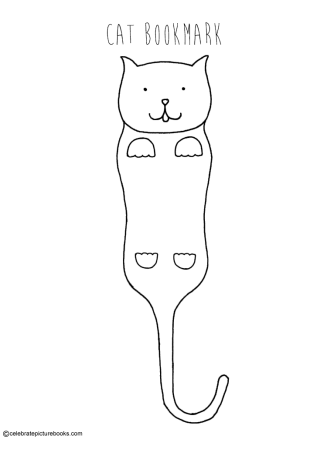
CPB - Cat Bookmark (2)

Hang in there, Kitty! Bookmark


Do you love to read? Do you love to write? If you said yes to either or both of these questions, then here is a kitty that wants to hang out with you! 

Supplies

  • Printable Hang in there, Kitty! bookmark template
  • Card stock paper
  • Colored pencils, crayons, or markers
  • Scissors

Directions

  1. Print the Hang in there, Kitty! bookmark (printing on card stock will make a sturdier bookmark)
  2. Color the bookmark
  3. Cut around the toes of the front paws, leaving the top of the paws attached to make flaps that will hang over the page you want to mark

Picture Book Review

January 31 – It’s National Storytelling Week

celebrate-picture-books-picture-book-review-one-day-the-end-cover

About the Holiday

Are you a raconteur? Do you love to weave a tale so intricate and intriguing that your listeners are on the edge of their seats? Or are you the one leaning forward, all ears, feeling the tingling thrill of that story? Either way—this day is for you! The Society for Storytelling instituted National Storytelling Week 17 years ago to promote the oral traditions of this art in England and Wales. Since then it has become an international event. So take some time to tell or listen to a story—or even write one of your own!

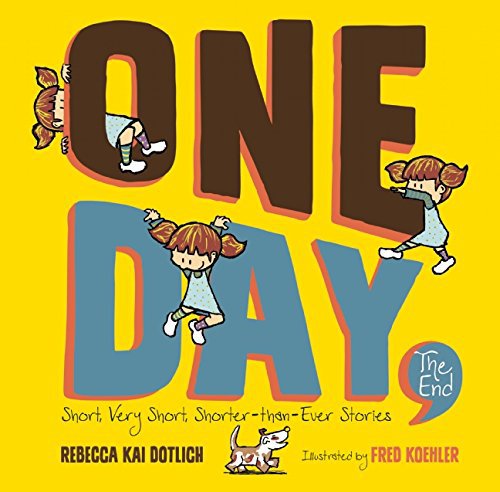
One Day, The End: Short, Very Short, Shorter-than-Ever Stories

Written by Rebecca Kai Dotlich | Illustrated by Fred Koehler


Hey! I have a fantastic story to tell you! Ya gotta minute? Ok! See… “One day I went to school. I came home. The End” What do you mean, “Is that it?” Don’t you get it?  So many things happened—funny, messy, worrisome, happy. It was an amazing day! I didn’t say that? But it’s all right there! Where? In the middle. In the pictures!

celebrate-picture-books-picture-book-review-one-day-the-end-took-a-bath

Image copyright Fred Koehler, text copyright, Rebecca Kai Dotlich. Courtesy of Boyds Mills Press

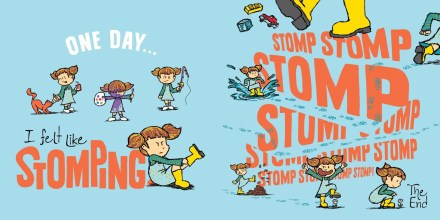
On other days the little girl who so creatively told about her day at school becomes a detective to find her lost dog who’s gone off to chase a squirrel, invents ingenious ways to hide from her brother, and creates something awesome for her mom. She also runs away from home, but of course comes back, and shadows her cat to a surprising discovery. On yet another day mistakes, mishaps, and frustrations just make her feel like stomping. And on still another day she  relents to a much-needed bath…and shares it with her dog!

What does she do after all these adventures? She wants to write a book about them…and she does!

Rebecca Kai Dotlich’s One Day…The End is such an ingenious concept that readers will keep turning the pages just to see what clever idea comes next. Each story consists of a first sentence that introduces a plot and the last line that wraps it up. Sure Dotlich could have fleshed out the characters, detailed the setting, added dialogue, and symbolized a theme, but sometimes pictures are worth a thousand words, and this is where Fred Koehler comes in.

celebrate-picture-books-picture-book-review-one-day-the-end-stomping

Image copyright Fred Koehler, text copyright, Rebecca Kai Dotlich. Courtesy of Boyds Mills Press

Koehler takes these kid-centric tales and fills in the exploding science experiments, ice-cream trucks, accidental oopsies, distractions, clues, and more that make up each day’s adventure. With humor and an eye for real-kid emotions and actions (the little girl pours glue from the bottle held above her head), Koehler creates a unique plot for each story.

In “One day I felt like stomping” the little girl doesn’t stomp for no reason: her cat eats her pizza lunch, she splatters herself with purple paint, and her fishing pole breaks. She just feels like…! The word STOMP grows bigger across the page and even gets stomped on itself as the girl vents her frustration in a puddle, on a pile of leaves, and—almost—on a flower. But seeing the daisy saves her day and she saves the daisy. Haven’t we all been there?

celebrate-picture-books-picture-book-review-one-day-the-end-wanted-to-write-a-book

Image copyright Fred Koehler, text copyright, Rebecca Kai Dotlich. Courtesy of Boyds Mills Press

One Day…The End is a joy to share with kids and would make a great addition to home bookshelves. They’ll love to spend time pointing out the humorous details and depth of story each page holds, and may even like to “tell” the story as they read. This book would be a fantastic jumping off point for kids wanting to write their own stories or for teachers wanting to demonstrate the elements of active, detailed story writing. As Dotlich says on the first page: “For every story there is a beginning and an end, but what happens in between makes all the difference.”

Ages 4 – 8

Boyds Mills Press, 2015 | ISBN 978-1620914519

Discover all of the amazing books by Rebecca Kai Dotlich, plus lots more, on her website!

Learn more about Fred Koehler and his work and get freebies – including a One Day, The End coloring page – on his website!

Tell a Story Day Activity

celebrate-picture-books-picture-book-review-story-maze

Story Maze


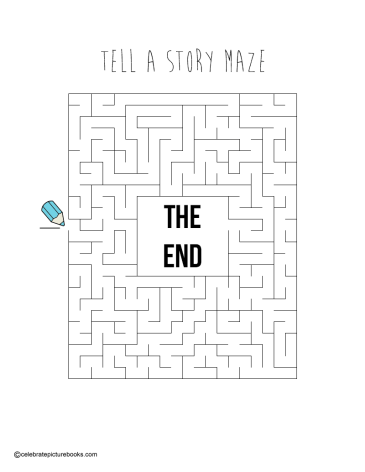
This puzzle may look like a regular maze, but there’s a secret to it! Within this maze is any story you’d like to make up. Why do you go left instead of right? Are you avoiding a zombie or a rainy shower? Why do you go up instead of down? Is it because you can you float? What lurks in that dead end you’ve entered? There are as many cool stories as you can imagine right in those little pathways. And when you find your way to The End, you’ll have written a story! Print the Story Maze and the Solution here!

picture book review

January 23 – National Pie Day

celebrate-picture-books-picture-book-review-edgar-allan-poe's-apple-pie-cover

About the Holiday

National Pie day is perfect for…well…pie! Whether you love fruity pies or meat pies, pies with lattice tops or crumble crusts this day is for you! There’s only one true way to celebrate—make or buy your favorite kind of pie and enjoy! 

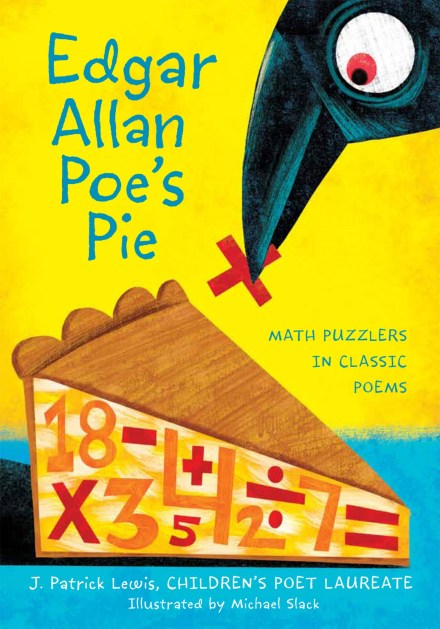
Edgar Allan Poe’s Pie: Math Puzzlers in Classic Poems

Written by J. Patrick Lewis | Illustrated by Michael Slack


There’s something about poetry with its iambic pentameters, feet, meter, sonnets, couplets, and more countable qualities that just seems to lend itself to math. J. Patrick Lewis must have thought so too because he penned a clever volume of poems inspired by well-known verses. First up is Edgar Allan Poe’s Apple Pie, which is inspired by “The Raven” and begins: “Once upon a midnight rotten, / Cold, and rainy, I’d forgotten / All about the apple pie / Still cooling from the hour before.” But now, even though there is a “knocking, knocking…” at the door, the narrator takes up a knife and slices the night with a cutting question, only to hear the stranger’s mysterious clue “‘Never four!’”

celebrate-picture-books-picture-book-review-edgar-allan-poe's-apple-pie-hotdog

Image copyright Michael Slack, text copyright J. Patrick Lewis. Courtesty slackart.com

All the narrator of Emily Dickenson’s Telephone Book, inspired by “My Life Closed Twice Before its Close,” wants to do after napping is to find a certain phone number in her directory, but where is it? She knew where it was before she went to bed—in fact its “two opposing pages / that added up to 113— / Were smudged around the edges—” but now she’s so confused…. Can you help?

Those who think that “Stopping by Woods on a Snowy Evening” has no link to underwear possibly are not aware of Robert Frost’s Boxer Shorts, in which the lilt and the rhythm of the original are perfectly matched in a priceless, pricey puzzle that ends “My tightie whities look so sad. / My tightie whities look so sad.” How can you resist?

celebrate-picture-books-picture-book-review-edgar-allan-poe's-apple-pie-hippo

Image copyright Michael Slack, text copyright J. Patrick Lewis. Courtesty slackart.com

You may know about William Carlos Williams’s red wheelbarrow and where it stood, but what if that handy implement was replaced by a… “fifteen-inch square pizza” that is missing “nineteen and a half pieces”?! Well, there may not be any rainwater glaze, but it sure does make for a delicious arithmetic conundrum in William Carlos Williams’s Pizza.

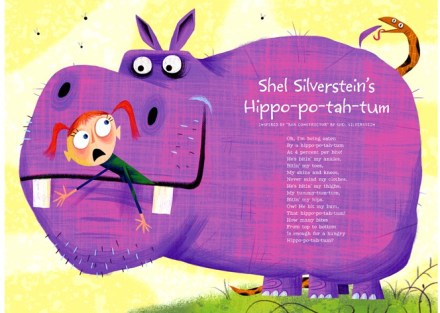
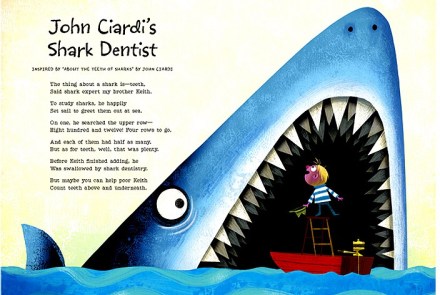
You’re eating up these poems, aren’t you? Well, next come three poems in which termites, sharks, and a “hippo-po-tah-tum” do a bit of nibbling of their own. The fun multiplies in Ogden Nash’s Buggy Rugs, where 313 little wood chompers hide; in John Ciardi’s Shark Dentist, in which you’ll want to brace yourself for the ending; and in Shel Silverstein’s Hippo-po-tah-tum, which is fractionally frightening.

These seven poems are added to seven more, plus two pages full of “prose about the poets,” to equal one smart, tantalizing poetic brainteaser of a book!

celebrate-picture-books-picture-book-review-edgar-allan-poe's-apple-pie-shark

Image copyright Michael Slack, text copyright J. Patrick Lewis. Courtesty slackart.com

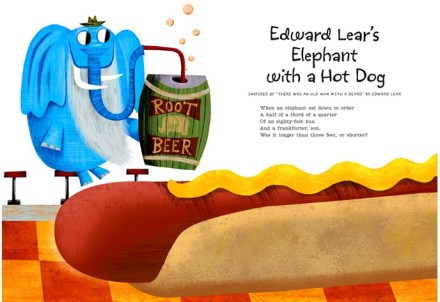
Patrick Lewis, who served as the US Children’s Poet Lauriat from 2011 to 2013, has honored 16 of the world’s most beloved poets the way kids love best—with humor. Adapting the original poem’s rhythm, rhyme scheme, and length with a dash of the ridiculous and a dose of numerical heft, Lewis has created poems that will have kids giggling while they ponder the answers to the lyrical math problems the verses pose. While arithmetic aficionados will gobble these poems up, there’s plenty for language arts lovers to sink their teeth into too. Each witty poem just begs to be compared to the original, which would make for a fun afternoon at home or lesson in the classroom. Admit it—aren’t you just the tiniest bit curious what Edward Lear’s “There was an Old Man with a Beard” has to do with an 80-foot hotdog?

celebrate-picture-books-picture-book-review-edgar-allan-poe's-pie-train

Image copyright Michael Slack Lewis, courtesty slackart.com

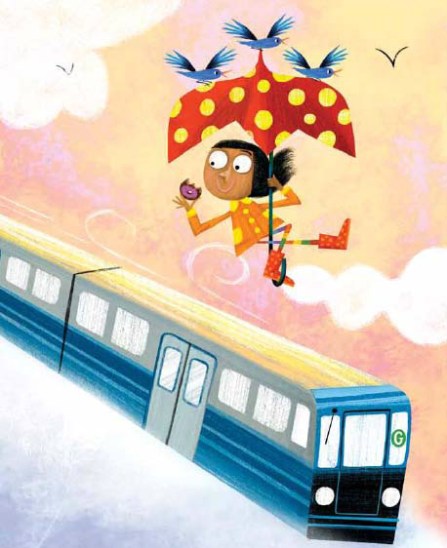
Michael Slack gets things off and running on the first spread, where a sharp-taloned blackbird stands over a knife that’s plunged into the center of a pie. While readers of Walt Whitman’s Web-Covered Shoe may wonder exactly how long the boot has been untouched, they’ll be more distracted by the number of eyes on two very fierce-looking spiders. And there may be nothing more diverting than the potbellied cowboy wearing only his tightie whities as he waits for his snowflake, flame, spaceship, and other uniquely decorated boxers to dry. Slack illustrates each poem with distinctive, vibrant images that ramp up the humor and give every page an individual look.

Answers to the math problems proposed are included with every poem, and brief biographies accompanied by tiny portraits, reveal information about the poets represented and their work.

Edgar Allan Poe’s Pie is a fantastic way to get kids interested in math and poetry. The brain ticklers, as well as the wonderful wordplay and illustrations, make this a book that should be on classroom shelves and would be welcome in home libraries too.

Ages 6 – 9

Houghton Mifflin Harcourt Books for Young Readers, 2015 (paperback) | ISBN 978-0544456129

To learn more about J. Patrick Lewis, his books, and resources for kids and teachers, visit his website!

View a gallery of books, illustration, and other art by Michael Slack on his website!

National Pie Day Activity

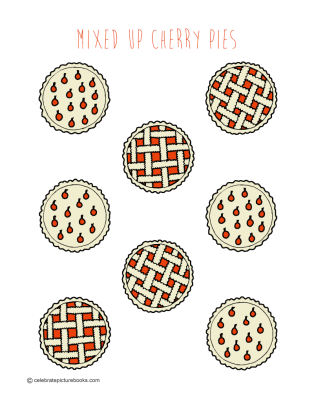
celebrate-picture-books-picture-book-review-cherry-pie-match

Mixed Up Cherry Pies Puzzle


Each winner of a poetry contest were supposed to get two identical pies, but they got mixed up! Can you find the matching pies in this printable Mixed Up Cherry Pies Puzzle and save the day?

Picture Book Review
January 18 – Thesaurus Day

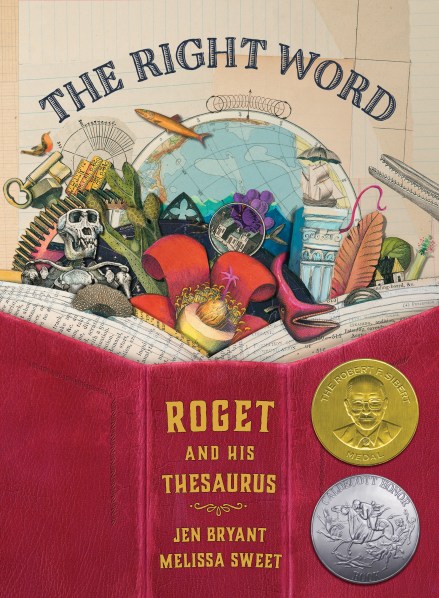
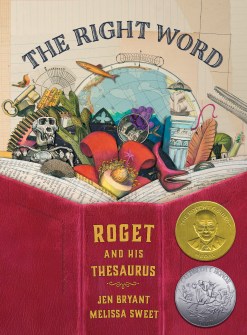
celebrate-picture-books-picture-book-review-the-right-word-roget-cover

About the Holiday

Today we celebrate that most marvelous, stupendous, spectacular, cool, awe-inspiring, remarkableand—one from my early youth—groovy book, the thesaurus! Without its incredible cross-referenced lists of synonyms and antonyms, the world would be much more boring, dull, lackluster, monotonous place. Today, spice up your speech and writing with the perfect word to express all the nuances of life!

The Right Word: Roget and His Thesaurus

Written by Jen Bryant | Illustrated by Melissa Sweet


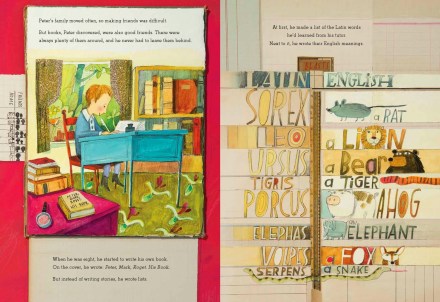
While just a young child, Peter, along with his mother, his uncle, and his baby sister Annette, travel to their new home following the death of his father. It would not be his first move, and in the absence of long-time friends, Peter found companionship in books. When he was eight years old, he began writing his own book titled: Peter, Mark, Roget. His Book. But this was not a book of stories or even one story; it was a book of lists. The first list was divided in two. On one side were the Latin words he knew; on the other were their definitions.

celebrate-picture-books-picture-book-review-the-right-word-roget-peter-starts-his-book

Image copyright Melissa Sweet, 2014, text copyright Jen Bryant, 2014. Courtesy of Eerdmans Books for Young Readers.

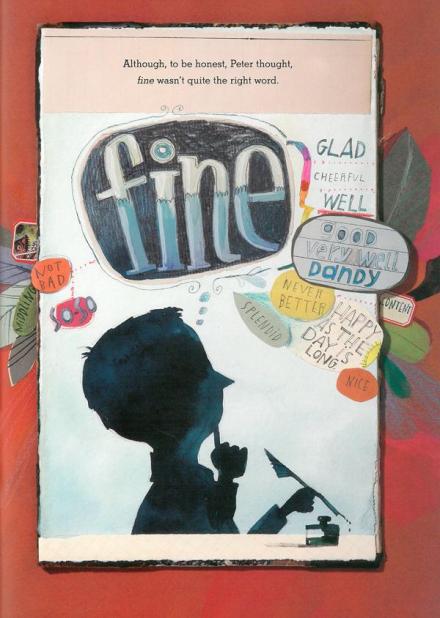
Peter’s mother hovered and worried over her son, and he always told her he was “fine.” “Although, to be honest, Peter thought, fine wasn’t quite the right word.” As the years went by, Peter added lists to his book, prompting his mother to complain about his constant “scribbling.” But Peter looked at his lists differently. “Words, Peter learned, were powerful things. And when he put them in long, neat rows, he felt as if the world itself clicked into order.”

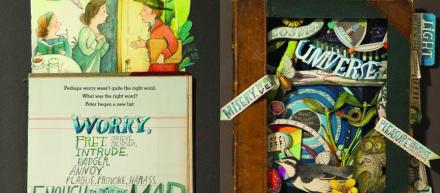
As a teenager Peter was shy, preferring to wander the London gardens alone, “making lists of all the plants and insects,” as in one of his favorite science books by Linnaeus. His “mother didn’t approve, and Peter told her not to worry—but “perhaps worry wasn’t quite the right word. What was the right word? Peter began a new list: Worry, fret, grieve, despair, intrude, badger, annoy, plague, provoke, harass. Enough to drive one mad. How wonderful it felt to find just the right word.”

celebrate-picture-books-picture-book-review-the-right-word-roget-fine

Image copyright Melissa Sweet, 2014, text copyright Jen Bryant, 2014. Courtesy of Eerdmans Books for Young Readers.

An idea crept into Peter’s mind for a book where “all the ideas in the world could be found in one place,” and people could “find the best word, the one that really fit.” When Peter was 14 he entered medical school in Edinburgh, Scotland. Upon graduation at 19, his uncle told him that patients would be wary of a doctor so young. To gain a bit of experience and maturity, Peter became a tutor to two teenage boys.

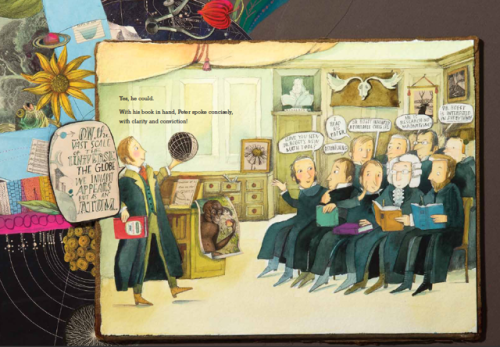
At last Peter set up his medical practice in Manchester, England, where he took care of the factory workers, who “were poor and often sick.” At night Peter worked on his book of lists, and in 1805 he declared it finished. “It had about one hundred pages, one thousand ideas, and listed more than fifteen thousand words!” Eventually, Peter moved back to London where he joined science societies and attended lectures. “Before long, he was asked to give lectures too,” and once-shy Peter astonished his audiences with his knowledge of math, magnetism, and other scientific subjects. He even invented a portable chess set.

celebrate-picture-books-picture-book-review-the-right-word-mother-worries

Image copyright Melissa Sweet, 2014, text copyright Jen Bryant, 2014. Courtesy of Eerdmans Books for Young Readers.

When Peter was 45 years old, he married Mary Hobson, and they had two children, Kate and John. As he grew older, he visited fewer patients, but he continued to take walks and work on his lists. While some other writers had published their own word lists to help people “to speak and to write more politely,” Kate and John “thought their father’s book was much better. Peter agreed.” For three years he rewrote his book. “He made it larger, more organized, and easier to use. Long ago Peter had discovered the power of words. Now he believed that everyone should have this power—everyone should be able to find the right word whenever they needed it.”

celebrate-picture-books-picture-book-review-the-right-word-roget-lecturing

Image copyright Melissa Sweet, 2014, text copyright Jen Bryant, 2014. Courtesy of Eerdmans Books for Young Readers.

“In 1852, Roget published his Thesaurus, a word that means ‘treasure house’ in Greek.” It was an instant best seller, and Peter became a popular author. But he never stopped making lists.

Following the text, a timeline of principal events in Peter’s life as well as world events allow readers to better understand the historical period in which Peter worked. Extensive Author’s and Illustrator’ Notes also expand on Roget’s biography, and resources for further reading and research are included.

Jen Bryant’s biography of a brilliant boy who grew up to give the world its most fascinating and comprehensive collection of word lists, is a spritely telling of Roget’s life and revelation into his personality, which was perfectly suited to his scientific and written accomplishments. Children will appreciate Roget’s reactions to his mother’s worries as well as the message in his well-rounded pursuit of science and writing. Through Bryant’s captivating and lyrical storytelling, children will be inspired by Roget’s journey from shy child to much-accomplished adult.

celebrate-picture-books-picture-book-review-the-right-word-roget-at-home

Image copyright Melissa Sweet, 2014, courtesy of Eerdmans Books for Young Readers.

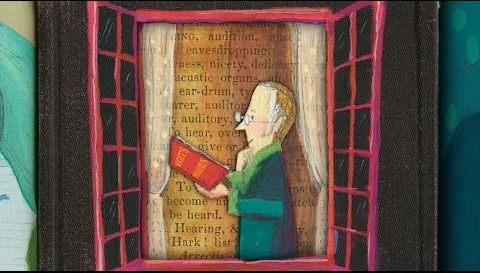
Melissa Sweet beguiles readers with her mixed media, collage, and watercolor illustrations that are as jam-packed with ideas, images, portraits, and typography as Roget’s thesaurus is full of words. In the early pages describing Peter’s childhood, the pages contain simple framed pictures of Roget and his family. As he grows, however, his lists of words are transformed into vibrant artwork that jostles for position from corner to corner of the pages. In the midst of these, delicate watercolors portray Peter as he strolls through a garden, takes his young charges to Paris, treats his patients, lectures, marries, and finally publishes his thesaurus. A special mention must be made of the typography, which at times in the text runs down the center of the page in one- or two-word lines, mirroring Roget’s love of lists, and in the illustrations presents the myriad synonyms in a mixture of colorful block letters, fine print, and calligraphy.

For bibliophiles, wordsmiths, scientists, and history buffs, The Right Word: Roget and His Thesaurus is just the right book for home libraries.

Ages 6 – 18

Eerdmans Books for Young Readers, 2014 | ISBN 978-0802853851

Discover more about Jen Bryant and her books as well as news, contests, and events, visit her website!

Learn more about Melissa Sweet and her books and have fun with the downloadable activities you’ll find on her website!

Watch this The Right Word: Roget and His Thesaurus book trailer!

Thesaurus Day Activity

celebrate-picture-books-picture-book-review-synonyms-word-search

Word Words Word Search Puzzle


When you’re looking for just the right word, where do you go? To the thesaurus of course! Can you find the 25 synonyms for “Word” in this printable Word Words Word Search Puzzle? Here’s the Solution!

celebrate-picture-books-picture-book-review-the-right-word-roget-cover

You can find The Right Word: Roget and His Thesaurus at these booksellers

Amazon | Barnes & Noble | Books-a-Million | IndieBound

Picture Book Review

November 22 – It’s Picture Book Month

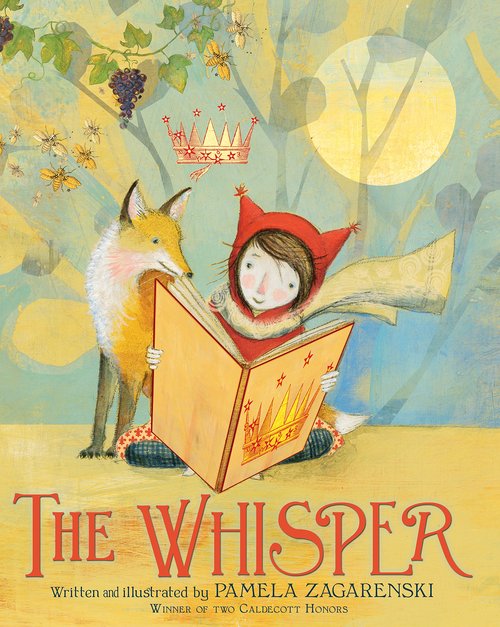
celebrate-picture-books-picture-book-review-the-whisper

About the Holiday

Picture Book Month is an international literacy inititive put together by a group of authors and illustrators to raise awareness of the importance of print picture books. Througout the world libraries, schools, booksellers, authors, illustrators, and those who love picture books celebrate the wonder of this art form enjoyed by children and adults. The complexity of picture books is astounding. They contain some of the most beautiful art and compelling stories being created today. To learn more about the importance of the picture book visit Picture Book Month: A Celebration! to find daily posts by authors, illustrators, and experts in the field as well as fun activities!

The Whisper

By Pamela Zagarenski


A little girl loves stories and the magical realms they can take her to. One day while waiting for school to be dismissed, she spies a book on a shelf. Her teacher allows her to take it home with her, and the little girl happily runs off with it when the clock strikes 3:00. On the way home, she doesn’t notice that all the letters are escaping from the book or that a wily fox is catching them in a net.

At home she secludes herself in her room, excited to read the mysterious book. She turns the pages, awed by the beautiful pictures. But by the time she has finished, she has tears in her eyes. “Where were the words? Where were the stories?” The girl flips through the book again, but this time she hears a small whisper: “Dear little girl, don’t be disappointed. You can imagine the words. You can imagine the stories.”

celebrate-picture-books-picture-book-review-words-escape-the-book

Copyright Pamela Zagarenski, courtesy of Houghton Mifflin Harcourt

The whisper seems so knowing that the girl does at it suggests. She turns to the first page where a blue bear followed by a beekeeper walks under a honeycomb sun toward a brown bear. The girl stares at the picture and thinks of a title: Blue Bear’s Visit. Her story begins: “Blue Bear arrived on the first day of spring. He promised…”

Warming to the idea of creating stories, the girl examines the second picture. She notices the same white rabbit that was in the first picture. In the foreground a “magnificent ox” is listening to a man whispering into its large, soft ear. The Secret, the little girl titles this story, which starts: “Mr. Ox, you must please promise not to tell anyone, but we need your help. Last week…”

celebrate-picture-books-picture-book-review-no-words-in-book

Copyright Pamela Zagarenski, courtesy of Houghton Mifflin Harcourt

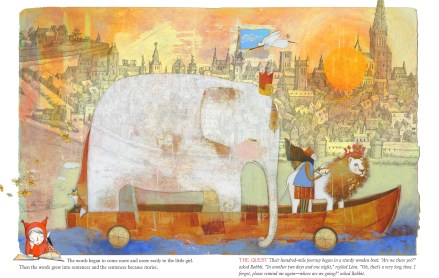
With the third picture the words tumble out more easily, forming sentences that give life to the massive white elephant, regal lion, and that rabbit again who are traveling the sea in a long, open boat. The Quest, she calls it. In Tigers Prayer, preparations are being made: tea is brewing, a clown with a pointed hat plays his accordion, a windhorse jumps through hoops, and the rabbit rides a golden ring as a lion hears what Tiger has to say. A Birthday Party comes next, and it seems Pan has planned a very secret party. An owl perches in the crook of a tree asking for the password with a “Hoo, Who?” which is answered quickly because the vanilla cake with raspberry filling and vanilla cream frosting holding 6 candles must be delivered.

celebrate-picture-books-picture-book-review-the-whisper-elephant

Copyright Pamela Zagarenski, courtesy of Houghton Mifflin Harcourt

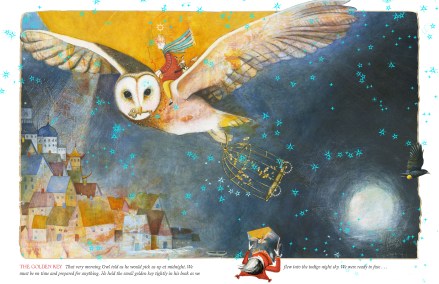
The Magical Cloak sees the little girl’s imagination truly take flight as she decides the man in the “elaborate coat” is a wizard or magician whose bubbles come to life once released from the blower. Enormous whales now fill the harbor. They are beautiful, but something must be done….Next, hurry to meet the owl! He is picking up passengers at midnight. But what does the golden key in his beak open? Only the story The Golden Key locked in the little girl’s mind will tell.

Hours go by as the little girl creates tales for each picture in the book. As the night grows late, she sleeps, carried into slumber on dreams woven from the pictures and stories she imagined. When she wakes up, the girl wishes to spend more time with her new friends, but it’s time for school so she gathers up the book and hurries away.

On the path to school she meets a fox who is carrying a bag. “Excuse me, little girl,” says the fox. “I believe I have the words to your book.” The fox then explains how he caught the words as they spilled from the pages the day before. The fox gives her his parcel, but asks for a favor. The girl is happy to oblige and lets the fox stand on her shoulders to reach a bunch of grapes dangling from a nearby vine.

celebrate-picture-books-picture-book-review-the-whisper-owl

Copyright Pamela Zagarenski, courtesy of Houghton Mifflin Harcourt

The girl rushes into school and apologizes for being late. She relates the story of the fox and the words and the magical night she has spent making up tales for the pictures in the book. “I have so many stories to tell you,” says the girl to her teacher. “‘I can’t want to hear,’” the teacher replies with a smile.”

Opening a book by Pamela Zagarenski is to fall into an alternate realm of such beauty and imagination that you forget the real world exists.  Her paintings are composed of rich, regal hues swirling with images and designs that overlap and float to create the kind of experience only the deepest, most complex dreams allow. The characters and details follow page to page uniting the pictures and, subtly, the stories the little girl discovers in them: The teapot, once introduced, waits under a tree on the next page and rides the waves of the whale-filled sea in the next. The bees and the rabbit are constant companions on each spread, and the animals will fill the reader with awe.

The little girl’s imagined stories are tantalizing with just the right mix of the mysterious and the tangible to entice readers to add more. The frame of the Aesop Fable The Fox and the Grapes is inspired and could lead to a conversation about how “life is what you make it.”

The Whisper is a book readers will want to linger over and dip into again and again, and would be especially fun on those days when there’s “nothing” to do. It makes a beautiful gift for any occasion and would be a welcome addition to any home library.

Ages 4 – 9 (this book would also appeal to adults)

Houghton Mifflin Harcourt, 2015 | ISBN 978-0544416864

Picture Book Month Activity

celebrate-picture-books-picture-book-review-I-have-the-reading-bug-bookplate

I Have the Reading Bug Book Plate


Do you want to let everyone know which books are yours? Or just declare your love of books? Then display this printable I Have the Reading Bug Book Plate in your books. on your wall, or in your locker!

Picture Book Review
November 15 – I Love to Write Day

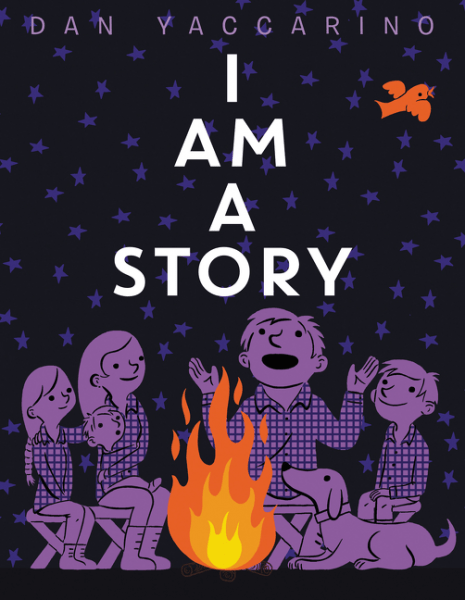
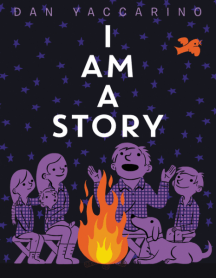
celebrate-picture-books-picture-book-review-i-am-a-story-cover

About the Holiday

I Love to Write Day was created by Delaware-based author John Riddle in 2002. He wanted to share his passion for writing with others and encourage them to pick up a pen or sit down at the computer and compose a poem, a short story, a journal entry, or whatever kind of written expression stirs their hearts. It’s fitting that today’s holiday comes in the middle of NaNoWriMo or National Novel Writing Month, when novelists and would-be novelists strive to begin and finish a complete novel (well, at least a first draft) in one month. If you hold ambitions to write, why not start today? As today’s book shows, you’ll be part of a very honored, long-standing tradition!

I Am a Story

By Dan Yaccarino


Sometimes it seems that from nothing and out of nowhere a story comes. And yet storytelling also seems to be an inborn trait, passed down from generation to generation and discovered in daydreams, alternate realities, those “what if?” moments. In Dan Yaccarino’s book, a story relates its history, beginning with our oldest ancestors. “I am a story,” the narrator states. “I was told around a campfire. Then painted on cave walls.” The story travels over years and across miles, changing the way it is told but not its impact.

celebrate-picture-books-picture-book-review-i-am-a-story-oral-storytellers

Image copyright Dan Yaccarino, courtesy of harpercollins.com

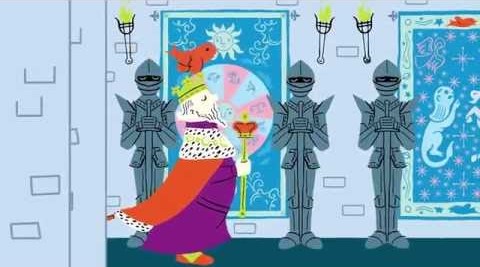
Men inscribed words on papyrus; women used woodblocks, brushes, and ink to bring them to life. Tales were stitched into legend on beautiful tapestries that brightened dank castle walls, and they were transcribed in gilded lettering “into big books to illuminate minds.” Then a man discovered how to print the story so many people could read it, which led to the story being “acted out onstage.”

celebrate-picture-books-picture-book-review-i-am-a-story-tapestry

Image copyright Dan Yaccarino, courtesy of harpercollins.com

Stories were bound into books and families began to collect them, creating “vast private libraries.” Then public libraries opened, and now stories are available for everyone—even in places so remote that the books are brought on donkeys, by camel, or even atop elephants. There are tiny libraries—not much bigger than a birdhouse; vending machines that dispense stories; and old telephone booths that have been transformed with shelves of books.

The story reveals its power to make “people frightened, excited, sad, and happy.” Some have felt and still feel that the story is dangerous, so they have “censored, banned, and burned” it. But the story “did not die.” Millions of people all over the world are inspired by the story every day. “I can go with you everywhere,” the story says, “and will live forever. I am a story.”

celebrate-picture-books-picture-book-review-i-am-a-story-printing-press

Image copyright Dan Yaccarino, courtesy of harpercollins.com

Bibliophiles young and old will love the simply told and expressively illustrated timeline of the story from early oral traditions until today. Between the first page where ancient peoples interpreted the constellations and the last where a family of today tells stories around a campfire under the starry sky, the various forms that stories take are described with vivid, full-bleed pages of people toiling over manuscripts, inventing methods of mass production, and building collections all to ensure that the words continue no matter what changes occur.

Kids will love lingering over the details on each page, and every page could lead to a fun afternoon of discovering more about each stage in the story’s development. For teachers and homeschoolers I Am a Story is a wonderful jumping off book for an English or History unit, and it makes a beautiful addition to any library.

Ages 4 – 8

HarperCollins, 2016 | ISBN 978-0062411068

You know Dan Yaccarino from his TV shows The Backyardigans, Oswald and others as well as his many, many books. You can learn more about him and his work on his website!

Enjoy this I Am a Story book trailer!

I Love to Write Day Activity

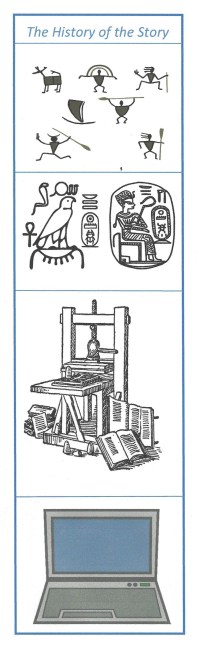
celebrate-picture-books-picture-book-review-the-history-of-the-story-bookmark

The History of the Story Bookmark


From cave paintings and hieroglyphics to the printing press and the computer, people have ensured that their thoughts were not forgotten. Here’s a printable The History of the Story Bookmark plus a blank one for you to fill in. Use them to mark your favorite stories!

celebrate-picture-books-picture-book-review-i-am-a-story-cover

You can find I Am a Story at these booksellers

Amazon | Barnes & Noble | Books-a-Million | IndieBound

Picture Book Review

Picture Book Review
November 4 – Fountain Pen Day

picture-book-review-will's-words

About the Holiday

Today we spend some ink to extol the virtues of the fountain pen. Designed in 1636 (a mere 22 years after William Shakespear wrote his last play), the fountain pen sported two clever improvments over the quill pen. First, it contained a reservoir of ink that made frequent dipping in the inkwell unnecessary. Second, it’s metal nib didn’t require cutting the way a feather did to retain sharpness. While there are now many alternatives to fountain pens, there are those who prefer its smooth elegant lines for writing everything from notes to novels. Fountain pens are also collectable, and craftsmen around the world create beautiful, innovative works of art on these functional canvases.

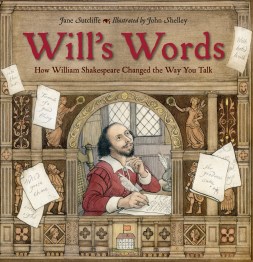
Will’s Words: How William Shakespeare Changed the Way You Talk

Written by Jane Sutcliffe | Illustrated by John Shelley

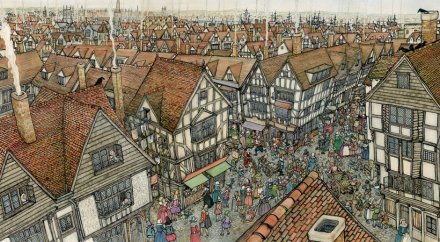
“In 1606 London was a bustling, jostling, clanging, singing, stinking, head-chopping, pickpocketing wonder of a city.” With that phenomenal sentence Jane Sutcliffe begins this fascinating and ingenious look at the Globe Theatre and the experience of attending a play in William Shakespeare’s time.

In addition to all the qualities of London mentioned above, the town was also a “play-going city.” Every day of the week except Sunday, a play—or maybe even two or three—was performed, and as many as 18,000 people attended plays every week! They just couldn’t get too much of a good thing!*” And everyone loved the plays written by William Shakespeare!

celebrate-picture-books-picture-book-review-will's-words-in-town

Image copyright John Shelley, 2016, text copyright Jane Sutcliffe, 2016. Courtesy of Charlesbridge.

How did a day at the theater begin? Well, at 1:00 a banner was raised from the roof of the playhouse, and men, women, and children streamed through the streets toward the Globe. It cost a penny to get in, but if you paid more you got a chair, and if you paid a little more than that you were seated in the Lord’s Rooms. The Lord’s Rooms were actually for fashionable people who wanted to be seen but didn’t really care what play they were seeing.

All the actors were…well…actors. There were no actresses in those days. Men played women’s parts as well as men’s. And if you think phones and talking are problematic in today’s theaters, you would have been aghast at the audiences back then! They were not well behaved at all!

celebrate-picture-books-picture-book-review-will's-words-back-stage

Image copyright John Shelley, 2016, text copyright Jane Sutcliffe, 2016. Courtesy of Charlesbridge.

There were plays to please all tastes—comedies, tragedies, histories, and romances—all full of complicated plots and plenty of twists and turns. While the stories may have been intricate, the sets were not. But the bare-bones sets were made up for in gorgeous costumes and even some special effects accomplished through trap doors and ceiling holes. Sounds full of amazement, right? Good thing too because these plays could go on for hours, and most people stood through the whole thing, rain or shine!

celebrate-picture-books-picture-book-review-will's-words-cold-blooded

Image copyright John Shelley, 2016, text copyright Jane Sutcliffe, 2016. Courtesy of Charlesbridge.

While William Shakespeare’s plays ended when the last line was spoken, his influence continued. Theatre-goers repeated the lines they’d heard long after they left the Globe. They used Will’s words so much that his new phrases became part of the common language, and we still use them today!

Jane Sutcliffe inserts a tongue-in-cheek apology before the main text, explaining how she wanted to tell the world about the Globe Theatre in her own words, but that William Shakespeare’s words kept getting in the way. Yes, using another writer’s words is a no-no—but if they’re Shakespeare’s words? Words we use every day? Hmmm… Sutcliffe’s lively history of the Globe Theatre and Old London’s theater culture is conversational, humorous, and highly informative.

celebrate-picture-books-picture-book-review-will's-words-new-words

Image copyright John Shelley, 2016, text copyright Jane Sutcliffe, 2016. Courtesy of Charlesbridge.

The left-hand page tells the story of the Globe with phrases and words coined by William Shakespeare sprinkled throughout and set in bold type. On the right-hand page readers learn the meaning of those words and phrases (some have changed a bit since Will’s time) and which play they come from. A final note from Sutcliffe at the end of the book reveals a bit more about the playwright. A timeline of Shakespeare’s life and a bibliography are also included.

John Shelley’s incredible illustrations of London and the Globe Theatre will take your breath away. The streets teem with vendors, knights, shoppers, kids, Ladies, and Lords. If you look closely at the intricate paintings you’ll also spy the seamier side of Old London—a pickpocket, a criminal in the stocks, a tavern brawl, a cat snatching a free meal, a woman about to empty a chamber pot on her unsuspecting downstairs neighbor’s head, and…could that be a dead rat?— and that’s only on the first page!!

celebrate-picture-books-picture-book-review-will's-words-globe-theater

Image copyright John Shelley, 2016 text copyright Jane Sutcliffe, 2016. Courtesy of Charlesbridge.

Subsequent pages show the waterfront with its sailing vessels, a peek into Shakespeare’s study and a look at the printing press, an aerial view of London, the Globe Theatre with its thatched awning, actors donning wigs and costumes, the audiences enjoying the plays and the fun of a day out. Each illustration is alive with color and movement, texture and design, expressive faces, and all the sights, sounds, and aspects of Old London. Kids will love lingering over each page picking out the funny events going on in the lanes, in the theater seats, and on stage.
So hurry to get your own copy of Will’s Words and enjoy it to your heart’s content! You will definitely get your money’s worth!

*Italicized words and phrases were invented by William Shakespeare

Ages 6 – 10 and up (Anglophiles and Shakespeare lovers will enjoy this book)

Charlesbridge, 2016 | ISBN 978-1580896382 (Hardcover) | ISBN 978-1580896399 (Paperback)

To learn more about Jane Sutfcliffe and her other picture books and books for early and middle grade readers visit her website!

View a portfolio of picture book illustration and other work by John Shelley on his website!

Fountain Pen Day Activity

picture-book-reviews-quill-pen-craft

Write Like Shakespeare

William Shakespeare might have missed out on the new technology of fountain pens, but he sure did a great job with the quills of the day. Try your hand at making a quill pen—you may not be able to write with it, but it sure will look cool on your desk!

Supplies

  • Medium to large size feather with quill, available at craft stores
  • Clay, oven-bake or air-dry, in various colors if desired
  • Wire, beads, paint, and/or markers for decorating     
  • Scissors
  • Baking pan for oven-bake clay

Directions

  1. Roll clay 2 ½ inches to 4 inches long 
  2. Push the quill end of the feather into the clay
  3. Add bits of clay or roll sections of the clay between your fingers to give the clay shape
  4. To make the twisted shape pen, twist the length of clay around itself before adding the feather
  5. Shape the end or cut it with scissors to make the pointed writing nib
  6. If using air-dry clay: Add beads and/or wire and let clay dry around feather
  7. If using oven-bake clay: Add beads and other layers of clay before baking then carefully remove feather. Bake clay according to package directions
  8. Add wire and other decorations after clay has baked and cooled
  9. Reinsert feather into clay

picture-book-review-will's-words

You can find Will’s Words at these booksellers

Amazon | Barnes & Noble | Books-a-Million | IndieBound