April 17 – International Haiku Poetry Day

The Maine Coon's Haiku and Other Poems for Cat Lovers by Michael J. Rosen and Lee White picture book review

About the Holiday

Part of National Poetry Month, International Haiku Writing Day celebrates the wonders of this most minimalistic yet impactful type of poetry. The familiar 5-7-5 syllable rule doesn’t begin to describe the intricacies of form and thought that goes into these beautiful creations. If you have the opportunity today, read or write some haiku, or attend a recitation of this lovely form of expression.

The Maine Coon’s Haiku and Other Poems for Cat Lovers

Written by Michael J. Rosen | Illustrated by Lee White


Fortunately for poetry—and cat—lovers there are as many types of felines as there are ways to describe them. With wit and keen insight, this collection of haiku depicts the mystery, stealth, crouching, and curiosity of twenty breeds of cats.

The remains of a shredded plant elicits an unanswerable question in Ragdoll: “why today the cat / who sleeps beneath the ivy / halved the blameless hearts”.

celebrate-picture-books-picture-book-review-the-maine-coon's-haiku-american-shorthair

Image copyright Lee White, text copyright Michael J. Rosen. Courtesy of Candlewick Press

Any cat owner who finds vases or lamps overturned will appreciate Siamese: “a toppled lamp shade / moon moth must be here somewhere / batted from the dark” It is commonly known that cats own their domain, a fact acknowledged in British Shorthair: “paws plant mud-daisies / along the polished hillside / parked on the cat’s street.”

In these lines felines become baseball players, gymnasts, ghosts, and mist, as in Bombay: “paired shadows prowling / in nightfall, but just two lights / pierce that darkness” and Norwegian Forest Cat: “caught among branches / fog descends the trunk headfirst / one foot at a time.”

celebrate-picture-books-picture-book-review-the-maine-coon's-haiku-norwegian-forest-coon

Image copyright Lee White, text copyright Michael J. Rosen. Courtesy of Candlewick Press

While the haiku form is necessarily rigid, the supple rhythms of Michael Rosen’s phrases perfectly capture the vast array of quirks, moves, attitudes, and friskiness that make cats such favorite pets. These poems are in turn sweet, spirited, and humorous—just like their subjects.

Lee White similarly highlights the bounding, creeping, prowling, and snoozing postures of all manner and colors of the breeds represented here. The Turkish Angora is painted as transparent as it leaps through the door, becoming more opaque as it reaches mid-page and disappearing from the edge of the book, leaving only its back end behind. The Abyssinian plunks its head and whole body across the open book on its owner’s lap, its eyes closed in dreamy sleep, and the Scottish Fold indomitably maintains its perch in the magnolia tree, determined not to fall like the raining petals.

Ages 5 and up (any cat lover will enjoy these poems)

Candlewick Press, 2015 | ISBN  978-0763664923

Get to know Michael J. Rosen and discover books for kids and adults, poems, videos, work for radio and TV, and more on his website!

View a beautiful gallery of artwork for books and personal illustration by Lee White on his website!

International Haiku Poetry Day Activity

CPB - Cat Bookmark (2)

Hang in there, Kitty! Bookmark


Love cats? Love reading? Then here is the purrfect bookmark for you!

Supplies

Directions

  1. Print the Hang in there, Kitty! bookmark
  2. Color the bookmark
  3. Cut around the toes of the paws, leaving the top of the paws attached to make flaps that will hang over the book’s page you want to mark

Picture Book Review

April 15 – Take a Wild Guess Day

Guess Who, Haiku by Deanna Caswell and Bob Shea picture book review

About the Holiday

Do you have a knack for guessing right answers? Then today is your day! Conjured up by Jim Barber to celebrate hunches, surmises, estimates, and other forms of speculation, today is the perfect time to put your powers of deduction to work. Enjoy the day with games of chance, shell games, card tricks, guessing competitions, or friendly wagers. Just don’t guess on your taxes!

Guess Who, Haiku

Written by Deanna Caswell | Illustrated by Bob Shea


Down on the farm the animals are playing games and they invite readers to join in the fun! Combining poetry with a guessing game, this cute book introduces younger children to haiku. On each page an animal presents a riddle about another animal in the form of a haiku. When readers turn the page, they discover the answer to the riddle as well as another one to solve.

celebrate-picture-books-picture-book-review-guess-who-haiku-cow-haiku

Image copyright Bob Shea, text copyright Deanna Caswell. Courtesy of Harry N. Abrams Books

As morning dawns the first haiku reveals: “new day on the farm / muffled mooing announces / a fresh pail of milk”. Then kids are asked, “Can you guess who from this haiku?” Flipping the page, kids see a smiling cow who in turn has a haiku for them: “flower visitors / busy buzzing in the field / black and yellow stripes”.

Other animals familiar to kids—a horse, bird, fish, mouse, cat, dog, and this guy: “from a lily pad / keen eyes spy a careless fly / a sticky tongue—SNAP!”— also puzzle over each other from page to page. The final haiku describes an animal like no other: “two hands hold a book / guessing animals’ puzzles / written in haiku”. Who can it be? Kids will giggle and beam when they discover that they too are in the book!

celebrate-picture-books-picture-book-review-guess-who-haiku-cow-haiku

Image copyright Bob Shea, text copyright Deanna Caswell. Courtesy of Harry N. Abrams Books

Deanna Caswell’s Guess Who, Haiku is a fun way to get kids interacting with poetry and the very accessible haiku form. Her clever riddles contain lovely images and lyrical alliteration that make these poems as enjoyable to read as they are to hear.

Bob Shea’s animals are adorably illustrated on vibrant solid-colored backgrounds, and each haiku is accompanied by an image that helps kids guess the answer to the riddle. The text and illustrations work together to make Guess Who, Haiku a wonderful way to spend time with kids—who, after reading, may want to make up some poems of their own!

Ages 3 – 6

 Harry N. Abrams, 2016 | ISBN 978-1419718892

Check out a gallery of work by Bob Shea on his website!

Take a Wild Guess Day Activity

CPB - Animal Matching Cards

Match Up the Animals! Game


Test your powers of memory—or your ability to guess correctly—with this Animal Pairs matching game!

Supplies

Directions

  1. Print the Animal Pairs Cards, print two pages to have double cards. To make the game more difficult print 3 or more pages to find 3 or more groups of matching animals
  2. Color the cards
  3. Cut out the cards
  4. Lay the cards face down on a table in random order
  5. Turn over cards to look for matching pairs
  6. When you find a matching pair leave the cards face up
  7. Continue playing until you find all the matching animal pairs or groups

Picture Book Review

April 6 – April is National Poetry Month

When Green Becomes Tomatoes by Julie Fogliano and Julie Morstad

About the Holiday

The Academy of American Poets established National Poetry Month in 1996 to promote the enjoyment and awareness of poetry. Over the 20 years since its beginning, National Poetry Month has become the largest literary event in the world. Schools, poets, booksellers, and publishers all hold special events to honor the vital place of this well-loved art form in our culture.

Celebrate the month by attending poetry readings, reading poems by your favorite author or discovering a new poet, and creating your own poetry!

When Green Becomes Tomatoes: Poems for All Seasons

Written by Julie Fogliano | Illustrated by Julie Morstad


Sometimes you wish for just the right words to express a moment in time, a skip of the heart, or a glimpse of color that truly captures the elation, sadness, or awe you feel. Those words live on every page of When Green Becomes Tomatoes: Poems for All Seasons. Each season omonth of the year is represented by three to five dated poems that expose a nugget of inspiration or a spark of recognition about the natural world and our place in it.

Spring is revealed as chilly, rainy, and blooming with early flowers:

march 26: “shivering and huddled close / the forever rushing daffodils / wished they had waited”

Summer brings swimming, tomatoes, and deep dark nights:

september 10

“a star is someone else’s sun / more flicker glow than blinding / a speck of light too far for bright / and too small to make a morning”

Fall is a time for sweaters, pumpkins, and falling leaves:

november 2

“more silent than something / much noisier than nothing / the last leaf / when it landed / made a sort of sound / that no one knew they heard”

Winter  is quiet, cozy fireplaces, and snow, snow, snow:

december 21

“as if one day, the mountain decides / to put on its white furry hat / and call it winter”

december 29

“and i woke / to a morning / that was quiet / and white / the first snow / (just like magic) came / on tiptoes / overnight”

The volume begins and ends with a poem dated the same day—March 20, the vernal equinox—giving this book a cyclical form that echoes the passing of time. To accompany Julie Fogliano’s beautiful poems, Julie Morstad has created gorgeous watercolors of children experiencing each day and the changes they bring. The soft, matte pages enhance the colors of each season and the quiet reflections these poems offer.

Ages 6 and up (adults will enjoy these poems too)

Roaring Brook Press, 2016 | ISBN 978-1596438521

National Poetry Month Activity

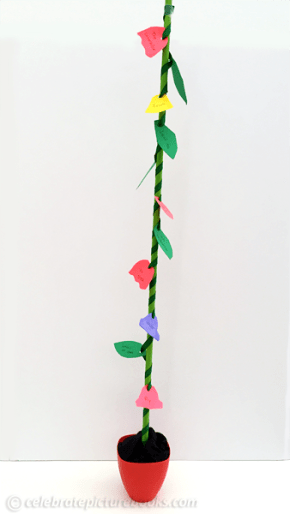
Grow a Poem

CPB - Plant Poem

A poem often grows in your imagination like a beautiful plant—starting from the seed of an idea, breaking through your consciousness, and growing and blooming into full form. With this craft you can create a unique poem that is also an art piece!

Supplies

  • Printable Leaves Template, available here and on the blog post
  • Printable Flower Template, available here and on the blog post
  • Wooden dowel, ½-inch diameter, available in craft or hardware stores
  • Green ribbon
  • Green craft paint
  • Green paper if leaves will be preprinted
  • Colored paper if flowers will be preprinted
  • Flower pot or box
  • Oasis, clay, or dirt
  • Hole punch
  • Glue
  • Markers or pens for writing words
  • Crayons or colored pencils if children are to color leaves and flowers

Directions

  1. Paint the dowel green, let dry
  2. Print the leaves and flower templates
  3. Cut out the leaves and flowers
  4. Punch a hole in the bottom of the leaves or flowers
  5. Write words, phrases, or full sentences of your poem on the leaves and flowers (you can also write the poem after you have strung the leaves and flowers)
  6. String the leaves and flowers onto the green ribbon (if you want the poem to read from top to bottom string the words onto the ribbon in order from first to last)
  7. Attach the ribbon to the bottom of the pole with glue or tape
  8. Wrap the ribbon around the pole, leaving spaces between the ribbon
  9. Gently arrange the leaves and flowers so they stick out from the pole or look the way you want them to.
  10. Put oasis or clay in the flower pot or box
  11. Stick your poem pole in the pot
  12. Display your poem!

April 2 – International Children’s Book Day

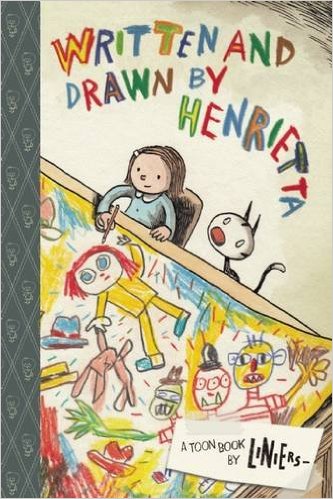
Written and Drawn by Henrietta by Liniers

About the Holiday

Each year since 1967 Hans Christian Andersen’s birthday has served as the date for Children’s Book Day. The International Board on Books for Young People, a non-profit organization founded in Zurich, sponsors the day to promote a love of reading. Seventy-five National Sections around the world alternate in hosting the event. The host for 2016 is Brazil, and this year’s theme is “Once Upon a Time.” A prominent author and illustrator from the sponsoring country prepare materials used to raise awareness of books and reading. Luciana Sandroni wrote this year’s message and the poster was designed by Ziraldo.

Children’s Book Day is celebrated with special events in schools and libraries, writing competitions, book awards, and opportunities to meet authors and illustrators. 

Written and Drawn by Henrietta

By Liniers

Henrietta’s mom gives her a new box of colored pencils, which Henrietta says is “as close as you can get to owning a piece of the rainbow.” She sits down to draw her own book and titles it “The Monster with Three Heads and Two Hats.” She begins with an illustration of a little girl, Emily, in bed at night. “I’m scaring myself…,” she thinks. Her thought is played out in her next page which shows Emily asking her stuffed rabbit if it will sleep with her because she’s scared of an unexplained Creak, Creak.

celebrate-picture-books-picture-book-review-written-and-drawn-by-henrietta-three-headed-monster

Copyright Liniers, 2015, courtesy of TOON Books

“Hmm…What’s that noise?” ponders the young writer. Her fears make it to the page—Creeak…Creeak…Thump…Crash…Boom. What are those noises, my favorite? Emily asks, her eyes now wide. The Noises! They’re getting closer!!

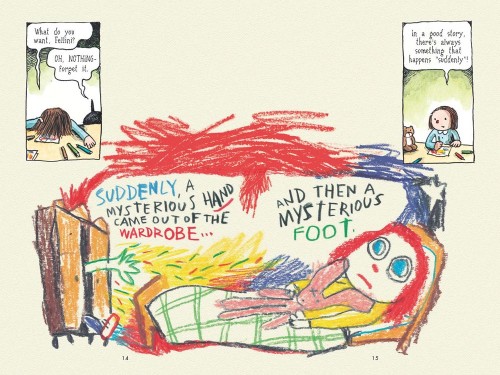
Henrietta knows that in a good story something always happens “suddenly,” and so she draws a mysterious hand and a mysterious foot emerging from Emily’s wardrobe. The plot thickens and finally the full terrifying monster with three heads pops out of the wardrobe.

celebrate-picture-books-picture-book-review-written-and-drawn-by-henrietta-in-bed

Copyright Liniers, 2015, courtesy of TOON Books

They acquire names from Henrietta’s imagination—Huey, Dewey, and Louie Bluie. . She is stuck for a bit as to how to go on, then gives Emily a question: What were you doing inside my wardrobe? The monster answers that it is looking for a hat. Emily joins them in their search, entering her wardrobe. She’s aghast to find that it is full of…clothes! (The wardrobe had been made in Narnia, the well-read Henrietta tells her cat, Fellini).

When the monster and Emily wonder which way to go, they meet a direction-giving mouse, and the story takes off—even Henrietta can’t wait to see what happens. She draws a huge pile of hats (she’s learned about “hat-o-logy” from the encyclopedia—the printed version!). The creature’s two heads with hats begs the third head to choose a hat before “the monster” shows up. Emily is terrified again—Another monster? What has Henrietta concocted this time? A monster with one head and three hats! This horrible beast suddenly appears and chases the crew through the wardrobe. Everyone is shouting Aaaaaaaaaaa—even the author.

celebrate-picture-books-picture-book-review-written-and-drawn-by-henrietta-wardrobe

Copyright Liniers, 2015, courtesy of TOON Books

Emily and the first monster lose the tremendous beast, ask the direction-giving mouse how to escape, and burst out of the wardrobe just in time. Henrietta thinks the story should have a happy ending, and before the monster with three heads and now three hats flies out the window, they give Emily a present. What could it be? Henrietta is so curious! It’s a wonderful hat, of course!

The End

“Now,” Henrietta says, “to find a publisher!”

This Toon Book by Liniers is a wonder as it reveals the inner-workings of children’s imaginations and the spontaneous nature of their brilliant creativity. Henrietta’s thought process as she conjures up her story is shown in neat comic-style panels with speech bubbles, while her story is depicted in colorful kid-like drawings and dialogue written in all capital letters. This interplay between the young artist/writer and her work enhances the fun, suspense, and surprise of this story-within-a-story. 

Ages 5 and up

TOON Books, and imprint of RAW Junior, LLC, 2015 | ISBN 978-1935179900

International Children’s Book Day Activity

Create Your Own Book

CPB - Comic Panel

It’s so much fun to let your imagination fly! Use this printable Comic Style Page to create a story as unique as you are!

Picture Book Review

February 29 – Haiku Writing Day

celebrate-picture-books-picture-book-review-guyku-cover

About the Holiday

In honor of the shortest form of poetry, February—the year’s shortest month—has been designated as haiku writing month. While it may be the shortest form of poetry, a good haiku creates feelings and recognition far beyond its tiny size. Through objective words and unique juxtapositions, a haiku can make a reader experience a common event or emotion in a new and surprising way. February is National Haiku Writing Month, but you can write and enjoy this beautiful form of poetry every day of the year!

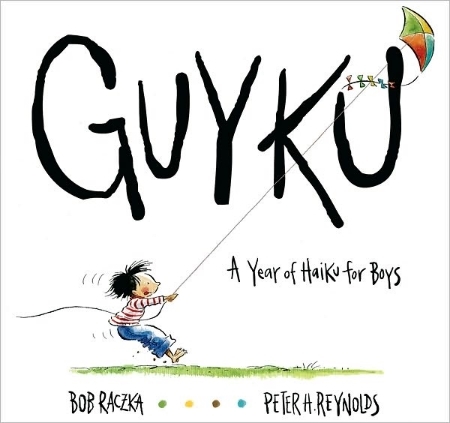
Guyku: A Year of Haiku for Boys

Written by Bob Raczka | Illustrated by Peter H. Reynolds


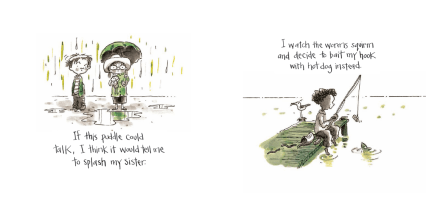
When you’re a guy sometimes the best moments in life are just that—moments. Observing insects or splashing in puddles doesn’t need pages of explanation. And feelings?—Yuck! But still, wouldn’t it be cool to describe these unforgettable moments creatively? Bob Raczka and Peter H. Reynolds have done just that in Guyku, which plucks the essence out of such seasonal activities as kite flying, raking leaves, swatting mosquitos, skipping stones, building snowmen, and more. Each haiku is a small gem that boys (and girls) will recognize and identify with.

celebrate-picture-books-picture-book-review-guyku-fishing

Image copyright Peter H. Reynolds, text copyright Bob Raczka. Courtesy of bobraczka.com

Peter Reynolds’ minimalist pen, ink, and watercolor illustrations highlight the brief poetry while giving each haiku individual boys who are curious, mischievous, determined, happy, and full of fun.Guyku stands up to multiple readings and will spark an appreciation for the joy in life’s fleeting moments.

Ages 4 – 8

Houghton Mifflin Books for Children, New York, 2010 | ISBN 978-0547240039

Discover so many more books by Bob Raczka on his website!

Meet Peter H. Reynolds and view a gallery of art and books on his website!

Haiku Day Activity

CPB - Haiku Day Bookmark (2)

Cute-as-a-Button Bookmark


Sometimes you just can’t finish a book in one sitting, or you want to mark your favorite poem so you can go back and read it again and again. This bookmark is easy to make and will keep your page in style.

Supplies

  • Fleece or felt in your favorite color
  • Buttons of different colors and/or styles
  • Pony beads in various colors
  • Fabric or strong glue
  • Scissors

Directions

  1. Cut a strip of fleece or felt 1 – 1½ inches wide and 4 – 5 inches longer than the book you want to use it in.
  2. Glue the buttons onto the top of the bookmark
  3. Cut ¼ inch-wide by 1 inch-long fringe strips at the bottom of the fleece or felt.
  4. Slide pony beads onto the fringe strips (you may need to pull the fleece or felt through the bead with a tweezers)

February 24 – National Tortilla Chip Day

celebrate-picture-books-picture-book-review-round-is-a-tortilla-a-book-of-shapes-cover-2

About the Holiday

If the tortilla-making machine had produced perfect rounds every time back in the 1950s, the world may never have known the crunchy deliciousness of tortilla chips. Back in the day, Rebecca Webb Carranza and her husband owned the El Zarape Tortilla Factory in Los Angeles, California and were one of the first to automate tortilla production.

Instead of wasting the odd-shaped ones, Carranza cut them into triangles, fried them, and sold them in bags.They were a hit! People all over began enjoying them dipped in salsa and guacamole and smothering them in cheese. In 1994 Carranza was honored with the Golden Tortilla Award for her contributions to the Mexican food industry, and in 2003 Texas named the tortilla chip the official state snack!

Round is a Tortilla: A Book of Shapes

Written by Roseanne Thong | Illustrated by John Parra


“Round are sombreros. / Round is the moon. / Round are the trumpets that blare out a tune. Round are tortillas and tacos too. / Round is a pot of abuela’s stew. / I can name more round things can you?” With wonderful, lyrical verses, Roseanne Thong introduces children to the shapes—circles, squares, triangles, rectangles, ovals, stars, and more—that make up their multicultural world.

celebrate-picture-books-picture-book-review-round-is-a-tortilla-squares

Image copyright John Parra, 2013, text copyright Roseanne Thong, 2013. Courtesy of Chronicle Books.

Here are round chiming campanas and nests full of swallows, square ventanas for peering through and clocks for telling time. Rectangles are cold paletas to eat on a hot summer day and the ice-cream carts that deliver them, and triangles make tasty quesadillas and gliding sailboats. Each verse ends with an invitation for kids to find more shapes around them—an invitation that’s hard to resist!

celebrate-picture-books-picture-book-review-round-is-a-tortilla-triangles

Image copyright John Parra, 2013, text copyright Roseanne Thong, 2013. Courtesy of Chronicle Books.

Rebecca Thong’s bright, fun-to-read verses shine with evocative words that elevate this concept book to a celebration of the sights, sounds, and sensations that make up readers’ lives. Spanish words sprinkled throughout the story enhance the theme of the book and are defined following the text. 

celebrate-picture-books-picture-book-review-round-is-a-tortilla-star

Image copyright John Parra, 2013, text copyright Roseanne Thong, 2013. Courtesy of Chronicle Books.

John Parra’s beautiful folk-art illustrations, which are sure to put a smile on kids’ faces, immerse readers in the daily life of a Latino town. People dance, cook, play games, walk in the park, attend a festival, and more—all while surrounded by colorful shapes. Kids will love lingering over the pages to find all of the intricate details and may well want to learn more about what they see.

Round is a Tortilla is not only a book of shapes, it makes shapes exciting! The book is a wonderful stepping stone to discussions about the places, celebrations, symbols, and decorations found on the pages for students or individuals and would be a welcome addition to any classroom or child’s bookshelf

Ages 3 – 6

Chronicle Books, San Francisco, 2013 | ISBN 978-1452106168 (Hardcover) | ISBN 978-1452145686 (Paperback)

Learn more about Roseanne Thong and her books for children and adults on her website!

View a gallery of books and artwork by John Parra on his website!

National Tortilla Chip Day Activity

CPB - Tortilla chips (2)

Homemade Baked Tortilla Cinnamon Chips

Ingredients

  • 2 10-inch flour tortillas
  • ¾ Teaspoon Cinnamon
  • 2 ½ Tablespoons Sugar
  • Butter

Directions

  1. Preheat oven to 350 degrees
  2. Combine the cinnamon and the sugar in a bowl
  3. Butter the tortillas
  4. Sprinkle the tortillas with the cinnamon sugar mixture
  5. Cut the tortillas into 8 pieces
  6. Place pieces on a baking sheet
  7. Bake in 350-degree oven for 12 – 15 minutes
  8. Chips will become crispier as they cool.

Makes 16 chips

celebrate-picture-books-picture-book-review-round-is-a-tortilla-a-book-of-shapes-cover-2

You can find Round is a Tortilla: A Book of Shapes at these booksellers

Amazon | Barnes & Noble | Books-a-Million | IndieBound


February 21 – International Mother Language Day

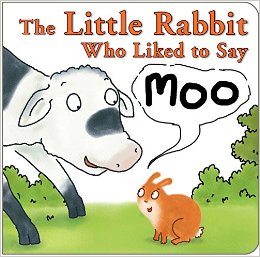
CPB - The Little Rabbit Who Liked to Say Moo

About the Holiday

Established in 1999 by UNESCO, Mother Language Day celebrates cultural diversity and promotes the protection of endangered languages. Events include multicultural festivals where all voices are heard and social cohesion, cultural awareness, and tolerance are honored.

The Little Rabbit Who Liked to Say Moo

By Jonathan Allen


Little Rabbit sits in the farmer’s field listening to the animals talk and learning their languages. “Moo,” Little Rabbit repeats, “Moo.” A calf responds and questions Little Rabbit. It turns out that Little Rabbit knows and likes many languages. Calf joins Rabbit in the fun. “Baa,” they say together, which summons Lamb. The three friends decide to try “Oink.” With each new noise, the group expands and enthusiastically continues their linguistic experiment. Finally, after a rousing chorus of “Quack,” Duckling asks if quack is their favorite animal sound. Each animal then reveals with pride that, while they like other noises, they prefer their own. But what about Little Rabbit, who doesn’t “have a big noise?” Will Rabbit’s answer begin the game again?

The wide-eyed, smiling animals in this adorable picture book by author-illustrator Jonathan Allen perfectly captures the joyous camaraderie of good friends discovering the world together. The book is a wonderful introduction for young children to the ideas of inclusiveness and self-esteem. Kids will love the repetition as each new animal joins the group, and will have as much fun saying each sound as Little Rabbit and the other farmyard friends.

Ages 2 – 6

Boxer Books Limited, 2008  ISBN 978-1910126257

International Mother Language Day Activity

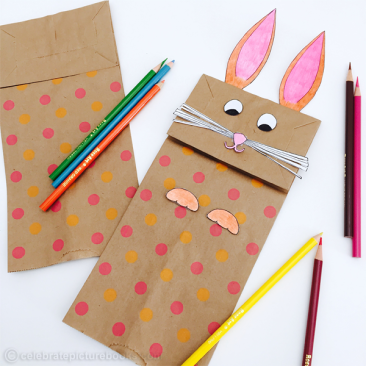
CPB - Rabbit Puppet made

Make a Rabbit Puppet

Supplies

  • Rabbit Puppet Template
  • A paper lunch bag
  • Markers, crayons, or colored pencils
  • Cotton Ball
  • Scissors
  • Glue or tape

Directions

  1. Print the Rabbit Puppet template.
  2. Color the parts of the rabbit and cut them out.
  3. Place the flat paper bag on a table with the bottom flap facing you. Glue or tape the eyes, and the nose and whiskers to the bottom flap. Attach the ears, placing the tabs behind the top of the bottom flap. Attach the paws to the body below the bottom flap. Attach the cotton ball tail to the opposite side of the bag.  
  4. When it’s dry, use your puppet to read The Little Rabbit Who Liked to Say Moo again and play along. Let your Little Rabbit try saying “Hi” in the languages below.

Learn to Say “Hello” in Other Languages

  • Spanish: Hola (oh-la)
  • French: Bonjour (bon zhur)
  • German: Hallo (hă-lo)
  • Chinese: Nin Hao (nee hah)
  • Filipino: Kamusta (ka-muh-stah)
  • Italian: Ciao (chi-ow)
  • Japanese: Kon’nichiwa (ko-nee-chee-wah)
  • Turkish: Merhaba (mĕr-hah-bah)