Each year since 1967 Hans Christian Andersen’s birthday has served as the date for Children’s Book Day. The International Board on Books for Young People (IBBY), a non-profit organization founded in Zurich, sponsors the day to promote a love of reading. Seventy-five National Sections around the world alternate in hosting the event. The host for 2025 is The Netherlands, and this year’s theme is “The Freedom of Imagination.” Each year a prominent author and illustrator from the sponsoring country prepare materials used to raise awareness of books and reading. Rian Visser wrote this year’s message and the poster was designed by Janneke Ipenburg. To learn more about the initiative, download digital materials, and learn about how children can enter the international drawing competition, visit the IBBY website. Today’s story that tells the tale of a young girl writing a story is a perfect example of the eternal power and influence of children’s books.
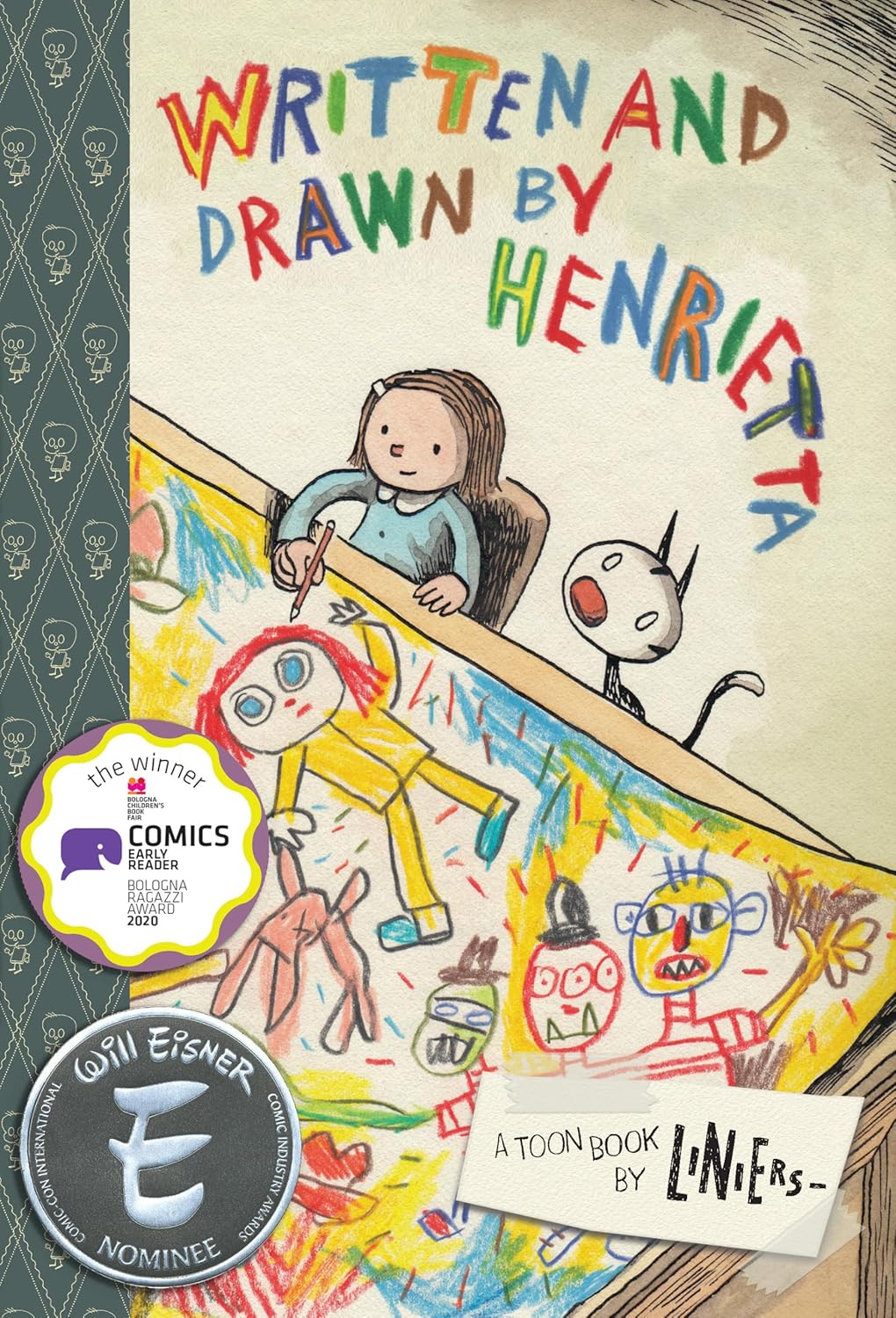
Written and Drawn by Henrietta
By Liniers
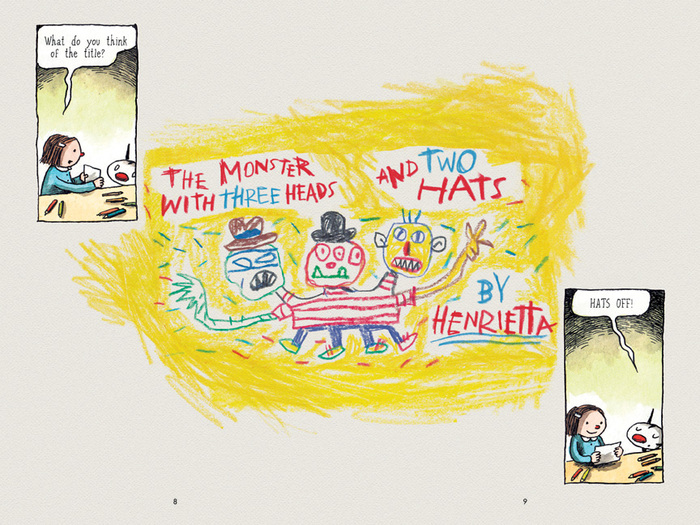
Henrietta’s mom gives her a new box of colored pencils, which Henrietta says is “as close as you can get to owning a piece of the rainbow.” She sits down to draw her own book and titles it “The Monster with Three Heads and Two Hats.” She begins with an illustration of a little girl, Emily, in bed at night. “I’m scaring myself…,” she thinks. Her thought is played out in her next page which shows Emily asking her stuffed rabbit if it will sleep with her because she’s scared of an unexplained Creak, Creak.
“Hmm…What’s that noise?” ponders the young writer. Her fears make it to the page—Creeak…Creeak…Thump…Crash…Boom. What are those noises, my favorite? Emily asks, her eyes now wide. The Noises! They’re getting closer!!
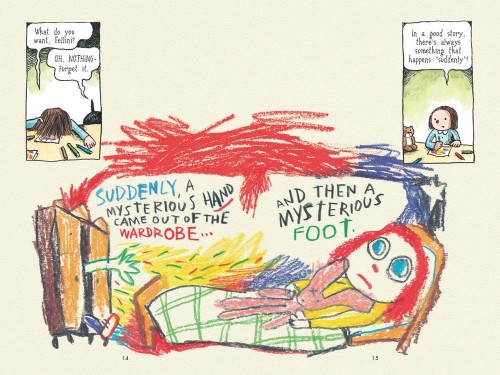
Henrietta knows that in a good story something always happens “suddenly,” and so she draws a mysterious hand and a mysterious foot emerging from Emily’s wardrobe. The plot thickens and finally the full terrifying monster with three heads pops out of the wardrobe.
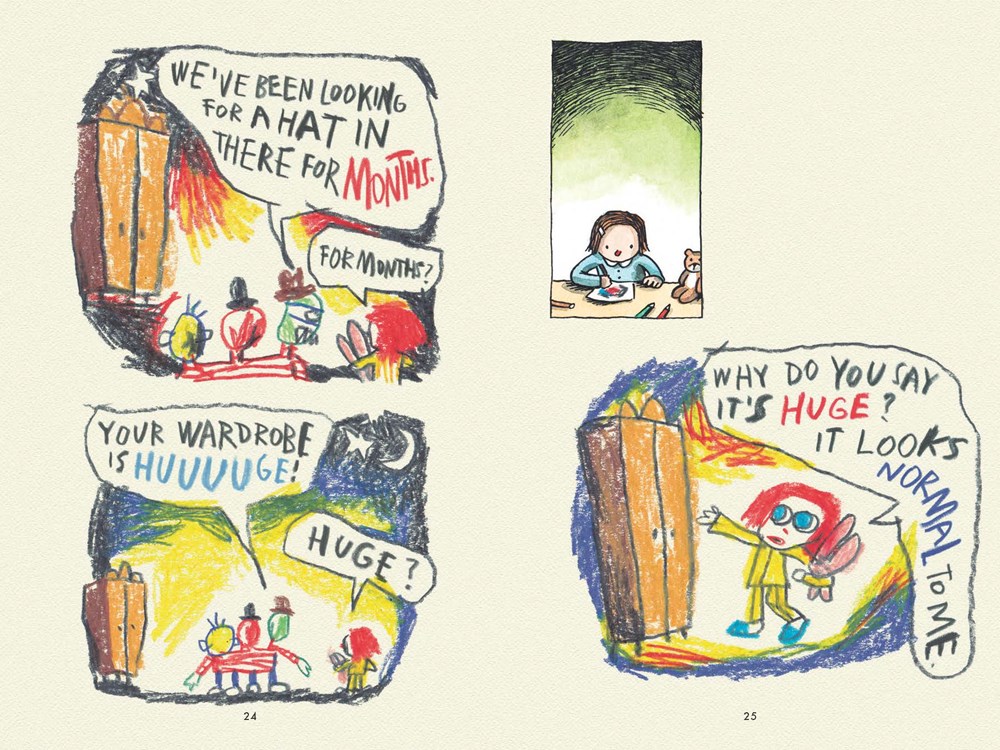
They acquire names from Henrietta’s imagination—Huey, Dewey, and Louie Bluie. . She is stuck for a bit as to how to go on, then gives Emily a question: What were you doing inside my wardrobe? The monster answers that it is looking for a hat. Emily joins them in their search, entering her wardrobe. She’s aghast to find that it is full of…clothes! (The wardrobe had been made in Narnia, the well-read Henrietta tells her cat, Fellini).
When the monster and Emily wonder which way to go, they meet a direction-giving mouse, and the story takes off—even Henrietta can’t wait to see what happens. She draws a huge pile of hats (she’s learned about “hat-o-logy” from the encyclopedia—the printed version!). The creature’s two heads with hats begs the third head to choose a hat before “the monster” shows up. Emily is terrified again—Another monster? What has Henrietta concocted this time? A monster with one head and three hats! This horrible beast suddenly appears and chases the crew through the wardrobe. Everyone is shouting Aaaaaaaaaaa—even the author.
Emily and the first monster lose the tremendous beast, ask the direction-giving mouse how to escape, and burst out of the wardrobe just in time. Henrietta thinks the story should have a happy ending, and before the monster with three heads and now three hats flies out the window, they give Emily a present. What could it be? Henrietta is so curious! It’s a wonderful hat, of course!
The End
“Now,” Henrietta says, “to find a publisher!”
This classic Toon Book by Liniers is a wonder as it reveals the inner-workings of children’s imaginations and the spontaneous nature of their brilliant creativity. Henrietta’s thought process as she conjures up her story is shown in neat comic-style panels with speech bubbles, while her story is depicted in colorful kid-like drawings and dialogue written in all capital letters. This interplay between the young artist/writer and her work enhances the fun, suspense, and surprise of this story-within-a-story.
Ages 5 and up
TOON Books, an imprint of RAW Junior, LLC, 2015 | ISBN 978-1935179900
International Children’s Book Day Activity
Create Your Own Story
It’s so much fun to let your imagination fly! Use this printable Comic Style Page to create a story as unique as you are!
You can purchase Written and Drawn by Henrietta from these booksellers
Do you love nothing more than finding new words and using them in conversation or in your own writing? Does completing a crossword or word search puzzle make for the perfect day? Is a pun your favorite type of joke? Then you’re a word nerd! Today’s holiday highlights the importance of language and the fun of learning and expressing yourself precisely with new or uncommon words. To celebrate, why not gather friends or family and play a word-based game like Scrabble, Tapple 10, Charades, or—my favorite—Boggle!
Calvin Gets the Last Word
Written by Margo Sorenson | Illustrated by Mike Deas
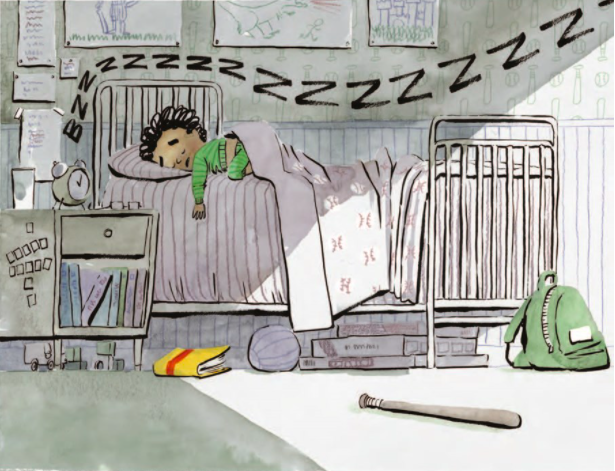
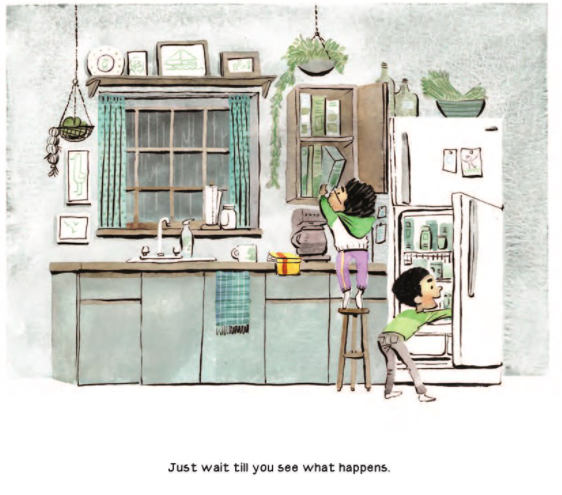
The moment Calvin wakes up, he grabs his dictionary and heads to the kitchen for breakfast. While Calvin may be well-rested, his dictionary tells readers that it is tired. “Why? Because Calvin loves words—I mean REALLY loves words,” the dictionary says. Calvin won’t rest until he’s found the perfect “word for everything—especially his rascally brother.” At breakfast, Calvin takes a big gulp of milk. It’s just the moment his brother’s been waiting for to tell his super funny joke. You can imagine what happens—and why the dictionary’s page containing the word revenge is soaked.
Image copyright Mike Deas, 2020, text copyright Margo Sorenson, 2020. Courtesy of Tilbury House Publishers.
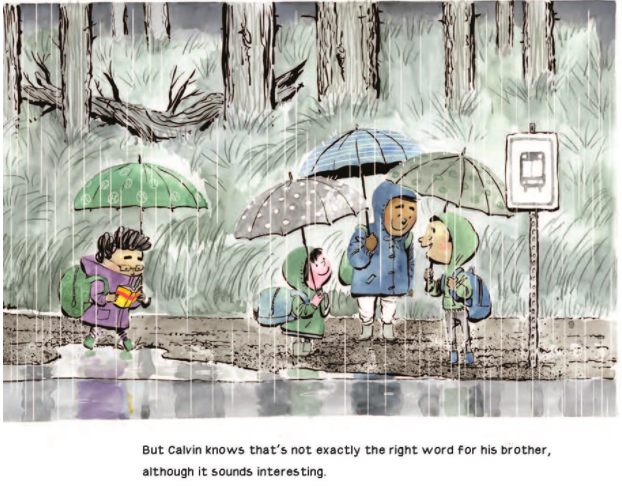
But is revenge the right word for Calvin’s brother? Not quite. On the school bus as the kids are tossing a backpack, talking, laughing, and hanging over the seats, Calvin’s dictionary describes it as mayhem, but that word doesn’t completely describe his brother either. As Calvin struggles in geography class and passes notes during library story time, his dictionary helps describe the mood, but the words it chooses don’t really apply to his brother. On the way home, though, Calvin does discover a good word for himself when he stands up to a bully and helps a kindergartener.
Image copyright Mike Deas, 2020, text copyright Margo Sorenson, 2020. Courtesy of Tilbury House Publishers.
At Little League practice, the dictionary reveals that Calvin “loves to crush the ball during batting practice, sending it over the fence. That’s why the page that reads pulverize has grass stains on it.” Could pulverize be the right word for his brother? While Calvin thinks it could be fun, it’s not exactly right.
Image copyright Mike Deas, 2020, text copyright Margo Sorenson, 2020. Courtesy of Tilbury House Publishers.
That night dinner turns into a repeat of breakfast—only in broccoli green. When Calvin goes to bed, he sits for a while, thinking. Then he grabs his exhausted dictionary and a glass of water and sneaks into his brother’s room. The dictionary thinks it knows what’s going to happen and riffles through its pages to find the right word, unconcerned whether it stays dry or not. And suddenly it opens to the perfect word! But wait, that word doesn’t fit now because the brothers are laughing. The dictionary tries flipping to another page and a better word, but Calvin has it beat as he turns the pages and discovers the exact right word to describe his brother. What are all of these words? Come flip through Calvin Gets the Last Word yourself to find out!
Image copyright Mike Deas, 2020, text copyright Margo Sorenson, 2020. Courtesy of Tilbury House Publishers.
In her funny and unique mashup of sibling rivalry and vocabulary, Margo Sorenson offers kids an engaging story of the singular type of love brothers share uncovered little by little through word-building. Calvin’s dictionary makes a sincere and charming guide through high-interest words that lend panache and nuance to events throughout Calvin’s day even if they don’t quite describe his brother. Astute kids may notice that the words the dictionary chooses for Calvin’s brother proves his loyalty to his favorite reader. Calvin’s spewed milk, whispered secrets, and home run batting add up to a real kid that readers will love. The words that the dictionary finds are fun to learn and say and will spark an enthusiasm in readers to do their own flipping through the dictionary and thesaurus. Sorenson’s endearing ending rings true with a word kids are sure to embrace.
Mike Deas’ glasses-wearing and sweat suit-clad Calvin, whose dictionary is always at the ready to define his experiences, is a character readers will respond to. Images of the sprayed milk and broccoli, rockin’ school bus, library story rug, and baseball field are full of familiar details and plenty of action. As Calvin prepares to play his trick on his brother Deas gives kids a cutaway view of the house from above, letting them tiptoe through the maze of rooms with Calvin. The final scenes of the brothers checking out the dictionary together in the light of a bedside lamp is sibling devotion at its best.
A delightful family story that can stir a love of language, Calvin Gets the Last Word would be a favorite addition to home libraries. The book is highly recommended for school and classroom bookshelves to enhance language arts, writing, grammar, and vocabulary lessons and for public library collections as well.
Ages 6 – 8
Tilbury House Publishers, 2020 | ISBN 978-0884488224
Discover more about Margo Sorenson and her books on her website.
To learn more about Mike Deas, his books, and his art, visit his website.
National Word Nerd Day Activity
“Big Words” Word Search
Knowing and using a wide range of words allows you to express yourself in exact—and often—fun ways. Find the 26 “big” words—one for each letter of the alphabet—in this printable word search puzzle.
Today we celebrate those lowercase letters that make up a predominance of our sentences (and nearly all of our texting). The lowercase letter has a proud history, dating back to the earliest development of script and writing. The terms “lowercase” and “uppercase” come from the era of the printing press, when individual letters were inserted by hand into plates that were then inked and pressed onto paper. The tiles etched with each letter were kept in trays conveniently located for the printer to set them into the plates with capital letters found in the upper case and small letters arranged in the lower case. To learn more about the history of our script was developed, visit My Modern Met. You’ll find rules on using lowercase and uppercase letters at Gammerly. And to discover the fun you can have with the letters of the alphabet, read about today’s book below and meet its creators!
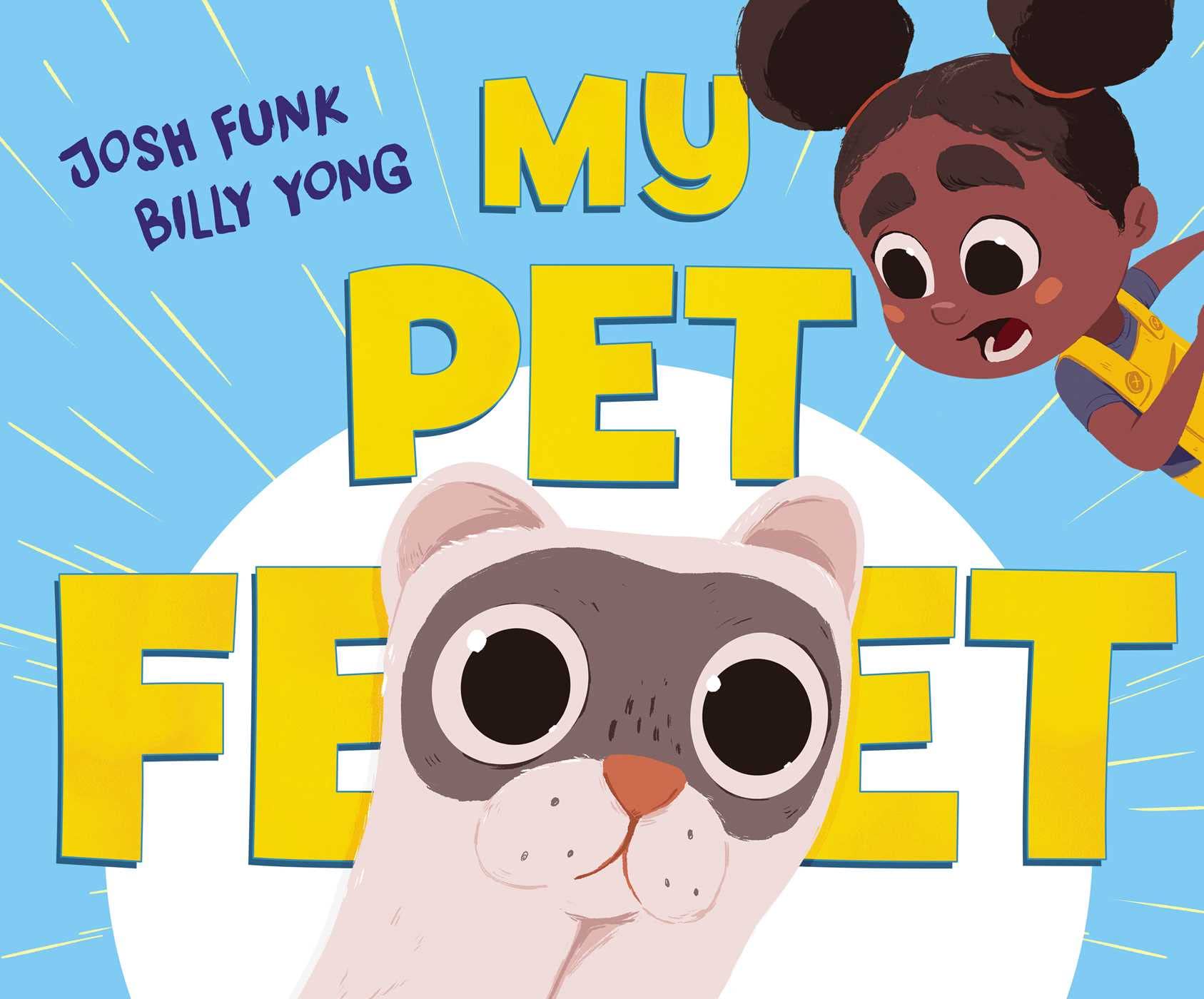
My Pet Feet
Written by Josh Funk | Illustrated by Billy Yong
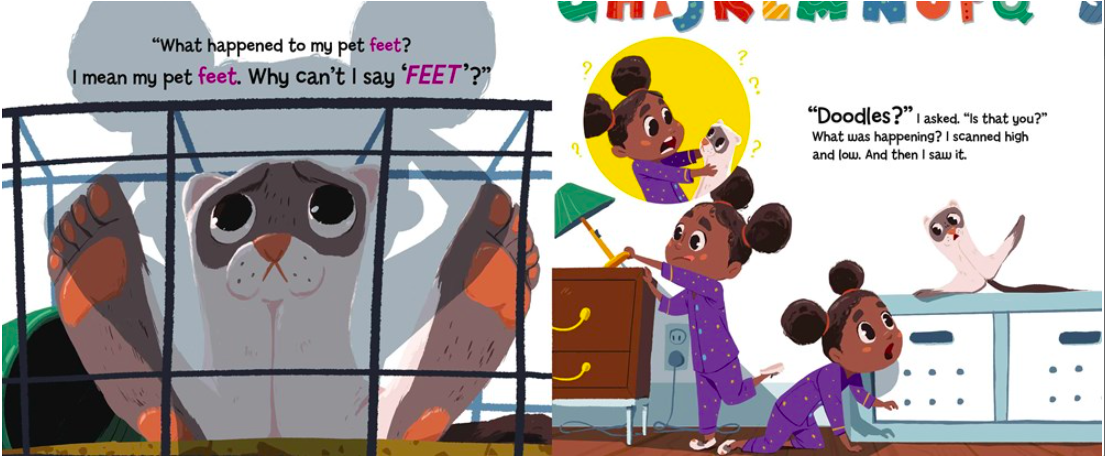
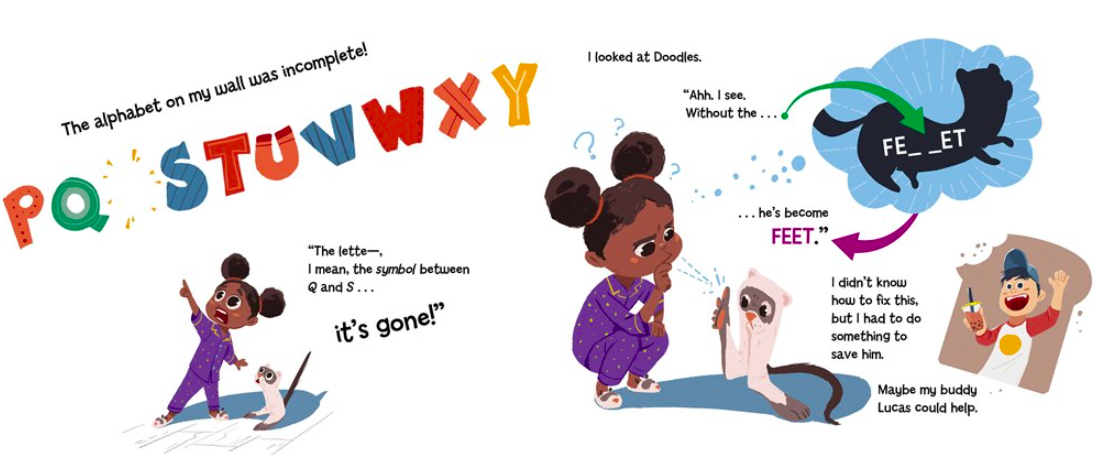
A little girl wakes up on a glorious morning. The bees are buzzing and the palm tees (no, it’s not a typo, you’ll see…) outside her window are standing tall. First job of the day is to feed her pet ferret, Doodles. She goes to his cage only to find two very long feet and a very sad face looking up at her. “‘What happened to my pet feet?’” she cries. “‘I mean my pet feet. Why can’t I say ‘FEET’?’” She looks all over her room for an answer and then spies something suspicious. Her alphabet banner is missing the ‘R.’ She quickly assesses the situation and realizes that without the letter R, her beloved pet has become simply FEET. Immediately, she decides she must do something and calls her best friend Lucas to help her.
Image copyright Billy Yong, 2022, text copyright Josh Funk, 2022. Courtesy of Simon & Schuster Books for Young Readers.
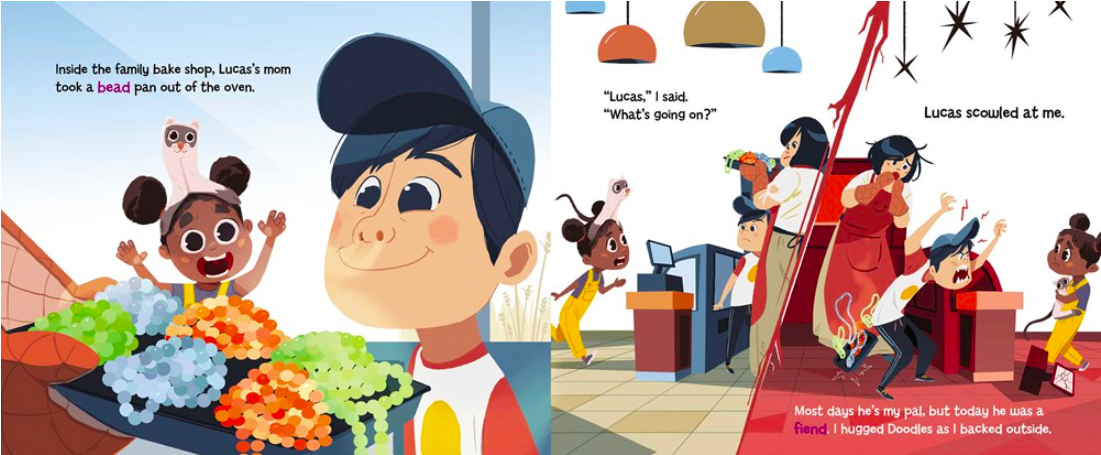
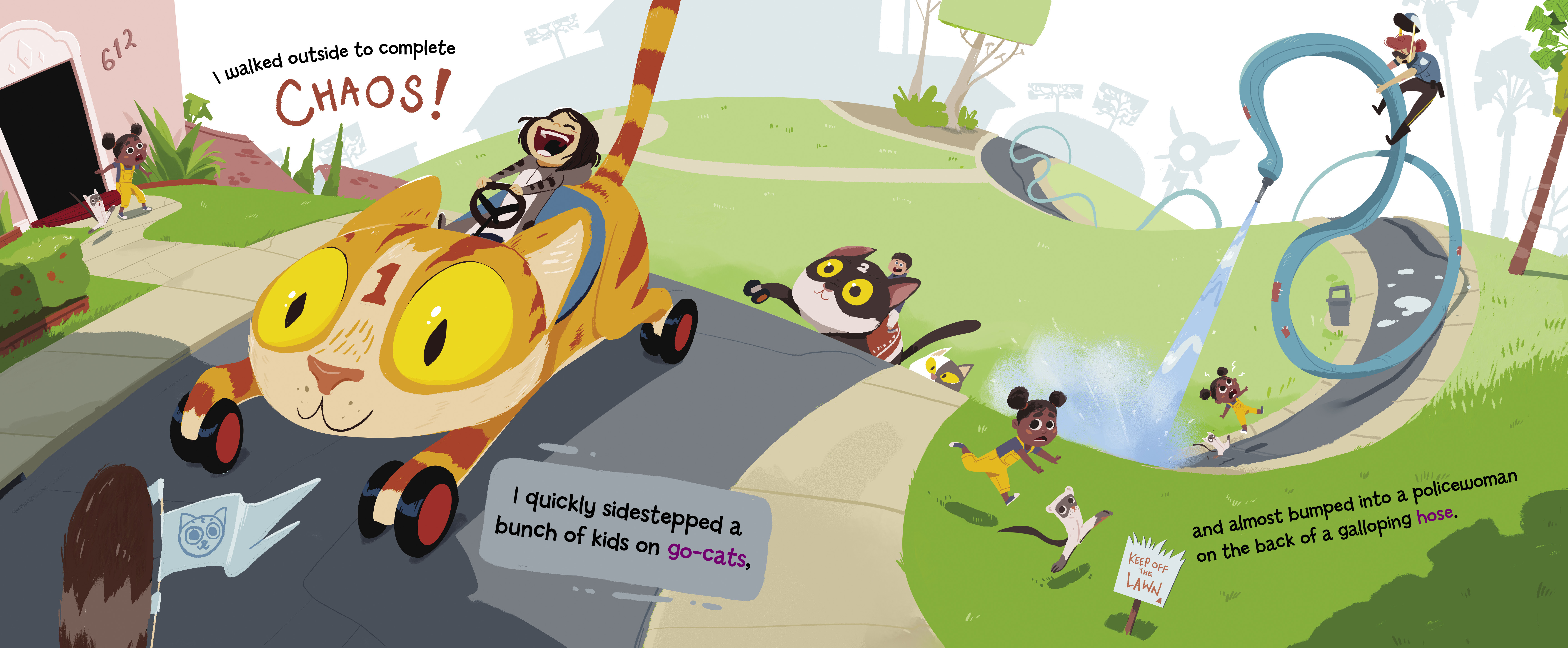
But when she left the house, she discovered that the missing R wasn’t just affecting Doodles, but the whole town. On the way to find Lucas at his mom’s bake shop, she had to avoid “a bunch of kids on go-cats” and a policewoman on the back of a galloping hose.” Then when she found Lucas, her bestie had turned into a fiend. What was worse is that no one acted like anything was wrong.
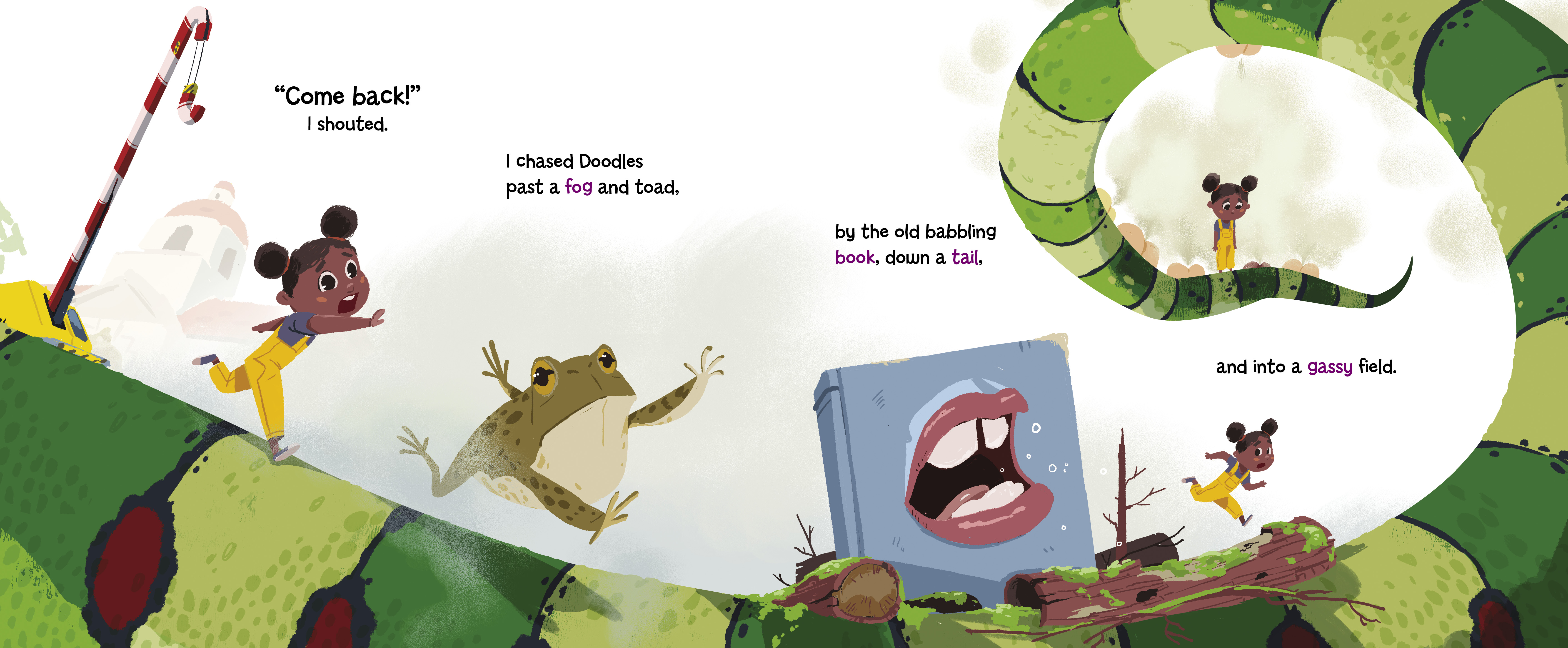
Everywhere she went there was pandemonium, strange hybrid creatures, and weird machines. The girl wanted to find out “what happened to the eighteenth symbol of the alphabet. Could someone have taken it? “But who? And why? …I don’t want to have pet feet until the end of time!” Distressed to hear this, Doodles ran away, and even though she chased him “by the old babbling book, down a tail, and into a gassy field, the girl couldn’t find him.
Image copyright Billy Yong, 2022, text copyright Josh Funk, 2022. Courtesy of Simon & Schuster Books for Young Readers.
But then, faintly in the distance, she heard familiar footsteps and followed the sound until she found him at the seashoe …ummm…at the beach, which was not quite the way it used to be. Still, she found Doodles and apologized for hurting his feelings. He gave her a big hug, but then was off again—this time into the sea. The girl dove in too. Could Doodles be leading them to the answer for the missing R’s? Could life eally etun to nomal … ummm … Could life actually go back to the usual? To find out, jump in and paddle along! You don’t want to miss the supising esolution … I mean the astounding ending!
Image copyright Billy Yong, 2022, text copyright Josh Funk, 2022. Courtesy of Simon & Schuster Books for Young Readers.
In My Pet Feet, Josh Funk has carefully crafted a grammatical mystery that will keep readers (both kids and adults) marveling over the cleverness of each word transformation and how they add to the richness of the story. As the little girl races to restore Doodles to his normal cuddly state, readers become totally immersed in the laugh-out-loud, fantastical R-less world even as they empathize with her dilemma. The pitch-perfect ending comes as a real surprise, one that is sure to please readers of all ages.
Perfectly matched to Funk’s comedic talents is new picture book bright light Billy Yong, who brings a fresh, vibrant, and hilarious sense of humor to this story. Readers will want to linger over every page as Yong infuses each spread with a wealth of astoundingly clever details in depicting not only the R-less words provided in the story but in creating a whole town and outlying regions in which every element is flawless. Yong’s illustrations set up an irresistible game of search-and-find for all the visual puns, and the before and after images of the town make for an engaging find-the-differences puzzle.
A joy from beginning to end, My Pet Feet charms on many levels. The book is laugh-out-loud fun for the whole family as well as a way to engage kids in lessons on the alphabet, sound recognition, spelling, and grammar for teachers. Both avid and reluctant readers will love the silliness that makes this a must-have addition to all home, classroom, school, and public library collections
Ages 4 – 8
Simon & Schuster Books for Young Readers, 2022 | ISBN 978-1534486003
I’m thrilled to be talking with Josh Funk and Billy Yong today about My Pet Feet. So put up your feet and get ready to learn about the amazing journey this story took from an initial idea to an instant classic!
Meet Josh Funk
Credit Carter Hasegawa
Josh Funk writes silly stories such as the Lady Pancake & Sir French Toast series (including the forthcoming The Great Caper Caper, November 15, 2022); the It’s Not a Fairy Tale series (including the forthcoming It’s Not the Three Little Pigs, October 1, 2022); the How to Code with Pearl and Pascal series (including How to Code a Sandcastle and How to Code a Rollercoaster); the A Story of Patience & Fortitude series in conjuction with the New York Public Library (including Where Is Our Library? and Lost in the Library); Dear Dragon, Albie Newton, Pirasaurs!, A Night at the Bookstore: A Barnsie & Noble Adventure, and Dear Unicorn, coming in the fall of 2023!
Since the fall of 2015, Josh has visited (or virtually visited) over 500 schools, classrooms, and libraries and he is a board member of The Writers’ Loft in Hudson, MA. Josh grew up in New England and studied Computer Science in school. Today, he still lives in New England and when not writing Java code or Python scripts, he drinks Java coffee and writes manuscripts.
Hi Josh! I’m so excited to be a part of your book tour for this comedic tour de force! Thanks for taking time to chat with me about My Pet Feet and how the story came to be!I’m sure readers would love to know a little about how you wrote this story. How much fun was it to find all of the convertible words? How long did your writing process take?
It started with a typo on my phone (or possibly an autocorrect). I meant to write the word ‘friend’ but it came out ‘fiend’ which led me to wonder … what happened to the R? Why would a friend become a fiend? Did other words also lose their R’s? Did ALL words lose their R’s? Why? And what would the world look like if there were no R’s? What silly illustratable shenanigans would occur in a book written without the letter R?
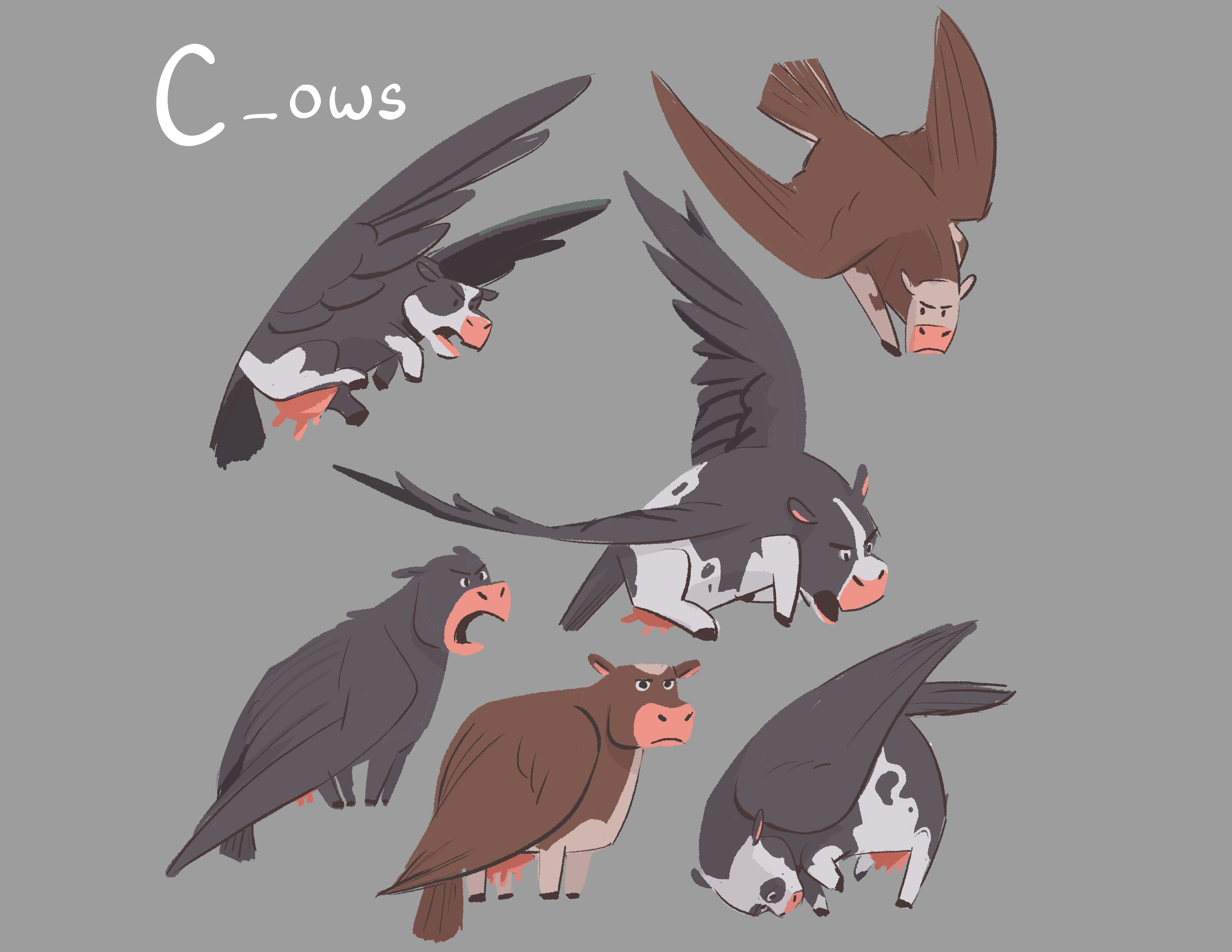
This led me to start searching for words where if you took away an R, it would become another word—especially word pairs that made for funny illustrations. Crows becoming cows. Babbling brooks becoming babbling books. The seashore becoming the seashoe.
But I still also needed a story. I needed a reason, an important reason, that someone needed to investigate the missing R’s … and needed to get them back. And rescuing a pet who had been transformed into something else was the perfect reason.
Once I had the list of words to play with along with the main character’s motivation, everything easily fell into place. JUST KIDDING! I wrote many, many, MANY revisions of this story both before and after it was acquired to get things in the shape they finally ended up in. And truly, nothing really came together until Billy Yong joined the team.
Speaking of Billy, what were your thoughts when you saw his illustrations? Do you have a favorite spread?
As an author of picture books, I think I benefit from not thinking too visually, at least in specifics. By that, I mean, I had no idea what ‘pet feet’ would look like. Would they be human feet (with human toes? Ew.)? Would it be like a rabbit’s foot? Would the foot have a face? I honestly didn’t even bother thinking about these things—I left that for someone else to tackle.
And unsurprisingly, I think Billy’s visual creation of pet feet is amazing! I have no idea how he made ‘pet feet’ look cute. The concept is just so ridiculous, but he managed to pull it off.
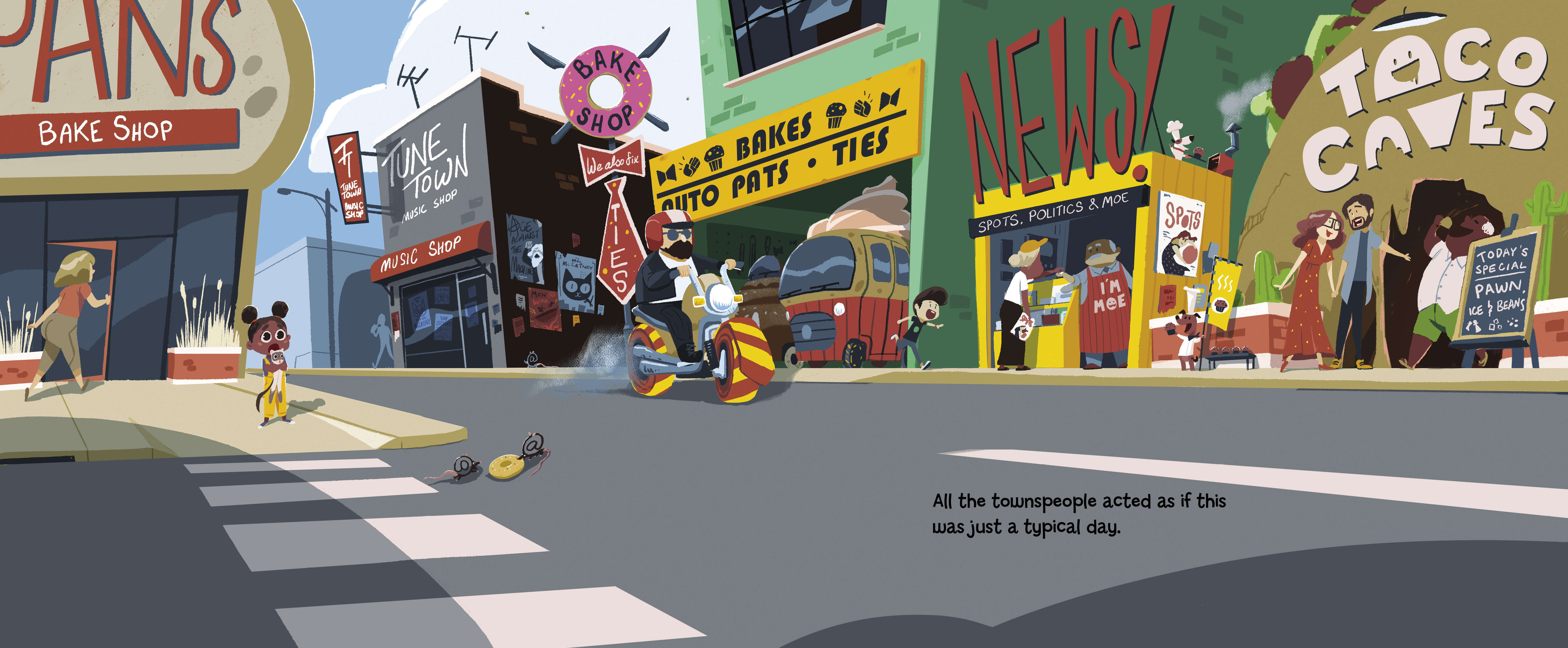
As far as favorite spreads and images, I love the spreads with all the visual gags in the background, like the one in town with everyone acting like it’s just a typical day. But the best, without a doubt, is the gassy field. I had no idea Billy was going to illustrate a bunch of butts farting—but I totally approve. Like I said, I don’t think too visually—I just wrote ‘gassy field’ and assumed someone else would take care of it. And there are no buts about it—Billy did.
Meet Billy Yong
Billy Yong is an illustrator and character designer. Since starting out he has drawn storyboards, engaged in visual development, and has even voice acted for animation, games, and children’s books. When he’s not creating his professional doodlings, he can be found in a cafe drawing or painting in his sketchbook, in his studio developing his personal projects, or in the dojo teaching Japanese swordsmanship. Billy currently lives in sunny Singapore.
To learn more about Billy Yong and view a portfolio of his work, visit his website. You can connect with Billy on Instagram and Twitter.
Hi Billy! I’ve been looking forward to chatting with you since the moment I saw my review copy of this book. First, I want to Congratulate you on your debut picture book! Can you talk about your previous work and how you came to illustrate Josh’s story?
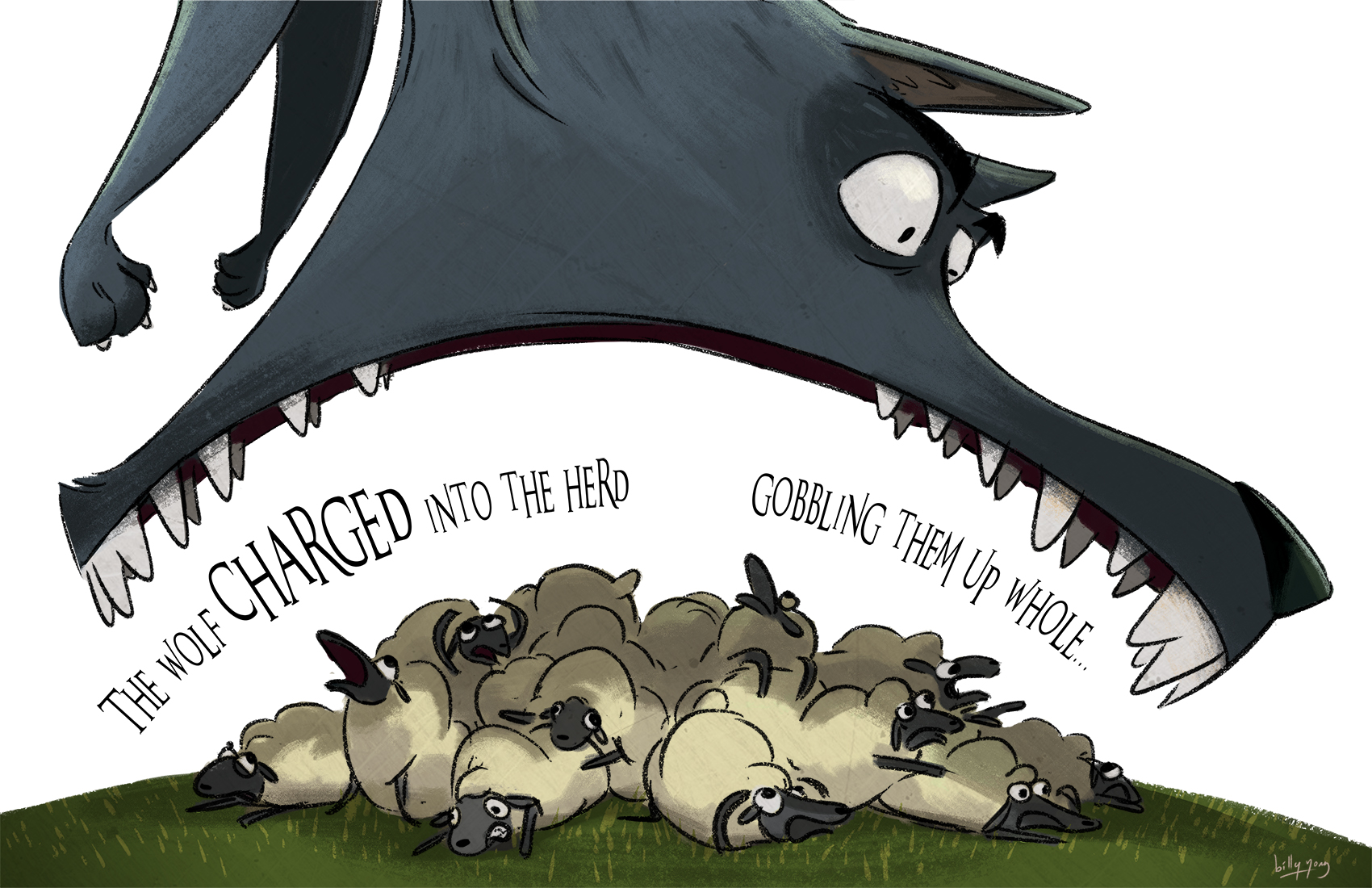
Thanks Kathy! It is such a privilege to be debuting through Josh’s hilarious story. Up till then, most of my illustrative works centered around the Young Adults range. Now that I think about it, one of my most enjoyable school projects that brought me into the kid lit scene was TheBoy Who Cried Wolf.
Copyright Billy Yong
When I was first approached about the project, Josh, Kendra and Chloe (editor and art director respectively) said my sense of humor was what got me the role. At that time, I honestly struggled to understand what they meant, but never say no to great opportunities eh?
What were your first impressions when you read Josh’s manuscript?
Dude, I loved it. Probably not a good thing that I first read it just as I was about to turn in for bed (it was 02:32 in the morning since I live in Singapore). I couldn’t sleep for the next two hours because I was drawing scenes in my head haha.
Your illustrations are so ingenious, even including foreshadowing and visual puns that go beyond or riff on the “r-less” words in the text. I’m sure readers would love to learn a little about your process in creating them.
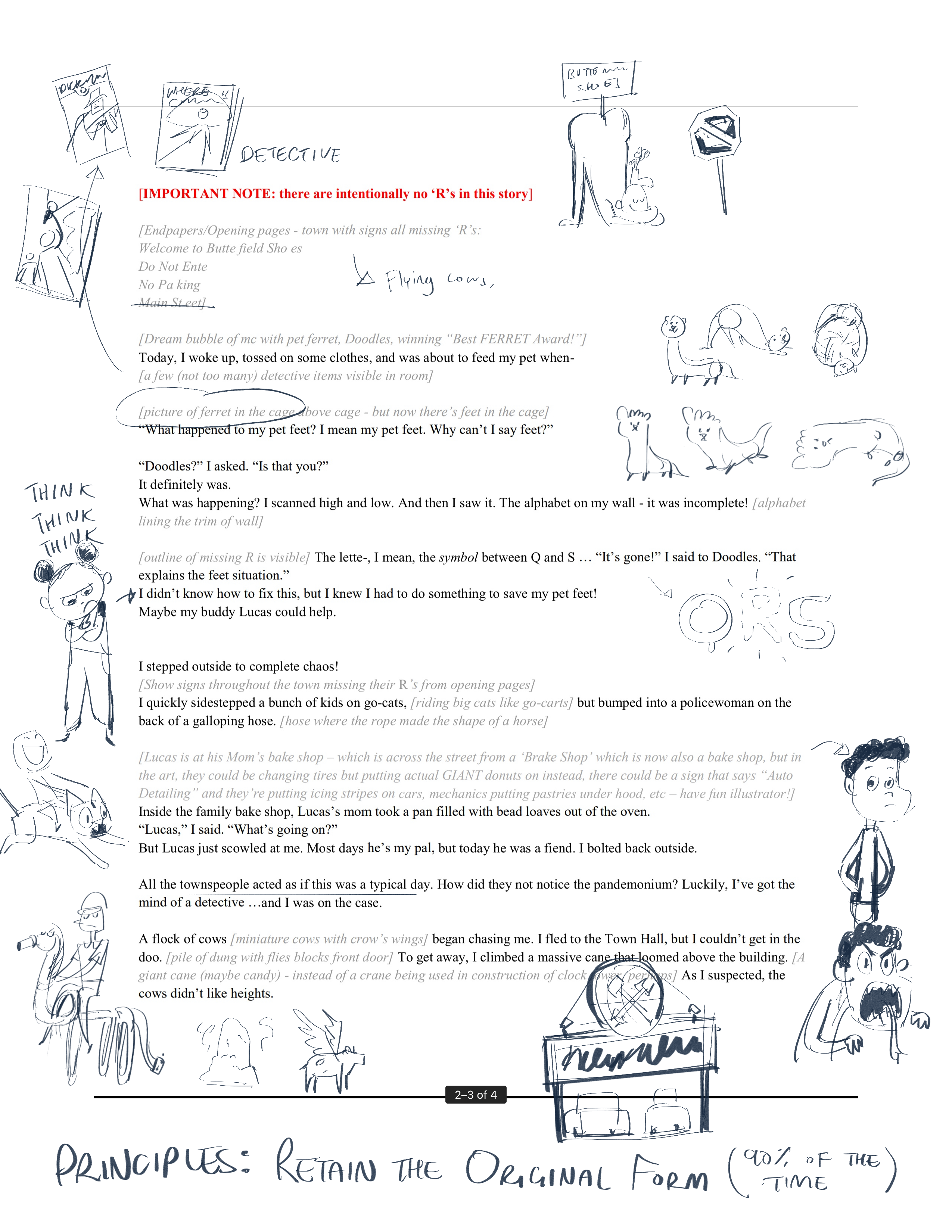
You’re too kind! First off, for anyone wanting to get into illustration, particularly with larger projects like these, understand that the process is more often a back-and-forth than a straight journey. I typically like to doodle on the script when I first read it, it helps to just spill out any ideas onto paper without restraint at the earliest phase.
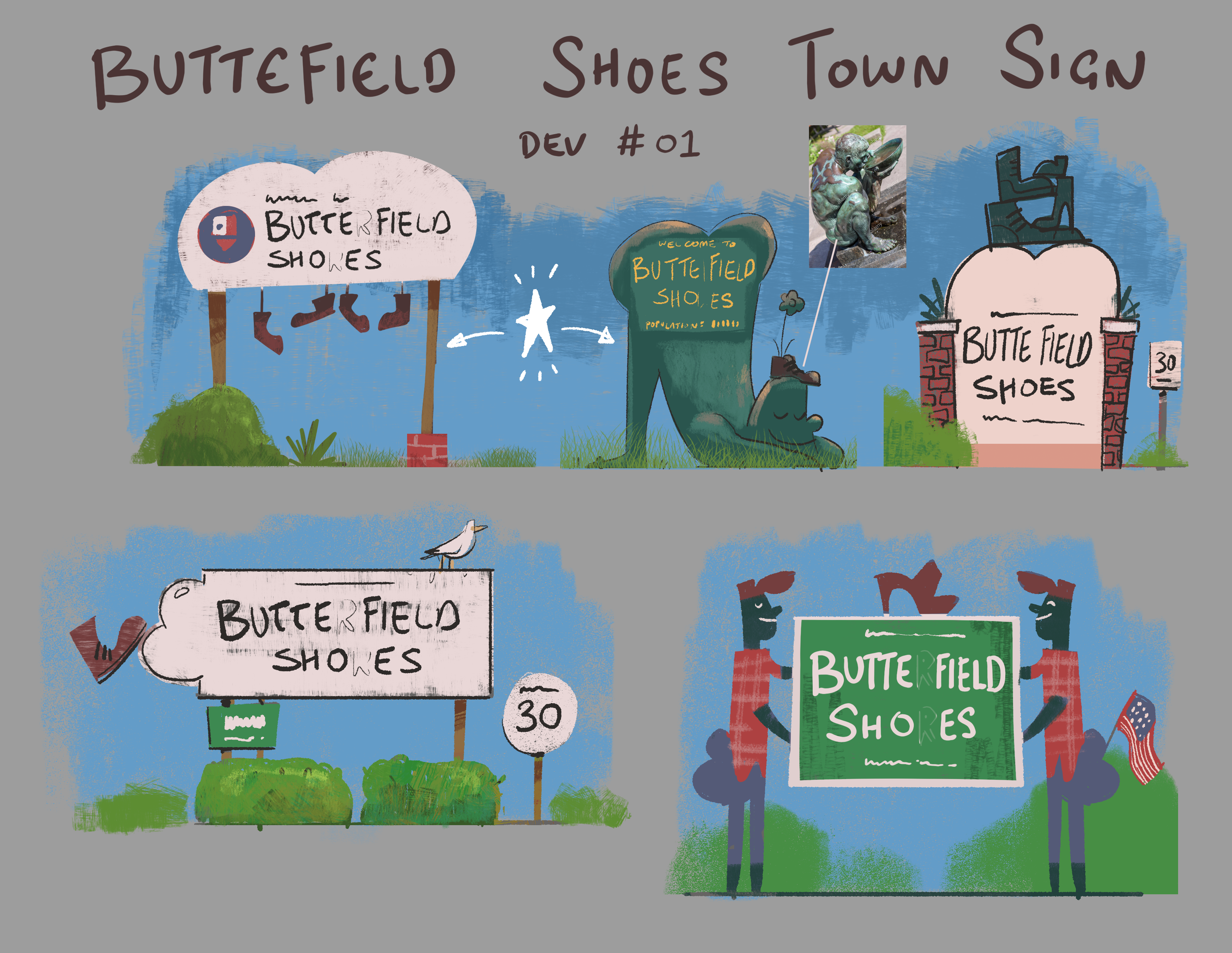
Some of the earliest ideas featured the town name: Butterfield Shores -> Buttefield Shoes. Me being the adult that I am, figured why not a bronze statue, butt resplendent for all to see, with a sign sticking out his bum, and a shoe on his head, with a little flower growing from it.
Image copyright Billy Yong, 2022
Developments of bums are always a joy.
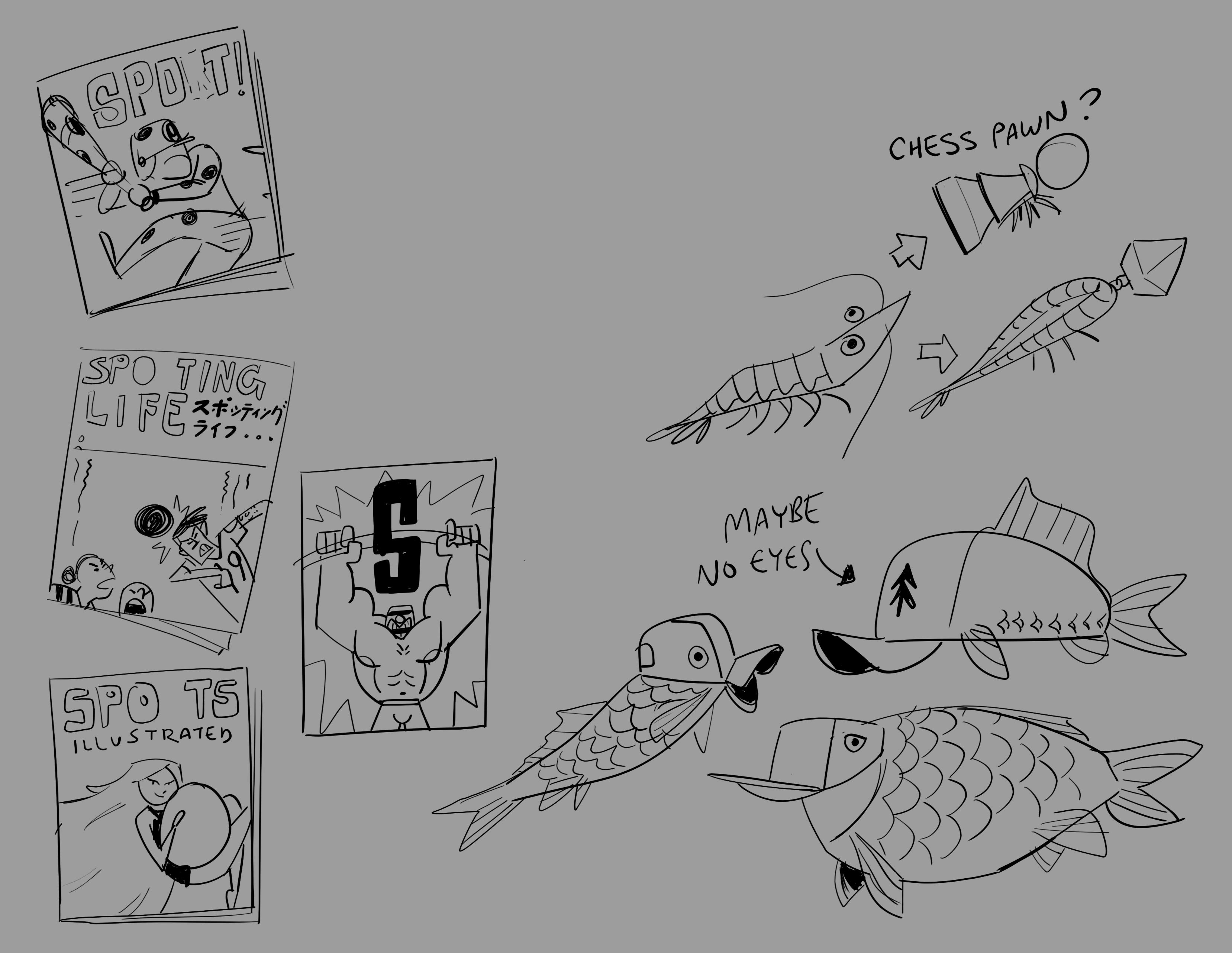
Another was around miscellaneous things we would encounter.
Image copyright Billy Yong, 2022
Even though they were never used, it helped kick off the vibe of this crazy world our heroes lived in.
Back on the main subjects, I’m usually drawn most towards characters, so that’s usually what I like to start off with after doodling on the script.
Image copyright Billy Yong, 2022
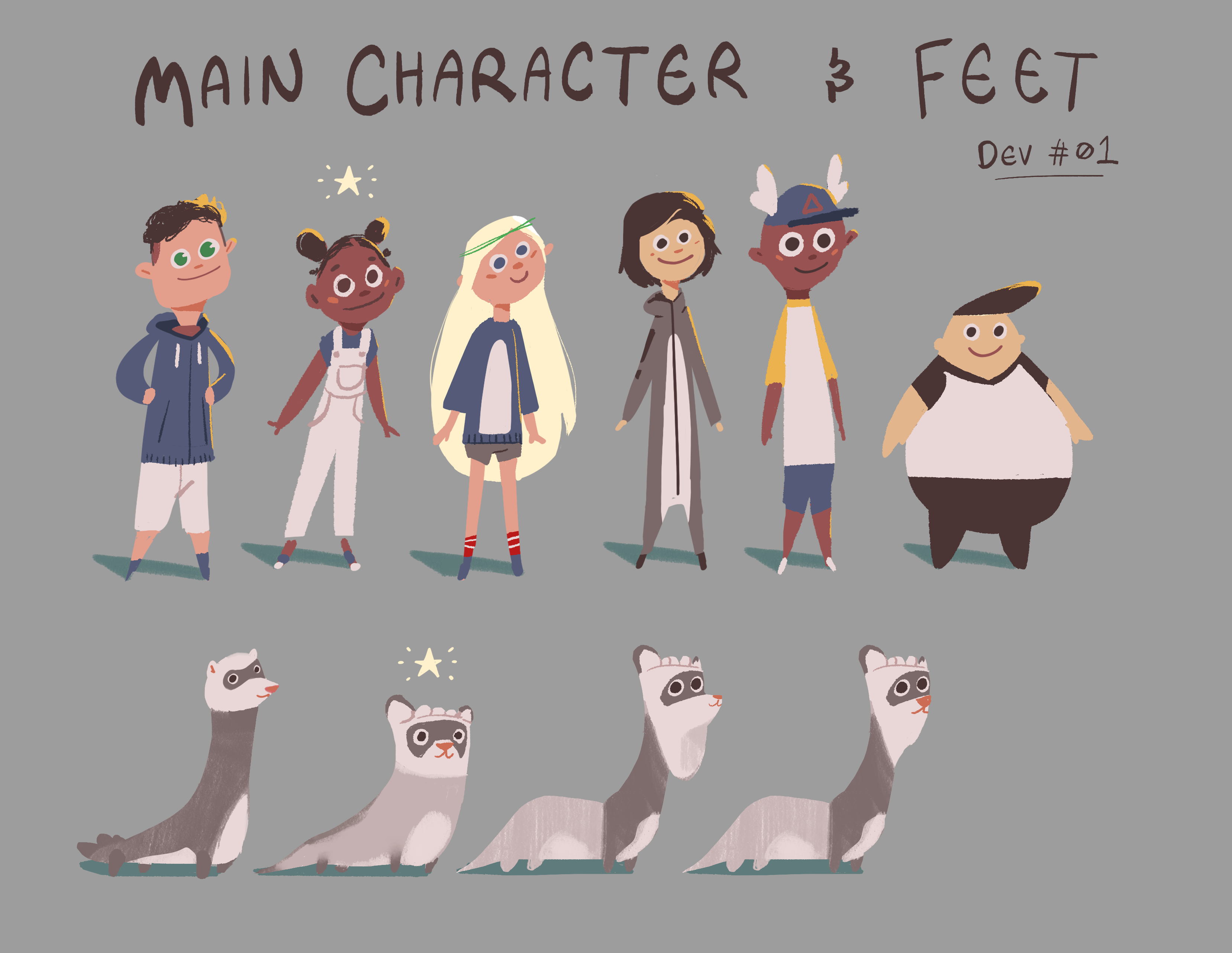
I loved that our main human was pretty nondescript, so that left a lot of room to create a cast of characters. I eventually settled on no.2, since her shapes felt quite a lot like our fe(rr)et, Doodles. Below are some other characters I drew during the development process:
Image copyright Billy Yong, 2022
Image copyright Billy Yong, 2022
When it came to laying out the pages however, my usual methods of working digitally lacked the grand overview and the bravery to push past mistakes. Ironic since the digital medium allows me to undo to my heart’s content, but that also means I don’t see my mistakes and move past them.
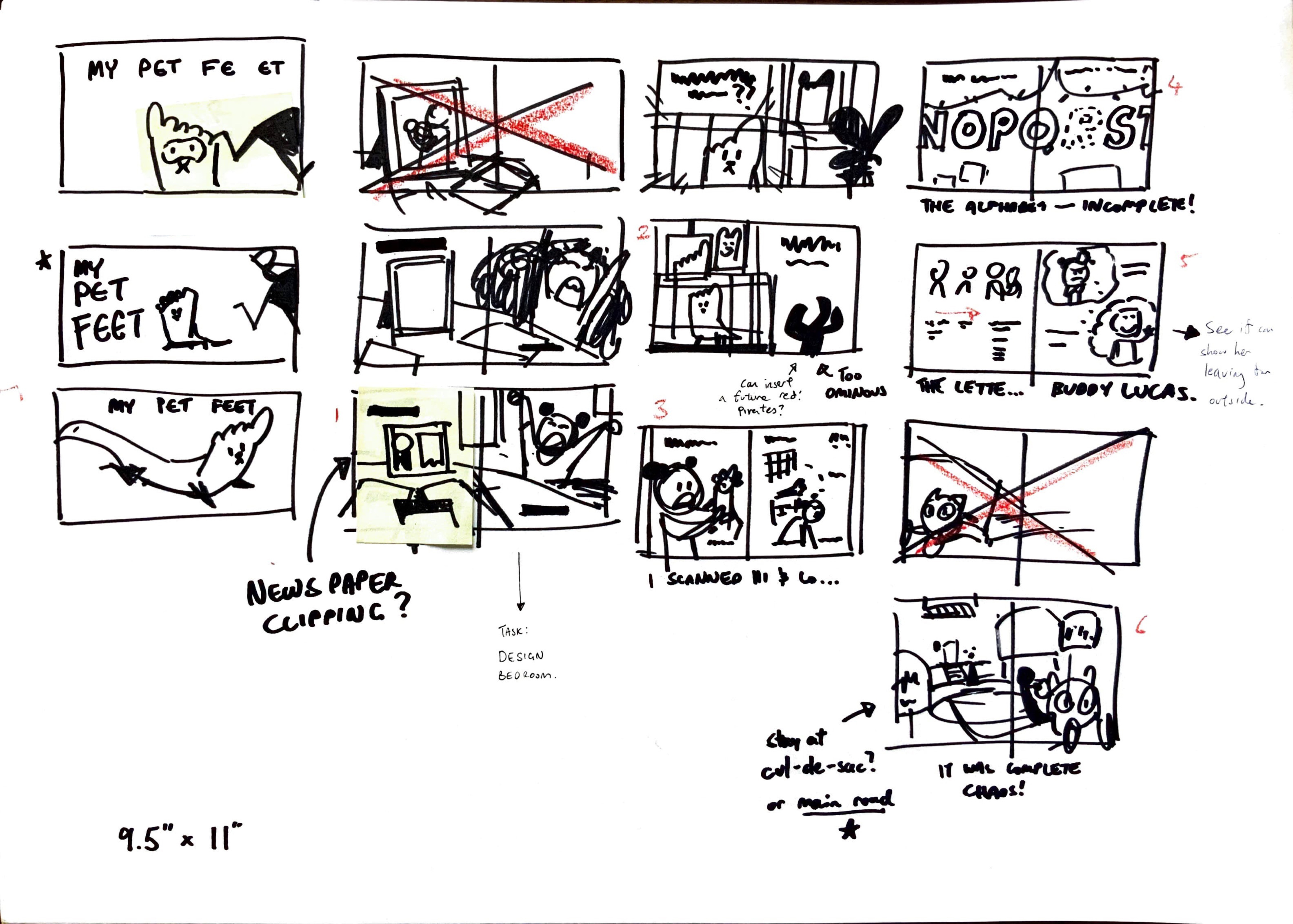
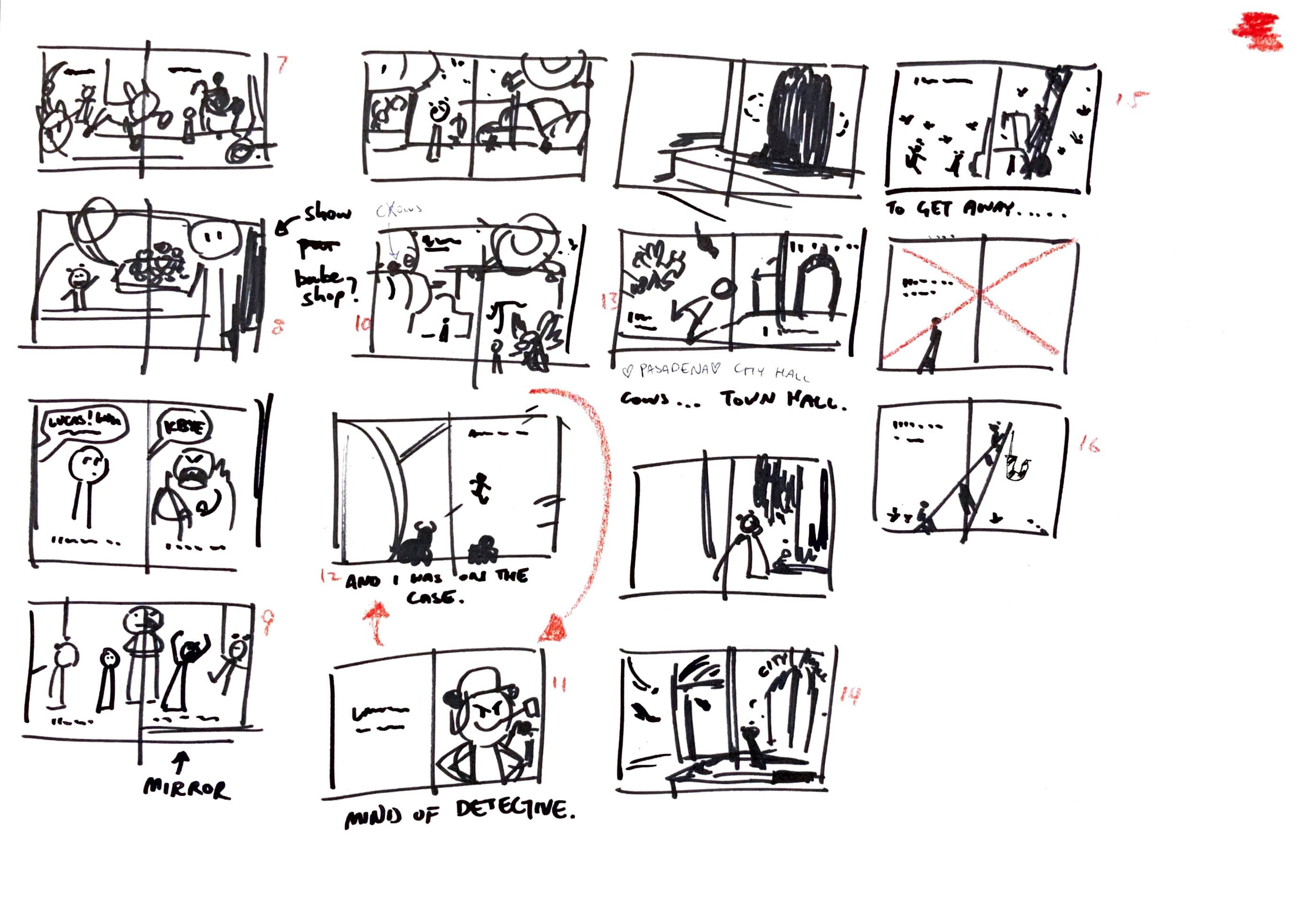
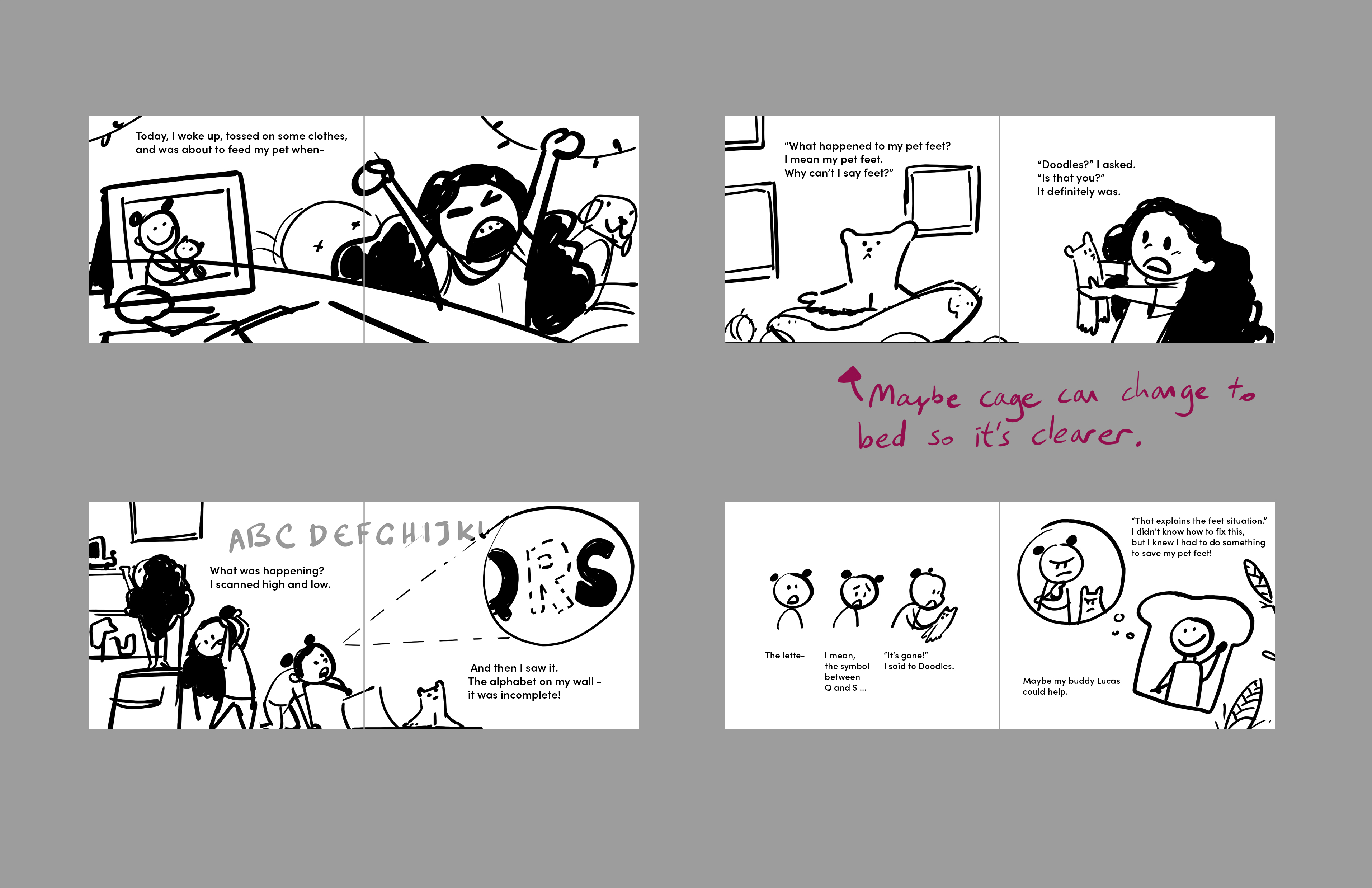
So, feeling stuck, I whipped out a giant A3 sketchpad with a sharpie and just went ham at it. No distractions, not even music in the background, just drawing at the dining table figuring out the flow and composition for Josh’s story. I think I managed to churn out the entire layout in 2 days because of this, haha.
Image copyright Billy Yong, 2022, text copyright Josh Funk, 2022.
Image copyright Billy Yong, 2022
(Initial doodles of the first couple of pages. When I liked a composition but didn’t like parts of it, I would paste a sticky note on top and just draw over it. It feels a lot more intuitive ideating like this compared to a digital drawing.)
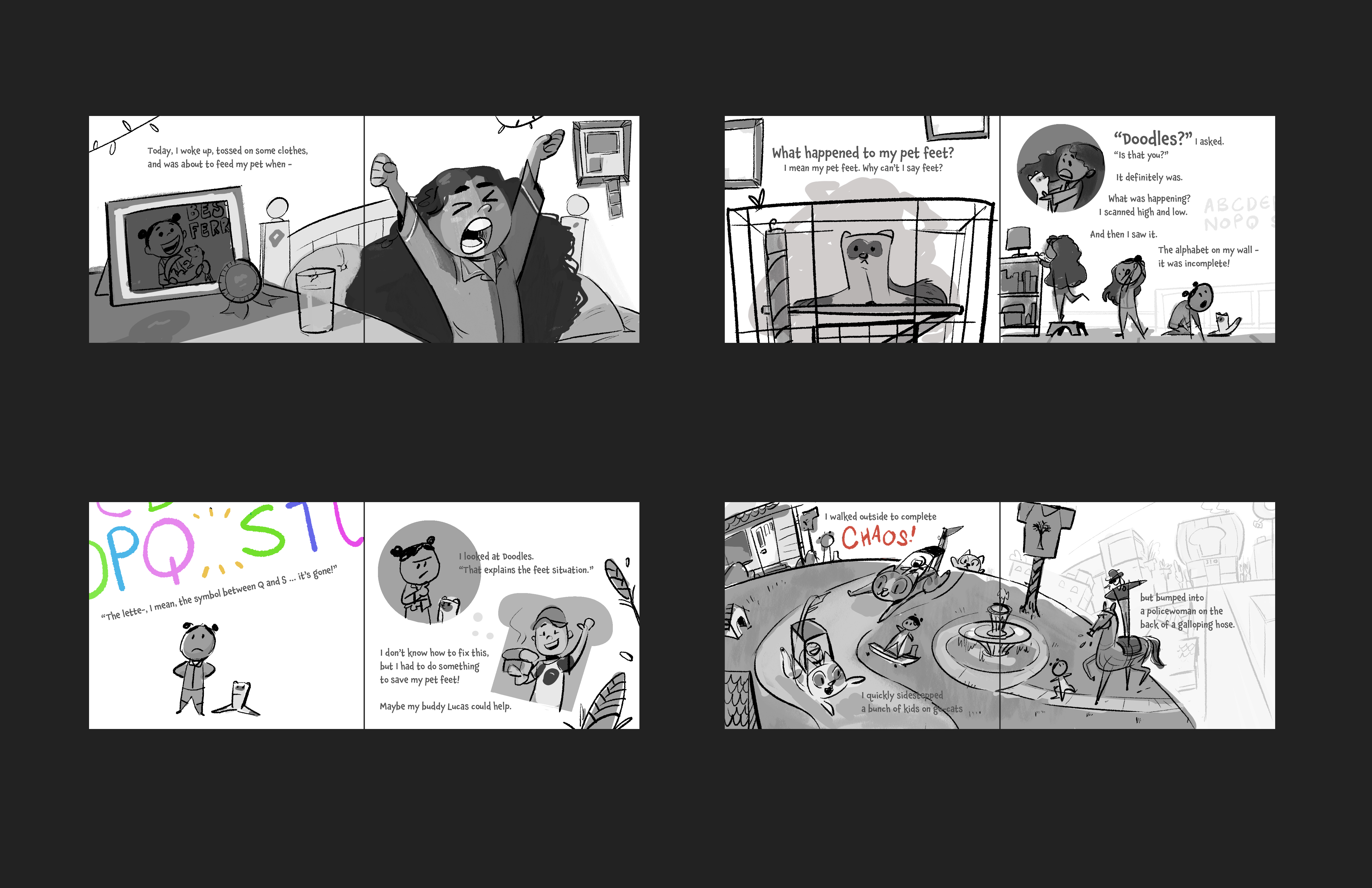
This wouldn’t quite make sense to Josh, Chloe (art director) and Kendra (editor) though, so the next step was tidying up.
Image copyright Billy Yong, 2022, text copyright Josh Funk, 2022.
Image copyright Billy Yong, 2022, text copyright Josh Funk, 2022.
Image copyright Billy Yong, 2022, text copyright Josh Funk, 2022.
(I think the most important part about this sketch cleanup phase was not to be too married to the original sketches, so if it doesn’t work on cleanup, then it helps to go back to the sketchpad or just move on and revisit the spread.)
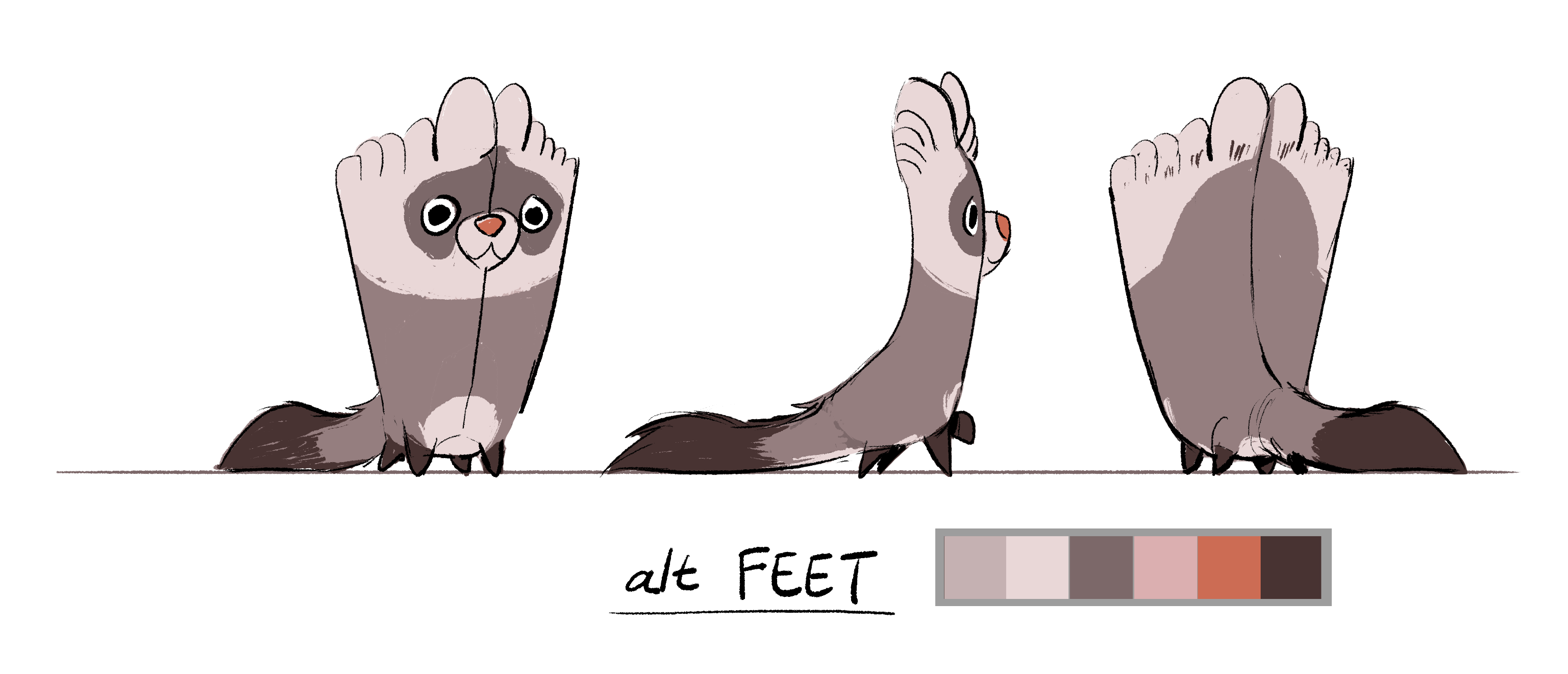
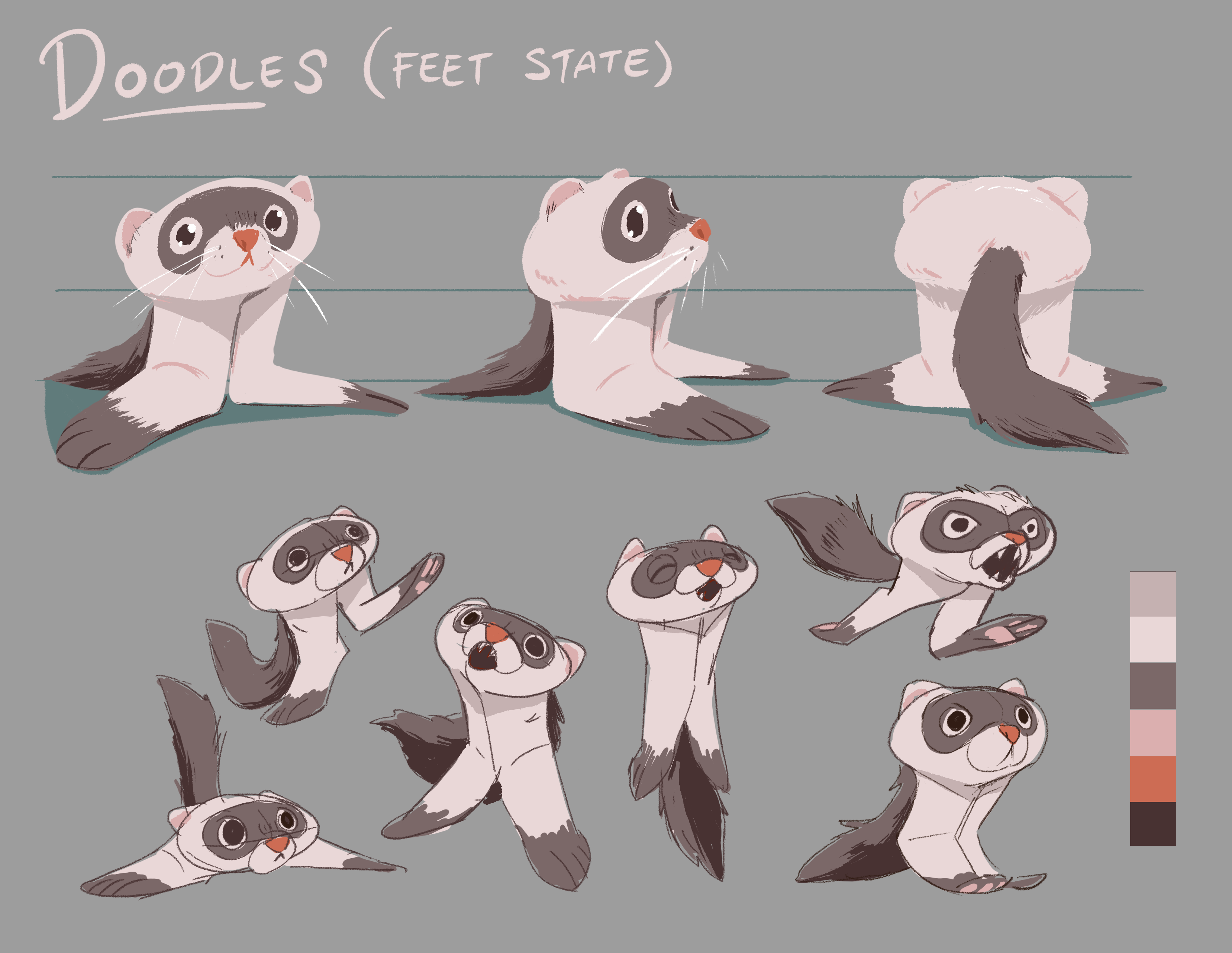
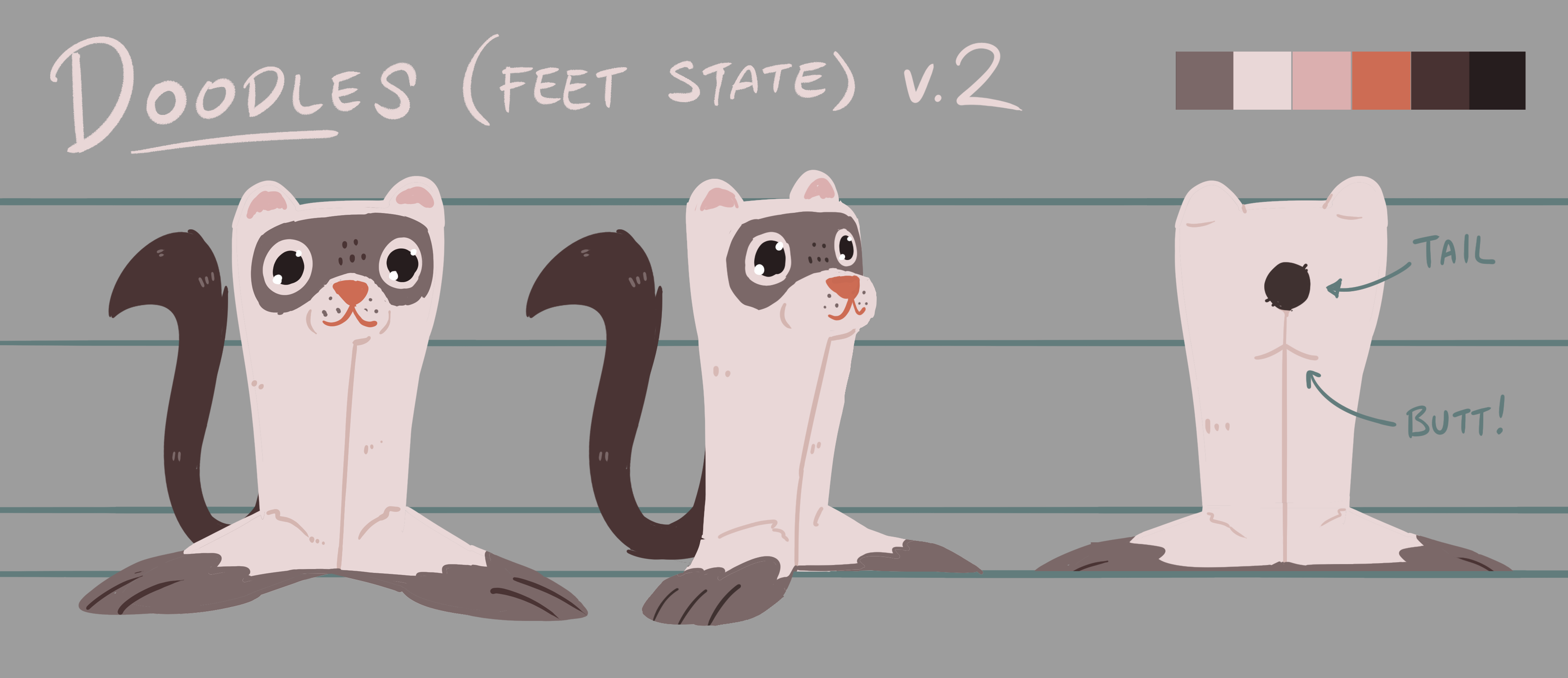
Once layouts were done, it was back to designing the characters. Doodles (or Feet) had the most rounds of back and forth. Ranging from foot-face, to a head on feet, ultimately to feet with a face, every interpretation brought us closer to what you see before you.
Image copyright Billy Yong, 2022
Image copyright Billy Yong, 2022
Image copyright Billy Yong, 2022
Doodles (Feet State) v.2 was what we settled on in the end.
Was there a spread that was particularly fun to illustrate? What made it so?
Haha, they were all a joy to do, but my favorites would be these three:
Image copyright Billy Yong, 2022, text copyright Josh Funk, 2022.
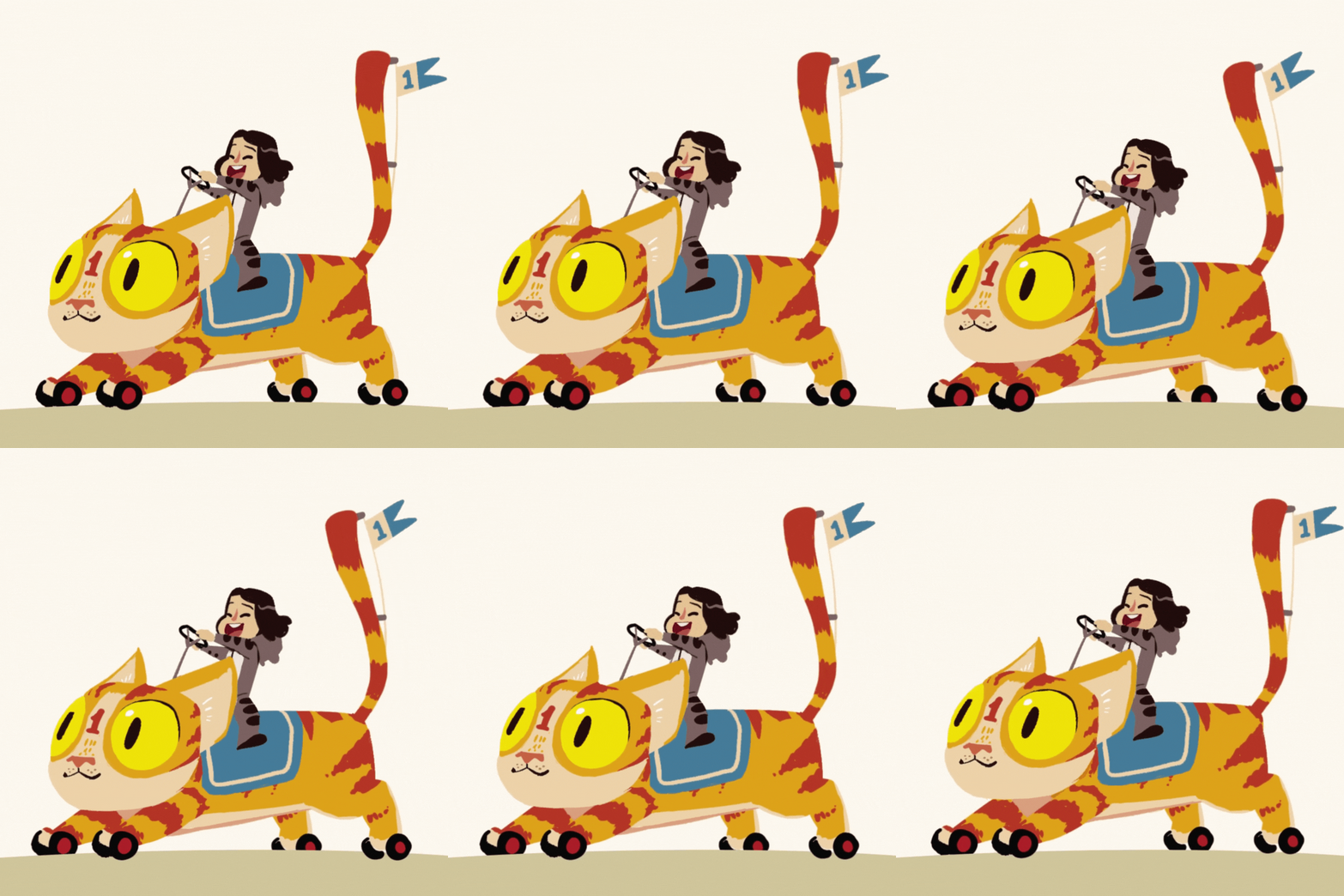
While the layout changed quite a fair bit from the original sketch, my goal of showcasing the go-cats and the topsy-turvy-ness of it all culminated in a winding road, with a subtle line at the top to lead the eyes back to the cat’s tail, ultimately to rest at the water splashing of the police ho(r)se.
Image copyright Billy Yong, 2022, text copyright Josh Funk, 2022.
While this was less dynamic than the previous one, it was really fun laying out the look and feel of the town. I think the biggest challenge was to make it feel populated without overloading the senses, and allowing the eyes pockets of rest in a spread so full of colors and information. I also sneakily snuck in my friends, who are getting married at the end of 2022, so even though I couldn’t be there, it’s my little wedding present to them.
The @-rats were also a suggestion of my wife (I think). Honestly in the thick of things I’ve confused ideas I’ve received from Josh, Kendra (our editor), Chloe (art director), my wife Rachel and myself. It really has been a team effort to bring this book to life.
Image copyright Billy Yong, 2022, text copyright Josh Funk, 2022.
Again with the swirly composition. (I’m starting to think I have a thing for these…) Also relatively simple, but I’m happy turning the tail into a device for our readers to traverse from left to right. Of course the gassy fields had to be a field of bums farting into the wind.
What do you like best about illustrating children’s books?
I enjoy the freedom of expression. It’s very daunting whenever you start a project like this, because said freedom means you often start on a very blank canvas, with only the story to guide you. You have to give yourself permission to be as wild as your skill and imagination can allow, and avoid listening to the doubts you have with certain decisions you make. When those doubts do manifest, I’ve found it useful to remind myself that this is a team process, and if the author, editor or art director don’t quite approve, they’ll let you know. Until then, go ham.
What’s up next for you?
Haha, I don’t think I’m allowed to say, but perhaps I could hint that it’s about a boy, his friends and a hammer. It’s quite the wild ride, and I hope when it’s released readers will enjoy it. I certainly have. Apart from that, just raising a baby girl with my wife. It’s an exercise in patience and endurance. I cannot wait to start drawing with her and learning from her. Perhaps I will become a better artist from that.
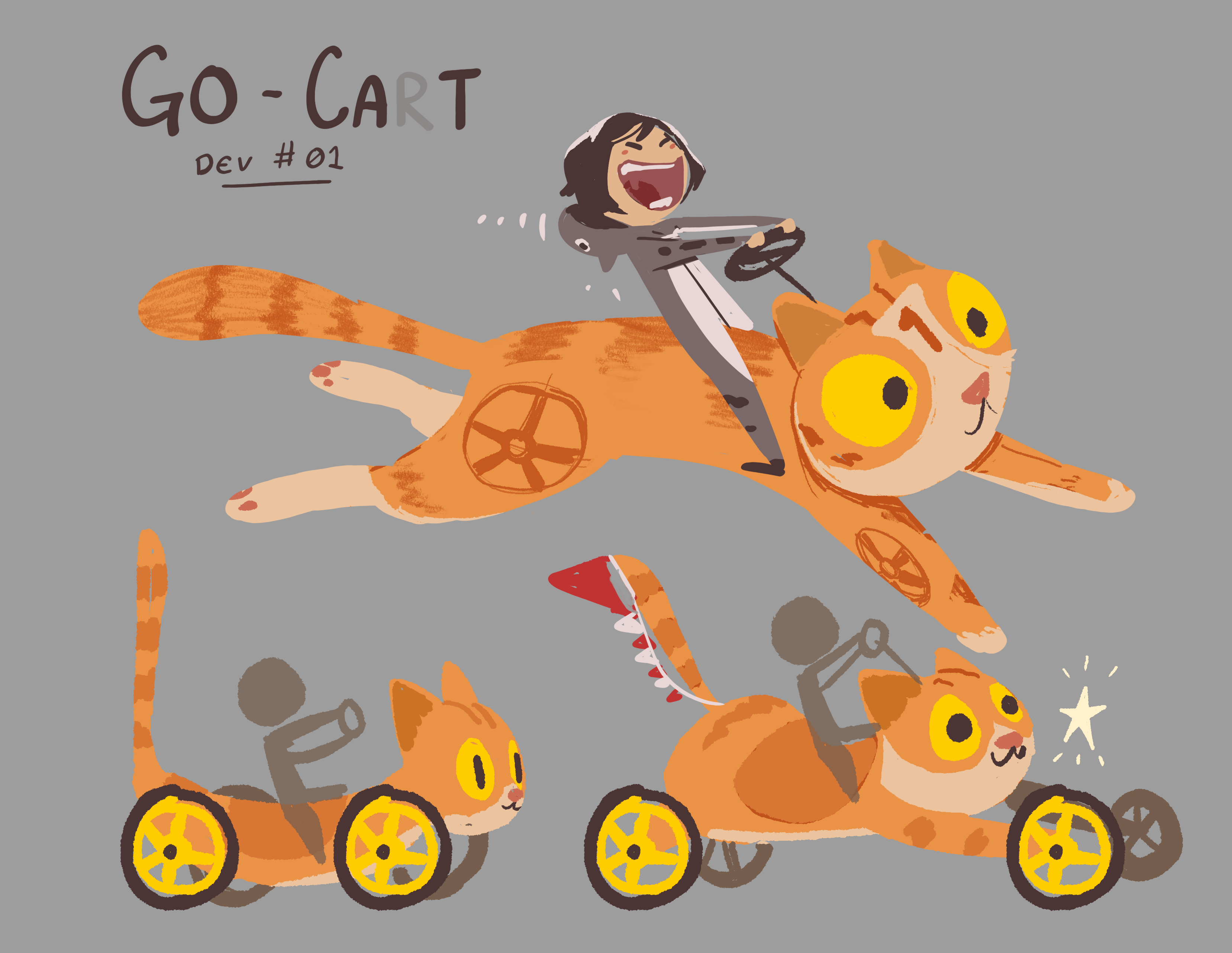
Wow! Thank you for sharing so much about how you brought My Pet Feet to life! Your awesome illustrations and sense of humor are going to keep kids searching for all the visual puns and laughing from beginning to end – and over and over again! I wish you all the best with this book and am really looking forward to seeing more of your work. And, since we’re talking about bringing the story to life, I think we have time for one more image ….
Copyright Billy Yong, 2022
So, Everybody, jump on your Go-Cat and head to your local bookstore to pick up My Pet Feet to celebrate New Book Month in hilarious style!
My Pet Feet Virtual Book Tour Activity
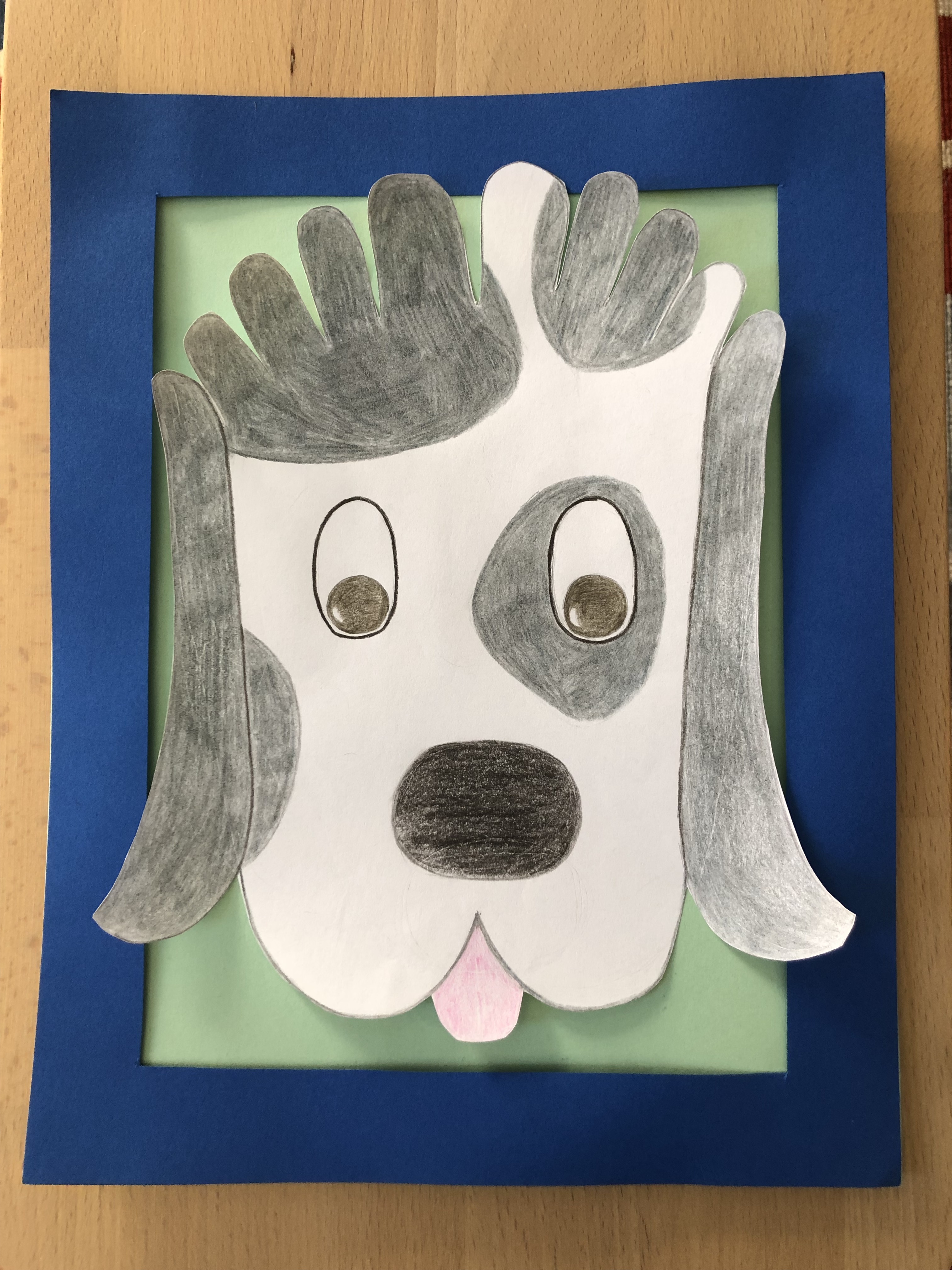
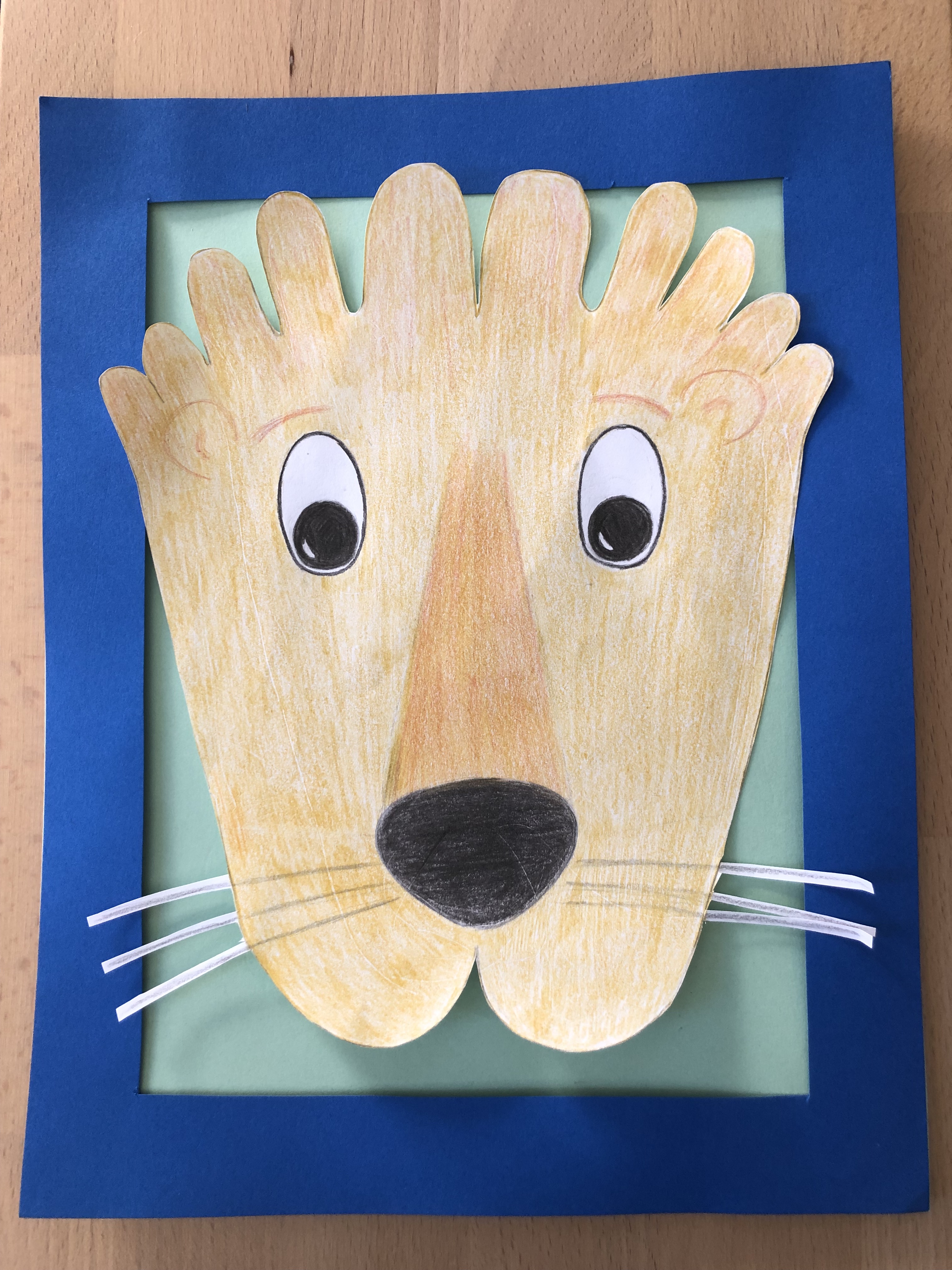
Feet Pet Portraits
Feet don’t have to be just for walking, running, or dancing. As today’s story shows, they can make pretty awesome pets (even when it’s just a mistake). With this craft you can use your own feet to make a pet portrait to decorate your room!
Supplies
1 Sheet of regular printer paper or heavy stock paper for the portrait
1 Sheet of colored heavy stock paper for the frame’s backing
1 Sheet of heavy stock paper in a contrasting color from the backing to make the frame
Crayons or colored pencils
Scissors
Glue or glue dots
Directions
Stand on the white paper with your feet together and trace your feet
Now it’s time to get creative! Turn the paper toes up, toes down, or toes to the side and design your pet.
After you’re finished drawing, color your picture in
Cut your pet out
To Make the Frame and Frame Your Portrait
Measure one inch around each side of one piece of heavy stock paper
Cut out the middle
Use glue or glue dots to adhere the frame to the backing
Use glue or glue dots to adhere your feet pet portrait to the backing of the frame
Today we take time to celebrate brothers! Whether you grew up with one brother or a few or have a friend you love like a brother, today’s holiday gives you a terrific reason to spend time together or get in touch and make some new memories! This year, as we’re spending more time working and playing with family, today’s book is certainly a home run!
Calvin Gets the Last Word
Written by Margo Sorenson | Illustrated by Mike Deas
Calvin’s dictionary is well-positioned to know all about (and describe) Calvin’s life because from the moment he wakes up to the moment he goes to bed, that dictionary is in his hands. “Why? Because Calvin loves words—I mean REALLY loves words,” the dictionary says. And Calvin won’t rest until he’s found the perfect “word for everything—especially his rascally brother.” Take this morning, for example. Calvin grabs his dictionary, as usual, and heads to the kitchen for breakfast. At the table, Calvin takes a big gulp of milk. It’s just the moment his brother’s been waiting for to tell his super funny, nose-snorting joke. You can imagine what happens—and that’s why the dictionary’s page that contains the word revenge is soaked.
Image copyright Mike Deas, 2020, text copyright Margo Sorenson, 2020. Courtesy of Tilbury House Publishers.
But is revenge the right word for Calvin’s brother? Not quite. On the school bus as the kids are tossing a backpack, talking, laughing, and hanging over the seats, Calvin’s dictionary offers up mayhem, but that doesn’t completely describe his brother either. As Calvin struggles in geography class and passes notes during library story time, his dictionary helps describe the mood, but the words it comes up with don’t really apply to his brother. Calvin does discover a good word for himself, though, when, on the way home from school, he stands up to a bully and helps a kindergartener.
Image copyright Mike Deas, 2020, text copyright Margo Sorenson, 2020. Courtesy of Tilbury House Publishers.
At Little League practice, the dictionary tells readers, Calvin “loves to crush the ball during batting practice, sending it over the fence. That’s why the page that reads pulverize has grass stains on it.” Could pulverize be the right word for his brother? While Calvin thinks it could be fun, it’s not exactly right.
Image copyright Mike Deas, 2020, text copyright Margo Sorenson, 2020. Courtesy of Tilbury House Publishers.
That night dinner turns into a repeat of breakfast—only in broccoli green. When Calvin goes to bed, he sits for a while, thinking. Then he grabs his exhausted dictionary and a glass of water and sneaks into his brother’s room. The dictionary thinks it knows what’s going to happen and riffles through its pages to find the right word, unconcerned whether it stays dry or not. And then, there on the page, is the perfect word! But wait, what’s going on? The word the dictionary offered no longer fits because now the brothers are laughing. The dictionary tries flipping to another page and a better word, but Calvin has it beat as he turns the pages and discovers the exact right word to describe his brother. What are all of the words the dictionary and Calvin have found? Come flip through Calvin Gets the Last Word yourself to find out!
Image copyright Mike Deas, 2020, text copyright Margo Sorenson, 2020. Courtesy of Tilbury House Publishers.
In her funny and unique mashup of sibling rivalry and vocabulary, Margo Sorenson offers kids an engaging story of the singular type of love brothers share uncovered little by little through word-building. Calvin’s dictionary makes a sincere and charming guide through high-interest words that lend panache and nuance to events throughout Calvin’s day even if they don’t quite describe his brother. Astute kids may notice that the words the dictionary chooses for Calvin’s brother proves his loyalty to his favorite reader. Calvin’s spewed milk, whispered secrets, and home run batting add up to a real kid that readers will love. The words that the dictionary finds are fun to learn and say and will spark an enthusiasm in readers to do their own flipping through the dictionary and thesaurus. Sorenson’s endearing ending rings true with a word kids are sure to embrace.Mike Deas’ glasses-wearing and sweat suit-clad Calvin, whose dictionary is always at the ready to define his experiences, is a character readers will respond to. Images of the sprayed milk and broccoli, rockin’ school bus, library story rug, and baseball field are full of familiar details and plenty of action. As Calvin prepares to play his trick on his brother Deas gives kids a cutaway view of the house from above, letting them tiptoe through the maze of rooms with Calvin. The final scenes of the brothers checking out the dictionary together in the light of a bedside lamp is sibling devotion at its best.A delightful family story that can stir a love of language, Calvin Gets the Last Word would be a favorite addition to home libraries. The book is highly recommended for school and classroom bookshelves to enhance language arts, writing, grammar, and vocabulary lessons and for public library collections as well.Ages 6 – 8Tilbury House Publishers, 2020 | ISBN 978-0884488224Discover more about Margo Sorenson and her books on her website.To learn more about Mike Deas, his books, and his art, visit his website.
National Brother’s Day Activity
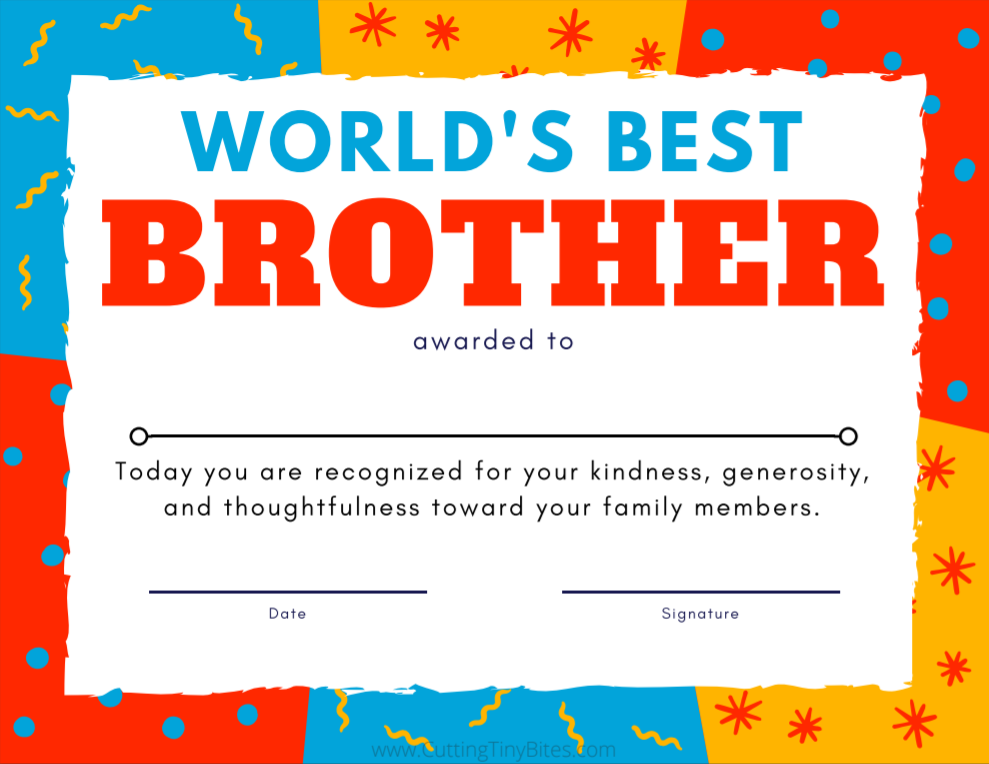
Best Brother Award Certificate
Today is all about how great your brother is! Print and fill out this Best Brother Award Certificate and give it to your brother—or brothers! And if you’d like an activity to do with your brother (or sister, Mom, and/or Dad), today, here’s a puzzle to do together!
“Big Words” Word Search
Knowing and using a wide range of words allows you to express yourself in exact—and often—fun ways. Find the 26 “big” words—one for each letter of the alphabet—in this printable word search puzzle.“Big Words” Word Search Puzzle | “Big Words” Puzzle Solution!
You can find Calvin Gets the Last Word at these booksellers
You’ve heard the saying “Too Many Books, Too Little Time,” right? Well, this truism has spawned not only one, but two Read a New Book Month celebrations! Both December and September have been designated as times to make special plans to search out and read new books. These can be books that are newly published or books that are new to you. And if you find yourself putting a few old favorites in the pile, that’s okay too! It’s also a great time to think about adding books to those gift lists!
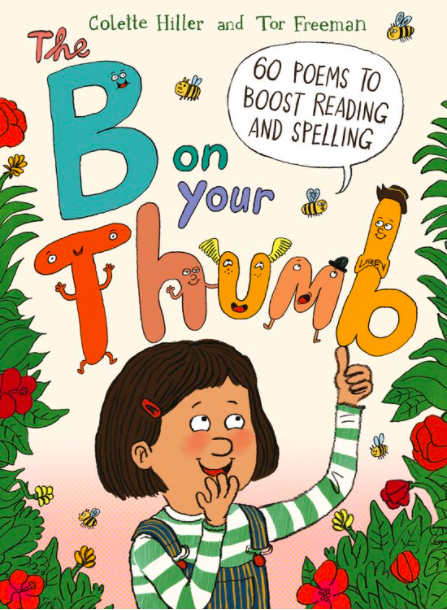
The B on Your Thumb: 60 Poems to Boost Reading and Spelling
Written by Colette Hiller | Illustrated by Tor Freeman
One of the joys of books for little ones is sitting with a parent, teacher, or other caregiver and listening to the story play out with wonder, silliness, sadness, and a whole world of feelings. Hearing the words and sentences, it all makes sense. But when kids start reading, start really looking at the words, well…all of those vowel combinations, silent letters, words that sound the same but look completely different, words that look completely different but sound the same… it can get confusing!
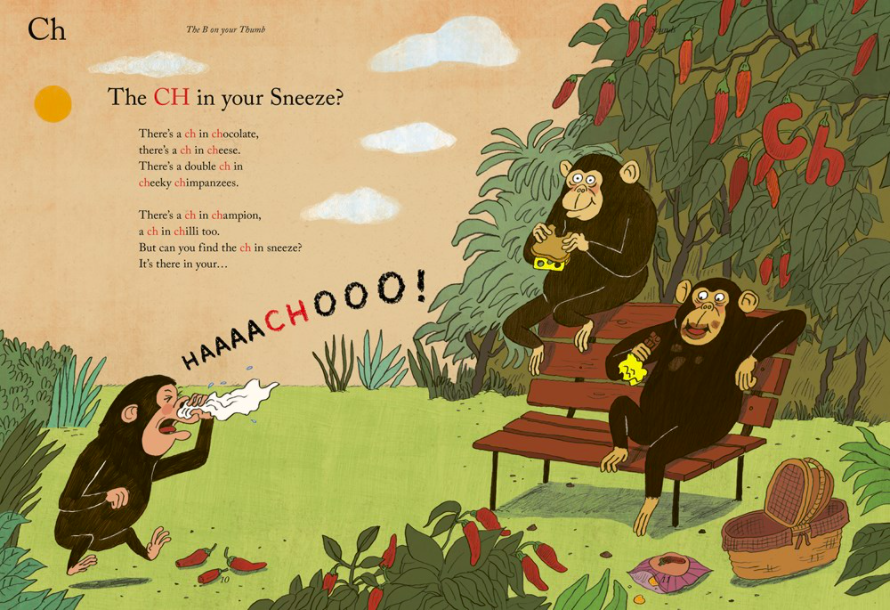
And that’s where Colette Hiller and Tor Freeman’s book of poetry comes in handy. Sixty poems covering the topics of spelling and pronunciation are broken out into four categories—Sounds, Silent Letters and Secrets, Spellings, and Words that Sound the Same—that make understanding the written English language easier and more fun to learn. With this ditty, Hiller welcomes kids in to this delightful book: “Some letters sound as they are meant to. / Other letters change. / They sometimes make surprising noises. / English can be strange!”
Image copyright Tor Freeman, 2020, text copyright Colette Hiller, 2020. Courtesy of Frances Lincoln Children’s Books.
One of the first sounds a baby hears may be a gentle “sh.” Encountering this consonant combination on the page, though, can seem daunting. Ssss and Huh? Hiller gives a hand in pronouncing it though, with a little intro to the two letters on their own and then… “S and H go sh, / that is what they do. / The sh that’s in your shoulder, the sh that’s in your shoe.” She then goes on to add a few more lines with familiar “sh” words that will make kids “shout!”
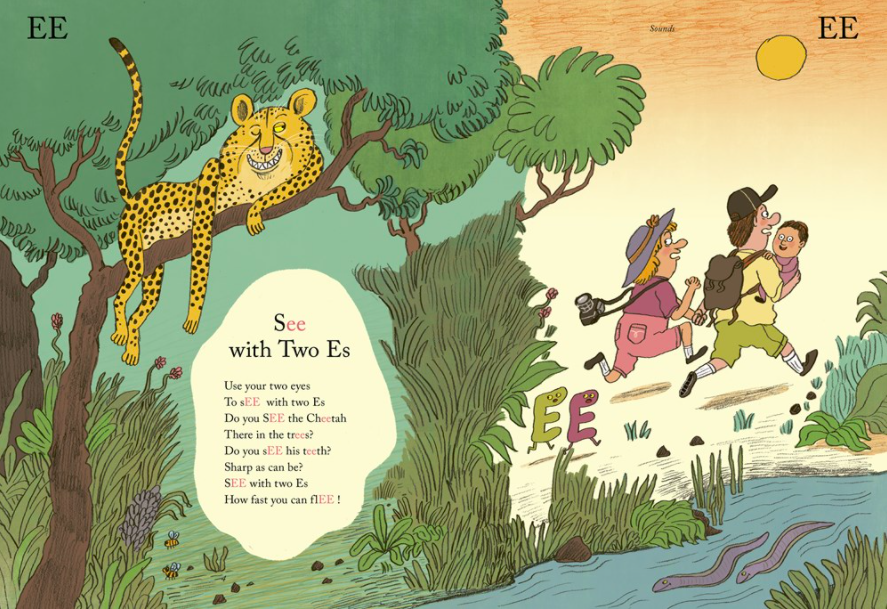
With clever versus that will bring on many giggles and even more “Ah-ha” moments, Hiller and Freeman introduces kids to the sounds that vowel combinations “o-u,” “o-i,” “a-i,” “o-a,” “e-e,” and “o-o” make with a sad U that’s just struck “out,” and a cheering crowd that invites them to join in chanting “oggy, oggy, oggy, oi, oi,oi!” There’s also a train filled with rain, a goat in love with a toad, a treed cheetah, and of course the man in the moon.
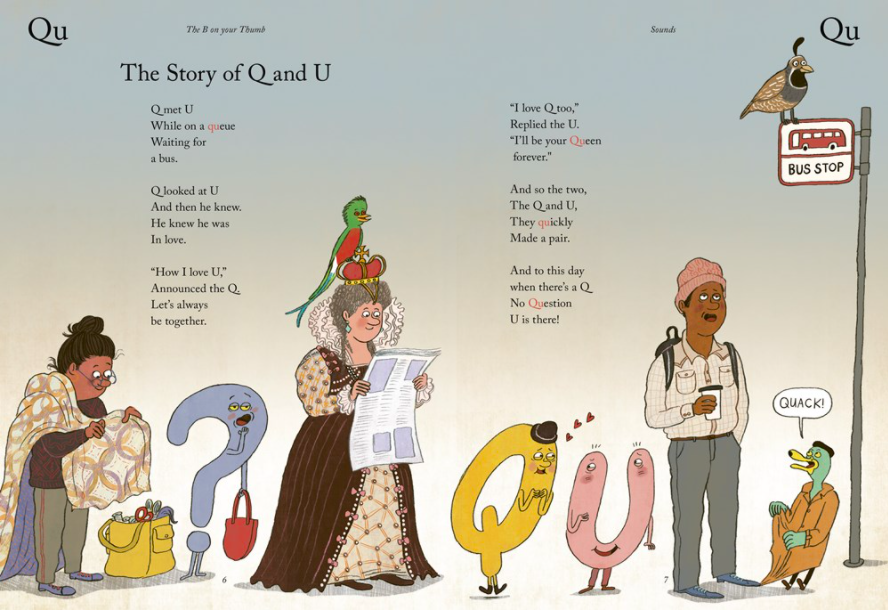
Hiller doesn’t forget about those perfectly matched consonant couples either. She relates the story of how Q and U fell in love in a queue; goes shopping with Mrs. Owl for a new gown and crown; and takes on that “bossy E” who always takes over when together with A. There are many more poems about letter combinations in this section as well, and each one is loaded with examples of words that incorporate those letters.
Image copyright Tor Freeman, 2020, text copyright Colette Hiller, 2020. Courtesy of Frances Lincoln Children’s Books.
In the chapter Silent Letters and Secrets, Hiller engages readers in the finer arts of the silent B in “doubt” and “thumb.” In the book’s title poem, she says, “Look, there’s a B / right there on your thumb, / but of course you shouldn’t mind… / For the B that you see / right there on your thumb / is not the stinging kind!” Silent K gets two poems of its own and silent W comes knocking in two more poems. She investigates that mysterious “h” in where, what, why, and when as well as the equally mysterious pair “g-h” in words like night and sight. Kids will also enjoy finding hidden words lurking in longer words.
Now, reading may be one thing, but spelling? At times that seems like something all together different. In the chapter Spellings, Hiller teaches kids some tricks of the trade. In her poem “Magical E,” “Magical E / has magical might. / See how she turns / a kit to a kite…. / Abracadabra: / a cap is a cape! / She hops on a tub. / Now the tub is a tube. / Abracadabra… / A dud is a dude!” Readers discover rhymes that make it easier to remember unusual spellings in words such as “separate, important, and rhyme as well as that old favorite “I before E except after C” that includes a twist.
Colette Hiller finishes up with Words that Sound the Same. In “Two, Too, and To,” she explains the difference in those three little words that often trip us up and gives tips on remembering them. “Witch” and “which,” “here” and “here,” “whole” and “hole,” and “whether” and “weather” are also treated to poems of their own.
Image copyright Tor Freeman, 2020, text copyright Colette Hiller, 2020. Courtesy of Frances Lincoln Children’s Books.
In each poem, the subject letters are called out in a bright color that allows kids to make the connection between the combinations of letters and how they contribute to the structure of a word visually and in sound. Following the poems, Hiller includes detailed tips and fun exercises and activities that adults and kids can do together to enhance learning from poem to poem and when reading classroom assignments and books and other materials at home.
Colette Hiller nimbly navigates the dual desires to teach and entertain with her jaunty rhymes that are ingenious, witty, and clear examples of how words sound and are pronounced. When shared with children reading along, the poems reinforce how each word looks with their sometimes-confusing mix of letters. When education is this humorous and joyful, kids will beg to read “just one more” which, of course, means better literacy, success in school, and opportunities in the future.
Accompanying each poem are Tor Freeman’s whimsical and hilarious illustrations of adorable letters interacting with people taking showers, fleeing from a wily cheetah, waiting in a queue, and even flying a car in outer space. There are also chimpanzees eating cheese sandwiches, a cat doing calisthenics, and an ant learning a lesson in importance. And, of course, there are letters, letters, letters rowing a boat, deigning to give audience to a princess, dining in a haunted castle, and cavorting from page to page and poem to poem.
A rousing collection of poems that kids will love on their own and as inspirational learning tools in language arts lessons, The B on Your Thumb is highly recommended for homeschoolers and home bookshelves and a must for classroom and public library collections.
Ages 3 – 8 and up
Frances Lincoln Children’s Books, 2020 | ISBN 978-0711254602
You can download a Teacher’s Guide with pre- and post-reading discussion questions, a writing activity and a word play activity on the Quarto Knows website.
Discover more about Colette Hiller and her books on her website.
To learn more about Tor Freeman, her books, and her art on her website.
National Read a New Book Day Activity
I’ve Got the Reading Bug! Collection
When you buy a new book, you need new book bling to go with it! Here’s a printable book plate and bookmark, plus a want-to-read list to help you choose your next new book to buy!
Sponsored by Pizza Hut and the Center for the Book in the Library of Congress since 1989, Young Readers Week is celebrated during the second week of November to improve literacy and raise awareness of the benefits of reading. Schools participate in setting reading goals for their students who are then rewarded for meeting them. Adults are encouraged to provide a variety of reading materials for their kids – picture books, novels, graphic novels, magazines, newspapers, whatever will get them excited about reading.
Calvin Gets the Last Word
Written by Margo Sorenson | Illustrated by Mike Deas
The moment Calvin wakes up, he grabs his dictionary and heads to the kitchen for breakfast. While Calvin may be well-rested, his dictionary tells readers that it is tired. “Why? Because Calvin loves words—I mean REALLY loves words,” the dictionary says. Calvin won’t rest until he’s found the perfect “word for everything—especially his rascally brother.” At breakfast, Calvin has just taken a big gulp of milk. It’s just the moment his brother’s been waiting for to tell his super funny joke. You can imagine what happens—and that’s why the dictionary’s page that contains the word revenge is soaked.
Image copyright Mike Deas, 2020, text copyright Margo Sorenson, 2020. Courtesy of Tilbury House Publishers.
But is revenge the right word for Calvin’s brother? Not quite. On the school bus as the kids are tossing a backpack, talking, laughing, and hanging over the seats, Calvin’s dictionary offers up mayhem, but that doesn’t completely describe his brother either. As Calvin struggles in geography class and passes notes during library story time, his dictionary helps describe the mood, but those words don’t really apply to his brother. On the way home, though, Calvin does discover a good word for himself when he stands up to a bully and helps a kindergartener.
Image copyright Mike Deas, 2020, text copyright Margo Sorenson, 2020. Courtesy of Tilbury House Publishers.
At Little League practice, the dictionary reveals, Calvin “loves to crush the ball during batting practice, sending it over the fence. That’s why the page that reads pulverize has grass stains on it.” Could pulverize be the right word for his brother? While Calvin thinks it could be fun, it’s not exactly right.
Image copyright Mike Deas, 2020, text copyright Margo Sorenson, 2020. Courtesy of Tilbury House Publishers.
That night dinner turns into a repeat of breakfast—only in broccoli green. When Calvin goes to bed, he sits for a while, thinking. Then he grabs his exhausted dictionary and a glass of water and sneaks into his brother’s room. The dictionary thinks it knows what’s going to happen and riffles through its pages to find the right word, unconcerned whether it stays dry or not. And then, there on the page, is the perfect word! But wait, that doesn’t fit because now the brothers are laughing. The dictionary tries flipping to another page and a better word, but Calvin has it beat as he turns the pages and discovers the exact right word to describe his brother. What are all of these words? Come flip through Calvin Gets the Last Word yourself to find out!
Image copyright Mike Deas, 2020, text copyright Margo Sorenson, 2020. Courtesy of Tilbury House Publishers.
In her funny and unique mashup of sibling rivalry and vocabulary, Margo Sorenson offers kids an engaging story of the singular type of love brothers share uncovered little by little through word-building. Calvin’s dictionary makes a sincere and charming guide through high-interest words that lend panache and nuance to events throughout Calvin’s day even if they don’t quite describe his brother. Astute kids may notice that the words the dictionary chooses for Calvin’s brother proves his loyalty to his favorite reader. Calvin’s spewed milk, whispered secrets, and home run batting add up to a real kid that readers will love. The words that the dictionary finds are fun to learn and say and will spark an enthusiasm in readers to do their own flipping through the dictionary and thesaurus. Sorenson’s endearing ending rings true with a word kids are sure to embrace.
Mike Deas’ glasses-wearing and sweat suit-clad Calvin, whose dictionary is always at the ready to define his experiences, is a character readers will respond to. Images of the sprayed milk and broccoli, rockin’ school bus, library story rug, and baseball field are full of familiar details and plenty of action. As Calvin prepares to play his trick on his brother Deas gives kids a cutaway view of the house from above, letting them tiptoe through the maze of rooms with Calvin. The final scenes of the brothers checking out the dictionary together in the light of a bedside lamp is sibling devotion at its best.
A delightful family story that can stir a love of language, Calvin Gets the Last Word would be a favorite addition to home libraries. The book is highly recommended for school and classroom bookshelves to enhance language arts, writing, grammar, and vocabulary lessons and for public library collections as well.
Ages 6 – 8
Tilbury House Publishers, 2020 | ISBN 978-0884488224
Discover more about Margo Sorenson and her books on her website.
To learn more about Mike Deas, his books, and his art, visit his website.
Young Readers Day Activity
“Big Words” Word Search
Knowing and using a wide range of words allows you to express yourself in exact—and often—fun ways. Find the 26 “big” words—one for each letter of the alphabet—in this printable word search puzzle.
Black Poetry Day was established in 1985 and commemorates the birth of Jupiter Hammon, the first published African American poet in the United States. Hammon was born into slavery on Long Island, New York, on October 17th, 1711. His poem “An Evening Thought” was first published on Christmas Day when he was 49 years old. Hammon is considered one of the founders of African-American literature. Today’s holiday honors all black poets, past and present. To celebrate today, enjoy poetry from some of our greatest poets, including Maya Angelou, Rita Dove, Langston Hughes, Nikki Giovani, Derek Walcott, and, of course, Gwendolyn Brooks – the subject of today’s book.
I received a copy of A Song for Gwendolyn Brooks from Sterling Children’s Books for review consideration. All opinions are my own.
A Song for Gwendolyn Brooks
Written by Alice Faye Duncan | Illustrated by Xia Gordon
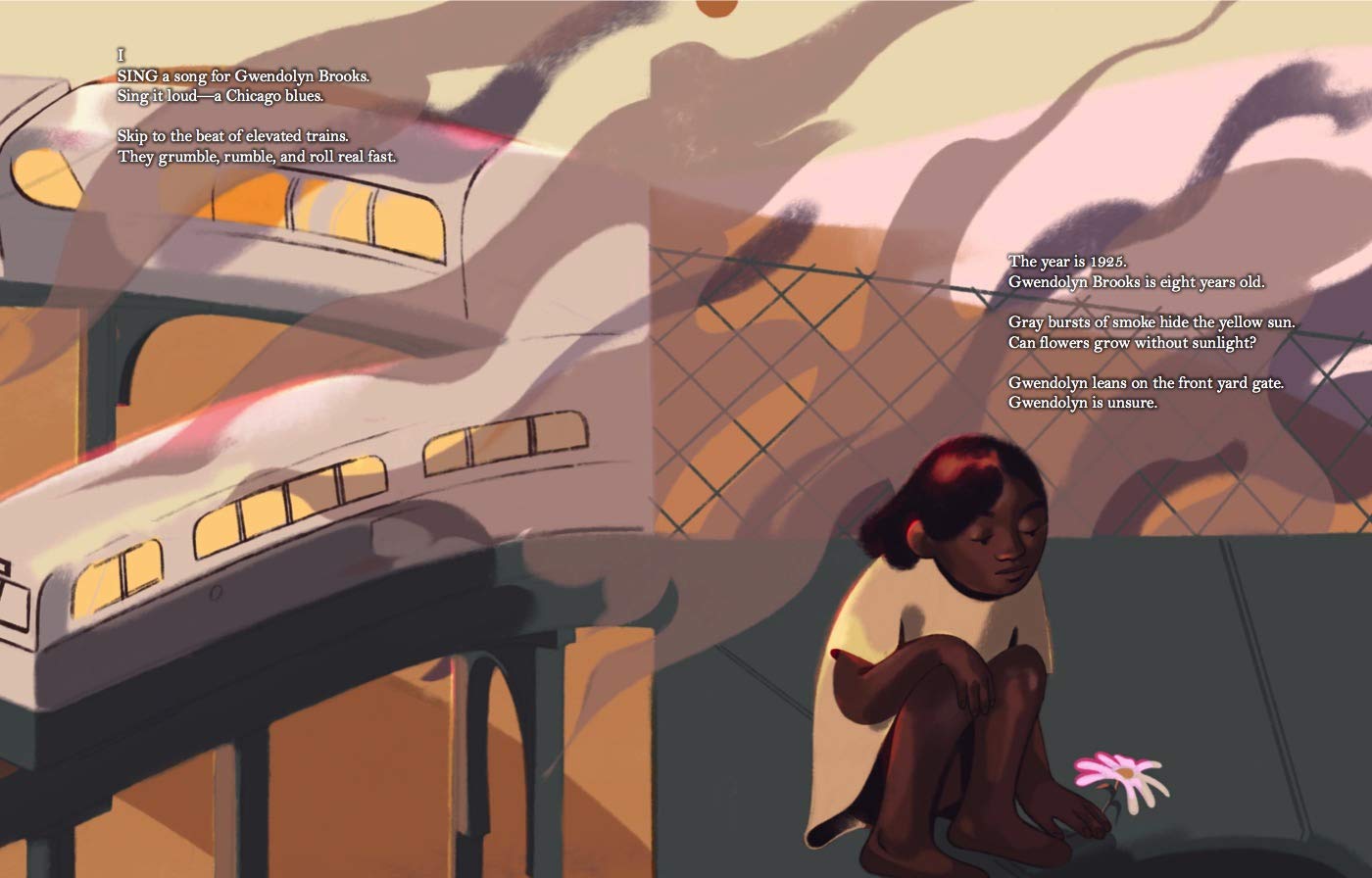
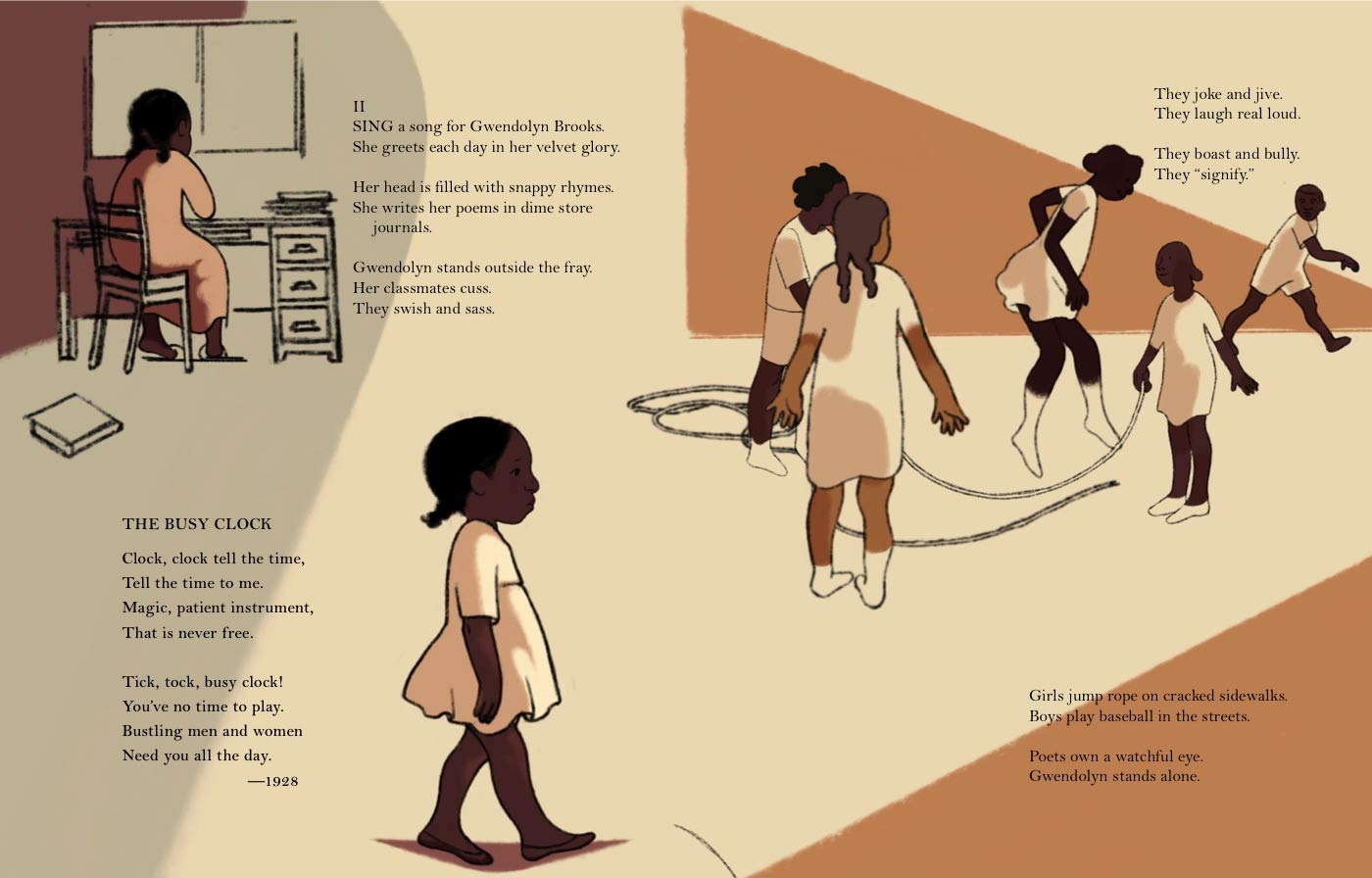
“SING a song for Gwendolyn Brooks. / Sing it loud—a Chicago blues.” This remarkable biography of the Pulitzer Prize-winning poet opens with these soaring lines which introduce eight-year-old Gwendolyn who, seeing a flower in the midst of the city, wonders how it will grow. Already she was observing the world with insight and originality. “Her head is filled with snappy rhymes. / She writes her poems in dime store journals.” Even something as “simple” as a clock does not escape Gwendolyn’s consideration. In The Busy Clock she writes, in part: “Clock, clock tell the time, / Tell the time to me. / Magic, patient instrument, / That is never free.”
Image copyright Xia Gordon, 2019, text copyright Alice Faye Duncan, 2019. Courtesy of Sterling Children’s Books.
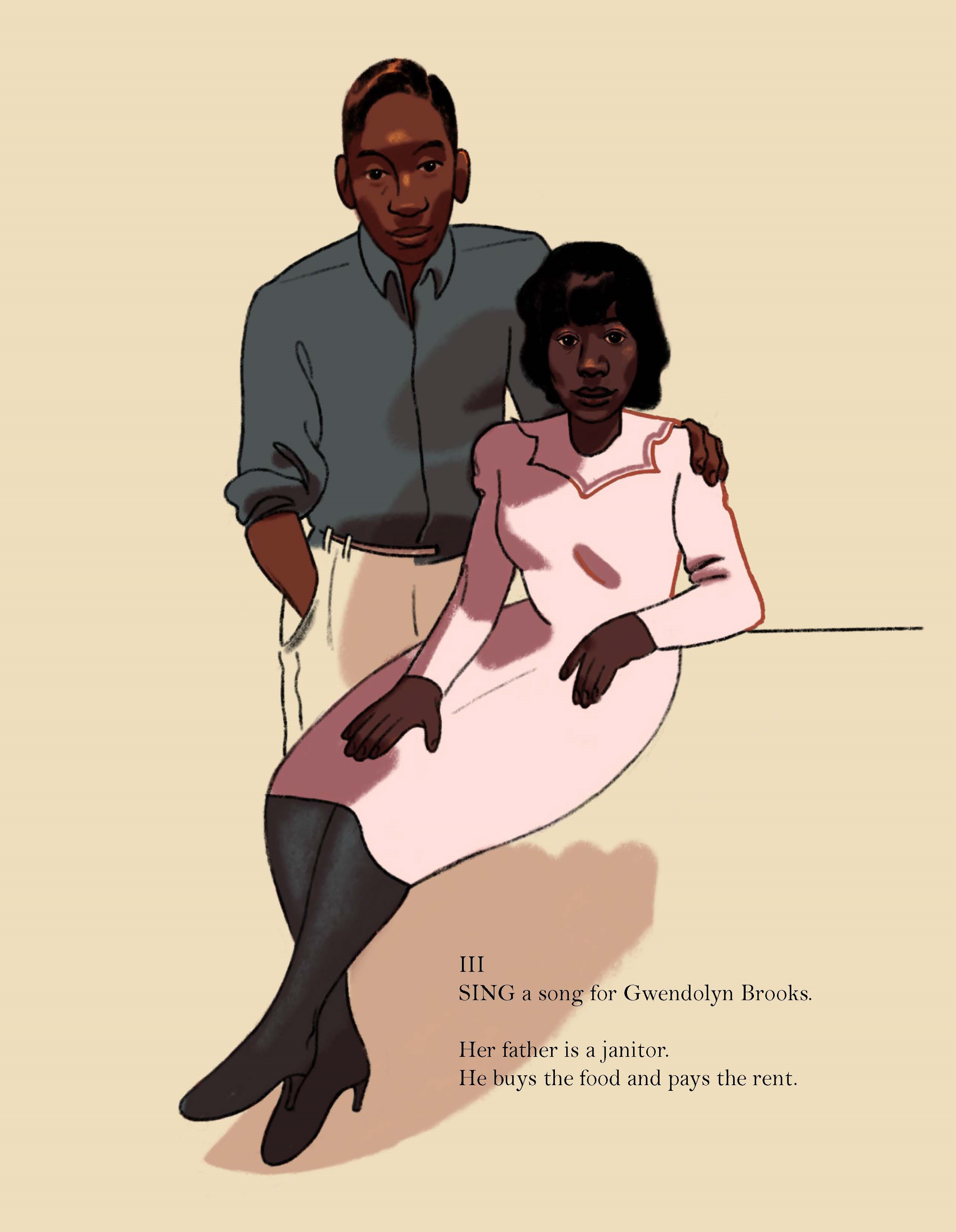
Out in the neighborhood, she stands quietly and watches the other kids laughing and playing—girls jumping rope and boys playing basketball. Gwendolyn’s father is a janitor and her mother stays at home with her and her brother, who is also her best friend. Gwen spends her time sitting on her porch, looking and listening to the sounds and the conversations of the neighborhood women and men. The “children call Gwen—‘ol’ stuck-up heifer!’”
Image copyright Xia Gordon, 2019, text copyright Alice Faye Duncan, 2019. Courtesy of Sterling Children’s Books.
“SING a song for Gwendolyn Brooks. / Her mother believes. / Her father believes. / But sometimes—Gwendolyn doubts her radiance, / When jarring, crashing, discordant words, / Splotch and splatter her notebook paper.” And what does Gwen do with these poems that just don’t work? She buries them under the snowball bush in the backyard. Once, unbelieving, a teacher accuses Gwendolyn of plagiarism. Her mother takes her daughter back to school, and there on the spot, she composes a poetic answer to the charges: Forgive and Forget. It makes Gwen feel proud, she believes in herself and feels the sun shining on her.
Image copyright Xia Gordon, 2019, text copyright Alice Faye Duncan, 2019. Courtesy of Sterling Children’s Books.
During the Great Depression, when jobs and money are scarce, Gwendolyn’s “parents are wise and see her light.” They give her time to write and she hones her words and her craft through draft after draft. With each completed poem, Gwen’s confidence grows. The Chicago Defender publishes some of Gwendolyn’s poems, and now she has an audience. Her parents believe that one day their daughter will be a famous poet.
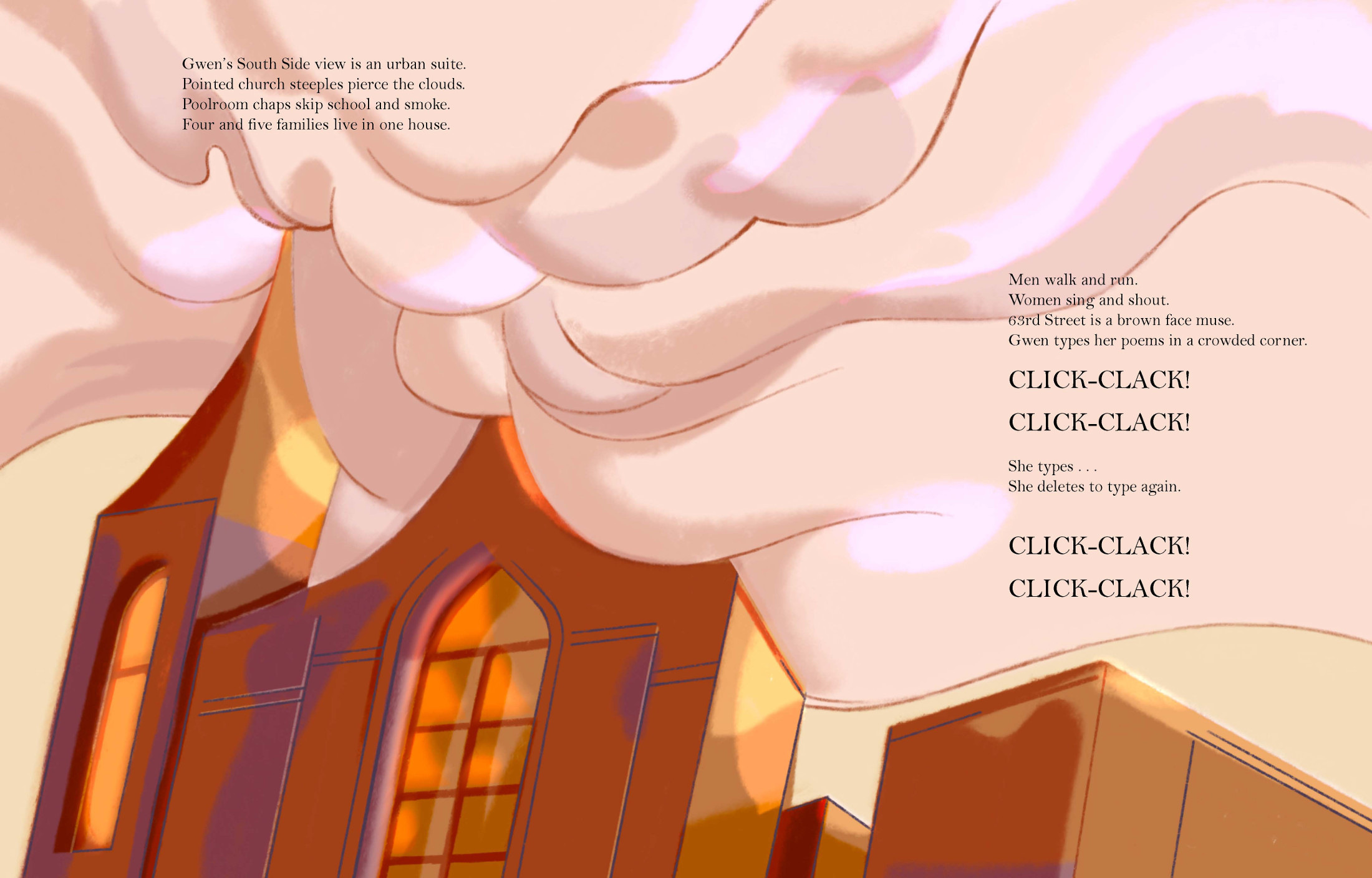
Soon, Gwendolyn finds her way to a group of poets who meet in a South Side community center. She studies under Inez Stark and meets Henry Blakely, who will become her husband. She enters her poems in contests and wins first place over and over. When she and Henry move into their own two-room apartment, Henry goes to work, leaving Gwendolyn to translate the neighborhood into poetry that she types “in a crowded corner.”
Image copyright Xia Gordon, 2019, text copyright Alice Faye Duncan, 2019. Courtesy of Sterling Children’s Books.
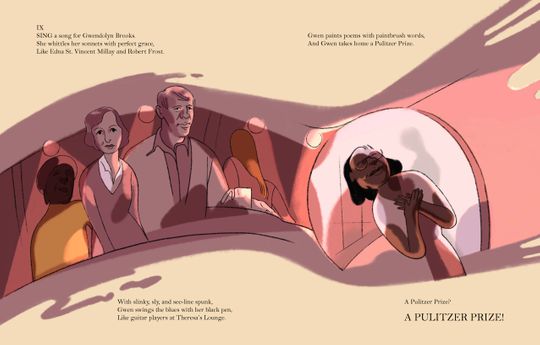
Readers swarm to buy her books. “Gwen paints poems with paintbrush words, / And Gwen takes home a Pulitzer Prize.” Henry and their son celebrate, and Gwen’s parents “…cry tears of joy. / They praise her shine.” For they had always known and had “…Planted love and watered it. / Gwendolyn believed. / She found her light. / And— / A furious flower / GREW!”
An extensive Author’s Note detailing more about the life of Gwendolyn Brooks and her work as well as a timeline and suggested readings follow the text.
Image copyright Xia Gordon, 2019, text copyright Alice Faye Duncan, 2019. Courtesy of Sterling Children’s Books.
With her own sterling verses, Alice Faye Duncan celebrates the life of Gwendolyn Brooks—the first African American to win the Pulitzer Prize for Literature—taking readers to the Chicago neighborhoods that informed and inspired Brooks’ ideas and the words and rhythms with which she defined them. Along an arc that takes Gwendolyn from a child contemplating the potential of a flower to becoming that blossom herself, Duncan pays tribute to those who recognized Gwen’s genius and helped her fulfill her talent. For readers who themselves may be poets, writers, or other types of artists, Duncan’s beautifully crafted phrases about the artistic process of revision are inspirational and welcome. Standing side-by-side with Duncan’s storytelling are four of Brooks’ poems—The Busy Clock, Forgive and Forget, Ambition, and the children of the poor—Sonnet #2. From cover to cover, Duncan’s book sings with Gwendolyn Brooks’ positivity, confidence, individuality, and love for life that made her a unique voice for her time and always.
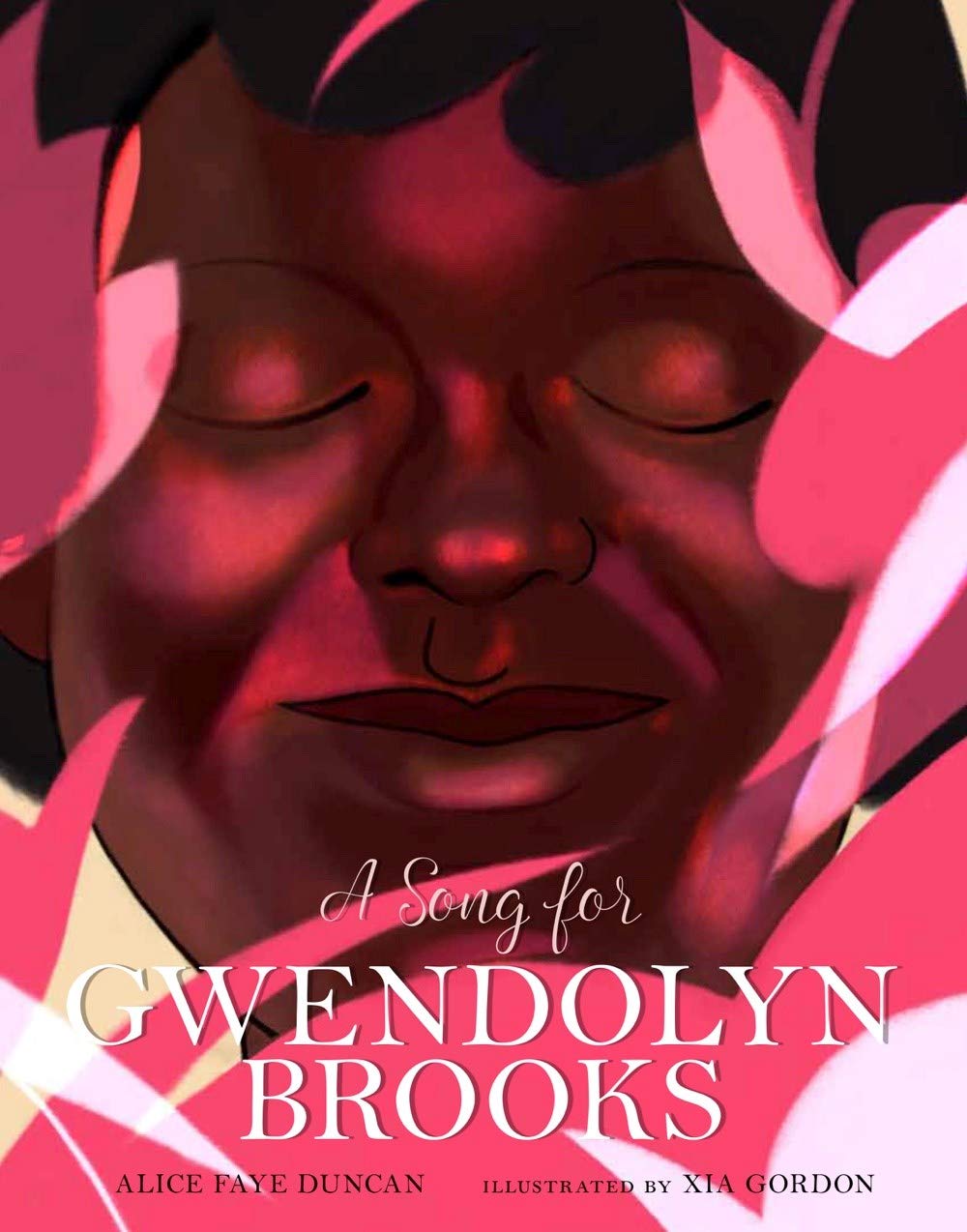
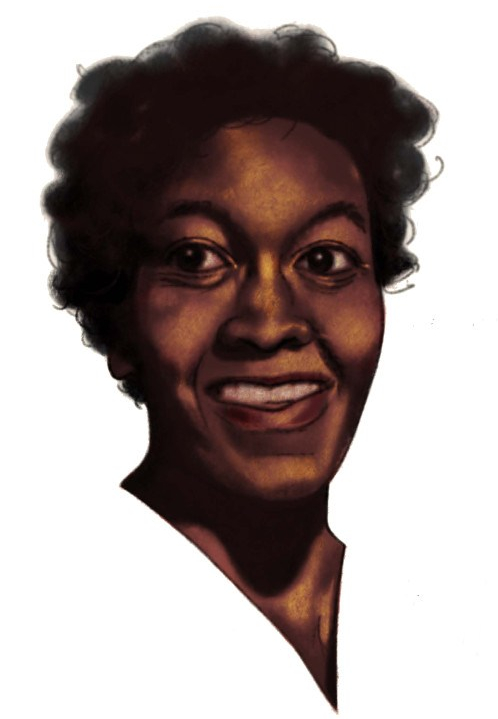
From the portrait of Gwendolyn Brooks that graces the title page and throughout the book, Xia Gordon’s distinctive artwork creates a masterpiece of motion and stillness that mirrors Brooks’ penchant for watching and listening to the sounds and sights that filled her mind and ultimately her notebooks. Downy swoops of violets, pinks, browns, and grays provide backdrops to images of Gwendolyn as a young girl and an adult rendered in lines that show her as down to earth but soaring in her thoughts. Her intelligence and spark shine through on every page. Gwendolyn’s parents appear often, always watchful and supportive. Her friends, her husband, her son, and her readers also populate the pages, giving the book an embracing warmth.
A Song for Gwendolyn Brooks is a must for school, classroom, and public library collections, and for children who are discovering their talents and the parents who nurture them, the book would be an inspirational and invaluable addition to home bookshelves.
Ages 4 and up
Sterling Children’s Books, 2019 | ISBN 978-1454930884
















 celebratepicturebooks.com