June 15 – Smile Power Day

celebrate-picture-books-picture-book-review-happy-emma-dodd

About the Holiday

Where do you find enough smiles to fill twenty-four hours? Come on, you know! Friends, loved ones, books, movies, videos, jokes, and more funny stuff can instantly elicit that bright, shiny facial expression! Today is a day to share smiles with people you know and those you don’t. So get out there and be happy!

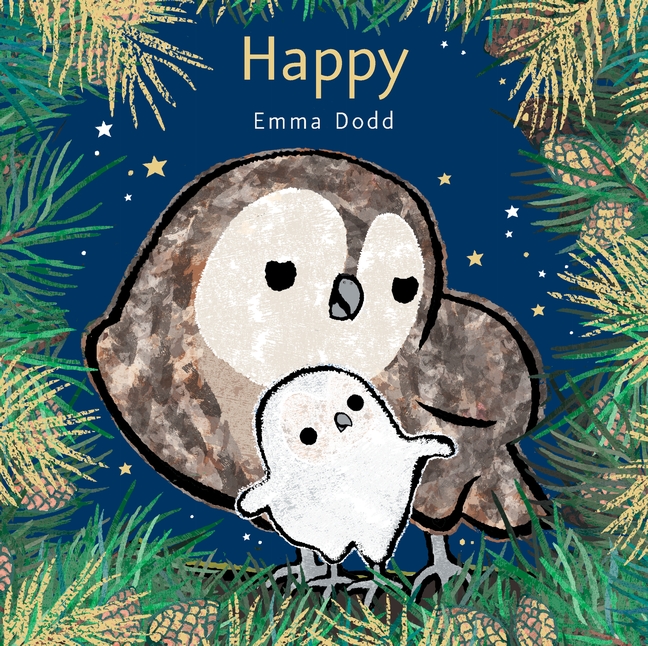
Happy

By Emma Dodd


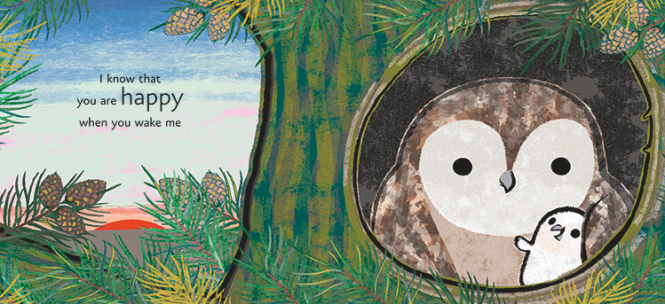
Nestled in a hole in a pine tree, an owl—who could be a mom, a dad, or any caregiver—cradles an adorable tiny owlet under its wing. “I know that / you are happy / when you wake me / with a song,” the owl says. As they venture out onto a limb, the owl adds, “I know that / you are happy / when you hop / and skip along.” With the repeated “I know that you are happy” the owl describes other ways the owlet shows her joy: giggling, rambling conversation, playing loudly, acting proud, and trying “something new…and / if you don’t succeed at first, I’ll help until you do,” the owl reassures the child.

celebrate-picture-books-picture-book-review-happy-emma-dodd

But every day cannot be happy, the owl concedes, and when “things are looking gray, / I’ll do my best to chase / the gloomy clouds away.” As the sun sets on the secluded home and the owl and owlet drift into sleep, the owl reveals: “I love it when you cuddle close / and whisper, ‘I love you.’ / And I am happiest / of all… / when you are happy too.”

Perfect for all parents and caregivers, Emma Dodd’s celebration of how a child’s joy resonates in others’ hearts makes shared reading time special. The lyrical rhythm of the repeated lines accompanied by the sentiments of encouragement and the transposition of point of view give this book impact and poignancy.

Dodd’s gorgeous illustrations of the endearing owl and owlet pair perfectly express the type of discovery that leads to joy on both a child’s and an adult’s part. With its little raised foot, extended tiny wings, and jubilant, smiling beak, the young owlet is both lovable and loved. Dodd’s beautiful muted, blue, green, brown and orange settings shimmer with gilded accents: delicate gold pine needles frame the owls’ home, the baby owl splashes in a glistening puddle under a gleaming moon, sparkling stars light the midnight blue sky, and rain showers fall in glinting streaks as the owls look on.

Simply put Happy will put a smile on your face and bring a tear to your eye. This lovely lullaby will quickly become a favorite for bedtime or cuddle time and is a must for young children’s bookshelves. Happy also makes a perfect gift for new parents or other caregivers. 

Take a peek:

Ages Birth – 5

Nosy Crow, Candlewick Press, 2015 | ISBN 978-0763680084

Smile Power Day Activity

celebrate-picture-books-picture-book-review-smile-cards

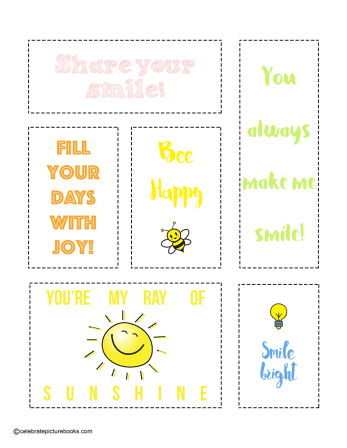
Make Someone Smile Cards


Sharing a smile can make someone’s day! With these printable Make Someone Smile Cards you can spread joy to people you know—and even to those you don’t! Give one to a family member, coworker, or friend. You can surprise your favorite barista, hair stylist, librarian, or shop owner by handing them a card or leaving it where they’ll find it. It’s even fun to tuck a card among the items on a shelf or in a book for someone to find later. Remember, the power of a smile is awesome!

June 10 – It’s Pet Appreciation Week

celebrate-picture-books-picture-book-review-excellent-ed

About the Holiday

Pets give us so much love and joy that we often want to do something special for our furry friends in return. The first full week of June gives us just that opportunity! Why not spend a little extra time walking or cuddling with your pet? Or maybe make them a favorite treat or get them a new toy. However you celebrate, you know your pet will appreciate it!

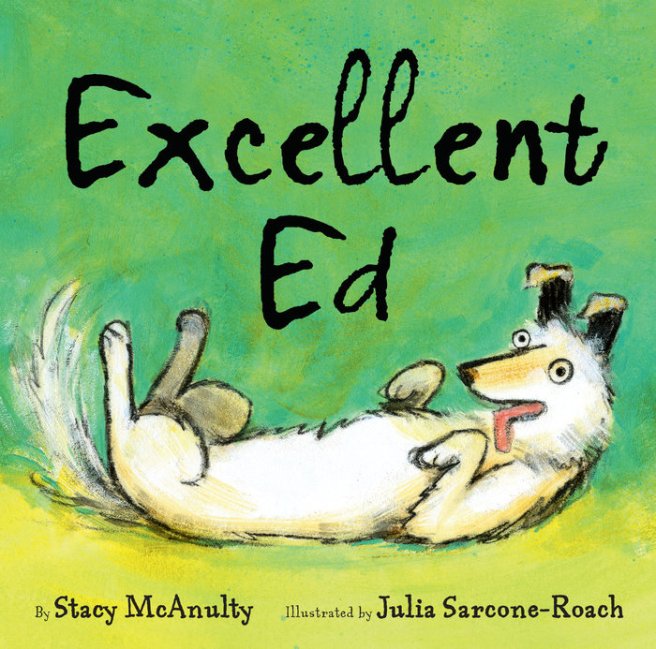
Excellent Ed

Written by Stacy McAnulty | Illustrated by Julia Sarcone-Roach


Ed, the Ellis family dog, is feeling a little left out. All five of the children are excellent at something, but not Ed. All the Ellis kids can eat at the table, ride in the car, sit on the couch, and use the indoor bathroom, but not Ed. Each kid has his or her own talent—playing soccer, calculating math, dancing, and baking cupcakes—and while Ed can carry a ball in his mouth, count to 4, spin after his tail, and eat cupcakes, it’s just not the same.

One day Ed wonders—if he was excellent at something could he have the same perks as the kids? He considers his talents and comes up with something. He knows he’s great at breaking stuff! Surely this will earn him a place at the dinner table. But even before he gets going, Elaine runs in with the news that she’s broken the record for most soccer goals in a season. Ed realizes that Elaine is better at breaking stuff than he is.

Again Ed thinks. Suddenly it dawns on him that he’s excellent at losing things—he even lost himself last week! This kind of ability was surely worth a ride in the van. But just as he’s about to jump in, the twins shout, “I’ve lost a tooth!” Foiled in this attempt, Ed goes back to the drawing board. Hmmm…it was just there…oh, yeah! Ed is fantastic at forgetting stuff! After proving to Dad that he doesn’t remember he ate a minute ago and ready to take his place on the couch, Ed is thwarted again by Edith, who forgot to be nervous during an audition and is now the lead ballerina.

Ed whimpers. Is there nothing he’s most excellent at? Maybe he doesn’t even belong in the Ellis family. Just then Ernie drops his sandwich and Ed gobbles it up, leaving no crumbs on the floor. “‘Wow, Ed! You are excellent at cleaning the floor,’” Earnie says. When Emily and Elmer come home, Ed runs to meet them and covers them in kisses. “‘Ed! You’re excellent at welcoming us home,’” the twins exclaim. Later, with the couch stuffed with Ellises, Ed lays across Edith’s and Elaine’s feet. “‘Ed is excellent at warming feet,’” Elaine and Edith agree.

Ed wags his tail—he is an excellent floor cleaner, welcomer, and feet warmer! Now he knows why he doesn’t sit at the table, stays home instead of riding in the van, and doesn’t join the family on the couch. He realizes that he is an important part of the Ellis family, and that he’s always loved and appreciated. Now, if only he could figure out that indoor bathroom thing….

There comes a time in everyone’s life when they doubt their place in the world. Stacy McAnulty explores that feeling through Ed, who worries, works the problem, and discovers that he is without a doubt excellent just the way he is. Giving the Ellis kids a variety of ages and talents makes this a great universal book for readers. McAnulty’s twist which turns “negative” gifts for breaking, losing, and forgetting things into triumphs for the Ellis kids is ingenious, adding humor, depth, and “ah-ha! moments” to the story. The mystery of Ed’s abilities is well-kept until the end, and the solution comes as a happy surprise.

Readers will wish they were part of the Ellis family, with their exuberant smiles, supportive cheers, snuggly, crowded couch, and, of course, adorable Ed. Julia Sarcone-Roach’s vivid illustrations are infectious as Ed perks up his ears, rolls his eyes skyward and with tongue out thinks about his situation. Scenes of his shenanigans will elicit giggles, and Ed’s sweet looks and wagging tale will win readers’ hearts.

Ages 4 – 8

Alfred A. Knopf Books for Young Readers, 2016 | ISBN 978-0553510232

Pet Appreciation Week Activity

celebrate-picture-books-picture-book-review-dog-maze

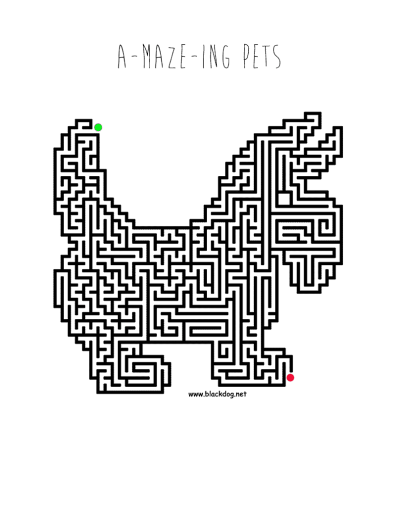
A-maze-ing Pets Maze


Dogs love to take circuitous routes as they pick up scents that are too enticing not to follow! Can you find your way through this printable A-maze-ing Pets Maze

Picture Book Review

May 28 – It’s Get Caught Reading Month

celebrate-picture-books-picture-book-review-baby-wren-and-the-great-gift

About the Holiday

You can never read too many books! This idea is definitely supported by the Get Caught Reading campaign that makes people aware of all the benefits of sitting down with a fantastic book—whether it’s fiction, non-fiction, drama, or poetry. To celebrate this holiday, get involved with a literacy program, a book drive, or thank a teacher or librarian for always supplying you with great reads!

Baby Wren and the Great Gift

Written by Sally Lloyd-Jones | Illustrated by Jen Corace


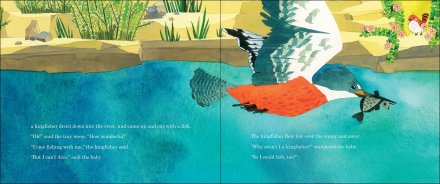
From a narrow crevice a little brown wren peeks out of her nest. Her vantage point gives her a view of all the wonderfulness around her. Monarchs flutter in the Milkweed, breezes whisper in the switch grass, and the glittering river flows along. Emboldened, the baby wren hops onto the canon ledge just as a kingfisher dives down to the river and captures a fish.

celebrate-picture-books-picture-book-review-baby-wren-and-the-great-gift-in-the-nest

Image copyright Jen Corace, text copyright Sally Lloyd Jones. Courtesy of Zonderkidz

“Oh! How wonderful!” the little wren exclaims. The kingfisher invites her to come along, but the wren tells the bigger bird that she can’t dive. As the kingfisher flies away, the wren wonders why she can’t fish too.

Next, two frisky ring-tailed cats cartwheel by. “Oh, how wonderful!” little wren says. The ring-tails want her to play with them, but the wren says that she doesn’t have a ring tail, so the cats cartwheel away leaving the baby wren wondering why she isn’t a ring-tail cat who can cartwheel.

celebrate-picture-books-picture-book-review-baby-wren-and-the-great-gift-kingfisher

Image copyright Jen Corace, text copyright Sally Lloyd Jones. Courtesy of Zonderkidz

Just then some sunfish splash in the water nearby. The little wren also declines their invitation to play, saying that she can’t swim. As the sunfish hurry down the river, the wren wonders why she isn’t a sunfish who can swim. Overhead two eagles glide on the winds of a gusty storm. “Oh, how wonderful,” the wren says. “Come and see the thunderclouds,” the eagles tell her. But the baby is afraid of the big storm, and the eagles soar higher and higher and away. Watching them, the wren regrets that she isn’t brave and wonders what she can do that is wonderful.

celebrate-picture-books-picture-book-review-baby-wren-and-the-great-gift-sunset

Image copyright Jen Corace, text copyright Sally Lloyd Jones. Courtesy of Zonderkidz

Suddenly, the sun paints the canyon pink. The baby wren looks and looks and looks. The beauty of the sky and the canyon “bumped into her heart, it dazzled in her eyes, it pushed on her throat until the tiny trembling bird with all her tiny might sang by herself a song.”  Her glorious carol echoes through the canyon, and the eagles soaring overhead call to her: “‘You are only little, but your song fills the whole canyon.’” And as the kingfisher, the ring-tailed cats, the sunfish, and the eagles listen, the little wren fills the air with singing.

Sally Lloyd-Jones’ inspirational story is perfect for this time of year when baby birds are just leaving the nest and children are moving on to new grades or new experiences. Jones’ lyrical and gentle tale offers comfort to those wondering just where they fit into the world. As baby wren discovered, everyone has innate talents that shine when the time is right.

Jen Corace’s vibrant illustrations of the baby wren’s canyon home employ bright yellows and vivid contrasting greens and blues to evoke the “wonderfulness” that so captivates the little wren. In each spread the baby bird is depicted as the tiny creature it is surrounded by vast mountains and other, larger animals, but as her song flows out of her in a soaring collage of all the colors and silhouettes of her new-found friends her stature grows. She is happy with her place in the world.

Ages 4 – 8

Zonderkidz, 2016 | ISBN 978-0310733898

Discover more about Sally Lloyd-Jones and her books on her website!

View a portfolio of illustration work by Jen Corace on her website!

View the Baby Wren and the Great Gift book trailer!


Get Caught Reading Month Activity

celebrate-picture-books-picture-book-bird-in-nest-coloring-page

Baby Bird Coloring Page


Baby birds love the cozy safety of their nests as much as you like snuggling under the blankets with a good book. Print the Baby Bird Coloring Page and have fun with it—instead of just coloring it, how about making a collage? You can attach different colors of torn paper to decorate the bird and use grasses or twigs for the nest! Use your unique creative talents to make a one-of-a-kind picture!

Picture Book Review

May 20 – Bike to Work Day

celebrate-picture-books-picture-book-review-emmanuel's-dream

About the Holiday

May is National Bike Month and today is set aside for riders to replace their usual method of commuting with pedaling instead!  Established in 1956 by the League of American Bicyclists and celebrated in communities from coast to coast, National Bike Month is a chance to showcase the many health-related and fun benefits of bicycling — and to encourage more folks to giving biking a try. Now that the weather is nice bring out your bikes, pump up the tires, and take to a street or trail near you!

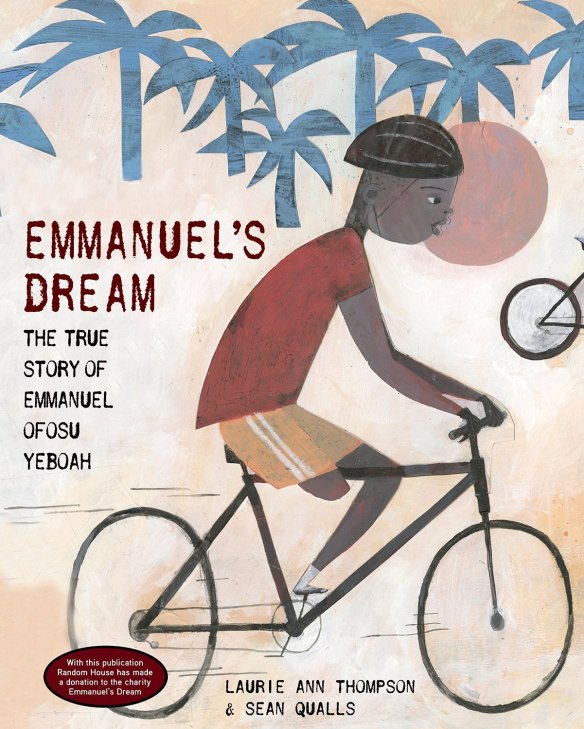
Emmanuel’s Dream: The True Story of Emmanuel Ofosu Yeboah

Written by Laurie Ann Thompson | Illustrated by Sean Qualls


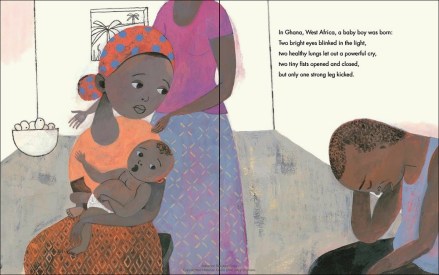
A baby is born in Ghana, West Africa with bright eyes, healthy lungs, and tiny, clasping fingers—but with only one strong leg. Most people think the baby will grow up to be a burden or worse—a curse. His father leaves the family, but his mother keeps the faith. Her name is Comfort and she names her child Emmanuel, which means “God is with us.”

celebrate-picture-books-picture-book-review-emmanuel's-dream-baby

Image copyright Sean Qualls, text copyright Laurie Ann Thompson. Courtesy of Schwartz & Wade

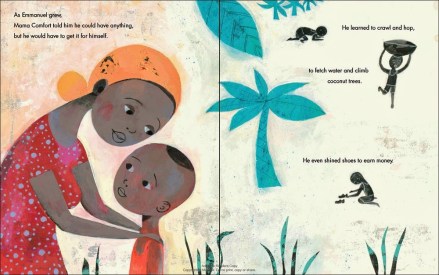
As Emmanuel grows, his mother encourages his independence. He learns how to crawl and hop to complete his daily work all with one leg. Most kids with disabilities don’t go to school, but Comfort carries her son back and forth until he becomes too heavy. From then on Emmanuel hops the two miles each way all by himself. At first the other kids won’t play with him, but Emmanuel is clever. He buys a soccer ball with the money he earns shining shoes and when he offers to share it, the kids include him. On crutches he is a fierce competitor and earns his classmates’ respect. Riding bikes is another favorite activity. Can Emmanuel pump those pedals with only one leg? He practices and falls, practices and falls some more until he masters the technique.

celebrate-picture-books-picture-book-review-emmanuel's-dream-going-to-school

Image copyright Sean Qualls, text copyright Laurie Ann Thompson. Courtesy of Schwartz & Wade

When Emmanuel is 13 years old, his mother becomes ill. As the only family member capable of working, Emmanuel takes a train to a city 150 miles away to find a job. He doesn’t see his family again for two years. Because of his disability it is hard for him to find work. Finally, a food stand owner hires him and gives him a place to live. Over time Comfort grows sicker. When Emmanuel goes to be with her, she tells him to never beg and never give up. He takes these words to heart.

Emmanuel has an idea to show the world that “disabled does not mean unable”—all he needs is a bike. When the Challenged Athletes Foundation learns of his plan to bike around Ghana, they give him a bike, a helmet, and clothing. He trains and receives a blessing from the king of his region. Then accompanied by people who will document his trip, he takes off. “He pedaled through rain forests, over rolling hills, and across wide, muddy rivers….He pedaled as trucks roared past on the narrow highways and wild animals stalked his thoughts….He rode up, down, across, and around his country, proudly wearing the colors of its flag on a shirt printed with the words “The Pozo” or “the disabled person.”

celebrate-picture-books-picture-book-review-emmanuel's-dream-growing-up

Image copyright Sean Qualls, text copyright Laurie Ann Thompson. Courtesy of Schwartz & Wade

Emmanuel talks to others with physical challenges and to those without. He meets farmers, landowners, government officials, and reporters. He wants everyone to learn of his message. People begin to pay attention—they ride and run alongside him; people with disabilities come out of their houses to see him (some for the first time ever). Emmanuel is becoming a national hero!

Emmanuel completes his journey—nearly 400 miles—in only 10 days. In that short amount of time he proves that anyone can do great things and that one person is enough to change the world.

An author’s note expanding on Emmanuel Yeboah’s life since his bike ride follows the text.

Laurie Ann Thompson tells this story of courage and achievement in straightforward language that highlights the difficulties and prejudices Emmanuel overcame to live the full life his mother envisioned for him. The details Thompson reveals—both within the school setting and in the world beyond—will inspire anyone who reads this special and moving true story.

Sean Qualls renders the story of Emmanuel Yeboah in the vibrant colors and patterns of his native West Africa, giving energy and spirit to the fire that burned inside the young boy who rose above his disability and the expectations of his community. His relationship with his strong, supportive mother is drawn with obvious love and compassion. The use of a folk-art style combined with scenes of African markets, landscapes, and traditional tableaus, effectively sets the story for children. One particularly touching illustration shows a tiny Emmanuel hopping off to school as his mother, shown larger in the foreground, watches.

Ages 4 – 9

Schwartz & Wade, Random House, 2015 | ISBN 978-0449817445

Bike to Work Day Activity

celebrate-picture-books-picture-book-review-baker's-dozen-maze

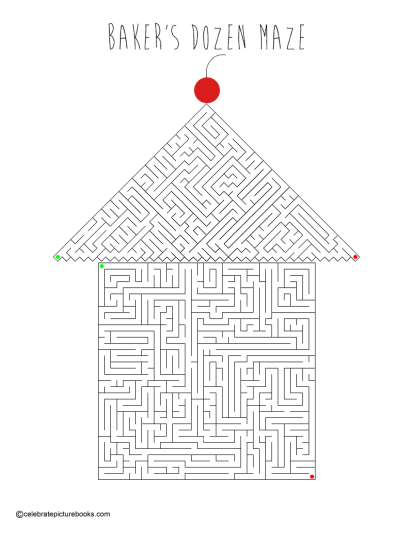
Baker’s Dozen Maze


After a long bike ride, don’t you just feel like a treat to reward yourself? This maze is a little of both—a twisting, turning puzzle that looks like a cupcake! Start at the green dot and finish at the red dot in both the “frosting” and the “cake.” Print your Baker’s Dozen Maze here. 

May 18 – International Museum Day

celebrate-picture-books-picture-book-review-homer-henry-hudson

About the Holiday

International Museum day was created in 1977 by the International Council of Museums to raise awareness that “museums are an important means of cultural exchange, enrichment of cultures and development of mutual understanding, cooperation and peace among peoples.” The theme for this year is Museums and Cultural Landscapes. Both nature and history comprise the cultural landscape that links museums to their surrounding neighborhood, towns, and beyond. As museums become more involved in their communities, they acquire the responsibility to protect, conserve, and interpret the cultural heritage inside and outside their walls. International Museum Day is growing—in 2015 more than 35,000 museums in 145 countries participated. Today visit one of your favorite museums and learn more about your cultural landscape.

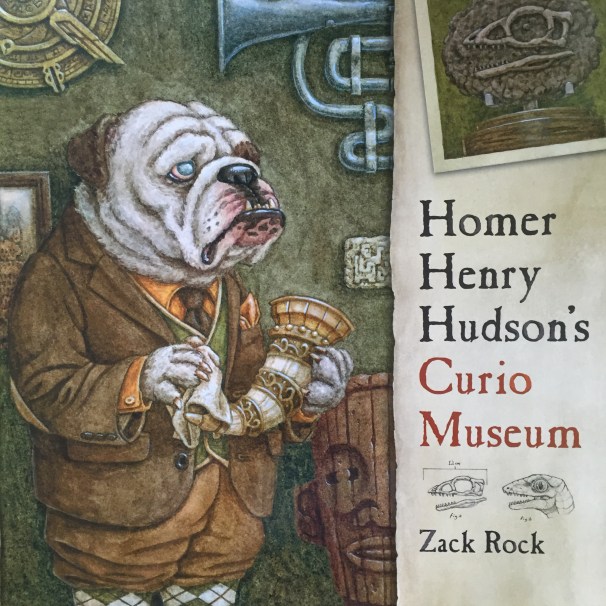
Homer Henry Hudson’s Curio Museum

By Zack Rock


Everything has a story, the narrator tells readers, especially the Homer Henry Hudson Curio Museum, which he says has been described as “a colossal collection of curios, discovered, described, and displayed by that eccentric explorer extraordinaire: Homer Henry Hudson.”

Come in and experience the wonders inside. A dignified bulldog dressed in a dapper tweed suit and leaning on a crooked cane will greet you. His job is to keep the place clean and dusted. Although the museum is stuffed floor to ceiling, he knows the placement of every object, knick-knack, and curiosity. As you explore the museum’s holdings—its portraits, musical instruments, ancient artifacts, taxidermy animals, and other treasures, the caretaker sits silently, hoping you will read the display cards that Homer Henry Hudson has lovingly written out with a description and personal note. He even has his favorite “bits and bobs” that he would like you to see.

One of these is Item #0001, the Conausaurus Skull of a small dinosaur from the late Jurassic Period that HHH found in the soil of his family’s farm. This bony discovery made Homer Henry wonder what else the world held and sparked his love of exploration. Another is Item #0023, a Radial Tide Diviner once used by Calypsonian seers to predict the future based on tidal patterns. It was the discovery of the lost Calypsonian civilization with its valuable artifacts that funded Homer’s further explorations.

Item #3412, a Temple Montepaz Choir Finch with a C sharp trill that chanted to accompany the parrot priest, was a most unusual gift, bestowed on HHH for convincing the Parrot Priest to release a piece of wood stripped from the temple wall. This shard turned out to lead Homer Henry Hudson into his future—for better or worse. With renewed fire, HHH charged toward the promise of riches only to fly his plane into a mammoth stone figurehead, which resulted in injury and his life-long limp.

Item #3415, The Manneken Mort of King Ingmar, is perhaps Homer Henry’s most treasured possession. Composed of fabric bands that represent the stories friends and family tell when someone dies, this Manneken Mort contains hundreds of bands relating the life of King Ingmar. This object HHH acquired for bravery and self-sacrifice when he was younger and still full of enthusiasm for life.

The old bulldog thinks of this curio most. He wonders what his Manneken will look like and whether all the bands of his life been woven. He likes to think his Menneken Mort “would be  hundreds—thousands—of feet tall. It’d tower over the Taj Mahal, shame the Sphinx!” But he knows “few memorable tales are told of rusty old codgers who spent their days…leaning upon fear like a crutch.”

Though blind in one eye and nagged by trepidation, the old bulldog packs his suitcase, dons his hat and throws away his cane. As he walks out the door, past pictures of himself on his early expeditions of discover, he knows he might “meet with catastrophe,” be “swallowed by quicksand,” or “gnawed on by piranhas.” But he also knows “there’s no success without failures,” and he has had many successes.

Homer Henry Hudson boards the cruise liner Phoenix and sets out for adventure once more. After all, he well knows that everything has a story. So if you come by the Homer Henry Hudson Museum today, you will see a sign hanging on the door: The Curio Museum is CLOSED Until Further Notice.

Zack Rock has written a compelling and unique picture book for adventurers of all types and ages. Part motivation and part cautionary tale, this story of the once intrepid explorer turned tremulous caretaker has a mysterious, treasure-around-every-corner quality that will appeal to kids. The life of Homer Henry Hudson is told through the display cards that accompany some of the museum’s curios. As the story develops through the cards’ personal notes, readers learn of the museum’s true owner and the life-altering decision he makes.

Rock’s illustrations in greens and parchment-paper golds and browns have a high “Oh, Cool!” factor, as the odd, ancient, and unusual objects of the museum invite kids to explore every nook and cranny of the pages. The exhibits serve not only to fill the museum, however, they remind us how easily the future can get overshadowed and crowded out by the past.

Ages 6 – 10

Creative Editions, 2014 | ISBN 978-1568462608

International Museum Day Activity

celebrate-picture-books-picture-book-review-cookies

Peanut Butter-M&M Cookies


A good cookie is like a museum—full of interesting flavors, colors, and taste. Here’s a cookie recipe adapted from Cookies & Cups that exhibits all these traits! 

Ingredients

  • 2 cups all purpose flour
  • 1/2 tsp baking soda
  • 1/2 cup butter
  • 1/4 cup peanut butter
  • 1 cup light brown sugar, packed
  • 1/4 cup granulated sugar
  • 1 whole egg
  • 1 egg yolk
  • 1 Tbsp vanilla
  • 1/2 tsp cinnamon
  • 1/4 tsp ground ginger
  • 3/4 cups m&ms
  • 1/4 cup chocolate chips (for extra chocolate)

Instructions

  1. Preheat oven to 325 degrees
  2. Combine butter and peanut butter in microwave safe bowl and melt together for 30 seconds. Remove and stir. Continue in 15-second increments until mixture is melted and smooth.
  3. In a separate large bowl whisk together flour and baking soda. Set aside.
  4. Combine eggs, egg yolks, vanilla, and sugar. Mix on medium until combined and smooth. Turn mixer to low and slowly pour in your butter/peanut butter mixture. Continue stirring until combined.
  5. With mixer still on low, gradually add your flour mixture until just combined. Batter will be thick.
  6. Now add in your candies and stir until they are evenly distributed.
  7. Now form your batter into “golf ball” sized dough balls. You can also use a 3-Tablespoon scooper.
  8. Place on baking sheet about 2 inches apart
  9. Bake for 10 to 12 minutes
  10. Cookies will be puffy, but should be golden around the edges
  11. Let cool on baking sheet for 2 -3 minutes and then transfer to a wire rack to continue cooling.

Cookies & Cups has lots of creative and delicious goodies for special occasions or for just those times when you want to be good to yourself!

Picture Book Review

May 16 -National Biographer’s Day

celebrate-picture-books-picture-book-review-the-noisy-paint-box

About the Holiday

On this day in 1763 James Boswell walked into a London bookshop and met Samuel Johnson—poet, critic, journalist, and writer of the first dictionary. They became friends, and 30 years later Boswell wrote a spirited biography of his companion that fully described Johnson’s feelings, quirks, opinions, and details of his life in a warm, conversational, unstinting way. The Life of Samuel Johnson changed forever the way biographies were written and is still popularly read today. Why not spend some time today with that fascinating biography or one on a favorite personality—or start writing the story of your own life!

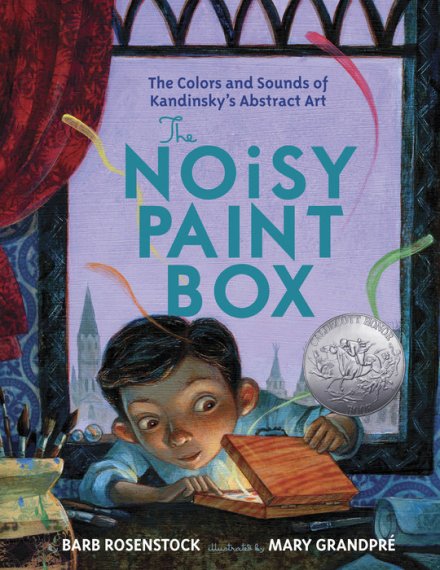
The Noisy Paint Box: The Colors and Sounds of Kandinsky’s Abstract Art

Written by Barb Rosenstock | Illustrated by Mary Grandpré


As a Russian child Vasya Kandinsky spends his days absorbed in learning math, science, and history. He takes piano lessons and attends formal dinners where the adults drone on and on. His life is polite, stiff, and colorless until the day his aunt gives him a small wooden paint box. “Every proper Russian boy should appreciate art,” Vasya’s aunt tells him while explaining how to mix colors.

Vasya takes up the brush and combines red with yellow then red with blue. As the colors change to orange and purple, Vasya hears a whisper that grows into a noisy hiss. “‘What is that sound?’” he asks, but no one else hears anything. “The swirling colors trilled like an orchestra tuning up for a magical symphony,” and “Vasya painted the sound of the colors.” A lemon yellow “clinked like the highest notes on the keyboard; a navy blue “vibrated deeply like the lowest cello strings.” Crimsons “blared” and greens “burbled.”

Vasya runs downstairs to show his family what he has created. His mother, father, and Auntie look at the canvas with its swoops, shapes, and angles. “What is it supposed to be?” they ask, and send him off to art school to learn how “to draw houses and flowers—just like everyone else.” Vasya finishes school and becomes a lawyer. He leaves his paint box untouched and lives the way he is expected, but the sounds of the colors are always with him.

One evening as he listens to an opera, the music surrounds him with color—“stomping lines of vermilion and coral; caroling triangles in pistachio and garnet; thundering arches of aqua and ebony…” Vasya can hear the colors and see the music. He knows then what he must do. He quits his job teaching law and moves to Germany to be a painter. He surrounds himself with artists and takes classes with famous teachers, and yet people still look at his canvases and asked, “What is it supposed to be?”

Once again he paints what is expected. His teachers love his houses and flowers, but Vasya does not. His friends understand. They too want to expand the meaning of art. They agree with Vasya when he says, “‘Art should make you feel.’” In his studio Vasya continues to paint the sounds he hears, to give music color and color sound. Bravely, he invites the public to view his paintings, which are named after musical terms—Composition, Accompaniment, Fugue, and more.

This is a new kind of art—abstract art—and it takes a long time before people understand. They look and still ask, “What is it supposed to be?” “It is my art,” Kandinsky replies “How does it make you feel?” 

An author’s note telling more about Kandinsky’s life and synesthesia, a genetic condition in which one sense triggers another, follows the story.

In the spirit of full disclosure, Kandinsky is one of my favorite artists, so I was excited to read this biography—I was not disappointed! With so many great artists, their work speaks for itself, but viewers wonder, “How did it come about?” “What influenced the artist?” Barb Rosenstock, with lyrical language and beautifully chosen descriptions, reveals the emotions and passion that fueled Kandinsky’s art from his earliest ages: as he walks through Moscow he can’t ignore “the canary-colored mailbox whistling as he rode to work. The scarlet sunset haze ringing above the ancient Kremlin walls.” Rosenstock’s inclusion of the conflicts and opposition Kandinsky faced and overcame will inspire children to listen to their inner voice and makes readers and lovers of his abstract art glad he never gave up.

Mary Grandpré’s unique style brilliantly depicts Kandinsky’s singular vision, allowing readers to experience the way he wielded his paint brush like a conductor’s baton. Vasya’s early life is painted in muted blues and grays, and the boredom on his face as he studies his schoolwork is obvious. Kids will appreciate his one-finger plinking at the piano and the rolled-eyed drowsiness of the formal dinner. Once Vasya is introduced to the paint box, however, Grandpré’s illustrations become vibrant, with swirling colors overlaid with the musical notes that Kandinsky associated with them. His uninhibited painting is gloriously shown as the young boy’s shirt comes untucked and the colors burst from the canvas upon his first painting.

As the adults look at his work, the room is again swathed in somber colors. The text revealing that Vasya attended regular art classes to learn to draw houses and flowers is set above a single wilting flower in a vase. The personal tug-of-war Kandinsky experienced even into adulthood is wonderfully rendered: Colors flow into his ears at the opera; he studies his own landscape and still life paintings with misgiving in a hazy studio, and the joy and freedom of his abstract art is demonstrated with wild abandon while a dove escapes its cage. The final image of a child sitting in front of a Kandinsky painting reinforces the idea that his art lives for all and for all time.

Ages 4 – 9

Alfred Knopf, Random House Children’s Books, 2014 | ISBN 978-0307978486

National Biographer’s Day Activity

celebrate-picture-books-picture-book-review-recipe-box-label

Recipe Box Label and Recipe Cards


People’s stories are written in all different ways: in the objects they surround themselves with, their activities, and the talents they exhibit. Today’s activity will help you tell your stories in the foods you bake! Or try this Recipe Card Writing Idea: Create a very short story and write it on one of the recipe cards! Read it to your family or teacher.

Supplies

celebrate-picture-books-picture-book-review-recipe-cards

Directions

  1. Glue the My Family’s Recipes label to the box you made
  2. Print out the recipe cards. Use them for your favorite dish and prepare for tomorrow’s treat to bake!

Picture Book Review
May 15 – International Day of Families

celebrate-picture-books-picture-book-review-families-families-families

About the Holiday

This United Nations sponsored observance was initiated in 1993 to reflect the importance of families worldwide. The day provides an opportunity to promote issues affecting families, including social, economic, educational and demographic topics. This year’s theme is Families, Healthy Lives and Sustainable Futures and focuses on ending poverty, promoting shared economic prosperity, social development, and health while protecting the environment. The holiday is marked with workshops, educational opportunities, publications, and special community events.

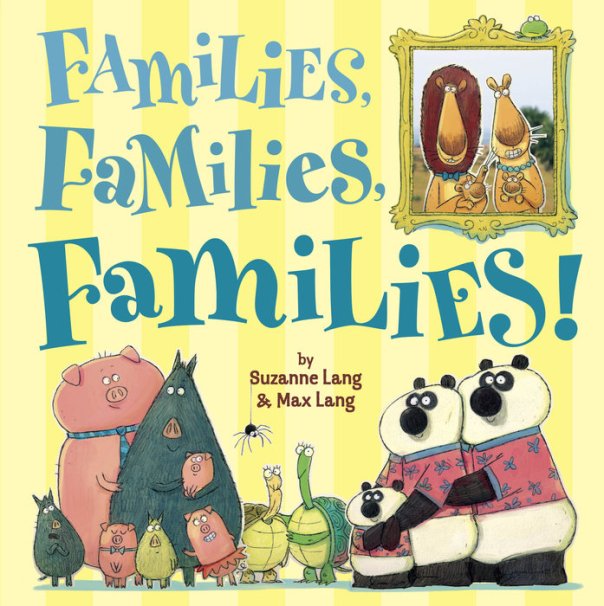
Families, Families, Families

Written by Suzanne Lang | Illustrated by Max Lang


Families—haven’t they always come in all shapes and sizes? With all different customs and traditions? Families, Families, Families delves into this most enduring—and endearing—structure of life in a way that makes sense to kids in a funny and honest way. “Some children have lots of siblings. Some children have none” the book starts. “Some children have two dads. Some have one mom. Some children live with their grandparents…and some live with an aunt.”

Lang does an excellent job of presenting all types of familial arrangements within the pages of the book. Nearly every child will happily find themselves here. Interspersed among the varieties of households, humorous comparisons and rhymes (“some children have many pets…and some just have a plant!”) elevate this book to a tribute to understanding, acceptance, and inclusion. After all…“if you love each other, then you are a family.”

Max Lang hit on an inspired way—during this era of selfies, snapchat, and the like—to illustrate the concepts of family. More than 17 animal families pose for portraits in which comic drawings of smiling moms, dads, kids, and relatives are superimposed onto photographed backgrounds. The portraits are framed with another touch of humor: A chicken family photo sits in a frame made of hay, an octopus and her four children smile from a frame made of seashells, and the Tigers are displayed in a frame of bones. The photos hang on wallpapered, barn, and underwater cave walls; sit on fireplace mantels; are pinned to bulletin boards; and fill scrapbook pages.

Families, Families, Families brilliantly demonstrates how every child takes pride in his or her family—just as the readers take pride in theirs.

Ages 3 – 7

Random House Books for Young Readers, 2015 | ISBN 978-0553499384

International Day of Families Activity

celebrate-picture-books-picture-book-review-recipe-box

Make Your Own Recipe Box


One of the best ways to spend time together is to bake up a favorite recipe and enjoy the results! World Baking Day is celebrated this week, so for the next few days, I’ll be offering baking-related activities for you to have fun with! With a small box you can make your own recipe organizer to keep tasty recipes close at hand!

Supplies

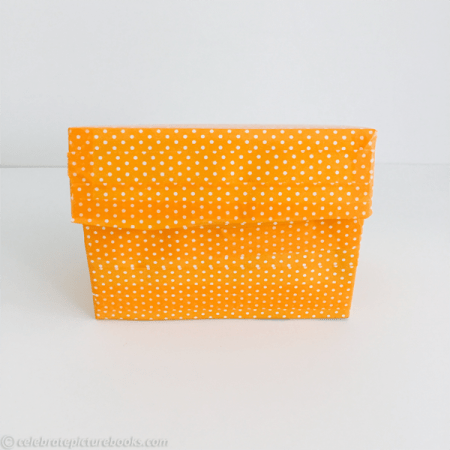
  • A small box with a hinged lid or separate lid, at least 5 inches by 3 1/3 inches (fits a small index card). A Twinings Tea Box works well as does a small wooden box available from craft stores
  • Washi tape or paint
  • Paint brush

Directions

  1. Cover your box with washi tape or paint your box
  2. Decorate your box with your unique style

Picture Book Reviews