May 17 – World Baking Day

celebrate-picture-books-picture-book-review-the-bake-shop-ghost

About the Holiday

World Baking Day is a day to celebrate and partake in all those delicious treats that come from our imaginations and our ovens! Whether you love bread, cupcakes, cookies, muffins, or more savory goodies, today is the perfect time to get together with family or friends and try your hand at making something new or enjoying a favorite scrumptious morsel. Why not sample a food from another country or revive one of your grandmother’s secret recipes? Baking is fun! And eating the results is even better!

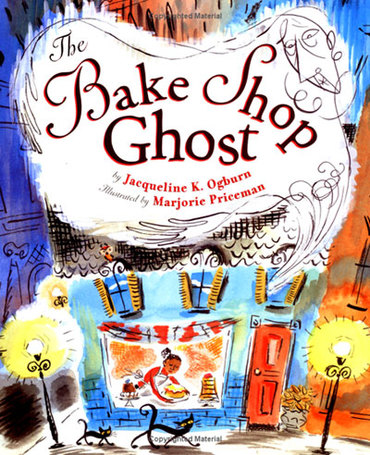
The Bake Shop Ghost

Written by Jacqueline K. Ogburn | Illustrated by Marjorie Priceman


For all intents and purposes, Miss Cora Lee Merriweather is Merriweather’s Bake Shop and the bake shop is Cora Lee. “Her Mississippi mud pie was darker than the devil’s own heart,” and her sponge cake was as light as angels’ wings. Her bakery case is stacked with fluffy pies, flaky strudels, and cakes of every size and flavor. In fact, no one’s birthday is complete without a Merriweather cake to celebrate with.

When Cora dies the congregation at her funeral weeps when the preacher reads the bake shop menu and everyone realizes “all those luscious desserts were now only sweet memories.” It doesn’t take long, however, for a new baker to buy Cora’s business. Gerda Stein brings in the ingredients for her strudels and cakes and starts baking, but the ovens burn every dessert, the refrigerator goes on the fritz, and Gerda hears footsteps overhead and clanking behind her. She slowly turns around and finds herself staring straight into the eyes of a ghostly Cora Lee Merriweather who shrieks, “Get out of my kitchen!”

The bake shop goes back up for sale and is sold to Frederico Spinelli who is not afraid of ghosts—until the next day when he emerges from the front door drenched in powdered sugar and never returns. Sophie Kristoff, the marzipan queen, takes over next, only to be chased out by flying eggs, three pink marzipan pigs, and a bunch of marzipan grapes.

After her departure the shop stands vacant for years, growing dim and dusty. One day Annie Washington, fresh off her stint as a cruise ship pastry chef, strolls by the dilapidated storefront. She falls in love with it as soon as she steps through the door. Annie buys it and scrubs and polishes until everything shines.

That night Annie goes straight to work on a puff pastry. Around midnight footsteps creak overhead, a cold wind sweeps the room, and mixing bowls topple to the floor. Annie keeps working. When she’s finished she dusts off her hands, turns around, and finds herself staring into ghostly eyes. “‘Miss Cora Lee Merriweather, I’ve been expecting you,” she says.

“Get out of my kitchen!” Cora says. But Annie is not intimidated. “This is my kitchen now,” she tells Cora. And what’s more, even though Cora may have been the best baker in the state, Annie tells her that she was the best pastry chef to ever sail on the Sea Star cruise ships, and come typhoon, tsunami, or shipwreck she never left a kitchen until she was finished.

Cora tries every trick in the book—she shrieks, flings utensils, rises up through the dough Annie’s kneading, breaks eggs, and as dawn breaks scatters a 50-pound bag of flour across the kitchen. All right, Annie says, “What can do so you’ll leave me in peace?”

Cora has a ready answer: “Make me a cake so rich and so sweet, it will fill me up and bring tears to my eyes. A cake like one I might have baked, but that no one ever made for me.” “Piece of cake,” replies Annie.

Annie makes every cake she knows and Cora critiques them. But none fill her up or bring a tear to her eye. Annie grows to respect the ghost’s advice, but she wants her kitchen back. After a month and hundreds of cakes, Annie is out of ideas. She goes to the library to research more recipes. There she finds a small book on town history, and after reading it she knows just what kind of cake to bake.

That night at midnight Cora appears, and Annie is ready. She lifts the cover on a very special cake. “Across the top, in piped icing, it read, ‘Happy Birthday, Cora Lee.” The ghost looks at Annie with tears in her eyes. “How did you know?” Cora asks.

Annie reveals the secrets of her research then adds, “Besides, who ever makes cake for the baker?” With tears streaming down her face, Cora eats her slice of cake. When Annie offers her another, she declines. “’I do believe I’m full.’”

Now the town enjoys Washington and Merriweather Bake Shop, where the cakes are almost as good as Cora’s, while never suspecting that’s because Cora Lee helps in the kitchen. And the most beautiful cakes? Those are the birthday cakes Annie and Cora make for each other.

A recipe for Ghost-Pleasing Chocolate Cake follows the story.

The Bake Shop Ghost was published in 2005 and made into a short film in 2009 starring Marianne Jean-Baptiste. Despite its age, however, this is a story that seems fresh every time it’s read. Jacqueline K. Ogburn plays out the story with such excellent pacing and details that the twist ending is a true surprise. Her descriptions of Cora Lee’s delicacies are mouthwatering and her metaphors just as downhome and tantalizing. Ogburn’s Annie is a welcome character—a woman of color who has confidence in her talents, doesn’t back down to the ghost’s intimidation, and works to find a solution that she implements with kindness and friendship.

Marjorie Priceman illustrates The Bake Shop Ghost with verve and delicious colors that will make readers wish they could visit Merriweather’s to sample the desserts in the well-stocked cases. Delicate chandeliers and French café chairs decorate the shop, giving it a sophisticated air. But there are also humorous details: a dog licks icing off a wedding cake as Cora ties string around a bakery box from the hanging twine dispenser, the preacher, choir, and congregation wail and shed tears as ethereal visions of the cakes they will miss float in the air at Cora’s funeral. The scenes of Cora’s ghost menacing the new shop owners are cleverly depicted with swoops of white that bear Cora’s face and hands floating above disaster.

Ages 4 -9

Houghton Mifflin Harcourt, Paperback edition, 2008 | ISBN 978-0547076775

World Baking Day Activity
celebrate-picture-books-picture-book-review-cupcakes

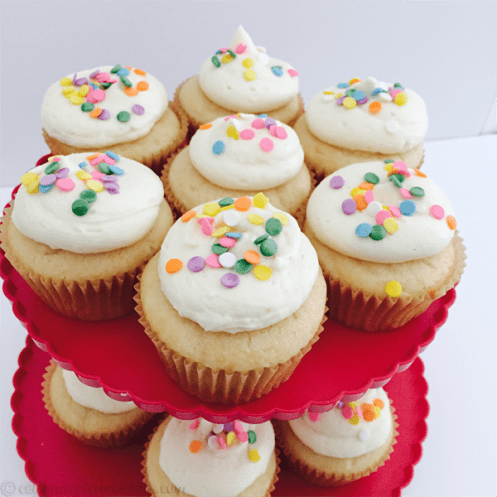
Very Vanilla Cupcakes


This delicious vanilla cupcake recipe from Sally’s Baking Addiction would definitely please Cora Lee Merriweather—and they’ll become your favorite confection too!

Vanilla Cupcakes

  • 1 and 2/3 cup (210g) all-purpose flour (spoon & leveled)
  • 1/2 teaspoon baking powder
  • 1/4 teaspoon baking soda
  • 1/2 teaspoon salt
  • 1 cup (200g) granulated sugar
  • 1/2 cup (115g) unsalted butter, melted and slightly cooled
  • 2 large egg whites
  • 1/4 cup (60g) vanilla Greek yogurt (or plain; or regular yogurt; or even sour cream)
  • 3/4 cup (180ml) vanilla almond milk (or cow’s milk; or soy milk; or plain almond milk)
  • 2 teaspoons pure vanilla extract seeds scraped from 1/2 split vanilla bean1

Vanilla Bean Frosting

  • 1 cup (230g) unsalted butter, softened to room temperature
  • 4-5 cups (480-600g) confectioners’ sugar
  • 1/4 cup (60ml) heavy cream2
  • 1 teaspoon vanilla extract seeds scraped from 1/2 split vanilla bean1
  • Salt, to taste

Directions

  1. Preheat oven to 350F degrees. Line muffin tin with 12 cupcake liners. Set aside.
  2. In a medium bowl, mix together flour, baking powder, baking soda, and salt. Set aside. In a large microwave-safe bowl, melt butter in the microwave. Whisk in sugar – mixture will be gritty. Whisk in egg whites, yogurt, milk, and vanilla extract until combined. Split 1 vanilla bean down the middle lengthwise. Scrape seeds from half of the vanilla bean into batter. Reserve other half.
  3. Slowly mix dry ingredients into the wet ingredients until no lumps remain. Batter will be thick.
  4. Divide batter among 12 cupcake liners (or 24 mini) and bake for 20 minutes or until a toothpick inserted in the center comes out clean. Bake for 8-9 minutes if making mini cupcakes. Allow to cool.
  5. To make the frosting, beat softened butter on medium speed with an electric or stand mixer. Beat for about 3 minutes until smooth and creamy. Add confectioners’ sugar, cream, vanilla extract, and vanilla bean seeds with the mixer running. Increase to high speed and beat for 3 minutes. Add more powdered sugar if frosting is too thin or more cream if mixture is too thick. Add salt if frosting is too sweet (1/4 teaspoon). Frost cooled cupcakes (I used Wilton 1M piping tip). There may be leftover frosting depending how much you use on each cupcake.
  6. Store cupcakes in an airtight container at room temperature for up to 3 days and in the refrigerator up to 7.

Additional Notes

  1. If you can’t get your hands on vanilla beans, add an extra ½ teaspoon of pure vanilla extract instead.
  2. Strongly urged to use heavy cream. You may use milk or half-and-half, but heavy cream will give the frosting a thicker texture. I recommend it!

For ways to adapt this recipe and more scrumptious recipes, visit Sally’s Baking Addiction. I guarantee you’ll go back again and again!

May 5 – Cinco de Mayo

celebrate-picture-books-picture-book-review-mango-abuela-and-me

About the Holiday

Cinco de Mayo has its origins in a victorious battle for Mexico during the Franco-Mexican War in 1862. In the United States this day is a celebration of the rich culture and heritage of Mexico that includes parades, mariachi music performances, Mexican food, and street festivals. If you can, attend a cultural event, listen to Mexican music, or prepare a special Mexican dinner.

Mango, Abuela, and Me

Written by Meg Medina | Illustrated by Angel Dominguez


During the winter Mia’s Abuela moves from her house far away to live with her  family. Mia feels shy around her unfamiliar grandmother, but quickly adapts, sharing her room and her drawer space. The one thing they cannot share is language. Abuela “can’t unlock the English words” in Mia’s book, and Mia knows only a little Spanish.

On the first night Abuela shows Mia two things she has carefully brought with her—a feather from a wild parrot that roosted in her mango trees and a photograph of her late husband. “Tu Abuelo,” she explains to Mia.

For the rest of the winter, Mia spends time with her grandmother, but regrets that she can never tell her important things about her life. Abuela does’t know that Mia’s good at art or can beat the boys in a race. Likewise, Abuela can’t tell Mia about her life or answer Mia’s many questions. 

When Mia confides in her mother, her mom reminds her of how she helped her best friend, Kim, learn English when she was new at school. One day while Mia and her grandma bake meat pies, Mia pretends to be her teacher, naming each ingredient in English. Abuela reciprocates with the Spanish word. Mia suddenly has an idea. Shetags everything in the house with its English name and the pair practices.

The next day on a trip to the pet shop to buy hamster food, Mia sees something in the window that gives her another exciting idea. Right in the middle of the display sits a colorful parrot. “Let’s buy him,” Mia exclaims. “For Abuela.” The parrot can keep Abuela company while she is in school, Mia thinks.

Abuela is thrilled with the gift, and they name the parrot Mango because he is the color of the tropical fruit. Abuela teaches him to say Buenos tardes. Good afternoon, Mia teaches him. “Buenos tardes, good afternoon,” Mango repeats. Abuela, Mia, and Mango spend the days practicing new English and Spanish words, learning the days of the week, the months, and the names of coins. Encouraged by her success, Abuela asks to learn more and harder words so she can meet people in the neighborhood.

Best of all, Mia and Abuela can now talk about everything. Their “mouths are full of things to say,” and they tell each other about their day and their lives. From his perch Mango watches and listens. Night falls and as the light is turned off, Mia says “Hasta mañana, Abuela.” “Good night, Mia,” Abuela whispers.

Meg Medina beautifully represents the relationship between a little girl and her grandmother who are unfamiliar with each other but bound by familial love. The little girl’s acceptance of her grandmother and desire to communicate is strongly depicted in the activities they do together. Mia’s clever ideas to promote the mutual learning of each other’s language shows the kind of inclusiveness that builds friendships. 

Angela Dominguez depicts the developing friendship between Mia and her Abuela in bright paintings that mirror the reds, blues, greens, and yellows of the tropics. The pair’s closeness grows organically from page to page as Mia first shies away from the grandmother who is a stranger to her to attempts at communication to deep feelings of love as they bridge the language barrier through dedication, hard work, and the help of a unique friend.

Ages 5 – 8

Candlewick Press, 2015 | ISBN 978-0763669003                    

Cinco de Mayo Activity

celebrate-picture-books-picture-book-review-parrot

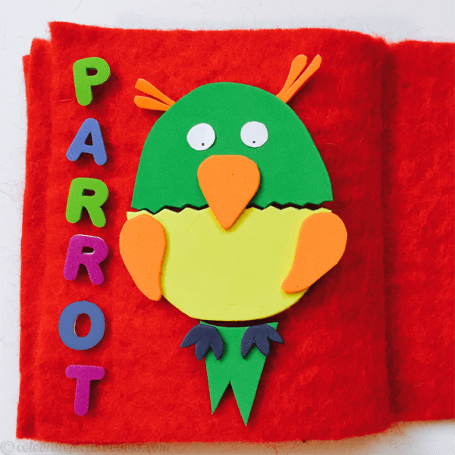
Create a Soft Book, Page 5—Parrot


Parrots are beautiful and exotic birds with a talent for language! Add this colorful tropical parrot to your soft book with the printable template provided.

Supplies

  • Printable Parrot Template
  • Yellow, green, orange, white, and black or brown felt, fleece, or foam
  • Adhesive felt or foam letters
  • Fabric glue
  • Scissors

Directions

  1. Cut out the head and tail from the green felt, fleece, or foam
  2. Cut out the body from the yellow felt, fleece, or foam
  3. Cut out the beak, wings, and feather tufts from the orange felt, fleece, or foam
  4. Cut out the feet from the brown or black felt, fleece, or foam
  5. Assemble the parrot and glue in place
  6. Attach the adhesive letters, making sure they stick firmly. If they don’t use fabric glue

See you tomorrow!

May 2 – Brothers and Sisters Day

celebrate-picture-books-picture-book-review-pigs-and-a-blanket

About the Holiday

Ah, brothers and sisters! Those built-in friends (and sometime frenemies) that live in your very own house. Sure, siblings like different things, play different games, and see the world differently, but that just broadens our horizons. And as siblings grow up, it’s nice to know there’s always someone out there who shares your history and has your back. Today, cherish your brothers and sisters. Get in touch or do something together—and tell them how much you love them.

Pigs and a Blanket

By James Burks


A cute piglet sister and brother love their blankets sooo much and sooooo much more! Henrietta loves the way her blanket smells. Henry loves the way his blanket feels. Henrietta reads with her blanket, while Henry draws under his.

Henry also creates hills in his blanket to zoom his monster trucks over while his sister uses it as a backdrop for the fierce dino movie she’s filming. The movie-making gives way to dancing because Henrietta loves to pirouette with her blanket. But wait a minute! The trucks have just gone off-blanket!! What’s happening?

And—“Hey!”—mid-twirl, that familiar green cloth suddenly becomes a cape catching the wind behind Henry’s superhero personae. One blanket between two kids? Henrietta tugs on one end: “Stop pulling on my blanket!” Henry yanks on the other end: “Stop pulling on MY blanket!!” The tug-of-war rages until “RRRIIIPPPPP!”

Henry retreats to one corner and half-heartedly pushes around his monster trucks on his part of the blanket while glancing over to the other corner where Henrietta has unenthusiastically resumed her movie making on her half. Maybe drawing and reading will be better. But no, not really. That separated blanket isn’t nearly as cozy.

The siblings move a little closer and shyly smile at each other. Maybe they can make up. “I missed you,” Henrietta confesses. “I missed you more,” Henry answers, placing a red checker on the board she’s brought over. The day is brightening in their playroom scattered with toys and art supplies. And as night falls, the two have cleverly reunited just in time for sleeping.

James Burks’ charming Pigs and a Blanket captures perfectly the vacillating relationship of siblings. Kids will recognize and appreciate the sentiments in this simple, honest story. While this sister and brother have separate interests and quarrel over a shared blanket, the truth is they love being together, and when the blanket no longer binds them, they soon realize life is much less rich.

Burks’ illustrations of the piglet siblings are adorable and expressive, registering the fortunes and misfortunes of an afternoon of play with joy, consternation, regret, sadness, and reconciliation. The book’s design makes excellent use of the two-page spreads. The sister plays with her blanket on the left-hand page, while her brother plays with his on the right. The blanket ingeniously disappears into the center of the pages, creating a smart, Ah-ha moment when Henrietta twirls it away from Henry. Likewise, after the blanket is torn apart, the once full-page illustrations are replaced with mostly white space as the two kids play alone and disconnected. As they move to restore their friendship, the white space lessens until it is again filled with love.

Pigs and a Blanket would be a wonderful addition to any child’s bookshelf to be reread at those times when getting along with siblings—or friends—seems hard.

Ages 2 – 6

Disney-Hyperion, 2016 | ISBN 978-1484725238

Brothers and Sisters Day Activity

celebrate-picture-books-picture-book-review-my-book-heart

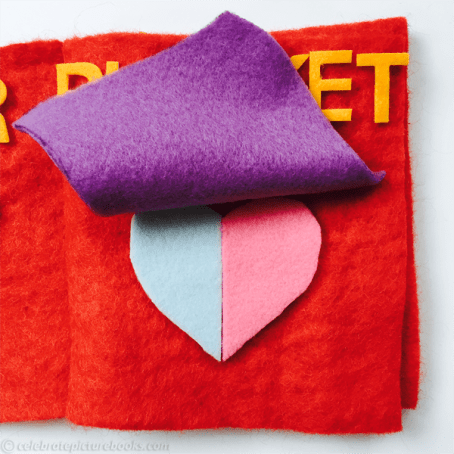
Create a Soft Book, Page 2: Peek-a-Boo Blanket


A blanket is so much fun! It can be a tent, a reading buddy, a cape, and a perfect hiding place! Add this Peek-a-Boo Blanket with its brother and sister heart to page 2 of your book!

Supplies

  • Printable Peek-a-Boo Blanket Template
  • Adhesive letters or fabric paint
  • Blue, pink, and purple felt – or colors of your choice
  • Fabric glue

celebrate-picture-books-picture-book-review-heart-2

Directions

  1. Cut out one half of the heart from the blue felt
  2. Cut out one half of the heart from the pink felt
  3. Cut out the blanket from the purple felt
  4. Apply the adhesive letters to the top of the page. Make sure the letters are firmly attached if you are using this book with very young children. If needed use fabric glue.
  5. Glue the heart to the page
  6. Glue the top of the blanket to the page so it hides the heart

See you tomorrow! For Page 1 see yesterday’s post!

April 16 – Record Store Day

The Bear and the Piano by David Litchfield picture book review

About the Holiday

Vinyl has made a resurgence—and why not?! Records have so much to offer music lovers, from the awesome album art to extras like posters, lyrics, photos and more. Those special packages are all about the relationship between the artists and their fans. All over the world Record Store Day celebrates this art form and the shops—both large and small—where you can find albums by your favorite musicians. Entering a record store is an adventure in itself. Flipping through the bins you might discover a new artist, an old album you don’t have, or an intriguing concept you just have to experience for yourself. Today, visit a record store near you and see how what once seemed old is new again!

The Bear and the Piano

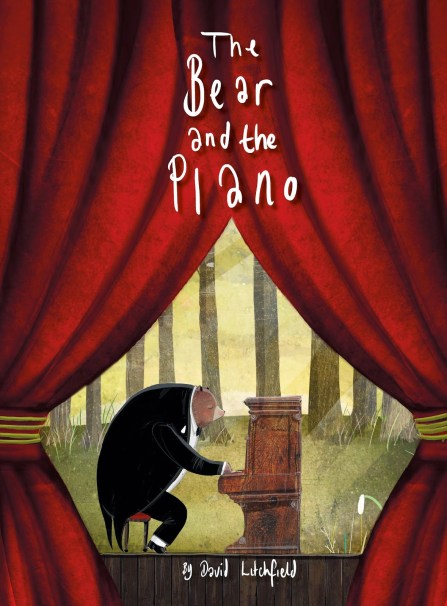
By David Litchfield


One day a bear cub happens upon a piano in a clearing in the middle of the forest. Wondering what it could be, he approaches and lays his paw on the keys. The strange thing goes PLONK!—such an awful sound. The bear cub leaves, but is drawn back again and again for days, months, and years. Over time the bear grows up and learns to play the piano. The music is beautiful and transports him to strange and wonderful places.

Other bears soon gather in the clearing to hear the “magical melodies” the bear plays. The bear is happy entertaining his friends. One night a girl and her father hiking in the forest come to the clearing. They listen and then tell the bear what his strange instrument is. They invite him to move to the city with them, where he will be able to play grand pianos for hundreds of people. The music he will play and hear “will make your fur stand on end,” they tell him.

The bear is conflicted. One on paw he knows that leaving the forest will make the other bears sad; on the other he longs to explore the world, to play the piano better, and master more intricate music. He decides to go with the girl and her father.

In the city the bear is a sensation! He quickly becomes a celebrity with his name on marquees and playing to sold-out crowds. The bear records albums that go platinum, he appears on the covers of magazines, and wins awards. His experience is everything he could ever wish for. But deep in his heart there is another longing. He misses the forest and his friends there.

He decides to leave the city and rows a boat across the expanse of water to his old home. Excitedly he runs to the clearing, but when he arrives everything has changed. His piano is gone and there are no friends to greet him. The bear worries that everyone is angry at him for leaving, or worse—that they have forgotten him.

Suddenly an old friend peeks around the trunk of a tree. The bear hails him with a hearty “Hello!”, but the other bear remains silent then turns and runs into the trees. The bear follows plunging deeper and deeper into the forest. Suddenly he stops. In front of him is a sight that makes his fur stand on end.

There, protected in the shade of a tree and surrounded by the albums, magazines, t-shirts, and other mementos of the bear’s success sits the old piano. The bear’s friends have not forgotten him and they are not angry. They are proud and welcoming. The bear tells them all about his adventures, and then he sits down to play again—for the most important audience of all.

David Litchfield’s very original and moving story is such a wonderfully conceived microcosm of the changes life brings. Stumbling upon a talent, cause, or inspiration; opening up to other influences; and acting on hard decisions are all part of growing up. These concepts are honestly and sensitively presented, and the reassuring ending brings comfort as well as a tear to the eye.

Litchfield’s touching illustrations—rendered in gorgeous hues of browns, greens, yellows, and blues—brim with yearning and mystery. The piano sits in a misty glow, silent and draped with vines, when the cub discovers it. While the bear grows and learns to play, the air clears and the colors become brighter. As the bear moves to the city, the pages glint and swirl with his enormous achievements. But as the bear sits on a rooftop one night looking out toward his old home, the lights around him are the elements of normal life—lamps, stars, the moon glimmering on the water. His nostalgia to be home will resonate with both kids and adults. The Bear and the Piano makes a wonderful gift for any age—especially as a graduation or new-job gift—and is a must-have for anyone’s personal library.

Clarion Books, Houghton Mifflin Harcourt, 2016 | ISBN 978-0544674547

Record Store Day Activity

CPB - Record Bulletin Board

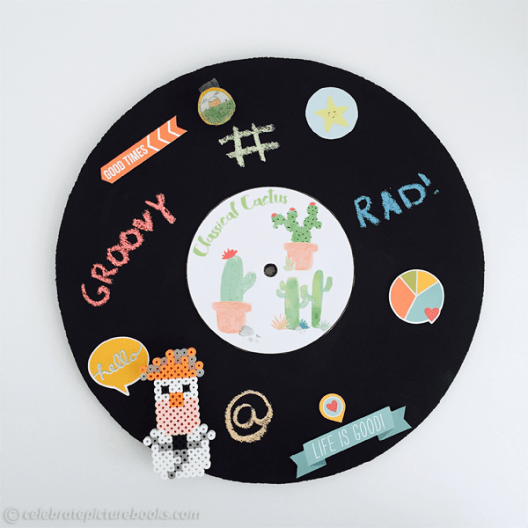
Make a Record Chalkboard Bulletin Board


Would you love to make a record some day? Why wait? In this fun craft you can create your own record bulletin board—and even create your own label art! While this record may not spin on turntables around the world, it will drop in a more important place—your very own room!

Supplies

  • Printable Record Label for you to design
  • Foam board, or a corkboard at least 12-inches x 12-inches square
  • Adhesive cork
  • A 12-inch round plate, record, or other round object to trace OR a compass
  • Chalkboard paint, black
  • X-acto knife
  • Paint brush or foam paint brush
  • Mounting squares

Directions

  1. Cut a section from the adhesive cork a little larger than 12 inches by 12 inches
  2. Affix the cork to the foam board
  3. Trace the 12-inch round object onto the cork/foam board OR use the compass to make a 12-inch circle
  4. With the x-acto knife, carefully cut out the circle (adult help needed for children)
  5. Cut out a ¼ -inch circle in the center of the record bulletin board
  6. Paint the cork, sides and inside the spindle hole with the black chalkboard paint. Let dry
  7. Print the label template and design your own record label
  8. When the paint is dry, glue your label to the center of the bulletin board
  9. Hang your bulletin board with the mounting squares
  10. Decorate!

April 7 – International Beaver Day

The Flying Beaver Brothers and the Crazy Critter Race by Maxwell Eaton III

About the Holiday

Beavers are pretty amazing creatures. With their prominent teeth these largest members of the rodent family cut down large trees. They use the bark, buds, and small twigs for food then gnaw the trunk and branches into smaller parts and build dams that are just about as strong as anything people can construct. These dams can help prevent floods, clean the water supply, and restore wetlands. The largest beaver dam is in Wood Buffalo National Park in Alberta, Canada.

Beaver Day is celebrated to bring awareness to the declining beaver population and to promote their protection.

The Flying Beaver Brothers and the Crazy Critter Race

By Maxwell Eaton III


The flying Beaver brothers are back in a vine-popping, lasso-swirling adventure! Bub is reading Penguin Giant to Bob and Bob when Ace comes home with an intriguing ad for The Crazy Critter Race. The winner will receive—not pancakes as the penguins hope—but a free houseboat. The house Bob and Bob built for the Beaver brothers is a little less than desirable, so Ace and Bub swim over to Critter Houseboat Sales and Service to sign up.

There they meet the yeehawin’ cowboy hat-wearin’ crazy critter who has organized this unusual event. They also encounter the rope-snapping Raccoon sisters, and the competition is on! Crazy Critter explains the rules of the race: It seems the islands’ trees have been destroyed by ornery baboons, so the object of the race is to replant trees from a jar of seeds Crazy Critter gives them. The first team to reach the top of each mountain must plant one seed. The team who completes the race and rings the bell at the finish line will win a houseboat.

The racers take off, but the Beaver brothers and Raccoon sisters soon leave the rest of the competition in their wake. They both run to the top of the first mountain and plant their seeds. With a Rugga Rugga and a loud Brorg! two enormous vines break the earth and thunder toward the sky! In all the mayhem Ace and Bub’s jar of seeds opens and spills its contents on the beach.

In the blink of an eye, vines are shooting out of the ground and grabbing everything in sight. In fact, “Everything Vine” is the name of this Kudzu cousin because it covers everything. Ace and Bub go to work with their gnawing teeth, but even they are no match for the vine. Unaware of the disastrous consequences, the Beaver sisters use some pretty impressive moves to get ahead even as they continue planting seeds.

Now vines are erupting willy-nilly, threatening every land mass and even Beaver Island. Crazy Critter denies all knowledge of the fatal seeds, but has a solution of his own—if the islands are uninhabitable, he will sell houseboats to all the ex-habitants. Crazy Critter finally fesses up to his evil plan, but what can anyone do now? The vines are taking over!

The Beaver brothers look at the Raccoon sisters and the Raccoon sisters look at the Beaver brothers. They know that by working together they can save the islands. The Raccoon sisters use their awesome roping skills to gather the vines while the Beaver brothers chomp them in half, destroying them. Beaver Island is saved!

But who wins the houseboat? Let’s just say Crazy Critter isn’t so crazy after all.

This graphic novel-style book—the 6th in the series—will appeal to reluctant readers as  well as kids who enjoy a wild, humorous adventure. The quick pace of the story, teamed with action-packed drawings, will keep fans of the series cheering for their familiar friends in this race that just doesn’t seem right. Kids will laugh out loud at the funny asides and sound effects. A light-hearted lesson on competition and cooperation ties the story together in a satisfying finish.

Ages 6 – 9

Knopf Books for Young Readers, 2015 | ISBN 978-0385754699

International Beaver Day Activity

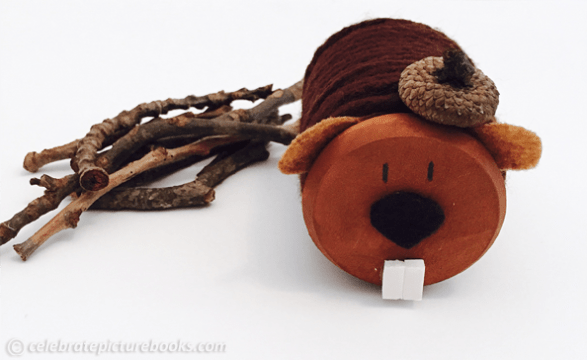
CPB - Beaver craft picture (2)

Make a Spool Beaver


Do you have a gnawing need to have a beaver of your own? Make one with this Spool Beaver craft!

Supplies

  • Printable Ears and Nose Template
  • 2-inch wooden spool, available at craft stores
  • 1 6-inch long x ¾ inch wide craft stick
  • Small piece of foam board
  • Brown “chunky” yarn
  • Brown felt, small piece for ears and tail
  • Black felt, small piece for nose
  • Acorn top for hat (optional)
  • Brown craft paint
  • Black craft paint
  • Black marker
  • Strong glue
  • Paint brush
  • Scissors

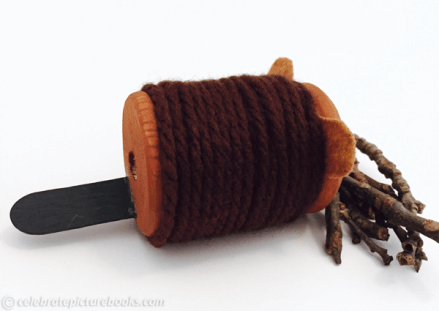
CPB - Beaver craft picture with tail

Directions

  1. Print the Ears and Nose template
  2. Paint the spool with the brown paint, let dry
  3. Cut the ears from the brown felt
  4. Cut the nose from the black felt
  5. Cut a piece from the end of the craft stick
  6. Paint the craft stick brown or black, let dry
  7. Cut two small pieces from the foam board, ½-inch long x 3/8 inch wide
  8. When the spool is dry, glue the ears to the spool, leaving the ears sticking up over the rim of the spool
  9. Glue one end of the yarn to the spool
  10. Holding the spool horizontally, wind the rest of the yarn around the spool back and forth from front to back. Glue the end to the body of yarn. This will be the bottom of the beaver.
  11. Glue the nose over the hole in the spool
  12. Glue the teeth below the nose
  13. Glue the flat edge of the craft stick to the back of the spool to make the tail


April 4 – National School Librarian Day

The Midnight Library by Kazuno Kohara Picture Book Review

About the Holiday

One of the best parts of going to school is visiting the school library! Whether you go to the library to listen to a story or do research, the librarian is there to help you discover amazing books! School librarians thoughtfully read hundreds of books a year to choose just the right ones. Many school librarians are also involved in multimedia education and programs for school assemblies, morning news programs, and special meetings.

Today, thank your school librarian and tell them how much they mean to you!

The Midnight Library

By Kazuno Kohara


A little librarian opens the doors to her library only as the sun goes down. Working with her three assistant owls, she helps the forest animals find the perfect book. The animals read quietly and the library is peaceful until one night when a band of squirrels begins playing their instruments in the reading room. The little librarian shushes the squirrels and they apologize, saying they’re just working on a new song. The librarian has the perfect solution and shows the band to the upstairs activity room. Peace reigns once more in the library,

Later that night it begins to rain—inside! The little librarian climbs the ladder to look at the roof, but instead of a leak she finds a wolf sobbing away. Her book is so sad, she says, that she can’t read on. Gently, the librarian takes her to the storytelling corner where she, the owls, and Miss Wolf read the story together. The wolf discovers the book has a happy ending, something the library workers knew all along.

All too soon the sun peeks over the horizon, and it’s time for the library to close. The patrons file out one by one, but who is left plodding along with his book in the corner? It’s a tortoise who says he is not leaving until he finishes his book—only 500 pages to go! Once again the little librarian has the answer! She gives the tortoise a library card and reveals that he can take the book home with him and finish it there. The tortoise leaves happy and feeling lucky with the book strapped to his shell.

The owls and the librarian tidy up the shelves and grab one last book—bedtime stories for the sleepy owls.

The Midnight Library is a perfect bedtime—or daytime—book for budding bibliophiles and library lovers. While simply written, Kazuno Kohara’s story has a dreamy quality and is as inviting as a favorite library reading nook. Just as libraries are comforting in their hushed rooms and neatly organized shelves, the little librarian of the story is reassuring as she quickly and calmly resolves the issues that arise in her domain. 

The characters are sweetly drawn, smiling with pleasure at being in their favorite place, and the picture of the owls holding Miss Wolf’s hands as they read her book together is particularly touching. The pages are composed of three colors—the structures inside the library are the black of night’s shadows; the walls and characters are the gold of starlight and moonlight; and the beloved books are the violet blue of the deep night sky. As you reach the end of the story, you will look forward to the next night when you can visit the midnight library again.

Ages 3 – 6

Roaring Brook Press, 2014 | ISBN 978-1596439856

National School Librarian Day Activity

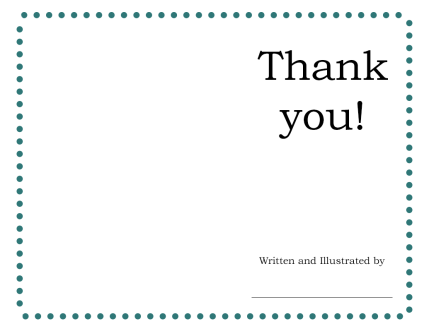
CPB - Librarian Thank You card

Create a Thank You Card


Today’s a perfect day to make a card to thank your school librarians or the librarians at your local town library. Here’s one that you can use to tell your librarians why you love them and what you like best about the programs they create for you! Print the Thank You! card, draw a picture on the front and/or inside, sign your name, and write a message. Then fold it and give it to your favorite librarian. Get the Thank You! card here.

March 30 – National Pencil Day

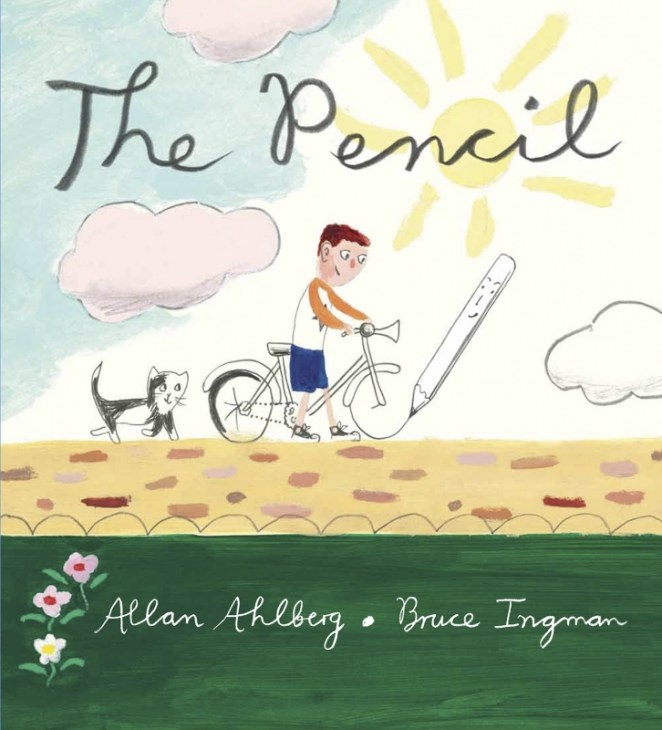
The Pencil by Allan Ahlberg and Bruce Ingman Picture Book Review

About the Holiday

Writers and artists, this day is for you! On this date in 1858 Hymen Lipman received a patent for the very first graphite pencil with an eraser attached. Lipman must have been an optimist because the pencil he created was ¾ graphite and ¼ India rubber eraser. The user would sharpen both ends to expose the material. There are conflicting reports on why most pencils sport that familiar yellow hue, but both agree that the color was associated with grandeur. One fascinating fact about this most noble instrument is that a single one can pen pencil 45,000 words or draw a line 35 miles long!

So sharpen those pencils—whatever color they are—and spend this day creating something wonderful!

The Pencil

Written by Allan Ahlberg | Illustrated by Bruce Ingman


Even before the title page readers learn of a little pencil, alone in the world. One day the pencil quivers and begins to draw. The pencil draws a boy, who asks for a name, and receives “Banjo” in reply. The boy wants a dog, and the pencil obliges. Bruce is the dog’s name, and he wants a cat. Mildred is immediately created, and of course Bruce chases Mildred. Banjo chases Bruce. They need a place to run, so the pencil draws a house, a town, and a park.

All this excitement makes the trio hungry and tired. Banjo demands the pencil draw him an apple, Bruce wants a bone, and Mildred really wants a mouse but settles for cat food. There’s just one problem—the food is so unappetizing in black and white. The pencil thinks for a bit and comes up with a solution. He draws a paintbrush named Kitty. Kitty colors the food, the boy, the dog, the house, the town, and the park. Mildred is left as created – she’s a black-and-white cat anyway.

The team of Pencil and Paintbrush create a family, a friend for Bruce, a ball (Sebastian) for Banjo, and a kitten for Mildred. But all these extra characters cause trouble. Sebastian breaks a window, and the mom, dad, sister, and grandpa aren’t completely satisfied with their traits. What’s a pencil to do? Draw an Eraser, of course!

The eraser takes care of the problems, but grows fond of his power to rub things out. He erases the table, chair, front door—the whole house. And that’s not all! Nothing the Pencil and Paintbrush have created is safe. Eraser rubs everything out until all that’s left is the pencil and the eraser locked in opposition.

The pencil draws a wall, a cage, a river and mountains with fierce animals but none of it is a match for the eraser. Then the pencil has a brainstorm and draws…another eraser! The two erasers engage in an epic battle, and in the end they rub each other out.

The Pencil recreates everything he had before, and Kitty colors it all in, including a new picnic with a runaway boiled egg named Billy and 10 A-named ants to clean up the crumbs. As the day fades into night, a moon appears in the sky along with a cozy box for Pencil and Paintbrush to sleep in.

Allen Ahlberg’s endearing story of a little pencil who creates himself a world full of friends and excitement as well as the inevitable conflict will appeal to kids for whom the imagination looms large and even competes with and enhances reality. On a subtle metaphorical level, as the eraser rubs out everything in its path, kids may see that simply getting rid of problems can sometimes cause more, and that resolution is a better tact.

Bruce Ingman’s illustrations deftly depict the friendship and collaboration between Pencil and Paintbrush. Graphite lines outline the characters and objects that Pencil draws, and the colorful accents from Paintbrush are vivid and joyful.

Ages 4 – 8

Candlewick Press, 2012 | ISBN 978-0763660888

National Pencil Day Activity

CPB - Pencil Maze

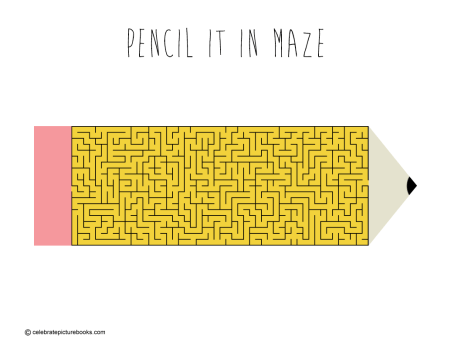
Pencil It In! Maze


Line up here to test your skills against this printable Pencil It In! pencil-shaped maze. Solution included. Sharpen your pencil and start having fun!

Picture Book Review