September 6 – It’s Friendship Month

celebrate-picture-books-picture-book-review-big-bear-and-little-fish-cover

About the Holiday

Friendship Month was established by the Oddfellows (shortened from The Grand United Order of Oddfellows Friendly Society (GUOOFS)), an international fraternity that dates back to 1730s England with the hope of encouraging people to make friends. Now dedicated to philanthropy and charity, the Oddfellows still promote Friendship Month each September to urge people to spend more time with their friends, get in touch with those they haven’t seen or talked to in a while, and, especially, to reach out to others who are alone or need a friend. As school gets underway, there are plenty of opportunities for kids to meet new people and form friendships – some of which may last a lifetime.

I’d like to thank Carolrhoda Books and Blue Slip Media for sharing a copy of Big Bear and Little Fish with me for review consideration. All opinions on the book are my own.

Big Bear and Little Fish

Written by Sandra Nickel | Illustrated by Il Sung Na


At the fair, Bear approached the basketball game booth, where the grand prize was a huge teddy bear. It was almost as big as Bear, herself. But Bear took away the consolation prize: a goldfish. “It was small. It was very small. It was so small it lived in a bowl.” Bear peered into the bowl, but when Fish woke up and said “‘Hello, Bear. Is this my new home?'”, Bear only nodded, afraid her big voice would scare little Fish.

celebrate-picture-books-picture-book-review-big-bear-and-little-fish-teddy-bear

Image copyright Il Sung Na, 2022, text copyright Sandra Nickel, 2022. Courtesy of Carolrhoda Books.

When lunchtime came, Bear made herself a sandwich with syrup that was as gold as she was. Bear didn’t know what to feed Fish, who was orange and probably liked “carrot muffins … or tangerines and pumpkins.” After lunch, Bear always measured herself. Today, she was over nine feet big! Bear didn’t know how she could measure Fish, so she left home for her regular afternoon walk, wishing – and not for the first time – that Fish was a teddy bear.”

While walking, Bear contemplated how inconvenient Fish might find the outdoors. Things could fall into her bowl and get caught in her tail. If she had a teddy bear Bear thought again, she wouldn’t have to worry about such things as tails. Bear began to regret ever bring Fish home from the fair. When Bear got home again, Fish greeted her with a “‘Hello” and a comment on how much she liked their porch.

celebrate-picture-books-picture-book-review-big-bear-and-little-fish-bowl

Image copyright Il Sung Na, 2022, text copyright Sandra Nickel, 2022. Courtesy of Carolrhoda Books.

In response, Bear gave Fish the bad news that she couldn’t stay. When Fish asked why, Bear laid out her reasons: Fish was orange and ate orange foods; Fish had a tail that made it impossible for her to go on walks with Bear; and finally that Fish was too small. Fish was undaunted. She pointed out that Bear was orange too, and when Bear inspected her belly, she agreed that it “was an orangey sort of gold” kind of “like a carrot muffin.” Fish then added that Bear had a tail, and when Bear looked over her shoulder, she saw a tiny tuft. As to the assertion that she is “small,” Fish was surprised. 

celebrate-picture-books-picture-book-review-big-bear-and-little-fish-hello

Image copyright Il Sung Na, 2022, text copyright Sandra Nickel, 2022. Courtesy of Carolrhoda Books.

“Am I?” she asked then welcomed being measured. She stretched herself out, and Bear measured her: three inches long. Fish was happy with this result; she wasn’t so small after all. “‘I am not one inch. I am not two inches. I am three inches,'” she said proudly. Still, Bear couldn’t get over the idea that Fish was so tiny she had to live in a bowl. 

But Fish was philosophical. “‘Don’t you live in a bowl too?'” she asked. Bear had never thought of it that way before, and as she looked around at the big, blue sky, she suddenly felt small too. Fish reassured her and offered another perspective on physical size compared to how big one could feel inside. Bear considered this and then decided she’d like to take another walk – this time accompanied by Fish. And so they set off in search of a very big carrot muffin.

celebrate-picture-books-picture-book-review-big-bear-and-little-fish-sandwich

Image copyright Il Sung Na, 2022, text copyright Sandra Nickel, 2022. Courtesy of Carolrhoda Books.

In her seemingly odd “fellows” friendship story, Sandra Nickel presents a multi-layered look at what it means to be a true friend. She cleverly offers readers a variety of lenses for them to engage in perspective, from the character’s viewpoints to their own. Bear, alone at home and on her walks, focuses only on herself. At the fair, she wants to win a teddy bear that is a twin to herself but for which she would not need to be responsible in any real sense.

Fish, however, immediately wants to interact with Bear. She talks to him and asks questions. At first, it may seem that Bear will simply ignore Fish, but the idea of her has begun to make Bear think and even worry (here, Nickel creates a complex mix of emotions that invites discussion). Equally thought-provoking are Fish’s counter arguments when Bear tells her she can’t stay. While promoting how similar they are, Fish prompts Bear to reevaluate her view of herself and the world she lives in. Once Bear realizes that she, too, can be considered small and that the full measure of a person (or Fish or Bear) is found inside oneself, she embraces Fish – responsibilities, friendship, muffins, and all.

Il Sung Na plays with perspective and color to subtly guide readers through the stages of this endearing friendship. As Bear walks home from the fair, dejectedly carrying Fish in her bowl, the hilly landscape is washed in shades of blue and the twiggy, leafy, mushroomy vegetation replicates an ocean bottom. This evocative effect continues throughout the book, prompting kids to find other similarities between Bear and Fish and their environments. Readers will also enjoy pointing out examples and comparisons of big and small.

An endearing and thought-provoking story that boosts self-confidence while promoting friendship, empathy, and new perspectives, Big Bear and Little Fish will become a quick favorite on home bookshelves, a go-to book for classrooms, and a must for school and public library collections.

Ages 4 – 8

Carolrhoda Books, 2022 | ISBN 978-1728417172

Discover more about Sandra Nickel and her books on her website.

To learn more about Il Sung Na, her books, and her art on her website.

Dive in to this book trailer for Big Bear and Little Fish!

Friendship Month Activity

celebrate-picture-books-picture-book-review-beanstalk-craft-with-top


Measuring Stick Craft


Bear and Fish loved getting measured. If you’re looking for a unique way to measure how big you are, here’s a craft for you! This nature-inspired measuring stick can keep track of your big and small growth spurts whenever you sprout up. You can even add leaves to record thoughts, favorite things, and other ideas as you age! 

Supplies

  • 50-inch wooden stake, available at craft stores
  • Dark and light green foam sheets or 45 – 50 small wooden leaves, available at craft stores
  • Green paint, light and dark
  • Black marker
  • Paint brush
  • Strong glue
  • Flower pot
  • Oasis or clay
  • Ruler
  • Pencil

celebrate-picture-books-picture-book-review-beanstalk-craft-closeup

Directions

  1. Paint the wooden stake with the green paint, let dry
  2. With the ruler mark the stake in 1-inch increments along the edge of the stake

How to Make the Leaves

  1. If using wooden leaves, paint half light green and half dark green
  2. If using foam, cut 1 3/4-inch-long tear-drop shaped leaves (half from light green foam, half from dark green foam), 45 – 50 or as needed
  3. Cut two larger leaves, one from each color to decorate the top of the stake
  4. Draw a line down the center of each leaf

For Measuring Growth: Write the inch 1 through 45 or higher on each leaf with the black marker, alternating colors

For Recording Ideas: You can write favorite ideas, hobbies, or hopes on the leaves too and measure your growth that way!

How to Attach the Leaves

  1. Glue the leaves to the stake, attaching the odd-numbered inch leaves to the left side of the stake and the even-numbered leaves to the right side of the stake.
  2. Attach half of the leaf to the stake, letting the tip stick out from the side
  3. Glue the two larger leaves to the top of the stake

How to Store Your Yardstick

  1. Put the oasis or clay in the flower pot
  2. Stick the stake into the flower pot to keep it handy

celebrate-picture-books-picture-book-review-big-bear-and-little-fish-cover

To get a copy of Big Bear and Little Fish personalized by Sandra Nickel

Visit Watermark Books to request a signed and personalized copy. When ordering, simply note your desired dedication in the Comments section. Sandra will sign on September 24, 2022, so be sure to order in plenty of time.

You can also find Big Bear and Little Fish at these booksellers

Amazon | Barnes & Noble | Books-a-Million

To support your local independent bookstore, order from

Bookshop | IndieBound

Picture Book Review
August 16 – Celebrating the Book Birthday of A Case of the Zaps

celebrate-picture-books-picture-book-review-a-case-of-the-zaps-cover

Thanks to Abrams Books for Young Readers for sending me a copy of A Case of the Zaps for review consideration. All opinions on the book are my own.

A Case of the Zaps

Written by Alex Boniella and April Lavalle | Illustrated by James Kwan


On Robot-Earth there lived a robot named 3.14159… (“or Pi, for short”). Pi liked doing things most young robots did, like “playing music, walking their dog, and hanging out with their Parental Units and friends. Pi also liked sports, science, camping, and exploring, and their favorite food was DW-40. One day at school, their teacher announced that in a month the class would be going on a field trip to Olde Silicon Valley.

celebrate-picture-books-picture-book-review-a-case-of-the-zaps-parental-units

Image copyright James Kwan, 2022, text copyright Alex Boniello and April Lavalle, 2022. Courtesy of Abrams Books for Young Readers.

All of Pi’s classmates were excited about the trip, and “Pi felt their circuit board BUZZ with anticipation.” Pi couldn’t stop thinking about the trip. But along with all the fun things they would do, thoughts about what could go wrong crept into his consciousness. And then, unexpectedly, while walking home from school with their friends, Pi experienced a tingle in their arms and then their “defense mechanisms JOLTED on.” Pi’s friends asked if they were all right.

celebrate-picture-books-picture-book-review-a-case-of-the-zaps-hobbies

Image copyright James Kwan, 2022, text copyright Alex Boniello and April Lavalle, 2022. Courtesy of Abrams Books for Young Readers.

Pi wasn’t sure and took off for home, “feeling zaps all around. Feeling afraid for reasons they didn’t quite understand.” The intrusive thoughts kept Pi awake that night, and during the next few days, even though Pi tried to act calm, they felt anything but. Trying not to think about the field trip just made things worse. One night they couldn’t even eat their DW-40, and then… ZAP! 

Pi ran to their room and shut the door. Pi’s “Mother-Board and Father-Board followed their robo-kid upstairs. When they asked through the door what was wrong, Pi admitted that they didn’t want to go on the field trip anymore. They they explained that “something feels wrong” and how all their gears and sensors seemed to be in overdrive. Pi confessed “‘I’m scared I might be . . . broken.'”

celebrate-picture-books-picture-book-review-a-case-of-the-zaps-school

Image copyright James Kwan, 2022, text copyright Alex Boniello and April Lavalle, 2022. Courtesy of Abrams Books for Young Readers.

Pi was surprised to find that just telling their parents made them feel better. Pi’s Father-Board told them that they had had the zaps when he started his new job and that “‘cousin Cosine Tangent has had them for years.'” Pi was surprised because Cosine Tangent had recently won a major science award. Mother-Board suggested that they visit the doctor the next day.

Doctor Bleep Bloop was very friendly and welcoming. The doctor explained to Pi that the Zaps can happen to anyone and at any time and acknowledged that they can be scary. When Pi asked if there was any cure for the Zaps, Doctor Bleep Bloop was honest and told them “‘There isn’t a simple cure.'” The doctor went on to say, though, that there were ways of managing the Zaps and that they could work together to find strategies to help Pi.

celebrate-picture-books-picture-book-review-a-case-of-the-zaps-anxiety

Image copyright James Kwan, 2022, text copyright Alex Boniello and April Lavalle, 2022. Courtesy of Abrams Books for Young Readers.

By the time the field trip to Olde Silicone Valley came around, Pi was ready to go, and they had a lot of fun. Even after the trip, Pi sometimes felt the Zaps. “When that happened, Pi used the tools that Dr. Bleep Bloop had shared with them, and then the Zaps didn’t feel quite so scary.” 

Back matter includes an Authors Note explaining how both Alex and April have experienced anxiety in their lives as well as online resources where parents and caregivers can find more information and help from professionals in the areas of anxiety, depression, and other mental health issues.

celebrate-picture-books-picture-book-review-a-case-of-the-zaps-Dr.-Bleep-Bloop

Image copyright James Kwan, 2022, text copyright Alex Boniello and April Lavalle, 2022. Courtesy of Abrams Books for Young Readers.

Experiencing anxiety can be scary and confusing, and without the language to describe what is happening to them, children can feel isolated and alone. Alex Boniello and April Lavalle’s A Case of the Zaps provides kids and adults with a straightforward way to comfortably talk about anxiety while offering reassurance and a road map to discovering coping strategies that can help. Descriptions of the physical and mental effects of anxiety on Pi give kids direct examples to point to when talking about their own emotions and experiences with their parents, caregivers, or doctors. Pi’s parents’ suggestion to visit the doctor gives adults a starting point on the journey to helping their children. 

James Kwan’s vibrant illustrations, incorporating elements of comics and graphic novels, will enchant kids as they learn about Pi’s hobbies, family life, and excitement to visit Olde Silicone Valley. As Pi’s enthusiasm for the field trip turns to trepidation, kids can watch the robot’s expressive face change from happy to worried and fearful. They also see that anxiety causes physical effects, sleeplessness, depleted energy, and the body’s fight-or-flight mechanism to kick in. After the family’s visit with Dr. Bleep Bloop, Kwan’s depictions of calming activities Pi does with their mother-board and father-board, friends, and the doctor show readers that therapy can be found in many places from play to sports to yoga and more.

Honest, accessible, sprinkled with humor, and written in partnership with Child Mind Institute to ensure that the book can serve as a social-emotional tool, A Case of the Zaps is an outstanding book for talking about anxiety with any child. The book is highly recommended for home libraries and a must for classroom, school, and public library collections.

Ages 4 – 8

Abrams Books for Young Readers, 2022 | ISBN 978-1419756726

You can connect with writer, actor, musician, singer, and Tony award-winning producer Alex Boniella on Twitter and Instagram.

Connect with writer, comedian, actor, and Tony award-winning producer April Lavalle on her website and Twitter.

You’ll find James Kwan on Instagram.

celebrate-picture-books-picture-book-review-a-case-of-the-zaps-cover

You can find A Case of the Zaps at these booksellers

Amazon | Barnes & Noble | Books-a-Million

To support your local independent bookstore, order from

Bookshop | IndieBound


Picture Book Review

August 9 – National Book Lovers Day

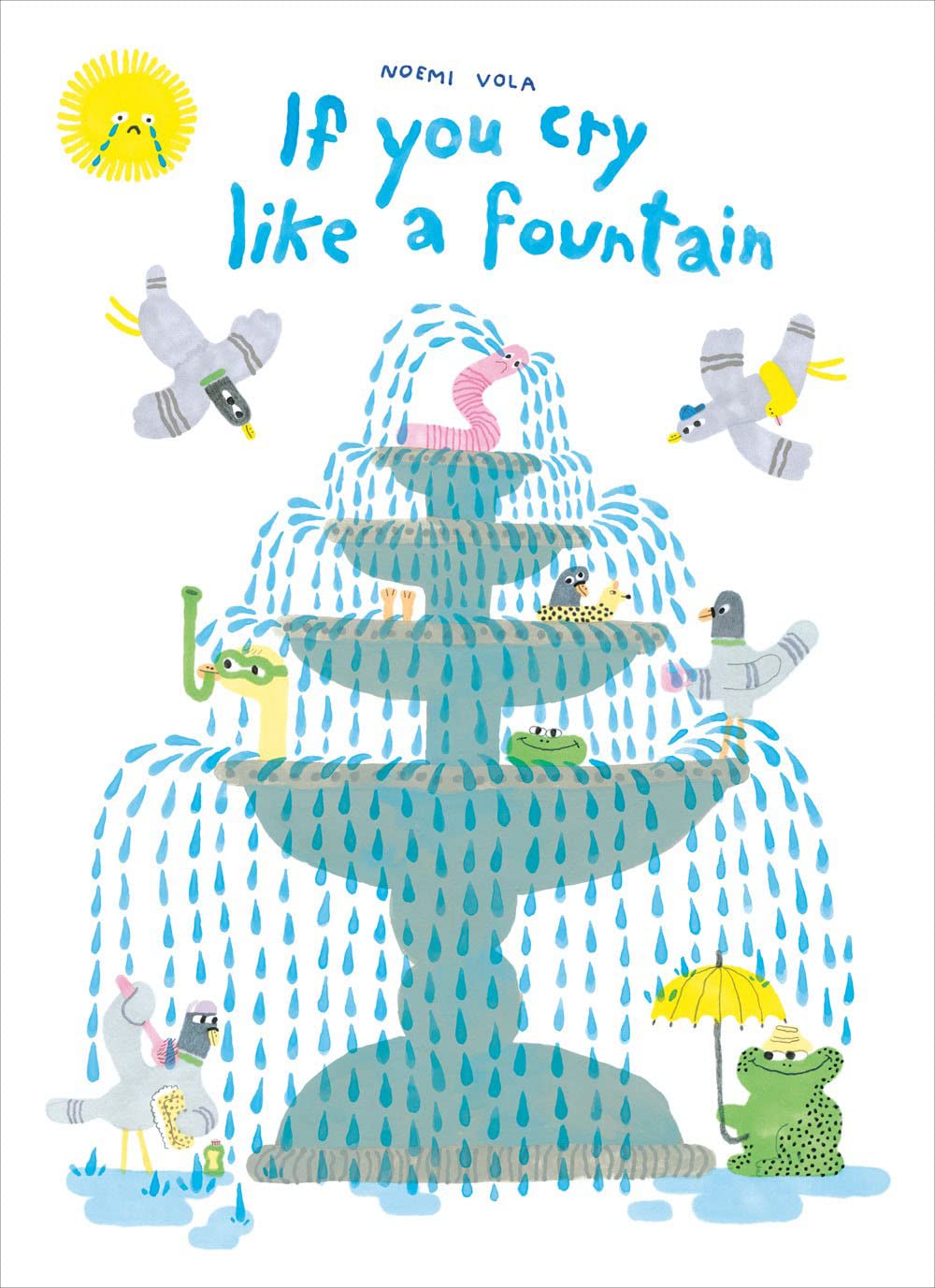
celebrate-picture-books-picture-book-review-if-you-cry-like-a-fountain-cover

About the Holiday

If you love to read, then today is a day to celebrate! National Book Lovers Day has a simple goal: to provide a day for bibliophiles to indulge their passion. With so many incredible books available—both fiction and nonfiction—on every imaginable topic and for all ages, it’s easy to fill the day with old favorites and new finds (like today’s book, which is launching into the world today!) So, visit your local bookstore or library, grab some snacks, and settle in for a day of reading for yourself and with your kids!

Thanks go to Tundra Books for sending me a copy of If You Cry Like a Fountain to me for review consideration. All opinions on the book are my own.

If You Cry Like a Fountain

By Noemi Vola


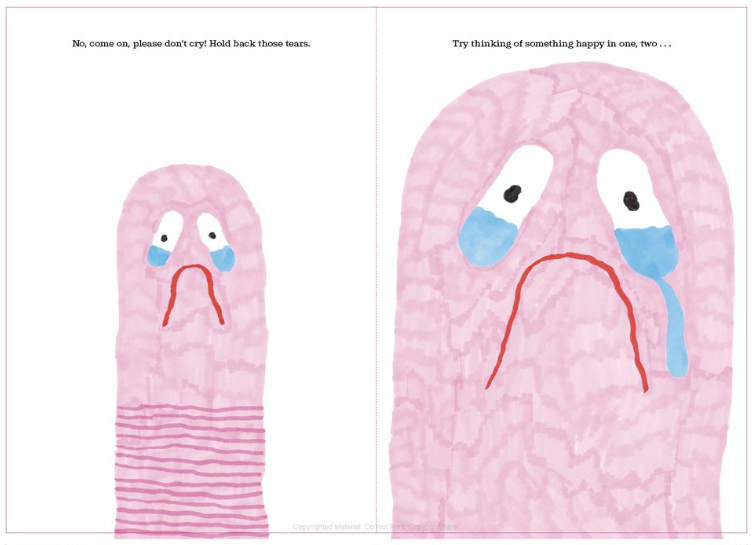
Upon opening this story to the first page, readers are met with a sad sight. A pink worm, having just seen his empty swimming pool, stares out at the reader with doleful eyes and a big frown. The narrator admonishes the worm that starting out the book this way will only make people worry. How about a little smile? But this doesn’t help—in fact, the frown turns deeper and tears well in the bottom of the worm’s eyes. The narrator tries to stop the coming tears, but a suggestion to “try thinking of something happy” just causes a small tear to break free and then… a full-on flood. 

celebrate-picture-books-picture-book-review-if-you-cry-like-a-fountain-worm-teary

Image copyright Noemi Vola, 2022, courtesy of Tundra Books.

Worried that the little worm might drown in its own tears, the narrator offers a couple of suggestions for staying afloat until the tears dry up. And they do begin to abate until the narrator tells the worm “there’s no use in crying,” which brings on—you guessed it. But wait! This isn’t a criticism. Instead it means to be a helpful (and hilarious) way to look at crying in a positive light. “For example, if you cry like a fountain, you’ll be surrounded by friends and make all the pigeons happy.” That’s a good thing, right?

celebrate-picture-books-picture-book-review-if-you-cry-like-a-fountain-worm-flooding

Image copyright Noemi Vola, 2022, courtesy of Tundra Books.

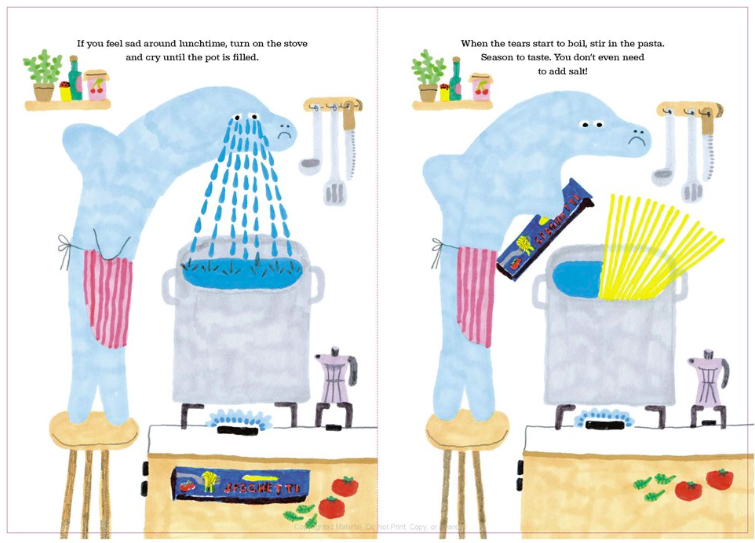
Let’s look at some other ways those tears could be channeled beneficially. If sadness overtakes you around mealtime, get out your biggest pot, “turn on the stove and cry until the pot is filled. When the tears start to boil, stir in the pasta. You won’t even need to add salt!” And why waste water to brush your teeth and fill the tub, when a good cry can prove advantageous here too?

Since tears can flow all year around, the narrator gives some tips on using them during the winter and when spring comes. There’s even a recipe for homemade playdough that can be done anytime and used “to make surprise presents for your friends.” Now that all is looking up, the narrator decides this might be a good time to remind readers that “everyone cries” even “…superheroes, kings, soccer players,… dogs, peas, and rocks” The worm doesn’t believe rocks cry, but then becomes apologetic when the narrator explains that rocks “are very good at hiding,” so no one has actually “ever seen a rock cry.”

celebrate-picture-books-picture-book-review-if-you-cry-like-a-fountain-cry-better

Image copyright Noemi Vola, 2022, courtesy of Tundra Books.

The narrator goes on to reassure will-be criers that tears are a “universal language,” understood everywhere in the…well…universe, and that shedding tears can eliminate an array of environmental disasters, such as exploding frogs and dried-up rivers. Our little worm friend is looking much happier now that all of this has been explained and there’s even tear-nurtured pears in the jar of jam it’s enjoying with caterpillar. But Oh no! The book—and the jam—are at an end, which are just the kinds of catastrophes that can… fill a swimming pool.

celebrate-picture-books-picture-book-review-if-you-cry-like-a-fountain-pasta

Image copyright Noemi Vola, 2022, courtesy of Tundra Books.

Whether your household (or classroom) is made up of easy criers or those who are made of more stoic stuff, Noemi Vola’s hilarious, thoughtful, and wonderfully silly story will have everyone laughing while also appreciating the true benefits of not bottling up your emotions, but letting them flow. Vola’s seemingly random examples replicate the cadence of a well-told joke or the rapid-fire delivery of a child with an endless imagination.

Vola whimsically plays with shapes, textures, and perspective in her vibrant illustrations, where the characters’ large and copious tears flow in profuse but perfectly aimed streams to accomplish a myriad of tasks. Alert readers will recognize a few famous faces from literature and entertainment among the criers. The sensitive worm is an adorable companion on this journey of discovery, and readers will be glad to see that in the end happiness reigns supreme—at least until the next waterworks.

If you and your kids like your humor quirky, your characters unforgettable, and your themes thought-provoking, If You Cry like a Fountain should be at the top of your To Be Read List. Perfect for story times or discussions about emotions, the book would be an excellent addition to all home, classroom, and public library collections.

Ages 3 – 7

Tundra Books, 2022 | ISBN 978-0735270503

To learn more about Noemi Vola, her books, and her art, visit her website. 

National Book Lovers Day Activity

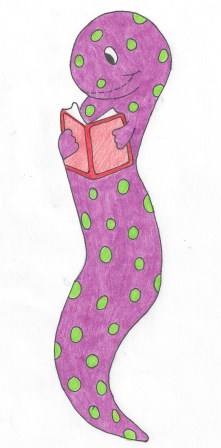
CPB - Bookworm Book (2)

Bookworm Bookmark


For all you bookworms out there who love to read, here’s your very own Bookworm Bookmark to color and put between the pages of your favorite story!

Supplies

Directions

  1. Print out the Bookworm Bookmark template
  2. Color the bookworm
  3. Cut out the Bookworm
  4. (Optional) Cut the Bookworm’s mouth at the dotted line. The top part of the bookworm’s mouth hangs over the page and marks your place!

celebrate-picture-books-picture-book-review-if-you-cry-like-a-fountain-cover

You can find If You Cry Like a Fountain at these booksellers

Amazon | Barnes & Noble | Books-a-Million

To support your local independent bookstore, order from

Bookshop | IndieBound

Picture Book Review
February 14 – Valentine’s Day

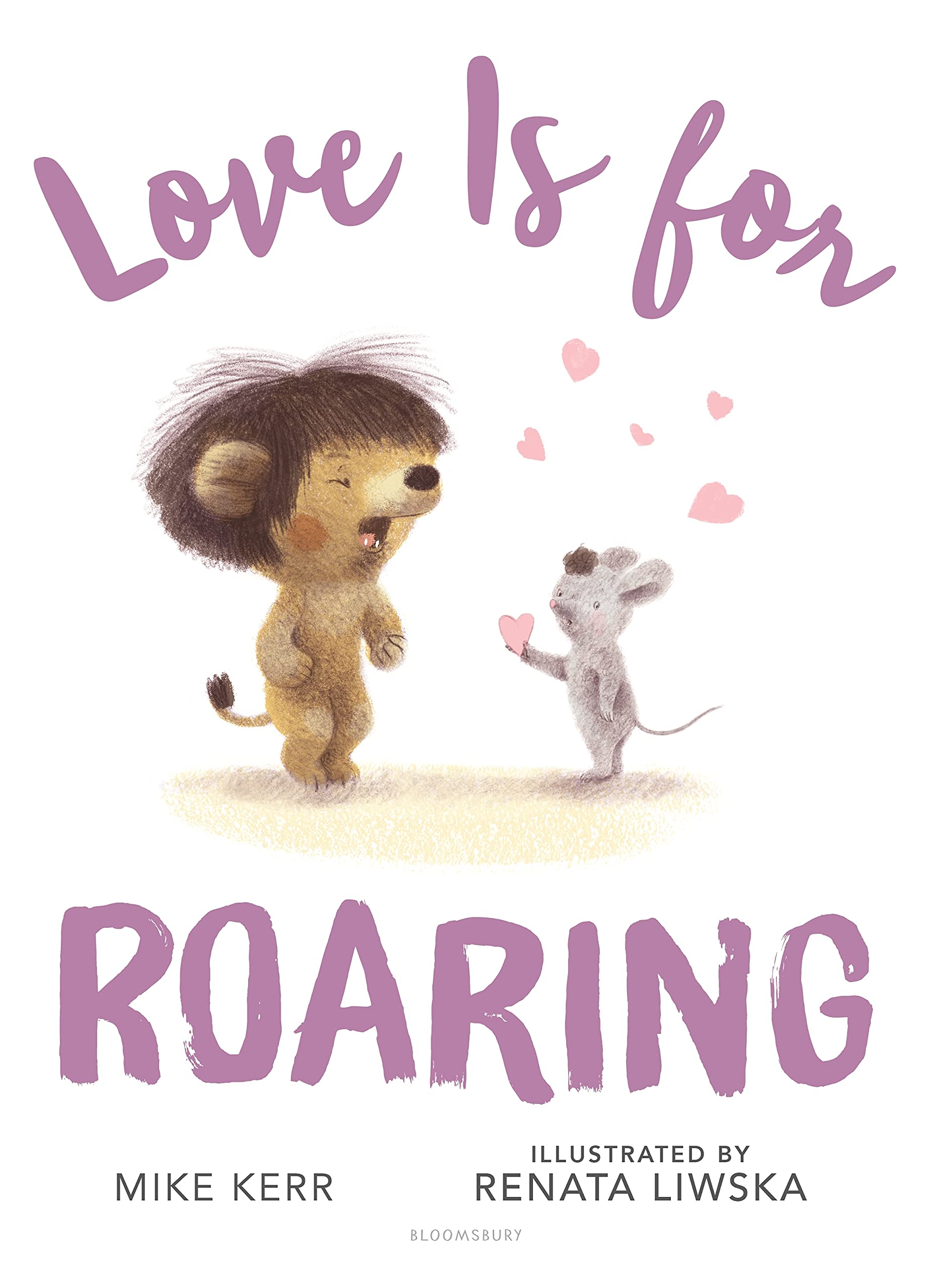
celebrate-picture-books-picture-book-review-love-is-for-roaring-cover

About the Holiday

Hearts are full on Valentine’s Day as we share our love for family, friends, and special sweethearts. This centuries-old holiday continues to grow as people engage in traditional and new ways to express their feelings. But what about the other 364 days of the year? Well, of course, love – in all its wonderful forms – is in the air on those days too as today’s book so charmingly reveals.  

Love Is for Roaring

Written by Mike Kerr | Illustrated by Renata Liwska


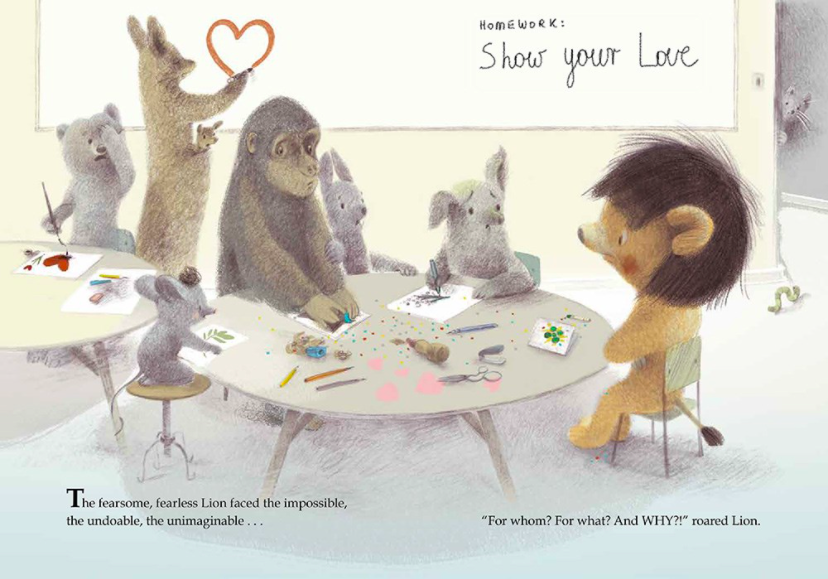
One day at school, the teacher gave her class an impossible assignment – at least for Lion. With their tables full of paper, paint, markers, crayons, scissors, and tape, the students were supposed to “show your Love.” “‘For whom? For what? and WHY?’ roared Lion.” He threw a tiny tantrum. “‘I don’t like pink and I don’t like hearts. I won’t do it!'”

celebrate-picture-books-picture-book-review-love-is-for-roaring-assignmen

Image copyright Renata Liwska, 2022, text copyright Mike Kerr, 2022. Courtesy of Bloomsbury Books for Children.

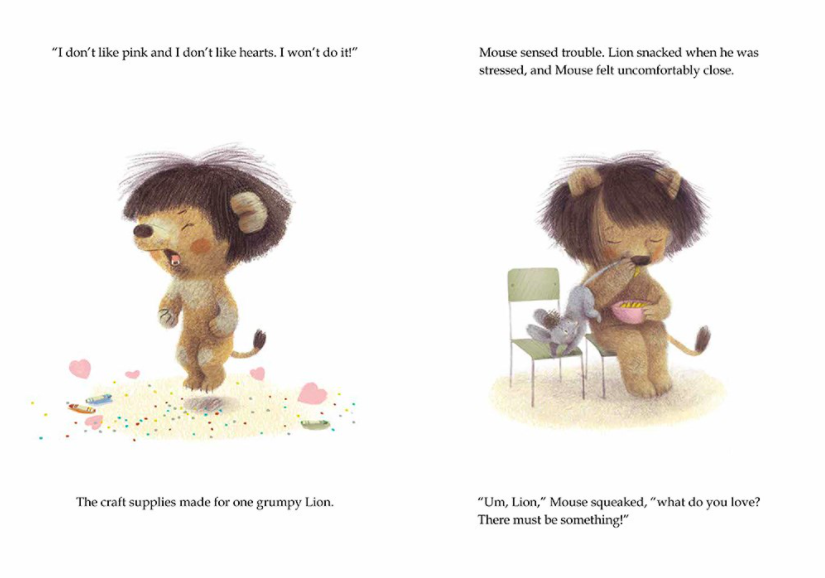
Mouse wanted to help and told Lion there must be something that he loved. But Lion protested, saying that while love was fine for some, he did not “‘love love.'” He didn’t like hugs or kisses or sweets. Mouse thought and thought and then decided there might be another way to think about love.

celebrate-picture-books-picture-book-review-love-is-for-roaring-snack

Image copyright Renata Liwska, 2022, text copyright Mike Kerr, 2022. Courtesy of Bloomsbury Books for Children.

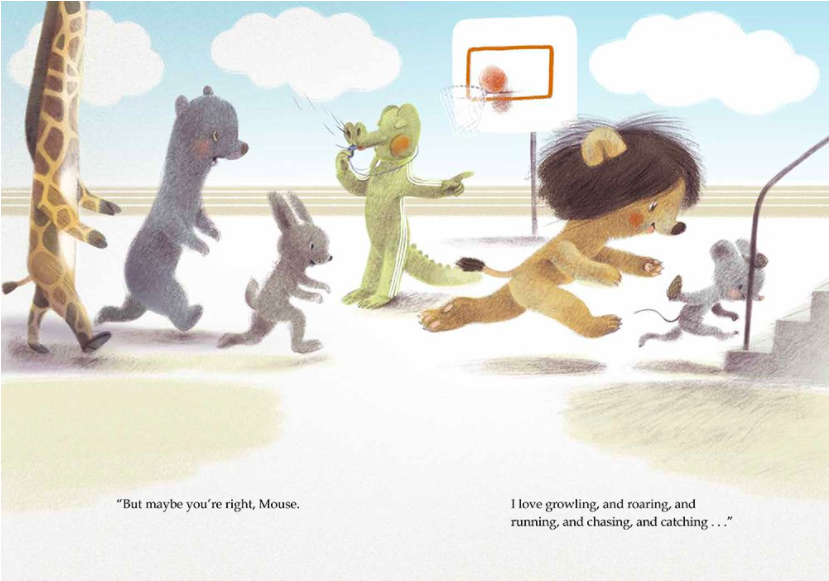
Mouse asked Lion if he didn’t love “‘running and playing.'” Mouse also seemed to remember that Lion loved dozing – especially during class movie times. “‘And growling, and roaring…You don’t love that?'” Mouse prodded. And how about playing together? Lion thought it over, and while hugs, kisses, and sugary sweets weren’t his thing, he knew that playing and chasing and catching were. And there was one more thing that Lion realized he loved – his friendship with Mouse. So he happily worked at the table to make a special card with a pink heart on the front just for Mouse. 

celebrate-picture-books-picture-book-review-love-is-for-roaring-recess

Image copyright Renata Liwska, 2022, text copyright Mike Kerr, 2022. Courtesy of Bloomsbury Books for Children.

Mike Kerr’s gentle story embraces children who may squirm at expressions of love that include hugs, kisses, or other showy displays of affection while reminding readers that love also can be revealed in favorite activities and moments shared with others. Mouse’s thoughtful response to Lion’s initial refusal to participate in craft time demonstrates empathetic friendship and alternate thinking that will resonate with kids. Honest dialogue between Lion and Mouse gives readers language to discuss their own feelings about love and other emotions as well as about how they like to express them. As Lion comes to see that he does love many things, he realizes that friendship is intrinsic to all of them and is a powerful kind of love in itself – a kind of love that he wants to share.

Kids will be captivated by Renata Liwska’s adorable and humorous illustrations. As Lion questions the assignment to show your love, his classmates look on with expressions of shock, sympathy, and confusion while a tiny inchworm makes a run for the door. Lion’s tantrum is more cute than cranky, and  Mouse, wanting to help, nearly becomes part of Lion’s stress snacking and moves a safe distance away to talk about the situation. Images of Lion participating in the rambunctious activities he likes best are joyful, and the final illustrations of Lion, now excited to share his love for Mouse, are heartwarming.

A sweet story of friendship as well as a meaningful way for adults and kids to talk about emotions and expressing their feelings, Love Is for Roaring will become a quick favorite on home bookshelves and is a must for school and public library collections. 

Ages 4 – 8

Bloomsbury Children’s Books, 2022 | ISBN 978-1681191249

Discover more about Mike Kerr and Renata Liwska, their books and their art on their website.

Valentine’s Day Activity

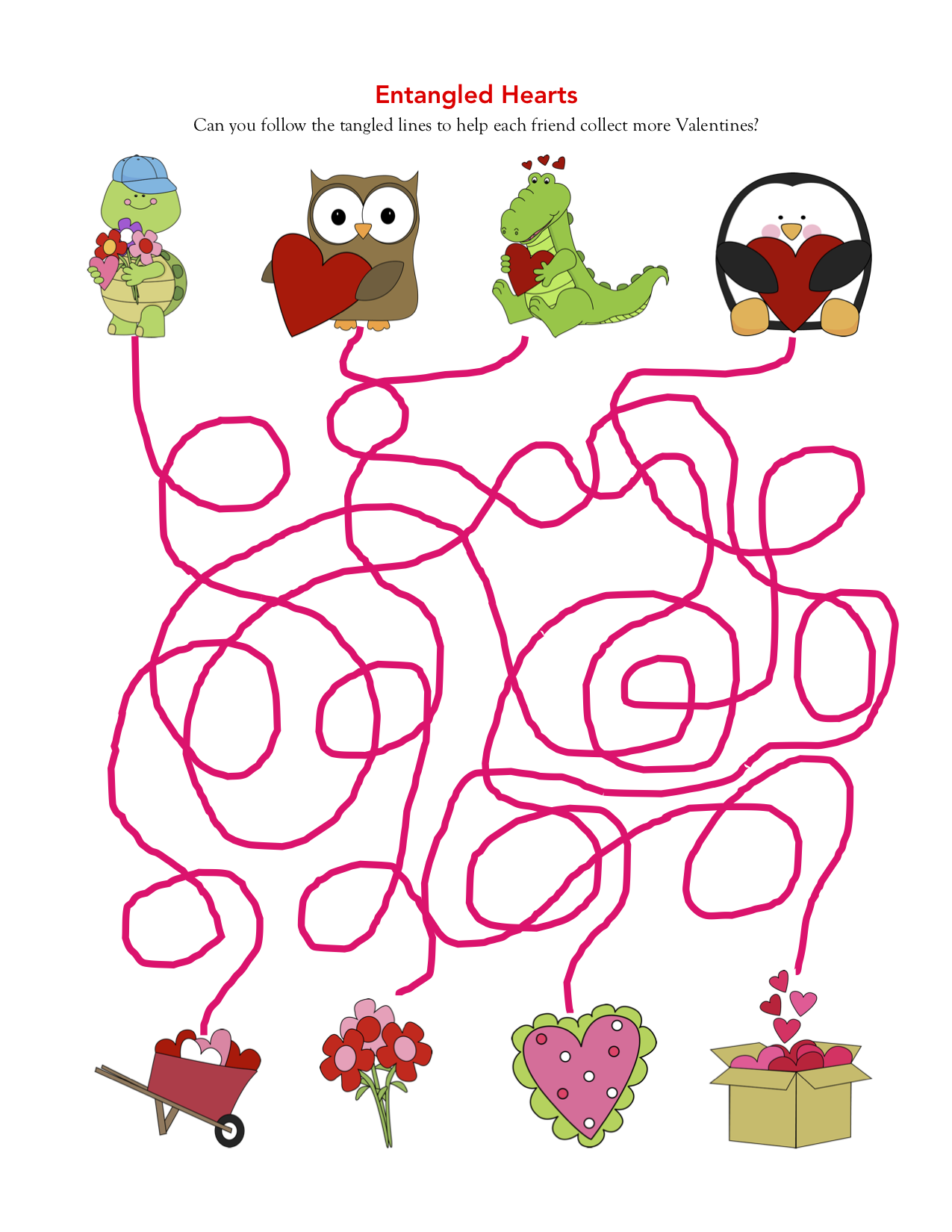
celebrate-picture-books-picture-book-review-entangled-hearts-matching-puzzle

Entangled Hearts Matching Puzzle


These friends are collecting valentines! Can you help them follow the paths to find more in this printable puzzle?

Entangled Hearts Matching Puzzle

celebrate-picture-books-picture-book-review-love-is-for-roaring-cover

You can find Love Is for Roaring at these booksellers

Amazon | Barnes & Noble | Books-a-Million

To support your local independent bookstore, order from

Bookshop | IndieBound

Picture Book Review
February 4 – Get Ready for Valentine’s Day

About the Holiday

Love is in the air! Love for family, friends, and our special valentines. Begun as a religious feast day, Valentine’s Day became a day of romance with the bloom of courtly love during the 14th century. In England during the 18th century, those in love began showing their affections by giving flowers and candy and making valentine’s cards. Now, Valentine’s Day is one of the biggest holidays on the calendar and a favorite of adults and kids alike. 

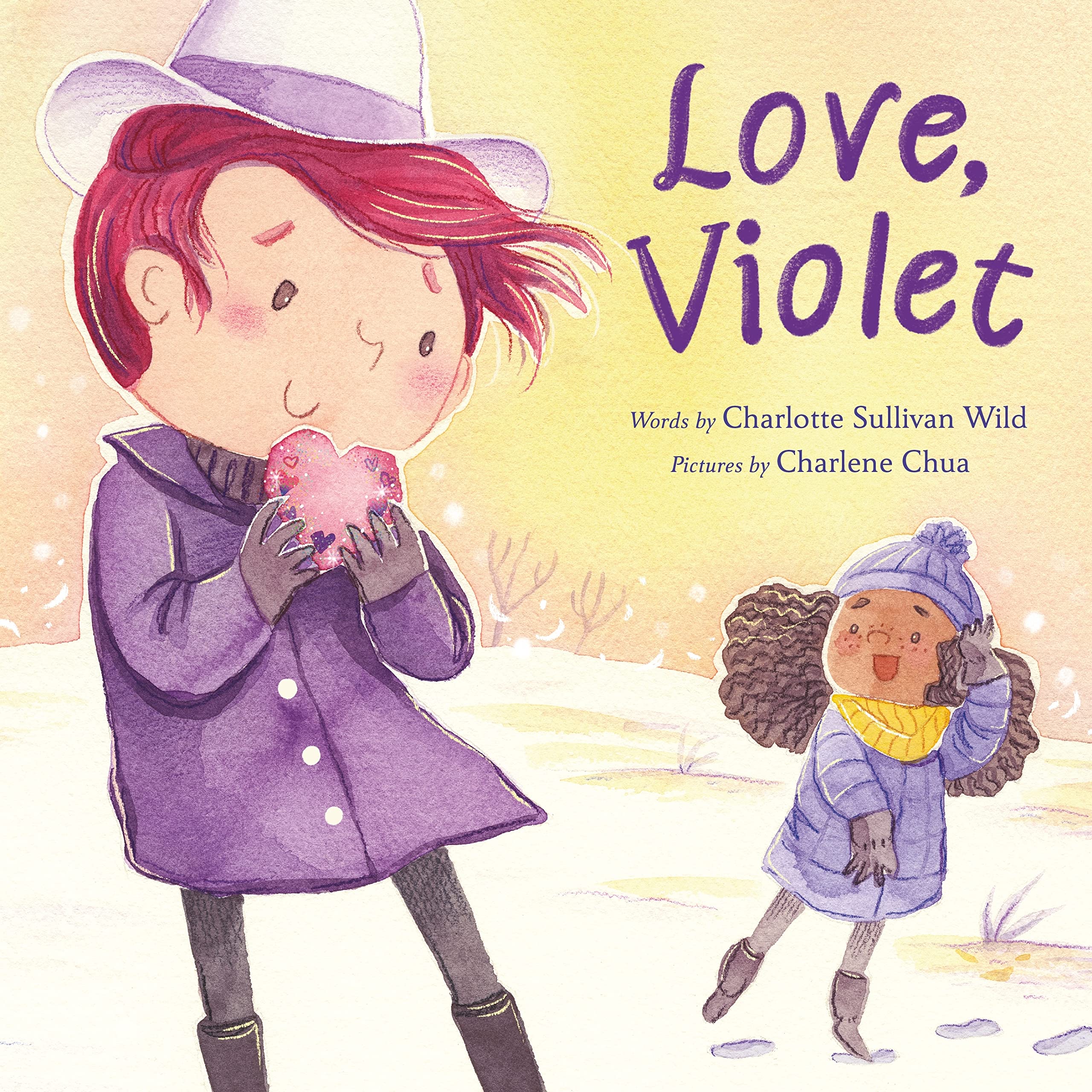
Love, Violet

Written by Charlotte Sullivan Wild | Illustrated by Charlene Chua


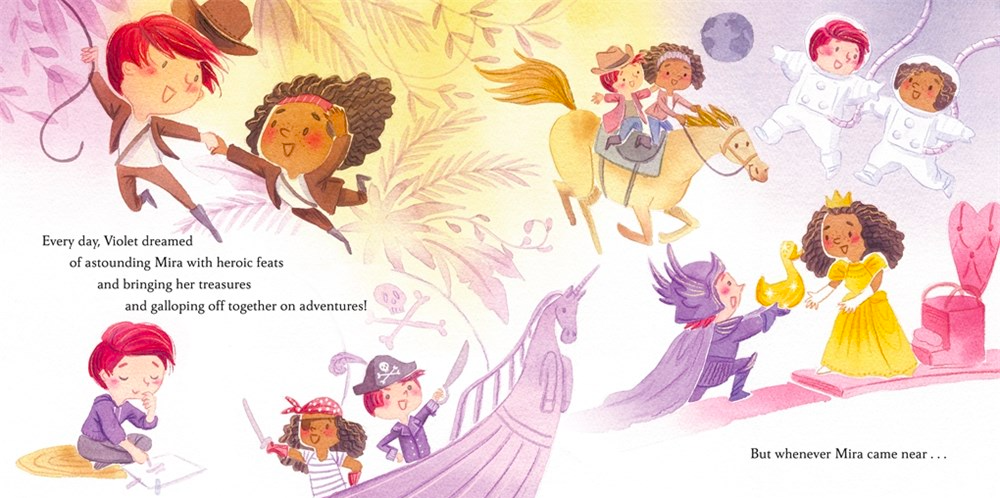
Out of all the kids in her class, Violet thought only one “raced like the wind. Only one had a leaping laugh. Only one made [her] heart skip. Mira.” Every day, Violet dreamed of “astounding Mira with heroic feats,” of “bringing her treasures” and of all the adventures and fun they could have playing pirates, astronauts, knight and princess, and more. But whenever Mira asked her to play or wondered what she was drawing, Violet became shy and ran away.

celebrate-picture-books-picture-book-review-love-violet-adventures

Image copyright Charlene Chua, 2022, text copyright Charlotte Sullivan Wild, 2022. Courtesy of Farrar, Straus and Giroux Books for Young Readers.

But on the day before Valentine’s Day, Violet had an idea. She made a glittery valentine for Mira and signed it “Love, Violet.” She dreamed that this might be the start of their adventures together. Before leaving for school, Violet tucked the valentine under her lucky white cowgirl hat. On the way, she heard other kids teasing each other about their valentines, and when Carlos asked Violet if she’d made someone a special card, Violet blushed and ran off, holding tightly to her hat.

celebrate-picture-books-picture-book-review-love-violet-mira

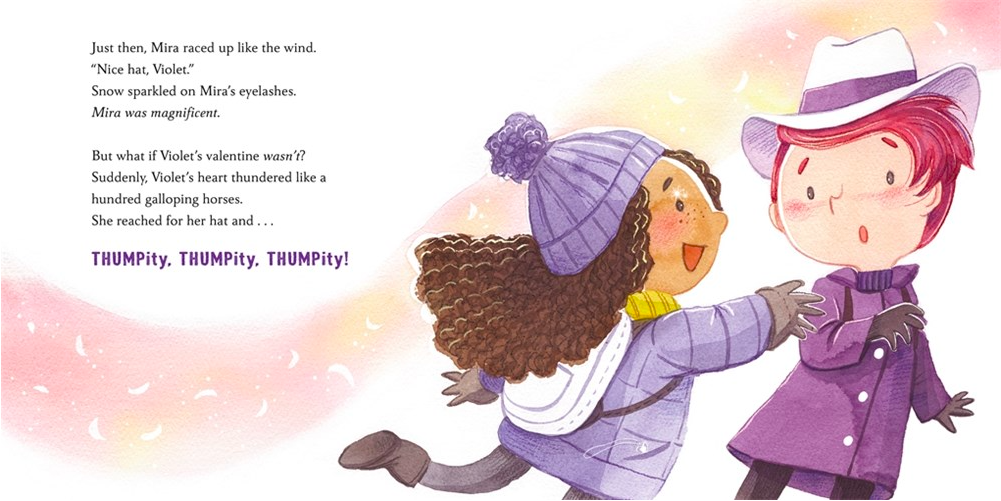
Image copyright Charlene Chua, 2022, text copyright Charlotte Sullivan Wild, 2022. Courtesy of Farrar, Straus and Giroux Books for Young Readers.

Suddenly, Mira raced up to her and complimented her on her hat. “Snow sparkled on Mira’s eyelashes. Mira was magnificent.” Violet thought her valentine was not nearly good enough. With her heart pounding “like a hundred galloping horses,” Violet dashed away. All during class she worried whether she could actually give Mira the valentine and if Mira would want it anyway. Mostly, she worried that they’d never have their adventures.

When it was finally time to exchange valentines, Violet gave out all of her cards – except one. Standing next to the coat rack, Violet slowly began to lift her hat. But all at once, Mira appeared, causing Violet to jump, crash into Mira, and fall to the ground amid a pile of coats and scarves. The other kids laughed. Instead of apologizing and handing Mira her card as she wanted to, Violet rushed away again.

celebrate-picture-books-picture-book-review-love-violet-snow-angel

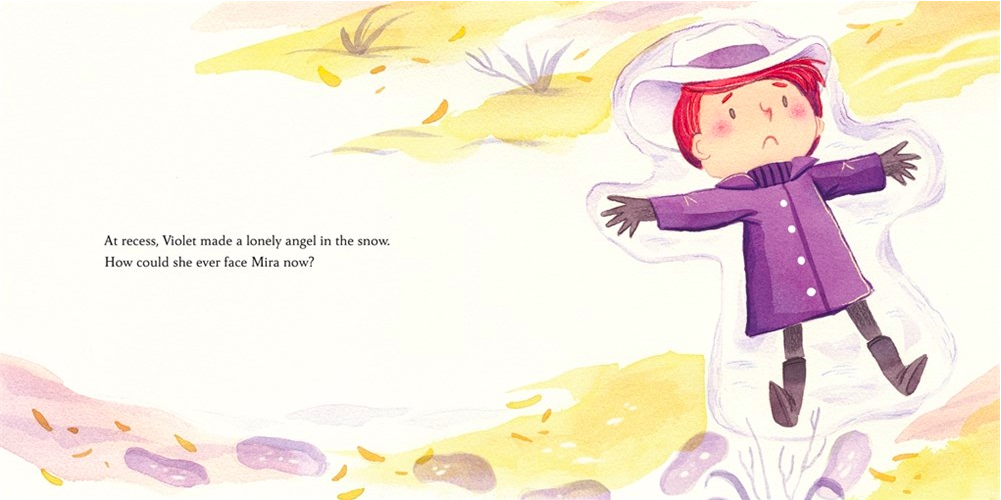
Image copyright Charlene Chua, 2022, text copyright Charlotte Sullivan Wild, 2022. Courtesy of Farrar, Straus and Giroux Books for Young Readers.

Alone at recess, Violet lay on the ground and made a snow angel. She’d never be able to face Mira now. Just then, however, she heard “a laugh like leaping horses,” and she jumped up. She realized that only one person had “praised her hat…hadn’t laughed when she fell…had ever asked her to play horses.” It struck her that maybe “Mira wanted to be her valentine.” Violet ran to find Mira, but on her way a gust of wind picked up her hat and her valentine. The glittery heart landed right in where kids were playing.

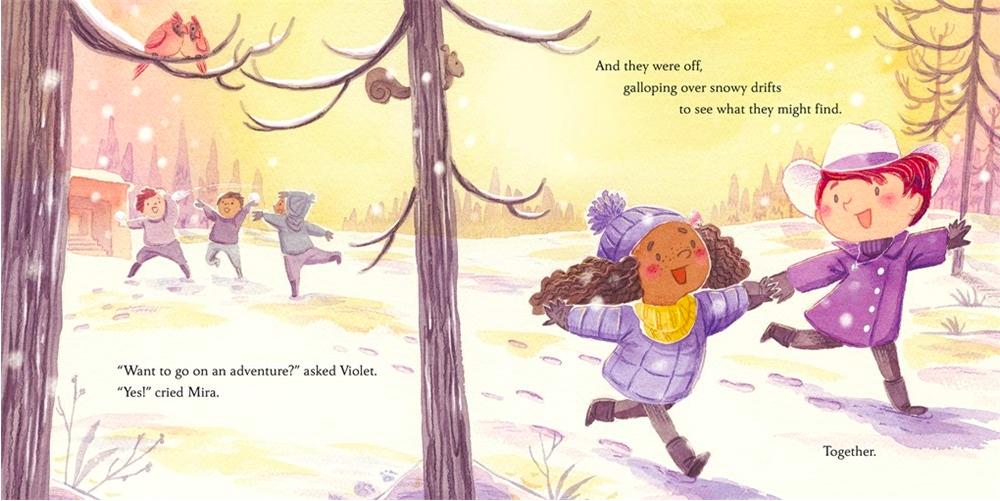
When Mira heard Violet’s anguished cry, she ran over to see what was wrong. Violet showed her the ruined valentine she had made for her. Mira thought it was still beautiful, and she “tucked a torn bit into her cap.” Then Mira took a locket out of her pocket and gave it to Violet. When she opened it, Violet found a small heart on one side and a purple violet on the other. “‘Want to go on an adventure?’ asked Violet. ‘Yes!’ cried Mira.” And hand-in-hand they ran off – together.

celebrate-picture-books-picture-book-review-love-violet-together

Image copyright Charlene Chua, 2022, text copyright Charlotte Sullivan Wild, 2022. Courtesy of Farrar, Straus and Giroux Books for Young Readers.

Charlotte Sullivan Wild’s emotion-filled story of a girl-girl crush sweetly and realistically portrays the heart-pounding and nerve-wracking feelings of first love. As Violet tries to pluck up the courage to give Mira her valentine, kids will be rooting for her as events and her own fears threaten to derail her dreams of adventuring with Mira. Clues along the way hint at Mira’s reciprocating feelings, but the final exchange of valentines will melt readers’ hearts. Wild’s evocative vocabulary, beautiful phrasing, and natural dialogue make the story a rich read aloud, and her depiction of the adventures Violet dreams of as well as Mira’s concerned and hopeful attention to Violet create a warm and universal friendship story as well.

Charlene Chua reveals all of the hopes, dreams, and angst that go into Violet’s valentine for Mira in her lovely and poignant illustrations. Snapshots of the adventures Violet longs to have with Mira are drawn with the excitement and vivid imagination kids bring to the games they play. As Violet creates her valentine, readers can see how much work and thought she puts into it as paper, glitter, and other supplies lay strewn around her. This portrayal accentuates the disappointment Violet feels when her card meets its fate under the stampeding kids as well as Mira’s delighted reaction upon receiving it. Throughout the story, Chua invites kids to experience and empathize with Violet’s rollercoaster of emotions and mishaps on the way to discovering that Mira has been thinking about Violet too.

A joy-filled story of a crush between two queer girls and their courage to express their feelings to and for each other, Love, Violet is a moving, age-appropriate way to celebrate love on Valentine’s Day or any day you’d like to share your heart. Love, Violet is also a reassuring and affirming invitation for all children to discuss their own feelings with parents or other caregivers. The book is highly recommended for home bookshelves and is a must for school and public library collections.

Ages 4 – 8 (and up)

Farrar, Straus and Giroux Books for Young Readers, 2022 | ISBN 978-0374313722

Discover more about Charlotte Sullivan Wild and her books on her website.

To learn more about Charlene Chua, her books, and her art, visit her website.

Love, Violet Video and Author Story Time 

Author Charlotte Sullivan Wild, illustrator Charlene Chua, and a few other kidlit authors chipped in to make this video about Love, Violet, first crushes, and queer childhood that’s a perfect resource for educators and parents. Start out with listening to Charlotte Sullivan Wild read Love, Violet!

Get Ready for Valentine’s Day Activities

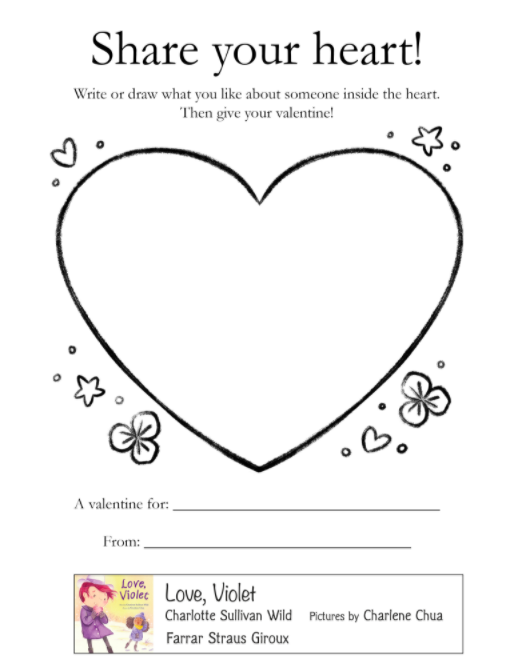
Valentine Activity Sheets


Have fun with these printable Valentine’s Day activities!

Share Your Heart! Valentine | Funny Valentine! | Love, Violet Coloring Page

You can find Love, Violet at these booksellers

Amazon | Barnes & Noble | Books-a-Million

To support your local independent bookstore, order from

Bookshop | IndieBound

Picture Book Review
October 20 – It’s the Spooky Season

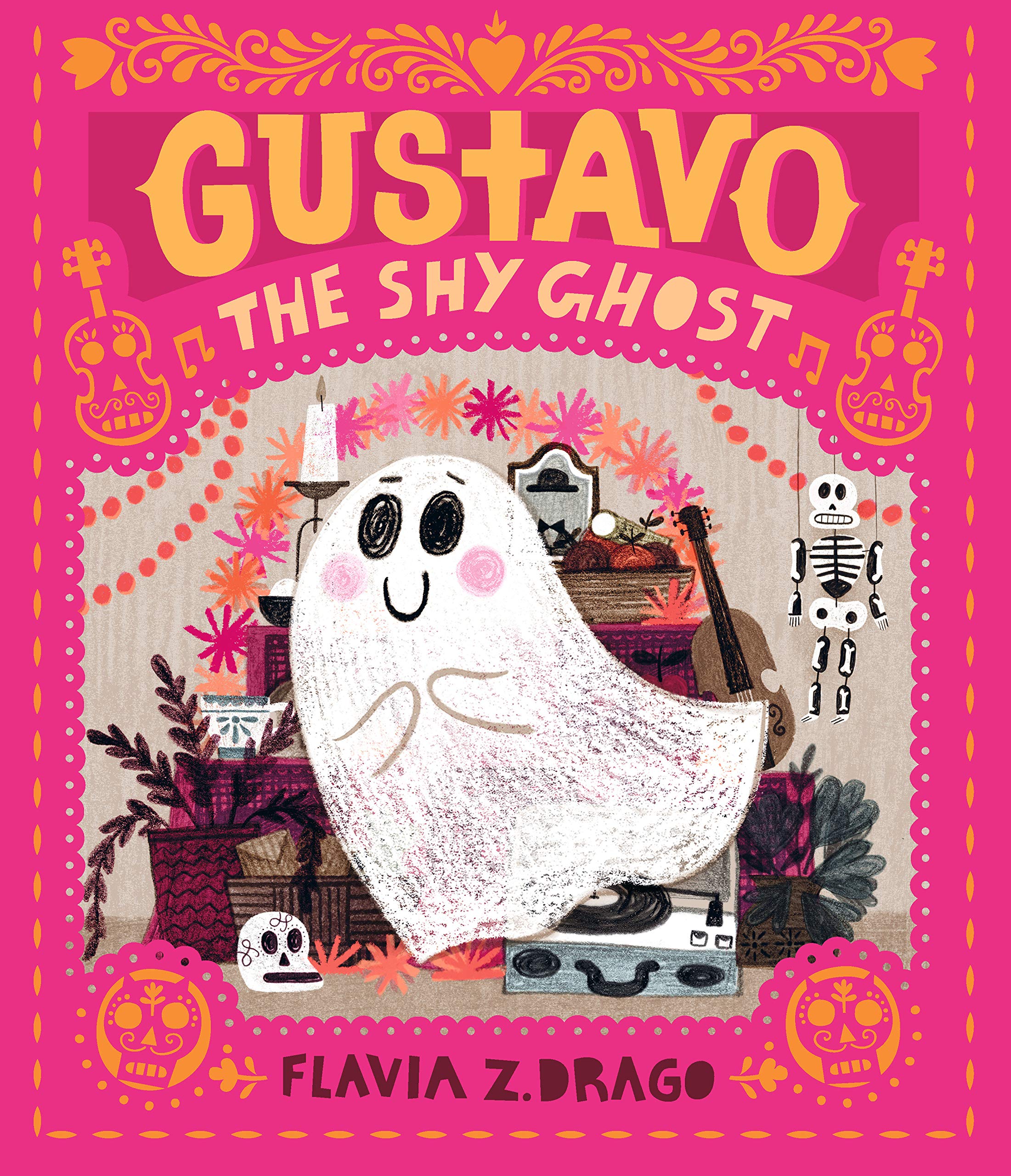
celebrate-picture-books-picture-book-review-gustavo-the-shy-ghost-cover

About the Holiday

The month of October is a spooky season. There are monsters lurking in closets, witches stirring up brews, and evil screams in the night. But, not all spooky things turn out to be scary. Sometimes, it just takes a closer look to see that what once spooked you was actually a helper in disguise, perhaps even a friendly ghost. After all, ghosts like to have friends too.

Today, I’m happy to welcome writer and artist Amanda Leemis, who also loves sharing books and creating worksheets and crafts for young readers. Just in time for Halloween, Amanda’s stopped by with a review of a book that’s perfect for the holiday and all year around. You can read more about Amanda and find some of her fun activities for kids at the end of this post.

Review by Amanda Leemis

Gustavo The Shy Ghost

By Flavia Z. Drago


When it comes to making friends, it can be hard, especially if you’re a paranormal being who blends into the background. Gustavo is a very shy ghost who loves to play the violin more than anything in the world. He is so shy that he can never get the courage to talk to any of the monsters, so he tries to get close to them in other ways. Being a ghost has its perks, and Gustavo is able to morph his shape into any situation. He rounds up his sides into a balloon and hangs out for a celebration, but none of the monsters notice him. He tries everything from curling up into sports equipment to becoming a lampshade, he even becomes a blank canvas in the art classroom, but none of the monsters take any notice.

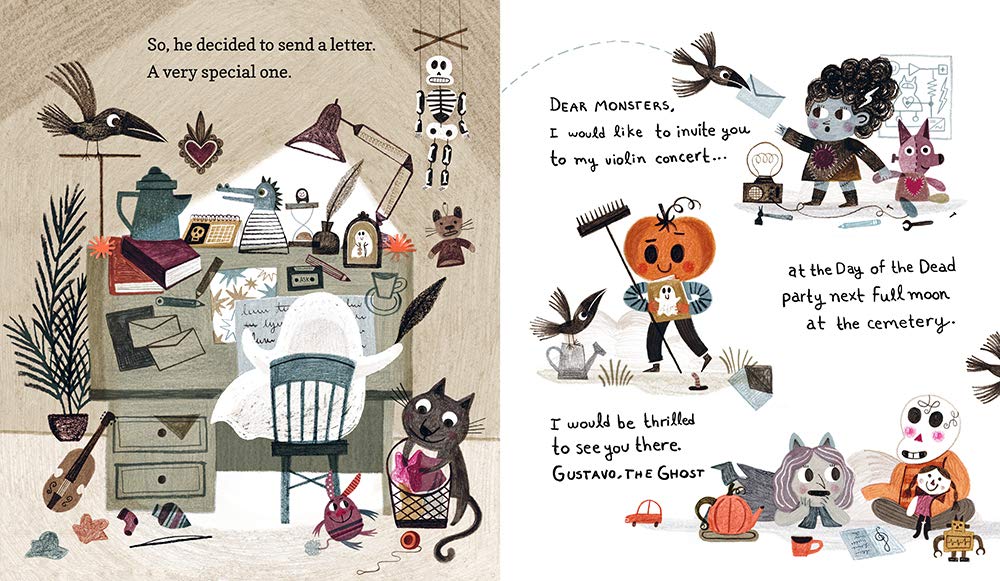
celebrate-picture-books-picture-book-review-gustavo-the-shy-ghost-invitation

Copyright Flavia Z. Drago, 2020, courtesy of Candlewick.

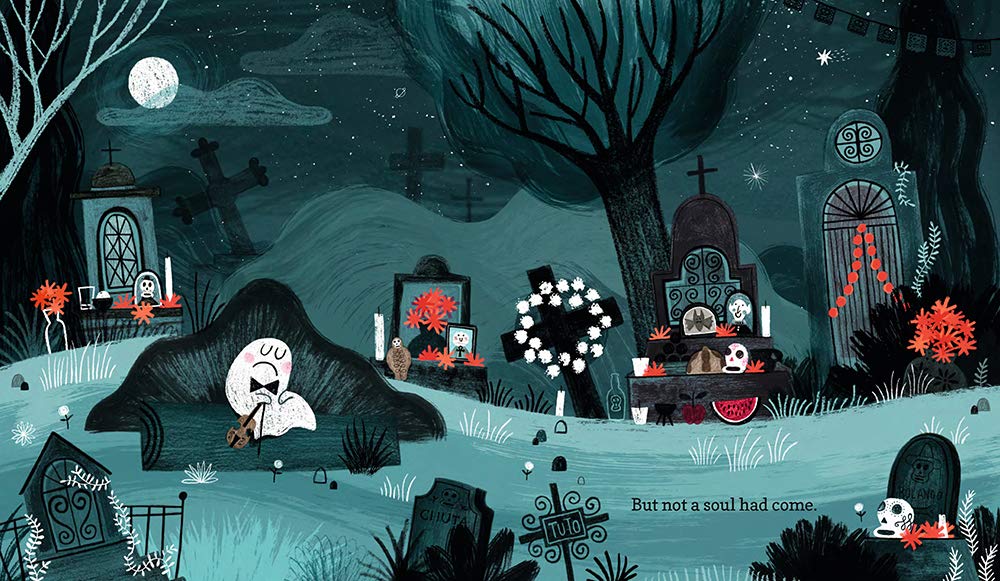
Gustavo’s sadness turns to determination as he sends out invitations to his very own violin concert. This is his chance to really be seen, face his fears, and make some new friends. He pushes his nervous thoughts – “What if no one shows up? What if they don’t like my music?” – away and invites all the monsters in the land! As the big night arrives, Gustavo’s worst fears come to life, not a soul had come to his party. Sitting all alone and mending his crushed heart, he picks up his violin and his music fills the air. Soon, he is glowing brightly with the music that fills his spirit!

celebrate-picture-books-picture-book-review-gustavo-the-shy-ghost-concert

Copyright Flavia Z. Drago, 2020, courtesy of Candlewick.

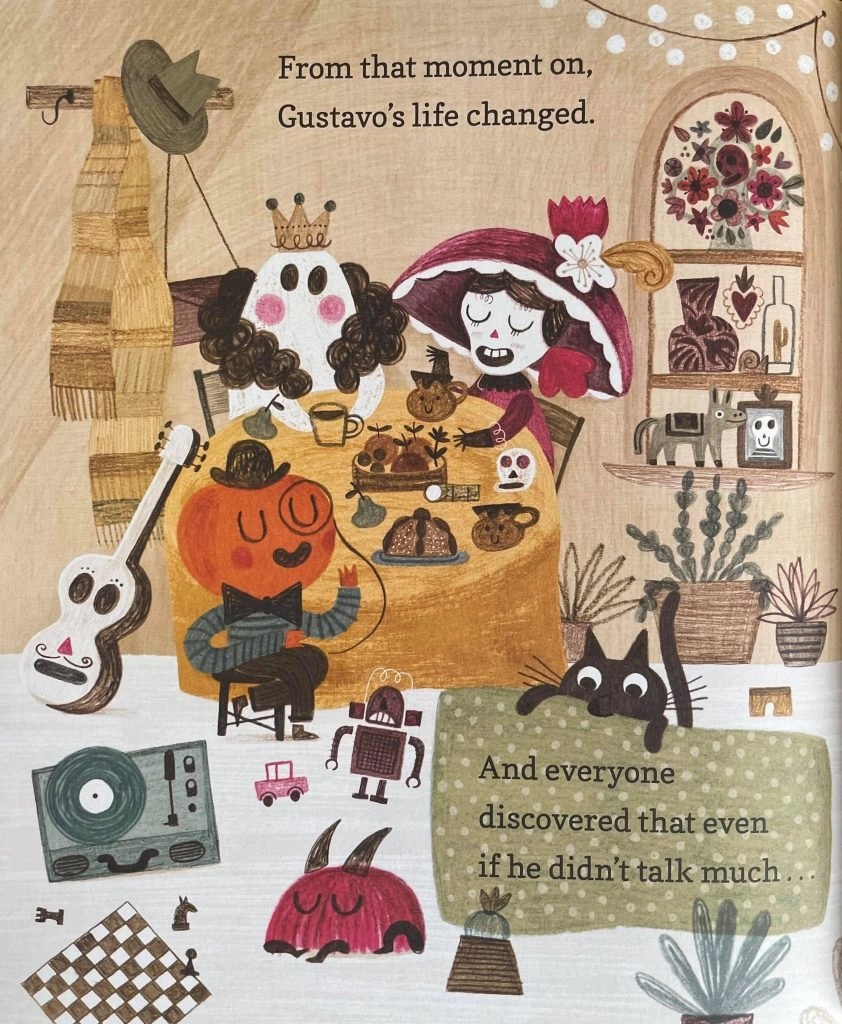
A voice calls “Gustavo!” from behind the bushes, and soon all kinds of monsters begin to emerge from the darkness. The monsters got lost on the way to the party, but found their way back by following the music in the air and spotting Gustavo’s luminous glow! After the brilliant violin performance, Gustavo’s life changes forever. Now, he has all kinds of monster friends in his neighborhood! His quiet nature is now filled with friendship, and he has lots of friends to spook and surprise. Instead of trying to blend into situations, he gets to stand out! Whether it’s becoming an umbrella to shield his friends from the rain or creating an amazing shadow show on the wall, Gustavo isn’t alone.

celebrate-picture-books-picture-book-review-gustavo-the-shy-ghost-party

Copyright Flavia Z. Drago, 2020, courtesy of Candlewick.

Flavia Z. Drago’s message of perseverance and courage will remind your little ones that it’s ok if making friends is hard. Drago reassures kids that the best way to introduce yourself to new people is to simply be yourself, just like Gustavo. While the October season can be a spooky time, this book is great chance to bring more fun and less unease about what’s lurking in the night. Not all spooks are scary, and in fact, some just want a friend.

Drago’s illustrations will have you captivated from the first moment you see Gustavo floating a teapot across the page. The vibrant, warm colors throw you into a new world full of monsters and spooks, and gets you in the mood to hear a tale of the lesser-known paranormal beings. The illustrative details – like Gustavo’s family portrait, his handcrafted invitations, and his kitty cat peeking around the door – give the reader so much to explore within each and every page!

Ages 3 – 7

Candlewick, 2020, | ISBN 978-1536211146

Discover more about Flavia Z. Drago, her books, and her art on her website.

The Spooky Season Activities

celebrate-picture-books-picture-book-review-gustavo-shape-sorting-activity  celebrate-picture-books-picture-book-review-gustavo-wordsearch

Gustavo the Ghost Puzzles and Craft


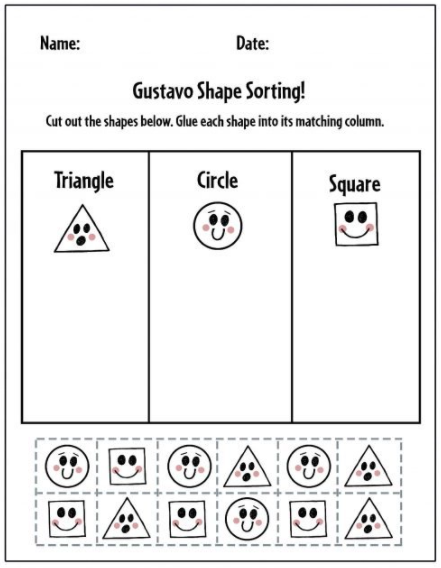
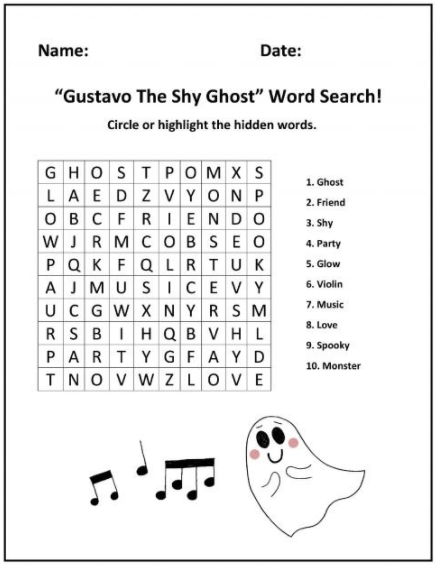
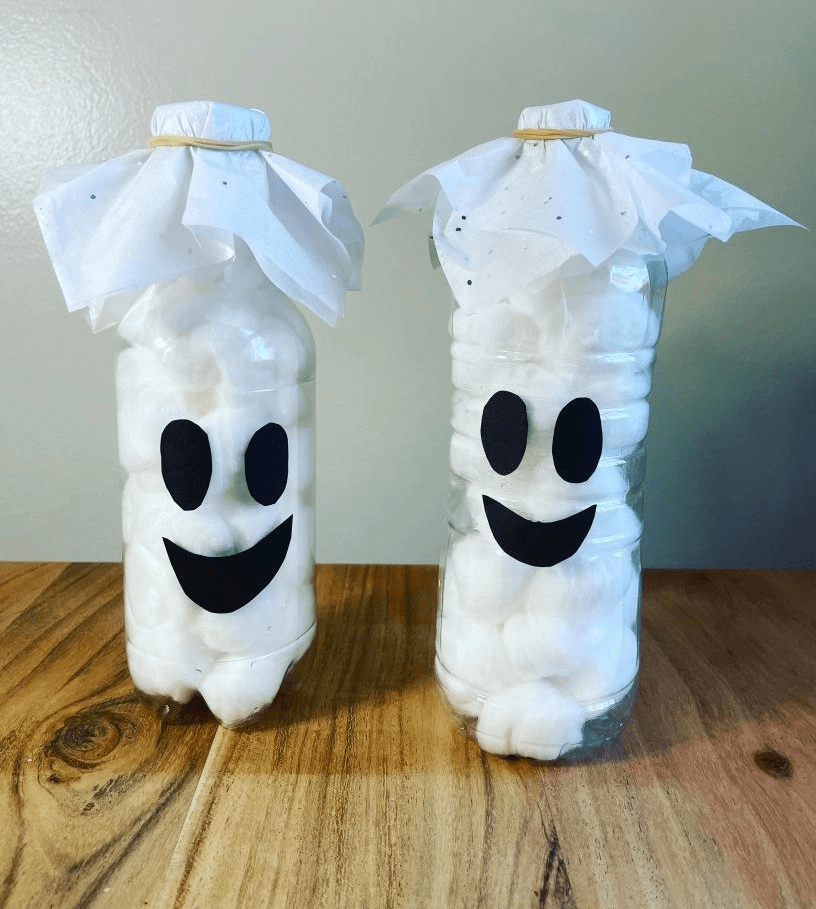
The fun with Gustavo doesn’t have to end! Be sure to print out an activity to accompany the story! Gustavo Shape Sorting” is great for little ones in preschool. Sort Gustavo’s shape into his same column. “‘Gustavo The Shy Ghost’ Word Search” is great for ages 5-7. Highlight all of the spooky words hidden in the mishmash of letters! And hey, while you’re at it, get creative with a fantastic make-your-own ghost water bottle craft!

celebrate-picture-books-picture-book-review-hollydog-blog-ghost-bottles

About Amanda Leemis

celebrate-picture-books-picture-book-review-amanda-leemis-headshot

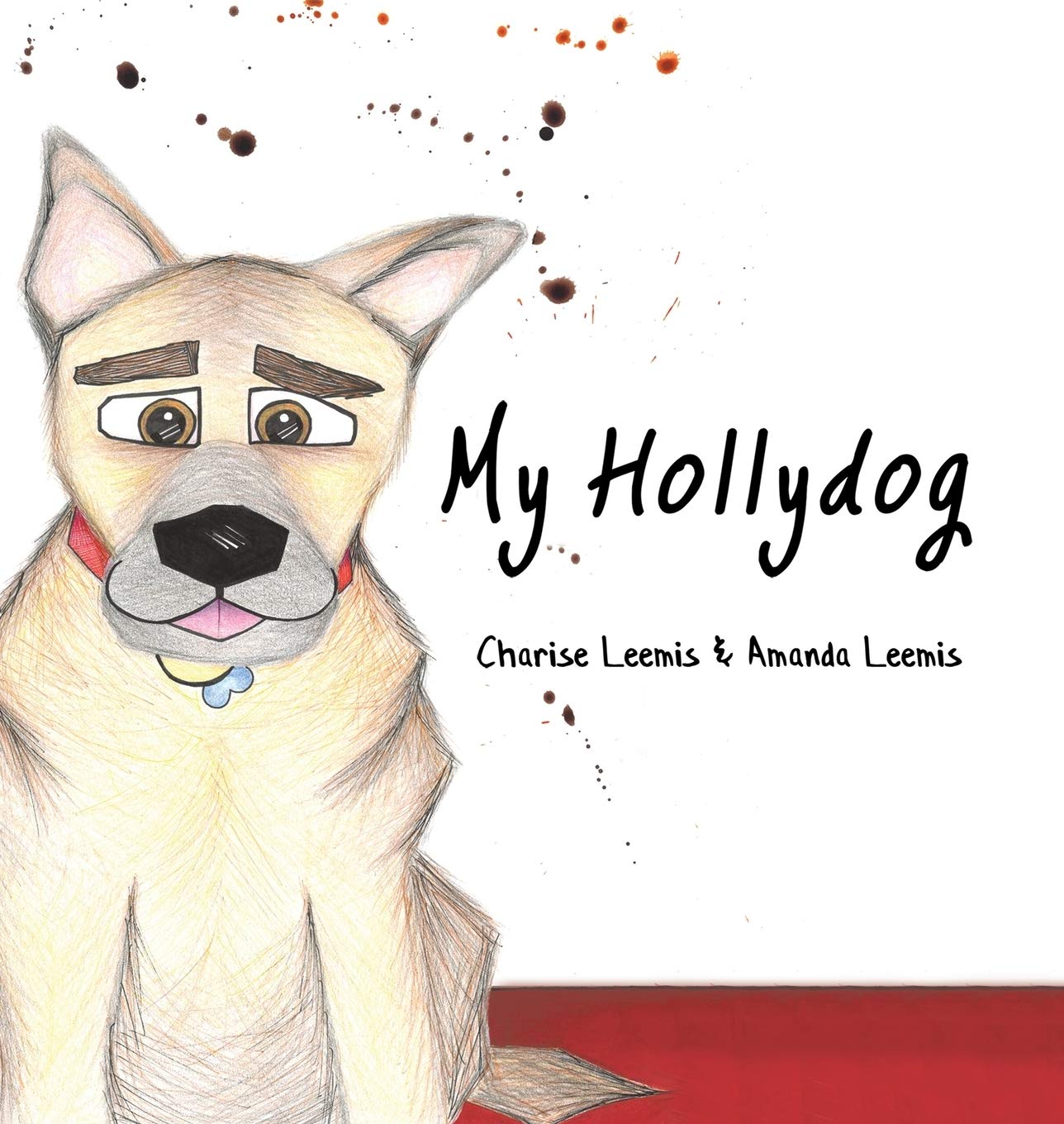
Amanda Leemis is a model, artist, and creator of The Hollydog Blog! She is passionate about encouraging our littlest humans to read! With two books published in the “My Hollydog” series, she loves illustration and uses her skills to create printable worksheets for ages 2-5. Creating resources that build fine motor skills and boost creativity is her passion.

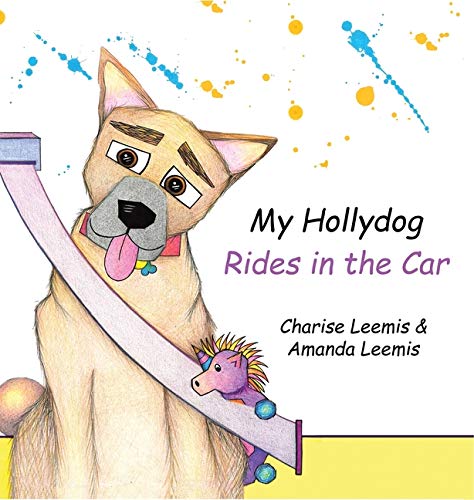
Amanda Leemis is the illustrator of My Hollydog and My Hollydog Rides in the Car. Her mother Charise Leemis is the author! The “My Hollydog” series is written specifically for ages 2-3. With one sentence per page, little ones will stay engaged and keep focused on the vibrant illustrations. Come along with Hollydog on an adventure! Whether it’s hanging her head out the window or jumping into a pile of leaves, Hollydog loves her humans more than anything in the world!

celebrate-picture-books-picture-book-review-my-hollydog-covercelebrate-picture-books-picture-book-review-my-hollydog-rides-in-the-car-cover

celebrate-picture-books-picture-book-review-gustavo-the-shy-ghost-cover

You’ll find Gustavo the Shy Ghost at these booksellers

Amazon | Barnes & Noble | Books-a-Million

To support your local independent bookstore, order from 

Bookshop | IndieBound

Picture Book Review
October 5 – National Do Something Nice Day

celebrate-picture-books-picture-book-review-it's-hard-to-be-nice-cover

About the Holiday

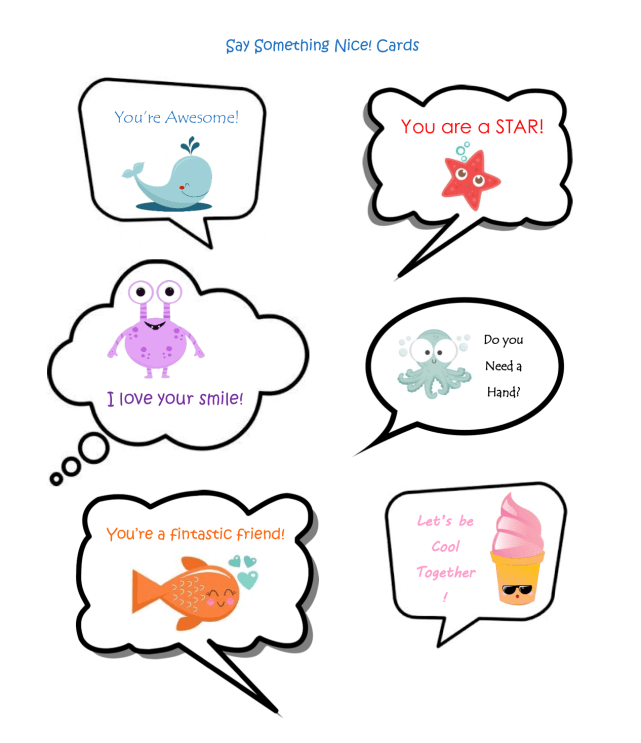
Similar to Random Acts of Kindness Day, National Do Something Nice Day encourages people to think of others and do nice things for them. These don’t have to be big or expensive; in fact, small gestures or thoughtful actions can make all the difference in the way a friend, family member, or stranger feels. These acts of kindness will make you feel good too! To celebrate today, keep an eye out for ways you can lend a hand, times you can share a smile or a conversation, or ways you can make a new friend. Kids may enjoy sharing the encouraging cards found below with friends, siblings, and teachers or by leaving them at school, the library, shops or anywhere that someone may find them.
Sometimes It’s Hard to Be Nice

Written by Maggie C. Rudd | Illustrated by Kelly O’Neill


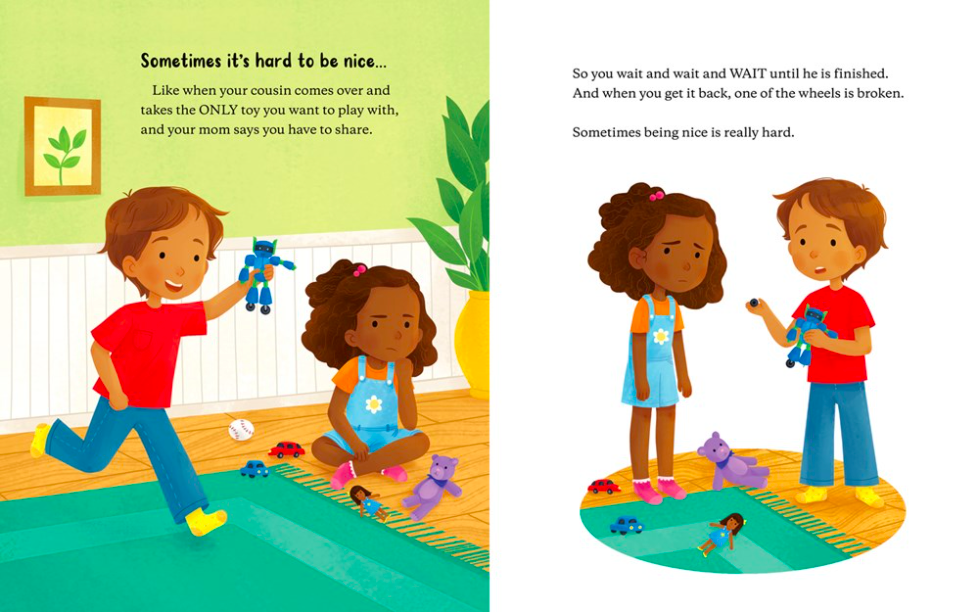
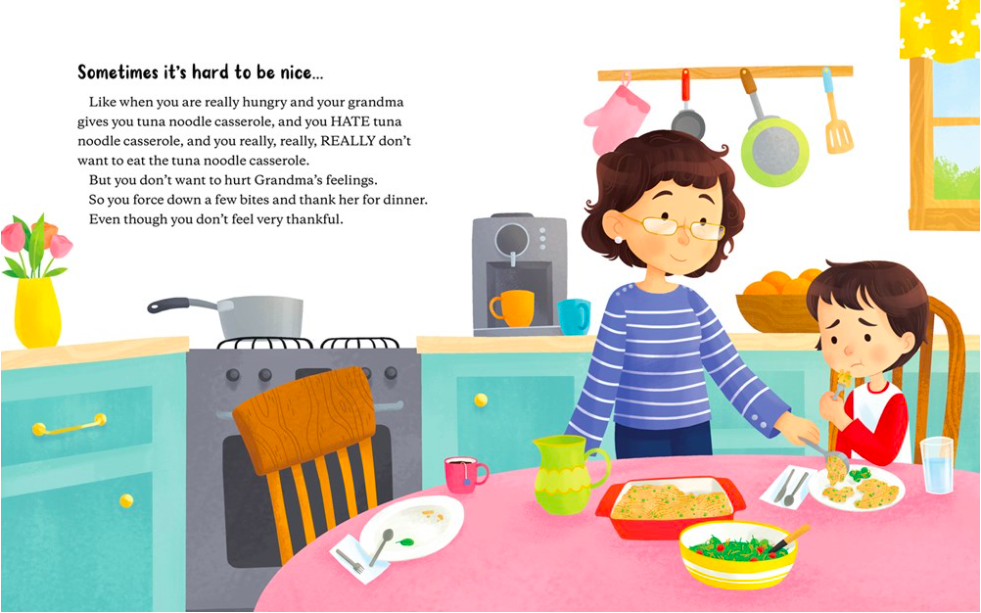
It seems like being nice should be easy, but there are so many emotions that often surround that one little word that sometimes doing the considerate thing is really hard. How hard? Like smiling and saying “that’s okay” when “your mom says you have to share” your favorite toy with a friend, sibling, or cousin and they break it. Like sitting through your brother or sister’s boring performance, game, or recital when you’d rather be somewhere else—anywhere else. Or like eating your least favorite food and thanking the cook for the meal because you don’t want to hurt their feelings.

celebrate-picture-books-picture-book-review-it's-hard-to-be-nice-cousin

Image copyright Kelly O’Neill, 2021, text copyright Maggie C. Rudd, 2021. Courtesy of Albert Whitman & Company.

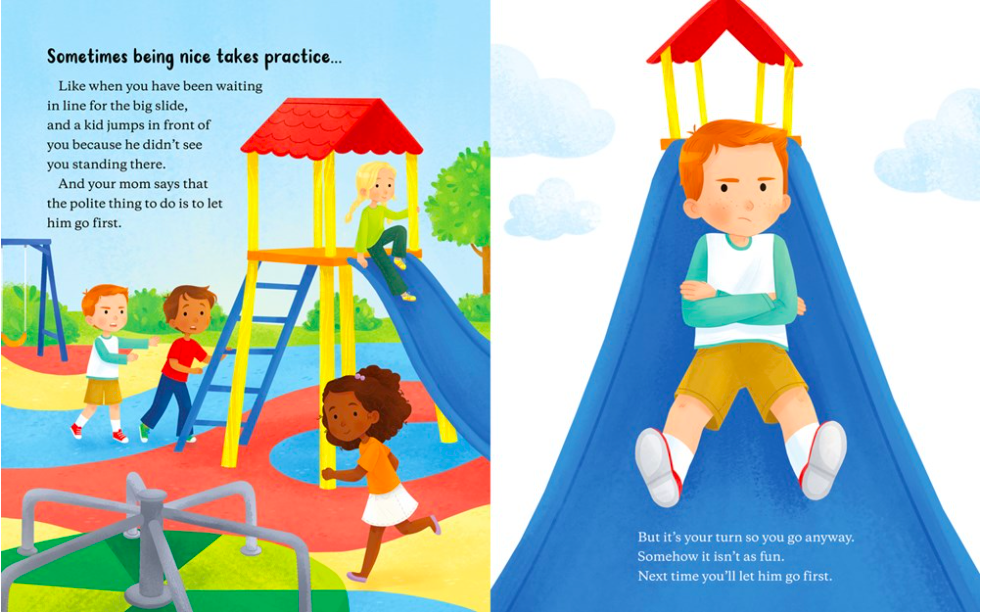
In fact, “sometimes being nice takes practice” like when a little brother or sister destroys your stuff and you yell at them, but then later you realize they didn’t really understand what they were doing. Or like when visiting someone you love in a nursing home or new place is scary and you hang back, not wanting to see them but then decide you won’t be scared next time you visit. And then there are times like these on the playground “when you have been waiting in line for the big slide, and a kid jumps in front of you because he didn’t see you standing there. And your mom says that the polite thing to do is to let him go first. But it’s your turn so you go anyway. Somehow it isn’t as fun. Next time you’ll let him go first.”

celebrate-picture-books-picture-book-review-it's-hard-to-be-nice-great-grandma

Image copyright Kelly O’Neill, 2021, text copyright Maggie C. Rudd, 2021. Courtesy of Albert Whitman & Company.

So what does all that practice lead to? The good feeling you get when you are nice. Like when you let your baby brother sit with you as you play a video game, “and he claps for you the whole time.” There’s also the great feeling you get when you’ve cleaned up after playing and your parents really appreciate it, or “when you’re late for soccer practice and your mom can’t find her keys, so you help her look for them . . . and find them in the doorknob! And your mom says she doesn’t know what she would do without you!”

While these examples may be hard because you feel slighted or tired or rushed or scared, there are times when being nice takes all your courage—like when you befriend the new kid or the kid everyone picks on and find out you have lots in common. Or when the bullies come around and you stand up for your new friend even though it’s scary and you end up in the principal’s office. So why would you want to be nice? Because “it’s worth it.”

celebrate-picture-books-picture-book-review-it's-hard-to-be-nice-playground

Image copyright Kelly O’Neill, 2021, text copyright Maggie C. Rudd, 2021. Courtesy of Albert Whitman & Company.

Maggie C. Rudd’s excellent primer to the emotions and circumstances around being nice presents children with realistic scenarios involving family members and friends, favorite toys and activities, and common situations at school that often require extra effort to respond to in a positive way. Rudd’s conversational writing style directly engages the reader, and while every example may not be an exact match to the reader’s experience, many will be spot on and the others easily recognized and adaptable.

Rudd’s four-step progression acknowledges that showing kindness or even just good manners can be difficult, but that it can become easier—especially when a situation seems unfair or is disappointing—with practice and perspective. Rudd’s examples of when being nice feels good are sprinkled with humor and warm family feelings that will bring smiles that support her point. A thread involving a favorite Galactic Star Crusher action figure ties several of the vignettes together, adding a sense of relationship and connectedness among the characters.

Kelly O’Neill illustrates each example for readers with clearly depicted scenes involving kids like them playing video games, visiting with grandparents, playing on the playground, helping their parents, and standing up for another child. In every instance, the children’s emotions are easily understood, which opens up many opportunities for adults and kids to discuss the feelings and issues surrounding how one treats others from both a child’s and adult’s perspective and experience. O’Neill’s bright colors, familiar settings, and uncluttered, well-conceived pages put the focus on her engaging children and elegantly complement Rudd’s important message.

Sometimes It’s Hard to Be Nice is a superb read aloud for honestly addressing the complexities and rewards of showing kindness and being nice. It is a book that families, teachers, and caregivers will find themselves turning to again and again in helping children navigate and learn this important social skill. The book is a must addition to home, classroom, school, and public library collections.

Ages 4 – 8

Albert Whitman & Company | ISBN 978-0807575734

Discover more about Maggie C. Rudd and her books as well as an Activity Kit for educators and parents on her website.

To learn more about Kelly O’Neill, her books, and her art, visit her website.

National Do Something Nice Day Activity

celebrate-picture-books-picture-book-review-say-something-nice-cards

Say Something Nice! Cards


Do you want to give someone a nice surprise? Print out these cards and give one to a friend, to someone you’d like to know, or to anyone who looks like they need a pick-me-up! If you’d like to make your own cards, print out the blank template and write and/or draw your own message! You can also print these on adhesive paper and make your own stickers.

Say Something Nice! Cards | Say Something Nice! Cards Blank Template

celebrate-picture-books-picture-book-review-it's-hard-to-be-nice-cover

You can find Sometimes It’s Hard to Be Nice at these booksellers

Amazon | Barnes & Noble | Books-a-Million

To support your local independent bookstore, order from 

Bookshop | IndieBound

Picture Book Review