National Adoption Day is a national collective initiative to raise awareness of the more than 100,000 children in foster care who are waiting to find permanent families. Sponsored by the Dave Thomas Foundation for Adoption, Congressional Coalition on Adoption Institute, The Alliance for Children’s Rights, and Children’s Action Network, National Adoption Day was instituted in 2000, and since then has made the wishes of nearly 58,000 children come true. Last year 4,000 children in foster care found forever families on this day.
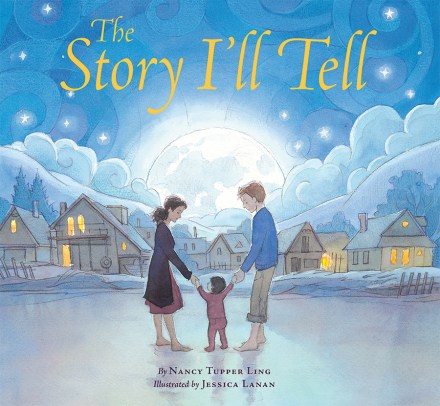
The Story I’ll Tell
Written by Nancy Tupper Ling | Illustrated by Jessica Lanan
A mom and her child snuggle in a big comfy chair reading a book together. “Someday,” the mom thinks, “when you ask where you came from, I’ll tell you a story.” She considers telling her child that they came from a faraway land, carried in a hot-air balloon that gently drifted down “like a feather” into the backyard. “‘You’re home now,’ I said. Then I wrapped you in a blanket as red and silky as the balloon’s sails.”
Image copyright Jessica Lanan, text copyright Nancy Tupper-Ling. Courtesy of Lee & Low
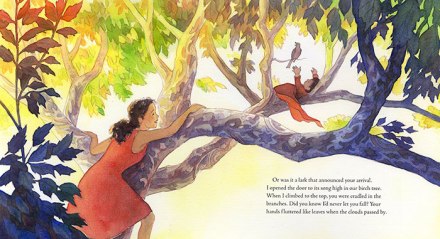
Or perhaps she will remember it differently: the blanket was fashioned from the silver cape worn by a mysterious horseman who rode into town with the baby in his saddle bag. Maybe, instead, it was an angel: “Wrapped in her arms, you followed a trail of lanterns around the world until you reached our doorstep. How your eyes sparkled when I first saw you.” But, no. She thinks back over the years and once again hears a lark singing high in the birch tree. “When I climbed to the top,” the mom will say, “you were cradled in the branches. Did you know I’d never let you fall? Your hands fluttered like leaves when the clouds passed by.”
Image copyright Jessica Lanan, text copyright Nancy Tupper-Ling. Courtesy of Lee & Low
The child’s mom might use her own grandmother’s tale of how she, herself, was found in the cabbage patch. But she would alter the setting slightly to a riot of tiger lilies that peppered her baby’s cheeks with pollen-like freckles. Or the child may have arrived in town with the August moon, the illustrious honoree riding on the dragon float as musicians played and lion dancers performed. “Your smile was as wide as the ocean when I cradled you.”
Image copyright Jessica Lanan, text copyright Nancy Tupper-Ling. Courtesy of Lee & Low
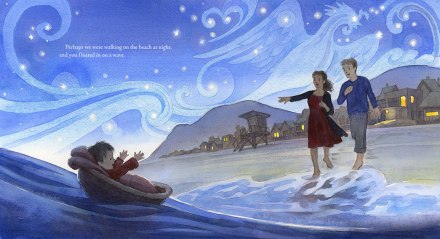
Maybe the baby’s parents weren’t at a parade, but walking along the seashore when their child “floated in on a wave. No, not a wave! I’d say there was a dragon queen who kept you by the sea to raise you as her own….I waited inside until the dragon queen fell asleep. Then I tiptoed inside and rescued you from her dark cave.” Even as she imagines all these stories, however, the child’s mother knows they will not be believed, “because it will be hard to fool the brightest child in the world.”
The true story, however, is just as marvelous and magical as any invention. So when the child is old enough to wonder, the mother says, “I will tell you how we gathered you in a silk blanket and flew on wings through the sky. Your eyes sparkled like the ocean below, and your hands fluttered as clouds passed by.”
Image copyright Jessica Lanan, text copyright Nancy Tupper-Ling. Courtesy of Lee & Low
Bringing a child into a family is always an awe-inspiring experience, almost inexplicable in the changes it creates in the heart. Sometimes the true story doesn’t seem to begin to accurately reflect the wonder of it all. Nancy Tupper Ling plumbs the depth of these feelings in The Story I’ll Tell, offering lyrical imaginings drawn from the fairytales, myths, and legends that are part of our global inheritance and enlighten our lives.
As a mother plans what she will someday tell her adopted child, readers learn that each of her various scenarios contain aspects of the actual story. Throughout, Tupper Ling offers assurances of the anticipated and enduring love the parents have for their child. While the ethnicity of the adopted child is not stated, images suggest that the baby was born in China. The book is also written without gender pronouns and illustrated with gender-neutral clothing and the short hair of most babies, making this a universal book.
Jessica Lanan’s gorgeous, ethereal paintings perfectly reflect the emotional power of Tupper Ling’s text. With each page the baby comes to the mother and father anew, highlighting not only the moment that the child became theirs but also the waiting that took place beforehand. Each two-page spread glows with sunlight, lantern light, or starlight and is connected by a swooping ribbon of imagination that carries aspects of the child’s heritage in its wake. Lanan’s vibrant palette of reds, blues, yellows, and greens depicts the joy of both parents and their child. Every page is infused with exquisite beauty and invites readers to linger to appreciate the full impact of this story.
The Story I’ll Tell makes a wonderful gift and is a must for all adoptive parents and their children. It is also an exceptional book to be shared with all children.
Ages 2 – 8
Lee & Low Books, 2015 | ISBN
Discover more books for children and adults by Nancy Tupper Ling on her website!
View a gallery of Jessica Lanan‘s illustration work for children’s and middle grade books
National Adoption Day Activity
I Love My Family! Portrait
Use this printable heart-framed I Love My Family! Page to draw a portrait of your family!
Bats are popular during the Halloween month of October for many reasons—they fly out of caves and nooks and crannies at night, they look kind of spooky, and they have that cool association with Dracula and other vampires. With over 1,300 species of bats around the world, however, these small fliers play a vital role in the welfare of our planet. Some bats are important for insect control, while others are pollinators and still others disperse seed. Unfortunately, bats have been in the news in the past few years for their declining numbers due to habitat destruction, disease, and hunting. Today’s holiday promotes awareness of the value of bats and urges people to help protect them.
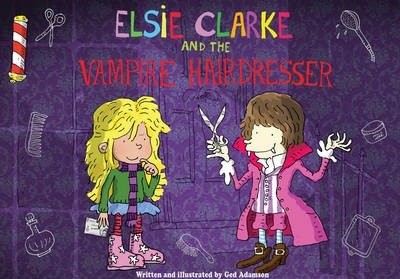
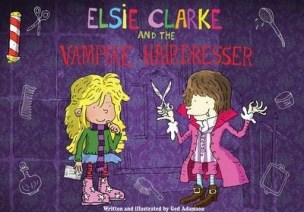
Elsie Clarke and the Vampire Hairdresser
By Ged Adamson
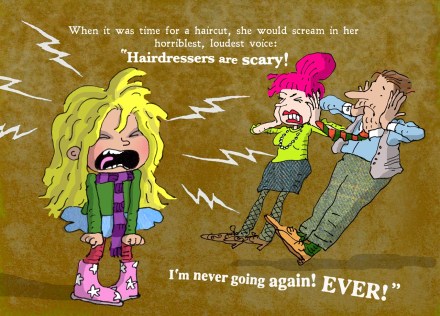
“Elsie Clarke was a brave little girl”…until she had to get her hair cut. Whenever her tresses reached a certain point and it was time for that appointment, “she would scream in her horriblest, loudest voice ‘Hairdressers are scary!’ I’m never going again! EVER!’” But Elsie’s dad thinks she might like his barber. Boris Lazzario, Hairdresser of Quality reads the business card he hands her.
Copyright Ged Adamson, courtesy gedadamson.com
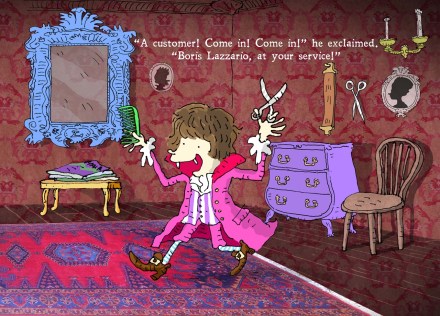
The card piques Elsie’s curiosity, so she heads down to 110 Turning Lane. She enters the door to find a very unusual looking boy rushing toward her. He has a comb in one hand and a scissor in the other, and his delighted smile reveals two sharp fangs. “‘A customer! Come in! Come in!’ he exclaims. “Boris Lazzario at your service!’” Before Elsie knows it, Boris has taken her hand and is showing her to his chair, while his cat, a ghostly Jasper, leads the way.
Copyright Ged Adamson, courtesy gedadamson.com
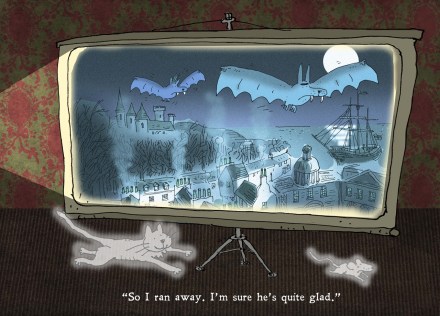
Before Boris can look at Elsie’s hair, however, she tells him that she is afraid of haircuts. Boris has heard it before. He shows Elsie a portrait of his father, Count Lazzario. “‘Everyone’s terrified of him,’” Boris explains, but “‘he’s scared of haircuts, just like you.’” He plays an old movie for Elsie, revealing that his dad wanted him to be a “proper vampire.” To escape this life, Boris tells Elsie, he ran away and is sure his dad is glad that he did.
Just then the door flies open and the house rings with a “blood-curdling HOWL!” It’s Count Lazzario—not looking very glad at all. The Count chases Elsie and Boris upstairs and downstairs, all the while shouting “‘My son a hairdresser! Oh, the shame of it! You’re a disgrace to vampire kind!’” Finally, Elsie has had enough. She stops and pointedly tells the Count in her “horriblest, loudest voice that he should be proud of his son. “‘He’s not a monster like you,’” she shouts.
Copyright Ged Adamson, courtesy gedadamson.com
The Count breaks down in tears. “‘I just wish Boris did something that wasn’t so scary,’” he wails. Suddenly Elsie sees how silly it is to be afraid of a haircut. She musters her courage, reassures the Count, and tells Boris he has two customers. Boris shampoos, rinses, and cuts. While Elsie and the Count sit under the hairdryer, they read magazines while enjoying tea and chocolate cookies.
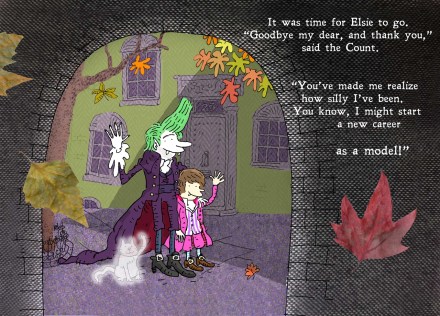
When the two see their new ‘dos they can’t believe their eyes. The Count proclaims his a “triumph,” and Elsie thinks hers is “‘the coolest, most amazing hairstyle in the world!’” As Elsie turns to go, the Count thanks her. He realizes how ridiculous he’s been and even thinks he may “start a new career as a model.” Elsie gives a final wave before heading home to show her mom and dad not only her new haircut but how very brave she really is.
Copyright Ged Adamson, courtesy gedadamson.com
There’s a wonderful free-range silliness to Ged Adamson’s books that brings a smile to your face as you read them. The great thing is that they are based on a kernel of truth, which anchors the story and gives it broader resonance. In the case of Elsie Clarke and the Vampire Hairdresser it’s a fear of haircuts—a scenario I know well from my own son who for a time received his cuts from a very understanding woman who sat with him on the salon’s play rug while she cut his hair. Adamson’s knack with humorous and believable dialogue paired with laugh-inducing action makes the story a page-turner with the kind of suspense that keeps kids giggling from the first page to the satisfying last.
Adamson’s lush illustrations, in a palette of purples, pinks, yellows, and greens, set on backgrounds of plaid tweed, herringbone, denim and other fabrics as well as ornate Victorian wallpapers, offer all the spooky details readers could want from a vampire’s hair salon. Kids will marvel at the old film projector, and the black-and-white home movie of Boris and his dad is a clever touch. Readers will root for cute Elsie and Boris, and have a change of heart when the tyrant Count tears up.
For those times when a fear needs to be overcome—or for any story time—Elsie Clark and the Vampire Hairdresser is monstrous fun and would be an amusing addition to home libraries that kids will really sink their teeth into.
Ages 4 – 8
Sky Pony Press, 2013 | ISBN 978-1620879832
Discover more about Ged Adamson and his books on his website!
This Elsie and the Vampire Hairdresser book trailer is shear fun!
Bat Appreciation Month Activity
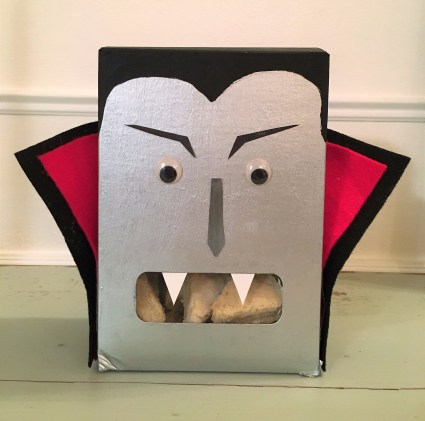
I Vant to Eat These Treats! Vampire Goodie Box
Would you like your gift of homemade or store-bought cookies, candy, or other treats to have a little bite to it? Deliver them in this vampire box you can make yourself!
Supplies
Recycled pasta box (or any box with a cellophane window in it)
Black Paint
Silver Paint
Black felt, 8 ½ x 11 sheet or heavy stock paper
Red felt, 8 ½ x 11 sheet or heavy stock paper
Googly eyes
Black paper, heavy stock or construction paper
Fabric glue
Regular glue or double stick tape
Hot glue gun (optional)
Paint brush
Scissors
Directions
Paint the entire box silver, leaving the window unpainted, let dry
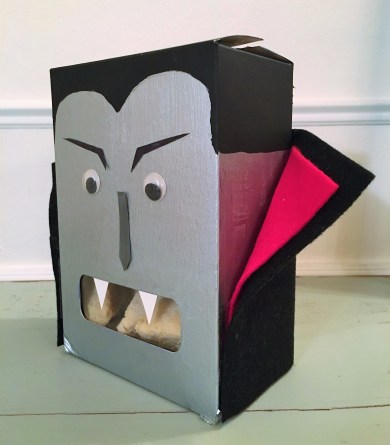
With the black paint create the pointy hairstyle, with the point descending about 1 inch from the top of the box and the curves ending about 1 ½ – 1 ¾ inches from the side of the box (see picture).
Paint around the sides and back of the box in line with the ends of the curves
From the black paper make eyebrows—these can be pointy or rounded
From the index card make the nose and teeth
I painted the nose darker silver by combining silver and a little black paint
With the glue or double stick tape, attach the eyebrows and nose to the box
With the glue or double stick tape, attach the teeth to the window, fitting them slightly up into the rim of the window.
Attach the googly eyes
To make the cape
Holding the black felt or paper horizontally, cut a piece about 4/5 as tall as the box
Holding the red felt or paper horizontally, cut a piece of red felt so that there will be a ½-inch border of black along the top and sides
With the fabric glue attach the red felt to the black felt. Use craft glue on paper. Let dry
With the hot glue gun, fabric glue, craft glue, or double stick tape, attach the felt or paper to the back of the box
Fold the felt or paper around the sides of the box and attach along the bottom edge with tape or glue
Fold the top of the felt or paper back to make the collar
Attach the bottom portion of the collar to the box near the front edge with the tape or glue.
Fill with your favorite treat!
You can find Elsie Clarke and the Vampire Hairdresser at these booksellers
Today’s holiday was established in 1958 by Patricia Bays Haroski, a secretary at State Farm Insurance. Typically held on October 16 unless that day falls on a weekend, the date honored her father’s birthday—a nice little present in a couple of ways as Patricia’s father was also her boss and the day was his birthday. By 1979 the observance had grown to greeting card status. The day gives employees an opportunity to appreciate the dedication of their bosses and allows bosses to foster a cohesive and equitable work environment.
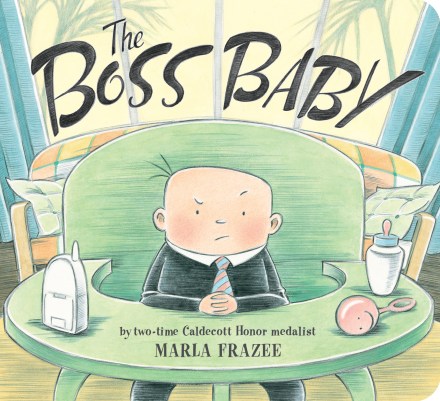
The Boss Baby
By Marla Frazee
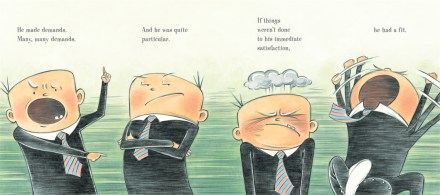
“From the moment the baby arrived, it was obvious he was the boss.” He was relentless—putting Mom and Dad on the clock 24/7. His office was right in the center of everything, the better to give his directives; he was a tyrant, making “many, many demands; and he was quite particular. If things weren’t done to his immediate satisfaction, he had a fit.”
Image and text copyright Marla Frazee, courtesy of simonandschuster.com
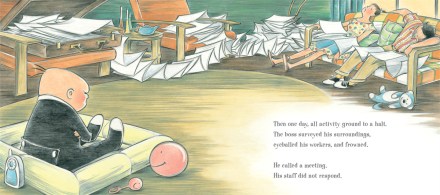
Of course there were meetings, and lots of them—all during the day and especially at night. “The funky thing was, he never, ever said a single word that made any sense at all.” Still, his “employees” gave him lots of “perks.” But one day all work stopped cold. The boss called a meeting. He yelled louder, shouted, and wailed. There was no response. Finally, the boss decided to try a new tactic.
He left his circle of influence and actually asked for his workers by name. “Ma-ma? Da-da?” His employees came running, all smiles and attention. “For the first time since his arrival the boss baby was pleased.” He knew better, though, than to let this moment go to his workers’ heads. “There was still a business to run here. And make no mistake…he was the boss of it.”
Image and text copyright Marla Frazee, courtesy of simonandschuster.com
From the very first page when the determined baby in his business suit sleeper marches up the front walk with his oversized briefcase, Marla Frazee’s The Boss Baby is laugh-out-loud funny. The metaphor rings hilariously true in every detail, from the frequent tantrums and cries for meetings to the physical trappings of babyhood that directly correlate to executive benefits in Frazee’s inspired illustrations.
Anyone who is currently carrying or has ever carted around a diaper bag three times the size of their baby will immediately recognize the briefcase from which issues a ream of demands, and the baby’s toys are, well…executive toys too. Of course, the star of the show is the baby himself, and Frazee’s baby with his bald head, furrowed brow, and impatient posture is the epitome of the demanding boss. Parents and caregivers will recognize his overworked “employees” in the mirror, and while they smile at the sweet “first,” know that these moments are sometimes fleeting.
The Boss Baby is one of the funniest books I’ve read and would make an empathetic hug of a present for new parents as well as a wonderful addition for kids’ bookshelves for those times when Mom and/or Dad and child want to share a laugh. Look for Marla Frazee’s The Bossier Baby in bookstores on November 1!
Ages 2 and up
Simon & Schuster, 2010 (hardcover); 2013 (board book); 2016 (paperback) | ISBN 978-1481469814 (paperback)
Discover more books by Marla Frazee, plus videos, podcasts, artwork and more on her website!
Boss’s Day Activity
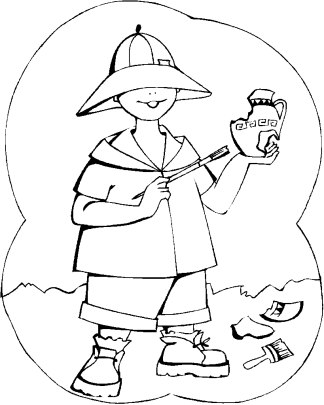
Future Bosses Coloring Pages
Many of today’s children will be bosses themselves in the future. These two printable Future Bosses coloring pages show just two of the interesting and challenging careers that kids may pursue.
Marking its 21st birthday, World Egg Day celebrates the health benefits of the humble egg—which offers the highest quality of protein available. An important dietary component for fulfilling the nutritional requirements of people living in both developed and developing communities, the egg is a versatile food, able to be eaten on its own or as a necessary ingredient in many recipes. Eggs are essential for fetal development, healthy brain development, maintaining concentration, aiding the immune system, and more. Today, enjoy eggs your favorite way!
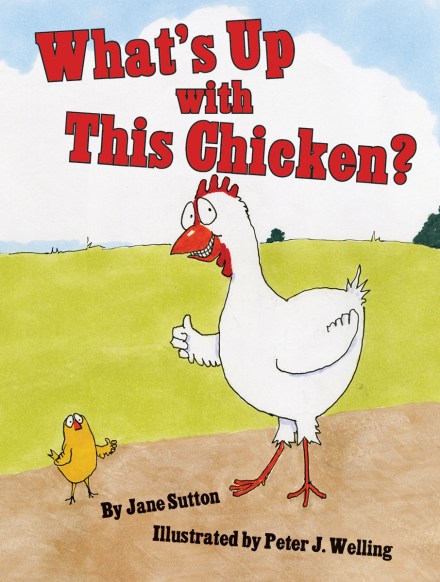
What’s Up with This Chicken?
Written by Jane Sutton | Illustrated by Peter J. Welling
When Sylvia goes out to the barn to collect the chicken’s eggs, something’s up with Trudy. She squawks and screeches when Sylvia tries to reach under her, but Sylvia takes it in stride and with humor: “‘Don’t get so egg-cited!’” she says “‘I’ll get your egg tomorrow.’” But the next day Sylvia is met with the same reaction. Trudy isn’t acting like the other chickens in Grandma’s backyard; if fact, she isn’t even acting like Trudy! “‘What’s up with this chicken?’” Sylvia wonders.
Image copyright Peter J. Welling. Courtesy of Pelican Publishing Co.
Image copyright Peter J. Welling, courtesy of Pelican Publishing Co.
While she and Grandma enjoy “omelets with eggs from Sue, Clara, Doris, and Olga,” Sylvia tells her about “stubborn Trudy.” Grandma doesn’t know what’s wrong either. The next morning Trudy is even more obstinate. Not only does she make a racket, she tries to peck Sylvia, and she puffs “herself up to twice her size.” Sylvia also notices “that Trudy left her roost just once a day to eat, drink, and poop. She was getting skinny.”
Sylvia decides Trudy must be hungry and tries to lure her off her nest by offering chicken feed, but while all the other hens “wolfed it down like chocolate,” Trudy remains firmly on her roost. Sylvia tries everything she can think of to move Trudy, but nothing works. That night she and Grandma consult The Big Book About Chickens. Here they discover that “‘Trudy is broody!’” Grandma reads on: “‘Broody hens stay on their eggs so they will hatch into chicks.’” But Sylvia and Grandma know that Trudy’s eggs are not the kind that hatch.
Image copyright Peter J. Welling, courtesy of Pelican Publishing Co.
Image copyright Peter J. Welling, courtesy of Pelican Publishing Co.
Sylvia realizes that Trudy just wants to be a mother, and she wishes there were some way to help her. She thinks and thinks and finally comes up with an idea. She runs to Grandma who thinks Sylvia’s plan is “an egg-cellent idea.” A few days later a box arrives with four eggs that would hatch. With thick rubber gloves, a dose of determination, and two tries, Grandma is able to lift Trudy off her nest. Sylvia makes a quick switch of the eggs, and “Broody Trudy settled down on the new eggs.”
Trudy grows thinner every day but she stays on her roost, rolling the eggs to keep them uniformly warm and even blanketing them with her own feathers. One day Sylvia hears peeping! Grandma and she are even in time to watch the fourth little chick peck its way out of its shell. They name the new “little yellow fluff balls Sophie, Danielle, Mildred, and Judy.”
Image copyright Peter J. Welling, courtesy of Pelican Publishing Co.
Trudy is a proud and protective mother, shielding them with her wings “like a feathery beach umbrella” and teaching them how to find food and water. Trudy goes back to her regular routine and begins gaining weight. As the chicks grow they get their own nests in Grandma’s coop. But one day Judy squawks and screeches. This time Sylvia knows exactly what’s up with this chicken!”
An Author’s Note about the real-life “Broody Trudy” that inspired the story follows the text.
With a deft and delightful understanding of the puns and humor that set kids to giggling, Jane Sutton has written a fun—and informative—story for animal lovers and anyone who loves a good, natural mystery. Through the well-paced plot and action-packed description, readers learn about a particular behavioral aspect of some chickens and the clever and sensitive way that Sylvia solves the problem. The close relationship between Sylvia and her grandmother adds charm and depth to the story, and their dialogue is spontaneous and playful.
Peter J. Welling’s bright, homey illustrations are the perfect accompaniment to the story. Animated Trudy shoos Sylvia away while the other chickens take dust baths, scratch for bugs, and look just as perplexed as Sylvia and Grandma. Humorous touches abound in Grandma’s choice of home décor and Sylvia’s printed T-shirts as well as in the facial expressions of the human and feathered characters. Trudy’s chicks are adorable, and readers will cheer to see Trudy fulfill her heart’s desire.
What’s Up with This Chicken is a wonderful read-aloud for younger kids’ story times and a fun romp that will keep older, independent readers guessing and wondering how it all comes out right up to the end. The likeable characters—both human and chicken—make this a book kids will like to hear again and again!
Ages 3 – 8
Pelican Publishing, 2015 | ISBN 978-1455620852
Discover more about Jane Sutton and her books on her website!
To view a gallery of artwork plus more books for readers of all ages by Peter J. Welling, visit his website!
World Egg Day Activity
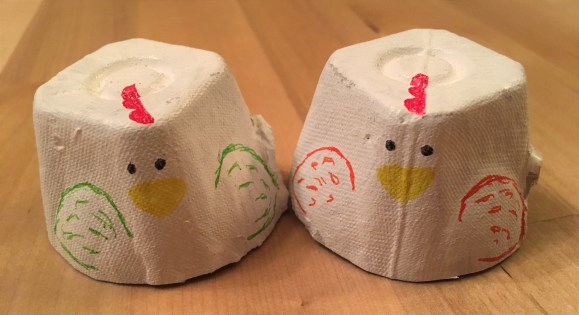
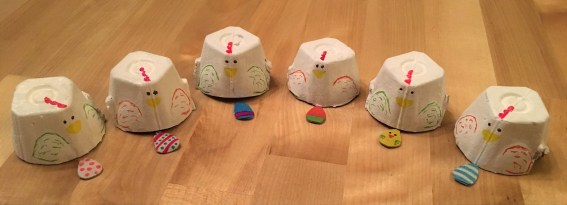
Egg Carton Chickens and a Basket Full of Games
With twelve little chickens you can come up with lots of games to play! This fun craft and game activity is eggs-actly what you need to start hatching some real fun!
Supplies
Cardboard egg carton
White craft paint
Markers: red, yellow, black for the face; any colors you’d like for wings and eggs
Paint brush
Scissors
Glue
Construction or craft paper in white and a color of your choice
Directions
Cut the notched flap off the egg carton and set aside
Cut the top off the egg carton
Cut apart all the egg cups and trim slightly so they sit flat
Paint the egg cups with the white paint, let dry
Add the face, comb and wings to the chicken with the markers. Make six chickens with one color wings and six chickens with another color wings.
From the egg carton flap cut thirteen small egg-shaped playing pieces
With the markers, decorate twelve of the eggs in pairs—each egg in the pair with the same design
Color one egg yellow and add a beak, eyes, and wings to make it a chick
Games to Play
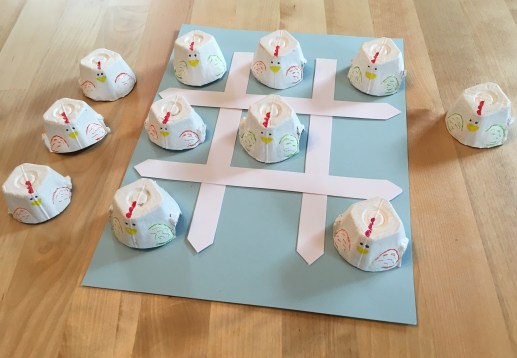
Tic-Tac-Toe (2 players)
On a 8 ½” x 11” piece of paper draw a regular tic-tac-toe board or make it fancy – like the picket fence-inspired board in the picture
To make the fence-inspired board on a colored background, cut 2 9-inch-long x 3/4-inch wide strips of white paper, cutting a pointed tip at one or both ends. Cut 2 white 8-inch x 3/4-inch strips of paper with a pointed tip at one or both ends. Glue the strips to the background.
Each player chooses a set of chickens with the same colored wings
Play the game as you usually do
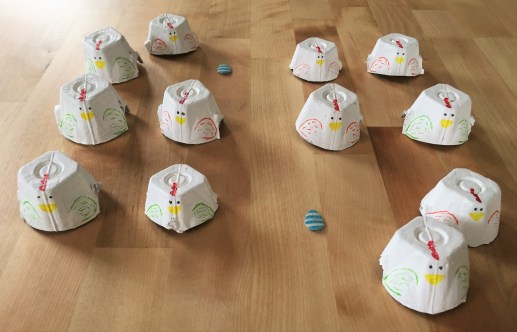
Find the Matching Eggs (2 or more players)
Have one player hide one egg under each chicken
Shuffle the eggs around and form them into three lines of 4 chickens each
Another player lifts one chicken at a time to find matching eggs. If the eggs don’t match, put both chickens back and start again
Where’s the Chick?
Use as many chickens and eggs as you want (fewer for younger children, more for older)
One player hides the chick under one of the chickens and eggs under the others.
Another player has three chances to find the chick
I’m sure you can also design your own games for your adorable chickens to play! With more chickens you can even make a checkers set or replicate another of your favorite board games!
Q & A with Author Jane Sutton
Today, I’m pleased to talk to Jane Sutton about her books, her journey as a writer, her family, and the joys and inspiration of being a new grandmother!
As someone who loves humor and was voted class comedienne in high school, what were some of the books you most enjoyed as a child and young adult?
Two of my childhood favorites were Dr. Seuss’s Horton Hatches an Egg and Robert Louis Stevenson’s A Child’s Garden of Verses. As a young adult, I was drawn to Virginia Woolf novels (I know–not exactly humorous, but most comedians are prone to depression).
You write both picture books and books for older children. What inspires or influences your stories?
My childhood memories have been the basis of many of my books—experiences and feelings. What’s Up with This Chicken? was inspired by a true story my friend-since-we-were-11 Fay told me about one of her backyard hens who refused to get off her eggs. I said, “This has to be a children’s book!” So I invented characters, had the child protagonist solve the problem, and snuck in a subtle message about the importance of empathy.
As someone who always wanted to write and who achieved the goal of becoming a published author, can you briefly describe your journey?
At a young age, I was encouraged by my teachers. They would be impressed by something I wrote and send me to show it to another teacher, which really pumped me up. I was an editor of my high school newspaper and after graduating from college had a job writing for a newspaper, wrote ads and press releases, and sold some stories for reading comprehension tests. My first book, What Should a Hippo Wear? was published when I was 29. I’ve had periods where everything I wrote was selling, and periods when nothing I wrote was selling. It’s a tough market!
What’s the best part about writing books for kids?
Well, I never wanted to grow up, and when I realized it was happening whether I liked it or not, I vowed to always remember what it felt like to be a child. Writing for kids helps me do that.
You conduct school presentations and workshops for kids from kindergarten age through grade 5, can you describe a funny or poignant anecdote from one of your events?
One school had a wonderful program that paired parents and their children as writing partners. The culminating event was a presentation by me about how to make writing come alive. Then the parent-children pairs displayed their books, and it was so lovely to see how much the experience meant to the adults and the children. They also loved showing me—the big famous author—what they’d written and I could sincerely point out parts of their writing that were especially effective. The whole thing made me ferklempt.
I read that you love elephants and collect elephant-inspired items. Can you tell me about one of your favorites?
One of my favorite elephants is gray and plastic (about the size of a toaster) and lives outside, in view of our kitchen window. My mother, who died in 2004, gave him to me and named him “Sabu.” He has survived about 18 New England winters so far, sometimes getting totally buried by snow and then poking out the tip of his trunk as the snow starts to melt. My mom asked me once if the elephant made me think of her, and yes, he surely does.
Talking about your mom makes me think of the strong relationship between Sylvia and her grandmother in What’s Up with This Chicken. Can you tell me about your own family?
My husband, Alan, taught a variety of grade levels spanning grades 1-6. He served as a science coordinator, curriculum developer, and teacher mentor. He’s written and co-authored six books for educators, four focused on science instruction and two about systems thinking. Currently, he coordinates the systems thinking program at a grades 5-12 public school and also presents workshops at meetings and conferences. We met in college and have been married for 41 years!
My son, Charlie, works for a coalition made up of organizations pushing for a better transportation system in Massachusetts. He’s worked in Massachusetts public policy since graduating from college in 2007. He married the wonderful Amberly, a nurse, in 2014, and they recently had a baby!
My daughter Becky is the director of an SAT tutoring program. Her company tries to make SAT tutoring as fun and effective as possible, so they try to match the kids with tutors who have the right personality for the student’s learning style. The SAT has completely changed in the last year, so they have had to retrain all of their tutors and rewrite all their curricula. For any tutoring program, building students’ confidence is key. So much of standardized testing is psychological.
I understand Becky also writes a blog for all of us grammarians who like a laugh once in awhile called Apostrophe Catastrophes: The Worlds’ Worst. Punctuation. Can you tell me a little about how she got started?
Yes, Becky does a great job with that blog. I love the examples she posts, and her comments are hilarious! She started Apostrophe Catastrophes almost 10 years ago after seeing an errant apostrophe on a giant cake at Governor Deval Patrick’s Inauguration. She pointed it out to the catering staff, and they had no idea what she was talking about, and then she started to notice misused apostrophes everywhere! Friends and family started taking pictures and sending them to her, and eventually, strangers from all over the world started sending in pictures! The Facebook group has almost 4,000 members now! Becky says, “I guess a lot of people share my love for proper punctuation.”
You’re a new grandmother! Can you tell me a little about your grandson?
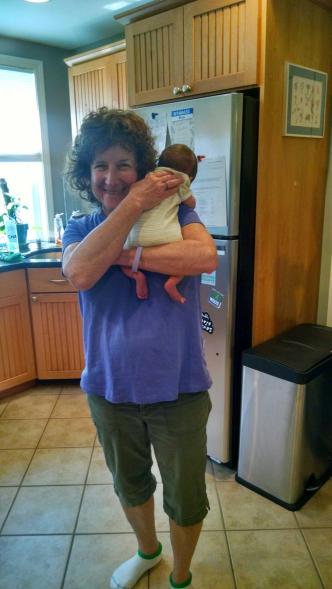
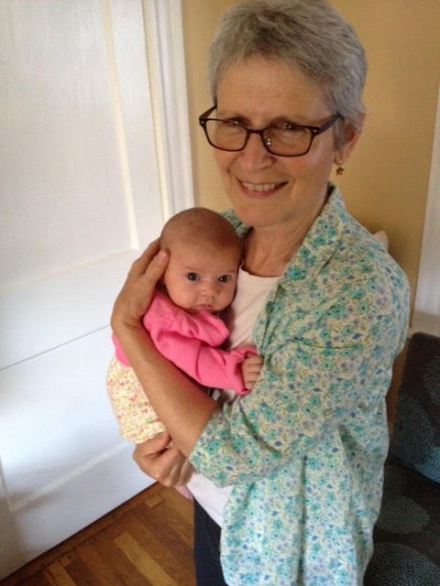
That’s a dangerous question! How much time do you have? Caleb is an adorable, cuddly little person. And he’s now a month old!
What is the best part about being a grandmother?
As a new mother, I was very anxious and questioned all my decisions. But as a grandma, there’s none of that anxiety. Being with my grandson is pure joy. And seeing how loving, confident, and tender my son and daughter-in-law are with the baby fills me even more love. And seeing him in my husband’s arms as he gazes down at him…I’m getting ferklempt again!
Have you thought about how being a grandmother might influence or inspire your future work?
You betcha! Stay tuned.
What’s up next for you?
My next book, a Passover-themed picture book, is scheduled for publication by Kar-Ben in the spring of 2018.
Since Celebrate Picture Books is a holiday-themed blog, I can’t let you get away without asking you a few holiday-related questions! So…
What is your favorite holiday?
I love Mother’s Day and Father’s Day because they are occasions for my husband and me to get together with our children. And there’s good eating involved.
Do you have an anecdote from any holiday that you’d like to share?
The first time I hosted Thanksgiving, rather than attending one at my parents’ house, my mother gave me very, very specific instructions about what to buy. For example, there had to be 2 Butterball frozen turkeys, both between 11 and 13 pounds. The reason for 2 is so that each of the 4 grandchildren could have a drumstick. My daughter and I were rummaging through the supermarket frozen case trying to find the exact acceptable weight for exacting Grandma. Our fingers were half frozen, and I admit that I kind of dropped a turkey on my daughter’s finger. The turkeys, by the way, were quite delicious.
How has a holiday influenced your work?
The festive, joyous celebration of Chanukah shows up in my 2 Chanukah picture books: Esther’s Hanukkah Disaster (Kar-Ben) and Aiden’s Magical Hanukkah (Hallmark).
Thanks so much for chatting, Jane! It’s been wonderful getting to know you. I wish you all the best with all of your books, and am looking forward to seeing your next book!
Connect with Jane Sutton on her website and catch up with her events and other fun activities on her blog!
What’s Up with This Chicken can be found at these booksellers:
In the early 1970s Marion McQuade had the idea for a special day of the year when grandparents and grandchildren could show their love for one another. She further wanted it to be a day when grandparents could pass down the wisdom they had gained over their lifetime as well as share a bit of family history. Of course the same goes for grandparents learning the latest and greatest from the kids in their lives—from new technology to current fads. When all generations share their experiences, we’re all a lot smarter—and have closer relationships!
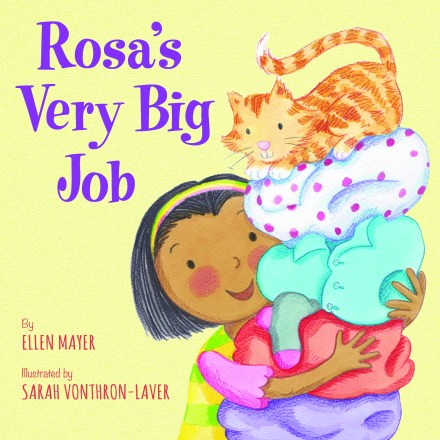
Rosa’s Very Big Job
Written by Ellen Mayer | Illustrated by Sarah Vonthron-Laver
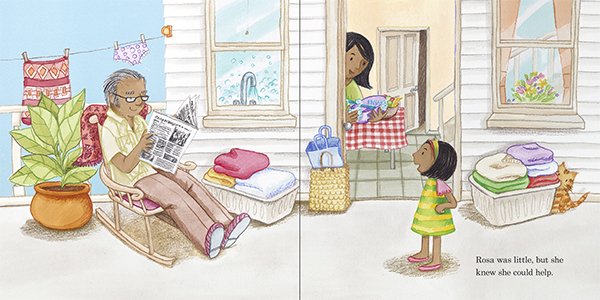
Rosa may be little, but she has big ideas about how to help. While Mama is out shopping for groceries for that night’s dinner, Rosa decides to surprise her by folding and putting away the laundry. The basket is piled high with fluffy dry clothes, sheets, and towels. Rosa watches her grandpa reading the newspaper. “‘Please help me, Grandpa!’” she says. She tugs on her grandpa’s hands, trying to pull him out of his chair. “‘Come on, Grandpa! Get up.”
Image copyright Sarah Vonthron-Laver, text copyright Ellen Mayer, courtesy of Star Bright Books, starbrightbooks.com
Grandpa seems to have a little trouble managing: “‘It’s difficult to carry these enormous piles,’” he sighs. But Rosa knows that smaller armloads work better. Grandpa’s clothes come unfolded as he puts them in the drawer. “‘Be neat. Like me,” Rosa says, showing him her tidy stack. Poor Grandpa! He has to keep hanging up the same jacket over and over. “‘It’s difficult to keep this jacket from sliding off the hanger,” he says. Rosa has the answer: “‘Zip it up,’” she explains. “‘Then it stays on.’”
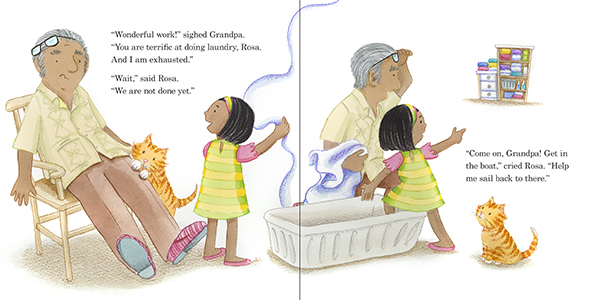
Grandpa sinks back into his chair. “‘You are terrific at doing laundry, Rosa. And I am exhausted,’” he says. But this is no time to quit—Rosa has big plans. As she steps into the now empty laundry basket, she exclaims, “‘Come on, Grandpa! Get in the boat. Help me sail back to there.’” Rosa points to the linen closet.
Image copyright Sarah Vonthron-Laver, text copyright Ellen Mayer, courtesy of Star Bright Books, starbrightbooks.com
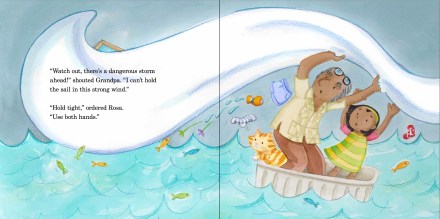
Suddenly, the floor swells with ocean waves teeming with fish. Grandpa channels his inner sailor as he holds aloft a sheet as a sail. As the wind billows and they come perilously close to the kitchen table, he says, “‘It’s difficult to sail around this enormous rock!’” Contemplating the rising sea, he exclaims, “‘It’s difficult to sail over this enormous wave!’”
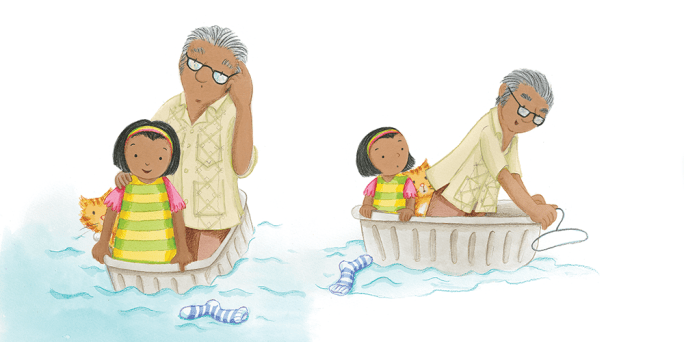
There’s a dangerous storm ahead, warns Grandpa, “‘I can’t hold the sail in this strong wind.’” Rosa is there to help and grabs one side of the sheet. “‘Hold tight,’” she orders. “‘Use both hands.’” At last the seas die down and Grandpa is ready to steer the laundry basket back to port, but Rosa has a more entertaining thought. Spying a sock on the floor, Rosa wants to catch the “enormous fish.” Grandpa obliges and picks up a hangar for a fishing pole. He holds Rosa as she stretches out over the edge of the laundry basket to land her fish.
Image copyright Sarah Vonthron-Laver, text copyright Ellen Mayer, courtesy of Star Bright Books, starbrightbooks.com
Just as Rosa nabs the fish, Mama comes home with her bags of groceries. She’s surprised to see that the laundry is not in the basket. Rosa runs to her and proudly explains, “‘We put all the laundry away. It was a very big job. We carried enormous piles. Grandpa dropped things. And I picked them up. It was very difficult for Grandpa. He got exhausted. But not me. I am terrific at laundry!’” Mama agrees that Rosa is a terrific helper. Then Rosa leads her mother to see the most surprising thing of all—the fish she has caught for dinner!
In her series of Small Talk Books® Ellen Mayer presents exciting stories for preschoolers full of imagination and rich language learning. Rosa’s Very Big Job introduces Rosa, a sweet girl bubbling with enthusiasm and the desire to help. The close relationships between Rosa, her mother, and her grandpa promote cooperation as well as effective modeling of speech patterns and a way to introduce larger words in an organic manner through play and common chores. Rosa’s inventive idea to turn the laundry basket into a boat is delightfully enhanced by her grandpa’s willingness to share in the story and expand on it. Humor, cheerful banter, and the easy camaraderie between Rosa and Grandpa invite young readers to join in the fun as they build confidence in their language learning.
Sarah Vonthron-Laver depicts Rosa’s afternoon with her Grandpa with joy and the spirited energy young children bring to everything they do. Grandpa is happy to spend time with his granddaughter, yet shows honest feelings of tiredness and frustration that spur on the plot. The transition from doing laundry to using the basket as a boat is as seamless as a child’s imagination, and the way Rosa and her grandpa use household items to create “sails,” “rocks,” “fish,” and “fishing poles” will give readers great ideas for post-reading play. Bright colors, an adorable kitten, and familiar surroundings welcome young children into the world of reading and expanded vocabulary.
Rosa’s Very Big Job would be a welcome addition to a young child’s bookshelf, not only for its fun story that kids will want to hear again and again, but for its leap into imagination that kids will want to replicate.
Dr. Betty Bardige, an expert on young children’s language and literacy development, provides tips for parents, grandparents, and caregivers following the text.
Ages 2 – 6
Star Bright Books, 2016 | ISBN 978-1595727497
Discover more about Ellen Mayer and her books as well as book-related activities and literacy initiatives she’s involved with on her website!
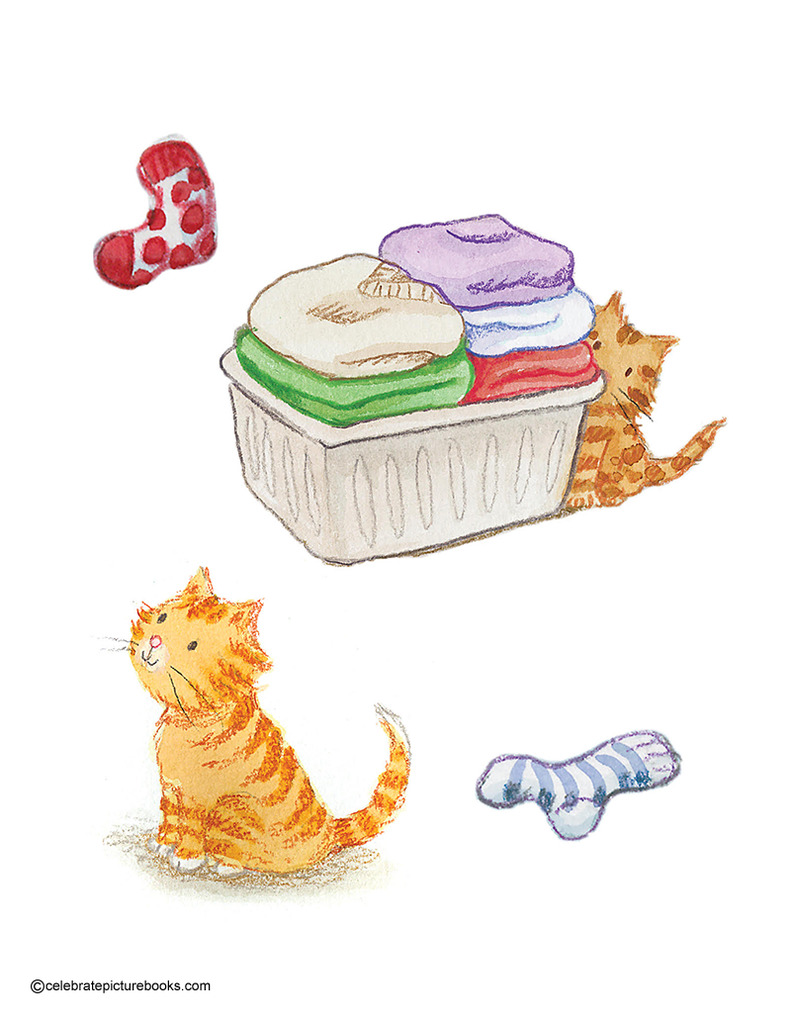
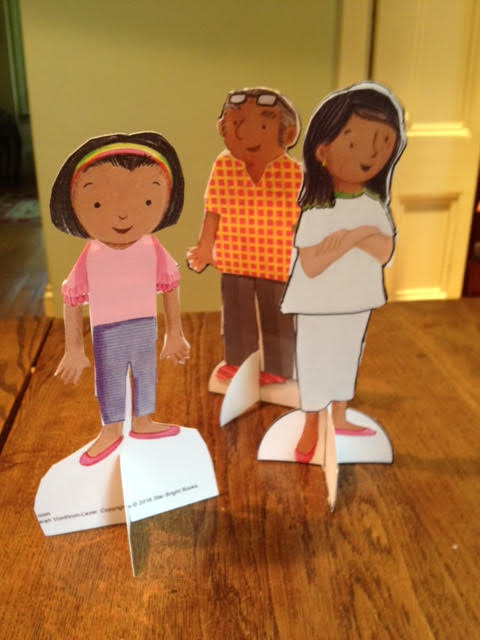
Rosa loves helping out at home. She’s terrific at doing laundry – folding and putting away the family’s clothes, socks, and linens. You are terrific at helping too! Can you help Rosa, Mama, and Grandpa get dressed and ready for the day with these printable paper dolls? You’ll even find a laundry basket, socks, and Rosa’s sweet kitty to play with!
Print dolls on regular paper or heavy stock paper. Dolls printed on heavy stock paper may stand on their own with the supplied stand cross piece. For dolls printed on regular paper, you can cut the supplied stand templates from poster board or card stock and glue the dolls to the backing.
Rosa’s kitty and the laundry basket can also be attached to the supplied template if needed
Print clothes for each figure
Color the blank clothes templates any way you’d like
Cut out clothes and extra items
Fit outfits onto dolls
Make up your own stories about Rosa, Mama, and Grandpa!
Interview with Author Ellen Mayer
Today, I’m happy to present a fascinating interview with Ellen Mayer, a writer and expert in early literacy, in which she discusses her involvement with various organizations and programs, her baby granddaughter, why Hug Your Cat Day is at the top of her list of holidays, and gives us a peek at a very special sugar egg.
I’m really interested in your work in the education and literacy fields. Could you talk a little bit about your job as an education researcher and an early literacy home visitor, and how you got into those fields?
I got into these fields after leaving a Sociology PhD program right near the end. I didn’t want to be an academic and teach, I wanted to do applied research – to solve practical problems out in the world and to make a difference in the lives of those who were struggling. At the Harvard Family Research Project at Harvard’s Graduate School of Education, I studied the ways that families from underserved communities were engaged in supporting their children’s learning and education, and created research-based materials for families and schools to promote effective engagement. One of these was the Family Involvement Storybook Corner—curated picture book selections with family engagement themes. That got me interested in early literacy and picture books.
After researching family engagement in children’s learning for many years, I decided I wanted to go out into the field and be a practitioner and work directly with families on this topic. I worked as an early literacy home visitor with diverse families with the Parent-Child Home Program, modeling ways to share stories with little ones to build early language. I actually got paid to read picture books and play with families in their homes!
At the same time, I was pitching my Small Talk Books®, a collection of playful stories about everyday activities that provide fun for kids and ideas for adults – Rosa’s Very Big Job is one. The adults in the stories are engaged with children’s learning, modeling conversational ways to build young children’s language.
I read that your book Red Socks, another of the Small Talk Books®, is being used in a program to turn wash time at Laundromats into talk time for literacy development. Could you discuss this early literacy initiative?
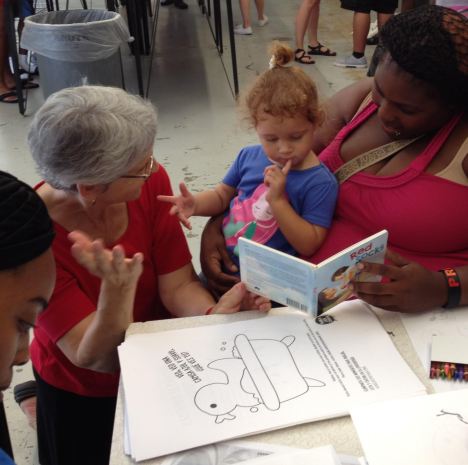
Yes! Wash Time/Talk Time is a terrific campaign led by Too Small To Fail, a joint initiative of the Clinton Foundation and the Opportunity Institute teaming up with a host of partners to turn Laundromats in underserved areas into venues for early literacy. This campaign distributes free books and information to families in Laundromats about building early language to help close what’s called the “word gap” by promoting parent conversation with babies and young children. Almost 60% of children in our country start kindergarten behind in their language development and this then sets them on a downward path and they get even further behind in school.
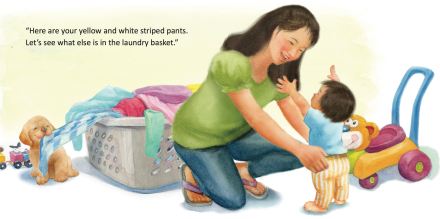
Red Socks was a natural fit for this program. In it a Mama narrates what she is doing for her little pre-verbal child as she folds the laundry and dresses the child—and as they search for a missing sock!
I have to say that it’s a dream come true that Too Small To Fail is using my book.
Wash Time/Talk Time is really reaching the families on the other side of the word gap who most need the ideas and inspiration in Red Socks. When I began writing the Small Talk Books® I wanted to include stories about doing laundry, as it’s something we all do as parents and provides lots of things to talk about with children. (Like the color of socks!) In fact, I used to sit in Laundromats and observe families when I was thinking up ideas for stories. I guess that’s the sociologist in me.
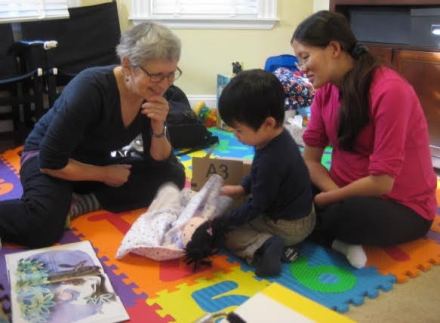
We just had the opportunity to visit one of the Laundromats in the campaign—at the Free Laundry Day in Tampa, FL hosted byThe Laundry Project—and share Red Socks with families. You can see some of the fun illustrator Ying-Hwa Hu and I had here:
What inspired you to begin writing picture books?
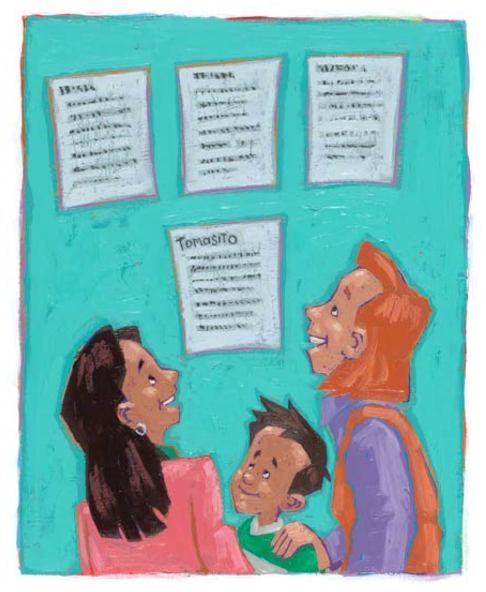
I came to picture book writing through a backdoor. When I was at Harvard Family Research Project, I was thinking about new ways to convey our ideas from research into practice for parents, and it occurred to me that a read-aloud picture book could address an audience of parents, as well as the primary one of children. My boss was enthusiastic about the idea, and so I enrolled in an adult ed class on writing for children. Then I turned one of our research case studies about challenges an immigrant Latino family had in communicating with their son’s teacher into a picture book,Tomasito’s Mother Comes to School/La mamá de Tomasito visita la escuela. Joe Cepeda did the art for it, and we made it downloadable for free.
Some new things! I have a fellowship with the Storytelling Math Project that’s funded by the Heising-Simons Foundation and coordinated by TERC, a not-for profit STEM research and development organization here in Cambridge, MA. I’ll be a member of a group that’s identifying, creating, and promoting math-infused storybooks for diverse young children and I hope to create a couple of Small Talk Books® along these lines—probably about supermarket shopping! I also was asked to help out the Highlights magazine editorial team that creates HELLO magazine for 0-2 years and be an outside reviewer for issues before they go to publication. And then I’ll be volunteering as a visiting children’s book author to the Somerville Family Learning Collaborative, the family engagement and early childhood hub of the Somerville, MA Public Schools, sharing my books with playgroups and new parent groups.
But mostly, I plan to write! I have a bunch of picture book manuscripts in various states, and ideas for new ones. These manuscripts are different from the Small Talk Books®; they don’t have a deliberate educational underpinning to them. They are fun, and just fun. One, for example, is called What To Do With Ruby-Lou and it’s about a baby who doesn’t laugh, no matter what her family does. Who is going to be able to get a laugh out of Lou? Well, it’s a surprise and it just might require some audience participation. I’ve had an agent in the past and hope to find a new one to rep me with these picture books.
You recently became a grandmother. Can you tell me a little about your granddaughter?
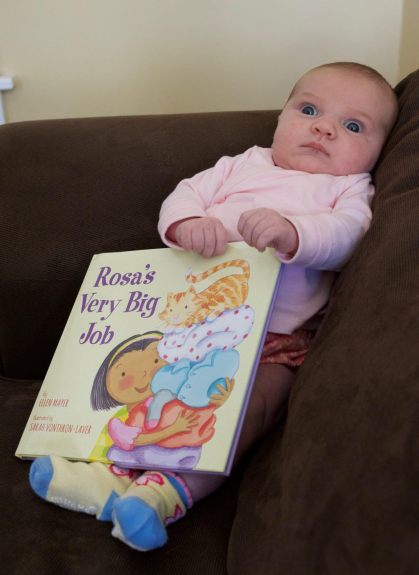
I thought our granddaughter was the most wonderful and expressive baby in the world when was she born – of course! She and my advance copy of the new Rosa book arrived into the world at just about the same time.
At three months now my granddaughter is a big reader and is riveted on the B&W hi-contrast board book genre, especially one board book about cars and trucks. She moves her head back and forth, from one end of the spread to the other, scanning the images on the page like a studious scholar of some ancient text.
What is the best part about being a grandmother?
For me the best part about being a grandmother is being able to simply enjoy my granddaughter and play with her and watch her develop, and not have to worry about taking care of her daily needs. I didn’t have to stress when she refused to take the bottle before starting full-day childcare. That wasn’t my job. (She did take it – of course!) They live nearby, and seeing her once or twice a week, I love noticing small changes on each visit. I also love seeing our daughter and son-in-law parent.
Have you given thought to what you’d like your granddaughter to call you?
Our daughter asked us ahead of time what we’d like to be called when we became grandparents. I thought it was a wise idea to be proactive and select a name immediately, to avoid being named by the grandchild something like “Grandma GA-GOO-GA.” My great aunt Jane is called “Nini” as a grandmother, and I’ve always loved that, but I didn’t want to steal it. So I chose “Mimi.”
It sounds as if Grandparents Day may be one of your top holidays! Do you have another favorite?
When I was little, I liked Easter a lot because it combined a lot of my favorite things: crafts, springtime, running around outside, candy. Also, we didn’t dress up much as kids, but I do remember Easter bonnets!
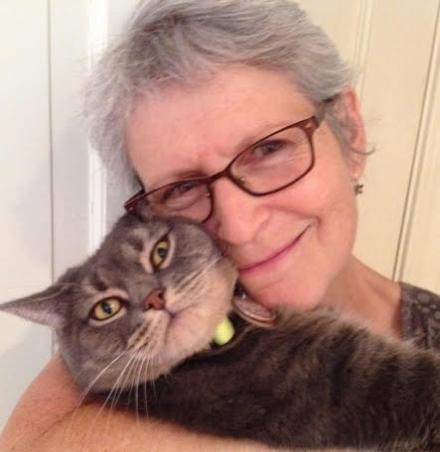
When our children were little, their birthdays became my favorite holiday celebrations. Now that they are grown, maybe I need to pick a new favorite holiday? I see that June 4th is Hug Your Cat Day. That might be just right: we have a rather large and ferocious cat and when she actually lets you hug her, well, it’s a cause for celebration.
Do you have an anecdote from any holiday that you’d like to share?
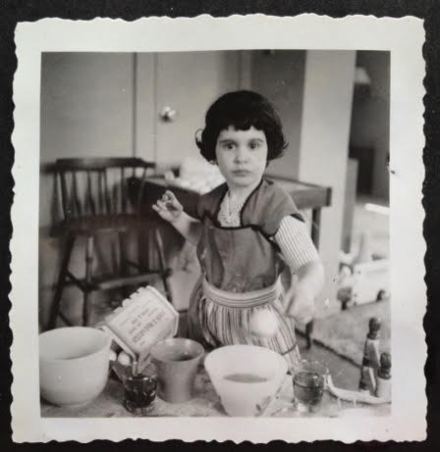
When I was six years old, I saw the Easter Bunny. I was staying at my Grandparents’ house, and I looked down the stairwell, and there he was, crossing the landing at the foot of the stairs. He was quite tall, wore a yellow slicker that was too small for him, and he was carrying a large Easter basket. I’m afraid I didn’t have my Brownie camera with me at the time to snap a photo.
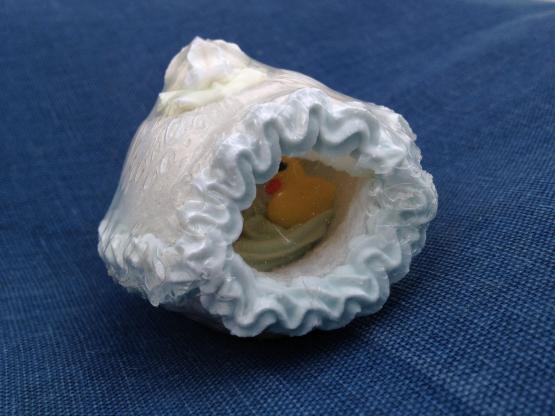
But I do have an unwrapped sugar Easter egg that I’ve saved from that era.
Thanks for sharing so much about your work and life, Ellen! I wish you all the best with Rosa’s Very Big Job, your other Small Talk Books®, and of all your other ventures!
Other Small Talk Books® available from Ellen Mayer and Star Bright Books include Cake Day, Red Socks, and A Fish to Feed and can also be found at the above booksellers.
Marilyn Dalrymple of Lancaster, California created Respect for Parents day to, as she said, “make our families become united and strong by recognizing the leadership roles parents have, and to reinstate the respect for parents that was evident in the past.” Former President Bill Clinton recognized Respect for Parents Day as a national observance in 1994. To celebrate thank your parents for what they have done for you, spend time with them, and tell them you love them.
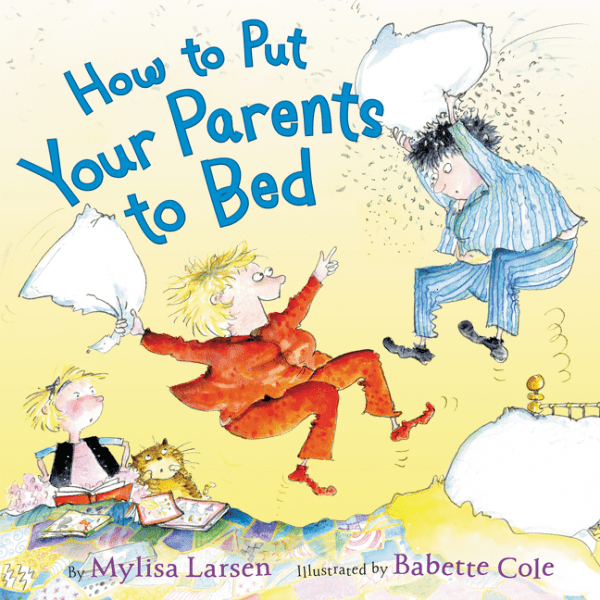
How to Put Your Parents to Bed
Written by Mylisa Larsen | Illustrated by Babette Cole
So here you are—night time. Bedtime, really, but you’re not tired. You still have enough energy to “scale a tall tower,” “sail savage seas,” or “paint a masterpiece,” but think about your poor parents. Look at them! They really need to go to bed! You know parents, though—“Parents are not good at going to bed. “‘I have to put in a load of laundry,’” they say. ‘I need to do the dishes.’ ‘Just one more email.’”
Someone needs to take charge, and the family feline—who has been a keen observer of the bedtime dynamics—thinks its pint-sized owner is just that “someone.” So the little girl, living in the midst of a chaotic night with her overscheduled, overworked parents, follows the cat’s pointed paw directions. She takes food out of her parents’ hands, closes the computer, and tells them “‘It’s time for bed.’” The first task is getting them to brush their teeth. The girl squeezes the toothpaste onto the brush and even helps her dad reach his molars.
Image copyright Babette Cole, courtesy of babette-cole.com
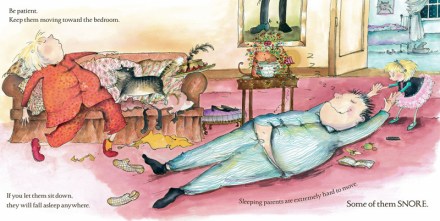
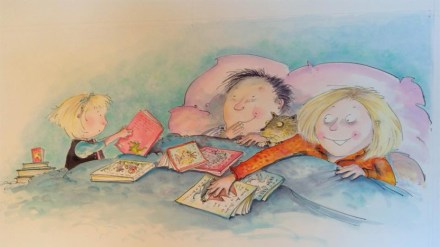
Next is making sure her parents dress in their pajamas. But Dad’s on the phone and Mom’s still watching TV. Ugh! First Mom and Dad won’t go to bed and now they’re falling asleep on the couch and floor! Their daughter keeps them moving in the right direction, though. Once they hit the bedroom, however, they get a second wind and become “unruly when faced with actually getting in bed. Tiny things upset them. They can work themselves into a state.” What to do? The girl remains calm and does not negotiate. Once Mom and Dad are tucked in, it’s story time. A tricky bit—do they only want their favorite story? How many?
At this point, the girl thinks she’s almost finished. But suddenly something unexpected comes up. Mom is missing her favorite pillow. Dad’s socks itch. And they both want to check on the dog. Oh brother! While the girl is handling these crises, her parents are starting a pillow fight! Phew! She gets them all tucked in, gives them each a kiss good night, and takes away their cell phones.
Image copyright Babette Cole, courtesy of babette-cole.com
Finally, they are off to dream land, and the girl has some time for herself! But wait a minute. The cat suggests she’s not exactly looking her best. In fact, she looks exhausted. Maybe, the frisky feline thinks, she needs to go to bed.
Mylisa Larsen’s funny role-reversal primer will have kids giggling and adults nodding appreciatively from Page 1 until The End. Speaking directly at readers, How to Put Your Parents to Bed offers sly winks at the many bedtime distractions of today’s families. The witty conspiratorial tone to the cat’s instructions gives kids a secret feeling of clout even while they may recognize their own behavior. And parents will wish they could still act this way.
Rebecca Cole’s dynamic illustrations of the recalcitrant parents doing last-minute chores, stubbornly refusing to brush their teeth, jumping on the bed, and fooling with delaying tactics ramps up the hilarity of this bedtime how-to. Kids will want to linger over the pages to catch all the humorous details.
Ages 4 – 8
Katherine Tegen Books, HarperCollins Publishers, 2016 | ISBN 978-0062320643
Visit Mylisa Larsen’s website to learn more about How to Put Your Parents to Bed and read her blog!
Enter the world of Babette Cole—her books, artwork, and more—by visiting her website!
Get ready to laugh with the How to Put Your Parents to Bed book trailer!
Respect for Parents Day Activity
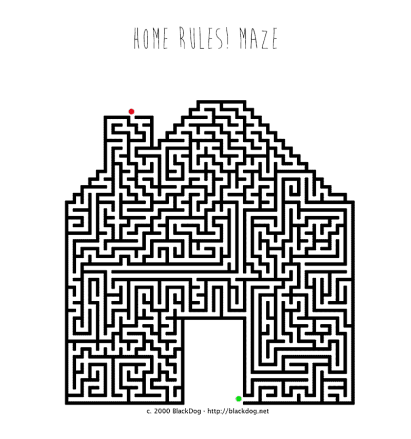
Home Rules! Maze
Look around your house and find something to thank your parents for. Then run through this printable Home Rules! Maze and have fun!
As an emerging holiday, National Tattoo Day gives us an opportunity to learn about and appreciate this very personal form of art. As the Smithsonian reports, tattoos have been found on human remains dating to Ancient Egypt and is believed to have been designed for therapeutic reasons similar to acupuncture. Body art has long been associated with soldiers and sailors, seeing a surge in popularity during the American Civil War, with the establishment of modern tattoo artists, and World War II. Today people of all ages and cultures embrace body art as a way of self-expression, and as today’s book shows, each tattoo tells its own story.
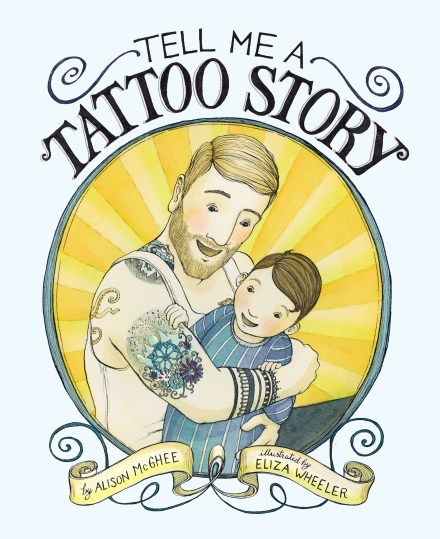
Tell Me a Tattoo Story
Written by Alison McGhee | Illustrated by Eliza Wheeler
A little boy tugs on his dad’s T-shirt, wanting to see his tattoos—again. His dad sits down with his son and patiently goes through them, like the pages of a favorite book. In fact, the tattoo on his shoulder—a dragon flying above mountain peaks—is from the book his mom read to him in childhood. “Did she read it to him over and over and over? She sure did,” he says.
Image copyright Eliza Wheeler, courtesy of abramsandchronicle.co.uk
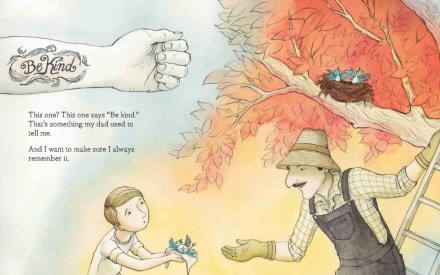
The elaborate design on the dad’s wrist reads “Be Kind,” advice his father used to give him. An intricate depiction of a carnival, complete with a Ferris wheel, fireworks, and flowers reminds him “of the day I met a pretty girl.” His son asks what made the girl so pretty, and his dad responds, “That’s a good question, little man. I’d have to say it was her smile.” In answer to his son’s wondering if he has ever met this girl, Dad looks at his wife and says, “You sure have.”
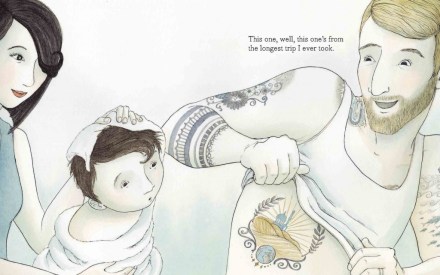
The tattoo picturing a globe and monument that covers the dad’s right side is from “the longest trip I ever took.” He reminisce—Did I miss home while I was there?”—and confesses, “I sure did.” The last tattoo the little boy asks about is a small heart festooned with a banner that reads “7● 22 Two Thousand Twelve.” Father and son engage in banter that is most likely familiar to them both, with the boy asking the questions he already knows the answers to but loves to hear again and again: “Those numbers inside it? Just somebody’s birthday, I guess. Whose birthday? / Oh some little man I know, is all. / What do you mean, this one’s your favorite? This dinky little heart?” Then leaning in to learn a secret, the boy rediscovers that that tattoo is his dad’s favorite too.
Image copyright Eliza Wheeler, courtesy of abramsandchronicle.co.uk
Alison McGhee’s Tell Me a Tattoo Story is such a sweet, original homage to the love between father and son. The use of body art to reveal not only seminal events in the dad’s life but the trajectory of his child’s birth is inspired. The minimal text highlights the deep emotion, giving the boy in the story as well as young readers the information they are really looking for. The soft-spoken dad is such an appealing character—emotionally available, honest, and offering just the right tone of humorous repartee—for today’s family dynamic.
Beautifully rendering McGhee’s text into art, Eliza Wheeler creates a homey atmosphere that emphasizes the theme of the book while creating tattoos that are immediately accessible to children. The dragon tattoo could come from The Hobbit or Harry Potter, kids will recognize the fun and excitement represented by the Ferris wheel, and the little heart is simplicity at its finest. While the pages depicting the dad’s tattoos are minimally hued, the father’s reminiscences burst with color and details—providing an overall feeling of warmth and affection. The image of the dad in his military uniform over the hot, golden sands on “the longest trip he ever took” will bring a tear to your eye.
Image copyright Eliza Wheeler, courtesy of abramsandchronicle.co.uk
The originality of the story and gorgeous illustrations make Tell Me a Tattoo Story a must for children’s bookshelves and will become an often-asked-for read during quiet story times or for bedtime.
Ages Birth – 6
Chronicle Books, 2016 | ISBN 978-1452119373
To discover more books for children and adults by Alison McGhee, visit her website!
View Eliza Wheeler’s portfolio and other books on her website!
National Tattoo Day Activity
Design Your Own Tattoo
Tattoos can be simple or elaborate, but they are always personal. They tell a story, commemorate an event, or reveal an emotion. What would your tattoo look like? Design your own body art on this printable Design Your Own Tattoo Template!
You can find Tell Me a Tattoo Story at these booksellers

















 celebratepicturebooks.com