November 13 – World Kindness Day

celebrate-picture-books-picture-book-review-extra-yarn-cover

About the Holiday

Perhaps now—more than we’ve seen in a long time—the world needs a day of kindness. Today’s holiday was initiated in 1997 when a number of humanitarian groups made a Declaration of Kindness and dedicated themselves to paying goodness forward and sharing positivity. With so many ways to help our friends, neighbors, even strangers living both near and far away, it’s within each person’s grasp to make the world a better place for all. To learn more about World Kindness Day and ways that you can make a difference, visit Random Acts of Kindness.

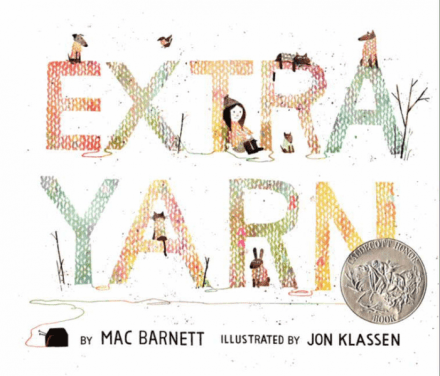
Extra Yarn

Written by Mac Barnett | Illustrated by Jon Klassen


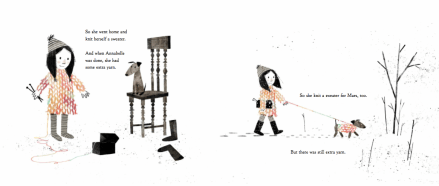
In the dulled world of winter, “Annabelle found a box filled with yarn of every color.” With it she knit herself a sweater, and because she had not run out of yarn, she knit a sweater for her dog, Mars, too. Afterwards, the two went for a walk, and Annabelle carried her box of yarn with her. They happened on Nate and his dog—dreary smudges against the monochrome landscape. “‘You two look ridiculous,’” Nate taunted. “‘You’re just jealous,’ said Annabelle.” Nate denied it, but after Annabelle knit him and his dog their own sweaters, they discovered she was right.
celebrate-picture-books-picture-book-review-extra-yarn-annabelle-knits-sweater

Image copyright Jon Klassen, text copyright Mac Barnett. Courtesy of harpercollinschildrens.com

These four sweaters hardly put a dent in the yarn in the box, so Annabelle took it to school. There, the kids in their dark, winter clothes couldn’t stop staring at and whispering about Annabelle. Their teacher, Mr. Norman, shouted for quiet. “‘Annabelle, that sweater of yours is a terrible distraction. I cannot teach with everyone turning around to look at you!’” Annabelle knew just what to do. The class—and even Mr. Norman—looked brighter with their new sweaters. “And when she was done, Annabelle still had extra yarn.”
celebrate-picture-books-picture-book-review-extra-yarn-mr-crabtree

Image copyright Jon Klassen, text copyright Mac Barnett. Courtesy of harpercollinschildrens.com

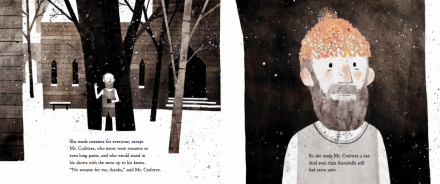
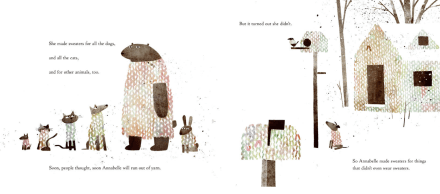
She began knitting sweaters for everyone in town. Mr. Crabtree was the only exception. Since he wore shorts and a t-shirt in even the snowiest weather, Annabelle knit him a cap to keep his bald head warm. When all the people were snug, Annabelle fashioned sweaters for all the animals—from the tiniest birds to the biggest bears. “Soon, people thought, soon Annabelle will run out of yarn. But she didn’t. So Annabelle made sweaters for things that didn’t even wear sweaters.” Suddenly, the town was no longer drab and lifeless.
celebrate-picture-books-picture-book-review-extra-yarn-annabelle-knits-animal=sweaters

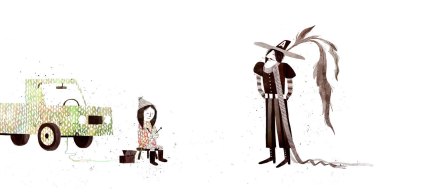
Word spread about Annabelle and her endless box of yarn. People came from all over to meet her and see her sweaters. The news even reached a clotheshorse of an archduke, who sailed his ship into port and demanded to see Annabelle. He offered her one million dollars for her box of yarn, but Annabelle turned him down. He raised his offer to two million, but Annabelle shook her head. “‘Ten million!’ shouted the archduke. ‘Take it or leave it!’” “‘Leave it,’ said Annabelle. ‘I won’t sell the yarn.’”

That night the archduke sent robbers to steal Annabelle’s box of yarn, and when they had it, the archduke sailed away under the dark cover of night. In his shadowy castle, the shady archduke opened the box. It was empty. In a fit of rage, he flung the box out the window into the sea, cursing Annabelle with eternal unhappiness. But the box found its way onto an ice floe, and it rode the current back to Annabelle, who was forever after happy.
celebrate-picture-books-picture-book-review-extra-yarn-archduke

Image copyright Jon Klassen, text copyright Mac Barnett. Courtesy of harpercollinschildrens.com

Mac Barnett’s extraordinary story of a box of yarn and a little girl that keeps giving despite teasing, challenges, and attempts to strip her of her gift is an uplifting reminder that even the simplest of gestures can create profound change. With the lilt of a fairy tale but the anchors of reality, Barnett’s tale offers a universal lesson that children and adults can use their individual talents to improve their own lives and those of others. The title of the book may be Extra Yarn, but the question remains: is it the yarn or Annabelle who is special? The final scene proves that goodness and kindness always win out and will find its way back to the giver.

Jon Klassen’s brown, stolid town seems poised to suck readers in to its close, silent emptiness until Annabelle discovers the box of yarn and knits herself a rainbow to wear. With Mars similarly outfitted, they return to the somber outside. Annabelle, at first the only bright spot in the town and school, quickly transforms her classmates and neighbors into colorful individuals with sweaters as unique as they are. After the homes, buildings, mailboxes, and birdhouses acquire their own cozies, the town looks open and inviting. Once the archduke arrives on the scene, the pages turn dusky and gray, but there is one point of light: in the black, nighttime sea the little box floats on an icy raft that shines in the full moonlight.
celebrate-picture-books-picture-book-review-extra-yarn-townspeople

Image copyright Jon Klassen, courtesy of macbarnett.com

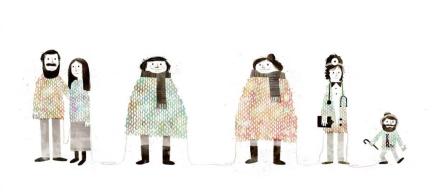
Klassen adds plenty of visual humor here too, as when Mars tangles his yarn leash around a grove of trees, and the archduke demonstrates a penchant for monogramming all of his possessions. Kids will be delighted to see some of their favorite Klassen characters so dandily dressed, and the images of the students and townspeople connected by a leading thread of yarn may help them see that Annabelle not only knit them sweaters but made them a much closer-knit community as well.

Ages 3 – 8

Balzar + Bray, HarperCollins Childrens, 2012 | ISBN 978-0061953385

Want to see what other books Mac Barnett has written? Visit his website and find out!

You can find a gallery of picture books and other artwork by Jon Klassen on tumblr!

World Kindness Day Activity
CPB - Random Acts of Kindness cards

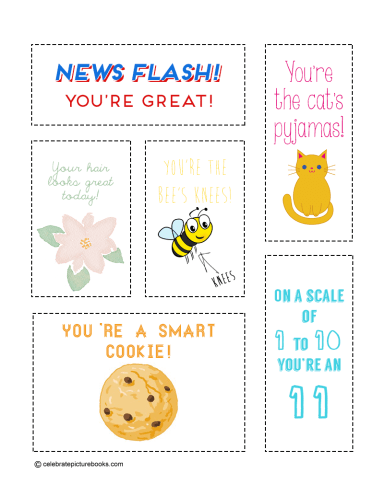
Kindness Cards to Share


It’s fun to surprise someone with an unexpected compliment! It makes the other person and you feel happier! Here are some printable Kindness Cards that you can give to anyone you meet today—or any day. If you’d like to write your own, here is a set of Blank Cards. You can give one to your teacher, librarian, favorite store clerk, your postal worker, your neighbors and friends, the person next to you on the bus or train. Or why not brighten someone’s day by leaving a note where they might find it—in a book at the library or bookstore, in a friend’s lunchbox, in your mailbox, on a store shelf, or anywhere you go!

Picture Book Reviews

November 7 – Job Action Day

celebrate-picture-books-picture-book-review-a-crow-of-his-own-cover

About the Holiday

Instituted in 2008 and now sponsored by LiveCareer to empower employees and job seekers to assess their careers, make plans, and take action, Job Action Day gives people a chance to reflect on their true goals in life. Are you doing the job you’re passionate about? Are you bringing your passions to the job you are doing? If you are unhappy or dissatisfied with your position, step back and take another look, broaden your horizons. Discover the possibilities and opportunities that lie within your current job and pursue them. You never know where a particular job will lead you if you put all your creativity, knowledge, and—most importantly—unique personality—into it. Job Action Day brings together experts across the web and in participating companies to provide the latest in career advice.

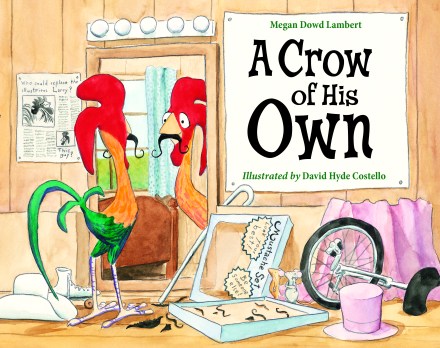
A Crow of His Own

Written by Megan Dowd Lambert | Illustrated by David Hyde Costello


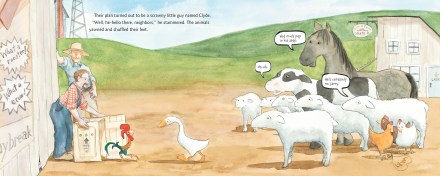
When fame and fortune came calling for Larry, the charismatic rooster of Sunrise Farm, the daily routine turned upside down. “The animals overslept and no one knew what to do.” But while the cow, horse, sheep, chickens, and goose fretted, Farmer Jay and Farmer Kevin had a plan. One day they gathered all the animals and introduced Clyde, the new rooster. Looking at the “scrawny little guy” as he stammered his hello, the cow, horse, and sheep expressed doubt in his abilities, already comparing him to their beloved Larry.

Roberta, the goose, stepped forward, however, and reassured him that “they just miss Larry.” When Clyde asked who Larry was, the animals gasped. “Only the best rooster ever,” claimed the sheep. “Take it straight from my mouth: he was more than that,” said the horse. “He was a genius,” the cow chimed in.” And the chickens? In the dirt they scratched a heart with Larry and XOX in the center.

celebrate-picture-books-picture-book-review-a-crow-of-his-own-clyde-joins-the-farm

Image copyright David Hyde Costello, text copyright Megan Dowd Lambert. Courtesy of Charlesbridge

Clyde was worried—how could he ever live up to Larry? Roberta tried to soothe him. “‘Larry wasn’t a genius…he just made quite a show of it.” Emboldened and with an inkling of what he needed to do, Clyde thanked Roberta and dashed off. “Clyde spent the whole day gathering props, designing his costume, and choreographing a sublime two-step.” As Clyde gave himself one last look in the mirror in his top hat and cloak, he had misgivings. “Could he put on a show of a crow?” He went to bed, but hardly slept at all.

In the morning…well…Clyde overslept. The animals were not happy. “Who ever heard of a rooster sleeping in?” baaad mouthed the sheep. “What a worthless chicken,” complained the horse. And the cow had issues of her own. Once again Roberta came to Clyde’s defense. With a wagon full of new props and material, Clyde rushed away to prepare for the next day. Up bright and early and balanced on a unicycle atop the coop while surrounded by promotional signs, Clyde “opened his beak, and…promptly fell to the ground with an undignified croak.”

celebrate-picture-books-picture-book-review-a-crow-of-his-own-skating-ramp

Image copyright David Hyde Costello, text copyright Megan Dowd Lambert. Courtesy of Charlesbridge

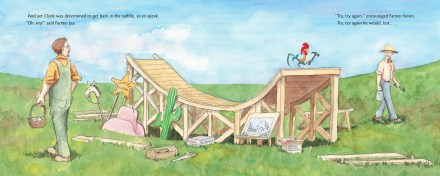
Poor Clyde! Humiliated and hurt he once again had to endure the slights of the farmyard animals, but their comments only spurred him on. Vowing to go bigger and better, Clyde built himself a ramp, ordered roller skates for birds and a parachute, and designed a colorful Western-theme set. “‘Oh, my!’” remarked Farmer Jay as he walked by. “‘Try, try again,’ encouraged Farmer Kevin.” But in the morning Clyde’s spectacular trick left him hanging upside down from the chicken coop, and the animals more “disgruntled and dismayed” than before.

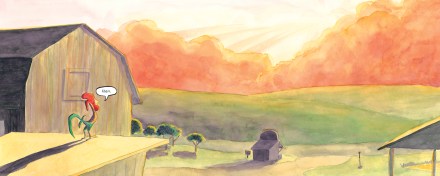
Clyde was distraught. “‘Forget about Larry.’” Roberta said. “‘Just crow your own crow.’” Clyde considered her advice. The next morning as the sky turned pink and orange with the rising sun, Clyde stood tall atop the chicken coop. He quietly cleared his throat and then—“COCK-A-DOODLE-DOO!” The newly awakened animals came running. Even Farmer Jay and Farmer Kevin came to see this new Clyde. The horse summed up their collective feeling: “It’s not so much like crowing, but crooning.” Roberta agreed. “‘Enough to give you goose bumps!’” she exclaimed. As an encore, “Clyde took a deep breath, gave a shake of his comb, and called out another crow of his own.”

celebrate-picture-books-picture-book-review-a-crow-of-his-own-sunrise

Image copyright David Hyde Costello, text copyright Megan Dowd Lambert. Courtesy of Charlesbridge

These days it’s nearly impossible for kids not to compare themselves or be compared to others—even those they’ve never met. All they need to do is jump on the Internet and discover that so-and-so has double, triple, or more friends and/or followers than they do; go to class and get their grade on that assignment they worked so hard on; or simply stand by their locker, go to lunch, or head out to gym and overhear the comments of other students. Avoidance isn’t the answer, but a good base of self-confidence and personal identity is. In A Crow of His Own Megan Dowd Lambert offers readers such a base in her entertaining and meaningful tribute to self-acceptance and love that hits all the right notes.

As soon as scrawny Clyde walks out of his crate to the scorn of his farm mates, kids will root for this underchicken. With a light touch and plenty of wordplay, Dowd deftly presents honest portrayals of the opposition Clyde is up against as well as Clyde’s distressed reactions. Clyde’s three attempts to act like Larry humorously demonstrate the difficulties of trying to be someone you’re not. When Clyde finally musters the courage to “crow his own crow” and is met with praise, readers will see that their own unique talents will find an appreciative audience.

David Hyde Costello knows how to put on a show! His Sunrise Farms is a gentle, bucolic spread still under the thrall of Larry. Humorous details, such as the valentines to Larry the chickens draw in the dirt, the movie house-style posters on the side of the barn, and the surprised and exasperated expressions of the animals, testify to Larry’s enduring legacy. But careful observers will notice that while Larry is a rather bland white rooster with some black tail feathers, Clyde is distinctively colorful from his comb to his feet. Kids will giggle at Clyde’s increasingly complex morning shenanigans even as they sympathize with his plight. When Clyde finally reveals his magnificent crow, readers will cheer.

A Crow of His Own is a winner on so many levels. It offers parents and children a way to discuss and begin building the strong sense of self so important to a happy and successful life. The book also presents a positive visual representation of diversity, and in Roberta and Farmer Jay and Farmer Kevin it shows that finding support helps. And it does all of this in a story that stands on its own as a funny, laugh-inducing romp. Because kids will want to hear this story over and over, A Crow of His Own would be a wonderful addition to libraries and home book collections.

Ages 4 – 9

Charlesbridge, 2015 | ISBN 978-1580894470

To learn more about Megan Dowd Lambert, her picture books, her Whole Book Approach to Reading, and more visit her website!

On David Hyde Costello‘s website you’ll find a gallery of artwork, a portfolio of picture books, videos, and more!

Job Action Day Activity

celebrate-picture-books-picture-book-review-chicken-craft

A Chicken to Crow About


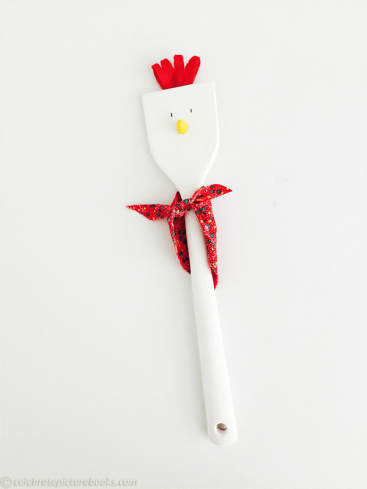
A long-handled wooden turner makes a plucky decoration for your room or kitchen—and a great reminder to bring your passions to every job! In a few simple steps, you’ll have a cute companion you’ll want to crow about!

Supplies

  • Printable Comb and Scarf Template
  • Long-handled wooded turner, available in kitchen supply stores
  • Red felt
  • Yellow bakable clay
  • Fabric, 12 inches square
  • A small piece of white felt or fleece (optional)
  • White paint (or any color you would like)
  • Black marker
  • Fabric glue
  • Glue gun
  • Paint brush

celebrate-picture-books-picture-book-review-chicken-craft

Directions

  1. Paint the wooden turner, let dry
  2. Cut the scarf from the piece of fabric
  3. Make a beak from the yellow clay and bake it according to package directions

To make the comb

  1. Cut out the comb from the red felt
  2. Fold the felt in half and glue the end together with the fabric glue
  3. Cut short strips from the folded top of the felt, about ½-inch to ¾ -inch in length
  4. Round the corners of the strips slightly

To make the scarf

  1. Fold the fabric in half
  2. With the long, straight edge of the scarf template along the fold, cut out the scarf
  3. With the fabric glue, glue the two sides of the scarf together so that you have two “right” sides
  4. Let dry

To assemble the chicken

  1. Pinch the bottom of the comb together so that the strips open and the felt pleats a little
  2. With the glue gun attach the comb to the back of the painted turner, keeping the bottom pinched together
  3. Attach the beak to the front of the turner
  4. Draw eyes on the chicken with the black marker
  5. Tie the scarf around the neck of the handle, hold in place with a drop of glue in the back if necessary
  6. To make tail feathers in a turner with a hole in the handle, pinch together a small folded piece of white felt or fleece and push it through the hole in the handle of the turner.
  7. Cut or arrange to look like feathers

Picture Book Review

October 25 – International Artist Day

celebrate-picture-books-picture-book-review-the-noisy-paint-box

About the Holiday

Instituted in 2004 by Chris MacClure, a Canadian artist who specializes in Romantic Realism, National Artist Day celebrates the various forms of art, the artist, and the unique vision each one brings to their work and the world. Whether you like classic or abstract styles, watercolors or oils, sculpture or installations, why not take some time today to visit an art museum or gallery—or page through a collection of prints or a biography like today’s book!

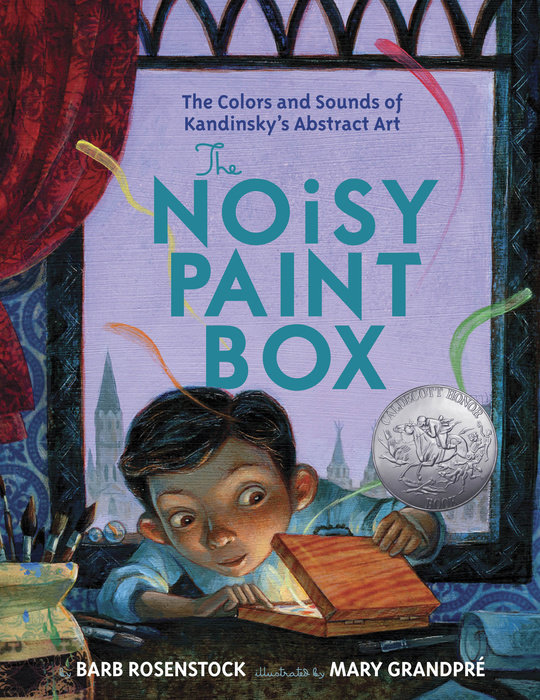
The Noisy Paint Box: The Colors and Sounds of Kandinsky’s Abstract Art

Written by Barb Rosenstock | Illustrated by Mary GrandPré


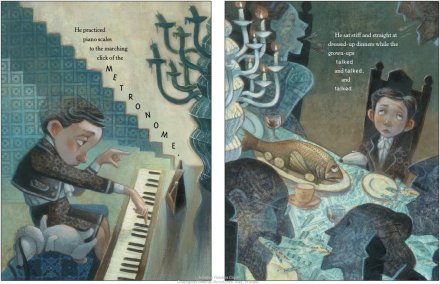
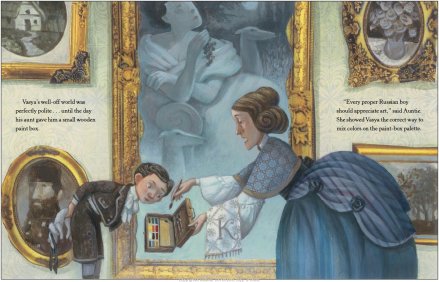
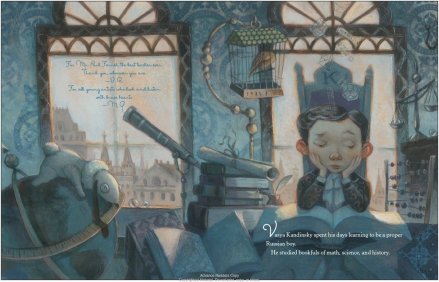
As a Russian child Vasya Kandinsky spends his days absorbed in learning math, science, and history. He takes piano lessons and attends formal dinners where the adults drone on and on. His life is polite, stiff, and colorless until the day his aunt gives him a small wooden paint box. “Every proper Russian boy should appreciate art,” Vasya’s aunt tells him while explaining how to mix colors.

celebrate-picture-books-picture-book-review-the-noisy-paintbox-piano-lessons

Image copyright Mary Grandpré, text copyright Barb Rosenstock. Courtesy of randomhouse.com

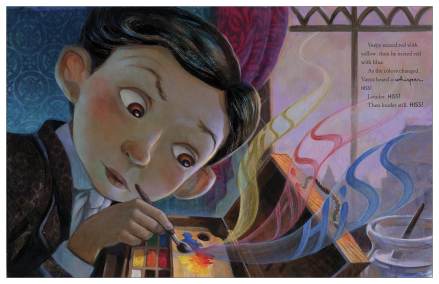
Vasya takes up the brush and combines red with yellow then red with blue. As the colors change to orange and purple, Vasya hears a whisper that grows into a noisy hiss. “‘What is that sound?’” he asks, but no one else hears anything. “The swirling colors trilled like an orchestra tuning up for a magical symphony,” and “Vasya painted the sound of the colors.” A lemon yellow “clinked like the highest notes on the keyboard; a navy blue “vibrated deeply like the lowest cello strings.” Crimsons “blared” and greens “burbled.”

celebrate-picture-books-picture-book-review-the-noisy-paintbox-colors-kandinsky-gets-his-first-paints

Image copyright Mary Grandpré, text copyright Barb Rosenstock. Courtesy of randomhouse.com

Vasya runs downstairs to show his family what he has created. His mother, father, and Auntie look at the canvas with its swoops, shapes, and angles. “What is it supposed to be?” they ask, and send him off to art school to learn how “to draw houses and flowers—just like everyone else.” Vasya finishes school and becomes a lawyer. He leaves his paint box untouched and lives the way he is expected, but the sounds of the colors are always with him.

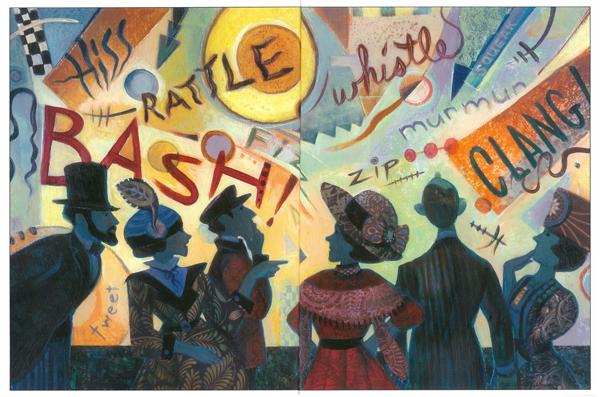
One evening as he listens to an opera, the music surrounds him with color—“stomping lines of vermilion and coral; caroling triangles in pistachio and garnet; thundering arches of aqua and ebony…” Vasya can hear the colors and see the music. He knows then what he must do. He quits his job teaching law and moves to Germany to be a painter. He surrounds himself with artists and takes classes with famous teachers, and yet people still look at his canvases and asked, “What is it supposed to be?”

celebrate-picture-books-picture-book-review-the-noisy-paintbox-colors-have-sounds

Image copyright Mary Grandpré, text copyright Barb Rosenstock. Courtesy of randomhouse.com

Once again he paints what is expected. His teachers love his houses and flowers, but Vasya does not. His friends understand. They too want to expand the meaning of art. They agree with Vasya when he says, “‘Art should make you feel.’” In his studio Vasya continues to paint the sounds he hears, to give music color and color sound. Bravely, he invites the public to view his paintings, which are named after musical terms—Composition, Accompaniment, Fugue, and more.

This is a new kind of art—abstract art—and it takes a long time before people understand. They look and still ask, “What is it supposed to be?” “It is my art,” Kandinsky replies “How does it make you feel?” 

celebrate-picture-books-picture-book-review-the-noisy-paintbox-colors-kandinsky-at-a-concert

Image copyright Mary Grandpré, courtesy of randomhouse.com

An author’s note telling more about Kandinsky’s life and synesthesia, a genetic condition in which one sense triggers another, follows the story.

In the spirit of full disclosure, Kandinsky is one of my favorite artists, so I was excited to read this biography—I was not disappointed! With so many great artists, their work speaks for itself, but viewers wonder: How did it come about? What influenced the artist? Barb Rosenstock, with lyrical language and beautifully chosen descriptions, reveals the emotions and passion that fueled Kandinsky’s art from his earliest ages: as he walks through Moscow he can’t ignore “the canary-colored mailbox whistling as he rode to work. The scarlet sunset haze ringing above the ancient Kremlin walls.” Rosenstock’s inclusion of the conflicts and opposition Kandinsky faced and overcame will inspire children to listen to their inner voice and makes readers and lovers of his abstract art glad he never gave up.

Mary GrandPré’s unique style brilliantly depicts Kandinsky’s singular vision, allowing readers to experience the way he wielded his paint brush like a conductor’s baton. Vasya’s early life is painted in muted blues and grays, and the boredom on his face as he studies his schoolwork is obvious. Kids will appreciate his one-finger plinking at the piano and the rolled-eyed drowsiness of the formal dinner. Once Vasya is introduced to the paint box, however, GrandPré’s illustrations become vibrant, with swirling colors overlaid with the musical notes that Kandinsky associated with them. His uninhibited painting is gloriously shown as the young boy’s shirt comes untucked and the colors burst from the canvas upon his first painting.

celebrate-picture-books-picture-book-review-kandinsky-studying

Image copyright Mary Grandpré, text copyright Barb Rosenstock. Courtesy of randomhouse.com

As the adults look at his work, the room is again swathed in somber colors. The text revealing that Vasya attended regular art classes to learn to draw houses and flowers is set above a single wilting flower in a vase. The personal tug-of-war Kandinsky experienced even into adulthood is wonderfully rendered: Colors flow into his ears at the opera; he studies his own landscape and still life paintings with misgiving in a hazy studio, and the joy and freedom of his abstract art is demonstrated with wild abandon while a dove escapes its cage. The final image of a child sitting in front of a Kandinsky painting reinforces the idea that his art lives for all and for all time.

Ages 4 – 9

Alfred Knopf, Random House Children’s Books, 2014 | ISBN 978-0307978486

International Artists Day Activity

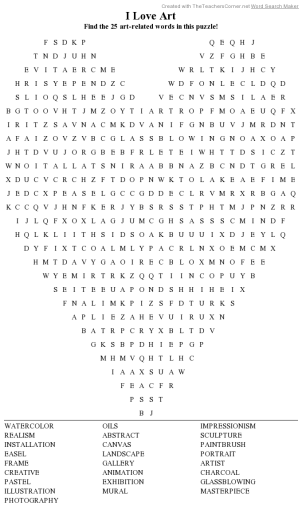
celebrate-picture-books-picture-book-review-i-love-art-word-search

I Love Art! Word Search 


There are twenty-five art-related words for everyone to love in this printable I Love Art! word search puzzle! Here’s the Solution!

Picture Book Review

October 22 – Smart is Cool Day

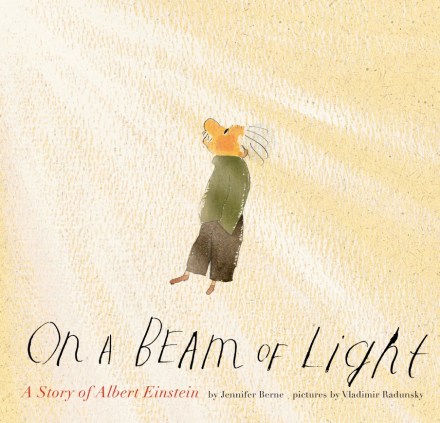
celebrate-picture-books-picture-book-review-on-a-beam-of-light-cover

About the Holiday

There are many ways to be smart—and they are all very cool! The world needs people who can think differently about all issues to solve problems, create art and literature that reflects our times and present alternate viewpoints, and just to make life funnier, more poignant, more beautiful,more  livable. Today, celebrate your particular way of being smart and share it with others!

On a Beam of Light: A Story of Albert Einstein

Written by Jennifer Berne | Illustrated by Vladimir Radunsky


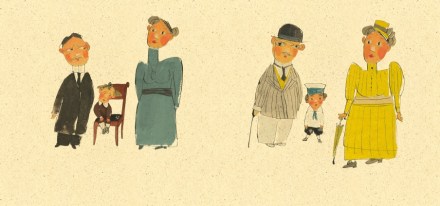
More than 100 years ago on a windy March day, a baby boy was born—Albert was his name. Albert turned one without saying a word. When Albert had his second birthday, he still hadn’t said a word. By the age of three Albert had only said a few words. “He just looked around with his big, curious eyes. Looked and wondered. Looked and wondered.” Albert’s parents were a bit worried because he was so different from other kids. But “they loved him…no matter what.”

celebrate-picture-books-picture-book-review-on-a-beam-of-light-albert-as-child

Image copyright Vladimir Radunsky, courtesy of chroniclebooks.com

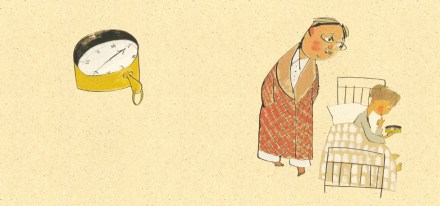
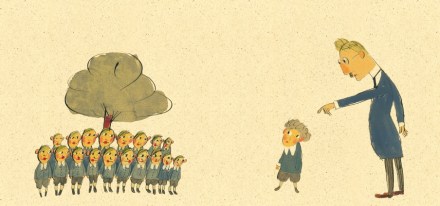
Once when Albert was sick, his father brought him a compass. As he watched the needle automatically spin to point north, “Albert was so amazed his body trembled. Suddenly he knew there were mysteries in the world—hidden and silent, unknown and unseen.” Albert began asking questions wherever he went. His teachers told him he was a “distraction” and that “he would never amount to anything if he didn’t behave like all the other students.” But Albert didn’t want to be like other kids.

celebrate-picture-books-picture-book-review-on-a-beam-of-light-albert-gets-compass

Image copyright Vladimir Radunsky, courtesy of chroniclebooks.com

While on his bicycle one afternoon, Albert wondered what it would be like to ride a beam of sunlight. He was excited by this idea and it filled him with questions. He began to study light and sound, heat, magnetism, and gravity. He also read about numbers, which to him were like a secret language. Still, Albert had many more questions. After college he wanted to teach the subjects he loved, but he couldn’t find a job.

Instead, he went to work for the government. His job left him a lot of time to ponder his questions. He watched sugar dissolve in tea and smoke disperse in the air and wondered how that happened. Albert realized that everything is made of tiny particles. While many people didn’t believe it, Albert’s work helped prove the existence of atoms.

celebrate-picture-books-picture-book-review-on-a-beam-of-light-albert-at-school

Image copyright Vladimir Radunsky, courtesy of chroniclebooks.com

Next Albert considered motion and how everything is always moving. “Even sound asleep we’re moving, as our planet circles the sun, and our lives travel into the future. Albert saw time and space as no one ever had before.” He wrote about his theories and sent the articles to magazines that published them all. Scientists asked him to join their research and teach with them. People began to call Albert a genius. Now he could spend all his time thinking, wondering, and imagining—doing what he loved.

His ideas took in huge things—like planets—and infinitesimal things—like the particles inside atoms. To help him think, Albert sailed his little boat and played his violin. Even the kinds of clothes he wore—or didn’t wear—affected his thinking. He loved baggy pants, over-sized sweaters, and NO socks! He was easily recognized around town by his long, white hair.

celebrate-picture-books-picture-book-review-on-a-beam-of-light-albert-riding-bike

Image copyright Vladimir Radunsky, courtesy of chroniclebooks.com

During all these years Albert never forgot about that beam of light he once wanted to ride. He “figured out that no person, no thing, could ever zoom through space as fast as a beam of light.” If that could occur “crazy things” would happen. While only minutes would pass for the traveler, years would go by for those left on earth. This sounded like a ridiculous idea, but since then it has been proven true.

Albert Einstein continued reflecting on the world until the day he died. He asked and answered many questions that had never been posed before. But he also left many, many questions for other generations—maybe even you!—to discover and solve.

Jennifer Berne’s engaging biography of Albert Einstein is a charming and absorbing look at one of the most unique thinkers in history. Her uplifting, conversational storytelling and well-chosen anecdotes from Albert’s childhood and adulthood will keep kids riveted to the story and show them that while Albert Einstein’s ideas may have been out of this world, he was also very much down to earth. On a Beam of Light introduces readers to this fascinating scientist and will also inspire them to find the genius inside themselves.

celebrate-picture-books-picture-book-review-on-a-beam-of-light-atoms

Image copyright Vladimir Radunsky, courtesy of chroniclebooks.com

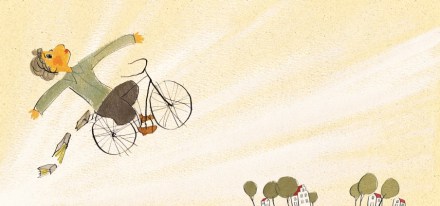
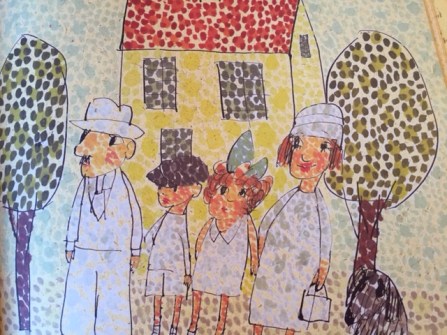
The childlike, offbeat goache, pen, and ink illustrations of Vladimir Radunsky lend the right amount of lightness and movement to each page, depicting not only Albert and his surroundings but also the endless musings that filled his mind and his days. As Albert grows from a baby to a child, his loving and understanding parents stand by and encourage his gifts; he and his bicycle rocket off on a beam of light; and numbers swirl through the air as Albert rests his head on a stack of books. In a restaurant other patrons are portrayed as simple line drawings, putting the focus on Albert as he ponders a dissolving sugar cube, a device that is used to also depict Albert’s thoughts and scientists of the future who have proven his theories correct. When Albert discovers atoms, he and a family portrait are rendered in dots. The muted colors, mottled paper, and period details allow readers to fully appreciate Albert’s Einstein’s story and contributions.

An Author’s Note and further paragraphs about Einstein’s thought experiments, playful nature, pacifism, and most famous equation, as well as a list of resources follow the text.

On a Beam of Light is a wonderful addition to home libraries for children interested in science, math, ideas, history, and creativity in general. Jennifer Berne’s emphasis on the support Albert received from his parents and his ultimate acceptance within the science community is also welcome comfort for kids who do think differently.

Ages 4 – 9

Chronicle Books, 2016 (paperback) | ISBN 978-1452152110

To view more books by Jennifer Berne, plus pictures by her readers and more, go to her website!

Visit Vladimir Radunsky’s website to see a gallery of his books with pictures!

Smart is Cool Day Activity

celebrate-picture-books-picture-book-review-smart-is-cool-writing-template

I’m Smart Because…


In what way are you smart? Draw a picture or write about your special talent on this printable I’m Smart Because…page.

Picture Book Review

September 29 – It’s National Piano Month

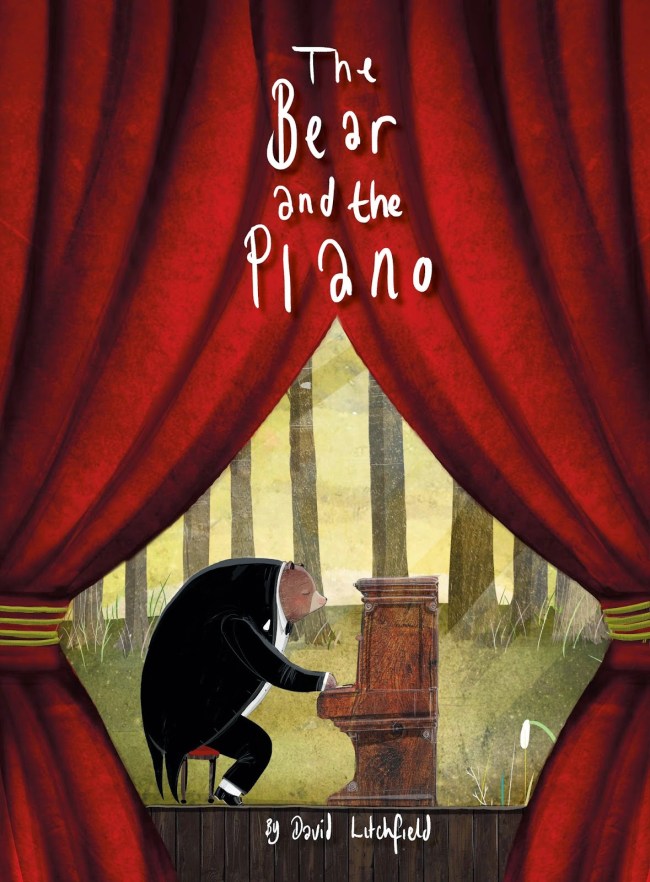
The Bear and the Piano by David Litchfield picture book review

About the Holiday

Invented around 1700, the piano was not an immediate hit with composers and performers. It took several decades before musicians embraced its versatility, and over the next 150 years the piano underwent many changes in tonality, size, and shape. In the 19th century the instrument became larger and more powerful to accompany soloists in concert and on tour with large orchestras. At the same time, individuals and families took the piano to heart – and hearth – as it became the primary source of home entertainment and piano lessons a must for all children. The United States became a major producer of pianos, with factories in Boston, New York, and Philadelphia. New technology in the twentieth century provided other types of entertainment that came to toke precedence over the piano, and domestic sales declined.

Today we celebrate the beauty of the piano—both in shape and sound—and all the musical artists who play and compose for this storied instrument.

The Bear and the Piano

By David Litchfield


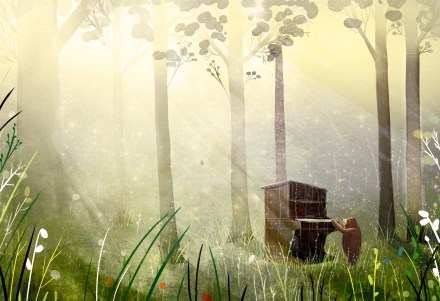
One day a bear cub happens upon a piano in a clearing in the middle of the forest. Wondering what it could be, he approaches and lays his paw on the keys. The strange thing goes PLONK!—such an awful sound. The bear cub leaves, but is drawn back again and again for days, months, and years. Over time the bear grows up and learns to play the piano. The music is beautiful and transports him to strange and wonderful places.

celebrate-picture-books-picture-book-review-bear-finds-piano

Image copyright David Litchfield, courtesy of davidlitchfieldillustration.com

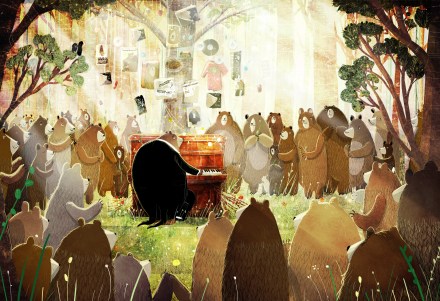
Other bears soon gather in the clearing to hear the “magical melodies” the bear plays. The bear is happy entertaining his friends. One night a girl and her father hiking in the forest come to the clearing. They listen and then tell the bear what his strange instrument is. They invite him to move to the city with them, where he will be able to play grand pianos for hundreds of people. The music he will play and hear “will make your fur stand on end,” they tell him.

The bear is conflicted. One on paw he knows that leaving the forest will make the other bears sad; on the other he longs to explore the world, to play the piano better, and master more intricate music. He decides to go with the girl and her father.

celebrate-picture-books-picture-book-review-bear-in-big-city

Image copyright David Litchfield, courtesy of davidlitchfieldillustration.com

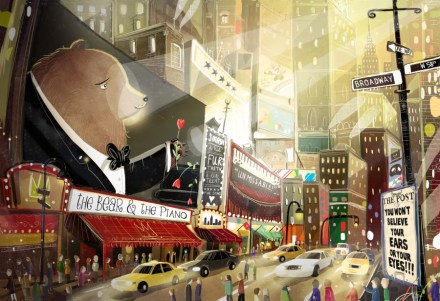
In the city the bear is a sensation! He quickly becomes a celebrity with his name on marquees and playing to sold-out crowds. The bear records albums that go platinum, he appears on the covers of magazines, and wins awards. His experience is everything he could ever wish for. But deep in his heart there is another longing. He misses the forest and his friends there.

He decides to leave the city and rows a boat across the expanse of water to his old home. Excitedly he runs to the clearing, but when he arrives everything has changed. His piano is gone and there are no friends to greet him. The bear worries that everyone is angry at him for leaving, or worse—that they have forgotten him.

celebrate-picture-books-picture-book-review-bear-playing-for-friends

Image copyright David Litchfield, courtesy of davidlitchfieldillustration.com

Suddenly an old friend peeks around the trunk of a tree. The bear hails him with a hearty “Hello!” The other bear remains silent, however, and then turns and runs into the trees. The bear follows, plunging deeper and deeper into the forest. Suddenly he stops. In front of him is a sight that makes his fur stand on end.

There, protected in the shade of a tree and surrounded by the albums, magazines, t-shirts, and other mementos of the bear’s success sits the old piano. The bear’s friends have not forgotten him and they are not angry. They are proud and welcoming. The bear tells them all about his adventures then sits down to play again—for the most important audience of all.

David Litchfield’s very original and moving story is such a wonderfully conceived microcosm of the changes life brings. Stumbling upon a talent, cause, or inspiration; opening up to other influences; and acting on hard decisions are all part of growing up. These concepts are honestly and sensitively presented in The Bear and the Piano, and the reassuring ending brings comfort as well as a tear to the eye.

celebrate-picture-books-picture-book-review-bear-giving-concert

Image copyright David Litchfield, courtesy of davidlitchfieldillustration.com

Litchfield’s touching illustrations—rendered in gorgeous hues of browns, greens, yellows, and blues—brim with yearning and mystery. The piano sits in a misty glow, silent and draped with vines, when the cub discovers it. While the bear grows and learns to play, the air clears and the colors become brighter. When the bear moves to the city, the pages glint and swirl with the glow of marquees and concert halls announcing his enormous achievements. But as he sits on a rooftop one night contemplating his life and looking out toward his old home, the lights around him are the elements of normal life—lamps in apartment windows, stars, and the moon glimmering on the water. His nostalgia to be home will resonate with both kids and adults.

The Bear and the Piano makes a wonderful gift for any age—especially as a graduation or new-job gift—and is a must-have for anyone’s personal library.

Clarion Books, Houghton Mifflin Harcourt, 2016 | ISBN 978-0544674547

To learn more about David Litchfield, his books, and his artwork, visit his website!

While I take a few personal days during this month, I am reposting earlier reviews updated with new links, interior art, and book trailers.
Watch the beautiful The Bear and the Piano book trailer!

National Piano Month Activity

CPB - Record Bulletin Board

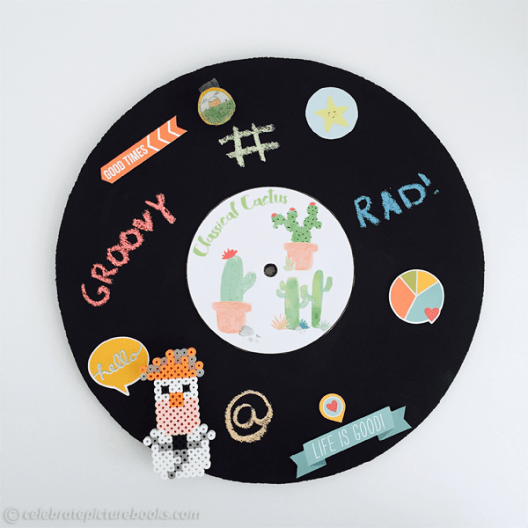
Make a Record Chalkboard Bulletin Board


Do you play the piano or another instrument? Would you like to make a record some day? Why wait? In this fun craft you can create your own record bulletin board—and even create your own label art! While this record may not spin on turntables around the world, it will drop in a more important place—your very own room!

Supplies

  • Printable Record Label for you to design
  • Foam board, or a corkboard at least 12-inches x 12-inches square
  • Adhesive cork
  • A 12-inch round plate, record, or other round object to trace OR a compass
  • Chalkboard paint, black
  • X-acto knife
  • Paint brush or foam paint brush
  • Mounting squares

Directions

  1. Cut a section from the adhesive cork a little larger than 12 inches by 12 inches
  2. Affix the cork to the foam board
  3. Trace the 12-inch round object onto the cork/foam board OR use the compass to make a 12-inch circle
  4. With the x-acto knife, carefully cut out the circle (adult help needed for children)
  5. Cut out a ¼ -inch circle in the center of the record bulletin board
  6. Paint the cork, sides and inside the spindle hole with the black chalkboard paint. Let dry
  7. Print the label template and design your own record label
  8. When the paint is dry, glue your label to the center of the bulletin board
  9. Hang your bulletin board with the mounting squares
  10. Decorate!

Picture Book Review

May 28 – It’s Get Caught Reading Month

celebrate-picture-books-picture-book-review-baby-wren-and-the-great-gift

About the Holiday

You can never read too many books! This idea is definitely supported by the Get Caught Reading campaign that makes people aware of all the benefits of sitting down with a fantastic book—whether it’s fiction, non-fiction, drama, or poetry. To celebrate this holiday, get involved with a literacy program, a book drive, or thank a teacher or librarian for always supplying you with great reads!

Baby Wren and the Great Gift

Written by Sally Lloyd-Jones | Illustrated by Jen Corace


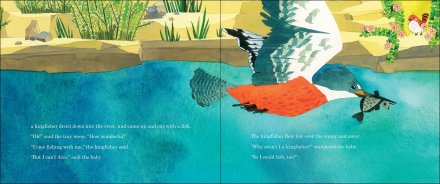
From a narrow crevice a little brown wren peeks out of her nest. Her vantage point gives her a view of all the wonderfulness around her. Monarchs flutter in the Milkweed, breezes whisper in the switch grass, and the glittering river flows along. Emboldened, the baby wren hops onto the canon ledge just as a kingfisher dives down to the river and captures a fish.
celebrate-picture-books-picture-book-review-baby-wren-and-the-great-gift-in-the-nest

Image copyright Jen Corace, text copyright Sally Lloyd Jones. Courtesy of Zonderkidz

“Oh! How wonderful!” the little wren exclaims. The kingfisher invites her to come along, but the wren tells the bigger bird that she can’t dive. As the kingfisher flies away, the wren wonders why she can’t fish too.

Next, two frisky ring-tailed cats cartwheel by. “Oh, how wonderful!” little wren says. The ring-tails want her to play with them, but the wren says that she doesn’t have a ring tail, so the cats cartwheel away leaving the baby wren wondering why she isn’t a ring-tail cat who can cartwheel.

celebrate-picture-books-picture-book-review-baby-wren-and-the-great-gift-kingfisher

Image copyright Jen Corace, text copyright Sally Lloyd Jones. Courtesy of Zonderkidz

Just then some sunfish splash in the water nearby. The little wren also declines their invitation to play, saying that she can’t swim. As the sunfish hurry down the river, the wren wonders why she isn’t a sunfish who can swim. Overhead two eagles glide on the winds of a gusty storm. “Oh, how wonderful,” the wren says. “Come and see the thunderclouds,” the eagles tell her. But the baby is afraid of the big storm, and the eagles soar higher and higher and away. Watching them, the wren regrets that she isn’t brave and wonders what she can do that is wonderful.

celebrate-picture-books-picture-book-review-baby-wren-and-the-great-gift-sunset

Image copyright Jen Corace, text copyright Sally Lloyd Jones. Courtesy of Zonderkidz

Suddenly, the sun paints the canyon pink. The baby wren looks and looks and looks. The beauty of the sky and the canyon “bumped into her heart, it dazzled in her eyes, it pushed on her throat until the tiny trembling bird with all her tiny might sang by herself a song.”  Her glorious carol echoes through the canyon, and the eagles soaring overhead call to her: “‘You are only little, but your song fills the whole canyon.’” And as the kingfisher, the ring-tailed cats, the sunfish, and the eagles listen, the little wren fills the air with singing.

Sally Lloyd-Jones’ inspirational story is perfect for this time of year when baby birds are just leaving the nest and children are moving on to new grades or new experiences. Jones’ lyrical and gentle tale offers comfort to those wondering just where they fit into the world. As baby wren discovered, everyone has innate talents that shine when the time is right.

Jen Corace’s vibrant illustrations of the baby wren’s canyon home employ bright yellows and vivid contrasting greens and blues to evoke the “wonderfulness” that so captivates the little wren. In each spread the baby bird is depicted as the tiny creature it is surrounded by vast mountains and other, larger animals, but as her song flows out of her in a soaring collage of all the colors and silhouettes of her new-found friends her stature grows. She is happy with her place in the world.

Ages 4 – 8

Zonderkidz, 2016 | ISBN 978-0310733898

Discover more about Sally Lloyd-Jones and her books on her website!

View a portfolio of illustration work by Jen Corace on her website!

View the Baby Wren and the Great Gift book trailer!


Get Caught Reading Month Activity

celebrate-picture-books-picture-book-bird-in-nest-coloring-page

Baby Bird Coloring Page


Baby birds love the cozy safety of their nests as much as you like snuggling under the blankets with a good book. Print the Baby Bird Coloring Page and have fun with it—instead of just coloring it, how about making a collage? You can attach different colors of torn paper to decorate the bird and use grasses or twigs for the nest! Use your unique creative talents to make a one-of-a-kind picture!

Picture Book Review

March 26 – Noodle Day

Noodle Magic by Roseanne Greenfield Thong and Meilo So Picture Book Review

About the Holiday

Noodle on this: what’s the difference between noodles and most other dry pastas? Noodles contain eggs! It’s just this kind of fascinating fact you can learn during noodle month. Whether you like spinning the long strands around your fork or slurping them right from the bowl, noodles make the perfect comfort food whether they’re mixed with sauce, pesto, or meat and veggies. People make some pretty awesome crafts from them too! Did you know that 13th century bakers made their dough into birds, stars, words, and other shapes? Too bad Pinterest wasn’t around then! So boil up some water and get cookin’ on a delicious day!

Noodle Magic

Written by Roseanne Greenfield Thong | Illustrated by Meilo So


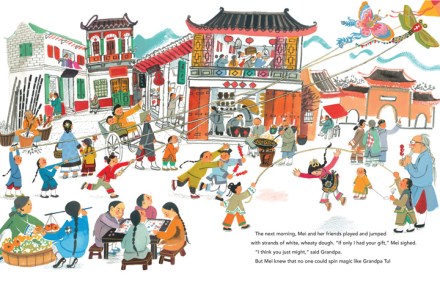
The emperor’s birthday is coming, and everywhere excitement fills the air. Mei’s Grandpa Tu will no doubt be making his famous noodles for the celebration. Mei loves to watch her grandfather work, slapping and kneading the dough and pulling the strands of noodles. He is so creative with his cooking that everyone marvels, even the Moon Goddess. In fact, Grandpa Tu is such an extraordinary artist that he makes noodle jump ropes and kite strings for Mei and her friends. They are as “simple as a sunflower” and as “easy as a sea breeze” to make, says Grandpa Tu.

celebrate-picture-books-picture-book-review-noodle-magic-playing-with-noodles

Image copyright Meilo So, text copyright Roseanne Thong. Courtesy of meiloso.com

But Mei thinks there is more to his talent and wishes that she had his magic. Her grandfather believes she does possess it. One afternoon the pair watch animal-shaped clouds fill the sky, and Mei asks if her grandpa can catch them with noodles. That night he makes a batch of noodles, and in the morning the two collect clouds as the sun appears.

On the day before the emperor’s birthday, everyone is busy making something special—everyone except Grandpa Tu. The villagers are perplexed. On such an important day, they will all want to enjoy noodles—and what about the special long-life noodles for the emperor? It is time, Grandpa Tu tells Mei, for her to make the noodles.

Mei is surprised and terrified. She slaps and kneads the dough as she has seen her grandfather do, but it remains ordinary. Where is the magic? “‘Trust in yourself,’” Grandpa Tu tells her, but Mei is doubtful. She decides that perhaps if she gives the Moon Goddess a gift, she will get magic in return. “‘You have all the magic you need,’” her grandfather assures her. Still, he helps Mei make enough dough to form an enormous ball of noodles.

celebrate-picture-books-picture-book-review-noodle-magic-making-noodles

Image copyright Meilo So, text copyright Roseanne Thong. Courtesy of meiloso.com

Mei throws the ball to the Moon Goddess and calls out for the Goddess to give her magic. Wisely, the Goddess reminds Mei that magic must come from inside. Mei closes her eyes and thinks very hard. She tussles with the Moon Goddess in a noodle tug-of-war, and suddenly…Snap!…the noodles break. The sky rains noodles of all shapes and sizes, Mei has discovered the magic that was in her all along!

With the charm of a Chinese folktale, Roseanne Greenfield Thong tells the universal tale of self-discovery. Her lyrical language adds a magic of its own to the tale, as when Mei watches her grandfather make dough: “she loved the powdery flakes that hung in the air and freckled the morning light.” The relationship between the little girl and her grandfather is lovingly portrayed, offering a gentle depiction of the wisdom and reassurance provided by extended family members.

Meilo So brings the story to vibrant life with her colorful paintings of village life, Mei and Grandpa Tu’s home, and the Moon Goddess. The magic of Grandpa Tu’s noodles is cleverly shown in the transparent animals, dragons, and birds outlined in noodles that frolic across the pages. The two-page spreads of Mei’s village are particularly captivating, as packed with interesting scenes and details as any bustling town.

Ages 4 – 8

Orchard Books, 2014 | ISBN 978-0545521673

Noodle Day Activity

CPB - Noodle Puzzle

Noodle on This Puzzle


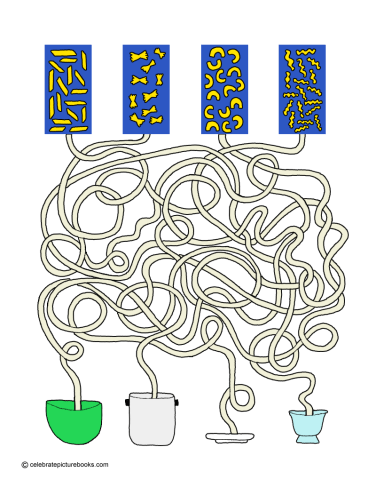
Everyone has their favorite kind of noodles! Help these noodles get to the right plate, bowl, or pot in this printable Noodle on This puzzle that’s as wiggly as a wet noodle!

Picture Book Review