January 10 – It’s International Quality of Life Month and Q & A with Deborah Sosin

celebrate-picture-books-picture-book-review-charlotte-and-the-quiet-place-noisy-neighborhood

About the Holiday

How one achieves their definition of a good quality of life may differ for every person, but in general it encompasses being happy and satisfied with one’s relationships, work, living conditions, and self. Whether you find happiness and quality of life in outdoor or indoor pursuits, with others or alone, at work or at home, this month’s holiday gives you time to get in touch with your inner quiet place and reflect on changes or improvements to bring you more peace and happiness in life.

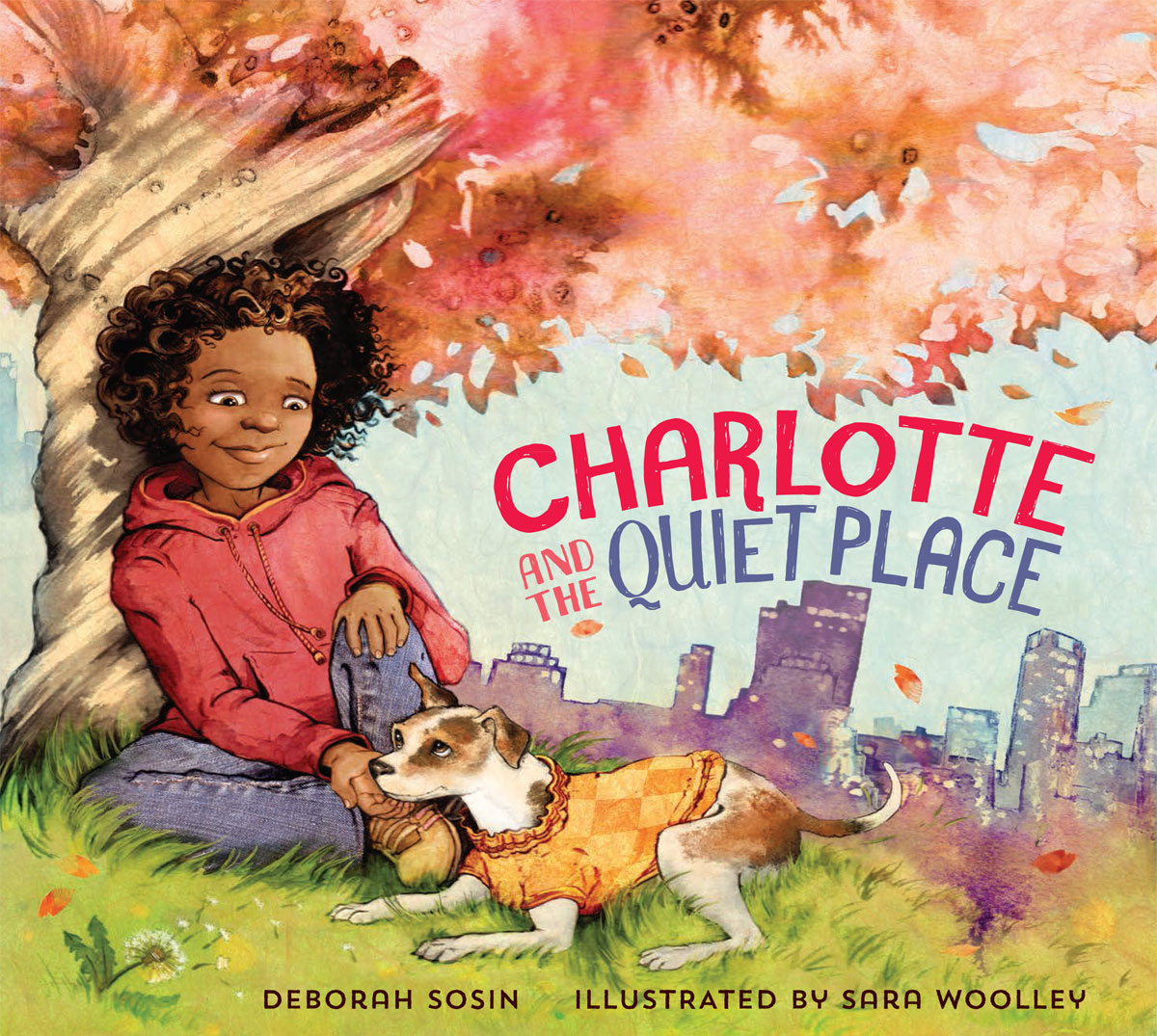
Charlotte and the Quiet Place

Written by Deborah Sosin | Illustrated by Sara Woolley


Charlotte is a girl who likes quiet who lives in a noisy world. Everywhere she goes, it seems, it’s impossible to escape from sounds that disturb her peace. At home the hallway creaks where “the floorboards groan,” the living room is like an arcade where the “TV bellows and blares,” and the kitchen is filled with Otto’s barks for his dinner. Even in Charlotte’s bedroom, “which is supposed to be a quiet place, the old steam radiator hisses, whistles, and whines. Where can Charlotte find a quiet place?”

celebrate-picture-books-picture-book-review-charlotte-and-the-quiet-place-noisy-home

Image copyright Sara Woolley, text copyright Deborah Sosin, Courtesy of sarawoolley.com

When Charlotte goes to school, things are no better. In the classroom kids are boisterous and bells ring; the lunchroom echoes with clattering trays and scuffing chairs; and the playground blares with big voices and stomping feet but also with the little squeaks and rattle of the swings. “Even in the library, which is supposed to be a quiet place, the children giggle, yammer, and yell. Where can Charlotte find a quiet place?”
celebrate-picture-books-picture-book-review-charlotte-and-the-quiet-place-noisy-subway

Image copyright Sara Woolley, text copyright Deborah Sosin, Courtesy of sarawoolley.com

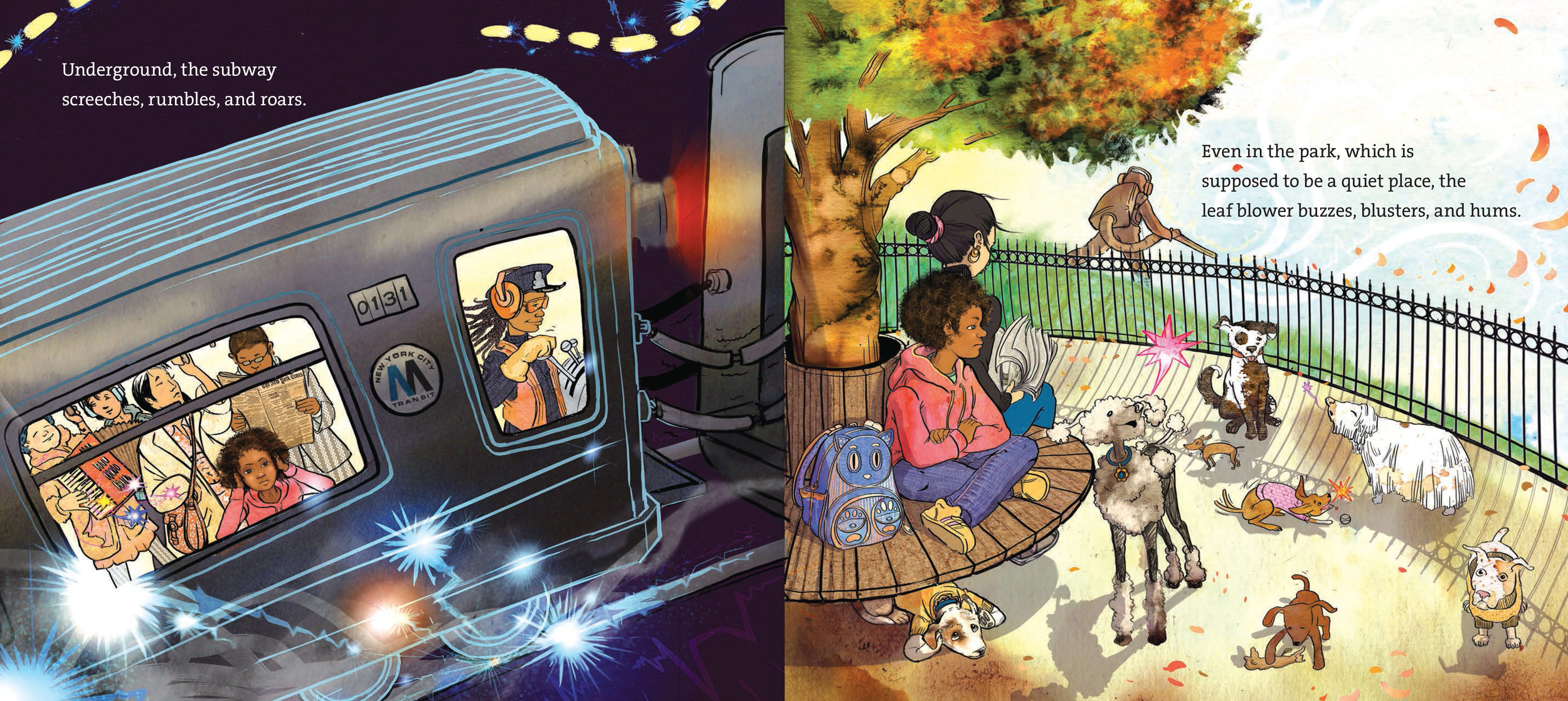
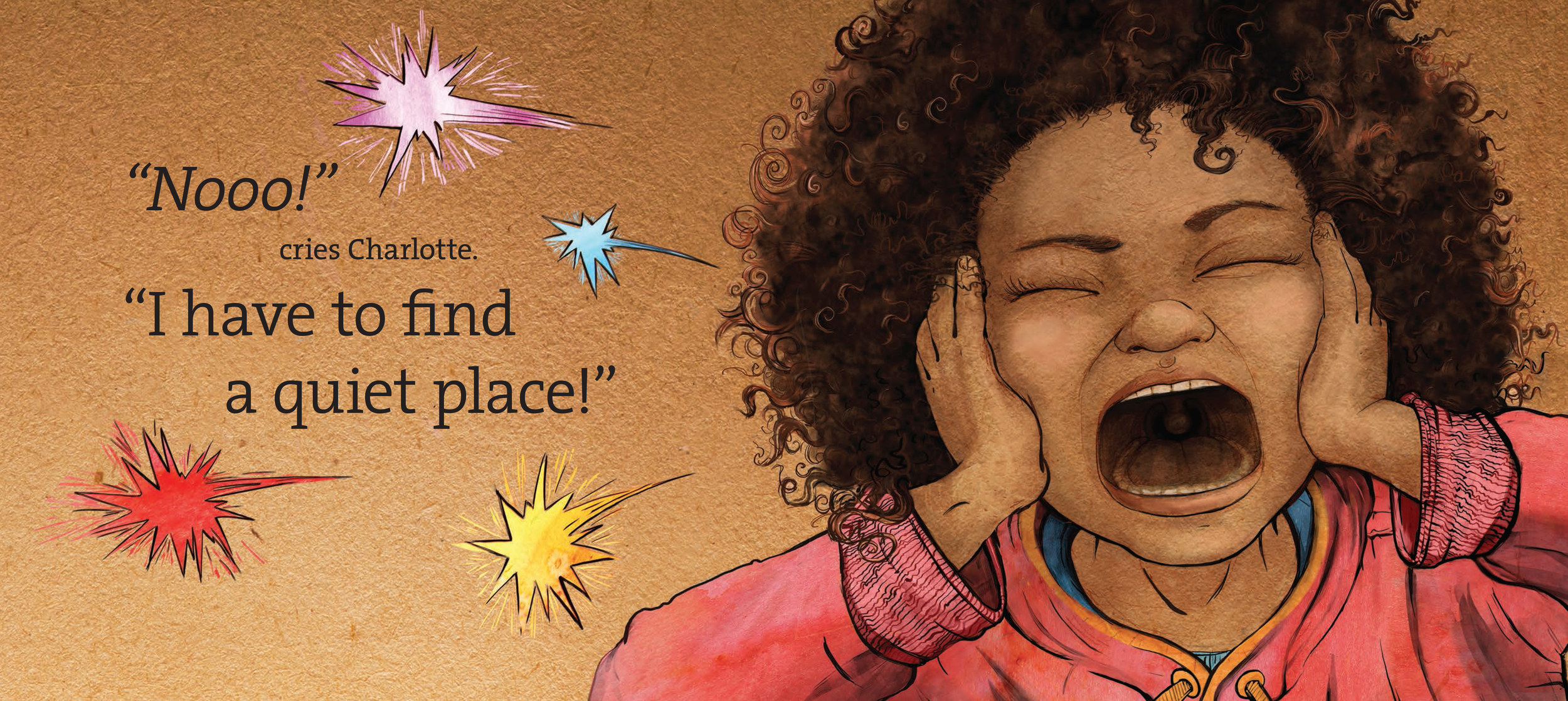
The outside world resounds with the din of jackhammers, horns, sirens, shouts, cars, music, and the “screeches, rumbles, and roars” of the subway. “Even in the park, which is supposed to be a quiet place, the leaf blower buzzes, blusters, and hums.” Charlotte puts her hands to her ears. “‘Nooo!’” she cries, “‘I have to find a quiet place!’”
celebrate-picture-books-picture-book-review-charlotte-and-the-quiet-place-nooo!-charlotte-cries

Image copyright Sara Woolley, text copyright Deborah Sosin, Courtesy of sarawoolley.com

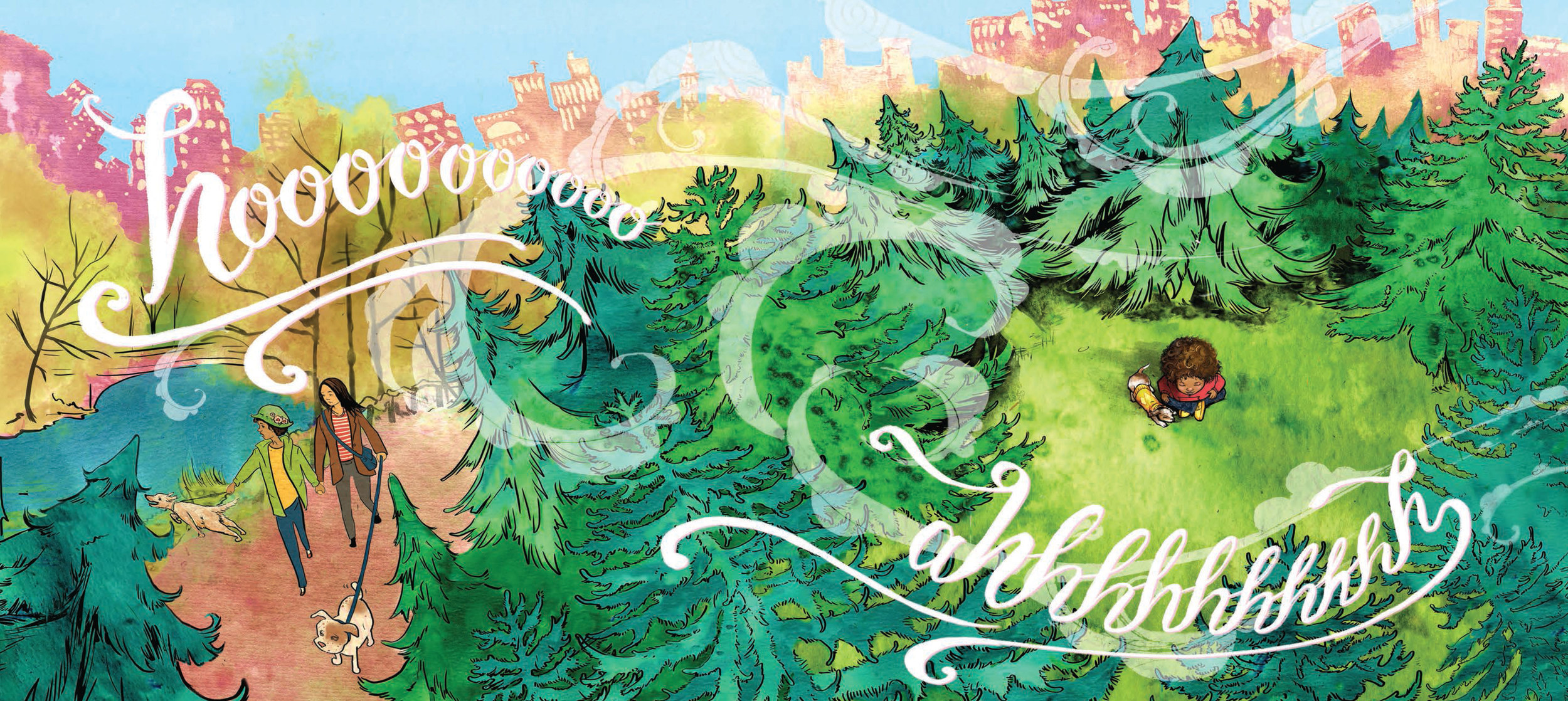
On Saturday Charlotte takes her dog for a walk in the park. Suddenly, Otto spies a squirrel and takes off running, wrenching his leash out of Charlotte’s hand. She chases after him down a hill, over a bridge, into the middle of a grove of trees. Out of breath, Charlotte and Otto sit beneath a tree. Gasping, Charlotte’s “belly rises up and down, up and down. Her breath goes in and out, in and out. Hooooo ahhhhh. Hooo ahhh.”

Slowly, Charlotte’s breath comes easier and “her mind slows down.” In this state, she discovers another, even quieter place. It is a place deep inside where her breath is soft and her “thoughts are hushed and low.” It is “a place as quiet as the small silence on the very last page of her favorite book, the silence right after ‘The End.’”
celebrate-picture-books-picture-book-review-charlotte-and-the-quiet-place-quiet-woods

Image copyright Sara Woolley, text copyright Deborah Sosin, Courtesy of sarawoolley.com

In a little while, Charlotte and Otto leave the grove, but now whenever home or school or the neighborhood is too loud, Charlotte remembers where she can find a quiet place. She simply closes her eyes and pays attention to that place deep in her belly and deep in her mind—“that quiet place inside.”

For so many children the world is a blaring, clattering place where their thoughts are drowned out by the noises around them. Deborah Sosin’s award-winning Charlotte and the Quiet Place validates these feelings and offers children a way to discover inner peace wherever they are. As a tonic to today’s hyper-stimulated environment, kids and adults alike will benefit from the method of mindful reflection Sosin presents. Sosin’s combination of evocative verbs and repetition makes the story fresh and an excellent read-aloud while also mirroring the sounds that are a part of our everyday life.

celebrate-picture-books-picture-book-review-charlotte-and-the-quiet-place-noisy-neighborhood

Image copyright Sara Woolley, text copyright Deborah Sosin, Courtesy of sarawoolley.com

Sara Woolley’s beautiful watercolor illustrations vividly depict not only Charlotte’s world but the sounds that disturb her peace. Amid the fully realized home, school, and neighborhood environments, complete with realistic details kids will recognize, sharp cracks of equipment, blaring bells and whistles, high-pitched voices, and other noises spark the page. Portrayals of Charlotte, her hands over her ears and her eyes sad, express her distress in a way kids will understand. When Charlotte finds the grove of trees in which she first experiences inner peace, Woolley’s color palette turns softer, with peaceful tones of green, blue, and yellow where, previously, “louder” purples, reds, and golds predominated.

Charlotte and the Quiet Place is a very welcomed book for those times when peace seems elusive and will give comfort to children who prefer quiet places and have more introverted natures. The book would make a wonderful addition to all children’s book shelves as well as to school and public library collections.

Ages 4 – 8

Parallax Press, 2015 | ISBN 978-1941529027

Visit Charlotte and the Quiet Place on her own website! You’ll find resources, images and videos, news about events, and more!

Discover more about Deborah Sosin, her writing for children and adults, writing workshops, mindfulness services, and more on her website!

View a gallery of artwork for books, comics,  and other illustration work by Sara Woolley on her website!

International Quality of Life Activity
celebrate-picture-books-picture-book-review-smile-cards-craft

Share a Smile Cards


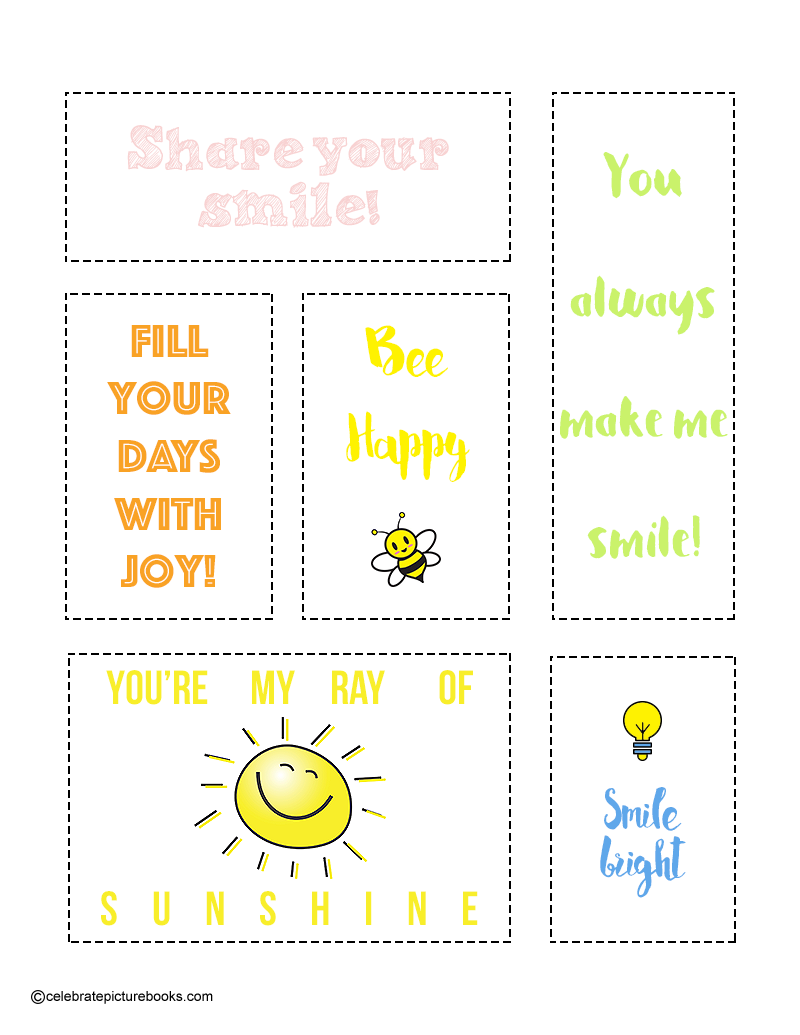
Life is better when you share smiles with those you know—and those you don’t! Try it! When you’re out today at school or other places, look someone in the eye and smile. You’ll probably get a smile back—and you can be sure that you will have made the other person’s and your day better!

Here are some Smile Cards that you can share. Why not slip one into your dad’s pocket or your mom’s purse, put one in your friend’s backpack, or sneak one onto your teacher’s desk? You can even leave one somewhere for a stranger to find! Have fun sharing your smiles, and see how much better you and the others around you feel!

Click here to print your Share a Smile Cards.

celebrate-picture-books-picture-book-review-interview-with-author-deborah-sosin

Photo by Kevin Day Photography

Q&A with Author Deborah Sosin


Today, I’m thrilled to talk with Debbie Sosin, a writer, editor, and clinical social worker who specializes in mindfulness-based psychotherapy, about her first picture book, her choral singing, and how kids respond to her presentations.

In your career you write for adults and children, work within the publishing industry, provide publicity services, and teach. How did you get started? Did you always want to write?

I kept a diary starting at around age ten and always loved writing for school or for fun. I started getting more serious about writing for publication in the past ten years, studied at GrubStreet, attended the Kenyon Review Writers Workshop, and eventually went back to school to get an MFA in Creative Writing. I wish I had started earlier, but it’s been rewarding to finally follow my true passion.

What influenced you to write Charlotte and the Quiet Place?

I wrote the book as an independent project as part of my MFA studies at Lesley University. They say “write what you know,” so I thought about my childhood growing up in kind of a noisy house, where my brother played the piano, my father had a radio and TV on simultaneously, and my mother was on the phone a lot. And then I thought about my longtime meditation practice and how tuning in to my breathing has helped me find a quiet place inside. So I wanted to write a story about children finding their own quiet place inside themselves.

You give school presentations on mindfulness and your picture book Charlotte and the Quiet Place for various ages. Is there an experience from any of these that you would like to share?

School visits are my favorite part of being an author! No matter what age the students are, they love to help me tell the story by repeating the “noisy” sounds and the “hoo ahh” breathing sounds. We usually do a few calming/breathing exercises together and, without fail, even the squirmiest group will settle into a beautiful, shared, often profound silence. Once, when asked where Charlotte finds her quiet place, one kindergarten girl said, “In her belly and in her brain, where it’s calm.” Many kids get that idea. What could be better? I also love showing them my early scribbles and illustrator Sara Woolley’s wonderful sketches and storyboards, and sharing the step-by-step process of publishing the book, from concept to completion
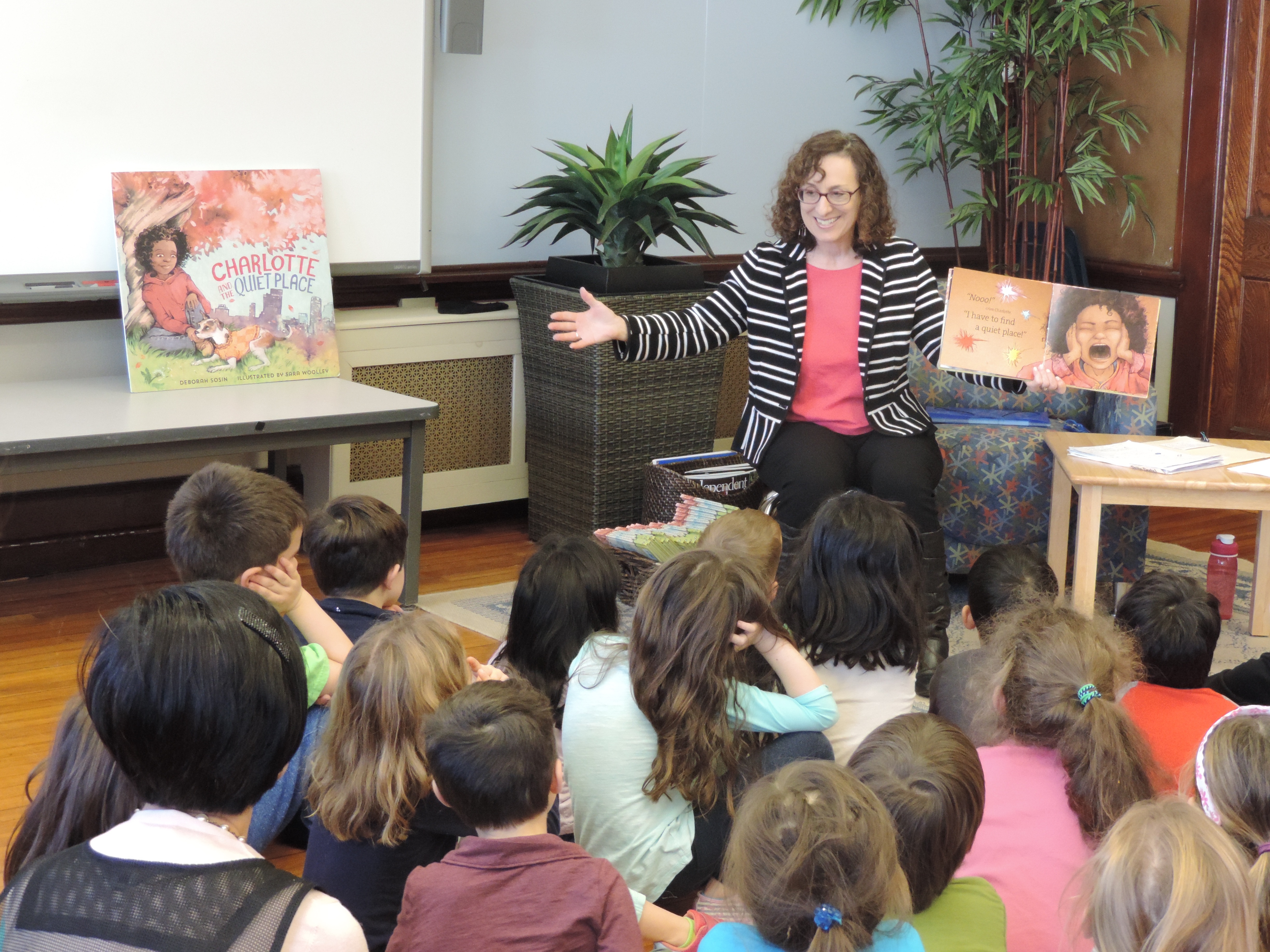
celebrate-picture-books-picture-book-review-author-deborah-sosin-visits-Newton-Monetssori-School

Deborah Sosin reads Charlotte and the Quiet Place to students at Newton Montessori School. Photo courtesy of Newton Montessori School.

Can you talk a little about mindfulness and how it can benefit children?

Mindfulness has become a catchword these days, but my favorite definition is from Dr. Amy Saltzman: “Noticing what’s happening right here and now, with a friendly, curious attitude, then choosing what to do next.” Many top-notch scientific studies show that mindfulness can help kids with concentration, attention, self-soothing, anxiety, depression, sleep, mood, compassion, confidence…I could go on. Compared with adults, most kids are naturally mindful, that is “in the moment,” but kids do get stressed out and worried about the past or the future, so mindfulness helps. I sometimes worry that parents and teachers might use it for disciplinary reasons (“Enough! Go be mindful in the corner!”), which is not the point. It’s a whole-life practice, not a technique or intervention. And, as the book shows, mindfulness can lead us to a quiet place inside that we can access whenever we want.
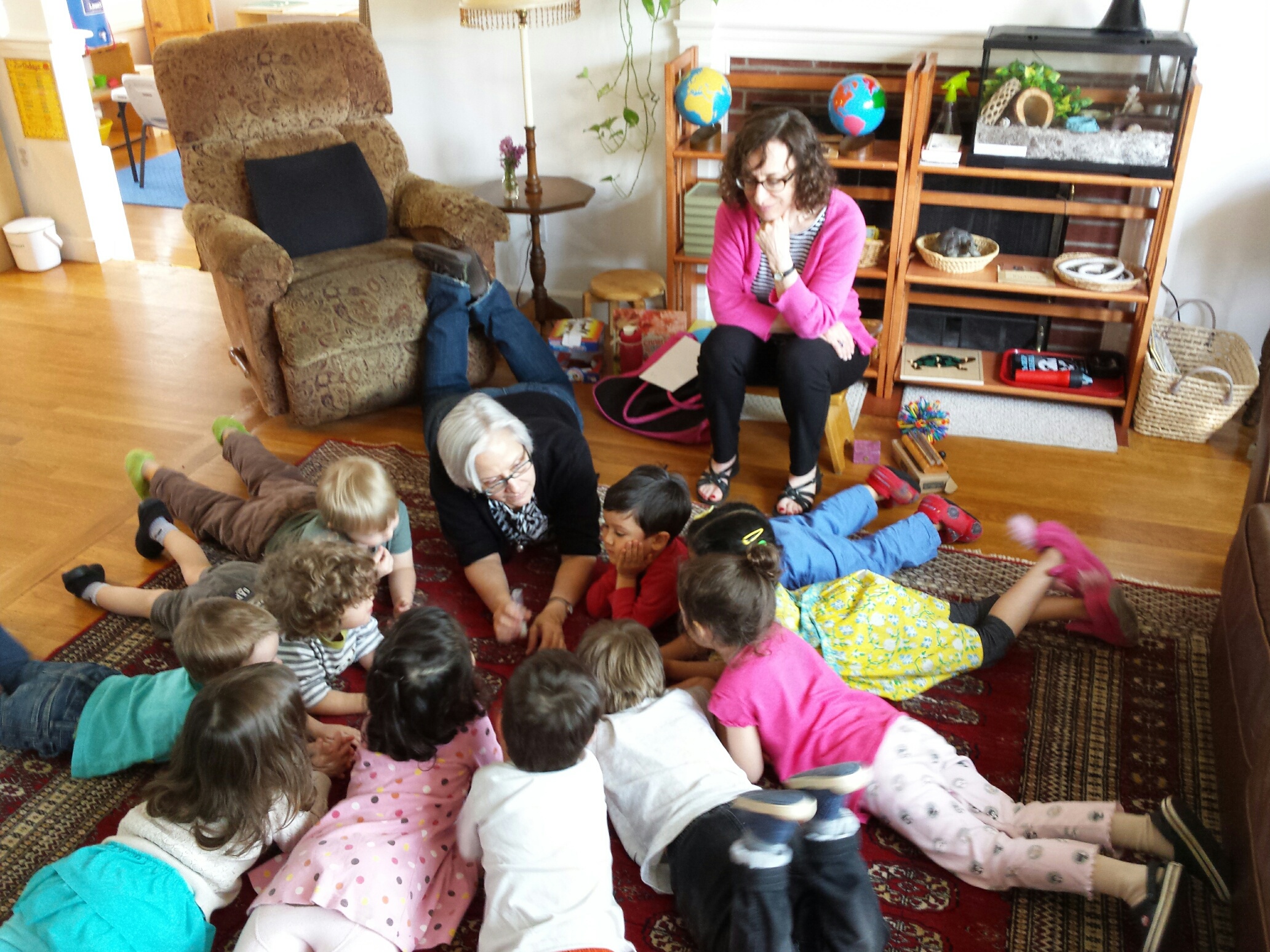
celebrate-picture-books-picture-book-review-interview-with-deborah-sosin-debbie-at-cottage-montessori-school

Students at the Cottage Montessori School in Arlington, Massachusetts play the Silence Game with director Karen Wagner, watching the sand in the hourglass. Photo courtesy of Stacey Moriarty.

Can you tell me a little about your work with Grub Street, a creative writing center in Boston?

I started taking classes at GrubStreet in 2008; my first class was “Six Weeks, Six Essays,” and from that class, I helped form a longtime regular writing group. I started blogging soon after and then submitted personal essays for publication, with some good luck. GrubStreet is a fantastic, inclusive community, with excellent faculty and a huge range of motivated, smart, and enthusiastic students, from beginners to veterans. After a few years, I applied to teach classes there and am proud to be on their instructor and consultant rosters now.

You are an accomplished choral singer, having performed at Lincoln Center, the United Nations, Boston’s Symphony Hall, and on an international tour. When did you begin choral singing? Do you have an anecdote you’d like to share from any of your experiences?

I’ve been singing my whole life and have been in choruses since elementary school. Singing with other people is extremely gratifying and, after all the “verbal”-type things I do, including my work as a psychotherapist, it’s a lovely change of pace. I spent about 15 years in the Zamir Chorale of Boston, which specializes in Jewish choral music. Our tours to Eastern Europe, Italy, and Israel were extraordinary. In 1999, when we sang at Auschwitz and Terezin, the sites of former concentration camps, it was hard to keep our emotions in check, but it felt important to revive the voices of the Jewish people that the Nazis had attempted to quell. A PBS documentary film, “Zamir: Jewish Voices Return to Poland,” chronicled our tour that summer. I think it’s still available through the Zamir Chorale website.

What’s the best part about writing for children?

After having focused almost exclusively on nonfiction for most of my writing career, it’s been wonderful to work in the very precise and rich world of picture-book writing with so many lovely, funny, imaginative, and supportive fellow writers I’ve met through SCBWI and the amazing Writers’ Loft in Sherborn, Mass.
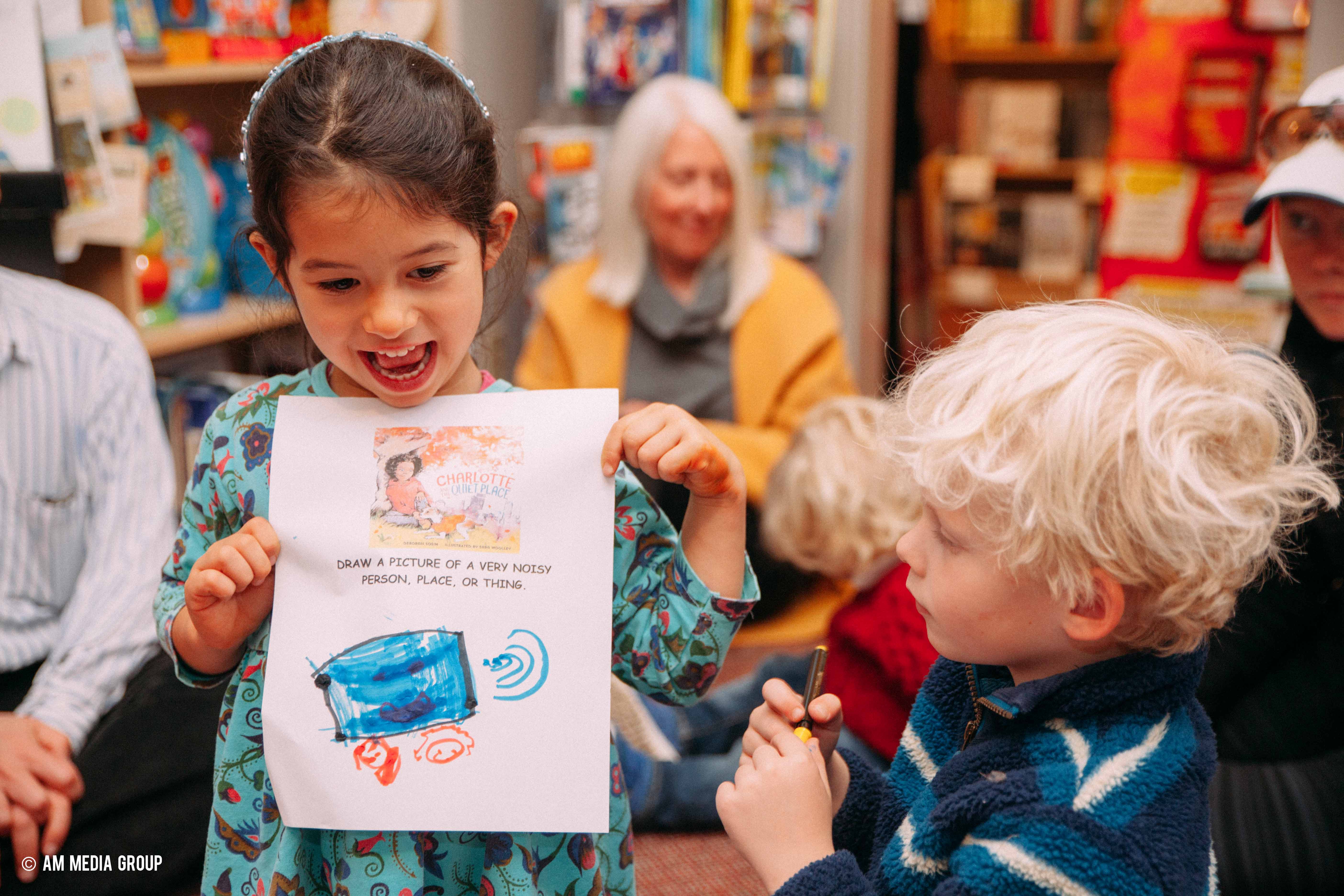
celebrate-picture-books-picture-book-review-interview-with-deborah-sosin-debbie-at-The-Oblong-Bookstore-event

Children enjoy drawing their noisy and quiet places at an Oblong Bookstore event in NY. Photo courtesy of AM Media Group

What’s up next for you?

I have a couple of Picture Book manuscripts in progress and I’m participating in Storystorm (formerly PiBoIdMo) this month, so I hope to generate more ideas and get some new work out there soon.

Since this is a holiday-themed blog, I’d be remiss if I didn’t ask you at least one question about holidays, so…

What is your favorite holiday and why?

Thanksgiving is probably my favorite, as it means getting together with my family, which is now spread far and wide, and having an opportunity to express our gratitude.

Thanks, Debbie, for stopping by and chatting! I wish you all the best with Charlotte and the Quiet Place and all of your future endeavors!

You can connect with Deborah Sosin on

Her Website | charlotteandthequietplace.com | Facebook | Twitter
celebrate-picture-books-picture-book-review-charlotte-and-the-quiet-place-noisy-neighborhood


You can find Charlotte and the Quiet Place at these booksellers

Amazon | Barnes & Noble | Books-a-Million | IndieBound | Parallax Press |Porter Square Books (signed copies available)

Picture Book Review

January 6 – Cuddle Up Day

celebrate-picture-books-picture-book-review-you-belong-to-me-cover

About the Holiday

As the cooler days of December turn into the colder days of January, Cuddle Up Day reminds us that snuggling up with someone you love warms us and warms our hearts. Children especially love the comfort and security that close hugs bring. Today, get your comfy clothes on, pour a mug of hot chocolate or tea, and cuddle up together with a good book!

You Belong to Me

By Mamoru Suzuki


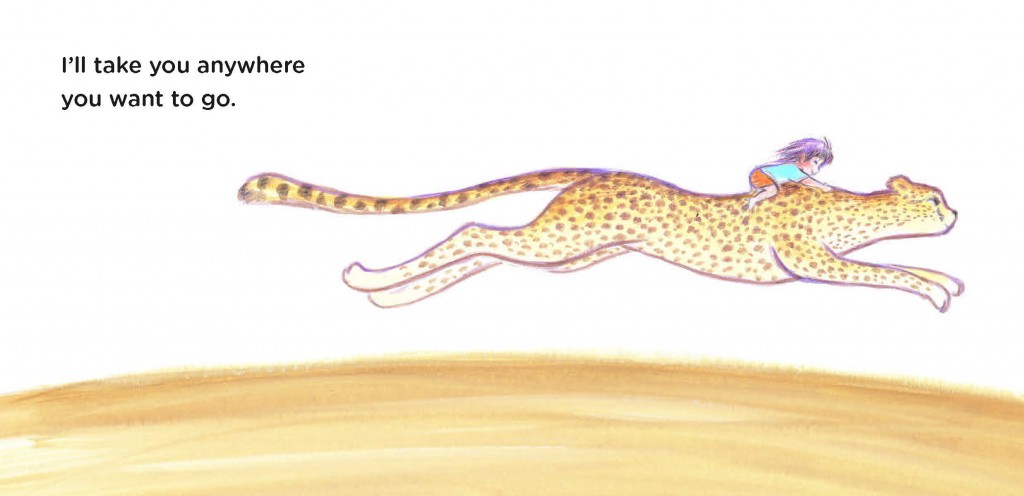
The emotions of parents and other caregivers of children escape from the heart on the very first page of this gentle, spoken lullaby: “I love you so much.” On the second page, listeners discover why: “You are my favorite person in the whole world.” As the pages flow, the reader continues to reassure the child of the constancy of their love. Devotion is shown when the adult spends time with their child, watches out for them, and takes them to activities, play dates, and even, perhaps on flights of fancy.

celebrate-picture-books-picture-book-review-you-belong-to-me-I-love-you-so-much

Image and text copyright Mamoru Suzuki, courtesy of Museyon Press

Through the words on the pages, the reader encourages the child to “come to me whenever you are lonely” or “whenever you can’t sleep” and promises that “I’ll hug you when you are sad.” Comfort comes in many forms—from drying tears to stroking hair—and from the many people who love the child.

celebrate-picture-books-picture-book-review-you-belong-to-me-where-you-want-to-go

celebrate-picture-books-picture-book-review-you-belong-to-me-I-love-you-so-much

In fact, all of the people in the child’s life agree that “we all love you” and that they will be there “whenever,” “wherever,” and “however” the child needs them. But the deepest love of all is found in the heart of the reader who confirms “I love you most of all, because…you belong to me.”

celebrate-picture-books-picture-book-review-you-belong-to-me-we-love-you

celebrate-picture-books-picture-book-review-you-belong-to-me-I-love-you-so-much

Mamoru Suzuki’s sweet hug of a book gives parents and caregivers the tender words that overflow in their hearts coupled with endearing illustrations of various animals nuzzling, snuggling, protecting, and comforting a small child. The mellow colors and chiffon texture of the images are at once soothing and stirring, wonderfully mirroring the mixture of emotions that make love for a child so profound.

You Belong to Me is a cuddle to keep on your child’s bookshelf for those times when you want to tell them how much you love them.

Ages birth – 5

Museyon, 2016 | ISBN 978-1940842127

Cuddle Up Day Activity

celebrate-picture-books-picture-book-review-snuggle-buddy-craft

Snuggle Buddy Craft


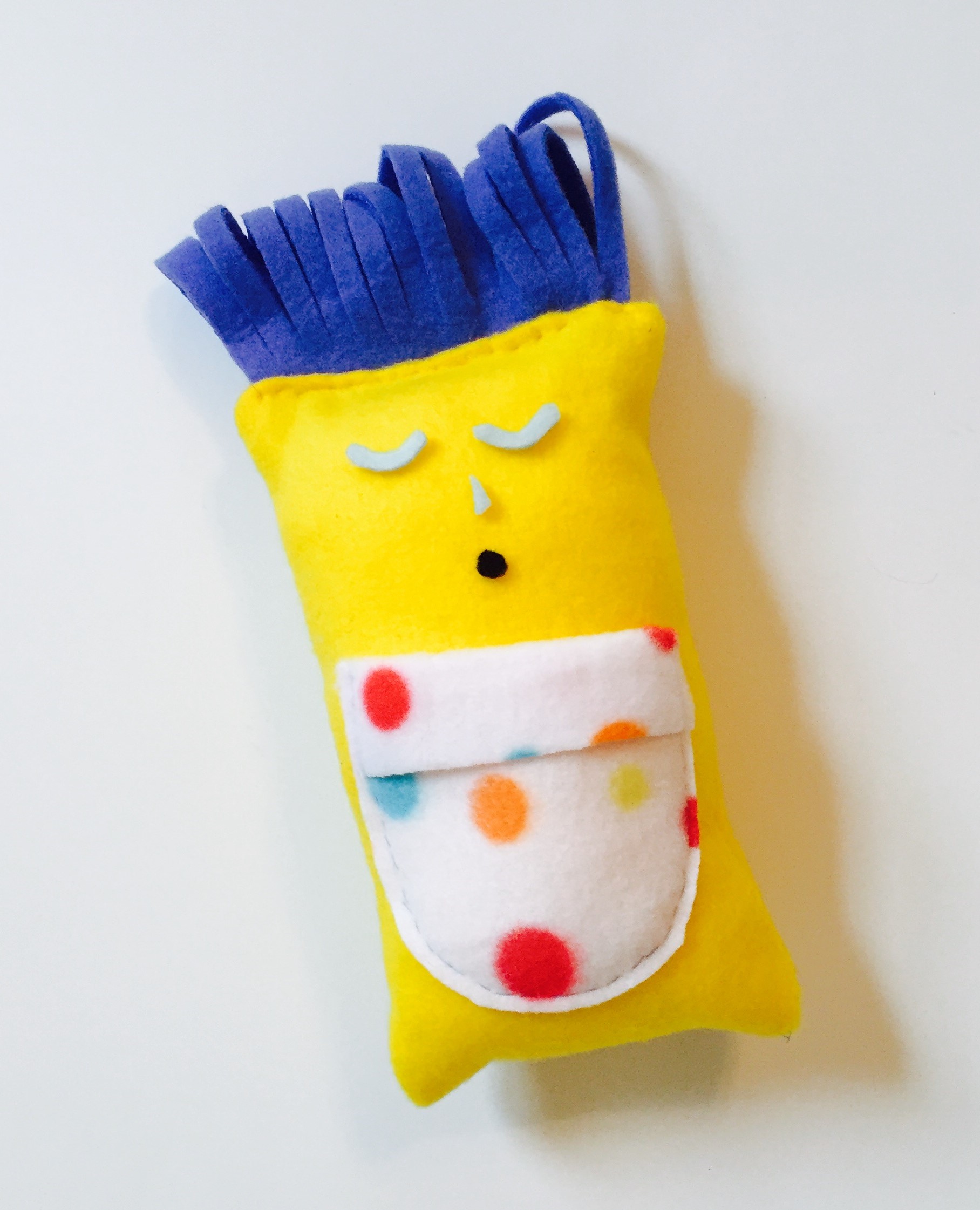
It’s easy to make your own snuggle buddy with a few pieces of fleece, some fiber fill, and a needle and thread or fabric glue. The great thing about creating your own friend is you can personalize your pal anyway you want!

Supplies

  • 1 8-inch by 11-inch piece of fleece in the color or your choice for the body (or scraps if you have some from an earlier project). A larger piece of fleece can be used to make a larger buddy
  • 1 5-inch by 8-inch piece of fleece in the color or your choice for the hair (or scraps if you have some from an earlier project)
  • 1 small piece of fleece or other material for a pocket, clothes, or blanket
  • Small scraps of fleece or other material for the face
  • Fiber Fill
  • Thread and sewing needle OR fabric glue
  • Scissors

Directions

To Make the Body

  1. Fold the large piece of fleece in half lengthwise and sew along the open side and along the bottom. Alternatively, if using a larger size piece of fleece, fold upward and sew or glue the two sides closed.
  2. Turn the form inside out

To Make the Hair

  1. Cut a piece of fleece as wide as your buddy and about 7 – 8 inches long
  2. Fold the fleece lengthwise
  3. Insert both ends of the fleece into the opening at the top of the body
  4. Sew or glue the opening shut, securing the hair
  5. Cut strips about ¼-inch wide from the top of the hair to close to where the hair is sown into the body

To Make a Pocket or Clothes

  1. Cut a piece of fleece in the shape of a pocket, shirt, pants, diaper, or blanket
  2. Sew or glue the pocket or clothes to the buddy

To Make the Face

  1. Cut eyes, a nose, and a mouth in whatever way you would like your buddy to look. (My buddy is sleeping.)
  2. Sew or glue the face to the buddy
  3. Snuggle up!

Picture Book Review

November 12 – Fancy Rat and Mouse Day

celebrate-picture-books-picture-book-review-the-mouse-and-the moon

About the Holiday

Today gives us a chance to take another look at rats and mice. I’m not talking about the kind of mouse I’ve seen scurrying around in my garage or the kind of rat that…well, honestly, I hope is nowhere near my garage. The guys  we’re celebrating today are fancy, which means they are bred to make good pets. Despite their bad rap, mice and rats are smart, loyal, and clean. They don’t require as much care as a dog or cat, and they can be fun to play with. The American Fancy Rat and Mouse Association holds events around the country to introduce people to these alternative pets. Today, you may want to check one out.

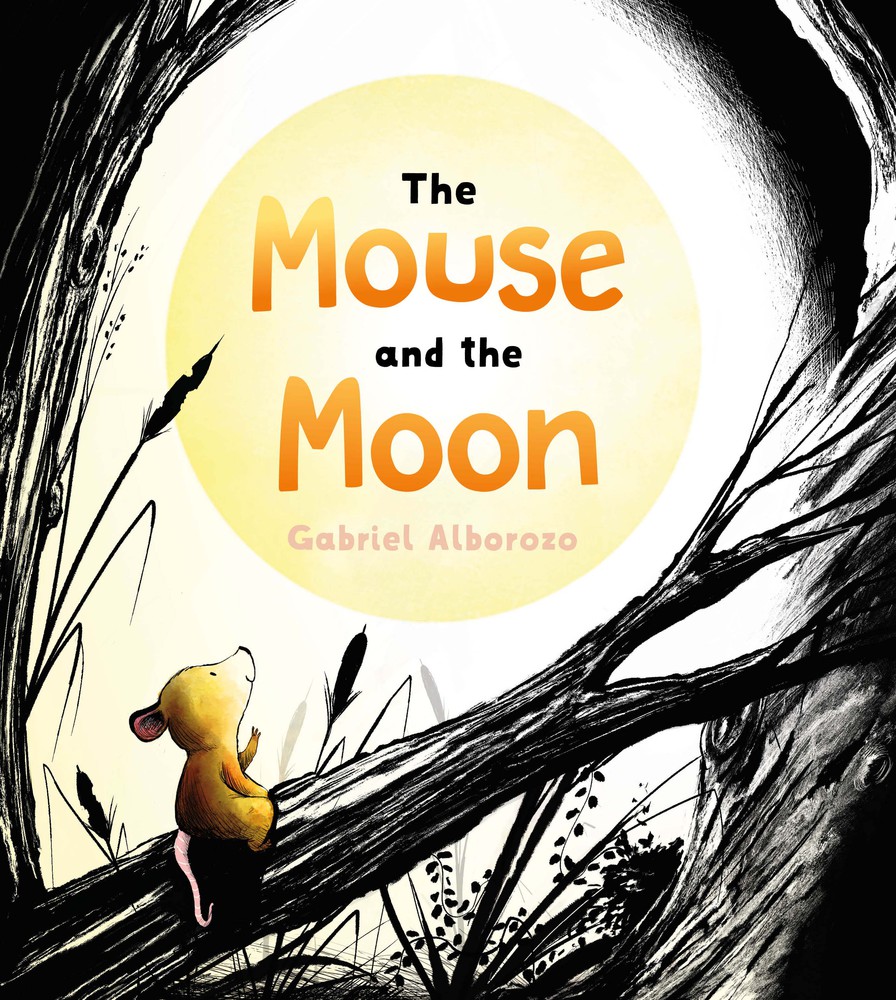
The Mouse and the Moon

By Gabriel Alborozo


“In a dark and broken tree, in a dark and wild wood, there lived a little mouse. All alone. His only friend was the moon.” The little mouse waited each night for the moon to appear so that he could talk about his day and his hopes, dreams, and fears. The moon always listened silently. The little mouse began to think that the moon was just too far away to hear him, so he went in search of his friend.

celebrate-picture-books-picture-book-review-the-mouse-and-the moon-mouse-lives-alone

Image and text copyright Gabriel Alborozo, courtesy us.macmillan.com

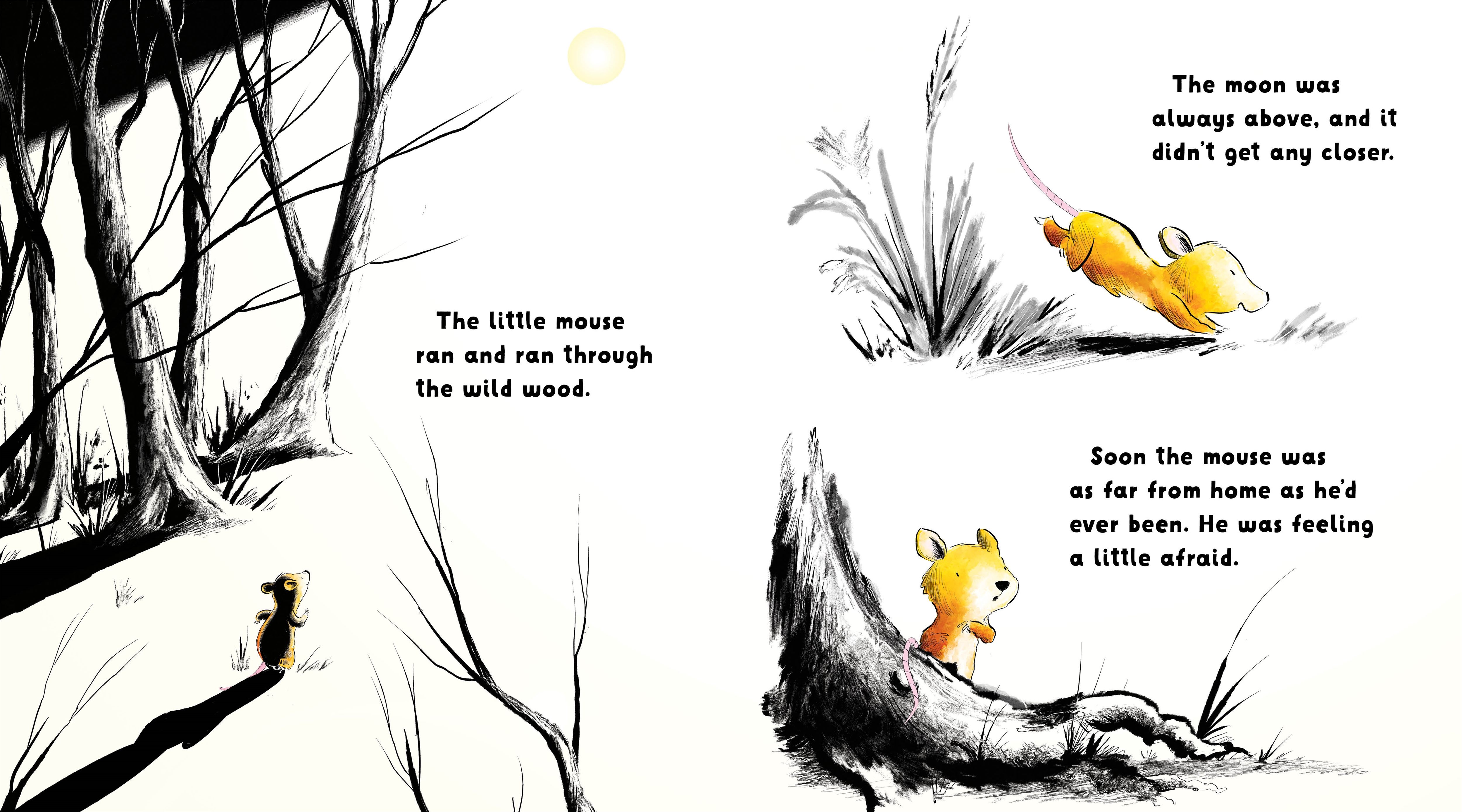
The mouse scampered through the woods, but no matter how far he went, the moon never seemed any closer. Pretty soon the mouse was far from home and “was feeling a little afraid.” When he stopped to rest, the mouse looked into the night sky, but could no longer see the moon. Suddenly, he heard a whispered “‘Hello?’” The mouse cautiously looked around and replied, “‘Hello?’” “And there, floating in a small, still pool, was the moon.” The mouse was excited to have found his friend at last.

celebrate-picture-books-picture-book-review-the-mouse-and-the moon-mouse-goes-to-find-moon

Image and text copyright Gabriel Alborozo, courtesy us.macmillan.com

But what he didn’t see was the tiny fish “hidden from sight, beneath the moon’s reflection.” The little fish was equally glad to finally hear from his friend the moon. “‘I’ve been waiting so long to talk to you!’ bubbled the tiny fish.” The two spent the night telling each other everything. As the sun rose, the moon began to fade. The mouse and the fish both pleaded for the moon to stay. The mouse crept as close to the edge of the pool as he could, and the fish swam close to the surface of the water.

When the moon’s reflection finally vanished in full daylight, “the two new friends saw each other for the first time….Both together and both happy.”

celebrate-picture-books-picture-book-review-the-mouse-and-the moon-mouse-runs-through-woods

Image and text copyright Gabriel Alborozo, courtesy us.macmillan.com

Gabriel Alborozo’s sweet, gentle story of friendship found is a beautiful tribute to perseverance, bravery, and discovery. After spending time telling the moon all about their lives with no response, the fish and the mouse, instead of giving up, go in search of their friend. For the mouse this means leaving his comfort zone and facing on his own some of the fears that he has shared with the moon. The fish, meanwhile, continues calling out until he receives an answer back. While both believe they are talking to their long-held confidant, when the moon disappears, the fish and the mouse happily embrace each other as new friends. Alborozo’s lines are simple and tranquil, with alliteration that flows as smoothly as the ripples on a pond.

Alborozo’s striking black-and-white illustrations, punctuated in the early pages only by the adorable golden-haired mouse, well represent the mouse’s loneliness of the heart. Similarly, the golden-scaled fish lives in a black-and-white world until he and the mouse see each other. As the moon vanishes, the pool and pond grasses are transformed by yellow, green, violet, blue, and orange hues into a sunny, happy landscape echoed in the smiles of the new best friends.

The Mouse and the Moon is a lovely quiet story time or bedtime book, and its comforting charm will make it a favorite with many children. This book would be a nice addition to home bookshelves.

Ages 2 – 7

Henry Holt, 2016 | ISBN 978-1627792240

To discover more picture books as well as a gallery of “bits not in books” by Gabriel Alborozo, visit his website!

Fancy Rat and Mouse Day Activity

celebrate-picture-books-picture-book-review-mouse-coloring-page

Cute Mice Coloring Pages


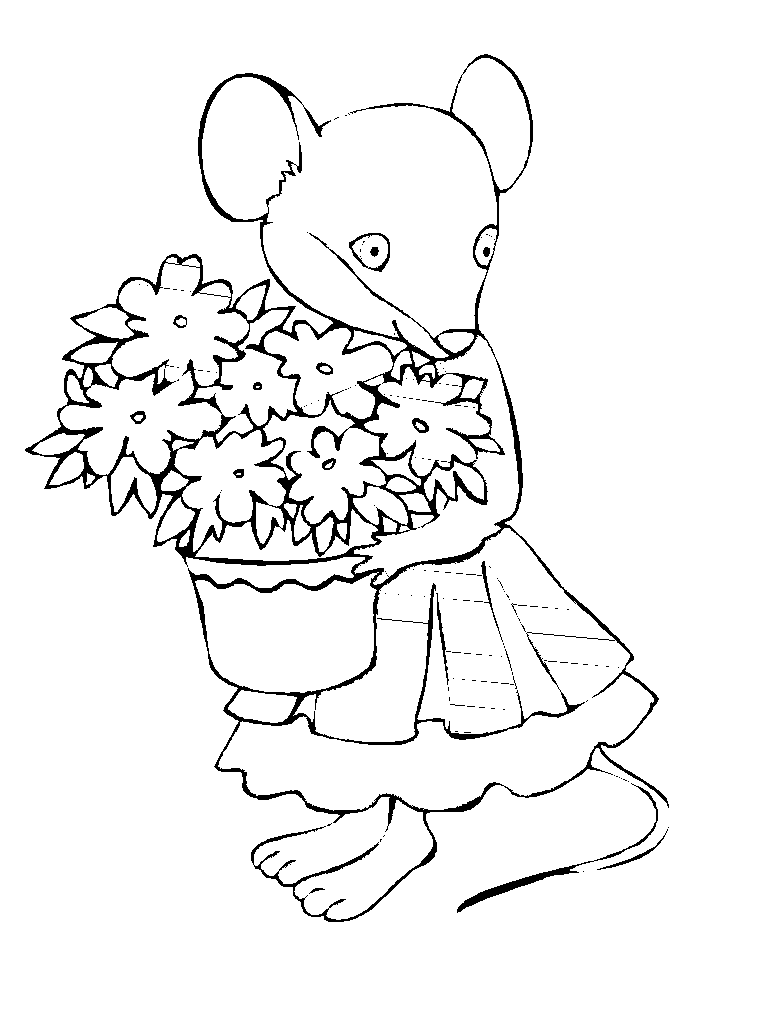
Here are a couple of fancy mice – one just hanging out and one all dressed up in her finest clothes – for you to color. After you’ve colored these pages, why not write a short story about them!

Cute Mouse Coloring Page | Dressed-up Mouse Coloring Page

Picture Book Review

November 7 – Job Action Day

celebrate-picture-books-picture-book-review-a-crow-of-his-own-cover

About the Holiday

Instituted in 2008 and now sponsored by LiveCareer to empower employees and job seekers to assess their careers, make plans, and take action, Job Action Day gives people a chance to reflect on their true goals in life. Are you doing the job you’re passionate about? Are you bringing your passions to the job you are doing? If you are unhappy or dissatisfied with your position, step back and take another look, broaden your horizons. Discover the possibilities and opportunities that lie within your current job and pursue them. You never know where a particular job will lead you if you put all your creativity, knowledge, and—most importantly—unique personality—into it. Job Action Day brings together experts across the web and in participating companies to provide the latest in career advice.

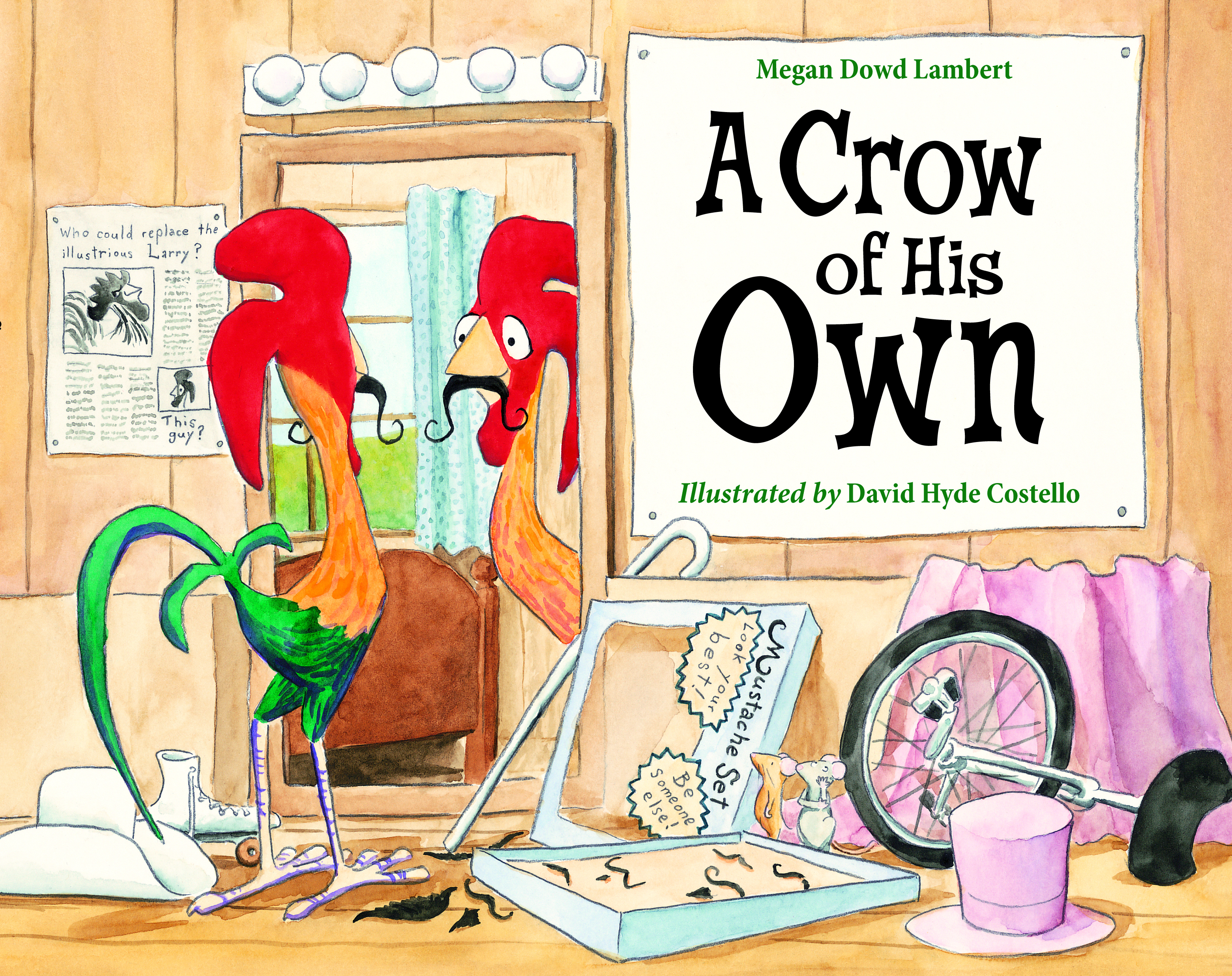
A Crow of His Own

Written by Megan Dowd Lambert | Illustrated by David Hyde Costello


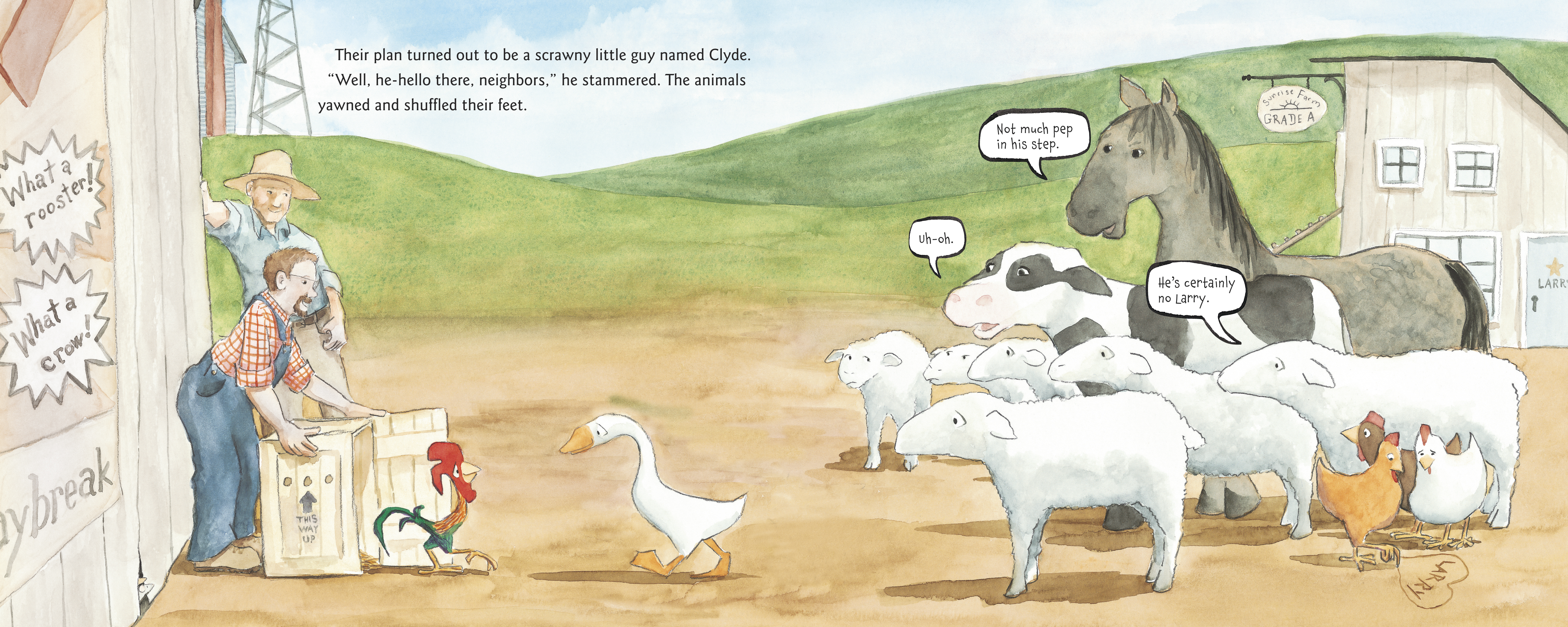
When fame and fortune came calling for Larry, the charismatic rooster of Sunrise Farm, the daily routine turned upside down. “The animals overslept and no one knew what to do.” But while the cow, horse, sheep, chickens, and goose fretted, Farmer Jay and Farmer Kevin had a plan. One day they gathered all the animals and introduced Clyde, the new rooster. Looking at the “scrawny little guy” as he stammered his hello, the cow, horse, and sheep expressed doubt in his abilities, already comparing him to their beloved Larry.

Roberta, the goose, stepped forward, however, and reassured him that “they just miss Larry.” When Clyde asked who Larry was, the animals gasped. “Only the best rooster ever,” claimed the sheep. “Take it straight from my mouth: he was more than that,” said the horse. “He was a genius,” the cow chimed in.” And the chickens? In the dirt they scratched a heart with Larry and XOX in the center.

celebrate-picture-books-picture-book-review-a-crow-of-his-own-clyde-joins-the-farm

Image copyright David Hyde Costello, text copyright Megan Dowd Lambert. Courtesy of Charlesbridge

Clyde was worried—how could he ever live up to Larry? Roberta tried to soothe him. “‘Larry wasn’t a genius…he just made quite a show of it.” Emboldened and with an inkling of what he needed to do, Clyde thanked Roberta and dashed off. “Clyde spent the whole day gathering props, designing his costume, and choreographing a sublime two-step.” As Clyde gave himself one last look in the mirror in his top hat and cloak, he had misgivings. “Could he put on a show of a crow?” He went to bed, but hardly slept at all.

In the morning…well…Clyde overslept. The animals were not happy. “Who ever heard of a rooster sleeping in?” baaad mouthed the sheep. “What a worthless chicken,” complained the horse. And the cow had issues of her own. Once again Roberta came to Clyde’s defense. With a wagon full of new props and material, Clyde rushed away to prepare for the next day. Up bright and early and balanced on a unicycle atop the coop while surrounded by promotional signs, Clyde “opened his beak, and…promptly fell to the ground with an undignified croak.”

celebrate-picture-books-picture-book-review-a-crow-of-his-own-skating-ramp

Image copyright David Hyde Costello, text copyright Megan Dowd Lambert. Courtesy of Charlesbridge

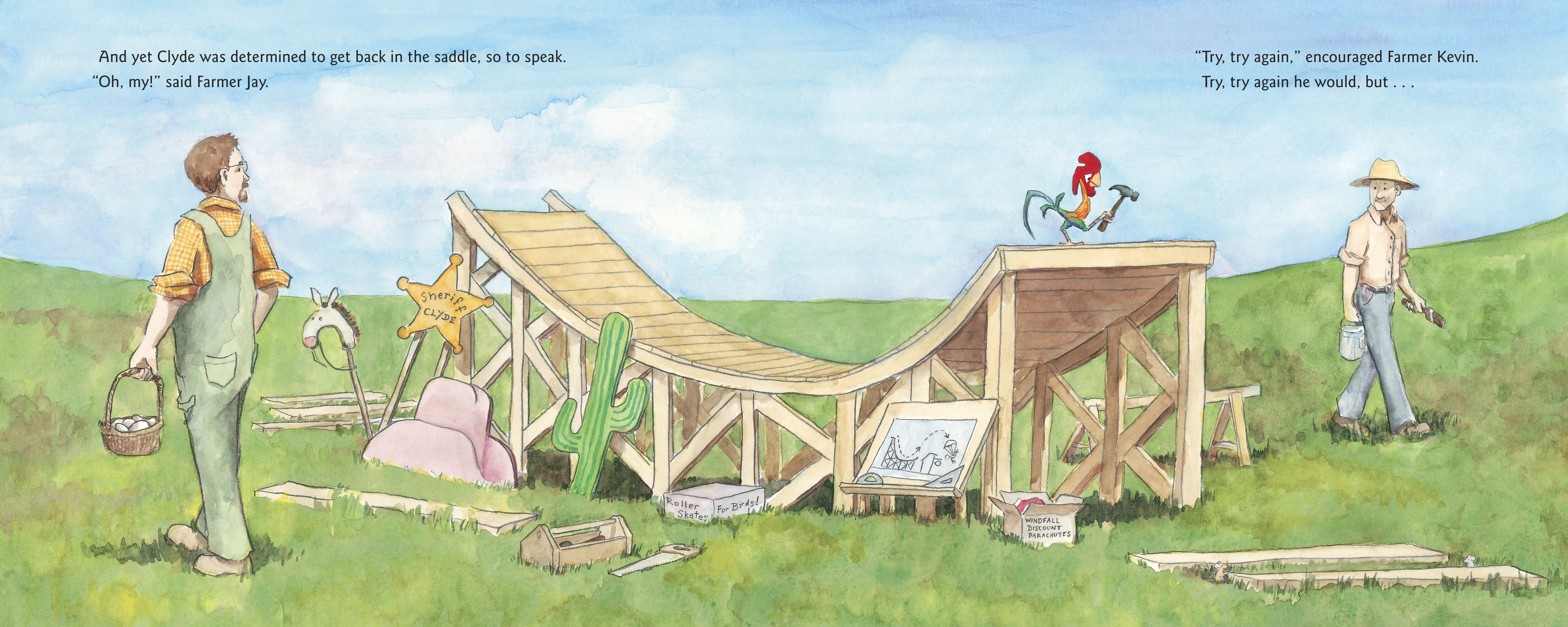
Poor Clyde! Humiliated and hurt he once again had to endure the slights of the farmyard animals, but their comments only spurred him on. Vowing to go bigger and better, Clyde built himself a ramp, ordered roller skates for birds and a parachute, and designed a colorful Western-theme set. “‘Oh, my!’” remarked Farmer Jay as he walked by. “‘Try, try again,’ encouraged Farmer Kevin.” But in the morning Clyde’s spectacular trick left him hanging upside down from the chicken coop, and the animals more “disgruntled and dismayed” than before.

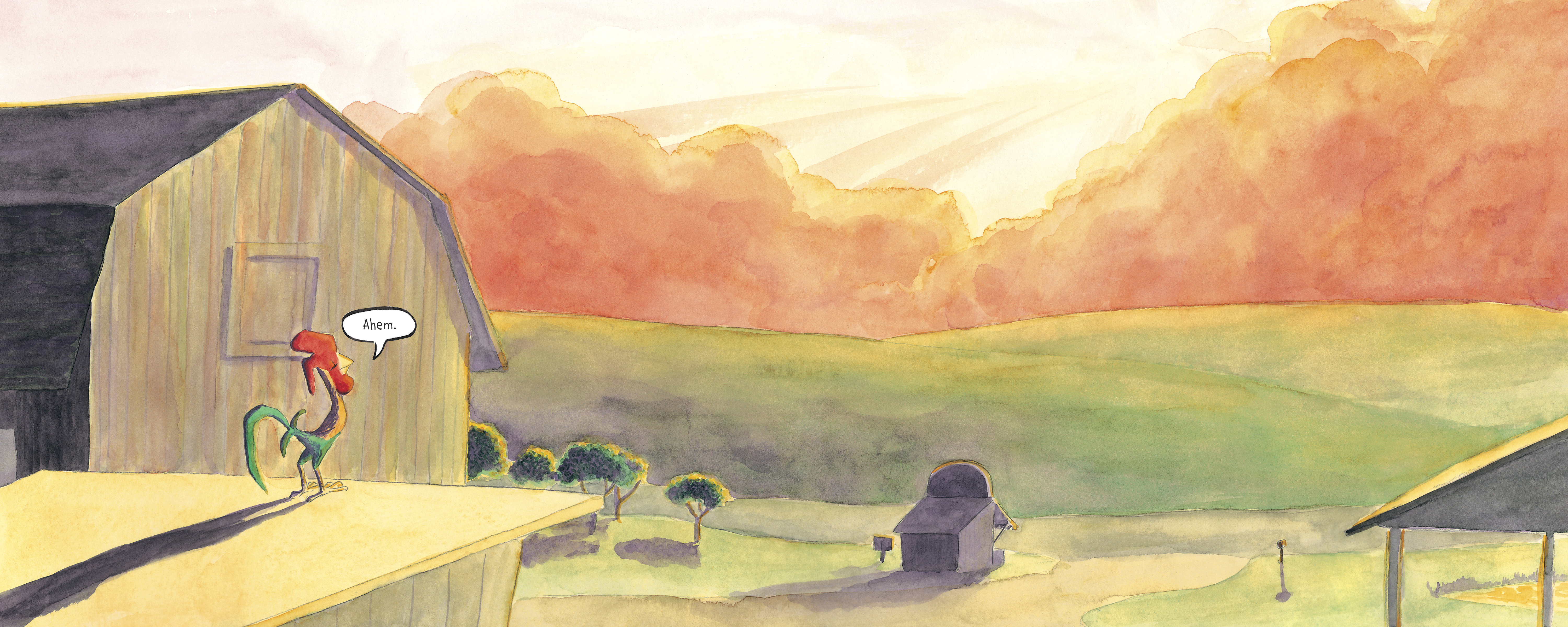
Clyde was distraught. “‘Forget about Larry.’” Roberta said. “‘Just crow your own crow.’” Clyde considered her advice. The next morning as the sky turned pink and orange with the rising sun, Clyde stood tall atop the chicken coop. He quietly cleared his throat and then—“COCK-A-DOODLE-DOO!” The newly awakened animals came running. Even Farmer Jay and Farmer Kevin came to see this new Clyde. The horse summed up their collective feeling: “It’s not so much like crowing, but crooning.” Roberta agreed. “‘Enough to give you goose bumps!’” she exclaimed. As an encore, “Clyde took a deep breath, gave a shake of his comb, and called out another crow of his own.”

celebrate-picture-books-picture-book-review-a-crow-of-his-own-sunrise

Image copyright David Hyde Costello, text copyright Megan Dowd Lambert. Courtesy of Charlesbridge

These days it’s nearly impossible for kids not to compare themselves or be compared to others—even those they’ve never met. All they need to do is jump on the Internet and discover that so-and-so has double, triple, or more friends and/or followers than they do; go to class and get their grade on that assignment they worked so hard on; or simply stand by their locker, go to lunch, or head out to gym and overhear the comments of other students. Avoidance isn’t the answer, but a good base of self-confidence and personal identity is. In A Crow of His Own Megan Dowd Lambert offers readers such a base in her entertaining and meaningful tribute to self-acceptance and love that hits all the right notes.

As soon as scrawny Clyde walks out of his crate to the scorn of his farm mates, kids will root for this underchicken. With a light touch and plenty of wordplay, Dowd deftly presents honest portrayals of the opposition Clyde is up against as well as Clyde’s distressed reactions. Clyde’s three attempts to act like Larry humorously demonstrate the difficulties of trying to be someone you’re not. When Clyde finally musters the courage to “crow his own crow” and is met with praise, readers will see that their own unique talents will find an appreciative audience.

David Hyde Costello knows how to put on a show! His Sunrise Farms is a gentle, bucolic spread still under the thrall of Larry. Humorous details, such as the valentines to Larry the chickens draw in the dirt, the movie house-style posters on the side of the barn, and the surprised and exasperated expressions of the animals, testify to Larry’s enduring legacy. But careful observers will notice that while Larry is a rather bland white rooster with some black tail feathers, Clyde is distinctively colorful from his comb to his feet. Kids will giggle at Clyde’s increasingly complex morning shenanigans even as they sympathize with his plight. When Clyde finally reveals his magnificent crow, readers will cheer.

A Crow of His Own is a winner on so many levels. It offers parents and children a way to discuss and begin building the strong sense of self so important to a happy and successful life. The book also presents a positive visual representation of diversity, and in Roberta and Farmer Jay and Farmer Kevin it shows that finding support helps. And it does all of this in a story that stands on its own as a funny, laugh-inducing romp. Because kids will want to hear this story over and over, A Crow of His Own would be a wonderful addition to libraries and home book collections.

Ages 4 – 9

Charlesbridge, 2015 | ISBN 978-1580894470

To learn more about Megan Dowd Lambert, her picture books, her Whole Book Approach to Reading, and more visit her website!

On David Hyde Costello‘s website you’ll find a gallery of artwork, a portfolio of picture books, videos, and more!

Job Action Day Activity

celebrate-picture-books-picture-book-review-chicken-craft

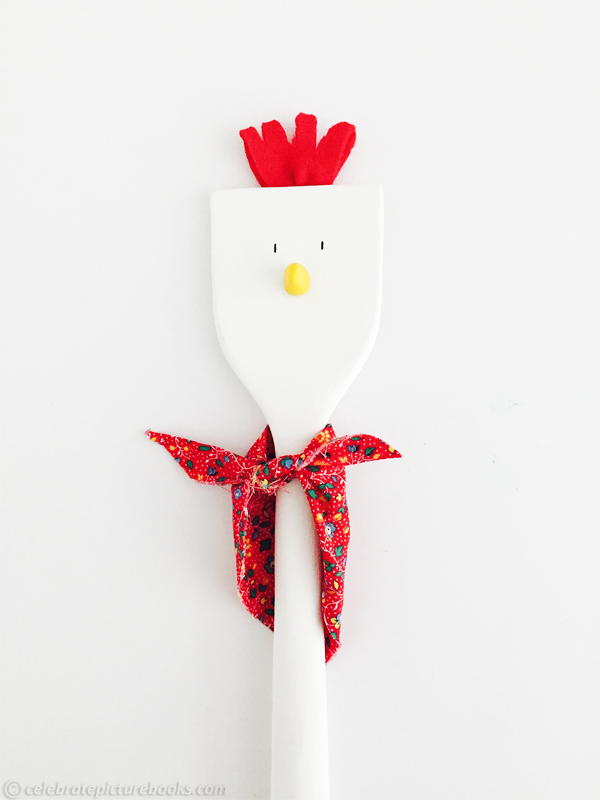
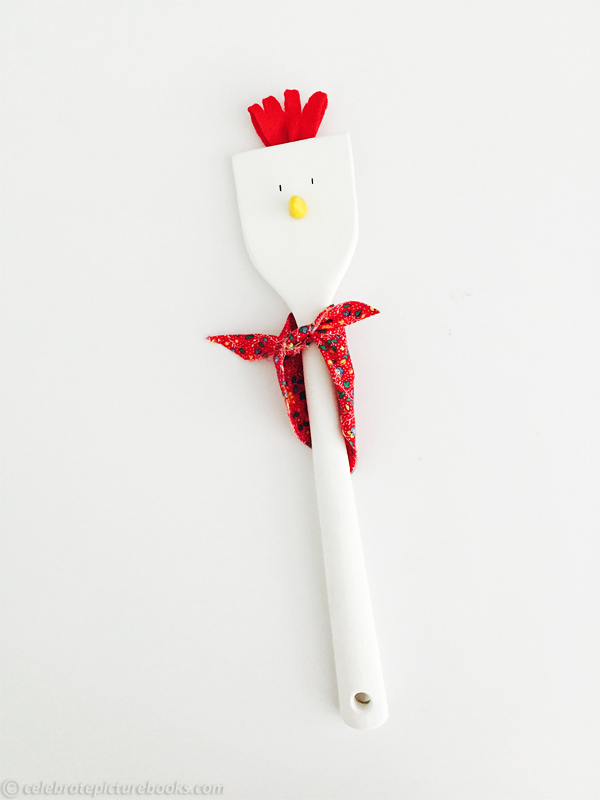
A Chicken to Crow About


A long-handled wooden turner makes a plucky decoration for your room or kitchen—and a great reminder to bring your passions to every job! In a few simple steps, you’ll have a cute companion you’ll want to crow about!

Supplies

  • Printable Comb and Scarf Template
  • Long-handled wooded turner, available in kitchen supply stores
  • Red felt
  • Yellow bakable clay
  • Fabric, 12 inches square
  • A small piece of white felt or fleece (optional)
  • White paint (or any color you would like)
  • Black marker
  • Fabric glue
  • Glue gun
  • Paint brush

celebrate-picture-books-picture-book-review-chicken-craft

Directions

  1. Paint the wooden turner, let dry
  2. Cut the scarf from the piece of fabric
  3. Make a beak from the yellow clay and bake it according to package directions

To make the comb

  1. Cut out the comb from the red felt
  2. Fold the felt in half and glue the end together with the fabric glue
  3. Cut short strips from the folded top of the felt, about ½-inch to ¾ -inch in length
  4. Round the corners of the strips slightly

To make the scarf

  1. Fold the fabric in half
  2. With the long, straight edge of the scarf template along the fold, cut out the scarf
  3. With the fabric glue, glue the two sides of the scarf together so that you have two “right” sides
  4. Let dry

To assemble the chicken

  1. Pinch the bottom of the comb together so that the strips open and the felt pleats a little
  2. With the glue gun attach the comb to the back of the painted turner, keeping the bottom pinched together
  3. Attach the beak to the front of the turner
  4. Draw eyes on the chicken with the black marker
  5. Tie the scarf around the neck of the handle, hold in place with a drop of glue in the back if necessary
  6. To make tail feathers in a turner with a hole in the handle, pinch together a small folded piece of white felt or fleece and push it through the hole in the handle of the turner.
  7. Cut or arrange to look like feathers

Picture Book Review

November 6 – Marooned without a Compass Day

celebrate-picture-books-picture-book-review-in-a-village-by-the-sea-cover

About the Holiday

It may seem appropriate that the origins of this holiday are lost to history, like someone left to languish on a deserted island. But it’s true that—at some time or another—most of us feel marooned without a compass, flailing with decisions about what to do, who to confide in, even who we are. Today is an opportunity to reflect on the direction you are going in life and, if you find you are off course, to steer once more down the right path. It’s comforting to know that someone will be waiting for you when you reach home—wherever that may be.

In a Village by the Sea

Written by Muon Van | Illustrated by April Chu


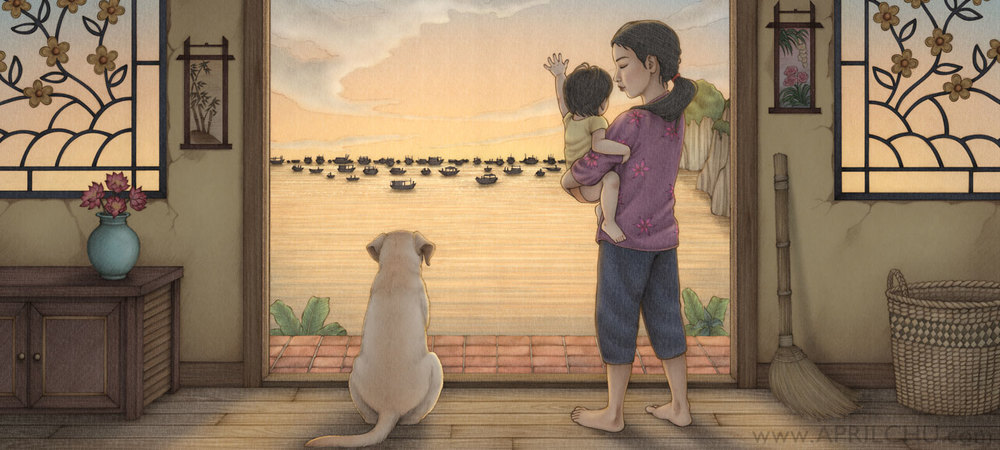
High on a cliff a small house looks out over the sea, where fishermen are poling their craft and setting their nets. “In that house, high above the waves, is a kitchen.” In the kitchen a warm fire blazes under “a pot of steaming noodle soup.” A woman, preparing ingredients for dinner, watches, mixes, and stirs while the pot simmers.

celebrate-picture-books-picture-book-review-in-a-village-by-the-sea-small-house-on-the-cliff

Image copyright April Chu, courtesy of aprilchu.com

“By that woman is a sleepy child, yawning and turning. By that child, tucked in the shadows, is a dusty hole.” If you peer into that hole, you will see something astounding—a brown cricket is “humming and painting.” The cricket, brushes in four hands is surrounded by paints contained in seashells. It is painting a “sudden storm, roaring and flashing.”

celebrate-picture-books-picture-book-review-in-a-village-by-the-sea-small-house-dog-finds-cricket

Image copyright April Chu, courtesy of aprilchu.com

A white boat rides this roiling sea, rising and dipping with the crashing waves as lightning flashes ahead. Under the cover of the boat’s canvas roof a fisherman eyes the threatening sky and waits for the storm to end. In his hand he opens a precious box. Inside are two pictures: one of a small house high on a hill; the other of a smiling woman holding a little child while their dog looks on. Next to these sits a special cricket.

In the painting there is also a small house, and “in that house is a family waiting for [the fisherman] to come home.”

celebrate-picture-books-picture-book-review-in-a-village-by-the-sea-looking-out-the-door

Image copyright April Chu, courtesy of aprilchu.com

Muon Van’s lyrical tale expands and contracts through the eyes of family members to reveal not only the actions and emotions of one afternoon but those that eternally exist in each character’s heart. In the opening page readers view the small house from afar as the husband and father fisherman casts off on his journey. Children are then invited into the kitchen and finally into a small crevice.

Through the cricket’s tiny painting, readers once again see the wider world with its storms and worries. Narrowing the perspective to the fisherman’s view as he looks at his photo box, however, they understand that comfort and reassurance are always close at hand. As the next page zooms out, children are again invited into the little home to join the woman, baby, and vigilant dog as they gaze out into the bay, watching and waiting for one particular boat.

Van’s quiet and simple story holds much universal feeling as it traverses both homey and unpredictable landscapes. As each page depends on the previous one, a gentle suspense builds, enticing readers to follow wherever the story takes them. The inclusion of the “dusty hole,” where a cricket—a symbol of good luck—paints the rest of the story, is irresistible and lends the tale a mystical quality.

celebrate-picture-books-picture-book-review-in-a-village-by-the-sea-on the shore

Image copyright April Chu, courtesy of aprilchu.com

April Chu’s gorgeous paintings transport readers to a Vietnamese fishing village with their delicate and colorful details. The small home glows with the light of paper lanterns and the fire in the stove. As the perspective of the text changes, so does the perspective of Chu’s paintings. When readers peer into the soup pot, bubbling with delicious vegetables, the family’s Labrador gazes up at them, almost begging to know what smells so good. Another bird’s eye view lets kids watch as the dog discovers the hole under the rug, a beautiful device to increase their enjoyment of and wonderment at the story.

Kids will marvel at the cricket’s artistic talent, as the stormy sea churns with whitecaps and lightning flashes from the tip of the small creator’s paintbrush. But it is Chu’s mastery that makes each page so meaningful.

Ages 3 – 10

Creston Books, 2015 | ISBN 978-1939547156

View a porfolio of picture books and other artwork by April Chu on her website!

Marooned without a Compass Day Activity

celebrate-picture-books-picture-book-review-sail-boat-maze

Sailboat Maze


Sometimes getting through a maze is as smooth as sailing on a calm sea—and sometimes the path is a little choppy. Get your pencil ready and chart a path through this printable Sailboat Maze!

Picture Book Review

October 19 – Global Dignity Day

celebrate-picture-books-picture-book-review-wherever-you-go-cover-image

About the Holiday

Established in 2008, Global Dignity Day aspires to inspire and educate young people to understand their self-worth and achieve their goals. Events take place in schools in the Americas, Europe, Asia, the Middle East, Africa, and Oceania. On this day speakers from all walks of life speak to children, revealing experiences from their life and work as it relates to dignity and a sense of self-respect, accomplishment, and interconnectedness.

Students then talk among themselves about what dignity means to them, and many speak their thoughts in front of the class. Following this they write letters to themselves outlining their feelings and aspirations. The letters are collected and handed back to them on the next Global Dignity Day so each child can assess how their life has changed and whether they have achieved their goals or are working toward them.

Today take some time to measure your own sense of dignity and to set goals. Discuss the issue with your child or children and make sure they know that whatever road they choose, they deserve dignity and the opportunities to achieve their full potential.

Wherever You Go

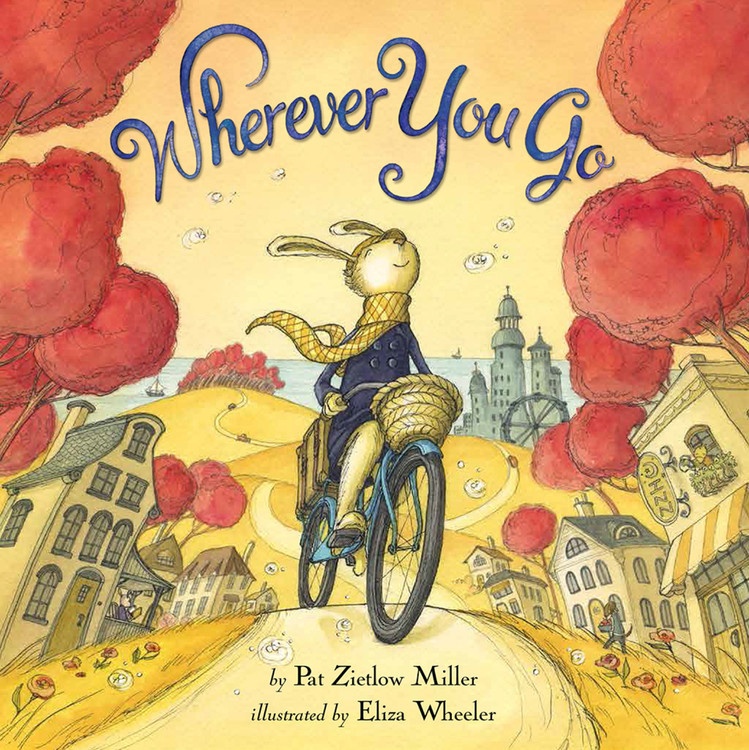
Written by Pat Zietlow Miller | Illustrated by Eliza Wheeler


“When it’s time for a journey, to learn and to grow, / roads guide your footsteps wherever you go. / Roads give you chances to seek and explore. / Want an adventure? / Just open your door.”

So opens this lovely, inspirational picture book that looks at life through the metaphor of those sometimes straightforward, sometime winding, but always intriguing roads. In these pages “Roads…go” over hills, under bridges, and through valleys. They can take you past vast seas and small streams. “Roads…zoom” through brightly lit cities, and “bend,” taking you on detours “you wouldn’t expect, / showing you various ways to connect.”

Roads can bring you closer to your dreams, but also veer away, giving you choices “To go? / Or to stay?” “Roads…reach” from shore to shore or mountain to mountain, “attaching two places that once were apart.” You can “choose to cross over. Follow your heart.” Some roads are small—only built with one lane, but they merge with another “and the two become one.”

celebrate-picture-books-picture-book-review-wherever-you-go-roads-reach

Image copyright Eliza Wheeler, courtesy of hachettebookgroup.com

With time and change “Roads…grow,” becoming longer and wider and more populated with people you know and those you don’t—yet. Often “Roads…wait. For click-clacking trains / and boats with tall sails. / Slow-going hay wagons carrying bales. / Stoplights and crosswalks, a deer with a friend. / Roads sometimes pause, or just come to an end.”

Roads also rise to dizzying heights and the sense of accomplishment is well worth the climb. From on top “Roads…remember. Every life landmark, the big and the small. / The moments you tripped, the times you stood tall.” At last when you’re ready there are roads that will help you find your way home. So… “Which path should you choose? / That’s easy to see. / The one that will take you / where you wish to be.”

Pat Zietlow Miller’s lyrical journey down the paths life presents is an enchanting quiet-time and story-time read. Wherever You Go also offers parents, caregivers, and teachers a wonderful opportunity to discuss the concepts of self-confidence and self-respect and also the idea that life is made up of many different experiences that can be accepted or rejected like alternate routes on a map. Miller’s rhymes flow as smoothly as an wide open country road, soaring and winding on her exquisite descriptions and word choice. Adult readers may well find a catch in their throat as they read the last line to their children.

Eliza Wheeler captures not only the literal meanings of the lines in Wherever You Go, but also the heart and thoughts of life’s travels. Her softly hued watercolor-and-ink illustrations glow with the promise and possibilities encountered on life’s roads. Intricate details fill every page to show readers that their journeys are shared. Children will enjoy following the main character, a rabbit who rides a bike along a chosen path, but they will also love keeping track of traveling companions met along the way.

Wherever You Go is a fabulous book for all children and makes a wonderful gift for baby showers, new babies, and graduations. The gender-neutral text offers inclusiveness for all.

Ages 4 – 9 (and up)

Little Brown and Company, 2015 | ISBN 978-0316400022

Discover more about Pat Zietlow Miller, her books, and her writing life on her website!

View a portfolio of artwork and a gallery of books by Eliza Wheeler on her website!

Before taking off on your journey, watch this Wherever You Go book trailer!

 Global Dignity Day Activity

celebrate-picture-books-picture-book-review-heart-shaped-letter-template

I Love Myself! Heart-Shaped Letter Tempate


Before you start life’s journey and while you travel the roads you choose, it’s important to believe and remember that you are unique, wonderful, talented, and valuable. Children and adults can use this printable heart-shaped I Love Myself! Letter Template to write a letter to themselves or their children about what makes them such a fantastic person and the goals they want to achieve.

Picture Book Review
September 28 – Good Neighbor Day

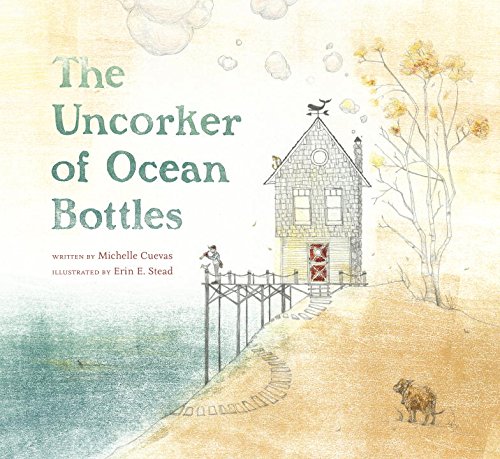
celebrate-picture-books-picture-book-review-the-uncorker-of-ocean-bottles-cover

About the Holiday

With our busy lifestyles it’s sometimes hard to get to know our neighbors. We might give them a quick wave and smile as we’re driving in and out, but finding time to stop and chat can be more difficult. Today’s holiday encourages us to get to know our neighbors and become friends. Why not take the opportunity to say “hi” to someone on your block or in your building or even share a special note of thanks for being a great neighbor!

The Uncorker of Ocean Bottles

Written by Michelle Cuevas | Illustrated by Erin E. Stead


A man in a red stocking cap and clam digger pants sits at his kitchen table with a cup of coffee, sharing space with a tabby cat. His day as the “uncorker of ocean bottles” is about to begin. He follows the path from his isolated house on the hill down to the water’s edge, where he keeps “his eyes on the waves, watchful for a glint of glass.” When he sees a bottle floating past, it is his job to retrieve it and read the message inside.

“Sometimes to deliver a bottle, he needed only to stroll to the nearest village. Other times, he would journey until his compass became rusty and he felt loneliness as sharp as fish scales.” Some messages have been buffeted by the seas for a long time, and while some messages are sad, most make their recipients very happy, “for a letter can hold the treasure of a clam-hugged pearl.”

Although the man doesn’t mind living alone and loves his job, he sometimes feels a niggling wish to receive a letter himself. It is a fleeting dream, however, and as likely as finding a mermaid’s toenail on the beach,” because the man “had no name and no friends who would ever write him a letter.” One day, thoiugh, the man opens a very singular message: “I’m not sure you will get this in time, but I am having a party. Tomorrow, evening tide, at the seashore. Will you please come?”

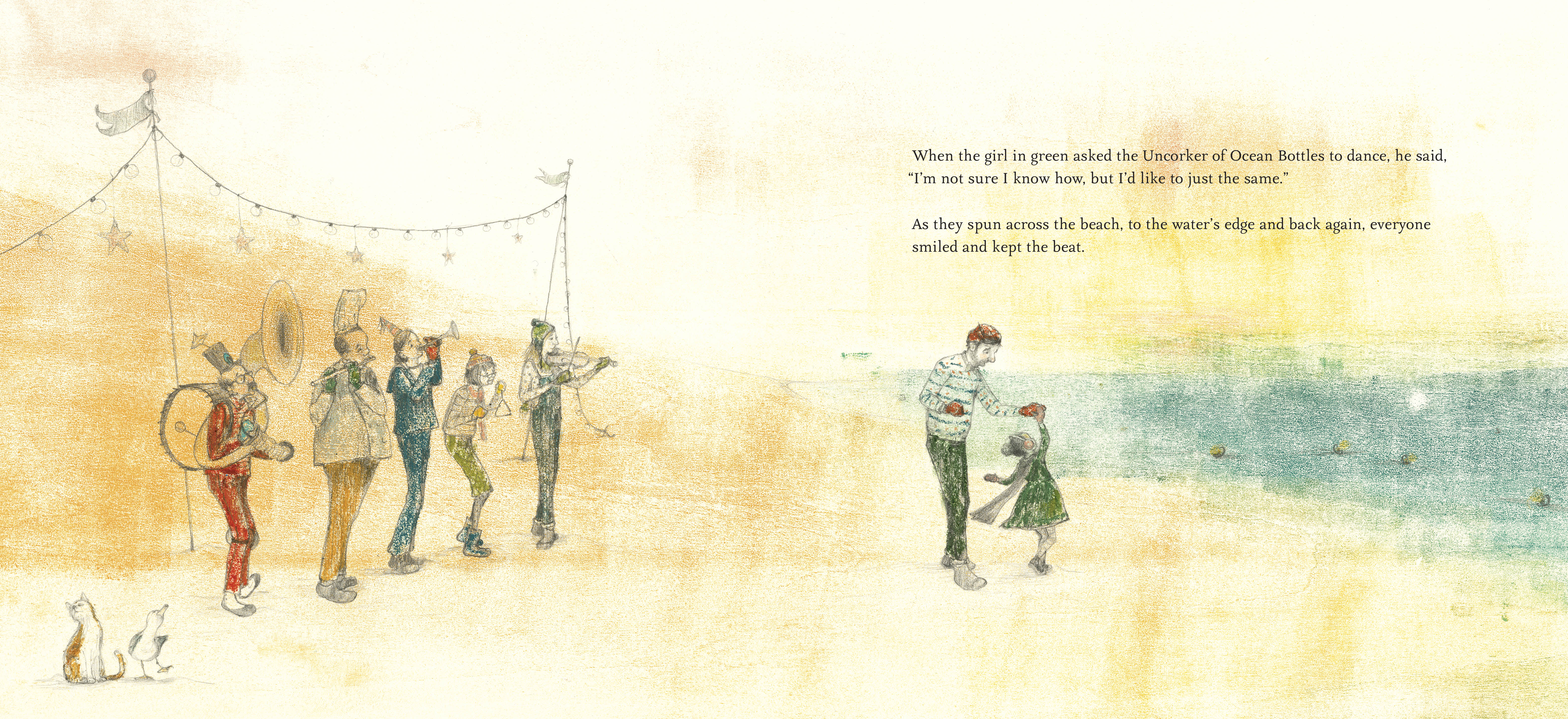
celebrate-picture-books-picture-book-review-the-uncorker-of-ocean-bottles-beach-party

Image copyright Erin E. Stead, text copyright Michelle Cuevas, courtesy of Penguin Random House

Without a name or an address the Uncorker is at a loss as to how to deliver this very important invitation. It is such an intriguing invitation, in fact, that the man finds that he wants to go himself. With reasoned purpose, the Uncorker rides his bicycle into town to investigate who might know something about the letter. The maker of cakes studies the note but can offer no insight beyond the fact that he, too, would like to attend such a get- together.

At the candy shop neither the owner, nor a woman buying candy, nor a young girl know anything about the note, but they too wish they had been invited. The Uncorker meets others—a sailor, a seagull, and a one-man band—but no one can help him. The man goes home feeling dejected. Never before has he failed to deliver a message. Lying awake in bed he decides the only thing he can do is to meet the sender of the letter the next night at the seaside and apologize.

He arrives early with a gift of seashells and discovers the seashore “draped in seaweed and starfish. Candles floated in clamshells, There were sand sculptures and umbrellas.” Standing in the festive atmosphere are the maker of cakes, the candy shop owner, the woman and her daughter, and all the others the Uncorker had met in his search the previous day. As the rest of the group play music, the little girl asks the Uncorker to dance, and although the man says he isn’t sure he knows how, he twirls the little girl on the golden sand.

Later, sitting quietly the party gazes out at the ocean that has brought them together. The Uncorker has opened a gift chosen specifically for him and is enjoying a piece of cake while “his heart was a glass vessel filled to the brim.”

Michelle Cuevas’s unique story of a man adrift in life without the anchor of family or friends is a gorgeously written reminder that companionship is often waiting if we just invite it in. With moving language and fresh, evocative metaphors—in two of my favorites, loneliness is “as sharp as fish scales,” and some messages are “very old, crunchy like leaves in the fall”—Cuevas gently nudges readers to acknowledge the little voice inside and discover what else the world has to offer.

Erin E. Stead’s warm green, gold, and gray-hued illustrations rendered in delicate lines and gossamer washes are as wistful as the Uncorker himself. The man’s calm resolve is echoed in the serene ocean water, the soft companionship of his cat, and the tidy seaside town. There is a wonderful quiet, unhurried feeling to each page which seems to allow not only the Uncorker but the reader to enjoy contemplative moments. The final scene of the party happily enjoying the view and each other’s company fulfills not only the Uncorker’s deepest longing, but that of readers as well.

For it’s beauty and message The Uncorker of Ocean Bottles should find a place on every child’s and school library’s book shelf. Adults will enjoy this book as much as children and it would make a wonderful coffee table book.

Ages 4 and up

Dial Books for Young Readers, Penguin, 2016 | ISBN 978-0803738683

Discover more books by Michelle Cuevas on her website!

View a gallery of artwork and children’s book illustration by Erin E. Stead on her website!

Good Neighbor Day Activity

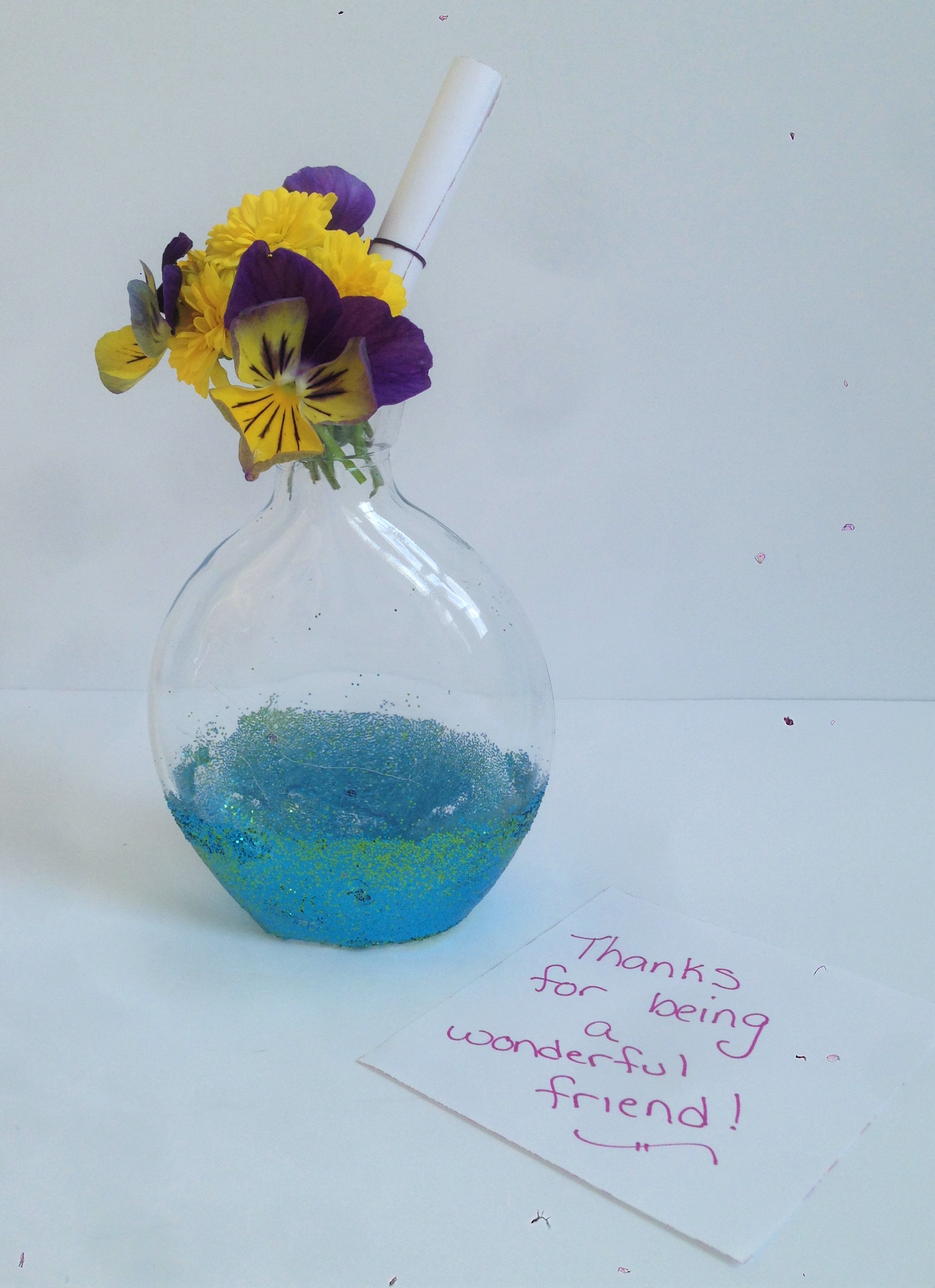
celebrate-picture-books-picture-book-review-bottle-of-friendship-craft

Bottle of Friendship


Sometimes a small gesture means so much more! With this easy craft you can make a unique-to-you message for a neighbor or friend that can later also be used as a vase. After making the Bottle of Friendship, take it to a recipient or leave it on the doorstep as a nice surprise!

Supplies

  • Recycled glass or plastic bottle, or a decorative bottle from a craft store
  • Glitter (Or Glitter Glue)
  • Glue
  • Real or imitation flowers
  • Small piece of paper
  • Thread or string

Directions

  1. Wash and dry the bottle
  2. Along the bottom (or in any design you’d like) spread the glitter glue. If using glue and glitter separately, spread glue and sprinkle with glitter.
  3. Let the bottle dry
  4. Write a note of thanks or friendship on a small piece of paper
  5. Roll and tie with thread or string
  6. Add flowers and the note to your bottle
  7. Deliver!

Picture Book Review