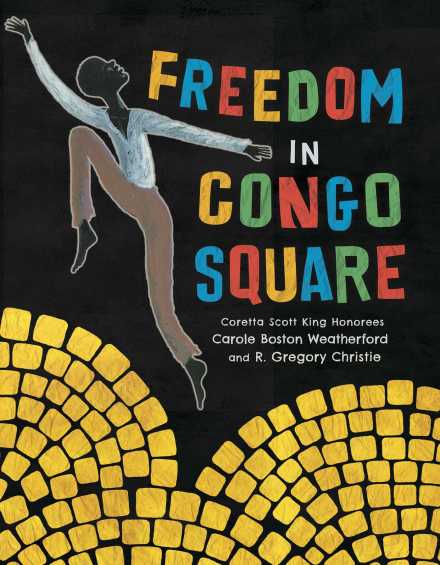
February 1 – National Freedom Day

celebrate-picture-books-picture-book-review-freedom-in-congo-square-cover

About the Holiday

National Freedom Day commemorates the February 1, 1865 signing by President Abraham Lincoln of a joint United States House of Representatives and Senate resolution that outlawed slavery and later became the 13th Amendment to the Constitution. Major Richard Robert Wright Sr., a former slave, called on local and national leaders to meet in Philadelphia and formalize a national day of remembrance. In 1947, a year after Wright’s death, the U.S. Congress passed a bill marking February 1 as National Freedom Day. The proclamation was signed into law on June 30, 1948 by President Harry S Truman. The holiday led to Black History Day, which was later expanded to Black History Month.

Freedom in Congo Square

Written by Carole Boston Weatherford | Illustrated by R. Gregory Christie


From sunup to sundown slaves brought to the state of Louisiana from their homelands in Africa and the West Indies toiled on plantations six days a week. The seventh day, Sunday, was set aside as a day of rest and worship, and in the afternoon people of African descent gathered in Congo Square in the heart of New Orleans to dance, play instruments, and talk. On Monday morning the long week began anew, but the rhythms of Congo Square sustained the men, women, and children through “hogs to slop, / mules to train, and logs to chop. / Slavery was no ways fair. / Six more days to Congo Square.
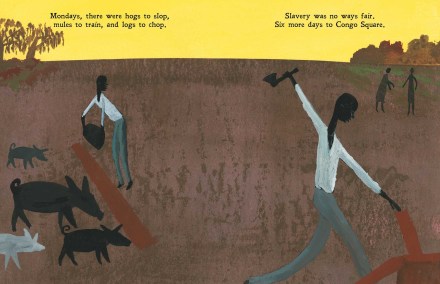
celebrate-picture-books-picture-book-review-freedom-in-congo-square-monday

Image copyright R. Gregory Christie, text Carole Boston Weatherford. Courtesy simonandschuster.com

On Tuesdays, with “cows to feed, / fields to plow, and rows to seed,” five more days stretched out in endless labor. “Wednesdays, there were beds to make, / silver to shine, and bread to bake. / The dreaded lash, too much to bear. / Four more days to Congo Square.” Thursdays came with wash tubs and drying lines, scrub brushes, and brooms. “Spirituals rose from the despair. / Three more days to Congo Square.”
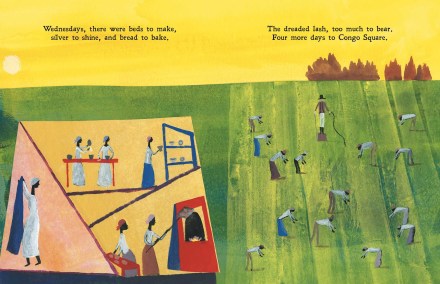
celebrate-picture-books-picture-book-review-freedom-in-congo-square-wednesday

Image copyright R. Gregory Christie, text Carole Boston Weatherford. Courtesy simonandschuster.com

Fridays were spent in back-breaking work and though some brave souls dared to run, most were counting “Two more days to Congo Square.” Saturdays brought no more relief, but the days had whittled down to hours and “Freedom was slaves’ ardent prayer. / One more day to Congo Square.” At last came Sunday afternoon, and slaves and free rushed to Congo Square—“…a market and a gathering ground / where African music could resound.”

They met their kinsmen by nation, tribe, or language and revived their own stories and music played on drums, fiddles, shells, flutes, gourds, and bells that led to chants and dancing. “This piece of earth was a world apart. / Congo Square was freedom’s heart.”
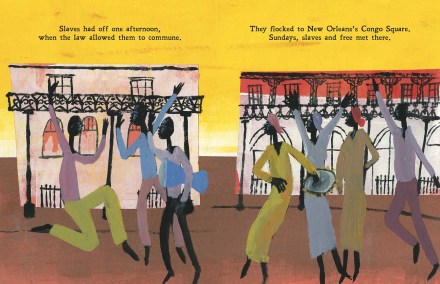
celebrate-picture-books-picture-book-review-freedom-in-congo-square-sunday

Image copyright R. Gregory Christie, text Carole Boston Weatherford. Courtesy simonandschuster.com

Through powerful rhythmic couplets, as spare and austere as the work they describe yet ending in a focal point of hope, Carole Boston Weatherford recreates the steady thrum that resonated in the hearts of slave and free men and women as they anticipated each afternoon in Congo Square.  As the days remaining until Congo Square are counted off, Weatherford’s predominantly one-syllable words form a staccato beat, the pounding of hard, physical work. When Sunday comes and people find joy in their shared music and dance, Weatherford’s phrasing within the same structured couplets rises, employing multi-syllable words that give the verses a pulsing flow that echoes the freedom they find in Congo Square.
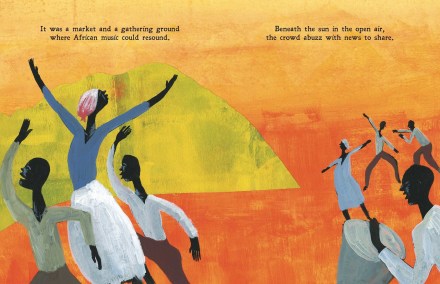
celebrate-picture-books-picture-book-review-freedom-in-congo-square-music-resounded

Image copyright R. Gregory Christie, text Carole Boston Weatherford. Courtesy simonandschuster.com

Gregory Christie’s vivid folk-art illustrations are a perfect complement to Weatherford’s verses. The elongated figures stand tall and proud amidst the fields and workrooms of the plantation. In some scenes the slaves’ angled bodies, leaning over to pick cotton, wash floors, or lift baskets may be bent, but they are not broken, and while two men work on building a wall, they seem to kneel prayerfully as they add another brick. In a moving two-page spread set at night, brown wood-grain houses superimposed with rows of sleeping slaves float on a blue-toned ground below a red sky, reminiscent of ships laden with Africans sailing the Middle Passage of the Atlantic slave trade. As the men and women congregate in Congo Square, Christie’s lithe figures raise their arms and kick their legs in dance. The fiery backgrounds swirl with color as the celebrants jump, stretch, play instruments and move with exultation.

A detailed Forward by historian and Congo Square scholar, Freddi Williams Evans and an Author’s Note following the text reveal more information on the history of Congo Square and its significance to Jazz music.

Freedom in Congo Square is both a heartrending and jubilant book that would make a wonderful and meaningful addition to any child’s home library.

Ages 4 – 8

little bee books, 2016 | ISBN 978-1499801033

Learn more about Carole Boston Weatherford and her books and discover book-related resources on her website!

If you’re lucky enough to live in Decatur, Illinois, you can visit R. Gregory Christie’s unique art studio, art school, and bookstore Gas-Art Gifts Autographed Children’s Bookstore. If you don’t live near Decatur, you can check out all the books, art, and items for sale on the website!

National Freedom Day Activity

celebrate-picture-books-picture-book-review-chalk-garden-st

Freedom Stone


Freedom is a precious right—one that can be represented in different ways by each person. For today’s activity use a brick, paving stone, large stone, or molded plaster of Paris and decorate it with a picture or design that means freedom to you. Then put it in a special place—in a garden, near your front or back door, in your room, or in another spot—where it will remind you of freedom’s gifts.

Supplies

  • Brick, paving stone, large stone, plaster of Paris
  • Paint
  • Plastic gems, bead, or other small objects
  • Strong glue or other adhesive
  • Paint brush

Directions

  1. Create a design that shows what freedom means to you or an object that represents freedom to you
  2. Paint your stone with the design, let dry
  3. Add gems, beads, or other objects
  4. Display your Freedom Stone

Picture Book Review

January 27 – It’s Creativity Month

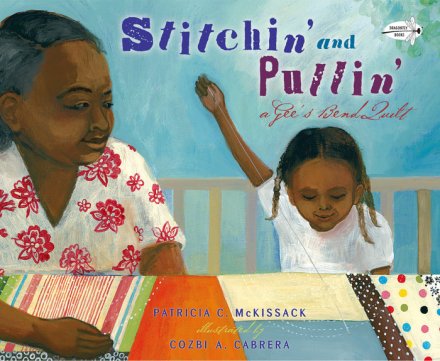
celebrate-picture-books-picture-book-review-stitchin'-and-pullin'-a-gee's-bend-quilt-cover

About the Holiday

January is a time for reflection and new beginnings. What better time to start thinking creatively and finding your inner artist, scientist, inventor, thinker? Go ahead and do the thing you’ve always wanted to do!

Stitchin’ and Pullin’: A Gee’s Bend Quilt

Written by Patricia C. McKissack | Illustrated by Cozbi A. Cabrera

In this story told through poems, a little girl begins telling of her life, starting with a recitation on Gee’s Bend Women: “Gee’s Bend women are / Mothers and Grandmothers / Wives / Sisters and Daughters / Widows.” They are every kind of woman you know, doing every type of work and activity. “Gee’s Bend women are / Talented and Creative / Capable / Makers of artful quilts / Unmatched. / Gee’s Bend women are / Relatives / Neighbors / Friends— / Same as me.”

In Who Would Have Thought, the girl muses on how perceptions change. “For as long as anyone can remember,” she says, the women of Gee’s Bend, Alabama have created quilts that were slept under, sat on, and wrapped around the sick or cold. But now those same quilts are “…hanging on museum walls, / their makers famous….”

When she was just a tot “Baby Girl” reveals in Beneath the Quilting Frame, she played under the quilting frame, listening to her “mama, grandma, and great-gran / as they sewed, talked, sang, and laughed / above my tented playground.” She remembers the “steady fingers  /[that] pieced together colorful scraps of familiar cloth / into something / more lovely / than anything they had been before” as her mother sang her a lullaby.

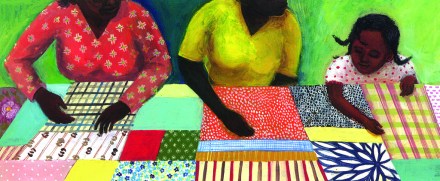
celebrate-picture-books-picture-book-review-stitchin'-and-pullin'-a-gee's-bend-quilt-puzzling-the-pieces

Image copyright Cozbi A. Cabrera, courtesy of Random House Books for Young Readers

In Something Else, “Baby Girl” is growing too big to play beneath the frame. Her legs becoming longer and her mind full of “recipes for eleven kinds of jelly…how to get rid of mold…and the words to a hundred hymns and gospel songs” while she waits her turn at the frame. Finally, in Where to Start? her time comes. The girl asks her mama how to begin and she answers, “‘Look for the heart. / When you find the heart, / your work will leap to life… / strong, beautiful, and… / independent.’”

In Remembering, the girl thinks about how her mama has told her that “cloth has a memory.” As she chooses the cloth that will become her quilt she sees the life and the history in each. 

Nothing Wasted sees Grandma pulling apart a red-and-white gingham dress stitch by stitch to become a quilting square that the girl suddenly knows “will be the heart of my quilt.” In Puzzling the Pieces the girl and her grandma stand over the quilting frame fitting the squares together in the perfect way to tell the girl’s story. Her quilt comes together piece by piece to tell the history of Gee’s Bend in The River Island. The brown strips along three sides mirror the muddy waters surrounding her town. The fourth side is a green strip—“a symbol of the fields where my ancestors / worked cotton from can to can’t— / can see in the morning until / can’t see at night.” Lined up next to the green strip are six squares representing the small communities “where families with / the same name / are not kin by blood / but by plantation.”

Being Discovered is portrayed with “a large smoke-gray square”—the color of the Great Depression and the 15 minutes of fame Gee’s Bend garnered when discovered “by sociologists, historians, / educators, and journalists” who came and went, leaving Gee’s Bend “the way it had been / before being discovered.”

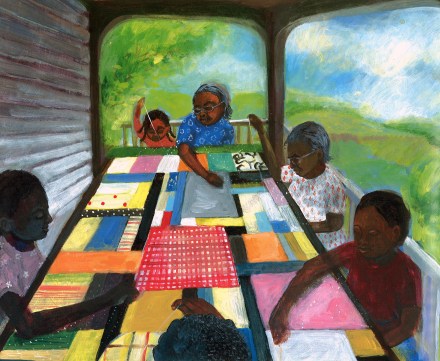
celebrate-picture-books-picture-book-review-stitchin'-and-pullin'-a-gee's-bend-quilt-understanding-comes-later

Image copyright Cozbi A. Cabrera, courtesy of Random House Books for Young Readers

In Colors, the girl’s grandma explains the meanings and feelings behind each colored cloth. “Blue cools. / Red is loud and hard to control, / like fire and a gossiping tongue.” Green, orange, yellow, white, pink, and all the others have their own personalities. “Grandma says, / ‘Colors show how you / feel deep down inside.’”

In Pinky, the harrowing facts of the march from Selma to Montgomery, Alabama frame the story of one marcher, Mr. Willie Quill who broke horses for the Alabama State Mounted Patrol and was saved from the Police attacks when one of the horses he’d trained knew his voice. In Dr. King Brings Hope, the little girl adds a “Patch of bright pink / to remember Pinky’s story. / Next to it I sew / a spotless white patch for the hope Dr. Martin Luther King / brought to the Bend” and goes on to tell how her grandma saw Dr. King at Pleasant Grove Baptist Church and what it meant to her.

By and By follows the girl as she adds “golden thank-yous, for James Reeb,” a “bright blue piece of velvet for Viola Liuzzo,” and a “big plaid people circle of white, black, brown, yellow, and red for Reverend Dr. King, all “killed for believing in justice.”

In the 1960s, The Sewing Bee tells, Gee’s Bend quilters were once again discovered. There were buyers for the handmade quilts, but stipulations. The girl asks her grandma if she was part of the Bee, to which she replies, “‘Yes, / more money. Less freedom. I chose to stay free.’”

At last all of the patches are laid out and the time comes to stitch the girl’s quilt. Five women stand at the frame “all stitchin’ and pullin.’” They work “in a slow and steady rhythm” relaxing and enjoying being together until the quilt is finished. In Finished, the last stitch is sewn, and the thread bitten and knotted. The girl has hundreds of ideas for future quilts. “Quilts that are about me, / the place where I live, / and the people / who have been here for generations.”

Further poems unite the history of “Baby Girl,” her family, and neighbors, and an Author’s Note about quilting and the women of Gee’s Bend follow the text.

Patricia McKessack’s free verse poems capture the close relationships and camaraderie of the generations of women who join around the quilting frame to share and pass down their art and their heart. McKessack’s conversational verses, on page after page like the patches of a quilt, reveal the complexity of this handmade art form in the way intimate talks between friends unveil a life. Readers learn not only about the little girl and her own thoughts, but the history and influence of her immediate family, world events, inspirational figures, and deeply held beliefs that make her who she is and ties her to the other Gee’s Bend women.

Cozbi A. Cabrera’s stunning acrylic paintings take readers inside the heart of the Gee’s Bend women, depicting the girl’s home, the table-sized quilting frame where the women collectively work, the plantations, the protests, and the changes that came but did not unravel the convictions, values, and love of the little girl’s family. Readers can almost hear the talking and singing of the Gee’s Bend women as they stitch their quilts, and the comforting, embracing environment is evident on every page. Cabrera’s portraits of the little girl, her mama, and her grandma are particularly moving. For What Changed, Cabrera depicts a yellow school bus appearing on the dirt road from the right hand corner of the page. In the side mirror a dot of a house comes into view, reminding readers that no matter how far these women are from home, Gee’s Bend is always with them.

Children—and adults—will find Stitchin’ and Pullin’: A Gee’s Bend Quilt inspirational and uplifting. This volume of poetry can be read at one sitting and delved into again and again, making it a wonderful choice for home libraries and a must for school, public, and other libraries.

Ages 5 – 12

Dragonfly Books, Random House, 2016 (paperback edition) | ISBN 978-0399549502

View a gallery  of fashion designs, dolls, and other handmade art work by Cozbi A. Cabrera on her website!

Creativity Month Activity

celebrate-picture-books-picture-book-review-stars-quilt-coloring-page

Design a Quilt Coloring Pages

Quilts are so much more than pieces of material sewn together—they’re life stories! Here are two quilt coloring pages for you to design and color. What does each piece mean to you? As you color each section, write a sentence about an event or thought that is important to you.

Quilt Template 1 | Quilt Template 2

Picture Book Review
January 16 – Martin Luther King Jr. Day

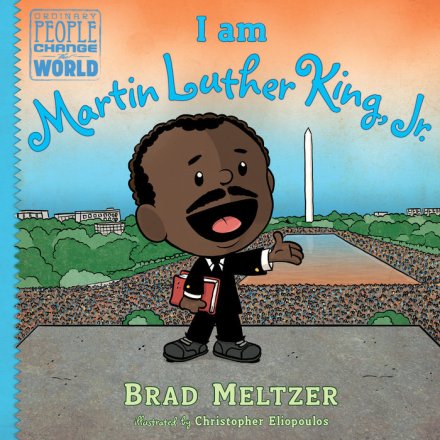
celebrate-picture-books-picture-book-review-i-am-martin-luther-king-jr-cover.png

About the Holiday

Martin Luther King Jr. Day celebrates the life and legacy of the man who dedicated his life and work to teaching—as Coretta Scott King stated—“the values of courage, truth, justice, compassion, dignity, humility and service” and led a non-violent Civil Rights movement to enact racial equality and justice throughout state and federal law. President Ronald Reagan signed the holiday into law in 1983, setting it on the third Monday of January to coincide with Martin Luther King, Jr.’s birthday on January 15. The holiday was officially observed in all 50 states in 2000. Today, learn more about the life and work of Martin Luther King and how you can help promote justice and equality for all. Consider volunteering in your community where help is needed.

I am Martin Luther King, Jr.

Written by Brad Meltzer | Illustrated by Christopher Eliopoulos


Standing inside a church, Martin Luther King, Jr. introduces himself with two anecdotes from his childhood that demonstrate his world outlook. “When I was little,” he says, “I used to get into a lot of accidents.” He was hit in the head by a baseball bat, knocked down by cars and once even “tumbled over our banister, then bounced through an open door into the basement.” While these incidents could have made him cautious, Martin instead was determined to keep “getting back up.” His second influence were the books in which he could find “big words.” Even as a child Martin recognized that “there is power in words.”

celebrate-picture-books-picture-book-review-i-am-martin-luther-king-jr-as-a-child

Image copyright Christopher Eliopoulos, text copyright Brad Meltzer. Courtesty of Dial Books for Young Readers

Before he went to school, Martin relates, his best friend was a white boy whose father owned a nearby store. They did everything together until school started. Then Martin went to a school with only black students while his friend went to a white-students-only school. Soon, Martin’s friend told him his father didn’t want them to play together anymore. Martin was confused. When his parents told him the reason was that they had different colored skin, Martin felt angry. He wanted to hate his friend and his father, but Martin’s parents taught him to love his friend, and his mother told him, “you must never feel that you are less than anyone else.”

It was a difficult lesson when all around him he saw inequality. White schools had better equipment, there were different elevators, bathrooms, water fountains, and other facilities for black people and white people, on buses black riders had to give up their seats to white riders. Everywhere black people and white people were segregated.

celebrate-picture-books-picture-book-review-i-am-martin-luther-king-jr-ice-cream

Image copyright Christopher Eliopoulos, text copyright Brad Meltzer. Courtesty of Dial Books for Young Readers

When Martin was only 15 he was admitted to college. At 19 he entered the seminary where he learned about civil disobedience and nonviolent resistance—ways to use “love and peaceful methods to change unfair things in society.” These were lessons Martin wanted to share with others. His chance to put his thoughts into action came when Rosa Parks was arrested for refusing to relinquish her seat to a white man. Martin advocated a peaceful protest—a boycott of public buses. He reasoned that without the money from black riders, the bus companies would change their policies.

As the boycott began working, Martin gave a speech in Montgomery, Alabama, motivating people to continue their peaceful protest. Martin was put in jail and his house was bombed, but the boycott continued for more than a year. Eventually, the bus companies changed their rules. Other peaceful protests began to take place in restaurants and other public places.

One protest took place in Birmingham, Alabama.  Martin was again put in prison, where he wrote one of his most famous speeches. Children also took part in the Birmingham protest. The Children’s Crusade attracted more than 1,000 kids. On the first day 900 of them were arrested, but that only inspired the children more. On the second day 2,500 children showed up. They stood firm while they were sprayed with water hoses and attacked by police dogs. People—both black and white—watching the news reports were aghast. Three months later the rules began to change.

celebrate-picture-books-picture-book-review-i-am-martin-luther-king-jr-i-have-a-dream-speech

Image copyright Christopher Eliopoulos, text copyright Brad Meltzer. Courtesty of Dial Books for Young Readers

“By the summer of 1963, an estimated one million Americans held their own protests in cities across the country.” Then A. Philip Randolph suggested a single huge march to convince “Congress and the president to pass laws so that no one in America can treat people differently based on skin color.” On August 28, 1963 the March on Washington for Jobs and Freedom took place. Martin gave what may now be considered his most famous speech in which he talked about his dreams for the country, for the people, and for their children.

Although Congress began passing new laws, the ability and right to vote in elections still eluded black people. To change the voting rules another march was organized to walk 54 miles from Selma to Montgomery Alabama. The 600 walkers were met by police who stopped them. Two days later 2,500 activists tried again but could not get through. On the third try 8,000 marchers showed up. This time, with the world watching on television, the activists made it to Montgomery, protected by troops sent by President Johnson.

celebrate-picture-books-picture-book-review-i-am-martin-luther-king-jr-montgomery-march

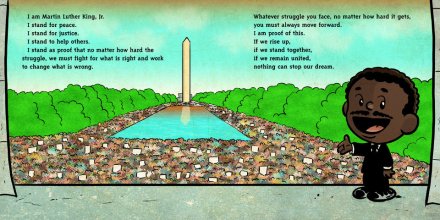
Martin continued to speak out, relating his philosophy and dreams for the nation. “To reach our goals, we must walk the path of peace,” he said. “We must lock arms with our brothers and sisters. We must march together. When we do…Our voices will be heard, and freedom will ring.” The lessons Martin Luther King taught still resonate today. He stands “as proof that no matter how hard the struggle, we must fight for what is right and work to change what is wrong.…if we stand together, if we remain united, nothing can stop our dream.”

celebrate-picture-books-picture-book-review-i-am-martin-luther-king-jr

Brad Meltzer’s Ordinary People Change the World: I am… series of biographies are well-known for showing young readers that they can achieve their dreams and make a difference no matter what those hopes may be. In his biography of Martin Luther King, Jr., Meltzer depicts several incidents from King’s childhood and early adulthood that influenced his future work. These help readers understand not only the types of prejudice King and other African Americans experienced, but also the people who inspired his philosophy of peace.

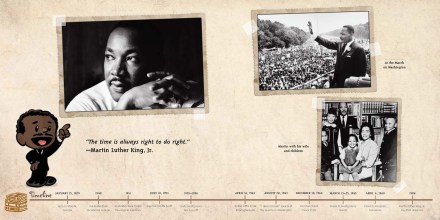
Meltzer’s inclusion of King’s imprisonments and the violence that met the peaceful protesters deepens the understanding of the dangers King and other protesters faced, and provides an opportunity to open a discussion between adults and children about those times and what they now see in the news. Meltzer’s description of the Children’s Crusade will inspire readers, making them proud of children in the past and stirring them to actions of their own. Sections from King’s Letter from Birmingham Jail and his most famous speeches are presented in speech bubbles. The text is followed by photographs of Martin Luther King, Jr. with his family and at the March on Washington as well as a timeline of his life. Sources and resources for further reading are also included.

celebrate-picture-books-picture-book-review-i-am-martin-luther-king-jr-timeline

In keeping with the style of all of Meltzer’s and Christopher Eliopoulos’s Ordinary People Change the World: I am… biographies, the illustrations are vibrant and cartoon-inspired. Martin Luther King, Jr. is depicted with the size of a child but the features of an adult, reinforcing the idea contained in the text of the dual nature of the future adult residing in the child and the ideals of the child remaining in the adult that appeals to ambitious young readers. Speech bubbles highlight text that carry emotional dialogue. Settings, including churches, Birmingham jail, Washington DC, the Edmund Pettus Bridge in Alabama, and the Martin Luther King, Jr. monument give children a look at the cities and places described in the text.

For young readers, I am Martin Luther King, Jr. offers a comprehensive biography of the man who was a national and world leader in the fight for equal rights for all people and makes an excellent starting place for classroom lessons and personal discussions.

Ages 5 – 8

Dial Books for Young Readers, 2016 | ISBN 978-0525428527

Discover more about Brad Meltzer and his books for adults and children as well as other goodies on his website!

Learn more about Christopher Eliopoulos, his books, and his comics on his website!

Martin Luther King Jr. Day Activity

celebrate-picture-books-picture-book-review-martin-luther-king-jr-coloring-page

Martin Luther King, Jr. Portrait


Color this printable Martin Luther King, Jr. Portrait and then hang it in your room or locker to inspire you!

Picture Book Review

January 2 – Motivation and Inspiration Day

celebrate-picture-books-picture-book-review-radiant-child-cover

About the Holiday

While Motivation and Inspiration Day was instituted in reaction to the 9/11 attacks, the holiday’s influence and meaning has grown and now includes world-wide participation. Falling on the second day of the year, it encourages us to reflect on our lives—where we are and where we want to go. Take some time to consider what motivates and inspires you and follow those inner and external voices to help you achieve your dreams.

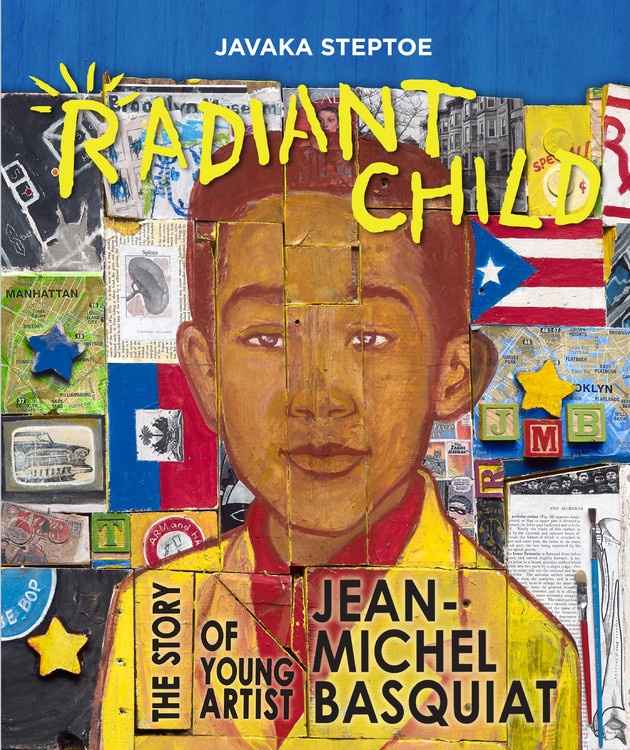
Radiant Child: The Story of Young Artist Jean-Michel Basquiat

By Javaka Steptoe


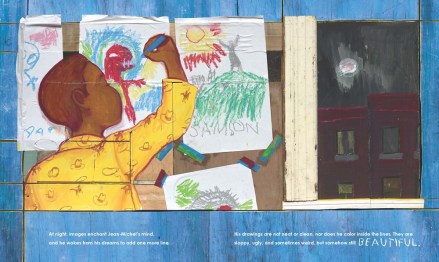
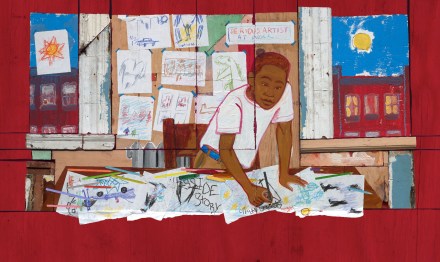
“Somewhere in Brooklyn, between hearts that thump, double Dutch, and hopscotch / and salty mouths that slurp sweet ice, a little boy dreams of being a famous artist.” All day Jean-Michel sits surrounded by colored pencils and “a storm of papers” and draws. As he sleeps his dreams swirl with images. When he wakes he adds to his drawings, scribbling away. What he creates is “sloppy, ugly, and sometimes weird, but somehow still beautiful.”

celebrate-picture-books-picture-book-review-radiant-child-beautiful-art

Image and text copyright Javaka Steptoe, courtesy of Little, Brown Books for Young People

Jean-Michel’s talent comes from his Puerto Rican mother, who has a natural sense of style and design and who always makes time to draw with her son, lying on the floor next to him. She takes Jean-Michel to art museums and theaters and reads poetry to him, but she also shows him the art of the city—its sounds, sights, style, and “patchwork” colors. Jean-Michel loves to visit the museum and read about the artwork and the artists. From these stories he “learns what it means to be a famous artist.”

When Jean-Michel is seriously injured in a car accident, his world seems scary and confusing. He mother gives him an anatomy book, which he memorizes. It erases his fears and becomes influential in his work. After returning home his life changes when his mother suffers a breakdown and can no longer live at home. “He tries drawing the terrible out of his blues, but things are not the same.” Jean-Michel visits his mother when he can, “always bringing his artwork to show, telling her that one day it will be in a museum, ‘when I am a famous artist.’”

celebrate-picture-books-picture-book-review-radiant-child-drawing

Image and text copyright Javaka Steptoe, courtesy of Little, Brown Books for Young People

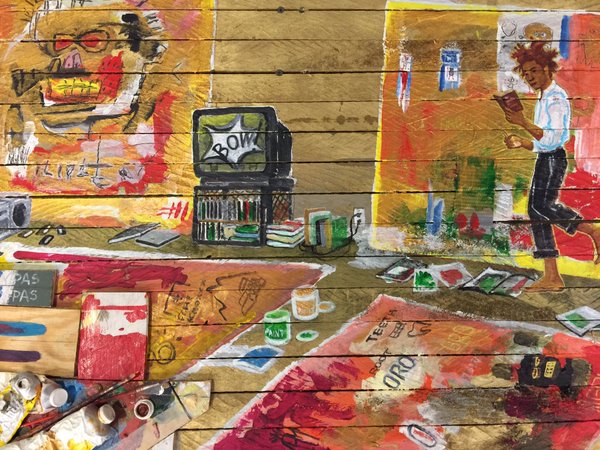
As a teenager, Jean-Michel follows his dream, moving from Brooklyn to New York City. There he stays with friends, painting, creating collages, and writing poems on paper strewn about him. At night he paints on city walls, trash cans, and other urban canvases. His art, signed ‘Samoo,’ attracts attention. People wonder, “‘Who is Samoo?’”

Soon his art can be found in art galleries and hanging in the homes of the people who buy his work. Jean-Michel continues to create, listening to “a sound track that is all his own.” Through talent, inspiration, and his mother’s loving influence, Jean-Michel Basquiat conquered the art world, becoming a king among artists, and fulfilling his desire to be a famous artist.

An extensive Author’s Note about Jean-Michel Basquait’s life, including his struggles with addiction and his death in 1988, the motifs and symbolism in his work that now is displayed in museums around the world and sells for millions of dollars, and a personal comment on the impact Basquait’s art had on the author follow the text.

celebrate-picture-books-picture-book-review-radiant-child-studio

Image and text copyright Javaka Steptoe, courtesy of Little, Brown Books for Young People

Javaka Steptoe’s compelling biography of this complex, brilliant artist who people called “radiant, wild, a genius child” beautifully brings to life the inspirations and motivations that fueled his unique and intense talent. Steptoe delivers the story in staccato and flowing sentences, using consonance, assonance, repetition, the rhythms of a poet. Taking the reader from Jean-Michel’s childhood to adulthood to show how maintaining his focused determination, self-confidence, and persistence over many years led to his ultimately becoming a famous artist demonstrates that success is not a matter of luck, but of belief in oneself despite obstacles. Steptoe sensitively addresses the serious injury Basquiat suffered, his mother’s mental illness and Basquiat’s continued love for her, and his unsettled teenage years to complete this far-reaching life story.

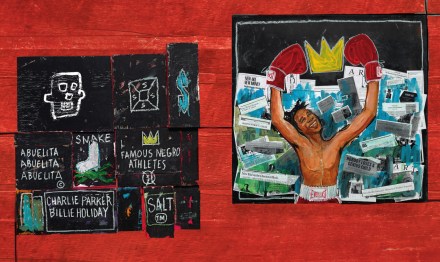
celebrate-picture-books-picture-book-review-radiant-child-boxing-image

Image and text copyright Javaka Steptoe, courtesy of Little, Brown Books for Young People

Steptoe’s mixed-media paintings were created on found wood from neighborhoods across New York City. While Steptoe does not reproduce any of Basquiat’s work, he states that readers will find “original pieces that were inspired by him and my interpretations of his paintings and designs.” As befitting his subject, Steptoe offers pages that burst with vibrant color and intricate details and beat with the pulse of the city, the people, the dreams, and the imagination that Basquiat transcribed onto paper, walls, and canvas. Part collage, part fine art, Steptoe’s illustrations will fascinate children and entice them to linger to take in all the emotion and meaning in each. The final spread, a crowd scene made up of photographs, sets Basquiat in the midst of people whom he and his art continue to inspire.

Radiant Child: The Story of Young Artist Jean-Michel Basquiat offers children an inspirational model of creativity, compassion, and confidence no matter where their talents lie. The book is an excellent choice for school, public, and home libraries.

Ages 6 – 10

Little, Brown Books for Young Readers, 2016 | ISBN 978-0316213882

Learn more about Javaka Steptoe, his books, art exhibitions, and life on his website!

Motivation and Inspiration Day Activity

celebrate-picture-books-picture-book-review-motivation-and-inspiration-day-craft

Found-Item Crafts


Each person finds motivation and inspiration in different things, places, and people. Today, try to create something new from the materials around you. Boxes, bottles, wire, magazines, cloth, wood, sponges—almost anything—can be transformed with some imagination. With those old socks, corks, flower pots, candle stubs, bits of ribbon, clementine crate, paint, glitter, beads, and more, you can make something useful, a decoration for your room, or even a gift for a friend!

Picture Book Review

December 29 – Tick Tock Day

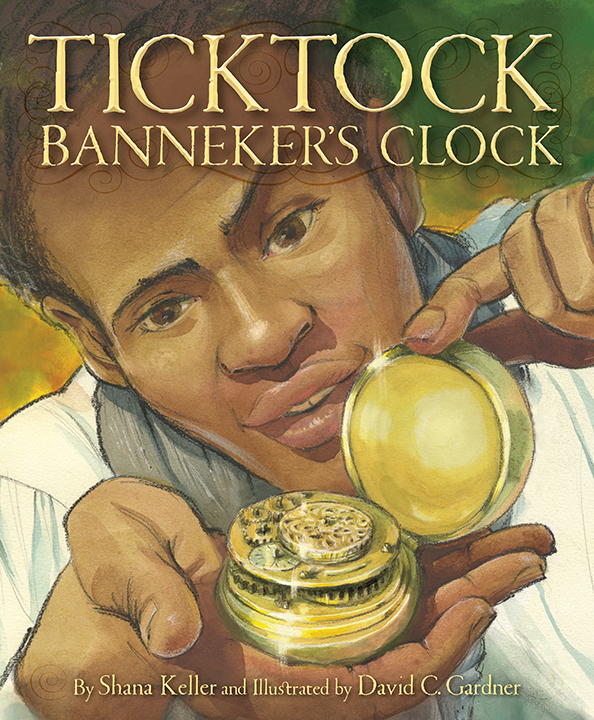
celebrate-picture-books-picture-book-review-ticktock-banneker's-clock-cover

About the Holiday

As the year winds down Tick Tock Day reminds us of the passage of time and encourages us to examine our life and find opportunities to accomplish the things we really want to. While the day only has 24 hours, a little creative scheduling, letting go of those tasks that aren’t so important, and even saying “no,” can help us achieve the things that matter.

Ticktock Banneker’s Clock

Written by Shana Keller | Illustrated by David C. Gardner


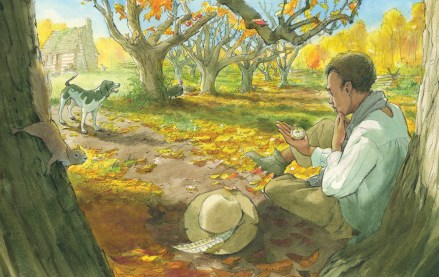
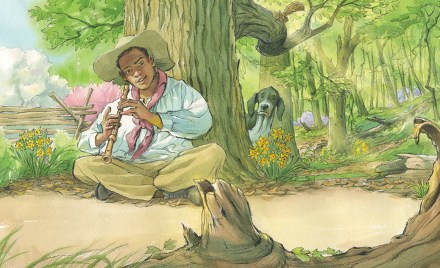
With winter approaching Benjamin Banneker has finished up his autumn chores and is looking forward to time to indulge his creative dreams. He finds his favorite spot under the chestnut tree—the place where during the summer he plays his violin and flute, “blending his soft music with the bird’s songs”—and pulls out a pocket watch he has borrowed from a gentleman. Benjamin is fascinated by the ticking and the movement of the small hands. He carefully opens the back of the watch and discovers “a world of wonderful whirls. There were gears of all shapes and sizes. Such a tiny maze!”

celebrate-picture-books-picture-book-review-ticktock-banneker's-clock-studying-pocket-watch

Image copyright David C. Gardner, courtesy of flyingdogstudio.com

The miniature timepiece is mesmerizing, but Benjamin’s mind holds a challenge—a big challenge. He envisions a large clock, one that chimes to tell the time. Remembering his math skills, Benjamin mulls over the scale needed to turn “something small into something big.” As the snow falls, Benjamin goes to work. First, he dismantles the pocket watch and draws careful diagrams of the gears and workings. Then he begins transposing these into larger drawings.

celebrate-picture-books-picture-book-review-ticktock-banneker's-clock-flute

Image copyright David C. Gardner, courtesy of flyingdogstudio.com

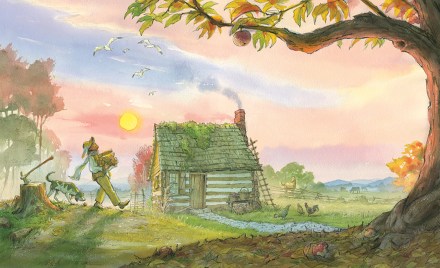
With the coming of spring and his drawings finished, Benjamin plans how he will build his clock. While the little pocket watch is made of metal, that material is much too expensive for a large version. As he ponders the problem under his favorite tree, Benjamin looks around him. Suddenly he knows! The answer is “right in front of him, even in his hands! The very instrument he played was made of wood!” There is a forest of trees on his farm, and this material is free.

During the summer between farm chores, Benjamin uses “every spare moment he had to find the perfect pieces of wood.” Once he has enough he begins to convert his drawings into carvings, whittling the gears and other pieces he will need. Soon, however, he becomes discouraged. The wood begins to split and come apart. Benjamin thinks about how his family cures tobacco leaves—drying them out until all the moisture evaporates. Perhaps, he thinks, he can do the same with wood to make it stronger. The process would take months, but Benjamin is patient.

celebrate-picture-books-picture-book-review-ticktock-banneker's-clock-carving

Image copyright David C. Gardner, courtesy of flyingdogstudio.com

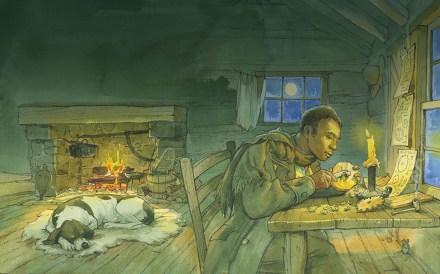
Winter has come around again, and the wood is finally ready. In his warm house Benjamin sets about carving again. During the day he carves near the sunny window, and at night he works by candlelight. At last he has all the parts he needs to build his clock. Gears, wheels, tiny pins, and the boards that will become the case are scattered across Benjamin’s work table. There is only one piece missing. A piece that cannot be made of wood—the bell!

Benjamin buys a bell from a metalsmith, and back home begins to build his clock. With his drawings to guide him, he fits the gears together and then sets the hands to “match up perfectly with the second, minute, and hour of each day. It took more than one try, but Benjamin had learned to be patient.” Using the sun to determine the correct time, Benjamin positions the hands and steps back. His clock works! “The little iron bell chimed every hour, on the dot, for the next forty years.” Benjamin becomes famous, and neighbors from near and far come “to see his amazing invention.”  

An Author’s Note expanding on Benjamin Banneker’s life and work follows the text.

celebrate-picture-books-picture-book-review-ticktock-banneker's-clock-winter

Image copyright David C. Gardner, courtesy of flyingdogstudio.com

With lyrical language that glides as smoothly as a well-oiled timepiece, Shana Keller reveals the remarkable story of Benjamin Banneker, born free during the time of slavery, who possessed exceptional math and scientific skills and used them to help his friends and neighbors and to make real his vision of a striking clock. Keller’s detailed and descriptive storytelling animates this life story, allowing readers to take the journey with Banneker as he experiences excitement, setbacks, and ultimately success. Banneker, embodying determination, persistence, and creativity, is an excellent role model for kids with big dreams of their own.

celebrate-picture-books-picture-book-review-ticktock-banneker's-clock-studying-fall-chores

Image copyright David C. Gardner, courtesy of flyingdogstudio.com

David C. Gardner’s lovely full-page and two-page-spread illustrations gloriously portray Benjamin Banneker’s farm and home as well as his dedicated commitment to building a striking clock despite—or perhaps spurred on by—the challenges he faced. Gardner’s detailed images set the biography firmly in its time period, letting children experience farm and home life in the 1750s. Banneker carries wooden buckets to feed the animals, tobacco leaves hang in a dry shed, a fire blazes in a large, open fireplace, and a candle flickers as Banneker whittles wheels and gears with his pocket knife. The realistic paintings that depict Banneker’s emotions as he imagines creating a large clock, overcomes obstacles, and studiously works on his drawings and carvings will inspire readers to attempt their own inventions—whatever they may be.

For any would-be inventors, history lovers, tinkerers, and science buffs, Ticktock Banneker’s Clock is a stirring biography that would make an inspirational addition to home, school and public libraries.

Ages 6 – 10

Sleeping Bear Press, 2016 | ISBN 978-1585369560

Learn more about Shana Keller and her work on her website!

Discover a portfolio of picture book art, fine art, animation, and videos by David C. Gardner on his website!

Tick Tock Day Activity

celebrate-picture-books-picture-book-review-cuckoo-clock-coloring-page

Cuckoo Clock Coloring Page


The chirp of a cuckoo clock keeps you on time—or at least aware of the passing of time! Here’s a printable Cuckoo Clock Coloring Page for you to enjoy!

Picture Book Review
November 9 – National Aviation History Month

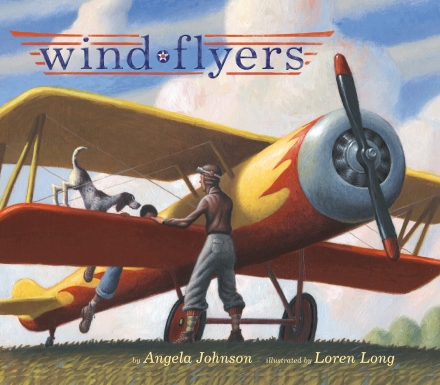
celebrate-picture-books-picture-book-review-wind-fliers-cover

About the Holiday

If you look back in history you see that people have always been fascinated with flight. The first kite was invented in 1000 BCE in China; around 400 BCE Archytas of Tarentum developed a steam-powered pigeon; and most people are familiar with the designs of flying machines that Leonardo de Vinci created in the late 1400s. An important discovery that led inventors in the right direction came in 1680 when an Italian mathematician determined that human muscles were incompatible with flight.

Zip ahead about 100 years and the first hot-air balloon flight was undertaken, which led to more and more complex technology, resulting in Wilbur and Orville Wright’s flight in 1903. From there, it seemed, the sky was the limit. Amelia Earhart became the first woman to complete a trans-Atlantic Ocean solo flight in 1932, and in 1947 Charles Yeager broke the sound barrier. But it’s astounding to think that from that modest 12-second first flight by the Wright Brothers to the first man in space—Soviet cosmonaut Yuri Gagarin—it took only 58 years! Today astronauts from countries around the world live and work in the International Space Station, and spacecraft are traversing deep space.

Wind Flyers

Written by Angela Johnson | Illustrated by Loren Long

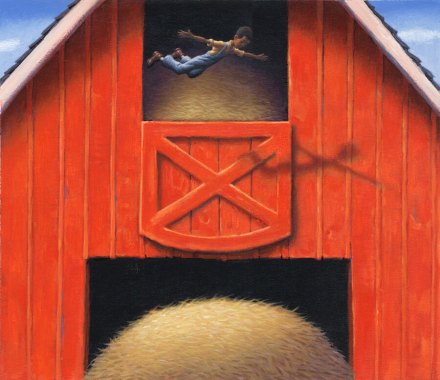
With pride a young African-American boy tells the story of his great-great-uncle who was a Tuskegee Airman in World War II. His uncle was “a smooth wind flyer. A Tuskegee wind flyer…,” the boy says. He knows well his uncle’s history—how like a bird, his uncle believed he was born to fly. “With his arms flapping, he jumped off a chicken coop at the age of five,” and when he was only seven he soared from a lofty barn into a pile of hay. His first real flight came at the age of eleven, when he paid 75 cents to be a passenger with a barnstormer.

celebrate-picture-books-picture-book-review-wind-fliers-jumping-from-hayloft

Image copyright Loren Long, courtesy of Simon & Schuster

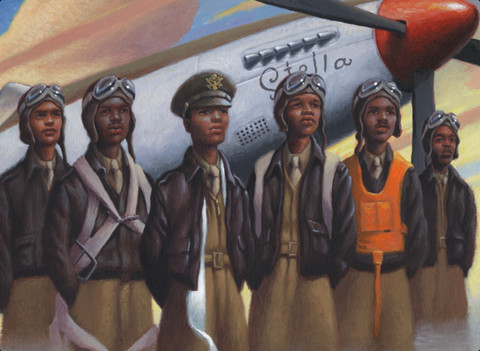
Flying over lakes and fields, his uncle felt as if he were in Heaven, among clouds “like soft blankets, saying, ‘Come on in, get warm. Stay awhile and be a wind flyer too.’” The experience changed him forever. In fact he “cried when they landed because then he knew what it was like to go into the wind, against the wind, beyond the wind.” As a young adult his uncle contributed his dream and his skills to the World War II effort, becoming a Tuskegee Airman, one of the first black pilots in the United States military.

celebrate-picture-books-picture-book-review-wind-fliers-tuskegee-arimen

Image copyright Loren Long, courtesy of Simon & Schuster

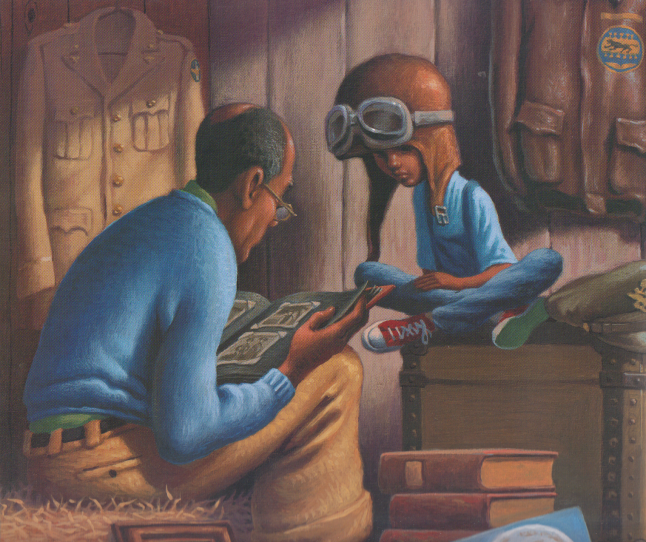
As the pair sit in the uncle’s barn, surrounded by his military uniform, leather jacket, and other memories of his flying career—after the war to continue flying he became a crop duster—the pair look through old photographs, seeing once more those young and brave pilots—the Tuskegee wind flyers. Planes are different now, Uncle says, but the clouds remain the same. The boy and his uncle climb to the highest point of the uncle’s barn to watch the jets—and in those moments they once more become the smooth wind flyers, flying into the wind and beyond.

celebrate-picture-books-picture-book-review-wind-fliers-grandfather-and-grandson

Image copyright Loren Long, courtesy of Simon & Schuster

In her soaring, rhythmic language, Angela Johnson captures the dreams and yearning of a young boy whose greatest desire is to fly among the clouds. Her combination of straight narration with lyrical lines as he joins the Tuskegee Airman in World War II enhances the sense of achievement and pride the young pilots felt. The structure of the story is well chosen, as relating the uncle’s life from childhood through old age through the eyes of his nephew strengthens the themes of strong familial relationships as well as shared dreams across generations.

Loren Long gives Wind Flyers additional power with his strong, vibrant paintings. Two-page spreads provide a sense of the vastness of the skies that so enticed the young would-be pilot. Even the clouds echo the emotion of the page—fluffy, floating, and alive in the flight scenes while linear, flat, and stationary when the plane and the uncle are earthbound. Realistic portrayals of the boy, his uncle, and the other Tuskegee Airmen are reminiscent of the WPA murals of the 1940s while still setting this book firmly in today for a new generation.

Wind Flyers is a wonderful book to share with aviation buffs, budding historians, and dreamers of all types and would make a welcome thoughtful book for quiet story times.

Ages 4 – 9

Simon & Schuster Books for Young People, 2007 | ISBN 978-0689848797

To learn more about Angela Johnson‘s books for all ages, visit her website!

View a gallery of artwork for picture books and other media by Loren Long, visit his website!

National Aviation History Month Activity

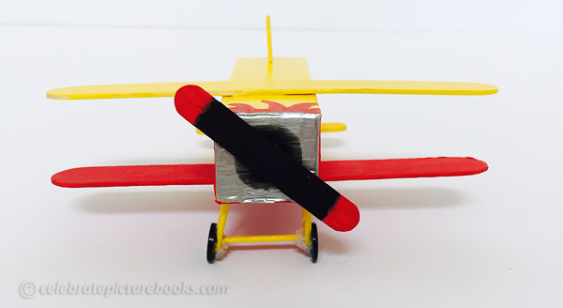
CPB - Biplane side

Head in the Clouds Box Biplane

If you love airplanes and flying, you’ll have fun making your own plane from recycled materials! Use your creativity to decorate your plane while you imagine yourself flying through the clouds on a beautiful day. Younger children will have fun sharing this activity with an adult or older sibling too!

Supplies

  • Travel-size toothpaste box
  • 3 6-inch x 1/2-inch craft sticks
  • 2  2 1/2-inch x 7/8-inch mini craft sticks
  • 5 Round toothpicks, with points cut off
  • Paint in whatever colors you like for your design
  • 4 small buttons 
  • 2 mini buttons
  • Paint brushes
  • Strong glue or glue gun

CPB - Biplane front

Directions

  1. Empty toothpaste box
  2. Paint toothpaste box and decorate it
  3. Paint the craft sticks and 5 toothpicks
  4. Paint one small craft stick to be the propeller
  5. Let all objects dry

To assemble the biplane

  1. For the Bottom Wing – Glue one 6-inch-long craft stick to the bottom of the plane about 1 inch from the end of the box that is the front of the plane
  2. For the Top Wing – Glue the other 6-inch-long craft stick to the top of the plane about 1 inch from the front of the plane
  3. For the Tail – Glue one mini craft stick to the bottom of the box about ¾ inches from the end that is the back of the plane
  4. For the Vertical Rudder – Cut the end from one of the painted 6-inch-long craft sticks, glue this to the back of the box, placing it perpendicular against the edge and half-way between each side

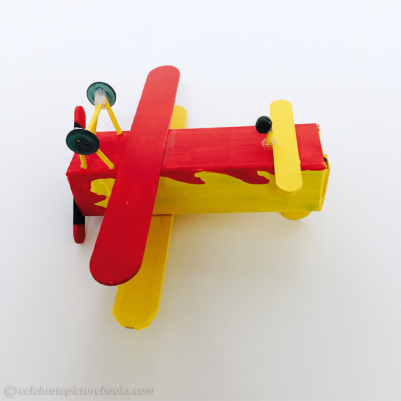
CPB - Biplane bottom

To assemble the front wheels

  1. Cut 4 painted toothpicks to a length of ¾-inches long
  2. Cut one painted toothpick to a length of 1-inch long
  3. Glue 2 of the 3/4-inch toothpicks to the back of 1 button, the ends of the toothpicks on the button should be touching and the other end apart so the toothpicks form a V
  4. Repeat the above step for the other wheel
  5. Let the glue dry
  6. Glue the 1-inch long toothpick between the wheels at the center of each wheel to keep them together and give them stability. Let dry

To make the back wheel

  1. Cut two ¼-inch lengths of painted toothpick and glue them together. Let dry
  2. Glue two mini buttons together to form the back wheel. Let dry
  3. Glue the ¼-inch toothpicks to the mini buttons. Let dry
  4. Glue these to the bottom of the plane in the center of the box directly in front of and touching the tail

Display your biplane!

Picture Book Review
Picture Book Review
August 15 – National Relaxation Day

celebrate-picture-books-picture-book-review-whoosh!-lonnie-johnson's-super-soaking-stream-of-inventions-cover

About the Holiday

Relaxation Day was founded in 1985 by then fourth-grader Sean Moeller, who already knew a thing or two about balance in life when he suggested that “cleaning and real work are not part of relaxation.” Today’s holiday gives you permission to kick back and enjoy yourself. The subject of today’s book invented a great way to take advantage of a day off—and also demonstrates that sometimes work and relaxation go hand-in-hand!

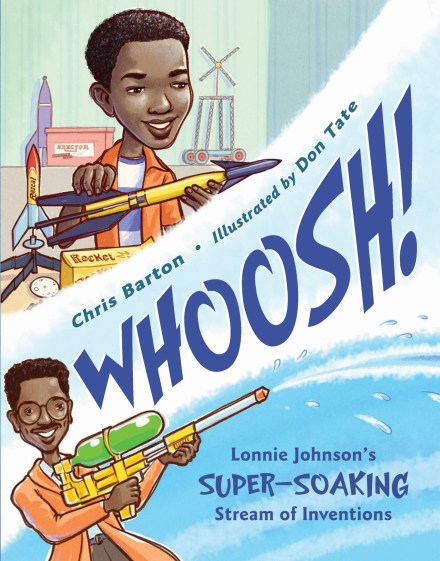
WHOOSH! Lonnie Johnson’s Super-Soaking Stream of Inventions

Written by Chris Barton | Illustrated by Don Tate


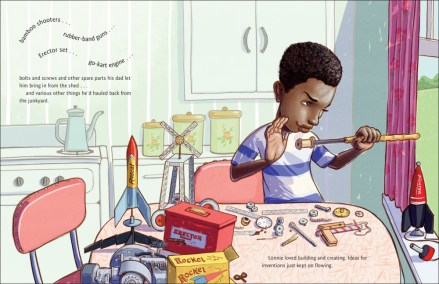
Lonnie Johnson had a way with stuff. In his hands bolts and screws, gears and springs, spools, clothespins, “spare parts his dad let him bring in from the shed, and various other things he’d hauled back from the junkyard” fueled Lonnie’s ideas for inventions and rocket ships. The kids at school loved to watch him launch the rockets he’d devised on the playground. Lonnie wanted to have a career as an engineer. Getting there took a lot of determination and courage. Once, the results of a standardized test said that he would not make a good engineer. Lonnie felt discouraged, but he knew that the person who had graded his test didn’t know him—or Linex.
celebrate-picture-books-picture-book-review-whoosh!-lonnie-johnson's-super-soaking-stream-of-inventions-young-lonnie-inventing

Image copyright Don Tate, courtesy of charlesbridge.com

Linex was the robot Lonnie had built from scrap metal. “Compressed –air cylinders and valves allowed Linex’s body to turn and its arms to move. The switches came from an old, broken jukebox. Lonnie used a tape recorder to program Linex, and as a bonus the reels looked like eyes.” Lonnie’s goal was to enter Linex in a science fair, but first he wanted to be able to program it. It took several years before he discovered how. Using his little sister’s walkie-talkie, Lonnie took Linex to the “1968 science fair at the University of Alabama—where only five years earlier, African American students hadn’t even been allowed.” Lonnie’s team won first place.

Lonnie went to college at Tuskegee Institute, where he realized his dream of becoming an engineer. His career “took him beyond Alabama—way beyond.”  He went to work for NASA. Before the orbiter Galileo could be sent to Jupiter, Lonnie developed a system that would ensure the craft would have a constant supply of power for its computer memory in case the main power was lost. Some fellow scientists doubted his idea would work, but it did. “As it photographed Jupiter and its moons, Galileo was supported by the power package that Lonnie designed.”

celebrate-picture-books-picture-book-review-whoosh!-lonnie-johnson's-super-soaking-stream-of-inventions-linex

Image copyright Don Tate, courtesy of charlesbridge.com

Even though Lonnie worked for NASA, he continued tinkering with his own ideas—in his own workshop. One problem he was trying to solve involved the need for the world’s refrigerators and air conditioners to have a cooling system that didn’t use the damaging chemical R-12. “He had an idea for using water and air pressure instead.” He built a prototype and experimented with it in his bathroom sink. When he turned his pump and nozzle on, a stream of water blasted across the room.

Suddenly, Lonnie saw another use for his invention—as a water gun. He created a design small enough for children’s hands, and tested it at a picnic, where it was a hit. Lonnie took his idea to a toy company…and another…and another. Finally one company agreed to make his water gun. Spurred on by this success, Lonnie found investors to help him build other original inventions: “a water-propelled toy airplane, two kinds of engines, and his cooling system” that had led to the water gun. He even quit his day job to devote his time to inventing.

But things don’t always work out. Each project fell through—even the water gun. It was a scary time as he and his family had to move out of their house and into an apartment. But Lonnie believed in himself. He took his water gun to another toy company. In 1989 he found a toy company willing to take a look. Lonnie made the trip to Philadelphia and wowed the executives with his invention.

celebrate-picture-books-picture-book-review-whoosh!-lonnie-johnson's-super-soaking-stream-of-inventions-water-powered-nozzle

Image copyright Don Tate, courtesy of charlesbridge.com

Now kids everywhere enjoy the fun of the Super Soaker. Today, Lonnie can be found in his workshop doing what he loves: “facing challenges, solving problems and building things” because “his ideas just keep on flowing.”

Chris Barton’s biography of Lonnie Johnson is a fascinating look at a man who succeeds in turning “No” into “Yes” by the power of his intelligence, ideas, and determination. Kids will love hearing about how one of their favorite toys came to be and will be inspired to chase their own dreams despite challenges and setbacks. Barton’s detailed narration provides a full picture of Lonnie Johnson and his times, specifics that attract and inform like-minded kids. Including the results of Lonnie’s exam should encourage kids who think differently. The story is enhanced by the conversational tone that makes it accessible to kids of all ages.

Don Tate illuminates Lonnie Johnson’s life story with his bold, full-bleed paintings that follow Lonnie from his being a child with big ideas to becoming a man who has seen these ideas through to success. With an eyebrow raised in concentration, young Lonnie demonstrates confidence and skill as he works on an invention, and kids will love seeing the tools of his trade laid out on the kitchen table. With his eyes narrowed in frustration and disappointment, Lonnie reads the results of his childhood exam. As Lonnie grows older and designs systems for NASA, the illustrations depict the schematics of the Galileo power package and Lonnie’s surprise at the strength of the water stream in his prototype cooling design. As all kids know, the spurt of a Super Soaker is awesome, and this fact is demonstrated in a “Wowing” fold-out page.

WHOOSH! Lonnie Johnson’s Super-Soaking Stream of Inventions is a welcome biography of the man who designs systems for the greater world but has never lost his youthful enthusiasm to invent.

Ages 5 – 10

Charlesbridge, 2016 | ISBN 978-1580892971

Check out more fiction and nonfiction books by Chris Barton on his website!

Discover more books written and illustrated by Don Tate as well as a portfolio of his work and book-related activity guides on his website!

National Relaxation Day Activity

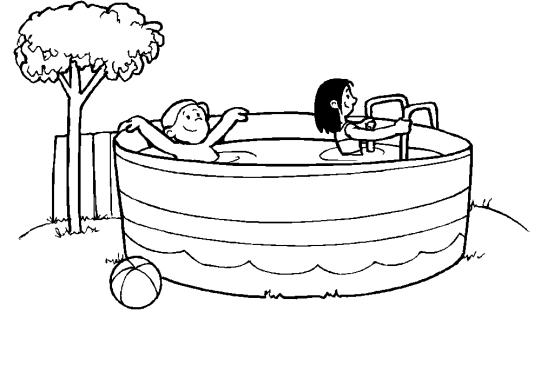
celebrate-picture-books-picture-book-review-kids-in-pool-coloring-page

Dive In! Coloring Page


The Super Soaker is a great way to cool off! Another relaxing water activity is swimming in a pool! So dive in to this printable cool pool Dive In! Coloring Page!