July 6 – It’s Wild about Wildlife Month

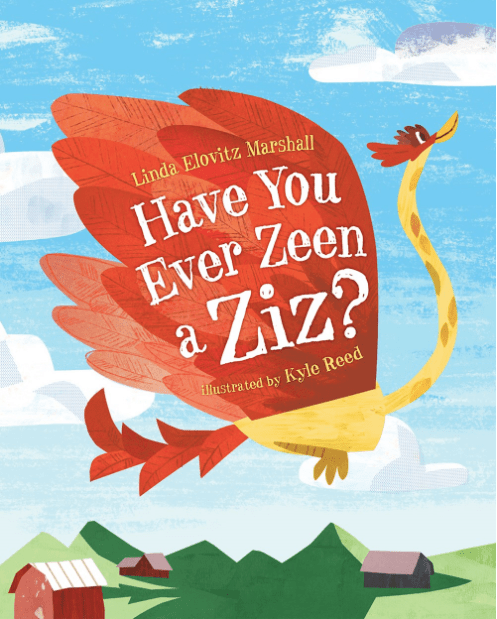
celebrate-picture-books-picture-book-review-have-you-ever-zeen-a-ziz-cover

About the Holiday

This month we honor wildlife—all those majestic creatures of the air, land, and sea that share the earth with us. But what about all of the creatures that live through mythology, legends, stories, and our imagination? Today, we celebrate one of these unique and wild beings that has been around for a long, long time. Maybe you’ve seen one?

Have You Ever Zeen a Ziz?

Written by Linda Elovitz Marshall | Illustrated by Kyle Reed


As kids open the cover to this delightful mythologically based story, the narrator asks: “Have you ever zeen a Ziz? Do you wonder what one iz?” Could it be an alien floating through space, or a “giant cat or a prehistoric bat?” It turns out that it’s none of these. A Ziz is a bird with brilliant feathers and a wing span that can block out the sun—or moon.

celebrate-picture-books-picture-book-review-have-you-ever-zeen-a-ziz-wings

Image copyright Kyle Reed, 2020, text copyright Linda Elovitz Marshall, 2020. Courtesy of Albert Whitman & Company.

But even though the Ziz is huge, “she’s a kindly, gentle bird. / Big and yellow, sweet…absurd.” She lets children play on her enormous back and helps farmers keep their crops on track. But the Ziz is best know for her lilting zongs, which she zings with great gusto no matter the time or place or who she’s with. But when she sleeps, those zongs turn into loud, LOUD snores.

Now if you happen to see one passing by or you look up and can’t see the sky, you’ll know precisely, exactly why.

An Author’s Note following the story reveals that “the Ziz is a mythological bird found in a collection of ancient Jewish writings” and is even mentioned in the Biblical book of Psalms. Marshall includes more information on this legendary bird as well as a reference work.

Funny and endearing, Have You Ever Zeen a Ziz is a joyful read aloud with many applications for classroom lessons and story times. It would be an entertaining addition to home, school, and public library collections.
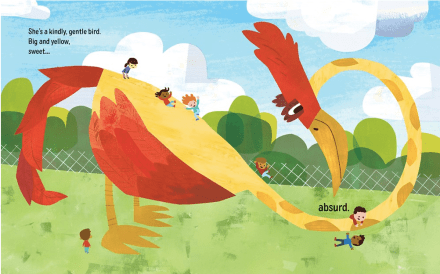
celebrate-picture-books-picture-book-review-have-you-ever-zeen-a-ziz-absurb

Image copyright Kyle Reed, 2020, text copyright Linda Elovitz Marshall, 2020. Courtesy of Albert Whitman & Company.

Linda Elovitz Marshall’s jaunty, rhyming read aloud is feathered with imagination that will have kids’ own musings soaring. Enchanting in her size, talents, and kindliness, the Ziz will delight readers even as Marshall’s rhythmic storytelling gives teachers and homeschoolers a fun way to interact with language and rhyme schemes, introduce lessons on mythology, and extend story time with an artistic project. After reading, children are sure to want to draw or otherwise create a Ziz or invent a mythological creature of their own. Musical readers may even be inspired to write a song for the Ziz to zing.

Kyle Reed’s collage-style illustrations are whimsical and sweet. As this most unusual bird soars over the ocean, her broad wingspan dwarfs a whale on one side and a crocodile on the other. After seeing a group of friends slide down the Ziz’s loooooong back and neck, kids will wish they had a Ziz at their own playground, and the image of the Ziz standing on the ground with its head in the clouds is a textural beauty. After enjoying Reed’s sightings of the Ziz on mountaintops, skyscrapers, the beach, and anywhere the sky beckons, readers will no doubt be keeping their eyes and ears open for their own view of this spectacular creature.

Ages 4 – 7

Albert Whitman & Company, 2020 | ISBN 978-0807531730

Discover more about Linda Elovitz Marshall and her books on her website.

To learn more about Kyle Reed and see a portfolio of his work, visit his website.

Wild about Wildlife Month Activity

celebrate-picture-books-picture-book-review-Happy-Sun-Border

Draw Your Own Wild Creature


With a little imagination, kids can create their own mythological creature to roam the earth under the smiling sun on this printable drawing page.
Wild Creature Drawing Page

celebrate-picture-books-picture-book-review-have-you-ever-zeen-a-ziz-cover

You can find Have You Ever Zeen a Ziz? at these booksellers

Amazon | Barnes & Noble | Books-a-Million

To support your local independent bookstore, order from

Bookshop | IndieBound

Picture Book Review


July 5 – Build a Scarecrow Day

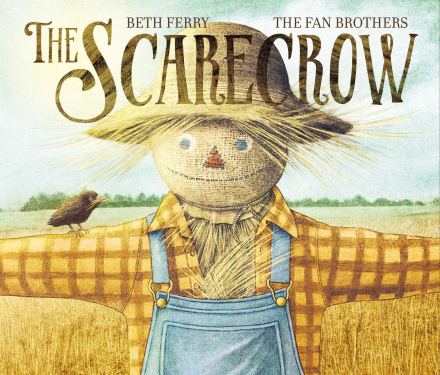
celebrate-picture-books-picture-book-review-the-scarecrow-cover

About the Holiday

With so many crops – from corn to berries to peppers to squash – ripening in fields across the country, it’s time for farmers on small and large farms to put up a scarecrow to watch over all that bounty. To celebrate, gather some old clothes, a bale of straw or other filling, and a pole and put your imagination to work. This is a fun activity for the whole family – even if you don’t have a farm! 

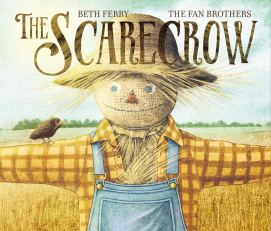
The Scarecrow

Written by Beth Ferry | Illustrated by The Fan Brothers


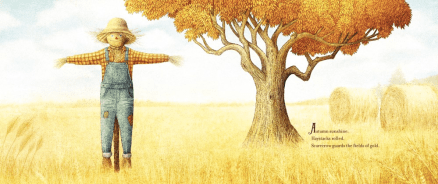
Golden autumn has quieted the fields. The hay is rolled and the scarecrow waits for spring. The animals and the crows stand at a distance, afraid of this figure that does his job so well. “He never rests. / He never bends. / He’s never had a single friend, / for all the woodland creatures know / not to mess with old Scarecrow.”

celebrate-picture-books-picture-book-review-the-scarecrow-autumn

Image copyright The Fan Brothers, 2019, text copyright Beth Ferry, 2019. Courtesy of HarperCollins.

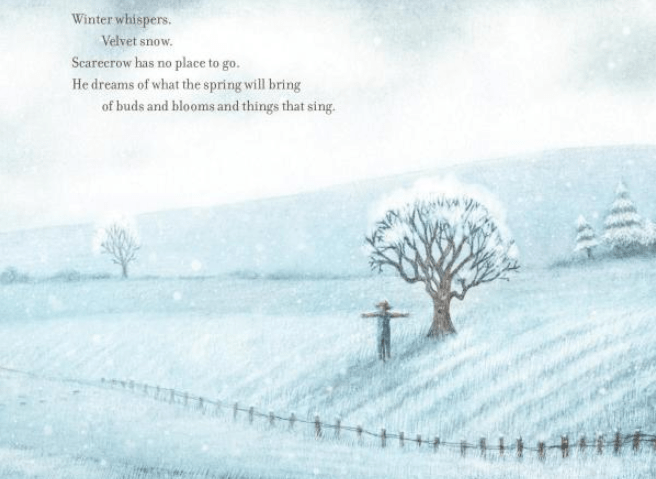
Winter comes with gentle snow, and Scarecrow dreams of “spring…of buds and blooms and things that sing.” When spring dawns with warm sun and green grass, a tiny crow—with a “broken wing?”—“drops from midair” and attracts Scarecrow’s attention. Then Scarecrow does a most surprising thing: “He snaps his pole, / bends down low, / saves the tiny baby crow.” He tucks the baby in the straw near his heart, and as he sleeps and settles in, Scarecrow “sings the sweetest lullaby.”

celebrate-picture-books-picture-book-review-the-scarecrow-winter

Image copyright The Fan Brothers, 2019, text copyright Beth Ferry, 2019. Courtesy of HarperCollins.

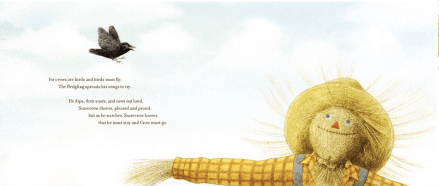
The baby heals and the two become the best of friends. As the little crow grows, he and Scarecrow “will laugh and wish on stars, forgetting who they really are…” Spring turns to summer, and Scarecrow proudly watches as Crow learns to fly, but with the return of autumn, he knows that Crow must leave. Through late autumn and the frigid winter, Scarecrow slumps on his pole, alone—“Broken heart. Broken pole. Nothing fills the empty hole.” Then with the spring rains, the crow returns with wings wide open and Scarecrow welcomes him with a hug. The crow mends Scarecrow’s broken pole and refreshes his hay and then he says, “‘I’m here to say.’”

celebrate-picture-books-picture-book-review-the-scarecrow-flying

Image copyright The Fan Brothers, 2019, text copyright Beth Ferry, 2019. Courtesy of HarperCollins.

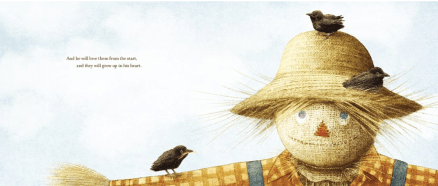
Crow and his mate build a nest in the spot where he grew up. Soon, “five small eggs are tucked unseen,” and Scarecrow watches over them for he knows that soon they will hatch baby crows. “And they will love him from the start, and they will grow up in his heart.” Throughout the year, these friends and more keep Scarecrow company and love him so.

celebrate-picture-books-picture-book-review-the-scarecrow-little-crows

Image copyright The Fan Brothers, 2019, text copyright Beth Ferry, 2019. Courtesy of HarperCollins.

In her story of a scarecrow and a baby crow who form a family, Beth Ferry’s gorgeous, lyrical language sweeps readers into Scarecrow’s world and lets them stand with him through the changing seasons and the progression of his transformation from a lonely existence as bleak as winter to a life as bountiful as summer. Ferry’s alternating short, staccato lines and longer, flowing rhythms create an emotional bond between the reader and Scarecrow. With a single sentence, in which Scarecrow and Crow forget “who they really are,” and through her periodic use of future tense, Ferry sparks hope and welcome reassurance for the future—not only for these two characters, but for us all. Crow’s return to raise his own family where he learned love and security and to help the aging Scarecrow is a moving portrayal of home, and the reciprocal devotion between Scarecrow and the crows will bring a tear to readers’ eyes.

Through their softly hued and textured mixed-media illustrations, The Fan Brothers create a tapestry of rural life, with its sometimes generous, sometimes harsh conditions.  As autumn turns to winter, Scarecrow is seen from a distance as animals look on, showing the divide in this natural landscape and the fear that rules it. But when a baby crow drops into the scarecrow’s life, he changes the dynamic, as children often do. With this life-changing event, The Fan Brother’s images become brighter, and the gauziness of the first spreads—so effective in depicting the barrier between Scarecrow and the rest of the world—clears. In turns Scarecrow is tender and proud, wistful and overjoyed—images that will tug at adults’ hearts. As Scarecrow once again stands tall and is surrounded by his crow family and the other animals on a sunny fall day, The Fan Brothers bring readers full circle in this story where the seasons of bounty and hardship mirror so well the cycles of life.

A thoughtful and beautifully conceived masterpiece, The Scarecrow is a must for home, classroom, and public libraries.

Ages 4 – 8

HarperCollins, 2019 | ISBN 978-0062475763

Discover more about Beth Ferry and her books on her website.

To learn more about The Fan Brothers, their books, and their art, visit their website.

Build a Scarecrow Day Activity

celebrate-picture-books-picture-book-review-scareccrow-coloring-page

Silly Scarecrow Coloring Page


Building a scarecrow with old clothes, some twine, and just the right amount of stuffing is creative fun! If you’d like a simpler way to make a scarecrow, enjoy this printable Silly Scarecrow Coloring Page!

celebrate-picture-books-picture-book-review-the-scarecrow-cover

You can find The Scarecrow at these booksellers

Amazon | Barnes & Noble | Books-a-Million

To support your local independent bookstore, order from

Bookshop | IndieBound

Picture Book Review


July 2 – Kat and Juju Book Tour Stop

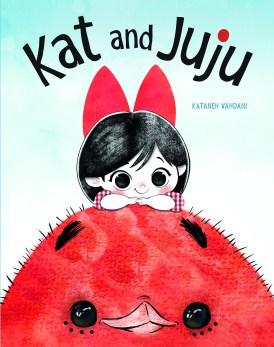
celebrate-picture-books-picture-book-review-kat-and-juju-cover

About the Holiday

Today I’m happy to be participating in the Kat and Juju book tour! The months of summer vacation often provide an opportunity for growth, change, and the kind of self-discovery that comes without the constraints of a regular schedule and school assignments. This can be especially true for hesitant children or those who prefer more studied steps into new experiences. Today’s book may spark discussion and ideas for integrating internal feelings and external opportunities when they come along.

Thanks to Two Lions Publishing and Barbara Fisch of Blue Slip Media for sharing Kat and Juju with me for review consideration. All opinions are my own.

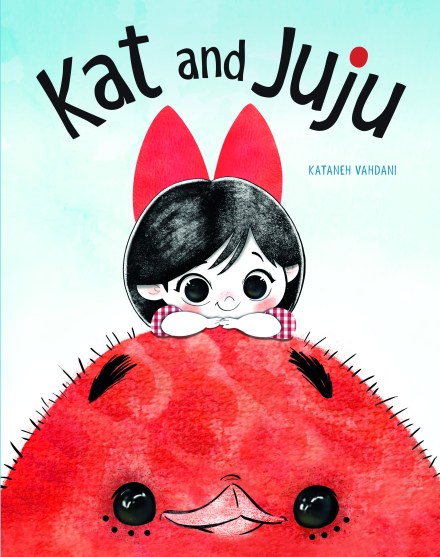
Kat and Juju

By Kataneh Vahdani


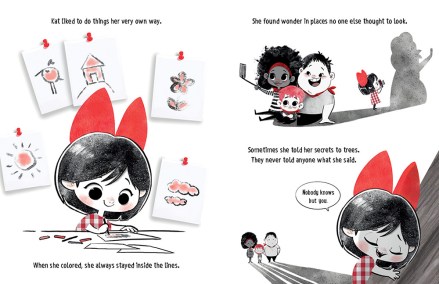
Kat had her own special way of doing things. While other kids scribbled outside the lines, she preferred to stay inside them. “She found wonder in places no one else thought to look.” And her confidants were decidedly of the strong, silent, and leafy type. She was too timid to talk to the other kids, who always seemed to be laughing and talking and playing. She did feel lonely sometimes.

celebrate-picture-books-picture-book-review-kat-and-juju-drawing

Copyright Kataneh Vahdani, 2020, courtesy of Two Lions.

Kat’s birthday was coming up, and she was looking forward to the moment when “her very best friend would arrive,” just as “had happened to all the other kids.” She wasn’t disappointed. At her door on her birthday was Juju—a huge, red, dapper bird who’d brought her a bouquet of flowers and a definitely different perspective on things. She loved him immediately. Juju was fearless and encouraged her to be brave. “Sometimes,” he said  as he hopped from foot to foot and spun on the floor, “you’ve just got to LET GO and do a HAPPY DANCE.” Kat thought it looked like fun, but she just couldn’t get herself to do it.


celebrate-picture-books-picture-book-review-kat-and-juju-drawing

Copyright Kataneh Vahdani, 2020, courtesy of Two Lions.

Then one day. Kat and Juju found a lost baby bird. Kat could relate to the fear in its eyes. With Juju’s help, she overcame her initial doubts about her ability to take care of it. She wrapped the birdie up, fed it, and, when it was stronger, took it on adventures—adventures that even took Kat out of her comfort zone. The birdie loved them, and pretty soon so did Kat.

It didn’t take long for the birdie to feel “brave enough to fly on its own.” Kat was so excited for her little friend that she forgot all of her inhibitions and broke out into a happy dance. The other kids suddenly saw Kat in a whole new way. Now, Kat still does things her own special way, but she has friends to do them with.

A good conversation-starter on the value of trying new things while staying true to yourself, Kat and Juju makes a fun read on the journey and would be an inspiring choice for home, school, and public library collections.

celebrate-picture-books-picture-book-review-kat-and-juju-birthday

Copyright Kataneh Vahdani, 2020, courtesy of Two Lions.

In her thoughtful story, Kataneh Vahdani explores the emotions of a girl who has a hard time letting go of her fears and inhibitions to reach outside of her comfort zone. When Juju—a buoyant, larger-than-life bird—enters Kat’s life, he brings spontaneity and courage closer, but it’s not until the little birdie needs her that Kat participates in Juju’s silly fun and daring adventures. Over time, Kat discovers she likes these escapades too, and when the little bird is ready to fly, so is she. It’s a truism that we will often do things for a friend or our children that we might not do for ourselves.

Kat is a sweet companion for readers on their own road to discovering the bravery inside themselves, and Vahdani’s storytelling gives adults and children a starting point for discussion. She provides metaphorical examples—coloring inside the lines, a special birthday present that gives her a new start, learning to fly—as well as honestly depicted nagging internal doubts to help readers articulate and share their feelings. Vahdani also includes an important reminder that branching out doesn’t mean losing one’s unique qualities, instead it allows them to grow.

Kataneh Vahdani’s textured gray-scale and red and blue digital illustrations, punctuated with the little yellow fluff of a birdie, puts the focus on Kat and Juju, who sport red clothing and feathers. Kat’s wide-eyed, expressive face reflects her emotions clearly and Juju is a sweetie with smiling eyes who’s always ready with a hug or a bit of encouragement or reassurance.

Ages 3 – 7

Two Lions, 2020 | ISBN 978-1542043281

Kataneh Vahdani is a children’s book author and illustrator. Kat and Juju is her first picture book series. She is currently directing her original feature animation movie. Kataneh has been a professor for over seventeen years and she also rescues fallen baby birds. Together with her students, they have raised more than thirteen fallen injured baby birds and set them free once they were ready to fly away. Sometimes in her classes, birds fly from the head of one student to the other.

Visit Kataneh on Instagram: @KatandJuju. 

celebrate-picture-books-picture-book-review-kat-and-juju-cover

You can find Kat and Juju at these booksellers

Amazon | Barnes & Noble | Books-a-Million

To support your local independent bookstore, order from

Bookshop | IndieBound

Picture Book Review

February 19 – It’s National Bird-Feeding Month

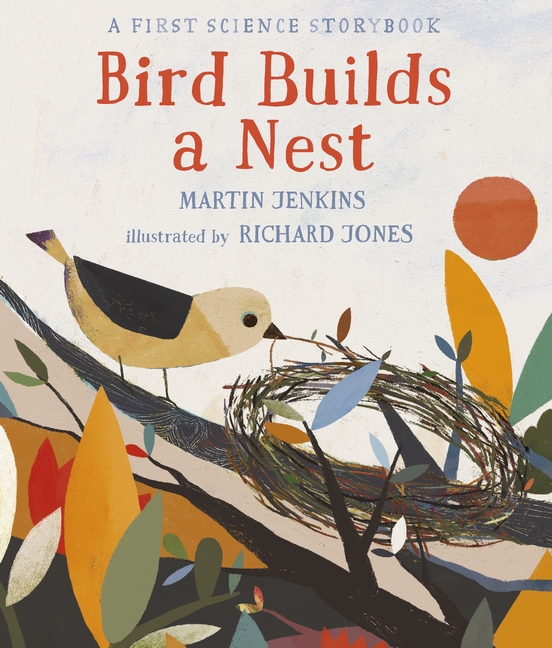
celebrate-picture-books-picture-book-review-bird-builds-a-nest-cover

About the Holiday

As birds begin coming back to your area during this last bit of winter to build nests, mate, and hatch little cheepers, they still need help finding nutritious food to sustain them. Without the lush vegetation and increased insect activity that will come with warmer weather, birds often rely on backyard feeders for food. Attracting colorful birds to your home can be a rewarding and joyful hobby – one you can enjoy year-round. If you’ve been considering hanging a bird feeder to one of your trees, today is the perfect day to get started!

Bird Builds a Nest: A First Science Storybook

Written by Martin Jenkins | Illustrated by Richard Jones


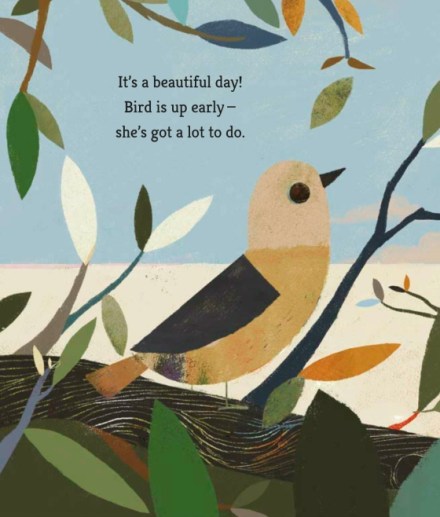
It’s early morning and Bird is already chirping. It’s going to be a busy day! To get started she needs breakfast. Of course, “what she wants is a nice, juicy…worm.” What the worm wants, though, is to not be eaten. So while “bird pulls hard…the worm pulls back.” This is one strong worm, and it ends up winning the tug-of-war. Nearby, though, is a smaller and weaker worm that is just as delicious.

celebrate-picture-books-picture-book-review-bird-builds-a-nest-bird-in-nest

Image copyright Richard Jones, 2018, text copyright Martin Jenkins, 2018. Courtesy of Candlewick Press.

Full and satisfied, Bird takes off on her next task. She needs to find twigs. “Lots of twigs.” The first one she finds is more like a branch to the little bird—and is too heavy. The next one is as long as a snake and too heavy too. But there are plenty of perfectly small twigs scattered around, so Bird gets to work. She “can carry one large twig or two medium-size twigs or three or four small twigs (although it’s hard to fit that many in her beak at once).”

What is Bird doing with all of these twigs? Building her nest, of course! It takes time to arrange the twigs she brings back to the branch of her tree. “Carefully, she pushes a twig into the side of the nest and pulls its end back out.” As if weaving a basket, Bird intertwines more and more sticks, making her nest strong. It takes hours to complete her new home. Once in a while a twig falls or she drops one, but there are plenty more to find.

celebrate-picture-books-picture-book-review-bird-builds-a-nest-worm

Image copyright Richard Jones, 2018, text copyright Martin Jenkins, 2018. Courtesy of Candlewick Press.

Once the twigs are all in place, Bird searches for soft material to line it. She gathers dried grass and feathers. These are so light that it’s easy to carry a lot at one time. Back in her nest she places the grass and feathers inside and “turning around and around, pushing with her whole body, she makes a snug little cup, smooth and soft on the inside.” Now the nest is comfy and all ready for…the five little eggs that are waiting to hatch!

Bird Builds a Nest is a First Science Storybook for young readers that, while showing how birds build nests also demonstrates various scientific forces. As kids see the baby birds emerge from the nest for the first time, they can also answer a few questions in the Afterward that prompt them to think about pushing and pulling, moving light and heavy objects, and the force of gravity. An Index reveals where in the text these forces can be found.

celebrate-picture-books-picture-book-review-bird-builds-a-nest-making-it-soft

Image copyright Richard Jones, 2018, text copyright Martin Jenkins, 2018. Courtesy of Candlewick Press.

Spying a nest in a tree, eave, or other tucked-away space is like finding a secret, and is one of the joys of spring. Martin Jenkins’ delightful day out with Bird gives kids…well…a bird’s eye view of the nest-building process. Just like an artist, this sweet, industrious feathered friend gathers her materials and sets to work to make her instinctual vision come true. Jenkins’ step-by-step description is conversational and homey with words such as snug, tuck, fetching, and twigs that lend themselves to the charming alliteration that gives the story a poetic sound and feel.

Richard Jones’ mixed-media illustrations sing with beautiful folk-art inspired scenes of Bird gathering her material and creating her nest. Softly vibrant earth tones of autumn and spring accentuate Bird’s quiet and solitary endeavor. Bird is bright-eyed and cheerful as she flies back and forth carrying twigs and arranging them just so—activities that are clearly shown for budding scientists to see and understand. Readers will enjoy finding small details here and there—a mouse in a tree hole, a tiny ladybug, hearts in the swirls of the tree bark and formed by leaves, and even a bit of foreshadowing of the eggs to come. The male and female bird cuddle together in the finished nest as two ladybugs find each other under a purple heart, and the little chicks venturing out for the first time will enchant children.

Bird Builds a Nest wonderfully weaves together facts and a sweet story to introduce young readers to one particular natural phenomenon and some of the scientific forces involved. The captivating story would be a terrific addition to home libraries and classroom bookshelves for discussions about the natural world.

Ages 4 – 6

Candlewick Press, 2018 |ISBN 978-0763693466

To learn more about Richard Jones and view a portfolio of his art, visit his website.

National Bird-Feeding Month Activity

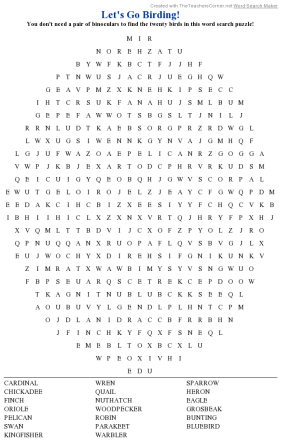
celebrate-picture-books-picture-book-review-let's-go-birding-word-search

Let’s Go Birding! Word Search Puzzle


When you put up a bird feeder in your yard, you’ll see so many different kinds of birds come to visit! Find the names of twenty types of birds in this printable Let’s Go Birding! Word Search Puzzle.

Let’s Go Birding! Word Search Puzzle | Let’s Go Birding! Word Search Solution

celebrate-picture-books-picture-book-review-bird-builds-a-nest-cover

You can find Bird Builds a Nest at these booksellers

Amazon | Barnes & Noble | Books-a-Million | IndieBound

Picture Book Review

January 30 – Bird Hugs Book Tour Stop

celebrate-picture-books-picture-book-review-bird-hugs-cover

About the Holiday

celebrate-picture-books-picture-book-review-ged-adamson-headshot-2

A new picture book by Ged Adamson is always an event to be celebrated, so I’m thrilled to be a stop on the book tour for his latest book—Bird Hugs.

Ged Adamson is a children’s book author and illustrator. His picture books include A Fox Found a Box; Douglas, You Need Glasses!; Shark Dog!; and Ava and the Rainbow (Who Stayed). He has also worked as a cartoonist, storyboard artist, and composer for film and TV. He lives in London with his partner, Helen, and son, Rex. To learn more, visit his website.

You can connect with Ged Adamson on: Instagram | Twitter

Bird Hugs

By Ged Adamson


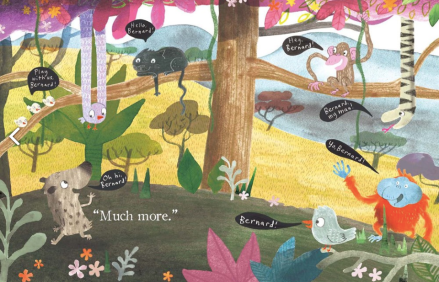
Bernard had a feature quite unlike other birds. As a baby, he didn’t know there was anything different about his long, long wings. He “blurrped” with the other babies, pretended to be a sleeping bat, and waved his wings spookily while chasing his friends. But when his friends learned to fly, Bernard knew something was amiss. “No matter how many times he tried, it was something he couldn’t seem to do himself.”

celebrate-picture-books-picture-book-review-bird-hugs-long-wings

Copyright Ged Adamson, 2020, courtesy of Two Lions.

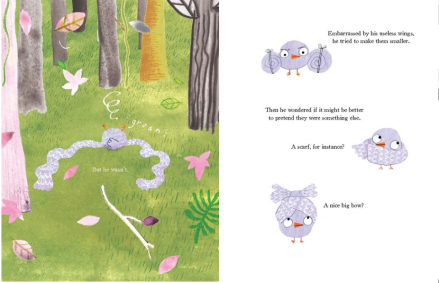
Soon all of his friends had flown away to other places. Longing to do the same, Bernard decided he just needed another approach. He had his friend Lawrence fling him into the air from a palm tree catapult. And for a glorious moment Bernard was flying. And then…he wasn’t. “Embarrassed by his useless wings, he tried to make them smaller.” He rolled and tied them up, made a scarf of them, and tied them in a bow on the top of his head. But nothing worked.

“Bernard felt utterly sorry for himself.” He chose a branch where his wings could hang to the ground and “made it his home.” Day and night and all through the seasons, he sat there as the world went on around him. But one day he heard someone sobbing. Bernard left his branch to find out who was crying. He discovered an orangutan, who wailed, “‘I feel very sad and I’m not sure why!’”

celebrate-picture-books-picture-book-review-bird-hugs-flying

Copyright Ged Adamson, 2020, courtesy of Two Lions.

In an instant Bernard had wrapped his long wings around the orangutan in a “BIG HUG.” In a bit the orangutan felt better and thanked Bernard. Bernard was happy too. He began to think that “maybe his wings were good for something after all.” And he was right. In the morning a long line of animals was waiting for him—all looking for a hug. Bernard was busy all day…and the next day…and the next. Besides wanting hugs, “the animals told Bernard their problems.”

celebrate-picture-books-picture-book-review-bird-hugs-long-lines

Copyright Ged Adamson, 2020, courtesy of Two Lions.

All this hugging made Bernard happier too. His wings even felt stronger. He wondered if maybe they were strong enough to fly. Bernard leaped from a cliff top and for a moment he was flying. And then…he wasn’t. But Bernard was philosophical: there was more to life than flying, he decided. And all the new friends he made showed him that with a little support, anyone can soar.

celebrate-picture-books-picture-book-review-bird-hugs-tree

Copyright Ged Adamson, 2020, courtesy of Two Lions.

Trailing wings as long as a knitted winter scarf, little Bernard is an unforgettable cutie who only wants to be like all the other birds and fly. But is that his only talent? His only option? During Bernard’s year-long funk, it seems he finds the answers to these questions as his quick response to the orangutan’s sobs reveals, Bernard discovers that far from useless, his wings give him a gift more precious than flying––the opportunity to help his fellow animals. It’s a talent that brings him love in return. Readers can take comfort in and a lesson from Bernard’s hard-won but keen sense of empathy by embracing and using whatever makes them unique.

As in his other books, Adamson’s profound message is wrapped in images that combine kid-pleasing silliness, a bit of slapstick humor, and a diverse array of emotive characters. As Bernard mopes on his branch feeling lonely and sorry for himself, kids will notice that he’s not as alone as he might think. An anteater keeps him company on a rainy day, wide-awake nocturnal animals watch over him at night, and even the bees make room for him in their flight pattern. Bernard’s realization that life is filled with more than one might expect is welcome and heartening, and Adamson’s finale is wonderfully surprising and pitch perfect.

Bird Hugs is highly recommended for all kids and has multiple applications for story times at home, in classrooms, and for public libraries. The book would quickly become a favorite on any bookshelf.

Ages 3 – 7

Two Lions, 2020 | ISBN 978-1542092715

To learn more about Ged Adamson, his books, and his art, visit his website.

I received a copy of Bird Hugs for review consideration. All opinions are my own.

celebrate-picture-books-picture-book-review-bird-hugs-cover

You can find Bird Hugs at these booksellers

Amazon | Barnes & Noble | Books-a-Million | IndieBound

Picture Book Review


December 30 – It’s the Christmas Bird Count

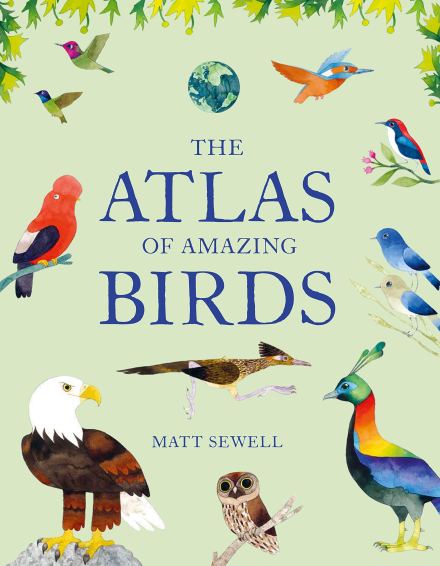
celebrate-picture-books-picture-book-review-the-atlas-of-amazing-birds-cover

About the Holiday

Concerned with declining bird populations, ornithologist Frank M. Chapman suggested a new holiday tradition—a Christmas Bird Census that would count birds instead of hunting them. The first census took place on December 25, 1900. On that day, twenty-seven birders, centered mostly in northeastern North America, counted 90 species of birds. The tradition has grown tremendously from those humble beginnings. Today, tens of thousands of volunteers throughout the Americas brave all types of weather to conduct the count, which helps conservationists and scientific organizations create strategies for protecting the health and habitats of bird populations. The Christmas Bird Count is now held from December 14 through January 5. To learn more or to get involved yourself, visit the Audubon website.

The Atlas of Amazing Birds

By Matt Sewell


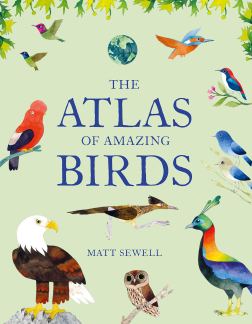
If you have a budding ornithologist in the family, they will be awed by Matt Sewell’s gorgeous compendium of more than 150 birds from around the world. Organized by continent—Europe, North and Central America, South America, Antarctica, Oceana, Asia, and Africa—each chapter begins with a green watercolor map of the area delineated into the countries within its borders and includes a short introduction to the size, climate, surrounding oceans, and number of birds found there.

celebrate-picture-books-picture-book-review-the-atlas-of-amazing-birds-painted-buntings

Copyright Matt Sewell, 2019, courtesy of Princeton Architectural Press.

The first stop on this ornithological tour is Europe, where readers discover first the European roller, a lovely species with a cyan body and rust-and-blue-mottled wings that summers in Southern Europe and the Middle East and winters in Africa. This bird’s beauty belies the less-than-attractive way they have for protecting themselves as chicks in which “they can vomit a foul-smelling liquid over themselves to keep predators at bay.”

The European golden-plover chick—a little fluff of green and white that blends in with its mossy surroundings—takes a different tack: By looking like “a small clump of cotton balls flecked with gold leaf, it is possibly one of the cutest chicks out there.” With its speedy wingbeats, the European golden-plover also claims another mark of distinction as the “genesis for the idea for the book of Guinness World Records.”

celebrate-picture-books-picture-book-review-the-atlas-of-amazing-birds-woodpecker

Copyright Matt Sewell, 2019, courtesy of Princeton Architectural Press.

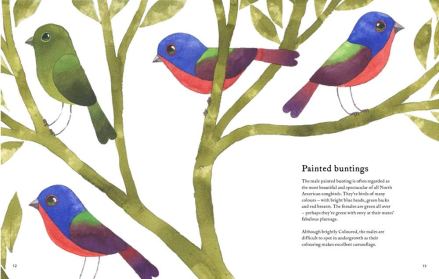
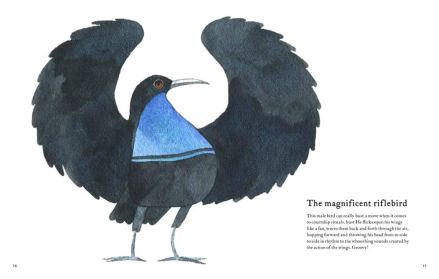
North America and Central America are home to more than 900 species of birds. Many are as colorful as a child’s painting, including the Montezuma oropendola, painted bunting, indigo bunting, and the resplendent quetzal, which boasts an iridescent blue tail that can reach over 2 feet long. Unique among birds is the common poorwill, a North American nightjar, which besides being nocturnal, “is possibly the only bird that hibernates.” Mottled gray and brown, the common poorwill perfectly blends into rocky crevices. “It has a low odor so it cannot be detected by predators, and it can descend into a sleepy torpor for months.”

celebrate-picture-books-picture-book-review-the-atlas-of-amazing-birds-riflebird

Copyright Matt Sewell, 2019, courtesy of Princeton Architectural Press.

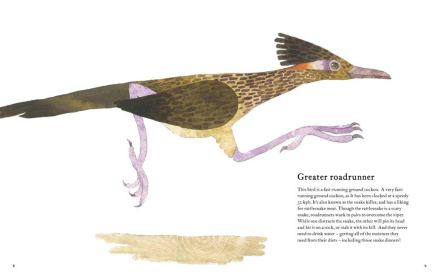
South America, with its vast expanse of land and variety of climates hosts “more than 3,400 known species of birds, more than any other continent.” With that many different types of birds, South America offers ornithologists a full range of species to study from familiar faces, such as the hyacinth macaw and the keel-billed toucan, to truly wondrous creatures, such as these: the sunbittern, which upon opening its wings presents a frightening “mask” of markings to scare away predators; the white bellbird, which has a single wattle above its beak that can be inflated to appear much like a unicorn’s horn; and the oilbird, which you cannot be faulted for mistaking for a bat as it “breeds and roosts in the totally dark interiors of caves,” uses echolocation to navigate here, and flies at night. Among the other weird and distinctive birds of this region is the hoatzin, “known as the reptile bird” because it “dates back 64 million years, which is roughly when all the big land-based dinosaurs disappeared.”

celebrate-picture-books-picture-book-review-the-atlas-of-amazing-birds-roadrunner

Copyright Matt Sewell, 2019, courtesy of Princeton Architectural Press.

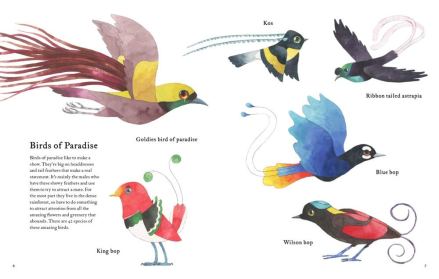
Oceania, comprising Australia, Papua New Guinea, the Solomon Islands, Vanuatu, Fiji, and New Zealand, provides shelter to “some of the most brilliant and flamboyant birds in the world….” These include a variety of birds-of-paradise, each of which sport colorful and intricate features that would look just as at home on ornaments and party favors. One of the most unusual birds may be the multi-talented superb lyrebird. Not only does the male possess fabulous peacock-like tail feathers that seem part quill-pen, part feather duster, it is a master mimic. “It can imitate just about any other bird it hears, as well as other sounds, such as chainsaws, telephones, barking dingoes, roaring cars, and crying babies—often repeated one after the next.”

celebrate-picture-books-picture-book-review-the-atlas-of-amazing-birds-birds-of-paradise

Copyright Matt Sewell, 2019, courtesy of Princeton Architectural Press.

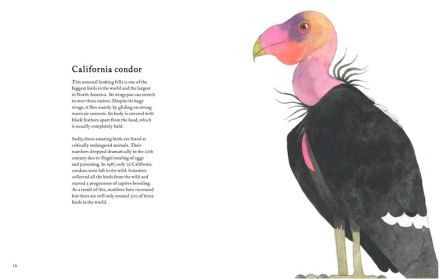
Combined, Antarctica, Asia, and Africa also give homes to more than 6,000 species of some of the most adorable, beloved, brilliant, and extraordinary birds in the world. Readers will meet penguins and birds with vibrant blocks of color as sculpted as any stained-glass window—such as the Malabar trogon of India and Sri Lanka, the Himalayan monal, and Ruspoli’s turaco of southern Ethiopia.

They’ll also get to know towering birds, such as the secretarybird and the ostrich, and formidable-looking creatures, such as the marabou stork and the shoebill. To tie up this description that barely scratches the surface of all that bird-lovers will learn, I present the common tailorbird of tropical Asia—a clever and industrious little warbler that sews leaves together to create a cup of a nest that it lines with cobwebs to further confound predators.

celebrate-picture-books-picture-book-review-the-atlas-of-amazing-birds-condor

Copyright Matt Sewell, 2019, courtesy of Princeton Architectural Press.

Matt Sewell knows just how to entice young readers with engaging, humorous, and insightful text that provides a robust and individual introduction to each bird as well as their status in the world. Every entry is accompanied by brilliant watercolors that highlight each species’ spectacular, surprising, and sometimes even seemingly Dr. Seussian plumage. Dipping in and out of the pages will inspire children and adults to learn more about birds, geography, and how they can become stewards for our feathered friends.

The Atlas of Amazing Birds is highly recommended for bird and nature lovers and would make an excellent addition to home, school, and public library collections.

Ages 5 – 10

Princeton Architectural Press, 2019 | ISBN 978-1616898571

To learn more about Matt Sewell, his books, and his art, visit his website.

Christmas Bird Count Activity

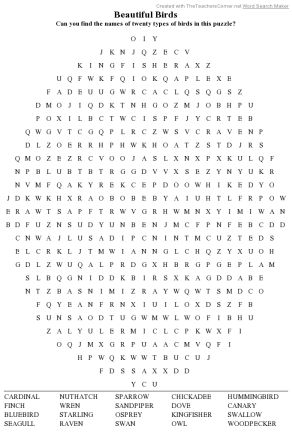
celebrate-picture-books-picture-book-review-beautiful-birds-word-search

Beautiful Birds Word Search Puzzle


It’s fun to watch for different kinds of birds when you take a walk or in your own backyard. Can you find the names of twenty types of birds in this printable Beautiful Birds Word Search Puzzle? Here’s the Solution!

celebrate-picture-books-picture-book-review-the-atlas-of-amazing-birds-cover

You can find The Atlas of Amazing Birds at these booksellers

Amazon | Barnes & Noble | Books-a-Million | Indiebound

Picture Book Review

December 19 – Look for an Evergreen Day

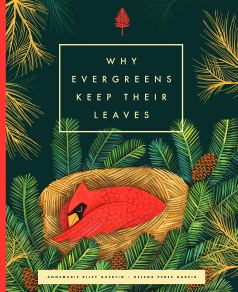
celebrate-picture-books-picture-book-review-why-evergreens-keep-their-leaves-cover

About the Holiday

Today’s holiday gives people an opportunity to learn about and appreciate the variety of evergreen trees that grow locally and around the world. During the winter these giants stand out against snowy landscapes with their deep-green needles that retain their color all year around and always offer the hope of spring. For those who celebrate Christmas, the evergreen is a highlight of the celebration. Decorated with lights and sparkly ornaments, the tree is where family and friends gather to exchange gifts and share time together. Look for an Evergreen Day was created by the National Arborist Association to encourage people to enjoy the beauty of these special trees.

Why Evergreens Keep Their Leaves

Written by Annemarie Riley Guertin | Illustrated by Helena Pérez Garcia


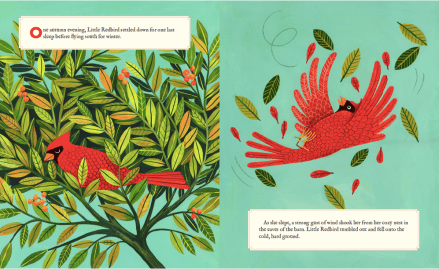
Little Redbird was taking her last sleep before flying south for the winter when she was thrown from her nest onto the hard ground by a strong gust of wind. When she got up, the pain in her wing told her she would not be able to fly. “‘How will I survive the long, harsh winter winds? Surely I will perish,’” she thought. But then she saw all the trees in the forest and “chirped with relief.” She could build a new nest on a low branch of one of them and find shelter.
celebrate-picture-books-picture-book-review-why-evergreens-keep-their-leaves-frost-wind

Image copyright Helena Pérez Garcia, 2019, text copyright AnneMarie Riley Guertin, 2019. Courtesy of Familius.

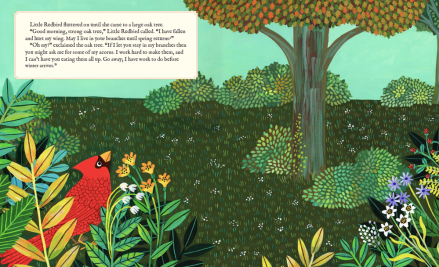
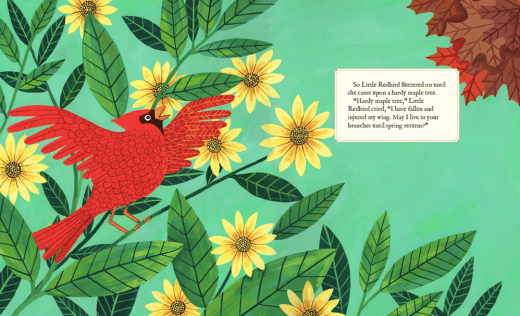
The first tree she hopped to was a birch. Politely, she told the tree her predicament and asked, “‘May I live in your warm branches until spring returns?’” But the birch only wanted to look out for itself and told Little Redbird to “‘move along.’” Next, Little Redbird came to a large oak tree. She explained about her injured wing and asked if she could spend the winter in the oak’s strong branches. The oak was surprised by the request and suspicious that the little bird would also want to eat up all of its acorns. The oak shooed Little Redbird away. When she came to the maple tree, Little Redbird repeated her request. The maple told her that it was “‘too busy making sap for maple syrup. I have no time for little birds,’” it continued and sent Little Redbird on her way.

celebrate-picture-books-picture-book-review-why-evergreens-keep-their-leaves-frost-oak-tree

Image copyright Helena Pérez Garcia, 2019, text copyright AnneMarie Riley Guertin, 2019. Courtesy of Familius.

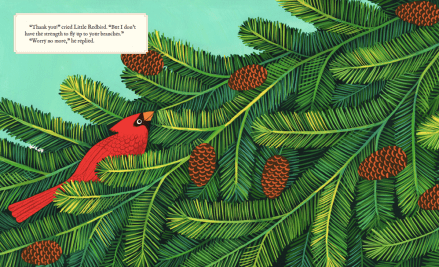
Afraid and uncertain, Little Redbird began to cry. Then she heard a voice offering to help. She looked up and saw “a smiling fir tree.” She approached and told her story again. At once, the fir tree offered Little Redbird a safe and warm place to stay within its many branches. Little Redbird thanked the fir tree, but said that she didn’t have the strength to fly up into the branches. The fir told the little bird not to worry as he reached out his lower branches.

celebrate-picture-books-picture-book-review-why-evergreens-keep-their-leaves-frost-pinecones

Image copyright Helena Pérez Garcia, 2019, text copyright AnneMarie Riley Guertin, 2019. Courtesy of Familius.

Overhearing this exchange, a nearby blue spruce called out that he would help shield Little Redbird from the wind with his strong branches. “‘How kind of you!’ replied Little Redbird.” Then another voice came whispering on the breeze. It was the juniper tree offering berries to heal the little bird’s wing. Little Redbird happily “built a warm nest inside the fir tree’s branches and waited for winter’s arrival.”

celebrate-picture-books-picture-book-review-why-evergreens-keep-their-leaves-frost-queen

Image copyright Helena Pérez Garcia, 2019, text copyright AnneMarie Riley Guertin, 2019. Courtesy of Familius.

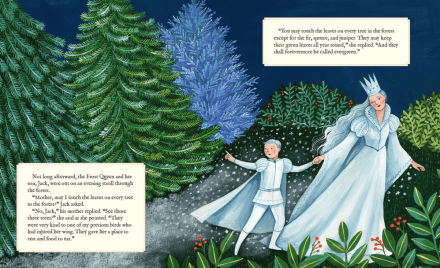
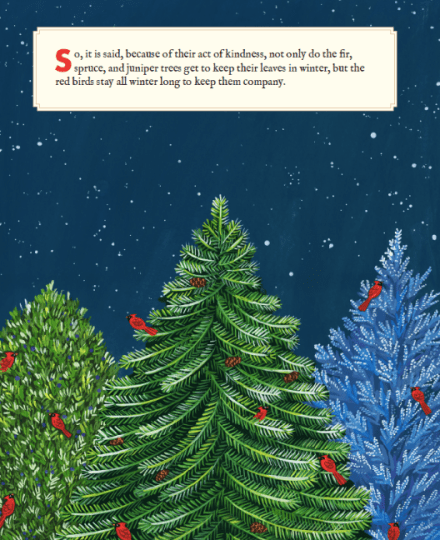
One evening soon after, the Frost Queen and her son Jack came strolling through the forest. Jack wondered if he could touch the leaves on every tree. His mother pointed to the fir, the blue spruce, and the juniper and explained that he could touch the leaves on every tree except these. “‘They were very kind to one of my precious birds who had injured her wing,’” the Frost Queen told Jack. “‘They may keep their green leaves all year round. And they shall forevermore be called evergreen.’” It is also said that these acts of kindness inspired these little red birds to stay and keep these trees company all winter long.

celebrate-picture-books-picture-book-review-why-evergreens-keep-their-leaves-kindness

Image copyright Helena Pérez Garcia, 2019, text copyright AnneMarie Riley Guertin, 2019. Courtesy of Familius.

Annemarie Riley Guertin offers a charming and well-rounded telling of the legend of how evergreens got their name and their unique feature that also provides a heartwarming reason for why cardinals do not fly south for the winter. This delightful pairing deepens the meaning of the story by demonstrating that kindness is recognized and often comes back to those who give it. Guertin’s clear and emotionally rich dialogue allows readers to fully appreciate Little Redbird’s distress, the rebuffs of the deciduous trees, and the acceptance of the others. The appearance of the Snow Queen and her son Jack bring a human element to the story that will resonate with children, who are themselves learning to be kind.

celebrate-picture-books-picture-book-review-why-evergreens-keep-their-leaves-frost-maple-tree

Image copyright Helena Pérez Garcia, 2019, text copyright AnneMarie Riley Guertin, 2019. Courtesy of Familius.

Helena Pérez Garcia’s vibrant, folk-art inspired illustrations are simply gorgeous. Set against a black forest floor, the autumn flowers, fallen leaves, and trees in full fiery color pop off the page. Just as in any real-life garden, the red cardinal immediately catches the eye, putting readers’ focus on Little Redbird and her plight. The image of Little Redbird crying is touching, making the fir tree’s offer of help and outstretched branches all the more emotional. Garcia’s imaging of the Snow Queen and her son Jack will enchant any lover of fairy tales, and the final image of a flock of cardinals keeping the evergreens company during the winter is a sight we can all hope to see.

A beautiful tale to share during the winter season or along with other fairy tales or fables, Why Evergreens Keep Their Leaves would make a terrific addition to home, classroom, and public library collections. Pair with a bird feeder or small evergreen tree to plant to make a gift any child would love.

Ages 5 – 8 

Familius, 2019 | ISBN 978-1641701587

Discover more about Annemarie Riley Guertin and her books on her website.

To learn more about Helena Pérez Garcia, her books, and her art, visit her website.

Look for an Evergreen Day Activity

celebrate-picture-books-picture-book-review-Find-the-Perfect-Pine-Tree-maze

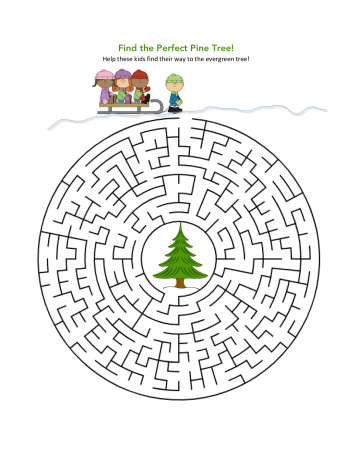
Find the Perfect Pine Tree! Maze


Can you help the kids sled their way to find the evergreen tree in this printable maze?

Find the Perfect Pine Tree! Maze | Find the Perfect Pine Tree! Maze Solution

celebrate-picture-books-picture-book-review-why-evergreens-keep-their-leaves-cover

You can find Why Evergreens Keep Their Leaves at these booksellers

Amazon | Barnes & Noble | Books-a-Million | IndieBound

Picture Book Review