March 27 – It’s International Ideas Month

About the Holiday

This month we celebrate Ideas! Ideas are amazing things, appearing in your mind seemingly out of nowhere, but really, they’re often fueled by curiosity, by something you’ve seen, or by something you think could be better or done differently. Innovations in science, technology, engineering, art, and math are like that. Ideas can even transform home life too. The spark behind this month’s holiday is to encourage adults and kids alike to write down the ideas they have and explore making them work. You never know what a good idea might lead to! 

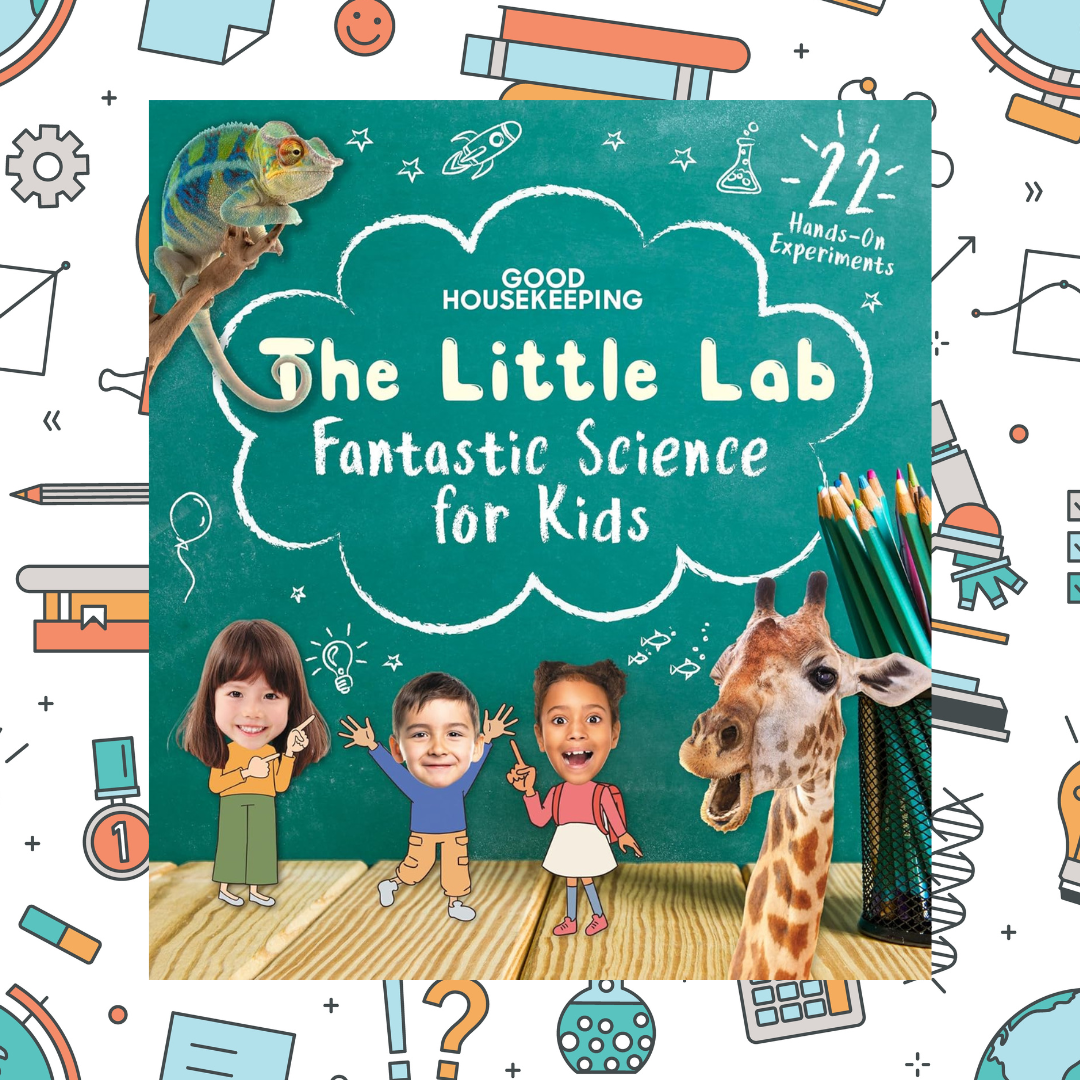
The Little Lab: Fantastic Science for Kids

Margie Markarian (Text and Editing) | Rachel Rothman (Editing) | Ashley Prine (Design)


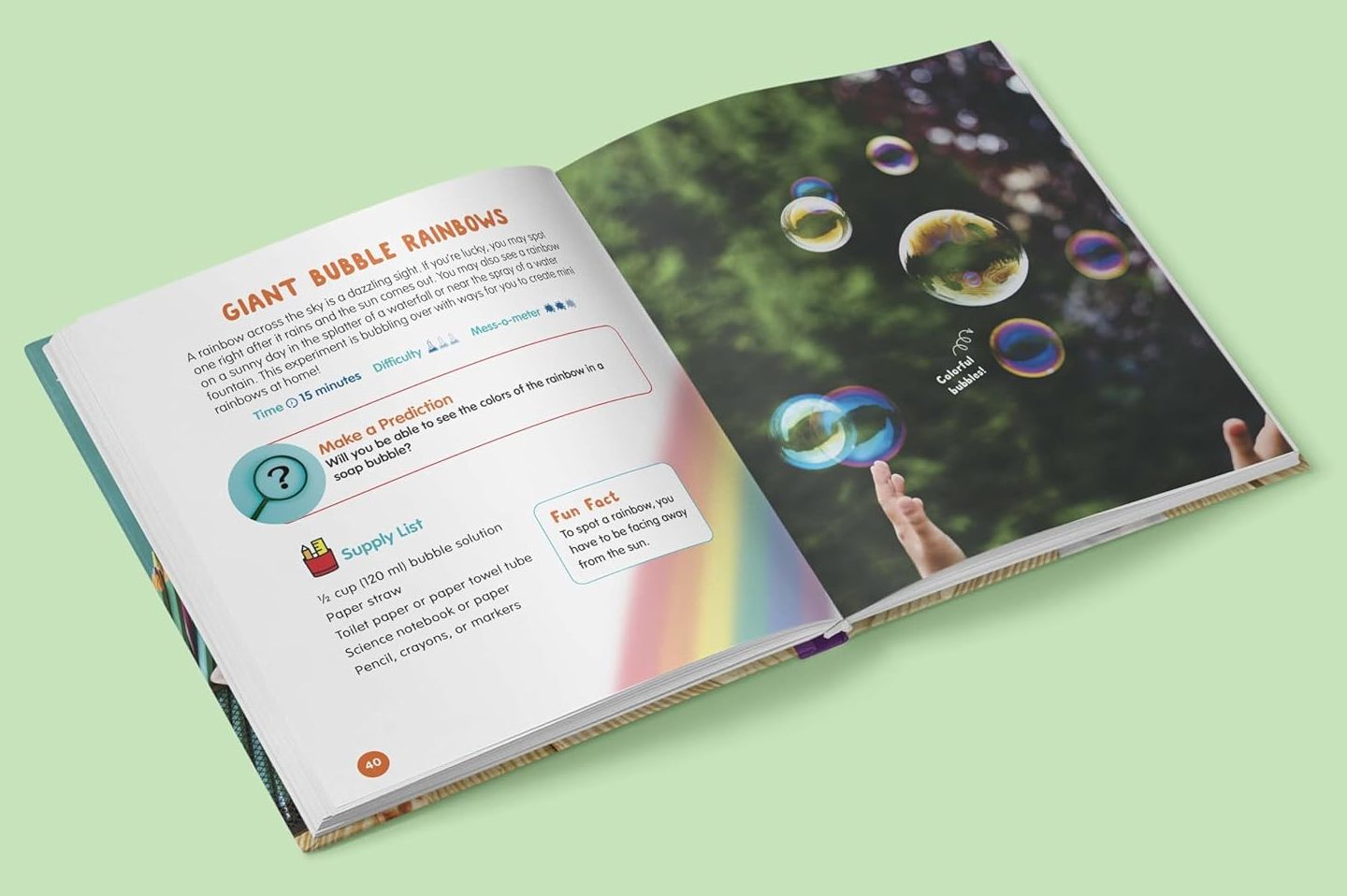
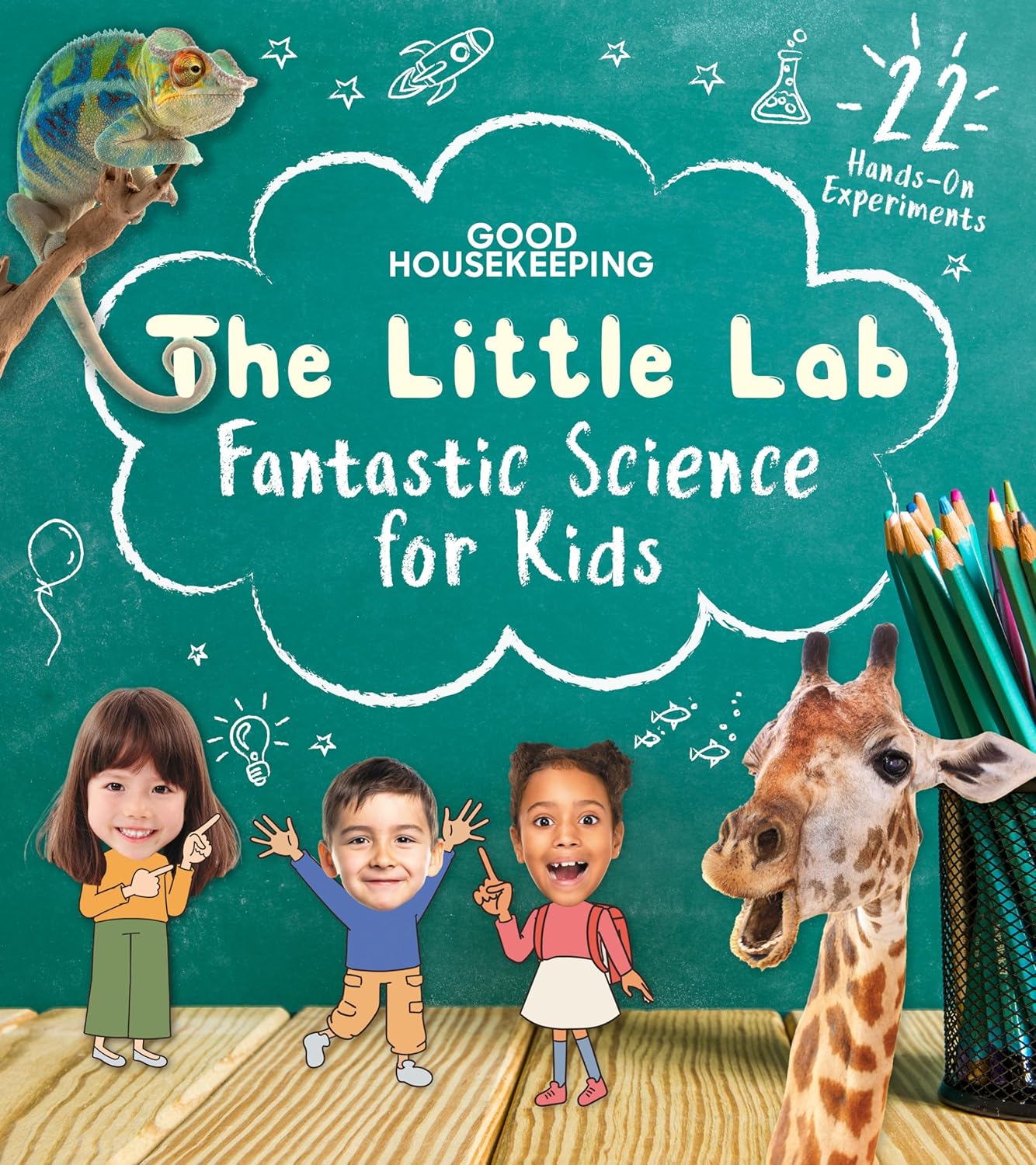
Whether you have kids who can’t get enough of hands-on learning, are exploring science with your children or students, or looking ahead to all those summer days to fill, The Little Lab: Fantastic Science for Kids has you covered! Inside, this go-to resource, you’ll find 22 exciting experiments accompanied by

  • Informative photographs
  • Detailed supply lists of items you probably already have at home
  • A “Make a Prediction” prompt
  • Step-by-step instructions that are simple to follow
  • A “What Happened?” explanation of the science behind the results

Photo courtesy of Hearst Home Kids.

Chosen and tested by nine scientists, engineers, and other experts at the Good Housekeeping Institute, these fantastically fun experiments encourage kids to think like a scientist while following the scientific method of observing, asking questions, and making predictions before doing the experiment and then evaluating what they see happen. The experiments also address core scientific concepts, such as the states of matter, energy, motion and force, and simple machines.

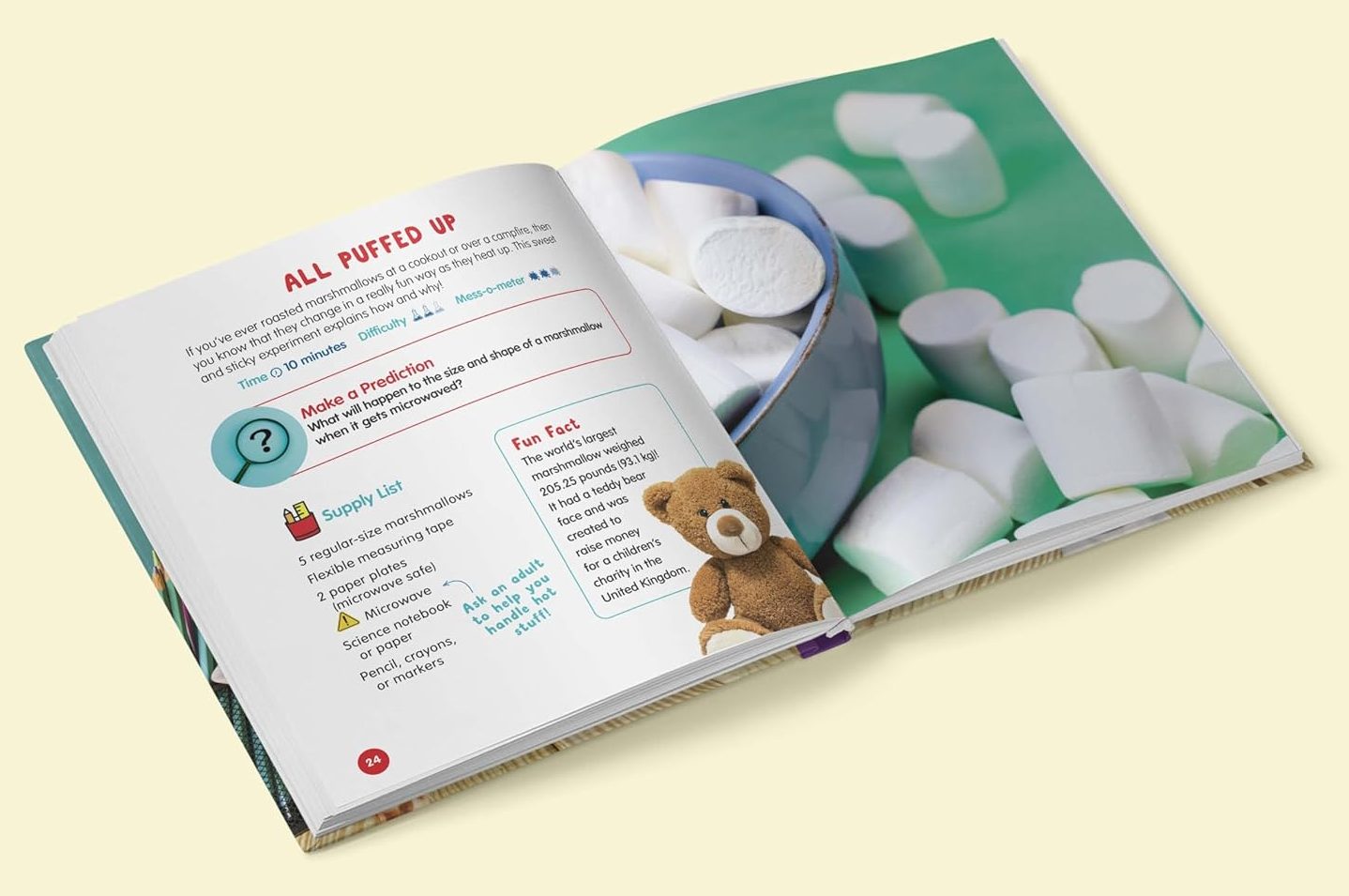
If your kids are anything like mine were while growing up, your kitchen is their favorite room in the house. Why not transform this gathering space into a little laboratory where food chemistry and creativity really cook?! With ingredients from your fridge and cupboards, kids can make an abstract masterpiece while learning about liquids; test the pH scale of various foods; experiment with puffed up marshmallows; challenge their nose to a taste test; and explore more with a “gadgets and gizmos” matching puzzle.

Photo © 2023 Michael Sapryhin. Courtesy of Hearst Home Kids.

Curious kids will really make a splash with the experiments in Chapter 2: Water Works as they get in the swim of discovering why certain objects float while others sink; blow rainbow-colored bubbles; test the strength and absorbency of various paper products; and—get this!—create a drawing that floats in water, without any paper or other medium.

Powerful learning comes in Chapter 3, where young scientists work with energy to make their own rainbows; bake up solar s’mores—yummy!; light a florescent bulb just by rubbing a balloon on their hair; put Newton’s three Laws of Motion to the test by launching pom poms and/or marshmallows; and play around with sound. The Explore More! exercises in this chapter spark kids’ interest in listening for high and low pitches in their environment and investigating the force of friction.

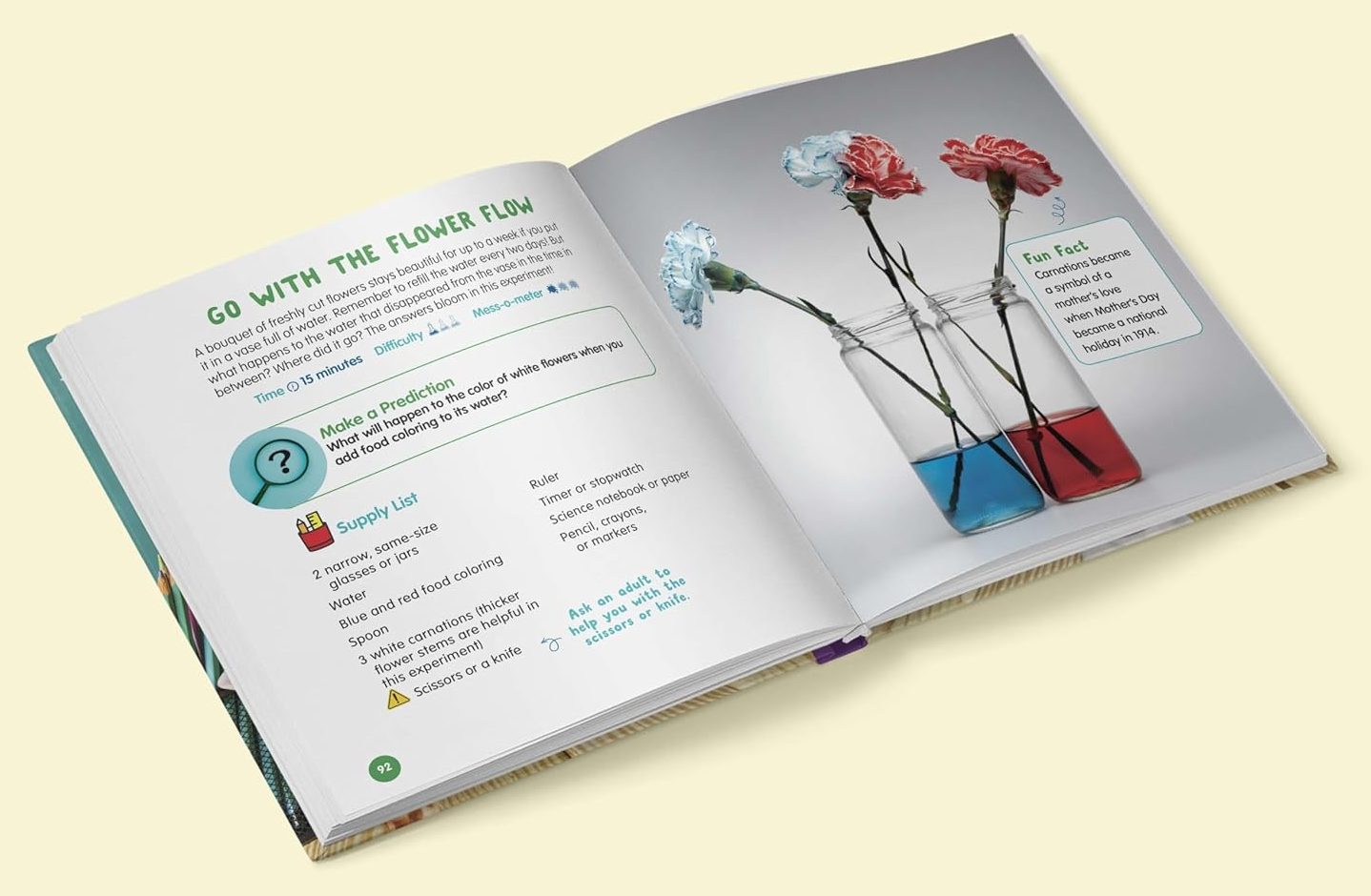
Chapter 4 sends kids outside, where they’ll try balancing like a flamingo; discover what makes balls bounce high, higher, and highest; get the dirt on what’s in dirt; give white carnations a bit of color; and— in a creative way to bring weather science down to earth—get to make “rain clouds” from shaving cream. The Explore More! section teaches kids how to read clouds—from wispy Cirrus to cotton ball-like Stratus—as well as the favorite flower colors of bats, bees, butterflies, and hummingbirds.

Photo © 2023 Carol Yepes. Courtesy of Hearst Home Kids.

In Chapter 5, the scientists at Good Housekeeping present experiments that are not only hands-on, but hands-all-in! Here kids get to clean old pennies to try and reclaim their original shine; discover the most reliable way to un-stink smelly sneakers; make slime; find out how long it takes to really wash away germs on your hands; and learn about the viscosity of various liquids.

Throughout the book, experiments are also accompanied by quick “Fun Fact” and “Did You Know?” information related to each section’s topic, and here and there the Good Housekeeping scientists pop up to impart interesting tidbits that will get kids thinking. There are even funny puns to get them laughing. Each experiment also includes a Time, Difficulty, and Mess-o-meter indicator.

Following the chapters are a glossary, a STEAM index that ticks off which disciplines (science, technology, engineering, art, and math) each experiment embodies, and an in-depth index.

Photo © 2023 Jeffery Coolidge. Courtesy of Hearst Home Kids.

Good Housekeeping’s The Little Lab: Fantastic Science for Kids is a treasure trove of intrigue, excitement, and discovery. Offering so many opportunities for fun learning, the book would be a favorite addition to any home library for rainy days, empty weekends, science-themed parties, playdates, or any time you hear “There’s nothing to do!” Teachers, child-centered organizations, libraries, and anyone involved in elementary age science education will also find this book a valuable resource.

Ages 4 – 8

Hearst Home Kids, 2023 | ISBN 978-1950785926

International Ideas Month Activity

celebrate-picture-books-picture-book-review-kinetic-sand-craft

Kinetic Sand


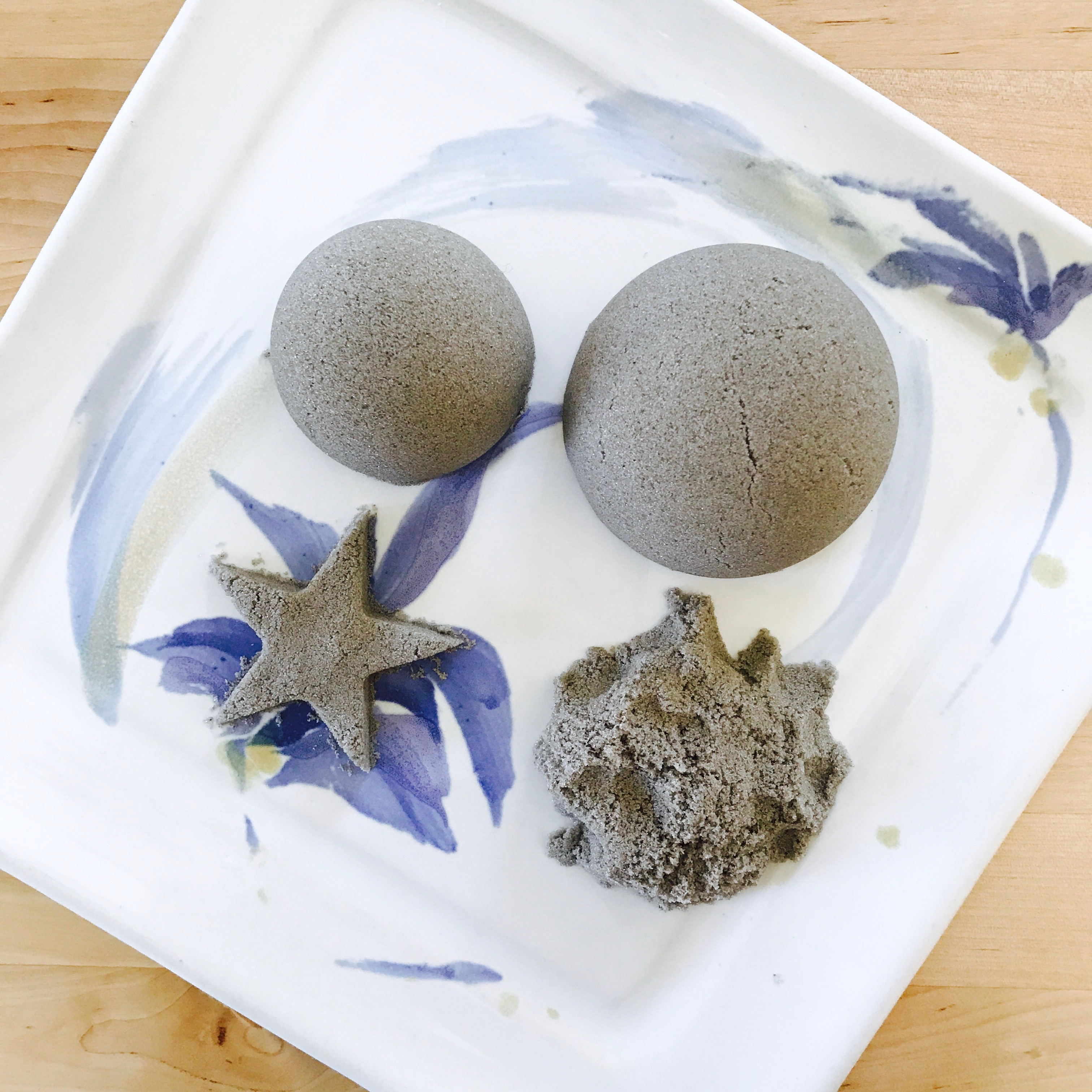
Sand is so much fun to play with at the beach that you just wish you could bring it home. With this recipe for kinetic sand, you can use science to make dry sand just the right consistency to form and play with. Kinetic sand makes a great stress reliever too!

Supplies

  • 1 cup sand
  • ½ tablespoon cornstarch
  • 1 teaspoon dish soap
  • Water as needed – about ¾ cup
  • Bin or bowl for mixing dry ingredients
  • Bowl for mixing dish soap and water

Directions

  1. In the bin combine the sand and cornstarch and mix well
  2. In the bowl combine the dish soap and water until the water is bubbly
  3. Slowly add the water mixture to the dry ingredients, mixing and adding water little-by-little until the desired consistency is reached. The grain of the sand will determine how much water is needed.
  4. The sand can be formed with cookie cutters, molds, hands, etc. and is strong enough to stack. Or just let it drip and ooze through your fingers.

You can purchase Good Housekeeping’s The Little Lab: Fantastic Science for Kids from these booksellers

Amazon | Barnes & Noble | Bookshop (discounted books and support for your local independent bookstore)

Picture Book Review

March 25 – National Reading Month

About the Holiday

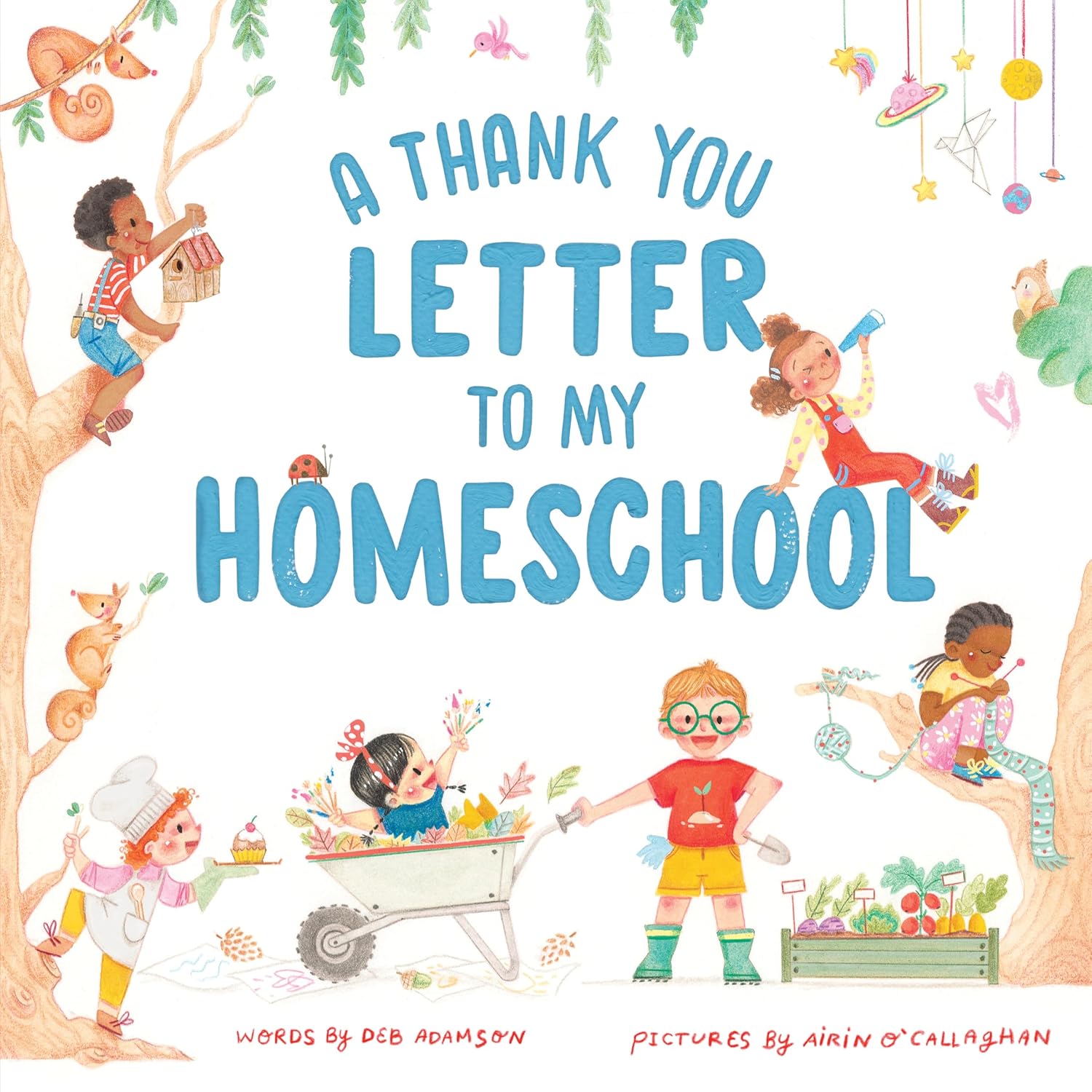
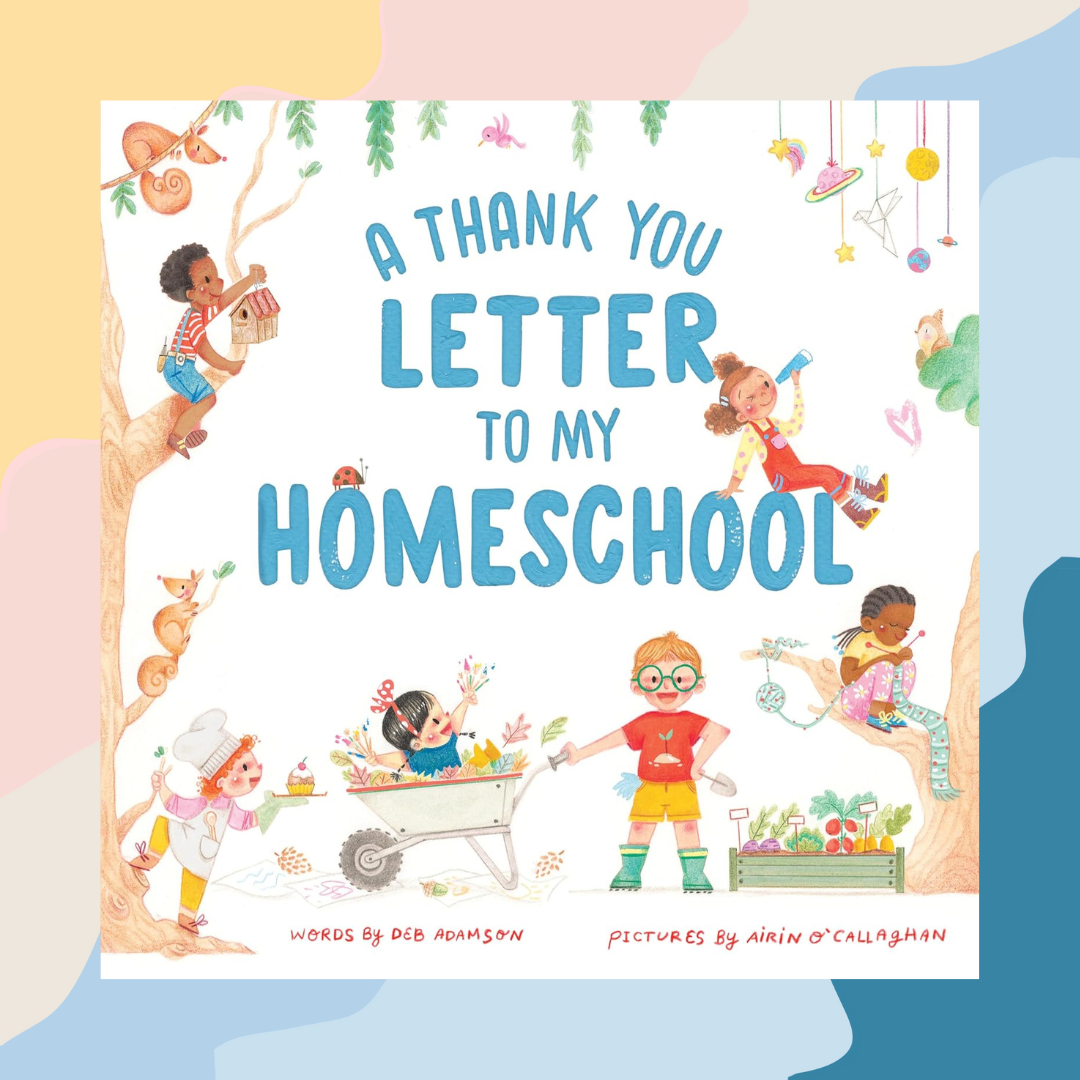
No matter whether you live in a city, a small town, or a farm, in a house or an apartment, you can travel anywhere through books. The magic of reading lies in its ability to transport readers through history, to far-away places and long-ago times, or perhaps to the future, where all it takes is one’s imagination to make it so. National Reading Month invites readers of all ages to experience the world in new and unfamiliar ways through amazing books like today’s that celebrates the hands-on, individual learning of homeschooling.

A Thank You Letter to My Homeschool

Written by Deb Adamson | Illustrated by Airin O’Callaghan


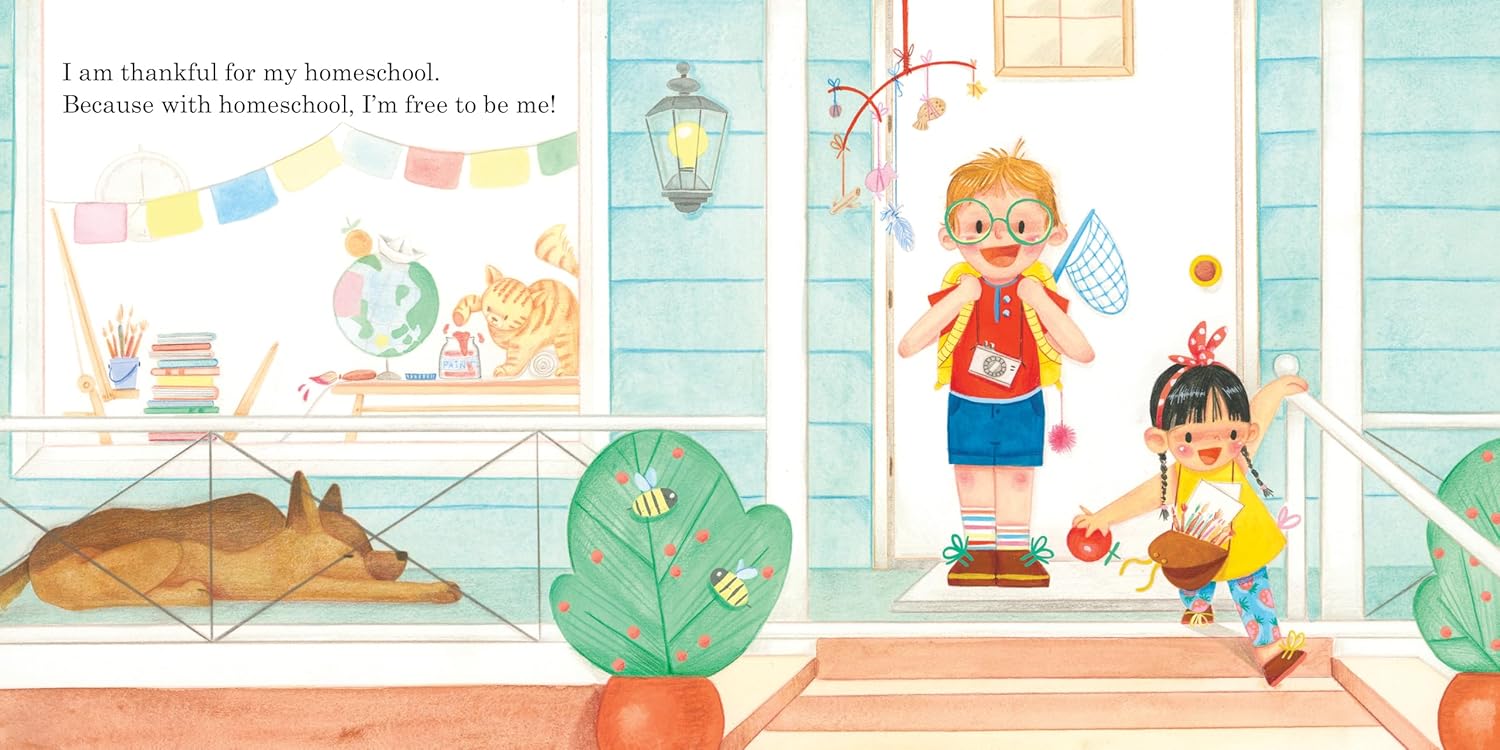
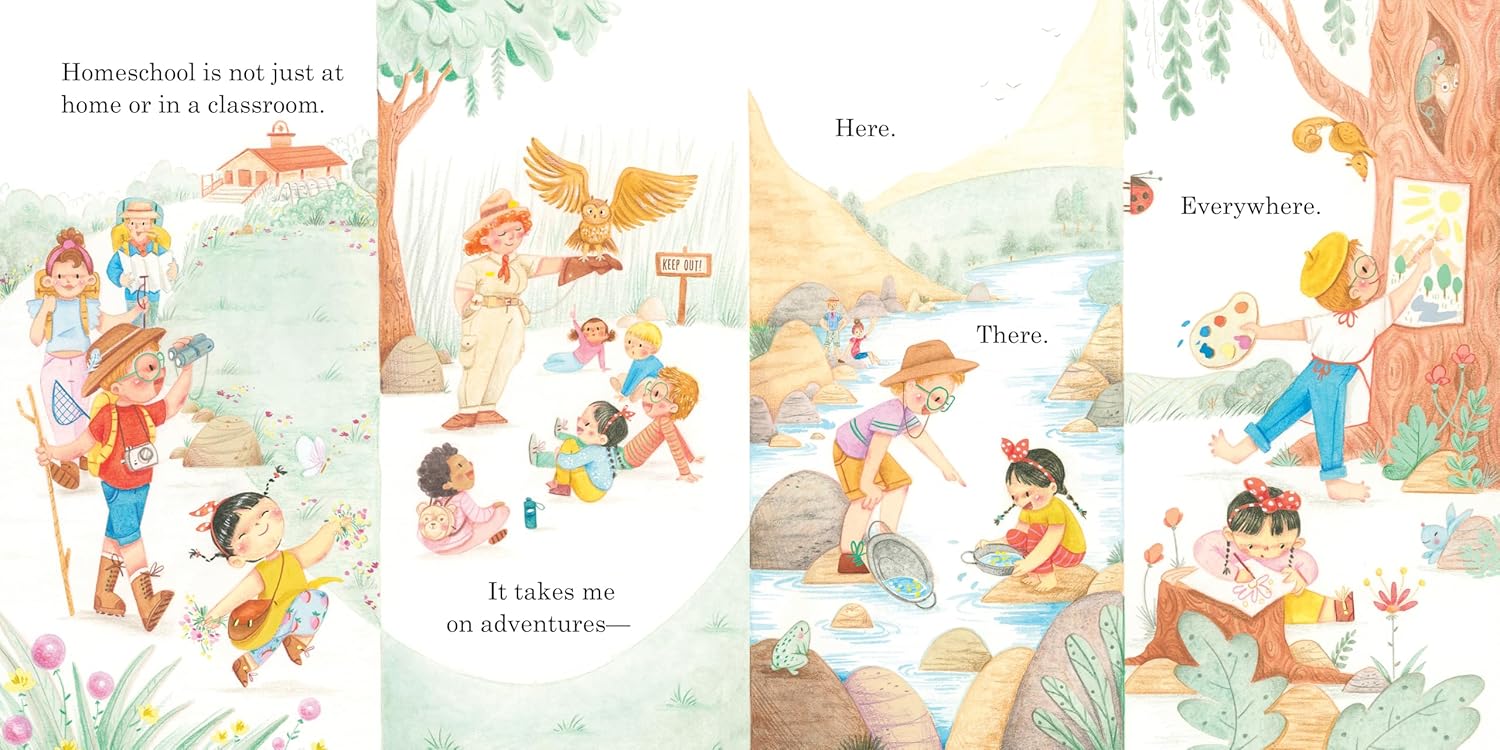
A boy and his little sister stand on their front porch, backpacks on, supplies at the ready, and big grins on their faces. “I’m thankful to my homeschool. Because with homeschool, I’m free to be me!” the boy says. He and his sister are off on an adventure with other kids to a nature preserve, where they learn about owls, pan in a river, and draw what they see.

Illustration © 2025, by Airin O’Callaghan, text © 2025 by Deb Adamson. Courtesy of Sourcebooks Explore.

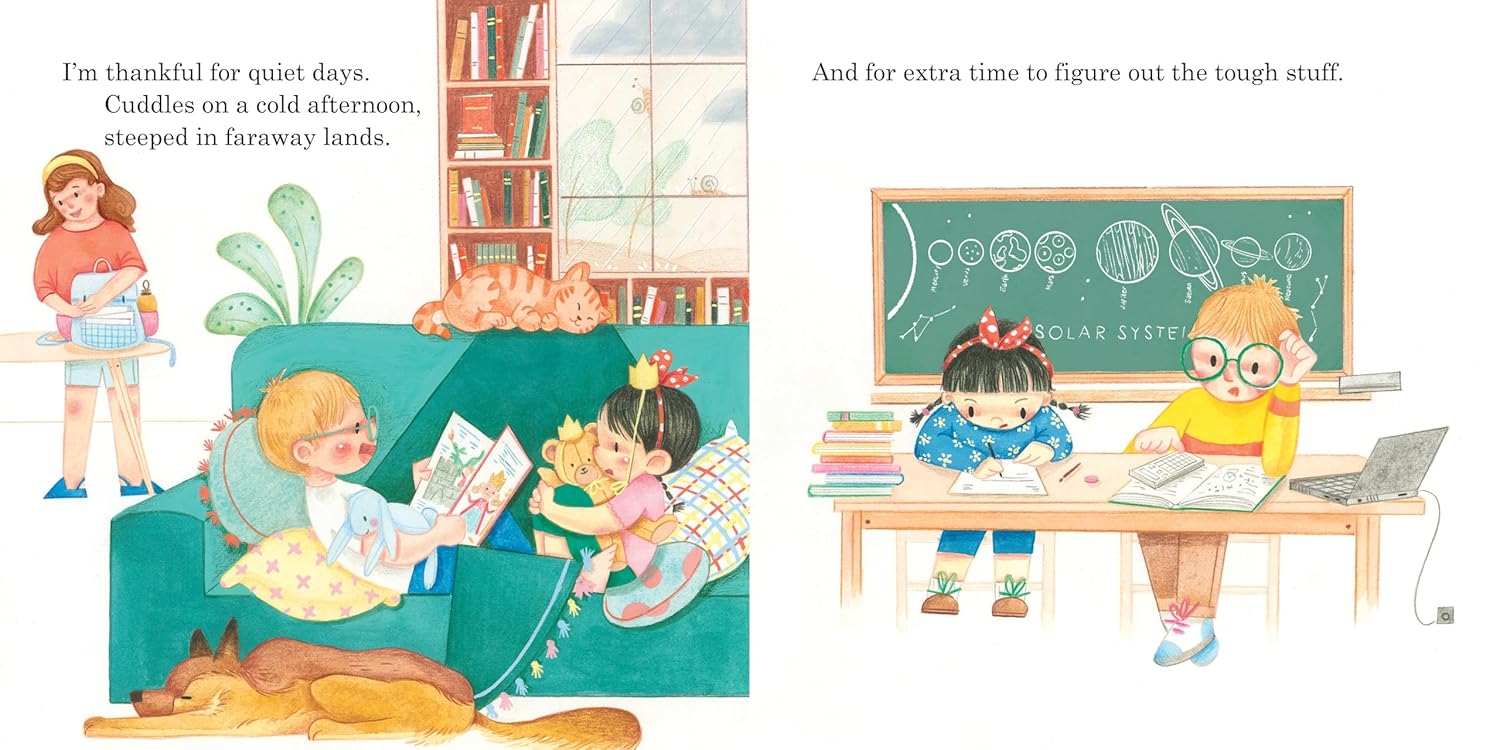
Other road trips have taken them into the city to visit museums, with hands-on experiences; to a farm, where they feed a cow, play with bunnies, and learn about chickens. Remembering other adventures, the boy says he’s “thankful for . . . gazing out from the tip-top of a lighthouse. For standing at the feet of a giant T. Rex.” As much as this student loves his field trips, he also welcomes the days at home when he can read to his sister and study in the way that’s right for him. These days provide “extra time to figure out the tough stuff” and let ideas percolate.

Illustration © 2025, by Airin O’Callaghan, text © 2025 by Deb Adamson. Courtesy of Sourcebooks Explore.

The siblings appreciate how their classroom isn’t just one room but the community garden, where they learn to watch and wonder and wait. They visit the beach, where they collect, count, and sort shells while exploring and learning by seeing living sea creatures; and spend time in a makerspace, where they invent, build, ask questions, and learn new skills. In fact, his classroom can be anywhere he and his sister go.

“I’m thankful that every homeschool day is as different as each snowflake,” he says. “And that I am always free to be me!”

Illustration © 2025, by Airin O’Callaghan, text © 2025 by Deb Adamson. Courtesy of Sourcebooks Explore.

Through the voice of her protagonist, Deb Adamson writes lovingly and enthusiastically about homeschool and all of the benefits this educational model provides for students. She emphasizes the individualized and exploratory nature of homeschooling that takes children into their communities and beyond to learn in a wide range of settings and from a variety of educators and professionals. Adamson also highlights the social aspects of homeschooling and making new friends, be these with others in a network or met along the way.

Airin O’Callaghan’s cheerful, action-packed illustrations buzz with the excitement kids feel when learning in hands-on environments and shine with smiles and curiosity. Every page has so many details for readers to explore and these are sure to spark ideas for projects, field trips, and collaborations for any homeschool family.

A Thank You Letter to My Homeschool is a welcome and vibrant portrait of homeschooling that homeschool families will happily embrace as a favorite read aloud. Those unfamiliar with homeschooling or who may be interested in it will find much to recommend this learning method. The book is a must for public library collections to round out back-to-school and classroom-based offerings.

Ages 4 – 8

Sourcebooks Explore, 2025 | ISBN 978-1464216183

About the Author

Deb Adamson is a former broadcast news journalist, freelance essayist, and syndicated columnist for Gatehouse News Service. Her column about homeschooling her son was read in over 250 print newspapers nationally and online, where it is still available as a resource to homeschool families. Deb writes picture books, board books, chapter books, and middle grade novels in both fiction and nonfiction, and she’s a member of SCBWI. In addition to authoring children’s books, Deb writes for adults and hosts workshops on memoirs, humor, and revision. Deb currently lives on the Connecticut shoreline with her husband. You can follow her on Twitter and Instagram at @DebAdamsonBooks. To learn more, visit debadamson.com.

About the Illustrator

Airin O’Callaghan is an illustrator, muralist and educator who mainly draws for children. Her work includes Some Bodies and The Mermaid With No Tail. She is the founder of Mural Wish, a nonprofit that donates murals for critically ill children. Airin lives in the Bay Area, California, where she finds inspiration in her son and in the beauty nature never fails to show. You can learn more about Airin and her work by visiting airinocallaghan.com.

National Reading Month Activity

A Thank You Letter to My Homeschool Activity Kit


You can show how much you love your homeschool—and go on a scavenger hunt with these A Thank You Letter to My Homeschool Activity Pages!

You can purchase A Thank You Letter to My Homeschool from these booksellers

Amazon | Barnes & Noble | Bookshop (discounted books and support for your local independent bookstore)

Picture Book Review

March 24 – Cover Reveal for ARLO

ARLO

Written by Sophia Gholz | Illustrated by MacKenzie Haley


ARLO works on the assembly line like the rest of the robots. But unlike the others, ARLO longs for something different. Then one day, a surprise changes everything. Follow this exciting adventure as ARLO discovers the unknown, learns home is where the metal heart is, and that “something different” can be created in many ways.

Meet Sophia Gholz
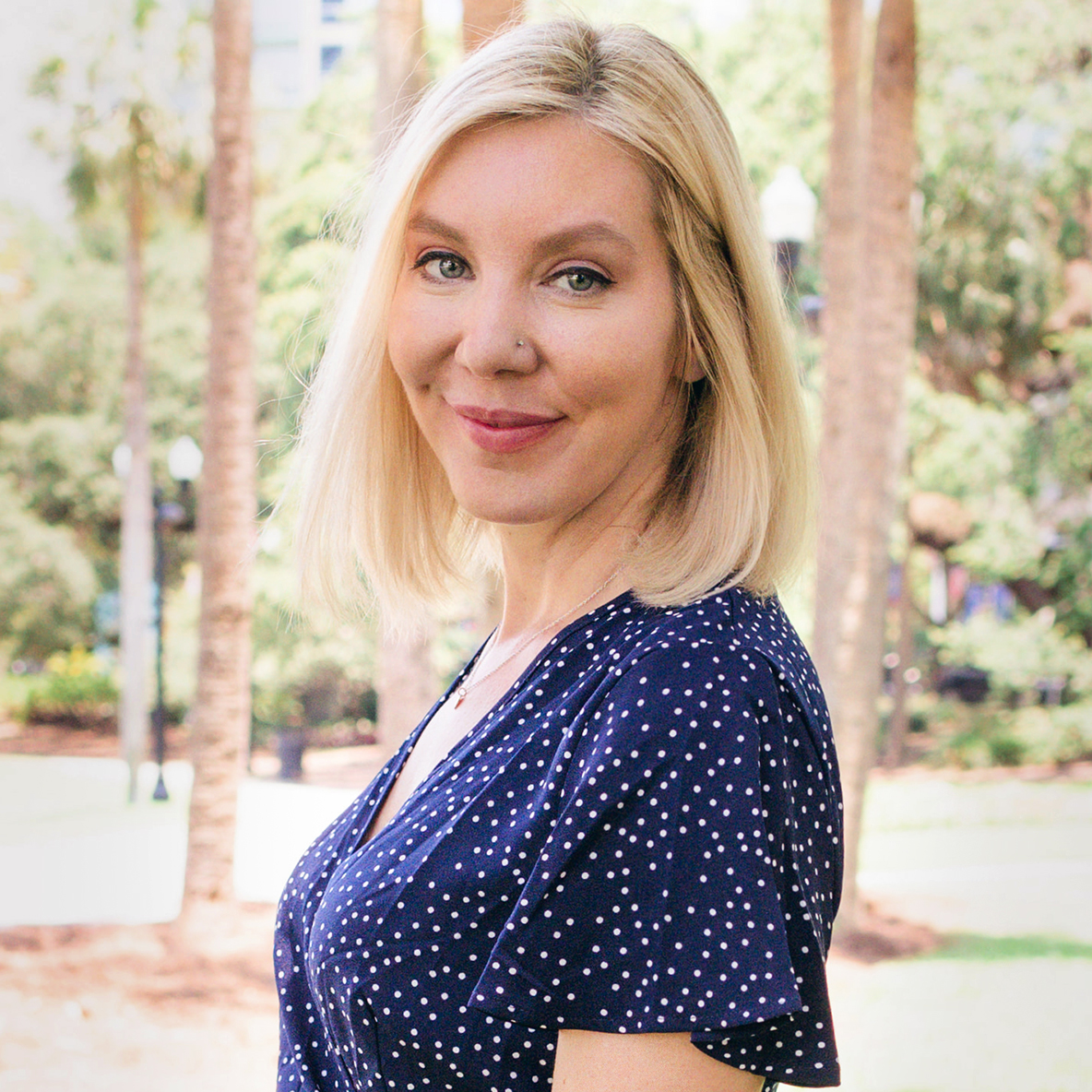
Sophia Gholz is an award-winning children’s book author, poet, magic seeker, and avid reader. Sophia enjoys writing fiction with humor and heart. When writing nonfiction, she pulls on her love of science and her strong family background in ecology. Since 2017, Sophia has helped oversee the Henry L. Gholz SEEDS National Field Trip Endowment for The Ecological Society of America, funding ecological field experiences for students. Sophia is the author of The Boy Who Grew a Forest: The True Story of Jadav PayengThis is Your World: The Story of Bob Ross, Bug on the RugA History of Toilet Paper (And Other Potty Tools), Bear at the Fair, and more. When she’s not writing from her home base in Florida, you can find Sophia reading, visiting schools, or exploring the great outdoors with her family. For more, visit Sophia at: www.sophiagholz.com.

Hi Sophia, I’m so excited to be sharing the cover for your adorable book! Just look at that face! ARLO melts your heart! I’m also happy to be talking to you about how ARLO came to be and so much more. I can’t wait to get started!

Robots are both timeless and timely—and, of course, always kid-favorites!  What was the inspiration behind ARLO?

ARLO actually began as a writing exercise a decade ago, in May of 2014. At the time, the buzzword in the picture book world was “character,” and agents and editors were hungry for “character-driven pictures books.”

Now, I know authors aren’t supposed to write for the market. Instead, you write the story that suits you and hope it fits into the market. However, at that time I was still fresh to the world of picture book writing. I wasn’t agented or published. I was still learning how to craft a story and hadn’t studied much on character building. So, I took the buzzword of the day and decided I wanted to explore that idea. In doing so, I created a metal bot that longed to swim, but couldn’t because—as the line when in my original manuscript said—“His boots sink like bricks, his gears rust, and oil and water don’t mix.”

Similar to the ARLO of today, this original bot worked on a factory assembly line and longed for something different. But unlike ARLO, that original bot had eight arms (like an octopus) and because he loved water, I called him Robotopus. It took me over a decade, 60+ drafts, and so many different variations to finally find ARLO at the heart of this story. And that is exactly why you don’t write for the market and instead write for yourself. It wasn’t until I let go of what I thought this story needed to be and allowed it to become what it was naturally that it clicked.

Growing up, did you have a favorite robot character in books, TV, or movies? What was it about that robot that you liked best?

I’ve always been a huge techy/sci-fi and fantasy fan! One of my favorite childhood movies was called Flight of the Navigator. I loved that film as a kid and it definitely sparked my interest in out-of-this-world robots at a young age. Flash forward, my daughter was on a competitive robotics team in school and that continued to fuel my love. But I’d be remiss if I didn’t shout out Disney’s WALL-E here. That little bot stole my heart from the get-go! In fact, I pitched ARLO’s story as “WALL-E meets The Wizard of Oz.”

Can you talk a little about the journey of this book from idea to publication?

Some books pour out in final form within a matter of hours. Other books take years. ARLO was one of the latter. The first draft was written in May of 2014. I’m one of those writers who likes to save all of their drafts as I revise in case I need to pull something from or revert back to a previous version of a story. So, it’s pretty easy for me to look back now and see exactly how this story changed and shifted over the years.

From the first draft, I fell in love with my little robot. I knew from the start he worked in an industrial factory, but needed nature and longed for something different. In those first drafts, my robot wanted to swim and he used his factory skills for building a suit to help him achieve that goal. That original story actually won an SCBWI Rising Kite Award in 2017. Still, I knew it was missing something. Like my little bot, the story longed for something more. I just couldn’t figure out what that was.

I eventually shelved this manuscript as I focused on other projects. But my bot lived on in my mind. Over the course of ten years, while I was in between other projects, I’d pull this manuscript out of the drawer and completely rework it again and again. Robotopus became Robbie, then Robotika, who morphed into Zigbee, then Ozzy, and ARO, who finally led me to ARLO.

It wasn’t until I let go of the idea of swimming (which I held onto for SOOOO long) and allowed ARLO to tell me what he wanted instead of me telling him, that his story finally poured out in late 2019. But in 2019, two things happened simultaneously: 1) my first book (a nonfiction book titled The Boy Who Grew a Forest) was released and 2) the pandemic struck. As a result, ARLO was shelved again, and it would be another two years before his story would be sent to editors for consideration.

When Sarah Rockett at Sleeping Bear Press made an offer, I jumped on it. I didn’t want the manuscript going anywhere else. Sleeping Bear makes such beautiful books and I knew Sarah really understood this character and the heart of ARLO’s journey.

Tell me about the first time you saw MacKenzie’s cover for ARLO.

I have loved MacKenzie’s art since I first saw it in The Scariest Kitten in the World. I was ecstatic when my editor, suggested MacKenzie as the artist to bring ARLO’s story to life. As soon as her name was floated, I couldn’t think of a better artist for this book.

When I first saw her cover sketch, I squealed in delight. I had no idea what to expect and Mackenzie completely nailed it. I mean, she really knew how to bring ARLO’s personality out and how to capture our little bot’s heart. I cannot wait for readers to immerse themselves in MacKezie’s art and ARLO’s world!

Since your first book The Boy Who Grew a Forest: The True Story of Jadev Payeng was published in 2019, you’ve written about a beloved artist, a famous paleontologist, a bug in a rug, a hangry bear, and even the evolution of toilet paper. These books have been recognized with multiple state and national awards. What do these honors mean to you?

When I began writing, I set out to complete one book. That was my only goal. I was a hopeful writer who wanted to know if I was even capable of crafting or sharing a story I loved. The fact that some of those stories actually became books that have been received in the way they have, is far beyond my wildest dreams. To say I am incredibly grateful, would be a vast understatement.

To this day, each time I sit at my desk, I question again if I’m capable. As an artist, you hope other people will love your art the way you do but that is far from guaranteed. I completely panic every time I release a new book. No matter how much time passes from that first story, I’m still just that girl, sitting behind a keyboard, hoping to complete a manuscript and praying someone out there might like it.

The last time we chatted, you were just getting started as a published author. Your career has really taken off since then. What do like best about being a children’s author? What have you found to be the most surprising?

I’m thankful you’ve been on this journey with me since the start! It feels so good to be back on the blog with you now.

As an author, there is nothing more gratifying than having a reader connect with your story or your character in some way. I absolutely love hearing from readers or seeing the spark in their eyes when I visit them in schools or events. Honestly, there’s nothing better than that.

The most surprising has been navigating book bans and political controversy. When I heard A History of Toilet Paper had been banned in some circles or when I got word from PEN America that Bug on the Rug had been flagged in Florida a while back, I was floored. I’m over here just trying to share stories I love. Call me naïve, but I had no idea how much people might pick them apart in search of negativity.

From the pictures of school, bookstores, and workshop appearances on your website, it’s clear you and the kids have a blast when you visit. Can you talk a little about what you do during a school visit? 

I love visiting schools and hosting author events. This past year, unfortunately, I had to cancel most of my appearances as my daughter went through some very scary health issues. Thankfully, we are on the other side of that now and I’m looking forward to reconnecting with everyone!

I’m not an educator by nature (shout out to all the amazing teachers out there!!!) and don’t know much about school curriculums. So, for me, I love to talk with people about the art of storytelling and finding inspiration in everyday life. One of my favorite things to do is work with an audience to create a story in real time during a visit.

What are you hoping kids will take away from this book?

ARLO is ultimately about finding yourself, learning to embrace differences, and stepping outside of your comfort zone. I hope readers of all ages will find inspiration in ARLO’s adventure.

When can readers look forward to seeing ARLO on bookstore shelves? Do you have tour or other plans you’d like to share?

 ARLO will be released August 1st, 2025 and is available now for preorder anywhere books are sold! Keep an eye out on my website for upcoming events and signings: sophiagholz.com.

Thanks, Sophia, for sharing so much about your journey with ARLO and your inspirations! It’s obvious that ARLO is very well loved!

Meet MacKenzie Haley
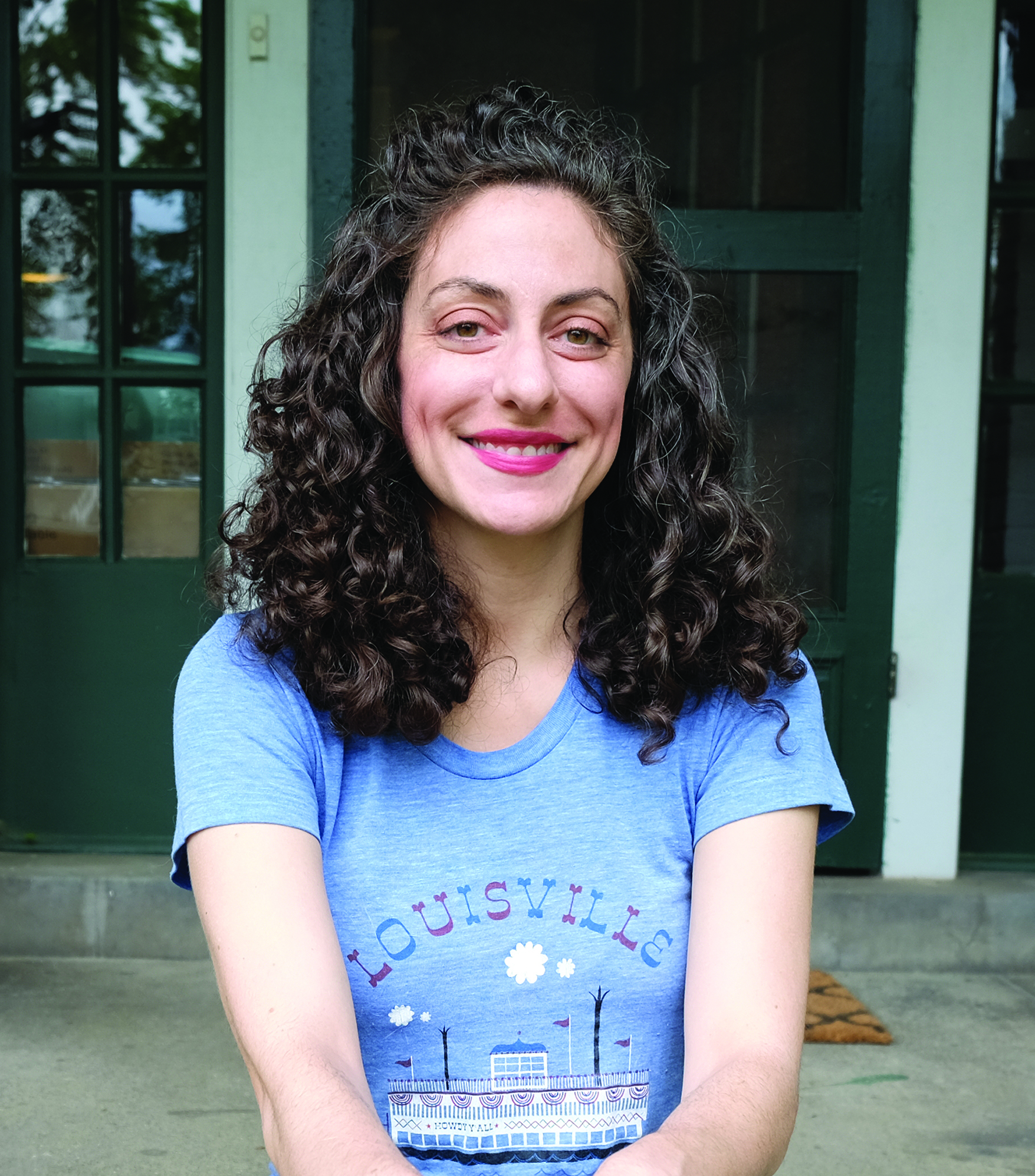
MacKenzie Haley is an award-winning illustrator born, raised, and living in Louisville, Kentucky with her two cats, Booger and Abby. She is the illustrator of Dolly Parton’s Billy the Kid series, as well as A Book for Bear, and The Scariest Kitten in the World. When she’s not drawing or playing with her cats, she can be found spending time with her friends and family, and learning what’s currently “cool” from her twelve-year-old niece, and eight-year-old nephew. To learn more about MacKenzie and view adorable “bits and bobs,” comics, and more, visit her at mackenziehaley.com

Hi Haley! I just fell in love with ARLO the moment I saw him, so I’m thrilled to get to talk to you about how you brought ARLO to life and all the considerations that go into creating illustrations for a picture book. I’ve also gotta know about the kitties you’ve fostered, but let’s start with ARLO.

What drew you to this project?

When I first got the ARLO manuscript, I immediately appreciated the idea of this little robot having the very human experience of daily mundanity. No matter how much we love our day job, our family, our friends, sometimes the day-to-day gets hard and we lose ourselves in that daily grind. The fact that ARLO is literally swept away into a whole new world, specifically into nature, was a reminder that as humans we can get stuck in our day-to-day existence, and begin to take things for granted, to let ourselves get run down. It reminded me that we need to go outside and appreciate the natural world around us. Take time to breathe and experience nature. When we do that, we bring some of that back into our daily lives, and it can change our daily experiences for the better, just like it does for ARLO.

Can you describe your process in creating and choosing this endearing cover image?

To start with, I’ve had good and not-so-good experiences in the past creating covers. I guess every illustrator has! In my earlier years I had publishers shut down my ideas for the cover and want me to just create their vision. When that would happen, the end result was usually not something I was happy with, or that I felt served the book very well. In more recent years I’ve been fortunate enough to work with some wonderful publishers and art directors who value my input and let me explore ideas and take the lead.

Creating the cover for ARLO was a really great example of the collaboration between myself and the publisher/art director/editor. Looking back, I can see I started the cover a bit more guarded than I realized. I can get too attached to my ideas, and sometimes feel like I’m losing my voice in how an image turns out when someone asks me to make certain changes that I’m not sure about at first.

Working with Sleeping Bear Press taught me that there is a good balance to be struck between having an idea you really like, and leaving room for creative feedback and space for positive changes. Not to be so precious with my ideas or images, so that when suggestions are made with a good team, I can step back and really hear what they are saying and work that into the cover vision. For example, I initially kept making ARLO too small in the cover sketches I was creating. So Jennifer took the time to talk with me on the phone and explain what they were looking for, and we were able to come up with an image that really showcases the main character, while hinting at the world he discovers in the story. I learned a lot throughout this process, and I’m really grateful for their endless patience with me.

Did you always want to be a children’s illustrator? How did your career begin?

Growing up, money was really tight. There was a time when my mom and dad didn’t buy themselves any new clothes for two years, but they made sure that I always had a full bookcase and a constantly growing little library of my own. I treasured those books and carry that love of books with me today. Each book was a little world I could explore and get lost in.

That being said, growing up I never realized you could make a living creating art. There was no one in my family’s sphere who did that, and I just didn’t know it was a possibility. I kept making art as I grew up though, and learned that there were jobs as artists. I got my BFA with an emphasis in illustration from The University of Dayton in 2002. While I always loved children’s books, I had no idea how to get into that field, so I cast my net wide and tried to get any and all illustration freelance jobs I could. I had a day job this whole time because my freelance income wasn’t paying my bills.

Around 2005 or 2006 I realized I needed to focus on one aspect of illustration. I had no idea how difficult the children’s book market was to break into, so I naively chose that, haha! I’ve heard it said that you don’t know what you can’t do if no one ever tells you. So I worked on my portfolio, submitted to agents, got rejected, worked on my portfolio some more, submitted again, and got rejected. I kept doing this, improving each round, until I finally got an agent in 2017. I was able to quit my day job in 2018 and have been illustrating children’s books full time ever since then!

What have you found to be the most rewarding aspect of being a children’s illustrator?

Seeing a book completed at the very end is such an incredible feeling and makes all the hard work worth every minute. To know that the author and I created this brand new thing where nothing existed before is an amazing feeling. The other most rewarding thing is hearing from parents or kids themselves about how much a book means to them, how much they like a book or what kind of impact it’s had on them. I remember being little and how important books were to me, how much I cherished them. I feel honored that I am able to be a part of children’s lives like that.

When you are given a manuscript for a picture book, what are your first considerations and how do you go about creating a detailed world for the story?

When I first get a manuscript, I read through it a number of times without trying to make any decisions, to just absorb the story. When I first started illustrating books, I didn’t really know what I was doing or have any kind of plan. That’s changed throughout the years, learning what works best for me and seeing what helps me create the best books I can.

For ARLO, I took a more holistic approach, considering characters, color palettes, emotional tones and shifts. The first thing a publisher usually wants are sketches for the main characters. This was the case with ARLO, but for this story I took it further. I listed all of the characters, distilled the main message of the story, and noted what the characters were feeling and when, along with the major emotional shifts in the book. The robots are characters in this story, but I also considered the two worlds or environments as characters as well—the factory and nature. I wanted a color shift to occur throughout the book. The factory was created using almost exclusively neutral colors, with a pop of bright blue here and there, hinting at the natural world ARLO would explore later (the bird he follows in the story is bright blue).

Illustration © 2025 by MacKenzie Haley, text © 2025 by Sophia Gholz. Courtesy of Sleeping Bear Press.

The shift from neutrals in the factory to an explosion of bright, bold colors in nature was really important. The neutrals portray the mundanity of ARLO’s daily life in the beginning of the story, and at the end when he has learned from his adventure, he brings the brightness from nature into the factory, and we see neutrals and bright colors together, indicating in a visual way how ARLO’s and the robots’ daily lives are more fulfilling and happy now. Colors carry such emotional weight, and my hope is that the reader feels this as they progress through the story.
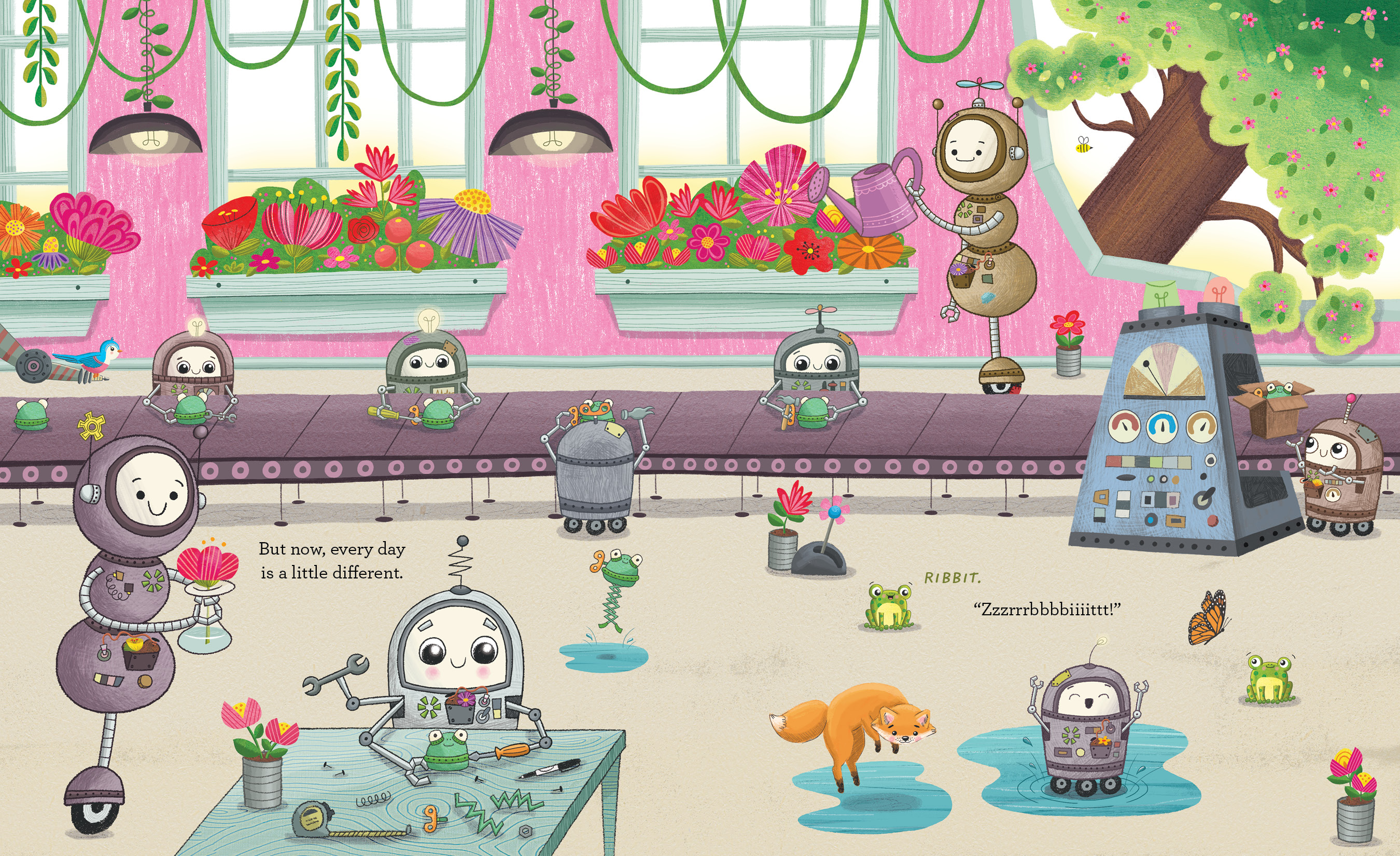
Illustration © 2025 by MacKenzie Haley, text © 2025 by Sophia Gholz. Courtesy of Sleeping Bear Press.

What was your favorite part of creating ARLO’s world?

My favorite part was creating ARLO himself. I had so much fun playing with basic shapes and forms and fun little details, such as the little compartments he has and what tools would pop out of them. But I also loved creating the outside world almost as much as ARLO. To make the flowers, I scanned in hand-painted swatches of watercolor, collaged shapes from them digitally in photoshop, and then drew on top of those shapes. I got to explore a lot and try several different things to see what worked best and what I was happiest with. It was a really fun process! I think the watercolor texture is a good contrast to the sleek metallics of the factory world.

Your bio on your website reveals that you’ve fostered around twelve cats and are a cat mom to two. How did you begin fostering cats? Your illustrations of cats are so adorable and true to cats’ goofy and sweet personalities. Do you use your own cats as inspiration? Will readers be meeting any kitties in ARLO?

I fostered my first kitties 13 or 14 years ago. At the time Louisville Metro’s animal shelter system had a really high kill rate. I didn’t have much money to donate, and they said the next best thing was to foster. They have food banks to cover that cost, and local vets who spay/neuter the cats for free, and take care of deworming, fleas, etc. I walked into the shelter that first day, having one cat at home, thinking to myself “okay, you get to foster one cat.” I ended up walking out of there with a huge crate holding a mom cat and her five one-day-old kittens. I obviously didn’t stick to my plan! I had asked them what their most immediate or urgent case was, expecting maybe a difficult or older cat. When they introduced me to mom cat and her kittens though, I couldn’t say no. I’m a sucker for kitties!

I definitely use my own cats for inspiration. The kitten in The Scariest Kitten in the World is basically my white cat, Booger. She’s so goofy and playful. She was one of the kittens in that first foster group I had, so I’ve known her since she was one day old. She would crawl up on my lap while I was working on an illustration and fall asleep, while the other kittens were playing with each other. I fell in love immediately. I think the situation is more that I’m her human, rather than that she is my cat. I adore her. There aren’t any kitties in ARLO. I should have tried to sneak one in! But there are some woodland creatures the readers will see along the way!

What would you like readers to take with them from your illustrations for ARLO?

I think I would like them to take away the idea of what an amazing wonder nature is, what a gift we have right in front of us, and what it can add to all of our lives. Just being outside for even five minutes a day, breathing in fresh air, feeling the sun on your skin, it all makes such a huge difference. I think it’s something humans crave and need to be whole and happy.

Thank you so much, MacKenzie, for this wonderful, in-depth look at your career in illustration and your process in creating ARLO’s world! I’m so looking forward to August 1, when readers everywhere will be able to bring ARLO home with them.

If you’re as eager to read ARLO as I am, you can preorder the book at these booksellers and from Sleeping Bear Press. ARLO will be released on August 1.

Sleeping Bear Press | Amazon | Barnes & Noble | Bookshop (to support your local independent bookstore)

Picture Book Review

March 21 – Celebrate Spring

About the Holiday

Yesterday we celebrated the spring equinox, which means that spring is officially here! With the coming of longer and warmer days, we’re looking forward to the return of vibrant color on trees and in gardens, birds, bees, and butterflies flitting here and there, all the fun activities the outdoors provides, and, of course, the books that bring cheer and meaning to the season. 

Thank you to G.P. Putnam’s Sons Books for Young Readers/Penguin Random House for sharing a digital copy of this book with me!

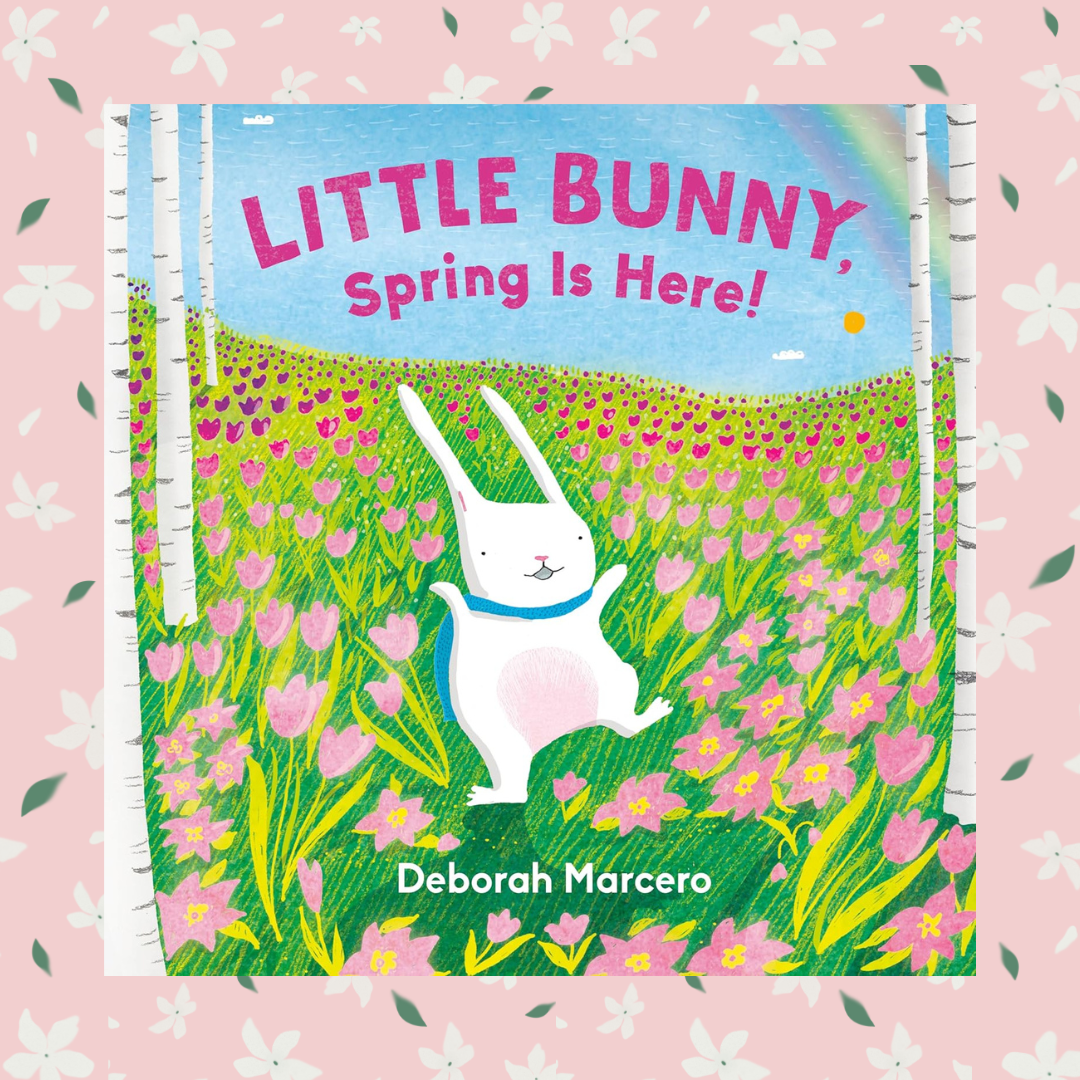
Little Bunny, Spring Is Here!

By Deborah Marcero


Little Bunny and Field Mouse are walking through the woods. Little Bunny doesn’t see much evidence of spring, yet, and wonders when it will come. Looking at a tiny green shoot, Field Mouse has some good news. “I think spring is coming, Little Bunny,” she says. Little Bunny is excited and wants to go off to find it.

Text and Illustration © 2025 by Deborah Marcero. Courtesy of G.P. Putnam’s Books for Young Readers.

They meet up with Duck, who’s still wearing a winter hat but offers to join the search—leaving someone else behind in the tall grass at the edge of the pond. In a cave they find Black Bear awake and ready to explore. A short walk in the rain brings them to the welcome shelter of Chipmunk’s hollow log. Soon, the rain stops, the clouds disperse, and the sun rises high in the sky. The five friends scan the surrounding hillside, where pale green leaves appear on tree branches, turning darker along with the grass that carpets the meadow.

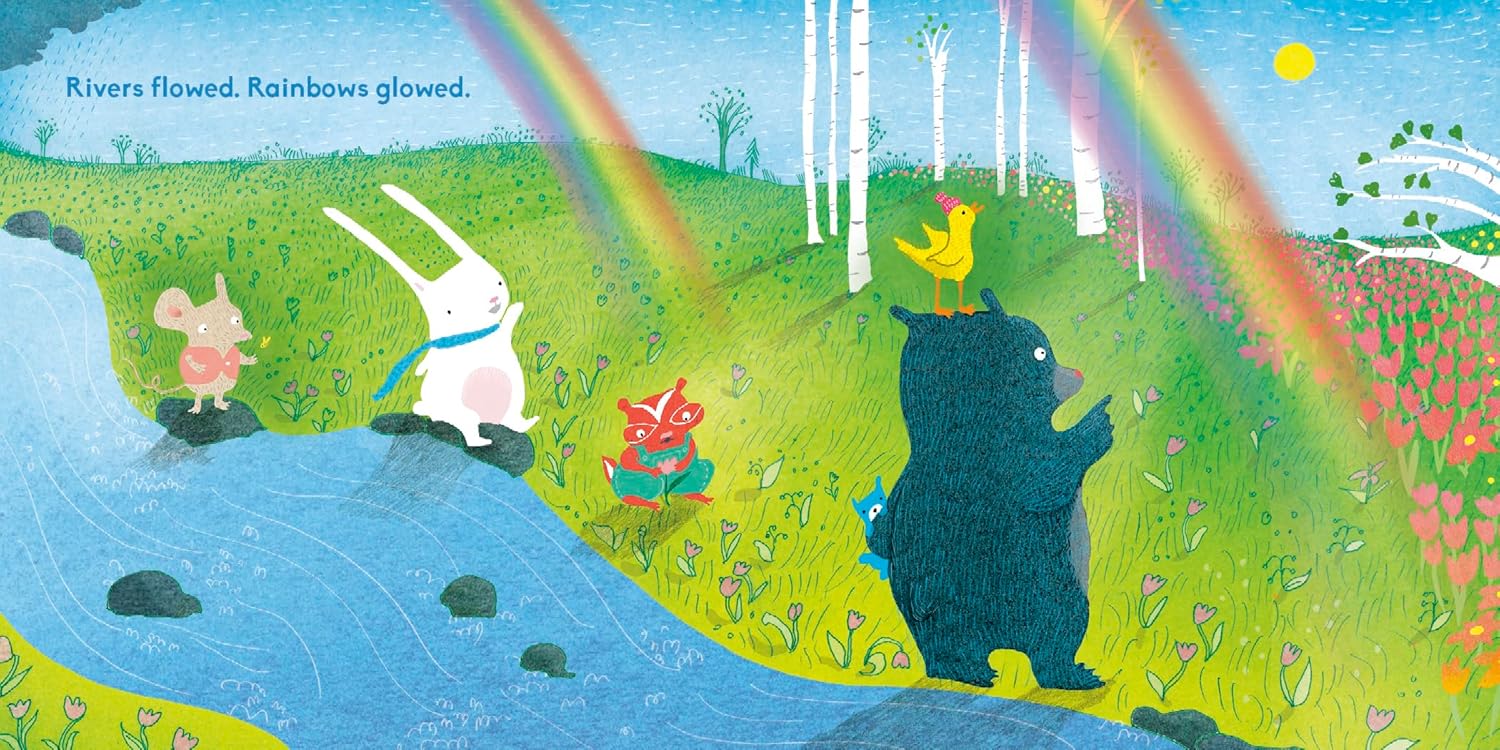
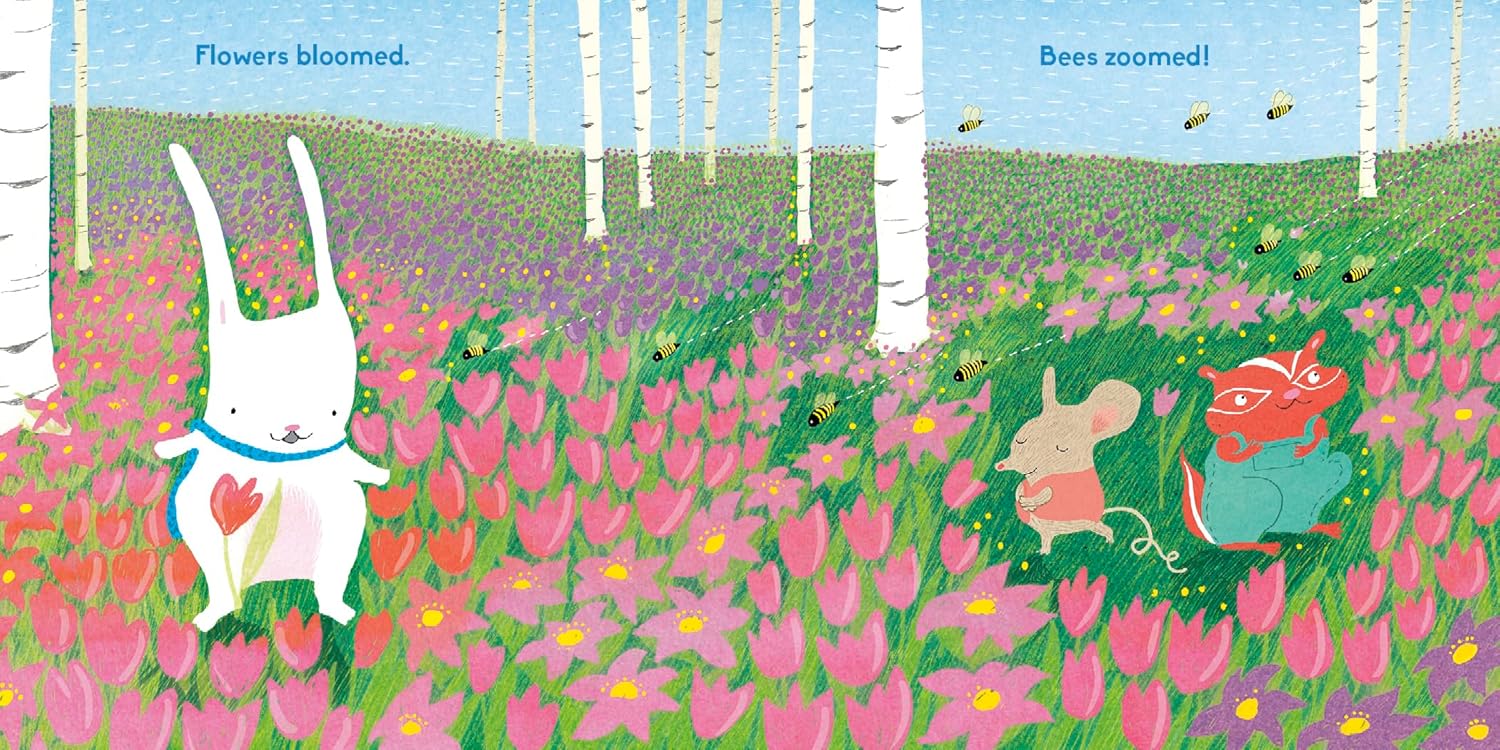
The rain has also brought bubbling water to the river, and glowing rainbows to the sky. In a blink “Flowers bloomed” and “Bees zoomed! Birds sang.” In fact, “Spring SPRANG!” Little Bunny celebrated. “Spring is here, everyone! And so it was.”

Text and Illustration © 2025 by Deborah Marcero. Courtesy of G.P. Putnam’s Books for Young Readers.

Adorable in every way, Little Bunny, Spring Is Here! will delight little ones with its cute characters, sweet friendships, and magical landscape that blooms in time-bending quickness. Deborah Marcero’s engaging storytelling ushers in spring with repeated phrases that youngest readers will love joining in on. After the rain brings a transformation, Marcero invites little ones to welcome spring’s beauty with lively, two-word rhyming verses. Little Bunny’s final announcement of spring’s arrival is one we all can cheer.

Marcero’s bright and charming illustrations provide surprises on every page as the group of endearing friends goes searching for spring. Wise little readers will have fun recognizing and pointing out the signs of spring, such as tadpoles in the pond, those “April showers,” and blossoms galore before Little Rabbit and the rest of the gang discover them. And don’t forget to look for hearts among the leaves and flowers. Adults and kids will also share a giggle as the little tadpoles line up in the pond for their turn to use Black Bear’s snout as a diving board as, in a bound, each instantly transforms into a frog.

A lovely, multilayered board book, Little Bunny, Spring Is Here! is a perfect read aloud as well as a terrific take-along choice for spring and summer outings to invite kids to find signs of the changing seasons. The book is highly recommended for home, preschool, and library collections.

Ages Birth – 3

G.P. Putnam’s Sons Books for Young Readers, 2025 | ISBN 978-0593698969

Deborah Marcero is the author and illustrator of the picture book bestsellers In a Jar, which was called “stunning” in a starred review from Kirkus Reviews and “beguiling” by the Wall Street Journal, and Out of a Jar, which was an Entertainment Weekly Best Book of the Year and was called “simultaneously simple and profound” in a starred review from School Library Journal. She also wrote and illustrated the picture book My Heart Is a Compass and the Haylee and Comet emerging reader series. Learn more at deborahmarcero.com and follow her on Instagram

Celebrate Spring Activity

celebrate-picture-books-picture-book-review-sweet-bunny-candy-jar

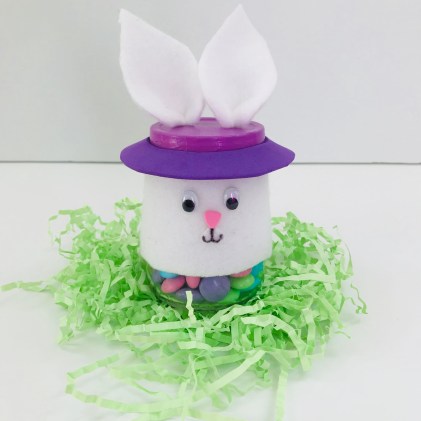
Bunny Candy or Organizer Jar


A little bit of candy makes Easter or any spring day sweeter! With this Sweet Bunny Candy Jar, you can give a child, a friend, or even yourself a special treat that will make you hoppy!

Supplies

  • Printable Hat Rim and Bunny Ears Template
  • Baby food jar (I used a Beech-Nut Naturals jar)
  • White fleece, 8 ½ inches by 11 inches
  • 1 piece of colored foam 
  • Small piece of pink foam or felt for nose
  • Googly eyes (I used oval)
  • Medium pom-pom
  • Multi-surface paint, purple (for the hat)
  • Fabric glue (I used Fabric-Tac)
  • Black ultra-fine or fine tip permanent marker
  • Large nail or ice pick
  • Hammer
  • Scissors

IMG-2614

Directions

  1. Remove label from baby food jar
  2. Clean and dry jar and lid
  3. Trace the hat rim template onto the purple foam
  4. Cut out the rim of the hat and remove the center
  5. Trace the ears template onto the white fleece and cut out

To Make the Body and Face

  1. Cut a 2-inch wide by 7-inch long strip of white fleece
  2. Glue the strip of fleece to the jar under the lip and leaving about ½ inch of glass showing at the bottom
  3. Glue on the googly eyes
  4. Cut a little nose from the pink foam and glue to the face
  5. Make the mouth with the permanent marker on a little piece of fleece, cut out and glue under the nose

To Make the Hat

  1. Paint the lid with the purple paint. Let dry.
  2. (Adult Needed) With the nail or ice pick and hammer, make a hole on either side of the lid to insert the ears. You can make the hole a little bigger with a phillips head screwdriver
  3. Flip the lid over and hammer the edges of the hole flat
  4. Trace the hat rim template onto the purple foam and cut out

To Insert the Ears

  1. Pinch the end of one ear together and push it through one hole in the lid.
  2. Pull it through the hole a bit to form the ear
  3. Repeat with the other ear

Finish the Bunny

  1. Add the foam rim to the lid
  2. Glue the pom-pom to the back of the jar for the tail
  3. Add M&Ms, jelly beans, or other small candy

You can purchase Little Bunny, Spring Is Here! from these booksellers

Amazon | Barnes & Noble | Bookshop (to support your local independent bookstore)

Picture Book Review
March 19 – It’s National Let’s Laugh Day, National Poultry Day, and International Read to Me Day

celebrate-picture-books-picture-book-review-chickens-on-the-loose-cover

About the Holidays

It’s not often you get to celebrate three national holidays with one book, but Chickens on the Loose ticks all the boxes for National Let’s Laugh Day, National Poultry Day, and International Read to Me Day. So whether you just need a good laugh, love everything about our larger feathered friends, or always make time for joy in every day by reading to your children, today’s book is an eggs-ellent choice!

Thanks go to West Margin Press and Barbara Fisch at Blue Slip Media for sharing a copy of Chickens on the Loose for review.

Review by Dorothy Levine

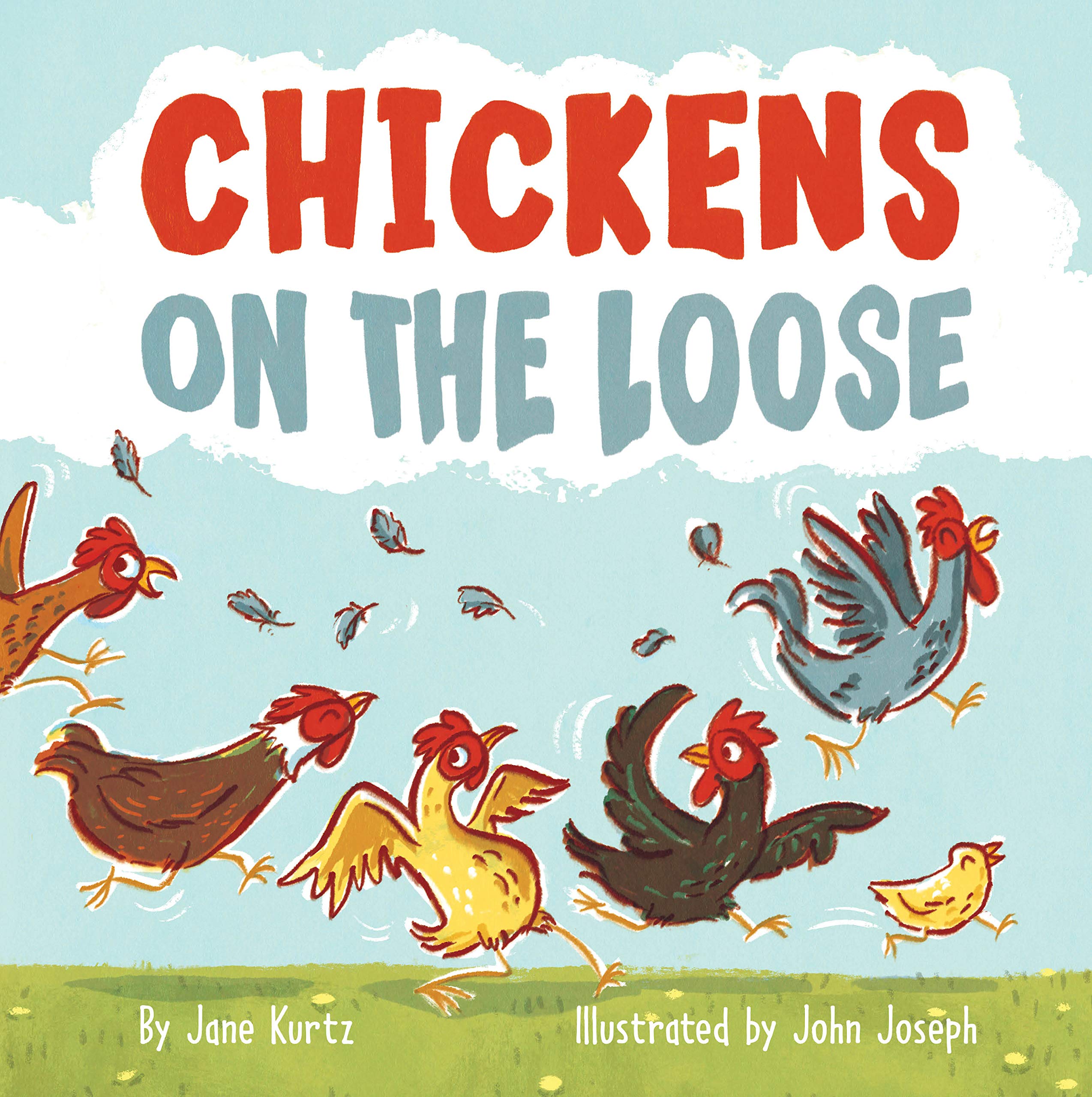
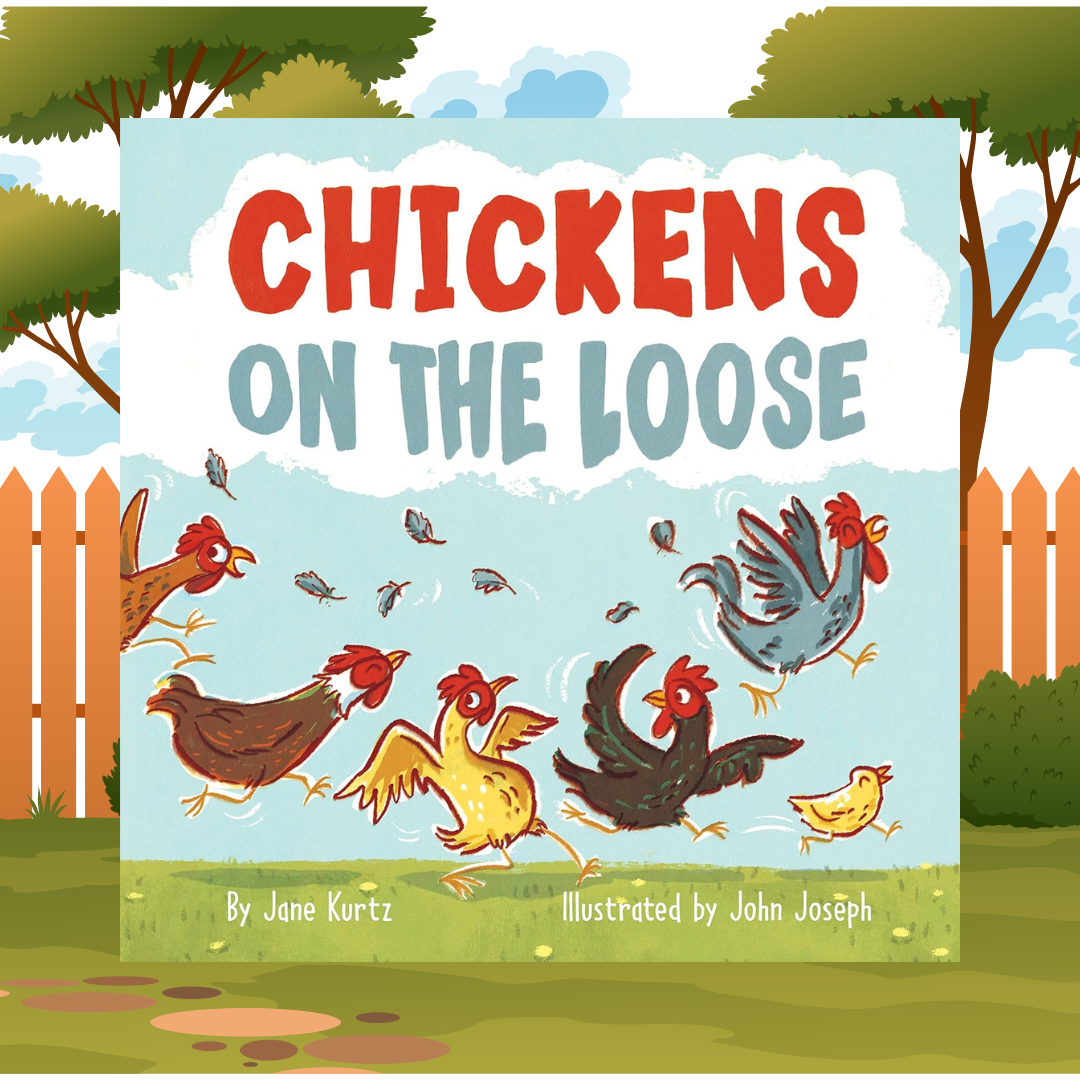
Chickens on the Loose

By Jane Kurtz | Illustrated by John Joseph

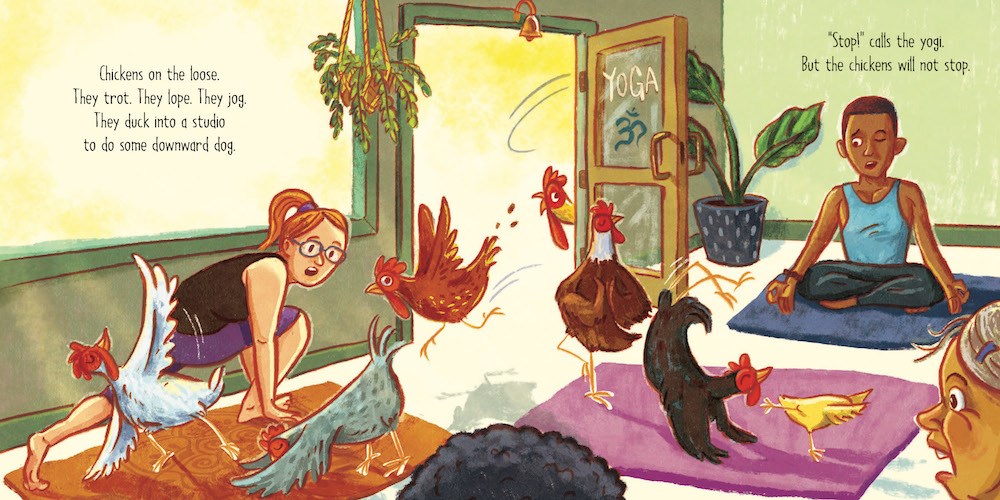
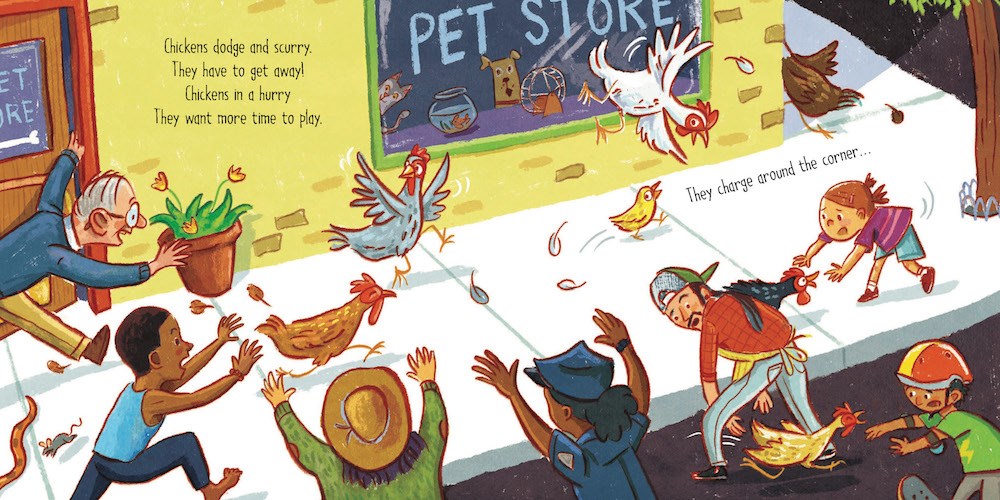
Oh no! The backyard gate is open and there are “chickens breaking loose. / Chickens on the lam. / Zipping from the yard, / as quickly as they can.” It’s a wild chicken chase, with humans trailing behind, trying and failing to stop the loose chickens. The chickens zoom and do not stop; they peek in windows, take items from shops. They do some yoga at a local studio, before grabbing some snacks at an outdoor food court fest. What a crazy, hilarious, chicken-filled mess!

celebrate-picture-books-picture-book-review-chickens-on-the-loose-yoga-studio

Illustration © by John Joseph, 2021, text © by Jane Kurtz, 2021. Courtesy of West Margin Press.

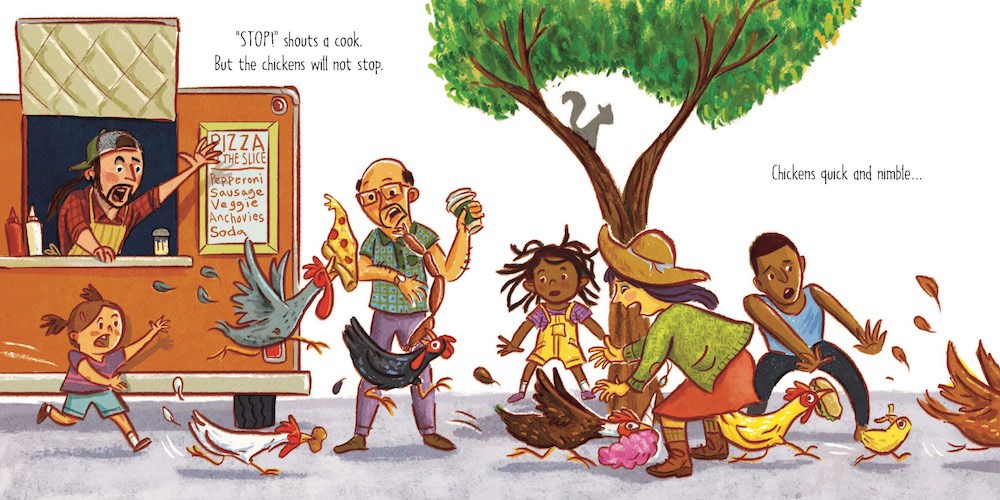
As the chickens “hitch a ride on skateboards / to rest their aching feet,” paint walls, and take a trip through the pet store (where they share their love of freedom with the penned-up animals), an ever-growing crowd of people race behind to try and stop them in their tracks. Throughout the story, each new member of the crowd yells, “STOP!” but the chickens pay no heed. When the chickens reach the local pet store, “‘STOP!’ shouts everybody. But the chickens will not stop. / ‘No way!” they say, “We will not stay.” It sounds like BOC BOC BOC.” 

celebrate-picture-books-picture-book-review-chickens-on-the-loose-food-truck

Image © by John Joseph, 2021, text © by Jane Kurtz, 2021. Courtesy of West Margin Press.

When the chasers and escapees finally collide with a giant “SPLAAAT!!!,” the chickens know it’s time to head back home. They take their tired legs and waddle through raindrops and puddles with heads hung low. When they are back at the coop, they close their eyes and take a rest. One bathes their feet, another dozes under a snazzy polka dot eye mask. They take a snooze until, “Oops! Yikes! That old mood strikes…” and the chickens are on the loose once more! 

Backmatter includes information on keeping urban chickens and general chicken facts. 

celebrate-picture-books-picture-book-review-chickens-on-the-loose-pet-store

Image © by John Joseph, 2021, text © by Jane Kurtz, 2021. Courtesy of West Margin Press.

Author Jane Kurtz wows us again with another read-out-loud tale perfect for youngsters. Her infectious rhymes and zippy rhythm propel the story with wit as quick as those runaway chickens. Kurtz’s vivacious vocabulary adds to the fun, and her repeated phrasing will have kids vocally joining the chase. In her bio following the story, she explains that her inspiration for the book stemmed from childhood experiences raising chickens with her family while living in Ethiopia. She aims to engage readers in a fun tale while teaching that chickens can happily live in cities and urban areas too.

John Joseph’s colorful, comedic drawings feature a diverse cast of city residents of different races, religions, ethnicities, and abilities. The girl whose chickens got loose in the first place is seen throughout the pages, leading the crowd down the streets. Joseph illustrates the neighborhood with colorful storefronts, homes, bustling crowds, and the silliest of chickens. The exaggerated body language and expressiveness of the humans and chickens throughout the book tell a story in and of themselves—from happy chickens with sandwiches and pizzas in beak to people gleefully and nervously chasing after the flock, the facial expressions add a great deal of humor to the story. 

Chickens on the Loose is a perfect edition to home collections, classrooms, and libraries. One that is sure to make readers laugh out loud, and maybe even inspire a round of the Chicken Dance!

Ages 4 – 8

West Margin Press, 2021 | ISBN 978-1513267241

About the Author

Jane Kurtz is an award-winning children’s book author, speaker, educator, and she is on the faculty of the Vermont College of Fine Arts MFA in Children’s and YA Literature. She is a co-founder of the nonprofit Ethiopia Reads, an organization that brings books and literacy to the children in Ethiopia, where Jane grew up. She also heads the creative team of Ready Set Go Books, a project of Open Hearts Big Dreams to create fun, colorful, local language books for people in Ethiopia. She is the author of many books for children, including River Friendly River Wild, winner of the SCBWI Golden Kite award for picture book text, and What Do They Do With All That Poo?, a finalist to the AAAS/Subaru SB&F Excellence in Science Books list; it has also been named to several state reading lists, voted on by children. To learn more, visit Jane at janekurtz.com and on Instagram and Twitter.

About the Illustrator

John Joseph is an artist, illustrator, elementary school teacher, avid gardener, and community leader. He earned a degree in visual arts from Colorado State University and a Masters from Lesley University, and has won the ACP Excellence in Publishing Award for Best Picture Book. He lives in Colorado with his wife, two sons, and a German shepherd. You can visit John at johnjosephillustration and on Instagram.

National Let’s Laugh Day Activity

West-Margin-Press-chickens-on-the-loose-activity-kit

Chickens on the Loose Activity Kit

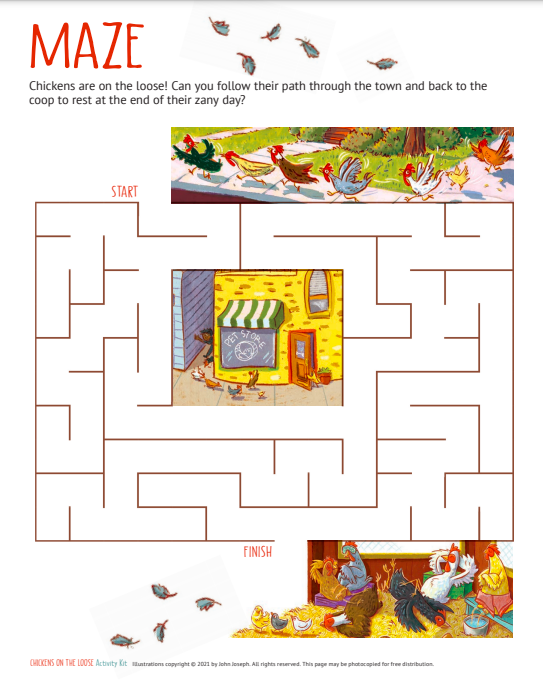
Download this Chickens on the Loose Story Time Kit to make chicken puppets, complete a chicken maze, do chicken yoga, and more!

You can purchase Chickens on the Loose at these booksellers

Amazon | Barnes & Noble | Bookshop (to support your local independent bookstore)

Picture Book Review

March 18 – National Awkward Moments Day

About the Holiday

If you have kids or have ever been a kid, you know that awkward moments abound, especially when you least expect—or want—them. Things like pratfalls, forgetting someone’s name, and falling for practical jokes may make us feel like sinking into the floor, but today’s holiday actually celebrates all of those moments. Why? Because cringe-worthy faux pas happen to everyone; they’re just part of being human. So today, celebrate and even share those small embarrassments—and enjoy a laugh. 

Thank you to Orchard Books for sharing a digital copy of this book with me!

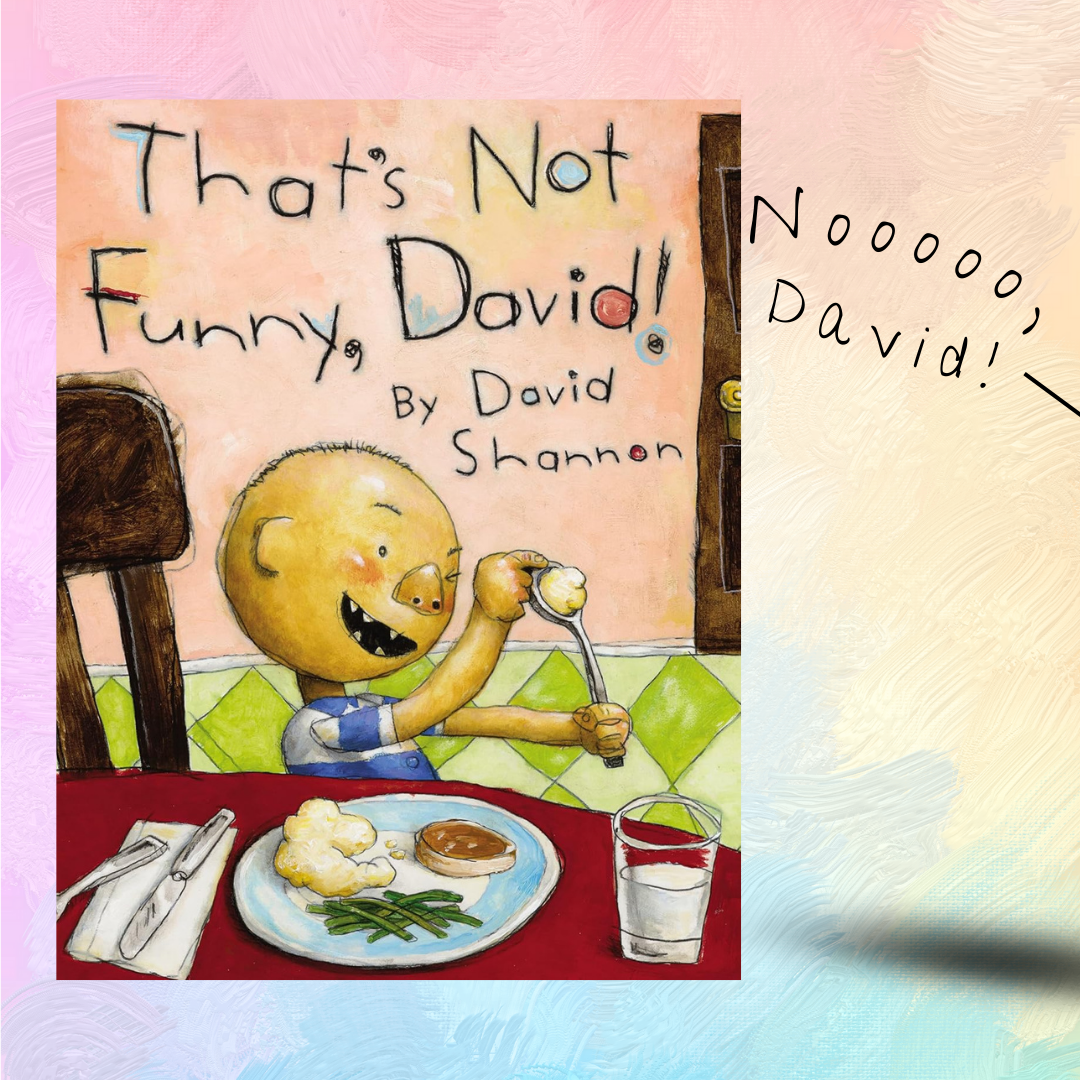
That’s Not Funny, David!

By David Shannon 


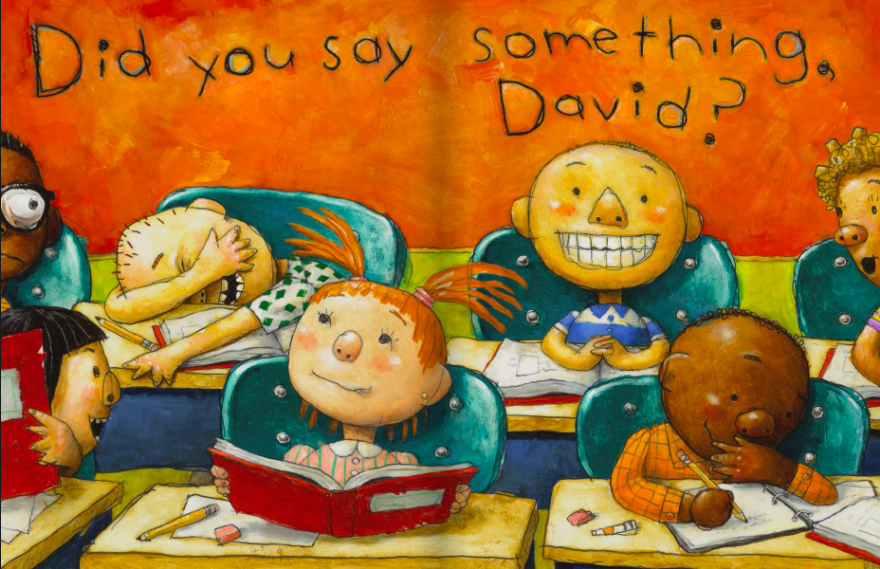
David (and without even looking at the cover above, I bet you know who I’m talking about) is back! He may be 5 books older, but the years have not mellowed his rambunctious nature. Whether he’s blowing a volcano of bubbles in his drink at a restaurant or grocery cart surfing into the mountainous fruit display, David just can’t quell his mischievous impulses.

Illustration and text © 2025 by David Shannon. Courtesy of Orchard Books/Scholastic.

The adults aren’t laughing. In fact, they’re telling him, “Not funny, David,” and in response to a drawing on the classroom whiteboard: “We are not amused, David.” But the kids? They’re very amused. And even though he ends up in the principal’s office, at home he’s still got enough . . . shall we call it . . .spunk? . . . to be tip-toe tempted by the fully decorated birthday cake on the counter and to need a peanut extracted from his nose (“How on earth did this happen?”).

As the day progresses, his parents have to stay on their guard. But when one last silly bedtime antic finally brings a laugh instead of a scolding, hearts soften, and there’s just one thing left to say: “What am I going to do with you?”

Illustration and text © 2025 by David Shannon. Courtesy of Orchard Books/Scholastic.

Fans of young David’s hijinks will find lots to giggle at in David Shannon’s latest foray into David’s madcap misadventures. In his bright, rollicking illustrations, Shannon’s monster-toothed hero (except when he’s trying to look innocent) sends pool water splashing, fruit airborne, and popcorn flying. David’s expressive face tells readers all they need to know about David’s feelings and the impact he wants to make, even if it’s not the reaction he gets.

A worthy addition to a series that’s a proven winner for silly story times, when relaxing and laughing together are just what’s needed, That’s Not Funny, David! is sure to tickle funny bones of all ages.

Ages 4 – 8

Orchard Books/Scholastic, 2025 | ISBN 978-1546123187

About the Author/Illustrator

David Shannon is the internationally acclaimed creator of more than 40 picture books, including No, David!, a Caldecott Honor Book, and his second New York Times Best Illustrated Book of the Year, and four more David picture books. Shannon’s bestsellers include A Bad Case of StripesDuck on a Bike, and Too Many Toys. He lives in Southern California with his family and Roy, their West Highland white terrier.

National Awkward Moments Day Activity

Illustration and text © 2025 by David Shannon. Courtesy of Orchard Books/Scholastic.

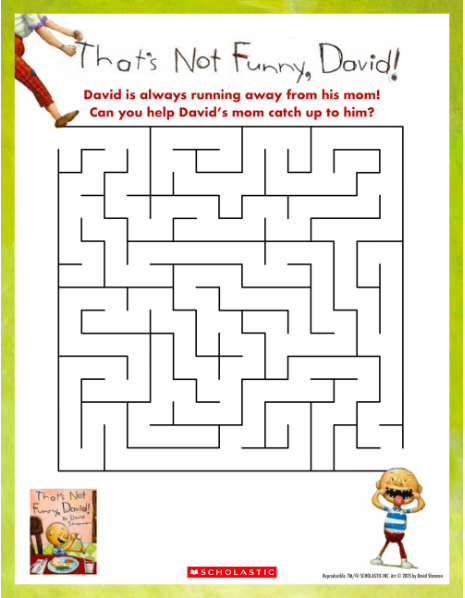
That’s Not Funny, David! Activities


Go ahead and have some fun with David and these book-inspired That’s Not Funny David! Activities!

You can purchase That’s Not Funny, David! at these booksellers

Amazon | Barnes & Noble | Bookshop (to support your local independent bookstore)

Picture Book Review
March 14 – It’s Expanding Girls’ Horizons in Science and Engineering Month

About the Holiday

Expanding Girls’ Horizons in Science and Engineering Month was established in 2020 by the Expanding Your Horizons (EYH) Network. Founded in 1974 as a series of conferences aimed at promoting STEM careers to middle and high school girls, EYH provides hands-on activities, mentoring, and contact with role models as well as information about science and engineering fields.

Women still make up only 28% of the science and engineering workforce. With this month-long observance, the EYH Network hopes to make a significant impact on girls’ perceptions and career choices, encouraging them to explore and embrace STEM subjects​.

Thank you to Heyday and Barbara Fisch at Blue Slip Media for sharing a copy of I Love Salmon and Lampreys: A Native Story of Resilience with me!

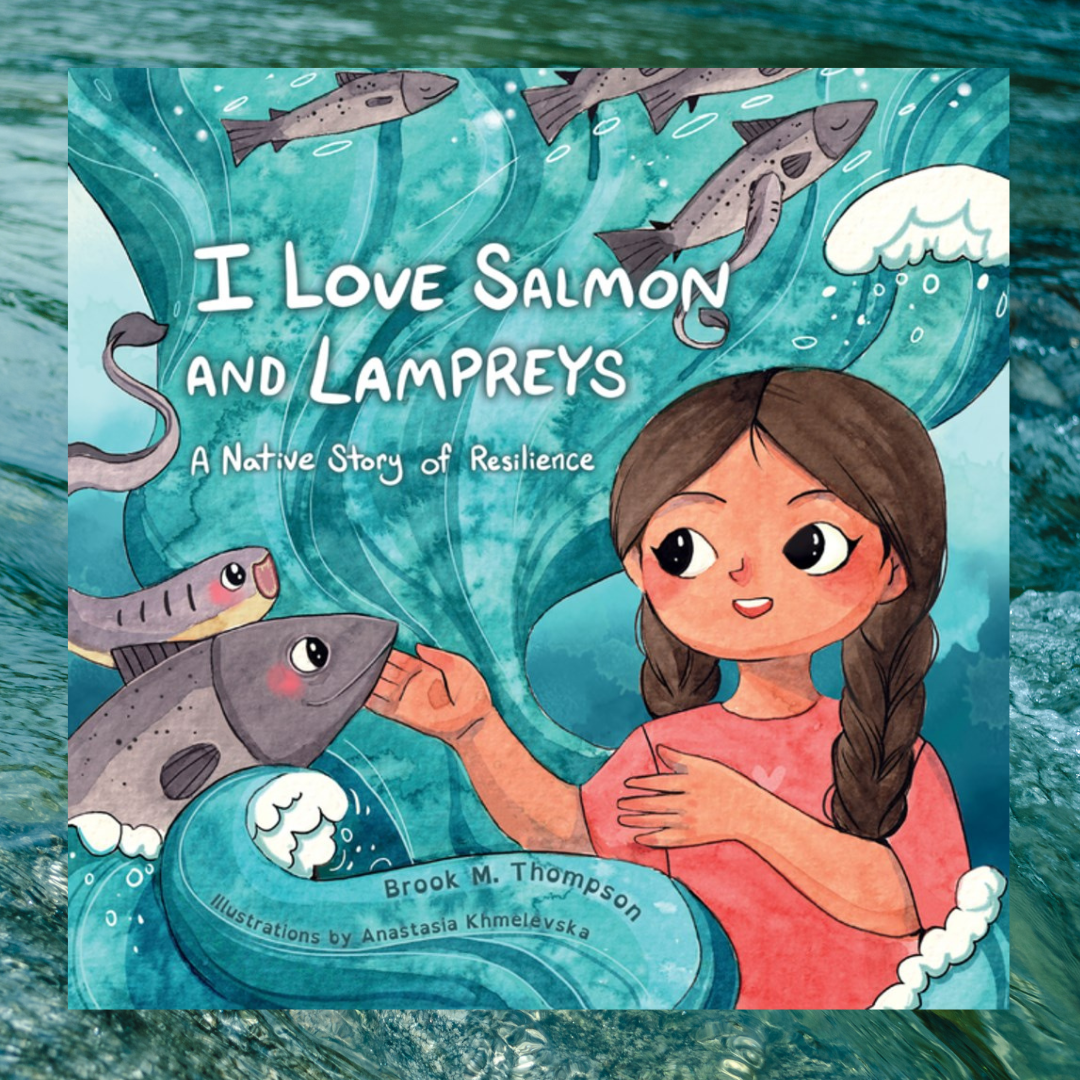
I Love Salmon and Lampreys: A Native Story of Resilience

Written by Brook M. Thompson | Illustrated by Anastasia Khmelevska


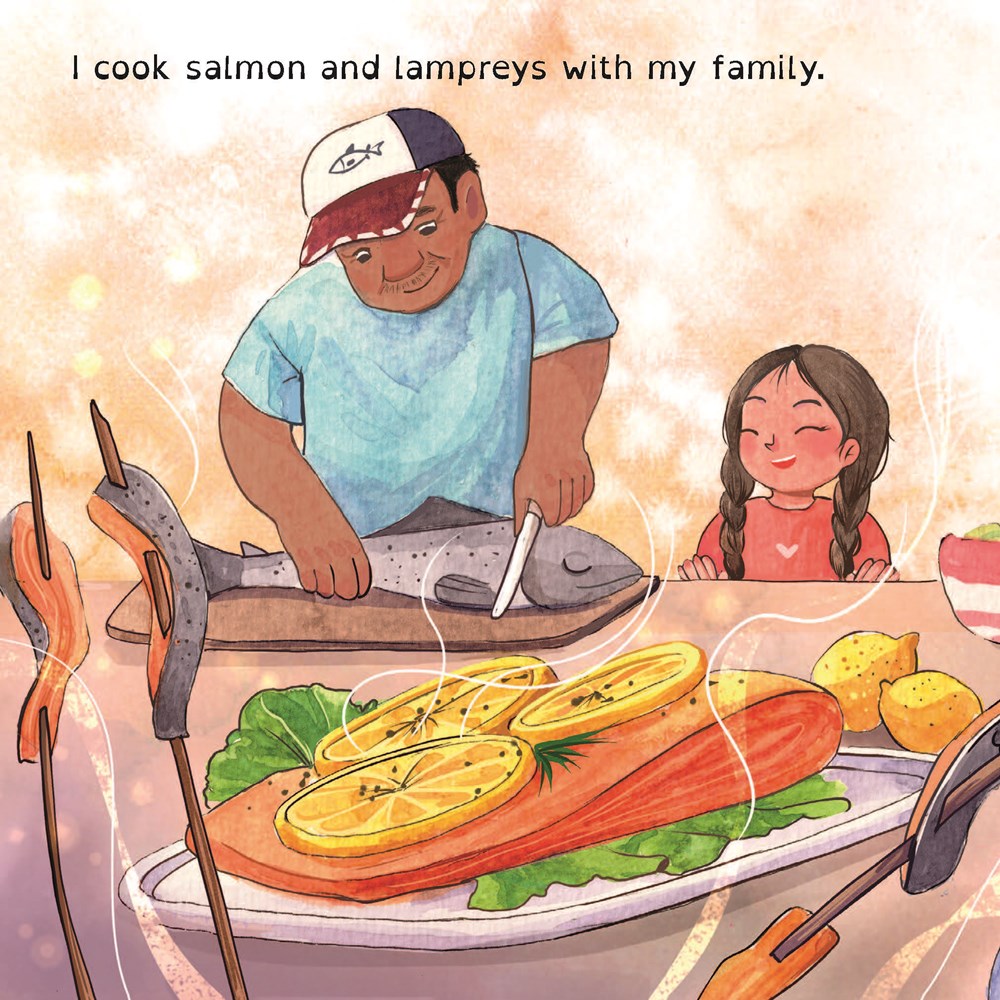
In her powerful autobiographical story, Brook Thompson, a member of the Yurok and Karuk Tribes, warmly invites readers to join her on her journey from childhood to the present day to experience her intense love for her tribes’ traditions and the fish that sustain them. Readers are first taken out on Brook’s family’s fishing boat, where her father and her grandfather tell stories of their own childhoods as they check the nets in their designated fishing spots along the Klamath River in Northern California. Then it’s back home to learn how Brook helps cook the fish (lampreys in the winter and salmon the rest of the year) in a wide variety of delicious ways.

Illustration © 2025 by Anastasia Khmelevska, text © 2025 by Brook M. Thompson. Courtesy of Heyday.

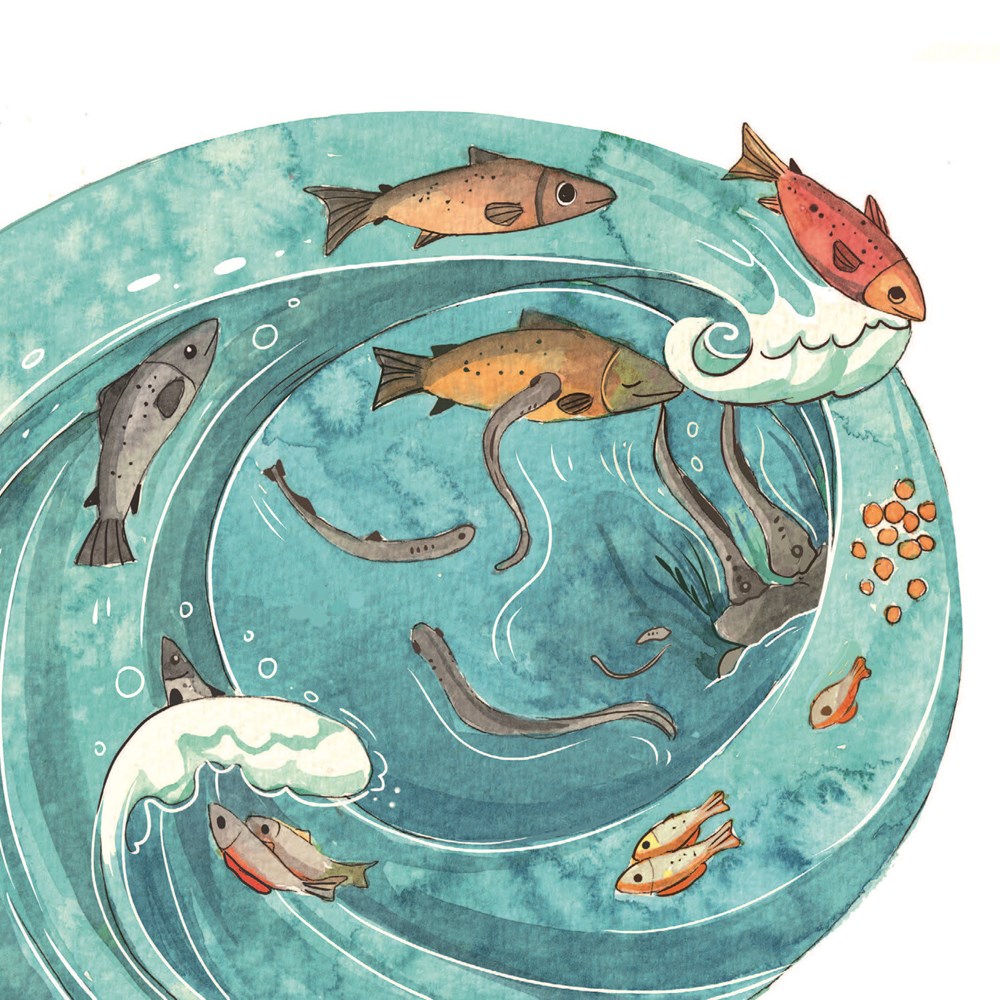
Salmon and lampreys are more than just food to Brook, however. They are creatures of the earth to be admired and honored. She tells readers about their life and spawning cycles, how they predate the dinosaurs, and even about their fascinating symbiotic relationship. For Brook, this love she feels is shared. She says, “I feel loved by salmon because years ago my ancestors took care of the salmon for their future family” and reveals that the fish in the river now “are the great-great-great-great-great-great-grandkids of the salmon who had a relationship with my great-grandparents.”

Illustration © 2025 by Anastasia Khmelevska, text © 2025 by Brook M. Thompson. Courtesy of Heyday.

In 2002, when Brook was still young, over 60,000 salmon perished from a parasite which spread when the water level of the river became too low and the temperature too hot due to the six dams erected on the river. She explains how dams “block the salmon’s way home” and how the warming water promotes the growth of toxic green algae, which affects the fishes’ breathing and spreads disease. 

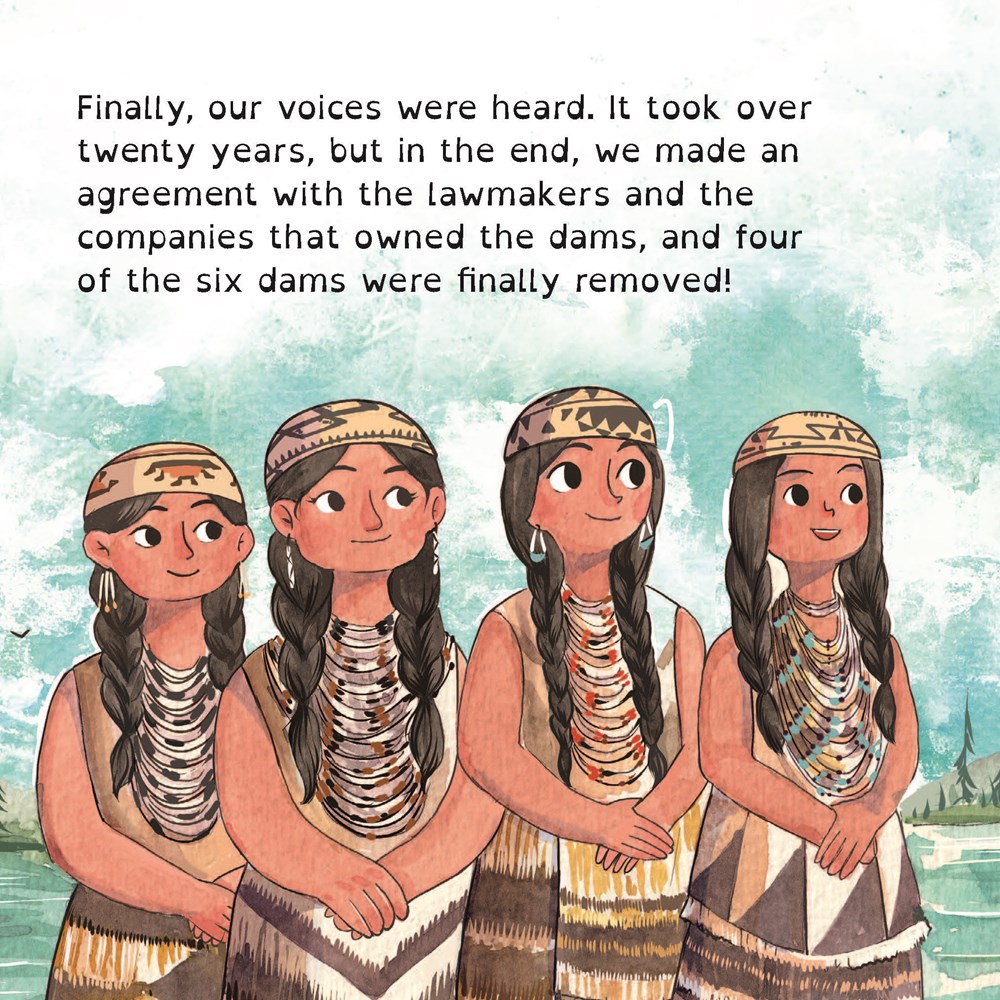
Brook joined protests by the tribal people and others, while scientists did research and local politicians lobbied for change. More than 20 years later agreements with the politicians and the companies that owned the dams were signed, and four of the six dams along the Klamath River were removed.

Illustration © 2025 by Anastasia Khmelevska, text © 2025 by Brook M. Thompson. Courtesy of Heyday.

As she grew into adulthood and inspired by her experiences, Brook set her eyes on higher education. She “went to college to learn about dams and about how to protect salmon in the future.” She became an engineer and a scientist who studies the interconnectedness of  “water, nature, people, animals, and buildings” and returned home to the Klamath River, where she continues the legacy of her ancestors in caring for the salmon, lampreys, and the environment.
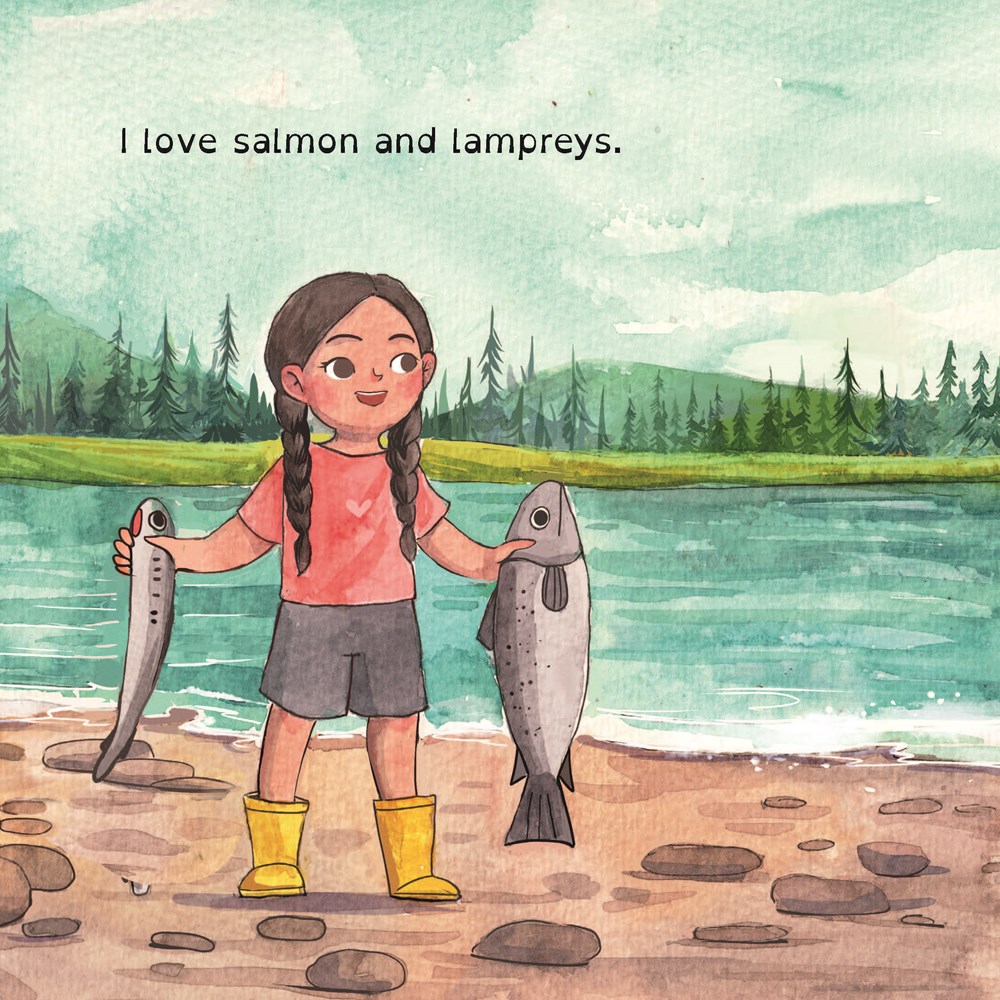
Back matter includes Fun Facts about lampreys and salmon; photographs of Brook with salmon and at Iron Gate Dam, which was removed in 2024; a map of the Klamath River Watershed area; a note about the inspiration behind the book as well as the book’s font, OpenDyslexic, which makes it easier for those with dyslexia, like Brook, to read; and notes about the author and illustrator.

Illustration © 2025 by Anastasia Khmelevska, text © 2025 by Brook M. Thompson. Courtesy of Heyday.

Brook Thompson, in her compelling autobiographical story, will captivate children and touch their hearts. Thompson’s eloquent and straightforward storytelling immediately immerses readers in the Native relationship with nature and will inspire both young and adult readers to think deeply about how the earth sustains us and how we can show our appreciation in return. The theme of environmental justice and how citizens can and do make a difference is made personal through Thompson’s clear explanations of how the dams affected the salmon population and the long-term steps people took to reverse their damage. Thompson’s dedication—even from childhood—to her tribes, family, and future generations will impress readers. Children will also develop an understanding of how issues of interest to them now can inform their future endeavors.

Anastasia Khmelevska’s vibrant earth tone illustrations endear Brook to children through her evident passion for family, fishing, and the salmon and lampreys that have been a constant in her tribes’ lives. Her pacing and realistic depictions of people and events help children clearly understand the importance of each element of Thompson’s story from how the cyclical lives of salmon and lampreys are demonstrated in a swirling wave to the stunning landscapes highlight of the Pacific Northwest. These images make her depiction of the salmon die-off all the more impactful. Her final portrait of Brook Thompson coming home after earning her university degrees links her life to the salmon she loves so well. 

The combination of Native culture and environmental awareness makes I Love Salmon and Lampreys: A Native Story of Resilience a must addition to school and public libraries. The book offers extensive value and research opportunities for science and social studies classes. For families who care about the environment, sustainability, activism, and the future of our planet, I Love Salmon and Lampreys would be a much-loved choice.

Ages 4 – 8

Heyday, 2025 | ISBN 978-1597146685

About the Author

Brook M. Thompson is a part of the Yurok and Karuk Tribes. She is a neurodivergent and Two-Spirit author with dyslexia. She has a BS in civil engineering from Portland State University and an MS in environmental engineering from Stanford University, and she will soon have a PhD in environmental studies from University of California, Santa Cruz, where she studies water, politics, restoration, and salmon. You can find out more about her at brookmthompson.com.

About the Illustrator

Anastasia Khmelevska is an illustrator based in Lviv, Ukraine. She has illustrated several children’s books, including My Invisible Zoo, Marella the Mermaid, and Anything Helps. Follow her on Instagram @cute_miuu.

Expanding Girls’ Horizons in Science and Engineering Month Activities

Illustration © 2025 by Anastasia Khmelevska, text © 2025 by Brook M. Thompson. Courtesy of Heyday.

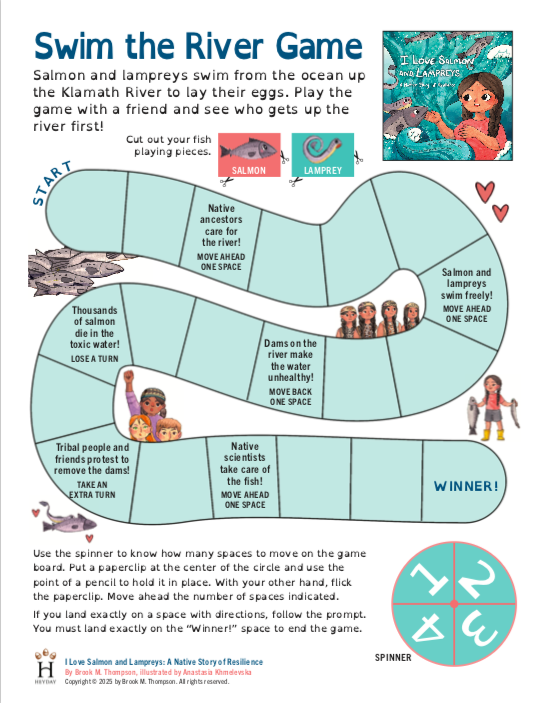
I Love Salmon and Lampreys Activity Pages

Play a printable board game, write about your dreams for the future, and learn fun facts about salmon and lampreys with these three I Love Salmon and Lampreys Activity Pages!

Chinook and Coho Salmon Coloring Pages

Coho and Chinook Salmon are vital to the Pacific Northwest. You can learn more about California salmon at caltrout.org. Enjoy these coloring pages of coho and chinook salmon. Colored images are included for your reference.

Chinook Salmon Coloring Page | Colored Image of Chinook Salmon

Coho Salmon Coloring Page | Colored Image of Coho Salmon

You can purchase I Love Salmon and Lampreys: A Native Story of Resilience at these bookstores

Amazon | Barnes & Noble | Bookshop

Picture Book Review