January 31 – It’s National Mentoring Month

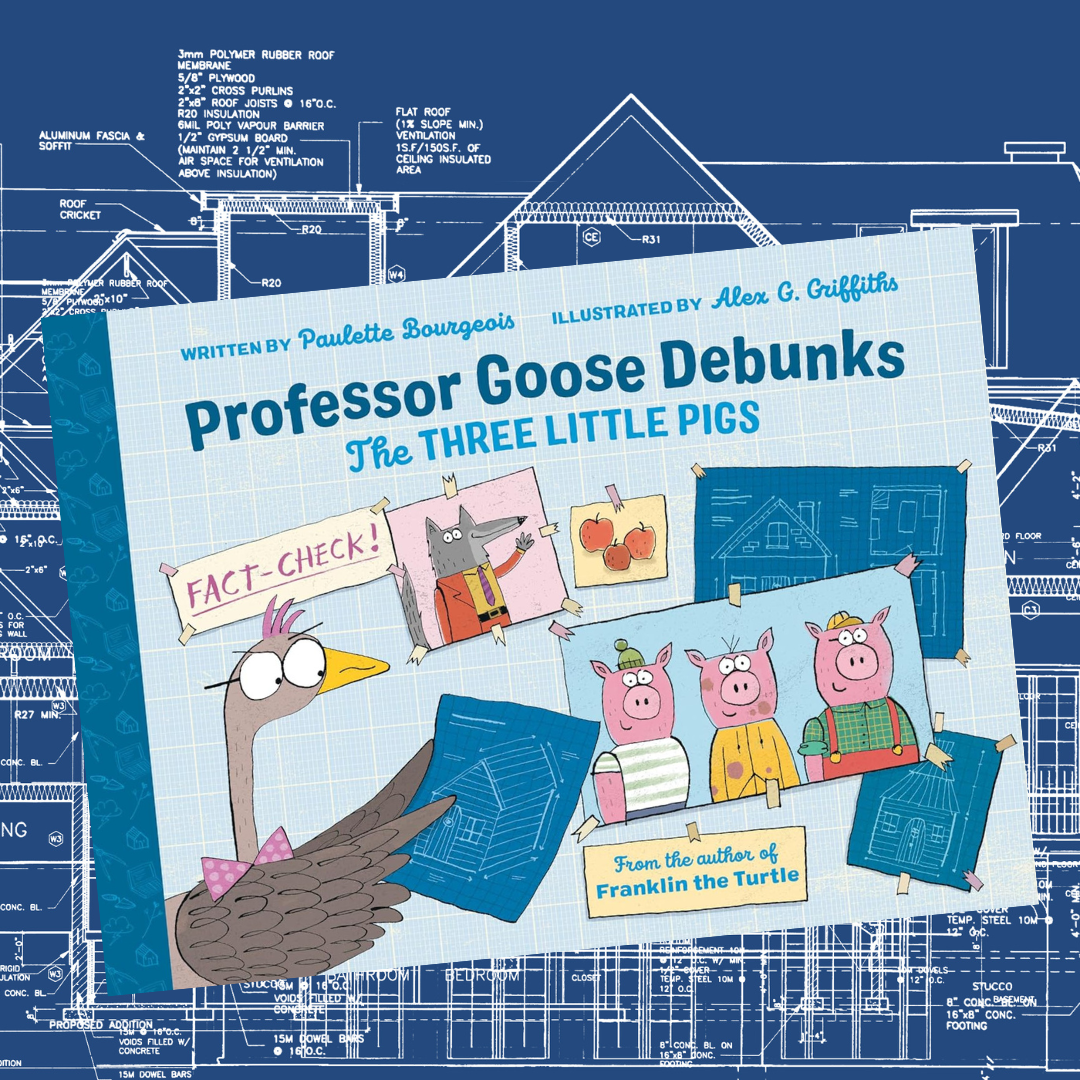
celebrate-picture-books-picture-book-review-professor-goose-debunks-the-three-little-pigs-cover

About the Holiday

Learning—and the success that comes with it—can be easier and more fun when it’s shared with a mentor. Teachers, instructors, coaches, crafters, family members, and other adults like passing on their knowledge to younger generations, and while kids gain valuable skills, they also benefit from the bonds that form between them and their mentor. If you’re interested in becoming a mentor check out the resources at mentoring.org. National Mentoring Month is also a terrific time to thank a mentor in your life and tell them what a difference they made. 

Thanks to Tundra Books for sharing a copy of Professor Goose Debunks the Three Little Pigs with me for review consideration. All opinions on the book are my own.

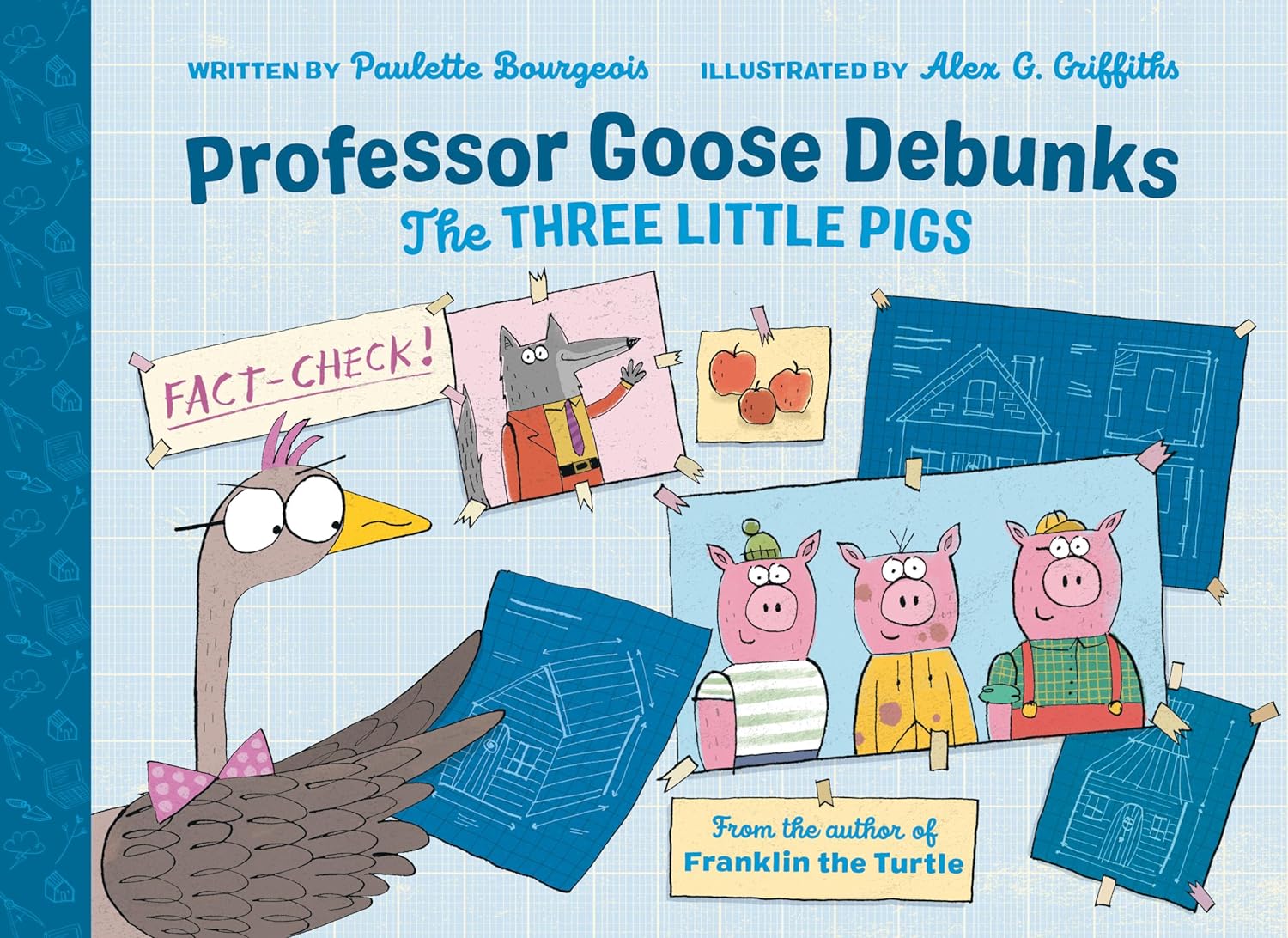
Professor Goose Debunks the Three Little Pigs

Written by Paulette Bourgeoise | Illustrated by Alex G. Griffiths 

Professor Marie Curious Goose—”renowned and distinguished scientist”—is on a mission to correct the science in her great-aunt Mother Goose’s stories. This time, she’s tackling The Three Little Pigs. The story starts off in the familiar way: “Once upon a time, there were three little pigs.” The first pig liked to eat and play. The second little pig liked to laze in the mud. And the third little pig worked hard and sweated every day. One day their mother sends them off into the world with the admonition to “‘Save your own bacon!'” Sounds about right, right?

Image copyright Alex G. Griffiths, 2024, text copyright Paulette Bourgeois, 2024. Courtesy of Tundra Books.

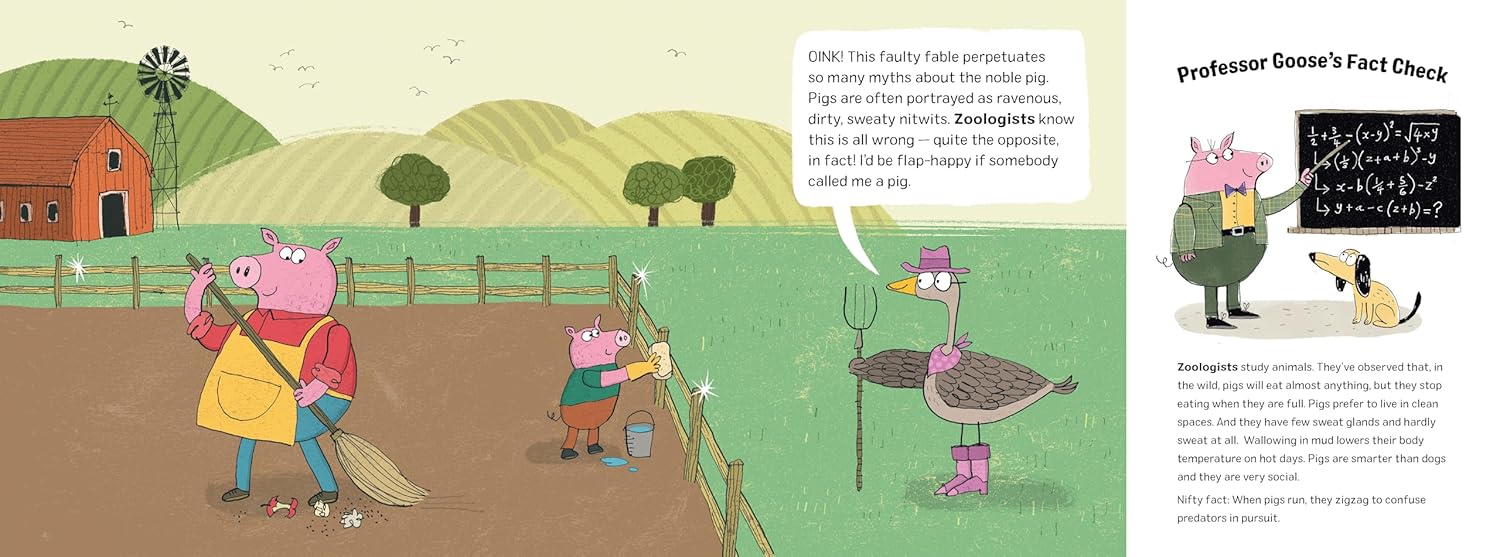
But wait! Before you move on in the story, Professor Goose reveals that even these brief profiles are full of erroneous myths! To clear things up, the professor imparts zoologist-approved information, including such facts as pigs don’t gorge themselves, they lay in mud to lower “their body temperature on hot days,” and, because pigs have few sweat glands, they always stay fresh and dry. 

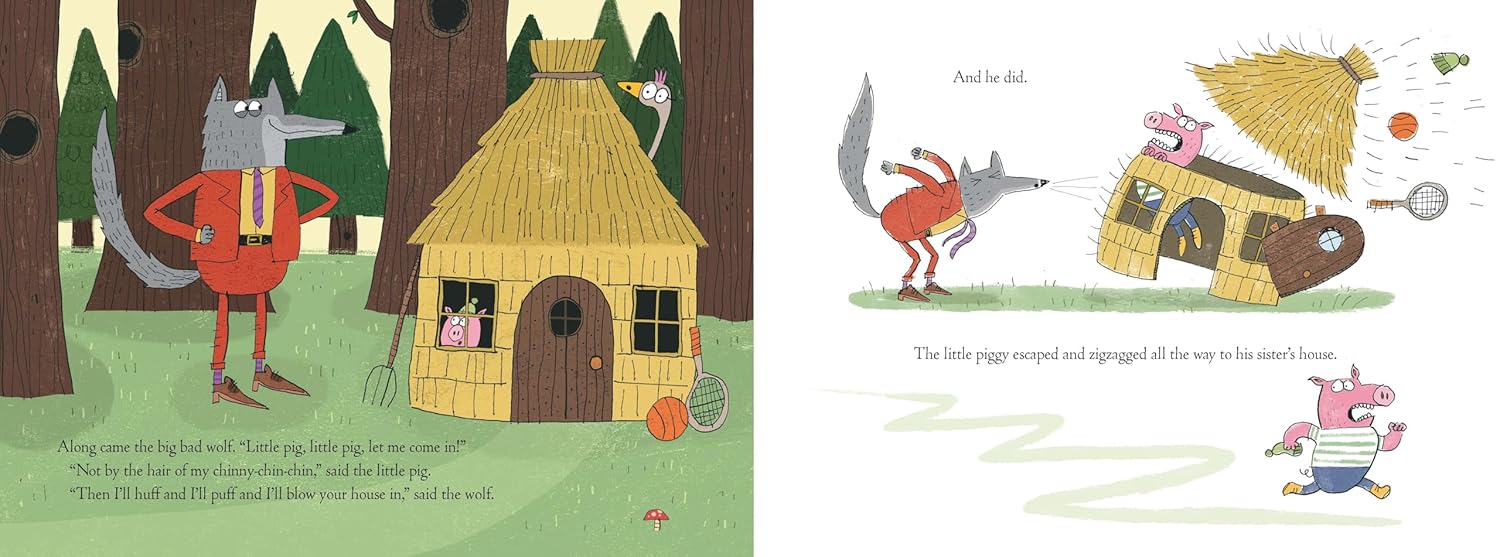
Finally on their own, the siblings get down to the business of living their best lives. The first little pig builds himself a house of straw then goes off to play basketball. Here, Professor Goose takes a moment to imaprt a lesson on the states of Matter and what Matter is made of. By now the wolf has caught up with the first little pig, who rebuffs him with the familiar “‘Not by the hair of my chinny-chin-chin.'” Despite this the wolf does his huffing and puffing—you know the drill—and the pig runs off to his sister’s house. But waaaiit . . .. The prof takes exception to a few tidbits here, too, such as the chinny-chin-chin line and the house destruction method.

Image copyright Alex G. Griffiths, 2024, text copyright Paulette Bourgeois, 2024. Courtesy of Tundra Books.

Soon, while the wolf is menacing the second little pig, Professor Goose works herself into a lather over the “lone wolf” attack and the story’s depiction of wolves in general. To calm herself down, she instructs readers in details about structures and construction. 

Undeterred, the wolf high tails it to the third little pig’s house of bricks, where she and her siblings are cozily ensconced. The wolf huffs and puffs, can’t blow the brick house down, and the pigs are triumphant. But is this where the story ends? No! The prof explains how many fairy tales—just like this one—use a pattern of three and that patterns are found in everything, including nature, music, and math. Finally, Professor Goose concludes with her own version of what became of these three pig siblings—and the story even turns out well for the wolf!

Image copyright Alex G. Griffiths, 2024, text copyright Paulette Bourgeois, 2024. Courtesy of Tundra Books.

Paulette Bourgeouis’s clever take on the familiar tale of The Three Little Pigs will have kids captivated and laughing from beginning to end as Professor Goose points out foibles in the story and connects the setting, the wolf’s powerful breath, the pigs’ houses, the pigs themselves, and the story’s structure to a wide range of scientific principles. Through Professor Goose’s Fact Checks, kids learn surprising and educational facts about zoology, matter, weather, architecture, patterns, and even coding. 

Alex G. Griffith’s engaging illustrations make for a fun and funny learning experience that will have kids in stitches and their eyes glued to every page. Griffith’s tiny details, facial expressions, and slap-stick humor give a fresh, comic-style look to this well-known story and enhance the science-based facts this fractured fairytale is built on for today’s kids.

A unique retelling of a favorite classic that takes superb advantage of all a fractured fairy tale can offer, Professor Goose Debunks The Three Little Pigs is sure to be asked for again and again…and again. The STEM-related connections make this book a terrific and educational introduction to a variety of units for science educators.

Ages 3 – 8 and up

Tundra Books, 2024 | ISBN 978-0735267329

About the Author

Paulette Bourgeouis is best known for creating Franklin the Turtle, the character who appears in the bestselling picture books illustrated by Brenda Clark. The series has been translated into thirty-eight languages and adapted into an animated television series, merchandise, and feature-length films. She is also the author of award-winning books for children including Oma’s Quilt, which was developed as a short film by the National Film Board of Canada, and more than two dozen non-fiction science books. She is a member of the Order of Canada, received an honorary doctorate degree from Western University, an award of merit from the Canadian Association of Occupational Therapists and most recently graduated with an M.F.A. in Creative Writing from the University of British Columbia. Paulette frequently teaches and she has been the writer-in-residence at UBC, Whistler, BC, and Terra Nova National Park, Newfoundland.

About the Illustrator

Alex G. Griffiths is a children’s book illustrator originally from London, UK. The majority of his work is done by hand, using a combination of pen and ink line work and brush textures in a messy way to create an unusual illustration style. He now lives in Canada with his wife and two children. Visit him at alexgfriffiths.com.

National Mentoring Month Activity

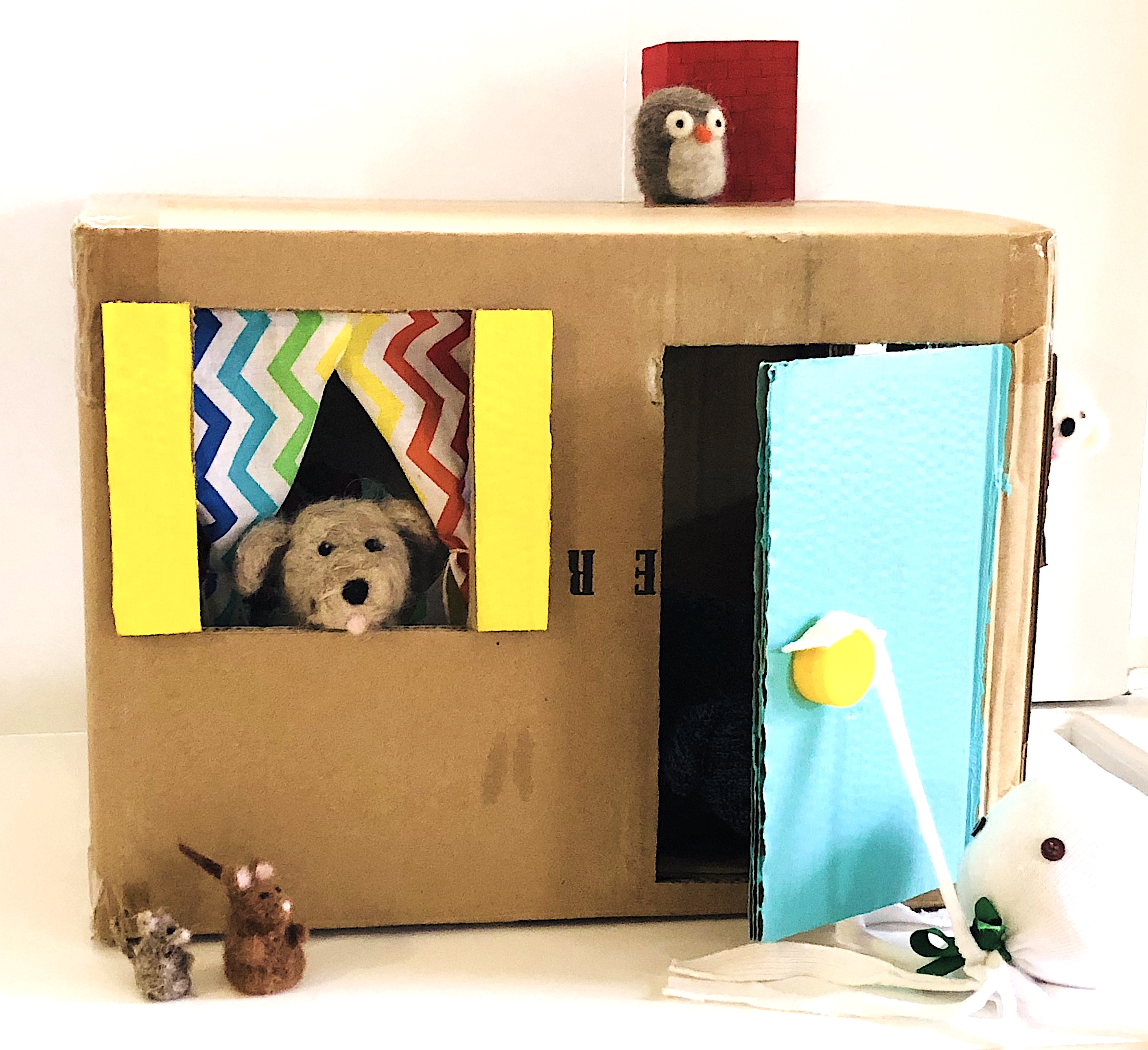
CPB - Playhouse craft

Cardboard Playhouse

Kids love pretending with their toys and playhouses. With this craft you and your child can make a playhouse with recycled items and lots of imagination. While you and your child make the house, talk about the building process and ask questions that get them thinking about how various parts of a house work. Once the house is finished, kids can make up their own stories with it—or create their own fractured tale of The Three Little Pigs

Supplies

  1. Cardboard box

     2. Recycled items, such as:

  • Bottle caps for door knobs,
  • Small boxes for a chimney
  • Use the cardboard cut from the windows to make shutters
  • Scraps of cloth for curtains

    3. Craft paint

    4. Markers

    5. Glue

You can purchase Professor Goose Debunks the Three Little Pigs at these booksellers

Amazon | Barnes & NobleBookshop (to support your local independent bookstore)

Picture Book Review

January 21 – National Hugging Day

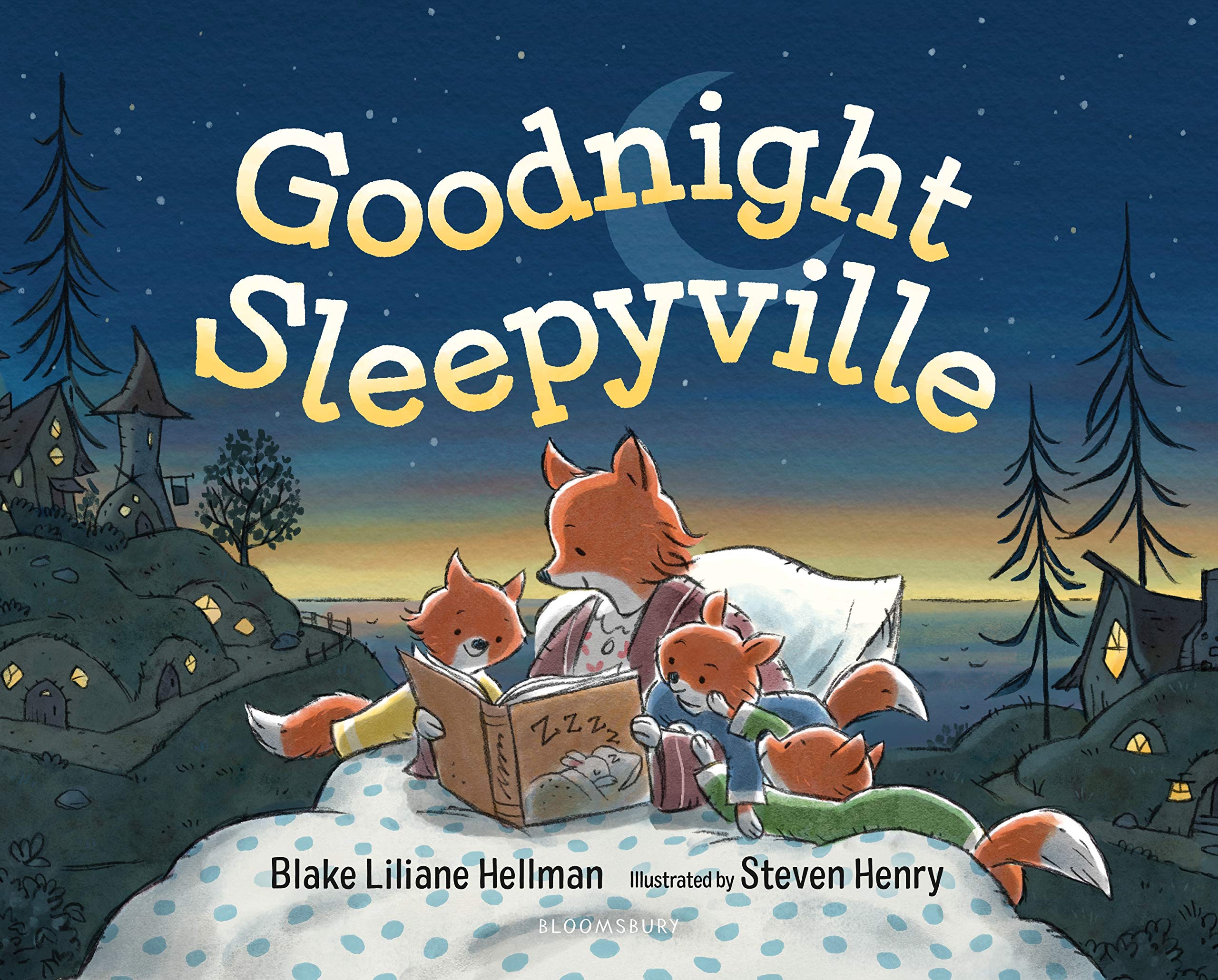
celebrate-picture-books-picture-book-review-goodnight-sleepyville-cover

About the Holiday

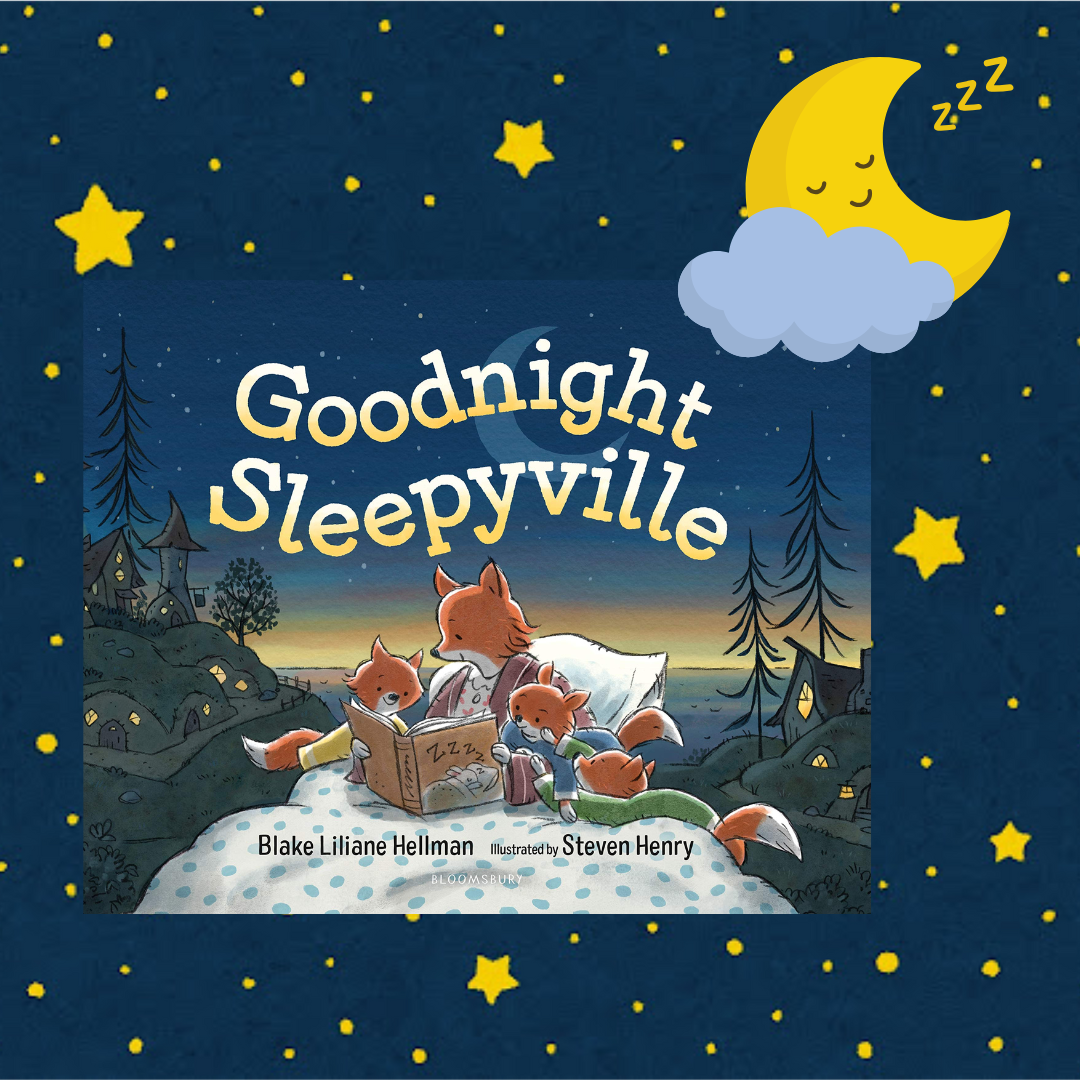
Created in 1986 by Kevin Zaborney, National Hugging Day is a heartwarming holiday that encourages people to express their affection and care for one another through the simple act of giving hugs. Hugs are a universal form of physical affection that can convey love, comfort, and support. This day reminds us of the positive impact of a warm embrace and the importance of human connection. So today give your kids, spouse, parents, siblings, and friends extra hugs. You can even send virtual hugs to loved ones who are far away. To extend National Hugging Day throughout the year, add today’s snuggly hug of a book to your bedtime story collection. It’s sure to become a favorite! 

Thanks to Bloomsbury Children’s Books for sharing this review copy of Goodnight, Sleepyville with me!

Goodnight, Sleepyville

Written by Blake Liliane Hellman | Illustrated by Steven Henry


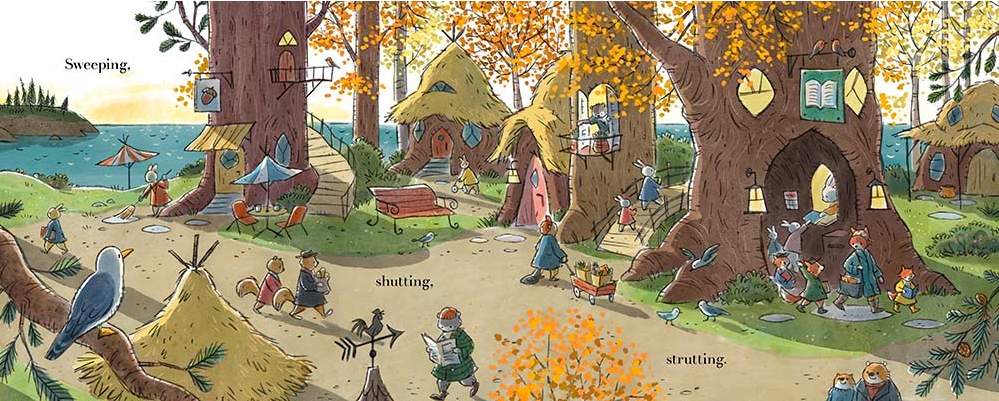
“In Sleepyville, the sun is setting, and everyone’s done for the day.” They head home from work or school or running errands. At the Acorn Cafe, the owner is just sweeping up. At the library the last book is being checked out. And as Mr. Bear leaves downtown, he’s reading an interesting article in the newspaper. Where is everyone going? Home! “To simple homes, dome homes, teensy-weensy homes, …and very fancy homes.”

celebrate-picture-books-picture-book-review-goodnight-sleepyville-sweeping

Image copyright Steven Henry, 2020, text copyright Blake Liliane Hellman, 2020. Courtesy of Bloomsbury Children’s Books.

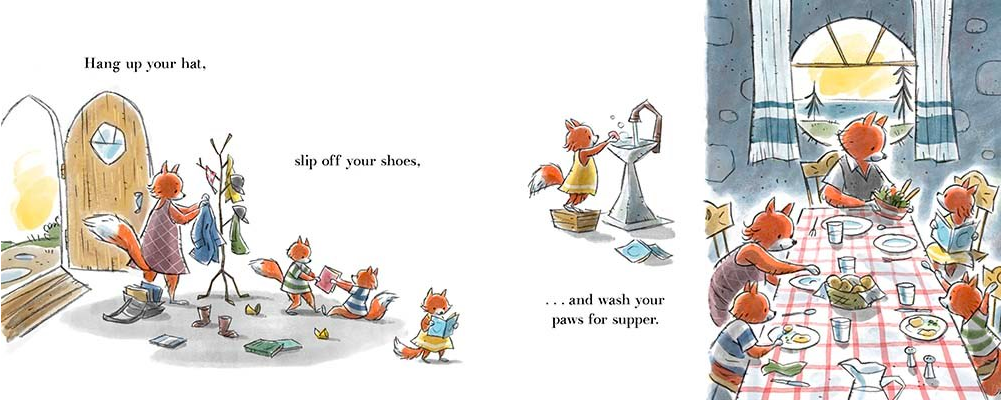
At home it’s time to wash up and enjoy a family supper—with milk and cookies for dessert. Later, in cozy pajamas, it’s time to “snuggle, wiggle, cuddle.” The moon rises and “though some are tucked in, snug as a bug…others need a lullaby. And maybe a bedtime story.” Then each resident of this little hamlet drifts off to sleep in their own way under a sky twinkling with stars and flitting fireflies. Then we say, “Goodnight, Sleepyville” and watch “all the lights go out… except one.”

celebrate-picture-books-picture-book-review-goodnight-sleepyville-supper

Image copyright Steven Henry, 2020, text copyright Blake Liliane Hellman, 2020. Courtesy of Bloomsbury Children’s Books.

If you’re looking for a cozy, welcoming place to lay your head at the end of the day, there’s no place like home—or Sleepyville. In Blake Liliane Hellman’s tranquil town where close-set cottages and tree-trunk homes reflect the close-knit community, evening  comes with comforting routines and the welcome of family. Hellman’s charming alliteration and gentle rhymes turn each sentence into a lullaby just perfect for bedtime reading. Her final line is sweetly clever, and will lead little ones to try and guess which light remains glowing and why. The answer on the next page is sure to spark requests for another read.

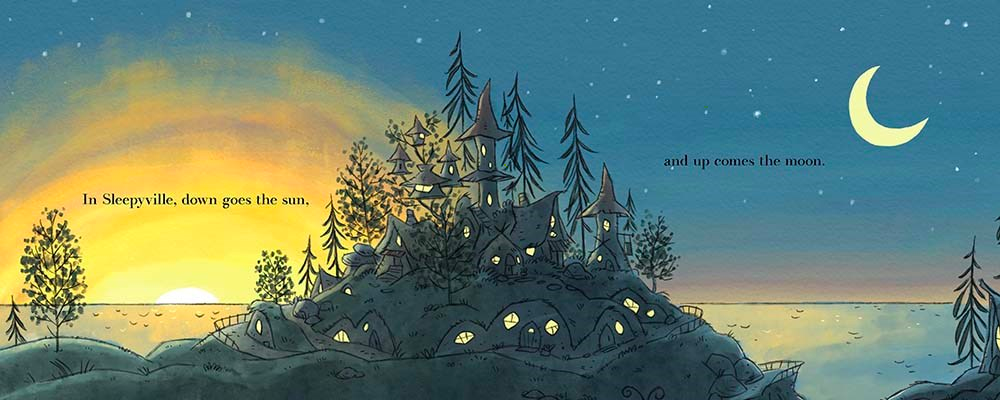
celebrate-picture-books-picture-book-review-goodnight-sleepyville-moon

Image copyright Steven Henry, 2020, text copyright Blake Liliane Hellman, 2020. Courtesy of Bloomsbury Children’s Books.

Steven Henry’s adorable seaside community enchants with quaint details and a relaxed, happy atmosphere rendered in delicate lines and soft, warm colors. Babies and adults welcome home family members with cheery enthusiasm (you don’t want to miss the two ladybugs rushing to embrace at their toadstool home’s front door or the sprawling Victorian treehouse). Images of the fox family having supper around the table and then doing the dishes together are homey, and kids will giggle at two sleepyheads wearing mixed-up pajamas. After the sun has set, a momma or papa wolf howls a lullaby to three cubs while the bunny clan listens to a story before being tucked in. With the crescent moon shining and the town in slumber, one little light still glimmers. Where does it come from? Turn the page and see!

Goodnight, Sleepyville is dreamy reading for bedtime that families will turn to again and again and would be a welcome addition to home and public library collections. Pair with the first book in this little series, Welcome to Morningtown, to begin and end the day with favorite friends.

Ages Birth – 5

Bloomsbury Children’s Books, 2020 | ISBN 978-1681198767

Blake Liliane Hellman has degrees in journalism and English from the University of Colorado and a master’s in film production from American University/FAMU, Czech Republic. She is an abstract artist who also works with mixed media and collage and is the author of Goodnight, Sleepyville, Something Smells! and Cuddle Monkey. She lives with her family and cat in Seattle, Washington. Visit Blake Liliane Hellman on Instagram at blakecake8.

Steven Henry is the illustrator of the beloved Ella the Elegant Elephant books (as Steven D’Amico), written by Carmela D’Amico, It’s Raining Bats & Frogs, written by Rebecca Colby, and Hanukkah Hop, written by Erica Silverman. His work has also appeared on PBS Kids, Nick Jr., and the Disney Channel. He lives in Seattle, Washington. Visit him at stevenhenry.net.

You’ll also love the adorable Welcome to Morningtown! Read my review of this sweet readaloud, including an interview with Blake Liliane Hellman and Steven Harvey!

National Hugging Day Activity

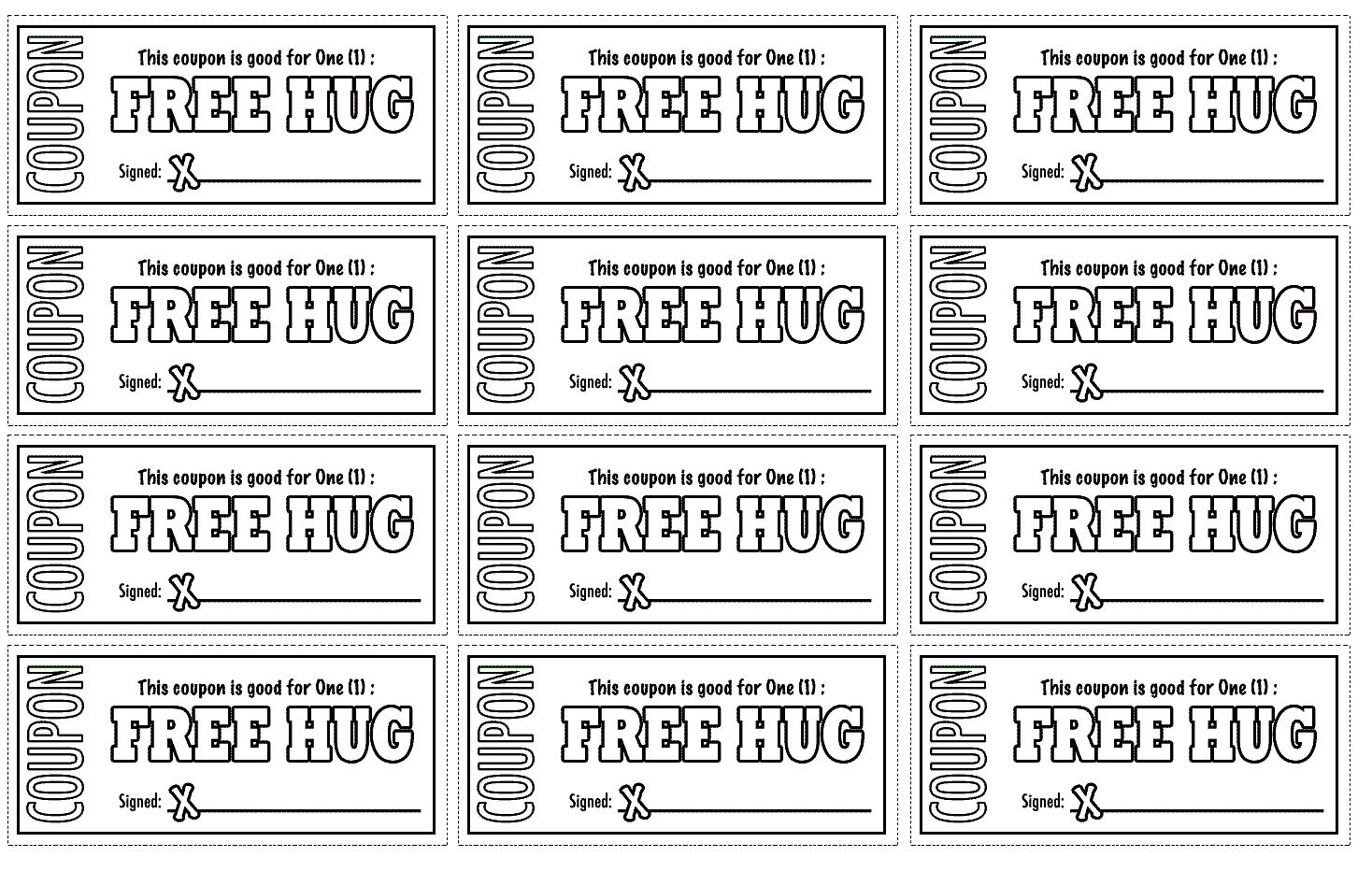
celebrate-picture-books-picture-book-review-hug-coupons

Free Hug Coupons

Everyone needs a hug now and then! With these Free Hug coupons you can extend National Hugging Day to every day of the year and make sure all your favorite people get a sweet hug when they need it most.

Supplies

Directions

  1. Print the Free Hug coupons
  2. Color the coupons and cut apart
  3. Hand out the coupons to your friends and family members and tell them that each coupon is good for one free hug from you.
  4. When someone hands in a ticket to you, give them your best biggest hug!

You can purchase Goodnight, Sleepyville at these booksellers

Amazon | Barnes & Noble | Bookshop (to support your local independent bookstore)

Picture Book Review

January 20 – Martin Luther King, Jr. Day and Interview with Dean Robbins

celebrate-picture-books-picture-book-review-you-are-a-star-martin-luther-king-jr-cover

About the Holiday

Martin Luther King Jr. Day celebrates the life and legacy of the man who dedicated his life and work to teaching—as Coretta Scott King once stated—“the values of courage, truth, justice, compassion, dignity, humility and service” and who led a non-violent Civil Rights movement to enact racial equality and justice through state and federal laws. President Ronald Reagan created the national holiday in 1983, setting it on the third Monday of January to coincide with Martin Luther King Jr.’s birthday on January 15. To commemorate the holiday, learn more about the life and work of Martin Luther King Jr. We still have a long way to go before there is true justice and equality for all, and it’s more important now than ever to look for ways to offer help and hope.

Thank you to Scholastic Press for sharing a copy of You Are a Star, Martin Luther King, Jr. with me. All opinions on the book are my own.

You Are a Star, Martin Luther King, Jr.

Written by Dean Robbins | Illustrated by Anastasia Magloire Williams

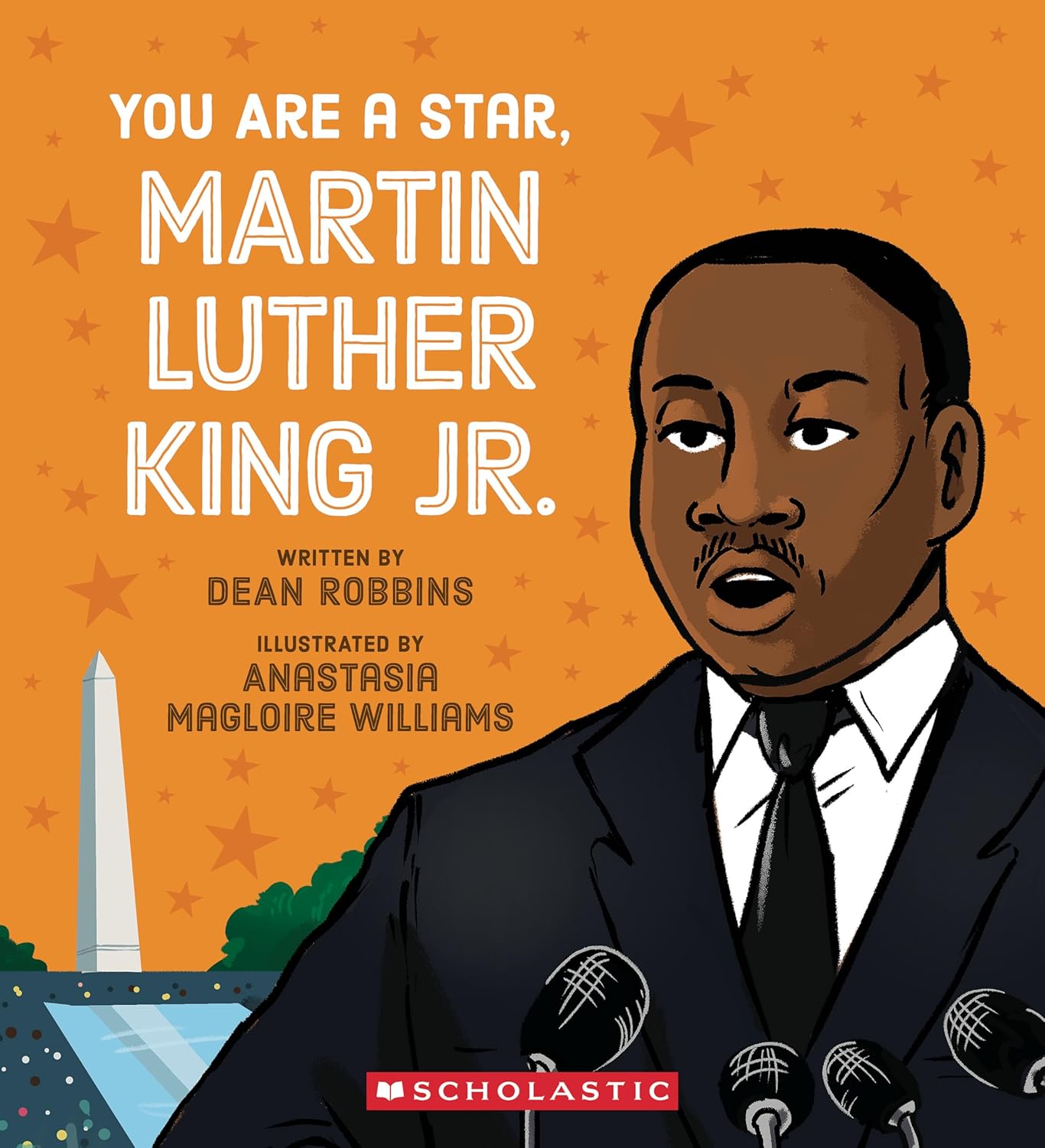
Opening the cover to this visually engaging biography, readers are first introduced to Martin Luther King, Jr. as he stands at a podium on August 28, 1963 ready to address the throngs of people who had joined the March on Washington and now filled the National Mall. He wonders if he’s prepared the right words to offer hope for a better future. His thoughts take him back to when he first experienced discrimination, and readers follow along, learning about segregation in schools, restaurants, recreation areas, even at drinking fountains.

Kids learn that even when Martin Luther King, Jr. was their age he was already thinking that “someone had to change these unfair rules” and deciding “Why not me?” Through the book’s first-person narration, children gain a close portrait of Martin Luther King, Jr. as a committed intellectual, believer in the foundations of America, and outspoken advocate for equal rights. They learn of his life as a minister, his work with Rosa Parks and others to end discrimination on public busses, and his adoption of nonviolent protests to affect change. 
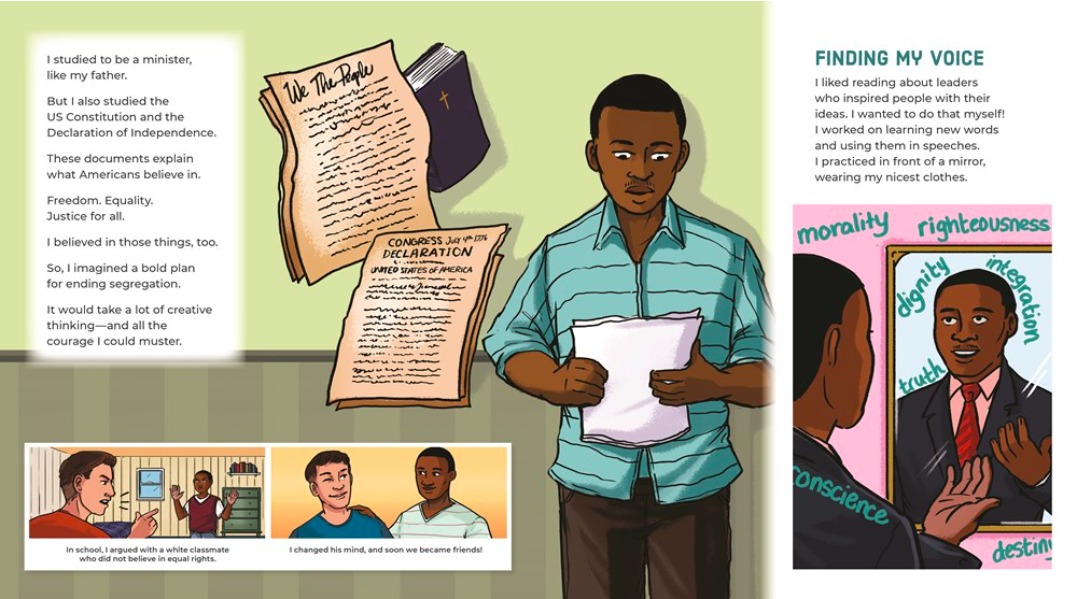
celebrate-picture-books-picture-book-review-you-are-a-star-martin-luther-king-jr-finds-voice

Image copyright Anastasia Magloire Williams, 2025, text copyright Dean Robbins, 2025. courtesy of Scholastic Press.

Readers come to understand how success in Montgomery spurred Martin Luther King, Jr. and others to work toward ending segregation in other places—like stores and restaurants—and even to “challenge American leaders to make a national law against segregation.” They learn how Martin Luther King, Jr. ended up in jail in Birmingham, Alabama, after a peaceful protest and wrote a letter to the world about oppression. Kids also hear about the Children’s March, which took place at the same time and during which more than 2,000 children were also arrested. 

Returning to the March on Washington, Dr. King decides to abandon his written speech and talk from his heart. The result is his now-famous “I have a dream” speech. Following this gathering of 250,000 people and more calls for a national law against segregation from around the country, Dr. King reveals that “In 1964, Congress passed the Civil Rights act.” But even then Dr. King says, “I knew we had more work to do. Many places still had rules to keep Black people from voting.” 
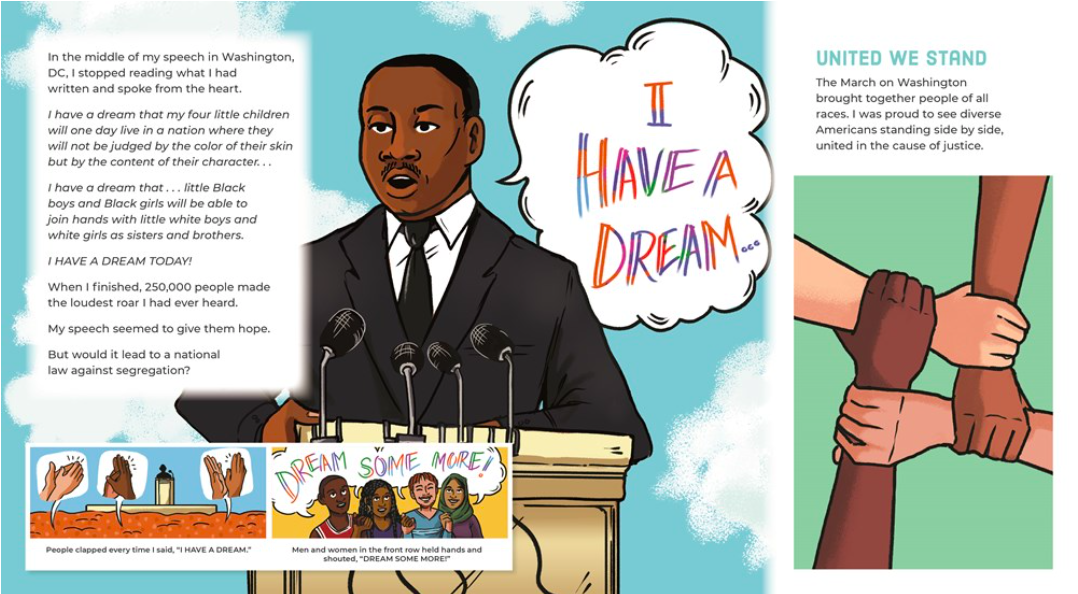
celebrate-picture-books-picture-book-review-you-are-a-star-martin-luther-king-jr-I-have-a-dream-speech

Image copyright Anastasia Magloire Williams, 2025, text copyright Dean Robbins, 2025. courtesy of Scholastic Press.

Another peaceful march was planned for Selma, Alabama, with a 50-mile march to Montgomery. This time, however, Alabama’s governor send troops to attack the marchers. The participants were not intimidated, though, and even invited more Americans to join them. Thousands answered the call. “Maids, students, and movie stars. Parents pushing baby carriages. People on canes and crutches.” Five days later, they reached Montgomery. “The Selma protest was our movement’s greatest victory,” Dr. King tells readers. “It led to a national voting rights law!”

Martin Luther King, Jr. reminds readers, though, that there’s still more to do to “see the good in one another,” “live with each other in peace,” “join together and change the world with love,” and “make my dream come true.”

Beneath the narration of Dr. King’s story, a comic-style panel highlights a single talking point, event, or fact—such as during the Montgomery bus boycott, one man “rode to work on a mule”—often with a light-hearted approach. On the righthand page, Robbins defines concepts such as nonviolent protests, boycotts, freedom of speech, protest songs, the Children’s March, polling place intimidation, and the Voting Rights Act of 1965 in easily understood language. 

Extensive back matter includes an Author’s Note, how children can “Be Like Martin,” notable quotations by Martin Luther King, Jr., four types of Nonviolent civil rights protests, a brief timeline of Dr. King’s life from his birth on January 15, 1929 to 2011, when the Martin Luther King, Jr. Memorial was dedicated in Washington, DC. Also included are a glossary of important terms and a list of resources.
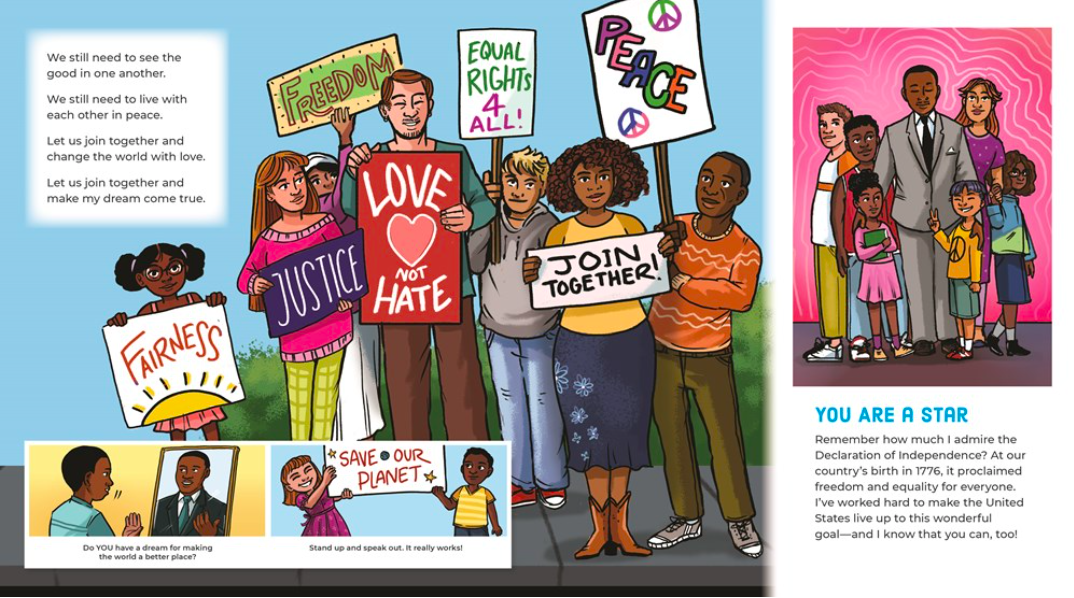
celebrate-picture-books-picture-book-review-you-are-a-star-martin-luther-king-jr-more-to-do

Image copyright Anastasia Magloire Williams, 2025, text copyright Dean Robbins, 2025. courtesy of Scholastic Press.

Dean Robbins’ immediately welcoming and dynamic first-person narration style not only draws young readers into Martin Luther King’s life and the history of the Civil Rights Movement, but makes children feel that they have a personal connection with Dr. King’s legacy. Robbin’s clear, factual writing, is presented in short, separated sentences. These make it easy for children to digest and understand King’s nonviolent approach to protest as well as the social and legal issues of the time and how, unfortunately, vigilance is still needed today. Robbins ends on a note of hope and an invitation to readers to join others and use their talents to help make Martin Luther King, Jr.’s dream come true.

Accompanying Robbins’ text are Anastasia Magloire Williams’ compelling illustrations that are at once realistic and accessible for today’s visual learners. Her stirring depiction of Martin Luther King, Jr. speaking at the 1963 March on Washington sets the tone for children to discover the impact King has had on people’s hearts, minds, and actions for more than 60 years. Through Williams’ expressive portraits, children see Martin Luther King, Jr.’s commitment to studying, practice, and rallying support as well as the effects of segregation, the determination of protestors during the Montgomery, Alabama, bus boycott, and how people from all parts of society working together created—and can still bring about—much-needed change.

With its graphic-style illustrations and well-researched content, You Are a Star, Martin Luther King, Jr. is vibrant and captivating. The book offers exhilarating learning opportunities for individuals, classrooms, and homeschoolers and may spark extended study or activism for a favorite cause. It is highly recommended for home bookshelves and a must for school and library collections.

Ages 5 – 7 and up

Scholastic Press, 2025 | ISBN 978-1338895100

Meet Dean Robbins

celebrate-picture-books-picture-book-review-dean-robbins

Photo credit David Giroux

Dean Robbins is a journalist and the author of the children’s picture books Two Friends: Susan B. Anthony and Frederick Douglass, Margaret and the Moon: How Margaret Hamilton Saved the First Lunar Landing, and Miss Paul and the President: The Creative Campaign for Women’s Right to Vote. His award-winning books have received starred reviews in Publishers Weekly and Kirkus Reviews and have been praised in the New York Times and USA Today. Dean grew up idolizing Apollo astronauts and loved working with Alan Bean on The Astronaut Who Painted the Moon. Learn more at deanrobbins.net.

Hi Dean! I’m thrilled to be talking with you today about your latest book, the impact heroes have always had on your life, and the importance of having heroes for children.

This biography about Martin Luther King, Jr. joins your You Are a Star series that began in 2022 with the story of Supreme Court Justice Ruth Bader Ginsburg. Other inspirational figures in the series are Jane Goodall and Malala Yousafzai. Can you discuss a little about how this series came to be and how you choose the subjects?

My passion is writing about my personal heroes, some of whom are relatively unknown and whose stories I can share with children for the first time. But then there are those like Jane Goodall, Ruth Bader Ginsburg, and Malala Yousafzai who are widely admired and frequently represented in children’s books. I developed the You Are a Star series with Scholastic to present such iconic figures in a new way for young readers, striving to combine emotional storytelling and humor. Each title tells an exciting life story from the subject’s point of view, including anecdotes and quirky details that don’t appear in other picture-book biographies. I hope this approach makes Jane, Ruth, and Malala feel like human beings that kids can relate to rather than like distant statues on Mount Rushmore.           

In You Are a Star, Martin Luther King, Jr., you so clearly present and connect the pivotal moments in King’s life as well as the Civil Rights Movement so children can understand and even feel as if they know Martin Luther King, Jr. How did you approach writing this biography? What kind of research did you do? What was the most meaningful part of the research and writing for you?

It’s a challenging subject to write about for elementary school students—that is, to write about both clearly and entertainingly. I tried to explain such important ideas as desegregation, free speech, and civil disobedience while also telling a page-turning story that, while concise, does justice to Dr. King’s life and work. I’m so glad you think I pulled it off! As a journalist, I love to do research, so the best part was immersing myself in the extensive literature on the civil rights movement to find material that might surprise and delight young readers.

As a library assistant in the children’s department of my local library, I see how excited kids are to read graphic novels. I love the way the format of the You Are a Star series bridges traditional picture books with that of the graphic style. Can you talk about the design of this striking series, and especially about Anastasia Magloire Williams’ dynamic illustrations in this book?

The format is what allows me to have so much fun with You Are a Star. It features a main story that flows throughout the book, supplemented by a two-panel comic and an essential-fact sidebar on each spread. The comics and sidebars offer the chance to introduce key concepts and funny details without bogging down the narrative.

As you noted, the format also provides a showcase for Anastasia’s brilliant illustrations. She artfully combines poignant and playful images, making Dr. King and his movement come alive on the page. She also has a genius for visualizing abstract ideas so that kids can understand them and feel their power. In one of the sidebars, for example, I introduce Dr. King’s comment that “the arc of the moral universe is long, but it bends toward justice.” How on earth do you illustrate such a thing? Anastasia’s creative solution was to show Black and white hands building a wall together, with bricks marked “Justice,” “Equality,” “Unity,” “Change,” “Love,” “Peace,” and “Freedom.” What a lovely way to help children grasp Dr. King’s humane vision.

You’ve talked about the wide range of heroes you had as a child, from sports stars to early social and political reformers. Some of these are represented in the books you’ve written, but could you name some others? What do you think it was about them and yourself that drew you to these specific people?

Ever since I read Superman and Wonder Woman comics as a child, I’ve been attracted to those who overcome seemingly insurmountable obstacles to make the world a better place. And how thrilling is it that our world has real-life analogues to Superman and Wonder Woman? I hope I live long enough to publish a children’s book about every heroic figure whose picture hangs on my office wall, ranging from Jackie Robinson to Emily Dickinson to Louis Armstrong. 

Why do you think it’s important for children to have heroes?

Someone has to demonstrate the best that human beings are capable of, right? Especially when we’re so often confronted with the worst. The more kids who grow up to be like Dr. King, the better our world will be. In the back matter of You Are a Star, Martin Luther King, Jr. is a list of tips titled “Be Like Martin,” which I hope will facilitate this process!

I’ve read that you relish traveling to historical sites. Which place is your favorite or made the biggest impact on you and why?

One of the most stirring places I’ve seen is Susan B. Anthony’s house in Rochester, New York. On my tour of this national historic landmark, the guide pointed out the parlor where Susan would have tea with her neighbor and fellow activist Frederick Douglass. It was news to me that Anthony and Douglass socialized in this way, and I was moved by the idea of two titanic reformers humbly sipping tea while sharing their hopes and dreams. The experience inspired me to write my Scholastic picture book Two Friends: Susan B. Anthony and Frederick Douglass.

Not only has your life included careers as a K–12 school teacher, a journalist, and an author, but you also present fascinating pieces about famous people—from Houdini to Theodore Roosevelt to Harrison Ford to a full stadium’s worth of musicians and sports stars—and their connection to Wisconsin on Public Radio. How did this collaboration come about? Could you take readers through a bit of your process in writing and recording the segments?

It’s yet another way to spread the word about my heroes, and I like doing so in a different medium—one with sound effects! I’ve included some of these pieces in a book of essays that will be published in April by the Wisconsin Historical Society Press. Wisconsin Idols: 100 Heroes Who Changed the State, the World, and Me offers my perspective on heroic figures with often surprising connections to Wisconsin, including Oprah Winfrey, Duke Ellington, and Georgia O’Keeffe. It makes the case for Wisconsin as a notably influential place: a crossroads for people who transformed the world.

What do you enjoy most about being a children’s author?

 When kids tell me that one of my heroes has now become one of their heroes. I can’t begin to describe how gratifying that is.

As a former teacher, you must love going to schools for presentations. From the photos on your website, it looks like you and the kids have a fantastic time! Could you describe what your presentations are like?

My own child has inspired much of my writing but is now 28 years old, so these days I visit schools to hang out with my favorite demographic. With their curiosity and enthusiasm, elementary school kids never fail to restore my hope for the world. The presentations are geared toward maximum interaction so we can get to know each other. I joke, read, ask questions, and give them lots of chances to clap and shout things out. I tell them about my favorite heroes, and they tell me about theirs.

What’s up next for you?   

Next year, Scholastic will publish a book about another one of my heroes: Albert Einstein. The Genius Next Door is based on a little-known true story that, I hope, will make Einstein seem relatable and math seem fun!

Thanks so much for sharing your insight and some background on your wonderful You Are a Star series. I wish you all the best with this book and am looking forward The Genius Next Door.

Look for the rest of the books in the You Are a Star series!

You can visit Dean Robbins on his website at deanrobbins.net | Instagram | X

Martin Luther King, Jr. Day Activity

Students and kids at home will enjoy spending time with these fun and thought-provoking printable activities about Martin Luther King, Jr. from A Day in Our Shoes.

Martin Luther King, Jr. Activity Pack
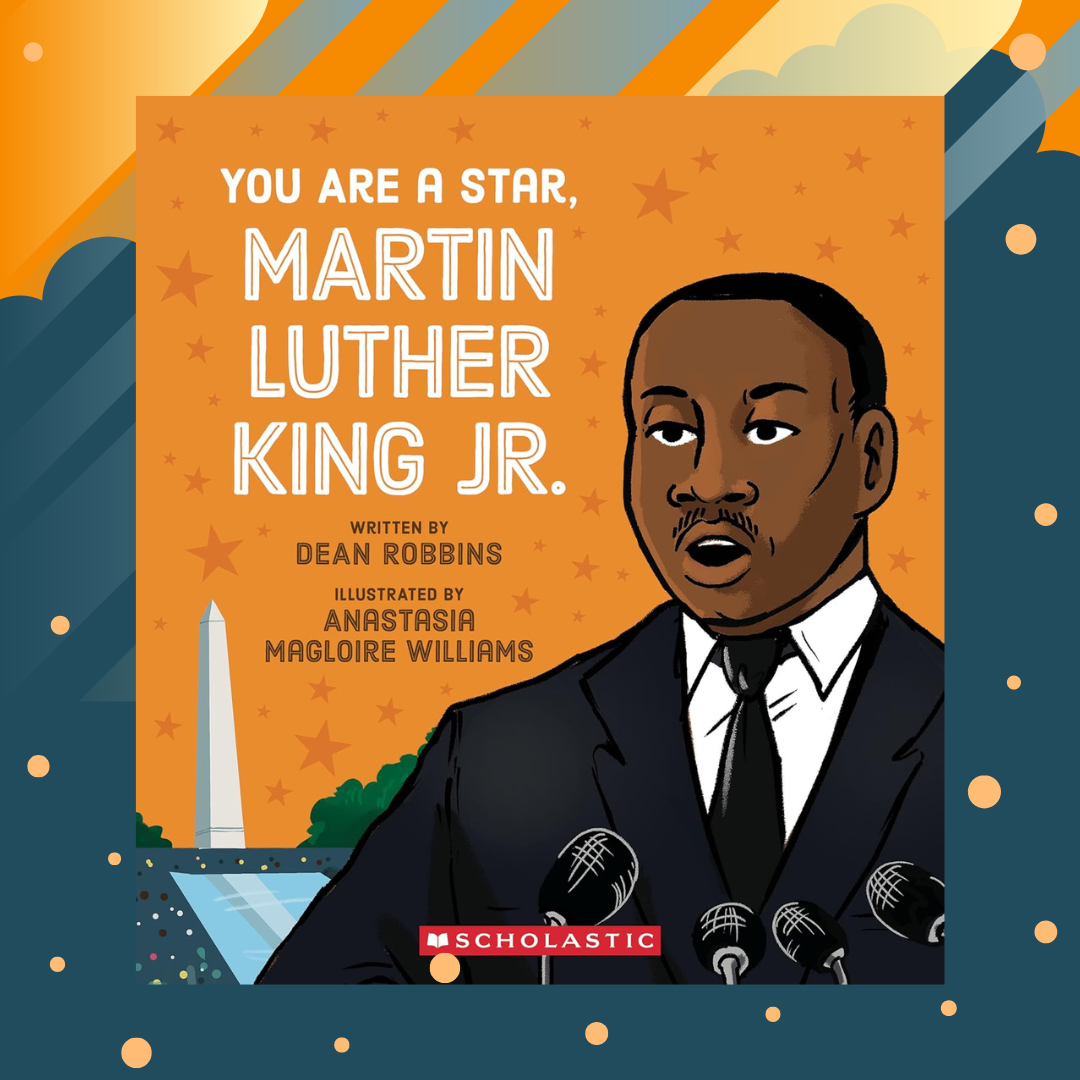
You can purchase You Are a Star, Martin Luther King, Jr. at these booksellers

Mystery to Me (Dean Robbins’ hometown independent bookstore)

Amazon | Barnes & Noble | Bookshop (to support your local independent bookstore)

Picture Book Review

January 17 – It’s National Book Blitz Month

About the Holiday

Whenever you and your family visit the bookstore or library, do you look around, and think “if only I had the time for them all . . .. ” Are you always looking for more shelves for your collection? Is your library card the first one on your ring? If so, you’ll love Book Blitz Month! During this month book lovers are given the green light to read, read, read as many books as possible! Or if there’s a tome you’ve always wanted to tackle, crack the cover and let yourself become immersed in someone else’s story. For kids, Book Blitz Month can be particularly exciting. Sit down with your child or students and make a stack of books they’d like to read. Find time every day to read one, two, or a few of the books in the pile. Seeing the stack shrink gives kids a sense of accomplishment, and they might even want to build it up again! Mix reading with fun activities to encourage a new generation of avid readers!

Thanks to Simon & Schuster/Paula Wiseman Books and Barb Fisch at Blue Slip Media for sharing a copy of Snow Is . . . with me. All opinions on the book are my own.

Snow Is . . .

Written by Laura Gehl | Illustrated by Sonia Sánchez


The very fact of snow is a wonder. While rain nourishes, snow transforms. The world looks, feels, sounds, and even smells different with the advent of snow, and a playful giddiness bubbles up in both young and old, pushing off the task of shoveling out. Laura Gehl’s lovely poetry expresses those moment-to-moment changes snow brings both outside the window and in our hearts. 

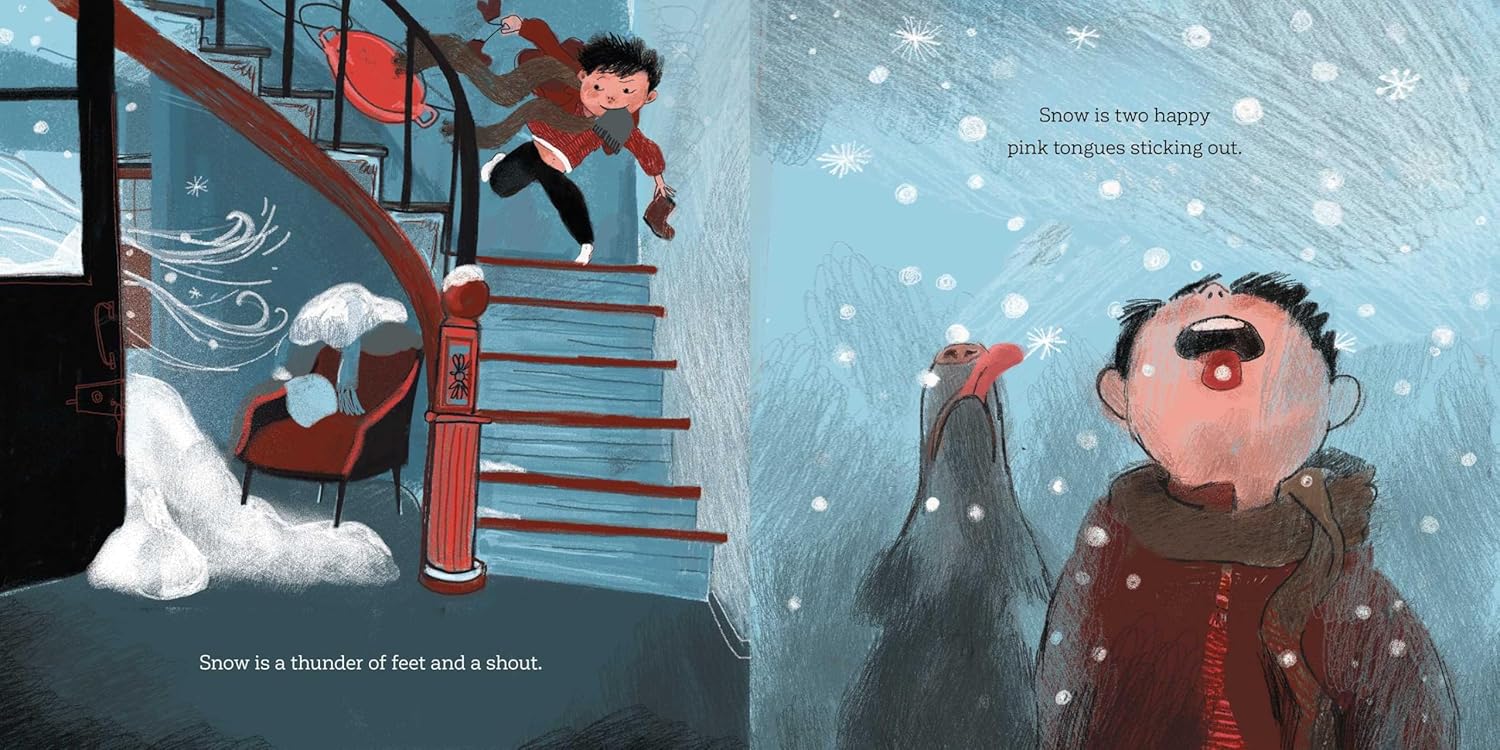
Image copyright Sonia Sánchez, 2024, text copyright Laura Gehl, 2024. Courtesy of Simon & Schuster/Paula Wiseman Books

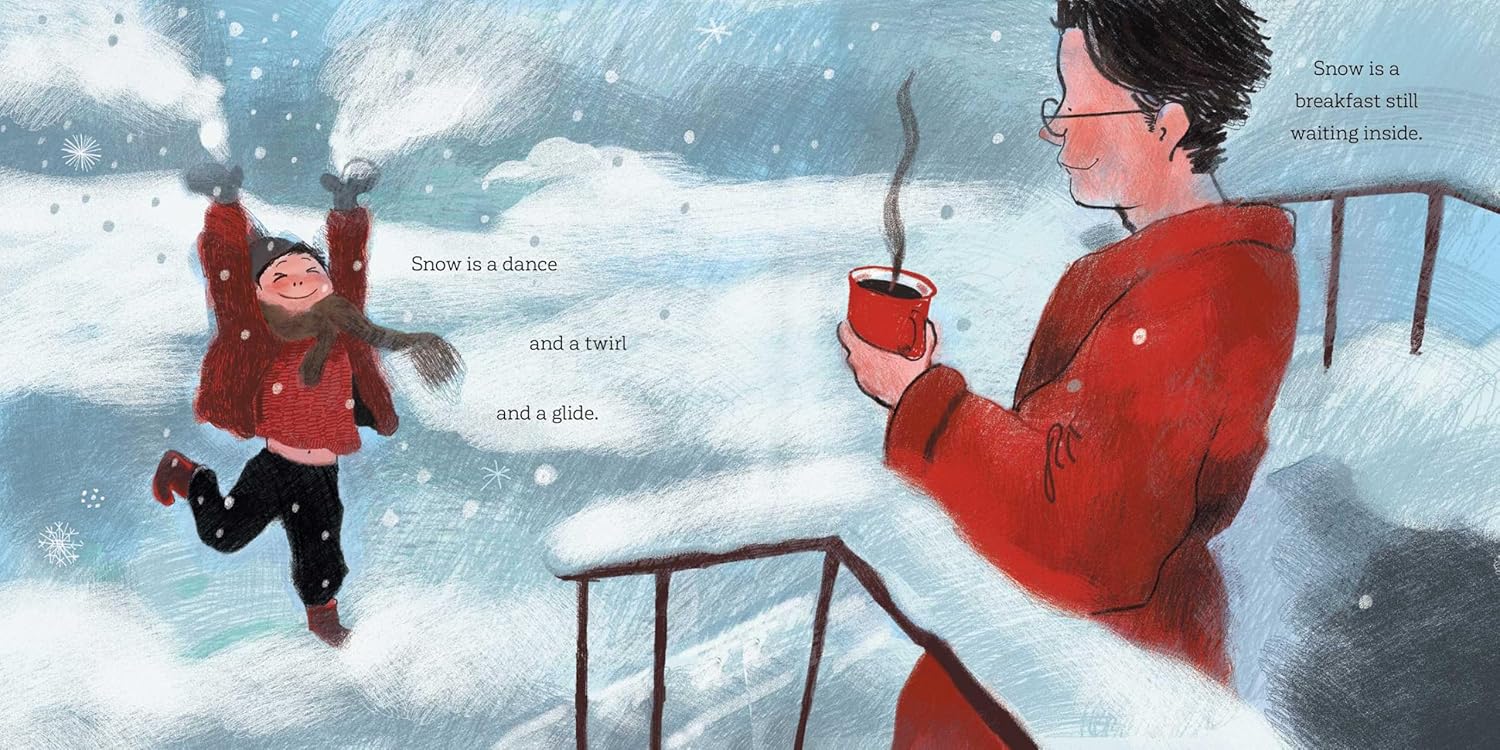
Gehl’s story begins as so often happens with a child waking to a surprise snow day. Drawn to the window, he gazes out, then suddenly “snow is a thunder of feet and a shout. / Snow is two happy pink tongues sticking out” as he grabs his scarf, boots, hat, mittens, and sled and tears downstairs, rushing outside with his dog. His dad, steaming coffee in hand, comes out to watch.

Image copyright Sonia Sánchez, 2024, text copyright Laura Gehl, 2024. Courtesy of Simon & Schuster/Paula Wiseman Books

When the ground becomes blanketed and roofs frosted in white like a cake, for a mischievous child “snow is a hoard that is set for attack. / Snow is Dad’s face . . . when a snowball goes WHACK!” And when Mom brings the baby out, bundled up against the chill, “snow is bright eyes and small cheeks cold and rosy” while for big brother and Dad, who’ve been making snow bricks, “snow is a castle that’s roomy and cozy.”

But as the sun starts to set and it’s—so reluctantly—time to go inside, snow becomes “. . . warm cookies . . .” and “. . . a fire with snuggles and books.” And, at last, warm in pajamas and under “. . . blankets pulled tight,” snow is ‘I love you’ and snow is ‘Good night.'”

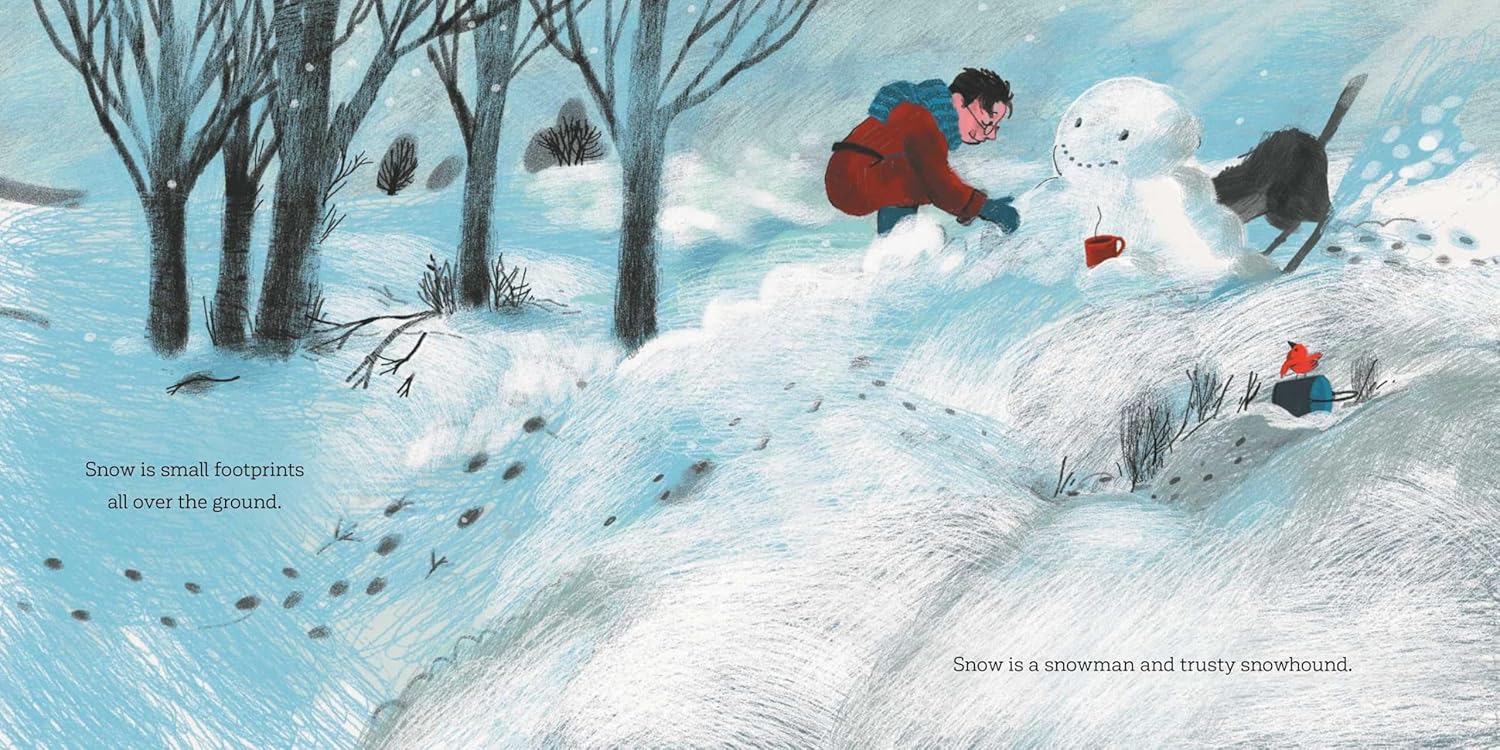
Image copyright Sonia Sánchez, 2024, text copyright Laura Gehl, 2024. Courtesy of Simon & Schuster/Paula Wiseman Books

Adults will adore sharing Snow Is . . . with their kids, and children will beg to hear the story again and again. In her smooth-as-a-sled-ride rhyming couplets, Laura Gehl captures not only the mercurial nature of snow itself but all the sights, sounds, and tiny details that make snow days so thrilling, cozy, and memory-making for kids and adults alike. Gehl’s descriptions and language are a delight and engage all the emotions with their humor, poignancy, sweetness, and awe.

Sonia Sánchez’s stunning illustrations take readers into the heart of a snowy day with action-filled scenes of swirling flakes, twirling feet, and packing of snow into a snowman, snowballs, and bricks. Readers can almost feel the pre-sliding suspense of the child standing at the edge of a long hill. As night falls and the family goes inside, Sánchez imbues her pages with quiet coziness, sibling and parental love, and that heartwarming tug of home.

Snow Is . . . will quickly become a family favorite read aloud for years to come. Teachers and librarians will find the book an exciting addition to their collections as well as for story times, with many applications for art, writing, and even science connections. 

Ages 4 – 8

Simon & Schuster/Paula Wiseman Books, 2024 | ISBN 978-1665915595

About the Author

Laura Gehl is the author of One Big Pair of Underwear, Cat Has a PlanGoat Wants to EatPig Makes ArtDog Can HideCat Sees SnowFrog Can HopSnow Is…You’re the Sprinkles on My Ice CreamYou’re the Pumpkin in My Pie, and The Elevator on 74th Street. She lives with her husband and their four kids in Chevy Chase, Maryland. Visit her online at LauraGehl.com.

About the Illustrator

Sonia Sánchez’s picture book, Here I Am, written by Patti Kim, received a starred review from Kirkus Reviews, who called her illustrations “beautiful, evocative” and raved, “Sánchez has captured a kaleidoscope of emotion and powerful sensations in a way children will grasp completely.” Her illustrations have been nominated for the prestigious Eisner Award in the category of Best Painter. Sonia lives with her husband and a cat in Barcelona, Spain.

National Book Blitz Month Activity

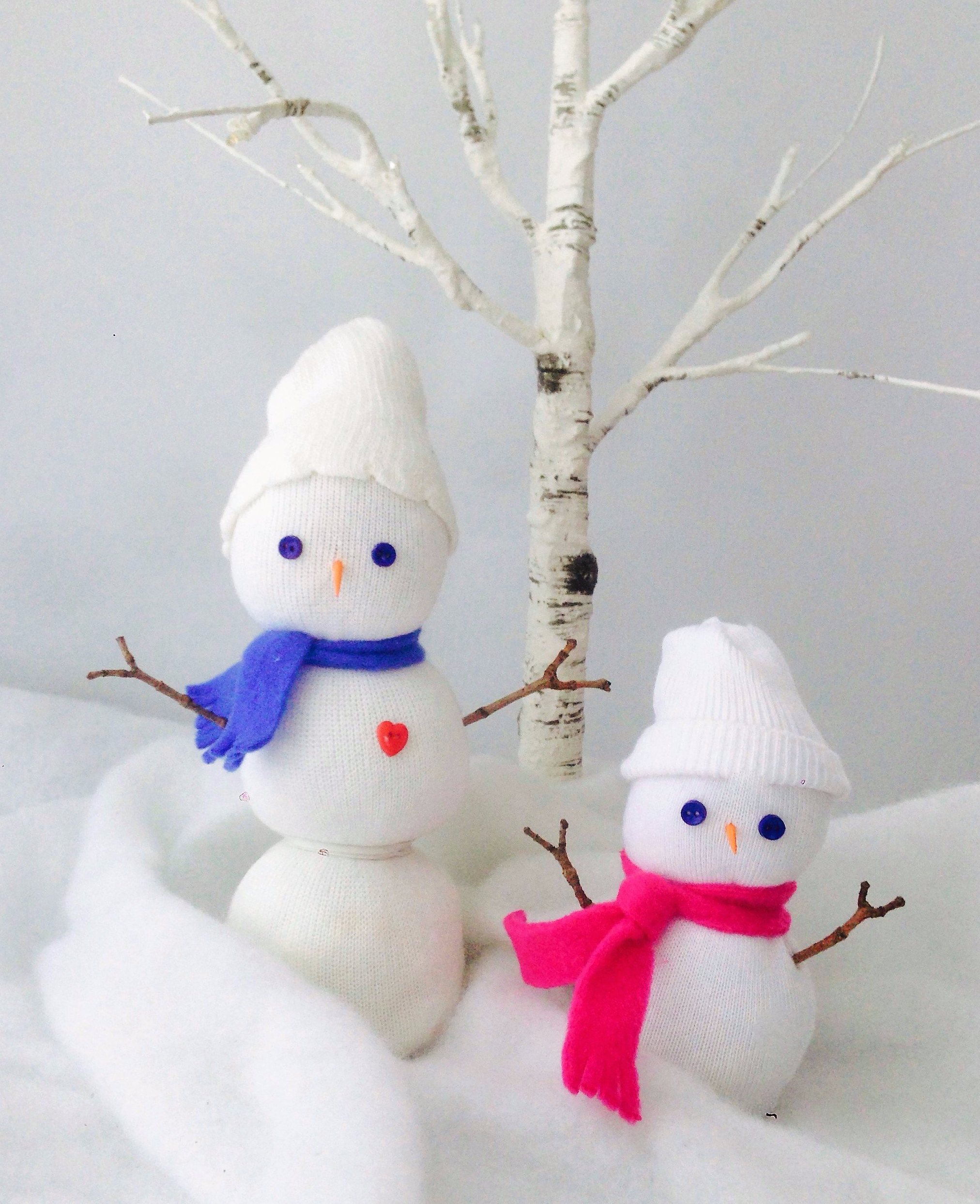
celebrate-picture-books-picture-book-review-sock-snowman-craft

Snow Buddies

This is a fun and easy craft for kids to make on a snowy day inside to share with a friend! 

Supplies

  • Child’s white dress ankle socks
  • Polyester Fiber Fill
  • Tiny buttons for eyes. I added a little heart button to the larger snowman too.
  • Fleece or ribbon, enough for a scarf
  • Toothpick
  • Twigs
  • Orange craft paint
  • Cardboard
  • String or white rubber bands
  • Fabric or craft glue

Directions

To Make the Snowman

  1. Cut a circle from the cardboard about 2 inches in diameter for the base
  2. Place the cardboard circle in the bottom of the sock
  3. Fill the sock with fiber fill about ¾ full or to where the ribbed ankle cuff begins. Pack tightly while making a sausage shape. 
  4. Stretch out the cuff of the sock and tie it off near the top of the fill with string.
  5. Fold the cuff down around the top of the filled sock to make the hat.
  6. Wrap a rubber band or string around the middle of the sock to make a two-snowball snowman. For a three-snowball snowman, use two rubber bands. Adjust the rubber bands to make the “snowballs” different sizes.

To Make the Scarf

  1. Cut a strip of fleece or ribbon 8 to 10 inches long by ½ inch wide
  2. Tie the fleece or ribbon around the neck of the snowman

To Make the Face

  1. Dip one end of the toothpick into orange paint, let dry
  2. Cut the toothpick in half
  3. Stick the toothpick into the head or top portion of the snowman
  4. Attach two mini-buttons to the face for eyes with the fabric or craft glue

To Make the Arms

  1. Insert small twigs into each side of the body of the snowman
  2. You can also use wire or cardboard to make the arms

You can purchase Snow Is . . . at these booksellers

Amazon | Barnes & Noble | Bookshop (to support your local independent bookstore)

Picture Book Review
January 15 – It’s International Creativity Month


celebrate-picture-books-picture-book-review-bear's-big-idea-cover

About the Holiday

Are you an artist, a writer, a decorator, a chef? How about a floral arranger, a woodworker, a fashion designer, or a gardener? Inside almost every heart lies a desire to create. Whether you use your ingenuity in your job or as an escape from the routine, this month celebrates all that is innovative. Sometimes this comes not in something you can see or touch but in a new thought or novel way of solving a problem—as seen in today’s book!

Thanks to Carolrhoda Books and Barb Fisch at Blue Slip Media for sharing a copy of Bear’s Big Idea with me! All opinions on the book are my own.

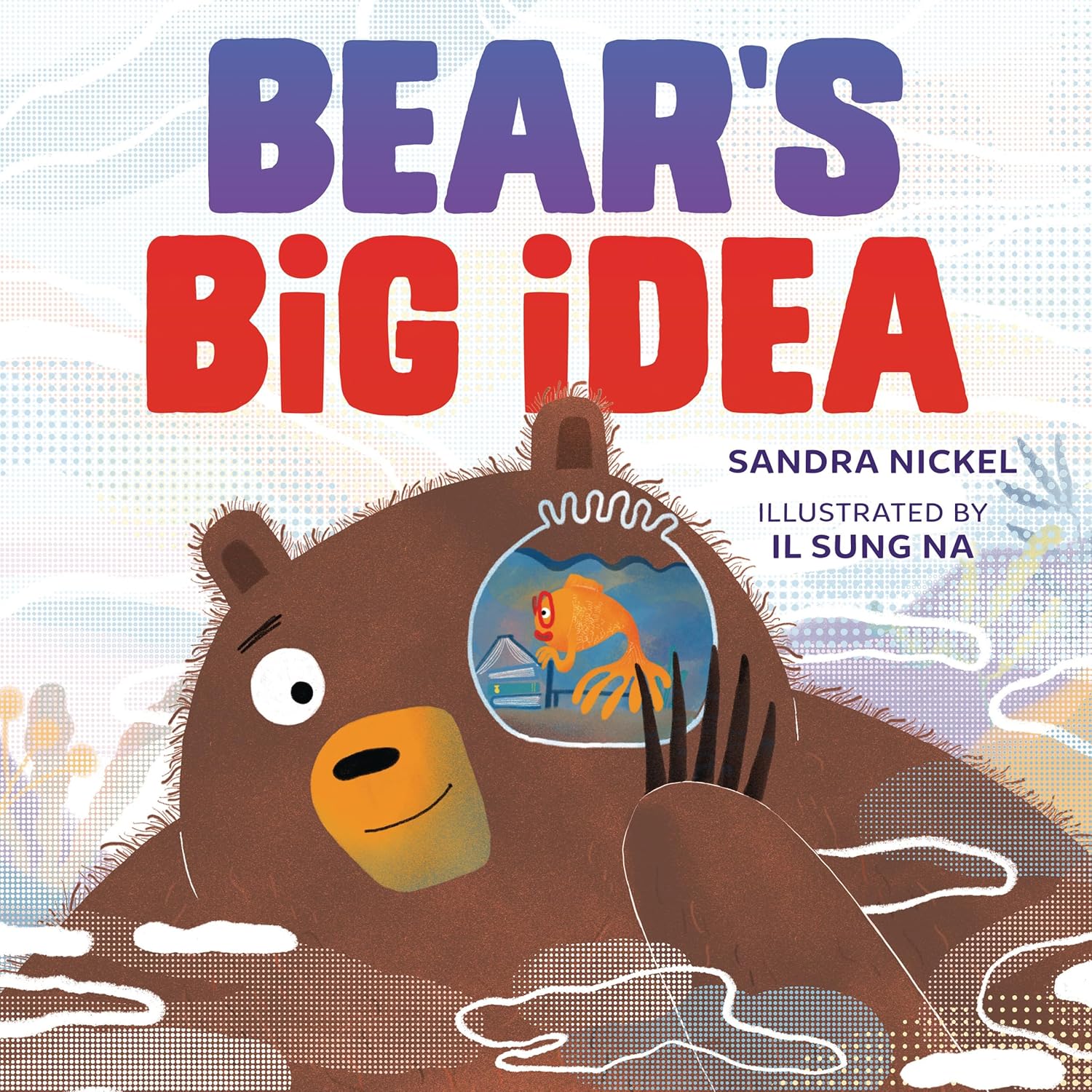
Bear’s Big Idea

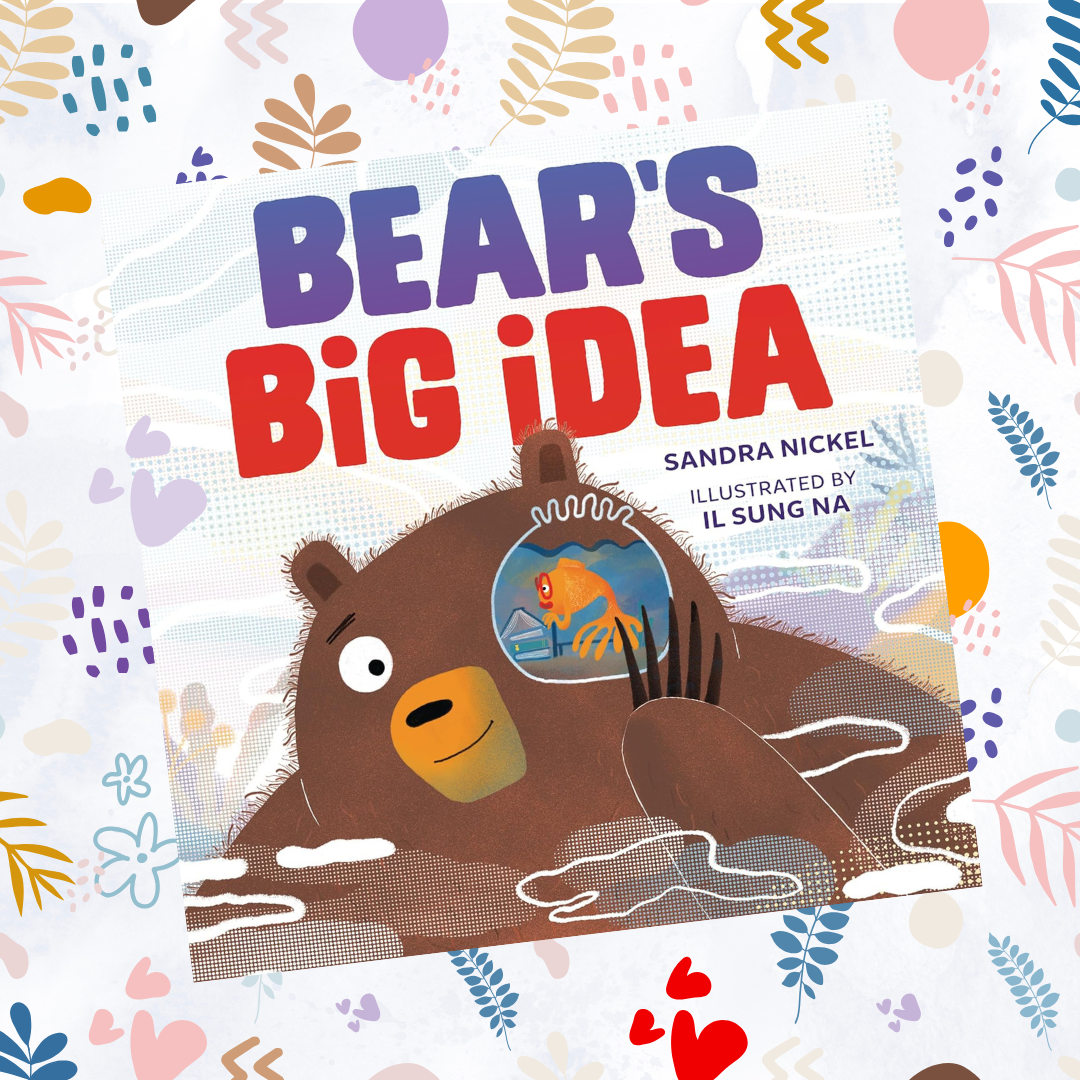
Written by Sandra Nickel | Illustrated by Il Sung Na


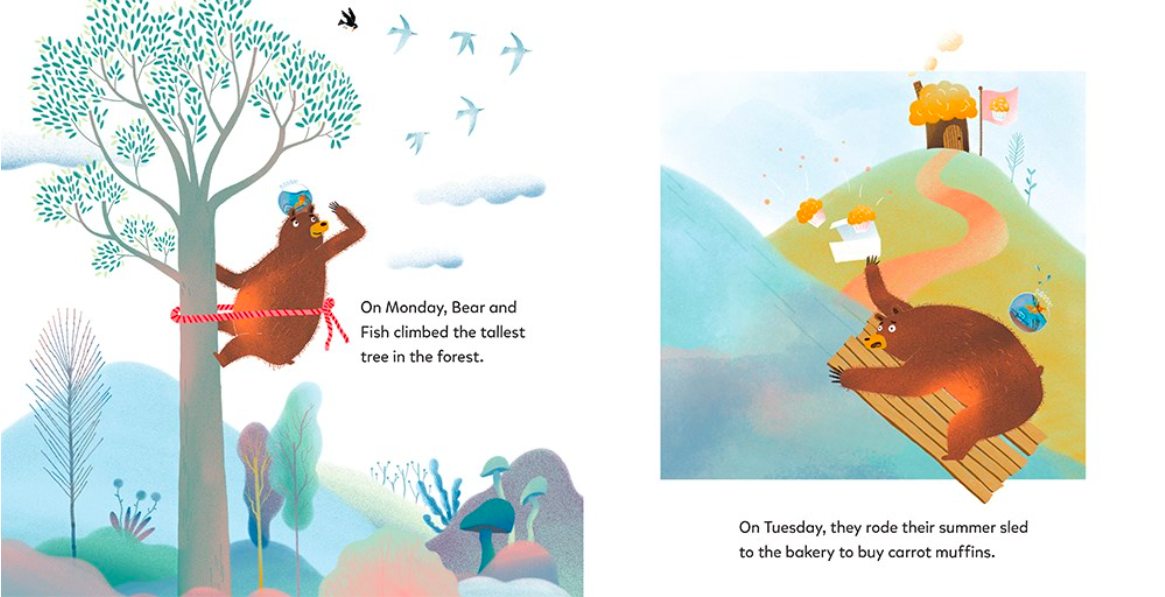
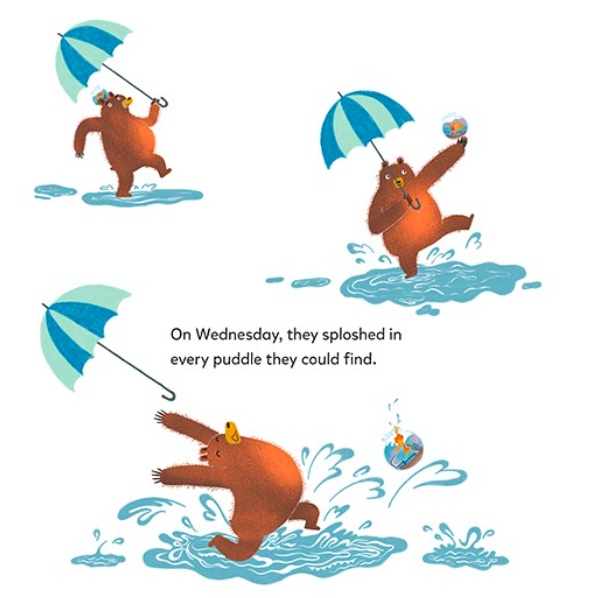
Fish and Bear were best friends. They did everything together, and usually—well, always—Fish was the one with the ideas. “Every morning, Fish would wake up, put on her glasses, and just like that, she would know the perfect thing to do.” Every day of the week, Fish found something—a rope, a sled, an umbrella, and a blanket—and dreamed up an innovative way to have fun with it.

celebrate-picture-books-picture-book-review-bear's-big-idea-Monday

Image copyright Il Sung Na, 2024, text copyright Sandra Nickel, 2024. Courtesy of Carolrhoda Books.

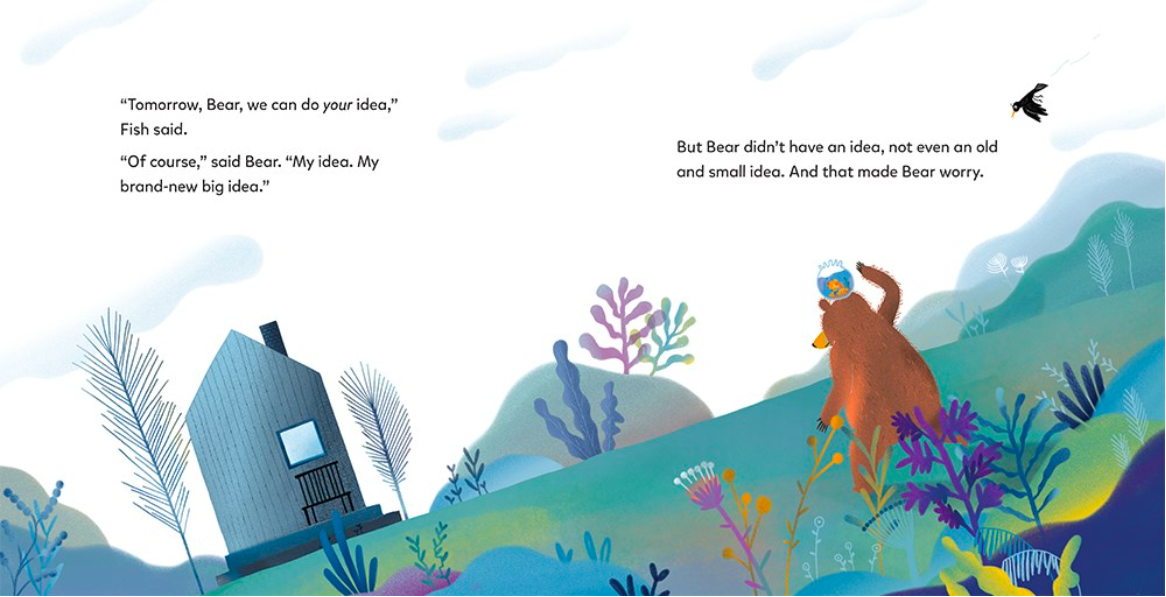
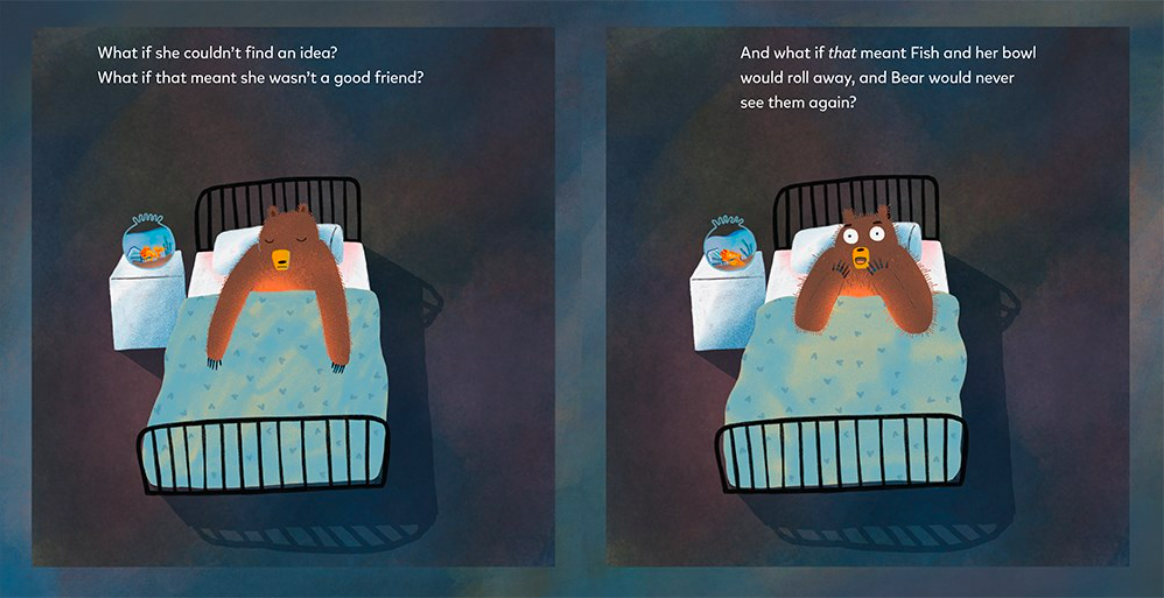
But Fish didn’t want Bear to feel left out, so on Thursday she said that the next day they could do Bear’s idea, “‘Of course, said Bear. ‘My brand-new big idea.'” But Bear was worried. She “didn’t have an idea, not even an old and small idea.” Bear tried to sleep that night, but she was afraid that not having an idea meant she wasn’t a good friend. Would Fish take her bowl and leave? Anxiety muddled Bear’s brain, and all she could think of were now-old ideas.

celebrate-picture-books-picture-book-review-bear's-big-idea-Wednesday

Image copyright Il Sung Na, 2024, text copyright Sandra Nickel, 2024. Courtesy of Carolrhoda Books.

The next morning it was the same. Bear looked everywhere for a brand-new big idea but found nothing. She kept checking in with Fish, asking if she was still there. “‘Always and forever,’ said Fish” with added reassurance. At last, Bear confessed that she couldn’t see an idea anywhere. “‘Don’t worry,’ Fish said. ‘Just because you can’t see something, doesn’t mean it’s not there.'”

celebrate-picture-books-picture-book-review-bear's-big-idea-no-idea

Image copyright Il Sung Na, 2024, text copyright Sandra Nickel, 2024. Courtesy of Carolrhoda Books.

So Bear thought some more, she listened, and she felt the wind whipping up. Suddenly, the air was filled with all of the old things from the past week. As Bear watched the things flying by, she saw it! Her brand-new big idea! She quickly gathered the items together and grabbed Fish’s bowl then rode the sled down to the beach, where she turned those individual items into an ingenious brand-new big idea that even impressed Fish! As pleased as Bear was with her idea, though, she was even happier to discover that good friends were “always and forever there.”

celebrate-picture-books-picture-book-review-bear's-big-idea-sleepless-night

Image copyright Il Sung Na, 2024, text copyright Sandra Nickel, 2024. Courtesy of Carolrhoda Books.

The second book in Sandra Nickel’s Bear and Fish series is a charming story that gently addresses children’s common fears about performance and pressure as well as the nature of friendship itself. Throughout the story, Nickel presents Bear’s conundrum realistically as she first alludes to having a big idea and then worries through the night and part of the next day that she will let down and maybe even lose her bestie because she has no idea at all.

Nickel—through Fish’s encouraging comments and confidence in Bear’s abilities—is always right there, though, with reassurance that children will find comforting in their own life. Nickel’s excellent pacing as well as her metaphorical dark and fog that stymies Bear until her approaching idea clears it away adds depth to the story and shows kids that things such as ideas, learning, self-confidence, and growth come to each person in their own time.

Children will be happy to see Il Sung Na’s fast friends back again in a new adventure. Il Sung’s soft-hued illustrations place Bear and Fish in a whimsically surreal mashup of vegetation from Bear’s forest and Fish’s underwater worlds. Bespectacled, ever-faithful Fish regales Bear with reassuring philosophy from her bowl, but also enjoys a madcap experience of her own thanks to Bear’s big idea. Through Il Sung’s clear depictions of Bear’s emotions, children can empathize with and cheer on Bear while gaining their own sense of self-confidence.

An uplifting, reassuring, and confidence boosting story, Bear’s Big Idea is sure to prompt requests for multiple readings and can spark discussions about feelings of fear, external and internal pressure, true friendship, and using one’s imagination. Bear’s Big Idea would make a valuable addition to home, library, and classroom collections.

Ages 4 – 8

Carolrhoda Books, 2024 | ISBN 979-8765610176

About the Author

Sandra Nickel is a writer of nonfiction picture books for children. Her work includes The Stuff Between Stars, Nacho’s Nachos, and Breaking Through the Clouds. She is the winner of a Christopher Award and holds an MFA in Writing for Children and Young Adults from Vermont College of Fine Arts. When at home in Switzerland, Sandra loves ambling and rambling and eating carrot muffins just as much as Bear and Fish do.

About the Illustrator

Il Sung Na was born in Seoul, South Korea. In 2001, he moved to London to pursue a BFA in Illustration and Animation at Kingston University, where he discovered a passion for children’s books. He completed his MFA Illustration Practice at MICA (Maryland Institute College of Art) in 2015. Il Sung has illustrated several books including Wild Peace, My Tree, and ZZZZ: A Book of Sleep. Currently based in Kansas City, Il Sung teaches illustration courses at KCAI (Kansas City Art Institute) and works on new books.

International Creativity Month Activity

celebrate-picture-books-picture-book-review-bear-craft

Expressive Bear


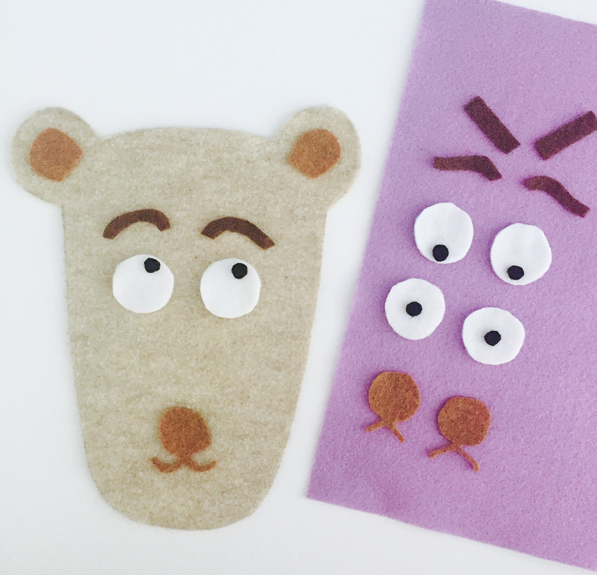
You can talk about different emotions and feelings or make up your own stories with this Expressive Bear Craft! Use the templates and/or make your own expressive eyes, eyebrows, and nose and mouths. You can also play a game in which the first person to collect all the parts of the bear’s face is the winner.

Supplies

  • Printable Bear Head Template
  • Printable Eyes and Noses Template
  • Printable Eyebrows  and Ears Template
  • Light brown felt or fleece (or color of your choice), 8 ½ x 11 inch piece
  • Dark brown felt or fleece(or color of your choice), 8 ½ x 11 inch piece
  • White felt or fleece, 8 ½ x 11 inch piece
  • Black felt or fleece, for pupils
  • Scissors
  • Glue
  • 1 playing die (optional)

Directions

  1. Print templates
  2. Cut bear head from light felt or fleece
  3. Cut eyes from white felt or fleece
  4. Cut nose and inner ears from dark brown felt or fleece
  5. Cut pupils from black felt or fleece
  6. Glue pupils onto white eyes

Alternatively: Color and play with the paper set

For a Fun Story Time

Give the bear different faces and make up stories of why he looks that way!

To Play a Game

Supplies

  • 1 plastic playing die. Or print this playing die template and draw one of the six facial features on each side.
  • Pencil, pen, or markers (if using printed die template)
  • Cut out, fold, and tape the die together

Directions

  1. Roll the die and follow the instructions below to collect parts of the bear’s face.
  2. The first player to create a full face is the winner.
  • Die dots correspond to:
  • 1—one eyebrow
  • 2—second eyebrow
  • 3—one eye
  • 4—second eye
  • 5—nose
  • 6—inner ears

celebrate-picture-books-picture-book-review-bear's-big-idea-cover

You can purchase Bear’s Big Idea from these booksellers

Amazon | Barnes & Noble | Bookshop (to support your local independent bookstore)

Picture Book Review

January 9 – National Word Nerd Day

celebrate-picture-books-picture-book-review-calvin-gets-the-last-word-cover

About the Holiday

Do you love nothing more than finding new words and using them in conversation or in your own writing? Does completing a  crossword or word search puzzle make for the perfect day? Is a pun your favorite type of joke? Then you’re a word nerd! Today’s holiday highlights the importance of language and the fun of learning and expressing yourself precisely with new or uncommon words. To celebrate, why not gather friends or family and play a word-based game like Scrabble, Tapple 10, Charades, or—my favorite—Boggle! 

Calvin Gets the Last Word

Written by Margo Sorenson | Illustrated by Mike Deas


The moment Calvin wakes up, he grabs his dictionary and heads to the kitchen for breakfast. While Calvin may be well-rested, his dictionary tells readers that it is tired. “Why? Because Calvin loves words—I mean REALLY loves words,” the dictionary says. Calvin won’t rest until he’s found the perfect “word for everything—especially his rascally brother.” At breakfast, Calvin takes a big gulp of milk. It’s just the moment his brother’s been waiting for to tell his super funny joke. You can imagine what happens—and why the dictionary’s page containing the word revenge is soaked.

celebrate-picture-books-picture-book-review-calvin-gets-the-last-word-cover

Image copyright Mike Deas, 2020, text copyright Margo Sorenson, 2020. Courtesy of Tilbury House Publishers.

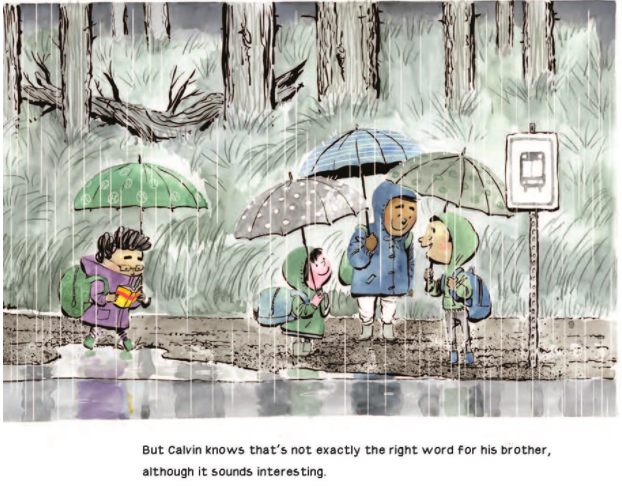
But is revenge the right word for Calvin’s brother? Not quite. On the school bus as the kids are tossing a backpack, talking, laughing, and hanging over the seats, Calvin’s dictionary describes it as mayhem, but that word doesn’t completely describe his brother either. As Calvin struggles in geography class and passes notes during library story time, his dictionary helps describe the mood, but the words it chooses don’t really apply to his brother. On the way home, though, Calvin does discover a good word for himself when he stands up to a bully and helps a kindergartener.

celebrate-picture-books-picture-book-review-calvin-gets-the-last-word-breakfast

Image copyright Mike Deas, 2020, text copyright Margo Sorenson, 2020. Courtesy of Tilbury House Publishers.

At Little League practice, the dictionary reveals that Calvin “loves to crush the ball during batting practice, sending it over the fence. That’s why the page that reads pulverize has grass stains on it.” Could pulverize be the right word for his brother? While Calvin thinks it could be fun, it’s not exactly right.

celebrate-picture-books-picture-book-review-calvin-gets-the-last-word-bus-milk

Image copyright Mike Deas, 2020, text copyright Margo Sorenson, 2020. Courtesy of Tilbury House Publishers.

That night dinner turns into a repeat of breakfast—only in broccoli green. When Calvin goes to bed, he sits for a while, thinking. Then he grabs his exhausted dictionary and a glass of water and sneaks into his brother’s room. The dictionary thinks it knows what’s going to happen and riffles through its pages to find the right word, unconcerned whether it stays dry or not. And suddenly it opens to the perfect word! But wait, that word doesn’t fit now because the brothers are laughing. The dictionary tries flipping to another page and a better word, but Calvin has it beat as he turns the pages and discovers the exact right word to describe his brother. What are all of these words? Come flip through Calvin Gets the Last Word yourself to find out!

celebrate-picture-books-picture-book-review-calvin-gets-the-last-word-bus-stop

Image copyright Mike Deas, 2020, text copyright Margo Sorenson, 2020. Courtesy of Tilbury House Publishers.

In her funny and unique mashup of sibling rivalry and vocabulary, Margo Sorenson offers kids an engaging story of the singular type of love brothers share uncovered little by little through word-building. Calvin’s dictionary makes a sincere and charming guide through high-interest words that lend panache and nuance to events throughout Calvin’s day even if they don’t quite describe his brother. Astute kids may notice that the words the dictionary chooses for Calvin’s brother proves his loyalty to his favorite reader. Calvin’s spewed milk, whispered secrets, and home run batting add up to a real kid that readers will love. The words that the dictionary finds are fun to learn and say and will spark an enthusiasm in readers to do their own flipping through the dictionary and thesaurus. Sorenson’s endearing ending rings true with a word kids are sure to embrace.

Mike Deas’ glasses-wearing and sweat suit-clad Calvin, whose dictionary is always at the ready to define his experiences, is a character readers will respond to. Images of the sprayed milk and broccoli, rockin’ school bus, library story rug, and baseball field are full of familiar details and plenty of action. As Calvin prepares to play his trick on his brother Deas gives kids a cutaway view of the house from above, letting them tiptoe through the maze of rooms with Calvin. The final scenes of the brothers checking out the dictionary together in the light of a bedside lamp is sibling devotion at its best.

A delightful family story that can stir a love of language, Calvin Gets the Last Word would be a favorite addition to home libraries. The book is highly recommended for school and classroom bookshelves to enhance language arts, writing, grammar, and vocabulary lessons and for public library collections as well.

Ages 6 – 8

Tilbury House Publishers, 2020 | ISBN 978-0884488224

Discover more about Margo Sorenson and her books on her website.

To learn more about Mike Deas, his books, and his art, visit his website.

National Word Nerd Day Activity

celebrate-picture-books-picture-book-review-big-words-vocabulary-word-search-puzzle

“Big Words” Word Search


Knowing and using a wide range of words allows you to express yourself in exact—and often—fun ways. Find the 26 “big” words—one for each letter of the alphabet—in this printable word search puzzle.

“Big Words” Word Search Puzzle |  “Big Words” Puzzle Solution!

celebrate-picture-books-picture-book-review-calvin-gets-the-last-word-cover

You can purchase Calvin Get’s the Last Word from these booksellers

Amazon | Barnes & Noble | Bookshop (to support your local independent bookstore)

Picture Book Review
January 8 – National JoyGerm Day

celebrate-picture-books-picture-book-review-how-to-cheer-up-a-friend-cover

About the Holiday

Believing that joy can spread from person to person on the strength of simple smiles and greetings, acts of kindness, upbeat moods, and general positivity, Joan E. White of Syracuse, New York, founded JoyGerm Day in 1981. The day officially became a national holiday in 1985, and is now celebrated around the world. The holiday inspires people to find ways today and every day to positively impact the lives around us at home, work, school, or even while shopping or going about one’s daily business.

To honor the day and the idea, find ways to start each morning with a positive attitude for the day to come. Need ideas for how to get started? Say “Hello” to those you meet, listen to and encourage others, happily help out where needed, share a special moment with your kids at home, or send a surprise letter, card, or text to a friend or family member far away. And, of course, don’t forget to treat yourself too! When you feel good, those around you will respond in kind. Happiness really is contagious!  

Thanks so much to Beach Lane Books for sharing a copy of How to Cheer Up a Friend with me for review consideration!

How to Cheer Up a Friend

Written by Stephanie Calmenson | Illustrated by Shannon McNeill


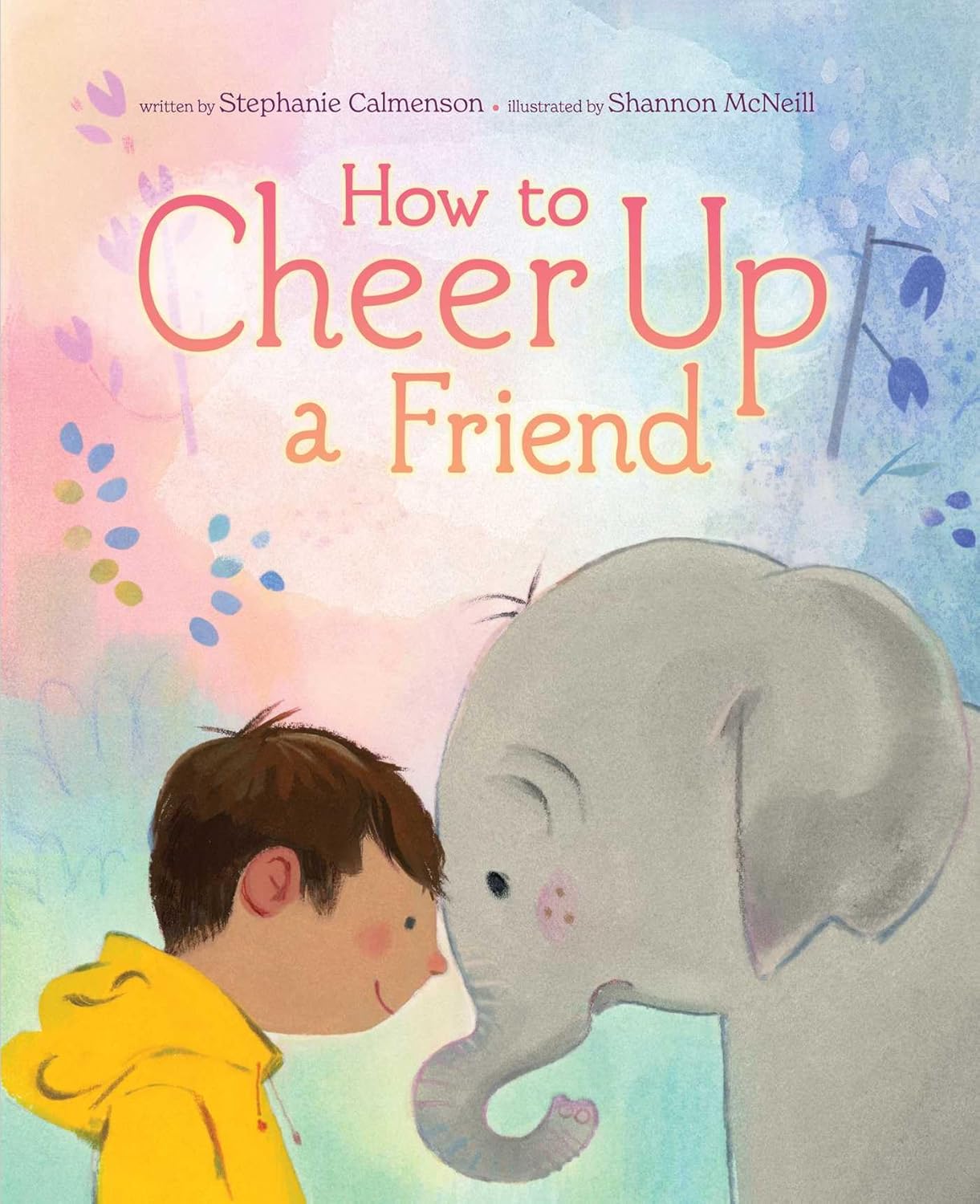
Little ones have big feelings and even bigger hearts. When they see a friend or family member feeling down, they want to help. But “What do you do / when your friend feels blue?” In her sweet book in which the protagonist attempts to cheer up their elephant friend, Stephanie Calmenson offers refreshingly practical advice on how a child (or an adult) can really approach someone experiencing sadness or anger and help them find happiness again. 

Screen Shot 2024-12-31 at 4.50.06 PM

Image copyright Shannon McNeill, 2024, text copyright Stephanie Calmenson, 2024. Courtesy of Beach Lane Books.

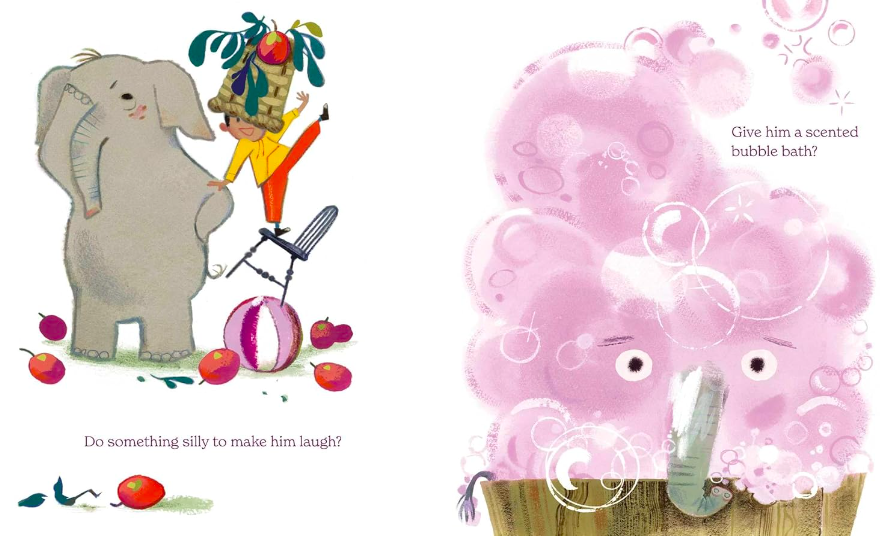
Writing in rhyming couplets, Calmenson starts out by suggesting a few ideas that will get readers giggling and invested in the story, such as “Do you tickle his trunk / to get him out of his funk?” and “Do something silly to make him laugh? / Give him a scented bubble bath?” Soon, the child opens his arms wide, offering a hug—but ready to happily accept either a “yes” or “no” answer.

Quieter ideas follow, including taking a walk or simply listening if he wants to “talk . . . and talk . . . and talk.” Then—only after all his feelings have been vented does the protagonist offer treats—or that hug, which now feels juuust right.
Screen Shot 2024-12-31 at 4.51.18 PM

Image copyright Shannon McNeill, 2024, text copyright Stephanie Calmenson, 2024. Courtesy of Beach Lane Books.

Stephanie Calmenson’s thoughtful look at the underpinnings of sadness or other strong emotions and how friends or family members can best help a loved one shines for its brevity and straightforward take on the issue. This approach will appeal to kids while giving them concrete examples of what to do and say (or not say) to elicit healing time or talk from friends, siblings, or others.

How to Cheer Up a Friend would be equally effective for adults looking for a book to help their own child through periods of sadness or anger as the story validates these emotions and provides a constructive solution for expressing them. The length of the story and its bookended format makes the book a perfect choice for parents, teachers, or other adults to reach for during those times when emotions may be running high or attention spans are short.

Screen Shot 2024-12-31 at 4.51.51 PM

Image copyright Shannon McNeill, 2024, text copyright Stephanie Calmenson, 2024. Courtesy of Beach Lane Books.

Shannon McNeill’s adorable elephant and empathetic child immediately win over readers’ hearts with their connection that is clearly based on mutual love and trust. In her soft-hued gouache, pencil, and cut paper illustrations, McNeill’s droopy, sad-eyed elephant is the picture of sadness, stubbornness, and even laugh-inducing perseverance as his friend tries various silly solutions to restore happiness. The image of the elephant hunkered down in its wash tub as it hides from a hug is an effective portrayal for children who prefer body autonomy or for the barrier some people present when experiencing strong emotions.

As the elephant begins to talk, his words and feelings fill the page as colorful shapes, and he begins to gesticulate, He cries, stomps, and flops down in a tirade to demonstrate those emotions he may not have words for. But as the storm abates, he feels better and can happily accept that big hug in a two-page spread that will delight young readers.

An endearing story that provides satisfying help with an emotion we all experience, How to Cheer Up a Friend is a valuable book for families and teachers to have on hand for those times when feelings are strong. The book is highly recommended for home, library, and classroom collections.

Ages 4 – 8

Beach Lane Books, 2024 | ISBN 978-1665910248

About the Author

Stephanie Calmenson is the acclaimed author of many popular books for young readers including Dinner at the Panda Palace; May I Pet Your Dog?; and the Ready, Set, Dogs! and Allie and Amy series written with Magic School Bus author Joanna Cole. A former early childhood teacher and children’s book editor, Stephanie feels fortunate to be able to teach, entertain, and encourage kids through her books. To read more, please visit StephanieCalmenson.com.

About the Illustrator

Shannon McNeill is a Canadian-born, San Diego-based illustrator whose books include Are We There Yet? by Dandi Daley Mackall, Wild & Wooly by Mary Jessie Parker, How to Cheer Up a Friend by Stephanie Calmenson, and her own Wheels, No Wheels. Her work is influenced by local nature, loitering in coffee shops, old books, child art, and long walks around the block. Learn more at LittleDrawings.com.

National JoyGerm Day Activity

celebrate-picture-books-picture-book-review-you're-groovy-happiness-card

Spread Happiness Cards

Kids can spread happiness to their friends, family, teachers, and other people in their lives with these cute Happiness Cards! Just print, cut, and give!

Spread Happiness Cards

celebrate-picture-books-picture-book-review-how-to-cheer-up-a-friend-cover

You can purchase How to Cheer Up a Friend at these booksellers

Amazon | Barnes & Noble | Bookshop

Picture Book Review