October 3 – Random Acts of Poetry Day

celebrate-picture-books-picture-book-review-poetree-cover

About the Holiday

Are you a poet? Most likely! Inside all of us are poignant moments that tug at our hearts, funny memories that make us laugh, and questions that beg for answers. All of these things are the seeds of poetry! Let these seeds grow by writing down your thoughts. Your ideas don’t have to rhyme or be made up of fancy words to be a poem. Today’s holiday encourages people to publicly share their poetry by grabbing a piece of chalk and writing poems on sidewalks or walls, picking up a pen and composing on paper, or sharing on social media. Rather read poetry than write? Go for it! Find a new or favorite collection of poetry and enjoy! For more ideas on how to celebrate Random Acts of Poetry Day visit Writer’s Digest.

I received a copy of Poetree from Red Deer Press to check out. All opinions are my own. I’m happy to be partnering with Red Deer Press in a giveaway of Poetree. See details below.

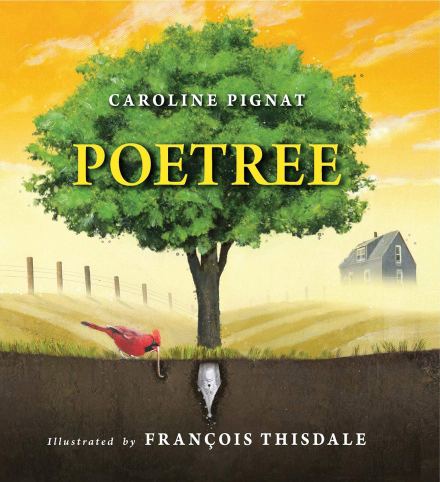
Poetree

Written by Caroline Pignat | Illustrated by François Thisdale


In Caroline Pignat’s remarkable acrostic poems, readers glean fresh insight into the wonderous life of trees as they germinate, thrive, prosper, and even propagate their own legacy. Divided by season, the poems also metaphorically follow the stages of human life from Spring’s youth to Winter’s old age. Pignat offers six poems for each season, which is introduced by a rhyming couplet.

Exquisite, evocative images – leaves described as “Emerald flags” and “Vibrant bunting” and apples as “plump parcels,” – entice readers to look anew at trees, with their singular seeds, intricate foliage, and long-held histories.

celebrate-picture-books-picture-book-review-poetree-spring-seed

Image copyright François Thisdale, 2018, text copyright Caroline Pignat, 2018. Courtesy of Red Deer Press.

As a buried seed nudges its way upward in springtime, it is simultaneously:

Stretching up

  Higher

  Out

  Of darkness, yearning for

  The sky.”

And

Reaching down deep

  Out

  Of sight, anchoring in

  The

  Soil.”

During summer, the sapling grows stronger and mature trees “beckon buzzing bees” and offer strong support where:

Nature’s nursery keeps

  Each egg

  Safely

  Tucked ‘til mother’s return.”

In Fall it’s reaping time for farmers and for small, diligent creatures:

Nestled

  Underground, another harvest hides,

  Thanks to a busy

  Squirrel.”

As the weather turns cold and leaves fly away,

Brittle bark hugs the

 Aging tree at

 Rest as its sap

 Ebbs.”

But with the coming of spring, the cycle begins anew as once again there is “Amazing growth and wondrous deeds / now promised in these tiny seeds.”

celebrate-picture-books-picture-book-review-poetree-summer-leaves

Image copyright François Thisdale, 2018, text copyright Caroline Pignat, 2018. Courtesy of Red Deer Press.

From the sepia-toned endpaper at the book’s opening—in which a boy carrying a hoe walks past a fog-enshrouded barn—through to the endpaper that closes the book and presents the boy’s home standing silent amid a wintry mix of snow and sleet, François Thisdale recreates the richly textured world of a farm in his double-spread, mixed-media masterpieces. In addition to interpreting the poems, each page gives readers much to see and talk about as life goes on above and underground. Birds, animals, and insects stop by to pluck a worm from the ground, sniff a tender seedling, gather powdery pollen, and prepare for, enjoy, or sleep through winter.

celebrate-picture-books-picture-book-review-poetree-mouse

Image copyright François Thisdale, 2018, text copyright Caroline Pignat, 2018. Courtesy of Red Deer Press.

As the seasons change, the boy—always shown in silhouette—matures, becoming an adult in summer, passing through middle age in fall, and growing older in winter. While most of the illustrations depict the natural world, two take children inside the farmhouse where an apple-raspberry pie waits in the cozy fall kitchen, and a nearly-finished puzzle is set up next to a warm radiator while a windy and moonlit night makes a “leafy canvas” of the curtain-less window. The final view of the now-old man walking away near the edge of the page and the last image of a straw hat nestled next to a hewn tree present poignant moments for discussion.

Ages 7 and up

Red Deer Press, 2018 | ISBN 978-0889954922

Discover more about Caroline Pignat and her books on her website.

To learn more about François Thisdale, his books, and his art, visit his website.

Poetree Giveaway

I’m excited to partner with Red Deer Press in this giveaway of:

  • One (1) copy of Poetree, written by Caroline Pignat  | illustrated by François Thisdale
  • To be entered to win, just Follow me on Twitter @CelebratePicBks and Retweet a giveaway tweet during this week, October 3 – 9. Already a follower? Thanks! Just retweet for a chance to win.

A winner will be chosen on October 10.

Giveaway open to US addresses only. | Prizing provided by Red Deer Press.

Random Acts of Poetry Day Activity
CPB - Plant Poem

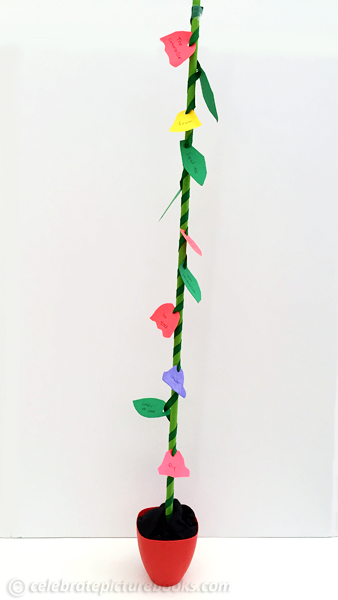
Grow a Poem Craft


A poem often grows in your imagination like a beautiful plant—starting from the seed of an idea, breaking through your consciousness, and growing and blooming into full form. With this craft you can create a unique poem that is also an art piece!

Supplies

  • Printable Leaves Template, available here and on the blog post
  • Printable Flower Template, available here and on the blog post
  • Wooden dowel, ½-inch diameter, available in craft or hardware stores
  • Green ribbon
  • Green craft paint
  • Green paper if leaves will be preprinted
  • Colored paper if flowers will be preprinted
  • Flower pot or box
  • Oasis, clay, or dirt
  • Hole punch
  • Glue
  • Markers or pens for writing words
  • Crayons or colored pencils if children are to color leaves and flowers

Directions

  1. Paint the dowel green, let dry
  2. Print the leaves and flower templates
  3. Cut out the leaves and flowers
  4. Punch a hole in the bottom of the leaves or flowers
  5. Write words, phrases, or full sentences of your poem on the leaves and flowers (you can also write the poem after you have strung the leaves and flowers)
  6. String the leaves and flowers onto the green ribbon (if you want the poem to read from top to bottom string the words onto the ribbon in order from first to last)
  7. Attach the ribbon to the bottom of the pole with glue or tape
  8. Wrap the ribbon around the pole, leaving spaces between the ribbon
  9. Gently arrange the leaves and flowers so they stick out from the pole or look the way you want them to.
  10. Put oasis or clay in the flower pot or box
  11. Stick your poem pole in the pot
  12. Display your poem!

celebrate-picture-books-picture-book-review-poetree-cover

You can find Poetree at these booksellers

Amazon | Barnes & Noble | Books-a-Million | IndieBound

Picture Book Review


October 2 – It’s National Pasta Month

celebrate-picture-books-picture-book-review-the-great-pasta-escape-cover

About the Holiday

This month-long holiday celebrates one of the world’s favorite foods. With over 600 different shapes and sizes, pasta offers a wealth of recipe choices, from fancy to plain to that can’t-live-without Mac n’ Cheese. Pasta—the Italian word for dough—has been part of people’s diets since ancient times and was introduced to America by Thomas Jefferson in 1789, when he brought the first pasta machine and a supply of macaroni back home from a trip to France. There’s only one way to enjoy this special culinary event—so get the pot boiling or head out to your fav Italian restaurant and eat up!

The Great Pasta Escape

Written by Miranda Paul | Illustrated by Javier Joaquin


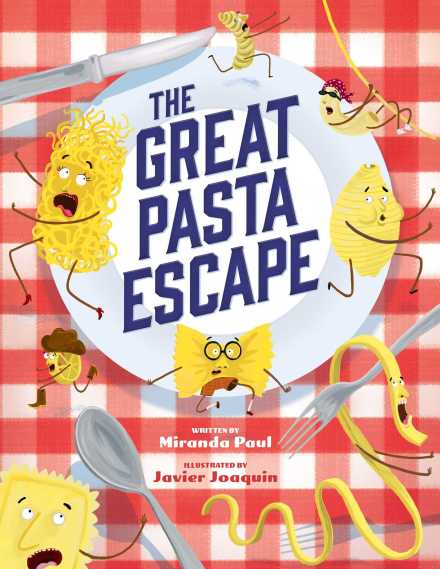
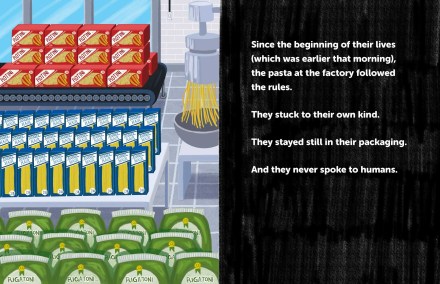
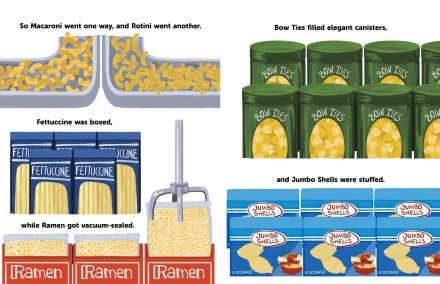
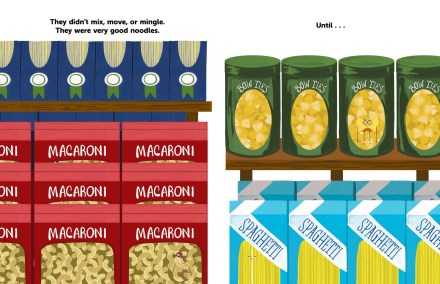
The pasta was fresh. Oh! I don’t mean that way—I’m just sayin’ they were new to the world. They? Well, yeah—you’ll see. The pasta was…recently made at the factory, and they knew their place. Each type “stuck to their own kind” in their own boxes, and they never talked to one another or the people who worked the machines or the lines. “They didn’t mix, move, or mingle. They were very good noodles.”

celebrate-picture-books-picture-book-review-the-great-pasta-escape-beginning

Image copyright Javier Joaquin, 2017, text copyright Miranda Paul, 2017. Courtesy of simonandschuster.com.

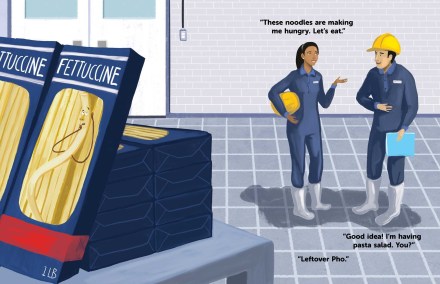
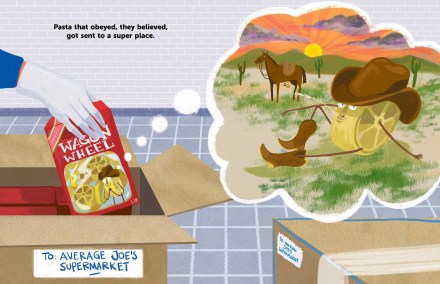
They went from shelf to shipping carton thinking of the super places they would end up. For instance, the wagon wheel imagined a home on the range with some cool boots, a ten-gallon hat, and a horse. But one day a piece of fettuccine overheard two workers talking about lunch. One was going to have pasta salad and one had brought leftover Pho.

celebrate-picture-books-picture-book-review-the-great-pasta-escape-factory-workers

Image copyright Javier Joaquin, 2017, text copyright Miranda Paul, 2017. Courtesy of simonandschuster.com.

Fettucine immediately called a meeting and expressed his fears (“Aaaaah! They’re going to EAT us!”), but the rest of the pasta thought this scenario was ridiculous. “‘Why would the humans make us, only to get rid of us?’” reasoned Bow Tie. Raman was getting tied up in knots, while Mac was trying to cool things down.

The Rotini gang believed Fettucine, though, and pointed everyone’s gaze in the direction of the directions on their boxes. All the pasta were aghast. Fettucine began crying, “‘Just cover me in Alfredo sauce now.’” While Ramen snarked, “‘You mean Afraid-o sauce.” Bow Tie tried the civilized approach to calm the situation, and chill Mac brought a more laid-back vibe to the scene.

celebrate-picture-books-picture-book-review-the-great-pasta-escape-western-scene

Image copyright Javier Joaquin, 2017, text copyright Miranda Paul, 2017. Courtesy of simonandschuster.com.

They needed a plan. Fettucine suggested hiding; Bow Tie voted for a peaceful sit-in; and Ramen wanted a more forceful opposition. But Mac reminded them to meditate on that “super place we’ve been hearing and dreaming about.’” Rotini was all for action, and in a moment had drawn up a schematic that might work if they sacrificed the Ravioli. This idea did not sit well with the Ravioli or the Tortellini. Emotions began to boil over, and a fight broke out on the factory floor.

celebrate-picture-books-picture-book-review-the-great-pasta-escape-different-types-of-pasta

Image copyright Javier Joaquin, 2017, text copyright Miranda Paul, 2017. Courtesy of simonandschuster.com.

All seemed lost until…an angel appeared with an ingenious proposal. Everyone stopped wrestling to watch the presentation she’d “cooked up.” It looked good. Spaghetti wrote some signs, and the rest of the pasta hung them in plain sight. The sign on the door announced that the factory was closed. The pasta machines were all “out of order,” and the cartons were all labeled to be shipped to “Super Awesome Island, Paradise.” Then the fettucine, the bow ties, the ramen, the spaghetti, the rotini, the ravioli, and all the rest went back to their own boxes and waited…until they found themselves “on vacation in a very super place.”

celebrate-picture-books-picture-book-review-the-great-pasta-escape-on-shelves

Image copyright Javier Joaquin, 2017, text copyright Miranda Paul, 2017. Courtesy of simonandschuster.com.

Miranda Paul dishes up a funny, dough-lightful story that will keep readers laughing while they noodle on the ideas of teamwork and friendship. Paul sprinkles plenty of puns throughout the pages while also stirring in more subtle humor based on each type of pasta’s shape or use in common recipes. The elbow macaroni is hip and calm befitting its use in Chili Mac, the bow tie is formal and mannerly, and it should come as no surprise that the rotini, with his spiral body, should come up with the most convoluted plan. When Angel Hair appears and unites the pasta in a successful bid to replace one “super” place with another, readers will see that by mixing it up and working together they can accomplish super things.

In his bold, colorful illustrations, Javier Joaquin provides each type of pasta with a distinct and expressive personality that readers will respond to. As the boxes of pasta sit on the factory shelf, waiting to be loaded into cartons, observant kids will see the heroes of the story hanging out in their respective packages. The vibrant dreams of each pasta stand in stark contrast to the sterile factory environment, spurring readers to cheer when their clever plan to escape comes true.

Ages 4 – 8

little bee books, 2017 | ISBN 978-1499804805

Discover more about Miranda Paul and her books on her website.

View a portfolio of illustration and graphic design work by Javier Joaquin on his website.

National Pasta Day Activity

celebrate-picture-books-picture-book-review-noodle-puzzle

Noodle On This! Puzzle


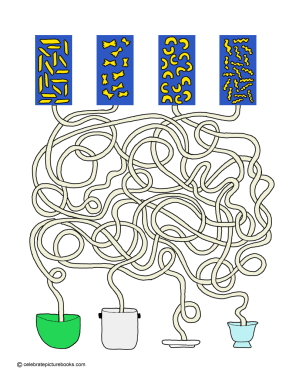
Four pasta dishes are on the stove. Can you find which type of pasta goes to each container in this printable Noodle On This! Puzzle?

celebrate-picture-books-picture-book-review-the-great-pasta-escape-cover

You can find The Great Pasta Escape at these booksellers

Amazon | Barnes & Noble | Books-a-Million |IndieBound


Picture Book Review

October 1 – World Architecture Day

celebrate-picture-books-picture-book-review-brick-who-found-herself-in-architecture-cover

About the Holiday

Established in 1986 by the International Union of Architects, World Architecture Day is celebrated on the first Monday in October to coincide with the United Nations-sponsored World Habitat Day. Each year a different theme highlights the important aspects of architecture in our lives. This year’s theme is “Architecture…for a Better World” and emphasizes the issues, challenges, and rewards of housing the world’s citizens. To celebrate today take a walk around your town or city with your kids and study the buildings and how they fit into history or new construction in your area. You can also research a famous building and the architect who designed it!

Brick, Who Found Herself in Architecture

Written by Joshua David Stein | Illustrated by Julia Rothman


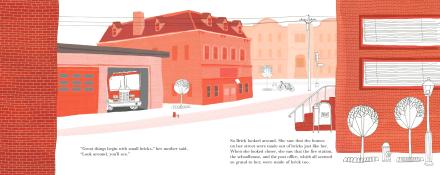
When Brick was a baby, she marveled at all the tall buildings and “wondered how anything could grow so big.” Her mother told her that “‘great things begin with small bricks.’” And Brick saw that it was true. When she looked closely, she saw that all the buildings she admired were made of bricks just like her. Brick wondered if there were buildings like this in all towns and even in other countries.

celebrate-picture-books-picture-book-review-brick-who-found-herself-in-architecture-baby-brick

Image copyright Julia Rothman, 2018, text copyright Joshua David Stein, 2018. Courtesy of Phaidon Press.

Pretty soon, Brick was old enough to satisfy her curiosity on her own and “find her place in the world.” Brick bravely set sail and landed at Malbork Castle, which had high walls with slits for shooting arrows through. Next, she visited The Ark, which was in the desert. Brick saw that both of these castles had suffered from years of fighting. “Brick did not want to fight. So she moved on.”

celebrate-picture-books-picture-book-review-brick-who-found-herself-in-architecture-great-things

Image copyright Julia Rothman, 2018, text copyright Joshua David Stein, 2018. Courtesy of Phaidon Press.

She saw churches, mosques, synagogues, and a Buddhist temple. She thought they were beautiful, “but they did not call out to her. And so she kept going.” She walked on walls and looked down both sides, but she did not want to divide places and people, so she kept going. She visited apartment houses, houses in the suburbs, and even a country house with a “chimney billowing smoke.” But Brick knew that “homes eventually empty and hearths grow cold.” This was not the future she wanted. Where did she belong? Brick wondered.

celebrate-picture-books-picture-book-review-brick-who-found-herself-in-architecture-churches

Image copyright Julia Rothman, 2018, text copyright Joshua David Stein, 2018. Courtesy of Phaidon Press.

Brick considered all the buildings she had seen, and she remembered the words her mother had told her long ago about great things. She sat at the end of her path and pondered into the night. When the sun rose, Brick saw the answer right in front of her. She settled herself in and “became part of a wide and lovely path” that would guide other bricks to find where they belonged too.

An Afterword presents a description, complete with photograph, of the various buildings Brick encounters in her travels.

celebrate-picture-books-picture-book-review-brick-who-found-herself-in-architecture-wall

Image copyright Julia Rothman, 2018, text copyright Joshua David Stein, 2018. Courtesy of Phaidon Press.

Full of lovely metaphors and deeply considered thoughts on the way architecture models the human heart as well as how people design their buildings and structures for purposes both positive and negative, Joshua David Stein’s story is a unique look at growing up. The brick makes a particularly compelling character, for in any building each brick holds a crucial place in the design while also joining with others to create a durable whole—just as it is for any individual in a strong, vibrant community.

As the little brick is exposed to the various roles she could dedicate her life to, she thinks not only of the immediate reward of “having a job” but of what her philosophies are and what she wants her future to be. In a perhaps surprising—but welcome—choice, Brick decides that instead of being part of a grand edifice, becoming a step along the path and guiding others is her calling. This recognition of teachers, parents, caregivers, and other such role models is inspired and uplifting.

Julia Rothman’s light touch, variety of reds, and whimsical black-and-white line drawings of foliage, ancillary elements, and toy-strewn backyards beautifully showcase a world of sturdy brick buildings while giving readers a sense of the soaring awe with which Brick views her city and the landmarks she visits. Rothman’s use of perspective juxtaposes tiny Brick against towering structures mirroring a feeling that young readers may know well. The path Brick travels is ever-present, running from edge to edge of the pages. The final two-page spread of Brick happily fitted into a path that meanders through a lushly landscaped park, which is being crossed by a young brick on his way to the city in the distance will delight readers.

Brick, Who Found Herself in Architecture is an original and lyrical look at individuality, growing up, and finding one’s place in the world. The book would be a strong addition to school, classroom, and public libraries and an encouraging and reassuring choice for home bookshelves as well.

Ages 4 – 8

Phaidon Press, 2018 | ISBN 978-0714876313

To learn more about Julia Rothman, her books and her art, visit her website.

World Architecture Day Activity

celebrate-picture-books-picture-book-review-brick-craft

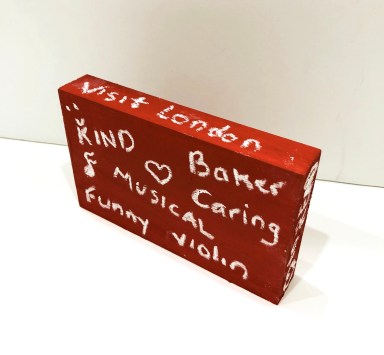
Build Your Identity 


Sometimes it’s good for kids to remind themselves of all the things that they like, stops along their path, and even words that describe them. With this craft, kids can make a “brick” that stands strong with all of their unique qualities. While a wooden block can be used to make a brick, if you have a real brick that can be used too!

Supplies

  • Wooden rectangular block, available at craft stores
  • Brick red craft paint
  • Paint brush
  • Chalk

Directions

  1. Paint the block with the craft paint, let dry
  2. Write words about yourself, things you like to do, inspirational places you’ve been, even places and things you’d like to do in the future.
  3. Display your brick on a shelf, hang on a wall, or use it as a book end

Classroom Idea

As a story extension for the classroom, cut one brick-sized rectangle from red construction paper, heavy-stock paper, or poster board for each student. Have them write about themselves, about what they think they would like to do in the future, or about some other topic pertinent to your class. Let students display their bricks by working together to “build” their own path in the classroom.

celebrate-picture-books-picture-book-review-brick-who-found-herself-in-architecture-cover

You can find Brick, Who Found Herself in Architecture at these booksellers

Amazon | Barnes & Noble | Books-a-Million | IndieBound

Picture Book Review