January 10 – It’s International Quality of Life Month and Q & A with Deborah Sosin

celebrate-picture-books-picture-book-review-charlotte-and-the-quiet-place-noisy-neighborhood

About the Holiday

How one achieves their definition of a good quality of life may differ for every person, but in general it encompasses being happy and satisfied with one’s relationships, work, living conditions, and self. Whether you find happiness and quality of life in outdoor or indoor pursuits, with others or alone, at work or at home, this month’s holiday gives you time to get in touch with your inner quiet place and reflect on changes or improvements to bring you more peace and happiness in life.

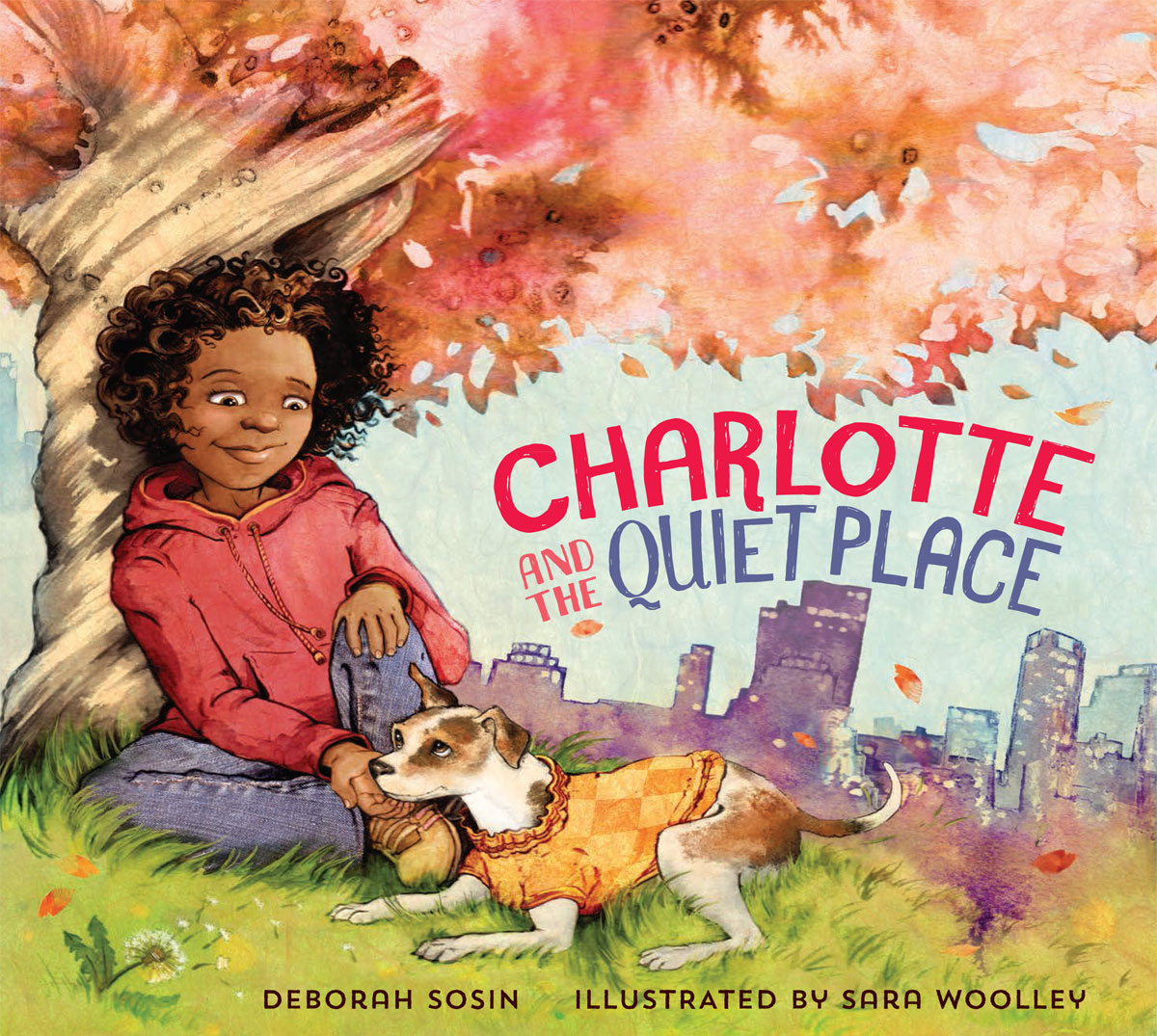
Charlotte and the Quiet Place

Written by Deborah Sosin | Illustrated by Sara Woolley


Charlotte is a girl who likes quiet who lives in a noisy world. Everywhere she goes, it seems, it’s impossible to escape from sounds that disturb her peace. At home the hallway creaks where “the floorboards groan,” the living room is like an arcade where the “TV bellows and blares,” and the kitchen is filled with Otto’s barks for his dinner. Even in Charlotte’s bedroom, “which is supposed to be a quiet place, the old steam radiator hisses, whistles, and whines. Where can Charlotte find a quiet place?”

celebrate-picture-books-picture-book-review-charlotte-and-the-quiet-place-noisy-home

Image copyright Sara Woolley, text copyright Deborah Sosin, Courtesy of sarawoolley.com

When Charlotte goes to school, things are no better. In the classroom kids are boisterous and bells ring; the lunchroom echoes with clattering trays and scuffing chairs; and the playground blares with big voices and stomping feet but also with the little squeaks and rattle of the swings. “Even in the library, which is supposed to be a quiet place, the children giggle, yammer, and yell. Where can Charlotte find a quiet place?”
celebrate-picture-books-picture-book-review-charlotte-and-the-quiet-place-noisy-subway

Image copyright Sara Woolley, text copyright Deborah Sosin, Courtesy of sarawoolley.com

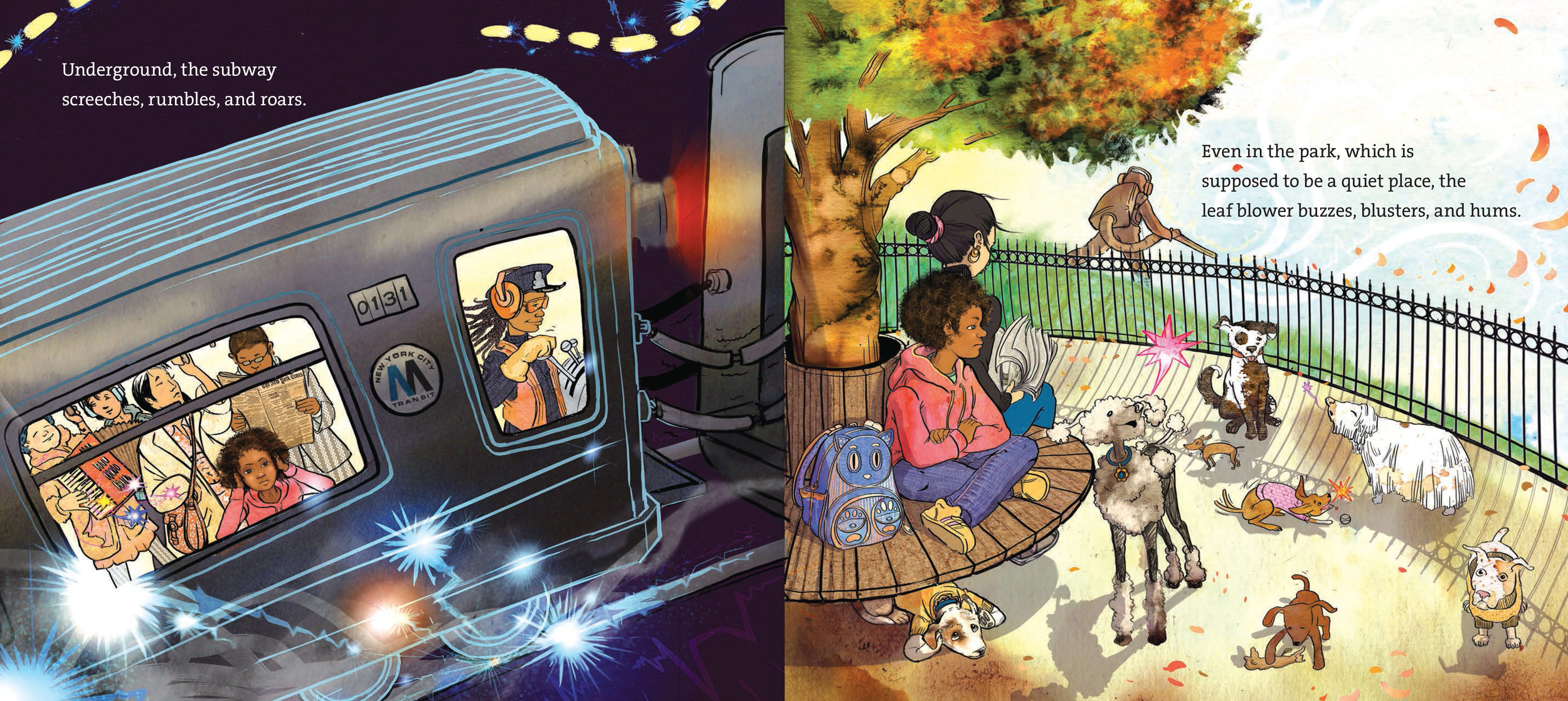
The outside world resounds with the din of jackhammers, horns, sirens, shouts, cars, music, and the “screeches, rumbles, and roars” of the subway. “Even in the park, which is supposed to be a quiet place, the leaf blower buzzes, blusters, and hums.” Charlotte puts her hands to her ears. “‘Nooo!’” she cries, “‘I have to find a quiet place!’”
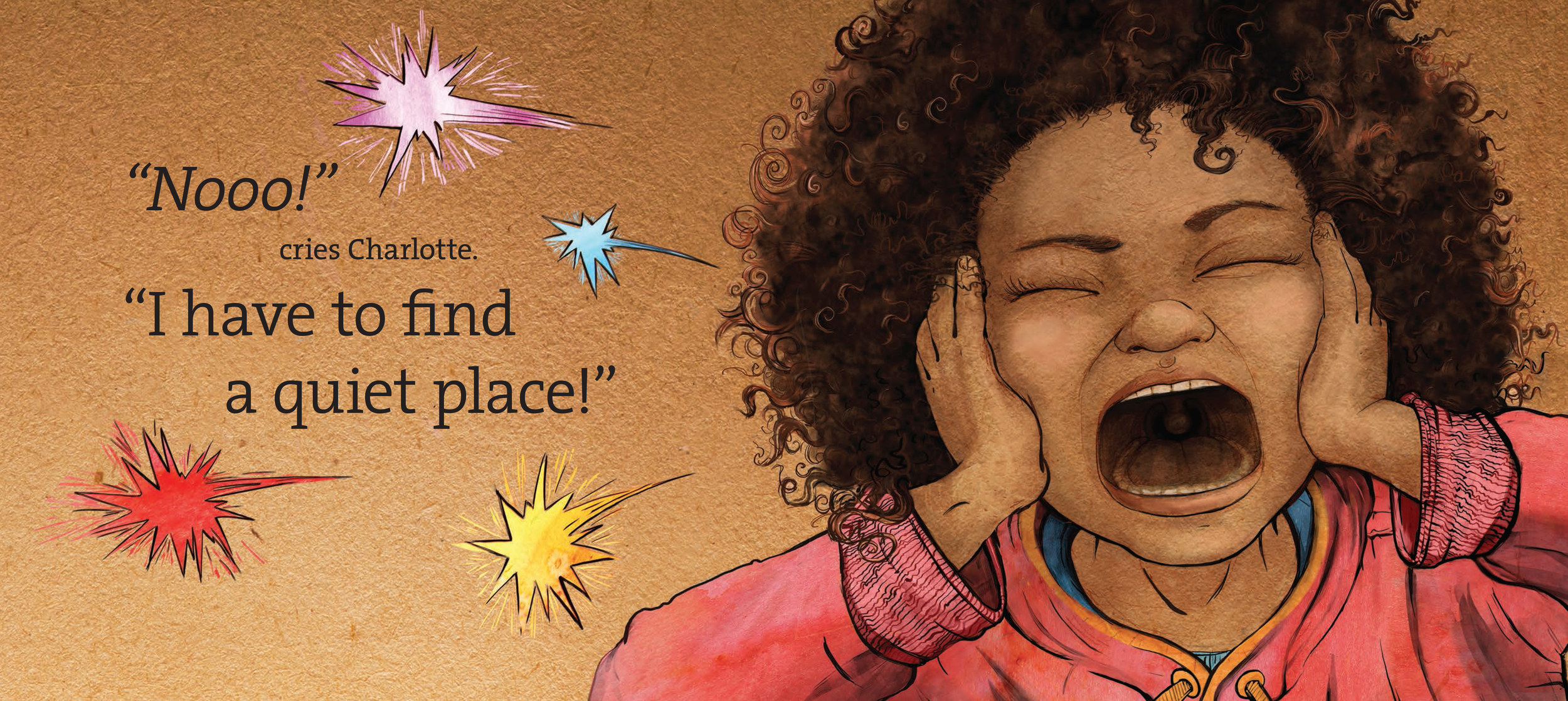
celebrate-picture-books-picture-book-review-charlotte-and-the-quiet-place-nooo!-charlotte-cries

Image copyright Sara Woolley, text copyright Deborah Sosin, Courtesy of sarawoolley.com

On Saturday Charlotte takes her dog for a walk in the park. Suddenly, Otto spies a squirrel and takes off running, wrenching his leash out of Charlotte’s hand. She chases after him down a hill, over a bridge, into the middle of a grove of trees. Out of breath, Charlotte and Otto sit beneath a tree. Gasping, Charlotte’s “belly rises up and down, up and down. Her breath goes in and out, in and out. Hooooo ahhhhh. Hooo ahhh.”

Slowly, Charlotte’s breath comes easier and “her mind slows down.” In this state, she discovers another, even quieter place. It is a place deep inside where her breath is soft and her “thoughts are hushed and low.” It is “a place as quiet as the small silence on the very last page of her favorite book, the silence right after ‘The End.’”
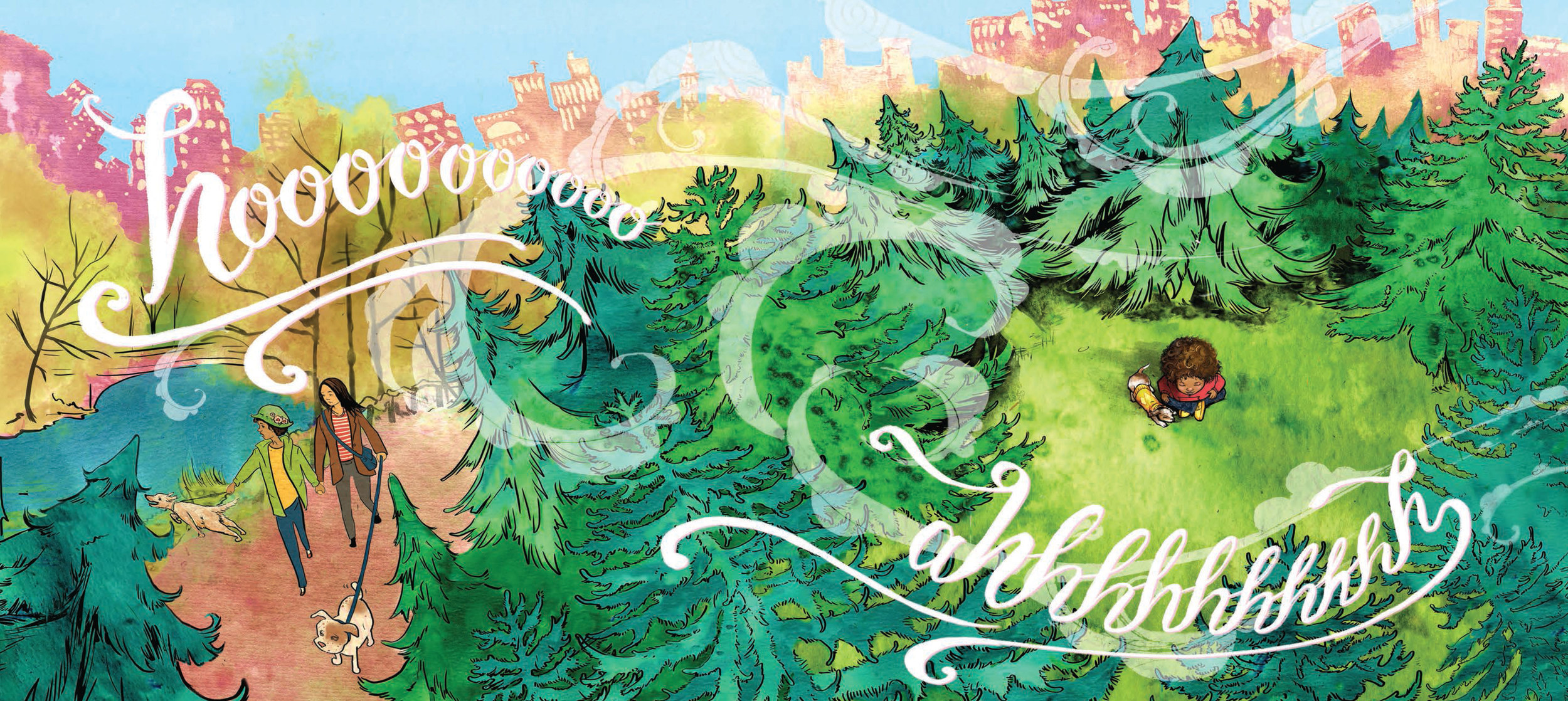
celebrate-picture-books-picture-book-review-charlotte-and-the-quiet-place-quiet-woods

Image copyright Sara Woolley, text copyright Deborah Sosin, Courtesy of sarawoolley.com

In a little while, Charlotte and Otto leave the grove, but now whenever home or school or the neighborhood is too loud, Charlotte remembers where she can find a quiet place. She simply closes her eyes and pays attention to that place deep in her belly and deep in her mind—“that quiet place inside.”

For so many children the world is a blaring, clattering place where their thoughts are drowned out by the noises around them. Deborah Sosin’s award-winning Charlotte and the Quiet Place validates these feelings and offers children a way to discover inner peace wherever they are. As a tonic to today’s hyper-stimulated environment, kids and adults alike will benefit from the method of mindful reflection Sosin presents. Sosin’s combination of evocative verbs and repetition makes the story fresh and an excellent read-aloud while also mirroring the sounds that are a part of our everyday life.

celebrate-picture-books-picture-book-review-charlotte-and-the-quiet-place-noisy-neighborhood

Image copyright Sara Woolley, text copyright Deborah Sosin, Courtesy of sarawoolley.com

Sara Woolley’s beautiful watercolor illustrations vividly depict not only Charlotte’s world but the sounds that disturb her peace. Amid the fully realized home, school, and neighborhood environments, complete with realistic details kids will recognize, sharp cracks of equipment, blaring bells and whistles, high-pitched voices, and other noises spark the page. Portrayals of Charlotte, her hands over her ears and her eyes sad, express her distress in a way kids will understand. When Charlotte finds the grove of trees in which she first experiences inner peace, Woolley’s color palette turns softer, with peaceful tones of green, blue, and yellow where, previously, “louder” purples, reds, and golds predominated.

Charlotte and the Quiet Place is a very welcomed book for those times when peace seems elusive and will give comfort to children who prefer quiet places and have more introverted natures. The book would make a wonderful addition to all children’s book shelves as well as to school and public library collections.

Ages 4 – 8

Parallax Press, 2015 | ISBN 978-1941529027

Visit Charlotte and the Quiet Place on her own website! You’ll find resources, images and videos, news about events, and more!

Discover more about Deborah Sosin, her writing for children and adults, writing workshops, mindfulness services, and more on her website!

View a gallery of artwork for books, comics,  and other illustration work by Sara Woolley on her website!

International Quality of Life Activity
celebrate-picture-books-picture-book-review-smile-cards-craft

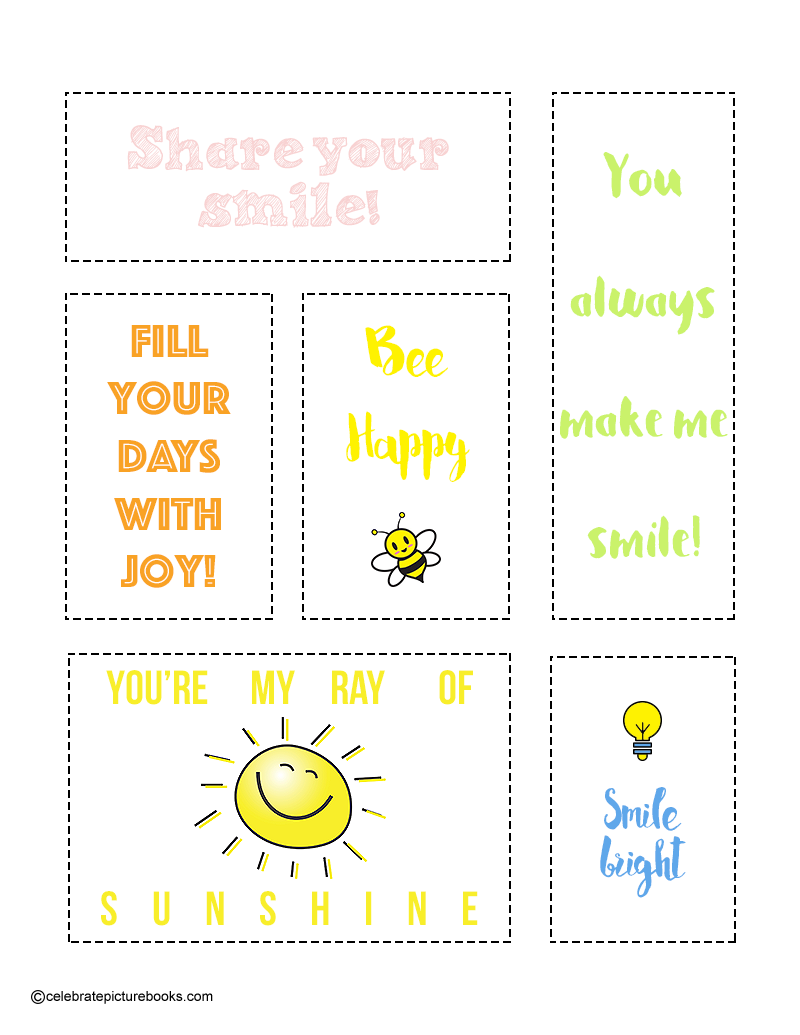
Share a Smile Cards


Life is better when you share smiles with those you know—and those you don’t! Try it! When you’re out today at school or other places, look someone in the eye and smile. You’ll probably get a smile back—and you can be sure that you will have made the other person’s and your day better!

Here are some Smile Cards that you can share. Why not slip one into your dad’s pocket or your mom’s purse, put one in your friend’s backpack, or sneak one onto your teacher’s desk? You can even leave one somewhere for a stranger to find! Have fun sharing your smiles, and see how much better you and the others around you feel!

Click here to print your Share a Smile Cards.

celebrate-picture-books-picture-book-review-interview-with-author-deborah-sosin

Photo by Kevin Day Photography

Q&A with Author Deborah Sosin


Today, I’m thrilled to talk with Debbie Sosin, a writer, editor, and clinical social worker who specializes in mindfulness-based psychotherapy, about her first picture book, her choral singing, and how kids respond to her presentations.

In your career you write for adults and children, work within the publishing industry, provide publicity services, and teach. How did you get started? Did you always want to write?

I kept a diary starting at around age ten and always loved writing for school or for fun. I started getting more serious about writing for publication in the past ten years, studied at GrubStreet, attended the Kenyon Review Writers Workshop, and eventually went back to school to get an MFA in Creative Writing. I wish I had started earlier, but it’s been rewarding to finally follow my true passion.

What influenced you to write Charlotte and the Quiet Place?

I wrote the book as an independent project as part of my MFA studies at Lesley University. They say “write what you know,” so I thought about my childhood growing up in kind of a noisy house, where my brother played the piano, my father had a radio and TV on simultaneously, and my mother was on the phone a lot. And then I thought about my longtime meditation practice and how tuning in to my breathing has helped me find a quiet place inside. So I wanted to write a story about children finding their own quiet place inside themselves.

You give school presentations on mindfulness and your picture book Charlotte and the Quiet Place for various ages. Is there an experience from any of these that you would like to share?

School visits are my favorite part of being an author! No matter what age the students are, they love to help me tell the story by repeating the “noisy” sounds and the “hoo ahh” breathing sounds. We usually do a few calming/breathing exercises together and, without fail, even the squirmiest group will settle into a beautiful, shared, often profound silence. Once, when asked where Charlotte finds her quiet place, one kindergarten girl said, “In her belly and in her brain, where it’s calm.” Many kids get that idea. What could be better? I also love showing them my early scribbles and illustrator Sara Woolley’s wonderful sketches and storyboards, and sharing the step-by-step process of publishing the book, from concept to completion
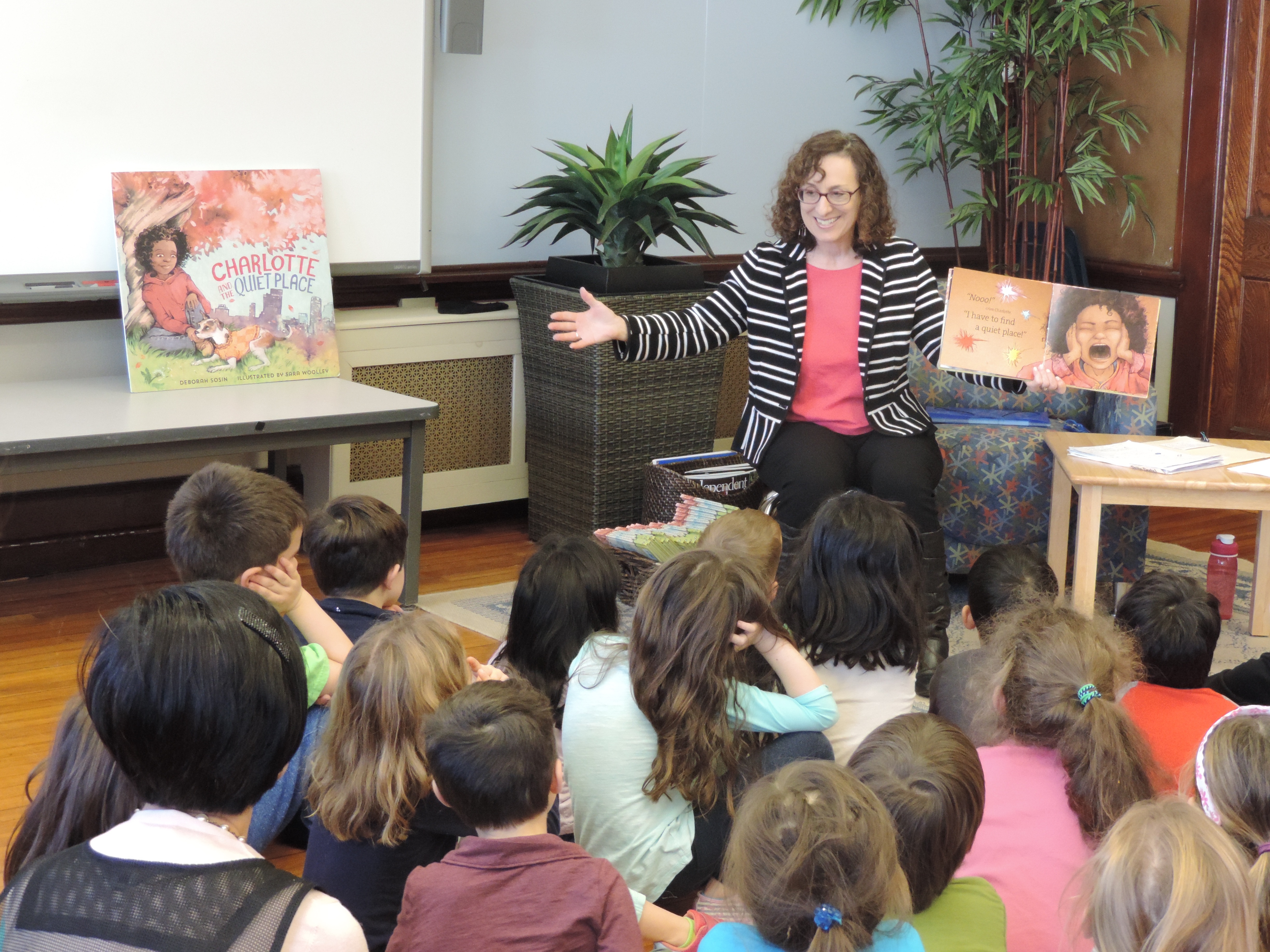
celebrate-picture-books-picture-book-review-author-deborah-sosin-visits-Newton-Monetssori-School

Deborah Sosin reads Charlotte and the Quiet Place to students at Newton Montessori School. Photo courtesy of Newton Montessori School.

Can you talk a little about mindfulness and how it can benefit children?

Mindfulness has become a catchword these days, but my favorite definition is from Dr. Amy Saltzman: “Noticing what’s happening right here and now, with a friendly, curious attitude, then choosing what to do next.” Many top-notch scientific studies show that mindfulness can help kids with concentration, attention, self-soothing, anxiety, depression, sleep, mood, compassion, confidence…I could go on. Compared with adults, most kids are naturally mindful, that is “in the moment,” but kids do get stressed out and worried about the past or the future, so mindfulness helps. I sometimes worry that parents and teachers might use it for disciplinary reasons (“Enough! Go be mindful in the corner!”), which is not the point. It’s a whole-life practice, not a technique or intervention. And, as the book shows, mindfulness can lead us to a quiet place inside that we can access whenever we want.
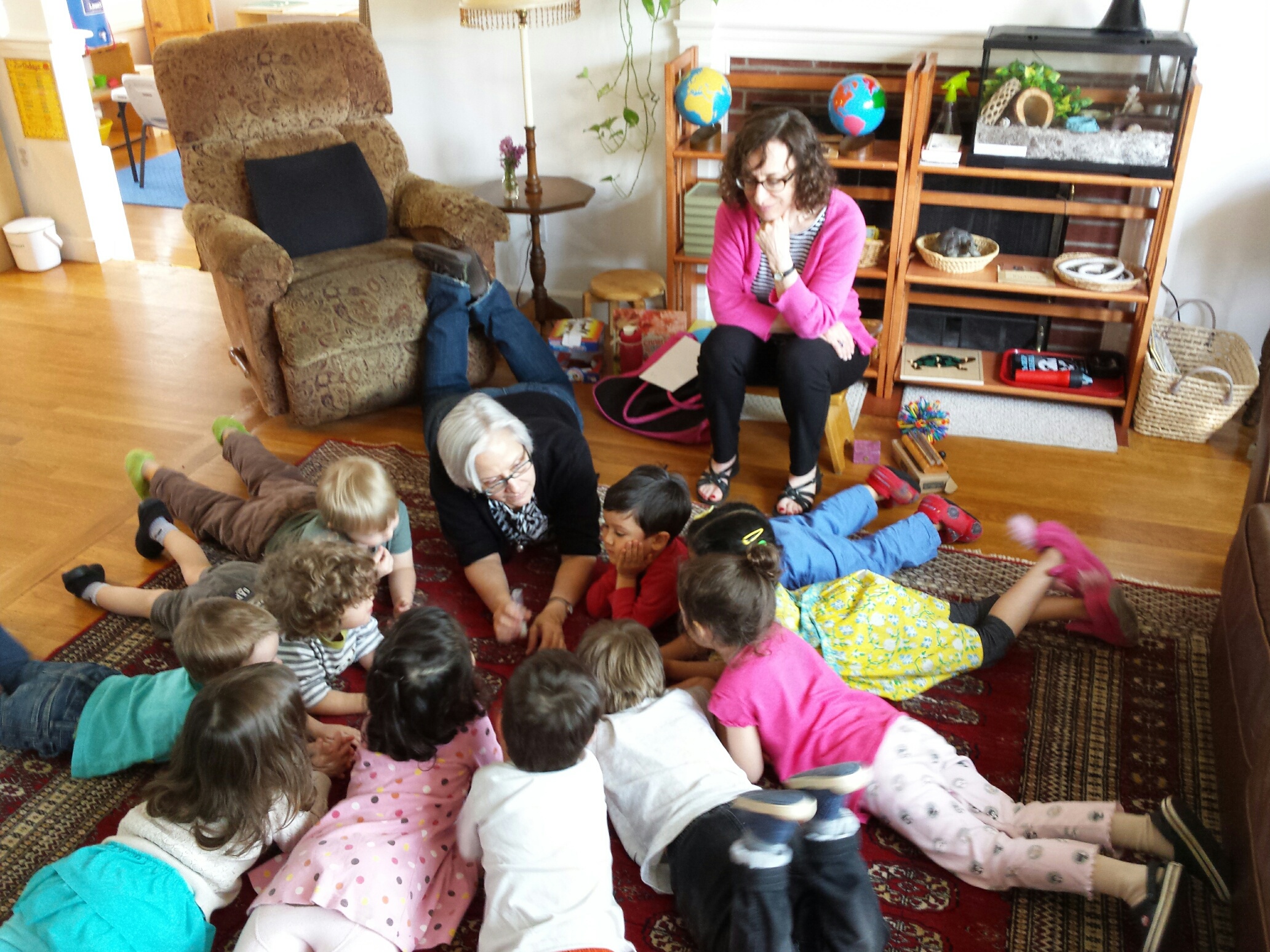
celebrate-picture-books-picture-book-review-interview-with-deborah-sosin-debbie-at-cottage-montessori-school

Students at the Cottage Montessori School in Arlington, Massachusetts play the Silence Game with director Karen Wagner, watching the sand in the hourglass. Photo courtesy of Stacey Moriarty.

Can you tell me a little about your work with Grub Street, a creative writing center in Boston?

I started taking classes at GrubStreet in 2008; my first class was “Six Weeks, Six Essays,” and from that class, I helped form a longtime regular writing group. I started blogging soon after and then submitted personal essays for publication, with some good luck. GrubStreet is a fantastic, inclusive community, with excellent faculty and a huge range of motivated, smart, and enthusiastic students, from beginners to veterans. After a few years, I applied to teach classes there and am proud to be on their instructor and consultant rosters now.

You are an accomplished choral singer, having performed at Lincoln Center, the United Nations, Boston’s Symphony Hall, and on an international tour. When did you begin choral singing? Do you have an anecdote you’d like to share from any of your experiences?

I’ve been singing my whole life and have been in choruses since elementary school. Singing with other people is extremely gratifying and, after all the “verbal”-type things I do, including my work as a psychotherapist, it’s a lovely change of pace. I spent about 15 years in the Zamir Chorale of Boston, which specializes in Jewish choral music. Our tours to Eastern Europe, Italy, and Israel were extraordinary. In 1999, when we sang at Auschwitz and Terezin, the sites of former concentration camps, it was hard to keep our emotions in check, but it felt important to revive the voices of the Jewish people that the Nazis had attempted to quell. A PBS documentary film, “Zamir: Jewish Voices Return to Poland,” chronicled our tour that summer. I think it’s still available through the Zamir Chorale website.

What’s the best part about writing for children?

After having focused almost exclusively on nonfiction for most of my writing career, it’s been wonderful to work in the very precise and rich world of picture-book writing with so many lovely, funny, imaginative, and supportive fellow writers I’ve met through SCBWI and the amazing Writers’ Loft in Sherborn, Mass.
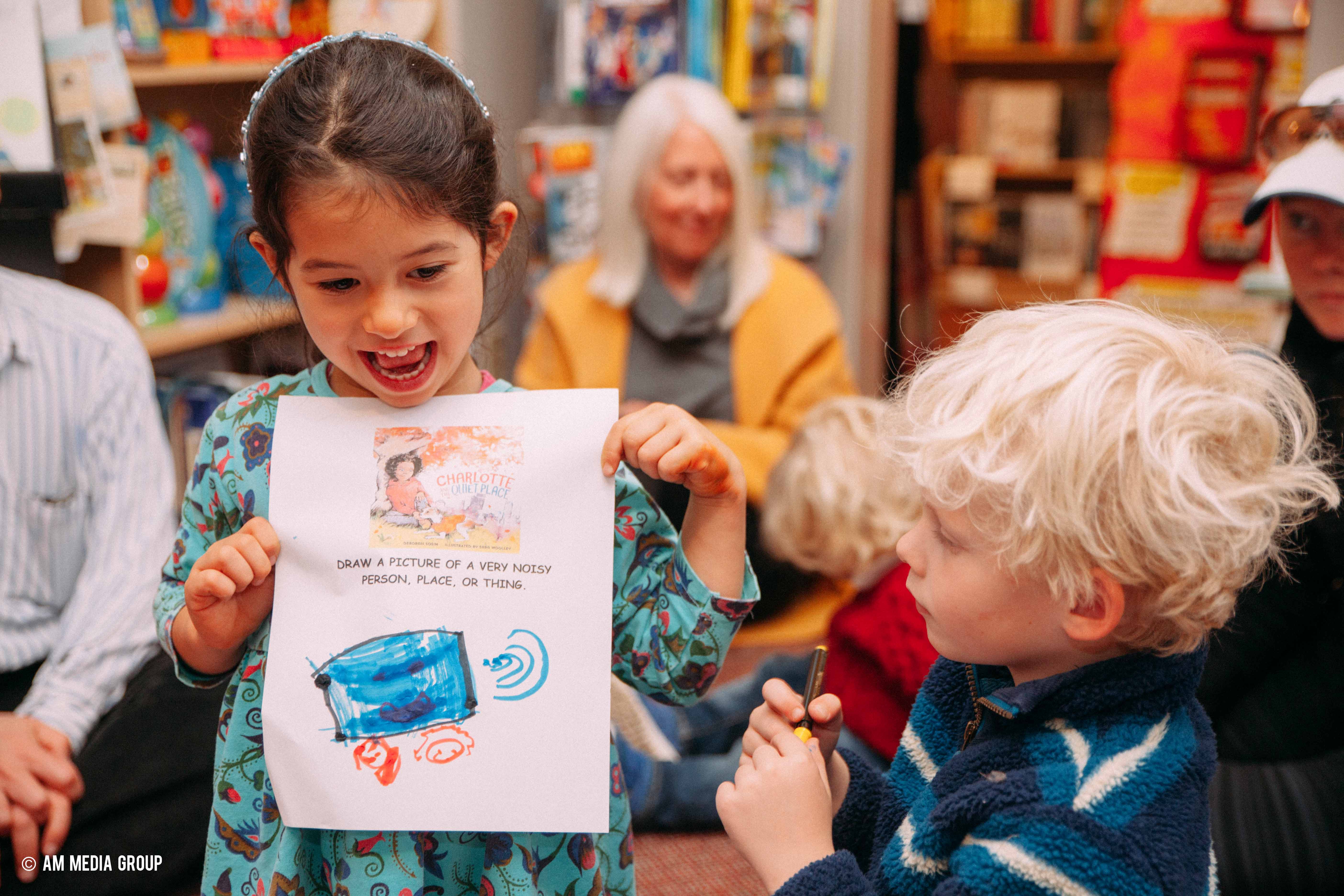
celebrate-picture-books-picture-book-review-interview-with-deborah-sosin-debbie-at-The-Oblong-Bookstore-event

Children enjoy drawing their noisy and quiet places at an Oblong Bookstore event in NY. Photo courtesy of AM Media Group

What’s up next for you?

I have a couple of Picture Book manuscripts in progress and I’m participating in Storystorm (formerly PiBoIdMo) this month, so I hope to generate more ideas and get some new work out there soon.

Since this is a holiday-themed blog, I’d be remiss if I didn’t ask you at least one question about holidays, so…

What is your favorite holiday and why?

Thanksgiving is probably my favorite, as it means getting together with my family, which is now spread far and wide, and having an opportunity to express our gratitude.

Thanks, Debbie, for stopping by and chatting! I wish you all the best with Charlotte and the Quiet Place and all of your future endeavors!

You can connect with Deborah Sosin on

Her Website | charlotteandthequietplace.com | Facebook | Twitter
celebrate-picture-books-picture-book-review-charlotte-and-the-quiet-place-noisy-neighborhood


You can find Charlotte and the Quiet Place at these booksellers

Amazon | Barnes & Noble | Books-a-Million | IndieBound | Parallax Press |Porter Square Books (signed copies available)

Picture Book Review

January 9 – It’s International Creativity Month

celebrate-picture-books-picture-book-review-the-marvelous-thing-that-came-from-a-spring-cover

About the Holiday

There’s no better time than the beginning of the year to start letting your creative juices flow! Quick fixes or long-leisurely projects are all within your grasp! Want to repaint a room? Build a tree house in the spring? Learn some new recipes? Discover a new hobby? Start planning today how you will accomplish the inventive inspirations that swirl through your imagination.

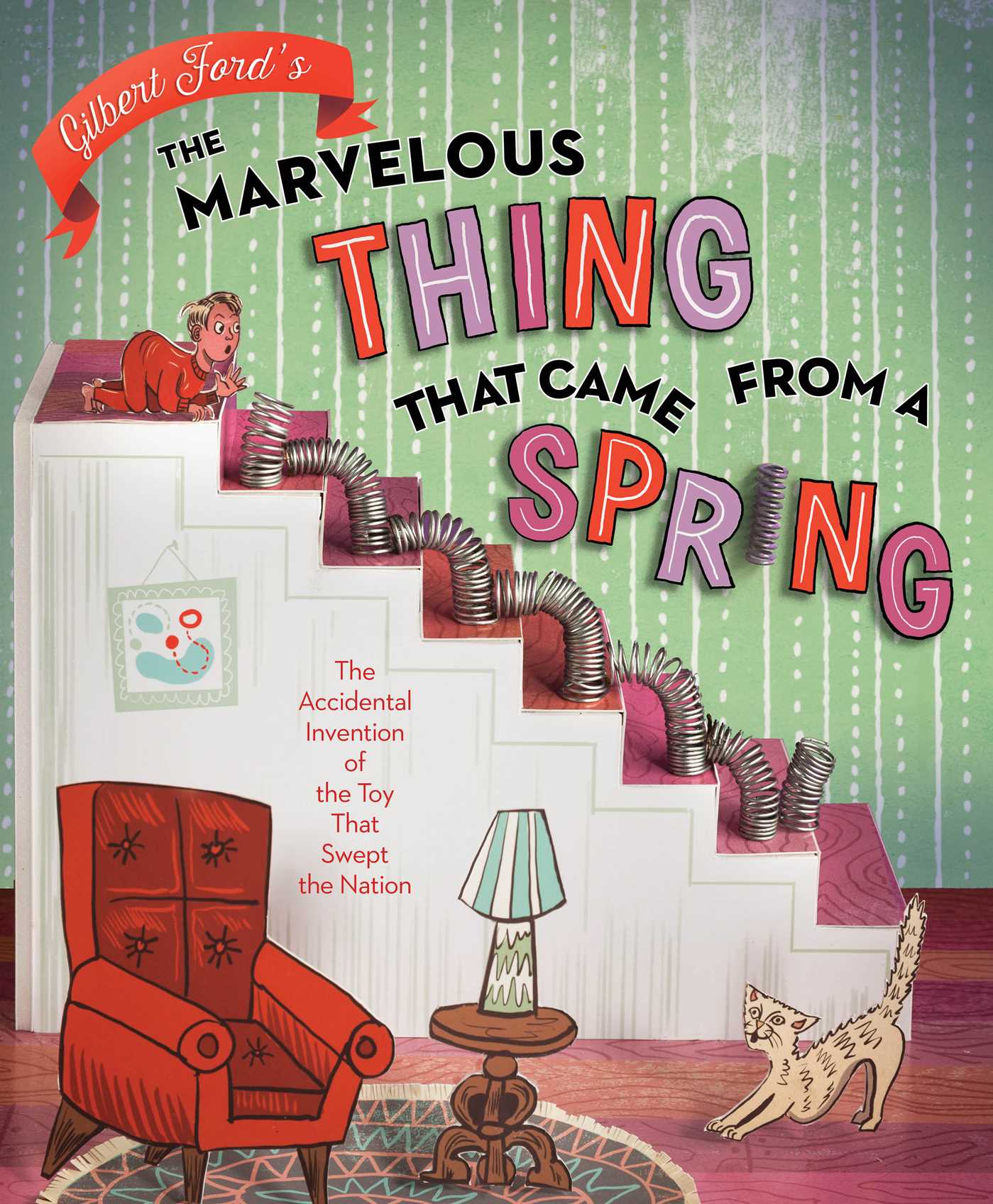
The Marvelous Thing That Came from a Spring: The Accidental Invention of the Toy That Swept the Nation

By Gilbert Ford


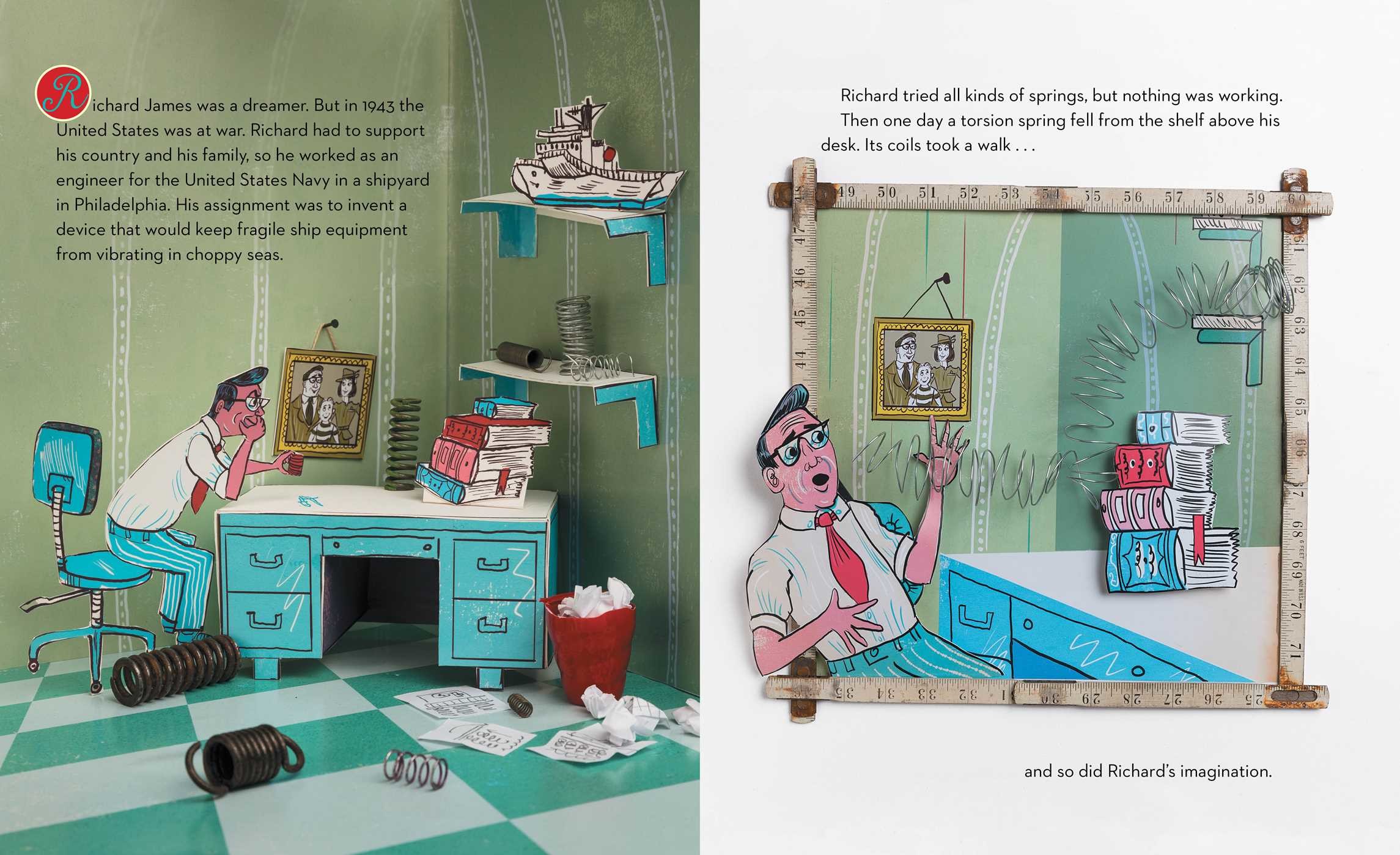
In 1943, during World War II, the United States Navy asked one of their engineers, Richard James, to “invent a device that would keep fragile ship equipment from vibrating in choppy seas.” Richard tried all kinds of springs, but none worked just right. “One day a torsion spring fell from a shelf onto his desk, and “its coils took a walk…” This sparked Richard’s imagination. While Richard knew the spring wasn’t right for his Navy work, he recognized that it might be perfect for something else. But what?

celebrate-picture-books-picture-book-review-the-marvelous-thing-that-came-from-a-spring-spring-walks-spring-falls-off-shelf

Copyright Gilbert Ford, courtesy of simonandschuster.com

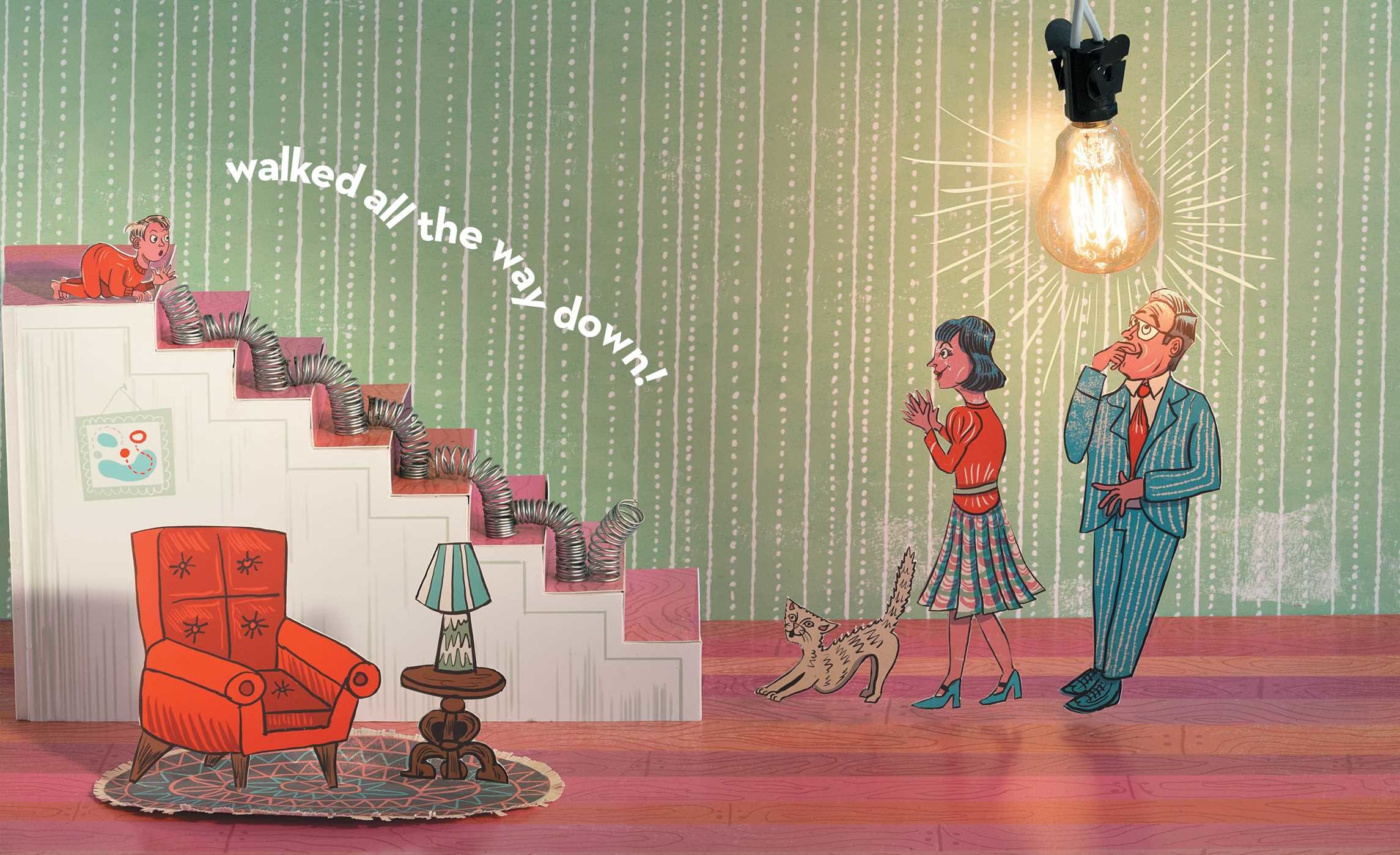
He took the spring home from work that day, showed it to his wife Betty, and gave it to his young son Tom. Tom took it to the top of the stairs and let it go. “The family watched in astonishment as it…walked all the way down!” They lost no time in realizing that this spring made a marvelous toy. But what to call it? “Betty thumbed through a dictionary for two days, underlining words. None really caught her fancy, until she came to ‘slinky,’ which means “‘graceful’ and ‘curvy in movement.’” It also “sounded like the swish and clink of the spring’s coils in motion.”

celebrate-picture-books-picture-book-review-the-marvelous-thing-that-came-from-a-spring-spring-walks-downstairs

Copyright Gilbert Ford, courtesy of simonandschuster.com

Richard and Betty thought they had a unique hit on their hands, so Richard went to the bank and borrowed five-hundred dollars to make 400 Slinkys. But while Richard and Betty loved their Slinky, toy store managers did not. Finally, Richard went to Gimbels, the big department store. The manager there didn’t see the merits of the Slinky either, but when Richard begged to be allowed to demonstrate it just once, he relented.

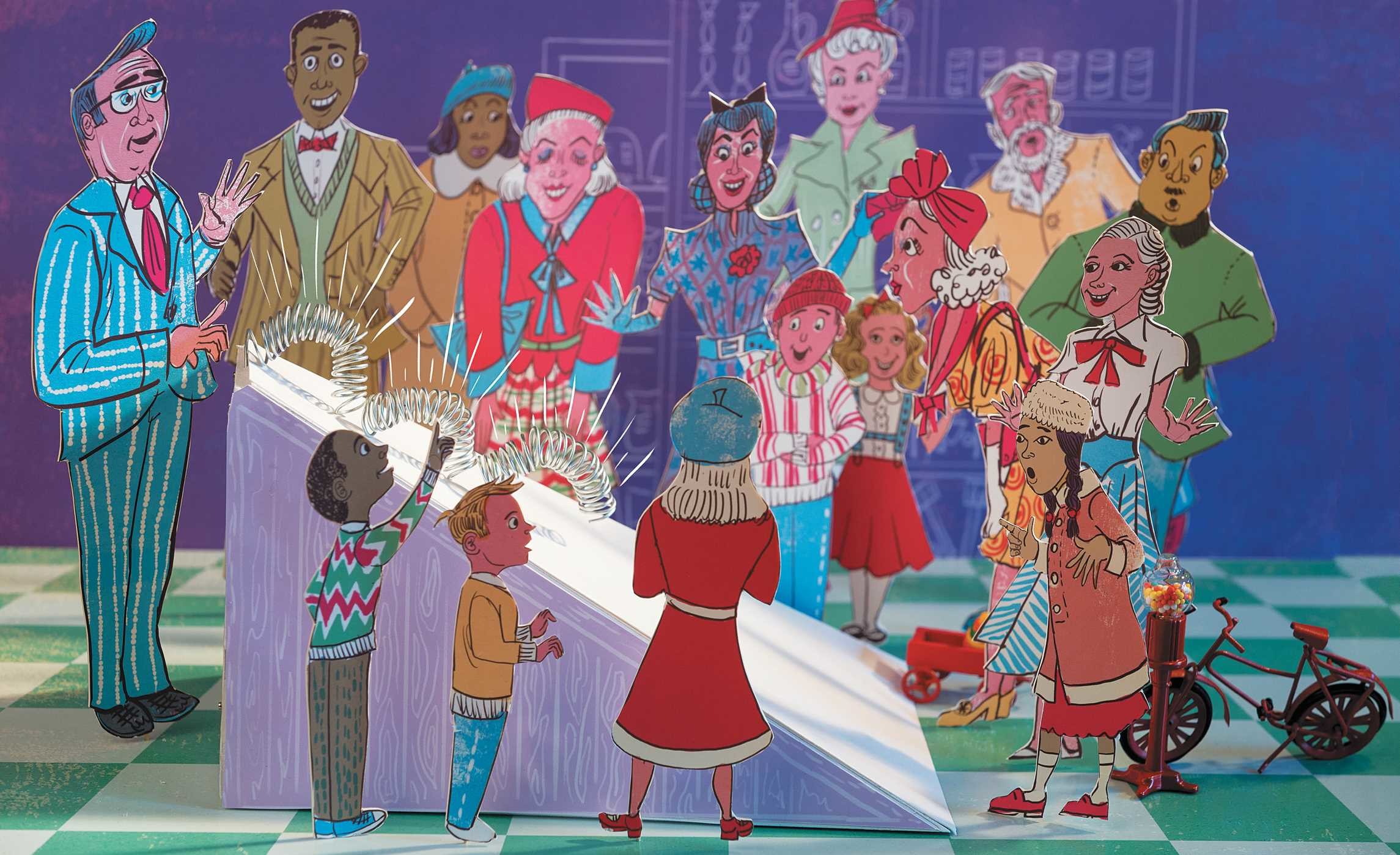
It was now November 1945 and the Christmas shoppers were out looking for stocking stuffers. Richard set up a ramp in the middle of the toy department and placed the Slinky at the top. He looked around for Betty, but she was nowhere to be seen. In fact, Betty was still at home worried that no one would like their toy. She was so concerned that she convinced a friend to “pose as an excited shopper” and buy one with the dollar Betty gave her. At Gimbels, however, time—and shoppers—were passing, so Richard let go of the Slinky. The astonished faces of the children and adults crowded around the ramp said it all. By the time Betty and her friend reached Gimbels, all 400 Slinkys had been sold—in only 90 minutes!

celebrate-picture-books-picture-book-review-the-marvelous-thing-that-came-from-a-spring-spring-walks-spring-richard-begs-gimbels

Copyright Gilbert Ford, courtesy of simonandschuster.com

With the end of the war that same year, troops returned home and a baby boom soon followed. “Demand for the Slinky skyrocketed.” Production needed to speed up, so Richard devised a “machine that could coil eighty feet of steel wire into a Slinky in ten seconds.” The Slinky business became a family business with Betty filling orders and doing the accounting while Richard made and delivered Slinkys. Pretty soon they needed a factory to satisfy demand. That demand still exists today as kids all over the world love the Slinky.

celebrate-picture-books-picture-book-review-the-marvelous-thing-that-came-from-a-spring-spring-walks-spring-at-gimbels

Copyright Gilbert Ford, courtesy of simonandschuster.com

An extended Author’s Note picks up the story of the Slinky where the text leaves off, revealing other creative ways the Slinky has been used and the fact that when Richard went to Bolivia in 1960 to do missionary work, Betty took over the business, relocated the factory to Hollidaysburg, Pennsylvania, and gave the toy a rebirth in popularity. More than 250 million Slinkys have been produced, and in 2001 Betty was inducted into the Toy Industry Hall of Fame.

Gilbert Ford’s Slinky-ography of the man and woman behind one of the world’s most beloved toys is a skip, jump, and bounce through the ingenious brainstorm that transposed a simple spring into a phenomenon. The down-to-earth details of how this invention came to be harken back to a simpler time but also reaffirm that even today there are dreamers sitting in homes across the world imagining the next big thing. Ford’s story is well paced, leading readers through the production process to experience cheerful surprise when the Slinkys sell out at Gimbels. Kids will appreciate the easy-going language that suits its subject perfectly and the emphasis on the teamwork of both Richard and Betty James that made the Slinky possible.

Ford’s illustrations are ingenious in themselves. Careful observation reveals that each page is not merely a drawing, but a 3D experience. As the front matter explains, the illustrations were drawn and colored then printed, assembled into dioramas that incorporate found objects and other popular toys of the period, such as dominoes, jacks, and pick-up sticks, and finally photographed. The effect drops readers into the middle of a 1940s home and department store, giving them a personal stake in the drama.

The Marvelous Thing That Came from a Spring is a fun book for would-be-inventors and kids interested in the history of objects they use and play with.

Ages 4 – 8

Atheneum Books for Young Readers, Simon & Schuster, 2016 | ISBN 978-1481450652

Discover a portfolio of work by Gilbert Ford for books, book jackets, advertising, and more on his website!

International Creativity Month Activity

celebrate-picture-books-picture-book-review-national-archives-coloring-book-of-patents

National Archives Coloring Book of Patents


The people at the National Archives of the United States in Washington DC chose some of their favorite patents from the past to share with you as a coloring book. As you have fun coloring these pages of ideas, let yours fly too!

Click here to get your printable National Archives Coloring Book of Patents

Picture Book Review

January 8 – Bubble Bath Day

celebrate-picture-books-picture-book-review-a-whale-in-the-bathtub-cover

About the Holiday

On a cold, snowy day – or even on a sunny day if you live in a warmer climate—a bubble bath can be just the thing for relaxing at the end of the day. Your kids love splashing in the frothy suds, so why shouldn’t you enjoy them too? Take the opportunity for a little luxury and have some fun!

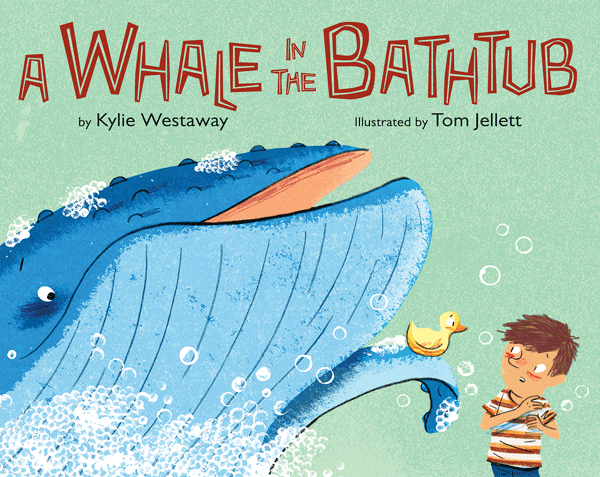
A Whale in the Bathtub

 Written by Kylie Westaway | Illustrated by Tom Jellett


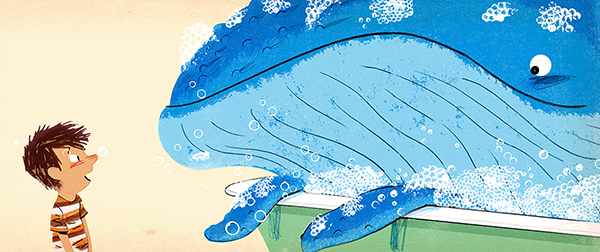
When Bruno goes to take a bath, instead of an empty tub he finds it occupied by a whale. The whale takes a bit of offense at the little boy who is staring at him. “‘You could have knocked!’” he says. The boy is nonplussed and wants to ask the whale how he got there. He’s also a little surprised to see that the whale is luxuriating in his “bubblegum bubble bath.” Not a fan of bubblegum, however, the whale says, “‘I don’t like it. Have you got any that smells like krill?’”

celebrate-picture-books-picture-book-review-a-whale-in-the-bathtub-bruno-meets-the-whale

Image copyright Tom Jellett, courtesy of tomjellett.com

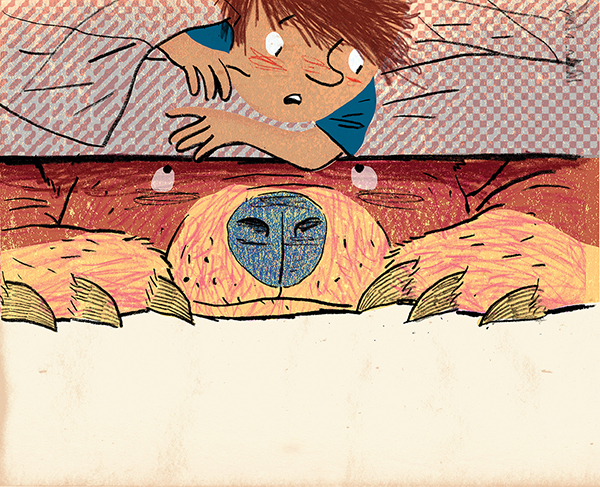
With the admonition that he’s “letting the heat out,” the boy leaves to find his sister, Ally. Ally is unsympathetic to her brother’s plight, and shouts to their mom, “‘Bruno’s pretending again! And he’s not taking a bath!’” Bruno protests that he’s not pretending, but his sister reminds him that last week he reported a bear under his bed and “‘on dad’s birthday, there was a walrus in the backyard.

Their mom has had enough of the squabbling and sends Bruno back upstairs. He finds the whale “scrubbing under his flippers with Dad’s back scrubber,” and when he hears that Bruno needs the tub, the whale simply says, “‘I haven’t done my tail yet. Come back later.’” Before he goes Bruno notices that despite the fact that the whale didn’t like his bubble bath, he sure seems to be using a lot of it.

celebrate-picture-books-picture-book-review-a-whale-in-the-bathtub-bear-under-bed

Image copyright Tom Jellett, courtesy of tomjellett.com

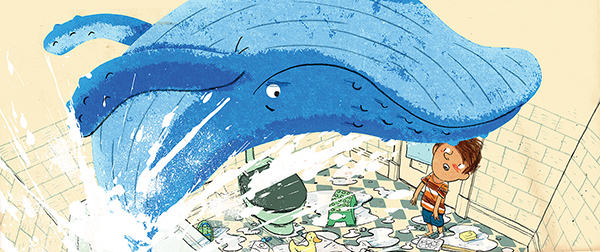
Bruno’s brother loves science, so Bruno tells him about the whale. “‘A whale can’t fit in a bathtub,’” Pete says. “‘Even a baby whale would be too big. And there’d be no room for the water. It’s just impossible.’” The bathroom is now splattered with water, suds, and bath toys, and the whale is still not finished. Why doesn’t the whale just wash in the ocean? There’s no hot water, no bubble bath, no soap, and no washcloths.

When Bruno goes downstairs he discovers his dad is home from his business trip. “‘Dad, there’s a whale in our bathtub!’” Bruno tells him. “‘A whale? Wow!’” His dad laughs, but even though he asks some very good questions, such as “‘How did it get there? Was there a flood today and the whale got stranded? Or did it just swim up through the drain?’” he sends Bruno back up with the promise that he’ll be there in five minutes.

celebrate-picture-books-picture-book-review-a-whale-in-the-bathtub-breeching

Image copyright Tom Jellett, courtesy of tomjellett.com

The whale is now “rinsing his barnacles” and reveals that he’ll be “at least another hour. Maybe four.’” But then he has an idea. The whale takes a deep breath and “Whoosh!” gives Bruno a shower, which, despite smelling a bit like krill, is one perk of having a whale in the bathtub.

Whether imaginary or real, Kylie Westaway’s Whale in the Bathtub is a fun bath-time romp. The mischievous sea creature that dwarfs the tub and has a ready retort to each of the boy’s questions and comments will make kids giggle and have them running to see if their own bathtub holds such adventure. Grounded in real family dynamics to further enhance the humorous absurdity, A Whale in the Bathtub is a great read aloud.

Tom Jellett will hook readers from their first glimpse of the enormous whale that has taken up residence in Bruno’s bath tub. So huge that he takes up two pages, the whale is a blue behemoth that loves his warm water, back scrubber, and bath toys and comes to appreciate bubblegum bubble bath. The vintage look to Jellett’s illustrations, complete with scribbled highlights and simple outlining of some details, will have kids pondering whether the whale is a figment of Bruno’s imagination and drawings or a real fish out of (sea) water.

Both reluctant bath-takers and kids who love to rub-a-dub-dub, as well as marine-animal enthusiasts, will find much to laugh about in A Whale in the Bathtub.

Ages 4 – 7

Clarion Books, 2016 | ISBN 978-0544535350

Get to know more about Kylie Westaway and find fun book-related activities on her website!

Discover a portfolio of illustration work by Tom Jellett on his website!

Bubble Bath Day Activity

celebrate-picture-books-picture-book-review-bathtub-clings-craft

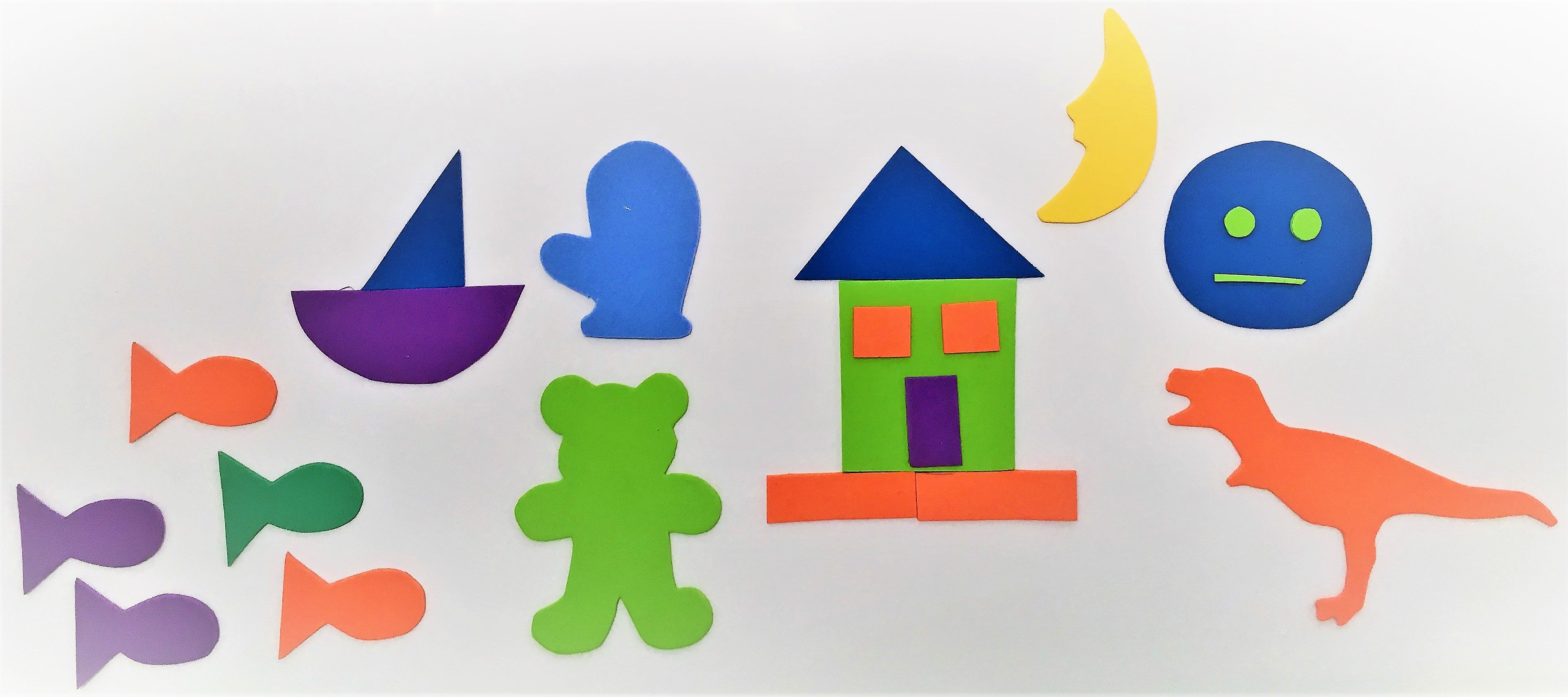
Fun Foam Bath Shapes


Instead of buying bathtub clings for your kids to play with, make some yourself! It’s easy with regular foam sheets, cookie cutters or stencils, and scissors! Make it a family activity and watch the shower of creativity that results!

Supplies

  • Foam sheets in various colors
  • Cookie cutters or stencils
  • Scissors

Directions

  1. Trace cookie cutter shapes or stencils onto the foam 
  2. And/Or cut squares, triangles, rectangles, circles, and other shapes from the foam in a variety of sizes
  3. Cut out the shapes
  4. Wet the backs of the shapes with water and stick them to the tub or tiled or lined wall. Shapes will also stick with a little shaving gel or cream applied

Picture Book Review

January 7 – It’s Hot Tea Month

celebrate-picture-books-picture-book-review-the-tea-party-in-the-woods-cover

About the Holiday

I must confess that this may be my favorite holiday. There’s nothing better than waking up with a well-steeped cup of tea, writing with a favorite mug brimming with hot tea with honey sitting nearby, enjoying scones with clotted cream and jam and a hot cuppa…well…you get the picture. People have drunk tea since earliest times for its soothing and medicinal properties. Mellower than coffee and available in endless varieties and tastes, hot tea is just the thing for relaxing moments. Today, enjoy your favorite tea or try a new kind!

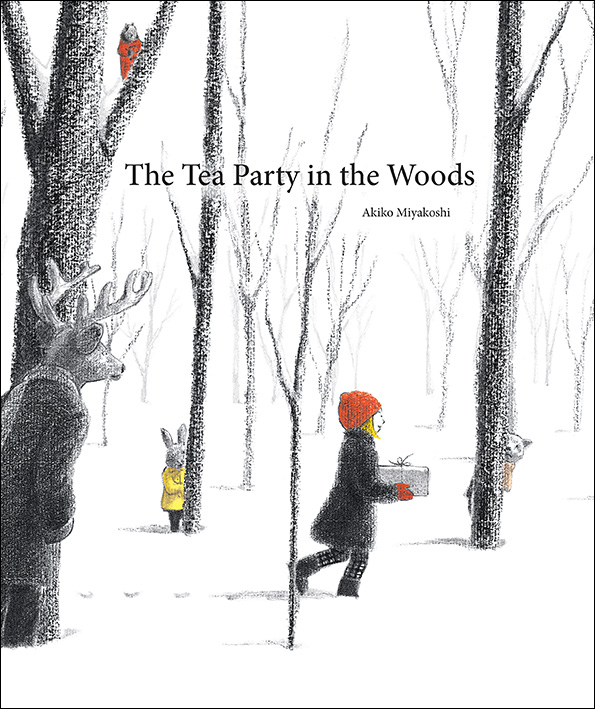
The Tea Party in the Woods

By Akiko Miyakoshi


Because snow had fallen overnight Kikko’s father was off to her grandmother’s house to shovel the walk. After he left, Kikko noticed that he had forgotten to take the pie her mother had made for Grandma. “‘I can still catch up to him,’” said Kikko. Carefully, carrying the boxed pie, Kikko followed “her father’s tracks in the fresh snow. The woods were very still. And so quiet. Kikko’s footsteps were the only sound.”

celebrate-picture-books-picture-book-review-the-tea-party-in-the-woods-kikko-peers-in-window

Spying a coated figure in the distance, Kikko began to run, but she fell in the deep snow, crushing the pie. Still, she picked up the box and hurried on. She watched as her father entered a strange house. “Has it always been here? Kikko wondered. She couldn’t remember having seen it before.” Kikko crept to the window and peered inside, just as her father took off his hat and coat. But—he wasn’t her father at all!” He was a bear!

celebrate-picture-books-picture-book-review-the-tea-party-in-the-woods-lamb-meets-kikko

A little lamb approaching the house found Kikko looking through the window and asked if she were there for the tea party. Taking Kikko’s hand, the lamb led her into the house. When Kikko saw all of the animals gathered there, she couldn’t believe it. The animals cheered and welcomed Kikko enthusiastically. “‘We’re about to serve the tea,’ said the rabbit. ‘You’re just in time.’” After the animals seated themselves around a long table, a doe stood, thanked everyone for coming, and asked Kikko to introduce herself.

She told then her name and why she was in the forest. The animals thought she was very brave, and Kikko began to feel braver herself. When the animals learned that Kikko’s pie had been ruined, they all contributed a piece of their own pie from the party. “Slice by slice they assembled a new pie on a pretty plate. Each piece had a different filling of seeds and nuts and fruit and other delicious things gathered from the woods.” They found a new box, placed the plate inside, and tied it with a red ribbon.

celebrate-picture-books-picture-book-review-the-tea-party-in-the-woods-animals-meet-kikko

Kikko was so excited to bring her Grandma this gift that she wanted to leave right away. The animals said they would come too. The woods rang with music, talking, laughing, and singing as the group “paraded to Grandma’s house.” When they reached Grandma’s house, the animals encouraged Kikko to go to the door. Grandma and Kikko’s father were surprised to see her. “‘My dear, did you come all this way on your own?’ asked Grandma, stepping inside.” Kikko could not see the animals anywhere. “‘You’re never alone in the woods,’” Kikko answered, smiling. She was sure her new friends were listening.”

celebrate-picture-books-picture-book-review-the-tea-party-in-the-woods-parade

Akiko Miyakoshi’s reassuring story about a little girl venturing out into strange territory on her own for the first time is a delight. The straightforward narrative offers just the right amount of familiarity for young readers to allow them to be fully charmed by the magical elements that provide surprise and suspense. Little ones will be entranced by the warm welcome Kikko receives at the splendid and well-attended tea party. They will also find comfort in realizing that even when travels become hard, they can still discover wondrous things and that friends and help are always available – sometimes where they least expect it.  

Miyakoshi’s stunning black-and-white drawings, done in charcoal and pencil, are gorgeous in their portrayal of the woodland animals and their tea party. The long table they crowd around is laden with pies, bowls of fruit, vases of flowers, and of course teapots and teacups. At first Kikko offers the only color on the pages with her red cap and skirt and yellow hair. Later, however, when the animals suggest sharing their pie, the plate dazzles with mouthwatering brilliance, and hints of red and yellow brighten the next page. As the parade marches through the woods, the animals’ red and yellow clothes and musical instruments make a festive party. But as Kikko goes on to her Grandma’s house alone, the color fades from the animals, highlighting her achievement.

Ages 3 – 7

Kids Can Press, 2015 | ISBN 978-177138107

Discover more about Akiko Miyakoshi and a portfolio of her work on her website!

Tea Month Activity

celebrate-picture-books-picture-book-review-ceramic-mug-craft

Decorate Your Own Mug


It’s fun to drink tea (or hot chocolate—shhh!) from a mug you’ve designed yourself. Personalized mugs also make fantastic presents for friends and family.

Supplies

  • Plain ceramic mug
  • Bakeable markers or paint

Directions

  1. Design and color your mug
  2. Follow directions on the markers or paint to properly bake on your decoration and make it permanent.

Picture Book Review

January 6 – Cuddle Up Day

celebrate-picture-books-picture-book-review-you-belong-to-me-cover

About the Holiday

As the cooler days of December turn into the colder days of January, Cuddle Up Day reminds us that snuggling up with someone you love warms us and warms our hearts. Children especially love the comfort and security that close hugs bring. Today, get your comfy clothes on, pour a mug of hot chocolate or tea, and cuddle up together with a good book!

You Belong to Me

By Mamoru Suzuki


The emotions of parents and other caregivers of children escape from the heart on the very first page of this gentle, spoken lullaby: “I love you so much.” On the second page, listeners discover why: “You are my favorite person in the whole world.” As the pages flow, the reader continues to reassure the child of the constancy of their love. Devotion is shown when the adult spends time with their child, watches out for them, and takes them to activities, play dates, and even, perhaps on flights of fancy.

celebrate-picture-books-picture-book-review-you-belong-to-me-I-love-you-so-much

Image and text copyright Mamoru Suzuki, courtesy of Museyon Press

Through the words on the pages, the reader encourages the child to “come to me whenever you are lonely” or “whenever you can’t sleep” and promises that “I’ll hug you when you are sad.” Comfort comes in many forms—from drying tears to stroking hair—and from the many people who love the child.

celebrate-picture-books-picture-book-review-you-belong-to-me-where-you-want-to-go

celebrate-picture-books-picture-book-review-you-belong-to-me-I-love-you-so-much

In fact, all of the people in the child’s life agree that “we all love you” and that they will be there “whenever,” “wherever,” and “however” the child needs them. But the deepest love of all is found in the heart of the reader who confirms “I love you most of all, because…you belong to me.”

celebrate-picture-books-picture-book-review-you-belong-to-me-we-love-you

celebrate-picture-books-picture-book-review-you-belong-to-me-I-love-you-so-much

Mamoru Suzuki’s sweet hug of a book gives parents and caregivers the tender words that overflow in their hearts coupled with endearing illustrations of various animals nuzzling, snuggling, protecting, and comforting a small child. The mellow colors and chiffon texture of the images are at once soothing and stirring, wonderfully mirroring the mixture of emotions that make love for a child so profound.

You Belong to Me is a cuddle to keep on your child’s bookshelf for those times when you want to tell them how much you love them.

Ages birth – 5

Museyon, 2016 | ISBN 978-1940842127

Cuddle Up Day Activity

celebrate-picture-books-picture-book-review-snuggle-buddy-craft

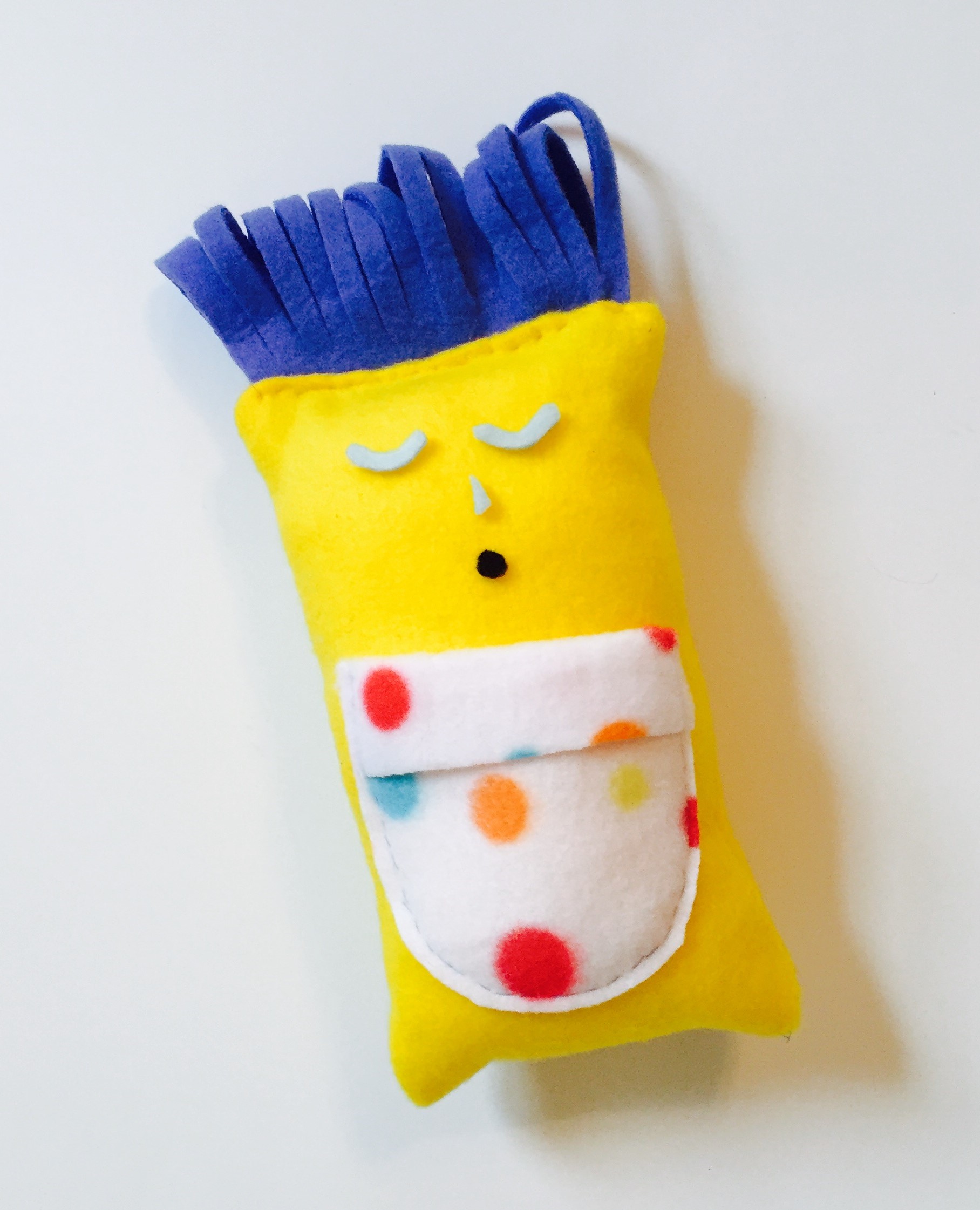
Snuggle Buddy Craft


It’s easy to make your own snuggle buddy with a few pieces of fleece, some fiber fill, and a needle and thread or fabric glue. The great thing about creating your own friend is you can personalize your pal anyway you want!

Supplies

  • 1 8-inch by 11-inch piece of fleece in the color or your choice for the body (or scraps if you have some from an earlier project). A larger piece of fleece can be used to make a larger buddy
  • 1 5-inch by 8-inch piece of fleece in the color or your choice for the hair (or scraps if you have some from an earlier project)
  • 1 small piece of fleece or other material for a pocket, clothes, or blanket
  • Small scraps of fleece or other material for the face
  • Fiber Fill
  • Thread and sewing needle OR fabric glue
  • Scissors

Directions

To Make the Body

  1. Fold the large piece of fleece in half lengthwise and sew along the open side and along the bottom. Alternatively, if using a larger size piece of fleece, fold upward and sew or glue the two sides closed.
  2. Turn the form inside out

To Make the Hair

  1. Cut a piece of fleece as wide as your buddy and about 7 – 8 inches long
  2. Fold the fleece lengthwise
  3. Insert both ends of the fleece into the opening at the top of the body
  4. Sew or glue the opening shut, securing the hair
  5. Cut strips about ¼-inch wide from the top of the hair to close to where the hair is sown into the body

To Make a Pocket or Clothes

  1. Cut a piece of fleece in the shape of a pocket, shirt, pants, diaper, or blanket
  2. Sew or glue the pocket or clothes to the buddy

To Make the Face

  1. Cut eyes, a nose, and a mouth in whatever way you would like your buddy to look. (My buddy is sleeping.)
  2. Sew or glue the face to the buddy
  3. Snuggle up!

Picture Book Review

January 5 – National Bird Day

celebrate-picture-books-picture-book-review-the-day-I-became-a-bird-cover

About the Holiday

Coming at the end of the annual Christmas Bird Count conducted in conjunction with the Audubon Society, National Bird Day turns the focus from wild birds to those kept in captivity while also raising awareness of the dangers that threaten many species with extinction. Today’s observance highlights the special behavioral and physical needs of birds and works to ensure that all birds—whether kept as pets or on farms or living in their natural environments—are treated compassionately. Now that winter has set in, make sure your pets and the birds that frequent your yard are cared for.

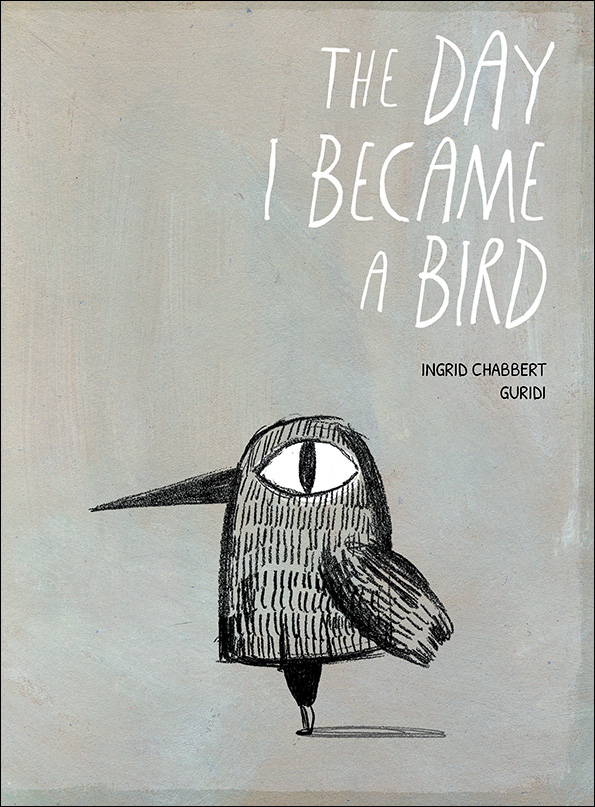
The Day I Became a Bird

Written by Ingrid Chabbert | Illustrated by Raúl Nieto Guridi


On the first day of school a little boy sees Sylvia and falls instantly in love. At home he draws picture after picture of her—“and one with hearts and a smiling sun.” Although the boy only has eyes for Sylvia, she doesn’t see him. Instead, the boy says, “Sylvia is a bird lover. She can’t bear to see them living in cages. She quietly observes them in the wild and gently cares for them when they are injured.”

celebrate-picture-books-picture-book-review-the-day-I-became-a-bird-boy-costume-being-built

Image copyright Guridi, text copyright Ingrid Chabbert. Courtesy of Kids Can Press

Everything she does and wears is somehow associated with birds. Even “her voice sounds like birdsong.” The boy has lost all interest in his toys, the sports he plays, and all of his old pursuits. He thinks differently about birds now, too. One day he decides “to dress as a bird.” He constructs a costume with glistening feathers “like the ones you see in the forest in summer.” When he puts it on he feels handsome. In the costume he dreams of flying with Sylvia to the top of the Rocky Mountains or a pyramid.

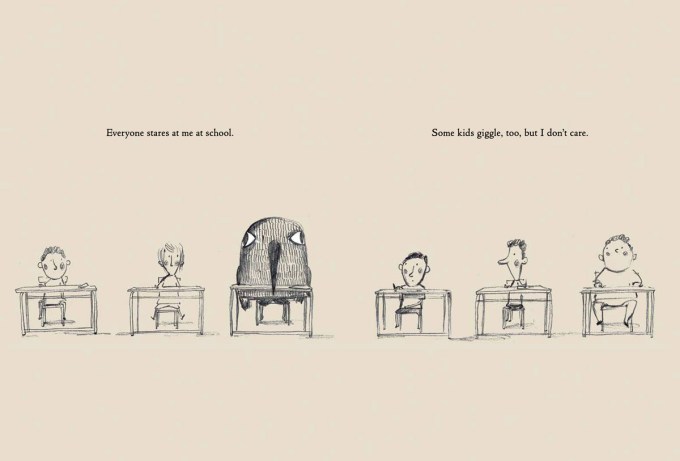
In school he doesn’t care if the other kids stare and giggle. And even though it’s hard to walk, play soccer, and climb trees, he doesn’t want to remove his costume. He is a bird. One afternoon, the boy says, “I come face to face with Sylvia. And finally our eyes meet.” Sylvia approaches and takes off the boy’s costume. “My heart is beating a hundred miles an hour,” he relates. “In the sky, I see a flock of birds take flight.” Sylvia gives him a long hug.

Standing completely still, the boy doesn’t know how to react. He knows he’s not a bird anymore, but still, he feels as if he’s flying.

celebrate-picture-books-picture-book-review-the-day-I-became-a-bird-boy-in-class

Image copyright Guridi, text copyright Ingrid Chabbert. Courtesy of Kids Can Press

Ingrid Chabbert’s enchanting revelation of first love encompasses in its spare text all the obsessive but ultimately freeing power of this universal emotion. While in the midst of his “normal” life, the boy’s world is suddenly transformed when he spies Sylvia. Leaving his toys behind, he chooses Sylvia’s bird’s eye view. Likewise, when Sylvia sees the narrator, she allows her birds to take wing and considers boys—or at least one boy—in a whole new light. Chabbert’s use of first-person narration reinforces the intimate nature of love and the idea that when love is right, being “captured” is a most liberating experience.

celebrate-picture-books-picture-book-review-the-day-I-became-a-bird-boy-in-costume

Image copyright Guridi, courtesy of Kids Can Press

The themes of Chabbert’s story are so movingly rendered by Guridi’s simple, monochromatic line drawings. Although the boy states that “one morning” he decided to dress as a bird, from the first day when the boy falls in love with Sylvia—gazing at her wistfully while her eyes are instead trained through binoculars at the sky or cast down at her chalk drawings—his costume begins to take shape. As it comes together, its wire skeleton resembles a bird cage, suggesting so many ways in which we may feel trapped by our emotions, our things, even changes in life.

When the boy dons the costume and begins to navigate the world in an unfamiliar way, readers will understand that he is no longer the boy he was, but neither is he a real bird. It is this unique creature that Sylvia responds to when, through holes in the costume where feathers are missing, she sees not the bird, but the boy. So it is that into everyone’s life there come people—or perhaps one particular person—with whom all costumes and cages are discarded, and we soar.

The Day I Became a Bird is a quiet beauty that gets to the core of what it means to give your heart to someone else. It would make a wonderful and touching addition to home libraries.

Ages 4 – 7

Kids Can Press, 2016 | ISBN 978-1771386210

Watch this The Day I Became a Bird book trailer!

National Bird Day Activity

celebrate-picture-books-picture-book-review-bird-coloring-page

Wild Bird Coloring Page


Grab your pencils or crayons and enjoy this printable Wild Bird Coloring Page.

Picture Book Review
January 4 – World Hypnotism Day

celebrate-picture-books-picture-book-reviews-mesmerized-cover

About the Holiday

Today’s holiday was established in 2006 to honor Dr. Jack Gibson, an Irish hypnotherapist who used hypnosis extensively in his practice. Its purpose is to dispel the myths surrounding hypnosis as “mind control,” which is a popular misconception perpetuated by movies and other types of entertainment. To celebrate, learn more about hypnotism and check out local special events, including free hypnotherapy sessions.

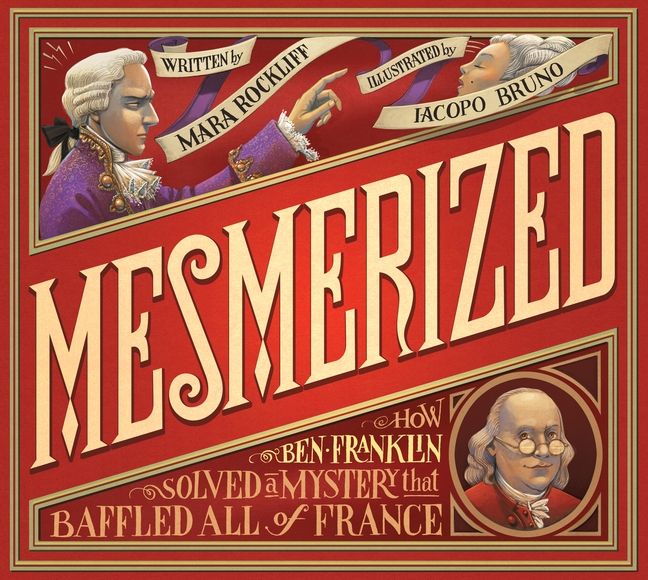
Mesmerized: How Ben Franklin Solved a Mystery that Baffled All of France

Written by Mara Rockliff | Illustrated by Iacopo Bruno


During the colonists’ war with England, the rag-tag American army needed France’s help. Who better to send than Benjamin Franklin, the charming and experienced statesman? Ben hoped to convince King Louis the Sixteenth and Queen Marie Antoinette to send money and soldiers to America, “but it turned out that they needed Ben’s help too….” At the time, Paris was enthralled by Science. This “new” discipline was introducing new materials, new inventions, and new ideas into society.

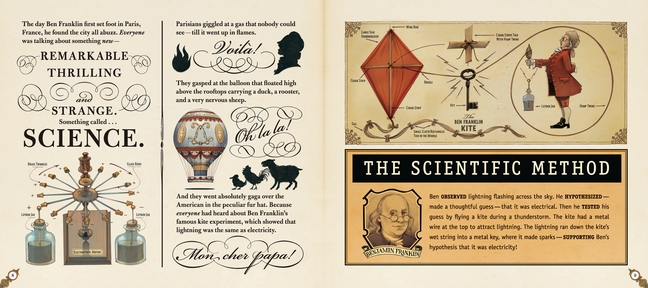
One of these notions was Ben Franklin’s own—and when the people of Paris saw him “they went absolutely gaga over the American in the peculiar fur hat. Because everyone had heard about Ben Franklin’s famous kite experiment, which showed that lightning was the same as electricity.” Soon, however, even Ben couldn’t hold a candle to Dr. Mesmer—the “elegant and mysterious” man who wielded “an astonishing new force.” “Dr. Mesmer said this force streamed from the stars and flowed into his wand. When he stared into his patients’ eyes and waved the wand, things happened. Women swooned. Men sobbed. Children fell down in fits.”

celebrate-picture-books-picture-book-reviews-mesmerized-science

Image copyright Iacopo Bruno, text copyright Mara Rockliff. Courtesy Candlewick Press

Dr. Mesmer seemed to do the impossible. He could make the same glass of water taste like strawberries or vinegar just by telling his patient what to taste. He said he could use this force to help people who were sick, and indeed, after a session with Dr. Mesmer “in a room hidden behind heavy drapes covered with signs and symbols” many people emerged saying they had been cured. Those rich enough paid 100 gold louis to learn his secrets, and everyone considered Dr. Mesmer’s force the “most remarkable thing that science had discovered yet!”

Everyone that is, except the city’s doctors, who “griped, and groused, and fussed, and fumed” because their patients only wanted to be treated by Dr. Mesmer. The doctors went to the King to complain. They even suggested that Dr. Mesmer’s force didn’t exist at all. Louis didn’t know what to think, but he did know who to consult—Ben Franklin! Ben wanted to observe this force in action for himself. As he watched, Dr. Mesmer’s helper, Charles, made a group of patients gasp, groan, twitch, and tremble. Some even fainted.

celebrate-picture-books-picture-book-reviews-mesmerized-ben-franklin

Image copyright Iacopo Bruno, text copyright Mara Rockliff. Courtesy Candlewick Press

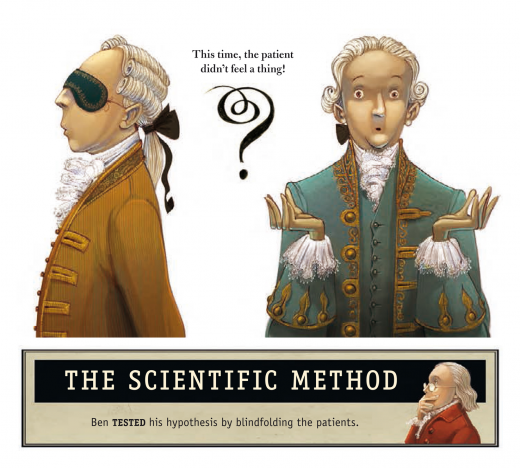
When it came time for Ben Franklin’s turn, “He didn’t gasp and groan or twitch and tremble. And he didn’t faint. In fact…he didn’t feel a thing.” Dr. Mesmer said that Ben must be “special” and that’s why the force didn’t work on him. Ben hypothesized a different reason. He said that instead of the force being “in Dr. Mesmer’s wand…it was in the patient’s mind.” They acted and felt the way they did because they expected to.

To test his theory, Ben had Charles wave his fingers near a woman’s face. She screamed and “said she felt a burning flame.” Next Ben told Charles to perform the same routine, but with the woman blindfolded. This time when Charles waved his fingers near her stomach, “she said she felt the heat—IN HER EAR. When he “moved behind her back, the woman shrieked that she felt burning—IN HER LEG!” Ben brought in another patient, blindfolded him, and told him he was being mesmerized. He said he could feel it—even though “Charles was not even in the room.” When Charles came back and waved his fingers and wand, the patient felt nothing.

“Ben tested patient after patient, but it was always the same. If the patient believed something would happen, something did—even without the force! If the patient did not expect anything to happen, nothing did—even with the force!” He revealed his observations to the king, and soon all of Paris was talking—and laughing. And Dr. Mesmer? He took his wand and ran. Ben Franklin soon returned to America—with the help from France he had sought and to his scientific work.

celebrate-picture-books-picture-book-reviews-mesmerized-blind-test

Image copyright Iacopo Bruno, text copyright Mara Rockliff. Courtesy Candlewick Press

The world benefited greatly from the meeting between Ben Franklin and Dr. Mesmer. Ben’s blind test is still used today when new medicines are being developed, and Dr. Mesmer’s force brought to light what we call the placebo effect and also the state of hypnosis, two powerful abilities of the brain that scientists are still studying.

Throughout Mesmerized Ben Franklin studies Dr. Mesmer and his force, using the scientific method. As Franklin observes, hypothesizes, tests, and finds his theory supported, each particular step of the scientific method applied appears highlighted and explained on the page. An extensive Author’s Note about the events of the story also follows the text

Mara Rockliff’s—dare I say it?—mesmerizing true tale of a meeting between two of the most fascinating figures of the late 1770s is the type of nonfiction that can get kids excited about science and history. Intrigue, mystery, charismatic personalities, wit, and a familiar topic are blended together to reveal the uses and steps of the scientific method and to highlight one event in time that still resonates today. Rockliff’s story crackles with fabulous vocbulary—doctors gripe, grouse, fume, are peeved; the king is in a quandary; patients twitch and tremble; plain Ben Franklin is an “apple pie” while elegant Dr. Mesmer a “layered torte.” Rockliff’s story flows at an enthralling pace, keeping readers riveted to discover Dr. Mesmer’s secret.

Iacopo Bruno’s sumptuous illustrations are nothing short of astounding. If the Oscars gave out awards to books, Bruno would certainly win for best costume and set. Every page is gilded with the opulence of the French court as gold buttons, collars, candle sticks, and drawing rooms glint with a polished sheen. Period dress is depicted in the women’s full flowing gowns of red, purple, and green, and in men’s top coats, breeches, lace cuffs, and high buckle shoes. Powdered wigs curl at men’s ears and climb high above women’s heads, festooned with flowers, ribbons, and pearls while Ben’s white, wavy locks fall naturally on his shoulders. In addition to setting the historical scene, Bruno depicts the effects of Dr. Mesmer’s force and the scientific methods Franklin used to debunk it with just the right amount of humor to entice kids and allow them to fully understand and appreciate Dr. Mesmer’s impact on society.

Ages 6 – 10

Candlewick, 2015 | ISBN 978-0763663513

To learn more about Mara Rockliff and her books, visit her website!

View a gallery of book jacket and other illustration work by Iacopo Bruno on his blog!
World Hypnotism Day Activity

celebrate-picture-books-picture-book-review-hypnosis-maze


You Are Getting Sleeeepy Maze


The roundabout pattern of this printable You’re Getting Sleeeepy Maze may make you feel as if you’re in a trance, but don’t zone out before you solve it! Quick! Here’s the Solution!

celebrate-picture-books-picture-book-reviews-mesmerized-cover

You can find Mesmerized: How Ben Franklin Solved a Mystery that Baffled all of France at these booksellers

Amazon | Barnes & Noble | Books-a-Million | IndieBound

Picture Book Review