September 8 – International Literacy Day

celebrate-picture-books-picture-book-review-the-summer-nick-taught-his-cats-to-read-cover

About the Holiday

In 1966 UNESCO (United Nations Organization for Education, Science and Culture) established International Literacy Day on this date to “actively mobilize the international community to promote literacy as an instrument to empower individuals, communities, and societies.” Marking its 50th anniversary, International Literacy Day is this year celebrating the theme “Reading the Past, Writing the Future” to commemorate five decades of efforts to increase in literacy rates around the world and the progress made. “It also looks to innovative solutions to further boost literacy in the future.” With a focus on innovation, International Literacy Prizes are also awarded to people with outstanding solutions that can drive literacy towards achieving future goals.

The World Literacy Foundation also celebrates today’s holiday with the 2016 campaign “The Sky’s the Limit,” which aims to eliminate the digital divide for students in the developing world.

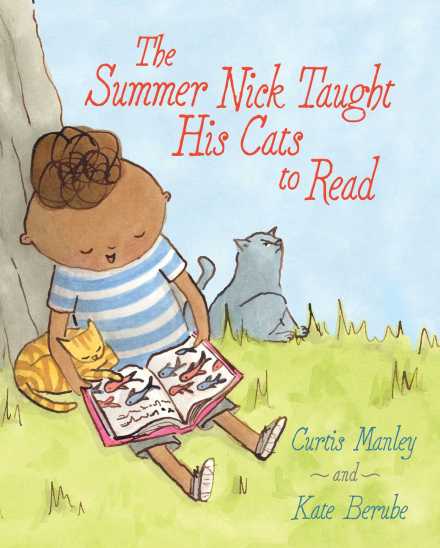
The Summer Nick Taught His Cats to Read

Written by Curtis Manley | Illustrated by Kate Berube


One summer Nick, Verne, and Stevenson did everything together. Nick is a little boy and Verne and Stevenson are two very different cats. Nick and Verne loved to spend time near the water—Stevenson tolerated it. Nick and Verne slept happily in a tent under the stars—Stevenson barely shut his eyes. While Nick rode his bike Verne eagerly sat in the front basket—Stevenson hunkered down in a box on the back. But when Nick sat down to read, both cats had their own ideas of fun—like lying on top of the book—and Nick could hardly read a sentence.
celebrate-picture-books-picture-book-review-the-summer-nick-taught-his-cats-to-read-ball

Image copyright Kate Berube, text copyright Curtis Manley, courtesy of simonandschuster.com

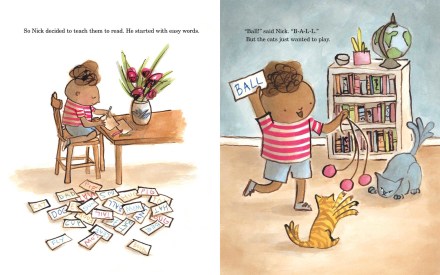
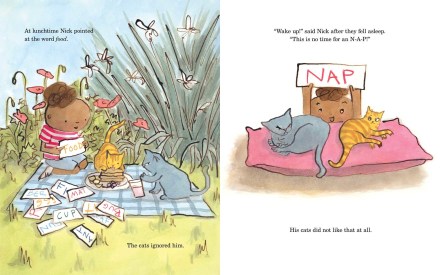
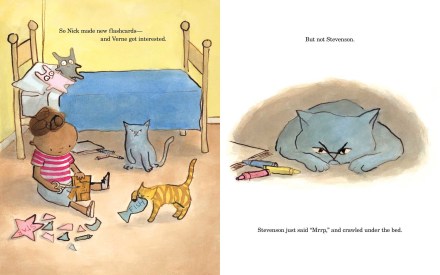
“So Nick decided to teach them how to read. He made flash cards and started with easy words” like “ball,” but Verne and Stevenson just wanted to play with the ball. While the three had a picnic on the lawn, “Nick pointed to the word food. The cats ignored him.” When the cats snoozed Nick woke them with a sign. “‘This is no time for an N-A-P!’” he said. Neither cat responded well, so Nick tried a new tactic. He made word-shaped flash cards. Verne took a nibble of “F-I-S-H,” but Stevenson hid under the bed.
celebrate-picture-books-picture-book-review-the-summer-nick-taught-his-cats-to-read-food-flash-cards

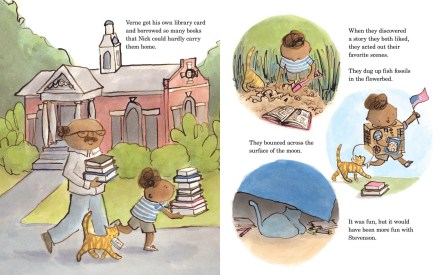
Nick began to see that Verne liked stories about cats and fish. “Verne loved fish. He followed along as Nick read, learning the sounds of the letters.” He even read by himself, discovering new stories, especially 2,000 Leagues Under the Sea. But Stevenson? When Nick spelled words for him, he merely ran under the porch, hissing. By this time Verne was reading so many books that he got his own library card and Nick needed help carrying all of his books home. Nick and Verne had fun acting out their favorite stories, but they missed Stevenson.

One day “Verne discovered a treasure under the bed—a great stack of Stevenson’s pirate drawings. “‘Wow!’” Nick whispered. “‘Stevenson drew a story.’” Nick and Verne put the pages together and began to write words to go with them. When the story was finished, Nick, Verne, and Stevenson “squeezed under the porch, gave Stevenson an eye patch, and read The Tale of One-Eyed Stevenson and the Pirate Gold. Stevenson listened and followed along. He didn’t run away. Or hiss. Not even once.”
celebrate-picture-books-picture-book-review-the-summer-nick-taught-his-cats-to-read-library

Image copyright Kate Berube, text copyright Curtis Manley, courtesy of simonandschuster.com


Suddenly, Stevenson couldn’t get enough of books.  Even before Nick woke up, Stevenson could be found with his nose in Treasure Island or another adventure book, and whenever Nick and Verne played pirates, Stevenson joined in. He helped bring down “scurvy mutineers” and found buried treasure. Now the three readers do everything together. They “hunt for dinosaurs in the lost world behind the garden…race around the yard in eighty seconds…and journey to the center of the basement.” And while they all like to read on their own, they also like it when someone reads to them. “Hmmm…,” Nick thinks, maybe next he could teach his cats to talk. “‘Meow,’ says Stevenson.”
celebrate-picture-books-picture-book-review-the-summer-nick-taught-his-cats-to-read-grumpy-stevenson

Image copyright Kate Berube, text copyright Curtis Manley, courtesy of simonandschuster.com

Curtis Manley’s adorable tribute to reading and learning to read using cats, with their variety of personalities, is inspired. Just as some people respond more to the words while others are attracted by the pictures, Verne and Stevenson have their own relationships with books. The names of the cats and their preferred reading material are also reminders that books are personal, and disinterest in one type of story does not reflect disinterest in all stories. Manley’s text makes for a joyful read-aloud as his language and phrasing is evocative, lyrical, and imaginative.

In perfect accompaniment, Kate Berube brings this creative story to life, illustrating the tender relationship between Nick and his pets as well as emphasizing the humor and distinct personalities inherent in orange striped Verne and smoky gray Stevenson that influence their journeys to literacy. Depictions of the various books Verne and Stevenson are drawn to highlight the literary references in the trio’s further play. Readers will want to stop and peruse the page of library shelves, where such books as “Harry Picaroon and the Swashbuckler’s Stone”, “Harold and the Purple Canon”, “Millions of Rats”, and “Where the Wild Pirates Are” wait to be checked out in the Pirates section.

Kids will eagerly want to adopt The Summer Nick Taught His Cats to Read, and it will snuggle in nicely on children’s bookshelves.

Ages 4 – 8

Simon & Schuster Books for Young Readers, 2016 | ISBN 978-1481435697

Discover “the facts, fictions, poems, and numbers” of Curtis Manley on his website!

View a gallery of Kate Berube‘s art on her website!

International Literacy Day Activity
CPB - Cat Bookmark (2)

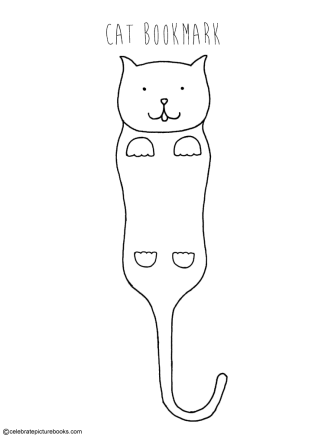
Feline Fine about Reading Bookmark


This want-to-be literary lion feels fine about reading! Let it hold your page while you’re away! Print your Feline Fine about Reading Bookmark and color it!

Picture Book Review

July 31 – Uncommon Instrument Awareness Day

celebrate-picture-books-picture-book-review-ada's-violin-cover

About the Holiday

Today is the day to be musically experimental. Intriguing, inventive instruments that make a wide variety of sounds exist in every corner of the world. From Russia comes the contrabass balalaika, a triangular stringed instrument. The cimbalom, a concert hammered dulcimer, originated in Hungary. And only the Welsh could give us an instrument with no vowels: the crwth. Glass, water, and lightning are also used to make beautiful sounds, and the Holophonor—a musical instrument and hologram projector all in one—is perfect for Elvis sightings wherever he is! So, play a different instrument or research one, and read the inspiring story in today’s book!

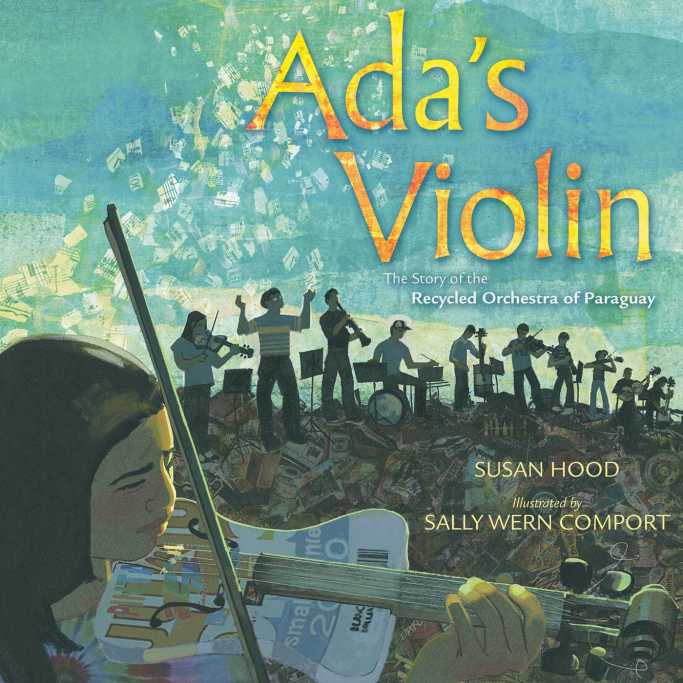
Ada’s Violin: The Story of the Recycled Orchestra of Paraguay

Written by Susan Hood | Illustrated by Sally Wern Comport


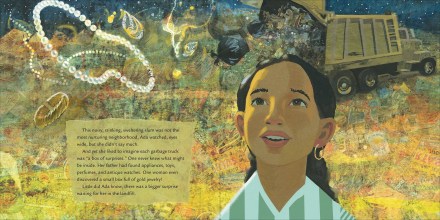
Ada Ríos is growing up in Cateura, a town built of trash as the main garbage dump for the capital city of Paraguay. Every morning the refuse trucks rumble into town to deposit their loads—1,500 tons of trash every day. The citizens of Cateura—gancheros or recyclers—go to work sifting through the mounds and tearing into bags looking for anything valuable enough to recycle or sell. Cardboard is worth 5 cents a pound, plastic 10 cents a pound.

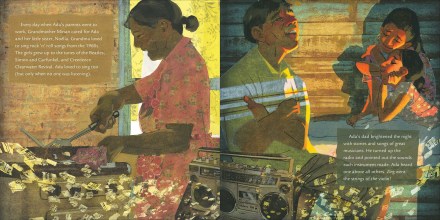
Ada knows the landfill can hold surprises—“Her father, a ganchero, had found appliances, toys, perfumes, and antique watches.”—but she can never imagine what it holds for her. When Ada and her sister were little, their grandmother watched them while their parents worked. They loved to listen to music, to sing, and to learn stories of musicians and the sounds of different instruments. Ada fell in love with the violin.

celebrate-picture-books-picture-book-review-ada's-violin-making-singing

Image copyright Sally Wern Comport, courtesy of simonandschuster.com

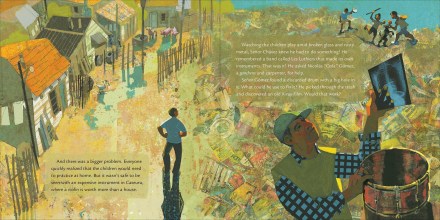
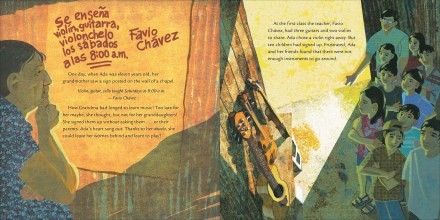
As the girls grow older and go to school, they venture farther into town, but there is little to fill their time. Many kids join gangs or get into fights. When Ada is 11 her grandmother signs her and her sister up for music lessons being offered by a new man in town named Favio Chávez. “Ada’s heart sang out” when she hears the news. On the first day ten children show up to play the five instruments available. But a bigger problem looms: the three guitars and two violins cannot be taken home for practicing as they are magnets for thieves. In Cateura a violin is worth more than a house.

But Favio Chávez has an idea. With help from Nicolás Gómez, a ganchero and carpenter, they pull bits and pieces from the landfill. An old broken drum and an X-ray film become a workable drum, water pipes become flutes, packing crates become guitars and violins, and oil drums become cellos. “Ada chose a violin made from an old paint can, an aluminum baking tray, a fork, and pieces of wooden crates. Worthless to thieves, it was invaluable to her. It was a violin of her very own.”

celebrate-picture-books-picture-book-review-ada's-violin-making-instruments

Image copyright Sally Wern Comport, courtesy of simonandschuster.com

The children practice tirelessly outside in 100-degree heat until the initial “screeches, twangs, and tweets hit all the right notes. Their class became ‘a small island’ where Chávez taught them to respect themselves and one another.” They become known as The Recycled Orchestra. Music now fills the air, adding a soundtrack of beauty to the grueling work. The orchestra is soon invited to play concerts in Cateura and the capital city of Asunción. When word spreads of their talent, they receive offers to play from other cities and even other countries.

When Ada is 16 The Recycled Orchestra is invited to tour with a world-famous rock band. As Ada takes the stage in front of 35,000 people in Bogotá, Colombia, she is afraid, but the audience cheers for them and sings along as they play. On that night the children discover a new life. “Buried in the trash was music. And buried in themselves was something to be proud of.”

celebrate-picture-books-picture-book-review-ada's-violin-lessons

Image copyright Sally Wern Comport, courtesy of simonandschuster.com

An extensive author’s note plus a photograph of The Recycled Orchestra, websites, and videos follow the text, as well as a list of sources.

Ada’s Violin is also available in a Spanish edition—El violín de Ada: La Historia de la Orquesta de Instrumentos Reciclados del Paraguay.

Susan Hood has brought to light an incredible story of perseverance, hope, and the ability of music and other arts to provide opportunities and self-confidence that change lives. Told with unstinting honesty and sensitivity, Hood’s biography of Ada Ríos, Favio Chávez, and The Recycled Orchestra will inspire all who read it. The well-paced text offers revealing details on every page and flows with a lyrical quality that enhances the effect of the story and its impact. From the first sentence to the last, both children and adults will be riveted to The Recycled Orchestra.

celebrate-picture-books-picture-book-review-ada's-violin-hope

Image copyright Sally Wern Comport, courtesy of simonandschuster.com

Sally Wern Comport’s paintings beautifully capture the human spirit that shines through and drives people to astonishing achievements even in the most adverse conditions. With intricately created collages of rich hues, Comport depicts the town of Cateura and the mountains of trash the citizens work and play on. Warm lighting illuminates faces full of dreams and love, and readers will linger over depictions of the instruments workshop and cheer along with the concert audience as the children receive recognition. The full-bleed, two-page spreads echo the expanded world music gave to the children in the orchestra and the adults who heard them as music score confetti flutters throughout.

Both school classrooms and home libraries will benefit from the stirring message of Ada’s Violin.

Ages 4 and up

Simon & Schuster Books for Young Readers, 2016 | ISBN 978-1481430951 (English edition); 978-1481466578 (Spanish edition)

Discover more about Susan Hood and her books, plus fun activities for kids and information for teachers and parents on her website!

View a gallery of Sally Wern Comport’s artwork on her website!

Uncommon Instrument Awareness Day Activity

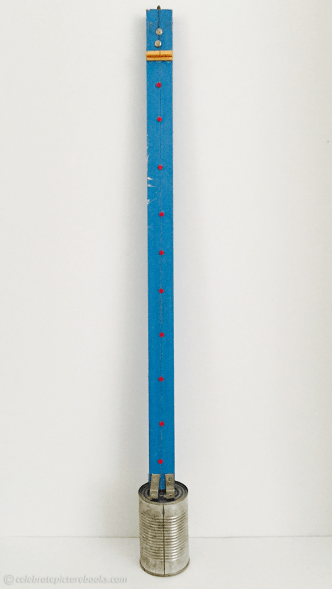
celebrate-picture-books-picture-book-review-homemade-musical-instrument


Make Your Own Musical Instrument


Inspiration for sound can come from almost any object! Look around your house or classroom and discover the music in boxes, cans, blocks of wood, plastic egg cartons or deli containers, and more. Add string or wire for plucking, sticks for drumming, or beans for shaking. With a little glue, tape, or hardware and some creativity, you’ll be making your own rhythms in no time!

Supplies for the instrument shown in the picture above

  • Tin can
  • Two small L brackets
  • Piece of wooden molding, 2 1/2 feet by 1 1/2 inches by 3/4 inches
  • Five small strips of wood to raise the wire off the neck of the instrument. I used long wooden fireplace matches cut into 1 1/2″ sections 
  • Thin wire
  • Small circular hook screw or regular screw
  • Two tacks
  • A nail, screw, or piece of wood that will fit horizontally in the mouth of the can
  • a small nail to make a hole in the can
  • Hammer
  • Strong Glue
  • Paint
  • Foam decorative dots

Directions

  1. Paint the wood and let dry
  2. Paint the small strips of wood and let dry
  3. Decorate the can with paint, sticker, duct tape, or paper
  4. With the hammer and small nail, make a hole in the center of the bottom of the can
  5. Wrap one end of the wire around the nail and glue so it is firmly in place
  6. Feed the other end of the wire through the hole in the bottom of the can
  7. Screw or glue two L brackets to one end of the wood molding so that the bottom of the L is flush with the bottom of the wood molding and there is space between the brackets. This makes the neck of the instrument
  8. Screw the circular or regular screw into the top, center of the wooden molding
  9. When the wooden strips are dry, glue three side by side 3 inches from the top of the molding. Glue two more matches, one on top of the other on the center strip.
  10. When the L brackets are dry, glue them (and the neck of the instrument) to the can, making sure the brackets are on either side of the hole in the can. Make sure the wire is out of the hole. 
  11. When the brackets are firmly attached to the can, pull the wire to the top of the neck. Settle it in the center of the small pieces of wood, so that the wire is not touching the neck.
  12. Wrap the wire around the screw at the top of the molding until it is firmly in place and the wire is taut. 
  13. Secure the wire to the neck with the tacks
  14. Mark the “frets” with the foam dots

Picture Book Review


July 2 – I Forgot Day

celebrate-picture-books-picture-book-review-we-forgot-brock

About the Holiday

No, I didn’t forget what holiday it is today—the day is I Forgot Day! Today is the day to make up for all those missed opportunities and make amends for forgetting special events. Of course it may also be the perfect day to trot out that most-used excuse for not doing something—and get away with it! One thing you should not forget is to read today’s book!

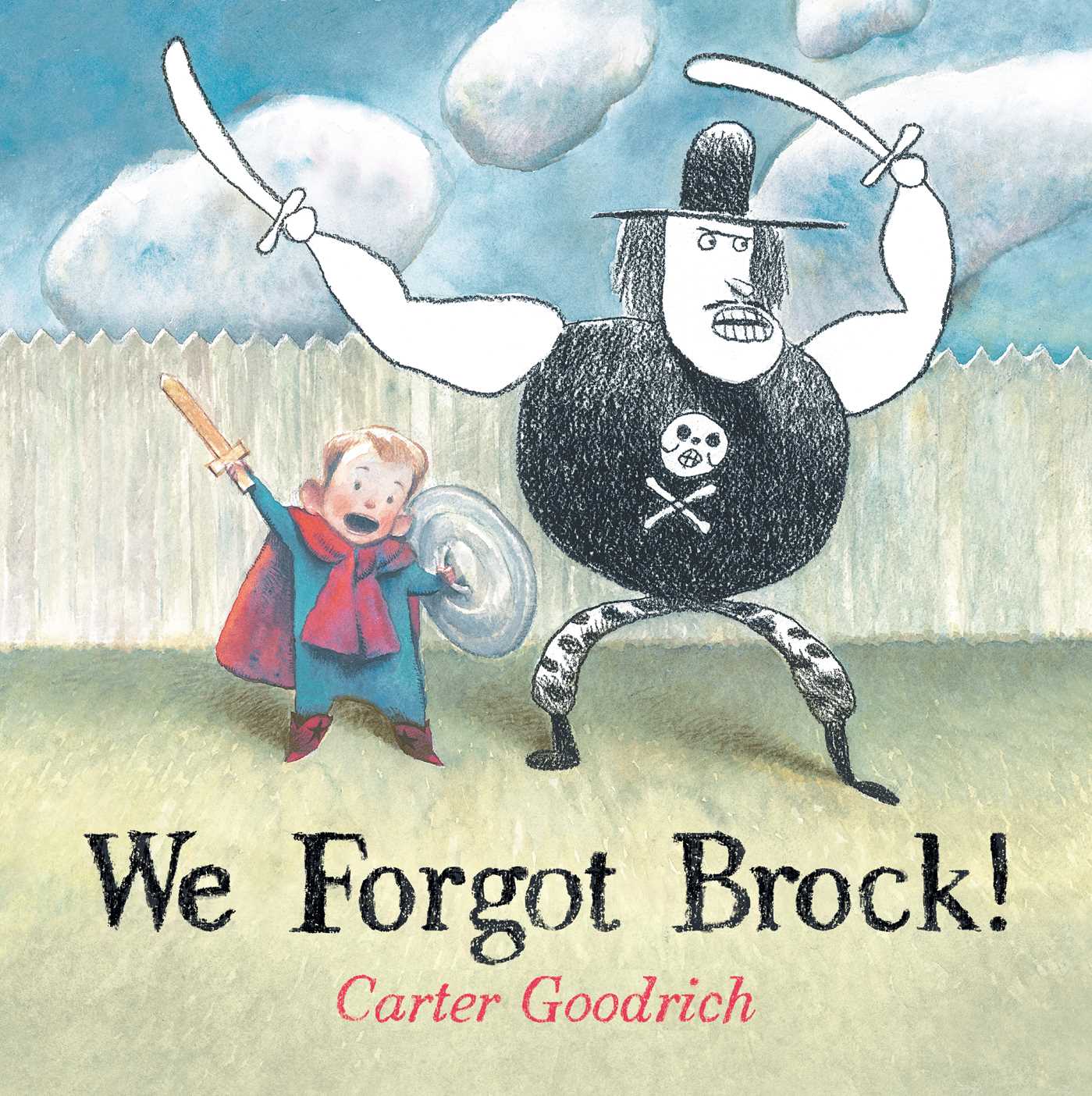
We Forgot Brock!

By Carter Goodrich


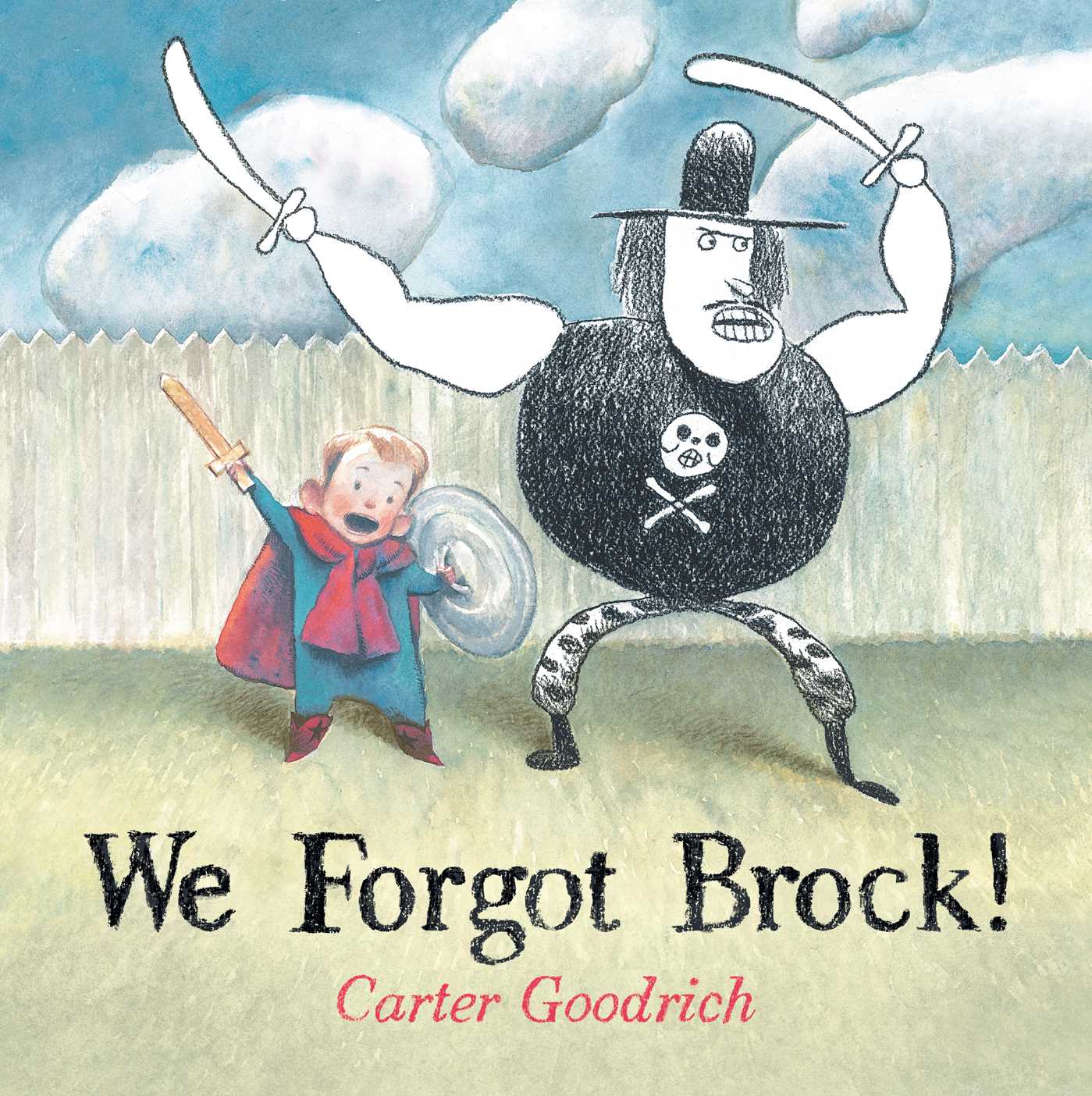
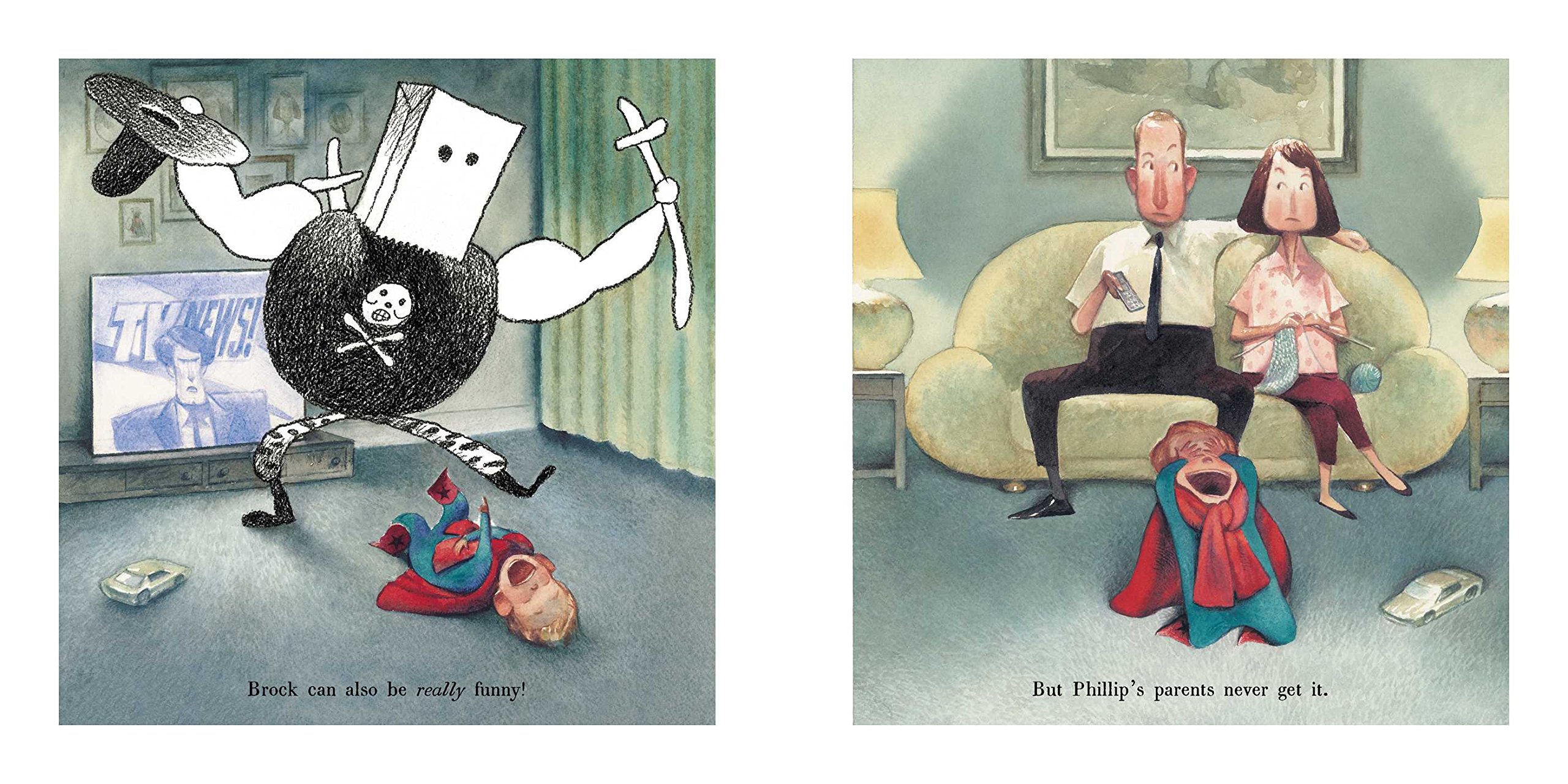
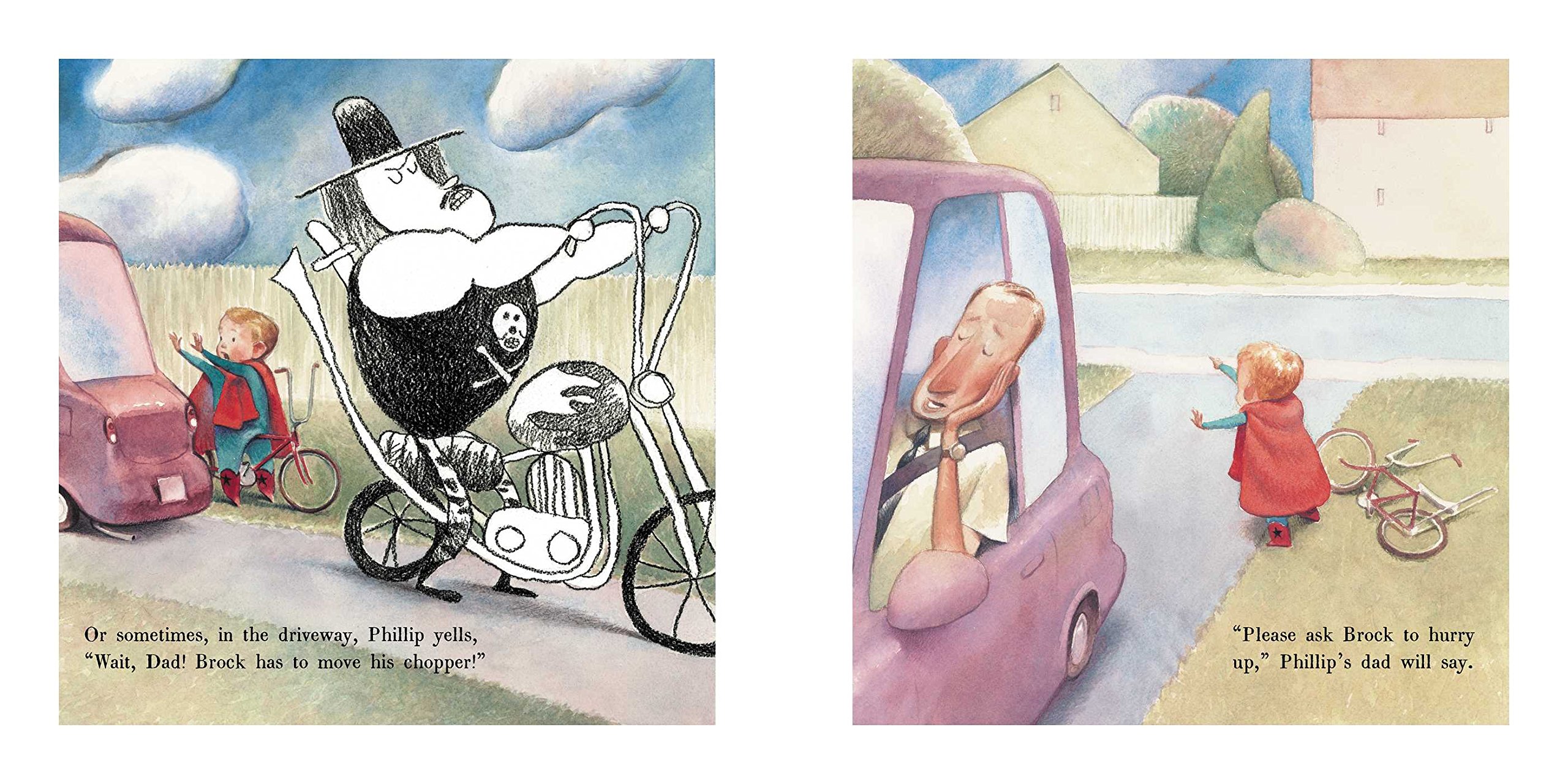
Phillip and Brock are best friends. They have a wonderful time goofing around together, but other people just can’t understand. They call Brock Phillip’s “imaginary friend.” As if!… For example, at dinner when Phillip says Brock wants seconds, Phillip’s mom only pretends to put food on Brock’s plate, and often Phillip’s dad almost backs over Brock’s motorcycle in the driveway. Philip’s parents also just don’t see how funny Brock can be.

celebrate-picture-books-picture-book-review-we-forgot-brock-funny

Copyright Carter Goodrich, 2015, courtesy of Simon & Schuster.

One evening the whole family goes to the Big Fair. “‘Brock wants us to ride the Brain Shaker!’” says Phillip. But his parents won’t listen. “‘Tell Brock the Brain Shaker is a big kids’ ride,’” his dad says. At the fair Phillip and Brock ride the merry-go-round, the bumper cars, and the Tilt-A-Whirl. Phillip has cotton candy, but there are no beans and spaghetti snacks for Brock. Finally, Phillip begins to feel sleepy. But Brock? He’s riding the Brain Shaker!

celebrate-picture-books-picture-book-review-we-forgot-brock-motorcycle

Copyright Carter Goodrich, 2015, courtesy of Simon & Schuster.

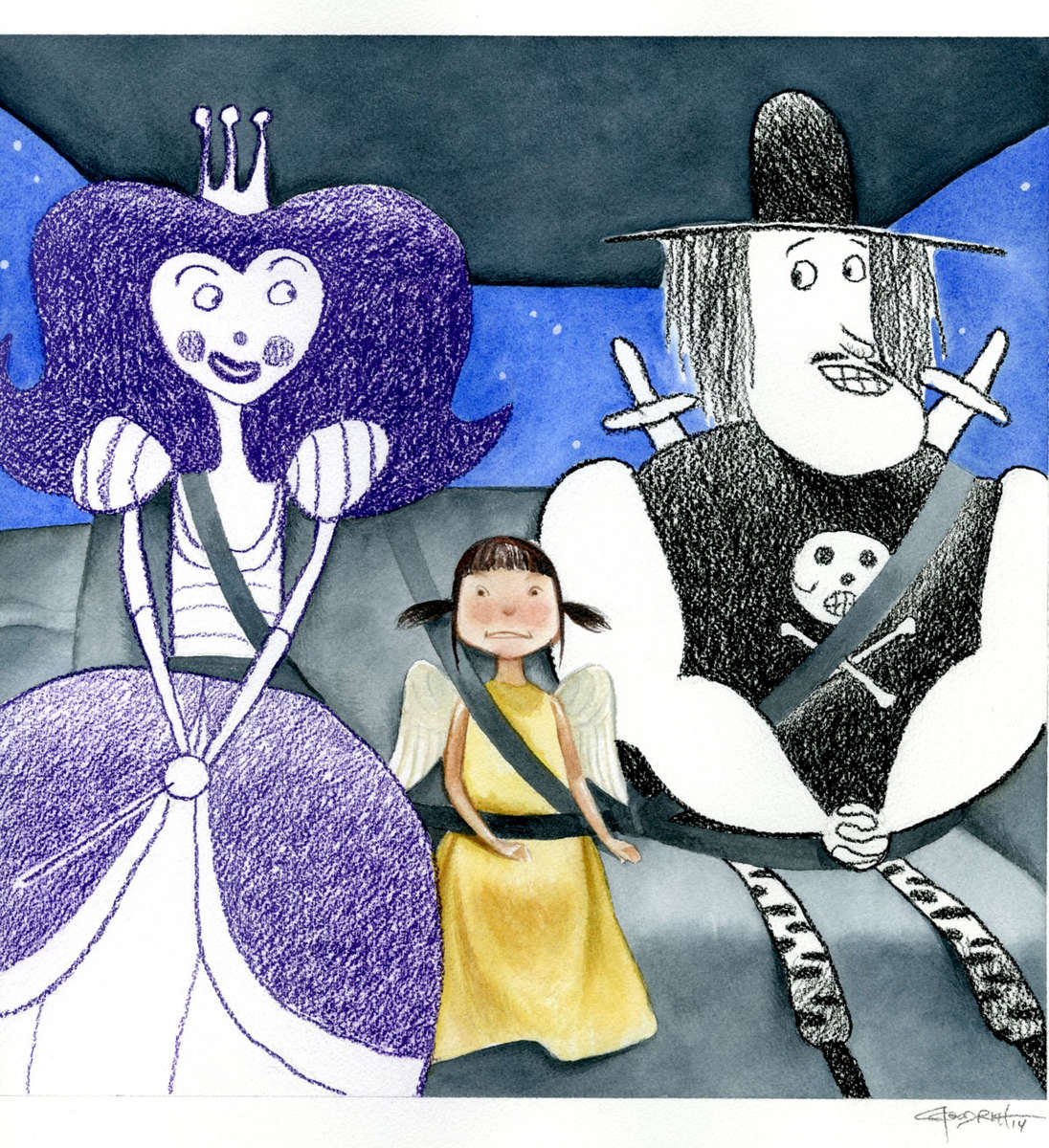
As the car pulls into the driveway, Phillip wakes up. “‘Where’s Brock?!’” he yells. Phillip runs into the house. No Brock. “‘We forgot Brock!’” Phillip sobs. “‘We Forgot Brock!’” Back at the fair Brock searches for Phillip from atop the Ferris wheel. Suddenly, a little girl asks him if he is okay. When Brock tells her he’s lost, she invites him to come home with her and her friend Princess Sparkle Dust.

celebrate-picture-books-picture-book-review-we-forgot-brock-in-the-car

Being at home with Anne and Princess Sparkle Dust is okay, but Brock misses Phillip. To cheer him up Anne and the Princess do magic tricks, and they all play games and tell each other stories. Meanwhile, Phillip is looking all over the neighborhood for Brock, but he’s nowhere to be found.

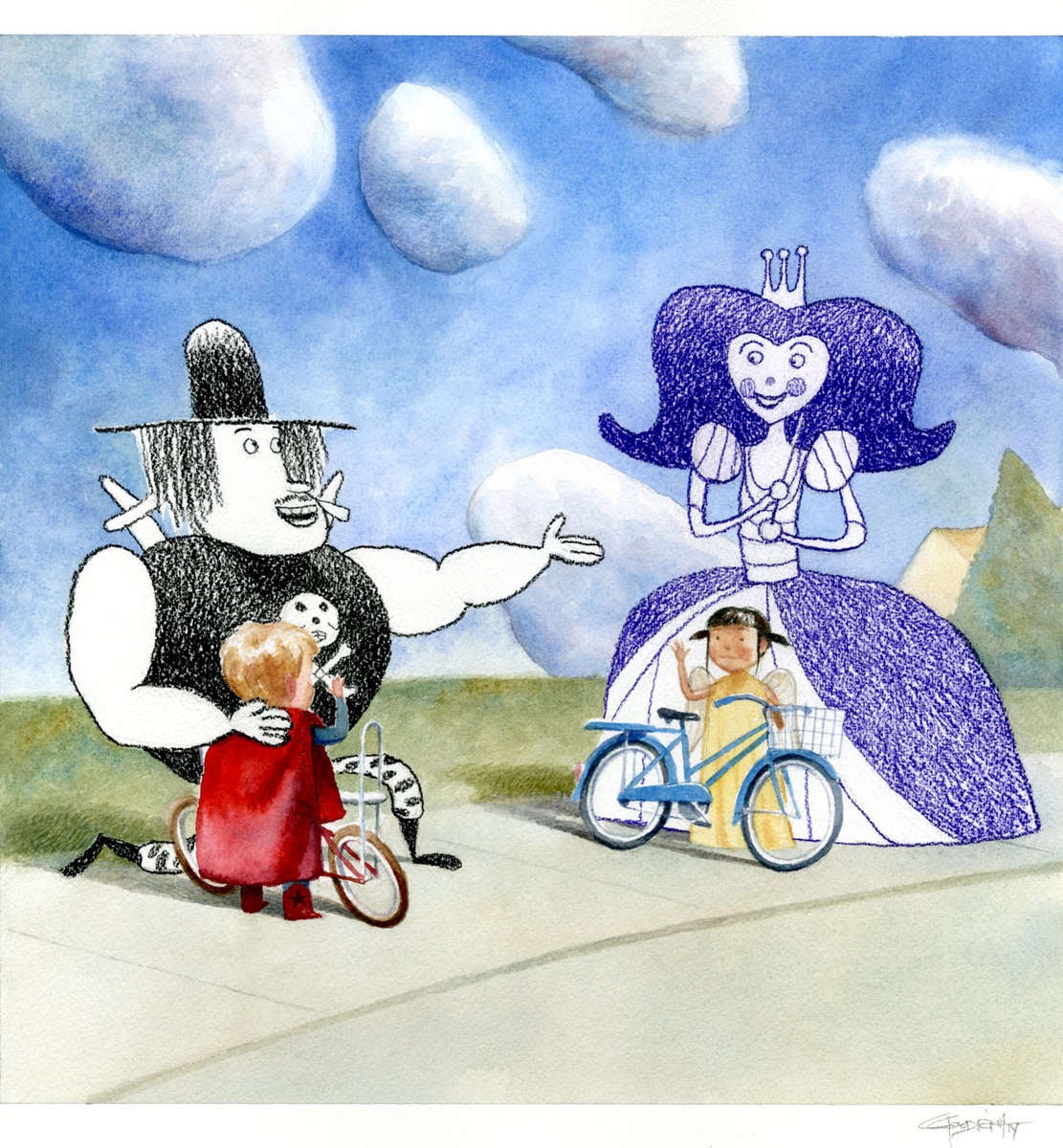
Both Brock and Phillip have almost given up hope of reuniting when… “‘BROCK!!!’” Phillip bumps into his friend on the street. Brock introduces Phillip to Anne and Princess Sparkle Dust and they all become fast friends. From then on “they spent all their time goofing around together. And everything was even better than before.”

celebrate-picture-books-picture-book-review-we-forgot-brock-princess

Image copyright Carter Goodrich, 2015, courtesy of Simon & Schuster

Carter Goodrich’s story of friendship and imagination bursts with charm and heart and will enchant both kids and adults. Written in a conversational manner, Goodrich immediately engages with a child’s perspective while offering plenty for adults to appreciate in his adorable and hilarious illustrations. Brock, depicted as a black-and-white crayon drawing, is Phillip’s foil—tall, muscular, a little mysterious, a little fierce—while incorporating a child’s sweetness and silliness. Princess Sparkle Dust is similarly drawn in purple and white, complete with a heart-shaped face and a crown.

Phillip, sporting a Superman costume and red cowboy boots, and Anne, wearing an angel dress complete with wings, everywhere they go are the embodiments of unselfconscious fantasy. Phillip’s parents share amused-but-loving glances even as they accept their son’s imaginary friend. Adults may laugh out loud at the illustration of Phillip rolling on the floor laughing at Brock’s funny antics while his parents watch the television news with a Keith Morrison look-alike anchorman. The softly lit and welcoming home environments as well as the vibrant, glowing Big Fair are everything a kid would dream them to be.

We Forgot Brock! is a book that will be remembered and asked for again and again, and is a must addition to any child’s library.

Ages 4 – 8

Simon & Schuster Books for Young Readers, 2015 | ISBN 978-1442480902

Visit Carter Goodrich’s Website to view a gallery of his work for other picture books and movies, such as Ratatouille, Despicable Me, and Brave, as well as cover art for “The New Yorker” and other publications.

I Forgot Day Activity

celebrate-picture-books-picture-book-review-great-idea-drawing-page

Great Idea! Drawing Page


Great ideas can come and go in an instant! Use this drawing page to sketch out your creative brain blasts—whether they are imaginative friends, ingenious inventions, or cool scenes—before you forget them! Here’s your printable Great Idea! Drawing Page.

celebrate-picture-books-picture-book-review-we-forgot-brock

You can find We Forgot Brock! at these booksellers

Amazon | Barnes & Noble | Books-a-Million

To support your local independent bookstore, order from

Bookshop | IndieBound

Picture Book Review

June 30 – Meteor Watch Day

celebrate-picture-books-picture-book-review-oh-no-astro-cover

About the Holiday

When space debris, such as pieces of rock as small as a pebble or as large as an apple, fall through Earth’s atmosphere they glow with the heat of friction and streak through the night sky creating a beautiful spectacle. These shooting stars can occur individually or in meteor showers. The early Greeks believed that meteors were stars that escaped the heavens when the gods peeked through to see what the humans were up to. People felt that the gods may be more disposed to grant them wishes during these times, and so the tradition of wishing on a star began. According to the American Meteor Society the average hourly rates for meteors during this week should be nine meteors per hour in the mid-northern latitudes (45N) and about 12 per hour in the tropical southern locations (25S). Dark, cloudless skies are optimal for viewing. Tonight gather friends and/or family and have a stargazing party!

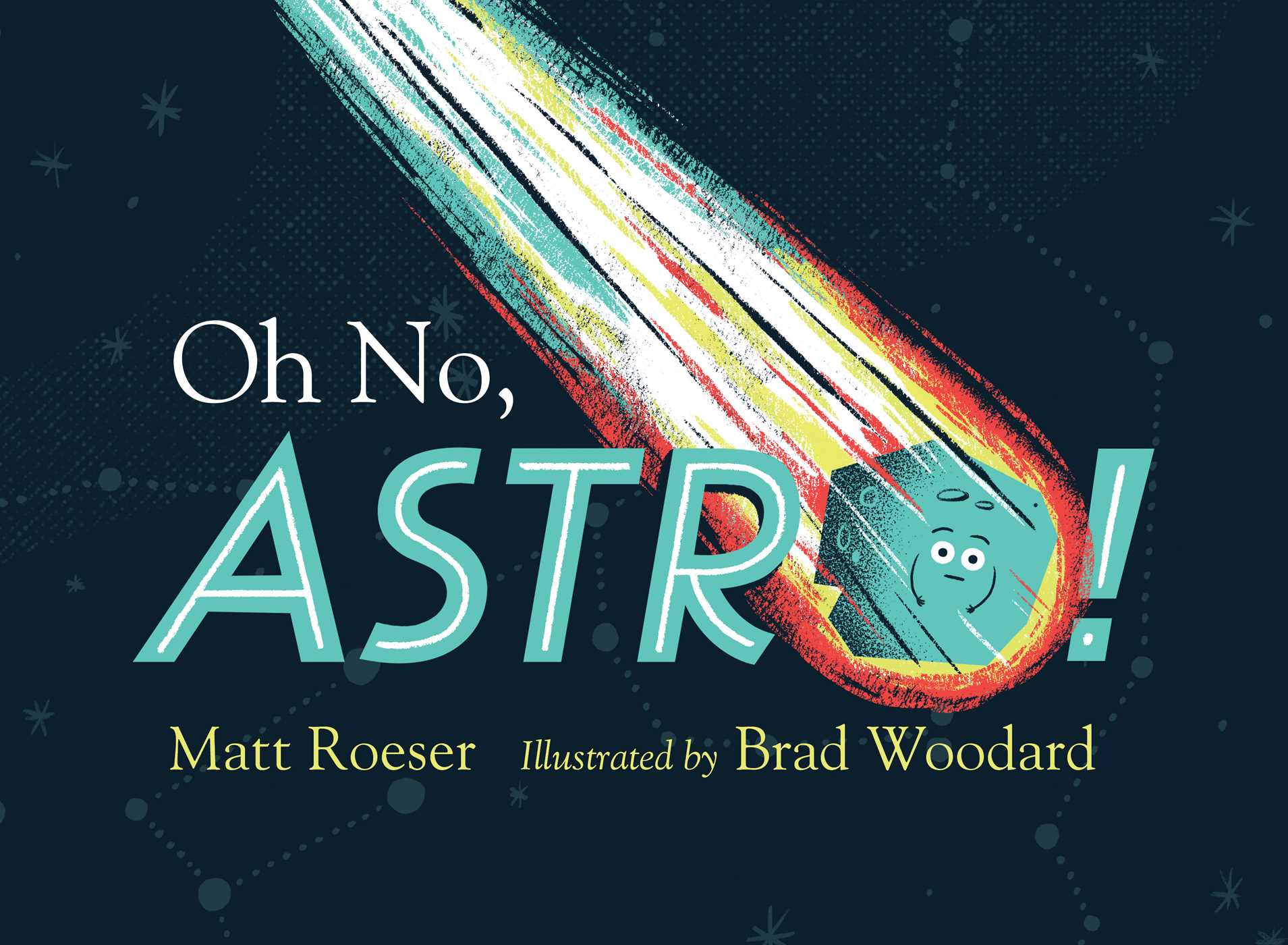
Oh No, Astro!

Written by Matt Roeser | Illustrated by Brad Woodard


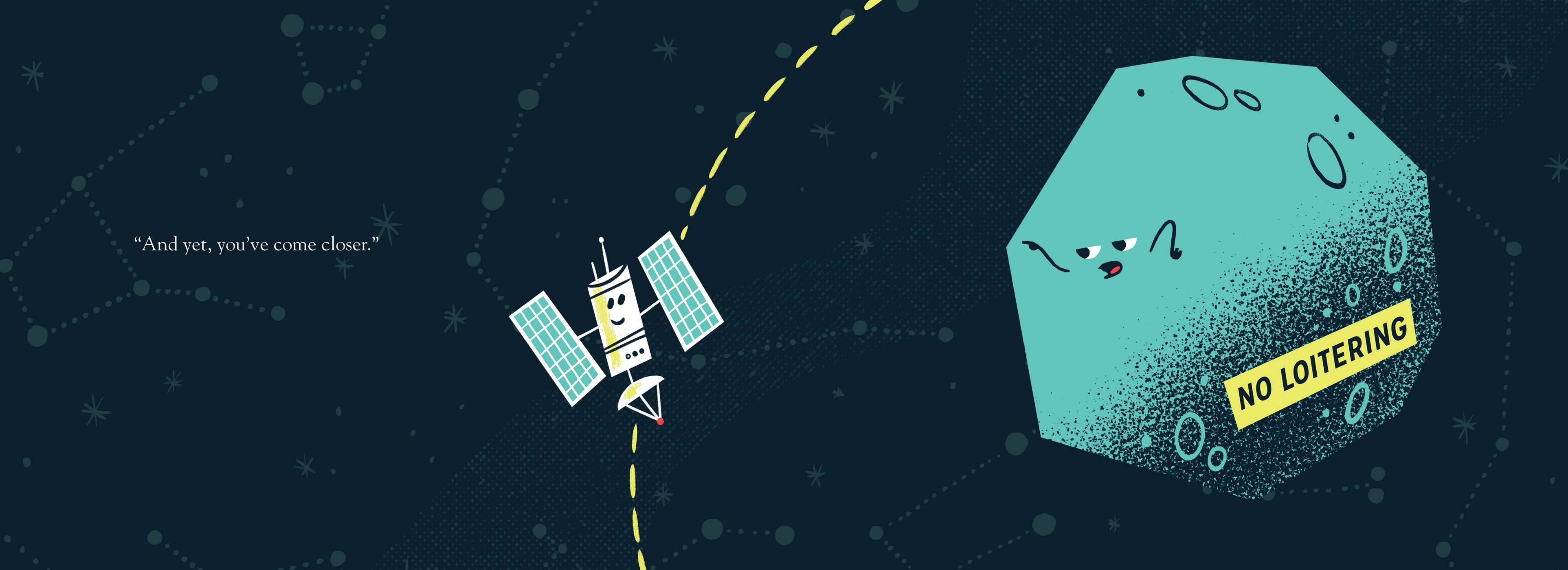
Astro was not a typical asteroid. Instead of zooming around crashing into obstacles, he believed in “personal outer space” and had for millions of years. When Astro spies an approaching satellite he greets him cordially and lays down the rules: “please keep your distance” and “stay in your orbit.” But the satellite ignores him and comes closer and closer until…

celebrate-picture-books-picture-book-review-oh-no-astro-interior-art-satellite

Image copyright Brad Woodard, courtesy of Simon & Schuster


“‘Good gravity! You’ve struck me!” Astro exclaims. He’s just about to “point out to the satellite that it had done considerable damage to one of his favorite craters” when he discovers that he is spinning out of his orbit and out of control. How humiliating! The usually unflappable space rock suddenly finds himself hurtling past Mars at the same time that young astronomer, Nova, is “enjoying a quiet night of stargazing” through her telescope. She catches sight of Astro as he zips past an astronaut, rushes past the Moon, and finds himself on an inevitable crash course with Earth.

As he enters Earth’s atmosphere he begins to break apart, shedding bits of the past, as the universe watches. He lands on Earth with a SMASH! Reeling from the impact Astro slowly opens one eye and then the other; he’s smaller but in one piece. Nova is waiting to welcome him to his new home. “‘My stars,’” he mutters. “‘Dare I say that was…FUN?!’”

And as Astro gazes at the night sky from a fresh perspective with Nova by his side, he asks, “‘What on Earth shall we do next?!’”

celebrate-picture-books-picture-book-review-oh-no-astro-hurtling

Image copyright Brad Woodard, courtesy of Simon & Schuster


For anyone stuck in the rut of their own orbit, Matt Roeser’s story of the unwitting space traveler is a humorous invitation to explore the universe around them. Roeser’s language—from calling asteroids “rambunctious” and the satellite a “celestial wanderer” to exclamations of “good gravity!” and “Pluto’s revenge!”—is an inspired treat. Kids and adults will laugh at Astro’s attempts to handle his undesirable predicament with dignity. Complacent Astro with his dry-as-space-dust wit and sparkling puns makes a stellar guide on this journey to more self-discovery and life enjoyment.

In the hands of Brad Woodard deep space is a very cute and cool place! Rendered in flat tones of black, aqua, yellow, red, and white, Woodard’s illustrations give Oh No, Astro! a retro feel for a space-savvy audience. The oblivious satellite floats through Astro’s orbit with wide eyes and a sweet grin, while angular Astro with his stick arms, expressive face, and boldly displayed “No loitering” banner would be a welcome alien intruder in any back yard. And Nova in her ponytails and Saturn-patterned dress is the perfect companion to greet him! The night sky abounds with constellations, but Astro is the real star!

In the final pages, Astro leads readers in a “A Selection of Space Facts” from the  very Manual of the Cosmos, 2nd edition that he used to sort things out. A short list of suggested reading is also included.

Kids would love to find Oh No, Astro! on their bookshelf for story times of cosmic fun!

Ages 4 – 8

Simon & Schuster Books for Young Readers, 2016 | ISBN 978-1481439763

Visit Matt Roeser’s Website to discover his gallery of book jacket designs!

You can learn more about design and illustration work by Brad Woodard at Brave the Woods!

Meteor Watch Day Activity

celebrate-picture-books-picture-book-review-spaceship-coloring-page


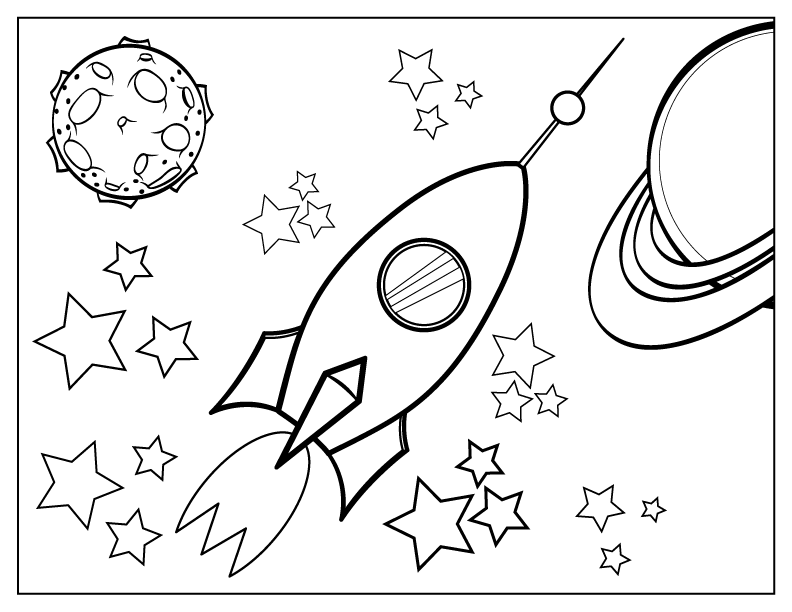
Shooting Star and Spaceship Coloring Pages


With these coloring pages you can make a universe that’s all your own!

June 17 – Flip-Flop Day

celebrate-picture-books-picture-book-review-at-the-beach-cover

About the Holiday

Nothing says “casual” like a pair of flip-flops! These open-toe, open-back, open-side (you can hardly call them shoes!) shoes have been trending since 4000 BC with no limits in sight! Flip-Flop Day was initiated by Tropical Smoothie Café. Customers wearing flip-flops receive a free smoothie and the Café also uses the day to raise money for Camp Sunshine, which offers respite and support to children with life-threatening illnesses and their families. Today if the weather’s warm slip on a pair of flip-flops and head out for a casual day at the beach or on the town!

At the Beach

Written by Anne Rockwell | Illustrated by Harlow Rockwell


A little girl with a yellow pail and red swimsuit and her mom who’s carrying a tote and umbrella head out for a day at the beach. They find a spot to lay their striped and polka-dot towels and plant their blue-striped umbrella. Waiting in the tote is their lunch—two foil-wrapped sandwiches, two peaches, and a thermos of lemonade.

celebrate-picture-books-picture-book-review-at-the-beach-interior-art-sandpipers

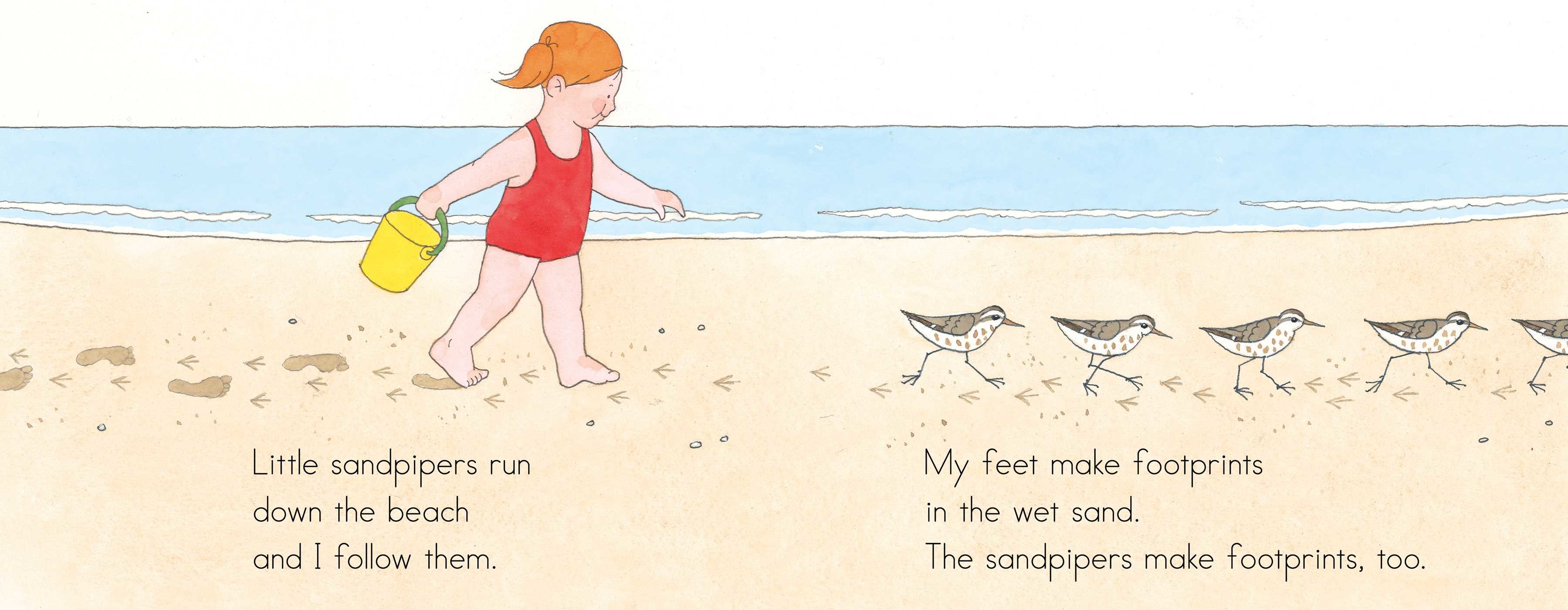
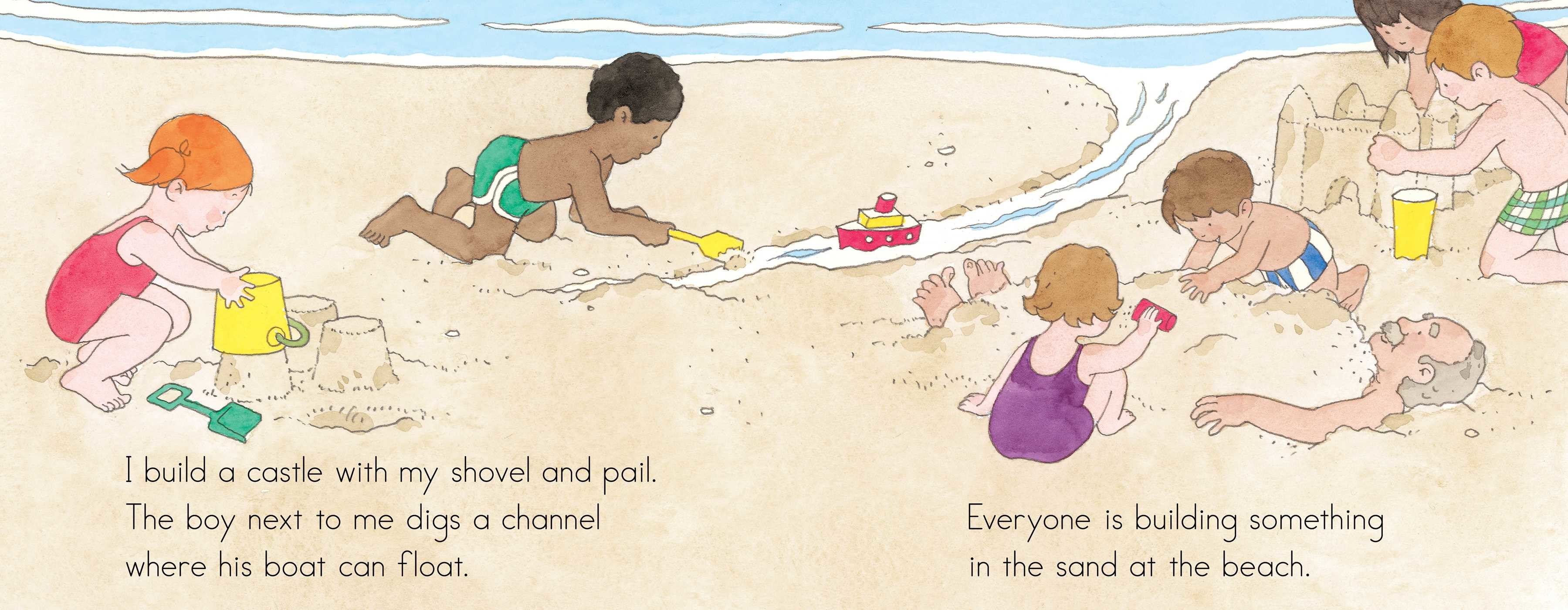
After the little girl is covered in nice-smelling sunscreen, she follows a line of sandpipers, adding her footprints to theirs in the wet sand. For her bucket she finds different types of seaweed and a variety of shells. She joins a group of kids playing among the dunes. “I build a castle with my shovel and pail. The boy next to me digs a channel where his boat can float,” the little girl says. The girl ventures out into the shallow water where “a little crab tweaks my toe” and “little silver fishes swim past me.”

The girl likes to “walk past the lifeguard station to the big brown rocks” to look for barnacles, snails, and muscles. She and her mom then swim in the waves near a drifting seagull. Back on land, the girl lies on her towel and lets the sunshine dry her off “until it is time for lunch.”

celebrate-picture-books-picture-book-review-at-the-beach-interior-art-kids-playing

Like the best laid-back days, Anne Rockwell’s classic At the Beach takes a tranquil, unhurried look at a mother-and-child seaside outing. For young children the straightforward, but lyrical text will evoke happy memories of their own beach experiences; for children who don’t live by the ocean the story will pique their interest in the shoreline environment.  This book, anchored in universal details yet inviting imagination, will soon become a favorite.

Harlow Rockwell’s sweet drawings of the little girl enjoying all a busy beach has to offer will captive young children. Scenes of a diverse group of children playing in the sand, a stalwart sea gull afloat on the current, a parade of scurrying sandpipers, and even the up- close look at scavenger hunt finds and the always welcome lunch engage all of a child’s senses. The clean lines and soft colors of the sand, sea, and sky contribute to a book as lovely as a sun-drenched beach.

Beach Day Scavenger Hunt Idea: At the Beach would be a wonderful take-along on any beach outing. Take a stroll along the shore and see if you and your child can find the shells, seaweed, sea creatures, and other seaside sights in the book.

Ages Birth – 8

Aladdin reissue edition, Simon & Schuster, 2016 | ISBN 978-1481411349

Flip-Flop Day Activity

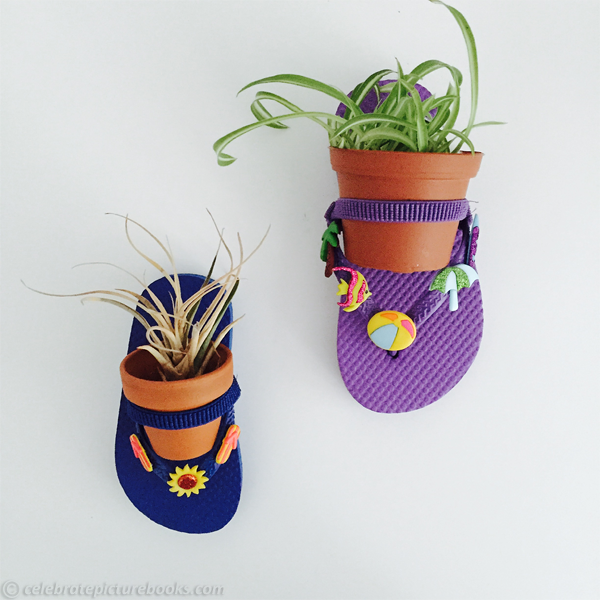
celebrate-picture-books-picture-book-review-flip-flop-craft

Flip-Flop Plant Holder


Flip-flops don’t only have to be for your feet! With this easy craft you can make a sandal-ightful way to hang succulents and other light plants on walls or even windows!

Supplies

  • Child’s flip-flops with elastic heel straps
  • Buttons or charms
  • Small plastic, terra cotta, or ceramic solid-bottom pot
  • Small plant
  • Dirt
  • Hot glue gun
  • Heavy duty mounting strips
  • Small shovel or spoon

Directions

  1. Place the flip-flop toe down on your work surface. With the hot glue gun, attach the buttons to the plastic toe straps of the flip-flops.
  2. Add dirt to the pot
  3. Add plant to the pot
  4. Slip the pot into the elastic strap and gently push down so it is also supported by the plastic toe straps
  5. To hang, use appropriate weight mountable strips.
  6. To make an interesting and attractive arrangement, use various sizes of flip-flops

June 1 – Global Running Day

celebrate-picture-books-picture-book-review-the-wildest-race-ever

About the Holiday

On your mark, get set, run! More than 2 million people in 160 countries have pledged to run on today’s holiday. Global Running Day is the evolution of National Running Day in the United States, which was started in 2009 by leading running organizations and races throughout the nation. It has been held annually on the first Wednesday of June ever since. This year will mark the first-ever Million Kid Run that aims to have a million kids around the world pledge to run with the hope that they will discover the joys of running and will be inspired to continue the sport through life. Participating is as easy as running in your neighborhood, gathering with friends to run, or even playing tag with your kids.

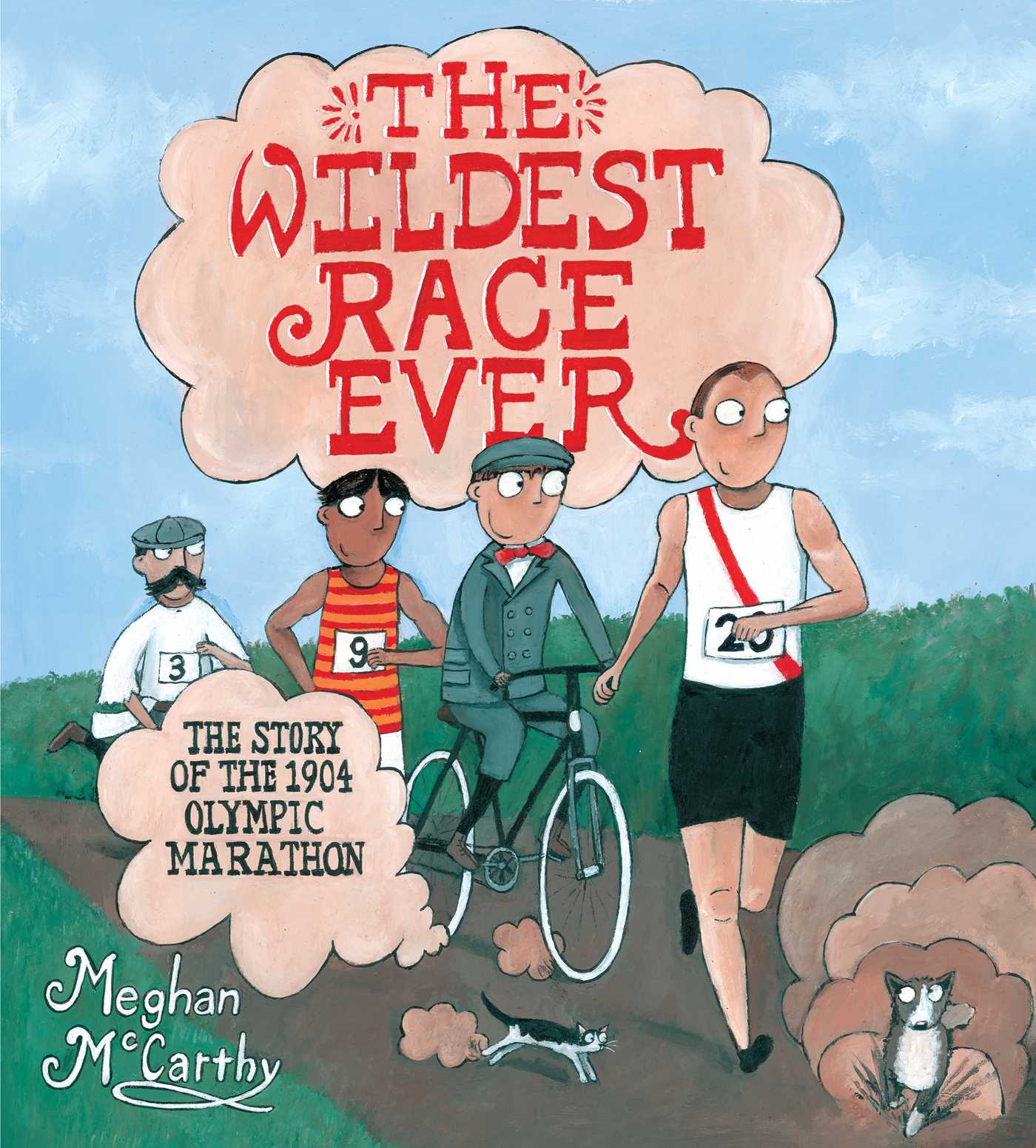
The Wildest Race Ever: The Story of the 1904 Olympic Marathon

By Meghan McCarthy


On August 30, 1904 the first United States Olympic Marathon took place at the World’s Fair in St. Louis, Missouri. Torrential rainstorms in the days before the race had washed away the original route, so a new, more difficult route was mapped out. Some of the 32 racers were:

Fred Lorz, a Boston bricklayer; John Lorden, the winner of the 1903 Boston Marathon; Sam Mellor from New York and the winner of two major marathons; Felix Carvajal, a mailman from Cuba; Arthur Newton; Albert Corey;  Len Tau, a long-distance running messenger from South Africa; William Garcia, the “greatest long-distance runner on the Pacific Coast”; and Thomas Hicks, who had only trained on flat terrain and was not ready for hilly St. Louis. There were also racers from countries all over the world.

At the starting line the racers waited in 90-degree heat for the signal. When the pistol shot rang out, they took off. The early leader was Fred Lorz. As the racers took to the hills outside the stadium so did cars full of reporters, judges, and doctors. Some spectators rode along side them on bicycles. All these vehicles stirred up so much dust that the runners choked on it.

At mile two, Sam Mellor and Fred Lorz were in the lead with Thomas Hicks only a little behind, but at mile 9 Lorz suffered terrible cramps and was driven away in a car. Now Albert Corey and William Garcia were neck and neck, and Hicks was catching up!

And what about Felix Carvajal? He ran and ran—but he also stopped and stopped. He loved talking to the spectators that cheered him on. It gave him an opportunity to practice his English! Arthur Newton, Sam Mellor, and Thomas Hicks exchanged the lead several times. No one knew who would win!

Where was Len Tau? Unfortunately, an angry dog chased him until he was a mile off course. Felix Carvajal also got distracted—not by a dog, but by an apple orchard! He settled down under a tree to satisfy his hunger. Soon, Mellor began suffering cramps and was suddenly out of the race.

Hicks suffering unbearable thirst in the staggering heat, began begging his trainers for water. They refused, instead giving him a concoction of strychnine and egg white. Another name for strychnine is rat poison! What would happen to Hicks after he drank it?Meanwhile who should appear out of the dust? Fred Lorz! He ran through the tape at the finish line and was declared the winner! Cheers erupted from the crowd. But wait! Someone said that Lorz had cheated. The cheers turned to boos, and even though Lorz said it was all a joke, the race committee banned Lorz from racing for life.

Hicks, somehow, kept running, buoyed by the cheering crowds. His trainers gave him more of the “health” drink, which made Hicks sluggish and confused. Nevertheless, he struggled on. When he came to the top of the last hill, seeing and hearing the crowds energized him. He pushed himself to run harder and harder until he broke through the tape. He collapsed on the ground just as he was declared the winner. He was rushed to the hospital, but was well enough to accept his award an hour later.

What happened to the other runners? All, except William Garcia who was overtaken by the clouds of dust, crossed the finish line at various times and with unique comments on their performance. These racers may have been very different, but they all had one thing in common. Each one accomplished an astounding feat: They competed side by side in the “killer marathon” of 1904 while upholding the Olympic spirit.

Meghan McCarthy with wit and suspense brings the story of the 1904 marathon to life for kids used to paved, well-marked routes, energizing sports drinks, supportive running shoes, and comfortable running clothes. Perhaps the only similarities to today’s races and yesteryear’s are the start and finish line and the cheering crowds! McCarthy’s inclusion of the humorous and the near-disastrous will keep readers’ hearts racing until the very end, when the topsy-turvy finish is revealed!

McCarthy illustrates The Wildest Race Ever with verve and comic flourishes that well-represent this extraordinary Olympics event. Kids will giggle and gasp to see what happens to the racers – and even a couple of spectators – during the race.

The Wildest Race Ever is a must-read for sports and history enthusiasts alike! 

Ages 4 – 9

Simon & Schuster, 2016 | ISBN 978-1481406390

Global Running Day Activity

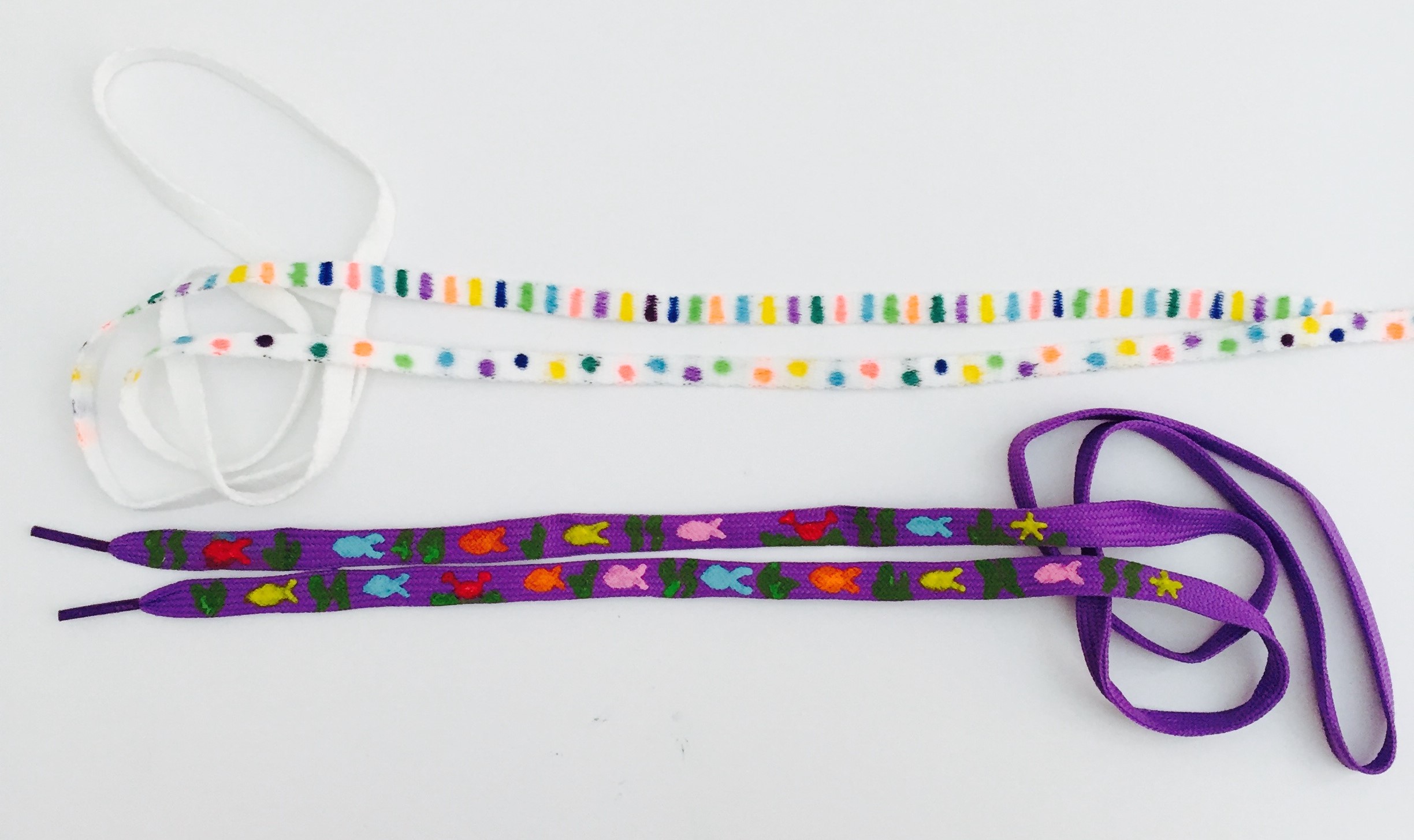
celebrate-picture-books-picture-book-review-shoe-lace-craft

Sassy Shoe Laces


Did you know that having cool shoelaces makes you run faster? Well…that might not be exactly true, but you will definitely look good no matter what you’re doing if you make some unique laces for your shoes.

Supplies

  • Shoelaces in any color
  • Fabric paint or markers

Directions

  1. With the fabric paint or markers make dots, stripes, or any designs you like. You can even paint fish or flowers!
  2. Enjoy them on your run!

April 13 – National Bookmobile Day

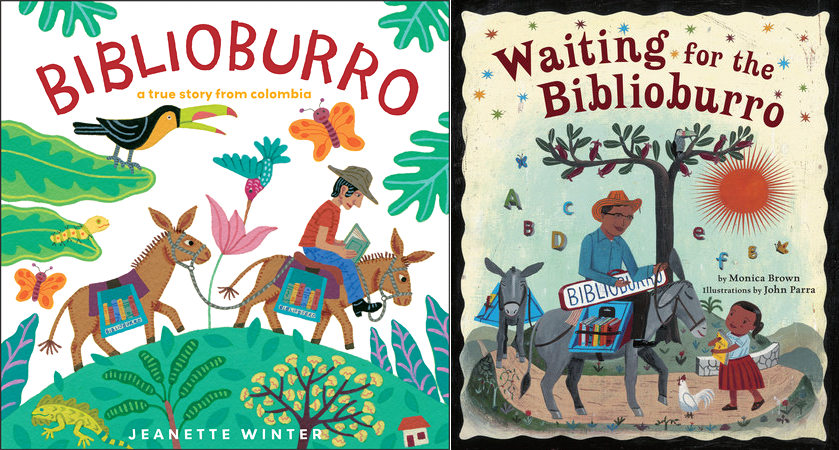
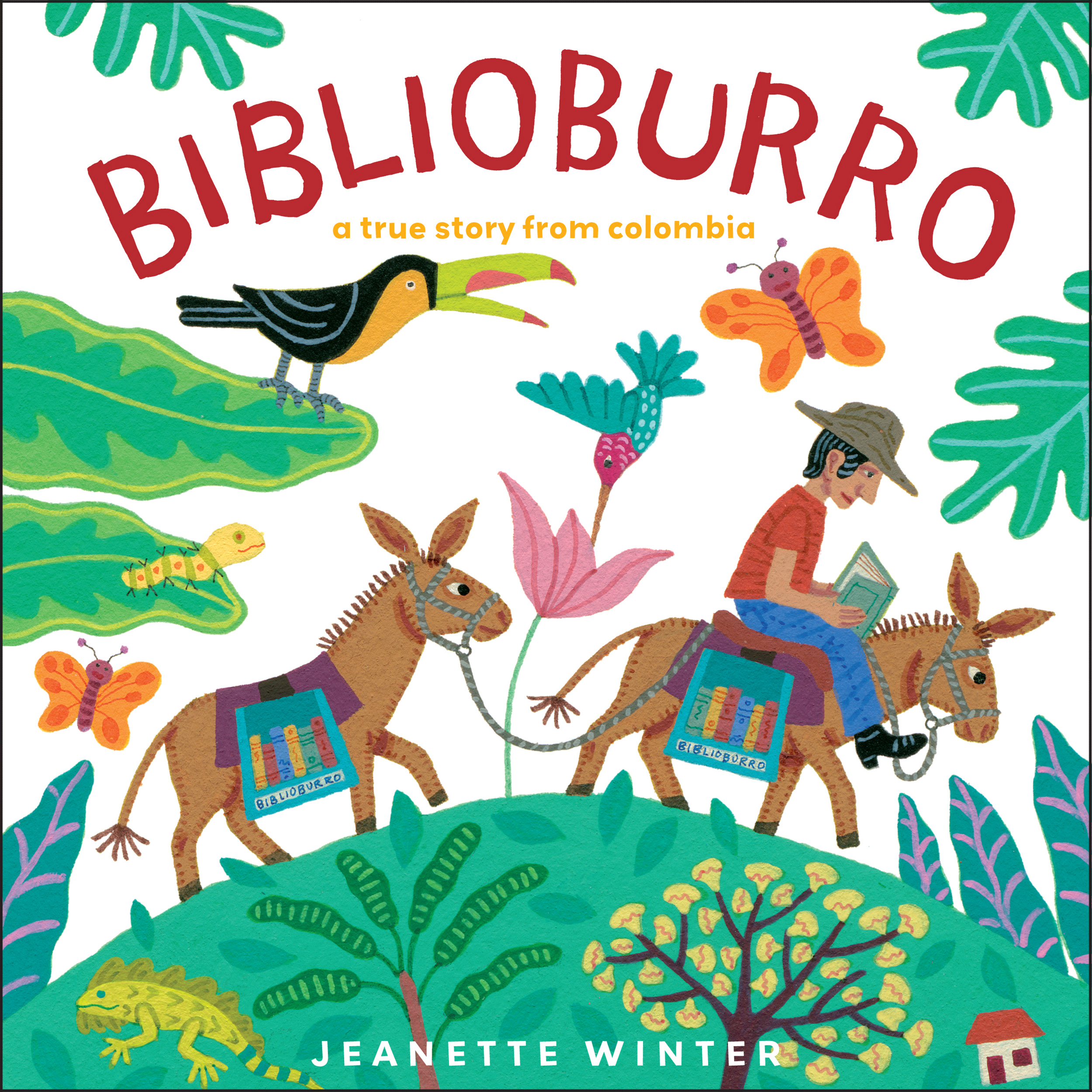
CPB - Biblioburro 3It’s not often that kids are able to read the same story from two different sides. In today’s post I review two picture books about the inspiring Luis Soriano Bohórquez. The first book is from Soriano’s viewpoint, and the second focuses on the children whose lives are changed by his courage and dedication.

About the Holiday

Today we honor the more than 930 dedicated library professionals who bring books to remote places, shut-ins, and others in the community who have no access to libraries and the services they offer. For over 100 years, bookmobiles have delivered information, technology, and resources for life-long learning to Americans of all walks of life.  To celebrate today’s holiday show your support for bookmobiles by thanking your library workers in person or by sending them a letter or email. You can also consider donating to a book drive or book fund to keep this vital service going!

Biblioburro: a True Story from Columbia by Jeanette Winter Picture Book Review
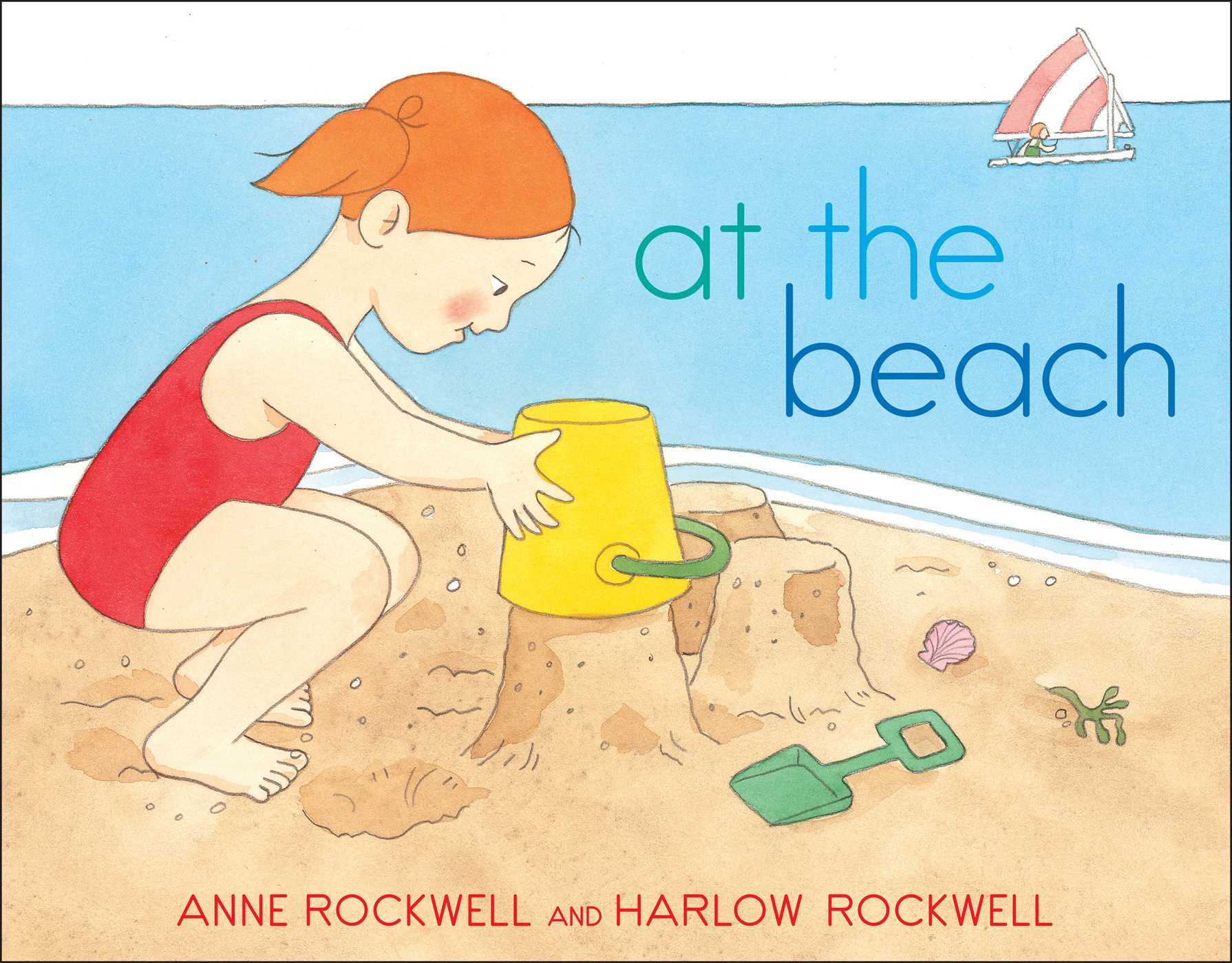
Biblioburro: A True Story from Columbia

By Jeanette Winter


Luis lives deep in the jungles of Columbia surrounded by his beloved books. In fact, Luis loves books so much that his entire house is filled with them, floor to ceiling. “What will we do with them all?” asks his wife, Diana. Luis thinks about it and suddenly has an idea. He can share his books with people who live in the faraway hills! How will he get them there? By burro!

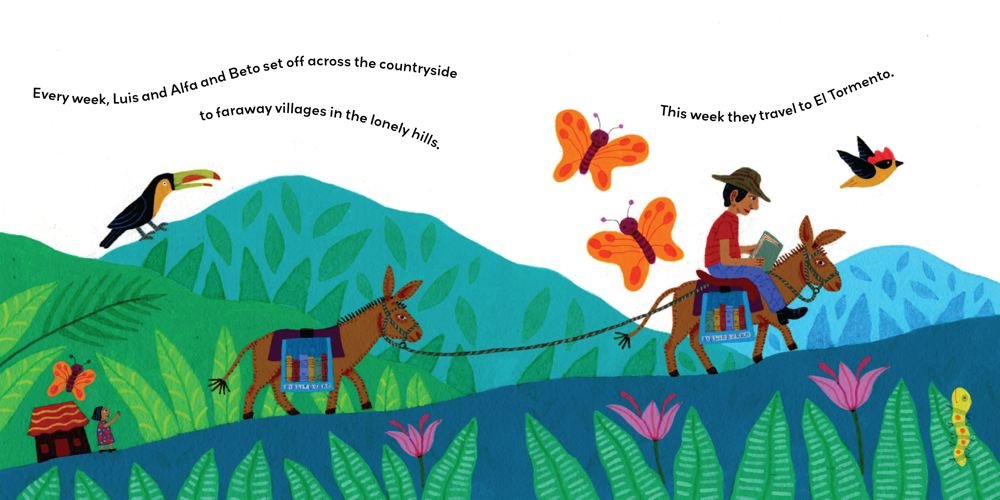
Luis buys two burros and names them Alfa and Beto. He builds special crates that will fit on their backs to carry the books. He paints a sign to carry with him: “Biblioburro”—The Burro Library—it says. Every week Luis takes the burros to far off villages, but it is not an easy trip. On his way to El Tormento, the hot sun makes the burros thirsty. When they stop at a stream to drink the water, Luis has a hard time pulling Beto away from the cool oasis.

celebrate-picture-books-picture-book-review-biblioburro-el-tormento

Copyright Jeanette Winter, 2010, courtesy of Beach Lane Books.

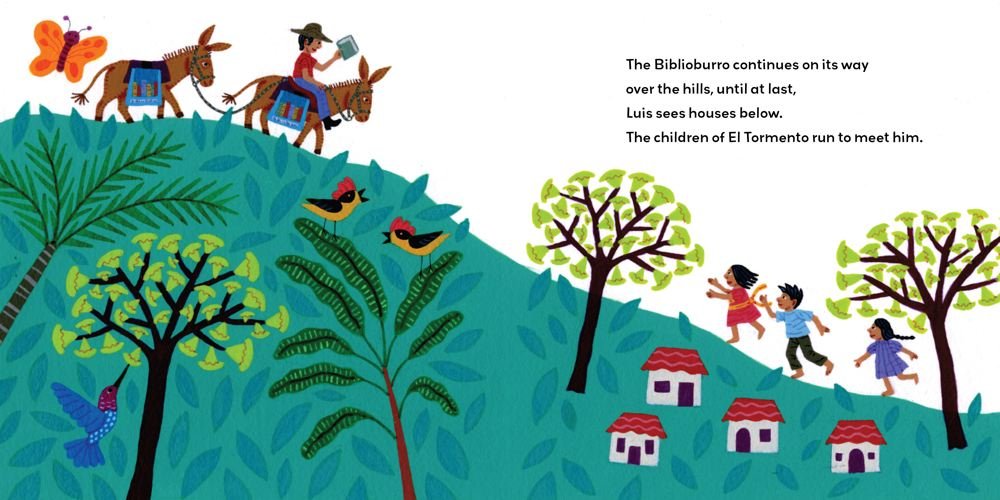
Among the jungle trees, bandits wait. As Luis passes through a lonely section of his path, a robber jumps out and demands silver. Luis has no money, so the bandit takes one of his precious books, demanding silver “next time.” At last Luis reaches El Tormento. The children run to greet him! Before they choose their books, however, Luis reads them a story. Today he has brought along a special treat—pig masks for everyone! As the children wear their masks, Luis reads the story of the Three Little Pigs and the Big Bad Wolf. After the story the kids choose their books and head for home.

Luis leads Alfa and Beto on the journey back as the sun sets. At home he and his burros have a well-deserved dinner. Luis is tired from his long journey, but as Diana sleeps he sits in his rocking chair reading into the deep, dark night—just the same as the children of El Tormento.

celebrate-picture-books-picture-book-review-biblioburro-Luis

Copyright Jeanette Winter, 2010, courtesy of Beach Lane Books.

The final page presents factual information about Soriano and his life. He has inspired many to donate to his cause, bringing education and literacy to hundreds of people since the year 2000. This book is also available in a Spanish language version.

celebrate-picture-books-picture-book-review-biblioburro-spanish-edition-cover

Any book lover will be fascinated by this true story of a man dedicated to bringing books to children living in remote areas of Columbia. Jeanette Winter’s straightforward tale reveals not only the imagination and care it took to make Luis’s dream a reality, but also the perils he faces in carrying out his mission. Winter’s lyrical tone emphasizes the isolation of the far-off villages Luis visits and his solitary travels. The story is full of suspense and humor that will draw children into this unique biography of Luis Soriano Bohórquez.

Winter’s vivid illustrations bring the Columbian jungles to life—vivid green leaves and flowers are home to orange snakes, yellow caterpillars, multi-colored toucans and parrots, and other native species. Kids will wish they could reach out and pet the sweet burros that work so hard to carry the books. As nighttime falls, the hues cool to muted teals and blues—the color of dreams.

Ages 5 – 9

Beach Lane Books, Simon & Schuster, 2010 | ISBN 978-1416997788

You can find Biblioburro: A True Story from Columbia at these booksellers

Amazon| Barnes & Noble | Books-a-Million | IndieBound

Waiting for the Biblioburro by Monica Brown and John Parra picture book review
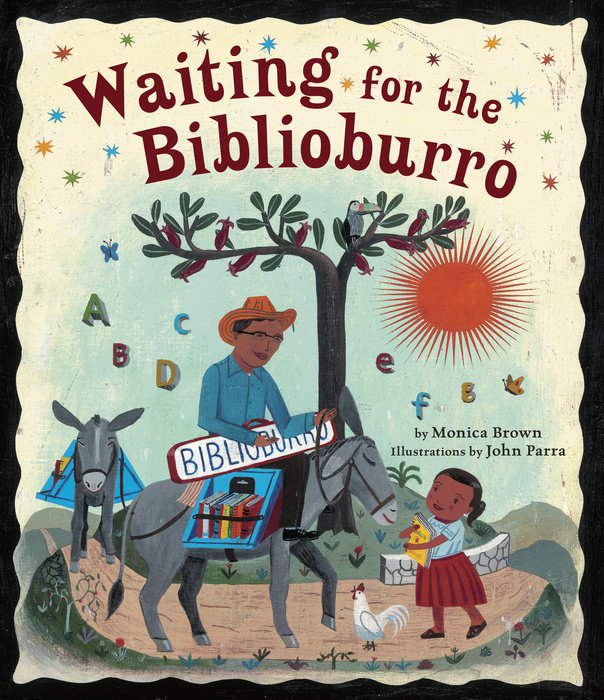
Waiting for the Biblioburro

Written by Monica Brown | Illustrated by John Parra


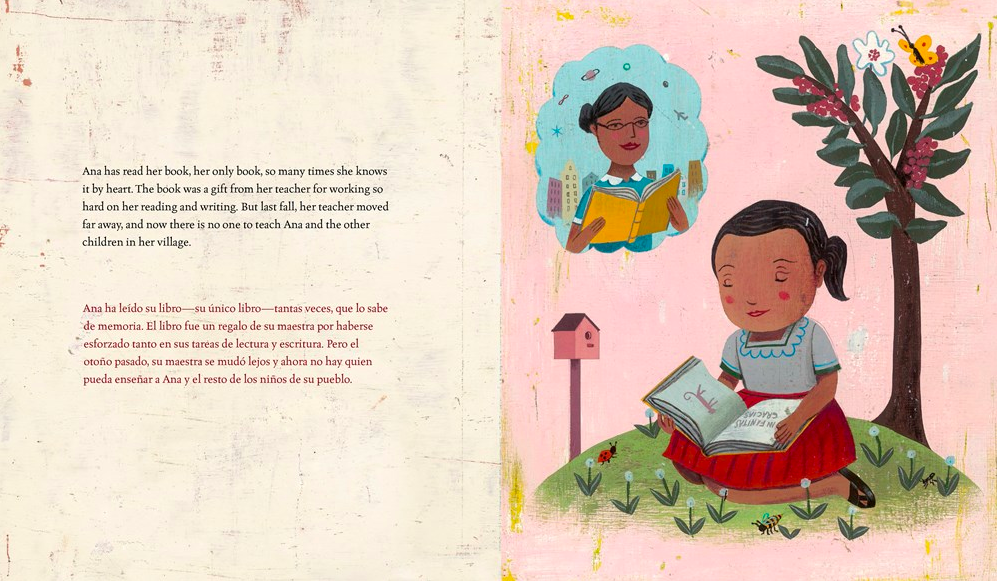
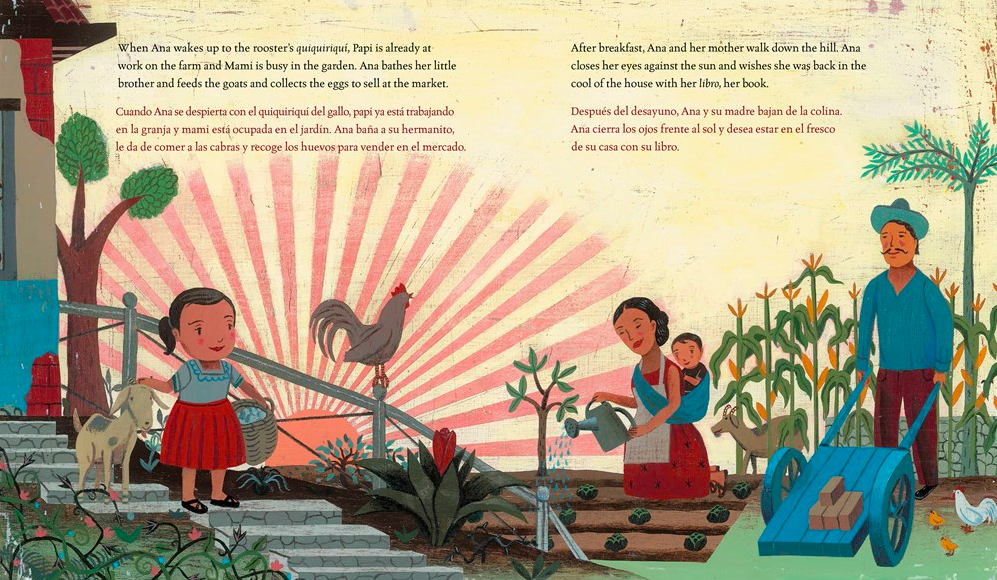
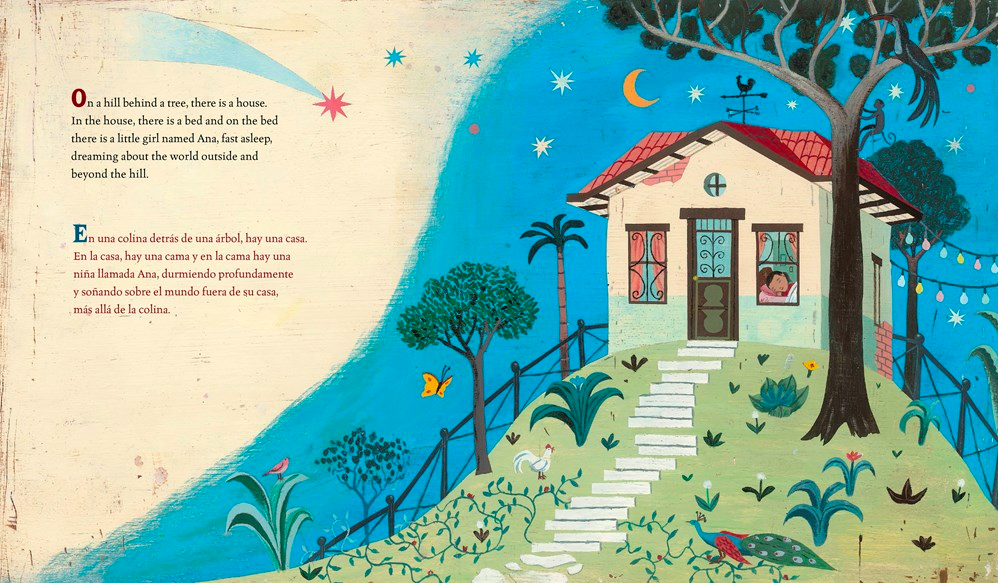
On a faraway hill in a small Columbian village, a little girl named Ana wakes to a day of feeding the farm animals, taking care of her younger brother, and collecting eggs to sell in the market. When the long, hot day is over, Ana retreats to her room to read her most precious treasure—the one book that her teacher gave her before she moved and the school closed.

celebrate-picture-books-picture-book-review-waiting-for-the-biblioburro-bilingual-edition-reading

Image copyright John Parra, 2016, text copyright Monica Brown, 2016. Courtesy of Tricycle Press.

Ana has memorized the book and wishes she had more, but there is no one to provide books or education in her tiny village. To make up for it, Ana imagines her own stories and tells them to her brother before they go to sleep. But one day everything changes. Ana hears an unfamiliar clip-clop and a loud iii-aah! Iii-aah!

Ana runs outside to see a most unusual but wonderful sight! Riding past her house is a man with two burros loaded down with books! All the children leave the fields and run to this stranger. “Who are you?” the children ask. The man says he is a librarian and a teacher. His burros are Alfa and Beto, and his name is Luis Soriano. Together they are a moving library. Luis reads to the children and teaches them the alphabet. He then tells them they can choose books from the crates strapped to the burros’ backs and keep them until he returns.

celebrate-picture-books-picture-book-review-waiting-for-the-biblioburro-bilingual-edition-sunrise

Image copyright John Parra, 2016, text copyright Monica Brown, 2016. Courtesy of Tricycle Press.

Ana gazes at the selection—there are so many cuentos, so many stories! She hugs the books she has chosen and, before Luis goes on his way, tells him someone should write a story about Alfa and Beto. Why don’t you? Luis encourages her. With a promise to return, Luis is gone. Ana shares her books with her brother, reading until she can’t keep her eyes open.

celebrate-picture-books-picture-book-review-waiting-for-the-biblioburro-bilingual-edition-nighttime

Image copyright John Parra, 2016, text copyright Monica Brown, 2016. Courtesy of Tricycle Press.

It seems like forever and no biblioburro! “When will he come back?” Ana pesters her mother. Finally, unable to wait for a new story, Ana takes the librarian’s advice and creates a book about the biblioburros. Just when Ana has almost given up hope of seeing Luis again, she hears the now familiar iii-aah! Iii-aah. She runs to show Luis her special surprise. Not only does he read her book to the other children, he carefully packs it away on the burro’s back “ready to be carried away over the hills and through the fields to another child “who is dreaming of the stories the biblioburro will bring.”
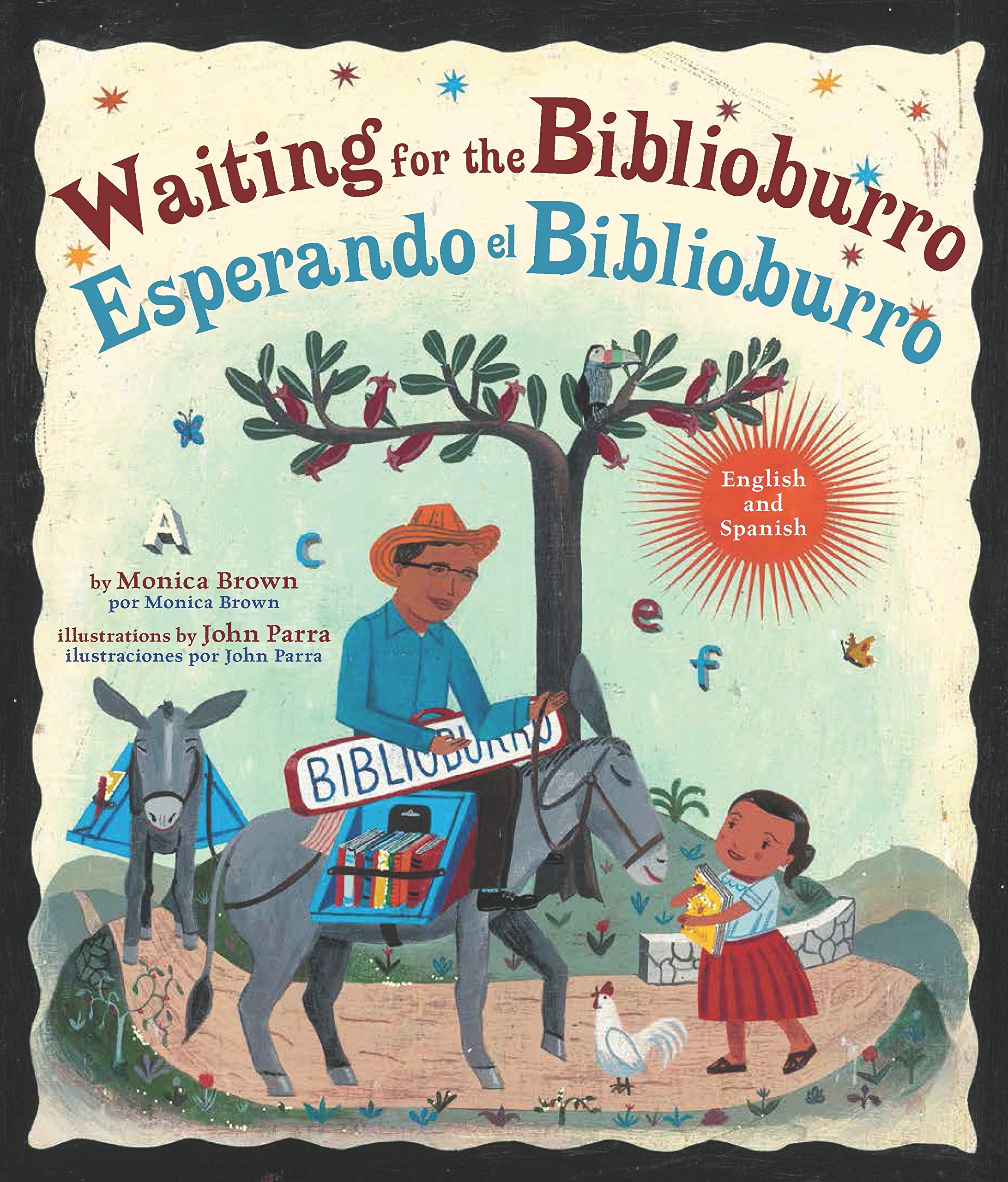
This book is also available in a bilingual edition: Waiting for the Biblioburro/Esperando el Biblioburro.

celebrate-picture-books-picture-book-review-waiting-for-the-biblioburro-bilingual-edition-cover

Monica Brown’s telling of this inspirational story reveals how much one person’s actions can touch another. Through her expressive language and rhythms, Brown effectively reveals the thoughts and feelings of a little girl thirsty for knowledge but without any means of acquiring it. The girl’s enthusiasm for books and learning is infectious and will resonate with children. Listeners will empathize with her longing and celebrate when they hear of the biblioburro’s arrival.

John Parra’s well-known paintings are a highlight of this book, filling each page with the radiant sun, colorful architecture, exotic animals, tropical vegetation, and other sights of the jungles and hills of Columbia. Ana’s hopes and dreams are also illustrated in Parra’s unique style, creating a world of imagination fitting for a budding young writer.

Ages 5 – 8

Tricycle Press, Penguin Random House, 2011 | ISBN 978-1582463537 | ISBN 978-0553538793 (Spanish–English Bilingual Edition)

Discover more about Monica Brown and her books on her website.

To learn more about John Parra, his books, and his art, visit his website.

You can find Waiting for the Biblioburro at these booksellers

Amazon | Barnes & Noble | Books-a-Million | IndieBound

National Bookmobile Day Activity

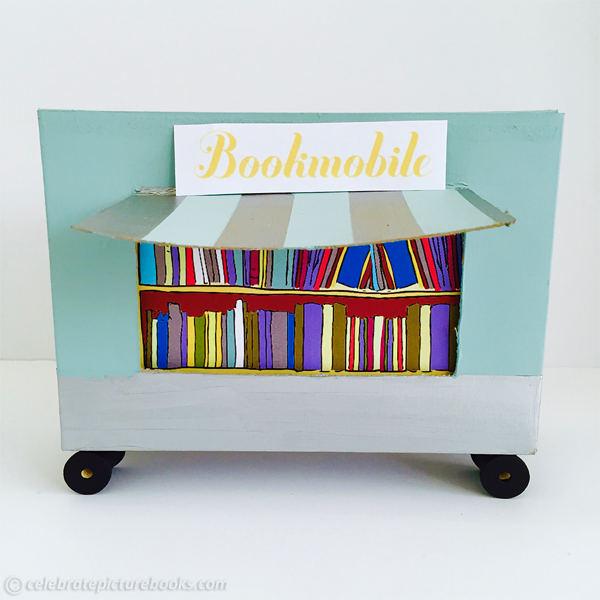
CPB - Bookmobile

Make a Box Bookmobile


Bookmobiles are love on wheels! If libraries are some of your favorite places, you’ll like making this box bookmobile! You can even use it as a desk organizer!

Supplies

  • Printable Book Shelves and Sign Template
  • Cardboard box, 16-oz pasta or other recyclable boxes work well (I used a 5” x 7 ¼ -inch pasta box)
  • Small wooden spools or bottle caps, large beads, or toy wheels
  • Paint
  • Scissors
  • X-acto knife
  • Strong glue
  • Paint brush

Directions

1.Gently pull the box apart at the seam and lie flat with the unprinted side facing up

2. To Make the Awning:

  • On one of the wide sides of the box, measure a rectangle 1 inch from the top of the box, leaving at least 1 ¼ inches at the bottom of the box and 1 ¼ inches on both sides
  • With the x-acto knife or scissors cut the sides and bottom of the rectable, leaving the top  uncut
  • Paint the top and underside of the awning (if you want to make stripes on the awning lay strips of tape side by side across the awning. Remove every other strip of tape. Paint the open stripes one color of paint. When the paint dries replace the tape over the paint and remove the tape from the unpainted stripes. Paint those stripes a different color.)

3. Paint the rest of the box on the unprinted side any way you like, let dry

4. Cut the Printable Book Shelf template to fit the size of your window opening, leaving at least a ½ inch margin all around

5. Tape the book shelf to the inside of the window

6. Reconstruct the box, making the original seam an inside flap

7. Glue the flap and sides together

8. If using small spools for wheels, paint them black. Let dry

9. Glue the wheels to the bottom of the box

10, Attach the Bookmobile sign, found on the printable template, above the awning

** To Make a Desk Organizer from the Bookmobile

  • Cut an opening in the top of the bookmobile with the x-acto knife or a scissor