September 11 – Grandparents Day and Q&A with Author Ellen Mayer

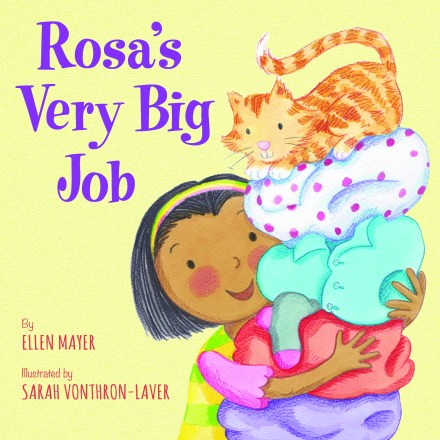
celebrate-picture-books-picture-book-review-rosa's-very-big-job-cover

About the Holiday

In the early 1970s Marion McQuade had the idea for a special day of the year when grandparents and grandchildren could show their love for one another. She further wanted it to be a day when grandparents could pass down the wisdom they had gained over their lifetime as well as share a bit of family history. Of course the same goes for grandparents learning the latest and greatest from the kids in their lives—from new technology to current fads. When all generations share their experiences, we’re all a lot smarter—and have closer relationships!

Rosa’s Very Big Job

Written by Ellen Mayer | Illustrated by Sarah Vonthron-Laver


Rosa may be little, but she has big ideas about how to help. While Mama is out shopping for groceries for that night’s dinner, Rosa decides to surprise her by folding and putting away the laundry. The basket is piled high with fluffy dry clothes, sheets, and towels. Rosa watches her grandpa reading the newspaper. “‘Please help me, Grandpa!’” she says. She tugs on her grandpa’s hands, trying to pull him out of his chair. “‘Come on, Grandpa! Get up.”
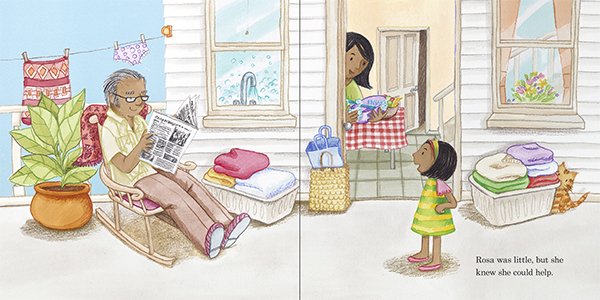
celebrate-picture-books-picture-book-review-rosa's-very-big-job-rosa-likes-to-help

Image copyright Sarah Vonthron-Laver, text copyright Ellen Mayer, courtesy of Star Bright Books, starbrightbooks.com

Grandpa seems to have a little trouble managing: “‘It’s difficult to carry these enormous piles,’” he sighs. But Rosa knows that smaller armloads work better. Grandpa’s clothes come unfolded as he puts them in the drawer. “‘Be neat. Like me,” Rosa says, showing him her tidy stack. Poor Grandpa! He has to keep hanging up the same jacket over and over. “‘It’s difficult to keep this jacket from sliding off the hanger,” he says. Rosa has the answer: “‘Zip it up,’” she explains. “‘Then it stays on.’”

Grandpa sinks back into his chair. “‘You are terrific at doing laundry, Rosa. And I am exhausted,’” he says. But this is no time to quit—Rosa has big plans. As she steps into the now empty laundry basket, she exclaims, “‘Come on, Grandpa! Get in the boat. Help me sail back to there.’” Rosa points to the linen closet.
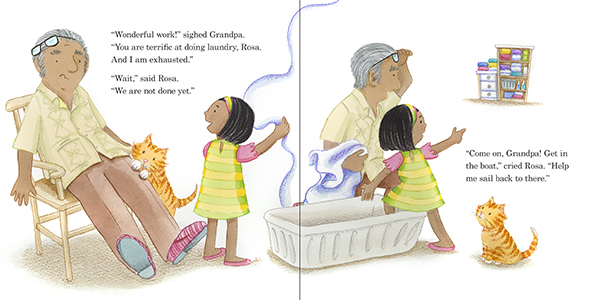
celebrate-picture-books-picture-book-review-rosa's-very-big-job-rosa-uses-basket-as-boat

Image copyright Sarah Vonthron-Laver, text copyright Ellen Mayer, courtesy of Star Bright Books, starbrightbooks.com

Suddenly, the floor swells with ocean waves teeming with fish. Grandpa channels his inner sailor as he holds aloft a sheet as a sail. As the wind billows and they come perilously close to the kitchen table, he says, “‘It’s difficult to sail around this enormous rock!’” Contemplating the rising sea, he exclaims, “‘It’s difficult to sail over this enormous wave!’”

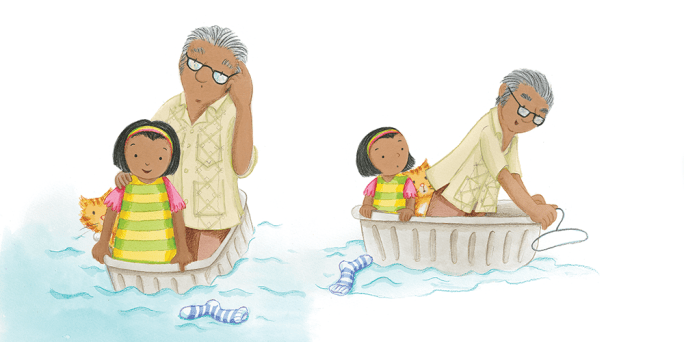
There’s a dangerous storm ahead, warns Grandpa, “‘I can’t hold the sail in this strong wind.’” Rosa is there to help and grabs one side of the sheet. “‘Hold tight,’” she orders. “‘Use both hands.’” At last the seas die down and Grandpa is ready to steer the laundry basket back to port, but Rosa has a more entertaining thought. Spying a sock on the floor, Rosa wants to catch the “enormous fish.” Grandpa obliges and picks up a hangar for a fishing pole. He holds Rosa as she stretches out over the edge of the laundry basket to land her fish.
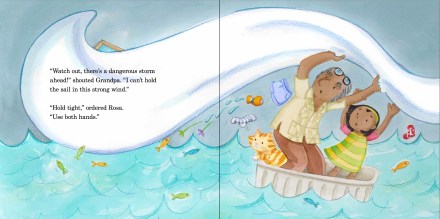
celebrate-picture-books-picture-book-review-rosa's-very-big-job-sailing-with-sheet

Image copyright Sarah Vonthron-Laver, text copyright Ellen Mayer, courtesy of Star Bright Books, starbrightbooks.com

Just as Rosa nabs the fish, Mama comes home with her bags of groceries. She’s surprised to see that the laundry is not in the basket. Rosa runs to her and proudly explains, “‘We put all the laundry away. It was a very big job. We carried enormous piles. Grandpa dropped things. And I picked them up. It was very difficult for Grandpa. He got exhausted. But not me. I am terrific at laundry!’” Mama agrees that Rosa is a terrific helper. Then Rosa leads her mother to see the most surprising thing of all—the fish she has caught for dinner!
celebrate-picture-books-picture-book-review-rosas-very-big-job-rosa-and-grandpa-fishing

In her series of Small Talk Books® Ellen Mayer presents exciting stories for preschoolers full of imagination and rich language learning. Rosa’s Very Big Job introduces Rosa, a sweet girl bubbling with enthusiasm and the desire to help. The close relationships between Rosa, her mother, and her grandpa promote cooperation as well as effective modeling of speech patterns and a way to introduce larger words in an organic manner through play and common chores. Rosa’s inventive idea to turn the laundry basket into a boat is delightfully enhanced by her grandpa’s willingness to share in the story and expand on it. Humor, cheerful banter, and the easy camaraderie between Rosa and Grandpa invite young readers to join in the fun as they build confidence in their language learning.

Sarah Vonthron-Laver depicts Rosa’s afternoon with her Grandpa with joy and the spirited energy young children bring to everything they do. Grandpa is happy to spend time with his granddaughter, yet shows honest feelings of tiredness and frustration that spur on the plot. The transition from doing laundry to using the basket as a boat is as seamless as a child’s imagination, and the way Rosa and her grandpa use household items to create “sails,” “rocks,” “fish,” and “fishing poles” will give readers great ideas for post-reading play. Bright colors, an adorable kitten, and familiar surroundings welcome young children into the world of reading and expanded vocabulary.

Rosa’s Very Big Job would be a welcome addition to a young child’s bookshelf, not only for its fun story that kids will want to hear again and again, but for its leap into imagination that kids will want to replicate.

Dr. Betty Bardige, an expert on young children’s language and literacy development, provides tips for parents, grandparents, and caregivers following the text.

Ages 2 – 6

Star Bright Books, 2016 | ISBN 978-1595727497

Discover more about Ellen Mayer and her books as well as book-related activities and literacy initiatives she’s involved with on her website!

Find Sarah Vonthron-Laver on Facebook!

Grandparents Day Activity
celebrate-picture-books-picture-book-review-rosa's-big-job-paper-dolls-made

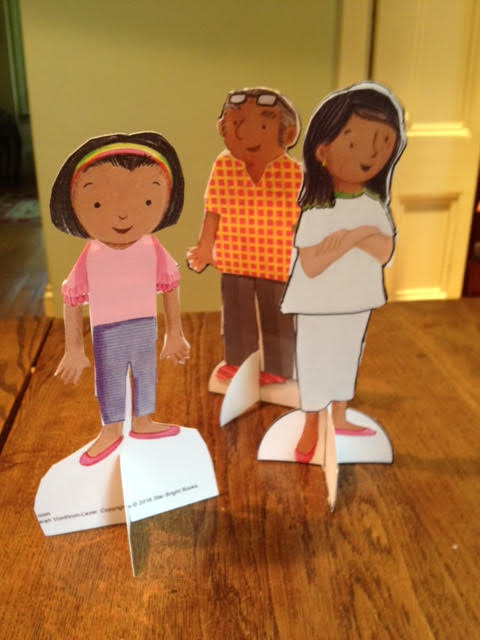
Original illustrations by Saran Vonthron-Laver, Copyrights © 2016 Star Bright Books. Paper dolls created by AislingArt and Celebrate Picture Books, copyrights © 2016

Rosa’s Very Big Job Paper Dolls

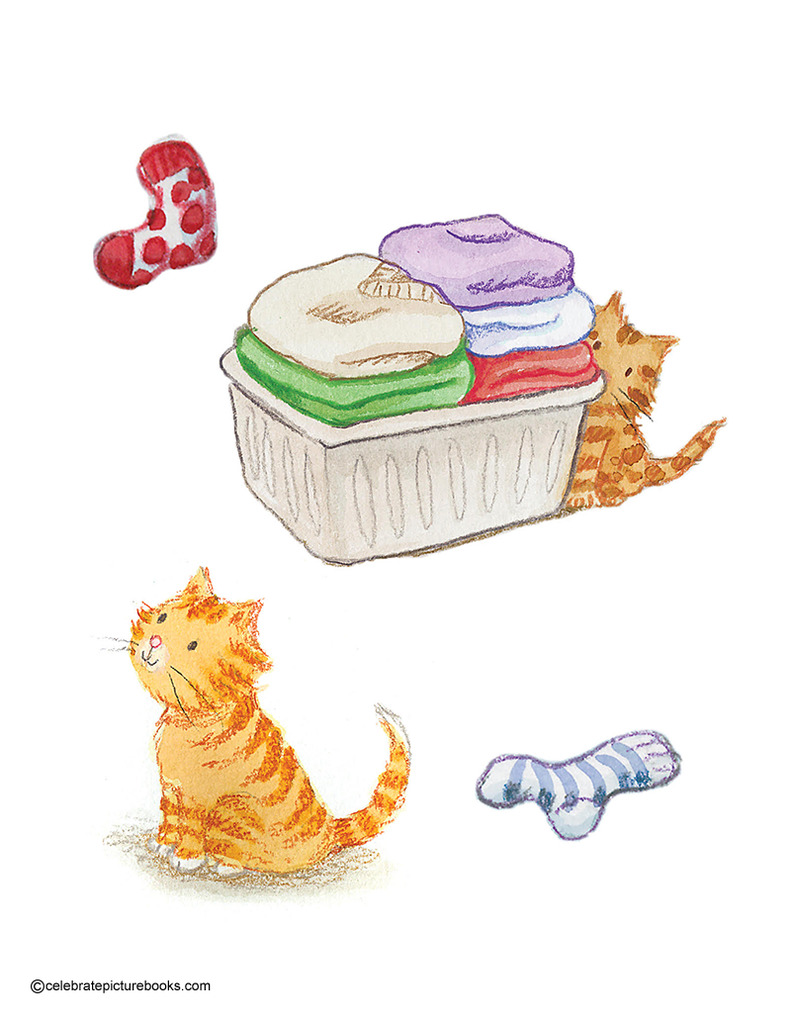
Rosa loves helping out at home. She’s terrific at doing laundry – folding and putting away the family’s clothes, socks, and linens. You are terrific at helping too! Can you help Rosa, Mama, and Grandpa get dressed and ready for the day with these printable paper dolls? You’ll even find a laundry basket, socks, and Rosa’s sweet kitty to play with! 

Supplies

Printable Paper Dolls, Clothes, and Extras

  • Heavy stock paper and/or poster board
  • Scissors
  • Glue

Directions

  1. Print dolls on regular paper or heavy stock paper. Dolls printed on heavy stock paper may stand on their own with the supplied stand cross piece. For dolls printed on regular paper, you can cut the supplied stand templates from poster board or card stock and glue the dolls to the backing.
  2. Rosa’s kitty and the laundry basket can also be attached to the supplied template if needed
  3. Print clothes for each figure
  4. Color the blank clothes templates any way you’d like
  5. Cut out clothes and extra items
  6. Fit outfits onto dolls
  7. Make up your own stories about Rosa, Mama, and Grandpa!

Interview with Author Ellen Mayer

celebrate-picture-books-picture-book-review-interview-with-Ellen-Mayer

Today, I’m happy to present a fascinating interview with Ellen Mayer, a writer and expert in early literacy, in which she discusses her involvement with various organizations and programs, her baby granddaughter, why Hug Your Cat Day is at the top of her list of holidays, and gives us a peek at a very special sugar egg.

I’m really interested in your work in the education and literacy fields. Could you talk a little bit about your job as an education researcher and an early literacy home visitor, and how you got into those fields?

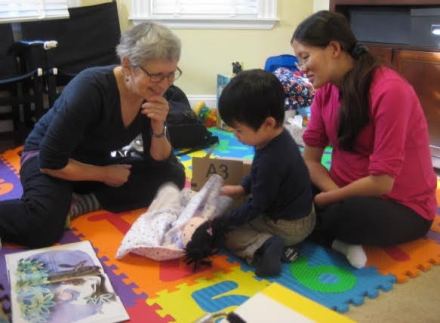
I got into these fields after leaving a Sociology PhD program right near the end.  I didn’t want to be an academic and teach, I wanted to do applied research – to solve practical problems out in the world and to make a difference in the lives of those who were struggling. At the Harvard Family Research Project at Harvard’s Graduate School of Education, I studied the ways that families from underserved communities were engaged in supporting their children’s learning and education, and created research-based materials for families and schools to promote effective engagement. One of these was the Family Involvement Storybook Corner—curated picture book selections with family engagement themes. That got me interested in early literacy and picture books.

After researching family engagement in children’s learning for many years, I decided I wanted to go out into the field and be a practitioner and work directly with families on this topic. I worked as an early literacy home visitor with diverse families with the Parent-Child Home Program, modeling ways to share stories with little ones to build early language. I actually got paid to read picture books and play with families in their homes!
celebrate-picture-books-picture-book-review-interview-with-Ellen-Mayer-home-visit

At the same time, I was pitching my Small Talk Books®, a collection of playful stories about everyday activities that provide fun for kids and ideas for adults – Rosa’s Very Big Job is one. The adults in the stories are engaged with children’s learning, modeling conversational ways to build young children’s language.

I read that your book Red Socks, another of the Small Talk Books®, is being used in a program to turn wash time at Laundromats into talk time for literacy development. Could you discuss this early literacy initiative?

Yes! Wash Time/Talk Time is a terrific campaign led by Too Small To Fail, a joint initiative of the Clinton Foundation and the Opportunity Institute teaming up with a host of partners to turn Laundromats in underserved areas into venues for early literacy. This campaign distributes free books and information to families in Laundromats about building early language to help close what’s called the “word gap” by promoting parent conversation with babies and young children. Almost 60% of children in our country start kindergarten behind in their language development and this then sets them on a downward path and they get even further behind in school.

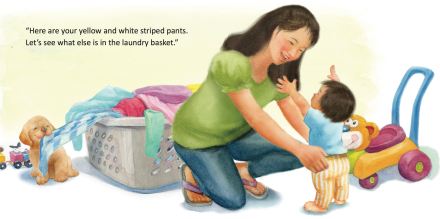
Red Socks was a natural fit for this program. In it a Mama narrates what she is doing for her little pre-verbal child as she folds the laundry and dresses the child—and as they search for a missing sock!
celebrate-picture-books-picture-book-review-interview-with-Ellen-Mayer-Red-Socks-book-interior-art

Illustration © 2015 by Ying-Hwa Hu, text © 2015 Ellen Mayer, courtesy of Star Bright Books

I have to say that it’s a dream come true that Too Small To Fail is using my book.

Wash Time/Talk Time is really reaching the families on the other side of the word gap who most need the ideas and inspiration in Red Socks. When I began writing the Small Talk Books® I wanted to include stories about doing laundry, as it’s something we all do as parents and provides lots of things to talk about with children. (Like the color of socks!) In fact, I used to sit in Laundromats and observe families when I was thinking up ideas for stories. I guess that’s the sociologist in me.
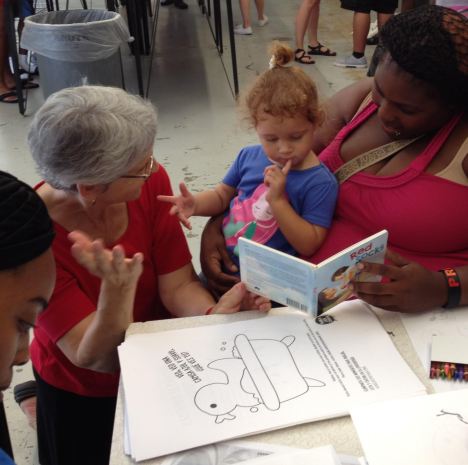
celebrate-picture-books-picture-book-review-interview-with-Ellen-Mayer-free-laundry-day

We just had the opportunity to visit one of the Laundromats in the campaign—at the Free Laundry Day in Tampa, FL hosted by The Laundry Project—and share Red Socks with families. You can see some of the fun illustrator Ying-Hwa Hu and I had here: 

What inspired you to begin writing picture books?

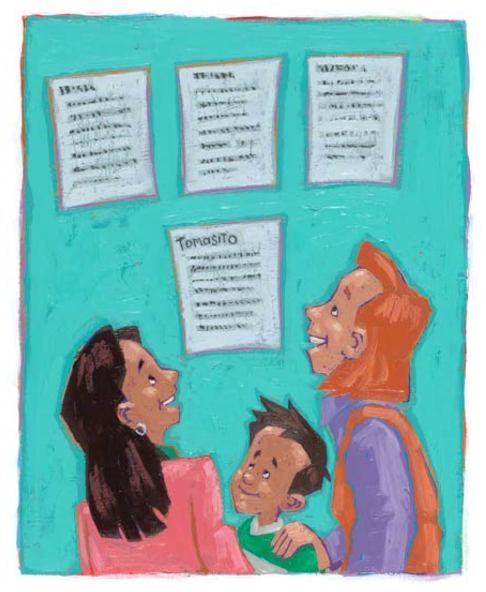
I came to picture book writing through a backdoor. When I was at Harvard Family Research Project, I was thinking about new ways to convey our ideas from research into practice for parents, and it occurred to me that a read-aloud picture book could address an audience of parents, as well as the primary one of children. My boss was enthusiastic about the idea, and so I enrolled in an adult ed class on writing for children. Then I turned one of our research case studies about challenges an immigrant Latino family had in communicating with their son’s teacher into a picture book, Tomasito’s Mother Comes to School/La mamá de Tomasito visita la escuela. Joe Cepeda did the art for it, and we made it downloadable for free.
celebrate-picture-books-picture-book-review-interview-with-ellen-mayer-tomasito

Illustration ©2007 Joe Cepeda

What’s up for you next?

Some new things! I have a fellowship with the Storytelling Math Project that’s funded by the Heising-Simons Foundation and coordinated by TERC, a not-for profit STEM research and development organization here in Cambridge, MA. I’ll be a member of a group that’s identifying, creating, and promoting math-infused storybooks for diverse young children and I hope to create a couple of Small Talk Books® along these lines—probably about supermarket shopping! I also was asked to help out the Highlights magazine editorial team that creates HELLO magazine for 0-2 years and be an outside reviewer for issues before they go to publication. And then I’ll be volunteering as a visiting children’s book author to the Somerville Family Learning Collaborative, the family engagement and early childhood hub of the Somerville, MA Public Schools, sharing my books with playgroups and new parent groups.  

But mostly, I plan to write! I have a bunch of picture book manuscripts in various states, and ideas for new ones. These manuscripts are different from the Small Talk Books®; they don’t have a deliberate educational underpinning to them. They are fun, and just fun. One, for example, is called What To Do With Ruby-Lou and it’s about a baby who doesn’t laugh, no matter what her family does. Who is going to be able to get a laugh out of Lou? Well, it’s a surprise and it just might require some audience participation. I’ve had an agent in the past and hope to find a new one to rep me with these picture books.

You recently became a grandmother. Can you tell me a little about your granddaughter?

I thought our granddaughter was the most wonderful and expressive baby in the world when was she born – of course! She and my advance copy of the new Rosa book arrived into the world at just about the same time.
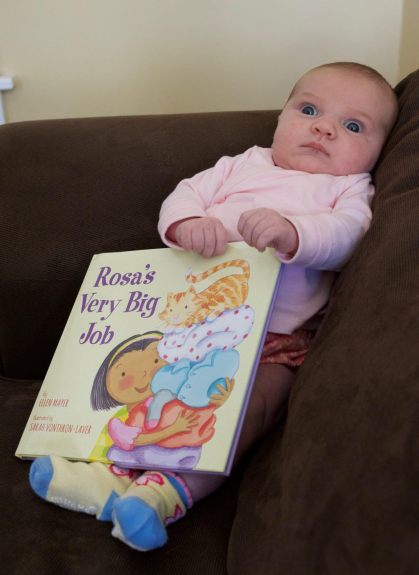
celebrate-picture-books-picture-book-review-interview-with-Ellen-Mayer-granddaughter-holding-book

At three months now my granddaughter is a big reader and is riveted on the B&W hi-contrast board book genre, especially one board book about cars and trucks. She moves her head back and forth, from one end of the spread to the other, scanning the images on the page like a studious scholar of some ancient text.

What is the best part about being a grandmother?

For me the best part about being a grandmother is being able to simply enjoy my granddaughter and play with her and watch her develop, and not have to worry about taking care of her daily needs. I didn’t have to stress when she refused to take the bottle before starting full-day childcare. That wasn’t my job. (She did take it – of course!) They live nearby, and seeing her once or twice a week, I love noticing small changes on each visit. I also love seeing our daughter and son-in-law parent.

Have you given thought to what you’d like your granddaughter to call you?

Our daughter asked us ahead of time what we’d like to be called when we became grandparents. I thought it was a wise idea to be proactive and select a name immediately, to avoid being named by the grandchild something like “Grandma GA-GOO-GA.” My great aunt Jane is called “Nini” as a grandmother, and I’ve always loved that, but I didn’t want to steal it. So I chose “Mimi.”
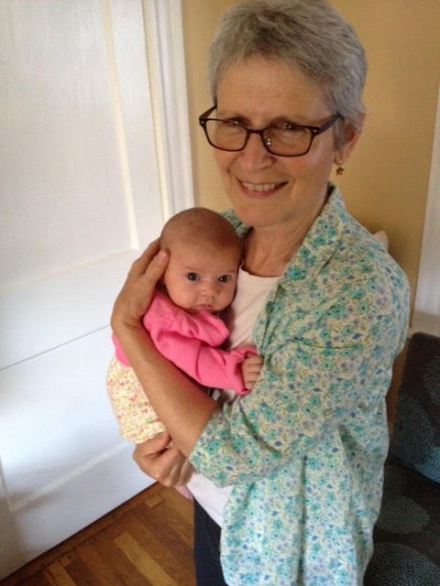
celebrate-picture-books-picture-book-review-interview-with-Ellen-Mayer-ellen-with-granddaughter

It sounds as if Grandparents Day may be one of your top holidays! Do you have another favorite?

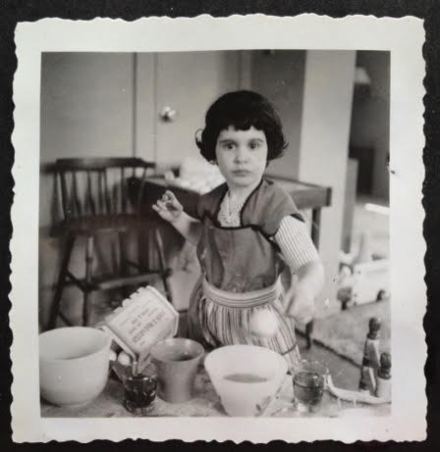
When I was little, I liked Easter a lot because it combined a lot of my favorite things: crafts, springtime, running around outside, candy. Also, we didn’t dress up much as kids, but I do remember Easter bonnets!
celebrate-picture-books-picture-book-review-interview-with-Ellen-Mayer-dying-easter-eggs

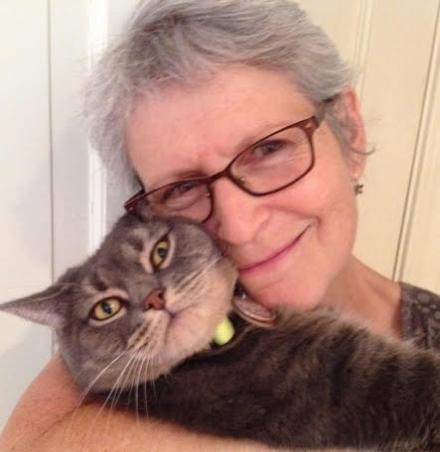
When our children were little, their birthdays became my favorite holiday celebrations. Now that they are grown, maybe I need to pick a new favorite holiday? I see that June 4th is Hug Your Cat Day. That might be just right: we have a rather large and ferocious cat and when she actually lets you hug her, well, it’s a cause for celebration.
celebrate-picture-books-picture-book-review-interview-with-Ellen-Mayer-hugging-cat

Do you have an anecdote from any holiday that you’d like to share?

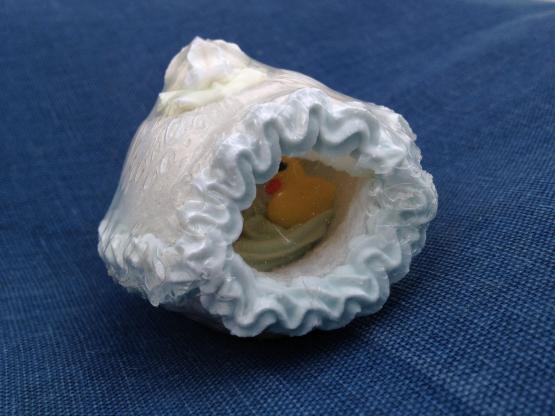
When I was six years old, I saw the Easter Bunny. I was staying at my Grandparents’ house, and I looked down the stairwell, and there he was, crossing the landing at the foot of the stairs. He was quite tall, wore a yellow slicker that was too small for him, and he was carrying a large Easter basket. I’m afraid I didn’t have my Brownie camera with me at the time to snap a photo.

But I do have an unwrapped sugar Easter egg that I’ve saved from that era.
celebrate-picture-books-picture-book-review-interview-with-ellen-mayer-easter-egg

Thanks for sharing so much about your work and life, Ellen! I wish you all the best with Rosa’s Very Big Job, your other Small Talk Books®, and of all your other ventures!

You can also find Ellen Mayer on Facebook and Twitter

Rosa’s Very Big Job can be found at

Star Bright Books | Amazon | Barnes & Noble | Books-a-Million | IndieBound

Other Small Talk Books® available from Ellen Mayer and Star Bright Books include Cake Day, Red Socks, and A Fish to Feed and can also be found at the above booksellers.

Visit Ellen Mayer on her:

Website | Facebook | Twitter

Picture Book Review
September 10 – Swap Ideas Day

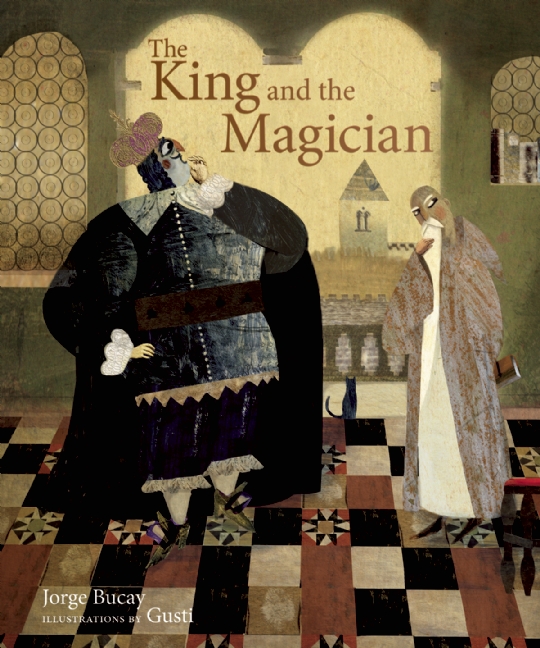
celebrate-picture-books-picture-book-review-the-king-and-the-magician-cover

About the Holiday

Today is a perfect day to get together with people you love, trust, and respect—and even some who challenge your thinking—to discuss matters large and small. Not only might you gain a different perspective on your pals, but you all may come up with the next Great Idea!

The King and the Magician

Written by Jorge Bucay | Illustrated by Gusti


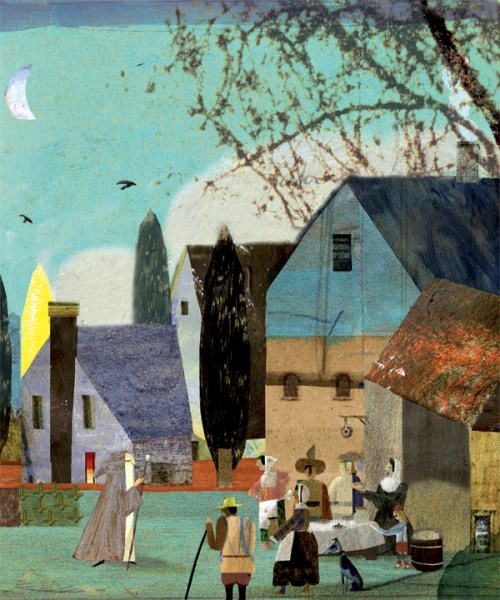
In a faraway land there once lived a King who was very powerful. Not only did he love power, he commanded that everyone in his kingdom obey and admire him. Tremblingly, his subjects reassure him every day that he is the most powerful man in the kingdom. One day, however, the King hears a rumor that down in the village lives a Magician who can predict the future. The King fears that this man will become more powerful than he, and he sends his spies to learn more. The spies return and reveal that not only can the Magician tell the future, he is loved and admired by everyone.

celebrate-picture-books-picture-book-review-the-king-and-the-magician-townspeople

Image copyright Gusti, courtesy of Abbeville Press

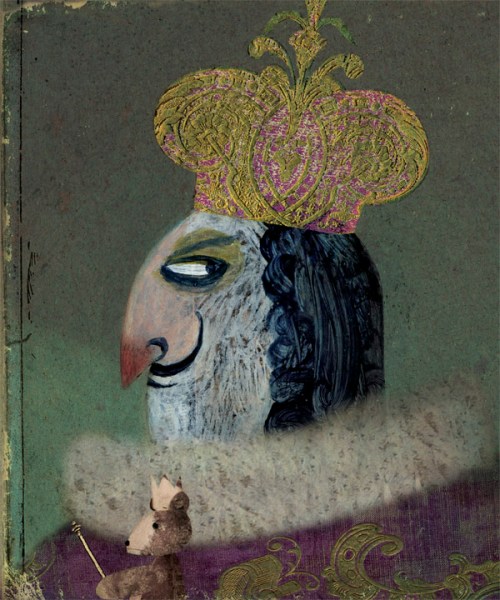
The King becomes terribly jealous and plots to do away with his most hated enemy. He devises a plot to trick the Magician. He will host a party, and at the end he will ask the Magician if he can truly predict the future. If the Magician says “No,” he will be exposed as a fraud, and the king will kill him. If the Magician answers “Yes,” the King will ask him to predict the date of the Magician’s death and would then kill him. The King is pleased with his scheme because either way, he will be rid of his rival.

celebrate-picture-books-picture-book-review-the-king-and-the-magician-king-has-evil-idea

Image copyright Gusti, courtesy of Abbeville Press

On the night of the party, the King summons the Magician and asks him the fatal question. The Magician is more than just a seer or a sorcerer—he is wise. He looks at the King and states, “the Magician of this kingdom will die the exact same day as his King.”

Now the King is in a terrible quandary. He does not want to risk the possibility that this old man’s prediction is true. He must now protect the Magician in order to save his own life. He quickly concocts a ruse and asks the Magician to stay the night in the castle, saying he wants to consult with him about some royal matters. In fact, he just wants to keep an eye on him.

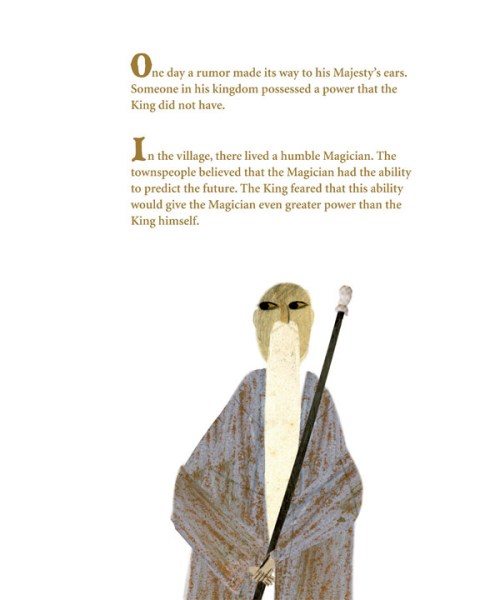
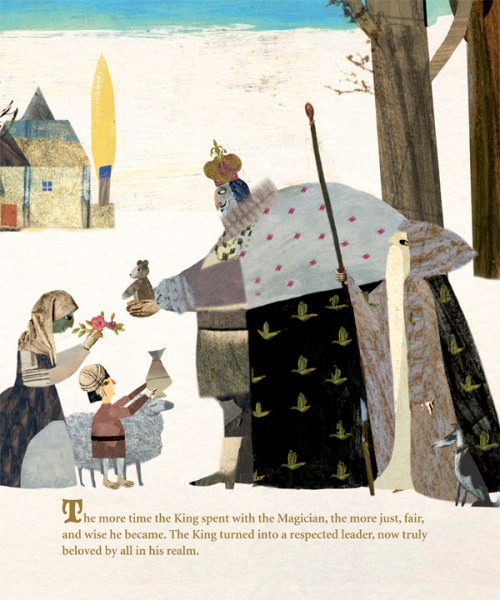
The Magician agrees. The next morning the King goes to the Magician and asks his advice on some kingly decisions. The Magician offers good suggestions, and the king accepts them. As the months go by, the King continues to rely on the Magician for guidance, and slowly the King learns to be fair and wise. He becomes the respected and admired ruler he always wanted to be.

celebrate-picture-books-picture-book-review-the-king-and-the-magician-old-magician

The King realizes that not only is the Magician a trusted advisor, he is a loyal and beloved friend. One day, wracked with guilt over his one-time plot to kill the Magician, the King reveals the story. The Magician listens to the King’s secret, and shares one of his own.

On the night of the party, the Magician says, I saw you reach for the hilt of your sword when you questioned me, and I knew your intentions. He then divulges that he made up the prediction of their shared death date to teach the King a lesson—one the King has learned. He says, “It is our lives that have become entwined, not our deaths.”

For many more years the King and the Magician live as friends and confidants. The kingdom grows stronger and the King kinder and more loved by his people. One day the Magician dies. The King is sad, and realizes he is no longer afraid of his own death. The King has learned the Magician’s lesson well, and even though his advisor is gone, he continues to make wise and beneficial decisions.

celebrate-picture-books-picture-book-review-the-king-and-the-magician-changed-king

Image copyright Gusti, text copyright Jorge Gusti, courtesy of Abbeville Press

Ten years later the King writes a letter to his son and heir. In his letter, the King cautions his son that at sometime in his life he may come across someone or something that “will arouse fear and jealousy in your soul.” He will want to destroy this person or thing to alleviate his fear, his father tells him. Instead, says his father, “open your heart or your home” because “what you thought was your most feared enemy, is really your most powerful friend.”

Jorge Bucay has written a classic tale of wisdom verses power wrapped around a clever trick. The story, full of intrigue and twists, initiates the kind of thought that leads to true enlightenment. The straightforward storytelling, beautifully paced over a lifetime of growth and change, builds suspense while lyrical descriptions create a beautiful flow that depicts both the quandary of the King and the kindness of the Magician.

Gusti’s lavish illustrations, reminiscent of hieroglyphics and Medieval tapestries, are rendered in dark, rich brown, rust, black, olive and blue hues that gorgeously depict the splendor of the King and his castle, but also signal the somber weight in his soul. The regal tone even extends to the gilded text. The King is drawn as an imposing figure, towering over everyone else in his kingdom, but his feet and hands are tiny, lending him a bit of a comical yet vulnerable air. The King’s eyes narrow with cunning as he plots his evil deed but widen in doubt and dispair as the Magician works his special brand of magic.

This lovely book—in both message and art—would be a wonderful addition to any child’s or fable-lover’s library.

Ages 4 – 8

Abbeville Kids, 2014 | ISBN 978-0789212047

While I take some personal days over the next couple of weeks, I am re-blogging some earlier posts with updated interior art, activities, and links, when available.

Swap Ideas Day Activity

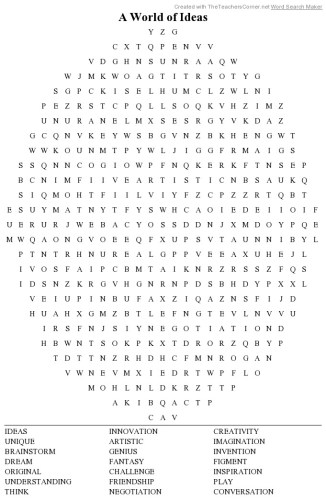
celebrate-picture-books-picture-book-review-a-world-of-ideas-word-search

A World of Ideas Word Search


Creative ideas are a little like magic – sometimes seeming to come out of thin air – and can make the world a better place! Find the 21 words in this printable A World of Ideas Word Search about what swapping ideas can conjure up! Here’s the Solution!

Picture Book Review
 

September 9 – It’s National Courtesy Month

celebrate-picture-books-picture-book-review-the-black-and-white-factory-cover

About the Holiday

September has been designated as National Courtesy Month to remind us that good manners and watching out for others, goes a long way toward making the world a more cooperative and happy place. Sometimes common courtesy is as black and white as directly following the rules…but sometimes…well, I’ll let you decide…

The Black and White Factory

Written by Eric Telchin | Illustrated by Diego Funck


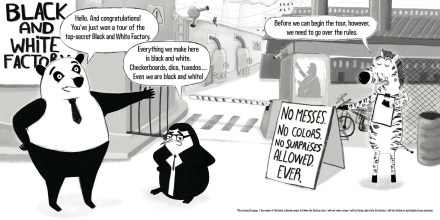
You are one lucky reader! You have won a tour of the Black and White Factory where the employees are hard at work making products like checkerboards, dice, tuxedos…you know the stuff. Even the bosses—a panda and a penguin—are in black and white. Before you start your tour, you’re met by a zebra foreman who goes over the rules of the factory. And they are these:

“No Messes, No Colors, No Surprises Allowed.” When? “Ever.”

As you proceed inside your first stop is the billiard ball machine—8 balls only, of course! It doesn’t take you long to be ushered into the “top-secret Experiment Room,” where innovative products are being developed. You may be the first ever to see “trick dominoes that are impossible to knock over” and new black-and-white-paint in either checkerboard or polka-dot. Another prototype displayed on a wall chart is “never-melting vanilla ice cream.” Also prominently displayed are the factory’s rules: “No Messes, No Colors, No Surprises Allowed. Ever.”

celebrate-picture-books-picture-book-review-the-black-and-white-factory-outside-factory

Image copyright Diego Funck, text copyright Eric Telchin, courtesy of simonandschuster.com

Moving on you push the button leading to the Animal Room. Housed here are white Dalmatians, dairy cows, and skunks who are being sprayed with their distinctive black marks. An elevator takes you to the Bar Code Room. While waiting for your car, you are exhorted to remember the rules: “No Messes, No Colors, No Surprises Allowed. Ever.” The Bar Code Room is “the cleanest, most perfect, most black and white room in the whole factory. Every bar code in the world is make right here.” Even the one for the book you’re reading! Turn it over and see!

celebrate-picture-books-picture-book-review-the-black-and-white-factory-factory-floor

Image copyright Diego Funck, text copyright Eric Telchin, courtesy of simonandschuster.com

“Wait!” Wait!! Turn the book back! A stripe of yellow has seeped into the factory! “Someone didn’t follow the rules. Someone brought an outside mess into the Black and White Factory.” The bosses need your help! Can you “use your fingers to wipe the color off the bar code?” Oh, no, no, no! That just made it worse—now it’s smudged yellow and orange! “Quick! Do something! Rub the colors with your sleeve. Or your elbow. Something.”

We interrupt this review to remind you of the RULES: “No Messes, No Colors, No Surprises Allowed. Ever.” Right, then, back to our dilemma. Now the colors are dripping! It’s such a mess! Suddenly, the zebra has an idea. He asks you to “hold the book upright and tilt it so the color drips down the bottom of the page.” Okay—phew!—great job!

Oh, no!! More colors are creeping in! “Swirl the book so the colors fly off the page,” the penguin orders. You are one strong swirler—the zebra, penguin, and panda are all topsy-turvy, and now the factory looks like an abstract painting! This definitely is not good. “What a mess! The Black and White Factory is ruined.” But the panda may have an idea. Everyone, “back to the top-secret Experiment Room.” There the panda, zebra, and penguin, splattered in paint, stand in front of the “Air-powered comprehensive cleaning contraption.” They just need your help in getting it started. Can you blow into the nozzle? Harder? Come on, put some oomph into it! All right!

celebrate-picture-books-picture-book-review-the-black-and-white-factory-bar-code-room

Image copyright Diego Funck, text copyright Eric Telchin, courtesy of simonandschuster.com

The machine’s at 100% power! The machine shakes and whirrs with a color overload. It explodes with a rainbow of colors that covers everything in the factory. The panda, zebra, and penguin stand in the midst of it. “Everything is so…different,” says the panda. “It’s…colorful…,” adds the penguin. “And wonderful!” concludes the zebra. There’s just one problem…The RULES: “No Messes, No Colors, No Surprises Allowed. Ever.” Hmmmm….

How about: “No Messes, No Colors, No Surprises Allowed. ForEver.”

Yes! Much better! So “that concludes the Best. Tour. Ever!” Off you go—just don’t forget the rules: “Messes, Colors, Surprises Allowed. Forever.”

Eric Telchin’s The Black and White Factory will have kids tipping, tilting, swinging, and even reading this fun and funny interactive picture book. Directly addressing the reader, the three staid and rule-abiding managers of a very focused factory, play straight-man to the child’s laugh inducing and unintentional “mistakes” that lead to a brighter future. With the pacing of a favorite theme-park ride, the story has a suspenseful “Oh, no! What’s going to happen?” feeling as readers progress from page to page until the first tinge of yellow precipitates the humorous chaos to come.

Diego Funck’s sly illustrations riff on the black-and-white theme, as he designed a clever product line in line with “the rules.” Kids will want to linger over the pages to catch all the jokes and visual puns. The reactions of the three employees of The Black and White Factory will make readers laugh too as they endeavor to hang on to their beloved rules in the midst of their changing world. The bold colors of the transformed factory are as refreshing as the sun after a dark, rainy day.

The theme that creativity and expression come from making messes and allowing surprises to happen is a welcome idea and one that leads to innovation and personal freedom. The Black and White Factory is sure to be asked for again and again!

Ages 4 – 7

little bee books, 2016 | ISBN 978-1499802771

Learn more about Eric Telchin on his websites – erictelchin.com and boyseeshearts.com

To view a portfolio of Diego Funck’s artwork, visit his website!

National Courtesy Month Activity

celebrate-picture-books-picture-book-review-black-and-color-crayon-craft-boat

Let Your Colors Shine Through! Craft


With this easy-to-make craft you can show your colors and your creativity!

Supplies

  • Heavy stock paper
  • Crayons, a variety of colors and black

celebrate-picture-books-picture-book-review-black-and-color-crayon-craft-colors

celebrate-picture-books-picture-book-review-black-and-color-crayon-craft-black-crayon

Directions

  1. Color the paper with blocks, stripes, or splotches of color
  2. Cover the colored paper entirely with the black crayon
  3. Scrape a design in the black crayon, exposing the colors beneath

Picture Book Review
September 8 – International Literacy Day

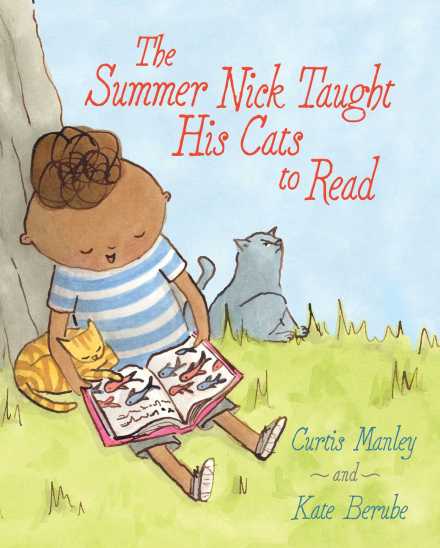
celebrate-picture-books-picture-book-review-the-summer-nick-taught-his-cats-to-read-cover

About the Holiday

In 1966 UNESCO (United Nations Organization for Education, Science and Culture) established International Literacy Day on this date to “actively mobilize the international community to promote literacy as an instrument to empower individuals, communities, and societies.” Marking its 50th anniversary, International Literacy Day is this year celebrating the theme “Reading the Past, Writing the Future” to commemorate five decades of efforts to increase in literacy rates around the world and the progress made. “It also looks to innovative solutions to further boost literacy in the future.” With a focus on innovation, International Literacy Prizes are also awarded to people with outstanding solutions that can drive literacy towards achieving future goals.

The World Literacy Foundation also celebrates today’s holiday with the 2016 campaign “The Sky’s the Limit,” which aims to eliminate the digital divide for students in the developing world.

The Summer Nick Taught His Cats to Read

Written by Curtis Manley | Illustrated by Kate Berube


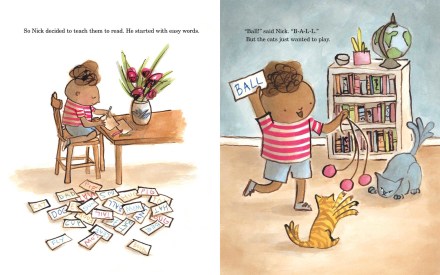
One summer Nick, Verne, and Stevenson did everything together. Nick is a little boy and Verne and Stevenson are two very different cats. Nick and Verne loved to spend time near the water—Stevenson tolerated it. Nick and Verne slept happily in a tent under the stars—Stevenson barely shut his eyes. While Nick rode his bike Verne eagerly sat in the front basket—Stevenson hunkered down in a box on the back. But when Nick sat down to read, both cats had their own ideas of fun—like lying on top of the book—and Nick could hardly read a sentence.

celebrate-picture-books-picture-book-review-the-summer-nick-taught-his-cats-to-read-ball

Image copyright Kate Berube, text copyright Curtis Manley, courtesy of simonandschuster.com

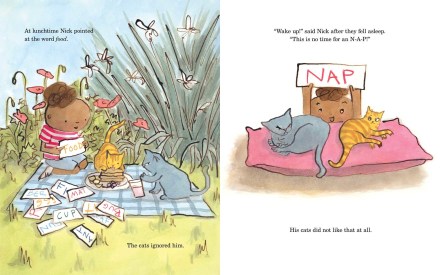
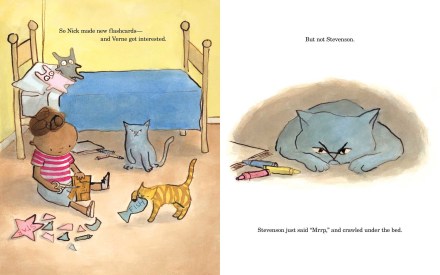
“So Nick decided to teach them how to read. He made flash cards and started with easy words” like “ball,” but Verne and Stevenson just wanted to play with the ball. While the three had a picnic on the lawn, “Nick pointed to the word food. The cats ignored him.” When the cats snoozed Nick woke them with a sign. “‘This is no time for an N-A-P!’” he said. Neither cat responded well, so Nick tried a new tactic. He made word-shaped flash cards. Verne took a nibble of “F-I-S-H,” but Stevenson hid under the bed.

celebrate-picture-books-picture-book-review-the-summer-nick-taught-his-cats-to-read-food-flash-cards

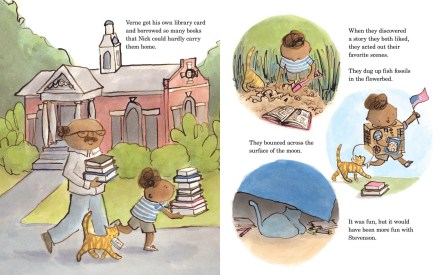
Nick began to see that Verne liked stories about cats and fish. “Verne loved fish. He followed along as Nick read, learning the sounds of the letters.” He even read by himself, discovering new stories, especially 2,000 Leagues Under the Sea. But Stevenson? When Nick spelled words for him, he merely ran under the porch, hissing. By this time Verne was reading so many books that he got his own library card and Nick needed help carrying all of his books home. Nick and Verne had fun acting out their favorite stories, but they missed Stevenson.

One day “Verne discovered a treasure under the bed—a great stack of Stevenson’s pirate drawings. “‘Wow!’” Nick whispered. “‘Stevenson drew a story.’” Nick and Verne put the pages together and began to write words to go with them. When the story was finished, Nick, Verne, and Stevenson “squeezed under the porch, gave Stevenson an eye patch, and read The Tale of One-Eyed Stevenson and the Pirate Gold. Stevenson listened and followed along. He didn’t run away. Or hiss. Not even once.”

celebrate-picture-books-picture-book-review-the-summer-nick-taught-his-cats-to-read-library

Image copyright Kate Berube, text copyright Curtis Manley, courtesy of simonandschuster.com


Suddenly, Stevenson couldn’t get enough of books.  Even before Nick woke up, Stevenson could be found with his nose in Treasure Island or another adventure book, and whenever Nick and Verne played pirates, Stevenson joined in. He helped bring down “scurvy mutineers” and found buried treasure. Now the three readers do everything together. They “hunt for dinosaurs in the lost world behind the garden…race around the yard in eighty seconds…and journey to the center of the basement.” And while they all like to read on their own, they also like it when someone reads to them. “Hmmm…,” Nick thinks, maybe next he could teach his cats to talk. “‘Meow,’ says Stevenson.”

celebrate-picture-books-picture-book-review-the-summer-nick-taught-his-cats-to-read-grumpy-stevenson

Image copyright Kate Berube, text copyright Curtis Manley, courtesy of simonandschuster.com

Curtis Manley’s adorable tribute to reading and learning to read using cats, with their variety of personalities, is inspired. Just as some people respond more to the words while others are attracted by the pictures, Verne and Stevenson have their own relationships with books. The names of the cats and their preferred reading material are also reminders that books are personal, and disinterest in one type of story does not reflect disinterest in all stories. Manley’s text makes for a joyful read-aloud as his language and phrasing is evocative, lyrical, and imaginative.

In perfect accompaniment, Kate Berube brings this creative story to life, illustrating the tender relationship between Nick and his pets as well as emphasizing the humor and distinct personalities inherent in orange striped Verne and smoky gray Stevenson that influence their journeys to literacy. Depictions of the various books Verne and Stevenson are drawn to highlight the literary references in the trio’s further play. Readers will want to stop and peruse the page of library shelves, where such books as “Harry Picaroon and the Swashbuckler’s Stone”, “Harold and the Purple Canon”, “Millions of Rats”, and “Where the Wild Pirates Are” wait to be checked out in the Pirates section.

Kids will eagerly want to adopt The Summer Nick Taught His Cats to Read, and it will snuggle in nicely on children’s bookshelves.

Ages 4 – 8

Simon & Schuster Books for Young Readers, 2016 | ISBN 978-1481435697

Discover “the facts, fictions, poems, and numbers” of Curtis Manley on his website!

View a gallery of Kate Berube‘s art on her website!

International Literacy Day Activity

CPB - Cat Bookmark (2)

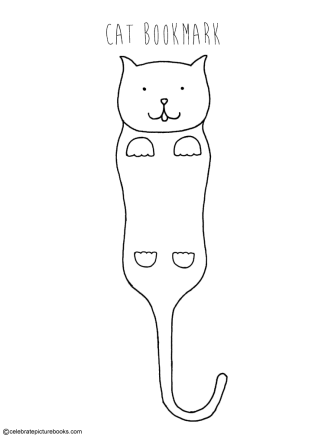
Feline Fine about Reading Bookmark


This want-to-be literary lion feels fine about reading! Let it hold your page while you’re away! Print your Feline Fine about Reading Bookmark and color it!

Picture Book Review

September 7 – Buy a Book Day

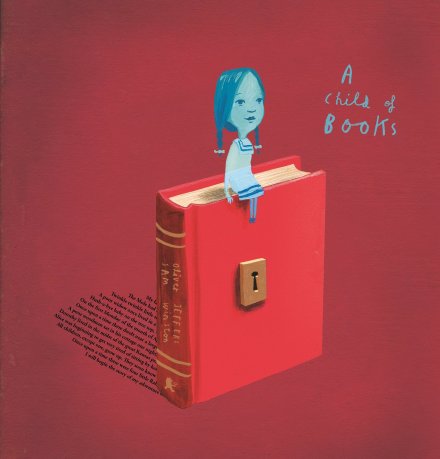
celebrate-picture-books-picture-book-review-a-child-of-books-cover

About the Holiday

Established in 2012 Buy a Book Day promotes an appreciation for physical paperback and hardbound books. Whether you’re cracking open a brand new release or gently turning the pages in a well-worn volume, holding an actual book in your hands is an unforgettable connection between you, the author, and another world—real or imaginary. Today, drop into your local bookstore and peruse the shelves—you’ll be sure to find a fascinating book to buy.

A Child of Books

By Oliver Jeffers and Sam Winston


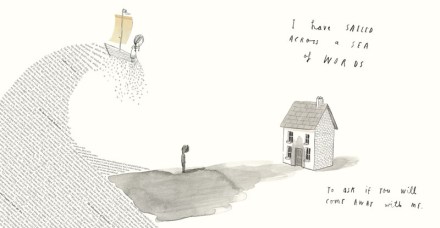
A little girl sits on a log raft with a parchment sail, dangling her feet into the water that swirls around her legs in an eddy made of words that read: “Once upon a time there was a child who loved to read…,” while the rest of the words disperse and float away. In fact, the girl is reading now—a book with a keyhole in the middle. “I am a child of books,” she reveals. “I come from a world of stories.” The wind catches the sail of her raft and the girl is off on an adventure, rising and dipping with the cresting letters that make up waves coming from the deeper sea of straight lines of excerpted text from classics including The Voyages of Doctor Doolittle, Robinson Crusoe, The Swiss Family Robinson, and Kidnapped.

celebrate-picture-books-picture-book-review-a-child-of-books-wave

Image copyrights Oliver Jeffers and Sam Winston, courtesy of oliverjeffers.com

The waves bring her to shore, where riding atop one she towers over a small boy. The girl asks if he will sail away with her. He peers into the window of his house where his father sits reading the newspaper. Headlines announce “Serious Stuff,” “Facts,” “Important Things,” and “Business.” And indeed just a glance at the articles will inform readers that “A group of serious people passed on concerns about a serious document that has been lost by a serious organization….”; that “Scientists have discovered a new fact. In one test, nearly half the subjects proved the fact, it was revealed….”; and that “an important company is to stop producing some important stuff by later this year. It said no one wanted this particular bit of important stuff.” The father’s glasses glint with numbers that rim the frames like tears.

The girl says that “some people have forgotten” where she lives, but that she can lead him on the way. The two follow a path of words from Alice in Wonderland, and the boy watches worriedly as the girl confidently climbs down a hole in the lines. There is more climbing to be done, however, and the girl, in her blue and white sailor dress, holds the boys hand as they traverse mountains made of Peter Pan that reach into the sky. By the time the friends row their dinghy into a dark cave created from the story of Treasure Island and discover a wooden chest, the boy is eager and excited for the journey.

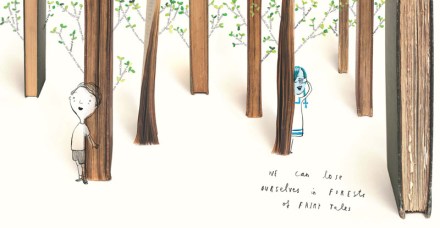
celebrate-picture-books-picture-book-review-a-child-of-books-colorful-book-forest

Image copyrights Oliver Jeffers and Sam Winston, courtesy of oliverjeffers.com

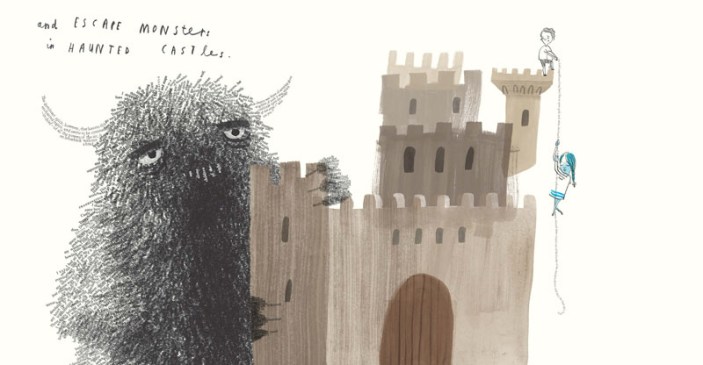
The girl and boy play hide-and-seek among tall trees made of books, where titles and lines of Hansel and Gretel, Little Red-Cap, The Golden Goose, Tom Thumb, and more jut out as leaf-covered branches. They leave the woods and come to a haunted castle that is being attacked by a monster made dark and hairy with the words of Frankenstein and Dracula. This time the boy holds a line of Rapunzel as the girl deftly shimmies to the top of a turret.

Tuckered out, the pair of friends ascend ladders to clouds of lullabies and drift into dreamland where they stand on the moon so they can “shout as loud as we like in space.” But perhaps it is not the moon but, instead, their own imaginary world made of color and characters, palaces and possibilities where stories may end but creativity lives on because “we’re made from stories…” and “our house is a home of invention.”

celebrate-picture-books-picture-book-review-a-child-of-books-colorful-monster

Image copyrights Oliver Jeffers and Sam Winston, courtesy of oliverjeffers.com

If any book invites readers to linger over the intricacies of its pages, A Child of Books is it. A perfect combination of Oliver Jeffers’ homage to the power of storytelling and Sam Winston’s artistry with typography, A Child of Books summons readers of all ages to leave the weariness of the “serious” world and enter the realm of the imagination.

The lilting lines of Oliver Jeffers’ prose poem flow with the stream of consciousness that allows thinkers to journey to nooks and crannies, participate in majestic vistas, and create the unknown of their own fancies. In Sam Winston’s hands sentences and paragraphs describing classic sea voyages swell into waves; lines from other classics crowd in upon each other, solidifying into a hidden inlet or forming a horned creature; and soft yellowed pages return to replicate the trees they once were. In the end a rainbow of characters spin out from a revolving globe, depicting our full color world.

Maps laid out by the storytellers of the past may show us routes to take but as A Child of Books reveals, there is so much white space yet to be discovered. For bibliophiles young and old, A Child of Books makes a beautiful gift and will be a welcome addition to personal library shelves.

Ages 4 and up

Candlewick Press, 2016 | ISBN 978-0763690779

Visit Oliver Jeffers’ website to view his wide-ranging work in picture books, paintings, film, and more. You can follow a paper airplane to fun games based on his picture books in Oliver Jeffers’ World.
To see the unique perspective of Sam Winston, view his books, projects, and archives on his website!
Watch the Child of Books book trailer!


Buy a Book Day Activity

celebrate-picture-books-picture-book-review-i've-got-the-reading-bug-books-to-read-list

I’ve Got the Reading Bug! Books to Buy List


Do you love to read? Do you have a wish list of books you want to read next? Me too! Use this printable I’ve Got the Reading Bug! Books to Buy sheet to keep track of those great book ideas.

September 6 – Read a Book Day

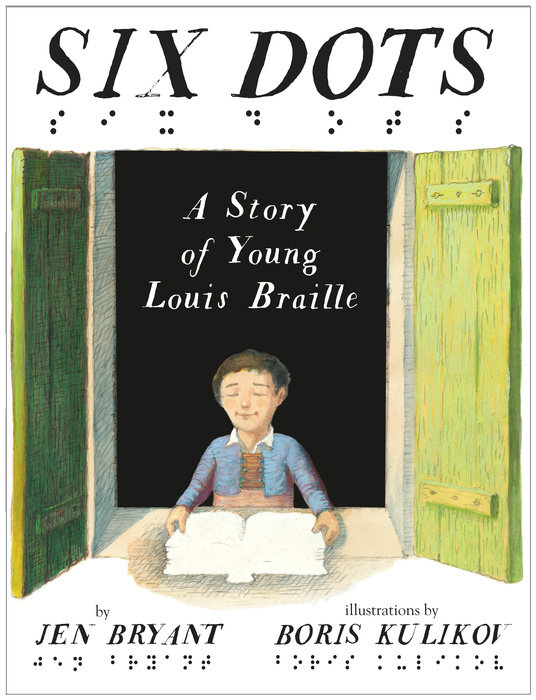
celebrate-picture-books-picture-book-review-six-dots-a-story-of-young-louis-braille-cover

About the Holiday

Avid readers, rejoice! Today is your day – a whole 24 hours dedicated to the fine pursuit of perusing an old favorite or a newly discovered book! To celebrate visit a local bookstore or library then find a cozy nook or shady spot and settle in for a good, long read.

Six Dots: A Story of Young Louis Braille

Written by Jen Bryant | Illustrated by Boris Kulikov


When Louis Braille was born he was so small that no one in town expected him to live. But he did! Louis thrived and with his curious eyes took in everything around him. Louis was smart, too, with a prodigious memory for names and stories. His father worked with leather, making harnesses and bridles. Louis wanted to be just like him and often reached for the sharp tools on the workbench, but his father always warned him away.

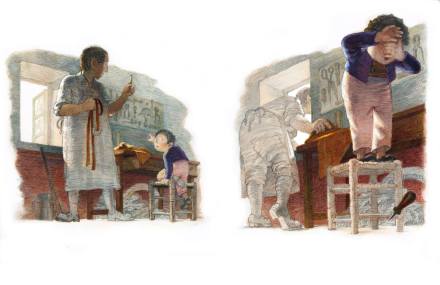
One terrible day, however, when Louis’ father glanced away, Louis grabbed an awl and tried to work it into the smooth leather, but it slipped. Louis’ damaged eye was bandaged and he was told not to touch it. But when the bandage began to itch, young Louis couldn’t help himself and spread the infection to his other eye. By the age of five, Louis was left in darkness, unable to see the faces of those he loved or the attractions of home.

celebrate-picture-books-picture-book-review-six-dots-a-story-of-young-louis-braille-accident

Image copyright Boris Kulikov, courtesy Alfred A. Knopf

Louis learned the sounds of the world. He discovered the number of steps around his house, to the outbuildings, and eventually to the shops and businesses in town. His brother taught him how to whistle and use the reverberations to avoid obstacles. He also learned to feel the shapes of letters made of straw, leather, or nailed replicas made by his family. He played dominoes by feeling the dots with his fingers.

While Louis listened to others read to him, he longed to be able to read on his own. Whenever he asked if there were books for blind people, however, the answer was always, “No.” A noblewoman who lived nearby heard of Louis and invited him to study at the Royal School for the Blind in Paris. At the age of 10 he moved to the boarding school.

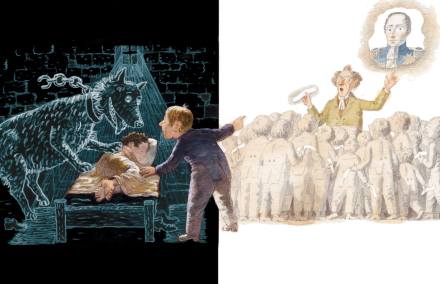
The Royal School was anything but sumptuous. Louis’ room was crowded, damp, and dark. His uniform itched, and meals were meager and cold. He so wanted to return home, but the promise of books for the blind kept him there. Those books were reserved for the best students, and Louis vowed to be one. Finally, Louis was led to the library. A book thudded onto the table in front of him. “‘Voila! There it is,’” the guide said.

Louis opened the book. To read it he had to feel the raised letters, but the letters were huge and a page only held a few sentences. To make matters worse, the book consisted of only a few pages. “‘Is that all?’” Louis asked. The guide told him there were others but that they were all the same. More than ever Louis wanted to go home.
celebrate-picture-books-picture-book-review-six-dots-a-story-of-young-louis-braille-dreams

Image copyright Boris Kulikov, courtesy Alfred A. Knopf

In the morning Louis was shaken awake; the headmaster had an important announcement.  It seemed that a French army captain had devised a secret code read by touch instead of sight. This code could be used at the school, the headmaster said. The code consisted of raised dots set in patterns that represented various sounds. The boys learned the new code then learned how to write it, using an awl-like implement that punched dots into paper.

While the code was a breakthrough, it was hard to learn and all the other boys in the school had given up—but not Louis. Still, reading the code was not like reading a book with letters, words, and sentences. Louis asked the headmaster if the army captain would work with him to improve the code, but when the headmaster asked, the answer was “No.”

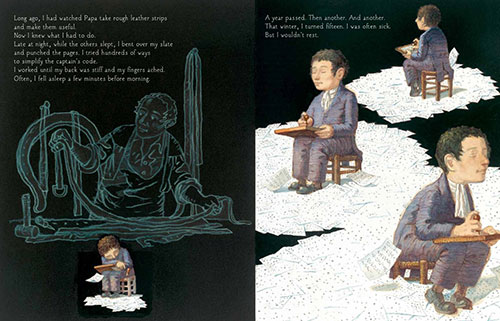
Louis knew what he had to do. Night after night he punched dots into paper with the awl-like tool—just as he had watched his father do with leather. He tried “hundreds of ways to simplify the captain’s code.” Three years passed, and Louis turned 15. Finally, he had a workable solution. He asked the headmaster to read to him a book he had never heard. As the headmaster read, Louis copied his words, punching letters onto paper. Louis’ “new code used just six dots, arranged in two columns, like dominoes. Each dot pattern stood for a letter of the alphabet.”

celebrate-picture-books-picture-book-review-six-dots-a-story-of-young-louis-braille-inventing

Image copyright Boris Kulikov, courtesy Alfred A. Knopf

When the headmaster finished reading chapter 1, Louis turned his pages over and “reading by touch, recited the entire chapter.” After that “word spread quickly. The other students rushed to try it. Si facile! ‘So easy!’ Et si vite! ‘And so fast!’ ‘We can read words and write letters like everyone else,’” the other boys exclaimed.

As Louis watched his friends read he remembered watching his “Papa in his shop, bent over rough strips of leather, making them useful. I had become like him, after all,” Louis thought.

An Author’s Note, more fascinating biographical information about Louis Braille’s life and other inventions, resources, and the Braille alphabet follow the text.

In her Author’s Note Jen Bryant says she wanted to express what it felt like to be Louis Braille. In Six Dots she succeeds in bringing the story of this very young inventor and genius to life with details of his accidental blindness, family support, school experiences, and ultimate victory. Told from Louis Braille’s point of view, the story has an immediacy that presents Braille’s frustrations, challenges, and achievements sensitively and honestly. His perseverance against all odds will inspire readers and give them a new perspective on the unique person Braille was, the importance of books for all, and what children not much older than the readers of Six Dots can accomplish.

Boris Kulikov’s mixed media illustrations take readers back to the France of the early 1800s, depicting with soft colors and period details the town, people, and influences in Louis Braille’s life. Braille’s initial accident is treated with thoughtful consideration of the book’s audience, and his blindness and dreams are portrayed with transparent outlines on a black background. Readers will be interested to see how Louis’s family and friends supported and helped him (an unusual occurrence of the time). As Louis grows, readers discover his other talents for music and sewing, and the tools Louis used to produce his Braille pages are clearly shown.

Ages 4 – 9

Alfred A. Knopf, 2016 | ISBN 978-0449813379

View Jen Bryant’s website for activities, videos, and links related to Six Dots—you’ll also discover more of her books too!

To see a gallery of images by Boris Kulikov for books and other illustration work, visit his website!

Read a Book Day Activity

celebrate-picture-books-picture-book-review-library-coloring-page

I Love the Library! Coloring Page


Today is a perfect day to visit your library and check out some awesome books! Here’s a printable I Love the Library! Coloring Page for you to enjoy too!

September 5 – Cheese Pizza Day and Q&A with Author/Illustrator Claire Lordon

celebrate-picture-books-picture-book-review-lorenzo-the-pizza-loving-lobster-cover

About the Holiday

Once considered the food of Italy’s poorer classes who could not afford the prices of meat, cheese pizza has risen in stature to become a favorite of all. While perfect all on its own, cheese pizza is also a delicious beginning to any combination of ingredients—well, maybe not all, as the characters in today’s book discover!

Lorenzo the Pizza-Loving Lobster

By Claire Lordon


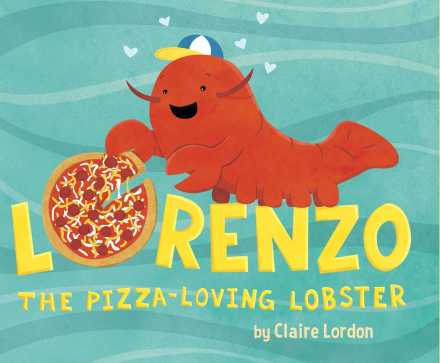
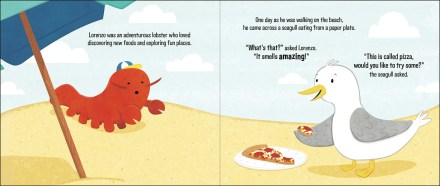
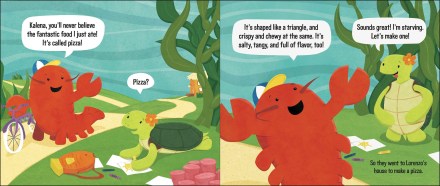
Lorenzo is one adventurous lobster! Not only does he like exploring new places, he loves getting his claws on new foods. One day while at the beach, Lorenzo meets a seagull who has found a tasty slice of pizza to nosh on. “‘What’s that?’” Lorenzo asks, “‘It smells amazing!’” The seagull tells him and invites him to try it. Lorenzo takes a nibble…and then a bigger bite. He loves this pizza thing so much that he eats it all up.

celebrate-picture-books-picture-book-review-lorenzo-the-pizza-loving-lobster-riding-introduced-to-pizza

Image copyright Claire Lordon, courtesy of simonandschuster.com

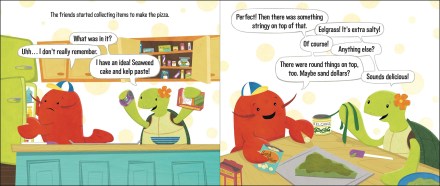
On his way home to tell his friends about his discovery, Lorenzo runs into Kalena, his turtle friend, and tells her all about the triangular food that is “‘crispy and chewy at the same time; salty, tangy, and full of flavor, too!’” Kalena is intrigued and suggests they try to make one themselves. At Lorenzo’s house they begin gathering the ingredients, but when Kalena asks what was in the pizza Lorenzo can’t remember. Kalena looks in the cupboard and pulls out seaweed cake and kelp paste. “‘Perfect!’” agrees Lorenzo. For the “stringy” part, Kalena suggests eelgrass, which also has the benefit of being extra salty. And the “round things on top”? Sand dollars sound delicious!

So the pair bake up their green concoction, and when the timer rings they dig in only to find that it “‘isn’t quite right.’” Not one to give up, Kalena offers a new set of ingredients: “‘kelp dough, squid ink, algae, and coral rings.’” This pizza isn’t right either—in fact, Kalena says, “‘This tastes icky! And the algae is stuck in my teeth!’” Suddenly, Lorenzo has a brainstorm. He remembers that the pizza was made of “‘sponge patties, jellyfish jelly, seaweed noodles, and seashells.’”

celebrate-picture-books-picture-book-review-lorenzo-the-pizza-loving-lobster-making-pizza

Image copyright Claire Lordon, courtesy of simonandschuster.com

Listening to that recipe, Kalena isn’t so sure, but they make it anyway. When this creation comes out of the oven, one small nip convinces Kalena that this one is “‘gross.’” Poor Lorenzo—he so badly wanted to make a delicious pizza with his friend. Kalena leaves Lorenzo’s house with the distinct impression that pizza is terrible. But as she heads up the beach toward home, she smells a delicious aroma. Coming closer she spies a “round food,” and buys one.

With one bite, she’s smitten! This round food is “‘so chewy, and salty, and…wait a minute.’” It dawns on Kalena that this might be the very pizza Lorenzo was talking about. There’s just one thing—why is it a circle? Even though Kalena wants to devour the whole thing, she thinks about how sad Lorenzo was and hurries back to his house with the steaming box. Sure enough, Lorenzo is moping about the afternoon’s debacle.

“‘Hey Lorenzo, look what I found!’” Kalena calls. “‘Holy anchovy!’” Lorenzo exclaims when he tastes it, “‘This is exactly like the pizza I had earlier, but this time it’s big and round!’” They are so excited to dig into their treat, but they carefully study the pizza’s ingredients before eating it all up. One pizza just isn’t enough, so Lorenzo and Kalena make another…and another…and another—and share them with all their friends at a huge pizza party.

celebrate-picture-books-picture-book-review-lorenzo-the-pizza-loving-lobster-telling-kalena

Image copyright Claire Lordon, courtesy of simonandschuster.com

Who knew pizza and the ocean had so much in common—the same salty tang, the same appealing aromas, the same recognizable shapes? Claire Lordon, that’s who! In her funny culinary adventure, Lordon captures the enthusiasm children have to share and replicate a new discovery  but also presents the moments of disappointment when reality and memory don’t match. Kids will “ewww…ohhh…yuck…and yuck it up at the alternative pizza ingredients Lorenzo and Kalena combine in their attempts at a “normal” pizza. These two friends are sweetly supportive of each other through kelp paste and pepperoni and know how to share life’s ups and downs.

Lordon’s adorable sea creatures populate very vivid underwater and beach environments that will be as vibrantly familiar to kids as their own homes and playgrounds with an oceanic twist. Images of the alternate ingredients are clever adaptations of the elements of a normal pizza as Lorenzo remembers the shapes but not the names of the fixings.

Lorenzo, the Pizza-Loving Lobster is a delicious ingredient to add to any child’s bookshelf, and kids will no doubt want to build their own pizzas just like Lorenzo—a crustacean who really knows his crust!

Ages 3 – 8

little bee books, 2016 | ISBN 978-1499802283

Learn more about Claire Lordon and her work on her website!

Cheese Pizza Day Activity

CPB - Pizza Day Toppings

Create Your Pizza Game


Play this fun game to build your pizza ingredient by ingredient before the others! For 2 – 8 players.

Supplies

Directions

Q & A with Claire Lordon

professionalphoto4


Today I’m thrilled to feature a fun interview with the delightful Claire Lordon in which she discusses her influences, her work, and one special “Rhodie” who turned out to be a very lucky lobster!

What were some of the books you enjoyed most as a child and why?

I had many favorite books growing up!  One of my favorites was The Biggest Pumpkin Ever by Steven Kroll. I think I liked this book so much because it had a competition in it and it was also about Halloween (two things I love!). I also enjoyed The Little Mouse, the Red Ripe Strawberry, and the Big Hungry Bear; Corduroy; Tops and Bottoms; Madeline; Curious George; Clifford the Big Red Dog; the Dr. Seuss books; and SO many more.

Lorenzo the Pizza-Loving Lobster is your debut picture book. What influenced you to write it?

Many people have asked me how I got my inspiration for this unique idea – a pizza-loving lobster! The answer is a bit silly and has a story behind it.

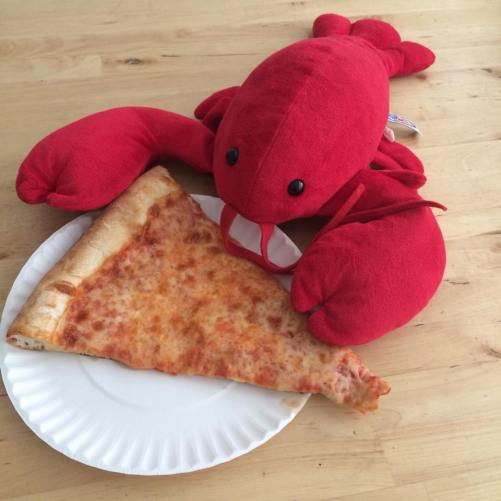
It started when I was back in college and my boyfriend and I were at a gift shop that sells Rhode Island merchandise (we went to school in Rhode Island).  My boyfriend noticed a cute lobster stuffed animal and said how much he liked it because it reminded him of a pet crawfish he had growing up.

12650560_10154116099906549_2062464805_n-2

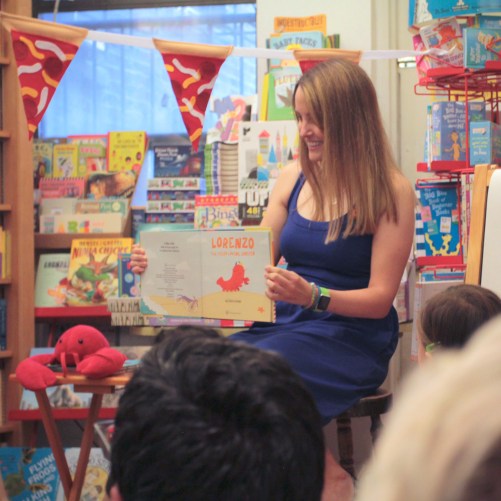
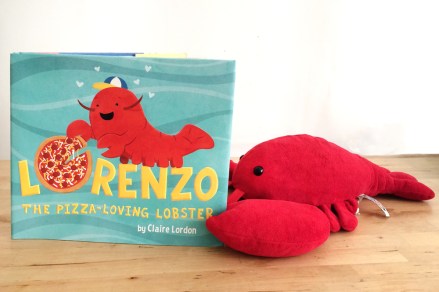
When his birthday came around I decided to give him the stuffed animal lobster that he had admired months earlier.  We chose the name “Rhodie” for the lobster stuffed animal because his backstory is that he is from Rhode Island.  Somehow, one day when we were eating pizza we decided that Rhodie was Italian and loved pizza. It became a joke and I thought how ridiculous it was that a lobster loved pizza!

I thought this would make a great character in a children’s book.  After many revisions and many sketches later Lorenzo, the Pizza-Loving Lobster is now an actual book!

What have you found to be the best part of writing and illustrating a picture book?

The best part, at least recently, has been having others contact me about my book. It could be a simple tweet showing it on the shelves in California or an e-mail saying how much a grandchild loves ‘Lorenzo’. It makes me so happy to know that others love my work too!

01

Your slogan is “Made with a Smile.” Can you talk about your philosophy and what influences your illustration work?

I strive to create art that makes me, and others, happy. My hope is that my art brings the viewer joy and even make them laugh. The influences for my work include traveling, being in nature, and reading many children’s books. I like to have my work be bold and fun.

Can you describe your work space a little?

My studio space is in my apartment in Brooklyn. It consists of a computer, a Cintiq monitor, and a desk for drawing and painting. I also have a giant printer and a scanner.

IMG_0907 (1)

Do you have any other books on the horizon?

At the moment I am ‘shopping’ around a book about a penguin named Bento who is apprehensive about school picture day. I also have two more manuscripts that I’m storyboarding.

Since Celebrate Picture Books is a holiday-themed blog, I can’t let you get away without asking you a few holiday-related questions.

What is your favorite holiday? 

My favorite holiday by far is Halloween. I love that it’s during the fall, with all the changing colors of leaves. My favorite parts are dressing up as a fun character as well as decorating and carving pumpkins. I also like to celebrate small holidays that I discover, such as grilled cheese sandwich day!

Do you have an anecdote from any holiday you’d like to share?

Growing up I never had a store-bought Halloween costume. I would design my own costume and my mom and I would go to the fabric store to see how we could create the design. Then my mom would work her magic and sew a unique costume for me. I’ve been a candy corn, a Beanie Baby, a fairy, and more!

Has a holiday ever influenced your work?

One of my new manuscripts I’m storyboarding now is about Christmas. My family always had a great collection of Christmas books when I was growing up, and I hope this one can make it into the collection someday!

Thanks, Claire! I wish you all the best with Lorenzo, the Pizza-Loving Lobster and your future books!

RhodieReading

You can find Lorenzo, the Pizza-Loving Lobster at:

little bee books | Amazon | Barnes & Noble | Books-A-MillionIndieBound

Picture Book Review