April 21 – Poem in Your Pocket Day

Wet Cement: A Mix of Concrete Poems by Bob Raczka picture book review

About the Holiday

Poem in Your Pocket Day has become one of the favorite events of National Poetry Month. Requiring nothing but a pocket and a treasured poem, the day is a perfect way for poets, non-poets, and poetry lovers of all types to interact with this beloved art form. Originally enacted in 2002 by the Office of the Mayor in conjunction with the New York City Departments of Cultural Affairs and Education, the holiday was embraced as a national observance by the Academy of American Poets in 2008.

Here are some suggestions from the Academy of American Poets on how to spend the day. So clean the lint, coupons, old receipts, tissues, and loose change out of your pockets and replace them with a poem! Those crumpled bits may even inspire your own poem—try it!

  • Post pocket-sized verses in public places
  • Create and distribute bookmarks with your favorite lines of poetry
  • Start a “poems for pockets” giveaway at school or work
  • Add a poem to your email footer
  • Post lines from your favorite poem on your Twitter, Tumblr, Instagram, Facebook, or Snapchat
  • Send a poem to a friend

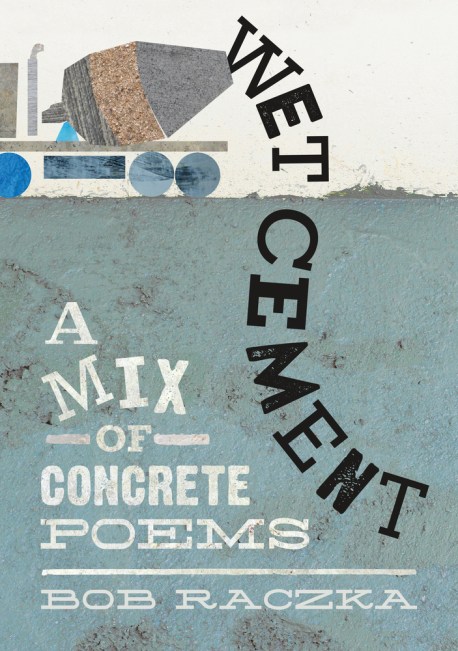
Wet Cement: A Mix of Concrete Poems

By Bob Raczka


When you envision a poem in your head, what do you see? A block of lines? A square or a rectangle? Well, sweep that image from your mind because in Bob Raczka’s Wet Cement: A Mix of Concrete Poems, verses become actions, objects, puzzles, and natural phenomena. Not only are the poems shaped to illustrate their theme, the titles use clever imagery as well.

As you encounter the poem hanger you’ll see that “han” has broken away and is dangling from the hook of g in “ger.” The words of the poem itself are shaped like a hanger and contain a giggle-invoking twist: “I hang out in blue jeans and comfy old shirts. I hang out in blouses and long frilly skirts. I hang out in sport coats and sweaters and shawls. I even hang out with no clothes on at all!”

You might want to get your baseball mitt out before you read homer, in which the first line zooms straight as a pitch and the second—written backwards and at an upward angle—soars like a homerun hit: “The pitcher hurls his hummer toward the slugger squeezing lumber CRA / CK! The slugger slams the hummer toward the bleachers for a homer.”

But don’t put that mitt away just yet! You may need to catch the o, which has escaped from the title p p-up. And if you’ve ever played t-ball, baseball, softball, or even wiffleball, you’ll cringe in recognition of this short but pointed poem.

The sky darkened by night in Dipper and by clouds in Lightning holds two poems expressing very different thoughts. In the title Dipper, the second p has floated to the top of the page where it hangs like a miniature reflection of the dipper-shaped poem, which reads: “Way down there on earth you hold firefly jars, filled up to their lids with light. Up here in the sky, I’m a vessel of stars, my brim overflowing with night.” In the title LIGHTNING, the L strikes the I to create the familiar jagged crack echoed in the shape of the verse: “from a bad mood sky, / tears, / then a jag- / ged slash- / ing flash of anger, / ear- / splitting, / obnoxious, / a cloud tantrum”

Any writer will love poeTRY which is such a clever take on the word as well as the revision and editing process:

“poetry is about taking away the words you don’t need

poetry is taking away words you don’t need

poetry is words you need

poetry is words

try”

Put simply, Bob Raczka’s concrete poems will make you smile. Even more than that, you’ll find yourself wanting to carry this book around, saying “Look at this!” to everyone you meet. Raczka calls these poems “word paintings”—because a poet “uses words like colors to paint pictures inside your head.” If creativity is the talent to present the world in new and surprising ways, making connections that enhance life, then Wet Cement is artistry at its best!

Ages 5 – 9 and up (adults will enjoy these poems as much as kids)

Roaring Brook Press, 2016 | ISBN 978-1626722361

Poem in Your Pocket Day Activity
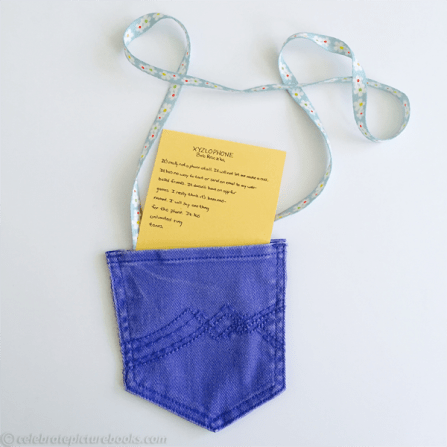
CPB - Pocket Poem Craft

Pocket Poem Carrier


Sometimes you just need a little more inspiration in your day. Here’s a cute way to carry your favorite poem—today and every day!

Supplies

  • An old pair of pants or shorts with back pockets
  • A decorative shoelace
  • Thread or fabric glue
  • Needle
  • Paper
  • Your favorite poem or a poem you write yourself
  • Pen

Directions

  1. Cut one back pocket off an old pair of pants or shorts
  2. Use the shoelace at its full length or cut to desired length
  3. Inside each edge of the pocket sew or glue the ends of the shoelace to make a strap
  4. Print your favorite poem on the paper
  5. Insert the poem into the pocket poem carrier
  6. Take your poem with you and share it with your friends!

April 2 – International Children’s Book Day

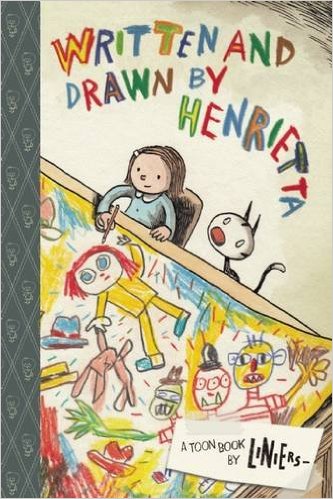
Written and Drawn by Henrietta by Liniers

About the Holiday

Each year since 1967 Hans Christian Andersen’s birthday has served as the date for Children’s Book Day. The International Board on Books for Young People, a non-profit organization founded in Zurich, sponsors the day to promote a love of reading. Seventy-five National Sections around the world alternate in hosting the event. The host for 2016 is Brazil, and this year’s theme is “Once Upon a Time.” A prominent author and illustrator from the sponsoring country prepare materials used to raise awareness of books and reading. Luciana Sandroni wrote this year’s message and the poster was designed by Ziraldo.

Children’s Book Day is celebrated with special events in schools and libraries, writing competitions, book awards, and opportunities to meet authors and illustrators. 

Written and Drawn by Henrietta

By Liniers

Henrietta’s mom gives her a new box of colored pencils, which Henrietta says is “as close as you can get to owning a piece of the rainbow.” She sits down to draw her own book and titles it “The Monster with Three Heads and Two Hats.” She begins with an illustration of a little girl, Emily, in bed at night. “I’m scaring myself…,” she thinks. Her thought is played out in her next page which shows Emily asking her stuffed rabbit if it will sleep with her because she’s scared of an unexplained Creak, Creak.

celebrate-picture-books-picture-book-review-written-and-drawn-by-henrietta-three-headed-monster

Copyright Liniers, 2015, courtesy of TOON Books

“Hmm…What’s that noise?” ponders the young writer. Her fears make it to the page—Creeak…Creeak…Thump…Crash…Boom. What are those noises, my favorite? Emily asks, her eyes now wide. The Noises! They’re getting closer!!

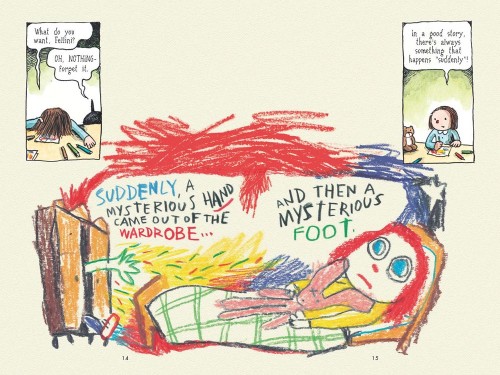
Henrietta knows that in a good story something always happens “suddenly,” and so she draws a mysterious hand and a mysterious foot emerging from Emily’s wardrobe. The plot thickens and finally the full terrifying monster with three heads pops out of the wardrobe.

celebrate-picture-books-picture-book-review-written-and-drawn-by-henrietta-in-bed

Copyright Liniers, 2015, courtesy of TOON Books

They acquire names from Henrietta’s imagination—Huey, Dewey, and Louie Bluie. . She is stuck for a bit as to how to go on, then gives Emily a question: What were you doing inside my wardrobe? The monster answers that it is looking for a hat. Emily joins them in their search, entering her wardrobe. She’s aghast to find that it is full of…clothes! (The wardrobe had been made in Narnia, the well-read Henrietta tells her cat, Fellini).

When the monster and Emily wonder which way to go, they meet a direction-giving mouse, and the story takes off—even Henrietta can’t wait to see what happens. She draws a huge pile of hats (she’s learned about “hat-o-logy” from the encyclopedia—the printed version!). The creature’s two heads with hats begs the third head to choose a hat before “the monster” shows up. Emily is terrified again—Another monster? What has Henrietta concocted this time? A monster with one head and three hats! This horrible beast suddenly appears and chases the crew through the wardrobe. Everyone is shouting Aaaaaaaaaaa—even the author.

celebrate-picture-books-picture-book-review-written-and-drawn-by-henrietta-wardrobe

Copyright Liniers, 2015, courtesy of TOON Books

Emily and the first monster lose the tremendous beast, ask the direction-giving mouse how to escape, and burst out of the wardrobe just in time. Henrietta thinks the story should have a happy ending, and before the monster with three heads and now three hats flies out the window, they give Emily a present. What could it be? Henrietta is so curious! It’s a wonderful hat, of course!

The End

“Now,” Henrietta says, “to find a publisher!”

This Toon Book by Liniers is a wonder as it reveals the inner-workings of children’s imaginations and the spontaneous nature of their brilliant creativity. Henrietta’s thought process as she conjures up her story is shown in neat comic-style panels with speech bubbles, while her story is depicted in colorful kid-like drawings and dialogue written in all capital letters. This interplay between the young artist/writer and her work enhances the fun, suspense, and surprise of this story-within-a-story. 

Ages 5 and up

TOON Books, and imprint of RAW Junior, LLC, 2015 | ISBN 978-1935179900

International Children’s Book Day Activity

Create Your Own Book

CPB - Comic Panel

It’s so much fun to let your imagination fly! Use this printable Comic Style Page to create a story as unique as you are!

Picture Book Review

February 29 – Haiku Writing Day

celebrate-picture-books-picture-book-review-guyku-cover

About the Holiday

In honor of the shortest form of poetry, February—the year’s shortest month—has been designated as haiku writing month. While it may be the shortest form of poetry, a good haiku creates feelings and recognition far beyond its tiny size. Through objective words and unique juxtapositions, a haiku can make a reader experience a common event or emotion in a new and surprising way. February is National Haiku Writing Month, but you can write and enjoy this beautiful form of poetry every day of the year!

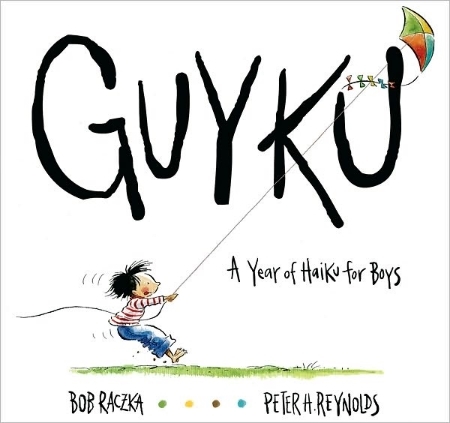
Guyku: A Year of Haiku for Boys

Written by Bob Raczka | Illustrated by Peter H. Reynolds


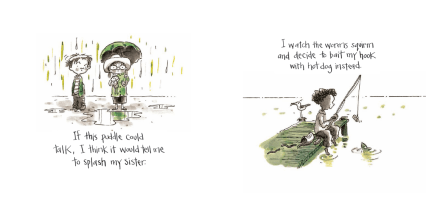
When you’re a guy sometimes the best moments in life are just that—moments. Observing insects or splashing in puddles doesn’t need pages of explanation. And feelings?—Yuck! But still, wouldn’t it be cool to describe these unforgettable moments creatively? Bob Raczka and Peter H. Reynolds have done just that in Guyku, which plucks the essence out of such seasonal activities as kite flying, raking leaves, swatting mosquitos, skipping stones, building snowmen, and more. Each haiku is a small gem that boys (and girls) will recognize and identify with.

celebrate-picture-books-picture-book-review-guyku-fishing

Image copyright Peter H. Reynolds, text copyright Bob Raczka. Courtesy of bobraczka.com

Peter Reynolds’ minimalist pen, ink, and watercolor illustrations highlight the brief poetry while giving each haiku individual boys who are curious, mischievous, determined, happy, and full of fun.Guyku stands up to multiple readings and will spark an appreciation for the joy in life’s fleeting moments.

Ages 4 – 8

Houghton Mifflin Books for Children, New York, 2010 | ISBN 978-0547240039

Discover so many more books by Bob Raczka on his website!

Meet Peter H. Reynolds and view a gallery of art and books on his website!

Haiku Day Activity

CPB - Haiku Day Bookmark (2)

Cute-as-a-Button Bookmark


Sometimes you just can’t finish a book in one sitting, or you want to mark your favorite poem so you can go back and read it again and again. This bookmark is easy to make and will keep your page in style.

Supplies

  • Fleece or felt in your favorite color
  • Buttons of different colors and/or styles
  • Pony beads in various colors
  • Fabric or strong glue
  • Scissors

Directions

  1. Cut a strip of fleece or felt 1 – 1½ inches wide and 4 – 5 inches longer than the book you want to use it in.
  2. Glue the buttons onto the top of the bookmark
  3. Cut ¼ inch-wide by 1 inch-long fringe strips at the bottom of the fleece or felt.
  4. Slide pony beads onto the fringe strips (you may need to pull the fleece or felt through the bead with a tweezers)

February 22 – Museum Advocacy Day

CPB - How the Dinosaur Got to the Museum II

About the Holiday

Today is a day when we can show our museum curators and representatives in government how much we value museums. Without these grand (and sometimes small) buildings dedicated to preserving and teaching about our historical, scientific, and cultural achievements, our lives would be much poorer. Show your support for museum funding by visiting and/or donating to your favorite museum!

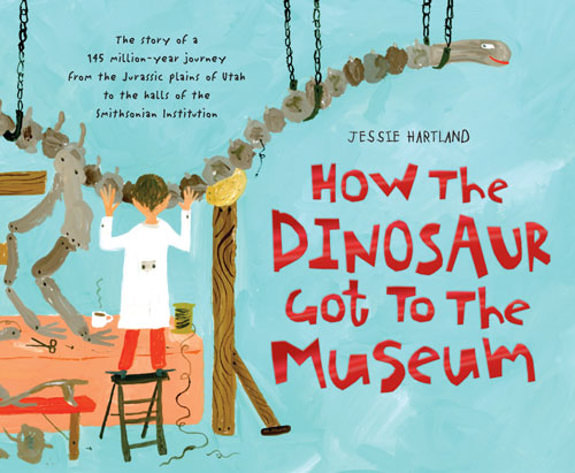
Another wonderful way to celebrate our custodians of history, science, art, and life is by reading the clever How the Dinosaur Got to the Museum / How the Sphinx Got to the Museum / How the Meteorite Got to the Museum series by author-illustrator Jessie Hartland.

How the Dinosaur Got to the Museum

By Jessie Hartland


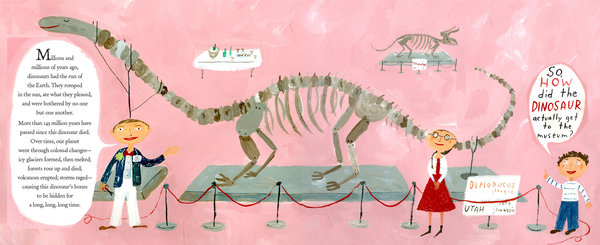
“So…” asks a little boy visiting the Smithsonian Museum of Natural History, “how did the dinosaur get to the museum?” Thus begins the tale—not of the dinosaur’s life, but of its journey from life to the museum exhibit hall.

celebrate-picture-books-picture-book-review-how-the-dinosaur-got-to-the-museum-talking-about-dinosaur

Image and text copyright Jesse Harland, courtesy of Blue Apple Books

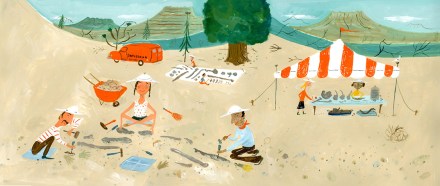
One hundred and forty-five million years ago, the dinosaur roamed the plains of what is now Utah, Overcome by weather and evolutionary events, the dino is buried and much, much later once again exposed. A Dinosaur Hunter finds one large bone and believes it to be from a Diplodocus Longus. He calls in the Paleontologist who confirms it. A team of Excavators arrives and unearths the rest of the skeleton.

The Movers pack the skeleton which was found by the Dinosaur Hunter, confirmed by the Paleontologist, and dug up by the Excavators and load it on a train that transports it to the Smithsonian. Here, the bones are cleaned and preserved by the Preparators, who discover that the head and neck are missing!

celebrate-picture-books-picture-book-review-how-the-dinosaur-got-to-the-museum-digging

Image copyright Jesse Harland, courtesy of Blue Apple Books

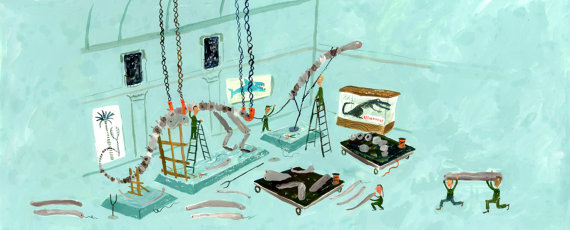
The Curator locates a plaster cast at another museum and work continues. The Diplodocus is assembled, but in the darkness the Night Watchman trips over its tail and breaks it! In come the Welders to fix it, and finally the Riggers can display the skeleton.

The Exhibits Team creates a background, lighting, and signs for Diplodocus, and the Cleaners give it a final dusting before the Director invites the public to view the magnificent exhibit with a speech and a toast.

celebrate-picture-books-picture-book-review-how-the-dinosaur-got-to-the-museum-exhibit

Image copyright Jesse Harland, courtesy of Blue Apple Books

Jessie Hartland’s bold, colorful illustrations offer a child’s-view perspective on the behind-the-scenes working of a museum, while her highly entertaining and educational text will keep kids giggling and reciting along as each page builds on the next to reveal the story of the men, women, and processes engaged in creating a museum exhibit.

Ages 5 – 9

Blue Apple Books, New Jersey, 2011 | ISBN 978-1609050900

Museum Advocacy Day Activity

CPB - Cookie Jar Museum (2)

Create a Museum Exhibit

Every item has a story. Is there a funny anecdote behind that knick-knack on the shelf? Does your favorite serving dish hold sentimental value? A fun and educational way for kids to learn family stories and interact with their own history is to create a museum exhibit of objects in your home.

For teachers this can be a fun classroom activity that incorporates writing, art, and speaking, and categorizing skills. Students can use objects in the classroom or bring items from home to set up museum exhibits. This activity can be done as a whole-class project or by smaller groups, who then present their exhibit to the rest of the class.

Supplies

  • A number of household or classroom items
  • Paper or index cards
  • Markers
  • A table, shelf, or other area for display

Directions

  1. To get started have children gather a number of items from around the house to be the subjects of their exhibit. An exhibit can have a theme, such as Grandma’s China or Travel Souvenirs, or it can contain random items of your child’s choice, such as toys, plants, tools, even the furniture they see and use every day.
  2. Using the paper or cards and markers, children can create labels for their exhibit items. Older children will be able to write the labels themselves; younger children may need adult help.
  3. Spend a little time relating the story behind each object: where it came from, how long you’ve had it, when and how it was used in the past, and include any funny or touching memories attached to the item. Or let your child’s imagination run free, and let them create histories for the objects.
  4. When the labels are finished, arrange the items on a table, shelf, or in a room, and let your child lead family members or classmates on a tour. You can even share the exhibit with family and friends on social media.
  5. If extended family members live in your area, this is a wonderful way for your child to interact with them and learn about their heritage.

February 21 – International Mother Language Day

CPB - The Little Rabbit Who Liked to Say Moo

About the Holiday

Established in 1999 by UNESCO, Mother Language Day celebrates cultural diversity and promotes the protection of endangered languages. Events include multicultural festivals where all voices are heard and social cohesion, cultural awareness, and tolerance are honored.

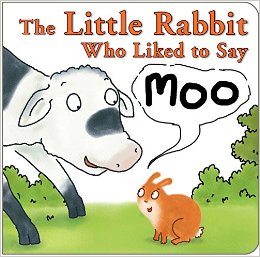
The Little Rabbit Who Liked to Say Moo

By Jonathan Allen


Little Rabbit sits in the farmer’s field listening to the animals talk and learning their languages. “Moo,” Little Rabbit repeats, “Moo.” A calf responds and questions Little Rabbit. It turns out that Little Rabbit knows and likes many languages. Calf joins Rabbit in the fun. “Baa,” they say together, which summons Lamb. The three friends decide to try “Oink.” With each new noise, the group expands and enthusiastically continues their linguistic experiment. Finally, after a rousing chorus of “Quack,” Duckling asks if quack is their favorite animal sound. Each animal then reveals with pride that, while they like other noises, they prefer their own. But what about Little Rabbit, who doesn’t “have a big noise?” Will Rabbit’s answer begin the game again?

The wide-eyed, smiling animals in this adorable picture book by author-illustrator Jonathan Allen perfectly captures the joyous camaraderie of good friends discovering the world together. The book is a wonderful introduction for young children to the ideas of inclusiveness and self-esteem. Kids will love the repetition as each new animal joins the group, and will have as much fun saying each sound as Little Rabbit and the other farmyard friends.

Ages 2 – 6

Boxer Books Limited, 2008  ISBN 978-1910126257

International Mother Language Day Activity

CPB - Rabbit Puppet made

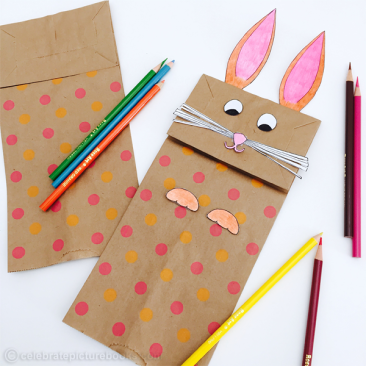
Make a Rabbit Puppet

Supplies

  • Rabbit Puppet Template
  • A paper lunch bag
  • Markers, crayons, or colored pencils
  • Cotton Ball
  • Scissors
  • Glue or tape

Directions

  1. Print the Rabbit Puppet template.
  2. Color the parts of the rabbit and cut them out.
  3. Place the flat paper bag on a table with the bottom flap facing you. Glue or tape the eyes, and the nose and whiskers to the bottom flap. Attach the ears, placing the tabs behind the top of the bottom flap. Attach the paws to the body below the bottom flap. Attach the cotton ball tail to the opposite side of the bag.  
  4. When it’s dry, use your puppet to read The Little Rabbit Who Liked to Say Moo again and play along. Let your Little Rabbit try saying “Hi” in the languages below.

Learn to Say “Hello” in Other Languages

  • Spanish: Hola (oh-la)
  • French: Bonjour (bon zhur)
  • German: Hallo (hă-lo)
  • Chinese: Nin Hao (nee hah)
  • Filipino: Kamusta (ka-muh-stah)
  • Italian: Ciao (chi-ow)
  • Japanese: Kon’nichiwa (ko-nee-chee-wah)
  • Turkish: Merhaba (mĕr-hah-bah)


February 10 – Library Lovers Day

CPB - Jumping Off Library Shelves

About the Holiday

Today I’ve chosen to celebrate a month-long holiday. February is Library Lovers Month! Chances are if you’re reading this, you also love libraries! For readers there’s no better place than standing in the stacks, surrounded on all sides by shelves and shelves of books. In those pages you meet new friends, defeat the bad guys, discover poetry, laugh, sometimes cry, see astonishing art, find new hobbies, and learn fascinating facts about…wow! Anything and everything!

What’s your favorite library or thing about libraries? Mine is the East Lyme Public Library in Connecticut, where they have a fantastic selection of books and awesome librarians who feel like family! Tell me about your special library in the Comments section below.

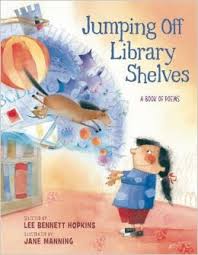
Jumping Off Library Shelves: A Book of Poems

Poems selected by Lee Bennett Hopkins | Illustrated by Jane Manning


From morning, which “pours spoons of sun through tall windows” of a library in Rebecca Kai Dotlich’s poem “Breakfast between the Shelves,” to night, when shadowed mice huddle to read a mystery in Dotlich’s closing poem “Midnight in a Library,” kids can enjoy a full day of poems in this delightful collection. Many of today’s best-loved poets for children are represented here, celebrating the power of a library card, the kindness of librarians, and the enchantment of reading.

Jane Manning’s soft, dreamy illustrations swirl with imagination, shimmer with the warm glow of a reading nook, and enchant with the smiles of children thrilled with the pleasures of reading.

Library Lovers Day Activity

CPB - Bookworm Book (2)


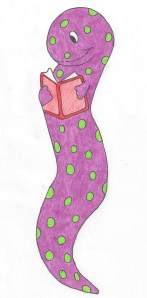
Bookworm Bookmark

For all you bookworms out there who love to read, here’s your very own Bookworm Bookmark to color and put between the pages of your favorite story!

Supplies

Directions

  1. Print out the Bookworm Bookmark template
  2. Color the bookworm
  3. Cut out the Bookworm
  4. Cut the Bookworm’s mouth at the dotted line. The top part of the bookworm’s mouth hangs over the page and marks your place!

February 7 – Popcorn Day

CPB - Popcorn Astronauts

About the Holiday

While National Popcorn Day is often celebrated in January, some people believe that Superbowl Sunday is the perfect day to celebrate this tasty treat. I say why not celebrate it on both days! The history of popcorn goes back to the Aztecs and beyond. Early explorers of the 1500s wrote about native peoples roasting corn until it popped and described it as looking like a “white flower.” The natives ate it and strung it to use for decoration.

Most people now eat popcorn with salt and butter, but can you imagine having it with milk? Way before Corn Flakes and Cheerios came on the scene people ate it as cereal! And popcorn really became popular during the Great Depression, when it was one of the only inexpensive treats people could afford. Why not pop up a batch and snuggle in to read today’s reviewed  picture book. For more interesting Popcorn Facts visit www.popcorn.org.

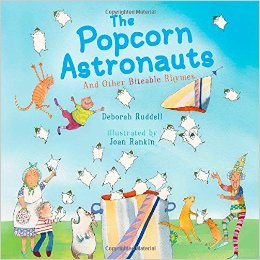
The Popcorn Astronauts and Other Biteable Rhymes

Written by Deborah Ruddell | Illustrated by Joan Rankin


Deborah Ruddell’s rollicking poems celebrate the delicacies each season offers, and they are as fresh and surprising as that first luscious taste of strawberries after a cold winter. For National Popcorn Day, and Ruddell and Rankin offer a unique take on those fluffy nuggets which, like floating astronauts, are as light as air.

In these rhymes that are as fun to say as they are to hear, kids will meet a strawberry queen, a picky ogre, and peaches with “flannelpajamaty” skin. They will also learn the ingredients for an impromptu picnic and wonder what ingredient creates that indescribable taste of the smoothie supreme. And if you’d like to know how a poet orders a milkshake or if Dracula ever gets tired of his nightly routine, you’ll find the clever answers here.

Joan Rankin’s vivid illustrations enhance each poem with plenty of action, humor, and expressive characters to keep kids giggling and lingering over each page.

Ages 4 – 8

Simon & Schuster, New York, 2015 | ISBN 978-1442465558

Popcorn Day Activity

CPB - popcorn1

Popcorn Blast-Off Game

The popcorn is flying! Can you catch it? This is a fun game to celebrate this most delicious day! And if you keep the popcorn socks, it will make a great quick activity for those times when you want to get up and move but just don’t know what to do.

Supplies

  • 6 pairs of girls socks – white
  • A large bag of cotton ballsCPB - popcorn2
  • Towel or small blanket

Instructions

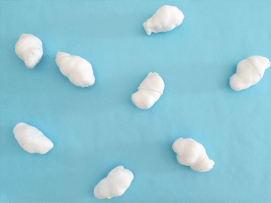
  1. Stuff the socks with a large handful of cotton balls (about 25)
  2. Knot the sock as you would a balloon and fold down the remaining sock
  3. Squish the sock to move the cotton balls until your sock looks like a piece of popcorn
  4. Players hold each end of the towel or side of the blanket so it sags
  5. Place popcorn in the middle of the towel or blanket
  6. On the count of 3, players pull tight on the towel or blanket
  7. Try to catch as many flying popcorn pieces in the towel or blanket as you can