May 4 – Petite and Proud Day

celebrate-picture-books-picture-book-review-the-smallest-girl-in-the-smallest-grade-coverAbout the Holiday

Life’s not about how tall you are but about how big your heart is! Today we celebrate people who are 5’4” and under—the petite! There are many advantages to being on the smaller side—it’s easier to fit into tight spaces; airline, train, and other transportation seats are more comfortable; and we can blend into the crowd more easily when we’re having a bad hair day. All-in-all being petite is pretty perfect!

The Smallest Girl in the Smallest Grade

Written by Justin Roberts | Illustrated by Christian Robinson


Sally McCabe was so small that she was mostly overlooked. “She was the smallest girl in the smallest grade.” The other kids heard her name called every morning along with theirs, and they passed her in the hall on the way to class, but no one knew that “Sally was paying super extra special attention” to what went on around her. For instance, she noticed the kite someone had lost in the tree and had counted twenty-seven keys on the janitor’s ring.  She watched as the leaves turned “green to gold in the fall” and when “Tommy Torino was tripped in the hall.”

celebrate-picture-books-picture-book-review-the-smallest-girl-in-the-smallest-grade-classroom

Image copyright Christian Robinson, text copyright Justin Roberts. Courtesy of G. P. Putnam’s Sons.

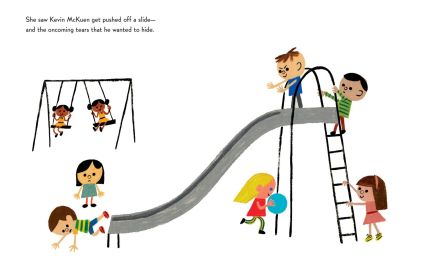
She saw wildflowers turn their face toward the sun and “was there when the stray cats who normally fought / conducted a meeting in the church parking lot.” On the playground she saw Kevin McKuen get shoved down the slide and knew of the “tears that he wanted to hide.” On Parent-Teacher day, too, she watched kids pulled down the hall by parents upset at what they had heard. But during all this, no one happened to see Sally watching or knew what that could mean.
celebrate-picture-books-picture-book-review-the-smallest-girl-in-the-smallest-grade-slide

Image copyright Christian Robinson, text copyright Justin Roberts. Courtesy of G. P. Putnam’s Sons.

Sally understood that these slights, mean words, and cruel actions kept building and building without any stop, and she finally decided that something must change. So one day during lunch she stepped out of line, stuck her hand in the air, and announced very loud, “‘I’m tired of seeing this terrible stuff. / Stop hurting each other! This is enough!’”

Some kids just giggled and ignored what she’d said, but many others joined in with their hands in the air. “Like waves rolling in, one after another— / first Molly rose up, then Michael’s twin brother. / It was Tyrone and Terence, then Amanda and Paul, / who pushed out their chairs and stretched their arms tall.” And they all felt connected “like the janitor’s keys. Fastened together with a heavy steel ring / that held all the secrets to unlock everything.”

celebrate-picture-books-picture-book-review-the-smallest-girl-in-the-smallest-jump-rope

Image copyright Christian Robinson, text copyright Justin Roberts. Courtesy of G. P. Putnam’s Sons.

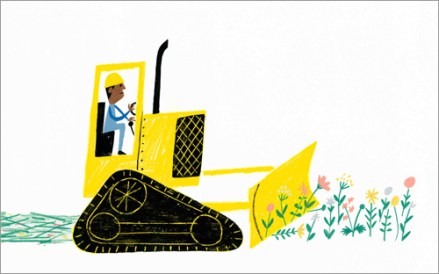
After that day, things went back to normal—but with much welcomed kindness in small doses and places. Spaces were made for strangers to sit, doors held wide open, and many such “moments that get taken for granted—a wildflower appearing that no one had planted.” And so the world changed for this school and this town all because Sally was courageous and kind and paying attention.

Justin Roberts’ rhyming tribute to the empathy and bravery of one little girl who takes notice and makes a difference shows kids and adults that anyone can create change no matter who they are. Readers of all ages will recognize the hurts that Roberts chooses to include, good examples of the small and large acts that cause physical and emotional pain. The infectious rhythm and the inspirations of kindness—from the alley cats’ truce to wildflowers to keys (objects that at once have familiarity and deeper meanings)—give the book resonance far beyond the immediate reading.
celebrate-picture-books-picture-book-review-the-smallest-girl-in-the-smallest-grade-bulldozer

Image copyright Christian Robinson, text copyright Justin Roberts. Courtesy of G. P. Putnam’s Sons.

Christian Robinson’s bright, wide-lens drawings of Sally’s schoolroom, cafeteria, and playground give young readers the same view Sally has, allowing them to also find the examples of arguing, pushing, whispering, and other slights that she reacts to. An illustration of Sally and her classmates sitting at their desks shows exactly how small she is in comparison to the other children; the rest of the pages demonstrate just how big her heart is. Each page offers opportunities for kids and adults to discuss the problems of bullying and options for how they can make a difference.

The Smallest Girl in the Smallest Grade is a wonderful reminder of how important each person is in making the world a happier place and would make an excellent addition to home libraries.

Ages 3 – 7

G. P. Putnam’s Sons, 2014 | ISBN 978-0399257438

Visit Christian Robinson’s website, where books and art are always fun!

Check out all the music, videos, activities, and other stuff by Justin Roberts on his website!

Petite and Proud Day
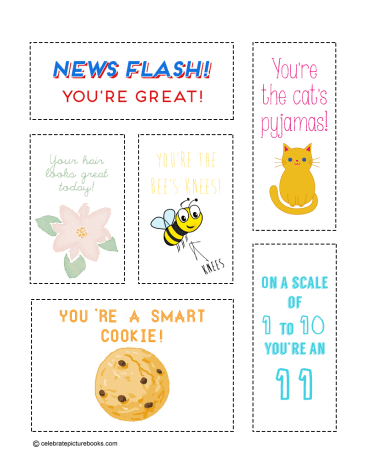
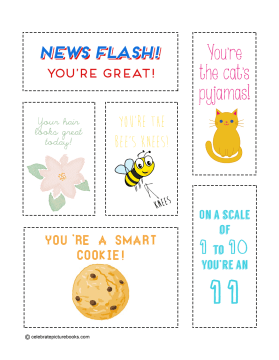
celebrate-picture-books-picture-books-review-kindness-cards

Kindness Cards


Being kind to someone can be as easy as slipping a friendly note into someone’s locker or backpack or leaving a card for a favorite teacher, bus driver, or librarian. If you notice someone who could use a pick-me-up, you could give them one of these cards too! Print out your Kindness Cards and start spreading some good cheer!

Picture Book Review

April 29 – National Go Birding Day

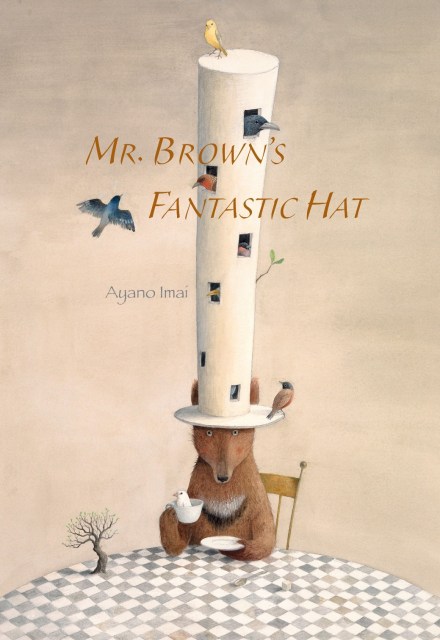
celebrate-picture-books-picture-book-review-mr-brown's-fantastic-hat-cover

About the Holiday

With all the bird activity going on right now as these little creatures build nests, lay eggs, and take care of new families, it’s a perfect time to go bird watching. The weather promises to be warm, and with a little stealth, a good sense of observation, and perhaps some binoculars, you should be able to spot quite a few lovely species. As the subject of today’s book found, if your home—or your hat—is inviting, feathered friends will come! So head out to a park, forest, beach—or even your backyard—and enjoy the beauty of the birds in your area.

Mr. Brown’s Fantastic Hat

By Ayano Imaí


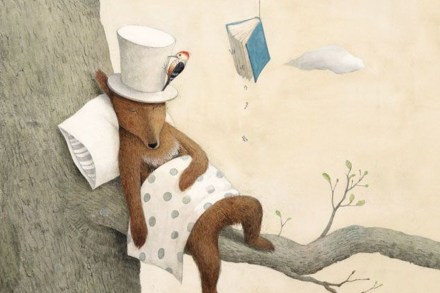
Mr. Brown lived alone and, if you asked him, he’d tell you he liked it that way. He “had no friends and he didn’t want any.” If you were privy to his secret thoughts, however, you’d learn that Mr. Brown was actually very lonely. Mr. Brown liked to take long walks, and when he went out, he always wore his “smart,” distinctive hat. “One day while Mr. Brown was sleeping, a woodpecker flew down and started tapping a hole in his hat, thinking, ‘What a wonderful nest this hat would make!’”

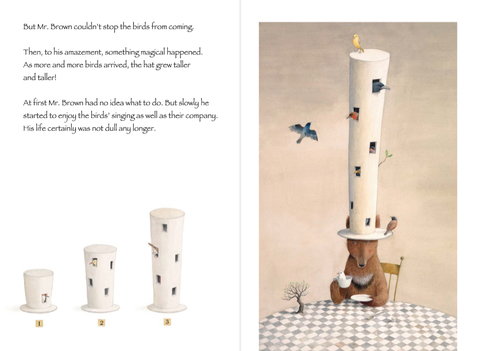
When Mr. Brown woke up he was shocked to discover that a bird had moved into his hat. Someone living this close to him was not what Mr. Brown had in mind at all. Then to Mr. Brown’s dismay the “woodpecker soon told all his friends about the wonderful new home and invited them all to join him.” Soon Mr. Brown’s hat was full of holes—and birds! You might think a regular hat would not have enough room for so many residents—but Mr. Brown’s hat was no ordinary one. As more and more birds moved in, his hat grew taller and taller!

celebrate-picture-books-picture-book-review-mr-brown's-fantastic-hat-birds-live-in-hat

Image copyright Ayano Imaí, courtesy of minedition, 2014

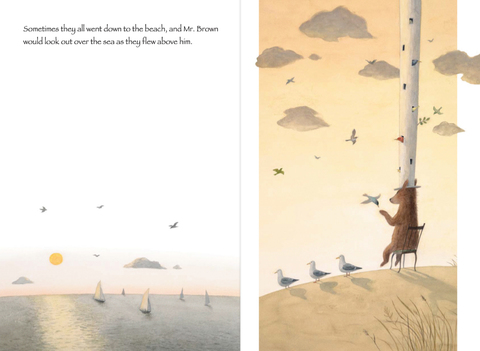
As the days went on Mr. Brown discovered that he was beginning to enjoy the birds’ singing and their company. Now Mr. Brown had renewed purpose in his daily walks: “He loved to show off his hat. Everywhere he went it was full of the music of singing birds.” People on the street took notice and wanted to emulate Mr. Brown. All over town people began wearing tall hats, “but the birds preferred to stay with Mr. Brown no matter how hard people tried to persuade them.”

One day as autumn settled in, Mr. Brown noticed that all the birds had flown away. He was sad and didn’t understand where they had gone or why they had left him. He wondered if he would see them again. The idea of a quiet life no longer held the appeal it once did, and Mr. Brown missed his friends. He tried to convince himself that he didn’t care that the birds had left, but he continued to fill the feeders and watch out for them every day.

celebrate-picture-books-picture-book-review-mr-brown's-fantastic-hat-looking-out-to-sea

Image copyright Ayano Imaí, courtesy of minedition, 2014

Even though it was time for Mr. Brown to take a long winter’s nap, he tried to stay awake, worried that there would be no one to care for the birds if they returned. But nature took its course, and Mr. Brown fell into a deep sleep. One morning after a particularly vivid dream in which Mr. Brown could hear the birds singing, he woke to a tapping sound. He went to the door and peered out.

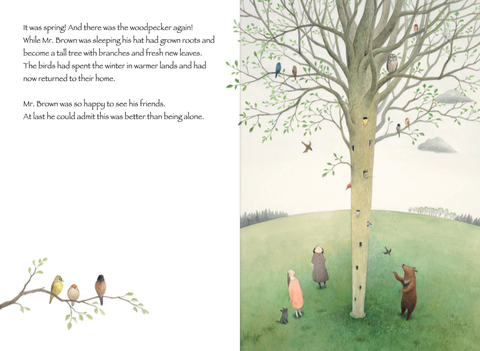
Spring had come and with it Mr. Brown’s hat had grown roots and sprouted branches and leaves. The old holes were filled with their previous tenants. The sight filled Mr. Brown with joy, and he finally could admit to himself that sharing his life with friends “was better than being alone.”

celebrate-picture-books-picture-book-review-mr-brown's-fantastic-hat-hat-grows-into-tree

Image copyright Ayano Imaí, courtesy of minedition, 2014

Ayano Imaí’s gloriously beautiful book plumbs the nature of solitude and loneliness as well as the value of friendship with an honesty that is at once heartrending and uplifting. For so many quiet, introspective people—children and adults alike—navigating the world of small talk, casual relationships, and making friends is similar to traveling uncharted territory, where the language and mores are foreign. It can become easier to tell oneself that it doesn’t matter, when in reality it matters a great deal. Many times happiness comes when one finds their niche or, in some surprising way, a niche finds them.

celebrate-picture-books-picture-book-review-mr-browns-fantastic-hat-sleeping-on-branch

Image copyright Ayano Imaí, courtesy of midedition, 2014

Imaí tells the story of Mr. Brown and his fantastical hat in straightforward narration, but more profound meaning is revealed in her illustrations. Mr. Brown, it is discovered, is a brown bear who has taken on the aspects of humans. He walks upright, carries an umbrella and bag, owns a home, and wears a hat. His fur is even the same color as the townspeople’s clothing. But while he may be among people, he is not of them. His home has a grass floor which sprouts mushrooms and weeds; another weed pokes out from the bristles of his brush; a tree branch juts from a wall; and mushrooms share space with the laundry on the drying line.

Mr. Brown comes from nature and belongs with nature, so it is no surprise that the birds flock to him and prefer him to humans, who in an ironic twist long to be like Mr. Brown. Mr. Brown’s hat is also symbolic of one’s heart, in that as a person embraces friends, their ability to accept and love others continues to grow.

I especially like the ending of Mr. Brown’s Fantastic Hat, in which Mr. Brown stays true to himself. He does not suddenly discover his “wild” side and become someone that he is not. He is able to remain a quiet, introspective bear while also embracing his friends, his love for them, and his place in the world. He finds inner happiness and loved ones to share it with.

Ages 3 – 8 (and up)

minedition, 2014 | ISBN 978-9888240845

National Go Birding Day Activitycelebrate-picture-books-picture-book-review-mr-browns-fantastic-hat-lets-go-birding-bird-species-word-search

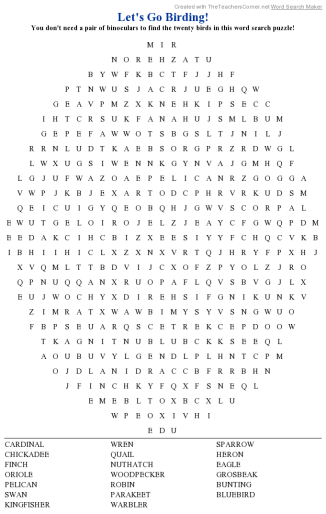
Let’s Go Birding! Word Search Puzzle


You don’t need a pair of binoculars to find the twenty kinds of birds in this printable Let’s Go Birding! Word Search Puzzle. Here’s the Solution!

Picture Book Review

April 28 – It’s the Week of the Young Child

celebrate-picture-books-picture-book-review-i-want-to-grow-cover

About the Holiday

The Week of the Young Child is an annual initiative hosted by the National Association for the Education of Young Children to celebrate learning, young children, their families, and their teachers. Daily themes focus on ways that children learn. This year those included Music Monday, Tasty Tuesday, Work Together Wednesday, Artsy Thursday, and today—Family Friday, in which people are encouraged to share their family stories. Today’s book also takes a look at a common childhood topic through which kids learn about themselves and others.

I Want to Grow

By Ged Adamson

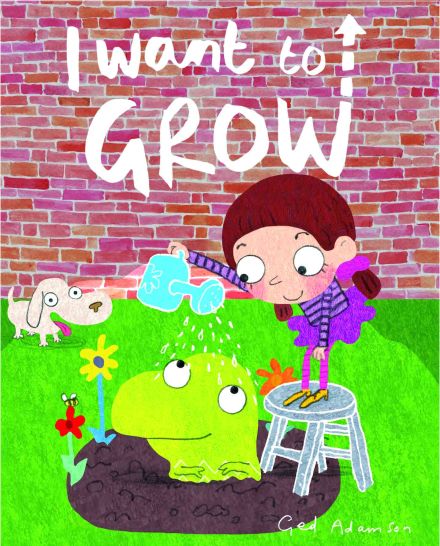
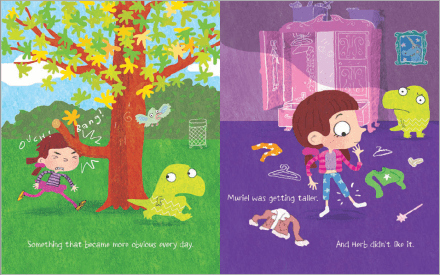
One day while Herb and Muriel were strolling through the neighborhood, Herb noticed something a little different. Every day this disturbing trend continued. The fact was impossible to ignore—“Muriel was getting taller. And Herb didn’t like it.” He didn’t mind that she could now see over the fence or reach things on high shelves, it was just that…well… “he wasn’t getting any taller himself.”

celebrate-picture-books-picture-book-review-i-want-to-grow-muriel-growing

Copyright Ged Adamson, 2017. Courtesy of Boyds Mills Press

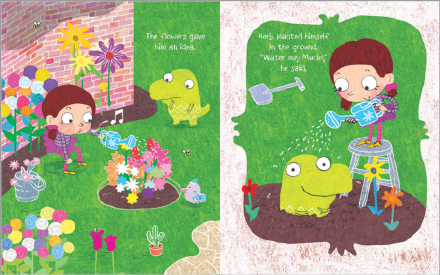
So Herb looked around for a way to rectify the situation. The flowers in Muriel’s garden were reaching for the sky. Perhaps planting himself in the ground would make him grow. But no matter how much Muriel watered him, nothing happened. He shook off the dirt and went to find Muriel. She was in the kitchen working with clay. Herb watched her roll a small piece of clay into a looong piece. That looked promising, so Herb asked for Muriel’s help. “She rolled him back and forth until her arms ached. But he didn’t get any longer. Just dizzy and a little queasy.”

celebrate-picture-books-picture-book-review-i-want-to-grow-garden

Copyright Ged Adamson, 2017. Courtesy of Boyds Mills Press

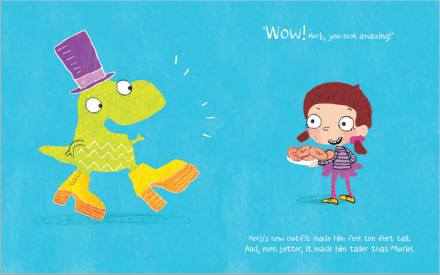
Maybe if he just willed himself to grow, he would, Herb thought. He stressed and strained until he was red in the face, but he remained as short as ever. Muriel knew Herb was having a hard time, so she made him a special treat of tea and doughnuts. When he approached, Muriel immediately recognized a difference. Herb was tall top and bottom. Both Herb and Muriel loved the new look—the high wedge shoes and top hat looked amazing! But standing and walking proved to be perilous.

celebrate-picture-books-picture-book-i-want-to-grow-shoes

Copyright Ged Adamson, 2017. Courtesy of Boyds Mills Press

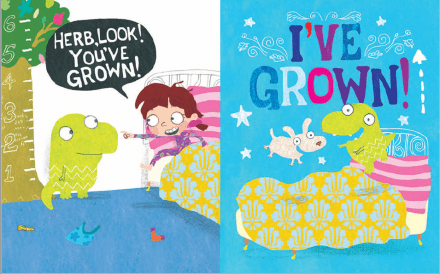
Herb went to bed feeling a little dejected. In the morning, though, Herb had a pleasant surprise. When he went to wake up Muriel, she noticed something right away. Herb had grown! He was so excited that he “jumped and cheered.” Suddenly, Muriel realized that she had grown too. Herb could see that something was on her mind and asked. It’s “nothing, Herb. Nothing at all,” she said. “Let’s celebrate your new tallness!” And that is just what they did. After that Herb didn’t “worry about catching up with Muriel because he was growing!”

celebrate-picture-books-picture-book-review-i-want-to-grow-cheering

Copyright Ged Adamson, 2017. Courtesy of Boyds Mills Press

Ged Adamson’s wit and whimsy go a long way in assuaging childhood doubts and worries in his funny book. The issue of growth is a common one as siblings, friends, and classmates often compare themselves and watch as those around them grow taller or they themselves begin to outpace the rest. The uncertainty of being different can be troubling and set up unnecessary anxiety.

Adamson’s I Want to Grow offers kids reassurance that nature will take its course while also making them laugh at Herb’s attempts to speed the process. Muriel’s empathy and kindness toward Herb is another wonderful life lesson for readers navigating the quirks and changes of childhood. Adamson’s distinctive illustrations combine vibrant colors, sketched-in details, and sweet, round-eyed characters to enchant kids and boost both the humor and sweetness factor of this heartening story.

I Want to Grow is a great book to share with kids who may be feeling unsure about their height—or any such issue.

Ages 4 – 8

Boyds Mills Press, 2017 | ISBN 978-1629795850

Check out more about Ged Adamson, his books, and his art on his website!

Week of the Young Child Activity

celebrate-picture-books-picure-book-review-window-terrarium-1

Window Pane Terrarium

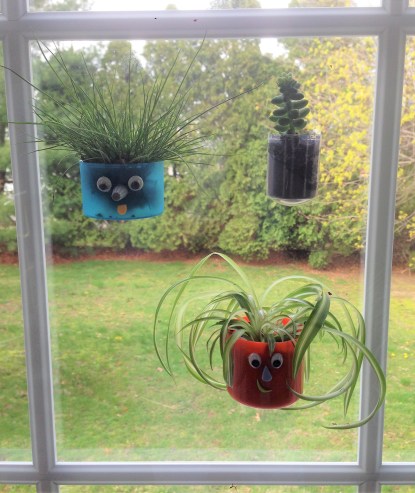
With this easy craft for spring and summer that combines creativity, recycled materials, a little science, and an opportunity to watch your efforts grow, you can turn a window pane into a little garden.

Supplies

  • Small, light recycled plastic containers with no lip – small cups or colorful tops from shaving cream or other such cans
  • Googly eyes, foam, paint or other materials to decorate the container
  • Soil
  • Seeds or small plants (small succulents, air plants, spider plants, and grass work well)
  • Adhesive Velcro mounting strips in an appropriate weight category
  • Spoon

Directions

  1. Clean and dry containers
  2. Decorate containers with eyes and foam to make faces, or in any way you wish
  3. Fill container with soil
  4. Add seeds or plants
  5. Attach Velcro strips to back of container
  6. Attach firmly to window pane

Alternately: line up containers on a window sill for a colorful indoor garden

Picture Book Review

April 26 – It’s Humor Month

celebrate-picture-books-picture-book-review-quit-calling-me-a-monster-cover

About the Holiday

As we near the end of April and wind down National Humor Month, let’s take one more opportunity to laugh at the ridiculous and the silly and to find joy in every day. Not only does laughter bring people closer together, it’s therapeutic both for body and soul.

Quit Calling Me a Monster!

Written by Jory John | Illustrated by Bob Shea


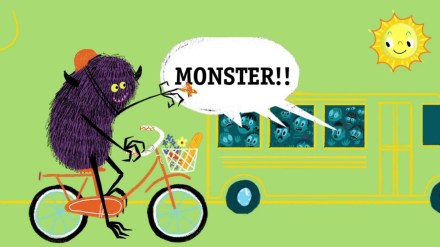
A purple, hairy guy with long stick legs and arms and long bent toes and fingers rides his bike along the street, catching a butterfly on his finger and carefully transporting a basket full of flowers and bread. But all the kids on the school bus see as he passes is the purple, the legs, the arms, the fingers, and the toes – a monste. And all the guy sees is the wide eyes and fearful expressions of the kids in the windows.

celebrate-picture-books-picture-book-review-quit-calling-me-a-monster-interior-art-bus      Image copyright Bob Shea, text copyright Jory John. Courtesy of Random House Books for Young Readers

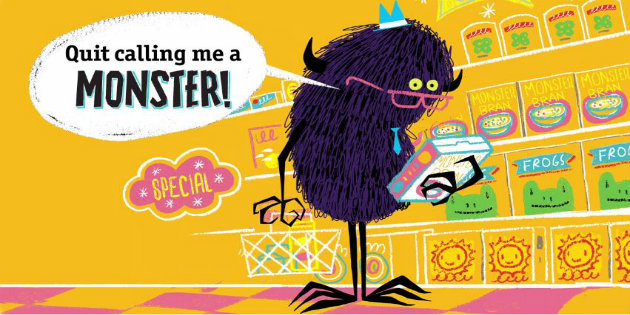
So he stands his ground, craggy hands on hips and says, “Quit calling me a monster! Just…stop it, right this minute!” He’s serious! In fact he throws a bit of a fit, rolling on the ground and spouting, “It really hurts my feelings. I’m no monster!” Just because he may have a few monster-ish qualities like horns and fangs and wild eyes and crazy hair. And yes, he knows he has “a huge toothy smile that glows in the dark.” And, yeah, ok, so he’s not exactly a wallflower and can “roar, holler, scream, whoop, and cackle,” and likes to hide where his discovery will frighten someone most…he still says, “It really bothers me when you call me a monster without even thinking about it.”

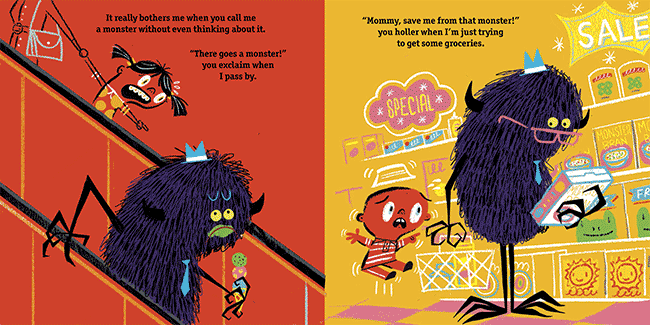
Kids are always yelling, “‘Mommy, save me from that monster!” when he’s just trying to shop or complaining that there’s a monster under the bed when he’s just trying to sleep. Can he help it that his claws reach upward or that he growls when he dreams? Does he ever call kids names? Does he ever taunt someone as a “meat snack?” No! And that’s because he’s “a monster with excellent manners!”

celebrate-picture-books-picture-book-review-quit-calling-me-a-monster-floyd-shopping-escalator

Image copyright Bob Shea, text copyright Jory John. Courtesy of Random House Books for Young Readers.

Umm…Well, I mean…he doesn’t “mean monster, exactly….” Oh, all right, if you’re going to get persnickety about it, he does have all those monster-ish traits and his parents are monsters, but he really doesn’t “like being called a monster one little bit.” If you want to call him, you can use his name, which is a very respectable Floyd Peterson. Now that that is settled, our purple friend is going to bed…in your closet. So if you hear him snoring in the middle of the night, you can rest assured that there is no monster in your closet, it’s just Floyd Peterson.

celebrate-picture-books-picture-book-review-quit-calling-me-a-monster-floyd-shopping

Image copyright Bob Shea, text copyright Jory John. Courtesy of Random House Books for Young Readers.

Jory John gives hilarious voice to the frustrations of being labeled as someone or something you’re not while also affirming that it’s okay to be who you really are. Snap judgements based on preconceived notions or stereotypes limits a person’s world view and the friends they can make. And what’s wrong with being a “monster” or “Floyd Peterson” or (insert word here) anyway? Kids and adults will laugh as Floyd lists page after page of his monster-ish qualities while also denying that he is, indeed, a monster. The ending is sweet and kid-like and puts to bed fear of the unknown.

Bob Shea’s monster, aka Floyd Peterson, is a frighteningly endearing character that kids will whole-heartedly embrace. Floyd’s coarse purple hair, scrawny legs and arms, and big grin along with his range of personas, from alarming to loveable, will make kids giggle. The bright solid backgrounds put the focus on Floyd and all of his roaring, flailing, and leaping—just as Floyd (and all little monsters) sometimes want and need.

Ages 3 – 7

Random House Books for Young Readers, 2016 | ISBN 978-0385389907

Jory John has a whole gallery of books for you to discover on his website!

Discover Bob Shea‘s “Books for Really Smart Kids” on  his website!

Quit what you’re doing and watch this Quit Calling me a Monster! book trailer!

National Humor Month Activity 

celebrate-picture-books-picture-book-review-merry-monsters-coloring-page

Merry Monsters Coloring Page 


These two cute monsters want to play, but first they need a little color! Get out your crayons, markers, or pencils and fix them up! Here’s your printable Merry Monsters Coloring Page! Now, it’s your turn – if you were a monster, what would you look like? Draw yourself as a Magnificent Monster!

Picture Book Review
April 21 – It’s Celebrate Diversity Month

celebrate-picture-books-picture-book-review-the-ugly-dumpling-cover

About the Holiday

The month of April is set aside for people to recognize and appreciate the varied cultures and beliefs around the world. Instead of finding division and differences, we should celebrate the beauty and wonder of our multifaceted planet. This month offers a great opportunity to discover ways to incorporate acceptance and inclusiveness throughout your life.

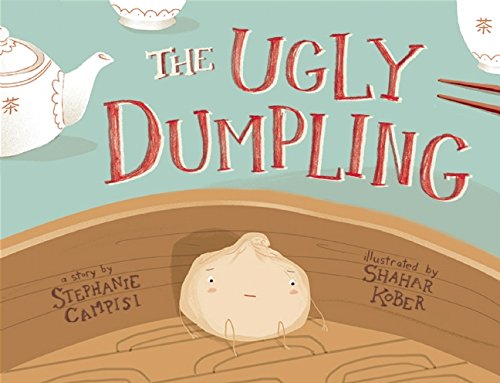
The Ugly Dumpling

Written by Stephani Campisi | Illustrated by Shahar Kober


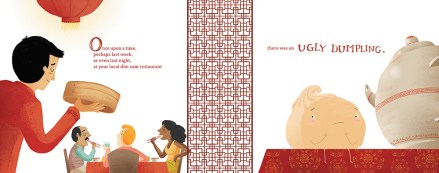
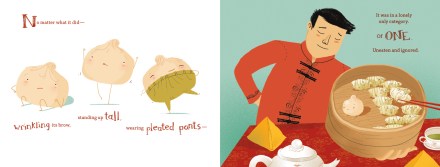
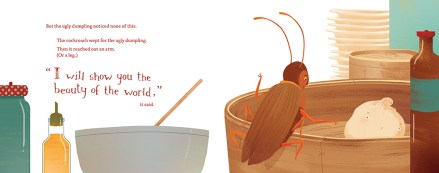
“Once upon a time, perhaps last week, or even last night, at your local dim sum restaurant…there was an ugly dumpling.” Sure, you might think all dumplings are ugly, but we’re talking about one particular ugly dumpling. It tried all sorts of tricks to make itself more attractive, but it still remained lonely and uneaten. It sat dejected until a cockroach traversing the kitchen caught sight of it and immediately fell in love.

celebrate-picture-books-picture-book-review-the-ugly-dumpling-interior-art-dim-sum-restaurant

Image copyright Shahar Kober, text copyright Stephani Campisi. Courtesy of Mighty Media Press.

The cockroach “reached out an arm. (Or a leg)” toward the dumpling and offered to show it the beauty of the world. Together they traveled to cities near and far, experiencing them through culinary lenses—stacked-plate skyscrapers, piled-dishes skylines, and chopstick bridges that took them over flour mountains and folded-napkin peaks. Then, in a certain restaurant, the dumpling saw something astonishing! Not only one, but two, three, four, and more dumplings just like itself!

celebrate-picture-books-picture-book-review-the-ugly-dumpling-trying-to-fit-in

Image copyright Shahar Kober, text copyright Stephani Campisi. Courtesy of Mighty Media Press.

Suddenly the ugly dumpling realized that it was not a dumpling at all, but a “steamed bun—a golden-hearted, smooth-skinned steamed bun, exactly like all the other steamed buns in the world.” The ugly dumpling puffed with meaning, importance, and…yeast! The restaurant patrons and staff and even the other steamed buns took notice. The cockroach by the ugly dumpling’s side cheered to see its friend receiving so much attention.

celebrate-picture-books-picture-book-review-the-ugly-dumpling-roach

Image copyright Shahar Kober, text copyright Stephani Campisi. Courtesy of Mighty Media Press.

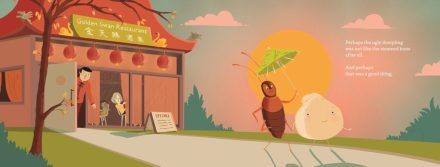
The people’s wide eyes and astonished expressions were not for the dumpling, however. Instead, they registered horror at the insect in their midst. The ugly dumpling was familiar with that look and did “something quite beautiful. It reached out an arm. (Or a leg.) And it led the cockroach out into the world, The beautiful, beautiful world.” And in that moment the ugly dumpling realized that it “was not like all the other steamed buns after all” and that “perhaps that was a good thing.”

celebrate-picture-books-picture-book-review-the-ugly-dumpling-leaving-together

Image copyright Shahar Kober, text copyright Stephani Campisi. Courtesy of Mighty Media Press.

Stephani Campisi’s The Ugly Dumpling is a fresh and delectable dish-up of the classic Ugly Duckling story for a new audience. Stuffed with charm and off-beat humor, this tale of friendship and diversity embraces all who feel at odds with their environment—with or without the recognition of why. Its sweet and insightful ending emphasizes the idea that finding your niche does not always mean fitting in with a certain crowd, and that having the courage to strike out on your own path leads to beautiful relationships and personal happiness.

celebrate-picture-books-picture-book-review-the-ugly-dumpling-different-dumplings

Image copyright Shahar Kober, text copyright Stephani Campisi. Courtesy of Mighty Media Press.

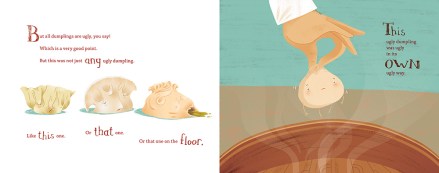
Shahar Kober’s dumpling is anything but “ugly.” His adorable puffed dough, lonely and ignored for not adhering to the mold, will melt readers’ hearts as he tries anything and everything—including green pleated pants—to fit in. Kobar’s stylish drawings are the perfect underscore to Stephani Campisi’s quick, dry wit—as in his rendition of three uglier-than-the-next dumplings—and if cockroaches were really as cute as Kober’s, we’d all set out a different kind of Roach Motel. A clever bit of typography transforms steam coming from a wok into the word HISS, and the restaurant scenes will make readers hungry for their favorite Asian eatery.

As readers turn to the last pages and watch the steamed bun and the cockroach leave the restaurant hand in hand (foot in foot?) under the shade of a paper umbrella, they will want to turn back to the beginning and start over again. The Ugly Dumpling is a must read and a wonderful addition to children’s bookshelves.

Ages 2 – 9

Mighty Media, 2016 | ISBN 978-1938063671

Get to know more about Stephanie Campisi and her work on her website!

To view a gallery of art by Shahar Kober for books, magazines, animation, and more, visit his website!

Check out the Mighty Media Press website for more about The Ugly Dumpling and a-dough-able coloring pages!

Take a look at the trailer for The Ugly Dumpling!

Celebrate Diversity Month Activity

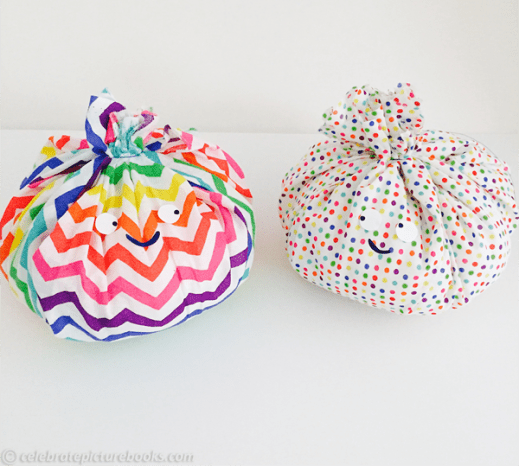
celebrate-picture-books-picture-book-review-dumpling plush craft

Embrace Your Inner Dumpling Plush


We are all beautiful “dumplings” in one way or another! With this easy craft you can create a huggable friend and show others what you’re made of!

Supplies

  • Square piece of cloth in any fabric and color. Size of plush depends on size of cloth (the plushes shown are made from 18”-square cotton fabric)
  • Poly fill (the plushes shown use about 1 1/8 ounces of fill)
  • White cloth for eyes and mouth
  • Twine or string
  • Fabric glue

Directions

  1. Cut the corners from the square cloth to make a circular piece of cloth
  2. Fill the middle with poly fill
  3. Pull the edges of the cloth up and around the fill
  4. Tie the top closed with the twine or string
  5. To make the face, cut small circles and a mouth from the white cloth
  6. Smooth out a section of the dumpling body
  7. Glue the face to the body with fabric glue

Picture Book Review

March 19 – National Poultry Day

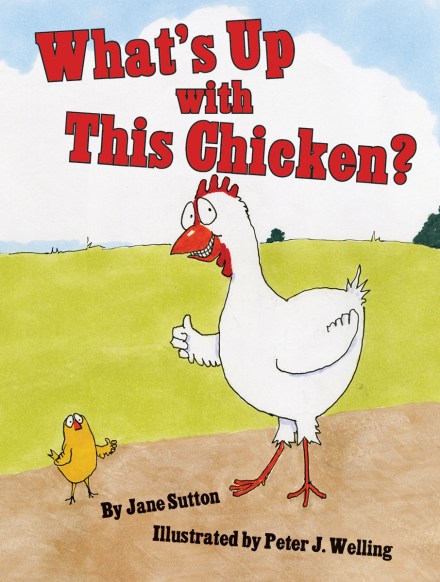
celebrate-picture-books-picture-book-review-what's-up-with-this-chicken-cover

About the Holiday

National Poultry Day, held annually between St. Patrick’s Day and the first day of spring, celebrates the importance of poultry to the diets of people around the world. From breakfast to special holidays, poultry is a valuable source of protein and nutrition that’s also delicious! 

What’s Up with This Chicken?

Written by Jane Sutton | Illustrated by Peter J. Welling


When Sylvia went out to the barn to collect the chickens’ eggs, something was up with Trudy. She squawked and screeched when Sylvia tried to reach under her, but Sylvia took it in stride and with humor: “‘Don’t get so egg-cited!’” she said. “‘I’ll get your egg tomorrow.’” But the next day Sylvia was met with the same reaction. Trudy wasn’t acting like the other chickens in Grandma’s backyard; if fact, she wasn’t even acting like Trudy! “‘What’s up with this chicken?’” Sylvia wondered.

While she and Grandma enjoyed “omelets with eggs from Sue, Clara, Doris, and Olga,” Sylvia talked about “stubborn Trudy.” Grandma didn’t know what was wrong either. The next morning Trudy was even more obstinate. Not only did she make a racket, she tried to peck Sylvia, and she puffed “herself up to twice her size.” Sylvia also noticed “that Trudy left her roost just once a day to eat, drink, and poop. She was getting skinny.”

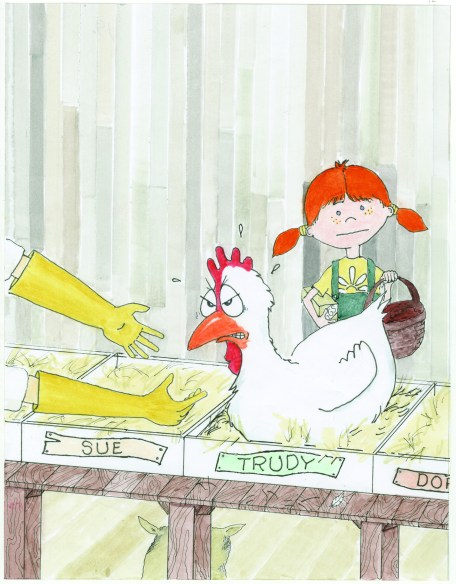
Sylvia decided that Trudy must be hungry. She tried to lure her off her nest by offering chicken feed, but while all the other hens “wolfed it down like chocolate,” Trudy remained firmly on her roost. Sylvia tried everything she could think of to move Trudy, but nothing worked. That night she and Grandma consulted The Big Book About Chickens. Here they discovered that “‘Trudy is broody!’” Grandma read on: “‘Broody hens stay on their eggs so they will hatch into chicks.’” But Sylvia and Grandma know that Trudy’s eggs are not the kind that hatch.

celebrate-picture-books-picture-book-review-what's-up-with-this-chicken-switching-eggs

Image copyright Peter J. Welling, courtesy of Pelican Publishing


Sylvia realized that Trudy just wanted to be a mother, and she wished there were some way to help her. She thought and thought and finally came up with an idea. She ran to Grandma who agreed that Sylvia’s plan was “an egg-cellent idea.” A few days later a box arrived holding four eggs that would hatch. With thick rubber gloves, a dose of determination, and two tries, Grandma was able to lift Trudy off her nest. Sylvia made a quick switch of the eggs, and “Broody Trudy settled down on the new eggs.”

Trudy grew thinner every day but she stayed on her roost, rolling the eggs to keep them uniformly warm and even blanketing them with her own feathers. One day Sylvia heard peeping! She and Grandma rushed out to the coop and were even in time to watch the fourth little chick peck its way out of its shell. They named the new “little yellow fluff balls Sophie, Danielle, Mildred, and Judy.”

Trudy was a proud and protective mother, shielding her chicks with her wings like a “feathery beach umbrella” and teaching them how to find food and water. Trudy went back to her regular routine and began gaining weight. As the chicks grew they got their own nests in Grandma’s coop. But one day Judy squawked and screeched. This time “Sylvia laughed so hard that she almost dropped her egg basket. ‘Broody Judy,’ she said, ‘I know what’s up with you!’”

An Author’s Note about the real-life “Broody Trudy” that inspired the story follows the text.

With a deft and delightful understanding of the puns and humor that set kids to giggling, Jane Sutton has written a fun—and informative—story for animal lovers and anyone who loves a good, natural mystery. Through the well-paced plot and action-packed description, readers learn about a particular behavioral aspect of some chickens and the clever and sensitive way that Sylvia solves the problem. The close relationship between Sylvia and her grandmother adds charm and depth to the story, and their dialogue is spontaneous and playful.

Peter J. Welling’s bright, homey illustrations are the perfect accompaniment to the story. Animated Trudy shoos Sylvia away while the other chickens take dust baths, scratch for bugs, and look just as perplexed as Sylvia and Grandma. Humorous touches abound in Grandma’s choice of home décor and Sylvia’s printed T-shirts as well as in the facial expressions of the human and feathered characters. Trudy’s chicks are adorable, and readers will cheer to see Trudy fulfill her heart’s desire.

What’s Up with This Chicken is a wonderful read-aloud for younger kids’ story times and a fun romp that will keep older, independent readers guessing and wondering how it all comes out right up to the end. The likeable characters—both human and chicken—make this a book kids will like to hear again and again!

Ages 3 – 8

Pelican Publishing, 2015 | ISBN 978-1455620852

Discover more about Jane Sutton and her books on her website!

To read an interview with Jane, click here!

To learn more about Peter J. Welling, his books for kids and adults as well as the original lunch bags he made for his children, visit his website!

National Poultry Day Activity

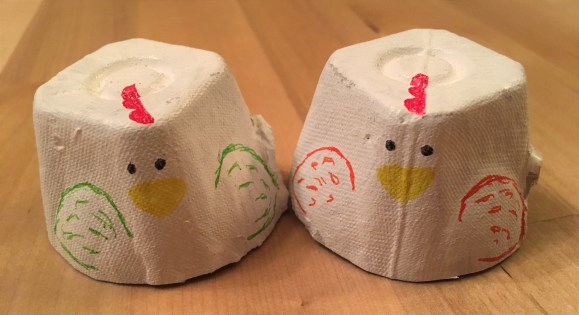
celebrate-picture-books-picture-book-review-egg-carton-chicken-double-chickens

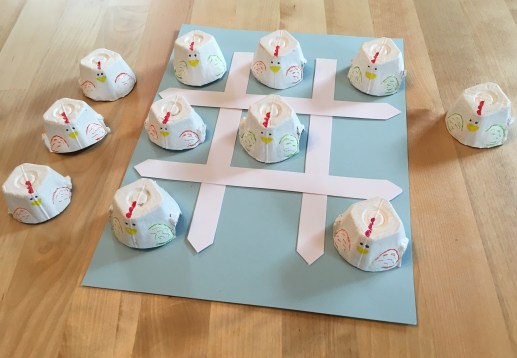
Egg Carton Chickens and a Basket Full of Games


With twelve little chickens you can come up with lots of games to play! This fun craft and game activity is eggs-actly what you need to start hatching some real fun!

Supplies

  • Cardboard egg carton
  • White craft paint
  • Markers: red, yellow, black for the face; any colors you’d like for wings and eggs
  • Paint brush
  • Scissors
  • Glue
  • Construction or craft paper in white and a color of your choice

Directions

  1. Cut the notched flap off the egg carton and set aside
  2. Cut the top off the egg carton
  3. Cut apart all the egg cups and trim slightly so they sit flat
  4. Paint the egg cups with the white paint, let dry
  5. Add the face, comb and wings to the chicken with the markers. Make six chickens with one color wings and six chickens with another color wings.
  6. From the egg carton flap cut thirteen small egg-shaped playing pieces
  7. With the markers, decorate twelve of the eggs in pairs—each egg in the pair with the same design
  8. Color one egg yellow and add a beak, eyes, and wings to make it a chick

Games to Play

Tic-Tac-Toe (2 players)

  1. On a 8 ½” x 11” piece of paper draw a regular tic-tac-toe board or make it fancy – like the picket fence-inspired board in the picture
  2. To make the fence-inspired board on a colored background, cut 2 9-inch-long x 3/4-inch wide strips of white paper, cutting a pointed tip at one or both ends. Cut 2 white  8-inch x 3/4-inch strips of paper with a pointed tip at one or both ends. Glue the strips to the background.
  3. Each player chooses a set of chickens with the same colored wings
  4. Play the game as you usually do

celebrate-picture-books-picture-book-review-egg-carton-chicken-tic-tac-toe

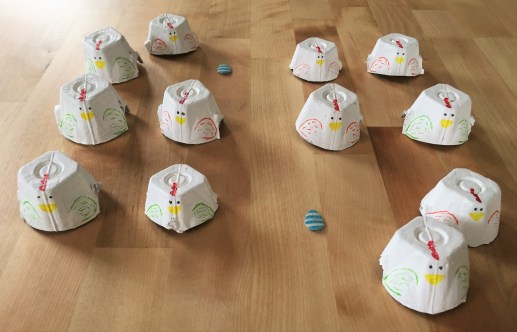
Find the Matching Eggs (2 or more players)

  1. Have one player hide one egg under each chicken
  2. Shuffle the eggs around and form them into three lines of 4 chickens each
  3. Another player lifts one chicken at a time to find matching eggs. If the eggs don’t match, put both chickens back and start again

celebrate-picture-books-picture-book-review-egg-carton-chicken-matching

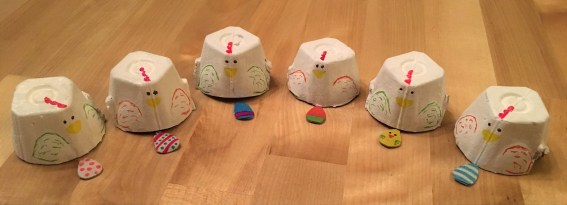
Where’s the Chick?

  1. Use as many chickens and eggs as you want (fewer for younger children, more for older)
  2. One player hides the chick under one of the chickens and eggs under the others.
  3. Another player has three chances to find the chick

celebrate-picture-books-picture-book-review-egg-carton-chicken-where's-the-chick

You can also design your own games for your adorable chickens to play! With more chickens you can even make a checkers set or replicate another of your favorite board games!

Picture Book Review

March 10 – International Day of Awesomeness

celebrate-picture-books-picture-book-review-i-want-that-love-cover

About the Holiday

Okay, so it’s Friday and the end of a long work and school week. Maybe everything didn’t go as planned this week—maybe not even close. But who cares. Why? Because you are still awesome! Begun as a kind of inside joke among coworkers, International Day of Awesomeness continues to grow, attracting more and more awesome individuals around the world. To celebrate get creative and perform feats of awesomeness—whatever that might mean to you. Sometimes that just means having and showing an awesome amount of love—as you’ll soon see!

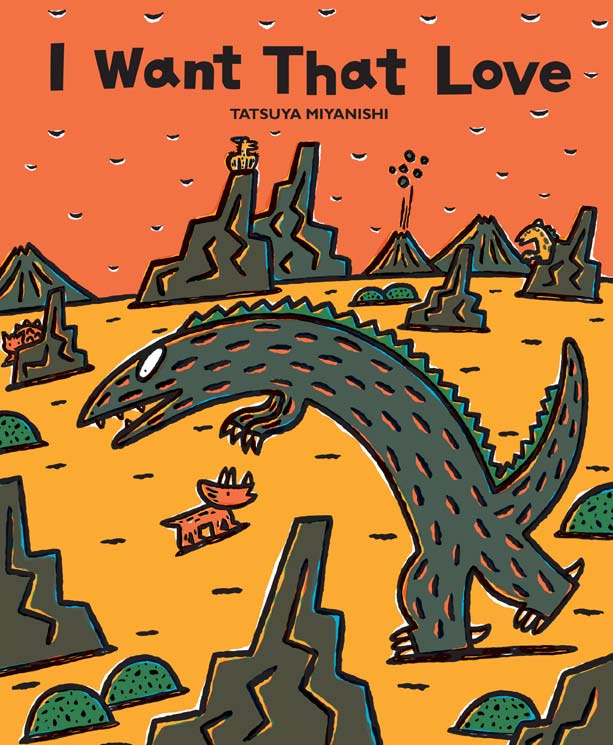
I Want That Love

By Tatsuya Miyanishi


Long ago Tyrannosaurus ruled the earth. His philosophy was “In this world, strength means everything. The strongest wins. The strongest rules. And I am the strongest!” Tyrannosaurus stomped across the landscape crushing and eating the “worthless weaklings” in his path. The other dinosaurs quaked whenever they heard him roar. They hid and were quiet, and never opposed him. Soon this led to some skewed thinking—they also began to believe that “Tyrannosaurus could do anything he wanted to because he was the strongest.”

celebrate-picture-books-picture-book-review-i-want-that-love-sleeping

Text and image copyright Tatsuya Miyanishi, courtesy of museyon.com

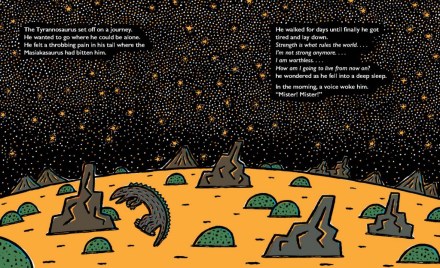
As time passed, however, the Tyrannosaurus grew old and feeble. One day he happened upon a Masiakasaurus who mocked him for moving so slowly. The Tyrannosaurus threatened him, but could do little else. Another Masiakasaurus bit the Tyrannosaurus’s tail. “‘Ouch…stop,’ the Tyrannosaurus cried.” But it did no good; no one was afraid of him anymore.

The Tyrannosaurus just wanted to be alone. He traveled for days, and when he was exhausted he lay down and went to sleep. Now that he was no longer strong, he felt he was worthless and wondered how he was “going to live from now on.” He was awakened by a voice. “He opened his eyes and saw a yummy-looking baby Triceratops right in front of him.” He had every intention of eating this little snack, but his tail was so sore he couldn’t move.

celebrate-picture-books-picture-book-review-i-want-that-love-hugging-triceratops

Text and image copyright Tatsuya Miyanishi, courtesy of museyon.com

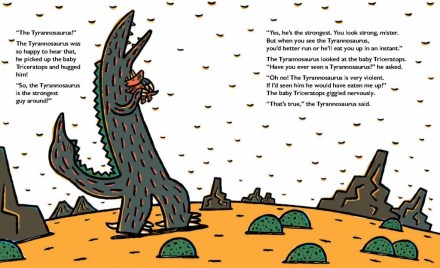
The little Triceratops noticed his swollen tail and stroked the injury to help it feel better. He also warned the Tyrannosaurus that sleeping in the open was dangerous because the “strong, scary Tarbosaurus” would eat him. The Tyrannosaurus scoffed, saying that there was someone much stronger than the Tarbosaurus. The Triceratops suggested the Gorgosaurus, but Tyrannosaurus disagreed. “‘I’m thinking of someone who is much, much stronger,’” he said. Oh, yes! The Triceratops remembered. “‘The Tyrannosaurus!’” Tyrannosaurus was so happy to hear his name that “he picked up the baby Triceratops and hugged him.” The baby warned the dinosaur to run away if he saw Tyrannosaurus because he would surely be eaten.

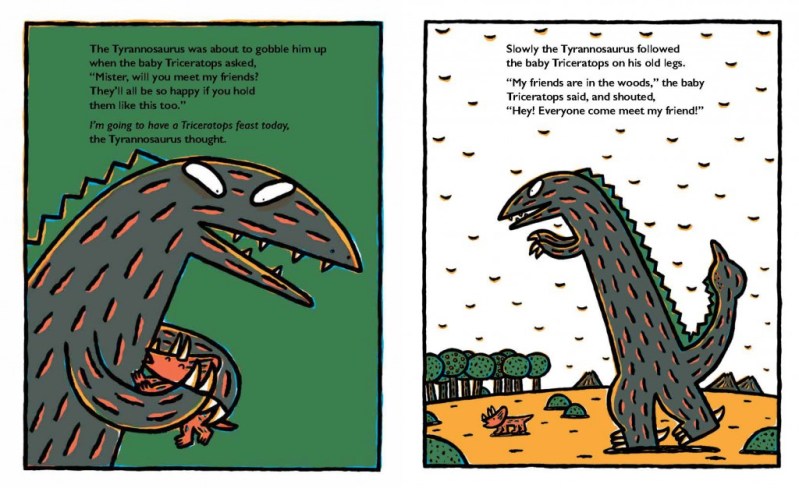
The giant dinosaur was surprised that the baby had never seen Tyrannosaurus before, and was just about to gobble him up when the little one asked if he would meet his friends and hug them too. The Tyrannosaurus eagerly followed the Triceratops, imagining the feast he was about to have. When they reached the woods all the little Triceratops came out to play and begged to be picked up and hugged.  “‘No, no, guys!’ said one little Triceratops. ‘Even a mighty man like Mr. Rhabdodon can get tired.’”

celebrate-picture-books-picture-book-review-i-want-that-love-following-triceratops

Text and image copyright Tatsuya Miyanishi, courtesy of museyon.com

The Tyrannosaurus was insulted. Rhabdodon was stupid, a weakling, and an herbivore. But before he could protest, the other little Triceratops discovered his wound. They all began tending carefully to his injury and gathered red berries to help him heal even though it hurt their horns to ram the tree and dislodge the berries. Suddenly, Tyrannosaurus understood their sacrifice on his behalf. Tears sprang to his eyes, and he grabbed a trunk in his teeth and shook it. The youngsters were amazed as red berries rained down on them.

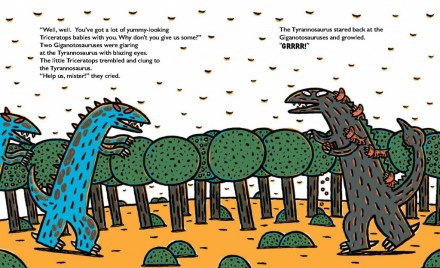
They cheered and said they wanted to be just like Mr. Rhabdodon. They bet that he could even beat mean Tyrannosaurus. The Tyrannosaurus mumbled his old slogan, and began to tell the little ones that strength wasn’t so important when they were interrupted by two Giganotosauruses who wanted a Triceratops snack. The Tyrannosaurus growled at the newcomers. But the Giganotosauruses attacked, biting the Tyrannosaurus to get at the babies in his arms. The Tyrannosaurus curled his body around them and promised to protect them.

celebrate-picture-books-picture-book-review-i-want-that-love-playing-with-triceratops

Text and image copyright Tatsuya Miyanishi, courtesy of museyon.com

As the Giganotosauruses continued to bite him, the Tyrannosaurus “murmured, ‘I finally understand…Remember this, kids. It’s not being strong that is important. What’s most important is…’” At last, unsuccessful in their quest, the Giganotosaurus went away, and the Tyrannosaurus fell over. The little Triceratops crawled safely away and headed home when the Tyrannosaurus told them  he was tired. Before he left, the first Triceratops asked what the most important thing was, but the Tyrannosaurus didn’t reply.

Many years later a father Triceratops and his babies were spotted by two Giganotosauruses looking for food in the woods. They jumped on the family, but the father hid his children under his body and endured the attack. “He remembered how the Tyrannosaurus had protected him and his friends.” Finally, the Giganotosauruses gave up and went away. His little ones were impressed but asked why he hadn’t beaten up the Giganotosauruses.

celebrate-picture-books-picture-book-review-i-want-that-love-giganotosaurus

Text and image copyright Tatsuya Miyanishi, courtesy of museyon.com

With tears in his eyes, the father said, “‘Violence isn’t the answer. There is something more powerful than strength, and more precious too. That is love…A truly strong guy who broke this tree once gave me that love….’ One baby looked at his father and said, “‘Will you give me that love? I want that love.’”

Originally published in Japan, Tatsuya Miyanishi’s story of what constitutes true strength and how love can transform even the most hardened heart will resonate with kids and adults on many levels. Children’s familiarity with and love of dinosaurs allows them to easily understand the complexities of the actions and emotions revealed in the story. Ambiguity in the wording after the Tyrannosaurus defeats the Giganotosauruses allows for various interpretations of his fate depending on the age and sensitivity of the child, and a bit of humor when the Triceratops does not recognize Tyrannosaurus adds levity to the plot. The innocence and generosity of the Triceratops babies as an agent of change within the Tyrannosaurus is poignant and realistic. Likewise, the long-term effects of experiencing awesome love when young is well demonstrated as the father Triceratops later gives back to his own family.

The harsh dinosaur-eat-dinosaur landscape is effectively portrayed in Miyanishi’s bold green, gold, and orange illustrations in which the stylized Tyrannosaurus towers over trees, angular rock formations, and especially the tiny, unsuspecting Triceratops. Images of the Tryannosaurus and Triceratops father guarding the babies are touching and demonstrate a parent’s or caregivers love.

I Want That Love is the third book in the Tyrannosaurus series, along with You Look Yummy and You Are My Best Friend, and will reward readers who love dinosaurs as well as those looking for books on kindness and acceptance.

Ages 5 – 7

Museyon, 2016 | ISBN 978-1940842141

Day of Awesomeness Activity

celebrate-picture-books-picture-book-review-awesomeness-cards

Awesomeness Cards


Do you have some awesome people in your life? Give them one of these printable Awesomeness Cards and watch them smile!

Picture Book Review