November 9 – National Aviation History Month

celebrate-picture-books-picture-book-review-wind-fliers-cover

About the Holiday

If you look back in history you see that people have always been fascinated with flight. The first kite was invented in 1000 BCE in China; around 400 BCE Archytas of Tarentum developed a steam-powered pigeon; and most people are familiar with the designs of flying machines that Leonardo de Vinci created in the late 1400s. An important discovery that led inventors in the right direction came in 1680 when an Italian mathematician determined that human muscles were incompatible with flight.

Zip ahead about 100 years and the first hot-air balloon flight was undertaken, which led to more and more complex technology, resulting in Wilbur and Orville Wright’s flight in 1903. From there, it seemed, the sky was the limit. Amelia Earhart became the first woman to complete a trans-Atlantic Ocean solo flight in 1932, and in 1947 Charles Yeager broke the sound barrier. But it’s astounding to think that from that modest 12-second first flight by the Wright Brothers to the first man in space—Soviet cosmonaut Yuri Gagarin—it took only 58 years! Today astronauts from countries around the world live and work in the International Space Station, and spacecraft are traversing deep space.

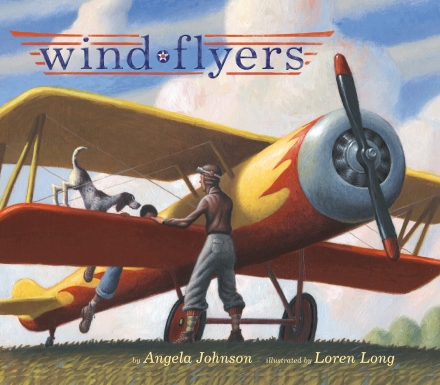
Wind Flyers

Written by Angela Johnson | Illustrated by Loren Long

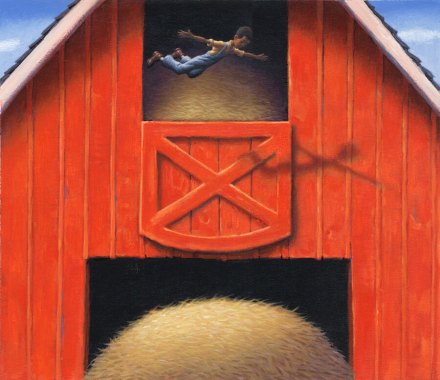
With pride a young African-American boy tells the story of his great-great-uncle who was a Tuskegee Airman in World War II. His uncle was “a smooth wind flyer. A Tuskegee wind flyer…,” the boy says. He knows well his uncle’s history—how like a bird, his uncle believed he was born to fly. “With his arms flapping, he jumped off a chicken coop at the age of five,” and when he was only seven he soared from a lofty barn into a pile of hay. His first real flight came at the age of eleven, when he paid 75 cents to be a passenger with a barnstormer.
celebrate-picture-books-picture-book-review-wind-fliers-jumping-from-hayloft

Image copyright Loren Long, courtesy of Simon & Schuster

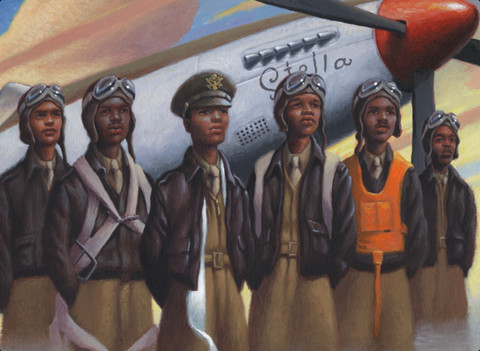
Flying over lakes and fields, his uncle felt as if he were in Heaven, among clouds “like soft blankets, saying, ‘Come on in, get warm. Stay awhile and be a wind flyer too.’” The experience changed him forever. In fact he “cried when they landed because then he knew what it was like to go into the wind, against the wind, beyond the wind.” As a young adult his uncle contributed his dream and his skills to the World War II effort, becoming a Tuskegee Airman, one of the first black pilots in the United States military.
celebrate-picture-books-picture-book-review-wind-fliers-tuskegee-arimen

Image copyright Loren Long, courtesy of Simon & Schuster

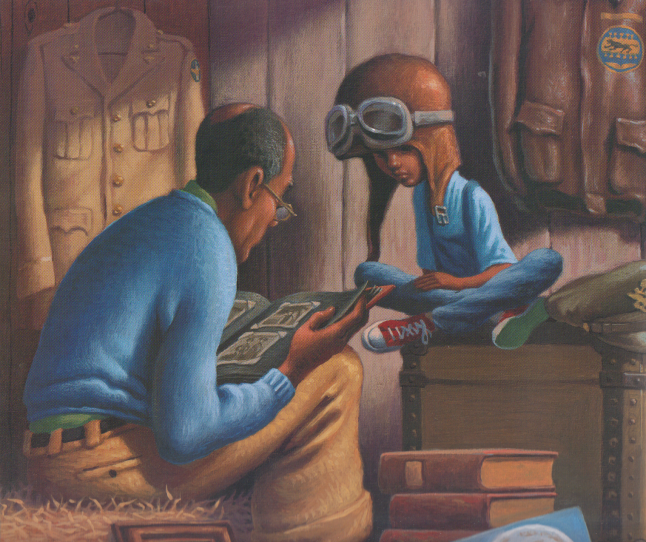
As the pair sit in the uncle’s barn, surrounded by his military uniform, leather jacket, and other memories of his flying career—after the war to continue flying he became a crop duster—the pair look through old photographs, seeing once more those young and brave pilots—the Tuskegee wind flyers. Planes are different now, Uncle says, but the clouds remain the same. The boy and his uncle climb to the highest point of the uncle’s barn to watch the jets—and in those moments they once more become the smooth wind flyers, flying into the wind and beyond.
celebrate-picture-books-picture-book-review-wind-fliers-grandfather-and-grandson

Image copyright Loren Long, courtesy of Simon & Schuster

In her soaring, rhythmic language, Angela Johnson captures the dreams and yearning of a young boy whose greatest desire is to fly among the clouds. Her combination of straight narration with lyrical lines as he joins the Tuskegee Airman in World War II enhances the sense of achievement and pride the young pilots felt. The structure of the story is well chosen, as relating the uncle’s life from childhood through old age through the eyes of his nephew strengthens the themes of strong familial relationships as well as shared dreams across generations.

Loren Long gives Wind Flyers additional power with his strong, vibrant paintings. Two-page spreads provide a sense of the vastness of the skies that so enticed the young would-be pilot. Even the clouds echo the emotion of the page—fluffy, floating, and alive in the flight scenes while linear, flat, and stationary when the plane and the uncle are earthbound. Realistic portrayals of the boy, his uncle, and the other Tuskegee Airmen are reminiscent of the WPA murals of the 1940s while still setting this book firmly in today for a new generation.

Wind Flyers is a wonderful book to share with aviation buffs, budding historians, and dreamers of all types and would make a welcome thoughtful book for quiet story times.

Ages 4 – 9

Simon & Schuster Books for Young People, 2007 | ISBN 978-0689848797

To learn more about Angela Johnson‘s books for all ages, visit her website!

View a gallery of artwork for picture books and other media by Loren Long, visit his website!

National Aviation History Month Activity
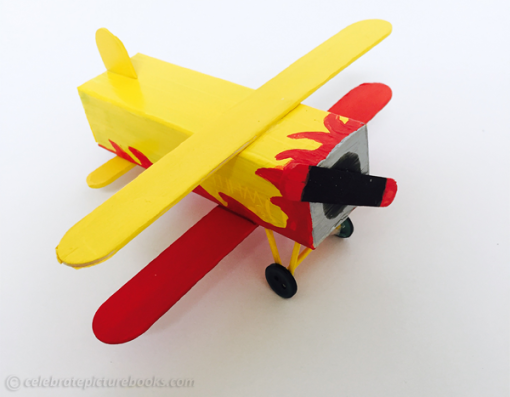
CPB - Biplane side

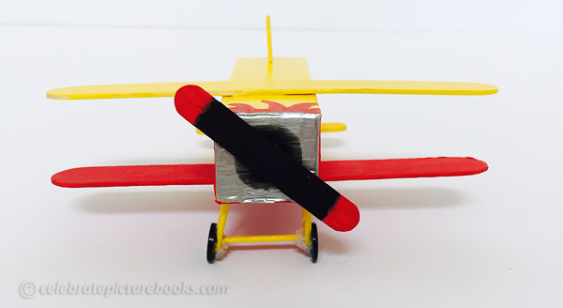
Head in the Clouds Box Biplane

If you love airplanes and flying, you’ll have fun making your own plane from recycled materials! Use your creativity to decorate your plane while you imagine yourself flying through the clouds on a beautiful day. Younger children will have fun sharing this activity with an adult or older sibling too!

Supplies

  • Travel-size toothpaste box
  • 3 6-inch x 1/2-inch craft sticks
  • 2  2 1/2-inch x 7/8-inch mini craft sticks
  • 5 Round toothpicks, with points cut off
  • Paint in whatever colors you like for your design
  • 4 small buttons 
  • 2 mini buttons
  • Paint brushes
  • Strong glue or glue gun

CPB - Biplane front

Directions

  1. Empty toothpaste box
  2. Paint toothpaste box and decorate it
  3. Paint the craft sticks and 5 toothpicks
  4. Paint one small craft stick to be the propeller
  5. Let all objects dry

To assemble the biplane

  1. For the Bottom Wing – Glue one 6-inch-long craft stick to the bottom of the plane about 1 inch from the end of the box that is the front of the plane
  2. For the Top Wing – Glue the other 6-inch-long craft stick to the top of the plane about 1 inch from the front of the plane
  3. For the Tail – Glue one mini craft stick to the bottom of the box about ¾ inches from the end that is the back of the plane
  4. For the Vertical Rudder – Cut the end from one of the painted 6-inch-long craft sticks, glue this to the back of the box, placing it perpendicular against the edge and half-way between each side
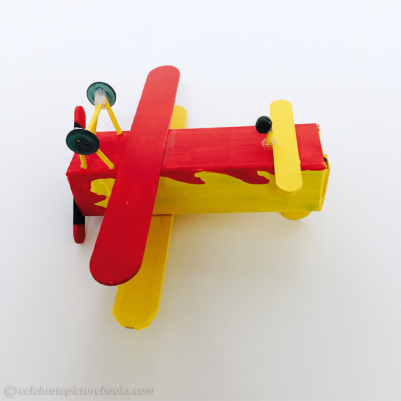
CPB - Biplane bottom

To assemble the front wheels

  1. Cut 4 painted toothpicks to a length of ¾-inches long
  2. Cut one painted toothpick to a length of 1-inch long
  3. Glue 2 of the 3/4-inch toothpicks to the back of 1 button, the ends of the toothpicks on the button should be touching and the other end apart so the toothpicks form a V
  4. Repeat the above step for the other wheel
  5. Let the glue dry
  6. Glue the 1-inch long toothpick between the wheels at the center of each wheel to keep them together and give them stability. Let dry

To make the back wheel

  1. Cut two ¼-inch lengths of painted toothpick and glue them together. Let dry
  2. Glue two mini buttons together to form the back wheel. Let dry
  3. Glue the ¼-inch toothpicks to the mini buttons. Let dry
  4. Glue these to the bottom of the plane in the center of the box directly in front of and touching the tail

Display your biplane!

Picture Book Review

Picture Book Review

November 7 – Job Action Day

celebrate-picture-books-picture-book-review-a-crow-of-his-own-cover

About the Holiday

Instituted in 2008 and now sponsored by LiveCareer to empower employees and job seekers to assess their careers, make plans, and take action, Job Action Day gives people a chance to reflect on their true goals in life. Are you doing the job you’re passionate about? Are you bringing your passions to the job you are doing? If you are unhappy or dissatisfied with your position, step back and take another look, broaden your horizons. Discover the possibilities and opportunities that lie within your current job and pursue them. You never know where a particular job will lead you if you put all your creativity, knowledge, and—most importantly—unique personality—into it. Job Action Day brings together experts across the web and in participating companies to provide the latest in career advice.

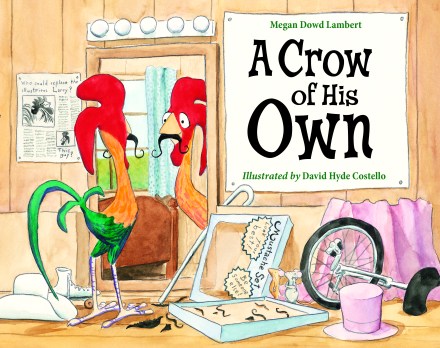
A Crow of His Own

Written by Megan Dowd Lambert | Illustrated by David Hyde Costello


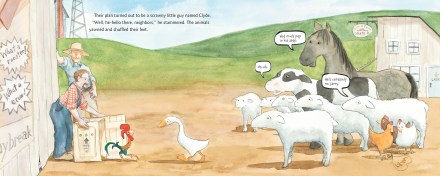
When fame and fortune came calling for Larry, the charismatic rooster of Sunrise Farm, the daily routine turned upside down. “The animals overslept and no one knew what to do.” But while the cow, horse, sheep, chickens, and goose fretted, Farmer Jay and Farmer Kevin had a plan. One day they gathered all the animals and introduced Clyde, the new rooster. Looking at the “scrawny little guy” as he stammered his hello, the cow, horse, and sheep expressed doubt in his abilities, already comparing him to their beloved Larry.

Roberta, the goose, stepped forward, however, and reassured him that “they just miss Larry.” When Clyde asked who Larry was, the animals gasped. “Only the best rooster ever,” claimed the sheep. “Take it straight from my mouth: he was more than that,” said the horse. “He was a genius,” the cow chimed in.” And the chickens? In the dirt they scratched a heart with Larry and XOX in the center.

celebrate-picture-books-picture-book-review-a-crow-of-his-own-clyde-joins-the-farm

Image copyright David Hyde Costello, text copyright Megan Dowd Lambert. Courtesy of Charlesbridge

Clyde was worried—how could he ever live up to Larry? Roberta tried to soothe him. “‘Larry wasn’t a genius…he just made quite a show of it.” Emboldened and with an inkling of what he needed to do, Clyde thanked Roberta and dashed off. “Clyde spent the whole day gathering props, designing his costume, and choreographing a sublime two-step.” As Clyde gave himself one last look in the mirror in his top hat and cloak, he had misgivings. “Could he put on a show of a crow?” He went to bed, but hardly slept at all.

In the morning…well…Clyde overslept. The animals were not happy. “Who ever heard of a rooster sleeping in?” baaad mouthed the sheep. “What a worthless chicken,” complained the horse. And the cow had issues of her own. Once again Roberta came to Clyde’s defense. With a wagon full of new props and material, Clyde rushed away to prepare for the next day. Up bright and early and balanced on a unicycle atop the coop while surrounded by promotional signs, Clyde “opened his beak, and…promptly fell to the ground with an undignified croak.”

celebrate-picture-books-picture-book-review-a-crow-of-his-own-skating-ramp

Image copyright David Hyde Costello, text copyright Megan Dowd Lambert. Courtesy of Charlesbridge

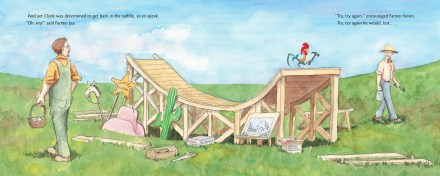
Poor Clyde! Humiliated and hurt he once again had to endure the slights of the farmyard animals, but their comments only spurred him on. Vowing to go bigger and better, Clyde built himself a ramp, ordered roller skates for birds and a parachute, and designed a colorful Western-theme set. “‘Oh, my!’” remarked Farmer Jay as he walked by. “‘Try, try again,’ encouraged Farmer Kevin.” But in the morning Clyde’s spectacular trick left him hanging upside down from the chicken coop, and the animals more “disgruntled and dismayed” than before.

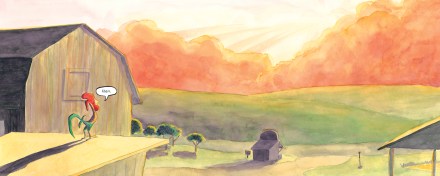
Clyde was distraught. “‘Forget about Larry.’” Roberta said. “‘Just crow your own crow.’” Clyde considered her advice. The next morning as the sky turned pink and orange with the rising sun, Clyde stood tall atop the chicken coop. He quietly cleared his throat and then—“COCK-A-DOODLE-DOO!” The newly awakened animals came running. Even Farmer Jay and Farmer Kevin came to see this new Clyde. The horse summed up their collective feeling: “It’s not so much like crowing, but crooning.” Roberta agreed. “‘Enough to give you goose bumps!’” she exclaimed. As an encore, “Clyde took a deep breath, gave a shake of his comb, and called out another crow of his own.”

celebrate-picture-books-picture-book-review-a-crow-of-his-own-sunrise

Image copyright David Hyde Costello, text copyright Megan Dowd Lambert. Courtesy of Charlesbridge

These days it’s nearly impossible for kids not to compare themselves or be compared to others—even those they’ve never met. All they need to do is jump on the Internet and discover that so-and-so has double, triple, or more friends and/or followers than they do; go to class and get their grade on that assignment they worked so hard on; or simply stand by their locker, go to lunch, or head out to gym and overhear the comments of other students. Avoidance isn’t the answer, but a good base of self-confidence and personal identity is. In A Crow of His Own Megan Dowd Lambert offers readers such a base in her entertaining and meaningful tribute to self-acceptance and love that hits all the right notes.

As soon as scrawny Clyde walks out of his crate to the scorn of his farm mates, kids will root for this underchicken. With a light touch and plenty of wordplay, Dowd deftly presents honest portrayals of the opposition Clyde is up against as well as Clyde’s distressed reactions. Clyde’s three attempts to act like Larry humorously demonstrate the difficulties of trying to be someone you’re not. When Clyde finally musters the courage to “crow his own crow” and is met with praise, readers will see that their own unique talents will find an appreciative audience.

David Hyde Costello knows how to put on a show! His Sunrise Farms is a gentle, bucolic spread still under the thrall of Larry. Humorous details, such as the valentines to Larry the chickens draw in the dirt, the movie house-style posters on the side of the barn, and the surprised and exasperated expressions of the animals, testify to Larry’s enduring legacy. But careful observers will notice that while Larry is a rather bland white rooster with some black tail feathers, Clyde is distinctively colorful from his comb to his feet. Kids will giggle at Clyde’s increasingly complex morning shenanigans even as they sympathize with his plight. When Clyde finally reveals his magnificent crow, readers will cheer.

A Crow of His Own is a winner on so many levels. It offers parents and children a way to discuss and begin building the strong sense of self so important to a happy and successful life. The book also presents a positive visual representation of diversity, and in Roberta and Farmer Jay and Farmer Kevin it shows that finding support helps. And it does all of this in a story that stands on its own as a funny, laugh-inducing romp. Because kids will want to hear this story over and over, A Crow of His Own would be a wonderful addition to libraries and home book collections.

Ages 4 – 9

Charlesbridge, 2015 | ISBN 978-1580894470

To learn more about Megan Dowd Lambert, her picture books, her Whole Book Approach to Reading, and more visit her website!

On David Hyde Costello‘s website you’ll find a gallery of artwork, a portfolio of picture books, videos, and more!

Job Action Day Activity

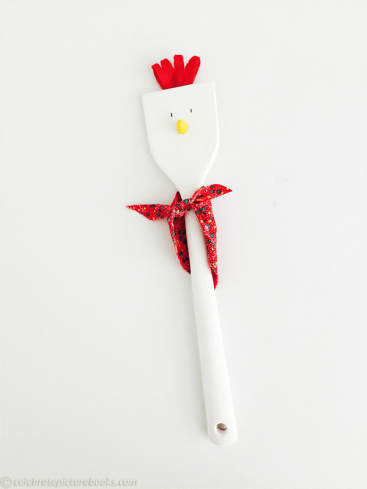
celebrate-picture-books-picture-book-review-chicken-craft

A Chicken to Crow About


A long-handled wooden turner makes a plucky decoration for your room or kitchen—and a great reminder to bring your passions to every job! In a few simple steps, you’ll have a cute companion you’ll want to crow about!

Supplies

  • Printable Comb and Scarf Template
  • Long-handled wooded turner, available in kitchen supply stores
  • Red felt
  • Yellow bakable clay
  • Fabric, 12 inches square
  • A small piece of white felt or fleece (optional)
  • White paint (or any color you would like)
  • Black marker
  • Fabric glue
  • Glue gun
  • Paint brush

celebrate-picture-books-picture-book-review-chicken-craft

Directions

  1. Paint the wooden turner, let dry
  2. Cut the scarf from the piece of fabric
  3. Make a beak from the yellow clay and bake it according to package directions

To make the comb

  1. Cut out the comb from the red felt
  2. Fold the felt in half and glue the end together with the fabric glue
  3. Cut short strips from the folded top of the felt, about ½-inch to ¾ -inch in length
  4. Round the corners of the strips slightly

To make the scarf

  1. Fold the fabric in half
  2. With the long, straight edge of the scarf template along the fold, cut out the scarf
  3. With the fabric glue, glue the two sides of the scarf together so that you have two “right” sides
  4. Let dry

To assemble the chicken

  1. Pinch the bottom of the comb together so that the strips open and the felt pleats a little
  2. With the glue gun attach the comb to the back of the painted turner, keeping the bottom pinched together
  3. Attach the beak to the front of the turner
  4. Draw eyes on the chicken with the black marker
  5. Tie the scarf around the neck of the handle, hold in place with a drop of glue in the back if necessary
  6. To make tail feathers in a turner with a hole in the handle, pinch together a small folded piece of white felt or fleece and push it through the hole in the handle of the turner.
  7. Cut or arrange to look like feathers

Picture Book Review
November 6 – Marooned without a Compass Day

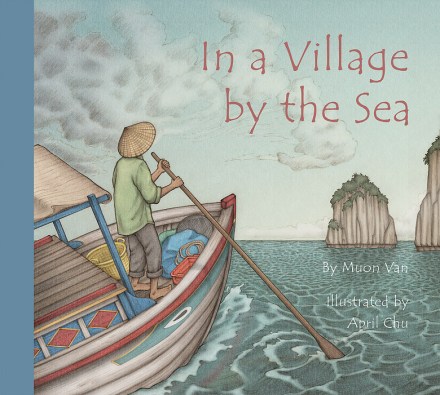
celebrate-picture-books-picture-book-review-in-a-village-by-the-sea-cover

About the Holiday

It may seem appropriate that the origins of this holiday are lost to history, like someone left to languish on a deserted island. But it’s true that—at some time or another—most of us feel marooned without a compass, flailing with decisions about what to do, who to confide in, even who we are. Today is an opportunity to reflect on the direction you are going in life and, if you find you are off course, to steer once more down the right path. It’s comforting to know that someone will be waiting for you when you reach home—wherever that may be.

In a Village by the Sea

Written by Muon Van | Illustrated by April Chu


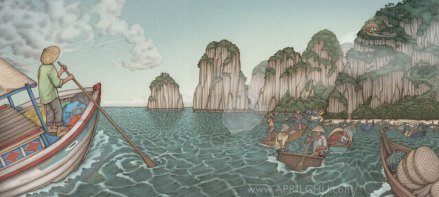
High on a cliff a small house looks out over the sea, where fishermen are poling their craft and setting their nets. “In that house, high above the waves, is a kitchen.” In the kitchen a warm fire blazes under “a pot of steaming noodle soup.” A woman, preparing ingredients for dinner, watches, mixes, and stirs while the pot simmers.

celebrate-picture-books-picture-book-review-in-a-village-by-the-sea-small-house-on-the-cliff

Image copyright April Chu, courtesy of aprilchu.com

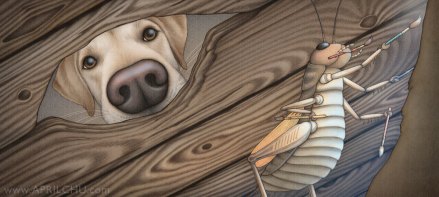
“By that woman is a sleepy child, yawning and turning. By that child, tucked in the shadows, is a dusty hole.” If you peer into that hole, you will see something astounding—a brown cricket is “humming and painting.” The cricket, brushes in four hands is surrounded by paints contained in seashells. It is painting a “sudden storm, roaring and flashing.”

celebrate-picture-books-picture-book-review-in-a-village-by-the-sea-small-house-dog-finds-cricket

Image copyright April Chu, courtesy of aprilchu.com

A white boat rides this roiling sea, rising and dipping with the crashing waves as lightning flashes ahead. Under the cover of the boat’s canvas roof a fisherman eyes the threatening sky and waits for the storm to end. In his hand he opens a precious box. Inside are two pictures: one of a small house high on a hill; the other of a smiling woman holding a little child while their dog looks on. Next to these sits a special cricket.

In the painting there is also a small house, and “in that house is a family waiting for [the fisherman] to come home.”

celebrate-picture-books-picture-book-review-in-a-village-by-the-sea-looking-out-the-door

Image copyright April Chu, courtesy of aprilchu.com

Muon Van’s lyrical tale expands and contracts through the eyes of family members to reveal not only the actions and emotions of one afternoon but those that eternally exist in each character’s heart. In the opening page readers view the small house from afar as the husband and father fisherman casts off on his journey. Children are then invited into the kitchen and finally into a small crevice.

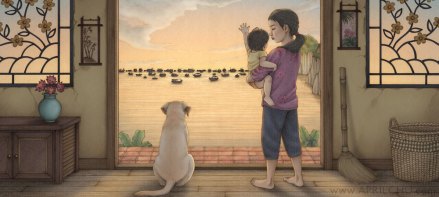
Through the cricket’s tiny painting, readers once again see the wider world with its storms and worries. Narrowing the perspective to the fisherman’s view as he looks at his photo box, however, they understand that comfort and reassurance are always close at hand. As the next page zooms out, children are again invited into the little home to join the woman, baby, and vigilant dog as they gaze out into the bay, watching and waiting for one particular boat.

Van’s quiet and simple story holds much universal feeling as it traverses both homey and unpredictable landscapes. As each page depends on the previous one, a gentle suspense builds, enticing readers to follow wherever the story takes them. The inclusion of the “dusty hole,” where a cricket—a symbol of good luck—paints the rest of the story, is irresistible and lends the tale a mystical quality.

celebrate-picture-books-picture-book-review-in-a-village-by-the-sea-on the shore

Image copyright April Chu, courtesy of aprilchu.com

April Chu’s gorgeous paintings transport readers to a Vietnamese fishing village with their delicate and colorful details. The small home glows with the light of paper lanterns and the fire in the stove. As the perspective of the text changes, so does the perspective of Chu’s paintings. When readers peer into the soup pot, bubbling with delicious vegetables, the family’s Labrador gazes up at them, almost begging to know what smells so good. Another bird’s eye view lets kids watch as the dog discovers the hole under the rug, a beautiful device to increase their enjoyment of and wonderment at the story.

Kids will marvel at the cricket’s artistic talent, as the stormy sea churns with whitecaps and lightning flashes from the tip of the small creator’s paintbrush. But it is Chu’s mastery that makes each page so meaningful.

Ages 3 – 10

Creston Books, 2015 | ISBN 978-1939547156

View a porfolio of picture books and other artwork by April Chu on her website!

Marooned without a Compass Day Activity

celebrate-picture-books-picture-book-review-sail-boat-maze

Sailboat Maze


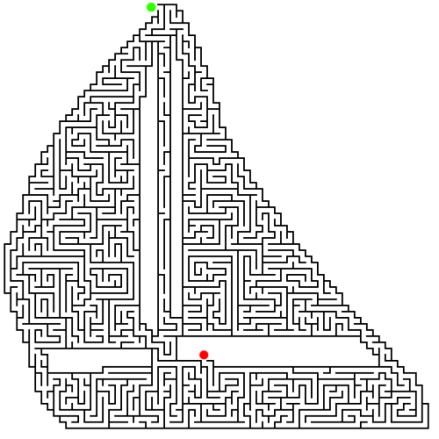
Sometimes getting through a maze is as smooth as sailing on a calm sea—and sometimes the path is a little choppy. Get your pencil ready and chart a path through this printable Sailboat Maze!

Picture Book Review
November 5 – Book Lovers Day

cpb-hug-this-book-cover-1500

About the Holiday

The first Saturday in November is set aside for all book lovers out there who like nothing more than to snuggle into a cozy nook with a favorite book. It’s a great day to discover a new author or to reread a beloved one. With so many kinds of books available—mystery, adventure, humor, biography, non-fiction, novels, and more—you may want to read more than one today! How many can you read?

Hug This Book!

Written by Bernie Saltzberg | Illustrated by Fred Benaglia


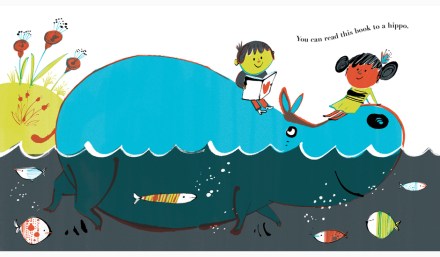
When you grab onto a book and open the cover, you know what to do! But did you know that books themselves may have some ideas on the subject? Today’s reviewed book has plenty of fabulous, page-turning ideas and is happy to share them with you. Its first thought is a pretty big one: “You can read this book to a hippo.” I know!—wouldn’t that be a blast?

celebrate-picture-books-picture-book-review-hug-this-book-hippo

Image copyright Fred Benaglia, text copyright Barney Saltzberg. Courtesy of Phaidon Press

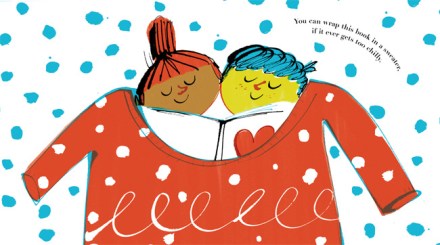
It seems that books watch how readers treat their pets, and they want in: “You can kiss and hug and smell this book. / That might sound sort of silly. / You can wrap this book in a sweater, / if it ever gets too chilly.” That sounds as cozy as enjoying hot chocolate in front of a fire—with this book, of course!

celebrate-picture-books-picture-book-review-hug-this-book-sweater

Image copyright Fred Benaglia, text copyright Barney Saltzberg. Courtesy of Phaidon Press

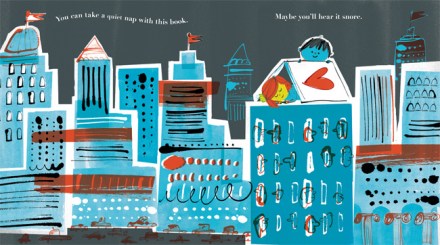
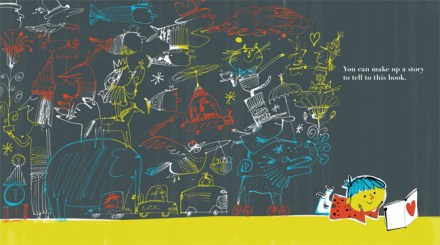
The book continues—“You can make up a story to tell to this book.” Hmmm…I never thought about it. Maybe books don’t like doing all the work all the time. Maybe they’d like to just relax and be entertained. Well, I’m sure you can come up with something fun and fantastic! And just to keep you on your toes, the book offers a few more challenges: “Can you read this book in the mirror? / Or sing the words in this book like a song? / If you sing it to the birdies, maybe they’ll sing along.” After completing those activities maybe it’s time for a nap. Don’t forget to take the book too, but be ready to giggle because… “Maybe you’ll hear it snore.”

celebrate-picture-books-picture-book-review-hug-this-book-snore

And when you wake up all refreshed you can try reading the book while dancing, twirling, leaping, skipping…you can even take it to lunch, “just do not try to feed it.” Then suddenly and all too soon the book comes to the last page. Don’t be sad, though. “Even though this book is over, / it isn’t really the end. / You can start at the beginning / and read it to a friend!”

celebrate-picture-books-picture-book-review-hug-this-book-tell-story

Image copyright Fred Benaglia, text copyright Barney Saltzberg. Courtesy of Phaidon Press

Barney Saltzberg’s love for books is infectious. His witty rhymes bubble with the thrill of reading and playfully challenge kids to take books along no matter where they go or what they do. The cadence of Saltzberg’s lines invite multiple readings—the way the rhythm of movement in hopscotch, jump rope, or dancing is inherent in the fun. Kids will giggle at the examples Saltzberg conjurs up—reading to a hippo, listening to a book snore, feeding a book—and you can bet that they will want to invent some of their own! Get ready to hug this book—and many others. After all isn’t that what best friends do?

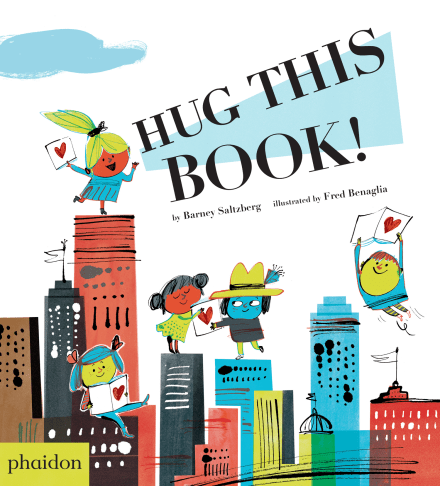
Fred Benaglia’s adorable characters swim and paddle, snuggle and swing, play and imagine all the while with their nose in this book. The fanciful coloring and quirky landscapes enhance both the originality and universality of this tribute to book love. Benaglia’s artwork—from the fish nibbling at a child’s toes to the cars zipping through the cities—radiate personality invites creative thinking. Readers will especially want to linger over the two-page spread of a smiling child conjuring up a host of stories to catch every imaginative detail in the chalk drawings. The big red heart on the  cover under the book jacket is a clever touch, connecting Hug This Book! to “this book” in the text.

For all book lovers, Hug This Book! is a fun, funny romp and will be a welcome, often-asked-for addition to a child’s library.

Ages 2 – 7

Phaidon Press, 2016 | ISBN 978-0714872841

You’ll love discovering all the books, music, and videos on Barney Saltzberg‘s website!

Cuteness abounds on Fred Benaglia‘s website, where you’ll find book illustrations and so much more!

Can you hug this Hug This Book! book trailer?

Book Lovers Day Activity

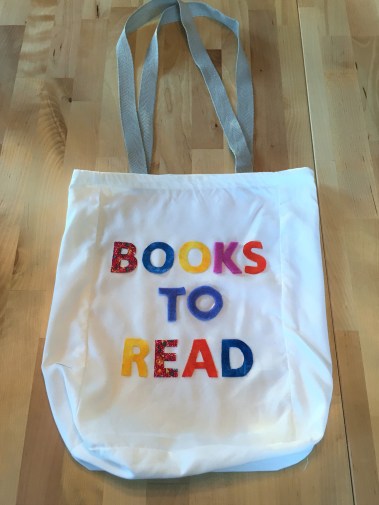
celebrate-picture-books-picture-book-review-book-bag-craft

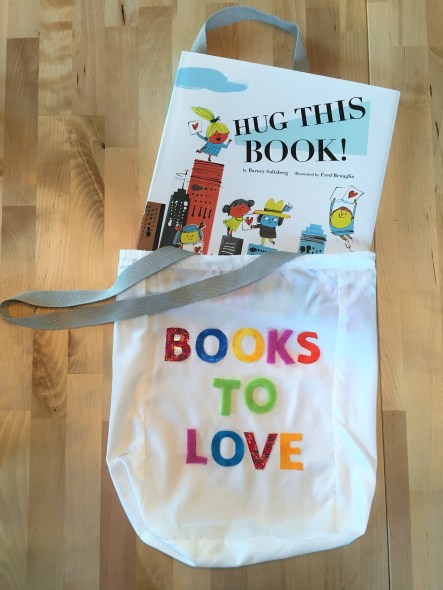
Book Lovers Book Bag


Whether you’re buying new books at your local bookstore or checking some out at your library, carry those treasures home in their own special bag! This kid-sized bag was made from recycled materials!

Supplies

  • Printable Templates: Books to Read Template | Books to Love Template
  • Small cloth bag, available from craft or sewing stores—Recyclable Idea: I used the bag that sheet sets now come in
  • Cloth trim or strong ribbon, available from craft or sewing stores—Recyclable Idea: I used the cloth handles from shopping bags provided from some clothing stores
  • Scraps of different colored and patterned cloth. Or use quilting squares, available at craft and sewing stores
  • Pen or pencil for tracing letters onto cloth
  • Scissors
  • Small sharp scissors (or cuticle scissors) for cutting out the center of the letters
  • Fabric glue
  • Thread (optional)
  • Needle (optional)

celebrate-picture-books-picture-book-review-books-bag-craft

Directions

  1. Print the sayings and cut out the letters
  2. Trace letters onto different kinds of cloth
  3. Cut out cloth letters
  4. Iron cloth bag if necessary
  5. Attach words “Books to Read” to one side of bag with fabric glue
  6. Attach words “Books to Love” to other side of bag with fabric glue
  7. Cut cloth trim or ribbon to desired length to create handles
  8. Glue (or sew) handles onto the inside edge of bag

Picture Book Review
November 1 – Dia de los Muertos (Day of the Dead)

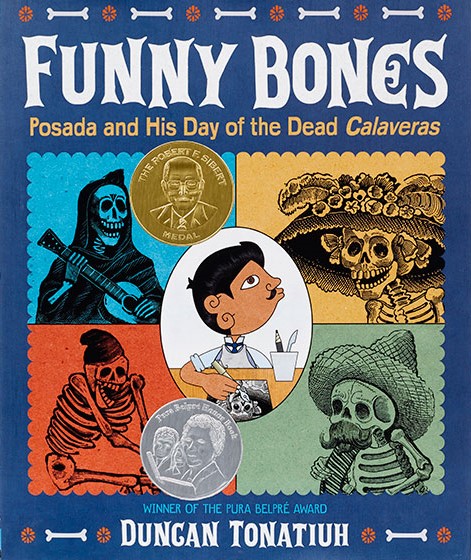
celebrate-picture-books-picture-book-review-funny-bones-posada-and-his-day-of-the-dead-calaveras-cover

About the Holiday

Originating in Mexico, but celebrated throughout Latin America, Dia de los Muertos commemorates the lives of deceased loved ones with music, food, parties, and activities the person enjoyed in life. Dia de los Muertos revolves around the belief that death is just a natural part of the life cycle, and the dead are awakened from their eternal rest to once more join their community for this special day.

Funny Bones: Posada and His Day of the Dead Calaveras

By Duncan Tonatiuh


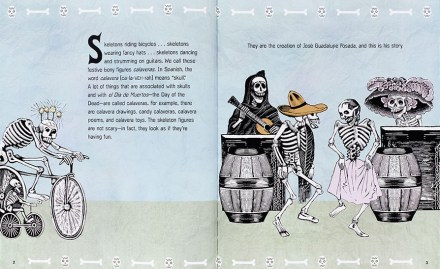
José Guadalupe Posada was born in 1852 in the Mexican city of Aguascalientes. His older brother, a teacher, taught Lupe how to read and write, and seeing how well he drew, helped him enroll in art classes. When Lupe was 18, he went to work in a print shop where he learned lithography and engraving. During working hours Lupe created labels, invitations, flyers, and other documents.

celebrate-picture-books-picture-book-review-funny-bones-posada-and-his-day-of-the-dead-calaveras-introduction

Copyright Duncan Tonatiuh, courtesy of abramsbooks.com

After work, he gathered with other artists and talked about the government. They didn’t like how their government officials ran things. Lupe’s boss, Don Trinidad Pedroza, at the print shop also published a newspaper, and he invited Lupe to create editorial drawings to be included in the paper. Lupe’s drawings were humorous, but also highlighted the officials’ bad traits. After the elections some of these politicians remained in power and were angry with Lupe and his boss. Lupe and Don Trinidad decided to move to the city of León.

In León Lupe opened his own print shop, he got married, and had a son. He became well known not only for his printing work but also for book and pamphlet illustrations. People began to call him Don Lupe as a sign of respect. “But in 1888 a terrible flood destroyed a large part of the city, including Don Lupe’s shop.” He and his family moved to Mexico City, where in time he was able to open another print shop.

celebrate-picture-books-picture-book-review-funny-bones-posada-and-his-day-of-the-dead-calaveras-calavera-love

Copyright Duncan Tonatiuh, courtesy of abramsbooks.com

He worked with Antonio Vanegas, a writer, who published his stories on large sheets of paper called ‘broadsides.’ “The tales were about a wide range of topics, including scary creatures, fires, miracles, violent crimes, heroes, bandits, cockfights, and bullfights.” Don Lupe drew illustrations for many of these stories. Even people who couldn’t read began buying the broadsides because they were fascinated by Don Lupe’s art.

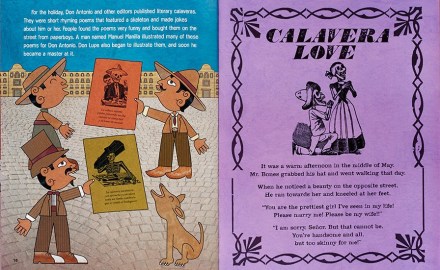
Every November first and second, during the Dia de Muertos celebrations venders sold special “pan de muerto (bread), cempasúchil (marigold flowers), alfeñiques (sugar skulls), and papel picado (paper cutouts). People bought these and other items to decorate the ofrendas (offerings) they made for their loved ones who had died.” Don Antonio and other editors published “literary Calaveras, which were “short rhyming poems that featured a skeleton and made jokes about him or her. People thought they were very funny. Soon Don Lupe began drawing illustrations for these poems.

celebrate-picture-books-picture-book-review-funny-bones-posada-and-his-day-of-the-dead-calaveras-fancy-hat

Copyright Duncan Tonatiuh, courtesy of abramsbooks.com

Over time Don Lupe began using the technique of etching, and his illustrations grew more complex. In his calaveras drawings Don Lupe interpreted and commented on what he saw not only on Dia de Muertos, but every day. For example, he watched families gather at loved ones’ graves with food, stories, and music then “drew skeletons dancing and partying. Was he saying that…El Dia de Muertos is not only a celebration of death but also a celebration of life? A day when the dead become alive?”

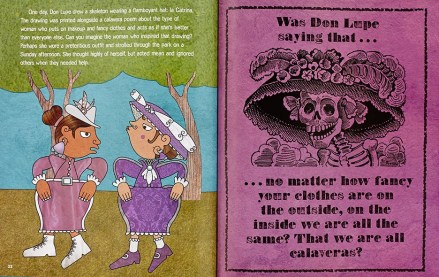
In another drawing a skeleton wears a large hat covered with lace, feathers, and flowers. This illustration accompanied a poem about a woman who wore expensive clothes and thought she was better than others and ignored them when they needed help. “Was Don Lupe saying that…no matter how fancy your clothes are on the outside, on the inside we are all the same? That we are all calaveras?

Don Lupe also commented on the ever increasing hustle and bustle of society, the Mexican Revolution of 1910, revolutionary leaders and government officials, and just common people and events. Perhaps the main idea Don Lupe was trying to communicate was that “calaveras are all around us. That we are all calaveras, whether we are rich or poor, famous or not.”

celebrate-picture-books-picture-book-review-funny-bones-posada-and-his-day-of-the-dead-calaveras-today

Copyright Duncan Tonatiuh, courtesy of abramsbooks.com

While many people loved and looked forward to Don Lupe’s artwork, they did not know the artist who drew them. It wasn’t until many years after his death in 1913 that “historians and artists such as Jean Charlot and Diego Rivera began to wonder who had drawn such wonderful images.” Today, we know Don Lupe by his last name—Posada—which is how he signed his work, and he and his work is still beloved around the world.

An extensive Author’s Note about El Dia de Muertos and Posada’s influence on other artists. A glossary, bibliography, art credits, and places where Posada’s work is displayed follow the text.

celebrate-picture-books-picture-book-review-funny-bones-posada-and-his-day-of-the-dead-calaveras-etching

Copyright Duncan Tonatiuh, courtesy of abramsbooks.com

In Funny Bones Posada and His Day of the Dead Calaveras, Duncan Tonatiuh accomplishes many things. First, his book is a fascinating look at the life of the man who entertained and enlightened the world with his distinctive talent and ideas. Tonatiuh’s straightforward storytelling reveals the personal and historical events that influenced Posada from childhood through adulthood, clearly explaining and highlighting each concept for his young audience. Second, Tonatiuh provides readers with brief primers on the printing processes of lithography, engraving, and etching with step-by-step descriptions of these interesting art forms.

Third, his own vibrant and expressive stylized illustrations both contrast with and complement the depictions of Posada’s life and his calaveras drawings. On nearly every two-page spread readers experience this biography through Tonatiuh’s portrayals of Don Lupe, the townspeople, and others as well as through Posada’s actual broadsides and editorial drawings. The juxtapositions allow children to fully appreciate the meaning and humor behind these famous drawings that are still so popular and resonant today.

Ages 6 – 10

Harry N. Abrams, 2015 | ISBN 978-1419716478

View a gallery of Duncan Tonatiuh‘s artwork for children and adults on his website!

Dia de los Muertas (Day of the Dead) Activity

celebrate-picture-books-picture-book-review-day-of-dead-coloring-page

Calaveras Coloring Page


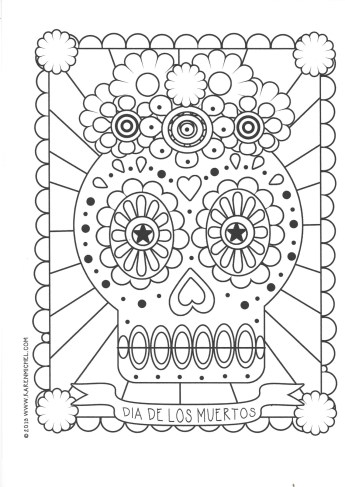
With their intricate designs and vibrant hues, calaveras are a joy to color. Grab your entire set of markers, pencils, or crayons and design a masterpiece with this printable Calaveras Coloring Page.

Picture Book Review

October 30 – Candy Corn Day

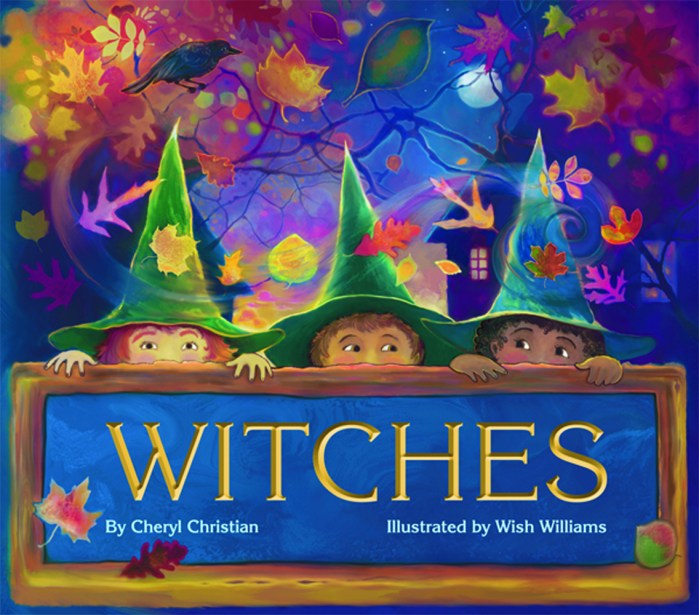
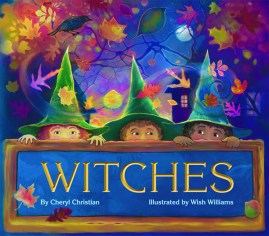
celebrate-picture-books-picture-book-review-witches-cheryl-christian-cover

About the Holiday

It says something about a candy that is only sold for a month or two out of twelve and yet has been around since the late 1800s. What is that candy? Candy Corn, of course! Seeing those little triangular white, yellow, and orange morsels on store shelves means Halloween is just around the corner. Whether you can eat them by the handful or find them too sweet, there’s no denying that Candy Corn is part of trick-or-treat fun!

Witches

Written by Cheryl Christian | Illustrated by Wish Williams

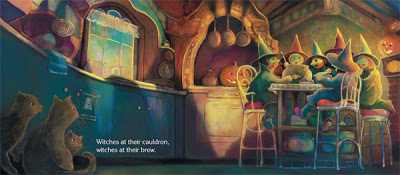
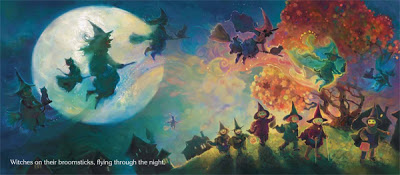
A gaggle of witches, too small for their feet to touch the floor as they sit around the table, stir up a special brew in their iron caldron. Into the bubbling pot go spiders’ webs and “a bone or two,” in fact “any kind of smelly, slimy, sticky stuff will do.” The witches gobble up their feast and hurry on their way, flying broomsticks into the night. They cackle with “screeching screeches”—“what a fearful sight.”

celebrate-picture-books-picture-book-review-witches-cheryl-christian-at-the-caldron

Image copyright Wish Williams, text copyright Cheryl Christian. Courtesy Star Bright Books

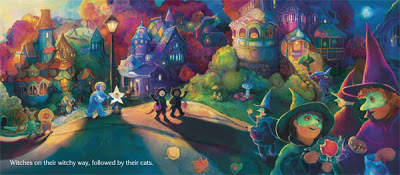
Wearing dark capes and “witchy hats,” they creep along the street, meeting ghosts and astronauts, lions and crocodiles, and of course black cats. There are “witches ringing doorbells” and “running through the street. Witches having lots of fun…calling ‘TRICK OR TREAT!’”

Cheryl Christian’s bouncy, bounding rhyme bubbles with the excitement and joy kids feel on Halloween night. Transformed by costumes into witches that want more treats than tricks, favorite animals, personal heroes, mythical creatures, and spooky haunters, children relish the abandon of going door to door collecting goodies, meeting their friends, and “screeching screeches”—and all in the mysterious deep, dark night when they might usually be going to bed. Kids will love Christian’s focus on them and the activities that make Halloween such a looked-forward-to holiday.

celebrate-picture-books-picture-book-review-witches-cheryl-christian-flying-at-night

Image copyright Wish Williams, text copyright Cheryl Christian. Courtesy Star Bright Books

Wish Williams’ luminous celebration of Halloween night radiates a glow-in-the-dark feeling that lends the story an element of the fantastical even as it illuminates the traditional fun kids have on this special night. A distinctive color palette of deep turquoise, magenta, green, purple, and orange lit with an eye toward creating an atmosphere of spooky coziness, makes each two-page spread a joy to explore. In the kitchen scenes, cats frolic, jack-o-lanterns grin, and kids happily concoct a witchy potion from ingredients found in the fridge and pantry. Spatulas, whisks, and spaghetti spoons held up to the light become monstrous shadows on the wall.

celebrate-picture-books-picture-book-review-witches-cheryl-christian-trick-or-treating

Image copyright Wish Williams, text copyright Cheryl Christian. Courtesy Star Bright Books

Outside, readers can almost hear the shouts and laughter of the trick-or-treaters as they fan out across the neighborhood, play in the town center fountain and gazebo, jump in fallen leaves, and run door-to-door calling out “trick-or-treat.” There are so many details tucked away from corner to corner of every page that kids will want to linger and find them all.

One very welcome and distinguishing aspect of Witches is its inclusion of children of color and children with disabilities among the group of witches as well as the other trick-or-treaters. Witches would be an excellent addition to library shelves for all kids to enjoy.

Ages 3 – 7

Star Bright Books, 2011 | ISBN 978-1595722836

Candy Corn Day Activity

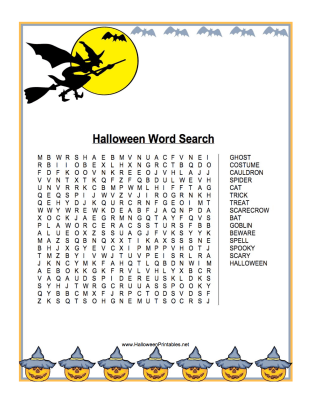
celebrate-picture-books-picture-book-review-halloween-word-search

Halloween Word Search

Join the witch in this spooky printable Halloween Word Search as she concocts the perfect potion for a fun holiday!

celebrate-picture-books-picture-book-review-witches-cheryl-christian-cover

You can buy Witches from Star Bright Books

Picture Book Reveiw

October 28 – It’s Bat Appreciation Month

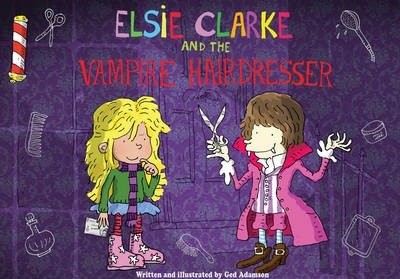
celebrate-picture-books-picture-book-review-elsie-and-the-vampire-hairdresser-cover

About the Holiday

Bats are popular during the Halloween month of October for many reasons—they fly out of caves and nooks and crannies at night, they look kind of spooky, and they have that cool association with Dracula and other vampires. With over 1,300 species of bats around the world, however, these small fliers play a vital role in the welfare of our planet. Some bats are important for insect control, while others are pollinators and still others disperse seed. Unfortunately, bats have been in the news in the past few years for their declining numbers due to habitat destruction, disease, and hunting. Today’s holiday promotes awareness of the value of bats and urges people to help protect them.

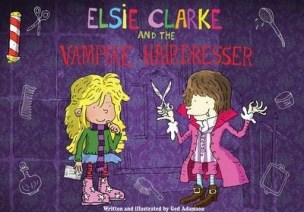
Elsie Clarke and the Vampire Hairdresser

By Ged Adamson

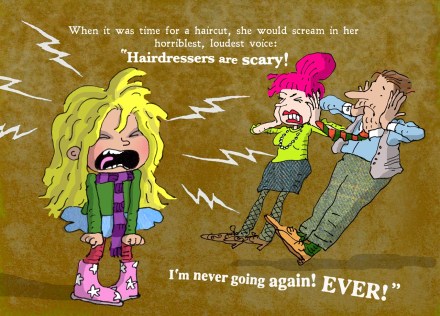
“Elsie Clarke was a brave little girl”…until she had to get her hair cut. Whenever her tresses reached a certain point and it was time for that appointment, “she would scream in her horriblest, loudest voice ‘Hairdressers are scary!’ I’m never going again! EVER!’” But Elsie’s dad thinks she might like his barber. Boris Lazzario, Hairdresser of Quality reads the business card he hands her.

celebrate-picture-books-picture-book-review-elsie-and-the-vampire-hairdresser-elsie-never-going-to-hairdresser

Copyright Ged Adamson, courtesy gedadamson.com

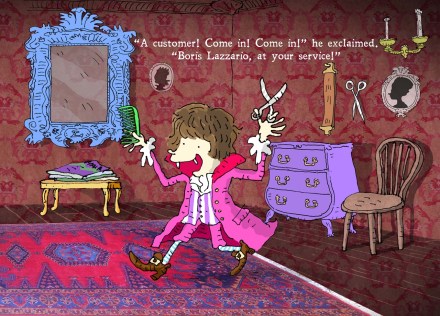
The card piques Elsie’s curiosity, so she heads down to 110 Turning Lane. She enters the door to find a very unusual looking boy rushing toward her. He has a comb in one hand and a scissor in the other, and his delighted smile reveals two sharp fangs. “‘A customer! Come in! Come in!’ he exclaims. “Boris Lazzario at your service!’” Before Elsie knows it, Boris has taken her hand and is showing her to his chair, while his cat, a ghostly Jasper, leads the way.

celebrate-picture-books-picture-book-review-elsie-and-the-vampire-hairdresser-elsie-meets-boris

Copyright Ged Adamson, courtesy gedadamson.com

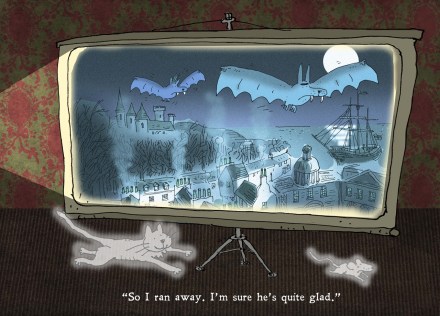
Before Boris can look at Elsie’s hair, however, she tells him that she is afraid of haircuts. Boris has heard it before. He shows Elsie a portrait of his father, Count Lazzario. “‘Everyone’s terrified of him,’” Boris explains, but “‘he’s scared of haircuts, just like you.’” He plays an old movie for Elsie, revealing that his dad wanted him to be a “proper vampire.” To escape this life, Boris tells Elsie, he ran away and is sure his dad is glad that he did.

Just then the door flies open and the house rings with a “blood-curdling HOWL!” It’s Count Lazzario—not looking very glad at all. The Count chases Elsie and Boris upstairs and downstairs, all the while shouting “‘My son a hairdresser! Oh, the shame of it! You’re a disgrace to vampire kind!’” Finally, Elsie has had enough. She stops and pointedly tells the Count in her “horriblest, loudest voice that he should be proud of his son. “‘He’s not a monster like you,’” she shouts.

celebrate-picture-books-picture-book-review-elsie-and-the-vampire-hairdresser-black-and-white-movie

Copyright Ged Adamson, courtesy gedadamson.com

The Count breaks down in tears. “‘I just wish Boris did something that wasn’t so scary,’” he wails. Suddenly Elsie sees how silly it is to be afraid of a haircut. She musters her courage, reassures the Count, and tells Boris he has two customers. Boris shampoos, rinses, and cuts. While Elsie and the Count sit under the hairdryer, they read magazines while enjoying tea and chocolate cookies.

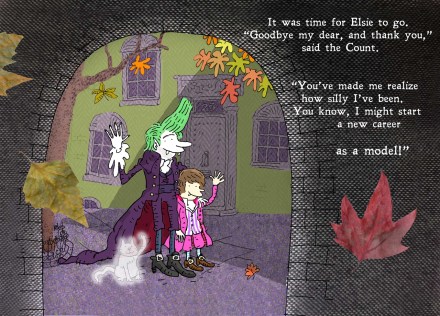
When the two see their new ‘dos they can’t believe their eyes. The Count proclaims his a “triumph,” and Elsie thinks hers is “‘the coolest, most amazing hairstyle in the world!’” As Elsie turns to go, the Count thanks her. He realizes how ridiculous he’s been and even thinks he may “start a new career as a model.” Elsie gives a final wave before heading home to show her mom and dad not only her new haircut but how very brave she really is.

celebrate-picture-books-picture-book-review-elsie-and-the-vampire-hairdresser-saying-goodbye

Copyright Ged Adamson, courtesy gedadamson.com

There’s a wonderful free-range silliness to Ged Adamson’s books that brings a smile to your face as you read them. The great thing is that they are based on a kernel of truth, which anchors the story and gives it broader resonance. In the case of Elsie Clarke and the Vampire Hairdresser it’s a fear of haircuts—a scenario I know well from my own son who for a time received his cuts from a very understanding woman who sat with him on the salon’s play rug while she cut his hair. Adamson’s knack with humorous and believable dialogue paired with laugh-inducing action makes the story a page-turner with the kind of suspense that keeps kids giggling from the first page to the satisfying last.

Adamson’s lush illustrations, in a palette of purples, pinks, yellows, and greens, set on backgrounds of plaid tweed, herringbone, denim and other fabrics as well as ornate Victorian wallpapers, offer all the spooky details readers could want from a vampire’s hair salon. Kids will marvel at the old film projector, and the black-and-white home movie of Boris and his dad is a clever touch. Readers will root for cute Elsie and Boris, and have a change of heart when the tyrant Count tears up.

For those times when a fear needs to be overcome—or for any story time—Elsie Clark and the Vampire Hairdresser is monstrous fun and would be an amusing addition to home libraries that kids will really sink their teeth into.

Ages 4 – 8

Sky Pony Press, 2013 | ISBN 978-1620879832

Discover more about Ged Adamson and his books on his website!

This Elsie and the Vampire Hairdresser book trailer is shear fun!

Bat Appreciation Month Activity

celebrate-picture-books-picture-book-review-vampire-treat-box

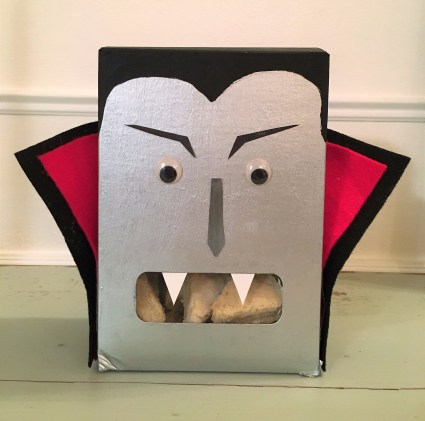
I Vant to Eat These Treats! Vampire Goodie Box

Would you like your gift of homemade or store-bought cookies, candy, or other treats to have a little bite to it? Deliver them in this vampire box you can make yourself!

Supplies

  • Recycled pasta box (or any box with a cellophane window in it)
  • Black Paint
  • Silver Paint
  • Black felt, 8 ½ x 11 sheet or heavy stock paper
  • Red felt, 8 ½ x 11 sheet or heavy stock paper
  • Googly eyes
  • Black paper, heavy stock or construction paper
  • Fabric glue
  • Regular glue or double stick tape
  • Hot glue gun (optional)
  • Paint brush
  • Scissors

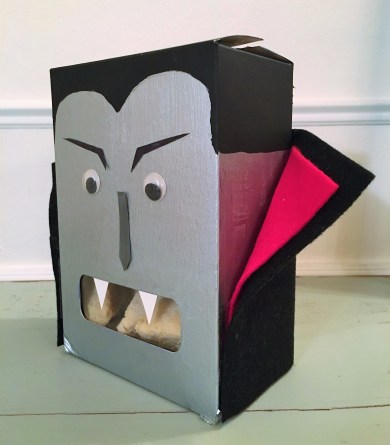
celebrate-picture-books-picture-book-review-vampire-treat-box-side-view (2)
Directions

  1. Paint the entire box silver, leaving the window unpainted, let dry
  2. With the black paint create the pointy hairstyle, with the point descending about 1 inch from the top of the box and the curves ending about 1 ½ – 1 ¾ inches from the side of the box (see picture).
  3. Paint around the sides and back of the box in line with the ends of the curves
  4. From the black paper make eyebrows—these can be pointy or rounded
  5. From the index card make the nose and teeth
  6. I painted the nose darker silver by combining silver and a little black paint
  7. With the glue or double stick tape, attach the eyebrows and nose to the box
  8. With the glue or double stick tape, attach the teeth to the window, fitting them slightly up into the rim of the window.
  9. Attach the googly eyes

To make the cape

  1. Holding the black felt or paper horizontally, cut a piece about 4/5 as tall as the box
  2. Holding the red felt or paper horizontally, cut a piece of red felt so that there will be a ½-inch border of black along the top and sides
  3. With the fabric glue attach the red felt to the black felt. Use craft glue on paper. Let dry
  4. With the hot glue gun, fabric glue, craft glue, or double stick tape, attach the felt or paper to the back of the box
  5. Fold the felt or paper around the sides of the box and attach along the bottom edge with tape or glue
  6. Fold the top of the felt or paper back to make the collar
  7. Attach the bottom portion of the collar to the box near the front edge with the tape or glue.

Fill with your favorite treat!

celebrate-picture-books-picture-book-review-elsie-and-the-vampire-hairdresser-cover

You can find Elsie Clarke and the Vampire Hairdresser at these booksellers

Amazon | Barnes & Noble | Bookshop

Picture Book Review