April 5 – National Read a Road Map Day

celebrate-picture-books-picture-book-review-the-50-states-fun-facts-cover

About the Holiday

Today’s holiday is all about those paper maps that have guided travelers along the trails, roads, highways, and biways as they search for adventure or just need to get from here to there. While the little window of GPS may be more prominent now, there’s nothing like opening the wide vista of a paper map and letting your mind wander to far-off places. Old maps are fascinating too, as they reveal the changes in road systems and population over time. Today, rediscover your local area or take an armchair trip to a new locale through a paper map.

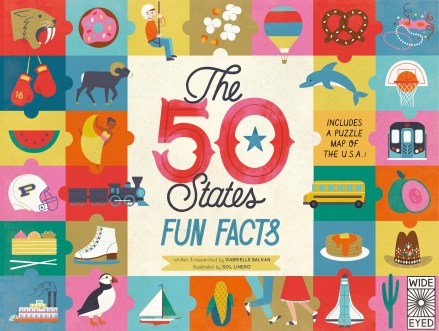
The 50 States: Fun Facts

Written by Gabrielle Balkan | Illustrated by Sol Linero

America is one vast country made up of 50 states that are each unique and fascinating in their own way. The history, people, topography, and even weather of each region has resulted in an incredible diversity of animal life, cuisine, transportation, leisure activities, and celebrations across the nation. The 50 States: Fun Facts offers up a patchwork of engaging and enlightening information about each state that will entice kids to learn more about their own home as well as other areas.

celebrate-picture-books-picture-book-review-the-50-states-fun-facts-things-that-go

Image copyright Sol Linero, text copyright Gabrielle Balkan. Courtesy of Eyes Wide Editions, Aurum Press.

The large-format board book is divided into five two-page spreads, each dedicated to a particular topic. In 50 Animals readers discover that the first Seeing Eye dogs were trained in Nashville, Tennessee; that “the colors of Maryland’s state cat—the Calico Cat—match the state flag”; and that there are so many moose in Wyoming that there’s even a town named Moose! From state to state kids will also learn about the Chinook Dog of New Hampshire, meet white buffalo that roam North Dakota, and view the state insect of Connecticut—the praying mantis, which can turn its head 360 degrees—among many, many more.

Each state is also known for its own, particular mode of transportation. In Alaska the Tlingit Nation builds beautiful canoes, which the people believe are inhabited by their own spirit. If you’re interested in scanning the skies for alien lifeforms, you may want to head to the San Luis Valley of Colorado, which is considered to be prime UFO-spotting territory! If boats are more your thing, you might want to take a houseboat vacation in the lakes around Jamestown, Kentucky, or see a Navy Destroyer at the shipyard in Bath, Maine. Carousel lovers will want to take the road to Rhode Island, where they can catch the gold ring on the Flying Horse Carousel that has been going round and round for nearly 150 years! There are so many more Things That Go on these pages, including trains, trucks, trolleys, and a 16-story electric shovel!

celebrate-picture-books-picture-book-review-the-50-states-fun-facts-things-to-eat

Image copyright Sol Linero, text copyright Gabrielle Balkan. Courtesy of Eyes Wide Editions, Aurum Press.

After all that activity, readers may be a bit hungry. All they need to do is flip the page to find 50 Things to Eat—specialties from around the nation. Whether you call them blackberries or brambleberries, these sweet nuggets—Kentucky’s state fruit—are great alone or in special treats. If you love pretzels, then the pretzel festival in Germantown, Ohio is for you! Spicy foods more your style? Then you’ll want to check out Hatch, New Mexico—the chili capital of the world! After having Delaware’s chicken specialty, catfish from Mississippi, or potatoes from Idaho, you may just want to try a banana split—first served in Latrobe Pennsylvania in 1904—or even nosh on a few roasted Joshua Tree flower buds that are said to taste like candy.

Ready to work off that meal? The next page provides 50 Ways to Get Moving, including archery in California, rafting in West Virginia, base jumping in Utah, snowshoeing in Minnesota, and snorkeling in Hawaii. 

celebrate-picture-books-picture-book-review-the-50-states-fun-facs-celebrations

Image copyright Sol Linero, text copyright Gabrielle Balkan. Courtesy of Eyes Wide Editions, Aurum Press.

Celebrations have been part of America since the first Thanksgiving, and each state has a entertaining—often quirky—spectacular to highlight their history or specialty. In Nebraska the old Pony Express mail system is reenacted every June; The Heart of the Ozarks Bluegrass Festival brings musicians and fans to West Plains, Missouri each year; and Honobia, Oklahoma’s Bigfoot Festival makes believers of us all—well, almost.

In Florida, you can learn how to wrestle an alligator with the Miccosukee tribe on American Indian Day; you can test your mettle on 98 flights of stairs during Washington’s Space Needle Base 2 Space Race for charity; and “you can cheer on bronc riders at the ‘Daddy of All Rodeos’” during Cheyenne Frontier Days in Wyoming. Perhaps  the oddest celebration is Mike the Headless Chicken Festival held every May in Fruita, Colorado that commemorates “a rooster that lived for 18 months…with no head!”

celebrate-picture-books-picture-book-review-the-50-states-fun-facts-puzzle

Image copyright Sol Linero, text copyright Gabrielle Balkan. Courtesy of Eyes Wide Editions, Aurum Press.

Each spread also offers a sidebar scavenger hunt of sorts as it asks readers to see if they can find four different categories of items among the rest. After kids have soaked up all the facts about the 50 states, they can test their knowledge of American geography by completing the included jigsaw puzzle map.

Gabrielle Balkan has collected tons of engaging facts about the United States that are sure to delight and amaze children. Each category would be a wonderful starting point for learning about any or all of the states and gives kids an idea of the variety found across America. Sol Linero’s striking category “quilts,” composed of colorful patches decorated with clear, engaging illustrations, draw readers in to discover the fascinating facts presented about each state.

Ages 4 – 10

Wide Eyes Editions, Aurum Press, 2016 | ISBN 978-1847808691

Discover more about Gabrielle Balkan and her books on her website!

View a gallery of illustration work by Sol Linero on her website!

National Read a Road Map Day Activity
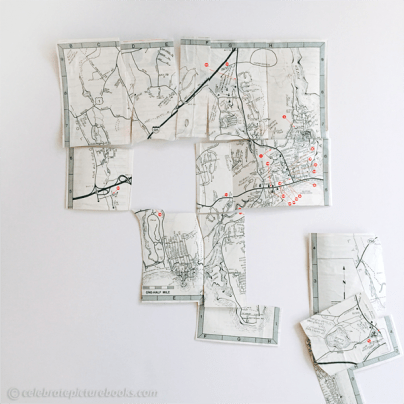
celebrate-picture-books-picture-book-review-road-map-puzzle

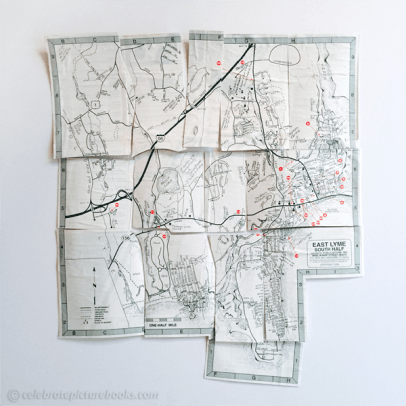
Make a Road Map Jigsaw Puzzle

It’s fun and easy to make your own jigsaw puzzle from a map of your local town or a place you’d like to visit!

Supplies

  • A paper map
  • Poster board
  • Glue or spray glue
  • Scissors

celebrate-picture-books-picture-book-review-road-map-puzzle

Directions

  1. Smooth out the paper map
  2. Glue the map to the poster board
  3. Cut the poster board into interlocking or adjoining pieces (the number of pieces can depend on the child’s age)

Picture Book Review

April 3 – National Tweed Day

celebrate-picture-books-picture-book-review-joseph-had-a-little-overcoat-cover

About the Holiday

Today is one of those holidays that is up to interpretation. While April 3, 1823 was the birthday of notoriously corrupt politician William M. (“Boss”) Tweed, it’s not clear why commemorating that date would be desirable—expect perhaps as a timely cautionary tale. Instead most like to celebrate the natty, multi-hewed fabric embraced by professors and other fashionable folk world-wide. Tweed originated as a hand-woven fabric in Scotland. The earthy tones mirrored the Scottish landscape, and, like tartans, could distinguish a particular estate or family based on the sheep providing the wool and the pattern.

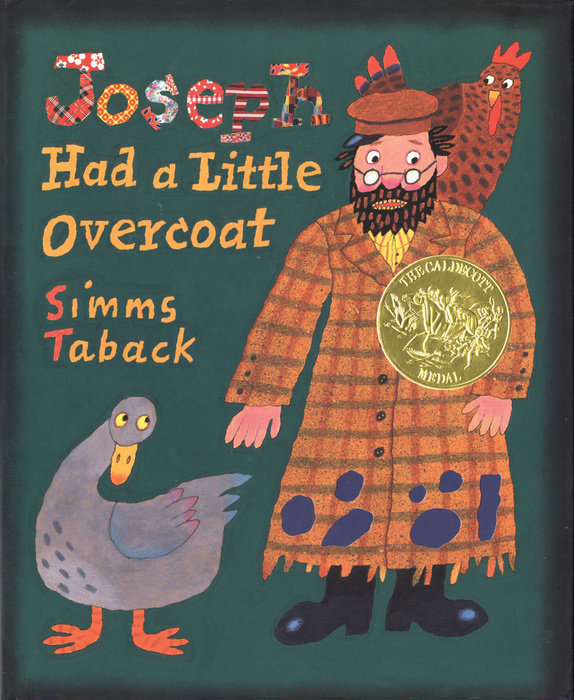
Joseph Had a Little Overcoat

By Simms Taback


Joseph’s coat was old and worn with patches overlapping patches all along the bottom. It was time to do something about it, so Joseph, “made a jacket out of it and went to the fair.” Time went by and that sporty jacket also “got old and worn.” The hem was frayed, the cuffs were torn, and patches overlapped patches all up and down the sleeves, so Joseph “made a vest out of it and danced at his nephew’s wedding.”

celebrate-picture-books-picture-book-review-joseph-had-a-little-overcoat-men's-chorus

Image and text copyright, Simms Tayback, courtesy of simmstaback.com

Years past, and that little vest suffered the same fate as the coat and the jacket. But Joseph was clever. The vest became a scarf that he wore to sing in the men’s chorus. Wicked weather took its toll, and eventually the scarf  had more holes than material. With careful cutting, the scarf made a jaunty tie to wear when visiting his sister.

You know how it goes with ties. The edges grew threadbare and stains marred the pattern. Joseph’s animals considered it a goner, but Joseph had another idea. He made a handkerchief to accessorize his favorite shirt and enjoyed a “glass of hot tea with lemon.” That same handkerchief also helped Joseph whenever he had a cold, and in time it “got old and worn.”

celebrate-picture-books-picture-book-review-joseph-had-a-little-overcoat-handkerchief

Image and text copyright, Simms Tayback, courtesy of simmstaback.com

Joseph had one more idea. “He made a button out of it and used it to fasten his suspenders.” One day, Joseph lost his button, and even though he searched everywhere, he couldn’t find it. “Now he had nothing. So Joseph made a book about it. Which shows…you can always make something out of nothing.”

Classic tweed calls for a classic book, and Simms Taback’s tale of a master recycler will have kids in stitches. Not only is the story clever, but ingeniously hidden die-cut holes in the pages let readers guess—and then follow—each iteration as the original coat gets smaller and smaller. The bold, multimedia illustrations are full of humor, history, and tradition and give kids and adults lots to look at and talk about. Children will love helping Joseph look for his button under the watchful gaze of Sigmund Freud, whose wide-eyed portrait seems to be taking in all the action. The final “moral to the story” is inspired and inspiring.

Originally published in 1999, Joseph Had a Little Overcoat remains fresh and innovative for today’s young readers. The book was a favorite of my own kids, and would be a much-asked-for addition to home libraries.

Ages 3 – 7

Viking Books for Young Readers, 1999 (hardcover) | ISBN 978-0670878550

Scholastic, 2003 (paperback) | ISBN 978-0439217316

National Tweed Day Activity

CPB - Button Coat

Pin the Button on the Coat Game


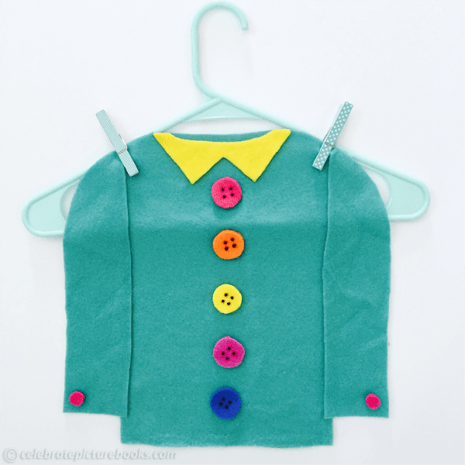
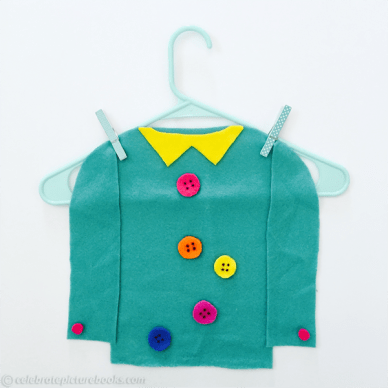
Pin the Button on the Coat is a fun game you can make yourself and play anytime! It’s great for a button-themed party or on any day that you’re holed up and wanting something to do! The game is played like “Pin the Tail on the Donkey,” and the object is to get the buttons lined up as close to the center of the coat as possible. Have fun!

Supplies

  • Fleece or felt inyour choice of colors, 2 pieces of 8 ½” x 11” to make the coat and smaller pieces or scraps to make buttons
  • Fabric glue
  • Scissors
  • Black marker
  • Clothes hanger
  • Clothes pins

CPB - Button Coat II

Directions

  1. Cut out the body of the coat, sleeves, and collar
  2. With the fabric glue, attach the sleeves to the edge of the coat, and the collar to the top of the coat.
  3. Let dry
  4. Cut circles for buttons from the other colors of fleece or felt, as many as you need
  5. With the marker make dots to represent holes in the buttons
  6. When the glue on the coat is dry, attach it to the clothes hanger with the clothespins

Picture Book Review

March 28 – It’s Women’s History Month

celebrate-picture-books-picture-book-review-fearless-flyer-cover

About the Holiday

Women have been inventing, discovering, questioning, challenging, and changing the world in the same ways and for just as long as men have—but often without recognition, the ability to take jobs in their fields of expertise, or equal (or even any) pay. This month’s observance serves to educate people on the amazing women who have blazed trails in the past and those who are continuing that tradition today.

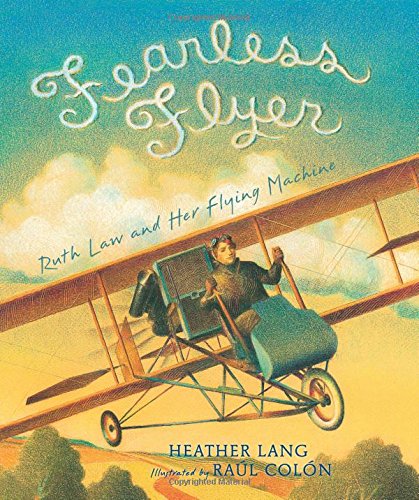
Fearless Flyer: Ruth Law and Her Flying Machine

Written by Heather Lang | Illustrated by Raúl Colón


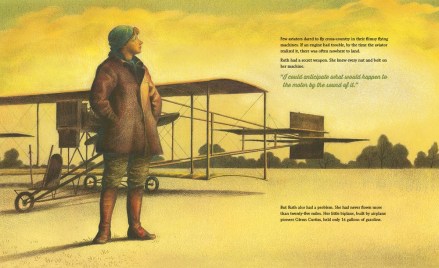
Entertained crowds knew Ruth Law for the loops, the spiral dives, and even the dip of death that she performed in her airshow. But for Ruth these stunts were like standing still. She “longed to fly to get somewhere…somewhere far away.” She decided to fly from Chicago to New York City. There weren’t too many aviators brave enough to attempt such a long flight in the type of biplane Ruth flew. They feared that if something went wrong with the engine, they’d never realize it in time to land. But Ruth knew her plane inside and out and figured she “could anticipate what would happen to the motor by the sound of it.”

A trip like the one Ruth envisioned posed another problem, though. Her small biplane held only 16 gallons of gasoline—not enough to make the journey. She asked Glenn Curtis, who built her plane, if she could buy his latest model. This much bigger plane held 205 gallons of gas and had already proven itself. But Curtis refused. He didn’t believe Ruth could handle the “powerful machine on such a long flight.”

celebrate-picture-books-picture-book-review-fearless-flyer-ruth's-plane

Image copyright Raúl Colón, text copyright Heather Lang. Courtesy of Calkins Creek.

Ruth was not to be deterred. She added three more gas tanks so the plane could hold 53 gallons of gas, installed a cover to protect her legs, and created a scrolling map of the route. Aviation experts said she would fail, but Ruth disagreed. “‘What those men can do a woman can do. I can do,’” she said. On a windy November 19, 1916, Ruth took to the cockpit to begin her nonstop flight. Although she was a little scared of what lay ahead, she took off, believing that “the scare is part of the thrill” of any experience.

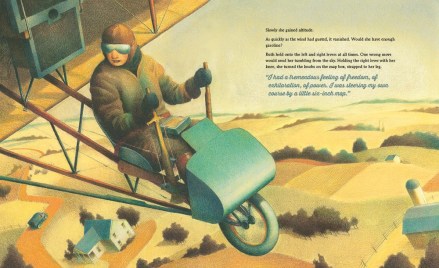
Ruth had counted on the strong wind to help push her farther faster, but just as quickly as it had blown up, it stopped. She wondered if she would have enough gasoline after all. As she flew over one landmark after another, Ruth felt exhilarated. As she passed over Cleveland, Ohio, though, “the oil gauge registered zero pressure. Something was wrong!” The sounds of her plane’s motors told Ruth a different story. She kept flying.

Soon she was passing over Erie, Pennsylvania—the site of the record-breaking flight by Victor Carlstrom. Even the icy stings of the frigid air couldn’t dispel her excitement. In a moment she was east of Erie and had broken Carlstrom’s record. The thrill of her achievement was tempered, however, by the sputtering of her engine. While there was still a little gas in the plane, it was “too low to feed into the engine.” Ruth tipped the plane forward to give it more gas. Two miles from Hornell, New York, the nearest landing spot, “the engine grumbled its last roar, leaving her with nothing but the silence of the wind.”

celebrate-picture-books-picture-book-review-fearless-flyer-arial-view

Image copyright Raúl Colón, text copyright Heather Lang. Courtesy of Calkins Creek.

Ruth steered the plane as it glided into Hornell—512 miles from Chicago. She was the new American nonstop flight record holder. Ruth’s original plan had been to fly to New York City, so after refueling and grabbing a bite to eat, she took off once again. Weighed down by the full gas tank, the plane barely made it over the hill and tall trees in her path. This was as close to crashing as Ruth ever was—or ever wanted to be.

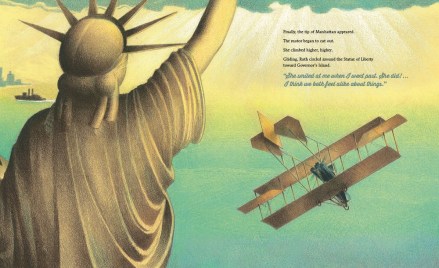
People had already heard about Ruth Law, and they came out to watch and wave. With darkness closing in, Ruth decided that she would have to land short of New York City. She touched down in Binghamton, NY and took up the rest of the flight the next morning. A thick blanket of fog obscured her view. She flew lower and lower to get her bearings and finally spied the tip of Manhattan. As she glided in, “Ruth circled around the Statue of Liberty toward Governor’s Island.” Of Lady Liberty, Ruth said, “‘She smiled at me when I went past. She did!…I think we both feel alike about things.’”

celebrate-picture-books-picture-book-review-fearless-flyer-statue-of-liberty

Image copyright Raúl Colón, text copyright Heather Lang. Courtesy of Calkins Creek.

Cheered by a crowd and a brass band, Ruth landed on the welcoming earth. Despite being numb with cold and the icicles that hung from her hair, Ruth smiled and waved. She realized then that not only had she broken an aviation record, she had made a point for all women. She later put her thoughts into words: “The sky was my limit and the horizon my sphere. It’s any woman’s sphere if she has nerve and courage and faith in herself.”

An Author’s Note about Ruth Law and her life, complete with photographs, follows the text.

Heather Lang’s thrilling account of Ruth Law’s record-breaking flight from Chicago to New York will have young aviators on the edge of their seat. Law’s flight was filled with suspense from its inception as an idea in a young woman’s mind to its final touchdown, and Lang deftly incorporates the facts as well as Law’s feelings into her well-rounded story. Along the way, readers learn about Ruth and also about early aviation. Ruth Law’s own words, included throughout the story, will inspire children as they see that even though she lived long ago, her thoughts and ideas still ring true today.

Young readers will be fascinated by Raúl Colón’s glowing illustrations of Ruth Law and her flying machine. His detailed drawings of Law’s biplane give children an excellent view of the open-air craft, fostering a true understanding of the courage it took for her to undertake such a flight. Images from Law’s viewpoint in the cockpit allow readers to vicariously travel her path to a record-breaking flight and also to self-realization.

Ages 5 – 8

Calkins Creek, 2016 | ISBN 978-1620916506

Check out Heather Lang’s website for more about her and her books. You’ll also find links to a video and photos about Ruth Law, a map of her route, and information about her plane as well as a Teacher’s Guide.

Fly along with Ruth in this Fearless Flyer book trailer!

Women’s History Month Activity

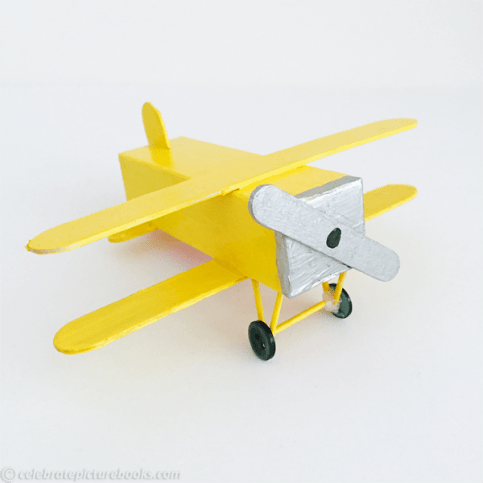
celebrate-picture-books-picture-book-review-biplane-craft

Head in the Clouds Biplane


If you love airplanes and flying, you’ll have fun making your own plane from recycled materials! Use your creativity to decorate your plane while you imagine yourself flying through the clouds on a beautiful day. Younger children will have fun sharing this activity with an adult or older sibling too!

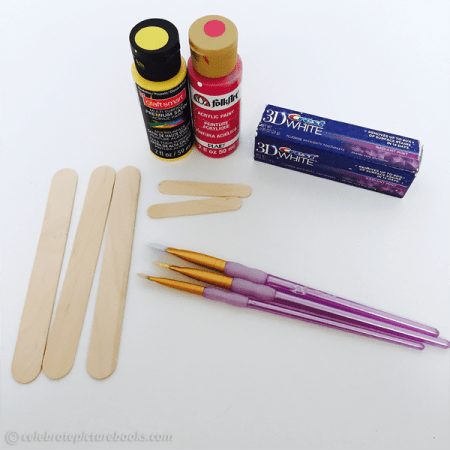
Supplies

  • Travel-size toothpaste box
  • 3 6-inch x 1/2-inch craft sticks
  • 2  2 1/2-inch x 7/8-inch mini craft sticks
  • 5 Round toothpicks, with points cut off
  • Paint in whatever colors you like for your design
  • 4 small buttons
  • 2 mini buttons
  • Paint brushes
  • Strong glue or glue gun

Directions

  1. Empty toothpaste box
  2. Paint toothpaste box and decorate it
  3. Paint the craft sticks and 5 toothpicks
  4. Paint one small craft stick to be the propeller
  5. Let all objects dry

To assemble the biplane

  1. For the Bottom Wing – Glue one 6-inch-long craft stick to the bottom of the plane about 1 inch from the end of the box that is the front of the plane
  2. For the Top Wing – Glue the other 6-inch-long craft stick to the top of the plane about 1 inch from the front of the plane
  3. For the Tail – Glue one mini craft stick to the bottom of the box about ¾ inches from the end that is the back of the plane
  4. For the Vertical Rudder – Cut the end from one of the painted 6-inch-long craft sticks, glue this to the back of the box, placing it perpendicular against the edge and half-way between each side

To assemble the front wheels

  1. Cut 4 painted toothpicks to a length of ¾-inches long
  2. Cut one painted toothpick to a length of 1-inch long
  3. Glue 2 of the 3/4-inch toothpicks to the back of 1 button, the ends of the toothpicks on the button should be touching and the other end apart so the toothpicks form a V
  4. Repeat the above step for the other wheel
  5. Let the glue dry
  6. Glue the 1-inch long toothpick between the wheels at the center of each wheel to keep them together and give them stability. Let dry

To make the back wheel

  1. Cut two ¼-inch lengths of painted toothpick and glue them together. Let dry
  2. Glue two mini buttons together to form the back wheel. Let dry
  3. Glue the ¼-inch toothpicks to the mini buttons. Let dry
  4. Glue these to the bottom of the plane in the center of the box directly in front of and touching the tail

Display your biplane!

Picture Book Review
March 20 – World Storytelling Day

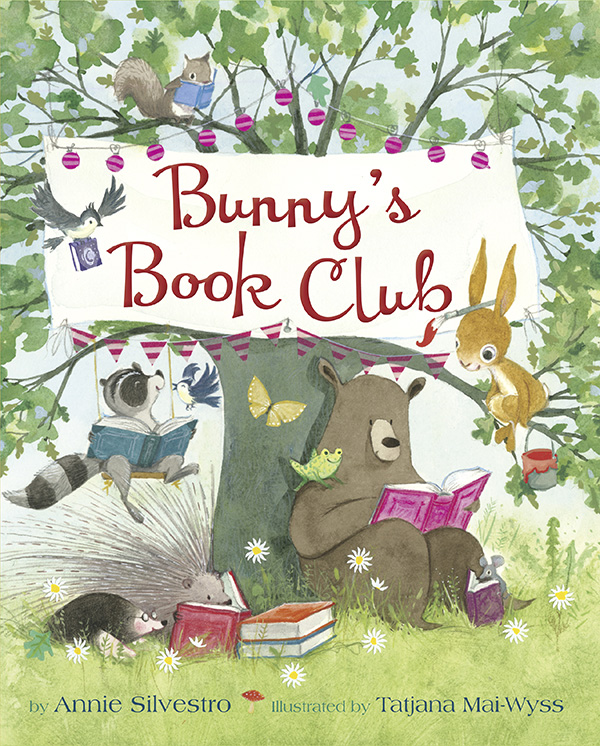
celebrate-picture-books-picture-book-review-bunny's-book-club-cover

About the Holiday

Today’s holiday was first held in Sweden in 1991. Established to celebrate the art of oral storytelling, the day invites people around the globe to tell and listen to stories both old and new. To participate attend a special storytelling event in your area or relate some family stories at home. Of course reading terrific books out loud is also a fun way to honor the day!

Bunny’s Book Club

Written by Annie Silvestro | Illustrated by Tatjana Mai-Wyss


Bunny would do just about anything to hear a story. “He’d loved them ever since he first heard the lady with the red glasses reading aloud outside the library.” All summer long he listened to stories that took him to thrilling and magical places. But when the weather turned cooler and story time moved indoors, bunny knew he had to do something—“he couldn’t live without books.”

Bunny was afraid that animals weren’t allowed in the library. Finally, after several sleepless nights Bunny “tiptoed through the dark” to the library. But when he got there the door was locked, the windows were bolted, and there were no holes in the building to be found—“until finally he noticed…the book return!” Bunny hopped as high as he could, grabbed the handle, and slipped inside. “Bunny’s eyes sparkled at the sight of the shelves bursting with books.”

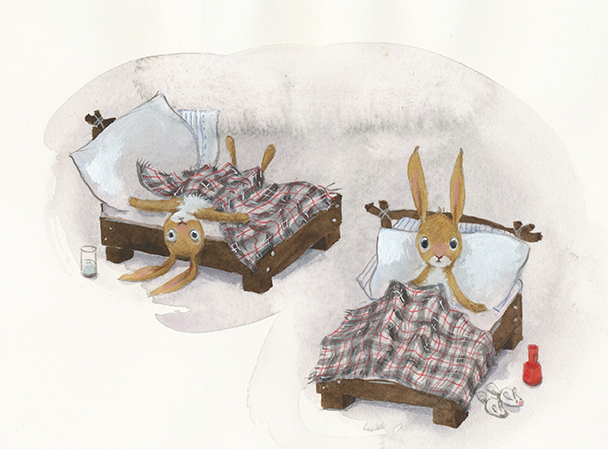
celebrate-picture-books-picture-book-review-bunny's-book-club-bunny-cant't-sleep

Image copyright Tatjana Mai-Wyss, courtesy of tatjanamaiwyss.com

Bunny hopped here and there through the adventure section, where he found books about “swashbucklers, sharks, and superheroes.” He grabbed as many as he could carry and pushed them through the slot. Back home he read and read, and every night he returned to the library for more books. Pretty soon his house was filled top to bottom with books.

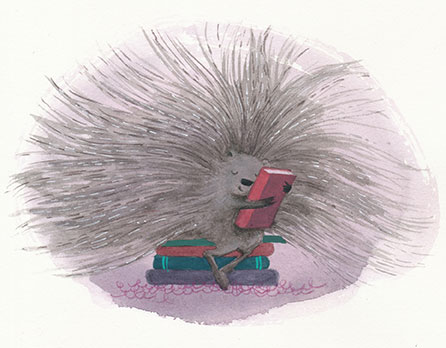
One night while reading, Bunny heard a knock on the door. It was Porcupine, wondering where Bunny has been. When Porcupine found out, he couldn’t believe it. What was so special about reading? The next night Bunny took Porcupine to the library. “‘Whoa,’ said Porcupine.” He immediately wondered if there was a book about balloons. He also found stories “on deserts and dunes, on caterpillars and cocoons” and even one on hedgehogs that made him so happy he hugged it with all his might. Back at Bunny’s and cuddled up with tea and carrot muffins, the two friends read into the night.

celebrate-picture-books-picture-book-review-bunny's-book-club-porcupine and-bunny-read

Image copyright Tatjana Mai-Wyss, courtesy of tatjanamaiwyss.com

It wasn’t too long before Bear showed up at Bunny’s wondering about why the light burned so late so often. Bunny handed him a book, and Bear squeezed onto the couch and began reading. Soon, all of Bunny’s friends began dropping by asking for books about space, volcanoes, and mysteries. One night Bunny took them all on a trek to the library. They were so engrossed in their books that they didn’t hear a key turn in the lock, “the clack, clacking of footsteps,” or the light flick on.

It was the librarian! All the animals gasped—they’d been caught! “‘All libraries have rules,’ said the librarian sternly” as she asked the animals to follow her. At the desk, the librarian in the red glasses crouched down and gave each animal their own library card. Bunny was thrilled to know they were welcome at the library. He found the perfect book and “proudly checked out the very first official selection for Bunny’s Book Club.”

celebrate-picture-books-picture-book-review-bunny's-book-club-porcupine-hugs-book

Image copyright Tatjana Mai-Wyss, courtesy of tatjanamaiwyss.com

Annie Silvestro’s sweet story about the lure of stories and the lengths to which a true book lover will go to hear or read one, will enchant young children. The gentle suspense will keep little ones riveted to the story as clever Bunny finds a way into the library, Porcupine and Bear have a few sticky moments, and the librarian catches the crew unawares. Little ones will recognize their own delight in books as Bunny shares his discover with his friends and they form a most cozy book club.

Tatjana Mai-Wyss’s adorable Bunny, Porcupine, Bear and other animals make perfect book club friends for little readers. Mai-Wyss’s soft-hued watercolor illustrations of the tidy library and Bunny’s book-filled home invite children in to poke around and become one of the group. They’ll love following Bunny’s footprints through the library stacks and discovering the cozy comforts of Bunny’s home. The final tw0-page illustration of the friends snuggled together in the warmth of a roaring fire and surrounded by snacks and books is definitely “awwww” inspiring.

Bunny’s Book Club may inspire families to take a special nighttime trip to the library and young readers to create a book club of their own. It would be welcome on any child’s bookshelf.

Learn more about Annie Silvestro and her books on her website!

Discover more about Tatjana Mai-Wyss and review a portfolio of her illustration on her website!

Ages 3 – 7

Doubleday Books for Young Readers, 2017 | ISNB 978-0553537581

World Storytelling Day Activity

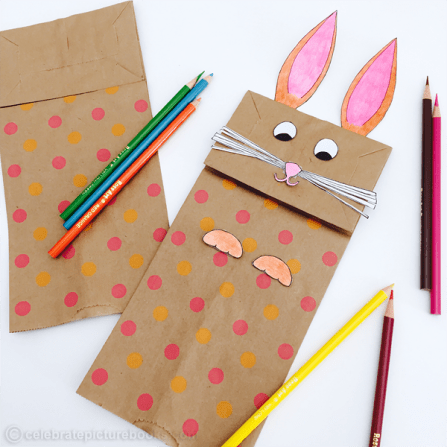
celebrate-picture-books-picture-book-review-bunny-puppet

Story Buddy Puppet


Hop to it! Have fun telling your favorite stories with this bunny puppet!

Supplies

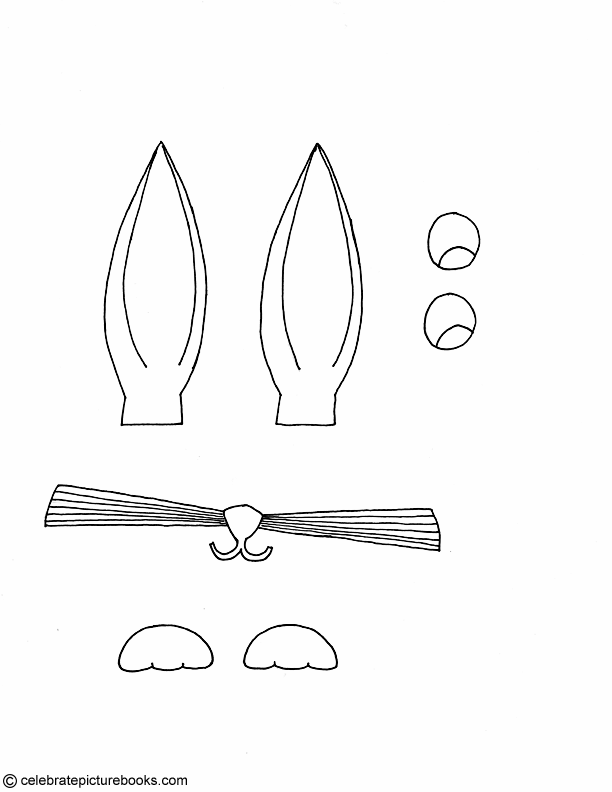
  • Printable Bunny Template
  • Paper sandwich bag
  • Colored pencils, crayons, or markers
  • Scissors
  • Glue

Directions

  1. Print out the Bunny Template
  2. Color the Bunny Template
  3. Cut out the bunny’s features
  4. Clue the bunny’s features to the sandwich bag

Picture Book Review
March 13 – National Napping Day

celebrate-picture-books-picture-book-review-twenty-yawns-cover

About the Holiday

If there’s one day a year when you should be easy on yourself and take a nap when the feeling strikes, today is it! Held annually on the Monday after the spring time change, National Napping Day allows us to recapture that lost hour of sleep and reset our body clocks. So if you start feeling that can’t-keep-my-eyes-open  weariness, go ahead and kick off your shoes, get comfy, and….

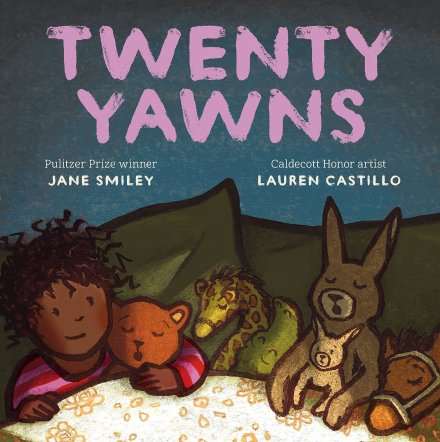
Twenty Yawns

Written by Jane Smiley | Illustrated by Lauren Castillo


A little girl and her mom and dad are out for a day at the beach. Along the curving coastline they found the perfect spot to plant their umbrella and unfold their chairs. While Lucy dug a hole near the foaming waves, her mom and dad read in the shade of the umbrella. When the hole was big enough to hold her dad, Lucy “covered him up and they laughed and laughed.” Later, Lucy’s dad took her hand and swung “her into the sky” just as a wave crashed onto the shore.

celebrate-picture-books-picture-book-review-twenty-yawns-lucy-running-on-beach

Image copyright Lauren Castillo, text copyright Jane Smiley. Courtesy of laurencastillo.com

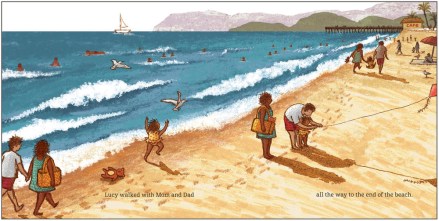
In the afternoon Lucy, Mom, and Dad walked “all the way to the end of the beach,” stopping here and there to chase seagulls, fly a kite, and play. Coming back, Lucy rolled “down the soft warm dunes,” never wanting the day to end. Returning to their umbrella, the three built a sandcastle and headed for home only when the sun began to set. “Lucy yawned. Mom yawned. Dad yawned.” Everyone was ready to go to bed early.

When they reached home, “Lucy put on her pajamas inside out, climbed into bed, and yawned a big YAWN.” Lucy’s mom began to read her a story about a little boy named Fred. Lucy yawned and began to doze, but soon she no longer heard her mom’s voice. She peeked at her mom. “She was asleep!” Lucy stared out into her room. “The moon shone through the window, a silver veil that fell across the floor. Everything looked mysterious, even Lucy’s own hands on the bedspread.”

celebrate-picture-books-picture-book-review-twenty-yawns-lucy-looking-at-toys

Image copyright Lauren Castillo, text copyright Jane Smiley. Courtesy of laurencastillo.com

Suddenly, all the people in her pictures—Grandma, Grandpa, Aunt Elizabeth, Mom, Dad, and even Fred in the book on the floor—seemed to be looking at her. Lucy wanted her teddy bear, Molasses. She crept out of her room, past her dad sleeping in a living room chair, and over to the bookcase, where Molasses hid under a pile of toys. As Lucy pulled at Molasses, Hornet the giraffe, Juno the horse, Mathilda the alligator, Frank the kangaroo, and his baby, Leonard all tumbled to the floor.

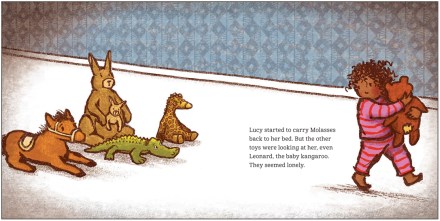
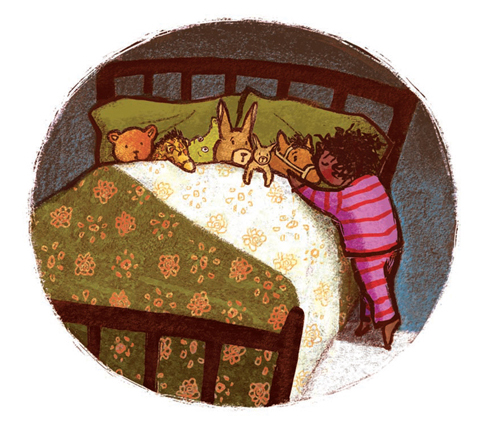
As Lucy started back to her room, she saw her toys watching her. They looked so lonely. One by one she carried them to her bed and “dropped them in a patch of moonlight.” She tucked them in and gave each a kiss. She thought they all “looked sleepy and happy.” Lucy cuddled up next to her toys and yawned. They in turn yawned too. So did Grandma, Grandpa, Aunt Elizabeth, Mom, Dad, and even Fred. Lucy hugged Molasses tight, “gave one last YAWN…and fell asleep.”

celebrate-picture-books-picture-book-review-twenty-yawns-lucy-kissing-toys-goodnight

Image copyright Lauren Castillo, text copyright Jane Smiley. Courtesy of laurencastillo.com

Jane Smiley’s Twenty Yawns perfectly captures the deep-down happy tiredness after a day in the sun. While Mom and Dad surrender to sleep, Lucy’s awareness is heightened in the strangely quiet house and can only be alleviated by sharing her bedtime routine with her stuffed animal friends. Beautiful lyrical passages paint word pictures of the tropical setting and Lucy’s imagination, while Lucy’s tender care for her toys replicates the love her parents show her.

Lauren Castillo’s blue sea and golden beach glows with the warmth of the sun and a family’s togetherness. Lucy and her dad play in the surf, Lucy’s parents walk hand-in-hand as Lucy runs after seagulls on their walk, and they all help build a sandcastle. Back home in their cozy house, Lucy and her mom gaze out a window as their house is cast in shadow by the setting sun. Tall palm trees wave against a blue, purple, pink, peach, and yellow sky. Little Lucy is adorable as she plays in the dunes, creeps through her sleeping house, and kisses her toys goodnight. Young readers will contentedly join Lucy and her family in their fun day as well as their yawny snoozing. 

Little ones who wonder if there are indeed 20 yawns in the book will be rewarded by counting each sigh.

Twenty Yawns is a sweet, quiet book for naptimes, bedtimes, indoor days, and any time when a little relaxation is just what’s needed.

Ages 2 – 7

Two Lions, 2016 | ISBN 978-1477826355

You can connect with Jane Smiley on Facebook.

Learn more about Lauren Castillo, her books, and her art on her website.

Napping Day Activity

celebrate-picture-books-picture-book-review-snuggle-buddy-craft

Sleepy Buddy Craft


It’s easy to make a one-of-a-kind sleepy buddy for naptime or any time. With just a few materials and your own creativity, you’ll soon have a new friend to snuggle with!

Supplies

  • 1 8-inch by 11-inch piece of fleece in the color or your choice for the body (or scraps if you have some from an earlier project). A larger piece of fleece can be used to make a larger buddy
  • 1 5-inch by 8-inch piece of fleece in the color or your choice for the hair (or scraps if you have some from an earlier project)
  • 1 small piece of fleece or other material for a pocket, clothes, or blanket
  • Small scraps of fleece or other material for the face
  • Fiber Fill
  • Thread and sewing needle OR fabric glue
  • Scissors

Directions

To Make the Body

  1. Fold the large piece of fleece in half lengthwise and sew along the open side and along the bottom. Alternatively, if using a larger size piece of fleece, fold upward and sew or glue the two sides closed.
  2. Turn the form inside out

To Make the Hair

  1. Cut a piece of fleece as wide as your buddy and about 7 – 8 inches long
  2. Fold the fleece lengthwise
  3. Insert both ends of the fleece into the opening at the top of the body
  4. Sew or glue the opening shut, securing the hair
  5. Cut strips about ¼-inch wide from the top of the hair to close to where the hair is sown into the body

To Make a Pocket or Clothes

  1. Cut a piece of fleece in the shape of a pocket, shirt, pants, diaper, or blanket
  2. Sew or glue the pocket or clothes to the buddy

To Make the Face

  1. Cut eyes, a nose, and a mouth in whatever way you would like your buddy to look. (My buddy is sleeping.)
  2. Sew or glue the face to the buddy
  3. Snuggle up!

Picture Book Review
 

March 9 – It’s Read Aloud Month

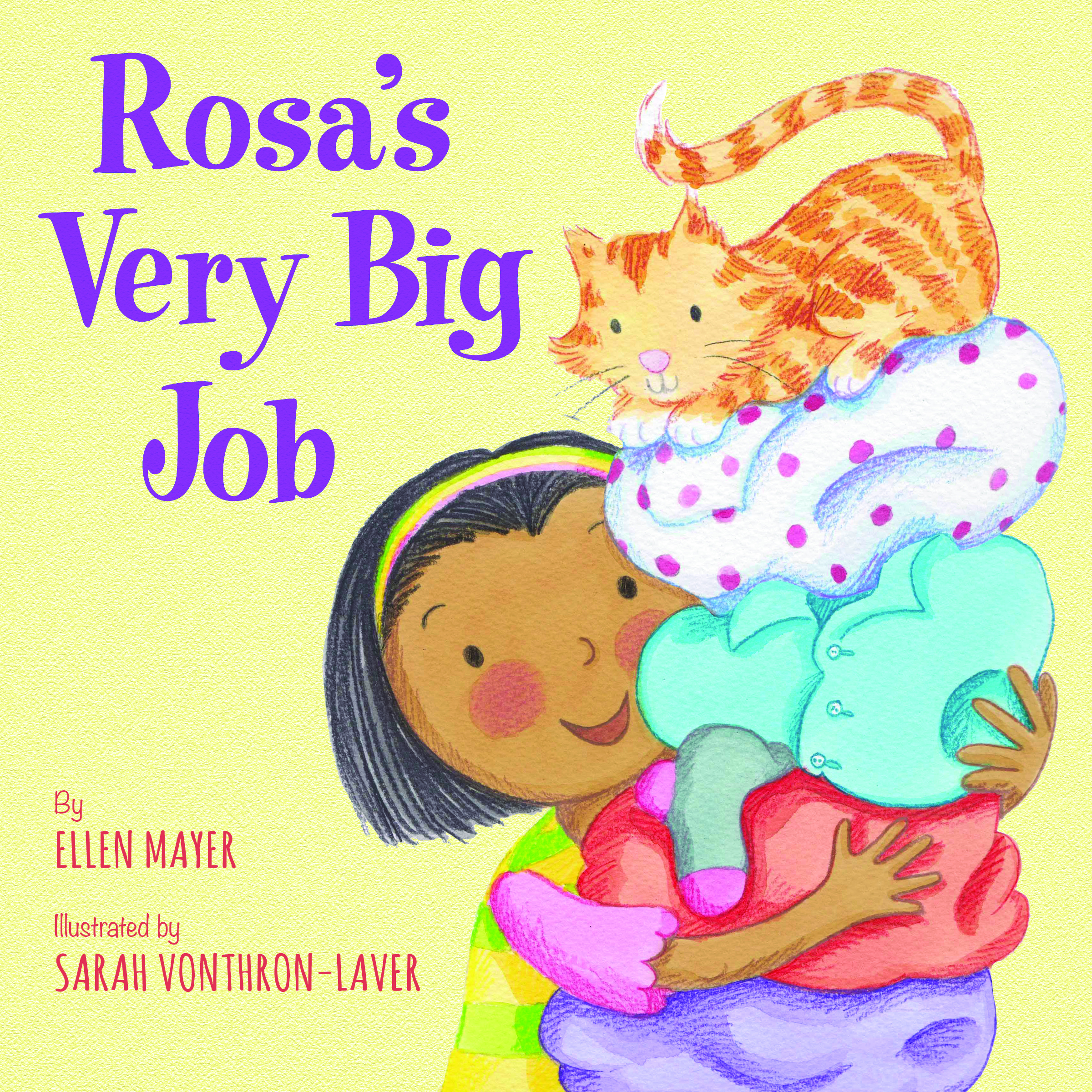
celebrate-picture-books-picture-book-review-rosa's-very-big-job-cover

About the Holiday

From the moment babies are born, they are learning. Talking and reading aloud to babies from the very beginning are crucial parts of helping their developing brain learn language and improves literacy in the years to come. Reading aloud to babies and older children for only 15 minutes a day makes a tremendous and beneficial difference to their future. Make reading time a special time with your kids, and with so many wonderful books available—like today’s book—you’ll have as much fun as they do!

Rosa’s Very Big Job

Written by Ellen Mayer | Illustrated by Sarah Vonthron-Laver

Rosa may be little, but she has big ideas about how to help. While Mama is out shopping for groceries for that night’s dinner, Rosa decides to surprise her by folding and putting away the laundry. The basket is piled high with fluffy dry clothes, sheets, and towels. Rosa watches her grandpa reading the newspaper. “‘Please help me, Grandpa!’” she says. She tugs on her grandpa’s hands, trying to pull him out of his chair. “‘Come on, Grandpa! Get up.”

celebrate-picture-books-picture-book-review-rosa's-very-big-job-rosa-likes-to-help

Image copyright Sarah Vonthron-Laver, text copyright Ellen Mayer, courtesy of Star Bright Books, starbrightbooks.com

Grandpa seems to have a little trouble managing: “‘It’s difficult to carry these enormous piles,’” he sighs. But Rosa knows that smaller armloads work better. Grandpa’s clothes come unfolded as he puts them in the drawer. “‘Be neat. Like me,” Rosa says, showing him her tidy stack. Poor Grandpa! He has to keep hanging up the same jacket over and over. “‘It’s difficult to keep this jacket from sliding off the hanger,” he says. Rosa has the answer: “‘Zip it up,’” she explains. “‘Then it stays on.’”

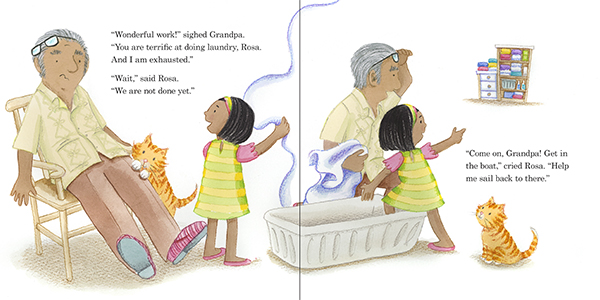
Grandpa sinks back into his chair. “‘You are terrific at doing laundry, Rosa. And I am exhausted,’” he says. But this is no time to quit—Rosa has big plans. As she steps into the now empty laundry basket, she exclaims, “‘Come on, Grandpa! Get in the boat. Help me sail back to there.’” Rosa points to the linen closet.

celebrate-picture-books-picture-book-review-rosa's-very-big-job-rosa-uses-basket-as-boat

Image copyright Sarah Vonthron-Laver, text copyright Ellen Mayer, courtesy of Star Bright Books, starbrightbooks.com

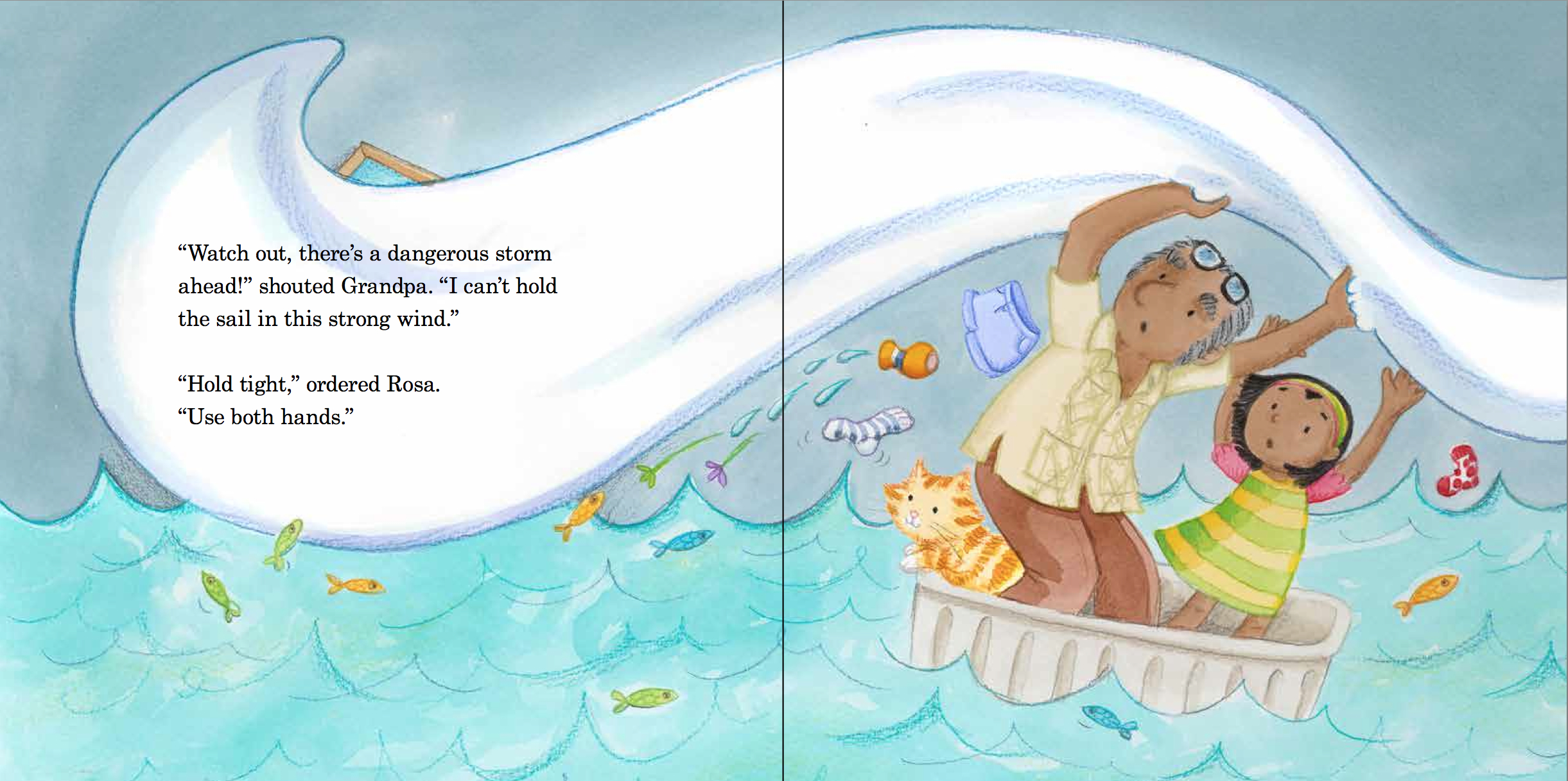
Suddenly, the floor swells with ocean waves teeming with fish. Grandpa channels his inner sailor as he holds aloft a sheet as a sail. As the wind billows and they come perilously close to the kitchen table, he says, “‘It’s difficult to sail around this enormous rock!’” Contemplating the rising sea, he exclaims, “‘It’s difficult to sail over this enormous wave!’”

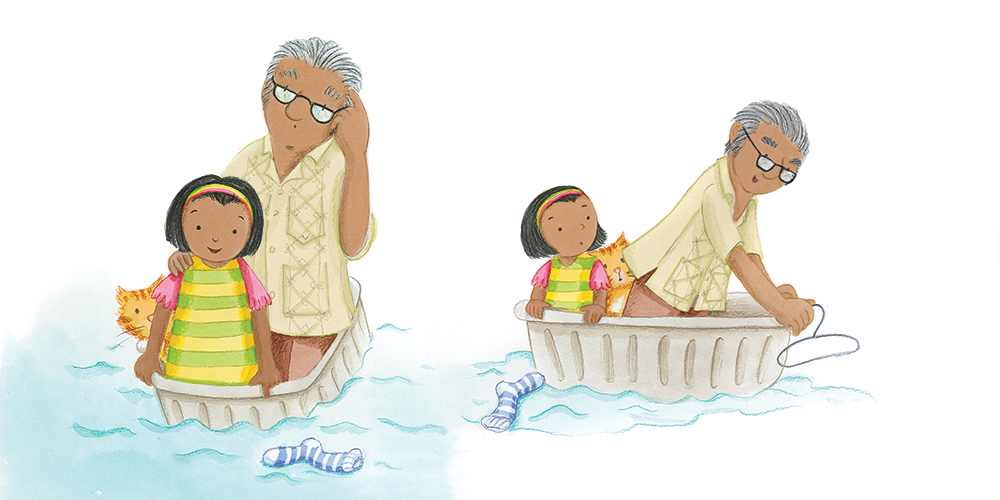
There’s a dangerous storm ahead, warns Grandpa, “‘I can’t hold the sail in this strong wind.’” Rosa is there to help and grabs one side of the sheet. “‘Hold tight,’” she orders. “‘Use both hands.’” At last the seas die down and Grandpa is ready to steer the laundry basket back to port, but Rosa has a more entertaining thought. Spying a sock on the floor, Rosa wants to catch the “enormous fish.” Grandpa obliges and picks up a hangar for a fishing pole. He holds Rosa as she stretches out over the edge of the laundry basket to land her fish.

celebrate-picture-books-picture-book-review-rosa's-very-big-job-sailing-with-sheet

Image copyright Sarah Vonthron-Laver, text copyright Ellen Mayer, courtesy of Star Bright Books, starbrightbooks.com

Just as Rosa nabs the fish, Mama comes home with her bags of groceries. She’s surprised to see that the laundry is not in the basket. Rosa runs to her and proudly explains, “‘We put all the laundry away. It was a very big job. We carried enormous piles. Grandpa dropped things. And I picked them up. It was very difficult for Grandpa. He got exhausted. But not me. I am terrific at laundry!’” Mama agrees that Rosa is a terrific helper. Then Rosa leads her mother to see the most surprising thing of all—the fish she has caught for dinner!

celebrate-picture-books-picture-book-review-rosas-very-big-job-rosa-and-grandpa-fishing

In her series of Small Talk Books® Ellen Mayer presents exciting stories for preschoolers full of imagination and rich language learning. Rosa’s Very Big Job introduces Rosa, a sweet girl bubbling with enthusiasm and the desire to help. The close relationships between Rosa, her mother, and her grandpa promote cooperation as well as effective modeling of speech patterns and a way to introduce larger words in an organic manner through play and common chores. Rosa’s inventive idea to turn the laundry basket into a boat is delightfully enhanced by her grandpa’s willingness to share in the story and expand on it. Humor, cheerful banter, and the easy camaraderie between Rosa and Grandpa invite young readers to join in the fun as they build confidence in their language learning.

Sarah Vonthron-Laver depicts Rosa’s afternoon with her Grandpa with joy and the spirited energy young children bring to everything they do. Grandpa is happy to spend time with his granddaughter, yet shows honest feelings of tiredness and frustration that spur on the plot. The transition from doing laundry to using the basket as a boat is as seamless as a child’s imagination, and the way Rosa and her grandpa use household items to create “sails,” “rocks,” “fish,” and “fishing poles” will give readers great ideas for post-reading play. Bright colors, an adorable kitten, and familiar surroundings welcome young children into the world of reading and expanded vocabulary.

Rosa’s Very Big Job would be a welcome addition to a young child’s bookshelf, not only for its fun story that kids will want to hear again and again, but for its leap into imagination that kids will want to replicate.

Dr. Betty Bardige, an expert on young children’s language and literacy development, provides tips for parents, grandparents, and caregivers following the text.

celebrate-picture-books-picture-book-review-rosa's-very-big-job-spanish-cover

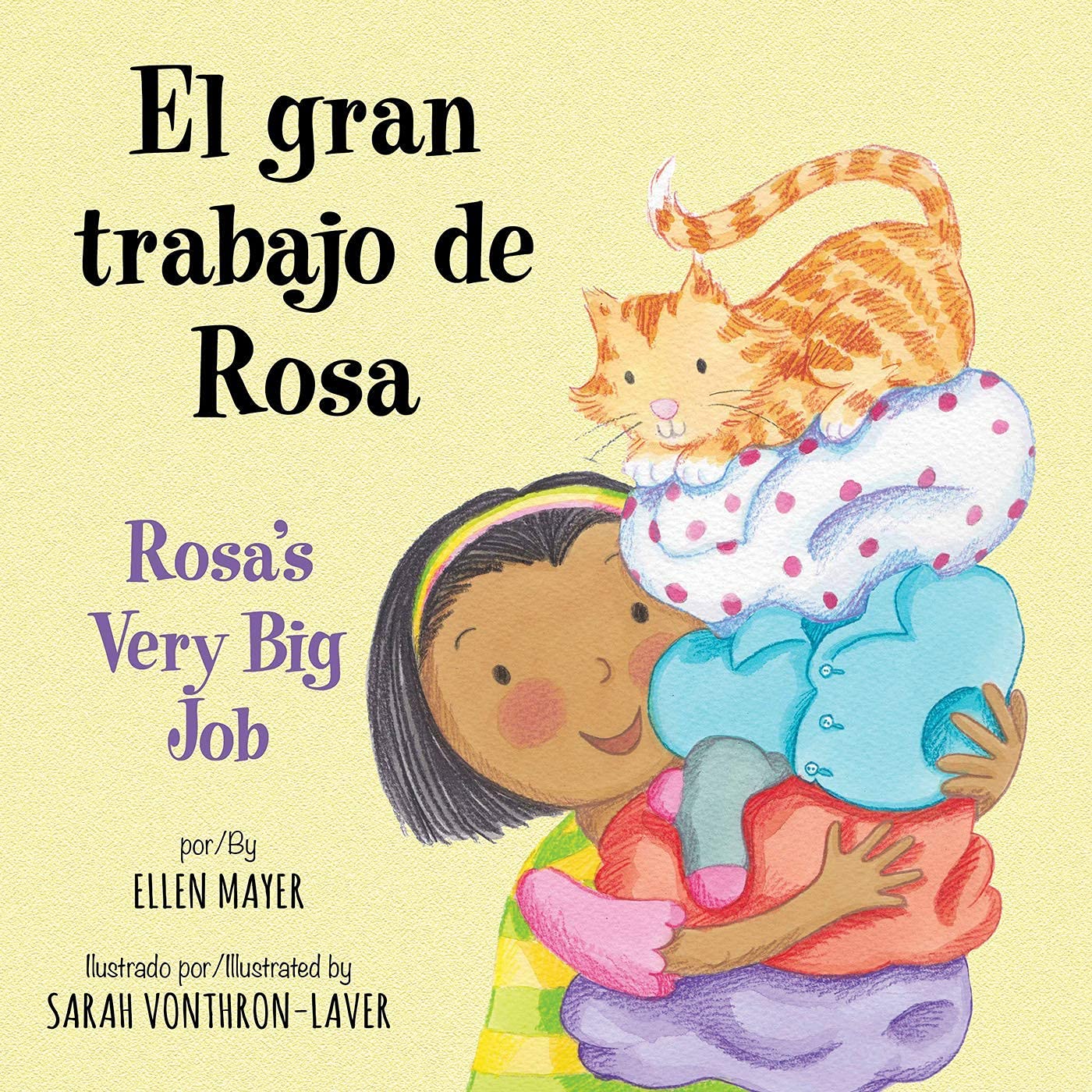
A bilingual Spanish/English edition is also available from Star Bright Books!

Ages 2 – 6

Star Bright Books, 2016 | ISBN 978-1595727497 (English edition) | ISBN 978-1595728500 (Spanish/English bilingual edition)

Discover more about Ellen Mayer and her books as well as book-related activities and literacy initiatives she’s involved with on her website!

To read an interview with Ellen Mayer about her books and her work, click here!

Find Sarah Vonthron-Laver on Facebook!

Read Aloud Month Activity

celebrate-picture-books-picture-book-review-rosa's-big-job-paper-dolls-made

Original illustrations by Saran Vonthron-Laver, Copyrights © 2016 Star Bright Books. Paper dolls created by AislingArt and Celebrate Picture Books, copyrights © 2016

Rosa’s Very Big Job Paper Dolls

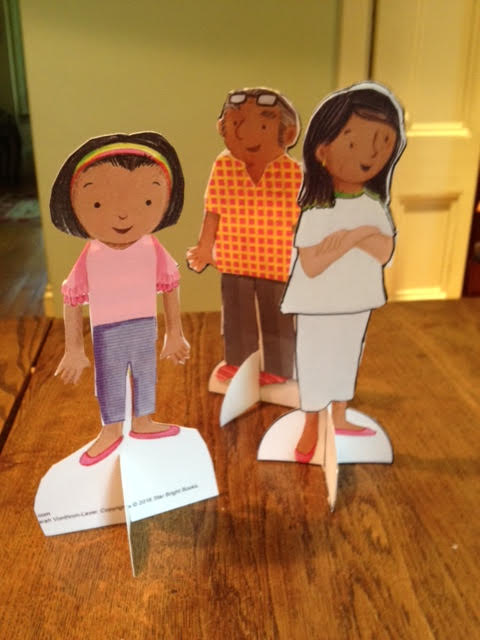
After you read the story, you can continue the fun with these Rosa and family paper dolls! Rosa loves helping out at home. She’s terrific at doing laundry – folding and putting away the family’s clothes, socks, and linens. You are terrific at helping too! Can you help Rosa, Mama, and Grandpa get dressed and ready for the day with these printable paper dolls? You’ll even find a laundry basket, socks, and Rosa’s sweet kitty to play with! 

Supplies

Printable Paper Dolls, Clothes, and Extras

  • Card stock paper and/or poster board
  • Scissors
  • Glue

Directions

  1. Print dolls on regular paper or card stock paper. Dolls printed on card stock paper may stand on their own with the supplied stand cross piece. For dolls printed on regular paper, you can cut the supplied stand templates from poster board or card stock and glue the dolls to the backing.
  2. Rosa’s kitty and the laundry basket can also be attached to the supplied template if needed
  3. Print clothes for each figure
  4. Color the blank clothes templates any way you’d like
  5. Cut out clothes and extra items
  6. Fit outfits onto dolls
  7. Make up your own stories about Rosa, Mama, and Grandpa!

celebrate-picture-books-picture-book-review-rosa's-very-big-job-cover

YOU CAN FIND ROSA’S VERY BIG JOB AT THESE BOOKSELLERS

Amazon | Barnes & Noble | Books-a-Million

To support your local independent bookstore, order from

Bookshop | IndieBound

celebrate-picture-books-picture-book-review-rosa's-very-big-job-spanish-cover

You can find El gran trabajo de Rosa at Amazon 

Picture Book Review
March 7 – Unique Names Day

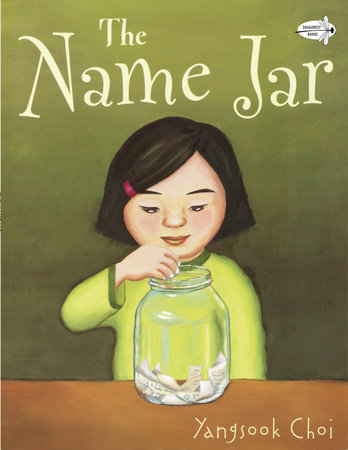
The Name Jar by Yangsook Choi Picture Book Review

About the Holiday

Established in 1997 as part of Celebrate Your Name Week, Unique Names Day celebrates uncommon or uncommonly spelled names and encourages those with unique names to always take pride in their name. One way to celebrate is to find out more about your name and how or why your parents chose it.

The Name Jar

By Yangsook Choi


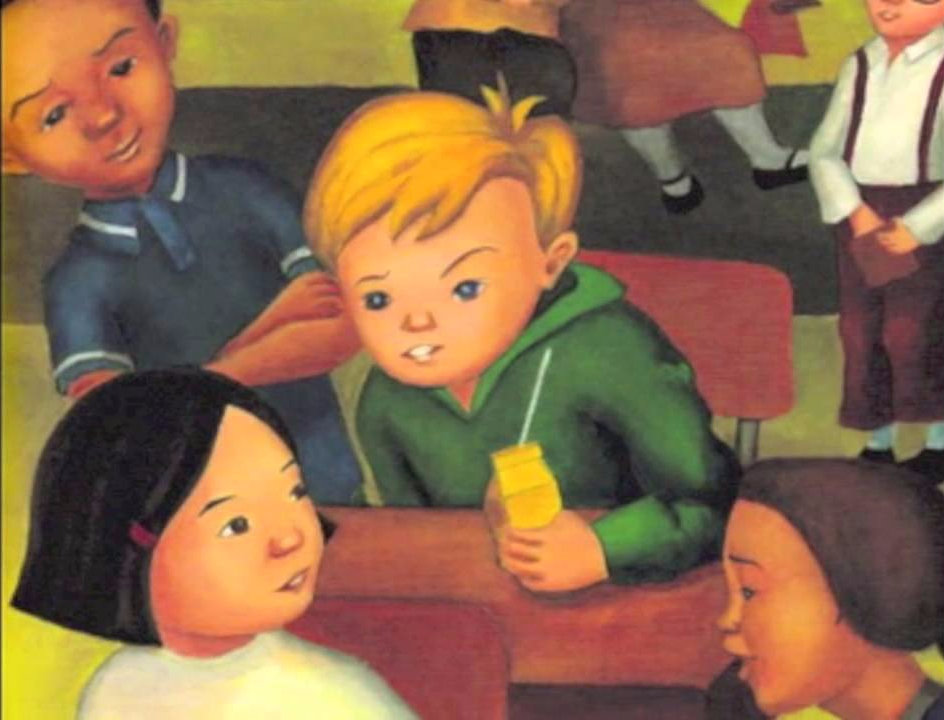
Unhei has recently moved to the United States from Korea. Although Unhei is excited about the first day of school, on the bus ride she misses her former home and looks at the wooden name stamp her grandmother gave her. A boy sitting behind Unhei notices the unfamiliar object and asks about it. Then other kids notice Unhei. They ask what her name is and when she answers, they mispronounce it, laughing and making jokes.

celebrate-picture-books-picture-book-review-the-name-jar-on-the-bus

Image copyright Yangsook Choi, courtesy of Random House

Unhei is embarrassed and glad that when the bus drops them off that those kids head to a different classroom than hers. As Unhei enters her own room, her classmates smile and greet her—it is obvious that their teacher has prepared them for a new student, and they are excited.
Of course, they first question her about her name, and remembering the experience on the bus, Unhei is reluctant to answer. She quickly says that she hasn’t picked a name yet, but will tell them next week. When she gets home, Unhei tells her mother that she wants an American name, a name that is easy to pronounce.

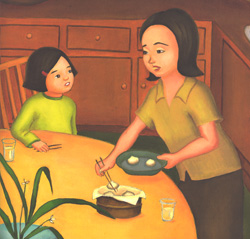
Her mother is dismayed; Unhei’s name was chosen by a master so that it would describe her uniqueness. But Unhei doesn’t want to be different, she just wants to fit in. Later while she and her mother are at a Korean grocery store, she introduces herself to the owner, who exclaims that her name is beautiful and means “grace” in English. 

celebrate-picture-books-picture-book-review-the-name-jar-mom

Image copyright Yangsook Choi, courtesy of Random House

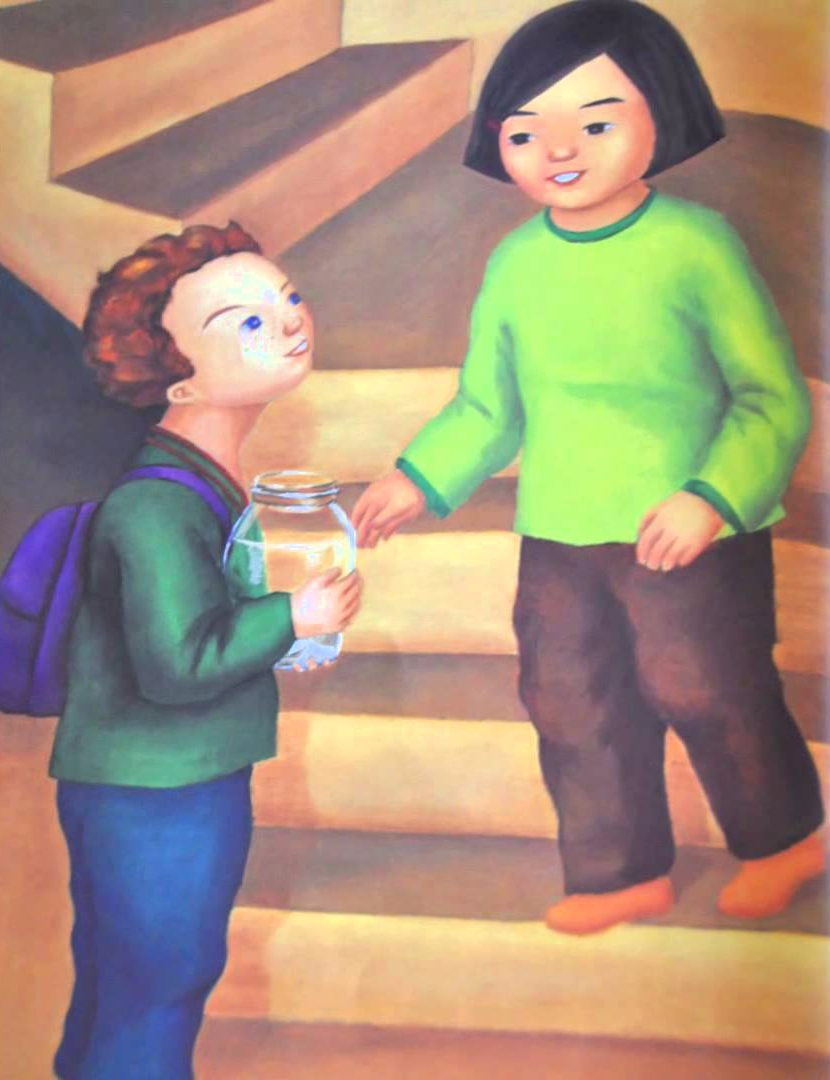
That evening Unhei tries out American names in front of the mirror—Amanda, Laura, Susie—but they don’t feel or sound right. The next day at school Unhei finds a jar on her desk with pieces of paper in it. On each piece of paper is a name—suggestions from each of her classmates. Her new friends have chosen these names thoughtfully. Daisy is the nickname of one girl’s baby sister; Tamela is a smart and brave heroine from a story; and Wensday is the day Unhei joined their class.

At the end of the school day, a classmate named Joey comes to her. He knows she actually does have a name, and Unhei, while not wanting to say it out loud, shows him the characters on her wooden stamp. Joey thinks it is beautiful and asks to keep the paper. Day by day the glass jar fills up with names. Unhei will have to choose soon.

One Saturday Unhei returns to the Korean grocery store. When Mr. Kim calls her by name, the one other customer turns around. It’s Joey! Carefully and slowly he says Unheis name until he gets it right. On Monday when Unhei enters the classroom, she discovers that the jar is missing. It’s all right, though, Unhei has chosen her name.

celebrate-picture-books-picture-book-review-the-name-jar-friend

Image copyright Yangsook Choi, courtesy of Random House

She walks to the chalkboard and writes her real name in English and Korean. She tells the class that her name means “grace.” Other kids reveal the meaning of their names, and they all practice saying Unhei’s name. That evening Joey comes to visit. He explains that he took the jar because he wanted Unhei to keep her original name. He suggests putting Korean nicknames into the jar for their classmates to pick. He has already chosen his Korean name with the help of Mr. Kim. It is the prefect nickname: Chinku, which means “friend.”

Ages 3 – 8

Random House, Dragonfly Books, 2003 | ISBN  978-0440417996

Discover more about Yangsook Choi, her books, and her art on her website!

Yangsook Choi’s The Name Jar is as timely now as when it was first written. Through compelling and detailed storytelling, Choi explores the themes of identity, empathy, family, friendship, and more  with sometimes heartbreaking honesty. Unhei’s varied experiences at school, at home, and at the market provide an opportunity for adults and children to discuss and embrace the diversity of our multicultural world. Choi’s warm-toned illustrations reveal the conflicts that Unhei encounters and her growing confidence as she makes friends with Mr. Kim and Joey who accepts her as she is. 

Unique Names Day Activity

CPB - Name Jars standing

Love Your Name Organizer Jar


Everyone needs a place to store their special stuff! Here’s a way to recycle a plastic jar and make a cool organizer jar with your name on it. This organizer jar also makes a great gift for your friends!

Supplies

  • A large plastic jar, such as a peanut butter jar or mayonnaise jar, cleaned out and with the label removed
  • Acrylic multi-surface paint or markers
  • Chalkboard paint
  • Paint brush
  • Chalk

CPB - Name Jars on sides

Directions

  1. Paint a rectangle on the front of the jar with chalkboard paint
  2. Decorate the rest of the jar with paint, markers, or paper just the way you want! My green jar sports a friendly dinosaur!

Picture Book Review