November 14 – International Girls Day

celebrate-picture-books-picture-book-review-women-in-science-cover

About the Holiday

Today’s holiday recognizes the spirit of girls and encourages girls and young women to pursue their dreams, talents, and abilities with the slogan “She Can Do Anything.” Around the world young women have a long way to go to overcome the stereotypes, conditions, and pressures in the media and other organizations that keep them from receiving an equal education and from both attempting and succeeding in their desired profession. Today, celebrate the uniqueness of the girls and women in your life, listen to what they really want and want to accomplish, and support them.

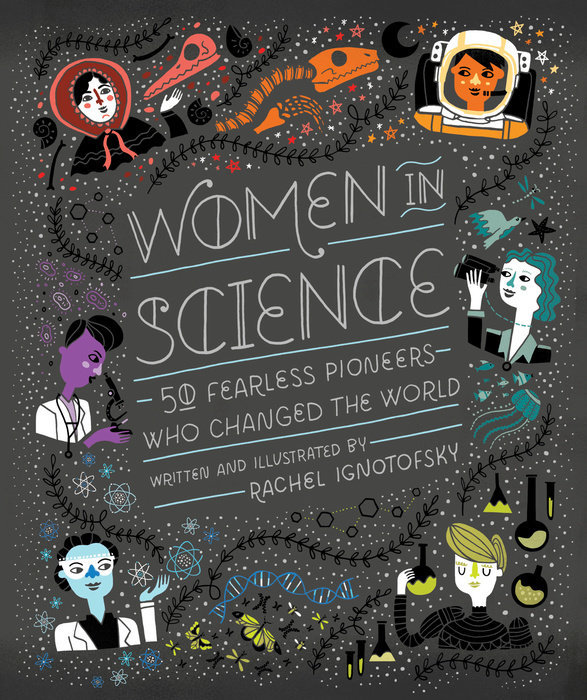
Women in Science: 50 Fearless Pioneers Who Changed the World

By Rachel Ignotofsky


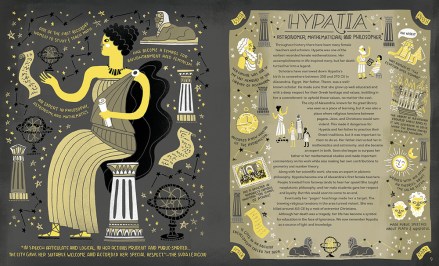
“Nothing says trouble like a woman in pants.” With this revealing attitude from the 1930s, Rachel Ignotofsky introduces her scintillating biographies of 50 intelligent, self-confident, persevering, and inspiring women working in engineering, math, medicine, psychology, geology, physics, astronomy, and more sciences from ancient history through today. The book begins with Hypatia who lived in Greece in the late 300s to early 400s CE and became an expert in astronomy, philosophy,and mathematics, making “contributions to geometry and number theory.” She became one of Alexandria’s first female teachers, “invented a new version of the hydrometer,” and can be found among the intellects in Raphael’s painting “The School of Athens.”
celebrate-picture-books-picture-book-review-women-in-science-hypatia

Image and text copyright Rachel Ignotofsky, courtesy of rachelignotofskydesign.com

Zipping ahead to 1647 readers find Maria Sibylla Merian, considered one of the “greatest scientific illustrators of all time.” Her specialty was entomology. By carefully documenting the lifespan of butterflies, she taught people about the science of metamorphosis, publishing a book on the subject filled with notes and illustrations in 1679. Later she scoured the rainforests of South America, gathering information on never-before-seen insects from that region. Her book, The Metamorphosis of the Insects of Suriname “was published in 1705 and became a hit all over Europe.” Maria was so famous, her picture appeared on German money and stamps.

celebrate-picture-books-picture-book-review-women-in-science-mary-anning

Image and text copyright Rachel Ignotofsky, courtesy of rachelignotofskydesign.com

Other women in the nature sciences include Mary Anning, who as a child discovered the first complete ichthyosaur skeleton and went on to become a paleontologist; Mary Agnes Chase, a botanist and expert on grasses; Marjorie Stoneman Douglas, who as a conservationist helped save the Florida Everglades; and Joan Beauchamp Procter, a zoologist specializing in reptiles who discovered the Peninsula Dragon Lizard in 1923; and more.
celebrate-picture-books-picture-book-review-women-in-science-marie-curie

Image and text copyright Rachel Ignotofsky, courtesy of rachelignotofskydesign.com

One of the earliest women astronomers and mathematicians was Wang Zhenyi, born in China in 1768. Creating her own eclipse model, she proved her advanced “theories about how the moon blocks our view of the sun—or the earth blocks the sun’s light from reaching the moon—during an eclipse.” She also measured the stars and explained the rotation of the solar system. At the age of 24 she published the 5-volume Simple Principles of Calculation. Zhenyi died at the age of 29, but in her short life she published many books on math and astronomy as well as books of poetry.
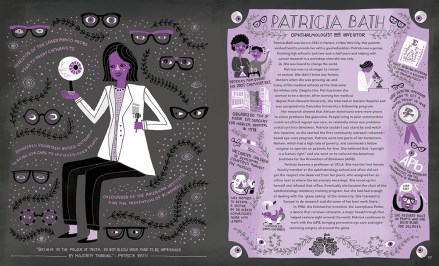
celebrate-picture-books-picture-book-review-women-in-science-patricia-bath

Image and text copyright Rachel Ignotofsky, courtesy of rachelignotofskydesign.com

Women in Science includes many other women who have looked to the stars and mathematics for their careers. Some of these are: Ada Lovelace, the first person to write a computer program; Emmy Noether, who helped Albert Einstein develop his theory relativity, created the field of abstract algebra, and “made new connections between energy and time, and angular momentum”; Cecilia Payne-Gaposchkin a quantum physicist in 1900s England who “discovered that the sun is made mostly of hydrogen and helium gas” and in 1956 became Harvard University’s first astronomy professor; Mae Jemison, who in 1992 became the first African-American woman in space and later started her own technology consulting firm as well as founding BioSentient Corporation, and a science camp for kids; plus many others.
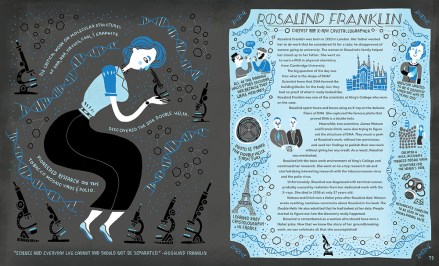
celebrate-picture-books-picture-book-review-women-in-science-rosalind-franklin

Image and text copyright Rachel Ignotofsky, courtesy of rachelignotofskydesign.com

The book also features Engineers, such as Hertha Ayrton who improved electric lights by inventing “a new rod that made a clean and quiet bright light” and the Ayrton fan that blew away mustard gas during World War I; and Lillian Gilbreth, who used her theories of “organizational psychology” in inventing the foot pedal for garbage cans, shelving for refrigerators, and even the “work triangle” for kitchens “that determines the distance from the sink to the stove” and saves time. There are Geneticists such as Nettie Stevens who discovered the “X” and “Y” chromosomes, and Barbara McClintock—the pants wearer from the beginning of the post—and the first person “to make a complete genetic map of corn” and discover jumping genes, or “transposons.”

The field of Medicine has benefited from women such as Elizabeth Blackwell, the first woman doctor; Alice Ball, a chemist and the first African-American woman to graduate from the University of Hawaii, who helped cure leprosy with her chemical work; and Gerty Cori who discovered how our bodies covert glucose, helping us better understand diabetes. In 1947 she became the first American woman to win a Nobel Prize.
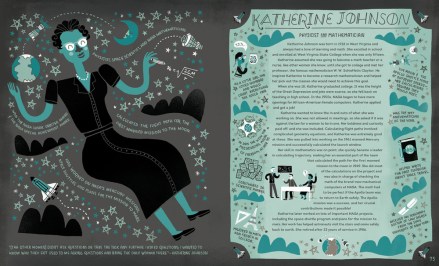
celebrate-picture-books-picture-book-review-women-in-science-katherine-johnson

Image and text copyright Rachel Ignotofsky, courtesy of rachelignotofskydesign.com

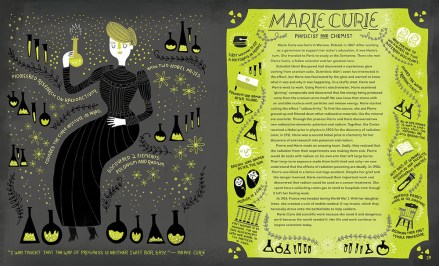
And this list only begins to scratch the surface of all the fascinating stories of women who overcame social, political, and personal obstacles to follow where their intelligence took them. Inspirational, entertaining, and undeniably eye-catching Rachel Ignotofsky’s Women in Science presents expertly written, one-page biographies that hit all the high (and sometimes unfortunate low) points in these scientist’s lives. The striking layout of both the text and illustrations keep readers riveted to the page, The left-hand side contains a representational drawing of the scientist surrounded by the subjects and materials of her work as well as trivia about her and a quotation. On the right-hand page, small illustrated facts frame the woman’s life story.

Interspersed between the biographies are pages offering a timeline of women’s milestones, depicting lab tools, and graphing statistics of women in STEM. The back matter is impressive, with two more pages presenting 15 more scientists, a four-page, illustrated glossary, resources including films, websites, and books, and an index. Rachel Ignotofsky concludes her book by saying, “Let us celebrate these trailblazers so we can inspire the next generation. Together, we can pick up where they left off and continue the search for knowledge. So go out and tackle new problems, find your answers and learn everything you can to make your own discoveries!”

Ages 7 and up

Ten Speed Press, 2016 | ISBN 978-160774976

To discover more books by Rachel Ignotofsky, visit her website!

International Girls Day Activity
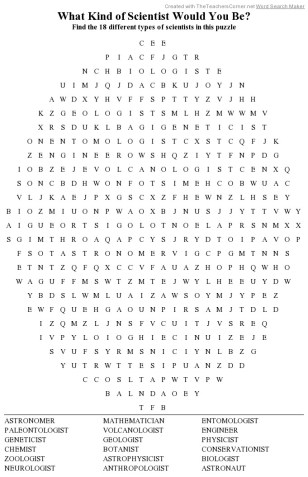
celebrate-picture-books-picture-book-review-scientists-word-search

What Kind of Scientist Would You Be? Word Search


Find the 18 different scientists in this printable What Kind of Scientist Would You Be? Puzzle. Here’s the Solution!  Then pick one and write why you would like to be that type of scientist!

Picture Book Review

October 25 – International Artist Day

celebrate-picture-books-picture-book-review-the-noisy-paint-box

About the Holiday

Instituted in 2004 by Chris MacClure, a Canadian artist who specializes in Romantic Realism, National Artist Day celebrates the various forms of art, the artist, and the unique vision each one brings to their work and the world. Whether you like classic or abstract styles, watercolors or oils, sculpture or installations, why not take some time today to visit an art museum or gallery—or page through a collection of prints or a biography like today’s book!

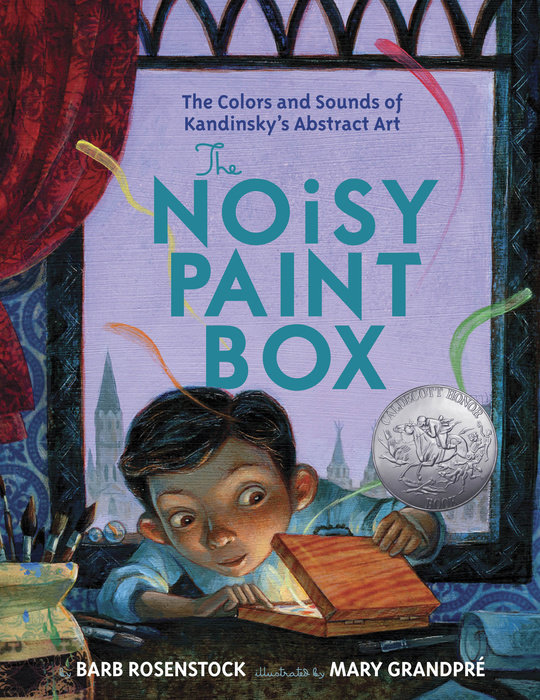
The Noisy Paint Box: The Colors and Sounds of Kandinsky’s Abstract Art

Written by Barb Rosenstock | Illustrated by Mary GrandPré


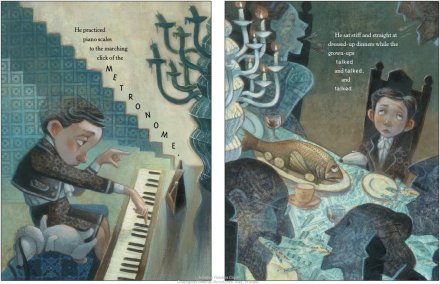
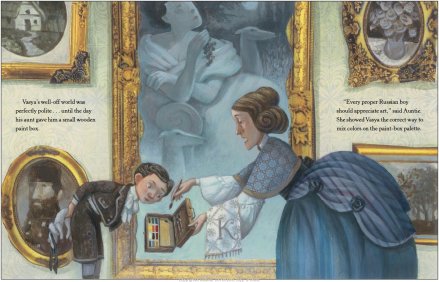
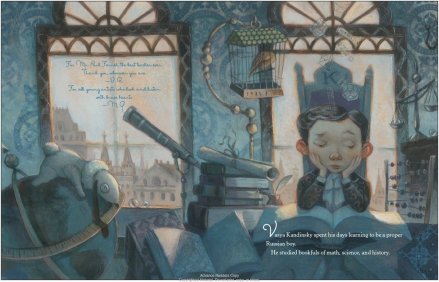
As a Russian child Vasya Kandinsky spends his days absorbed in learning math, science, and history. He takes piano lessons and attends formal dinners where the adults drone on and on. His life is polite, stiff, and colorless until the day his aunt gives him a small wooden paint box. “Every proper Russian boy should appreciate art,” Vasya’s aunt tells him while explaining how to mix colors.

celebrate-picture-books-picture-book-review-the-noisy-paintbox-piano-lessons

Image copyright Mary Grandpré, text copyright Barb Rosenstock. Courtesy of randomhouse.com

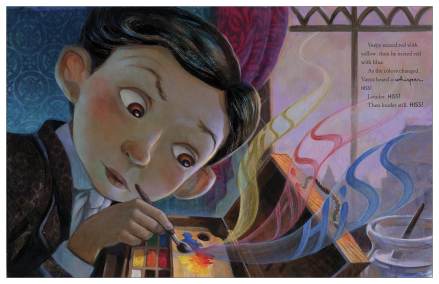
Vasya takes up the brush and combines red with yellow then red with blue. As the colors change to orange and purple, Vasya hears a whisper that grows into a noisy hiss. “‘What is that sound?’” he asks, but no one else hears anything. “The swirling colors trilled like an orchestra tuning up for a magical symphony,” and “Vasya painted the sound of the colors.” A lemon yellow “clinked like the highest notes on the keyboard; a navy blue “vibrated deeply like the lowest cello strings.” Crimsons “blared” and greens “burbled.”

celebrate-picture-books-picture-book-review-the-noisy-paintbox-colors-kandinsky-gets-his-first-paints

Image copyright Mary Grandpré, text copyright Barb Rosenstock. Courtesy of randomhouse.com

Vasya runs downstairs to show his family what he has created. His mother, father, and Auntie look at the canvas with its swoops, shapes, and angles. “What is it supposed to be?” they ask, and send him off to art school to learn how “to draw houses and flowers—just like everyone else.” Vasya finishes school and becomes a lawyer. He leaves his paint box untouched and lives the way he is expected, but the sounds of the colors are always with him.

One evening as he listens to an opera, the music surrounds him with color—“stomping lines of vermilion and coral; caroling triangles in pistachio and garnet; thundering arches of aqua and ebony…” Vasya can hear the colors and see the music. He knows then what he must do. He quits his job teaching law and moves to Germany to be a painter. He surrounds himself with artists and takes classes with famous teachers, and yet people still look at his canvases and asked, “What is it supposed to be?”

celebrate-picture-books-picture-book-review-the-noisy-paintbox-colors-have-sounds

Image copyright Mary Grandpré, text copyright Barb Rosenstock. Courtesy of randomhouse.com

Once again he paints what is expected. His teachers love his houses and flowers, but Vasya does not. His friends understand. They too want to expand the meaning of art. They agree with Vasya when he says, “‘Art should make you feel.’” In his studio Vasya continues to paint the sounds he hears, to give music color and color sound. Bravely, he invites the public to view his paintings, which are named after musical terms—Composition, Accompaniment, Fugue, and more.

This is a new kind of art—abstract art—and it takes a long time before people understand. They look and still ask, “What is it supposed to be?” “It is my art,” Kandinsky replies “How does it make you feel?” 

celebrate-picture-books-picture-book-review-the-noisy-paintbox-colors-kandinsky-at-a-concert

Image copyright Mary Grandpré, courtesy of randomhouse.com

An author’s note telling more about Kandinsky’s life and synesthesia, a genetic condition in which one sense triggers another, follows the story.

In the spirit of full disclosure, Kandinsky is one of my favorite artists, so I was excited to read this biography—I was not disappointed! With so many great artists, their work speaks for itself, but viewers wonder: How did it come about? What influenced the artist? Barb Rosenstock, with lyrical language and beautifully chosen descriptions, reveals the emotions and passion that fueled Kandinsky’s art from his earliest ages: as he walks through Moscow he can’t ignore “the canary-colored mailbox whistling as he rode to work. The scarlet sunset haze ringing above the ancient Kremlin walls.” Rosenstock’s inclusion of the conflicts and opposition Kandinsky faced and overcame will inspire children to listen to their inner voice and makes readers and lovers of his abstract art glad he never gave up.

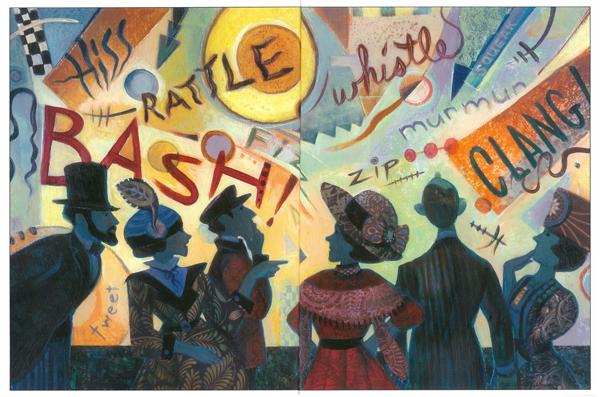
Mary GrandPré’s unique style brilliantly depicts Kandinsky’s singular vision, allowing readers to experience the way he wielded his paint brush like a conductor’s baton. Vasya’s early life is painted in muted blues and grays, and the boredom on his face as he studies his schoolwork is obvious. Kids will appreciate his one-finger plinking at the piano and the rolled-eyed drowsiness of the formal dinner. Once Vasya is introduced to the paint box, however, GrandPré’s illustrations become vibrant, with swirling colors overlaid with the musical notes that Kandinsky associated with them. His uninhibited painting is gloriously shown as the young boy’s shirt comes untucked and the colors burst from the canvas upon his first painting.

celebrate-picture-books-picture-book-review-kandinsky-studying

Image copyright Mary Grandpré, text copyright Barb Rosenstock. Courtesy of randomhouse.com

As the adults look at his work, the room is again swathed in somber colors. The text revealing that Vasya attended regular art classes to learn to draw houses and flowers is set above a single wilting flower in a vase. The personal tug-of-war Kandinsky experienced even into adulthood is wonderfully rendered: Colors flow into his ears at the opera; he studies his own landscape and still life paintings with misgiving in a hazy studio, and the joy and freedom of his abstract art is demonstrated with wild abandon while a dove escapes its cage. The final image of a child sitting in front of a Kandinsky painting reinforces the idea that his art lives for all and for all time.

Ages 4 – 9

Alfred Knopf, Random House Children’s Books, 2014 | ISBN 978-0307978486

International Artists Day Activity

celebrate-picture-books-picture-book-review-i-love-art-word-search

I Love Art! Word Search 


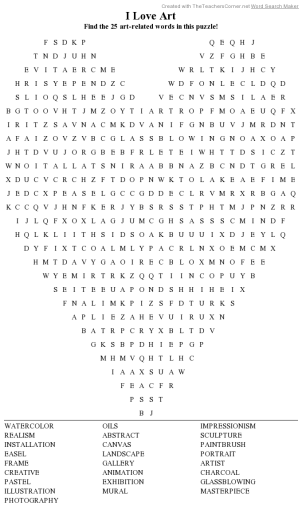
There are twenty-five art-related words for everyone to love in this printable I Love Art! word search puzzle! Here’s the Solution!

Picture Book Review
October 22 – Smart is Cool Day

celebrate-picture-books-picture-book-review-on-a-beam-of-light-cover

About the Holiday

There are many ways to be smart—and they are all very cool! The world needs people who can think differently about all issues to solve problems, create art and literature that reflects our times and present alternate viewpoints, and just to make life funnier, more poignant, more beautiful,more  livable. Today, celebrate your particular way of being smart and share it with others!

On a Beam of Light: A Story of Albert Einstein

Written by Jennifer Berne | Illustrated by Vladimir Radunsky


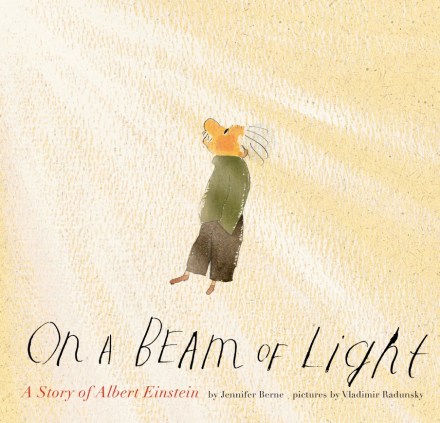
More than 100 years ago on a windy March day, a baby boy was born—Albert was his name. Albert turned one without saying a word. When Albert had his second birthday, he still hadn’t said a word. By the age of three Albert had only said a few words. “He just looked around with his big, curious eyes. Looked and wondered. Looked and wondered.” Albert’s parents were a bit worried because he was so different from other kids. But “they loved him…no matter what.”

celebrate-picture-books-picture-book-review-on-a-beam-of-light-albert-as-child

Image copyright Vladimir Radunsky, courtesy of chroniclebooks.com

Once when Albert was sick, his father brought him a compass. As he watched the needle automatically spin to point north, “Albert was so amazed his body trembled. Suddenly he knew there were mysteries in the world—hidden and silent, unknown and unseen.” Albert began asking questions wherever he went. His teachers told him he was a “distraction” and that “he would never amount to anything if he didn’t behave like all the other students.” But Albert didn’t want to be like other kids.

celebrate-picture-books-picture-book-review-on-a-beam-of-light-albert-gets-compass

Image copyright Vladimir Radunsky, courtesy of chroniclebooks.com

While on his bicycle one afternoon, Albert wondered what it would be like to ride a beam of sunlight. He was excited by this idea and it filled him with questions. He began to study light and sound, heat, magnetism, and gravity. He also read about numbers, which to him were like a secret language. Still, Albert had many more questions. After college he wanted to teach the subjects he loved, but he couldn’t find a job.

Instead, he went to work for the government. His job left him a lot of time to ponder his questions. He watched sugar dissolve in tea and smoke disperse in the air and wondered how that happened. Albert realized that everything is made of tiny particles. While many people didn’t believe it, Albert’s work helped prove the existence of atoms.

celebrate-picture-books-picture-book-review-on-a-beam-of-light-albert-at-school

Image copyright Vladimir Radunsky, courtesy of chroniclebooks.com

Next Albert considered motion and how everything is always moving. “Even sound asleep we’re moving, as our planet circles the sun, and our lives travel into the future. Albert saw time and space as no one ever had before.” He wrote about his theories and sent the articles to magazines that published them all. Scientists asked him to join their research and teach with them. People began to call Albert a genius. Now he could spend all his time thinking, wondering, and imagining—doing what he loved.

His ideas took in huge things—like planets—and infinitesimal things—like the particles inside atoms. To help him think, Albert sailed his little boat and played his violin. Even the kinds of clothes he wore—or didn’t wear—affected his thinking. He loved baggy pants, over-sized sweaters, and NO socks! He was easily recognized around town by his long, white hair.

celebrate-picture-books-picture-book-review-on-a-beam-of-light-albert-riding-bike

Image copyright Vladimir Radunsky, courtesy of chroniclebooks.com

During all these years Albert never forgot about that beam of light he once wanted to ride. He “figured out that no person, no thing, could ever zoom through space as fast as a beam of light.” If that could occur “crazy things” would happen. While only minutes would pass for the traveler, years would go by for those left on earth. This sounded like a ridiculous idea, but since then it has been proven true.

Albert Einstein continued reflecting on the world until the day he died. He asked and answered many questions that had never been posed before. But he also left many, many questions for other generations—maybe even you!—to discover and solve.

Jennifer Berne’s engaging biography of Albert Einstein is a charming and absorbing look at one of the most unique thinkers in history. Her uplifting, conversational storytelling and well-chosen anecdotes from Albert’s childhood and adulthood will keep kids riveted to the story and show them that while Albert Einstein’s ideas may have been out of this world, he was also very much down to earth. On a Beam of Light introduces readers to this fascinating scientist and will also inspire them to find the genius inside themselves.

celebrate-picture-books-picture-book-review-on-a-beam-of-light-atoms

Image copyright Vladimir Radunsky, courtesy of chroniclebooks.com

The childlike, offbeat goache, pen, and ink illustrations of Vladimir Radunsky lend the right amount of lightness and movement to each page, depicting not only Albert and his surroundings but also the endless musings that filled his mind and his days. As Albert grows from a baby to a child, his loving and understanding parents stand by and encourage his gifts; he and his bicycle rocket off on a beam of light; and numbers swirl through the air as Albert rests his head on a stack of books. In a restaurant other patrons are portrayed as simple line drawings, putting the focus on Albert as he ponders a dissolving sugar cube, a device that is used to also depict Albert’s thoughts and scientists of the future who have proven his theories correct. When Albert discovers atoms, he and a family portrait are rendered in dots. The muted colors, mottled paper, and period details allow readers to fully appreciate Albert’s Einstein’s story and contributions.

An Author’s Note and further paragraphs about Einstein’s thought experiments, playful nature, pacifism, and most famous equation, as well as a list of resources follow the text.

On a Beam of Light is a wonderful addition to home libraries for children interested in science, math, ideas, history, and creativity in general. Jennifer Berne’s emphasis on the support Albert received from his parents and his ultimate acceptance within the science community is also welcome comfort for kids who do think differently.

Ages 4 – 9

Chronicle Books, 2016 (paperback) | ISBN 978-1452152110

To view more books by Jennifer Berne, plus pictures by her readers and more, go to her website!

Visit Vladimir Radunsky’s website to see a gallery of his books with pictures!

Smart is Cool Day Activity

celebrate-picture-books-picture-book-review-smart-is-cool-writing-template

I’m Smart Because…


In what way are you smart? Draw a picture or write about your special talent on this printable I’m Smart Because…page.

Picture Book Review

October 16 – Dictionary Day

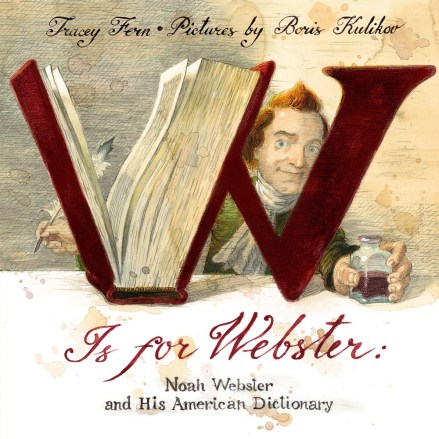
celebrate-picture-books-picture-book-review-w-is-for-webster-cover-image

About the Holiday

Dictionary Day honors Noah Webster, who wrote the first American dictionary. He was born in 1758 to a family that loved learning and knew the importance of a good education. Even as a boy Noah Webster loved words. He went on to become a lawyer, newspaper editor, Connecticut and Massachusetts legislator, and he helped found Amherst College in Massachusetts.

He is most well-known, however, for compiling the first American dictionary that is synonymous with his name and still the most popular dictionary in use. His work, first published in 1828, revolutionized the way language and words were presented and remains always current by every year adding new words that come into common use through new products, fads, and slang.

Wordsmiths the world over celebrate both the amazing accomplishment that is the dictionary, and I would imagine, their own well-thumbed and well-loved copies of this remarkable resource.

W is for Webster: Noah Webster and His American Dictionary

Witten by Tracey Fern | Illustrated by Boris Kulikov


Noah Webster was always different. Tall and thin with bright red hair, he liked to use big words when he spoke and wanted to do homework instead of goof around in school. Unfortunately for him school was in session for only a few months a year and goofing around seemed to be the major course of study. Of course, Noah didn’t call it “goofing around,” he called it “‘playing roguish tricks.’”

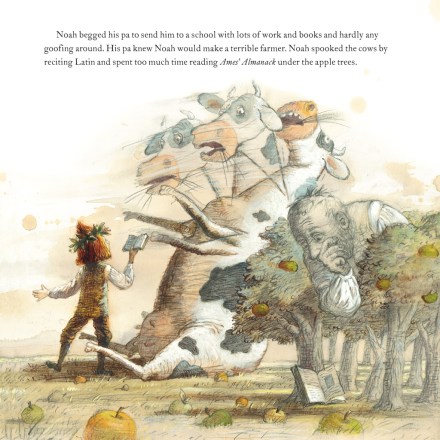
Noah begged to go to a harder school. “His pa knew Noah would make a terrible farmer. Noah spooked the cows by reciting Latin and spent too much time reading Ames’ Almanack under the apple trees.” His pa agreed, and in 1774 at the age of 16 Noah went off to study at nearby Yale College in New Haven, Connecticut. Yale had strict rules. Students had to rise at 5:30 a.m. and study for two hours before class. They were also fined “two shillings for making ‘tumult, noise, hallooing,’ or otherwise goofing around. Noah thought Yale was wonderful.”

celebrate-picture-books-picture-book-review-w-is-for-webster-spooking-horses

Image copyright Boris Kulikov, text copyright Tracey Fern. Courtesy of macmillan.com

Noah hadn’t been at Yale long before the American Revolutionary War broke out. Although Noah signed up to fight, he recognized that he was “‘ill able to bear the fatigues of a soldier,’” which was “Noah’s big way of saying he was a lousy soldier.” He returned to Yale and graduated in 1778, but he left the school with no job and no prospects. Even his pa told him to leave home to find work.

Noah became a teacher, but he found the British textbooks “‘defective and erroneous.’” He believed the students should have American textbooks that better reflected their diverse experiences. With the Revolutionary War at an end and America victorious, Noah wanted to help “hold his new, complicated nation together.” He believed that America needed a language different than the English spoked in Britain. “‘A national language is a national tie,’ Noah insisted to all who would listen, and to many who wouldn’t.”

celebrate-picture-books-picture-book-review-w-is-for-webster-teaching-school

Image copyright Boris Kulikov. Courtesy of macmillan.com

He began the work himself with a speller. Right from the start Noah’s speller was different than the British books. It included everyday words “like scab, grub, and mop.” He also simplified the spelling by taking out unpronounced letters or spelling words phonetically. He also added pictures to every page and presented lists of rhyming words. He also priced his book so almost anyone could afford it. Noah’s speller became a bestseller.

Still, Noah had bigger ideas. He wanted to write a patriotic dictionary with uniquely American words. He took his idea on the road to make money for the venture, lecturing wherever he could. But Noah’s know-it-all tone of delivery, his “prickly personality,” even his “‘porcupine hair’” put people off. And what’s more, they didn’t like the idea of his dictionary. People thought he was a “lunatic” for wanting to replace British words with American ones.

celebrate-picture-books-picture-book-review-w-is-for-webster-working-on-letter-a

Image copyright Boris Kulikov, text copyright Tracey Fern. Courtesy of macmillan.com

In 1806 Noah went ahead and published “A Compendious Dictionary of the English Language. It was a flop, but Noah wasn’t discouraged.” The next year he started working on a bigger dictionary. He copied words out of British dictionaries and added American words and he traced the roots of all the words and wrote definitions, sometimes including quotes from famous people to show differences in meaning. He figured the whole dictionary would take 5 years to finish—eight to ten, tops.

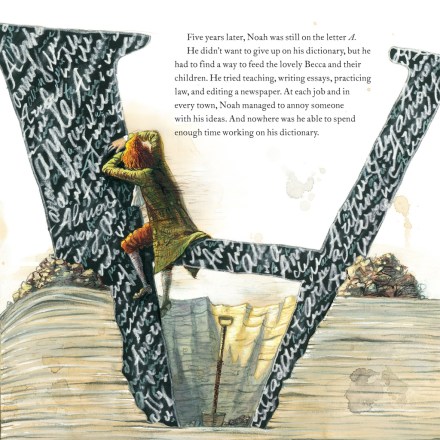
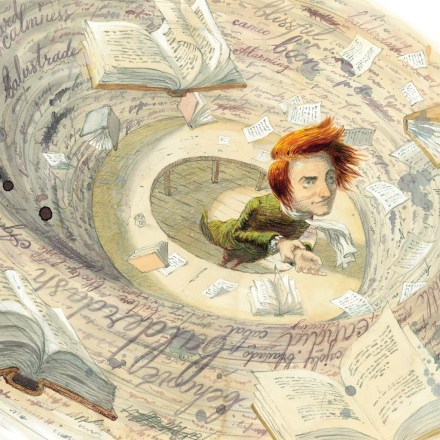
But five years later, Noah was still on the letter A. With no money coming in and a growing family, Noah took a variety of jobs, but he always seemed to rub someone the wrong way, and he lost job after job. He decided to sell his fancy house and bought a farm. Here he was able to gather books, books, and more books around his unusual donut-shaped desk. Standing inside the center of the desk, he spun around and around reading the books and finding words to include in his dictionary.

celebrate-picture-books-picture-book-review-w-is-for-webster-special-desk

Image copyright Boris Kulikov. Courtesy of macmillan.com

By 1822 Noah had exhausted all the books in his study. He took to traveling to other American libraries, moved his family to New Haven to use the Yale library, and in 1824 even sailed to Europe to explore books found in the National Library in Paris and at the University of Cambridge in England.

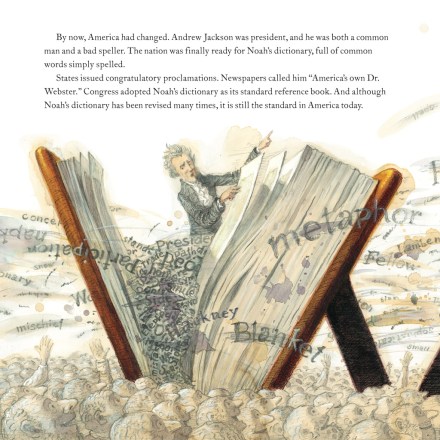
Finally, in 1825 Noah finished his dictionary.  With more than 70,000 words, An American Dictionary of the English Language was the largest English dictionary ever written. “Many people thought it was the best English dictionary ever written.” Why the change of heart? Well, one reason might have been that the President of the United States, Andrew Jackson, “was a common man and a bad speller.” Another might have been that the timing was just right.

celebrate-picture-books-picture-book-review-w-is-for-webster-finished-dictionary

Image copyright Boris Kulikov, text copyright Tracey Fern. Courtesy of macmillan.com

However it came to be, Noah was now lauded as a hero by states and newspapers. Congress even adopted the dictionary as its standard reference book. Noah had not only succeeded in writing an American dictionary, he had “created a new American language for a new American nation.” One that is still beloved today.

An Author’s note as well as a list of resources follow the text.

Webster’s dictionary is intrinsically woven into every American child’s life through language and vocabulary development. Tracey Fern’s captivating story reveals the charm and foibles of its author, a man with just the right temperament and perseverance to tackle and complete such an overwhelming task. Fern’s exceptional storytelling skills and deft turns of phrase allow for a comprehensive review of Webster’s life that is full of exhilaration, empathy, and a good dose of the “big” words Webster loved. Fern builds suspense and tension while offering an insightful look at early American history by including details of the staggering research required and the adverse reactions to Webster and his work.

Boris Kulikov’s expressive illustrations perfectly capture the complex personality of Noah Webster, late-1700s-to-early-1800s American society, and the obstacles Webster faced in writing his dictionary. Fittingly, words, books, or ink blots abound on every page, pouring from the air, sprouting from the ground, stacked like the skyscrapers that would come, and surrounding Noah Webster the way they must have swarmed through his brain. Kulikov infuses humor into his paintings, as when Noah tears at his hair wondering how he will support himself after college, shrugs nonplussed at his students’ shenanigans, and buys himself quiet work time by handing out sweets to his kids. Visual metaphors for the hard, backbreaking and mind bending work also enhance this beautiful biography.

Ages 5 – 10 (adult’s will also enjoy this biography)

Farrar Straus Giroux, 2015 | ISBN 978-0374382407

Visit Tracey Fern’s website to learn more about her and her books!

Discover a gallery of artwork by Boris Kulikov on his website!

Dictionary Day Activity

celebrate-picture-books-picture-book-review-big-words-vocabulary-word-search-puzzle

“Big Words” Word Search


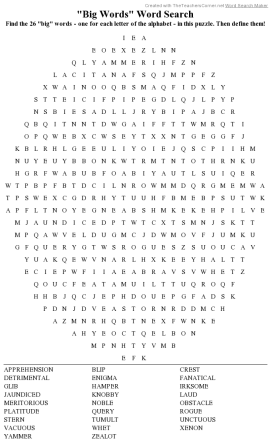
Knowing and using a wide range of words allows you to express yourself in exact—and often—fun ways. Find the 26 “big” words—one for each letter of the alphabet—in this printable “Big Words” Word Search puzzle. Here’s the Solution!

Picture Book Review
October 12 – Emergency Nurses Day

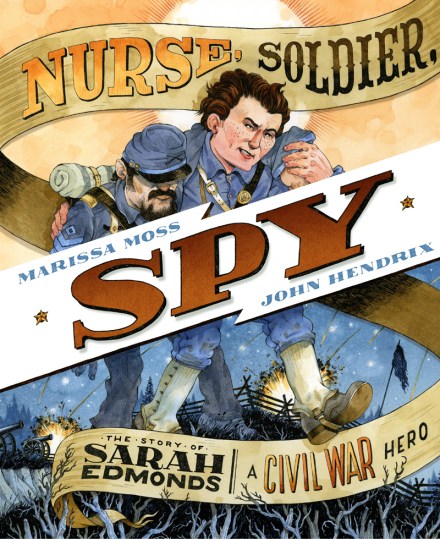
celebrate-picture-books-picture-book-review-nurse-soldier-spy-the-story-of-sarah-edmonds-cover

About the Holiday

Originating in Australia in 1989 and sponsored by the Emergency Nurses Association, today’s observance has become an international event and honors the dedication and care emergency nurses show for their patients in hospitals, at crisis centers, and in disaster and epidemic zones world-wide. This special day is part of Emergency Nurses Week, which runs from October 9 – 15. This year’s theme is Community. Connect. Care. Compassion, which defines the important role of nurses in both health care and wider society.

Nurse, Soldier, Spy: The Story of Sarah Edmonds, A Civil War Hero

Written by Marissa Moss | Illustrated by John Hendrix


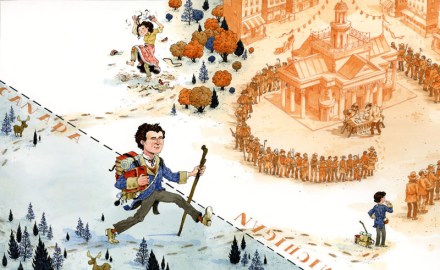
When President Abraham Lincoln called for young men to join the army fighting against the Southern states that wanted to secede from the Union, Frank Thompson signed up. One thing though, Frank wasn’t really a man but, instead, a 19-year-old woman named Sarah Edmonds. Sarah already knew the freedom that posing as a man could bring in her society. Three years earlier to escape a marriage arranged by her parents, Sarah cut her long hair, began wearing pants, and crossed “the border from Canada into the United States, trading a bridal gown for trousers, trading countries, without a single regret.”

celebrate-picture-books-picture-book-review-nurse-soldier-spy-the-story-of-sarah-edmonds-becoming-frank

Image copyright John Hendrix, courtesy of johnhendrix.com

Now, outside the Michigan courthouse, Sarah slowly moved her way along the line to the table where she could sign up to join the troops. When she finally stood in front of the recruiter, however, he stopped her. Sarah was mystified. How did he know she wasn’t a man? She had grown up on a farm, learning the work, copying the gestures, and even wearing the clothes of her brother. But the recruiter took one look at “Frank Thompson” and told her…she was too young to join the army. “He looked at her peachy cheeks free of any sign of a whisker. ‘We aren’t taking any sixteen-year-olds,’” he told her.

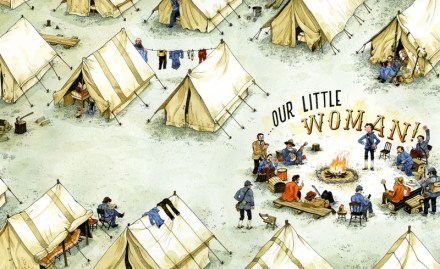
A month later, however, more men were needed, and Sarah was allowed to join up. Now a soldier, Frank was a valuable member of the corps. She was an expert at riding and shooting, and she felt at home among the men, enjoying the jokes, stories, and letters. Keeping her identity a secret was made easier by the fact that soldiers did not change clothes to go to sleep. Her small feet led the other soldiers to give her a nickname: “Our little woman.” A name Frank enjoyed immensely.

celebrate-picture-books-picture-book-review-nurse-soldier-spy-the-story-of-sarah-edmonds-union-camp

Image copyright John Hendrix, courtesy of johnhendrix.com

On the battlefield Frank trained to be a nurse, “which was something only men with the strongest stomachs did because of the long, draining hours and the horrors of surgery without anesthetic.” She fearlessly participated in the battles of Bull Run and Fair Oaks, risking her own life to rescue wounded soldiers. One night the regimental chaplain approached Frank. He wanted to recommend her for a very important—and very dangerous—job. The chaplain wanted to recommend to the generals that Frank become a spy for the North.

“Frank didn’t hesitate. ‘I’m your man!’” she said. Disguising herself as a freed slave, she infiltrated “a group of slaves bringing breakfast to the rebel pickets, the men who guarded the camp.” With so much work to do, the group quickly accepted her, but when the rest of the men, women, and children went off to their own assignments Frank hesitated, not knowing where to go next. Suddenly, a Confederate soldier caught Frank and ordered her to work on the fortifications. The work was backbreaking and left her hands blistered and bloody. The other workers helped when she had trouble.

celebrate-picture-books-picture-book-review-nurse-soldier-spy-the-story-of-sarah-edmonds-battlefield

Image copyright John Hendrix, courtesy of johnhendrix.com

The work gave Frank an opportunity to count the number of guns the army had, sketch a layout of the fort, and notice that some cannons were fake—just logs painted to look like cannons. By switching jobs with the water boy, Frank was able to get closer to the troops, where she encountered another spy—one working for the Confederate army. When night fell, Frank returned to his Union battalion. Giving the password, Frank was let into camp and made her way to the general’s tent. “Freedom, she knew, wasn’t something to take for granted. It was something to fight for, to cherish. And so long as her heart was beating strong, that’s just what she would do.”

An extensive Author’s Note revealing more about Sarah Edmond’s life and an Artist’s Note on the creation of the illustrations follow the text.

Marissa Moss’s biography of Sarah Edmonds is a suspenseful, gripping, and enlightening story of a woman who broke molds, lived on her own terms, and paved the way for future generations of women. Her well-chosen vignettes from Edmonds’ time as a Union soldier demonstrate not only Edmonds’ bravery and abilities but also create a clear and exciting trajectory of her increasing responsibilities and the danger that went with them. Fascinating details of the Civil War period, the people and attitudes involved, and the duplicitous nature of warfare, add up to a rich account of Sarah Edmonds’ life as well as the Civil War era in general.

celebrate-picture-books-picture-book-review-nurse-soldier-spy-the-story-of-sarah-edmonds-as a spy

Image copyright John Hendrix, courtesy of johnhendrix.com

Meticulously researched and drawn, John Hendrix’s illustrations perfectly accompany and illuminate the text. Accurate depictions of Civil War-era buildings and clothing as well as Union and Confederate uniforms and weapons allow children to become fully immersed in the time period. Wide-view depictions of encampments and battlefields let readers peek into tents and scour trenches, and action abounds. In camp soldiers pick out tunes on banjos, write letters, and hang laundry; on the battlefield fires rage and ammunition explodes as soldiers follow the charge of their leaders; at the Confederate fortifications black workers steer wheelbarrows of rock; and in the medical tent Frank tends to wounded soldiers, the equipment used clearly visible. Scenes portrayed in both daylight and at night highlight the ongoing conflict and the dangerous, secretive work Sara Edmonds undertook.

Nurse, Soldier, Spy: the Story of Sarah Edmonds a Civil War Hero is historical and biographical work at its best. This fast-paced, fascinating look at one particular soldier informs readers about so many aspects of the Civil War era, including societal issues that shaped the United States and are still discussed today. The book is a must for school and public libraries and its in-depth, absorbing content makes it a welcome addition to home libraries for children who love history, art, biographies, and a well-told story.

Ages 5 – 12

Abrams Books for Young People, 2016 (Paperback edition) | ISBN 978-1419720659

Discover many more books, fun stuff, writing tips and more on Marissa Moss‘s website!

View a portfolio of picture book art, editorial illustration, a sketchbook, and more on John Hendrix‘s website!

Emergency Nurses Day Activity

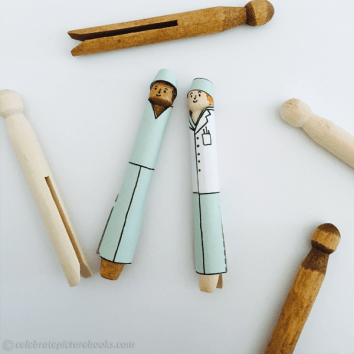
CPB - Doctors Clothespins

Emergency Nurse Clothespin Dolls


Make one of these clothespin figures that honors hard-working and compassionate emergency nurses!

Supplies

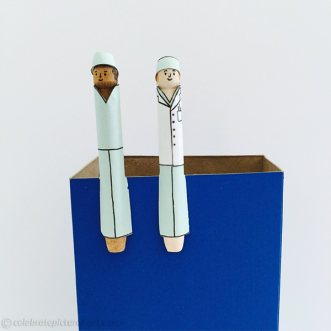
CPB - Doctors Clothespins on box

Directions

  1. Draw a face and hair on the clothespin
  2. Cut out the outfit you want your doctor to wear (color pants on your clothespin if you choose the lab coat)
  3. Wrap the coat or scrubs around the clothespin. The slit in the clothespin should be on the side.
  4. Tape the clothes together
  5. Wrap the cap around the head and tape it.
  6. If you’d like to display your clothespin doctor on a wire, string, or the edge of a box or other container, cut along the dotted lines of the clothes template.

Picture Book Review
October 11 – Ada Lovelace Day

celebrate-picture-books-picture-book-review-ada-byron-lovelace-and-the-thinking-machine-cover

About the Holiday

Today we remember the woman who is regarded as “the first computer programmer.” A mathematician, inventor, and scientific pioneer, Ada Lovelace wrote and was the first to publish an algorithm to generate Bernoulli numbers. Her notes published in Taylor’s Scientific Memoirs in 1842 inspired Alan Turing to design the first modern computers 100 years later. Today’s holiday celebrates all women in the science, technology, mathematics, and engineering fields. To learn more about Ada Lovelace Day visit findingada.com.

Ada Byron Lovelace and the Thinking Machine

Written by Laurie Wallmark | Illustrated by April Chu


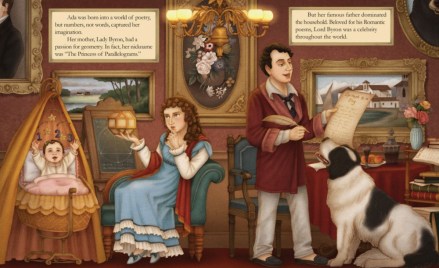
Ada was the daughter of two very distinguished—and distinct—parents. Her mother loved geometry and was known as “‘The Princess of Parallelograms.’” Her father was a world-renowned poet, “beloved for his Romanic poems.” When Ada was still a baby, however, her mother left Lord Byron and his “scandalous behavior” behind, and “Ada never saw her father again.”

celebrate-picture-books-picture-book-review-ada-byron-lovelace-and-the-thinking-machine-ada's-parents

Image copyright April Chu, text copyright Laurie Wallmark. Courtesy of crestonbooks.com

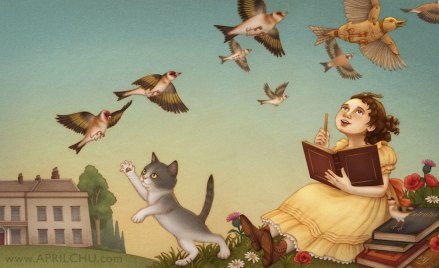
As was common in Ada’s time she was often left on her own while her mother traveled. Ada filled the hours and days writing, sketching, and inventing in her journal. When she was still a little girl, she built a set of wings for a flying machine she had imagined. To discover if her wings could actually fly, “Ada needed to compute the wings’ power. She broke the problem into steps—surface area and weight, wind speed and angles.” She had to multiply and divide again and again, and while she loved calculating numbers, Ada wondered if there wasn’t an easier way to find the answers.

As she sat at her desk one day a storm blew up, sending the curtains around her open window flapping. They reminded Ada of sails and she suddenly realized that sails were like wings. She grabbed her toy sailboat and headed out to a nearby pond to test her theories. She launched her boat over and over, and “each time she adjusted the sails and studied the effect on the little boat’s speed. A storm of numbers and calculations whirled in her mind and spilled onto her pages.” She stayed by the pond until dark, and “returned home muddy, dripping wet, and triumphant.” Her nanny was not pleased. She didn’t agree with Ada’s mother, instead believing that girls “should not waste their time with math and science and experiments and other such nonsense.”

celebrate-picture-books-picture-book-review-ada-byron-lovelace-and-the-thinking-machine-imagining-a-flying-machine

Image copyright April Chu, courtesy of aprilchu.com

Overnight, Ada developed a high fever, and the doctor diagnosed measles. Ada’s mother was sent for. She hurried home and spent the days and nights at Ada’s bedside reading to her. Ada’s “fever finally broke, but the measles left her paralyzed and blind. To keep Ada’s mind sharp, Mama quizzed her on math problems,” asking her harder and harder questions. The numbers kept her company, and in her imagination Ada used her flying machine to travel to London.

While Ada regained her sight in a few weeks, it was three years before she could walk again. During this time Ada’s mother hired tutors to teach her higher and higher level math. One of her tutors was Mary Fairfax Somerville, a famous scientist and mathematician. Somerville invited Ada and her mother to a gathering of other influential scientists, mathematicians, and inventors. There Ada met Charles Babbage. Babbage, a mathematician and inventor, was impressed by 17-year-old Ada’s knowledge and understanding and invited her to visit his laboratory.

celebrate-picture-books-picture-book-review-ada-byron-lovelace-and-the-thinking-machine-difference-engine

Image copyright April Chu, courtesy of aprilchu.com

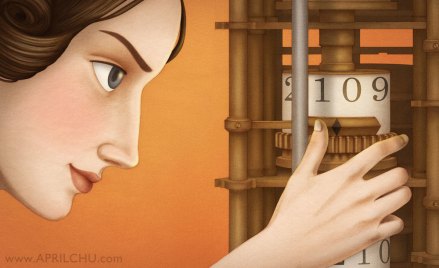
Ada brought her journal and shared with Charles Babbage her own work. He didn’t treat Ada as a child but as a fellow scientist and engineer. Babbage showed Ada a mechanical calculator he had designed. With the turn of a handle cylinders of numbers on the three columns of his Difference Engine spun toward the answer to a math problem Ada posed: what is 15 x 12? The machine gave the right answer: 180!

Babbage also had an idea for a mechanical computer—and Analytical Engine—that “would solve harder problems by working through them step by step.” It was an amazing concept, but Babbage hadn’t built it yet. He gave Ada his notebooks and she studied Babbage’s descriptions of how the machine might work. She realized that the Analytical Engine could work if numbers told it how.

celebrate-picture-books-picture-book-review-ada-byron-lovelace-and-the-thinking-machine-calculating

Image copyright April Chu, courtesy of aprilchu.com

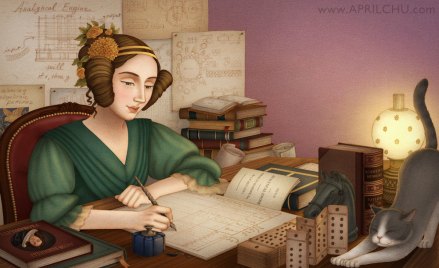
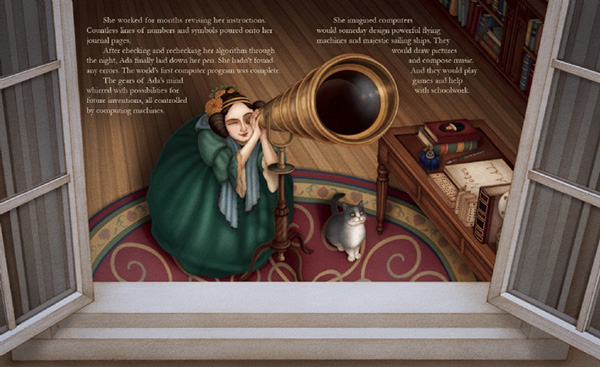
Over several months Ada created an algorithm—a set of mathematical instructions. Her journal was filled with lines and lines of numbers and symbols. At last she checked her work for errors and found none. Ada had developed the world’s first computer program! With her creative imagination she could see that someday computers would “design powerful flying machines and majestic sailing ships. They would draw pictures and compose music. And they would play games and help with schoolwork.”

Unfortunately, Charles Babbage never finished building his Analytical Machine, and Ada never saw her program in action. But future generations remembered her and her contributions to computer programming. There is even a computer program named for her. We can imagine that the little girl who wanted to fly would be very pleased to know that Ada helps guide modern flying machines.

An extensive Author’s Note, a timeline of Ada’s life as well as a partial bibliography and resources follow the text.

celebrate-picture-books-picture-book-review-ada-byron-lovelace-and-the-thinking-machine-looking-at-stars

Image copyright April Chu, text copyright Laurie Wallmark. Courtesy of crestonbooks.com

Laurie Wallmark’s compelling biography of Ada Lovelace is perfectly aimed at her young audience, highlighting Ada’s childhood dreams, obstacles, and events that led her to become an influential mathematician and inventor. Wallmark’s fast-paced text, which beautifully merges lyrical and technical language to tell Ada’s story, is uplifting in its revelation that from even a young age, Ada was respected and acknowledged for her intelligence and mathematical gifts. Illuminating Ada’s predictions for future uses of the computer forms a bridge between her foresight and the experience of today’s children, bringing history alive for readers.

Gorgeous, detailed illustrations set Ada Byron Lovelace and the Thinking Machine firmly in its 19th-century time period. Lush greens, reds, and golds welcome readers into Ada’s home, where her wooden and paper wings lay among blueprints for other inventions as Ada sits at her desk jotting notes in her journal. A mural in her home cleverly depicts Ada’s imaginings while she recovered from the measles, and the gathering that Ada and her mother attend is a stimulating portrait of the scientists and new inventions of the day. Kids will be amazed to see one of the first “calculators” as built by Charles Babbage. Included on the pages are images of an early loom and punch cards that influenced the development of our computers. It is fitting that the last page shows how far we have come—and how forward thinking Ada was—with an illustration of Space technology in action.

Ada Byron Lovelace and the Thinking Machine is an important biography that should be included in every public and school library. For children interested in history, biographies, and the science and math fields, Laurie Wallmark’s and April Chu’s book would make a beautiful gift and addition to home bookshelves as well.

Ages 5 – 10

Creston Books, LLC, 2015 | ISBN 978-1939547200

Discover more about Laurie Wallmark and download curriculum and activity guides on her website!

View a portfolio of artwork and learn more about April Chu’s books on her website

This is one book trailer that really computes!

Ada Lovelace Day Activity

celebrate-picture-books-picture-book-review-computer-coloring-page

Love Your Computer! Coloring Page


What would we do without our computers? Here’s a fun printable Love Your Computer! coloring page for you to enjoy!

Picture Book Review
September 18 – Gymnastics Day

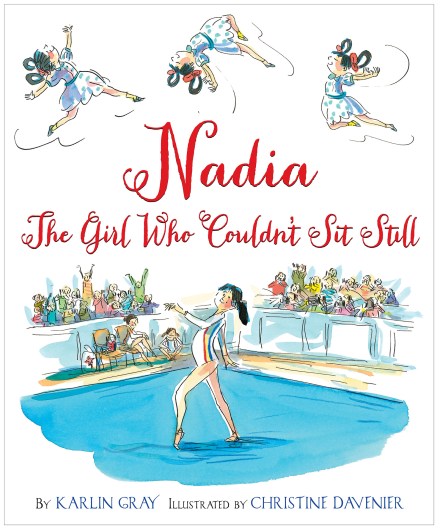
celebrate-picture-books-picture-book-review-nadia-the-girl-who-couldn't-sit-still-cover

Image copyright Christine Davenier, courtesy of Houghton Mifflin Harcourt Publishing Co.

About the Holiday

Initiated in the late 1990s, National Gymnastics Day encourages kids to explore this exciting sport. As part of this year’s National Gymnastics Day, gymnasts, families, friends, and enthusiasts from gymnastics clubs globally will participate in a variety of activities, including open houses, hand stand contests, carnivals, and fitness activities to build awareness of gymnastics and its benefits. Many clubs will use this as a way to provide opportunities for underprivileged children to participate in the sport. Why not find and attend a special event at a gym or gymnastics club today to celebrate!

Nadia: The Girl Who Couldn’t Sit Still

Written by Karlin Gray | Illustrated by Christine Davenier


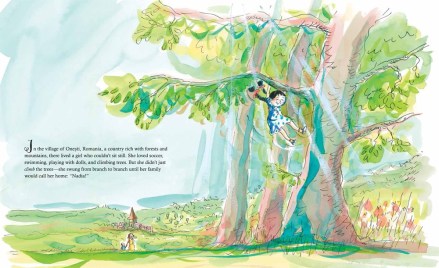
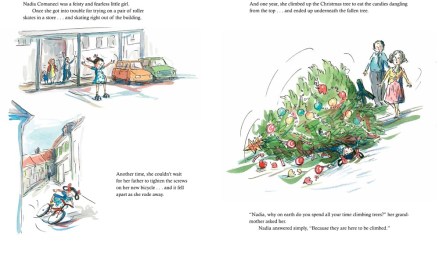
“In the village of Oneşti, Romania, a country rich with forests and mountains” Nadia Comaneci could often be seen swinging from tree branch to tree branch. She was a little girl who loved to play. She was “feisty and fearless,” attempting new things on a whim and always with a sense of adventure. Once while trying on a pair of roller skates, she skated right out of the store! Another time she was so impatient to ride her new bike that she pedaled off before her father could even tighten the screws. The bike “fell apart as she rode away.” And one year her love of climbing trees extended to the family Christmas tree, which toppled over on her, pinning her to the ground.

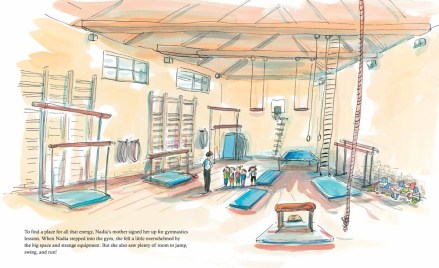
To channel all that energy, Nadia’s mother enrolled her in gymnastics lessons. Nadia’s eyes lit up when she saw the room full of ropes, ladders, bars, mats, and trampolines to discover, but she didn’t leave her new skills at the gym. Nadia and a friend cartwheeled around the school playground, capturing the attention of Bela and Marta Karolyi, who owned a gymnastics school. They invited the girls to join.

celebrate-picture-books-picture-book-review-nadia-the-girl-who-couldn't-sit-still-swinging-in-trees

Image copyright Christine Davenier, courtesy of karlingray.com

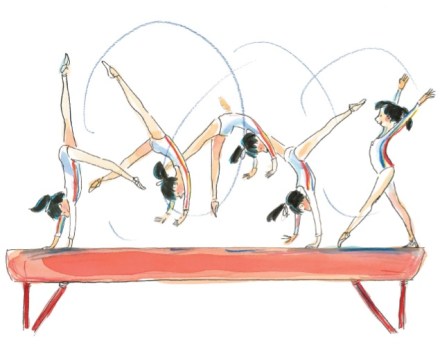
Nadia was only 6 when she began studying with Bela and Marta. Immediately, she discovered that she liked gymnastics better than her school subjects. She progressed quickly from performing “a straight cartwheel on a line painted on the floor” to doing it on a low balance beam and finally to perfecting it on the high balance beam. She began learning harder and harder moves, “flying from bar to bar, from floor to vault, and high above the beam.”

At 9 years old, Nadia competed in her first National Junior Championship. Despite her skill and hard work, she fell from the high beam during a leap not once but three times. Nadia finished the competition in 13th place. Her disappointment only strengthened her resolve. She went back to the gym and continued to practice many hours every day. Her determination paid off, “and at the next National Junior Championship games, she won first place.”

The ultimate recognition of her skill came when she was chosen to be part of the 1976 Romanian Olympic team. The games were held in Montreal, Canada, and all eyes were on the returning gold medalists from Russia, Olga Korbut and Lyudmila Turischeva. But excitement soon filled the venue as Nadia performed on the beam, the floor, and the vault where she scored 9.9, 9.75, and 9.7 on a scale of 1 (the lowest score) to 10 (a perfect score). The next event was the uneven parallel bars on which Olga Korbut had just scored a 9.9. “Nadia mounted the bars. Now fourteen years old, she was a long way from the forests in Romania. But she swung around as easily as she had jumped from branch to branch as a little girl. The audience gasped as she twirled and whipped and flipped.”

celebrate-picture-books-picture-book-review-nadia-the-girl-who-couldn't-sit-still-gym

Image copyright Christine Davenier, courtesy of karlingray.com

Nadia dismounted and landed perfectly on the mat below as the audience “exploded with applause.” Nadia returned to her team to wait for her score. And wait…and wait. Finally, the score appeared on the board—1.00. The worst score. How could that be? “‘What is Nadia’s score?’” Bela asked the judges. “One of the officials held up ten fingers as a voice announced over the loudspeaker: ‘Ladies and gentlemen, for the very first time in Olympic history, Nadia Comaneci has received the score of a perfect ten!’”

Because no one had ever achieved a 10 before, the scoreboards were programmed only for a high of 9.9. Nadia couldn’t bask in her accomplishment for long, however. She moved on to her next event—and her next perfect 10! “When the competition ended, she had earned seven perfect 10s.” At the medal ceremony both Olga and Lyudmila congratulated their competitor as the new Olympic champion. In all Nadia won five medals and became the youngest ever Olympic gold medalist in gymnastics.

celebrate-picture-books-picture-book-review-nadia-the-girl-who-couldn't-sit-still-balance-beam

Image copyright Christine Davenier, courtesy of karlingray.com

Nadia became a darling of the press. They surrounded her, asking “how it felt to have the world’s attention, if she had been confident she would win, and when she would retire.” She answered each reporter with enthusiasm and confidence, and promising that she was a long way from retiring. When she returned home, it seemed that all of Romania had come out to welcome her and her teammates—even the country’s president.

Now Nadia was famous all over the world. She returned to practicing and inventing new routines, preparing for other competitions and the 1980 Olympic Games. She had come far from swinging branch to branch in the trees of Oneşti, but she would always be that little girl who couldn’t sit still.

Karlin Gray’s compelling biography captures all the spunk and spirit of Nadia Comaneci that made the world fall in love with her at the 1976 Olympic Games. Adults of a certain age well remember watching her in astonishment as she seemed to effortlessly swirl, twirl, and flip through her routines, flashing her sweet smile as she waved to fans. In the first pages Gray reveals anecdotes of Nadia’s adventurous nature that will captivate readers even as they giggle at her predicaments.

celebrate-picture-books-picture-book-review-nadia-the-girl-who-couldn't-sit-still-mishaps

Image copyright Christine Davenier, courtesy of karlingray.com

The straightforward narration of Nadia’s trajectory from playground cartwheeler to Olympic champion enhances both the gritty determination of her studies with her coaches as well as the suspense of her competitions. All children—no matter what their talent—will draw inspiration from Nadia’s story, which includes disappointments as well as unbounded accomplishments. Gray’s lyrical language flows as smoothly as Nadia flew through the air and will land in readers’ hearts as a perfect 10.

From the cover, which sports Nadia in her iconic floor exercise pose, to the last page, Christine Davenier depicts the world of gymnastics with beauty and the kind of realistic details that create a classic. The two-page spread of the gym where 6-year-old Nadia learns to love gymnastics portrays the enormity of the space and the equipment for a small girl—as well as the enormity of her achievement.

Kids will love the almost “play-by-play” illustrations of how Nadia learned to perform her feats, from starting with a line on the floor to perfecting the high beam and more. Nadia is shown leaping, somersaulting, doing handstands, and even wavering and falling as she practices and competes. The thrill of the Olympic Games, from the opening ceremonies to the rapt and cheering audiences to the awards ceremony are drawn with stirring action, color, and attention to the specifics of that very special 1976 summer in Montreal.

An Afterword expands on Nadia Comaneci’s courageous life choices and career post-gymnastics and includes a timeline, notes, a selected bibliography, and websites for further study.

Nadia: The Girl Who Couldn’t Sit Still will fascinate kids and would be a very welcome addition to school classroom—as well as home—libraries.

Ages 5 – 10

Houghton Mifflin Harcourt, 2016 | ISBN 978-0544319608

Visit Karlin Gray‘s website to learn more about her and to download fun activities!

View a gallery of artwork by Christine Davenier on her website!

Discover more about Nadia: The Girl Who Couldn’t Sit Still on the Houghton Mifflin Harcourt website!

As I take some personal days over the next couple of weeks, I am reposting some earlier reviews with updated interior art and links.

National Gymnastics Day Activity

celebrate-picture-books-picture-book-review-rhythmic-gymnastics-ribbon-craft

Rhythmic Gymnastics Ribbon


You can recreate the grace of rhythmic gymnastics with this easy craft! The swirling beauty of the ribbon makes any movement fun!

Supplies

  • 12-inch dowel
  • 6-foot length of ribbon
  • Paint the same color as the ribbon
  • Hot glue gun or strong glue
  • Paint brush

Directions

  1. Paint the dowel and let dry
  2. Glue the edge of the ribbon to one end of the dowel. Wrap the ribbon about ½ inch around the dowel and secure with glue. Let glue dry.

Picture Book Review
Picture Book Review