February 28 – National Women Inventors Month

celebrate-picture-books-picture-book-review-look-up-henrietta-leavitt-cover

About the Holiday

This month we celebrate women inventors, both past and present, who have changed our lives and the world for the better through their intelligence, creativity, unique vision, and perseverance.

Look Up! Henrietta Leavitt, Pioneering Woman Astronomer

Written by Robert Burleigh | Illustrated by Raúl Colón       


Henrietta Leavitt loves the stars. Every night she sits on the front porch and asks herself what were—in the early 1900s—unanswerable questions. How high is the sky? How far away are the stars? She traces the form of the Big Dipper to the North Star and feels that the stars are trying to tell her something.
celebrate-picture-books-picture-book-review-look-up-henrietta-leavitt-student

Image copyright Raúl Colón, text copyright Robert Berleigh. Courtesy of simonandschuster.com

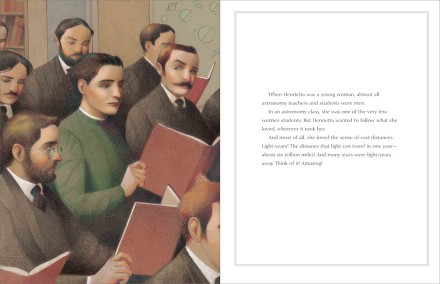
As a young woman she takes an astronomy class—one of the few women to do so. She learns about light years, planets, and the vast distances that fascinate her. After graduation she takes a job at an observatory, and while it houses a large telescope to study the sky, Henrietta is not allowed to use it. She and the other woman who work at the observatory are only there to record, measure, and calculate data, not to have new ideas.
celebrate-picture-books-picture-book-review-look-up-henrietta-leavitt-studies-star-map

Image copyright Raúl Colón, courtesy of Simon & Schuster

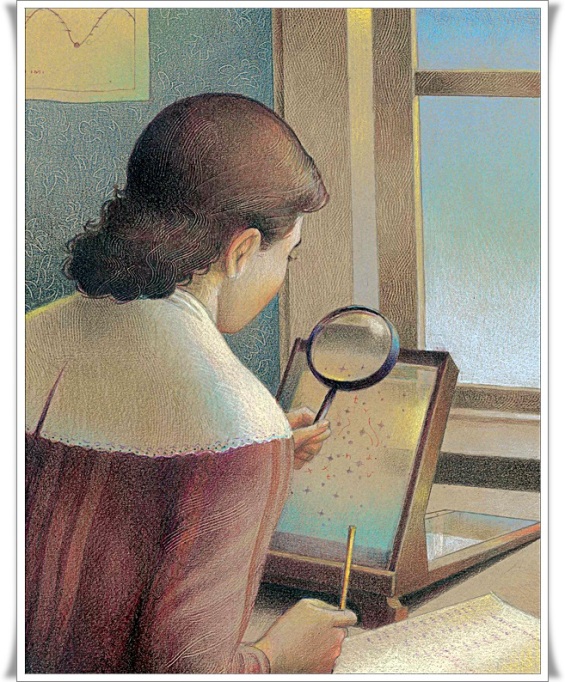
But in doing her job, Henrietta begins to notice a pattern in the brightness of certain stars. She discovers new “blinking” stars. Taking careful measurements, Henrietta finds that a star with a slower “blink” time—the time it takes for a star to go from dim to bright, or from off to on—contains more light power than stars with faster blink times. But what does this mean? After more study she realizes that the blink time can determine the true brightness of any blinking star, even those far, far away.

celebrate-picture-books-picture-book-review-look-up-henrietta-leavitt-makes-notes

Image copyright Raúl Colón, courtesy of Simon & Schuster

Henrietta has made a breakthrough in astronomy! By knowing the true brightness of a star, astronomers can figure out the star’s distance from Earth. Henrietta publishes her star chart in a magazine, and it helps other astronomers measure first the Milky Way and then galaxies they didn’t even know existed! Henrietta is an astronomer–one who advances her beloved science! Even as she grows older Henrietta continues to look to the sky, to ask questions and dream.

More information about Henrietta Leavitt and her discoveries, Internet and print resources on astronomy and other women astronomers, a glossary, and more are provided on the final pages.

celebrate-picture-books-picture-book-review-look-up-henrietta-leavitt-sees-stars-in-sleep

Instead of first presenting Henrietta Leavitt as an adult already working as an astronomer, Robert Burleigh chooses to introduce her as a child, when all she had were questions and dreams about the sky and the stars. It’s a fitting emphasis for a picture book aimed at children who themselves are only just discovering the questions that will guide their lives.  Burleigh’s style is simple and straightforward, revealing pertinent facts about the working conditions of a woman scientist in the early 1900s, but emphasizing Henrietta’s internal contemplations that led to her important discoveries. It’s good for children to see that one does not always need to be the “astronaut” rocketing to the Space Station to contribute— the life of the mind is just as noble and needed a pursuit.

Raúl Colón’s watercolor and ink illustrations echo the theme of dreams and contemplation with soft muted colors and antique, sepia tones. Brightness on the pages comes from the points of light that fill the skies and Henrietta’s mind. As a child and young woman, Henrietta sits and stands in the glow of the stars and, one can imagine, her own thoughts.

Ages 4 – 8

Simon & Schuster, 2013 | ISBN 978-1416958192

Discover more about Robert Burleigh and his many, many books in the categories of science, art, poetry, adventure, sports, and more for children and adults on his website!

National Women Inventors Month Activity

CPB - Star Coloring Page

Be the Star You Want to Be Coloring Page


Everyone has “stars in their eyes”—dreams and hopes for what they will accomplish in life. Decorate this printable Be the Star You Want to Be coloring page to show what’s in your imagination and in your heart.

February 19 – Plant the Seeds of Greatness Month

Who Says Women Can't Be Doctors by Tanya Lee Stone and Marjorie Priceman picture book review

About the Holiday

Plant the Seeds of Greatness Month was established to help people remove barriers to their success and make changes to better their lives. Whether you want to learn a new skill, take care of your health, meet new people, or pursue a job or profession you’ve always dreamed of, this month is a perfect time to get started!

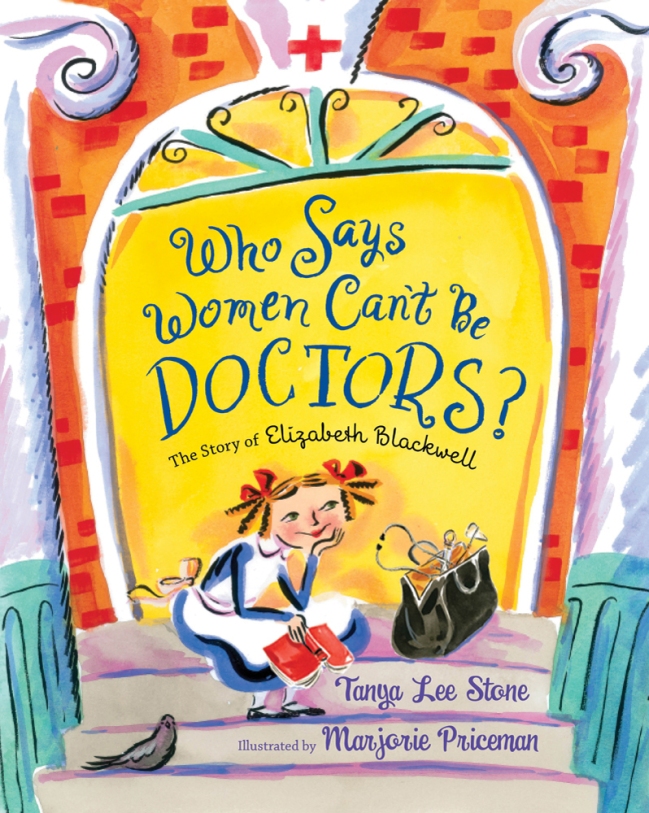
Who Says Women Can’t be Doctors? The Story of Elizabeth Blackwell

Written by Tanya Lee Stone | Illustrated by Marjorie Priceman


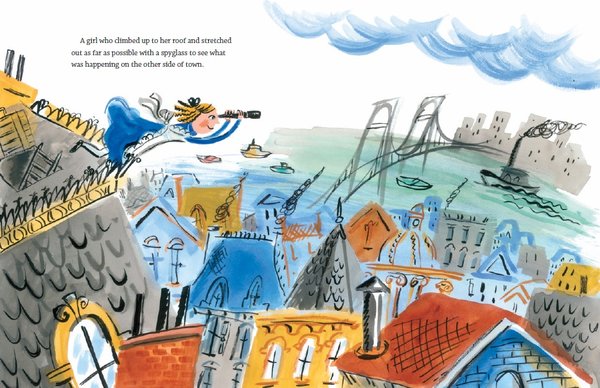
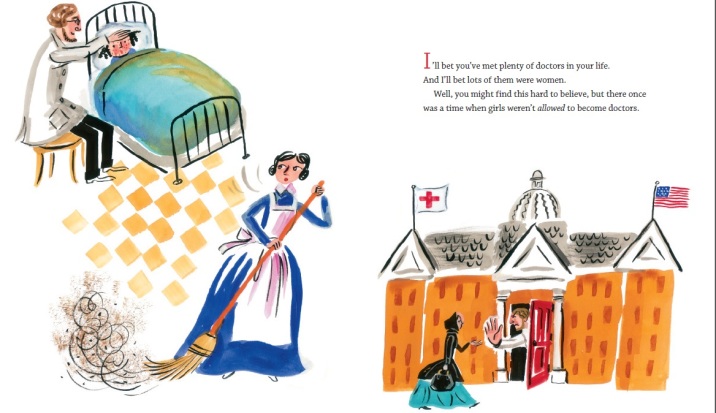
Once upon a time there were no women doctors. Women weren’t even allowed to be doctors. Sounds like a fairy tale, doesn’t it? But it was the truth. Then Elizabeth Blackwell, came along. Elizabeth was not like other girls of the 1830s. She loved to explore and take on challenges. She could lift her brother over her head, and to toughen herself up she slept on the hard wood floor. To get a better look at the world she once climbed to the roof of her house and leaned waaaaay out with a spyglass. What did she see? Maybe she saw her future. But it wasn’t what she imagined at the time. Blood made her queasy, dissection was disgusting, and being sick just made her want to hide from all the fussing.

celebrate-picture-books-picture-book-review-who-says-women-can't-be-doctors-elizabeth-brave

Image copyright Marjorie Priceman, text copyright Tanya Lee Stone. Courtesy of Henry Holt.
A comment by a sick friend, however, puts a bee in Elizabeth’s bonnet. Mary Donaldson tells Elizabeth that she would much rather have been examined by a woman than her male doctor, and then says, “You should be a doctor, Elizabeth.” What a crazy notion, right? Well… Elizabeth can’t stop thinking about it. She asks around. Some people think it’s a good idea, but impossible; others simply think it’s impossible. They believe women aren’t strong enough or smart enough and they laugh at her. By this time, though, Elizabeth is determined.
celebrate-picture-books-picture-book-review-who-says-women-can't-be-doctors-no-women-doctors

Image copyright Marjorie Priceman, text copyright Tanya Lee Stone. Courtesy of Henry Holt.

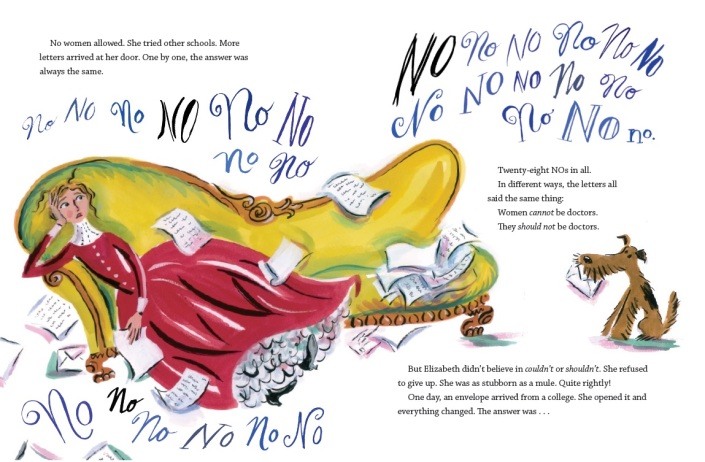
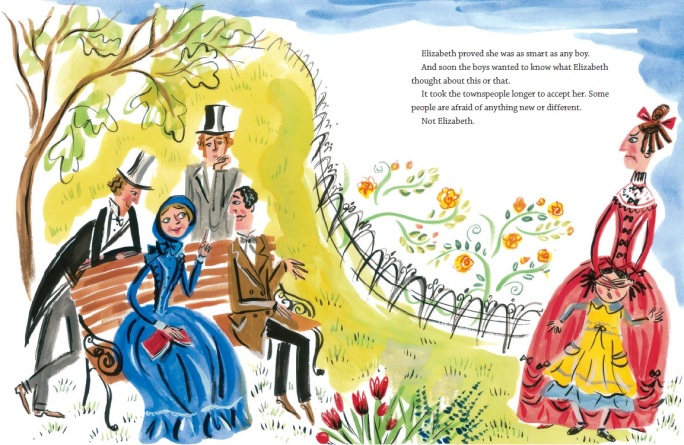
She applies to 28 medical schools, and they all say, “No.” But one day a “Yes” arrives in the mail. Elizabeth packs her bags. As she nears the school, Elizabeth sees that the townspeople have all come out to see her. They aren’t there to welcome their new medical student, though; they just want to whisper and point and stare. Surely, Elizabeth thinks, her classmates will be happy to see her. 

celebrate-picture-books-picture-book-review-who-says-women-can't-be-doctors-everyone-says-no

Image copyright Marjorie Priceman, text copyright Tanya Lee Stone. Courtesy of Henry Holt.

But she receives the same reception on the college campus. In fact, she learns that the only reason she was accepted was because the men voted to let her in as a joke! Elizabeth knows how to handle it. She studies hard and gives her opinions, and soon she wins the respect of her fellow students—even if the townspeople still don’t accept her.

On January 23, 1849 Elizabeth Blackwell graduates from medical school with the highest grades in the class. She has become the first woman doctor in America! Many people hope that she will be the last. But as we know…she was Not!

celebrate-picture-books-picture-book-review-who-says-women-can't-be-doctors-elizabeth-does-well-in-school

Image copyright Marjorie Priceman, text copyright Tanya Lee Stone. Courtesy of Henry Holt.

Tanya Lee Stone magnificently imbues this short biography of Elizabeth Blackwell with enough mystery, conflict, and history for even the youngest readers to understand the type of girl and woman Elizabeth was as well as the challenges she faced. Stone has deftly included details of Blackwell’s life that  make her instantly recognizable and relatable to children. This biography is not only historical nonfiction, but a universal story for all generations. Blackwell may have started out as a reluctant dreamer, but once she dared to believe she accomplished more than she or anyone could have imagined. It is what we want for all our children.

Marjorie Priceman’s illustrations that swirl with words, are angled on the page, and float in white space are as topsy-turvy as the world Elizabeth Blackwell created with her courage and life’s work. Blackwell’s boldness is echoed in the rich colors and strong lines of Priceman’s gouache and India-ink paintings, and the emotions she stirred in others—from derision to horror to admiration—are cleverly and exceptionally drawn in a minimal style on the characters’ faces.

Ages 5 – 9

Henry Holt and Company, 2013 | ISBN 978-0805090482

Learn more about Tanya Lee Stone and her work—both fiction and nonfiction—for children and teens on her website!

You can connect with Marjorie Priceman on Facebook!

Plant the Seeds of Greatness Month Activity

CPB - Doctors Clothespins

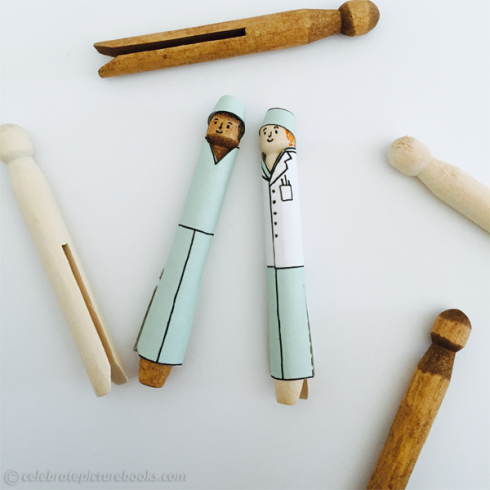
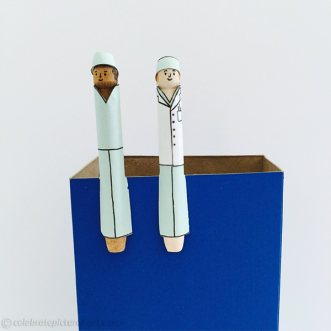
Doctor Clothespin Figures


Elizabeth Blackwell believed in herself and became the doctor she wanted to be. With this craft you can make a doctor figure or color your own clothes to make your figure any profession you are dreaming of!

Supplies

CPB - Doctors Clothespins on box

Directions

  1. Draw a face and hair on the clothespin
  2. Cut out the outfit you want your doctor to wear (color pants on your clothespin if you choose the lab coat)
  3. Wrap the coat or scrubs around the clothespin. The slit in the clothespin should be on the side.
  4. Tape the clothes together
  5. Wrap the cap around the head and tape it.
  6. If you’d like to display your clothespin doctor on a wire, string, or the edge of a box or other container, cut along the dotted lines of the clothes template.

Picture Book Review


February 16 – International Month of Black Women in the Arts

celebrate-picture-books-picture-book-review-fancy-party-gowns-cover

About the Holiday

During this month we recognize the contributions of black women across the fields of literature, fine, performing, culinary, and healing arts. To celebrate, research black women artists and attend exhibits, readings, or other events that showcase these talented women.

Fancy Party Gowns: The Story of Fashion Designer Ann Cole Lowe

Written by Deborah Blumenthal | Illustrated by Laura Freeman


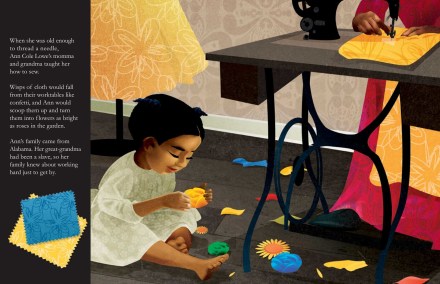
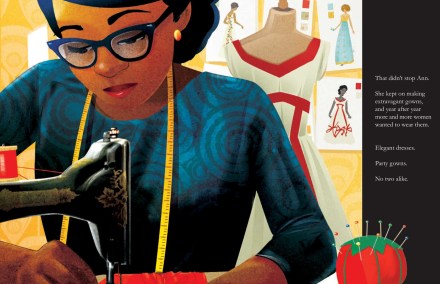
From the time that Ann Cole Lowe was old enough to thread a needle, she loved to sew. While her momma and grandma worked at their sewing machines, making dresses for the socialites of Alabama, Ann sat nearby turning “the wisps of cloth” that fell to the floor into “flowers as bright as roses in the garden.” Even at a young age Ann understood that “doing what you love could set your spirit soaring.”

celebrate-picture-books-picture-book-review-fancy-party-gowns-ann-as-child

Image copyright Laura Freeman, text copyright Deborah Blumenthal, courtesy of simonandschuster.com

When Ann was only sixteen years old, her momma died. Not only did her mother’s death leave Ann bereft, it left her in charge of the business, and many women were waiting for gowns, most importantly the Alabama governor’s wife. “Ann thought about what she could do, not what she couldn’t change.” She sat down and finished the dresses. “Then she stood up and ran the business.”

celebrate-picture-books-picture-book-review-fancy-party-gowns-design-school

Image copyright Laura Freeman, text copyright Deborah Blumenthal, courtesy of simonandschuster.com

In 1916 a woman in Florida hired her to sew dresses. She also sent Ann to design school in New York. Because she was African American, however, Ann was required to study in a separate classroom by herself. Ann was not deterred. She continued to make unique gowns and dresses, and her client list grew. Finally, Ann had saved enough money to open a salon of her own in Manhattan. Sometimes she didn’t have enough money to pay all the bills, but she persisted. Her life was about “what she could do, not what she couldn’t change.”

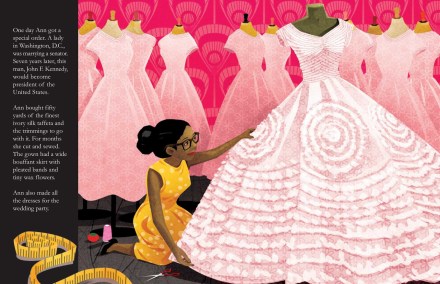
One day Ann received an order for a wedding dress from a woman who was marrying a United States senator. The woman’s name was Jacqueline Bouvier and the man was John F. Kennedy, a future president of the U.S. Ann bought 50 yards of ivory silk taffeta and designed a beautiful dress with a bouffant skirt and pleated bands decorated with tiny wax flowers. She also made the dresses for Jacqueline’s attendants.

celebrate-picture-books-picture-book-review-fancy-party-gowns-wedding-dress

Image copyright Laura Freeman, text copyright Deborah Blumenthal, courtesy of simonandschuster.com

Then ten days before the wedding, Ann walked into her workroom and discovered that a water pipe had burst, flooding the dresses, material, everything. Ten of the sixteen gowns Ann had sewn were destroyed. “Ann though about what she could do, not what she couldn’t change.” She ordered new fabric, hired more seamstresses, and went to work. On this job she lost money instead of making it, but none of that mattered. In eight days all of the dresses were ready.

When Ann delivered the gowns to the mansion in Newport, Rhode Island, the butler who answered the door told her workers needed to use the back entrance. Ann replied that “if she had to enter through the back door, the bride and bridesmaids wouldn’t be wearing her dresses for the wedding.” The front door swung open. On the day of the wedding—September 12, 1953—the whole world oohed and aahed over Jacqueline Bouvier Kennedy’s gorgeous gown and her bridesmaids’ dresses, but not many people thought about or knew the name of the woman who had created them. “Why? Because Ann Cole Lowe was African American. And life wasn’t fair.”

celebrate-picture-books-picture-book-review-fancy-party-gowns-sewing

Image copyright Laura Freeman, text copyright Deborah Blumenthal, courtesy of simonandschuster.com

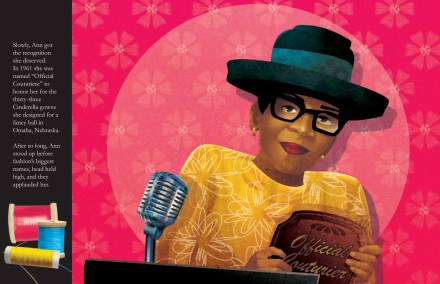
Ann continued to design and sew party dresses and evening gowns for the women of high society. She “didn’t make fine clothes to get rich or famous,” however, but, as she once said, “‘To prove that a Negro can become a major dress designer.’” In 1961 Ann finally gained public recognition for her work when she was named “Official Couturiere” in honor of the 33 ball gowns she created for an elegant ball in Omaha, Nebraska. She proudly accepted her award as the fashion world applauded.

An Author’s Note explaining more about Ann Cole Lowe’s life and work follows the text.

celebrate-picture-books-picture-book-review-fancy-party-gowns-recognized

Image copyright Laura Freeman, text copyright Deborah Blumenthal, courtesy of simonandschuster.com

With straightforward storytelling adorned with lyrical passages, Deborah Blumenthal reveals Ann Cole Lowe’s lifelong love of fashion design, her struggles, and her ultimate acclaim. Lowe’s natural talent, single focus, self-confidence, courage, and persistence come through as she overcomes obstacles and prejudice to become the first African American couture designer. Children interested in fashion and history will find much to spark their curiosity and desire to know more about the woman and her times. Blumenthal’s repetition of Lowe’s philosophy to think about what she could do instead of what she couldn’t change will inspire readers to push past difficulties and find solutions.

Laura Freeman’s full-bleed illustrations are as bold and vivacious as Ann Cole Lowe herself. Beginning with the endpapers, which are scattered with drawings of Lowe’s one-of-a-kind gowns, Freeman takes readers on a tour of the workrooms and salons stocked with the fabrics that gave form to Lowe’s creativity. While the backgrounds are typically brilliantly colored and patterned, twice Freeman places Lowe on a completely white page—after her mother has recently died and she is left alone to finish dresses and when she is segregated from the other students in design school. These pages make a moving and effective statement. Children fascinated by fashion will love seeing the beautifully depicted gowns, and may be stirred to create styles of their own.

Ages 4 – 8

little bee books, 2017 | ISBN 978-1499802399

To learn more about Deborah Blumenthal and her books for children, young adults, and adults, visit her website!

Discover a gallery of illustration work by Laura Freeman on her website!

International Month of Black Women in the Arts Activity

celebrate-picture-books-picture-book-review-tablecloth-dress


Create Your Own Party Dress 


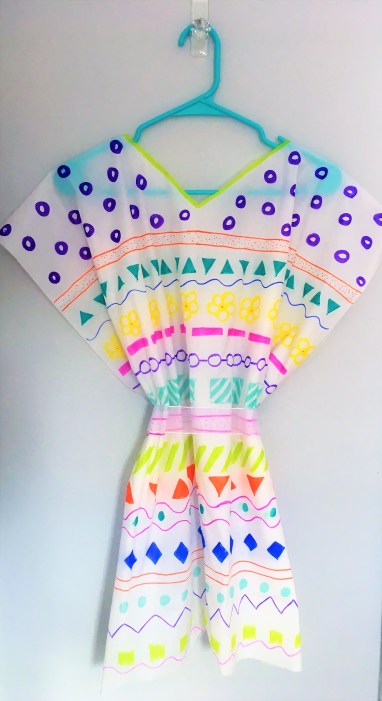
With this easy craft you can make a  fun sheath dress for playing dress-up. It’s also a great party activity! All you need is a plastic or paper party table cloth, Sharpies, and your imagination!

Supplies

  • 1 plastic party tablecloth (1 cloth will most likely make 4 dresses)
  • Sharpies or other permanent markers
  • Ribbon, scarf, crepe paper garland, or other material for a belt
  • Scissor
  • Newspaper, old sheeting or other material to protect the floor

Directions

  1. With the table cloth folded along one edge, cut a rectangle the appropriate size for the child
  2. In the middle of the folded edge cut a V-shaped or rounded opening for the child’s head. Begin with a small opening and enlarge it as needed
  3. Lay the dress on newspaper or other material to protect the floor
  4. Draw and color shapes, lines, figures, or other designs on the dress
  5. Slip on over a shirt and pants or leggings
  6.  Add a belt with a ribbon, scarf, piece of crepe paper garland, or other material

Picture Book Review

January 18 – Thesaurus Day

celebrate-picture-books-picture-book-review-the-right-word-roget-cover

About the Holiday

Today we celebrate that most marvelous, stupendous, spectacular, cool, awe-inspiring, remarkableand—one from my early youth—groovy book, the thesaurus! Without its incredible cross-referenced lists of synonyms and antonyms, the world would be much more boring, dull, lackluster, monotonous place. Today, spice up your speech and writing with the perfect word to express all the nuances of life!

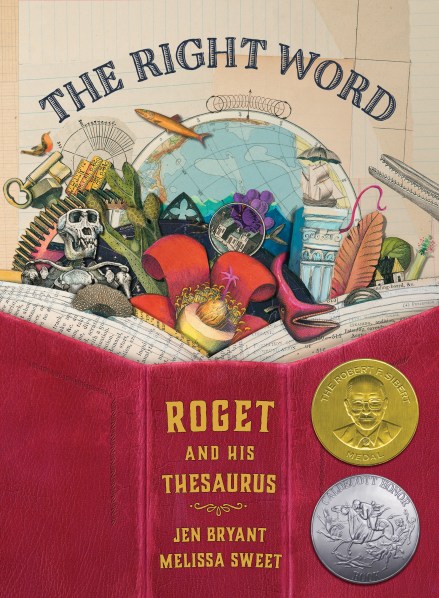
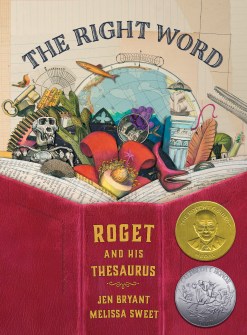
The Right Word: Roget and His Thesaurus

Written by Jen Bryant | Illustrated by Melissa Sweet


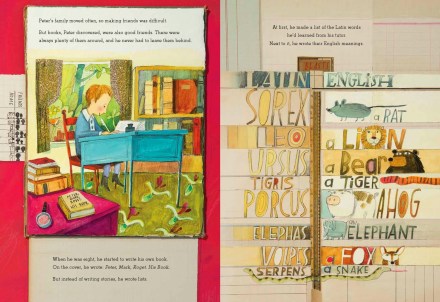
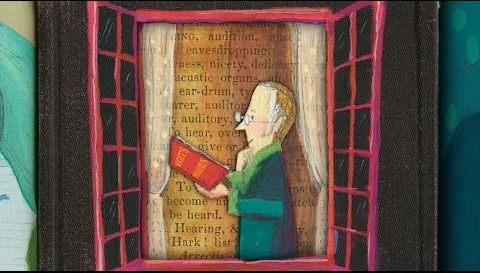
While just a young child, Peter, along with his mother, his uncle, and his baby sister Annette, travel to their new home following the death of his father. It would not be his first move, and in the absence of long-time friends, Peter found companionship in books. When he was eight years old, he began writing his own book titled: Peter, Mark, Roget. His Book. But this was not a book of stories or even one story; it was a book of lists. The first list was divided in two. On one side were the Latin words he knew; on the other were their definitions.

celebrate-picture-books-picture-book-review-the-right-word-roget-peter-starts-his-book

Image copyright Melissa Sweet, 2014, text copyright Jen Bryant, 2014. Courtesy of Eerdmans Books for Young Readers.

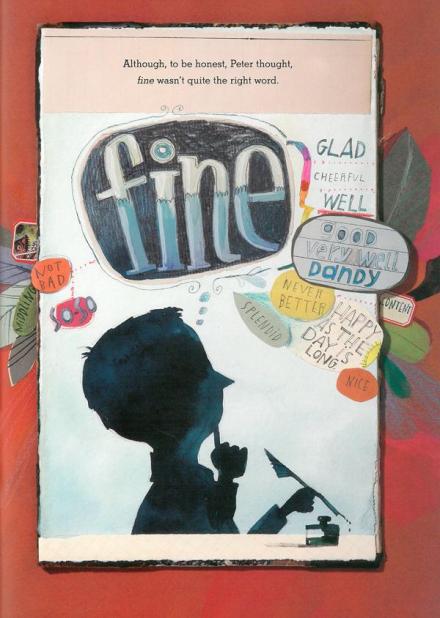
Peter’s mother hovered and worried over her son, and he always told her he was “fine.” “Although, to be honest, Peter thought, fine wasn’t quite the right word.” As the years went by, Peter added lists to his book, prompting his mother to complain about his constant “scribbling.” But Peter looked at his lists differently. “Words, Peter learned, were powerful things. And when he put them in long, neat rows, he felt as if the world itself clicked into order.”

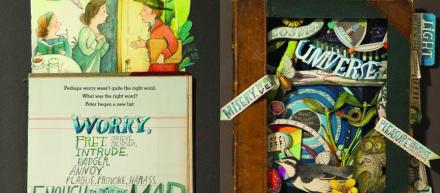
As a teenager Peter was shy, preferring to wander the London gardens alone, “making lists of all the plants and insects,” as in one of his favorite science books by Linnaeus. His “mother didn’t approve, and Peter told her not to worry—but “perhaps worry wasn’t quite the right word. What was the right word? Peter began a new list: Worry, fret, grieve, despair, intrude, badger, annoy, plague, provoke, harass. Enough to drive one mad. How wonderful it felt to find just the right word.”

celebrate-picture-books-picture-book-review-the-right-word-roget-fine

Image copyright Melissa Sweet, 2014, text copyright Jen Bryant, 2014. Courtesy of Eerdmans Books for Young Readers.

An idea crept into Peter’s mind for a book where “all the ideas in the world could be found in one place,” and people could “find the best word, the one that really fit.” When Peter was 14 he entered medical school in Edinburgh, Scotland. Upon graduation at 19, his uncle told him that patients would be wary of a doctor so young. To gain a bit of experience and maturity, Peter became a tutor to two teenage boys.

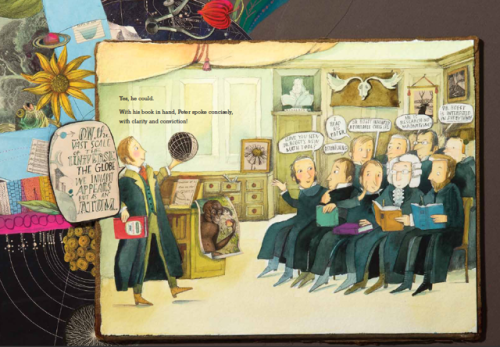
At last Peter set up his medical practice in Manchester, England, where he took care of the factory workers, who “were poor and often sick.” At night Peter worked on his book of lists, and in 1805 he declared it finished. “It had about one hundred pages, one thousand ideas, and listed more than fifteen thousand words!” Eventually, Peter moved back to London where he joined science societies and attended lectures. “Before long, he was asked to give lectures too,” and once-shy Peter astonished his audiences with his knowledge of math, magnetism, and other scientific subjects. He even invented a portable chess set.

celebrate-picture-books-picture-book-review-the-right-word-mother-worries

Image copyright Melissa Sweet, 2014, text copyright Jen Bryant, 2014. Courtesy of Eerdmans Books for Young Readers.

When Peter was 45 years old, he married Mary Hobson, and they had two children, Kate and John. As he grew older, he visited fewer patients, but he continued to take walks and work on his lists. While some other writers had published their own word lists to help people “to speak and to write more politely,” Kate and John “thought their father’s book was much better. Peter agreed.” For three years he rewrote his book. “He made it larger, more organized, and easier to use. Long ago Peter had discovered the power of words. Now he believed that everyone should have this power—everyone should be able to find the right word whenever they needed it.”

celebrate-picture-books-picture-book-review-the-right-word-roget-lecturing

Image copyright Melissa Sweet, 2014, text copyright Jen Bryant, 2014. Courtesy of Eerdmans Books for Young Readers.

“In 1852, Roget published his Thesaurus, a word that means ‘treasure house’ in Greek.” It was an instant best seller, and Peter became a popular author. But he never stopped making lists.

Following the text, a timeline of principal events in Peter’s life as well as world events allow readers to better understand the historical period in which Peter worked. Extensive Author’s and Illustrator’ Notes also expand on Roget’s biography, and resources for further reading and research are included.

Jen Bryant’s biography of a brilliant boy who grew up to give the world its most fascinating and comprehensive collection of word lists, is a spritely telling of Roget’s life and revelation into his personality, which was perfectly suited to his scientific and written accomplishments. Children will appreciate Roget’s reactions to his mother’s worries as well as the message in his well-rounded pursuit of science and writing. Through Bryant’s captivating and lyrical storytelling, children will be inspired by Roget’s journey from shy child to much-accomplished adult.

celebrate-picture-books-picture-book-review-the-right-word-roget-at-home

Image copyright Melissa Sweet, 2014, courtesy of Eerdmans Books for Young Readers.

Melissa Sweet beguiles readers with her mixed media, collage, and watercolor illustrations that are as jam-packed with ideas, images, portraits, and typography as Roget’s thesaurus is full of words. In the early pages describing Peter’s childhood, the pages contain simple framed pictures of Roget and his family. As he grows, however, his lists of words are transformed into vibrant artwork that jostles for position from corner to corner of the pages. In the midst of these, delicate watercolors portray Peter as he strolls through a garden, takes his young charges to Paris, treats his patients, lectures, marries, and finally publishes his thesaurus. A special mention must be made of the typography, which at times in the text runs down the center of the page in one- or two-word lines, mirroring Roget’s love of lists, and in the illustrations presents the myriad synonyms in a mixture of colorful block letters, fine print, and calligraphy.

For bibliophiles, wordsmiths, scientists, and history buffs, The Right Word: Roget and His Thesaurus is just the right book for home libraries.

Ages 6 – 18

Eerdmans Books for Young Readers, 2014 | ISBN 978-0802853851

Discover more about Jen Bryant and her books as well as news, contests, and events, visit her website!

Learn more about Melissa Sweet and her books and have fun with the downloadable activities you’ll find on her website!

Watch this The Right Word: Roget and His Thesaurus book trailer!

Thesaurus Day Activity

celebrate-picture-books-picture-book-review-synonyms-word-search

Word Words Word Search Puzzle


When you’re looking for just the right word, where do you go? To the thesaurus of course! Can you find the 25 synonyms for “Word” in this printable Word Words Word Search Puzzle? Here’s the Solution!

celebrate-picture-books-picture-book-review-the-right-word-roget-cover

You can find The Right Word: Roget and His Thesaurus at these booksellers

Amazon | Barnes & Noble | Books-a-Million | IndieBound

Picture Book Review

January 17 – Kid Inventors’ Day

celebrate-picture-books-picture-books-review-the-hole-story-of-the-doughnut

About the Holiday

Today’s holiday celebrates all those ingenious kids who have improved the world with their inventions. This date was chosen to commemorate another child inventor—Benjamin Franklin—who designed the first swim fins when he was just 12 years old! (Seriously, is there nothing this man didn’t or couldn’t do?). With their supple minds and can-do attitudes, kids have changed the ways things are done in the fields of medicine, technology, communications, and even food—as today’s book shows! To learn more about the day and find resources for young inventors, visit the K.I.D website.

The Hole Story of the Doughnut

Written by Pat Miller | Illustrated by Vincent X. Kirsch


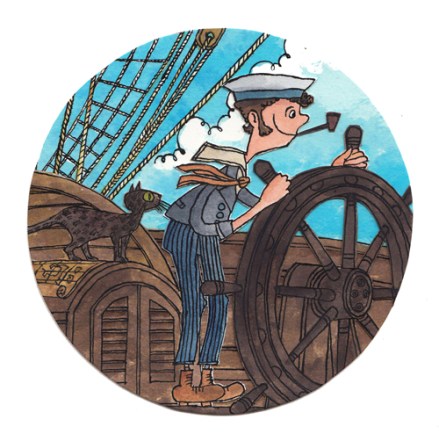
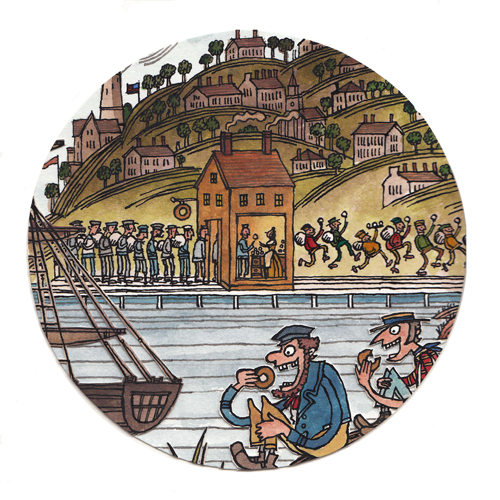
In 1844 at the tender age of 13, Hanson Gregory left the family farm and went to sea as a cabin boy on the schooner Isaac Achorn. He quickly became the cook’s assistant and also learned how to rig the sails and “steer a ship over trackless waves by sun and stars.” By the age of 19 Gregory had become the captain of the schooner Hardscrabble, and within a few more years was racing “his cargo from Maine to California as commander of a clipper, the fastest ship on any ocean.”

celebrate-picture-books-picture-book-review-hole-story-of-the-doughnut

Image copyright Vincent X. Kirsch, courtesy of vincentxkirsch.com

Hanson Gregory may have been one of the best captains to sail the seas—once awarded a medal for heroism for rescuing seven shipwrecked Spanish sailors even though his own ship and crew were endangered. But his greatest achievement was not attained because of his seafaring skills—it was his ingenuity in the galley that people remember.

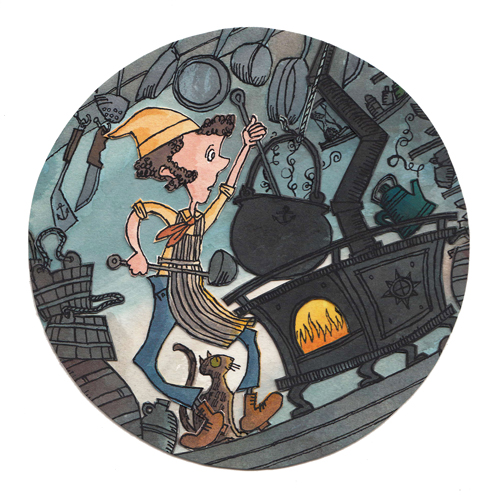
On June 22, 1847 as a 16-year-old cook’s assistant, Hanson was rustling up the crew’s breakfast—coffee and fried cakes, the same as every morning. While the pot of lard bubbled on the stove, Gregory formed balls of sweetened dough and dropped them in. They sizzled and crisped—at least around the edges. The centers were raw, heavy with grease, and they dropped like cannonballs in the stomach. “Sailors called them Sinkers.” But this morning Gregory had an idea. He removed the lid from the pepper can and cut out the center of the balls. “Then he tossed the rings into the bubbling lard.”

celebrate-picture-books-picture-book-review-hole-story-of-the-doughnut

Image copyright Vincent X. Kirsch, courtesy of vincentxkirsch.com

The cook and the sailors took one look at this odd concoction and…ate them up! “The cakes were brown, and sweet, and fully cooked. Sighs of delight rose above the noisy sea. A new breakfast tradition was born.” Gregory told his mom about his invention, and she fried up large batches of these ‘holey cakes’ that became a sensation at a friend’s store and on the docks.

You might think this is a pretty interesting tale in itself, “but sailors like their stories bold” and so they “spun legends worthy of such a delicious treat.” One tale had Captain Gregory inventing the doughnut while he saved his ship from disaster. Another told how Gregory, distraught over the drowning of five sailors pulled to the ocean floor by their “sinker” breakfast, punched holes in every cake to make them look like life rings and vowed, “‘Never again!’”

Captain Gregory had a sense of humor about his accomplishment. During an interview he once stated that “he had invented ‘the first hole ever seen by mortal eyes.’” Gregory lived to be 89 and is buried “overlooking the sea where stormy weather can be spotted as readily as it once was from the quarterdeck of the Hardscrabble.”

An author’s note expanding on the story of Captain Gregory, the doughnut, doughnut shops, a timeline, and a selected bibliography follow the text.

celebrate-picture-books-picture-book-review-hole-story-of-the-doughnut

Image copyright Vincent X. Kirsch, courtesy of vincentxkirsch.com

Doughnuts have never been so evocative! In Pat Miller’s humorous, informative history of this favorite pastry treat, readers can smell the salt air, feel the ocean swell and roll under their feet, and even ache a little for those poor sailors forced to eat “sinkers.” Seamlessly interwoven into this foodography is a fascinating look at the early days of sail. Miller’s language is immediately stirring: the Ivanhoe bucks and plunges, the sea becomes a monster, and Captain Gregory spears a sinker on the wheel spoke. Kids will marvel at a 13-year-old going off to sea and becoming an inventor at 16.

Vincent X. Kirsch provides just the right touch to this captivating true story with his cartoon-inspired watercolor and cut paper artwork. Ingeniously incorporating Hanson Gregory’s innovation of removing the center of the fried cakes, Kirsch’s illustrations are “cored” to allow for text, while the extracted section appears on the facing page as a glimpse through a porthole. The maritime atmosphere—from ship to shore—of the mid-1800s is beautifully represented in the folk-style sketches, and the humor that is so intrinsic to this story is wonderfully embraced.

The Hole Story of the Doughnut will delight foodies and history buffs alike and would make a fun gift and a delectable addition to personal libraries for all ages.

Ages 5 – 12

Houghton Mifflin Harcourt, 2016 | ISBN 978-0544319615

Vincent X. Kirsch’s website is full of illustrations from his books for children—take a look at his portfolio!

Spend some time with Pat Miller on her website that offers activities, tips, resources and many more books!

Kid Inventors’ Day Activity

celebrate-picture-books-picture-book-review-cd-doughnut-craft

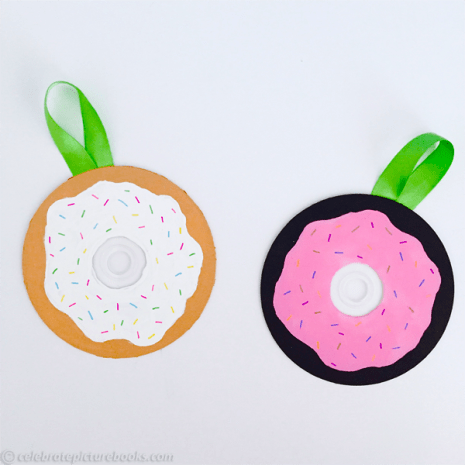
CD (Compact Doughnuts) Decoration


Are some of  your CDs a little passé? Not if you can turn them into cute décor like this doughnut hanging.

Supplies

  • Unused CDs
  • Craft paint in tan, black, pink, yellow, white (or any colors you want for the doughnut and the icing)
  • Ribbon, any color and length you want
  • Fine-tip markers in bright colors
  • Glue
  • Glue dots (optional)
  • Paint brush

Directions

  1. Paint a wavy edge around the CD, let dry
  2. Paint the center of the CD, leaving the clear circle unpainted
  3. When the icing paint is dry, draw sprinkles on the icing with the markers
  4. With the ribbon make a loop hanger and attach it to the back of the CD with glue or glue dots
  5. Hang your decoration

Picture Book Review

January 16 – Martin Luther King Jr. Day

celebrate-picture-books-picture-book-review-i-am-martin-luther-king-jr-cover.png

About the Holiday

Martin Luther King Jr. Day celebrates the life and legacy of the man who dedicated his life and work to teaching—as Coretta Scott King stated—“the values of courage, truth, justice, compassion, dignity, humility and service” and led a non-violent Civil Rights movement to enact racial equality and justice throughout state and federal law. President Ronald Reagan signed the holiday into law in 1983, setting it on the third Monday of January to coincide with Martin Luther King, Jr.’s birthday on January 15. The holiday was officially observed in all 50 states in 2000. Today, learn more about the life and work of Martin Luther King and how you can help promote justice and equality for all. Consider volunteering in your community where help is needed.

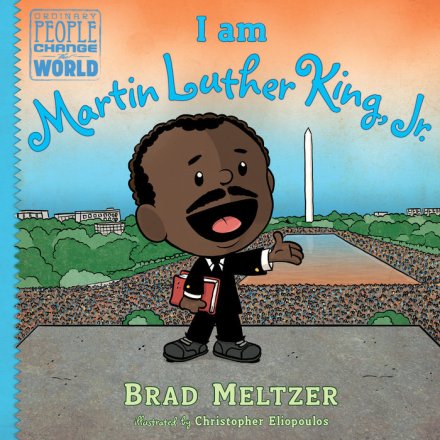
I am Martin Luther King, Jr.

Written by Brad Meltzer | Illustrated by Christopher Eliopoulos


Standing inside a church, Martin Luther King, Jr. introduces himself with two anecdotes from his childhood that demonstrate his world outlook. “When I was little,” he says, “I used to get into a lot of accidents.” He was hit in the head by a baseball bat, knocked down by cars and once even “tumbled over our banister, then bounced through an open door into the basement.” While these incidents could have made him cautious, Martin instead was determined to keep “getting back up.” His second influence were the books in which he could find “big words.” Even as a child Martin recognized that “there is power in words.”

celebrate-picture-books-picture-book-review-i-am-martin-luther-king-jr-as-a-child

Image copyright Christopher Eliopoulos, text copyright Brad Meltzer. Courtesty of Dial Books for Young Readers

Before he went to school, Martin relates, his best friend was a white boy whose father owned a nearby store. They did everything together until school started. Then Martin went to a school with only black students while his friend went to a white-students-only school. Soon, Martin’s friend told him his father didn’t want them to play together anymore. Martin was confused. When his parents told him the reason was that they had different colored skin, Martin felt angry. He wanted to hate his friend and his father, but Martin’s parents taught him to love his friend, and his mother told him, “you must never feel that you are less than anyone else.”

It was a difficult lesson when all around him he saw inequality. White schools had better equipment, there were different elevators, bathrooms, water fountains, and other facilities for black people and white people, on buses black riders had to give up their seats to white riders. Everywhere black people and white people were segregated.

celebrate-picture-books-picture-book-review-i-am-martin-luther-king-jr-ice-cream

Image copyright Christopher Eliopoulos, text copyright Brad Meltzer. Courtesty of Dial Books for Young Readers

When Martin was only 15 he was admitted to college. At 19 he entered the seminary where he learned about civil disobedience and nonviolent resistance—ways to use “love and peaceful methods to change unfair things in society.” These were lessons Martin wanted to share with others. His chance to put his thoughts into action came when Rosa Parks was arrested for refusing to relinquish her seat to a white man. Martin advocated a peaceful protest—a boycott of public buses. He reasoned that without the money from black riders, the bus companies would change their policies.

As the boycott began working, Martin gave a speech in Montgomery, Alabama, motivating people to continue their peaceful protest. Martin was put in jail and his house was bombed, but the boycott continued for more than a year. Eventually, the bus companies changed their rules. Other peaceful protests began to take place in restaurants and other public places.

One protest took place in Birmingham, Alabama.  Martin was again put in prison, where he wrote one of his most famous speeches. Children also took part in the Birmingham protest. The Children’s Crusade attracted more than 1,000 kids. On the first day 900 of them were arrested, but that only inspired the children more. On the second day 2,500 children showed up. They stood firm while they were sprayed with water hoses and attacked by police dogs. People—both black and white—watching the news reports were aghast. Three months later the rules began to change.

celebrate-picture-books-picture-book-review-i-am-martin-luther-king-jr-i-have-a-dream-speech

Image copyright Christopher Eliopoulos, text copyright Brad Meltzer. Courtesty of Dial Books for Young Readers

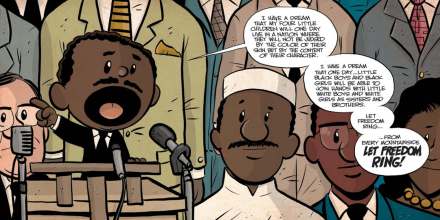
“By the summer of 1963, an estimated one million Americans held their own protests in cities across the country.” Then A. Philip Randolph suggested a single huge march to convince “Congress and the president to pass laws so that no one in America can treat people differently based on skin color.” On August 28, 1963 the March on Washington for Jobs and Freedom took place. Martin gave what may now be considered his most famous speech in which he talked about his dreams for the country, for the people, and for their children.

Although Congress began passing new laws, the ability and right to vote in elections still eluded black people. To change the voting rules another march was organized to walk 54 miles from Selma to Montgomery Alabama. The 600 walkers were met by police who stopped them. Two days later 2,500 activists tried again but could not get through. On the third try 8,000 marchers showed up. This time, with the world watching on television, the activists made it to Montgomery, protected by troops sent by President Johnson.

celebrate-picture-books-picture-book-review-i-am-martin-luther-king-jr-montgomery-march

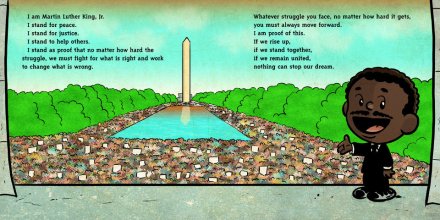
Martin continued to speak out, relating his philosophy and dreams for the nation. “To reach our goals, we must walk the path of peace,” he said. “We must lock arms with our brothers and sisters. We must march together. When we do…Our voices will be heard, and freedom will ring.” The lessons Martin Luther King taught still resonate today. He stands “as proof that no matter how hard the struggle, we must fight for what is right and work to change what is wrong.…if we stand together, if we remain united, nothing can stop our dream.”

celebrate-picture-books-picture-book-review-i-am-martin-luther-king-jr

Brad Meltzer’s Ordinary People Change the World: I am… series of biographies are well-known for showing young readers that they can achieve their dreams and make a difference no matter what those hopes may be. In his biography of Martin Luther King, Jr., Meltzer depicts several incidents from King’s childhood and early adulthood that influenced his future work. These help readers understand not only the types of prejudice King and other African Americans experienced, but also the people who inspired his philosophy of peace.

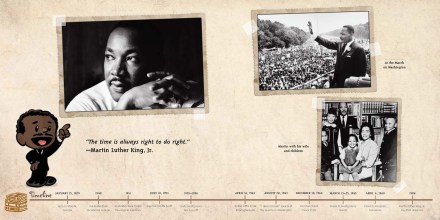
Meltzer’s inclusion of King’s imprisonments and the violence that met the peaceful protesters deepens the understanding of the dangers King and other protesters faced, and provides an opportunity to open a discussion between adults and children about those times and what they now see in the news. Meltzer’s description of the Children’s Crusade will inspire readers, making them proud of children in the past and stirring them to actions of their own. Sections from King’s Letter from Birmingham Jail and his most famous speeches are presented in speech bubbles. The text is followed by photographs of Martin Luther King, Jr. with his family and at the March on Washington as well as a timeline of his life. Sources and resources for further reading are also included.

celebrate-picture-books-picture-book-review-i-am-martin-luther-king-jr-timeline

In keeping with the style of all of Meltzer’s and Christopher Eliopoulos’s Ordinary People Change the World: I am… biographies, the illustrations are vibrant and cartoon-inspired. Martin Luther King, Jr. is depicted with the size of a child but the features of an adult, reinforcing the idea contained in the text of the dual nature of the future adult residing in the child and the ideals of the child remaining in the adult that appeals to ambitious young readers. Speech bubbles highlight text that carry emotional dialogue. Settings, including churches, Birmingham jail, Washington DC, the Edmund Pettus Bridge in Alabama, and the Martin Luther King, Jr. monument give children a look at the cities and places described in the text.

For young readers, I am Martin Luther King, Jr. offers a comprehensive biography of the man who was a national and world leader in the fight for equal rights for all people and makes an excellent starting place for classroom lessons and personal discussions.

Ages 5 – 8

Dial Books for Young Readers, 2016 | ISBN 978-0525428527

Discover more about Brad Meltzer and his books for adults and children as well as other goodies on his website!

Learn more about Christopher Eliopoulos, his books, and his comics on his website!

Martin Luther King Jr. Day Activity

celebrate-picture-books-picture-book-review-martin-luther-king-jr-coloring-page

Martin Luther King, Jr. Portrait


Color this printable Martin Luther King, Jr. Portrait and then hang it in your room or locker to inspire you!

Picture Book Review

January 9 – It’s International Creativity Month

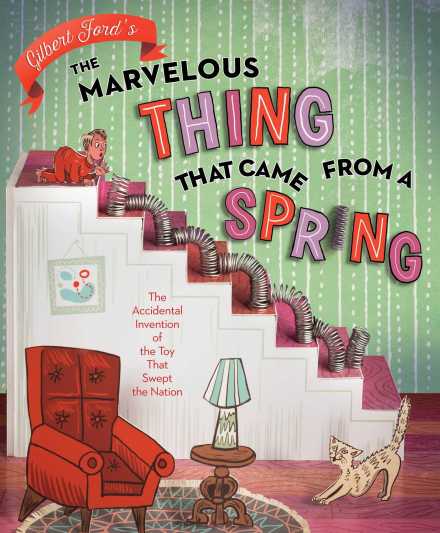
celebrate-picture-books-picture-book-review-the-marvelous-thing-that-came-from-a-spring-cover

About the Holiday

There’s no better time than the beginning of the year to start letting your creative juices flow! Quick fixes or long-leisurely projects are all within your grasp! Want to repaint a room? Build a tree house in the spring? Learn some new recipes? Discover a new hobby? Start planning today how you will accomplish the inventive inspirations that swirl through your imagination.

The Marvelous Thing That Came from a Spring: The Accidental Invention of the Toy That Swept the Nation

By Gilbert Ford


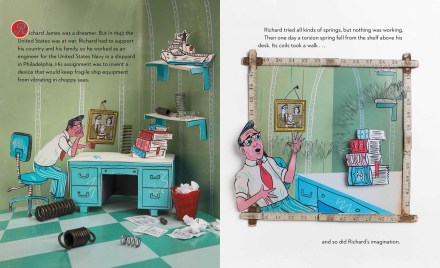
In 1943, during World War II, the United States Navy asked one of their engineers, Richard James, to “invent a device that would keep fragile ship equipment from vibrating in choppy seas.” Richard tried all kinds of springs, but none worked just right. “One day a torsion spring fell from a shelf onto his desk, and “its coils took a walk…” This sparked Richard’s imagination. While Richard knew the spring wasn’t right for his Navy work, he recognized that it might be perfect for something else. But what?

celebrate-picture-books-picture-book-review-the-marvelous-thing-that-came-from-a-spring-spring-walks-spring-falls-off-shelf

Copyright Gilbert Ford, courtesy of simonandschuster.com

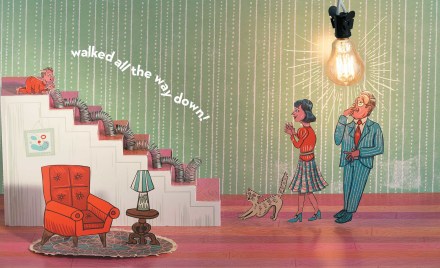
He took the spring home from work that day, showed it to his wife Betty, and gave it to his young son Tom. Tom took it to the top of the stairs and let it go. “The family watched in astonishment as it…walked all the way down!” They lost no time in realizing that this spring made a marvelous toy. But what to call it? “Betty thumbed through a dictionary for two days, underlining words. None really caught her fancy, until she came to ‘slinky,’ which means “‘graceful’ and ‘curvy in movement.’” It also “sounded like the swish and clink of the spring’s coils in motion.”

celebrate-picture-books-picture-book-review-the-marvelous-thing-that-came-from-a-spring-spring-walks-downstairs

Copyright Gilbert Ford, courtesy of simonandschuster.com

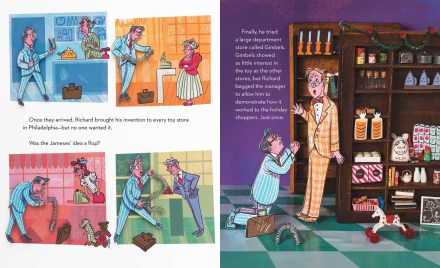
Richard and Betty thought they had a unique hit on their hands, so Richard went to the bank and borrowed five-hundred dollars to make 400 Slinkys. But while Richard and Betty loved their Slinky, toy store managers did not. Finally, Richard went to Gimbels, the big department store. The manager there didn’t see the merits of the Slinky either, but when Richard begged to be allowed to demonstrate it just once, he relented.

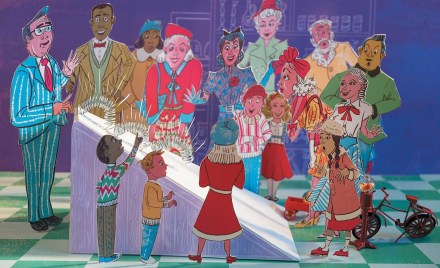
It was now November 1945 and the Christmas shoppers were out looking for stocking stuffers. Richard set up a ramp in the middle of the toy department and placed the Slinky at the top. He looked around for Betty, but she was nowhere to be seen. In fact, Betty was still at home worried that no one would like their toy. She was so concerned that she convinced a friend to “pose as an excited shopper” and buy one with the dollar Betty gave her. At Gimbels, however, time—and shoppers—were passing, so Richard let go of the Slinky. The astonished faces of the children and adults crowded around the ramp said it all. By the time Betty and her friend reached Gimbels, all 400 Slinkys had been sold—in only 90 minutes!

celebrate-picture-books-picture-book-review-the-marvelous-thing-that-came-from-a-spring-spring-walks-spring-richard-begs-gimbels

Copyright Gilbert Ford, courtesy of simonandschuster.com

With the end of the war that same year, troops returned home and a baby boom soon followed. “Demand for the Slinky skyrocketed.” Production needed to speed up, so Richard devised a “machine that could coil eighty feet of steel wire into a Slinky in ten seconds.” The Slinky business became a family business with Betty filling orders and doing the accounting while Richard made and delivered Slinkys. Pretty soon they needed a factory to satisfy demand. That demand still exists today as kids all over the world love the Slinky.

celebrate-picture-books-picture-book-review-the-marvelous-thing-that-came-from-a-spring-spring-walks-spring-at-gimbels

Copyright Gilbert Ford, courtesy of simonandschuster.com

An extended Author’s Note picks up the story of the Slinky where the text leaves off, revealing other creative ways the Slinky has been used and the fact that when Richard went to Bolivia in 1960 to do missionary work, Betty took over the business, relocated the factory to Hollidaysburg, Pennsylvania, and gave the toy a rebirth in popularity. More than 250 million Slinkys have been produced, and in 2001 Betty was inducted into the Toy Industry Hall of Fame.

Gilbert Ford’s Slinky-ography of the man and woman behind one of the world’s most beloved toys is a skip, jump, and bounce through the ingenious brainstorm that transposed a simple spring into a phenomenon. The down-to-earth details of how this invention came to be harken back to a simpler time but also reaffirm that even today there are dreamers sitting in homes across the world imagining the next big thing. Ford’s story is well paced, leading readers through the production process to experience cheerful surprise when the Slinkys sell out at Gimbels. Kids will appreciate the easy-going language that suits its subject perfectly and the emphasis on the teamwork of both Richard and Betty James that made the Slinky possible.

Ford’s illustrations are ingenious in themselves. Careful observation reveals that each page is not merely a drawing, but a 3D experience. As the front matter explains, the illustrations were drawn and colored then printed, assembled into dioramas that incorporate found objects and other popular toys of the period, such as dominoes, jacks, and pick-up sticks, and finally photographed. The effect drops readers into the middle of a 1940s home and department store, giving them a personal stake in the drama.

The Marvelous Thing That Came from a Spring is a fun book for would-be-inventors and kids interested in the history of objects they use and play with.

Ages 4 – 8

Atheneum Books for Young Readers, Simon & Schuster, 2016 | ISBN 978-1481450652

Discover a portfolio of work by Gilbert Ford for books, book jackets, advertising, and more on his website!

International Creativity Month Activity

celebrate-picture-books-picture-book-review-national-archives-coloring-book-of-patents

National Archives Coloring Book of Patents


The people at the National Archives of the United States in Washington DC chose some of their favorite patents from the past to share with you as a coloring book. As you have fun coloring these pages of ideas, let yours fly too!

Click here to get your printable National Archives Coloring Book of Patents

Picture Book Review