September 13 – Bald Is Beautiful Day

celebrate-picture-books-picture-book-review-what's-silly-hair-day-with-no-hair-cover

About the Holiday

Today’s holiday honors those who through choice, illness, medication, or heredity sport bald heads. Baldness for both men, women, and children can show courage, beauty, and an independent spirit. To commemorate today, give a shout out or support to your friends who are bald.

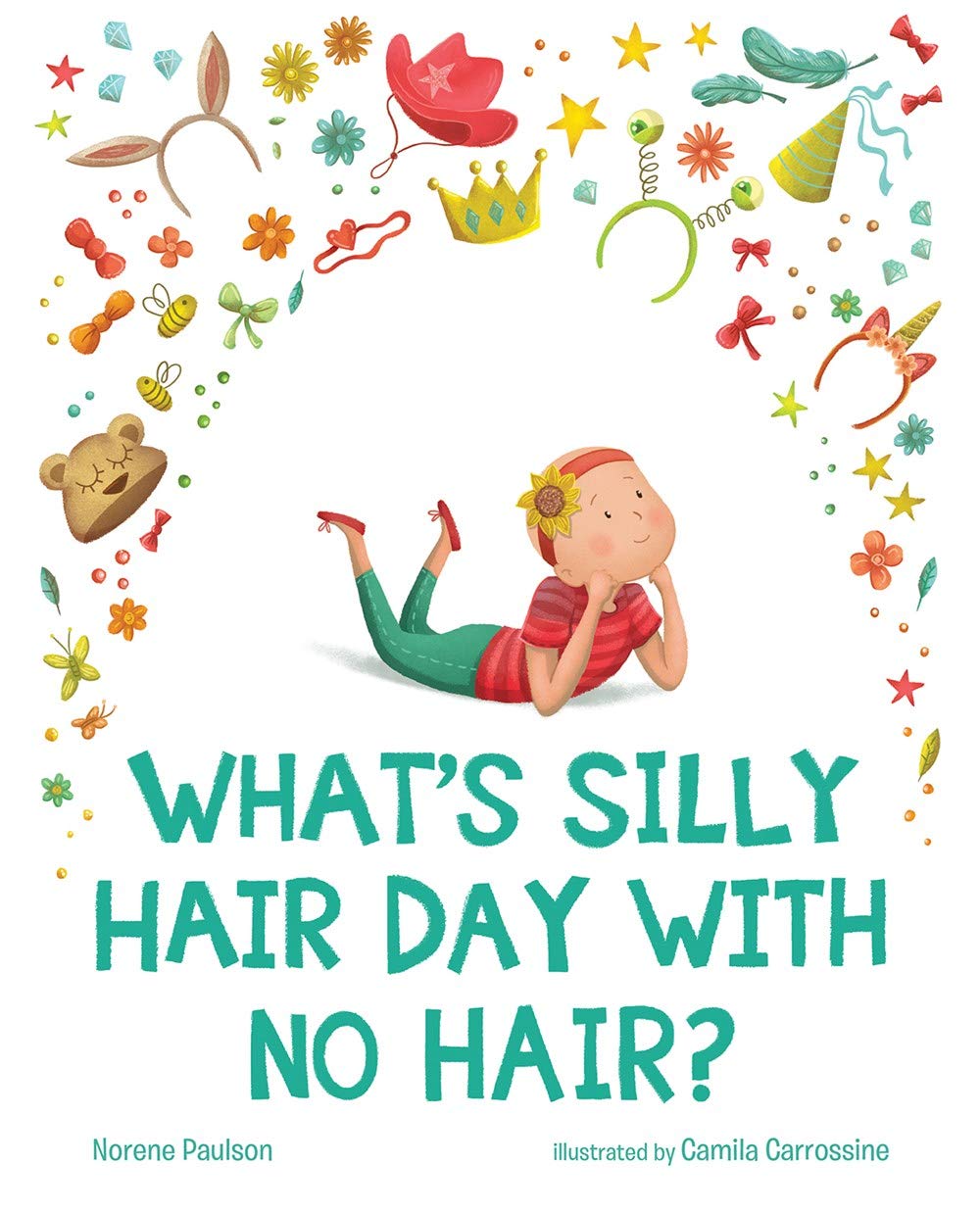
What’s Silly Hair Day With No Hair?

Written by Norene Paulson | Illustrated by Camila Carrossine


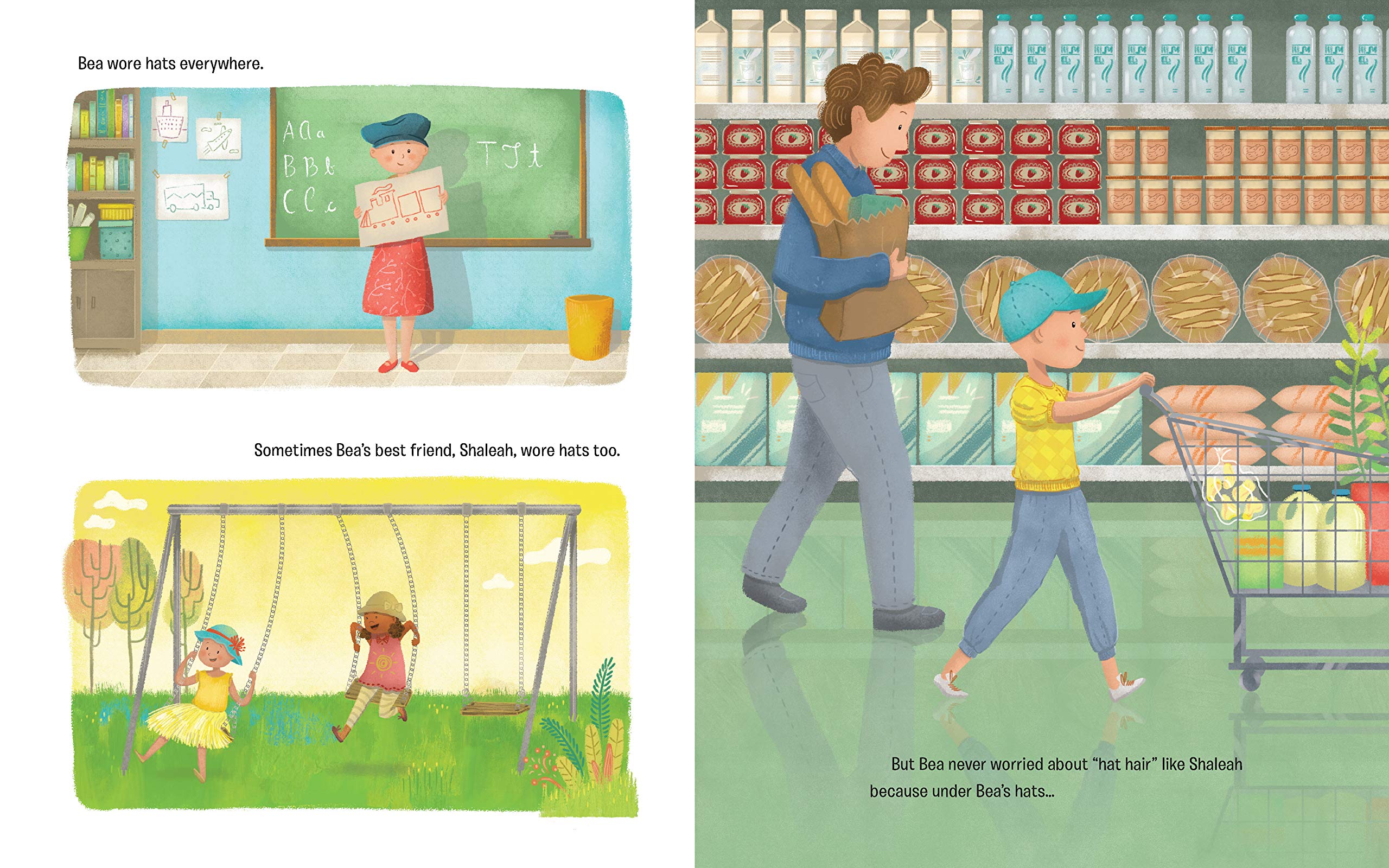
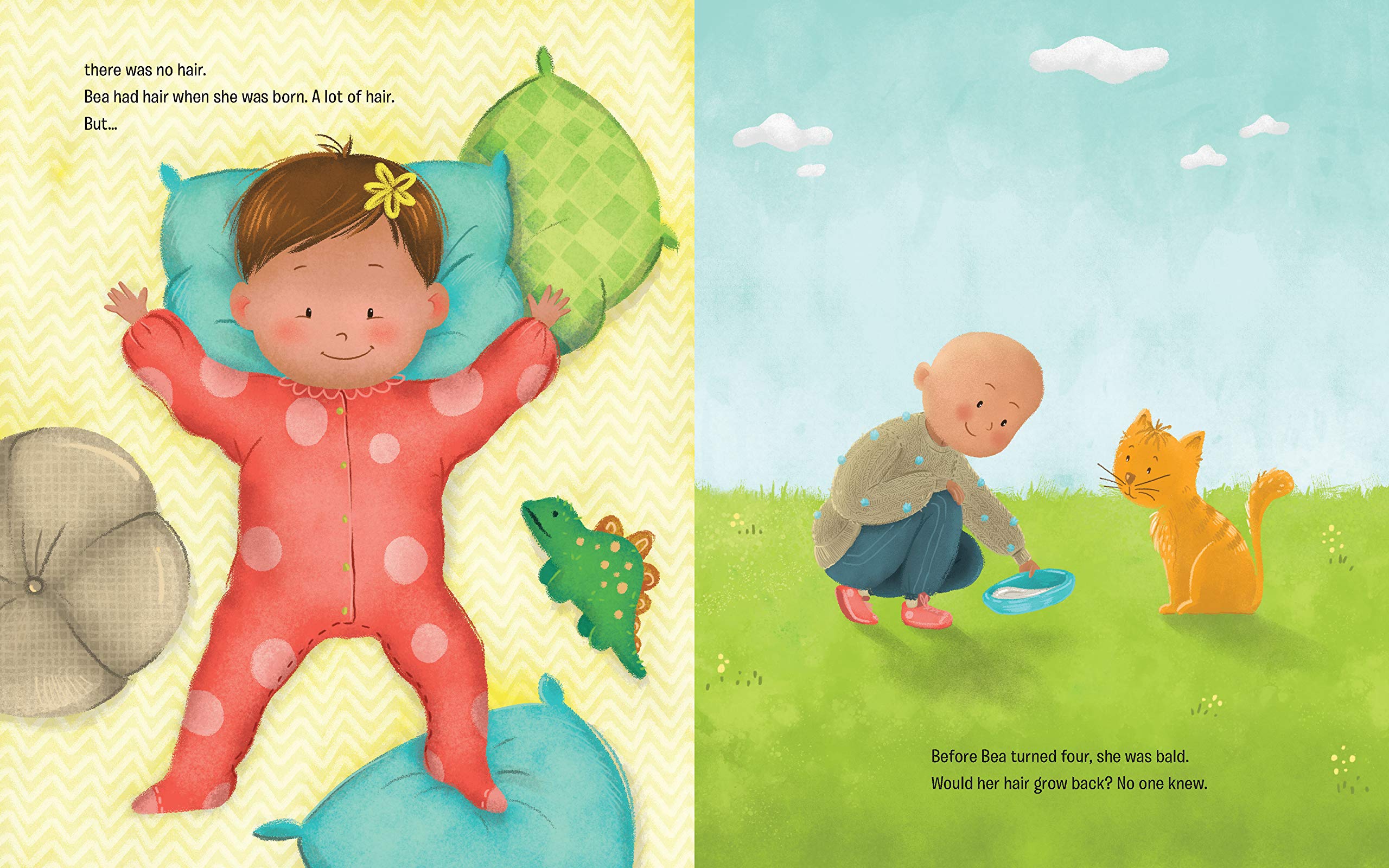
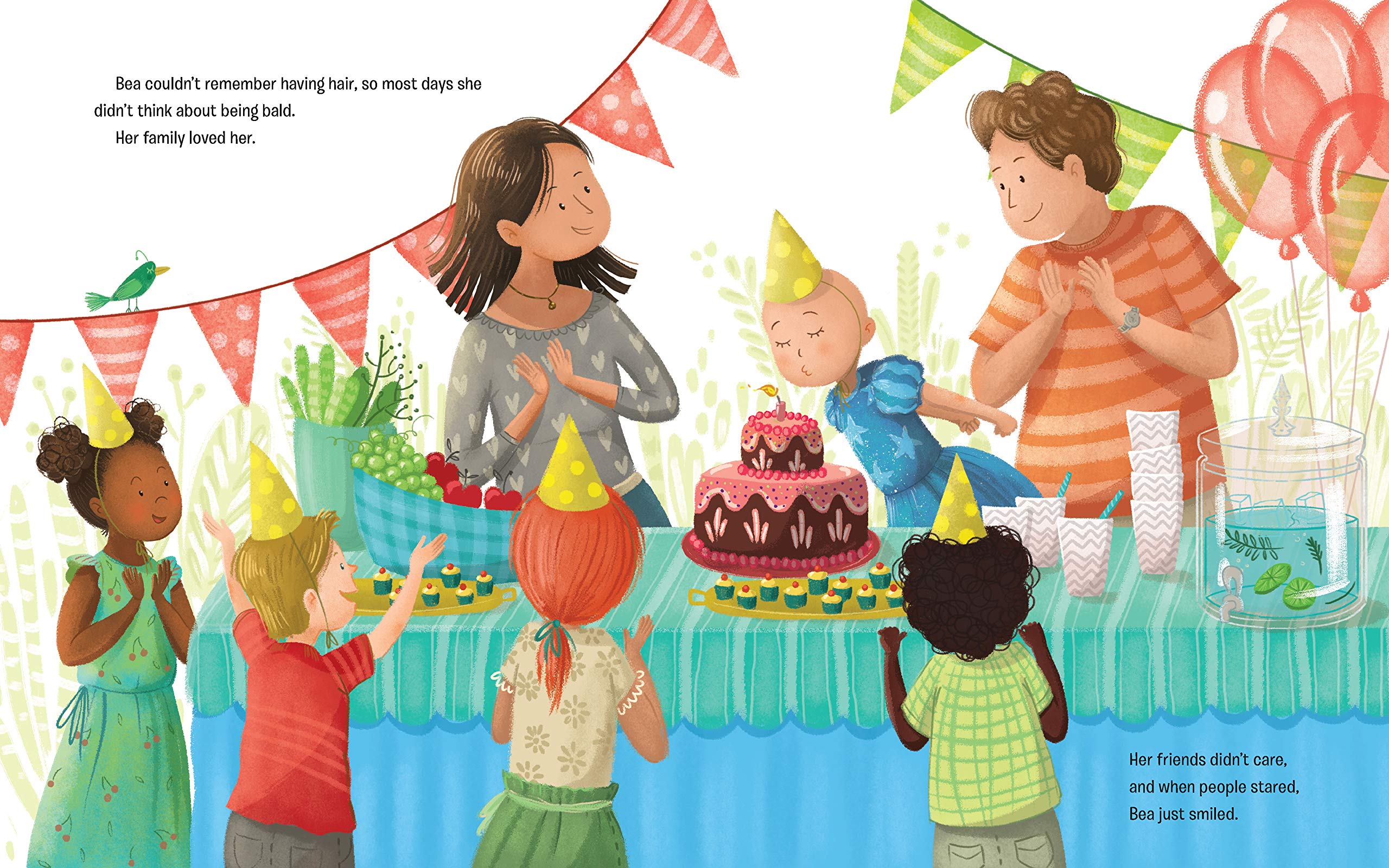
“Bea wore hats everywhere.” But unlike her friend Shaleah, who sometimes wore hats too, she didn’t have to worry about “hat hair.” Why? Well, while Bea had been born with hair, she began losing it and “before Bea turned four, she was bald.” Bea didn’t remember having hair, and her family and friends loved her, so she just took it in stride—usually.There were times when she wished she could style her hair like Shaleah and felt sad when “a classmate called her a mean name.” And then there was Silly Spirit Week at school. Friday was Silly Hair Day. Bea wondered how she could participate. Shaleah reassured her that they’d think of something.
celebrate-picture-books-picture-book-review-what's-silly-hair-day-with-no-hair-hats

Image copyright Camila Carrossine, 2021, text copyright Norene Paulson, 2021. Courtesy of Albert Whitman & Company.

Shaleah’s first thought was a wig, so on Saturday Bea’s mom took them to a costume shop and Bea tried on lots of different wigs—but none seemed right. The next day they tried crafting hair with yarn and pompoms. It was silly, but still not right. Bea was getting discouraged. Maybe, she said, she should just stay home on Friday. But Shaleah reminded her that if she did she’d miss the Spirit Week picnic. And Shaleah vowed that if Bea stayed home, she’d stay home. Bea didn’t want Shaleah to miss the picnic, so they started thinking again.

For Monday’s Silly Costume Day and Tuesday’s Silly Backwards Day, Bea had great ideas. “On Wednesday Bea won the Wackiest Hat Award,” but she still didn’t have an idea for Silly Hair Day. Then during Silly Feet Day, she saw a temporary tattoo on the principal’s leg that gave her an idea. But first, she needed to get Shaleah and the principal’s approval. When they both said Yes, Bea was excited.
celebrate-picture-books-picture-book-review-what's-silly-hair-day-with-no-hair-baby

Image copyright Camila Carrossine, 2021, text copyright Norene Paulson, 2021. Courtesy of Albert Whitman & Company.

After school and late into the night, Bea and Shaleah worked on the idea. The next day they got to school early and put up a new sign. It read “FRIDAY: Silly Hair or Head Day.” The kids wondered what that was all about. Then Bea and Shaleah approached in hoodies and lowered the hoods to reveal colorful tattooed and bejeweled designs on Bea’s head and a skullcap for Shaleah. “‘Because now everyone can participate!’ Bea and Shaleah said together. Even the principal joined in with her own decorated cap. And all the kids—including Bea—enjoyed the Silly Spirit Week picnic.

An Author’s Note discussing hair loss due to Alopecia—as Bea has—and some cancer treatments, including online resources that can provide more information follows the text. Bea also offers readers some fun tips on applying temporary tattoos.
celebrate-picture-books-picture-book-review-what's-silly-hair-day-with-no-hair-party

Image copyright Camila Carrossine, 2021, text copyright Norene Paulson, 2021. Courtesy of Albert Whitman & Company.

Norene Paulson addresses childhood alopecia and hair loss due to cancer treatments or other causes in her sensitive and uplifting story. While briefly mentioning bullying, Paulson focuses on a common school spirit week event that leaves Bea out. By empowering Bea and her best friend Shaleah to devise a solution, Paulson invites young readers to both empathize with Bea and see how true friends support each other. Two foundations of Bea’s strong self-confidence and positive self-esteem are revealed in two short, important, and instructive sentences: “Her family loved her.” And “Her friends didn’t care.” Underlying the mystery of how Bea will solve her problem, Paulson provides an excellent way for parents, teachers, school administrators, and other caregivers to discuss inclusivity, acceptance, and friendship.

Camilla Carrossine’s engaging illustrations mirror Paulson’s story, allowing readers to understand and empathize with Bea’s experience and join in on Bea and Shaleah’s close friendship. Children will love the silly wigs Bea tries on, the playful updo of yarn Bea and Shaleah create, and the vibrant tattoos that Bea, Shaleah, and the principal all sport.

A unique and welcome book that allows children with alopecia and/or undergoing cancer treatment to be seen with new understanding from their peers, What’s Silly Hair Day with No Hair? is highly recommended for home bookshelves and for all school and public libraries.

Ages 4 – 7

Albert Whitman & Company, 2021 | ISBN 978-0807506080

Discover more about Norene Paulson and her books on her website. You’ll also find reading questions, a curriculum guide, and other resources for the book on her site here.

To learn more about Camilla Carrossine, her books, and her art, visit her website.

celebrate-picture-books-picture-book-review-what's-silly-hair-day-with-no-hair-cover

You can find What’s Silly Hair Day With No Hair? at these booksellers

Amazon | Barnes & Nobel | Books-a-Million

To support your local independent bookstore, order from 

Bookshop | IndieBound

Picture Book Review
 

September 3 – National Food Bank Day

celebrate-picture-books-picture-book-review-saturday-at-the-food-pantry-cover

About the Holiday

National Food Bank Day was established by St. Mary’s Food Bank, the world’s first food bank, which was founded by John van Hengel in Phoenix, Arizona in 1967. The idea spread throughout the country, and now St. Mary’s Food Bank distributes 250,000 meals daily with the help of staff, volunteers, and partner agencies, making it one of the largest food banks in the United States. Food banks across the country help millions of men, women, and children who live with food insecurity due to job loss, illness, and other circumstances. Many food banks offer educational opportunities that help people change their situation and begin anew. Often, those who have benefited from the programs return to volunteer and contribute to the very food bank that staved off hunger to do the same for others. To learn more about St. Mary’s Food Bank, visit their website. To find a food pantry in your area to get help for yourself, to donate, or to volunteer, visit the Ample Harvest website.

I’d like to thank Albert Whitman & Company for sharing a copy of Saturday at the Food Bank with me for review consideration. All opinions on the book are my own.

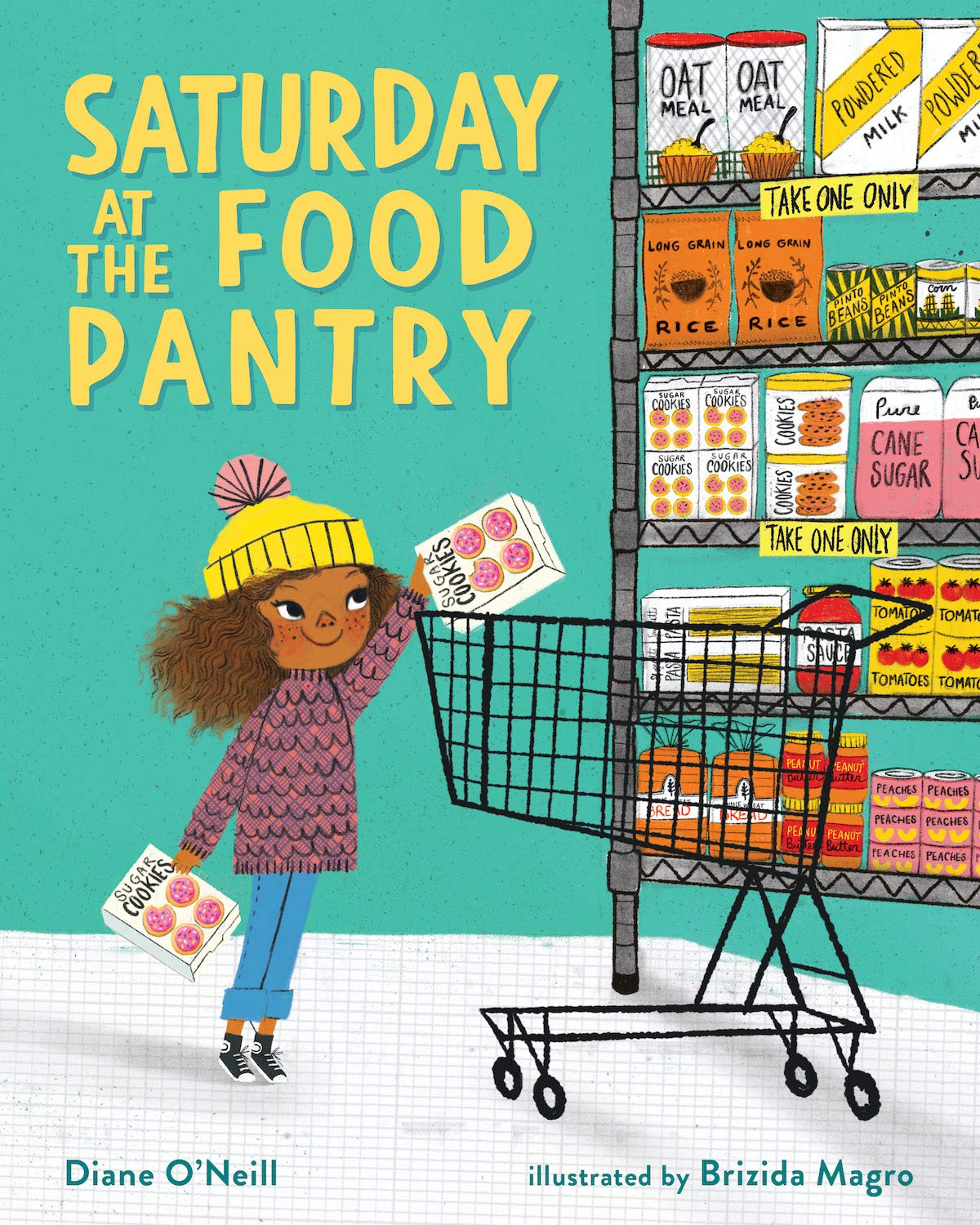
Saturday at the Food Pantry

Written by Diane O’Neill | Illustrated by Brizida Magro


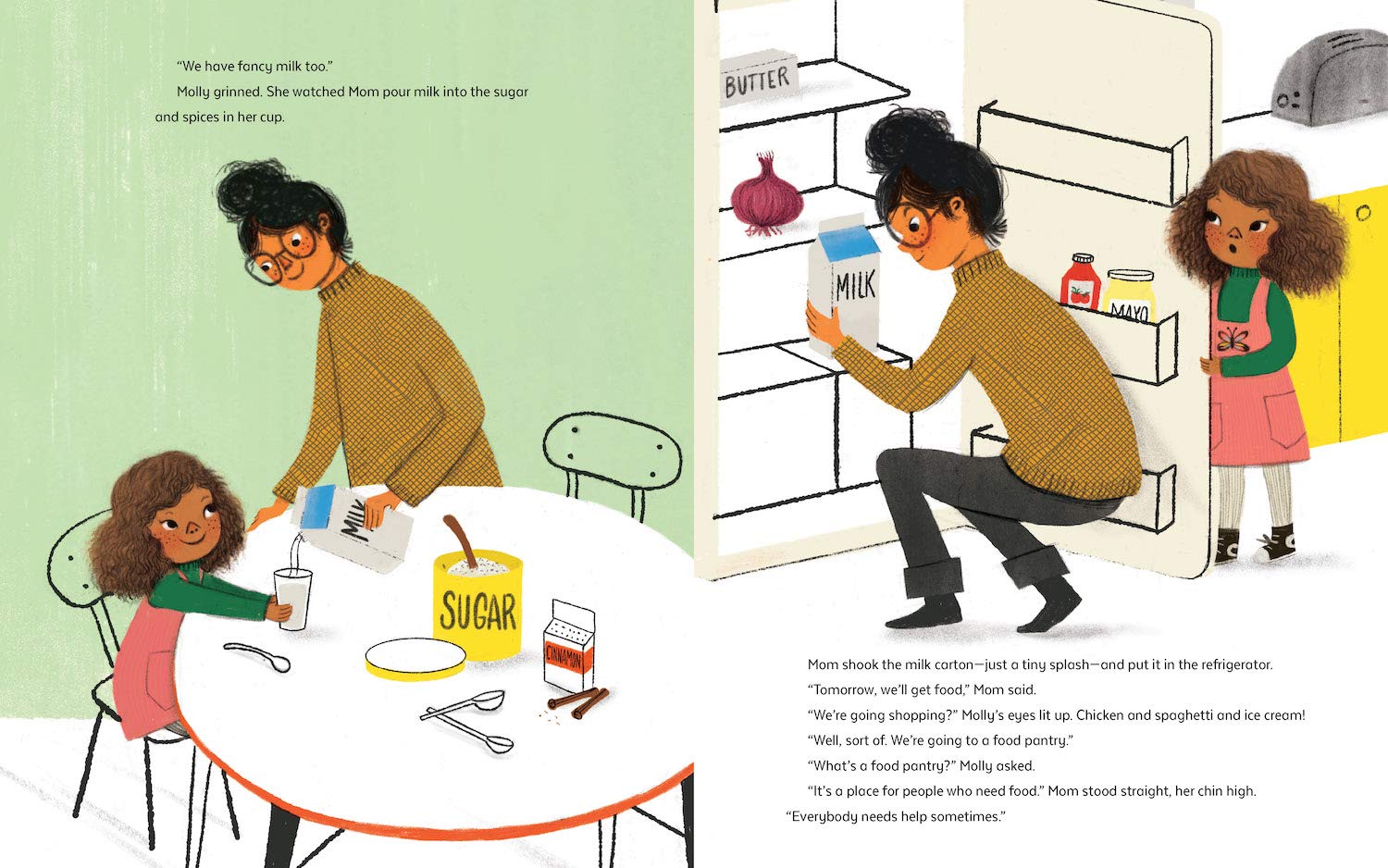
When Molly came to the table for dinner, she saw that they were having chili—again. She and her mom had eaten chili for two weeks straight. But there was “fancy milk too.” Molly smiled as her mom measured sugar and cinnamon into her glass and added milk.” There was only a splash of milk left when Mom put it back into the almost-empty refrigerator.

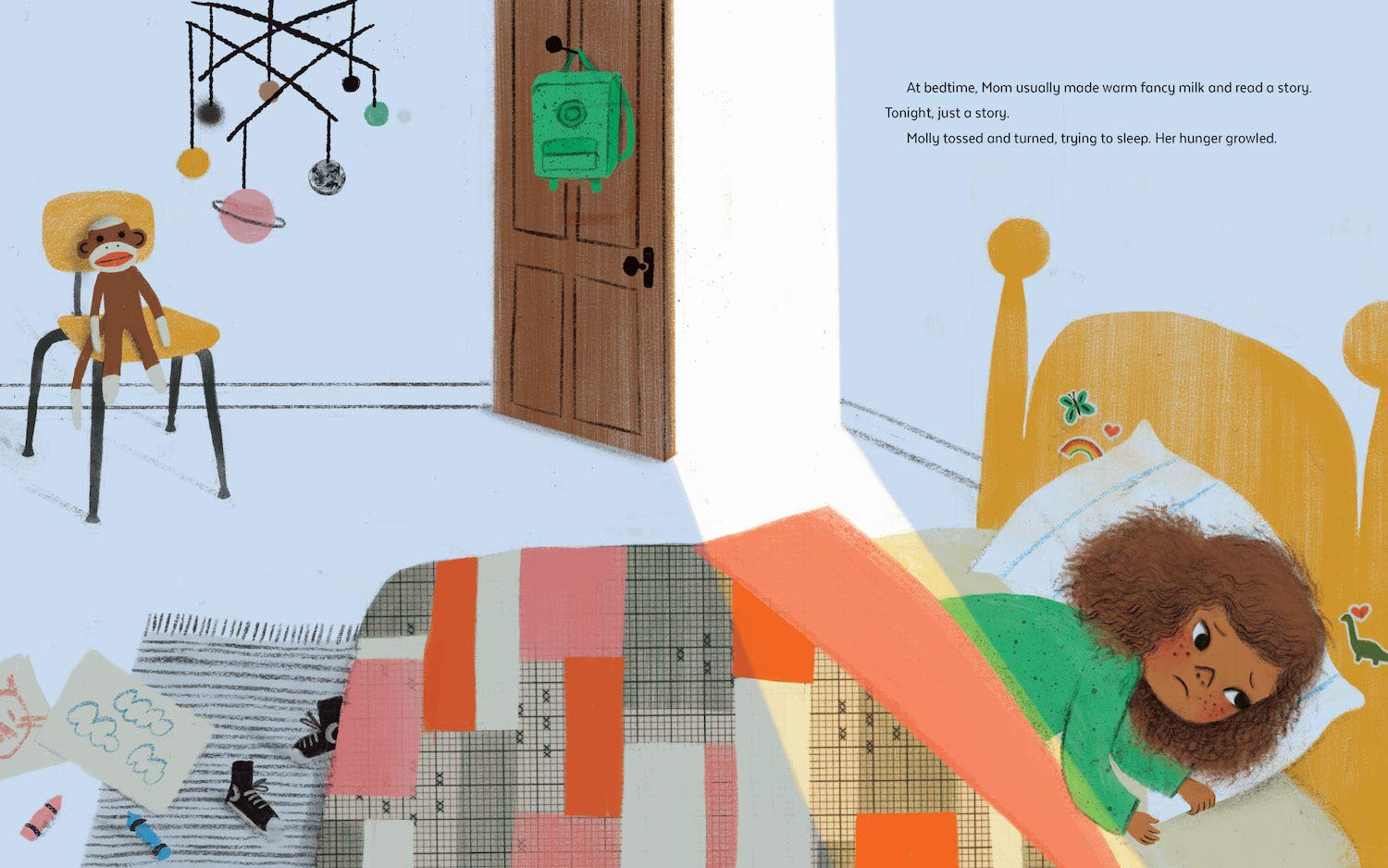
Tomorrow, Mom said, they’d go shopping. “Molly’s eyes lit up” as she imagined “chicken and spaghetti and ice cream.” But Molly’s mom tempered her expectations, saying that they’d be going to a food pantry. A food pantry, she explained, is “‘a place for people who need food…. Everybody needs help sometimes,’” she added. That night there was no warm milk before Molly went to bed and her stomach growled.

celebrate-picture-books-picture-book-review-saturday-at-the-food-pantry-milk

Image copyright Brizida Magro, 2021, text copyright Diane O’Neill. Courtesy of Albert Whitman & Company.

In the morning when Molly and her mom got to the food pantry there was already a line waiting for it to open. Molly had brought paper and crayons and sat down to draw. Then she saw a girl who was in her class at school. She called out hi, but “Caitlin looked away.” When Molly ran over, Caitlin told her she didn’t want anyone to know that she and her grandmother needed help.

Molly went back to her mom, wondering if there was “something wrong with needing help.” She wanted to go home, but she was also hungry. Molly’s mom suggested she draw a picture, and the woman in front of them asked if she’d draw one for her too. Then everyone in line seemed to want a picture. Molly ran back to Caitlin to ask for help. Caitlin sat down and began to draw too.

celebrate-picture-books-picture-book-review-saturday-at-the-food-pantry-hungry

Image copyright Brizida Magro, 2021, text copyright Diane O’Neill. Courtesy of Albert Whitman & Company.

When the door opened, Molly and Caitlin each had a picture for the woman who welcomed them in too. Molly noticed that her mom had to sign in before she got a cart and they could begin shopping. They didn’t do that at the grocery store. The shelves at the food pantry were stocked with items she recognized from the store they usually shopped with. She ran over and took a box of sugar cookies off the shelf, but her mom told her “‘They—the people in charge—they’ll want us to take sensible stuff.’” Molly felt embarrassed and couldn’t understand why the cookies were there if they couldn’t take them. She sadly returned them to the shelf. As they went to look for food, Molly thought her mom didn’t want to be seen there, either—just like Caitlin. In a whisper, Molly reminded her that everyone needs help sometimes.

They went through the store taking one can, bag, or box of the food they needed. Then Molly’s mom reached for a box of powdered milk. They could have fancy milk that night. When they got to the checkout desk, Molly and Caitlin found their drawings hanging on the wall. The man at the counter bagged their groceries and then handed Molly’s mom a box of sugar cookies. “‘Saw your little girl looking at these. She can have them, if that’s okay with you, ma’am,’” he said. Molly noticed that her mom looked like she might cry.

celebrate-picture-books-picture-book-review-saturday-at-the-food-pantry-line

Image copyright Brizida Magro, 2021, text copyright Diane O’Neill. Courtesy of Albert Whitman & Company.

As they were walking home, Molly saw Caitlin and her grandmother coming the same way. They were all happy to discover that they were neighbors. Molly’s mom explained that she’d been looking for work since the factory closed, and Caitlin’s grandma said she’d been sick. Caitlin understood, but wished they didn’t have to shop at a food pantry. But then Molly told her that “everybody needs help sometimes” and reminded her that they had helped make the man at the checkout counter feel happy with their drawings. Caitlin hadn’t thought about it that way. She smiled. Then Molly invited her and her grandmother to have lunch with them—with sugar cookies for dessert.

Following the text, a note for parents, teachers, and other caregivers from Kate Maehr, the Executive Director and CEO of the Greater Chicago Food Depository, reveals more information about food insecurity, including recent statistics and a resource where people can find help and more information.

celebrate-picture-books-picture-book-review-saturday-at-the-food-pantry-shopping

Image copyright Brizida Magro, 2021, text copyright Diane O’Neill. Courtesy of Albert Whitman & Company.

Diane O’Neill’s well-executed story about two families who need the help of a food pantry is a poignant reminder of the many people—perhaps even readers’ classmates—who face food insecurity every day. Through the experiences of Molly and her mother and Caitlin and her grandmother, readers discover what it’s like to go to bed hungry, miss out on treats, and feel ashamed to ask for help. As this is Molly and her mother’s first trip to a food pantry, Molly’s questions and observations well reflect children’s own or reassures those who are familiar with these important resources.

O’Neill’s straightforward storytelling emphasizes the fact that at one time or another everyone needs help and demonstrates simple ways that children make things better through their generosity, optimism, and acceptance. Molly and Caitlin’s budding friendship makes for an uplifting and hopeful ending and may spur readers to recognize need in their midst and extend kindness.

Through her realistic illustrations of two families in need of assistance from a food bank, Brizida Magro helps children see and understand what food insecurity and food pantries look like. At home, Molly and her mom eat small portions of leftover chili and the last full glass of milk. When Molly’s mom puts the carton in the refrigerator, the shelves are nearly empty, and Molly lies awake in bed, too hungry to fall asleep.

The line outside the food pantry is made up of people from all walks of life, and inside the displays of food replicate a grocery store with the exception of signs asking shoppers to take one item only. These images can lead to meaningful discussions on the enormity of the issue. When Molly and Caitlin draw pictures that cheer up everyone in line as well as the food pantry workers, kids will recognize not only different ways of helping but their own role in making the world a kinder place.

Empathy shines on every page of O’Neill’s necessary and welcome story. Saturday at the Food Pantry is timely, heartfelt, enlightening and a must-buy addition to home, classroom, and school and public library collections.

Ages 4 – 7

Albert Whitman & Company, 2021 | ISBN 978-0807572368

Discover more about Diane O’Neill and her work on her website.

You can connect with Brizida Magro on Instagram.

celebrate-picture-books-picture-book-review-saturday-at-the-food-pantry-cover

You can find Saturday at the Food Pantry at these booksellers

Amazon | Barnes & Noble | Books-a-Million

To support your local independent bookstore, order from

Bookshop | IndieBound

Picture Book Review
September 1 – It’s Read a New Book Month

celebrate-picture-books-picture-book-review-dylan's-dragon-cover

About the Holiday

The beginning of a new school year is a terrific time to celebrate Read a New Book Month. Whether the books are recently published or just new to you, there are stories and nonfiction books to fit any subject, to inspire learning, to laugh or cry with, and to share with friends. This month visit your local bookstore and library and stock up on books for everyone in the family! 

Dylan’s Dragon

Written by Annie Silvestro | Illustrated by Ben Whitehouse


When Dylan was little, he liked to while away his days “playing, doodling, drawing, daydreaming.” He drew spaceships and race cars, dragons and robots. But as he got older, Dylan found there were many more things to do, like karate, baseball, gymnastics, and swimming. And of course there was lots of homework. There wasn’t a moment when Dylan wasn’t doing something. Then one day Dragon showed up at his door wanting to play. But Dylan was just on his way to school. All day long Dylan thought about Dragon. He seemed vaguely familiar, but Dylan couldn’t remember. Dylan planned on playing with Dragon after school, and when he got home they did fly a few circles around the yard, but then it was time for his piano lesson. 

celebrate-picture-books-picture-book-review-dylan's-dragon-drawing

Image copyright Ben Whitehouse, 2021, text copyright Annie Silvestro, 2021. Courtesy of Albert Whitman & Company.

The next morning, after he gave Dylan a ride to the kitchen, Dylan asked if Dragon would like to play after school. “Dragon stuck out his tongue and slurped oatmeal off Dylan’s cheek, which felt kind of slimy but seemed like a yes.” But they only had a few short minutes before Dylan had to study and then go to science club. Dylan thought Dragon might be able to help with his homework, but Dragon’s flames singed his test review papers.

On the rest of the days that week, Dylan tried to include Dragon, but it just didn’t work out. Finally, the weekend came and Dylan thought they would be able to play then. Dragon “swatted Dylan with his tail, which felt cold and scaly but had to mean yes.” Saturday morning, Dylan jumped out of bed ready to play with Dragon, but his parents reminded him of his baseball game, piano recital, and Aunt Edith’s 90th birthday party. But “when do I get to play?” Dylan asked.

celebrate-picture-books-picture-book-review-dylan's-dragon-activities

Image copyright Ben Whitehouse, 2021, text copyright Annie Silvestro, 2021. Courtesy of Albert Whitman & Company.

When Sunday morning rolled around, Dylan woke up and asked his mom, “‘What do we have to do now?'” Surprisingly, Dylan had nothing planned. “‘Just go out and play,'” his mom told him. Dylan cheered and called for Dragon, but he didn’t come. In fact, he was nowhere to be found. “It seemed like Dragon was draGONE.” Dylan looked everywhere, but no dragon. Dylan began to cry. 

When his mom asked him what was wrong, Dylan told her about Dragon and wanting to play and never having enough time. “‘Sounds like we need to cut back,'” his mom said. Then she told him she’d help look for Dragon. As Dylan was drawing a picture of Dragon to show his mom, when he remembered where he’d seen Dragon before – in his old drawings from when he was little.

As he carried his drawing downstairs to show his mom, it began to steam. “It smoked… then POOF popped Dragon, right into the living room. This time when Dylan asked if he wanted to play, Dragon wrapped a wing around him in a hug that “was most definitely a yes!”

celebrate-picture-books-picture-book-review-dylan's-dragon-school

Image copyright Ben Whitehouse, 2021, text copyright Annie Silvestro, 2021. Courtesy of Albert Whitman & Company.

Annie Silvestro’s creative storytelling is both whimsical and realistic as she reminds readers about the importance of balance between activities, school, and free time in children’s schedules. When the dragon, a favorite drawing from Dylan’s preschool or kindergarten days, appears to rescue him and his harried family, many kids (and adults) may identify with Dylan’s desire for a more relaxed lifestyle. Silvestro’s dialogue rings true as Dylan’s parents call him from snatched moments of play and Dylan pleads for just ten more minutes. Dylan’s mom’s recognition of the need to cut back on some of her son’s activities sets a good example, and Silvestro’s message that imagination and creativity make beneficial playmates is reassuring.

Ben Whitehouse’s vivid illustrations cleverly depict the dichotomy between Dylan’s desire for playtime and his over-scheduled routine as images of Dylan riding and playing with his Dragon are juxtaposed with his mom and dad indicating that it’s time to go to one activity after another. Well-marked calendars, a tablet, watches and clocks, lots of sticky note reminders, and equipment for various extracurricular activities at the ready crowd the family’s home – fitting images for the dizzying swirl of appointments that must also crowd Dylan and his parents’ minds. While Dylan’s room is decorated with his many interests, Whitehouse shows that it is his long-lost love of drawing and imagination that truly makes him happy.

A clever and engaging story about recapturing the simple pleasures of free time and playtime, Dylan’s Dragon can also spark conversations between adults and kids about how much is too much and finding that happy medium. A perfect book to share at home, especially as the new school year begins, Dylan’s Dragon would be an excellent addition to home bookshelves as well as school and public library collections.

Ages 4 – 7 

Albert Whitman & Company, 2021 | ISBN 978-0807517420

Discover more about Annie Silvestro and her books on her website.

To learn more about Ben Whitehouse, his books, and his art, visit his website.

Read a New Book Month Activity

celebrate-picture-books-picture-book-review-darling-dragon-match-puzzle

Darling Dragon Matching Puzzle


In this group of darling dragons, each dragon has a twin. Can you help them find each other in this printable puzzle?

Darling Dragon Matching Puzzle

celebrate-picture-books-picture-book-review-dylan's-dragon-cover

You can find Dylan’s Dragon at these booksellers

Amazon | Barnes & Noble | Books-a-Million

To support your local independent bookstore, order from

Bookshop | IndieBound

Picture Book Review
June 30 – National Oceans Month

celebrate-picture-books-picture-book-review-the-big-beach-cleanup-cover

About the Holiday

During National Oceans Month, we celebrate the wondrous diversity of sea life. A majority of the earth’s surface is covered in water and yet we know only a fraction of what the oceans have to show us. With new technology scientists are diving deeper and deeper and discovering some of the most unique creatures in the world. The holiday also gives us an opportunity to pledge our help to preserving the fragile ecosystems that exist in and near the world’s oceans from climate change, pollution, and habitat destruction. To join in on this month’s holiday, visit a beach or aquarium, learn more about the animals and resources of the sea, and consider donating to or volunteering with an organization dedicated to protecting the world’s oceans. To learn more about the world’s oceans, including information on ocean health, life, science, and trivia; find education resources, podcasts, videos, and more, visit the National Ocean Service website.

The Big Beach Cleanup

Written by Charlotte Offsay | Illustrated by Katie Rewse


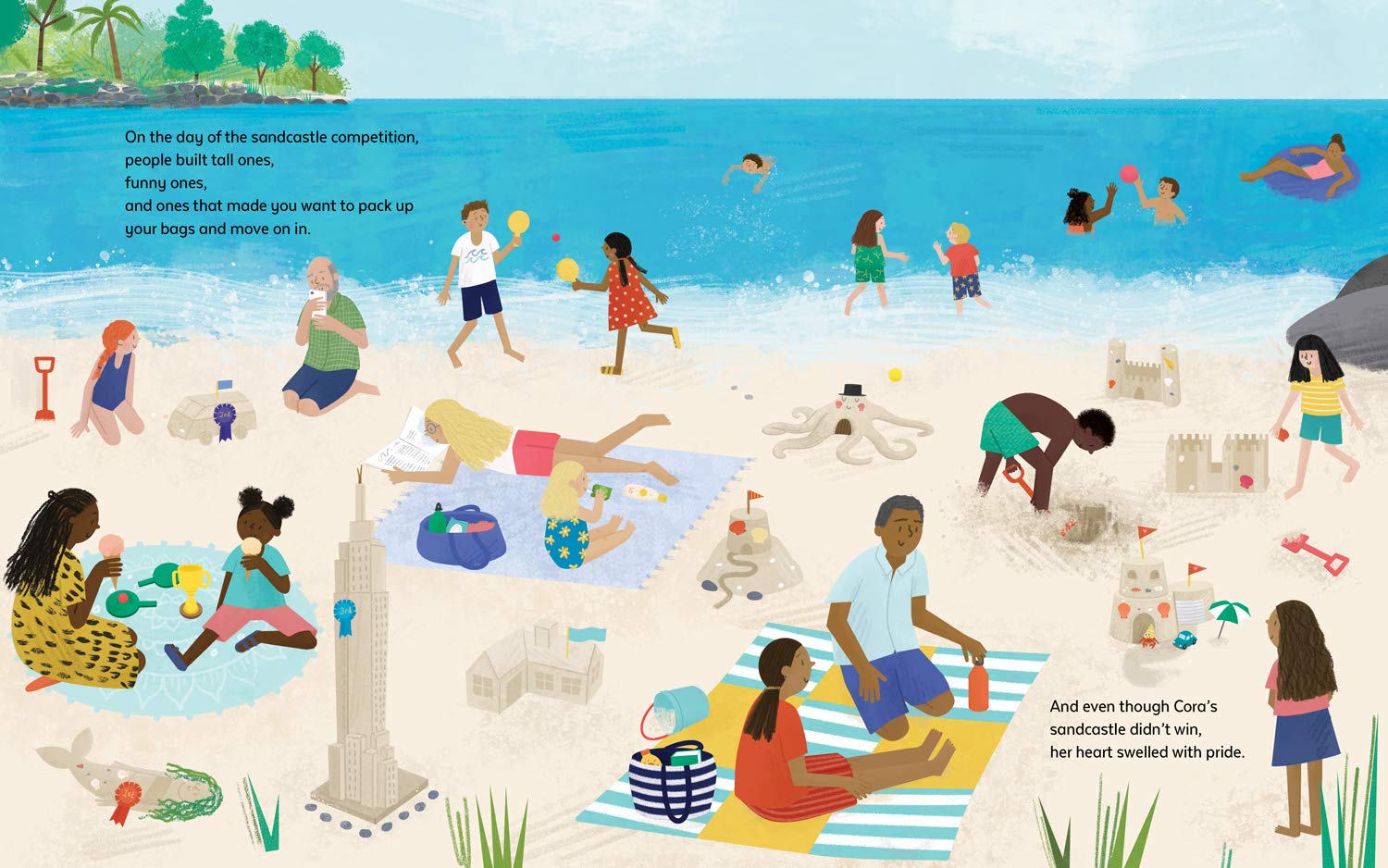
At the end of the summer, the Crystal Beach Sandcastle Competition would be held and Cora planned on being crowned the champion. She had all summer to practice and she had visions of castles she could build – from towering ones to funny ones to “ones that made you want to pack up your bags and move on in.” But when she got to the beach to begin practicing, she discovered a sign that said the sandcastle competition had been postponed because the beach was so filled with trash. In fact, everywhere Cora dug she unearthed more and more trash.

celebrate-picture-books-picture-book-review-the-big-beach-cleanup-fliers

Image copyright Katie Rewse, 2021, text copyright Charlotte Offsay, 2021. Courtesy of Albert Whitman & Company.

Cora asked Mama if she could fix it. “‘I wish I could,'” Mama answered. “‘I don’t have enough hands.'” Cora wondered if their four hands together could do the job. Mama took gloves from her truck and she and Cora began filling bags with trash. Cora wondered where all the trash came from and Mama explained that some of it could come from trash dropped in cities or towns that makes its way to the ocean or the beach through a drain. Before Cora and Mama could pick up much more, it started raining. Four hands just weren’t enough, thought Cora.

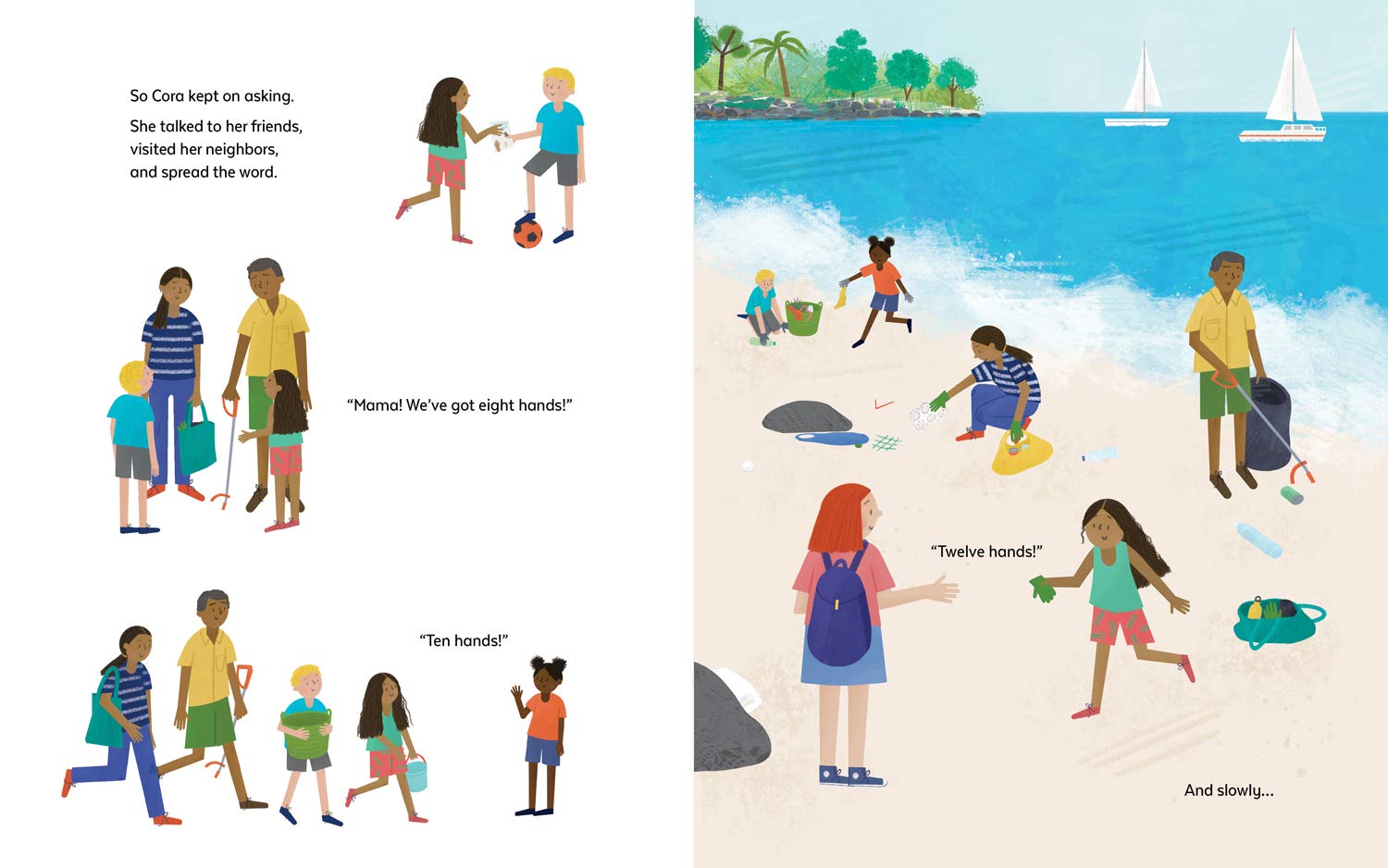
The next day Cora asked her grandfather to join them in cleaning up the beach, but when they got there Cora felt discouraged. The sand looked just as bad as it had the day before. After they’d worked a while, Grandpa suggested taking a “sandcastle break.” Nearby, Cora was upset to see a seagull eating a food wrapper. Six hands weren’t nearly enough, either. Then she looked at the posters on the beach bulletin board and had an idea.

celebrate-picture-books-picture-book-review-the-big-beach-cleanup-twelve-hands

Image copyright Katie Rewse, 2021, text copyright Charlotte Offsay, 2021. Courtesy of Albert Whitman & Company.

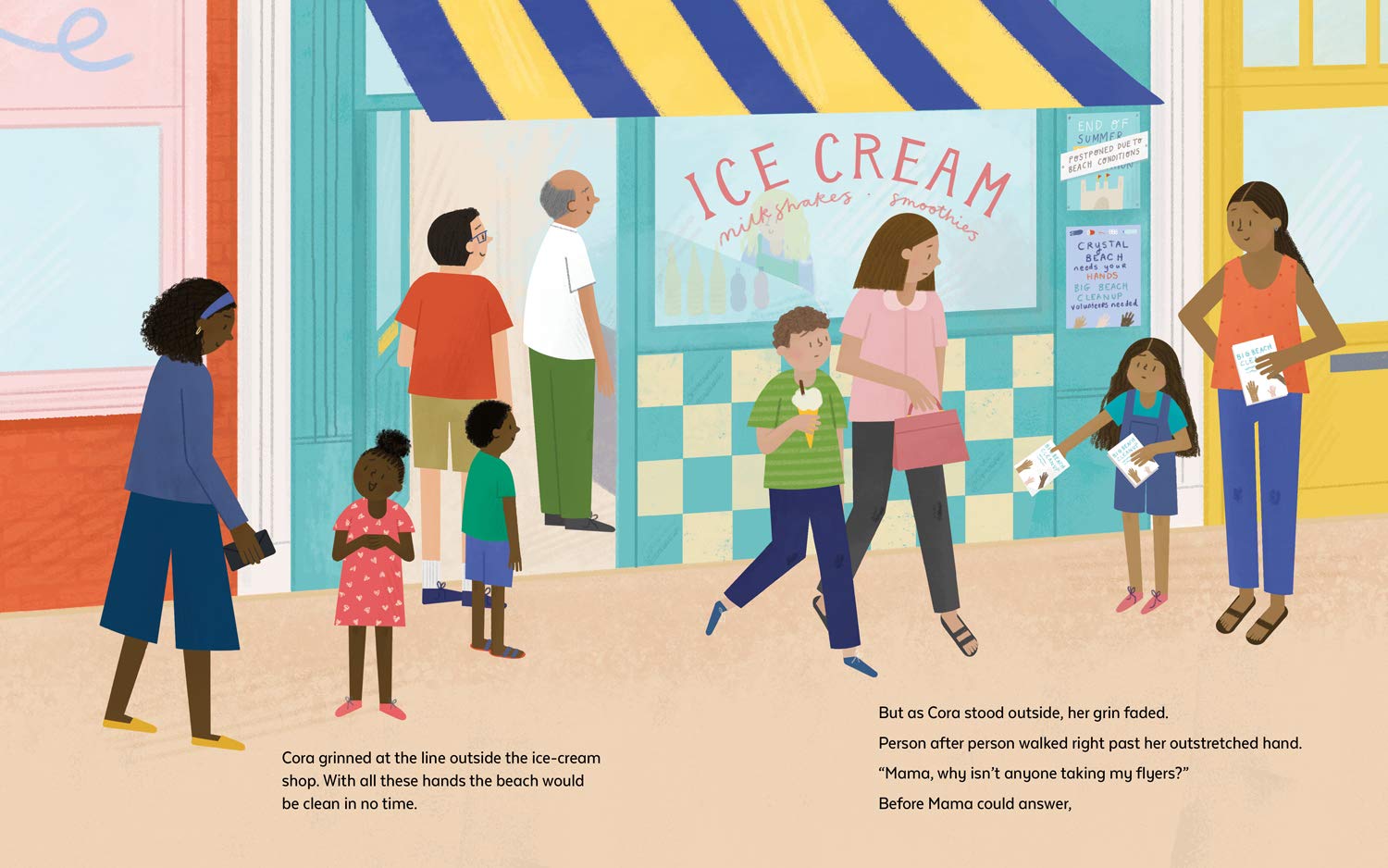
Cora drew her own posters, reading “Chrystal Beach needs your HANDS” and “BIG BEACH CLEANUP.” She and her mother posted the signs around town. Outside the ice-cream shop, Cora tried to hand out her fliers but everyone just walked past without taking one. Everyone seemed to busy to come to get involved. But Mama told Cora that there are many other ways people could help, “‘like not littering, or saying no to things we use only once, like straws, so that less trash ends up in the ocean.'”

Cora understood, but she kept asking friends, neighbors, and others. Little-by-little, there were eight hands, then ten, and twelve. More people caught on and came out to the beach to pick up litter. Cora got so many hands that the sandcastle contest was reinstated “thanks to local activists.” On the day of the contest, families came out and built all kinds of creative castles. Cora wasn’t crowned champion, but “her heart swelled with pride” at what she had accomplished. And that was just the beginning….

An Author’s Note outlining steps everyone can take to reduce trash and prevent it from littering the oceans and beaches as well as a list of facts about ocean pollution follow the story.

celebrate-picture-books-picture-book-review-the-big-beach-cleanup-contest

Image copyright Katie Rewse, 2021, text copyright Charlotte Offsay, 2021. Courtesy of Albert Whitman & Company.

Through her earnest and activist protagonist, Cora, Charlotte Offsay gives a voice to those children who want to make a difference in their communities. While Offsay touches on how trash makes its way to oceans and beaches, the real appeal of the story is in her realistic, hands-on ideas that can empower kids to find activities for cleaning up their neighborhood or local beach, park, woodland, or other public space. Her straightforward and accessible storytelling reflects the questions children have about today’s issues and their enthusiasm to help solve problems as well as the disappointments that sometimes come with trying to solicit the involvement of others. Offsay’s well-paced narrative show kids that change can be or seem to be slow, but that sticking with any effort pays benefits.

Katie Rewse’s vibrant illustrations will keep children riveted to the pages as they watch Cora dig up more and more trash from an already well-littered beach. Images of Cora making and hanging posters will inspire kids to try similar outreach in their own communities. Page spreads depicting clean-up efforts realistically portray the types of trash found on beaches and other recreation areas. For children who may be unsure if one pair of hands can really make a difference, Rewse’s illustrations of Cora and Mama working together at the beginning of the story show the positive impact of just one or two people, while later in the story, as more and more people join in, they will see the transformative power that a group effort can make. Kids will love being invited to the sandcastle competition to see all the entrants as well as the winning sculptures.

Inspiring, empowering, and offering realistic ideas and expectations for budding environmentalists, The Big Beach Cleanup is sure to spark awareness and action for children at home and at school. The book would make an impactful addition to home, school, and public library collections.

Ages 4 – 8

Albert Whitman & Company, 2021 | ISBN 978-0807508015

Discover more about Charlotte Offsay and her books on her website.

To learn more about Katie Rewse, her books, and her art, visit her website.

National Oceans Month Activity

celebrate-picture-books-picture-book-review-kinetic-sand-craft

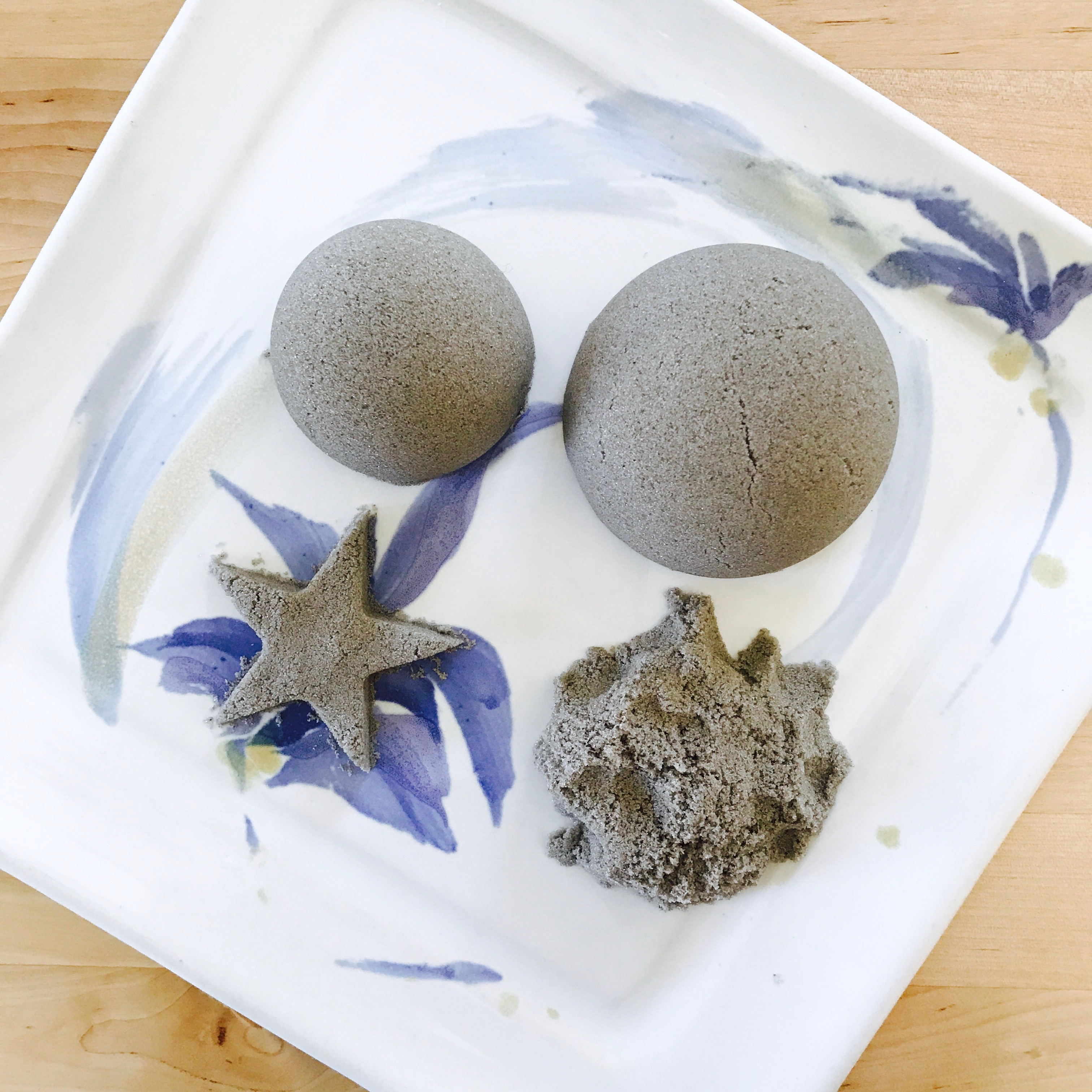
Kinetic Sand


Sand is so much fun to play with at the beach that you just wish you could bring it home. Now you can! With this easy recipe you can create your own kinetic sand to form or let run through your fingers. It makes a great anti-stress reliever too!

Supplies

  • 1 cup sand
  • ½ tablespoon cornstarch
  • 1 teaspoon dish soap
  • Water as needed – about ¾ cup
  • Bin or bowl for mixing dry ingredients
  • Bowl for mixing dish soap and water

Directions

  1. In the bin combine the sand and cornstarch and mix well
  2. In the bowl combine the dish soap and water until the water is bubbly
  3. Slowly add the water mixture to the dry ingredients, mixing and adding water little-by-little until the desired consistency is reached. The grain of the sand will determine how much water is needed.
  4. The sand can be formed with cookie cutters, molds, hands, etc. and is strong enough to stack. Or just let it drip and ooze through your fingers.

celebrate-picture-books-picture-book-review-the-big-beach-cleanup-cover

You can find The Big Beach Cleanup at these booksellers

Amazon | Barnes & Noble | Books-a-Million

To support your local independent bookstore, order from

Bookshop | IndieBound

Picture Book Review
June 26 – It’s Hurricane Season

celebrate-picture-books-picture-book-review-hear-the-wind-blow-cover

About the Holiday

If you live in a coastal area, your used to watching for hurricanes during the summer and fall. Meteorologists and wary residents follow these tropical cyclones as they swirl across the ocean, threatening any landmass in their way. To be categorized as a hurricane, the storm must possess sustained winds of or above 74 miles per hour. You can learn more about hurricanes from the National Oceanic and Atmospheric Administration website. Kids can learn ten facts about hurricanes on the National Geographic Kids website.

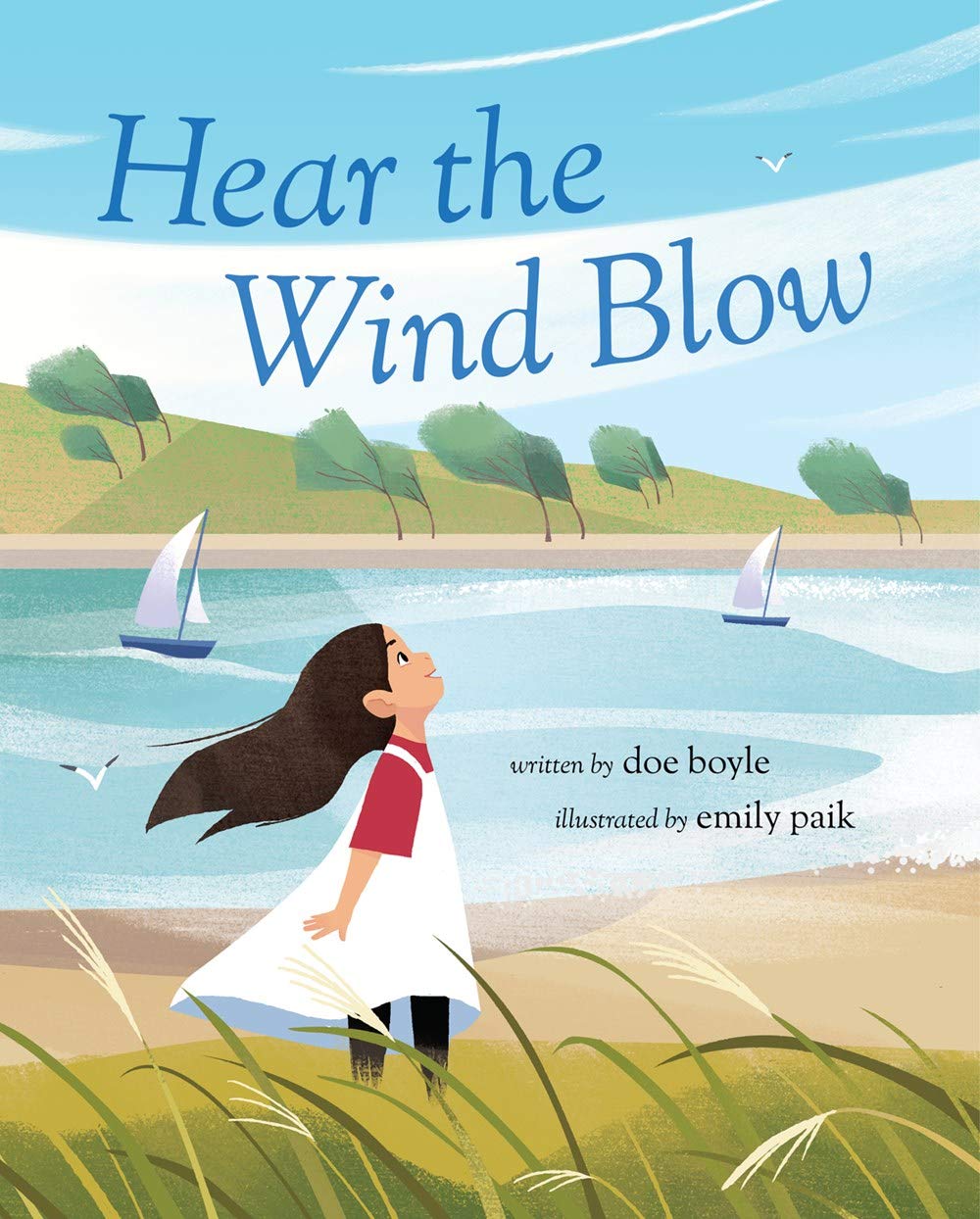
Hear the Wind Blow

Written by Doe Boyle | Illustrated by Emily Paik


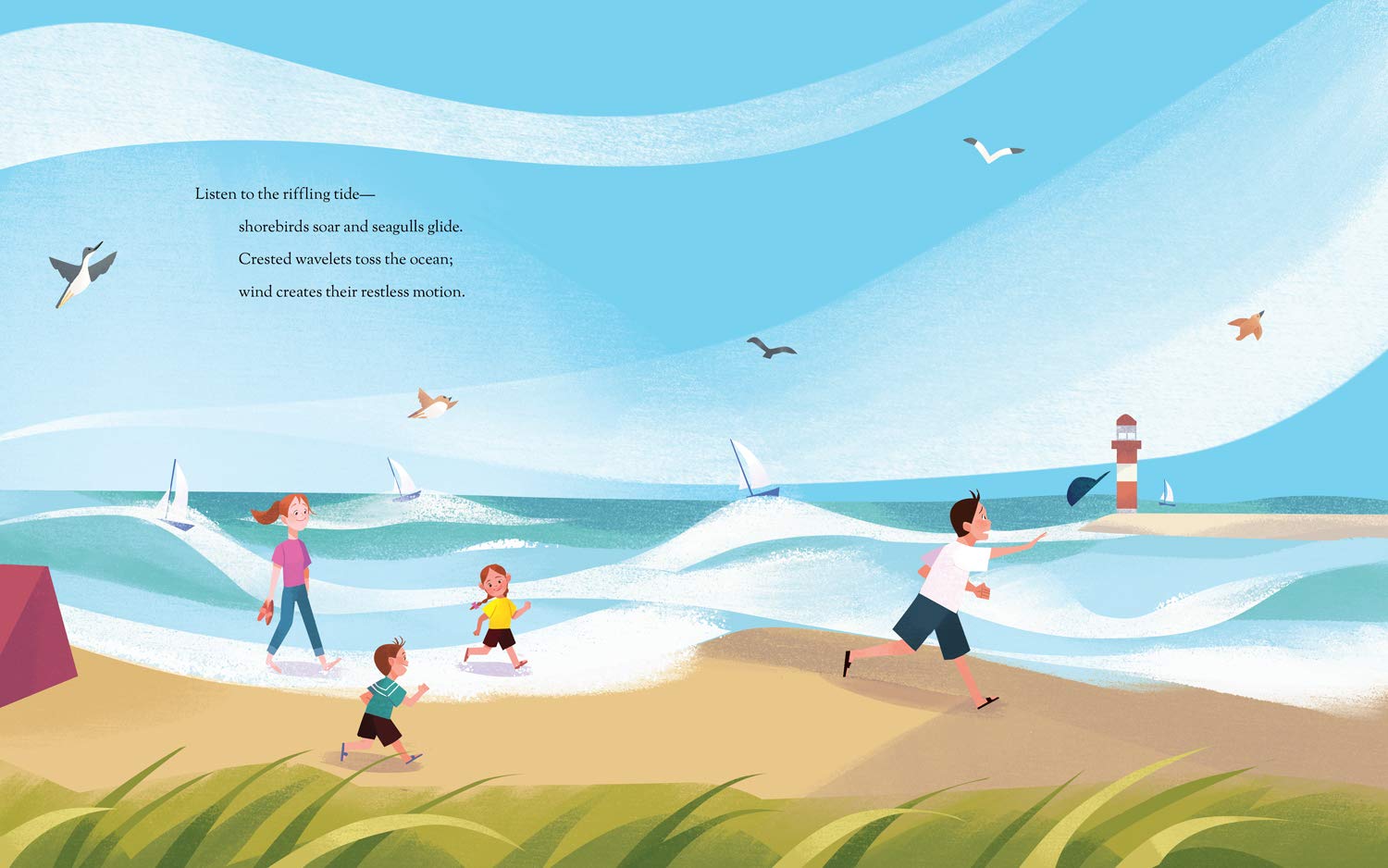
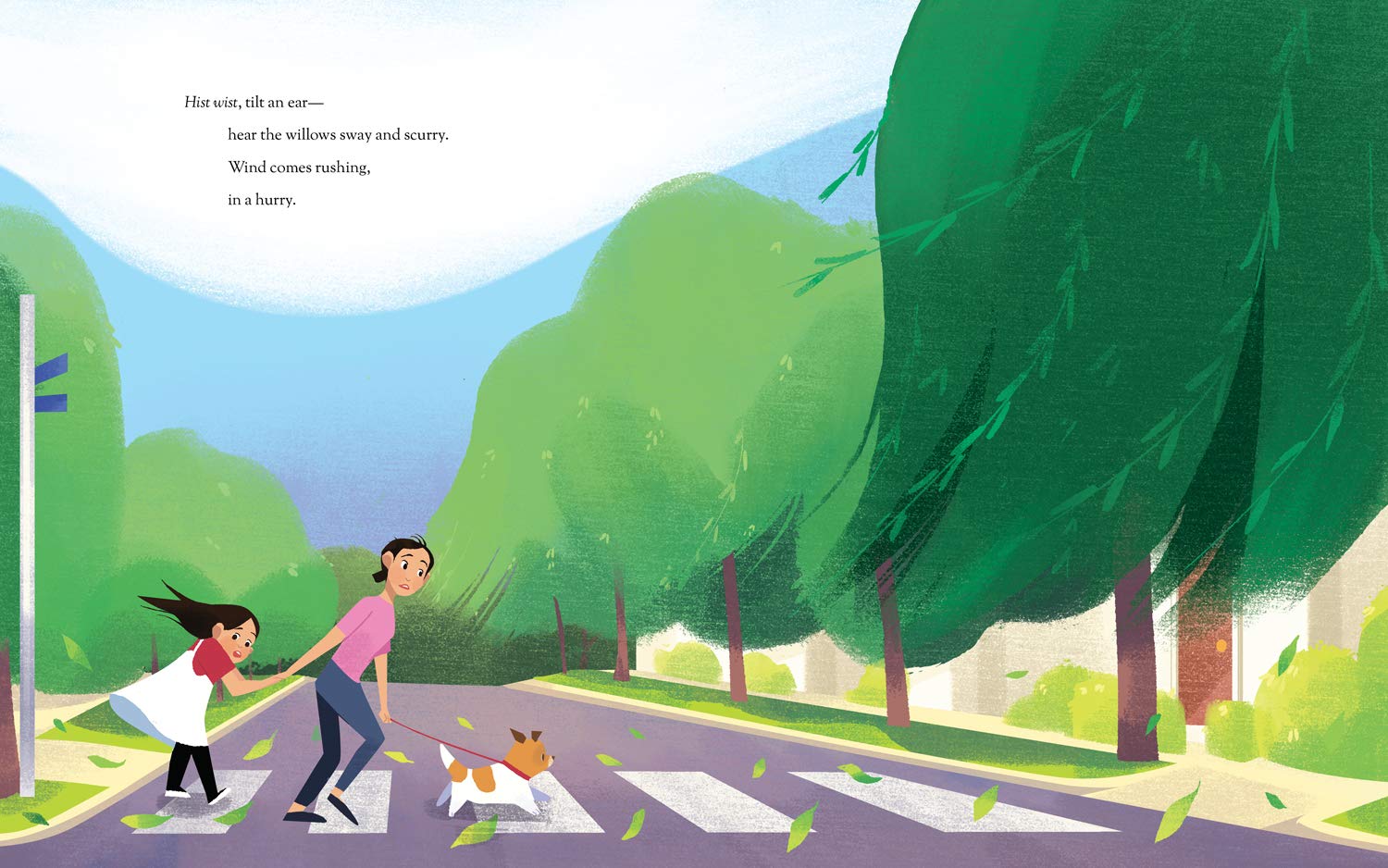
A girl wakes at dawn to a calm, quiet morning in her seaside town. Gazing out her open window she feels “a kiss of air— / a soft breath, a phantom wisp, / faint as shadows, cool and crisp.” As the breeze picks up, leaves rustle across the street as the girl and her mom leave the house to walk their dog. Meanwhile, along the shore the tall grasses begin “sharing whispered summer secrets / with the silent, stalking egrets,” and the flames of a family’s campfire dance with the growing breeze.

celebrate-picture-books-picture-book-review-hear-the-wind-blow-hat

Image copyright Emily Paik, 2021, text copyright Doe Boyle, 2021. Courtesy of Albert Whitman & Company.

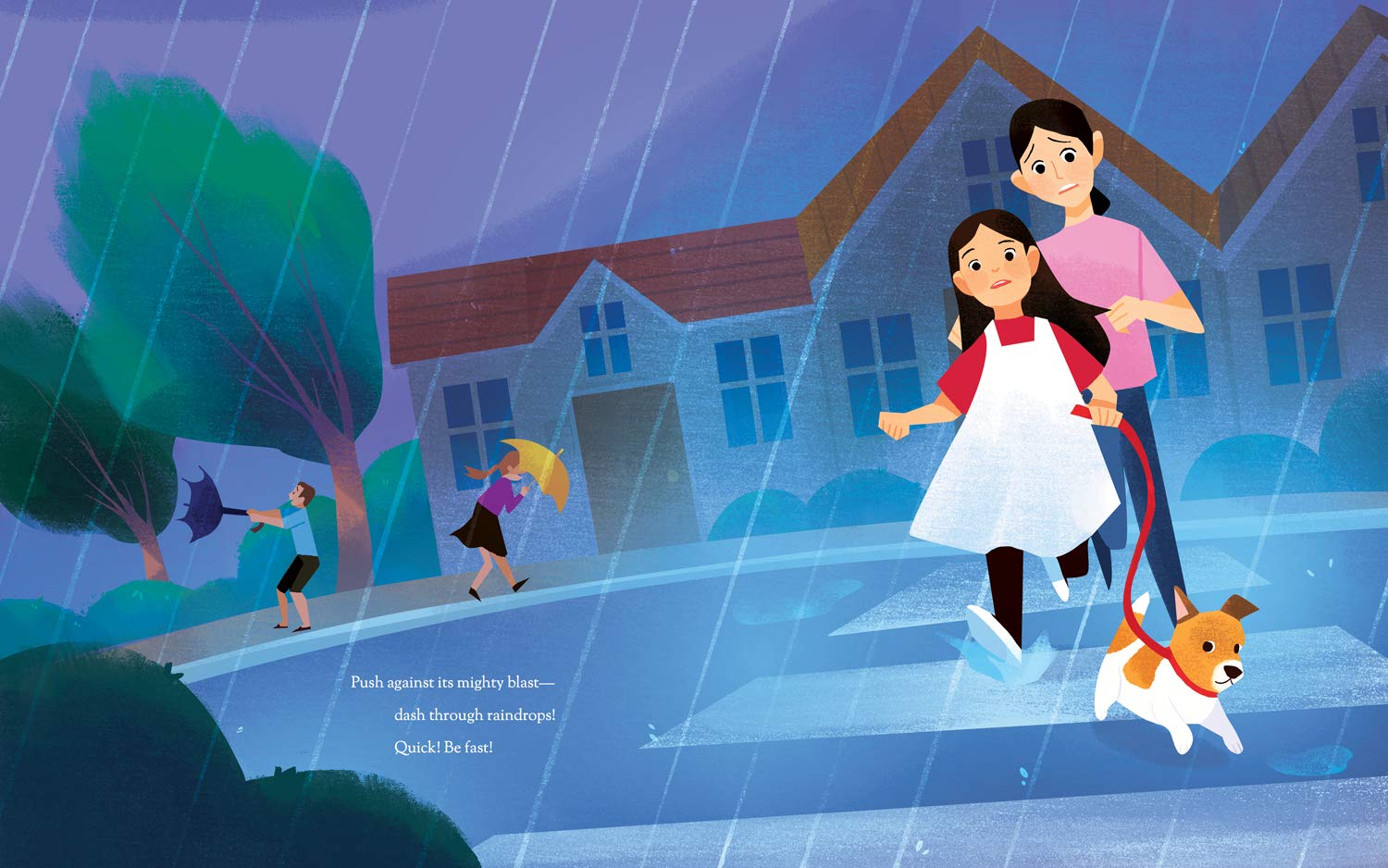
Suddenly, the wind whips up, sending leaves flying and trees swaying. The girl and her mom rush home, their dog running ahead, as rain pelts down. The sky has turned as dark as night and “now the windstorm whips and wails— / sucks at sand and billows sails.” As the storm approaches the girl, her mom and dad, and their pup huddle together in cozy quilts and sing loudly, drowning out “the fearsome sound.”

“When the hurricane comes roiling, / popcorn’s popped, the kettle’s boiling.” Outside the waves crash and spray, the wind screeches, and boats rock, their sails snapping and “their rigging slapping. / Wires droop, and tree roots shudder— / the world’s atilt, without a rudder.”

celebrate-picture-books-picture-book-review-hear-the-wind-blow-trees

Image copyright Emily Paik, 2021, text copyright Doe Boyle, 2021. Courtesy of Albert Whitman & Company.

But hours later the wind is gone, the sun is out and “stillness echoes through the town.” Neighbors emerge to inspect their homes and yards. They help each other clean up and mop up, sharing stories of where and how they sheltered from the storm. On the beach, the girl and her dog watch sailboats skim the now-gentle waves as “all the windswept world spins on.”

Backmatter includes an Author’s Note revealing that each stanza of the lyrical text “represents, in order, one of the thirteen categories of the Beaufort wind force scale, from 0 – 12” as well as a discussion on wind. Doe Boyle also includes a detailed description of the Beaufort scale, along with the chart, which categorizes wind by number, speed, force, sea effects, and land effects. A glossary of words found in the book and a list of suggested reading rounds out this fascinating and useful resource.

celebrate-picture-books-picture-book-review-hear-the-wind-blow-rain

Image copyright Emily Paik, 2021, text copyright Doe Boyle, 2021. Courtesy of Albert Whitman & Company.

With a stirring combination of poetry and science, Doe Boyle invites readers  to experience the coming and aftermath of a hurricane with a peer, her family, and her community. Beautiful, evocative vocabulary allow kids to hear the scurrying leaves, groaning trees, and pounding waves as the wind begins as a breezy whisper and grows to whipping, wailing force. As the storm intensifies, Boyle’s stanzas lengthen and her rhythms become quicker and more urgent, immersing readers in learning about the Beaufort Scale while also finding reassurance in the comfort of family.

Emily Paik’s vivid illustrations give readers visual clues to the onset of the hurricane, from calm blue skies and gently fluttering leaves to a wind strong enough to blow away a man’s hat and whip up rolling waves to a darkening sky, bending trees, and pattering rain. The girl and her mother’s facial expressions show their increasing concern and need to get home. When they reach their house, the girl’s dad has the door flung open, welcoming them back to their cozily lit home. An image of the family singing together above the wind is a heartening respite in the midst of the storm.

While Hear the Wind Blow focuses on a hurricane, the information about wind is applicable to any kind of windstorm. The book is an excellent choice for summer reading at home and would be a superb addition to lessons on weather for teachers and homeschoolers. Hear the Wind Blow book is highly recommended for home, classroom, and public library collections.

Ages 4 – 8

Albert Whitman & Company, 2021 | ISBN 978-0807545614

Discover more about Doe Boyle and her books on her website.

To view a portfolio of work by Emily Paik visit her website.

Hurricane Season Activity

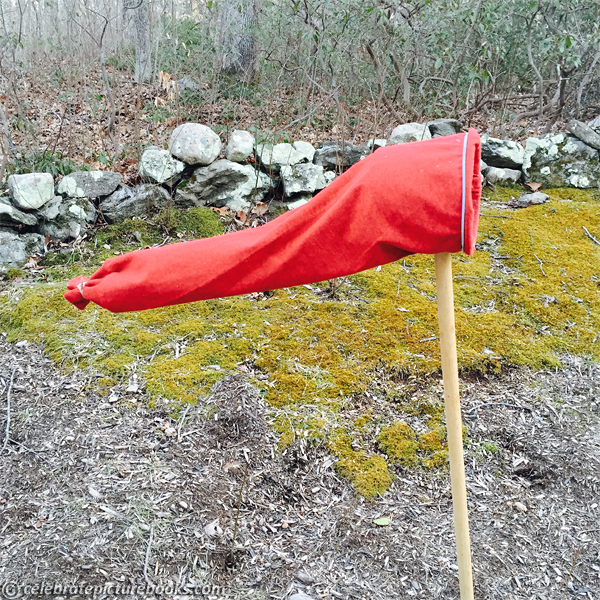
CPB - Windsock

Catch the Wind! Windsock Craft


You can feel the wind in your hair and see it blowing through the trees, but can you actually catch it? You can with this easy-to-make windsock!

Supplies

  • 1 large yogurt container (32 oz) or 1-pound deli salad container
  • 1 long-sleeve T-shirt
  • Strong glue
  • Dowel, 5/8 diameter x 48-inches long or longer
  • String
  • Rubber band
  • sewing seam ripper or cuticle scissors
  • X-acto knife
  • Scissors

Directions

  1. Remove the sleeve from a long-sleeve t-shirt with the seam ripper or cuticle scissors
  2. Cut the shoulder off the sleeve by cutting straight across from the underarm seam
  3. Cut 2 inches from the bottom of the yogurt container OR cut the bottom out of the deli container with the x-acto knife or scissors
  4. With the x-acto knife or scissors, make a hole a little smaller than the diameter of the dowel about 1 inch from the rim of the container
  5. Slide the container into the large opening of the sleeve
  6. Fold about a ¾ -inch edge over the rim of the container and attach all along the rim with strong glue
  7. Put the rubber band around the outside edge of the opening
  8. Tie the bottom of the sleeve’s cuff together with the string
  9. To attach the dowel: Option 1: leaving the t-shirt in place, push the dowel and material through the hole in the container. The t-shirt material will hold the dowel in place (I used this option).  Option 2: cut a small hole in the t-shirt at the location of the hole in the container. Push the dowel through this hole and the hole in the container. Secure with strong glue
  10. Stick your windsock in the ground in an open area where it can catch the wind. As the wind changes direction, you can turn your windsock so the opening faces the wind.

celebrate-picture-books-picture-book-review-hear-the-wind-blow-cover

You can find Hear the Wind Blow at these booksellers

Amazon | Barnes & Noble | Books-a-Million

To support your local independent bookstore, order from

Bookshop | IndieBound

Picture Book Review
June 17 – National Week of Making

celebrate-picture-books-picture-book-review-goldilocks-and-the-three-engineers-cover

About the Holiday

In 2016 President Barack Obama instituted June 17 – 23 as the National Week of Making to celebrate the spirit of American ingenuity and invention and ensure that future generations receive the support they need to continue this proud tradition. In his official proclamation, President Obama stated: “Since our earliest days, makers, artists, and inventors have driven our economy and transformed how we live by taking risks, collaborating, and drawing on their talents and imaginations to make our Nation more dynamic and interconnected. During National Week of Making, we recommit to sparking the creative confidence of all Americans and to giving them the skills, mentors, and resources they need to harness their passion and tackle some of our planet’s greatest challenges.” Today, makerspaces can be found across the country in studios, libraries, schools, and community venues to encourage kids and adults to explore their ideas and the feasibility of bringing their creations to market. To learn more about this week-long holiday, visit the Nation of Makers website.

Goldilocks and the Three Engineers

Written by Sue Fliess | Illustrated by Petros Bouloubasis


“In a tiny bungalow, / there lived a clever thinker. / Young Goldilocks invented things. She’d make and craft and tinker.” Goldilocks made lots of useful things, like machines to help you tie your shoes, to a self-zipping zipper to a hat outfitted with a flashlight, magnifying glass, and itty-bitty satellite dish to help you find the things you’ve lost. But one day, Goldilocks found that she had “inventor’s block,” so she decided to take a walk.

celebrate-picture-books-picture-book-review-goldilocks-and-the-three-engineers-bears

Image copyright Petros Bouloubasis, 2021, text copyright Sue Fleiss, 2021. Courtesy of Albert Whitman & Company.

At the same time, the Bear family was out gathering nuts and berries for their pre-hibernation celebration. Baby Bear had a nifty contraption that knocked fruit and nuts into a basket with a tennis racquet. Papa Bear had an ingenious wheelbarrow with mechanical arms and hands that picked berries one by one and deposited them in the cart—but only after tossing them through a tiny basketball hoop. Swish! And Mama Bear’s handy vacuum sucked fruit right off the bushes and collected them in a tank.

Their next stop was the beehive at the top of a hill. After they’d eaten all their goodies, Baby Bear spied a little bungalow. The Bears thought it was just the place to spend the winter. When they went inside, they found “the room was full of strange devices, / widgets, tools, and more!” Looking more closely, Papa Bear found a chair that was perfect for Baby Bear. He marveled that “it feed you and it wipes your mouth, / and reads you stories, too!” Meanwhile, Mama Bear had discovered a bowl that stirred porridge and a bed that automatically rocked you to sleep.

celebrate-picture-books-picture-book-review-goldilocks-and-the-three-engineers-workshop

Image copyright Petros Bouloubasis, 2021, text copyright Sue Fleiss, 2021. Courtesy of Albert Whitman & Company.

Baby Bear loved the chair but wished for one more innovation that would make it just right. Papa Bear found parts and tools and fixed the chair to Baby Bear’s specifications. Mama Bear tasted the porridge and found it lacking one ingredient, so Papa Bear created a porridge-stirrer accessory to add it drop by drop. By now it was dark, and even though Papa Bear thought it wasn’t right to stay, Baby Bear convinced him that one night would be okay.

But when they crawled into bed and turned it on, it rocked so much that it tipped the Bears right onto the floor. There was only one thing to do: “Baby fixed the engine block. / Replace the gears that burned. / Soon the bears were fast asleep… / Then Goldilocks returned.” She saw the chair, tasted the porridge, and then… “heard snoring sounds.” Wide awake now, the bears began to explain. But Goldilocks was not upset. Instead she said, “‘You’ve improved my projects here, / and made them much more fun. / Proving that four brains, by far, / are better than just one!’”

Excited to be inventing again with the bears on board to lend their smart innovations, Goldilocks sends the family off amid promises to “‘…meet up in the spring’” when they will “‘…make the next big thing!’”

celebrate-picture-books-picture-book-review-goldilocks-and-the-three-engineers-bed

Image copyright Petros Bouloubasis, 2021, text copyright Sue Fleiss, 2021. Courtesy of Albert Whitman & Company.

With her fun flip on the Goldilocks story, Sue Fleiss invites kids to indulge their inner inventor with wacky contraptions that can make getting dressed, cooking, going to bed, and chores more exciting. Fleiss’s clever takes on the well-known “just right” chair, porridge, and bed get readers thinking creatively—perhaps even about their own household appliances. While the original story ends with the interloper being chased away, Fleiss’s version shines with the benefits of cooperation, collaboration, and being open to new ideas.

With so many cool inventions to discover on every page, readers will love taking extra time to find and talk about them all. Any young maker would swoon over Petros Bouloubasis’s well-stocked workbench, and readers would have a blast drawing their own gadgets using the tools and supplies depicted. Quirky, abstract landscapes add to the kid-centric ambiance, and just like the Bear family, who drives away in a new vehicle with their full wheelbarrow in tow, readers will look forward to returning to Goldilocks’ little bungalow again and again.

Imagination, creativity, teamwork, and friendship all wrapped up in a clever fractured fairytale—what could be better?! Goldilocks and the Three Engineers is one to add to home, classroom, and public library bookshelves.

Ages 4 – 8

Albert Whitman & Company, 2021 | ISBN 978-0807529973

Discover more about Sue Fleiss and her books on her website.

To learn more about Petros Bouloubasis, his books, and his art, visit his website.

National Week of Making Activity

CPB - Inventor's Tool Kit II (2)

Inventor’s Tool Kit


Every idea begins as a jumble of seemingly unrelated parts. Gathering whatever types of material inspires you and keeping it in a box ready to go when inspiration hits is a great way to support innovation and spark experimentation.

Supplies

  • Small parts organizer with drawers or compartments, available at hardware stores and craft stores
  • A variety of parts or craft materials that can be combined, built with, or built on
  • Some hardware ideas—pulleys, wheels, small to medium pieces of wood, wire, nuts, bolts, screws, hooks, knobs, hinges, recyclable materials
  • Some craft ideas—clay, beads, wooden pieces, sticks, paints, pipe cleaners, string, spools, buttons, glitter, scraps of material, recyclable materials

Directions

  1. Fill the organizer with the materials of your choice
  2. Let your imagination go to work! Build something cool, crazy, silly, useful—Amazing!

celebrate-picture-books-picture-book-review-goldilocks-and-the-three-engineers-cover

You can find Goldilocks and the Three Engineers at these booksellers

Amazon | Barnes & Noble | Books-a-Million

To support your local independent bookstore, order from

Bookshop | IndieBound

Picture Book Review

May 10 – It’s Garden for Wildlife Month

celebrate-picture-books-picture-book-review-a-garden-for-the-birds-cover

About the Holiday

As May’s warm weather and rain creates a perfect environment for growing a garden, today’s month-long holiday, established by the National Wildlife Federation, encourages people to plant a garden that will benefit birds, butterflies, bees, and other insect pollinators. This is easier than it may sound and can be accomplished in a variety of ways and sizes from a single pot or container to a dedicated “meadow” plot. Planting native flowering species makes a positive impact on your local area. To watch a video with five tips to help you garden for wildlife, find plants native to your region, and learn how to have your space recognized as a Certified Wildlife Habitat, visit the National Wildlife Federation website and Garden for Wildlife. Sharing today’s reviewed book is another wonderful way to learn how to make their yards, front gardens, and even whole neighborhoods inviting to wildlife.

A Garden to Save the Birds

Written by Wendy McClure | Illustrated by Beatriz Mayumi


One day while Callum and his sister Emmy were eating breakfast, a bird hit their window. They and their mom rushed outside to check on bird. It was okay and flew away, but that’s when Callum noticed that the window glass reflected the sky, and the birds couldn’t tell the difference. Later, Callum, Emmy, and their mom read about birds and learned lots of things they didn’t know – like how there are fewer birds now and how lights at night affect their migration. 

celebrate-picture-books-picture-book-review-a-garden-to-save-the-birds-raking

Image copyright Beatriz Mayumi, 2021, text copyright Wendy McClure. Courtesy of Albert Whitman & Company.

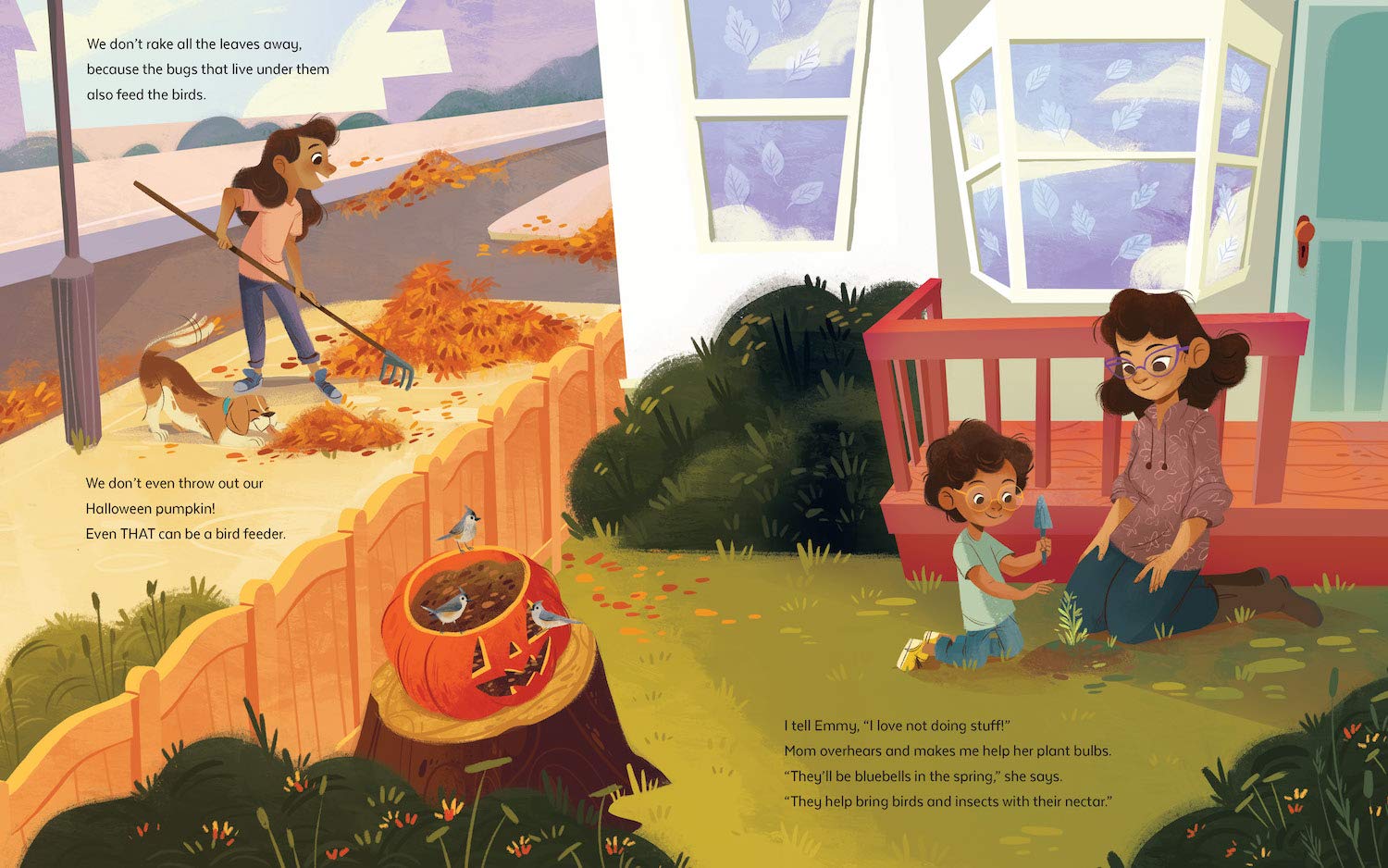
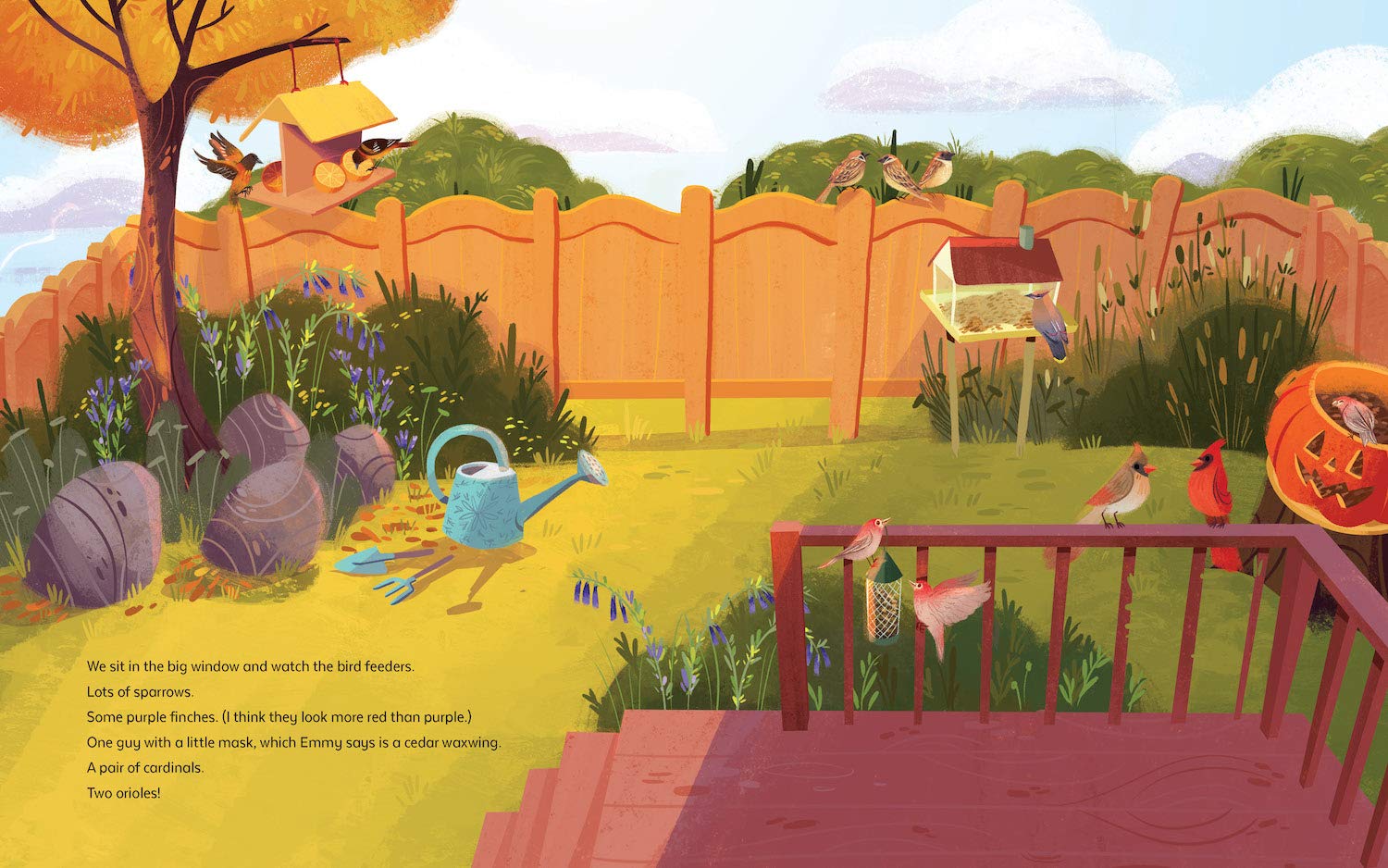
They decide to do things around their house to help the birds. They put out feeders and add decals to the windows. “But some of the things we do to help the birds,” Callum says, “are the things we don’t do.” In the fall, they’re mindful of where birds can find food. Even the Halloween Jack-o-lantern plays a part. And they plant bulbs to prepare for spring. It doesn’t take long before they attract a lot of different kinds of birds.

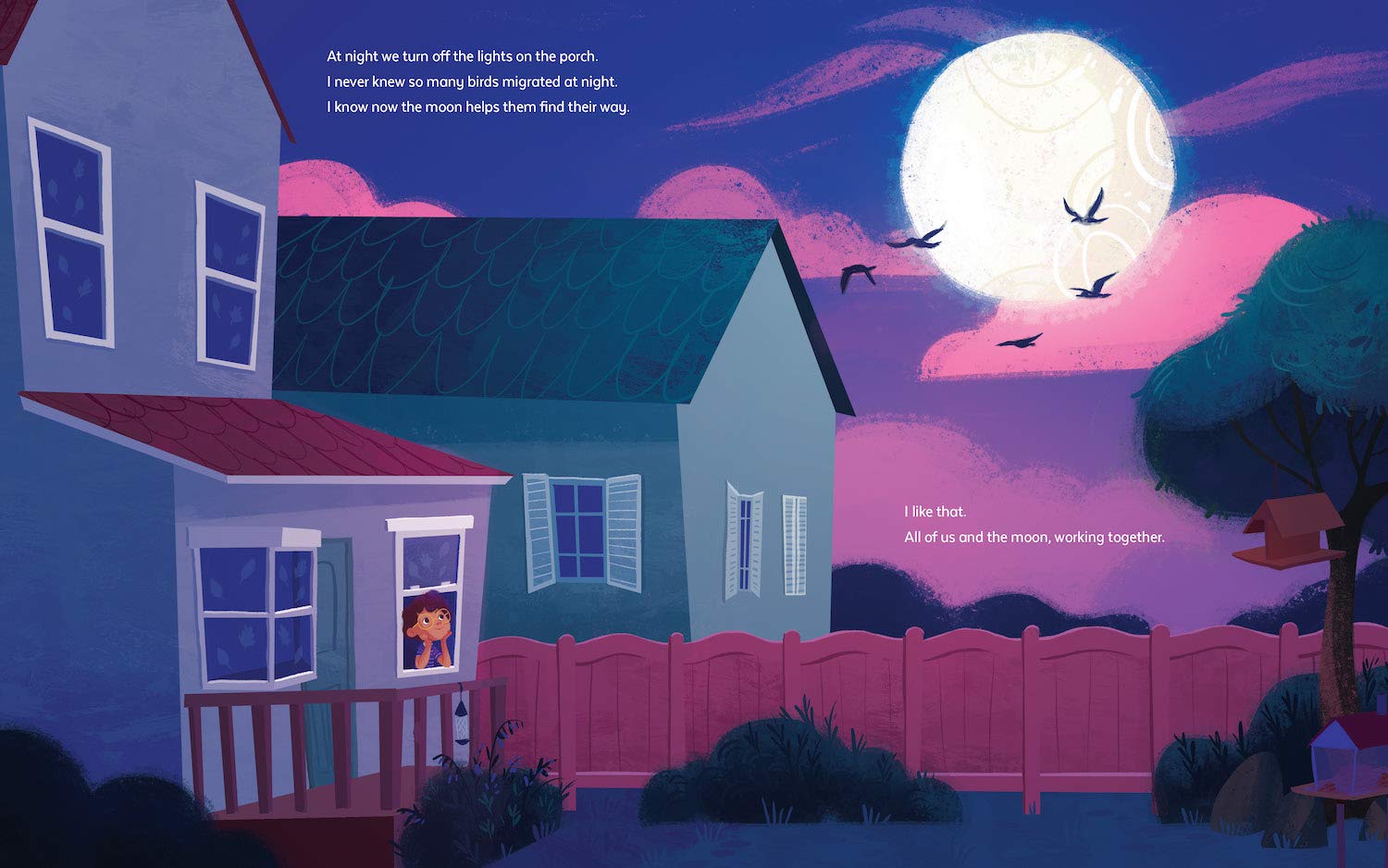
At night they take to turning off the porch lights and lowering the blinds so as not to confuse the birds. Callum looks up at the sky to see dark silhouettes flying by. “I never knew so many birds migrated at night,” he says. “I know now the moon helps them find their way.” He likes that now they and “the moon are working together.”

celebrate-picture-books-picture-book-review-a-garden-to-save-the-birds-feeders

Image copyright Beatriz Mayumi, 2021, text copyright Wendy McClure. Courtesy of Albert Whitman & Company.

During the winter, Callum and Emmy make sure the birds have shelter and fresh water. They also talk to their neighbors about the birds and some of the changes they could make to help them. At first Callum thinks their next door neighbor isn’t interested in helping, but then they notice that he’s turned off his porch light too. It turns out that everyone on the block is making positive changes.

When spring and summer roll around again and all the flowers and grasses are blooming, Callum discovers that they’re not only helping the birds, but that bees, butterflies, and other pollinators are attracted to the neighborhood too. In fact, the neighborhood has made such an impact that it is recognized with a sign as a certified wildlife habitat. Callum is glad that they have all worked together to make their block a welcoming home for birds and other wildlife.

Backmatter includes a discussion on the decreasing bird population, how kids and their families can create welcoming environments around their homes, and online resources for more information.

celebrate-picture-books-picture-book-review-a-garden-to-save-the-birds-night

Image copyright Beatriz Mayumi, 2021, text copyright Wendy McClure. Courtesy of Albert Whitman & Company.

In her charming and educational story, Wendy McClure strikes just the right tone to engage kids in learning about birds and how they can make changes around their homes to attract and help nurture birds and pollinators. Her storytelling is friendly and kid-centric, and readers will be drawn to Callum’s perspective and concern for wildlife and want to get involved in local environmental activism themselves. Adults will also find helpful and interesting tips on simple ways to make a yard or even a small area bird– and pollinator-friendly. 

Beatriz Mayumi’s lovely and detailed illustrations depict the variety of backyard birds that visit inviting landscapes as well as the beauty of garden plantings. She also clearly and realistically portrays the kinds of feeders, water bowls, nesting boxes, and natural vegetation that attract birds year round. In her images, Mayumi also reminds readers about light pollution and where it comes from in a neighborhood setting. Her beautiful illustrations of the gardens created with such care as well as her depictions of Callum and his family and the whole neighborhood working together will inspire readers to get involved in helping to save the birds.

A charming and inspirational story as well as an excellent guide to turning any area into a sanctuary for birds and pollinators, A Garden to Save the Birds is a book that families and classrooms will turn to again and again. It is highly recommended for all kids and for public library collections.

Ages 4 – 8 

Albert Whitman & Company, 2021 | ISBN 978-0807527535

Discover more about Wendy McClure and her books on her website.

To learn more about Beatriz Mayumi, her books, and her art, visit her website.

Garden for Wildlife Activity

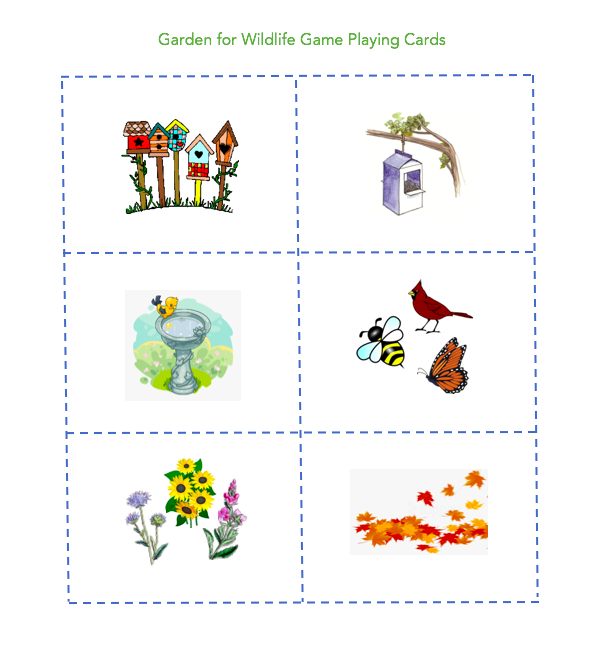
celebrate-picture-books-picture-book-review-garden-for-wild-life-playing-cards

Garden for Wildlife Board Game


Plant flowers, install a bird feeder and birdbath, build some birdhouses, and leave a layer of leaves then invite the birds, butterflies, and bees to your garden plot to win the game!

Supplies

Directions

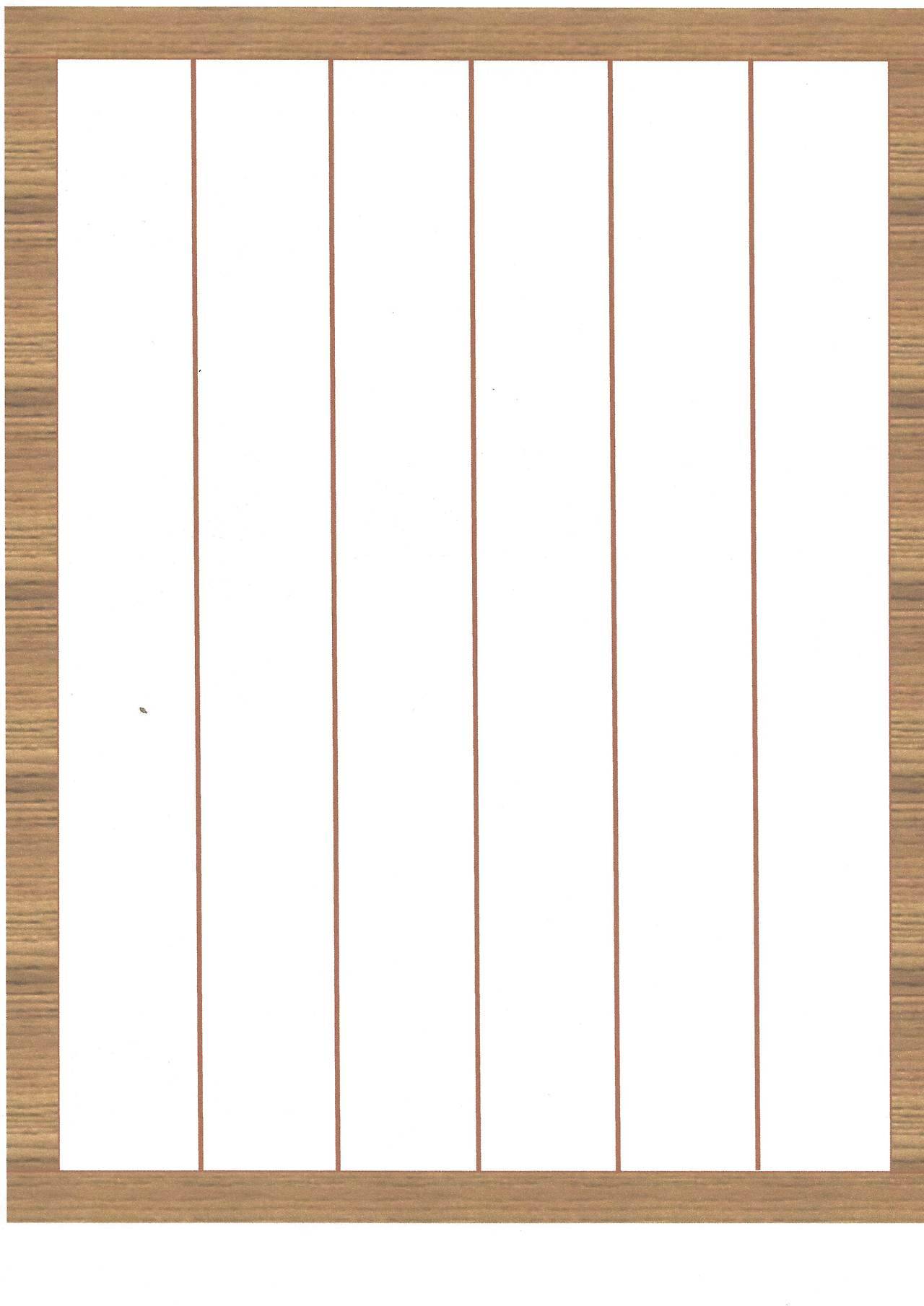
  1. Print one set of playing cards and garden plot (if using) for each player
  2. Print playing die
  3. Color garden plot, paper, or paper plate (optional)
  4. Choose someone to go first.
  5. Each player gets one roll of the die per turn.
  6. Roll the die and place the face-up object in your garden plot. If the player rolls the bird, butterfly, and bee before they’ve added all the other elements, play passes to the next player 
  7. Players continue rolling the die and adding objects to their garden plots. After a player collects them all, they must roll the bird, butterfly, and bee to win.  

celebrate-picture-books-picture-book-review-a-garden-for-the-birds-cover

You can find A Garden to Save the Birds at these booksellers

Amazon | Barnes & Noble | Books-a-Million

To support your local independent bookstore, order from

Bookshop | IndieBound

Picture Book Review