June 24 – It’s Hurricane Season

If you live in a coastal area, you’re used to watching for hurricanes during the summer and fall. The Atlantic hurricane season runs from June 1 to November 30, while the Eastern Pacific season begins a month earlier. Meteorologists and wary residents follow these tropical cyclones as they swirl across the ocean, threatening any landmass in their way. To be categorized as a hurricane, the storm must possess sustained winds of or above 74 miles per hour. You can learn more about hurricanes from the National Oceanic and Atmospheric Administration website. Kids can learn ten facts about hurricanes on the National Geographic Kids website.

Thanks to Abrams Books for Young Readers for sending me a copy of this book for review!

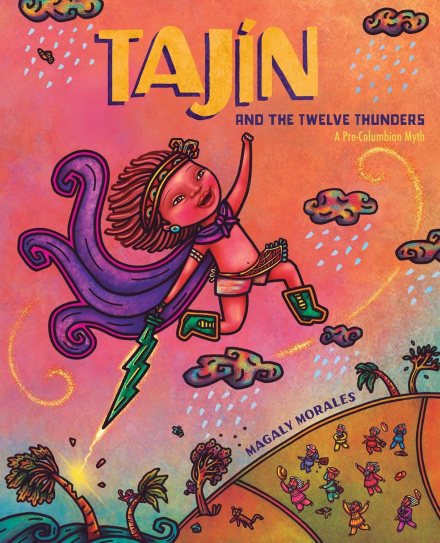
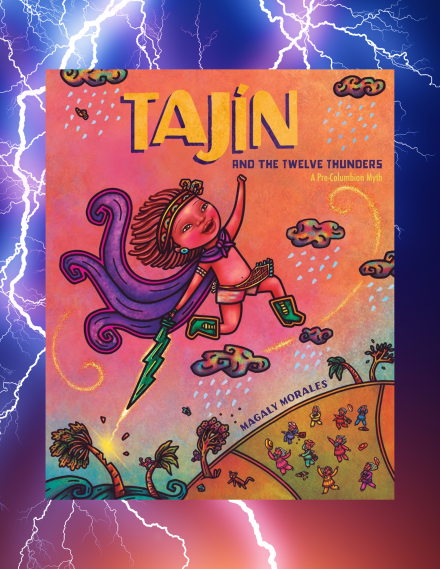
Tajín and the Twelve Thunders: A Pre-Columbian Myth

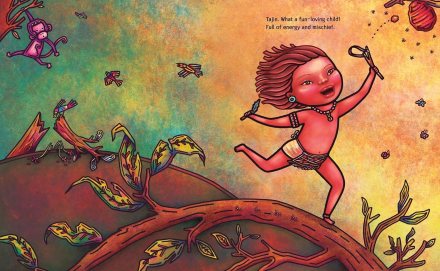
Tajín was a fun-loving, mischievous boy who wanted nothing more than for the animals to play with him, but even the monkeys, jaguars, and macaws ran away from him. Tajín went to the wise god Quetzalcóatl to ask why no one would play with him. Quetzalcóatl told him that he must learn to be more gentle, and sent him to learn from the Twelve Thunders, saying “‘they bring harsh storms, but they also bring calming rains.'” Tajín walked through the jungle to the Pirámide de los Nichos, the home of the Twelve Thunders.
Text and illustration copyright © 2026 by Magaly Morales. Courtesy of Abrams Books for Young Readers.

When Tajín met the Thunders, he discovered that his reputation as a “troublemaker” was well-known, and the Thunders rejected him, despite his offer to cook and clean. At last one of the Thunders convinced the others to give Tajín a chance, and they relented. As he helped with the work, Tajín learned when to be gentle and when more strength was needed.

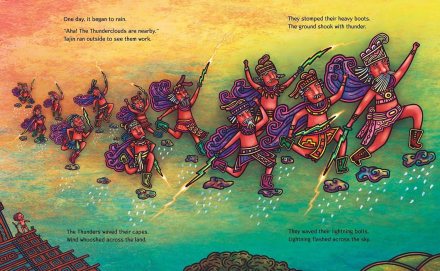
Then one day it rained, and Tajín knew the Thunderclouds were nearby. He went out to watch and witnessed how the wind swirled with a wave of their capes, how stomping their boots caused ground-shaking thunder, and how brandishing their lightening bolts lit up the sky. When the Thunders returned, Tajín begged them to teach him their art, but they told him he wasn’t ready.
Text and illustration copyright © 2026 by Magaly Morales. Courtesy of Abrams Books for Young Readers.

One hot day when he was left alone, Tajín went to the Thunders’ storage chest and gathered boots, a cloak, and a lightning bolt. Tajín danced lightly, and a gentle, cooling rain fell. But then he began dancing wildly, and “the rain raged and the winds swirled.” The trees, lashed and bent, tossed the monkeys from their branches. The oceans rose in enormous, crashing waves. Tajín watched sea creatures playing in the wild waves. “What fun that looks! he thought.” But the Thunders were angry. They ordered Tajín to come down, but he refused and ran away. When the Thunders cleverly caught him, his fortunes were forever changed.

Back matter includes an Author’s Note, in which Magaly Morales reveals her connection to the myth, a short history of the region of El Tajín as well as the meaning of the name “Tajín,” two photographs of the Pirámide de los Nichos (Pyramid of Niches), and a select bibliography.
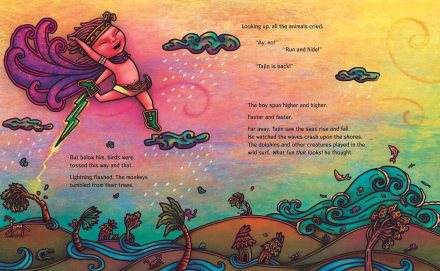
Text and illustration copyright © 2026 by Magaly Morales. Courtesy of Abrams Books for Young Readers.

Magaly Morales hooks children from the start as Tajín’s antics alienate his other would-be playmates, leaving only him and young readers to meet the twelve Thunders and learn Tajín’s fate. Morales immerses kids in the Thunders’ deliberations to let Tajín stay with them and the resulting non-stop action that leads to suspense and a surprise ending. Morales’s distinctive illustrations are prismatic masterpieces, sizzling with the heat of their Mexican setting and the vividness of this child-centric origin story of how the first hurricanes were created. Images of the twelve Thunders at work will wow children as will the lush natural scenery.

Tajín and the Twelve Thunders: A Pre-Columbian Myth is a rousing read-aloud, which could also easily be converted into a play for classroom settings. The story will delight children, and its rambunctious protagonist is sure to guarantee requests for repeat readings. The book is a superb addition for any library collection.

Ages 4 – 8

Abrams Books for Young Readers, 2026 | ISBN 978-1419768859

About the Author

Magaly Morales is the illustrator of several picture books, including What Can You Do with a Paleta?, a Tomás Rivera Mexican American Children’s Book Award winner; The Courage of the Little Hummingbird: A Tale Told Around the World; and Pura’s Cuentos: How Pura Belpré Reshaped Libraries with Her Stories, which received starred reviews in BooklistKirkus, and Publishers WeeklyTajín and the Twelve Thunders is Morales’s debut book as both writer and illustrator. She was born and lives in Xalapa, Veracruz, Mexico.

CPB - Windsock

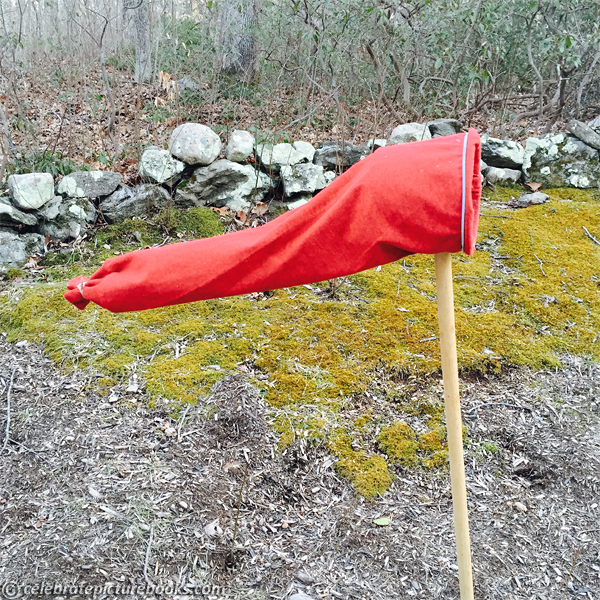
You can feel the wind in your hair and see it blowing through the trees, but can you actually catch it? You can with this easy-to-make windsock!

Supplies

  • 1 large yogurt container (32 oz) or 1-pound deli salad container
  • 1 long-sleeve T-shirt
  • Strong glue
  • Dowel, 5/8 diameter x 48-inches long or longer
  • String
  • Rubber band
  • sewing seam ripper or cuticle scissors
  • X-acto knife or Scissors

Directions

  1. Remove the sleeve from a long-sleeve t-shirt with the seam ripper or scissors
  2. Cut the shoulder off the sleeve by cutting straight across from the underarm seam
  3. Cut 2 inches from the bottom of the yogurt container OR cut the bottom out of the deli container
  4. With the X-acto knife or scissors, make a hole a little smaller than the diameter of the dowel about 1 inch from the rim of the container
  5. Slide the container into the large opening of the sleeve
  6. Fold about a ¾ -inch edge over the rim of the container and attach all along the rim with strong glue
  7. Put the rubber band around the outside edge of the opening
  8. Tie the bottom of the sleeve’s cuff together with the string
  9. To attach the dowel: Option 1: leaving the t-shirt in place, push the dowel and material through the hole in the container. The t-shirt material will hold the dowel in place (I used this option).  Option 2: cut a small hole in the t-shirt at the location of the hole in the container. Push the dowel through this hole and the hole in the container. Secure with strong glue
  10. Stick your windsock in the ground in an open area where it can catch the wind. As the wind changes direction, you can turn your windsock so the opening faces the wind.
You can purchase Tajín and the Twelve Thunders: A Pre-Columbian Myth from these booksellers

Amazon | Barnes & Noble | Bookshop

June 26 – It’s Hurricane Season

celebrate-picture-books-picture-book-review-hear-the-wind-blow-cover

About the Holiday

If you live in a coastal area, your used to watching for hurricanes during the summer and fall. Meteorologists and wary residents follow these tropical cyclones as they swirl across the ocean, threatening any landmass in their way. To be categorized as a hurricane, the storm must possess sustained winds of or above 74 miles per hour. You can learn more about hurricanes from the National Oceanic and Atmospheric Administration website. Kids can learn ten facts about hurricanes on the National Geographic Kids website.

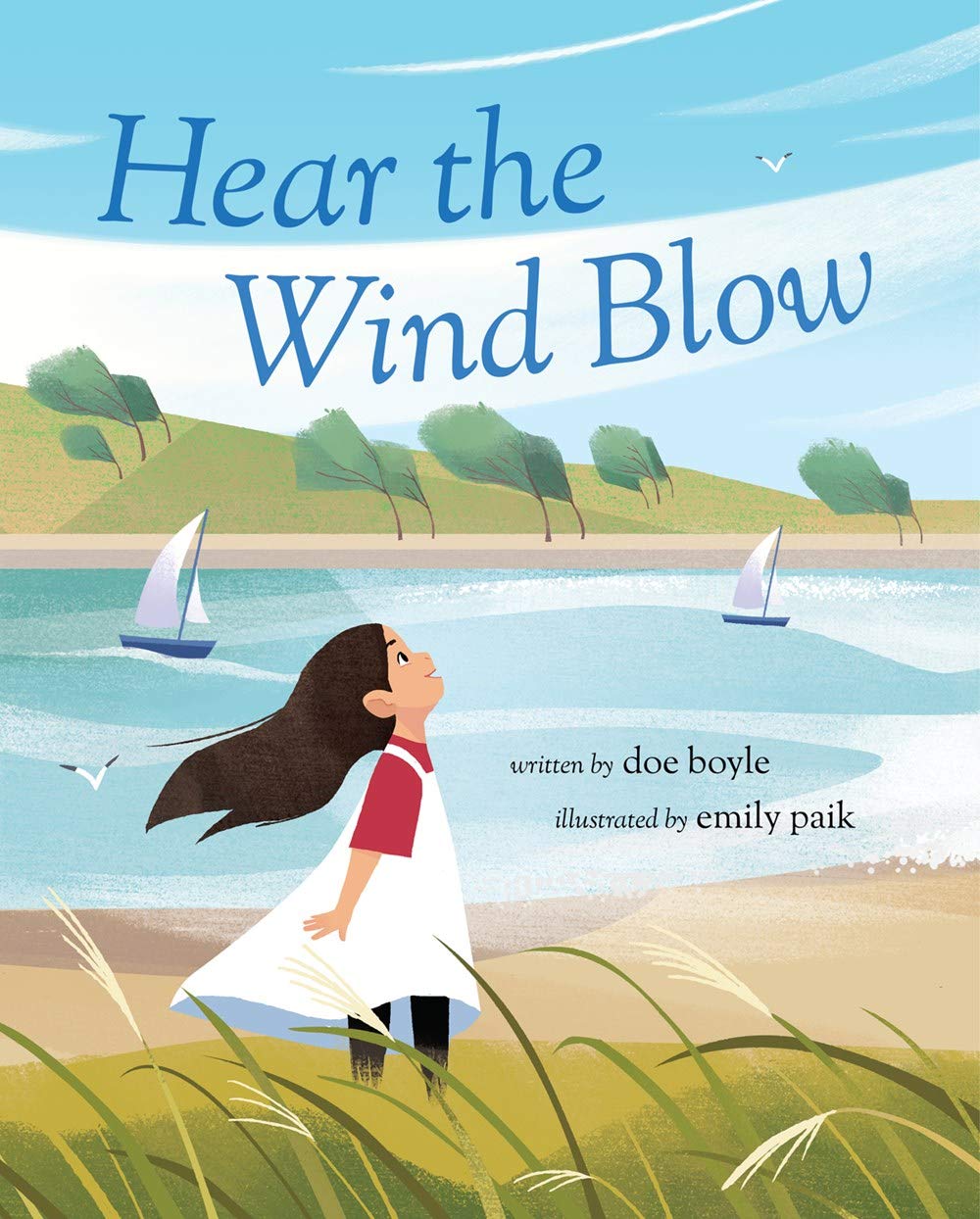
Hear the Wind Blow

Written by Doe Boyle | Illustrated by Emily Paik


A girl wakes at dawn to a calm, quiet morning in her seaside town. Gazing out her open window she feels “a kiss of air— / a soft breath, a phantom wisp, / faint as shadows, cool and crisp.” As the breeze picks up, leaves rustle across the street as the girl and her mom leave the house to walk their dog. Meanwhile, along the shore the tall grasses begin “sharing whispered summer secrets / with the silent, stalking egrets,” and the flames of a family’s campfire dance with the growing breeze.

celebrate-picture-books-picture-book-review-hear-the-wind-blow-hat

Image copyright Emily Paik, 2021, text copyright Doe Boyle, 2021. Courtesy of Albert Whitman & Company.

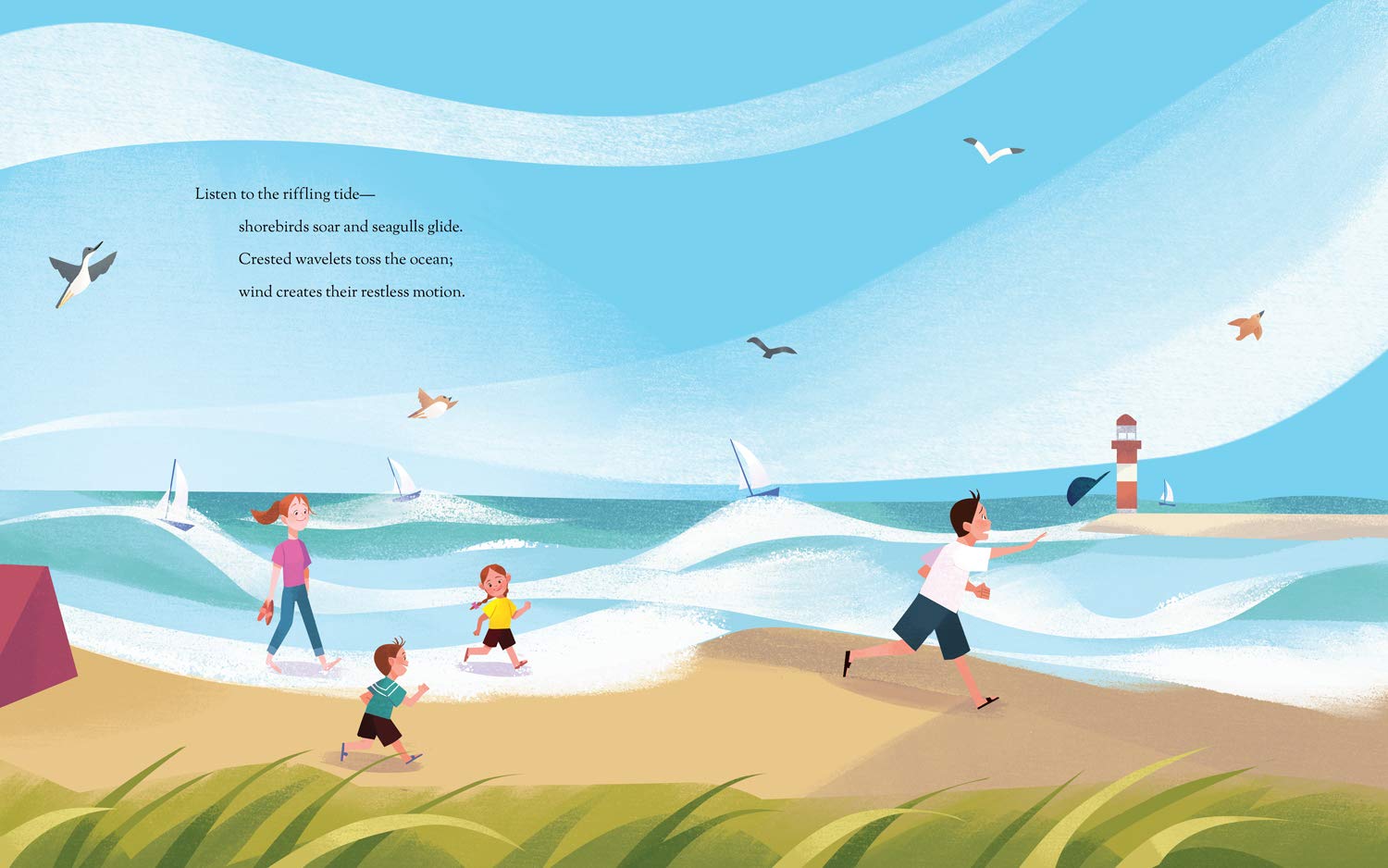
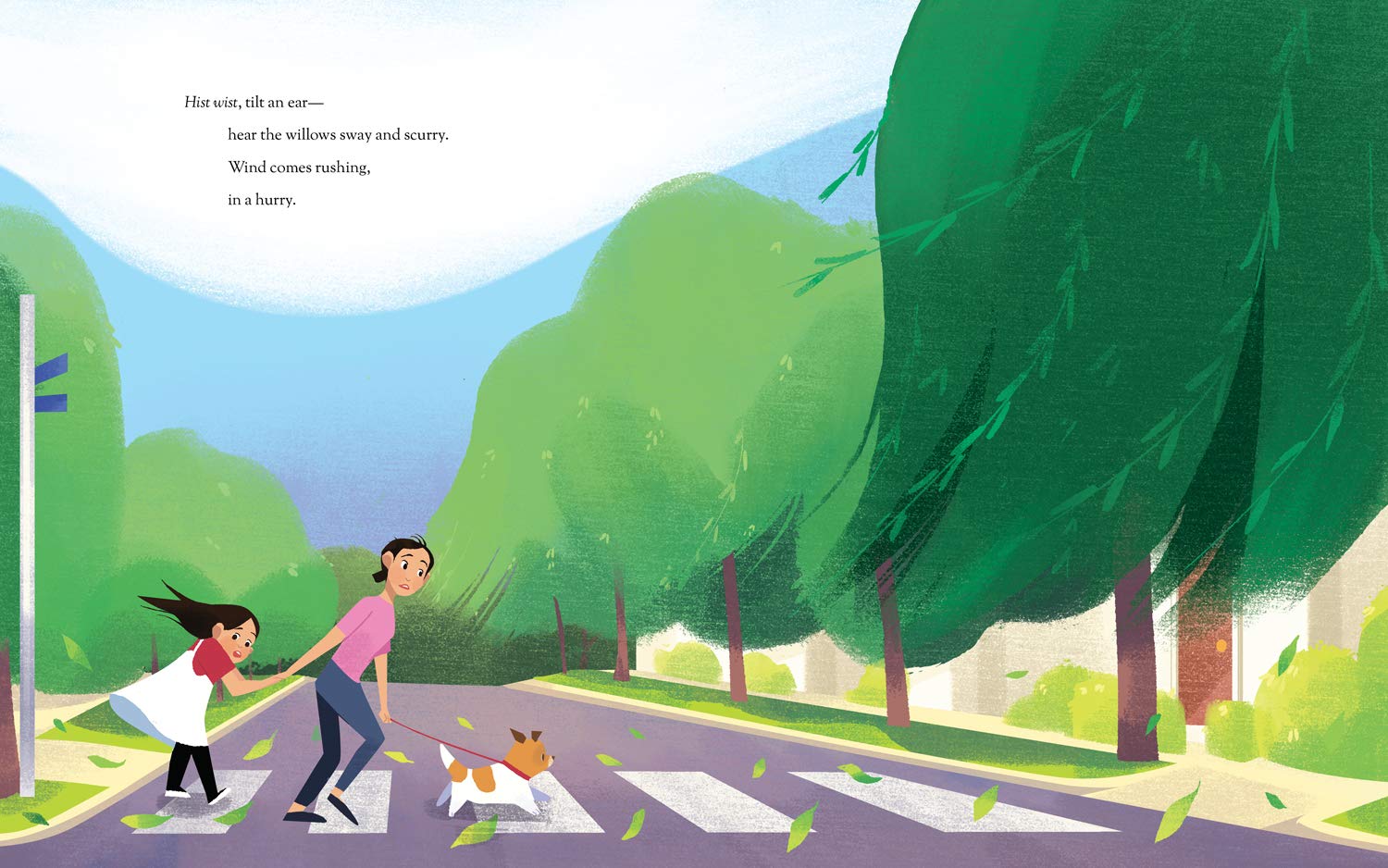
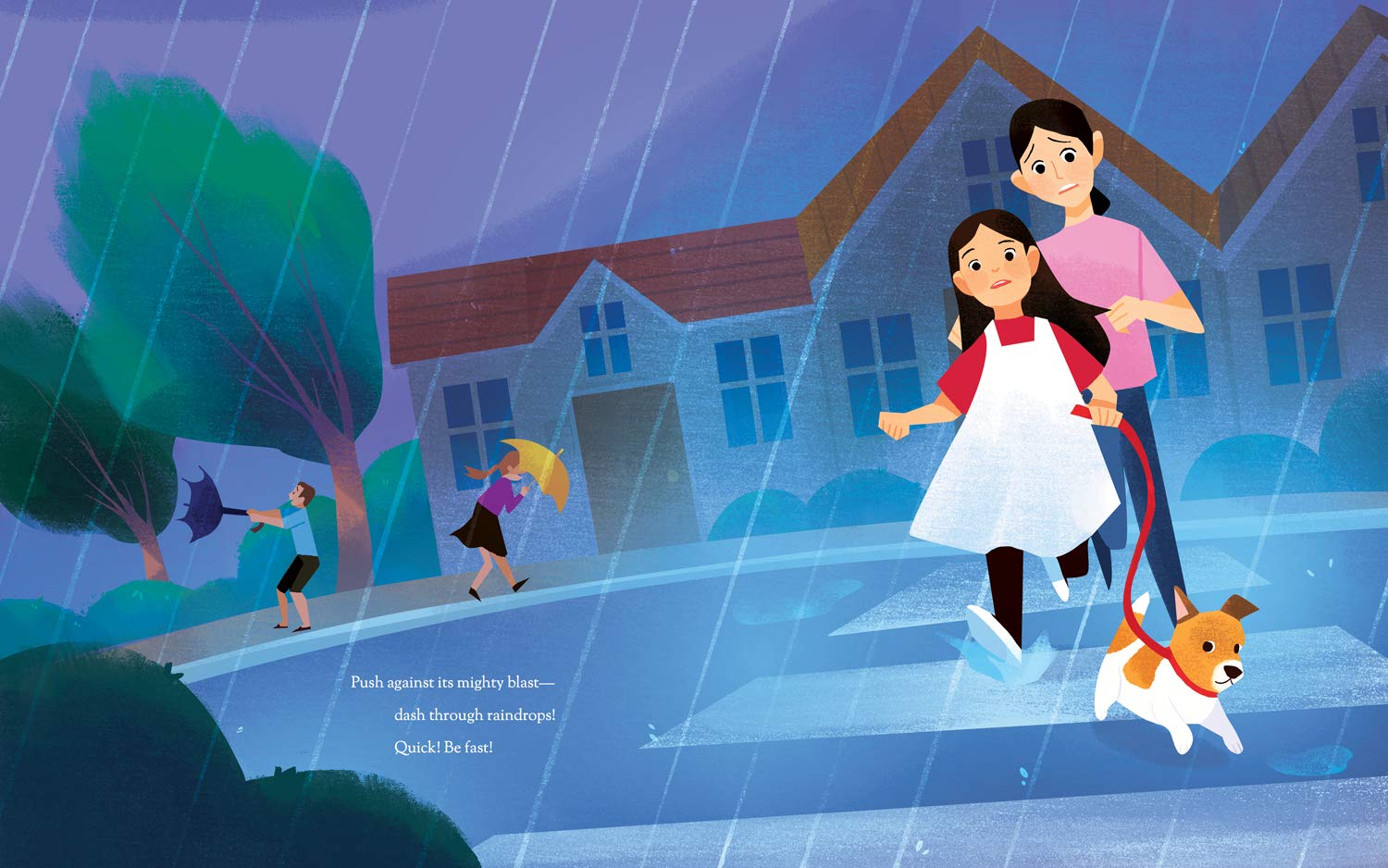
Suddenly, the wind whips up, sending leaves flying and trees swaying. The girl and her mom rush home, their dog running ahead, as rain pelts down. The sky has turned as dark as night and “now the windstorm whips and wails— / sucks at sand and billows sails.” As the storm approaches the girl, her mom and dad, and their pup huddle together in cozy quilts and sing loudly, drowning out “the fearsome sound.”

“When the hurricane comes roiling, / popcorn’s popped, the kettle’s boiling.” Outside the waves crash and spray, the wind screeches, and boats rock, their sails snapping and “their rigging slapping. / Wires droop, and tree roots shudder— / the world’s atilt, without a rudder.”

celebrate-picture-books-picture-book-review-hear-the-wind-blow-trees

Image copyright Emily Paik, 2021, text copyright Doe Boyle, 2021. Courtesy of Albert Whitman & Company.

But hours later the wind is gone, the sun is out and “stillness echoes through the town.” Neighbors emerge to inspect their homes and yards. They help each other clean up and mop up, sharing stories of where and how they sheltered from the storm. On the beach, the girl and her dog watch sailboats skim the now-gentle waves as “all the windswept world spins on.”

Backmatter includes an Author’s Note revealing that each stanza of the lyrical text “represents, in order, one of the thirteen categories of the Beaufort wind force scale, from 0 – 12” as well as a discussion on wind. Doe Boyle also includes a detailed description of the Beaufort scale, along with the chart, which categorizes wind by number, speed, force, sea effects, and land effects. A glossary of words found in the book and a list of suggested reading rounds out this fascinating and useful resource.

celebrate-picture-books-picture-book-review-hear-the-wind-blow-rain

Image copyright Emily Paik, 2021, text copyright Doe Boyle, 2021. Courtesy of Albert Whitman & Company.

With a stirring combination of poetry and science, Doe Boyle invites readers  to experience the coming and aftermath of a hurricane with a peer, her family, and her community. Beautiful, evocative vocabulary allow kids to hear the scurrying leaves, groaning trees, and pounding waves as the wind begins as a breezy whisper and grows to whipping, wailing force. As the storm intensifies, Boyle’s stanzas lengthen and her rhythms become quicker and more urgent, immersing readers in learning about the Beaufort Scale while also finding reassurance in the comfort of family.

Emily Paik’s vivid illustrations give readers visual clues to the onset of the hurricane, from calm blue skies and gently fluttering leaves to a wind strong enough to blow away a man’s hat and whip up rolling waves to a darkening sky, bending trees, and pattering rain. The girl and her mother’s facial expressions show their increasing concern and need to get home. When they reach their house, the girl’s dad has the door flung open, welcoming them back to their cozily lit home. An image of the family singing together above the wind is a heartening respite in the midst of the storm.

While Hear the Wind Blow focuses on a hurricane, the information about wind is applicable to any kind of windstorm. The book is an excellent choice for summer reading at home and would be a superb addition to lessons on weather for teachers and homeschoolers. Hear the Wind Blow book is highly recommended for home, classroom, and public library collections.

Ages 4 – 8

Albert Whitman & Company, 2021 | ISBN 978-0807545614

Discover more about Doe Boyle and her books on her website.

To view a portfolio of work by Emily Paik visit her website.

Hurricane Season Activity

CPB - Windsock

Catch the Wind! Windsock Craft


You can feel the wind in your hair and see it blowing through the trees, but can you actually catch it? You can with this easy-to-make windsock!

Supplies

  • 1 large yogurt container (32 oz) or 1-pound deli salad container
  • 1 long-sleeve T-shirt
  • Strong glue
  • Dowel, 5/8 diameter x 48-inches long or longer
  • String
  • Rubber band
  • sewing seam ripper or cuticle scissors
  • X-acto knife
  • Scissors

Directions

  1. Remove the sleeve from a long-sleeve t-shirt with the seam ripper or cuticle scissors
  2. Cut the shoulder off the sleeve by cutting straight across from the underarm seam
  3. Cut 2 inches from the bottom of the yogurt container OR cut the bottom out of the deli container with the x-acto knife or scissors
  4. With the x-acto knife or scissors, make a hole a little smaller than the diameter of the dowel about 1 inch from the rim of the container
  5. Slide the container into the large opening of the sleeve
  6. Fold about a ¾ -inch edge over the rim of the container and attach all along the rim with strong glue
  7. Put the rubber band around the outside edge of the opening
  8. Tie the bottom of the sleeve’s cuff together with the string
  9. To attach the dowel: Option 1: leaving the t-shirt in place, push the dowel and material through the hole in the container. The t-shirt material will hold the dowel in place (I used this option).  Option 2: cut a small hole in the t-shirt at the location of the hole in the container. Push the dowel through this hole and the hole in the container. Secure with strong glue
  10. Stick your windsock in the ground in an open area where it can catch the wind. As the wind changes direction, you can turn your windsock so the opening faces the wind.

celebrate-picture-books-picture-book-review-hear-the-wind-blow-cover

You can find Hear the Wind Blow at these booksellers

Amazon | Barnes & Noble | Books-a-Million

To support your local independent bookstore, order from

Bookshop | IndieBound

Picture Book Review