You’ll find plenty of shivers and chills, ghosts and giggles in these books and crafts that are just right for the season.
Elsie Clarke and the Vampire Hairdresser
By Ged Adamson
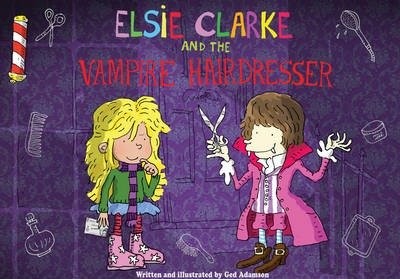
There’s a wonderful free-range silliness to Ged Adamson’s books that brings a smile to your face as you read them. The great thing is that they are based on a kernel of truth, which anchors the story and gives it broader resonance. In the case of Elsie Clarke and the Vampire Hairdresser it’s a fear of haircuts—a scenario I know well from my own son who for a time received his cuts from a very understanding woman who sat with him on the salon’s play rug while she cut his hair. Adamson’s knack with humorous and believable dialogue paired with laugh-inducing action makes the story a page-turner with the kind of suspense that keeps kids giggling from the first page to the satisfying last.
Adamson’s lush illustrations, in a palette of purples, pinks, yellows, and greens, set on backgrounds of plaid tweed, herringbone, denim and other fabrics as well as ornate Victorian wallpapers, offer all the spooky details readers could want from a vampire’s hair salon. Kids will marvel at the old film projector, and the black-and-white home movie of Boris and his dad is a clever touch. Readers will root for cute Elsie and Boris, and have a change of heart when the tyrant Count tears up.
Ages 4 – 8
Sky Pony Press, 2013 | ISBN 978-1620879832
Five Little Pumpkins
Illustrated by Ben Mantle
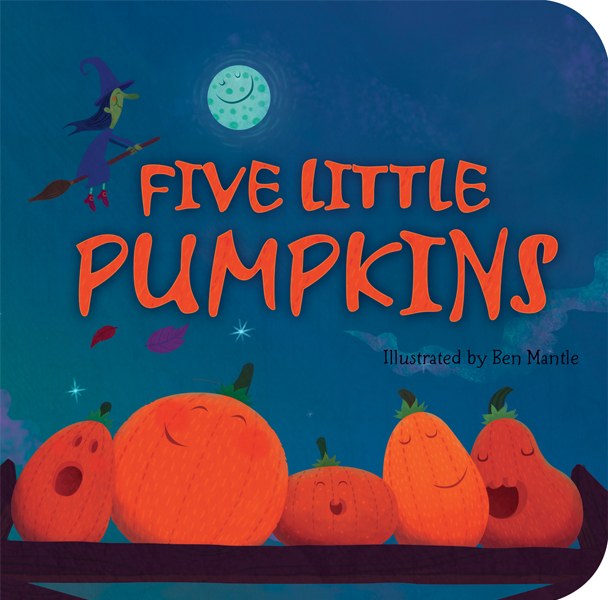
Ben Mantle’s adorable take on the Halloween classic nursery rhyme for babies and toddlers offers cozy shivers, sweet smiles, and cute wide-eyed wonder for little ones dazzled by this spooky fun holiday. Saturated blues, purples, and greens set off the brilliant orange of the playful pumpkins as they abandon their post on the gate to have a midnight romp. The wide grins on all of the holiday haunters—witches, whose brooms paint starlight across the sky, tiny pink monster bats, hopping toads, a bounding cat, hairy-legged spiders, and gauzy ghosts—will make young readers giggle with delight as they roll into bed while the five little pumpkins return home.
Five Little Pumpkins, with its soft padded cover and sturdy pages, is an enchanting book to add to home bookshelves for the fall season, Halloween, and beyond.
Ages 2 – 4
Tiger Tales, 2010 | ISBN 978-1589258563

The Ghouls’ Guide to Good Grammar
Written by Leslie Kimmelman | Illustrated by Mary Sullivan
Leslie Kimmelman introduces each type of grammar with sound and clear descriptions that will help children to understand what its purpose is and to recognize it when reading and writing on their own. She follows this up with sentences full of puns and macabre situations that will tickle kids’ funny bones. Mary Sullivan then does an outstanding job of reinforcing the lesson with her community of monsters, zombies, ghosts, vampires, werewolves, and kids interacting in funny, spellbinding illustrations. Her typography calls out the particular punctuation mark or words of the lesson in red.
It’s hard to overstate how comprehensive, captivating, and educational The Ghouls’ Guide to Good Grammar is for its target audience, whether the reader is an avid grammarian or struggles with the rules. Leslie Kimmelman knows how kids learn and what makes them laugh, and Mary Sullivan uses her cartoon-style art to create eye-popping spreads that will get kids lingering to catch all the ghastly details while they soak up the lesson. In addition the text and illustrations on each page can easily be used by teachers, homeschoolers, parents, and other educators as prompts for extended writing practice to reinforce the rules of grammar. The Ghouls’ Guide to Good Grammar is a must for home, classroom, school, and public library collections.
Ages 5 – 8 and up
Sleeping Bear Press, 2021 | ISBN 978-1534110953

How to Build a Haunted House
Written by Frank Tupta | Illustrated by Kyle Beckett
Frank Tupta’s energetic story about building a haunted house for a very particular family will have kids in suspense as all their favorite monsters race the sun to construct the house in one night. Clever monster-talent match-ups, puns sprinkled throughout, and a mischievous mouse will have kids laughing as the monsters work together to build the house with all the trappings of a true haunted house.
With a palette of purples, greens, and golds, Kyle Beckett creates a ghost town where enthusiastic monsters get to work clearing and smoothing a graveyard by the light of a very large full moon. Kids will love the monster trucks these eager neighbors use to fell trees, dig the basement, and stir concrete. As Frankenstein digs a hole with the help of an enormous hand, the ground is appropriately filled with arms and legs and a few errant bones. While the mummy can’t put the skeletons back together, the witches chime in with a fiery bubbling brew that saves the night just in the nick of time. With a group hug, the monsters celebrate their success before driving their machines out of Vampire Valley and getting some much-needed sleep.
Ages 3 – 7
Two Lions, 2020 | ISBN 978-1542005432

How to Haunt a House
Written by Carolyn Crimi | Illustrated by Edward Miller
Carolyn Crimi puts an adorable twist on the definition of scary in her clever Halloween romp. Her jaunty rhymes are sure to get kids shrieking with laughter and wanting to join in on with their ghostie peers with moans, groans, stomping, singing, and other ghoulish tricks of their own. Crimi’s solution to how to haunt an already haunted house will prompt readers to do some creative thinking too.
Edward Miller’s action-packed illustrations will have kids giggling as the three ghosties play practical jokes on the unsuspecting families and are rewarded with shakes, shivers, and Madam Grey’s approval. When the ghosties hit on the perfect way to scare the Frankensteins, kids will love all the cuter-than-cute “spookiness.” Fun details and lots of Halloween favorites make for lingering looks.
Full of silly scary fun to get preschoolers and young readers excited for Halloween plus out-of-the-box thinking to keep the fun going throughout the year, How to Haunt a House is sure to be a favorite on any bookshelf.
Ages 4 – 7
Albert Whitman & Company, 2021 | ISBN 978-0807534267
How to Make Friends with a Ghost
By Rebecca Green
Rebecca Green’s spirited tribute to true friendship is sweet and funny and applicable to all pals—ghostly or not. Through her ghostly guide, Green reveals that a new friend may be of an unexpected sort and might even be someone who has been invisible to you. Her tips show that embracing a new friend is as easy as saying hi and making them feel important with special treatment, understanding, and sharing favorite activities. Friendships can suffer when two people grow up and grow apart, but Green suggests that with careful attention, a friendship can last forever.
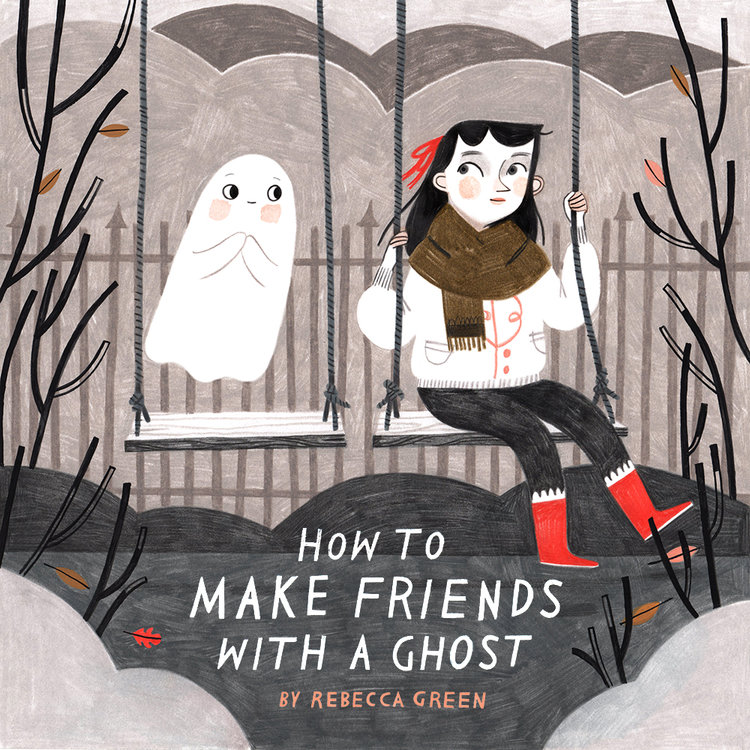
Green’s adorable gouache and colored-pencil illustrations have a timeless feel rendered in soft beiges and grays punctuated with red accents. Green’s clever text is enhanced by images of false ghost sightings, a classification guide, ghost snacks, hiding places and hazards, and the expressive little ghost friend as it laughs, plays, sleeps, and smiles. As the girl grows older, the ghost takes the lead in activities the two enjoy, leaving readers with a satisfying and comforting feeling.
Ages 4 – 8
Tundra Books, 2017 | ISBN 978-1101919019

If You Ever Meet a Skeleton
Written by Rebecca Evans | Illustrated by Katrin Dreiling
While skeletons seem spooky to the kids at first, Rebecca Evan’s lyrical rhyming prose about skeletons’ parts helps readers to realize they’re not so scary after all. The story contains an underlying message encouraging readers to not be scared of making friends that may seem different at first glance. The story of friendship is simple, sweet and a delight to read. It’s a perfect bedtime story for anyone who may be frightened of (or excited by) spooky Halloween creatures. Treat yourself by getting into the Halloween spirit with this quirky read!
Katrin Dreiling is well known for her spooky, yet adorable drawings. She says, “the spooky is a fascinating genre to work with because you need to create a certain atmosphere in a spooky illustration. Also, it is very challenging to achieve a balance so that the finished work is neither too scary nor too bland.” Her multi-medium illustrations in If You Ever Meet a Skeleton accomplish this exactly. The skeletons and children mirror each other with the same cute and spooked expressions. With spreads that are fully black and white, adding to the late-night Halloween scene, pops of red, gold and green draw attention to the diverse cast of children and glorious candy details of the story.
A creative tale of friendship and festivities on Halloween night, If You Ever Meet a Skeleton combines spooky and sweet framed by the tradition of trick-or-treating. The story can also provide a fun way to introduce anatomy to young readers throughout the year.
Ages 4 – 8
Page Street Kids, 2021 | ISBN 978-1645672159
If You’re Scary and You Know It
Written by Carole Gerber | Illustrated by Noël Ill
Kids and adults alike will fully get into the spirit of Halloween with Carole Gerber’s clever and enticingly impish rhymes that will have them moving their feet, yowling ghoulishly, and laughing together. Gerber’s rich language and detailed action-packed storytelling are a joy to sing or read aloud and give kids plenty to imitate as they listen. Children will love joining in on the repeated phrases, and older kids will learn the jaunty verses in no time.
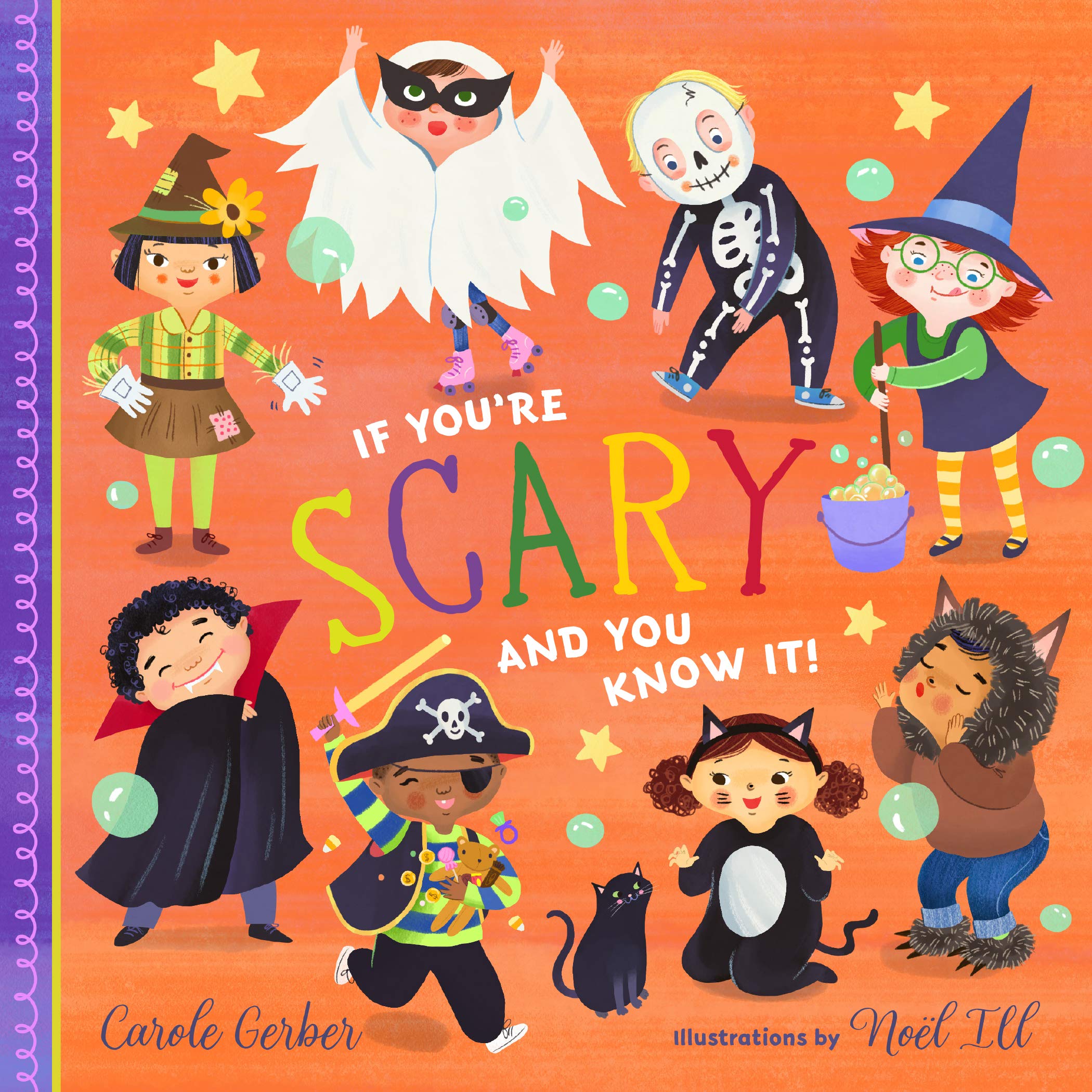
In her delightful, spritely illustrations, Noël Ill replicates the eerie autumn atmosphere that adds to the thrill of Halloween while also clearly depicting motions that children can perform with each verse. Ill’s diverse kids float, dance, growl, screech, and shake with the same enthusiasm as little readers. The final two-page spreads invite children to that nighttime world of magic and treats.
Ages 3 – 6
Familius, 2019 | ISBN 978-1641701464

It’s Halloween, Little Monster
Written by Helen Ketteman | Illustrated by Bonnie Leick
Helen Ketteman’s third book in the Little Monster series shines with bouncy rhymes that are full of spooky prowling and highlight the excitement of Halloween while reassuring kids that all the frights are just for fun. Little readers will find all of their favorite monsters here enjoying treats and only a few tricks, which will bring giggles instead of shivers. Ketteman’s perfect rhythm creates a story that’s perfect for dramatic read alouds, and the sweet relationship between Little Monster and Papa will have kids asking to hear the story again and again.
Kids will love spending Halloween with Little Monster and Bonnie Leick’s enchanting, not-too-scary illustrations where—among the witches, vampires, and ghosts—bunnies, chickens, fairies, and other cute-as-a-button characters trick-or-treat under a full moon. Little Monster’s street and the neighbor’s houses are cleverly decorated for the holiday, and readers will want to linger over each page to see all the fun. The spooky graveyard, especially, invites a careful look, as the inscriptions on the stones show that those who lie beneath were more monstrously kind than monstrous.
Ages 3 – 7
Two Lions, 2020 | ISBN 978-1542092081
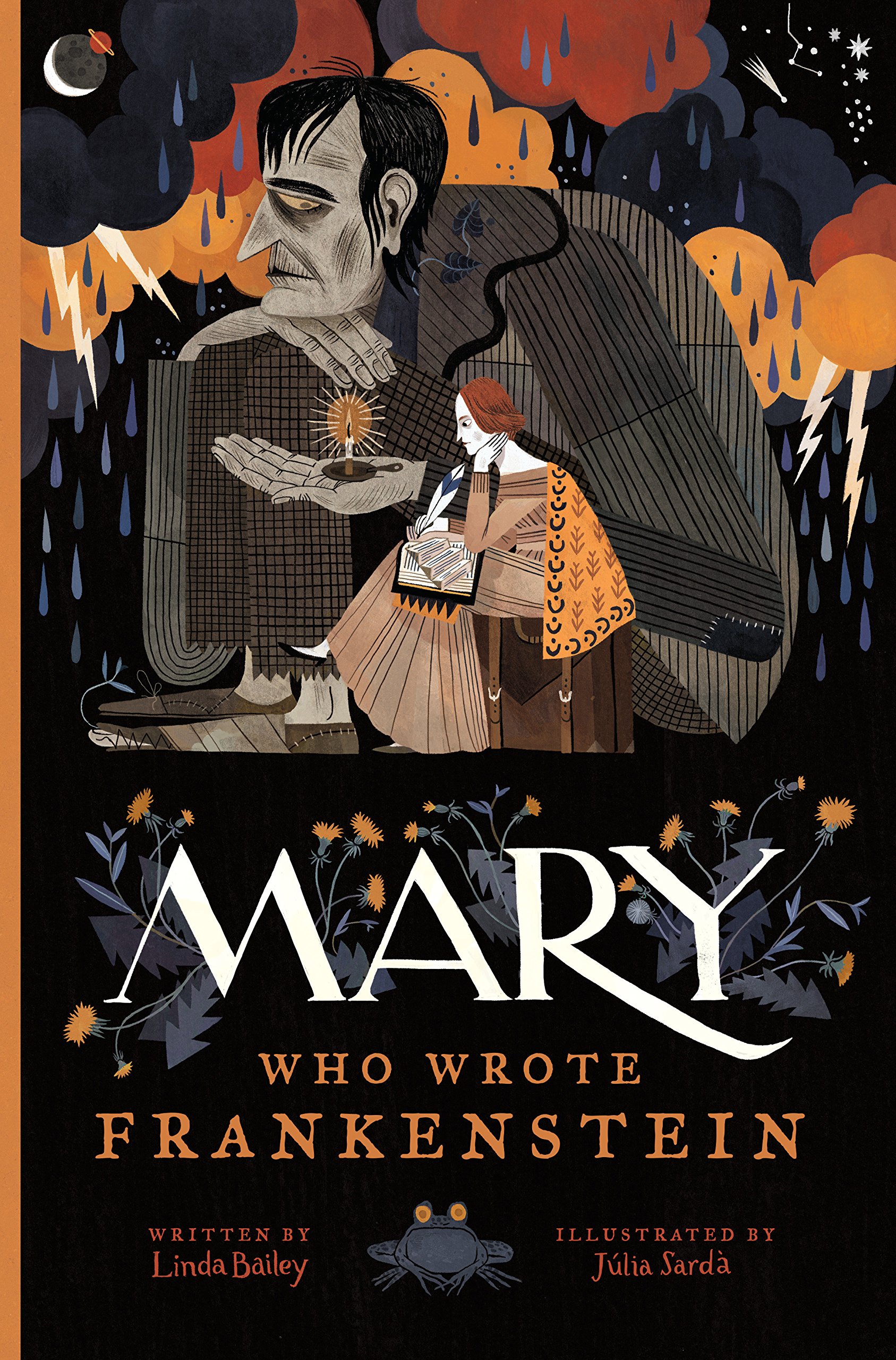
Mary Who Wrote Frankenstein
Written by Linda Bailey | Illustrated by Julia Sardà
With atmospheric and riveting details, Linda Bailey captures the life of Mary Wollstonecraft Shelley and the influences on her imagination that resulted in Frankenstein. Bailey’s use of the present tense is inspired as it reflects the continued currency of the novel while encouraging today’s readers to embrace their “castles in the air.” Facts about Mary’s travels, new scientific discoveries, and favorite books sprinkled throughout the story inform readers on how the imagination combines experiences to create art.
One look at Júlia Sardà’s spellbinding cover tells readers that they are in for an extraordinary reading experience. Muted tones of red, green, gold, blue, and plum cloaked in black create a thrilling backdrop to Bailey’s story. Ghostly winged creatures fly over Lord Byron’s home on a stormy night, smoky monsters emerge from Fantasmagoriana, a frog sits up in its coffin, and the spectre of the monster leans over Mary and sleeps at her feet as she writes her novel. At once spine-tingling and cozy, Júlia Sardà’s illustrations will draw children into this superb story of a ghost story.
Ages 5 – 8
Tundra Books, 2018 | ISBN 978-1770495593
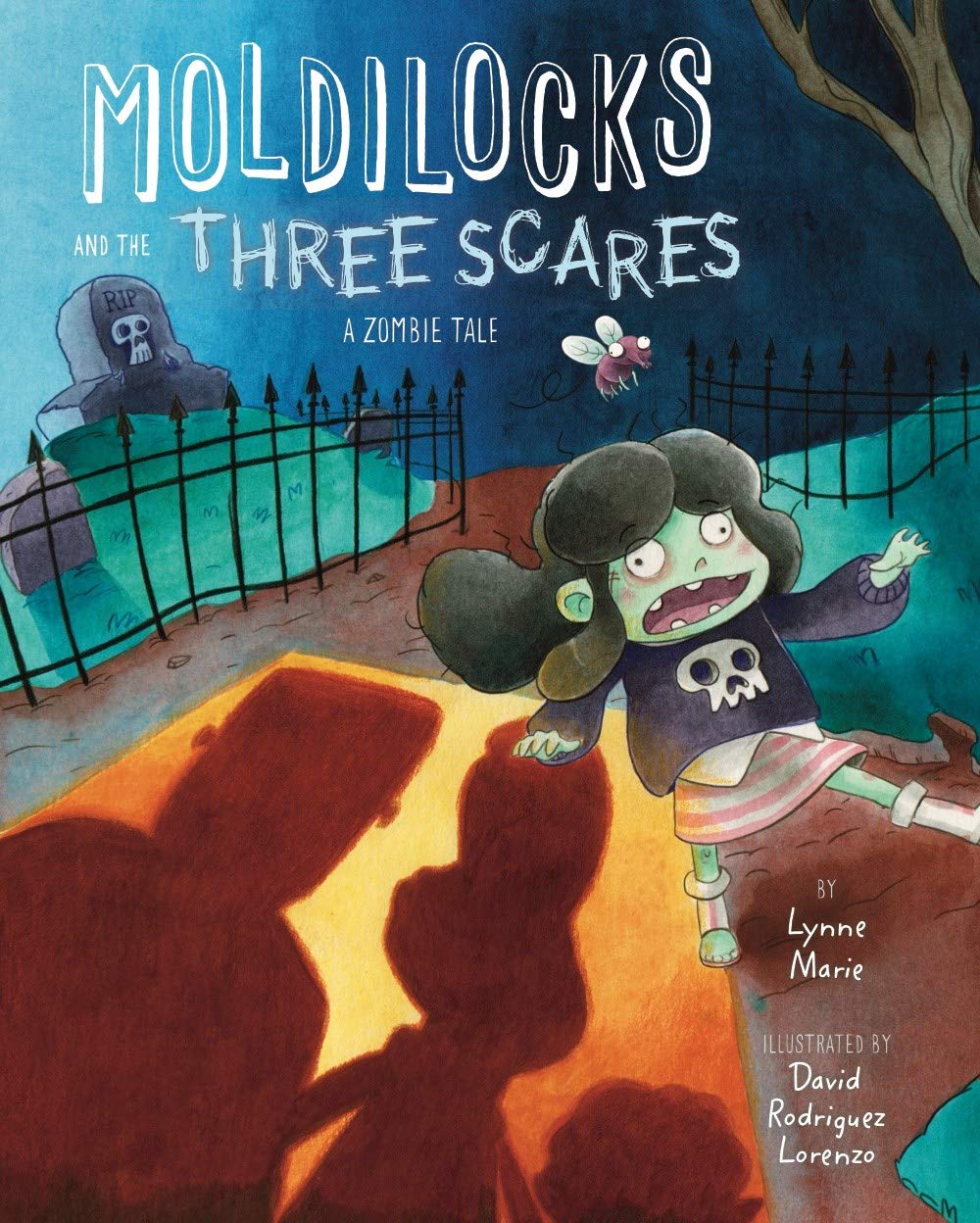
Moldilocks and the Three Scares: A Zombie Tale
Written by Lynn Marie | Illustrated by David Rodriguez Lorenzo
Lynne Marie’s monstrously cute take on Goldilocks and the Three Bears offers up a tale of a family who would love to add another member to play, eat, and work with. When Moldilocks wanders into their empty house and makes herself at home, her discovery by Papa, Mama, and Baby answers all their “nightmares,” and they happily welcome her into their family. Full of spooky puns and funny allusions to monster culture, Marie’s storytelling will have kids howling with giggles. A gently suspenseful twist reveals the deeper layer to this fractured fairy tale—one of inclusion, belonging, and adoption.
David Rodriguez Lorenzo’s eerie and comic illustrations abound with bats, tombstones, spiderwebs, skulls, and bubbling cauldrons, and readers will love the spookily stylish décor of the Scare’s home. But the heart of the story lies in Lorenzo’s depictions of the monsters as a close family and Moldilocks as a little zombie looking for a place to call home.
Ages 4 – 8
Sterling Children’s Books, 2019 | ISBN 978-1454930617
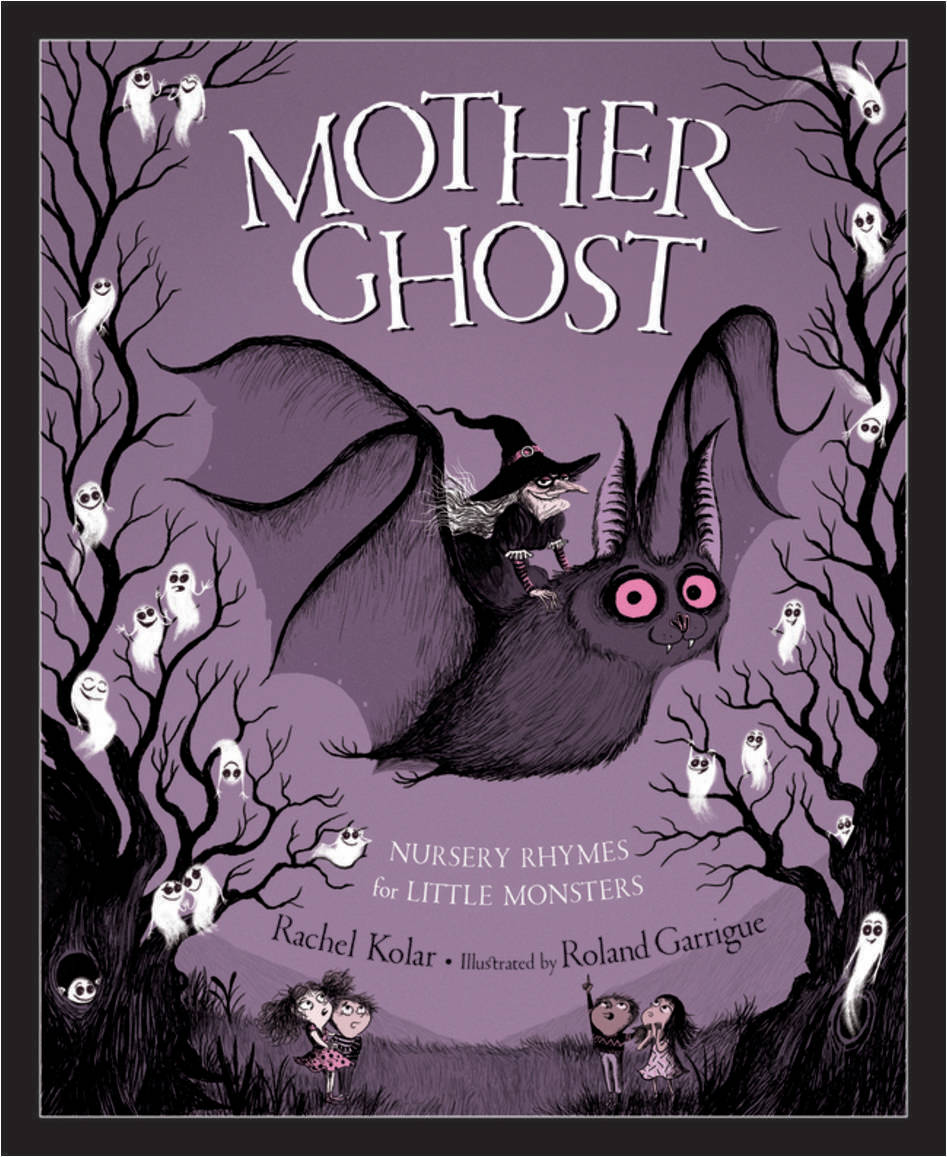
Mother Ghost: Nursery Rhymes for Little Monsters
Written by Rachel Kolar | Illustrated by Roland Garrigue
These appropriately numbered thirteen verses are cleverly creepy takes on favorite nursery rhymes for little ghouls and booys. Grisly details, eerie backdrops, and plenty of skeletons, witches, spiders, bats, and monsters serve up super supernatural shivers and laughs for Halloween and beyond. A bit of literary fun can be had in comparing these poems to the original Mother Goose rhymes.
Deep purple skies shroud graveyards, gnarled trees, and haunted houses as wispy specters, sly skeletons, and toothy monsters run rampant through hill and dale. Each two-page illustration is a gloriously ghastly reimagining of Mother Goose with details that the zombie- and vampire-loving set will love to pore over.
Whether Rachel Kolar’s Mother Ghost is read in small bites or swallowed whole, kid’s will dig hearing these poems again and again. It’s a book that will resonate past Halloween, and would be a fun addition to home, school, and public libraries.
Ages 4 – 7
Sleeping Bear Press, 2018 | ISBN 978-1585363926
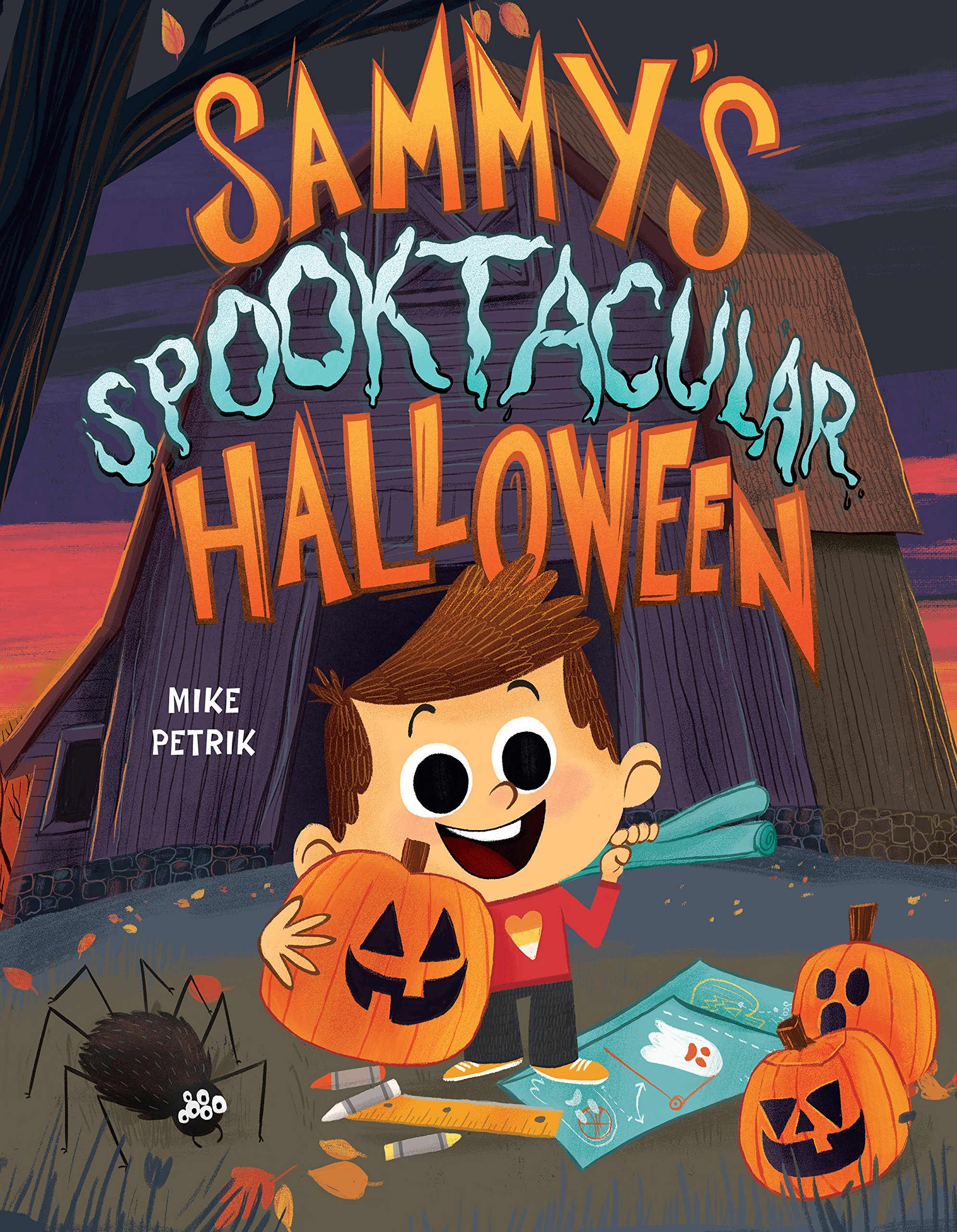
Sammy’s Spooktacular Halloween
By Mike Petrik
Young Halloween lovers—i.e. all kids—will find Sammy’s Spooktacular Halloween frightfully funny and, no doubt, inspirational too. From the list of Sammy’s haunted house elements to the experimental tricks to multi-holiday mash-ups, Sammy’s imaginative ideas will enthrall kids. Engineers-in-the-making will eagerly await each page turn as they mull over the possible ways to recreate Sammy’s devices. While Sammy learns that a bit of moderation in his year-long quest for the best Halloween ever may be in order, Mike Petrik’s inclusion of helpful siblings and supportive parents is heartening and will please readers—especially youngest family members. Petrik’s pages are electrified with bold, vibrant colors and Sammy’s thrilling Halloween haunts that move, shiver, and shake. The final two-page spread of the family’s haunted barn is a showstopper that kids will want to explore.
Ages 3 – 7
Two Lions, 2018 | ISBN 978-1503901797
The Scariest Book Ever
By Bob Shea
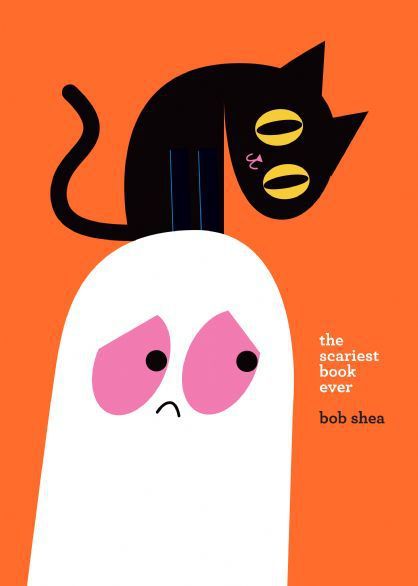
Bob Shea has written a scary good book for little readers, who will laugh at the juxtaposition of frightening and cute and the ghost’s examples of “scary” stuff. Shea’s chatty ghost, who sends readers into the woods and then wheedles, scoffs, and chides them afterward, is an adorably sympathetic spirit—one that kids will take to heart from the first page. Shea’s unique style and humor as well as one very cool printing trick that allows for a “naked ghost” to appear on the page will make readers Oooo and Ahhhh. Black-and-blue toned pages alternate with yellow ones to mirror the ghost’s deep, dark fears and the festive reality. The Scariest Book Ever is not just for Halloween as readers will love the garrulous ghost and the giggly, gentle nudge to try something new any time of the year. Ages 4 – 7
Disney-Hyperion, 2017 | ISBN 978-1484730461
Shivery Shades of Halloween: A Spooky Book of Colors
Written by Mary McKenna Siddals | Illustrated by Jimmy Pickering
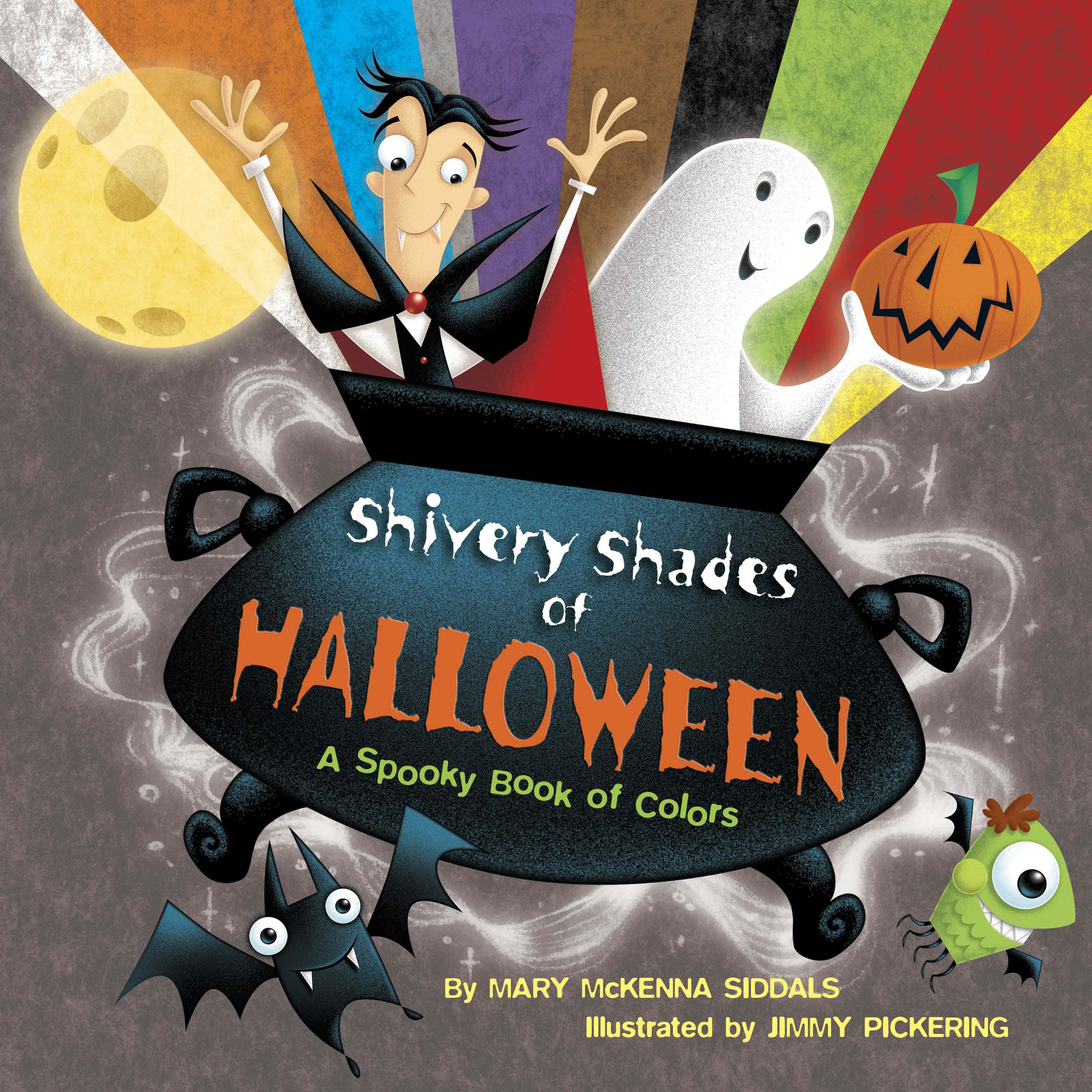
Mary McKenna Siddals brings joy and a love of words—their sounds and their effects—to her verses that transport kids to the throbbing heart of Halloween on the broomsticks of color. Siddals presents all the spine-tingling places, characters, and objects that make this holiday such chilling, thrilling fun. With giggles, ewwws, and a few shivers, kids will delight in the original and imaginative phrasing in this clever concept book.
Jimmy Pickering’s vibrant illustrations ooze, flash, and swirl with the colors of Halloween. For Green, a “queasy-peasy” web-eared reptile slurps a “vile brew” as an evil scientist looks on. Purple sparks fly as the reptile transforms into a goblin who leads readers to meet a tricky ghost, a spell-casting wizard, a floating candlestick, a howling werewolf, a dancing caldron, a clumsy demon, and a trio of trick-or-treaters.
Ages 2 – 7
Random House Books for Young Readers, 2014 | ISBN 978-0385369992
Sir Simon, Super Scarer
By Cale Atkinson
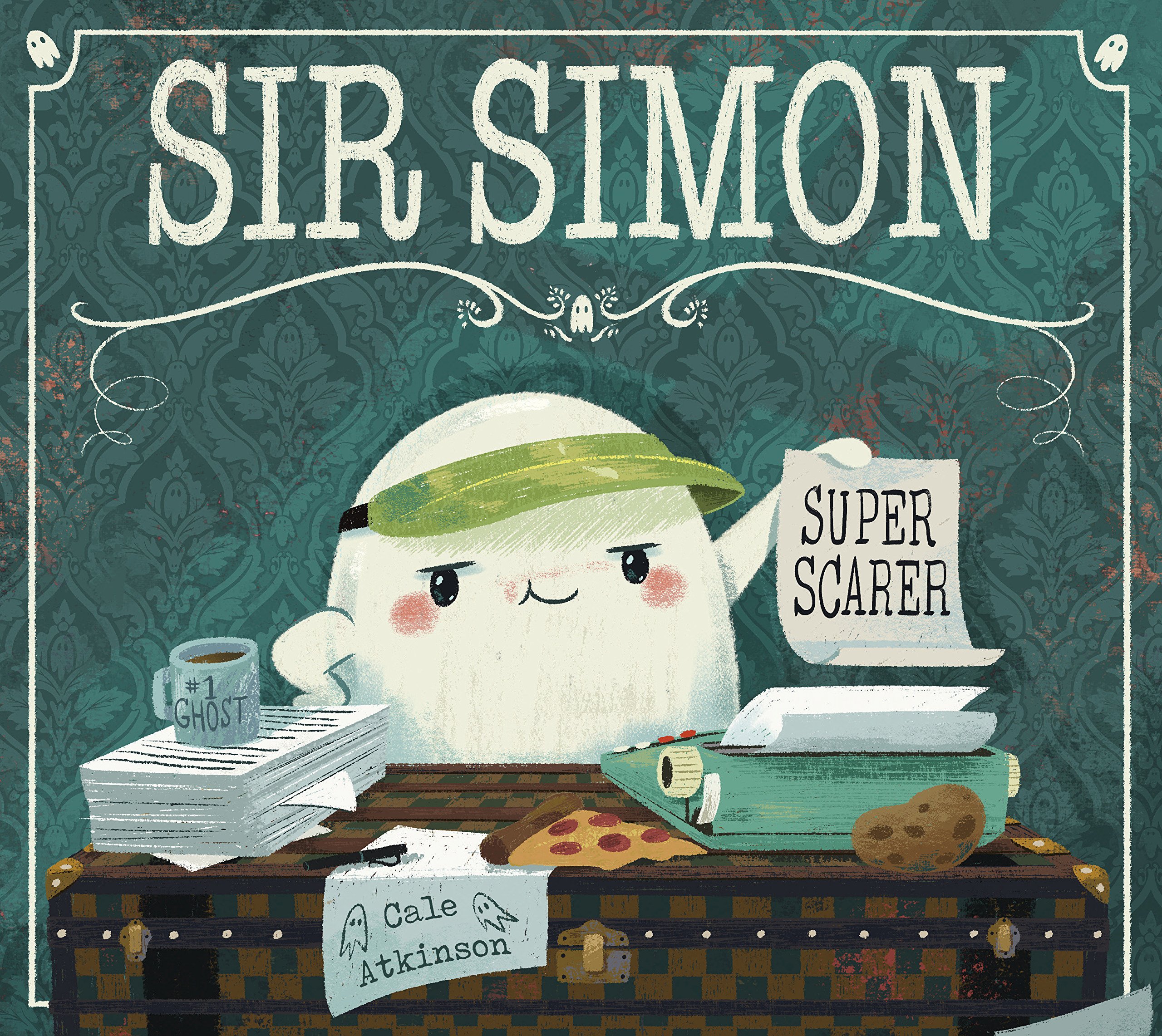
Cale Atkinson’s unique take on the ghostly life—or afterlife—is laugh-out-loud funny as Sir Simon Spookington goes about his spectral chores with pride tinged with exasperation at the time they take away from his preferred creative pursuits. When he discovers that a kid has moved into his house—and, what’s more, wants to be a ghost too—Atkinson’s apparition with attitude turns prickly with the disruption Chester causes and perfectionist when Chester’s haunting doesn’t live up to his standards.
Atkinson’s haunted house is packed full of clever details and allusions to favorite scary and adventure movies and books in every nook and cranny. Atkinson also uses juxtaposition to great effect in images of Simon floating through his chores with a frown and furrowed brow followed by those of a happy and relaxed Simon as he paints, writes, and does cross-stitch as well as in two cutaways of the house—one at night while Chester does Simon’s chores and one during the day as Simon attempts to do Chester’s. The final spread of Simon and Chester hanging out as friends is endearing and heartwarming.
Ages 4 – 8
Tundra, 2018 | ISBN 978-1101919095

Spooky Pookie
By Sandra Boynton
Sandra Boynton is always pitch perfect for her young audience, and Spooky Pookie is another adorable addition to her holiday stories for little ones to love. Infused with just a pinch suspense and plenty of giggles as cute Pookie tries on costume after costume, Spooky Pookie is a little rhyming gem that sets a sweet tone for this trick-or-treat read.
Ages 1 – 5
Simon and Schuster Little Simon Board Book, 2017 | ISBN 978-1481497671
That Monster on the Block
Written by Sue Ganz-Schmitt | Illustrated by Luke Flowers
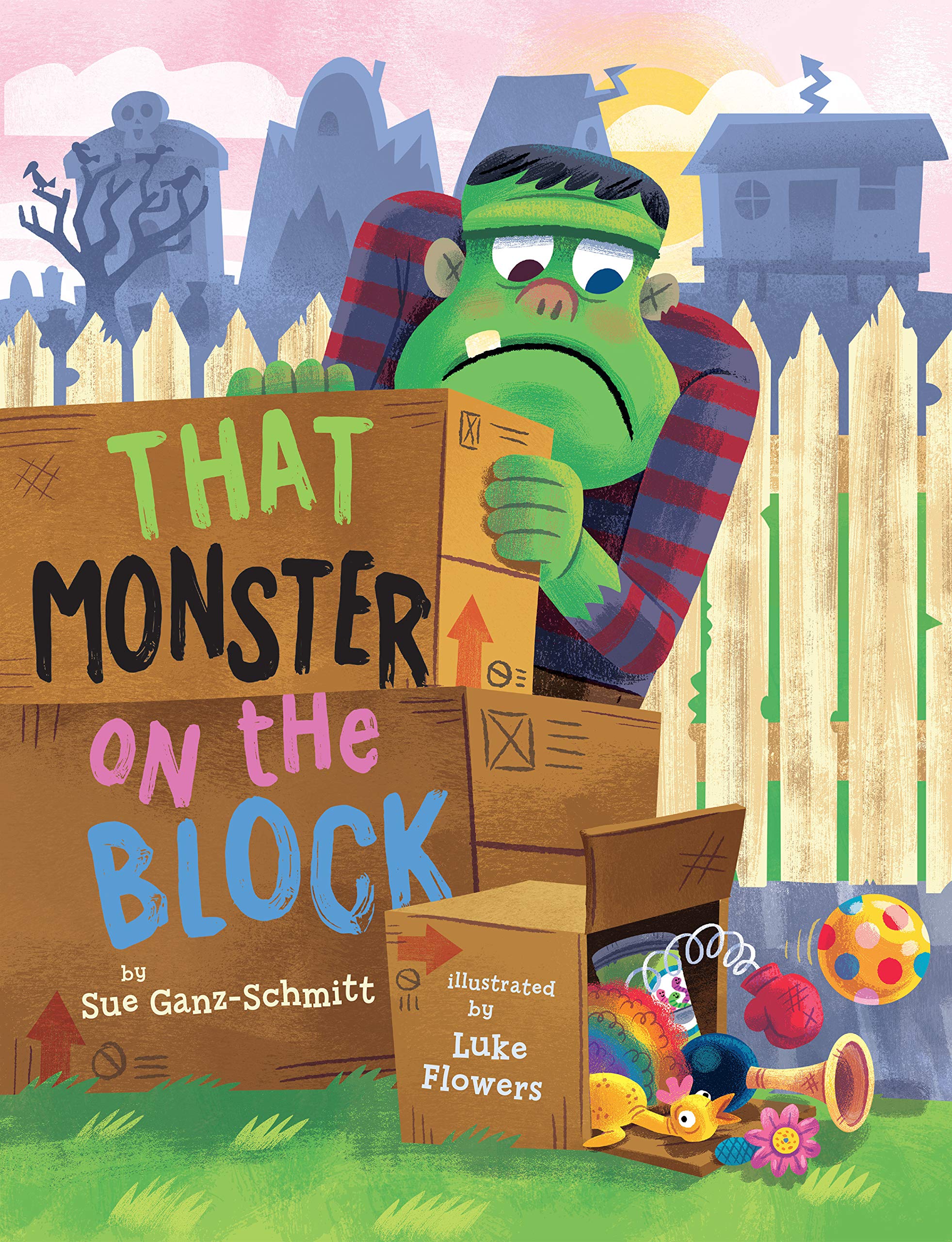
Sue Ganz-Schmitt turns somersaults with the usual tropes involving diversity in her story as it honestly portrays truisms about prejudice and how both injustice on one hand and understanding on the other spreads through a community. While Monster’s reaction to immediately alert the neighbors and hold a meeting seems to get a big response, readers will see that by the time the meeting takes place, most of the neighbors welcome the newcomer and the positive changes he’s brought. Ganz-Schmitt’s well-paced and superb storytelling is loaded with personality, puns, and the perfect light touch that will have readers taking her story and lesson into their hearts.
Luke Flowers does wonders with larger-than-life characters, and his depictions of Monster, Clown, and all the neighbors are pitch-perfect. Flowers sets up his visual delights early with the image of Vampire’s old house, which is gray and foreboding with detailing that subtly turns the stone structure into a bat. Later Clown converts these same details into clown faces that will charm kids. Just as in the circus, Clown makes a surprise entrance, one that little readers will guess at with glee. Snapshots of Monster calling up his neighbors appear to show that Mummy, Zombie, and Yeti are on board with his dismay, but Ganz-Schmitt’s monster-sound reactions are cleverly noncommittal. Add in the neighbors’ obvious delight with the gifts Clown leaves (a full-page jack-in-the-box image will bring shrieks of laughter), and readers will happily be in on the vibe at the meeting-turned-party.
Contrasting illustrations of Monster trying to bully Clown into leaving and Clown helping out around the neighborhood give kids and adults opportunities to talk about important issues that arise at school and in the news. While images of Monster having fun at circus school show his changing attitude toward Clown, when his displeasure seems to rise again with the entry of another unexpected neighbor, readers will see that this time he has a different and more welcoming reaction. (Added note: Make sure to inspect each page carefully for added visual humor.)
Ages 4 – 8
Two Lions, 2020 | ISBN 978-1542005333
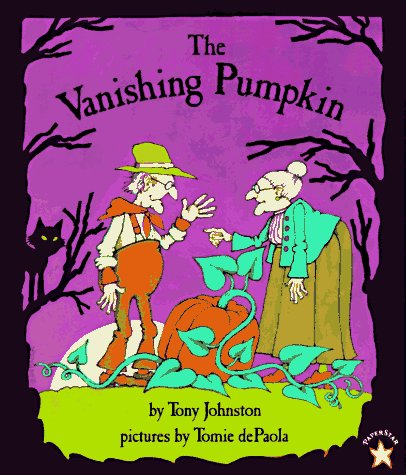
The Vanishing Pumpkin
Written by Tony Johnston | Illustrated by Tomie dePaola
The team of Tony Johnston and Tomie dePaola never fails to delight kids with books they want to read over and over again. In The Vanishing Pumpkin Johnston introduces an old woman and an even older, cantankerous pumpkin pie loving man who have had their fattened up gourd “snitched on Halloween day. The imps they meet on their search are as silly as the little ones being read to can be, and Johnston’s feisty dialogue will make kids giggle. His repetitive phrasing allows for plenty of interactive read aloud fun, and you can bet there’ll be lots of clapping.
From the moment when Tomie dePaola’s mystical old woman and old man discover their pumpkin missing and fairly fly off to find it, kids will happily tag along to discover Halloween mischief created by a green, pointy-eared ghoul, a cloaked rapscallion, a glowing varmint, and even a confused wizard who are a little scary but mostly sweet. dePaola’s color palette provides all the Halloween atmosphere readers expect, and the final spread of the gobbled up pie presents a satisfying ending.
Ages 3 – 8
Puffin Books, reprint edition, 1996 | ISBN 978-0698114142
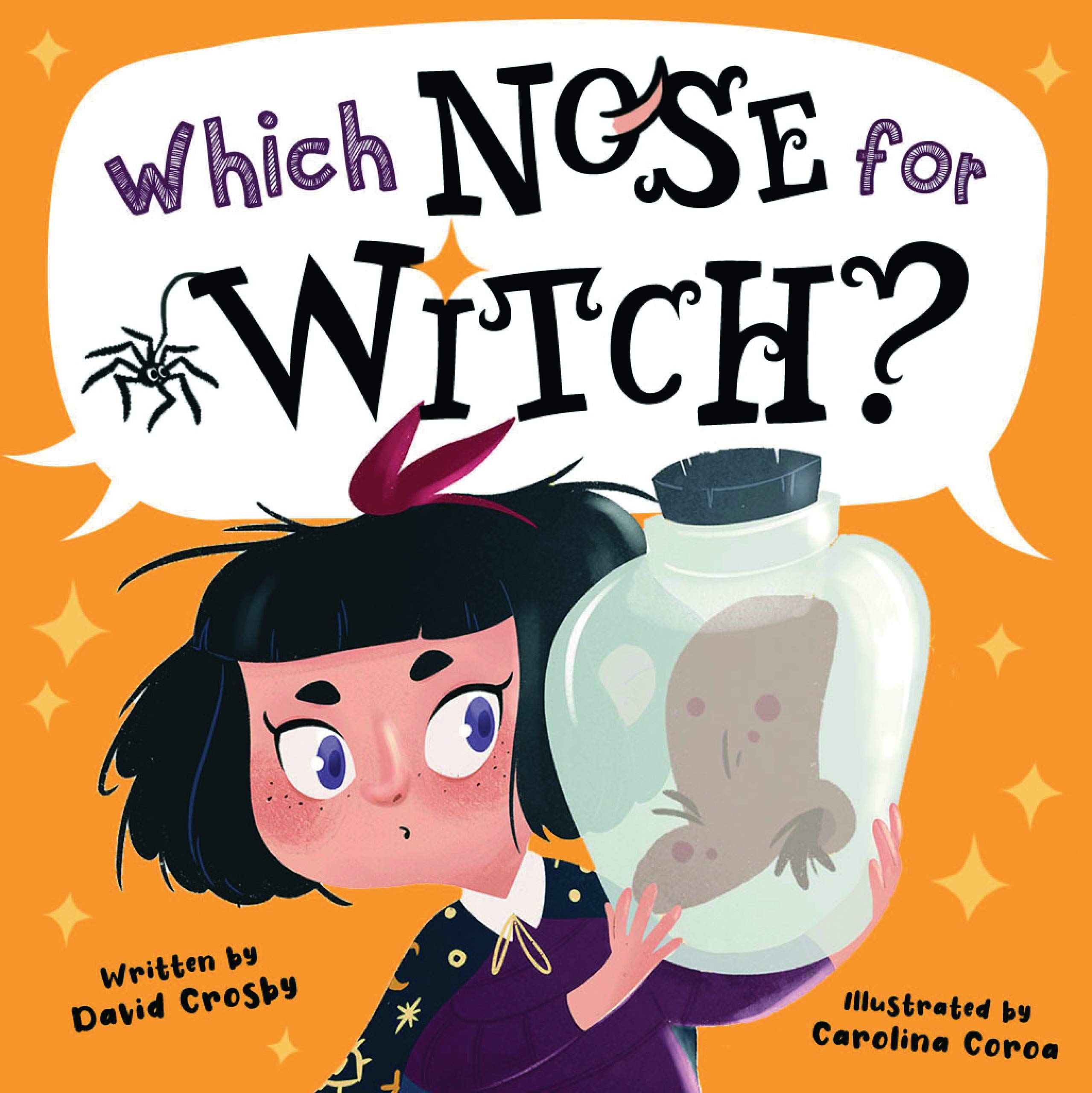
Which Nose for Witch?
Written by David Crosby | Illustrated by Carolina Coroa
Just in time for Halloween, when kids’ thoughts turn to transforming themselves into all things witchy and scary, comes a humorous and bewitching story of confidence, self-love, and the courage to be yourself. David Crosby’s clever concept—that witches choose their own distinguishing facial feature as a rite of passage gives kids a lighthearted way to think about their own uniqueness in looks, personality, talents, thoughts, and other traits. Along the way they can empathize with Grizelda as the noses she chooses just aren’t right for her. Grizelda’s pluck in resisting the pressure of the crowd and her mother’s scolding while realizing that she’s perfect just the way she is is a reassuring message for kids who might feel the undue burden of peer pressure or expectations.
Carolina Coroa’s charming illustrations of witches and warlocks sporting prominent noses include plenty of spooky details to keep kids enchanted. As a baby at home, Grizelda’s grandfather dangles a spider for her to play with while a crow sits on his shoulder and a Venus flytrap plant sits on a nearby table. Grown up and shopping for noses, Griz rides a broom, wears a spider in her hair, and completes her outfit with the requisite cape. The shelves of noses, each in its own jar, will have readers stopping to choose their favorites—for themselves, their mom and dad, their siblings, and other family members and friends. Coroa’s image of Grizelda gazing into the shop window happy to have found the perfect nose is cunningly conceived to keep kids guessing until the surprise twist ending is revealed. The final illustration of a confident Grizelda taking her place in the sky with other grown-up witches will delight readers.
An enchanting and uplifting story to inspire kids to be true to themselves, Which Nose for Witch? is magical storytelling for the Halloween season and all year through for all kids on the path to growing up and self-discovery.
Ages 4 – 9
Maverick Arts, 2021 | ISBN 978-1848867789
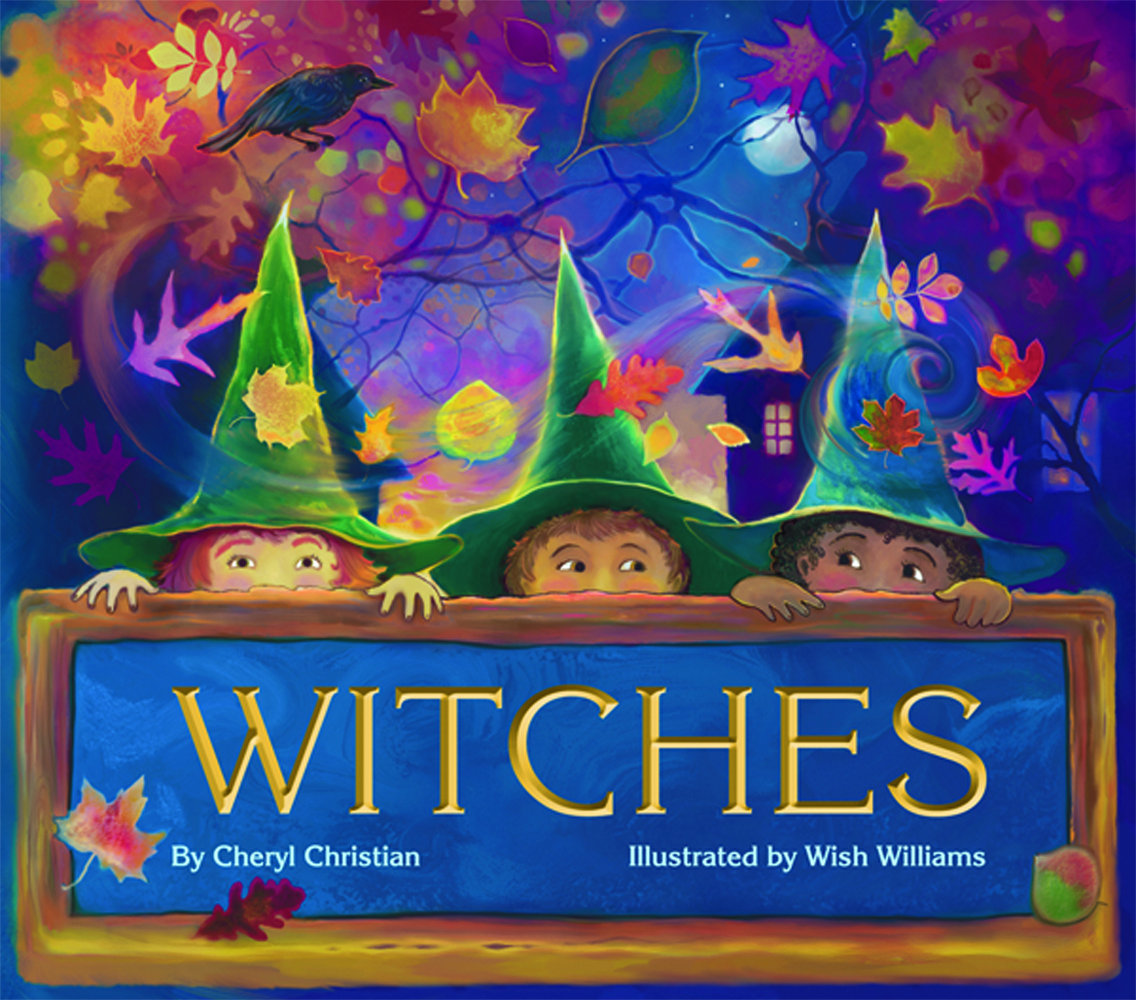
Witches
Written by Cheryl Christian | Illustrated by Wish Williams
Cheryl Christian’s bouncy, bounding rhyme bubbles with the excitement and joy kids feel on Halloween night. Transformed by costumes into witches that want more treats than tricks, favorite animals, personal heroes, mythical creatures, and spooky haunters, children relish the abandon of going door to door collecting goodies, meeting their friends, and “screeching screeches”—and all in the mysterious deep, dark night when they might usually be going to bed. Kids will love Christian’s focus on them and the activities that make Halloween such a looked-forward-to holiday.
Wish Williams’ luminous celebration of Halloween night radiates a glow-in-the-dark feeling that lends the story an element of the fantastical even as it illuminates the traditional fun kids have on this special night. A distinctive color palette of deep turquoise, magenta, green, purple, and orange lit with an eye toward creating an atmosphere of spooky coziness, makes each two-page spread a joy to explore.
Ages 3 – 7
Star Bright Books, 2011 | ISBN 978-1595722836
Halloween Crafts
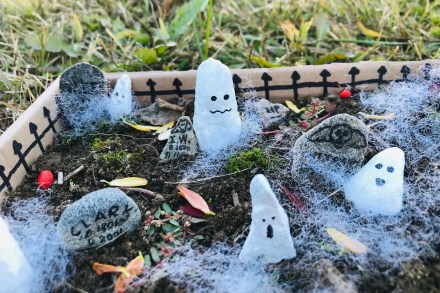
Haunted Graveyard
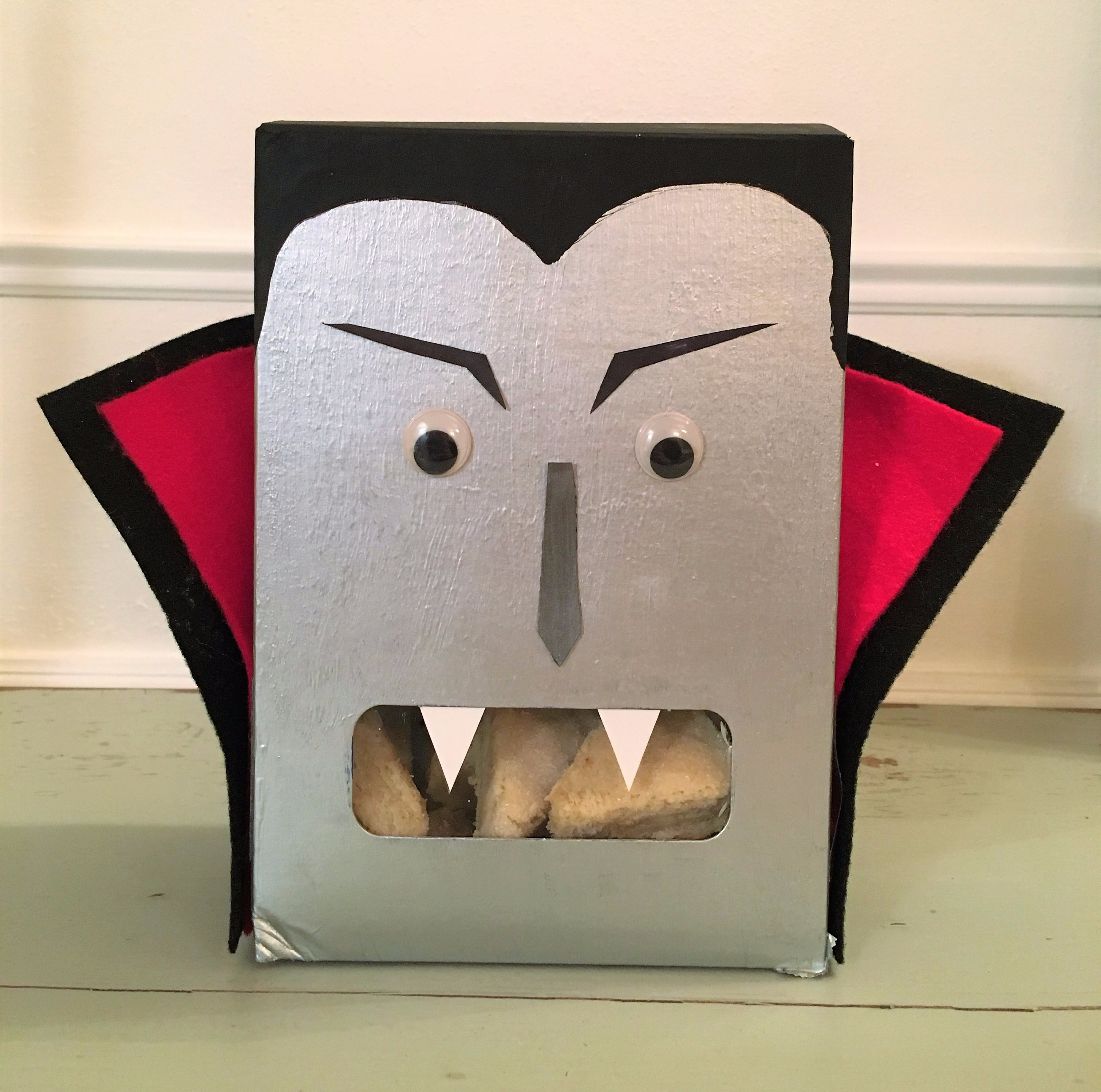
Vampire Treat Box
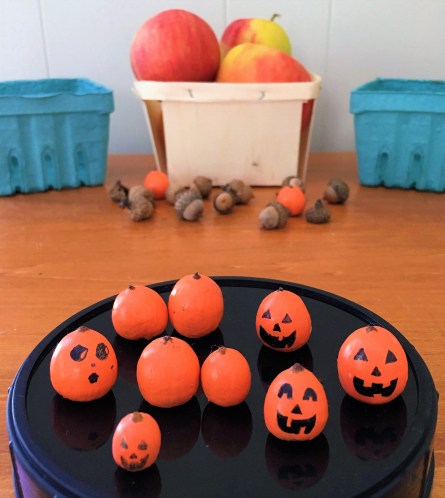
Acorn Pumpkins and Jack O’Lanterns
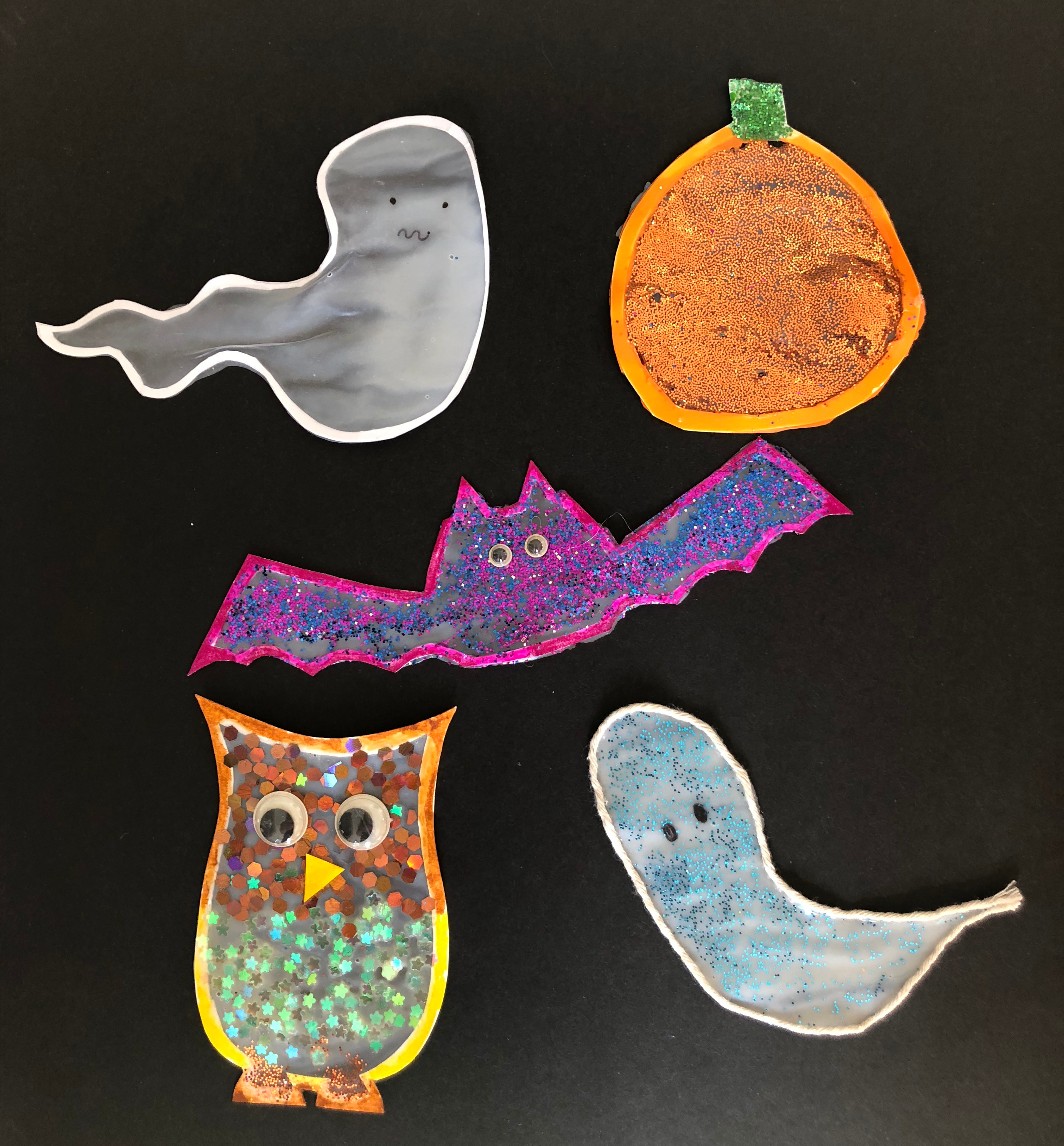
Halloween Mobile
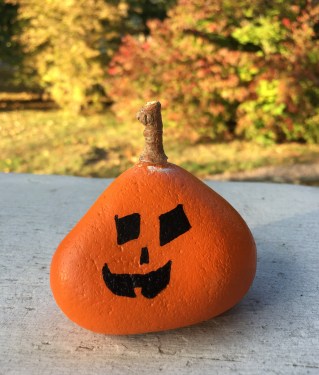
Rock Jack O’Lantern

















 celebratepicturebooks.com