March 27 – National Reading Month: Rosie: Stronger than Steel Book Tour Stop

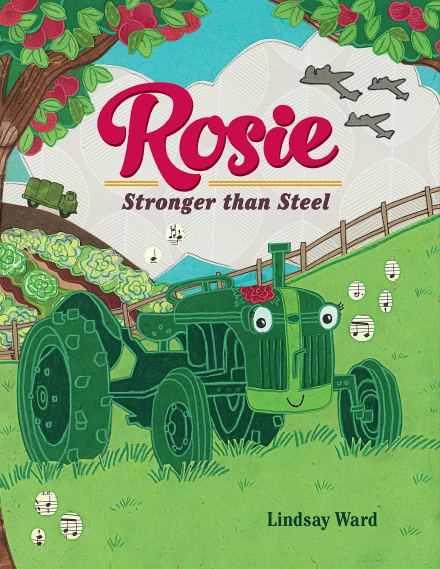
celebrate-picture-books-picture-book-review-rosie-stronger-than-steel-cover

About the Holiday

The month of March is dedicated to reading—an initiative that’s taken on new importance as parents and caregivers search for resources for homeschooling and to share family time. Authors, illustrators, teachers, librarians, publishers, and others in the publishing and education fields are finding new ways to connect with readers and bring them the books they love. Today, I’m happy to be taking part in a book tour for Rosie: Stronger than Steel, an original look at another momentous time in history that brought people together to work for the good of all.

I received a copy of Rosie: Stronger than Steel from Two Lions for review consideration. All opinions on the book are my own.

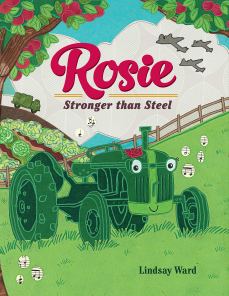
Rosie: Stronger than Steel

By Lindsay Ward

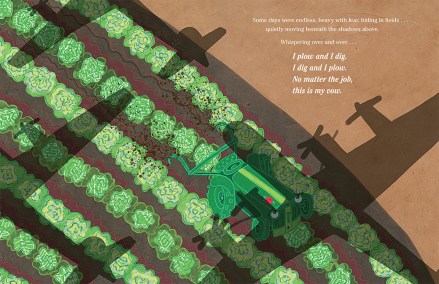
Rosie, a tractor built during World War II, reveals what she’s made of as her story begins: “Refrigerators, fences, old cars, and a toaster… all melted down to build me up strong.” In the factory four women weld and rivet Rosie together. As they work on her they sing…”This is our Rosie, / stronger than steel. / She’ll plow all the land / with a turn of her wheel.” A finishing touch—a single red rose—is painted on, and Rosie offers a promise: “I’ll plow and I’ll dig. / I’ll dig and I’ll plow. / No matter the job, / this is my vow.”

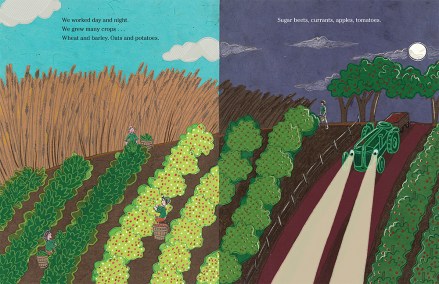
Then Rosie is sent out, traveling by air, ship, truck, and train to a farm far away. The fields are overgrown—in need of Rosie’s expertise. Rosie is happy to get to work, churning the ground so that the Land Girls can plant seeds to grow crops—“wheat and barley. Oats and potatoes. Sugar beets, currants, apples, tomatoes.”—to support the war effort.

celebrate-picture-books-picture-book-review-rosie-stronger-than-steel-women

Copyright Lindsay Ward, 2020, courtesy of Two Lions.

Some days Rosie toiled in the shadow of a war plane, her green body hiding among the green crops. But she never faltered, always singing to herself promise she made to the women who built her. Year after year “more crops were needed! Load after load, sent out to the troops. To feed them. To help them. To win the war!”

Rosie did more than plow. She was hitched to wagons that carried milk and wool and hauled bushels and bushels of apples. She trudged uphill with logs to be converted into supplies. And then one day Rosie heard cheers ringing out across the farm. “The celebration spread throughout the world. The war was over!”

As time passed, new-model tractors joined Rosie on the farm. And then came the day when Rosie sputtered to a halt. She was taken to the barn, where the farmers tinkered and brought her back to life. Now Rosie had rubber tires and new paint, and the little rose had blossomed to fill her hood. Rosie was back, working the farm but never forgetting her promise to the women who built her and her fight for freedom.

In an extensive Author’s Note and accompanying timeline, Lindsay Ward talks about the inspiration behind her story, the work of women in factories during World War II in the US, and the Women’s Land Army in England. She also reveals fascinating facts about tractors built by Ford Motor Company and sent to England. Ward also includes a list of resources for those interested in learning more.

celebrate-picture-books-picture-book-review-rosie-stronger-than-steel-night

Copyright Lindsay Ward, 2020, courtesy of Two Lions.

Lindsay Ward introduces children to the heroism and sacrifice displayed during World War II through her unique story. Told from the perspective of a tractor built by women factory workers in the United States and shipped to a British farm supplying food for the troops, Ward’s story reveals details of the time period that children may not know but that will make an impact: In the first page spread, children see women lined up with donations for the scrap metal collection—not only cans and unneeded items, but toasters and bed frames too. The reason for Rosie’s green paint—a familiar color for tractors—also becomes apparent later in the story.

With the war’s end and the passage of time, Ward demonstrates the return to normalcy and progress again through tractors—Rosie, who acquires rubber tires, and new, sleeker models. Straightforward storytelling describing Rosie’s origins and her hard work on the farm intermittently shares the page with Rosie’s inspiring rhymed promise to do any job necessary.

celebrate-picture-books-picture-book-review-rosie-stronger-than-steel-plow

Copyright Lindsay Ward, 2020, courtesy of Two Lions.

Ward’s colored pencil and cut paper illustrations evoke the 1940s and give Rosie a determined personality while maintaining a realistic view of the important work of these valuable machines. Green predominates, highlighting Rosie, reminding readers of the camouflaged troops she served, and spotlighting the crops she fostered while adding a touch of metaphorical depth in the idea of renewal. Images created from lined notebook paper hint at the importance of remembering history through stories, and other choices of paper add texture and interest.

An excellent story to add to lessons on World War II, women’s history, American history, farming, and industry as well as for children interested in vehicles and machinery, Rosie: Stronger than Steel would be an inspirational addition to home, school, and public library collections.

To learn more about Lindsay Ward, her books, and her art, visit her website.

For a Learn to Draw Rosie Activity Sheet, visit Lindsay’s Rosie: Stronger than Steel page.

Ages 4 – 8 

Two Lions, 2020 | ISBN 978-1542017947

National Reading Month Activity

celebrate-picture-books-picture-book-review-tractor-jigsaw-puzzle-3

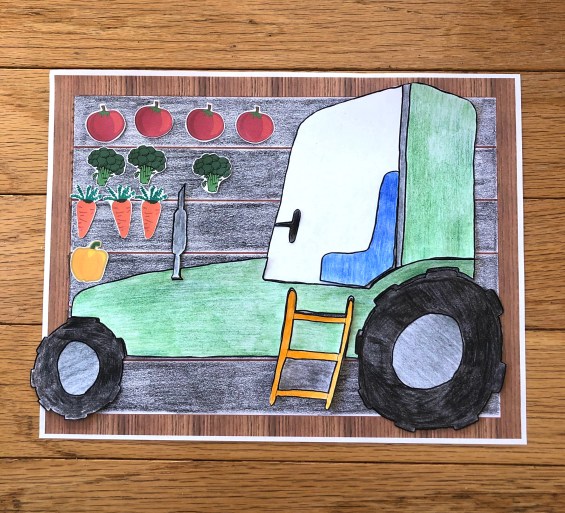
Build a Tractor Jigsaw Puzzle

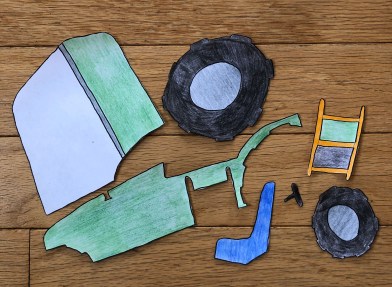
With this printable jigsaw puzzle, you can color and build a tractor of your own! Just print the Tractor Template, color, cut, and have fun putting it together!

Supplies

  • Printable Tractor Template
  • Card stock paper, poster board, or cardboard (optional)
  • Colored pencils or crayons
  • Scissors
  • Glue (optional)
  • Tape (optional)

IMG_2750

Directions

  1. Print the Tractor Template. For a sturdier puzzle, print on card stock or glue the pieces to poster board or cardboard before cutting.
  2. Color and cut out the pieces
  3. Put the tractor together

Optional Game

celebrate-picture-books-picture-book-review-garden-board-game-1

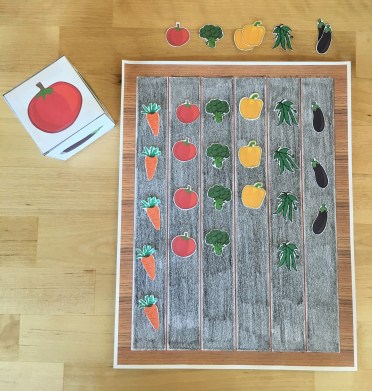
If you’d like to play with your tractor, you can print this Vegetable Garden Game.

  1. To use your tractor to play with the game, tape the pieces together.
  2. Then pretend to plow and plant your garden then play the game with the directions provided.

celebrate-picture-books-picture-book-review-rosie-stronger-than-steel-cover

You can find Rosie: Stronger than Steel at these booksellers

Amazon | Barnes & Noble | Books-a-Million

To support your local independent bookstore, order from

Bookshop | IndieBound

Picture Book Review

March 16 – It’s Women’s History Month

celebrate-picture-books-picture-book-review-the-vote-that-won-the-vote-cover

About the Holiday

This year we celebrate the 100th anniversary of the ratification of the 19th amendment which gave women the right to vote. The theme of this year’s Women’s History Month celebration is “Valiant Women of the Vote” and commemorates not only the women who fought for voting equality in the past but also those who, during the 20th century and through today, fight against other forms of voter suppression. Today’s book honors one of those women. For more information and vast resources especially under Suffrage Centennial, visit the National Women’s History Alliance website.

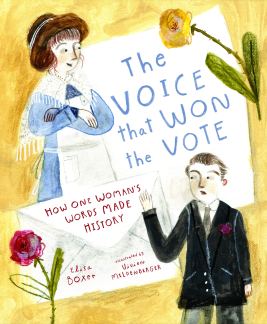
The Voice that Won the Vote: How One Woman’s Words Made History

Written by Elisa Boxer | Illustrated by Vivien Mildenberger


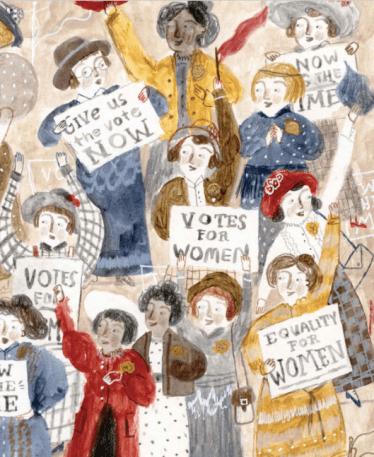
The year was 1920 and women were demanding the right to vote, just as they had been for the last seventy-five years. But all of their meetings, shouting, and signs were silenced. Men called the women “troublemakers” and “uncivilized.” Some men said it would “cause chaos” if women could vote, and others said “‘the only vote a woman needs is the vote to choose her husband.” There were even other women who thought women shouldn’t vote.

celebrate-picture-books-picture-book-review-the-vote-that-won-the-vote-silenced

Image copyright Vivien Mildenberger, 2020, text copyright Elisa Boxer, 2020. Courtesy of Sleeping Bear Press.

But then there was Febb Burn from East Tennessee who had gone to college, become a teacher, and loved to keep learning. She was especially interested in laws and how they were made, and every year as she watched her farmhands head off to vote on election day, she wanted to be able to go too. Finally, she grew so tired of being “shut out of the process” that she wrote a letter to her son.

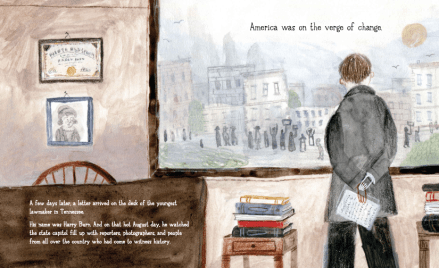
Who was her son? His name was Harry Burn, and he was the “youngest lawmaker in Tennessee.” As he read his mother’s letter, he watched out his window as people from across the country gathered to decide the fate of women’s suffrage. One round of voting had already taken place, and it had resulted in a tie. Thirty-five states had voted yes on the issue, but thirty-six were needed to make it a law. Harry Burn for Tennessee had been one of the “no” votes in the first round. Now in the second round, Harry Burn would be the deciding vote. A “no” would deny women the vote, while a “yes” would change elections forever.

celebrate-picture-books-picture-book-review-the-vote-that-won-the-vote-letter

Image copyright Vivien Mildenberger, 2020, text copyright Elisa Boxer, 2020. Courtesy of Sleeping Bear Press.

“He knew that most of the people who had elected him hated the idea of women voting.” Many of them were even in the audience and were counting on him. He was, after all, wearing a red rose—”the symbol of keeping women in the home, and out of the voting booth”—in his pocket. When it came time for Harry to vote, all eyes were on him as he said “‘Yes.’” The officials thought he’d “made a mistake” or “gotten confused,” but he hadn’t. The suffragettes cheered and hugged.

Everyone wanted to know why Harry Burn had changed his mind. In answer, he pulled from his pocket the letter his mother had written urging him to vote for suffrage. Harry constituents were shocked and angry. They vowed to vote against him in the next election. The headlines in the newspapers said that Harry had ruined his career. But Harry already knew that. He knew that his vote would mean “giving up his seat in the Tennessee House of Representatives.”

celebrate-picture-books-picture-book-review-the-vote-that-won-the-vote-Harry

Image copyright Vivien Mildenberger, 2020, text copyright Elisa Boxer, 2020. Courtesy of Sleeping Bear Press.

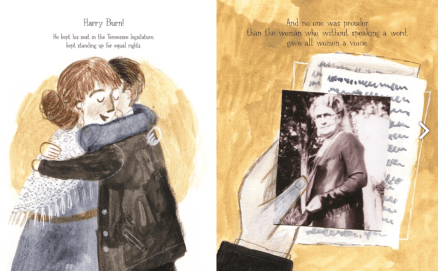
When interviewed for newspaper articles, Harry said that he had followed his conscience that all people should have the right to vote. At last the election was held, and Harry awaited his fate as all the votes were counted. Who would be the next Tennessee Representative? Harry Burn! “And no one was prouder than the woman who, without speaking a word, gave all women a vote.”

In an Author’s Note, Elisa Boxer talks more about the women’s suffrage movement, the courage to stand up for what you believe in, and the power of using the vote to voice your opinion. A timeline of significant events in the women’s suffrage movement is also included.

celebrate-picture-books-picture-book-review-the-vote-that-won-the-vote-Harry-Burn

Image copyright Vivien Mildenberger, 2020, text copyright Elisa Boxer, 2020. Courtesy of Sleeping Bear Press.

For anyone wondering about the power of one vote, Elisa Boxer puts all doubts to rest with her engaging recounting of this little-known true story. While Harry Burn’s vote took place 100 years ago, the courage he showed in standing up for his own conscience and in opposition to what was expected of him reverberates today. Boxer opens the story with a clear and meaningful definition of how a vote equals one’s voice, instilling in children who are learning to speak up for themselves in classrooms, on social media, and elsewhere the importance of voting when they come of age.

Her inclusion of quotes revealing the reasons behind opposition to women’s suffrage will be eye-opening. Her well-paced building of suspense going into the second vote and the aftermath will have kids on the edge of their seat and offers many opportunities to discuss the mechanisms of politics, expectations, and courage. Through her straightforward yet multilayered storytelling, Boxer presents two heroes for children to look up to: Harry, who put the good of the country and women ahead of his own career and Febb, who used her voice to make lasting change.

celebrate-picture-books-picture-book-review-the-vote-that-won-the-vote-suffragettes

Image copyright Vivien Mildenberger, 2020. Courtesy of Sleeping Bear Press.

Vivien Mildenberger’s lovely, textured illustrations take readers back to the pivotal year of 1920, when vocal suffragettes faced their equally vocal opposition and Febb Burn, sitting on her front porch decided to write her life-changing letter. Images of politicians sporting yellow and red roses reveal the long tradition of color as an identifying symbol. An especially powerful spread comes after Harry’s vote as he walks among his angry constituents, all of whom shun him behind newspapers full of articles about the historic vote. The inclusion of the actual Febb Burn’s letter to Harry and a photograph of Febb give readers see and hear from this influential woman.

A stirring true story about the power of one person to make a difference, The Voice that Won the Vote is highly recommended for home, school, and public library collections.

Ages 7 – 10

Sleeping Bear Press, 2020 | ISBN 978-1534110496

You can download a The Voice that Won the Vote Teaching Guide from Sleeping Bear Press here.

Discover more about Elisa Boxer, her book, journalism, and other work on her website.

To learn more about Vivien Mildenberger, her books, and her art on her website.

Women’s History Month Activity

celebrate-picture-books-picture-book-review-get-out-and-vote-maze

Get Out and Vote! Maze


Help the girl find her way through the maze to the ballot box so she can cast her vote in this printable maze.

Get Out and Vote! Maze | Get Out and Vote! Maze Solution

celebrate-picture-books-picture-book-review-the-vote-that-won-the-vote-cover

You can find The Voice the Won the Vote at these booksellers

Amazon | Barnes & Noble | Books-a-Million | IndieBound

Picture Book Review


March 12 – It’s Women’s History Month

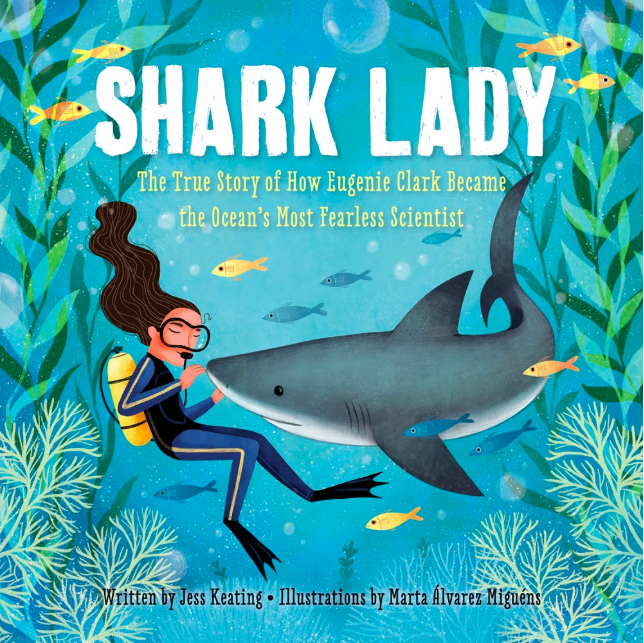
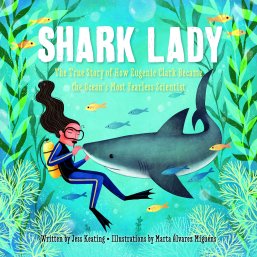
celebrate-picture-books-picture-book-review-shark-lady-cover

About the Holiday

National Women’s History Month is all about celebrating women who broke barriers with their intelligence, creativity, courage, persistence, and unwavering confidence in their abilities. In every discipline, women have brought and continue to bring new perspectives, experiences, and talents to make contributions toward a better world. Celebrate this month-long holiday by reading about some women pioneers in all areas. Today’s book is a great place to start!

By Jakki Licare

Shark Lady: The True Story of How Eugenie Clark Became the Ocean’s Most Fearless Scientist

Written by Jess Keating | Illustrated by Marta Álvarez Miguéns


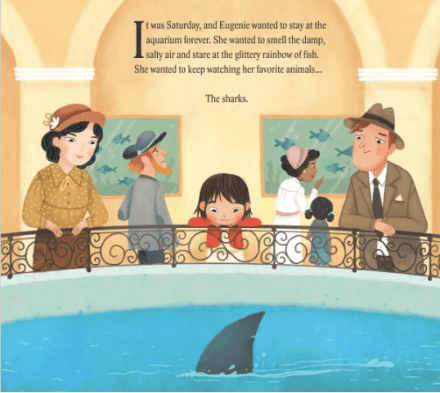
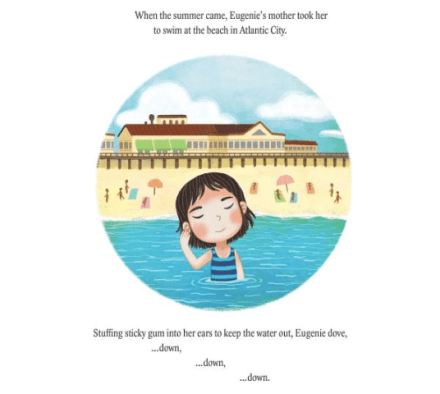
Eugenie’s favorite place was the aquarium. She loved the smell, the colors of the fish, but most of all she loved the sharks. Eugenie wondered what it would be like to live underwater and swim with the sharks. She had to find out. In the summer, Eugenie’s mother took her to Atlantic City. “Stuffing sticky gum into her ears to keep the water out, Eugenie dove, … down, …down, …down.” She pretended to be a shark swimming strong through water. 

celebrate-picture-books-picture-book-review-shark-lady-aquarium

Image copyright Marta Álvarez Miguéns, 2017, text copyright Jess Keating, 2017. Courtesy of Sourcebooks Explore.

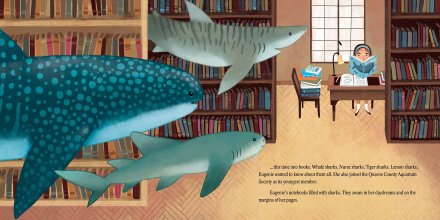
Most people were scared of sharks, but Eugenie thought they were magnificent.  She was determined to learn more about them. “So she dove…this time into books.” At the library she learned about every shark she could find. She also became Queens County Aquarium Society’s youngest member. While Eugenie’s mother couldn’t give her a pet shark, she did surprise Eugenie with a fifteen gallon fish tank. Eugenie bought guppies, clown fish and snails. 

As Eugenie grew older she decided to become a zoologist, but many professors didn’t encourage her. Most thought women couldn’t and shouldn’t be scientists. “Eugenie knew better. Her dream was as big as a whale shark. So again, Eugenie dove.” She studied hard and rose to the top of her field. 

celebrate-picture-books-picture-book-review-shark-lady-diving

Image copyright Marta Álvarez Miguéns, 2017, text copyright Jess Keating, 2017. Courtesy of Sourcebooks Explore.

Eugenie was ready to finally dive into the ocean. In the red sea, she discovered three new species. In the Palau Islands, Eugenie finally saw her first wild shark. It was beautiful. At the time many believed sharks had to always be moving to stay alive, but Eugenie discovered caves with sharks resting together. “Eugenie had proven she was smart enough to be a scientist and brave enough to explore the oceans.”

Still most of the world believed sharks to be dangerous and hunting sharks was very common. Eugenie wanted to prove to the world that sharks weren’t ‘mindless killers.’ Eugenie created an experiment where she would train a shark to push a target. It was a success! Sharks even remembered their training two months later. Eugenie proved that sharks were smart and deserved to be protected. 

Facts about sharks, a detailed timeline of Eugenie Clark’s life, and an Author’s Note follow the text.

celebrate-picture-books-picture-book-review-shark-lady-library

Image copyright Marta Álvarez Miguéns, 2017, text copyright Jess Keating, 2017. Courtesy of Sourcebooks Explore.

Jess Keating’s straightforward manner of writing really homes in on the  struggles and successes of Eugenie Clark. Keating adds in splashes of nautical language,  making this a fun and engaging read. Eugenie’s fight for gender equality was a strong theme that ties in nicely with the world’s misunderstanding of the sharks that Eugenie loved. In Eugenie’s college years, Keating writes how people tried to convince Clark to be a secretary or housewife and poignantly points out that even after she earned her degree many still doubted her ability. Young readers can see how Eugenie didn’t let that stop her from doing what she was meant to do.

Keating emphasizes not only Clark’s passion, but her hard work and courage in a variety of situations as well. The picture book begins with Clark’s passion for sharks and then transitions to the brave girl trying to deep dive with bubble gum in her ears. Later, Keating shows the reader how hard Eugenie worked to earn her degree and how brave she was to deep dive alone. The conclusion of the book  circles back to her passion to protect her beloved sharks’ through scientific experiments. Kids with any passion can see how hard work and perseverance can create a huge impact on the world.  

celebrate-picture-books-picture-book-review-shark-lady-ear-plugs

Image copyright Marta Álvarez Miguéns, 2017, text copyright Jess Keating, 2017. Courtesy of Sourcebooks Explore.

Marta Álvarez Miguéns’ illustrations are beautiful and whimsical. Bright blues and greens invite you to dive right in.  Sharks swim through the library aisles while Eugenie reads and tag along with her through her aquarium trip. The illustrations do a great job of reinforcing Clark’s determination and courage. In the college classrooms Miguéns depicts Eugenie as the only girl in the lecture hall. She depicts her with squinty eyed determination; taking notes while the rest of her classmates look bored. Eugenie is also illustrated bravely diving alone with sharks.

The sharks’ large eyes make the sharks feel friendly and encourages the readers to give them a chance as well. In the conclusion of the book, Miguéns shows Eugenie standing next to a little girl who looks happily at the sharks. This illustration emphasizes the fact that Clark’s scientific achievements have given younger generations the chance to enjoy sharks as well.  The end pages are covered with realistic depictions of different types of sharks and nautical sea creatures, allowing those less familiar with these animals to analyze and compare.

Shark Lady is not just for shark enthusiast. This wonderful book shows us  that any dream is possible with hard work and perseverance. It would make an inspiring addition to home, school, and public library collections.

 Ages 4 – 8 and up

Sourcebooks Explore, 2017 | ISBN 978-1492642046 (Hardcover) | Scholastic, 2018 ISBN 978-1338271478 (Paperback)

Discover more about Jess Keating and her books and illustrations on her website.

To learn more about Marta Álvarez Miguéns, her books, and her art, visit her website.

Women’s History Month Activity

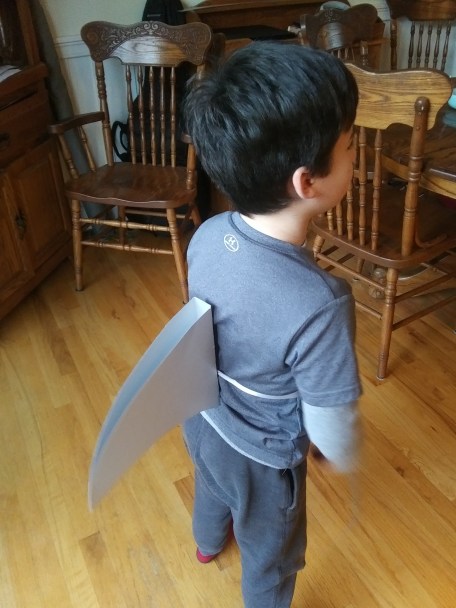
celebrate-picture-books-picture-book-review-shark-fin-craft

Fintastic Shark Fun


Eugenie wanted to swim with the sharks and now you can too! Follow the directions below and to make your own shark fin. 

Supplies

  • 2 pieces of 8.5 x 11 gray cardstock paper
  • Ribbon
  • Tape
  • Scissors
  • Pencil

fin outline white

celebrate-picture-books-picture-book-review-shark-fin

Directions

  1. Tape the top of the two pieces of paper together
  2. Fold them back together
  3. Measure an inch up from the bottom of the papers (the un-taped side) and trace a straight line across both papers
  4. Trace a shark fin outline onto your paper. The shark outline should stop an inch above the bottom
  5. Cut out the fin on both pieces of paper. If you should cut through the tape, re-tape the tops together
  6. Fold along the lines of both papers so the folds face towards each other.
  7. Tape the folds so the fin becomes a triangle
  8. Cut two slits parallel to the folded lines
  9. Thread ribbon through slits

celebrate-picture-books-picture-book-review-shark-lady-cover

You can find Shark Lady at these booksellers

Amazon | Barnes & Noble | Books-a-Million | IndieBound

Picture Book Review
 

March 10 – International Day of Awesomeness

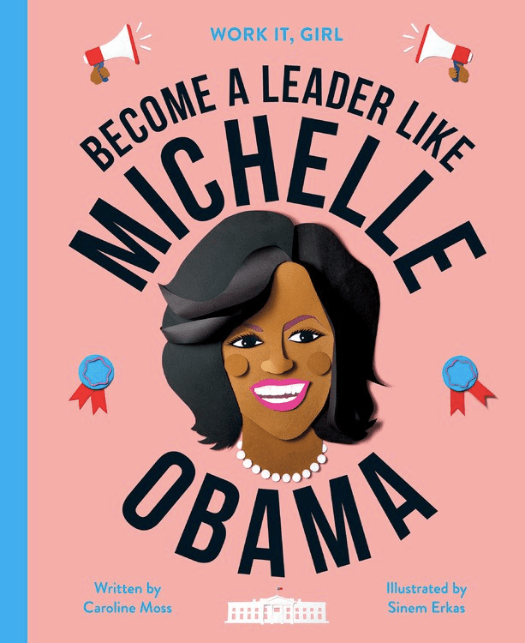
celebrate-picture-books-picture-book-review-become-a-leader-like-michelle-obama-cover

About the Holiday

Today we celebrate awesomeness, and in particular the fact that you are awesome! Begun as an inside joke among coworkers, International Day of Awesomeness continues to grow, attracting more and more awesome individuals around the world. To celebrate get creative and perform feats of awesomeness—whatever that might mean to you. You can also read about awesome people and their accomplishments to get you fired up to do awesome things of your own all through the year. Why not start with today’s book?!

Become a Leader Like Michelle Obama (Work It, Girl Series)

Written by Caroline Moss | Illustrated by Sinem Erkas


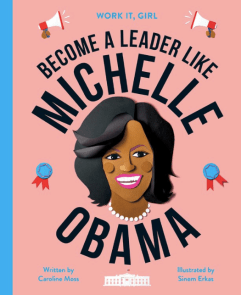
Encouraging, supportive, and always smiling, Michelle Obama inspired millions of kids across the country during her eight years as First Lady and continues to motivate children to be and become the best version of themselves. Through her fast-paced, engrossing biography, Caroline Moss creates a reading experience that gives children the opportunity to get to know their idol the way friends do: by talking together. In ten short, but information-packed chapters, Moss captures Michelle’s voice and spirit through snapshots of formative events that influenced and changed her life, all told in a conversational style with plenty of dialogue and fascinating details.

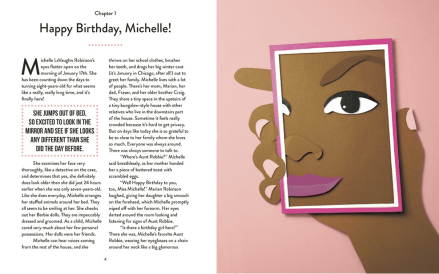
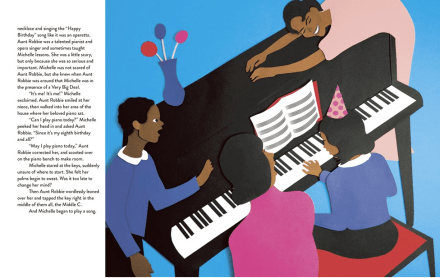
Accompanying this personal narrative are Sinem Erkas’s stunning 3-D cut paper artwork. Bold colors, stirring imagery, and portraits that follow Michelle through times of happiness, sadness, and change reveal to readers Michelle’s intelligence, spark, hard work, and enthusiasm for life that fuels her vision and success.

celebrate-picture-books-picture-book-review-become-a-leader-like-michelle-obama-chapter-1

Image copyright Sinem Erkas, 2020, text copyright Caroline Moss, 2020. Courtesy of Frances Lincoln Children’s Books.

In Chapter 1, readers are invited in to Michelle’s home on her 8th birthday. They learn about her family, the house they share with relatives, including her favorite aunt, Aunt Robbie, and the loving atmosphere that formed her values and sense of community that “would inspire her to go on and change communities across the US – and beyond.”

Chapter 2 takes readers into Michelle’s second-grade classroom, where “she loved reading, making up stories in her head and on the page, and creating art” and was frustrated by the inattention of the other kids who always seemed to be “bouncing off the walls.” Here they also discover certain events on her road from that classroom to high school graduation that helped Michelle develop her strength and self-confidence.

In Chapter 3 Michelle enters Princeton University, the college of her dreams. She makes friends, gets a job that “helped her think about a world outside her own,” and had a small, but life-changing experience that made her realize that “she did not have to blend into the background” or always “take the easy route. She started to imagine herself as a helper and an influential voice in her community, as a smart mind with ideas to share with the world.”

celebrate-picture-books-picture-book-review-become-a-leader-like-michelle-obama-piano

Image copyright Sinem Erkas, 2020, text copyright Caroline Moss, 2020. Courtesy of Frances Lincoln Children’s Books.

By Chapter 5 Michelle has graduated from Harvard Law School and taken a job at a Chicago law firm. But while she loved her job, she was struggling with medical challenges faced by her father and her best friend. “Michelle had a lot to juggle, but she was becoming pretty awesome at taking on lots of different tasks with a smile.” When does Michelle meet Barak? That comes in Chapter 6, when he got a job at the same law firm Michelle worked for. Readers get to hear about his first day on the job and the impression he made on her, how she came to think of him as her best friend at work, and about their first date.

Chapter 7 begins as Michelle is thinking about the course she wants her life to take. She realizes that she didn’t want to be a lawyer. “But what did she want to be; who did she want to be? Michelle had no idea, but she knew she wanted to change the world around her and leave it better than she found it.” She soon found herself working at Chicago City Hall. Her enthusiasm and success there led her to be hired by an organization that “found inspiring young people who showed promise in making a difference” and who would go on to “take leadership jobs in their communities.” It was also during this time that Barak proposed and took a new job helping to register first-time voters.

In Chapter 8, the Obamas’ lives take a big leap toward their future as Michelle gets a new job with the University of Chicago, where she was to “create a sustainable program that would help connect the university with its community.” During these years Malia and Sasha are born and Barack runs for and wins a seat in the US Senate, going on to become President. What did Michelle think about all of these changes? Young readers will discover her conflicting feelings: wariness, excitement, pride, and the belief that “one person could make a difference.”

celebrate-picture-books-picture-book-review-become-a-leader-like-michelle-obama-mountains

Image copyright Sinem Erkas, 2020, text copyright Caroline Moss, 2020. Courtesy of Frances Lincoln Children’s Books.

As Chapter 9 opens, Michelle and Barack and their family have moved into the White House. For Michelle that meant developing an “‘official initiative’ for her time in the White House.” Readers learn how she designed her ‘Let’s Move!’ program, aimed at keeping “kids healthy through education and learning good habits.” In Chapter 10, the Obamas leave the White House, “but Michelle knew her story had just begun.” She wrote a book sharing her stories and her life. Now new adventures await her and it will “only be a matter of time before she [sets] out to change the world once more.”

Sprinkled throughout the text are inspirational quotes from Michelle Obama that are called out in eye-catching blocks and soaring illustrations. Back matter includes ten key lessons from Michelle Obama’s life on how to become a leader, questions to prompt kids to think about what is important to them, and resources for further reading and exploration.

Emphasizing family, community, self-confidence, and the importance of seizing opportunities to make a difference, Become a Leader Like Michelle Obama is highly recommended for home, school, and public libraries to hearten and embolden young readers to listen to their inner voices and take action for what they believe in.

Ages 8 – 12 and up

Frances Lincoln Children’s Books, 2020 | ISBN 978-0711245181

Discover more about Caroline Moss and her books on her website.

To learn more about Sinem Erkas, her books, and her art, visit her website.

International Day of Awesomeness Activity

celebrate-picture-books-picture-book-review-awesomeness-cards

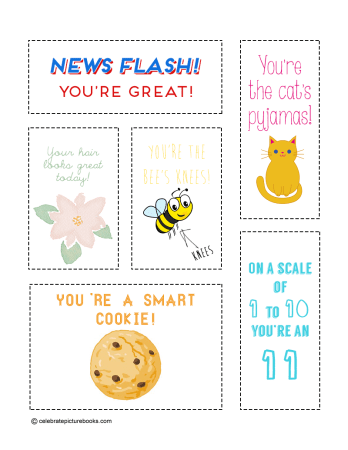
Awesomeness Cards


Do you have some awesome people in your life? Give them one of these printable Awesomeness Cards and watch them smile!

celebrate-picture-books-picture-book-review-become-a-leader-like-michelle-obama-cover

You can find Become a Leader Like Michelle Obama at these booksellers

Amazon | Barnes & Noble | Books-a-Million | IndieBound

Picture Book Review

February 26 – It’s Black History Month

celebrate-picture-books-picture-book-review-what-do-you-do-with-a-voice-like-that-cover

About the Holiday

Black History Month is a celebration of the achievements of African Americans and the contributions they have made to the United States History. Appropriately for this election year, the theme for 2020 is “African Americans and the Vote,” which recognizes the struggle for both black men as well as women throughout American history. This year marks the 150th anniversary of the Fifteenth Amendment, which was ratified in 1870 and gave black men the right to vote after the Civil War. It has also been one hundred years since women gained the right to vote. For more information about Black History Month, visit the ASALH website and africanamericanhistorymonth.gov.

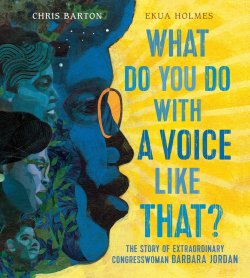
What Do You Do with a Voice Like That? The Story of Extraordinary Congresswoman Barbara Jordan

Written by Chris Barton | Illustrated by Ekua Holmes


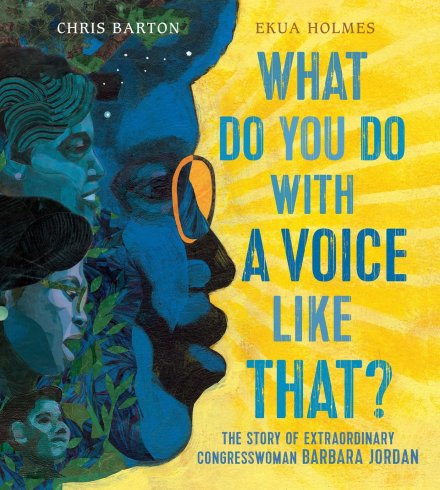
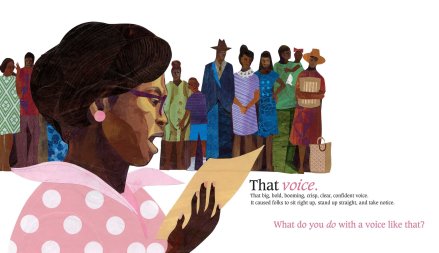
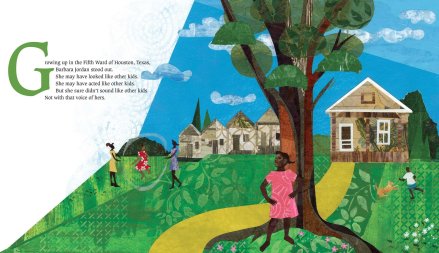
As a child growing up in the Fifth Ward of Houston, Texas, Barbara Jordan was known for her distinctive voice. “That voice. That big, bold, booming, crisp, clear, confident voice. It caused folks to sit right up, stand up straight, and take notice. What do you do with a voice like that?” Barbara recited poetry, gave speeches, and in 1952 won an oratory contest with a trip to Chicago as the prize. She was proud of herself and where her voice was leading her. But where would that be?

celebrate-picture-books-picture-book-review-what-do-you-do-with-a-voice-like-that-child

Image copyright Ekua Holmes, 2018, text copyright Chris Barton, 2018. Courtesy of Beach Lane Books.

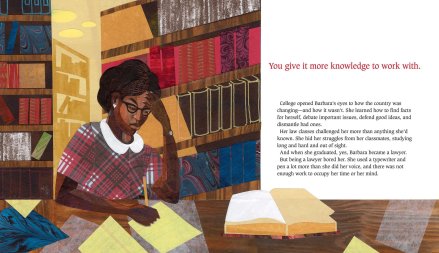
She considered becoming a preacher, a teacher, and a lawyer. When a black woman lawyer gave a speech at Barbara’s high school, Barbara thought she had found her calling. She attended college where she “learned how to find facts for herself, debate important issues, defend good ideas, and dismantle bad ones.” She graduated with a law degree, but practicing law became boring. She wrote more than she spoke, and the work was not demanding enough.

celebrate-picture-books-picture-book-review-what-do-you-do-with-a-voice-like-that-studying

Image copyright Ekua Holmes, 2018, text copyright Chris Barton, 2018. Courtesy of Beach Lane Books.

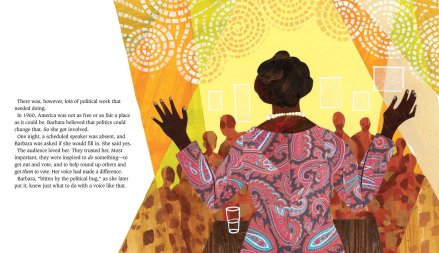
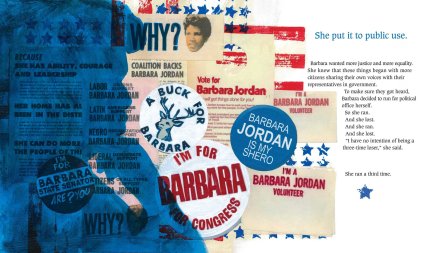
It was 1960, and Barbara decided to lend her voice to causes she believed in. She became involved in politics, and on one pivotal night, she filled in for a speaker who was absent. “The audience loved her. They trusted her. Most important they were inspired to do something—to get out and vote” and to persuade others to vote. Barbara decided to run for office. She lost her first two elections, but the third one she won.

Barbara Jordan was now a Texas state senator, representing the people she grew up with. She believed in making changes from within the political system through debating issues on the Senate floor. She also got to know her colleagues outside of work, and they got to know her. They listened to each other, and positive changes were the result. In 1972, Barbara ran for Congress and won a seat in the U.S. House of Representatives in Washington DC.

celebrate-picture-books-picture-book-review-what-do-you-do-with-a-voice-like-that-politics

Image copyright Ekua Holmes, 2018, text copyright Chris Barton, 2018. Courtesy of Beach Lane Books.

In 1973, the Watergate scandal broke. “President Nixon, it seemed, had broken the law, and Congress had to decide what to do about it.” Once again, as a member of the House Judiciary Committee, Barbara used her voice to remind Congress and the American people that “the Constitution is the document governing all the laws in the United States and applies to all of its people.” Then “in her big, bold, booming, crisp, clear, confident tone” she said, “‘My faith in the Constitution is whole…. And I am not going to sit here and be an idle spectator to the diminution, the subversion, the destruction of the Constitution.’” Barbara said that the president must go. President Nixon resigned in 1974.

celebrate-picture-books-picture-book-review-what-do-you-do-with-a-voice-like-that-campaign

Image copyright Ekua Holmes, 2018, text copyright Chris Barton, 2018. Courtesy of Beach Lane Books.

Barbara became a star, shining “like a bright light in a dark place.” She became the voice for those battling discrimination, for those “who had less power…who possessed quieter strengths than her own…who did not want to be limited by their weaknesses.” People talked about Barbara becoming a Senator, a Supreme Court Justice, or possibly Vice President.

But Barbara, unknown even to herself, had been struggling with multiple sclerosis, and now her inner voice told her that the place she belonged was home. Back in Texas, she became a college professor, where she taught her students not only to “do something, but to do the right thing.” Her students are still working today, striving to make the world a better place and to inspire everyone to make their voices heard.

An Author’s Note, a detailed timeline of Barbara Jordan’s life, and other recommended resources follows the text.

celebrate-picture-books-picture-book-review-what-do-you-do-with-a-voice-like-that-speaking

Image copyright Ekua Holmes, 2018, text copyright Chris Barton, 2018. Courtesy of Beach Lane Books.

Chris Barton’s stirring biography of Barbara Jordan introduces children to a woman whose voice is just as relevant today as it was when she was a state senator, US representative, and professor. Barton clearly and lyrically depicts Jordan’s trajectory while showing readers what it takes to succeed: practice, perseverance, learning, and wisdom. For young readers Barton briefly but cogently outlines the core of the case against Richard Nixon then allows readers to hear, in her own words, Jordan’s rousing defense of the Constitution. His inclusion of Jordan’s seventeen years of teaching after her diagnosis of MS is a poignant reminder that her influence is still heard through her students and admirers, and Barton’s final exhortation to readers to speak out honors Barbara Jordan’s life and will impel both children and adults to follow her lead.

Ekua Holmes stunning mixed-media illustrations will set readers’ hearts soaring in this over-sized picture book that beautifully reflects Barbara Jordan’s influence in politics and beyond. Holmes’ collages, rendered in lush colors and textured with intricate patterns and images from nature, take children on Jordan’s journey from sun-drenched Texas to law school to Washington DC, giving them a glimpse of her childhood and her growing stature as a stateswoman. Today’s savvy readers will be interested in the examples of campaign materials and images of Jordan’s building relationships with diverse voters and her fellow senators and representatives. Several photographs of Jordan from her graduation, campaigns, and televised appearances during the Watergate hearings join Holmes’ realistic portraits and will inspire readers to learn more about this influential and unforgettable woman.

What Do You Do with a Voice Like That? is a stirring and empowering biography that belongs in every home, school, and public library collection.

Ages 4 – 8 and up

Beach Lane Books, 2018 | ISBN 978-1481465618

Discover more about Chris Barton and his books on his website.

To learn more about Ekua Holmes, her books, and her art, visit her website.

Black History Month Activity

celebrate-picture-books-picture-book-review-barbara-jordan-activity

Barbara Jordan Inspirational Poster


If you have ideas about how to make the world better, print this poster of Barbara Jordan and write how you would like to use your voice on the back. This can be through speech, writing, art, community involvement, or any way that uses your talents.

celebrate-picture-books-picture-book-review-what-do-you-do-with-a-voice-like-that-cover

You can find What Do You Do with a Voice Like That? at these booksellers

Amazon | Barnes & Noble | Books-a-Million | IndieBound

Picture Book Review
 

February 25 – Honoring Katherine Johnson

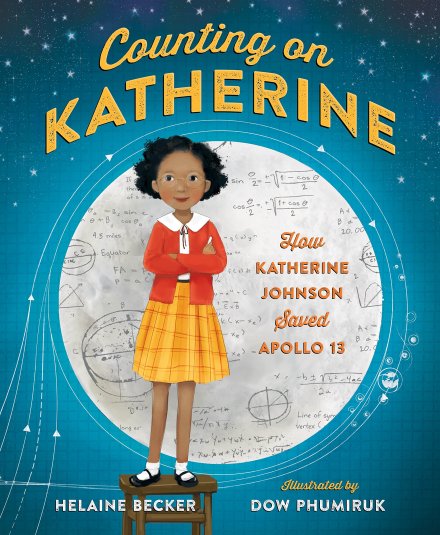
celebrate-picture-books-picture-book-review-counting-on-katherine-cover

About Katherine Johnson

Katherine Johnson passed away yesterday at the age of 101. Recognized from an early age for her brilliance, Katherine went on to become a pivotal mathematician for NASA as the space race led to the first manned missions and lunar landings. She continued working for NASA on the space shuttle and other technological advancements. Fearless in asking the kinds of probing questions that fueled her imagination and precise calculations and in standing up for her rights, Katherine was a trail-blazer for women and people of color. She was awarded the Presidential Medal of Freedom in 2015. Her influence and inspiration continue to shine, especially for children, through books like Counting on Katherine.

Counting on Katherine: How Katherine Johnson Saved Apollo 13

Written by Helaine Becker | Illustrated by Dow Phumiruk


Katherine may have been born counting. She counted every step she took and every step she climbed. She counted the dishes and silverware as she washed them, and although she may have wanted to count all the stars in the sky, she knew that was beyond anyone’s ability. “Even so, the stars sparked her imagination…. Katherine yearned to know as much as she could about numbers, about the universe—about everything!”

celebrate-picture-books-picture-book-review-counting-on-katherine-school

Image copyright Dow Phumiruk, 2018, text copyright Helaine Becker, 2018. Courtesy of Henry Holt and Company.

Katherine was so smart that she skipped three grades, even passing up her older brother. Katherine graduated from elementary school when she was 10 and was ready for high school, but “her town’s high school didn’t admit black students—of any age. Her father, though, said, “‘Count on me.’” He worked until the family could afford to move to another town where she could attend a black high school.

In high school, Katherine loved all of her classes, but her favorite subject was math. She wanted to become a research mathematician, “making discoveries about the number patterns that are the foundations of our universe.” But there were no jobs like that for women, so Katherine taught elementary school.

celebrate-picture-books-picture-book-review-counting-on-katherine-calculations

Image copyright Dow Phumiruk, 2018, text copyright Helaine Becker, 2018. Courtesy of Henry Holt and Company.

Then in the 1950s, the National Advisory Committee on Aeronautics began hiring new employees. When Katherine applied all the positions had been filled, but the next year she got a job. A few years later when NASA was formed, Katherine became what was known as a human “‘computer.’” She and the other computers––all of whom were women––calculated long series of numbers, contributing to the “space race.”

Katherine asked lots of questions about how high the rocket ship would go and how fast it would travel before beginning her calculations. Her job was to make sure that the earth and the rocket were in the same place when the rocket needed to land. Katherine’s calculations were so precise and her leadership so inspiring that she was promoted to Project Mercury, “a new program designed to send the first American astronauts into space.

celebrate-picture-books-picture-book-review-counting-on-katherine-trajectory

Image copyright Dow Phumiruk, 2018, text copyright Helaine Becker, 2018. Courtesy of Henry Holt and Company.

The engineers and astronauts knew that the missions were going to be dangerous, and John Glenn, distrusting the computer-generated numbers, refused to fly until Katherine approved the numbers. “‘You can count on me,’” she told him. Glenn’s mission was successful and Katherine earned another promotion. Her new job was to “calculate the flight paths for Project Apollo—the first flight to the moon.” She calculated the trajectories that took Apollo 11 and Apollo 12 to the moon and back in 1969. But as Apollo 13 soared through space on its way to the moon, there was an explosion. There were questions about whether the spaceship could reach the moon or make it back to Earth.

celebrate-picture-books-picture-book-review-counting-on-katherine-explosions

Image copyright Dow Phumiruk, 2018, text copyright Helaine Becker, 2018. Courtesy of Henry Holt and Company.

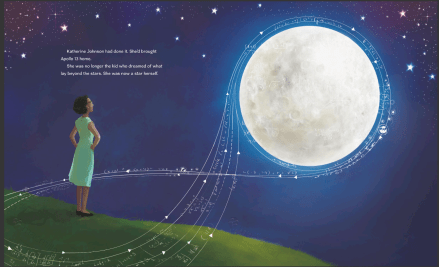
Katherine was again called to make new calculations. In only a few hours, Katherine had a new flight plan that “would take the ship around the far side of the moon. From there, the moon’s gravity would act like a slingshot to zing the ship back to Earth.” But for the plan to work, the astronauts had to follow it exactly. There was no room for a mistake. Katherine and all of the NASA engineers waited nervously to find out if the plan would succeed. Finally, the astronauts reported that they were back on track. “Katherine Johnson had done it…. She was no longer the kid who dreamed of what lay beyond the stars. She was now a star herself.”

An Author’s Note following the text tells more about Katherine Johnson’s life and work, which went on to impact the space shuttle program and satellite projects.

celebrate-picture-books-picture-book-review-counting-on-katherine-moon

Image copyright Dow Phumiruk, 2018, text copyright Helaine Becker, 2018. Courtesy of Henry Holt and Company.

Helaine Becker’s captivating storytelling captures Katherine Johnson’s genius for math and talent for applying it to even the most complex problems in a ground-breaking field. Her self-confidence, curiosity, and love of learning as well as her trajectory at NASA will impress readers, many of whom may also be dreaming of making a mark in new ways. A highlight of Becker’s text is her clear explanations of how Katherine’s calculations for NASA were used and what was at stake when her help was needed most. Becker’s repeated phrase “You can count on me” and her stirring ending weave together the numerical and lyrical aspects of Katherine’s life to inspire a new generation of thinkers.

celebrate-picture-books-picture-book-review-counting-on-katherine-skips-dreaming

Image copyright Dow Phumiruk, 2018, text copyright Helaine Becker, 2018. Courtesy of Henry Holt and Company.

From the first page, readers can see Katherine’s intelligence and inquisitiveness that shined whether she was walking to school, doing chores, or, later, making sure our astronauts made it to the moon and back safely. Dow Phumiruk’s artwork is always thrilling, and here blackboards covered in formulas as Katherine stands on tiptoe as a child and on a ladder as an adult to complete them will leave readers awestruck with her understanding of and abilities with numbers. Illustrations of school rooms and offices give children a realistic view of the times, and her imagery pairs perfectly with Becker’s text in demonstrating the concepts of sending a rocket ship into space and bringing it home again. Phumiruk’s lovely images of space are uplifting reminders that dreams do come true.

A stellar biography that will enthrall children and inspire them to keep their eyes on their goals and achieve their dreams, Counting on Katherine: How Katherine Johnson Saved Apollo 13 is highly recommended for home bookshelves and is a must for school and public library collections.

Ages 5 – 9

Henry Holt and Company, 2018 | ISBN 978-1250137524

Discover more about Helaine Becker and her books on her website.

To learn more about Dow Phumiruk, her books, and her art, visit her website.

Watch the Counting on Katherine book trailer!

celebrate-picture-books-picture-book-review-counting-on-katherine-cover

You can find Counting on Katherine: How Katherine Johnson Saved Apollo 13 at these booksellers

Amazon | Barnes & Noble | Books-a-Million | IndieBound

Picture Book Review
February 18 – It’s Black History Month

celebrate-picture-books-picture-book-review-pies-from-nowhere-cover

About the Holiday

Black History Month celebrates the achievements and contributions of African Americans in United States History. Originally a week-long observance initiated by writer and educator Dr. Carter G. Woodson and occurring during the second week in February to commemorate the birthdays of Frederick Douglass and Abraham Lincoln, Black History Month was officially established in 1976 by then president Gerald Ford. The holiday is now celebrated across the country with special events in schools, churches, and community centers.

The theme for 2020 is “African Americans and the Vote,” which recognizes the struggle for both black men as well as women throughout American history. This year marks the 150th anniversary of the Fifteenth Amendment, ratified in 1870, which gave black men the right to vote after the Civil War. It has also been one hundred years since women gained the right to vote. For more information about Black History Month, visit the ASALH website and africanamericanhistorymonth.gov.

Pies from Nowhere: How Georgia Gilmore Sustained the Montgomery Bus Boycott

Written by Dee Romito | Illustrated by Laura Freeman


As a young girl living on a farm in Alabama, Georgia Freeman learned from her mother a lesson she took to heart: “Think twice before doing anything you might regret, and never, ever hate anyone.” When Georgia grew up and had children of her own, she was known for her delicious cooking. She even worked as a cook at the National Lunch Company, a restaurant in Montgomery, Alabama. At the time, segregation laws dictated that white customers sit on one side of the counter and black customers on the other.
celebrate-picture-books-picture-book-review-pies-from-nowhere-farm

Image copyright Laura Freeman, 2018, text copyright Dee Romito, 2018. Courtesy of little bee books.

On December 1, 1955, Georgia heard a radio report that “an African American woman named Rosa Parks had been arrested for refusing to give up her seat on a bus to a white passenger.” The next day, the Black community in Montgomery was asked to boycott the buses in support of Rosa Parks and because of the poor treatment African Americans were forced to endure by the bus drivers. Georgia wanted to do even more to support the movement.

Soon after the boycott began, Georgia went to hear Dr. Martin Luther King Jr. speak at the Holt Street Baptist Church. “He talked about freedom. Unity. Equality.” And Justice. “Those were things Georgia believed in, and she was willing to fight for them.” Georgia decided to use her talent for cooking to help. She and a group of women got together and cooked. They made sandwiches and dinners and sold them at the boycott meetings and in their neighborhood, including to those walking to and from work instead of taking the bus.

celebrate-picture-books-picture-book-review-pies-from-nowhere-lunch-counter

Image copyright Laura Freeman, 2018, text copyright Dee Romito, 2018. Courtesy of little bee books.

The money that Georgia made went to the “Montgomery Improvement Association, which helped fund the boycott.” This work by Georgia and the other women was dangerous. If anyone learned that they were involved in the boycott, they would lose their jobs, so all cooking and selling was done in secret. Georgia’s customers at local shops and businesses paid for her scrumptious pies in cash so that only Georgia knew who they were. Over time, Georgia’s group donated enough money  to pay for “gas for the carpool system that had been set up for the boycott” and even to buy station wagons to transport people around town. Whenever Georgia was asked where she got this money, she answered, “‘it came from nowhere.’”
celebrate-picture-books-picture-book-review-pies-from-nowhere-rosa-parks

Image copyright Laura Freeman, 2018, text copyright Dee Romito, 2018. Courtesy of little bee books.

The bus system was losing money because of the boycott, “so the city did what it could to stop the protesters and their efforts.” Ninety people, including Dr. King, were arrested. Georgia was called to testify in court. She told of her experience in which after paying her fare, she was told to get off the bus and go to the back door to get on. Before she could reenter the bus, the driver shut the door on her and drove off. After that, she said, she no longer rode the bus.

Georgia knew supporting the boycott was the right thing to do, but when the National Lunch Company found out, they fired her. With six children to raise on her own, Georgia worried about what she would do. Dr. King encouraged her to open her own business. He helped her improve her kitchen, and soon Georgia’s house had long lines of people waiting to eat her meals and more waiting for deliveries. Georgia made hundreds of lunches every day. While she was feeding her community, Georgia “was also bringing the people of Montgomery together—black and white.” Georgia’s house was also used for secret meetings among civil rights leaders.

celebrate-picture-books-picture-book-review-pies-from-nowhere-empty-buses

Image copyright Laura Freeman, 2018, text copyright Dee Romito, 2018. Courtesy of little bee books.

On November 13, 1956—nearly a year after the boycott had begun, Georgia heard another radio report saying that the United States “Supreme Court had declared that segregation on buses was illegal! The boycotters had won.” This meant that people could sit anywhere they wanted. The Montgomery Bus Boycott was just a beginning. “There would be more battles to fight . . . so Georgia Gilmore kept right on cooking.”

An Author’s Note revealing more about the Montgomery Bus Boycott and Georgia Gilmore follows the text. Kids are also invited to make Georgia’s Homemade Pound Cake using the recipe on the back cover.

celebrate-picture-books-picture-book-review-pies-from-nowhere-meeting

Image copyright Laura Freeman, 2018, text copyright Dee Romito, 2018. Courtesy of little bee books.

Dee Romito’s inspiring biography delves into the crucial role individuals can make in supporting people and causes they believe in. By focusing on unsung historical hero Georgia Gilmore and using her own words and thoughts, Romito reveals how those with strong beliefs can use their talents and courage to fight for change behind the scenes and still make an important difference. Her conversational storytelling brings a personal touch to this biography, drawing young readers in to learn the details of this early battle in the Civil Rights movement—also begun by an act of a solitary person. Bookended by the radio reports that Georgia hears, the story is well-paced to show how Georgia’s contribution grows over nearly a year. This timely biography is made even more resonant perhaps in that Georgia’s cooking and selling of meals and baked goods is an activity that many children will recognized from their own involvement in bake sales and other food-related fund raisers. The open ending invites readers to learn more about the Civil Rights movement and Georgia Gilmore.

celebrate-picture-books-picture-book-review-pies-from-nowhere-cooking

Image copyright Laura Freeman, 2018, text copyright Dee Romito, 2018. Courtesy of little bee books.

Laura Freeman’s boldly colored, realistic artwork allows children to embrace the historical context of Romito’s biography through her expressive portraiture that introduces Georgia Gilmore, Rosa Parks, Dr. Martin Luther King Jr., and the members of Georgia’s Nowhere Club. A double-spread of the National Lunch Company’s segregated counter is visually striking as the divide comes at the book’s gutter, creating the side for white customers on the left and the side for black customers on the right. The injustice of this separation is expressed in the similar red clothing and dark hair of the woman on the right and the man on the left. Illustrations of crowds walking as buses go empty, attending the boycott strategy meetings, secretly buying pies, and filling Georgia’s home place readers at these scenes of the resistance movement. Freeman uses action, media coverage, and Georgia’s courtroom appearance to great effect. Knowledgeable readers will understand that making a positive difference continues across all generations.

Pies from Nowhere is a stunning book of empowerment for children and adults. The theme of using ones talents to make a difference is a timely lesson that kids will respond to. The book belongs in all classroom, school, and public libraries and is a top choice for home bookshelves as well.

Ages 6 – 9

little bee books, 2018 | ISBN 978-1499807202

Discover more about Dee Romito and her books on her website.

To learn more about Laura Freeman, her books, and her art, visit her website.

Black History Month Activity

celebrate-picture-books-picture-book-review-barack-obama-coloring-page

Role Model Coloring Pages


Whether you’re interested in law and politics, science, sports, or the arts, you can find a role model in the people in the printable coloring pages below. 

Barack H. Obama | Dr. Mae Jemison | Jackie Robinson | Maya Angelou  

celebrate-picture-books-picture-book-review-pies-from-nowhere-cover

You can find Pies from Nowhere: How Georgia Gilmore Sustained the Montgomery Bus Boycott at these booksellers

Amazon | Barnes & Noble | Books-a-Million | IndieBound