September 10 – African Fabric Month

African Fabric Month™ was launched in 2016 by Lisa Shepard Stewart of Cultured Expressions, Inc. The celebration “promotes the artistic and practical uses of such fabrics as ankara prints, batik, kuba, adinkra, bogolan/mudcloth, korhogo, adire, kente, and more, and serves to honor and promote the cultures that create them.” While Stewart shares her love for African fabrics year round through special online and in-person events, this month-long holiday puts particular focus on the global positive contributions of the weavers and other textile artists of Africa. To learn more about the holiday as well as ongoing events and activities, visit culturedexpressions.com.

Thank you to Charlesbridge and Barbara Fisch at Blue Slip Media for sending me this book for review!

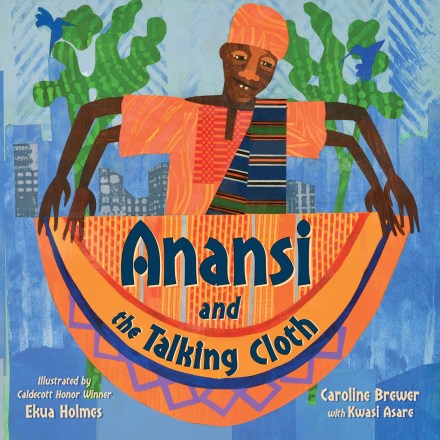
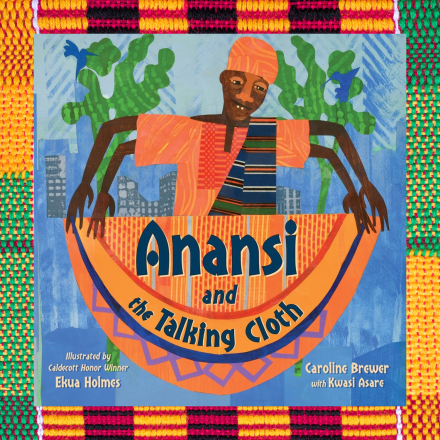
Anansi and the Talking Cloth

Anansi the spider, chief storyteller and trickster, lives in a city “well-known for its talented weavers, / who work their hands and feet in a fascinating fever” to create “kente, the talking cloth.” Each unique cloth made by the spider weavers tells a story revealing truths, courage, how to spread peace or the fact that “our families are more precious than gold.” The city brims with sunshine, vibrant foliage, music, and smooth transportation. Even the “rainbows glow with a sparkly dew.”
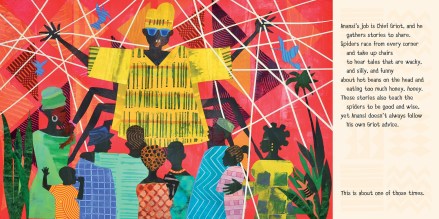
Illustration copyright © 2026 by Ekua Holmes. Text copyright © 2026 by Caroline Brewer with Kwasi Asare. Published by Charlesbridge copyright © 2026.

Even though Anansi gathers the spiders together to tell his wise tales, he doesn’t always adhere to them himself. For instance, while the spider weavers create unique and beautiful cloth by hand, many people “strut about in machine-made brands” that are cheap and quickly fashioned, but have no stories to impart—including Anansi himself! As time passes and the spider weavers’ sales slip, the weaving industry folds, and the once-vibrant community fades. The kente weavers cry, and Anansi wants to help.
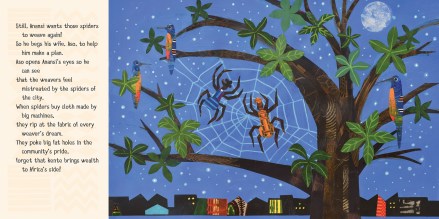
Illustration copyright © 2026 by Ekua Holmes. Text copyright © 2026 by Caroline Brewer with Kwasi Asare. Published by Charlesbridge copyright © 2026.

But Anansi resorts to his trickster ways and tries to scare the weavers into returning to their looms, but they aren’t fooled. With the help of his wife Aso, Anansi finally sees that the “weavers feel mistreated by the spiders of the city.” By buying machine-made cloth, they “rip at the fabric of every weaver’s dream” and destroy “community pride.” Anansi listens to his wife’s suggestions and calls the community together to thank the weavers, but is it too late to restore the sunshine, singing and dancing, vivid colors, and vibrant kente talking cloth to the once hip city?

Back matter includes an Author’s Note discussing the legends and history behind Anansi and kente cloth as well as an Illustrator’s Note about a trip Ekua Holmes recently made to Ghana.
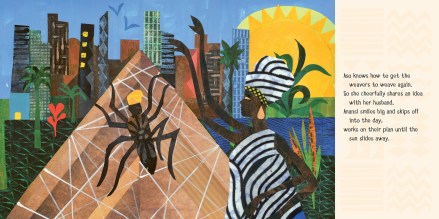
Illustration copyright © 2026 by Ekua Holmes. Text copyright © 2026 by Caroline Brewer with Kwasi Asare. Published by Charlesbridge copyright © 2026.

In Anansi and the Talking Cloth, Caroline Brewer, in consultation with master kente-cloth weaver Kwasi Asare, created an original Anansi story, which is at once as timeless as classic Trickster stories and as current as debate over fast fashion versus lasting quality. Brewer’s stylish storytelling weaves rhymes and the spirited rhythms of assonance, consonance, and alliteration to envelope readers in her magical imaginings of spider weavers creating valuable kente talking cloth—a term created by Brewer for the story. The jaunty cadence flows from page to page, making the story a joyful, riveting read aloud. Through Aso’s thoughtful answer to the weavers’ strike, Brewer also strikes a universal chord for showing respect and gratitude.

Ekua Holmes’ electrifying collage illustrations in glorious overlapping hues of blue, orange, red, green, and yellow bring the intricate patterns and vibrant colors of kente cloth to the page. Young readers will be awed by the spider weavers as they use their many arms and legs to weave talking cloth and be fascinated by images of people and spiders mingling in the city, shopping, dancing, making music, and gathering to hear Anansi’s stories.

With underpinnings in Ghanaian culture and the legacy of kente cloth production, Anansi and the Talking Cloth is a highly inventive and jazzy read aloud that is pure fun while also imparting the values of storytelling and guarding precious traditions. The book is a must for any public and school library collection and would be on frequent rotation for home story times.

Ages 5 – 8

Charlesbridge, 2026 | ISBN 978-1623544218

About the Authors

Caroline Brewer is an award-winning children’s book author, artist, environmentalist, literacy consultant, and creator of Nature-Wise, a program for students and teachers that blends literacy and nature exploration. Caroline is also author and illustrator of Harriet Tubman, Force of Nature and author of Say Their Names. She lives in the Washington, DC, metro area. Visit her at carolinebrewerbooks.com.

Kwasi Asare was born in Nsawam, near the capital city of Accra, Ghana, and is one of Africa’s most prominent and accomplished weavers known for kente cloth, the highly prized Ghanaian cloth that traditionally symbolizes royalty, honor, and leadership. For the United Nations’ fiftieth anniversary in 1995, he created a new kente cloth design. Until 2017, it replaced the original cloth created by Kwasi’s father, A. E. Asare. Visit him at kwasiasare.com.

About the Illustrator

Ekua Holmes was awarded a Caldecott Honor, Coretta Scott King’s John Steptoe New Talent Illustrator Award, Robert Siebert Award, and Boston Globe–Horn Book award for Voice of Freedom: Fannie Lou Hamer, Spirit of the Civil Rights Movement, her first illustration project. She won the Coretta Scott King Award for Illustration twice: Out of Wonder: Poems Celebrating Poets and Stuff of Stars. Visit her at ekuaholmes.com.
You can purchase Anansi and the Talking Cloth from these booksellers

Amazon | Barnes & Noble | Bookshop

February 26 – It’s Black History Month

celebrate-picture-books-picture-book-review-what-do-you-do-with-a-voice-like-that-cover

About the Holiday

Black History Month is a celebration of the achievements of African Americans and the contributions they have made to the United States History. Appropriately for this election year, the theme for 2020 is “African Americans and the Vote,” which recognizes the struggle for both black men as well as women throughout American history. This year marks the 150th anniversary of the Fifteenth Amendment, which was ratified in 1870 and gave black men the right to vote after the Civil War. It has also been one hundred years since women gained the right to vote. For more information about Black History Month, visit the ASALH website and africanamericanhistorymonth.gov.

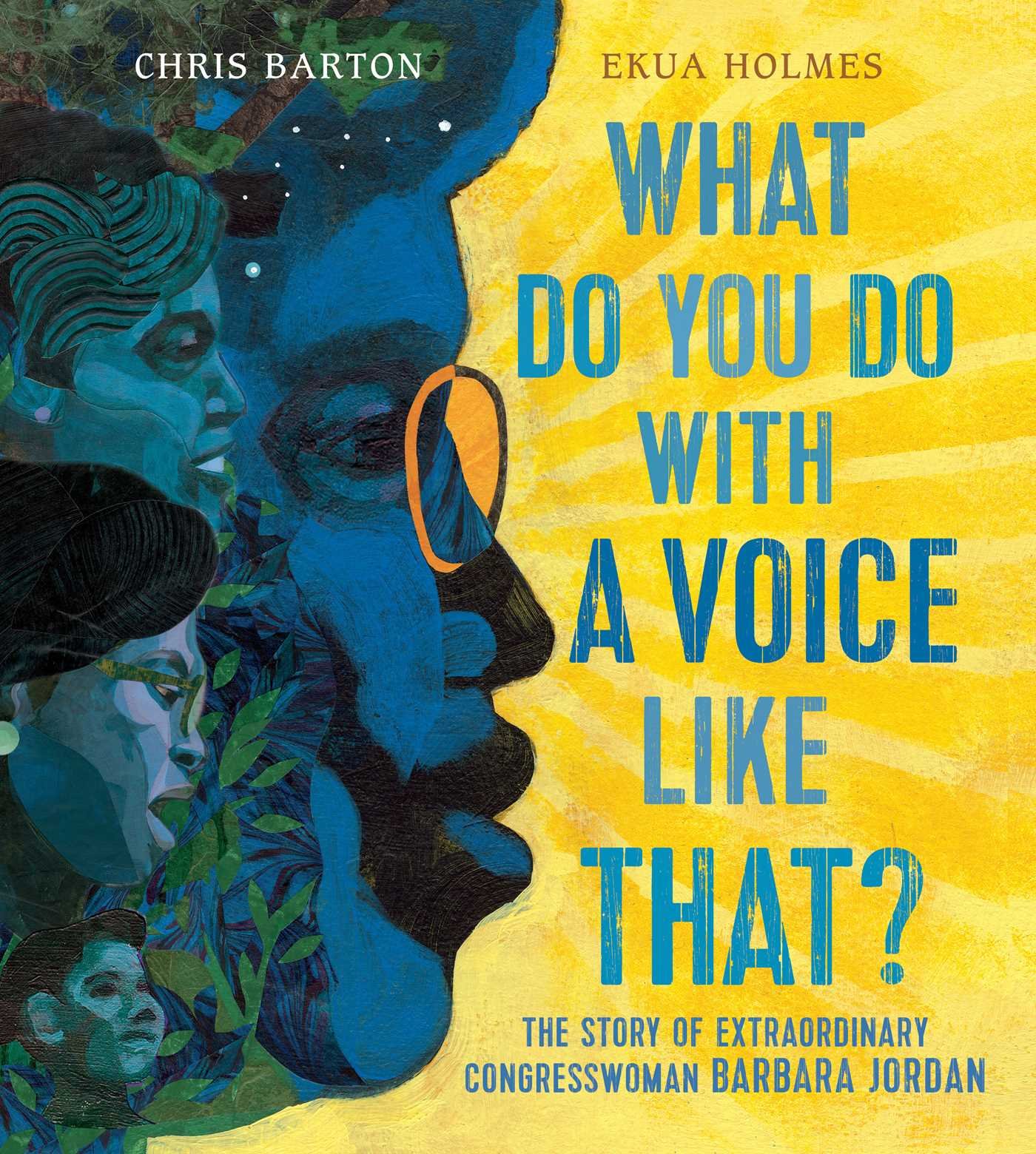
What Do You Do with a Voice Like That? The Story of Extraordinary Congresswoman Barbara Jordan

Written by Chris Barton | Illustrated by Ekua Holmes


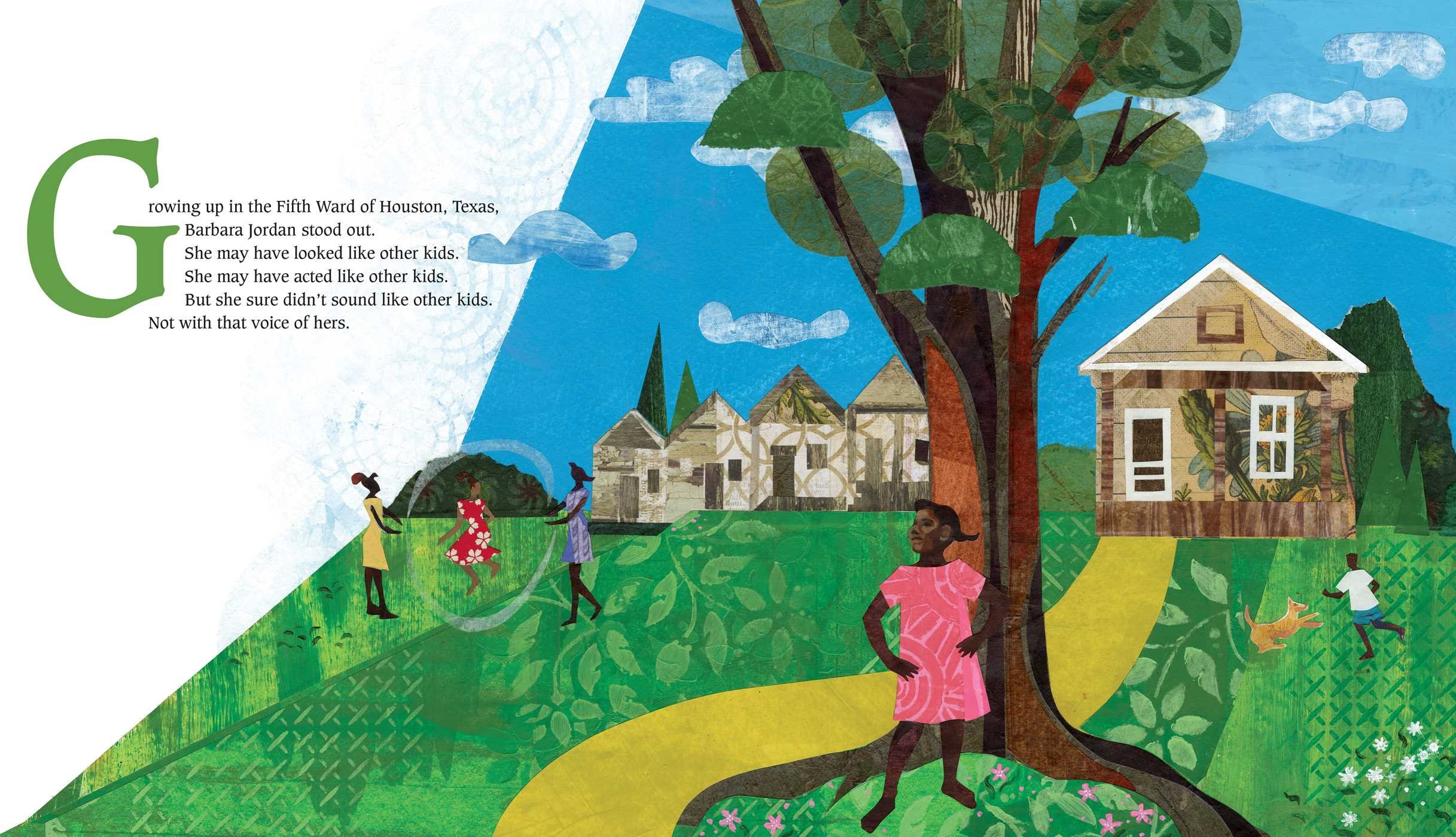
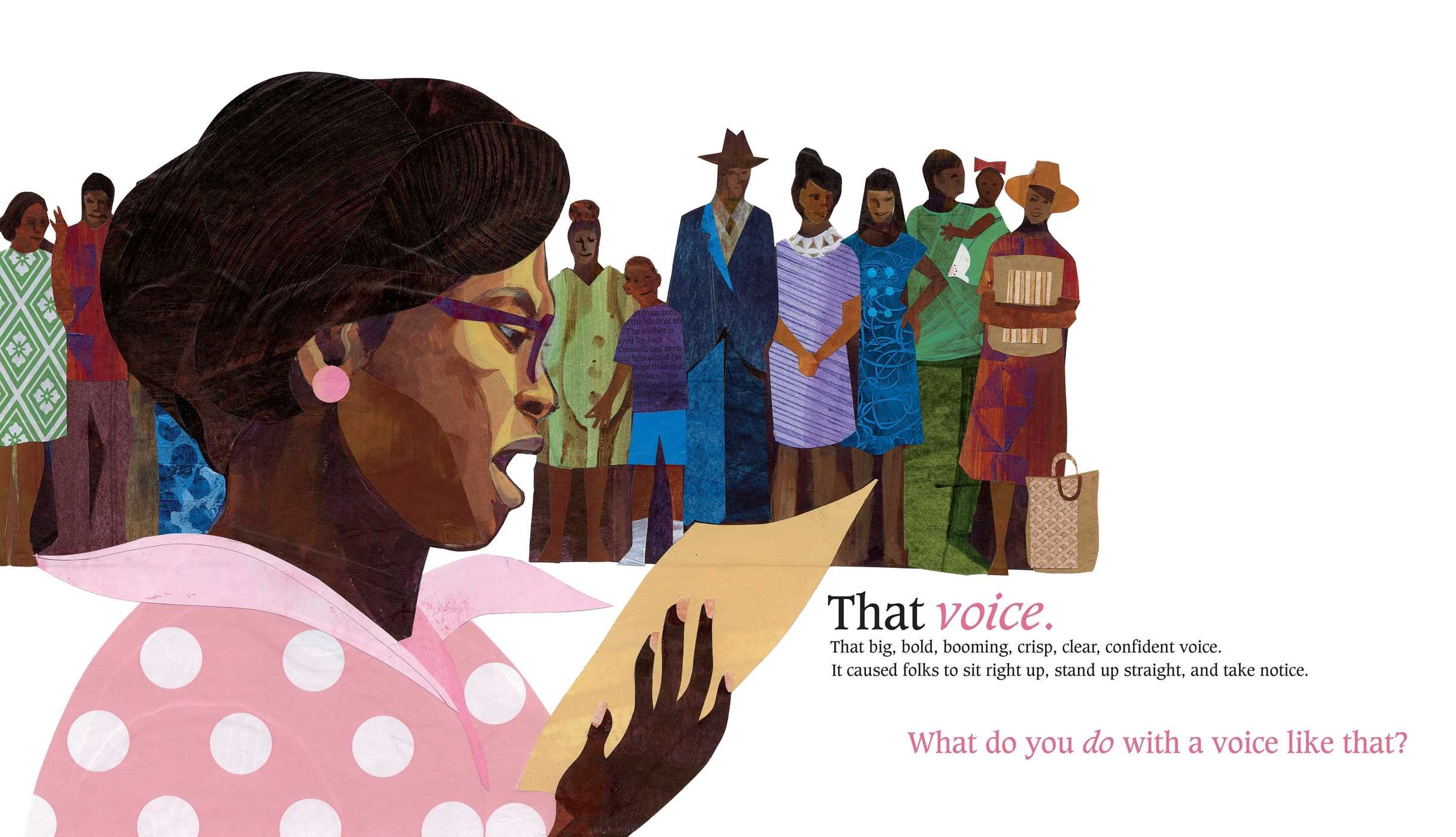
As a child growing up in the Fifth Ward of Houston, Texas, Barbara Jordan was known for her distinctive voice. “That voice. That big, bold, booming, crisp, clear, confident voice. It caused folks to sit right up, stand up straight, and take notice. What do you do with a voice like that?” Barbara recited poetry, gave speeches, and in 1952 won an oratory contest with a trip to Chicago as the prize. She was proud of herself and where her voice was leading her. But where would that be?

celebrate-picture-books-picture-book-review-what-do-you-do-with-a-voice-like-that-child

Image copyright Ekua Holmes, 2018, text copyright Chris Barton, 2018. Courtesy of Beach Lane Books.

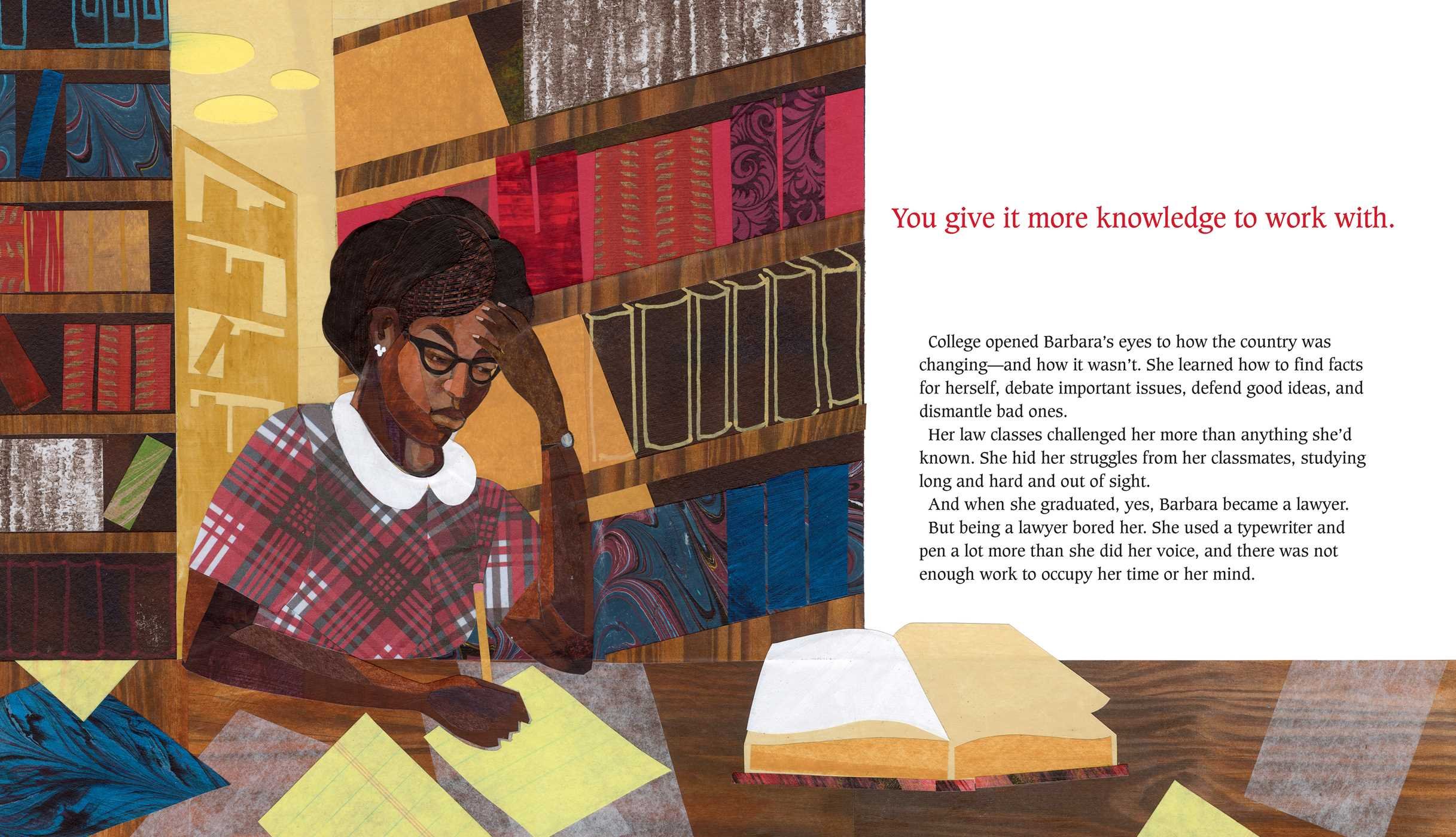
She considered becoming a preacher, a teacher, and a lawyer. When a black woman lawyer gave a speech at Barbara’s high school, Barbara thought she had found her calling. She attended college where she “learned how to find facts for herself, debate important issues, defend good ideas, and dismantle bad ones.” She graduated with a law degree, but practicing law became boring. She wrote more than she spoke, and the work was not demanding enough.

celebrate-picture-books-picture-book-review-what-do-you-do-with-a-voice-like-that-studying

Image copyright Ekua Holmes, 2018, text copyright Chris Barton, 2018. Courtesy of Beach Lane Books.

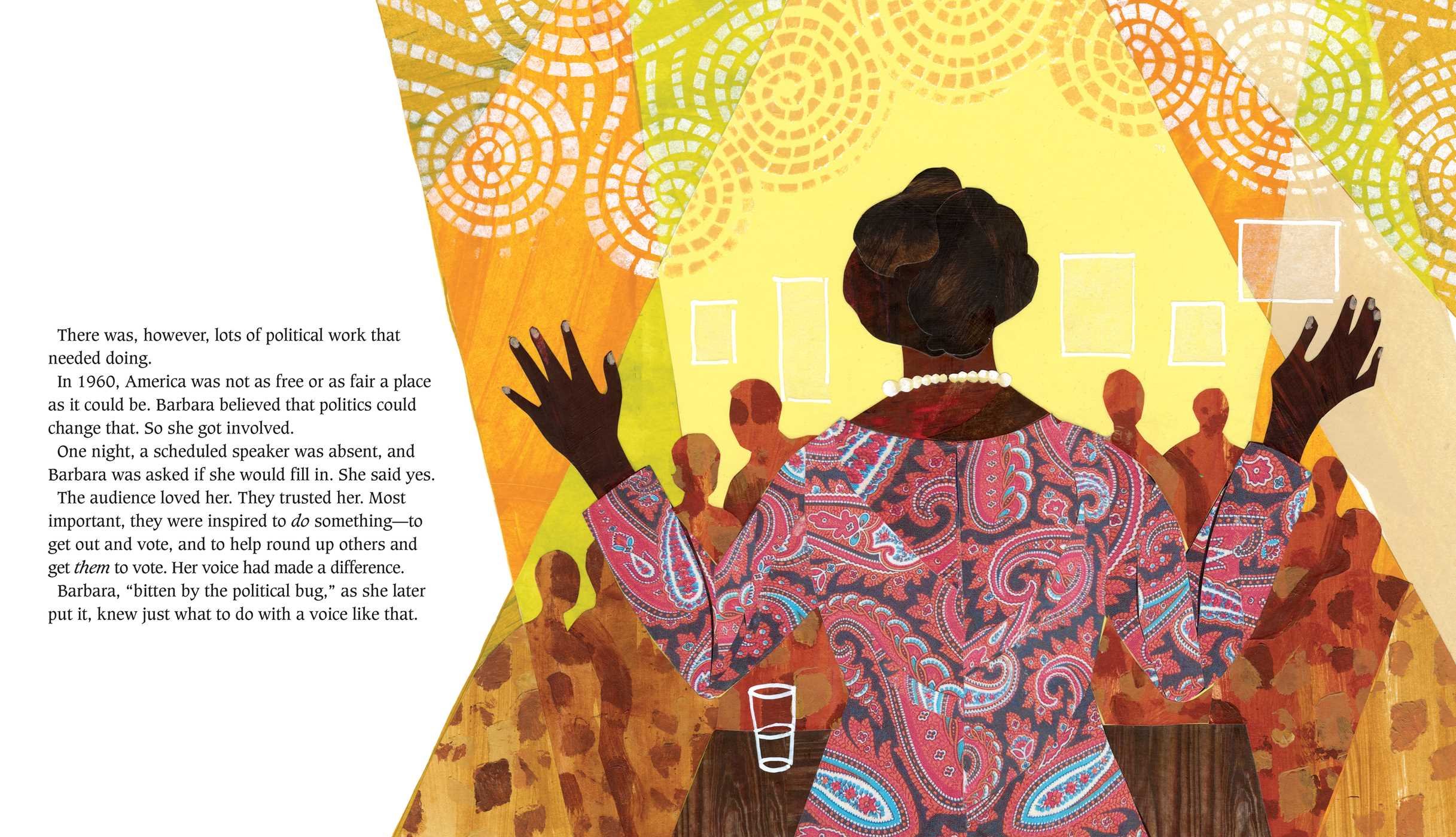
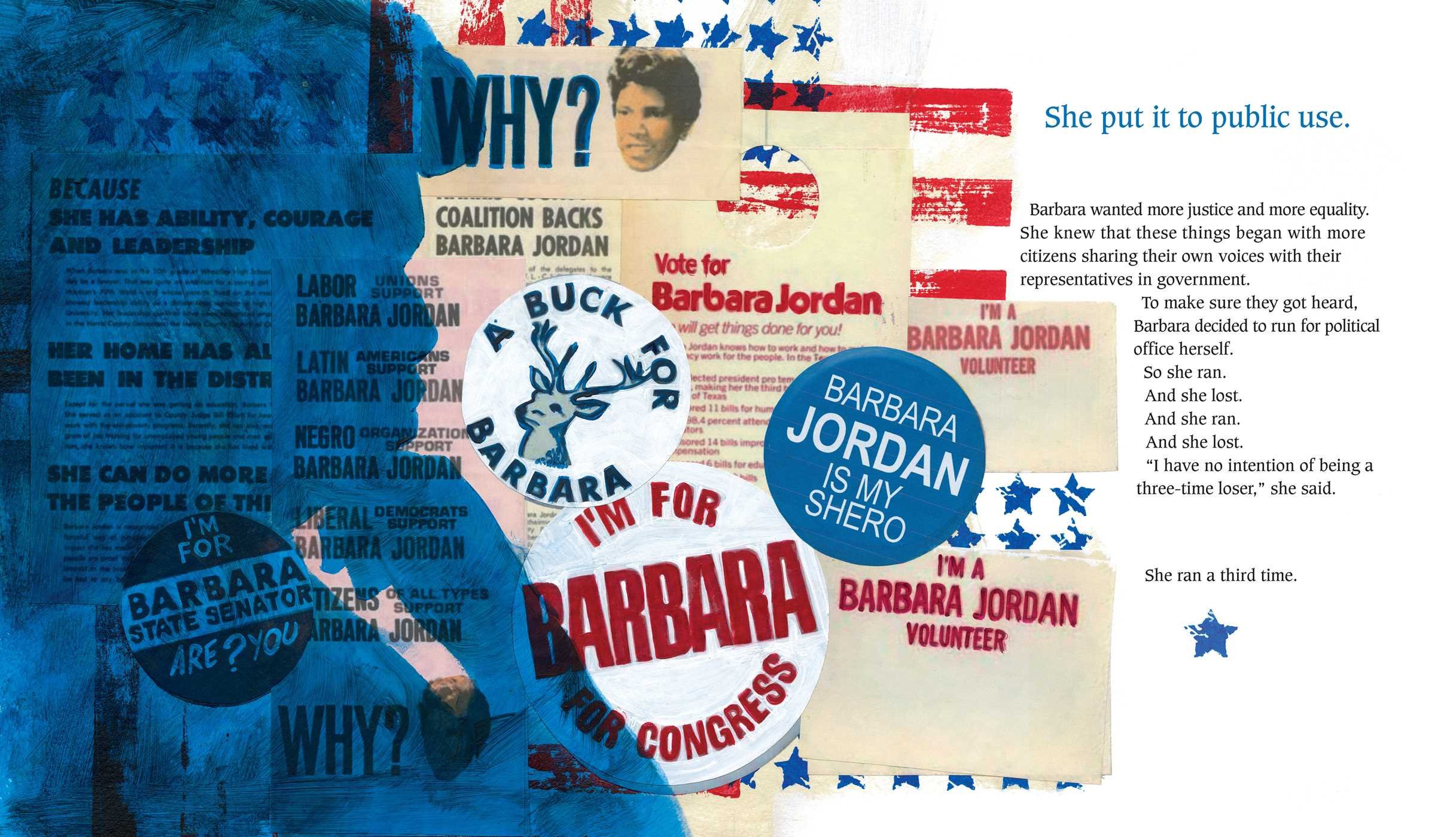
It was 1960, and Barbara decided to lend her voice to causes she believed in. She became involved in politics, and on one pivotal night, she filled in for a speaker who was absent. “The audience loved her. They trusted her. Most important they were inspired to do something—to get out and vote” and to persuade others to vote. Barbara decided to run for office. She lost her first two elections, but the third one she won.

Barbara Jordan was now a Texas state senator, representing the people she grew up with. She believed in making changes from within the political system through debating issues on the Senate floor. She also got to know her colleagues outside of work, and they got to know her. They listened to each other, and positive changes were the result. In 1972, Barbara ran for Congress and won a seat in the U.S. House of Representatives in Washington DC.

celebrate-picture-books-picture-book-review-what-do-you-do-with-a-voice-like-that-politics

Image copyright Ekua Holmes, 2018, text copyright Chris Barton, 2018. Courtesy of Beach Lane Books.

In 1973, the Watergate scandal broke. “President Nixon, it seemed, had broken the law, and Congress had to decide what to do about it.” Once again, as a member of the House Judiciary Committee, Barbara used her voice to remind Congress and the American people that “the Constitution is the document governing all the laws in the United States and applies to all of its people.” Then “in her big, bold, booming, crisp, clear, confident tone” she said, “‘My faith in the Constitution is whole…. And I am not going to sit here and be an idle spectator to the diminution, the subversion, the destruction of the Constitution.’” Barbara said that the president must go. President Nixon resigned in 1974.

celebrate-picture-books-picture-book-review-what-do-you-do-with-a-voice-like-that-campaign

Image copyright Ekua Holmes, 2018, text copyright Chris Barton, 2018. Courtesy of Beach Lane Books.

Barbara became a star, shining “like a bright light in a dark place.” She became the voice for those battling discrimination, for those “who had less power…who possessed quieter strengths than her own…who did not want to be limited by their weaknesses.” People talked about Barbara becoming a Senator, a Supreme Court Justice, or possibly Vice President.

But Barbara, unknown even to herself, had been struggling with multiple sclerosis, and now her inner voice told her that the place she belonged was home. Back in Texas, she became a college professor, where she taught her students not only to “do something, but to do the right thing.” Her students are still working today, striving to make the world a better place and to inspire everyone to make their voices heard.

An Author’s Note, a detailed timeline of Barbara Jordan’s life, and other recommended resources follows the text.

celebrate-picture-books-picture-book-review-what-do-you-do-with-a-voice-like-that-speaking

Image copyright Ekua Holmes, 2018, text copyright Chris Barton, 2018. Courtesy of Beach Lane Books.

Chris Barton’s stirring biography of Barbara Jordan introduces children to a woman whose voice is just as relevant today as it was when she was a state senator, US representative, and professor. Barton clearly and lyrically depicts Jordan’s trajectory while showing readers what it takes to succeed: practice, perseverance, learning, and wisdom. For young readers Barton briefly but cogently outlines the core of the case against Richard Nixon then allows readers to hear, in her own words, Jordan’s rousing defense of the Constitution. His inclusion of Jordan’s seventeen years of teaching after her diagnosis of MS is a poignant reminder that her influence is still heard through her students and admirers, and Barton’s final exhortation to readers to speak out honors Barbara Jordan’s life and will impel both children and adults to follow her lead.

Ekua Holmes stunning mixed-media illustrations will set readers’ hearts soaring in this over-sized picture book that beautifully reflects Barbara Jordan’s influence in politics and beyond. Holmes’ collages, rendered in lush colors and textured with intricate patterns and images from nature, take children on Jordan’s journey from sun-drenched Texas to law school to Washington DC, giving them a glimpse of her childhood and her growing stature as a stateswoman. Today’s savvy readers will be interested in the examples of campaign materials and images of Jordan’s building relationships with diverse voters and her fellow senators and representatives. Several photographs of Jordan from her graduation, campaigns, and televised appearances during the Watergate hearings join Holmes’ realistic portraits and will inspire readers to learn more about this influential and unforgettable woman.

What Do You Do with a Voice Like That? is a stirring and empowering biography that belongs in every home, school, and public library collection.

Ages 4 – 8 and up

Beach Lane Books, 2018 | ISBN 978-1481465618

Discover more about Chris Barton and his books on his website.

To learn more about Ekua Holmes, her books, and her art, visit her website.

Black History Month Activity

celebrate-picture-books-picture-book-review-barbara-jordan-activity

Barbara Jordan Inspirational Poster


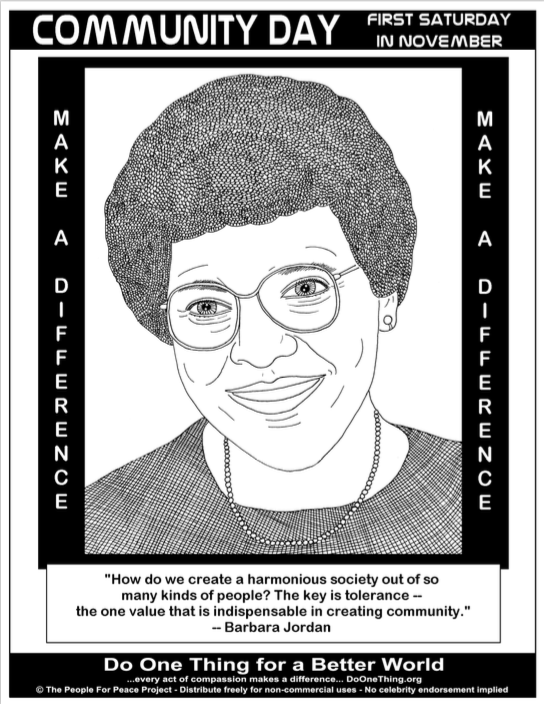
If you have ideas about how to make the world better, print this poster of Barbara Jordan and write how you would like to use your voice on the back. This can be through speech, writing, art, community involvement, or any way that uses your talents.

celebrate-picture-books-picture-book-review-what-do-you-do-with-a-voice-like-that-cover

You can find What Do You Do with a Voice Like That? at these booksellers

Amazon | Barnes & Noble | Books-a-Million | IndieBound

Picture Book Review