October 13 – National Fossil Day

celebrate-picture-books-picture-book-review-chicken-frank-dinosaur-cover

About the Holiday

Did you know that some fossils date back to 4.1 BILLION years ago? Just think of that the next time you’re feeling a little bit old (or so recommends the website National Today). Today we celebrate National Fossil Day to recognize the importance (and, well, awesomeness) of paleontologists, geologists, and fossils in providing us with information on the history of our earth and those who have inhabited it before us. ​National Today provides some further information, with a timeline of fossil history, and fun facts like this one: The highest amount ever paid for a dinosaur fossil was $8.3 million (they named it “Sue”).

To celebrate National Fossil Day, check out National parks near you, learn more about fossils, do something to help protect the earth, read some books about evolution—like Chicken Frank, Dinosaur!—or visit the National Parks page for more information and resources on how to celebrate our geologic heritage.

Thanks to Albert Whitman & Company for sharing a copy of Chicken Frank, Dinosaur! with me for review consideration. All opinions on the book are my own.

Review by Dorothy Levine

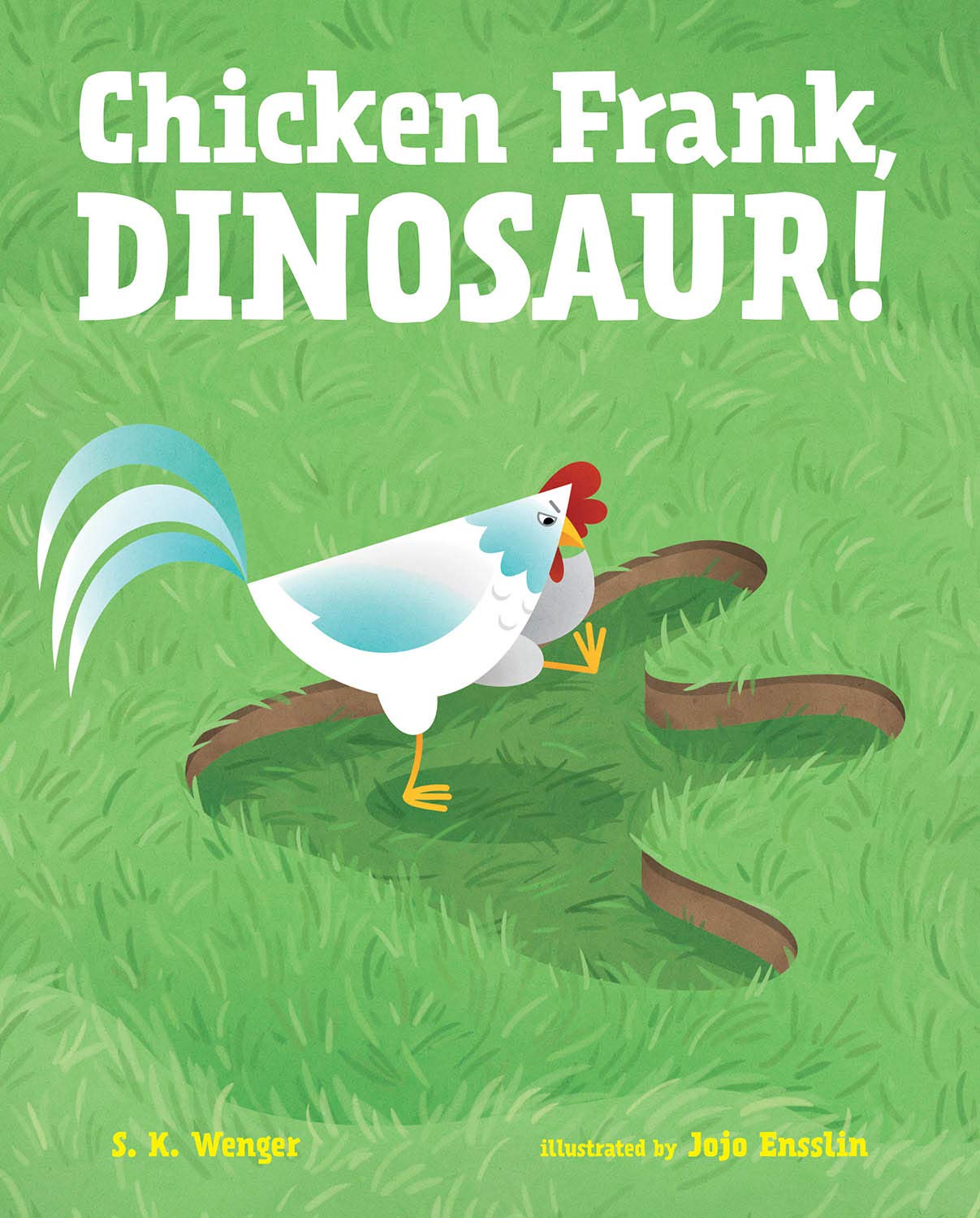
Chicken Frank, Dinosaur!

Written by S.K. Wenger | Illustrated by Jojo Ensslin


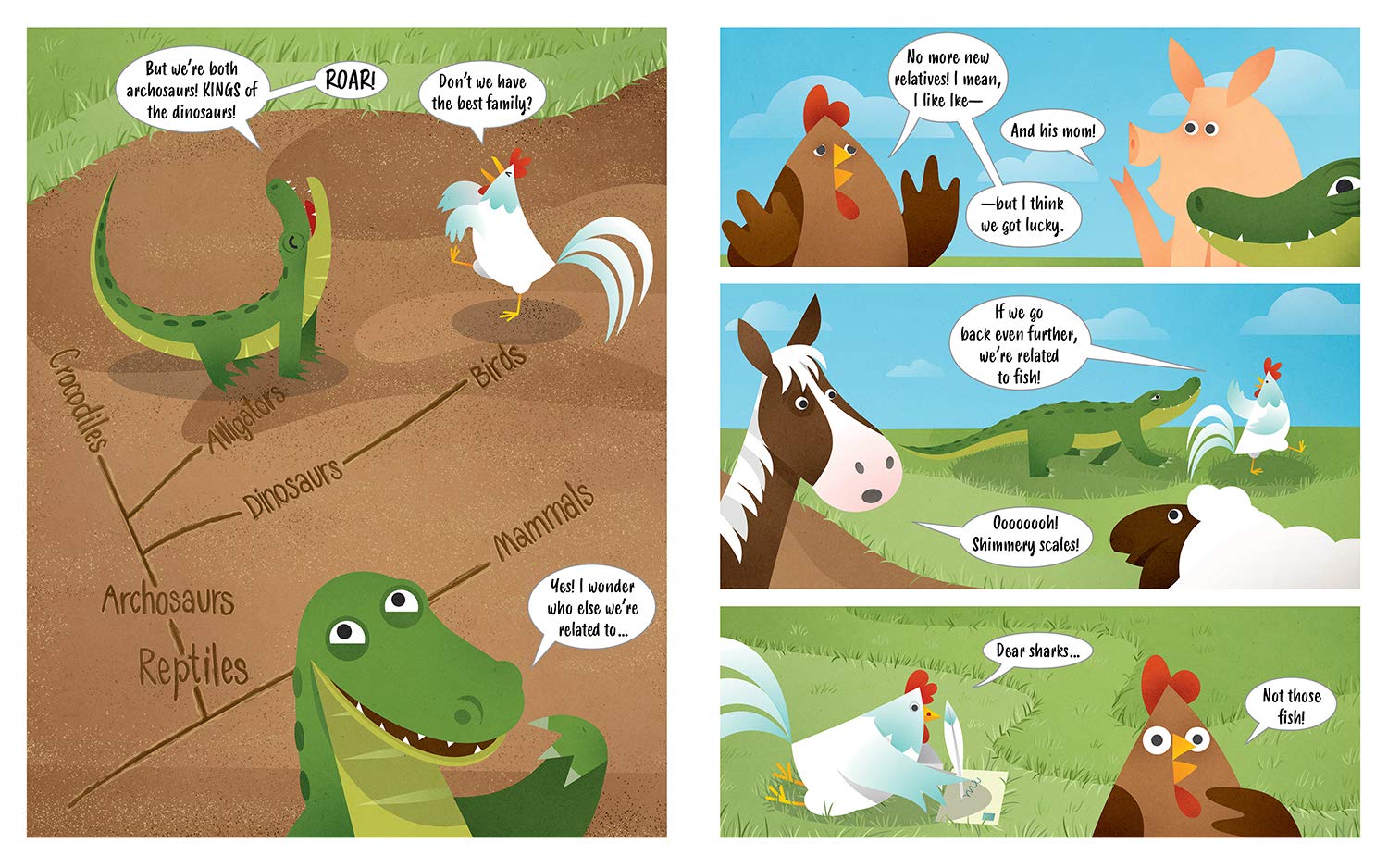
If you ask Chicken Frank he’ll tell you, “I’m a dinosaur! Cluckity-roar!” But the other barnyard animals aren’t so sure. Everyone is puzzled by this evolution thing Frank keeps talking about (“Evo-what?”). Chicken Frank tries to explain, “Evolution! Change! Change happens over time so we can survive.” He takes a stick and draws lines of lineage, connecting crocodiles to plant-eating dinosaurs and eventually birds. “From a dinosaur. See?” But the other animals don’t see it: “I see a chicken who was a chicken five minutes ago,” a sheep says. “I see a chicken who’s been a chicken since he hatched,” a pig chimes in.
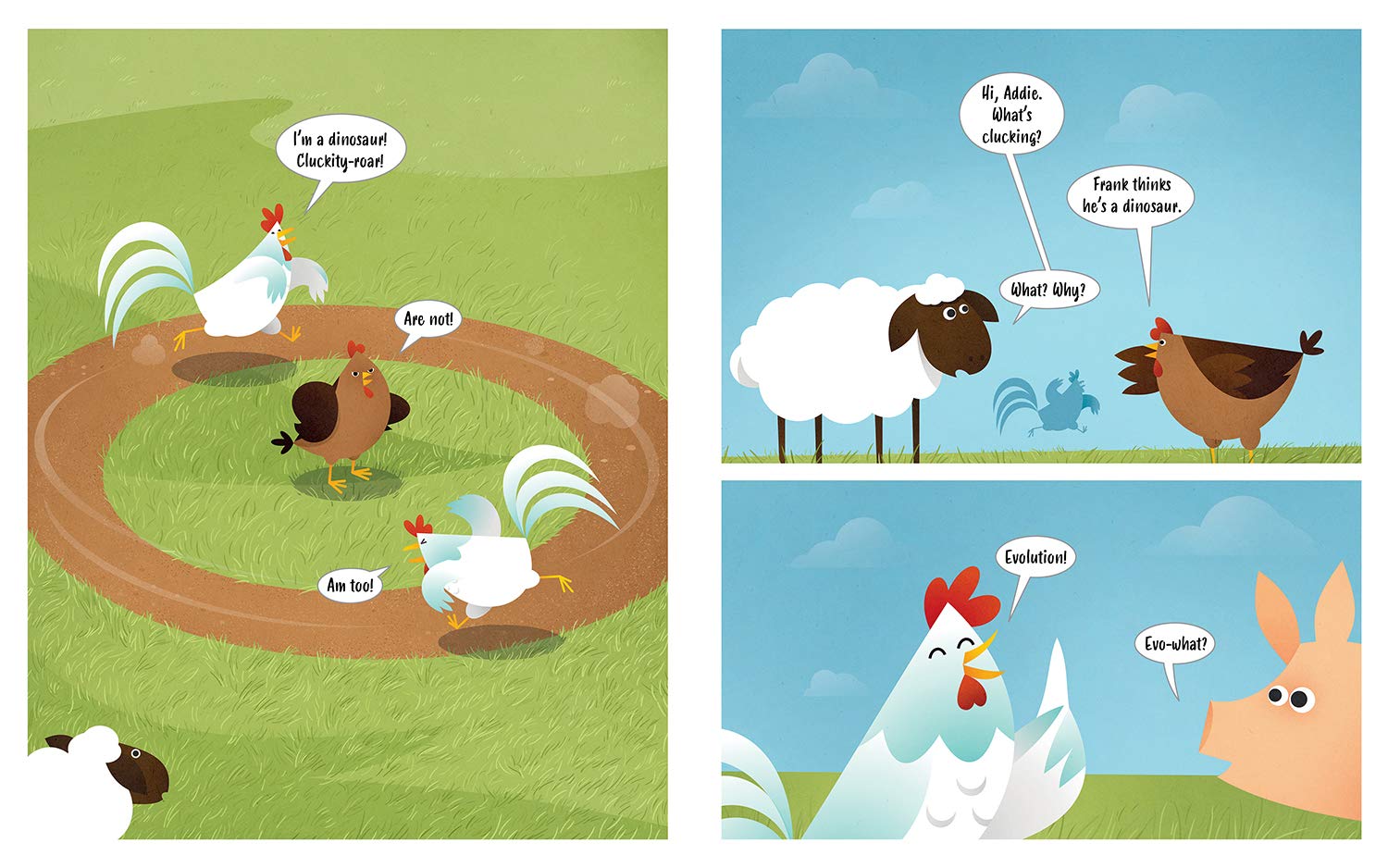
celebrate-picture-books-picture-book-review-chicken-frank-dinosaur-evolution

Image copyright Jojo Ensslin, 2021, text copyright S. K. Wenger, 2021. Courtesy of Albert Whitman & Company.

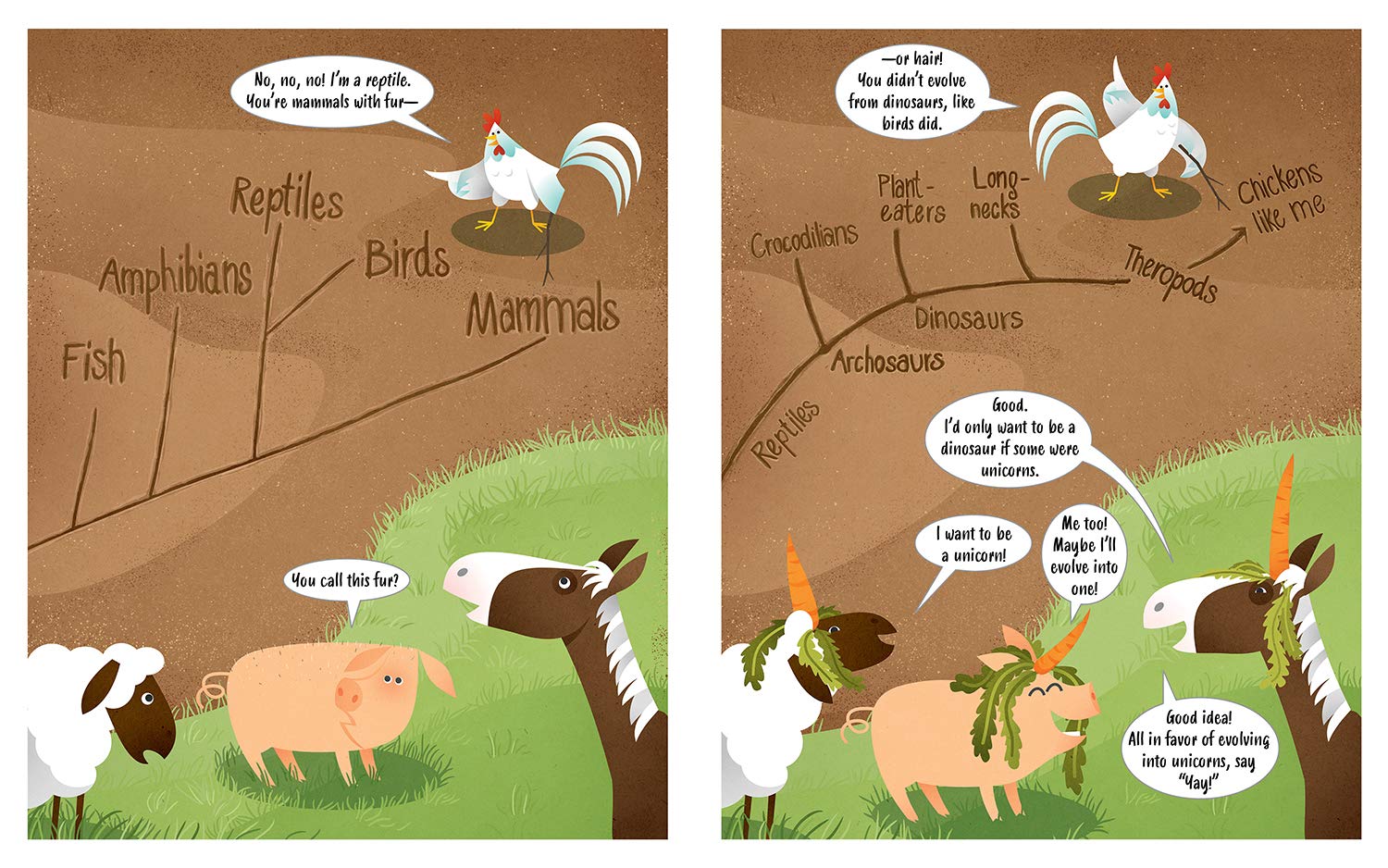
Chicken Frank then presents different types of evidence to try to convince the farm that birds evolved from dinosaurs. He points out his feet look like those of T. rexes, to which another chicken looks at the readers and says, “More like T. crazy.” Frank explains that feathers evolved from dinosaur scales, and that both dinos and chickens had little tails when they were embryos. Other animals start wondering if they come from dinosaurs, since they have tails too. So, in a last straw attempt, Chicken Frank returns to his mud lineage map once more.

He shows how fish, amphibians, reptiles and mammals come from different branches in the evolutionary tree. Birds, however, branch off from reptiles. Nobody is convinced, and pig, sheep, and horse turn their attention to pretending to be unicorns with carrot horns instead. But then, the results from Frank’s DNA test arrive. The data shows Chicken Frank has a reptilian cousin: Crocodile Ike.
celebrate-picture-books-picture-book-review-chicken-frank-dinosaur-timeline

Image copyright Jojo Ensslin, 2021, text copyright S. K. Wenger, 2021. Courtesy of Albert Whitman & Company.

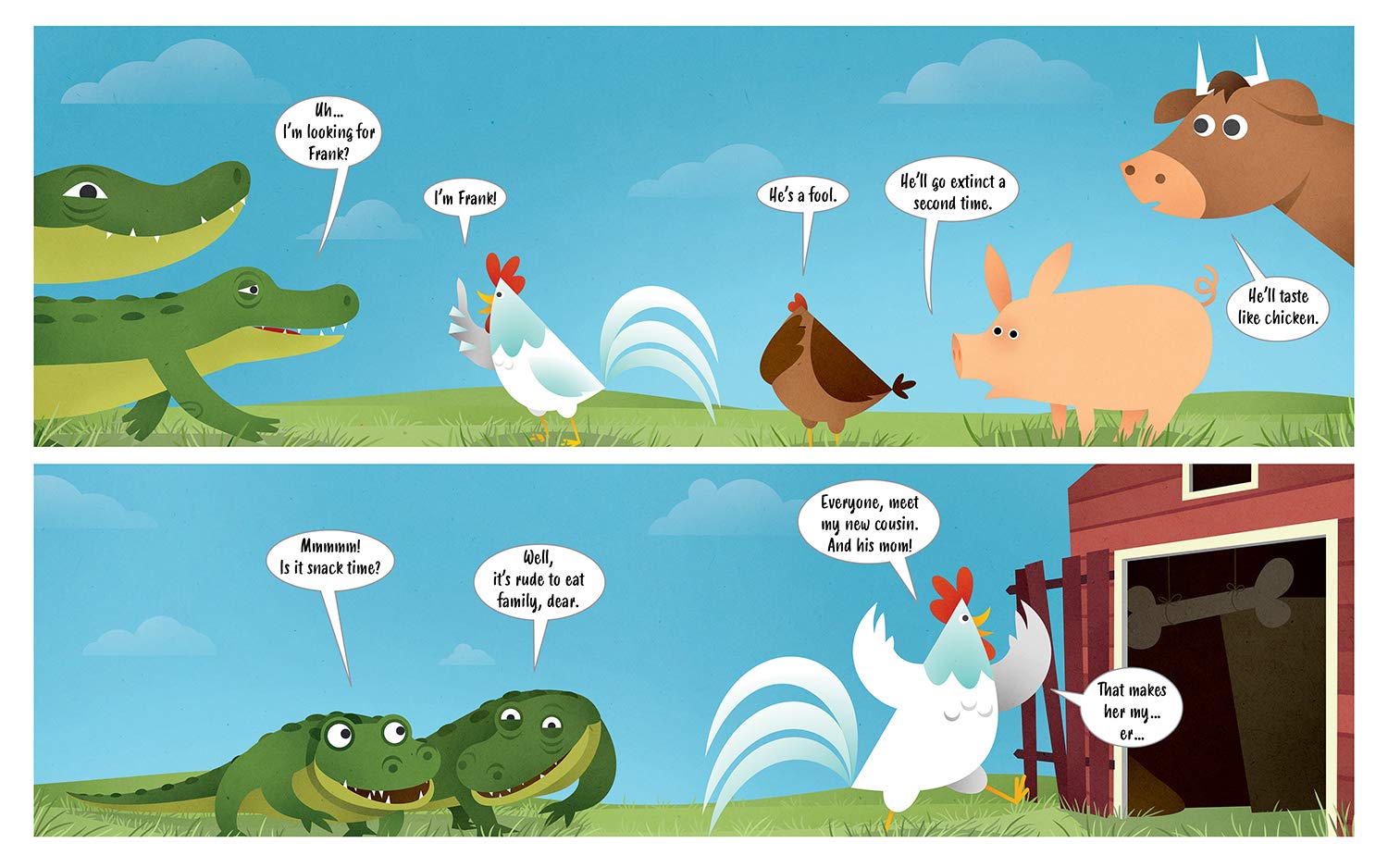
Chicken Frank decides to send a post card to his cousin Ike inviting him to come for a family reunion, much to the dismay of everyone. A crocodile and a chicken in the same place? Seems like a recipe for disaster…and maybe some chicken franks too. And while Crocodile Ike and his mom are first tempted to gobble Frank up, they take some time and study his charts. And, to everyone’s surprise, they get it! “One of us isn’t a dinosaur… But we’re both Archosaurs! KINGS of the dinosaurs! Roar!” Ike tells Frank. Ike’s mom wonders who else they may be related to, so Frank starts a letter to an even further distant cousin—the sharks!
celebrate-picture-books-picture-book-review-chicken-frank-dinosaur-ike

Image copyright Jojo Ensslin, 2021, text copyright S. K. Wenger, 2021. Courtesy of Albert Whitman & Company.

They all decide to take a trip to the aquarium, where the pig, sheep, and horse are delighted to find “a swimming unicorn!” (a narwhal), and Crocodile Ike exclaims, “family!” Chicken Frank happily agrees and adds, “Ours is the very best.”

The story is followed by five informational sections: “What Is DNA?”, “What Is Evolution?”, “Is Chicken Frank Really Related to T. rex?” “Similarities Between Dinosaurs, Chickens, and Alligators”, and “Frank’s Glossary of Favorite Animal Groups” Each of these sections provide in-depth scientific explanations for those who want to know a bit more about how it all works. S. K. Wenger masterfully explains each of these concepts at an advanced level that is clear to read and understand for readers of a wide range of age and abilities.
celebrate-picture-books-picture-book-review-chicken-frank-dinosaur-archosaurs

Image copyright Jojo Ensslin, 2021, text copyright S. K. Wenger, 2021. Courtesy of Albert Whitman & Company.

A joyous read, with important concepts about evolution scattered in with the fun. This comic-style picture book will have kids laughing out loud at the farm animals’ speech bubble puns and jokes. S. K. Wenger (and Chicken Frank) explain concepts of evolution in easily digestible terms for readers of all ages. The story is quick-paced and intriguing, with distinct characters and a quirky humor. A must-read for all kids, especially those with a fondness for dinosaurs.

The story would not be nearly as fun or educational without Jojo Ensslin’s colorful, cartoon-like drawings. As Chicken Frank explains his evolutionary reasoning, Ensslin depicts the ideas clearly and closely juxtaposed. For example, when Frank talks about how his feet match those of a T. rex, kids see both feet on the same page. Likewise, a scaled dinosaur and an ancient bird are portrayed on the same blackboard.

Later, when Ike receives the postcard from Frank in a muddy swamp, swarming with crocodiles, and calls out, “Does anyone know a cousin named Frank?” little speech bubbles with “Nope!” scatter the swamp, prompting kids to join in. In a carved-out corner, a close-up view of Ike and his mom show their evil plans to crash the reunion with some chompers. The facial expressions of each of the animals add to their characters and the humor of the story. Many carefully placed illustrative details add to the plot in meaningful and silly ways, such as, the DNA Test Kit shown the page before the story begins and the large bone Chicken Frank stores in his coop; the illustrations and text come together to create a read-aloud that is enjoyable to all.

Creative nonfiction at its best, Chicken Frank, Dinosaur! is both a hilarious story and a highly engaging way to explain evolutionary science in a way kids will respond to and remember. Sure to spark an interest in further science learning, the book is highly recommended for home bookshelves and a must for school and public library collections.

Ages 4 – 7

Albert Whitman & Company, 2021 | ISBN 978-0807511411

Discover more about S. K. Wenger and her books on her website.

To learn more about Jojo Ensslin and view a portfolio of his illustration, animation, and woodcout work, visit his website.

National Fossil Day Activitycelebrate-picture-books-picture-book-review-chicken-frank-dinosaur-national-park-service-dinosaur-coloring-pageDinosaur Coloring Pages
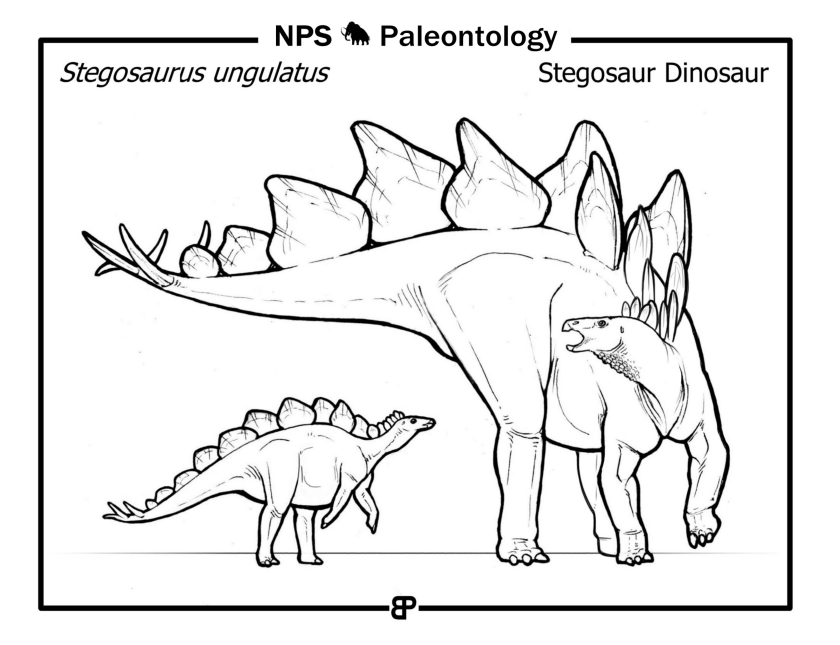
 

Enjoy these four dinosaur coloring pages from the National Park Service’s free prehistoric coloring book in honor of National Fossil Day!

Dinosaur Coloring Pages

For more, you can download the whole coloring book from the National Park Service here.

celebrate-picture-books-picture-book-review-chicken-frank-dinosaur-cover

You can find Chicken Frank, Dinosaur! at these booksellers

Amazon | Barnes & Noble | Books-a-Million

To support your local independent bookstore, order from

Bookshop | IndieBound

Picture Book Review

October 4 – World Habitat Day

celebrate-picture-books-picture-book-review-shipwreck-reefs-cover

About the Holiday

Today we have two special holidays to share: World Habitat Day and National Ship in a Bottle Day! World Habitat Day was created by the United Nations to emphasize the right for all to have access to a home, or a habitat. It is meant to teach more about both humanitarian and environmental issues, as well as their many intersections. This year’s theme is Accelerating Urban Action for a Carbon-free World. To learn more about World Habitat Day and the various activities happening this year to honor it, check out the United Nations World Habitat Day Page.

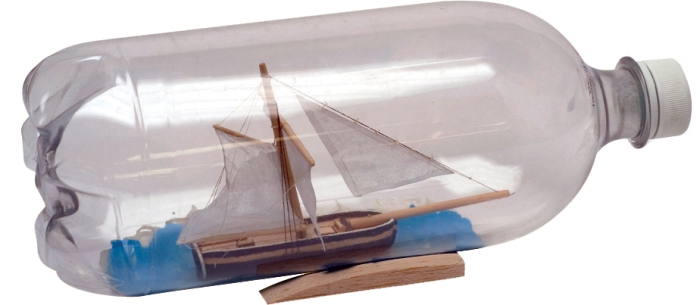
Today also marks National Ship in a Bottle Day, a holiday founded in 2013 on the birthday of Jack Hinkley, the founder of the Ship in Bottle Association of America. This holiday is meant to celebrate the magical craft of placing a tiny model ship within a glass bottle with a narrow opening. It is a tricky feat that takes a lot of preparation, skill, and careful execution.

You are probably now wondering what book could possibly bridge these two seemingly divergent holidays. The answer is Shipwreck Reefs— a nonfiction picture book from the Imagine This! series published by Albert Whitman & Company.

Thanks to Albert Whitman & Company for sharing a copy of Shipwreck Reefs for review consideration. All opinions are my own.

Review by Dorothy Levine

Shipwreck Reefs

Written by Aimée M. Bissonette | Illustrated by Adèle Leyris


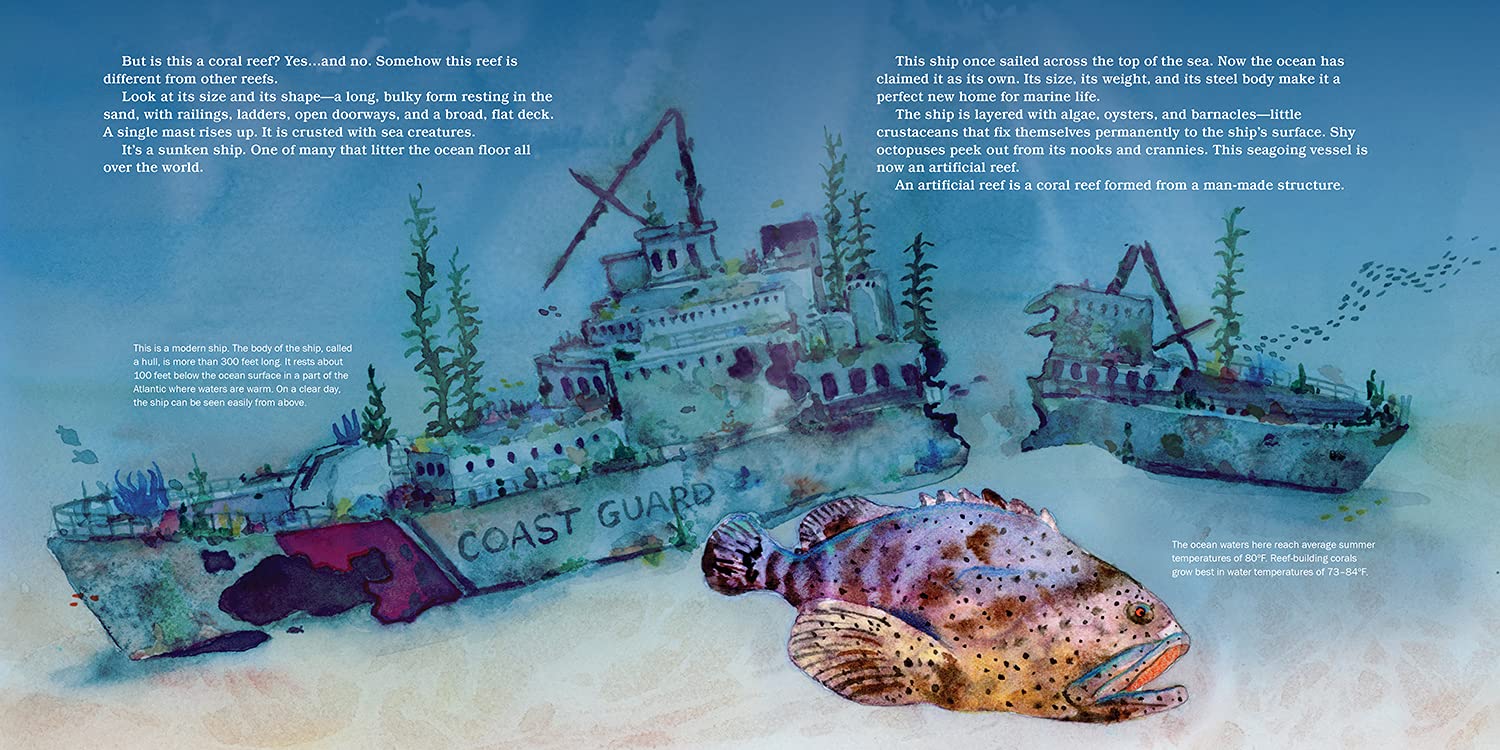
“Splash! Kick! Swim down into the deep.” Readers join scuba divers in learning about coral and reefs. However, not all of these reefs discussed are typical. They are sometimes born from sunken shipwrecks or other non-living, human-placed materials. The book begins with some background on coral reefs, and then readers flip the page to a sunken ship, inhabited by seagrass, algae, barnacles and colorful fish. “But is this a coral reef? Yes…and no.”

celebrate-picture-books-picture-book-review-shipwreck-reefs-coast-guard

Image copyright Adèle Leyris, 2021, text copyright Aimée M. Bissonette, 2021. Courtesy of Albert Whitman & Company.

Shipwrecks provide hard surfaces for small animals like baby corals and barnacles to attach onto and grow into colonies. Over time, sunken ships can become entire ecosystems as the corals grow, providing shelter and food for other animals. More specifically, readers will learn about silver bellied yellow jack, long spine squirrelfish, plankton, rainbow parrot fish, loggerhead sea turtles and more.

celebrate-picture-books-picture-book-review-shipwreck-reefs-turtle

Image copyright Adèle Leyris, 2021, text copyright Aimée M. Bissonette, 2021. Courtesy of Albert Whitman & Company.

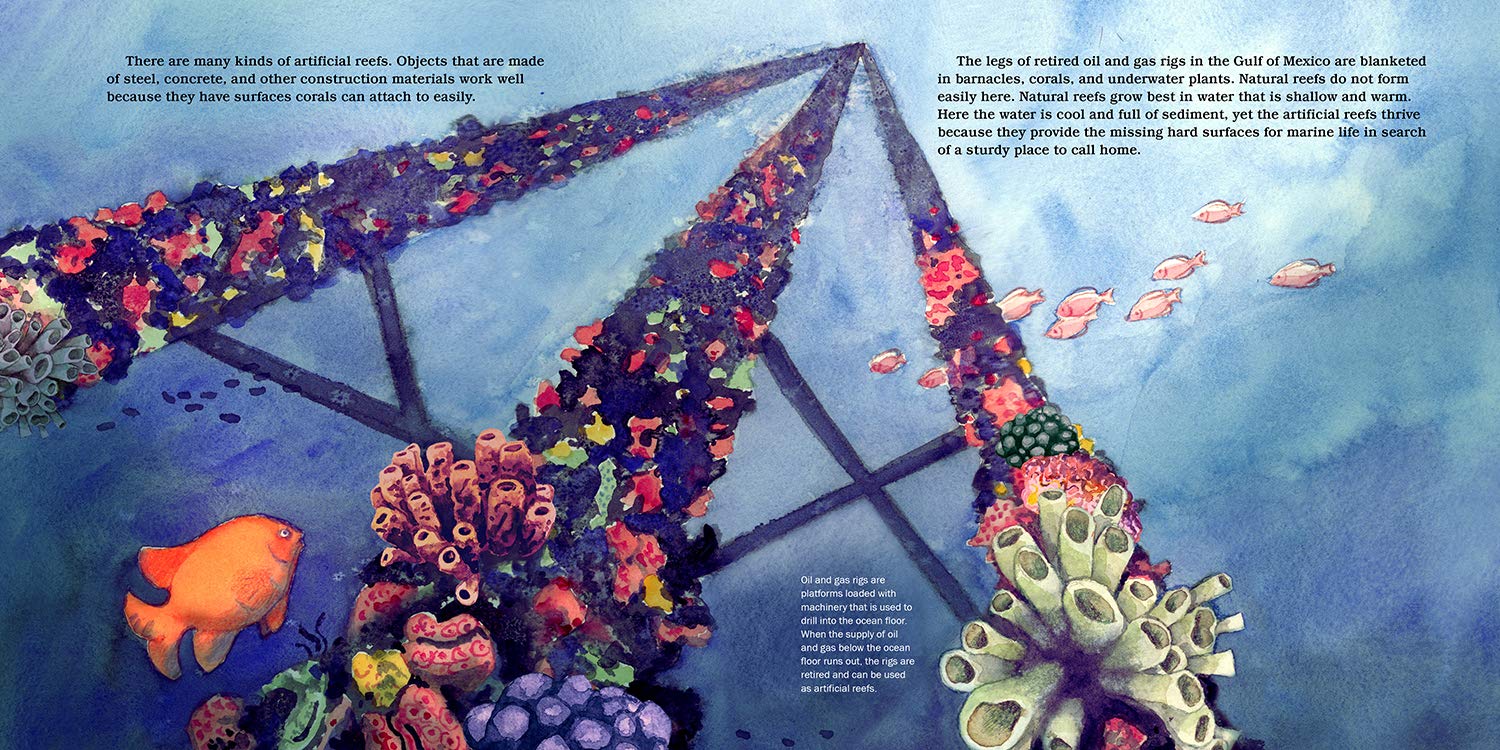
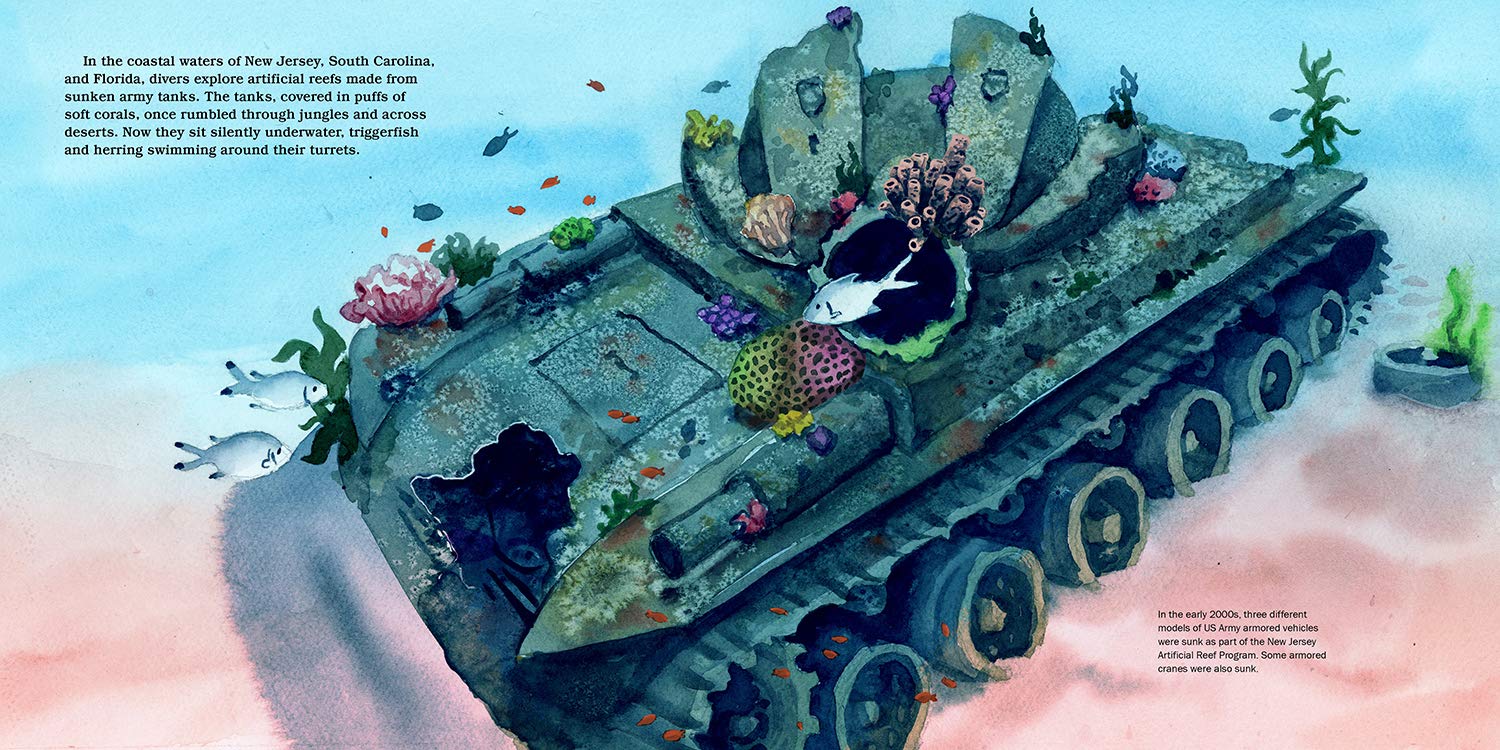
Artificial reefs have been around for ages. “In the 1830’s, ocean fishermen in South Carolina constructed artificial reefs out of logs.” Reefs can be constructed from many different materials, from wooden plants to scrap metal, old tanks to sunken ships. “Whether a subway car or oil rig, army tank or shipwreck, artificial reefs do many jobs.” Around the world, there are many reefs that function as both art installations and tourist attractions for deep-sea divers.

celebrate-picture-books-picture-book-review-shipwreck-reefs-oil-rig

Image copyright Adèle Leyris, 2021, text copyright Aimée M. Bissonette, 2021. Courtesy of Albert Whitman & Company.

The book also discusses how human-caused climate change, pollution from a wide range of contaminates, and the burning of carbon dioxide-producing fuels has caused changes to our oceans that have harmed coral and the other marine life that relies on them. Readers also learn how artificial reefs are beneficial to the ocean habitat. The story reveals: “Artificial reefs help ease the human activity at natural reefs by offering other locations for research, fishing, and diving. Artificial reefs can give natural reefs time to heal, which helps our ocean stay healthy.”

celebrate-picture-books-picture-book-review-shipwreck-reefs-tank

Image copyright Adèle Leyris, 2021, text copyright Aimée M. Bissonette, 2021. Courtesy of Albert Whitman & Company.

Aimée M. Bissonette follows the story with a page of further information on “Remarkable Resourceful Artificial Reefs,” specifically discussing the experimentation done with artificial reefs and the different creative types that exist. The storyline is interspersed with text in smaller print explaining terms such as ecosystems, scuttling, coral polyps, moray eels, and more for extra-curious readers. Bissonette’s writing is straightforward, and neatly compacts complex terms into simple explanations. The author explains climate change, CO2, and coral bleaching in comprehendible terms to teach young audiences to care about these pressing issues.

Adèle Leyris’s mesmerizing illustrations immerse readers in a deep-sea ecosystem with flashy colored fish, detailed coral, and water-colored blues. The scenes feel authentically underwater, exciting, and full of enticements for the audience to take an extra-long look. The scuba divers are depicted in darker shadows, with spots of light that radiate from the page. One page stands on its own with no text: a murky underwater subway car inhabited by a school of fish, with colorful corals wrapped around the pole. The beautiful illustrations will get readers inspired to learn more about reefs, marine life, and how they can help protect them.

Visually striking and loaded with information that will spur kids to learn more about both artificial and natural coral reefs as well as the sea creatures that rely on them, Shipwreck Reefs is a must for any budding naturalist, classroom science collection, or public library.

Ages 5 – 9 

Albert Whitman & Company, 2021 | ISBN 978-0807512876

Discover more about Aimée M. Bissonette and her books on her website.

To learn more about Adèle Leyris, her books, and her art, visit her website.

World Habitat Day and National Ship in a Bottle Day Activities


Exploring the Coral Reef Video


Watch this educational video to see some real-life coral reef ecosystems! 

Scout Life Ship in a Bottle Craft

Image courtesy of Scout Life (scoutlife.com)

Make Your Own Ship in a Bottle


To make your own ship (or artificial reef!) in a bottle, visit Scout Life for detailed instructions.

celebrate-picture-books-picture-book-review-shipwreck-reefs-cover

You can find Shipwreck Reefs at these booksellers

Amazon | Barnes & Noble | Books-a-Million

To support your local independent bookstore, order from

Bookshop | IndieBound

Picture Book Review

September 22 – It’s the Autumn Equinox

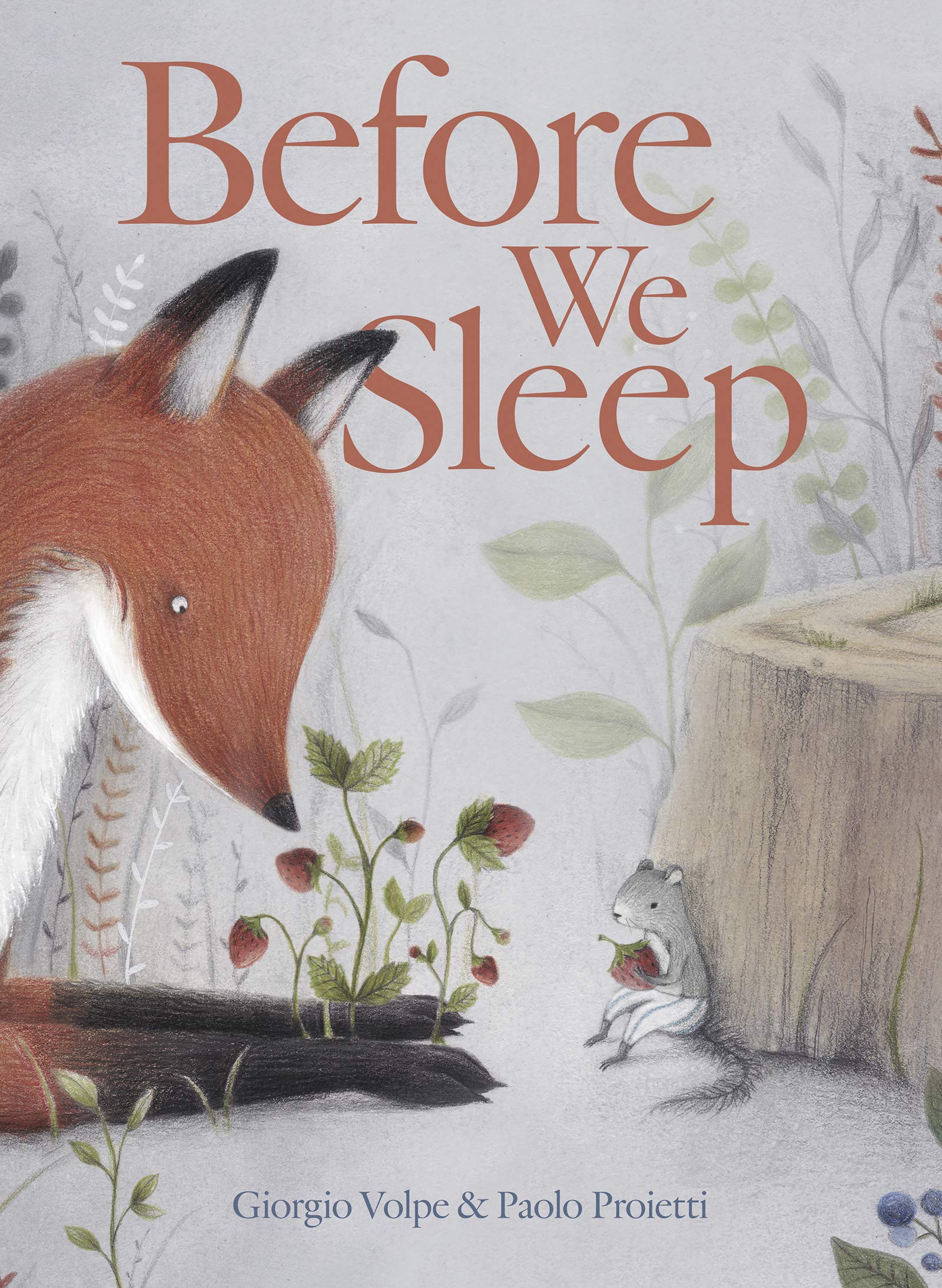
celebrate-picture-books-picture-book-review-before-we-sleep-cover

About the Holiday

If you live in the Northern Hemisphere, fall has arrived! If you live in the Southern Hemisphere, welcome to spring! Today, daytime and nighttime will be equal, ushering in a changing of the seasons. For some that means cooler weather, shorter days, and a slowing down in nature which leads to our being able to see the brilliant reds, yellows, and oranges in the leaves of certain trees. The phenomenon featured in today’s book. For others nature is just awakening, with all the beauty warm weather and new growth bring. Wherever you live, enjoy the activities and events the change in season brings!

Before We Sleep

Written by Giorgio Volpe | Illustrated by Paolo Proietti


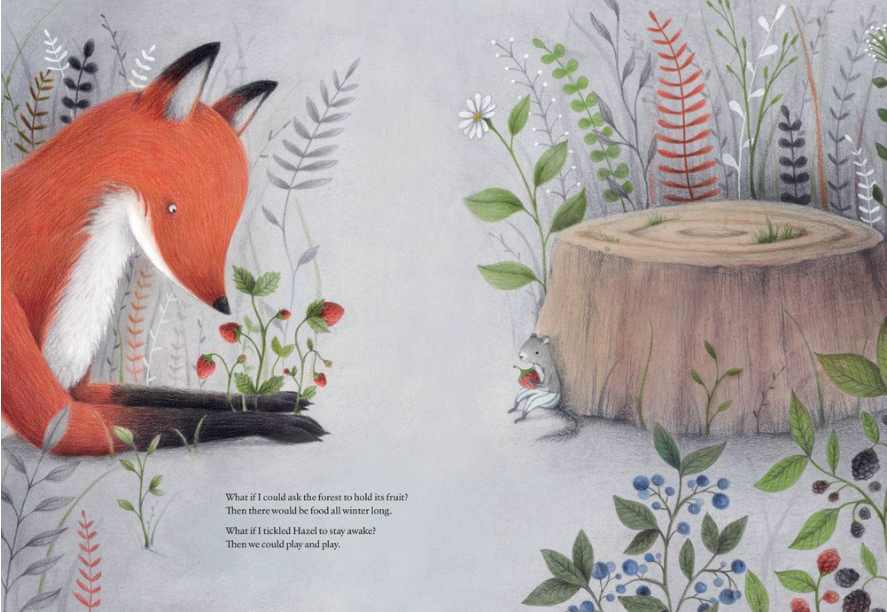
“As the season turned, the forest was dressed in new colors of rich amber, burned orange, and chestnut brown.” Little Red, the fox couldn’t wait to play hide-and-seek with his friend Hazel the dormouse because he would be so much harder to find. Little Red and Hazel also enjoyed jumping in the crisp, rustling leaves. “‘The leaves are laughing with us,’ said Hazel joyfully.” But there was one thing about autumn that Little Red did not like. He knew that soon winter would come and he would be lonely.

celebrate-picture-books-picture-book-review-before-we-sleep-berries

Image copyright Paolo Proietti, 2021, text copyright Giorgio Volpe, 2021. Courtesy of Red Comet Press.

Hazel was already getting ready to hibernate in her warm burrow. Little Red thought maybe this year Hazel would take a shorter sleep, but Hazel reminded her friend that, although she would like to keep him company, she couldn’t. Little Red thought of ways the earth could stay warm and nurturing, but his ideas, he knew, were just wishes. In fact, Hazel was already growing tired. She promised Little Red that come spring she would be back to play with him again.

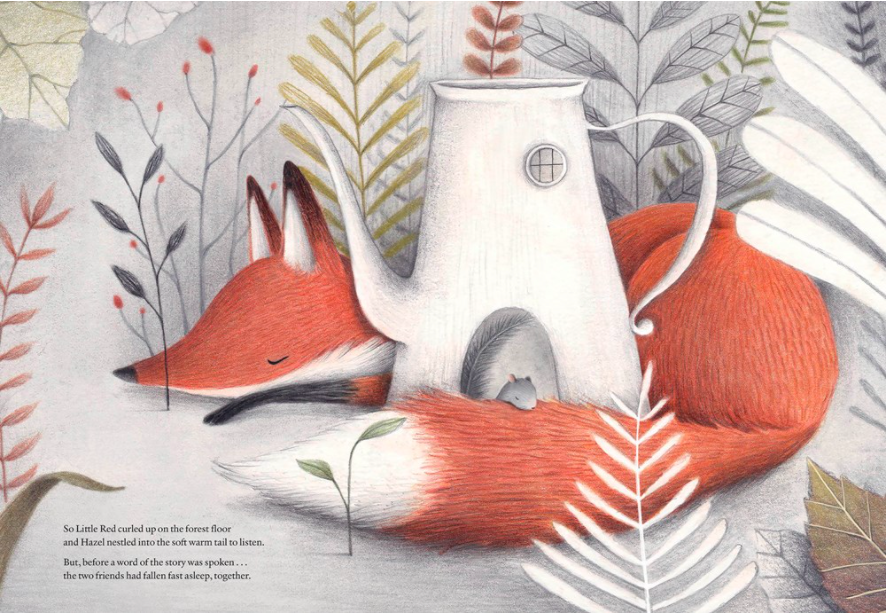
Little Red wanted just a few more minutes with his friend and asked if he could tell her a story. Little Red curled up next to her cozy burrow, and Hazel nestled into his soft tail to listen. “But before a word of the story was spoken . . . the two friends had fallen fast asleep, together.”

Note: Only first-person pronouns are used in this story, making the characters gender-neutral.

celebrate-picture-books-picture-book-review-before-we-sleep-asleep

Image copyright Paolo Proietti, 2021, text copyright Giorgio Volpe, 2021. Courtesy of Red Comet Press.

Tranquil and soothing, Giorgio Volpe’s autumn friendship story floats on beautiful, evocative language that stirs memories of the fun fall offers while also reassuring readers that no matter what changes take place, love between friends always remains. Volpe’s story also touches on how friendships are built despite—or because of—individual differences. The sweet and comforting ending makes Before We Sleep not only a perfect fall read but a cozy bedtime story as well.

Paolo Proietti’s lush illustrations of a woodland dressed for autumn fuse realistic images of nature with delightful whimsy that mirrors the wistful tone of Volpe’s story and will charm readers. Proietti’s rich illustrations of fiery Little Red, adorable Hazel, and the plants, berries, nuts, and wildlife of the forest are set against lovely muted gray, blue, and sage backgrounds and invite readers to visit again and again.

A quiet and enchanting story for cozy fall days and dozy nights, Before We Sleep is highly recommended as a gift for family or friends and as an addition to home, school, and public library collections.

Ages 3 – 7

Red Comet Press, 2021 | ISBN 978-1636550046

To download a Before We Sleep Activity Kit and find video resources, visit Red Comet Press.

You can connect with Giorgio Volpe on Facebook.

You can connect with Paolo Proietti on Instagram.

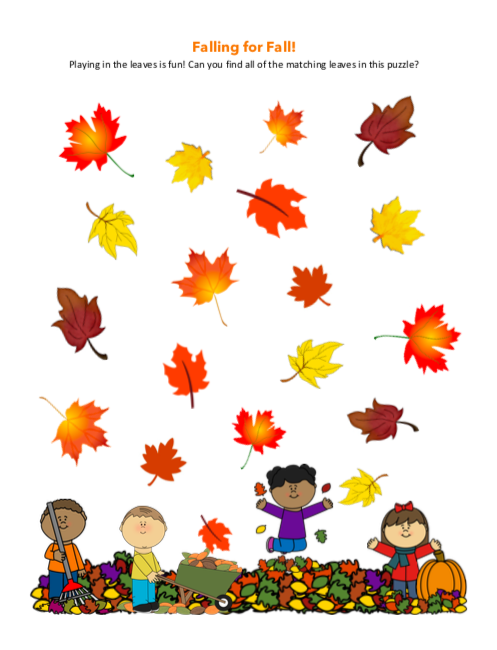
Autumn Equinox Activity

celebrate-pciture-books-picture-book-review-fall-leaves-matching-puzzle

Falling for Fall Matching Puzzle


These kids are having fun in the leaves. Can you find the matching leaves in this printable puzzle?

Falling for Fall Puzzle

celebrate-picture-books-picture-book-review-before-we-sleep-cover

You can find Before We Sleep at these booksellers

Amazon | Barnes & Noble | Books-a-Million

To support your local independent bookstore, order from

Bookshop | IndieBound

Picture Book Review
September 20 – It’s World Beach Month

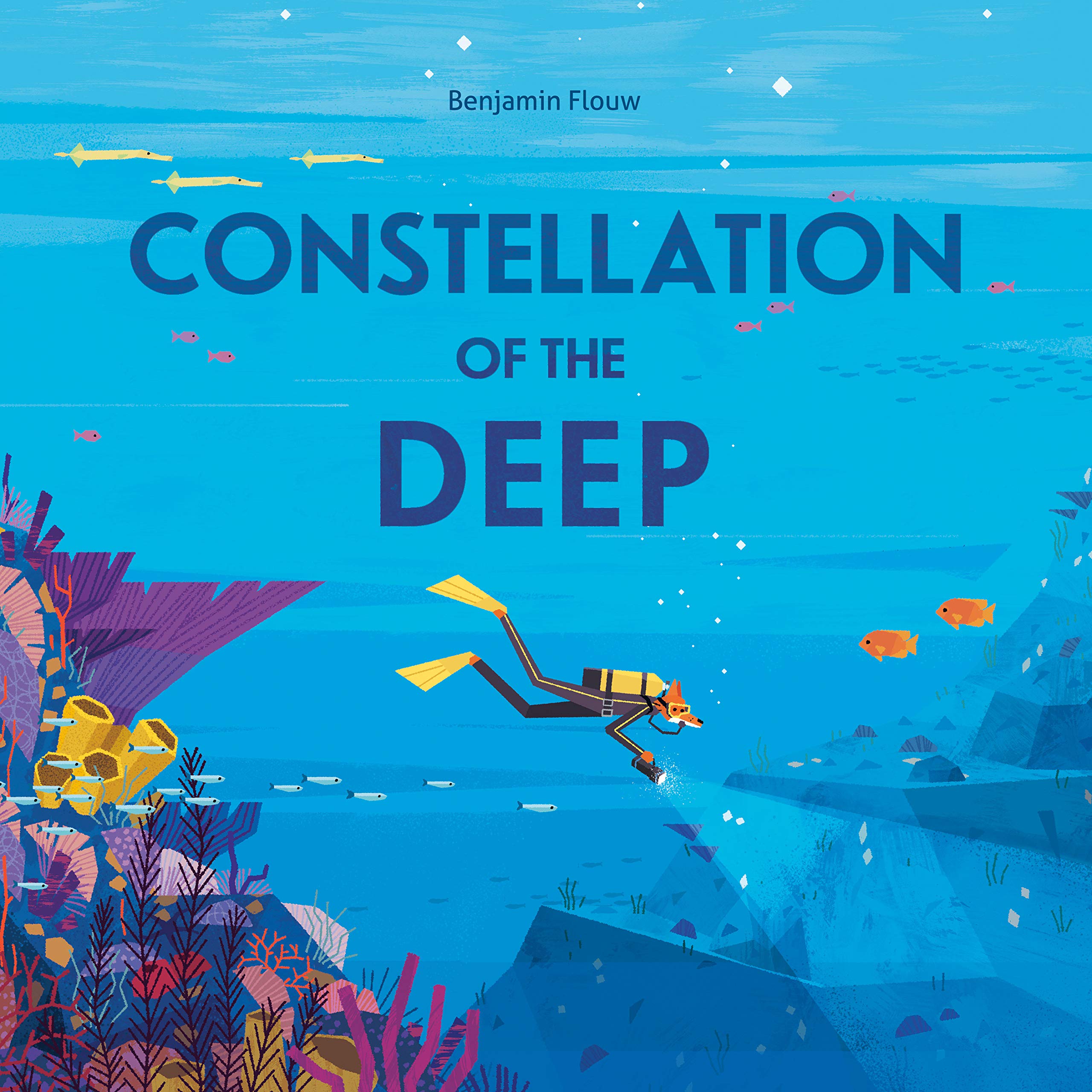
celebrate-picture-books-picture-book-review-constellation-of-the-deep-cover

About the Holiday

This month we celebrate beaches and all of the beauty and recreation they offer. Whether you’re a beachcomber or a swimmer, a sandcastle builder or a sunbather, the beach provides endless ways to enjoy the environment. This month also raises awareness of the types of pollution that mar and endanger the beach as well as the ocean and all of its varied sea life. The world’s coastal areas are irreplaceable habitats and offer crucial resources. Learn what you can do to help our beaches and oceans remain healthy by visiting the Ocean Conservancy website. You can discover more ways to enjoy World Beach Month here.

Constellation of the Deep

By Benjamin Flouw


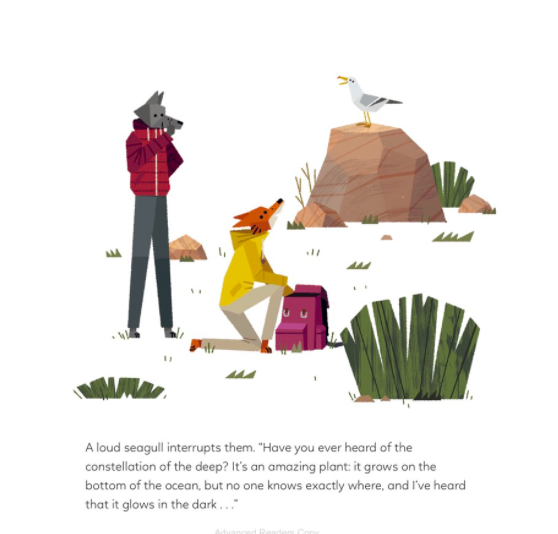
Fox and his cousin, Wolf, spend summer mornings walking along the coast. One day as Fox explores the unusual plants along the path, a seagull lands on a nearby boulder and asks if they have ever heard of the constellation of the deep. The Seagull goes on to tell them that “‘it’s an amazing plant: it grows on the bottom of the ocean, but no one knows exactly where.’” Then he adds that he’s “‘heard that it glows in the dark.’”

celebrate-picture-books-picture-book-review-constellation-of-the-deep-seagull

Copyright Benjamin Flouw, 2021, courtesy of Tundra Books.

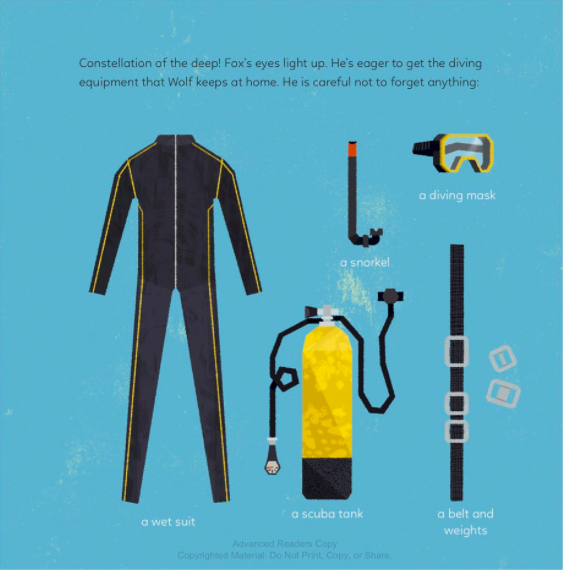
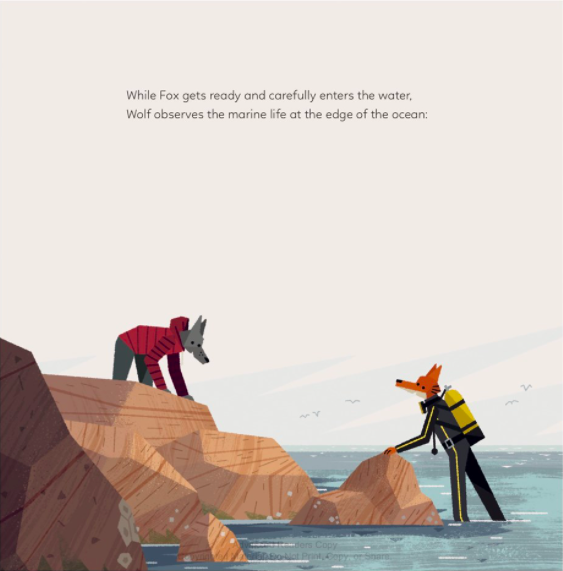
Hearing this, Fox immediately determines to find the constellation of the deep. Wolf has all the diving equipment he’ll need. Outfitted with a wet suit, snorkel, mask, scuba tank, camera, and all the other equipment, Fox and Wolf return to the ocean. While Fox gets ready and dives into the sea, Wolf discovers a crabs, barnacles, periwinkles, scallops, sea anemones, and even a sea star living among the rocks along the shore.

Fox swims above an underwater meadow of posidonia, which he knows “are flowering plants, but they don’t glow in the dark. He leaves the scorpion fish, conger eels, and damselfish behind and dives more deeply. Here, Fox discovers a forest of algae. He recognizes the tall, slender leaves of macrocystis, the fan-shaped leaves of eisenia, the feather-shaped alaria, and many more. While exploring, Fox meets Otter, who’s hunting for sea urchins. Fox tells Otter about his quest, and Otter tells him about “‘a place full of strange plants’” that he encountered just the other day.

celebrate-picture-books-picture-book-review-constellation-of-the-deep-scuba-gear

Copyright Benjamin Flouw, 2021, courtesy of Tundra Books.

Exiting the forest, Fox finds “rocks covered with strange, multicolored sculptures. These aren’t plants, but corals.” Fox is so stunned by their beauty that he gets out his camera and takes some pictures. “He marvels at the different shapes of corals.” He sees “corals that look like brains, trees, tables . . . and curled paper.” Some of the corals are enormous and some are as small as mushrooms.

Still, Fox hasn’t found what he’s looking for. He begins to ask for help. No one has seen the constellation of the deep, but Grouper agrees to help in the search. They glide into the open ocean, where they come upon a mountain jutting up from the ocean floor. Grouper knows of a hole in the mountain. As they approach, Fox sees something glowing inside. He swims closer only to find “a tiny glowworm!”

celebrate-picture-books-picture-book-review-constellation-of-the-deep-scuba-gear

Copyright Benjamin Flouw, 2021, courtesy of Tundra Books.

Fox wants to take a photograph and reaches for his camera, “but oh no! His camera is gone!” Staring down into the depths of the ocean, Fox spots an unusual shape. He swims down to see what it is. It’s Whale, who has become tangled in a fishing net along with bottles, cans, trash, and even a boot. What else is snagged in the net but Fox’s camera! Whale gives Fox a ride back to the surface. Wolf waves at his friend riding on top of Whale’s back.

Even though Fox hasn’t found the glowing plant, “he has made some wonderful memories.” Back home, he hands his cousin his camera to show him his pictures. Wolf is particularly taken with one that is very beautiful. “‘Look at this one,’” he says to Fox. Fox can’t believe it. His camera had captured a picture of the constellation of the deep when it fell to the ocean floor. Happy, Fox relaxes with a glass of mushroom juice, knowing that the photo of the constellation of the deep will always remind him of “the fabulous beauty of the underwater world.”

celebrate-picture-books-picture-book-review-constellation-of-the-deep-rocks

Copyright Benjamin Flouw, 2021, courtesy of Tundra Books.

In his follow up to The Golden Glow, in which plant-loving Fox and readers travel to the top of a mountain to discover a fascinating rare plant and a surprising decision, Benjamin Flouw plumbs the depths of the ocean to introduce kids to the wonders found there. Just as the sea itself, Flouw’s charming and straightforward storytelling is full of mystery and discovery. As Fox swims deeper and deeper through schools of fish, meadows and forests of sea plants, past coral reefs, and finally to an underwater mountain, readers learn about specific sea life found at each level. Interspersed with the story are several glossary-type pages with illustrations and names of scuba diving gear, tidal pool sea creatures, algae, and corals. Fox’s miraculous recovery of his camera and equally astonishing discovery among his photographs is the type of magical happenstance kids love best. Flouw’s understated environmental message is eloquent and effective.

Just as in The Golden Glow, Flouw’s stylized and textured illustrations, rendered in fresh and soothing tones, will get readers excited about discovering more about the environment. Here, the sea beckons with its colorful and varied creatures and plants. Two-page spreads of the algae forest and coral-encrusted rocks are stunning and the image of Whale wrapped in netting offer educators and kids a jumping off place to further research.

Mesmerizing, educational, and conveying a compelling message, Constellation of the Deep is sure to be a favorite. The book is highly recommended for all home, classroom, school, and public library bookshelves.

Ages 4 – 8

Tundra Books, 2021 | ISBN 978-0735268968

You can find a Constellation of the Deep Activity Kit from Tundra Books here.

Discover more about Benjamin Flouw, his books, and his art on his website.

World Beach Month Activity

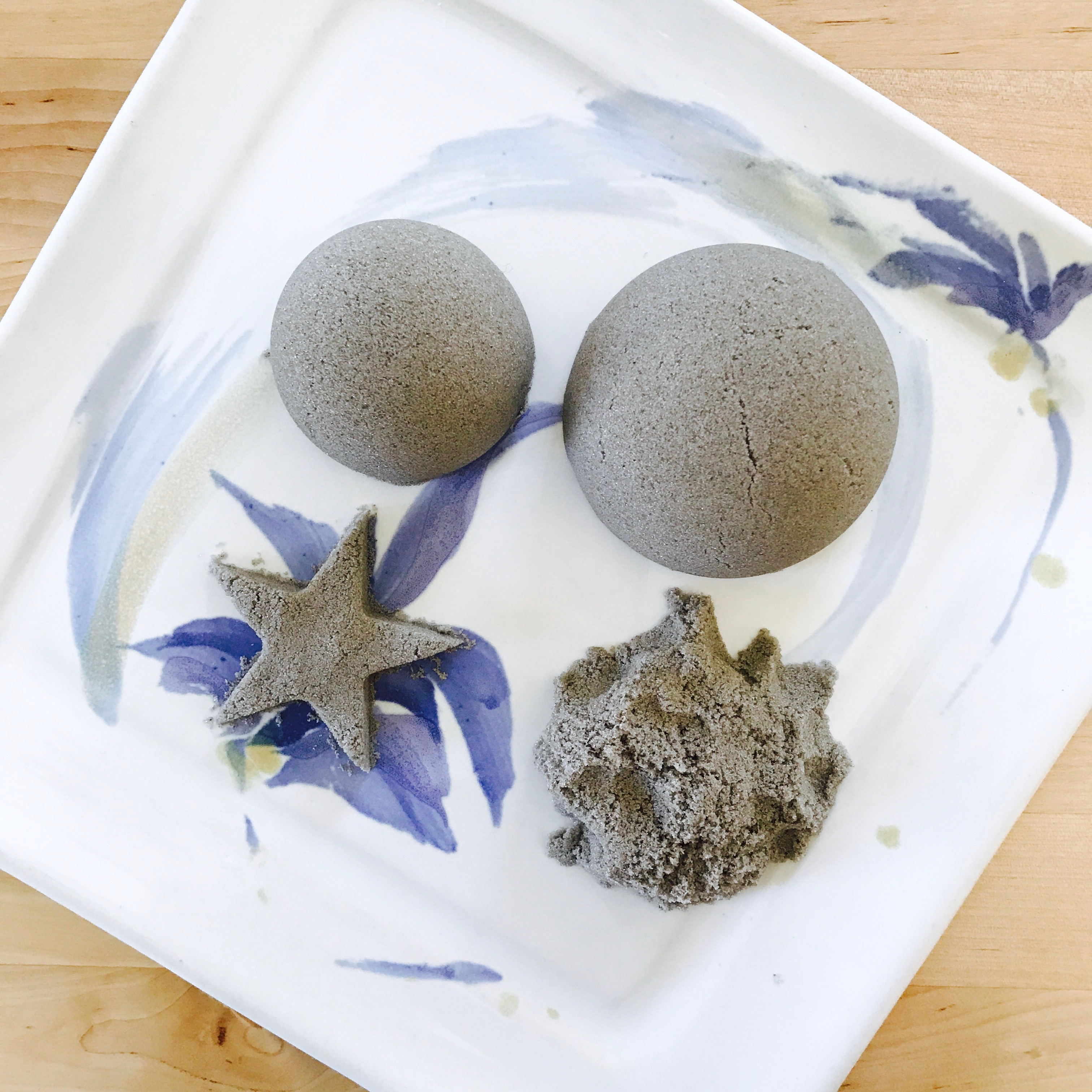
celebrate-picture-books-picture-book-review-kinetic-sand-craft

Kinetic Sand


You don’t have to live near the beach to enjoy playing in the sand! With this easy recipe you can create your own kinetic sand to form or let run through your fingers. It makes a great anti-stress reliever too!

Supplies

  • 1 cup sand
  • ½ tablespoon cornstarch
  • 1 teaspoon dish soap
  • Water as needed – about ¾ cup
  • Bin or bowl for mixing dry ingredients
  • Bowl for mixing dish soap and water

Directions

  1. In the bin combine the sand and cornstarch and mix well
  2. In the bowl combine the dish soap and water until the water is bubbly
  3. Slowly add the water mixture to the dry ingredients, mixing and adding water little-by-little until the desired consistency is reached. The grain of the sand will determine how much water is needed.
  4. The sand can be formed with cookie cutters, molds, hands, etc. and is strong enough to stack. Or just let it drip and ooze through your fingers.

celebrate-picture-books-picture-book-review-constellation-of-the-deep-cover

You can find Constellation of the Deep at these booksellers

Amazon | Barnes & Noble | Books-a-Million

To support your local independent bookstore, order from

Bookshop | IndieBound

Picture Book Review

August 25 – National Park Service Day

celebrate-picture-books-picture-book-review-headstrong-hallie-cover

About the Holiday

On August 25, 1916, President Woodrow Willson signed what is now called the Organic Act, establishing the National Park Service. In the 105 years since that historic signing, 400 areas in each of the 50 states, U.S. territories, and the District of Columbia, totaling 84 million acres, have been designated as national parks. Today we honor the park rangers who conserve and preserve these natural wonders and educate visitors. This year’s theme – Park Scrapbooks – encourages park visitors to take pictures, buy postcards, and record memories for family and future generations. To discover the national parks near you and the stories behind them as well as to learn more about how you can help out all year round, visit the National Park Foundation website and the National Park Service website.

Headstrong Hallie! The Story of Hallie Morse Daggett, the First Female “Fire Guard”

Written by Aimée Bissonette | Illustrated by David Hohn


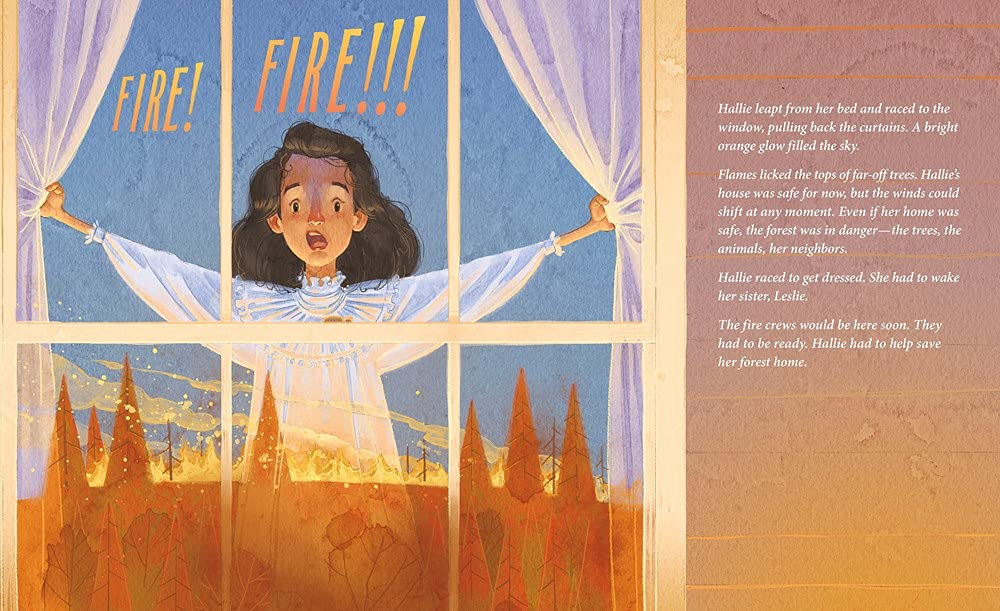
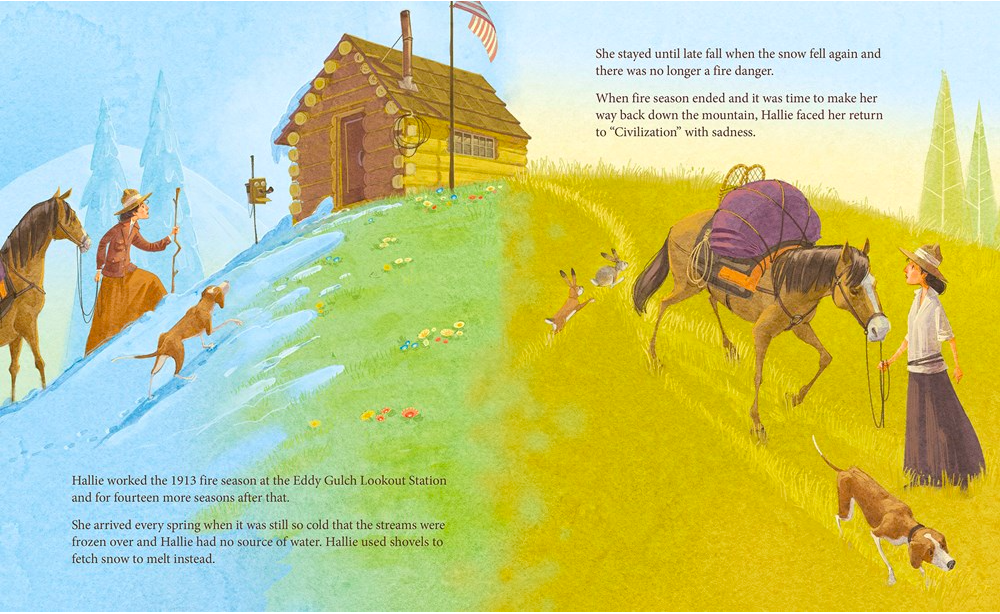
Hallie Morse Daggett loved the forest near her home. She had no fear as she “hiked among the tall trees of California’s Siskiyou Mountains, listened for the calls of familiar birds, and looked for signs of wildlife.” She fished in the Salmon River and was an excellent hunter. The only thing Hallie feared about the forest was fire, especially the summer fire season. “Hallie had seen the horrible power of fire race through the trees, leaving them scorched and leafless. She had seen the animals of the forest scatter and flee from racing flames…. And she had seen those flames come dangerously close to her family’s home.”

celebrate-picture-books-picture-book-review-headstrong-hallie-window

Image copyright David Hohn, 2021, text copyright Aimée Bissonette, 2021. Courtesy of Sleeping Bear Press.

Whenever fire did come to the forest, though, Hallie and her sister Leslie were among the first to help the US Forest Service by stamping out flames and bringing them food and supplies. But Hallie wanted to do more. She vowed to word for the Forest Service when she grew up. As soon as she finished boarding school in San Francisco, Hallie wanted to get bac to the forest she loved. She began sending letters to the US Forest Service, asking for a job. But she always received “no” for an answer.

celebrate-picture-books-picture-book-review-headstrong-hallie-fire

Image copyright David Hohn, 2021, text copyright Aimée Bissonette, 2021. Courtesy of Sleeping Bear Press.

After the devastating Great Fire of 1910, which “burned millions of acres of forest in Washington, Idaho, and Montana, Hallie was more determined than ever. But the response to her letters was always “no.” “The Forest Service didn’t hire women.” But then in 1913, when the fire lookout at the Eddy Gulch Lookout Station quit, Hallie saw her chance. She wrote a heartfelt letter and this time she got the job!

When the news spread, some of the Fire Service men thought the conditions would make her quit in a couple of days. “They didn’t know Hallie.” She loved the tiny lookout cabin and the breathtaking view. Hallie lived surrounded by wildlife—and a few animals even invited themselves in to stay. Sometimes she had visitors, and Leslie came every week to bring her supplies, letters, and newspapers.

celebrate-picture-books-picture-book-review-headstrong-hallie-horse

Image copyright David Hohn, 2021, text copyright Aimée Bissonette, 2021. Courtesy of Sleeping Bear Press.

Her days were spent searching the woods for fire or smoke through her binoculars. At night she watched for the glow of fire, “which she described as ‘red stars in the blue-black background of moonless nights.’” In her first season, Hallie’s eagle eye and quick response to forty fires kept the acres burned to less than five. In all Hallie worked for fifteen seasons—early spring to late fall—as the Eddy Gulch lookout.

In 1927, the tiny Eddy Gulch lookout cabin was replaced with a new building with wraparound windows and catwalk. But this building didn’t feel like a home to Hallie. She remained in her position for one more season and then retired, happy that she had found her place and lived her life in the way she wanted.

An Author’s Note following the text reveals more about Hallie Morse Daggett and her work as a lookout, complete with photographs.

celebrate-picture-books-picture-book-review-headstrong-hallie-cabin

Image copyright David Hohn, 2021, text copyright Aimée Bissonette, 2021. Courtesy of Sleeping Bear Press.

Aimée Bissonette’s inspiring biography of the first woman to work as a Fire Guard for the US Forest Service emphasizes the kind of grit, self-awareness, and perseverance that empowers girls and boys to stay true to themselves while pursuing the kind of life and lifestyle that is most meaningful to them. Bissonette’s straightforward storytelling is fast-paced and focused on Hallie’s unwavering self-confidence, fearlessness, and love of her job. For children who are happiest in contemplation and working alone, Hallie’s story will come as encouragement and validation for a life lived differently.

David Hohn’s color-saturated illustrations of the forest fires Hallie lived through and helped prevent crackle with the golds, reds, and flying embers of these powerful events. Contrasting these images are illustrations of the peaceful, sun-drenched mountains and woodlands that Hallie called home. While bears, bobcats, and smaller wildlife stalk nearby, Hallie, as a young girl, is shown easily traversing the rocky hills, confident and unfearful. Readers will enjoy seeing Hallie scanning the forest with her binoculars, calling for firefighters at the first sight of flames, and relaxing in the rustic cabin she lived in during the long fire season.

A well-told story about a woman determined to make a difference while living her authentic life, Headstrong Hallie! will inspire kids and is a standout choice for nature lovers and others looking for unique opportunities to put their stamp on the world.

Ages 6 – 9

Sleeping Bear Press, 2021 | ISBN 978-1534110618

Discover more about Aimée Bissonette and her books on her website.

To learn more about David Hohn, his books, and his art, visit his website.

National Park Service Day Activity

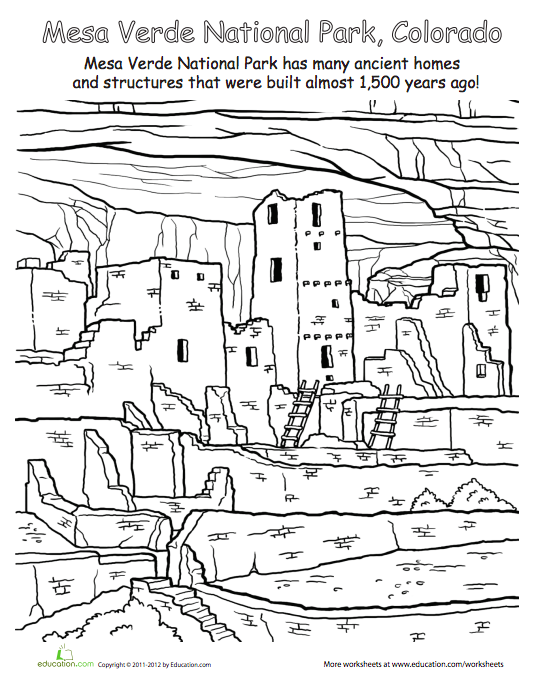
celebrate-picture-books-picture-book-review-if-I-were-a-park-ranger-mesa-verde-coloring-page

Majestic Parks Coloring Pages


You may not be able to visit all of these parks, but you can still enjoy their beauty with these printable coloring pages!

Mesa Verde National Park | Gates of the Arctic National Park | Hawaii Volcanoes National Park | Biscayne National Park | 

celebrate-picture-books-picture-book-review-headstrong-hallie-cover

You can find Headstrong Hallie! The Story of Hallie Morse Daggett, the First Female “Fire Guard” at these booksellers

Amazon | Barnes & Noble | Books-a-Million

To support your local independent bookstore, order from

Bookshop | IndieBound

Picture Book Review

August 21 – World Honey Bee Day

celebrate-picture-books-picture-book-review-h-is-for-honey-bee-cover

About the Holiday

In 2009 National Honey Bee Day was proclaimed by US Secretary of Agriculture Thomas J. Vilsek. The holiday quickly spread and is now celebrated worldwide. World Honey Bee Day began as National Honey Bee Day in 2009 with a proclamation issued by the Secretary of Agriculture, Thomas J. Vilsek. The day recognizes both the honey bee and the beekeepers who tend the hives and encourages people to learn about and create supportive environments in their own yards to promote healthy bee populations. Of course, it’s also a day to buy and enjoy locally grown honey. To celebrate this holiday, explore a variety of honey flavors, try a few new recipes that incorporate honey, and learn all the buzz about bees, honey, and beekeeping with today’s book!

I’d like to thank Sleeping Bear Press for sharing H is for Honey Bee: A Beekeeping Alphabet with me for review consideration. All opinions are my own.

H is for Honey Bee: A Beekeeping Alphabet

Written by Robbyn Smith van Frankenhuyzen | Illustrated by Eileen Ryan Ewen


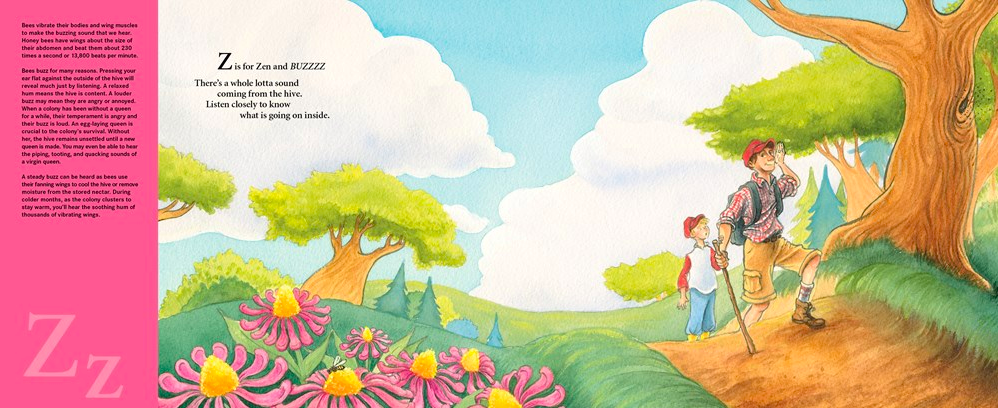
If your garden or yard is anything like mine, the bees are humming around late-summer blooms and tracing their circuitous route to nearby or far-flung hives. The mystery and marvel of how honey bees convert powdery pollen into sweet honey never fails to awe and delight. In H is for Honey Bee, readers of all ages discover fascinating facts and stories about Bees from Apis mellifera (“Apis is the clue that we’re talking about a bee. / And mellifera means it’s all about honey”) to Z “for Zen and BUZZZZ.”

celebrate-picture-books-picture-book-review-h-is-for-honey-bee-A-and-B

Image copyright Eileen Ryan Ewen, 2020, text copyright Robbyn Smith van Frankenhuyzen, 2020. Courtesy of Sleeping Bear Press.

In between children learn all about a bee hive, its resident bees (from Drones to Guards to the Queen), how bees communicate, and at E how organized beekeeping dates back to 2400 BC and how important it was to Egyptian culture. “Found on hieroglyphs in the sun temple of Pharaoh Ne-user-re near Cairo, Egypt, an Egyptian peasant is depicted smoking stacked hives while other workers are storing and sealing honey in jars.”

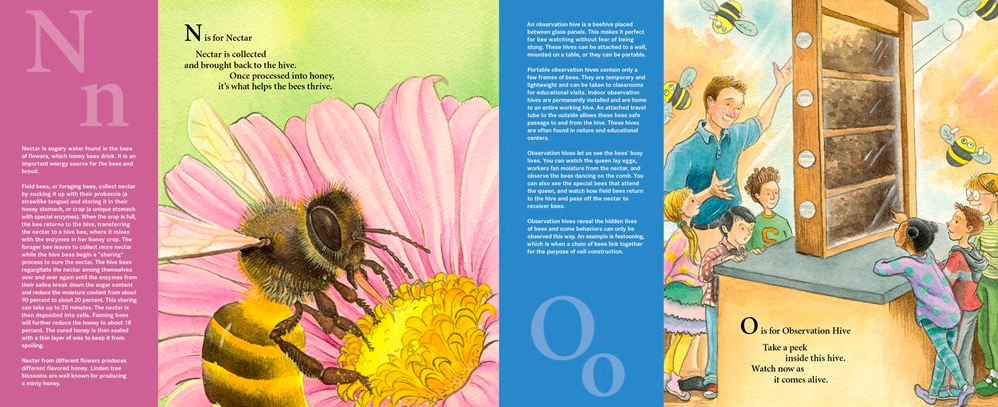
celebrate-picture-books-picture-book-review-h-is-for-honey-bee-N-and-O

Image copyright Eileen Ryan Ewen, 2020, text copyright Robbyn Smith van Frankenhuyzen, 2020. Courtesy of Sleeping Bear Press.

At L kids learn about Lorenzo Langstroth, “the father of humane, practical beekeeping.” After discovering that natural hives had small passages that allowed bees to move freely though them, he invented a hive with removable frames that didn’t upset the other bees or damage the combs. Langstroth’s hive paved the way for other innovations, such as the Observation Hive at O, that gives people a clear view of bees at work. “You can watch the queen lay eggs, workers fan moisture from the nectar, and observe the bees dancing on the comb” and other marvels of a bee’s day.

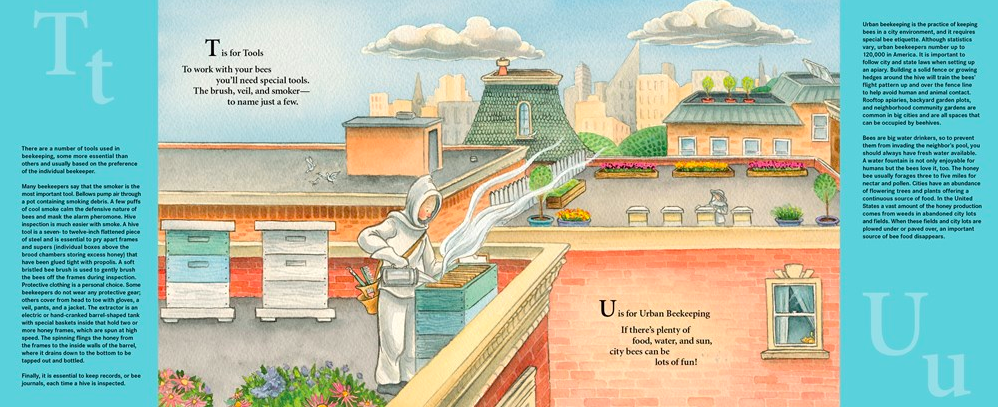
celebrate-picture-books-picture-book-review-h-is-for-honey-bee-T-and-U

Image copyright Eileen Ryan Ewen, 2020, text copyright Robbyn Smith van Frankenhuyzen, 2020. Courtesy of Sleeping Bear Press.

Humans aren’t the only innovative ones, and readers will be fascinated to learn about Propolis at P, which bees make from their own saliva and other natural ingredients to protect their hive. V is for Venom—the bee’s defense that is more fun to learn about than experience. If you’re interested in where Beeswax comes from, just flip to W, and if you want to know how to tell if a hive is happy, Z is where you’ll find it.

Back matter includes resources on how you can create a safe and productive atmosphere for bees in your own yard, tips for becoming a beekeeper, and fun facts about busy bees.

celebrate-picture-books-picture-book-review-h-is-for-honey-bee-Z

Image copyright Eileen Ryan Ewen, 2020, text copyright Robbyn Smith van Frankenhuyzen, 2020. Courtesy of Sleeping Bear Press.

Through charming and informative four-line rhymes and a column of detailed facts for each letter of the alphabet, Robbyn Smith van Frankenhuyzen presents a full and exhilarating look at bees, honey, and the job of beekeeping. She describes the behavior of bees—from how they communicate to how they survive winter temperatures to how the queen rules the hive and more—as well as the dangers bees face, from inside the hive and out, in vivid language that will captivate kids. Discussions on the healthy properties of honey as well as the joys of amateur beekeeping are here as well.

Accompanying the text are Eileen Ryan Ewen’s vibrant illustrations that give readers an up-close view of honey bees developing from egg to adult, gathering nectar, and working in their hive. Kids also meet Lorenzo Langstroth, see beekeepers working at their hives in yards and on rooftops, and travel down the Nile River with ancient beekeepers who moved their hives to continually provide them with the nectar and pollen they needed. Each page invites lingering to see and discuss all the details.

A well-rounded and comprehensive resource for those interested in bees and insects, gardeners of any age, and kids who love nature as well as for elementary and middle-grade science classes, H is for Honey Bee: A Beekeeping Alphabet is highly recommended for home, school, and public libraries.

Ages 7 – 10 and up

Sleeping Bear Press, 2020 | ISBN 978-1534110700

Discover more about Robbyn Smith van Frankenhuyzen and her books on her website.

To learn more about Eileen Ryan Ewen, her books, and her art, visit her website.

World Honey Bee Day Activity

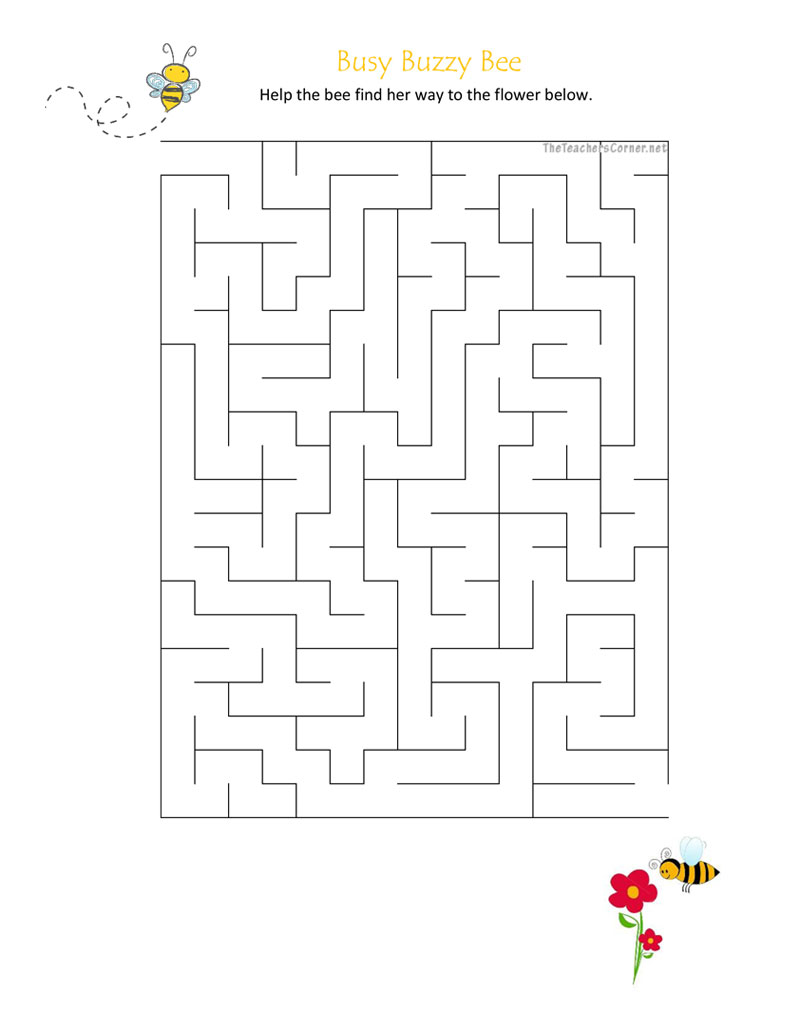
CPB---Busy-Buzzy-Bee-Maze

Busy Buzzy Bee Maze


Can you help the little bee find her way to the flower and her friend in this printable maze?

Busy Buzzy Bee Maze PuzzleBusy Buzzy Bee Maze Solution

celebrate-picture-books-picture-book-review-h-is-for-honey-bee-cover

You can find H is for Honey Bee: A Beekeeping Alphabet at these bookseller

Amazon | Barnes & Noble | Books-a-Million

To support your local independent bookstore, order from

Bookshop | IndieBound

Picture Book Review
August 12 – World Elephant Day

celebrate-picture-books-picture-book-review-she-leads-cover

About the Holiday

This year World Elephant Day celebrates its 10th anniversary. The holiday was launched to raise awareness of the dangers the Asian and African elephant populations face. Poaching, habitat destruction, human-elephant conflict, and mistreatment in captivity all threaten these gentle, intelligent creatures. World Elephant Day encourages people to enjoy seeing elephants in safe, non-exploitive environments and to get involved in their protection and survival. To learn more about elephants, discover how you can be elephant ethical, and commemorate today’s holiday with virtual events led by elephant specialists, artists, zoos, and other organizations, visit the World Elephant Day website.

Thanks to Familius for sending me a copy of She Leads: The Elephant Matriarch for review consideration. All opinions on the book are my own. 
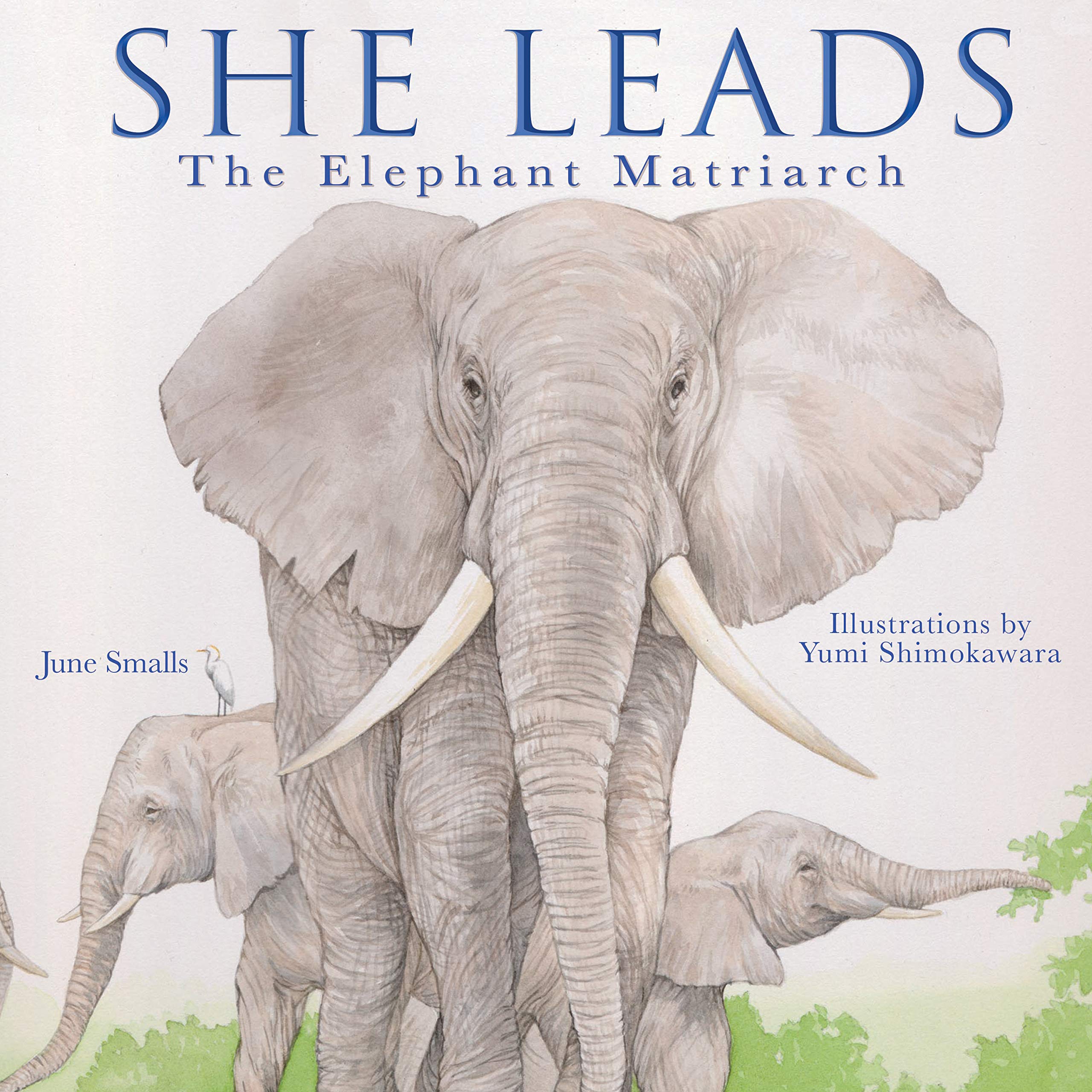
She Leads: The Elephant Matriarch

Written by June Smalls | Illustrated by Yumi Shimokawara


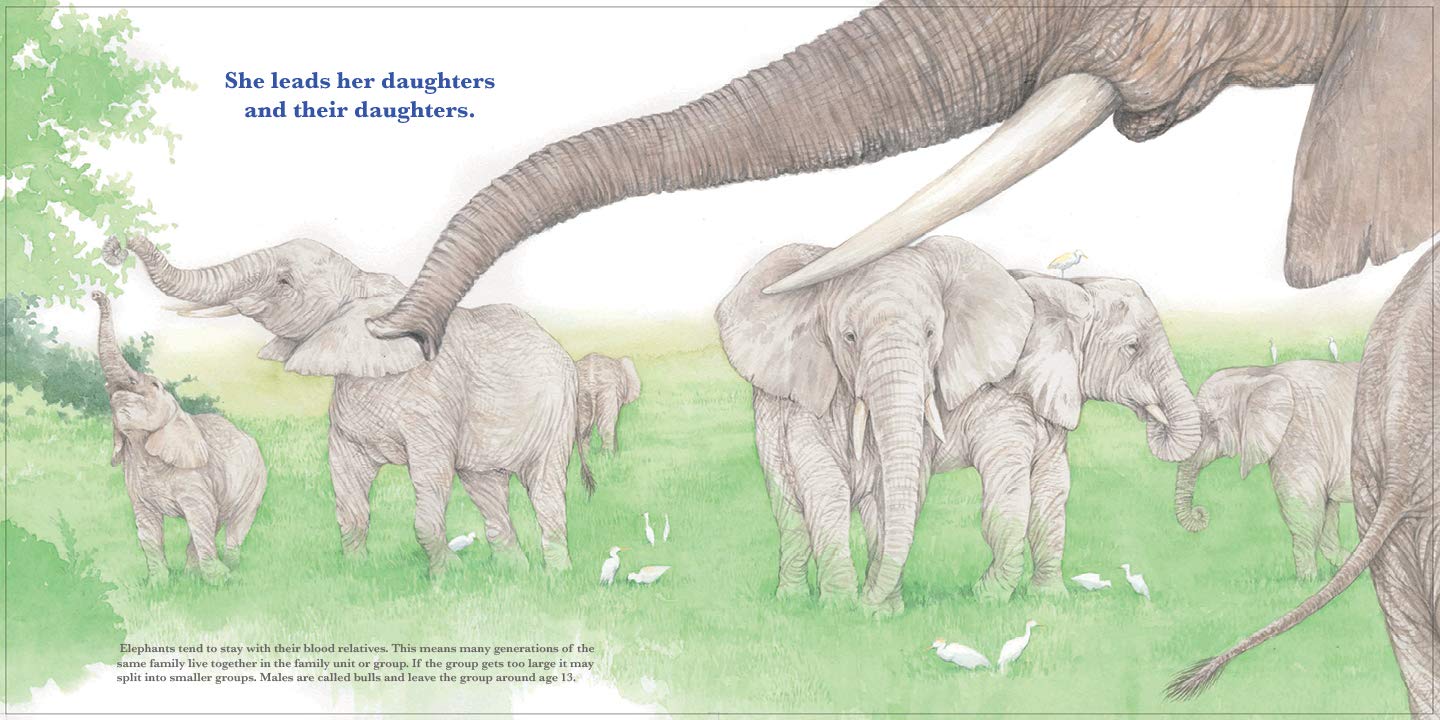
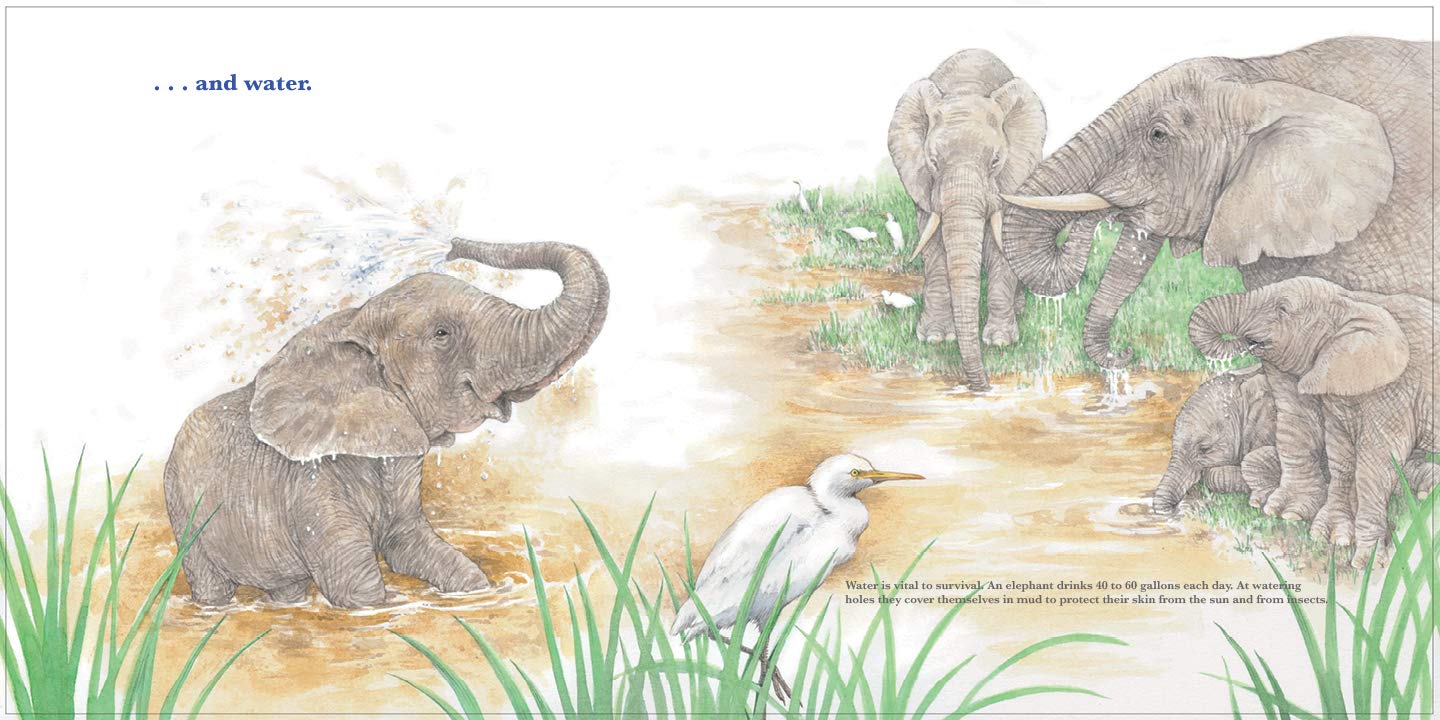
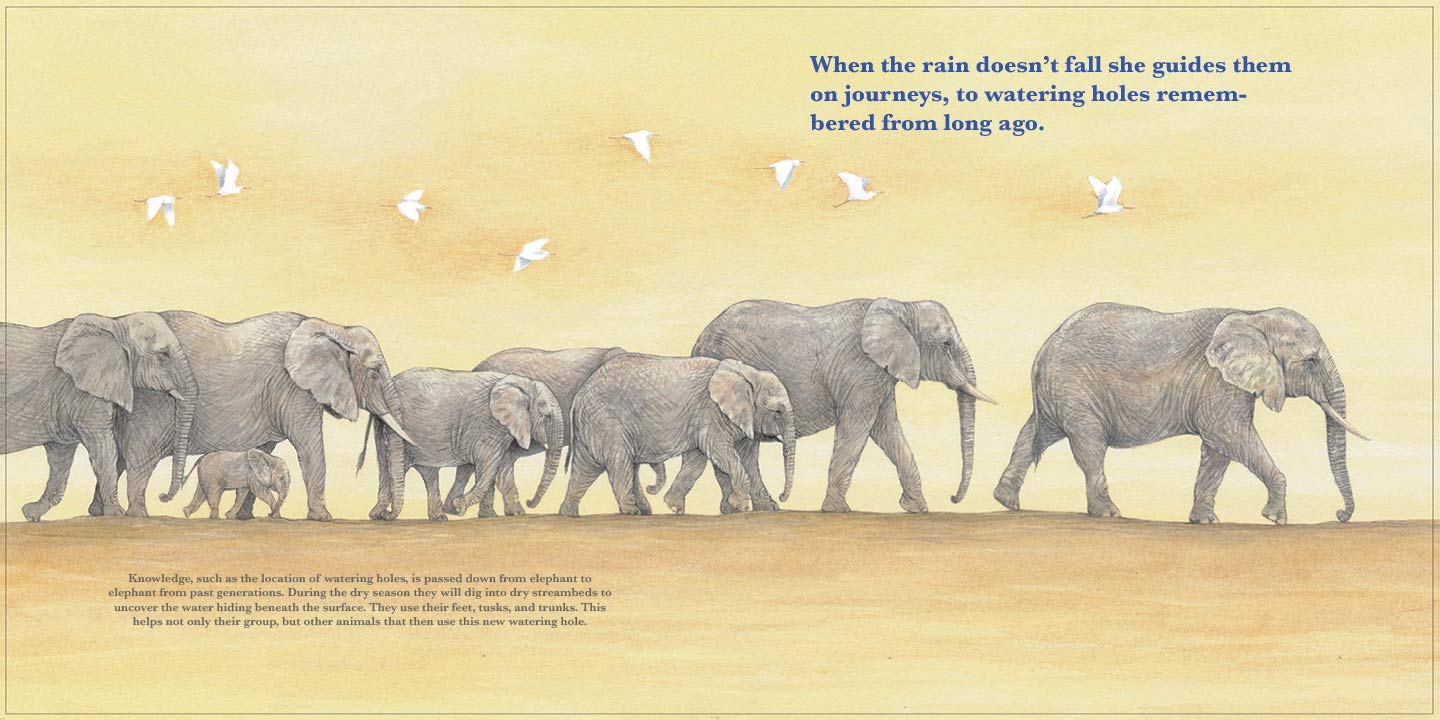
The elephant matriarch is the queen of the family group. “She is usually the oldest, but not always. It is her job to guide and teach her subjects to give them the best opportunities for survival.” Her family group consists of blood relatives—daughters and granddaughters—living together. When groups get too big, some elephants break off and form their own group. The matriarch leads the other elephants to food and water, and when water is scarce “she guides them on journeys to watering holes remembered from long ago.”

celebrate-picture-books-picture-book-review-she-leads-queen

Image copyright Yumi Shimokawara, 2020, text copyright June Smalls, 2020. Courtesy of Familius.

Like a loving grandmother, the matriarch teaches younger elephants how to take care of their little ones. Everyone in the family group helps rear the young. “The clumsy babies are sometimes caught in mud or water and the older elephants will work together to push, pull, or dig to rescue them.”

Sometimes, groups of elephants that once lived together will meet. They remember each other and spend time “foraging for food together. These meetings are like a family reunion.” When danger from another animal lurks, the elephants watch and learn how the matriarch defends them. They also huddle together and surround the smaller elephants for protection. “If nature, or predators, or poachers take her friends, she will comfort and care for the orphans.”

celebrate-picture-books-picture-book-review-she-leads-daughters

Image copyright Yumi Shimokawara, 2020, text copyright June Smalls, 2020. Courtesy of Familius.

Little ones grow and play under the watchful eye of the matriarch and, just like human children, “elephants are not born with all the skills they need.” The matriarch helps teach her children, grandchildren, and great-grandchildren how to use their trunks for heavy work like moving logs and for delicate finessing, such as having the “ability to gently pluck a leaf from a tree.”

celebrate-picture-books-picture-book-review-she-leads-water

Image copyright Yumi Shimokawara, 2020, text copyright June Smalls, 2020. Courtesy of Familius.

The matriarch also thinks about the future when she won’t be able to lead the group anymore. She passes on her knowledge and skills to the elephants in her lineage, “so that when she is gone another matriarch will lead her family.” When the matriarch does die, the elephants mourn their loss in ways similar to humans. “Elephants have been observed burying their dead with grasses and branches,” and they will return to the spot months later to “touch the bones of their lost family member.” A new matriarch emerges to lead the family group. This is “usually the oldest daughter of the matriarch,” and her call “to her daughters and their daughters” can be heard for miles and miles – sometimes up to 110 square miles – as this new queen begins her reign.

celebrate-picture-books-picture-book-review-she-leads-rain

Image copyright Yumi Shimokawara, 2020, text copyright June Smalls, 2020. Courtesy of Familius.

June Smalls’ tribute to the matriarchal society of elephants and, through her lyrical storytelling, to strong women in every family and community is both poignant and powerful. The main story reveals the role of the matriarch in leading and teaching her daughters, granddaughters, and great-granddaughters over a lifetime, which can span seventy years. Smalls’ stirring text illuminates the similarities between elephants and humans in everyday needs, behavior, memory, familial care, and even in death. In addition to the story, each page spread includes fascinating, and often touching, facts about how a family group forages for enormous amounts of food, finds crucial water supplies, protects each other, rears their young, and sustains each other in the passing of the matriarch. Smalls’ book ends with an inspirational entreaty to young girls to awaken to their future role as leaders.

Yumi Shimokawara’s stunning realistic illustrations of an elephant matriarch leading and teaching her family group in the wild will thrill readers. On each page spread, young readers follow their elephant peer as she (or he, as male elephants stay with the family group until about age thirteen) plucks leaves from a sun-drenched tree, splashes in a watering hole, walks in the shade of two adults on a long, hot journey, is protected from predators, and plays games with sticks and other babies in the group. Shimokawara’s delicate color palette and beautifully composed images depict the intelligence and gentle manner of these animals in lively and tender moments that children will want to view again and again.

An exquisite combination of inspiration and education, She Leads: The Elephant Matriarch will captivate children as a spark for further learning about these majestic animals, the environment, and nature conservation as well as encouragement to bravely take their place in the world with grace, love, and strength. The book is a must for all home, classroom, and public library collections.

Ages 3 – 8

Familius, 2020 | ISBN 978-1641702324

Discover more about June Smalls and her books on her website.

You can find more books from Familius that joyfully reflect the habits of happy families, including reading, talking, laughing, eating, working, loving, healing, learning, and playing together as well as the Familius blog The Habit Hub here.

World Elephant Day Activity

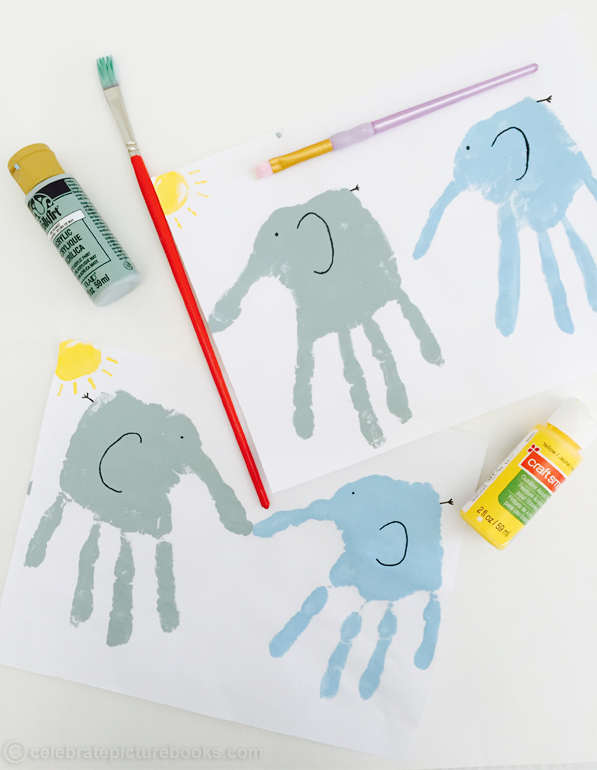
celebrate-picture-books-picture-book-review-hand-print-elephants-craft

Elephant Handprint Craft


This easy craft is fun for families to do together. Using siblings’ hands or the hands of a child and an adult to make the elephants can make a meaningful and comforting picture to hang in a child’s room or gift for mom, dad, or other family members.

Supplies

  • Craft paint in two colors of the children’s choice
  • Yellow craft paint
  • Black fin-tip marker
  • Crayons, markers, or colored pencils to make a background
  • Paper
  • Paint brush

Directions

  1. Paint one child’s hand and press it on the paper. The thumb is the truck and the fingers make the legs.
  2. Paint the second child’s or adult’s hand and press it on the paper near the other “elephant.” 
  3. After the paint has dried, draw on ears and an eye.
  4. Add a sun with the yellow paint or crayon.
  5. Add grass, trees, or other background features if desired.

celebrate-picture-books-picture-book-review-she-leads-cover

You can buy She Leads: The Elephant Matriarch on the Familius website.


This post contains affiliate links. You can read my full disclosure statement here.

Picture Book Review