September 18 – National Respect Day

celebrate-picture-books-picture-book-review-nothing-rhymes-with-orange-cover

About the Holiday

Today’s holiday was established to help people focus on how they can be more respectful of others—family, friends, and strangers. It’s also a day to think about yourself. Do you respect yourself and your abilities? Self-respect is crucial for achieving your goals, both personal and professional. There are many ways to show respect. Good manners, listening to others, acknowledging others with a “thank you” or “great job,” and inclusion are only a few of the ways that people can start building the kinds of respectful relationships that lead to success.

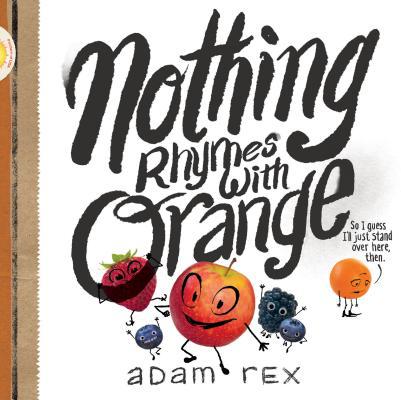
Nothing Rhymes with Orange

By Adam Rex


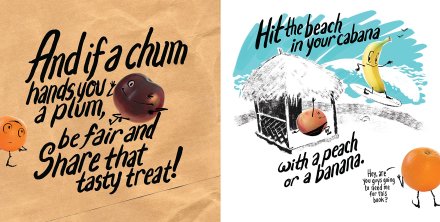
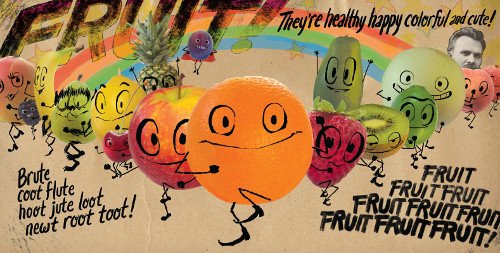
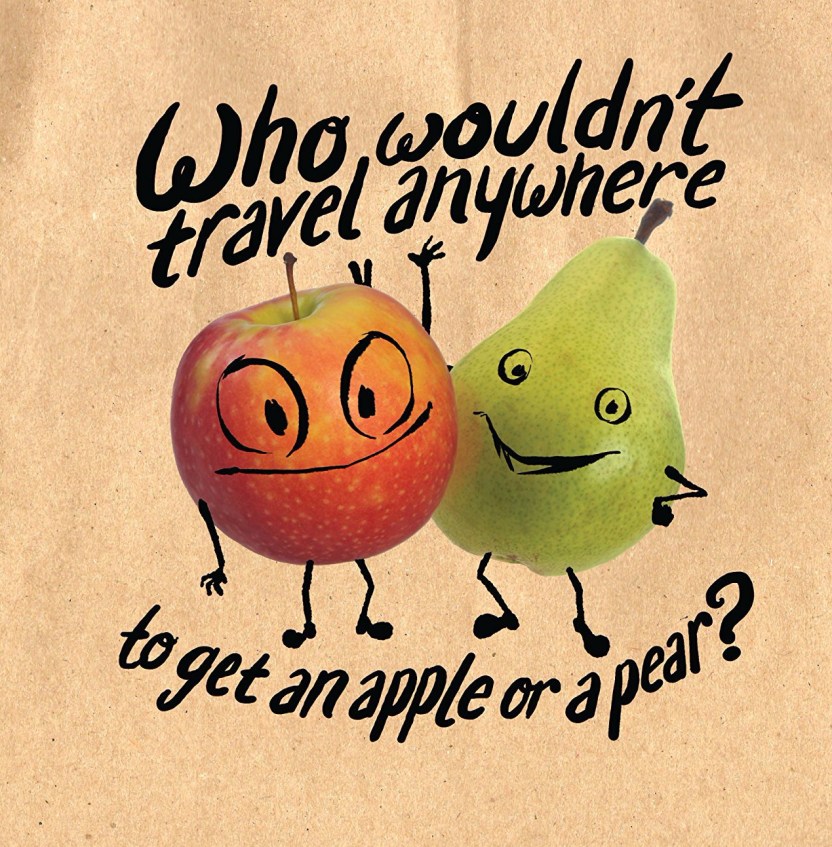
As the book opens, readers meet two smiling friends—an apple and a pear who ask the jaunty and rhyming question: “Who wouldn’t travel anywhere to get an apple or a pear?” A little purple fruit joins the fun with “And if a chum hands you a plum, be fair and share that tasty treat!” From the sidelines an orange watches in anticipation like a child waiting to leap into a twirling jump rope. When the banana and peach arrive, enjoying a beachside cabana, the orange takes the initiative and calls out, “Hey, are you guys going to need me for this book?”

celebrate-picture-books-picture-book-review-nothing-rhymes-with-orange-plum

Copyright Adam Rex, 2017, courtesy of Chronicle Books

But the action continues with caped grapes and a kind of high-fiving dance party where all the cute fruit are cheering themselves on. The persistent orange peeks out from the background just to remind them that he’s there. As the fig admits that she’s not very big, the orange begins to catch on to the pattern of invitations, and his once-present grin begins to fade. With a shrug he acknowledges that “nothing rhymes with me, but…” he’d still like to be included.

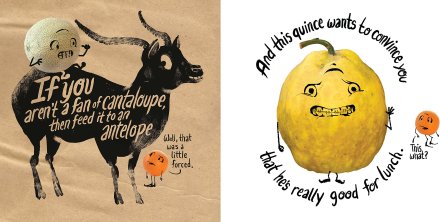
If nearly getting sucker punched by a “peewee” kiwi’s “pucker punch” counts as being included, then the orange is front and center. But then a cantaloupe riding an antelope enters the scene with a dietary suggestion.”If you aren’t a fan of cantaloupe, then feed it to an antelope.” Not a fan of that rhyme? Well…the orange agrees with you, and he’s a little unsure about the quince on the next page too. But…back to the dance party, where all the newly introduced “cute fruit” are now cutting the rug.

celebrate-picture-books-picture-book-review-nothing-rhymes-with-orange-cantaloupe

Copyright Adam Rex, 2017, courtesy of Chronicle Books

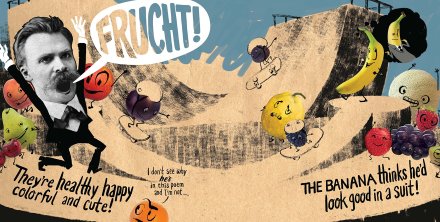
The produce seem to be losing control as they reach for rhymes. I mean, “you can keep them in a bowl or in a boot—fruit!” Really? Is it actually a good idea to eat out of a shoe? Poor Orange doesn’t “even know what that is.” Want a little philosophy with your fruit? Then try this on for size: “I think cherries are ‘the berries’ and a lychee is just peachy. Thus Spoke Zarathustra is a book by Friedrich Nietzsche.” Impressive!

That bit of nonsense just makes Orange mad, though. As Nietzsche throws his hands in the air and joins the festivities, Orange is nonplussed: “I don’t see why he’s in this poem and I’m not.” Good question! And now the banana again?! Didn’t he already have his turn? And the pear? Didn’t she get to lead the whole thing off? Maybe this is one of those circular plots…. Whoa! Here’s a twist—a wolf wants to take a bite of Pear. 

celebrate-picture-books-picture-book-review-nothing-rhymes-with-orange-frucht

Copyright Adam Rex, 2017, courtesy of Chronicle Books

But suddenly a transformation takes place that brings up some pretty deep questions: “then does that pear become a pearwolf when the moon is full and bright? Will the apple have to grapple with this pear with fangs and hair?” Now that the story has gone to the dark side, the orange decides he’s “glad he’s not part of it.” Yet, wait! A caped grape comes to the rescue, and Orange realizes that “this book is amazing.”

The cute fruit party is in full swing with a band, a singer, and a whole lot of dancing. The rhymes are coming fast and furious—some a bit better than others, according to Orange—and he decides to just hang out on the next page. There, though, as he stands alone and dejected and surrounded by lots of white space, Orange hears a cheery sound. It’s Apple with a welcoming rhyme: “But the fruit are feeling rotten, ‘cause there’s someone they’ve forgotten.” And while what Apple says next might not technically be a real word, it does the job with a little hip-hop beat: “It’s the orange. He’s really smorange. There’s no one quite as smorange as orange.”

This, of course, could go either way, so Orange asks for a little clarification and discovers that “smorange” means “totally awesome in every way.” And with that, the jam continues, with Smorange Orange out in front.

celebrate-picture-books-picture-book-review-nothing-rhymes-with-orange-smorange

Copyright Adam Rex, 2017, courtesy of Chronicle Books

Adam Rex’s cool, funny, and sophisticated riff uses the fact that the word orange has no rhyme to explore the ideas of exclusion and inclusion and show readers that there’s always a way to embrace others and make them feel good and part of the group. 

Rex has created very appealing characters in Orange and the others. Without a mean seed in their bodies, they’re just having fun and being a bit silly. In a very welcome plot turn, Apple and the other fruit recognize that Orange feels left out and come to him with a solution. Rex’s vivacious fruit are as cute as they think they are, and little Orange is endearing with his alternately easy smile and sad eyes. The addition of a dancing Friedrich Nietzsche is genius and will have both kids and adults laughing.

celebrate-picture-books-picture-book-review-nothing-rhymes-with-orange-apple-and-pear

Copyright Adam Rex, 2017, courtesy of Chronicle Books

Nothing Rhymes with Orange is a fantastic read-aloud for home and classroom story times. The book would be a much-asked-for favorite and would make a perfect gift or addition to home libraries.

Ages 5 – 8

Chronicle Books, 2017 | ISBN 978-1452154435

You’ll have a blast exploring the world of Adam Rex on his website!

National Respect Day Activity

celebrate-picture-books-picture-book-review-initial-letter-craft

Initial Respect Craft


Here’s an easy craft that you can make for yourself or as a gift for someone else. This Initial Respect Craft can be used as a decoration or as a bookend while it reveals all the qualities that you respect in yourself, a family member, or a friend.

Supplies

  • Wooden letter
  • Chalkboard paint
  • Chalk

celebrate-picture-books-picture-book-review-initial-letter-craft

Directions

  1. Paint the letter with the chalkboard paint, let dry
  2. On the letter, write words that reflect the qualities that you respect in yourself, in a family member, or in a friend
  3. Display your letter to remind yourself that you should always be treated and treat yourself and others with respect.

Picture Book Review

September 14 – Live Creative Day

celebrate-picture-books-picture-book-review-crocodali-cover

About the Holiday

Today, let your inner artist out! There are as many ways to be creative as there are people—that’s what makes today such a special event! Everyone sees, hears, and experiences the world in a different way. How do you? Grab the creative tool or instrument of your choice and let your friends, family, and even strangers see the creative genius inside you!

Crocodali

By Lucy Volpin


You open the book, expecting to be welcomed with open arms by the characters inside. Instead, who do you meet but a very busy crocodile. With not a little braggadocio he reveals that he is “Crocodali, the most talented painter in the whole wide world.” It seems you’ve stumbled into his studio, and he’s setting up to create a new masterpiece, leaving him no time to stop for a chat or even to give you an autograph.

celebrate-picture-books-picture-book-review-crocodali-in-the-studio

Copyright Lucy Volpin, 2017, courtesy of simonandschuster.com

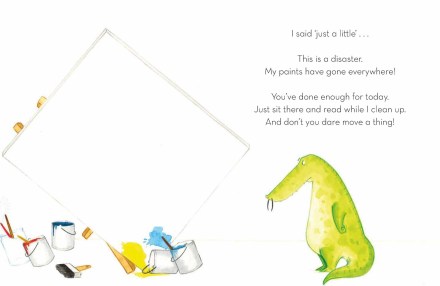
But after he’s given you the brush off, so to speak, he suddenly needs your help. Crocodali just can’t get the canvas to sit straight on the easel. He asks if you wouldn’t mind tilting the book just a little to the right. Oh, no! Now it needs to go a little to the left. Can you tilt it back just a wee bit? Oh dear! Now the canvas and the easel have toppled over! Even the paint cans tipped on their sides, and some blue and yellow has splashed onto the clean, white canvas.

celebrate-picture-books-picture-book-review-crocodali-tilt

Copyright Lucy Volpin, 2017, courtesy of simonandschuster.com

Well! Crocodali is a little miffed! He wants you to just go on reading and leave the cleaning up to him. Wait, wait, wait! Did you turn the page? (Isn’t that part of reading, though?) Now the canvas is completely on its side and there are some splotches of red on it too. Crocodali is in a huff because now he’ll have to start all over. But he takes a second look and in the next moment has had a change of heart. Now he thinks “that looks quite nice. Maybe you’re onto something.”

celebrate-picture-books-picture-book-review-crocodali-tilt-the-other-way

Copyright Lucy Volpin, 2017, courtesy of simonandschuster.com

He even invites you to “give the book a shake and see what happens.” What happens is that the paints, brushes, canvas, and even Crocodali himself are now rattling around the pages all topsy-turvy. When things settle down, the room and the great artist are covered in paint. Crocodali sets the painting back on the easel and steps back to take a look. Hmmmm…. He likes it! But maybe it’s upside down? He’s going to turn it over and add a few more details.

celebrate-picture-books-picture-book-review-crocodali-tipped-over

Copyright Lucy Volpin, 2017, courtesy of simonandschuster.com

With a very dexterous tail and his right hand, he dabs on purple, brushes on yellow and red, and is then ready to “mix it all up.” Here’s where you come in again. Can you give the canvas a good rub? Wow! The painting looks amazing! Crocodali exclaims, “It’s a masterpiece! I really am the greatest painter in the world.” He’s the greatest painter in the world? Who did all the work? Whatever…. The painting now needs to dry, and Crocodali wants you to blow on it to speed up the process.

One…two…three…Blow! Huh! You have some power! You blew all the paint off the canvas and onto the wall! It looks incredible, through—and leaves the canvas blank to start all over again!

celebrate-picture-books-picture-book-review-crocodali-on-its-side

Copyright Lucy Volpin, 2017, courtesy of simonandschuster.com

Kids will love Lucy Volpin’s feisty, boastful crocodile who comes to see that even mishaps can spark creativity. The giggles will begin on the first page as Crocodali (an inspired character and name) strolls into the studio sporting a Salvador Dali mustache and dismissing readers away with a wave of his hand. As children begin interacting with the pages, they’ll look forward to what comes next. Large images of the canvas allow children to really see the effects of their actions, and the two-page “shaken” spread is a delight of mayhem and color.

Kids will also enjoy turning the book around to see the various perspectives of the painting they’re creating throughout the story. Volpin gives readers lots of opportunities to discuss art, color, painting, and even teamwork, making Crocodali a joyful and inviting introduction to the creative process.

Crocodali would be a lively, playful opening to arts and crafts sessions in schools, libraries, and at home. For art lovers or energetic kids who like interaction with their reading, Crocodali is a wonderful choice.

Ages 3 – 8

little bee books, 2017 | ISBN 978-1499806335

Live Creative Day Activity

celebrate-picture-books-picture-book-review-supply-jar-craft

Make Your Own Creative Supply Jars


When inspiration hits, you want to have all of your supplies close at hand! With this easy craft you can use your creativity to make a one-of-a-kind jar to keep all of your favorite things neat, tidy, and within reach! These make great gifts for friends too!

Supplies

  • A wide-mouth plastic jar, such as a peanut butter jar
  • Paint or markers for plastic
  • Multi-surface chalkboard paint (optional)
  • Paint brush
  • Chalk (optional)

Directions

  1. Design your jar
  2. If you are planning to use chalkboard paint, paint that section first
  3. Paint or decorate with markers
  4. Let dry
  5. Fill with your art of other creative supplies

Picture Book Review

September 11 – Make Your Bed Day

celebrate-picture-books-picture-book-review-piggies-in-pajamas-cover

About the Holiday

There are many benefits to making your bed each morning. Not only does your room look neat and tidy, but, according to the National Sleep Foundation, it can even make sleeping easier and more comfortable. It doesn’t take long to pull up the sheets and comforter, so take the opportunity of today’s holiday to get into a new habit! Pssst…if you really like to just jump up and go, Don’t Make Your Bed day is coming on December 21st!

Piggies in Pajamas

Written by Michelle Meadows | Illustrated by Ard Hoyt


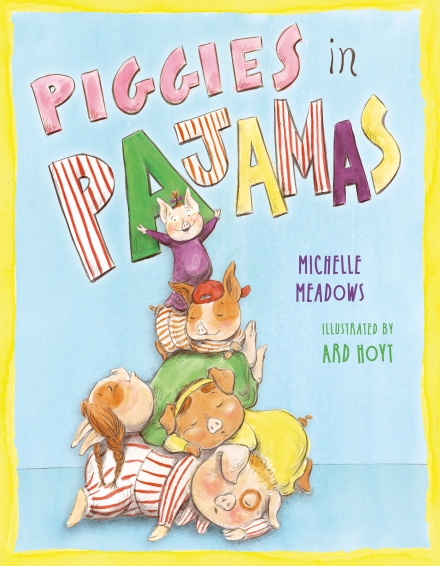
It’s bedtime for the little piggies, but Papa isn’t home yet and Mama’s on the phone. So the five rambunctious kids find ways to spend the time. A peek into their room finds “Piggies in pajamas / jumping in the air / tossing up the pillows / popcorn in their hair.” The quadruple bunk beds make tall mountains to climb and perfect platforms for jumping into the ocean, but as the piggies dive onto the soft, pillow “water,” they hear Mama’s footsteps in the hall.

celebrate-picture-books-picture-book-review-piggies-in-pajamas-mom-on-phone

Image copyright Ard Hoyt, text copyright Michelle Meadows, 2013. Courtesy of simonandschuster.com

The piggies “hurry to the tunnel. / Everybody, hide. / Underneath the covers, snuggle deep inside.” Soon all seems quiet, so they tiptoe from their beds to spy on Mama. They’re happy to see that she’s still occupied, leaving the tracks clear for the piggie train to toot, toot across the floor. But Mama, in her curlers, hears a suspicious sound and stomp, stomp, stomps upstairs.

Once more the five siblings rush to their beds and pull up the covers, their ears trained on any sound from downstairs. A familiar “crick, creak” tells them that Mama is now sitting down and chatting with Mrs. Cat. “Piggies in pajamas, / whirl around the room. / Cartwheels and somersaults— / Boom, Boom, Boom!” All that noise brings Mama stomp, stomp, stomping, but when she opens the piggies’ door, they’re all snuggled in and quiet as mice.

celebrate-picture-books-picture-book-review-piggies-in-pajamas-parade

Image copyright Ard Hoyt, text copyright Michelle Meadows, 2013. Courtesy of simonandschuster.com

One sneaky eye watches Mama as she descends the stairs on her way to the kitchen for an evening snack. In moments, the little ones are up again and searching through the trunk for toys and cars and dress-up clothes. Just then at the window they hear a “scratch, scratch, tap, tap” and although it’s only a tree branch waving in the wind, the imagined wolf or fox or bear has left them shivering.

One by one, all in a line they grab their blankets and crawl down the hall to a new cozy bed. While Mama’s washing up her face, they cuddle in and start to snooze. Soon, “Mama sees their pink ears. / Tails are sticking out. / Mama climbs into bed and / kisses every snout. / ‘Good night, piggies!’”

celebrate-picture-books-picture-book-review-piggies-in-pajamas-kisses

Image copyright Ard Hoyt, text copyright Michelle Meadows, 2013. Courtesy of simonandschuster.com

The little piggies in Michelle Meadow’s sweet story want to do the right thing, but it’s just so exciting to stay up late! Readers know how they feel and will giggle along as the piggies romp when Mama’s gone but fly into bed when they hear her stomps. Meadow’s jouncy rhyme captures the freewheeling antics of unsupervised kids, the delicious suspense of getting caught, and the endearing appeal for comfort when kids are scared or truly ready to drift into dreams.

Ard Hoyt’s energetic piggies know how to make the most of Mama’s inattention! Bouncing on the bed with their popcorn snack, climbing a rope made of sheets to the top of the bedpost “mountain,” and strutting down the hall in a piggie train, these five siblings are as cute as can be. Hoyt’s split pages show both the expressive siblings and Mama as they go about their nightly routines, acting and interacting on the sounds they hear. The soft colors, humorous details, and final spreads of the piglets in Mama’s bed, tell readers that despite all the shenanigans, this is a house full of love.

Piggies in Pajamas would quickly become a bedtime favorite and a welcome addition to home bookshelves.

Ages 2 – 5

Simon & Schuster, 2013 | ISBN 978-1416949824

Discover more about Michelle Meadows and her books as well as teachers activities on her website!

You can learn more about Ard Hoyt and view a gallery of his books on his website!

Make Your Bed Day Activity

celebrate-picture-books-picture-book-review-pajamas-coloring-page

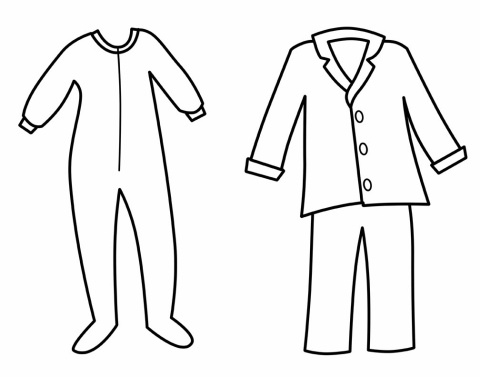
Design Your Own Pajamas


Are pajama sleepers or tops and pants your favorites for bedtime? With this printable Design Your Own Pajamas coloring sheet, you can create jammies just the way you like them! 

Picture Book Review

September 9 – National Bake and Decorate Day

celebrate-picture-books-picture-book-review-betty-bunny-loves-chocolate-cake-cover

About the Holiday

Sometimes when you bake something, it looks a little…well…naked. A plain cake? A monochrome cookie? They just cry out for some color—and maybe a rose or two, or a superhero, or some words, or candies, or…you get the picture. Today’s holiday understands! So, get out your baking utensils, gather some ingredients, and design a beautiful or funny decoration! 

Betty Bunny Loves Chocolate Cake

Written by Michael B. Kaplan | Illustrated by Stéphane Jorisch


Betty Bunny knows she’s a “handful” because her parents often tell her so. Betty Bunny also knew her parents love her, so she figures that “being a handful must be very, very good.” One day when her mom offered her a piece of chocolate cake after dinner, Betty Bunny declined. She didn’t like trying new things, and “announced: ‘I hate chocolate cake. Chocolate cake is yucky.” But then added “‘What’s chocolate cake?’”

celebrate-picture-books-picture-book-review-betty-bunny-loves-chocolate-yucky-cake

Image copyright Stéphane Jorisch, text copyright Michael B. Kaplan. Courtesy of Penguin Books

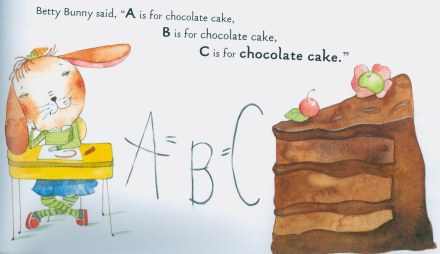
With her first bite, Betty Bunny was in love. She was so in love, in fact, that she decided that when she grew up she was “going to marry chocolate cake.” Her siblings were supportive—kind of—but her older brother Bill thought “‘you’re going to have really weird-looking kids.’” The next day at school, Betty Bunny had chocolate on the brain. When her teacher went over the A B C’s Betty said, “‘A is for chocolate cake, B is for chocolate cake, C is for chocolate cake.’”

On the playground when Betty Bunny mixed together dirt and water, it looked like chocolate cake, but sure didn’t taste like it. At dinner Betty Bunny was ready for her dessert before her healthy dinner, but her mom said no; and her dad agreed with her mom. Her siblings tried to help—kind of. Henry suggested she eat some peas. Kate told her to eat her carrots, and Bill taunted, “‘Why don’t you have some chocolate cake? That’s what you really want. Oh, no, wait. You can’t. Ha-Ha.’”

celebrate-picture-books-picture-book-review-betty-bunny-loves-chocolate-cake-abc-for-chocolate-cake

Image copyright Stéphane Jorisch, text copyright Michael B. Kaplan. Courtesy of Penguin Books

Betty Bunny exploded. She threw peas at Henry, tossed carrots at Kate, and lobbed mashed potatoes at Bill. Betty Bunny’s mother was not pleased and sent her little daughter to bed without chocolate cake. “Betty Bunny screamed, ‘This family is yucky!’” and stomped up the stairs. Later, her mom came up to kiss her goodnight, and she had a plan. She would put a piece of cake in the fridge and the next day after a good dinner, Betty Bunny could have it. “‘Maybe if you know it’s there waiting for you, it will be easier to be patient,’” her mom said. Betty Bunny thought this was a great idea and “wanted to say something especially nice to her mother. ‘Mommy,’ she said, ‘you are a handful.’”  

celebrate-picture-books-picture-book-review-betty-bunny-loves-chocolate-cake-kiss-goodnight

Image copyright Stéphane Jorisch, text copyright Michael B. Kaplan. Courtesy of Penguin Books

The next morning Betty Bunny couldn’t leave the house without first checking on her piece of cake. It looked so alone sitting on the plate all by itself, so Betty Bunny decided to put it in her pocket and take it to school with her. All day the secret knowledge of what was in her pocket made Betty Bunny happy. At dinner, after she had cleaned her plate, she reached into her pocket for her chocolate cake, but all she found was “a brown, goopy mess” that made her cry.

After her mom explained to her that putting the cake in her pocket was not the same as being patient, she prepared another piece for the next day. In the morning, Betty Bunny remembered her lesson in patience—and that’s why she put the cake…in her sock.

Michael B. Kaplan’s adorable Betty Bunny Loves Chocolate Cake is a delight from its beginning to its smashing ending. He hits all the right notes in this humorous family drama, from the “helpful” siblings to the hair-trigger tantrums to the Ramona Quimby-esque misunderstanding of phrase. Along with the giggle-inducing fun kids learn a bit about patience, and adults discover insight into what goes on in their little bunny’s mind when obsession meets disappointment.

Stéphane Jorisch’s Bunny family is as cute as…well…a bunny.  His watercolor, pen and ink, and gouche paintings employ brilliant color and crisp lines to depict the loving relationship among the siblings and parents as well as the realistic home and school environments. The perfectly drawn body language—including folded arms, sly looks, emotional meltdowns, and understanding smiles—will resonate with kids and adults alike. And once the piece of chocolate cake appears, it’s easy to see how little Betty Bunny could become such a fan.

Ages 3 – 7

Puffin Books, 2016 (paperback) | ISBN 978-1101998632

National Bake and Decorate Day

celebrate-picture-books-picture-book-review-cake-dot-to-dot

Delicious Dot-to-Dot


Everything is better with chocolate—even this printable Delicious Dot-to-Dot! Get your pencils, follow the dots, and then color this delectable page!

Picture Book Review

September 8 – It’s All-American Breakfast Month

celebrate-picture-books-picture-book-review-everyone-loves-bacon-cover

About the Holiday

Bacon has been around since ancient times. In early French it was known as Bako, in German as Bakko, and in Teutonic as Backe. In Middle English it was called Bacoun, but all these words simply meant “back,” as in the back meat of pigs. Preserved and flavored, bacon is a favorite the world over and has seen an explosion of uses in the past few years, from enhancing cupcakes, apple pie, and chocolate chip cookies to spicing up peanut butter sandwiches, lasagna, and French toast. But there’s nothing quite as enticing as two or three crispy slices sitting on the edge of a plate of eggs or pancakes as part of an all-American breakfast!

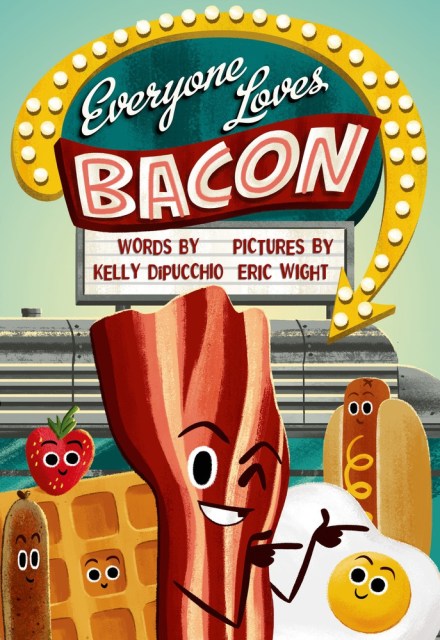
Everyone Loves Bacon

Written by Kelly Dipucchio | Illustrated by Eric Wight


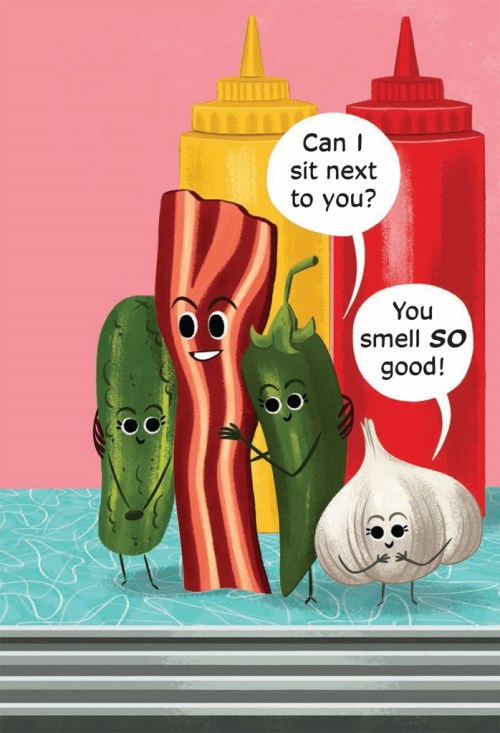
From Egg to Waffle to Pancake, there was no one who didn’t love Bacon—even Bacon himself. Well…maybe French Toast was an exception, but he “doesn’t like anyone.” Bacon loved all the attention the other foods gave him. Jalapeño wanted to sit next to him, and Garlic thought he smelled so good! He made the fruit and vegetables laugh with his “charming stories and funny jokes,” and, boy, could he play the ukulele!

celebrate-picture-books-picture-book-review-everyone-loves-bacon-taking-picture

Image copyright Eric Wight, 2015, text copyright Kelly Dipucchio, 2015. Courtesy of us.macmillan.com

Ham, sausage link, and sausage patty were jealous, “but Bacon didn’t care about them. Not one bit.” After all, “He was becoming a real celebrity. His picture appeared on t-shirts. And billboards. And buses.” Bacon was so enthralled with himself that he began to forget his friends. Sometimes he even “pretended not to know some of his old friends.” Bacon had fans, and that was enough for him.

Bacon began to live the high life of sports cars, designer clothes, and the latest fads. He was even the star of the breakfast pastry parade. “Indeed Bacon was the toast of the town. Until….” Well…we did warn you that “everyone loves Bacon.”

celebrate-picture-books-picture-book-review-everyone-loves-bacon-umbrellas

Image copyright Eric Wight, 2015, courtesy of us.macmillan.com

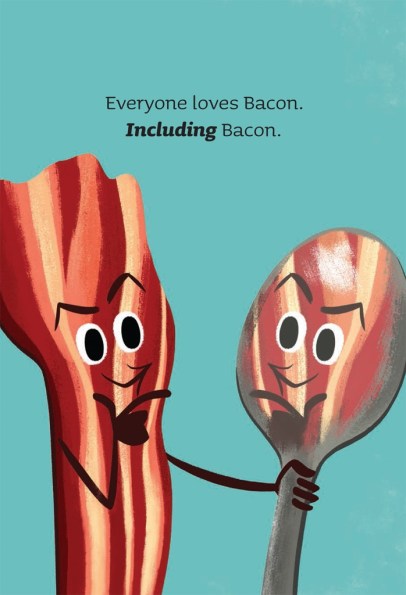
Kelly Dipucchio’s witty cautionary tale about a piece of bacon that gets too big for his broiler sizzles with snappy sentences and the perils of celebrity. She chooses words and experiences that are recognizable to any child navigating the world of school, siblings, and friends, and with sly winks to popular culture shows that mistaking fans for friends ends badly and that there is always someone “bigger” than you.

celebrate-picture-books-picture-book-review-everyone-loves-bacon-spoon-mirror

Image copyright Eric Wight, 2015, text copyright Kelly Dipucchio, 2015. Courtesy of us.macmillan.com

Even if readers don’t like the taste of bacon, they won’t be able to resist Eric Wight’s adorable slice who becomes the star of a 1950s-era diner. From the first page where Bacon admires himself in the back of a spoon, kids will giggle as Bacon takes pictures with equally cute Hotdog, Chicken Leg, Pickle, Garlic, and Jalapeño, leads a citrus parade complete with paper cocktail umbrellas, and plays the ukulele for swooning tater tots, French fries, and curly fries. But as the other foods grow sad and disgruntled with Bacon’s attitude—even brandishing fancy toothpicks—kids will understand and empathize with these forgotten friends. When Bacon meets his fate on the last page, readers are sure to fork over a howl of surprise.

Ages 3 – 6

Farrar, Straus & Giroux, 2015 | ISBN 978-0374300524

To learn more about Kelly Dipucchio and her books, visit her website!

All-American Breakfast Month Activity

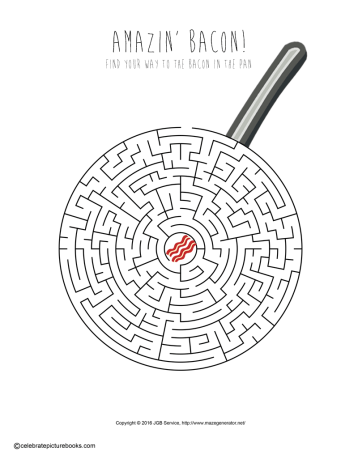
celebrate-picture-books-picture-book-review-amazin'-bacon-maze

Amazin’ Bacon Maze


There’s some tasty bacon sizzling in the center of this frying pan-shaped maze. Can you find your way through this printable Amazin’ Bacon Maze to eat it up? Here’s the Solution!

Picture Book Review

September 7 – Buy a Book Day and Interview with Sara Levine

celebrate-picture-books-picture-book-review-bone-by-bone-cover

About the Holiday

Today is one of the best days of the year! Anyone who loves books will want to take the opportunity of the holiday to visit their favorite bookstore and buy one of those books you’ve been hearing and reading about. And why stop at just one? Winter is coming—that time when there’s nothing more cozy than snuggling in with a cup of tea or hot chocolate and reading late into the night. As the school year begins, children benefit from having new books in their home libraries that reflect their changing interests and maturing thoughts. Take a little time to look through the children’s or tween sections of the bookstore and let your kids pick out some new favorites! Yes, today is a wonderful day, no bones about it! 

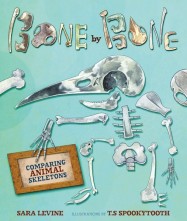
Bone by Bone: Comparing Animal Skeletons

Written by Sara Levine | Illustrated by T.S Spookytooth


Can you imagine if we sloshed through life like soup without a bowl? What would we set our hats on? Where would we carry our phones? How could we sit in class or the office or perform our favorite activities? And what would happen to our organs, our hair, our homes? It’s all a little disturbing! Fortunately, we don’t have to worry about that scenario because “we’re vertebrates, animals with bones. Our bones hold us up.” Phew!

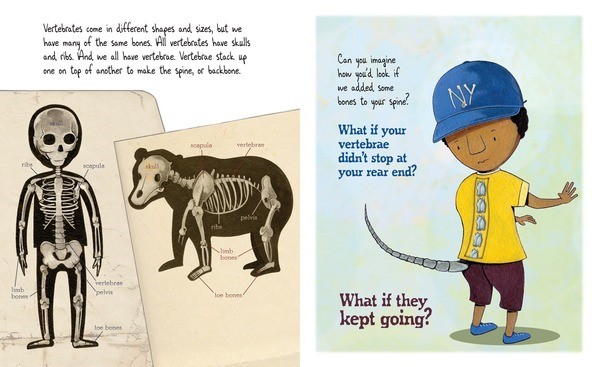
There are different kinds of vertebrates—mammals, reptiles, fish, and more—but many of our bones are similar. For example, “all vertebrates have skulls and ribs. And we all have vertebrae. Vertebrae stack up one on top of another to make the spine, or backbone.” Humans have vertebrae that end…well…you know where, but imagine for a minute if your vertebra kept on going. What if they poked a hole right through your shorts? Yes! You’re right—you’d have a tail. Tails are pretty helpful for some animals. They help them swim, communicate, even keep their balance.
celebrate-picture-books-picture-book-review-bone-by-bone-tailbone

Image copyright T. S Spookytooth, text copyright Sara Levine. Courtesy of Lerner Publishing

Good job! Let’s try again…how about if you only had a skull, vertebrae, and ribs. No arm bones; no leg bones. You’ve got it! A slithery snake! Nah…really…you’d look great! Okay, maybe you’d prefer if you had a skull, vertebrae, and arm bones—but no leg bones—and your nose was transferred to the top of your head. Sounds fishy? Maybe, but not quite. Oh! Did I give it away? Yep, you’d be a whale or a dolphin, and you’d use those powerful vertebrae to propel yourself to the ocean’s surface to grab a breath.

Imagine what kind of gloves and shoes you’d need if your “middle fingers and middle toes were so thick that they supported your whole body.” Hey, you’re good at this! It was a trick question. You wouldn’t need gloves, but you’d wear horse shoes (or no shoes if you’re a less domesticated animal like a zebra). Now, let’s take a trip through a room full of fun-house mirrors. What kind of animal would you be if your neck was reeeaally long and each vertebrae was “as big as your head?” Or if your legs were muuuuuch longer than your arms? Or your “finger bones grew so long that they reached your feet? Seeing those transformations is definitely worth the price of admission, right?

celebrate-picture-books-picture-book-review-bone-by-bone-bat

Image copyright T. S Spookytooth, text copyright Sara Levine. Courtesy of Lerner Publishing

But getting back to the bowl of soup: “Could you be an animal if you didn’t have any bones at all?” Sure! Some insects and sea creatures “have their hard parts on the outside,” and some are just “mushy.” Think of worms, slugs, and jellyfish, just to name a few. But bones make life more fun, don’t ya think? So if all vertebrates have bones, what makes humans different? Well, for one thing we (as well as some apes and monkeys) have opposable thumbs, which means that “we can move our thumbs in a special way that allows us to do many things, including turning the pages of a book,” using tools, and picking up objects. “Did you get that one? If so, give yourself a thumbs-up!”

An Author’s Note including more about bones, the types of vertebrates, a glossary, and resources for further reading follow the text.

With humor and a kid’s sensibility of the bizarre, Sara Levine presents an anatomy lesson that young readers will respond to. Juxtaposing individual bony features of humans and animals is a brilliant idea to give children perspective on the differences in animal skeletons and the uses of each unique trait. Levine’s quiz-like format engages readers, encouraging independent thought and active participation as well as building suspense for what transformation comes next. Kids will laugh and learn and be on the lookout for other ways human and animal skeletons differ as they become more aware of the natural world around them.

With illustrations of tailbones sticking out of pants, empty socks, two fingered hands and two toed feet, a neck that needs two scarves, and more, T. S Spookytooth illuminates what it means to be human in an animal world or an animal in a human world. Kids will laugh imagining themselves as Spookytooth depicts them with animal features and “Ewww” when their portrayal dissolves into a muddy mess. The accurate drawings of human and animal skeletons educate readers on the names and placement of particular bones.

The unique approach to the study of human and animal skeletons, the wide range of animals presented, and the enticing writing and illustrations make Bone by Bone: Comparing Animal Skeletons a wonderful choice for libraries and home bookshelves of budding scientists and nature lovers.

Ages 5 – 10

Millbrook Press, 2014 | ISBN 978-0761384649

To learn more about Sara Levine and her books, visit her website! You’ll also discover fun Bone by Bone activities to enhance your reading!

View a gallery of artwork by T. S Spookytooth, plus videos and more on his website!

Buy a Book Day Activity

celebrate-picture-books-picture-book-review-x-ray-craft-dog-paw

Dog Paw and Human Hand X-Ray Craft


X-rays are cool to look at, but they always stay at the doctor’s office! With this craft you can simulate an X-ray of a dog’s paw and a human hand!

Supplies

  • Printable skeleton templates: Human Hand Template | Dog Paw Template
  • Black chalkboard drawing paper, 8 ½ inches by 11 inches
  • White colored pencil
  • White chalk
  • Clear Plastic Report Sheet Protectors
  • Magnetic clip to hang your x-ray on the refrigerator or other metal surface (optional) OR
  • String or wire, adhesive squares, and clothes pins to hang x-ray on the wall (optional)
  • Scissors

Directions

  1. Print the Human Hand and Dog Paw Templates (you may want to print two—one to cut and one to follow when transferring the bones to the black paper)
  2. Cut the bones apart
  3. Lay the bones on the black chalkboard paper
  4. Trace the bones with the white colored pencil
  5. Color in the bones with the white chalk
  6. Slip the black paper into the plastic report sheet protector
  7. If desired, hang the x-ray on the refrigerator with the magnetic clip or on the wall using string, adhesive squares and clothespins


Q & A with Author Sara Levine

celebrate-picture-books-picture-book-review-author-sara-levine

Today, I’m thrilled to talk to Sara Levine about her writing as well as to learn about her early experiences with animals and to discover a kid’s-eye-view of women in science.

Your writing for kids is so infused with humor that really captures their attention. What were some of the books that you liked best as a child?

When I was younger, one of my favorite picture books was Katerine and the Box by Patricia Lee Gauch. I’ve noticed that this book has gone back into print; I was so happy to find it online. It’s basically about creativity. A girl and her friend keep finding new uses for a large cardboard box—a house, a car, a dance platform. I can still recall my feeling of excitement when hearing it read to me—it made me want to go make something. It’s actually a feeling very similar to what I have today when I think of a new idea for a book. There was also a book called Wisher, which was about difference—about a cat who dreamt he was really a fish. I remember that the illustrations were beautiful and somewhat scary—just done in blues, browns and yellows.  As an older child, I loved Charlotte’s Web by E.B White, Lizard Music by Daniel Pinkwater and pretty much everything by Judy Blume.

I don’t suppose any of these books are like the books I write. I used to tell people that I liked my science and my books separate. I just wanted to go outside to learn about science. But, I wanted stories in my books. I don’t think there were any of the sorts of books I write about science out for kids when I was young. At least I didn’t find them. But if I had, I think I would have enjoyed them—the fact that they were funny and interactive. But here’s a picture book I LOVE that I found as an adult that is certainly infused with humor and captures a kid’s (and a grown-up’s) attention: Bark, George, by Jules Feiffer. I think this is currently my favorite picture book.

You grew up on a farm in Guilford, Connecticut. Can you tell me a little about the farm and how or if it influenced your current work?

Calling it a “farm” might be a bit of a stretch. My parents were two kids who grew up in Brooklyn and then moved to CT and decided to get some animals, cheered on by their enthusiastic offspring. First there was a goat, who got lonely. So then there was another goat. And they had a baby. And there was a chicken at school who needed a place to go for the summer. And then never went back to school… And so on. We ended up having over 100 named animals—a horse, a cow, peacocks, geese, a donkey and more. I loved taking care of the animals, with my siblings. It was a wonderful experience, one that I’m very grateful for. But it wasn’t at all lucrative. I think the only money made was by my brother who would sell extra eggs to his teachers.

How did it influence my current work? I’m not sure. Certainly my interest in animals is a lifelong one. I think the stories about the animals actually show up more in my writing for adults than in my picture books. The ideas for the books for children come more from teaching ideas that I think will translate well into a picture book format.

You have a doctorate in veterinary medicine and a masters in fine art. When and how did the two merge into your work as an author?

What a great question. I have always had this science side and this humanities side. A lot of my life, I’ve been struggling with how to balance and feed both sides of myself. It’s taken me a long time to find a way to merge the two interests, and it’s been very satisfying to do so in writing about science, especially for kids.

You offer four different school and library programs, all of which sound fascinating. Do you have any anecdotes from a presentation you’d like to share?

In one of my workshops, the one for Bone by Bone: Comparing Animal Skeletons, I bring in an articulated skeleton for the kids to see and a disarticulated skeleton in a box. The kids learn the bones, and I then hand them each a bone which they take up to the standing skeleton to figure out which bone it is, and then work together to put together the second skeleton on the floor. Inevitably, someone asks if the skeletons are real. They are. I literally found them in the closets, when I started my teaching at Wheelock. There are all sorts of questions about that, generated by the kids, and then, often, someone will ask if the skeletons are “boys or girls.” Recently, at a school near Boston, I was explaining to a group of second graders that both were female, that we could tell by the shape of the hips, and I heard one girl, going, “YES!” and pumping her arm up and down, in victory. The boy next to her says, “Why are you so happy? That means a girl died.” To which she responds, “That’s true. But it also means one more girl in science!”

celebrate-picture-books-picture-book-review-bone-by-bone-workshop

Sara Levine leads a workshop at Cold Spring School

What’s the best thing about writing for kids?

I enjoy trying to think of engaging and interactive ways to teach something that hasn’t been taught before. I like the creativity involved. And, of course, reading it to the kids when I’m done and seeing them respond!

celebrate-picture-books-picture-book-review-bone-by-bone-students-at-al-hamra-school

Students at Al Hamra Academy examine a skeleton

You also write articles for adults and were nominated for a Pushcart Prize in 2007. Can you tell me more about your writing for adults?

I write science related essays for adults. The writing comes more from my own experiences.  I do have a handful of essays published. I think the one that was nominated for the Pushcart, “What Hands Can Do” is still available to read online. Here’s a link to it on Fictionaut. It’s about spaying a dog. And more, of course. I think my most successful essay is “The Body of a Cow” which originally appeared in the Massachusetts Review. It’s also on Fictionaut, if anyone wants to have a look. Eventually, I hope to work the essays into a memoir for adults.

What’s up next for you?

I have a book on dinosaur bones which will be published by Lerner next year. I also have three children’s books written which I’m trying to find homes for at the moment—one on animal classification (but interactive, written like a “do your own adventure” story), one on how plants communicate with animals, and one very funny one (if I can say so myself) called “Breakfast at the Omnivore Café,” which is about what animals eat. This one might never get published because it falls into the cracks between nonfiction and narrative fiction, but I haven’t given up on it yet. The book I’m currently working on is an attempt to explain climate change through stories of the carbon cycle. Doesn’t sound very interesting when put that way, but it’s written as an interactive story, and is also actually quite funny in parts, so I think kids will like it.

Since Celebrate Picture Books is a holiday-themed blog, I can’t let you get away without asking you what your favorite holiday is…

Passover. You get to tell a story to children in a way that is interactive and engaging for kids, AND it involves food. What could be better?

Thanks so much for chatting and sharing your unique perspective on the natural world, Sara! I, for one, would love to read Breakfast at the Omnivore Café—that would be one interesting menu, I bet! I wish you the best with all of your books!

You can connect with Sara Levine on:

Her Website | FacebookTwitter

celebrate-picture-books-picture-book-review-bone-by-bone-cover

Bone by Bone: Comparing Animal Skeletons and Sara’s other books can be found at:

Amazon | Barnes & Noble | Books-a-Million | Lerner Publishing

About Sara Levine

Sara Levine is an assistant professor of biology at Wheelock College and a veterinarian.  Her science books for children include Bone by Bone: Comparing Animal Skeletons (2013) and Tooth by Tooth: Comparing Fangs, Tusks and Chompers (2016).  Her third book, Fossil by Fossil: Comparing Dinosaur Bones will be published in 2018.  Bone by Bone: Comparing Animal Skeletons has received much recognition, including the Utah Beehive Book Award, selection as a Bank Street College Best Children’s Book of the Year, and finalist for the Cook Prize for best STEM picture book.

Sara also writes science-related essays for adults, one of which was nominated for a Pushcart Prize in 2007.  Her writing has appeared in the Boston Globe, the Massachusetts Review, Bayou, and in the anthology And Baby Makes More. In addition to teaching college students, she has taught children’s environmental education classes for the Massachusetts Audubon Society and other nature centers in Massachusetts and Connecticut for over 15 years. 

Sara holds a doctorate in veterinary medicine (DVM) from Tufts University, a master of fine arts degree (MFA) in creative nonfiction writing from Lesley University and a bachelor of arts degree (BA) in English from Haverford College.  She is a native New Englander and lives with her daughter and their dogs and cat in Cambridge, Massachusetts.  

Picture Book Review

September 6 – Read a Book Day

celebrate-picture-books-picture-book-review-we-forgot-brock

About the Holiday

No, I didn’t forget what holiday it is today—the day is I Forgot Day! Today is the day to make up for all those missed opportunities and make amends for forgetting special events. Of course it may also be the perfect day to trot out that most-used excuse for not doing something—and get away with it! One thing you should not forget is to read today’s book!

We Forgot Brock!

By Carter Goodrich


Phillip and Brock are best friends. They have a wonderful time goofing around together, but other people just can’t understand. They call Brock Phillip’s “imaginary friend.” As if!… For example, at dinner when Phillip says Brock wants seconds, Phillip’s mom only pretends to put food on Brock’s plate, and often Phillip’s dad almost backs over Brock’s motorcycle in the driveway. Philip’s parents also just don’t see how funny Brock can be.

celebrate-picture-books-picture-book-review-interior-art-dinner

Image copyright Carter Goodrich, 2015, courtesy of Simon & Schuster

One evening the whole family goes to the Big Fair. “‘Brock wants us to ride the Brain Shaker!’” says Phillip. But his parents won’t listen. “‘Tell Brock the Brain Shaker is a big kids’ ride,’” his dad says. At the fair Phillip and Brock ride the merry-go-round, the bumper cars, and the Tilt-A-Whirl. Phillip has cotton candy, but there are no beans and spaghetti snacks for Brock. Finally, Phillip begins to feel sleepy. But Brock? He’s riding the Brain Shaker!

celebrate-picture-books-picture-book-review-we-forgot-brock-merry-go-round

Image copyright Carter Goodrich, 2015, courtesy of Simon & Schuster

As the car pulls into the driveway, Phillip wakes up. “‘Where’s Brock?!’” he yells. Phillip runs into the house. No Brock. “‘We forgot Brock!’” Phillip sobs. “‘We Forgot Brock!’” Back at the fair Brock searches for Phillip from atop the Ferris wheel. Suddenly, a little girl asks him if he is okay. When Brock tells her he’s lost, she invites him to come home with her and her friend Princess Sparkle Dust.

Being at home with Anne and Princess Sparkle Dust is okay, but Brock misses Phillip. To cheer him up Anne and the Princess do magic tricks, and they all play games and tell each other stories. Meanwhile, Phillip is looking all over the neighborhood for Brock, but he’s nowhere to be found.

celebrate-picture-books-picture-book-review-interior-art-car

Image copyright Carter Goodrich, 2015, courtesy of Simon & Schuster

Both Brock and Phillip have almost given up hope of reuniting when… “‘BROCK!!!’” Phillip bumps into his friend on the street. Brock introduces Phillip to Anne and Princess Sparkle Dust and they all become fast friends. From then on “they spent all their time goofing around together. And everything was even better than before.”

Carter Goodrich’s story of friendship and imagination bursts with charm and heart and will enchant both kids and adults. Written in a conversational manner, Goodrich immediately engages with a child’s perspective while offering plenty for adults to appreciate in his adorable and hilarious illustrations. Brock, depicted as a black-and-white crayon drawing, is Phillip’s foil—tall, muscular, a little mysterious, a little fierce—while incorporating a child’s sweetness and silliness. Princess Sparkle Dust is similarly drawn in purple and white, complete with a heart-shaped face and a crown.

celebrate-picture-books-picture-book-review-we-forgot-brock-princess

Image copyright Carter Goodrich, 2015, courtesy of Simon & Schuster


Phillip, sporting a Superman costume and red cowboy boots, and Anne, wearing an angel dress complete with wings, everywhere they go are the embodiments of unselfconscious fantasy. Phillip’s parents share amused-but-loving glances even as they accept their son’s imaginary friend. Adults may laugh out loud at the illustration of Phillip rolling on the floor laughing at Brock’s funny antics while his parents watch the television news with a Keith Morrison look-alike anchorman. The softly lit and welcoming home environments as well as the vibrant, glowing Big Fair are everything a kid would dream them to be.

We Forgot Brock! is a book that will be remembered and asked for again and again, and is a must addition to any child’s library.

Ages 4 – 8

Simon & Schuster Books for Young Readers, 2015 | ISBN 978-1442480902

Visit Carter Goodrich’s Website to view a gallery of his work for other picture books and movies, such as Ratatouille, Despicable Me, and Brave, as well as cover art for “The New Yorker” and other publications.

Read a Book Day Activity

celebrate-picture-books-picture-book-review-dog-bookmark


Cute Puppy Bookmark


When you want to save your place or remember a favorite picture, it’s fun to have a friend to come back to. With this printable Cute Puppy Bookmark you’ll always have a