Hats are great for cold days, days when you want to dress up or express a certain fashion statement, or to cover up a bad do or bedhead. Today’s holiday may spur you to learn how to knit a hat or inspire you to invite your friends to a crazy hat-designing party! Make a Hat Day also shares the spotlight with Felt Hat Day, which exhorts people to rediscover an old and cherished fashion accessory.
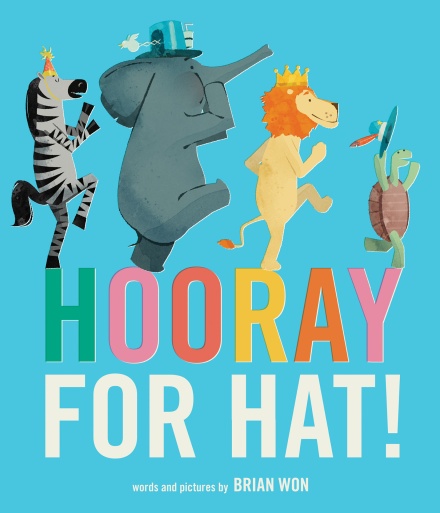
Hooray for Hat!
By Brian Won
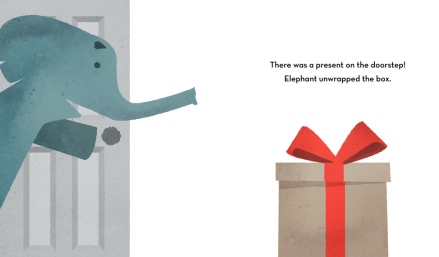
Elephant wakes up on the wrong side of the bed. He’s hardly had a chance to fully shake off sleep when the doorbell rings. He clomps down the stairs yelling, “‘Go away! I’m grumpy!’” But there’s no one at the door. Instead Elephant finds a prettily wrapped present on his doorstep. Unwrapping it Elephant finds the grandest hat he’s ever seen. It has everything – A pompom, a star, a feather, a mortar board with a tassel, a crown, a coo-coo clock bird, and even a cup holder! Elephant puts it on. How can he be grumpy with such a hat on his head? He can’t! “‘Hooray for Hat!’” he cheers and goes off to show Zebra.
Image copyright Brian Won, courtesy of brianwon.com
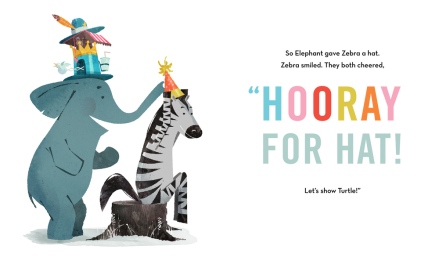
Elephant finds Zebra sitting alone on a tree stump. She doesn’t even turn around when her friend approaches. “‘Go away! I’m grumpy!’” she states. Elephant removes the top hat from his own new chapeau—a party hat with the pompom—and gently places it on Zebra’s head. Zebra can’t help but smile. “‘Hooray for Hat!’” they both cheer and head out for Turtle’s house.
Image copyright Brian Won, courtesy of brianwon.com
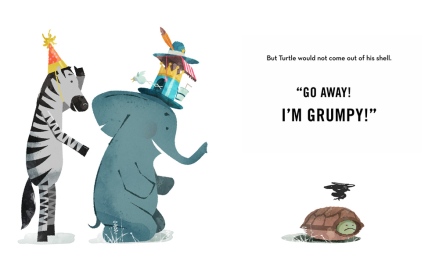
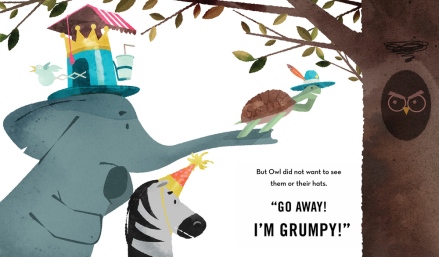
Oh, but Turtle is so grumpy that they won’t even come out of their shell. Elephant lifts down the cowboy hat with the star and feather from his own towering hat and gives it to his pal. Out pops Turtle who proudly joins the parade. “‘Hooray for Hat!’” they all cheer and march off to show Owl. “But Owl did not want to see them or their hats. “‘Go Away! I’m grumpy!’” she hoots from her tree trunk hole.
Image copyright Brian Won, courtesy of brianwon.com
But Elephant is as wise as Owl, and thinks the striped mortar board is just the thing to change her mood. “‘Hoo-Hoo-Hooray for Hat!’” Owl says, leading the way to find Lion. But Lion’s frowning face peers out at them from his den, and he shoos the group away with the familiar “‘Go Away! I’m Grumpy!’” Down comes the golden crown from Elephant’s hat and while Lion loves it, he’s more concerned with their friend Giraffe who isn’t feeling well. “‘What can we do?’” Lion asks the group.
They all know exactly what to do. They pack up the very special hat and take it to Giraffe, who is standing with her head hidden in a treetop. “Do Not Disturb” reads the sign hanging on the trunk. But as soon as Giraffe dons that hat, a toothy smile breaks out, and the six best buddies cheer, “‘Hooray for Friends!’”
Image copyright Brian Won, courtesy of brianwon.com
Brian Won’s joyful celebration of the power of surprise, friendship, and a great hat is a day brightener for anyone, whether they wake up grumpy or feeling fine. His adorable animal friends don’t mind a little grumpiness—they’ve experienced it themselves—but only want to make each other happier. The repeated phrasing throughout the story invites kids to read along, and the absence of pronouns offers open interpretation and inclusiveness. The confetti-colored hats will make kids smile and the tribute to friendship will have them cheering along with this fun picture book.
A cheer-ful book, Hooray for Hat! would make a happy addition to children’s libraries for those days when they need a little more encouragement or inspiration. Kids will want to get together with Elephant, Zebra, Turtle, Owl, Lion, and Giraffe again and again and will no doubt love to create a magnificent hat of their own!
Ages 3 – 7
Houghton Mifflin Harcourt Publishers, 2014 | ISBN 978-0544159037
Instituted in 2007 by the Encouragement Foundation at Harding University in Searcy, Arkansas, today’s holiday entreats us to cheer on our friends, coworkers, and even those we don’t know as they attempt to reach goals or start new endeavors. A pat on the back, a simple “you can do it!,” or a reassuring “great job!” boosts people’s self-confidence and makes the world a happier place.
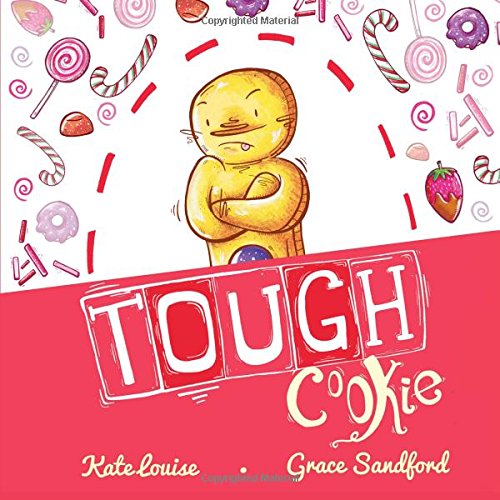
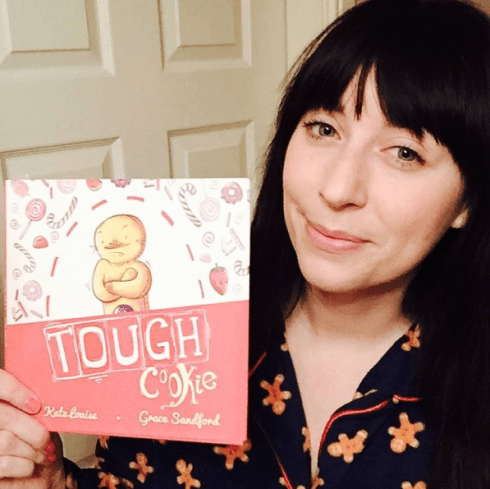
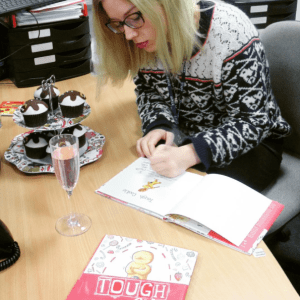
Tough Cookie
Written by Kate Louise | Illustrated by Grace Sandford
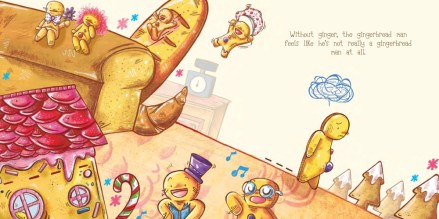
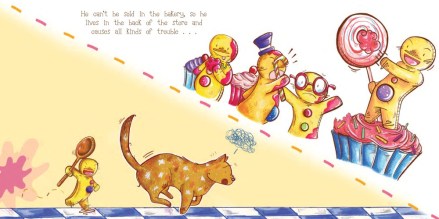
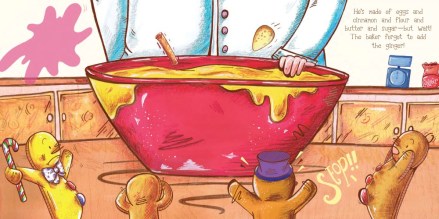
Although one gingerbread man in the bakery looks like all the others, there is one important difference. Yes, the batter had “eggs and cinnamon and flour and butter and sugar—but wait! The baker forgot to add the ginger!” Without this signature ingredient the gingerbread man just doesn’t feel like a gingerbread man at all. In fact his whole life has been turned upside down. He’s different from his friends, and what’s worse, he can’t be sold. Instead, he lives in the back of the bakery and in his sadness makes all kinds of mischief.
Image copyright Grace Sandford, text copyright Kate Louise, courtesy of Sky Pony Press
The gingerbread man chases the cat, splatters icing on other cookies, and squirts icing on the walls. “‘I need that for my cupcakes!’” the baker yells, but the gingerbread man just laughs. He moves on to the decorative candies, stuffing them in his mouth as fast as he can even though the baker needs them for his other treats and stands by tapping his foot. Next the gingerbread man scatters sprinkles all over the counter and slips and slides along on his belly—“‘woohoo!’” But the baker is not amused. “‘I need those for the donuts!’” he shouts.
Image copyright Grace Sandford, text copyright Kate Louise, courtesy of Sky Pony Press
Finally, the baker has had enough. Not only is the gingerbread man upsetting the other gingerbread men and women, he is ruining the business. The baker orders the gingerbread man to leave the store. But this is one gingerbread man that does not want to run away. “‘I don’t want to leave!’” he cries. The baker relents. He takes the little cookie in hand and teaches him that even though he is missing an ingredient he can still be kind. The baker shows him by being nice he can become one of the group.
Now, the little gingerbread man is happy. Instead of gobbling up all the candy, he helps create the other cookies. He no longer shoots icing on the walls or flings sprinkles around the kitchen. Rather, he helps the baker decorate the cupcakes and the donuts. He’s even learned how to sift flour and roll out dough, and he uses the cookie cutter to make new friends. And he never forgets to add the ginger!
Image copyright Grace Sandford, text copyright Kate Louise, courtesy of Sky Pony Press
In her sweet story, Kate Louise reminds readers that true happiness comes from within and that each person can decide for themselves how to perceive the world around them. While each of us is human, we all have different ingredients that make us unique. We can use those qualities to be kind and make positive changes in the world. Kids will recognize and giggle at the mischief the little gingerbread man makes with icing and sprinkles, but will also realize that friendships are built by using that same energy to help others. Sometimes tough cookies are actually softies at heart.
Grace Sandford’s bakery gleams with the golden hues of fresh-baked bread, the festive colors of sprinkles and icing, and the sparkle of sugar. Kids will love the vibrant pictures of cupcakes; lollypops; stacks of cakes, donuts, and candy; and decorated gingerbread houses surrounded by cookie forests. Her expressive gingerbread men and women register dismay at the wayward gingerbread man’s shenanigans and joy at his kindness. And the hero of the story? When he leaves behind his impish pranks he becomes a charming baker’s companion, sifting clouds of flour, running on the rolling pin to flatten dough, and passing out sugar-shiny gumdrop buttons to his new friends.
Young children will ask for this fun and funny read over and over. Tough Cookie makes an especially delicious accompaniment to an afternoon of baking or decorating gingerbread houses!
View the colorful world and signature style of Grace Sandford’s artwork on her website!
Gobble up this Tough Cookie book Trailer!
National Day of Encouragement Activity
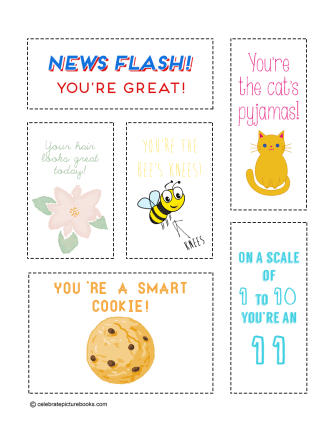
Kindness Cards
Encourage your friends – and even strangers with these printable Kindness Cards! You can hand them to people and tell them how much they mean to you or slip them into a lunch bag, locker, shelf, backpack or other place and let the person discover a secret day brightener!
Q&A with Author Kate Louise & Illustrator Grace Sandford
Today I am happy to include a double Q & A with both author Kate Louise and illustrator Grace Sandford in which they share their inspirations, their other work, and the joys of creating picture books as well as reveal a favorite place for tea and cake and a ghostly pastime!
Meet Kate Louise
What were some of the books you most enjoyed as a child?
I loved Funny Bones and Winnie the Witch! And I was a big fan of Roald Dahl (especially Matlida) – I still am!
What influenced you to write Tough Cookie?
I had the idea at Christmastime. I was measuring ingredients for a batch of gingerbread cookies and wondered what a cookie character without sugar would do because they’d be unable to fulfill their cookie purpose without an important ingredient! I later changed the missing sugar to missing ginger, which is the most important ingredient of all for a gingerbread man.
You write picture books as well as young adult novels. Which came first? What is the biggest challenge in writing each? What is the biggest joy?
When I started writing, I knew I wanted to write young-adult fiction. So that came first. Writing picture books kind of felt like starting over again. It was scary, but exciting, too. And I could learn a lot from both and apply new skills to different projects.
Both have their charms and their tough moments. Writing novels can be really hard going at times when I get the feeling that I’m never going to make it to the end, or if I get myself tangled up somewhere along the way. I don’t get that feeling quite as much with picture books, though I would say they’re harder to write! To tell a story with a much, much smaller word count and to get used to letting the illustrations tell it too.
The biggest joy for me is always seeing the finished work. After putting so much into each project, getting it back as something I can hold in my hands and feel proud of is a great feeling.
Can you describe your writing space a little?
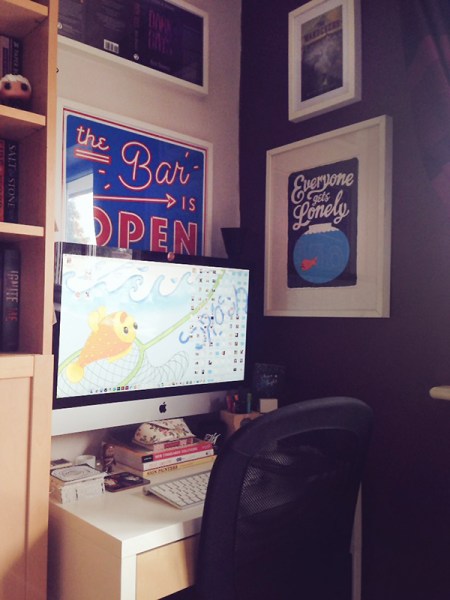
I can answer with a photo! Though, it depends when you catch me and how busy I am. Sometimes it can be piled up with books or notepads or pieces of paper and mugs of tea! My screen desktop (as you can see) can get pretty hectic sometimes too.
Since Tough Cookie is set in a bakery, I’m wondering if you have a favorite bakery and if so what is special about it?
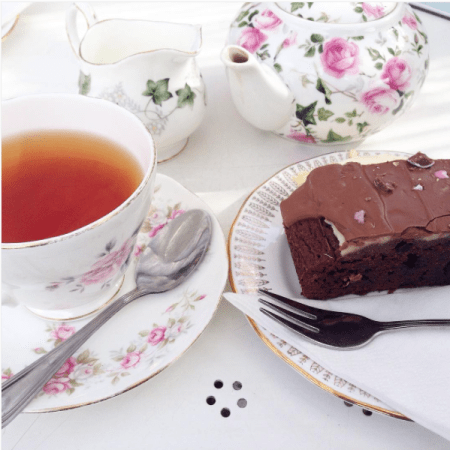
Oh, nice question! My fave place to visit for tea and cake is a little farm shop tea room, where the cake is made by my friend Bethany at Picture Frame Puds and is seriously delicious! It has a lovely vibe and I can take my dog!
What are you working on next?
I’m working on The Pack, which is the sequel to my YA shape-shifter circus novel The Wanderers that came out last year.
Since this is a holiday-themed blog, I can’t let you get away without asking you a few holiday-related questions, so…
What is your favorite holiday?
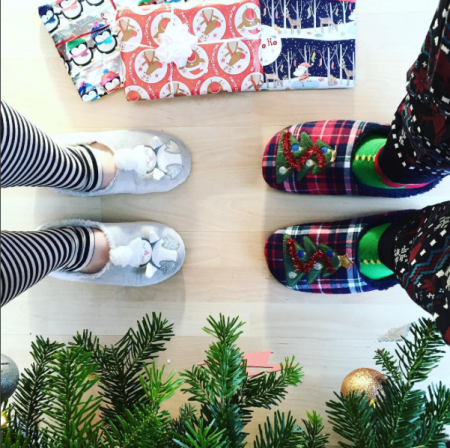
It would have to be Christmas. But Halloween is a very close second.
Do you have an anecdote from any holiday you’d like to share?
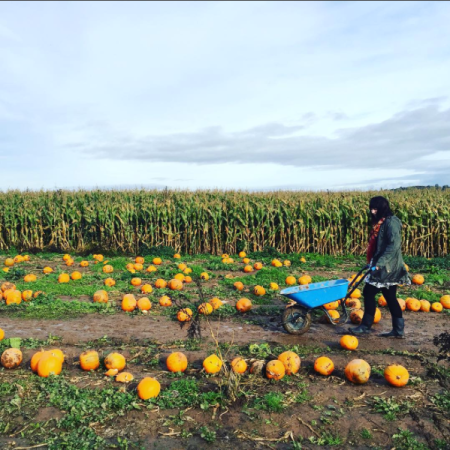
I like to make a big deal about Halloween with movies, decorating, pumpkin carving, and themed baking. We’ve just started going to a pumpkin farm to pick the pumpkins ourselves too. There’s a corn maze and little wheelbarrows and the field stretches on forever. It’s a new tradition and a fun extra activity for us at Halloween.
Meet Grace Sandford
What inspired you to become an illustrator and a picture book illustrator specifically?
Growing up, I loved drawing and creating characters from my imagination. I believe a lot of that stemmed from picture books and animated film and television. I love Disney and Pixar and as a teenager I was fascinated with the concept art from Pixar films. I always knew that I wanted a career in art of some form but it’s hard discovering what jobs are out there when you’re at school! I did some studying in Graphic Design and eventually went to university to study Illustration, which is where I got truly passionate about picture books. I always admired the art of picture books and they have been a huge part of my life but having a reason to dissect them and create your own really made me want to be a children’s illustrator.
What were some of the books and/or artists you liked most as a child?
The Very Hungry Caterpillar by Eric Carle, I am a Bunny illustrated by Richard Scarry and when I was 16 I stumbled across Catherine Rayner’s debut Augustus and his Smile. I think that book was a huge influence in wanting to be a children’s book illustrator, both the writing and illustrations are perfect!
Can you describe your process when illustrating a picture book?
It usually begins with the editor sending you the story/text. Then I start to do lots of sketches of the main character, the secondary characters and the environment around them. Pinterest is a godsend during this bit as you can flick through and look at photos of certain animals or buildings for reference to make sure you’re creating characters that will look believable (even if it is a walking, talking gingerbread man!)
Then I create roughs for each spread showing how the pages will look and which parts I have chosen to illustrate. This gives the editor a rough idea of how the final artwork is going to look and this is where most of the edits happen until it’s approved. Once all edits are approved I can create the final artwork which is my favourite part seeing all the hard work come together!
Can you describe your work space a little?
I now have a studio where I live, but when I worked on Tough Cookie I lived in a one bed apartment with my boyfriend straight after university and I had to work on the kitchen table! I’m so glad I have my own room to work in now (and I’m sure my boyfriend is too!)
My work space now involves a desk, my iMac, an A3 scanner, a windowsill with lots of pens and paints (and most importantly plants!) and I have a space that alternates between a lightbox and a graphics tablet. I also have a bad habit of putting all projects I’m working on into separate piles around the room until they are done!
You say in your bio that you like ghost hunting. How did you get involved in that? What is your favorite place to hunt ghosts?
Haha, this is the best question! I love Ghost Hunting although it’s been a while since I’ve been on a walk. It started off when I was a teenager living in a small village in England, being bored with friends and wandering around abandoned churches at night, hunting for things that go bump in the night, and it grew over time into a huge interest. When I went to University in Lincoln, a historical city, I got very interested in the social history of the place. Ghost stories are ultimately another fantastic way of storytelling. There are some very scary but interesting stories about Lincolnshire if you’re ever interested! Fun fact, Tom Hank’s bodyguard tripped over a phantom ghost head rolling down Steep Hill in Lincoln during a Professional Ghost Tour!
What are you working on next?
This year I’ve been working on a four book series based on Minecraft which has been a complete joy to be a part of! It’s been hard work as I knew very little about the franchise before this and knowing how loyal the fans are, I’ve wanted to draw everything right whilst staying faithful to my style! I just finished some more colouring books for a Spanish publisher and I have also been writing a picture book that I have a good feeling about (fingers crossed!)
What is your favorite holiday?
I personally love Christmas just because I get to spend time with my family and chill out but I love Mexico’s Day of the Dead holiday too. It is such a vibrant and beautiful celebration of something that we all sadly experience in life.
Do you have an anecdote from any holiday you’d like to share?
Every Christmas it’s become a tradition to be at home with my family playing Jigsaws, watching films and eating a little bit too much!
Thanks, Kate and Grace, for sharing about your work and your favorite places and pursuits! I wish you all the best with Tough Cookie and your other projects!
Established in 2012 Buy a Book Day promotes an appreciation for physical paperback and hardbound books. Whether you’re cracking open a brand new release or gently turning the pages in a well-worn volume, holding an actual book in your hands is an unforgettable connection between you, the author, and another world—real or imaginary. Today, drop into your local bookstore and peruse the shelves—you’ll be sure to find a fascinating book to buy.
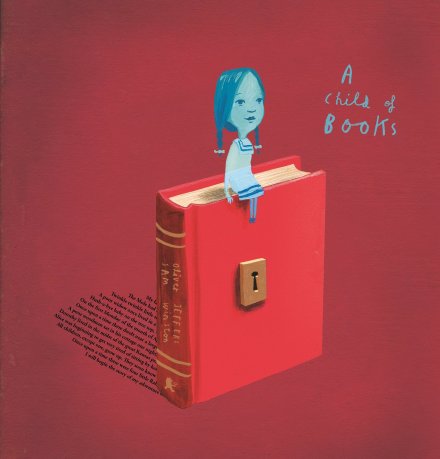
A Child of Books
By Oliver Jeffers and Sam Winston
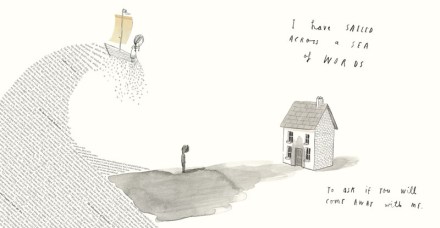
A little girl sits on a log raft with a parchment sail, dangling her feet into the water that swirls around her legs in an eddy made of words that read: “Once upon a time there was a child who loved to read…,” while the rest of the words disperse and float away. In fact, the girl is reading now—a book with a keyhole in the middle. “I am a child of books,” she reveals. “I come from a world of stories.” The wind catches the sail of her raft and the girl is off on an adventure, rising and dipping with the cresting letters that make up waves coming from the deeper sea of straight lines of excerpted text from classics including The Voyages of Doctor Doolittle, Robinson Crusoe, The Swiss Family Robinson, and Kidnapped.
Image copyrights Oliver Jeffers and Sam Winston, courtesy of oliverjeffers.com
The waves bring her to shore, where riding atop one she towers over a small boy. The girl asks if he will sail away with her. He peers into the window of his house where his father sits reading the newspaper. Headlines announce “Serious Stuff,” “Facts,” “Important Things,” and “Business.” And indeed just a glance at the articles will inform readers that “A group of serious people passed on concerns about a serious document that has been lost by a serious organization….”; that “Scientists have discovered a new fact. In one test, nearly half the subjects proved the fact, it was revealed….”; and that “an important company is to stop producing some important stuff by later this year. It said no one wanted this particular bit of important stuff.” The father’s glasses glint with numbers that rim the frames like tears.
The girl says that “some people have forgotten” where she lives, but that she can lead him on the way. The two follow a path of words from Alice in Wonderland, and the boy watches worriedly as the girl confidently climbs down a hole in the lines. There is more climbing to be done, however, and the girl, in her blue and white sailor dress, holds the boys hand as they traverse mountains made of Peter Pan that reach into the sky. By the time the friends row their dinghy into a dark cave created from the story of Treasure Island and discover a wooden chest, the boy is eager and excited for the journey.
Image copyrights Oliver Jeffers and Sam Winston, courtesy of oliverjeffers.com
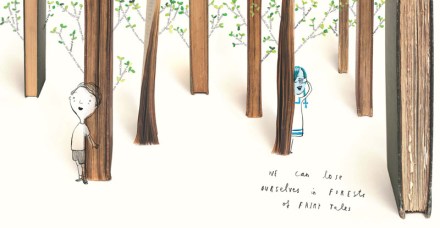
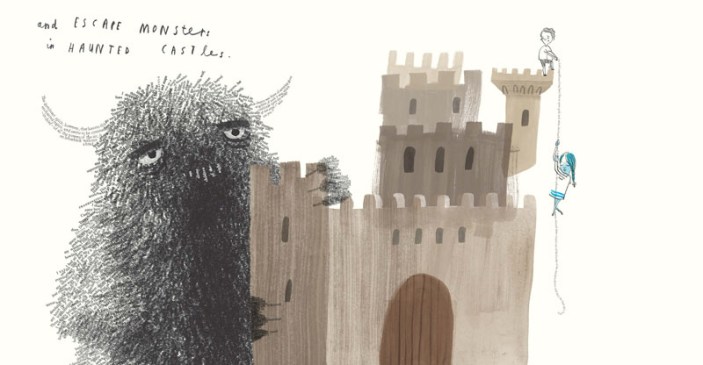
The girl and boy play hide-and-seek among tall trees made of books, where titles and lines of Hansel and Gretel, Little Red-Cap, The Golden Goose, Tom Thumb, and more jut out as leaf-covered branches. They leave the woods and come to a haunted castle that is being attacked by a monster made dark and hairy with the words of Frankenstein and Dracula. This time the boy holds a line of Rapunzel as the girl deftly shimmies to the top of a turret.
Tuckered out, the pair of friends ascend ladders to clouds of lullabies and drift into dreamland where they stand on the moon so they can “shout as loud as we like in space.” But perhaps it is not the moon but, instead, their own imaginary world made of color and characters, palaces and possibilities where stories may end but creativity lives on because “we’re made from stories…” and “our house is a home of invention.”
Image copyrights Oliver Jeffers and Sam Winston, courtesy of oliverjeffers.com
If any book invites readers to linger over the intricacies of its pages, A Child of Books is it. A perfect combination of Oliver Jeffers’ homage to the power of storytelling and Sam Winston’s artistry with typography, A Child of Books summons readers of all ages to leave the weariness of the “serious” world and enter the realm of the imagination.
The lilting lines of Oliver Jeffers’ prose poem flow with the stream of consciousness that allows thinkers to journey to nooks and crannies, participate in majestic vistas, and create the unknown of their own fancies. In Sam Winston’s hands sentences and paragraphs describing classic sea voyages swell into waves; lines from other classics crowd in upon each other, solidifying into a hidden inlet or forming a horned creature; and soft yellowed pages return to replicate the trees they once were. In the end a rainbow of characters spin out from a revolving globe, depicting our full color world.
Maps laid out by the storytellers of the past may show us routes to take but as A Child of Books reveals, there is so much white space yet to be discovered. For bibliophiles young and old, A Child of Books makes a beautiful gift and will be a welcome addition to personal library shelves.
Ages 4 and up
Candlewick Press, 2016 | ISBN 978-0763690779
Visit Oliver Jeffers’ website to view his wide-ranging work in picture books, paintings, film, and more. You can follow a paper airplane to fun games based on his picture books in Oliver Jeffers’ World.
To see the unique perspective of Sam Winston, view his books, projects, and archives on his website!
Watch the Child of Books book trailer!
Buy a Book Day Activity
I’ve Got the Reading Bug! Books to Buy List
Do you love to read? Do you have a wish list of books you want to read next? Me too! Use this printable I’ve Got the Reading Bug! Books to Buy sheet to keep track of those great book ideas.
Founded in 2005 National Wildlife Day was established to celebrate the diversity of nature and promote the awareness of endangered species worldwide. To celebrate visit an animal sanctuary, zoo, or aquarium—or think about donating your time to a worthy animal cause.
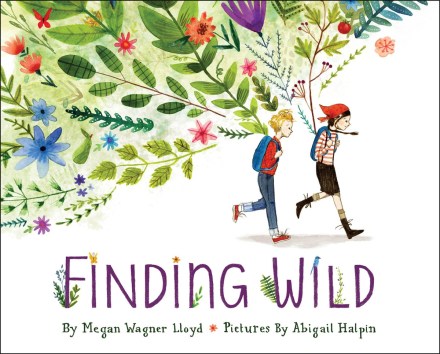
Finding Wild
Written by Megan Wagner Lloyd | Illustrated by Abigail Halpin
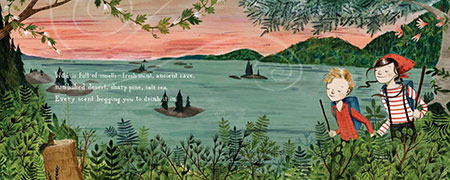
A girl and a boy stand with their backs to the stairs leading to the subway contemplating the jungle of growth in front of them. A single floating leaf seems to lead the way. They follow along the path, leaving the city behind and enter the wild. Here “Wild is tiny and fragile and sweet-baby new. It pushes through cracks and crannies and steals back forgotten places.” Wild comes in many guises—some obvious, some not.
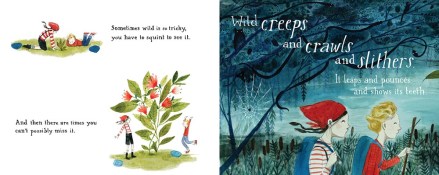
Wild also moves in various ways. As the boy and girl continue on the path passing a spider’s web and shadowy shapes with glowing eyes, wild “creeps and crawls and slithers. It leaps and pounces and shows its teeth.” Everywhere the pair ventures, wild has a distinct smell—fresh or musty, sharp or sweet, tangy or arid. They discover wild can be as hot as a forest fire or as cold as an icicle. Running through a field of flowers and climbing a rocky cliff the two find that wild is “as smooth as the petals of poppies, and as rough as the fierce face of a mountain.” They also find that wild can hurt in so many ways.
Image copyright Abigail Halpin, courtesy of Alfred A. Knopf
Plunging deeper into the wild the boy and girl uncover more secrets—delicious and quenching. The sounds of wild chill and soothe them. Suddenly, though, the girl and the boy find themselves outside of the wild, back in front of a subway entrance. The wild, now seems far away, invisible and unknown, as if “the whole world is clean and paved, ordered and tidy.” As the pair gaze upward the tall buildings and skyscrapers block the sky. But the girl points to a leaf swirling through the air. They follow it through an open door that leads to a most surprising discovery.
Image copyright Abigail Halpin, courtesy of Alfred A. Knopf
Megan Wagner Lloyd entreats readers to rediscover the wild no matter where they live. Her lyrical descriptions of the splendor of nature in all its incarnations—from gentle to intense, quiet to loud, mysterious to open—delightfully capture the way children interact with the environment. Lloyd reminds readers that tasting a single juicy blackberry, thrilling to a coyote’s howl on a dark night, even feeling the prick of a cactus needle connect them to the greater world and that searching for and finding the wild—especially in the midst of an “ordered and tidy” world—brings peace and happiness.
Abigail Halpin’s lush illustrations of the wild environment gorgeously depict the vibrant colors, sometimes chilling shadows, and refreshing water the two children discover in the middle of their city. The thick vegetation rendered in a palette of greens is a riot of ferns, pines, flowering trees, and vines that hide small birds and animals. As the children huddle in a tent, the indigo night crackles with lightning and the songs of coyotes. A two-page scrapbook-type spread displays various plants and insects that sting, burn, or cause itching. When the boy and girl reenter the city, buildings—old and new—billboards, and traffic meet their eyes, but they keep their gaze on the leaf leading them on. That leaf invites readers, also, to get outside and explore the wild.
Ages 3 – 8
Alfred A. Knopf, Random House Books for Young Readers, 2016 | ISBN 978-1101932810
Discover more about Megan Wagner Lloyd, the world of Finding Wild, and news on her upcoming book on her website!
View a gallery of artwork by Abigail Halpin on her website!
Wildlife Day Activity
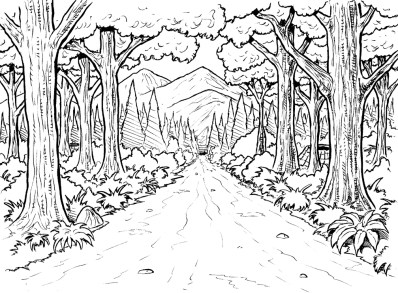
Explore the Forest Coloring Page
Take the path on this printable Forest Coloring Page to explore all nature has to offer. Add your own animals or birds to the picture—and maybe even yourself!
Summer is coming to a close and school is starting again. It’s a great time to reflect on the fun you’ve had in the warmer weather and all the memories that are about to be made as another year of activities, education, new friendships, and excitement unfolds. Happiness really does happen if you let it!
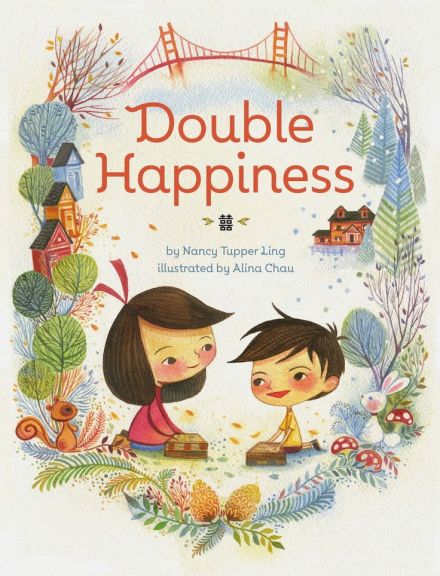
Double Happiness
Written by Nancy Tupper Ling | Illustrated by Alina Chau
This quiet, thoughtful picture book tells the story of a family’s move from China to America in a series of unrhymed verses that reveal the experience honestly from alternating viewpoints of a brother, Jake, and his sister, Gracie. Each page is dedicated to one sibling or the other with the Jake’s poems written in blue and Gracie’s in purple. In several poems the children interact with each other, the blue and purple lines acting as dialog tags.
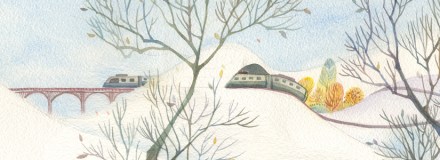
In the first poem, The Move, Gracie stands on her doorstep surrounded by boxes and suitcases and thinks, “I won’t go! / I won’t move / away / from our city house / by the trolley tracks….” But Jake is more adventurous and in the second poem, Train, is already imagining his new room. After considering different décor, he decides what he really wants is something familiar, something outside—“just one long train / that rocks and wobbles / my bed each night. / I can’t fall asleep until the train passes by.”
Image copyright Alina Chau, 2015, courtesy of Chronicle Books
In Grandmother, the siblings are each given a happiness box by their Nai Nai, who wisely challenges her grandchildren to “Find four treasures each, / leading from this home / to your new.” Gracie takes this to heart, and readers see in Panda that even before leaving Nai Nai’s Gracie has added a favorite keepsake to her box: “Nai Nai’s panda sits / by the window / like always. / “I’ll miss you,” I say. / Nai Nai leans over me. / She places Panda / inside my box. / “He has a new home / now.”
Too soon moving day comes, and in Goodbye Gracie and Jake give hugs and kisses to beloved relatives. The search for items to fill Nai Nai’s boxes is taken up in the next three poems. In Treasure, Jake becomes a dragon keeping his “dragon eyes / wide open for stuff / along the way.”He is rewarded in Lucky, in which he discovers an old penny on the bus ride to the airport. In Leaf Gracie receives a surprising gift for her happiness box: “One stray leaf / flutters down / onto my box— / Eucalyptus! / If I had a koala I’d feed / her this minty meal all / day long— / the perfect treasure / to remind me of home.”
In keeping with the long hours of travel from China to the United States, the next six poems chronicle the brother and sister’s experiences in the airport, waiting for their plane, and during the flight. Airport sees the children running, hopping, waiting, and navigating their way through the crowds of people to their gate. Dad is already tuckered out in Quiet, but Jake is wrangling to look for treasure: “’Huff puff. Puff huff.’” / Dragon blows fire. / Dragon stomps his feet. / “’Ssshhh, you’ll wake Daddy. / I giggle. / Gracie giggles. / “’Daddy can sleep / anywhere.’” Jake finally discovers gum in his backpack and creates a treasure. “I stretch it / and roll it / and ooze it / into one slinky snake / Sssssee, his penny pillow. / Sssssee, he’s kai xin— / so happy—in his brown box. / I’m tied with Gracie now— / two treasures each.”
Image copyright Alina Chau, 2015, courtesy of Chronicle Books
Adventures at the airport continue in Cat and Wings, and as the plane takes off Gracie draws pictures of the day’s events in Picture. In Here the children wake up to see their new city far below them and wonder, “can I find our house / from the sky?” Marble and Sadness juxtapose Jake’s happiness at finding another treasure for his box with the apprehension of Gracie as the plane lands and the family makes its way into their new country.
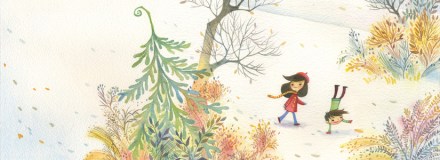
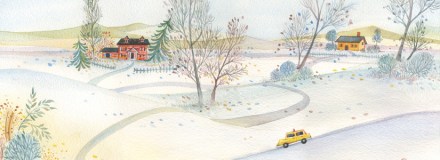
At last in Home the family reaches their new house by taxi. Gracie seems only to see the “piles of snow,” but Jake likes the “windy roads, lots of trees, and the curvy driveway.” In Explore Gracie and Jake walk around the countryside, and while Gracie still determines that she won’t like it, Jake hears a train and is happy. My Room and Dinner see the kids settling in, with a photograph of the family they’ve left behind accompanying them on the table while they eat. In A Surprise, Gracie finds that her grandmother is still with her through a special scarf, and in Paints Jake and Gracie accept the move as they paint their happiness boxes: Jake decorates his with a dragon and a train, while Gracie depicts herself and her brother walking in the snow and “they look very, / very / happy.”
Image copyright Alina Chau, 2015, courtesy of Chronicle Books
While Double Happiness tells the story of a family’s distant move, Nancy Tupper Ling’s gentle verses are appropriate for any situation involving change or uncertainty. She reminds children that happiness can be found wherever they are and all around them if they look for it. The poems flow as freely as thoughts, fears, and unguarded moments. As Gracie and Jake resolve their feeling, readers or listeners will also see that feelings of apprehension are common, and that happiness is waiting for them.
Alina Chau’s soft, lovely watercolor illustrations are beautiful representations of Gracie and Jake’s move from the familiar surroundings of their home in China to a new home in a snowy countryside. The children’s emotions resonate as they alternate between sadness and happiness and between the concrete places of Nai Nai’s house, the airport, and their new city and their own imaginations of dragons, drawings, and dreams.
Ages 5 – 8
Chronicle Books, 2015 | ISBN 978-1452129181
Discover more books for children and adults by Nancy Tupper Ling on her website!
View a gallery of artwork by Alina Chau and more on her website!
Happiness Happens Activity
Happiness Is…Game
Happiness is all around you! Grab one or more friends to play a game that reveals what things make you happy. Here are two ways to play:
Like the “Geography” game: the first player names something that makes them happy, the next player must think of something that starts with the last letter of the word the previous player said. The game continues with each player continuing the pattern. Players drop out as they cannot think of a word. The last player left is the winner.
Using a time limit (depending on age): players must think of something that makes them happy. Players drop out if they cannot think of a word within the time limit. The last player left is the winner.
Isn’t every nice-weather Saturday garage sale day for someone? Nevertheless, the second Saturday in August has officially been designated with this special shopping moniker. Garage sales aka yard sales are fun to explore—you never know what treasures you might find. Hosting your own can free up space in your house to start fresh or, as in today’s book, reaffirm the most important things in life.
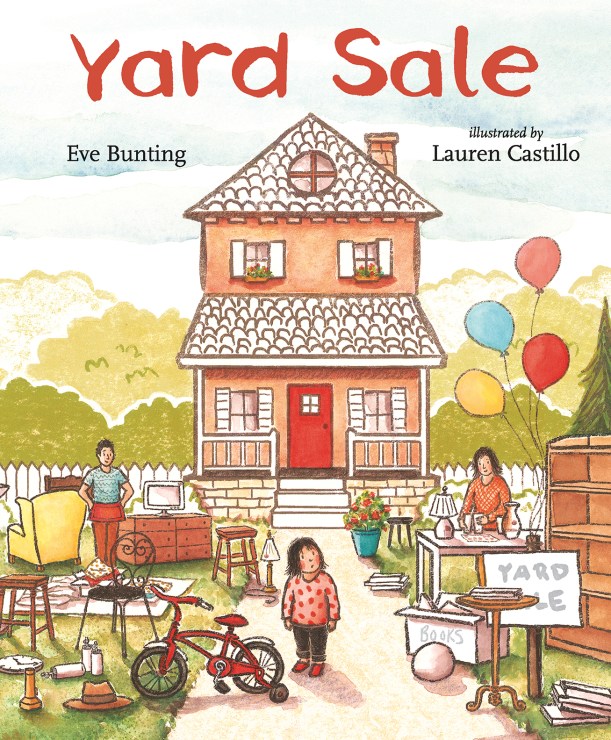
Yard Sale
Written by Eve Bunting | Illustrated by Lauren Castillo
From the first words—“Almost everything we own is spread out in our front yard”—readers realize that this is no ordinary yard sale. A little girl sits on the front porch of her tidy house gazing out sadly at the family’s furniture, toys, books, and knick-knacks that are all for sale. The family is moving to a small apartment: “‘Small but nice,’ my mom told me.” The apartment has a secret bed that opens down from the wall “right in the living room.”
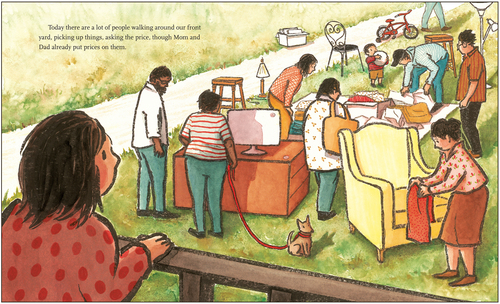
When the yard sale opens people stop by to look, “picking up things, asking the price, though Mom and Dad already put prices on them.” Even though the items are priced low, people haggle over how much they want to pay. A woman complains that ten dollars is too much for the little girl’s bed because the headboard has crayon marks on it. Watching, Callie now wishes she hadn’t made the marks to show how often she had read Goodnight Moon. Her mother settles for five dollars for the bed.
Image copyright Lauren Castillo, courtesy of laurencastillo.com
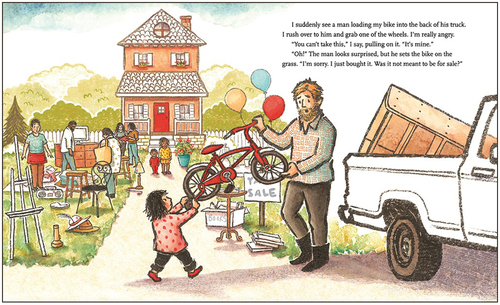
Suddenly, Callie sees a man loading her bike into a truck and runs to grab it. The man is confused, sorry for taking it, but tells her he has just bought it. Callie’s dad runs over and explains again that the apartment has no place for the bike or sidewalks nearby to ride it on. Callie looks at her dad who seems to have tears in his eyes, “but probably not,” she says. “My dad doesn’t cry.” She relinquishes the bike, but asks the man, “‘Will you give it back to me when we get our house back?’”
Callie’s best friend, Sara, is waiting for her. The two friends hug and talk about why Callie has to move. “‘I wish you didn’t have to go,’” Sara mutters. “‘Why do you, anyway?’” Callie shrugs. “‘I don’t know. It’s something to do with money.’” They don’t understand what has happened, and Sara offers, “‘I could ask my parents if you could stay with us.’” But Callie’s heart tells her where she belongs. “‘My parents would be lonely,’” she says. “‘…I’d miss my mom and dad.’”
The sale continues and people drive away with tables, chairs, and clothing. For a moment, Callie feels important when a man asks her if their large potted geranium is for sale and she directs him to her dad. By the end of the day almost everything is gone. Callie’s mom “looks droopy” and her dad is comforting her. Callie sits dejectedly watching the final things being carried away and thinking that she will give Sara her red heart necklace and invite her to visit their new apartment.
Image copyright Lauren Castillo, courtesy of laurencastillo.com
At that moment a woman comes up to Callie and says, “‘Aren’t you just the cutest thing? Are you for sale?’” Callie has a visceral reaction: “A shiver runs through me, from my toes to my head.” She runs to her parents, crying. “‘I’m not for sale, am I? You wouldn’t sell me, would you?’” Her parents drop what they are doing to hug and reassure Callie that they would “‘not ever ever, ever’” sell her. “‘Not for a million, trillion dollars.’”
With everything gone, Callie and her parents go back inside their “almost empty house.” It’s okay, Callie thinks. None of the stuff is important, and it wouldn’t fit in their new place anyway. “But we will fit in our new place. And we are taking us.”
For so many children frequent relocations or sudden moves from a home they know is a reality. Eve Bunting’s Yard Sale treats this subject with sensitivity and honest emotion through the eyes of a little girl for whom the change is confusing but ultimately reassuring. Bunting does not stint on either the setting of the yard sale itself, where people quibble over a couple of dollars, or the toll the day takes on the family. Her dialogue always rings true, and her straightforward delivery allows for understanding and for the moments of humor to shine through.
Lauren Castillo’s ink-and-watercolor paintings anchor this emotional story in a homey, loving environment even as they realistically portray the atmosphere of the yard sale. The full range of feelings are apparent in the characters’ faces from sadness and doubt to kindness and acceptance. Children will respond to Callie with her earnest attempts to understand and feel the comfort and encouragement Callie receives as her parents bend down to talk to her, hold her hand, and give her hugs.
Yard Sale is a poignant story that offers assurance and insight both for children who are facing a move and the friends and classmates who will miss them. The book’s theme is applicable to other daunting circumstances and would be a welcome addition to classroom and local libraries as well as for individuals encountering change.
Ages 4 – 9
Candlewick Press, 2015 | ISBN 978-0763665425
To view more books and artwork by Lauren Castillo, visit her website!
Garage Sale Day Activity
Garage Sale Maze
A garage sale is a bit like a treasure hunt. Can you find your way through this printable Garage Sale Maze from the roadside sign to the items for sale? Here’s the Solution!
No, this isn’t a day dedicated to re- re- re- re- re-watching that movie. It’s a day to take a step back and take stock of the feelings you’re keeping inside or the little irksome quirks that drive you crazy. Are they really worth all the stress? Today’s a day to find inner peace, make amends, or turn disadvantage into advantage.
It’s Tough to Lose Your Balloon
By Jarrett J. Krosoczka
Most people wake up each morning with great ideas for a having good day, but sometimes things don’t work out the way they’re planned. For kids, small mistakes, accidental mishaps, and unexpected disappointments can loom large. Frustrations and perceived unfairness can elicit tears or anger, and it’s sometimes hard to know how to comfort an unhappy or upset child.
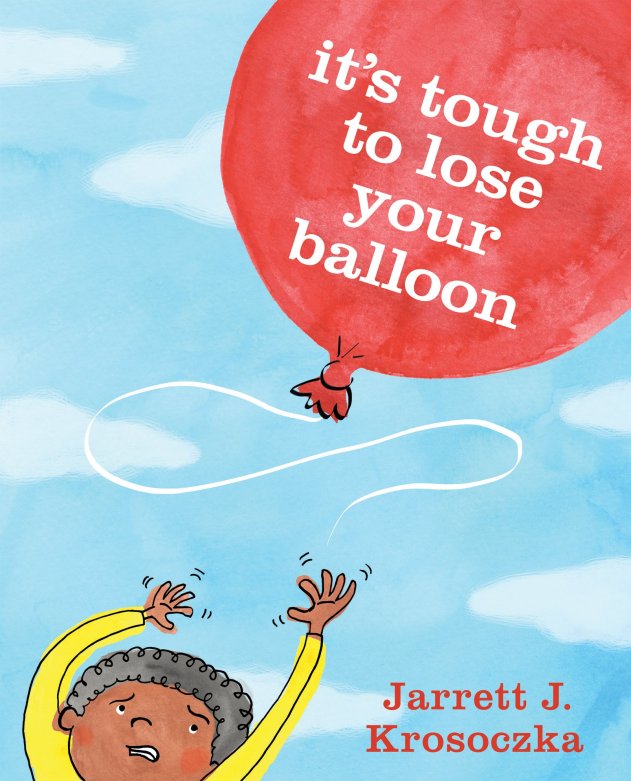
In It’s Tough to Lose Your Balloon Jarrett Krosoczka acknowledges that sometimes bad or sad things happen, but he reveals to kids how looking at the event from a different perspective or through someone else’s eyes can bring consolation and even happiness. As the title states, it’s hard for kids to watch a balloon suddenly slip through their fingers and float away, but imagining all the other people who will see it and smile can help. Having a picnic on the beach when the unthinkable happens? “It’s sad to drop your sandwich in the sand…but it’ll make some seagulls very happy.” And you know it will make you laugh to watch those crazy guys swooping, diving, and squawking over that now-crunchy snack.
The idea of sharing hurts with others to create a new scenario or a different kind of enjoyment while forming closer bonds is another positive way to turn disappointments into teachable moments that benefit all. As most kids know “it’s never fun when you break a toy…” but with a upbeat attitude they can have “fun fixing it with Grandpa.”
Wet shoes? Melting Ice-cream cone? Scraped knee or new baby sitter? In Jarrett Krosoczka’s hands these letdowns can lead to new freedom, innovation, distinction, and joyful experiences. It’s Tough to Lose Your Balloon can help anyone see “disaster” in a whole new light!
Krosoczka’s illustrations ingeniously depict the way an unexpected mishap or disappointing moment can make someone feel—alone, exposed, and vulnerable. Left-hand pages present the problem while the right-hand page shows the crestfallen child in full color on a black-and-white sketched background. The positive transformation becomes a two-spread, full-color of happy pride and fun abandon. Life can be full of little bumps in the road, keeping a copy of It’s Tough to Lose Your Balloon on the shelf can help smooth the way.
Ages 3 – 7
Knopf Books for Young Readers, 2015 | ISBN 978-0385754798
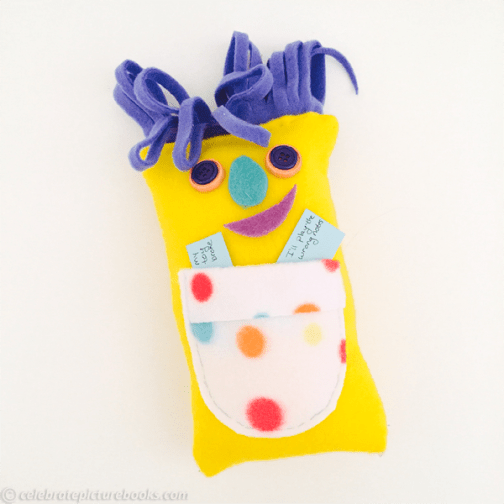
Sometimes worries don’t seem as bad when they are shared with someone else or to at least set aside for awhile. With this craft you can make a friend to help lesson worries, disappointments, fears, and anxieties. And it’s pretty good at hugs too. Older children may like to create this as a sewing project, while younger kids can make it easily with fabric glue. Make your Worry Buddy as unique as you are!
Supplies
Fleece or felt in different colors
Buttons, two larger in the same color and two smaller in a different color
Fiber fill
Fabric glue or thread
Paper
Pen or pencil
Directions
To Make the Body
Cut a 16-inch piece of fleece
Fold the fleece in half
Glue the sides together (older children may enjoy sewing the sides together with simple straight stitches)
Leave the top open
Turn the body inside out
Fill the body with fiber fill
To Make the Hair
Cut a 5-inch piece of fleece or felt
Fold the fleece or felt in half
Glue or sew the folded fleece into the opening in the body
Cut the fleece or felt in ¼-inch strips across the top
To Make the Face
Glue one set of larger and smaller buttons together, repeat with the other set
Glue or sew the buttons to the top part of the body
Cut a nose and mouth out of fleece or felt
Glue or sew the nose and mouth to the face
To make the pocket
Cut a 5-inch piece of felt in the shape of a square-bottom or rounded bottom pocket
Fold down an inch of the top
Glue or sew the pocket to the middle of the body
To share problems with the Worry Buddy, write worries or fears on a slip of paper and put them in the Worry Buddy’s pocket. Your Buddy will keep those problems so you don’t have to.