October 10 – World Space Week


About the Holiday

First declared by the United Nations in 1999, World Space Week has grown to be the largest public space-related event in the world. The week is an international celebration of science and technology, and their contribution to the betterment of the human condition. This year’s theme is “Living in Space” and “explores humanity’s journey toward making space a habitat, emphasizing the innovative technologies, challenges, and collaborative efforts that make this vision a reality.” Looking to celebrate this initiative with more than 15,000 events in more than 90 countries, the week sponsors space education and outreach events held by space agencies, aerospace companies, schools, planetaria, museums, and astronomy clubs around the world. To learn more about the week, visit worldspaceweek.org.

Thank you to Simon & Schuster/Paula Wiseman Books and Barbara Fisch at Blue Slip Media for sending me a copy of this book for review.

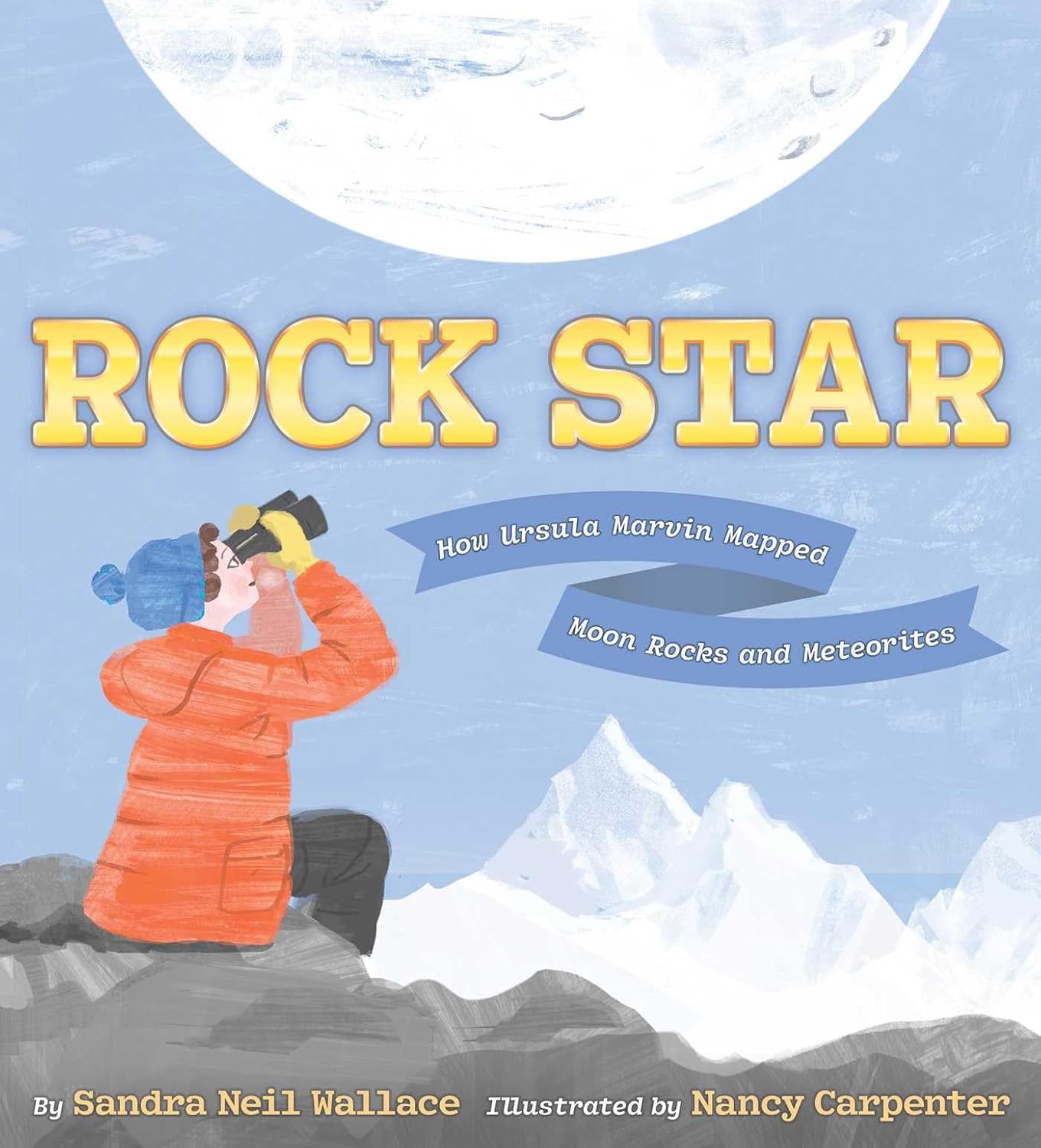
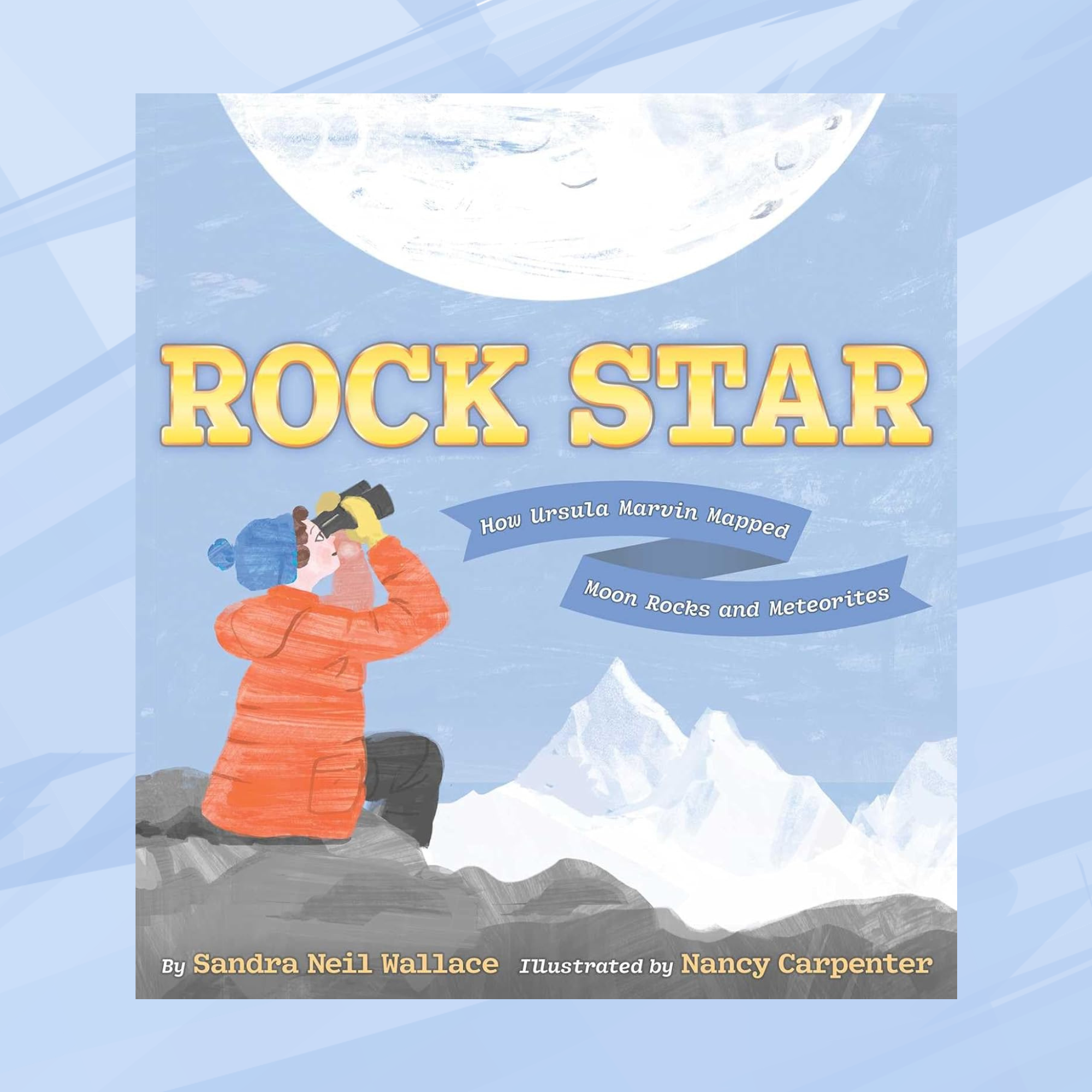
Rock Star: How Ursula Marvin Mapped Moon Rocks and Meteorites

Written by Sandra Neil Wallace | Illustrated by Nancy Carpenter

As a child growing up in Vermont, Ursula Marvin was captivated by the adventures winter brought. She was especially awed by the snowy mountains illuminated by “the frosty moonlight.” Her father was Vermont’s official entomologist, but Ursula had no intention of following in his footsteps or becoming any kind of scientist. She had her sights set on being an explorer. That was until she examined a rock under the microscope in college and decided to become a geologist. Her professor, however, denied her new major “because she was a woman.”
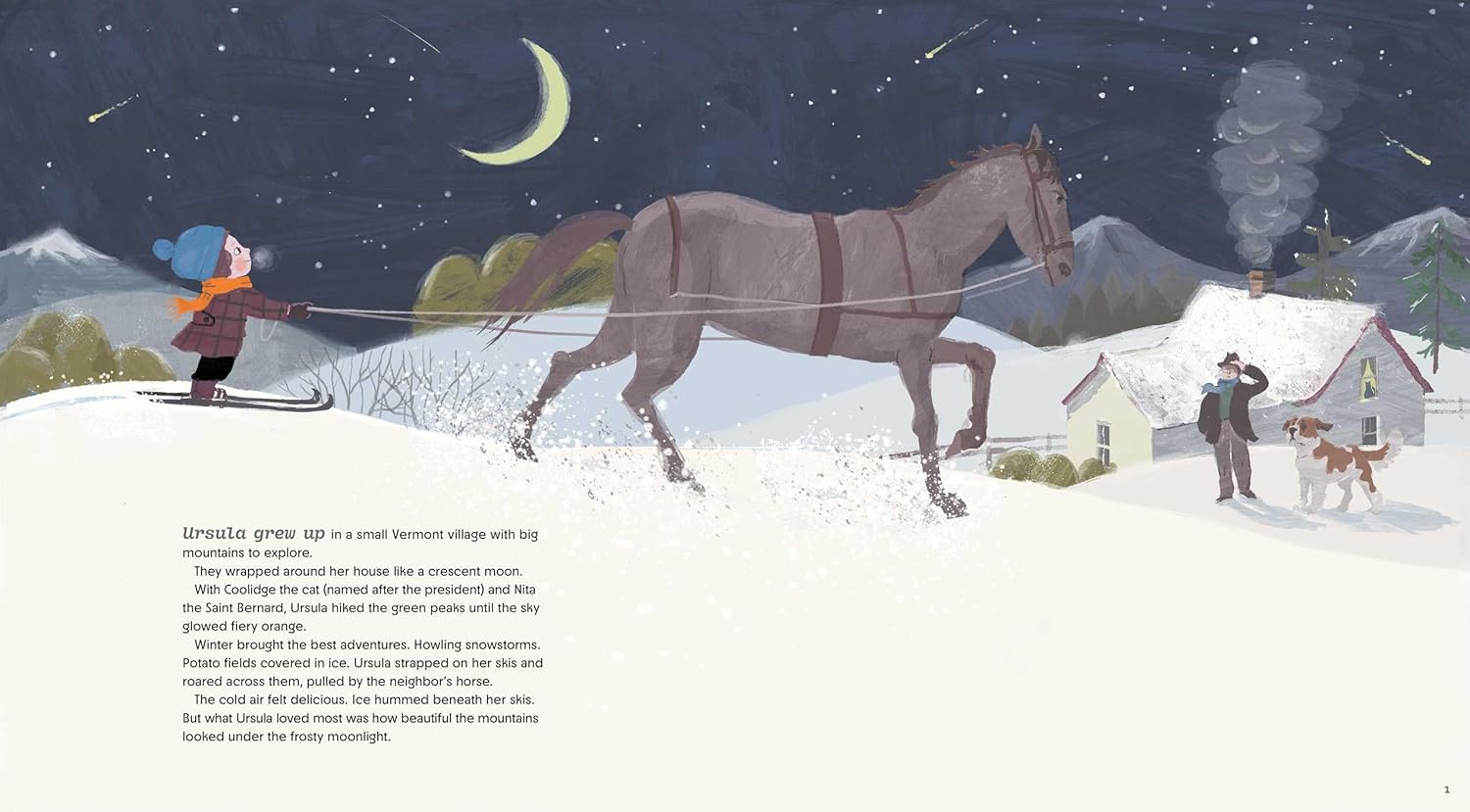
Illustration © 2025 Nancy Carpenter. Text © 2025 Sandra Neil Wallace. Courtesy of Simon & Schuster/Paula Wiseman Books.

Ursula took her talents to another university and earned a geology degree. She was an expert in recognizing rare minerals in Earth rocks and was tapped to be one of the first geologists to study rocks brought back from the moon. What she found was a world of color, minerals that proved “its surface was once a bubbling ocean of melted rock.” Ursula also studied meteorites, finding “minerals no one knew existed beyond Earth.” Her work revolutionized scientists’ views of the solar system.

But Ursula still yearned to explore, in particular she wanted to be the first woman to find meteorites in Antarctica—the coldest place on Earth. She loaded up a bag with frigid-cold-weather gear and joined an expedition. When Ursula and her male teammates landed, they set up camp. They had to work fast because winter was on its way, threatening to bury any meteorites under ice and snow for another year.
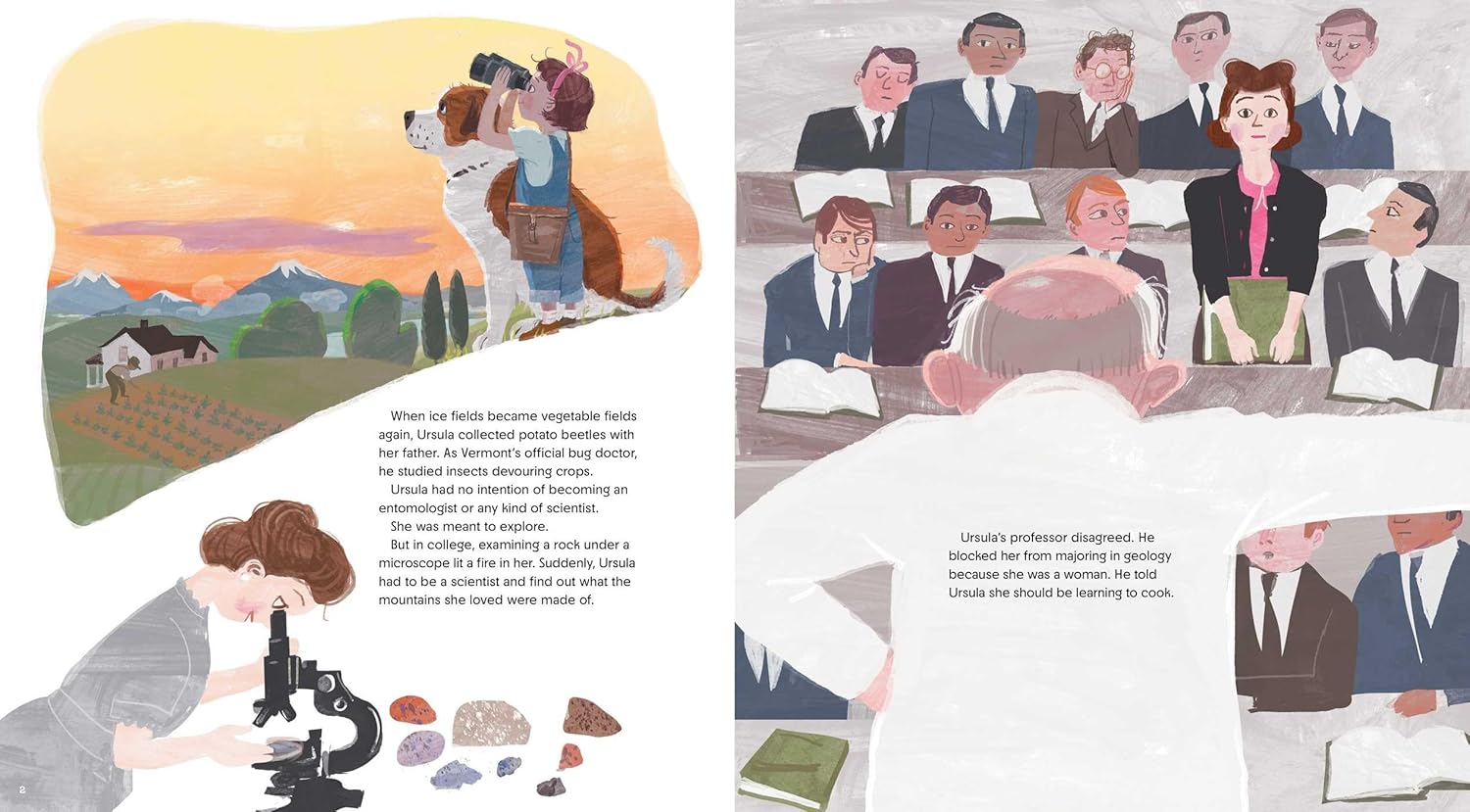
Illustration © 2025 Nancy Carpenter. Text © 2025 Sandra Neil Wallace. Courtesy of Simon & Schuster/Paula Wiseman Books.

Ursula wondered if she’d be able to recognize meteorites under these conditions, but she needn’t have worried. On her first day, a rock caught her eye. Examining it, she discovered distinctive traits—she’d discovered her first meteorite! Ursula was in her element, thriving in the harsh weather and “collecting meteorites more than four billion years old.”

But not every day was a success. Ursula struggled to climb a mountain-like nunatak in her too-big boots, she mistook an ordinary Earth rock for a meteorite, and on the worst day, with one snowmobile broken, the team went exploring without her. Ursula vowed never to be left behind again.
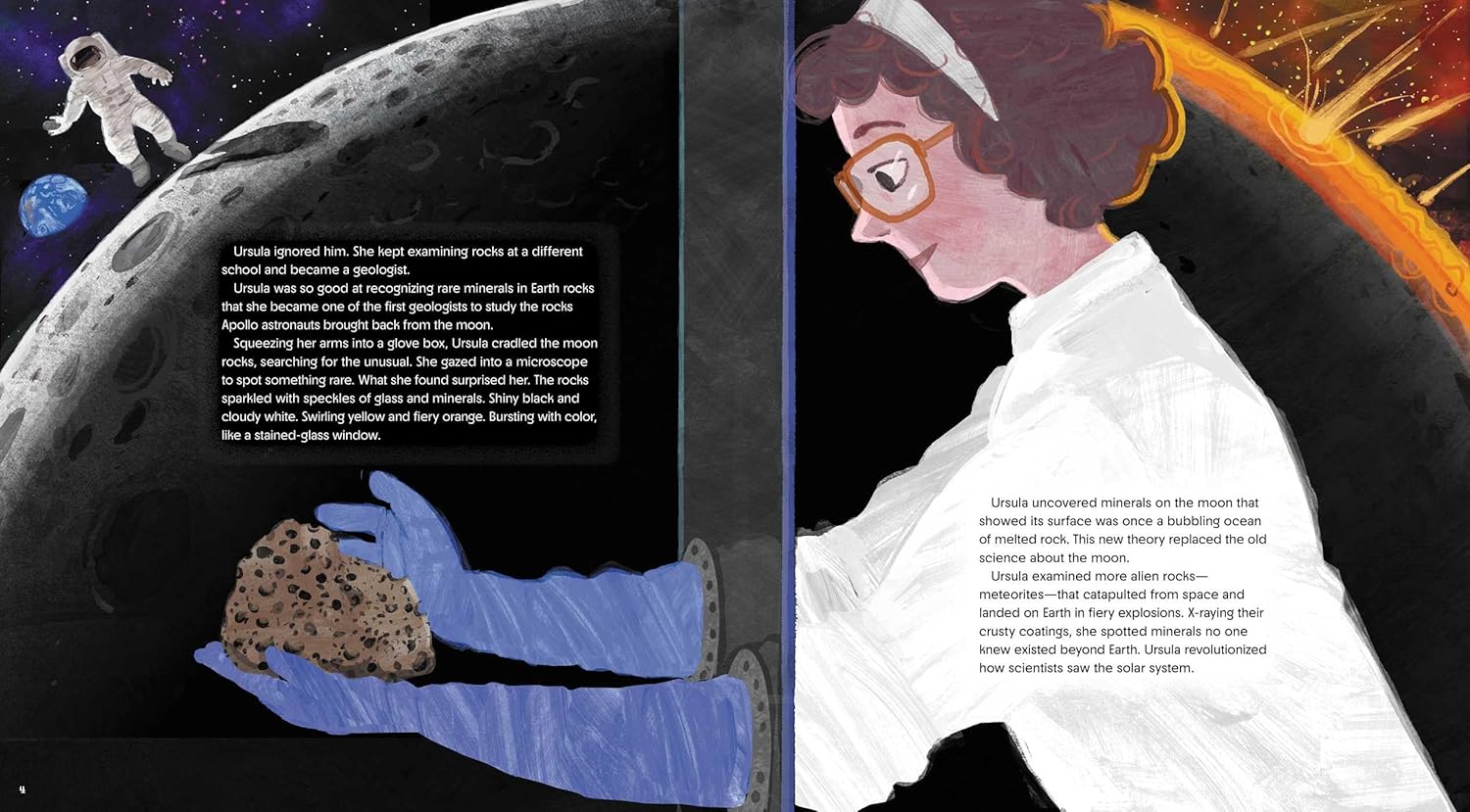
Illustration © 2025 Nancy Carpenter. Text © 2025 Sandra Neil Wallace. Courtesy of Simon & Schuster/Paula Wiseman Books.

With only one week left in the expedition, Ursula rode across the ice to “unexplored places where the meteorites were bigger and rarer.” She wanted to be the one to find the last meteorite of the trip, to be the one to discover a meteorite from the moon. But a fall dashed those dreams as she was airlifted to the hospital, leaving her teammates to collect the final meteorite.
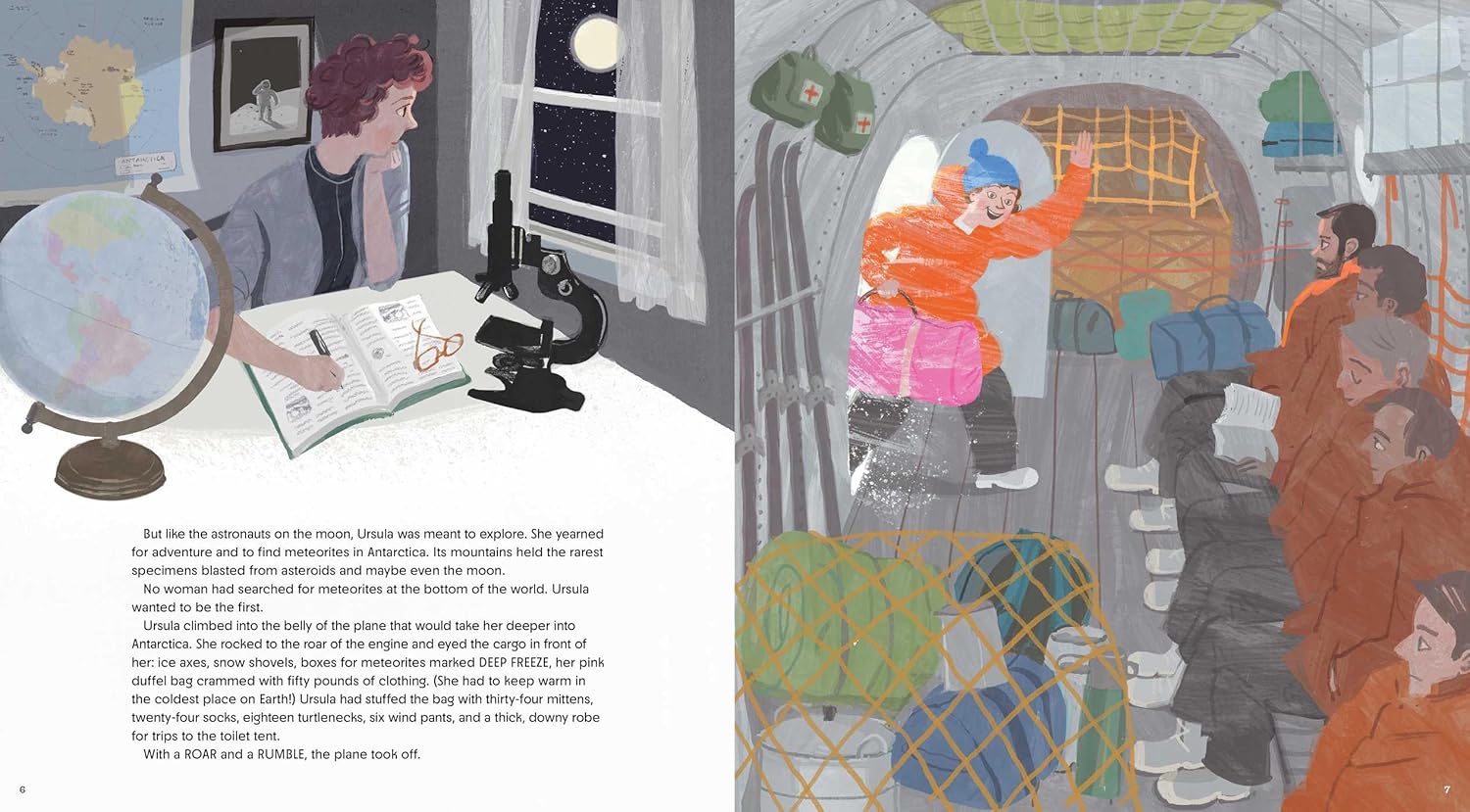
Illustration © 2025 Nancy Carpenter. Text © 2025 Sandra Neil Wallace. Courtesy of Simon & Schuster/Paula Wiseman Books.

Back at home, Ursula was excited to examine this small meteorite, which looked so different from the others. She recognized the world of color from her earlier studies. “Ursula’s teammates had discovered the first lunar meteorite on Earth without her.” Instead of feeling disappointed, she was “jubilant.” She went on to become a preeminent expert on this moon meteorite and others and to inspire women to become scientists, many exploring Antarctica, where they found more moon meteorites and even some from Mars more than four billion years old. Ursula’s influence can still be seen today in her work as well as in the Marvin Asteroid and Moon’s Marvin Crater named for her.

Extensive back matter following the story includes an Author’s Note about the astonishing life and influence of Ursula Marvin; quotations from Ursula’s Antarctica journals; facts about Antarctica; dated milestones of Ursula’s life, education, and work; resources; and two photographs.
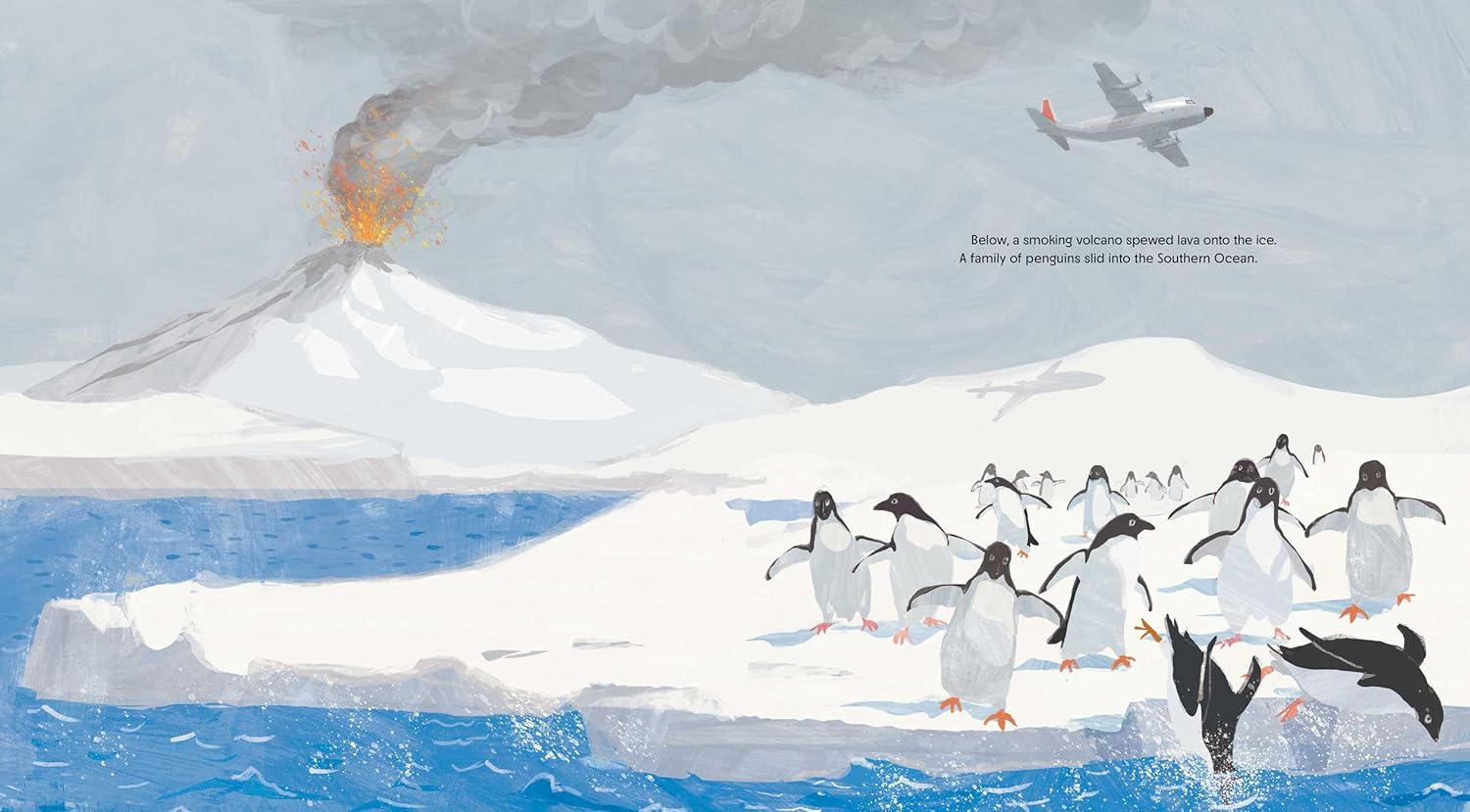
Illustration © 2025 Nancy Carpenter. Text © 2025 Sandra Neil Wallace. Courtesy of Simon & Schuster/Paula Wiseman Books.

Sandra Neil Wallace’s exhilarating biography of Ursula Marvin transports readers to the snow and ice of Antarctica, where they get to ride along with this extraordinary woman as she fulfills childhood goals while changing the face of science and forging new opportunities for women. Wallace’s storytelling is fast-paced and evocative and infused with emotion, suspense, and scintillating details that will captivate readers no matter what their interests.

Nancy Carpenter’s beautiful mixed media illustrations allow children to see early influences and experiences that spurred Ursula Marvin to pursue geology and the study of meteorites in particular. Her images of Antarctica bring chills and thrills as Ursula sets up her tent, speeds over icy fields in the swirling snow on her snowmobile, and flops on the ground to inspect rocks up close. Carpenter also depicts Ursula’s victories and disappointments, giving children a well-rounded view of this remarkable woman. Rock hounds will be wowed by Carpenter’s drawings of moon rocks and meteorites.

With much to impart not only on the life of Ursula Marvin but on believing in yourself, overcoming disappointments, and chasing your goals with gusto, Rock Star: How Ursula Marvin Mapped Moon Rocks and Meteorites is a top pick for home, school, and public library collections.

Ages 4 – 8

Simon & Schuster/Paula Wiseman Books, 2025 | ISBN 978-1534493339

Sandra Neil Wallace writes about people who break barriers and change the world. She is the author of several award-winning books for children, including Love Is Loud: How Diane Nash Led the Civil Rights Movement, illustrated by Bryan Collier; Marjory Saves the Everglades: The Story of Marjory Stoneman Douglas, illustrated by Rebecca Gibbon; and Between the Lines: How Ernie Barnes Went from the Football Field to the Art Gallery, illustrated by Bryan Collier, which received the Orbis Pictus Book Award and was an ALA Notable Book. A former ESPN reporter and the first woman to host an NHL broadcast, she is the recipient of the Outstanding Women of New Hampshire Award and creates change as cofounder of The Daily Good, a nonprofit bringing twenty thousand free, culturally diverse foods to college students each year through its Global Foods Pantries. Visit Sandra at sandraneilwallace.com.

Nancy Carpenter is the acclaimed illustrator of Thomas Jefferson and the Mammoth HuntQueen Victoria’s Bathing MachineFannie in the Kitchen, and Loud Emily, among other books. Her works have garnered many honors, including two Christopher Awards and the Jane Addams Children’s Book Award. She lives in Brooklyn, New York. Visit her at nancycarpenter.website.

World Space Week Activity
celebrate-picture-books-picture-book-review-rocket-to-the-moon-tic-tac-toe-game

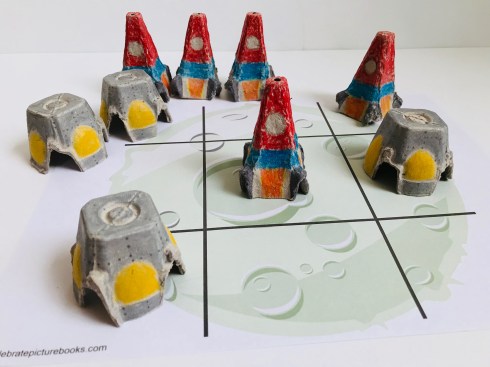
Out-of-this-World Tic-Tac-Toe Game

If you’re kids are fascinated by the moon, moon rocks, and meteors, they’ll enjoy making this tic-tac-toe game from simple materials you have at home!

Supplies

  • Printable Moon Tic-Tac-Toe Game Board
  • 2 cardboard egg cartons
  • Heavy stock paper or regular printer paper
  • Crayons
  • Black or gray fine-tip marker

Directions

To Make the Rockets

  1. Cut the tall center cones from the egg carton
  2. Trim the bottoms of each form so they stand steadily, leaving the arched corners intact
  3. Pencil in a circular window on one side near the top of the cone
  4. Color the rocket body any colors you like, going around the window and stopping where the arched corners begin
  5. With the marker color the arched corners of the form to make legs
  6. On the cardboard between the legs, color flames for blast off

To Make the Capsule

  1. Cut the egg cups from an egg carton
  2. Color the sides silver, leaving the curved section uncolored. (If your egg cup has no pre-pressed curve on the sides of the cup, draw one on each side.)
  3. Color the curved section yellow to make windows
  4. With the marker, dot “rivets” across the capsule

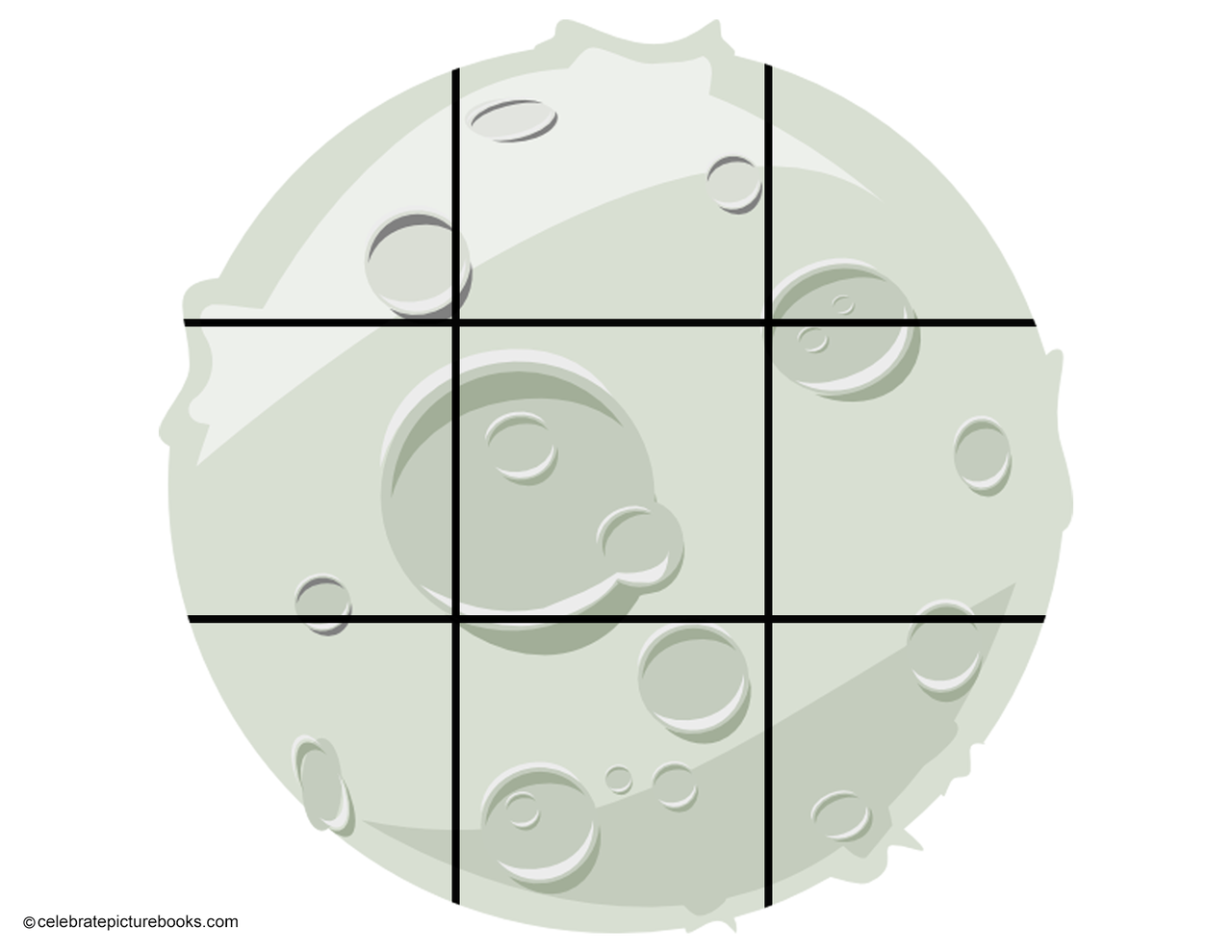
Print the Moon Game Board and play!
You can purchase Rock Star: How Ursula Marvin Mapped Moon Rocks and Meteorites from these booksellers

Amazon | Barnes & Noble | Bookshop

Picture Book Review

September 16 – Collect Rocks Day

About the Holiday

You can find rocks almost everywhere you go—from tiny pebbles to imposing boulders. Most of the time we may not pay much attention to the pebbles under our feet or the rock formations we pass frequently, but today’s holiday encourages people to really take a look at the variety of sizes and colors that make each rock unique. Rock collecting can be a fun and educational hobby as each type of stone has its own fascinating history and science to learn about. Why not get outside, do a bit of rock hunting, and start your collections today?!

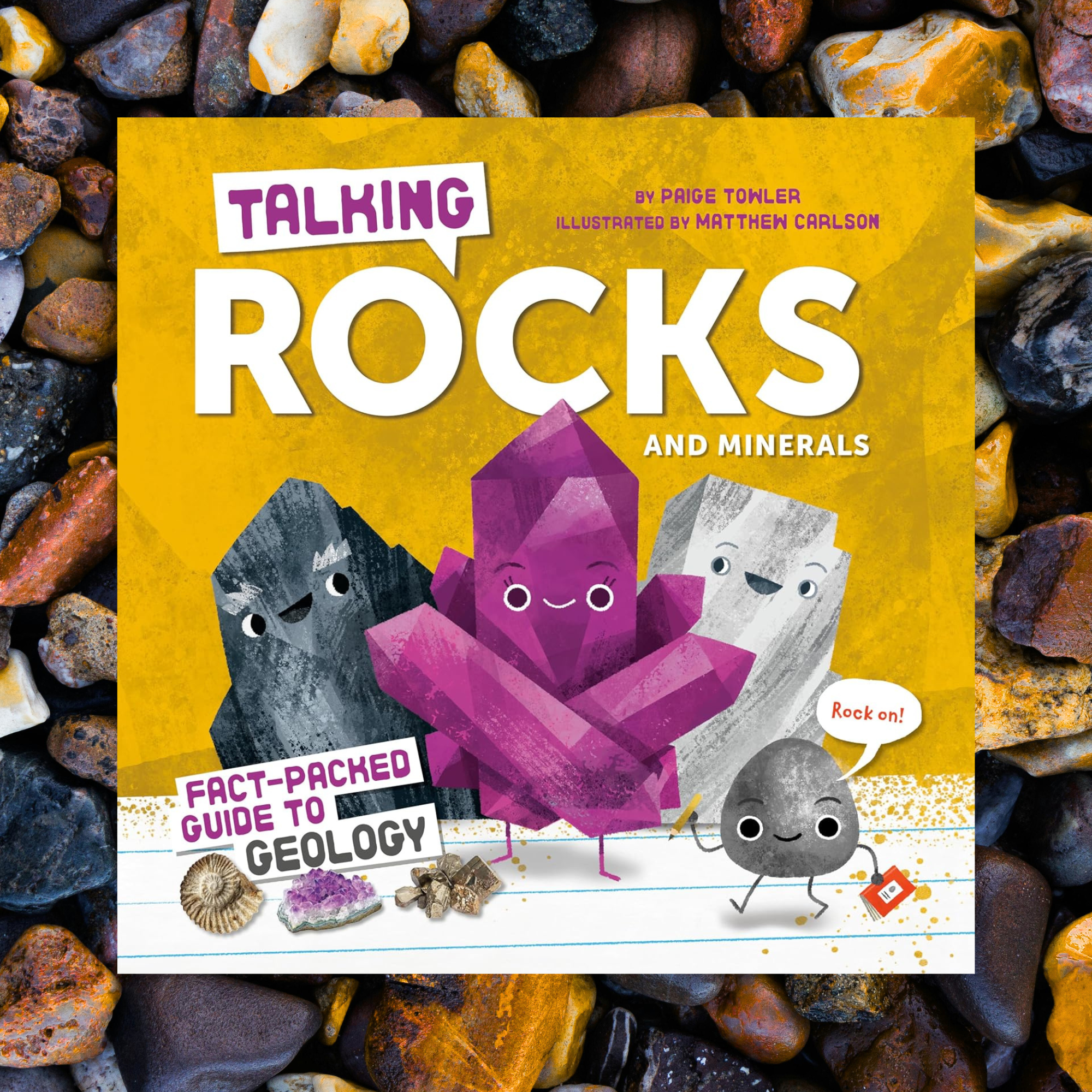
Talking Rocks and Minerals: Fact-Packed Guide to Geology

Written by Paige Towler | Illustrated by Matthew Carlson


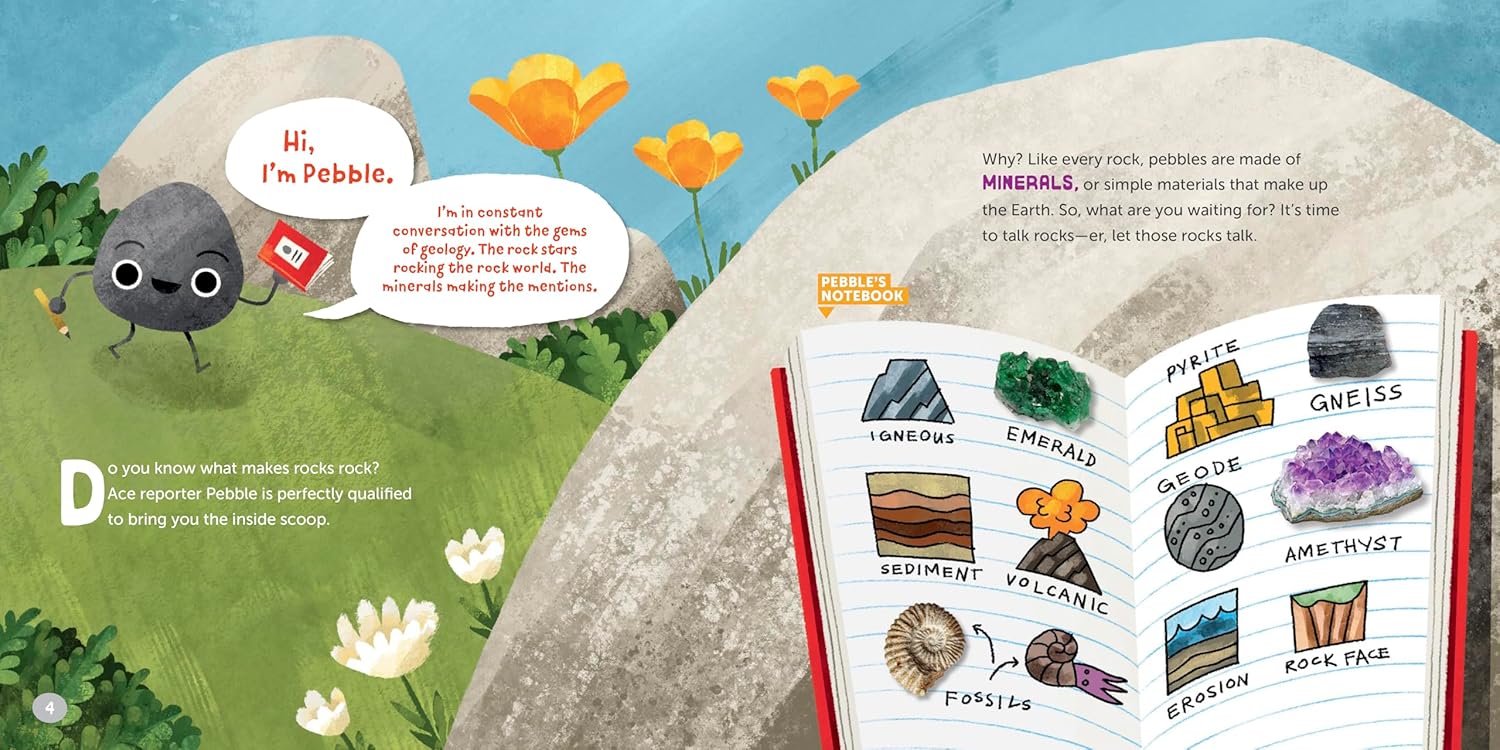
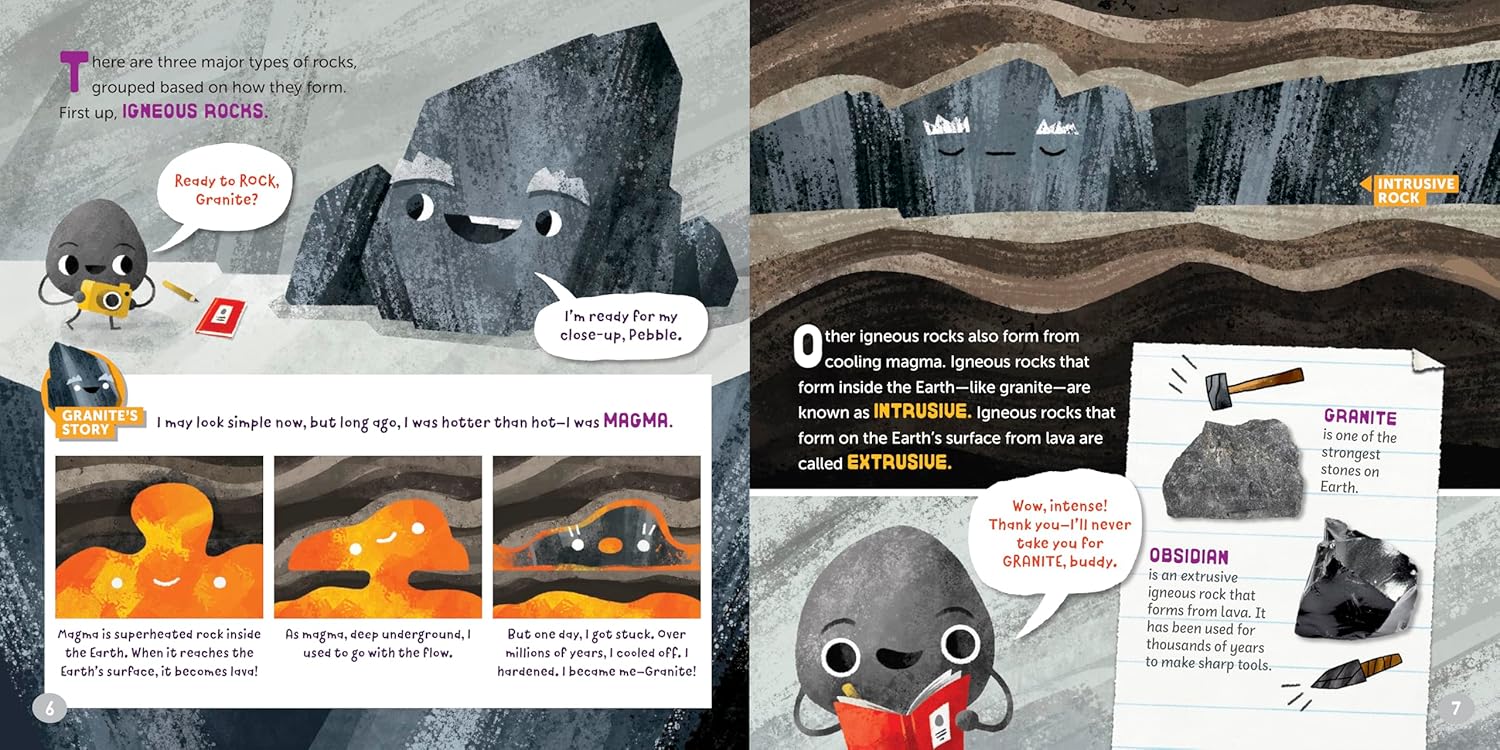
In Talking Rocks and Minerals, readers meet ace reporter Pebble, whose resume boasts, “I’m in constant conversation with the gems of geology. The rock stars of rocking the rock world. The minerals making the mentions.” And he’s not kidding! A quick scan of his notebook reveals interviews scheduled with all the big names in rock, and he’s sent an open invitation for kids to come along and hear what they have to say. First up, readers meet an igneous rock, who regales them with memories of long, long, long ago when he started out as magma then cooled to become granite, “one of the strongest stones on earth.”

Illustration © 2025 by Matthew Carlson. Text © 2025 by Paige Towler. Courtesy of Grosset & Dunlap.

From there, Pebble moves on to talk to Coal and Limestone and discovers the layered story of what it’s like being a sedimentary rock. A couple of geodes then roll by to give kids a peek of the secrets they hold inside and make their story “crystal clear.” Amethyst gives an exclusive, showing how this royal gem developed, from when “a volcano blew its top” to the gamma rays that turned it purple. Pebble then introduces kids to two types of metamorphic rock—Marble and Gneiss—that start out as one kind of stone but under pressure and heat become another.

Illustration © 2025 by Matthew Carlson. Text © 2025 by Paige Towler. Courtesy of Grosset & Dunlap.

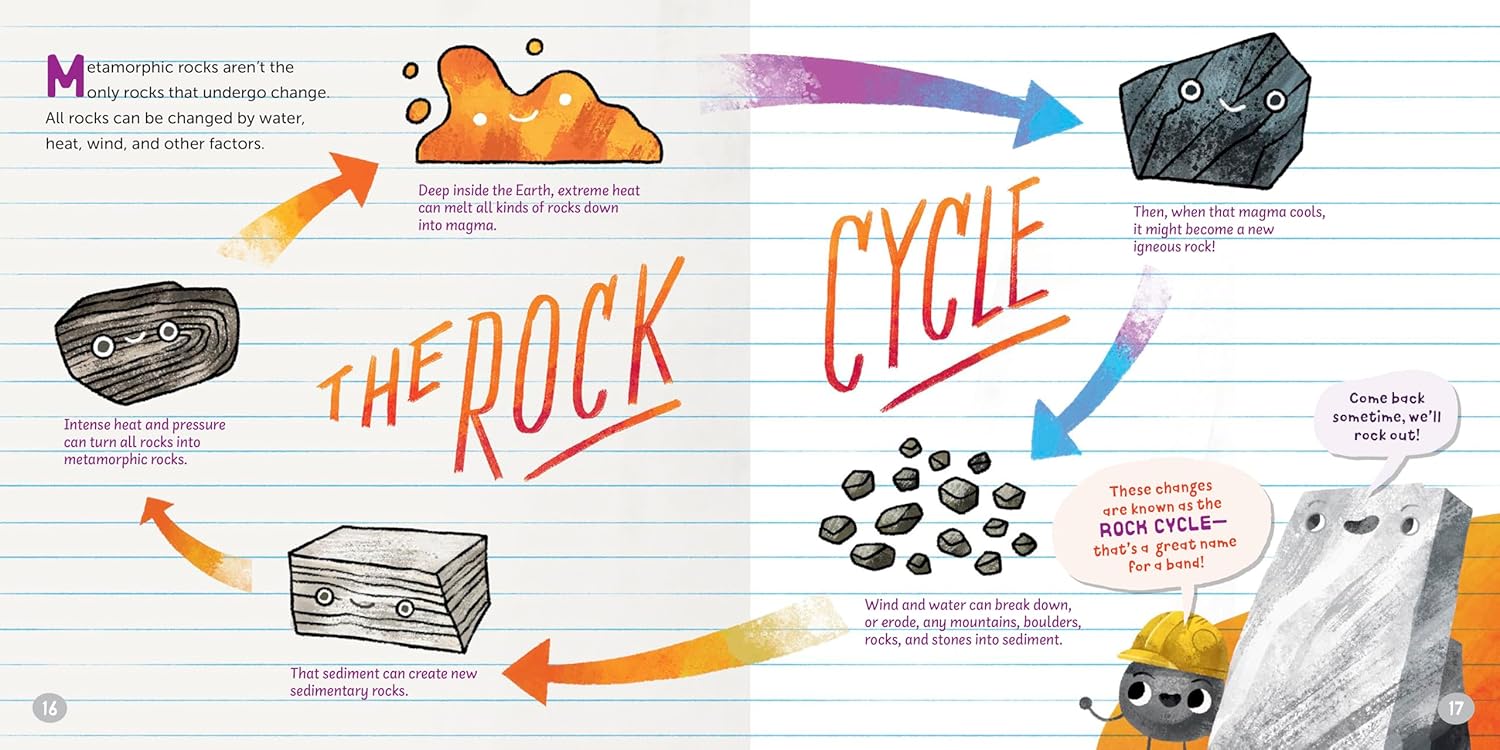
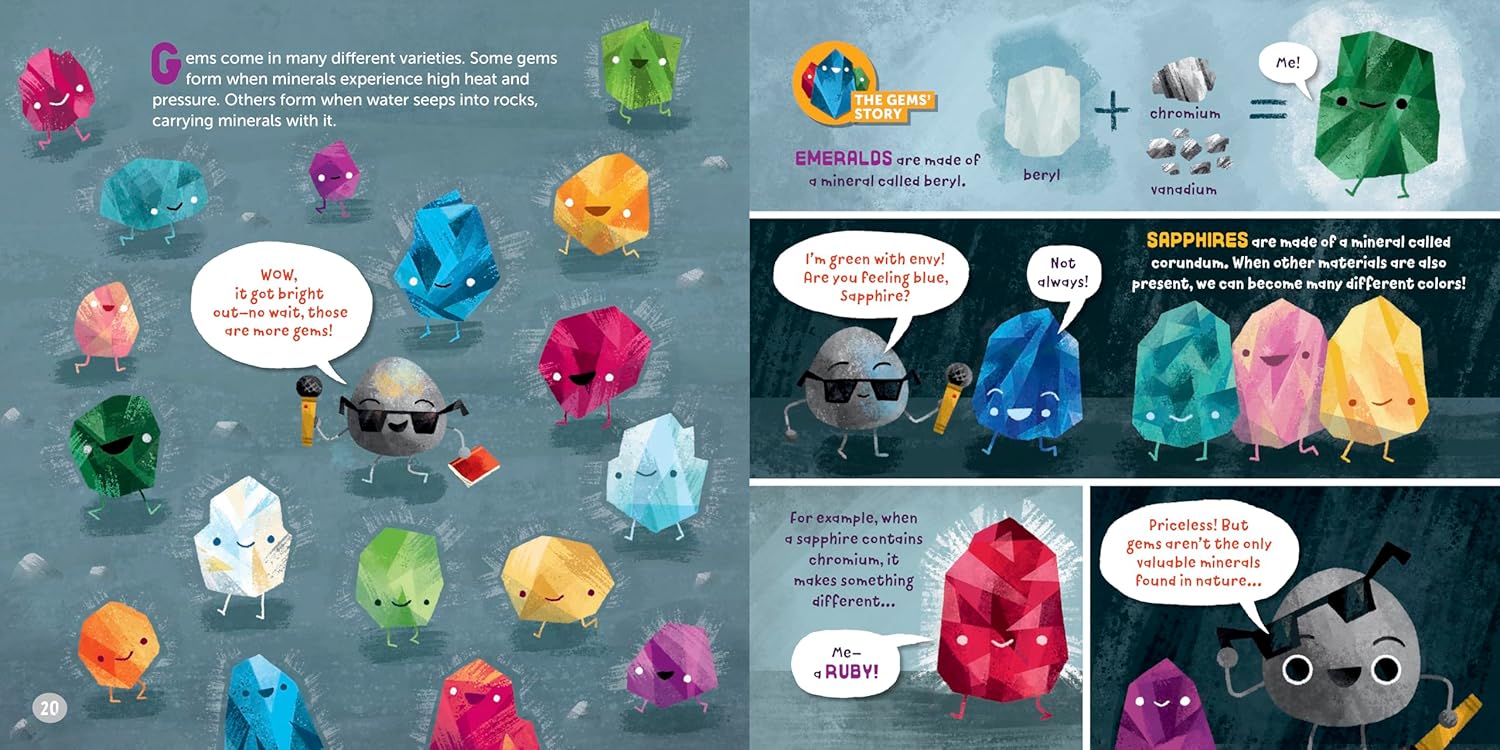
After learning the steps to the rock cycle, kids go deep underground to meet Diamond and learn how diamonds are formed from carbon and how they appear before they’re polished to a shine. Pebble interviews other gems too, like Emerald, Sapphire, and Ruby, who shine a light on how different minerals create such a variety of colorful and valuable stones.

Illustration © 2025 by Matthew Carlson. Text © 2025 by Paige Towler. Courtesy of Grosset & Dunlap.

Emerging from underground, Pebble talks with pyrite, a shiny, golden mineral that often fooled prospectors during California’s gold rush, who has a surprising revelation to share. Continuing his walk, Pebble encounters a dinosaur fossil, who recounts how bones, leaves, and footprints become fossilized, leaving evidence of creatures and plants from eons ago. Speaking of eons ago, a trio of space rocks drop in—assuring Pebble “We come in pieces.”—to contrast asteroids from meteorites and tell how meteorites come to Earth.

Surrounded by all of his new friends, Pebbles signs off, but the learning continues. Back matter includes a glossary, a note from a geologist, a list of ideas on how kids can become rock hounds, and a bibliography of more books to check out.

Illustration © 2025 by Matthew Carlson. Text © 2025 by Paige Towler. Courtesy of Grosset & Dunlap.

Gem-packed with puns, jokes, and hard-core facts, Paige Towler’s Talking Rocks and Minerals will excite kids already enthralled with geology and spark enthusiasm in those unfamiliar with the science, variety, and history of rocks we see every day as well as the stones we prize as valuable. Towler’s accessible text will appeal to all learners, making the book an excellent resource for educators. Her conversational delivery draws children in, creating a personal connection between them and the subject that will continue as they grow in their scientific studies.

Matthew Carlson’s eye-catching pages reflect how children learn today, offering adorable interacting characters, separate panels or full-page spreads that illustrate particular facts or scientific processes, and a wealth of detail that allows children to see the layers in sedimentary rock, look inside a geode, follow the rock cycle and the preservation of prehistoric creatures in fossils, and watch an asteroid plummet through Earth’s atmosphere to become a meteorite, among so many other elements.

A brilliant teaming of author and illustrator, Talking Rocks and Minerals: Fact-Packed Guide to Geology is an enriching and enlightening STEM book that is a must for all elementary classrooms, geology-loving children, science educators, and library collections.

Ages 6 – 9

Grosset & Dunlap, 2025 | ISBN 978-0593890950

About the Author

Paige Towler is a children’s book author and poet living in Washington, DC. She loves writing scary stories, tales about animals, and nonfiction facts about the weird and wonderful world around us. Her previous picture books include Mysterious, Marvelous Octopus! (National Geographic Kids), Baby Bat Bedtime (Smithsonian Institution/Sleeping Bear Press), Yoga Animals (National Geographic Kids), and more. Visit her at paigetowler.com.

About the Illustrator

Matthew Carlson is an illustrator, game designer, and graphic designer in Northern California. He studied art and English literature at the University of California, Berkeley. He’s illustrated projects for Robert Mondavi Wines, Facebook, and Twitter, and is currently the director of UX Design for Education, Fonts, and Drawing & Painting at Adobe. Originally from Seattle, Washington, Matthew now lives in Marin, California, with his partner, two kids, two dogs, and a growing collection of rocks.

You can purchase Talking Rocks and Minerals: Fact-Packed Guide to Geology from these booksellers:

Amazon | Barnes & Noble | Bookshop

Picture Book Review

January 7 – Old Rock Day

celebrate-picture-books-picture-book-review-old-rock-is-not-boring-cover

About the Holiday

Do you love rocks—the history they tell, their versatility, intricate patterns, and glorious colors? Today’s holiday celebrates these wonders of nature and encourages geologists—both professionals and amateurs—to indulge their passion. You can learn a bit more about the history of the study of rocks, the first use of the term “geology,” and on to more modern times at NationalToday. To celebrate today’s holiday, take a walk in your backyard or neighborhood, pick up a few rocks, and research a little more about them. Then have fun with today’s craft.

Thank you to G. P. Putnam’s Sons for sharing a copy of Old Rock (is not boring) with me for review consideration. All opinions on the book are my own.

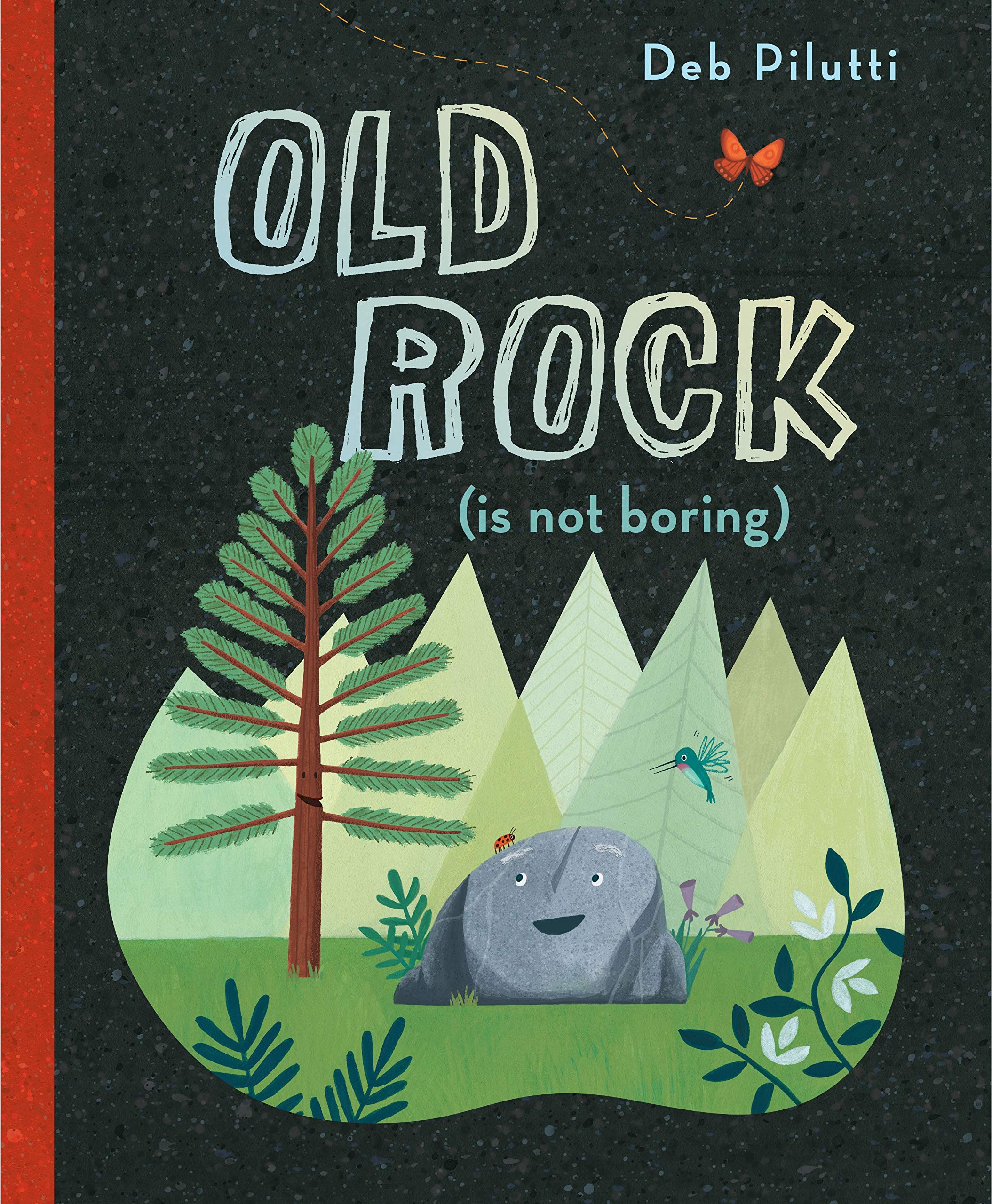
Old Rock (is not boring)

By Deb Pilutti


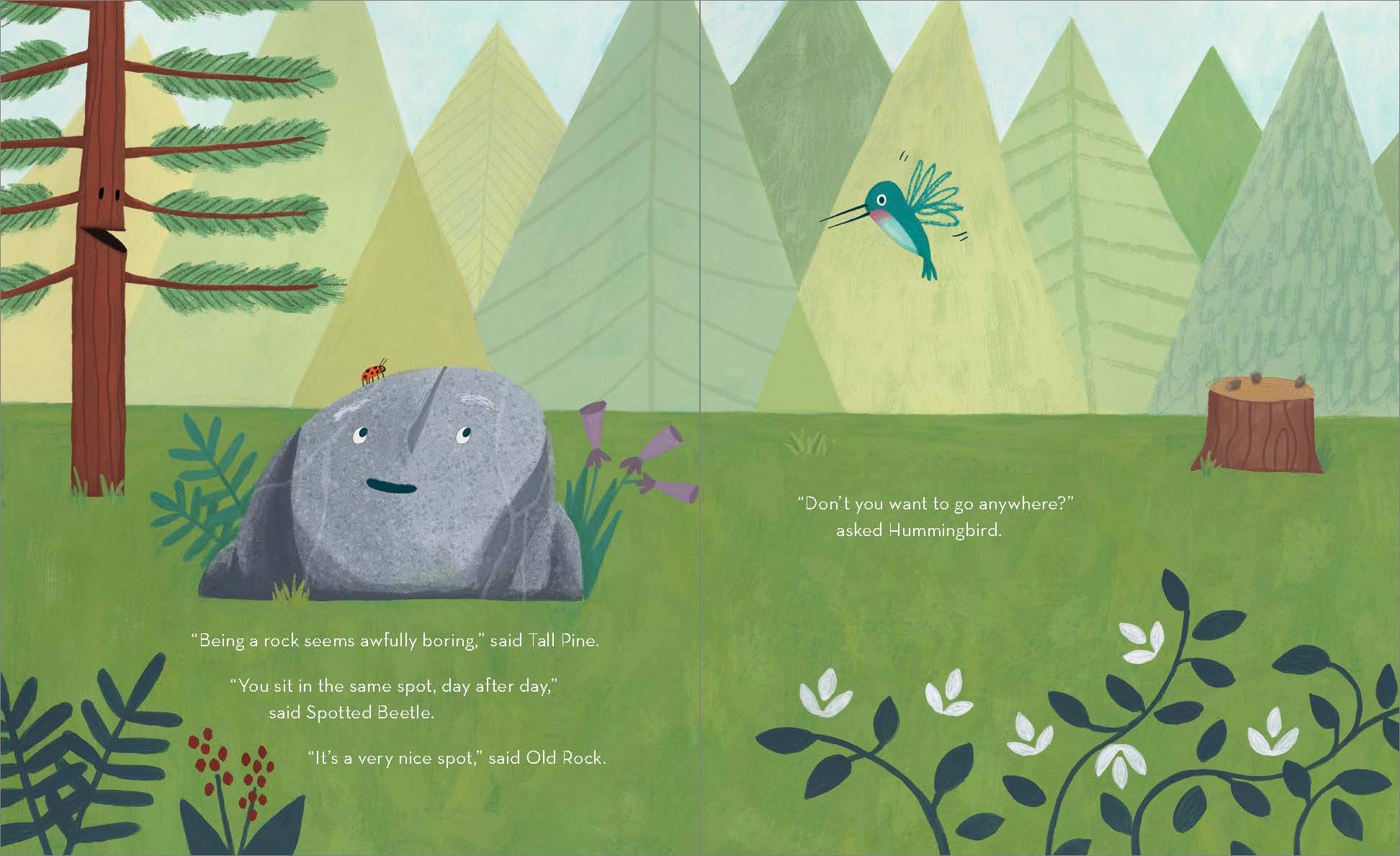
It seemed that Old Rock had been sitting in the same spot forever. Tall Pine and Spotted Beetle thought being a rock must be pretty boring. Hummingbird wondered, “‘Don’t you ever want to go anywhere?’” She knew she would be if she couldn’t fly all over the world and taste exotic nectars. But Old Rock had flown once, and he began to tell his story.

celebrate-picture-books-picture-book-review-old-rock-is-not-boring-hummingbird

Copyright Deb Pilutti, 2020, courtesy of G. P. Putnam’s Sons Books for Young Readers.

It was during the time when he was surrounded by darkness, but then the volcano erupted and Old Rock “‘soared through a fiery sky into the bright light of a new world.’” Tall Pine, Spotted Beetle, and Hummingbird weren’t very impressed. They still thought Old Rock must be bored. Spotted Beetle told him how much he might see if he climbed to Tall Pine’s very highest branch.

celebrate-picture-books-picture-book-review-old-rock-is-not-boring-volcano

Copyright Deb Pilutti, 2020, courtesy of G. P. Putnam’s Sons Books for Young Readers.

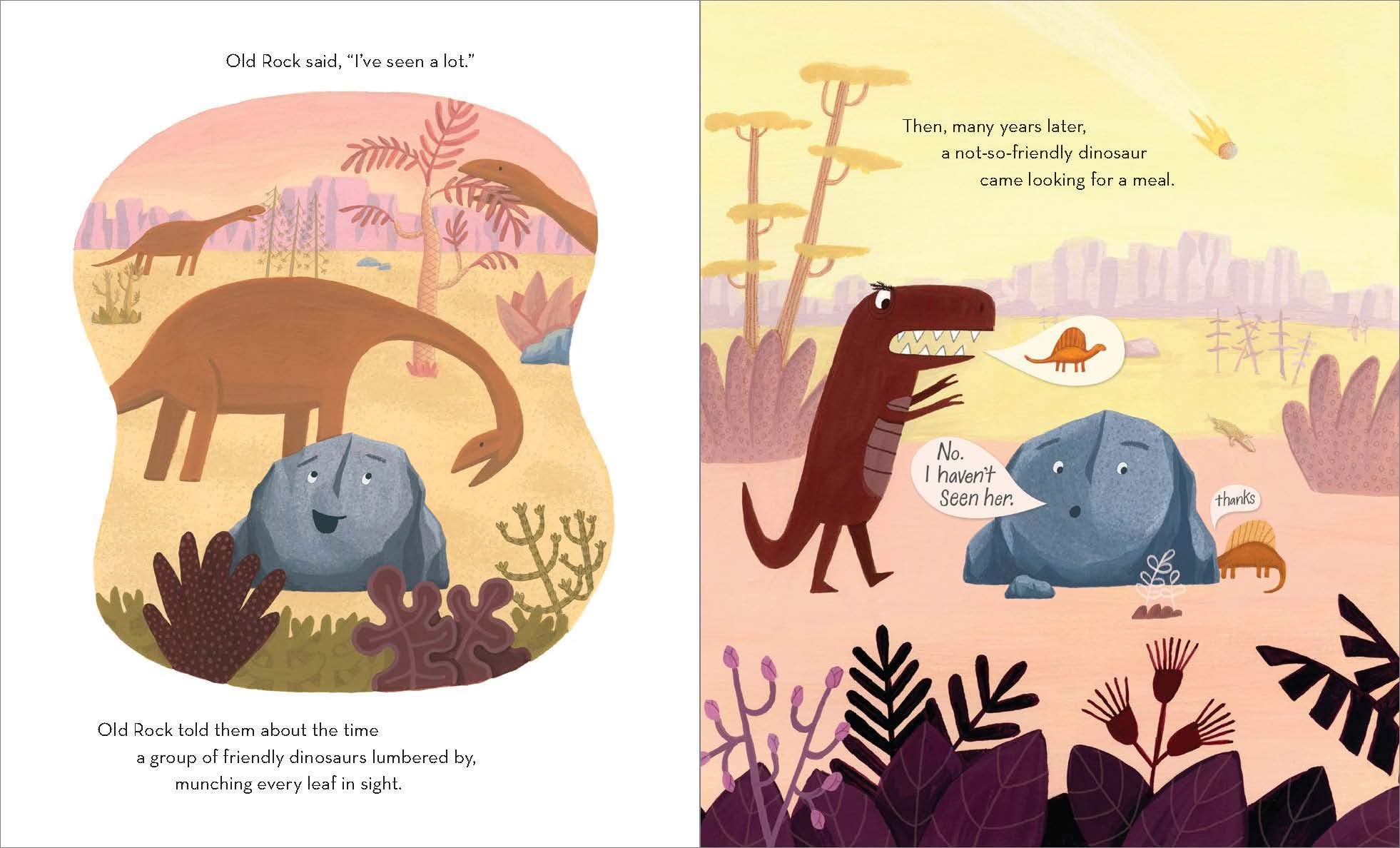
Old Rock countered that he had seen a lot. He’d watched dinosaurs pass by and had even hidden a spinosaurus from a hungry T. rex. He’d traveled in a glacier and been left teetering on a ridge overlooking a vast desert, where he “could see the place where the sky touches the earth.” Spotted Beetle and Hummingbird were intrigued, but Tall Pine dismissed these experiences as “ages ago.” He wanted to know about now. Didn’t Old Rock feel like moving? Tall Pine showed Old Rock how his limbs could dance in the wind.

celebrate-picture-books-picture-book-review-old-rock-is-not-boring-dinosaurs

Copyright Deb Pilutti, 2020, courtesy of G. P. Putnam’s Sons Books for Young Readers.

While Old Rock couldn’t dance, he did recall how he’d turned somersaults off the ridge, landing in a prairie where mastodons grazed near a lake. Tall Pine, Spotted Beetle, and Hummingbird were mesmerized by Old Rock’s story and wanted to know what had happened next. Out of the prairie, sprang a pine forest, Old Rock revealed. And from one of the pine trees a pinecone fell and a seed was released. That seed grew “to be the tall pine who dances in the wind and keeps me company.” Sometimes, he continued, a spotted beetle and a hummingbird meander by. Old Rock was very pleased with his spot, and the others had to agree that it was “very nice” and “not boring at all.”

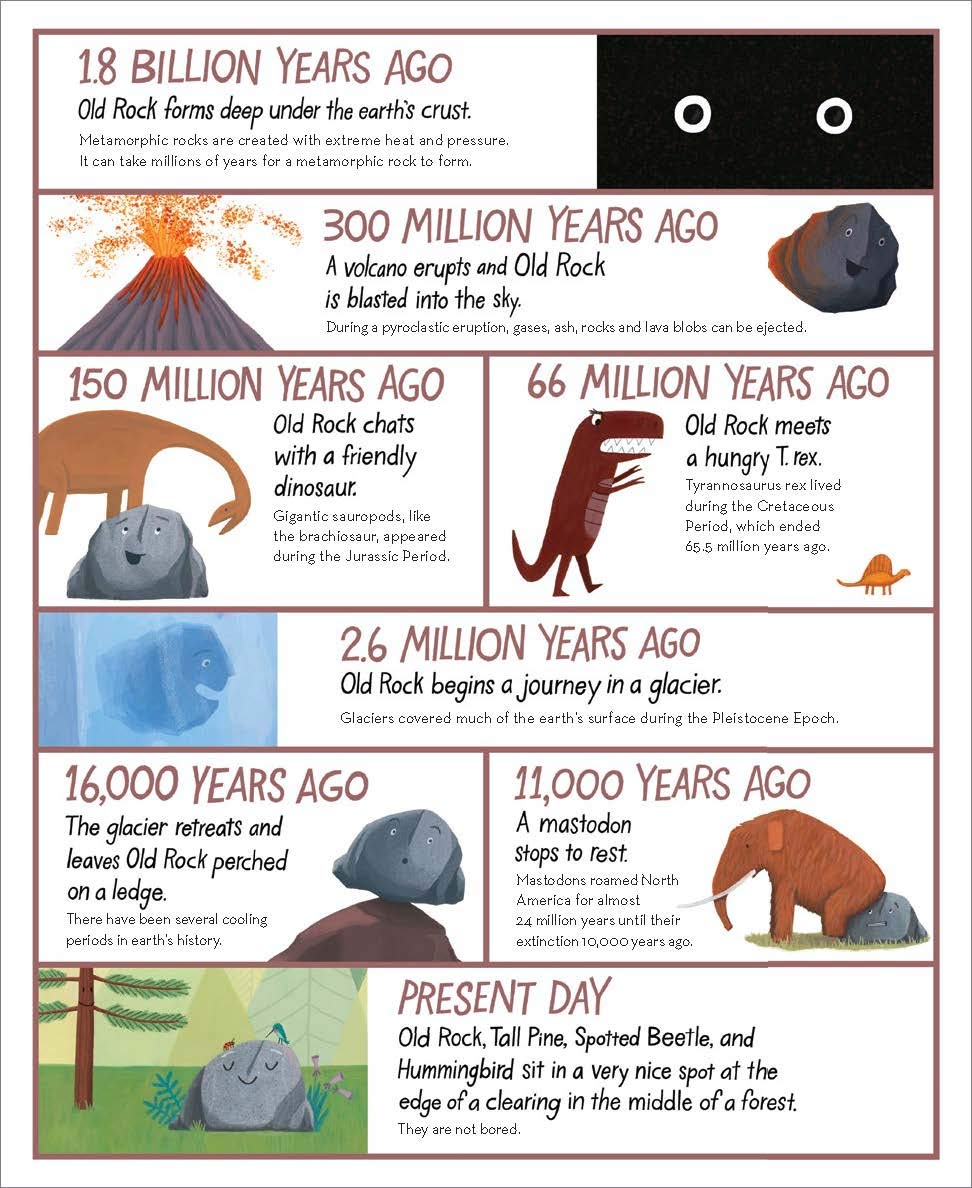
An illustrated timeline of Old Rock’s life from 18 billion years ago to the present day follows the text.

celebrate-picture-books-picture-book-review-old-rock-is-not-boring-time-line

Copyright Deb Pilutti, 2020, courtesy of G. P. Putnam’s Sons Books for Young Readers.

So much clever thought went into Deb Pilutti’s Old Rock as she reveals to kids what a fascinating and active life the rocks and boulders we see every day have had. Tall Pine, Spotted Beetle, and Hummingbird’s skepticism keeps the suspense building as Old Rock rolls out stories of his various travels and talents. Once he has them hooked, they—like young readers—want to hear more, leading to the just-right ending that sweetly encompasses shared history, happiness with one’s place in life, and friendship. The trio’s questions to Old Rock and their related experiences also engage children to think about issues and opinions from a variety of perspectives.

Pilutti’s mixed-media illustrations are nicely textured to bring out Old Rock’s grainy surface while highlighting nature’s vivid colors. Her vignettes from the dinosaur eras, the ice age (where the skeletons of dinosaurs are also swept up and away in the same glacier as Old Rock), and beyond impress upon readers the long time-frame involved, how the earth has changed, and even the fascinating science of the fossil record.

A multi-layered story, perfect for general story times or as a lead in to science lessons and to promote discussion and research in the classroom, Old Rock (is not boring) would be an original and exciting addition to home, classroom, and public library collections.

Ages 4 – 8

G. P. Putnam’s Sons Books for Young Readers, 2020 | ISBN 978-0525518181

To learn more about Deb Pilutti, her books, and her art, visit her website.

Old Rock Day Activity

CPB - Nasty Bugs magnet II (2)

Rock This Craft!


Smooth stones can give you a natural canvas for your creativity! With a little bit of paint, pins or magnets, and some imagination, you can make refrigerator magnets, jewelry, paper weights, and more!

Supplies

  • Smooth stones in various sizes
  • Paint or markers
  • Small magnets, available at craft stores
  • Jewelry pins, available at craft stores
  • Paint brush
  • Strong glue

Directions

To make magnets

  1. Design and paint an image on a light-weight stone
  2. Attach a magnet to the back with strong glue, let dry
  3. Use to hang pictures, notes, or other bits of important stuff on your refrigerator or magnetic board

To make jewelry

  1. Using a smaller, flatter stone, design and paint an image on the stone
  2. Attach a jewelry pin to the back with the strong glue, let dry
  3. Wear your pin proudly

CPB - rock painting craft

To make a paper weight or kindness stone

  1. Using a large stone, design and paint an image on the stone, let dry
  2. Display and use on your desk to keep those papers in place or find a spot around town to leave your rock for someone to find and enjoy

celebrate-picture-books-picture-book-review-old-rock-is-not-boring-cover

You can find Old Rock (is not boring) at these booksellers

Amazon | Barnes & Noble | Books-a-Million

To support your local independent bookstore, order from

BookshopIndieBound

Picture Book Review


October 14 – National Fossil Day

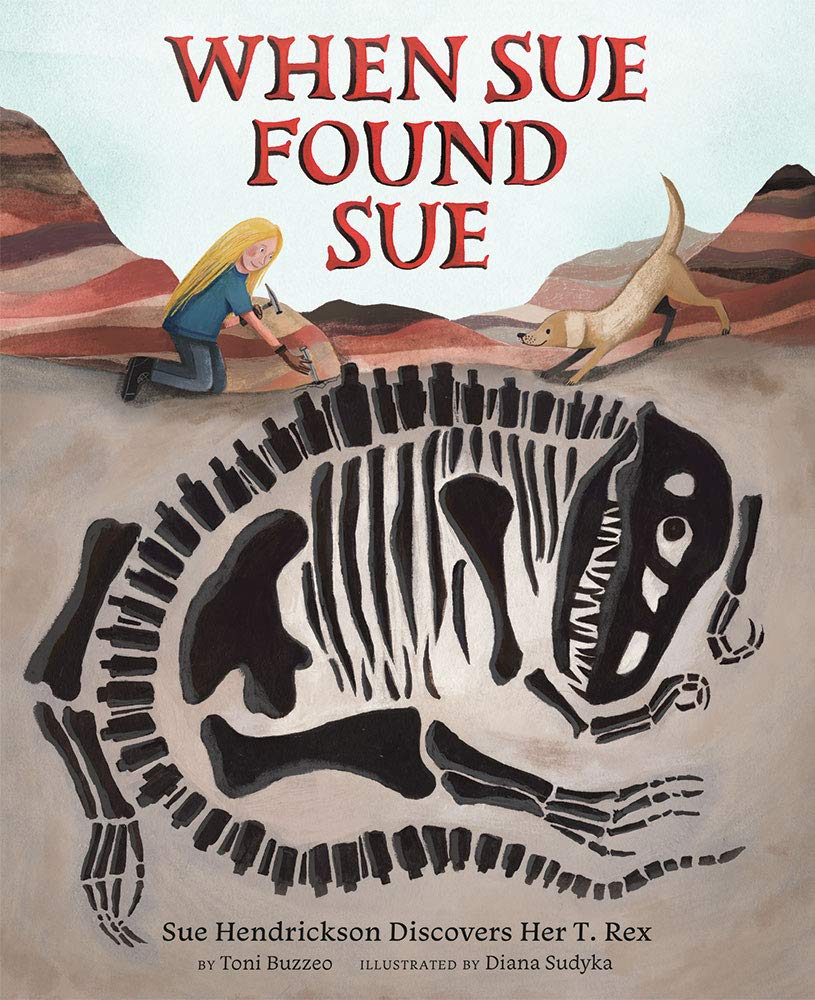
celebrate-picture-books-picture-book-review-when-sue-found-sue-cover

About the Holiday

Welcome to the 11th anniversary of National Fossil Day! Today’s holiday puts a spotlight on paleontology and its value in the scientific community and for education. The day raises awareness of the importance of preserving fossils for future generations. To celebrate today and Earth Science Week all this week, learn more about the prehistory of your area, or read up on fossils and prehistoric creatures. Visit the National Park Service Website to learn more about today’s holiday and find many resources for classrooms, homeschooling, and family fun. There you’ll find to download a Junior Paleontology Activity Book that can help kids explore the ways paleontologists work and learn about Earth’s history, ancient plants and animals as well as changes to past climate and environments. You’ll also find 20 ideas for digging into paleontology with links to museums and national parks, a site where you can view fossils in 3D, coloring pages, and even learn your state’s fossil.

Thanks to Abrams Books for Young Readers for sending me a copy of When Sue Found Sue for review consideration. All opinions about the book are my own.

When Sue Found Sue: Sue Hendrickson Discovers Her T. Rex

Written by Toni Buzzeo | Illustrated by Diana Sudyka


Sue Hendrickson was an expert at finding things. The lure of buried or lost treasures kept her busy in her hometown of Munster, Indiana. “Born shy and incredibly smart,” Sue devoured books, discovering everything she could about the things that interested her. One of her favorite places was the Field Museum of Natural History in Chicago. There, she reveled in the treasures others had found and dreamed of the day when she could “search the wide world for hidden treasure on her own.”

celebrate-picture-books-picture-book-review-when-sue-found-sue-collection

Image copyright Diana Sudyka, 2019, text copyright Toni Buzzeo, 2019. Courtesy of Abrams Books for Young Readers.

When she was seventeen, Sue began her life of treasure hunting, joining teams that searched for sunken boats, airplanes, and even cars. She went to Dominican amber mines looking for prehistoric butterflies and deserts of Peru searching for whale fossils. Finally, she headed to South Dakota to dig for dinosaurs.

She spent four summers unearthing duck-billed dinosaurs, using more and more delicate tools to expose the bones. But near the end of her fourth summer, “Sue Hendrickson felt pulled to a sandstone cliff far off in the distance.” When she had the opportunity, she took her golden retriever and hiked the seven miles to the rock.

celebrate-picture-books-picture-book-review-when-sue-found-sue-alley

Image copyright Diana Sudyka, 2019, text copyright Toni Buzzeo, 2019. Courtesy of Abrams Books for Young Readers.

Walking around the perimeter, she noticed what looked like bones lying on the ground. When she looked up, she was astonished to see “three enormous backbones protruding from the cliff.” The size told her they must be from a Tyrannosaurus rex. Sue hurried back to her campsite and told her team the exciting news. They “immediately named the dinosaur Sue the T. rex.”

celebrate-picture-books-picture-book-review-when-sue-found-sue-ocean

Image copyright Diana Sudyka, 2019, text copyright Toni Buzzeo, 2019. Courtesy of Abrams Books for Young Readers.

It took five full days for the team to expose the skeleton. Then they mapped the location of each bone, photographing and drawing them. At last they began removing them, and after three weeks the bones were trucked to the Black Hills Institute. Eventually, Sue the T. rex was moved to the Field Museum in Chicago. If you visit the museum today, you will see Sue towering over you. “She is the world’s largest, most complete, best-preserved Tyrannosaurus rex fossil discovered so far”—discovered by a woman who was born to find things.

An Author’s Note about Sue Hendrickson and the battle over the T. rex skeleton as well as resources for further study and a photograph of Sue the T. rex follow the text.

celebrate-picture-books-picture-book-review-when-sue-found-sue-excavating

Image copyright Diana Sudyka, 2019, text copyright Toni Buzzeo, 2019. Courtesy of Abrams Books for Young Readers.

Toni Buzzeo’s inspiring story of how Sue Hendrickson discovered the most complete and best-preserved T. rex fossil delves into more than the finding and excavating of the skeleton. Buzzeo also emphasizes Hendrickson’s personality and long-held love of treasure hunting, qualities that informed and aided her career choice. Readers who also harbor dreams outside the mainstream and have a steady focus will find much to admire in Buzzeo’s storytelling and Sue’s example. Kids will be awed by Sue’s early treasure-hunting exploits and fascinated by the painstaking process of unearthing fossils. When Sue follows her intuition to the cliff—without explanation or facts—readers will be reminded that they can rely on their own curiosity, experience, and ideas to carry them forward. With nods toward the value of teamwork and sprinkled with Sue’s own words about her moment of discovery, the story exposes the bones of a life well-lived and points children in the right direction.

Screen Shot 2019-05-14 at 4.33.48 PM

Diana Sudyka opens the story of Sue Hendrickson with a lovely collage of the treasures she found and studied as a child and that led to her life-long love of discovery. As Sue grows, she visits the Field Museum, with its exhibits of a Triceratops and Hadrosaurus. Fast-forward several years and she’s swimming in a sea dotted with colorful coral toward an old sunken ship. But the centerpiece of the story takes place in the South Dakota hills, the layers of rock painted in stripes of earthy brown, rust, rose, and ivory. As the team works late nights to excavate the bones, a T. rex constellation appears above the team in the starry sky, urging them on. A two-page spread of how Sue the T. rex fossil appeared in its entirety in the ground is sure to elicit plenty of “Wows!,” and a rendition of Sue on exhibit in the Field Museum will no doubt inspire some travel wishes.

A book about a modern-day scientist that will engage and inspire children with scientific aspirations of their own as well as a celebration of individuality and big dreams and a must for dinosaur lovers, When Sue Found Sue would be a T. riffic addition to home, school, and public library collections.

Ages 4 – 8

Abrams Books for Young Readers, 2019 | ISBN 978-1419731631

Discover more about Toni Buzzeo and her books on her website.

To learn more about Diana Sudyka, her books, and her art, visit her website.

National Dinosaur Day Activity

celebrate-picture-books-picture-book-review-dinosaur-eggs-craft-nest

Hatch Your Own Dinosaur Eggs


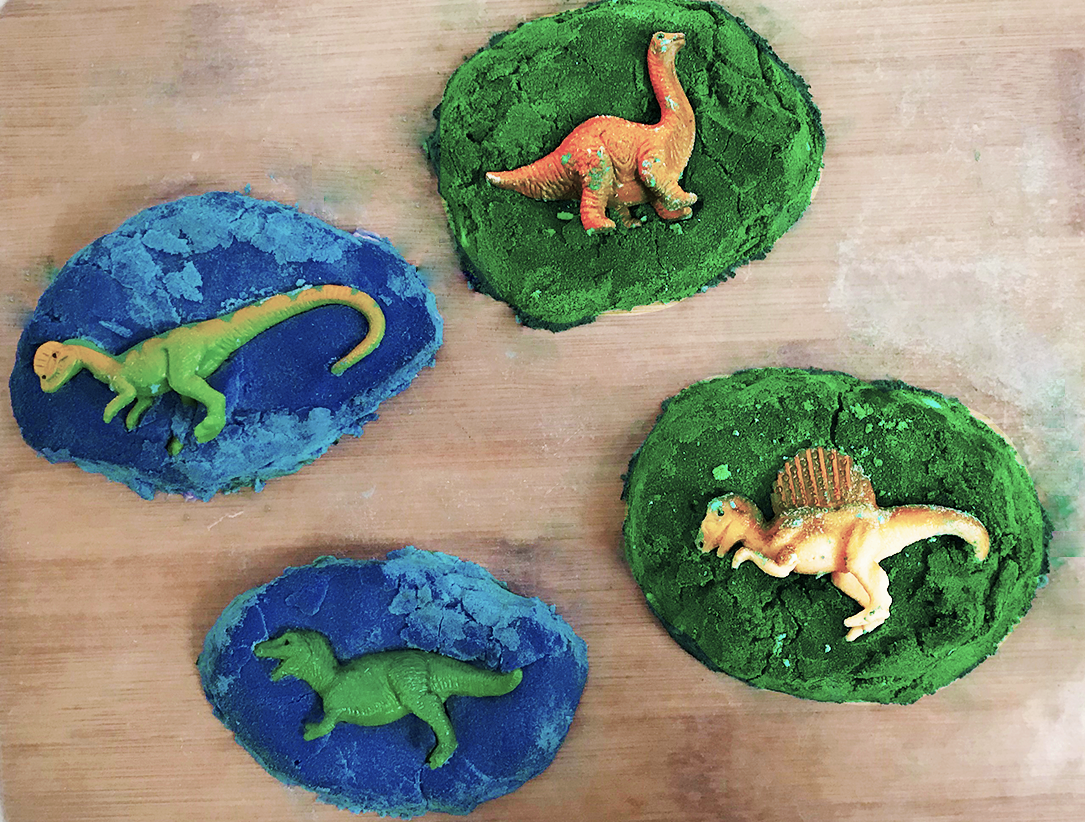
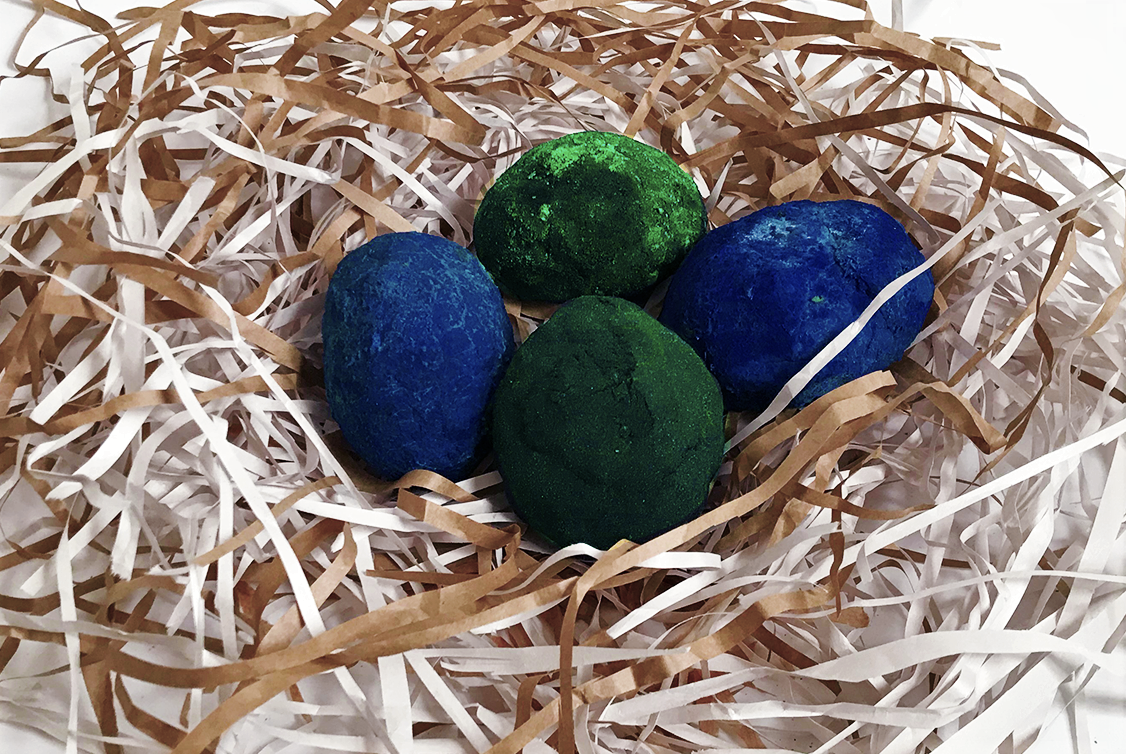
Think there are no more dinosaur eggs to be found? Think again! You can make your own with this easy craft that will have you hatching some T.-rex-size fun! All you need are a few simple ingredients!

celebrate-picture-books-picture-book-review-dinosaur-eggs-craft-open-eggs

Supplies

  • Old clothes or apron
  • Large box of baking soda (makes between 6 and 8 eggs)
  • Food coloring
  • Water
  • Plastic dinosaur toys
  • Bowl
  • Fork
  • Spoon
  • Wax paper
  • Baking sheet
  • Foil
  • Vinegar
  • Spray bottle (optional)
  • Plastic or metal spoon, stick, popsicle stick, or other implement to chisel with
celebrate-picture-books-picture-book-review-dinosaur-eggs-craft-vinegar-egg-open-darker

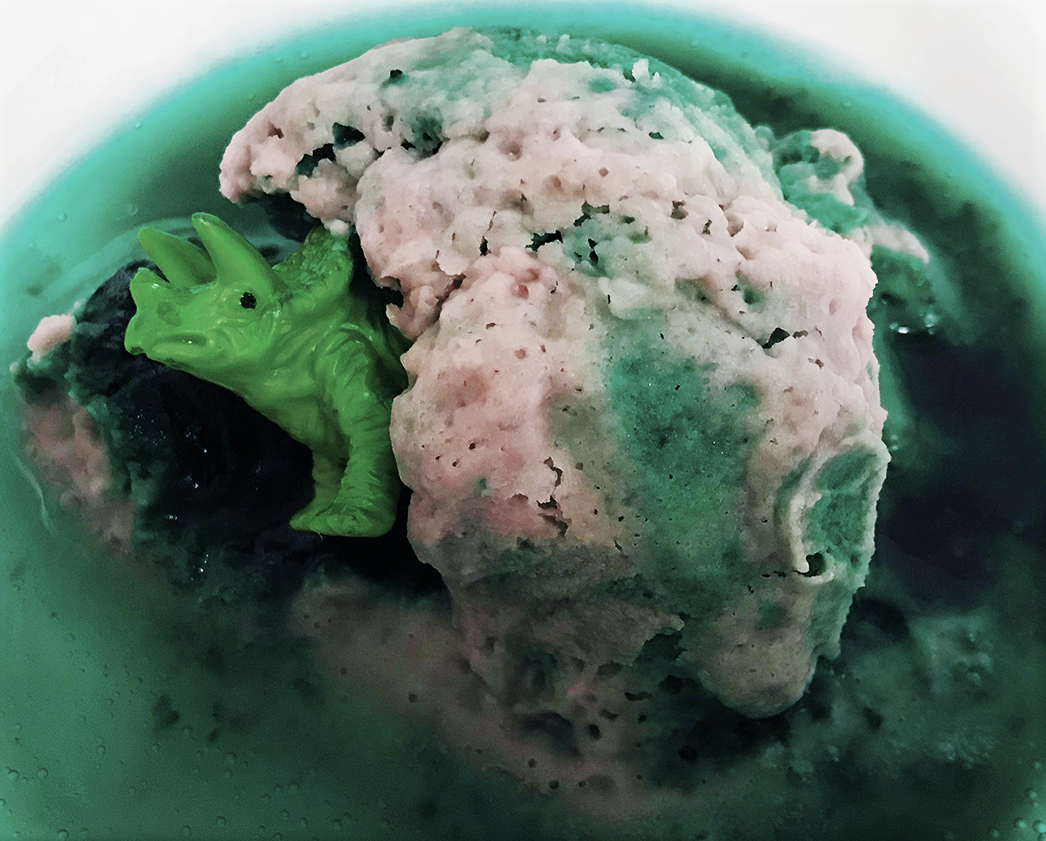
Spray the egg with vinegar to hatch your dinosaur

Directions

  1. Wear old clothes or an apron
  2. Cover work surface with wax paper, parchment paper, newspaper, or other protection. Food coloring can stain some surfaces
  3. Pour baking soda into the bowl
  4. Add drops of food coloring in whatever color you’d like your eggs to be. The eggs will darken when baked.
  5. Mix in the food coloring with the fork. You may want to use your hands, too
  6. When the baking soda is the color you want it, begin adding water a little at a time
  7. Add water until the baking soda holds together when you squeeze it in your hand
  8. When the baking soda is the right consistency, spoon some out into your hand or onto wax paper
  9. Push one plastic dinosaur into the middle
  10. Cover the dinosaur with more of the baking soda mixture
  11. Carefully form it into an egg shape
  12. Repeat with other dinosaurs
celebrate-picture-books-picture-book-review-dinosaur-eggs-craft-chiseled -darker

Chisel the egg open to hatch your dinosaur

To Bake the Eggs

  1. Set the oven or toaster oven to 200 to 225 degrees
  2. Set the eggs on a baking sheet lined with foil
  3. Bake the eggs for 15 minutes, check
  4. Turn the eggs over and bake for 10 to 15 more minutes
  5. Remove from oven and let cool

To Hatch the Eggs

  1. Eggs can be hatched by chiseling them with a spoon, stick, or other implement
  2. Eggs can also be hatched by spraying or sprinkling them with vinegar

celebrate-picture-books-picture-book-review-when-sue-found-sue-cover

You can find When Sue Found Sue: Sue Hendrickson Discovers Her T. Rex at these booksellers

Amazon | Barnes & Noble | Books-a-Million

To support your local independent bookstore, order from

Bookshop | IndieBound

Picture Book Review

September 16 – Collect Rocks Day

celebrate-picture-books-picture-book-review-old-rock-is-not-boring-cover

About the Holiday

Today’s holiday allows anyone who just can’t resist picking up a particularly pretty or unusual stone to indulge their whims and fancies. Rock collecting can be a fun and educational hobby as each type of stone has its own fascinating history and science to learn about. Why not go on a hike today and discover the unique shapes, colors, and feel of the rocks below your feet.

I received a copy of Old Rock (is not boring) from G. P. Putnam’s Sons for review consideration. All opinions are my own.

Old Rock (is not boring)

By Deb Pilutti


It seemed that Old Rock had been sitting in the same spot forever. Tall Pine and Spotted Beetle thought being a rock must be pretty boring. Hummingbird wondered, “‘Don’t you ever want to go anywhere?’” She knew she would be if she couldn’t fly all over the world and taste exotic nectars. But Old Rock had flown once, and he began to tell his story.

celebrate-picture-books-picture-book-review-old-rock-is-not-boring-hummingbird

Copyright Deb Pilutti, 2020, courtesy of G. P. Putnam’s Sons Books for Young Readers.

It was during the time when he was surrounded by darkness, but then the volcano erupted and Old Rock “‘soared through a fiery sky into the bright light of a new world.’” Tall Pine, Spotted Beetle, and Hummingbird weren’t very impressed. They still thought Old Rock must be bored. Spotted Beetle told him how much he might see if he climbed to Tall Pine’s very highest branch.

celebrate-picture-books-picture-book-review-old-rock-is-not-boring-volcano

Copyright Deb Pilutti, 2020, courtesy of G. P. Putnam’s Sons Books for Young Readers.

Old Rock countered that he had seen a lot. He’d watched dinosaurs pass by and had even hidden a spinosaurus from a hungry T. rex. He’d traveled in a glacier and been left teetering on a ridge overlooking a vast desert, where he “could see the place where the sky touches the earth.” Spotted Beetle and Hummingbird were intrigued, but Tall Pine dismissed these experiences as “ages ago.” He wanted to know about now. Didn’t Old Rock feel like moving? Tall Pine showed Old Rock how his limbs could dance in the wind.

celebrate-picture-books-picture-book-review-old-rock-is-not-boring-dinosaurs

Copyright Deb Pilutti, 2020, courtesy of G. P. Putnam’s Sons Books for Young Readers.

While Old Rock couldn’t dance, he did recall how he’d turned somersaults off the ridge, landing in a prairie where mastodons grazed near a lake. Tall Pine, Spotted Beetle, and Hummingbird were mesmerized by Old Rock’s story and wanted to know what had happened next. Out of the prairie, sprang a pine forest, Old Rock revealed. And from one of the pine trees a pinecone fell and a seed was released. That seed grew “to be the tall pine who dances in the wind and keeps me company.” Sometimes, he continued, a spotted beetle and a hummingbird meander by. Old Rock was very pleased with his spot, and the others had to agree that it was “very nice” and “not boring at all.”

An illustrated timeline of Old Rock’s life from 18 billion years ago to the present day follows the text.

celebrate-picture-books-picture-book-review-old-rock-is-not-boring-time-line

Copyright Deb Pilutti, 2020, courtesy of G. P. Putnam’s Sons Books for Young Readers.

So much clever thought went into Deb Pilutti’s Old Rock as she reveals to kids what a fascinating and active life the rocks and boulders we see every day have had. Tall Pine, Spotted Beetle, and Hummingbird’s skepticism keeps the suspense building as Old Rock rolls out stories of his various travels and talents. Once he has them hooked, they—like young readers—want to hear more, leading to the just-right ending that sweetly encompasses shared history, happiness with one’s place in life, and friendship. The trio’s questions to Old Rock and their related experiences also engage children to think about issues and opinions from a variety of perspectives.

Pilutti’s mixed-media illustrations are nicely textured to bring out Old Rock’s grainy surface while highlighting nature’s vivid colors. Her vignettes from the dinosaur eras, the ice age (where the skeletons of dinosaurs are also swept up and away in the same glacier as Old Rock), and beyond impress upon readers the long time-frame involved, how the earth has changed, and even the fascinating science of the fossil record.

A multi-layered story, perfect for general story times or as a lead in to science lessons and to promote discussion and research in the classroom, Old Rock (is not boring) would be an original and exciting addition to home, classroom, and public library collections.

Ages 4 – 8

G. P. Putnam’s Sons Books for Young Readers, 2020 | ISBN 978-0525518181

To learn more about Deb Pilutti, her books, and her art, visit her website.

Collect Rocks Day Activity

CPB - rock painting craft

Rock This Craft!


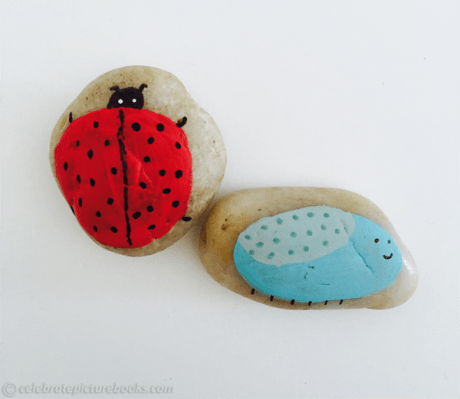
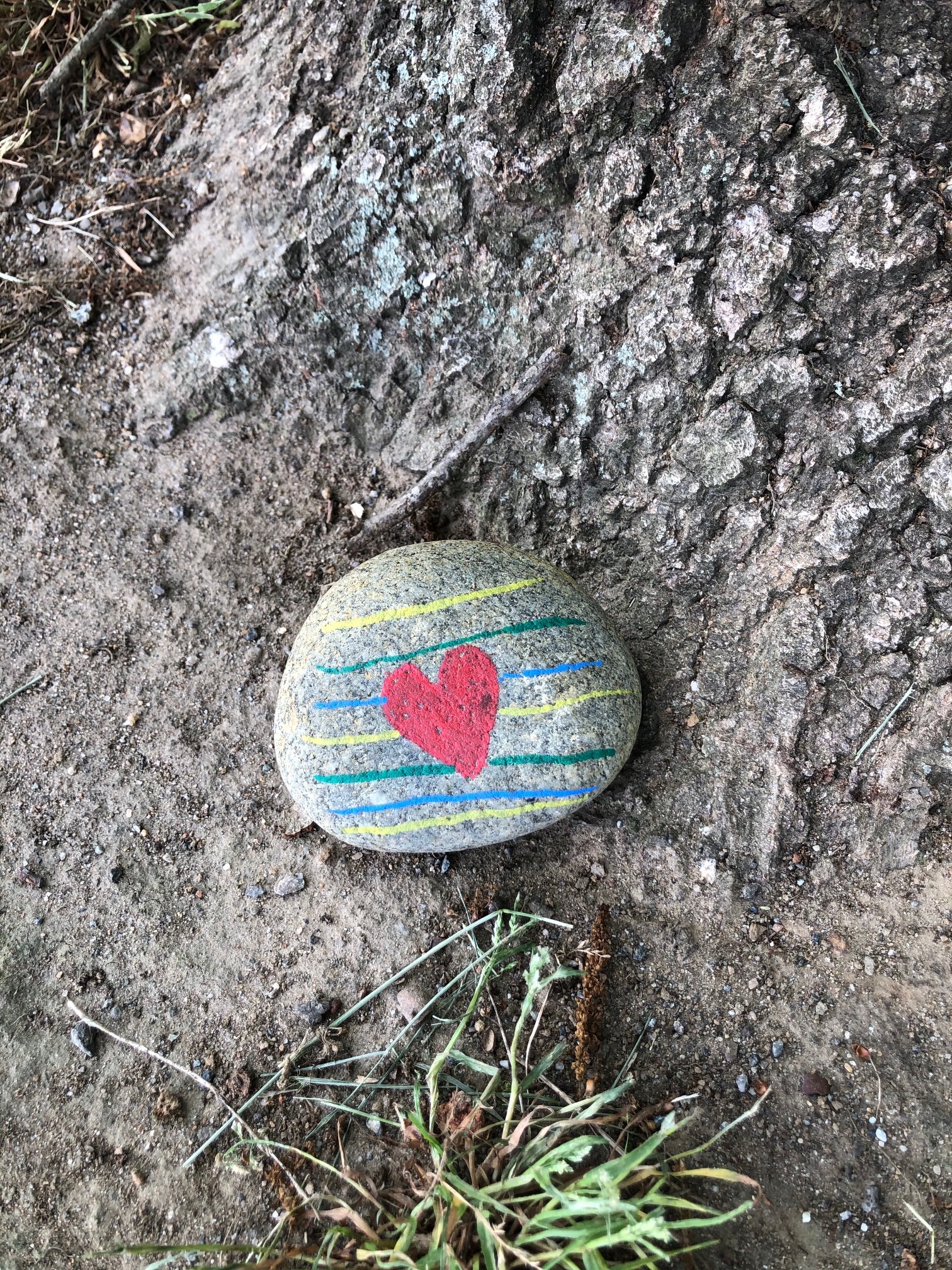
Smooth stones can give talented artists like yourself a natural canvas for your creativity! So collect some rocks and use your imagination to design rocks to leave for people to find on paths or sidewalks, near a store, or anywhere in your neighborhood. You may even want to leave one outside your local library. That’s where I found the rock pictured here!

Supplies

  • Smooth stones in various sizes
  • Paint or markers
  • Small magnets, available at craft stores
  • Jewelry pins, available at craft stores
  • Paint brush
  • Strong glue

Directions

  1. Find stones in your yard or neighborhood or buy them at a craft store or garden center
  2. Wash and dry rocks as needed
  3. Design and paint an image on the stone
  4. Have fun finding spots to leave your works of art!

celebrate-picture-books-picture-book-review-old-rock-is-not-boring-cover

You can find Old Rock (is not boring) at these booksellers

Amazon | Barnes & Noble | Books-a-Million

To support your local independent bookstore, order from

BookshopIndieBound

Picture Book Review

May 18 – International Museum Day

celebrate-picture-books-picture-book-review-rocks-in-his-head-cover

About the Holiday

On today’s date, museums around the world typically hold special exhibits, events, and activities with visitors in their buildings and other venues. This year, however, the COVID-19 pandemic means that the 40th anniversary of International Museum Day will be celebrated online through digital activities. The theme for this year’s remembrance is “Museums for Equality: Diversity and Inclusion.” The International Council of Museums––a global network of more than 44,000 museum professionals at 20,000 museums in 138 countries––”hopes that this special day will ‘become a rallying point to both celebrate the diversity of perspectives that make up the communities and personnel of museums and champion tools for identifying and overcoming bias in what they display and the stories they tell.'” To take part, visit the website of your local museums or a favorite museum elsewhere in the world and see what treasures they have to share.

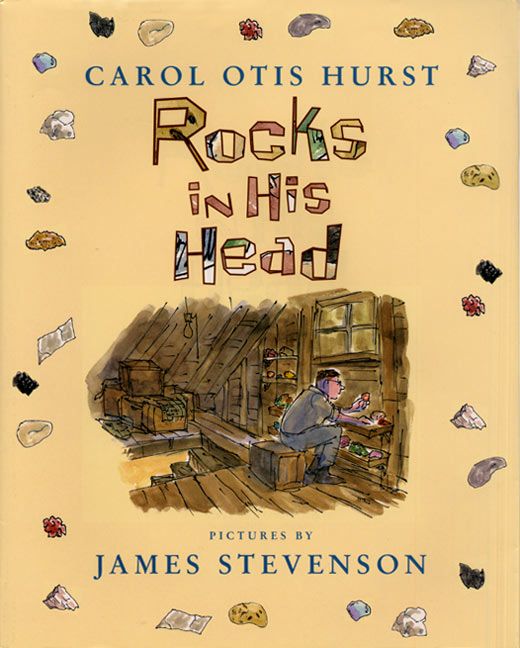
Rocks in His Head

Written by Carol Otis Hurst | Illustrated by James Stevenson


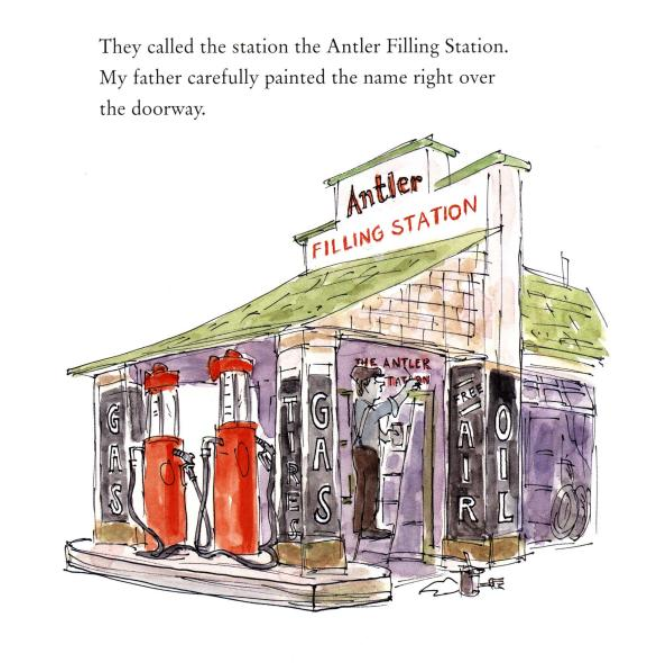
Carol Otis Hurst tells the story of her father, who—even when he was a boy—loved everything to do with rocks. He collected them and in his spare time walked “along stone walls and around old quarries, looking for rocks.” Everyone said “he had rocks in his pockets and rocks in his head,” and he had to agree. When he thought about what he wanted to do when he grew up, he imagined it would have something to do with rocks, and when he was told “‘There’s no money in rocks,’” he was okay with that. In the end, though, he opened a gas station in Springfield, Massachusetts with his father’s help. He called it the Antler Filling Station.

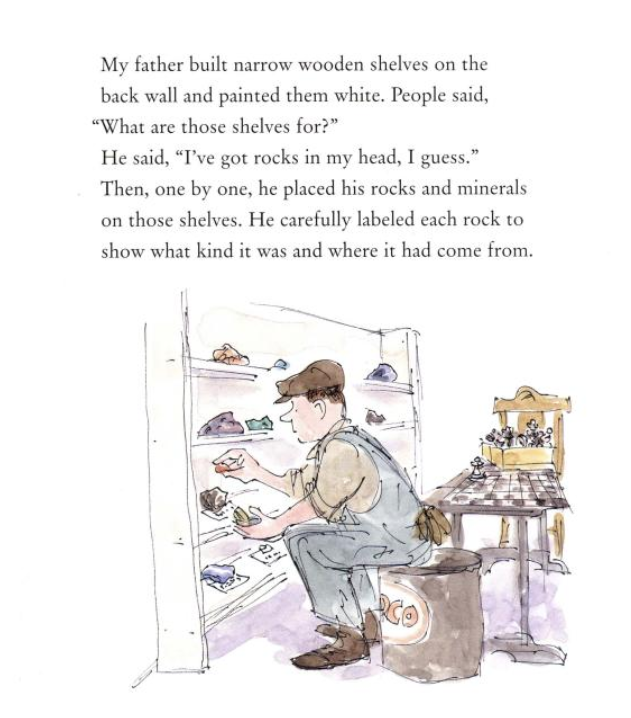
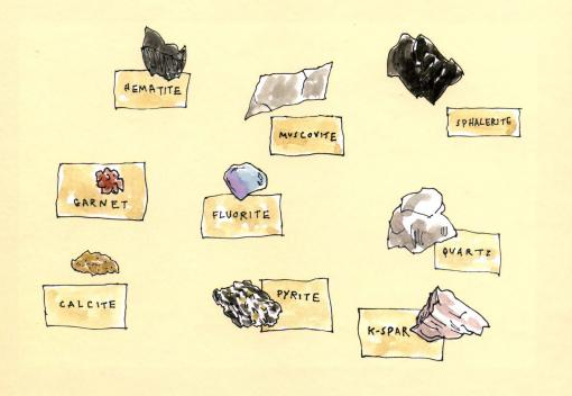
In the back of the filling station, Carol’s father displayed his rock and mineral collection. “He carefully labeled each rock to show what kind it was and where it had come from.” When the Model T automobile came out, more people could afford to buy a car. Carol’s father learned every inch of the Model T by taking it apart and reassembling it many times. He thought that someone who could repair the car and sell spare parts would have a good business, so he began collecting parts for the Model T—so many that “the pile of parts was bigger than the filling station.”

celebrate-picture-books-picture-book-review-rocks-in-his-head-stone-wall

Image copyright James Stevenson, 2001, text copyright Carol Otis Hurst, 2001. Courtesy of Greenwillow Books.

Most people in town said he “had rocks in his head” if he thought he would sell all those parts, but pretty soon drivers were flocking to the Antler Filling Station for gas and fixes to their cars. They also came inside to see the rocks, ask questions, and hear the stories of each rock and gemstone. Then the stock market crashed and people didn’t have the money for gas or to fix their cars. Things slowed down at the Antler, and when things were really slow, Carol, her father, and her friends would pile into their Model T and go searching for more rocks.

But while the collection at the filling station grew, people stopped coming because they were all out looking for jobs. Soon the Antler Filling Station closed and the family had to move to a new house. The house was falling apart, but Carol’s father began repairing it—after building shelves in the attic for his rock collection. When he wasn’t repairing the house, he was studying more about rocks. Along the way, he looked for work, taking any job he could even if they only lasted a day or two.

celebrate-picture-books-picture-book-review-rocks-in-his-head-antler-filling-station

Image copyright James Stevenson, 2001, text copyright Carol Otis Hurst, 2001. Courtesy of Greenwillow Books.

On days when he had no work, Carol’s father went to the Springfield Science Museum, where “they had a whole room full of glass cases containing many rocks. Sometimes he’d spend the whole day in that room.” One day, he met a woman who asked him what he was looking for. He answered “‘I’m looking for rocks that are better than mine.’” Out of the hundreds of rocks in that room, he told her, he’d only found ten, “‘maybe eleven,’” that were better. They smiled at each other.

Then the lady introduced herself as Grace Johnson, the director of the museum. “‘These rocks have come from all over the world,’” she told him, and he said that his had too. She wanted to see his collection, and so they drove out in her big car. Carol’s father showed her up to the attic. After looking around, she told him that while the board of directors wouldn’t allow her to hire him as a mineralogist because he lacked a college degree, she did need a night janitor. When he heard that the job sometimes included cleaning rocks, he took it.

One day, Mrs. Johnson discovered him correcting a label on one of the rocks. She smiled and told him that she had told the board of directors that she needed “‘somebody with rocks in his head and rocks in his pockets.’” Then she asked, “‘Are you it?’ Maybe I am,’” Carol’s father answered. “‘Maybe I am.’” And he was!

celebrate-picture-books-picture-book-review-rocks-in-his-head-antler-filling-station-shelves

Image copyright James Stevenson, 2001, text copyright Carol Otis Hurst, 2001. Courtesy of Greenwillow Books.

Carol Otis Hurst’s lovely and affectionate memoir of her father offers young readers a snapshot of history while introducing them to a man who stayed true to himself and his life-long love of rocks despite obstacles and good-natured jibes by those around him. Hurst’s easy-going, conversational storytelling represents her father well, allowing children to get a feel for his personality and steady outlook on life. His acceptance as a mineralogist (and ultimate position as director of the Springfield Science Museum as told in the author’s bio on the jacket flap) will satisfy readers.

celebrate-picture-books-picture-book-review-rocks-in-his-head-rock-samples

James Stevenson’s familiar watercolor-and-ink illustrations are infused with charm, taking children beside an old stone wall that meanders through the woods, back to old-style filling stations and Model-T cars, and into the heart of a true collector. Images of the author’s father attentively setting up his collection in the filling station and later in the attic will resonate with any young collectors reading the book, and the full-page illustration of Grace Johnson and the author’s father talking and smiling together is happy validation that kindred spirits do cross paths in life.

For children who love collecting, history, museums, and biographies, Rocks in His Head is a delightful choice for home libraries and would make am appealing lead in to science lessons or museum field trips for elementary classrooms.

Ages 4 – 8

Greenwillow Books, 2001 | ISBN 978-0060294038

International Museum Day Activity

CPB - Cookie Jar Museum (2)

Create a Museum Exhibit


Every item has a story. A fun and educational way for kids to learn family stories and interact with their own history is to create a museum exhibit of objects in your home. Maybe there’s a funny anecdote behind a knick-knack on the shelf. Perhaps the family’s favorite serving dish holds sentimental value. How about your child’s best-loved toys or  drawings or crafts they’ve made? This can be a fun way to spend some time while staying at home and let everyone see common objects in a whole new light.

Supplies

  • A number of household 
  • Paper or index cards
  • Marker, pen, or pencil
  • A table, shelf, or other area for display

Directions

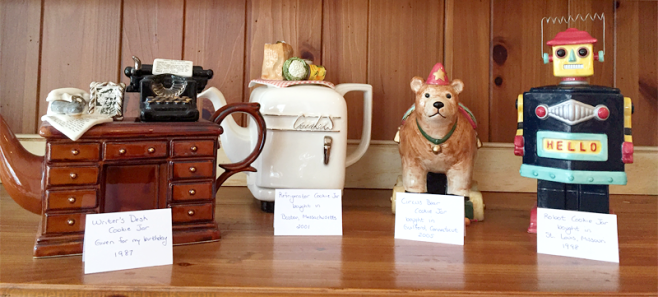
  1. To get started help children gather a number of items from around the house to be the subjects of their exhibit. An exhibit can have a theme, such as Travel Souvenirs, or it can contain random items of your child’s choice, like toys, plants, tools, or artwork.
  2. Using the paper or cards, children can create labels for their exhibit items. Older children can write the labels themselves; younger children may need adult help.
  3. Spend a little time relating the story behind each object: where it came from, how long you’ve had it, and when and how it was used in the past. Include any funny or touching memories attached to the item. Or let your child’s imagination run free, and let them create histories for the objects.
  4. When the labels are finished, arrange the items on a table, shelf, or in a room, and let your child lead family members on a tour. You can even share the exhibit with family and friends on FaceTime, Skype, Zoom, or other app.

Museum Coloring Pages

celebrate-picture-books-picture-book-review-museum-of-modern-art-coloring-page

Museum Coloring Pages


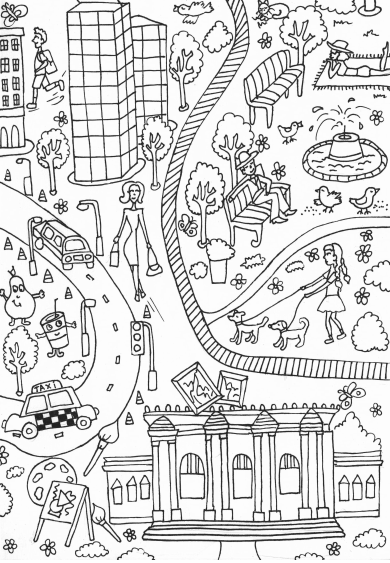
You may not be able to visit a museum in person right now, but you can enjoy three of the most amazing museums in the world with these coloring pages. 

New York’s Metropolitan Museum of Art | London’s British Museum | The Louvre in Paris

celebrate-picture-books-picture-book-review-rocks-in-his-head-cover

You can find Rocks in His Head at these booksellers

Amazon | Barnes & Noble | Books-a-Million

To support your local independent bookstore, order from 

BookshopIndieBound

Picture Book Review
February 4 – It’s Children’s Authors and Illustrators Week

celebrate-picture-books-picture-book-review-old-rock-is-not-boring-cover

About the Holiday

Children’s Authors and Illustrators Week was established with the idea of getting authors, illustrators, and children together to share great books, the joys of creating them and the fun of reading. During the week, authors and illustrators hold special events, including storytelling, exciting presentations, and writing workshops in venues around the country. To find out more about the Children’s Authors Network and discover classroom resources to use throughout the year, visit the Children’s Authors Network website.

I received a copy of Old Rock (is not boring) from G. P. Putnam’s Sons for review consideration. All opinions are my own.
Old Rock (is not boring)

By Deb Pilutti


It seemed that Old Rock had been sitting in the same spot forever. Tall Pine and Spotted Beetle thought being a rock must be pretty boring. Hummingbird wondered, “‘Don’t you ever want to go anywhere?’” She knew she would be if she couldn’t fly all over the world and taste exotic nectars. But Old Rock had flown once, and he began to tell his story.

celebrate-picture-books-picture-book-review-old-rock-is-not-boring-hummingbird

Copyright Deb Pilutti, 2020, courtesy of G. P. Putnam’s Sons Books for Young Readers.

It was during the time when he was surrounded by darkness, but then the volcano erupted and Old Rock “‘soared through a fiery sky into the bright light of a new world.’” Tall Pine, Spotted Beetle, and Hummingbird weren’t very impressed. They still thought Old Rock must be bored. Spotted Beetle told him how much he might see if he climbed to Tall Pine’s very highest branch.

celebrate-picture-books-picture-book-review-old-rock-is-not-boring-volcano

Copyright Deb Pilutti, 2020, courtesy of G. P. Putnam’s Sons Books for Young Readers.

Old Rock countered that he had seen a lot. He’d watched dinosaurs pass by and had even hidden a spinosaurus from a hungry T. rex. He’d traveled in a glacier and been left teetering on a ridge overlooking a vast desert, where he “could see the place where the sky touches the earth.” Spotted Beetle and Hummingbird were intrigued, but Tall Pine dismissed these experiences as “ages ago.” He wanted to know about now. Didn’t Old Rock feel like moving? Tall Pine showed Old Rock how his limbs could dance in the wind.

celebrate-picture-books-picture-book-review-old-rock-is-not-boring-dinosaurs

Copyright Deb Pilutti, 2020, courtesy of G. P. Putnam’s Sons Books for Young Readers.

While Old Rock couldn’t dance, he did recall how he’d turned somersaults off the ridge, landing in a prairie where mastodons grazed near a lake. Tall Pine, Spotted Beetle, and Hummingbird were mesmerized by Old Rock’s story and wanted to know what had happened next. Out of the prairie, sprang a pine forest, Old Rock revealed. And from one of the pine trees a pinecone fell and a seed was released. That seed grew “to be the tall pine who dances in the wind and keeps me company.” Sometimes, he continued, a spotted beetle and a hummingbird meander by. Old Rock was very pleased with his spot, and the others had to agree that it was “very nice” and “not boring at all.”

An illustrated timeline of Old Rock’s life from 18 billion years ago to the present day follows the text.

celebrate-picture-books-picture-book-review-old-rock-is-not-boring-time-line

Copyright Deb Pilutti, 2020, courtesy of G. P. Putnam’s Sons Books for Young Readers.

So much clever thought went into Deb Pilutti’s Old Rock as she reveals to kids what a fascinating and active life the rocks and boulders we see every day have had. Tall Pine, Spotted Beetle, and Hummingbird’s skepticism keeps the suspense building as Old Rock rolls out stories of his various travels and talents. Once he has them hooked, they—like young readers—want to hear more, leading to the just-right ending that sweetly encompasses shared history, happiness with one’s place in life, and friendship. The trio’s questions to Old Rock and their related experiences also engage children to think about issues and opinions from a variety of perspectives.

Pilutti’s mixed-media illustrations are nicely textured to bring out Old Rock’s grainy surface while highlighting nature’s vivid colors. Her vignettes from the dinosaur eras, the ice age (where the skeletons of dinosaurs are also swept up and away in the same glacier as Old Rock), and beyond impress upon readers the long time-frame involved, how the earth has changed, and even the fascinating science of the fossil record.

A multi-layered story, perfect for general story times or as a lead in to science lessons and to promote discussion and research in the classroom, Old Rock (is not boring) would be an original and exciting addition to home, classroom, and public library collections.

Ages 4 – 8

G. P. Putnam’s Sons Books for Young Readers, 2020 | ISBN 978-0525518181

To learn more about Deb Pilutti, her books, and her art, visit her website.

Children’s Authors and Illustrators Week Activity

celebrate-picture-books-picture-book-review-rocks-word-search-puzzle

Rock This Puzzle! Word Search


You can discover a lot about an area by its rocks. Find the twenty rock-related words in this printable puzzle then learn more about them.

Rock This Puzzle! Word Search | Rock This Puzzle! Solution

celebrate-picture-books-picture-book-review-old-rock-is-not-boring-cover

You can find Old Rock (is not boring) at these booksellers

Amazon | Barnes & Noble | Books-a-Million | IndieBound

Picture Book Review