July 26 – It’s Park and Recreation Month

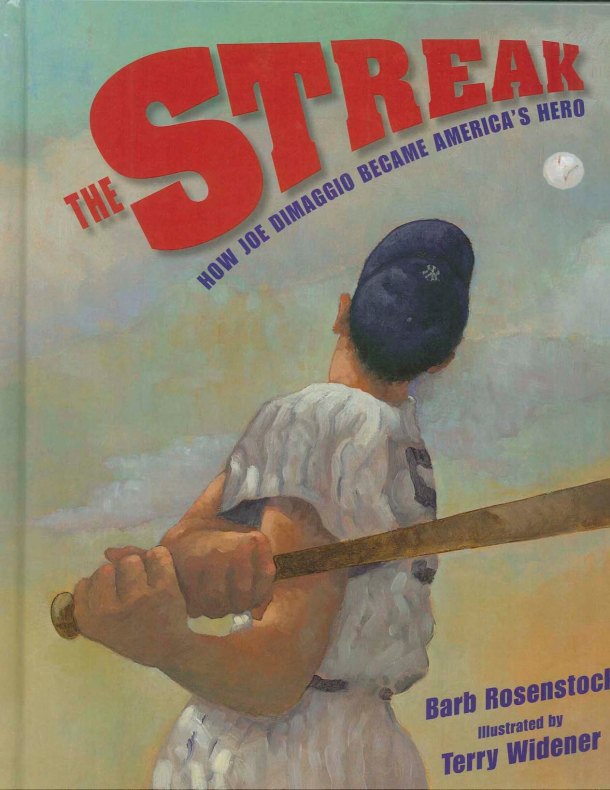
celebrate-picture-books-picture-book-review-the-streak-how-joe-dimaggio-became-america's-hero-cover

About the Holiday

This month we recognize all the parks—national, state, local, and more—that provide fun and recreation for those who love the great outdoors. There is perhaps no sport that combines the physical aspects of “park” with the spirit of “recreation” quite like baseball. The crack of the bat connecting with the ball for a home run, the thwack of an outfield catch, the collective cheers, and the aroma of ballpark snacks all mix to create a perfect outing—whether your team wins or not!

The Streak: How Joe DiMaggio Became America’s Hero

Written by Barb Rosenstock | Illustrated by Terry Widener


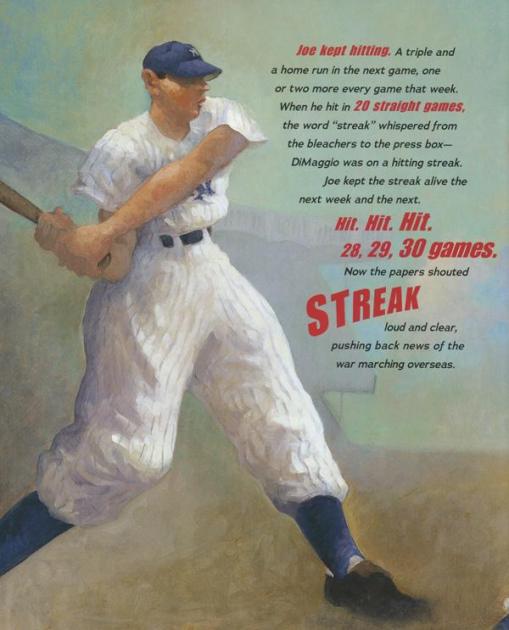
With a single hit to left field, Joe DiMaggio turned a pre-World War II summer into something that cheered and united all Americans. It was May 15, 1941 when the New York Yankees sent Joe to the plate. He hit a single—not much to help them overcome their 13 to 1 loss, but it was in the next game and the next and the next…that people started to take notice. In every game Joe made a hit. Some were home runs, some triples or doubles, and when “he hit in 20 straight games, the word ‘streak’ whispered from the bleachers to the press box—DiMaggio was on a hitting streak.”When Joe reached 30 straight games with a hit, the newspapers printed bold headlines and articles that temporarily pushed “back news of the war marching overseas.”

Joe DiMaggio wasn’t like other well-known players. He was the son of immigrants and grew up in San Francisco with eight brothers and sisters, working in the family fishing business and selling newspapers to make extra money. He was used to hard work, and this ethic served him well as a baseball player.

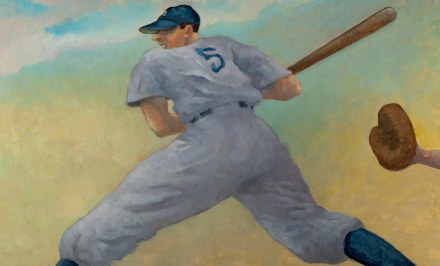
Everyone knew about Joe’s bat “Betsy Ann” and the care he gave her. He had treated her wood and sanded her handle, shaving off “fractions of an ounce until she fit his hands alone. Betsy Ann was his treasured ‘ball bat,’ used for games only.” When Joe faced the pitcher at the plate, he didn’t go through an elaborate routine. His wide-legged stance was well recognized by fans who knew he would get the job done. And that summer in 1941 he did.
celebrate-picture-books-picture-book-review-the-streak-how-joe-dimaggio-became-america's-hero-joe-hitting

Image copyright Terry Widener, courtesy of terrywidenerart.com

He and Betsy Ann “whipped around, smashing fastballs, knuckleballs, screwballs, and curves. DiMaggio could hit off anyone, any pitch, anywhere.” Soon he was in sight of the record—41 games. Every pitcher wanted to be the one to end Joe’s streak, and with each game America was on the edge of its seat. Joe felt the responsibility. He didn’t show it on the field, but in his off time he hardly slept, his stomach hurt, and he couldn’t eat.

The streak continued—38…39…40. Tying the record at 41 and breaking it would come in a doubleheader against the Washington Senators. The bleachers were packed that hot 29th of June. In the first game Joe tied the record. The second game would test Joe’s mettle. When his turn at bat came, he reached for Betsy Ann. She wasn’t in the dugout. He saw right fielder Tommy Henrich taking practice swings and yelled to him that he had Betsy Ann. But he didn’t. All the Yankees players searched the dugout for Joe’s bat, but Betsy Ann was nowhere to be seen. Someone has stolen her.

Joe grabbed another bat, but with three times up and three times out, it looked as if Joe’s streak was over. Then Tommy held out his own bat with the reassurance that “there’s some hits in here.” Joe took Tommy’s bat and went to the mound. He took his wide-legged stance and went to work. On the second pitch “Joe whacked a line drive past the left fielder’s glove. Stomping screams shook the stands. No one could stop DiMaggio. No one.”
celebrate-picture-books-picture-book-review-the-streak-how-joe-dimaggio-became-america's-hero-joe-hitting

Image copyright Terry Widener

Joe focused on the game, rounding first on his way to second base. But suddenly with the cheers of the fans ringing in his ears, his accomplishment settled in. “He tipped his cap, flickered a smile, and trotted weak-kneed back to first.” He got a pat on the back from the first base coach, a handshake from the Senators’ first baseman, and adoration from the kids and adults in the stands. With one hit—and 41 more—Joe was America’s hero.

A week later Betsy Ann was found in New Jersey and given back to Joe. His streak continued to 56 games, and he helped the Yankees win the 1941 World Series. When America became involved in World War II, people could remember “watching sureness and strength win against impossible odds. The country learned to pull together and celebrate together. It was ready to go to work” the way Joe DiMaggio had.

Barb Rosenstock sets this poignant biography of one of baseball’s greats firmly within the atmosphere that made Joe DiMaggio’s achievement about much more than baseball. With prose that echoes DiMaggio’s gentle strength, Rosenstock recreates the excitement, growing suspense, and mystery surrounding his phenomenal streak. With lovely, flowing description Rosenstock deftly sprinkles in DiMaggio’s working-class immigrant background, his emotions, and historical events, giving The Streak depth and resonance for today’s readers.

Accompanying the text are Terry Widener’s dramatic paintings. Opening the pages is akin to strolling through an art gallery exhibition. The depictions of the players swing, twist, slide, and throw with realistic action. As an infielder fumbles DiMaggio’s hit in one foreground illustration, Joe can be seen in the background dropping Betsy Ann and taking off for first base. DiMaggio’s signature stance, the frantic search for Betsy Ann, DiMaggio’s weariness, and the press that followed his every swing are all gorgeously rendered in muted tones of green, gold, and brown. Sports fans will love the pictures of the baseball stadiums and the close-up view of Betsy Ann.

An extensive Author’s Note, DiMaggio’s career statistics, and resources follow the text.

The Streak: How Joe DiMaggio Became America’s Hero would be a welcome addition to any library.

Ages 6 and up

Calkins Creek Books, Boyds Mills Press, 2014 | ISBN 978-1590789926

To see more books by Barb Rosenstock as well as extensive educational guides for The Streak and other books, visit her website!

Learn more about Terry Widener, his books, and his art on his website!

Take a look at the trailer for The Streak—it’s a home run!

Park and Recreation Day Activity
celebrate-picture-books-picture-book-review-baseball-word-search

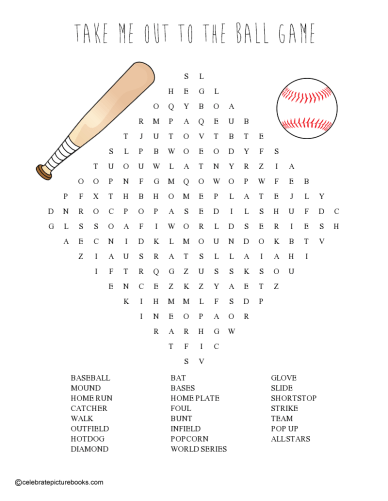
Take Me Out to the Ballgame Word Search


Diamonds aren’t just for playing baseball—they make great word search puzzles too! Take a run at this printable Take Me Out to the Ball Game word search! 

July 19 – It’s National Zookeepers Week

celebrate-picture-books-picture-book-review-the-opposite-zoo-cover

About the Holiday

Every year more than 180 million people visit zoos and aquariums in the United States. Caring for the animals that live in these zoological parks, maintaining the facilities, and educating guests about the scientific facts and personal stories of the animals under their care is more than just a profession for zoo keepers—it’s a passion! Today’s holiday raises awareness of the day-to-day work of zoo keepers who protect and preserve the world’s species.

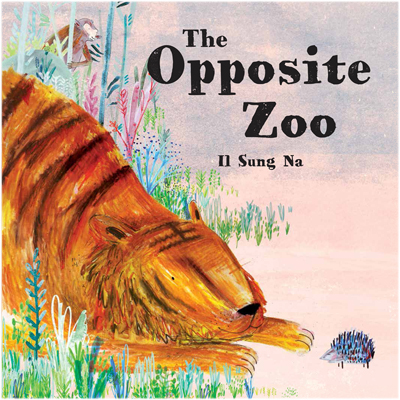
The Opposite Zoo

By Il Sung Na


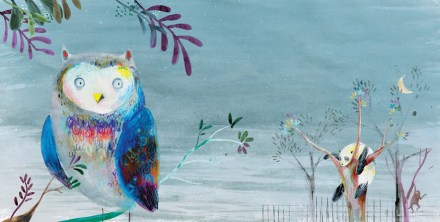
The Dark of twilight has descended on the Opposite Zoo and all the visitors are gone. But the clever monkey finds his door Open! He creeps out to explore the zoo by night. Two animals sit amid the tree tops. The owl is Awake, while the panda hangs suspended in the branches, Asleep. The lion, having a final stretch before snoozing, is Hairy, but the hippo taking a late dip is Bald.

celebrate-picture-books-picture-book-review-the-opposite-zoo-interior-art-owl

Image copyright Il Sung Na, courtesy of ilsungna.com

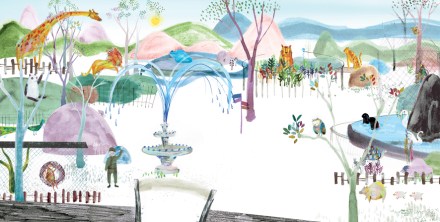
The Tall giraffe, munching leaves, towers over the trees as well as the Short pig who is feeding her piglets. The monkey plays peek-a-boo with a Shy iguana as it climbs a rock to watch the Bold peacock fan his beautiful tail feathers.

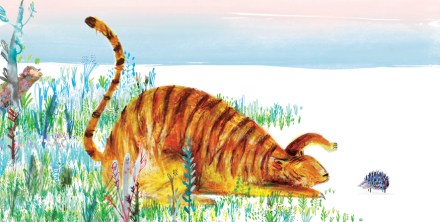
The tiger, with his Soft fur, is intrigued by the Prickly hedgehog, and the Black seals frolic in the pond while the White swans float majestically above. The monkey then hitches a ride on the tail of a Fast cheetah, leaving the Slow sloth to meander on its way. Oh those Noisy monkeys! Are they bothering the Quiet turtle?

celebrate-picture-books-picture-book-review-the-opposite-zoo-interior-art-tiger

Image copyright Il Sung Na, courtesy of ilsungna.com

The prowling monkey has had a long night of fun, but now the sun is Bright. He hurries back to his tree just in time for his door to Close—because now the Opposite Zoo is Open!

The Opposite Zoo combines several concepts—opposites, animals, and a search-and-find element—into a fun romp for young readers. The story is appropriately simple and serves as the frame for Il Sung Na’s stunning paintings: The fiery lion, tiger, and cheetah crackle with orange energy. The owl is a midnight blue tapestry, and the peacock’s tail is as graceful and intricate as a fine Asian fan. Na’s vibrant colors are set against delicate, softly hued backgrounds. Readers will love following the silly monkey through each picture and pointing out his shenanigans.

The Opposite Zoo is a wonderful choice as a new baby gift or for youngest children’s libraries.

Ages birth – 5

celebrate-picture-books-picture-book-review-the-opposite-zoo-interior-art-zoo

Image copyright Il Sung Na, courtesy of ilsungna.com

Knopf Books for Young Readers, 2016 | ISBN 978-0553511277

View more artwork and books by Il Sung Na on his website!

National Zoo Keepers Week Activity

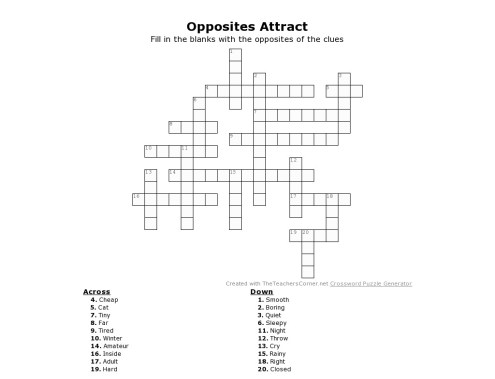
celebrate-picture-books-picture-book-review-opposites-crossword-puzzle

Opposites Attract Crossword Puzzle


Some words go hand in hand even though they’re different. Find the words that make pairs fill in the blanks of this printable Opposites Attract Crossword Puzzle

July 16 – World Snake Day

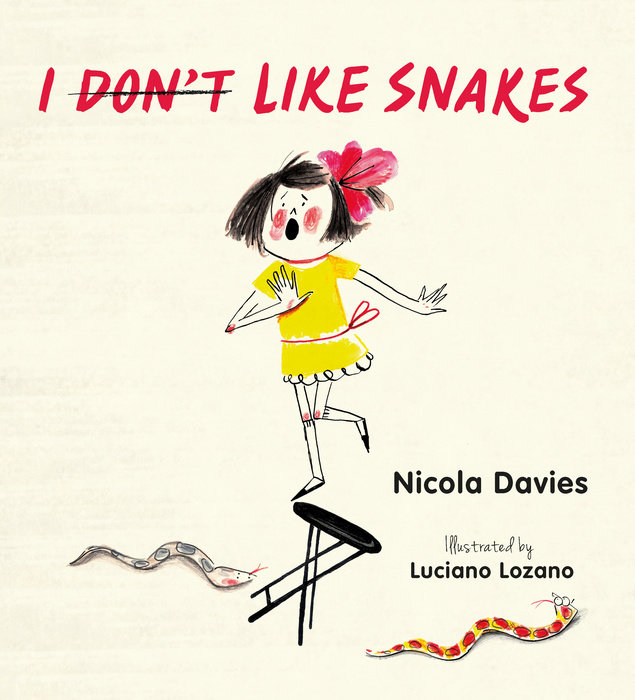
celebrate-picture-books-picture-book-review-i-don't-like-snakes-cover

About the Holiday

Snakes are beautiful and fascinating creatures, but they often get a bad rap due to their mysterious nature and their portrayals in literature and throughout history. Today’s holiday promotes awareness of dangers to the snake population through habitat destruction, climate change, disease, and other threats. The wide variety of snakes provide many benefits to their natural environments and deserve protection.

I Don’t Like Snakes

Written by Nicola Davies | Illustrated by Luciano Lozano


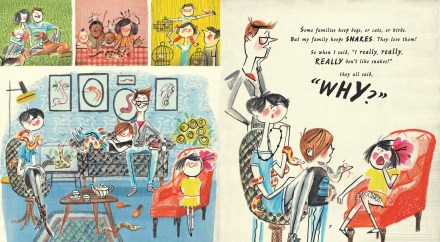
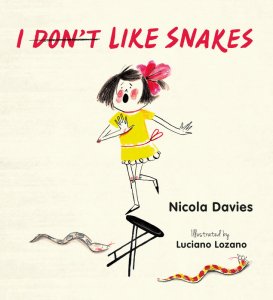
Can you imagine a family who has nothing but snakes for pets? Well, that’s the way it is for the little girl in I Don’t Like Snakes. Sitting in her red chair surrounded by her mother, father, brother and four snakes, she finally pipes up and tells her family that she “‘really, really, REALLY doesn’t like snakes!’” And they ask, “‘Why?’”

“‘Because they slither,’” she answers. Her mom has a ready answer that leads into a scientific discussion of why and how different kinds of snakes move. The mechanics of concertina and serpentine slithering as well as caterpillar crawling are clearly described in both easy-to-understand text and accompanying illustrations. Her father adds more transportation methods, including side-winding, twining, climbing, swimming, and even flying.

celebrate-picture-books-picture-book-review-i-don't-like-snakes-interior-art-why

Image copyright Luciano Lozano, courtesy of walker.co.uk

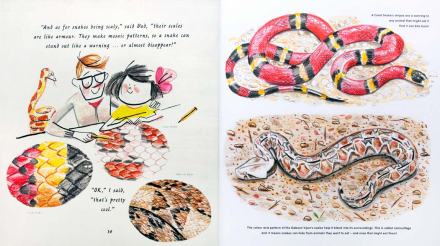
The little girl has to admit these sound pretty smart. “‘But what about their slimy, scaly skin?’” She asks. After all it’s so icky! Well, her mom reveals, snakes aren’t actually slimy, but dry. Following this readers learn why snakes look wet and how they shed their skin. Her dad goes on to explain that a snake’s scales are used for protection and as camouflage or as a warning to other creatures. Ok, the little girl agrees, “‘That’s pretty cool.’”

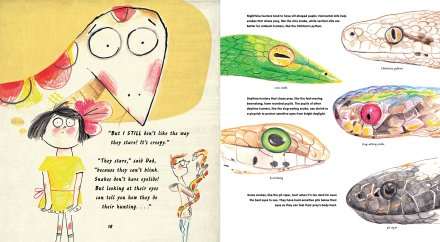
Still, the girl doesn’t like their flicking tongues. Her mom reassures her that snakes only use their tongues to smell with. Readers then see how a snake picks up the scent of a mouse or other prey and how it is transferred to the Jacobsen’s organ that helps it detect even faint odor trails. “‘That IS interesting,’” the girl tells her mom. “‘But I STILL don’t like the way they stare! It’s creepy.’”

celebrate-picture-books-picture-book-review-i-don't-like-snakes-interior-art-eyes

Image copyright Luciano Lozano, courtesy of walker.co.uk

Dad has the answer to that one. They stare because they have no other choice. Without eyelids, it’s impossible for them to blink. But if you look closely at a snake’s eyes, you can tell if they are a night or day hunter or whether they are chasers or ambushers.

All this information is starting to change the little girl’s mind about snakes. “‘Maybe now that I know something about them, I do like snakes—just a little bit!’” she tells her brother. And just like brothers everywhere, he ups the ante by revealing how snakes kill. He revels in explaining about how some snakes have hollow fangs that inject poison into their victims and how others strangle their prey until there’s no life left. And without proper teeth, snakes have to swallow their dinner whole!

The boy’s sister is braver than he thinks, and now she wants to get in the game. She says that she has discovered something about snakes herself. She knows how snakes have babies. Some give birth to live babies but most lay leathery eggs. Either way, the babies are on their own soon after hatching. The little girl has had a complete change of heart. She now thinks snakes are beautiful. “‘And do you know what?’” she says. “‘I really, really, REEEEEALLLLY LIKE THEM!’”

celebrate-picture-books-picture-book-review-i-don't-like-snakes-interior-art-skin

Image copyright Luciano Lozano, courtesy of walker.co.uk

Whether you like snakes, don’t like snakes, or are somewhere in between, Nicola Davies’ engaging tribute to this interesting and often misunderstood species will delight. Cleverly written to include commonly held opinions and provide compelling facts, I Don’t Like Snakes is part story, part nature encyclopedia seamlessly woven together to create a fascinating and funny read. Kids and adults will respond to the conversational tone, and, like the little girl in the story, be open to a change in attitude toward this intriguing reptile.

Luciano Luzano bridges the world of the fictional story and the nonfiction facts in I Don’t Like Snakes with charming sketches of the family and realistic depictions of the snakes they discuss. The little girl with her oversized hair bow and astonished expressions is a disarming guide to discovery. The family’s reptilian obsession is everywhere, from the snakes that twine around the mother, father, and brother’s arms and shoulders to the snakeskin upholstery. The factual information about snakes is accompanied by accurate drawings and representations of the traits portrayed.

I Don’t Like Snakes is a wonderful book for those who already love snakes as well as for those who want to learn more! It’s a great addition to anyone’s nonfiction collection.

Ages 5 – 10

Candlewick Press, 2015| ISBN 978-0763678319

Learn more about Nicola Davies and her books on her website!

To view more art and books by Luciano Luzano visit his website!

World Snake Day Activity

celebrate-picture-books-picture-book-review-snake-word-search

Slithering Snake Word Search


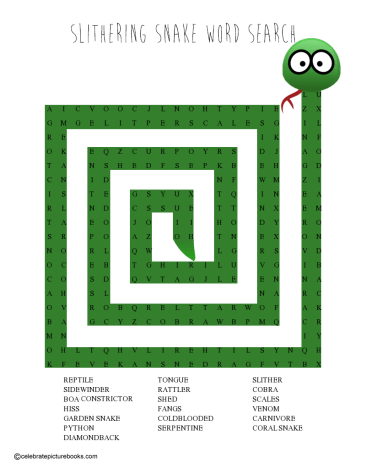
Snakes wind their way along wherever they want to go. Follow the twists and turns in this printable Slithering Snake Word Search to find the reptile-inspired words! 

celebrate-picture-books-picture-book-review-i-don't-like-snakes-cover

You can find I Don’t Like Snakes at these booksellers

Amazon | Barnes & Noble | Books-a-Million | IndieBound

Picture Book Review

June 27 – National Sunglasses Day

celebrate-picture-books-picture-book-review-chu's-day-at-the-beach

About the Holiday

Tinted glasses have been around since judges in ancient China used them to disguise their emotions. Modern sunglasses were first sold in 1929 by Sam Foster on the Atlantic City Boardwalk, and Bausch and Lomb was commissioned in the 1930s by the Army Air Corps to create glasses to ease the high-altitude glare pilots faced. In 1936 Polaroid filters were first used to protect eyes from  damaging UV rays in Ray Ban sunglasses.Since the 1970s movies have helped escalate the popularity of many styles of sunglasses as fans strive to look like their favorite actors and actresses. Today, grab your sunglasses or shop for new ones because—you know why…sing it with me… “The future’s so bright, I gotta have shades!”

Chu’s Day at the Beach

Written by Neil Gaiman | Illustrated by Adam Rex


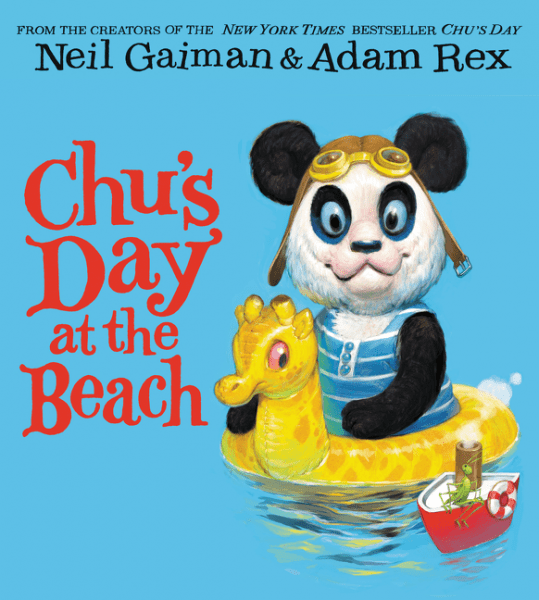
As readers of this series know, “when Chu sneezed, big things happened.” With this tantalizing and slightly-ominous-in-a-way-kids-love statement, Chu’s latest adventure begins. Turning the page kids discover that Chu and his family have headed out to the beach. Chu is having a great time: the octopus selling ice-cream gives him an extra scoop of vanilla, and Chu meets a crab in a rock pool; even Chu’s mom is enjoying a book under the umbrella and his dad is wading in the ocean.

Chu takes his sunglasses off to better enjoy the bright, sunny day, but suddenly Chu’s nose tickles. The tickle grows until it fills his whole head and he can’t hold it in anymore—“AAH- AAAAH- AAAAAH- CHOoOoOoOO!” Chu looks out to sea. “‘Uh-oh,’” he says. Everyone on the beach comes down to the water’s edge to look at the huge suspended wave Chu has sneezed up.

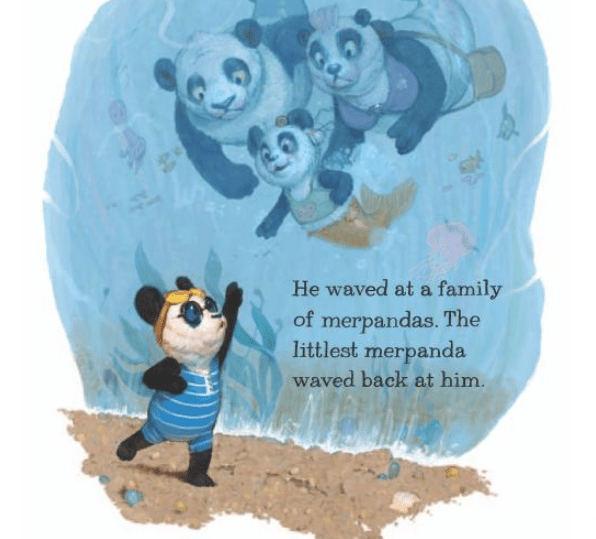
Like standing in front of an aquarium exhibit, the beachgoers find themselves eye-to-eye with sea creatures who are suddenly encased in the wall of water. The fish, turtles, whales, and merpandas are sad—“‘With the sea broken, I cannot go home,’” one whale explains. The ice-cream vender tells Chu to sneeze again and put the sea “‘back the way it was.’” But try as he might, Chu can’t sneeze. A seagull tickles Chu’s nose with a wing feather and the octopus offers Chu a fizzy drink with bubbles that go up his nose, but nothing elicits a sneeze.

celebrate-picture-books-picture-book-review-chu's-day-at-the-beach-merpandas

Interior illustration by Adam Rex, courtesy of Neil Gaiman’s Journal Archives, April 2015 (http://journal.neilgaiman.com/)

All seems lost until Tiny the snail reveals that sometimes he sneezes when he looks at the sun. Chu removes his sunglasses and gazes into the light. “AAAAACHOOOOO!” “‘There, said Chu. Everything is back just as it was before.’” The sea creatures are happy that they get to return to their homes, the ice-cream seller is so pleased that she scoops up another cone for Chu, and Chu? He declares that it was the best day at the beach ever.

With his singular style Neil Gaiman conjures up a story for kids that combines just the right amount of sweetness and absurdity to keep the giggles going from the first page to the last. We all experience those uncontrollable mishaps and “oh no!” moments where a little help and empathy is appreciated. And what child wouldn’t love to stop the ocean, even if only for a moment? Gaiman’s repeated sneezes will have kids “Aah-chooing” along, and an animated reading of the chorus “AAH. AAAAH. AAAAAH. NO.” is sure to bring laughs and requests for “Again! Again!”

If only the beach was as full of interesting creatures as Adam Rex portrays in his vivacious illustrations! Crossing the dunes Chu and his family encounter an intriguing array of animals stretched out on towels—from a tiny cricket to a pangolin to a hunky frog with his clever insect-snack-strip-adorned umbrella and more. Ice-cream vendors no doubt wish they had the eight arms of Rex’s frozen-treat seller, and there’s even an ostrich with his head in the sand. Chu’s tidal wave teems with surprised sea creatures, some stuck mid-way between their ocean world and the dry outside. Chu remains as cute as ever, inviting kids to join him on his latest adventure.

Chu’s well-loved character and repeat readability make Chu’s Day at the Beach a sunny addition to young children’s bookshelves.

Ages Birth – 7

HarperCollins, 2015 | ISBN 978-0062223999 ♦ HarperFestival Boardbook, 2016 | ISBN 978-0062381248

National Sunglasses Day Activity

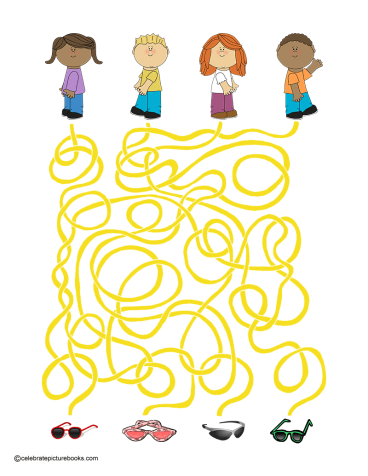
celebrate-picture-books-picture-book-review-sunglasses-matching-puzzle

Perfect Sunglasses Matching Puzzle


The summer sun is so bright that these friends need sunglasses before they go out to play! Can you follow the paths to match each child with the perfect pair? Get the printable Perfect Sunglasses Matching Puzzle and have fun!

June 21 – World Music Day

celebrate-picture-books-picture-book-review-hey-charleston

About the Holiday

Celebrated every year on the summer solstice, World Music Day, also known as the Fête de la Musique, brings together professional and amateur musicians to ply their trade and entertain audiences for a day full of sound. The day was first conceived in 1982 by French Minister of Culture Jack Lang, who elicited the help of Maurice Fleuret, the Director of Music and Dance. When Fleuret discovered that half of the nation’s children played a musical instrument, he devised a way to bring people out into the streets for a music festival. Since then, the event has become an international phenomenon, celebrated in more than 700 cities in 120 countries worldwide. To participate consider organizing or attending a  free concert or enjoying music in your favorite way.

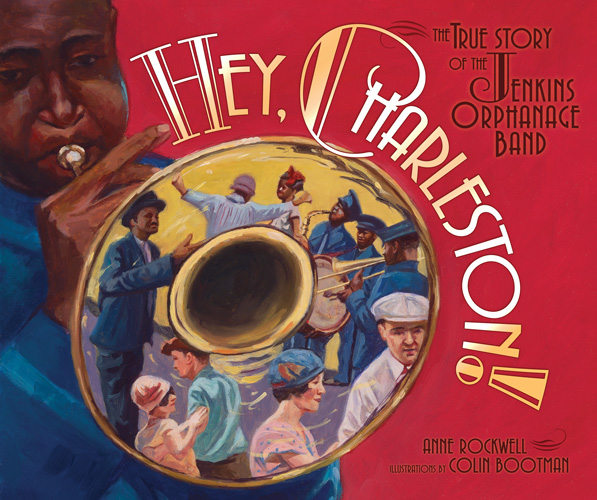
Hey, Charleston! The True Story of the Jenkins Orphanage Band

Written by Anne Rockwell | Illustrated by Colin Bootman


“Have you ever known someone who was always trying to turn bad into good, always seeing hope where others saw despair?” This question, which begins the biography of Reverend Daniel Joseph Jenkins and the orphans he loved is as relevant today as it was in the early 1900s, when this story takes place. Reverend Jenkins was the pastor of a small church in Charleston, South Carolina. One night while collecting scrap wood at a railroad yard, he discovered a group of boys huddled and sobbing inside a freight car. Reverend Jenkins took them to his church, fed them, and gave them a warm place to sleep. He knew what it was like to be an orphan because he had been one too.

Soon more orphans showed up at the church door, and Reverend Jenkins accepted them all. Room grew tight so he convinced the city officials to give him an abandoned warehouse for his orphanage. There was just one drawback: the warehouse was next to a prison, where less-than-desirable sounds emanated from the walls. Reverend Jenkins figured out a way to drown out the noise, however. He gathered the orphans and led them in song outside the orphanage door. The kids were good singers, and that gave the reverend an idea.

He had grown up during the Civil War and remembered the marching bands that led the soldiers into battle. He remembered the instruments these musicians carried and asked for any that were now unused to be donated to the children. Instruments poured in! They were polished and tuned and the children learned to play under the direction of the best teachers in Charleston. With the money Reverend Jenkins thought they could make entertaining people, he planned to buy a farm for the orphans.

Soon the Jenkins Orphanage Band was playing on street corners and in other venues. Many of the kids were descended from the Geechee or Gullah people who lived on islands off the coast of South Carolina, and they played the old band music with their own special rhythm, called “rag.” “A couple of Geechee boys would lead the band by doing a dance—twisting and twirling and tapping their toes, knocking their knees, and flapping their arms.” People loved the music, but most South Carolinians were poor and couldn’t donate much to the orphans. Reverend Jenkins decided to take his band to New York City. The band took the city by storm! People loved when the kids played their raggedy music and soon were imitating the Geechee boys’ dance. “Hey, Charleston,” they’d shout, “Give us some rag!” They called the dance “the Charleston,” and soon everyone was doing it.

celebrate-picture-books-picture-book-review-hey-charleston-interior-art

The orphans made so much money they were able to buy a new house, and the music instruction became so renowned that families began paying to have their children taught along with the orphans. The band continued to travel around the United States, and they were even invited to perform in the inaugural parade for President Theodore Roosevelt. Finally, they were able to buy the farm Reverend Jenkins had dreamed of.

In 1914 the Jenkins Orphanage Band was even invited to play for Britain’s King George V at the Anglo-American Exposition in London. While they were there, however, Britain entered World War I. The British government ensured that the band had safe passage back home, but many other Americans were stranded in England. Reverend Jenkins offered to lend these citizens the money needed for them to return home as well.

The ship sailed silently through the dangerous Atlantic Ocean until it reached an American port. Once safe the passengers shouted, “‘Hey, Charleston! Give us some rag!’” Happy to be home, the band tuned up their instruments and played loudly and enthusiastically for the shipboard audience. As the passengers disembarked in New York Harbor, crowds greeted them with a hearty welcome. Back home “as they lay down to sleep that night, those band players knew they had done what Reverend Jenkins always taught them. They had turned bad into good.”

Anne Rockwell succinctly and clearly relays the story of the Jenkins Orphanage Band while also retaining all the heart and soul of this fascinating group of children and their dedicated caregiver. The true-life tale is mesmerizing, not only for the historical details of the growth of ragtime music and the Charleston dance but for the accomplishments of the orphans once given love, acceptance, and education. Rockwell’s conversational tone contributes to the story’s smooth, flowing pace, which will keep listeners or readers rapt from beginning to end.

Colin Bootman’s bold two-page spreads illuminate the sights and sounds of the early 1900s for readers. Emphasizing the personal connections between Reverend Jenkins and the orphans as well as the band and their audiences, Bootman’s vibrant paintings are full of people watching, dancing, marching, and celebrating these boys’ awesome gifts.

Ages 6 – 10

Carolrhoda Books, 2013 | ISBN 978-0761355656

World Music Day Activity

celebrate-picture-books-picture-book-review-musical-instruments-word-search


It’s Instrumental Word Search


Triangles may not get a lot of play in an orchestra, but there’s plenty of play in this printable It’s Instrumental Word Search that contains the names of 20 instruments! 

June 16 – Dump the Pump Day

celebrate-picture-books-picture-book-review-good-trick-walking-stick-cover

About the Holiday

There’s no better time than early summer to consider “dumping the pump” and traveling by foot, bicycle, scooter, skates, skateboard…there are so many options! Leaving the car at home saves on gas costs, is better for the environment, and leads to a great exercise workout. Today, grab your walking or tennis shoes and with a friend or alone, take an example from the subject of today’s book and enjoy the pleasure of traversing the outside world!

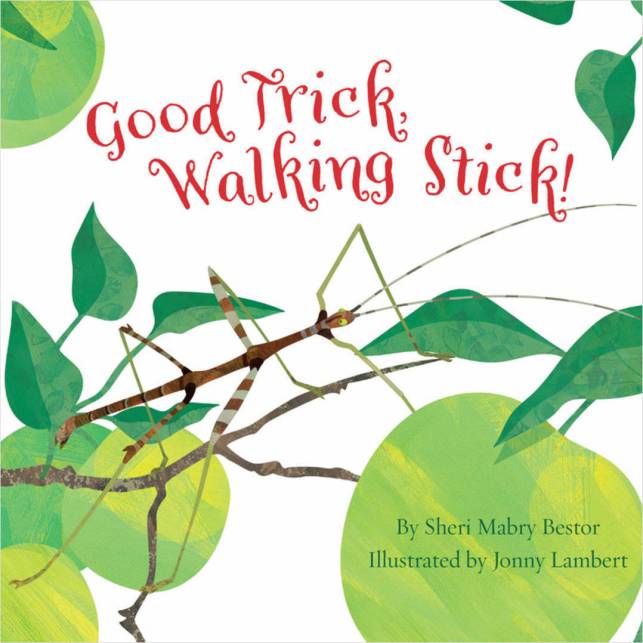
Good Trick, Walking Stick!

Written by Sheri Mabry Bestor | Illustrated by Jonny Lambert


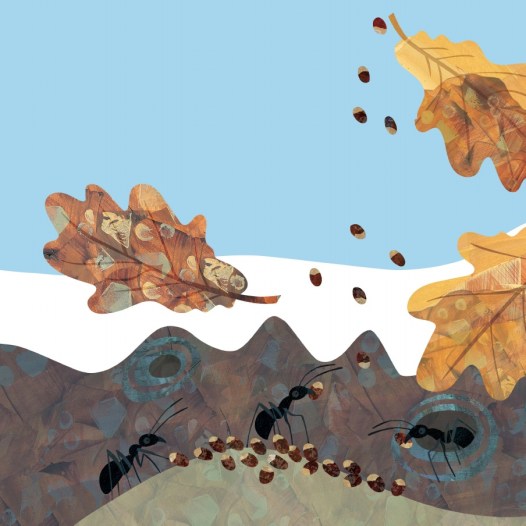
The walking stick is one insect that knows a thing or two about tricks. Even before it’s born wile plays a part in its survival. A mother walking stick drops her eggs where they will be buried by autumn leaves—and found by ants that think they are delicious seeds to eat. Why would a mother purposefully do this?! She knows that the ants will take the eggs to their colony, where they will eat only the tops leaving the baby walking sticks undisturbed. The ants will then drag the remains of the “seeds” to their garbage dump area, where they will spend a warm winter safe from predators until spring.

celebrate-picture-books-picture-book-review-good-trick-walking-stick-interior-art-eggs

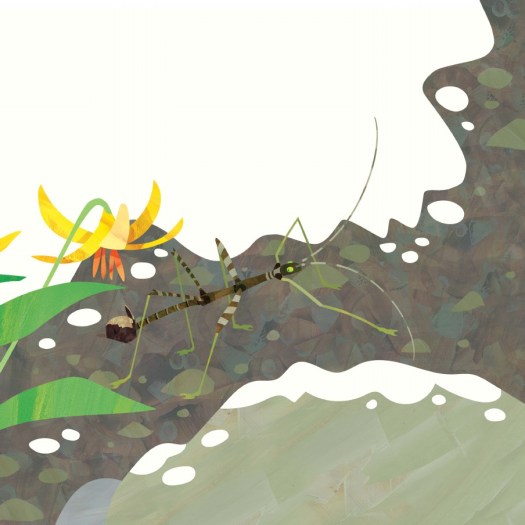
In the spring a baby hatches. It look like a tiny twig—a twig that can walk! The baby searches for food and munch, munch, munches the leaves it finds. As it becomes bigger it molts, shedding its old skin and growing a new one. The walking stick looks just like the branches that it lives on. It is perfectly camouflaged! “Good trick, walking stick!”

But a bird with keen eyesight swoops down and in an instant grabs the walking stick in its beak. Quickly, the walking stick squirts out a bad-smelling juice. The bird spits it out, but has gained a snack while the walking stick has lost a leg! It’s okay, though; the walking stick will just grow a new one! “Good trick, walking stick!”

The walking stick finds a tree with others of her kind hidden in its branches. The leaves make delicious meals. During the day the walking stick can change color to blend in with the sunlit bark of the tree and stay cooler. At night the walking stick becomes darker to hide in the shadows and stay warm. “Good trick, walking stick!”

When a squirrel brushes past, looking for a meal, the walking stick “pulls in her legs and drops to the forest floor, just like a stick falling off a larger branch. The stick insect is safe.” All day the insect lies on the ground, not moving, pretending to be just another cutting. At nightfall the walking stick climbs back into the tree. The squirrels and birds are resting now, so the stick insects “Munch munch. Crunch. Munch.”

celebrate-picture-books-picture-book-review-good-trick-walking-stick-interior-art-camouflage

With the onset of fall stick insects begin looking for mates. The females “spritz their perfume into the cooling air.” Males find them. Even if a walking stick does not have a mate, she can still produce eggs which will all develop into females. The eggs settle into the fallen leaves, ready to begin their unique life. “Good trick, walking stick!”

Stick insects are some of the most unusual creatures in the world. Measuring from an inch or two to 21 inches (53 centimeters), they can be found in forests, parks, even your own backyard! Sheri Mabry Bestor’s story of a year in a walking stick’s life is filled with action, suspense, and the clever ploys stick insects use to survive. Bestor’s enthusiastic, conversational tone and evocative language will engage kids over a wide range of ages. Each page also contains fascinating scientific sidebars that expand on the events in the story.

Jonny Lambert’s collage-style illustrations are a perfect match for the text. The mottled hues and textures of nature are beautifully represented in the vibrantly colored two-page spreads. The scientific details of the stick insect’s life are clearly and organically depicted, making it easy for kids to understand and enjoy the concepts: on one page ants carry away eggs with missing tops while on the next baby walking sticks emerge from the same images. Illustrations of the stick insect’s camouflage are particularly effective, and the cyclical quality of the story and the insect’s life are well portrayed.

For teachers and for kids who love the natural world and are curious about its unique creatures, Good Trick, Walking Stick is a wonderful addition to their school or personal library.

Ages 5 – 9

Sleeping Bear Press, 2016 | ISBN 978-1585369430

Dump the Pump Day Activity

celebrate-picture-books-picture-book-review-walking-find-the-differences-puzzle

Take a Stroll Puzzle


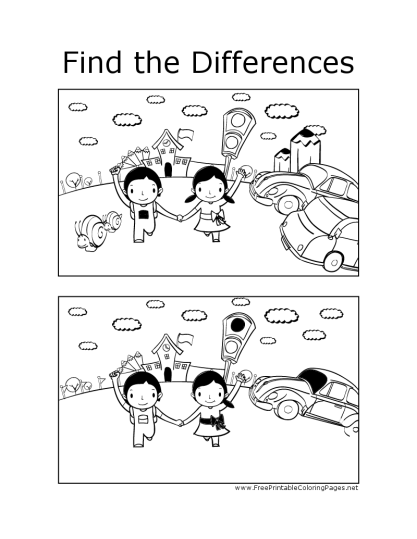
You can see so many amazing things when you take a walk! But can you spot the 15 differences between the two pictures in this printable Take a Stroll puzzle?

June 14 – Flag Day

celebrate-picture-books-picture-book-review-why-are-there-stripes-on-the-american-flag

About the Holiday

Flag Day commemorates the day in 1777 when the “Stars and Stripes” designed by Besty Ross was adopted as the official flag of the United States by the Second Continental Congress. Through early efforts by BJ Cigrand, a school teacher in Fredonia, Wisconsin, in 1885 and George Balch, a kindergarten teacher in New York City in 1889, observances celebrating the flag’s birthday were initiated. Three decades of remembrances followed, and in 1916 President Woodrow Wilson officially established the holiday. It wasn’t until President Harry S Truman signed an Act of Congress on August 3, 1949 that June 14 was designated National Flag Day. Today, people are encouraged to display the American flag. Special events and ceremonies also take place on this day.

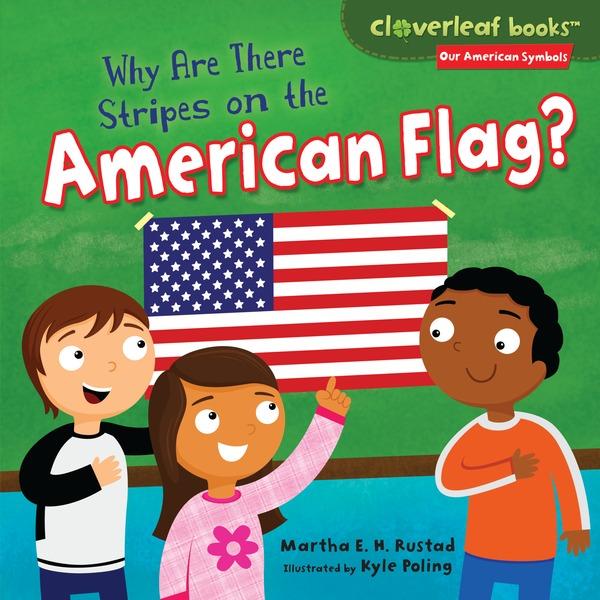
Why Are There Stripes on the American Flag?

Written by Martha E. H. Rustad | Illustrated by Kyle Poling


The school bell rings and the kids in Mr. Gomez’s class get ready to say the Pledge of Allegiance. Charles raises his hand with a question. Suddenly all the kids have questions about the flag and the words of the Pledge they say each morning. Mr. Gomez is enthusiastic about answering the kids, and the class starts a discussion that includes a bit about the Revolutionary War and how the original 13 colonies became the first states. The new government, Mr. Gomez says, wanted a symbol for the country.

In 1777, Mr. Gomez continues, the American leaders decided to use the colors red, white, and blue. The red stands for courage, the white for goodness, and the blue for fairness. The Flag Act of 1777 decreed that the flag have 13 stripes, alternating red and white, and 13 white stars on a blue field. Stars were chosen to represent the states because the founders believed America was “like a new group of stars shining in the night sky.” Mr. Gomez shows his class pictures of how the flag changed over the years as states were added to the union.

Next, the kids want to understand the wording of the Pledge of Allegiance better. Line by line, Mr. Gomez defines the more difficult words. Allegiance he explains means loyalty or friendship and that in the first line of the pledge we are promising to be loyal to and respect the flag. Respect is shown when we stand and place a hand over our heart while reciting the pledge, obey the rules of raising and lowering the flag, and other requirements. Mr. Gomez then explains what a Republic is and the idea that America is indivisible in that her people live and work as a team, staying together even when we disagree. The concepts of liberty and justice are also defined.

The class is excited with their new knowledge and before heading out for recess, they say the Pledge of Allegiance together.

A Make Your Own Flag activity follows the text along with a glossary of words used in the book and resources for further study.

Martha E. H. Rustad has written a primer about the American flag and the Pledge of Allegiance that will engage kids and teach them about these important patriotic concepts. Words such as symbol, justice, liberty, and more are described through the give and take between Mr. Gomez and his students, using familiar examples from the playground and classroom. Each page also includes facts about the US flag, the Flag Act, the design of early flags, flag etiquette, and more.

Kyle Poling’s friendly and colorful illustrations depict a diverse class where the concepts being discussed are clearly visible. Young readers will feel right at home in Poling’s classroom environment and be excited to learn about the origins of our most familiar symbol.

Ages 5 – 8

Millbrook Press, 2014 | ISBN 978-1467744652

Flag Day Activity

celebrate-picture-books-picture-book-review-flag-day-word-search

Star-Shaped Word Search


The stars on the American flag represent the country’s 50 states. In this printable Star-Shaped Word Search you’ll find words about the origins of the US flag and the Pledge of Allegiance.