May 9 – National Moving Month

celebrate-picture-books-picture-book-review-yard-sale-book-cover

About the Holiday

With better weather, kids getting out of school, and more jobs opening up, May begins the busiest season in the moving business. Moving can be both hard and exhilarating—and there’s so much to do! But help is only a phone call away. There are professionals to help you all along the way from selling and finding a house to packing up belongings and transporting them. Somewhere along the way, a yard sale is always in the mix to pass along those items that are no longer needed and to make a little money in the process!

Yard Sale

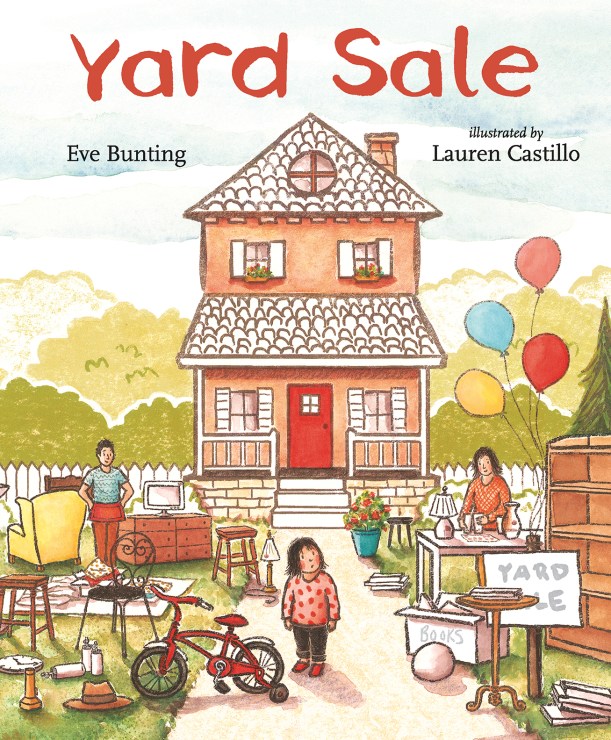
Written by Eve Bunting | Illustrated by Lauren Castillo


From the first words—“Almost everything we own is spread out in our front yard”—readers realize that this is no ordinary yard sale. A little girl sits on the front porch of her tidy house gazing out sadly at the family’s furniture, toys, books, and knick-knacks that are all for sale. The family is moving to a small apartment: “‘Small but nice,’ my mom told me.” The apartment has a secret bed that opens down from the wall “right in the living room.”

When the yard sale opens people stop by to look, “picking up things, asking the price, though Mom and Dad already put prices on them.” Even though the items are priced low, people haggle over how much they want to pay. A woman complains that ten dollars is too much for the little girl’s bed because the headboard has crayon marks on it. Watching, Callie now wishes she hadn’t made the marks to show how often she had read Goodnight Moon. Her mother settles for five dollars for the bed.
celebrate-picture-books-picture-book-review-yard-sale-bike-sold

Image copyright Lauren Castillo,  text copyright Eve Bunting. Courtesy of laurencastillo.com

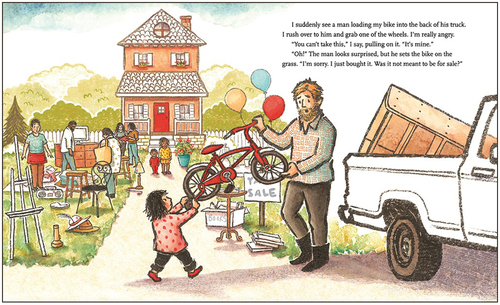
Suddenly, Callie sees a man loading her bike into a truck and runs to grab it. The man is confused, sorry for taking it, but tells her he has just bought it. Callie’s dad runs over and explains again that the apartment has no place for the bike or sidewalks nearby to ride it on. Callie looks at her dad who seems to have tears in his eyes. “But probably not,” she decides. “My dad doesn’t cry.” She relinquishes the bike, but asks the man, “‘Will you give it back to me when we get our house back?’”

Callie’s best friend, Sara, is waiting for her. The two friends hug and talk about why Callie has to move. “‘I wish you didn’t have to go,’” Sara mutters. “‘Why do you, anyway?’” Callie shrugs. “‘I don’t know. It’s something to do with money.’” They don’t understand what has happened, and Sara offers, “‘I could ask my parents if you could stay with us.’” But Callie’s heart tells her where she belongs. “‘My parents would be lonely,’” she says. “‘…I’d miss my mom and dad.’”
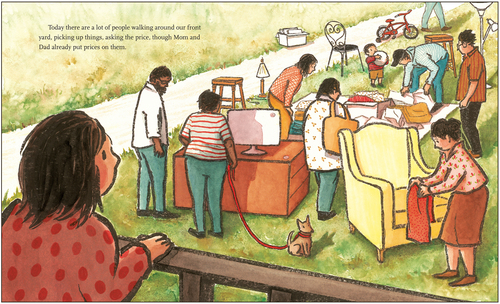
celebrate-picture-books-picture-book-review-yard-sale-callie-watching

Image copyright Lauren Castillo, text copyright Eve Bunting. Courtesy of laurencastillo.com

The sale continues and people drive away with tables, chairs, and clothing. For a moment, Callie feels important when a man asks her if their large potted geranium is for sale and she directs him to her dad. By the end of the day almost everything is gone. Callie’s mom “looks droopy” and her dad is comforting her. Callie sits dejectedly watching the final things being carried away and thinking that she will give Sara her red heart necklace and invite her to visit their new apartment.

At that moment a woman comes up to Callie and says, “‘Aren’t you just the cutest thing? Are you for sale?’” Callie has a visceral reaction: “A shiver runs through me, from my toes to my head.” She runs to her parents, crying. “‘I’m not for sale, am I? You wouldn’t sell me, would you?’” Her parents drop what they are doing to hug and reassure Callie that they would “‘not ever ever, ever’” sell her. “‘Not for a million, trillion dollars.’”
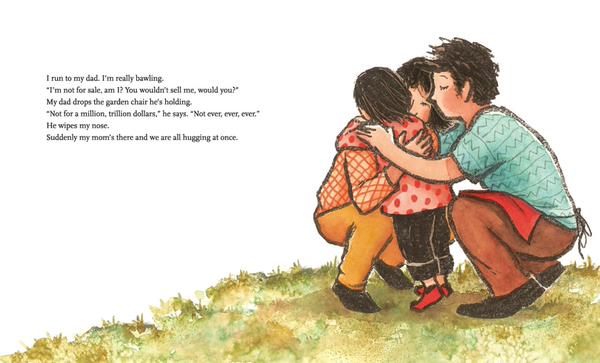
celebrate-picture-books-picture-book-review-yard-sale-hugging

Image copyright Lauren Castillo, text copyright Eve Bunting. Courtesy of Candlewick Press

With everything gone, Callie and her parents go back inside their “almost empty house.” It’s okay, Callie thinks. None of the stuff is important, and it wouldn’t fit in their new place anyway. “But we will fit in our new place. And we are taking us.”

For so many children frequent relocations or sudden moves from a home they know is a reality. Eve Bunting’s Yard Sale treats this subject with sensitivity and honest emotion through the eyes of a little girl for whom the change is confusing but ultimately reassuring. Bunting does not stint on either the setting of the yard sale itself, where people quibble over a couple of dollars, or the toll the day takes on the family. Her dialogue always rings true, and her straightforward delivery allows for understanding and for the moments of humor to shine through.

celebrate-picture-books-picture-book-review-yard-sale-balloons

Image copyright Lauren Castillo, text copyright Eve Bunting. Courtesy of laurencastillo.com

Lauren Castillo’s ink-and-watercolor paintings anchor this emotional story in a homey, loving environment even as they realistically portray the atmosphere of the yard sale. The full range of feelings are apparent in the characters’ faces from sadness and doubt to kindness and acceptance. Children will respond to Callie with her earnest attempts to understand and feel the comfort and encouragement Callie receives as her parents bend down to talk to her, hold her hand, and give her hugs.

Yard Sale is a poignant story that offers assurance and insight both for children who are facing a move and the friends and classmates who will miss them. The book’s theme is applicable to other daunting circumstances and would be a welcome addition to classroom and local libraries as well as for individuals encountering change.

Ages 4 – 9

Candlewick Press, 2017 (paperback); ISBN 978-0763693053 | 2015 (hardcover); ISBN 978-0763665425

To view more books and artwork by Lauren Castillo, visit her website!

National Moving Month Activity

celebrate-picture-books-picture-book-review-garage-sale-maze

Garage Sale Maze


A garage sale is a bit like a treasure hunt. Can you find your way through this printable Garage Sale Maze from the roadside sign to the items for sale? Here’s the Solution!

May 5 – It’s Get Caught Reading Month

celebrate-picture-books-picture-book-review-old-lion-and-little-rabbit-cover

About the Holiday

Initiated in 1999 and sponsored by the Association of American Publishers, Get Caught Reading Month inspires people of all ages to discover or rediscover the joys of reading. No matter what types of books you like best—from fiction to nonfiction, mystery to humor, picture books to novels—there are stories on bookstore and library shelves that will enhance your life! This month take the opportunity to read a new book or an old favorite and get caught up in the magic!

The Old Lion and the Little Rabbit

By Keiko Kaichi


Once King of the Plains, Old Lion had given up his place in the herd to his sons and now lived a quiet life alone. One day while napping, he felt a tickle in his mane and smelled a tantalizing aroma nearby. Old Lion discovered a tiny baby rabbit sleeping peacefully in the soft fur of his mane. “‘Hey,’ Old Lion thought, ‘this little one won’t fill my belly. But if I let him eat enough, he’ll grow up to be big and delicious!’” So Old Lion gathered as much grass as he could and fed the baby rabbit well, all the while feeling hunger growing in his stomach.

celebrate-picture-books-picture-book-review-old-lion-and-little-rabbit-herd

Copyright Keiko Kaichi, 2017, courtesy of minedition.

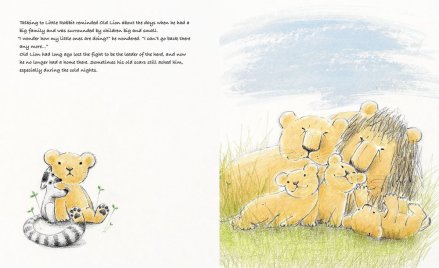
To pass the time between feedings, Old Lion told Little Rabbit about his younger days on the savanna. “Little Rabbit crinkled up his nose with joy when he listened to Old Lion’s stories.” When other animals saw Old Lion and Little Rabbit together, they couldn’t believe it. As Old Lion talked to Little Rabbit, he remembered his big family and the joy of having children around him. He wondered how they were doing. But he knew that he couldn’t go back once he had “lost the fight to be the leader of the herd. Sometimes his old scars still ached him, especially during the cold nights.”

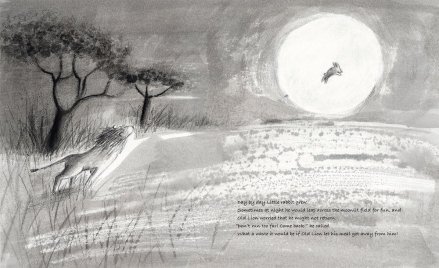
Now that Little Rabbit was growing bigger, he sometimes hopped far into the field, exploring just for fun. Then Old Lion worried that he might not come back, fearful that all his time and hard work would be wasted. He would call after Little Rabbit, reminding him to come back, and Little Rabbit always did.

celebrate-picture-books-picture-book-review-old-lion-and-little-rabbit-hopping-in-moonlight

Copyright Keiko Kaichi, 2017, courtesy of minedition.

They spent their days watching the other animals, Little Rabbit perched on top of the lion’s head in order to see better. As time went by, Old Lion began to wish he could be satisfied with a diet of plants and wondered about the unfamiliar feeling in his heart. “Could it be that he was starting to care about this little creature who trusted him so blindly? Such a thing made no sense. Still, he had to admit that something warm stirred in him when he saw Little Rabbit each morning.”

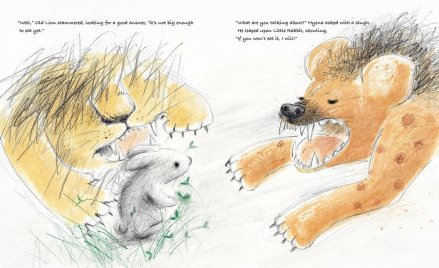
One day as Little Rabbit played among the weeds while Old Lion rested, Hyena came calling. When he saw the little bunny, he immediately asked to share in the delicious meal as he often did. Old Lion was taken off guard and stammered that Little Rabbit was not nearly big enough to make a meal of. Hyena protested and pounced. Old Lion found his former quick reflexes and “with one gulp he snatched up Little Rabbit into his jaws.”

celebrate-picture-books-picture-book-review-old-lion-and-little-rabbit-hyenna

Copyright Keiko Kaichi, 2017, courtesy of minedition.

With a bit of regret but admiration for his old friend, Hyena turned and skulked away. When they were alone, Old Lion opened his mouth wide and let Little Rabbit climb out. He saw that his tiny friend had suffered a cut on his paw and bandaged it carefully. Then he placed Little Rabbit on his head and began to walk in the direction of the wind. “He could no longer deny that he loved Little Rabbit.”

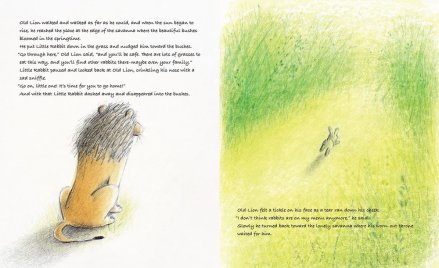
Old Lion walked and walked to the edge of the savanna, where bushes and tall grasses blossomed. He set Little Rabbit down gently and nudged him forward. “You’ll be safe” there, Old Lion told him. “You’ll find other rabbits there—maybe even your family.” Little Rabbit gazed at Old Lion sadly, but the lion reassured him that it was time to go home. Old Lion watched Little Rabbit bound away and “felt a tickle on his face as a tear ran down his cheek.” Then he turned and walked back to where his throne waited.

celebrate-picture-books-picture-book-review-old-lion-and-little-rabbit-letting-rabbit-go

Copyright Keiko Kaichi, 2017, courtesy of minedition.

Keiko Kaichi’s books masterfully tug at readers’ heartstrings with poignant stories populated with adorable characters that immediately inspire love and empathy. In Old Lion and Little Rabbit, the lion’s history is revealed naturally and at a pace that makes his transformation believable and all the more emotional. Just as do children within a family, Little Rabbit alters Old Lion’s life simply through trust and dependence. Children will respond to the growing love between Old Lion and Little Rabbit. They will also find the solution to the mystery established at the beginning both surprising and satisfying. Adult readers cannot be faulted for feeling a small lump in their throat when Old Lion unselfishly protects Little Rabbit from Hyena and then takes him to safety.

Kaichi’s acrylic and pencil drawings are both evocative of the golden savanna and filled with tender sentiments. Old Lion may once have been a fierce predator, but he is now a contemplative and caring elder statesman while Little Rabbit is a wee nubbin of cuteness. As he sits next to the much bigger lion, his tiny paw touching Old Lion’s arm, or collects a bouquet of weeds under Old Lion’s watchful gaze, Little Rabbit swells readers hearts.

Superb in every way, Old Lion and Little Rabbit would make a wonderful choice for home bookshelves as well as for public and school libraries.

Ages 3 – 7

minedition, 2017 | ISBN 978-9888341245

Get Caught Reading Month Activity

celebrate-picture-books-picture-book-review-catch-a-book-maze

Catch a Book! Maze


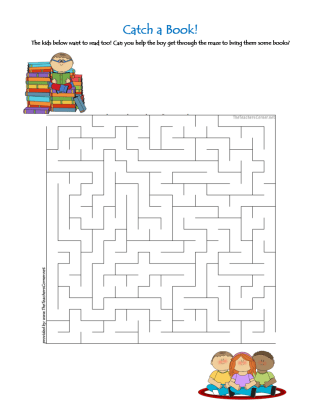
One boy has a whole stack of books to share with his friends! Can you help him through this printable Catch a Book! Maze? Here’s the Solution!
Picture Book Review

April 29 – National Go Birding Day

celebrate-picture-books-picture-book-review-mr-brown's-fantastic-hat-cover

About the Holiday

With all the bird activity going on right now as these little creatures build nests, lay eggs, and take care of new families, it’s a perfect time to go bird watching. The weather promises to be warm, and with a little stealth, a good sense of observation, and perhaps some binoculars, you should be able to spot quite a few lovely species. As the subject of today’s book found, if your home—or your hat—is inviting, feathered friends will come! So head out to a park, forest, beach—or even your backyard—and enjoy the beauty of the birds in your area.

Mr. Brown’s Fantastic Hat

By Ayano Imaí


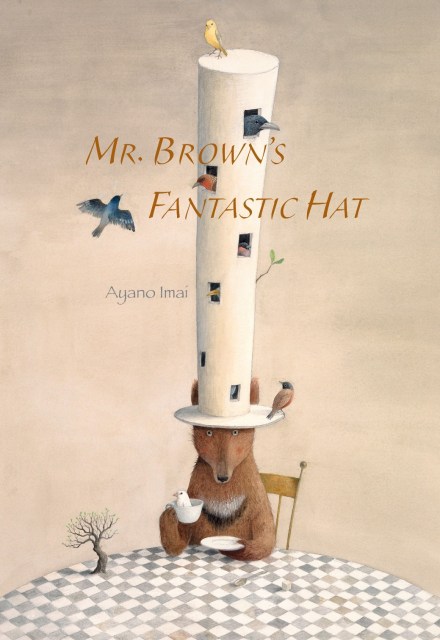
Mr. Brown lived alone and, if you asked him, he’d tell you he liked it that way. He “had no friends and he didn’t want any.” If you were privy to his secret thoughts, however, you’d learn that Mr. Brown was actually very lonely. Mr. Brown liked to take long walks, and when he went out, he always wore his “smart,” distinctive hat. “One day while Mr. Brown was sleeping, a woodpecker flew down and started tapping a hole in his hat, thinking, ‘What a wonderful nest this hat would make!’”

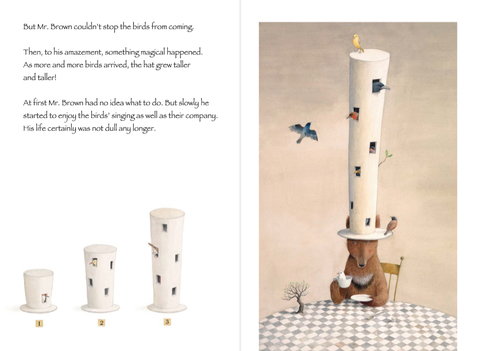
When Mr. Brown woke up he was shocked to discover that a bird had moved into his hat. Someone living this close to him was not what Mr. Brown had in mind at all. Then to Mr. Brown’s dismay the “woodpecker soon told all his friends about the wonderful new home and invited them all to join him.” Soon Mr. Brown’s hat was full of holes—and birds! You might think a regular hat would not have enough room for so many residents—but Mr. Brown’s hat was no ordinary one. As more and more birds moved in, his hat grew taller and taller!

celebrate-picture-books-picture-book-review-mr-brown's-fantastic-hat-birds-live-in-hat

Image copyright Ayano Imaí, courtesy of minedition, 2014

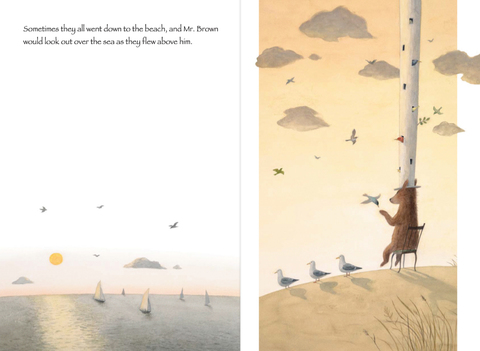
As the days went on Mr. Brown discovered that he was beginning to enjoy the birds’ singing and their company. Now Mr. Brown had renewed purpose in his daily walks: “He loved to show off his hat. Everywhere he went it was full of the music of singing birds.” People on the street took notice and wanted to emulate Mr. Brown. All over town people began wearing tall hats, “but the birds preferred to stay with Mr. Brown no matter how hard people tried to persuade them.”

One day as autumn settled in, Mr. Brown noticed that all the birds had flown away. He was sad and didn’t understand where they had gone or why they had left him. He wondered if he would see them again. The idea of a quiet life no longer held the appeal it once did, and Mr. Brown missed his friends. He tried to convince himself that he didn’t care that the birds had left, but he continued to fill the feeders and watch out for them every day.

celebrate-picture-books-picture-book-review-mr-brown's-fantastic-hat-looking-out-to-sea

Image copyright Ayano Imaí, courtesy of minedition, 2014

Even though it was time for Mr. Brown to take a long winter’s nap, he tried to stay awake, worried that there would be no one to care for the birds if they returned. But nature took its course, and Mr. Brown fell into a deep sleep. One morning after a particularly vivid dream in which Mr. Brown could hear the birds singing, he woke to a tapping sound. He went to the door and peered out.

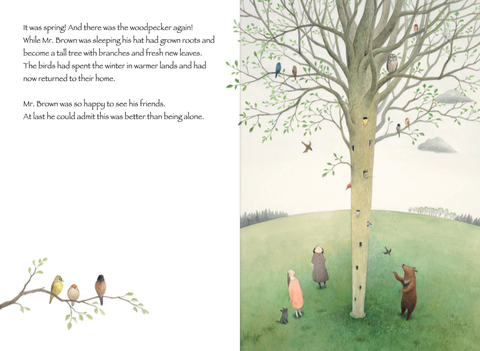
Spring had come and with it Mr. Brown’s hat had grown roots and sprouted branches and leaves. The old holes were filled with their previous tenants. The sight filled Mr. Brown with joy, and he finally could admit to himself that sharing his life with friends “was better than being alone.”

celebrate-picture-books-picture-book-review-mr-brown's-fantastic-hat-hat-grows-into-tree

Image copyright Ayano Imaí, courtesy of minedition, 2014

Ayano Imaí’s gloriously beautiful book plumbs the nature of solitude and loneliness as well as the value of friendship with an honesty that is at once heartrending and uplifting. For so many quiet, introspective people—children and adults alike—navigating the world of small talk, casual relationships, and making friends is similar to traveling uncharted territory, where the language and mores are foreign. It can become easier to tell oneself that it doesn’t matter, when in reality it matters a great deal. Many times happiness comes when one finds their niche or, in some surprising way, a niche finds them.

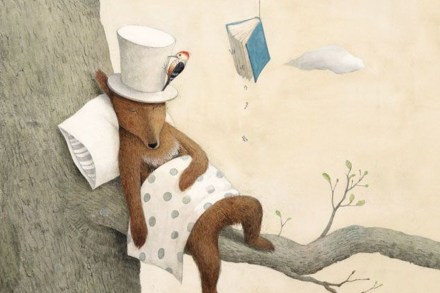
celebrate-picture-books-picture-book-review-mr-browns-fantastic-hat-sleeping-on-branch

Image copyright Ayano Imaí, courtesy of midedition, 2014

Imaí tells the story of Mr. Brown and his fantastical hat in straightforward narration, but more profound meaning is revealed in her illustrations. Mr. Brown, it is discovered, is a brown bear who has taken on the aspects of humans. He walks upright, carries an umbrella and bag, owns a home, and wears a hat. His fur is even the same color as the townspeople’s clothing. But while he may be among people, he is not of them. His home has a grass floor which sprouts mushrooms and weeds; another weed pokes out from the bristles of his brush; a tree branch juts from a wall; and mushrooms share space with the laundry on the drying line.

Mr. Brown comes from nature and belongs with nature, so it is no surprise that the birds flock to him and prefer him to humans, who in an ironic twist long to be like Mr. Brown. Mr. Brown’s hat is also symbolic of one’s heart, in that as a person embraces friends, their ability to accept and love others continues to grow.

I especially like the ending of Mr. Brown’s Fantastic Hat, in which Mr. Brown stays true to himself. He does not suddenly discover his “wild” side and become someone that he is not. He is able to remain a quiet, introspective bear while also embracing his friends, his love for them, and his place in the world. He finds inner happiness and loved ones to share it with.

Ages 3 – 8 (and up)

minedition, 2014 | ISBN 978-9888240845

National Go Birding Day Activitycelebrate-picture-books-picture-book-review-mr-browns-fantastic-hat-lets-go-birding-bird-species-word-search

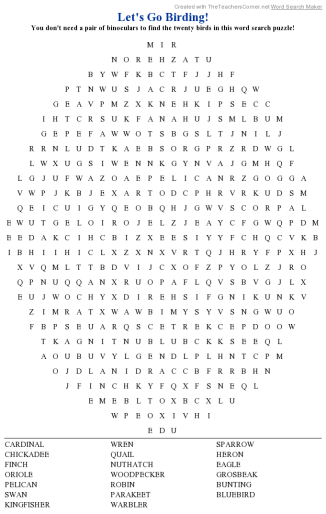
Let’s Go Birding! Word Search Puzzle


You don’t need a pair of binoculars to find the twenty kinds of birds in this printable Let’s Go Birding! Word Search Puzzle. Here’s the Solution!
Picture Book Review

April 24 – It’s Car Care Month

celebrate-picture-books-picture-book-review-car-cowboy-hay-bales

About the Holiday

So, after a long winter of standing around in freezing temperatures, slipping on icy pavement, and not getting quite as much exercise as usual, your car could use some tender loving care. April is the perfect time to schedule a maintenance checkup, give your auto a bath, and take ‘er out on the open road for a nice, long run. You never know, your car may have dreams too—just like the cute coupe in today’s story.

Mosey on down below to find an chance to win a copy of Cowboy Car!

Cowboy Car

Written by Jeanie Franz Ransom | Illustrated by Ovi Nedelcu


“Ever since he was knee-high to his daddy’s hubcaps, Little Car wanted to be a cowboy.” He watched cowboy movies on the TV in his city garage and loved everything about cowboy life. Little Car lived in the city, squeezed in between lanes and lanes of cars and unable to see the sky for the soaring skyscrapers. He dreamed of sleeping under the stars and roaming the wide open plains. But everyone told Little Car, “‘Cars Can’t Be Cowboys.’”

Little Car’s dad wanted him to be a city taxi, like him; his mom hoped he’d be “a family car and settle down in a garage close to home.” Neither of those futures, however, offered the excitement of “herding cattle by day” and the camaraderie of “circling up around the campfire at night,” so when Little Car grew up he headed out West. First, he needed to look the part, but where would he find a hat big enough? He pulled up at a cowboy supply depot, and there on the roof sat the perfect 50-gallon hat!

celebrate-picture-books-picture-book-review-car-cowboy-hay-bales

Image copyright Ovi Nedelcu, text copyright Jeanie Franz Ransom. Courtesy of Two Lions.

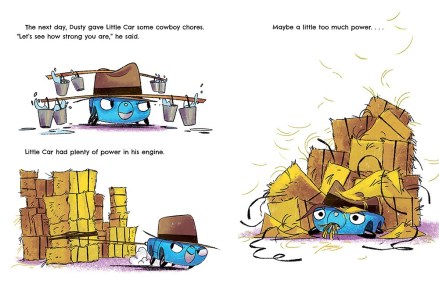
With the hat settled firmly on his roof, Little Car drove on to the Circle R. Ranch. There he met Dusty, who listened to Little Car’s dream of being a cowboy and gave him a bit of bad news: “‘Cars can’t be cowboys. They can’t ride horses!’” Little Car was disappointed, and so was Dusty—the ranch really needed extra help. Little Car wanted to prove his mettle, so Dusty agreed to let him try a few cowboy tests. The next morning, Little Car “zoomed around the barrels in no time. He was used to making quick turns around tight corners in the city.” He was also strong enough to carry heavy loads and move bales of hay. He could even round up li’l doggies in the dark in the beam of his headlights.

The next day Dusty promised to take Little Car to the rodeo. When they got there, though, Little Car was told he couldn’t participate because he didn’t ride a horse. Still, he was excited to watch Dusty ride Double Trouble, the biggest, meanest bull on the circuit. With Dusty hanging on tight, Double Trouble bucked and snorted and leaped. In a minute Dusty was thrown to the ground, and Double Trouble was headed straight toward him.

“With tires squealing, horn honking, and the radio blasting, Little Car got everyone’s attention—including the bulls.” He zipped right and left, “swerved, stopped, backed up, and drove around and around until the bull’s snorts turned into snores.” Afterward, a news reporter wanted to know if he was a cowboy at the Circle R. Ranch. “‘He sure is,’ Dusty said. ‘In fact, he’s my pardner!’”

Watching the report on the garage TV, Little Car’s mom and dad proudly exclaimed, “‘That’s our cowboy!’” And “Little Car drove off into the sunset, home on the range at last.”

celebrate-picture-books-picture-book-review-car-cowboy-hay-bales

Image copyright Ovi Nedelcu, text copyright Jeanie Franz Ransom. Courtesy of Two Lions.

Li’l pardners enamored of the cowboy life will be charmed by Little Car and his dreams to leave the big city for the freedom of cowboy life. With clever turns of phrase and a sprinkling of puns, Jeanie Franz Ransom takes readers on an endearing ride through the ups and downs, disappointments and successes of navigating life on one’s own. When Little Car uses his city experience, smarts, and courage to save Dusty and earn a spot at the ranch, despite not being able to ride a horse, kids will see that they too can overcome obstacles and accomplish their goals.

Children will love adorable Little Car as he snuggles next to his mom and taxicab dad in the garage. With wide headlight eyes and a grill with an ever-present grin, Little Car makes his way out West, where kids will giggle at the 50-gallon hat atop an old general store, whoop as Little Car completes his cowboy tests, and cheer when he outwits Double Trouble to save the day. As Little Car drives off into the sunset, readers will know that he—and they—have a bright future ahead.

Car and cowboy or cowgirl enthusiasts, as well as kids new to school and other activities will find a friend in Little Car and ask to hear his story again and again. Cowboy Car would make a sweet addition to story time and bedtime reading.

Ages 3 – 7

Two Lions, 2017 | ISBN 978-1503950979

Discover more about Jeanie Franz Ransom and her books on her website!

You’ll find a portfolio of books and illustration work by Ovi Nedelcu on his website!

Car Care Month Activity

celebrate -picture -books-picture-book-review-follow-the-open-road-maze


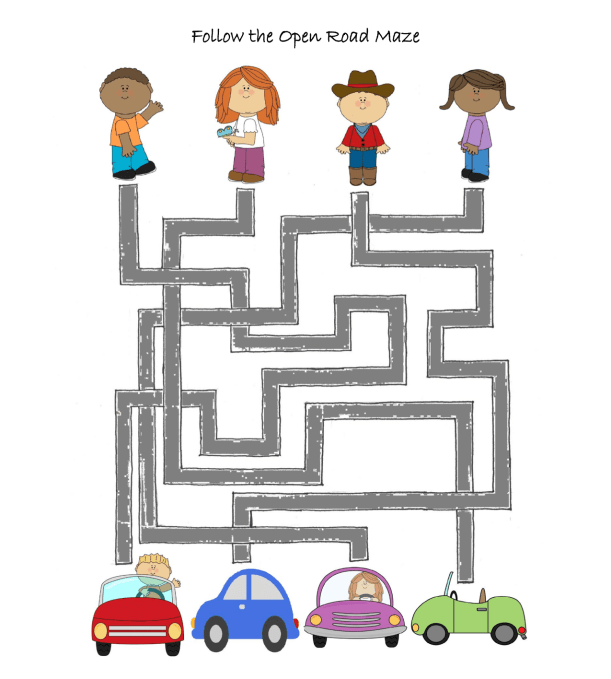
Follow the Open Road Maze


These four kids are ready to head out and enjoy the day! Match each child to the right car in this printable Follow the Open Road Maze to get them on their way!

Picture Book Review

April 18 – World Heritage Day

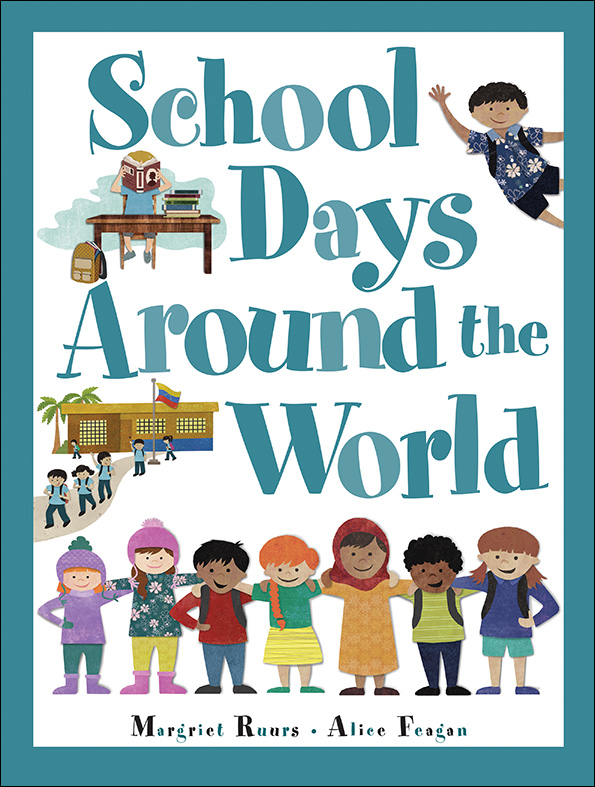
celebrate-picture-books-picture-book-review-school-days-around-the-world-cover

About the Holiday

Today’s holiday was established in 1982 by the International Council of Monuments and Sites to celebrate the joint history and heritage of the human race. World Heritage Day invites us to honor all of the world’s cultures and promotes awareness of important cultural monuments and sites in order to preserve these valuable historical places. Nearly 10,000 members from more than 150 countries, including architects, engineers, artists, geologists, civil engineers, and architects, work tirelessly to protect the world’s cultural achievements.

School Days Around the World

Written by Margriet Ruurs | Illustrated by Alice Feagan


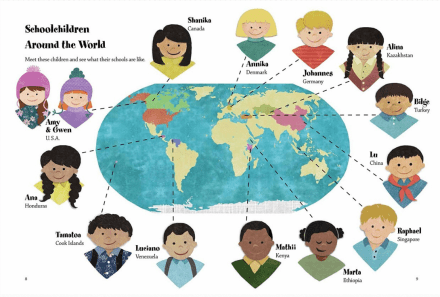
Every day millions of children around the world go to school, but schools can vary from place to place. Some classes are held in large buildings with libraries, science labs, and computer rooms while others gather in small buildings or even outside. “Schools around the world may be very different, but children everywhere like to have friends and learn new things.” In School Days Around the World, readers meet children from thirteen countries to learn what their educational day is like.

First, children meet Tamatoa, who attends school on Rarotonga, one of the Cook Islands in the South Pacific. Tamatoa arrives to school on a scooter just as the “thang-Thong-thang! of the wooden slit drum calls students inside. Tamatoa’s teacher is wearing flowers in her hair as she does every day. She teaches the children their Ura language, and in the afternoon they dance the hupa, the island’s traditional dance. In Singapore Raphael goes to an international school where the students speak many languages. Raphael knows Dutch, English, and Spanish. His best friend Aamon speaks Hindi, Chinese, and English. Raphael likes to read and write stories on the computer. Sometimes they “have a craft fair to raise money to help children in other parts of the world.”

celebrate-picture-books-picture-book-review-schools-around-the-world-map

Image copyright Margriet Ruurs, text copyright Alice Feagan. Courtesy of alicefeagan.com

Marta walks to her school in Azezo, Ethiopi, even though she is blind. Her friend Ayana holds her hand tightly to help “her around potholes and cow patties.” There are so many students that there are two different sessions. Marta goes in the morning with 500 other children. There are 70 students in her class. They learn Amharic and about Ethiopia. At noon Ayana and Marta “hurry home to help feed the ox and cow and to fetch water from the village well.”

Camilla is from Germany. Her older brother Johannes lives at a boarding school during the school year. He shares his room in an old stone house with three boys. Everyone eats together and cleans up afterward—just like in a family. In class he learns “about nature and science. They also learn how to sail.” Camilla can’t wait until it’s her turn to go to school.

If you visited Annika at school in Copenhagan, Denmark, you would probably spend most of the day outside. Some days the students take a bus to their forest school. There the “run and climb on an old boat.” They “play on swings and with a ball.” Outside they also listen to birds and learn about plants and insects and other parts of nature. While Annika enjoys spending cold days outside, Ana’s days are usually warm. She lives in San Luis, Honduras and walks an hour from her home in the hills to her new school. Inside, two teachers show the children how to read and write. Sometimes, Ana says, “a nurse visits our school. She teaches us how to brush our teeth and stay healthy.” One day a van delivers backpacks full of school supplies, books, and even running shoes.

In Alberta Canada, Shanika goes to a First Nations school where she learns her traditional Cree language along with math and language arts. After lunch, they hear stories, and elders teach them “powwow dances, drumming and how to raise a teepee. They also hold feasts where there are prayers, and the whole community shares tea, soup, bannock loaded with beans and cheese, and berries.

celebrate-picture-books-picture-book-review-school-days-around-the-world-turkey

Image copyright Margriet Ruurs, text copyright Alice Feagan. Courtesy of alicefeagan.com

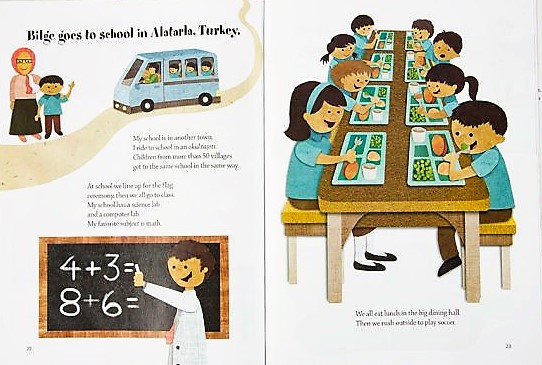
You can also spend school days with Lu in China, Alina in Kazakhstan, Mathii in Kenya, Bilge in Turkey, Luciano in Venezuela, and Amy and Gwen in Alaska, USA.

 In her short, engaging stories based on the lives of real families, Margriet Ruurs takes readers globe-trotting with new friends to show readers a typical school day in cities big and small. The details of each child’s experience—both familiar and unique—help readers learn more about their peers, promoting greater empathy and understanding now and for a better future.

Alice Feagan’s cut paper collages are full of joy and personality as kids dance, play, read, and study together. While the students’ clothing, lunches, and school buildings may differ from country to country, readers will see that the enthusiasm to learn is universal. A world map at the beginning of the book points out where each featured child lives.

A discussion following the text gives teachers, homeschoolers, and individuals tips on using the book to expand on the stories told. A glossary provides definitions and a pronunciation key for the native words found throughout the book. School Days Around the World offers a wonderful opportunity to jumpstart lessons on world customs and geography.

Ages  3 – 8

Kids Can Press, 2015 | ISBN 978-1771380478

Discover more about Margriet Ruurs and her books as well as activities for teachers and readers on her website!

You’ll find more about Alice Feagan and a portfolio of her illustration work on her website!

World Heritage Day Activity

Monumental Word Scramble

Monumental Word Scramble


You’ll travel the world as you unscramble the names of 15 world monuments in this printable Monumental Word Scramble Puzzle.

Picture Book Review

April 13 – National Make Lunch Count Day

celebrate=picture-books=picture-book-review-the-bear-ate-your-sandwich-cover

About the Holiday

Today’s holiday was established to help trim the number of days you remain at your desk during lunchtime eating the same ol’ same ol’. Instead of staying in, why not get out of the office! Try eating outside in a nearby park or going to a favorite lunch spot to enjoy a hearty lunch. You could even invite some coworkers along and engage in some interesting, funny, or stimulating conversation. By getting away from your work for a bit, you’ll actually be more creative and efficient for the rest of the day!

The Bear Ate Your Sandwich

By Julia Sarcone-Roach


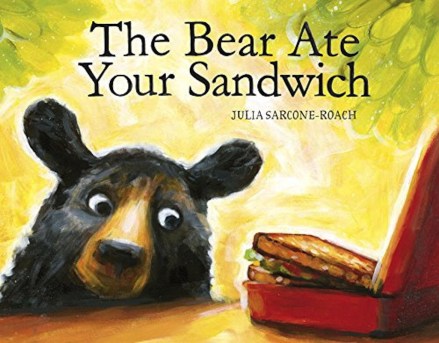
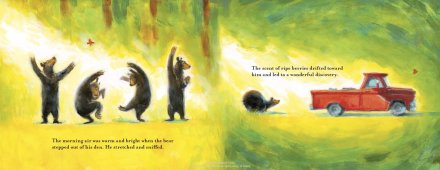
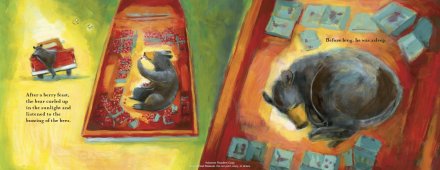
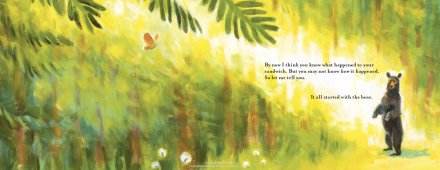
Oh dear… something happened to your sandwich? Well… “it all started with the bear. You see, when the bear woke up and left his den for his morning exercises, he caught a whiff of ripe berries in the back of a pickup truck. After eating his fill, he fell asleep in the bed of the truck. He woke once again to find himself “being quickly swept along like a leaf in a great river. The forest disappeared in the distance and high cliffs rose up around him.” Soon he found himself in a city—a forest like he had never seen before.

celebrate=picture-books=picture-book-review-the-bear-ate-your-sandwich-morning-exercises

Copyright Julia Sarcone-Roach, courtesy of jsarconeroach.com

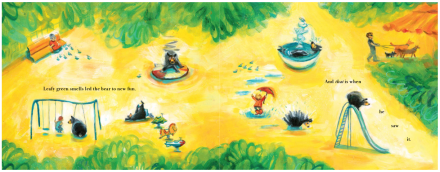
Still, he found many similarities to home. The fire escapes, clothes lines, and rooftops offered challenging places to climb, the lamp posts scratched his back just fine, and there was a new sidewalk that was just as squishy as the mud in the forest. This forest also had many intriguing smells, but each time the bear explored one he found someone else had gotten there first. He continued to follow his nose and discovered a playground full of fun things to do. He was at the top of the slide “when he saw it.”

celebrate=picture-books=picture-book-review-the-bear-ate-your-sandwich-eating-berries

Copyright Julia Sarcone-Roach, courtesy of jsarconeroach.com

“There it was. Your beautiful and delicious sandwich. All alone.” The bear was wily, though. “He waited to make sure no one saw him (not even the sandwich) before he made his move.” Feeling safe, the bear grabbed that sandwich and gobbled it all up. He was just licking his lips when he heard a “sniff, snuffle, slobber, snort behind him.” He turned around to find four canine witnesses to his misdeed.

He fled the scene, loping down the street to the nearest tall tree and escape. From the top of this telephone pole, he could see way down the river to his own forest. He stowed away on a boat and fell asleep to its gentle rocking. “When he opened his eyes, he heard the breeze in familiar branches and the birds’ and bugs’ evening song.” He was home.

celebrate=picture-books=picture-book-review-the-bear-ate-your-sandwich-at-the-playground

Copyright Julia Sarcone-Roach, courtesy of jsarconeroach.com

“So. That’s what happened to your sandwich.” Really! I was there—“I saw it all.” I even tried to save your sandwich, but all I could retrieve was this tiny piece of lettuce. I know you’re disappointed, and “I’m sorry to have to tell you about your sandwich this way, but now you know….” Would your own puppy pal lie to you?

Julia Sarcone-Roach knows how to spin a yarn. Her clever and funny confessional story will have kids’ glued to the eye-witness testimony about a bear who, according to the report, seems to be both sympathetic and a scoundrel. The surprise ending will make readers laugh—especially if they have mischievous siblings, friends, or pets. Sarcone-Roach’s vibrant, gauzy illustrations echo the fantastical imagination of the sly Scottie while giving vibrant life to the forest and city. Her depictions of the bear performing his morning exercise ritual, clambering across apartment buildings, encountering his competition for scraps, and attempting the playground equipment are endearing, and his utter astonishment at being caught is a comical joy.

celebrate=picture-books=picture-book-review-the-bear-ate-your-sandwich-beginning

Copyright Julia Sarcone-Roach, courtesy of jsarconeroach.com

Ingenious clues sprinkled throughout the pages may lead some skeptical readers to doubt the veracity of the story, but the ending is delightfully satisfying and unexpected to all—except, perhaps, for the pup’s owner.

The Bear Ate Your Sandwich is a fun, charming, (mis?)adventure that kids will giggle through and ask for over and over. It would make a favorite addition to home libraries.

Ages 3 – 8

Knopf Book for Young Readers, 2015 | ISBN 978-0375858604

Discover so much more by Julia Sarcone-Roach on her website—including books, illustration, film, and more!

National Make Lunch Count Day Activity

 celebrate-picture-books-picture-book-review-chew-on-this-lunch-words-word-scramble

Chew on This! Word Scramble


Oh dear! The lunch menu has gotten completely mixed up! Can you unscramble the words on this Chew on This! Word Scramble so everyone can enjoy a tasty lunch? Here’s the Solution.

Picture Book Review

April 9 – National Inventor’s Month

celebrate-picture-books-picture-book-review-whoosh!-lonnie-johnson's-super-soaking-stream-of-inventions-cover

About the Holiday

Today’s holiday was established by the United Inventors Association of the USA, the Academy of Applied Science, and Inventor’s Digest Magazine to promote awareness of and celebrate the achievements of those creative individuals who make our lives better—or, in some cases, at least interesting. Every day there are kids and adults, professionals and amateurs pondering solutions to problems and just “what ifs?” Would you like to join them? You can celebrate this month by acting on one of your great ideas and by learning more about inventors like the subject of today’s book!

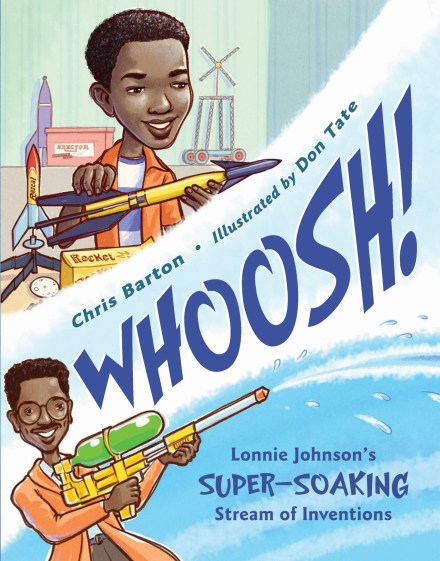
WHOOSH! Lonnie Johnson’s Super-Soaking Stream of Inventions

Written by Chris Barton | Illustrated by Don Tate


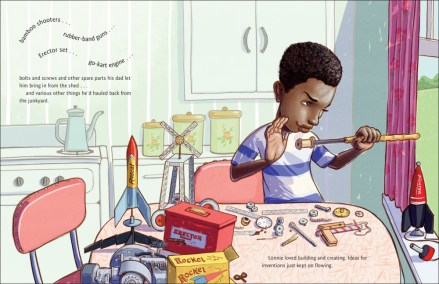
Lonnie Johnson had a way with stuff. In his hands bolts and screws, gears and springs, spools, clothespins, “spare parts his dad let him bring in from the shed, and various other things he’d hauled back from the junkyard” fueled Lonnie’s ideas for inventions and rocket ships. The kids at school loved to watch him launch the rockets he’d devised on the playground. Lonnie wanted to have a career as an engineer. Getting there took a lot of determination and courage. Once, the results of a standardized test said that he would not make a good engineer. Lonnie felt discouraged, but he knew that the person who had graded his test didn’t know him—or Linex.

celebrate-picture-books-picture-book-review-whoosh!-lonnie-johnson's-super-soaking-stream-of-inventions-young-lonnie-inventing

Image copyright Don Tate, courtesy of charlesbridge.com

Linex was the robot Lonnie had built from scrap metal. “Compressed–air cylinders and valves allowed Linex’s body to turn and its arms to move. The switches came from an old, broken jukebox. Lonnie used a tape recorder to program Linex, and as a bonus the reels looked like eyes.” Lonnie’s goal was to enter Linex in a science fair, but first he wanted to be able to program it. It took several years before he discovered how. Using his little sister’s walkie-talkie, Lonnie solved the problem and took Linex to the “1968 science fair at the University of Alabama—where only five years earlier, African American students hadn’t even been allowed.” Lonnie’s team won first place.

Lonnie went to college at Tuskegee Institute, where he realized his dream of becoming an engineer. His career “took him beyond Alabama—way beyond.”  He went to work for NASA. Before the orbiter Galileo could be sent to Jupiter, Lonnie developed a system that would ensure the craft would have a constant supply of power for its computer memory in case the main power was lost. Some fellow scientists doubted his idea would work, but it did. “As it photographed Jupiter and its moons, Galileo was supported by the power package that Lonnie designed.”

celebrate-picture-books-picture-book-review-whoosh!-lonnie-johnson's-super-soaking-stream-of-inventions-linex

Image copyright Don Tate, courtesy of charlesbridge.com

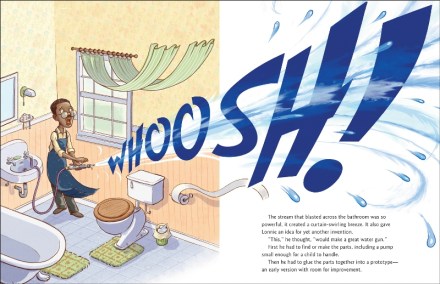
Even though Lonnie worked for NASA, he continued tinkering with his own ideas—in his own workshop. One problem he was trying to solve involved the need for the world’s refrigerators and air conditioners to have a cooling system that didn’t use the damaging chemical R-12. “He had an idea for using water and air pressure instead.” He built a prototype and experimented with it in his bathroom sink. When he turned his pump and nozzle on, though, he got a surprise as a stream of water blasted across the room.

Suddenly, Lonnie saw another use for his invention—as a water gun. He created a design small enough for children’s hands, and tested it at a picnic, where it was a hit. Lonnie took his idea to a toy company…and another…and another. Finally one company agreed to make his water gun. Spurred on by this success, Lonnie found investors to help him build other original inventions: “a water-propelled toy airplane, two kinds of engines, and his cooling system” that had led to the water gun. He even quit his day job to devote his time to inventing.

But things don’t always work out. Each project fell through—even the water gun. It was a scary time as he and his family had to move out of their house and into an apartment. But Lonnie believed in himself. He took his water gun to another toy company. In 1989 he found a toy company willing to take a look. Lonnie made the trip to Philadelphia and wowed the executives with his invention.

celebrate-picture-books-picture-book-review-whoosh!-lonnie-johnson's-super-soaking-stream-of-inventions-water-powered-nozzle

Image copyright Don Tate, courtesy of charlesbridge.com

Now kids everywhere enjoy the fun of the Super Soaker. Today, Lonnie can be found in his workshop doing what he loves: “facing challenges, solving problems and building things” because “his ideas just keep on flowing.”

Chris Barton’s biography of Lonnie Johnson is a fascinating look at a man who succeeds in turning “No” into “Yes” by the power of his intelligence, ideas, and determination. Kids will love hearing about how one of their favorite toys came to be and will be inspired to chase their own dreams despite challenges and setbacks. Barton’s detailed narration provides a full picture of Lonnie Johnson and his times, specifics that attract and inform like-minded kids. Including the results of Lonnie’s exam should encourage kids who think differently. The story is enhanced by the conversational tone that makes it accessible to kids of all ages.

Don Tate illuminates Lonnie Johnson’s life story with his bold, full-bleed paintings that follow Lonnie from his being a child with big ideas to becoming a man who has seen these ideas through to success. With an eyebrow raised in concentration, young Lonnie demonstrates confidence and skill as he works on an invention, and kids will love seeing the tools of his trade laid out on the kitchen table. With his eyes narrowed in frustration and disappointment, Lonnie reads the results of his childhood exam. As Lonnie grows older and designs systems for NASA, the illustrations depict the schematics of the Galileo power package and Lonnie’s surprise at the strength of the water stream in his prototype cooling design. As all kids know, the spurt of a Super Soaker is awesome, and this fact is demonstrated in a “Wowing” fold-out page.

WHOOSH! Lonnie Johnson’s Super-Soaking Stream of Inventions is a welcome biography of the man who designs systems for the greater world but has never lost his youthful enthusiasm to invent.

Ages 5 – 10

Charlesbridge, 2016 | ISBN 978-1580892971

Check out more fiction and nonfiction books by Chris Barton on his website!

Discover more books written and illustrated by Don Tate as well as a portfolio of his work and book-related activity guides on his website!

National Inventor’s Month Activity

celebrate-picture-books-picture-book-review-movie-computer-dot-to-dot

Invention Dot-to-Dot Puzzles


Many inventions have changed the world and continue to be used long after they were first created. Connect the dots on these printable puzzles to discover three remarkable inventions!

Invention Dot-to-Dot 1 | Invention Dot-to-Dot 2 | Invention Dot-to-Dot 3

Picture Book Review