October 10 – World Space Week


About the Holiday

First declared by the United Nations in 1999, World Space Week has grown to be the largest public space-related event in the world. The week is an international celebration of science and technology, and their contribution to the betterment of the human condition. This year’s theme is “Living in Space” and “explores humanity’s journey toward making space a habitat, emphasizing the innovative technologies, challenges, and collaborative efforts that make this vision a reality.” Looking to celebrate this initiative with more than 15,000 events in more than 90 countries, the week sponsors space education and outreach events held by space agencies, aerospace companies, schools, planetaria, museums, and astronomy clubs around the world. To learn more about the week, visit worldspaceweek.org.

Thank you to Simon & Schuster/Paula Wiseman Books and Barbara Fisch at Blue Slip Media for sending me a copy of this book for review.

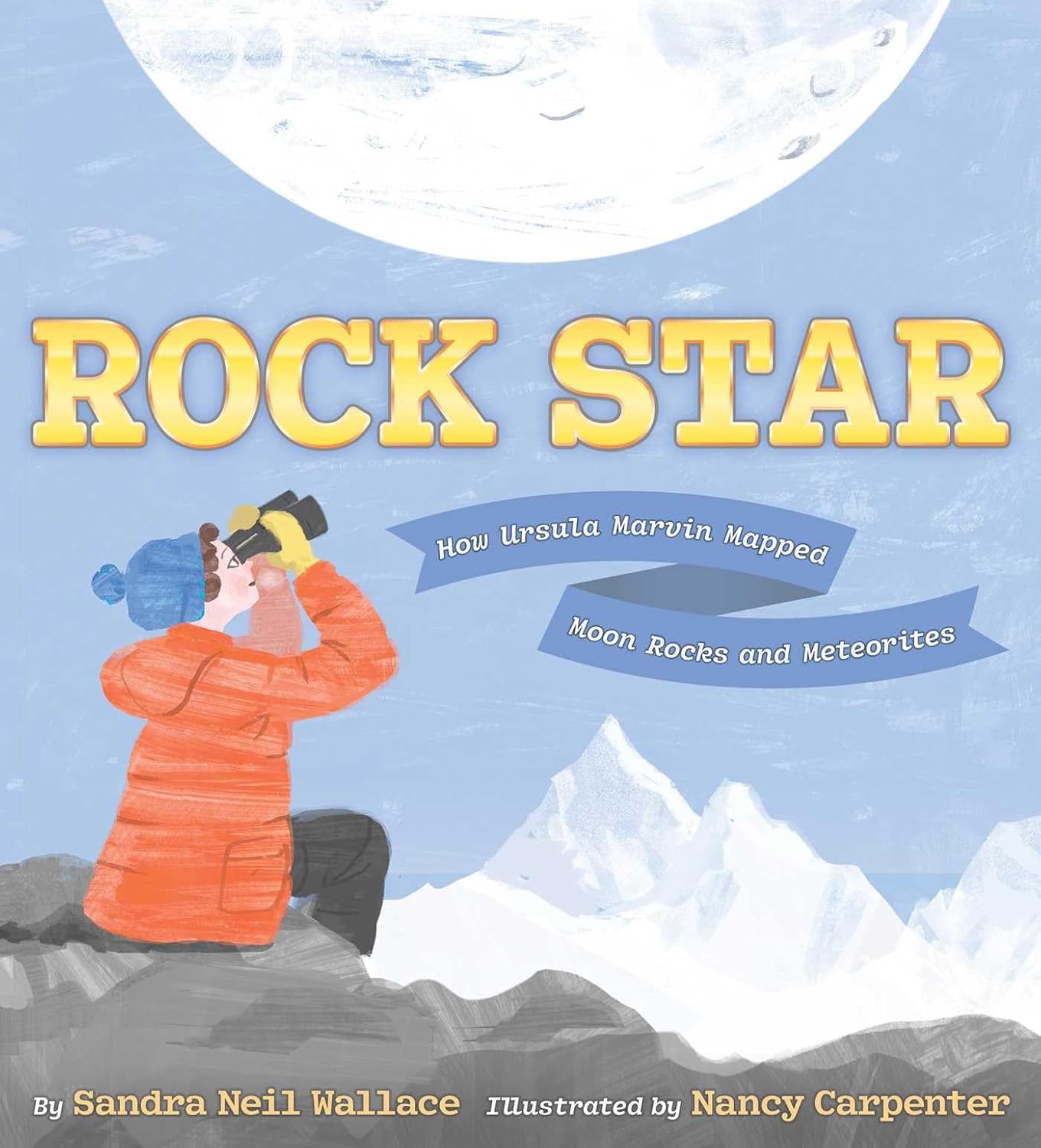
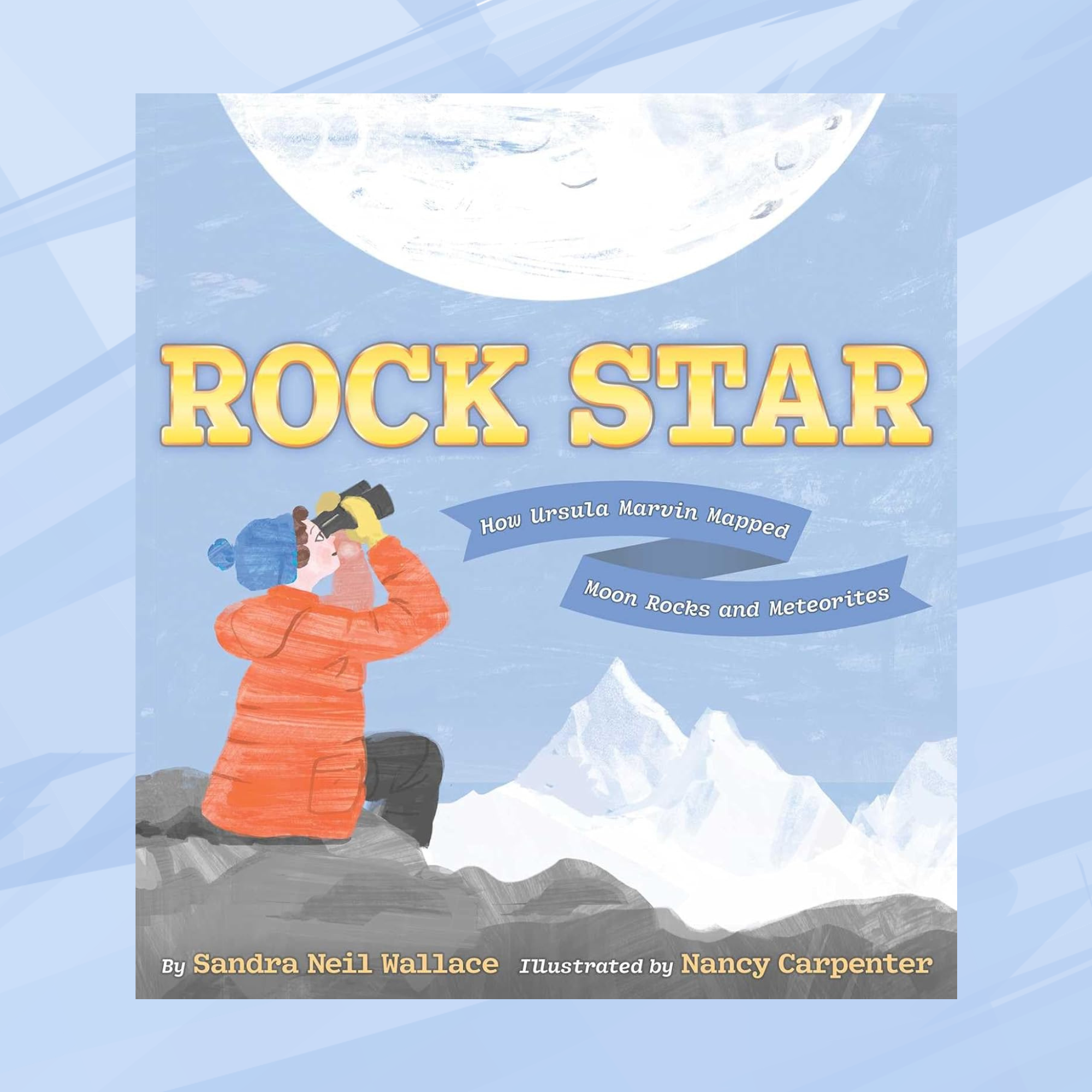
Rock Star: How Ursula Marvin Mapped Moon Rocks and Meteorites

Written by Sandra Neil Wallace | Illustrated by Nancy Carpenter

As a child growing up in Vermont, Ursula Marvin was captivated by the adventures winter brought. She was especially awed by the snowy mountains illuminated by “the frosty moonlight.” Her father was Vermont’s official entomologist, but Ursula had no intention of following in his footsteps or becoming any kind of scientist. She had her sights set on being an explorer. That was until she examined a rock under the microscope in college and decided to become a geologist. Her professor, however, denied her new major “because she was a woman.”
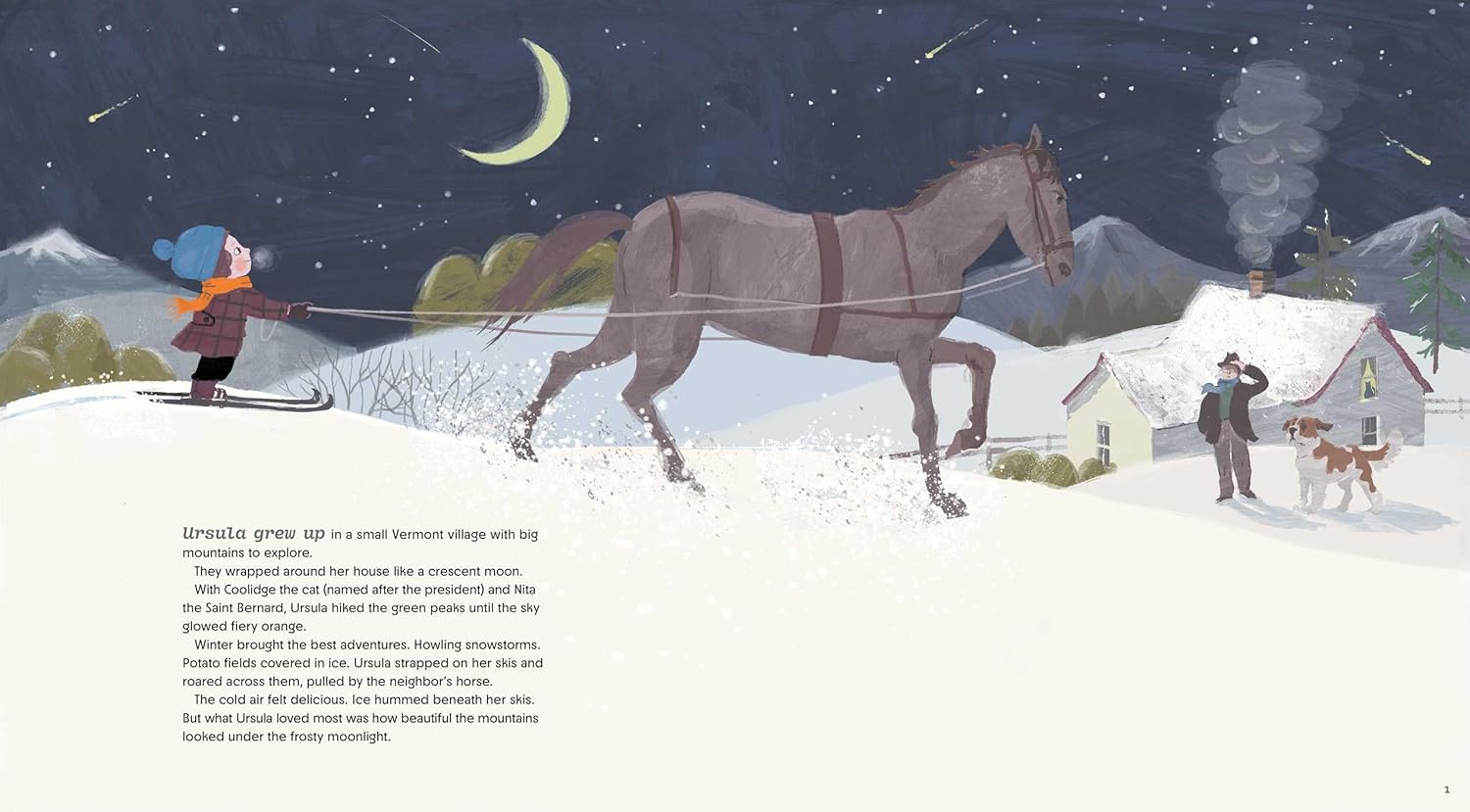
Illustration © 2025 Nancy Carpenter. Text © 2025 Sandra Neil Wallace. Courtesy of Simon & Schuster/Paula Wiseman Books.

Ursula took her talents to another university and earned a geology degree. She was an expert in recognizing rare minerals in Earth rocks and was tapped to be one of the first geologists to study rocks brought back from the moon. What she found was a world of color, minerals that proved “its surface was once a bubbling ocean of melted rock.” Ursula also studied meteorites, finding “minerals no one knew existed beyond Earth.” Her work revolutionized scientists’ views of the solar system.

But Ursula still yearned to explore, in particular she wanted to be the first woman to find meteorites in Antarctica—the coldest place on Earth. She loaded up a bag with frigid-cold-weather gear and joined an expedition. When Ursula and her male teammates landed, they set up camp. They had to work fast because winter was on its way, threatening to bury any meteorites under ice and snow for another year.
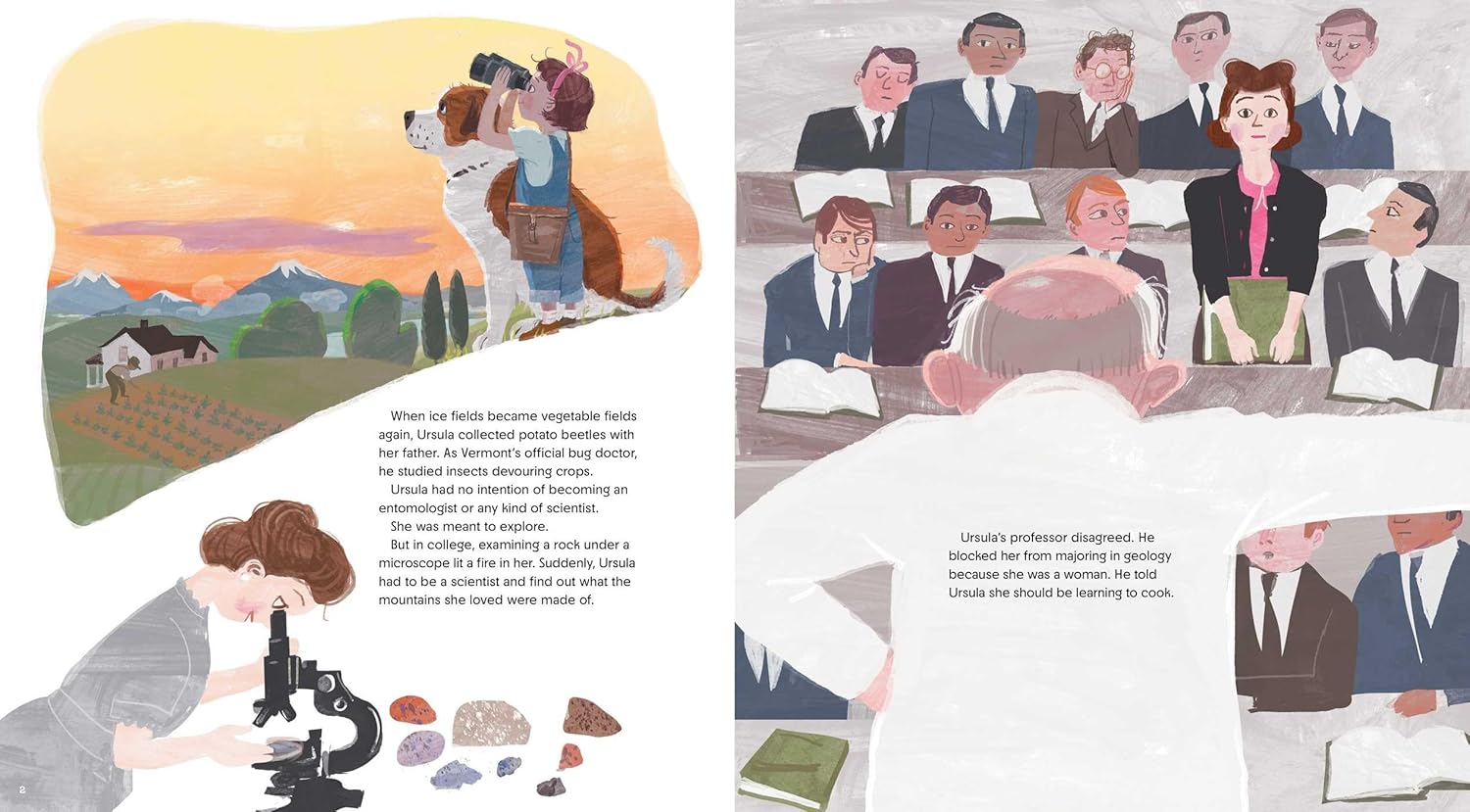
Illustration © 2025 Nancy Carpenter. Text © 2025 Sandra Neil Wallace. Courtesy of Simon & Schuster/Paula Wiseman Books.

Ursula wondered if she’d be able to recognize meteorites under these conditions, but she needn’t have worried. On her first day, a rock caught her eye. Examining it, she discovered distinctive traits—she’d discovered her first meteorite! Ursula was in her element, thriving in the harsh weather and “collecting meteorites more than four billion years old.”

But not every day was a success. Ursula struggled to climb a mountain-like nunatak in her too-big boots, she mistook an ordinary Earth rock for a meteorite, and on the worst day, with one snowmobile broken, the team went exploring without her. Ursula vowed never to be left behind again.
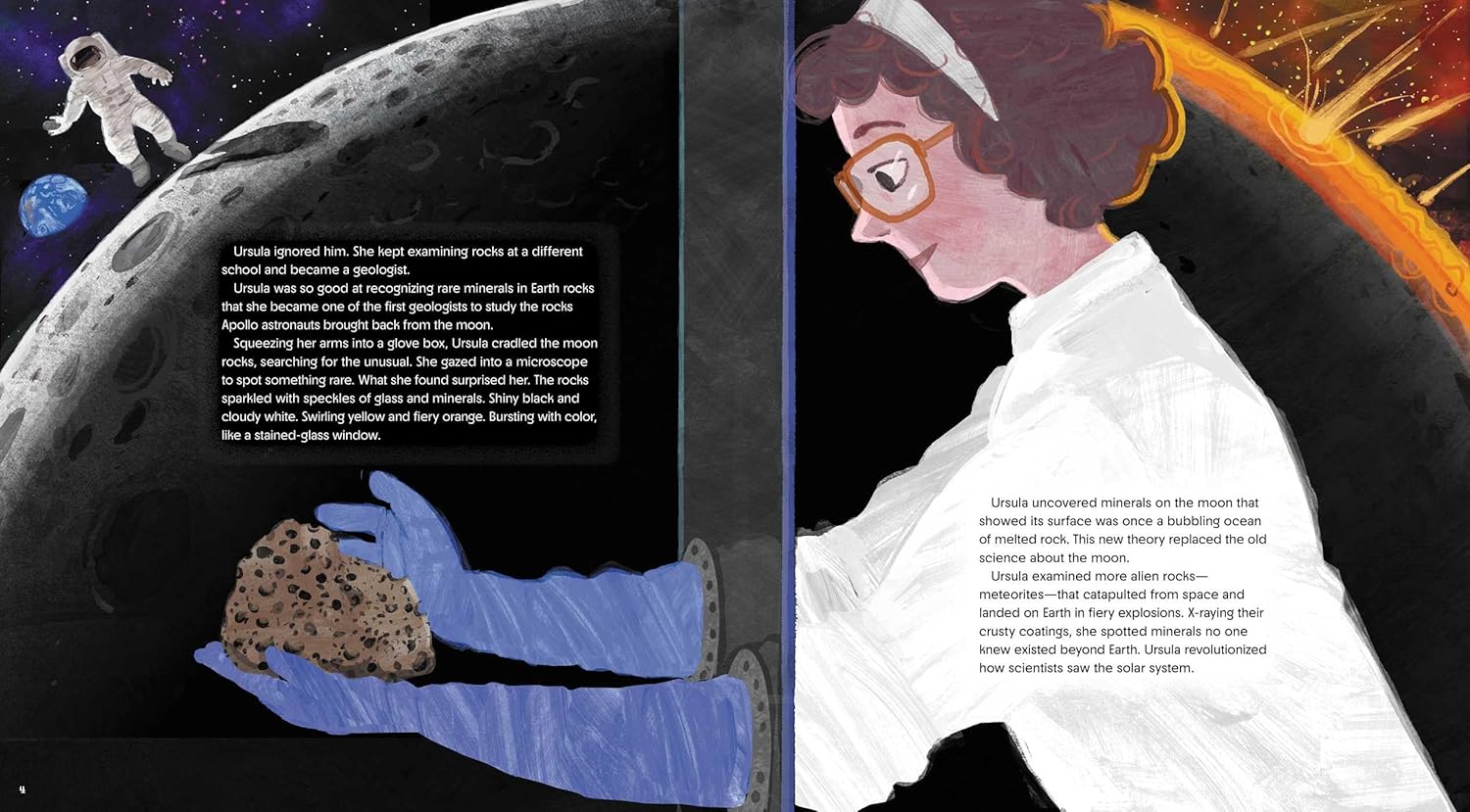
Illustration © 2025 Nancy Carpenter. Text © 2025 Sandra Neil Wallace. Courtesy of Simon & Schuster/Paula Wiseman Books.

With only one week left in the expedition, Ursula rode across the ice to “unexplored places where the meteorites were bigger and rarer.” She wanted to be the one to find the last meteorite of the trip, to be the one to discover a meteorite from the moon. But a fall dashed those dreams as she was airlifted to the hospital, leaving her teammates to collect the final meteorite.
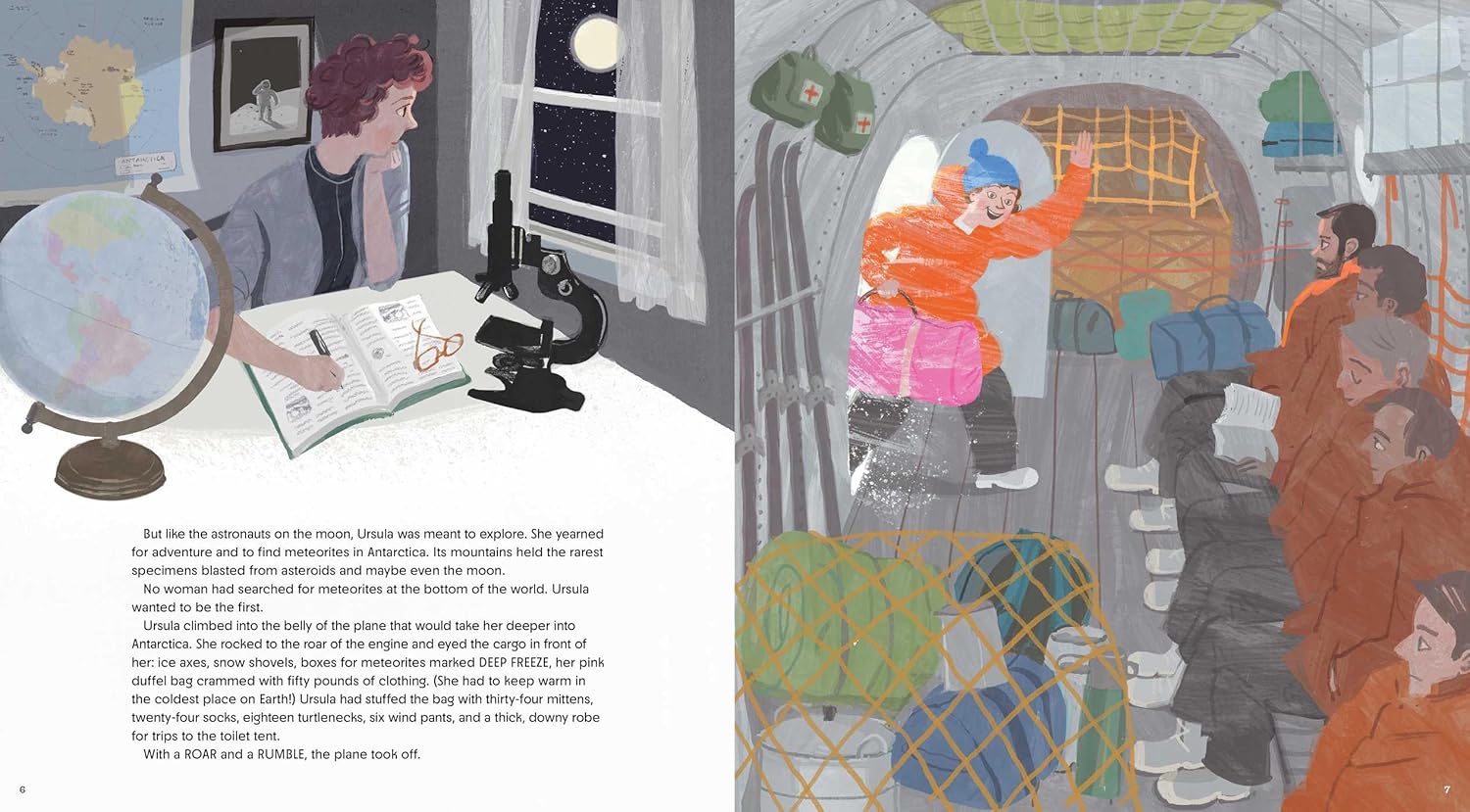
Illustration © 2025 Nancy Carpenter. Text © 2025 Sandra Neil Wallace. Courtesy of Simon & Schuster/Paula Wiseman Books.

Back at home, Ursula was excited to examine this small meteorite, which looked so different from the others. She recognized the world of color from her earlier studies. “Ursula’s teammates had discovered the first lunar meteorite on Earth without her.” Instead of feeling disappointed, she was “jubilant.” She went on to become a preeminent expert on this moon meteorite and others and to inspire women to become scientists, many exploring Antarctica, where they found more moon meteorites and even some from Mars more than four billion years old. Ursula’s influence can still be seen today in her work as well as in the Marvin Asteroid and Moon’s Marvin Crater named for her.

Extensive back matter following the story includes an Author’s Note about the astonishing life and influence of Ursula Marvin; quotations from Ursula’s Antarctica journals; facts about Antarctica; dated milestones of Ursula’s life, education, and work; resources; and two photographs.
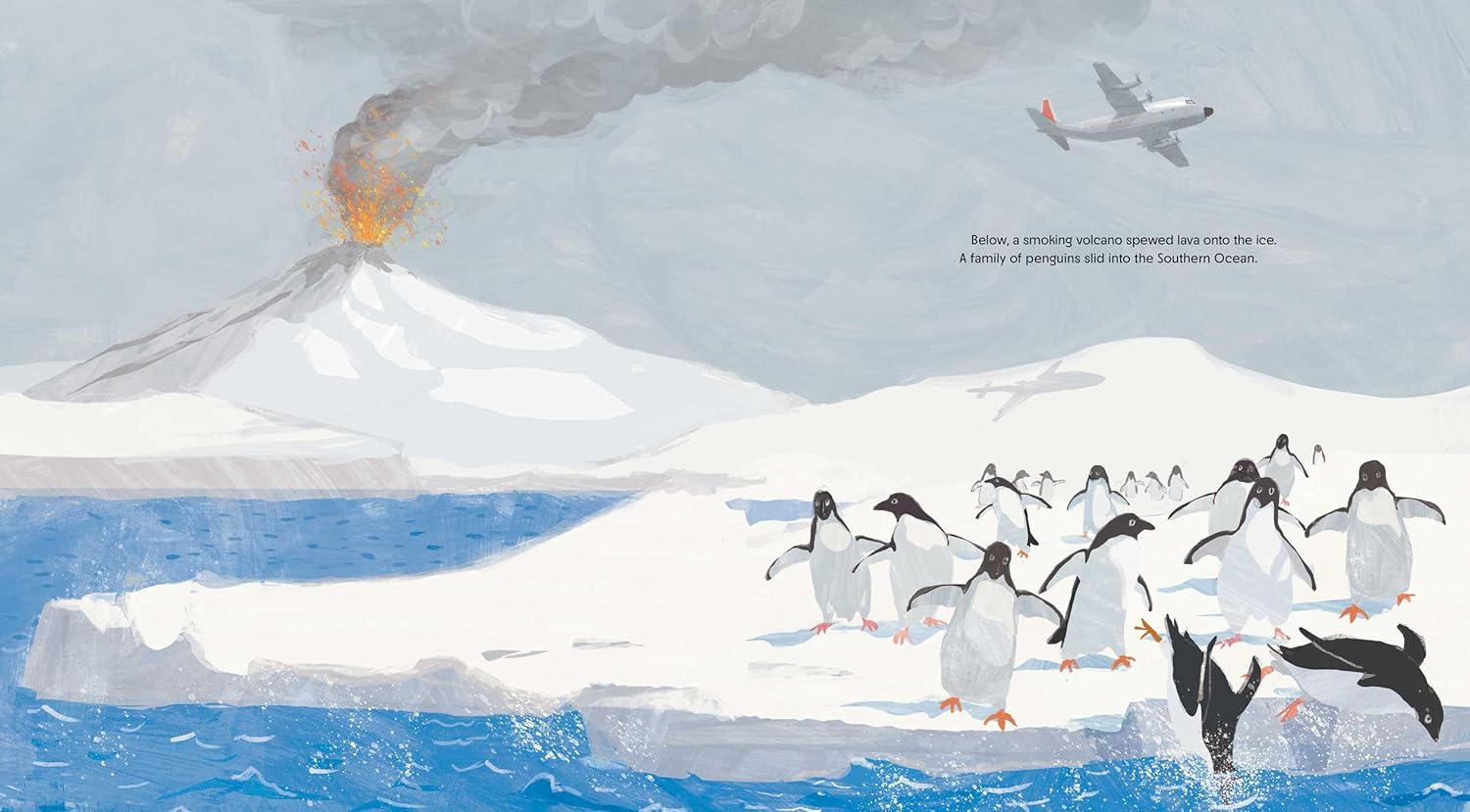
Illustration © 2025 Nancy Carpenter. Text © 2025 Sandra Neil Wallace. Courtesy of Simon & Schuster/Paula Wiseman Books.

Sandra Neil Wallace’s exhilarating biography of Ursula Marvin transports readers to the snow and ice of Antarctica, where they get to ride along with this extraordinary woman as she fulfills childhood goals while changing the face of science and forging new opportunities for women. Wallace’s storytelling is fast-paced and evocative and infused with emotion, suspense, and scintillating details that will captivate readers no matter what their interests.

Nancy Carpenter’s beautiful mixed media illustrations allow children to see early influences and experiences that spurred Ursula Marvin to pursue geology and the study of meteorites in particular. Her images of Antarctica bring chills and thrills as Ursula sets up her tent, speeds over icy fields in the swirling snow on her snowmobile, and flops on the ground to inspect rocks up close. Carpenter also depicts Ursula’s victories and disappointments, giving children a well-rounded view of this remarkable woman. Rock hounds will be wowed by Carpenter’s drawings of moon rocks and meteorites.

With much to impart not only on the life of Ursula Marvin but on believing in yourself, overcoming disappointments, and chasing your goals with gusto, Rock Star: How Ursula Marvin Mapped Moon Rocks and Meteorites is a top pick for home, school, and public library collections.

Ages 4 – 8

Simon & Schuster/Paula Wiseman Books, 2025 | ISBN 978-1534493339

Sandra Neil Wallace writes about people who break barriers and change the world. She is the author of several award-winning books for children, including Love Is Loud: How Diane Nash Led the Civil Rights Movement, illustrated by Bryan Collier; Marjory Saves the Everglades: The Story of Marjory Stoneman Douglas, illustrated by Rebecca Gibbon; and Between the Lines: How Ernie Barnes Went from the Football Field to the Art Gallery, illustrated by Bryan Collier, which received the Orbis Pictus Book Award and was an ALA Notable Book. A former ESPN reporter and the first woman to host an NHL broadcast, she is the recipient of the Outstanding Women of New Hampshire Award and creates change as cofounder of The Daily Good, a nonprofit bringing twenty thousand free, culturally diverse foods to college students each year through its Global Foods Pantries. Visit Sandra at sandraneilwallace.com.

Nancy Carpenter is the acclaimed illustrator of Thomas Jefferson and the Mammoth HuntQueen Victoria’s Bathing MachineFannie in the Kitchen, and Loud Emily, among other books. Her works have garnered many honors, including two Christopher Awards and the Jane Addams Children’s Book Award. She lives in Brooklyn, New York. Visit her at nancycarpenter.website.

World Space Week Activity
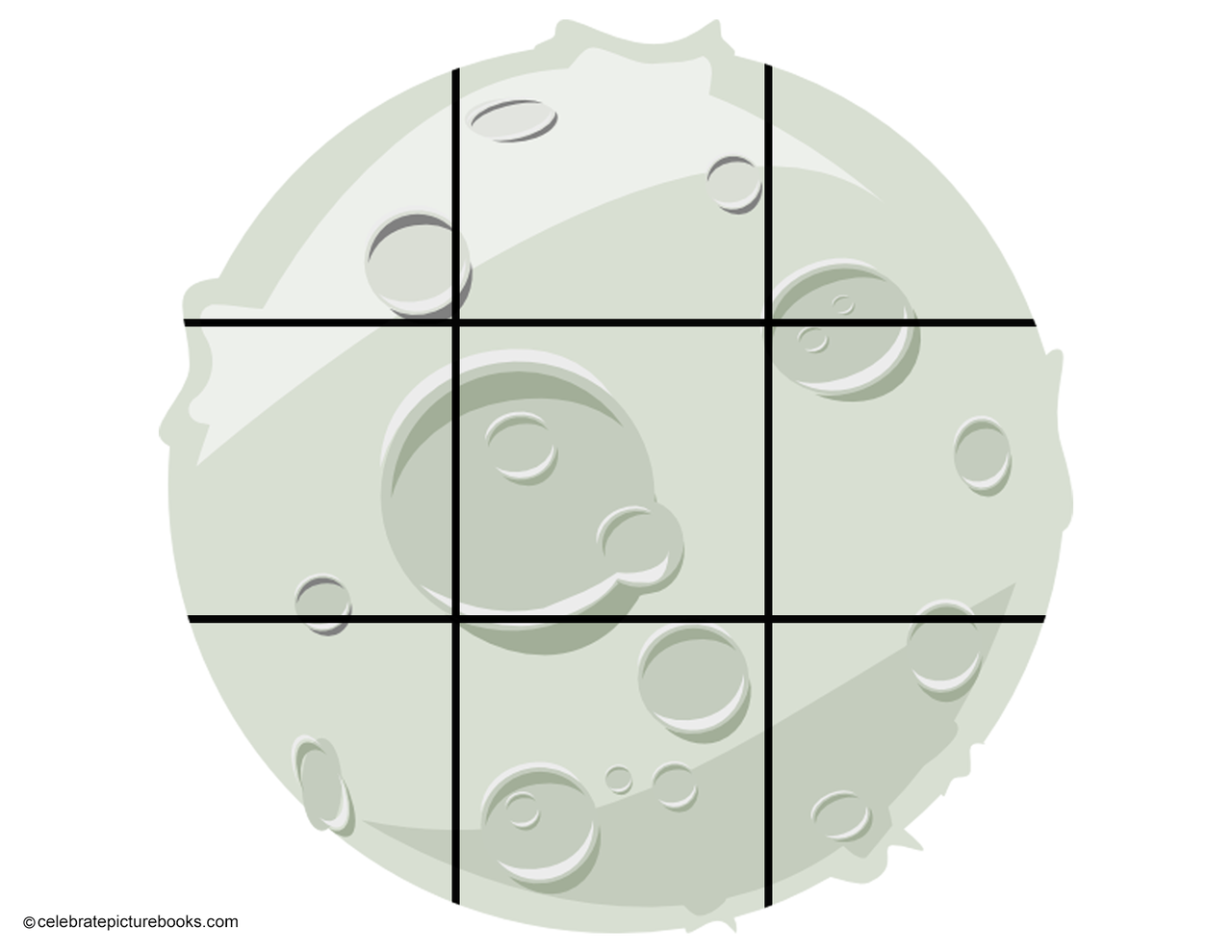
celebrate-picture-books-picture-book-review-rocket-to-the-moon-tic-tac-toe-game

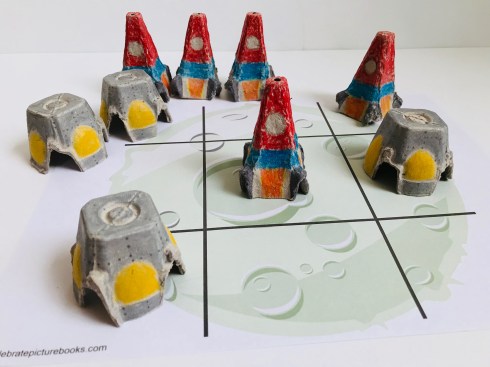
Out-of-this-World Tic-Tac-Toe Game

If you’re kids are fascinated by the moon, moon rocks, and meteors, they’ll enjoy making this tic-tac-toe game from simple materials you have at home!

Supplies

  • Printable Moon Tic-Tac-Toe Game Board
  • 2 cardboard egg cartons
  • Heavy stock paper or regular printer paper
  • Crayons
  • Black or gray fine-tip marker

Directions

To Make the Rockets

  1. Cut the tall center cones from the egg carton
  2. Trim the bottoms of each form so they stand steadily, leaving the arched corners intact
  3. Pencil in a circular window on one side near the top of the cone
  4. Color the rocket body any colors you like, going around the window and stopping where the arched corners begin
  5. With the marker color the arched corners of the form to make legs
  6. On the cardboard between the legs, color flames for blast off

To Make the Capsule

  1. Cut the egg cups from an egg carton
  2. Color the sides silver, leaving the curved section uncolored. (If your egg cup has no pre-pressed curve on the sides of the cup, draw one on each side.)
  3. Color the curved section yellow to make windows
  4. With the marker, dot “rivets” across the capsule

Print the Moon Game Board and play!
You can purchase Rock Star: How Ursula Marvin Mapped Moon Rocks and Meteorites from these booksellers

Amazon | Barnes & Noble | Bookshop

Picture Book Review

August 22 – First Day of Autumn

About the Holiday

If you live in the Northern Hemisphere, fall has arrived! If you live in the Southern Hemisphere, welcome to spring! Today, the hours of daytime and nighttime will be equal, ushering in a changing of the seasons. For some that means cooler weather, shorter days, and preparation in nature for the long winter, which leads to our seeing the brilliant reds, yellows, and oranges in the leaves of certain trees. Watching the leaves fall, swirl in the breeze, and pile up in backyards can only mean that a favorite autumn activity is just a leap away!

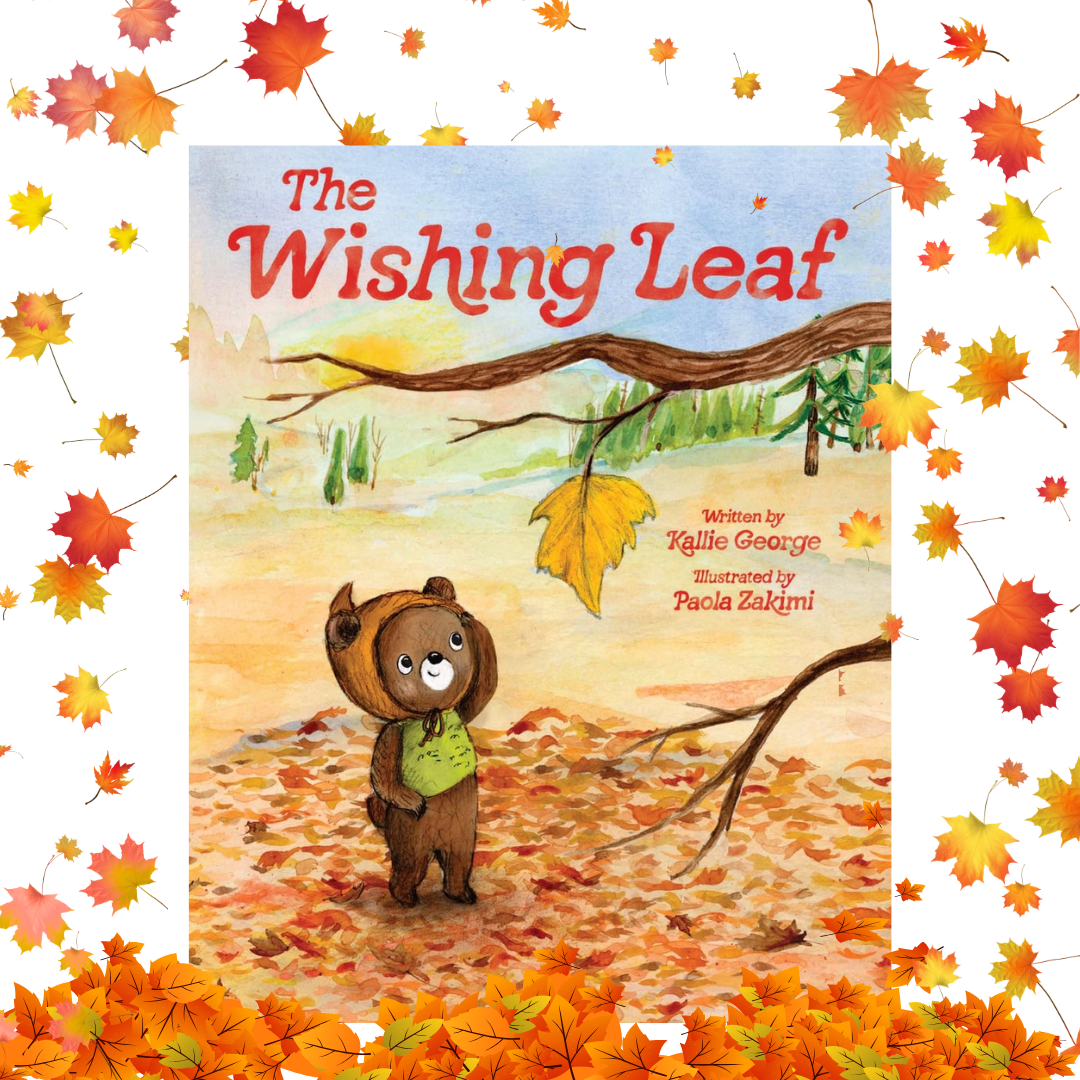
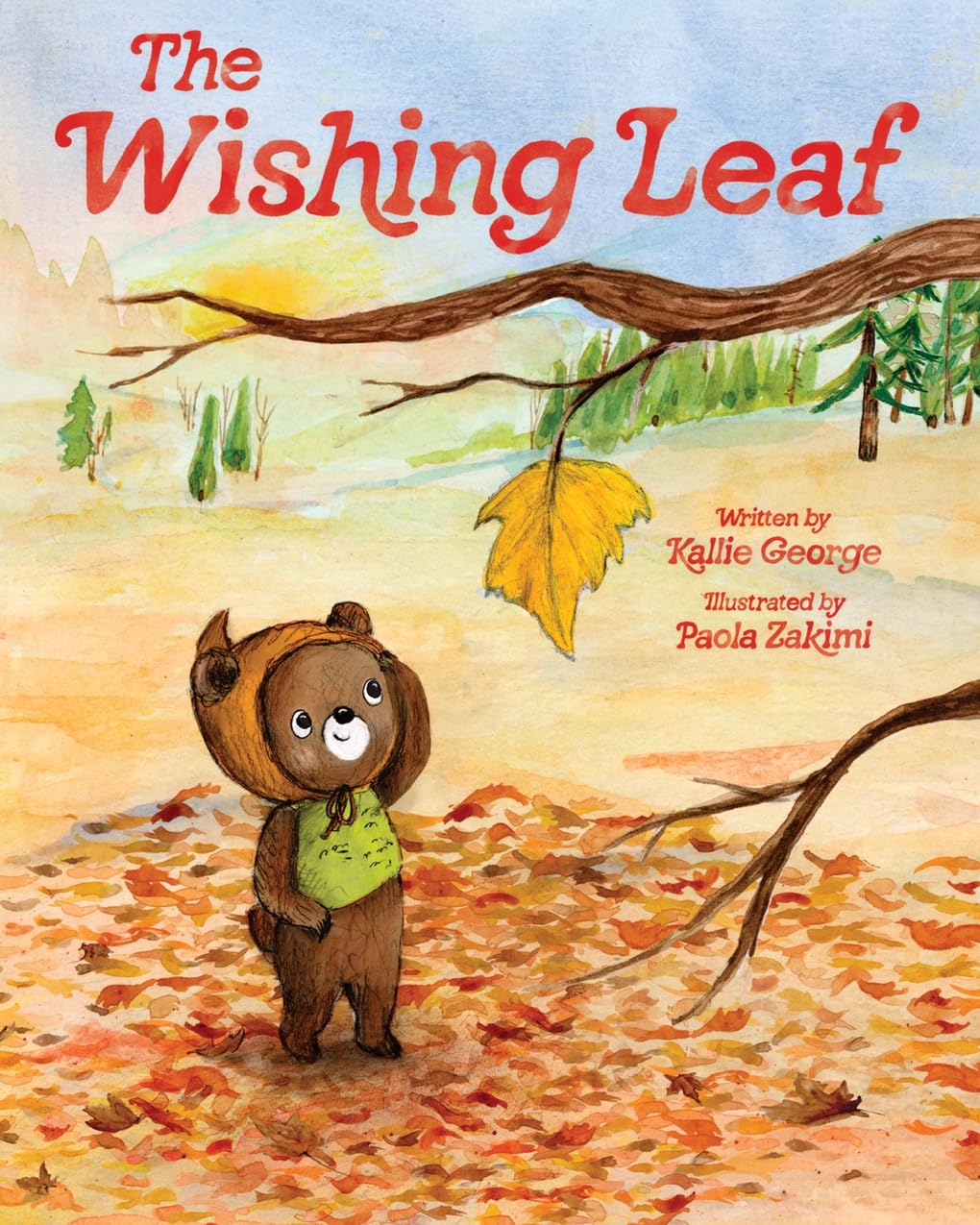
The Wishing Leaf

Written by Kallie George | Illustrated by Paola Zakimi


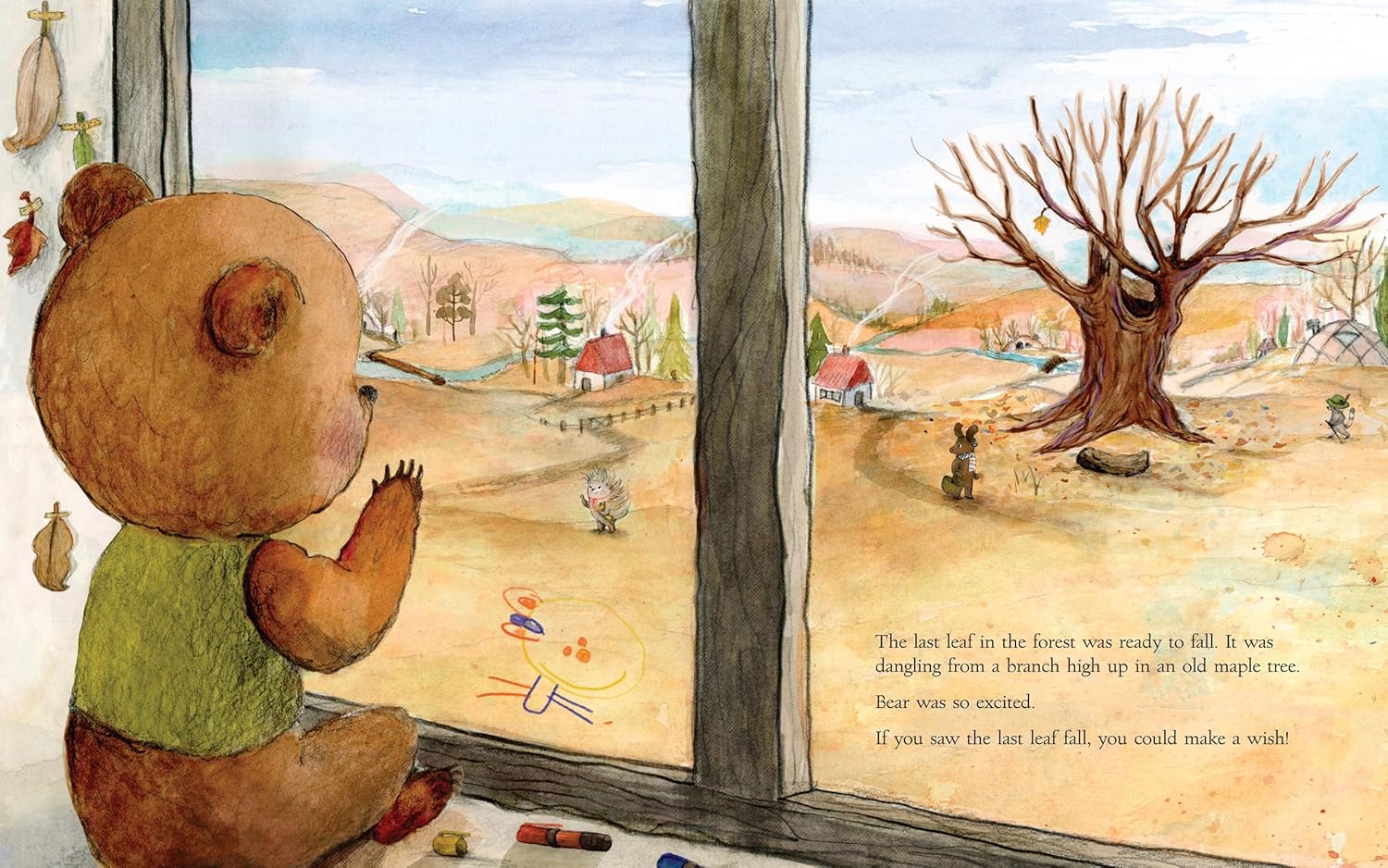
From his window, little Bear could see the very last leaf in the forest clinging to the old maple tree. He wanted to be sure to watch the leaf fall because he wanted to make a wish. When his mama told him it was time to go to sleep, Bear protested, and Mama relented with a kindly sigh.

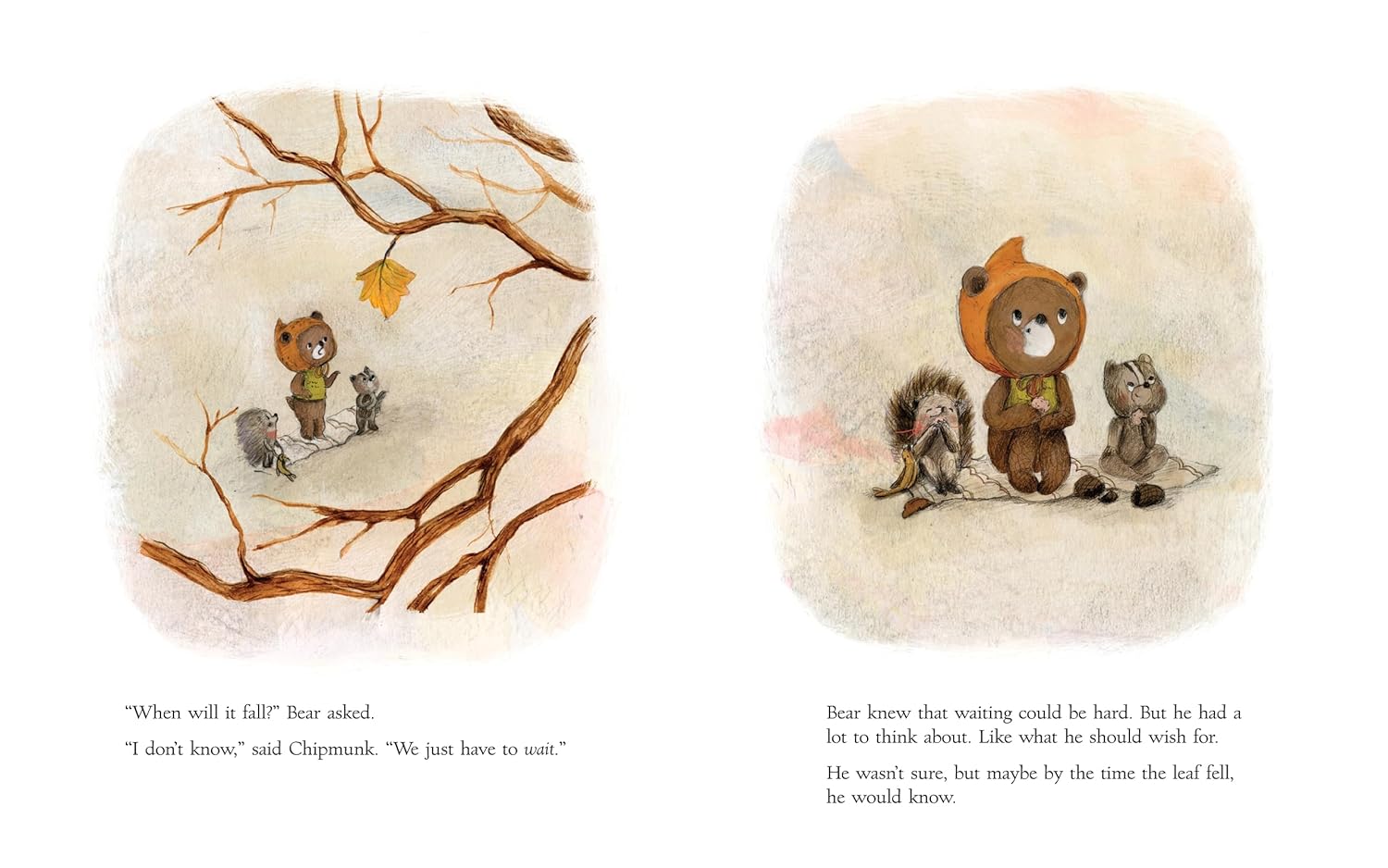
Bear joined his friends, who were standing or sitting under the maple tree, gazing up. Some had brought snacks, Porcupine had binoculars, and Raccoon had brought a camera. “The leaf was bright and golden like a star.” Bear sat on a blanket with Hedgehog and Chipmunk and started to wait. He passed the time thinking about what he should wish for.

Illustration © 2025 by Paola Zakimi. Text © 2025 by Kallie George. Courtesy of Abrams Books for Young Readers.

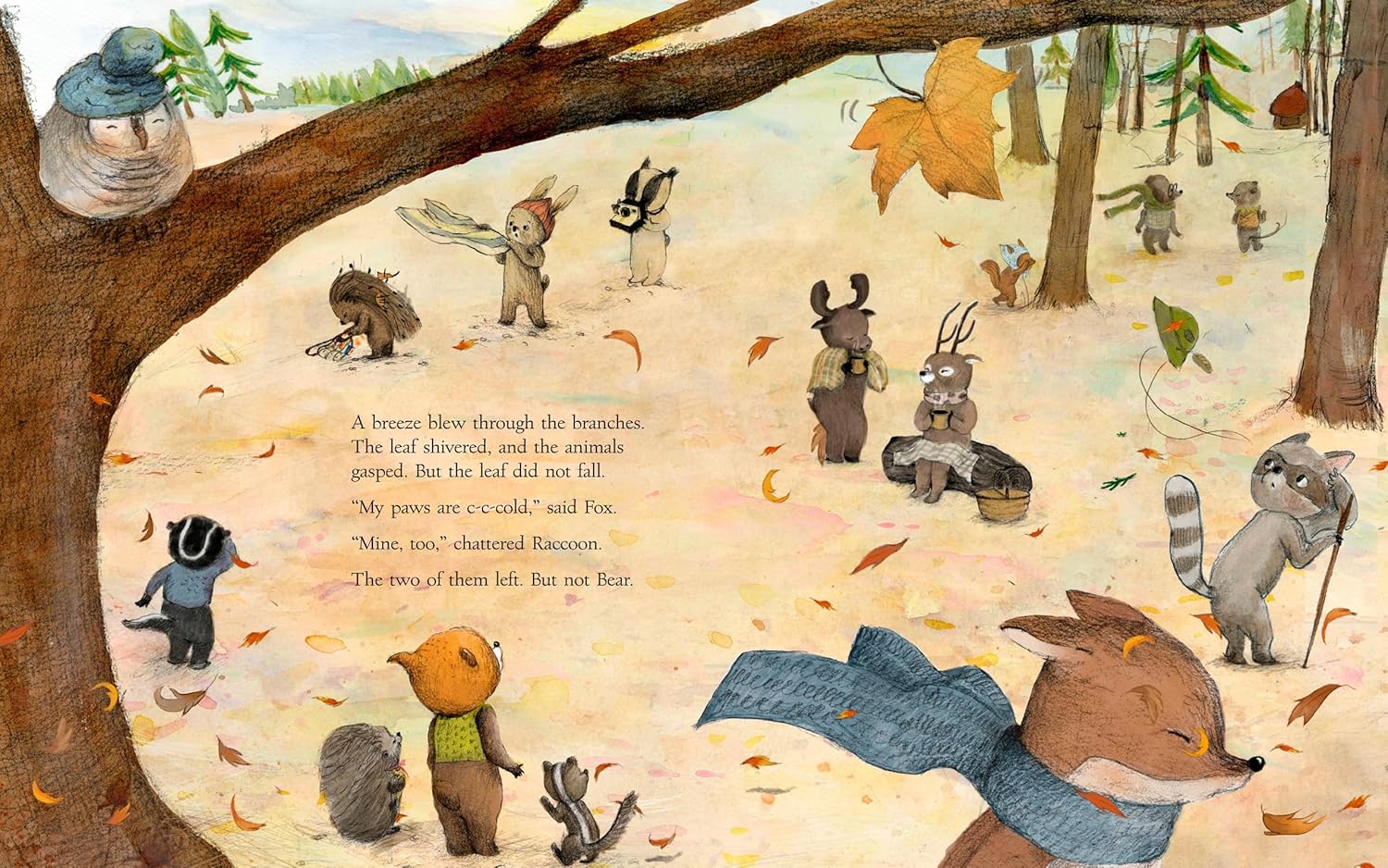
Soon, the air turned cold and while the leaf fluttered in the breeze, it still did not fall. Some shivering animals went home. When the sky darkened, more animals packed up and left. Snowflakes even began to fall and stick. Little by little the rest of the animals went home, even Chipmunk and Hedgehog, who wondered what she would have wished for if only she’d been able to see the leaf fall.

Illustration © 2025 by Paola Zakimi. Text © 2025 by Kallie George. Courtesy of Abrams Books for Young Readers.

Only Bear was left, and he was growing sleepy too. He thought he might hear Mama calling him. “Bear yawned—a big, little bear yawn.” And just then “the leaf twisted . . . and tumbled, falling down, down, down, like a shooting star.” Bear “knew just what to wish for,” and his heart swelled as he imagined his wish coming true throughout the forest. When he turned to go home, Mama was there with a lantern and a snuggly hug. Back in his room, Bear was tucked into bed and drifted off to sleep.

Illustration © 2025 by Paola Zakimi. Text © 2025 by Kallie George. Courtesy of Abrams Books for Young Readers.

Kallie George is a master at writing endearing children’s stories that remain always within your heart. Her characters are always adorable, caring, and imbued with childhood wonder. In The Wishing Leaf, George amplifies the feelings of giving that define fall and early winter with her story of a young bear whose first thoughts are for his friends. Readers will be charmed by little Bear’s wishEquating the golden leaf to a shooting star is a touching reminder that the magical can be found wherever you look. George’s sweet phrasing and charming dialog create a cozy read aloud that adults and children will want to share time and time again. 

Paola Zakimi’s darling characters inhabit a lovely countryside, in which white smoke drifts from the chimneys of snug cottages, the hills and flowing river speak to the peaceful community, and the large, old maple tree stands waiting as patiently for its final leaf to fall as does little Bear sitting on his window seat, gazing out. Zakimi’s soft pencil and watercolor illustrations are adorably expressive, and her renderings of the warm relationship between Mama and little Bear as well as images of community members will inspire plenty of “Awwws.”

A perfect book for snuggly story times that also would make a much-loved gift, The Wishing Leaf is a must for home and library collections.

Ages 4 – 8

Abrams Books for Young Readers, 2025 | ISBN 978-1419772467

About the Author

Kallie George is an author, editor, and creative writing teacher living in Vancouver, British Columbia. She has written acclaimed books for children, including The Lost GiftSecrets I KnowDuck, Duck, Dinosaur, and The Melancholic Mermaid, as well as The Magical Animal Adoption Agency series and The Heartwood Hotel series. She has also taught writing workshops for children and adults across Canada, as well as in South Korea, and she currently teaches at Emily Carr University. Visit her at kalliegeorge.com.

About the Illustrator

Paola Zakimi spent her childhood in cold Patagonia, Argentina. She studied arts and graphic design in Buenos Aires before moving to Villa Giardino, Cordoba, where she resides today. She is the illustrator of Estelle Laure’s Before the World Wakes, Meg Fleming’s Here Comes Ocean, Jacqueline Veissid’s Ruby’s Sword, as well as Newbery Medalist Cynthia Voigt’s Teddy & Co., among other picture books. Visit her at paolazakimi.com.

First Day of Autumn Activity

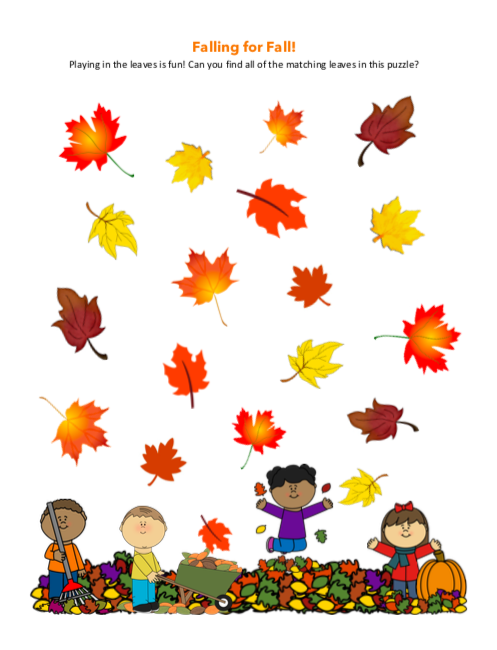
celebrate-pciture-books-picture-book-review-fall-leaves-matching-puzzle

Falling for Fall Matching Puzzle


These kids are having fun in the leaves. Can you find the matching leaves in this printable Falling for Fall Puzzle?

You can purchase The Wishing Leaf from these booksellers

Amazon | Barnes & Noble | Bookshop

Picture Book Review
May 30 – National Water a Flower Day

About the Holiday

National Water a Flower Day reminds us of the vast diversity of plants and flowers in the world and even in our own backyards, gardens, and communities. The holiday encourages us to show how much we appreciate plants for their sumptuous colors, their fragrant blossoms, their delicious fruits and seeds, and for the unique ways they survive under sometimes challenging conditions. To this end, as the name of the holiday nudges, we should take special time today to make sure all of our plants—both indoor and outdoor—are watered and cared for.

Superpowered Plants: Meet the Smartest, Strongest, Sneakiest Plants

Written by Soledad Romero Mariño | Illustrated by Sonia Pulido


From the beginning of time (perhaps even before) plants have been growing, spreading, and evolving to survive and thrive.  To do this, they’ve had to become smart, resilient, and even sneaky—ingenious. Plants and their blooms can last only a day or hundreds of years, quietly coexisting with generations of a family. Among the plants on Earth are some of nature’s craftiest mimics, chemists, thieves, and predators.

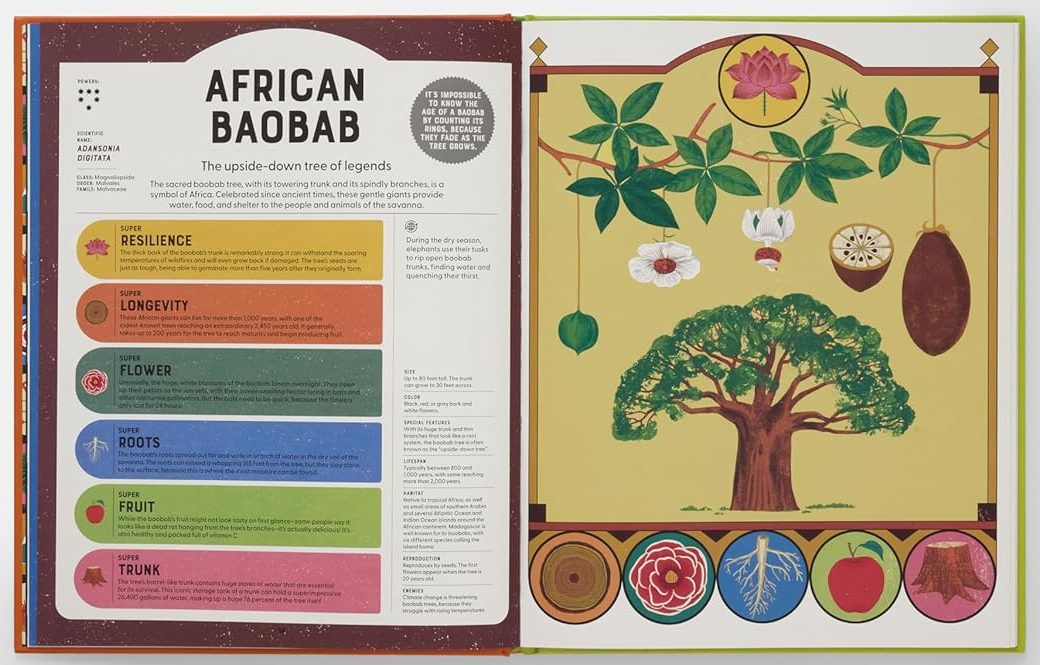
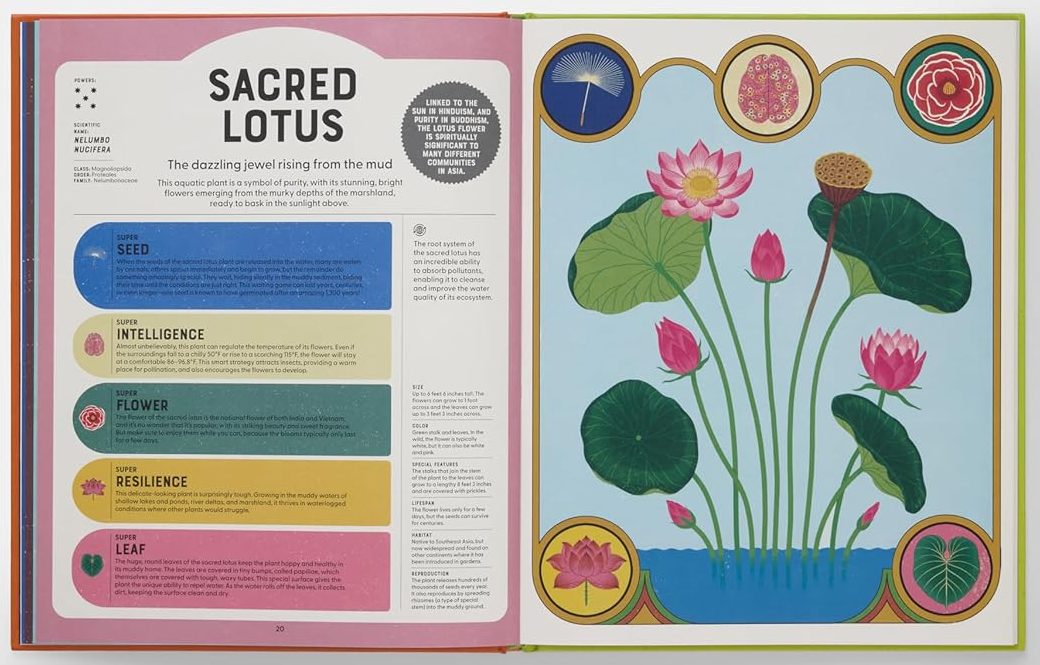
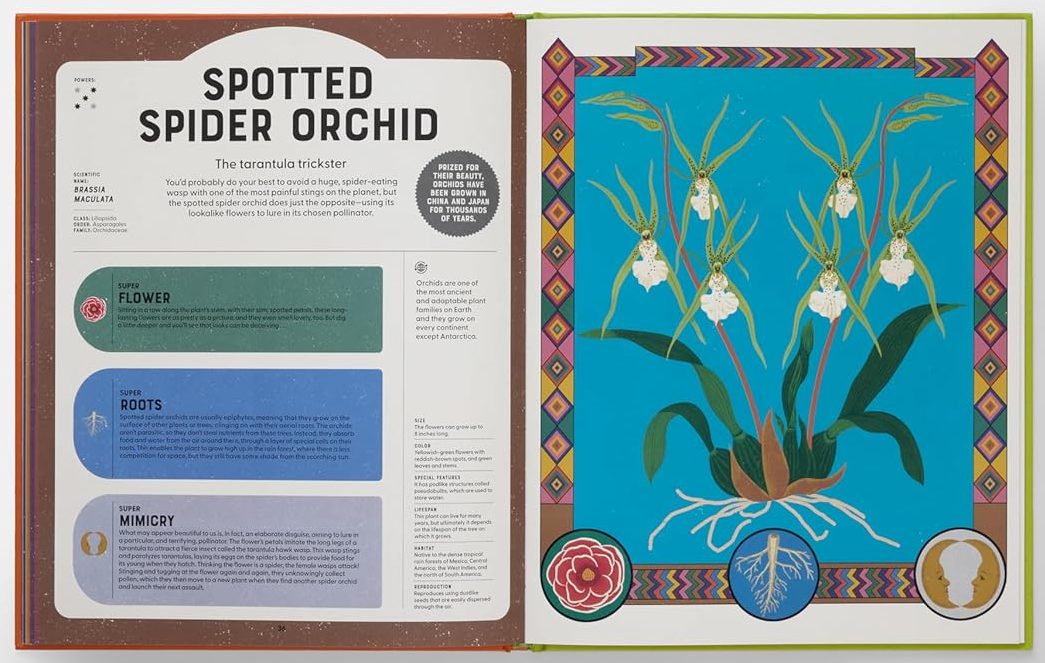
In Superpowered Plants, author Soledad Romero Mariño introduces readers to 22 astonishing plants from across the globe, including the African baobab, sacred lotus, spotted spider orchid, titan arum, and whistling thorn as well as more common varieties like dandelions and sunflowers. She identifies 17 superpowers that plants rely on to feed themselves, multiply, cope with extreme conditions, regenerate after fire or other challenges, and protect themselves. Some of these are super speed, super intelligence, super teamwork, super resilience, and super flower. 

Illustration © 2025 by Sonia Pulido, text © 2025 by Soledad Romero Mariño. Courtesy of Phaidon Press.

Working in tandem with illustrator Sonia Pulido, Mariño provides a short description of each plant before outlining its superpowers in clear, easily-digested tidbits presented in color-coded sections, further marked by a recognizable icon. Other information on the left-hand page includes the plant’s scientific name, class, order, and family as well as its size, color, lifespan, habitat, reproduction method, enemies, and special features, along with a fascinating trivia fact. 

To the right—in stunning tarot card-inspired illustrations that would easily be at home in any fine art museum—Pulido captures each plant in full-page, glorious, realistic splendor while stylishly displaying its flower, seed, and fruit and bordering it with representations of its habitat, superpowers, and unique features. 

Illustration © 2025 by Sonia Pulido, text © 2025 by Soledad Romero Mariño. Courtesy of Phaidon Press.

So what are a couple of examples of these astounding plants? Well, take the Whistling Thorn, which is native to the East African savanna. This plant really has the will (and the way) to survive! Not only are its branches covered in prickly spikes, but it teams up with a particular species of ant, offering colonies a home in exchange for aggressive attacks on any herbivore that dares take a nibble. And if that isn’t enough, the whistling thorn has “developed the superspecial skill of communication.” Where many whistling thorns grow in proximity, if one tree is attacked it releases a scent into the air, “alerting other trees in the area to the threat.” These trees “immediately secrete a toxic substance into their leaves, which can be harmful to touch and eat, therefore putting off the predator and keeping the community of trees safe.”

There’s also the Sandbox, native to tropical regions such as the Amazon rain forest, who’s playful name belies its nickname—the dynamite tree. Determined to spread its seeds far and wide, the sandbox produces fruit that, when ripe, explodes with such force “that it can cause injury to anyone standing in its way.” The seeds are propelled at “speeds of 230 feet per second and can cover distances of up to 150 feet.” It’s also best not to attempt to climb the sandbox, as its trunk is covered in “supersharp spikes.” 

Illustration © 2025 by Sonia Pulido, text © 2025 by Soledad Romero Mariño. Courtesy of Phaidon Press.

“Fascinating” hardly begins to describe all the discovery inside Superpowered Plants: Meet the Smartest, Strongest, and Sneakiest Plants. This well-conceived compendium will enthrall readers of all ages and spur a deeper appreciation for the earth’s vegetation—both the unusual and the common, which might just be more cunning than we imagine. Superpowered Plants is a must for all library collections and is highly recommended for home bookshelves, especially for nature lovers.

Ages 7 – 12+ (adults will be equally captivated)

Phaidon Press, 2025 | ISBN 978-1838669515

About the Author

Soledad Romero Mariño is an experienced children’s non-fiction author who specializes in ‘best of’ round-up style books. Her works include Superpowered Animals: Meet The World’s Strongest, Smartest, and Swiftest Creatures (also published by Phaidon), Awesome Accidents: 19 Discoveries that Changed the World, and Famous Robberies: The World’s Most Spectacular Heists.

About the Illustrator

Sonia Pulido’s illustrations have appeared in publications globally, including The New Yorker and The New York Times. In 2020 Pulido won the Spanish National Illustration Award and she is the illustrator of Phaidon’s bestselling What a Shell Can Tell.

National Water a Flower Day Activity

celebrate-picture-books-picture-book-review-flower-garden-game

Plant a Flower Garden Game


With this fun game you and your family and friends can grow gardens inside! Roll the dice to see whose garden will fully blossom first!

Supplies

Directions

Object: The object of the game is for each player to fill their garden or garden rows with flowers. Depending on the ages of the players, the game can be adjusted to fill all of the rows, some or all rows, or just one.           

  1. Print one Game Board for each player
  2. Print one or more sets of Flower Playing Cards for each player, depending on how  (for sturdier playing items, print on card stock)
  3. Cut the flowers into their individual playing cards
  4. Print one Flower Playing Die and assemble it (for a sturdier die, print on card stock)
  5. Color the “dirt” on the Garden Plot with the crayon (optional)
  6. Choose a player to go first
  7. The player rolls the die and then “plants” the flower rolled in a row on the game board
  8. Play moves to the person on the right
  9. Players continue rolling the die and “planting” flowers until each of the number of determined rows have been filled with flowers or one row has been filled with all six flowers.
  10. The first person to “grow” all of their flowers wins!

You can purchase Superpowered Plants: Meet the Smartest, Strongest, Sneakiest Plants from these booksellers

Amazon | Barnes & Noble | Bookshop

Picture Book Review
June 20 – Summer Solstice

celebrate-picture-books-picture-book-review-summer-is-here-cover

About the Holiday

Today at exactly 4:51 p.m. Eastern time the earth and sun align in just the right way to create the longest day of the year and usher in the official astronomical start of summer. Whether summer to you and your family means spending time outdoors, a special vacation, camping, swimming, or more time to read, read, read, enjoy the longer days, the warm weather, and all the fun and adventure that summer can bring!

Thank you to Bloomsbury Children’s Books for sending me a copy of Summer Is Here for review consideration. All opinions on the book are my own.

Summer is Here 

Written by Renée Watson | Illustrated by Bea Jackson


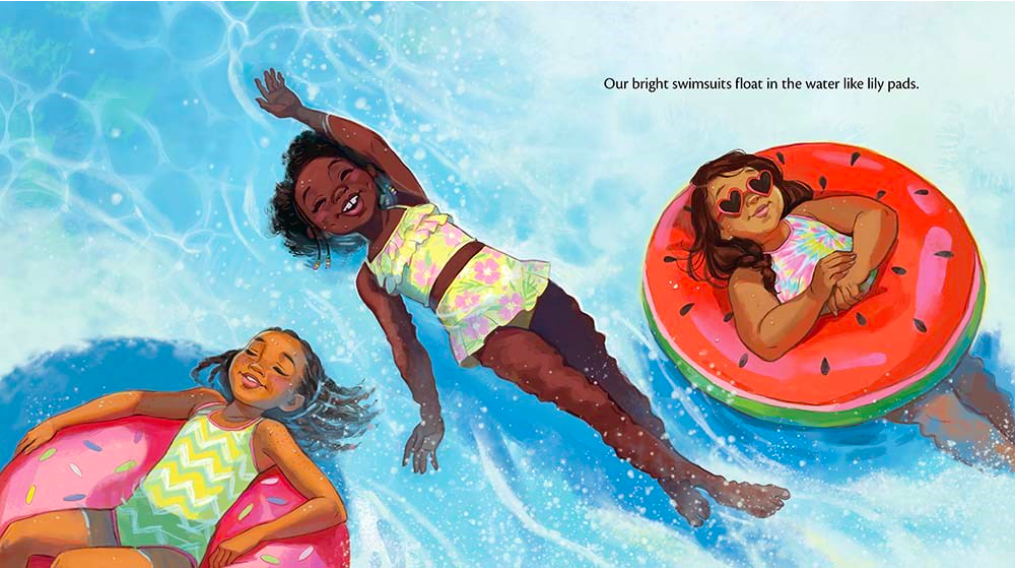
On a perfect summer day, “tickling” rays of sun awaken a child from sleep, calling “Rise and shine.” The narrator wonders what joy summer will bring that day. In the kitchen, the child finds “a feast of fresh fruit” for breakfast, and later it’s time to dive into the pool in her backyard with friends.

celebrate-picture-books-picture-book-review-summer-is-here-pool

Illustration copyright 2024 Bea Jackson, text copyright 2024. Courtesy of Bloomsbury Children’s Books.

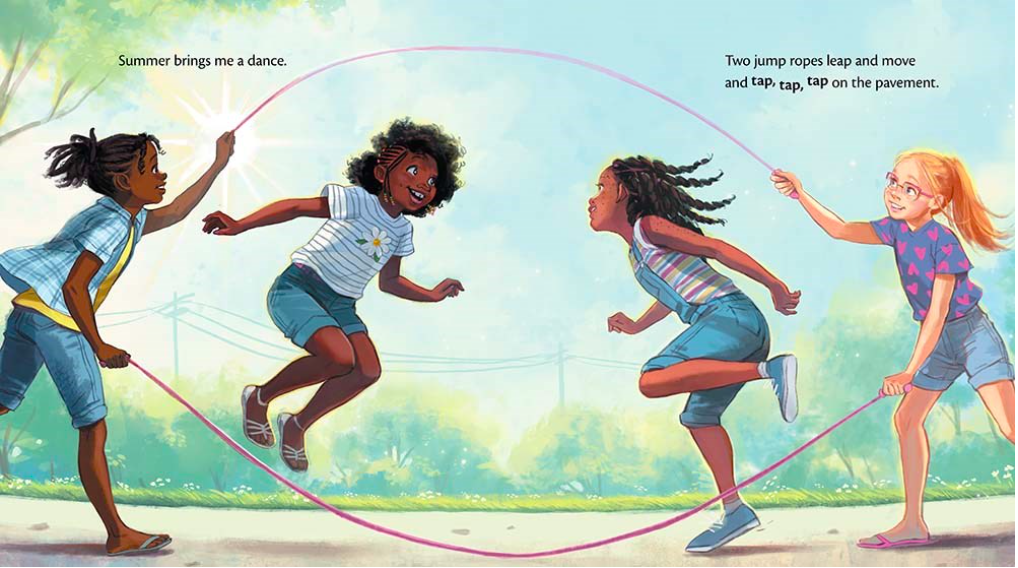
Summer has so much more in store as the day goes on. “Summer brings me a dance,” the protagonist says. A performance between “two jump ropes” that “leap and move and tap, tap, tap on the pavement.” And, of course, there is food—lush garden fruits and vegetables, family cookouts with sizzling burgers and hot dogs, and dessert from an ice-cream truck that serenades with tinkling music as everyone chooses their favorite sweet treat.

celebrate-picture-books-picture-book-review-summer-is-here-jump-rope

Illustration copyright 2024 Bea Jackson, text copyright 2024. Courtesy of Bloomsbury Children’s Books.

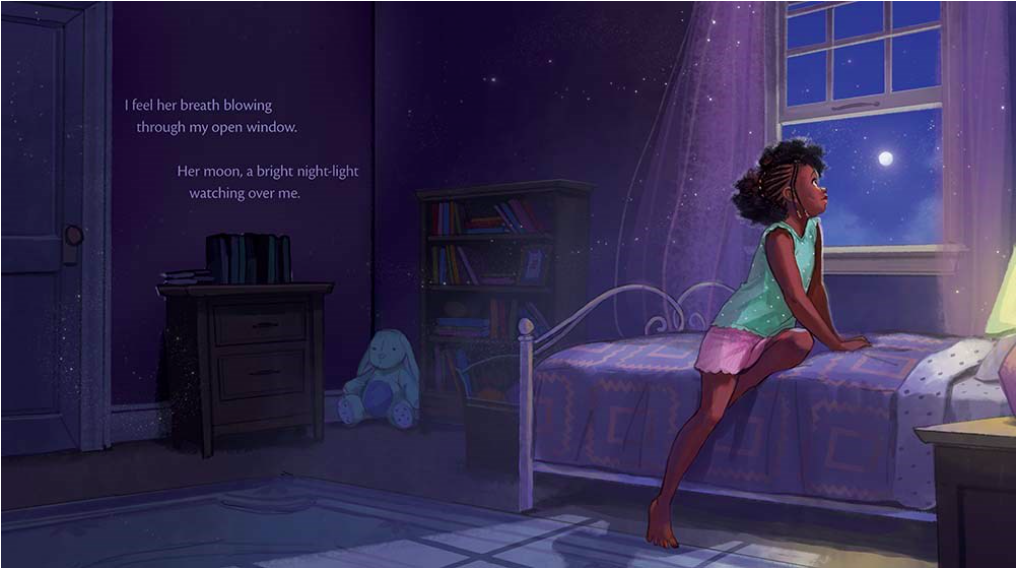
Summer brings other games—the cooling splash of water balloons and iridescent soap bubbles that float away with a soft breath, reflecting the colors of the twilight sky. As night falls, the child marvels over more magic summer offers: glittering stars and “her moon, a bright night-light watching over me.” If only this perfect summer could last forever.

celebrate-picture-books-picture-book-review-summer-is-here-nighttime

Illustration copyright 2024 Bea Jackson, text copyright 2024. Courtesy of Bloomsbury Children’s Books.

Renée Watson’s glorious paean to a personified summer celebrates all of the best activities and feelings that the long, warm days and outdoor freedom of the season bring. The bounties of friendship, family, and fresh food that Watson highlights on each page will fill readers’ hearts with joy and evoke memories for both adults and kids of summers gone by they’ll want to share. 

Bea Jackson’s gorgeous illustrations burst with light, happiness, and the exuberance of childhood. In her stunning, two-page spreads, Jackson perfectly captures not only summer’s activities but the thrill they elicit in facial expressions that give each character their own personality—a touch that will resonate with every reader. Every reader can feel the warm hugs, the cool splash of the pool and water balloons; hear the sizzle of burgers on the grill; and experience the child’s wistfulness at the end of the day. No detail has been overlooked, and every page is a showstopper to linger over.

Summer Is Here is a must for every public and school library and will be a favorite on home bookshelves to read during the summer or to recall the season’s joys during the rest of the year.

Ages 3 – 6

Bloomsbury Children’s Books, 2024 | ISBN 978-1547605866

About the Author

Renée Watson is a #1 New York Times bestselling author. Her novel, Piecing Me Together, received a Newbery Honor and Coretta Scott King AwardHer books include the Ryan Hart series, Some Places More Than OthersThis Side of HomeWhat Momma Left Me, and Love Is a Revolution as well as acclaimed picture books Summer Is HereMaya’s SongThe 1619 Project: Born on the Water, written with Nikole Hannah-Jones, A Place Where Hurricanes Happen, and Harlem’s Little Blackbird, which was nominated for an NAACP Image Award. Renée splits her time between Portland, Oregon and New York City. Visit her at reneewatson.net.

About the Illustrator

Bea Jackson is the award-winning artist of beloved picture books such as Hair Like Mine by Latashia M. Perryand the New York Times bestseller Parker Looks Up by Parker and Jessica Curry. She lives in Detroit, Michigan. Visit her at beagifted.com.

Summer Solstice Activity

celebrate-picture-books-picture-book-review-ice-cream-cone-game

How Many Scoops? Ice Cream Stacking Game


How many flavors do you like on your ice cream cone? If you say “All of them!” then this game’s for you! 

Supplies

Directions

This game can be played with as many scoops as you like. Younger kids may only want to gather three or four scoops before a winner is declared. Older kids may want to earn six or even more scoops before they’re done. 

  1. Print out one ice cream cone and one set of scoop playing pieces for each player. The number of playing pieces you need will depend on how many scoops players determine it will take to win.
  2. Cut out the ice cream cone.
  3. Cut out and color the ice cream scoop playing pieces in your favorite flavors (or make up your own flavors!).
  4. Color the scoops on the die. The scoops on the die must correspond to the colors on the playing pieces. If more than six scoops are needed to win, print and color two die with 12 different colors/flavors. Kids can roll both dice at once or one at a time until all the flavors are gathered.
  5. Tape the playing die together.
  6. Choose a player to go first. That player rolls the die and places the color scoop shown on their cone.
  7. Play continues to the left.
  8. If a player rolls a color/flavor they already have, they lose the turn and play continues with the next player.
  9. Play continues until one person has collected the number of scoop playing pieces decided on to win.

celebrate-picture-books-picture-book-review-summer-is-here-cover

You can purchase Summer is Here at these booksellers

Amazon | Barnes & Noble | Books-a-Million | Bookshop (support your local independent bookstore)

July 29 – It’s National Ice Cream Month

celebrate-picture-books-picture-book-review-the-sweetest-scoop-cover

About the Holiday

Ice cream has a long and elite history, dating back to Ancient Greece when a rudimentary version of the confection was made of snow, honey, and fruit. It wasn’t until the 16th century, when Catherine de’ Medici introduced the treat again, that a true ice cream was created. One hundred years later, Charles I of England used his royal clout to proclaim ice cream the prerogative of the crown. He paid to keep the recipe secret and forbid the common people from eating it. He and future royals must have known a thing or two about proprietary information, as the first recipes for ice cream were not recorded until the 18th century.

This favorite dessert received its true recognition in 1984 when President Ronald Reagan established July as National Ice Cream Month. Today, indulge in your favorite flavor or sundae!

The Sweetest Scoop: Ben & Jerry’s Ice Cream Revolution

Written by Lisa Robinson | Illustrated by Stacy Innerst


When you think of ice cream, does your mind immediately go to vanilla, chocolate, or strawberry? Or maybe you think a little fancier, like mint chocolate chip or fudge swirl. But there’s a whole other menu to choose from: “What about Wavy Gravy, Truffle Kerfuffle, or Chubby Hubby? What’s the scoop on those wacky flavors?” If you’re sweet on ice-cream, you’ll want to keep reading to find out!

celebrate-picture-books-picture-book-review-the-sweetest-scoop-ice-cream-truck

Image copyright Stacy Innerst, 2022, text copyright Lisa Robinson, 2022. Courtesy of Harry N. Abrams.

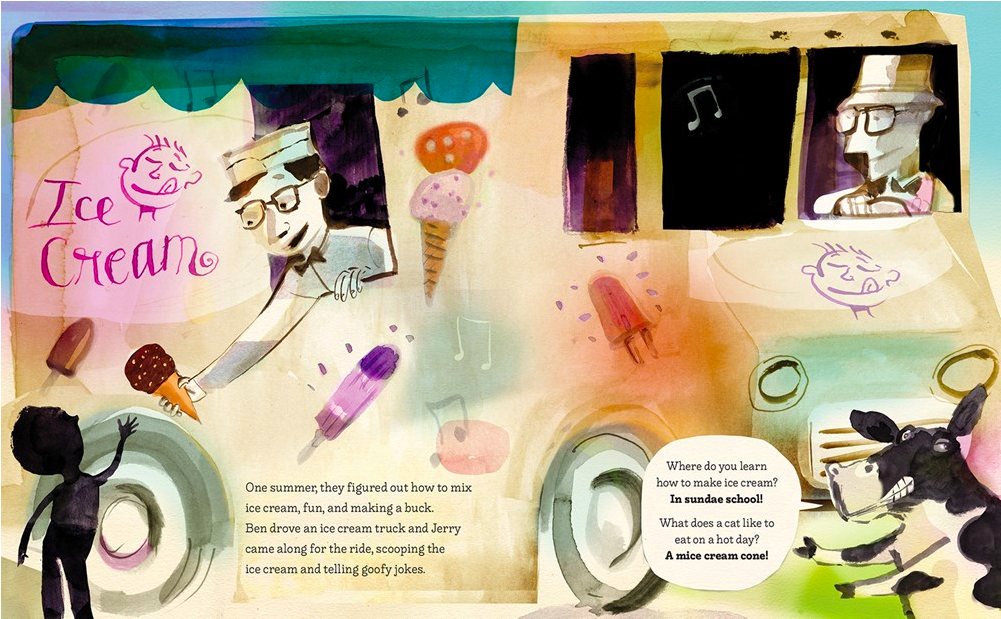
It all started back in 1963 with two friends—Ben Cohen and Jerry Greenfield—who loved to eat. And they especially loved to eat ice cream. When they were in high school, Ben got a job driving an ice cream truck, and Jerry rode along to help scoop and tell “goofy jokes.” When they graduated, Ben and Jerry went off to different colleges and pursuits, but their careers didn’t turn out the way they planned. 

They were both feeling pretty down until they got together and decided to start a business together—a business where they’d be their own bosses and have fun. Since they both loved to eat, they first thought about a bagel delivery business, but it turned out to be too expensive. Then they thought about how much they loved ice cream and discovered that making it was much less expensive than making bagels.

celebrate-picture-books-picture-book-review-the-sweetest-scoop-recipe

Image copyright Stacy Innerst, 2022, text copyright Lisa Robinson, 2022. Courtesy of Harry N. Abrams.

Next, in Vermont, they found the perfect place to open shop and began fixing it up (it needed a lot of work!). But when they got to the plumbing job, Ben and Jerry didn’t have enough money to pay the plumber. That’s when Jerry had a brilliant marketing idea that the plumber jumped on. With the shop (and the plumbing) out of the way, Ben and Jerry began tinkering with their ice cream recipe.

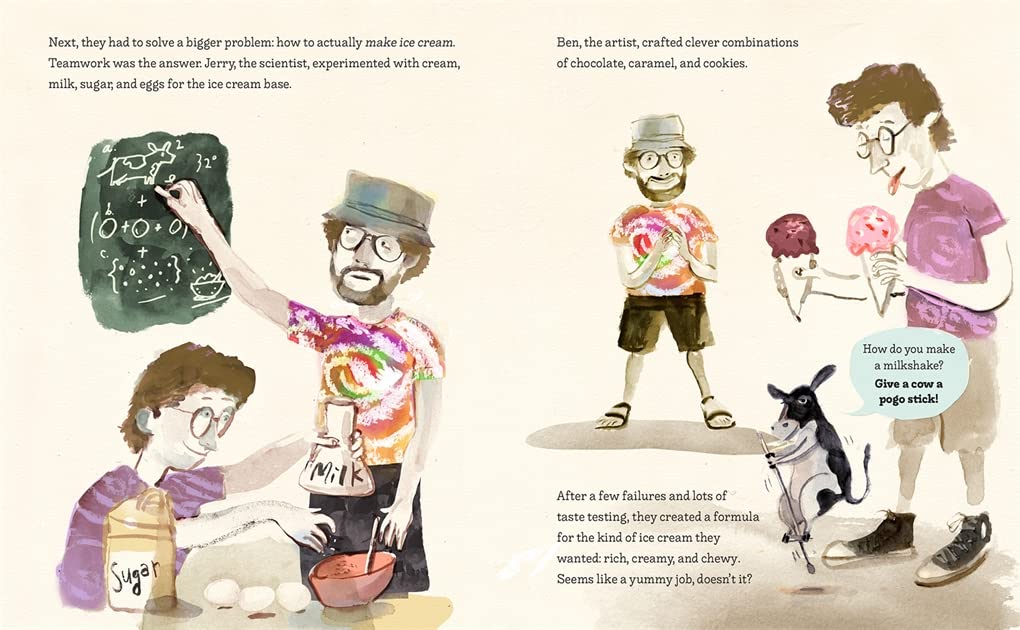
“Teamwork was the answer. Jerry, the scientist, experimented with cream, milk, sugar, and eggs for the ice cream base. Ben, the artist, crafted clever combinations of chocolate, caramel, and cookies.” After a lot of trial and error, they hit upon the perfect combination of “rich, creamy, and chewy.” “Finally, on May 5, 1978, the doors of Ben & Jerry’s Homemade ice cream shop opened. And people came. Lots of people!” 

celebrate-picture-books-picture-book-review-the-sweetest-scoop-shop

Image copyright Stacy Innerst, 2022, text copyright Lisa Robinson, 2022. Courtesy of Harry N. Abrams.

Still, despite their success, there were still obstacles to overcome. One of the biggest was “making their flavors stand out” among all the others. They decided to give their flavors “cool names, like Chunky Monkey, Phish Food, and Dastardly Mash.” They even invited customers to submit ideas. And while most of Ben and Jerry’s flavors were hits, there were some clunkers among the batches. But Ben and Jerry knew how to make even these failures fun with the “Flavor Graveyard” that commemorates “dearly departed flavors” like Vermonty Python, Oh Pear, and Peanut Butter and Jelly.

As their ice cream grew in popularity, Ben and Jerry wanted to do more with their product. “They believed they could use ice cream to help make the world a better place.” They began with paying their workers well and moved on to inventing an environmentally safe carton. Their factory sported solar panels and they looked for ways to reduce waste.

celebrate-picture-books-picture-book-review-the-sweetest-scoop-blockade

Image copyright Stacy Innerst, 2022, text copyright Lisa Robinson, 2022. Courtesy of Harry N. Abrams.

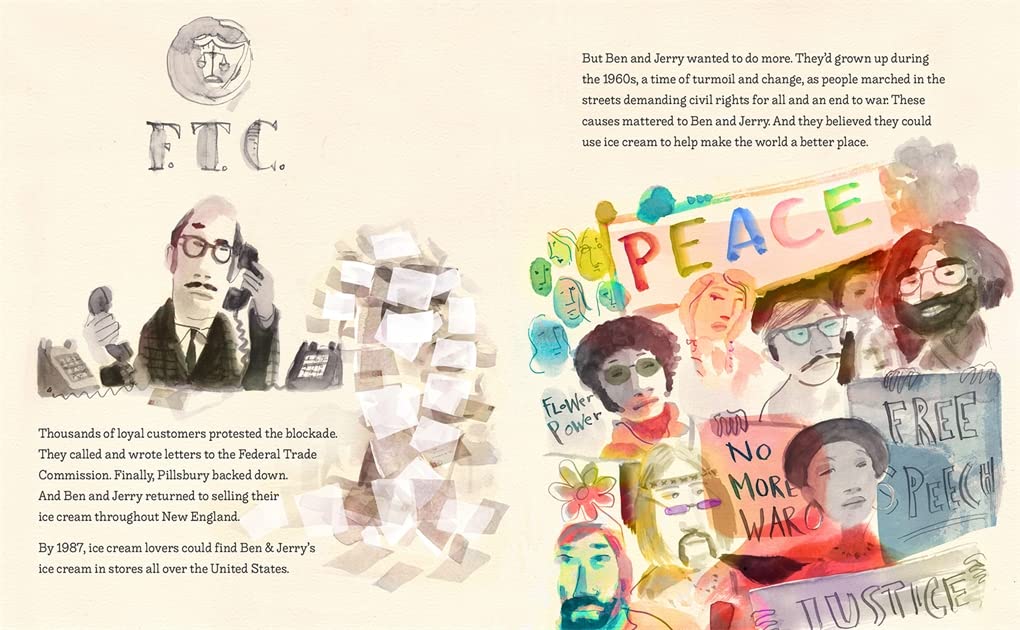
To draw attention to world issues, they created special flavors: “Save Our Swirled to promote awareness of climate change; Imagine Whirled Peace to demand an end to war; I Dough, I Dough to support same-sex marriage; and Empower Mint to call attention to the unfairness of the growing gap between rich and poor.” They donated profits to causes they cared about and “formed the Ben & Jerry’s Foundation to support ‘social and environmental justice around the country.'”

So now when you enjoy your favorite flavor of Ben & Jerry’s ice-cream, you’ll know that you’re also contributing to “making the world a better place.”

Back matter includes an Author’s Note, a Timeline, and a list of sources.

celebrate-picture-books-picture-book-review-the-sweetest-scoop-foundations

Image copyright Stacy Innerst, 2022, text copyright Lisa Robinson, 2022. Courtesy of Harry N. Abrams.

Lisa Robinson’s smooth-as-ice cream storytelling relates the facts of Ben Cohen and Jerry Greenfield’s uplifting and inspirational career while infusing her biography with Ben and Jerry’s personalities with a conversational cadence and clever, but not intrusive, puns sprinkled throughout.

Standout aspects of the book include how, as young men, both Ben and Jerry used their disappointments as a springboard to a creative, satisfying, and influential career; how they found strength in their diverse but complimentary talents; and how they relied on their personal compasses to design a business model that is mindful of employees’ needs as well as important social and environmental issues. And Robinson does all this while making her book fun to read aloud and including a comical cow that pops up on several pages to tell kid-pleasing ice cream jokes.

Stacy Innerst’s watercolor and ink illustrations top off Robinson’s story like luscious whipped cream on a six-flavor sundae. Soft, yet vibrant each page spread pops with grape purples, pistachio greens, lemon yellows, and plenty of chocolate waves and swirls. Ben and Jerry are front and center on most pages, coming up with unique ideas to make their ice cream as iconic as Ben’s hat. Young readers will benefit from seeing how these two life-long friends have each other’s backs, whether its “scarfing down pizza” as teens, rising above discouragement after college, or repairing the old gas station that will become their ice cream shop.

Spying the adorable cow on a page holding a mic, riding a pogo stick, fixing an ice cream truck, and even hanging out with a skeleton, kids will eagerly anticipate each new joke. Seen through Innerst’s eyes, Ben and Jerry’s world is one where ideas are colorful clouds and clouds are shaped like ice cream cones. It’s a pretty sweet world we all get to live in.

Inspirational and uplifting, The Sweetest Scoop: Ben & Jerry’s Ice Cream Revolution is an outstanding combination of biography, social activism, and the powers of positivity and creativity. The book would be a stirring and dynamic addition to home bookshelves and is a must for all school and public libraries.

Ages 4 – 8

Harry N. Abrams, 2022 | ISBN 978-1419748035

Discover more about Lisa Robinson and her books on her website.

To learn more about Stacy Innerst, his books, and her art, visit his website.

National Ice Cream Month Activity

celebrate-picture-books-picture-book-review-ice-cream-cone-game

How Many Scoops? Ice Cream Stacking Game


How many flavors do you like on your ice cream cone? If you say “All of them!” then this game’s for you! 

Supplies

Directions

This game can be played with as many scoops as you like. Younger kids may only want to gather three or four scoops before a winner is declared. Older kids may want to earn six or even more scoops before they’re done. 

  1. Print out one ice cream cone and one set of scoop playing pieces for each player. The number of playing pieces you need will depend on how many scoops players determine it will take to win.
  2. Cut out the ice cream cone.
  3. Cut out and color the ice cream scoop playing pieces in your favorite flavors (or make up your own flavors!).
  4. Color the scoops on the die. The scoops on the die must correspond to the colors on the playing pieces. If more than six scoops are needed to win, print and color two die with 12 different colors/flavors. Kids can roll both dice at once or one at a time until all the flavors are gathered.
  5. Tape the playing die together.
  6. Choose a player to go first. That player rolls the die and places the color scoop shown on their cone.
  7. Play continues to the left.
  8. If a player rolls a color/flavor they already have, they lose the turn and play continues with the next player.
  9. Play continues until one person has collected the number of scoop playing pieces decided on to win.

celebrate-picture-books-picture-book-review-the-sweetest-scoop-cover

You can find The Sweetest Scoop at these booksellers

Amazon | Barnes & Noble | Books-a-Million

To support your local independent bookstore, order from

Bookshop | IndieBound

Picture Book Review

May 27 – National Road Trip Day

celebrate-picture-books-picture-book-review-carson-crosses-canada-cover

About the Holiday

In 2019 Pilot Flying J, the country’s largest travel center operator, established National Road Trip Day to mark the start of the summer travel period from Memorial Day weekend through the beginning of September. If you’re traveling to see family or friends you haven’t seen in awhile or setting your sights on new adventures near or far, remember to pack a few great books to take along – like today’s book, which takes readers on a long, cross-country road trip, with a best buddy, of course!

Carson Crosses Canada

Written by Linda Bailey | Illustrated by Kass Reich


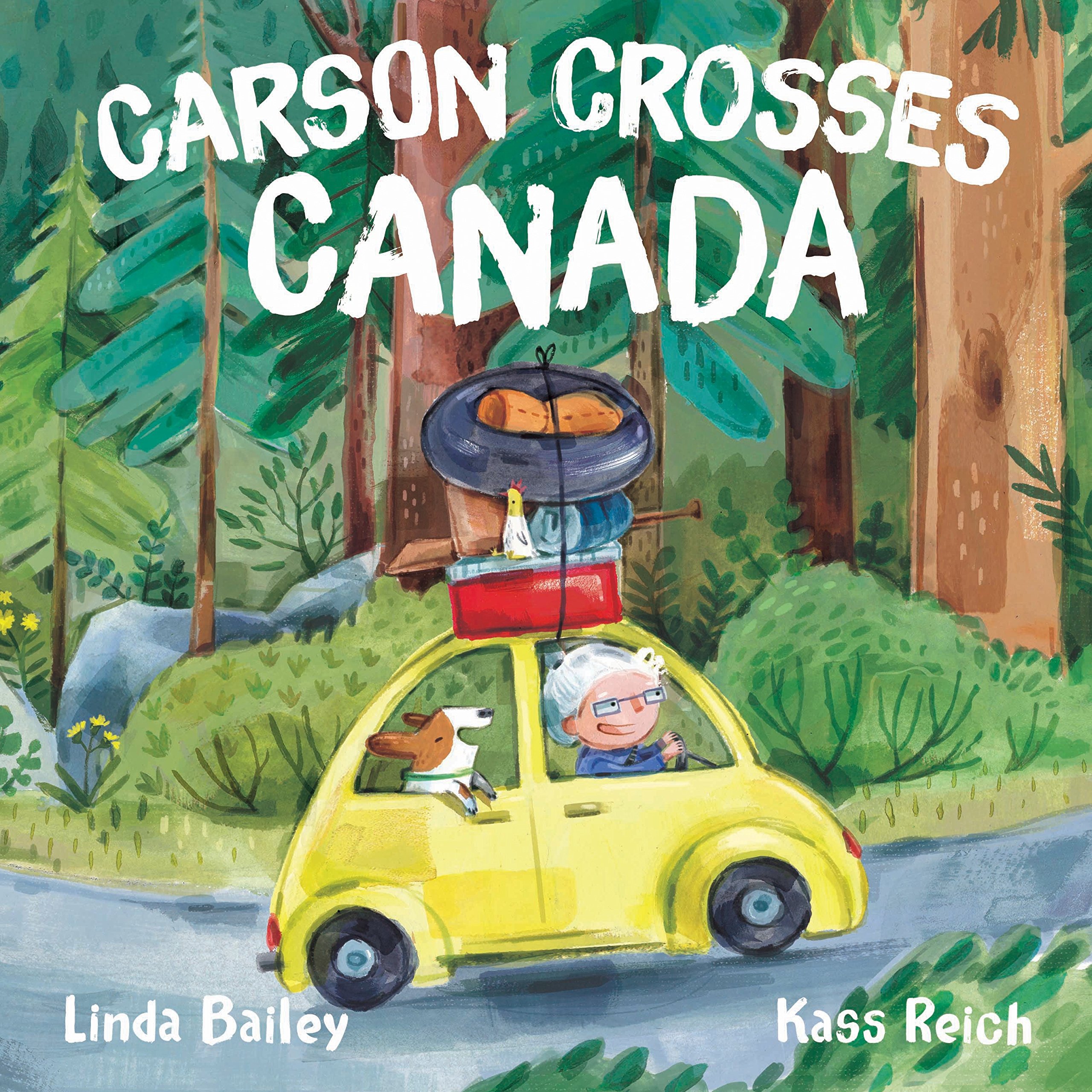
Annie Magruder and her little dog, Carson, had a pretty great life living along the shore of the Pacific Ocean. One day a letter arrived for Annie from her sister Elsie. Elsie was sick and needed cheering up so Annie packed her bags, loaded up her camping gear, and “filled a cooler with baloney sandwiches.” For Carson she brought along dog food and of course Squeaky Chicken. They pulled away from their house and headed east.

celebrate-picture-books-picture-book-review-carson-crosses-canada-cover

Illustrations copyright © 2017 by Kass Reich. Courtesy of Tundra Books.

“All morning they drove in the rattlebang car.” Were they there yet? Carson wanted to know. But they were on a loooong trip—all across Canada, Annie told him. She also said there’d be a surprise for him at the end. “Carson loved surprises. Squeaky Chicken had been a surprise. Every time Carson chewed, he got a brand-new noise. Skreeeee! Wheeeee! Iiiiiy!”

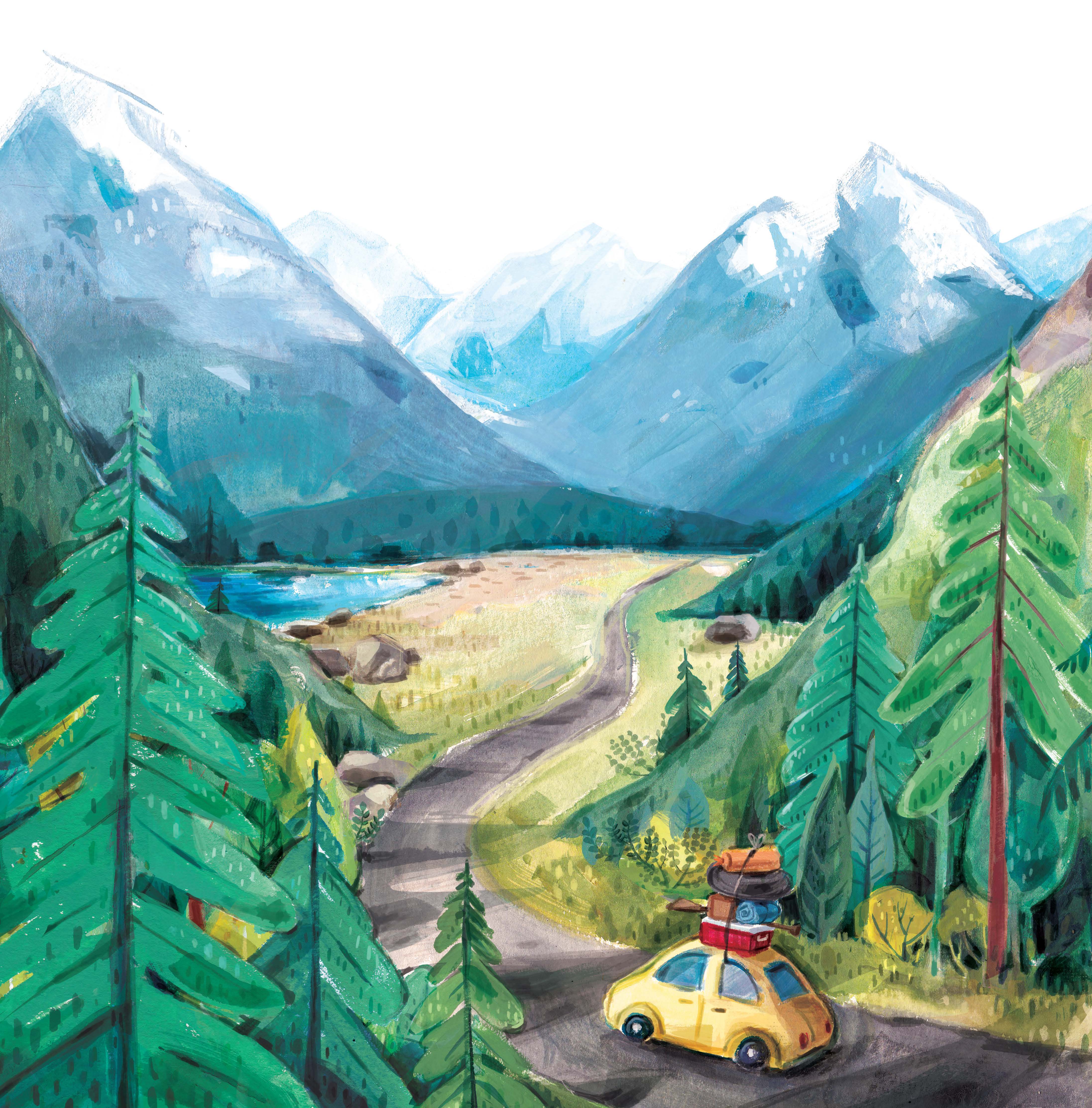
Twisty roads took them into the Rocky Mountains, where Annie pitched her tent for the night. Carson stood guard, watching for bears. The next day they rolled into dinosaur country. Carson could hardly control his excitement at seeing the enormous bones. Could this be his surprise? But Carson didn’t get to take a single bite—not even a little lick.

celebrate-picture-books-picture-book-review-carson-crosses-canada-loons

Illustrations copyright © 2017 by Kass Reich. Courtesy of Tundra Books.

On day three they came to flat farmland, where “grain grew in carpets—yellow, blue, gold.” While Annie admired the wide-open sky during a picnic lunch, Carson chased after grasshoppers, finally snatching one for his dessert. On the next day, the sun was so hot that as Annie and Carson drove past Lake Winnipeg, they stopped to take a dip.

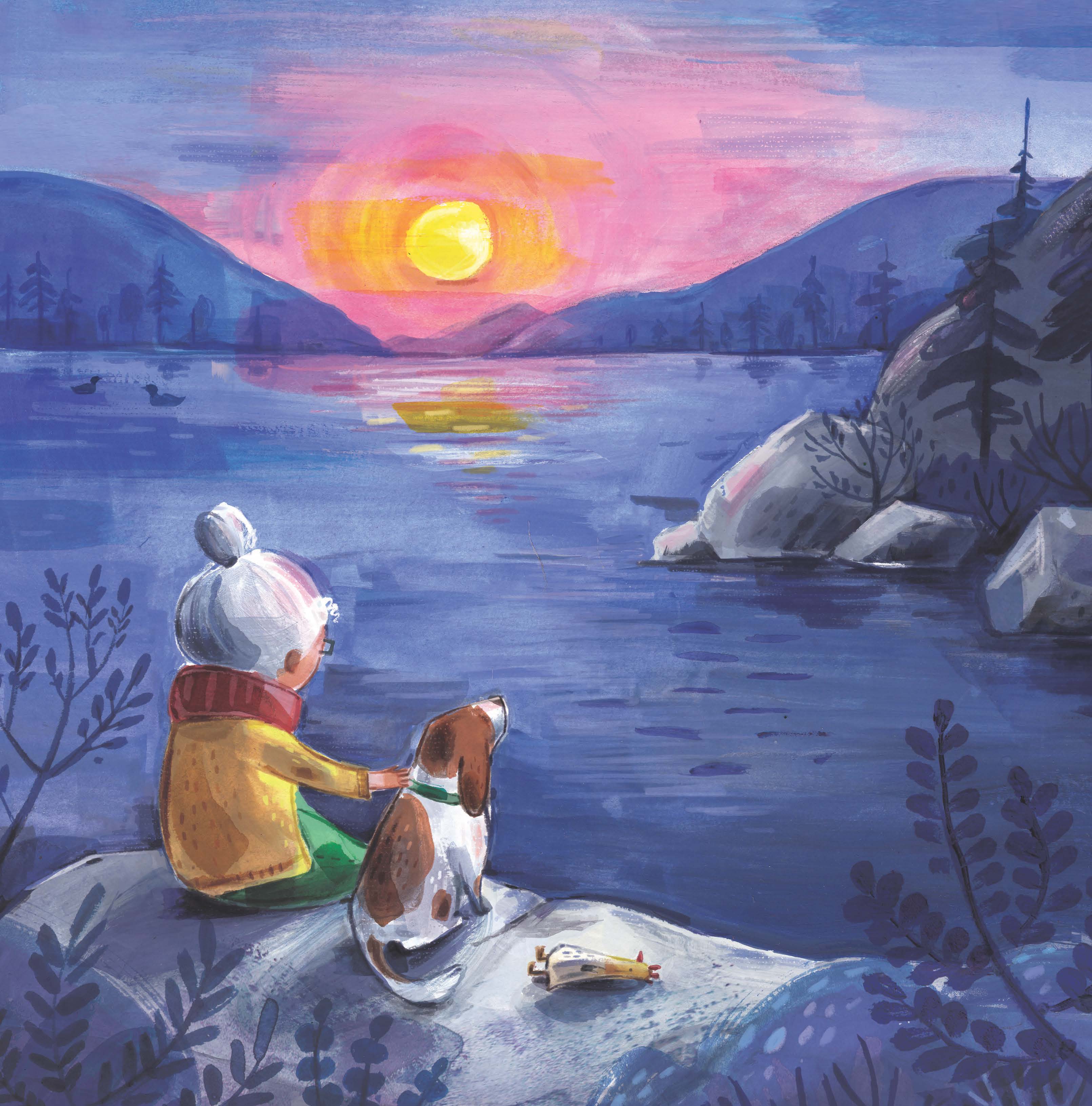
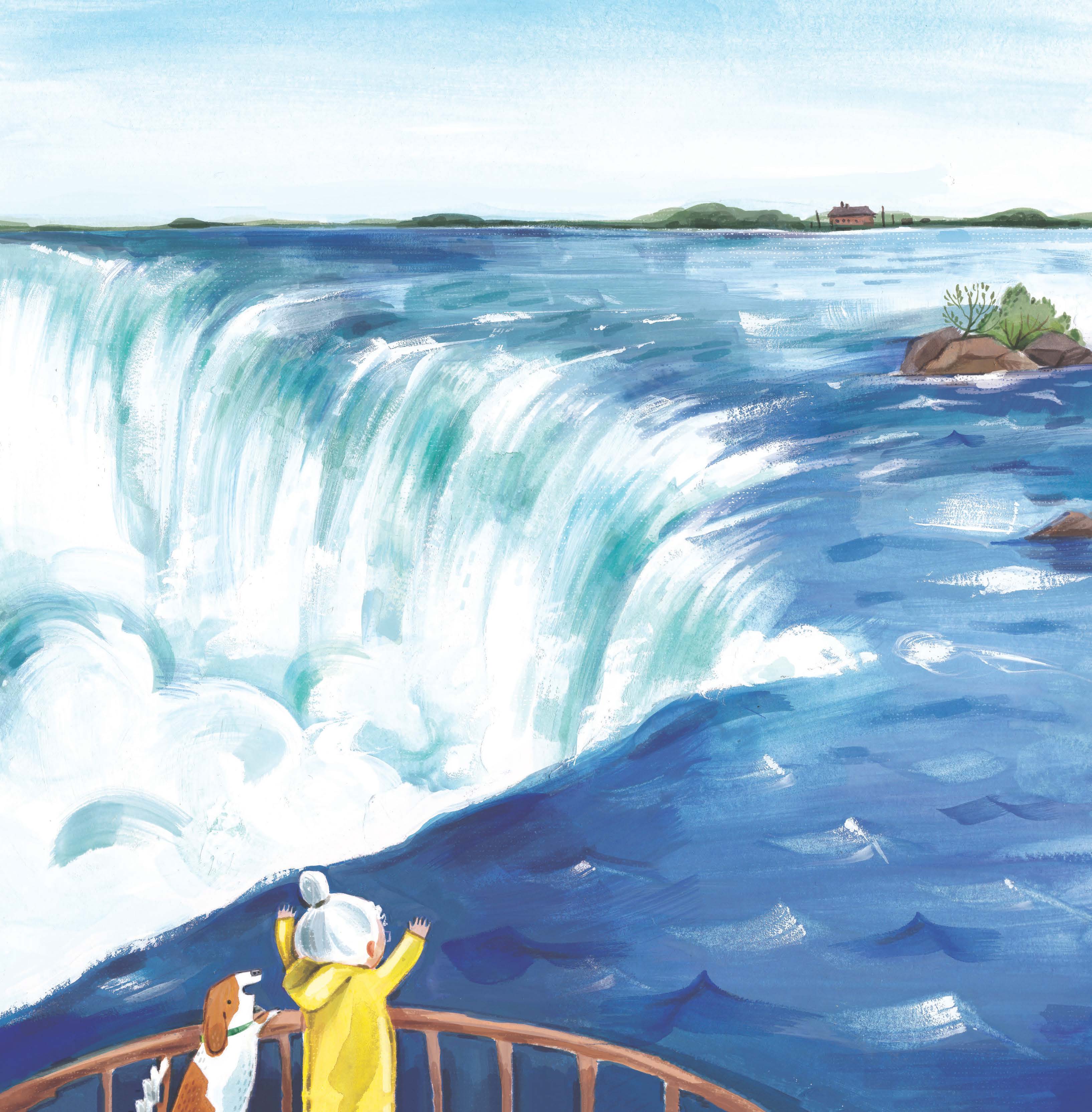
After that there were more days and even more days spent in the car passing forests of trees and boulders. Carson passed the time barking and wondering about his surprise. At night, when he and Annie camped, they listened to the loons calling, “Ooo-wooooo. Ooo-hoo-hoo.” When they reached Niagara Falls, they stopped to watch the thundering water and got soaked with its spray.

celebrate-picture-books-picture-book-review-carson-crosses-canada-niagara-falls

Illustrations copyright © 2017 by Kass Reich. Courtesy of Tundra Books.

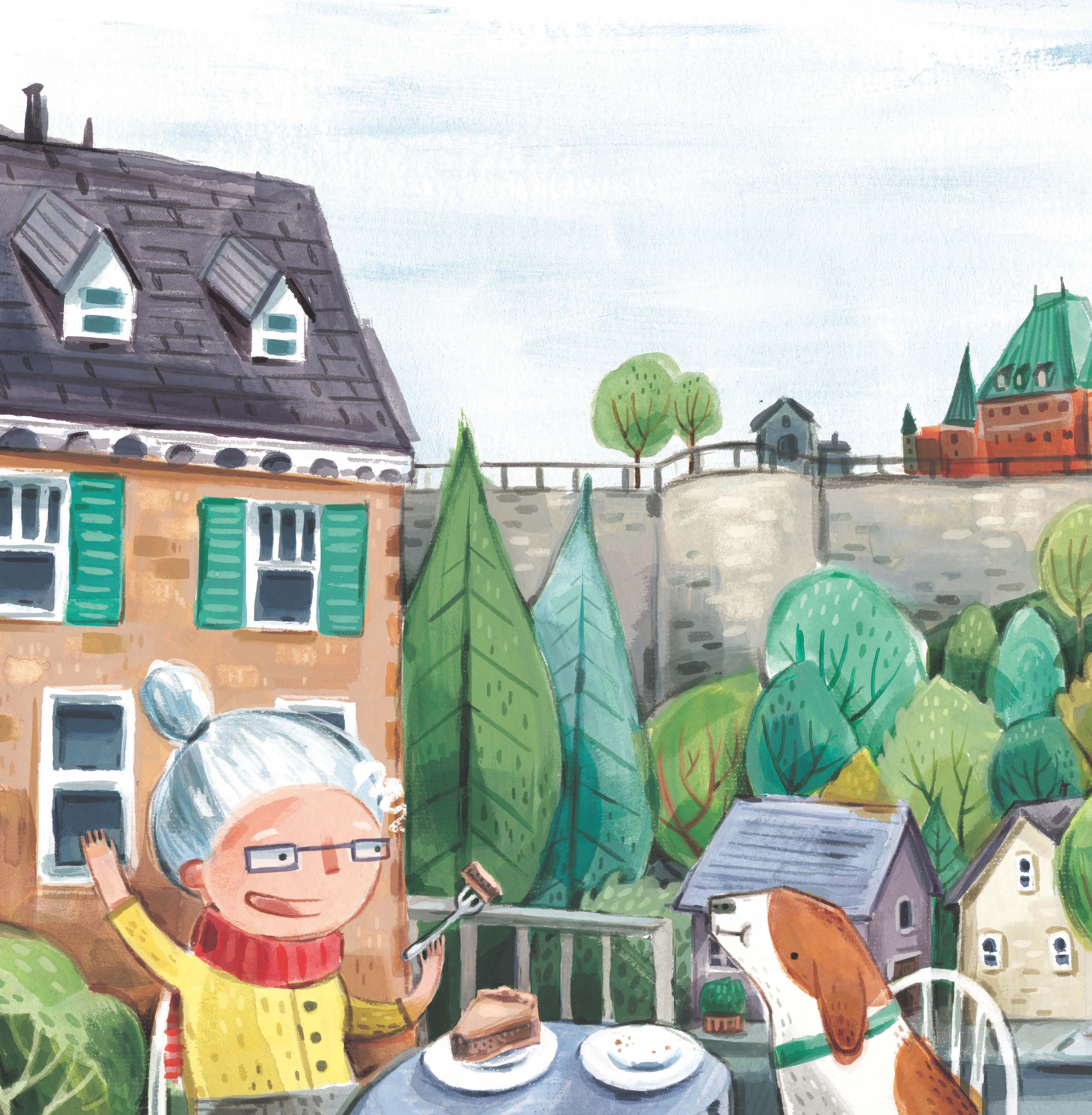
In Quebec City, Annie and Carson enjoyed French delights, including a pork pie called tourtière, which Carson gobbled up in two bites. Was this their destination? Oh, no—they still had a ways to go! Once, while Carson was napping, he heard Annie shout, “‘Look! The Atlantic Ocean!’” Carson was so thrilled to see an ocean once more that he ran to the edge and rolled in the mud until he was covered.

The next day brought “an island of red and green” as pretty as a postcard plus lobster rolls for two. Here, Annie told Carson, they were getting close. There was still one night’s stop, however. “In the campground that night, there was fiddle music—so friendly and fast, it made everyone dance. Annie clapped and jigged. Carson chased his tail.” With the promise of “‘tomorrow’” whispered in his ear, Carson fell asleep.

celebrate-picture-books-picture-book-review-carson-crosses-canada-quebec

Illustrations copyright © 2017 by Kass Reich. Courtesy of Tundra Books.

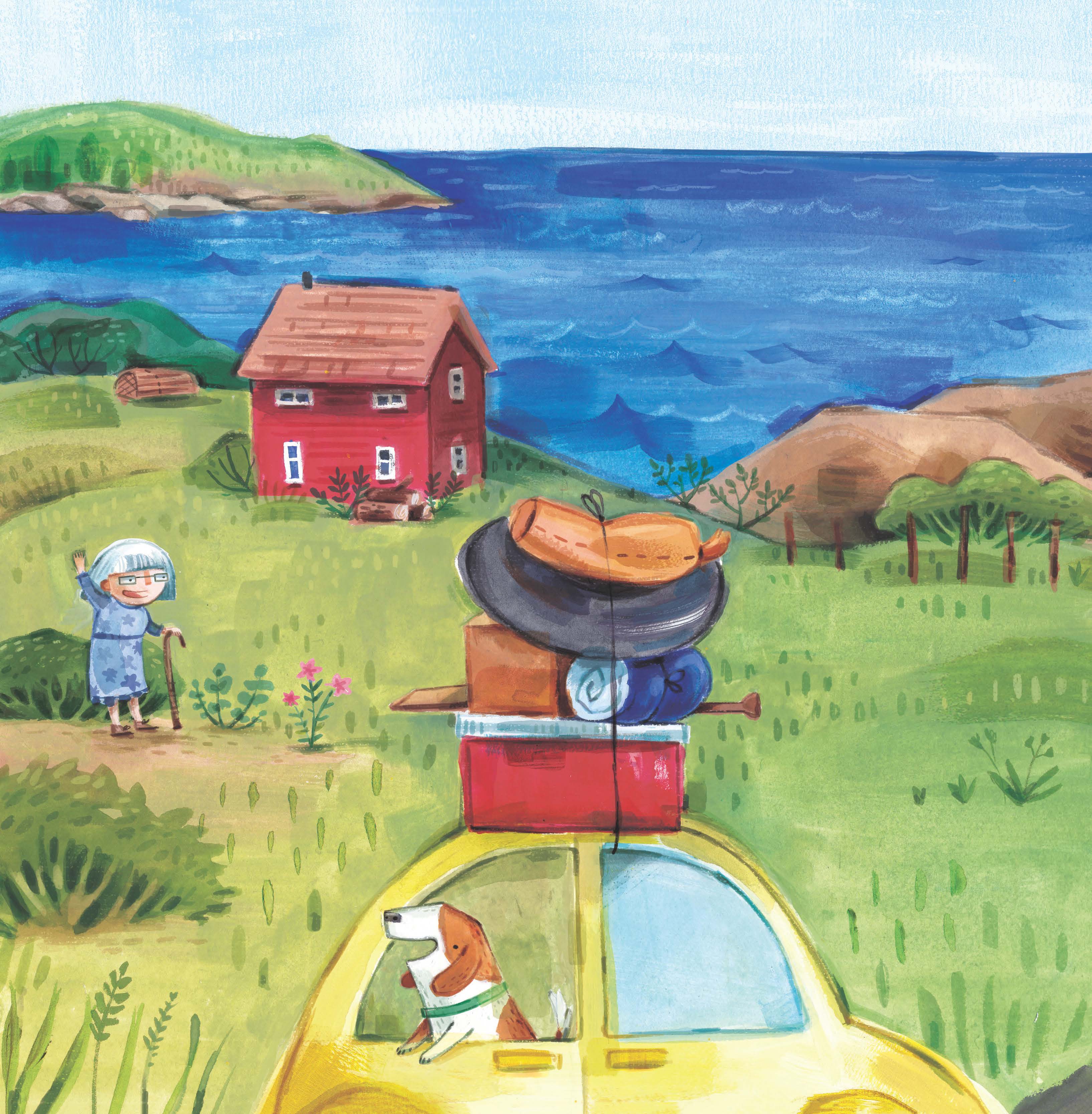
A ferry ride took them to Elsie’s. Her “house stood waiting beside the ocean. It was red like the house back home. Out came a woman who looked like Annie. Her steps were slow, but her smile was as wide as the sea.” Annie and her sister hugged for a long time until Carson yipped, looking for his surprise. Bounding toward him came a dog that looked “so much like Carson, it was like looking into a mirror.” It was his brother, Digby! They hadn’t seen each other since they were puppies. Spending time with Annie and Carson was just what Elsie needed. The four “loved the salt air. They loved the red house. And they loved their sweet time together.”

celebrate-picture-books-picture-book-review-carson-crosses-canada-elsie's-house

Illustrations copyright © 2017 by Kass Reich. Courtesy of Tundra Books.

For young armchair travelers, Linda Bailey has crafted a wonderful story that combines the best of sightseeing with an emotional tug that is warm and uplifting. The love between Annie and Carson is evident from the first page and swells as they reunite with Elsie and Digby, taking readers along for the rewarding ride. Bailey’s lyrical and humorous view of Canada’s expansive beauty through the eyes of both Annie and Carson will delight kids and leave them wanting to learn more. The reaffirmation that family stays strong even across many miles will cheer children and adult readers alike.

Kass Reich’s gorgeous hand-painted gouache illustrations put children in the back seat of the little, well-packed “rattlebang” car with sweet Carson on a tour of Canada. They’ll view awesome redwood trees, majestic mountains, the bone yards of Dinosaur Provincial Park, Quebec City, fields, lakes, and clear nights. Reich’s vivid colors and rich details invite kids to linger over the pages and learn even more about Canada. Little ones will also like pointing out Squeaky Chicken, who is happily enjoying the trip as well.

The book’s endpapers provide a colorful map of Canada with Carson and Annie’s route clearly marked along with their sightseeing stops.

Carson Crosses Canada is a sweet, beautiful book that kids will want to read again and again. It would be a wonderful addition to home and library bookshelves.

Ages 4 – 8

Tundra Books, 2017 | ISBN 978-1101918838  

Discover more about Linda Bailey and her books on her website!

You can learn more about Kass Reich and her books as well as view a portfolio of her illustration work on her website!

National Road Trip Day Activity

celebrate-picture-books-picture-book-review-truck-racing-game-wood

Road Trip Race Game


Here’s a racing game that kids will love! With poster board, paper, and chalk or other art supplies, kids can place their track in a city, the country, the desert, or even in outer space! Once the scene is ready, get out your own toy cars or trucks to play with or use the printable car or truck game pieces included below. Use a traditional playing die or the included printable 8-sided playing die. The first player to the finish line wins—or shake it up a bit and make the last person to the line the winner.

The track can be laid out on the floor and taped in place or created on poster board or paper with the supplies below:

Supplies

  • Poster board or tri-fold display board. I used a 12-inch by 4-foot section of a tri-fold board in my example. This allows you to fold up the board for easier storing.
  • White paper
  • Chalk, crayons, or colored pencils
  • Glue or tape
  • Scissors
  • Toy trucks or cars
  • Printable Cars Game Pieces | Trucks Game Pieces (optional)
  • Printable 8-sided Playing Die

Directions

  1. Cut 30 4- or 5-inch by 1½-inch strips from the white paper (or more for a longer track)
  2. Have kids lay out a track on the board using the white paper strips (each strip is one space) leaving room in between the rows for scenery
  3. Glue or tape the strips in place
  4. Draw scenery around the track OR cut trees, buildings, landmarks, or other scenery from paper and color. Glue or tape to board. 
  5. Print and assemble 8-sided playing die with tape (optional)
  6. Give each player a toy truck or car. Alternately, print and cut out included Truck Game Pieces. (To make them sturdier, print on heavy paper or glue them to cardboard)
  7. Choose a player to go first
  8. Players take turns rolling the die and moving the appropriate number of spaces
  9. The first (or last) player to the finish line is the winner

celebrate-picture-books-picture-book-review-carson-crosses-canada-cover

You can find Carson Crosses Canada at these booksellers

Amazon | Barnes & Noble | Books-a-Million

To support your local independent bookstore, order from

Bookshop | IndieBound

Picture Book Review

May 23 – National Turtle Day

celebrate-picture-books-picture-book-review-turtle-and-tortoise-are-not-friends-cover

About the Holiday

Susan Tellem and Marshall Thompson, who founded American Tortoise Rescue in 1990, established World Turtle Day to raise awareness and respect for turtles and tortoises and to promote conservation to help them survive. Celebrations take many forms, from fun activities where participants dress as turtles to educational programs that teach about this fascinating creature and how people can help turtles in danger. To learn more about World Turtle Day and American Tortoise Rescue – and to meet some of their adorable residents – visit worldturtleday.org.

Turtle and Tortoise Are Not Friends

Written by Mike Reiss | Illustrated by Ashley Spires


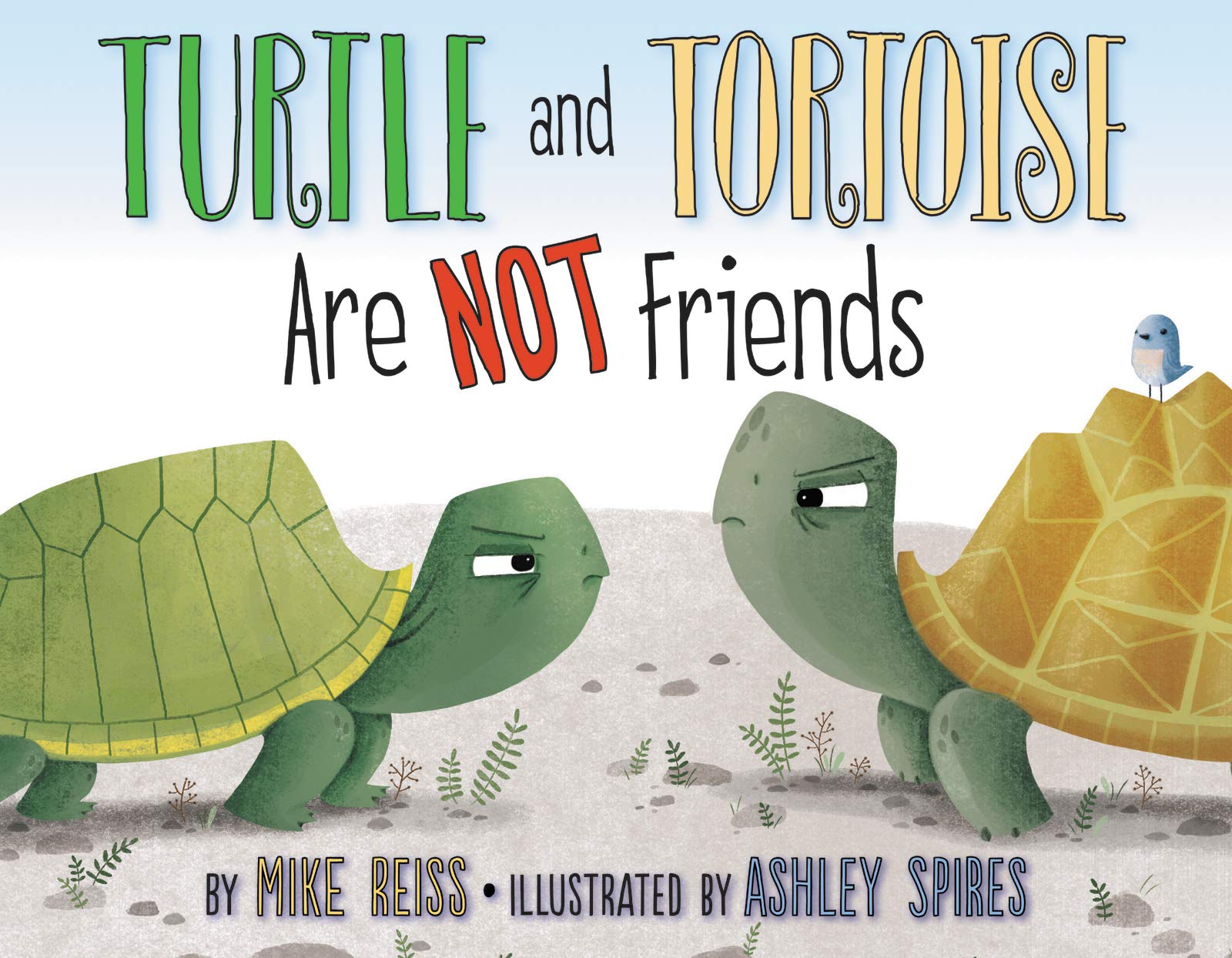
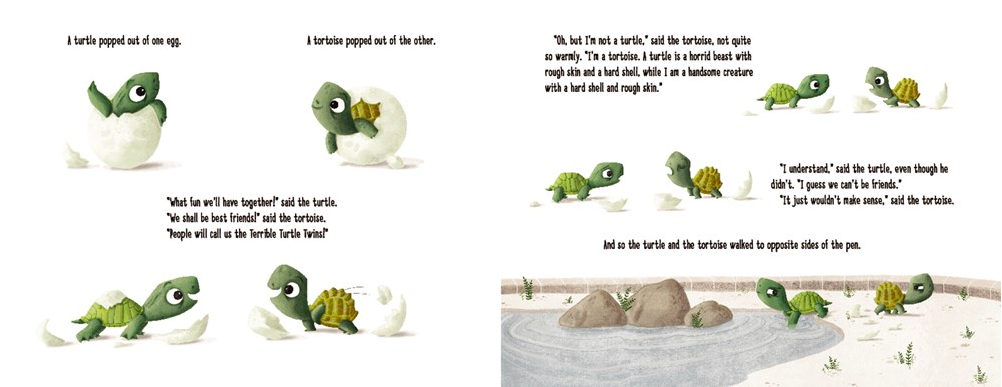
Upon beginning the story, children learn that “far, far away” two eggs shared the same pen at a zoo. Eventually, the eggs hatched: first a turtle and then a tortoise. The two babies took to each other right away, excited about all the fun they would have together. “People will call us the terrible Turtle Twins!” the little turtle says. But the tortoise is not receptive to this idea and launches into a mirror-image description about the differences between a turtle, a “horrid beast” and a tortoise who is a “handsome creature.” Following this, they go their separate ways to separate parts of the pen.

celebrate-picture-books-picture-book-review-turtle-and-tortoise-are-not-friends-hatching

Image copyright Ashley Spires, 2019, text copyright Mike Reiss, 2019. Courtesy of Harper Collins.

Soon, the zookeeper, leading a school field trip, stops by and during his spiel reveals that turtles and tortoises can live 100 years. The little turtle and tortoise are surprised and impressed by this information, but they go on with their individual lives – for 14 years. The turtle finds – and eats – a worm that “looked just like Winston Churchill.” The tortoise was picked up by one eagle and returned by another. They endured nature’s worst weather and saw old years go and new years come. They could have commiserated and celebrated together, but they didn’t.
celebrate-picture-books-picture-book-review-turtle-and-tortoise-are-not-friends-lost-ball

Image copyright Ashley Spires, 2019, text copyright Mike Reiss, 2019. Courtesy of Harper Collins.

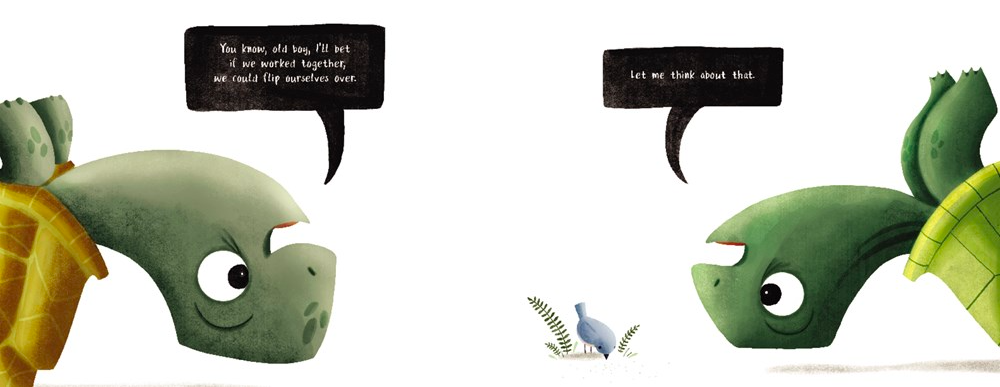
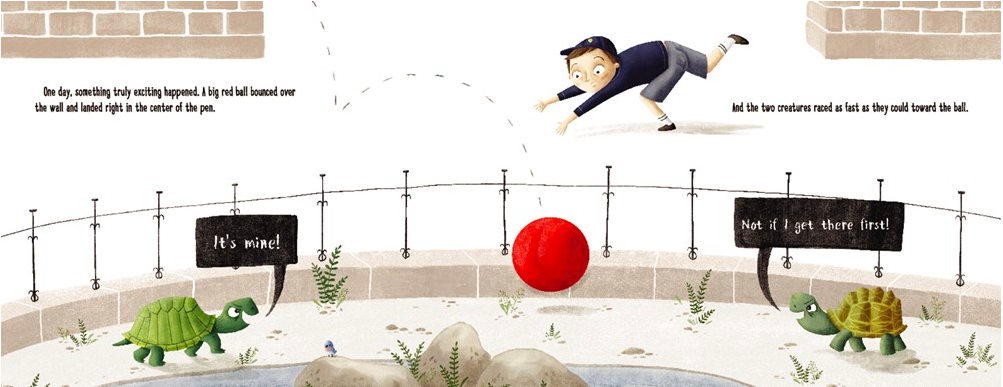
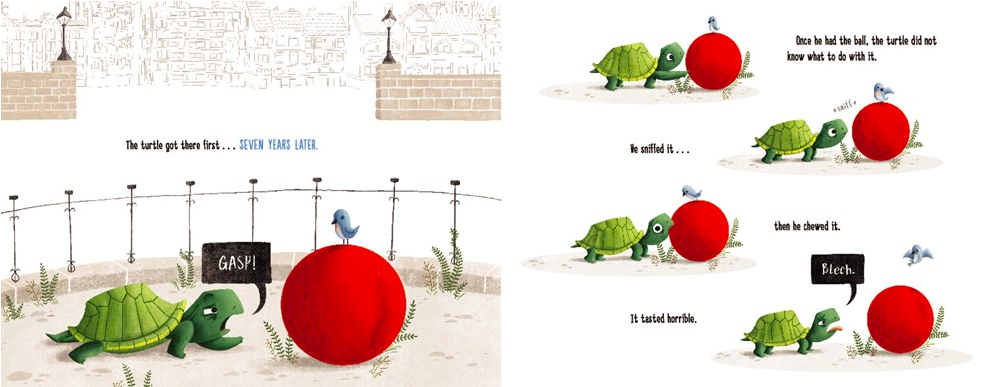
Then one day, a red ball came bouncing into their pen. Both the turtle and the tortoise rushed to catch it. “The turtle got there first…seven years later.” Once he had it, he wasn’t sure what it was or what to do with it. At last, he climbed on top of it and felt like “the king of the zoo” until he rolled off and landed on his back. Seeing an opportunity, the tortoise hurried over. Two years later he reached the ball. Passing the struggling turtle, he gave a snide laugh and claimed it for himself, with predictable results. 

celebrate-picture-books-picture-book-review-turtle-and-tortoise-are-not-friends-ball

Image copyright Ashley Spires, 2019, text copyright Mike Reiss, 2019. Courtesy of Harper Collins.

Both the turtle and the tortoise spent the days and months and years on their backs, staring up at the sky and at each other. Time passed – a lot of time. Eventually, a new zookeeper guiding a new group of children related some new information that changed the whole Turtle-Tortoise dynamic. The tortoise suddenly had an idea on how they might regain their footing, and not so suddenly the turtle agreed to try it. Managing it took some time – a lot of time – but they finally found themselves face-to-face again, and, with a different attitude and appreciation for their new “fast” friendship, they wandered off to enjoy some lettuce leaves together.
celebrate-picture-books-picture-book-review-turtle-and-tortoise-are-not-friends-on-backs

Image copyright Ashley Spires, 2019, text copyright Mike Reiss, 2019. Courtesy of Harper Collins.

Funny, thought-provoking, purposeful, and poignant, Mike Reiss’s story is at once an entertaining tale of two stubborn creatures wasting decades of a could-be friendship and a gentle prompting to really look at the senseless prejudice, lack of communication, and missed opportunities that keep our human race divided. A careful reading of the tortoise’s comparison of a turtle and a tortoise provides a humorous yet serious jumping off point for discussions about prejudice as well as the effect of not questioning such pronouncements. Reiss even cleverly inserts a nod to scientific advancements and other societal changes that if embraced can lead to better understanding, friendship, and community. His early introduction of a turtle’s life span likewise frames the story in human terms. As the years pass by in the blink of an eye (or three or four words), Reiss encourages readers to count up how many years it takes the tortoise and turtle to become friends and ponder how that might relate to their own lives.

How far, far away is this unnamed zoo? Taking a good look at Ashley Spire’s ingenious cityscape, kids will discover that, no matter where they live, it is closer than they might think. Spires goes on to make the turtle and the tortoise distinct individuals but with many similarities, an idea that adults may want to explore with children while reading the book together. The turtle and the tortoise are adorable, and kids will be rooting for them to put aside their misconceptions and become friends. The passage of time is charmingly represented by the clothing and demeanor of the two groups of children that visit the zoo.

Turtle and Tortoise Are Not Friends is an enchanting and multilayered story that kids will want to hear again and again for its humor and thoughtful treatment of friendship. 

Ages 4 – 8

HarperCollins, 2019 | ISBN 978-0060740313

You can connect with Mike Reiss on Twitter.

To learn more about Ashley Spires, her books, and her art, visit her website.

National Turtle Day Activity

celebrate-picture-books-picture-book-turtle-shell-game

Follow the Turtles! Game


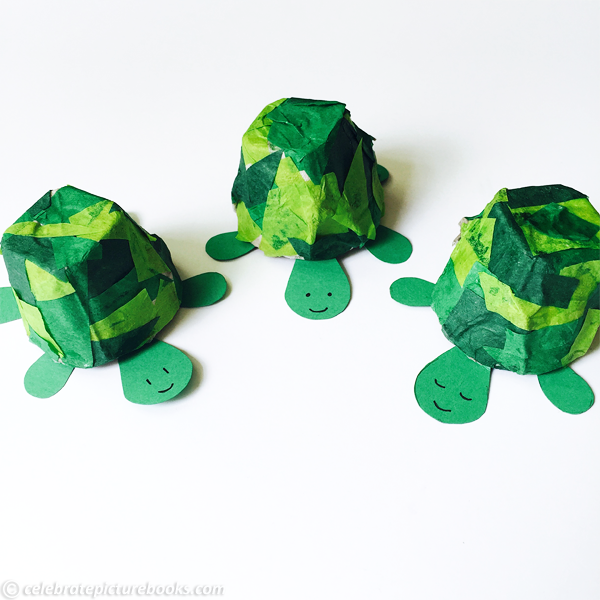
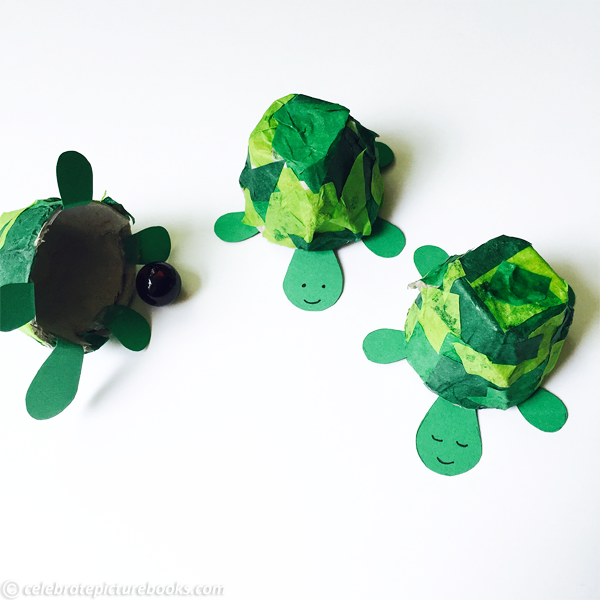
You can make this fun game from recycled materials and a little creativity! When you’re finished making the turtle shells, have fun guessing where the marble, bead or bean is hiding!

Supplies

  • Cardboard egg carton
  • Green tissue paper in different hues
  • Green construction or craft paper
  • A marble, bead, or bean
  • Glue
  • Scissors

celebrate-picture-books-picture-book-turtle-game

Directions

  1. Cut the egg carton apart into individual cups. You will need 3 cups for each game made.
  2. Cut the rims of the cups so they sit flat on a table.
  3. If the cups have open sides, fit two cups inside one another to fill the gaps
  4. Cut the tissue paper into small shapes
  5. Brush glue on a cup (I used a paper towel to apply glue)
  6. Cover the egg cup with pieces of tissue paper. Repeat with other cups.
  7. Let dry
  8. Cut a head and feet from the green craft paper
  9. Tape or glue the edges of head and feet to the inside of the cups
  10. Add a face to the head

To play the game:

  1. Line up the cups on a table
  2. Put a bead, bean, or marble under one of the cups
  3. Show the other player which cup the object is under
  4. Quickly move the cups around each other several times
  5. Ask the other player which cup they think the object is under
  6. Take turns playing

Extra Game: Make three more and play turtle tic-tac-toe! 

celebrate-picture-books-picture-book-review-turtle-and-tortoise-are-not-friends-cover

You can find Turtle and Tortoise Are Not Friends at these booksellers

Amazon | Barnes & Noble | Books-a-Million

To support your local independent bookstore, order from

Bookshop | IndieBound

Picture Book Review