April 5 – National Read a Road Map Day

celebrate-picture-books-picture-book-review-the-50-states-fun-facts-cover

About the Holiday

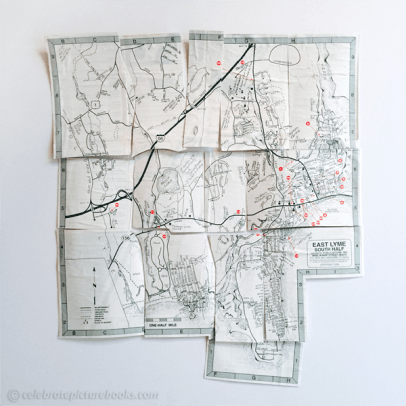
Today’s holiday is all about those paper maps that have guided travelers along the trails, roads, highways, and biways as they search for adventure or just need to get from here to there. While the little window of GPS may be more prominent now, there’s nothing like opening the wide vista of a paper map and letting your mind wander to far-off places. Old maps are fascinating too, as they reveal the changes in road systems and population over time. Today, rediscover your local area or take an armchair trip to a new locale through a paper map.

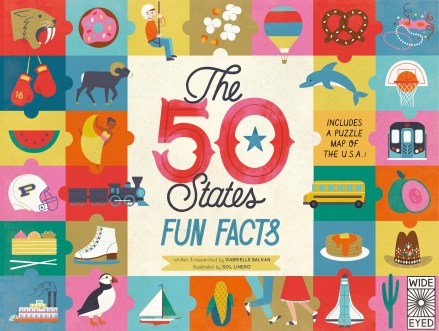
The 50 States: Fun Facts

Written by Gabrielle Balkan | Illustrated by Sol Linero

America is one vast country made up of 50 states that are each unique and fascinating in their own way. The history, people, topography, and even weather of each region has resulted in an incredible diversity of animal life, cuisine, transportation, leisure activities, and celebrations across the nation. The 50 States: Fun Facts offers up a patchwork of engaging and enlightening information about each state that will entice kids to learn more about their own home as well as other areas.

celebrate-picture-books-picture-book-review-the-50-states-fun-facts-things-that-go

Image copyright Sol Linero, text copyright Gabrielle Balkan. Courtesy of Eyes Wide Editions, Aurum Press.

The large-format board book is divided into five two-page spreads, each dedicated to a particular topic. In 50 Animals readers discover that the first Seeing Eye dogs were trained in Nashville, Tennessee; that “the colors of Maryland’s state cat—the Calico Cat—match the state flag”; and that there are so many moose in Wyoming that there’s even a town named Moose! From state to state kids will also learn about the Chinook Dog of New Hampshire, meet white buffalo that roam North Dakota, and view the state insect of Connecticut—the praying mantis, which can turn its head 360 degrees—among many, many more.

Each state is also known for its own, particular mode of transportation. In Alaska the Tlingit Nation builds beautiful canoes, which the people believe are inhabited by their own spirit. If you’re interested in scanning the skies for alien lifeforms, you may want to head to the San Luis Valley of Colorado, which is considered to be prime UFO-spotting territory! If boats are more your thing, you might want to take a houseboat vacation in the lakes around Jamestown, Kentucky, or see a Navy Destroyer at the shipyard in Bath, Maine. Carousel lovers will want to take the road to Rhode Island, where they can catch the gold ring on the Flying Horse Carousel that has been going round and round for nearly 150 years! There are so many more Things That Go on these pages, including trains, trucks, trolleys, and a 16-story electric shovel!

celebrate-picture-books-picture-book-review-the-50-states-fun-facts-things-to-eat

Image copyright Sol Linero, text copyright Gabrielle Balkan. Courtesy of Eyes Wide Editions, Aurum Press.

After all that activity, readers may be a bit hungry. All they need to do is flip the page to find 50 Things to Eat—specialties from around the nation. Whether you call them blackberries or brambleberries, these sweet nuggets—Kentucky’s state fruit—are great alone or in special treats. If you love pretzels, then the pretzel festival in Germantown, Ohio is for you! Spicy foods more your style? Then you’ll want to check out Hatch, New Mexico—the chili capital of the world! After having Delaware’s chicken specialty, catfish from Mississippi, or potatoes from Idaho, you may just want to try a banana split—first served in Latrobe Pennsylvania in 1904—or even nosh on a few roasted Joshua Tree flower buds that are said to taste like candy.

Ready to work off that meal? The next page provides 50 Ways to Get Moving, including archery in California, rafting in West Virginia, base jumping in Utah, snowshoeing in Minnesota, and snorkeling in Hawaii. 

celebrate-picture-books-picture-book-review-the-50-states-fun-facs-celebrations

Image copyright Sol Linero, text copyright Gabrielle Balkan. Courtesy of Eyes Wide Editions, Aurum Press.

Celebrations have been part of America since the first Thanksgiving, and each state has a entertaining—often quirky—spectacular to highlight their history or specialty. In Nebraska the old Pony Express mail system is reenacted every June; The Heart of the Ozarks Bluegrass Festival brings musicians and fans to West Plains, Missouri each year; and Honobia, Oklahoma’s Bigfoot Festival makes believers of us all—well, almost.

In Florida, you can learn how to wrestle an alligator with the Miccosukee tribe on American Indian Day; you can test your mettle on 98 flights of stairs during Washington’s Space Needle Base 2 Space Race for charity; and “you can cheer on bronc riders at the ‘Daddy of All Rodeos’” during Cheyenne Frontier Days in Wyoming. Perhaps  the oddest celebration is Mike the Headless Chicken Festival held every May in Fruita, Colorado that commemorates “a rooster that lived for 18 months…with no head!”

celebrate-picture-books-picture-book-review-the-50-states-fun-facts-puzzle

Image copyright Sol Linero, text copyright Gabrielle Balkan. Courtesy of Eyes Wide Editions, Aurum Press.

Each spread also offers a sidebar scavenger hunt of sorts as it asks readers to see if they can find four different categories of items among the rest. After kids have soaked up all the facts about the 50 states, they can test their knowledge of American geography by completing the included jigsaw puzzle map.

Gabrielle Balkan has collected tons of engaging facts about the United States that are sure to delight and amaze children. Each category would be a wonderful starting point for learning about any or all of the states and gives kids an idea of the variety found across America. Sol Linero’s striking category “quilts,” composed of colorful patches decorated with clear, engaging illustrations, draw readers in to discover the fascinating facts presented about each state.

Ages 4 – 10

Wide Eyes Editions, Aurum Press, 2016 | ISBN 978-1847808691

Discover more about Gabrielle Balkan and her books on her website!

View a gallery of illustration work by Sol Linero on her website!

National Read a Road Map Day Activity

celebrate-picture-books-picture-book-review-road-map-puzzle

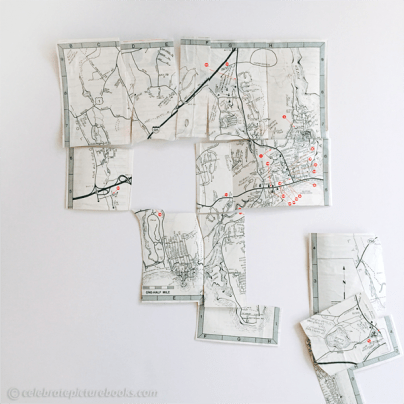
Make a Road Map Jigsaw Puzzle

It’s fun and easy to make your own jigsaw puzzle from a map of your local town or a place you’d like to visit!

Supplies

  • A paper map
  • Poster board
  • Glue or spray glue
  • Scissors

celebrate-picture-books-picture-book-review-road-map-puzzle

Directions

  1. Smooth out the paper map
  2. Glue the map to the poster board
  3. Cut the poster board into interlocking or adjoining pieces (the number of pieces can depend on the child’s age)

Picture Book Review

April 3 – National Tweed Day

celebrate-picture-books-picture-book-review-joseph-had-a-little-overcoat-cover

About the Holiday

Today is one of those holidays that is up to interpretation. While April 3, 1823 was the birthday of notoriously corrupt politician William M. (“Boss”) Tweed, it’s not clear why commemorating that date would be desirable—expect perhaps as a timely cautionary tale. Instead most like to celebrate the natty, multi-hewed fabric embraced by professors and other fashionable folk world-wide. Tweed originated as a hand-woven fabric in Scotland. The earthy tones mirrored the Scottish landscape, and, like tartans, could distinguish a particular estate or family based on the sheep providing the wool and the pattern.

Joseph Had a Little Overcoat

By Simms Taback


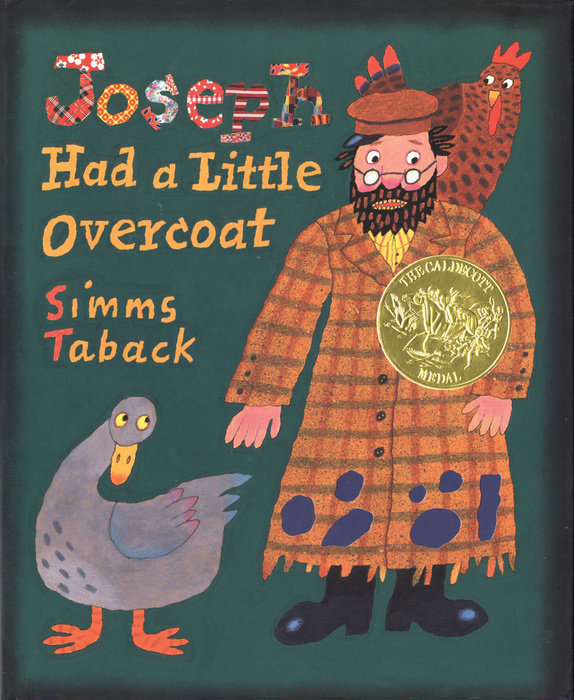
Joseph’s coat was old and worn with patches overlapping patches all along the bottom. It was time to do something about it, so Joseph, “made a jacket out of it and went to the fair.” Time went by and that sporty jacket also “got old and worn.” The hem was frayed, the cuffs were torn, and patches overlapped patches all up and down the sleeves, so Joseph “made a vest out of it and danced at his nephew’s wedding.”

celebrate-picture-books-picture-book-review-joseph-had-a-little-overcoat-men's-chorus

Image and text copyright, Simms Tayback, courtesy of simmstaback.com

Years past, and that little vest suffered the same fate as the coat and the jacket. But Joseph was clever. The vest became a scarf that he wore to sing in the men’s chorus. Wicked weather took its toll, and eventually the scarf  had more holes than material. With careful cutting, the scarf made a jaunty tie to wear when visiting his sister.

You know how it goes with ties. The edges grew threadbare and stains marred the pattern. Joseph’s animals considered it a goner, but Joseph had another idea. He made a handkerchief to accessorize his favorite shirt and enjoyed a “glass of hot tea with lemon.” That same handkerchief also helped Joseph whenever he had a cold, and in time it “got old and worn.”

celebrate-picture-books-picture-book-review-joseph-had-a-little-overcoat-handkerchief

Image and text copyright, Simms Tayback, courtesy of simmstaback.com

Joseph had one more idea. “He made a button out of it and used it to fasten his suspenders.” One day, Joseph lost his button, and even though he searched everywhere, he couldn’t find it. “Now he had nothing. So Joseph made a book about it. Which shows…you can always make something out of nothing.”

Classic tweed calls for a classic book, and Simms Taback’s tale of a master recycler will have kids in stitches. Not only is the story clever, but ingeniously hidden die-cut holes in the pages let readers guess—and then follow—each iteration as the original coat gets smaller and smaller. The bold, multimedia illustrations are full of humor, history, and tradition and give kids and adults lots to look at and talk about. Children will love helping Joseph look for his button under the watchful gaze of Sigmund Freud, whose wide-eyed portrait seems to be taking in all the action. The final “moral to the story” is inspired and inspiring.

Originally published in 1999, Joseph Had a Little Overcoat remains fresh and innovative for today’s young readers. The book was a favorite of my own kids, and would be a much-asked-for addition to home libraries.

Ages 3 – 7

Viking Books for Young Readers, 1999 (hardcover) | ISBN 978-0670878550

Scholastic, 2003 (paperback) | ISBN 978-0439217316

National Tweed Day Activity

CPB - Button Coat

Pin the Button on the Coat Game


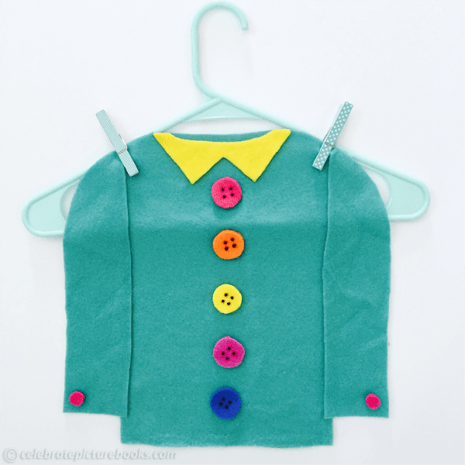
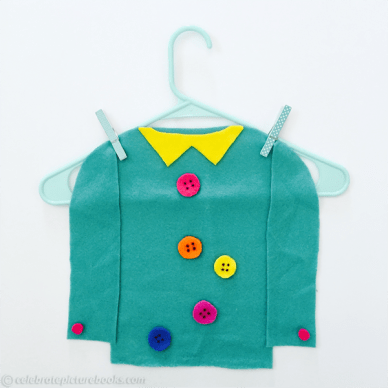
Pin the Button on the Coat is a fun game you can make yourself and play anytime! It’s great for a button-themed party or on any day that you’re holed up and wanting something to do! The game is played like “Pin the Tail on the Donkey,” and the object is to get the buttons lined up as close to the center of the coat as possible. Have fun!

Supplies

  • Fleece or felt inyour choice of colors, 2 pieces of 8 ½” x 11” to make the coat and smaller pieces or scraps to make buttons
  • Fabric glue
  • Scissors
  • Black marker
  • Clothes hanger
  • Clothes pins

CPB - Button Coat II

Directions

  1. Cut out the body of the coat, sleeves, and collar
  2. With the fabric glue, attach the sleeves to the edge of the coat, and the collar to the top of the coat.
  3. Let dry
  4. Cut circles for buttons from the other colors of fleece or felt, as many as you need
  5. With the marker make dots to represent holes in the buttons
  6. When the glue on the coat is dry, attach it to the clothes hanger with the clothespins

Picture Book Review

April 1—International Pillow Fight Day

celebrate-picture-books-picture-book-review-snoozefest-cover-image

About the Holiday

Pillow fights are fluffy fun that’s more about laughing than combat. Once only enjoyed by siblings, at sleepovers, and to delay bedtime, pillow fights have become the stuff (stuffing?) of mass swatfests worldwide. So grab your pillow, swing with all your might, and let the feathers fly!

SnoozeFest

Written by Samantha Berger | Illustrated by Kristyna Litten


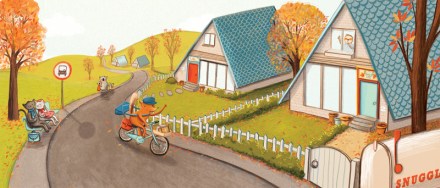
Snuggleford Cuddlebun is the sleepiest sloth in Snoozeville. “Now that sloth can sleep, for a month at a go. / The few time she rises, she moves in slo-mo.” But there is one annual event that sets her heart—and her feet—racing enough to leave her cozy bed—SnoozeFest. “This is the place where the best sleepers go / to snore their way through this naptacular show.” So Snuggleford packs up her her jammies and teddy, her pillow and book and joins the other great sleepers on the bus that will take them to the NuzzleDome.

celebrate-picture-books-picture-book-review-snoozefest-snoozeville

Image copyright Kristyn Litten. courtesy of Dial Books for Young Readers, Penguin

As Snuggleford looks for the best place to camp, she sees that she’s in good company. The wildcats, wombats, koala bears, brown bats, squirrels, and armadillos are also setting up tents, laying down sleeping bags, and lounging in hammocks—which is Snuggleford’s favorite too. After finding her spot “she strolls through the stands / for posters and T-shirts / and swag from the bands.” Soon it’s time for the show to begin with the P. J. Parade, where sleepwear from such designers as Diane von FirstInBed and Louis Futon are on full display.

celebrate-picture-books-picture-book-review-snoozefest-sleeping-bags

Image copyright Kristyn Litten. courtesy of Dial Books for Young Readers, Penguin

“Then all the big spotlights dim down in the Dome, / and everyone turns on their night-light from home.” The first band to perform is the “Chamomile Rage” and although the crowd is half asleep by the middle of the first song, “the snoozers yawn deeply, yet still clap for more. / The second act’s also a guaranteed snore.” Then “a poet named Burrows recites a haiku / and imitates rain with his didgeridoo.”  More acts take the stage—the Nocturnal Nesters and the Quiet Quartet, Tranquility Trio and the Drowsy Duet. Yes, “These are the best bands for deep relaxation, / followed by Sweet Dreams and Deep Hiber-Nation.”

For Snuggleford Cuddlebun the concert is all she could want. In fact, “Several days later the SnoozeFest is done. / And who’s still asleep? Why it’s Miss Cuddlebun.” She folds up her things, tosses away her trash, and rides the bus back home. There she climbs into bed and shuts her eyes and dreams of next year’s SnoozeFest.

celebrate-picture-books-picture-book-review-snoozefest-nighttime

Image copyright Kristyn Litten. courtesy of Dial Books for Young Readers, Penguin

Samantha Berger’s SnoozeFest is one of the cutest, most original bedtime books around. With wit and charm Berger makes full use of the festival setting and experience. Her inspired rhymes, adorable band names, and atmosphere that combines just the right amount of excitement and slumber-inducing lilt, will delight kids of all ages and adults as well. From Snoozeville to the NuzzleDome to a full verse of blanket nicknames, Berger has come up with the “wumphiest, coziest, comfiest” words to send little ones off to dreamland.

celebrate-picture-books-picture-book-review-snoozefest-sleeping-suggleford

Image copyright Kristyn Litten. courtesy of Dial Books for Young Readers, Penguin

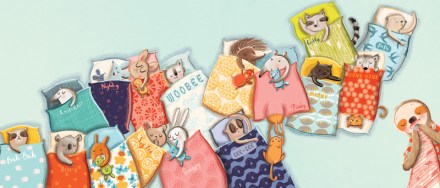
Krisyna Litten’s illustrations, designed with a vintage-yet-modern air and color palette, are the perfect accompaniment to Berger’s story. Anyone would love to join Litten’s sweet Snuggleford and the other “great sleepers” at SnoozeFest. Snuggleford’s endearing slothy smile and the joyful camaraderie of the other festival goers invite kids to explore every page. The crowd consists of loveable moles, koalas, raccoons, bears, foxes, porcupines, and more adult and baby animals enjoying the show.  Two-page spreads of the darkened festival grounds lit by nightlights and starlight are gorgeous, peaceful landscapes of blues and gold that set a sleepy tone for little readers.

SnoozeFest would be a very welcome addition to any child’s bookshelf for story times and bed times, and would make a perfect gift.

Ages 3 – 7

Dial Books for Young Readers, Penguin, 2015 | ISBN 978-0803740464

You’ll have plenty of fun discovering lots of books, Nickelodeon videos, and more creative stuff by Samantha Berger on her website!

You can catch up with Krisyna Litten on her blog!

You won’t want to snooze through this book trailer!

International Pillow Fight Day Activity

celebrate-picture-books-picture-book-review-pillow-case-craft

Perfect Pillow Case


Decorating your own pillow case gives you distinction during any pillow fight—and guarantees sweet dreams while sleeping too!

Supplies

  • White, or single-color pillow case
  • Fabric markers
  • Cardboard or newspaper

Directions

  1. Iron or smooth out the pillow case
  2. Insert cardboard or newspapers inside the pillow case to keep markers from bleeding through
  3. Design and color your pillow case with the markers

Picture Book Review

March 28 – It’s Women’s History Month

celebrate-picture-books-picture-book-review-fearless-flyer-cover

About the Holiday

Women have been inventing, discovering, questioning, challenging, and changing the world in the same ways and for just as long as men have—but often without recognition, the ability to take jobs in their fields of expertise, or equal (or even any) pay. This month’s observance serves to educate people on the amazing women who have blazed trails in the past and those who are continuing that tradition today.

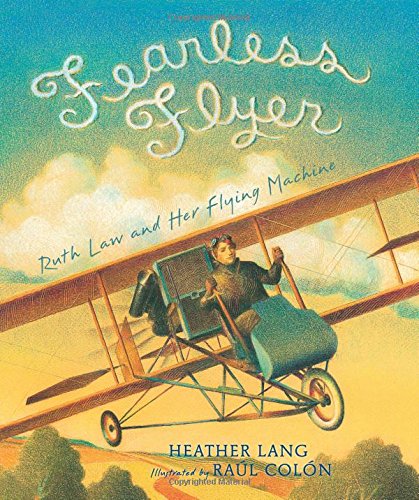
Fearless Flyer: Ruth Law and Her Flying Machine

Written by Heather Lang | Illustrated by Raúl Colón


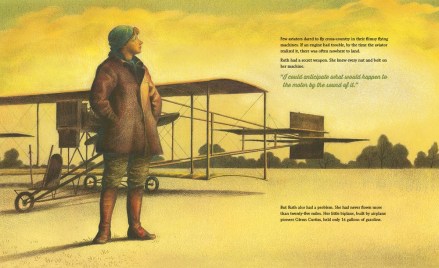
Entertained crowds knew Ruth Law for the loops, the spiral dives, and even the dip of death that she performed in her airshow. But for Ruth these stunts were like standing still. She “longed to fly to get somewhere…somewhere far away.” She decided to fly from Chicago to New York City. There weren’t too many aviators brave enough to attempt such a long flight in the type of biplane Ruth flew. They feared that if something went wrong with the engine, they’d never realize it in time to land. But Ruth knew her plane inside and out and figured she “could anticipate what would happen to the motor by the sound of it.”

A trip like the one Ruth envisioned posed another problem, though. Her small biplane held only 16 gallons of gasoline—not enough to make the journey. She asked Glenn Curtis, who built her plane, if she could buy his latest model. This much bigger plane held 205 gallons of gas and had already proven itself. But Curtis refused. He didn’t believe Ruth could handle the “powerful machine on such a long flight.”

celebrate-picture-books-picture-book-review-fearless-flyer-ruth's-plane

Image copyright Raúl Colón, text copyright Heather Lang. Courtesy of Calkins Creek.

Ruth was not to be deterred. She added three more gas tanks so the plane could hold 53 gallons of gas, installed a cover to protect her legs, and created a scrolling map of the route. Aviation experts said she would fail, but Ruth disagreed. “‘What those men can do a woman can do. I can do,’” she said. On a windy November 19, 1916, Ruth took to the cockpit to begin her nonstop flight. Although she was a little scared of what lay ahead, she took off, believing that “the scare is part of the thrill” of any experience.

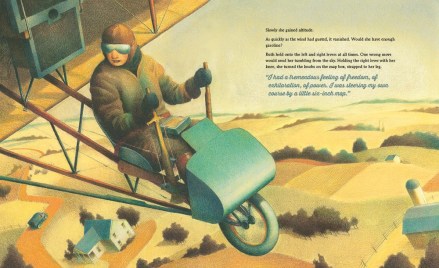
Ruth had counted on the strong wind to help push her farther faster, but just as quickly as it had blown up, it stopped. She wondered if she would have enough gasoline after all. As she flew over one landmark after another, Ruth felt exhilarated. As she passed over Cleveland, Ohio, though, “the oil gauge registered zero pressure. Something was wrong!” The sounds of her plane’s motors told Ruth a different story. She kept flying.

Soon she was passing over Erie, Pennsylvania—the site of the record-breaking flight by Victor Carlstrom. Even the icy stings of the frigid air couldn’t dispel her excitement. In a moment she was east of Erie and had broken Carlstrom’s record. The thrill of her achievement was tempered, however, by the sputtering of her engine. While there was still a little gas in the plane, it was “too low to feed into the engine.” Ruth tipped the plane forward to give it more gas. Two miles from Hornell, New York, the nearest landing spot, “the engine grumbled its last roar, leaving her with nothing but the silence of the wind.”

celebrate-picture-books-picture-book-review-fearless-flyer-arial-view

Image copyright Raúl Colón, text copyright Heather Lang. Courtesy of Calkins Creek.

Ruth steered the plane as it glided into Hornell—512 miles from Chicago. She was the new American nonstop flight record holder. Ruth’s original plan had been to fly to New York City, so after refueling and grabbing a bite to eat, she took off once again. Weighed down by the full gas tank, the plane barely made it over the hill and tall trees in her path. This was as close to crashing as Ruth ever was—or ever wanted to be.

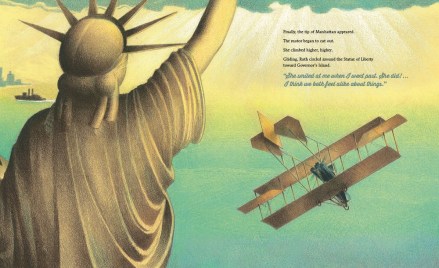
People had already heard about Ruth Law, and they came out to watch and wave. With darkness closing in, Ruth decided that she would have to land short of New York City. She touched down in Binghamton, NY and took up the rest of the flight the next morning. A thick blanket of fog obscured her view. She flew lower and lower to get her bearings and finally spied the tip of Manhattan. As she glided in, “Ruth circled around the Statue of Liberty toward Governor’s Island.” Of Lady Liberty, Ruth said, “‘She smiled at me when I went past. She did!…I think we both feel alike about things.’”

celebrate-picture-books-picture-book-review-fearless-flyer-statue-of-liberty

Image copyright Raúl Colón, text copyright Heather Lang. Courtesy of Calkins Creek.

Cheered by a crowd and a brass band, Ruth landed on the welcoming earth. Despite being numb with cold and the icicles that hung from her hair, Ruth smiled and waved. She realized then that not only had she broken an aviation record, she had made a point for all women. She later put her thoughts into words: “The sky was my limit and the horizon my sphere. It’s any woman’s sphere if she has nerve and courage and faith in herself.”

An Author’s Note about Ruth Law and her life, complete with photographs, follows the text.

Heather Lang’s thrilling account of Ruth Law’s record-breaking flight from Chicago to New York will have young aviators on the edge of their seat. Law’s flight was filled with suspense from its inception as an idea in a young woman’s mind to its final touchdown, and Lang deftly incorporates the facts as well as Law’s feelings into her well-rounded story. Along the way, readers learn about Ruth and also about early aviation. Ruth Law’s own words, included throughout the story, will inspire children as they see that even though she lived long ago, her thoughts and ideas still ring true today.

Young readers will be fascinated by Raúl Colón’s glowing illustrations of Ruth Law and her flying machine. His detailed drawings of Law’s biplane give children an excellent view of the open-air craft, fostering a true understanding of the courage it took for her to undertake such a flight. Images from Law’s viewpoint in the cockpit allow readers to vicariously travel her path to a record-breaking flight and also to self-realization.

Ages 5 – 8

Calkins Creek, 2016 | ISBN 978-1620916506

Check out Heather Lang’s website for more about her and her books. You’ll also find links to a video and photos about Ruth Law, a map of her route, and information about her plane as well as a Teacher’s Guide.

Fly along with Ruth in this Fearless Flyer book trailer!

Women’s History Month Activity

celebrate-picture-books-picture-book-review-biplane-craft

Head in the Clouds Biplane


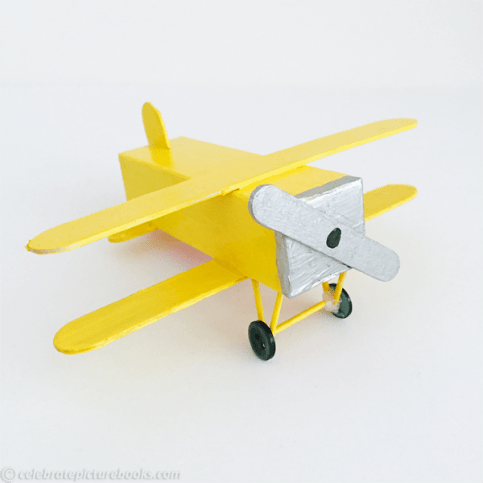
If you love airplanes and flying, you’ll have fun making your own plane from recycled materials! Use your creativity to decorate your plane while you imagine yourself flying through the clouds on a beautiful day. Younger children will have fun sharing this activity with an adult or older sibling too!

Supplies

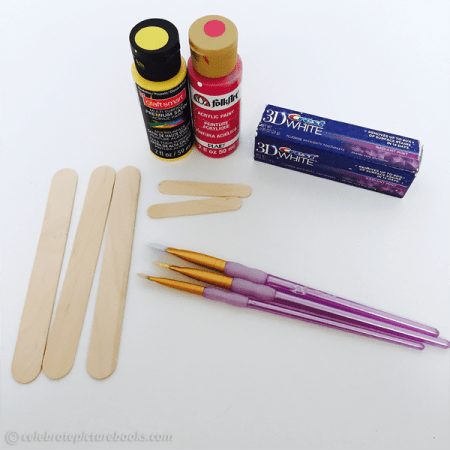
  • Travel-size toothpaste box
  • 3 6-inch x 1/2-inch craft sticks
  • 2  2 1/2-inch x 7/8-inch mini craft sticks
  • 5 Round toothpicks, with points cut off
  • Paint in whatever colors you like for your design
  • 4 small buttons
  • 2 mini buttons
  • Paint brushes
  • Strong glue or glue gun

Directions

  1. Empty toothpaste box
  2. Paint toothpaste box and decorate it
  3. Paint the craft sticks and 5 toothpicks
  4. Paint one small craft stick to be the propeller
  5. Let all objects dry

To assemble the biplane

  1. For the Bottom Wing – Glue one 6-inch-long craft stick to the bottom of the plane about 1 inch from the end of the box that is the front of the plane
  2. For the Top Wing – Glue the other 6-inch-long craft stick to the top of the plane about 1 inch from the front of the plane
  3. For the Tail – Glue one mini craft stick to the bottom of the box about ¾ inches from the end that is the back of the plane
  4. For the Vertical Rudder – Cut the end from one of the painted 6-inch-long craft sticks, glue this to the back of the box, placing it perpendicular against the edge and half-way between each side

To assemble the front wheels

  1. Cut 4 painted toothpicks to a length of ¾-inches long
  2. Cut one painted toothpick to a length of 1-inch long
  3. Glue 2 of the 3/4-inch toothpicks to the back of 1 button, the ends of the toothpicks on the button should be touching and the other end apart so the toothpicks form a V
  4. Repeat the above step for the other wheel
  5. Let the glue dry
  6. Glue the 1-inch long toothpick between the wheels at the center of each wheel to keep them together and give them stability. Let dry

To make the back wheel

  1. Cut two ¼-inch lengths of painted toothpick and glue them together. Let dry
  2. Glue two mini buttons together to form the back wheel. Let dry
  3. Glue the ¼-inch toothpicks to the mini buttons. Let dry
  4. Glue these to the bottom of the plane in the center of the box directly in front of and touching the tail

Display your biplane!

Picture Book Review

March 21 – World Poetry Day

celebrate-picture-books-picture-book-review-enormous-smallness-cover

About the Holiday

Sponsored by the United Nations Educational, Scientific, and Cultural Organization (UNESCO), World Poetry Day celebrates one of the world’s oldest and most treasured forms of linguistic expression. On this day we honor the poets who translate physical beauty into words, expose social injustice in heartrending verse, and make us laugh with quirky juxtapositions. To celebrate the holiday, attend a poetry reading, revisit poems from your favorite author or discover a new writer, or pen a poem yourself!

enormous SMALLNESS: A Story of E. E. Cummings

Written by Matthew Burgess | Illustrated by Kris Di Giacomo


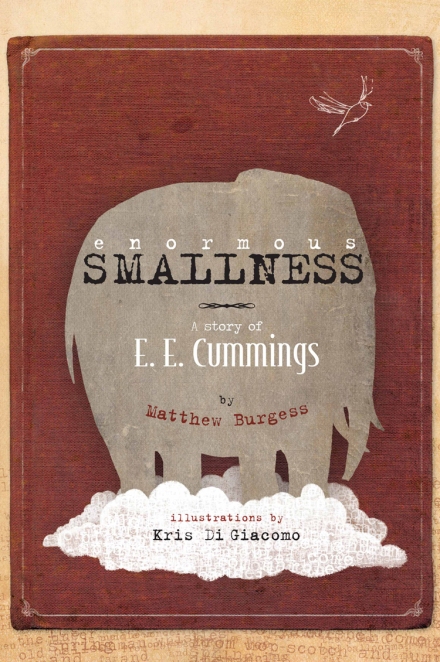
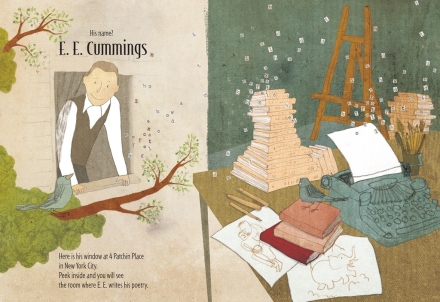
Hello! Welcome to 4 Patchin Place, the home of poet E. E. Cummings! This is where he wrote his poetry on a clackety typewriter, stopping only for tea poured out by the love of his life, Marion Moorehouse. How did he become a poet? That is an interesting story! E. E. was born Edward Estlin Cummings on October 14, 1894 in Cambridge, Massachusetts. His house was full of extended family, a handyman, a maid, and several pets. From an early age he loved to translate the things he saw into words. “His first poem flew out of his mouth when he was only three: “‘Oh, my little / birdie, Oh / with his little / toe, toe, toe!’”
celebrate-picture-books-picture-book-review-enormous-smallness-welcome

Image copyright Kris Di Giacomo, text copyright Matthew Burgess. Courtesy of Enchanted Lion Books

Estlin’s mother wrote down all the poems he told her and made a little book of them, titled “‘Estlin’s Original Poems.’” When he was six, he expressed his love of nature in a poem about trees, and when his mother asked him what else he saw, he “looked around as if his eyes were on tiptoes and when his heart jumped he said another poem: “‘On the chair is sitting / Daddy with his book. / Took it from the bookcase / Beaming in his look.’”
celebrate-picture-books-picture-book-review-enormous-smallness-elephant

Image copyright Kris Di Giacomo, text copyright Matthew Burgess. Courtesy of Enchanted Lion Books

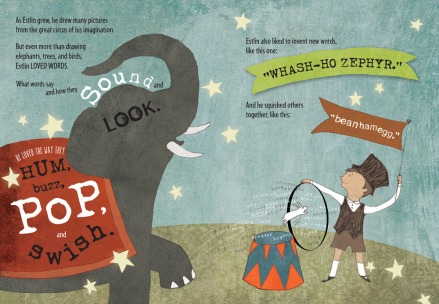
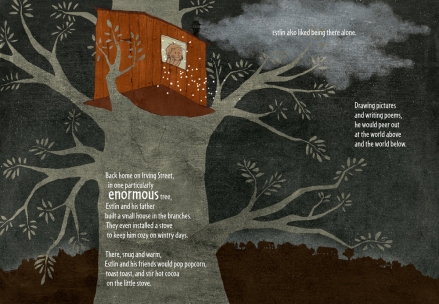
As he grew, Estlin was fascinated by the animals he saw at the circus and in the zoo. He drew pictures of them and wrote about them, using the words he loved so well—and even making up his own words. Estlin had a zest for life and for making life fun for himself and his little sister. During the summers, the family traveled to Joy Farm in New Hampshire, where Estlin swam, milked the cow, rode a donkey, and wandered through the fields and forest. His father had built him a little log cabin in the woods, and in the afternoons Estlin went there to draw and write. At home he also had a special place all his own. In an enormous tree his father built a tree house, complete with stove to keep him warm on cold days.
celebrate-picture-books-picture-book-review-enormous-smallness-tree-house

Image copyright Kris Di Giacomo, text copyright Matthew Burgess. Courtesy of matthewjohnburgess.com

Estlin had support for his writing at school too. His favorite teacher encouraged him saying, “anything is possible, / as long as you are true to yourself / and never give up, even when the world / seems to say, stop!” From his Uncle George, Estlin received a guide to writing poems. Estlin followed the rules in the book, penning poems nearly every day. When Estlin was 17 he attended Harvard College and began publishing his poems in the school’s magazines. While at Harvard, Estlin realized he had to follow his heart to be happy. He wanted to be like the new artists who were shaping the world—people like Gertrude Stein, Paul Cezanne, and Igor Stravinsky, “artists who were,” he once said, “challenging the way we think and see.”
celebrate-picture-books-picture-book-review-enormous-smallness-paris

Image copyright Kris Di Giacomo, text copyright Matthew Burgess. Courtesy of Enchanted Lion Books

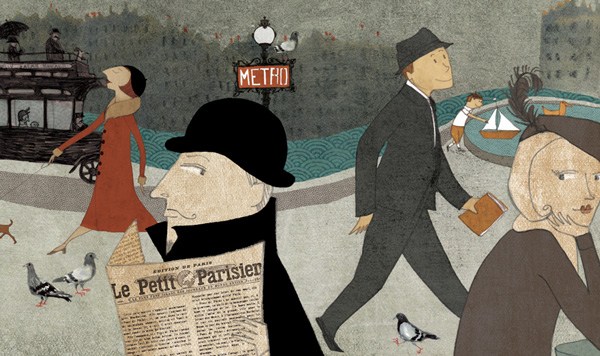
After he graduated, Estlin returned home, but when he had saved enough money he moved to New York and fell in love with the city immediately. He and his friends took in everything new the city had to offer. Soon, however, the United States entered World War II. On April 17, 1917 Estlin volunteered to be an ambulance driver in France. Before he received his assignment, though, he had time to explore Paris. He was “bowled over by the museums, the ballet, and the colorful, crowded streets.” He enjoyed the city so much he returned often during his lifetime.

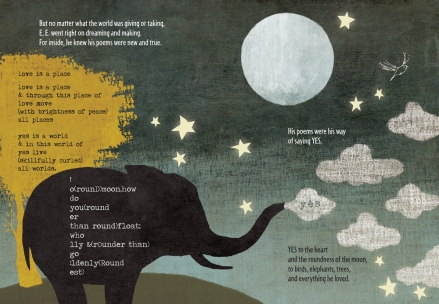
During the war, Estlin was mistaken for a spy and sent to prison for several months. After the war he wrote a book about his experiences titled The Enormous Room by E. E. Cummings. “The book was published and praised! Estlin was becoming E. E.!” A year later he published his first book of poetry—Tulips & Chimneys. In his poems he experimented with punctuation and using lower case letters instead of capitals.
celebrate-picture-books-picture-book-review-enormous-smallness-yes

Image copyright Kris Di Giacomo, text copyright Matthew Burgess. Courtesy of matthewjohnburgess.com

Through his fanciful typography, E. E. “wanted his reader’s eyes to be on tiptoes too, seeing and reading poetry (inaway) that was new.” But some people didn’t understand or like his poetry; it was too strange and too small, they said. But E. E. knew he had to stay true to himself. He believed that “his poems were new and true” and “were his way of saying YES” to everything he loved. As time went on more and more people began to “see the beauty of E. E.’s poetry, and he became one of the most beloved poets in America.”

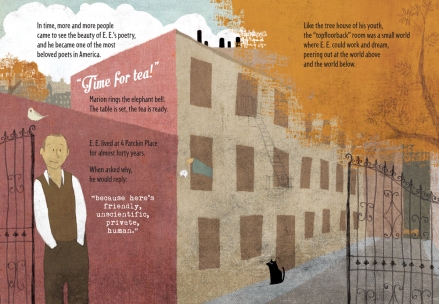
E. E. Cummings lived and worked at 4 Patchin Place for almost 40 years, but in his mind he would often return to his childhood home. He “could still see himself as a boy gazing out at the sunset”—a memory that he put into words: who are you,little i / (five or six years old) / peering from some high / window;at the gold / of November sunset / (and feeling:that if day has to become night / this is a beautiful way)”
celebrate-picture-books-picture-book-review-enormous-smallness-patchin-place

Image copyright Kris Di Giacomo, text copyright Matthew Burgess. Courtesy of matthewjohnburgess.com

Simply put, Matthew Burgess’s enormous SMALLNESS: A Story of E. E. Cummings is a biography that will make you smile. Upbeat and full of the wonder and whimsy that influenced Estlin Cummings’ prodigious talent, the story encourages readers to always follow their heart. Burgess’s easy-going, conversational style invites kids along on the journey of Cumming’s life, stopping off at points that resonate with kids—early imaginary play, school, family vacations, home life, college, travel, and ultimate success. Seeing the support Cummings received throughout his life will inspire young readers just starting out on their own roads of discovery.

Kris Di Giacomo’s enchanting illustrations will immediately capture the imagination of readers. The playful quality of Cummings’ personality and poems is mirrored in each spread as a variety of children’s drawings and typography are sprinkled throughout. As six-year-old Estlin composes poems for his mother, he stands on tiptoe in his nightshirt surrounded by toys; he experiences life from rooftop and treetop and gazes into the night from his tree house; New York lights up with fireworks and the lights of Broadway; and his poems spring from the pages in their own inimitable way.

For children interested in writing, biographies, history, the arts, and the life of the imagination, enormous SMALLNESS: A Story of E. E. Cummings is a perfect choice for their home bookshelves.

A chronology of E. E. Cummings’ life, five poems, and an Author’s Note follow the text.

Ages 4 – 9

Enchanted Lion Publishing, 2015 | ISBN 978-1592701711

To learn more about Matthew Burgess, his books, and his poetry, visit his website!

View a gallery of illustration by Kris Di Giacomo on her website!

World Poetry Day Activity
celebrate-picture-books-picture-book-review-grow-a-poem-craft


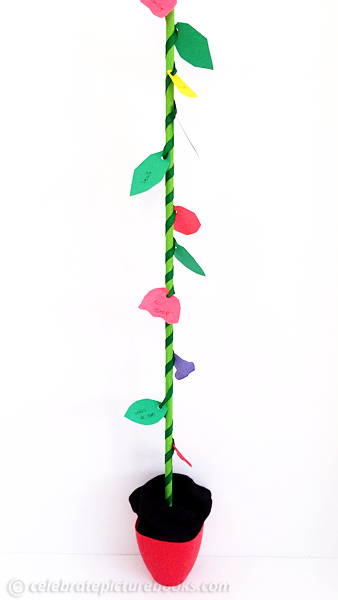
Grow a Poem


A poem often grows in your imagination like a beautiful plant—starting from the seed of an idea, breaking through your consciousness, and growing and blooming into full form. With this craft you can create a unique poem that is also an art piece!

Supplies

  • Printable Leaves Template
  • Printable Flower Template
  • Wooden dowel, 36-inch-long, ½-inch diameter, available in craft or hardware stores
  • Green ribbon, 48 inches long
  • Green craft paint
  • Green paper for printing leaves (white paper if children would like to color the leaves)
  • Colored paper for printing flowers (white paper if children would like to color the flowers)
  • Flower pot or box
  • Oasis, clay, or dirt
  • Hole punch
  • Glue
  • Markers or pens for writing words
  • Crayons or colored pencils if children are to color leaves and flowers

Directions

  1. Paint the dowel green, let dry
  2. Print the leaves and flower templates
  3. Cut out the leaves and flowers
  4. Punch a hole in the bottom of the leaves or flowers
  5. Write words, phrases, or full sentences of your poem on the leaf and flower templates
  6. String the leaves and flowers onto the green ribbon (if you want the poem to read from top to bottom string the words onto the ribbon in order from first to last)
  7. Attach the ribbon to the bottom of the pole with glue or tape
  8. Wrap the ribbon around the pole, leaving spaces between the ribbon
  9. Move the leaves and flowers so they stick out from the pole or look the way you want them to.
  10. Put oasis or clay in the flower pot or box
  11. Stick your poem pole in the pot
  12. Display your poem!

Picture Book Review

March 20 – World Storytelling Day

celebrate-picture-books-picture-book-review-bunny's-book-club-cover

About the Holiday

Today’s holiday was first held in Sweden in 1991. Established to celebrate the art of oral storytelling, the day invites people around the globe to tell and listen to stories both old and new. To participate attend a special storytelling event in your area or relate some family stories at home. Of course reading terrific books out loud is also a fun way to honor the day!

Bunny’s Book Club

Written by Annie Silvestro | Illustrated by Tatjana Mai-Wyss


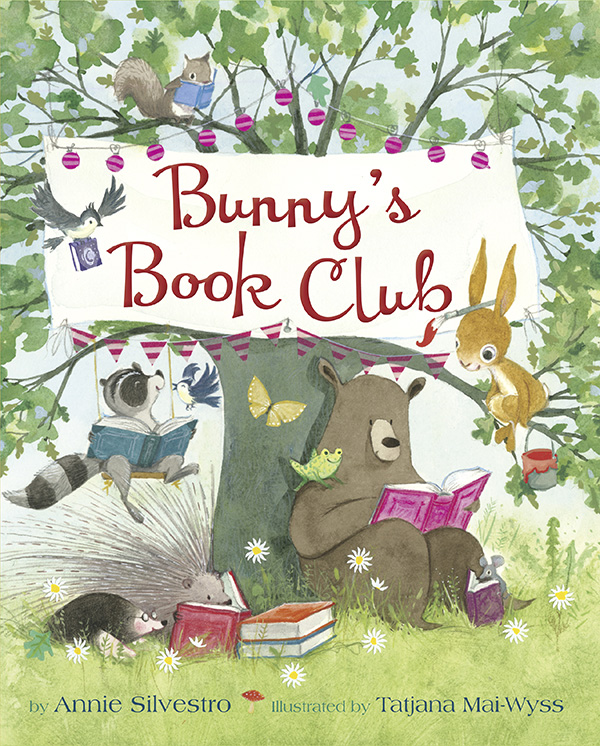
Bunny would do just about anything to hear a story. “He’d loved them ever since he first heard the lady with the red glasses reading aloud outside the library.” All summer long he listened to stories that took him to thrilling and magical places. But when the weather turned cooler and story time moved indoors, bunny knew he had to do something—“he couldn’t live without books.”

Bunny was afraid that animals weren’t allowed in the library. Finally, after several sleepless nights Bunny “tiptoed through the dark” to the library. But when he got there the door was locked, the windows were bolted, and there were no holes in the building to be found—“until finally he noticed…the book return!” Bunny hopped as high as he could, grabbed the handle, and slipped inside. “Bunny’s eyes sparkled at the sight of the shelves bursting with books.”

celebrate-picture-books-picture-book-review-bunny's-book-club-bunny-cant't-sleep

Image copyright Tatjana Mai-Wyss, courtesy of tatjanamaiwyss.com

Bunny hopped here and there through the adventure section, where he found books about “swashbucklers, sharks, and superheroes.” He grabbed as many as he could carry and pushed them through the slot. Back home he read and read, and every night he returned to the library for more books. Pretty soon his house was filled top to bottom with books.

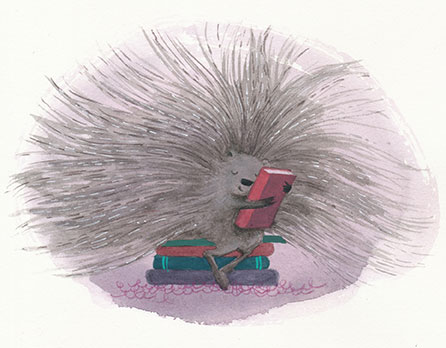
One night while reading, Bunny heard a knock on the door. It was Porcupine, wondering where Bunny has been. When Porcupine found out, he couldn’t believe it. What was so special about reading? The next night Bunny took Porcupine to the library. “‘Whoa,’ said Porcupine.” He immediately wondered if there was a book about balloons. He also found stories “on deserts and dunes, on caterpillars and cocoons” and even one on hedgehogs that made him so happy he hugged it with all his might. Back at Bunny’s and cuddled up with tea and carrot muffins, the two friends read into the night.

celebrate-picture-books-picture-book-review-bunny's-book-club-porcupine and-bunny-read

Image copyright Tatjana Mai-Wyss, courtesy of tatjanamaiwyss.com

It wasn’t too long before Bear showed up at Bunny’s wondering about why the light burned so late so often. Bunny handed him a book, and Bear squeezed onto the couch and began reading. Soon, all of Bunny’s friends began dropping by asking for books about space, volcanoes, and mysteries. One night Bunny took them all on a trek to the library. They were so engrossed in their books that they didn’t hear a key turn in the lock, “the clack, clacking of footsteps,” or the light flick on.

It was the librarian! All the animals gasped—they’d been caught! “‘All libraries have rules,’ said the librarian sternly” as she asked the animals to follow her. At the desk, the librarian in the red glasses crouched down and gave each animal their own library card. Bunny was thrilled to know they were welcome at the library. He found the perfect book and “proudly checked out the very first official selection for Bunny’s Book Club.”

celebrate-picture-books-picture-book-review-bunny's-book-club-porcupine-hugs-book

Image copyright Tatjana Mai-Wyss, courtesy of tatjanamaiwyss.com

Annie Silvestro’s sweet story about the lure of stories and the lengths to which a true book lover will go to hear or read one, will enchant young children. The gentle suspense will keep little ones riveted to the story as clever Bunny finds a way into the library, Porcupine and Bear have a few sticky moments, and the librarian catches the crew unawares. Little ones will recognize their own delight in books as Bunny shares his discover with his friends and they form a most cozy book club.

Tatjana Mai-Wyss’s adorable Bunny, Porcupine, Bear and other animals make perfect book club friends for little readers. Mai-Wyss’s soft-hued watercolor illustrations of the tidy library and Bunny’s book-filled home invite children in to poke around and become one of the group. They’ll love following Bunny’s footprints through the library stacks and discovering the cozy comforts of Bunny’s home. The final tw0-page illustration of the friends snuggled together in the warmth of a roaring fire and surrounded by snacks and books is definitely “awwww” inspiring.

Bunny’s Book Club may inspire families to take a special nighttime trip to the library and young readers to create a book club of their own. It would be welcome on any child’s bookshelf.

Learn more about Annie Silvestro and her books on her website!

Discover more about Tatjana Mai-Wyss and review a portfolio of her illustration on her website!

Ages 3 – 7

Doubleday Books for Young Readers, 2017 | ISNB 978-0553537581

World Storytelling Day Activity

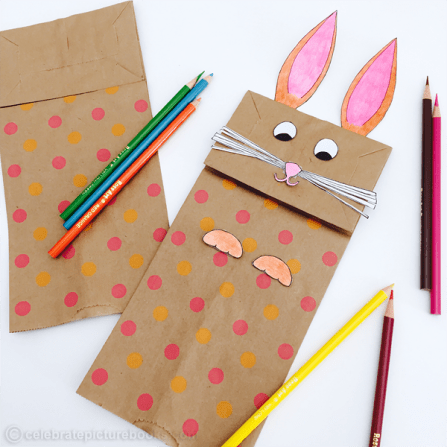
celebrate-picture-books-picture-book-review-bunny-puppet

Story Buddy Puppet


Hop to it! Have fun telling your favorite stories with this bunny puppet!

Supplies

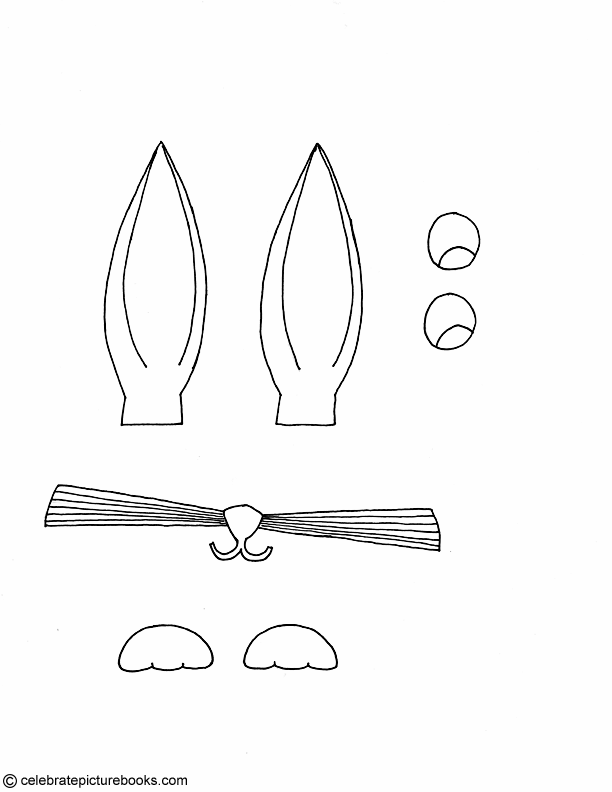
  • Printable Bunny Template
  • Paper sandwich bag
  • Colored pencils, crayons, or markers
  • Scissors
  • Glue

Directions

  1. Print out the Bunny Template
  2. Color the Bunny Template
  3. Cut out the bunny’s features
  4. Clue the bunny’s features to the sandwich bag

Picture Book Review

March 19 – National Poultry Day

celebrate-picture-books-picture-book-review-what's-up-with-this-chicken-cover

About the Holiday

National Poultry Day, held annually between St. Patrick’s Day and the first day of spring, celebrates the importance of poultry to the diets of people around the world. From breakfast to special holidays, poultry is a valuable source of protein and nutrition that’s also delicious! 

What’s Up with This Chicken?

Written by Jane Sutton | Illustrated by Peter J. Welling


When Sylvia went out to the barn to collect the chickens’ eggs, something was up with Trudy. She squawked and screeched when Sylvia tried to reach under her, but Sylvia took it in stride and with humor: “‘Don’t get so egg-cited!’” she said. “‘I’ll get your egg tomorrow.’” But the next day Sylvia was met with the same reaction. Trudy wasn’t acting like the other chickens in Grandma’s backyard; if fact, she wasn’t even acting like Trudy! “‘What’s up with this chicken?’” Sylvia wondered.

While she and Grandma enjoyed “omelets with eggs from Sue, Clara, Doris, and Olga,” Sylvia talked about “stubborn Trudy.” Grandma didn’t know what was wrong either. The next morning Trudy was even more obstinate. Not only did she make a racket, she tried to peck Sylvia, and she puffed “herself up to twice her size.” Sylvia also noticed “that Trudy left her roost just once a day to eat, drink, and poop. She was getting skinny.”

Sylvia decided that Trudy must be hungry. She tried to lure her off her nest by offering chicken feed, but while all the other hens “wolfed it down like chocolate,” Trudy remained firmly on her roost. Sylvia tried everything she could think of to move Trudy, but nothing worked. That night she and Grandma consulted The Big Book About Chickens. Here they discovered that “‘Trudy is broody!’” Grandma read on: “‘Broody hens stay on their eggs so they will hatch into chicks.’” But Sylvia and Grandma know that Trudy’s eggs are not the kind that hatch.

celebrate-picture-books-picture-book-review-what's-up-with-this-chicken-switching-eggs

Image copyright Peter J. Welling, courtesy of Pelican Publishing


Sylvia realized that Trudy just wanted to be a mother, and she wished there were some way to help her. She thought and thought and finally came up with an idea. She ran to Grandma who agreed that Sylvia’s plan was “an egg-cellent idea.” A few days later a box arrived holding four eggs that would hatch. With thick rubber gloves, a dose of determination, and two tries, Grandma was able to lift Trudy off her nest. Sylvia made a quick switch of the eggs, and “Broody Trudy settled down on the new eggs.”

Trudy grew thinner every day but she stayed on her roost, rolling the eggs to keep them uniformly warm and even blanketing them with her own feathers. One day Sylvia heard peeping! She and Grandma rushed out to the coop and were even in time to watch the fourth little chick peck its way out of its shell. They named the new “little yellow fluff balls Sophie, Danielle, Mildred, and Judy.”

Trudy was a proud and protective mother, shielding her chicks with her wings like a “feathery beach umbrella” and teaching them how to find food and water. Trudy went back to her regular routine and began gaining weight. As the chicks grew they got their own nests in Grandma’s coop. But one day Judy squawked and screeched. This time “Sylvia laughed so hard that she almost dropped her egg basket. ‘Broody Judy,’ she said, ‘I know what’s up with you!’”

An Author’s Note about the real-life “Broody Trudy” that inspired the story follows the text.

With a deft and delightful understanding of the puns and humor that set kids to giggling, Jane Sutton has written a fun—and informative—story for animal lovers and anyone who loves a good, natural mystery. Through the well-paced plot and action-packed description, readers learn about a particular behavioral aspect of some chickens and the clever and sensitive way that Sylvia solves the problem. The close relationship between Sylvia and her grandmother adds charm and depth to the story, and their dialogue is spontaneous and playful.

Peter J. Welling’s bright, homey illustrations are the perfect accompaniment to the story. Animated Trudy shoos Sylvia away while the other chickens take dust baths, scratch for bugs, and look just as perplexed as Sylvia and Grandma. Humorous touches abound in Grandma’s choice of home décor and Sylvia’s printed T-shirts as well as in the facial expressions of the human and feathered characters. Trudy’s chicks are adorable, and readers will cheer to see Trudy fulfill her heart’s desire.

What’s Up with This Chicken is a wonderful read-aloud for younger kids’ story times and a fun romp that will keep older, independent readers guessing and wondering how it all comes out right up to the end. The likeable characters—both human and chicken—make this a book kids will like to hear again and again!

Ages 3 – 8

Pelican Publishing, 2015 | ISBN 978-1455620852

Discover more about Jane Sutton and her books on her website!

To read an interview with Jane, click here!
To learn more about Peter J. Welling, his books for kids and adults as well as the original lunch bags he made for his children, visit his website!

National Poultry Day Activity

celebrate-picture-books-picture-book-review-egg-carton-chicken-double-chickens

Egg Carton Chickens and a Basket Full of Games


With twelve little chickens you can come up with lots of games to play! This fun craft and game activity is eggs-actly what you need to start hatching some real fun!

Supplies

  • Cardboard egg carton
  • White craft paint
  • Markers: red, yellow, black for the face; any colors you’d like for wings and eggs
  • Paint brush
  • Scissors
  • Glue
  • Construction or craft paper in white and a color of your choice

Directions

  1. Cut the notched flap off the egg carton and set aside
  2. Cut the top off the egg carton
  3. Cut apart all the egg cups and trim slightly so they sit flat
  4. Paint the egg cups with the white paint, let dry
  5. Add the face, comb and wings to the chicken with the markers. Make six chickens with one color wings and six chickens with another color wings.
  6. From the egg carton flap cut thirteen small egg-shaped playing pieces
  7. With the markers, decorate twelve of the eggs in pairs—each egg in the pair with the same design
  8. Color one egg yellow and add a beak, eyes, and wings to make it a chick
Games to Play

Tic-Tac-Toe (2 players)

  1. On a 8 ½” x 11” piece of paper draw a regular tic-tac-toe board or make it fancy – like the picket fence-inspired board in the picture
  2. To make the fence-inspired board on a colored background, cut 2 9-inch-long x 3/4-inch wide strips of white paper, cutting a pointed tip at one or both ends. Cut 2 white  8-inch x 3/4-inch strips of paper with a pointed tip at one or both ends. Glue the strips to the background.
  3. Each player chooses a set of chickens with the same colored wings
  4. Play the game as you usually do

celebrate-picture-books-picture-book-review-egg-carton-chicken-tic-tac-toe

Find the Matching Eggs (2 or more players)

  1. Have one player hide one egg under each chicken
  2. Shuffle the eggs around and form them into three lines of 4 chickens each
  3. Another player lifts one chicken at a time to find matching eggs. If the eggs don’t match, put both chickens back and start again

celebrate-picture-books-picture-book-review-egg-carton-chicken-matching

Where’s the Chick?

  1. Use as many chickens and eggs as you want (fewer for younger children, more for older)
  2. One player hides the chick under one of the chickens and eggs under the others.
  3. Another player has three chances to find the chick

celebrate-picture-books-picture-book-review-egg-carton-chicken-where's-the-chick

You can also design your own games for your adorable chickens to play! With more chickens you can even make a checkers set or replicate another of your favorite board games!

Picture Book Review