March 25 – It’s National Reading Month

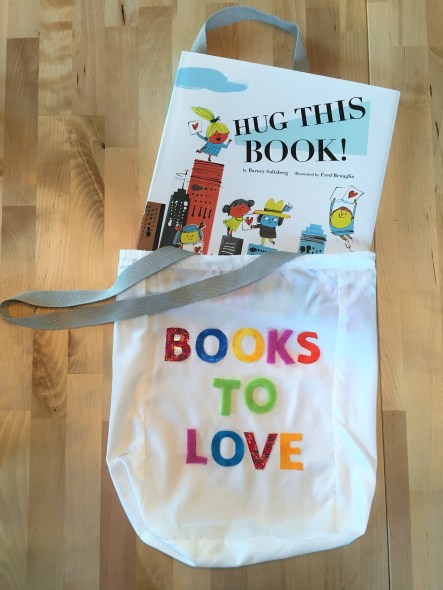
cpb-hug-this-book-cover-1500

About the Holiday

Starting with Read Across America Day on the 2nd, the month of March is dedicated to reading. Special events in schools, libraries, bookstores, and communities bring authors, illustrators, and educators together with kids to get them excited about this favorite past time. A love of reading is a life-long pleasure with so many benefits. Every day, avid readers wake up and just want to…

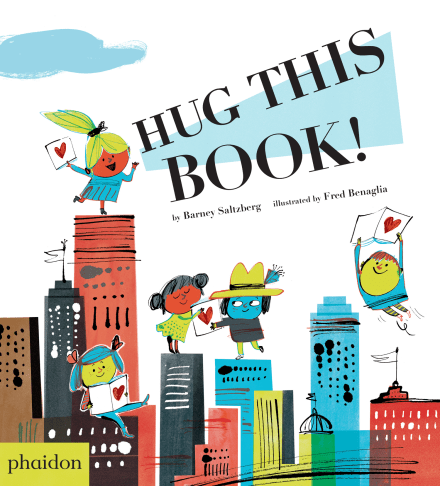
Hug This Book!

Written by Barney Saltzberg | Illustrated by Fred Benaglia


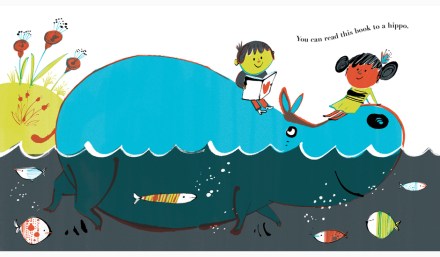
When you grab onto a book and open the cover, you know what to do! But did you know that books themselves may have some ideas on the subject? Today’s reviewed book has plenty of fabulous, page-turning suggestions and is happy to share them with you. Its first thought is a pretty big one: “You can read this book to a hippo.” I know!—wouldn’t that be a blast?

celebrate-picture-books-picture-book-review-hug-this-book-hippo

Image copyright Fred Benaglia, text copyright Barney Saltzberg. Courtesy of Phaidon Press

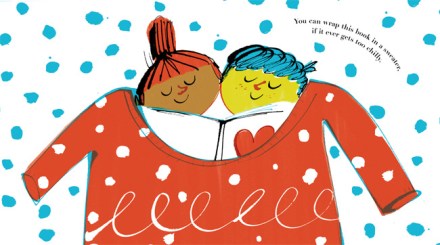
It seems that books watch how readers treat their pets, and they want in: “You can kiss and hug and smell this book. / That might sound sort of silly. / You can wrap this book in a sweater, / if it ever gets too chilly.” That sounds as cozy as enjoying hot chocolate in front of a fire—with this book, of course!

celebrate-picture-books-picture-book-review-hug-this-book-sweater

Image copyright Fred Benaglia, text copyright Barney Saltzberg. Courtesy of Phaidon Press

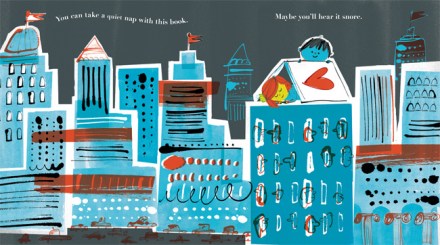
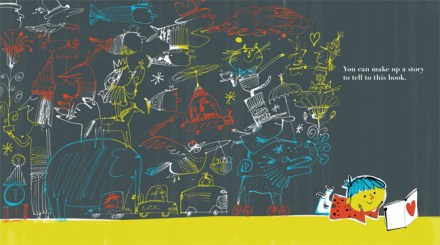
The book continues—“You can make up a story to tell to this book.” Hmmm… maybe books don’t like doing all the work all the time. Maybe they’d like to just relax and be entertained once in a while. I’m sure you can come up with something fantastic! And just to keep you on your toes, the book offers a few more challenges: “Can you read this book in the mirror? / Or sing the words in this book like a song? / If you sing it to the birdies, maybe they’ll sing along.” After completing those activities, it might be time for a nap. Don’t forget to take the book too, but be ready to giggle because… “Maybe you’ll hear it snore.”

celebrate-picture-books-picture-book-review-hug-this-book-snore

And when you wake up all refreshed you can try reading the book while dancing, twirling, leaping, skipping…you can even take it to lunch, “just do not try to feed it.” Then suddenly and all too soon the book comes to the last page. Don’t be sad, though. “Even though this book is over, / it isn’t really the end. / You can start at the beginning / and read it to a friend!”

celebrate-picture-books-picture-book-review-hug-this-book-tell-story

Image copyright Fred Benaglia, text copyright Barney Saltzberg. Courtesy of Phaidon Press

Barney Saltzberg’s love for books is infectious. His witty rhymes bubble with the thrill of reading and playfully challenge kids to take books along no matter where they go or what they do. The cadence of Saltzberg’s lines invite multiple readings—the way the rhythm of movement in hopscotch, jump rope, or dancing is inherent in the fun. Kids will giggle at the examples Saltzberg conjurs up—reading to a hippo, listening to a book snore, feeding a book—and you can bet that they will want to invent some of their own! Get ready to hug this book—and many others. After all isn’t that what best friends do?

Fred Benaglia’s adorable characters swim and paddle, snuggle and swing, play and imagine all the while with their nose in this book. The fanciful coloring and quirky landscapes enhance both the originality and universality of this tribute to book love. Benaglia’s artwork—from the fish nibbling at a child’s toes to the cars zipping through the cities—radiates personality and invites creative thinking. Readers will especially want to linger over the two-page spread of a smiling child conjuring up a host of stories to catch every imaginative detail in the chalk drawings. The big red heart on the  cover under the book jacket is a clever touch, connecting Hug This Book! to “this book” in the text.

For all book lovers, Hug This Book! is a fun, funny romp and will be a welcome, often-asked-for addition to a child’s library.

Ages 2 – 7

Phaidon Press, 2016 | ISBN 978-0714872841

You’ll love discovering all the books, music, and videos on Barney Saltzberg‘s website!

Cuteness abounds on Fred Benaglia‘s website, where you’ll find book illustrations and so much more!

You’ll love this Hug This Book! book trailer?

Book Lovers Day Activity

celebrate-picture-books-picture-book-review-book-bag-craft

Book Lovers Book Bag


Whether you’re buying new books at your local bookstore or checking some out at your library, carry those treasures home in their own special bag! This kid-sized bag was made from recycled materials!

Supplies

  • Printable Templates: Books to Read Template | Books to Love Template
  • Small cloth bag, available from craft or sewing stores—Recyclable Idea: I used the bag that sheet sets now come in
  • Cloth trim or strong ribbon, available from craft or sewing stores—Recyclable Idea: I used the cloth handles from shopping bags provided from some clothing stores
  • Scraps of different colored and patterned cloth. Or use quilting squares, available at craft and sewing stores
  • Pen or pencil for tracing letters onto cloth
  • Scissors
  • Small sharp scissors (or cuticle scissors) for cutting out the center of the letters
  • Fabric glue
  • Thread (optional)
  • Needle (optional)

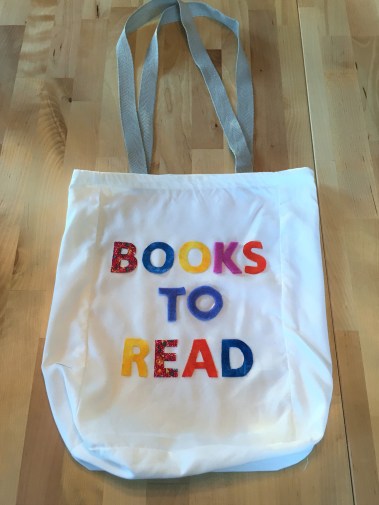
celebrate-picture-books-picture-book-review-books-bag-craft

Directions

  1. Print the sayings and cut out the letters
  2. Trace letters onto different kinds of cloth
  3. Cut out cloth letters
  4. Iron cloth bag if necessary
  5. Attach words “Books to Read” to one side of bag with fabric glue
  6. Attach words “Books to Love” to other side of bag with fabric glue
  7. Cut cloth trim or ribbon to desired length to create handles
  8. Glue (or sew) handles onto the inside edge of bag

Picture Book Review

March 23 – National Near Miss Day and Interview with Astronaut Clayton C. Anderson

celebrate-picture-books-picture-book-review-a-is-for-astronaut-cover

About the Holiday

Today we remember a cosmic fly-by that occurred on March 23, 1989. On that day the 300-meter-wide asteroid 4581 Asclepius, named for the Greek god of medicine and healing, came within 430,000 miles of hitting Earth—actually passing through the exact position Earth had held only six hours earlier. This near miss wasn’t discovered until nine days later by astronomers Henry E. Holt and Norman G. Thomas. “On the cosmic scale of things, that was a close call,” Dr. Holt said at the time. To celebrate today, you can thank your lucky stars for this near miss or any others you’ve experienced recently or in your lifetime. Another stellar way to spend the day is to learn more about space and our universe!

Sleeping Bear Press sent me a copy of A is for Astronaut to check out. All opinions are my own. I’m also thrilled to be partnering with Sleeping Bear Press in a giveaway of a signed copy of A is for Astronaut and a tote bag. View details below.

A is for Astronaut: Blasting Through the Alphabet

Written by Astronaut Clayton Anderson | Illustrated by Scott Brundage


There are some books that just make you say “Wow!” when you open the cover. A is for Astronaut is one of these. Leafing through the pages is like stepping out into a clear, starry night, visiting a space museum, and letting your own dreams soar all rolled into one. When you settle in to read, you discover that each letter of the alphabet introduces both poetry and facts to enthrall space lovers.
celebrate-picture-books-picture-book-review-a-is-for-astronaut-letter-A

Image copyright Scott Brundage, 2018, text copyright Clayton C. Anderson, 2018. Courtesy of Sleeping Bear Press.

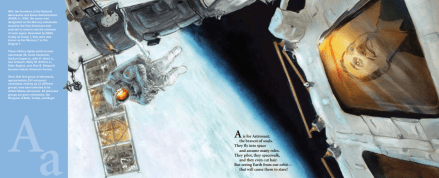
To get things started, “A is for Astronaut, / the bravest of souls. / They fly into space / and assume many roles. / They pilot, they spacewalk, / and they even cut hair. / But seeing Earth from our orbit— / that will cause them to stare!” A sidebar reveals more about astronauts—even astronaut nicknames!

“B is for Blastoff, a powerful thing! / When those engines are fired, it’ll make your ears ring.” And did you know that two and a half minutes after blastoff, the engines are cut off and everything begins to float? Pretty amazing! Blasting through the alphabet we come to G, where readers learn about our Galaxy that is “shaped like a spiral filled with billions of stars.”

celebrate-picture-books-picture-book-review-a-is-for-astronaut-letter-N

Image copyright Scott Brundage, 2018, text copyright Clayton C. Anderson, 2018. Courtesy of Sleeping Bear Press.

How are astronauts able to walk and work in space? “Space Helmets are crucial and H is their letter.” At K kids meet John F. Kennedy, who helped develop the space program, and L is for the Landing that brings astronauts back to Earth. M is for Meteors with their very long tails, and N, of course, is for NASA, which was formed in 1958 with a “goal to better understand our planet and solar system.”

How do astronauts do that? “Working outside in space is sure to impress. / We call it a Space Walk, and its letter is S. / Floating weightless, with tools and a bulky white suit, / we can fix and install things—it’s really a hoot!” And there’s also V for  “Voyager, two NASA space probes. / They are still sending data, / having long left our globe.”

At Z, time is up—that’s Zulu time and “our reference to England, when London’s clocks chime. / As we fly ‘round the Earth, folks must know our day’s plan, / so we all set our watches to match that time span.” 

celebrate-picture-books-picture-book-review-a-is-for-astronaut-letter-P

Image copyright Scott Brundage, 2018, text copyright Clayton C. Anderson, 2018. Courtesy of Sleeping Bear Press.

Both children and adults who have an affinity for space travel and all things related to astronomy will want to dip into A is for Astronaut again and again. With his wealth of knowledge and engaging voice, astronaut Clayton Anderson presents a book that will have readers starry-eyed and full of the kinds of facts and tidbits that answer questions and spur further discovery. A is for Astronaut can be read through from A to Z for its vivid poetry or explored in small chunks to absorb the fascinating facts included with each letter—or both. Expertly written for kids of all ages, Anderson’s A is for Astronaut is a stellar achievement.

Scott Brundage’s incredibly beautiful and detailed illustrations will thrill space buffs and serious scientists and engineers alike. Readers will love meeting astronauts tethered to their ship while working in space, experiencing the vibrant, mottled colors of a darkened sky or distant planet, and viewing the technological marvel that is the NASA control room. With the precision of a photograph and the illumination of true artistry, Brundage’s images put readers in the center of the action, where they can learn and understand more about this favorite science.

A is for Astronaut is a must for classroom, school, and public libraries and would be a favorite on home bookshelves for children (and adults) who love space, technology, math, science, and learning about our universe.

Ages 5 – 10

Sleeping Bear Press, 2018 | ISBN 978-1585363964

Discover more about retired astronaut Clayton Anderson and access resources on his website, or follow him on Facebook | Twitter | or InstaFor speaking events and appearances visit www.AstronautClayAnderson.com

To learn more about Scott Brundage and view a portfolio of his publishing and editorial work, visit his website.

Visit Sleeping Bear Press to learn more about A is for AstronautYou can download two A is for Astronaut Activity Sheets here:

A is for Astronaut Vocabulary Sheet | A is for Astronaut Fill in the Blanks

Meet Astronaut Clayton Anderson

celebrate-picture-books-picture-book-review-astronaut-clayton-anderson-photo

Today, I’m honored to speak with retired astronaut Clayton Anderson about a pivotal childhood moment that inspired his life’s work, the challenges of being an astronaut, and his most vivid memories from space.  

What inspired you to make the journey to become an astronaut?

It was Christmas Eve, 1968.  I was nine years old when my parents put my brother and sister and me on the floor in front of a black-and-white TV around midnight. We sat on an old throw-rug gifted from our grandmother to watch humans circumvent the moon for the first time in human history. As I watched the control center team and listened to the flight director bark out commands, I was enthralled. “I need a Go/NoGo for the trans-lunar injection burn… FIDO? GO!  Retro…? GO!  Surgeon…? GO!  GPO…? GO! The entire team was GO! The craft disappeared behind the moon, leaving me to enjoy the rapid-fire chatter no more. It was simple static on our TV… for about 15 minutes. Then, after a couple of non-answered calls from the Houston CAPCOM to the Apollo 8 crew, I heard the quindar tone (famous “space-beep” you hear on TV), and the first words from the Apollo 8 commander, Frank Borman: “Houston, Apollo 8. Please be informed there is a Santa Claus!” That’s all I needed. The bit was set in my mind that one day, I would become a United States Astronaut.

How did your perspectives change while on the International Space Station?

I am a man of faith. Seeing our earth from orbit did allow me to have the “orbital perspective” so many astronauts speak of. However, while I totally agree that this perspective changed my outlook and my willingness to do better with trying to protect and preserve our “spaceship earth,” it strengthened my faith in God much more. The earth and those of us privileged to be on it, is not random. There is a reason why Sir Isaac Newton discovered gravity and invented calculus. There is a reason why Albert Einstein was able to derive the Theory of Relativity. While I am unable to truly explain my rationale, I believe that there is a higher power. A power that created this universe and gave humans an adaptable brain. That incredible gift will continue to enable us to uncover the secrets of the universe, continuing to strengthen my faith.

What was a big challenge you faced during your career?

The dream of flying in space as an American astronaut was something I pursued for many years of my life. To have finally been selected and given that opportunity is incredible. Yet having the “best job in the universe” is not without difficulty. For me, it was family separation. I love my wife and kids more than anyone… on or off the planet.  To have to be separated from them for months at a time was extremely difficult, especially given their ages (6 and 2) when I began my training. It got easier as they grew older, but it didn’t assuage my guilt very much. While I lived my dream, they sacrificed greatly, and I will spend the rest of my life trying to repay them.

What is your best memory from being in space?

It must be my first spacewalk. Poised above the opened hatch, floating in my spacesuit while looking into the abyss of darkness created by the sun’s travel behind the Earth, I was calm. I watched ice crystals fly from behind my suit (they were created by my sublimator… or air conditioning unit) into the total black void of space. The slight pressure still available after the depressurization of the airlock was “pushing” the crystals into the vacuum of space. I was entranced just watching them sail by. When I finally came back to reality—buoyed by the Mission Control call to exit the airlock—I paused for just a moment to contemplate what was happening. The only thought going through my mind was that “…I was born to be here, right now, in this special place, doing this.”

Seeing my hometown from space…for the very first time, is a very, very close second. On that day, when I expected to excitedly capture photos of my Ashland, Nebraska, I had everything prepped and ready to go. Equipment was strategically placed around the U.S. Lab module’s earth-facing window, cameras were Velcroed securely to the wall, with timers set to remind me when to get into position. Finding my home on earth—without all the wonderfully placed lines, borders, squiggly river italics, and large stars designating capital cities—was tougher than I imagined. But when I finally found success, and saw Nebraska rolling into view by virtue of a big gray splotch known as Omaha (and a smaller gray splotch further southwest called Lincoln), the south bend of the Platte River was the last valid vision I had. When I saw my home, nestled there where the river bent, the place where I was raised and where many of my family and friends still reside, I took not a single photo. I simply broke down and cried. Overcome by the incredible emotions of floating weightlessly, as an American astronaut flying 225 miles above the exact spot where I was born and raised, having first dreamed of doing exactly that, was simply too much for me. So, I did what seemed to come to me naturally.  I wept.

Thank you so much for sharing your thoughts and memories of your incredible career. I wish you all the best with A is for Astronaut and all of your future endeavors as you inspire children and adults to always reach for the stars.

About Clayton Anderson

Retired Astronaut Clayton Anderson spent 167 days in outer space, having lived and worked on the International Space Station (ISS) for 152 days and participated in nearly 40 hours of space walks. With a strong belief in perseverance and the importance of STEAM as part of every child’s education, Astronaut Anderson brings his “out of this world” insight to issues faced by children, parents, and educators. 

You can connect with Clayton Anderson on:

His website: astroclay.com | Facebook | Instagram | TwitterFor speaking events and appearances visit www.AstronautClayAnderson.com

You can find A is for Astronaut at these booksellers:

Amazon | Barnes & Noble | Books-a-Million | IndieBound | Sleeping Bear Press

Near Miss Day Activity
 celebrate-picture-books-picture-book-review-rocket-to-the-moon-tic-tac-toe-game

Rocket to the Moon! Tic-Tac-Toe Game


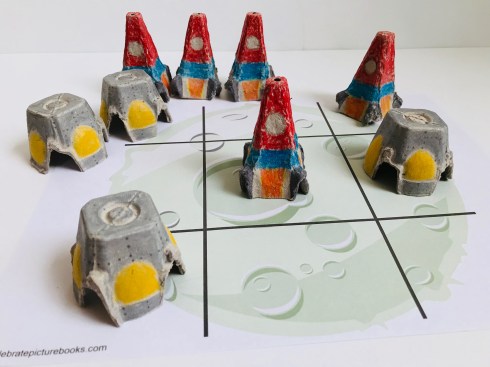
You can launch your own Tic-Tac-Toe Game with this set you make yourself! With just a couple of egg cartons, some crayons, and a printable game board, you’ll be off to the moon for some fun! Opposing players can be designated by rockets and capsules. Each player will need 5 playing pieces. 

Supplies

  • Printable Moon Tic-Tac-Toe Game Board
  • 2 cardboard egg cartons
  • Heavy stock paper or regular printer paper
  • Crayons
  • Black or gray fine-tip marker

Directions

To Make the Rockets

  1. Cut the tall center cones from the egg carton
  2. Trim the bottoms of each form so they stand steadily, leaving the arched corners intact
  3. Pencil in a circular window on one side near the top of the cone
  4. Color the rocket body any colors you like, going around the window and stopping where the arched corners begin
  5. With the marker color the arched corners of the form to make legs
  6. On the cardboard between the legs, color flames for blast off

To Make the Capsule

  1. Cut the egg cups from an egg carton
  2. Color the sides silver, leaving the curved section uncolored. (If your egg cup has no pre-pressed curve on the sides of the cup, draw one on each side.)
  3. Color the curved section yellow to make windows
  4. With the marker, dot “rivets” across the capsule

Print the Moon Game Board and play!

Picture Book Review

March 21 – International Day of Forests

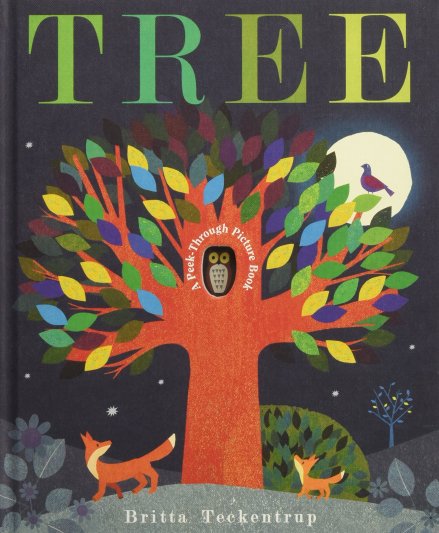
celebrate-picture-books-picture-book-review-tree-a-peek-through-picture-book-cover

About the Holiday

International Day of Forests was instituted by the United Nations General Assembly in 2011 to raise awareness of the importance of trees in vast woodlands or in your neighborhood or yard. Trees contribute to the quality of the air we breathe, improve the local climate, reduce noise pollution, shelter wildlife, and provide food for people and animals. This year’s theme is Forests and Sustainable Cities and aims to promote the integration of trees and vegetation within urban and surrounding areas. The benefits are many, from encouraging health lifestyles to providing fresh water to flood prevention to beautification. Clever architecture and infrastructure can create cities and towns that are healthy and happy to live in! For more information visit the UN International Day of Forests website.

Tree: A Peek-Through Picture Book

By Britta Teckentrup


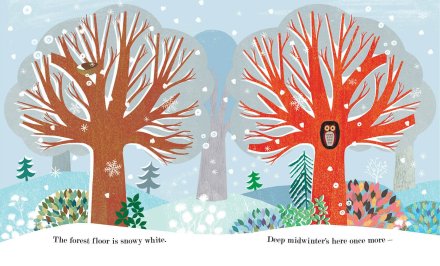
In the midst of winter, the tree stands bare of leaves. Tucked away in a hole “Owl sits watching in his tree / No one sees as much as he.” He watches as the snow melts and young flowers, grass, and plants begin sprouting. Then bear cubs leave their hibernation and climb the tree where Owl sits.

celebrate-picture-books-picture-book-review-tree-a-peek-through-picture-book-winter

Copyright Britta Teckentrup, 2016, courtesy of Dial Books for Young Readers.

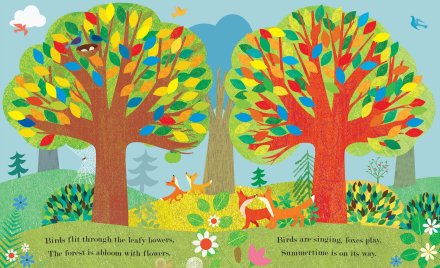
Young leaves and colorful blossoms cover the tree and flutter in the breeze as a spider spins her web and more baby animals come to frolic. In the branches, “squirrels scamper here and there. / Playful fox cubs sniff the air.” Birds stop by to rest and sing, while others build nests high in the treetop. The little fox has found a friend as summertime approaches.

“Now summer’s here, the sun is high, / Bees are humming in the sky.” Butterflies flit and ladybugs crawl, and the scent of “juicy apples, ripe and sweet” fills the air. Midsummer brings its own delights. The tree welcomes baby birds and the newborn foxes that sleep below under the starlit sky.

celebrate-picture-books-picture-book-review-tree-a-peek-through-picture-book-summer

Copyright Britta Teckentrup, 2016, courtesy of Dial Books for Young Readers.

The air turns cooler in early fall and “apples tumble to the ground. Grass is damp with morning dew. / Clouds drift across the skies of blue.” The green leaves turn red, orange, and yellow, and Owl watches as the animals begin gathering food for the long winter ahead. Soon, snow falls and the animals find shelter in the woods and underground.

A blanket of snow covers the earth, but in his nest Owl stays cozy. The forest is quiet, as if asleep. “The seasons have all come and gone. / Snow has fallen, sun has shone. / Owl sees the first new buds appear, / And so begins another year….”

celebrate-picture-books-picture-book-review-tree-a-peek-through-picture-book-late-summer

Copyright Britta Teckentrup, 2016, courtesy of Dial Books for Young Readers.

Britta Teckentrup’s Tree: A Peek-Through Picture Book is an interactive triumph of design and story that begins with the cover where a little owl peeks out of his hole deep in the tree. As each season approaches, matures, and gives way to the next in Techentrup’s lovely verses, readers watch along with Owl as bear cubs, squirrels, birds, and bees also take up residence in the tree. With the turn of each page and as the seasons get warmer, die-cut holes reveal the animals, birds, and insects playing among the branches. When summer wanes and autumn and winter come, the die-cut holes decrease as each species goes off to spend the winter in their own way.

Young readers will love interacting with the holes in the sturdy pages, discovering the blossoming forest in such a tactile way. They’ll also enjoy watching the stories of the foxes, birds, and one industrious spider play out throughout the year. The jaunty rhymes are fun to read aloud and will entice children to read along as well.

Tree: A Peek-Through Picture Book is a delightful book for home and classroom story times as spring blossoms and throughout the year.

Ages 3 – 7

Doubleday Books for Young Readers, 2016 | ISBN 978-1101932421

Discover more about Britta Teckentrup, her books, and her art on her website.

International Day of Forests Activity

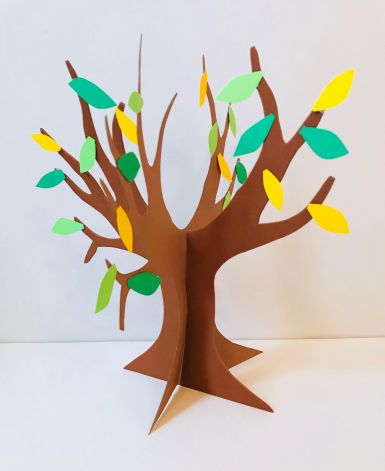
celebrate-picture-books-picture-book-review-tree-craft

Your Special Tree


Every tree is unique—just like people! With this craft you can use your imagination to make a tree that’s as special as you are.

Supplies

  • Printable Tree Template
  • Two 8 ½ by 11-inch sheets of foam or heavy stock paper in whatever color you’d like your tree to be
  • Colored paper for the leaves,
  • Scissors
  • Glue or tape

Directions

  1. Print and cut out 2 copies of the trunk template
  2. Make a cut half way down the middle of the first trunk from the top of the trunk
  3. Make a cut half way up the middle of the second trunk from the bottom of the trunk
  4. Fit the two pieces of the trunk together

Personalize Your Tree

  1. Cut leaves from colored paper, you can make a spring, summer, autumn or rainbow-colored tree!
  2. On the leaves you can write some of your favorite books, the names of your friends, things you’re thankful for, your goals, or any special things about yourself. Your leaves could even make a poem!
  3. Then glue or tape the leaves to your tree and display it

Picture Book Review

March 20 – World Storytelling Day

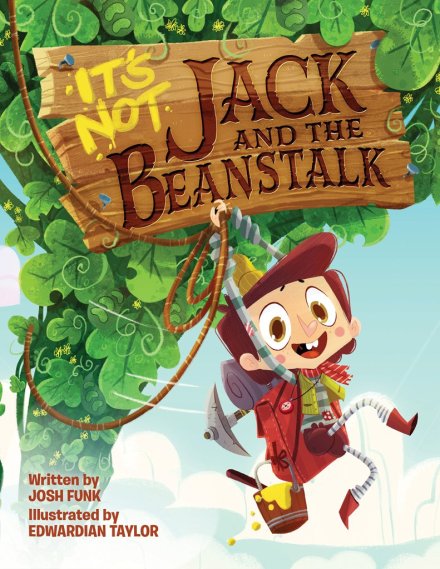
celebrate-picture-books-picture-book-review-it's-not-jack-and-the-beanstalk-cover

About the Holiday

Storytelling has been around as long as people have. We seem to have a natural desire to communicate our thoughts, feelings, and experiences in a factual way as well as creatively. Today’s holiday celebrates both the storytellers and their stories that enrich our lives. Sometimes, of course, there are two sides to a story—as you’ll see in today’s book!

It’s Not Jack and the Beanstalk

Written by Josh Funk | Illustrated by Edwardian Taylor


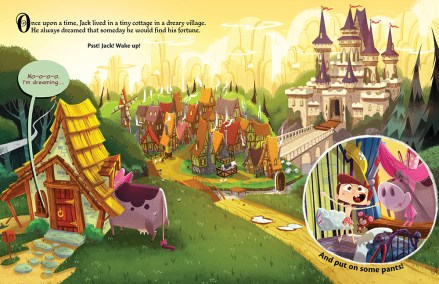
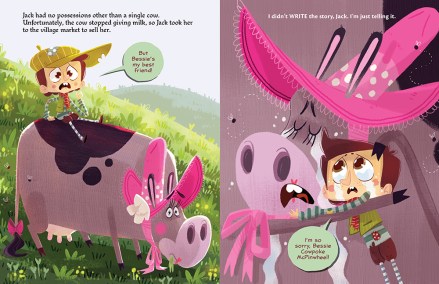
You know the drill—Once upon a time there was a poor boy named Jack…. One day this waif woke up to a moo-tivating kiss from his cow Bessie and… Wait, wait! Kids, cover your eyes! And, Jack, “put on some pants!” Phew! Disaster averted! Now where were we? Oh, right. So Jack (now well-dressed) was told that because Bessie had stopped making milk, he had to sell her. He protested, but the mysterious narrator protested right back: “I didn’t WRITE the story, Jack. I’m just telling it.”

Down at the market, Jack received five beans in exchange for Bessie. Of course, this is a fairy tale, and the beans are magic. Jack tried all the magical words he knew to get them to work, but they just sat in the bowl smiling up at him. Yeah, these beans have faces. Overcome by hunger, Jack determined to eat the beans, but there was that pesky narrator again ordering him to throw the beans out the window and then go to bed. As you can imagine—what with selling his best friend and hunger gnawing at his belly—Jack was a bit testy and complainy and countered, “Aww, but I’m not tired. This story keeps getting worse and worse.”

celebrate-picture-books-picture-book-review-it's-not-jack-and-the-beanstalk-wake-up

Image copyright Edwardian Taylor, 2017, text copyright Josh Funk, 2017. Courtesy of Two Lions Publishing.

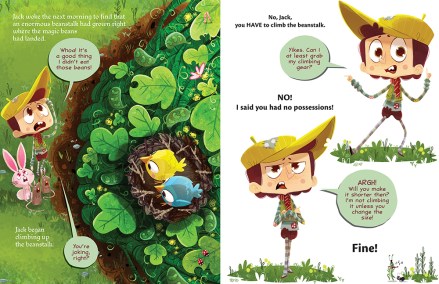
In the morning, Jack discovered that an enormous beanstalk had grown up overnight. It was so tall that Jack couldn’t even see the top. The narrator told him to start climbing. At first, Jack balked, then he tried to stall by offering to get his climbing gear, but the narrator had already determined that Jack “had no possessions.” Finally, Jack agreed to go, but only if the narrator changed the beanstalk’s size. In a classic “be careful what you wish for” maneuver, the beanstalk suddenly began to grow bigger. “Seriously?” Jack said.

Jack was actually enjoying his climb, especially when he spied Cinderella’s castle with Cindy waving from her balcony. Her voice rang across the distance, inviting Jack to a ball that very night. The narrator was not happy with this delay and urged Jack on. Finally, he reached the top, where “he found himself in front of a humongous house.” Jack pegged it right away as a giant’s abode, but he went inside anyway. As he was looking around at all the mammoth furnishings, he heard the giant’s voice: “Fee-Fi-Fo-Fum. I smell the blood of an Englishman.”

Heck, Jack knew about poetry and recognized immediately that “that doesn’t even rhyme” and offered an alternative: “Fee-fi-fo-fum, I can see the giant’s bum.” This bit of wordplay just enraged the giant—that, plus his fear that Jack was trying to steal all his best stuff. The giant grabbed Jack and was about to…well, listen for yourself: “Be he alive or be he dead, I’ll grind his bones to make my bread.” Pretty chilling stuff, but even though Jack was facing imminent danger, he was pretty impressed with the giant’s new rhyme.

celebrate-picture-books-picture-book-review-it's-not-jack-and-the-beanstalk-selling-bessie

Image copyright Edwardian Taylor, 2017, text copyright Josh Funk, 2017. Courtesy of Two Lions Publishing.

That made the giant happy, and Jack thought this moment of camaraderie was the perfect time to let slip to the giant that “there’s a good chance that you’re going to die at the end of this story.” The giant put on a frowny face, and his eyes began to tear up. It seemed the giant didn’t want to die, so he suddenly decided to become a vegan. Listening to this emotional roller coaster, the narrator started to get steamed because he was losing control of the story. “ENOUGH!!!” he shouted.

“GIANT!” he hollered and ordered him to chase Jack down the beanstalk. “JACK!” he yelled and told him to chop down the beanstalk. All this shouting only served to bond Jack and the Giant in an oversized friendship. They commiserated together and planned to make a taco salad from one of the giant’s recipes. After that they went to Cinderella’s party, where they told everyone about their adventure. And who’s complaining now? You got this—the narrator!

P.S. And, of course, they all lived happily ever after by splitting the giant’s fortune and opening a restaurant named Where Have You Bean? for a whole host of fairy tale customers!

celebrate-picture-books-picture-book-review-it's-not-jack-and-the-beanstalk-beanstalk-grows

Image copyright Edwardian Taylor, 2017, text copyright Josh Funk, 2017. Courtesy of Two Lions Publishing.

In Josh Funk’s newest romp, Jack takes matters into his own hands as he revamps his famous story into one that turns out “happily ever after” for all the characters. Along the way readers will laugh at Jack’s feisty repartee with the unseen narrator as he’s swept up in a larger-than-life scenario and uses his wits—and wit—to finally tell his own story in his own way. Young readers will appreciate Jack’s independent spunk, and adults will respond to his sweet nature.

Edwardian Taylor’s noodle-limbed, big-eyed Jack knows how to tug at readers’ heartstrings. Soulfully saying good-bye to Bessie, gazing at his nearly empty plate in anguish, and warily approaching the giant’s castle, Jack will quickly have readers empathizing with his plight and cheering him on as he outwits the gigantic red-bearded giant and turns him into a friend and business partner. And while the giant may be big, kids will soon see that he’s really a softy. Children will love all the big and small details on every page, from the leafy beanstalk to cute Cindy-rella to the gold-coin-laying goose. And if you’ve never seen a purple cow…here’s your chance. The final spread of a packed Where Have You Bean? restaurant gives kids an opportunity to show their knowledge of fairy-tale characters.

It’s Not Jack and the Beanstalk makes for a spirited and funny read aloud, and would be super performed by a group in classrooms or by clubs, or even by friends or siblings.

Ages 4 – 8

Two Lions, 2017 | ISBN 978-1542045650

Enter the world of Josh Funk and discover more about him and his books as well as plenty of book-related activities on his website!

Learn more about Edwardian Taylor and view a portfolio of his artwork on his website!

World Storytelling Day Activity

celebrate-picture-books-picture-book-review-beanstalk-craft-with-top


This is Not a Yardstick! Yardstick Craft


Need to measure something—like the height of your garden, the amount of rain that fell, or even the number of books you have? You can do it in style with your very own This is Not a Yardstick! yardstick craft.

Supplies

  • 50-inch wooden stake, available at craft stores
  • Small wooden leaves, 45 – 50, available at craft stores 

OR

  • Light green and dark green foam sheets 
  • Green paint, light and dark
  • Black marker
  • Paint brush
  • Strong glue
  • Flower pot
  • Oasis or clay
  • Ruler
  • Pencil

celebrate-picture-books-picture-book-review-beanstalk-craft-closeup

Directions

  1. Paint the wooden stake with the green paint, let dry
  2. With the ruler mark the stake in 1-inch increments along the edge of the stake

How to Make the Leaves

  1. If using wooden leaves, paint half light green and half dark green
  2. If using foam, cut 1 3/4-inch tear-drop shaped leaves (half from light green foam, half from dark green foam), 45 – 50 or as needed
  3. Cut two larger leaves, one from each color to decorate the top of the stake
  4. Draw a line down the center of each leaf’
  5. Write the number of the inch marked on each leaf, from 1 to 45 or higher with the black marker, alternating colors

How to Attach the Leaves

  1. Glue the leaves to the stake, attaching the odd-numbered inch leaves to the left side of the stake and the even-numbered leaves to the right side of the stake.
  2. Attach half of the leaf to the stake, letting the tip stick out from the side
  3. Glue the two larger leaves to the top of the stake

How to Store Your Yardstick

  1. Put the oasis or clay in the flower pot
  2. Stick the stake into the flower pot to keep it handy

Picture Book Review

March 15 – It’s National Craft Month

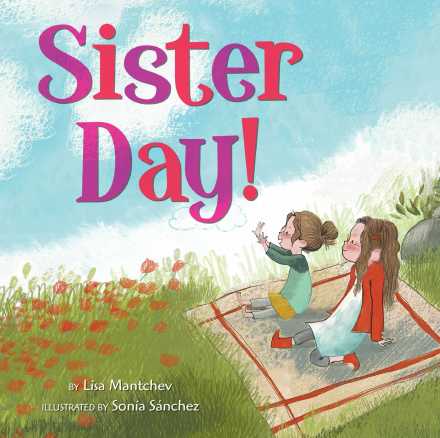
celebrate-picture-books-picture-book-review-sister-day-cover

About the Holiday

Does just walking through the door of Michael’s or A.C. Moore make your heart beat faster? Do your cabinets overflow with bottles of paint, glitter, ribbon, lace, and empty bottles and boxes? If so, then March is the month for you! This month we celebrate the creative energy and unique perspectives that result in beautiful, one-of-a-kind decor or clothing, fun group projects for kids and adults, and successful home-based businesses. Homemade love is also one of the best ways to show friends or family members how you feel—as you’ll see in today’s book. There are so  many reasons and ways to indulge your love of all things crafty this month—so what are you waiting for?!  

Sister Day!

Written by Lisa Mantchev | Illustrated by Sonia Sánchez


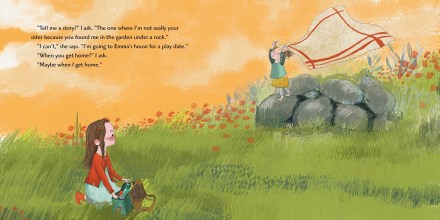
As Lizzie and her big sister, Jane, sit on a quilt watching the clouds, Lizzie tells how she loves that Jane has “the best imagination” and “can make up all kinds of things in her very own head.” Lizzie wants to play dress up, but Jane says, “not now.” How about telling a story? Jane can’t do that either because she’s going to her friend Emma’s house soon. “‘Maybe when you get home?’” Lizzie asks. “‘Maybe,’” says Jane.

celebrate-picture-books-picture-book-review-sister-day-picnic

Image copyright Sonia Sánchez, 2017, text copyright Lisa Mantchev, 2017. Courtesy of simonandschuster.com.

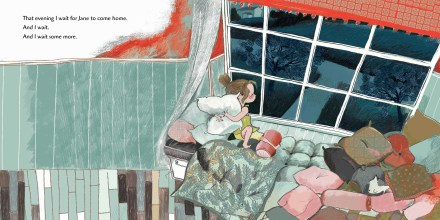
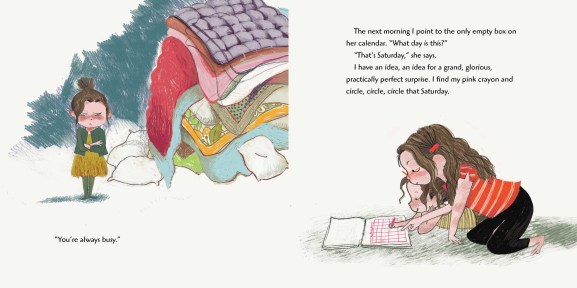
Jane is gone all day. Night falls and still Jane isn’t home. Lizzie waits in the window seat and watches and watches. Finally, Jane is home! Lizzie shows her the fort she made using all the blankets. It will be perfect for telling stories under, but now Jane has to do her homework. “‘You’re always busy.’” Lizzie says. The next day the sisters look at the calendar. It’s almost full except for one Saturday. Suddenly, Lizzie has an idea for a wonderful surprise. She takes the pink crayon and “circles, circles, circles that Saturday.”

celebrate-picture-books-picture-book-review-sister-day-waiting

Image copyright Sonia Sánchez, 2017, text copyright Lisa Mantchev, 2017. Courtesy of simonandschuster.com.

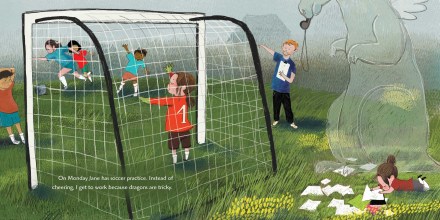
On Monday while Jane has soccer practice, Lizzie works on a dragon referee. On Tuesday instead of copying Jane’s jumps and twirls at ballet, Lizzie puts “tutus on sugarplum fairies.” On Wednesday during Jane’s piano lesson, Lizzie tunes up her imaginary orchestra. Thursday is karate day, and while Jane does her moves, Lizzie “sneaks, sneaks, sneaks to a quiet corner to finish up [her] surprise.” On Friday Jane goes to Emma’s again after school, and Lizzie gets help from Mom baking Jane’s favorite treat.

celebrate-picture-books-picture-book-review-sister-day-soccer

Image copyright Sonia Sánchez, 2017, text copyright Lisa Mantchev, 2017. Courtesy of simonandschuster.com.

Early Saturday morning, Lizzie grabs her sketchbook, her scissors, and some tape. It takes an hour and the whole roll of tape to make the surprise. Then Lizzie goes to Jane’s room. She knocks on the door. When there’s no answer, Lizzie opens the door. Jane’s room is empty. Lizzie runs “downstairs, yelling, ‘Mom, have you seen Jane?’” When Lizzie enters the kitchen, she finds Jane “wearing a T-shirt covered in glittery glue.” She made them at Emma’s house, Jane says as she hands one to Lizzie. 

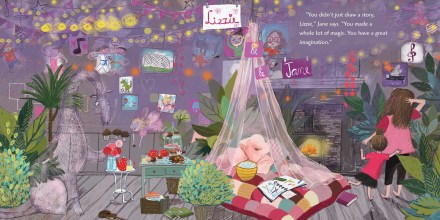
Lizzie puts it on and pulls Jane into the living room. Pictures and decorations cover the walls, and delicious cupcakes and drinks are on the table. “‘Surprise! I wrote you a story!’” Lizzie says. “‘Happy Sister Day!’” As Jane looks around, she tells Lizzie, “‘You didn’t just draw a story, Lizzie. You made a whole lot of magic.’” Lizzie hugs her big sister. “‘It runs in the family,’” she says.

celebrate-picture-books-picture-book-review-sister-day-surprise

Image copyright Sonia Sánchez, 2017, text copyright Lisa Mantchev, 2017. Courtesy of simonandschuster.com.

Lisa Mantchev captures the happiness and disappointments of sibling relationships in her sweet story. In today’s busy family life, sisters—and brothers—don’t always get to spend as much time together as they might like. Mantchev reveals, however, that close bonds remain in the heart. Young readers will be enchanted by this loving sister duo and the surprise ending that shows a shared understanding and devotion between them. Sister Day! may inspire families to hold special sister and or brother days to let siblings connect and develop their unique relationship.

celebrate-picture-books-picture-book-review-sister-day-calendar

Image copyright Sonia Sánchez, 2017, text copyright Lisa Mantchev, 2017. Courtesy of simonandschuster.com.

In her beautiful, light illustrations, Sonia Sánchez replicates the positive, happy relationship between Lizzie and Jane. As each day brings a new activity for Jane, readers will recognize the reality of a younger sibling waiting for the older one to finish. As Lizzie uses this time to draw her story, children will see that even though Lizzie and Jane aren’t together, they are thinking of each other. Lizzie’s imagination is creatively shown through transparent fantasy creatures who keep Lizzie company during Jane’s absence. Sánchez’s lovely color palette and delicate, detailed drawings invite children to spend time with these best-friend sisters.

Sister Day! would make a wonderful gift and a charming addition to sisters’ home libraries

Ages 4 – 8

Simon & Schuster/Paula Wiseman Books, 2017 | ISBN 978-1481437950

Discover more about Lisa Mantchev and her books for children, young adults, and adults on her website!

National Craft Month Activity

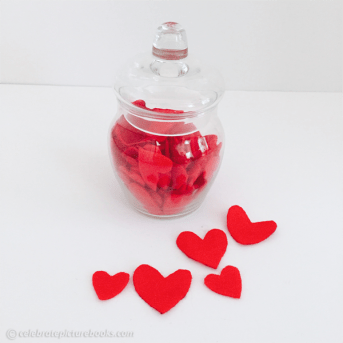
celebrate-picture-books-picture-book-review-heart-jar

I Love You Jar


Show your friends or family members how much they mean to you with this jar full of love!

Supplies

  • Small to medium size decorative jar or a recycled jar
  • Red felt or heavy paper
  • Scissors

Directions

  1. Cut enough small hearts from the red felt or paper to fill the jar one-half to three-fourths full
  2. Fill the jar with the hearts
  3. Give it to your friend, sister, brother, mom, dad—anyone you love—and watch them smile!

Picture Book Review
March 12 – It’s Spiritual Wellness Month

celebrate-picture-books-picture-book-review-the-berenstain-bears-and-the-easter-story-cover

About the Holiday

The definition of spiritual wellness is unique to each person. When you think deep down about what gives your life purpose, meaning, and happiness, what do you find? This month encourages people to discover if their beliefs, activities, work, family relationships and friendships are all in harmony. It’s also important to take care of you, by taking time to reflect each day and to plan fun and relaxing activities. Springtime and Easter are opportunities for renewal, making March a great time to consider your spiritual wellness.

Zonderkidz sent me a copy of today’s book to check out. All opinions are my own. 

The Berenstain Bears and the Easter Story

Written by Jan and Mike Berenstain


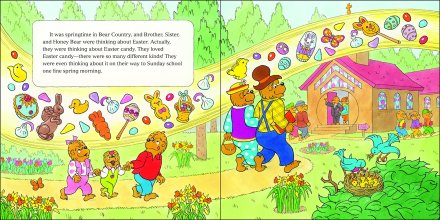
On the way to Sunday school one spring morning, the warm sun was shining, daffodils were blooming, and birds were feeding their babies, but all Brother, Sister, and Honey Bear could think about was Easter candy. As they entered their classroom, Brother said his favorite Easter candy was chocolate bunnies, Sister said hers was marshmallow chicks, and Honey Bear cried “‘Jelly beans!’” Then Missus Ursula revealed that her favorite was black jelly beans, but also that Easter is about more than candy.

Brother and Sister said they knew that. Easter was about “‘stuff in the Bible,’” Brother told Missus Ursula. “‘Yeah,’ agreed Sister. ‘Bible stuff.’” And Honey Bear added, “‘Stuff!’” Missus Ursula thought the cubs’ understanding could use a little more rounding out, so she took them into the next classroom, where the older bear cubs were putting on a play.

celebrate-picture-books-picture-book-review-the-berenstain-bears-and-the-easter-story-candy

Copyright Jan and Mike Berenstain, 2012, courtesy of Zondervan.

The stage was set with props of palm trees, rocks, and buildings from the Holy Land, and cubs were dressed in costumes. One of the performers began telling the Easter story. “‘Long ago, in the Holy Land, there was a man named Jesus. He traveled the countryside teaching about God and what God wanted for his people.’” The narrator went on to tell about Jesus’s miracles and how “‘he could do these wonderful things because he was the Son of God.’”

Because many people listened to Jesus and followed him, government officials and others were angry. They didn’t believe he was the Son of God and were afraid that Jesus wanted to become the king. One day Jesus rode into the city of Jerusalem on a donkey and crowds greeted him with shouts of “‘Hosanna!’” The leaders of Jerusalem believed Jesus was becoming too powerful.

One night while Jesus was praying in a garden, “‘soldiers were sent to arrest him. They took him away to prison.’” Later, he was questioned by a “‘wicked judge…who wanted to show everyone that Jesus was not a king.’” Then “‘he ordered for Jesus to be put to death by hanging on a wooden cross.’” On the day Jesus died, the skies became black and the wind howled. Everyone was afraid.

After Jesus died, he was taken by his friends and put in a tomb. A huge stone was rolled in front of the entrance. For two days Jesus lay in the tomb. “‘On the morning of the third day after Jesus died, some women who knew Jesus came to weep at his tomb.’” When they got there, they saw that the stone had been rolled away. Jesus was no longer in the tomb. “‘An angel told the women not to be afraid. He told them that Jesus was alive once more.’”

celebrate-picture-books-picture-book-review-the-berenstain-bears-and-the-easter-story-missus-ursula

Copyright Jan and Mike Berenstain, 2012, courtesy of Zondervan.

In the days and weeks after Jesus rose, he visited his friends. “‘They were amazed and fell down and worshiped him. Jesus told them they should spread the good news about what had happened.’” After visiting with his friends, “‘Jesus rose up to heaven to be with God, his Father.’” Following the play, the cubs understood that Easter is about more than candy. But “‘does this mean we shouldn’t eat any Easter candy?’” Brother asked.

“‘Certainly not!’ laughed Missus Ursula’” and confessed that she’d miss her jelly beans too. But she reminded the cubs that after they got their Easter baskets, they go to church to celebrate the real meaning of Easter. “‘Hooray!’ the cubs said. ‘And Hosanna!’ added Missus Ursula. ‘He is risen!’”

A page of colorful stickers depicting images from the story are included, and discussion questions and fun activities related to the book follow the text and may inspire kids to put on a play of their own.

Since the early 1960s, the Berenstain Bears have been delighting readers with their shenanigans, wit, and always-close family relationships. In The Berenstain Bears and the Easter Story, part of the Living Lights series, these beloved characters talk about and reveal to children the deeper meaning of Easter, with a focus on Jesus’s resurrection. The straightforward telling of the Easter story through a Sunday school play is welcome for parents, caregivers, and other adults who are looking for a book to share and a way to talk about both the religious and the fun aspects of this holiday with children. The dialogue-rich structure also lends a personal touch to any reading, letting the adult sound as if they are telling the story themselves.

The illustrations of Bear Country are bathed in the warm glow of spring as the sun rises over the Bear’s tidy treehouse home. Brother’s, Sister’s, and Honey Bear’s dreams of candy will enchant little ones as will the familiar scene of walking into church on Easter morning. Depictions of the play are vibrant and detailed but with a homey and childlike feeling to the props and acting.

For adults looking for a traditional, Bible-centered telling of the Easter story with engaging  characters that children will respond to, The Berenstain Bears and the Easter Story is a superb choice for home and church libraries.

Ages 4 – 7

Zonderkidz, 2012 | ISBN 978-0310720874

To learn more about Bear Country and all of The Berenstain Bears books as well as to find fun activities visit the Berenstain Bears’ website.

You can follow the Berenstain Bears on:

Facebook | Instagram | Twitter

Spiritual Wellness Month Activity

celebrate-picture-books-picture-book-review-sweet-bunny-candy-jar

Sweet Bunny Candy Jar


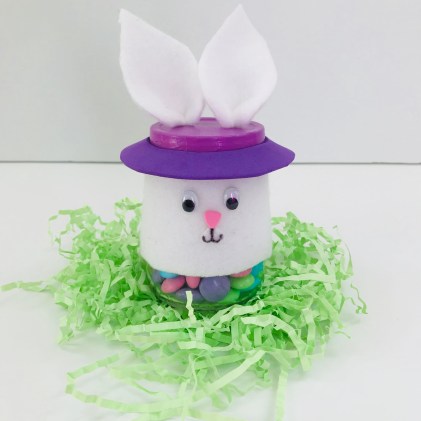
A little bit of candy makes Easter or any spring day sweeter! With this Sweet Bunny Candy Jar, you can give a child, a friend, or even yourself a special treat that will make you hoppy!

Supplies

  • Printable Hat Rim and Bunny Ears Template
  • Baby food jar (I used a Beech-Nut Naturals jar)
  • White fleece, 8 ½ inches by 11 inches
  • 1 piece of purple foam (Or any color you’d like to make the hat)
  • Small piece of pink foam or felt for nose
  • Googly eyes (I used oval)
  • Medium pom-pom
  • Multi-surface paint, purple (or whatever color you’d like to make the hat)
  • Fabric glue (I used Fabric-Tac)
  • Black ultra-fine or fine tip permanent marker
  • Large nail or ice pick
  • Hammer
  • Scissors

IMG-2614

Directions

  1. Remove label from baby food jar
  2. Clean and dry jar and lid
  3. Trace the hat rim template onto the purple foam
  4. Cut out the rim of the hat and remove the center
  5. Trace the ears template onto the white fleece and cut out

To Make the Body and Face

  1. Cut a 2-inch wide by 7-inch long strip of white fleece
  2. Glue the strip of fleece to the jar under the lip and leaving about ½ inch of glass showing at the bottom
  3. Glue on the googly eyes
  4. Cut a little nose from the pink foam and glue to the face
  5. Make the mouth with the permanent marker on a little piece of fleece, cut out and glue under the nose

To Make the Hat

  1. Paint the lid with the purple paint. Let dry.
  2. With the nail or ice pick and hammer, make a hole on either side of the lid to insert the ears. You can make the hole a little bigger with a phillips head screwdriver
  3. Flip the lid over and hammer the edges of the hole flat
  4. Trace the hat rim template onto the purple foam

To Insert the Ears

  1. Pinch the end of one ear together and push it through one hole in the lid.
  2. Pull it through the hole a bit to form the ear
  3. Repeat with the other ear

Finish the Bunny

  1. Add the foam rim to the lid
  2. Glue the pom-pom to the back of the jar for the tail
  3. Add M&Ms, jelly beans, or other small candy

Picture Book Review
 

February 21 – It’s National Bird-Feeding Month

celebrate-picture-books-picture-book-review-warbler-wave-cover

About the Holiday

Spring comes early for our feathered friends. You may have noticed more bird activity in the past few weeks as birds get ready to build nests and mate. February can be a tough month for these little creatures, though. In some places snow still covers the ground, and the spring blooms that offer nutrition haven’t sprouted yet. To remedy this situation, in 1994 John Porter read a resolution into the United States’ Congressional record recognizing February as National Bird-Feeding Month. One-third of the American population have backyard feeders that provide the sustenance birds need to survive. To celebrate, if you have feeders make sure they are well stocked. If you don’t have a feeder in your yard, consider hanging one. Enjoying the beauty and songs of birds is a day brightener!
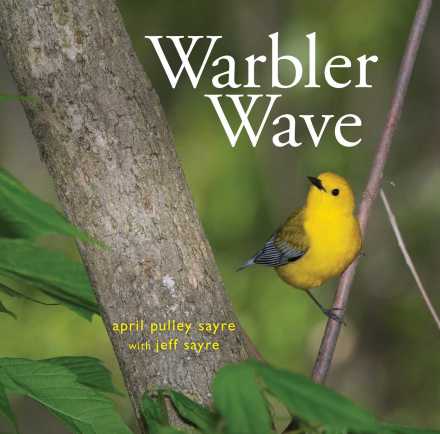
Warbler Wave

By April Pulley Sayre with Jeff Sayre


“In spring, as you nightly nap, / warblers flap / over oceans, lakes, / and mountains.” These tiny birds ride on streams of wind, navigating their way around buildings and towers and sharing space with bats, insects, and other birds. Then, nearly out of energy, they alight to rest and look for food.

celebrate-picture-books-picture-book-review-warbler-wave-wag-walk

Copyright April Pulley Sayre, 2018. Courtesy of simonandschuster.com

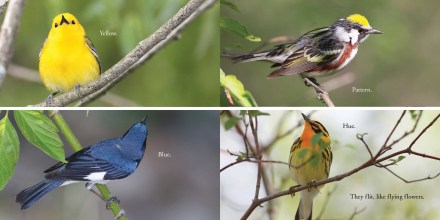
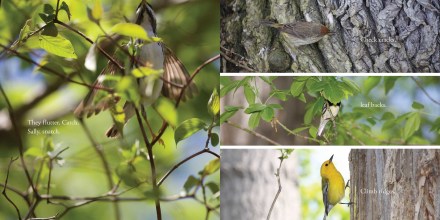
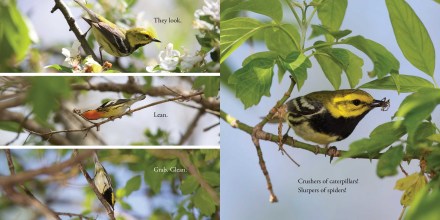
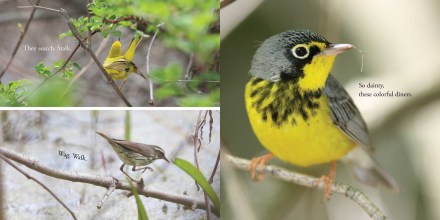
“They search. Stalk. / Wag. Walk. / So dainty, / these colorful diners.” They’re dots of color and intricate patterns among the leaves and “flit, like flying flowers.” They look and listen then dart to capture dinner. They are “crushers of caterpillars! / Slurpers of spiders!” Insects can hide from these clever hunters that know every nook and cranny to search.

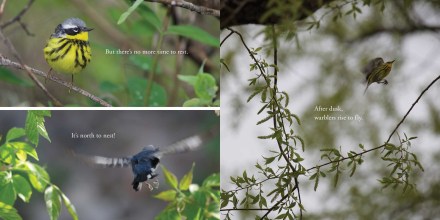
And they’re not above nabbing a snack that a spider has so carefully wrapped. After a meal, “warblers sing. / Preen. / Scan the local scene.” But then as soon as nighttime falls, they’re off again, with miles to go until they reach their nesting grounds. Like good friends, they keep in touch with each other in the darkness as they fly “Surfing rivers of wind way up high…calling zeep, zeep, zeep in the sky.”

celebrate-picture-books-picture-book-review-warbler-wave-colors-patterns

Copyright April Pulley, 2018. Courtesy of simonandschuster.com

Following the lyrical text, an extensive discussion of the “Migration Marathon” warblers take each spring reveals fascinating facts about the birds, their instinct to migrate, and why and how they migrate as well as the role of science in recording warbler migration. For instance, warblers weigh no more than a couple of baby carrots, yet they fly hundreds, sometimes thousands of miles from their winter homes in the southern hemisphere to their summer homes in the northern United States and Canada.

celebrate-picture-books-picture-book-review-warbler-wave-searching-trees

Copyright April Pulley Sayre, 2018. Courtesy of simonandschuster.com

Blackpoll warblers even undergo physical changes in preparation for their 4,000-mile journey taken three days at a time nonstop. And how do these tiny creatures find their way? They’re born with an innate knowledge of the direction they need to fly, and they navigate by the stars, the setting sun, and the earth’s magnetic field (which they may be able to see!). There’s much more to discover here, too, about the lovely warblers that may be flying through your area soon.

celebrate-picture-books-picture-book-review-warbler-wave-looking-for-bugs

Copyright April Pulley Sayre, 2018. Courtesy of simonandschuster.com

April Pulley Sayre’s poetic narrative of the astounding migration warblers undertake every year is as bright and spry as her little subjects. Staccato sentences echo the birds’ quick, sure movements and alertness to the sounds and motions around them while longer passages flow with the rhythm of the birds in flight, soaring to the next stopping place and taking off again for home.

celebrate-picture-books-picture-book-review-warbler-wave-taking-off-again

Copyright April Pulley Sayre, 2018. Courtesy of simonandschuster.com

Gorgeous photographs of a fiery horizon and rising moon that invite warblers to the air each night open the book and lead to lush, close-up views of a variety of warblers in their regal colors and patterns. Their sharp eyes, attentive expressions, and perky personalities are on full display in their native habitat. As dusk descends once more over sea and forest, the warblers take wing while birdwatchers wait to see them.

For children who are bird lovers and for families who have backyard feeders or enjoy taking bird-watching walks, as well as for classroom science and story times, Warbler Wave is a beautiful addition to home, classroom, school, and public library collections.

Ages 3 – 8 and up

Beach Lane Books, 2018 | ISBN 978-1481448291

To learn more about April Pulley Sayre her books, and her work, visit her website.

National Bird-Feeding Month Activity

celebrate-picture-books-picture-book-review-pine-cone-bird-feeder

Pine Cone Bird Feeder


You don’t need a fancy bird feeder to help out the birds in your backyard. With a pine cone, birdseed, and a bit of peanut butter, lard, or vegetable shortening, you can make feeders that birds will flock to!

Supplies

  • Item to Cover, such as a pine cone, conical ice-cream cone, piece of toast or stale bread, bagel, paper towel or toilet paper tube
  • Peanut butter, lard, or vegetable shortening
  • Bird seed
  • String or wire for hanging
  • Large bowl or container
  • Knife for spreading

Directions

  1. Attach the string or wire to the item to be covered
  2. Cover the item with peanut butter, lard, or vegetable shortening
  3. Pour birdseed into a large bowl or container
  4. Roll the covered item in the birdseed until well covered
  5. Hang your homemade bird feeder!

Picture Book Review