February 6 – It’s Hot Breakfast Month

celebrate-picture-books-picture-book-review-paul-bunyan-and-babe-the-blue-ox-the-great-pancake-adventure

About the Holiday

Hot Breakfast Month was established to encourage people to have a hot, healthy breakfast before they go off to work or school. A good breakfast can keep your brain and your body working longer and better, which will result in a good day and more happiness in your life! Isn’t that worth cracking a few eggs in a pan, toasting some bread, or—as Paul Bunyan preferred—mixing up a batch of pancakes?!

Paul Bunyan and Babe the Blue Ox: The Great Pancake Adventure

By Matt Luckhurst


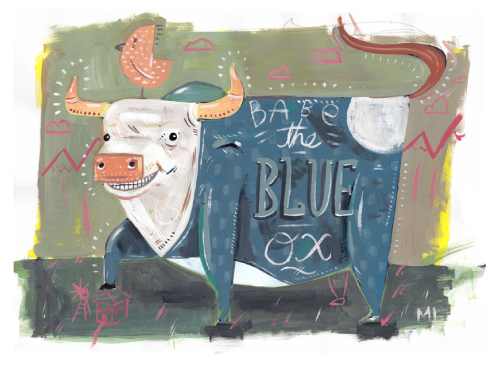
Everyone knows that Paul Bunyan and his best friend Babe the Blue Ox were “the greatest lumberjacks to every work the forests.” But not many people know just how that came to be. It all started because Paul was a very big boy in a very small town. He found it hard to concentrate on school because he was always thinking about his mom’s pancakes. “‘Math,” Paul said, “is just not very tasty.’”

celebrate-picture-book-picture-book-review-paul-bunyan-and-babe-the-blue-ox-and-the-great-pancake-adventure-babe-and-paul

Copyright Matt Luckhurst, courtesy of mattluckhurst.com

Now, Paul and Babe were lucky enough to live in an area where lots of fresh fruit and vegetables were grown, but they only wanted pancakes. In fact when their mom tried to feed them broccoli, they spit it right out! So Paul’s mom made stacks and stacks of pancakes until she was out of breath—but she still had fields to tend to. Paul and Babe tried to free up time for Mom to keep cooking by working in the fields, “but their big feet just squished and squashed everything in sight.”

Finally, there were just not enough pancakes at home, so Paul hugged his mom and set off into the deep dark forest to find his “pancake fortune” with Babe at his heels. With their heads in the clouds and their bellies empty, they happened upon a lumberman with a huge problem. The Syrup River was dammed up with pancakes and the logs couldn’t get through. It was just the job for Paul and Babe!
celebrate-picture-book-picture-book-review-paul-bunyan-and-babe-the-blue-ox-and-the-great-pancake-adventure-babe-smiling

Copyright Matt Luckhurst, courtesy of mattluckhurst.com

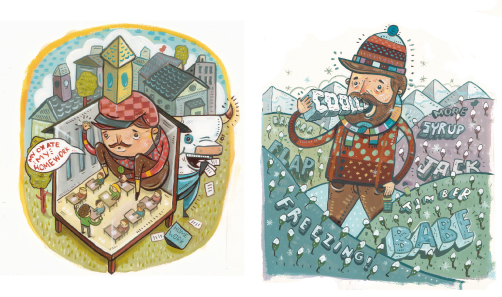
Paul and Babe ate every last pancake until the river was clear. The lumberman was so impressed he offered them a job on the spot! And the best part was that they would be paid in pancakes! The trio tromped from Wisconsin to California, logging the land and making their mark. In Minnesota it was “so cold that all of Paul’s words froze before they could make a sound. They say you can still hear his voice in the forests there today as they thaw out.” Further west Paul and Babe had a little something to do with creating the Rocky Mountains, and the Grand Canyon would still be a flat plateau if it weren’t for Babe’s voracious appetite.
celebrate-picture-book-picture-book-review-paul-bunyan-and-babe-the-blue-ox-and-the-great-pancake-adventure-paul's-words-freeze

Copyright Matt Luckhurst, courtesy of mattluckhurst.com

But one day Babe fell ill, and Paul was feeling a little under the weather himself. The doctor gave them a grave diagnosis. “‘You seem to have been eating too many pancakes!’” he announced. Paul was flabbergasted—how could there be such a thing as too many pancakes?! But the doctor explained that a balanced diet was best. Paul pondered where he could find good food. Then it hit him! Paul and Babe said goodbye and headed back home.

celebrate-picture-books-picture-book-review-paul-bunyan-and-babe-the-blue-ox-the-great-pancake-adventure

Copyright Matt Luckhurst, courtesy of mattluckhurst.com

Mom was thrilled to see them and cooked plenty of nutritious meals to make them healthy. They stayed in town and grew “Bunyan sized veggies,” helped the townspeople, and always listened to Mom. And they never ate another pancake ever again! Well….

As Matt Luckhurst so adroitly knows, there is no more fascinating figure of North American folklore than Paul Bunyan and no greater meal than a pancake breakfast! Combining the two is sweet genius and rollicking fun to boot! Tall tales capture the imagination, and Luckhurst has included plenty of fantastic events to keep kids enthralled from page to page. Luckhurst’s larger-than-life illustrations burst with color and dynamic 3-D typography that enhance the humor and heart of Paul and Babe’s predicament. The juxtaposition of sizes and folk-art influences create unique, eye-catching pages, and Paul and Babe’s endearing innocence make them loveable characters.

Perfect for folktale lovers, pancake aficionados, kids who follow a singular vision, and anyone who loves a good yarn, Paul Bunyan and Babe the Blue Ox: The Great Pancake Adventure is great fun and would be an often-read addition to a child’s bookshelf.

Ages 4 – 8

Abrams Books for Young Readers, 2012 | ISBN 978-1419704208

You’ll enjoy getting to know more about Matt Luckhurst and viewing a portfolio of his work on his website!

Take a peek at this awesome trailer for Paul Bunyan and Babe the Blue Ox: The Great Pancake Adventure!

Copyright Matt Luckhurst

Hot Breakfast Month Activity
celebrate-picture-books-picture-book-review-pancake-game

Pancake Flip-Out Game


Pancakes are served in a stack because they’re so delicious that each one doesn’t last long! This game gives you the chance to see how many pancakes you can flip onto a plate! You can play this game several ways:

  1. Give each player the same number of pancakes and see how many they can toss onto the plate during their turn
  2. Make a target with the plate in the middle and draw 3 concentric circles around it. Hitting the target can earn you 20 points. Getting your pancake in the first circle around the plate earns you 15 point, the second circle is worth 10 points, and the third is worth 5 points. Rotate through the players as many times as you like and add up the points at the end. The player with the most points wins!
  3. Instead of tossing the pancakes with your hands, try throwing them with a spatula!
  4. Make up your own rules—and have fun!

Supplies

Directions

  1. Print the Pancakes and Breakfast Plates and cut them out
  2. Glue the pancakes and plate to poster board, cardboard, or foam to give the pancakes more weight for throwing and the plate more support
  3. Once dry, the game pieces are ready for fun!

Picture Book Review

February 1 – National Freedom Day

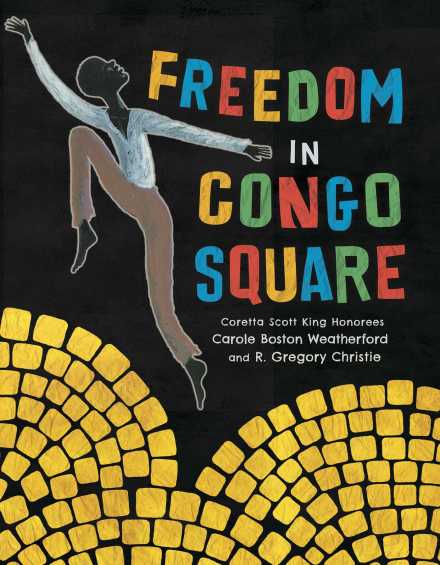
celebrate-picture-books-picture-book-review-freedom-in-congo-square-cover

About the Holiday

National Freedom Day commemorates the February 1, 1865 signing by President Abraham Lincoln of a joint United States House of Representatives and Senate resolution that outlawed slavery and later became the 13th Amendment to the Constitution. Major Richard Robert Wright Sr., a former slave, called on local and national leaders to meet in Philadelphia and formalize a national day of remembrance. In 1947, a year after Wright’s death, the U.S. Congress passed a bill marking February 1 as National Freedom Day. The proclamation was signed into law on June 30, 1948 by President Harry S Truman. The holiday led to Black History Day, which was later expanded to Black History Month.

Freedom in Congo Square

Written by Carole Boston Weatherford | Illustrated by R. Gregory Christie


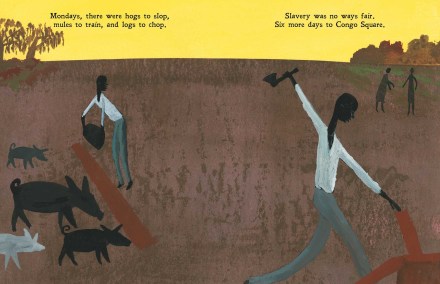
From sunup to sundown slaves brought to the state of Louisiana from their homelands in Africa and the West Indies toiled on plantations six days a week. The seventh day, Sunday, was set aside as a day of rest and worship, and in the afternoon people of African descent gathered in Congo Square in the heart of New Orleans to dance, play instruments, and talk. On Monday morning the long week began anew, but the rhythms of Congo Square sustained the men, women, and children through “hogs to slop, / mules to train, and logs to chop. / Slavery was no ways fair. / Six more days to Congo Square.

celebrate-picture-books-picture-book-review-freedom-in-congo-square-monday

Image copyright R. Gregory Christie, text Carole Boston Weatherford. Courtesy simonandschuster.com

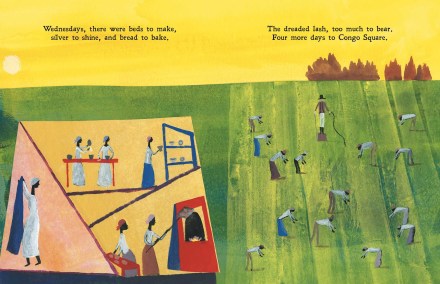
On Tuesdays, with “cows to feed, / fields to plow, and rows to seed,” five more days stretched out in endless labor. “Wednesdays, there were beds to make, / silver to shine, and bread to bake. / The dreaded lash, too much to bear. / Four more days to Congo Square.” Thursdays came with wash tubs and drying lines, scrub brushes, and brooms. “Spirituals rose from the despair. / Three more days to Congo Square.”

celebrate-picture-books-picture-book-review-freedom-in-congo-square-wednesday

Image copyright R. Gregory Christie, text Carole Boston Weatherford. Courtesy simonandschuster.com

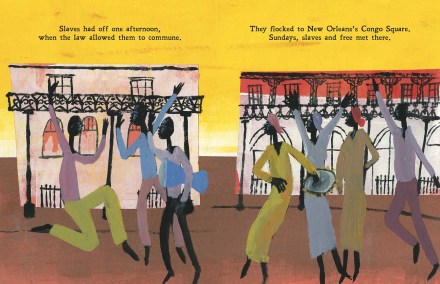
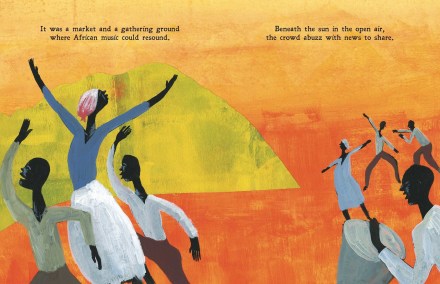
Fridays were spent in back-breaking work and though some brave souls dared to run, most were counting “Two more days to Congo Square.” Saturdays brought no more relief, but the days had whittled down to hours and “Freedom was slaves’ ardent prayer. / One more day to Congo Square.” At last came Sunday afternoon, and slaves and free rushed to Congo Square—“…a market and a gathering ground / where African music could resound.”

They met their kinsmen by nation, tribe, or language and revived their own stories and music played on drums, fiddles, shells, flutes, gourds, and bells that led to chants and dancing. “This piece of earth was a world apart. / Congo Square was freedom’s heart.”

celebrate-picture-books-picture-book-review-freedom-in-congo-square-sunday

Image copyright R. Gregory Christie, text Carole Boston Weatherford. Courtesy simonandschuster.com

Through powerful rhythmic couplets, as spare and austere as the work they describe yet ending in a focal point of hope, Carole Boston Weatherford recreates the steady thrum that resonated in the hearts of slave and free men and women as they anticipated each afternoon in Congo Square.  As the days remaining until Congo Square are counted off, Weatherford’s predominantly one-syllable words form a staccato beat, the pounding of hard, physical work. When Sunday comes and people find joy in their shared music and dance, Weatherford’s phrasing within the same structured couplets rises, employing multi-syllable words that give the verses a pulsing flow that echoes the freedom they find in Congo Square.

celebrate-picture-books-picture-book-review-freedom-in-congo-square-music-resounded

Image copyright R. Gregory Christie, text Carole Boston Weatherford. Courtesy simonandschuster.com

Gregory Christie’s vivid folk-art illustrations are a perfect complement to Weatherford’s verses. The elongated figures stand tall and proud amidst the fields and workrooms of the plantation. In some scenes the slaves’ angled bodies, leaning over to pick cotton, wash floors, or lift baskets may be bent, but they are not broken, and while two men work on building a wall, they seem to kneel prayerfully as they add another brick. In a moving two-page spread set at night, brown wood-grain houses superimposed with rows of sleeping slaves float on a blue-toned ground below a red sky, reminiscent of ships laden with Africans sailing the Middle Passage of the Atlantic slave trade. As the men and women congregate in Congo Square, Christie’s lithe figures raise their arms and kick their legs in dance. The fiery backgrounds swirl with color as the celebrants jump, stretch, play instruments and move with exultation.

A detailed Forward by historian and Congo Square scholar, Freddi Williams Evans and an Author’s Note following the text reveal more information on the history of Congo Square and its significance to Jazz music.

Freedom in Congo Square is both a heartrending and jubilant book that would make a wonderful and meaningful addition to any child’s home library.

Ages 4 – 8

little bee books, 2016 | ISBN 978-1499801033

Learn more about Carole Boston Weatherford and her books and discover book-related resources on her website!

If you’re lucky enough to live in Decatur, Illinois, you can visit R. Gregory Christie’s unique art studio, art school, and bookstore Gas-Art Gifts Autographed Children’s Bookstore. If you don’t live near Decatur, you can check out all the books, art, and items for sale on the website!

National Freedom Day Activity

celebrate-picture-books-picture-book-review-chalk-garden-st

Freedom Stone


Freedom is a precious right—one that can be represented in different ways by each person. For today’s activity use a brick, paving stone, large stone, or molded plaster of Paris and decorate it with a picture or design that means freedom to you. Then put it in a special place—in a garden, near your front or back door, in your room, or in another spot—where it will remind you of freedom’s gifts.

Supplies

  • Brick, paving stone, large stone, plaster of Paris
  • Paint
  • Plastic gems, bead, or other small objects
  • Strong glue or other adhesive
  • Paint brush

Directions

  1. Create a design that shows what freedom means to you or an object that represents freedom to you
  2. Paint your stone with the design, let dry
  3. Add gems, beads, or other objects
  4. Display your Freedom Stone

Picture Book Review

January 27 – It’s Creativity Month

celebrate-picture-books-picture-book-review-stitchin'-and-pullin'-a-gee's-bend-quilt-cover

About the Holiday

January is a time for reflection and new beginnings. What better time to start thinking creatively and finding your inner artist, scientist, inventor, thinker? Go ahead and do the thing you’ve always wanted to do!

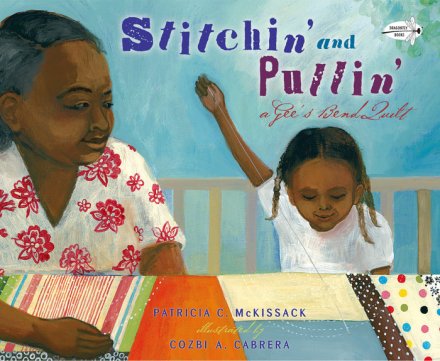
Stitchin’ and Pullin’: A Gee’s Bend Quilt

Written by Patricia C. McKissack | Illustrated by Cozbi A. Cabrera

In this story told through poems, a little girl begins telling of her life, starting with a recitation on Gee’s Bend Women: “Gee’s Bend women are / Mothers and Grandmothers / Wives / Sisters and Daughters / Widows.” They are every kind of woman you know, doing every type of work and activity. “Gee’s Bend women are / Talented and Creative / Capable / Makers of artful quilts / Unmatched. / Gee’s Bend women are / Relatives / Neighbors / Friends— / Same as me.”

In Who Would Have Thought, the girl muses on how perceptions change. “For as long as anyone can remember,” she says, the women of Gee’s Bend, Alabama have created quilts that were slept under, sat on, and wrapped around the sick or cold. But now those same quilts are “…hanging on museum walls, / their makers famous….”

When she was just a tot “Baby Girl” reveals in Beneath the Quilting Frame, she played under the quilting frame, listening to her “mama, grandma, and great-gran / as they sewed, talked, sang, and laughed / above my tented playground.” She remembers the “steady fingers  /[that] pieced together colorful scraps of familiar cloth / into something / more lovely / than anything they had been before” as her mother sang her a lullaby.

celebrate-picture-books-picture-book-review-stitchin'-and-pullin'-a-gee's-bend-quilt-puzzling-the-pieces

Image copyright Cozbi A. Cabrera, courtesy of Random House Books for Young Readers

In Something Else, “Baby Girl” is growing too big to play beneath the frame. Her legs becoming longer and her mind full of “recipes for eleven kinds of jelly…how to get rid of mold…and the words to a hundred hymns and gospel songs” while she waits her turn at the frame. Finally, in Where to Start? her time comes. The girl asks her mama how to begin and she answers, “‘Look for the heart. / When you find the heart, / your work will leap to life… / strong, beautiful, and… / independent.’”

In Remembering, the girl thinks about how her mama has told her that “cloth has a memory.” As she chooses the cloth that will become her quilt she sees the life and the history in each. 

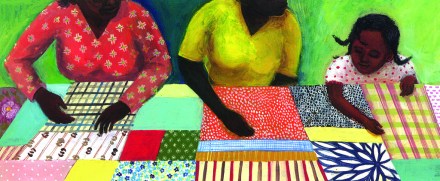
Nothing Wasted sees Grandma pulling apart a red-and-white gingham dress stitch by stitch to become a quilting square that the girl suddenly knows “will be the heart of my quilt.” In Puzzling the Pieces the girl and her grandma stand over the quilting frame fitting the squares together in the perfect way to tell the girl’s story. Her quilt comes together piece by piece to tell the history of Gee’s Bend in The River Island. The brown strips along three sides mirror the muddy waters surrounding her town. The fourth side is a green strip—“a symbol of the fields where my ancestors / worked cotton from can to can’t— / can see in the morning until / can’t see at night.” Lined up next to the green strip are six squares representing the small communities “where families with / the same name / are not kin by blood / but by plantation.”

Being Discovered is portrayed with “a large smoke-gray square”—the color of the Great Depression and the 15 minutes of fame Gee’s Bend garnered when discovered “by sociologists, historians, / educators, and journalists” who came and went, leaving Gee’s Bend “the way it had been / before being discovered.”

celebrate-picture-books-picture-book-review-stitchin'-and-pullin'-a-gee's-bend-quilt-understanding-comes-later

Image copyright Cozbi A. Cabrera, courtesy of Random House Books for Young Readers

In Colors, the girl’s grandma explains the meanings and feelings behind each colored cloth. “Blue cools. / Red is loud and hard to control, / like fire and a gossiping tongue.” Green, orange, yellow, white, pink, and all the others have their own personalities. “Grandma says, / ‘Colors show how you / feel deep down inside.’”

In Pinky, the harrowing facts of the march from Selma to Montgomery, Alabama frame the story of one marcher, Mr. Willie Quill who broke horses for the Alabama State Mounted Patrol and was saved from the Police attacks when one of the horses he’d trained knew his voice. In Dr. King Brings Hope, the little girl adds a “Patch of bright pink / to remember Pinky’s story. / Next to it I sew / a spotless white patch for the hope Dr. Martin Luther King / brought to the Bend” and goes on to tell how her grandma saw Dr. King at Pleasant Grove Baptist Church and what it meant to her.

By and By follows the girl as she adds “golden thank-yous, for James Reeb,” a “bright blue piece of velvet for Viola Liuzzo,” and a “big plaid people circle of white, black, brown, yellow, and red for Reverend Dr. King, all “killed for believing in justice.”

In the 1960s, The Sewing Bee tells, Gee’s Bend quilters were once again discovered. There were buyers for the handmade quilts, but stipulations. The girl asks her grandma if she was part of the Bee, to which she replies, “‘Yes, / more money. Less freedom. I chose to stay free.’”

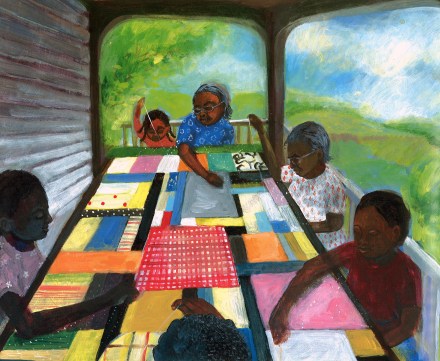
At last all of the patches are laid out and the time comes to stitch the girl’s quilt. Five women stand at the frame “all stitchin’ and pullin.’” They work “in a slow and steady rhythm” relaxing and enjoying being together until the quilt is finished. In Finished, the last stitch is sewn, and the thread bitten and knotted. The girl has hundreds of ideas for future quilts. “Quilts that are about me, / the place where I live, / and the people / who have been here for generations.”

Further poems unite the history of “Baby Girl,” her family, and neighbors, and an Author’s Note about quilting and the women of Gee’s Bend follow the text.

Patricia McKessack’s free verse poems capture the close relationships and camaraderie of the generations of women who join around the quilting frame to share and pass down their art and their heart. McKessack’s conversational verses, on page after page like the patches of a quilt, reveal the complexity of this handmade art form in the way intimate talks between friends unveil a life. Readers learn not only about the little girl and her own thoughts, but the history and influence of her immediate family, world events, inspirational figures, and deeply held beliefs that make her who she is and ties her to the other Gee’s Bend women.

Cozbi A. Cabrera’s stunning acrylic paintings take readers inside the heart of the Gee’s Bend women, depicting the girl’s home, the table-sized quilting frame where the women collectively work, the plantations, the protests, and the changes that came but did not unravel the convictions, values, and love of the little girl’s family. Readers can almost hear the talking and singing of the Gee’s Bend women as they stitch their quilts, and the comforting, embracing environment is evident on every page. Cabrera’s portraits of the little girl, her mama, and her grandma are particularly moving. For What Changed, Cabrera depicts a yellow school bus appearing on the dirt road from the right hand corner of the page. In the side mirror a dot of a house comes into view, reminding readers that no matter how far these women are from home, Gee’s Bend is always with them.

Children—and adults—will find Stitchin’ and Pullin’: A Gee’s Bend Quilt inspirational and uplifting. This volume of poetry can be read at one sitting and delved into again and again, making it a wonderful choice for home libraries and a must for school, public, and other libraries.

Ages 5 – 12

Dragonfly Books, Random House, 2016 (paperback edition) | ISBN 978-0399549502

View a gallery  of fashion designs, dolls, and other handmade art work by Cozbi A. Cabrera on her website!

Creativity Month Activity

celebrate-picture-books-picture-book-review-stars-quilt-coloring-page

Design a Quilt Coloring Pages

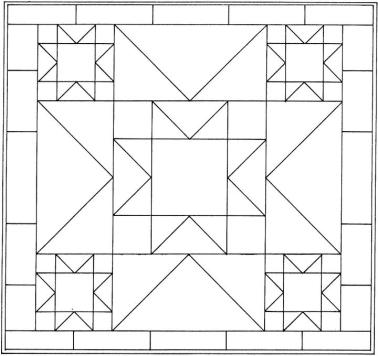
Quilts are so much more than pieces of material sewn together—they’re life stories! Here are two quilt coloring pages for you to design and color. What does each piece mean to you? As you color each section, write a sentence about an event or thought that is important to you.

Quilt Template 1 | Quilt Template 2

Picture Book Review

January 17 – Kid Inventors’ Day

celebrate-picture-books-picture-books-review-the-hole-story-of-the-doughnut

About the Holiday

Today’s holiday celebrates all those ingenious kids who have improved the world with their inventions. This date was chosen to commemorate another child inventor—Benjamin Franklin—who designed the first swim fins when he was just 12 years old! (Seriously, is there nothing this man didn’t or couldn’t do?). With their supple minds and can-do attitudes, kids have changed the ways things are done in the fields of medicine, technology, communications, and even food—as today’s book shows! To learn more about the day and find resources for young inventors, visit the K.I.D website.

The Hole Story of the Doughnut

Written by Pat Miller | Illustrated by Vincent X. Kirsch


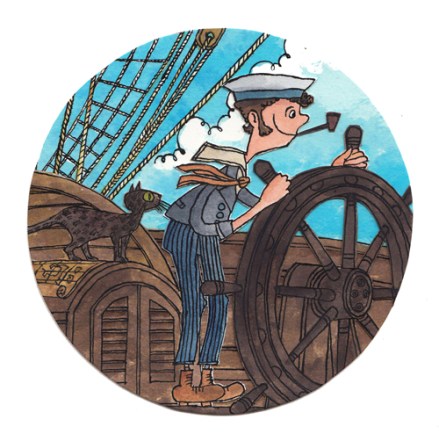
In 1844 at the tender age of 13, Hanson Gregory left the family farm and went to sea as a cabin boy on the schooner Isaac Achorn. He quickly became the cook’s assistant and also learned how to rig the sails and “steer a ship over trackless waves by sun and stars.” By the age of 19 Gregory had become the captain of the schooner Hardscrabble, and within a few more years was racing “his cargo from Maine to California as commander of a clipper, the fastest ship on any ocean.”

celebrate-picture-books-picture-book-review-hole-story-of-the-doughnut

Image copyright Vincent X. Kirsch, courtesy of vincentxkirsch.com

Hanson Gregory may have been one of the best captains to sail the seas—once awarded a medal for heroism for rescuing seven shipwrecked Spanish sailors even though his own ship and crew were endangered. But his greatest achievement was not attained because of his seafaring skills—it was his ingenuity in the galley that people remember.

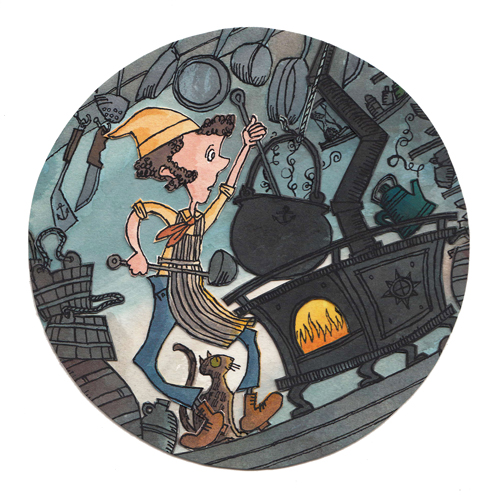
On June 22, 1847 as a 16-year-old cook’s assistant, Hanson was rustling up the crew’s breakfast—coffee and fried cakes, the same as every morning. While the pot of lard bubbled on the stove, Gregory formed balls of sweetened dough and dropped them in. They sizzled and crisped—at least around the edges. The centers were raw, heavy with grease, and they dropped like cannonballs in the stomach. “Sailors called them Sinkers.” But this morning Gregory had an idea. He removed the lid from the pepper can and cut out the center of the balls. “Then he tossed the rings into the bubbling lard.”

celebrate-picture-books-picture-book-review-hole-story-of-the-doughnut

Image copyright Vincent X. Kirsch, courtesy of vincentxkirsch.com

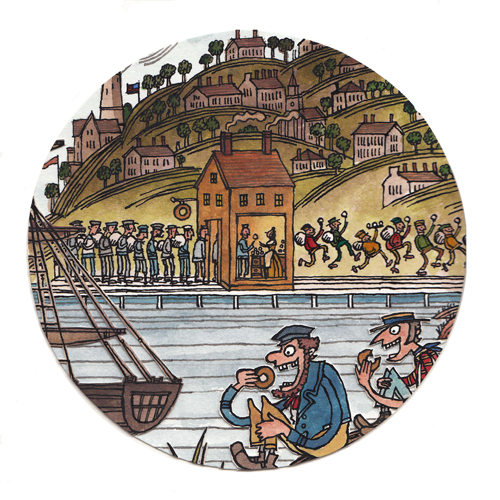
The cook and the sailors took one look at this odd concoction and…ate them up! “The cakes were brown, and sweet, and fully cooked. Sighs of delight rose above the noisy sea. A new breakfast tradition was born.” Gregory told his mom about his invention, and she fried up large batches of these ‘holey cakes’ that became a sensation at a friend’s store and on the docks.

You might think this is a pretty interesting tale in itself, “but sailors like their stories bold” and so they “spun legends worthy of such a delicious treat.” One tale had Captain Gregory inventing the doughnut while he saved his ship from disaster. Another told how Gregory, distraught over the drowning of five sailors pulled to the ocean floor by their “sinker” breakfast, punched holes in every cake to make them look like life rings and vowed, “‘Never again!’”

Captain Gregory had a sense of humor about his accomplishment. During an interview he once stated that “he had invented ‘the first hole ever seen by mortal eyes.’” Gregory lived to be 89 and is buried “overlooking the sea where stormy weather can be spotted as readily as it once was from the quarterdeck of the Hardscrabble.”

An author’s note expanding on the story of Captain Gregory, the doughnut, doughnut shops, a timeline, and a selected bibliography follow the text.

celebrate-picture-books-picture-book-review-hole-story-of-the-doughnut

Image copyright Vincent X. Kirsch, courtesy of vincentxkirsch.com

Doughnuts have never been so evocative! In Pat Miller’s humorous, informative history of this favorite pastry treat, readers can smell the salt air, feel the ocean swell and roll under their feet, and even ache a little for those poor sailors forced to eat “sinkers.” Seamlessly interwoven into this foodography is a fascinating look at the early days of sail. Miller’s language is immediately stirring: the Ivanhoe bucks and plunges, the sea becomes a monster, and Captain Gregory spears a sinker on the wheel spoke. Kids will marvel at a 13-year-old going off to sea and becoming an inventor at 16.

Vincent X. Kirsch provides just the right touch to this captivating true story with his cartoon-inspired watercolor and cut paper artwork. Ingeniously incorporating Hanson Gregory’s innovation of removing the center of the fried cakes, Kirsch’s illustrations are “cored” to allow for text, while the extracted section appears on the facing page as a glimpse through a porthole. The maritime atmosphere—from ship to shore—of the mid-1800s is beautifully represented in the folk-style sketches, and the humor that is so intrinsic to this story is wonderfully embraced.

The Hole Story of the Doughnut will delight foodies and history buffs alike and would make a fun gift and a delectable addition to personal libraries for all ages.

Ages 5 – 12

Houghton Mifflin Harcourt, 2016 | ISBN 978-0544319615

Vincent X. Kirsch’s website is full of illustrations from his books for children—take a look at his portfolio!

Spend some time with Pat Miller on her website that offers activities, tips, resources and many more books!

Kid Inventors’ Day Activity

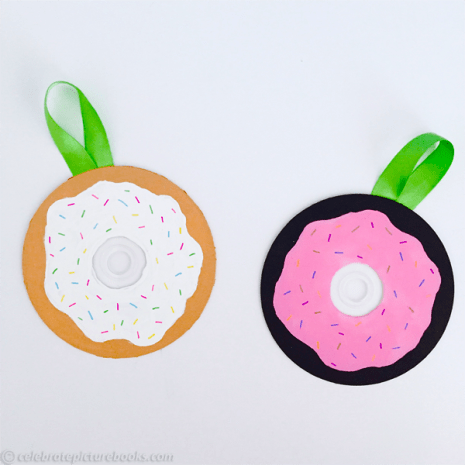
celebrate-picture-books-picture-book-review-cd-doughnut-craft

CD (Compact Doughnuts) Decoration


Are some of  your CDs a little passé? Not if you can turn them into cute décor like this doughnut hanging.

Supplies

  • Unused CDs
  • Craft paint in tan, black, pink, yellow, white (or any colors you want for the doughnut and the icing)
  • Ribbon, any color and length you want
  • Fine-tip markers in bright colors
  • Glue
  • Glue dots (optional)
  • Paint brush

Directions

  1. Paint a wavy edge around the CD, let dry
  2. Paint the center of the CD, leaving the clear circle unpainted
  3. When the icing paint is dry, draw sprinkles on the icing with the markers
  4. With the ribbon make a loop hanger and attach it to the back of the CD with glue or glue dots
  5. Hang your decoration

Picture Book Review

January 16 – Martin Luther King Jr. Day

celebrate-picture-books-picture-book-review-i-am-martin-luther-king-jr-cover.png

About the Holiday

Martin Luther King Jr. Day celebrates the life and legacy of the man who dedicated his life and work to teaching—as Coretta Scott King stated—“the values of courage, truth, justice, compassion, dignity, humility and service” and led a non-violent Civil Rights movement to enact racial equality and justice throughout state and federal law. President Ronald Reagan signed the holiday into law in 1983, setting it on the third Monday of January to coincide with Martin Luther King, Jr.’s birthday on January 15. The holiday was officially observed in all 50 states in 2000. Today, learn more about the life and work of Martin Luther King and how you can help promote justice and equality for all. Consider volunteering in your community where help is needed.

I am Martin Luther King, Jr.

Written by Brad Meltzer | Illustrated by Christopher Eliopoulos


Standing inside a church, Martin Luther King, Jr. introduces himself with two anecdotes from his childhood that demonstrate his world outlook. “When I was little,” he says, “I used to get into a lot of accidents.” He was hit in the head by a baseball bat, knocked down by cars and once even “tumbled over our banister, then bounced through an open door into the basement.” While these incidents could have made him cautious, Martin instead was determined to keep “getting back up.” His second influence were the books in which he could find “big words.” Even as a child Martin recognized that “there is power in words.”

celebrate-picture-books-picture-book-review-i-am-martin-luther-king-jr-as-a-child

Image copyright Christopher Eliopoulos, text copyright Brad Meltzer. Courtesty of Dial Books for Young Readers

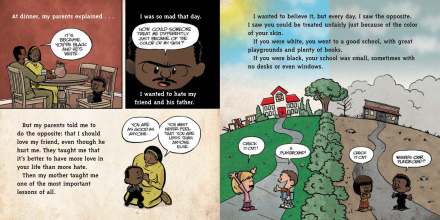
Before he went to school, Martin relates, his best friend was a white boy whose father owned a nearby store. They did everything together until school started. Then Martin went to a school with only black students while his friend went to a white-students-only school. Soon, Martin’s friend told him his father didn’t want them to play together anymore. Martin was confused. When his parents told him the reason was that they had different colored skin, Martin felt angry. He wanted to hate his friend and his father, but Martin’s parents taught him to love his friend, and his mother told him, “you must never feel that you are less than anyone else.”

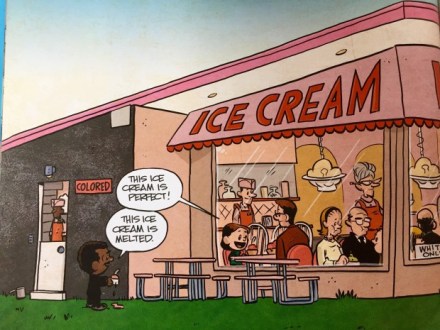
It was a difficult lesson when all around him he saw inequality. White schools had better equipment, there were different elevators, bathrooms, water fountains, and other facilities for black people and white people, on buses black riders had to give up their seats to white riders. Everywhere black people and white people were segregated.

celebrate-picture-books-picture-book-review-i-am-martin-luther-king-jr-ice-cream

Image copyright Christopher Eliopoulos, text copyright Brad Meltzer. Courtesty of Dial Books for Young Readers

When Martin was only 15 he was admitted to college. At 19 he entered the seminary where he learned about civil disobedience and nonviolent resistance—ways to use “love and peaceful methods to change unfair things in society.” These were lessons Martin wanted to share with others. His chance to put his thoughts into action came when Rosa Parks was arrested for refusing to relinquish her seat to a white man. Martin advocated a peaceful protest—a boycott of public buses. He reasoned that without the money from black riders, the bus companies would change their policies.

As the boycott began working, Martin gave a speech in Montgomery, Alabama, motivating people to continue their peaceful protest. Martin was put in jail and his house was bombed, but the boycott continued for more than a year. Eventually, the bus companies changed their rules. Other peaceful protests began to take place in restaurants and other public places.

One protest took place in Birmingham, Alabama.  Martin was again put in prison, where he wrote one of his most famous speeches. Children also took part in the Birmingham protest. The Children’s Crusade attracted more than 1,000 kids. On the first day 900 of them were arrested, but that only inspired the children more. On the second day 2,500 children showed up. They stood firm while they were sprayed with water hoses and attacked by police dogs. People—both black and white—watching the news reports were aghast. Three months later the rules began to change.

celebrate-picture-books-picture-book-review-i-am-martin-luther-king-jr-i-have-a-dream-speech

Image copyright Christopher Eliopoulos, text copyright Brad Meltzer. Courtesty of Dial Books for Young Readers

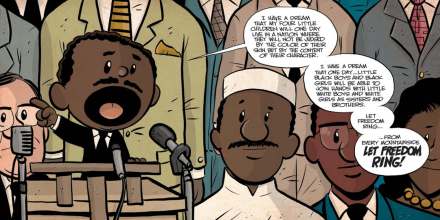
“By the summer of 1963, an estimated one million Americans held their own protests in cities across the country.” Then A. Philip Randolph suggested a single huge march to convince “Congress and the president to pass laws so that no one in America can treat people differently based on skin color.” On August 28, 1963 the March on Washington for Jobs and Freedom took place. Martin gave what may now be considered his most famous speech in which he talked about his dreams for the country, for the people, and for their children.

Although Congress began passing new laws, the ability and right to vote in elections still eluded black people. To change the voting rules another march was organized to walk 54 miles from Selma to Montgomery Alabama. The 600 walkers were met by police who stopped them. Two days later 2,500 activists tried again but could not get through. On the third try 8,000 marchers showed up. This time, with the world watching on television, the activists made it to Montgomery, protected by troops sent by President Johnson.

celebrate-picture-books-picture-book-review-i-am-martin-luther-king-jr-montgomery-march

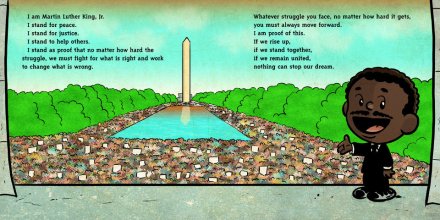
Martin continued to speak out, relating his philosophy and dreams for the nation. “To reach our goals, we must walk the path of peace,” he said. “We must lock arms with our brothers and sisters. We must march together. When we do…Our voices will be heard, and freedom will ring.” The lessons Martin Luther King taught still resonate today. He stands “as proof that no matter how hard the struggle, we must fight for what is right and work to change what is wrong.…if we stand together, if we remain united, nothing can stop our dream.”

celebrate-picture-books-picture-book-review-i-am-martin-luther-king-jr

Brad Meltzer’s Ordinary People Change the World: I am… series of biographies are well-known for showing young readers that they can achieve their dreams and make a difference no matter what those hopes may be. In his biography of Martin Luther King, Jr., Meltzer depicts several incidents from King’s childhood and early adulthood that influenced his future work. These help readers understand not only the types of prejudice King and other African Americans experienced, but also the people who inspired his philosophy of peace.

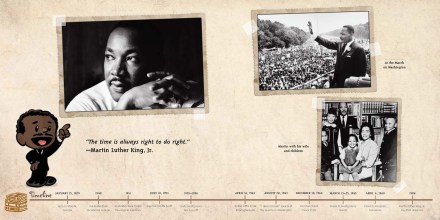
Meltzer’s inclusion of King’s imprisonments and the violence that met the peaceful protesters deepens the understanding of the dangers King and other protesters faced, and provides an opportunity to open a discussion between adults and children about those times and what they now see in the news. Meltzer’s description of the Children’s Crusade will inspire readers, making them proud of children in the past and stirring them to actions of their own. Sections from King’s Letter from Birmingham Jail and his most famous speeches are presented in speech bubbles. The text is followed by photographs of Martin Luther King, Jr. with his family and at the March on Washington as well as a timeline of his life. Sources and resources for further reading are also included.

celebrate-picture-books-picture-book-review-i-am-martin-luther-king-jr-timeline

In keeping with the style of all of Meltzer’s and Christopher Eliopoulos’s Ordinary People Change the World: I am… biographies, the illustrations are vibrant and cartoon-inspired. Martin Luther King, Jr. is depicted with the size of a child but the features of an adult, reinforcing the idea contained in the text of the dual nature of the future adult residing in the child and the ideals of the child remaining in the adult that appeals to ambitious young readers. Speech bubbles highlight text that carry emotional dialogue. Settings, including churches, Birmingham jail, Washington DC, the Edmund Pettus Bridge in Alabama, and the Martin Luther King, Jr. monument give children a look at the cities and places described in the text.

For young readers, I am Martin Luther King, Jr. offers a comprehensive biography of the man who was a national and world leader in the fight for equal rights for all people and makes an excellent starting place for classroom lessons and personal discussions.

Ages 5 – 8

Dial Books for Young Readers, 2016 | ISBN 978-0525428527

Discover more about Brad Meltzer and his books for adults and children as well as other goodies on his website!

Learn more about Christopher Eliopoulos, his books, and his comics on his website!

Martin Luther King Jr. Day Activity

celebrate-picture-books-picture-book-review-martin-luther-king-jr-coloring-page

Martin Luther King, Jr. Portrait


Color this printable Martin Luther King, Jr. Portrait and then hang it in your room or locker to inspire you!

Picture Book Review

January 11 – Learn Your Name in Morse Code Day

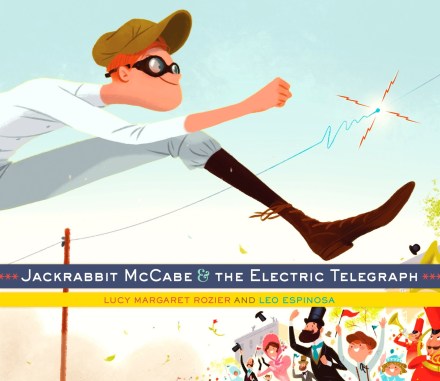
celebrate-picture-books-picture-book-review-jackrabbit-mccabe-&-the-electric-telegraph-cover

About the Holiday

With today’s instantaneous communications systems, it’s almost impossible to think of a time when all messages had to be delivered by hand. That changed when Samuel F. B. Morse, physicist Joseph Henry, and Alfred Vail developed a code that used dots and dashes to represent letters and was transmitted through electrical pulses. The ability to send quick messages revolutionized communication and led to a more connected world.

Jackrabbit McCabe & the Electric Telegraph

Written by Lucy Margaret Rozier | Illustrated by Leo Espinosa


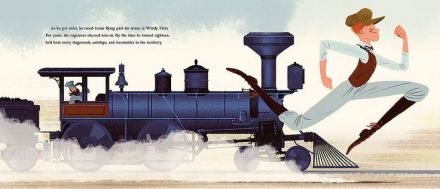
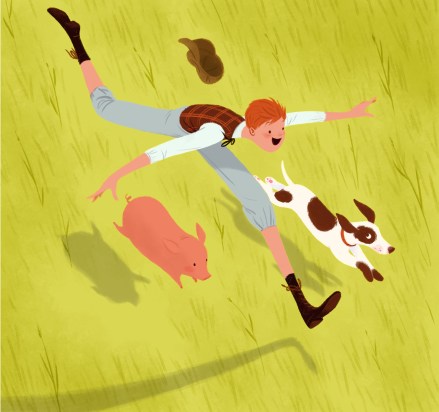
Anyone who looked at the baby with legs “so long they looped like a pretzel” and required a stroller with “an extra axle” knew that he’d been born to run. In fact, his legs grew so fast that if his mother dressed him in long pants in the morning, they were shorts by that evening. Little Jack McCabe used those legs to chase “whatever would run: hogs, dogs, even his own shadow” and “as he got older, he raced trains flying past his house in Windy Flats. By the time he turned eighteen, he’d beat every stagecoach, antelope, and locomotive in the territory.”

celebrate-picture-books-picture-book-review-jackrabbit-mccabe-&-the-electric-telegraph-racing-a-train

Image copyright Leo Espinosa, text copyright Lucy Margaret Rozier. Courtesy of Schwartz & Wade

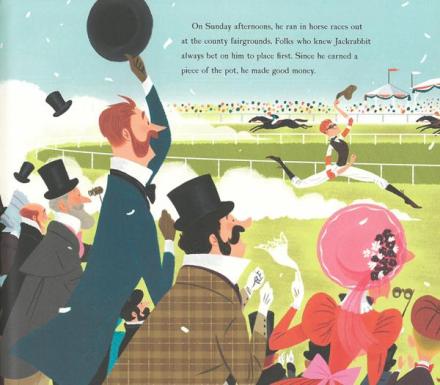
The people of Windy Flats called him Jackrabbit and relied on him to deliver messages that were urgent. On Sundays he joined the horses on the track, making money when people bet on him to come in first. One day, though, the electric telegraph came to Windy Flats. The poles and wires already crossed the eastern part of the country. Each connected city had “a telegraph and an operator who sent and received messages in Morse code, an alphabet of dots and dashes.”

The people of Windy Flats didn’t think this newfangled contraption could carry messages faster than Jackrabbit, so the telegraph man suggested, “‘How ‘bout a race between your fella and this here electric telegraph? Sandy Bluff’s just got themselves an operator, That’s pert near twenty-five miles, as the crow flies.’” Jackrabbit was all for it.

celebrate-picture-books-picture-book-review-jackrabbit-mccabe-&-the-electric-telegraph-racing-a-horse

Image copyright Leo Espinosa, text copyright Lucy Margaret Rozier. Courtesy of Schwartz & Wade

On the day of the race, the whole town of Windy Flats came out with flags, banners, and even a brass band. “The mayor carefully wrote down the same message on two slips of paper. He handed one to the telegraph man and the other to Jackrabbit.”  On the shout of “GO!” the telegraph man plunked his finger on the key sending the pulses through the wire while Jackrabbit took off down the road toward Sandy Bluff “like a tornado.”

The townspeople watched as in only a few moments “a reply came clattering back as that telegraph key jumped and smacked all on its own.” The telegraph man read the code and yelled, “‘Message received. Stop. Sandy Bluff Operator.’” But where was Jackrabbit McCabe? Although he made it to Sandy Bluff in only 9 ½ minutes, it was still too long to beat the telegraph. When he stopped short at the door of the depot, he was met by a telegram tacked to the door. Jackrabbit read it and then pulled the paper that contained the mayor’s message out of his pocket. The two were the same.

celebrate-picture-books-picture-book-review-jackrabbit-mccabe-&-the-electric-telegraph-racing-at-the-starting-line

Image copyright Leo Espinosa, text copyright Lucy Margaret Rozier. Courtesy of Schwartz & Wade

Riding home in a stagecoach, “Jackrabbit felt lower than a snake’s navel.” The mayor also felt pretty low, thinking of Jackrabbit, until he realized that if Jackrabbit’s fingers were as fast as his legs, he’d make an excellent telegraph operator. When Jackrabbit stepped out of the stagecoach and heard the mayor’s offer, he whooped with joy. It didn’t take long for Jackrabbit to learn the new code, and soon “his fingers flew like a banjo player’s strumming that telegraph key.” Every day he sent and received messages. He even “teamed up with the local typesetter, who printed the news that came over that wire, linking Windy Flats to the whole entire country,” and whenever a telegram or the newspaper needed to be delivered, Jackrabbit was there in a flash!

An Author’s Note outlining the pivotal event that sparked Samuel F. B. Morse’s interest in a quicker communication method and the history of the telegraph as well as a Morse code key and a riddle to translate follow the text.

celebrate-picture-books-picture-book-review-jackrabbit-mccabe-&-the-electric-telegraph-racing-hogs-and-dogs

Image copyright Leo Espinosa, courtesy of Schwartz & Wade

Lucy Margaret Rozier has written a funny and fact-based addition to the fine American tradition of tall tales with Jackrabbit McCabe & the Electric Telegraph. From her folksy delivery to her humorously exaggerated details, Rozier presents an engaging history of the telegraph through the story of one man affected by this new technology. Kids will love the fast-paced story full of crackling dialog and gripping suspense.

Leo Espinosa infuses his brightly-colored, vintage-style illustrations with the charm and innocence of the mid-1800s while highlighting the humor of Rozier’s yarn. Jackrabbit’s looong legs take up a whole page—sometimes two—as he runs with dogs and hogs, sprints past steam trains, speeds off at the starting line, and wedges himself into the stagecoach, with one foot hanging out the window. The small town of Windy Flats and the townspeople are decked out in period details, and the enthusiasm of the time is infectious.

Jackrabbit McCabe & the Electric Telegraph will become a favorite read lightening quick. The book would make a fun addition to children’s bookshelves.

Ages 4 – 8

Schwartz & Wade Books, 2015 | ISBN 978-0385378437

Discover more about Lucy Margaret Rozier plus book-related resources on her website!

View a gallery of illustration work by Leo Espinosa on his website!

Learn Your Name in Morse Code Day Activity

celebrate-picture-books-picture-book-review-morse-code-image

Morse Code Decoder


Sending secret messages in code is cool! Use this printable Morse Code Decoder to learn how to write your name and those notes you don’t want anyone else to read in this early method of communication.

Picture Book Review
January 9 – It’s International Creativity Month

celebrate-picture-books-picture-book-review-the-marvelous-thing-that-came-from-a-spring-cover

About the Holiday

There’s no better time than the beginning of the year to start letting your creative juices flow! Quick fixes or long-leisurely projects are all within your grasp! Want to repaint a room? Build a tree house in the spring? Learn some new recipes? Discover a new hobby? Start planning today how you will accomplish the inventive inspirations that swirl through your imagination.
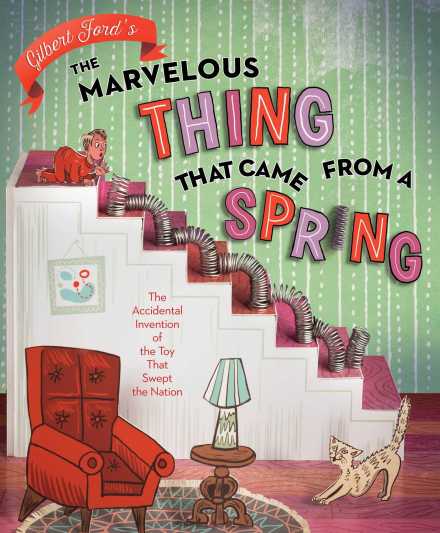
The Marvelous Thing That Came from a Spring: The Accidental Invention of the Toy That Swept the Nation

By Gilbert Ford


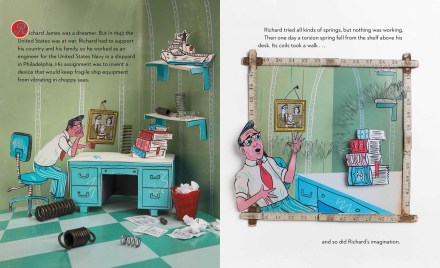
In 1943, during World War II, the United States Navy asked one of their engineers, Richard James, to “invent a device that would keep fragile ship equipment from vibrating in choppy seas.” Richard tried all kinds of springs, but none worked just right. “One day a torsion spring fell from a shelf onto his desk, and “its coils took a walk…” This sparked Richard’s imagination. While Richard knew the spring wasn’t right for his Navy work, he recognized that it might be perfect for something else. But what?

celebrate-picture-books-picture-book-review-the-marvelous-thing-that-came-from-a-spring-spring-walks-spring-falls-off-shelf

Copyright Gilbert Ford, courtesy of simonandschuster.com

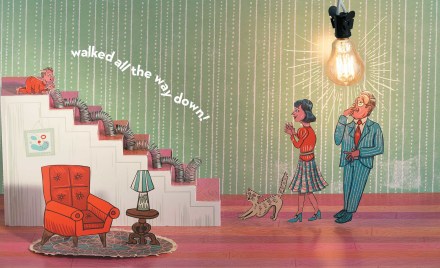
He took the spring home from work that day, showed it to his wife Betty, and gave it to his young son Tom. Tom took it to the top of the stairs and let it go. “The family watched in astonishment as it…walked all the way down!” They lost no time in realizing that this spring made a marvelous toy. But what to call it? “Betty thumbed through a dictionary for two days, underlining words. None really caught her fancy, until she came to ‘slinky,’ which means “‘graceful’ and ‘curvy in movement.’” It also “sounded like the swish and clink of the spring’s coils in motion.”

celebrate-picture-books-picture-book-review-the-marvelous-thing-that-came-from-a-spring-spring-walks-downstairs

Copyright Gilbert Ford, courtesy of simonandschuster.com

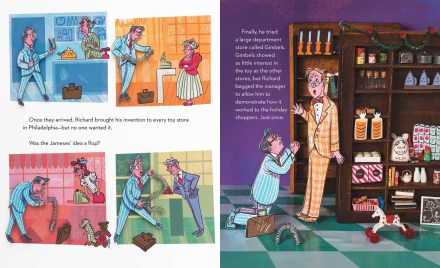
Richard and Betty thought they had a unique hit on their hands, so Richard went to the bank and borrowed five-hundred dollars to make 400 Slinkys. But while Richard and Betty loved their Slinky, toy store managers did not. Finally, Richard went to Gimbels, the big department store. The manager there didn’t see the merits of the Slinky either, but when Richard begged to be allowed to demonstrate it just once, he relented.

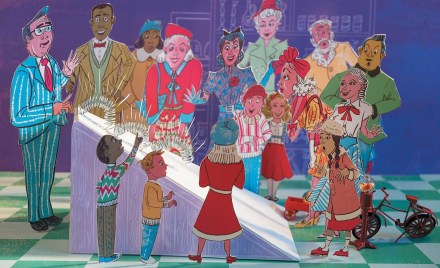
It was now November 1945 and the Christmas shoppers were out looking for stocking stuffers. Richard set up a ramp in the middle of the toy department and placed the Slinky at the top. He looked around for Betty, but she was nowhere to be seen. In fact, Betty was still at home worried that no one would like their toy. She was so concerned that she convinced a friend to “pose as an excited shopper” and buy one with the dollar Betty gave her. At Gimbels, however, time—and shoppers—were passing, so Richard let go of the Slinky. The astonished faces of the children and adults crowded around the ramp said it all. By the time Betty and her friend reached Gimbels, all 400 Slinkys had been sold—in only 90 minutes!

celebrate-picture-books-picture-book-review-the-marvelous-thing-that-came-from-a-spring-spring-walks-spring-richard-begs-gimbels

Copyright Gilbert Ford, courtesy of simonandschuster.com

With the end of the war that same year, troops returned home and a baby boom soon followed. “Demand for the Slinky skyrocketed.” Production needed to speed up, so Richard devised a “machine that could coil eighty feet of steel wire into a Slinky in ten seconds.” The Slinky business became a family business with Betty filling orders and doing the accounting while Richard made and delivered Slinkys. Pretty soon they needed a factory to satisfy demand. That demand still exists today as kids all over the world love the Slinky.

celebrate-picture-books-picture-book-review-the-marvelous-thing-that-came-from-a-spring-spring-walks-spring-at-gimbels

Copyright Gilbert Ford, courtesy of simonandschuster.com

An extended Author’s Note picks up the story of the Slinky where the text leaves off, revealing other creative ways the Slinky has been used and the fact that when Richard went to Bolivia in 1960 to do missionary work, Betty took over the business, relocated the factory to Hollidaysburg, Pennsylvania, and gave the toy a rebirth in popularity. More than 250 million Slinkys have been produced, and in 2001 Betty was inducted into the Toy Industry Hall of Fame.

Gilbert Ford’s Slinky-ography of the man and woman behind one of the world’s most beloved toys is a skip, jump, and bounce through the ingenious brainstorm that transposed a simple spring into a phenomenon. The down-to-earth details of how this invention came to be harken back to a simpler time but also reaffirm that even today there are dreamers sitting in homes across the world imagining the next big thing. Ford’s story is well paced, leading readers through the production process to experience cheerful surprise when the Slinkys sell out at Gimbels. Kids will appreciate the easy-going language that suits its subject perfectly and the emphasis on the teamwork of both Richard and Betty James that made the Slinky possible.

Ford’s illustrations are ingenious in themselves. Careful observation reveals that each page is not merely a drawing, but a 3D experience. As the front matter explains, the illustrations were drawn and colored then printed, assembled into dioramas that incorporate found objects and other popular toys of the period, such as dominoes, jacks, and pick-up sticks, and finally photographed. The effect drops readers into the middle of a 1940s home and department store, giving them a personal stake in the drama.

The Marvelous Thing That Came from a Spring is a fun book for would-be-inventors and kids interested in the history of objects they use and play with.

Ages 4 – 8

Atheneum Books for Young Readers, Simon & Schuster, 2016 | ISBN 978-1481450652

Discover a portfolio of work by Gilbert Ford for books, book jackets, advertising, and more on his website!

International Creativity Month Activity

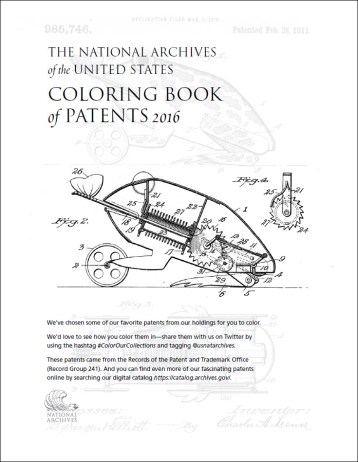
celebrate-picture-books-picture-book-review-national-archives-coloring-book-of-patents

National Archives Coloring Book of Patents


The people at the National Archives of the United States in Washington DC chose some of their favorite patents from the past to share with you as a coloring book. As you have fun coloring these pages of ideas, let yours fly too!

Click here to get your printable National Archives Coloring Book of Patents

Picture Book Review