September 16 – It’s Classical Music Month

celebrate-picture-books-picture-book-review-hana-hashimoto-sixth-violin-cover

About the Holiday

Classical music has been an inspiration since the earliest instruments were created. The talent and imagination of great composers of the past has been passed down from generation to generation of music lovers, influencing new music all along the journey. To celebrate this month’s holiday, take in a classical music concert or performance or listen to your favorite (or a new) classical music station. If you’ve always wanted to learn to play the piano, violin, or other instrument, take the opportunity this month to sign up for lessons!

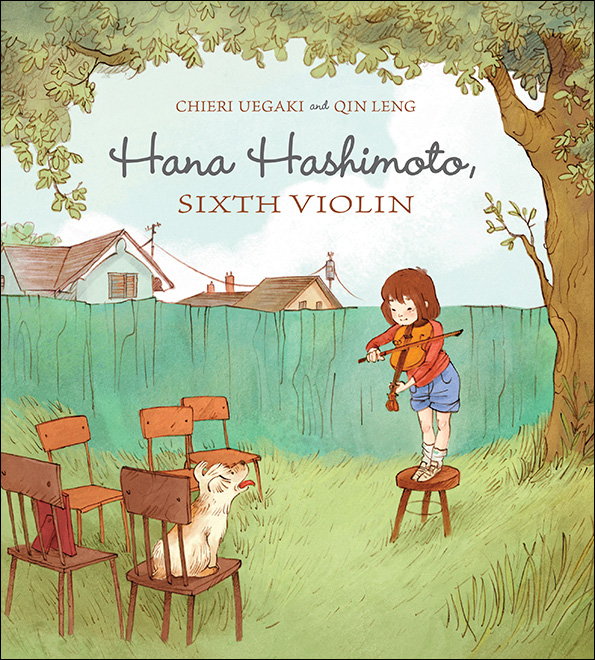
Hana Hashimoto, Sixth Violin

Written by Chieri Uegaki | Illustrated by Qin Leng


When Hana Hashimoto told her brothers that she had signed up to play her violin in the talent show, they laughed.  “‘That’s just loopy,’” Kenji said, and Koji added ‘‘You can barely play a note.’” They reminded her that it was a talent show and that she was just a beginner. But Hana didn’t listen. “It was true that she was still a beginner. She had only been to three lessons.” But playing the violin was in her blood. Her grandfather, Ojiichan, had once been Second Violin in a symphony orchestra in Kyoto, Japan and had even played for the Imperial Family.
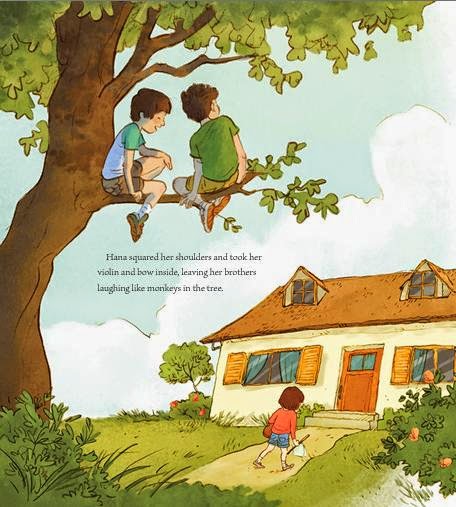
celebrate-picture-books-picture-book-review-hana-hashimoto-sixth-violin-brothers-in-tree

Image copyright Qin Leng, 2014, text copyright Chieri Uegaki, 2014. Courtesy of Kids Can Press.

Hana had visited her grandfather that summer, and the sweet notes of his playing had coaxed “her awake as gently as sunshine” every morning. In the evenings her grandfather would take requests from Hana and her brothers. “Hana always asked for a song about a crow cawing for her seven chicks. Whenever Ojiichan played it, Hana would feel a shiver of happy-sadness ripple through her.”
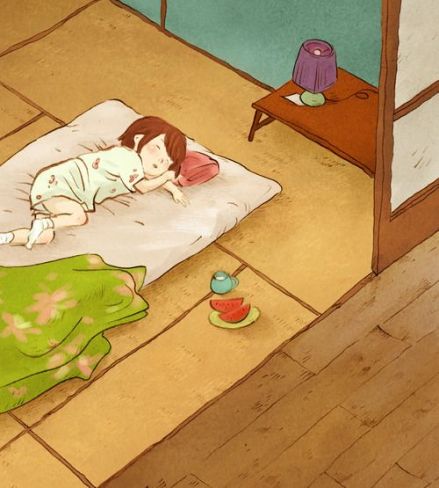
celebrate-picture-books-picture-book-review-hana-hashimoto-sixth-violin-hana-sleeping

Image copyright Qin Leng, 2014, text copyright Chieri Uegaki, 2014. Courtesy of Kids Can Press.

Ojiichan’s playing was like magic. He could make the violin chirp like crickets, plink like falling raindrops, and send fireflies dancing. At the end of the summer, Hana had decided she also wanted to play the violin and her parents agreed. Hana practiced every day even though her brothers ran away with their hands over their ears. She played for her parents, for her dog, JoJo, and for a photograph of Ojiichan. Sometimes she pretended to play for “an audience so appreciative they called for encore after encore.”

On the night of the talent show, Hana waited backstage for her turn “with a walloping heart.” Five other violinists had already gone before her. Finally, she heard her name. As she strode across the stage as wide as a desert, she had a fleeting feeling that her brothers had been right—that her performance was going to be a disaster. But when she reached her spot near the microphone and gazed out at the audience, she saw her best friend and her parents smiling at her.
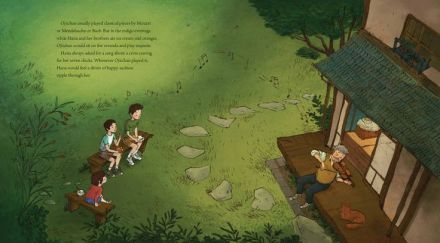
celebrate-picture-books-picture-book-review-hana-hashimoto-sixth-violin-listening-to-grandfather

Image copyright Qin Leng, 2014, text copyright Chieri Uegaki, 2014. Courtesy of Kids Can Press.

Hana took a deep breath and let it out. Suddenly, “everyone seemed to disappear beyond the light shining down on her like a moonbeam” and she remembered her grandfather’s words: “‘Gambarunoyo, Hana-chan.’ Do your best.” Hana told the audience, “‘This is the sound of a mother crow calling her chicks.’” She “played three raw, squawky notes.” Then she played the yowl of her neighbor’s cat at night and the plucky droplets of rain on a paper umbrella. Hana played a world of special sounds, from buzzing bees to squeaking mice to croaking frogs. When she had finished, she said, “‘And that is how I play the violin.’” Then she took a bow.

Later that night Kenji asked Hana for an encore, and she happily played her piece again. Next year, Hana thought, she might be able to play one of her grandfather’s melodies. Before she went to sleep, Hana played another piece she had been practicing. “She imagined that the notes would drift out through the window, past the bright rabbit moon and beyond, and Ojiichan would hear them and smile.”
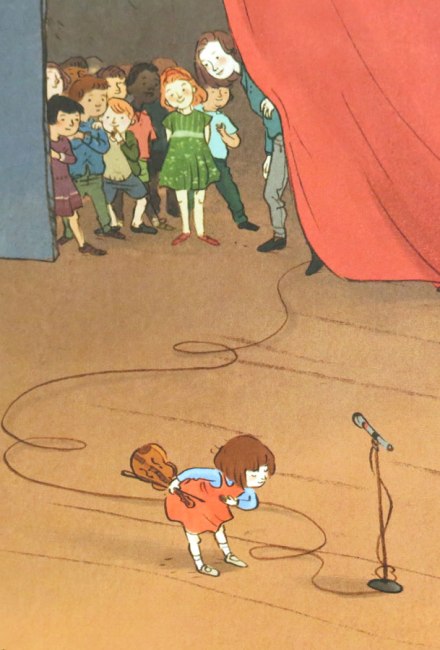
celebrate-picture-books-picture-book-review-hana-hashimoto-sixth-violin-hana-bows

Image copyright Qin Leng, 2014, text copyright Chieri Uegaki, 2014. Courtesy of Kids Can Press.

Chieri Uegaki’s gorgeously told story of a little girl’s first performance with her new violin rings true on every page, from her being inspired by her grandfather to her own inspirational performance. Uegaki’s descriptions of the melodies that capture Hana’s heart are as beautiful as the music itself and are a joy to read. Hana’s continued self-confidence in the face of her brothers’ teasing and her own fear is a wonderful lesson for all children. The brothers’ support of Hana after the talent show is a welcome show of familial love, and the touching ending offers encouragement and happiness.

Young readers will love Qin Leng’s evocative illustrations that follow Hana on her musical journey. Notes from the violin pieces Hana admires float from page to page—from her grandfather’s home in Japan to her own room—tying together not only Hana’s fondness for the violin but her love for her grandfather. Beautiful touches, such as an image of Hana reflected in a pastel blue rain puddle and a night sky twinkling with fireflies, mirror the wonder of childhood, when everything is new and possible.

Hana Hashimoto, Sixth Violin is refreshing encouragement for any child engaging in new experiences or activities. The book’s warmth and inventiveness make it a wonderful gift or addition to home libraries.

Ages 4 – 8

Kids Can Press, 2014 | ISBN 978-1894786331

Enjoy this Hana Hashimoto, Sixth Violin book trailer!

Classical Music Month Activity
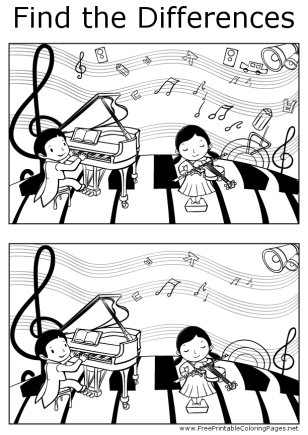
celebrate-picture-books-picture-book-review-kids-playing-music-find-the-differences

Musical Kids Find the Differences


These two kids are performing a duet! Can you find all of the differences in the second picture on this printable Musical Kids Find the Differences?

Picture Book Review

September 15 – International Dot Day

celebrate-picture-books-picture-book-review-the-dot-cover

About the Holiday

Usually, I match books to existing holidays. Today, though, I have the pleasure of posting a review of a book that established a holiday. On September 15, 2009 teacher Terry Shay introduced his class to Peter H. Reynold’s The Dot. From that one event grew a national and then an international celebration of creativity and the freedom to make art with your heart. All around the world, school children and adults are inspired on this day to make their mark and celebrate creativity, courage, and collaboration.

The Dot

By Peter H. Reynolds


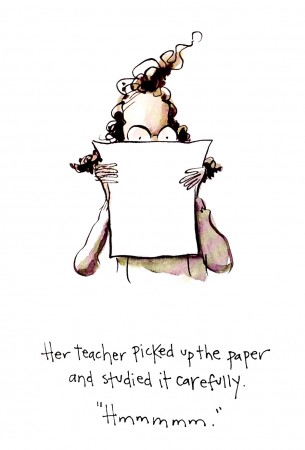
At the end of art class, Vashti looked at her paper. It was still as blank as it was at the beginning of art class. Her teacher came over and took a peek. She saw right away that Vashti had drawn “‘a polar bear in a snowstorm.’” Vashti wasn’t fooled by the joke. “‘I just CAN’T draw,’” she said. But her teacher had a suggestion. “‘Just make a mark and see where it takes you.’”

celebrate-picture-books-picture-book-review-the-dot-vashti-jabs-paper

Copyright Peter H. Reynolds, 2003, courtesy of Candlewick Press.

Vashti jabbed at the paper with a marker, making a dot right in the center. Her teacher studied her drawing carefully then told Vashti to sign it. That, at least, was something Vashti could do. She signed her name and gave the paper to her teacher. At the next week’s art class, Vashti was stunned to see her dot framed and hanging above the teacher’s desk. She looked at the tiny mark and decided that she could do better than that.

celebrate-picture-books-picture-book-review-the-dot-teacher

Copyright Peter H. Reynolds, 2003, courtesy of Candlewick Press.

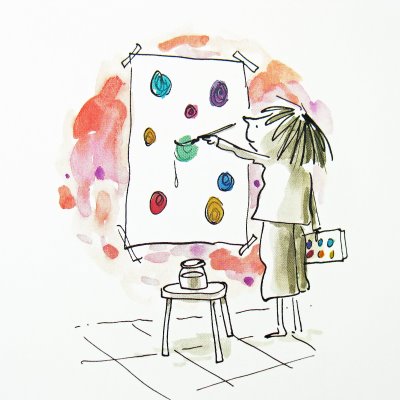
Vashti opened her watercolor set and began. She “painted and painted. A red dot. A purple dot. A yellow dot. A blue dot.” Then she discovered that blue mixed with yellow made a green dot. Vashti went to the easel and began painting lots of little dots in all sorts of colors. She realized if she could make little dots, she could make big dots. She knelt down on the floor with a big piece of paper and a big brush and created a huge dot.

celebrate-picture-books-picture-book-review-the-dot-experimenting-with-dots

Copyright Peter H. Reynolds, 2003, courtesy of Candlewick Press.

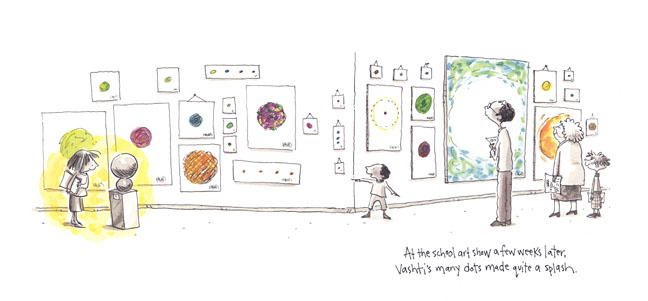
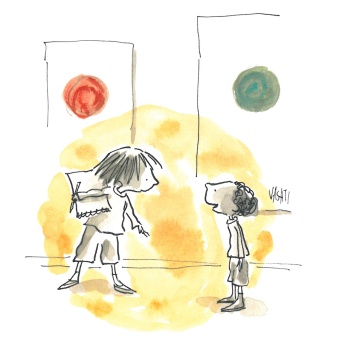
Then on an enormous canvas Vashti “made a dot by not making a dot.” At the school art show, Vashti’s dot paintings covered two walls and were quite a hit. Coming around the corner a little boy spied Vashti. He came close and told her, “‘You’re a really great artist. I wish I could draw.’” Vashti was encouraging, but the little boy said he couldn’t even “‘draw a straight line with a ruler.’”

Vashti wanted to see. She handed the boy a blank sheet of paper. With a quivering pencil, he drew a line and handed the paper back to her. Vashti studied the wavy line for a minute, and then gave the paper back. “‘Please…sign it,’” she said.

celebrate-picture-books-picture-book-review-the-dot-art-show-II

Copyright Peter H. Reynolds, 2003, courtesy of Candlewick Press.

Peter H. Reynold’s classic story of a little girl who believes she can’t draw is inspirational for anyone at any age who listens too closely to that voice in their head that stops them from letting go and doing. Whether it’s painting, writing, changing the décor of one’s house, updating a wardrobe, getting healthy, or even taking a class, the project often seems insurmountable. But what if you could start with a YouTube video, one step, a pair of earrings, a pillow, a word, or…a dot? Reynolds says you can! With his straightforward storytelling, Reynolds gives readers permission to play, experiment, and feel free.

celebrate-picture-books-picture-book-review-the-dot-little-boy

Copyright Peter H. Reynolds, 2003, courtesy of Candlewick Press.

Reynold’s familiar line drawings that sketch out adorable Vashti and her wise teacher are punctuated by the colorful dots that Vashti draws in profusion. Even Vashti, herself, is surrounded by circular auras of color throughout the story, reflecting her talent and creative spirit. The final scene of the art show gallery is a revelation, showing readers that one’s work or life work adds up to an impressive display of the self.

Through and through The Dot is charming, moving, and encouraging. It is a must addition to home libraries, public libraries, and classrooms.

Ages 5 and up

Candlewick Press, 2003 | 978-0763619619

Discover more about International Dot Day, download an Educator’s Guide, and see a gallery of projects on thedotclub.org.

You’ll learn more about Peter H, Reynolds, his books, and his art as well as find lots of inspiration and creative tips on his website!

International Dot Day Activity

celebrate-picture-books-picture-book-review-dots-coloring-page

Decorate the Dots Coloring Page


How would you color these dots? Grab your favorite paints, markers, or crayons and let your imagination fly with this printable Decorate the Dots Coloring Page.

Picture Book Review

 

September 14 – Live Creative Day

celebrate-picture-books-picture-book-review-crocodali-cover

About the Holiday

Today, let your inner artist out! There are as many ways to be creative as there are people—that’s what makes today such a special event! Everyone sees, hears, and experiences the world in a different way. How do you? Grab the creative tool or instrument of your choice and let your friends, family, and even strangers see the creative genius inside you!

Crocodali

By Lucy Volpin


You open the book, expecting to be welcomed with open arms by the characters inside. Instead, who do you meet but a very busy crocodile. With not a little braggadocio he reveals that he is “Crocodali, the most talented painter in the whole wide world.” It seems you’ve stumbled into his studio, and he’s setting up to create a new masterpiece, leaving him no time to stop for a chat or even to give you an autograph.

celebrate-picture-books-picture-book-review-crocodali-in-the-studio

Copyright Lucy Volpin, 2017, courtesy of simonandschuster.com

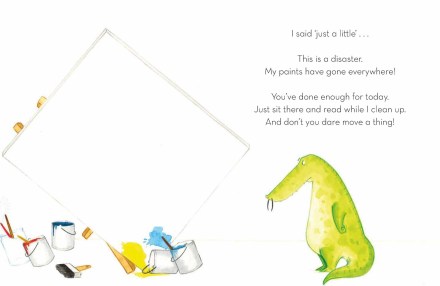
But after he’s given you the brush off, so to speak, he suddenly needs your help. Crocodali just can’t get the canvas to sit straight on the easel. He asks if you wouldn’t mind tilting the book just a little to the right. Oh, no! Now it needs to go a little to the left. Can you tilt it back just a wee bit? Oh dear! Now the canvas and the easel have toppled over! Even the paint cans tipped on their sides, and some blue and yellow has splashed onto the clean, white canvas.

celebrate-picture-books-picture-book-review-crocodali-tilt

Copyright Lucy Volpin, 2017, courtesy of simonandschuster.com

Well! Crocodali is a little miffed! He wants you to just go on reading and leave the cleaning up to him. Wait, wait, wait! Did you turn the page? (Isn’t that part of reading, though?) Now the canvas is completely on its side and there are some splotches of red on it too. Crocodali is in a huff because now he’ll have to start all over. But he takes a second look and in the next moment has had a change of heart. Now he thinks “that looks quite nice. Maybe you’re onto something.”

celebrate-picture-books-picture-book-review-crocodali-tilt-the-other-way

Copyright Lucy Volpin, 2017, courtesy of simonandschuster.com

He even invites you to “give the book a shake and see what happens.” What happens is that the paints, brushes, canvas, and even Crocodali himself are now rattling around the pages all topsy-turvy. When things settle down, the room and the great artist are covered in paint. Crocodali sets the painting back on the easel and steps back to take a look. Hmmmm…. He likes it! But maybe it’s upside down? He’s going to turn it over and add a few more details.

celebrate-picture-books-picture-book-review-crocodali-tipped-over

Copyright Lucy Volpin, 2017, courtesy of simonandschuster.com

With a very dexterous tail and his right hand, he dabs on purple, brushes on yellow and red, and is then ready to “mix it all up.” Here’s where you come in again. Can you give the canvas a good rub? Wow! The painting looks amazing! Crocodali exclaims, “It’s a masterpiece! I really am the greatest painter in the world.” He’s the greatest painter in the world? Who did all the work? Whatever…. The painting now needs to dry, and Crocodali wants you to blow on it to speed up the process.

One…two…three…Blow! Huh! You have some power! You blew all the paint off the canvas and onto the wall! It looks incredible, through—and leaves the canvas blank to start all over again!

celebrate-picture-books-picture-book-review-crocodali-on-its-side

Copyright Lucy Volpin, 2017, courtesy of simonandschuster.com

Kids will love Lucy Volpin’s feisty, boastful crocodile who comes to see that even mishaps can spark creativity. The giggles will begin on the first page as Crocodali (an inspired character and name) strolls into the studio sporting a Salvador Dali mustache and dismissing readers away with a wave of his hand. As children begin interacting with the pages, they’ll look forward to what comes next. Large images of the canvas allow children to really see the effects of their actions, and the two-page “shaken” spread is a delight of mayhem and color.

Kids will also enjoy turning the book around to see the various perspectives of the painting they’re creating throughout the story. Volpin gives readers lots of opportunities to discuss art, color, painting, and even teamwork, making Crocodali a joyful and inviting introduction to the creative process.

Crocodali would be a lively, playful opening to arts and crafts sessions in schools, libraries, and at home. For art lovers or energetic kids who like interaction with their reading, Crocodali is a wonderful choice.

Ages 3 – 8

little bee books, 2017 | ISBN 978-1499806335

Live Creative Day Activity

celebrate-picture-books-picture-book-review-supply-jar-craft

Make Your Own Creative Supply Jars


When inspiration hits, you want to have all of your supplies close at hand! With this easy craft you can use your creativity to make a one-of-a-kind jar to keep all of your favorite things neat, tidy, and within reach! These make great gifts for friends too!

Supplies

  • A wide-mouth plastic jar, such as a peanut butter jar
  • Paint or markers for plastic
  • Multi-surface chalkboard paint (optional)
  • Paint brush
  • Chalk (optional)

Directions

  1. Design your jar
  2. If you are planning to use chalkboard paint, paint that section first
  3. Paint or decorate with markers
  4. Let dry
  5. Fill with your art of other creative supplies

Picture Book Review

September 13 – National Quiet Day

celebrate-picture-books-picture-book-review-charlotte-and-the-quiet-place-cover

About the Holiday

We’re surrounded by noise every day. Cars whoosh by on the street, TVs drone on, and voices fill the air in the office and at school. Sometimes it seems as if you don’t hear the constant din, but you do. Quiet Day was established to give people an opportunity to experience the benefits found in silence. Not only did the founders envision a day in which you sought out quiet places, they suggest that you don’t speak at all for the day. Reconnecting with yourself and your thoughts can make you feel more relaxed and give you new perspectives that can stimulate creativity and better communications.

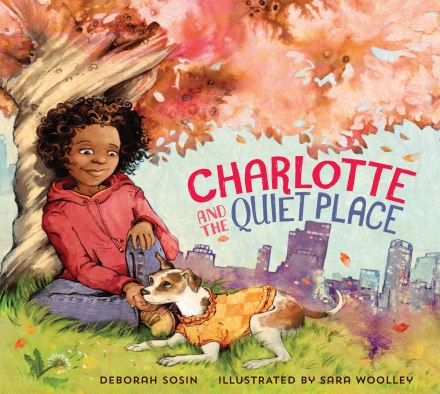
Charlotte and the Quiet Place

Written by Deborah Sosin | Illustrated by Sara Woolley


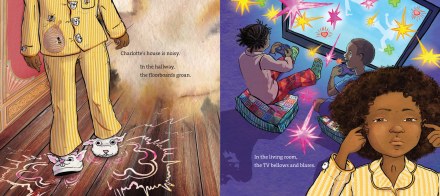
Charlotte is a girl who likes quiet, but she lives in a noisy world. Everywhere she goes, it seems, it’s impossible to escape from sounds that disturb her peace. At home the hallway creaks where “the floorboards groan,” the living room is like an arcade where the “TV bellows and blares,” and the kitchen is filled with Otto’s barks for his dinner. Even in Charlotte’s bedroom, “which is supposed to be a quiet place, the old steam radiator hisses, whistles, and whines. Where can Charlotte find a quiet place?”

celebrate-picture-books-picture-book-review-charlotte-and-the-quiet-place-noisy-home

Image copyright Sara Woolley, text copyright Deborah Sosin, courtesy of sarawoolley.com

When Charlotte goes to school, things are no better. In the classroom kids are boisterous and bells ring; the lunchroom echoes with clattering trays and scuffing chairs; and the playground blares with big voices and stomping feet and also with little squeaks and rattle of the swings. “Even in the library, which is supposed to be a quiet place, the children giggle, yammer, and yell. Where can Charlotte find a quiet place?”

celebrate-picture-books-picture-book-review-charlotte-and-the-quiet-place-noisy-subway

Image copyright Sara Woolley, text copyright Deborah Sosin, courtesy of sarawoolley.com

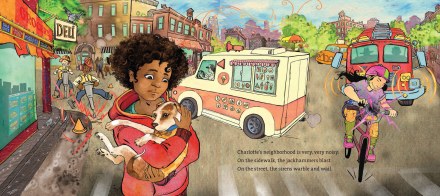
The outside world resounds with the din of jackhammers, horns, sirens, shouts, cars, music, and the “screeches, rumbles, and roars” of the subway. “Even in the park, which is supposed to be a quiet place, the leaf blower buzzes, blusters, and hums.” Charlotte puts her hands to her ears. “‘Nooo!’” she cries, “‘I have to find a quiet place!’”

celebrate-picture-books-picture-book-review-charlotte-and-the-quiet-place-nooo!-charlotte-cries

Image copyright Sara Woolley, text copyright Deborah Sosin, Courtesy of sarawoolley.com

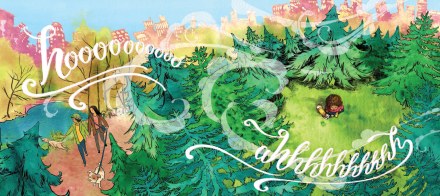
On Saturday Charlotte takes her dog for a walk in the park. Suddenly, Otto spies a squirrel and takes off running, wrenching his leash out of Charlotte’s hand. She chases after him down a hill, over a bridge, and into the middle of a grove of trees. Out of breath, Charlotte and Otto sit beneath a tree. Gasping, Charlotte’s “belly rises up and down, up and down. Her breath goes in and out, in and out. Hooooo ahhhhh. Hooo ahhh.”

Slowly, Charlotte’s breath comes easier and “her mind slows down.” In this state, she discovers another, even quieter place. It is a place deep inside where her breath is soft and her “thoughts are hushed and low.” It is “a place as quiet as the small silence on the very last page of her favorite book, the silence right after ‘The End.’”

celebrate-picture-books-picture-book-review-charlotte-and-the-quiet-place-quiet-woods

Image copyright Sara Woolley, text copyright Deborah Sosin, Courtesy of sarawoolley.com

In a little while, Charlotte and Otto leave the grove, but now whenever home or school or the neighborhood is too loud, Charlotte remembers where she can find a quiet place. She simply closes her eyes and pays attention to that place deep in her belly and deep in her mind—“that quiet place inside.”

For so many children the world is a blaring, clattering place where their thoughts are drowned out by the noises around them. Deborah Sosin’s award-winning Charlotte and the Quiet Place validates these feelings and offers children a way to discover inner peace wherever they are. As a tonic to today’s hyper-stimulated environment, kids and adults alike will benefit from the method of mindful reflection Sosin presents. Sosin’s combination of evocative verbs and repetition makes the story fresh and an excellent read-aloud while also mirroring the sounds that are a part of our everyday life.

celebrate-picture-books-picture-book-review-charlotte-and-the-quiet-place-noisy-neighborhood

Image copyright Sara Woolley, text copyright Deborah Sosin, Courtesy of sarawoolley.com

Sara Woolley’s beautiful watercolor illustrations vividly depict not only Charlotte’s world but the sounds that disturb her peace. Amid the fully realized home, school, and neighborhood environments, complete with realistic details kids will recognize, sharp cracks of equipment, blaring bells and whistles, high-pitched voices, and other noises spark the page. Portrayals of Charlotte, her hands over her ears and her eyes sad, express her distress in a way kids will understand. When Charlotte finds the grove of trees in which she first experiences inner peace, Woolley’s color palette turns softer, with peaceful tones of green, blue, and yellow where, previously, “louder” purples, reds, and golds predominated.

Charlotte and the Quiet Place is a very welcomed book for those times when peace seems elusive and will give comfort to children who prefer quiet places and have more introverted natures. The book would make a wonderful addition to all children’s book shelves as well as to school and public library collections.

Ages 4 – 8

Parallax Press, 2015 | ISBN 978-1941529027

Visit Charlotte and the Quiet Place on her own webstite! You’ll find resources, images and videos, news about events, and more!

Discover more about Deborah Sosin, her writing for children and adults, writing workshops, mindfulness services, and more on her website!

View a gallery of artwork for books, comics,  and other illustration work by Sara Woolley on her website!

Quiet Day Activity

celebrate-picture-books-picture-book-review-smile-cards-craft

Share a Smile Cards


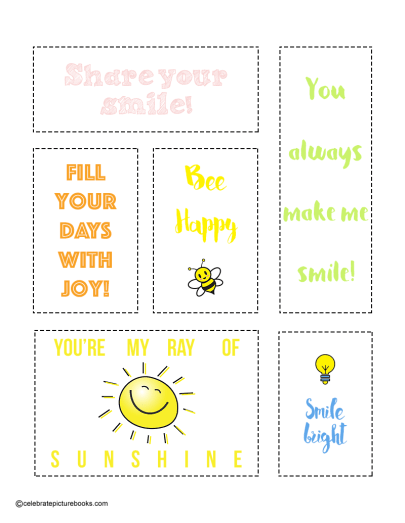
If you’re taking a quiet day, but still want to communicate with others, print these Share a Smile Cards and give them to your friends, family, and others. Why not slip one into your dad’s pocket or your mom’s purse, put one in your friend’s backpack, or sneak one onto your teacher’s desk? You can even leave one somewhere for a stranger to find! Have fun sharing your smiles, and see how much better you and the others around you feel!

Click here to print your Share a Smile Cards.

September 12 – It’s Read a New Book Month

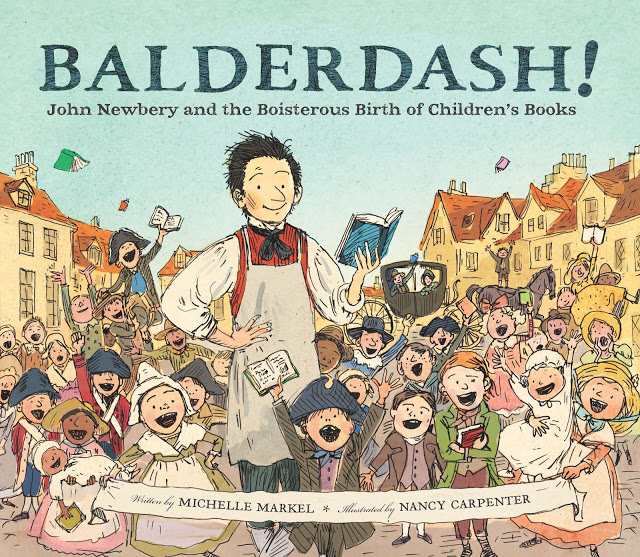
celebrate-picture-books-picture-book-review-balderdash!-john-newbery-and-the-boisterous-birth-of-children's-books-cover

About the Holiday

Discovering a new book is one of the joys of life! Right now bookstores everywhere are filled with books waiting for you to take them home, open the cover, and start reading. Whether you find a new book published just this year or one that’s older but new to you, take the opportunity of this month’s holiday to add to your home library. Children especially benefit from reading new and classic books—and thanks to the subject of today’s book, they have plenty to choose from!

Balderdash! John Newbery and the Boisterous Birth of Children’s Books

Written by Michelle Markel | Illustrated by Nancy Carpenter


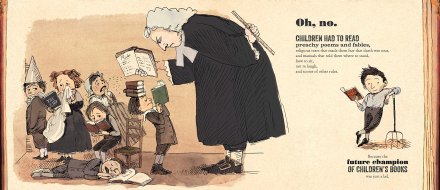
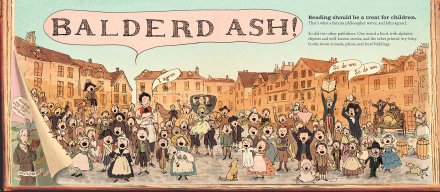
With a hearty “Welcome!” readers are invited to explore—and appreciate—the pages, pictures, words, and even individual letters that make up the book they’re holding. Back in time, a book like this didn’t exist. How far back? Well, let’s return to 1726…. “In those days of powdered wigs and petticoats, England was brimming with books.” There were exciting tales about imaginary places, sailing voyages, mysterious happenings, “pirates, monsters and miniature people”—for adults. What did kids read? Their books were all about teaching them how to have good manners and how to live a good life because death was always near. Scary stuff and not much fun at all!

celebrate-picture-books-picture-book-review-balderdash!-john-newbery-and-the-boisterous-birth-of-children's-books-old-style-books

Image copyright Nancy Carpenter, 2017, text copyright Michelle Markel, 2017. Courtesy of Chronicle Books.

One of the children reading these books was John Newbery who, despite the dreariness, loved to read more than he liked to do his chores. When he grew up, he left the family farm and went to work for a printer. After he learned the business, he became a publisher himself. He moved from his small town to “London, center of the bookselling trade.”

Soon, he found the perfect storefront on a busy street and opened his shop. He had a dream of publishing books for every taste—and for children too. “He knew the youngsters were hungry for stories. Many boys and girls handed coppers to street hawkers for ugly chapbooks of fairy tales, or for chopped-up versions of grown-up books.” When John Newbery tried to offer good books for children, however, the adults balked. They were afraid “that if their little nippers read fun books, they’d turn wild as beasts!”

celebrate-picture-books-picture-book-review-balderdash!-john-newbery-and-the-boisterous-birth-of-children's-books-going-to-london

Image copyright Nancy Carpenter, 2017, text copyright Michelle Markel, 2017. Courtesy of Chronicle Books.

“Balderdash!” John Newbery said. And others agreed. Two publishers issued books of alphabet rhymes and stories, and another published some books of nonfiction. But “John wanted his first book for children to be irresistible.” The books he created included pictures of fun children’s games, enjoyable ways to learn ABCs and other subjects, and fantasy stories. He even wrote a note to moms and dads to alleviate any fears.

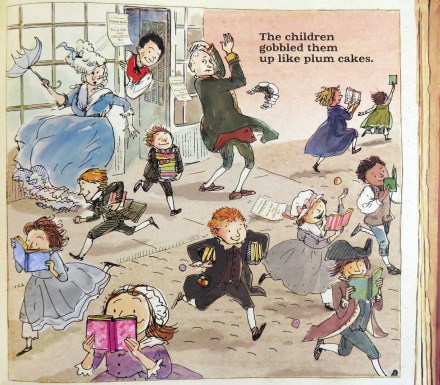
The covers of his books were colorful and attractive and carried the title “A Pretty Little Pocket-Book.” To further entice kids and their parents, John offered to sell books along with a toy for a very good price. John wondered if his books would look “too cheerful,” but “the children gobbled them up like plum cakes.”

celebrate-picture-books-picture-book-review-balderdash!-john-newbery-and-the-boisterous-birth-of-children's-books-kids-with-books

Image copyright Nancy Carpenter, 2017, text copyright Michelle Markel, 2017. Courtesy of Chronicle Books.

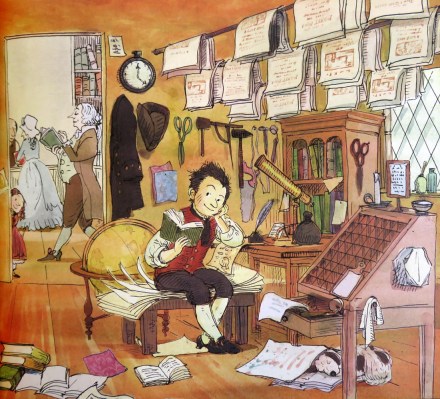
As customers bought books in the front of his shop, John created new books in the back. In addition to fiction books, he began printing books on math, science, and other subjects. With the books a success, John Newbery turned his thoughts and his press towards creating a magazine for children, and, finally, a novel. The novel was titled The History of Little Goody Two-Shoes and was a rags-to-riches story about a little girl who succeeded through “study, hard work, and kindness.” It showed children that they too could achieve their dreams. The History of Little Goody Two-Shoes was a hit in England and America.

While the authors of John Newbery’s books were all anonymous or had “silly, made-up names,” it wasn’t hard for people to figure out who was really creating the books that brought their children so much joy and made their lives better.

celebrate-picture-books-picture-book-review-balderdash!-john-newbery-and-the-boisterous-birth-of-children's-books-newbery's-shop

Image copyright Nancy Carpenter, 2017. text copyright Michelle Markel, 2017. Courtesy of Chronicle Books.

An Author’s Note about John Newbery as well as a resources page follow the text.

Kids will love Michelle Markel’s entertainingly informative book that takes them back to a time when the unthinkable was reality. Markel’s charming text is as infectious as John Newbery’s love of books, and readers will laugh at how kids’ books were once perceived. Her conversational tone and bemusement at the state of publishing at the time creates a warm reading experience—like a secret shared between friends.

celebrate-picture-books-picture-book-review-balderdash!-john-newbery-and-the-boisterous-birth-of-children's-books-kids

Image copyright Nancy Carpenter, 2017. text copyright Michelle Markel, 2017. Courtesy of Chronicle Books.

Nancy Carpenter infuses Balderdash! with the sights, dress, activities, and flavor of the time period in her pen-and-ink illustrations. Humor abounds, from the little boy overflowing with tears in the corner of the first page to a young John Newbery relishing the feel and smell of newly printed pages to parents pulling their children away from “dangerous” books. Along the way, kids will want to scope out all the details on each page. A variety of typefaces and sizes further enhances the humor and ambience of the book.

Balderdash! John Newbery and the Boisterous Birth of Children’s Books would make a great addition to home libraries for kids interested in books, history, and innovation. Teachers will also find the book to be a perfect beginning for language arts or history units.

Ages 4 – 8

Chronicle Books, 2017 | ISBN 978-0811879224

Discover more about Michelle Markel and her books on her website!

Read a New Book Month Activity

I Have the Reading Bug! Bookplate and Bookmark


Do you have the reading bug like John Newbery? If so, here’s a bookplate and bookmark for you to print to show your love of books!

I Have the Reading Bug Bookmark | I Have the Reading Bug Bookplate

Picture Book Review
September 11 – Make Your Bed Day

celebrate-picture-books-picture-book-review-piggies-in-pajamas-cover

About the Holiday

There are many benefits to making your bed each morning. Not only does your room look neat and tidy, but, according to the National Sleep Foundation, it can even make sleeping easier and more comfortable. It doesn’t take long to pull up the sheets and comforter, so take the opportunity of today’s holiday to get into a new habit! Pssst…if you really like to just jump up and go, Don’t Make Your Bed day is coming on December 21st!

Piggies in Pajamas

Written by Michelle Meadows | Illustrated by Ard Hoyt


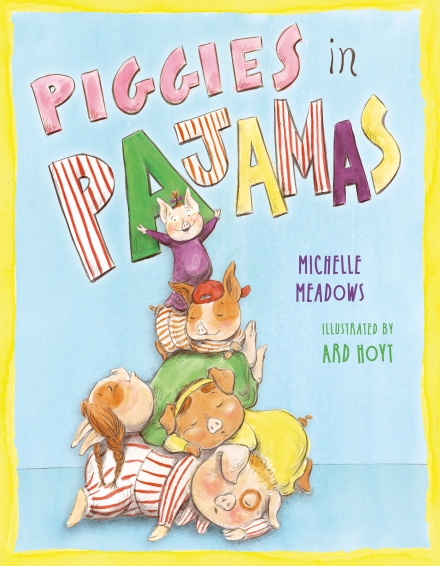
It’s bedtime for the little piggies, but Papa isn’t home yet and Mama’s on the phone. So the five rambunctious kids find ways to spend the time. A peek into their room finds “Piggies in pajamas / jumping in the air / tossing up the pillows / popcorn in their hair.” The quadruple bunk beds make tall mountains to climb and perfect platforms for jumping into the ocean, but as the piggies dive onto the soft, pillow “water,” they hear Mama’s footsteps in the hall.

celebrate-picture-books-picture-book-review-piggies-in-pajamas-mom-on-phone

Image copyright Ard Hoyt, text copyright Michelle Meadows, 2013. Courtesy of simonandschuster.com

The piggies “hurry to the tunnel. / Everybody, hide. / Underneath the covers, snuggle deep inside.” Soon all seems quiet, so they tiptoe from their beds to spy on Mama. They’re happy to see that she’s still occupied, leaving the tracks clear for the piggie train to toot, toot across the floor. But Mama, in her curlers, hears a suspicious sound and stomp, stomp, stomps upstairs.

Once more the five siblings rush to their beds and pull up the covers, their ears trained on any sound from downstairs. A familiar “crick, creak” tells them that Mama is now sitting down and chatting with Mrs. Cat. “Piggies in pajamas, / whirl around the room. / Cartwheels and somersaults— / Boom, Boom, Boom!” All that noise brings Mama stomp, stomp, stomping, but when she opens the piggies’ door, they’re all snuggled in and quiet as mice.

celebrate-picture-books-picture-book-review-piggies-in-pajamas-parade

Image copyright Ard Hoyt, text copyright Michelle Meadows, 2013. Courtesy of simonandschuster.com

One sneaky eye watches Mama as she descends the stairs on her way to the kitchen for an evening snack. In moments, the little ones are up again and searching through the trunk for toys and cars and dress-up clothes. Just then at the window they hear a “scratch, scratch, tap, tap” and although it’s only a tree branch waving in the wind, the imagined wolf or fox or bear has left them shivering.

One by one, all in a line they grab their blankets and crawl down the hall to a new cozy bed. While Mama’s washing up her face, they cuddle in and start to snooze. Soon, “Mama sees their pink ears. / Tails are sticking out. / Mama climbs into bed and / kisses every snout. / ‘Good night, piggies!’”

celebrate-picture-books-picture-book-review-piggies-in-pajamas-kisses

Image copyright Ard Hoyt, text copyright Michelle Meadows, 2013. Courtesy of simonandschuster.com

The little piggies in Michelle Meadow’s sweet story want to do the right thing, but it’s just so exciting to stay up late! Readers know how they feel and will giggle along as the piggies romp when Mama’s gone but fly into bed when they hear her stomps. Meadow’s jouncy rhyme captures the freewheeling antics of unsupervised kids, the delicious suspense of getting caught, and the endearing appeal for comfort when kids are scared or truly ready to drift into dreams.

Ard Hoyt’s energetic piggies know how to make the most of Mama’s inattention! Bouncing on the bed with their popcorn snack, climbing a rope made of sheets to the top of the bedpost “mountain,” and strutting down the hall in a piggie train, these five siblings are as cute as can be. Hoyt’s split pages show both the expressive siblings and Mama as they go about their nightly routines, acting and interacting on the sounds they hear. The soft colors, humorous details, and final spreads of the piglets in Mama’s bed, tell readers that despite all the shenanigans, this is a house full of love.

Piggies in Pajamas would quickly become a bedtime favorite and a welcome addition to home bookshelves.

Ages 2 – 5

Simon & Schuster, 2013 | ISBN 978-1416949824

Discover more about Michelle Meadows and her books as well as teachers activities on her website!

You can learn more about Ard Hoyt and view a gallery of his books on his website!

Make Your Bed Day Activity

celebrate-picture-books-picture-book-review-pajamas-coloring-page

Design Your Own Pajamas


Are pajama sleepers or tops and pants your favorites for bedtime? With this printable Design Your Own Pajamas coloring sheet, you can create jammies just the way you like them! 

Picture Book Review
September 10 – Grandparents Day

celebrate-picture-books-picture-book-review-lotus-and-feathers-cover

About the Holiday

Today we celebrate the grandparents in a child’s life. A close relationship between children and grandparents can benefit kids in so many ways. When children spend time with grandparents they can discover family history, learn new hobbies, and always feel the unconditional love a grandparent has to give. Children also learn compassion and a long view of the world that inspires empathy and kindness for others – as the girl in today’s book shows. 

Lotus & Feather

Written by Ji-li Jiang | Illustrated by Julie Downing


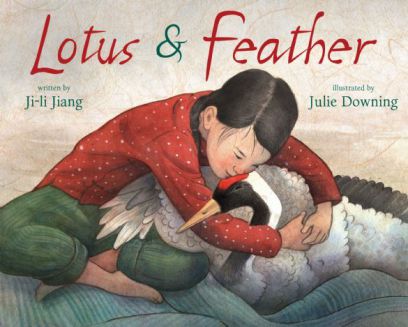
Lotus was lonely since her winter illness had left her without a voice. The children at school “treated her like a strange creature,” and she was left without playmates or someone to keep her company on the walk home. She lived with her grandfather who made reed baskets and found solace when he took her to ride in his boat on the nearby lake. As he poled the boat through the still water, Lotus’ grandfather sadly pointed out how the lake had changed. No longer did the lotus flowers, fish, birds, or animals thrive. Instead, the landscape had “‘been ruined by greedy fishermen and hunters, and by ignorant people who took over the land where animals once lived.’”

celebrate-picture-books-picture-book-review-lotus-and-feather-lotus-meets-feathers

Image copyright Julie Downing, courtesy of Disney Hyperion

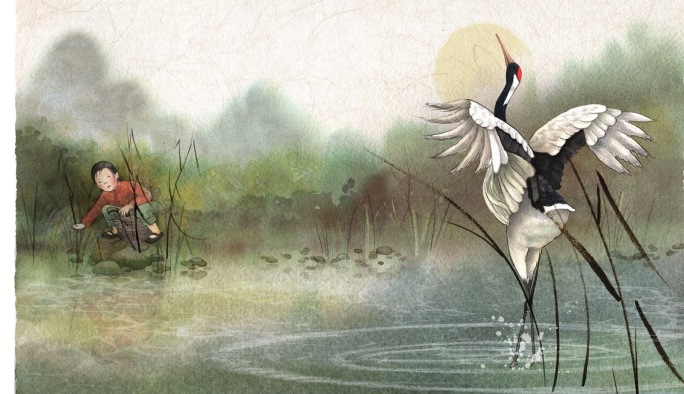
One morning while Lotus was out collecting reeds for her grandfather she spied a rare crane. It’s wide white “wings were edged with black feathers, like lace on a dress”…and “its head was crowned with a red top like a dazzling ruby.” As she watched a gunshot rang out. Unable to alert the hunter by shouting, Lotus banged on her bucket, frightening him away. Lotus rushed toward the wounded bird, picked it up and carefully brought it home to Grandpa.

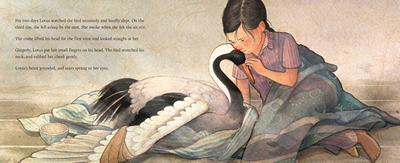
Grandpa tended to the crane’s injury and fed him rice soup while Lotus stroked the soft head. For two days, Lotus hardly slept as she took care of the crane. On the third day she fell asleep next to the crane, waking when he stirred and nestled her cheek. “Lotus’s heart pounded, and tears sprang to her eyes.” Lotus named the crane Feather. As it grew stronger she gathered food for it, and on the day Feather took his first steps, “Lotus jumped and swirled and hugged Grandpa blissfully.”

celebrate-picture-books-picture-book-review-lotus-and-feather-lotus-comforts-feather

Image copyright Julie Downing, courtesy of Disney Hyperion

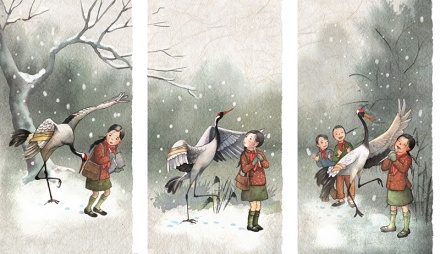
Soon Feather was following Lotus everywhere—even to school. After class Lotus would blow her whistle and Feather would come running and dance as Lotus played. The other children joined in, dancing and playing along every day. One night Lotus heard Feather crowing and woke to find that the village was flooded. Poling his boat through the streets, Grandpa shouted, Lotus banged her pail, and Feather crowed to alert the neighbors. “Over three hundred villagers were saved. Feather was the hero.” He became famous, and people wanted to hear his story again and again.

celebrate-picture-books-picture-book-review-lotus-and-feather-lotus-dancing

Image copyright Julie Downing, courtesy of Disney Hyperion

When Spring arrived Feather was still too weak to fly but he looked longingly at the birds migrating north. Lotus was frightened that her friend might want to leave them, but she “knew she would never separate him from his home and family.” One day Feather spread his wings and leaped into the air. Lotus realized that he had healed and knew it was time for him to leave. Grandpa and Lotus took Feather to the lake. Grandpa tossed Feather into the air, but he returned again and again. Grandpa gave Feather to Lotus. Lotus hugged Feather one more time and threw him into the sky.  

celebrate-picture-books-picture-book-review-lotus-and-feather-lotus-lets-feather-go

Image copyright Julie Downing, courtesy of Disney Hyperion

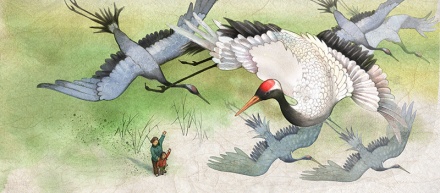
Holding back tears, Lotus watched as “Feather flapped his big wings and soared north, disappearing into the horizon.” Lotus and the other children missed Feather. They gathered together listening to Lotus play her whistle, imagining that Feather could hear them. One autumn morning, Lotus heard a familiar crow and rushed outside. There stood Feather with his family. Then Lotus gasped. The sky was filled with hundreds of cranes coming to the lake. Lotus blew her whistle, and the notes, “accompanied by the birds’ singing, echoed far, far away in the golden sky.”

celebrate-picture-books-picture-book-review-lotus-and-feather-lotus-waves-goodbye

Image copyright Julie Downing, courtesy of Disney Hyperion

Ji-li-Jiang’s tender story resonates on every page with love and friendship. The relationship revealed in Jiang’s tale exists not only between Lotus and Feather, but between readers and their environment. Beautifully interwoven throughout the plot, the idea of responsibility between friends, to the earth, and to ourselves makes Lotus & Feather a compelling book to read and discuss. Through lyrical passages and detailed storytelling, Jiang develops a deep, emotional bond between Lotus and Feather that readers will respond to. The heartwarming connection between Lotus and her grandfather brings comforting and another level of family commitment to the story.

Julie Downing’s stunning illustrations allow readers to walk, sit, worry, and cheer with Lotus as she finds and cares for Feather. Her sadness is palpable as she walks home from school past a group of classmates playing ball; in the corner of the dark lake, children will find bottles, cans, and other debris floating among the reeds; and Feather makes his debut with a graceful ballet. Readers will love watching the progression of Feather’s healing and Lotus’ reintegration into her circle of friends and will applaud when Feather and his family and friends return to the lake.

Lotus & Feather is a multi-layered story that will captivate readers. It is a must for public and school libraries and would make a beautiful addition to home libraries as well.

Ages 5 – 9

Disney Hyperion, 2016 | ISBN 978-1423127543

Discover more about Ji-li Jiang and her books on her website!

View a portfolio of artwork as well as other books by Julie Downing on her website!

Grandparents Day Activity


I Love Grandma and Grandpa!


Grandparents are the best! On this special day, tell your grandparents what you love most about them and why with this printable I Love Grandma and I Love Grandpa Pages!

Picture Book Review