March 10 – International Day of Awesomeness

celebrate-picture-books-picture-book-review-i-want-that-love-cover

About the Holiday

Okay, so it’s Friday and the end of a long work and school week. Maybe everything didn’t go as planned this week—maybe not even close. But who cares. Why? Because you are still awesome! Begun as a kind of inside joke among coworkers, International Day of Awesomeness continues to grow, attracting more and more awesome individuals around the world. To celebrate get creative and perform feats of awesomeness—whatever that might mean to you. Sometimes that just means having and showing an awesome amount of love—as you’ll soon see!

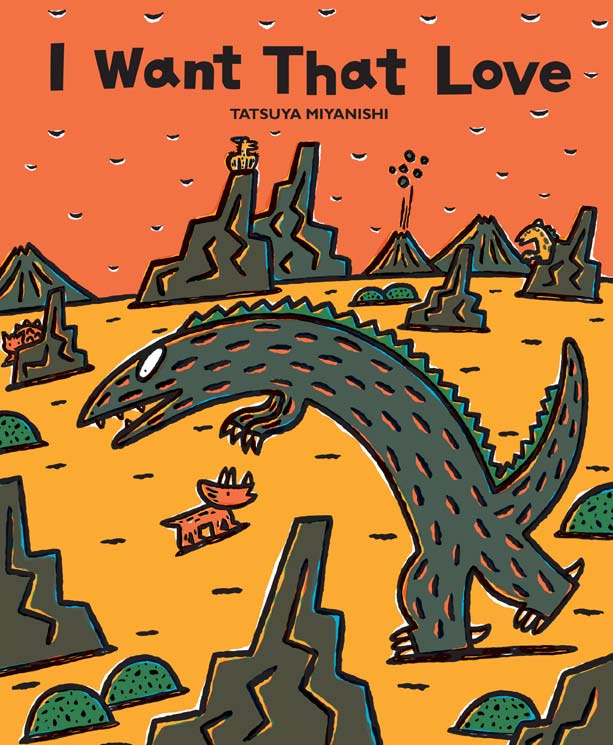
I Want That Love

By Tatsuya Miyanishi


Long ago Tyrannosaurus ruled the earth. His philosophy was “In this world, strength means everything. The strongest wins. The strongest rules. And I am the strongest!” Tyrannosaurus stomped across the landscape crushing and eating the “worthless weaklings” in his path. The other dinosaurs quaked whenever they heard him roar. They hid and were quiet, and never opposed him. Soon this led to some skewed thinking—they also began to believe that “Tyrannosaurus could do anything he wanted to because he was the strongest.”

celebrate-picture-books-picture-book-review-i-want-that-love-sleeping

Text and image copyright Tatsuya Miyanishi, courtesy of museyon.com

As time passed, however, the Tyrannosaurus grew old and feeble. One day he happened upon a Masiakasaurus who mocked him for moving so slowly. The Tyrannosaurus threatened him, but could do little else. Another Masiakasaurus bit the Tyrannosaurus’s tail. “‘Ouch…stop,’ the Tyrannosaurus cried.” But it did no good; no one was afraid of him anymore.

The Tyrannosaurus just wanted to be alone. He traveled for days, and when he was exhausted he lay down and went to sleep. Now that he was no longer strong, he felt he was worthless and wondered how he was “going to live from now on.” He was awakened by a voice. “He opened his eyes and saw a yummy-looking baby Triceratops right in front of him.” He had every intention of eating this little snack, but his tail was so sore he couldn’t move.
celebrate-picture-books-picture-book-review-i-want-that-love-hugging-triceratops

Text and image copyright Tatsuya Miyanishi, courtesy of museyon.com

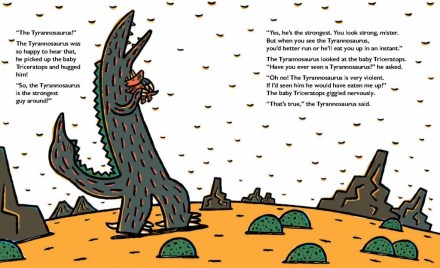
The little Triceratops noticed his swollen tail and stroked the injury to help it feel better. He also warned the Tyrannosaurus that sleeping in the open was dangerous because the “strong, scary Tarbosaurus” would eat him. The Tyrannosaurus scoffed, saying that there was someone much stronger than the Tarbosaurus. The Triceratops suggested the Gorgosaurus, but Tyrannosaurus disagreed. “‘I’m thinking of someone who is much, much stronger,’” he said. Oh, yes! The Triceratops remembered. “‘The Tyrannosaurus!’” Tyrannosaurus was so happy to hear his name that “he picked up the baby Triceratops and hugged him.” The baby warned the dinosaur to run away if he saw Tyrannosaurus because he would surely be eaten.

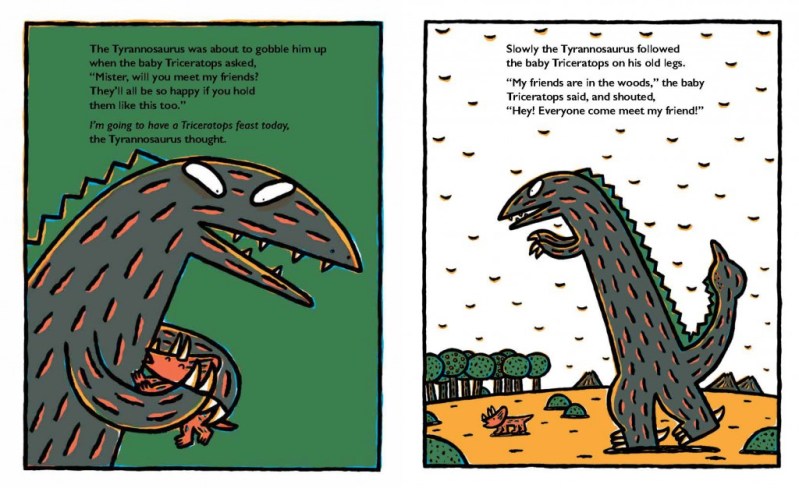
The giant dinosaur was surprised that the baby had never seen Tyrannosaurus before, and was just about to gobble him up when the little one asked if he would meet his friends and hug them too. The Tyrannosaurus eagerly followed the Triceratops, imagining the feast he was about to have. When they reached the woods all the little Triceratops came out to play and begged to be picked up and hugged.  “‘No, no, guys!’ said one little Triceratops. ‘Even a mighty man like Mr. Rhabdodon can get tired.’”
celebrate-picture-books-picture-book-review-i-want-that-love-following-triceratops

Text and image copyright Tatsuya Miyanishi, courtesy of museyon.com

The Tyrannosaurus was insulted. Rhabdodon was stupid, a weakling, and an herbivore. But before he could protest, the other little Triceratops discovered his wound. They all began tending carefully to his injury and gathered red berries to help him heal even though it hurt their horns to ram the tree and dislodge the berries. Suddenly, Tyrannosaurus understood their sacrifice on his behalf. Tears sprang to his eyes, and he grabbed a trunk in his teeth and shook it. The youngsters were amazed as red berries rained down on them.

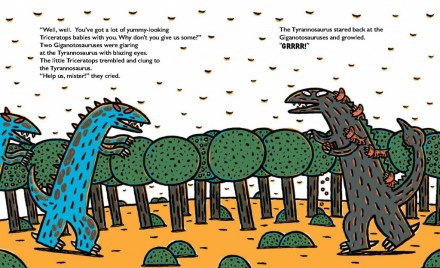
They cheered and said they wanted to be just like Mr. Rhabdodon. They bet that he could even beat mean Tyrannosaurus. The Tyrannosaurus mumbled his old slogan, and began to tell the little ones that strength wasn’t so important when they were interrupted by two Giganotosauruses who wanted a Triceratops snack. The Tyrannosaurus growled at the newcomers. But the Giganotosauruses attacked, biting the Tyrannosaurus to get at the babies in his arms. The Tyrannosaurus curled his body around them and promised to protect them.

celebrate-picture-books-picture-book-review-i-want-that-love-playing-with-triceratops

Text and image copyright Tatsuya Miyanishi, courtesy of museyon.com

As the Giganotosauruses continued to bite him, the Tyrannosaurus “murmured, ‘I finally understand…Remember this, kids. It’s not being strong that is important. What’s most important is…’” At last, unsuccessful in their quest, the Giganotosaurus went away, and the Tyrannosaurus fell over. The little Triceratops crawled safely away and headed home when the Tyrannosaurus told them  he was tired. Before he left, the first Triceratops asked what the most important thing was, but the Tyrannosaurus didn’t reply.

Many years later a father Triceratops and his babies were spotted by two Giganotosauruses looking for food in the woods. They jumped on the family, but the father hid his children under his body and endured the attack. “He remembered how the Tyrannosaurus had protected him and his friends.” Finally, the Giganotosauruses gave up and went away. His little ones were impressed but asked why he hadn’t beaten up the Giganotosauruses.
celebrate-picture-books-picture-book-review-i-want-that-love-giganotosaurus

Text and image copyright Tatsuya Miyanishi, courtesy of museyon.com

With tears in his eyes, the father said, “‘Violence isn’t the answer. There is something more powerful than strength, and more precious too. That is love…A truly strong guy who broke this tree once gave me that love….’ One baby looked at his father and said, “‘Will you give me that love? I want that love.’”

Originally published in Japan, Tatsuya Miyanishi’s story of what constitutes true strength and how love can transform even the most hardened heart will resonate with kids and adults on many levels. Children’s familiarity with and love of dinosaurs allows them to easily understand the complexities of the actions and emotions revealed in the story. Ambiguity in the wording after the Tyrannosaurus defeats the Giganotosauruses allows for various interpretations of his fate depending on the age and sensitivity of the child, and a bit of humor when the Triceratops does not recognize Tyrannosaurus adds levity to the plot. The innocence and generosity of the Triceratops babies as an agent of change within the Tyrannosaurus is poignant and realistic. Likewise, the long-term effects of experiencing awesome love when young is well demonstrated as the father Triceratops later gives back to his own family.

The harsh dinosaur-eat-dinosaur landscape is effectively portrayed in Miyanishi’s bold green, gold, and orange illustrations in which the stylized Tyrannosaurus towers over trees, angular rock formations, and especially the tiny, unsuspecting Triceratops. Images of the Tryannosaurus and Triceratops father guarding the babies are touching and demonstrate a parent’s or caregivers love.

I Want That Love is the third book in the Tyrannosaurus series, along with You Look Yummy and You Are My Best Friend, and will reward readers who love dinosaurs as well as those looking for books on kindness and acceptance.

Ages 5 – 7

Museyon, 2016 | ISBN 978-1940842141

Day of Awesomeness Activity
celebrate-picture-books-picture-book-review-awesomeness-cards

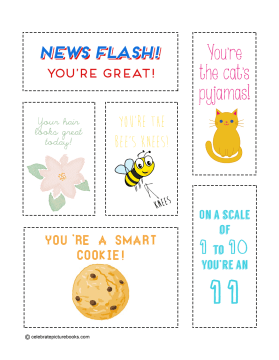
Awesomeness Cards


Do you have some awesome people in your life? Give them one of these printable Awesomeness Cards and watch them smile!

Picture Book Review

March 9 – It’s Read Aloud Month

celebrate-picture-books-picture-book-review-rosa's-very-big-job-cover

About the Holiday

From the moment babies are born, they are learning. Talking and reading aloud to babies from the very beginning are crucial parts of helping their developing brain learn language and improves literacy in the years to come. Reading aloud to babies and older children for only 15 minutes a day makes a tremendous and beneficial difference to their future. Make reading time a special time with your kids, and with so many wonderful books available—like today’s book—you’ll have as much fun as they do!

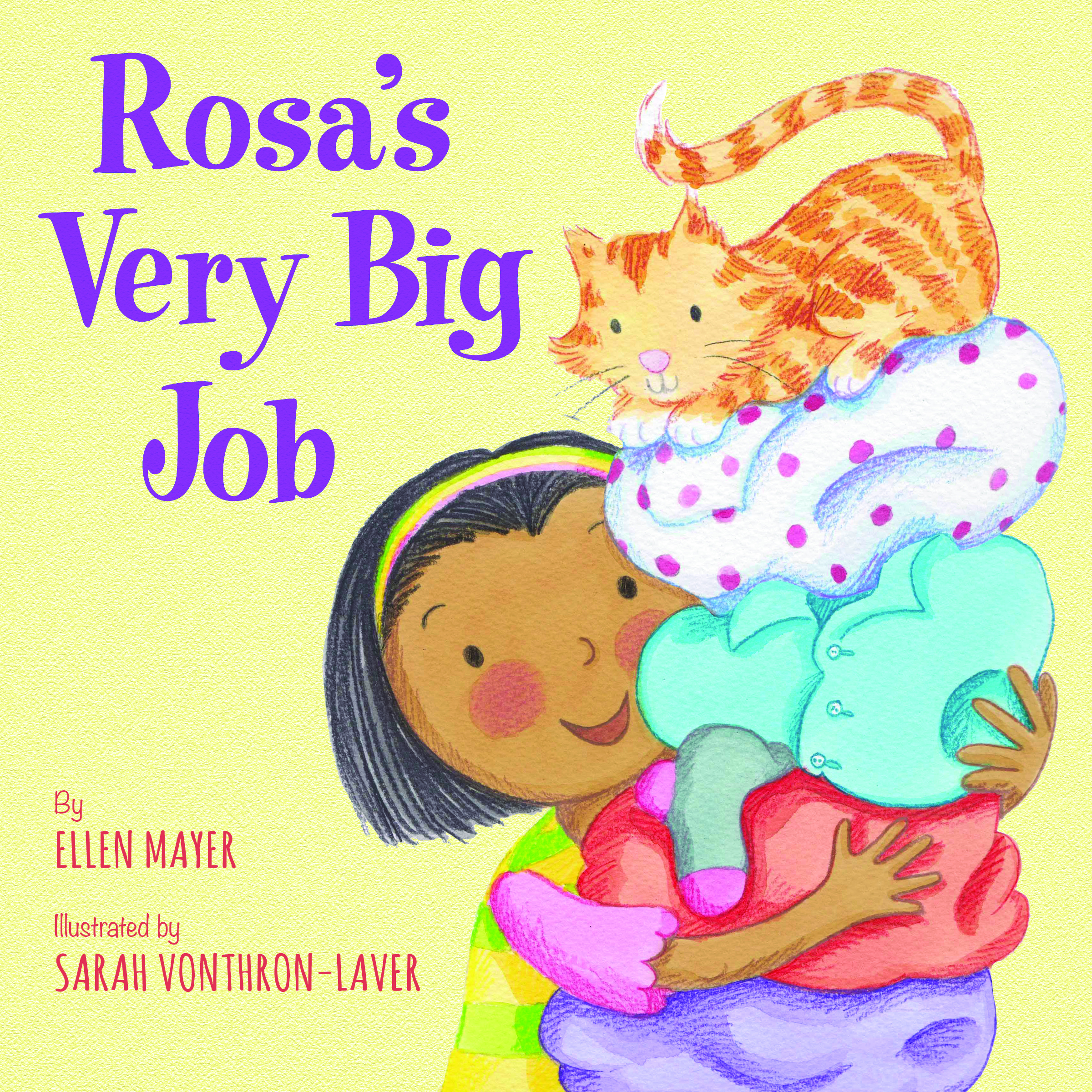
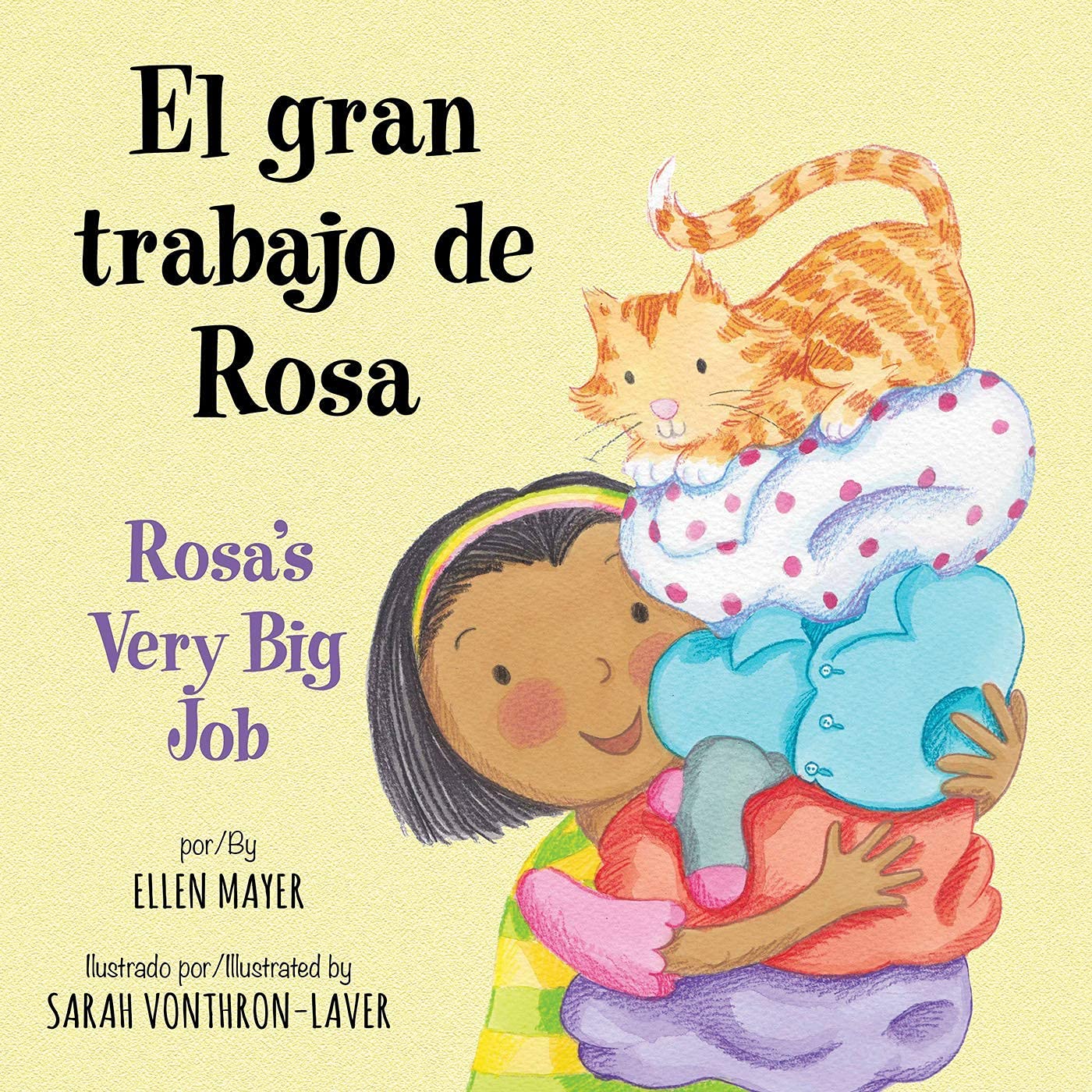
Rosa’s Very Big Job

Written by Ellen Mayer | Illustrated by Sarah Vonthron-Laver

Rosa may be little, but she has big ideas about how to help. While Mama is out shopping for groceries for that night’s dinner, Rosa decides to surprise her by folding and putting away the laundry. The basket is piled high with fluffy dry clothes, sheets, and towels. Rosa watches her grandpa reading the newspaper. “‘Please help me, Grandpa!’” she says. She tugs on her grandpa’s hands, trying to pull him out of his chair. “‘Come on, Grandpa! Get up.”

celebrate-picture-books-picture-book-review-rosa's-very-big-job-rosa-likes-to-help

Image copyright Sarah Vonthron-Laver, text copyright Ellen Mayer, courtesy of Star Bright Books, starbrightbooks.com

Grandpa seems to have a little trouble managing: “‘It’s difficult to carry these enormous piles,’” he sighs. But Rosa knows that smaller armloads work better. Grandpa’s clothes come unfolded as he puts them in the drawer. “‘Be neat. Like me,” Rosa says, showing him her tidy stack. Poor Grandpa! He has to keep hanging up the same jacket over and over. “‘It’s difficult to keep this jacket from sliding off the hanger,” he says. Rosa has the answer: “‘Zip it up,’” she explains. “‘Then it stays on.’”

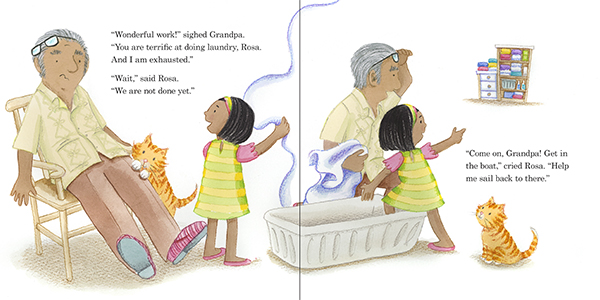
Grandpa sinks back into his chair. “‘You are terrific at doing laundry, Rosa. And I am exhausted,’” he says. But this is no time to quit—Rosa has big plans. As she steps into the now empty laundry basket, she exclaims, “‘Come on, Grandpa! Get in the boat. Help me sail back to there.’” Rosa points to the linen closet.

celebrate-picture-books-picture-book-review-rosa's-very-big-job-rosa-uses-basket-as-boat

Image copyright Sarah Vonthron-Laver, text copyright Ellen Mayer, courtesy of Star Bright Books, starbrightbooks.com

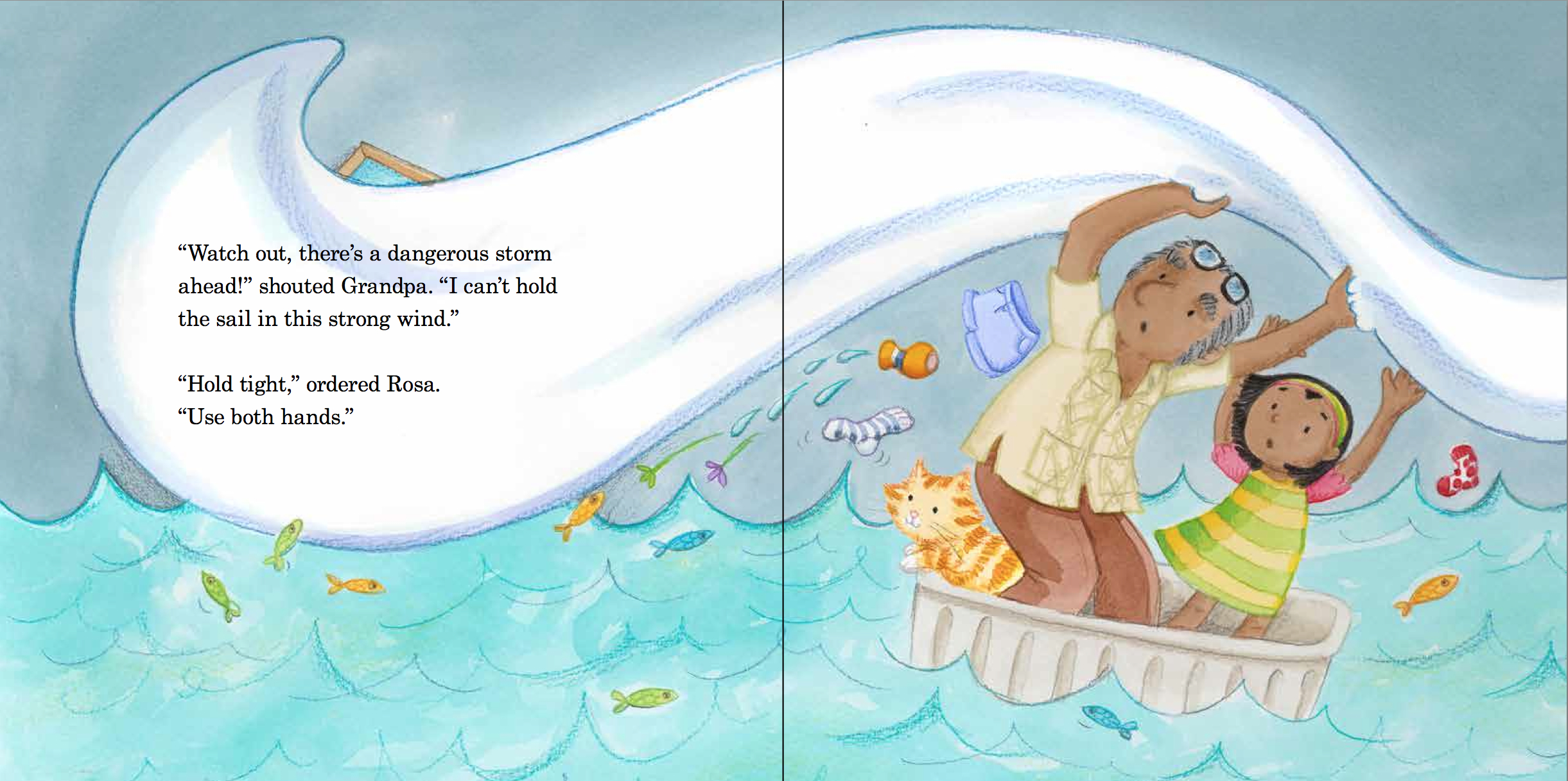
Suddenly, the floor swells with ocean waves teeming with fish. Grandpa channels his inner sailor as he holds aloft a sheet as a sail. As the wind billows and they come perilously close to the kitchen table, he says, “‘It’s difficult to sail around this enormous rock!’” Contemplating the rising sea, he exclaims, “‘It’s difficult to sail over this enormous wave!’”

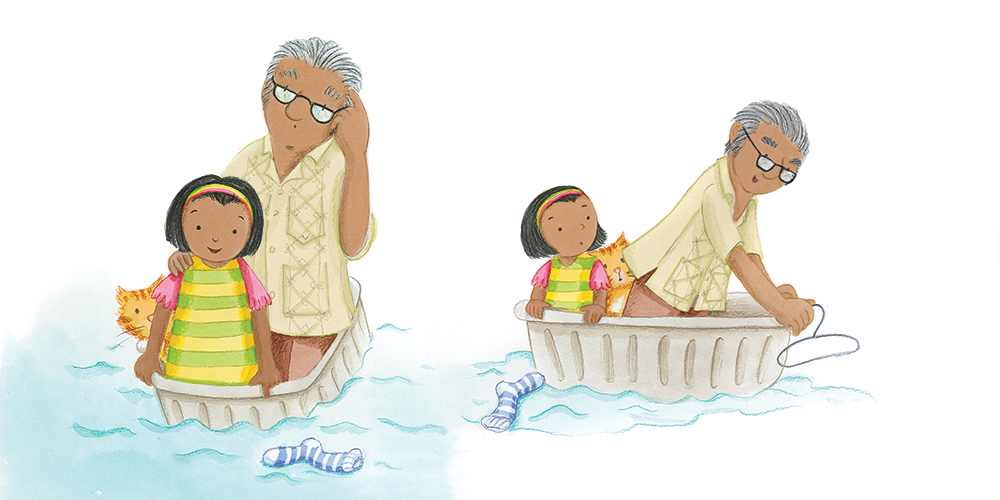
There’s a dangerous storm ahead, warns Grandpa, “‘I can’t hold the sail in this strong wind.’” Rosa is there to help and grabs one side of the sheet. “‘Hold tight,’” she orders. “‘Use both hands.’” At last the seas die down and Grandpa is ready to steer the laundry basket back to port, but Rosa has a more entertaining thought. Spying a sock on the floor, Rosa wants to catch the “enormous fish.” Grandpa obliges and picks up a hangar for a fishing pole. He holds Rosa as she stretches out over the edge of the laundry basket to land her fish.

celebrate-picture-books-picture-book-review-rosa's-very-big-job-sailing-with-sheet

Image copyright Sarah Vonthron-Laver, text copyright Ellen Mayer, courtesy of Star Bright Books, starbrightbooks.com

Just as Rosa nabs the fish, Mama comes home with her bags of groceries. She’s surprised to see that the laundry is not in the basket. Rosa runs to her and proudly explains, “‘We put all the laundry away. It was a very big job. We carried enormous piles. Grandpa dropped things. And I picked them up. It was very difficult for Grandpa. He got exhausted. But not me. I am terrific at laundry!’” Mama agrees that Rosa is a terrific helper. Then Rosa leads her mother to see the most surprising thing of all—the fish she has caught for dinner!

celebrate-picture-books-picture-book-review-rosas-very-big-job-rosa-and-grandpa-fishing

In her series of Small Talk Books® Ellen Mayer presents exciting stories for preschoolers full of imagination and rich language learning. Rosa’s Very Big Job introduces Rosa, a sweet girl bubbling with enthusiasm and the desire to help. The close relationships between Rosa, her mother, and her grandpa promote cooperation as well as effective modeling of speech patterns and a way to introduce larger words in an organic manner through play and common chores. Rosa’s inventive idea to turn the laundry basket into a boat is delightfully enhanced by her grandpa’s willingness to share in the story and expand on it. Humor, cheerful banter, and the easy camaraderie between Rosa and Grandpa invite young readers to join in the fun as they build confidence in their language learning.

Sarah Vonthron-Laver depicts Rosa’s afternoon with her Grandpa with joy and the spirited energy young children bring to everything they do. Grandpa is happy to spend time with his granddaughter, yet shows honest feelings of tiredness and frustration that spur on the plot. The transition from doing laundry to using the basket as a boat is as seamless as a child’s imagination, and the way Rosa and her grandpa use household items to create “sails,” “rocks,” “fish,” and “fishing poles” will give readers great ideas for post-reading play. Bright colors, an adorable kitten, and familiar surroundings welcome young children into the world of reading and expanded vocabulary.

Rosa’s Very Big Job would be a welcome addition to a young child’s bookshelf, not only for its fun story that kids will want to hear again and again, but for its leap into imagination that kids will want to replicate.

Dr. Betty Bardige, an expert on young children’s language and literacy development, provides tips for parents, grandparents, and caregivers following the text.

celebrate-picture-books-picture-book-review-rosa's-very-big-job-spanish-cover

A bilingual Spanish/English edition is also available from Star Bright Books!

Ages 2 – 6

Star Bright Books, 2016 | ISBN 978-1595727497 (English edition) | ISBN 978-1595728500 (Spanish/English bilingual edition)

Discover more about Ellen Mayer and her books as well as book-related activities and literacy initiatives she’s involved with on her website!

To read an interview with Ellen Mayer about her books and her work, click here!

Find Sarah Vonthron-Laver on Facebook!

Read Aloud Month Activity

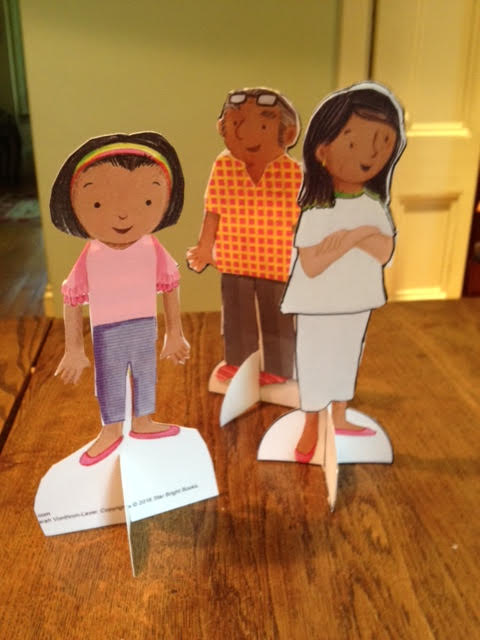
celebrate-picture-books-picture-book-review-rosa's-big-job-paper-dolls-made

Original illustrations by Saran Vonthron-Laver, Copyrights © 2016 Star Bright Books. Paper dolls created by AislingArt and Celebrate Picture Books, copyrights © 2016

Rosa’s Very Big Job Paper Dolls

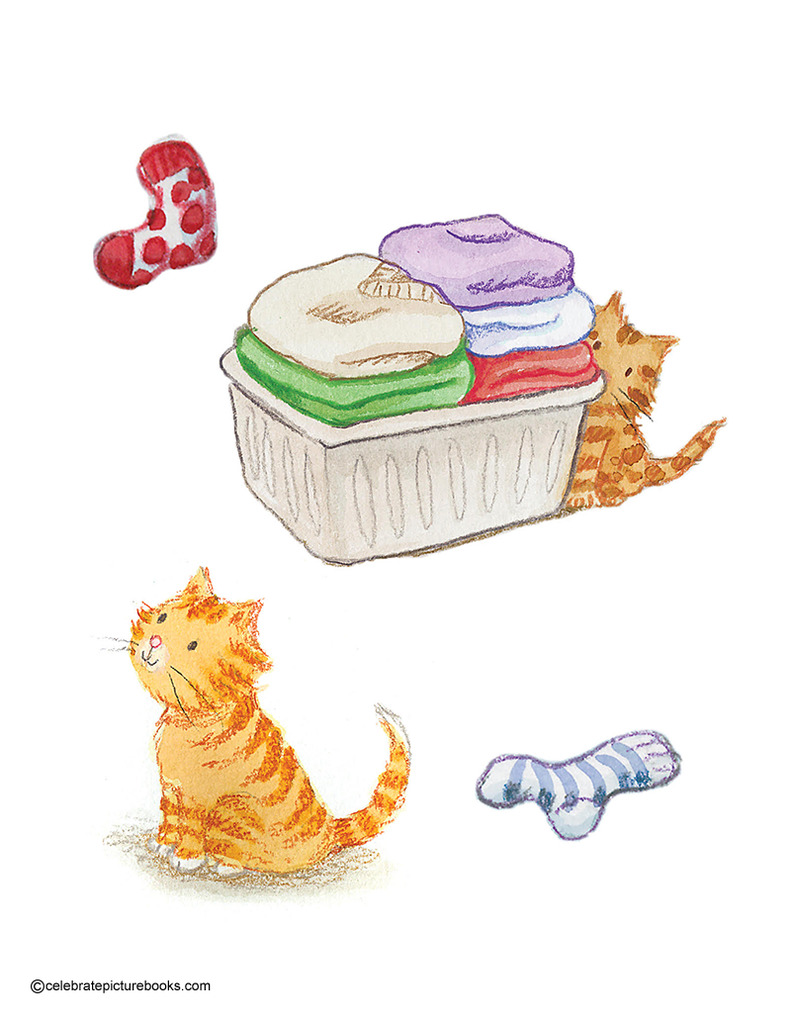
After you read the story, you can continue the fun with these Rosa and family paper dolls! Rosa loves helping out at home. She’s terrific at doing laundry – folding and putting away the family’s clothes, socks, and linens. You are terrific at helping too! Can you help Rosa, Mama, and Grandpa get dressed and ready for the day with these printable paper dolls? You’ll even find a laundry basket, socks, and Rosa’s sweet kitty to play with! 

Supplies

Printable Paper Dolls, Clothes, and Extras

  • Card stock paper and/or poster board
  • Scissors
  • Glue

Directions

  1. Print dolls on regular paper or card stock paper. Dolls printed on card stock paper may stand on their own with the supplied stand cross piece. For dolls printed on regular paper, you can cut the supplied stand templates from poster board or card stock and glue the dolls to the backing.
  2. Rosa’s kitty and the laundry basket can also be attached to the supplied template if needed
  3. Print clothes for each figure
  4. Color the blank clothes templates any way you’d like
  5. Cut out clothes and extra items
  6. Fit outfits onto dolls
  7. Make up your own stories about Rosa, Mama, and Grandpa!

celebrate-picture-books-picture-book-review-rosa's-very-big-job-cover

YOU CAN FIND ROSA’S VERY BIG JOB AT THESE BOOKSELLERS

Amazon | Barnes & Noble | Books-a-Million

To support your local independent bookstore, order from

Bookshop | IndieBound

celebrate-picture-books-picture-book-review-rosa's-very-big-job-spanish-cover

You can find El gran trabajo de Rosa at Amazon 

Picture Book Review

March 8 – International Women’s Day

celebrate-picture-books-picture-book-review-swimming-with-sharks-cover

About the Holiday

The first International Women’s Day was celebrated in 1909 during a time of great change and increasing industrialization that saw more and more women demanding equality in working hours, pay, safety, voting rights and more with their male counterparts. Women across the globe are still fighting for these rights. This year’s theme is Be Bold For Change (#BeBoldForChange), and reminds us that we must always be vigilant in securing and keeping equal rights for all.

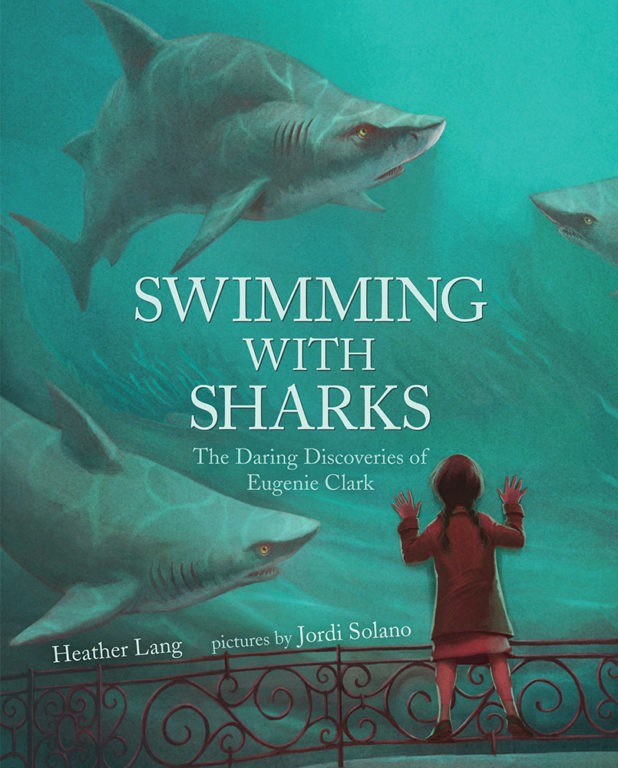
Swimming with Sharks: The Daring Discoveries of Eugenie Clark

Written by Heather Lang | Illustrated by Jordi Solano


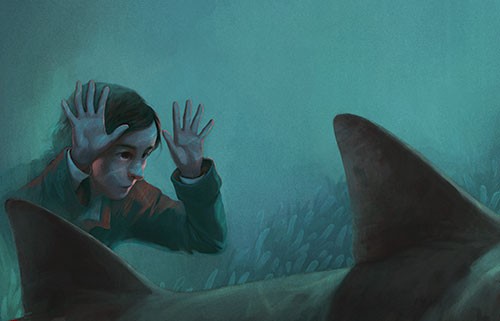
When young Eugenie Clark pressed her face against the aquarium window at the sharks swimming by, she did not see “piercing eyes…rows of sharp teeth…vicious, bloodthirsty killers.” Instead she saw “sleek, graceful fish” and dreamed of being inside the tank to swim among them. She loved to spend Saturdays at the New York Aquarium sharing her knowledge of fish with visitors. She wished there was more information available about sharks and hoped for a day when she could learn more about them.

celebrate-picture-books-picture-book-review-swimming-with-sharks-at-aquarium

Image copyright Jordi Solano, courtesy of plumpuddingillustration.com

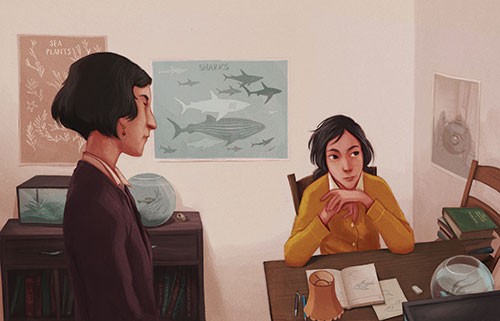
At home her mother bought Genie her own little fish tank, and soon the whole apartment was full of fish and reptiles. Genie kept careful notes on her pets as she tried to answer her many questions. William Beebe, a famous scientist who studied fish, was Genie’s hero. She too wished to explore the ocean like he did. But this was the 1930s and not many people “dared to study the depths of the sea, and none were women.” Eugenie’s mother suggested she study typing and try to become Beebe’s secretary. The life of a secretary was not what Genie had in mind.

Eugenie received a Master’s Degree in zoology, and when a well-known ichthyologist offered her a job as his research assistant and an opportunity to take oceanography classes, she moved to California. There she collected fish and water samples. The beauty of the underwater world astonished her. In the lab she was able to dissect a swell shark to learn “how and why it puffs up.” But Genie wanted to dive deeper—to swim with sharks.

celebrate-picture-books-picture-book-review-swimming-with-sharks-studying

Image copyright Jordi Solano, courtesy of plumpuddingillustration.com

One day, Genie’s professor allowed her to try helmet diving. Wearing the heavy metal helmet, Genie was able to descend into the cold, murky deep where kelp forests waved with the current. “In 1949 the US Navy hired Genie to study poisonous fish in the South Seas. As she collected fish, she came face to face with a shark. The shark swam closer and closer then suddenly dove and disappeared out of sight. Genie was thrilled by the encounter.

In 1955 Eugenie moved to Florida and opened the Cape Haze Marine Laboratory, becoming the first to study sharks in their natural environment. The more she studied sharks, the more she realized that they were intelligent creatures, not stupid “eating machines” as most people thought. She wondered if sharks could be trained.

Eugenie set up an experiment in which a shark needed to press a white board to receive a reward a short swim away. Soon, the female shark of the pair realized that if the male shark pressed the board, she could swim to retrieve the reward. The pair remembered the exercise even after a ten-week break. Soon, scientists from around the world wanted to work with Genie. 

celebrate-picture-books-picture-book-review-swimming-with-sharks-swimming-under-water

Image copyright Jordi Solano, courtesy of plumpuddingillustration.com

Word reached her about “‘sleeping sharks,’” off the coast of Mexico. Instead of swimming around, these sharks stayed on the ocean floor. Eugenie was determined to learn how they breathed without moving. She dived deep into their territory, finding a requiem shark in an ocean cave. Here, she was face-to-face with one of the most feared fish in the sea. Genie swallowed any worry and watched as the fish opened and closed its mouth, providing itself with oxygen as a remora fish cleaned its gills.

Genie took water samples and completed other tests that revealed astonishing facts about the ocean caves and the habits of sharks. But while Genie was learning the facts about these mysterious sea creatures, most people still feared them and considered them with suspicion and superstition. As time went by, Genie began seeing fewer and fewer sharks on her dives. They were being killed out of fear, for their fins, and because people thought it would make beaches safer.

celebrate-picture-books-picture-book-review-swimming-with-sharks-sunset

Image copyright Jordi Solano, courtesy of plumpuddingillustration.com

Genie began talking about her research, and people listened. “Dr. Eugenie Clark had become one of the most respected fish scientists in the world.” She taught people that there is always more to learn and “always more surprises.”

An extensive Author’s Note about the life and work of Eugenie Clark as well as more information on sharks follows the text.

Heather Lang delves into the life’s work of a woman who fearlessly challenged herself and the prevailing science to increase our knowledge of sharks and change people’s perspective on these beautiful creatures. Readers will love Lang’s comprehensive storytelling—beginning with young Genie’s fascination with fish and the sea—that reveals the pivotal events which led to her discoveries. Fascinating anecdotes from Eugenie’s research and personal encounters with sharks will enthrall children, and the idea that there is much more to discover will resonated with young scientists in the making.

celebrate-picture-books-picture-book-review-swimming-with-sharks-looking-at-shark

Image copyright Jordi Solano, courtesy of plumpuddingillustration.com

Jordi Solano takes readers to the depths of the ocean in his sea-green, atmospheric illustrations that beautifully mirror the world of sharks. Textured and layered images of marine plants and a variety of creatures give children an up-close view of Eugenie Clark’s work and the fish she encountered on her dives. Each type of shark is magnificently and realistically drawn, giving kids an idea of coloring, size, movement, and more. Children will also see Eugenie’s research facilities and the equipment she used in her studies.

For anyone interested in marine science, history, biographies, or the environment in general, Swimming with Sharks: The Daring Discoveries of Eugenie Clark is a can’t-miss book.

Ages 5 – 9

Albert Whitman & Company, 2016 | ISBN 978-0807521878

Discover more about Heather Lang and her books on her website!

View a gallery of artwork by Jordi Solano on Plum Pudding Illustration!

International Women’s Day Activity

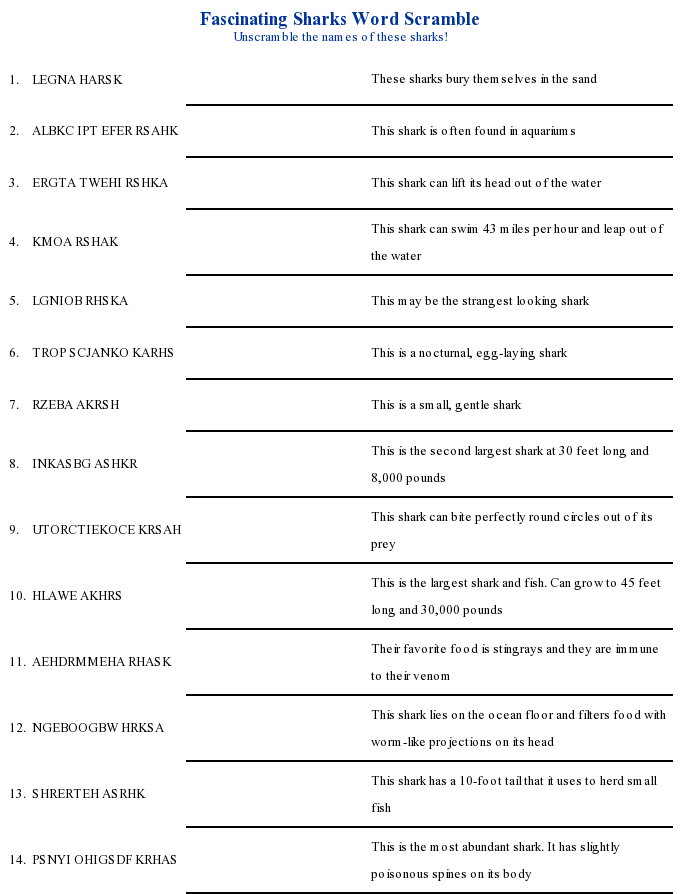
celebrate-picture-books-picture-book-review-fascinating-sharks-word-scramble

Fascinating Sharks Word Scramble


Read the clues and unscramble the names of 14 types of sharks in this printable Fascinating Sharks Word Scramble! Here’s the Solution!

Picture Book Review
March 7 – Unique Names Day

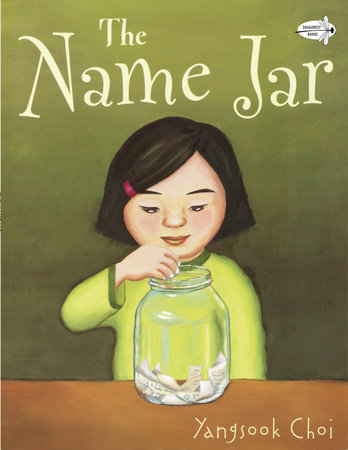
The Name Jar by Yangsook Choi Picture Book Review
About the Holiday

Established in 1997 as part of Celebrate Your Name Week, Unique Names Day celebrates uncommon or uncommonly spelled names and encourages those with unique names to always take pride in their name. One way to celebrate is to find out more about your name and how or why your parents chose it.

The Name Jar

By Yangsook Choi


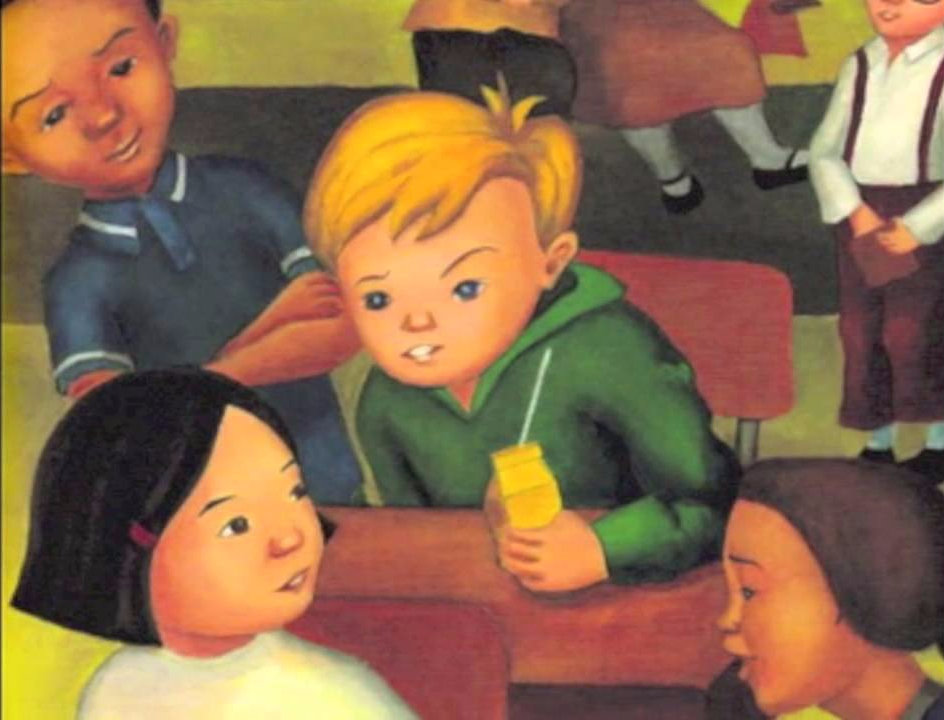
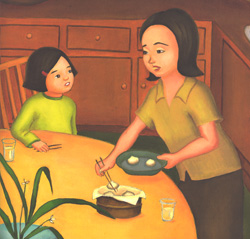
Unhei has recently moved to the United States from Korea. Although Unhei is excited about the first day of school, on the bus ride she misses her former home and looks at the wooden name stamp her grandmother gave her. A boy sitting behind Unhei notices the unfamiliar object and asks about it. Then other kids notice Unhei. They ask what her name is and when she answers, they mispronounce it, laughing and making jokes.

celebrate-picture-books-picture-book-review-the-name-jar-on-the-bus

Image copyright Yangsook Choi, courtesy of Random House

Unhei is embarrassed and glad that when the bus drops them off that those kids head to a different classroom than hers. As Unhei enters her own room, her classmates smile and greet her—it is obvious that their teacher has prepared them for a new student, and they are excited.

Of course, they first question her about her name, and remembering the experience on the bus, Unhei is reluctant to answer. She quickly says that she hasn’t picked a name yet, but will tell them next week. When she gets home, Unhei tells her mother that she wants an American name, a name that is easy to pronounce.

Her mother is dismayed; Unhei’s name was chosen by a master so that it would describe her uniqueness. But Unhei doesn’t want to be different, she just wants to fit in. Later while she and her mother are at a Korean grocery store, she introduces herself to the owner, who exclaims that her name is beautiful and means “grace” in English. 

celebrate-picture-books-picture-book-review-the-name-jar-mom

Image copyright Yangsook Choi, courtesy of Random House

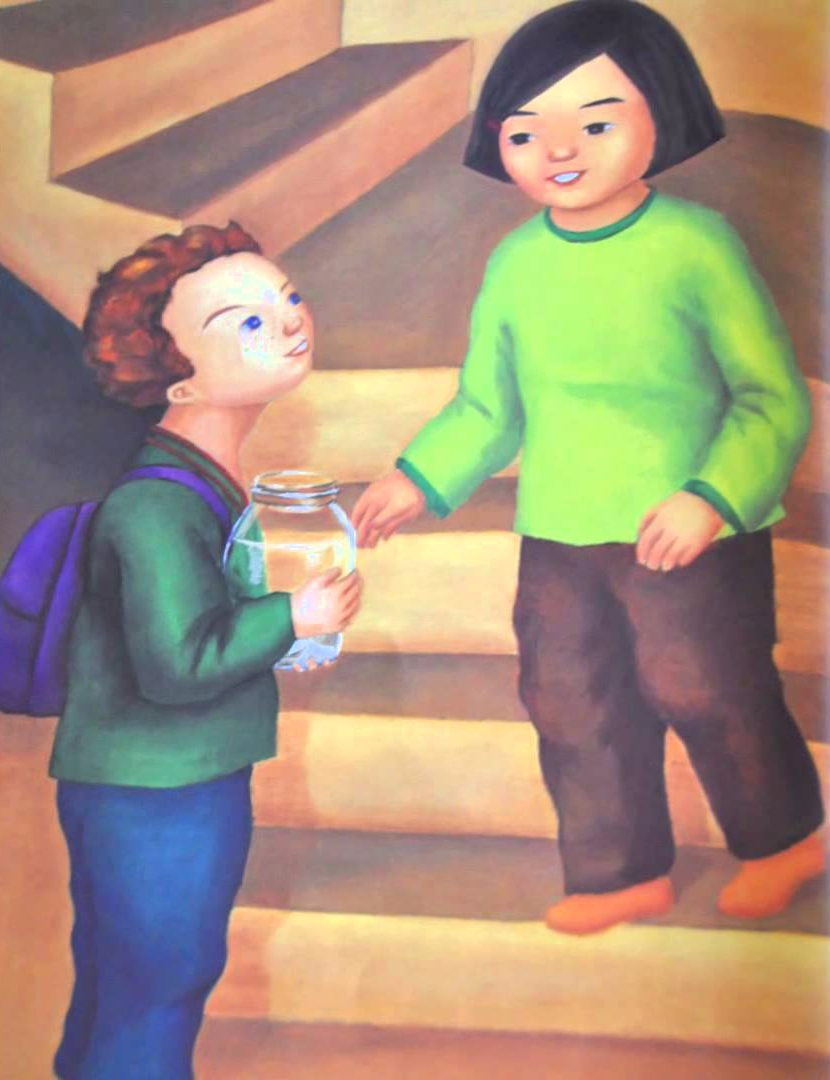
That evening Unhei tries out American names in front of the mirror—Amanda, Laura, Susie—but they don’t feel or sound right. The next day at school Unhei finds a jar on her desk with pieces of paper in it. On each piece of paper is a name—suggestions from each of her classmates. Her new friends have chosen these names thoughtfully. Daisy is the nickname of one girl’s baby sister; Tamela is a smart and brave heroine from a story; and Wensday is the day Unhei joined their class.

At the end of the school day, a classmate named Joey comes to her. He knows she actually does have a name, and Unhei, while not wanting to say it out loud, shows him the characters on her wooden stamp. Joey thinks it is beautiful and asks to keep the paper. Day by day the glass jar fills up with names. Unhei will have to choose soon.

One Saturday Unhei returns to the Korean grocery store. When Mr. Kim calls her by name, the one other customer turns around. It’s Joey! Carefully and slowly he says Unheis name until he gets it right. On Monday when Unhei enters the classroom, she discovers that the jar is missing. It’s all right, though, Unhei has chosen her name.

celebrate-picture-books-picture-book-review-the-name-jar-friend

Image copyright Yangsook Choi, courtesy of Random House

She walks to the chalkboard and writes her real name in English and Korean. She tells the class that her name means “grace.” Other kids reveal the meaning of their names, and they all practice saying Unhei’s name. That evening Joey comes to visit. He explains that he took the jar because he wanted Unhei to keep her original name. He suggests putting Korean nicknames into the jar for their classmates to pick. He has already chosen his Korean name with the help of Mr. Kim. It is the prefect nickname: Chinku, which means “friend.”

Ages 3 – 8

Random House, Dragonfly Books, 2003 | ISBN  978-0440417996

Discover more about Yangsook Choi, her books, and her art on her website!

Yangsook Choi’s The Name Jar is as timely now as when it was first written. Through compelling and detailed storytelling, Choi explores the themes of identity, empathy, family, friendship, and more  with sometimes heartbreaking honesty. Unhei’s varied experiences at school, at home, and at the market provide an opportunity for adults and children to discuss and embrace the diversity of our multicultural world. Choi’s warm-toned illustrations reveal the conflicts that Unhei encounters and her growing confidence as she makes friends with Mr. Kim and Joey who accepts her as she is. 

Unique Names Day Activity

CPB - Name Jars standing

Love Your Name Organizer Jar


Everyone needs a place to store their special stuff! Here’s a way to recycle a plastic jar and make a cool organizer jar with your name on it. This organizer jar also makes a great gift for your friends!

Supplies

  • A large plastic jar, such as a peanut butter jar or mayonnaise jar, cleaned out and with the label removed
  • Acrylic multi-surface paint or markers
  • Chalkboard paint
  • Paint brush
  • Chalk

CPB - Name Jars on sides

Directions

  1. Paint a rectangle on the front of the jar with chalkboard paint
  2. Decorate the rest of the jar with paint, markers, or paper just the way you want! My green jar sports a friendly dinosaur!

Picture Book Review
March 6 – International Ideas Month

celebrate-picture-books-picture-book-review-the-secret-subway

About the Holiday

The onset of spring with its  wide-open sunny days seems to beckon to us to open our minds to all sorts of new possibilities. International Ideas Month also invites would-be inventors and clever folk alike to think differently and pay attention to your brainstorms. You never know – there may be a book, a work of art, a new invention, or a solution to a need inside you just waiting to be let out! 

The Secret Subway

Written by Shana Corey | Illustrated by Red Nose Studio (Chris Sickels)


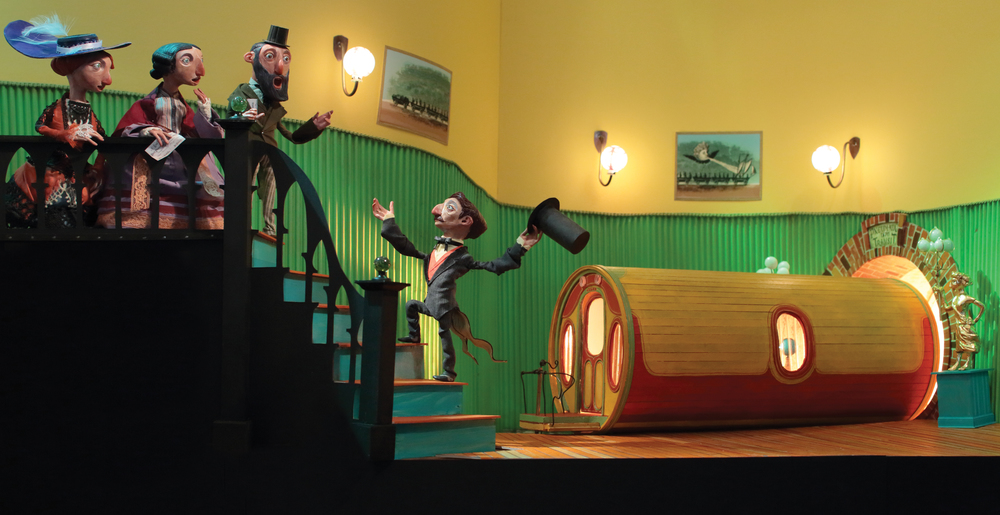
In the 1860s the streets of New York were…well, not to put too fine a point on it…disgusting. Made of cobblestone and filled with trash, waste, horse manure, dust, dirt, and throngs of people, the roads made for rough travel. Many people had ideas about what could be done to make the streets safer and cleaner. Some thought a moving sidewalk would work, others talked about double-decker roads or an elevated train system. But while there was a lot of talk, nothing ever got done.

celebrate-picture-books-picture-book-review-the-secret-subway-city

Image copyright Chris Sickles, courtesy of rednosestudio.com

Alfred Ely Beach, however, peered down from his high office room and studied the street below him. Alfred Beach was a thinker, a publisher, and an inventor. He put his clever mind to work and came up with a solution. He envisioned a train powered by an enormous fan that would travel underground. “People would get where they needed to go as if by magic!” he thought. He couldn’t wait to start building. There was just one problem—he didn’t own the streets. And getting permission to dig them up would be hard. “So Beach hatched a sneaky plan. He would propose building an underground tube to carry mail instead.” As he had imagined, no one objected to this project when he proposed it—not even Boss Tweed, who unofficially ran the city.

celebrate-picture-books-picture-book-review-the-secret-subway-designing

Image copyright Chris Sickles, courtesy of rednosestudio.com

Given the okay, Beach rented the basement of Devlin’s Clothing Store. Every day he sent in workers to dig and every night wagons took away the debris. For 58 days and nights Beach’s men tunneled under the city, moving forward 8 feet each day. At last the tunnel was finished. It was 8 feet across and 294 feet long—large enough to hold a train full of people.

Beach then decorated the basement to be a beautiful, welcoming waiting room. Gaslight lamps and paintings dotted the walls, flowers added color, and a grandfather clock rang out the time. There was even a fountain with goldfish, a man playing a grand piano, and a delicious lunch. When everything was ready, Beach invited reporters, government officials, and distinguished citizens to join him on February 26, 1876 at the “Beach Pneumatic Transit Company.”

celebrate-picture-books-picture-book-review-the-secret-subway-designing

Image copyright Chris Sickles, courtesy of rednosestudio.com

That first day Alfred Beach’s guests only admired the train, but they gave it glowing praise. Soon Beach opened his train to the public. With a WHOOSH from a gigantic fan, the train zipped down the track and then back again. “Beach’s train was a SENSATION! All winter while wagons slipped and slid on the slushy streets above, people poured into Devlin’s for the twenty-five-cent ride.”

While riders loved it, some people objected. Shop keepers didn’t want potential buyers underground. Property owners were afraid the digging would hurt their buildings, and some felt Beach wanted too much power. Even Boss Tweed no longer supported it since some of his friends had their own ideas on building a subway. When the governor of New York refused to let Beach expand his train, the project came to a halt.

celebrate-picture-books-picture-book-review-the-secret-subway-invites-riders

Image copyright Chris Sickles, courtesy of rednosestudio.com

The idea didn’t die, however, and “many years later drilling could be heard once again under the streets of New York City” as a train system powered with electricity was being built. Diggers discovered many unusual things buried under the city. Perhaps the most surprising was a brick wall behind which stood a little railroad car rusting in its tracks, a memorial to innovation and the future.

Alfred Ely Beach was one clever man, and Shana Corey tells his story with historical perspective, wit, and suspense. Corey’s language crackles with evocative alliteration, stealth, and action. Kids will be excited to learn of the intrigue and imagination that led to this remarkable snippet of America’s history.

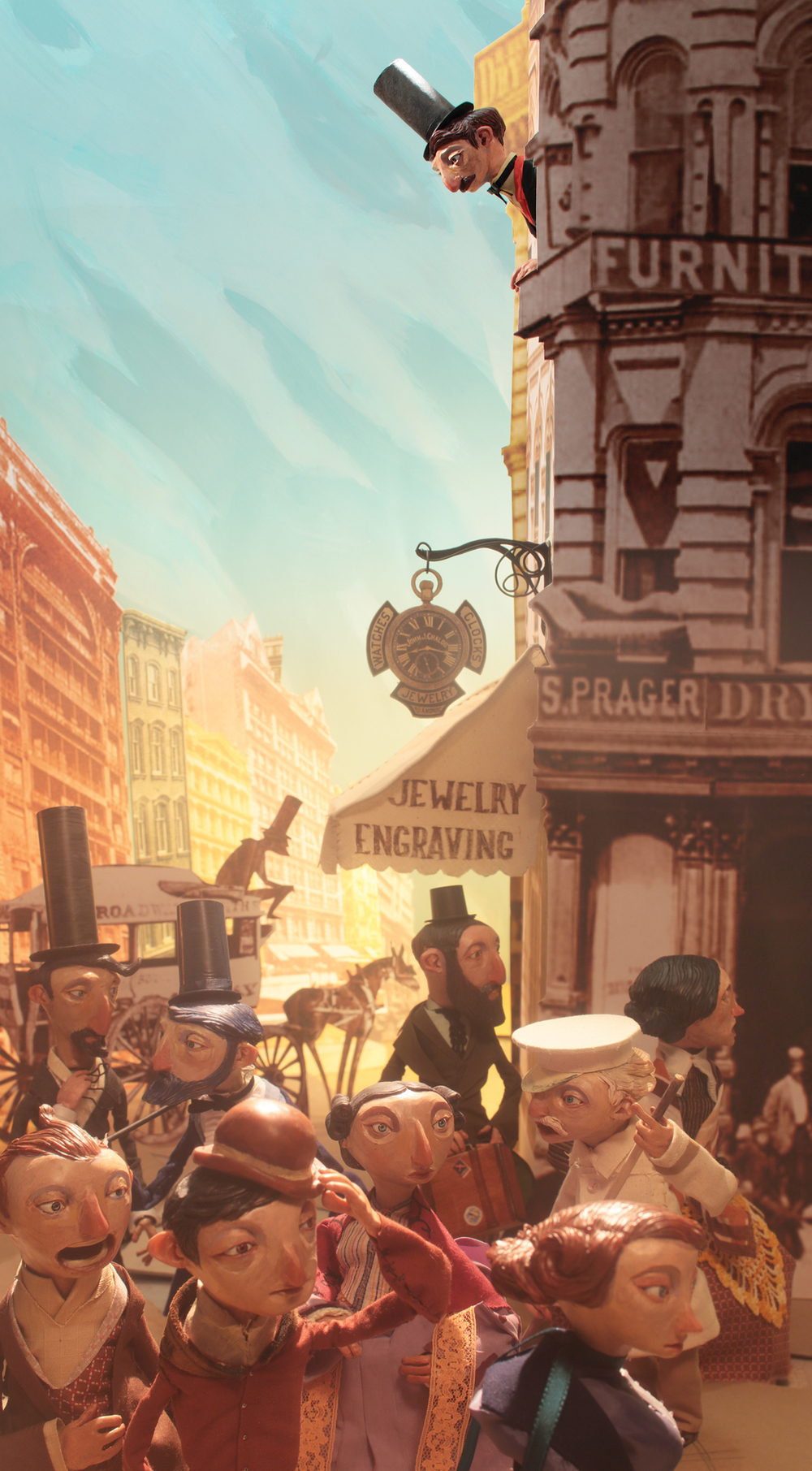
Fans of Claymation will love Chris Sickels’ multimedia artwork that combines sculpted characters, specially built props, photographs, and illustration. Sickels’ characters are nothing short of astounding. Their period clothing, hairstyles, and expressive faces lend an engaging and realistic dimension to the vintage scenes. Sickels cleverly depicts early New York City and people’s alternative ideas to the traffic problem with sketched in schemetics. His use of color and lighting sets the perfect tone for this highly entertaining and educational picture book. Kids will want to linger over each page to catch all the details of The Secret Subway.

For kids interested in transportation, history, inventions, and claymation and other arts, The Secret Subway would be a wonderful addition to their home library.

Ages 4 – 10

Schwartz & Wade, Random House Kids, 2016 | ISBN 978-0375870712

Discover more about Shana Corey and her books for kids on her website!

You will be amazed by the art, books, and animation by Chris Sickels on his Red Nose Studio website!

This Secret Subway book trailer is just the ticket!

International Ideas Month Activity

celebrate-picture-books-picture-book-review-the-secret-subway-chris-sickels-craft

Chris Sickels’ Secret Subway

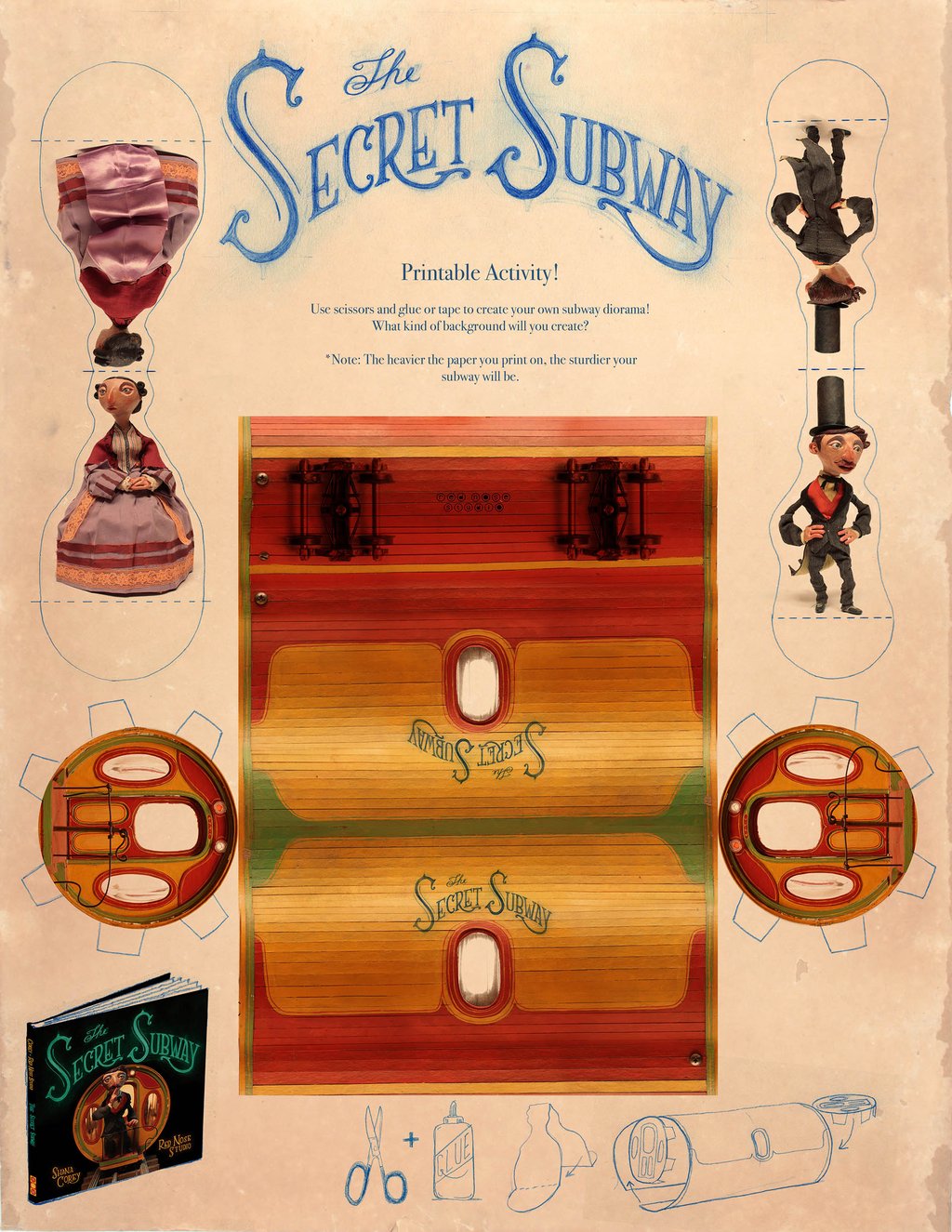
Chris Sickels of Red Nose Studio invites you to build your own Secret Subway with this printable play set, complete with Alfred Ely Beach and a passenger! Click here to download your printable Secret Subway Activity!

Build a Super Subway Car

celebrate-picture-books-picture-book-review-subway-car

Every day, millions of people all over the world travel to work, school, and other activities by subway. Here’s an easy and fun way to build your own subway train from recycled materials. You can make just one car or make a few and connect them to create a long train worthy of any big city!

Supplies

  • Printable Subway Car Template
  • Medium or long toothpaste box
  • Silver paint
  • Glue
  • Paintbrush
  • Scissors

Directions

  1. Paint the toothpaste box with the silver paint, let dry
  2. Cut out the windows, doors, and stripe templates
  3. Trim the stripes to fit your box
  4. To make the little sign near the door, trim a small aquare from one of the stripes
  5. Glue the templates to the box

Picture Book Review

March 5 – It’s Save Your Vision Month

celebrate-picture-books-picture-book-review-douglas-you-need-glasses

About the Holiday

During the month of March people are encouraged to think about their eye health. This year the American Optometric Association is promoting awareness of digital eyestrain and the issues of extended exposure to blue light. According to 2016 AOA Eye-Q survey data, the average American spends seven hours per day using digital devices. Overexposure to the blue light emitted by smartphones, tablets and other technology can cause vision damage, sleep problems, and more. If you or your children don’t get regular eye exams, consider making an appointment this month.

Douglas, You Need Glasses!

By Ged Adamson


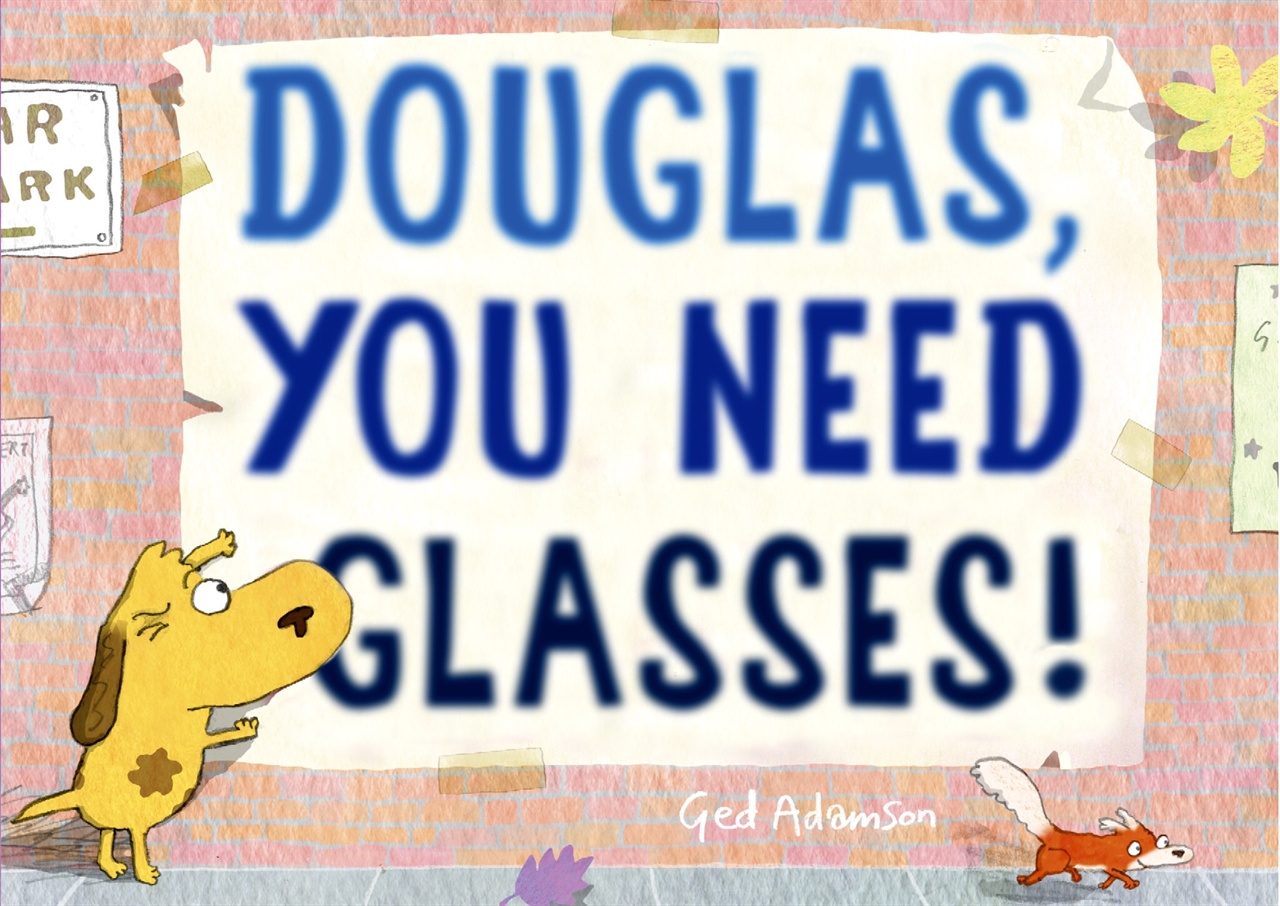
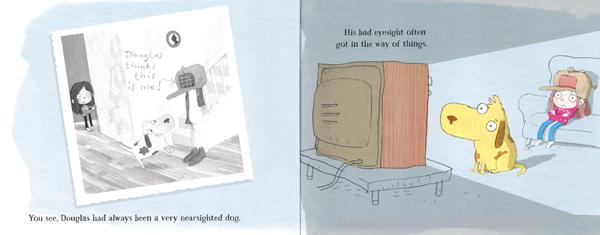
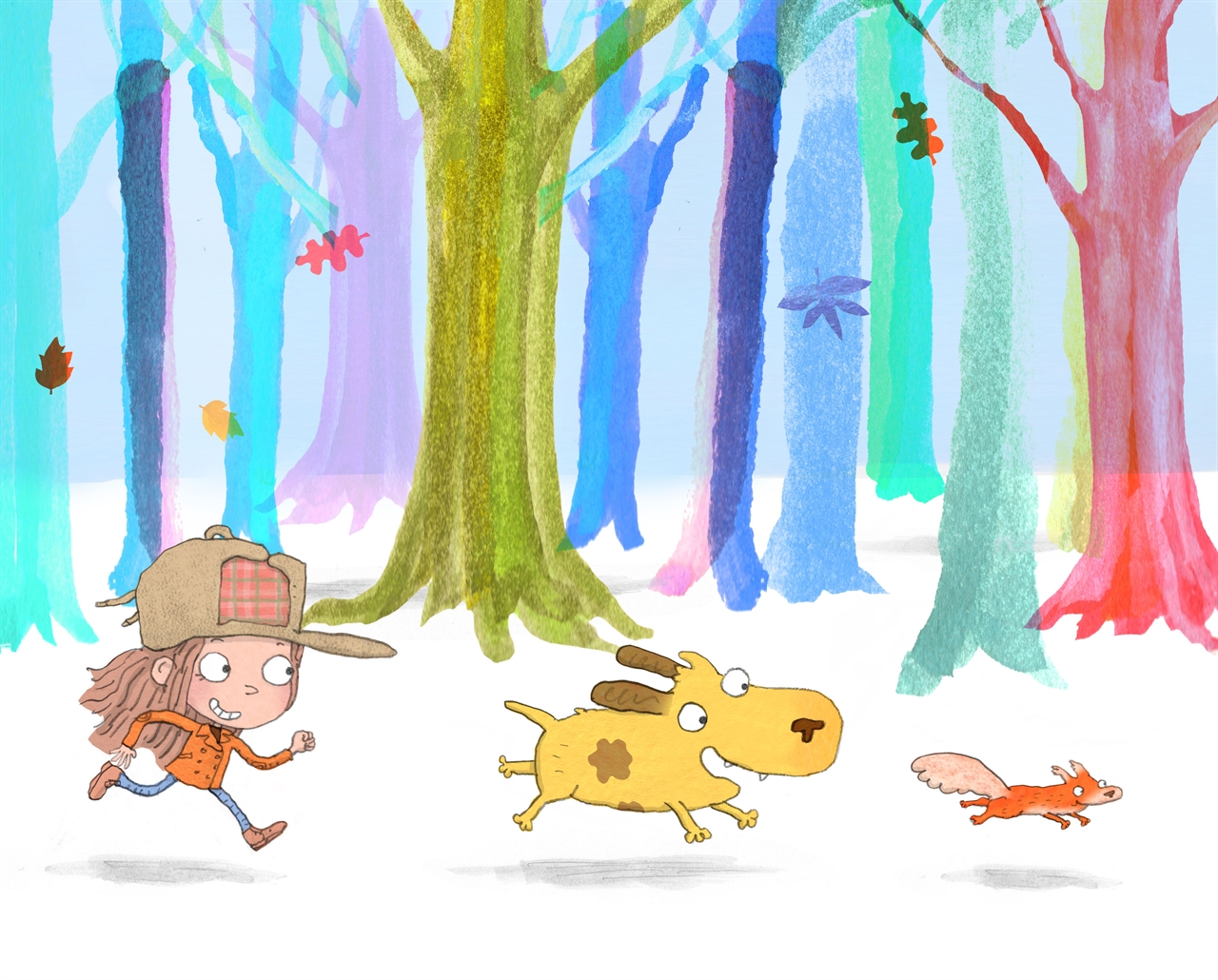
Something may be amiss with Douglas. When Nancy and her playful pooch go out to chase squirrels, Douglas takes after a falling leaf while the squirrel escapes up a tree. It’s not the first time this has happened, either. You see, Douglas is a bit nearsighted. Sometimes he mistakes the stair post for Nancy, and his difficulty gets in the way of things (well, mostly Douglas gets in the way of things).

celebrate-picture-books-picture-book-review-douglas-you-need-glasses-watching-tv

Image and text copyright Ged Adamson, courtesy of Schwartz & Wade

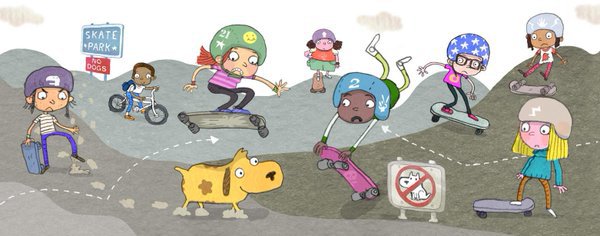
He also misses important signs—like the one that would have prevented him from tracking wet cement all over the skate park, where there are NO DOGS allowed—and he’s always causing something of a ruckus. Sometimes he even enters the wrong house! But when a game of fetch nearly creates a buuzzzz of disaster, Nancy decides something must be done.

celebrate-picture-books-picture-book-review-douglas-you-need-glasses-skate-park

Image and text copyright Ged Adamson, courtesy of Schwartz & Wade

She takes Douglas to the eye doctor where he reads a most dog-friendly eye chart and discovers that he needs glasses. He peruses the shelves of Dog Glasses and puts some on. Each one makes him feel different. In one pair he’s a rock star; in another a scholar; and in yet another a hippy. He tries them all until he finds the perfect pair!

celebrate-picture-books-picture-book-review-douglas-you-need-glasses-eye-doctor

Image and text copyright Ged Adamson, courtesy of Schwartz & Wade

On the way home he sees the world in a whole new way. “‘Wow! Everything looks amazing!’” Douglas says. And it is!

Ged Adamson’s funny look at a dog with an all-too-human malady will make kids laugh from the first page to the last. Earnest Douglas, going about his doggy days under a bit of a skewed perspective, is so endearing that readers will immediately take him to heart even as they giggle at his exploits.

celebrate-picture-books-picture-book-review-douglas-you-need-glasses-chasing-squirrel

Image and text copyright Ged Adamson, courtesy of Schwartz & Wade

Adamson’s vibrant multi-hued trees, colorfully clothed kids, and vivid backgrounds with stylish, sketched-in details give the book a fresh, jaunty appeal for a lively, fun story time. Kids facing the prospect of wearing glasses will also find much to give them reassurance and confidence in this book. Douglas, You Need Glasses! is a great addition to any child’s bookshelf!

Ages 3 – 8

Schwartz & Wade, Random House Kids, 2016 | ISBN 978-0553522433

Visit Ged Adamson’s Website to learn more about him and his books!

Save Your Vision Month Activity

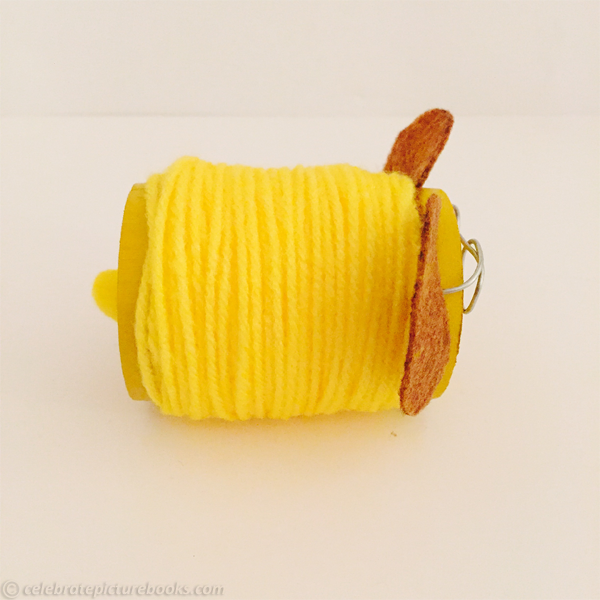
celebrate-picture-books-picture-book-review-spool-puppy-craft

Spool Puppy


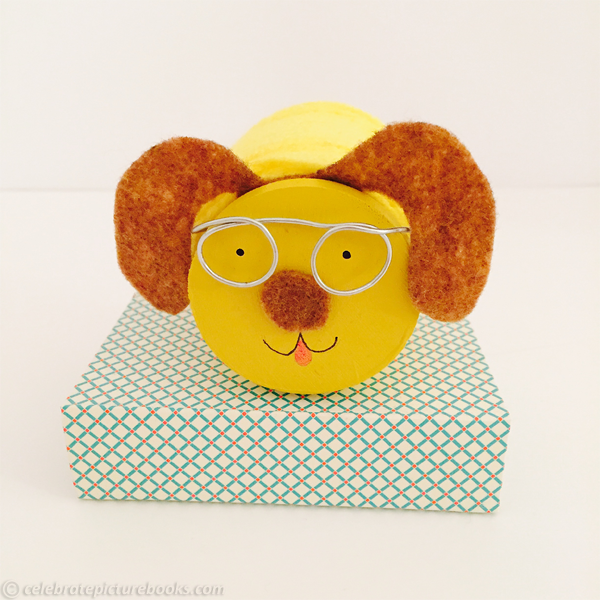
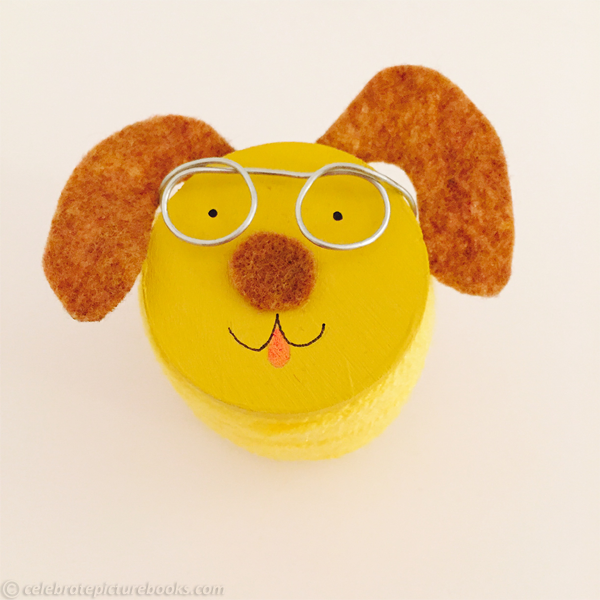
No matter where you go and whether you have a real dog or not, you can take this little guy along with you. And just as you would pick out your favorite from an animal shelter, you can make this puppy look any way you’d like!

Supplies

  • Printable Ears and Nose Template
  • 2-inch round wooden spool, available at craft stores
  • 1 skein of yarn in the color you choose. Yardage needed will depend on the thickness of the yarn.
  • Felt
  • Thin gauge wire
  • Craft paint
  • Paint brush
  • Fabric or strong glue
  • Dowel or pencil to wrap wire around to make glasses

celebrate-picture-books-picture-book-review-spool-puppy-craft

Directions

  1. Paint the dowel the color you want your dog to be, let dry
  2. Trace the ears on the felt and cut out (or draw your own ears)
  3. Trace the nose on the felt and cut out
  4. When the spool is dry glue the ears to the body of the spool, allowing the ears to stick up from the top of the spool
  5. Wind the yarn around the spool back and forth until the dog’s body is the size you’d like
  6. Glue the yarn in place with fabric or strong glue

To make the face

  1. Glue the nose over the hole on one end of the spool
  2. Draw the mouth and tongue under the nose with a marker
  3. You will draw the eyes on after the glasses are in place

To make the glasses

  1. Wind the wire around a ½-inch dowel, thick pencil, or rounded handle to make two circles.
  2. Leave about two inches on either side of the circles for the ear pieces of the glasses.
  3. Adjust the size of the circles to fit the spool as glasses.
  4. Put the glasses on the face of the spool, tucking the ear pieces into the yarn on each side
  5. Draw eyes in the center of the glasses

To make the tail

  1. Cut a small square of felt and stuff the edges into the hole on the other end of the spool
  2. You can make the tail as long as you like

celebrate-picture-books-picture-book-review-spool-puppy-craft

Picture Book Review

March 4 – National Grammar Day

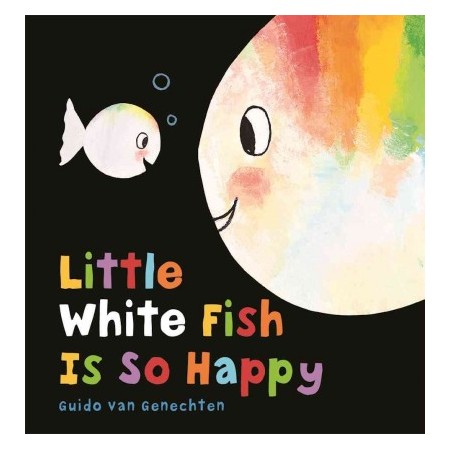
celebrate-picture-books-picture-book-review-little-white-fish-is-so-happy-cover

About the Holiday

I must confess that today’s holiday is one of my favorites. Even as a kid I howled at the unintentional ridiculousness misplaced punctuation and poor editing created and absolutely loved diagramming sentences (I know, right?!). While the rules of grammar in any language may sometimes seem confusing and unnecessary, they help structure the language so what you write and say makes sense and exactly states your meaning. National Grammar Day was established in 2008 by author Martha Brockenbrough, the founder of the Society for the Promotion of Good Grammar.

Little White Fish Is So Happy

By Guido Van Genechten


Little White Fish has been swimming on his own, but is so happy that his “mom is coming to get him.” Before he leaves, however, he wants to say “goodbye” to his many friends. “Bye-bye, snail in the shell,” he burbles. The “frog on the rock” also receives a happy “goodbye.” Little seahorse is playing under a leaf, but Little White Fish spies him.

Crab waves from behind a stone as Little White Fish swims by, and goldfish smiles at him from his spot “between the reeds.” As Little White Fish sends his friends a final farewell, they all stand “next to each other” to see him off. The best part of going home for Little White Fish, though, may be getting to swim “in front of” his mom!

In Little White Fish Is So Happy, young grammarians are introduced to a few of the most common prepositions, with clear visuals to reinforce their meaning. Bold type prompts adult readers to emphasize the prepositions and to expand on the idea by pointing out how the words apply to each particular sea creature. The endearing relationship among these friends will charm young children as the idea of being away from home is presented in an upbeat way that encourages independence while also reassuring little ones of parents’ love and attention.
celebrate-picture-books-picture-book-review-well-done-little-white-fish-cover

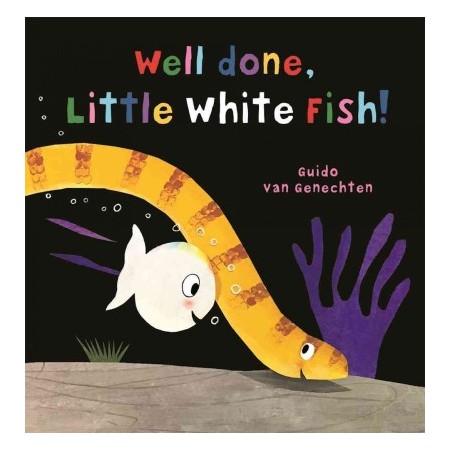
Well Done, Little White Fish

By Guido Van Genechten


Little White Fish is visiting his friends. First up is crab who is “can cut sea grass with his claws.” This is a pretty cool talent, and Little White Fish wonders what he can do. Turtle is strong enough to carry a rock on his shell, and “sea urchin easily does seven somersaults in a row. And Little White Fish? What can he do?”

Wow! Little jellyfish “can light up the dark.” Little White Fish is astonished; he knows he can’t do that. Starfish is like a ballet dancer when she stands on one leg. “Little White Fish doesn’t even have legs….” Little White Fish knows he must watch out for Octopus when he spits out ink, and he likes playing over and under with sea snake when he makes “a beautiful arch.

And Little White Fish? He “can swim really well, even backwards and upside down!” Now it’s time for his friends to be amazed, and as Little White Fish swims around his group of friends, they all cheer and applaud his special talent.

Well Done, Little White Fish explores individuality as the small fish watches each of his friends demonstrate their talents. At first everyone seems to be cleverer, stronger, and more agile than he is, but when Little White Fish displays his swimming skills, he learns that he too is unique. Bold text points out each creature’s special ability and can also serve as a gentle lesson about verbs. Van Genechten’s adorable sea creatures, with their ready smiles and buoyant enthusiasm, will delight young children as they learn facts about nature while embracing these characters.

Guido Van Genechten’s Little White Fish books, including Little White Fish, Little White Fish Has a Party, and Little White Fish Has Many Friends, make a sweet series for the youngest readers. The spare text is lively and cheerful and makes use of the type of repetition that little ones respond to. The bold, multicolored and multilayered illustrations set on a black background are eye-catching. Small children will love the smiling sea creatures and the playful relationship among the friends.

Ages 2 – 5

Clavis Publishing, 2017

Little White Fish Is So Happy | ISBN 978-1605373263

Well Done, Little White Fish | ISBN 978-1605373270

Grammar Day Activity

Active Words Playtime


It can be fun to teach grammar by playing! Prepositions such as up, down, under, in, on, through, over, and out can provide opportunities for active fun inside or outside. A playground is a perfect place to demonstrate prepositions to kids while they climb, slide, crawl, and swing on the equipment.

Inside, all you might need is a large box or a homemade pillow fort to build your child’s vocabulary. Kids will love jumping up, crouching down, getting in the box or fort, getting out of the box or fort. Pillows or an open-ended box make a great tunnel to crawl through. You and your child can even make up a story to go along with the actions.

That old perennial favorite Simon Says is another great way to play with grammar, so get creative…and enjoy grammar!

Picture Book Review