January 3 – Festival of Sleep Day

celebrate-picture-books-picture-book-review-henry-and-leo-cover

About the Holiday

After all the celebrating, we’re finally ready for some down time – and when I say down time, I mean sleep! That feeling of sinking into a deep slumber and waking refreshed the next morning is so comforting. And the opportunity to sleep in – or sleep all day? That’s luxury! To take full advantage of today’s holiday, jump in bed, pull up the covers and…Zzzzzzzzzz…

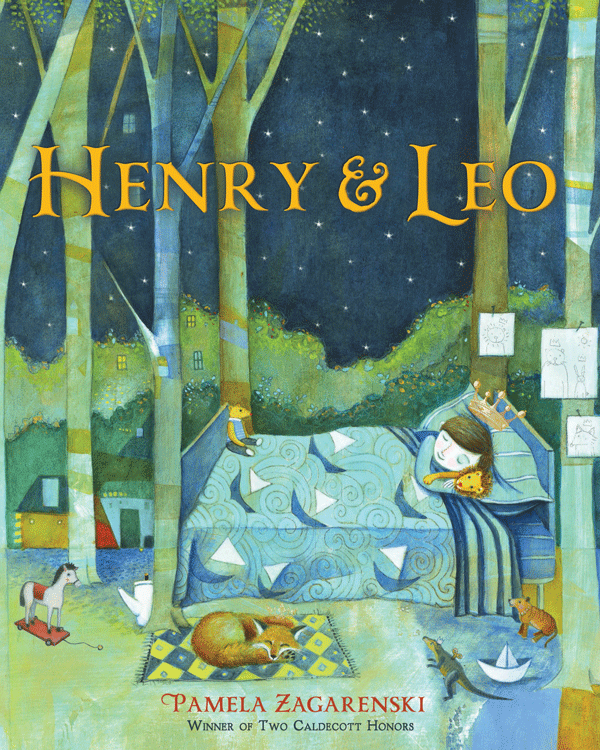
Henry & Leo

By Pamela Zagarenski


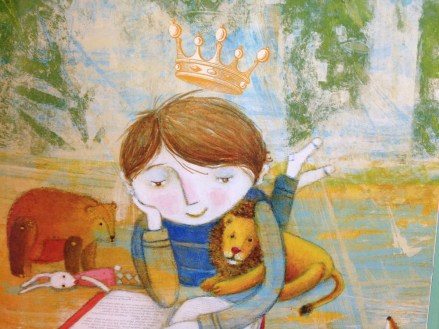
Ever since Henry was two, he and his stuffed lion, Leo, have been inseparable. “Perhaps it was his glass button eyes, which made him look as if he knew secret things” that made him so special and unlike Henry’s other toys. One Saturday Henry’s parents suggested a hike in the Nearby Woods. Henry was excited because he knew Leo would love the outing. Henry’s sister thought this idea was foolish, after all Leo wasn’t real, she said, and couldn’t love anything.

Henry didn’t care what his sister thought, and as they walked through the forest, he “could tell that Leo loved hearing the birds and finding the woodland animals as much as he did.” When evening began to fall, the family headed home, Henry riding on his father’s shoulders. At home, Henry discovered that Leo was missing. They looked everywhere, but Leo could not be found.
celebrate-picture-books-picture-book-review-henry-and-leo-henry-loves-leo

Image copyright Pamela Zagarenski, courtesy of Houghton, Mifflin Harcourt

Papa promised that they would resume the hunt in the morning, but Henry worried. He knew Leo would want to be home with him tonight, and asked that a light be left on for him. Henry’s mother suggested that since Leo was only real in Henry’s imagination that he “‘imagine Leo tucked into a safe place.’” In the morning, she said, they would return to the Nearby Woods and find him.

In the darkness of his room, clutching a stuffed rabbit and fox, with a toy bear nearby, Henry thinks about Leo. He “knows that his family just didn’t understand what it truly meant to be real.” But Henry and Leo were best friends. They cared for each other. “That’s real.”

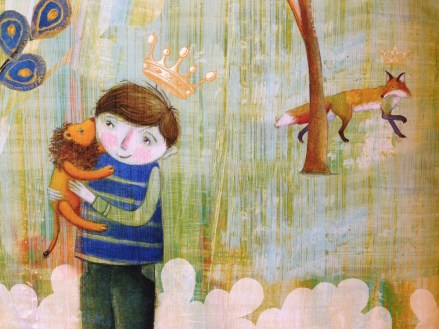
Meanwhile, in the Nearby Woods, a bear, a rabbit, and a fox discover Leo sitting at the base of a tree. With a twig, Leo sketches a house in the dirt, washed white in the gleam of the full moon. The rabbit produces a compass as the fox consults the stars. The foursome takes off down the path, watched over by owls and other night creatures. As the trip grows longer, Leo rides on the bear’s back. At last they reach the edge of the forest, and in the distance Leo points to a house bathed white in the moonlight.
celebrate-picture-books-picture-book-review-henry-and-leo-leo-loves-henry

Image copyright Pamela Zagarenski, courtesy of Houghton, Mifflin Harcourt

With the dawning sun Henry and his family take up the search again. Suddenly, Henry spies Leo near the front door. “‘Leo!’” he shouts. His family sighs in relief, but his sister and father are both perplexed. They know they had “‘looked in that very spot last night.’” As Henry hugs Leo tightly, he whispers “‘You found home! I love you, Leo.’” And Leo whispers back, “‘I love you, too, Henry.’”

With her signature grace and lyricism. Pamela Zagarenski infuses her lost-toy story with the mystical imagination of childhood. As the title suggests, she presents the experience from both Henry’s and Leo’s perspectives, echoing the wonderful ability of young children to fully embrace and transfer their emotions, giving—and accepting—love from animate and inanimate objects equally. Zagarenski’s illustrations are glorious, with the richness of royalty—a motif that is carried through in the crowns that hover above and settle on the heads of Henry, his family, other toys, and the woodland animals. Children may enjoy discussing and interpreting the different crowns. The middle spreads of nighttime in the forest are wordless, allowing the animals to communicate in their own way and in a way children believe. Young readers will appreciate the gentle suspense and be satisfied with the correctness of Henry’s prediction as Leo finds his way home. Fans of Zagarenski’s work will notice familiar images, such as teapots, tea cups, and paper sailboats, scattered among the pages.

The beauty of Zagarenski’s art and her stardust magic of imagination make Henry & Leo an excellent choice for bedtime and quiet time reading, and would be an often-asked-for addition to children’s bookshelves.

Ages 4 – 7

Houghton, Mifflin Harcourt, 2016 | ISBN 978-0544648111

Festival of Sleep Day Activity
CPB - Pillowcase

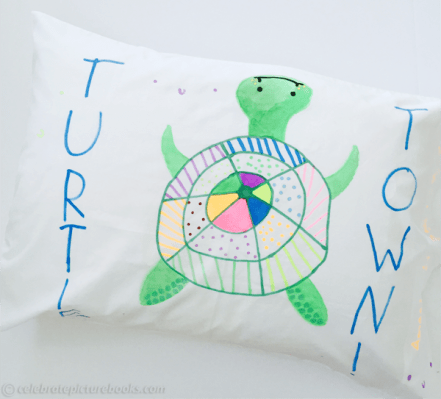
Hand-painted Pillow Case


Designing your own pillow case is a fun and easy craft to do with kids. When finished the pillow case can be used for sleeping, can be stuffed with fiber fill and sewn to create a decorative pillow, or can make a storage bag for toys or other objects.

Supplies

  • 1 pillow case
  • Fabric paint or fabric markers in several colors
  • Fiber fill or foam pillow (optional)
  • Thread and needle (optional)

Directions

  1. Design an image for the pillow case
  2. With the fabric paint or markers create the design, let dry

To Make a Decorative Pillow

  1. Fill the pillow case with fiber fill or foam pillow
  2. Sew the open end closed with the thread and needle

Picture Book Review

January 2 – Motivation and Inspiration Day

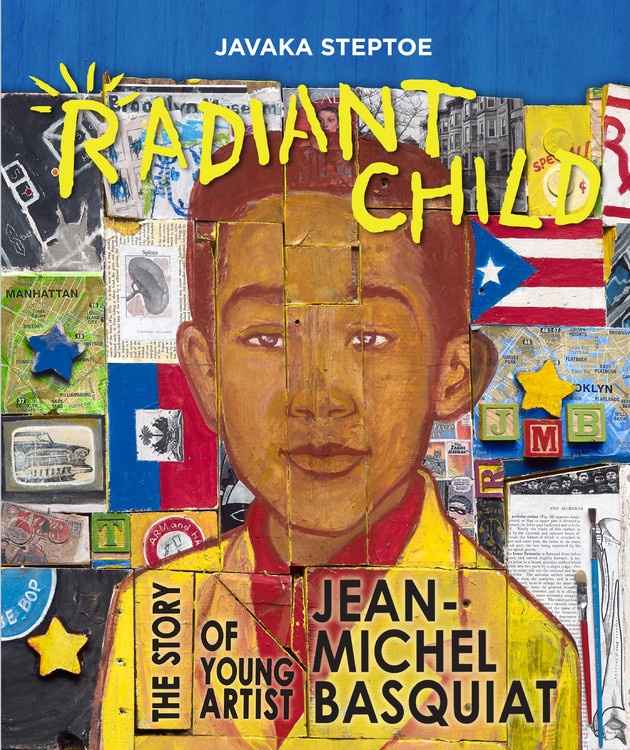
celebrate-picture-books-picture-book-review-radiant-child-cover

About the Holiday

While Motivation and Inspiration Day was instituted in reaction to the 9/11 attacks, the holiday’s influence and meaning has grown and now includes world-wide participation. Falling on the second day of the year, it encourages us to reflect on our lives—where we are and where we want to go. Take some time to consider what motivates and inspires you and follow those inner and external voices to help you achieve your dreams.

Radiant Child: The Story of Young Artist Jean-Michel Basquiat

By Javaka Steptoe


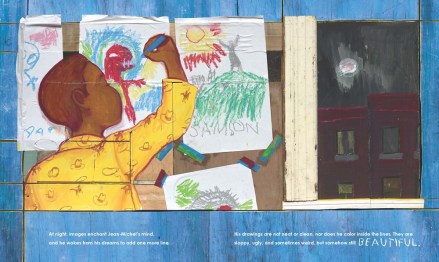
“Somewhere in Brooklyn, between hearts that thump, double Dutch, and hopscotch / and salty mouths that slurp sweet ice, a little boy dreams of being a famous artist.” All day Jean-Michel sits surrounded by colored pencils and “a storm of papers” and draws. As he sleeps his dreams swirl with images. When he wakes he adds to his drawings, scribbling away. What he creates is “sloppy, ugly, and sometimes weird, but somehow still beautiful.”

celebrate-picture-books-picture-book-review-radiant-child-beautiful-art

Image and text copyright Javaka Steptoe, courtesy of Little, Brown Books for Young People

Jean-Michel’s talent comes from his Puerto Rican mother, who has a natural sense of style and design and who always makes time to draw with her son, lying on the floor next to him. She takes Jean-Michel to art museums and theaters and reads poetry to him, but she also shows him the art of the city—its sounds, sights, style, and “patchwork” colors. Jean-Michel loves to visit the museum and read about the artwork and the artists. From these stories he “learns what it means to be a famous artist.”

When Jean-Michel is seriously injured in a car accident, his world seems scary and confusing. He mother gives him an anatomy book, which he memorizes. It erases his fears and becomes influential in his work. After returning home his life changes when his mother suffers a breakdown and can no longer live at home. “He tries drawing the terrible out of his blues, but things are not the same.” Jean-Michel visits his mother when he can, “always bringing his artwork to show, telling her that one day it will be in a museum, ‘when I am a famous artist.’”

celebrate-picture-books-picture-book-review-radiant-child-drawing

Image and text copyright Javaka Steptoe, courtesy of Little, Brown Books for Young People

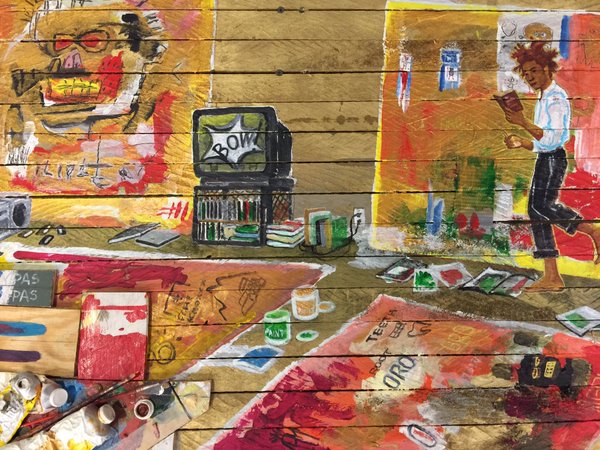
As a teenager, Jean-Michel follows his dream, moving from Brooklyn to New York City. There he stays with friends, painting, creating collages, and writing poems on paper strewn about him. At night he paints on city walls, trash cans, and other urban canvases. His art, signed ‘Samoo,’ attracts attention. People wonder, “‘Who is Samoo?’”

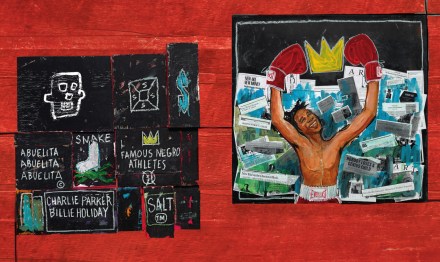
Soon his art can be found in art galleries and hanging in the homes of the people who buy his work. Jean-Michel continues to create, listening to “a sound track that is all his own.” Through talent, inspiration, and his mother’s loving influence, Jean-Michel Basquiat conquered the art world, becoming a king among artists, and fulfilling his desire to be a famous artist.

An extensive Author’s Note about Jean-Michel Basquait’s life, including his struggles with addiction and his death in 1988, the motifs and symbolism in his work that now is displayed in museums around the world and sells for millions of dollars, and a personal comment on the impact Basquait’s art had on the author follow the text.

celebrate-picture-books-picture-book-review-radiant-child-studio

Image and text copyright Javaka Steptoe, courtesy of Little, Brown Books for Young People

Javaka Steptoe’s compelling biography of this complex, brilliant artist who people called “radiant, wild, a genius child” beautifully brings to life the inspirations and motivations that fueled his unique and intense talent. Steptoe delivers the story in staccato and flowing sentences, using consonance, assonance, repetition, the rhythms of a poet. Taking the reader from Jean-Michel’s childhood to adulthood to show how maintaining his focused determination, self-confidence, and persistence over many years led to his ultimately becoming a famous artist demonstrates that success is not a matter of luck, but of belief in oneself despite obstacles. Steptoe sensitively addresses the serious injury Basquiat suffered, his mother’s mental illness and Basquiat’s continued love for her, and his unsettled teenage years to complete this far-reaching life story.

celebrate-picture-books-picture-book-review-radiant-child-boxing-image

Image and text copyright Javaka Steptoe, courtesy of Little, Brown Books for Young People

Steptoe’s mixed-media paintings were created on found wood from neighborhoods across New York City. While Steptoe does not reproduce any of Basquiat’s work, he states that readers will find “original pieces that were inspired by him and my interpretations of his paintings and designs.” As befitting his subject, Steptoe offers pages that burst with vibrant color and intricate details and beat with the pulse of the city, the people, the dreams, and the imagination that Basquiat transcribed onto paper, walls, and canvas. Part collage, part fine art, Steptoe’s illustrations will fascinate children and entice them to linger to take in all the emotion and meaning in each. The final spread, a crowd scene made up of photographs, sets Basquiat in the midst of people whom he and his art continue to inspire.

Radiant Child: The Story of Young Artist Jean-Michel Basquiat offers children an inspirational model of creativity, compassion, and confidence no matter where their talents lie. The book is an excellent choice for school, public, and home libraries.

Ages 6 – 10

Little, Brown Books for Young Readers, 2016 | ISBN 978-0316213882

Learn more about Javaka Steptoe, his books, art exhibitions, and life on his website!

Motivation and Inspiration Day Activity

celebrate-picture-books-picture-book-review-motivation-and-inspiration-day-craft

Found-Item Crafts


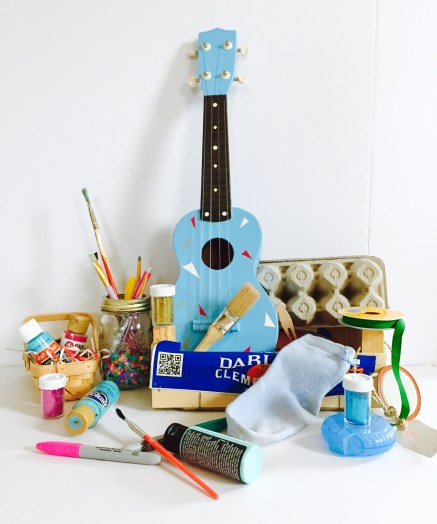
Each person finds motivation and inspiration in different things, places, and people. Today, try to create something new from the materials around you. Boxes, bottles, wire, magazines, cloth, wood, sponges—almost anything—can be transformed with some imagination. With those old socks, corks, flower pots, candle stubs, bits of ribbon, clementine crate, paint, glitter, beads, and more, you can make something useful, a decoration for your room, or even a gift for a friend!

Picture Book Review

January 1 – Z Day

celebrate-picture-books-picture-book-review-alphaoops-cover

About the Holiday

On this first day of the year it seems fitting to let the last letter of the alphabet shine. Today all of those with last names that start with Z get to move to the front row and the front of the line! You might get creative with your celebrations and eat only foods that start with Z—ziti and zucchini sound good, buy a zipper or something zany, read a zine about zombies, and of course go to the zoo to see the zebra!

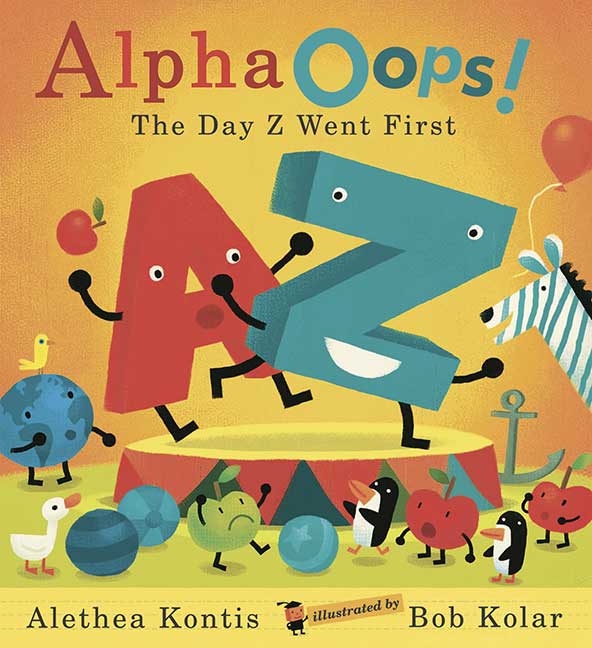
AlphaOops! The Day Z Went First

Written by Alethea Kontis | Illustrated by Bob Kolar


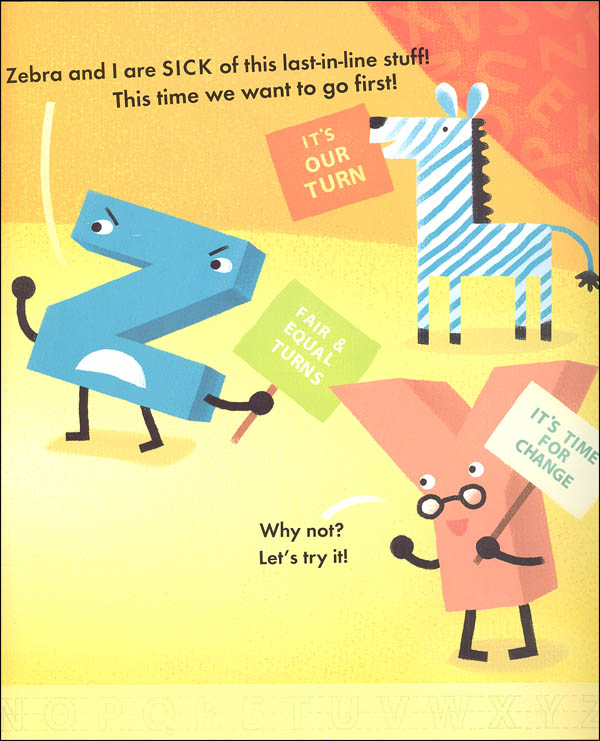
The letter A stands on a little pedestal holding aloft an apple. “A is for app—,” she starts, but is suddenly interrupted by Z, who states, “Zebra and I are SICK of this last-in-line stuff! This time we want to go first!” Y is all for this change and wants to give it a try. Z jumps on the pedestal, and with pride and a prop reveals, “Z is for zebra.” Next up is Y and with her knitting on her lap says, “Y is for yarn.” Although X is a bit wrapped up in Y’s craft, he still manages to plonk out, “X is for xylophone.”

celebrate-picture-books-picture-book-review-alphaoops-z-complains

Image copyright Bob Kolar, 2012, text copyright Alethea Kontis, 2012. Courtesy of candlewick.com

W spouts off that “W is for whale, and P, lounging in swimming ring, is happy to tell you that P is for penguins as two of the little fellows toddle nearby.” Wait a minute! P doesn’t come after W…or is it before W? Hmm…This is getting confusing. V wants her rightful place and confronts P, but P brings up the point that no matter how the alphabet runs, some letters “are still stuck in the middle.” N agrees, and M takes off running “closer to the end, just to mix it up a bit.”

celebrate-picture-books-picture-book-review-alphaoops-w-and-p

Image copyright Bob Kolar, 2012, courtesy of bobkolarbooks.com

A is perturbed by this whole state of affairs, but Z is excited. O takes over with “owl,” and N flies off in the “night.” H takes the spotlight with a tall stack of hats while G waits in the wings whispering, “H, dear, it’s not our turn yet!” A is now fuming. H, however, is happy with her usual lot in life, and R, leaning on her rainbow-colored umbrella, agrees. Z is jumping! “Go wherever you want! Just hurry up, or we’ll never get to the end.” S rushes off to be ready for the page turn where he wrangles a snake above his head. I is chased by insects, V plays the violin, and J runs away with a jack-o’-lantern.

E blasts off toward Earth, where “F is for flowers. And fairies.” Hold on there a minute! V is upset: “Hey, I didn’t get to pick two things. I think I should get another turn.” X, on the other hand seems ok with it because he doesn’t “have much to choose from.” All this fuss is making Z crazy. He just wants things to move along.

celebrate-picture-books-picture-book-review-alphaoops-v

Image copyright Bob Kolar, 2012, courtesy of bobkolarbooks.com

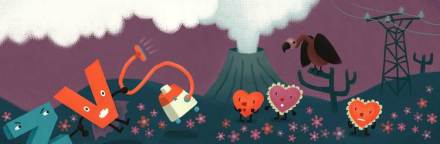
Ok, then…the next letters get in line. “T is for taxi and train. L is for lemons and lollipops. K is for kangaroo and kites. And C is for cat and canary in cages.” V is back, inserting and asserting herself with a vacuum in hand, a volcano in the background, a vulture lurking, and valentines scattered about. But Z yanks her away as G says, “Ooh, V is for violence.”

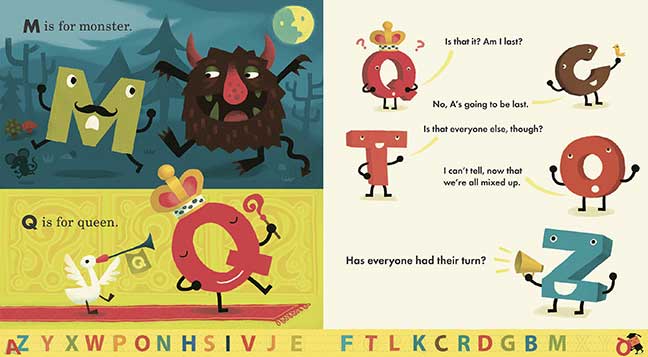
R gets his chance to pop open his umbrella, D fights a dragon, and G frolics with a great gorilla. B gets a bevy of words that make a big mess. M dashes away from a monster, and Q is queen for the day. And that’s that, right? Is it? It’s kind of hard to tell. Z shouts through a megaphone, “Has everyone had their turn?” No! It seems U has been in the bathroom since P.

celebrate-picture-books-picture-book-review-alphaoops-m-and-q

Image copyright Bob Kolar, 2012, text copyright Alethea Kontis, 2012. Courtesy of candlewick.com.

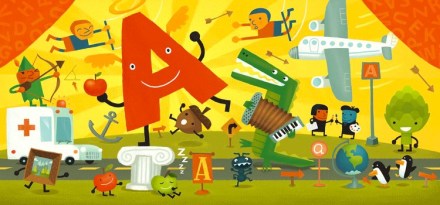
U is uncertain whether the other letters still want her, but they usher her to the podium. Finally, it is A’s turn, but where is she? “Yikes!” exclaims Y and it’s easy to see why. A has been rounding up the words! Twenty-two of them, in fact—23 if you count “and.” The other letters cheer, and Z says he’s sorry for being bossy, to which A says, “apology accepted.”

celebrate-picture-books-picture-book-review-alphaoops-a-at-last

Image copyright Bob Kolar, 2012, courtesy of bobkolarbooks.com

Alethea Kontis’s classic alphabet romp is a hilarious, personality filled celebration of the 26 letters that compose our language. As Z’s mixed up experiment goes awry, the letters’ sassy and squabbling comments make for laugh-out-loud reading. Sly wordplay adds to the fun, making this an alphabet book that older kids will enjoy as well. Subtle lessons on cooperation, teamwork, acceptance, and inclusion give readers of AlphaOops: The Day Z Went First lots to discuss while enjoying the show.

Bob Kolar’s bold, bright, and enthusiastic letters nearly pop off the page. Their expressive eyes and mouths display their excitement, distress, pride, and other emotions as the status quo is shaken up by Z. As each letter gets their turn, Kolar infuses the page with visual puns. For example, I is being chased by “insects,” that also happen to be bees (Bs?). His clever choices of nouns allow for discussion of other forms of the words too—as when S juggles a snake that…well…snakes above him. Kids will love lingering over the illustrations to find all of the jokes and letter-related images and to make sure that all of the letters get their due.

AlphaOops! The Day Z Went First is so much more than an alphabet book. Adding it to any child’s bookshelf will suit them to a T.

Ages 3 – 8

Candlewick, 2012 (reprint) | ISBN 978-0763660840

To discover more about Alethea Kontis and her books for kids and older readers as well as book-related activities, visit her website!

Find a gallery of picture book art, personal art, and other projects by Bob Kolar on his website!

Z Day Activity

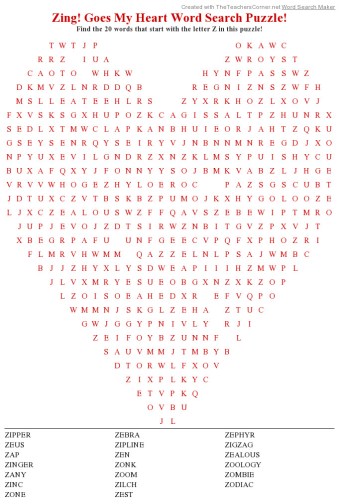
celebrate-picture-books-picture-book-review-zing-goes-my-heart-word-search

Zing! Goes My Heart Word Search Puzzle


Find the 20 words that begin with the letter Z in this printable heart-shaped Zing! Goes My Heart Word Search puzzle. Here’s the Solution!

celebrate-picture-books-picture-book-review-alphaoops-cover

You can find Alpha Oops! The Day Z Went First at these booksellers

Amazon | Barnes & Noble | Books-a-Million | IndieBound

Picture Book Review