July 20 – National Moon Day

celebrate-picture-books-picture-book-review-to-the-stars-cover

About the Holiday

Today’s holiday celebrates the astounding technological achievement that saw men land—and walk—on the moon. On July 20, 1969 Apollo 11 with astronauts Neil Armstrong, Buzz Aldrin, and Michael Collins touched down on the moon. Six hours after landing, Armstrong made the first “small step for man, one giant leap for mankind” when he descended the ladder of the space craft to the moon’s surface. He spent two and a half hours exploring our nearest neighbor. Aldrin also made a lunar walk. Between them, the two astronauts brought 47.5 pounds of material back to Earth. Millions of people watched live coverage of the moon landing on television, cheering along with NASA at this amazing feat.

To the Stars! The First American Woman to Walk in Space

Written by Carmella Van Vleet and Dr. Kathy Sullivan | Illustrated by Nicole Wong


As a child Kathy Sullivan loved to explore. Her father designed airplanes, and when he brought home blueprints, she carefully studied every line and curve. When she saw airplanes in the sky she wished she were on them, flying to exciting locations all over the world. Maps and foreign languages fascinated her. “Their strange symbols, exotic tales, and musical sounds made her feel like the world was waiting for her.” Kathy wanted to see that whole world and thought maybe she’d like to be a spy or a diplomat, but her friends and other adults told her those weren’t jobs for women.

celebrate-picture-books-picture-book-review-to-the-stars-blueprints

Image copyright Nicole Wong, courtesy of nicole-wong.com

But Kathy always followed her heart. She loved going fishing with her dad and brother, finishing the day with a swim. She “delighted in how her arms and legs moved in slow motion underwater.” Kathy was still a teenager when she learned how to pilot a plane. At first the busy instrument panel made her nervous, but she quickly learned how to manage all the “dials, buttons, and numbers.”

Kathy got a taste for the thrill of space when she bravely jumped at the opportunity to ride in a Breezy—an open air framework plane. Sitting at the very tip of the airplane, in front of the pilot, Kathy had a bird’s eye view. “The wind rushed past her face so fast it pushed her cheeks back. Higher! Faster! Young Kathy looked at the ground below her feet. She felt like she could see the whole world.”

Later, as the first American woman to walk in space, she did!
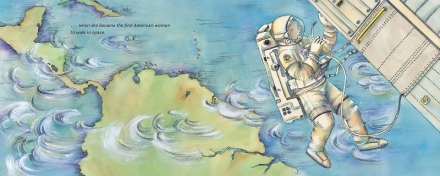
celebrate-picture-books-picture-book-review-to-the-stars-spacewalk

Image copyright Nicole Wong, courtesy of charlesbridge.com

Carmella Van Vleet and Dr. Kathy Sullivan, have written a compelling biography of Dr. Sullivan that not only tells the story of her adult achievements, but also reveals the childhood and teenage motivations and influences that fostered her journey to the stars. As each event in Kathy’s young life is introduced, it is followed by an adult accomplishment: Kathy’s poring over her father’s aircraft blueprints leads to a spread of college-age Kathy studying charts in textbooks. Her enjoyment of swimming underwater is followed by an illustration showing her NASA training underwater. Her initial introduction to a plane’s instrument panel informs her later responsibilities inside the spacecraft. And the question she once asked herself as a child—what kind of job would allow her to see the whole world—is answered as the astronaut Kathy gazes down at Earth from space.

celebrate-picture-books-picture-book-review-to-the-stars-breezy

Image copyright Nicole Wong, courtesy of charlesbridge.com

Nicole Wong’s lovely, realistic watercolor and ink paintings clearly show readers Kathy Sullivan’s trajectory from curious girl to accomplished astronaut. The blueprints that Kathy studies are filled with schematics. The aqua water she swims in swirls and bubbles in the wake of her cannonball dive, the crisscrossing fields lay like a mottled green quilt under the Breezy. Especially stunning and effective are the illustrations of Dr. Sullivan’s work with NASA. Kids will love the up-close view of the spacecraft’s instrument panel with its myriad buttons and dials, and find the gorgeous two-page spreads of the space shuttle’s launch, the view from the cockpit, and Kathy’s spacewalk particularly thrilling.

Following the text are a personal note from Kathy Sullivan to her young readers, as well as more extensive biographical notes on how Dr. Sullivan discovered her love of science and the NASA missions she supported. Two more pages highlight the women of the first space-shuttle class, which included Kathy Sullivan, and other firsts by eight other women in space.

To the Stars is a wonderful book to teach children that following their own heart is the best path to future happiness and personal accomplishment. It’s a nice addition to any budding scientist’s or adventurer’s library!

Ages 5 – 9

Charlesbridge, 2016 | ISBN 978-1580896443

To find fun activities for To the Stars—including how to make space play dough—as well as other books by Carmella Van Vleet, visit her website!

To learn more about Nicole Wong and view a portfolio of her artwork, visit her website!

National Moon Day Activity

celebrate-picture-books-picture-book-review-moon-and-earth-coloring-page

Out of this World Coloring Page


The view of the Moon from Earth or of Earth from the Moon is spectacular! Have fun coloring this printable Out of this World Coloring Page!

Picture Book Review

June 16 – Dump the Pump Day

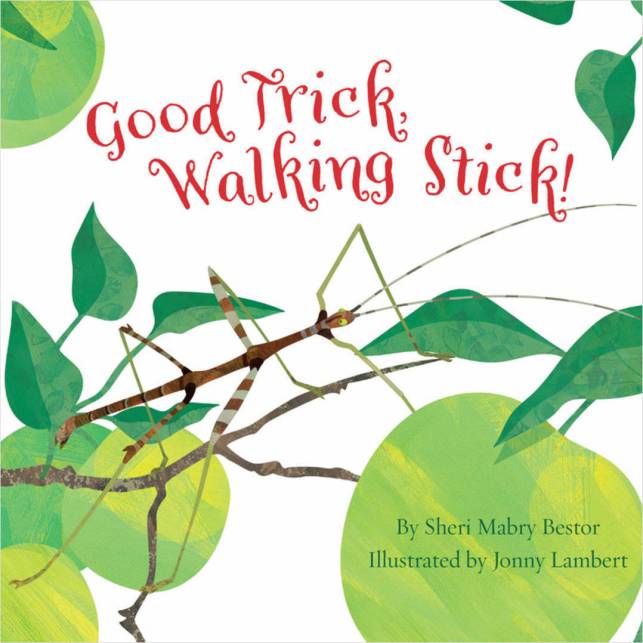
celebrate-picture-books-picture-book-review-good-trick-walking-stick-cover

About the Holiday

There’s no better time than early summer to consider “dumping the pump” and traveling by foot, bicycle, scooter, skates, skateboard…there are so many options! Leaving the car at home saves on gas costs, is better for the environment, and leads to a great exercise workout. Today, grab your walking or tennis shoes and with a friend or alone, take an example from the subject of today’s book and enjoy the pleasure of traversing the outside world!

Good Trick, Walking Stick!

Written by Sheri Mabry Bestor | Illustrated by Jonny Lambert


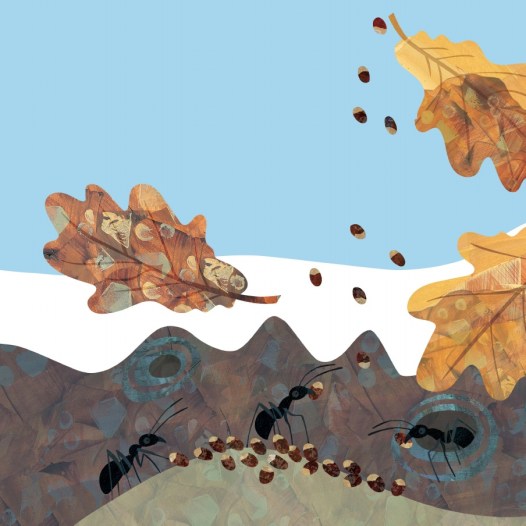
The walking stick is one insect that knows a thing or two about tricks. Even before it’s born wile plays a part in its survival. A mother walking stick drops her eggs where they will be buried by autumn leaves—and found by ants that think they are delicious seeds to eat. Why would a mother purposefully do this?! She knows that the ants will take the eggs to their colony, where they will eat only the tops leaving the baby walking sticks undisturbed. The ants will then drag the remains of the “seeds” to their garbage dump area, where they will spend a warm winter safe from predators until spring.

celebrate-picture-books-picture-book-review-good-trick-walking-stick-interior-art-eggs

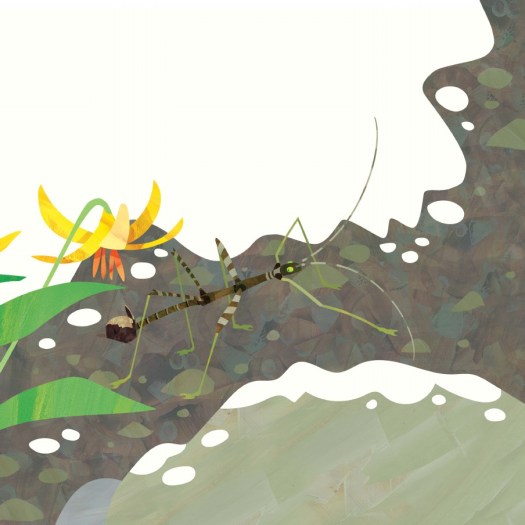
In the spring a baby hatches. It look like a tiny twig—a twig that can walk! The baby searches for food and munch, munch, munches the leaves it finds. As it becomes bigger it molts, shedding its old skin and growing a new one. The walking stick looks just like the branches that it lives on. It is perfectly camouflaged! “Good trick, walking stick!”

But a bird with keen eyesight swoops down and in an instant grabs the walking stick in its beak. Quickly, the walking stick squirts out a bad-smelling juice. The bird spits it out, but has gained a snack while the walking stick has lost a leg! It’s okay, though; the walking stick will just grow a new one! “Good trick, walking stick!”

The walking stick finds a tree with others of her kind hidden in its branches. The leaves make delicious meals. During the day the walking stick can change color to blend in with the sunlit bark of the tree and stay cooler. At night the walking stick becomes darker to hide in the shadows and stay warm. “Good trick, walking stick!”

When a squirrel brushes past, looking for a meal, the walking stick “pulls in her legs and drops to the forest floor, just like a stick falling off a larger branch. The stick insect is safe.” All day the insect lies on the ground, not moving, pretending to be just another cutting. At nightfall the walking stick climbs back into the tree. The squirrels and birds are resting now, so the stick insects “Munch munch. Crunch. Munch.”

celebrate-picture-books-picture-book-review-good-trick-walking-stick-interior-art-camouflage

With the onset of fall stick insects begin looking for mates. The females “spritz their perfume into the cooling air.” Males find them. Even if a walking stick does not have a mate, she can still produce eggs which will all develop into females. The eggs settle into the fallen leaves, ready to begin their unique life. “Good trick, walking stick!”

Stick insects are some of the most unusual creatures in the world. Measuring from an inch or two to 21 inches (53 centimeters), they can be found in forests, parks, even your own backyard! Sheri Mabry Bestor’s story of a year in a walking stick’s life is filled with action, suspense, and the clever ploys stick insects use to survive. Bestor’s enthusiastic, conversational tone and evocative language will engage kids over a wide range of ages. Each page also contains fascinating scientific sidebars that expand on the events in the story.

Jonny Lambert’s collage-style illustrations are a perfect match for the text. The mottled hues and textures of nature are beautifully represented in the vibrantly colored two-page spreads. The scientific details of the stick insect’s life are clearly and organically depicted, making it easy for kids to understand and enjoy the concepts: on one page ants carry away eggs with missing tops while on the next baby walking sticks emerge from the same images. Illustrations of the stick insect’s camouflage are particularly effective, and the cyclical quality of the story and the insect’s life are well portrayed.

For teachers and for kids who love the natural world and are curious about its unique creatures, Good Trick, Walking Stick is a wonderful addition to their school or personal library.

Ages 5 – 9

Sleeping Bear Press, 2016 | ISBN 978-1585369430

Dump the Pump Day Activity

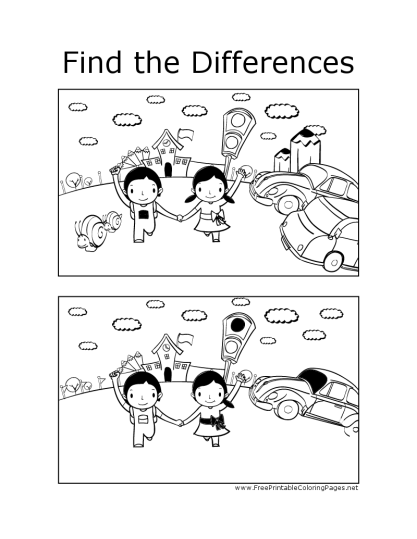
celebrate-picture-books-picture-book-review-walking-find-the-differences-puzzle

Take a Stroll Puzzle


You can see so many amazing things when you take a walk! But can you spot the 15 differences between the two pictures in this printable Take a Stroll puzzle?

May 31 – Web Designer Day

celebrate-picture-books-picture-book-review-coding-games-in-scratch

About the Holiday

Today we laud all the brilliant web designers who bring us our favorite sites and make it so easy for us to shop, do business, watch videos, and play games. We can’t even imagine life without them anymore. If you know a web designer, thank them for their hard work!

Coding Games in Scratch: A Step-by-Step Visual Guide to Building Your Own Computer Games

By Jon Woodcock


Video games are so fun to play! You know you’re good at them; don’t you sometimes wish you could make one of your own? With Coding Games in Scratch, you can! In just 11 chapters you’ll discover all the basics of creating different kinds of games plus how to add special effects, cool characters, exciting backgrounds, music and sounds, and more.

Chapter 1 reveals what makes a game fun to play. Things like characters, objects, obstacles, the mechanics of the game, story, sound, speed, atmosphere, rules, goals, and difficulty levels all contribute to the playability and enjoyment of the games you create. Discussions of the various types of games and a bit about coding round out Chapter 1.

Chapter 2 introduces the programming language Scratch developed by the Lifelong Kindergarten Group at MIT. Here you’ll learn about objects, scripts, and running a program. It shows you where to get Scratch and provides a tour.

Chapter 3 welcomes you to building your first game—Star Hunter, which is a fast-paced underwater treasure hunt. Some of the things you’ll learn include setting the scene, building the script, adding sound, how to introduce an enemy, collisions, and collecting stars. Plus you’ll learn some hacks and tweaks for making your game the best it can be.

Love maze games? Chapter 4 shows you how to build Cheese Chase and help Mimi the mouse find her cheese while avoiding beetles and ghosts. Here you also learn about keyboard control, using the paint editor, making things spooky, creating intricate mazes, and how to move characters along the passages.

Chapter 5 covers Circle Wars—a quick-paced search and chase game full of clones and bouncing friendly and unfriendly circles. In Chapter 6 you’ll discover the gravity of the situation. Literally. Jumpy Monkey may love to leap, but he has to come to earth sometime!

Building Doom on the Broom from Chapter 7 introduces scene, casting spells, enemy attacks, explosions, adding harder enemies, and how to give players extra lives. Phew! Platform games are the subject of Chapter 8. You’ll find the ins, outs, ups, and downs, of jumping from platform to platform, falling, portals, progressing through levels, and more.

Racing games are covered in Chapter 9 with Glacier Race, where cars compete with the clock to avoid obstacles and gather the most gems. You’ll discover how to use game loops to keep the action happening just right, how to make a scrolling road, all about collisions and spins, and adding a penguin race official to start things off and end the race.

Music more your thing? Enjoy a brain teaser? Welcome to Chapter 10 and Tropical Tunes where you listen to drums play and then repeat the sounds you hear in an ever-growing song.

Now that you’ve learned to create video games, what’s next? Chapter 11 tells you about remixing and how to create your very own games. If you really love making games, there’s a section on the kinds of jobs there are in video gaming.

In Coding in Scratch Jon Woodcock clearly explains with text and illustrations how kids can create fun games with a good bit of complexity. Screen shots and digital imagery show kids exactly what they will encounter as they progress through the different kinds of games. Colorful pages and Woodcock’s easy-to-understand directions makes this a go-to guide for budding programmers.

So grab the book, your computer, and your creativity and start Coding Games in Scratch!

Ages 8 – 13

DK, Penguin Random House, 2015 | ISBN 978-1465439352

Web Designer Day Activity

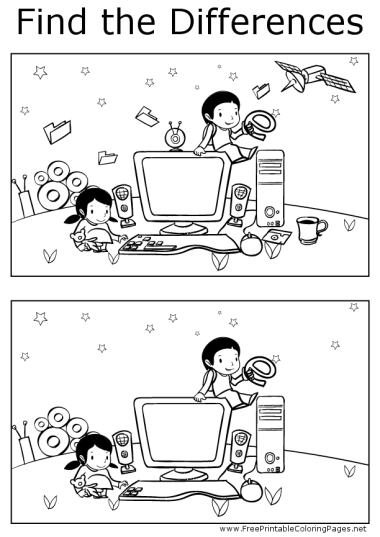
celebrate-picture-books-picture-book-review-computer-kids-puzzle

Computer Kids Find the Differences Puzzle


Whenever a designer builds a website there are bugs to work out. Can you discover the “bugs” in these pictures? Take a close look at this printable Computer Kids Puzzle and find the differences!

May 14 – International Astronomy Day

celebrate-picture-books-picture-book-review-star-stuff

About the Holiday

Instituted by Doug Berger in 1973, International Astronomy Day is held twice a year—in spring and fall—to raise awareness of the benefits and wonder of studying the stars. Museums, observatories, universities and astronomy clubs around the world provide public access to astronomical instruments and hold special programs about this interesting and ancient science. To celebrate, attend an International Astronomy Day event, take time tonight to gaze at the sky and pick out the constellations you recognize, or read about the stars and their importance to history and the future.

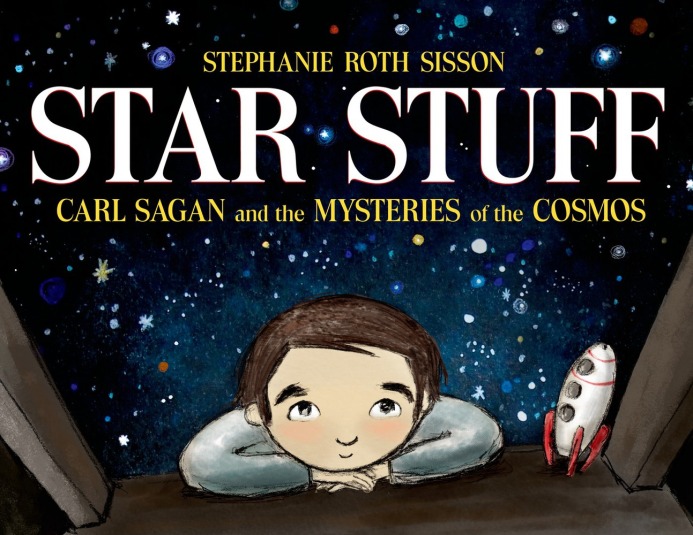
Star Stuff: Carl Sagan and the Mysteries of the Cosmos

By Stephanie Roth Sisson


A boy named Carl Sagan may have lived in a small apartment in Brooklyn, New York, but he was part of so much more—a large city on the third planet from the sun in a “neighborhood of stars” which are part of the Milky Way galaxy. Growing up, Carl marveled at the connections. He had an innate curiosity and was astonished by everything he saw; his imagination was out of this world!

When he attended the 1939 World’s Fair as a young child, he experienced things he had never seen before; he saw a robot, new inventions, and a time capsule filled with messages for the future. At night he looked up at the stars and wondered; he thought they looked like lightbulbs on long black wires. He went to the library to read about the stars.At first the librarian thought he meant movie stars, but soon he got the book he wanted. Reading it made his heart beat fast.

Carl imagined what kinds of creatures and sights he might discover if he were able to travel through space. He tried standing with his arms outstretched and wishing he was on Mars like his favorite science fiction character, John Carter, but nothing happened. He decided he would have to make his “life in space” a reality himself so he went to college and became an astronomer, cosmologist, astrophysicist, astrobiologist, and so much more.

Dr. Carl Sagan then worked with other scientists to develop the exploratory crafts Mariner 2, Mariner 9, and Pioneer 10 that have gone into space to investigate Mars, Venus, and Jupiter. When they sent back pictures, Carl analyzed them and learned more about our solar system

Carl wanted everyone to know and understand Space. He created a television program that explained in easy terms what the stars, planets, and other celestial bodies are made of, how they came to be, and how we are connected to them. The Earth and every living thing are made of star stuff, Carl told his audience. The show – Cosmos: A Personal Voyage – was a hit, watched by millions of people.

Scientists have long wanted to know if life exists on other planets, and as time went on they had the technology to explore the possibilities. Carl worked with other engineers to create Voyager 1 and Voyager 2 to tour the outer solar system and beyond. Remembering that time capsule he saw so long ago at the World’s Fair, Carl had a marvelous idea! He recorded messages and sounds from Earth and made a Golden Record that was carried on each Voyager mission.

Carl Sagan, that boy made of star stuff who grew up to be so many things—astrophysicist, explorer, educator, philosopher, writer, and more—changed the world through the power of his imagination.

Stephanie Roth Sisson’s biography of Carl Sagan wonderfully honors the dreamer and scientist whose imagination went into Space and brought it down to Earth for others to understand and enjoy. The story begins in Sagan’s neighborhood and home, where illustrations depict the curiosity that fueled his passion. Just as the mysteries of Space quickly captured his attention, the pages fill with the night sky and its twinkling lights and celestial bodies. A most ingenious page takes advantage of a two-page vertical spread that transforms Carl’s bedroom window into a space capsule that blasts him into the cosmos as he ponders the stuff of stars.

His work as an adult collaborating with scientists and engineers to develop deep space exploration craft is clearly drawn with pages containing multiple panels of his job and accomplishments up close and from the distance of outer space. A particularly arresting three-page fold-out spread reveals the moment Carl discovered his love of the stars and Earth’s sun (holding a flashlight behind the depiction of the fiery sun would be a show-stopper, especially during a night-time read).

Kids familiar with today’s space travel and the awe-inspiring images sent back to Earth will love this book. To quote Carl Sagan, Star Stuff will definitely elicit a “Wowie!” from readers.

Ages 4 – 8

Roaring Brook Press, 2014 | ISBN 978-1596439603

International Astronomy Day Activity

celebrate-picture-books-picture-book-glow-stars

Make a Room Observatory


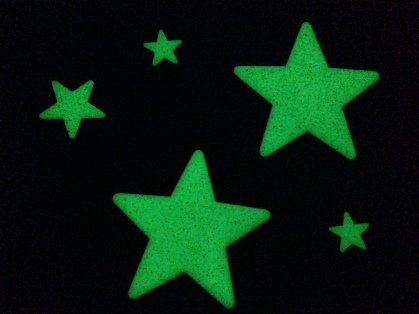
If you like gazing at the stars before going to sleep, why not bring them inside? With adhesive glow-in-the-dark stars, available at craft and toy stores, you can create a night sky full of celestial bodies that stay lit long after you’ve said goodnight. You can add planets, rocket ships—even your favorite constellation! This can be a nice alternative to a night light or transition children from a full night light to a gentle, comforting glow in their room.

Picture Book Review
April 19 – It’s Mathematics Awareness Month

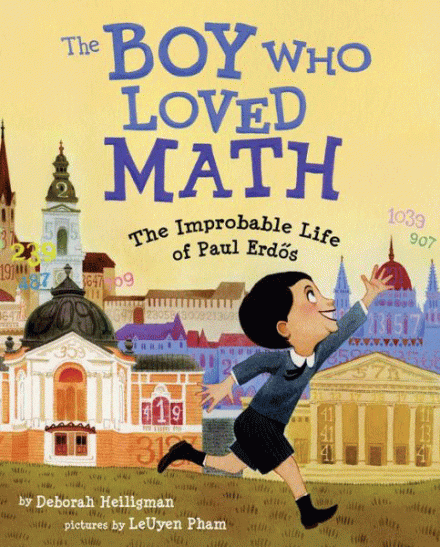
The Boy Who Loved Math: The Improbable Life of Paul Erdős by Deborah Heiligman and LeUyen Pham picture book review

About the Holiday

If you think numbers are numero uno then Math Awareness Month is for you! During April mathematicians, engineers, and all techie types are honored for their contributions to the advancements in science, medicine, computer technology, environmental concerns, and other areas. It’s also a great time to explore and experiment and discover all the benefits of being a numbers-oriented person. This year’s theme is “The Future of Prediction.” Activities will explore how math and statistics are the future of prediction, providing insight and driving innovation. 

The Boy Who Loved Math: The Improbable Life of Paul Erdős

Written by Deborah Heiligman | Illustrated by LeUyen Pham


In Budapest, Hungary a boy is born who loves math. His name is Paul Erdős and he lives with his mother, who loves him “to infinity” just as Paul loves her. When she goes back to work as a math teacher, she leaves Paul with Fräulein, his nanny. Fräulein loves rules and tries to get Paul to sit still, eat all his lunch, take a nap—to obey. But Paul hates rules.

At three years of age he teaches himself to count the days until his mother will be home with him 100 percent of the time. Knowing the number makes Paul feel better as his head is constantly full of numbers and what they can do. One day when he is four years old, he meets a woman and asks her two questions—what year she was born and at what time. When the woman tells him, it only takes him a moment to reveal how many seconds she has been alive.

He continues to play with numbers, learning more and more about the various types. He decides he will be a mathematician when he grows up. When Paul is old enough to go to school, he once again encounters rules he can’t abide. His mother decides he will be schooled at home, and even though this means more time with Fräulein, Paul considers it the better option.

There’s just one thing – while Paul thinks about numbers, Fräulein and his mother do everything for him. At meals they cut his meat and butter his bread; they dress him, and tie his shoes. When he becomes a teenager, he goes to high school and meets other kids who love math. He and his friends spend all their time doing math and by the time Paul is 20 he is famous around the world for his math equations.

There’s just one problem – even as an adult, Paul is so focused on numbers and math that he still doesn’t know how to do basic things for himself. When he is 21 he’s invited to go to England to work. At his first dinner there he stares at his bread and he stares at his meat. What is he supposed to do? With a little experimentation, he figures it out, but he also figures out that he sees the world in a different way.

He doesn’t want a normal life with a family and a house and a regular job. He designs for himself a very unusual lifestyle. Everything he owns fits into two suitcases, and with a little money in his pocket he flies from city to city to do math. He knows so many mathematicians that wherever he goes they invite Paul to stay with them. These families take care of Paul just as his mother and Fräulein had! They do his laundry, cook his meals, and pay his bills.

But even so, everyone loves “Uncle Paul!” He brings people together and shares his knowledge. His work in mathematics has given the world better computers, better search engines, and better codes for our spies to use. He was so admired that even now people represent their relationship with Paul by giving it a number – the “Erdős number.” Paul was a unique person who counted numbers and people as his best friends and experienced the world in a way that added up to a very special life.

Reading Deborah Heiligman’s The Boy Who Loved Math is a liberating experience. Her biography reveals not just what Paul Erdős did, but the quirky genius he was. It also honors all the people around the world who embraced his personality, allowing Erdős to focus on the work he was born to do. Heiligman’s engaging patter, full of interesting anecdotes, humor, and personality, is storytelling at its best and provides an absorbing look at a very unique life.

LeUyen Pham’s illustrations perfectly complement the text, exposing Erdős’s chafing under rules, his delight in math, and his development from youth to old age. Each fascinating page cleverly represents the way Erdős saw the world as numbers, equations, and geometric shapes appear on buildings, domes, and even in the very air! The text too is infused with numerals and mathematical symbols (“Paul loved Mama to ∞, too!), making this a prime book for any math lover!

Ages 5 – 9

Roaring Brook Press, 2013 | ISBN 978-1596433076

Mathematics Awareness Month Activity

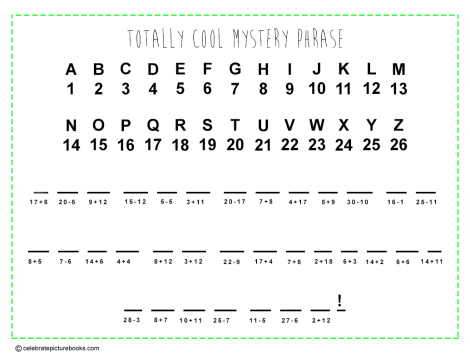
CPB - Math Mystery Phrase


Totally Cool Mystery Phrase! Puzzle


What plus what equals an equation that can’t be beat? You and numbers, of course! Complete this Printable Totally Cool Mystery Phrase! puzzle to discover a coded sentence! Here’s the Solution!

April 18 – It’s National Inventor’s Month

The Most Magnificent Thing by Ashley Spires picture book review

About the Holiday

Perhaps April was chosen as Inventor’s Month because the blossoms of early spring echo the flourish of ideas that come from fertile minds. This month honors all the men and women throughout history who dared to think differently and changed the world. Today, that proud tradition continues in the excitement of school labs and classrooms, through online courses and computer technology, and in private homes where people of all ages are pondering and creating the next big thing. If you have a knack for innovation or invention, take time to sit down and work on your ideas today.

The Most Magnificent Thing

By Ashley Spires


A little pony-tailed girl and her puppy do everything together. They race, eat, explore, and relax. When she makes things, her best friend unmakes them. One day the girl has a brilliant idea—she is going to make “the most MAGNIFICENT thing!” In her mind it’s going to be “easy-peasy.” She knows exactly how it will look and how it will work.

With her faithful assistant following at her heels, the girl gathers materials and goes to work on the sidewalk outside her home. The girl “tinkers and hammers and measures” while her assistant “pounces and growls and chews.” When the little invention is finished, they stand back to examine it. Hmmm…it doesn’t look quite right. It doesn’t feel quite right either. In fact it is all wrong! The girl tries again.

She “smooths and wrenches and fiddles” while her assistant “circles and tugs and wags.” It still turns out wrong. Determined to make her vision reality, she gives it another go…and another…and another. She makes her invention different shapes, gives it various textures, measures out assorted sizes. One attempt even smells like stinky cheese! But none of these creations are MAGNIFICENT.

People stop by and offer encouraging—even admiring—remarks, but the little girl just gets mad. Can’t they see how wrong her invention is? In her anger the little girl works at a fevered pitch, shoving parts together, her brain fogged by “all the not-right things.” In her haste she hurts her finger. This is the last straw. She explodes and declares that she QUITS!

The ever-watchful assistant suggests a bit of fresh air. The girl takes her puppy for a walk and at first her feelings of defeat stay with her. Little by little, though, she pays attention to the world around her and her mind clears. Coming home, she encounters all the wrong things she has made lined up on the sidewalk. Her disappointment threatens to return, but then she notices something surprising—there are parts of each iteration that she likes!

After studying each earlier attempt, she knows just what to do! Slowly and carefully she once more begins to tinker. At the end of the day she and her assistant stand back to look. The machine may lean a bit, and be a little heavy, and it may need a coat of paint…but as the girl and her puppy climb aboard, they both agree that “it really is THE MOST MAGNIFICENT THING!”

You are never too young or too old for Ashley Spires’ inspiring and inspired story. The journey from idea to realization—so often fraught with disaster (or apparent disaster)—is depicted here honestly and with humor as the on-going process it is. Step-by-step the little girl thinks, gathers materials, tinkers, discovers, tinkers some more, and triumphs. It is this last step that is so “magnificently” presented—it’s only by not giving up that success can be achieved.

Spires’ tale is a delight of language—the girl “smooths, wrenches, fiddles, twists, tweaks, and fastens, pummels, jams, and smashes.” Likewise, her illustrations wonderfully depict the changing emotions of this thoughtful, steely-eyed, shocked, and ultimately thrilled young inventor. Her faithful puppy is a charming companion and foil, and kids will love examining the early inventions that lead up to the final product.

The Most Magnificent Thing is a fabulous book to keep on any child’s or adult’s bookshelf for those times when inspiration hits but achievement seems elusive.

Ages 3 – 7 and up (creative types of all ages will enjoy this book)

Kids Can Press, 2014 | ISBN 978-155453704

National Inventor’s Month Activity

CPB - Inventor's Tool Kit II (2)

Inventor’s Tool Kit


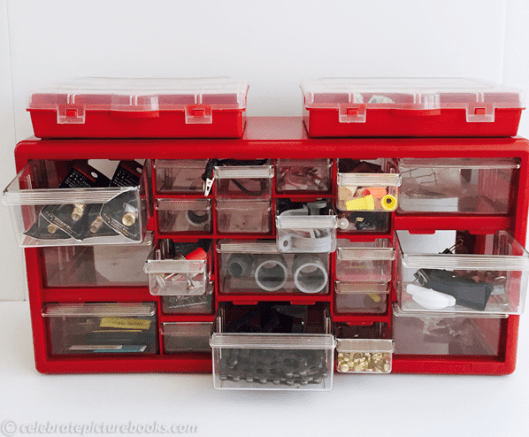
Every idea begins as a jumble of seemingly unrelated parts. Gathering whatever types of material inspires you and keeping it in a box ready to go when inspiration hits is a great way to support innovation and spark experimentation.

Supplies

  • Small parts organizer with drawers or compartments, available at hardware stores and craft stores
  • A variety of parts or craft materials that can be combined, built with, or built on
  • Some hardware ideas—pulleys, wheels, small to medium pieces of wood, wire, nuts, bolts, screws, hooks, knobs, hinges, recyclable materials
  • Some craft ideas—clay, beads, wooden pieces, sticks, paints, pipe cleaners, string, spools, buttons, glitter, scraps of material, recyclable materials

Directions

  1. Fill the organizer with the materials of your choice
  2. Let your imagination go to work! Build something cool, crazy, silly, useful—Amazing!

February 22 – Museum Advocacy Day

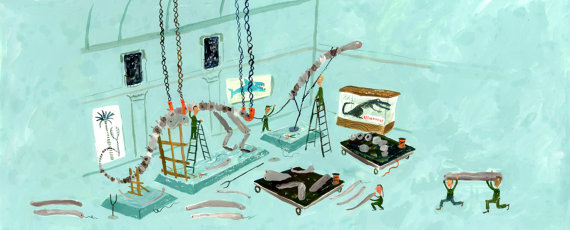
CPB - How the Dinosaur Got to the Museum II

About the Holiday

Today is a day when we can show our museum curators and representatives in government how much we value museums. Without these grand (and sometimes small) buildings dedicated to preserving and teaching about our historical, scientific, and cultural achievements, our lives would be much poorer. Show your support for museum funding by visiting and/or donating to your favorite museum!

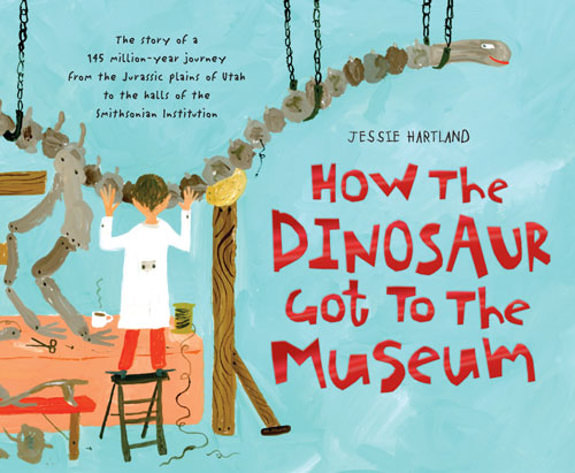
Another wonderful way to celebrate our custodians of history, science, art, and life is by reading the clever How the Dinosaur Got to the Museum / How the Sphinx Got to the Museum / How the Meteorite Got to the Museum series by author-illustrator Jessie Hartland.

How the Dinosaur Got to the Museum

By Jessie Hartland


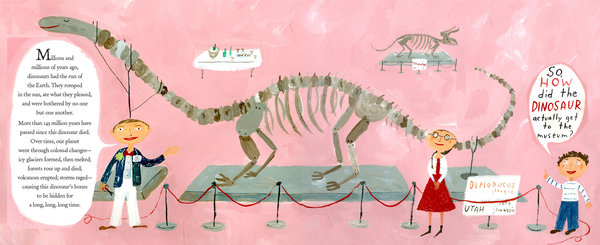
“So…” asks a little boy visiting the Smithsonian Museum of Natural History, “how did the dinosaur get to the museum?” Thus begins the tale—not of the dinosaur’s life, but of its journey from life to the museum exhibit hall.

celebrate-picture-books-picture-book-review-how-the-dinosaur-got-to-the-museum-talking-about-dinosaur

Image and text copyright Jesse Harland, courtesy of Blue Apple Books

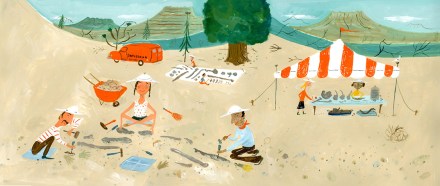
One hundred and forty-five million years ago, the dinosaur roamed the plains of what is now Utah, Overcome by weather and evolutionary events, the dino is buried and much, much later once again exposed. A Dinosaur Hunter finds one large bone and believes it to be from a Diplodocus Longus. He calls in the Paleontologist who confirms it. A team of Excavators arrives and unearths the rest of the skeleton.

The Movers pack the skeleton which was found by the Dinosaur Hunter, confirmed by the Paleontologist, and dug up by the Excavators and load it on a train that transports it to the Smithsonian. Here, the bones are cleaned and preserved by the Preparators, who discover that the head and neck are missing!

celebrate-picture-books-picture-book-review-how-the-dinosaur-got-to-the-museum-digging

Image copyright Jesse Harland, courtesy of Blue Apple Books

The Curator locates a plaster cast at another museum and work continues. The Diplodocus is assembled, but in the darkness the Night Watchman trips over its tail and breaks it! In come the Welders to fix it, and finally the Riggers can display the skeleton.

The Exhibits Team creates a background, lighting, and signs for Diplodocus, and the Cleaners give it a final dusting before the Director invites the public to view the magnificent exhibit with a speech and a toast.

celebrate-picture-books-picture-book-review-how-the-dinosaur-got-to-the-museum-exhibit

Image copyright Jesse Harland, courtesy of Blue Apple Books

Jessie Hartland’s bold, colorful illustrations offer a child’s-view perspective on the behind-the-scenes working of a museum, while her highly entertaining and educational text will keep kids giggling and reciting along as each page builds on the next to reveal the story of the men, women, and processes engaged in creating a museum exhibit.

Ages 5 – 9

Blue Apple Books, New Jersey, 2011 | ISBN 978-1609050900

Museum Advocacy Day Activity

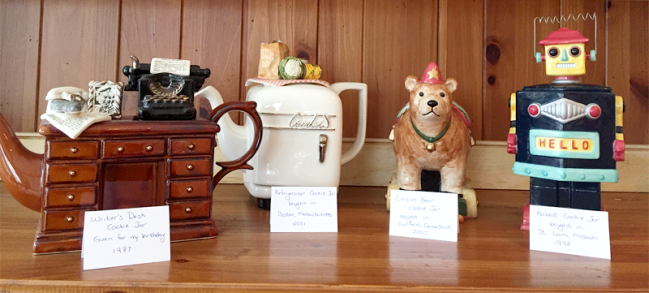
CPB - Cookie Jar Museum (2)

Create a Museum Exhibit

Every item has a story. Is there a funny anecdote behind that knick-knack on the shelf? Does your favorite serving dish hold sentimental value? A fun and educational way for kids to learn family stories and interact with their own history is to create a museum exhibit of objects in your home.

For teachers this can be a fun classroom activity that incorporates writing, art, and speaking, and categorizing skills. Students can use objects in the classroom or bring items from home to set up museum exhibits. This activity can be done as a whole-class project or by smaller groups, who then present their exhibit to the rest of the class.

Supplies

  • A number of household or classroom items
  • Paper or index cards
  • Markers
  • A table, shelf, or other area for display

Directions

  1. To get started have children gather a number of items from around the house to be the subjects of their exhibit. An exhibit can have a theme, such as Grandma’s China or Travel Souvenirs, or it can contain random items of your child’s choice, such as toys, plants, tools, even the furniture they see and use every day.
  2. Using the paper or cards and markers, children can create labels for their exhibit items. Older children will be able to write the labels themselves; younger children may need adult help.
  3. Spend a little time relating the story behind each object: where it came from, how long you’ve had it, when and how it was used in the past, and include any funny or touching memories attached to the item. Or let your child’s imagination run free, and let them create histories for the objects.
  4. When the labels are finished, arrange the items on a table, shelf, or in a room, and let your child lead family members or classmates on a tour. You can even share the exhibit with family and friends on social media.
  5. If extended family members live in your area, this is a wonderful way for your child to interact with them and learn about their heritage.