January 9 – It’s International Creativity Month

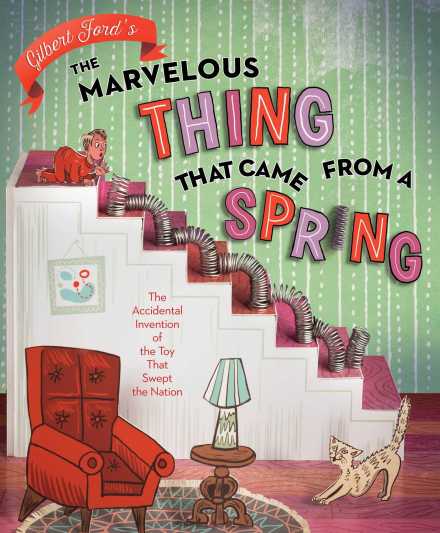
celebrate-picture-books-picture-book-review-the-marvelous-thing-that-came-from-a-spring-cover

About the Holiday

There’s no better time than the beginning of the year to start letting your creative juices flow! Quick fixes or long-leisurely projects are all within your grasp! Want to repaint a room? Build a tree house in the spring? Learn some new recipes? Discover a new hobby? Start planning today how you will accomplish the inventive inspirations that swirl through your imagination.

The Marvelous Thing That Came from a Spring: The Accidental Invention of the Toy That Swept the Nation

By Gilbert Ford


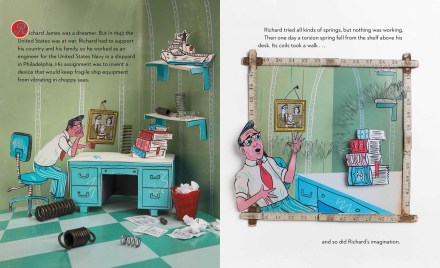
In 1943, during World War II, the United States Navy asked one of their engineers, Richard James, to “invent a device that would keep fragile ship equipment from vibrating in choppy seas.” Richard tried all kinds of springs, but none worked just right. “One day a torsion spring fell from a shelf onto his desk, and “its coils took a walk…” This sparked Richard’s imagination. While Richard knew the spring wasn’t right for his Navy work, he recognized that it might be perfect for something else. But what?
celebrate-picture-books-picture-book-review-the-marvelous-thing-that-came-from-a-spring-spring-walks-spring-falls-off-shelf

Copyright Gilbert Ford, courtesy of simonandschuster.com

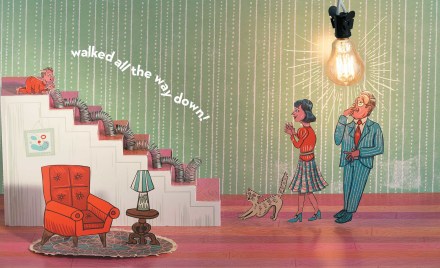
He took the spring home from work that day, showed it to his wife Betty, and gave it to his young son Tom. Tom took it to the top of the stairs and let it go. “The family watched in astonishment as it…walked all the way down!” They lost no time in realizing that this spring made a marvelous toy. But what to call it? “Betty thumbed through a dictionary for two days, underlining words. None really caught her fancy, until she came to ‘slinky,’ which means “‘graceful’ and ‘curvy in movement.’” It also “sounded like the swish and clink of the spring’s coils in motion.”
celebrate-picture-books-picture-book-review-the-marvelous-thing-that-came-from-a-spring-spring-walks-downstairs

Copyright Gilbert Ford, courtesy of simonandschuster.com

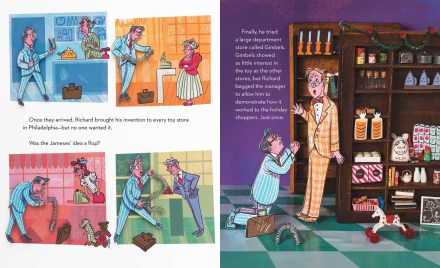
Richard and Betty thought they had a unique hit on their hands, so Richard went to the bank and borrowed five-hundred dollars to make 400 Slinkys. But while Richard and Betty loved their Slinky, toy store managers did not. Finally, Richard went to Gimbels, the big department store. The manager there didn’t see the merits of the Slinky either, but when Richard begged to be allowed to demonstrate it just once, he relented.

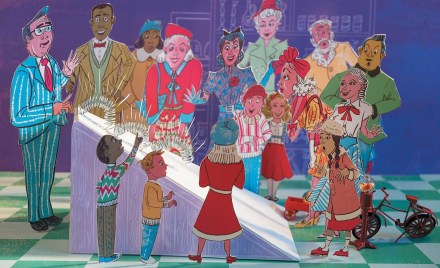
It was now November 1945 and the Christmas shoppers were out looking for stocking stuffers. Richard set up a ramp in the middle of the toy department and placed the Slinky at the top. He looked around for Betty, but she was nowhere to be seen. In fact, Betty was still at home worried that no one would like their toy. She was so concerned that she convinced a friend to “pose as an excited shopper” and buy one with the dollar Betty gave her. At Gimbels, however, time—and shoppers—were passing, so Richard let go of the Slinky. The astonished faces of the children and adults crowded around the ramp said it all. By the time Betty and her friend reached Gimbels, all 400 Slinkys had been sold—in only 90 minutes!
celebrate-picture-books-picture-book-review-the-marvelous-thing-that-came-from-a-spring-spring-walks-spring-richard-begs-gimbels

Copyright Gilbert Ford, courtesy of simonandschuster.com

With the end of the war that same year, troops returned home and a baby boom soon followed. “Demand for the Slinky skyrocketed.” Production needed to speed up, so Richard devised a “machine that could coil eighty feet of steel wire into a Slinky in ten seconds.” The Slinky business became a family business with Betty filling orders and doing the accounting while Richard made and delivered Slinkys. Pretty soon they needed a factory to satisfy demand. That demand still exists today as kids all over the world love the Slinky.
celebrate-picture-books-picture-book-review-the-marvelous-thing-that-came-from-a-spring-spring-walks-spring-at-gimbels

Copyright Gilbert Ford, courtesy of simonandschuster.com

An extended Author’s Note picks up the story of the Slinky where the text leaves off, revealing other creative ways the Slinky has been used and the fact that when Richard went to Bolivia in 1960 to do missionary work, Betty took over the business, relocated the factory to Hollidaysburg, Pennsylvania, and gave the toy a rebirth in popularity. More than 250 million Slinkys have been produced, and in 2001 Betty was inducted into the Toy Industry Hall of Fame.

Gilbert Ford’s Slinky-ography of the man and woman behind one of the world’s most beloved toys is a skip, jump, and bounce through the ingenious brainstorm that transposed a simple spring into a phenomenon. The down-to-earth details of how this invention came to be harken back to a simpler time but also reaffirm that even today there are dreamers sitting in homes across the world imagining the next big thing. Ford’s story is well paced, leading readers through the production process to experience cheerful surprise when the Slinkys sell out at Gimbels. Kids will appreciate the easy-going language that suits its subject perfectly and the emphasis on the teamwork of both Richard and Betty James that made the Slinky possible.

Ford’s illustrations are ingenious in themselves. Careful observation reveals that each page is not merely a drawing, but a 3D experience. As the front matter explains, the illustrations were drawn and colored then printed, assembled into dioramas that incorporate found objects and other popular toys of the period, such as dominoes, jacks, and pick-up sticks, and finally photographed. The effect drops readers into the middle of a 1940s home and department store, giving them a personal stake in the drama.

The Marvelous Thing That Came from a Spring is a fun book for would-be-inventors and kids interested in the history of objects they use and play with.

Ages 4 – 8

Atheneum Books for Young Readers, Simon & Schuster, 2016 | ISBN 978-1481450652

Discover a portfolio of work by Gilbert Ford for books, book jackets, advertising, and more on his website!

International Creativity Month Activity

celebrate-picture-books-picture-book-review-national-archives-coloring-book-of-patents

National Archives Coloring Book of Patents


The people at the National Archives of the United States in Washington DC chose some of their favorite patents from the past to share with you as a coloring book. As you have fun coloring these pages of ideas, let yours fly too!

Click here to get your printable National Archives Coloring Book of Patents

Picture Book Review

September 6 – Read a Book Day

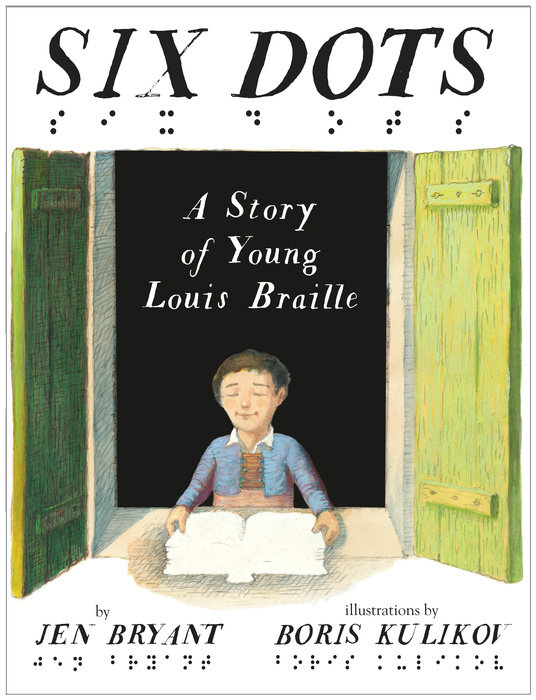
celebrate-picture-books-picture-book-review-six-dots-a-story-of-young-louis-braille-cover

About the Holiday

Avid readers, rejoice! Today is your day – a whole 24 hours dedicated to the fine pursuit of perusing an old favorite or a newly discovered book! To celebrate visit a local bookstore or library then find a cozy nook or shady spot and settle in for a good, long read.

Six Dots: A Story of Young Louis Braille

Written by Jen Bryant | Illustrated by Boris Kulikov


When Louis Braille was born he was so small that no one in town expected him to live. But he did! Louis thrived and with his curious eyes took in everything around him. Louis was smart, too, with a prodigious memory for names and stories. His father worked with leather, making harnesses and bridles. Louis wanted to be just like him and often reached for the sharp tools on the workbench, but his father always warned him away.

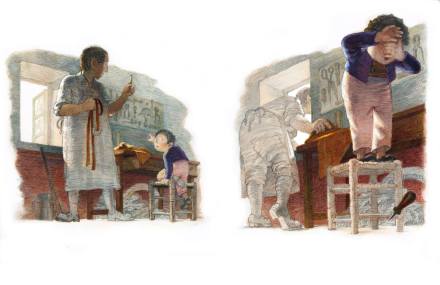
One terrible day, however, when Louis’ father glanced away, Louis grabbed an awl and tried to work it into the smooth leather, but it slipped. Louis’ damaged eye was bandaged and he was told not to touch it. But when the bandage began to itch, young Louis couldn’t help himself and spread the infection to his other eye. By the age of five, Louis was left in darkness, unable to see the faces of those he loved or the attractions of home.

celebrate-picture-books-picture-book-review-six-dots-a-story-of-young-louis-braille-accident

Image copyright Boris Kulikov, courtesy Alfred A. Knopf

Louis learned the sounds of the world. He discovered the number of steps around his house, to the outbuildings, and eventually to the shops and businesses in town. His brother taught him how to whistle and use the reverberations to avoid obstacles. He also learned to feel the shapes of letters made of straw, leather, or nailed replicas made by his family. He played dominoes by feeling the dots with his fingers.

While Louis listened to others read to him, he longed to be able to read on his own. Whenever he asked if there were books for blind people, however, the answer was always, “No.” A noblewoman who lived nearby heard of Louis and invited him to study at the Royal School for the Blind in Paris. At the age of 10 he moved to the boarding school.

The Royal School was anything but sumptuous. Louis’ room was crowded, damp, and dark. His uniform itched, and meals were meager and cold. He so wanted to return home, but the promise of books for the blind kept him there. Those books were reserved for the best students, and Louis vowed to be one. Finally, Louis was led to the library. A book thudded onto the table in front of him. “‘Voila! There it is,’” the guide said.

Louis opened the book. To read it he had to feel the raised letters, but the letters were huge and a page only held a few sentences. To make matters worse, the book consisted of only a few pages. “‘Is that all?’” Louis asked. The guide told him there were others but that they were all the same. More than ever Louis wanted to go home.

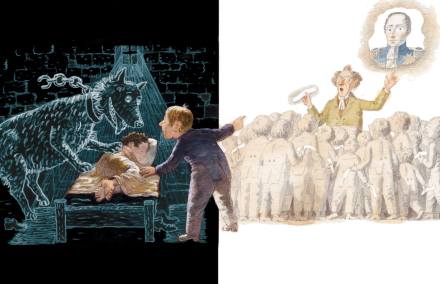
celebrate-picture-books-picture-book-review-six-dots-a-story-of-young-louis-braille-dreams

Image copyright Boris Kulikov, courtesy Alfred A. Knopf

In the morning Louis was shaken awake; the headmaster had an important announcement.  It seemed that a French army captain had devised a secret code read by touch instead of sight. This code could be used at the school, the headmaster said. The code consisted of raised dots set in patterns that represented various sounds. The boys learned the new code then learned how to write it, using an awl-like implement that punched dots into paper.

While the code was a breakthrough, it was hard to learn and all the other boys in the school had given up—but not Louis. Still, reading the code was not like reading a book with letters, words, and sentences. Louis asked the headmaster if the army captain would work with him to improve the code, but when the headmaster asked, the answer was “No.”

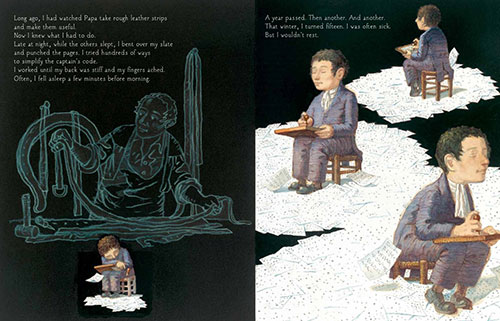
Louis knew what he had to do. Night after night he punched dots into paper with the awl-like tool—just as he had watched his father do with leather. He tried “hundreds of ways to simplify the captain’s code.” Three years passed, and Louis turned 15. Finally, he had a workable solution. He asked the headmaster to read to him a book he had never heard. As the headmaster read, Louis copied his words, punching letters onto paper. Louis’ “new code used just six dots, arranged in two columns, like dominoes. Each dot pattern stood for a letter of the alphabet.”

celebrate-picture-books-picture-book-review-six-dots-a-story-of-young-louis-braille-inventing

Image copyright Boris Kulikov, courtesy Alfred A. Knopf

When the headmaster finished reading chapter 1, Louis turned his pages over and “reading by touch, recited the entire chapter.” After that “word spread quickly. The other students rushed to try it. Si facile! ‘So easy!’ Et si vite! ‘And so fast!’ ‘We can read words and write letters like everyone else,’” the other boys exclaimed.

As Louis watched his friends read he remembered watching his “Papa in his shop, bent over rough strips of leather, making them useful. I had become like him, after all,” Louis thought.

An Author’s Note, more fascinating biographical information about Louis Braille’s life and other inventions, resources, and the Braille alphabet follow the text.

In her Author’s Note Jen Bryant says she wanted to express what it felt like to be Louis Braille. In Six Dots she succeeds in bringing the story of this very young inventor and genius to life with details of his accidental blindness, family support, school experiences, and ultimate victory. Told from Louis Braille’s point of view, the story has an immediacy that presents Braille’s frustrations, challenges, and achievements sensitively and honestly. His perseverance against all odds will inspire readers and give them a new perspective on the unique person Braille was, the importance of books for all, and what children not much older than the readers of Six Dots can accomplish.

Boris Kulikov’s mixed media illustrations take readers back to the France of the early 1800s, depicting with soft colors and period details the town, people, and influences in Louis Braille’s life. Braille’s initial accident is treated with thoughtful consideration of the book’s audience, and his blindness and dreams are portrayed with transparent outlines on a black background. Readers will be interested to see how Louis’s family and friends supported and helped him (an unusual occurrence of the time). As Louis grows, readers discover his other talents for music and sewing, and the tools Louis used to produce his Braille pages are clearly shown.

Ages 4 – 9

Alfred A. Knopf, 2016 | ISBN 978-0449813379

View Jen Bryant’s website for activities, videos, and links related to Six Dots—you’ll also discover more of her books too!

To see a gallery of images by Boris Kulikov for books and other illustration work, visit his website!

Read a Book Day Activity

celebrate-picture-books-picture-book-review-library-coloring-page

I Love the Library! Coloring Page


Today is a perfect day to visit your library and check out some awesome books! Here’s a printable I Love the Library! Coloring Page for you to enjoy too!

August 15 – National Relaxation Day

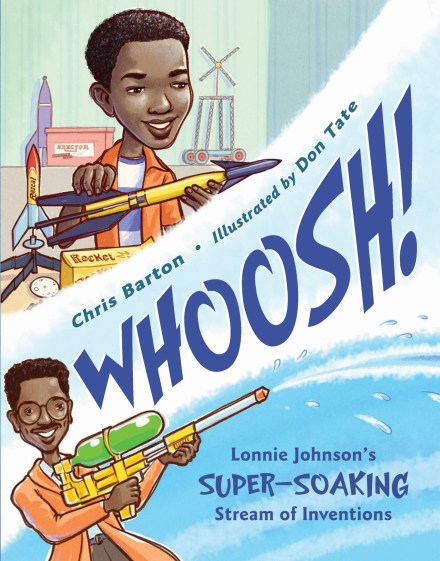
celebrate-picture-books-picture-book-review-whoosh!-lonnie-johnson's-super-soaking-stream-of-inventions-cover

About the Holiday

Relaxation Day was founded in 1985 by then fourth-grader Sean Moeller, who already knew a thing or two about balance in life when he suggested that “cleaning and real work are not part of relaxation.” Today’s holiday gives you permission to kick back and enjoy yourself. The subject of today’s book invented a great way to take advantage of a day off—and also demonstrates that sometimes work and relaxation go hand-in-hand!

WHOOSH! Lonnie Johnson’s Super-Soaking Stream of Inventions

Written by Chris Barton | Illustrated by Don Tate


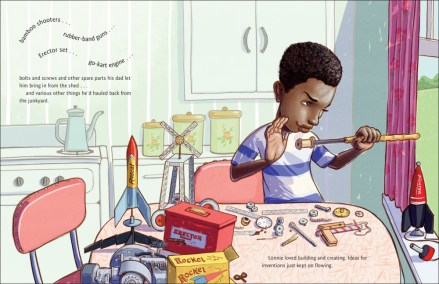
Lonnie Johnson had a way with stuff. In his hands bolts and screws, gears and springs, spools, clothespins, “spare parts his dad let him bring in from the shed, and various other things he’d hauled back from the junkyard” fueled Lonnie’s ideas for inventions and rocket ships. The kids at school loved to watch him launch the rockets he’d devised on the playground. Lonnie wanted to have a career as an engineer. Getting there took a lot of determination and courage. Once, the results of a standardized test said that he would not make a good engineer. Lonnie felt discouraged, but he knew that the person who had graded his test didn’t know him—or Linex.

celebrate-picture-books-picture-book-review-whoosh!-lonnie-johnson's-super-soaking-stream-of-inventions-young-lonnie-inventing

Image copyright Don Tate, courtesy of charlesbridge.com

Linex was the robot Lonnie had built from scrap metal. “Compressed –air cylinders and valves allowed Linex’s body to turn and its arms to move. The switches came from an old, broken jukebox. Lonnie used a tape recorder to program Linex, and as a bonus the reels looked like eyes.” Lonnie’s goal was to enter Linex in a science fair, but first he wanted to be able to program it. It took several years before he discovered how. Using his little sister’s walkie-talkie, Lonnie took Linex to the “1968 science fair at the University of Alabama—where only five years earlier, African American students hadn’t even been allowed.” Lonnie’s team won first place.

Lonnie went to college at Tuskegee Institute, where he realized his dream of becoming an engineer. His career “took him beyond Alabama—way beyond.”  He went to work for NASA. Before the orbiter Galileo could be sent to Jupiter, Lonnie developed a system that would ensure the craft would have a constant supply of power for its computer memory in case the main power was lost. Some fellow scientists doubted his idea would work, but it did. “As it photographed Jupiter and its moons, Galileo was supported by the power package that Lonnie designed.”

celebrate-picture-books-picture-book-review-whoosh!-lonnie-johnson's-super-soaking-stream-of-inventions-linex

Image copyright Don Tate, courtesy of charlesbridge.com

Even though Lonnie worked for NASA, he continued tinkering with his own ideas—in his own workshop. One problem he was trying to solve involved the need for the world’s refrigerators and air conditioners to have a cooling system that didn’t use the damaging chemical R-12. “He had an idea for using water and air pressure instead.” He built a prototype and experimented with it in his bathroom sink. When he turned his pump and nozzle on, a stream of water blasted across the room.

Suddenly, Lonnie saw another use for his invention—as a water gun. He created a design small enough for children’s hands, and tested it at a picnic, where it was a hit. Lonnie took his idea to a toy company…and another…and another. Finally one company agreed to make his water gun. Spurred on by this success, Lonnie found investors to help him build other original inventions: “a water-propelled toy airplane, two kinds of engines, and his cooling system” that had led to the water gun. He even quit his day job to devote his time to inventing.

But things don’t always work out. Each project fell through—even the water gun. It was a scary time as he and his family had to move out of their house and into an apartment. But Lonnie believed in himself. He took his water gun to another toy company. In 1989 he found a toy company willing to take a look. Lonnie made the trip to Philadelphia and wowed the executives with his invention.

celebrate-picture-books-picture-book-review-whoosh!-lonnie-johnson's-super-soaking-stream-of-inventions-water-powered-nozzle

Image copyright Don Tate, courtesy of charlesbridge.com

Now kids everywhere enjoy the fun of the Super Soaker. Today, Lonnie can be found in his workshop doing what he loves: “facing challenges, solving problems and building things” because “his ideas just keep on flowing.”

Chris Barton’s biography of Lonnie Johnson is a fascinating look at a man who succeeds in turning “No” into “Yes” by the power of his intelligence, ideas, and determination. Kids will love hearing about how one of their favorite toys came to be and will be inspired to chase their own dreams despite challenges and setbacks. Barton’s detailed narration provides a full picture of Lonnie Johnson and his times, specifics that attract and inform like-minded kids. Including the results of Lonnie’s exam should encourage kids who think differently. The story is enhanced by the conversational tone that makes it accessible to kids of all ages.

Don Tate illuminates Lonnie Johnson’s life story with his bold, full-bleed paintings that follow Lonnie from his being a child with big ideas to becoming a man who has seen these ideas through to success. With an eyebrow raised in concentration, young Lonnie demonstrates confidence and skill as he works on an invention, and kids will love seeing the tools of his trade laid out on the kitchen table. With his eyes narrowed in frustration and disappointment, Lonnie reads the results of his childhood exam. As Lonnie grows older and designs systems for NASA, the illustrations depict the schematics of the Galileo power package and Lonnie’s surprise at the strength of the water stream in his prototype cooling design. As all kids know, the spurt of a Super Soaker is awesome, and this fact is demonstrated in a “Wowing” fold-out page.

WHOOSH! Lonnie Johnson’s Super-Soaking Stream of Inventions is a welcome biography of the man who designs systems for the greater world but has never lost his youthful enthusiasm to invent.

Ages 5 – 10

Charlesbridge, 2016 | ISBN 978-1580892971

Check out more fiction and nonfiction books by Chris Barton on his website!

Discover more books written and illustrated by Don Tate as well as a portfolio of his work and book-related activity guides on his website!

National Relaxation Day Activity

celebrate-picture-books-picture-book-review-kids-in-pool-coloring-page

Dive In! Coloring Page


The Super Soaker is a great way to cool off! Another relaxing water activity is swimming in a pool! So dive in to this printable cool pool Dive In! Coloring Page!

July 13 – National Culinary Arts Month

celebrate-picture-books-picture-book-review-the-hole-story-of-the-doughnut-cover

About the Holiday

July is a great month for celebrating culinary arts. With kids home from school it’s fun to spend time together in the kitchen learning new skills and making experimental or favorite recipes. On-the-go meals or vacations can also take you to new and enticing restaurants, where you may try regional cuisine and discover exciting flavors.

The Hole Story of the Doughnut

Written by Pat Miller | Illustrated by Vincent X. Kirsch


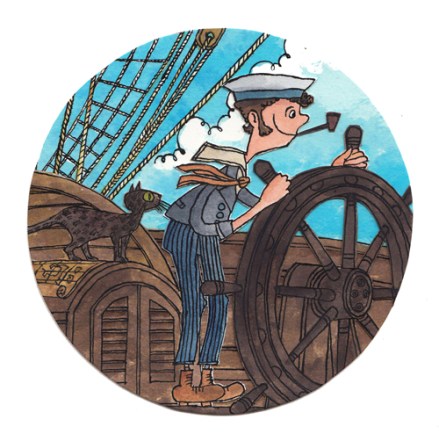
In 1844 at the tender age of 13, Hanson Gregory left the family farm and went to sea as a cabin boy on the schooner Isaac Achorn. He quickly became the cook’s assistant and also learned how to rig the sails and “steer a ship over trackless waves by sun and stars.” By the age of 19 Gregory had become the captain of the schooner Hardscrabble, and within a few more years was racing “his cargo from Maine to California as commander of a clipper, the fastest ship on any ocean.”

celebrate-picture-books-picture-book-review-hole-story-of-the-doughnut

Image copyright Vincent X. Kirsch, courtesy of vincentxkirsch.com

Hanson Gregory may have been one of the best captains to sail the seas—once awarded a medal for heroism for rescuing seven shipwrecked Spanish sailors even though his own ship and crew were endangered. But his greatest achievement was not attained because of his seafaring skills—it was his ingenuity in the galley that people remember.

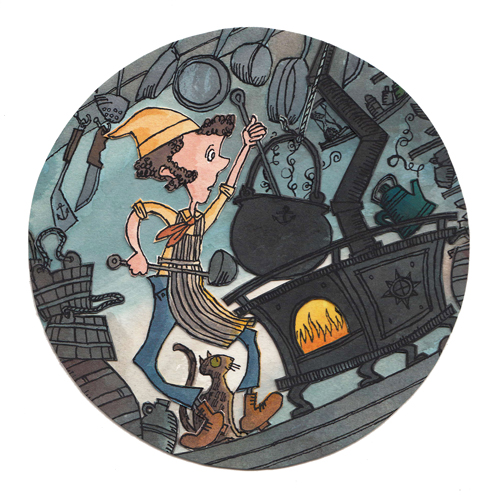
On June 22, 1847 as a 16-year-old cook’s assistant, Hanson was rustling up the crew’s breakfast—coffee and fried cakes, the same as every morning. While the pot of lard bubbled on the stove, Gregory formed balls of sweetened dough and dropped them in. They sizzled and crisped—at least around the edges. The centers were raw, heavy with grease, and they dropped like cannonballs in the stomach. “Sailors called them Sinkers.” But this morning Gregory had an idea. He removed the lid from the pepper can and cut out the center of the balls. “Then he tossed the rings into the bubbling lard.”

celebrate-picture-books-picture-book-review-hole-story-of-the-doughnut

Image copyright Vincent X. Kirsch, courtesy of vincentxkirsch.com

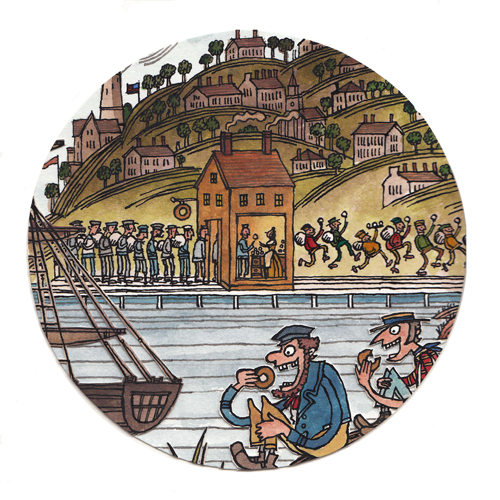
The cook and the sailors took one look at this odd concoction and…ate them up! “The cakes were brown, and sweet, and fully cooked. Sighs of delight rose above the noisy sea. A new breakfast tradition was born.” Gregory told his mom about his invention, and she fried up large batches of these ‘holey cakes’ that were a sensation at a friend’s store and on the docks.

You might think this is a pretty interesting tale in itself, “but sailors like their stories bold” and so they “spun legends worthy of such a delicious treat.” One tale had Captain Gregory inventing the doughnut while he saved his ship from disaster. Another told how Gregory, distraught over the drowning of five sailors pulled to the ocean floor by of their “sinker” breakfast, punched holes in every cake to make them look like life rings and vowed, “‘Never again!’”

Captain Gregory had a sense of humor about his accomplishment. During an interview he once stated that “he had invented ‘the first hole ever seen by mortal eyes.’” Gregory lived to be 89 and is buried “overlooking the sea where stormy weather can be spotted as readily as it once was from the quarterdeck of the Hardscrabble.”

An author’s note expanding on the story of Captain Gregory, the doughnut, doughnut shops, a timeline, and a selected bibliography follow the text.

celebrate-picture-books-picture-book-review-hole-story-of-the-doughnut

Image copyright Vincent X. Kirsch, courtesy of vincentxkirsch.com

Doughnuts have never been so evocative! In Pat Miller’s humorous, informative history of this favorite pastry treat, readers can smell the salt air, feel the ocean swell and roll under their feet, and even ache a little for those poor sailors forced to eat “sinkers.” Seamlessly interwoven into this foodography is a fascinating look at the early days of sail. Miller’s language is immediately stirring: the Ivanhoe bucks and plunges, the sea becomes a monster, and Captain Gregory spears a sinker on the wheel spoke. Kids will marvel at a 13-year-old going off to sea and becoming an inventor at 16.

Vincent X. Kirsch provides just the right touch to this captivating true story with his cartoon-inspired watercolor and cut paper artwork. Ingeniously incorporating Hanson Gregory’s innovation of removing the center of the fried cakes, Kirsch’s illustrations are “cored” to allow for text, while the extracted section appears on the facing page as a glimpse through a porthole. The maritime atmosphere—from ship to shore—of the mid-1800s is beautifully represented in the folk-style sketches, and the humor that is so intrinsic to this story is wonderfully embraced.

The Hole Story of the Doughnut will delight foodies and history buffs alike and would make a fun gift and a delectable addition to personal libraries for all ages.

Ages 5 – 12

Houghton Mifflin Harcourt, 2016 | ISBN 978-0544319615

Vincent X. Kirsch’s website is full of illustrations from his books for children—take a look at his portfolio!

Spend some time with Pat Miller on her website that offers activities, tips, resources and many more books!

Culinary Arts Month Activity

celebrate-picture-books-picture-book-review-cd-doughnut-craft

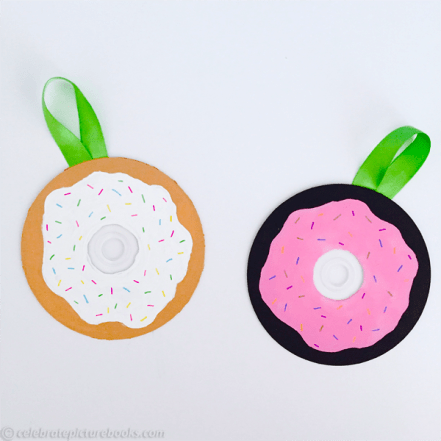
CD (Compact Doughnuts) Decoration


Are some of  your CDs a little passé? Not if you can turn them into cute décor like this doughnut hanging.

Supplies

  • Unused CDs
  • Craft paint in tan, black, pink, yellow, white (or any colors you want for the doughnut and the icing)
  • Ribbon, any color and length you want
  • Fine-tip markers in bright colors
  • Glue
  • Glue dots (optional)
  • Paint brush

Directions

  1. Paint a wavy edge around the CD, let dry
  2. Paint the center of the CD, leaving the clear circle unpainted
  3. When the icing paint is dry, draw sprinkles on the icing with the markers
  4. With the ribbon make a loop hanger and attach it to the back of the CD with glue or glue dots
  5. Hang your decoration

celebrate-picture-books-picture-book-review-the-hole-story-of-the-doughnut-cover

You can find The Hole Story of the Doughnut at these booksellers

Amazon | Barnes & Noble | Books-a-Million | IndieBound


February 16 – Innovation Day

CPB - Girls Think of Everything Innovation Day

About the Holiday

Today we celebrate all those people who look at a problem and design a solution, or who just ask, “What if…?” and search for answers. So put on your thinking cap, look around you, and do something new, novel, and completely unexpected. Who knows…you may be the next great inventor!

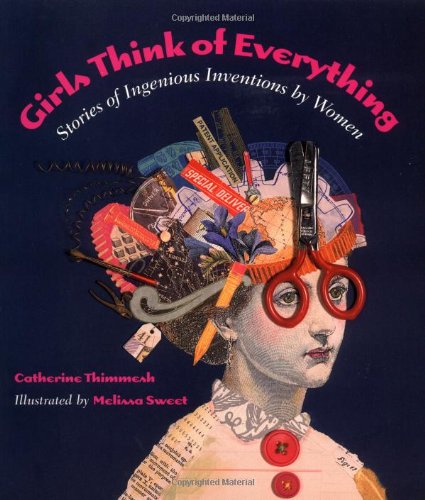
Girls Think of Everything: Stories of Ingenious Inventions by Women

Written by Catherine Thimmesh | Illustrated by Melissa Sweet


Throughout history women have invented new and clever ways of doing things—necessity is the Mother of invention, after all. In her fascinating picture book, Catherine Thimmesh highlights ten women and two girls whose creativity has changed the world.

Here, you’ll learn the intriguing stories behind each invention, the struggles for recognition, and the ultimate victory of innovation. Did you know that the original recipe for chocolate chip cookies was just a time-saver? Or that people once thought windshield wipers weren’t necessary? You’ll also discover how liquid paper, flat-bottomed paper bags, and the Glo-sheet came to be. Women in science have contributed Kevlar, Scotchgard, the COBOL computer language, and the space shields that protect the International Space Station, satellites, and more.

Catherine Thimmesh is an excellent storyteller, drawing you into the actions and minds of these women innovators and the situations or environments that fostered their talents. Melissa Sweet accompanies each profile with portraits of the inventor and colorful collage illustrations that build on the text and tell stories of their own.

Ages 7 – 12

Houghton Mifflin Company, Boston, 2000 | ISBN 978-0618195633

Innovation Day Activity

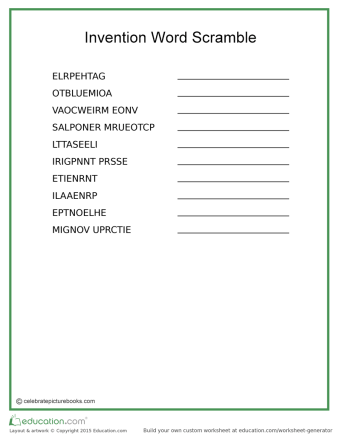
CPB - Invention Word Scramble

Invention Word Scramble


Every invention started out as a jumble of ideas in someone’s head. In this Invention Word Scramble you can unscramble the letters of some of the world’s greatest creations. Solutionincluded. Odog cklu!


February 15 – Susan B. Anthony Day

celebrate=picture-books-picture-book-review-heart-on-fire-cover

About the Holiday

On February 15, 1820 in Adams, Massachusetts a girl was born who would grow up to set the world afire with her belief in women’s rights. Her name was Susan Brownell Anthony. An early feminist, her father believed it was as important for his five daughters to receive an education as for his two sons. After graduating from school, Susan Anthony became a teacher—at the age of 14—making $2.50 a week compared to the $10.00-per-week salary of the male teachers. Anthony later became active in the abolition and temperance movements. She recognized that the inability to vote limited women’s influence in these causes and began promoting women’s rights. She worked tirelessly to change the voting laws until her death on March 13, 1906 without seeing her greatest wish fulfilled. It was not until 1920, with the ratification of the 19th Amendment, that women were allowed to vote.

Susan B. Anthony has been honored for her dedication with commemorative stamps, and her portrait appears on the dollar coin. We also remember her work on behalf of all women on her birthday with memorial services at her gravesite in Rochester, NY and in Washington DC. Susan B. Anthony Day is a legal holiday in Florida, West Virginia, Wisconsin, New York and California.

Heart on Fire: Susan B. Anthony Votes for President

Written by Ann Malaspina | Illustrated by Steve James


It’s November 1, 1872 and only four days until the presidential election. Everywhere people are being urged to register to vote. Knowing how important voting is, Susan B. Anthony races to the registration office with her sister and a friend in tow. The men in the office stare at her in confusion.

They know that women can’t vote—only men! What is Susan B. Anthony trying to do? But Anthony argues that the new 14thAmendment, which says “all persons born in the United States have the same rights as citizens,” gives women the right to vote. Some inspectors think she is right, some disagree. Finally they allow Anthony to sign the registration card.

celebrate=picture-books-picture-book-review-heart-on-fire-susan-goes-to-vote

Image copyright Steve James, courtesy of Albert Whitman & Company

On November 5, Voting Day, Anthony and 15 other women cast their ballots. Thirteen days later, however, a deputy federal marshal shows up at Anthony’s door with a warrant for her arrest. The charges? Voting illegally! The other women and the men who had allowed them to register and vote are also arrested.

In January word comes that unless Anthony pays a $1,000 fine, she will have to spend the time until her trial in prison. Anthony is adamant about not paying, but her lawyer sends the money. People in the country are split over whether she is right or not, but Anthony knows she’s right. Without being able to vote, women will have no voice in government.

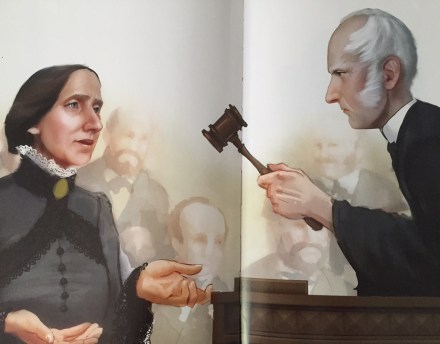
She gives speeches, trying to rally people to her cause, and when her trial begins on June 17, 1873 the courtroom is packed. After Anthony’s lawyer and the prosecutor speak, the judge decides that Anthony has broken the law. He proclaims her guilty. When the judge asks if she has anything to say, Anthony answers, “You have trampled under foot every vital principle of our government. My natural rights, civil rights, political rights….” The judge stops her and does not allow her to continue speaking. He fines her $100, plus court costs. Susan B. Anthony refuses to pay, and she never did.

celebrate=picture-books-picture-book-review-heart-on-fire-susan-pleads-case

Image copyright Steve James, courtesy of Albert Whitman & Company

Through action, dialogue, and the metaphorical theme of fire, Ann Malaspina has written an exciting biography of Susan B. Anthony. Readers will understand and, more importantly, feel the opinions and determination that fueled Anthony’s crusade for women’s rights. The final pages follow the history of the women’s suffrage movement until the ratification of the 19th Amendment in 1920 and provide photographs from the time. The text of the 14th and 19th Amendments is also included.

Opening the pages of Heart on Fire is like walking into a city of the 1800s. The lush colors and intricate details of Steve James’ illustrations immediately immerse readers in the time and place of Susan B. Anthony’s world, depicting the reality of her struggles. This is a perfect book to share with children, especially in this election year when they can see how far women have come—from being denied the vote to running for president.

Ages 5 – 9

Albert Whitman & Company, Chicago, 2012 | ISBN 978-0807531884

Learn more about Ann Malaspina and her books on her website!

View a gallery of illustration by Steve James on his website!

Susan B. Anthony Day Activity

CPB - Vote For Me round (2)

Vote For Me! Campaign Poster and Frame


If you were running for President, what would be important to you? Here’s a Vote For Me! Poster and Picture Frame to get your campaign started!

Supplies

Directions

  1. Print Vote For Me! Poster and Picture Frame templates
  2. Take a selfie or use your school picture
  3. Cut out the Picture Frame and the circle or rectangle in the middle
  4. Tape or glue your picture in the circle or rectangle
  5. If you are using a clear magnetic frame, slip the template inside and hang on your refrigerator or any metal object.
  6. If you are using a magnetic sheet, peel the paper off the adhesive side. Stick the Vote For Me! Picture Frame template with your picture attached to the adhesive. Cut around the edges. Hang!
  7. On the Vote For Me! Poster, list the things you would do if you were President. Talk to your family and see if you might be able to do some of them now! Hang your poster in your room or in the house where others can see it.

February 6 – Lace Day

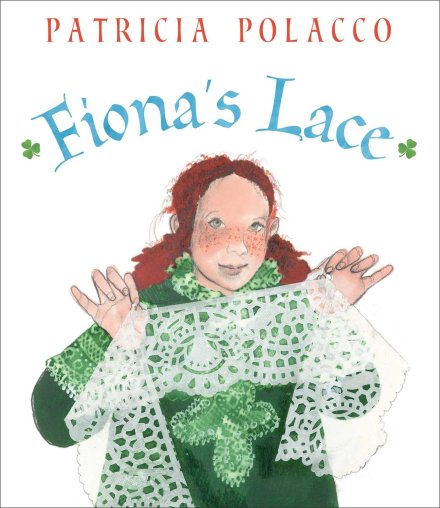
celebrate-picture-books-picture-book-review-fionas-lace-cover

About the Holiday

Lace, that delicate material that trims clothing, covers tables, ties up hair, and makes anything seem more dainty and lovely, has been used since the 1500s. When you look at the intricate patterns and fine threads of lace, it’s hard to believe that people once made it all by hand. Lace makers were paid well for their art by the fashion industry, which used it to attract distinguished customers. While lace is mostly made by machines now, the handcraft is making a comeback. Today’s reviewed picture book is about a girl whose lace work was invaluable.

Fiona’s Lace

By Patricia Polacco


In Fiona’s Lace author-illustrator Patricia Polacco weaves a tale of family love and America’s early immigrant heritage that is as intricate and lovely as the material we celebrate today. The story begins in Ireland, where Fiona and her sister Ailish live with their muther and da. They live happily in Glen Kerry, where their father works in the textile mill and their mother teaches Fiona her art of lace making.

celebrate-picture-books-picture-book-review-fiona's-lace-ma-teaches-lacemaking

Copyright Patricia Polacco, courtesy of simonandschuster.com

In the evenings the girls are entertained by family stories, especially their favorite about how, when their parents first met, their mother left a trail of lace from the factory to her house for her young suitor to follow.

When the textile mill closes, Fiona’s family signs a contract indenturing themselves to a family in Chicago. The voyage to America is long and arduous, but when they arrive in Chicago they marvel at the grand houses and elegant clothes, imagining that this awaits them too in their new home. The reality, however, is much different. Their 2-room apartment is ramshackle, and only by working two jobs can their parents make enough money to live on.

celebrate-picture-books-picture-book-review-fiona's-lace-fiona-gets-job

Copyright Patricia Polacco, courtesy of simonandschuster.com

Fiona wants to help and soon finds that dressmakers will pay handsomely for the lace she makes. The family’s money tin begins to fill up and they are prospering. One night while Muther and Da are away working, a fire rages through Chicago. Fiona and Ailish escape with only the money tin and Fiona’s lace. They run far from home, but worry—how will their parents find them?

Remembering their favorite story, Fiona cuts her lace into strips and ties bits of it along their route to their hiding place. The girls cower in fear until they hear the familiar voices of their parents. Happily reunited, the family lets go of what they have lost, but Ailish cries over the now sooty, torn lace. Ma reassures her and brings comfort, revealing that far from being ruined, this scorched lace is the most valuable and cherished of all because it saved the family.

celebrate-picture-books-picture-book-review-fiona's-lace-trail-of-lace-story

Copyright Patricia Polacco, courtesy of simonandschuster.com

Patricia Polacco’s heartwarming and harrowing story of an Irish immigrant family is a beautiful reminder of the unique talents and strong bonds that built America. Readers will be enthralled by Polacco’s realistic dialogue and detailed storytelling in this compelling and suspenseful tale and will cheer as Ailish cleverly uses her ma and pa’s trick and her own skills to save her family.

Polacco’s gorgeous illustrations bring the time period alive for young readers, portraying the intricate art of lacemaking and the clothing styles that made use of this delicate trimming. Her depictions of tenement living are realistic, yet reveal the love and close family ties within through a warm color palette and the inclusion of cozy comforts brought from Ireland.

Fiona’s Lace is a wonderful book for classroom and home story times.

Ages: 4 – 8

Simon & Schuster, New York 2014 | ISBN 978-1442487246

Discover more about Patricia Polacco and her many, many books on her website!

Lace Day Activity

Hide-and-Seek Game

While Fiona and her sister used a lace trail to lead their parents to their hiding place, you can have fun making a hide-and-seek game for your friends. This game can be played inside or outside

Supplies

  • 1 or 2 yards of lace, cut into sections about 6-inches each. You can use lace to celebrate Lace Day or use string, ribbon, or other kinds of material
  • Choose something to hide – this can be a toy, a secret letter, a snack, or anything

Directions

  1. Hide the item you choose in a secret place
  2. Determine the starting place for your hide-and-seek game
  3. Along the route from the starting point to the hidden item, tie the sections of lace onto things like lamps, furniture, stair banisters, door knobs, etc. if  you’re playing inside. If you are playing outside, tie it onto trees, bushes, bird feeders, swing sets, etc.
  4. For very young children the trail of lace can be straightforward; for older children the trail can be longer and more difficult