January 15 – National Hat Day

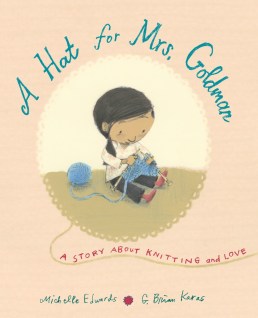
celebrate-picture-books-picture-book-review-a-hat-for-mrs.-goldman-cover

About the Holiday

Hats are always stylish, and during this time of year they can be a necessity for keeping warm! No matter if you make your own hat or buy it in a shop, whether you like stocking hats, felt hats, hats with earflaps, or hats that just hide a bad hairdo, this is the perfect season to indulge your fashion fancies!

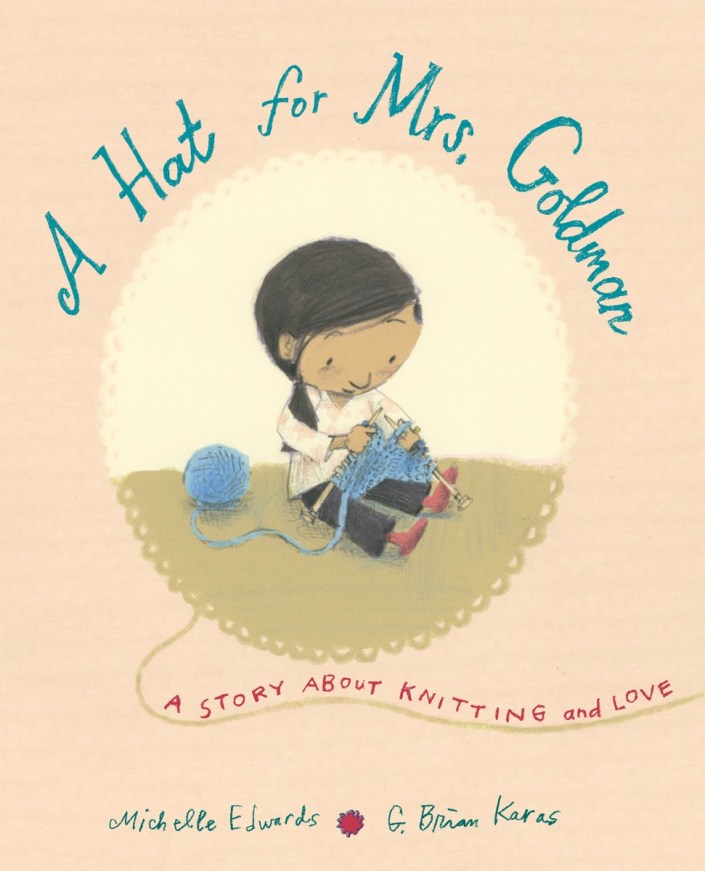
A Hat for Mrs. Goldman: A Story about Knitting and Love

Written by Michelle Edwards | Illustrated by G. Brian Karas


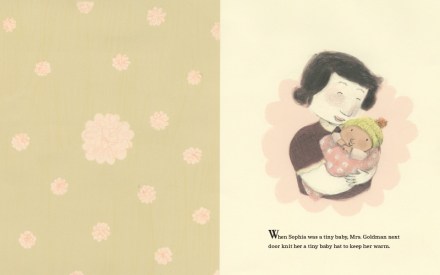
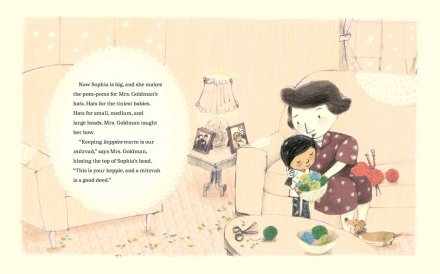
One of the first gifts Sophia received when she was a baby was a knitted hat from her neighbor Mrs. Goldman. Now that Sophia is more grown up, she helps Mrs. Goldman make pom-poms for the hats she knits for other babies, friends, and neighbors. “‘Keeping keppies warm is our mitzvah,’ says Mrs. Goldman, kissing the top of Sophia’s head. ‘This is your keppie, and a mitzvah is a good deed.’”

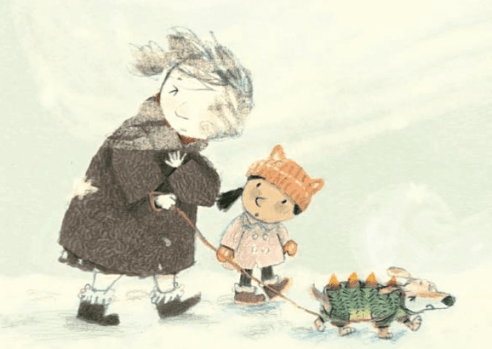
One day in late autumn Sophia and Mrs. Goldman walk Mrs. Goldman’s dog Fifi. While Fifi is kept warm in a dinosaur sweater and Sophia is cozy in the fuzzy kitten hat and mittens that Mrs. Goldman made them, Mrs. Goldman’s head and ears are unprotected in the icy wind. When Sophia asks her friend why she doesn’t have a hat, Mrs. Goldman tells her “‘I gave it to Mrs. Chen.’”

celebrate-picture-books-picture-book-review-a-hat-for-mrs.-goldman-sophia-as-a-baby

Image copyright G. Brian Karas, 2016, text copyright Michelle Edwards, 2016. Courtesy of Schwartz & Wade.

Sophia begins to worry about Mrs. Goldman. Who will knit a hat for her? “Not Mrs. Goldman. She’s too busy knitting for everyone else.’” Last year Mrs. Goldman had tried to teach Sophia to knit, but it was too hard and took too long, so she decided to stick with making pom-poms. But Sophia thinks maybe it’s time to try again. She goes to her knitting bag and pulls out the hat they had started together. “The stiches are straight and even. The soft wool smells like Mrs. Goldman’s chicken soup.”

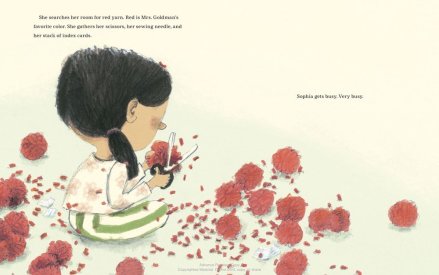
celebrate-picture-books-picture-book-review-a-hat-for-mrs.-goldman-pom-poms

Image copyright G. Brian Karas, 2016, text copyright Michelle Edwards, 2016. Courtesy of Schwartz & Wade.

Holding the needles, Sophia thinks about what she was taught. Even though she drops stitches, she continues to knit. “She wants to make Mrs. Goldman the most special hat in the world.” The next day snow falls on Mrs. Goldman’s head as they walk Fifi. Sophia frets, and at home she begins knitting morning, noon, and night to finish her hat. Winter has set in and one day when the pair walk Fifi, “Mrs. Goldman wraps Mr. Goldman’s scarf around her head like she’s a mummy.” But the wind grabs it and rips it away. Sophia catches it, but shivers at the thought of how cold Mrs. Goldman must be.

celebrate-picture-books-picture-book-review-a-hat-for-mrs.-goldman-sophia-and-mrs-goldman

Image copyright G. Brian Karas, 2016, text copyright Michelle Edwards, 2016. Courtesy of Schwartz & Wade.

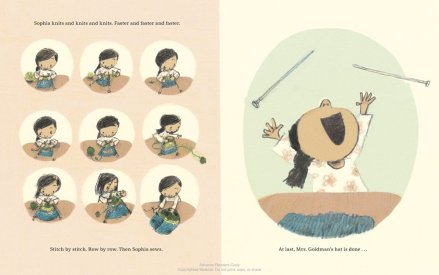
At home Sophia knits in a frenzy, adding row after row of stitches until the hat is finished. When Sophia looks at it, though, she finds holes where they shouldn’t be and lumpy and bumpy areas. She thinks what she has made looks more like a monster than a hat. Sophia takes out the box containing all the hats Mrs. Goldman has made for her, but they are much too small for Mrs. Goldman to wear. While Sophia’s mama and papa have hats made by Mrs. Goldman, she knows she can’t give those away.

Sophia imagines all the hats she makes with her neighbor and how Mrs. Goldman always tells her that her pom-poms add beauty, and that “‘that’s a mitzvah too.’” Sophia’s heart swells. She finds red yarn—Mrs. Goldman’s favorite color—and her pom-pom making supplies and goes to work. When she is finished and the pom-poms are attached, “Mrs. Goldman’s hat is the most special hat in the world.”

celebrate-picture-books-picture-book-review-a-hat-for-mrs.-goldman-sophia-finishes-hat

Image copyright G. Brian Karas, 2016, text copyright Michelle Edwards, 2016. Courtesy of Schwartz & Wade.

Sophia runs next door and surprises Mrs. Goldman with her gift. Mrs. Goldman hugs Sophia and tears come to her eyes. “‘Don’t you like it?’” Sophia asks, but she needn’t worry. “‘I more than like it, I love it,’ declares Mrs. Goldman. ‘Gorgeous. Like Mr. Goldman’s rosebushes. And you know how I love his roses.’” With a kiss for Sophia, Mrs. Goldman begins counting the twenty pom-poms on her hat—“each one made with love.” Mrs. Goldman slips the hat on her head. Now when she and Sophia take Fifi for a walk, Fifi wears her dinosaur sweater, Sophia wears her kitty hat and mittens, and “Mrs. Goldman wears her Sophia hat. Her keppie is toasty warm. And that’s a mitzvah.”

celebrate-picture-books-picture-book-review-a-hat-for-mrs.-goldman-giving-hat

Image copyright G. Brian Karas, 2016, text copyright Michelle Edwards, 2016. Courtesy of Schwartz & Wade.

Michelle Edwards’ heartwarming story of a little girl who sees that her friend is in need and determines to help draws on children’s natural generosity and shows readers that their efforts are recognized and appreciated. Edward’s gentle and well-paced storytelling allows readers to understand the events and thoughts that bring Sophia to once again attempt knitting. Sophia’s solution to use the pom-poms she knows she makes well (and with love) to cover the holes demonstrates not only the ingenious creativity of kids, but also the idea that love can fill the voids in life.

celebrate-picture-books-picture-book-review-a-hat-for-mrs-goldman-snow

Image copyright G. Brian Karas, 2016,  courtesy of Schwartz & Wade.

Brian Karas imbues the story of Sophia and Mrs. Goldman with a magical wonder that floats from page to page like the fluffy snowflakes that are the catalyst for Sophia’s mitzvah. A combination of full-page illustrations and snapshot images show days spent with Mrs. Goldman as well as the moments, hours, and days that adorable Sophia spends knitting her special hat. Sophia, tongue sticking out in determination, wields her knitting needs; she ponders her holey hat while imagining a frightened Fifi; and scraps of red yarn dot the floor and even sit atop Sophia’s head as she creates pom-pom after pom-pom. When Mrs. Goldman pulls the hat over her own head, kids will feel cheered, while adults may feel a small lump in their throat.

A Hat for Mrs. Goldman is a gem. Its tender portrayal of kindness, love, and close personal relationships makes it an outstanding choice for any child’s home library.

Ages 4 – 8

Schwartz & Wade, 2016 | ISBN 978-0553497106

Discover more about Michelle Edwards and her books, plus activities, recipes, and information on knitting on her website!

Enter a gallery of books, sketches, blog essays, and more by G. Brian Karas on his website!

National Hat Day Activity

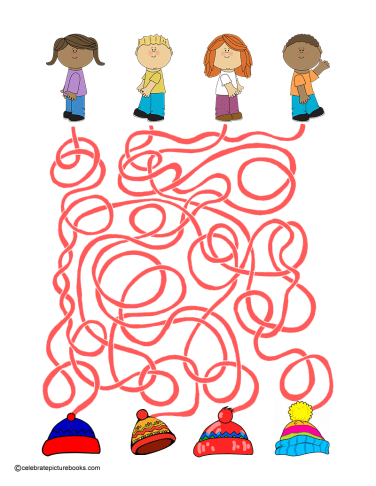
celebrate-picture-books-picture-book-review-winter-hat-match-puzzle

Winter Hat Match Puzzle


These kids have all lost their hats! Can you follow the paths in this printable Winter Hat Match Puzzle to reunite each child with the right hat?

celebrate-picture-books-picture-book-review-a-hat-for-mrs.-goldman-cover

You can find A Hat for Mrs. Goldman at these booksellers

Amazon | Barnes & Noble | Books-a-Million | IndieBound

Picture Book Review

January 11 – Learn Your Name in Morse Code Day

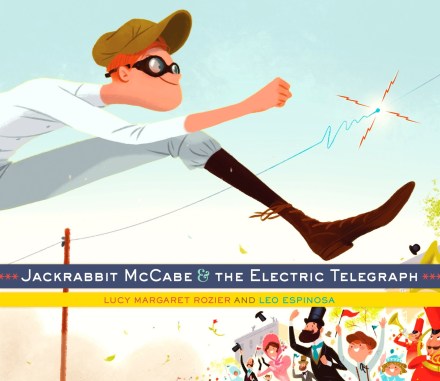
celebrate-picture-books-picture-book-review-jackrabbit-mccabe-&-the-electric-telegraph-cover

About the Holiday

With today’s instantaneous communications systems, it’s almost impossible to think of a time when all messages had to be delivered by hand. That changed when Samuel F. B. Morse, physicist Joseph Henry, and Alfred Vail developed a code that used dots and dashes to represent letters and was transmitted through electrical pulses. The ability to send quick messages revolutionized communication and led to a more connected world.

Jackrabbit McCabe & the Electric Telegraph

Written by Lucy Margaret Rozier | Illustrated by Leo Espinosa


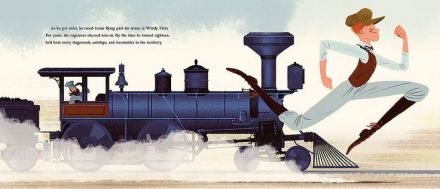
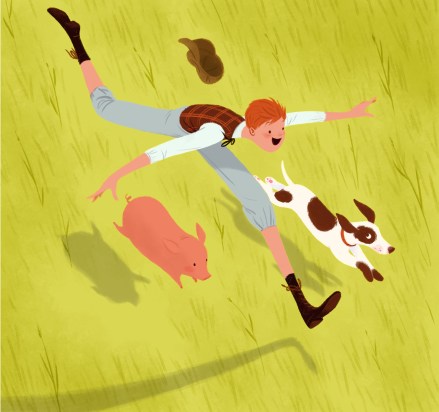
Anyone who looked at the baby with legs “so long they looped like a pretzel” and required a stroller with “an extra axle” knew that he’d been born to run. In fact, his legs grew so fast that if his mother dressed him in long pants in the morning, they were shorts by that evening. Little Jack McCabe used those legs to chase “whatever would run: hogs, dogs, even his own shadow” and “as he got older, he raced trains flying past his house in Windy Flats. By the time he turned eighteen, he’d beat every stagecoach, antelope, and locomotive in the territory.”

celebrate-picture-books-picture-book-review-jackrabbit-mccabe-&-the-electric-telegraph-racing-a-train

Image copyright Leo Espinosa, text copyright Lucy Margaret Rozier. Courtesy of Schwartz & Wade

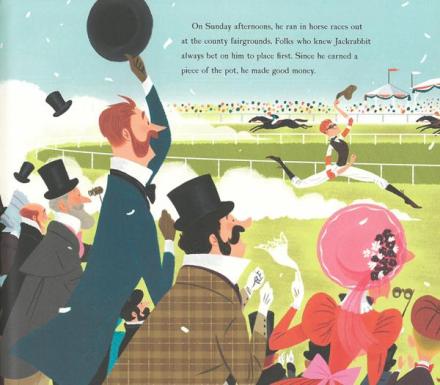
The people of Windy Flats called him Jackrabbit and relied on him to deliver messages that were urgent. On Sundays he joined the horses on the track, making money when people bet on him to come in first. One day, though, the electric telegraph came to Windy Flats. The poles and wires already crossed the eastern part of the country. Each connected city had “a telegraph and an operator who sent and received messages in Morse code, an alphabet of dots and dashes.”

The people of Windy Flats didn’t think this newfangled contraption could carry messages faster than Jackrabbit, so the telegraph man suggested, “‘How ‘bout a race between your fella and this here electric telegraph? Sandy Bluff’s just got themselves an operator, That’s pert near twenty-five miles, as the crow flies.’” Jackrabbit was all for it.

celebrate-picture-books-picture-book-review-jackrabbit-mccabe-&-the-electric-telegraph-racing-a-horse

Image copyright Leo Espinosa, text copyright Lucy Margaret Rozier. Courtesy of Schwartz & Wade

On the day of the race, the whole town of Windy Flats came out with flags, banners, and even a brass band. “The mayor carefully wrote down the same message on two slips of paper. He handed one to the telegraph man and the other to Jackrabbit.”  On the shout of “GO!” the telegraph man plunked his finger on the key sending the pulses through the wire while Jackrabbit took off down the road toward Sandy Bluff “like a tornado.”

The townspeople watched as in only a few moments “a reply came clattering back as that telegraph key jumped and smacked all on its own.” The telegraph man read the code and yelled, “‘Message received. Stop. Sandy Bluff Operator.’” But where was Jackrabbit McCabe? Although he made it to Sandy Bluff in only 9 ½ minutes, it was still too long to beat the telegraph. When he stopped short at the door of the depot, he was met by a telegram tacked to the door. Jackrabbit read it and then pulled the paper that contained the mayor’s message out of his pocket. The two were the same.

celebrate-picture-books-picture-book-review-jackrabbit-mccabe-&-the-electric-telegraph-racing-at-the-starting-line

Image copyright Leo Espinosa, text copyright Lucy Margaret Rozier. Courtesy of Schwartz & Wade

Riding home in a stagecoach, “Jackrabbit felt lower than a snake’s navel.” The mayor also felt pretty low, thinking of Jackrabbit, until he realized that if Jackrabbit’s fingers were as fast as his legs, he’d make an excellent telegraph operator. When Jackrabbit stepped out of the stagecoach and heard the mayor’s offer, he whooped with joy. It didn’t take long for Jackrabbit to learn the new code, and soon “his fingers flew like a banjo player’s strumming that telegraph key.” Every day he sent and received messages. He even “teamed up with the local typesetter, who printed the news that came over that wire, linking Windy Flats to the whole entire country,” and whenever a telegram or the newspaper needed to be delivered, Jackrabbit was there in a flash!

An Author’s Note outlining the pivotal event that sparked Samuel F. B. Morse’s interest in a quicker communication method and the history of the telegraph as well as a Morse code key and a riddle to translate follow the text.

celebrate-picture-books-picture-book-review-jackrabbit-mccabe-&-the-electric-telegraph-racing-hogs-and-dogs

Image copyright Leo Espinosa, courtesy of Schwartz & Wade

Lucy Margaret Rozier has written a funny and fact-based addition to the fine American tradition of tall tales with Jackrabbit McCabe & the Electric Telegraph. From her folksy delivery to her humorously exaggerated details, Rozier presents an engaging history of the telegraph through the story of one man affected by this new technology. Kids will love the fast-paced story full of crackling dialog and gripping suspense.

Leo Espinosa infuses his brightly-colored, vintage-style illustrations with the charm and innocence of the mid-1800s while highlighting the humor of Rozier’s yarn. Jackrabbit’s looong legs take up a whole page—sometimes two—as he runs with dogs and hogs, sprints past steam trains, speeds off at the starting line, and wedges himself into the stagecoach, with one foot hanging out the window. The small town of Windy Flats and the townspeople are decked out in period details, and the enthusiasm of the time is infectious.

Jackrabbit McCabe & the Electric Telegraph will become a favorite read lightening quick. The book would make a fun addition to children’s bookshelves.

Ages 4 – 8

Schwartz & Wade Books, 2015 | ISBN 978-0385378437

Discover more about Lucy Margaret Rozier plus book-related resources on her website!

View a gallery of illustration work by Leo Espinosa on his website!

Learn Your Name in Morse Code Day Activity

celebrate-picture-books-picture-book-review-morse-code-image

Morse Code Decoder


Sending secret messages in code is cool! Use this printable Morse Code Decoder to learn how to write your name and those notes you don’t want anyone else to read in this early method of communication.

Picture Book Review

December 14 – It’s Human Rights Month

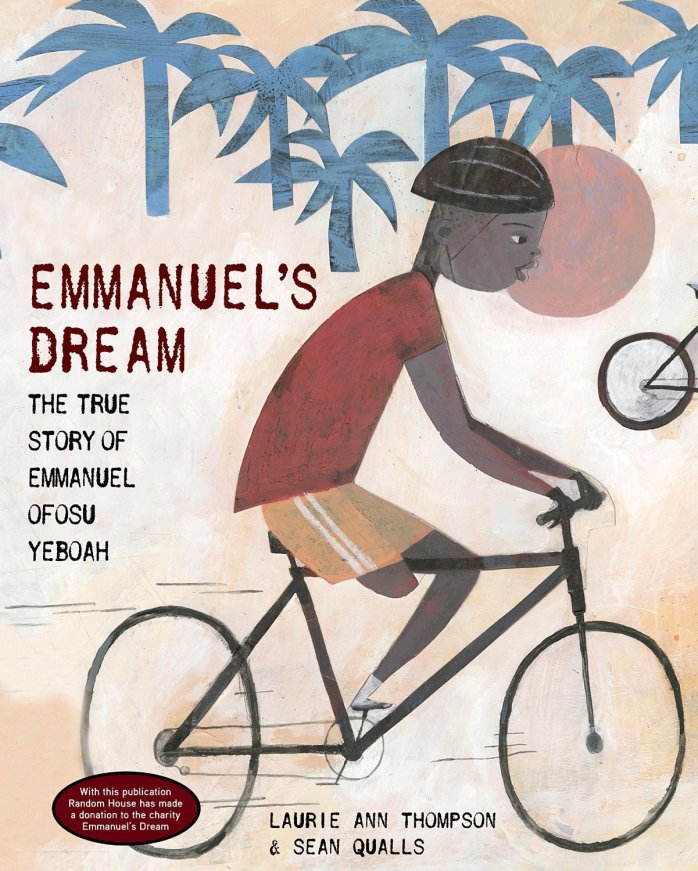
celebrate-picture-books-picture-book-review-emmanuel's-dream

About the Holiday

December is Human Rights Month, an observance established by the United Nations in order to raise awareness of, promote, and protect the equality of the world’s citizens. It takes vigilence, compassion, dedication, and determination, but achieving the goal of equal human rights is a responsibility we all share.

Emmanuel’s Dream: The True Story of Emmanuel Ofosu Yeboah

Written by Laurie Ann Thompson | Illustrated by Sean Qualls


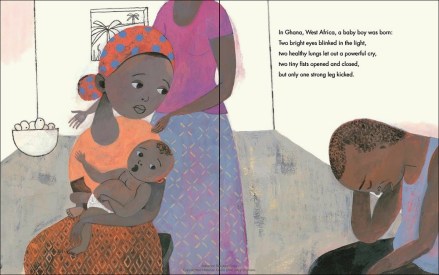
A baby is born in Ghana, West Africa with bright eyes, healthy lungs, and tiny, clasping fingers—but with only one strong leg. Most people think the baby will grow up to be a burden or worse—a curse. His father leaves the family, but his mother keeps the faith. Her name is Comfort and she names her child Emmanuel, which means “God is with us.”

celebrate-picture-books-picture-book-review-emmanuel's-dream-baby

Image copyright Sean Qualls, text copyright Laurie Ann Thompson. Courtesy of Schwartz & Wade

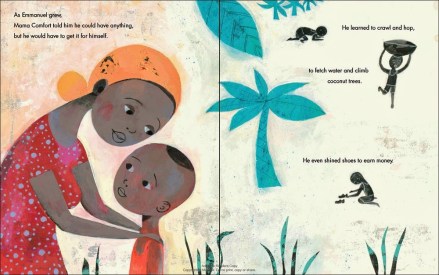
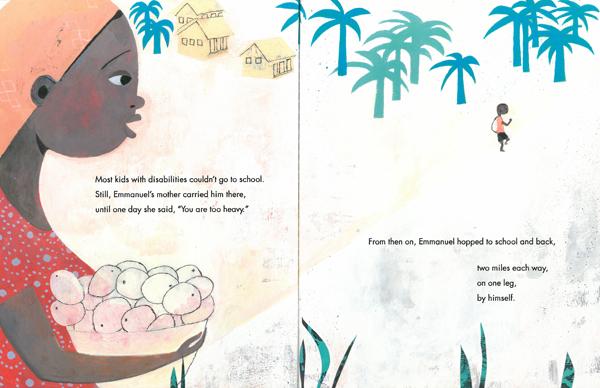
As Emmanuel grows, his mother encourages his independence. He learns how to crawl and hop to complete his daily work all with one leg. Most kids with disabilities don’t go to school, but Comfort carries her son back and forth until he becomes too heavy. From then on Emmanuel hops the two miles each way all by himself. At first the other kids won’t play with him, but Emmanuel is clever. He buys a soccer ball with the money he earns shining shoes and when he offers to share it, the kids include him. On crutches he is a fierce competitor and earns his classmates’ respect. Riding bikes is another favorite activity. Can Emmanuel pump those pedals with only one leg? He practices and falls, practices and falls some more until he masters the technique.

celebrate-picture-books-picture-book-review-emmanuel's-dream-growing-up

Image copyright Sean Qualls, text copyright Laurie Ann Thompson. Courtesy of Schwartz & Wade

When Emmanuel is 13 years old, his mother becomes ill. As the only family member capable of working, Emmanuel takes a train to a city 150 miles away to find a job. He doesn’t see his family again for two years. Because of his disability it is hard for him to find work. Finally, a food stand owner hires him and gives him a place to live. Over time Comfort grows sicker. When Emmanuel goes to be with her, she tells him to never beg and never give up. He takes these words to heart.

Emmanuel has an idea to show the world that “disabled does not mean unable”—all he needs is a bike. When the Challenged Athletes Foundation learns of his plan to bike around Ghana, they give him a bike, a helmet, and clothing. He trains and receives a blessing from the king of his region. Then accompanied by people who will document his trip, he takes off. “He pedaled through rain forests, over rolling hills, and across wide, muddy rivers….He pedaled as trucks roared past on the narrow highways and wild animals stalked his thoughts….He rode up, down, across, and around his country, proudly wearing the colors of its flag on a shirt printed with the words “The Pozo” or “the disabled person.”

celebrate-picture-books-picture-book-review-emmanuel's-dream-going-to-school

Image copyright Sean Qualls, text copyright Laurie Ann Thompson. Courtesy of Schwartz & Wade

Emmanuel talks to others with physical challenges and to those without. He meets farmers, landowners, government officials, and reporters. He wants everyone to learn of his message. People begin to pay attention—they ride and run alongside him; people with disabilities come out of their houses to see him (some leaving home for the first time ever). Emmanuel is becoming a national hero! Emmanuel completes his journey—nearly 400 miles—in only 10 days. In that short amount of time he proves that anyone can do great things and that one person is enough to change the world.

An Author’s Note expanding on Emmanuel Ofosu Yeboah’s life since his bike ride follows the text.

Laurie Ann Thompson tells this story of courage and achievement in straightforward language that highlights the difficulties and prejudices Emmanuel overcame to live the full life his mother envisioned for him. The details Thompson reveals—both within the school setting and in the world beyond—will inspire anyone who reads this special and moving true story.

Sean Qualls renders the story of Emmanuel Ofosu Yeboah in the vibrant colors and patterns of his native West Africa, giving energy and spirit to the fire that burned inside the young boy who rose above his disability and the expectations of his community. His relationship with his strong, supportive mother is drawn with obvious love and compassion. The use of a folk-art style combined with scenes of African markets, landscapes, and traditional tableaus, effectively sets the story for children. One particularly touching illustration shows a tiny Emmanuel hopping off to school as his mother, shown larger in the foreground, watches.

Ages 4 – 9

Schwartz & Wade, Random House, 2015 | ISBN 978-0449817445

Discover more about Laurie Ann Thompson and her books on her website!

To view a gallery of picture book illustration by Sean Qualls, visit his website!

Human Rights Month Activity

celebrate-picture-books-picture-book-review-change-your-world-coloring-page

Change Your World Coloring Page


You can make a difference in your school, your town, and the world around you. Here’s a printable Change Your World message that you can color and hang in your room or locker to remember how much power you have.

Picture Book Review

December 2 – National Mutt Day

celebrate-picture-books-picture-book-review-wolf-camp-cover

About the Holiday

National Mutt Day, also known as Mixed Breed Dog Day, was established in 2005 by animal welfare advocate Colleen Paige to raise awareness of the plight of mixed breed dogs abandoned and in shelters around the country. Approximately 80% of dogs in shelters are mixed breeds and often lose out on finding permanent homes to purebred dogs who are adopted much more quickly. Mixed breed dogs tend to be healthier, behave better, and often have sweeter temperaments than their purebred cousins, making them wonderful family pets. If you are considering adding a pet to your family, consider a mixed breed. You’ll be happy you did!

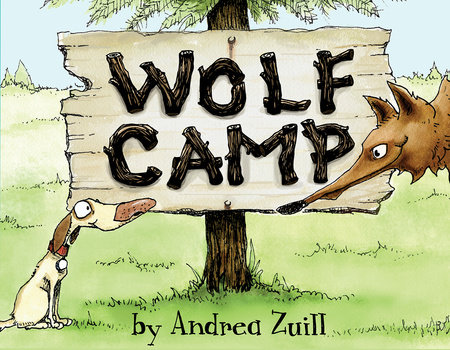
Wolf Camp

By Andrea Zuill


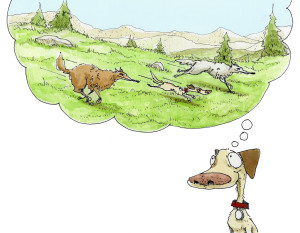
Homer is a regular dog—except when he’s feeling wolfish. He loves the lure of the hunt, and likes to pounce on stuffed Mr. Moose unawares. He thinks this is because it’s been proven by science that “all dogs have a bit of wolf in them.” When Homer takes to daydreaming, his mind wanders to the joys of living as “a real wolf,” running with the pack on the open plains. Then one day in addition to his kibble, a flier for Wolf Camp pours from the dog food bag.

The flier seems to offer everything Homer wants. “Have you ever felt like howling at the moon? Come join us!” it reads. Homer knows he has to go, so he makes sure his people see the notice—whether they are in the bathtub, in bed, relaxing, or just walking through the house. Finally his people relent, and on the designated day he boards the Wolf Camp bus and is off on an adventure.

celebrate-picture-books-picture-book-review-wolf-camp-running-with-wolves

Copyright Andrea Zuill, courtesy of andreazuill.org

Once at camp, Homer is “greeted by Fang and Grrr,” the counselors. Then he meets his fellow campers, big Rex and tiny Pixie. Fang gives a safety speech that includes staying together, refraining from chasing dangerous animals, and other rules. Their first lesson is “marking.” Could Homer help it if he was a little too close to Fang’s feet? Next comes howling. Grrr and Fang sing out a chilling “Ahh-whooooo…” Pixie pipes up with a small “Yeeiiiiiip”; Rex gives an indeterminate  “Wahwawawawa…”; and Homer offers his best “Phooooooof…”

celebrate-picture-books-picture-book-review-wolf-camp-running-bunny

Copyright Andrea Zuill, courtesy of andreazuill.org

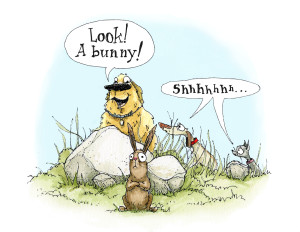
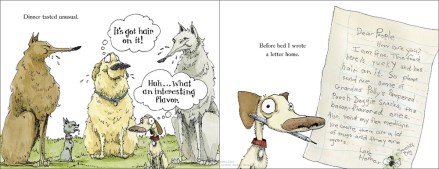
When they learn to track, Rex can’t contain his excitement and shouts out “Look! A bunny!” “Shhhhhhh…,” Homer and Pixie remind him. At last the campers are shown how to hunt, even if Fang and Grrr do run ahead and with Grrrs, snarls, growls, and a cloud of dust acquire dinner by themselves. The meal has “an interesting flavor,” which prompts Homer to write a letter home: “Dear People, How are you? I am fine. The food here is yucky and has hair on it.” He asks his family to send his favorite bacon-flavored doggie snacks as well as flea medicine “because there are a lot of bugs and they are gross.” He even includes a real “smashed bug” in the corner of the paper.

celebrate-picture-books-picture-book-review-wolf-camp-running-letter-home

Copyright Andrea Zuill, courtesy of andreazuill.org

Living and sleeping in the wild have their challenges, but day-by-day the dogs adjust, becoming experts at marking rocks, howling “Ahh-Whoooo,” and hunting. And while taking down a moose may still be daunting, chasing squirrels is easy. The end of the week comes quickly and as Homer receives his “Honorary Wolf” certificate, he feels sad to be leaving his new friends. They howl “one more time as a pack,” and then it’s time to ride the bus back home.

While it’s good to be home with his people, his soft bed and electric blanket, and his familiar toys, Homer feels different. As nighttime falls he goes to the window and sings out a chilling “Ahh-whoooo-Ahh-Ahh-Whooowhooo….”

Andrea Zuill’s funny story of a regular dog who dreams of being more by embracing his bolder heritage will delight dog owners and dog lovers alike. Endearing Homer, with his wagging tail, sweet smile, and unflagging perseverance, is an enthusiastic hero who inspires readers to never give up in the face of obstacles. Humorous dialogue and commentary by Homer, Rex, and Pixie as they perform their camp lessons are presented in speech and thought bubbles and will make kids giggle. Zuill’s nod to “people” camp makes Wolf Camp an accessible story that will resonate with any child facing a new situation, learning new skills, or being away from home for the first time.

Zuill’s vivid, cartoon-inspired illustrations are loaded with personality and expression. Kids will root for earnest Homer, shaggy Rex, and scrawny Pixie, and, while needle-nosed Fang and Grrr initially seem intimidating, they are counselors who have their camp charges’ best interests at heart.

Ages 4 – 8

Schwartz & Wade, 2016 | ISBN 978-0553509120

To learn more about Andrea Zuill and Wolf Camp, as well as view a portfolio of her illustrations, visit her website!

National Mutt Day Activity

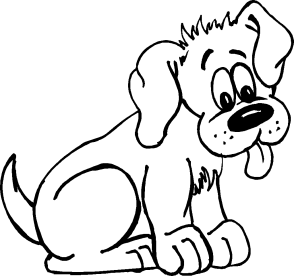
celebrate-picture-books-picture-book-review-funny-puppy-coloring-page

Funny Mutt Coloring Page


Mixed breed dogs make wonderful pets with lots of love to give. Here’s a printable Funny Mutt Picture for you to color!

Picture Book Review

August 18 – It’s Get Ready for Kindergarten Month

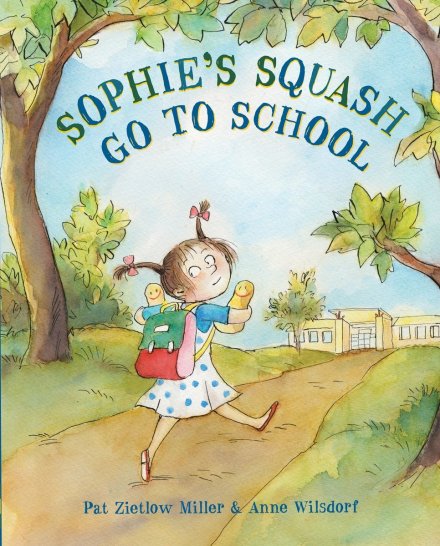
celebrate-picture-books-picture-book-review-sophie's-squash-go-to-school-cover

About the Holiday

Starting kindergarten is a huge step toward future learning and fun! This milestone can take a lot of preparation—from buying backpacks and school clothes to establishing different routines to becoming a new member of the school community. Most school years start during August and this month gives families an opportunity to talk about the changes, go shopping together, and look forward to the new experiences to come!

Sophie’s Squash Go to School

Written by Pat Zietlow Miller | Illustrated by Anne Wilsdorf


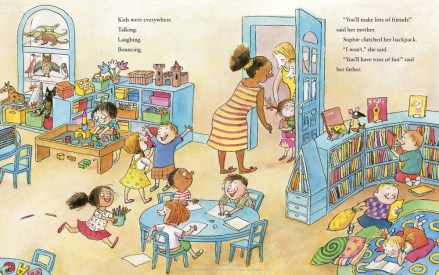
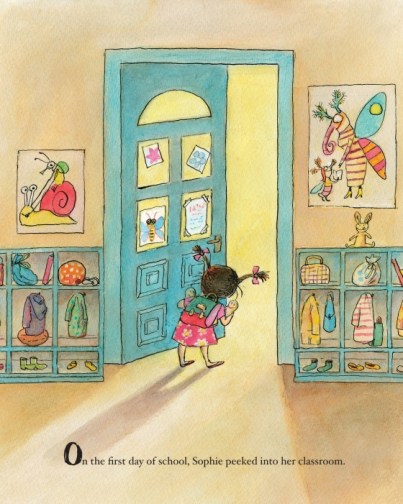
Backed up by her parents and clutching her best friends, two squash named Bonnie and Baxter, Sophie peeks into her classroom on the first day of school. She sees kids running everywhere, talking and laughing. Her parents assure Sophie that she’ll make a lot of friends and have tons of fun, but Sophie is adamant: “‘I won’t,’” she says. And Sophie’s right. “The chairs were uncomfortable. The milk tasted funny. And no one appreciated her two best friends, Bonnie and Baxter.”

celebrate-picture-books-picture-book-review-sophie's-squash-go-to-school-classroom

Image copyright Anne Wilsdorf, courtesy of Schwartz & Wade

The other kids surround her with questions about Bonnie and Baxter. “‘Are they toys? Do they bounce? Can we EAT them?’” Sophie has had enough. “‘No, no, no! I grew them in my garden. They’re my FRIENDS.’” And then there’s Steven Green. He sits near Sophie at circle time, plays near her on the playground, and stands over her breathing down her neck during art time. Ms. Park, the teacher, tells Sophie Steven is just being nice, but Sophie isn’t interested.

Steven does not give up so easily. He returns to show Sophie his best friend—Marvin, a stuffed frog that he got when the toy was just a tadpole. “‘Then you don’t need me,’” Sophie says and decides “that’s that.” But that isn’t that. The next day Steven is back, building a block tower near Sophie, reading her book over her shoulder, and even offering facts about fruit and vegetables during Sophie’s show and tell.

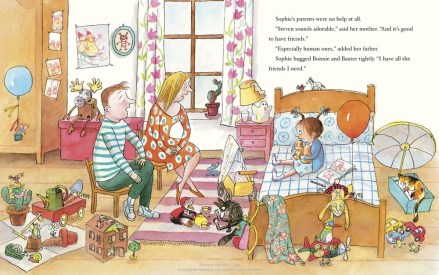
When her parents hear about Steven, they encourage Sophie to make a friend, but Sophie just clings tighter to Bonnie and Baxter. “Still, Sophie knew that Bonnie and Baxter wouldn’t last forever,” so when the other kids dance, spill their milk, or tell jokes, Sophie considers joining in. On the playground Sophie plays hopscotch while the other kids play tag, jump rope, and play other games together. When Steven asks if he can join Sophie, Bonnie, and Baxter, she refuses, leaving Steve and Marvin to sit alone.

celebrate-picture-books-picture-book-review-sophie's-squash-go-to-school-talk-with-mom-and-dad

Image copyright Anne Wilsdorf, courtesy of Schwartz & Wade

When the weekend comes Bonnie and Baxter look “too tired to hop. Or build towers. ‘It’s time,’” says Sophie’s mother. Sophie digs a hole to make “a garden bed and tucked her squash in for their winter nap. ‘Sleep tight,’” she says. “‘See you soon.’ But spring seemed very far away.” On Monday Ms. Park asks the class to tell her what makes a good friend. The kids answer that friends play with you, help you, and think you’re funny. Steven answers “‘They like what you like.’” Ms. Park sends the kids off to draw pictures of their friends.

When Steven wants to see Sophie’s drawing of Bonnie and Baxter, the two get into a scuffle over the paper and it tears in half. “‘You are NOT my friend,’” Sophie says as she walks away. On the way home from school, Sophie tells her mom what happened. “‘Sweet potato,’” her mom says. “‘That adorable boy didn’t mean to tear your picture.’” But Sophie’s not so sure.

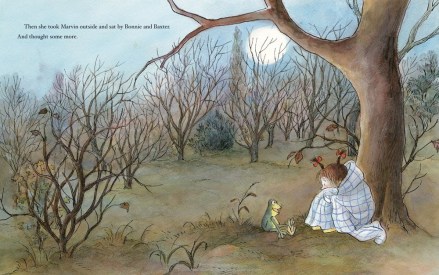
The next morning Sophie finds Marvin and a note in her cubby. She ignores it, and by lunchtime, Marvin is gone. Later that night, though, Sophie and her dad discover Marvin and the note inside her backpack. The note contains a drawing of Bonnie and Baxter as well as a packet of seeds.  “‘Do friends really like the same things you like?’” Sophie asks her dad. When he answers “Sometimes,” Sophie begins to think. She takes Marvin outside and sits near Bonnie and Baxter to think some more.

celebrate-picture-books-picture-book-review-sophie's-squash-go-to-school-nighttime-thinking

Image copyright Anne Wilsdorf, courtesy of Schwartz & Wade

The next day Sophie runs up to Steven to tell him the great idea that Marvin had. They then tell Ms. Park. The next day, Ms. Park hands each child “a cup, some dirt and one small seed.” “‘Can we EAT them?’” a classmate asks. “‘No!’” says Sophie, and Steven adds, “‘You never eat a friend.’” The kids plant the seeds and put the pots on the windowsill. Soon tiny shoots appear in the cups and Sophie and Steven invite the kids to do a new-plant dance.

“‘See?’” Sophie tells Steven. “‘Sometimes growing a friend just takes time.’”

Pat Zietlow Miller’s sequel to her award-winning Sophie’s Squash is a heartfelt story for kids for whom the definition of friendship runs deep. Sophie’s hesitancy to join in the freewheeling play of other kids echoes the feelings of many children entering new classrooms, joining unfamiliar groups, or meeting any new challenge. The excellent pacing of the story as well as Sophie’s honest emotions allow for development of the theme that sometimes friendship takes time. Steven’s persistence sets a positive example for not passing judgement too quickly. Sophie’s transition from squash friends to human is treated sensitively and with cleverness. In the end Sophie learns how to make a friend while still staying true to herself.

celebrate-picture-books-picture-book-review-sophie's-squash-go-to-school-peeking-in-classroom-door

Image copyright Anne Wilsdorf, courtesy of Schwartz & Wade

Anne Wilsdorf’s cartoon-inspired illustrations perfectly depict the world that Sophie reluctantly inhabits. Her classroom is boldly colorful, full of books, toys, separate spaces, and of course all sorts of kids. Sophie’s reactions to the comments and actions of her classmates are clearly registered on her face and will make kids giggle even while they recognize her feelings. Steadfast Steven is, as Sophie’s mom says, adorable, and readers will empathize with his plight in just wanting to make a friend. The nighttime scene beautifully sums up Sophie’s dilemma and provides her and readers a moment to reflect on the story’s ideas.

On so many levels, Sophie’s Squash Go to School makes a wonderful addition to children’s and school bookshelves.

Ages 4 – 9

Schwartz & Wade, Penguin/Random House, 2016 | ISBN 978-0553509441

Discover much more about Pat Zietlow Miller and her books on her website!

Get Ready for Kindergarten Month Activity

celebrate-picture-books-picture-book-review-smile-for-school-word-search

Smile for School! Word Search


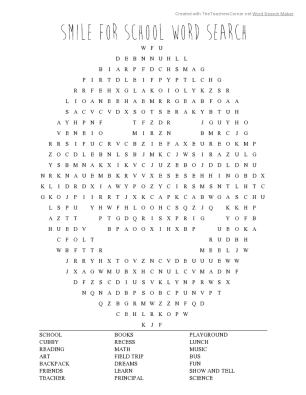
Find 20 words about school in this printable Smile for School! Word Search. Here’s the Solution!

Picture Book Review

July 27 – Dog Days of Summer Q & A with Ged Adamson

celebrate-picture-books-picture-book-review-ged-adamson-photo

About the Author

Ged Adamson is a writer and illustrator living in London with his partner Helen and their son Rex. His most recent book Douglas, You Need Glasses! was published by Random House and released this past May. Two previous books—Elsie Clarke and the Vampire Hairdresser (2013) and Meet the McKaws (2015)—were published by Sky Pony Press. Ged has two books hitting shelves in the summer and fall of 2017—Shark Dog from HarperCollins and I Want to Grow from Boyds Mills Press. Ged’s cartoons have appeared in magazines, such as Punch and Prospect, as well as in books and on film. He has worked as a storyboard artist and a caricaturist and also works as a composer for TV and film.

About the Holiday

Here we are in the Dog Days of Summer—that time from July 3 to late August—when the air is still, the sun is bright, and the beach beckons. Although the phrase “dog days” conjures up images of Fido panting and lethargic, the term actually refers to the dog star Sirius—the brightest star and, in Greek mythology, the hunter Orion’s dog. To the ancient Greeks and Romans, the “dog days” occurred when Sirius rose and set with the sun, lending its warmth to the day.

Q & A with Ged Adamson

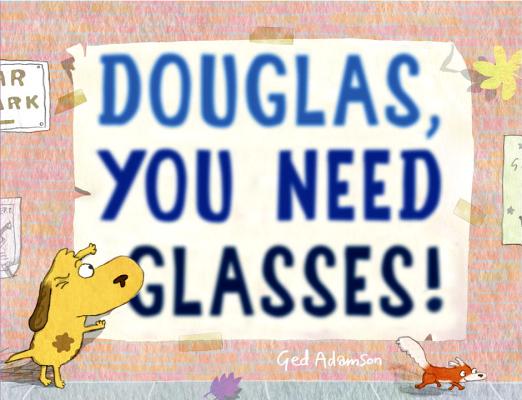
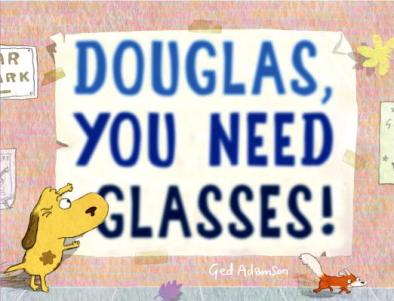
Today, Celebrate Picture Books is featuring another rising star—Ged Adamson. Ged took some time to talk about his work, his inspirations, and that stellar, spectacles-wearing canine Douglas of:
celebrate-picture-books-picture-book-review-douglas-you-need-glasses-cover

What books did you enjoy most as a child?


I wasn’t a great reader of chapter books as a child and I don’t remember us having picture books in the house but we did Roald Dahl stories at school. James and the Giant Peach and Charlie and the Chocolate Factory were favourites.

My mum and dad were avid readers. My dad had some great books. As well as novels, he had a lot of factual books about artists and history. One that I loved was about The Illustrated London News and it was full of beautiful Victorian etchings of everyday life in London. There were always books of cartoons by people like Giles and Frank Dickens. And we had loads of Charles Schultz Peanuts paperbacks.

celebrate-picture-books-picture-book-review-ged-adamson-interview-a-kestrel-for-a-knave-cover

My grandad was Scottish and we used to get a Scottish newspaper every weekend called The Sunday Post. There was a comic section for kids. The two main strips in it were The Broons and Oor Wullie. The characters inhabited a kind of 1950s world which I loved. We would get The Broons and Oor Wullie annuals every Christmas.

The first proper books I read of my own accord were collections of short horror stories that I borrowed from my older brothers. Reading them, I would be scared to death but I couldn’t stop. We did some great books in school that I really enjoyed like Animal Farm by George Orwell, A Kestral For A Knave by Barry Hines and Lord of the Flies by William Golding. And in the school library they had some decent novels for older kids and they had Tintin and Asterix the Gaul in French.

What influenced you to write Douglas, You Need Glasses!?


It was a little drawing I did of a dog in glasses smoking a pipe. Like most doodles, it was done without really thinking. But I was trying to come up with ideas for stories at the time so I wondered if I could do something with this character.
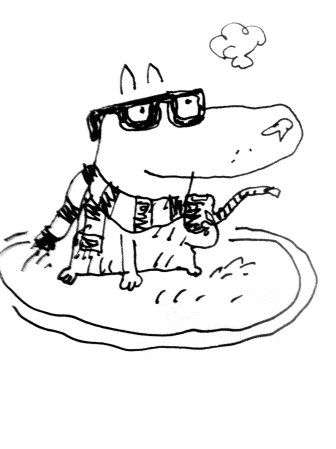
celebrate-picture-books-picture-book-review-ged-adamson-douglas-doodle

Image copyright Ged Adamson

I wear glasses myself so I thought I could use some of my own experiences with short sightedness to develop Douglas’s story. It went through many stages though. In one early idea, Douglas’s newly perfect vision causes him to be too honest about people’s appearances. Another had him befriending a group of insects.

I’d just started to take my illustration style in a different direction, and I wanted to do something that would be visually strong. So from the way Nancy is dressed, the coloured see-through trees, the skate park, the eye chart, through to the big glasses at the end. I was trying to create images that the reader would remember. And most importantly I wanted the story to be funny!
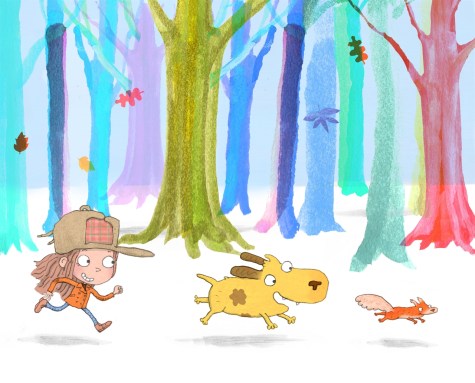
celebrate-picture-books-picture-book-review-ged-adamson-interview-douglas-you-need-glasses

Image copyright Ged Adamson, coiurtesy of gedadamson.com

Can you describe your process when writing and illustrating a picture book?


It will start with an idea. Sometimes, as with Douglas, that will come from a doodle. The next stage is sketches and thinking a lot about the shape of the story. Who are the characters? How will the art look? What is the story saying—what’s its message? I’ll talk to people whose opinions I respect and see what they think—my Agent Isy being one.

The next step is putting together three or four spreads so you get a feel for the tone of the story and how it will look. All the time I’m throwing in bits of text but this changes constantly. I never have a manuscript separate from the images for this reason. To me, the words and pictures can’t exist apart from each other. That’s why I’m always uneasy supplying a manuscript with submissions!

All through this process of me working on a story—and then if I’m lucky, with the publisher—I’ll be chopping things out and adding stuff to solve problems. In my next book, Shark Dog, I’d put a cute little penguin in the final spread. I really liked that penguin! But he had to go because the scene changed from an Arctic sea to a tropical one. And that is a pretty minor change in the grand scheme of things. You have to be prepared for the editor asking to make major overhauls to your book before it goes to the printers.
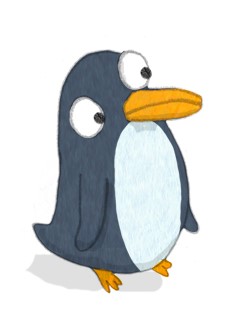
celebrate-picture-books-picture-book-review-ged-adamson-penguin-doodle

Image copyright Ged Adamson

Can you describe your work space a little?


It’s a small room, but it’s mine! I think, no matter how tiny it is, how you arrange the space where you work is important. I like to feel it’s my world and part of my personality. The centre of it is occupied by an old desk with an iMac on it. I replaced my chair recently and I love the new one. It’s like something from an ‘80s quiz show and super comfy. I sometimes record music in there so there are instruments as well as art stuff. There are things I’ve picked up from junk shops and our local market. There’s an old sofa against one wall which is so great when I want to have a break.

celebrate-picture-books-picture-book-review-ged-adamson-interview-ged's-writing-space

Most furniture in our house is second hand. I have bits of paper stuck to the wall with lists of things I need to get done and new book ideas. I’ve got a few pictures up too. There’s one which is just a scene of a rough sea, nothing else—it’s an old framed print. There’s something weirdly relaxing about it. I like that I can look out the window and see the backs of the tall Georgian houses on the other side of the railway tracks. It’s a very London view. I’d like to have a bigger space to work in but I do love my little room.

What is the favorite object on your desk and why?


I want to say something like “Ah, that would be the skull of my great grandfather. He spent his life studying the speech patterns of elk”. But I think it has to be my computer. Though it keeps dropping out of connection which is driving me mad. What the hell, Apple? 

What is the best part about writing picture books?


I remember working on the art for my second picture book Meet The McKaws. I could see the snow coming down outside the window of my little room. I suddenly thought, “I’m really happy doing this”! I hadn’t had that same feeling doing anything else.

Actually, the best part of writing picture books is what I’m experiencing right now with Douglas. People are getting in touch and saying they love the book and the characters. The response from readers is what you look forward to and when you get so much positive feedback for something you spent a long time working on, it’s such a great thing.

But there are other aspects that I love too. Working with talented editors and art directors is a lot of fun and you learn valuable stuff from them too.

It’s also thrilling to see your book on the shelves in a book shop!

What are you working on next?


I’m just finishing work on two books that will be out next year. The first is Shark Dog. It’s about a strange but very friendly animal that stows away on an explorer’s boat. HarperCollins is doing that one. The second is called I Want To Grow, and it’s about a little dinosaur called Herb who gets frustrated that his human friend Muriel is getting taller and he’s not. This one’s with Boyds Mill Press.
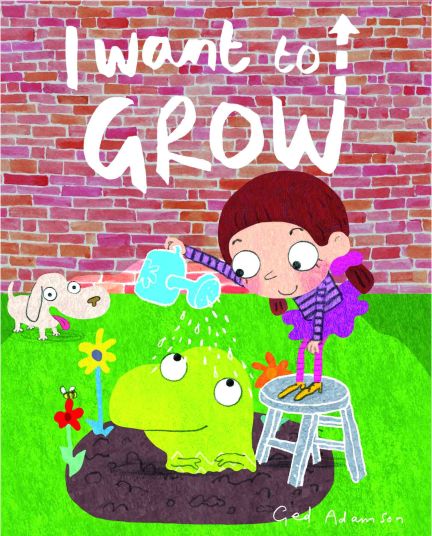
celebrate-picture-books-picture-book-review-ged-adamson-i-want-to-grow-cover

image copyright Ged Adamson

I’m also working on two new ideas. One of those is about a rainbow and it’s almost ready for submission, so I’m excited to see what publishers think.

I can’t properly call this a holiday themed blog without asking you a couple of questions about special dates, so here goes:

What is your favorite holiday?


Because I’ve always done stuff that doesn’t involve a nine to five working week, I feel slightly guilty that I don’t appreciate holidays. Even weekends. On Twitter and Instagram there’ll be loads of people going, “IT’S THE WEEKEND! HURRAY!!” and I’ll be like, “oh yes, yay!”

I do like Christmas though. My son is still quite little so it’s lovely to experience that kid version of Christmas again through him. I’m not the least bit religious, but I really like when people come to our road and sing carols. The TV’s good and there’s lots of drinking and eating. I mean, what’s not to like about that? 

Do you have an anecdote from any holiday you’d like to share?


I remember a school Summer trip where we all stayed for a week in an old country house in the middle of woodland. Rumours began circulating that the place was haunted. Everybody started to get nervous. This wasn’t helped by a drunken teacher one night on his way to bed telling everyone “Don’t worry, the ghosts won’t harm you”. We were now all terrified and a kind of hysteria took over. We started counting the minutes until we could be reunited with our families. Somebody said they saw a ‘misty figure’ as they made their way back from the disco hut. Panic ensued. Even on the coach home there was a sense of looming disaster. Back at school in September, it wasn’t talked about much. I think everyone was embarrassed that we’d allowed ourselves to get into such a state.

Has a holiday ever influenced your work?


In Shark Dog, the explorers and their new pet set off to the seaside in their Morris Minor. For me that is a very English holiday scene but obviously you don’t see many of those cars any more. My mum and dad didn’t drive so our holidays would involve hours on a coach to somewhere like Wales or Devon. In the new story I’m working on, there is a spread with a multitude of people getting off those kind of coaches. It definitely took me back to being a kid!

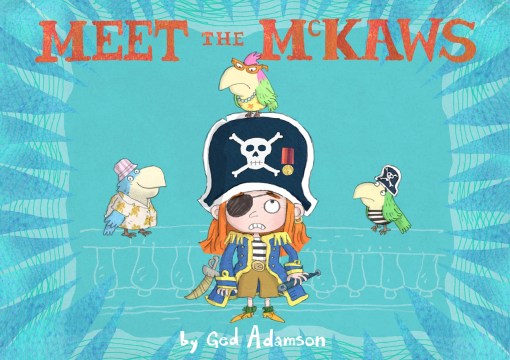
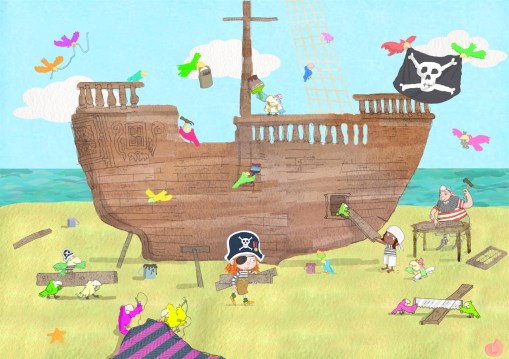
In Meet The McKaws, the story centres on a pirate’s parrot’s family members visiting for a few days. This is an aspect of holiday periods that is fraught with danger!
celebrate-picture-books-picture-book-review-ged-adamson-interview-meet-the-mckaws-cover

celebrate-picture-books-picture-book-review-ged-adamson-interview-meet-the-mckaws-rebuilding-the-ship

Image copyright and courtesy of Ged Adamson

I’d like to thank Ged for his insightful and engaging answers to my questions that prove that the Dog Days of Summer are definitely the best (especially when that dog is Douglas)! 
 

celebrate-picture-books-picture-book-review-douglas-you-need-glasses-cover

Ged is giving away a copy of Douglas, You Need Glasses! plus other goodies! Just click to enter the Rafflecopter Giveaway


You Can Connect with Ged Adamson on

Twitter | Instagram | Ged’s Website

You Can Find Ged Adamson’s Books at

Book Depository | Amazon UK | Amazon US | Barnes and Noble | IndieBound

Ged Adamson’s blog tour continues! Don’t miss it!
celebrate-picture-books-picture-book-review-ged-adamson-blog-tour-banner

Review of Douglas, You Need Glasses!

By Ged Adamson


Something may be amiss with Douglas. When Nancy and her playful pooch went out to chase squirrels recently, Douglas ran after a falling leaf while the squirrel escaped up a tree. It’s not the first time something like this has happened. You see, Douglas is a bit nearsighted. Sometimes he mistakes the stair post for Nancy, and his difficulty gets in the way of things (well, mostly Douglas gets in the way of things). He misses important signs—like the one that would have prevented him from tracking wet cement all over the skate park, where there are NO DOGS allowed—and he’s always causing something of a ruckus. Sometimes he even enters the wrong house! But when a game of fetch buzzzzzed toward disaster, Nancy decided something had to be done.
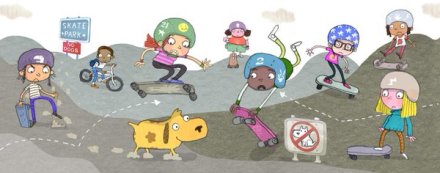
celebrate-picture-books-picture-book-review-douglas-you-need-glasses-skate-park-art

Image copyright Ged Adamson, courtesy gedadamson.com

She took Douglas to the eye doctor where he tried to read a most dog-friendly eye chart. His test revealed that he needed glasses. He found the shelves of Dog Glasses, which offered many options, and had fun trying some on. Each one made him feel different. In one pair he was a rock star; in another a scholar; and in yet another a hippy. He wore them all until he discovered the perfect pair!

On the way home he saw the world in a way he never had before. “‘Wow! Everything looks amazing!’” Douglas said. And it was!

celebrate-picture-books-picture-book-review-douglas-you-need-glasses-interior-art

Image copyright Ged Adamson, courtesy gedadamson.com

Ged Adamson’s funny look at a nearsighted dog will make kids laugh from the first page to the last. Earnest Douglas, going about his doggy days under a bit of a skewed perspective, is so endearing that readers cannot help but love him even as they giggle at his exploits. Adamson’s vibrant multi-hued trees, colorfully clothed kids, and vivid backgrounds with stylish sketched-in details gives the book a fresh, jaunty appeal for a lively, fun story time. Kids facing the prospect of wearing glasses will find lots to give them reassurance and confidence in this book.

Douglas, You Need Glasses is a great addition to any child’s bookshelf!

Ages 3 – 8

Schwartz & Wade, Random House Kids, 2016 | ISBN 978-0553522433

Dog Days of Summer Activity
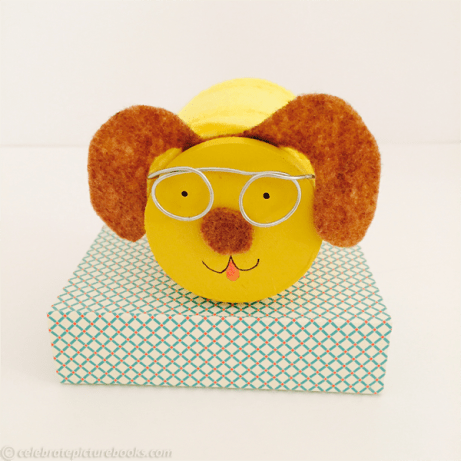
 

celebrate-picture-books-picture-book-review-spool-puppy-craft

Make a Stellar Spool Puppy


No matter where you go and whether you have a real dog or not, you can take this little guy along with you. And just as you would pick out your favorite from an animal shelter, you can make this puppy look any way you’d like!

Supplies

  • Printable ears and nose template
  • 2-inch round wooden spool, available at craft stores
  • 1 skein of yarn in the color you choose. Yardage needed will depend on the thickness of the yarn.
  • Felt
  • Craft paint
  • Paint brush
  • Fabric or strong glue
  • Thin gauge wire
  • Dowel or pencil to wrap wire around to make glasses

celebrate-picture-books-picture-book-review-spool-puppy-craft

Directions

  1. Paint the dowel the color you want your dog to be, let dry
  2. Trace the ears on the felt and cut out (or draw your own ears)
  3. Trace the nose on the felt and cut out
  4. When the spool is dry glue the ears to the body of the spool, allowing the ears to stick up from the top of the spool
  5. Wind the yarn around the spool back and forth until the dog’s body is the size you’d like
  6. Glue the yarn in place with fabric or strong glue

To make the face

  1. Glue the nose over the hole on one end of the spool
  2. Draw the mouth and tongue under the nose with a marker
  3. You will draw the eyes on after the glasses are in place

To make the glasses

  1. Wind the wire around a ½-inch dowel, thick pencil, or rounded handle to make two circles.
  2. Leave about two inches on either side of the circles for the ear pieces of the glasses.
  3. Adjust the size of the circles to fit the spool as glasses.
  4. Put the glasses on the face of the spool, tucking the ear pieces into the yarn on each side
  5. Draw eyes in the center of the glasses

To make the tail

  1. Cut a small square of felt and stuff the edges into the hole on the other end of the spool
  2. You can make the tail as long as you like

Picture Book Review