April 27 – National Tell a Story Day

celebrate-picture-books-picture-book-review-let-liberty-rise-cover

About the Holiday

Today’s holiday was established to celebrate the art of storytelling. Historically, oral storytelling was the way people handed down knowledge, philosophies, and experiences from one generation to the next. Today, while National Storytelling Day highlights oral storytelling, the day also encourages families to get together and have fun remembering and sharing family tales, traditions, history, and events. Reading together is another wonderful way to discover your own stories and those of others around the world. Today’s book reveals a story every reader should know – the story of what perhaps is America’s most recognized symbol and the children who saved her.  

Thanks to Scholastic Press and Blue Slip Media for sending me a copy of Let Liberty Rise! for review consideration. All opinions on the book are my own. 

Let Liberty Rise! How America’s Schoolchildren Helped Save the Statue of Liberty

Written by Chana Stiefel | Illustrated by Chuck Groenink


America was about to celebrate her 100th birthday and the people of France were creating a huge gift to commemorate the two countries’ friendship. “It was an enormous statue — one of the largest the world was yet to see! Her name was Liberty” and she symbolized freedom. To be shipped across the ocean, Liberty had to be disassembled and packed into 214 crates. In the spring of 1885 the ship Isère began her voyage with her precious cargo.

It took a month for Isère to reach New York’s Bedloe Island, and soon the crates were waiting to be unloaded. “But a colossal problem had been brewing.” To hold the weight of the statue, the Americans were building a pedestal for Liberty to stand on, and it was only half built. To finish it would “cost more than $100,000 to complete. (That’s $2.6 million today…)” and no one, it seemed, wanted to help. “Without a pedestal, Lady Liberty would never rise.” Lady Liberty needed a champion.

celebrate-picture-books-picture-book-review-let-liberty-rise-foot

Image copyright Chuck Groenink, 2021, text copyright Chana Stiefel, 2021. Courtesy of Scholastic.

When Joseph Pulitzer, owner of the New York World newspaper and an immigrant himself, heard about the problem, he was furious. He wrote a small article for the newspaper appealing  not to the millionaires of America but to the common people and asking them to give money to finish the pedestal. He also offered to print the name of every person who contributed, no matter how much they gave. “The next day pennies, nickels, dimes, and dollars poured in.”

Even schoolchildren sent what they could. Kids donated money they had saved to go to special events or for special treats, they made up Pedestal Fund clubs, and wrote letters saying how proud they were to give. Schools from around the country raised as much as they could—and whether it was $105.07 from New Jersey, $10.00 from a charity group, or $1.35 from a kindergarten class in Iowa, every bit helped.

“Finally, on August 11, 1885, the World’s headline read: ‘One Hundred Thousand Dollars!’” From across the nation, 120,000 people had donated money to make sure Lady Liberty had a pedestal to stand on. As soon as the pedestal was finished, work began on constructing Lady Liberty piece by piece. On October 28, 1886 the inauguration of Lady Liberty was celebrated with festivities and a parade. Now everyone could see America’s monument to “freedom and hope,” and the Statue of Liberty welcomed the immigrants who sailed to our shores in steamships from around the world. Today, Lady Liberty still stands “thanks to the contributions of people all across America — and children just like you.”

celebrate-picture-books-picture-book-review-let-liberty-rise-face

Image copyright Chuck Groenink, 2021, text copyright Chana Stiefel, 2021. Courtesy of Scholastic.

Extensive back matter includes a timeline of Lady Liberty’s history from 1865 to 2020, more facts about the Statue of Liberty, resources for further reading and research, and photographs from the original construction of Lady Liberty and the pedestal as well as the inauguration celebration and photographs of sculptor Frédéric-Auguste Bartholdi and Joseph Pulitzer.

Chana Stiefel raises children’s empowerment, excitement, and pride in what they can achieve in her uplifting true story of how children were instrumental in building the foundation for the Statue of Liberty. Her straightforward storytelling shines with her conversational style and size and monetary comparisons that clearly demonstrate the enormity of the fundraising accomplishment. The inclusion of quotes from children’s letters at the time will impress and charm today’s kids. As children today become the champions of so many causes they care about, this connection to their historical peers will bring cheer, satisfaction, and inspiration.

Chuck Groenink’s delightful mixed media illustrations inform readers on every page about the time period surrounding, the personalities involved in, and the scale of the project to build the pedestal for the Statue of Liberty. As Groenink portrays the creation of the statue in France, children can see the size of the sculpture in proportion to the men working on it. His depiction of the French harbor town from which the Isère launches is charming, and the process of offloading the crates onto barges that deliver them to the island reveals the meticulous procedures necessary to ensure the statue’s safe arrival.

So when readers turn the pages to discover the scowling faces of adults who didn’t want to pay for the pedestal—and even wanted to send the statue back—they may be shocked. The images of kids donating their hard-earned change, knitting socks to sell, sacrificing candy and trips to the circus, and creating special clubs to raise money will remind charitable readers that they are carrying on a proud tradition to make a difference to their community and their country. A vertical two-page spread of the Statue of Liberty standing over the harbor with fireworks flashing behind her, followed by a view of Lady Liberty as seen through the eyes of immigrants coming to America’s shores are two illustrations that are as inspirational as they get.

A noble, inspiring story about the hope and charity offered by our country, our symbol of freedom, and our children, Let Liberty Rise! is a must-read for all children and should be included in every home, classroom, and public library collection.

Ages 6 – 9

Scholastic Press, 2021 | ISBN 978-1338225884

Chana Stiefel is the author of more than 25 books for kids. She hails from sunny South Florida and now lives in New Jersey, just a ferry ride away from the Statue of Liberty. Chana loves visiting schools and libraries as well as sharing her passion for reading and writing with children. She earned a master’s degree in Science, Health, and Environmental Reporting from New York University. To learn more, visit Chana at chanastiefel.com. You can connect with Chana on Facebook | Instagram | Twitter

Chuck hails from an overgrown village among the peat bogs in the north of the Netherlands, where he spent his formative years climbing trees, drawing, reading, and cycling. He attended the Artez Institute of Visual Arts in Kampen, graduating from the Department of Illustration in 2004. He now resides in Valatie, New York, with his wife, dog, and two cats. Visit Chuck at chuckgroenink.com and on Instagram.

Watch the Let Liberty Rise! Book Trailer!

Tell a Story Day Activity

celebrate-picture-books-picture-book-review-let-liberty-rise-educator's-guide

Let Liberty Rise! Educator’s Guide


Download this six-page educator’s guide and enjoy the cross-curricular activities that are great for classrooms, homeschoolers, or just having family fun.

Let Liberty Rise! Educator’s Guide

celebrate-picture-books-picture-book-review-let-liberty-rise-cover

You can find Let Liberty Rise! at these booksellers

Amazon | Barnes & Noble | Books-a-Million

To support your local independent bookstore, order from

Bookshop | IndieBound

Picture Book Review 

April 26 – National Audubon Day

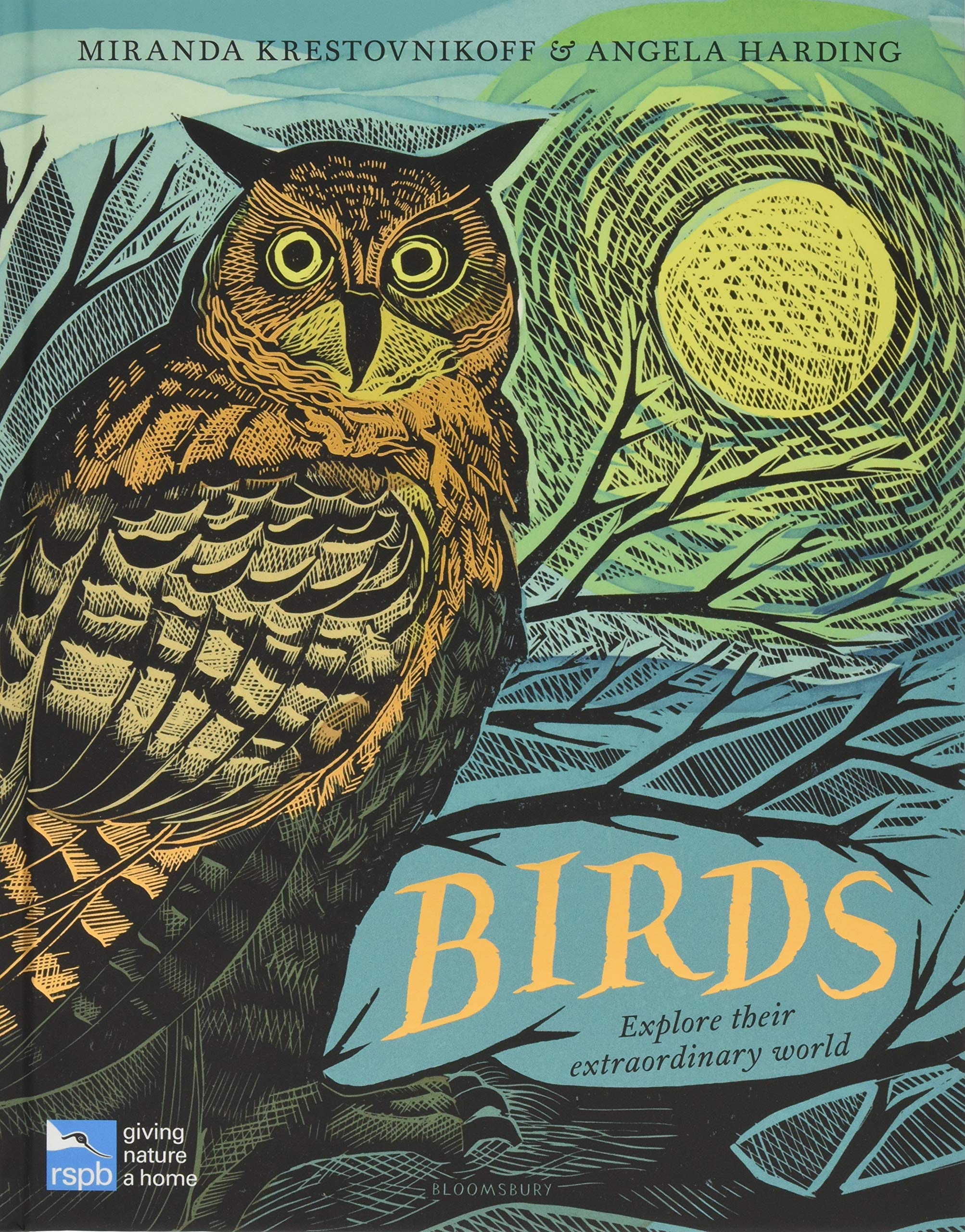
celebrate-picture-books-picture-book-review-birds-explore-their-extraordinary-world-cover

About the Holiday

Today’s holiday honors John James Audubon, who was born on this date in 1785. Audubon was a French-American ornithologist, naturalist, and painter who traveled across America, documenting the birds he found in his detailed illustrations of them in their natural habitats. Audubon’s greatest work was The Birds of America, which is considered one of the finest ornithological works ever completed. This book contains more than 700 North American bird species with 435 hand-colored, life-size prints of 497 bird species. The Audubon Society is a far-reaching organization dedicated to conservation and education and is actively involved in issues that threaten bird populations. To learn more about the Audubon Society and its work, visit the organization’s website.

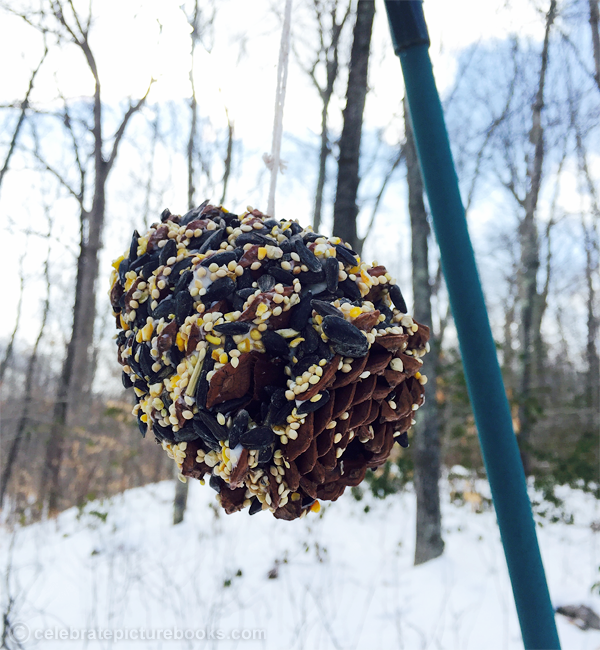
To celebrate today’s holiday, take a walk in your area or even your backyard and take special note of the birds you see. If you’d like to attract more birds to your backyard, consider hanging a bird feeder or making a temporary feeder from a pinecone, peanut butter, and seed as in the activity below. 

Thanks to Bloomsbury Children’s Books for sending me a copy of Birds: Explore their extraordinary world for review consideration. All opinions on the book are my own.

Birds: Explore their extraordinary world

Written by Miranda Krestovnikoff | Illustrated by Angela Harding


To love birds is to marvel over everything about them from their smooth gliding flight and beautiful songs to their colorful plumage and intricate nests that protect fragile eggs from the elements and predators. With a stunning number of species, birds are found around the world and living in every kind of climate. In Miranda Krestovnikoff and Angela Harding’s eye-catching compendium, readers learn about seven families of birds – birds of prey, seabirds, freshwater birds, flightless birds, tropical birds, tree dwellers, and passerines. 

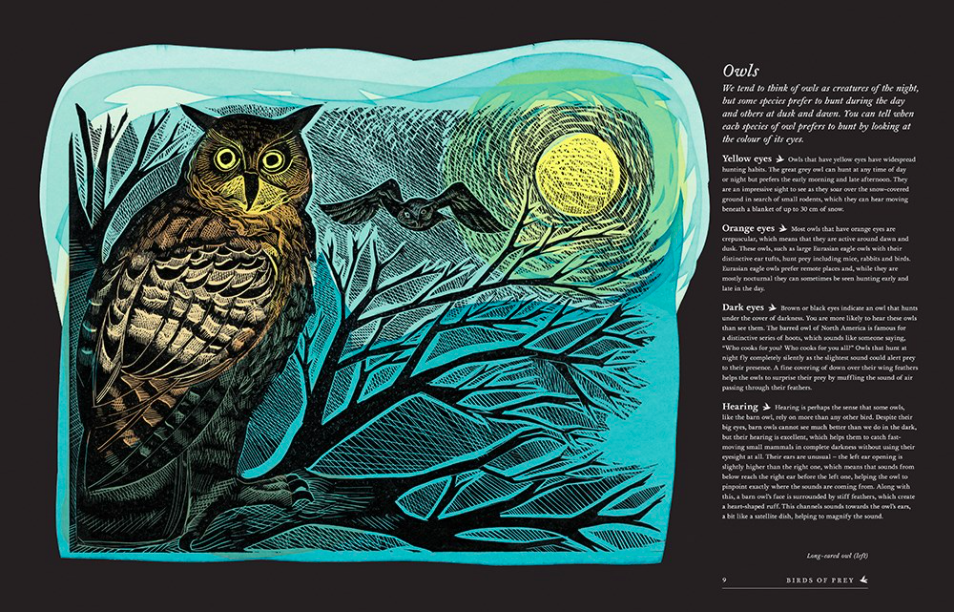
Each chapter opens with general facts on the behavior, anatomical features, and habitat that determine the order in which a bird is categorized. Integrated with this information are descriptions of specific birds within the order. In the section on Birds of Prey, for instance, readers learn about sparrowhawks; fish-eating ospreys; and golden eagles, which can “spot a rodent from over a mile away and a rabbit from nearly double that distance.” Children also learn about extreme birds of prey: the fastest, largest, smallest, tallest, and baldest and how their distinctive feature helps them thrive. Kids also discover how they “can tell when each species of owl prefers to hunt by looking at the color of its eyes.”

celebrate-picture-books-picture-book-review-birds-explore-their-extraordinary-world-owls

Image copyright Angela Harding, 2020, text copyright Miranda Krestovnikoff, 2020. Courtesy of Calkins Creek.

The next chapter takes readers to coastal areas to learn about the seabirds that scour the water from the sky, searching for food and waders, that are found along the water’s edge and “feed on the variety of high-protein invertebrates that lie hidden in the mud.” Children learn about the birds that populate warmer waters, such as blue-footed boobies, terns, and frigatebirds as well as those who survive in colder waters, such as gulls, and kittiwakes. Readers will also find a fascinating description of the gannet and learn how it can safely “dive into the sea at speeds of 60 miles an hour from an impressive height of up to 100 feet” to feed.

From sea birds, readers move on to freshwater birds like ducks, swans, grebes, and Canada geese. Even the bright flamingo is here with its distinctive scoop-shaped beak that is “uniquely designed to be used upside down and helps them to filter out tiny brine shrimps and blue-green algae from the water, which, when digested, give them their pink color.” The flamingo isn’t the only bird with an unusual way to acquire their prey, and kids will discover the clever ways pelicans, herons, and kingfishers (which use “objects such as sticks, feathers, and even discarded popcorn as lures”) find food.

And then there are the “more than 50 bird species across the world [that] stay firmly on the ground (or on water)” or just “choose not to fly very often.” These flightless birds include kiwis, kākāpōs, southern cassowaries, ostriches, and Penguins. Penguins vary in size, from the “little penguin (also known as the fairy or blue penguin)” which comes to shore to nest only at night and stave off predators with their oversized voices, to the emperor penguin. Occasional fliers include great bustards, domestic chickens, and tinamous.

celebrate-picture-books-picture-book-review-birds-explore-their-extraordinary-world-penguin

Image copyright Angela Harding, 2020, text copyright Miranda Krestovnikoff, 2020. Courtesy of Calkins Creek.

When you hear about extravagant birds, you most likely think of tropical birds. “Rainforests are packed with a range of incredible species with dazzling plumage and bizarre courtship displays.” Readers will learn about the appearance and mating rituals of scarlet macaws, Raggiana birds of paradise, and the Andean cock-of-the-rock. A detailed description of the bowerbird and the male bird’s careful and artistic nest (or bower) building is funny, poignant, and even a little bit human. Then readers are treated to some tropical bird extremes: smallest bird, longest bill, and smelliest as well as a poisonous species and one that makes its own musical instrument.

Of course, woodlands are the home of many bird species, and in the chapter on Tree Dwellers, readers learn about acorn woodpeckers and great hornbills that use trees for food and shelter; tawny frogmouths and potoos that use trees for camouflage; and nuthatches, greater honeyguides, and yellow-bellied sapsuckers, which find all the food they need among the bark, leaves, and branches of trees.

celebrate-picture-books-picture-book-review-birds-explore-their-extraordinary-world-chickens

Image copyright Angela Harding, 2020, text copyright Miranda Krestovnikoff, 2020. Courtesy of Calkins Creek.

Next up are passerines, or perching birds, which make up the “largest group of birds, with over half of all known species falling into this category.” Corvids, a group that includes the common raven, crows, magpies, and rooks, are considered to be the most intelligent birds. “These birds have a remarkable ability to solve problems in order to find food, in some cases performing better than young children or chimpanzees!” Readers will be impressed with their tricks and clever use of tools (that even include cars). Children learn about cooperative breeders, which rely on their extended family to help raise the young from year to year. Passerines also include many of the garden birds we find in our backyards and which fill the air with song. Readers discover facts about blue tits, robins, and finches in this section.

The next sections give detailed and interesting information on the features we most associate with birds: their feathers, beaks, eyes, nesting habits, eggs, migration patterns, and birdsong. The book ends with perhaps the most adaptable birds in the world: those that make their homes on glaciers, mountain tops, and in the Arctic snow as well as urban birds, which live among people in crowded cities, nesting on tall cathedrals and skyscrapers and foraging for food in garbage cans and on the street.

celebrate-picture-books-picture-book-review-birds-explore-their-extraordinary-world-woodpeckers

Image copyright Angela Harding, 2020, text copyright Miranda Krestovnikoff, 2020. Courtesy of Calkins Creek.

For young ornithologists, Miranda Krestovnikoff, a wildlife expert, offers a compelling, eye-opening, and accessible introduction to a wide variety of birds, placing them in their natural environments and revealing intriguing facts and tantalizing tidbits that inform and will spark a continued interest in learning more about the world’s feathered creatures. Krestovnikoff’s engaging writing style will captivate readers and keep them turning the pages to discover birds that are both familiar and new to them. The comprehensive nature of the book allows kids in all parts of the world to learn more about their native birds while creating a global connection with these most recognized and widely distributed creatures.

Accompanying Krestovnikoff’s text are Angela Harding’s beautiful linocuts that depict birds in mid-flight, capturing prey on land and water, engaging in mating rituals, and building and protecting their nests and young. Harding’s use of natural colors and exquisitely etched landscapes set off each bird in breathtaking illustrations that invite readers to linger to enjoy their full impact. Each illustration is captioned with the bird’s species.

A gorgeous and educational book that readers of all ages will love dipping into again and again, Birds: Explore their extraordinary world is a must for bird lovers and highly recommended for home, school, and public libraries.

Ages 7 and up

Bloomsbury Children’s Books, 2020 | ISBN 78-1408893913

Discover more about Miranda Krestovnikoff and her books on her website.

To learn more about Angela Harding, her books, and her art on her website.

National Audubon Day Activities

celebrate-picture-books-picture-book-review-beautiful-birds-word-search

Beautiful Birds Word Search Puzzle


It’s fun to watch for different kinds of birds when you take a walk or in your own backyard. Can you find the names of twenty types of birds in this printable Beautiful Birds Word Search Puzzle? Here’s the Solution!

cpb-bird-feeder-i

Pinecone Bird Feeder


Pinecone bird feeders are quick to make and great for your backyard fliers. The combination of peanut butter, lard, or vegetable shortening and a quality seed mixture provide birds with the fat and nutrition they need to stay warm and healthy during the winter.

Supplies

  • Pinecones
  • Peanut butter, vegetable shortening, or lard
  • Birdseed
  • String
  • Knife or wooden spreader
  • Spoon

Directions

  1. Tie a long length of string around the middle of the pinecone
  2. Spread the peanut butter, vegetable shortening, or lard on the pinecone
  3. Sprinkle a thick coating of birdseed on the pinecone, pressing it into the covering so it will stick
  4. Tie the pinecone feeder onto a tree branch or other structure
  5. Watch the birds enjoy their meal!

celebrate-picture-books-picture-book-review-birds-explore-their-extraordinary-world-cover

You can find Birds: Explore their extraordinary world at these booksellers

Amazon | Barnes & Noble | Books-a-Million

To support your local independent bookstore, order from

Bookshop | IndieBound

Picture Book Review

April 23 – World Book Day and World Book Night

celebrate-picture-books-picture-book-review-where-is-the-dragon-cover

About the Holidays

Sponsored by UNESCO, World Book Day, also known as World Book and Copyright Day and International Day of the Book, encourages families and individuals to rediscover the joys of reading and promotes the availability of a wide range of books to all and in all languages. April 23 was chosen to celebrate books in honor of William Shakespeare, Miguel de Cervantes, and Inca Garcilaso de la Vega, who all died on this date. The holiday offers an opportunity to highlight the power of books and to promote the United Nations’ vision of societies that are inclusive, pluralistic, equitable, and open and participatory for all citizens. Each year publishers, booksellers, and libraries choose a World Book Capitol for a one-year period to acknowledge the city’s commitment to promoting books and fostering reading. The World Book Capitol for 2021 is Tbilisi, Georgia. This year’s theme is “Share a Story.” For more information on World Book Day and to find a communication toolkit as well as other resources, visit the UNESCO website and The World Book Day website.

First established in the United Kingdom and Ireland but now a global event, World Book Night is celebrating its 10th anniversary this year. While World Book Day focuses on promoting reading for and with children, World Book Night encourages adults to set aside time to read for pleasure as well. Reading for pleasure can have a enormous impact on one’s life, from learning new information to feeling more connected to the world to just relaxing and taking a healthy break from daily responsibilities. World Book Night was also conceived as a way to get more books into more hands, and as such is actively involved in giving away designated books to care homes, youth centers, colleges, prisons, public libraries, mental health groups and other charity partners who match books with new readers to reach those who may not have access to or the resources to buy books. To learn more about this initiative, visit the World Book Night website.

You can get involved too! Why not start today? With so many amazing books to discover, reading daily is a luxury worth indulging. For kids, there may be no cozier routine than snuggling up next to mom or dad or cuddling under the covers and getting lost in a wonderful story before falling asleep. And adults? You never really lose that comforting feeling of ending the day with a good book.

Thanks go to Lerner Books for sharing a copy of Where is the Dragon? for review consideration, all opinions on the book are my own.

Where is the Dragon?

By Leo Timmers


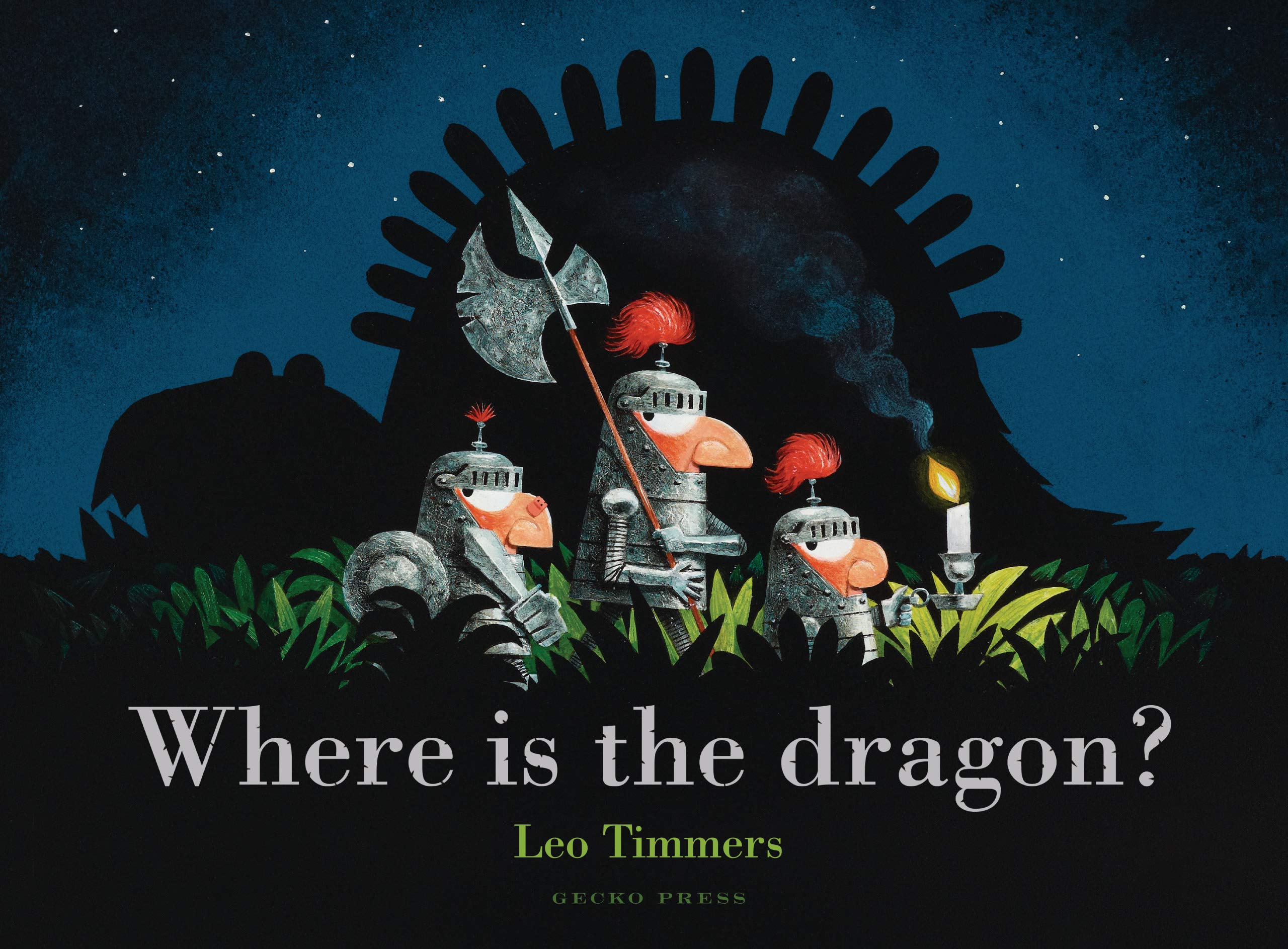
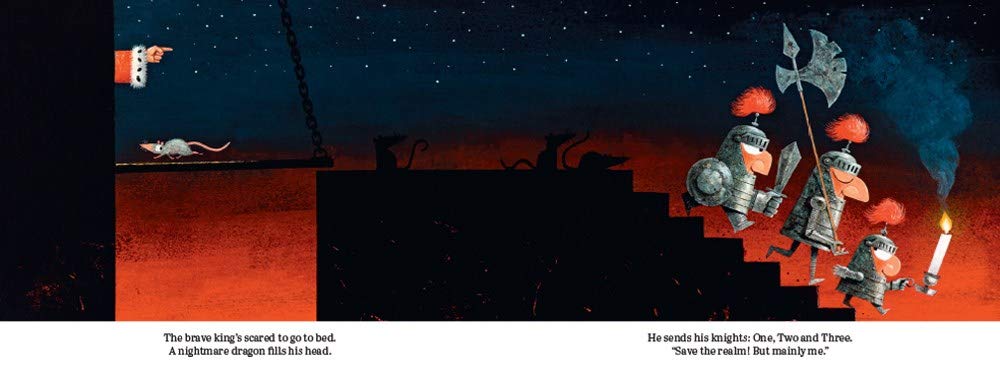
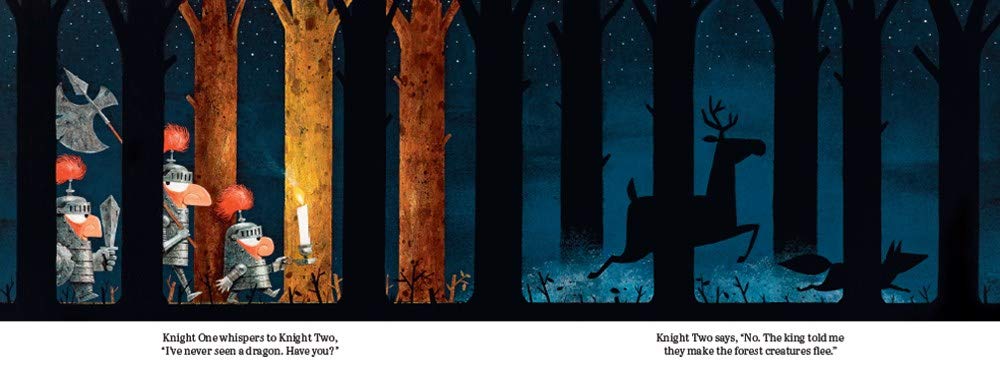
The king was having nightmares about a dragon he was sure was on the prowl, so he sent “his knights: One, Two and Three. ‘Save the realm! But mainly me,'” he ordered. The knights bravely went out into the dark forest armed only with…well…their armor and a candle, but they had a problem. It turned out that none of them had every seen a dragon before. But they each had assurances from the king as to how a dragon behaved and what it looked like. Knight Two knew (from the king) that forest animals ran away from a dragon. 

celebrate-picture-books-picture-book-review-where-is-the-dragon-mission

Copyright Leo Timmers, 2021, courtesy of Gecko Press/Lerner Books.

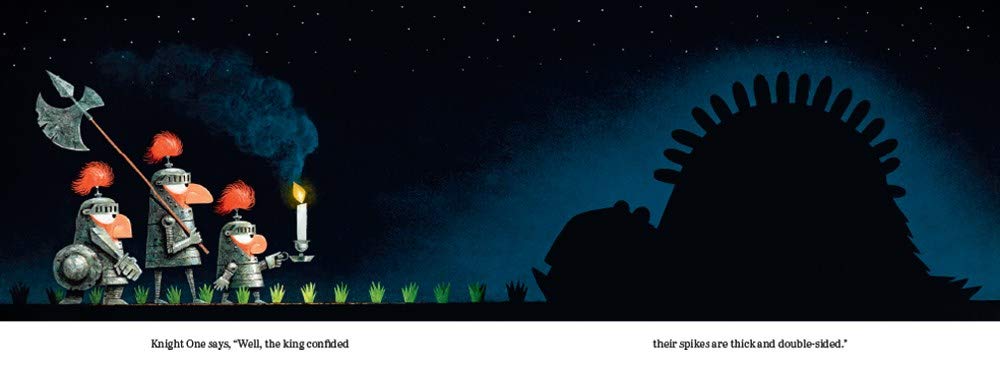
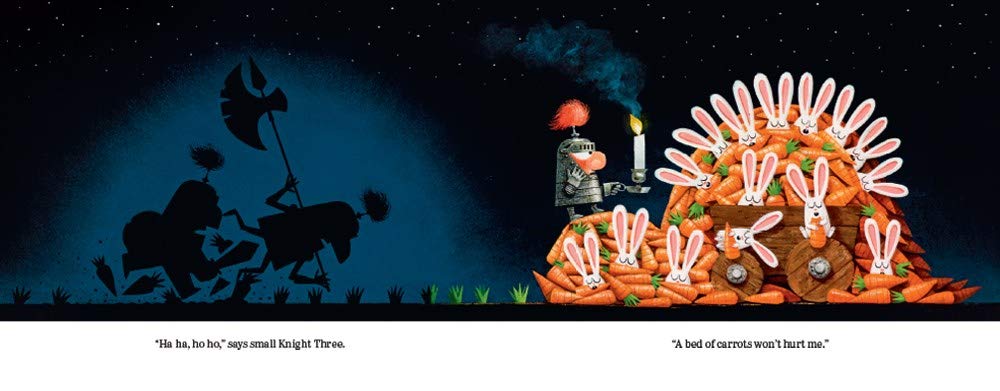
Just as they came upon a suspicious-looking shape cloaked in the darkness, “Knight One [said], ‘Well, the king confided / their spikes are thick and double-sided.'” The mound in front of them appeared to have a head, a well-spiked body, and a pointy tale. Without trepidation, however, the smallest knight approached and held up his candle to find… a wagon overflowing with carrots and long-eared rabbits taking a snooze.

The three moved on, out of the forest and into an area of lush undergrowth. As they came to a truly frightening silhouette that looked ready to gobble them up, Knight Two alerted his friends that the king had warned him about a dragon’s teeth. While Knight One and Knight Two were fumbling in the dark on their way to slay this dragon, Knight Three stepped forward. “‘Ha ha, ho ho,'” he laughed. Their “dragon” wasn’t scary at all. 

celebrate-picture-books-picture-book-review-where-is-the-dragon-forest

Copyright Leo Timmers, 2021, courtesy of Gecko Press/Lerner Books.

In a moment, the knights had gotten themselves into an awful fix when they began crossing a fallen tree that led right to a dragon’s nest. How did they know this was a real dragon? Knight One told them, “‘Well, the king declared / their necks are long, their nostrils flared.'” And, indeed, in front of them awaited the shadow of just such a beast. But as Knight Two took another bumbling trip, the intrepid Knight Three discovered in his dwindling candle’s light a rather peaceful, sleepy scene.

celebrate-picture-books-picture-book-review-where-is-the-dragon-spikes

Copyright Leo Timmers, 2021, courtesy of Gecko Press/Lerner Books.

Farther on another scare in the deep, dark night turned out to be just another snore. By this time the candle was burning low when they happened upon a rocky mound. There were no spikes, no sharp teeth, no neck or even head, and there was absolutely none of that “‘… scalding sizzling smelly breath'” the king had told them about. Knight Two had had enough. “‘Dragons? No such thing,'” he said. “‘Let’s all go home and tell the king.'” But just to make sure, Knight Three held up his sputtering candle. There was nothing there to frighten him, and he decided “‘the dragon’s just in the king’s head.'” But did he really get a good look?

celebrate-picture-books-picture-book-review-where-is-the-dragon-rabbits

Copyright Leo Timmers, 2021, courtesy of Gecko Press/Lerner Books.

Leo Timmers puts a medieval spin on “things that go bump in the night” with his laugh-out-loud tale of three knights on a mission to rid the kingdom of a dragon that’s vexing the king. As they set out on a dark, but starry night, the knights have only the descriptions the king has provided to guide them. Accompanying each two-page spread in which the knights encounter ominous silhouettes are Timmers’ short and cunning rhyming couplets that lead the knights – and readers – to conclude that indeed a dragon lies ahead. 

But in the glow of the candle (just as when the bedroom light flips on) the dragon disappears, and in its place is a harmless – and hilarious – bedtime scene. Meanwhile, as Knight Three is uncovering the sleepers of the realm on the righthand page, on the left page bumbling Knight Two is engaged in slapstick trips, falls, and mishaps all to the detriment of Knight One. These increasingly  will keep kids laughing and waiting to see what happens next. Timmons’ pitch-perfect ending will enchant kids and anyone just looking for a good night’s sleep. 

Part Monty Python, part bedtime story, and entirely ingenious, Where is the Dragon? will become a quick favorite for fun, madcap and imagination-filled daytime or nighttime story times at home, in the classroom, and for public library collections.

Ages 4 – 7

Gecko Press / Lerner Books, 2021 | ISBN 978-1776573110

To learn more about Leo Timmers, his books, and his art, visit his website.

World Book Day and World Book Night Activity

celebrate-picture-books-picture-book-review-reading-bug-book-plate

I’ve Got the Reading Bug! Collection


When you buy a new book, you need new book bling to go with it! Here’s a printable book plate and bookmark, plus a want-to-read list to help you choose your next new book to buy! 

I’ve Got the Reading Bug! Books to Read List | I’ve Got the Reading Bug Bookmark | I’ve Got the Reading Bug Bookplate

celebrate-picture-books-picture-book-review-where-is-the-dragon-cover

You can find Where is the Dragon? at these booksellers

Amazon | Barnes & Noble | Books-a-Million

To support your local independent bookstore, order from

Bookshop | Indiebound

Picture Book Review
April 22 – Earth Day and National Poetry Month

celebrate-picture-books-picture-book-review-friends-and-anemones-cover

About the Holidays

Earth Day

Earth Day was created in 1970 by a US Senator, Gaylord Nelson. Nelson created the day because he was worried about how humans were harming the environment through their actions. Heard of this holiday before? We certainly hope so! In 1990, environmental leaders mobilized to make the holiday go global. And now, according to earthday.org, 1 BILLION people mobilize on Earth Day every year, to help save and celebrate our beloved planet. You can watch an educational animated video on Gaylord Nelson here. Learn more about Earth Day and how you can make a difference all year around at Earthday.org.

National Poetry Month

2021 marks the twenty-fifth anniversary of National Poetry Month. The holiday was launched by the Academy of American Poets to celebrate writers, poets, poetry lovers and the positive impact poetry has on our culture, literacy and lives. Check out the 2021 National Poetry Month Poster here. You can learn more about National Poetry Month at Poets.org.

Today’s book celebrates both of these holidays with a collection of ocean poems for children. Not a huge lover of poetry? Perhaps the following collection will sway you like an ocean tide. Crafted by The Writers’ Loft Authors and Illustrators, Friends and Anemones is truly as dazzling as a sea-floor pearl.

Thanks to The Writers’ Loft for sending me a copy of Friends and Anemones: Ocean Poems for Children for review consideration. All opinions on the book are my own. 

Reviewed by Dorothy Levine

Friends & Anemones: Ocean Poems for Children

By The Writers’ Loft Authors & Illustrators


Dive headfirst into poetry month by exploring “the very, very, bottom of the deep blue sea. With: Salty snails and tuna tails. Bottle caps and lobster traps. Popped balloons, Plastic spoons…” and everything in between! (The Bottom of the Ocean by Kristen Wixted.) In honor of Earth Day AND National Poetry month, Celebrate Picture Books presents a book that deserves to be celebrated twice over: Friends & Anemones: Ocean Poems for Children. Seventy New England authors and illustrators joined ship with the Rozalia Project to create a treasure-worthy collection of ocean-themed poems and illustrations.

As described in the title page, “Rozalia Project works to conserve a healthy and thriving marine ecosystem—the plants and animals need our help to keep human debris out of their homes.” Through this partnered anthology, children will learn about subject matter ranging from unique sea creatures and beach dwellers – like cuttlefish, vampire squids, red knots, and rainbow lobsters – to the habits of more well-known ocean dwellers, like whales taking off debris, sharks getting their teeth cleaned, and sea turtles hatching eggs.

They’ll also find poems about human additions to the ocean scene in odes to lighthouses, ships’ remnants, sea litter, and more. Each poem contains deep knowledge to share with readers about poetry, the ocean, and marine life. Little pieces of advice float in between hysterical ocean puns. This perfect concoction of sea-worthy information is also backed by all types of fin-tastic and crabulous art.

Some of the poems are sure to make you laugh out loud. Deep-Sea Jellyfish by Cindy Cornwall opens with: “Jelly of the sea, not jam for your toast. It’s deep in the water, a silky scarf ghost.” Seal of disApproval by Lynda Mullay Hunt fills a whole page with the rhyming, pun-y story of a seal who becomes a dentist and stands up to sharks.

Other poems are less humorous and more pensive; the last of the series, Sea Serenity by Luke Hargraver, holds an existential truth for readers to swim through: “The world is like water / Easily disturbed by ripples / But when still, / Beautiful.” Under a short and sweet poem called Minnow, by Brook Gideon, a message to ocean explorers reads: “It’s very important to release everything you catch back into the ocean right away!”

Each spread is distinctly created in the individual poets’ and artists’ styles. Yet, the whole compilation works together in perfect, charming harmony. Some poems mirror each other in content. Horseshoe Crabulous by Doreen Buchinski is followed by Red Knots by Jane Sutton, in which: “In the sand their goal is chiefly / To dart—and swerve —on twiggy legs / In mad search for horseshoe eggs.” The two beautifully crafted poems are followed by a third gem, Mollusk Mansions by Charlotte Sheer, and accompanied with an illustration featuring horseshoe crabs, red knots, and mollusk shells—all painted by Doreen Buchinski herself!

Children will explore the deep cerulean sea through a range of sincere rhyming couplets, honest haikus, positively silly prose, magical motifs, and everything in between. All poems and artwork share with readers a deep admiration for under the sea creatures, while spreading ocean knowledge, and a love for poetry and beauty.

The watercolors, collages, and digital art pieces mesh beautifully while each achieving a distinctly artistic picturesque scene. Some illustrations run horizontally across the spread to create poster-like, masterful images. On page 23 illustrator Julia Young Cuffe paints a long, horizontal lighthouse against a watery dark blue sky, littered with stars. A person stands at the top, waving a piece of cloth, illuminated by the lighthouse light. The poem, Boston Light by Heidi E.Y. Stemple, is artfully placed running vertically down the lighthouse.

Others run across the two-page spreads to create one image that ties together the poems featured on the separate pages into a collective unit. An example of this can be seen in Marlo Garnsworthy’s opening spread of deep ocean waves intermingling with whales, and Amanda Davis’s DEEP deep sea spread that features spookily realistic vampire squids, angler fish, and sea plumes. Each piece stands out as thoughtfully crafted to instill in readers a sense of awe for the beauty of marine life and ocean ecology.

Friends & Anemones: Ocean Poems for Children would make a wonderful addition to classroom science and language arts lessons as well as a fun collection to share at home, especially in conjunction with trips to the beach or aquariums. 

The Writers’ Loft is a community based in Sherborn, Massachusetts which helps local writers foster their creativity, strengthen their spirit, and grow professionally by providing them with quiet writing space, educational programs, opportunities to connect with supportive colleagues, and access to industry experts, as well as opportunities to give back to the greater writing community. To learn more about The Writers’ Loft, visit their website.

The Rozalia Project runs educational programs, ocean cleaning initiatives and research projects focused on how to aid ocean clean-up and maintain sustainability of ocean and shoreline ecosystems. The Rozalia Project, along with the “Writer-and-Artist-Ocean-Protectors from the Writers Loft” hopes to use this book to “foster an appreciation of the importance, beauty, and wonder of the ocean in the change-makers of tomorrow.”

To learn more about the Rozalia Project, or get involved with them on this Earth Day, check out their website. You can also watch this video on their Expedition CLEAN.

Earth Day and National Poetry Month Activities

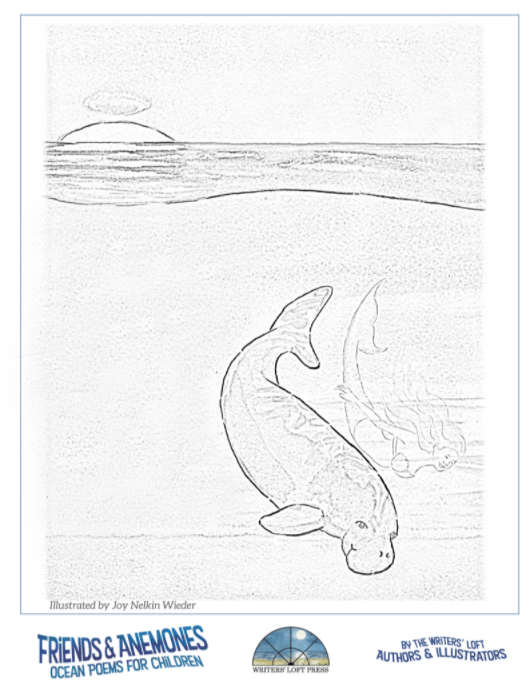
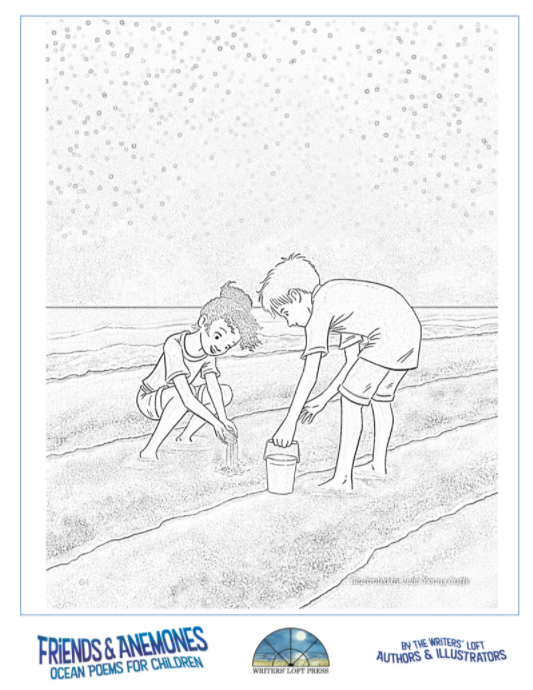
celebrate-picture-books-picture-book-review-friends-and-anemones-coloring-page  celebrate-picture-books-picture-book-review-friends-and-anemones-coloring-page

Color pages from Friends & Anemones in your OWN style with these black and white versions of the illustrations. You can find 18 more pages to print or download to your iPad to color on The Writers’ Loft website.

Manatee and Mermaid Coloring Page | Kids on the Beach Coloring Page

celebrate-picture-books-picture-book-review-under-the-sea-word-search

Find ten ocean critters’ names in this printable sea-star shaped word search.

Under the Sea Word Search Puzzle | Under the Sea Word Search Solution

Explore some poems specifically written for younger readers at Poets.org and write your own poetry if you feel inspired.

celebrate-picture-books-picture-book-review-friends-and-anemones-cover

To support The Writers’ Loft, you can order Friends & Anemones: Ocean Poems for Children from their website.

You can find Friends & Anemones at these booksellers

Amazon | Barnes & Noble | Books-a-Million

To support your local independent bookstore, order from

Bookshop | IndieBound

Picture Book Review
April 21 – It’s Global Astronomy Month

celebrate-picture-books-picture-book-review-the-little-spacecraft-that-could-cover

About the Holiday

Instituted by Astronomers Without Borders, a group who sees in our shared sky an opportunity to create “a global community that appreciates, studies, and shares the wonders of the universe, to broaden perspectives, transcend borders, and improve lives,” The group’s goals are twofold: to inspire and empower a worldwide community of astronomy enthusiasts and educators through astronomy-related programs and to cultivate a diverse, international community dedicated to sharing the Earth’s resources equitably. To try to accomplish these goals, Global Astronomy Month brings people together with arts activities, parties, and special events. To find resources, such as April sky maps in English and Spanish, and more information on how you can participate, visit the Astronomers Without Borders website.

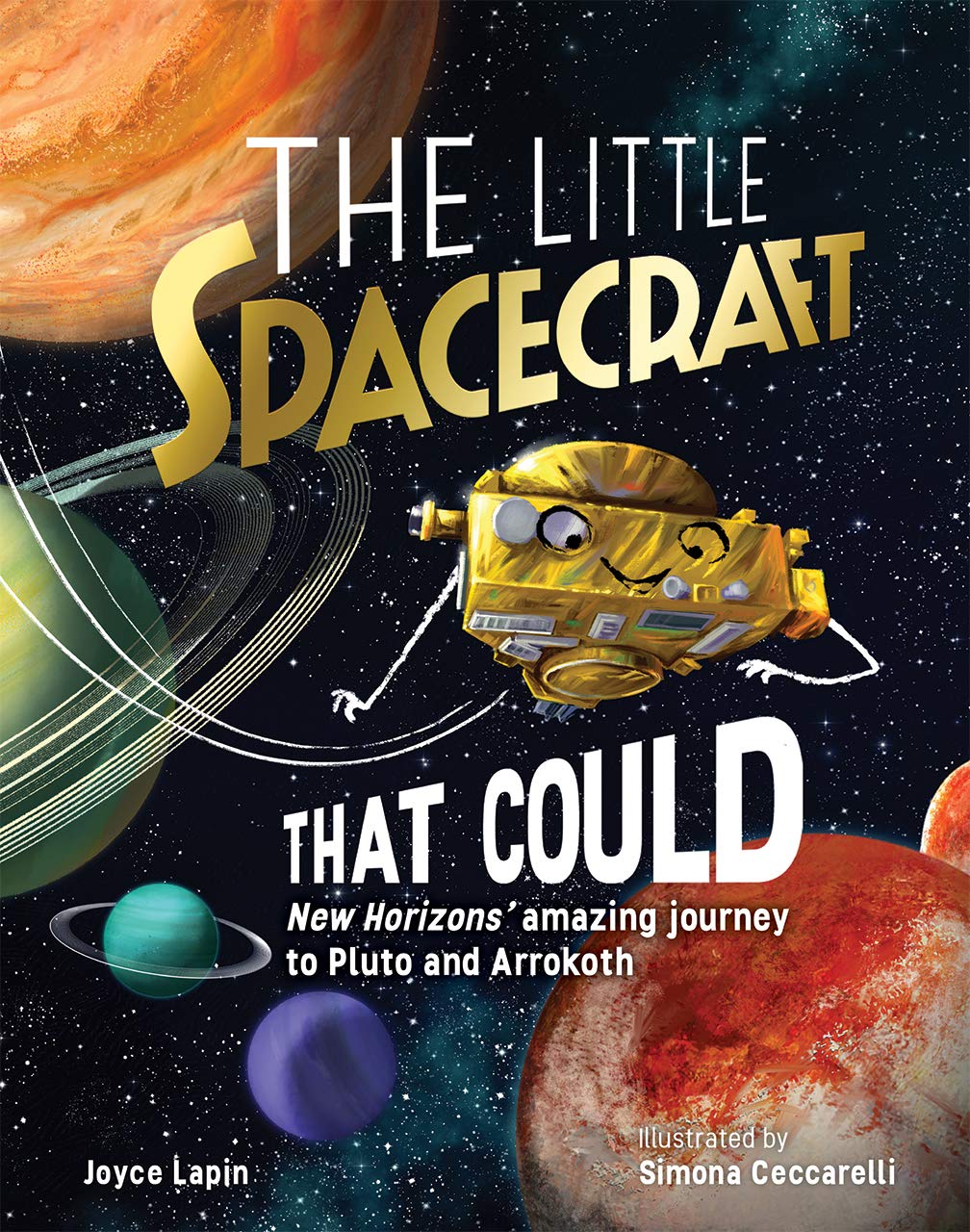
The Little Spacecraft That Could: New Horizons’ Amazing Journey to Pluto and Arrokoth

Written by Joyce Lapin | Illustrated by Simona Ceccarelli


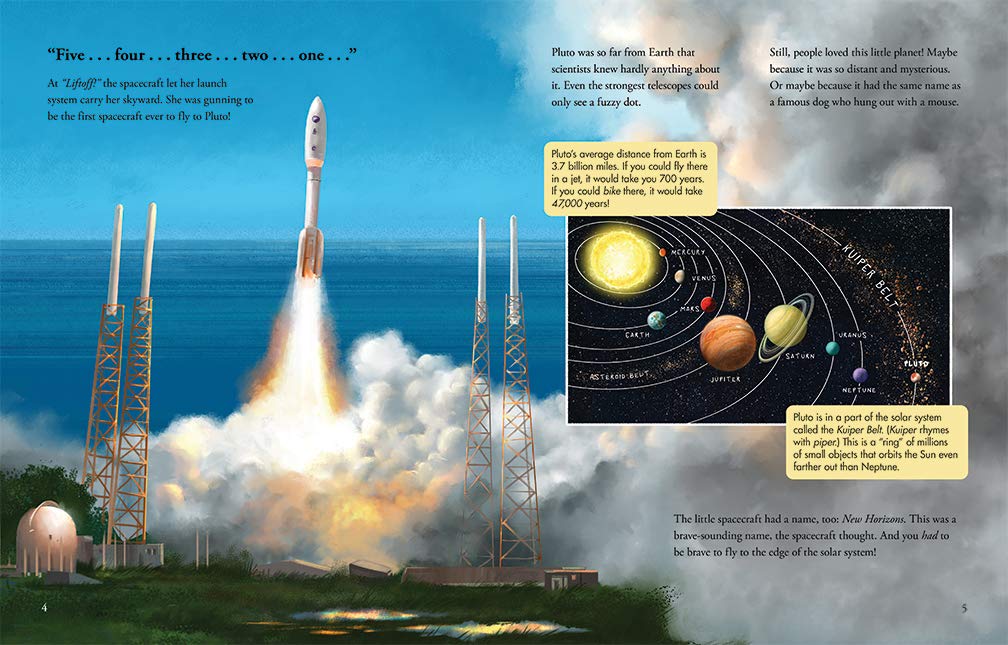
As the little spacecraft blasted away from the launch pad on January 19, 2006, she thought that her name—New Horizons—“was a brave-sounding name. And you had to be brave to fly to the edge of the solar system.” New Horizons was on her way to Pluto—the first spacecraft to do so. Zooming through space, her engines dropped away in stages. Free of these engines the little spacecraft, “no bigger than a small piano… streaked through space at more than 10 miles per second.”

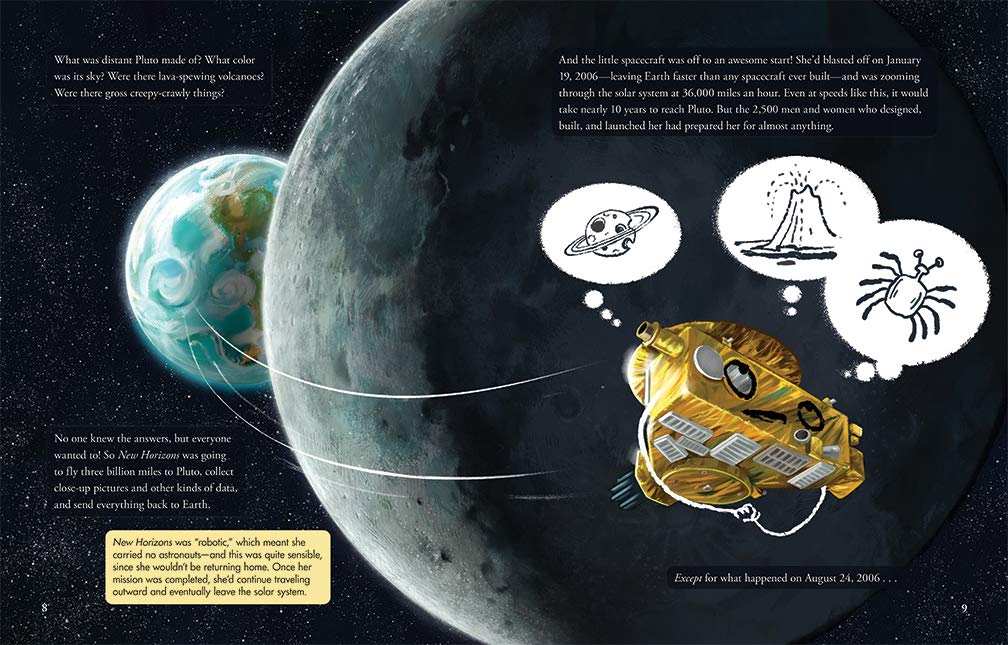
While she soared, New Horizons wondered what she would find when she finally reached Pluto. She knew that everyone was counting on her to provide answers about this mysterious planet. People had a lot of questions, and New Horizons had a lot of time to ponder them. In fact, it would take her “nearly 10 years to reach Pluto.” Things were going well for New Horizons. She was on track and jogging along at 36,000 miles an hour… but then on August 24, 2006, astronomers decided Pluto wasn’t big enough to be considered a planet and demoted it to dwarf planet status.

celebrate-picture-books-picture-book-review-the-little-spacecraft-that-could-launch

Image copyright Simona Ceccarelli, 2021, text copyright Joyce Lapin, 2021. Courtesy of Sterling Publishing.

Planetary scientists didn’t and don’t agree with this change, and New Horizons? She just wanted to complete her mission, and she had to concentrate on what came next—meeting up with Jupiter at just the right time to take advantage of this giant planet’s gravitational pull to speed up her trajectory toward Pluto. Carefully, New Horizons got into position. She sped faster and faster and was flung into space, heading toward her destination at “nearly a million miles per day.”

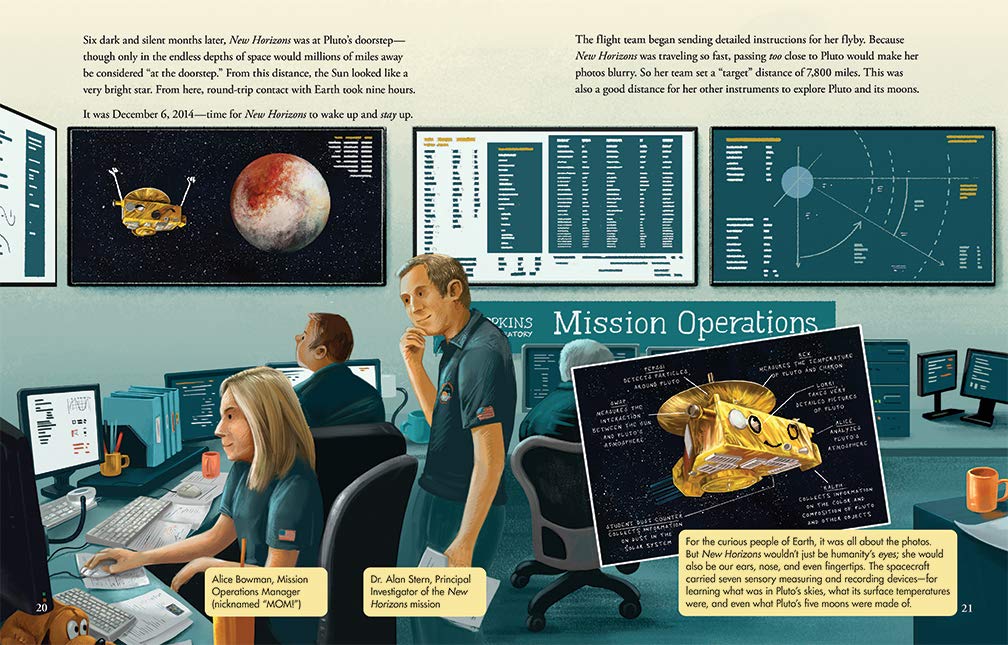
Now and for the next eight years, New Horizons would fly on autopilot while she took a well-deserved nap that would conserve fuel as well as her computers and instruments. Periodic wake-ups by the scientists on Earth made sure everything was going well. Finally, on December 6, 2014 it was time for New Horizons to wake up and go to work. She wouldn’t be landing on Pluto but doing a “flyby” 7,800 miles away from the surface of Pluto. At this distance the photographs she took would be clear and her other instruments for listening, smelling, feeling, and measuring other aspects of Pluto and its atmosphere would work too.

celebrate-picture-books-picture-book-review-the-little-spacecraft-that-could-robotic

Image copyright Simona Ceccarelli, 2021, text copyright Joyce Lapin, 2021. Courtesy of Sterling Publishing.

New Horizons couldn’t wait to get started and began snapping pictures “from half a million miles out.” What people saw when she sent back her photos “sent the internet on fire.” It appeared that Pluto was holding a white heart—a valentine for Earth. “Everybody loved the dwarf planet with a heart!” This heart is actually a glacier made of nitrogen, which on Pluto’s cold surface forms ice instead of gas like on Earth

On July 14, 2015, New Horizons at last reached her optimal distance, and what wonders she uncovered! Towering ice mountains, valleys deeper than the Grand Canyon, “‘ice blades’ the height of New York City skyscrapers,” and “‘ice volcanoes’…that spew out icy slush instead of lava.” This was only the beginning of what scientists discovered. Measurements also showed that Pluto was larger than was thought—bumping it up “from second-largest dwarf planet to the largest.”

celebrate-picture-books-picture-book-review-the-little-spacecraft-that-could-control-room

Image copyright Simona Ceccarelli, 2021, text copyright Joyce Lapin, 2021. Courtesy of Sterling Publishing.

New Horizons also took pictures and measurements of Pluto’s moons and, after snapping one last picture: Pluto “‘crowned’ with the hazy blue glow of its atmosphere” while lit from behind by the Sun, New Horizons was off for Arrokoth, an object in the Kuiper Belt that hadn’t even been discovered when she blasted off from Earth all those years ago. A billion miles later, New Horizons reached Arrokoth on January 1, 2019. New Horizons continues to send information about this fascinating body, and because she’s still so “robust…her team wants [her] to visit an even more distant Kuiper Belt world in the 2020s. No one doubts she can do it.

In addition to the story about New Horizons’ journey, each page contains illustrated insets with detailed facts and information about the New Horizons spacecraft, Pluto, our solar system, how the planets were named, and more.

Back matter includes a timeline of New Horizons’ journey, an extensive glossary, a list of books for further reading and research, and a list of internet resources where readers can see videos and learn more about New Horizons and her mission.

celebrate-picture-books-picture-book-review-the-little-spacecraft-that-could-pluto-heart

Image copyright Simona Ceccarelli, 2021, text copyright Joyce Lapin, 2021. Courtesy of Sterling Publishing.

Joyce Lapin’s thrilling true tale of New Horizons’ mission to Pluto and beyond lends pep and personality to this little spacecraft that the world watched blast off with the heart and anticipation of a parent sending their child off on their first day of school. Her engaging storytelling helps kids understand and appreciate the magnitude of New Horizons’ flight and all it has accomplished. Lapin’s clear descriptions of the various stages of the mission, scientists’ expectations, and the tricky maneuvering necessary to put New Horizons at the right place at the right time are delivered smoothly and concisely.

Scientific vocabulary and definitions are woven seamlessly throughout, enhancing the reader’s understanding without their losing any of the suspense. Kids will identify with the childlike nature of New Horizons’ confidence in herself and commiserate with her dismay when Pluto is demoted. Readers will cheer on this little spacecraft as her mission is expanded and will be excited to learn more about what New Horizons has already discovered and what she will find in the future.

Simona Ceccarelli’s illustrations are nothing short of phenomenal. Photographic in detail, Ceccarelli’s vibrant images take kids from the launchpad with the fiery rocket boosters produce clouds of smoke as the spacecraft climbs into the sky, into outer space, where they see how the engines disengaged to set New Horizons free to navigate past Mars, pick up speed from Jupiter (shown in its colorful, striped glory) and rocket past Saturn (the rocky debris of its icy rings clearly visible) to become just a dot in the black sky.

Ceccarelli also takes readers into the control room where graphs, screens, coordinates, and more line the walls and computers stand side-by-side on the desks and carefully observed by the mission’s directors. Images of the heart on Pluto include internet snapshots that will remind some readers of how the world reacted to the first images sent back by New Horizons.

The final images of Pluto, showing a landscape of ice blades, deep canyons, mountains, and swirling patterns of color and then backlit by the Sun, are breathtaking. The spacecraft itself is lightly anthropomorphized with expressive eyes and mouth and cable-thin arms. Drawn from all sides, the images of New Horizons give kids a good a look at this amazing spacecraft.

A sensational achievement in presenting the scientific and human accomplishments involved in the New Horizons mission as well as an exhilarating overview of our solar system, The Little Spacecraft That Could would be a stimulating addition to science units for elementary and high school students to spark a love for astronomy, engineering, research, and other related subjects. The book will be a favorite and is a must for home, classroom, and public library collections.

Ages 7 and up

Sterling Children’s Books, 2021 | ISBN 978-1454937555

Discover more about Joyce Lapin and her books, visit her website.

To learn more about Simona Ceccarelli, her books, and her art, visit her website

Global Astronomy Month Activity

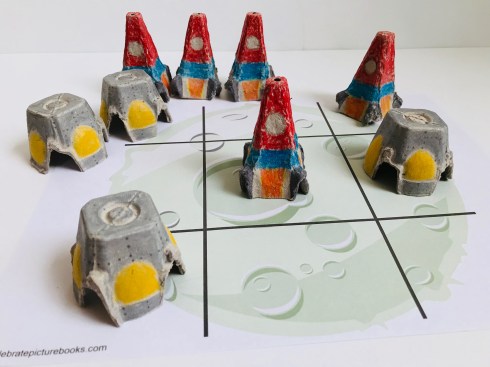
celebrate-picture-books-picture-book-review-rocket-to-the-moon-tic-tac-toe-game

Out-of-This-World Tic-Tac-Toe Game


You can launch your own Tic-Tac-Toe Game with this set you make yourself! With just a couple of egg cartons, some crayons, and a printable game board, you’ll be off to the moon for some fun! Opposing players can be designated by rockets and capsules. Each player will need 5 playing pieces. 

SUPPLIES

  • Printable Moon Tic-Tac-Toe Game Board
  • 2 cardboard egg cartons
  • Heavy stock paper or regular printer paper
  • Crayons
  • Black or gray fine-tip marker

DIRECTIONS

To Make the Rockets

  1. Cut the tall center cones from the egg carton
  2. Trim the bottoms of each form so they stand steadily, leaving the arched corners intact
  3. Pencil in a circular window on one side near the top of the cone
  4. Color the rocket body any colors you like, going around the window and stopping where the arched corners begin
  5. With the marker color the arched corners of the form to make legs
  6. On the cardboard between the legs, color flames for blast off

To Make the Capsule

  1. Cut the egg cups from an egg carton
  2. Color the sides silver, leaving the curved section uncolored. (If your egg cup has no pre-pressed curve on the sides of the cup, draw one on each side.)
  3. Color the curved section yellow to make windows
  4. With the marker, dot “rivets” across the capsule

Print the Moon Game Board and play!

celebrate-picture-books-picture-book-review-the-little-spacecraft-that-could-cover

You can find The Little Spacecraft That Could at these booksellers

Amazon | Barnes & Noble | Books-a-Million

To support your local independent bookstore, order from

Bookshop | IndieBound

Picture Book Review
April 20 – It’s Medical Laboratory Professionals Week

celebrate-picture-books-picture-book-review-germs-up-close-cover

About the Holiday

Instituted in 1975, Medical Laboratory Professionals Week aims to raise awareness of and an appreciation for the importance of laboratory professionals to patient care. Better and more accurate diagnoses as well as targeted treatment are accomplished through the specialized knowledge and dedication of laboratory technicians. This year, especially, we celebrate these individuals who have worked tirelessly to help create a vaccine to combat the COVID-19 virus. Laboratory Science can be an exciting and rewarding career choice for science– and medical-minded students. To learn more about today’s holiday and the work of laboratory professionals, visit the American Society for Clinical Laboratory Science website and LibraryScienceCareers.

Germs Up Close

By Sara Levine


You know they’re there. It’s hard to forget, since people keep reminding you: “wash your hands,” “use sanitizer,” “sneeze into your elbow,” “don’t leave food out too long.” But since you can’t see the germs, it can be hard to remember all the time. If only you could see what everyone is warning you about that might make it easier. Well, now you can with Sara Levine’s book Germs Up Close (and I mean really, really close), which also tells you exactly where germs come from and what they do.

How can you see a germ? “With special magnifying equipment and some dye to make their parts show up,” you can see exactly what different kinds of bacteria, protozoa, fungi, and viruses look like. And you might be surprised to discover that they are very “interesting and beautiful to look at.” Levine lets you in on some fascinating facts about each type of germ, including how its name is pronounced, its common name, its microscopic appearance, where it lives, some diseases it causes, and some more you ought to know. So, let’s get started.

Okay, let’s have a show of (clean) hands! “Have you ever had a cavity? An ear infection? Strep throat?” Yeah? Then you’re already acquainted with bacteria. Sounds bad, huh? Well, yes and no. Levine explains that the majority of bacteria on your body are actually helpful. It’s the bad bacteria that can make us sick that are called germs. In her section on bacteria, Levine introduces kids to salmonella, spirillum, staphylococcus, streptococcus, and Escherichia coli (better known as E. coli) with colorful photographs of each of these “round, hotdog-shaped, or wormlike and squiggly bacteria.

Next up are protozoa. You know not to drink pond water or dirty water, right? These little, one-cell-big guys are the reason why. Here, kids learn about “trypanosoma, the germ that causes sleeping sickness,” plasmodium, which causes malaria, and giardia, which causes giardiasis, an intestinal infection. Turning the page, they’ll discover different kinds of fungi, some of which are edible, like mushrooms and yeast, and others which can produce itchy rashes, yeast infections, or ringworm. 

celebrate-picture-books-picture-book-review-germs-up-close-bacteria

Copyright Sara Levine, 2021, courtesy of Millbrook Press.

And now we come to a germ you’re all very familiar with: the virus. If you’ve had a cold or the flu or “been vaccinated against viral infections that used to be very common such as mumps, measles, and chickenpox,” you’ve heard about viruses. And, of course, we all know about the coronavirus. But what do these germs look like? Kids get to see them in all of their round, peas-in-a-pod, peanut-shaped, or knob-covered wonder. 

But how can we stop germs in their tracks or fight them when they do invade? “The good news is that our bodies take care of most of this for us” through our immune system. Levine gives kids a detailed overview of the ways our skin, mucus, saliva, and stomach acid combat the germs that assail us. She also talks about the different kinds of white blood cells we have and how each kills germs. Illustrations show what the five types of white blood cells look like and their comparative sizes.

Levine reminds kids of all the ways people can protect themselves from surface and air-borne germs as well as germs that are transmitted through food and water. Her discussion on vaccines explains how they work and prepare white blood cells to recognize and fight germs. Still, sometimes we do get sick, and Levine reassures kids that there are medicines for each kind of germ that can make the better.

A glossary, a list of eleven careers that revolve around germs or helping sick people, and resources for further reading or research follow the text.

Sara Levine strikes just the right balance of humor and hard science facts in her engaging and educational book about the germs that make us sick as well as good bacteria and fungi, how our body protects us from most germs, and the vaccines and medicines that help us get well. Through her compelling writing style, Levine presents complex concepts in ways that make it easy for readers to embrace biological and medical science and get excited about research and learning more.

The stunning color photographs of various types of bacteria, fungi, protozoa, and viruses with their unusual shapes – some sporting protrusions like a hairbrush and others that look like they could be the stars of their own sci-fi picture book or TV show – will wow kids and spark a fascination for this important field of knowledge and research.

A fantastic book to add to home libraries for kids who are interested in medicine, biology, veterinary science, and other research sciences, Germs Up Close is a must for school libraries to enhance science, STEM, and research lessons as well as for public library collections.

Ages 5 – 10

Millbrook Press, 2021 | ISBN 978-1728424088

Discover more about Sara Levine and her books on her website.

Medical Laboratory Professionals Week Activity

celebrate-picture-books-picture-book-review-germs-word-search

Look Out for Germs! Word Search


Find the twenty-three words associated with germs in this printable word search puzzle.

Look Out for Germs! Word Search Puzzle | Look Out for Germs! Word Search Solution

celebrate-picture-books-picture-book-review-germs-up-close-cover

You can find Germs Up Close at these booksellers

Amazon | Barnes & Noble | Books-a-Million

To support your local independent bookstore, order from

Bookshop | IndieBound

Picture Book Review
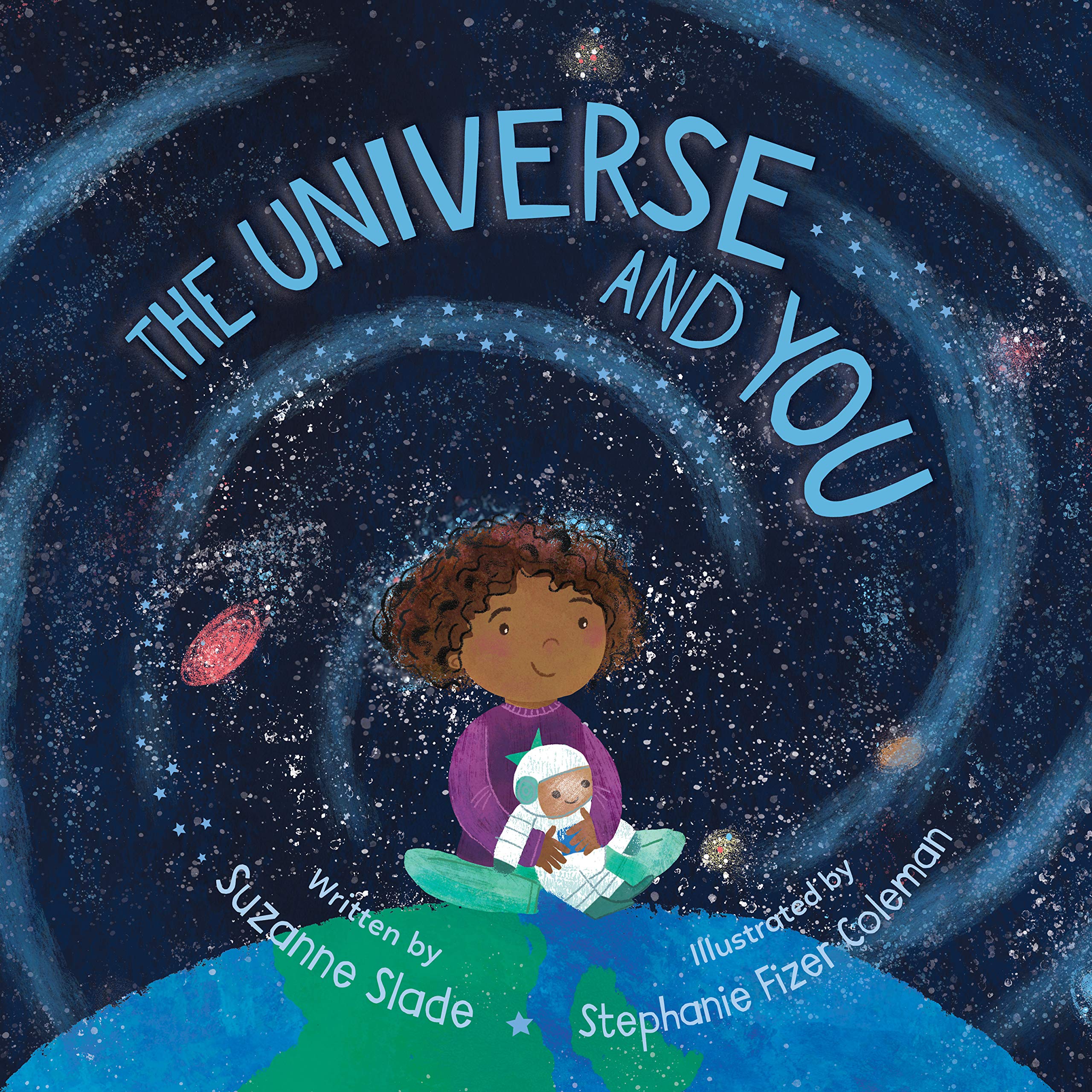
April 16 – Global Astronomy Month COVER REVEAL of The Universe and You

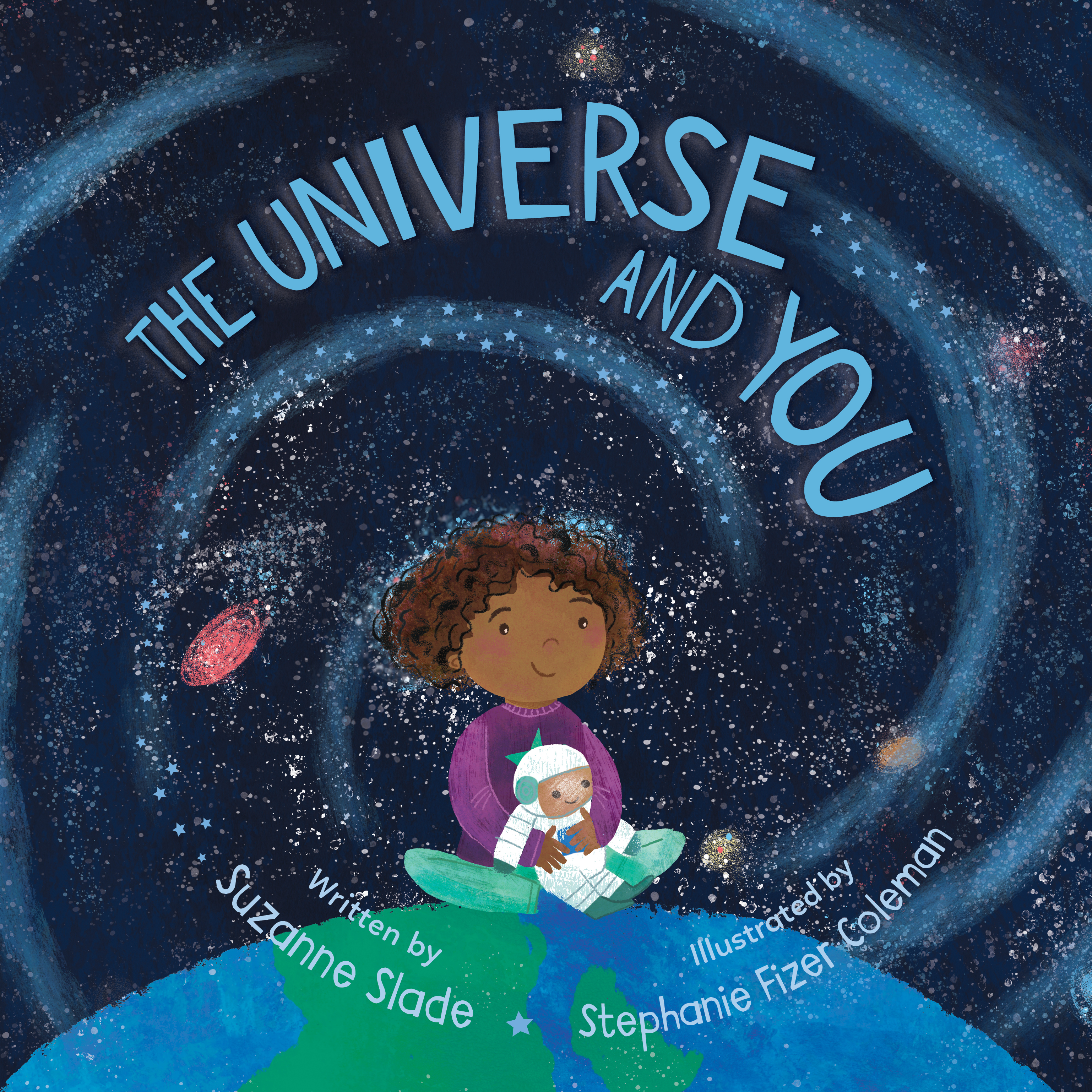
celebrate-picture-books-picture-book-review-the-universe-and-you-cover

The Universe and You

Written by Suzanne Slade | Illustrated by Stephanie Fizer Coleman


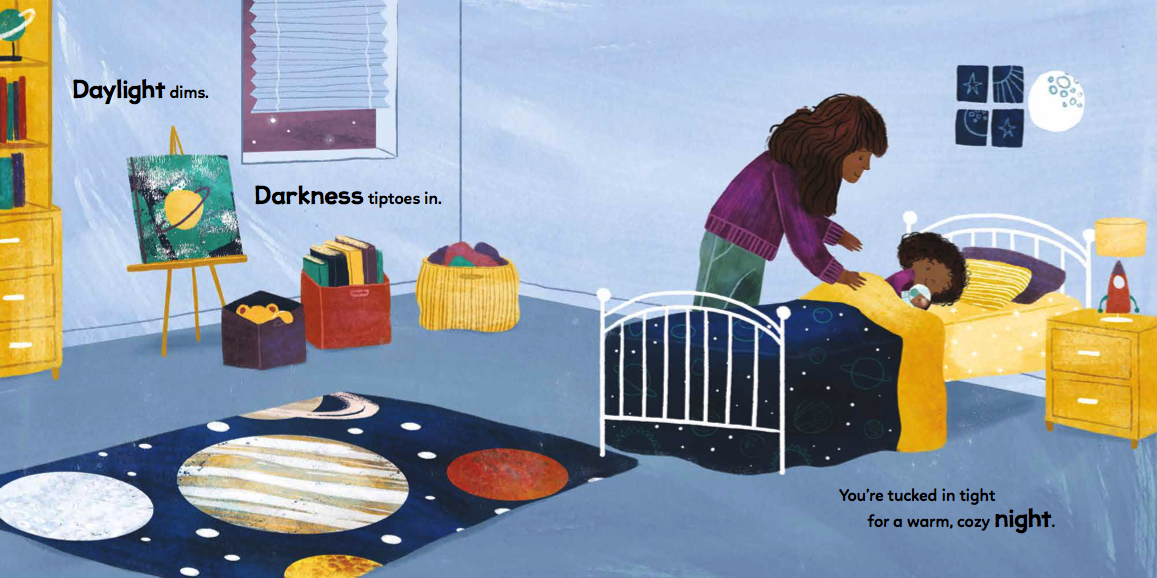
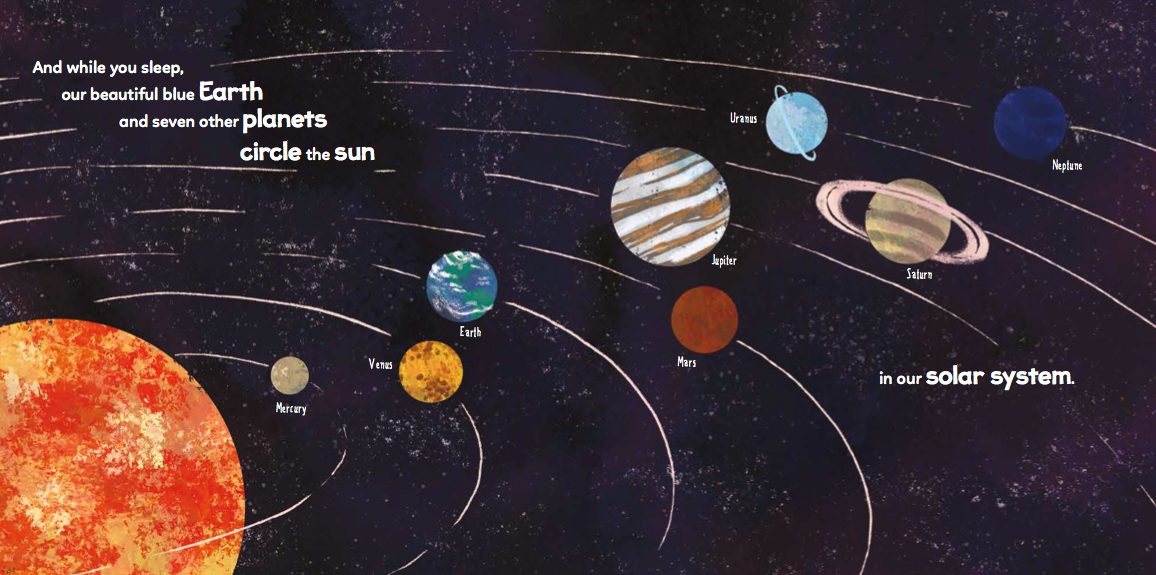
As the sun goes down and the stars come out, a little girl is tucked into bed in the midst of a beautiful celestial dance. Although Earth seems solid and still while she sleeps, it’s actually spinning on its axis and circling the sun. Joining Earth in this orbit around the sun are the other seven planets in our solar system, along with dozens of moons and millions of comets and asteroids. Containing our solar system is the wondrous Milky Way galaxy, with its billions of stars, just like our own sun, swirling and whirling around. And on from there are billions of galaxies with their own stars swirling, whirling into the ever-expanding space called our universe. When the sun rises, the little girl awakens on a brand-new day as the “moving, circling, and swirling” dance continues.

Through lyrical text, award-winning science writer Suzanne Slade takes young readers on an exploration of Earth, our solar system, the galaxies beyond, and finally the universe as a whole. Illustrated back matter includes scientific facts about our solar system.

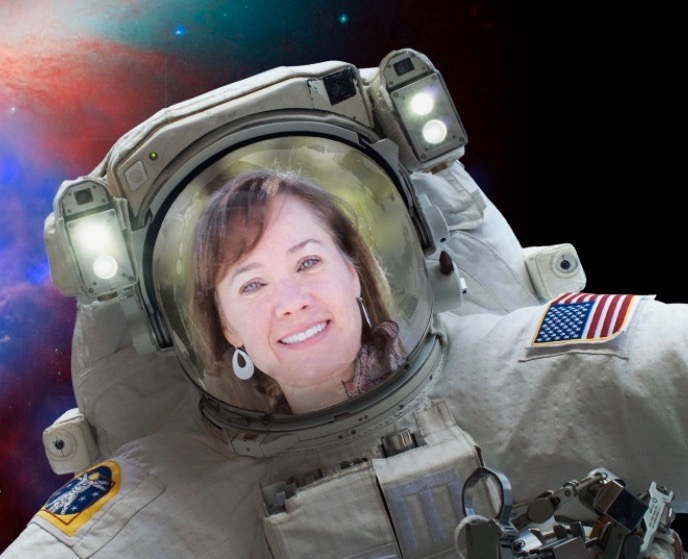
Meet Suzanne Slade

celebrate-picture-books-picture-book-review-Suzanne-Slade-space-headshot

Suzanne Slade is the award-winning author of more than 100 books, including June Almeida, Virus Detective! The Woman Who Discovered the First Human Coronavirus. She lives in Libertyville, Illinois. Learn more about Suzanne at suzanneslade.com. You can connect with Suzanne on Twitter.

Welcome, Suzanne! I’m really excited to be talking with you about this inspirational book for little dreamers! What inspired you to write The Universe and You?

I’ve done a lot of research about space exploration in the last decade for various book projects, so space seems to be on my mind. (Plus, I’m a mechanical engineer who has worked on rockets.) In more recent years I’ve been working on a book about a woman astronomer, so was reading about stars/galaxies and visited an observatory. Then one morning I woke with the idea of a simple, lyrical bedtime book which starts with Earth, moves out to our solar system, our galaxy, and the universe.

The cover to The Universe and You is stunning! What was your first reaction when you saw it?
The illustrator, Stephanie Fizer Coleman, initially created 3 rough cover sketches to gather opinions. The sketch I liked best ended up as the cover design, so when I later saw it in full, glorious color I was blown away. Stephanie knocked this cover out of the park (and universe!).

In what ways did Stephanie Fizer Coleman’s illustrations surprise you or go beyond what you had imagined?

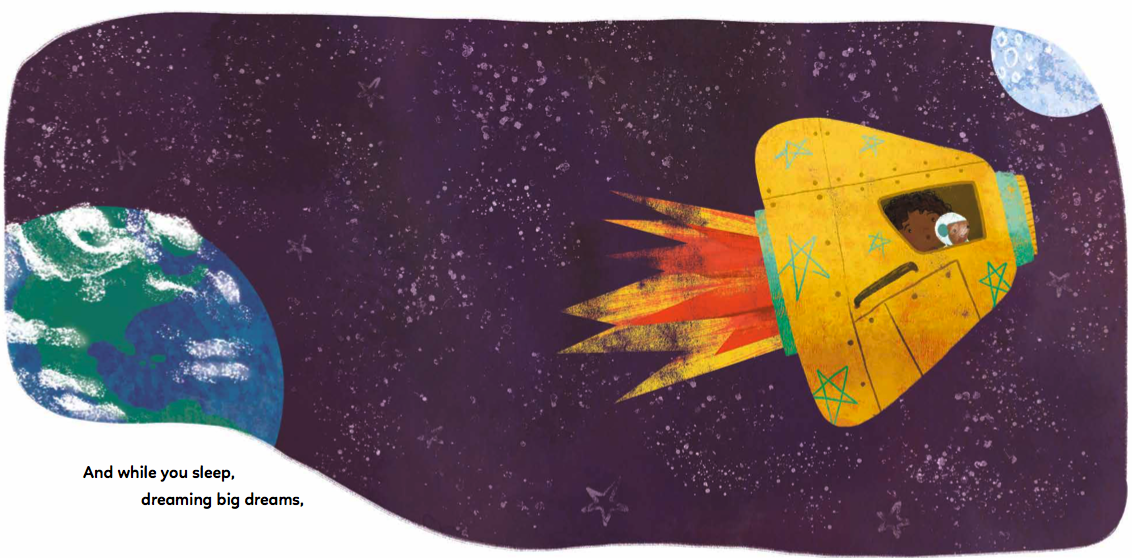
I hadn’t given a great deal of thought to what the child’s dreams might entail (though I knew they’d have to do with space). I love Stephanie’s creative and colorful depictions of the girl dreaming about soaring through space in a rocket and walking on the moon. I also adore the wonderful space items in the girl’s bedroom and the fantastic planets in the solar system! 

celebrate-picture-books-picture-book-review-the-universe-and-you-interior-1

Image copyright Stephanie Fizer Coleman, 2021. Text copyright Suzanne Slade, 2021. Courtesy of Sleeping Bear Books.

celebrate-picture-books-picture-book-review-the-universe-and-you-interior-3

Image copyright Stephanie Fizer Coleman, 2021. Text copyright Suzanne Slade, 2021. Courtesy of Sleeping Bear Books.

In college you studied engineering and actually worked on Delta and Titan Rockets. What is one of the coolest things you learned while working as an engineer on these rockets?

How a rocket works. It was fascinating to learn about the rocket “stages” needed to launch it from Earth, how a rocket soars through space, and much more.

celebrate-picture-books-picture-book-review-the-universe-and-you-interior-2

Image copyright Stephanie Fizer Coleman, 2021. Text copyright Suzanne Slade, 2021. Courtesy of Sleeping Bear Books.

You’ve written so many wonderful books about so many diverse people and subjects, including June Almeida, Virus Detective!, which was just released in March. What is your favorite part about writing STEAM books for kids?

My favorite part is introducing young readers to a fascinating STEM topic or person who has made a big impact in a STEM field. The challenging aspect of creating a picture book is to find an engaging way to present the story so it draws readers in and makes them want to find out more.

What would you like for kids to take away from this story?

I hope it inspires children to dream BIG dreams and boldly pursue those dreams!

celebrate-picture-books-picture-book-review-the-universe-and-you-interior-4

Image copyright Stephanie Fizer Coleman, 2021. Text copyright Suzanne Slade, 2021. Courtesy of Sleeping Bear Books.

Meet Stephanie Fizer Coleman

celebrate-picture-books-picture-book-review-stephanie-fizer-coleman-headshot

Stephanie Fizer Coleman has illustrated numerous children’s books, including You Are Mine, Porcupine. She lives in Scott Depot, West Virginia. Learn more about Stephanie atstephfc.com. You can connect with Stephanie on Instagram.

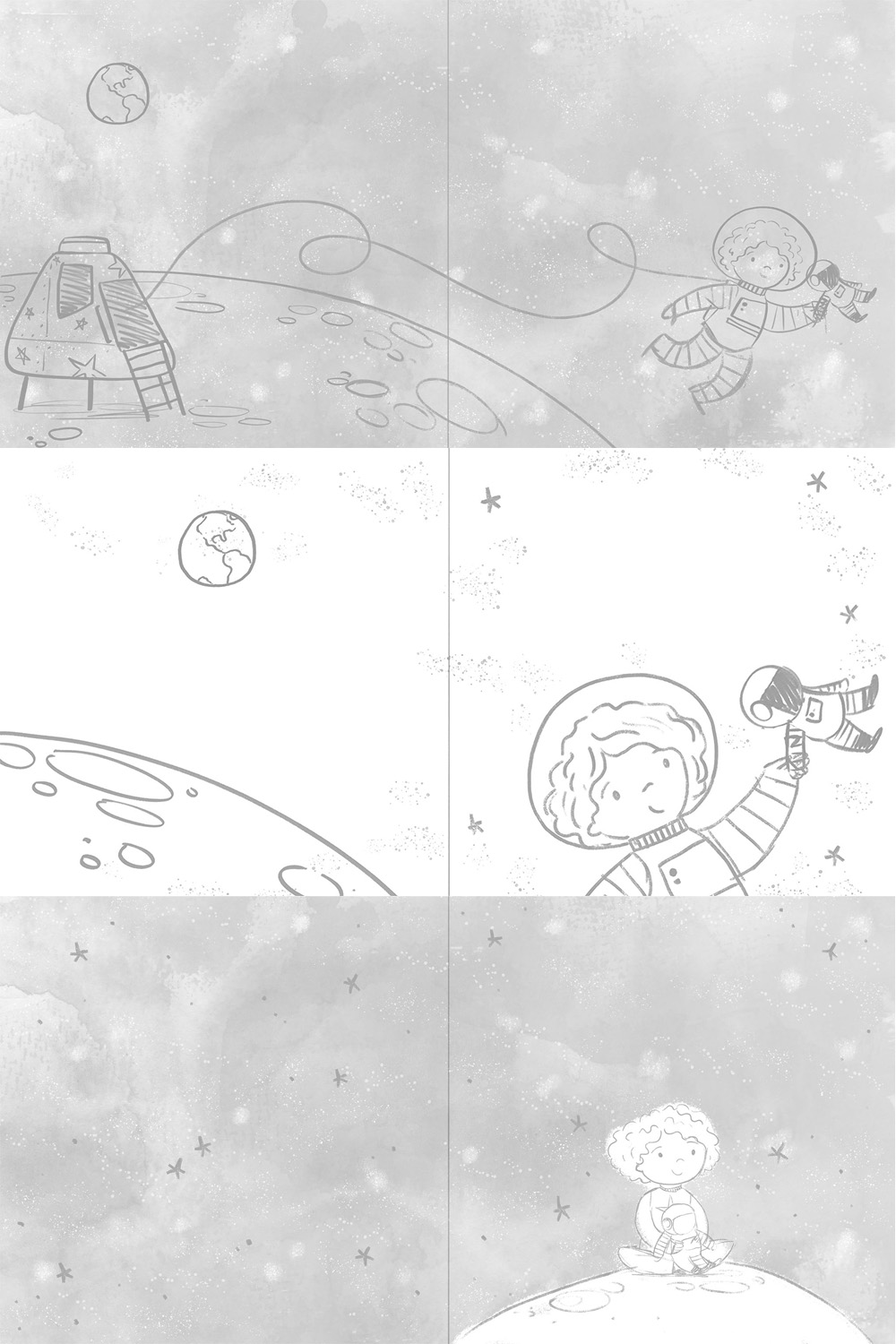
Hi, Stephanie! I’m thrilled for readers to get their first look at the breathtaking cover you designed for The Universe and You! What inspired this image? Can you describe your process of designing and finalizing this cover illustration?

Well, I can’t take all the credit, because Felicia, the art director on this book, had a clear idea of what would go on the cover. I knew the cover would feature some beautiful universe bits and of course, our smart and sweet main character too.

I worked up three cover options to start with, including one with the rocket ship, which is my favorite bit from the book. In the end, the image of the girl sitting on the moon with the Milky Way swirling behind her was chosen. We did a few more versions of the sketch, changing some little things like having her sitting on the Earth instead of the moon, and then it was off to final cover art!

celebrate-picture-books-picture-book-review-the-universe-and-you-initial-cover-sketches

Image copyright Stephanie Fizer Coleman, 2021. Courtesy of Sleeping Bear Press.

Did you have a passion for outer space prior to reading this story?

You know, I’ve always been more of a history buff, but my husband is a space nerd, so over the years a fascination with space has grown in me as well.  I could look at Hubble photos for hours!

Do you have a favorite spread in the book? If so, which one and why?

Both dream spreads, with the rocket ship, are my favorites! It was fun to think up what this girl would be dreaming about and to tie that in with the outer space theme.

One of my initial sketches for this was the girl as a little artist who loved painting planetary bodies and I was a little sad when it got cut, so instead I hinted at her creative energy by imagining the kind of rocket ships her dream self would create.

In the end, I’m so happy that both dream spreads involve the adorable rocket ship and our adventuring astronaut pair.

If you were going to visit outer space, where would you like to go?

This is tough because I’m obsessed with the Crab Nebula! How magical is the Crab Nebula? I mean, seriously. But also Jupiter is my favorite planet and I think I could orbit Jupiter for many years, totally engrossed in watching the rolling storms on its surface.

You have an affinity for flight of another kind too—birds! Several years ago you embarked on a project to paint a bird a day for one hundred days. Readers can see the original charming and beautiful 100 + 1 birds on your website as well as follow along with your current bird drawings on Instagram. What inspired you to do this project? Do you have a favorite bird?

I started the 100 Day project as a way to explore my style using a subject matter I already loved: birds! The simple shapes and vibrant colors lend themselves to creative exploration while feeling easy and approachable as a subject matter. My favorite bird is the chickadee and I try to sneak them into as many children’s books as I possibly can.

What do you like best about illustrating children’s books?

I love getting to illustrate the books that I would have loved as a child! There’s something special about making something that will show children how beautiful the world is and how magical nature is.

Thanks so much, Suzanne and Stephanie, for sharing the story behind The Universe and You! I’m sure readers can’t wait to see your book when it blasts into bookstores on August 15th!

celebrate-picture-books-picture-book-review-the-universe-and-you-cover

You can preorder The Universe and You from these booksellers

Anderson’s Bookshops | Amazon | Barnes & Noble | Books-a-Million

To support your local independent bookstore, preorder from

Bookshop | IndieBound

Picture Book Review