February 25 – It’s National Bird Feeding Month

celebrate-picture-books-picture-book-review-how-to-find-a-bird-cover

About the Holiday

Spring comes early for our feathered friends. You may have noticed more bird activity in the past few weeks as birds get ready to build nests and mate. February can be a tough month for these little creatures, though. In some places snow still covers the ground, and the spring blooms that offer nutrition haven’t sprouted yet. To remedy this situation, in 1994 John Porter read a resolution into the United States’ Congressional record recognizing February as National Bird-Feeding Month. One-third of the American population have backyard feeders that provide the sustenance birds need to survive. To celebrate, if you have feeders make sure they are well stocked. If you don’t have a feeder in your yard, consider hanging one. Enjoying the beauty and songs of birds is a day brightener!

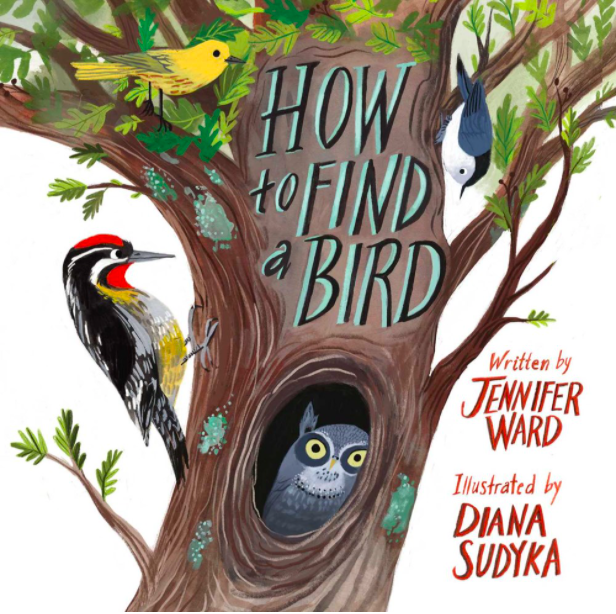
How to Find a Bird

Written by Jennifer Ward | Illustrated by Diana Sudyka


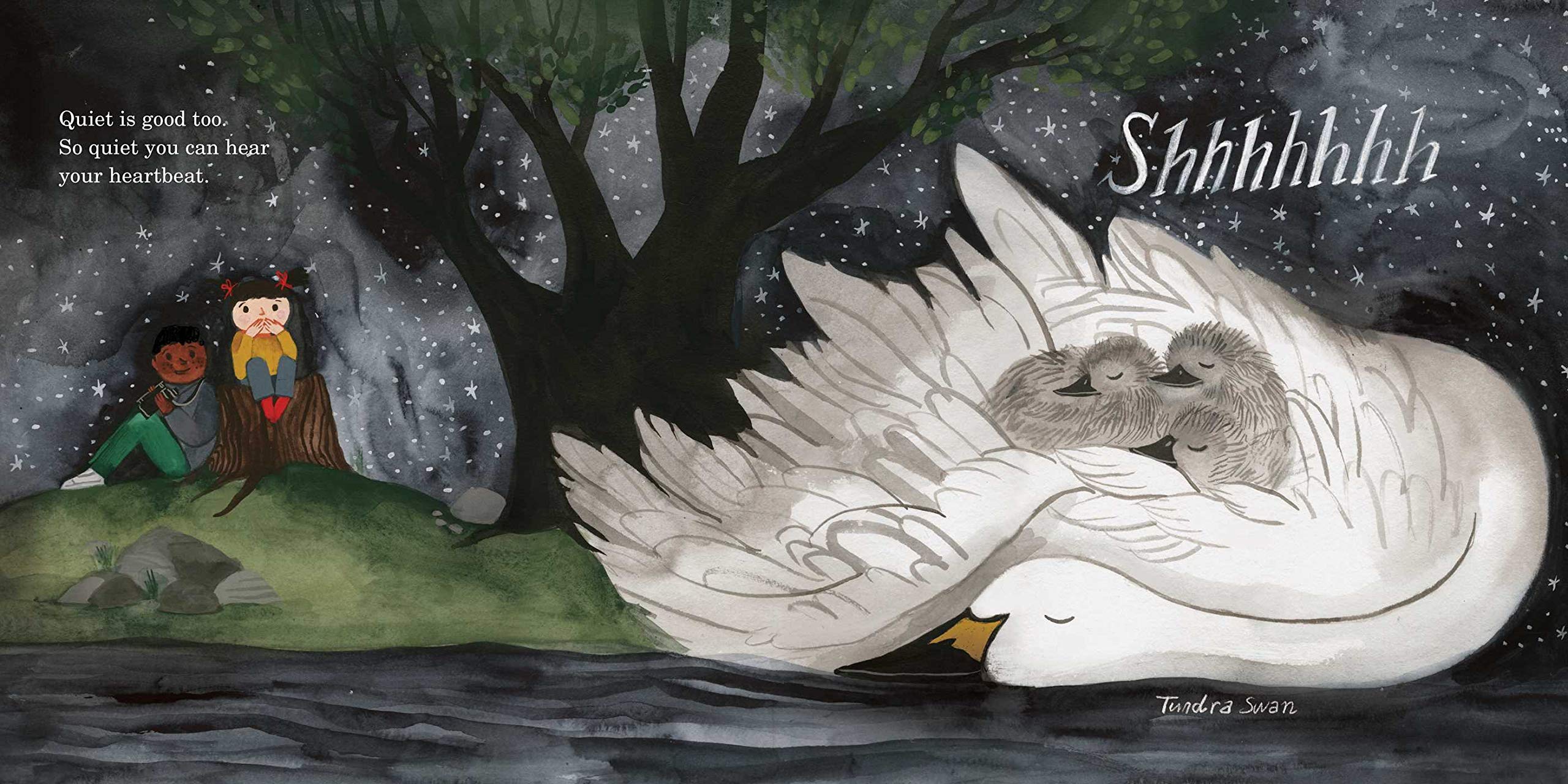
If you have or know of a child who is fascinated by birds, then How to Find a Bird will pique their interest and entice them to get outside to look for birds—those obvious as they fly by and those who take a bit of detective work to spot. As Jennifer Ward assures young birders: “There are a lot of ways to find a bird. That’s the wonderful thing about birds.” She then reveals helpful tips for spying on birds without scaring them away. Being “quiet is good.” How quiet? “So quiet you can hear your heartbeat.”

celebrate-picture-books-picture-book-review-how-to-find-a-bird-swan

Image copyright Diana Sudyka, 2020, text copyright Jennifer Ward, 2020. Courtesy of Beach Lane Books.

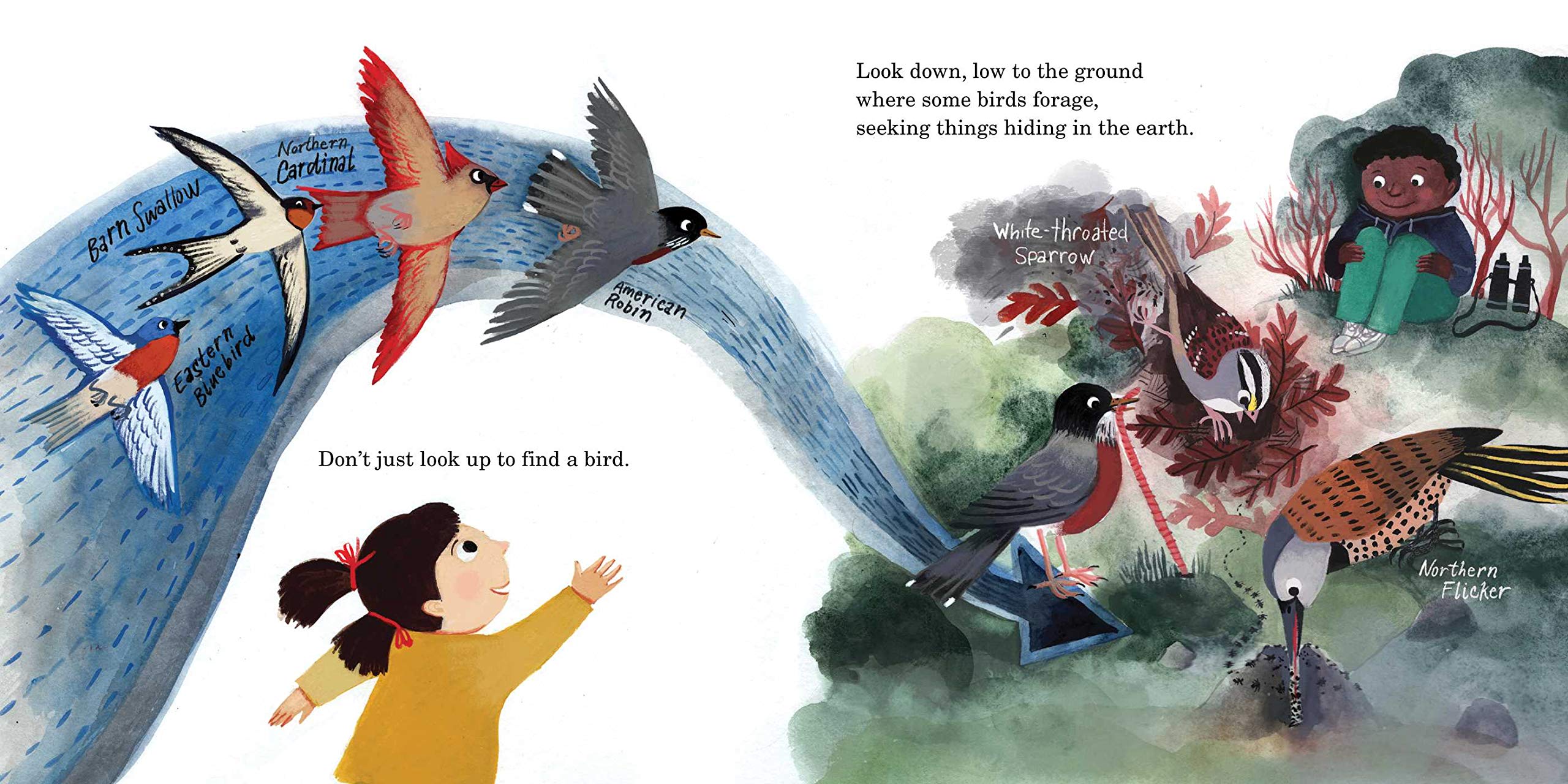
But where can birds be found? Sure, we all know birds fly, but Ward reminds readers to “look down, low to the ground, where some birds forage” for food on land and in the water. And Ward reveals other reasons besides grabbing a meal that birds may be found at feet level instead of overhead. Between down below and up in the sky, there’s eye level. But to find a bird here, “you will have to have a sharp eye” as it may be cleverly camouflaged. “Of course, you can always look up to find a bird too!” But even here you may find surprises.

celebrate-picture-books-picture-book-review-how-to-find-a-bird-ground-birds

Image copyright Diana Sudyka, 2020, text copyright Jennifer Ward, 2020. Courtesy of Beach Lane Books.

If you make your home and yard welcoming, Ward says, you won’t have to search for them, the birds will come to you. They may talk to you or warn other birds about you. “And if you feed them, they will come. Then all you need is a window to find a bird.” But there is one sure way to find a bird that doesn’t involve looking at all. So closer your eyes… and listen: “‘Honk! Honk!’ ‘Cheerily cheerily cheerily.’ ‘Who cooks for you who cooks for you?’ That’s the wonderful thing about birds.”

Backmatter includes a discussion about birdwatching, a list of tools and tips, where to find distinguishing marks on birds, how to create a life list, and resources for becoming a citizen scientist.

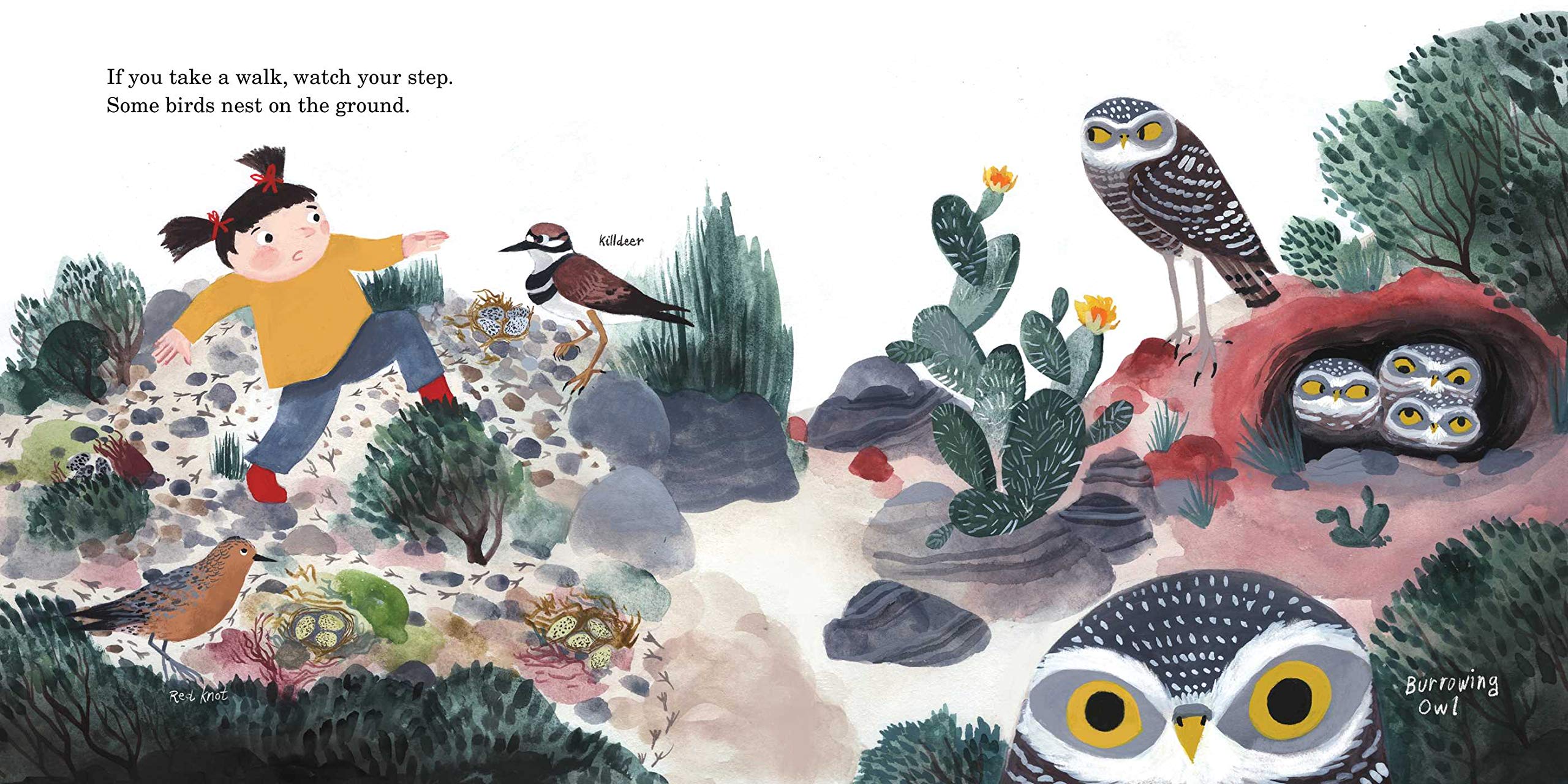
celebrate-picture-books-picture-book-review-how-to-find-a-bird-desert

Image copyright Diana Sudyka, 2020, text copyright Jennifer Ward, 2020. Courtesy of Beach Lane Books.

Jennifer Ward’s joyful, lyrical storytelling invites kids to engage in the rewarding activity of birdwatching. Whether readers would like to make it a hobby or just become more observant to their surroundings, How to Find a Bird shows kids easy ways to enjoy watching birds and discovering their behaviors without disturbing them or their habitats. By reminding children to take a broad approach to finding birds, Ward reveals the wide variety of birds that populate our planet, their behaviors, and their defenses. Ward’s direct address makes readers feel they’re already part of this exciting activity that can become a lifelong love.

Diana Sudyka’s charming, realistic illustrations of more than fifty species of birds take kids to marshlands and rocky deserts, lakeshores and beaches, a bright blue sky and a flower-filled backyard. Along the way kids get a look at families of California quails and tundra swans; a northern flicker gobbling ants; an anhinga tossing a minnow; burrowing owls underground; and a long-eared owl, an eastern whip-poor-will, and a brown creeper hiding in plain sight among many others. Readers will also see some birds who have become extinct and several matched with their song. Sudyka’s vibrant images show birds in motion and at rest. A careful study of the pages will reward kids with enchanting details and a couple of surprising hidden birds.

For nature buffs, bird lovers, and school or homeschooling environmental lessons, How to Find a Bird is an enchanting introduction to birds and birdwatching and would be a terrific take-along on outdoor outings. The book would be a quick favorite on home bookshelves and an excellent reference for classroom and public library collections.

Ages 4 – 8

Beach Land Books, 2020 | ISBN 978-1481467056

Discover more about Jennifer Ward and her books on her website.

To learn more about Diana Sudyka, her books, and her art, visit her website.

National Bird Feeding Month Activity

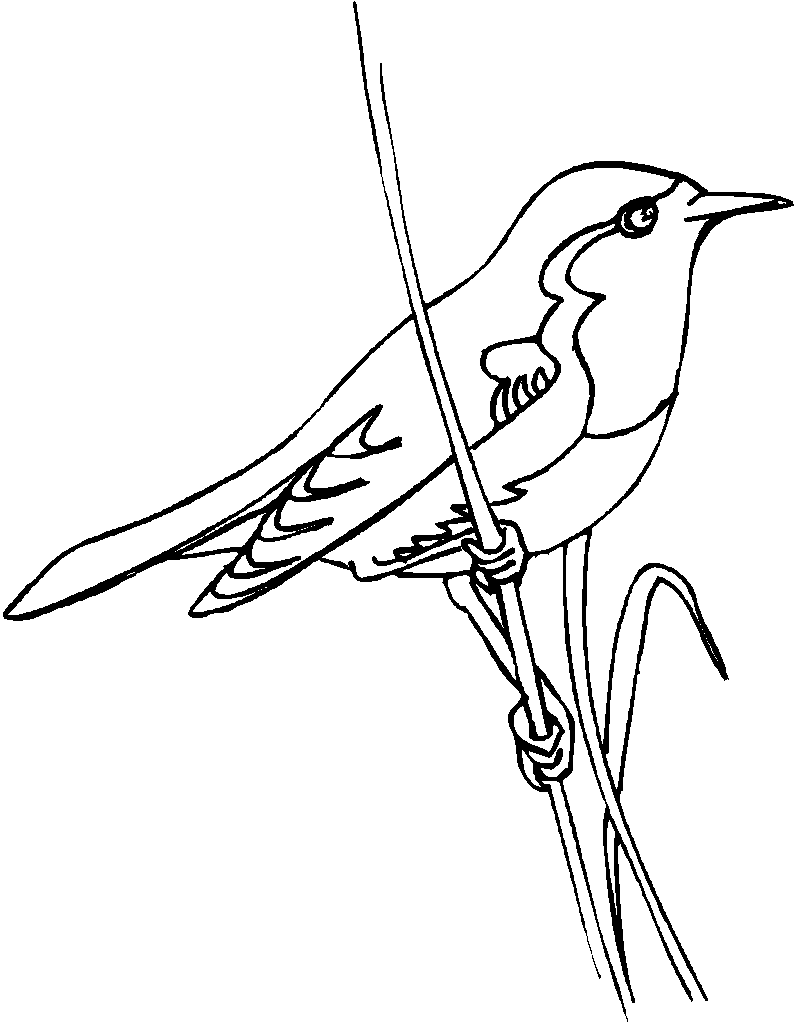
celebrate-picture-books-picture-book-review-bird-on-reed-coloring-page

Bird Coloring Pages


The birds you usually see in your area may not be back from their winter vacation yet, but you can still enjoy some beautiful birds with these coloring pages.

Owl in the Forest | Bird on a Reed | Bird on a Branch

celebrate-picture-books-picture-book-review-how-to-find-a-bird-cover

You can find How to Find a Bird at these booksellers

Amazon | Barnes & Noble | Books-a-Million

To support your local independent bookstore, order from

Bookshop | IndieBound

Picture Book Review

December 4 – Wildlife Conservation Day

celebrate-picture-books-picture-book-review-over-and-under-the-rainforest-cover

About the Holiday

Established in 2012 by former Secretary of State Hillary Clinton, Wildlife Conservation Day aims to raise awareness of the importance of preserving and protecting the natural world and its inhabitants. The day also brings attention to the disastrous effects of wildlife crime – including illegal poaching and smuggling of animals or animal parts, such as tusks or horns – on animal populations. People are also asked to support the Endangered Species Act, which was signed into law in 1973 by President Richard Nixon. In 2019 the Act was substantially weakened when President Trump reduced regulations, putting many more animals at risk. Today, Wildlife Conservation Day is celebrated around the world by organizations and individuals dedicated to protecting and preserving our natural inheritance – unique places and creatures like those explored in today’s book.

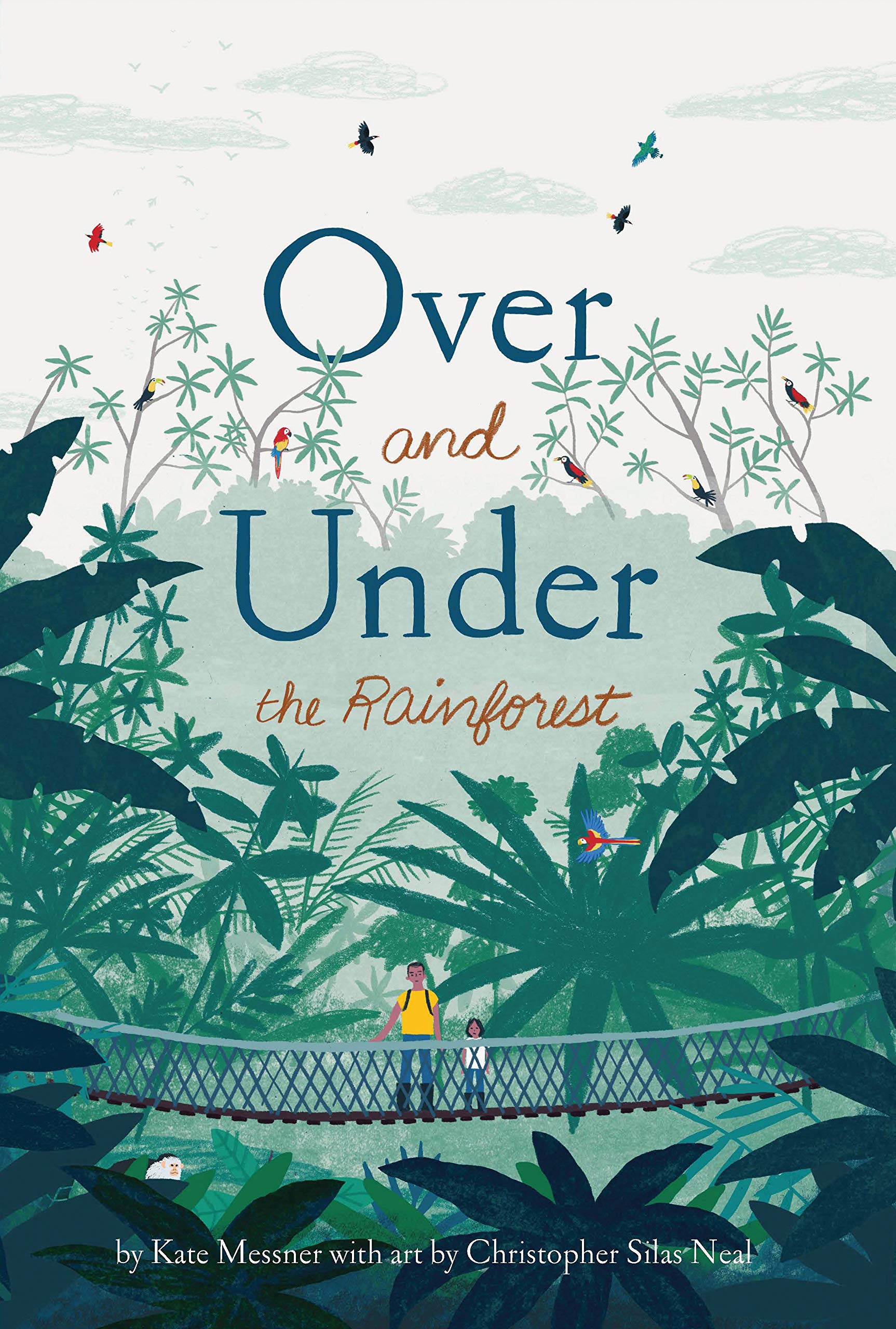
Over and Under the Rainforest

Written by Kate Messner | Illustrated by Christopher Silas Neal


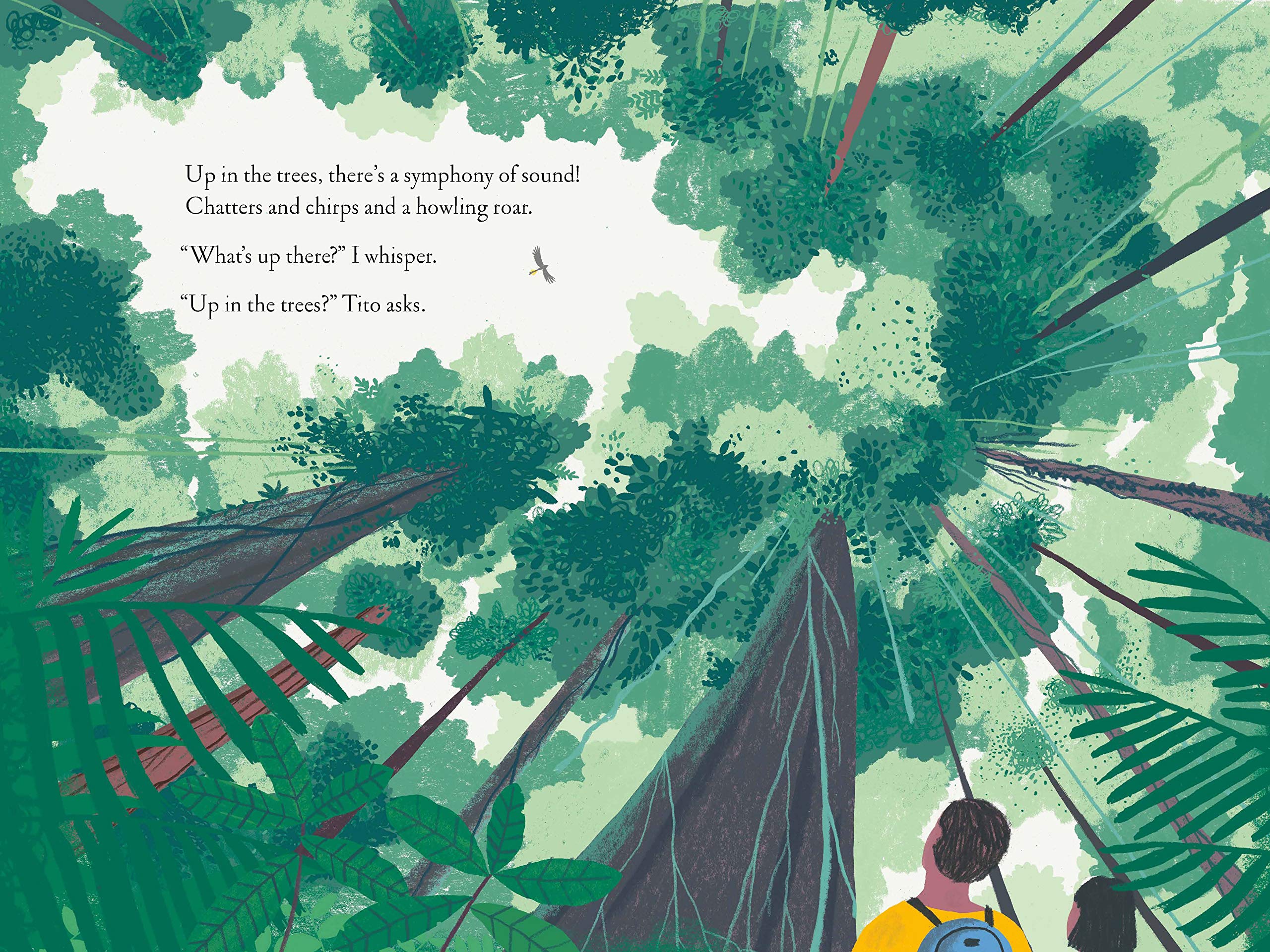
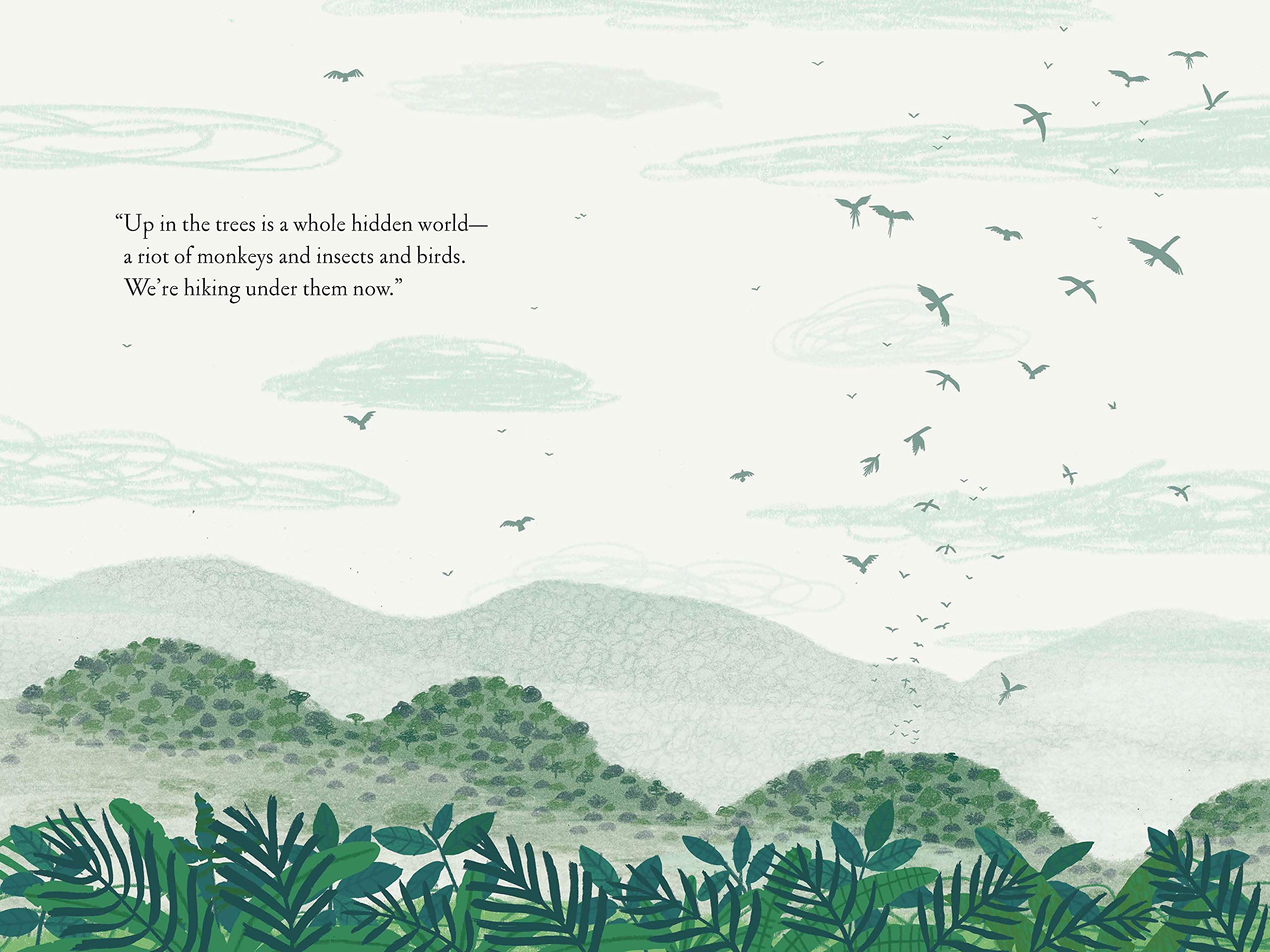
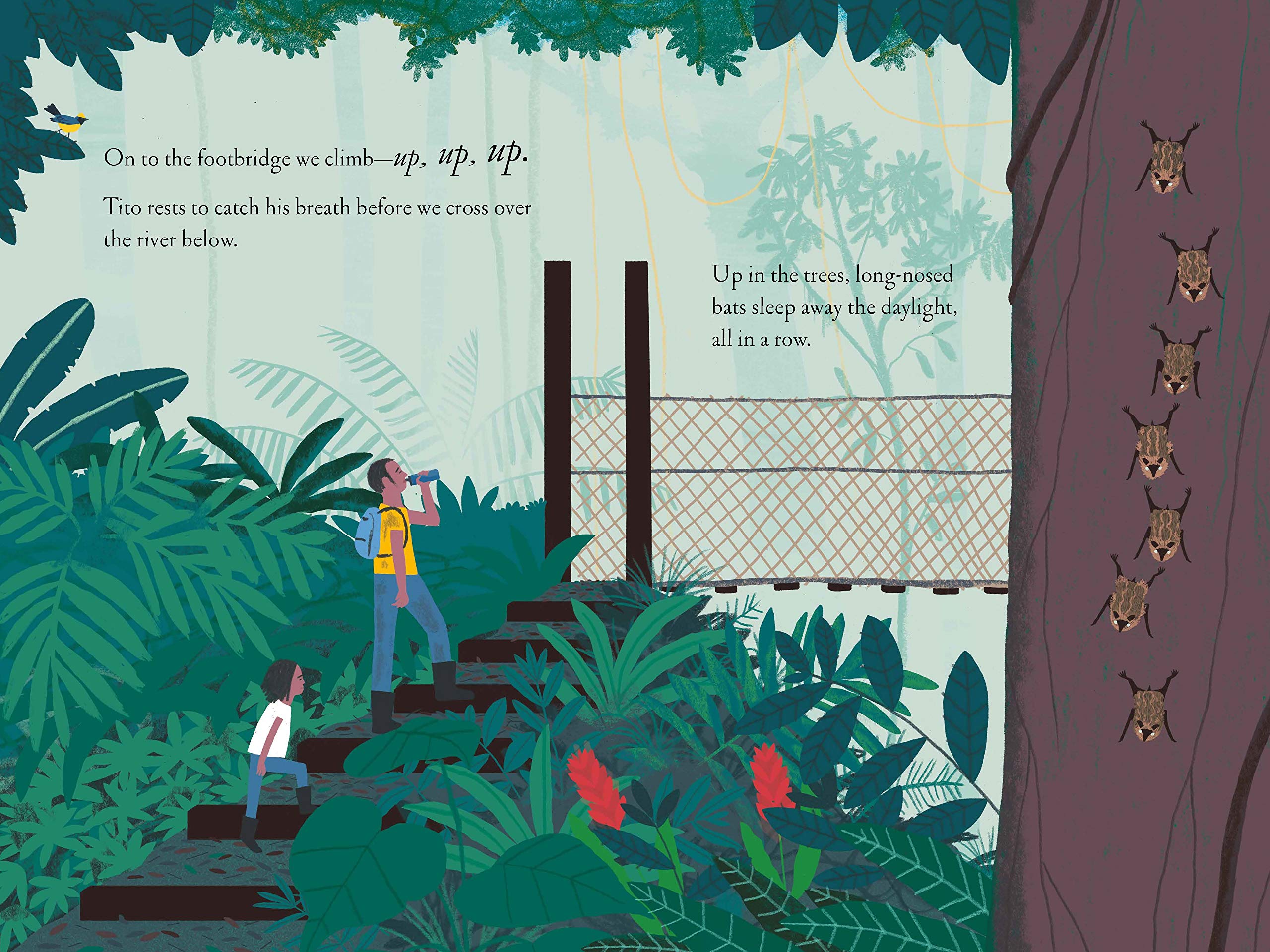
A child narrator enters the rainforest with Tito, who is, perhaps, an older brother, an uncle, or a cousin. The sun filters in, glistening on the raindrop-jeweled leaves. Looking up into the treetops and the clear sky from where “chatters and chirps and a howling roars.” The child wants to know what’s above them, and Tito answers that there is a “whole hidden world” that they are hiking under. They hear the “gurgle” of red, black, and yellow oropendolas in their bag-like nests and the “croak” of toucans.

celebrate-picture-books-picture-book-review-over-and-under-the-rainforest-treetops

Image copyright Christoper Silas Neal, 2020, text copyright Kate Messner, 2020. Courtesy of Chronicle Books.

They stop on the bridge that crosses a river and look down at the crocodiles napping on the banks. An emerald basilisk has no time to rest, though, and runs across the river, his feet “barely skimming the river’s surface.” The bridge takes them up, into the trees, where capuchin monkeys swing from branch to branch. While having a snack, the child and Tito watch an anteater hunt for a snack of his own below among fallen leaves.

celebrate-picture-books-picture-book-review-over-and-under-the-rainforest-birds

Image copyright Christoper Silas Neal, 2020, text copyright Kate Messner, 2020. Courtesy of Chronicle Books.

The afternoon brings expected rain, which begins as a “pitter-soft drumming on the leaves up above” but “swells to a strong, rushing pour” that soaks a “soggy mother sloth and her baby” while a blue morpho butterfly “folds up her wings and tucks away on a tree trunk.” They walk deeper into the forest, where silent snakes slither and curl around branches. Spying a dark shape in a treetop, Tito, with a roar, unleashes “a thunder of howler monkeys” concealed from sight.

celebrate-picture-books-picture-book-review-over-and-under-the-rainforest-toucans

Image copyright Christoper Silas Neal, 2020, text copyright Kate Messner, 2020. Courtesy of Chronicle Books.

Dusk comes and then the curtain of night. Tito and the child head for home, spying animals and insects who are just beginning their day along the way. But suddenly a “sharp snap” in the undergrowth stops the child. Could it be a jaguar? They hurry across the last bridge and see the lights from Abuelita’s house. They know a dinner of arroz con pollo is waiting as the birds return to their homes too and another chorus begins—“a night song of darkness and water and life—over us, under us, and all around.”

Exciting back matter includes an Author’s Note about the inspiration for this book as well as illustrated paragraphs about the twenty birds, animals, and insects mentioned in the story.

celebrate-picture-books-picture-book-review-over-and-under-the-rainforest-bridge

Image copyright Christoper Silas Neal, 2020, text copyright Kate Messner, 2020. Courtesy of Chronicle Books.

Lyrical and evocative, Kate Messener’s hike through a Costa Rican rainforest envelopes readers in the sights, sounds, and atmosphere of this mysterious ecosystem. Her well-loved Over and Under series serves as a perfect guide to a place where life in all its forms teems in the lush landscape. Messner’s tranquil and graceful storytelling makes for a lovely read aloud that will captivate readers, and her first-person point of view invites each listener to imagine themselves taking this transformative walk.

Christopher Silas Neal’s soft-yet-vivid matte illustrations capture the mystery and wonder of the rainforest from the first page, where Tito and the narrator head into the forest through a dark entryway that seems to slowly reveal itself as a series of steps leading into the trees. Just as kids would be prone to do, upon entering the forest, the narrator and Tito look up into the towering treetops, focusing the readers’ eyes there too. Neal’s use of a variety of perspectives gives readers an experience similar to the book’s characters and allows them to feel the vastness of the environment. The number of unusual animals, birds, and insects they encounter in this forest will wow kids, and they’ll enjoy searching the leaves, branches, and undergrowth to find what is hidden there. This nighttime scene provides a thrill as bright eyes shine from the trees—the only evidence of the shadowy creatures lurking there.

A beautiful book for any nature lover or child fascinated by the wonders of the world, Over and Under the Rainforest is a must. The book would be a treasured addition to home, school, and public library collections.

Ages 5 – 8

Chronicle Books, 2020 | ISBN 978-1452169408

Discover more about Kate Messner and her books on her website.

To learn more about Christopher Silas Neal, his books, and his art, visit his website.

Wildlife Conservation Day Activity

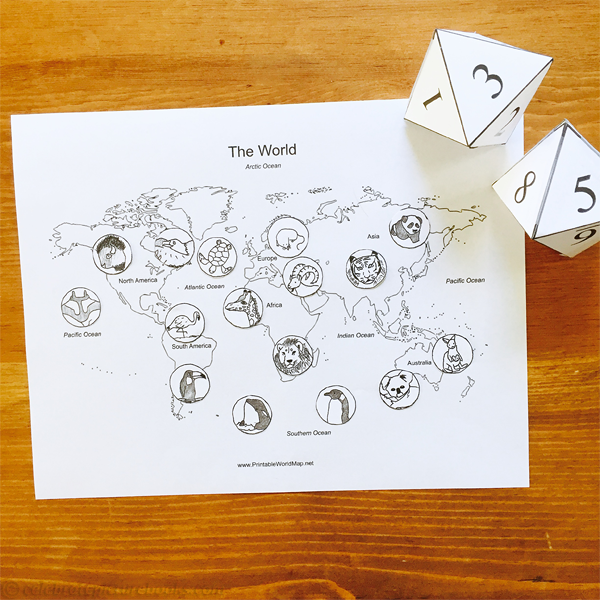
celebrate-picture-books-picture-book-review-wonderful-wildlife-board-game

Fascinating animals are found in every part of the world. Play this fun printable Wonderful Wildlife Board Game to match each animal to the area where it lives.

Supplies

Directions

  1. Print a World Map for each player
  2. Print one set of 16 Wildlife Tokens for each player
  3. Print two copies of the 8-sided die, fold, and tape together
  4. If you would like, color the map and tokens
  5. Choose a player to go first
  6. Each player rolls both dice and places an animal on their map according to these corresponding sums of the dice as shown on printable guide
  7. The first player to fill their map is the winner!

celebrate-picture-books-picture-book-review-over-and-under-the-rainforest-cover

You can find Over and Under the Rainforest at these booksellers

Amazon | Barnes & Noble | Books-a-Million

To support your local independent bookstore, order from

Bookshop | IndieBound

Picture Book Review


October 12 – National Farmers Day

celebrate-picture-books-picture-book-review-the-farm-that-feeds-us-cover

About the Holiday

National Farmers Day events have taken place across the country since the 1800s, and these days events are held on different dates in different towns throughout the fall. The holiday celebrates the hardworking farmers who grow and raise the food that fills our grocery stores, farm markets, and tables. Beyond food, farmers contribute to our economy across industries.

Thanks to Quarto Knows for sending me a copy of The Farm That Feeds Us for review consideration. I used a digital copy of The Kitchen Pantry Scientist: Chemistry for Kids for my review. All opinions on the books are my own.

Introducing Quarto Classroom

celebrate-picture-books-picture-book-review-Quarto-Classroom-Logo

New this year, Quarto Classroom is a free video library on YouTube of expert authors using their books to teach everything from math to arts & crafts to social emotional learning. There are videos and activity sheets for every age, which can be used as supplements to your normal school curriculum—plus, you to get to know some pretty cool authors! Perfect to enhance virtual schooling and homeschooling, the videos and materials are exciting ways to engage your kids in hands-on learning. Today, I’m reviewing two books that approach science in different ways. The first covers the science of organic farming, and the second gets kids involved in chemistry experiments in their own kitchen. You can find all the available videos on various topics at Quarto Classroom.

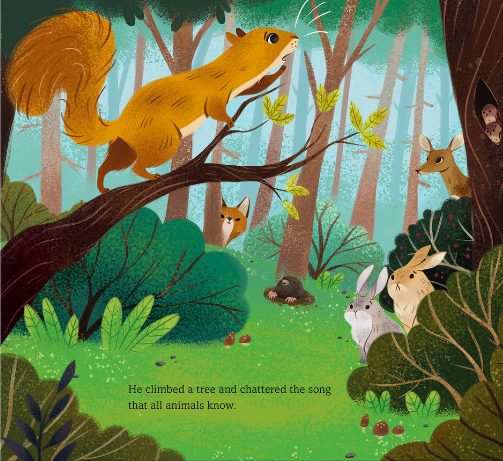
The Farm That Feeds Us: A Year in the Life of an Organic Farm

Written by Nancy Castaldo | Illustrated by Ginnie Hsu


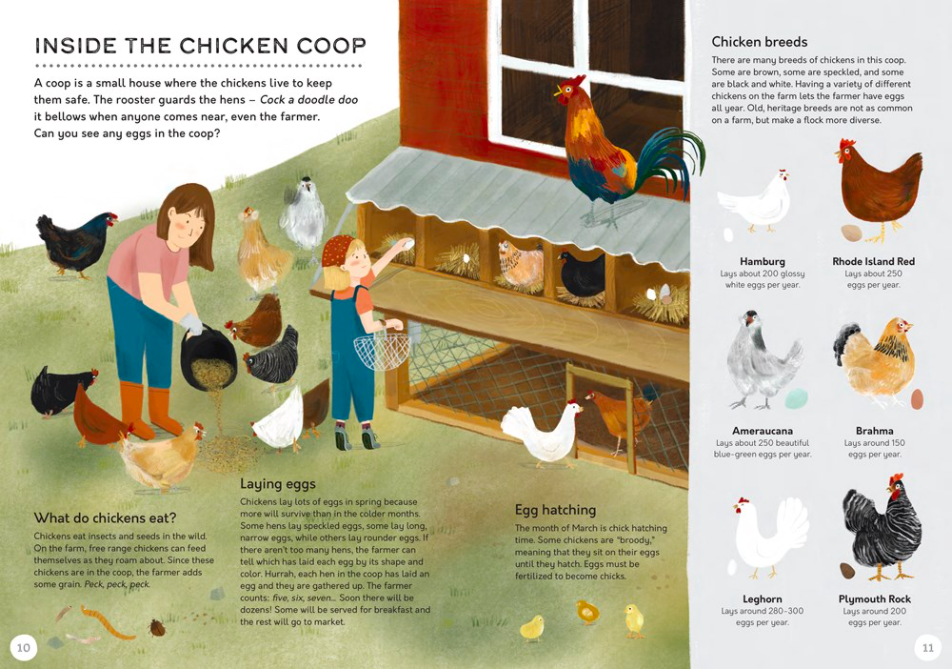
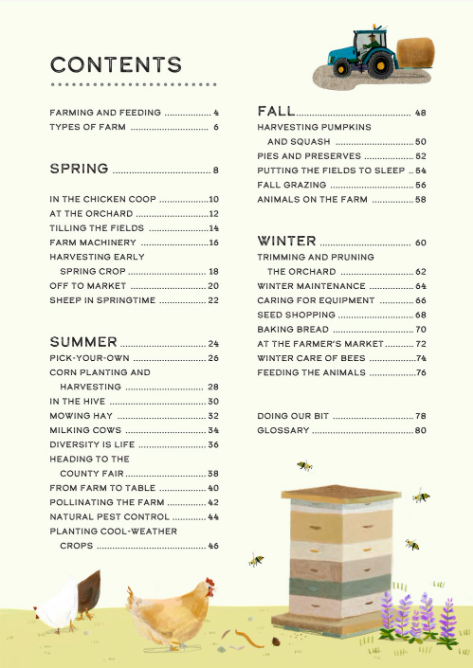
This encyclopedic beauty takes readers to an organic family farm, where they spend a year learning about various types of farms and then get a close-up look at the activities and transformations that take place from season to season. In Spring, the farmer is up before the birds to feed the animals and mild the cows and goats. The chicken coop is busy as the kids feed the chickens and rooster and collect eggs. Some chickens are “broody” today—sitting on their eggs until they hatch. What kind of chickens are there? This coop is home to Hamburg, Rhode Island Red, Ameraucana, Brahma, Plymouth Rock, and Leghorn, which can lay “around 280–300 eggs per year.”

Out in the orchard among the apple, cherry, pear, and plum trees, the bee hives are being checked. In the fields, the farmer is tilling the soil to plant lettuce, carrots, beans, radishes, beets, and peas. You can see many kinds of equipment and machinery farmers use here. Some crops love the cool weather of early spring, so workers are already harvesting the peas, lettuces and greens, asparagus, and radishes. Then it’s off to the farm market to sell the food to eager customers.
celebrate-picture-books-picture-book-review-the-farm-that-feeds-us-chicken-coop

Image copyright Ginnie Hsu, 2020, text copyright Nancy Castaldo, 2020. Courtesy of Words & Pictures, Quarto Knows.

With temperatures getting warmer, it’s time to sheer the sheep. Lambs are born now too. You can see and learn about six breeds of sheep that are found around the world. Summer brings thousands of strawberries, raspberries, and cherries in the farm’s pick-your-own fields. Summer also means corn, which comes in many colors and is used for different purposes, from feeding people and livestock to making fuel. “Some varieties of corn have hears filled with kernels that look like multi-colored gems. Come take a look!

Twice a day the cows are milked. “On some industrial farms, cows are kept in pens and are bred to produce unnaturally high volumes of milk. On this organic, family farm, the cows are free to roam around” pesticide-free fields. Without antibiotics or hormones to increase milk production, their milk is “healthier for people to drink.” You can learn about five distinct breeds of cows here too.

It’s been an exciting time for the farmers! This weekend was the county fair, where “farmers come from all over the county to show off their produce and livestock.” Come take a look at all the exhibits! Then a local chef visits, eager to learn about the fresh produce and heirloom varieties available. “Squash blossoms, tomatoes, and radishes are picked and packed for the chef to take back to the kitchen for tonight’s menu.” You can also learn about food distribution and why eating local is healthier and more delicious.

celebrate-picture-books-picture-book-review-the-farm-that-feeds-us-chicken-farm-machinery

Image copyright Ginnie Hsu, 2020, text copyright Nancy Castaldo, 2020. Courtesy of Words & Pictures, Quarto Knows.

While large farms often use manmade pesticides to thwart insects and other pests, “organic farms use many different methods, including crop rotation, crop isolation, and growing other plants nearby that ward off pests.” Take a look at how these methods work.

Autumn brings pumpkins—in so many varieties! Orange, white, and green; warty, smooth, and tiny, each pumpkin has its own use and flavor. In the farmhouse kitchen, freshly picked fruit and vegetables are becoming jams, pies, sauces, and chutneys. In preparation for winter, the fields must be “put to sleep to keep the soil healthy for the spring plantings. Discover how important cover crops, mowing, and even fall grazing by the animals is to the farm’s health.

While no crops are growing during the winter, that doesn’t mean things slow down on the farm. Now is the time when repairs and cleaning are done, the apple trees are pruned, and logs are split for the woodstove. The bee hives are also wrapped to keep them warm. As the snow falls, the family feeds the animals in the barn and then gathers around and chooses the seeds they want to plant in the spring.

A bread recipe, a discussion on how we can make a difference to ensure a variety of healthy food remains available, and a glossary of words used in the book close out the text.
celebrate-picture-books-picture-book-review-the-farm-that-feeds-us-contents

Nancy Castaldo’s gorgeous and informative book, written in a lyrical, conversational style and full of fascinating details about the life of a farm and its crops and animals will entice readers to learn more about their local farms, the food grown there, and shopping at farmers markets.

Ginnie Hsu’s bright and homey illustrations will enchant readers of all ages as they discover realistic depictions of farm equipment, planting methods, crops, animals, and the beauty and intricacies of a small farm. Two-page spreads allow for detailed and panoramic views of the always-changing scenery and activities that make a farm such an exciting and intriguing place.

Whether you’re a teacher, homeschooler, or gardener; love farms; or are a proponent of an organic lifestyle, The Farm That Feeds Us would be an excellent accompaniment to science, social studies, and environmental lessons. The book offers untold opportunities to spark further research into the topics presented and ideas for classroom or home gardens. It is highly recommended for home bookshelves and is a must for school and public libraries.

Ages 7 – 11

Words & Pictures, Quarto Knows, 2020 | ISBN 978-0711242531

Discover more about Nancy Castaldo and her books on her website

To learn more about Ginnie Hsu and view a portfolio of her art, visit her website.

celebrate-picture-books-picture-book-review-the-farm-that-feeds-us-cover

You can find The Farm That Feeds Us at these booksellers

Amazon | Barnes & Noble | Books-a-Million

To support your local independent bookstore, order from 

Bookshop | IndieBound

The Farm That Feeds Us Quarto Classroom Video

You can visit with Nancy Castaldo as she reads from her book and talks about food from her local farms as well as about food you may find in your own pantry, clothing hanging in your closet, and other items in your house and the farms where they came from. Nancy invites kids to go on a scavenger hunt in their classroom or home to discover how many things we eat and use come from farms. You can find her video and download a teachers’ guide on the Quarto Classroom website under Science.

celebrate-picture-books-picture-book-review-chemistry-for-kids-coverThe Kitchen Pantry Scientist: Chemistry for Kids 

By Liz Lee Heinecke | Illustrated by Kelly Anne Dalton | Photography by Amber Procaccini Photography


Replicating the experiments of twenty-five of the world’s most influential scientists from 1200 BCE to 1975 will give children and young people an appreciation for the long history and vast influence of chemistry since the beginning of time. Along with each experiment, readers learn about the scientists, background on their work, and “where you can still find it used or reflected in today’s world.”
celebrate-picture-books-picture-book-review-chemistry-for-kids-dmitri-mendeleev

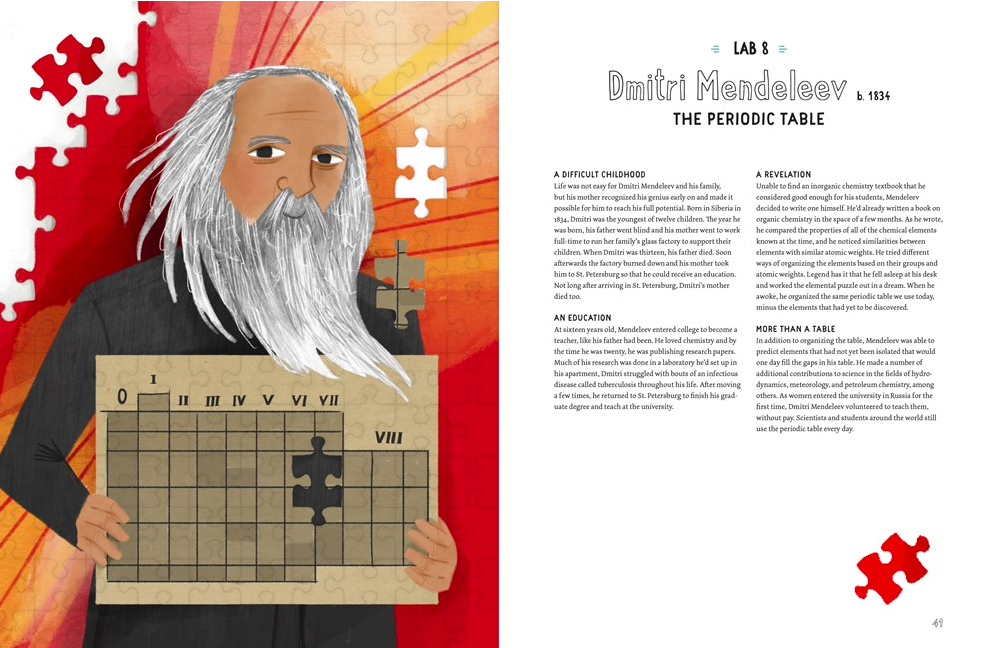
Image copyright Kelly Anne Dalton, 2020, text copyright Liz Lee Heinecke, 2020. Courtesy of Quarry Books, Quarto Knows.

First up is Tapputi-Belatikallim—a woman and the first recorded chemist, who lived in ancient Mesopotamia over 3200 years ago. Her position within the royal household was that of fragrance preparer, an important role as scents were “believed to transcend the physical world to reach their gods, who would be pleased by their sacrifice.” Her recipe “includes the first description of a distillation apparatus ever recorded and a number of her methods are still used today….” With a slow cooker or pot, fresh or dried lemon, herbs, or flowers, and other common kitchen tools, readers can create their own fragrance. Clear photographs show budding chemists the steps to success.

What would carbonated-drink fans do without their sparkling bubbles? Fortunately, because of Joseph Priestley’s work in 1767, they’ll never need to know. With baking soda and vinegar, young scientists can go beyond the volcano and create their own carbonated water. They’ll also learn more about this man who was ahead of his time in many ways. Don’t put the vinegar away too soon! With the next experiment, kids can turn a pad of steel wool into a powdery rust with oxidation—just like Antoine Lavoisier.
celebrate-picture-books-picture-book-review-chemistry-for-kids-periodic-table

Photographs copyright Amber Procaccini, copyright 2020, text copyright Liz Lee Heinecke, 2020. Courtesy of Quarry Books, Quarto Knows.

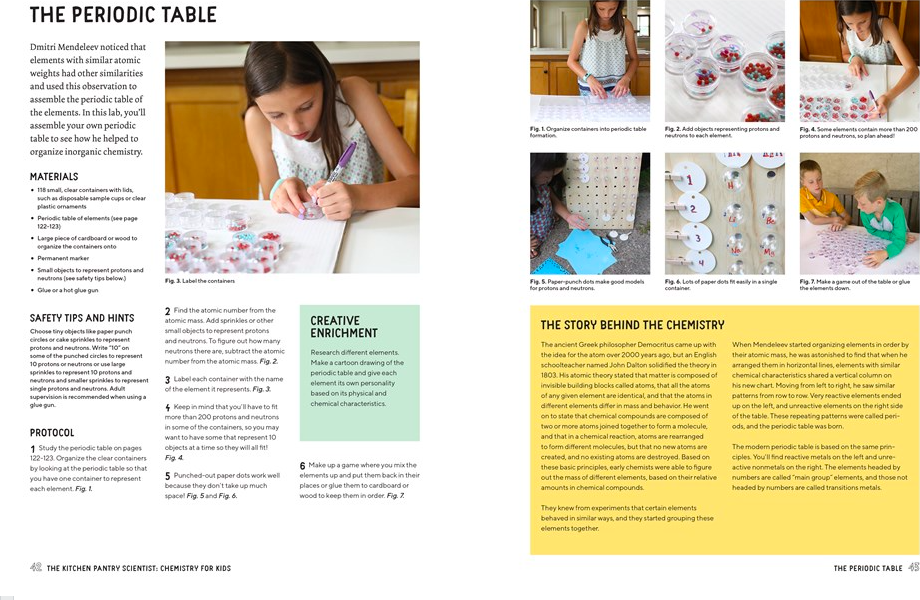
Can’t quite get your head around the periodic table? With this experiment you can make your own and really see what’s up with all of those protons and neutrons! Who came up with the periodic table? That would be Dmitri Mendeleev, who legend has it dreamed up the format in…well…a dream. Can washing dishes ever be more than a chore? For Agnes Pockels, born in 1862, it led to a revelation about surface tension and how various soaps and other materials could disturb it. Get out a plate, some water, milk, food coloring, oil, and other ingredients and get to work!

How do you smell? I mean…how well can you smell? In 1991 Dr. Linda Buck discovered “a group of genes that no one had ever seen before. These genes coded for a group of 350 smell receptors that work in combination to detect thousands of different odors. “In 2004 Linda and her colleague Richard Axel won the Noble Prize in Physiology or Medicine for their discoveries of odorant receptors….” With the experiment here, you and your family can discover how sensitive your nose is by blind-testing a variety of objects.
celebrate-picture-books-picture-book-review-chemistry-for-kids-margaret-cairns-etter

Image copyright Kelly Anne Dalton, 2020, text copyright Liz Lee Heinecke, 2020. Courtesy of Quarry Books, Quarto Knows.

The next time your teacher, mom, or dad sees you using your phone in class, it might be because you’re doing Raychelle Burks’ colorimetric sensors experiment. With an app you can turn your phone into a spectrometer to test RGB ratings for a series of diluted liquids. Burks’ current research is focused on designing “sensing systems that can identify chemical clues tied to crime.” Who knows—you may find yourself working as a CSI after getting hooked by the science behind this fascinating experiment.

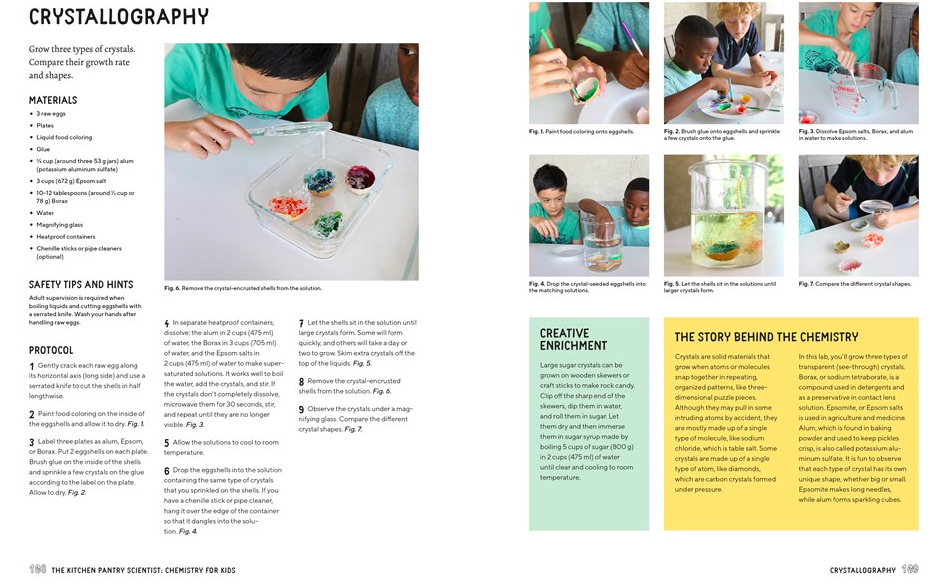
Along the way, young scientists can make soap, create chemical batteries, work with synthetic dyes, make lava lamps to test temperature and chemical reactions, do elemental extraction, discover the pH scale, learn about chromatography, extract organic oils, make crystals, extract medicinal compounds from aloe, and take part in many more educational and fun experiments. A glossary, the periodic table, and a list of resources and references follows the text.
celebrate-picture-books-picture-book-review-chemistry-for-kids-crystallography

Photographs copyright Amber Procaccini, copyright 2020, text copyright Liz Lee Heinecke, 2020. Courtesy of Quarry Books, Quarto Knows.

Prior to each experiment, readers learn about each chemist through Kitchen Pantry Scientist Liz Lee Heinecke’s lively biographies that spotlight stories from the scientist’s childhood, family life, education, early work, and influence on the world at large.

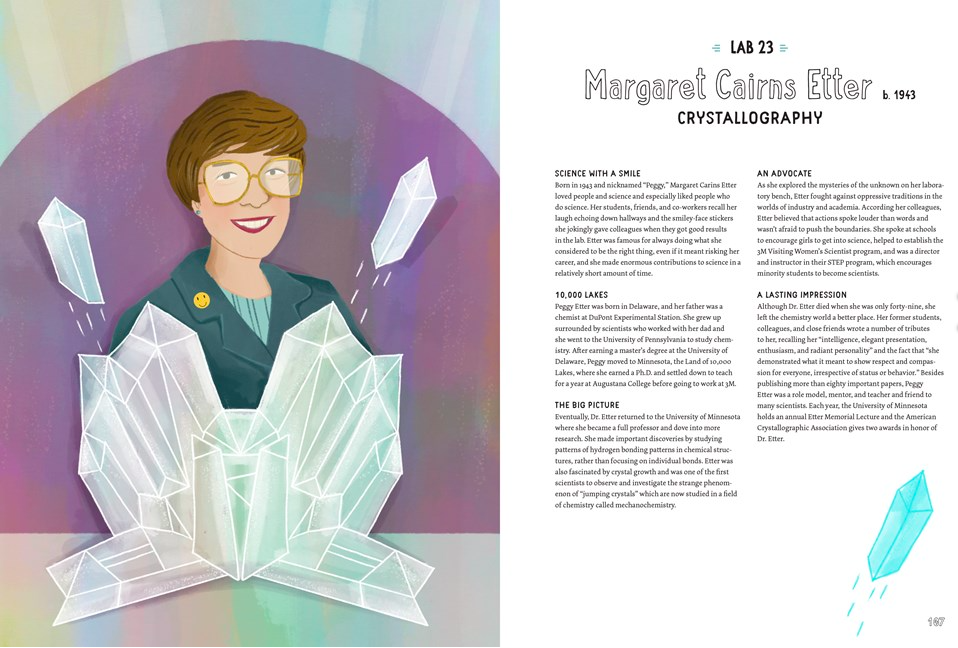
Kelly Anne Dalton’s engaging and vivid illustrated portraits of each chemist introduce each experiment and set the scientist in her or his time period.

A superb reference and resource for schools, homeschooling, today’s virtual schooling as well as for kids who just like to tinker (like many of the scientists highlighted), Chemistry for Kids would be a favorite go-to book for science lessons and free time and is highly recommended for home, school, and public library collections. The book would also make an excellent gift.

Ages 7 – 12

Quarry Books/QuartoKnows, 2020 | ISBN 978-1631598302

To learn more about Liz Lee Heinecke, her books, and her work, visit her website The Kitchen Pantry Scientist.

Discover more about Kelly Anne Dalton, her books, and her art on her website.

Chemistry for Kids Quarto Classroom Video

Liz Lee Heinecke invites you into her kitchen to talk about her book and hear the story of Agnus Pockles. Following the reading she takes kids step-by-step through Agnus’s experiment on surface tension, using milk and food coloring to explain how this phenomenon works. She then shows how detergents break surface tension with dramatic results. You can find Liz’s video and download a teachers’ guide at the Quarto Classroom website under Science.

celebrate-picture-books-picture-book-review-chemistry-for-kids-cover

You can find Chemistry for Kids at these booksellers

Amazon | Barnes & Noble | Books-a-Million

To support your local independent bookstore, order from

Bookshop | IndieBound

Picture Book Review


September 19 – It’s Read a New Book Month

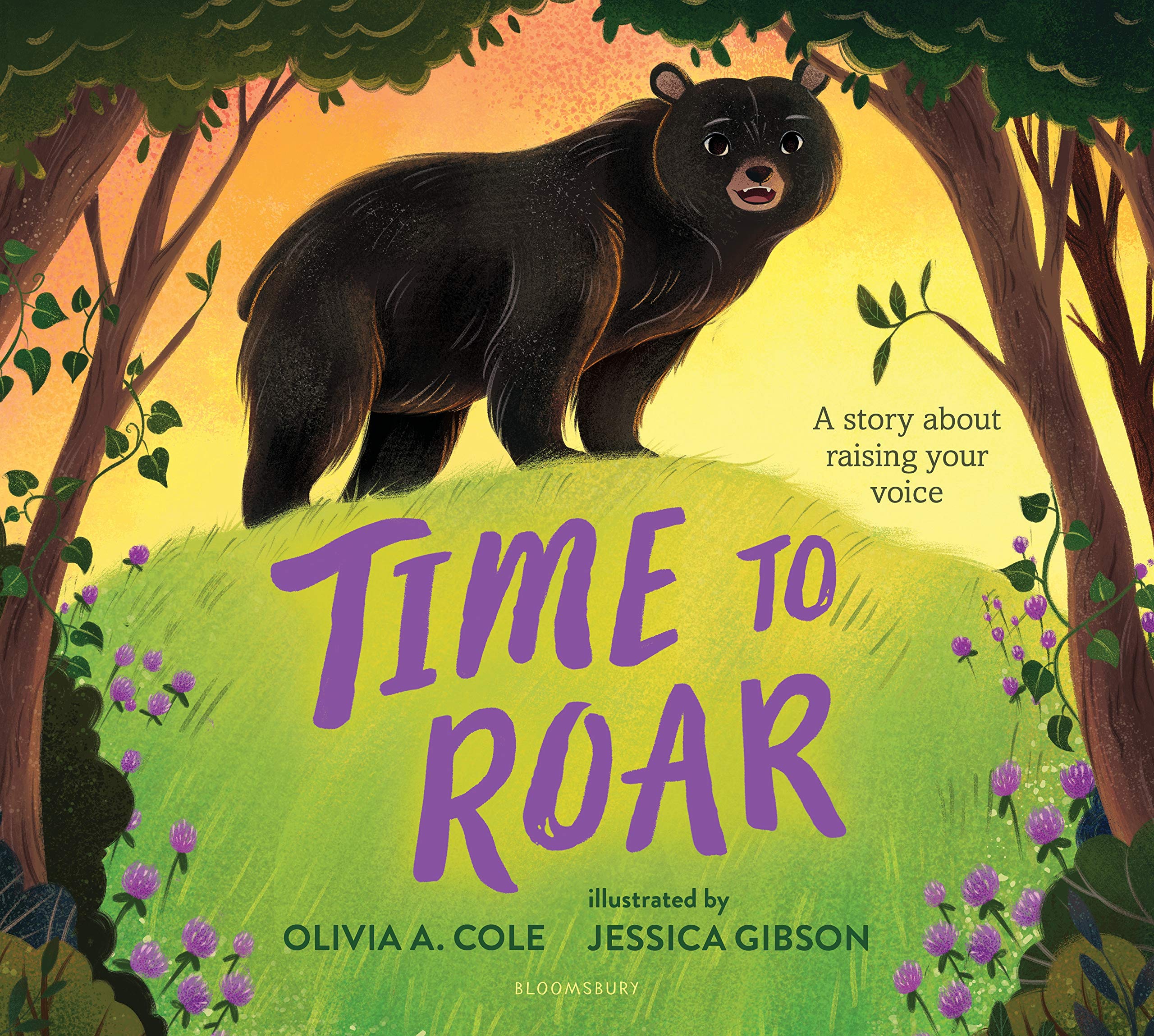
celebrate-picture-books-picture-book-review-time-to-roar-cover

About the Holiday

As September winds down, I’m happy to feature another new book for this month’s special holiday. Searching for and sharing new books—whether they are recently published or just new to you—is not only a fun way to spend a day together with kids, but an experience that pays big benefits now and in the future. Make a plan to add a few new books to your home library or visit your local library today!

Thanks go to Bloomsbury Children’s Book for sending me a copy of Time to Roar for review consideration. All opinion on the book are mine.

Time to Roar: A Story about Raising Your Voice

Written by Olivia A. Cole | Illustrated by Jessica Gibson

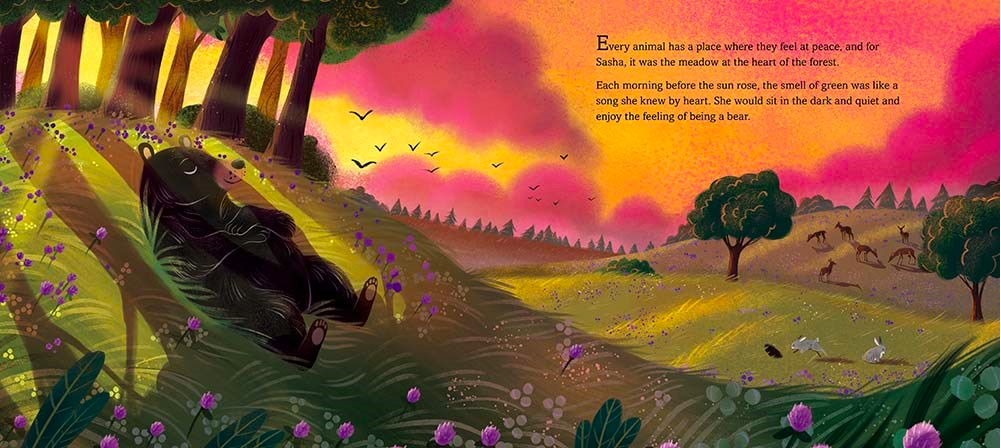
For Sasha, the meadow in the middle of the forest was where she felt most at peace, where she could “enjoy the feeling of being a bear.” Before dawn, she would lie in the meadow, where “…the smell of green was like a song she knew by heart.” But one morning, Sasha watched as noisy “yellow beasts” began tearing up the meadow with their silver teeth. A squirrel predicted that soon nothing would be left of their home.

celebrate-picture-books-picture-book-review-time-to-roar-morning

Image copyright Jessica Gibson, 2020, text copyright Olivia A. Cole, 2020. Courtesy of Bloomsbury Children’s Books.

Sasha was ready to charge down the hill and confront the machines. But the squirrel advised caution and suggested all the animals have a meeting. Sasha relented. As the squirrel called the animals, they came out of hiding and listed to the squirrel talk about the danger that had come. Sasha was again ready to stop them with her mighty roar, but the bluebird thought she could persuade them with her song. As he flew over the machines, however their noise drowned out his song’s sweetness.

celebrate-picture-books-picture-book-review-time-to-roar-meeting

Image copyright Jessica Gibson, 2020, text copyright Olivia A. Cole, 2020. Courtesy of Bloomsbury Children’s Books.

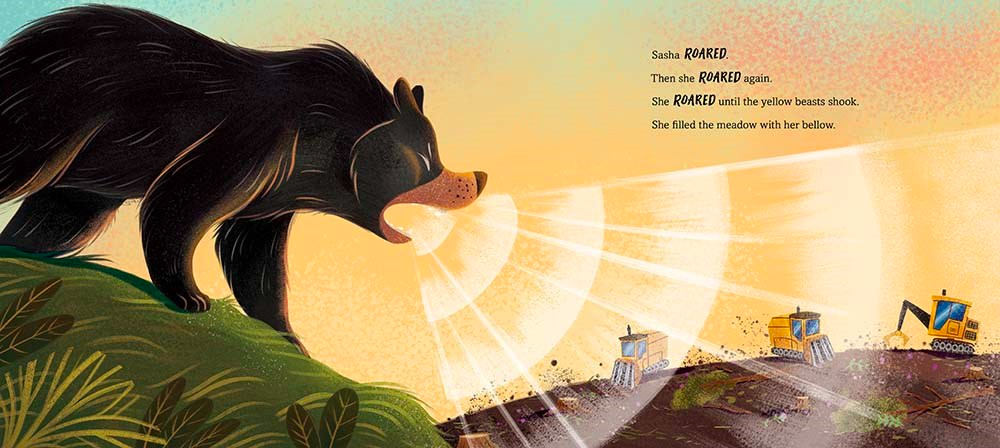
Rabbit had another idea of how he could distract them, but her attempt went unnoticed too. The deer thought he could lead the machines away from their home, but his appearance made no difference either. In fear, all the animals rushed to hide. “‘It’s the only way we will survive!’” they exclaimed. But Sasha did not hide. “Inside her, anger welled up, sparkling. Maybe it was stronger than yellow beasts.” She thought about all the tactics the other animals had taken. “She knew what had to be done…. Sometimes a bear had to raise her voice.” She ran to the edge of the meadow and ROARED until the echo of her roars shook the yellow machines. This time when the ground shook it was with the rumble of the machines fleeing the meadow.

When the meadow was quiet again, the other animals came out of hiding. They sadly acknowledged that their attempts had not worked, but Sasha consoled them, telling them that there were times when quieter approaches to a problem were needed. But there were also times that required a “ROAR.”

celebrate-picture-books-picture-book-review-time-to-roar-sasha

Image copyright Jessica Gibson, 2020, text copyright Olivia A. Cole, 2020. Courtesy of Bloomsbury Children’s Books.

Olivia A. Cole’s straightforward and powerful story about directly speaking up to oppose dangerous events or people is a very welcome book not only for this time, but for all times and all ages. In an age where young people and even children are leading the charge to procure a peaceful, fair, and unpolluted future, Time to Roar offers encouragement and support for those who courageously “see something and say something,” a lesson they have grown up hearing. A striking feature of Cole’s story is her inclusion of the alternate philosophies and tactics many people advocate to combat threats and her forthright depiction of how and why these approaches often don’t work. Children struggling with bullies or what to do about issues they disagree with at school or in other groups as well as those who want to make a difference in their town, their country, or for the world at large will find much to inspire and empower them in Cole’s well-paced and well-told story.

celebrate-picture-books-picture-book-review-time-to-roar-squirrel

Jessica Gibson’s compelling digital illustrations pack persuasive power as Sasha determines to rid the meadow of the bulldozers sent to destroy it. With the turn of one page, the soft colors of an idyllic dawn meadow give way to a harsh glare further spoiled with plumes of smoke and blinding headlights. Black silhouettes of squirrels, rabbits, birds, and dear dash out of the way, visual metaphors for the loss the construction will wreck on the forest. Sasha’s anger and the concern of the other animals shows clearly on their faces, and while the bluebird, rabbit, and deer are well-intentioned, Gibson’s depictions of their attempts to turn back the bulldozers shows the futility of these responses against the enormity of their foe. Gibson’s portrayal of Sasha roaring to shake the earth and the status quo will spur confidence and buoy readers’ hearts.

An empowering story to inspire children to raise their voice, Time to Roar would be an excellent addition to home libraries. The book would also pair well with social studies and history lessons about appeasement and the effects of protest—or the lack of it, making it a must for school and public library collections.

Ages 3 – 6

Bloomsbury Children’s Books, 2020 | ISBN 978-1547603701

Discover more about Olivia A. Cole and her books on her website.

To learn more about Jessica Gibson, her books, and her art, visit her website.

Read a New Book Month Activity

celebrate-picture-books-picture-book-review-wooden-spoon-microphone-craft

Wooden Spoon Microphone

A microphone can help anyone be heard. With this easy craft your child can turn a wooden cooking spoon into a fun microphone for all those times when they have something important to say.

Supplies

  • Long-handled wooden spoon
  • Black craft paint
  • Silver craft paint
  • Black permanent marker

Directions

  1. Paint the handle of the spoon black, let dry
  2. Paint the head of the spoon silver, let dry
  3. After the paint is dry, make rows of small dots on the head of the spoon

celebrate-picture-books-picture-book-review-time-to-roar-cover

You can find Time to Roar at these booksellers

Amazon | Barnes & Noble | Books-a-Million

To support your local bookstore, order from

Bookshop | IndieBound

Picture Book Review

September 4 – National Wildlife Day

celebrate-picture-books-picture-book-review-Lights-Out-cover

About the Holiday

National Wildlife Day was established in 2005 by author and pet lifestyle expert Colleen Paige to promote awareness of the importance of conservation of animals, habitats, and the environment worldwide as well as to acknowledge the education and conservation work of zoos and animal sanctuaries. To honor the memory and birthday of Steve Irwin, National Wildlife Day is also celebrated on February 2. To celebrate today’s holiday, take time to learn about what you can do to help protect the environment. One action might be as easy as turning off a light – as today’s book shows.

Lights Out

Written by Marsha Diane Arnold | Illustrated by Susan Reagan


A little fox peeks out of her den. It’s night, but her surroundings are lit up as if it were noon. A Beetle hovers nearby taking in all the “House lights / Car lights / Truck lights / Street lights… / Blinking lights / Flashing lights / Blazing lights / Flickering lights.” There are lights in every color and on every structure. Fox and Beetle wonder where Darkness is—the dark of Night that invites coyotes to sing, owls to hunt, foxes to hunt, and beetles to become “more than beetles.” Perhaps, they think, Night is lost.

celebrate-picture-books-picture-book-review-Lights-Out-city

Image copyright Susan Reagan, 2020, text copyright Marsha Diane Arnold, 2020. Courtesy of Creative Editions.

Fox and Beetle set out to find Night. They pass a wetlands, where Frog waits in vain for darkness to lend his voice to the nighttime chorus. “Across the wide, wide world, / they search… / for the Dark of Night. / But everywhere – Lights!” Up on the mountain, Bear is waiting for the signal to hibernate, but the brightness keeps him awake. Frog and Bear join in the search for Night.

celebrate-picture-books-picture-book-review-Lights-Out-wandering

Image copyright Susan Reagan, 2020, text copyright Marsha Diane Arnold, 2020. Courtesy of Creative Editions.

Fox and Beetle travel through forests and fields, over deserts and dunes, and across wide prairies, but don’t find Night. When they come to the seashore, they witness baby turtles hatching. Instead of scuttling toward the ocean, they’re running toward the lights of the boardwalk shops. Frog stops the little turtles then Bear, Fox, and Frog wade out into the waves and shows them the way.

celebrate-picture-books-picture-book-review-Lights-Out-turtles

Image copyright Susan Reagan, 2020, text copyright Marsha Diane Arnold, 2020. Courtesy of Creative Editions.

The three friends swim “away from shore and lights” while Beetle and Songbird fly above. Out here, where the sky is dark, Beetle at last sparks and glows. At last the friends reach a far-away island that’s cloaked in darkness. Here “they can see…Everything…. / Mushrooms glowing / Fireflies / Moonlit garden / Shining eyes / Nighttime weavers / Webs of stars / Constellations / Venus, Mars….” Here, they find Night.

An Author’s Note discussing light pollution and its effect on animals and humans and including a resource where readers can learn more about light pollution and what we can do to help precedes the story.

celebrate-picture-books-picture-book-review-Lights-Out-moon

Image copyright Susan Reagan, 2020, text copyright Marsha Diane Arnold, 2020. Courtesy of Creative Editions.

Marsha Diane Arnold’s affecting story about how light pollution changes animal behavior and confuses the natural order of life is a poignant appeal to today’s young environmentally conscious kids, sparking an awareness of the extent of the problem while inviting them to consider ways to restore the darkness of night so important to the health of our planet. Through non-rhyming, yet lyrical language, Arnold takes readers on a journey to find Night. As the friends search place after place, children come to understand that light pollution is a worldwide issue.

Arnold’s capitalization of Night and Darkness makes them characters in the story as well, imbued with living traits and purpose that are just as crucial to wildlife as food and shelter. In one powerful combination of text and illustration, a list of light sources streams from corner to corner in a beam of white light. The number of examples builds to create a glaring realization of all the types of lights that keep the world turned on twenty-four hours a day. After reading Lights Out, children and adults will find themselves paying attention to the lights around them and even in and near their own home.

celebrate-picture-books-picture-book-review-Lights-Out-lights-on

Image copyright Susan Reagan, 2020, text copyright Marsha Diane Arnold, 2020. Courtesy of Creative Editions.

Susan Reagan’s stunning illustrations of cities, waterways, and even out-of-the-way places bathed in a permanent twilight by street lamps, headlights, lighted windows, neon signs, and more are compelling reminders of just how pervasive light pollution is. As the animals wander from place to place looking for Night, their weary and distressed expressions reflect the loss of their natural nocturnal activities. When Beetle and Fox and their friends reach the distant island, Reagan’s gorgeous spreads of a star-and-moonlit sky and vegetation, in which nocturnal animals hunt, luminescent flowers glow, and spider webs glint will have readers taking a nighttime jaunt to discover what they can see in their surroundings.

A unique and important book that raises awareness not only about light pollution but about natural cycles of sleep and wakefulness, Lights Out would be an excellent addition to lessons in science and the environment and is highly recommended for home, school, and public library collections.

Ages 6 – 8

Creative Editions, 2020 | ISBN 978-1568463407

Discover more about Marsha Diane Arnold and her books on her website.

To learn more about Susan Reagan, her books, and her art, visit her website.

National Wildlife Day Activity

celebrate-picture-books-picture-book-review-Lights-Out-activity

Image copyright Susan Reagan, 2020, text copyright Marsha Diane Arnold, 2020. Courtesy of Creative Editions.

Lights Out Activity Kit


This extensive Activity Kit gives teachers, homeschoolers, and parents many ways to engage with Lights Out in the disciplines of science, language arts, art, and social action. Through the various activities, children will learn about light pollution and its effects as well as about the ways in which darkness benefits wildlife. You can download the kit from Marsha Diane Arnold’s website:

Lights Out Activity Kit

celebrate-picture-books-picture-book-review-Lights-Out-cover

You can find Lights Out at these booksellers

Amazon | Barnes & Noble | Books-a-Million

To support your local independent bookstore, order from

Bookshop | IndieBound

Picture Book Review
July 13 – Go West Day

celebrate-picture-books-picture-book-review-southwest-sunrise-cover

About the Holiday

On this date in 1865, Horace Greeley, a writer and editor of the New-York Daily Tribune, is purported to have stated, “Go West, young man, go West and grow up with the country.” He was, supposedly, reacting to the adverse living conditions he found in his own city and echoing the sentiments of many, who did pack up their family and all of their possessions and begin the long, arduous trek across the country to find a better life. Those intrepid souls expanded our nation, and the idea to “go west” is now synonymous with a certain determination, bravery, and sense of adventure.

Thank you to Bloomsbury Children’s Books for sharing Southwest Sunrise with me for review consideration. All opinions of the book are my own. 

Southwest Sunrise

Written by Nikki Grimes | Illustrated by Wendell Minor


Jayden mopes all the way from New York to New Mexico, upset about moving from his beloved city to “a place of shadows.” Shadows and drabness are all he sees when he gets off the plane. In the morning, though, he wakes up “to a knife of sunlight slicing through” his room. Here, his window doesn’t have bars, and the view is of a “mountain striped in rainbow.” Jayden is surprised; he didn’t know that was there.

celebrate-picture-books-picture-book-review-southwest-sunrise-moving

Image copyright Wendell Minor, 2020, text copyright Nikki Grimes, 2020. Courtesy of Bloomsbury Children’s Books.

A string of chili peppers brightens the kitchen. Jayden isn’t optimistic that he’ll see any other colors in his new desert surroundings. His mom gives him a field guide to New Mexico at breakfast, and as he pages through it he doesn’t really think he’ll find any of the colorful flowers inside. But then, as he looks around, he spies the burgundy wine-cup and yellow bells that “wake up the desert with their silent ring.” He finds more flowers from the book that add red and purple to the landscape.

celebrate-picture-books-picture-book-review-southwest-sunrise-firewheel-flowers

Image copyright Wendell Minor, 2020, text copyright Nikki Grimes, 2020. Courtesy of Bloomsbury Children’s Books.

Jayden walks on, farther away from his new house. The unfamiliar silence is broken by “the mad chatter of winged gossips passing secrets” from one piñon tree to another. He watches the long-tailed magpies swoop through the “deep waves of turquoise overhead” and wonders why he never saw so much sky in New York. Still, he misses looking up and seeing the grandeur of the skyscrapers.

celebrate-picture-books-picture-book-review-southwest-sunrise-magpies

Image copyright Wendell Minor, 2020, text copyright Nikki Grimes, 2020. Courtesy of Bloomsbury Children’s Books.

Looking down again, Jayden finds a striped lizard that seems happy to run along his hand, tickle his fingers. Instead of seashells, he finds bones and an abandoned turtle shell. “What stories do they have to tell?” he wonders. He continues his walk and, upon turning the corner, finds himself in the shadow of a different kind of skyscraper—rugged, red, and rocky. On the air, Jayden hears his mom calling. He picks some flowers the colors of sunset to take home to her. He waves as he nears the house and sees her standing on the porch and flashes her “the first smile she’s seen since New York.” He thinks that maybe New Mexico can be Home.

celebrate-picture-books-picture-book-review-southwest-sunrise-mom

Image copyright Wendell Minor, 2020, text copyright Nikki Grimes, 2020. Courtesy of Bloomsbury Children’s Books.

Nikki Grimes’ lyrical story is in plot a tale about moving from one part of the country to another, but in spirit it is a invitation for children and adults alike to open their heart to new experiences, to find the beauty in the unfamiliar and the joy in the unexpected. As Jayden journeys from New York to New Mexico and then around his new environment, Grimes explores honest emotions—the disappointment and anger change can bring, the preconceived ideas about the unknown that can color feelings and actions, and even that moment when a person can reject or accept the new circumstance or opportunity. As a poet, Grimes excels at the perfectly chosen detail and sublime description. Here, her words put readers in the spotlight of New Mexico’s laser sun, let them feel the skittering feet of a lizard, meet a haughty raven, and bask in the rainbow of colors Jayden never expected he’d see. His final smile and resolve to give his new city a chance fulfills the new dawning inherent in the title and is uplifting encouragement for all.

celebrate-picture-books-picture-book-review-southwest-sunrise-flowers

Slouched down in his airplane seat, baseball cap pulled low over his eyes, Wendell Minor’s Jayden is a picture of despondency. But things begin to look brighter when, in the morning, he notices the mountains and colors he missed the night before. Minor’s sun-washed illustrations allow readers to discover the beauty of the New Mexico desert along with Jayden. His new home is light and open, with a timbered ceiling and windows free of the bars he’s used to. Minor’s use of perspective allows children to view sweeping vistas of the desert landscape as well as images of some of the creatures found there. Putting the raven front and center gives kids an idea of the size and attitude of this striking bird. Fiery reds and oranges, vivid yellows, pinks, and purples, and glorious blues punctuate the sandy backdrop as Jayden’s thoughtful expressions depict his growing appreciation for his new home.

An exquisite book for any child, whether they are moving to a new home, exploring new experiences, or keen observers of their surroundings, Southwest Sunrise would be a joyful addition to home, school, and public library collections.

Ages 3 – 6

Bloomsbury Children’s Books, 2020 | ISBN 978-1547600823

Discover more about Nikki Grimes  and her books as well as educator guides and resources on her website.

To learn more about Wendell Minor, his books, and his art, visit his website.

Go West Day Activity

Screen Shot 2020-07-11 at 9.36.56 PM

Beautiful Desert Coloring Pages


The desert has plants, animals, and landmarks seen nowhere else. Grab your crayons or pencils and give these two printable scenes some of its unique color.

Curious Rabbit Desert Scene | Western Sun Desert Scene

celebrate-picture-books-picture-book-review-southwest-sunrise-cover

You can find Southwest Sunrise at these booksellers

Amazon | Barnes & Noble | Books-a-Million

To support your local independent bookstore, order from

Bookshop | IndieBound

Picture Book Review

July 1 – It’s Wild about Wildlife Month

celebrate-picture-books-picture-book-review-50-reasons-to-love-animals-cover

About the Holiday

The theme of this month-long holiday is simply all about wildlife. Whether you like mammals, birds, fish, or insects best, July is the time to celebrate them. The month is just getting started, which give you and your kids lots of time to explore the wildlife in your area and learn about the creatures on the other side of the world and everywhere in between. Today’s book will get you started!

50 Reasons to Love Animals

Written by Catherine Barr | Illustrated by Hanako Clulow


In her introduction, Catherine Barr orients readers to the focus of her book with the alarming statistic that “five times in Earth’s history over half of all animals and plants have mysteriously died out. But today,” in large part because of habitat destruction, “species are becoming extinct much faster than the natural rate.” She and Hanako Clulow then take children on around-the-world-trip to various ecosystems to discover facts about the animals that live in each and find spotlighted “how to love…” suggestions for protecting them in every chapter.

The first stop is a dry savanna, where African elephants, giraffes, zebras, and hippos gather around a watering hole. Kids will be interested to learn that baby elephants take about a year to “figure out how to eat and drink with their strange, long noses,” and that hippos have a built-in sunscreen that protects them from the sun. At night, lions, lesser bushbabies, and pangolins come out to eat. They’ll also learn about other animals on the savannah as well as about the shrinking population of elephants—victims of poaching for their ivory tusks.

celebrate-picture-books-picture-book-review-50-reasons-to-love-animals-coral-reef

Image copyright Hanako Clulow, 2020, text copyright Catherine Barr, 2020. Courtesy of Frances Lincoln Children’s Books.

Readers next dive into the sea to explore a coral reef, which provides nutrients and a home to a wide variety of creatures—including marine sponges, which contain “chemicals that are used in medicine to treat diseases like cancer, spiny lobsters, seahorses, sharks, dolphins, and various types of sea turtles. Children learn more about these shelled favorites who have populated our oceans for 100 million years and the dangers they face, including polluted waters, fishing nets, and plastic bags, which they mistake for jellyfish and ingest. How can kids love a turtle? By learning more about climate change and how it is killing coral reefs.

Children return to land to discover the Arctic and Antarctica. The northern icy pole is home to polar bears, harp seals, puffins, whales, while the southern pole is home to seals and emperor penguins. Kids might think about these intrepid creatures—who can “survive in very low temperatures of -76 degrees Fahrenheit” the next time they put on a sweater or coat.

Ahhh! Kids can warm up in an evergreen forest with two cute bear cubs learning how to scratch their back against a tree trunk as a porcupine, a Steller’s jay, and a pine marten look on. There are all kinds of forests, and readers are next transported to a bamboo forest, where a giant panda and her cub chow down on lunch. Here, children learn about the threats to bamboo forests and, by extension, the panda population while meeting a few more denizens of this unique environment. An old forest growing in the shadow of snow-capped mountains gives shelter to a grizzly bear family and majestic elk. Did you know that a grizzly bear “can run as fast as a race horse?”

celebrate-picture-books-picture-book-review-50-reasons-to-love-animals-pandas

Image copyright Hanako Clulow, 2020, text copyright Catherine Barr, 2020. Courtesy of Frances Lincoln Children’s Books.

The northern and southern open oceans host whales, octopuses, penguins, seals, a multitude of fish species, and strange creatures we’re only beginning to learn about. Many animals of the cold Southern Ocean eat krill, but the loss of sea ice to climate change decreases the number of krill and threatens to endanger the animals that rely on it. How much does pollution affect our oceans? “Scientists estimate that the population of ocean animals has halved over the last 40 years.”

Finally, kids come to a tropical forest, where Asian elephants are busy scratching an itch and swatting away flies with sticks they use as tools. Bengal tigers, orangutans, sun bears, and hornbills are only a few of the creatures who make these lush forests their home. Tropical rainforests are being diminished by logging and their replacement by palm oil plantations. You can help by checking the ingredients of products you use—”from food to toothpaste” for palm oil and finding “better options such as sustainable palm oil or palm oil-free products.”

As the book closes, readers meet up with elephants once again. These African forest elephants share space with people and gorillas. While the elephants can wreak havoc on farms, “farmers are encouraging elephants away from their crops—with a hum and a sticky reward.” Can you figure out what it is?

celebrate-picture-books-picture-book-review-50-reasons-to-love-animals-gentoo-penguins

Image copyright Hanako Clulow, 2020, text copyright Catherine Barr, 2020. Courtesy of Frances Lincoln Children’s Books.

Catherine Barr’s captivating text and fifty highlighted facts offer readers a fascinating and eye-opening trip around the world to raise awareness of the dangers animals and humans face if we don’t work together to find solutions to pollution, habitat destruction, and other threats to the environment. Today’s environmentally conscious children will eagerly want to participate in the “Show you love…” tips, which provide ideas for classroom and homeschool research and activities.

Hanako Clulow combines lifelike portrayals with the appeal of kawaii to bring the various ecosystems to vibrant life for readers. Through her textured and detailed illustrations, readers will feel transported to a grassy plain, where each blade of grass is visible; dive into warm and frigid waters for a peek at what lies below; and enjoy a warm day on a flower-speckled riverbank. Clulow’s wide vistas also give children a stunning view of each environment, allowing them to see what is in danger of being lost. While clearly depicted and easy to read, the numbered fact boxes do not intrude on the illustrations, making each two-page spread a lovely learning experience. The chapter format makes the book easy to dip into for classroom or homeschool lessons.
An excellent introduction to world environments, 50 Reasons to Love Animals would be a favorite addition to home, school, and public library bookshelves.

Ages 3 – 7

Frances Lincoln Children’s Books, 2020 | ISBN 978-0711252462

Discover more about Catherine Barr and her books as well as free learning activities on her website.

You can find a portfolio of work by Hanako Clulow on her website.

Wild about Wildlife Month Activity

celebrate-picture-books-picture-book-review-hand-print-elephants-craft

Handprint Elephants


This easy craft is fun for siblings to do together and can make a nice decoration for a child’s room or a gift for mom, dad, or other family members.

Supplies

  • Craft paint in two colors of the children’s choice
  • Yellow craft paint
  • Black fin-tip marker
  • Crayons, markers, or colored pencils to make a background
  • Paper
  • Paint brush

Directions

  1. Paint one child’s hand and press it on the paper. The thumb is the truck and the fingers the legs.
  2. Paint the second child’s hand and press it on the paper near the other “elephant.” A couple of examples are: the elephants standing trunk to trunk or trunk to tail 
  3. After the paint has dried, draw on ears and an eye
  4. Add a sun with the yellow paint
  5. Add grass, trees, or other background features

celebrate-picture-books-picture-book-review-50-reasons-to-love-animals-cover

You can find 50 Reasons to Love Animals at these booksellers

Amazon | Barnes & Noble | Books-a-Million

To support your local independent bookstore, order from

Bookshop | IndieBound

Picture Book Review