October 10 – World Space Week


About the Holiday

First declared by the United Nations in 1999, World Space Week has grown to be the largest public space-related event in the world. The week is an international celebration of science and technology, and their contribution to the betterment of the human condition. This year’s theme is “Living in Space” and “explores humanity’s journey toward making space a habitat, emphasizing the innovative technologies, challenges, and collaborative efforts that make this vision a reality.” Looking to celebrate this initiative with more than 15,000 events in more than 90 countries, the week sponsors space education and outreach events held by space agencies, aerospace companies, schools, planetaria, museums, and astronomy clubs around the world. To learn more about the week, visit worldspaceweek.org.

Thank you to Simon & Schuster/Paula Wiseman Books and Barbara Fisch at Blue Slip Media for sending me a copy of this book for review.

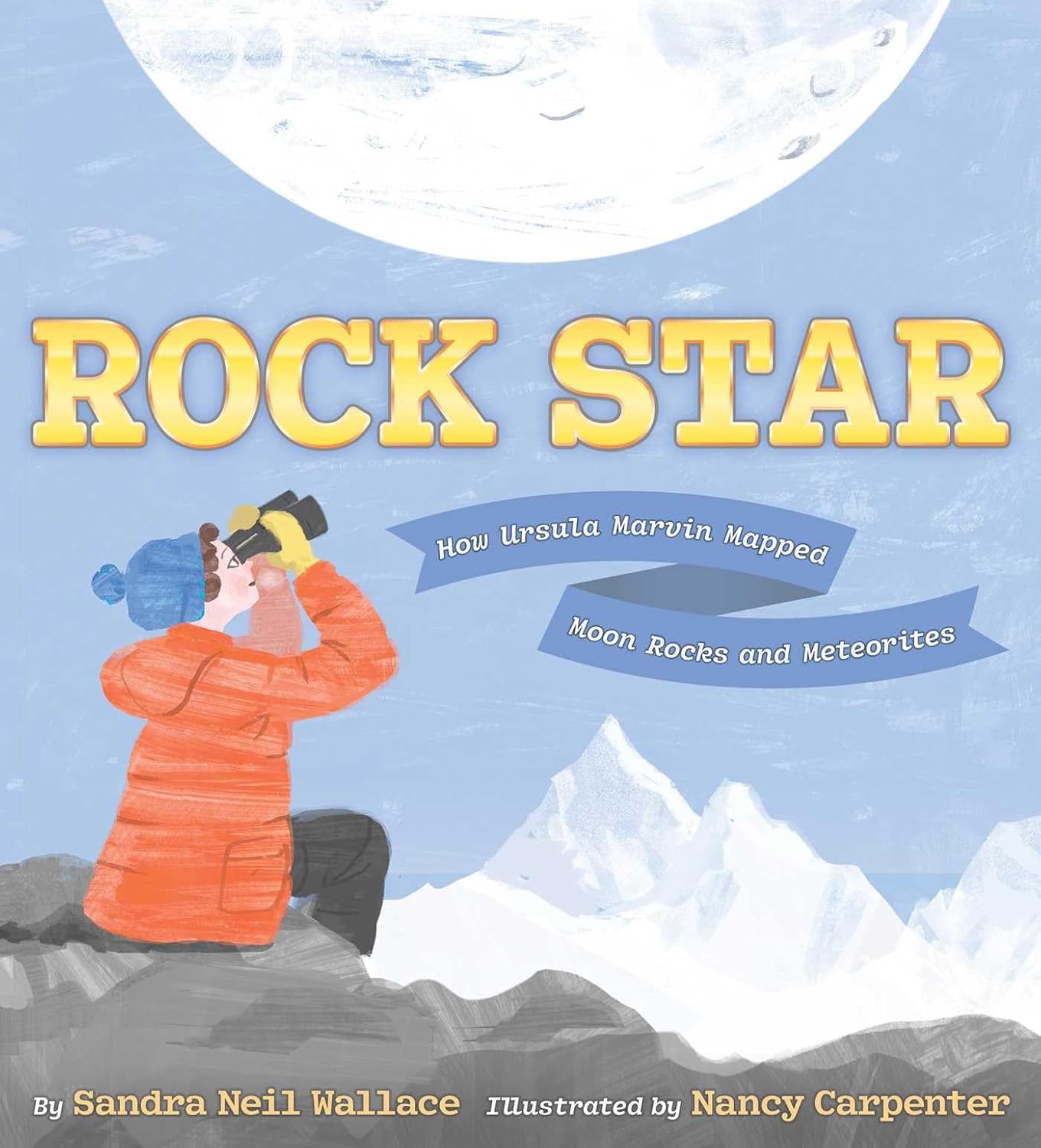
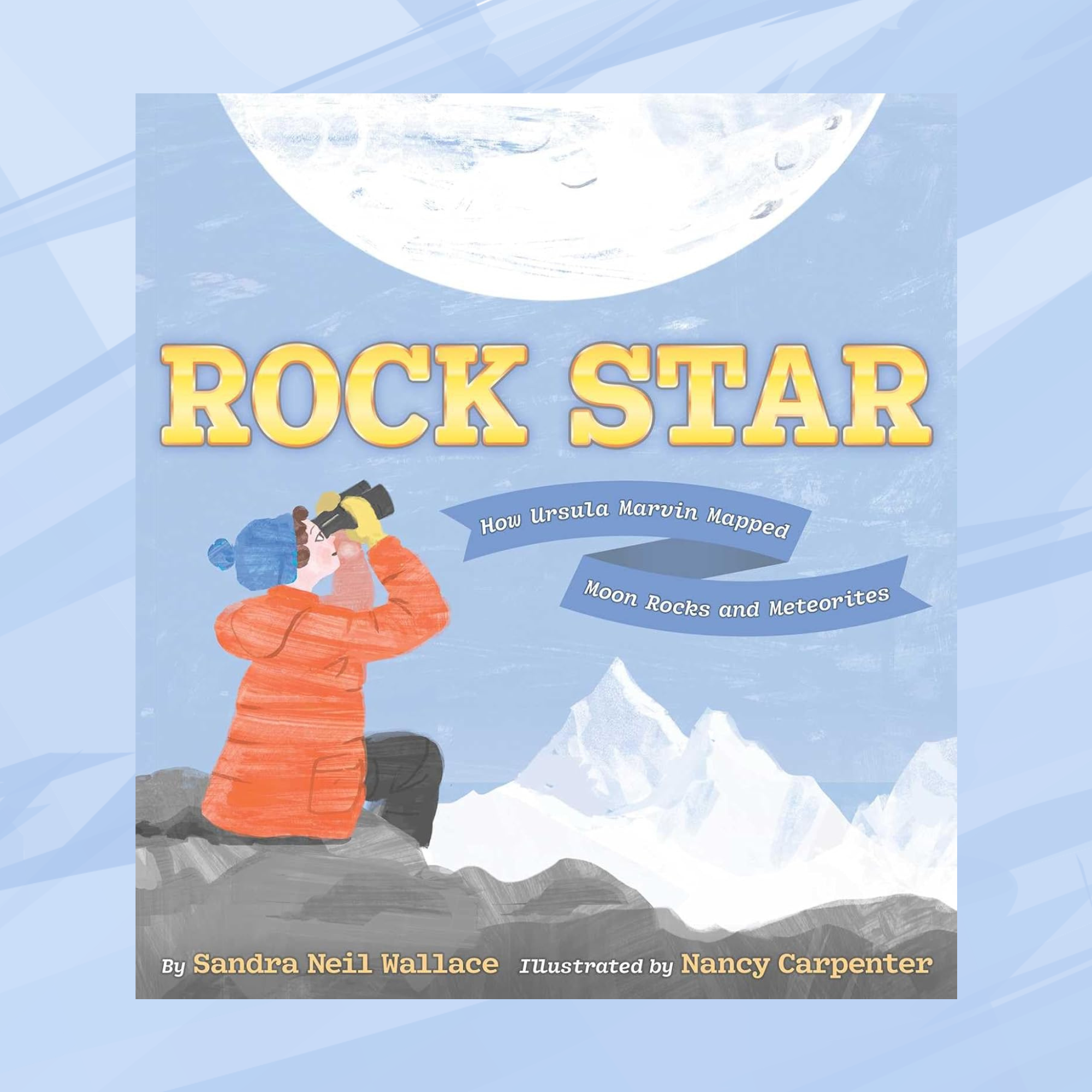
Rock Star: How Ursula Marvin Mapped Moon Rocks and Meteorites

Written by Sandra Neil Wallace | Illustrated by Nancy Carpenter

As a child growing up in Vermont, Ursula Marvin was captivated by the adventures winter brought. She was especially awed by the snowy mountains illuminated by “the frosty moonlight.” Her father was Vermont’s official entomologist, but Ursula had no intention of following in his footsteps or becoming any kind of scientist. She had her sights set on being an explorer. That was until she examined a rock under the microscope in college and decided to become a geologist. Her professor, however, denied her new major “because she was a woman.”
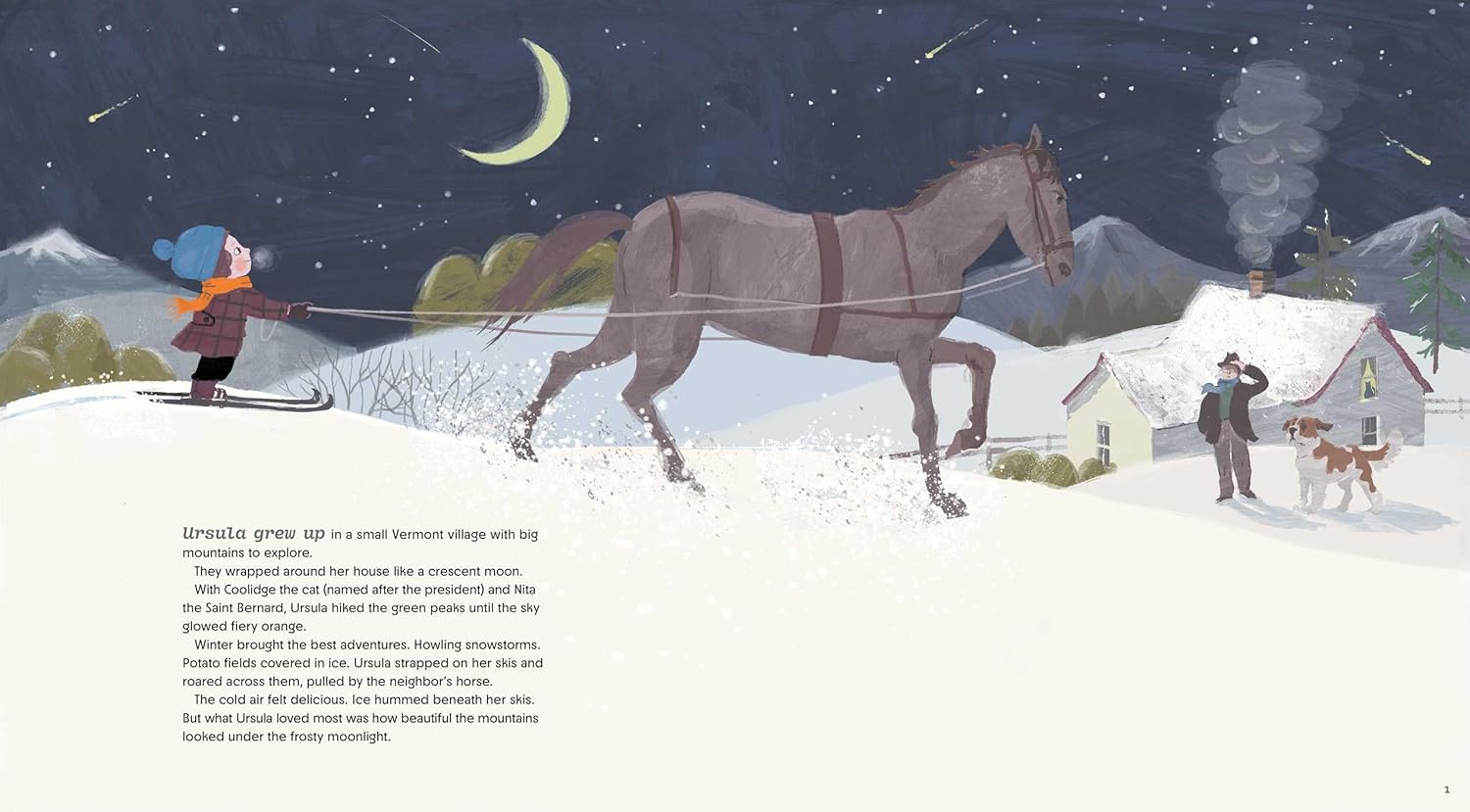
Illustration © 2025 Nancy Carpenter. Text © 2025 Sandra Neil Wallace. Courtesy of Simon & Schuster/Paula Wiseman Books.

Ursula took her talents to another university and earned a geology degree. She was an expert in recognizing rare minerals in Earth rocks and was tapped to be one of the first geologists to study rocks brought back from the moon. What she found was a world of color, minerals that proved “its surface was once a bubbling ocean of melted rock.” Ursula also studied meteorites, finding “minerals no one knew existed beyond Earth.” Her work revolutionized scientists’ views of the solar system.

But Ursula still yearned to explore, in particular she wanted to be the first woman to find meteorites in Antarctica—the coldest place on Earth. She loaded up a bag with frigid-cold-weather gear and joined an expedition. When Ursula and her male teammates landed, they set up camp. They had to work fast because winter was on its way, threatening to bury any meteorites under ice and snow for another year.
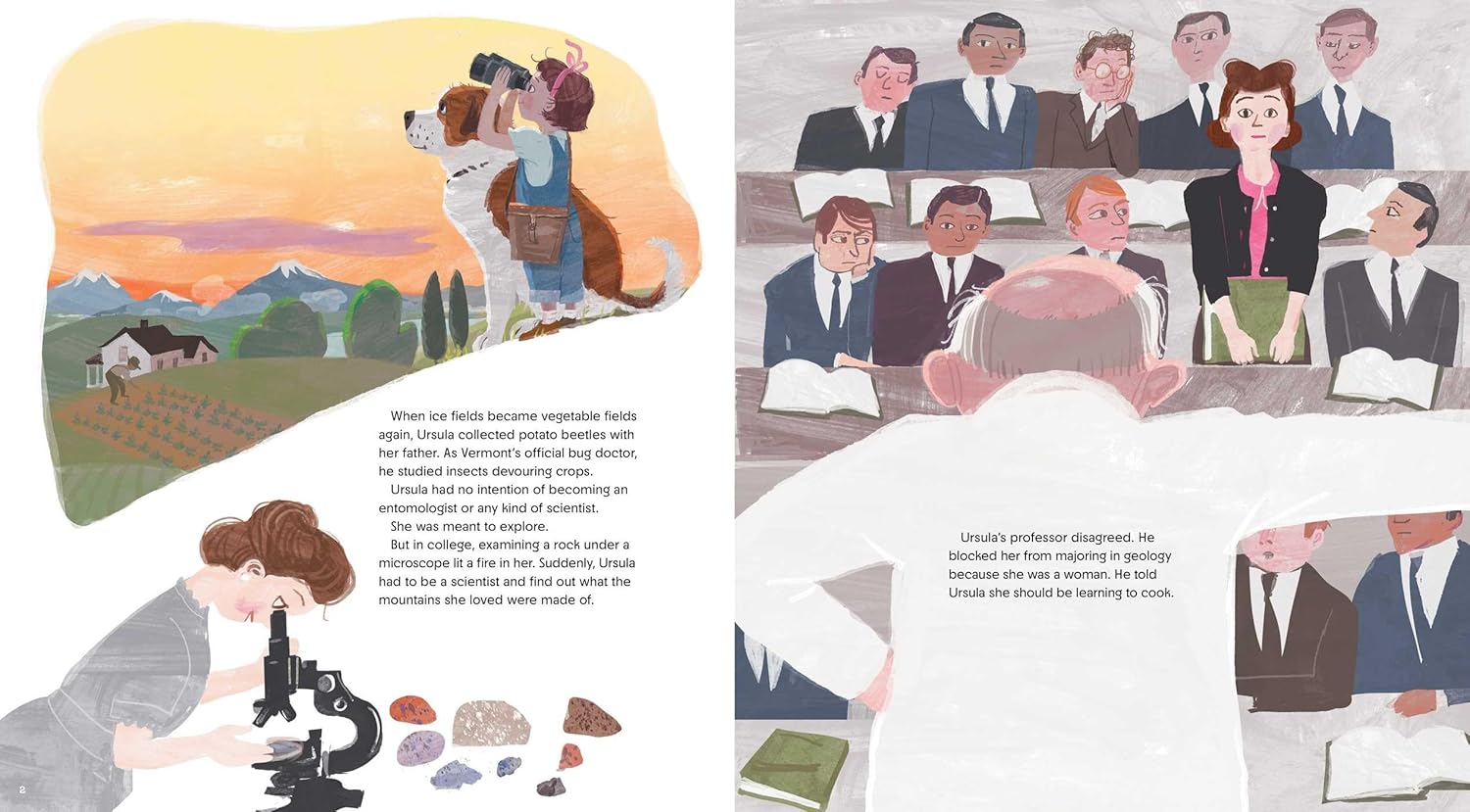
Illustration © 2025 Nancy Carpenter. Text © 2025 Sandra Neil Wallace. Courtesy of Simon & Schuster/Paula Wiseman Books.

Ursula wondered if she’d be able to recognize meteorites under these conditions, but she needn’t have worried. On her first day, a rock caught her eye. Examining it, she discovered distinctive traits—she’d discovered her first meteorite! Ursula was in her element, thriving in the harsh weather and “collecting meteorites more than four billion years old.”

But not every day was a success. Ursula struggled to climb a mountain-like nunatak in her too-big boots, she mistook an ordinary Earth rock for a meteorite, and on the worst day, with one snowmobile broken, the team went exploring without her. Ursula vowed never to be left behind again.
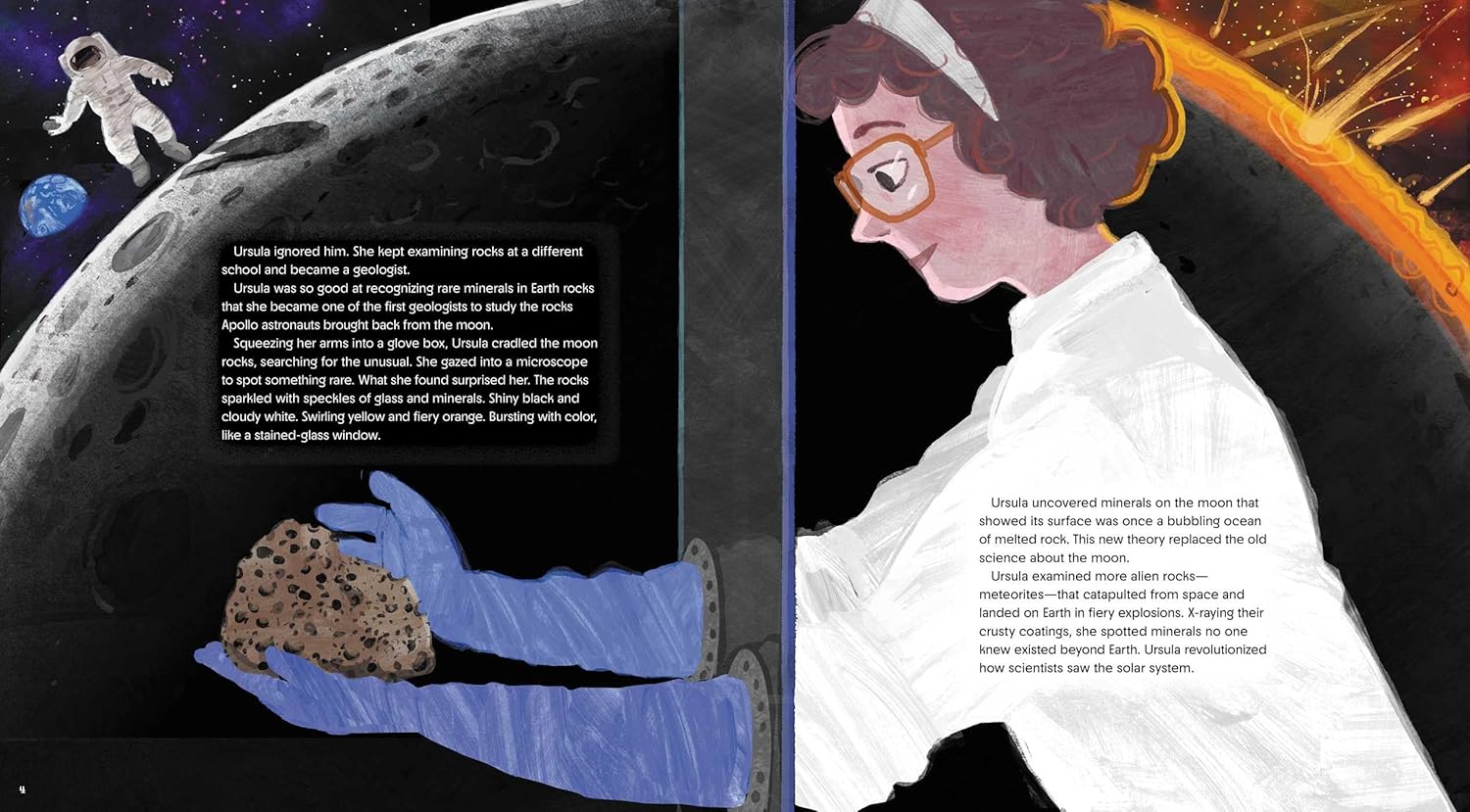
Illustration © 2025 Nancy Carpenter. Text © 2025 Sandra Neil Wallace. Courtesy of Simon & Schuster/Paula Wiseman Books.

With only one week left in the expedition, Ursula rode across the ice to “unexplored places where the meteorites were bigger and rarer.” She wanted to be the one to find the last meteorite of the trip, to be the one to discover a meteorite from the moon. But a fall dashed those dreams as she was airlifted to the hospital, leaving her teammates to collect the final meteorite.
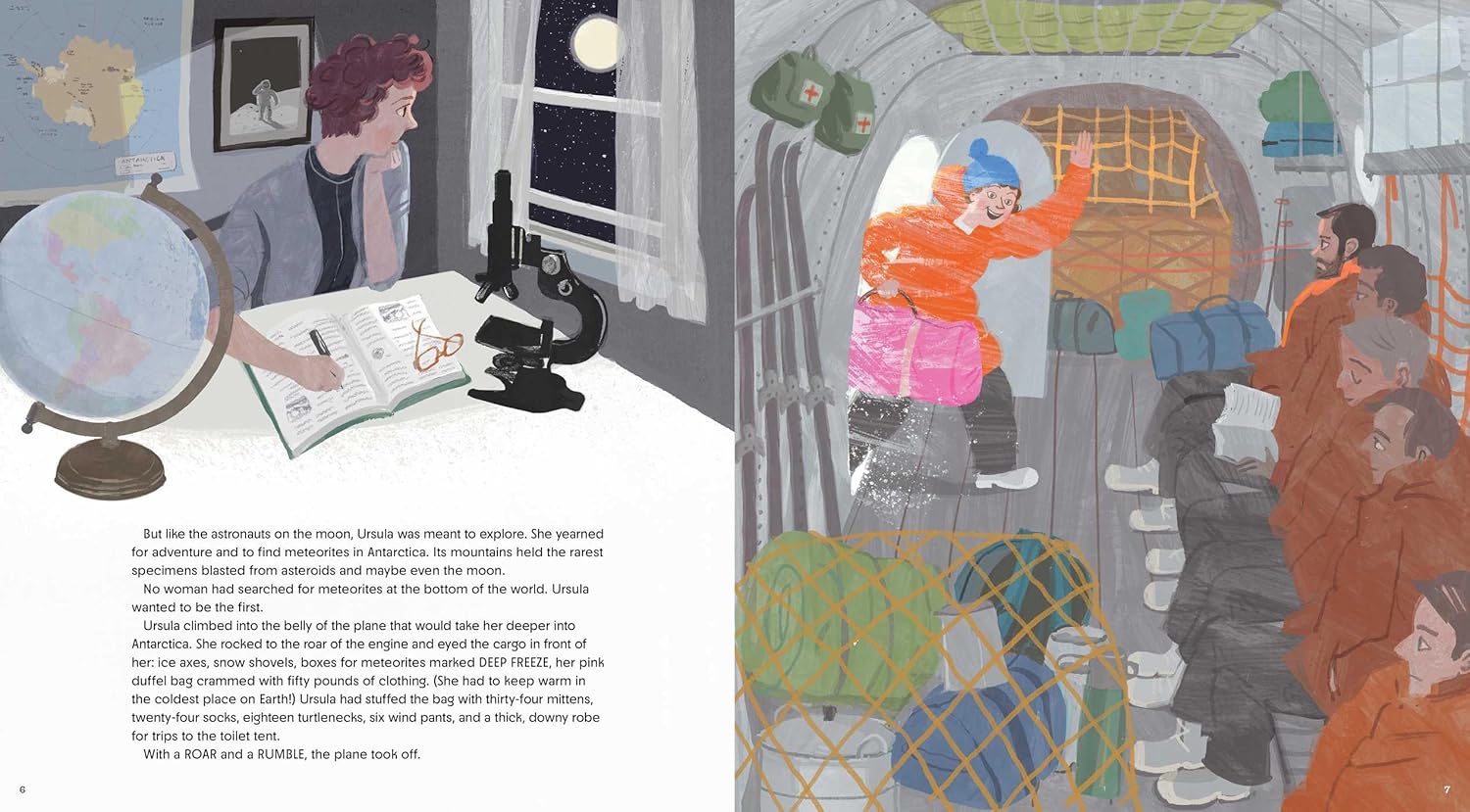
Illustration © 2025 Nancy Carpenter. Text © 2025 Sandra Neil Wallace. Courtesy of Simon & Schuster/Paula Wiseman Books.

Back at home, Ursula was excited to examine this small meteorite, which looked so different from the others. She recognized the world of color from her earlier studies. “Ursula’s teammates had discovered the first lunar meteorite on Earth without her.” Instead of feeling disappointed, she was “jubilant.” She went on to become a preeminent expert on this moon meteorite and others and to inspire women to become scientists, many exploring Antarctica, where they found more moon meteorites and even some from Mars more than four billion years old. Ursula’s influence can still be seen today in her work as well as in the Marvin Asteroid and Moon’s Marvin Crater named for her.

Extensive back matter following the story includes an Author’s Note about the astonishing life and influence of Ursula Marvin; quotations from Ursula’s Antarctica journals; facts about Antarctica; dated milestones of Ursula’s life, education, and work; resources; and two photographs.
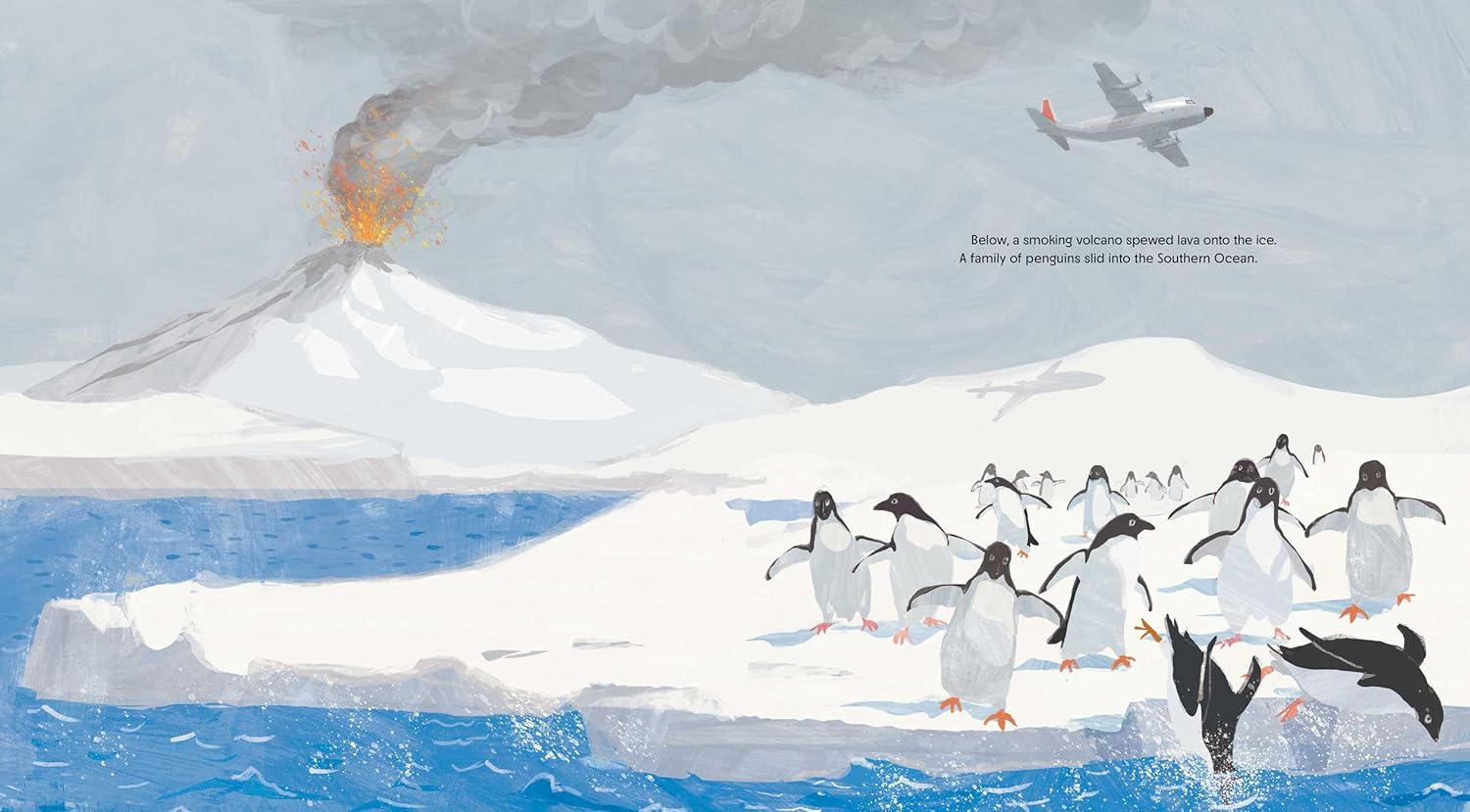
Illustration © 2025 Nancy Carpenter. Text © 2025 Sandra Neil Wallace. Courtesy of Simon & Schuster/Paula Wiseman Books.

Sandra Neil Wallace’s exhilarating biography of Ursula Marvin transports readers to the snow and ice of Antarctica, where they get to ride along with this extraordinary woman as she fulfills childhood goals while changing the face of science and forging new opportunities for women. Wallace’s storytelling is fast-paced and evocative and infused with emotion, suspense, and scintillating details that will captivate readers no matter what their interests.

Nancy Carpenter’s beautiful mixed media illustrations allow children to see early influences and experiences that spurred Ursula Marvin to pursue geology and the study of meteorites in particular. Her images of Antarctica bring chills and thrills as Ursula sets up her tent, speeds over icy fields in the swirling snow on her snowmobile, and flops on the ground to inspect rocks up close. Carpenter also depicts Ursula’s victories and disappointments, giving children a well-rounded view of this remarkable woman. Rock hounds will be wowed by Carpenter’s drawings of moon rocks and meteorites.

With much to impart not only on the life of Ursula Marvin but on believing in yourself, overcoming disappointments, and chasing your goals with gusto, Rock Star: How Ursula Marvin Mapped Moon Rocks and Meteorites is a top pick for home, school, and public library collections.

Ages 4 – 8

Simon & Schuster/Paula Wiseman Books, 2025 | ISBN 978-1534493339

Sandra Neil Wallace writes about people who break barriers and change the world. She is the author of several award-winning books for children, including Love Is Loud: How Diane Nash Led the Civil Rights Movement, illustrated by Bryan Collier; Marjory Saves the Everglades: The Story of Marjory Stoneman Douglas, illustrated by Rebecca Gibbon; and Between the Lines: How Ernie Barnes Went from the Football Field to the Art Gallery, illustrated by Bryan Collier, which received the Orbis Pictus Book Award and was an ALA Notable Book. A former ESPN reporter and the first woman to host an NHL broadcast, she is the recipient of the Outstanding Women of New Hampshire Award and creates change as cofounder of The Daily Good, a nonprofit bringing twenty thousand free, culturally diverse foods to college students each year through its Global Foods Pantries. Visit Sandra at sandraneilwallace.com.

Nancy Carpenter is the acclaimed illustrator of Thomas Jefferson and the Mammoth HuntQueen Victoria’s Bathing MachineFannie in the Kitchen, and Loud Emily, among other books. Her works have garnered many honors, including two Christopher Awards and the Jane Addams Children’s Book Award. She lives in Brooklyn, New York. Visit her at nancycarpenter.website.

World Space Week Activity
celebrate-picture-books-picture-book-review-rocket-to-the-moon-tic-tac-toe-game

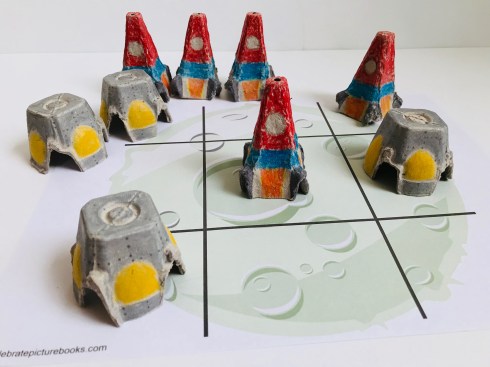
Out-of-this-World Tic-Tac-Toe Game

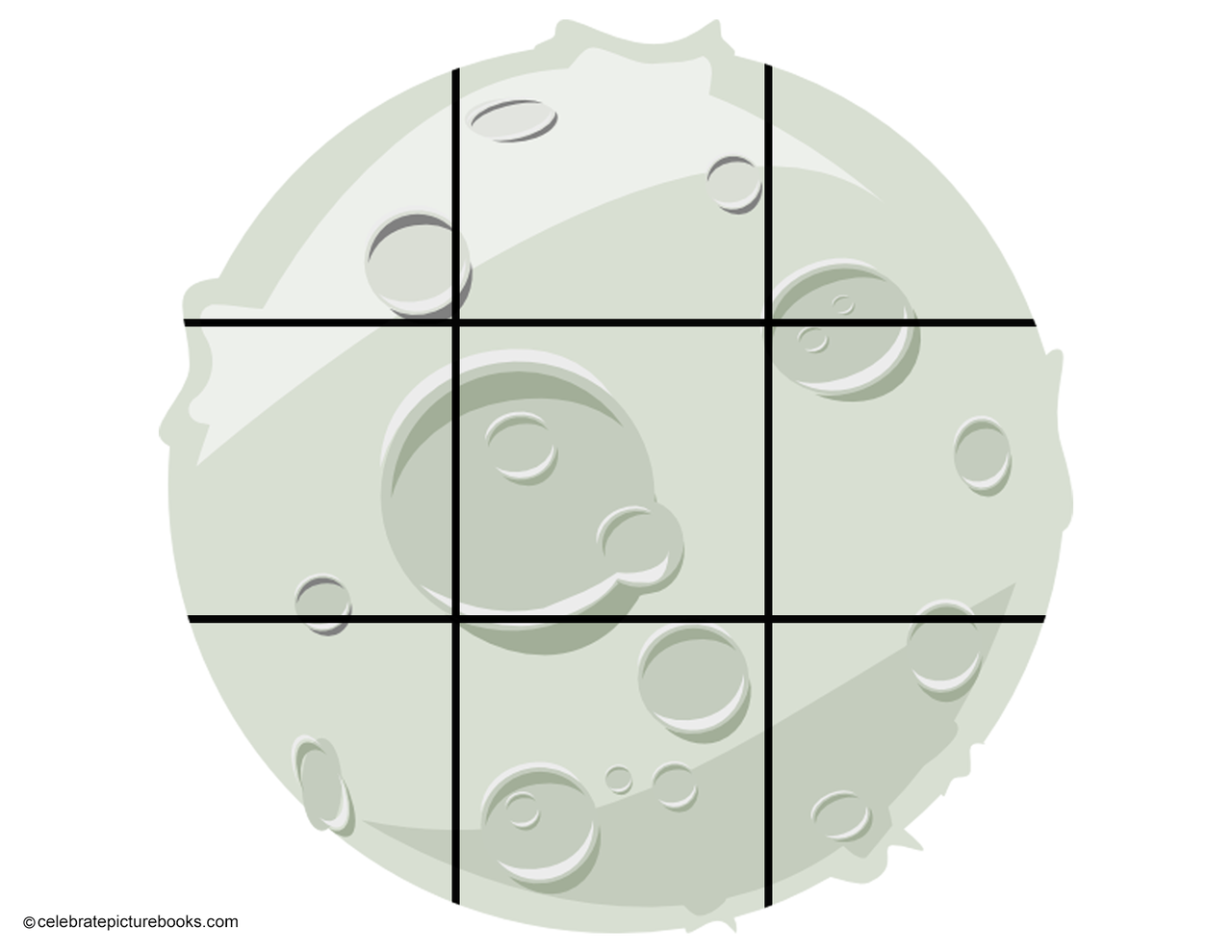
If you’re kids are fascinated by the moon, moon rocks, and meteors, they’ll enjoy making this tic-tac-toe game from simple materials you have at home!

Supplies

  • Printable Moon Tic-Tac-Toe Game Board
  • 2 cardboard egg cartons
  • Heavy stock paper or regular printer paper
  • Crayons
  • Black or gray fine-tip marker

Directions

To Make the Rockets

  1. Cut the tall center cones from the egg carton
  2. Trim the bottoms of each form so they stand steadily, leaving the arched corners intact
  3. Pencil in a circular window on one side near the top of the cone
  4. Color the rocket body any colors you like, going around the window and stopping where the arched corners begin
  5. With the marker color the arched corners of the form to make legs
  6. On the cardboard between the legs, color flames for blast off

To Make the Capsule

  1. Cut the egg cups from an egg carton
  2. Color the sides silver, leaving the curved section uncolored. (If your egg cup has no pre-pressed curve on the sides of the cup, draw one on each side.)
  3. Color the curved section yellow to make windows
  4. With the marker, dot “rivets” across the capsule

Print the Moon Game Board and play!
You can purchase Rock Star: How Ursula Marvin Mapped Moon Rocks and Meteorites from these booksellers

Amazon | Barnes & Noble | Bookshop

Picture Book Review

October 16 – Get Ready for STEM Day (Nov. 8) and World Science Day (Nov. 10)

celebrate-picture-books-picture-book-review-our-galaxy-cover

About the Holidays

Today I’m highlighting two upcoming holidays that celebrate science and introduce kids to the wide-ranging applications that science, engineering, technology, and math have on our lives now and as we move into the future.

STEM Day — November 8

Instituted in 2015, National STEM Day aims to encourage kids to explore the fields of science technology, engineering, and math. This year’s theme is “Hands on Learning” to promote creative and impactful experimentation, innovation, and discovery. Children who are introduced early on to the workings of math and science do better as they advance through school and are more likely to choose science-based careers. Solving many of the problems that the world now faces relies on having a workforce who can think inventively to design a better future for us all. To learn more about STEM and to find lots of free ideas and activities to get kids excited about these subjects all year around—from awesome virtual field trips to labs, space centers, museums, and more to detailed lesson plans and printables to hands-on activities from the National Inventors Hall of Fame—visit Create & Learn.

World Science Day for Peace and Development — November 10

This annual, internationally observed day highlights the importance of science in and for society and is sponsored by the United Nations. Its aim is to promote education and awareness of scientific issues that affect the world and its sustainability as well as to underscore the role that scientists play in improving our lives and developing solutions for the future. 

Thanks go to Phaidon for sharing a copy of Our Galaxy: A First Book of Space with me for review consideration. All opinions on the book are my own.

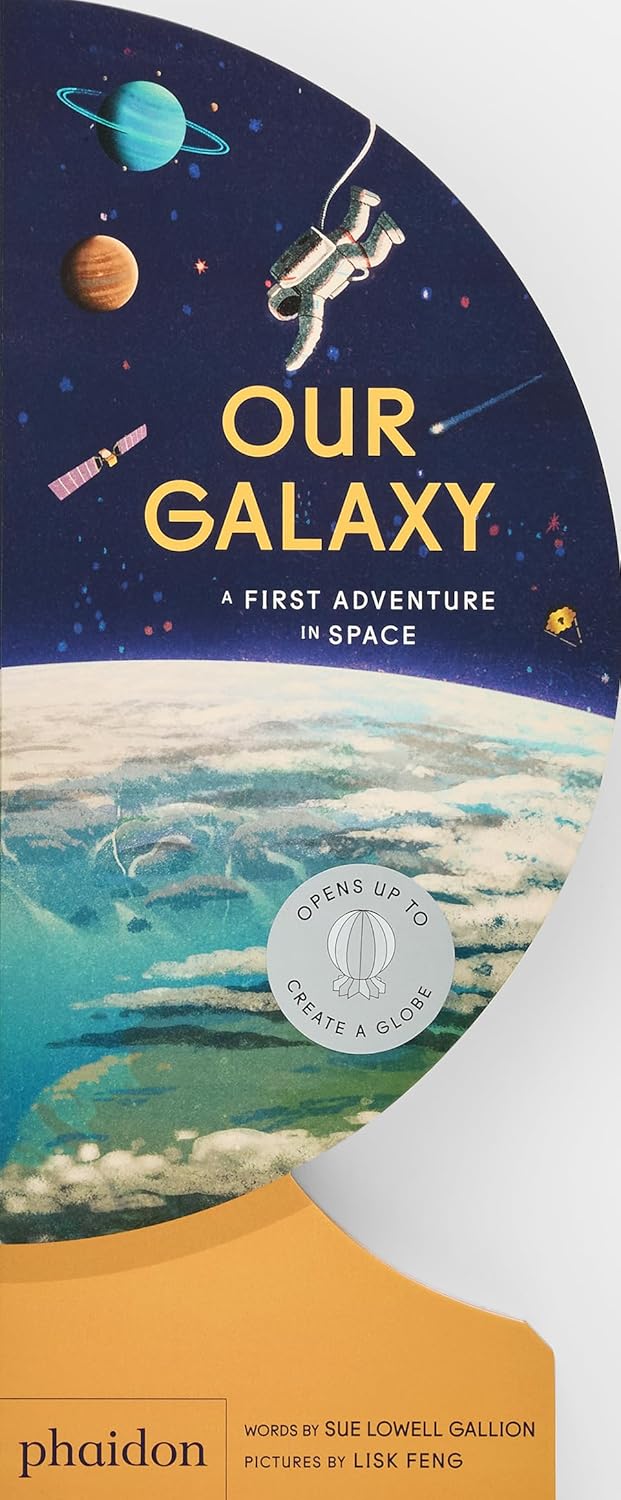
Our Galaxy: A First Adventure in Space

Written by Sue Lowell Gallion | Illustrated by Lisk Feng


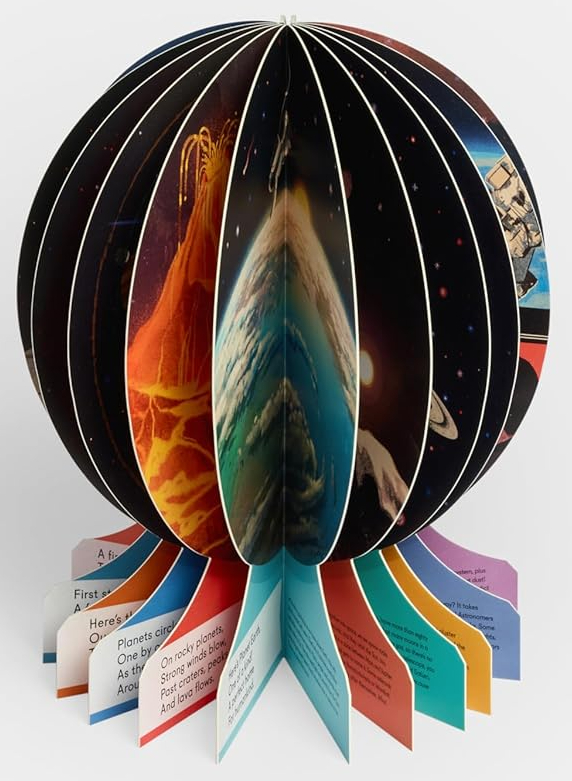
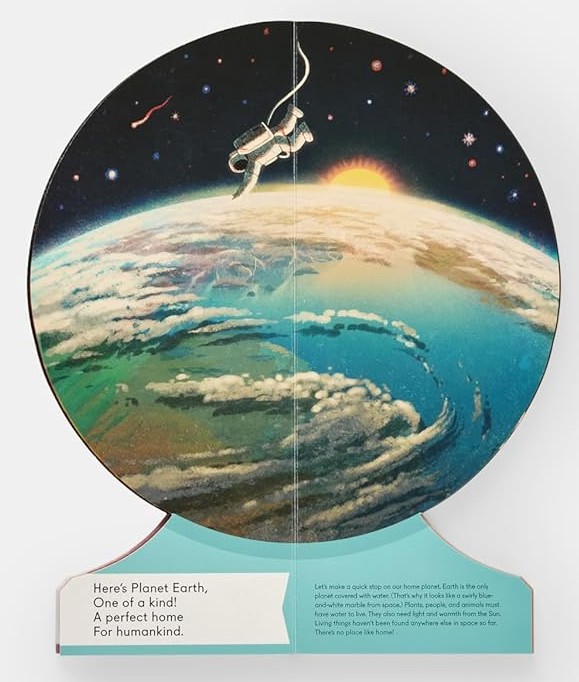
If you want to WOW your young children, students, or library patrons and make them eager to learn about space, science, technology, engineering, and math, open the cover of Our Galaxy: A First Adventure in Space. Then open it a little more . . . and a little more . . . and all the way around until this awe-inspiring book becomes a sturdy, freestanding globe full of adventure and exploration.

celebrate-picture-books-picture-book-review-our-galaxy-globe

Image copyright Lisk Feng, 2024, text copyright Sue Lowell Gallion. Courtesy of Phaidon.

As this journey into space begins, readers find themselves in a planetarium, where Lisk Feng’s mesmerizing illustration of an enormous telescope aimed at the starry sky hints at the marvels above.  Sue Lowell Gallion’s accompanying rhyming couplet invites kids to “Start at sunset, / Scan the sky. / Let’s take a voyage, / Way up high!” 

On the next page readers join viewers on shore to count down “5, 4, 3, 2, 1 . . . Liftoff!” As a rocket is propelled upwards by a fiery blast, a short paragraph explains that “some rockets are like high-tech delivery vehicles” supplying the International Space Station while “other rockets are an astronaut’s ride into space.” She then asks kids whether they’d rather “watch a rocket launch” or “be on board,” a great way to get kids thinking and joining in.

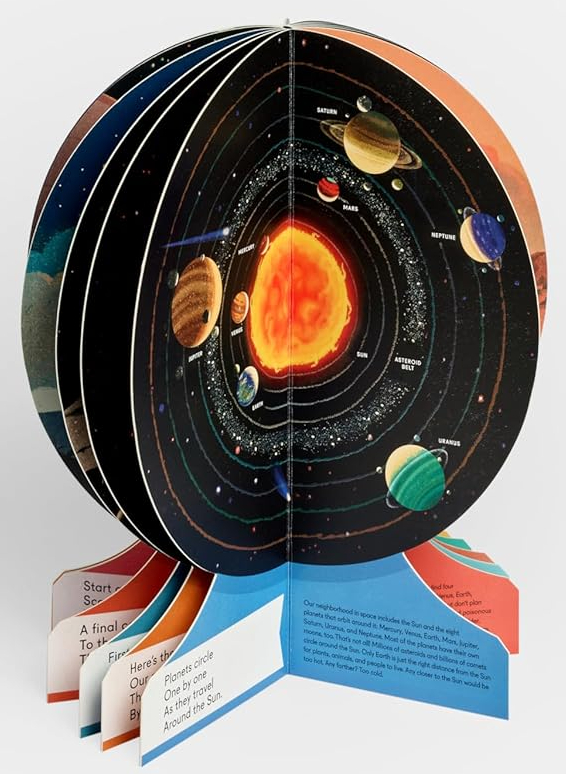
celebrate-picture-books-picture-book-review-our-galaxy-open-pages

Image copyright Lisk Feng, 2024, text copyright Sue Lowell Gallion. Courtesy of Phaidon.

Appropriately, the rocket’s first stop is the Moon. In Feng’s gorgeous painting, kids are beckoned to join two astronauts using a vehicle on the rocky surface as Gallion imparts information about this “familiar face”—facts about the Moon’s orbit, its astronaut visitors, and the long-lasting imprint they’ve made on the Moon. Of course, we wouldn’t be able to take a voyage like this—or even live on Earth—without the Sun, “Our nearest star, / The brightest in our sky, / By far.” Children can almost feel the heat radiating from the sun as they learn about the Sun’s power and size.

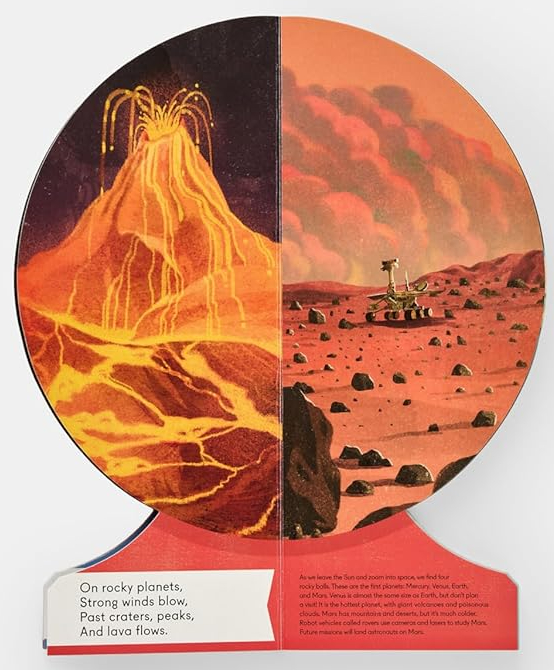
celebrate-picture-books-picture-book-review-our-galaxy-Venus-volcanoes

Image copyright Lisk Feng, 2024, text copyright Sue Lowell Gallion. Courtesy of Phaidon.

On following pages, kids also learn about our solar system; meet the four rocky planets of Mercury, Venus (complete with a scorching look at one of its volcanoes), Earth, and Mars (which astronauts plan to visit in the future); and discover why Earth is “One of a kind! / A perfect home / For humankind.”

Planets aren’t the only objects in space. On their journey, readers also learn about asteroids—what they are, where they’re found, and even some of their funny names—before zipping on to uncover fascinating tidbits about Jupiter, Saturn, Uranus, and Neptune.

celebrate-picture-books-picture-book-review-our-galaxy-astronaut

Image copyright Lisk Feng, 2024, text copyright Sue Lowell Gallion. Courtesy of Phaidon.

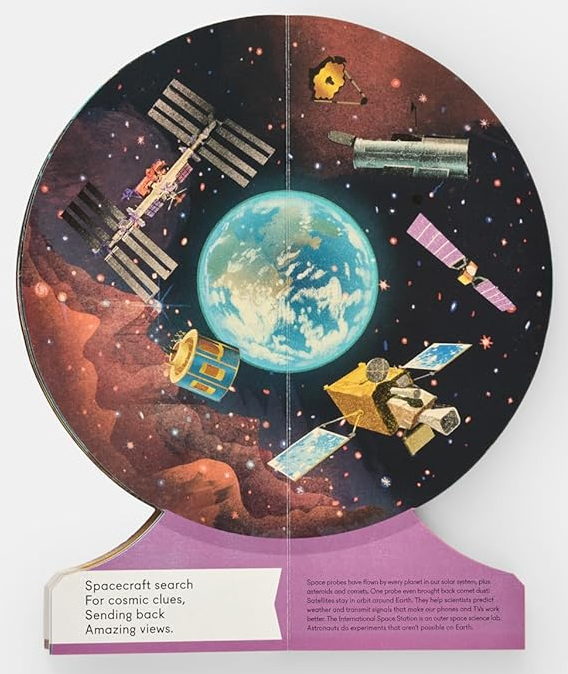
Future scientists and astronauts will want to accept Lisk Feng’s invitation to join astronauts working on the International Space Station and floating in the cosmos. They’ll view a giant telescope that informs scientists about our galaxy and beyond and the technology that monitors space and records data. Kids will also be intrigued by the illustrations of space probes and satellites that, in addition to teaching us about objects light years away, help “scientists predict weather and transmit signals that make out phones and TVs work better.” Returning to Earth, readers have a chance to contemplate “Our universe, / A starry show, / With mysteries / We want to know!”

celebrate-picture-books-picture-book-review-our-galaxy-satellites

Image copyright Lisk Feng, 2024, text copyright Sue Lowell Gallion. Courtesy of Phaidon.

In her poetic and accessible multi-layered text, Sue Lowell Gallion engages both the youngest readers and those ready for more in-depth facts in an inspiring and educational exploration of the wonders of space and a celebration of human curiosity that has propelled us to tremendous scientific achievements. The rigorously researched text is also sprinkled with engaging questions that will get kids excited about joining in discussions at school or at home, while opening their imaginations to what they could accomplish in their future.

In her stunning, realistic illustrations, Lisk Feng captures the breathtaking beauty and vastness of space. Her dazzling images of our solar system are textured and detailed, urging children to look closer (is that a satellite among the asteroids?) and appreciate not only what lies beyond but humans’ early  accomplishments as well as the technology that marks our contemporary era of space exploration.

Sure to ignite wonder, curiosity, and a desire to learn more about space, science, and technology, Our Galaxy: A First Adventure in Space offers endless inspiration for teachers and educators, homeschoolers, and any child enthralled with space. The unique format allows for easy and eye-catching display and will entice kids to dip into this book again and again, making it a must addition to school, public library, and home collections.

Ages 2 – 5+

Phaidon Press, 2024 | Oversized Boardbook: ISBN 978-1838668839

Pair Our Galaxy: A First Adventure in Space with Our World: A First Book of Geography when kids are ready to explore all the wonders on our home planet.

Get Ready for STEM Day & World Science Day Day Activity

celebrate-picture-books-picture-book-review-I-am-the-future-of-stem-activity-book

“I Am the Future of STEM” Activity Book


The coloring pages, puzzles, and other activities in this comprehensive activity book makes an impactful addition to any lesson or simply makes free time fun!

I Am the Future of STEM Activity Book

celebrate-picture-books-picture-book-review-our-galaxy-cover   

You can purchase Our Galaxy: A First Adventure in Space at these booksellers

Amazon | Barnes & Noble | Bookshop (to support your local independent bookstore)

Picture Book Review
October – It’s National Book Month

celebrate-picture-books-picture-book-review-professor-wooford-mcpaw's-history-of-astronomy-cover

About the Holiday

Readers might say that every month is National Book Month, but October is especially set aside to highlight books and the love of reading. Fall is a book bonanza as publishers release new books in all categories, and the holiday gift-giving season beckons. Books, of course, make superb gifts for all ages! So whether you’re looking for a new or new-to-you book to read right now or new titles to give to the family and friends who will be on your list, this month is a perfect time to check out your local bookstore to see what wonderful books are on the shelves! This month is also a great time to discover books that get kids excited about history, science, and technology in a whole new way – like today’s book!

Thanks to Cicada Books for sharing a digital copy of Professor Wooford McPaw’s History of Astonomy with me for review consideration. All opinions on the book are my own.

Professor Wooford McPaw’s History of Astronomy

By Elliot Kruszynski


The study of astronomy harkens back to the earliest days of scientific discovery, when “civilizations in Mesopotamia, Persia, China, India and Greece all examined the night sky. With only the naked eye, they mapped out the stars and used the information they gathered to create calendars, navigate great distances and keep time.” So begins this comprehensive, detailed, and even humorous compendium of our skies, scientists and thinkers, equipment, and a look to the future.

Professor Wooford McPaw and his telescope sidekick, Teley, takes kids back to 3000 BC, when religious leaders determined the longest day of the year by tracking the sun’s progress through the arches and columns erected at Stonehenge, and speeds forward to 1000 BC, when people connected the stars, creating the constellations and stories about them.

celebrate-picture-books-picture-book-review-professor-wooford-mcpaw's-history-of-astronomy-aristotle

Copyright Elliot Kruszynski, 2022, courtesy of Cicada Books.

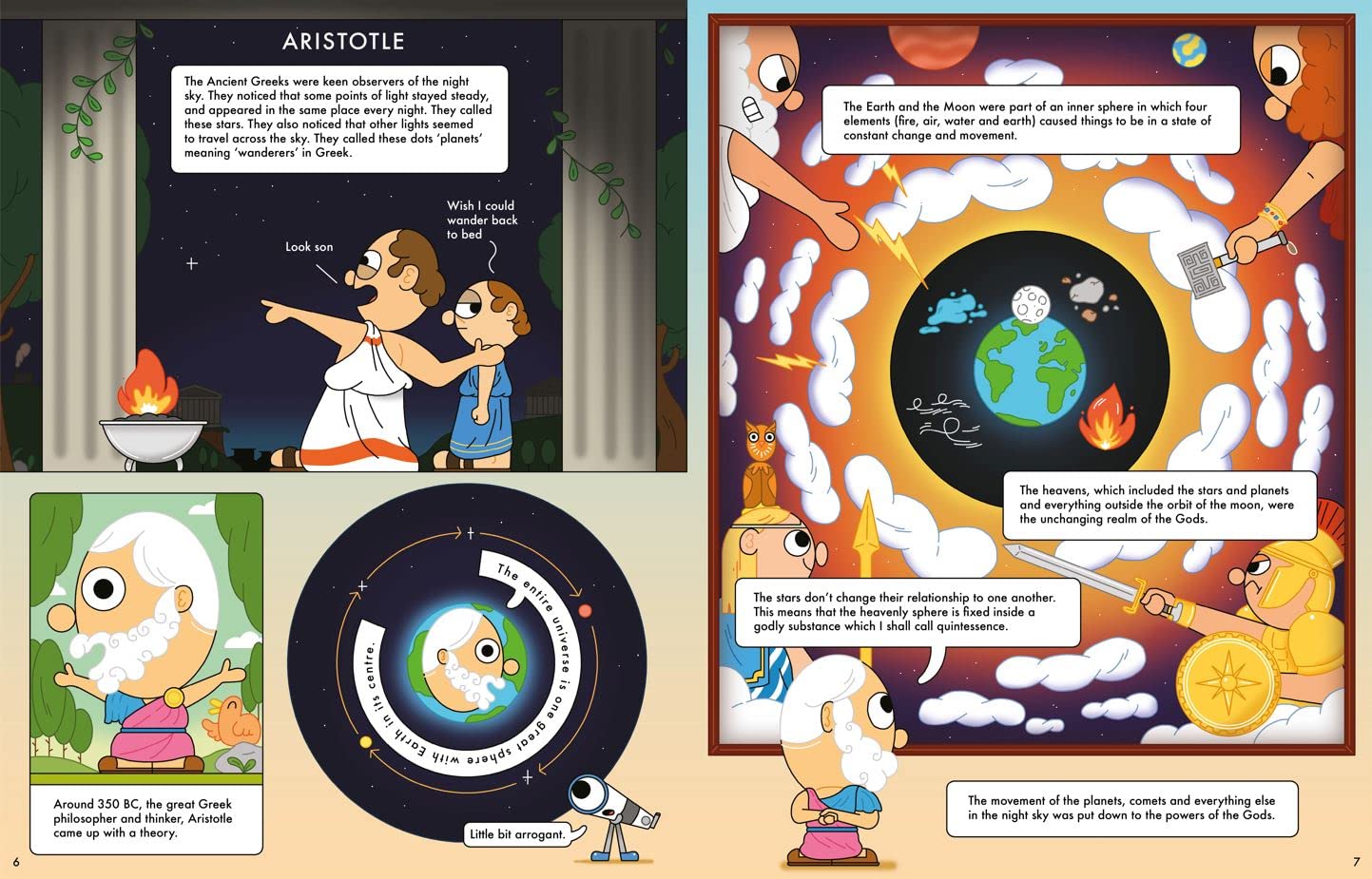
Kids then meet Aristotle and learn about his theories on the placement of the earth, the four elements, and the role of the gods in the universe. Then they discover the conflict between the teachings of Claudius Ptolemy around 140 AD and the discoveries of Nicolaus Copernicus in the 16th century, who left it to future scientists to explore his theory that that the earth revolved around the sun (and not the other way around). And what happened to those scientists? Well, children learn about Galileo Galilei, who, in addition to inventing the telescope, spent a good part of his life under house arrest for saying the earth and the planets did indeed revolve around the sun.

celebrate-picture-books-picture-book-review-professor-wooford-mcpaw's-history-of-astronomy-telescopic-history

Copyright Elliot Kruszynski, 2022, courtesy of Cicada Books.

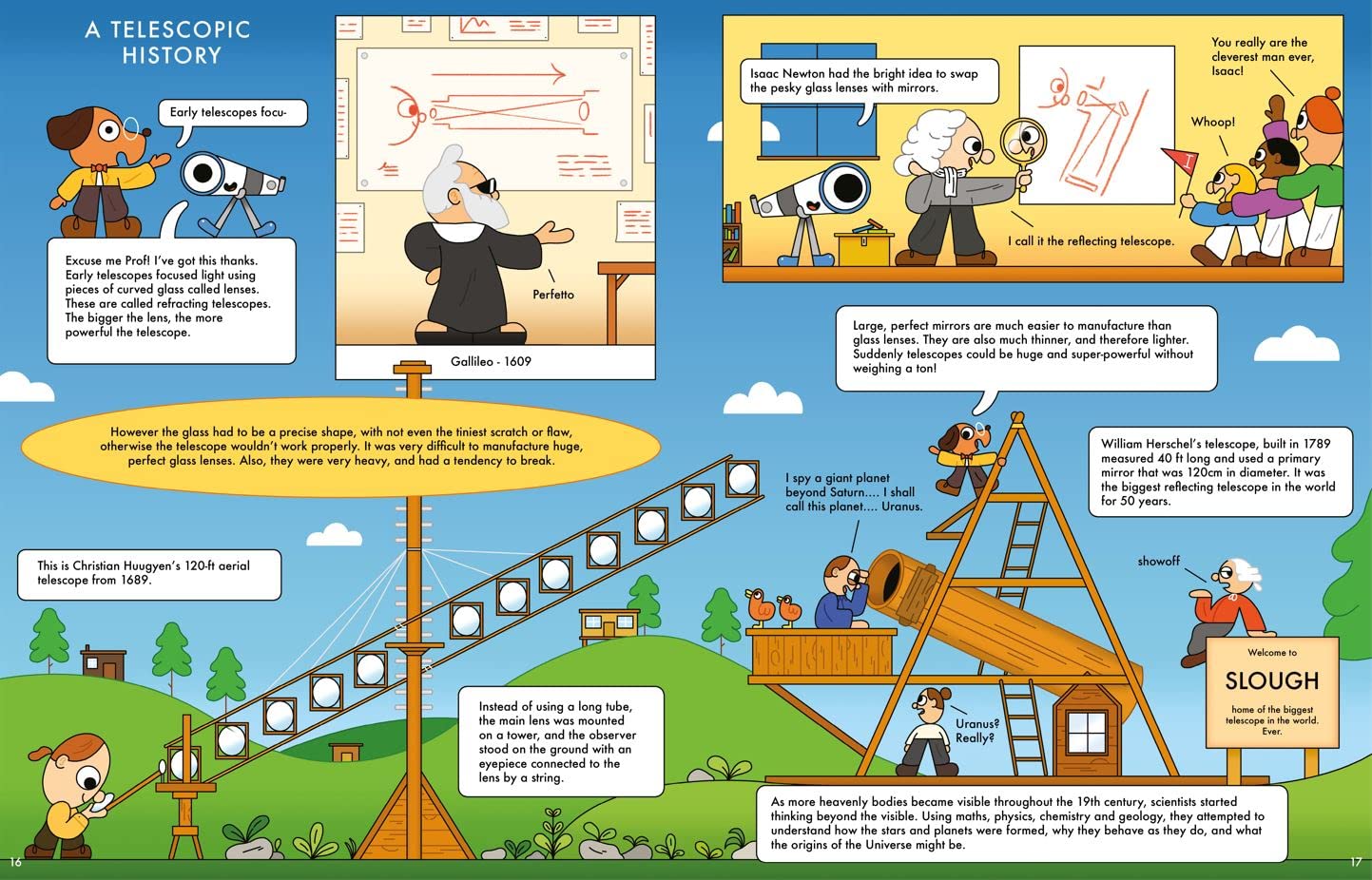
Professor Wooford introduces readers to Isaac Newton, whose “findings, along with the improvement of telescope technology, changed the way that humans (and for some dogs) looked at our planet.” What kind of telescope technology is the Prof talking about? He gives kids a run down from Galileo’s invention in 1609 to a switch from glass lenses to mirrors in the 1700s to today’s Hubble Space Telescope and James Webb Space Telescope. Here’s Teley explaining about lenses:

“Early telescopes, like the one Galileo invented, focused light using pieces of curved glass called lenses. The bigger the lens, the more powerful the telescope. They were called refracting telescopes. However the glass had to be a precise shape, with not even the tiniest scratch or flaw, otherwise the telescope wouldn’t work properly. It was very difficult to manufacture huge, perfect glass lenses. Also, they were very heavy and had a tendency to break.” Teley goes on to explain that it was Isaac Newton who “had the bright idea to swap the pesky glass lenses with mirrors,” which are much easier to make and are thinner and lighter, allowing telescopes to “be huge and super-powerful without weighing a ton.”

celebrate-picture-books-picture-book-review-professor-wooford-mcpaw's-history-of-astronomy-einstein

Copyright Elliot Kruszynski, 2022, courtesy of Cicada Books.

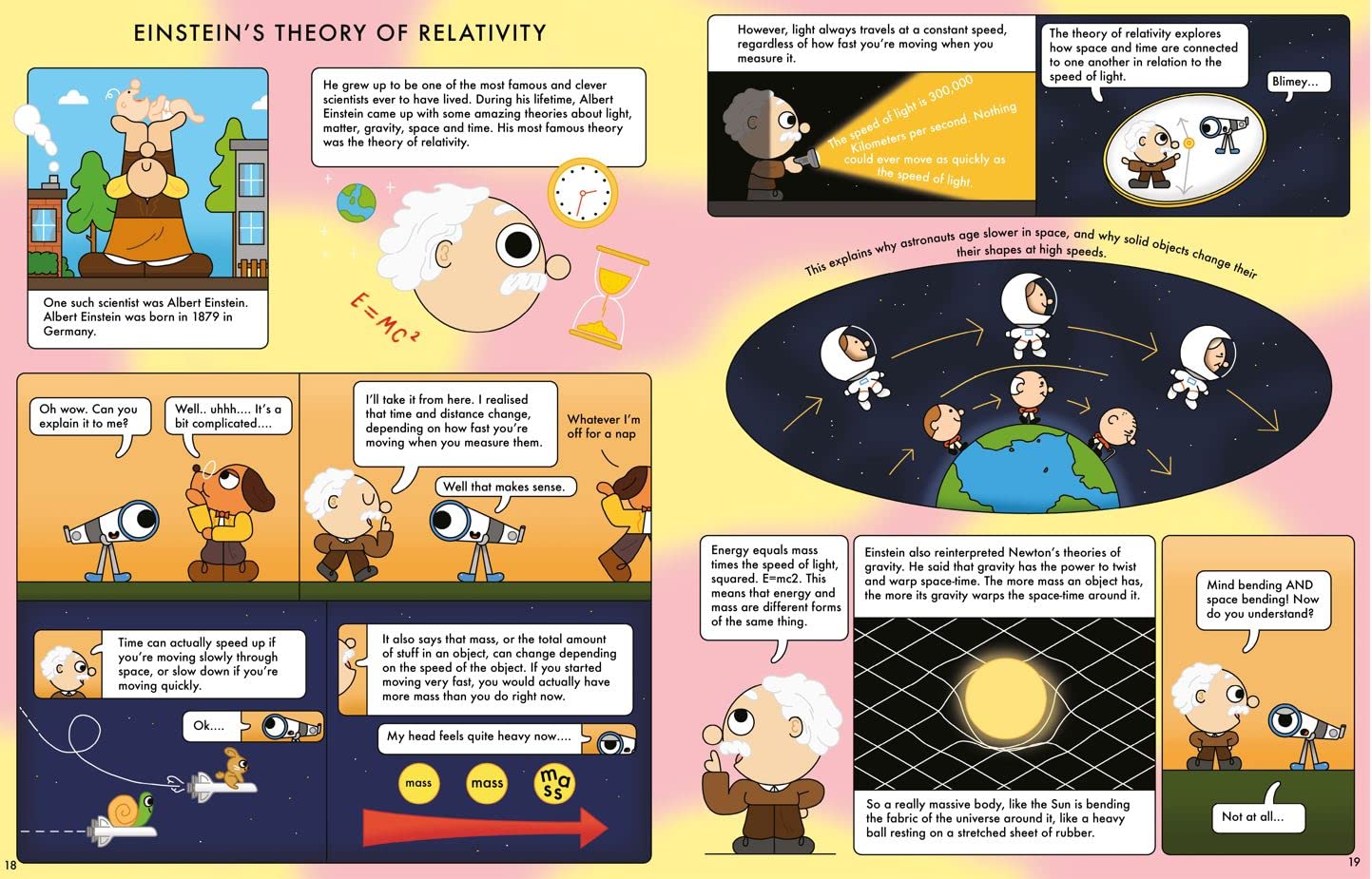
Albert Einstein travels back through time to explain his “mind bending and space bending” Theory of Relativity in terms that readers can understand. Then kids are launched into space—the space race, that is—where they learn about the advancements and setbacks of the Russian and American from 1957 to 1969, when the first moon walk occurred, as well as a weely … I mean … really unusual tradition among space-going astronauts.

celebrate-picture-books-picture-book-review-professor-wooford-mcpaw's-history-of-astronomy-space-probes

Copyright Elliot Kruszynski, 2022, courtesy of Cicada Books.

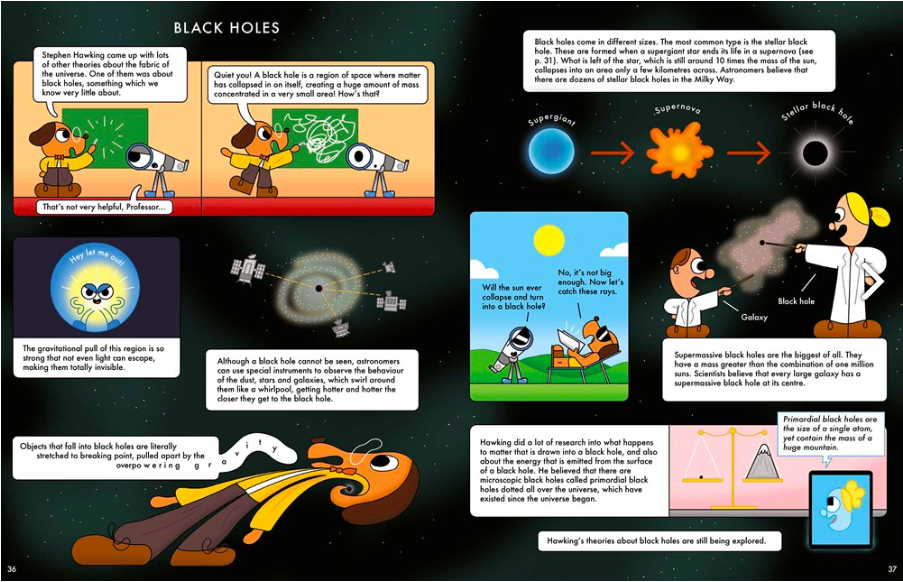
Children get info on different kinds of space probes from rovers to orbiters to interplanetary probes before blasting off into our solar system to find out about the planets (even little Pluto gets a cameo. But where is Earth and all of our other planets located? Professor McPaw explains: “Earth is located in a galaxy called the Milky Way. At its center is a supermassive black hole called Sagittarius A*, which contains as much mass as four million suns.” The prof goes on to teach kids about the three different shapes of galaxies, what dwarf galaxies are, how bigger galaxies cannibalize smaller galaxies, and where the term galaxy comes from.

celebrate-picture-books-picture-book-review-professor-wooford-mcpaw's-history-of-astronomy-black-holes

Copyright Elliot Kruszynski, 2022, courtesy of Cicada Books.

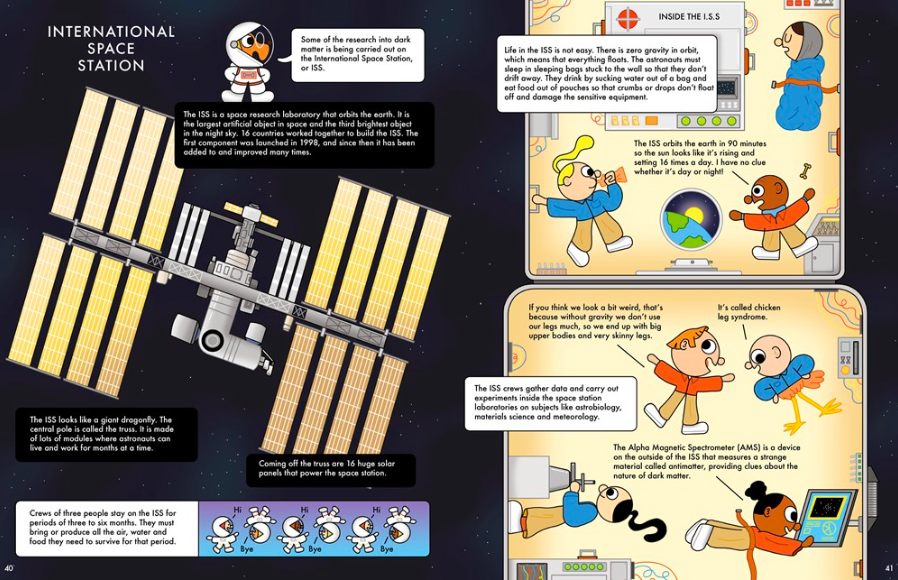
Professor Wooford McPaw and Teley also impart the same fascinating in-depth facts about stars, black holes, and dark matter. And what’s a trip into space without a ride on the International Space Station? Well, readers won’t find out because they get to explore the ISS and learn how the astronauts experience 16 sunrises and sunsets a day, sleep strapped to a wall, and develop “chicken leg syndrome” from not using their legs as much as their upper body in the no-gravity conditions.

By this time, kids are probably wondering about whether there’s life in other parts of the solar system or beyond as well as what the future might hold for astronomers, astrophysicists, other scientists, and even themselves. But are readers going to be abandoned in space? Not at all! Professor Wooford has thoughtfully included a Race to Earth “board game” on the last two-page spread that will get all astronauts … I mean readers … back home in time for dinner.

celebrate-picture-books-picture-book-review-professor-wooford-mcpaw's-history-of-astronomy-international-space-station

Copyright Elliot Kruszynski, 2022, courtesy of Cicada Books.

Elliot Kruszynski’s Professor Wooford McPaw’s History of Astonomy is just the kind of book that both kids who already love space and those who don’t yet know they do will devour, either bit-by-bit or all in one sitting. With affable hosts who give excellent easy-to-understand explanations, historical characters who add funny asides, and a quick-paced graphic-novel format, (title) will spark readers’ interest in learning all about the past, present, and future of astronomy. The book would make a perfect gift and very welcome addition to any home library. Educators and homeschoolers will find it a go-to text for introducing many scientific topics and an engaging way to heighten student’s eagerness for further research. School and public library librarians will find Professor Wooford McPaw’s History of Astonomy to be a favorite to recommend and to have on their shelves.

Ages 6 – 10 and up

Cicada Books, 2022 | ISBN 978-1800660236

To view a portfolio of work by Elliot Kruszynski and connect with him on Instagram, visit his website. 

National Book Month Activity

celebrate-picture-books-picture-book-review-rocket-to-the-moon-tic-tac-toe-game

Out of This World Tic-Tac-Toe Game

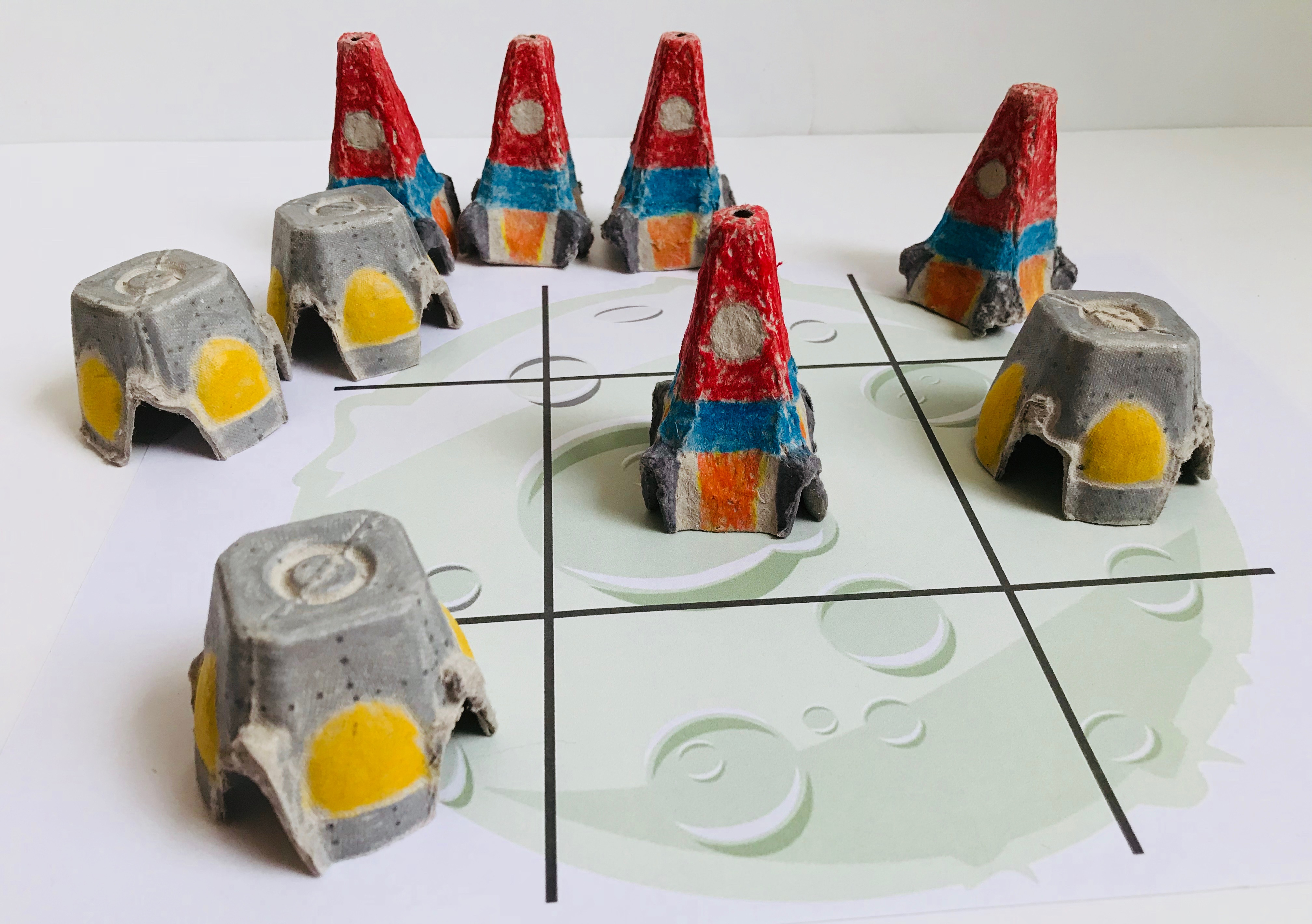
You can launch your own Tic-Tac-Toe Game with this set you make yourself! With just a couple of egg cartons, some crayons, and a printable game board, you’ll be off to the moon for some space-age fun! Opposing players can be designated by rockets and capsules. Each player will need 5 playing pieces. 

SUPPLIES

  • Printable Moon Tic-Tac-Toe Game Board
  • 2 cardboard egg cartons
  • Heavy stock paper or regular printer paper
  • Crayons
  • Black or gray fine-tip marker

DIRECTIONS

To Make the Rockets

  1. Cut the tall center cones from the egg carton
  2. Trim the bottoms of each form so they stand steadily, leaving the arched corners intact
  3. Pencil in a circular window on one side near the top of the cone
  4. Color the rocket body any colors you like, going around the window and stopping where the arched corners begin
  5. With the marker color the arched corners of the form to make legs
  6. On the cardboard between the legs, color flames for blast off

To Make the Capsule

  1. Cut the egg cups from an egg carton
  2. Color the sides silver, leaving the curved section uncolored. (If your egg cup has no pre-pressed curve on the sides of the cup, draw one on each side.)
  3. Color the curved section yellow to make windows
  4. With the marker, dot “rivets” across the capsule

Print the Moon Game Board and play!

celebrate-picture-books-picture-book-review-professor-wooford-mcpaw's-history-of-astronomy-cover

You can find Professor Wooford McPaw’s History of Astronomy at these booksellers

Amazon | Barnes & Noble | Books-a-Million

To support your local independent bookstore, order from

Bookshop | IndieBound

Picture Book Review
June 30 – International Asteroid Day

celebrate-picture-books-picture-book-review-oh-no-astro-cover

About the Holiday

If you love learning everything you can about space, then International Asteroid Day is for you! This United Nations-sanctioned global awareness campaign was co-founded by astrophysicist and famed musician Dr. Brian May of the rock group Queen, Apollo 9 astronaut Rusty Schweickart, filmmaker Grig Richters, and B612 Foundation President Danica Remy to raise awareness about the importance of asteroids, their role in the formation of our solar system, their impact on space resources, and the importance of defending our planet from future impacts. Today’s date was chosen to commemorate the Tunguska impact over Siberia, Russian Federation, on June 30, 1908 – Earth’s largest asteroid impact in recorded history. Every year, the holiday is celebrated with Asteroid Day LIVE– a live broadcast with asteroid content and commentary from astronauts, experts and celebrities as well as independently organized events at planetariums, museums, universities, and other venues. For more information and to enjoy the day’s events with astronauts from around the world, astronomers, astrophysicists, and other notable scientific leaders, visit the Asteroid Day website.

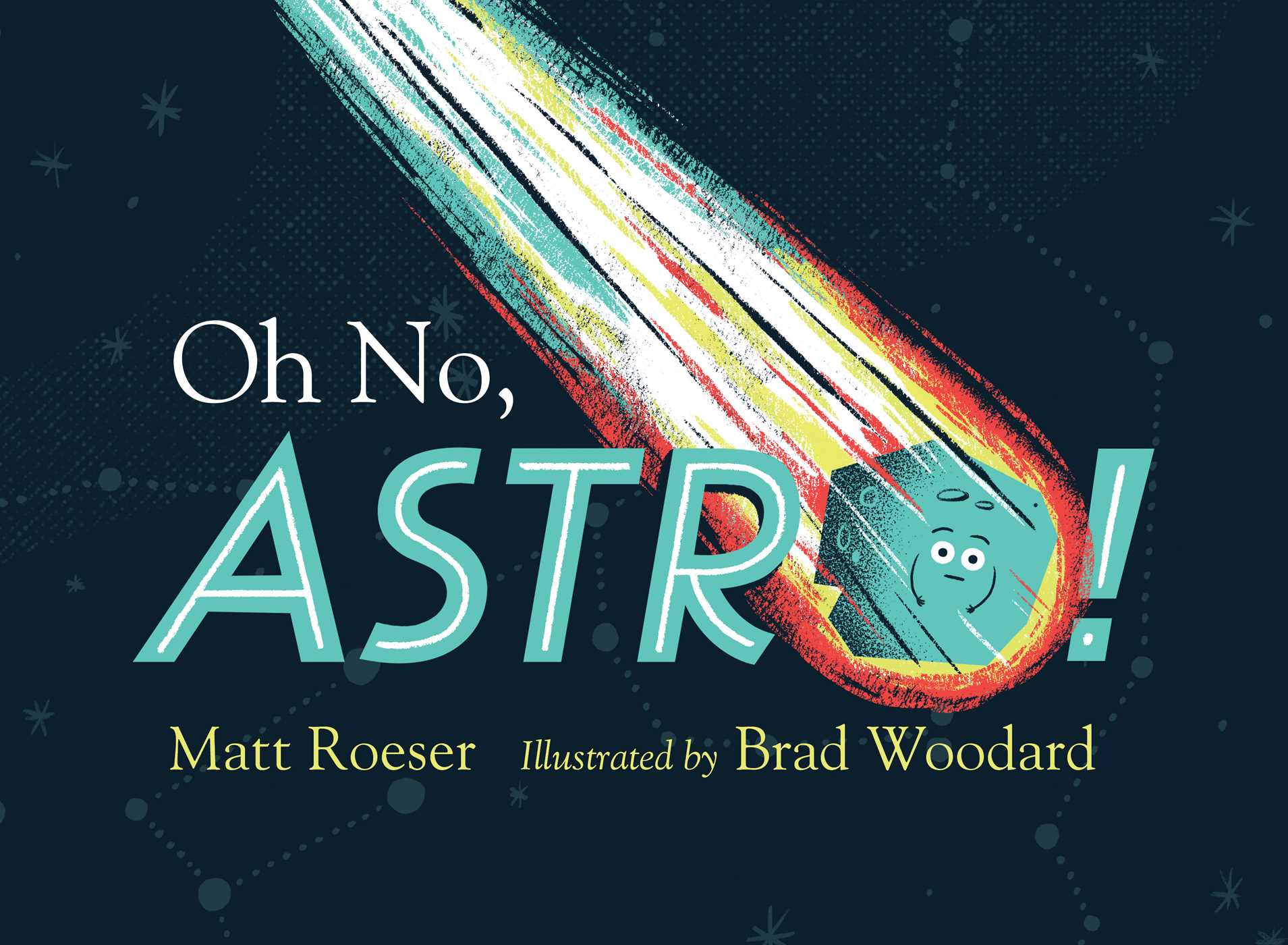
Oh No, Astro!

Written by Matt Roeser | Illustrated by Brad Woodard

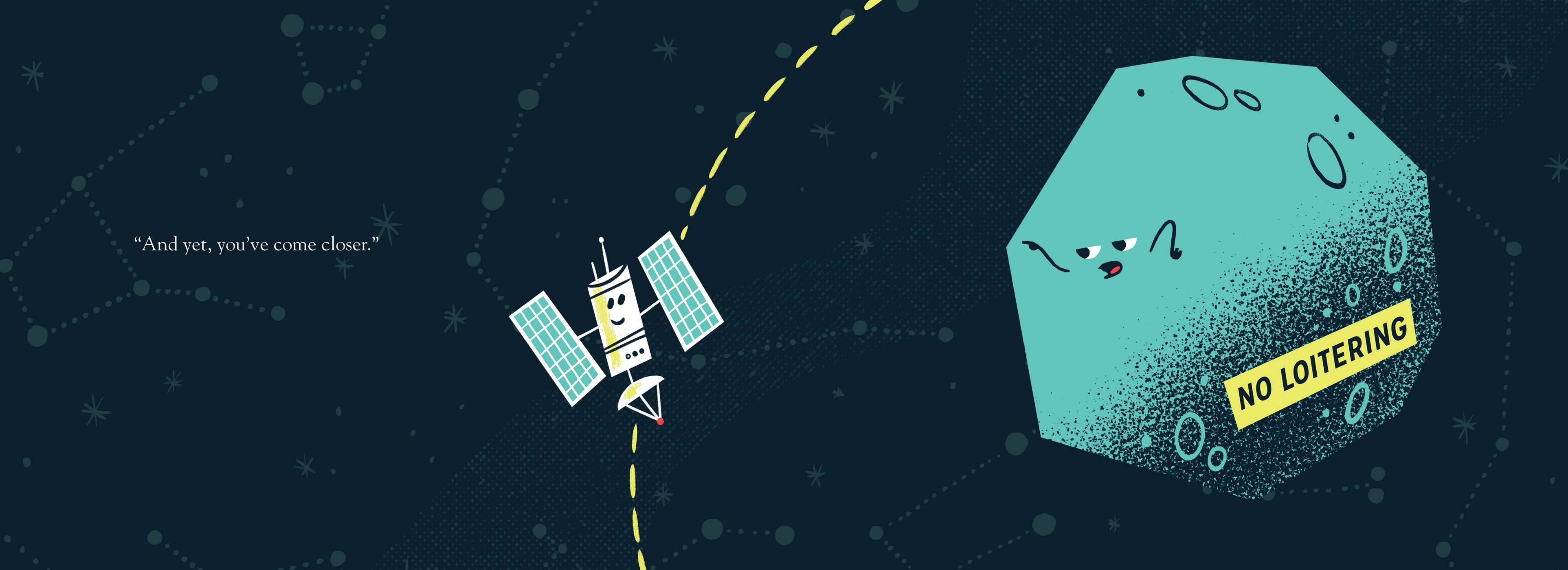
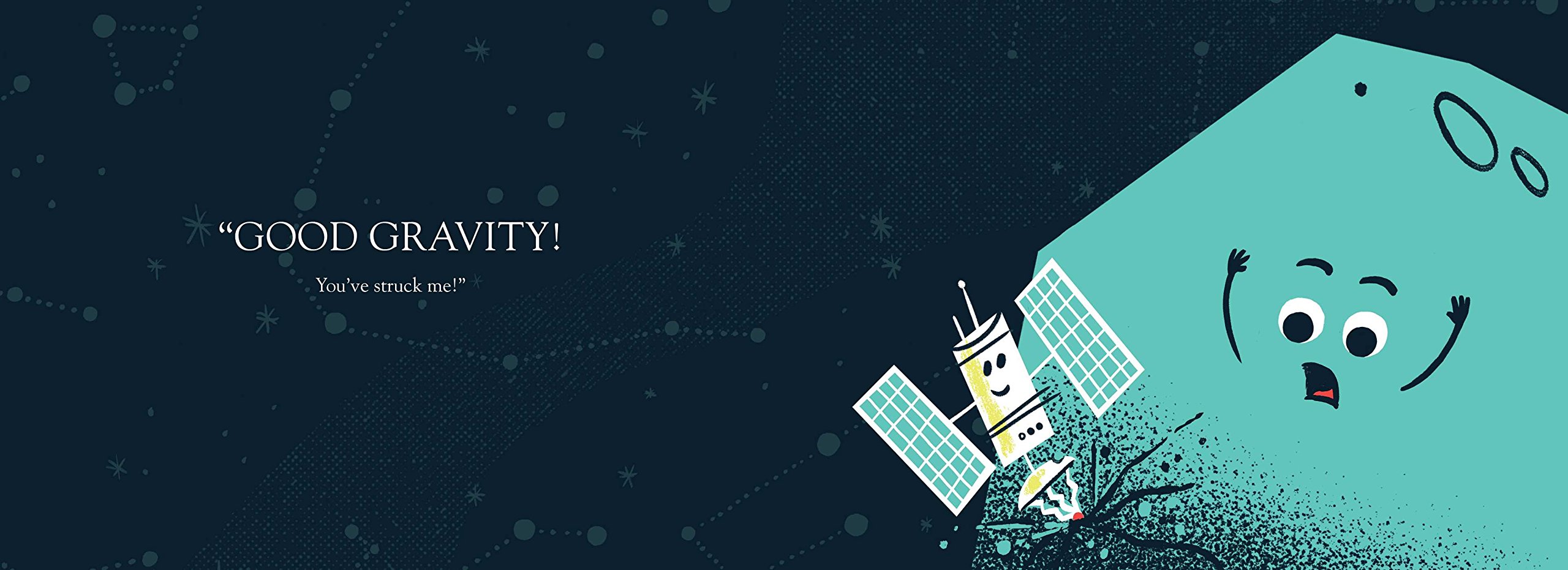
Astro was not a typical asteroid. Instead of zooming around crashing into obstacles, he believed in “personal outer space” and had for millions of years. One day when Astro spies an approaching satellite, he greets him cordially and lays down the rules: “please keep your distance” and “stay in your orbit.” But the satellite ignores him and comes closer and closer until…

celebrate-picture-books-picture-book-review-oh-no-astro-interior-art-satellite

Image copyright Brad Woodard, 2016, text copyright Matt Roeser, 2016. Courtesy of Simon & Schuster Books for Young Readers.


“‘Good gravity! You’ve struck me!” Astro exclaims. He’s just about to “point out to the satellite that it had done considerable damage to one of his favorite craters” when he discovers that he is spinning out of his orbit and out of control. How humiliating! The usually unflappable space rock suddenly finds himself hurtling past Mars. At the same time young astronomer, Nova, is “enjoying a quiet night of stargazing” through her telescope. She catches sight of Astro as he zips past an astronaut, rushes past the Moon, and finds himself on an inevitable collision course with Earth.

celebrate-picture-books-picture-book-review-oh-no-astro-good-gravity

Image copyright Brad Woodard, 2016, text copyright Matt Roeser, 2016. Courtesy of Simon & Schuster Books for Young Readers.

As he enters Earth’s atmosphere he begins to break apart, shedding bits of the past, as the universe watches. He lands on Earth with a SMASH! Reeling from the impact Astro slowly opens one eye and then the other. He finds that he’s smaller but in one piece. Standing by is Nova, waiting to welcome him to his new home. “‘My stars,’” he mutters. “‘Dare I say that was…FUN?!’”

And as Astro gazes at the night sky from a fresh perspective with Nova by his side, he asks, “‘What on Earth shall we do next?!’”

celebrate-picture-books-picture-book-review-oh-no-astro-hurtling

Image copyright Brad Woodard, 2016, text copyright Matt Roeser, 2016. Courtesy of Simon & Schuster Books for Young Readers.

For anyone stuck in the rut of their own orbit, Matt Roeser’s story of the unwitting space traveler is a humorous invitation to explore the universe around them. Roeser’s language—from calling asteroids “rambunctious” and the satellite a “celestial wanderer” to exclamations of “good gravity!” and “Pluto’s revenge!”—is an inspired treat. Kids and adults will laugh at Astro’s attempts to handle his undesirable predicament with dignity. Complacent Astro with his dry-as-space-dust wit and sparkling puns makes a stellar guide on this journey to more self-discovery and life enjoyment.

In the hands of Brad Woodard, deep space is a very cute and cool place! Rendered in flat tones of black, aqua, yellow, red, and white, Woodard’s illustrations give Oh No, Astro! a retro feel for a space-savvy audience. The oblivious satellite floats through Astro’s orbit with wide eyes and a sweet grin, while angular Astro with his stick arms, expressive face, and boldly displayed “No loitering” banner would be a welcome alien intruder in any back yard. Inquisitive and inclusive Nova, in her ponytails and Saturn-patterned dress, is the perfect companion to greet him. The night sky abounds with constellations, but Astro is the real star.

In the final pages, Astro leads readers in a “A Selection of Space Facts” from the  very Manual of the Cosmos, 2nd edition that he used to sort things out in his own life. A short list of suggested reading is also included.

Kids would love to find Oh No, Astro! on their bookshelf for story times of cosmic fun!

Ages 4 – 8

Simon & Schuster Books for Young Readers, 2016 | ISBN 978-1481439763

Visit Matt Roeser’s Website to discover his gallery of book jacket designs!

You can learn more about design and illustration work by Brad Woodard at Brave the Woods!

International Asteroid Day Activity

celebrate-picture-books-picture-book-review-name-that-asteroid-word-search-puzzle

Name That Asteroid! Word Search

Can you find the names of 20 asteroids floating around in this printable puzzle?

Name That Asteroid! Word Search Puzzle | Name That Asteroid Word Search Solution

celebrate-picture-books-picture-book-review-oh-no-astro-cover

You can find Oh No, Astro! at these booksellers

Amazon | Barnes & Noble | Books-a-Million

To support your local independent bookstore, order from

Bookshop | IndieBound

July 19 – Celebrating the Perseid Meteor Showers with Sandra Nickel

celebrate-picture-books-picture-book-review-Sandra-Nickel-headshot

Sandra Nickel says that story ideas are everywhere; you just have to reach out and grab them.  She holds an MFA in writing for children and young adults from Vermont College of Fine Arts. Her first book, Nacho’s Nachos: The Story Behind the World’s Favorite Snack, was a Golden Kite Award finalist. Sandra lives in Chexbres, Switzerland, where she blogs about children’s book writers and illustrators at whatwason.com.

You can connect with Sandra on Her website | Facebook | Instagram | Twitter

Hi Sandra, thanks so much for stopping by to talk about your latest picture book The Stuff Between the Stars, the beauty of summer nights, and your favorite childhood memory!

My favorite summer memory from my childhood is lying on a blanket at night and watching the shooting stars. Everything about it screams “childhood summer” to me. Warm nights. Fireflies. Grass pricking through the blanket. Late-night snacks. Pillows outside. The whole family together. Getting to stay up until midnight. And the incredible magic and wonder of shooting stars lighting up the sky. Each individual aspect is imbued with summer. But when you put them all together and add to the mix that it only happened once each August, it holds an incredibly vibrant and loved spot in my childhood memory box.

This year’s Perseid meteor shower—because in fact those shooting stars are shooting meteors—will be from July 17th to August 24th, with peak meteors expected to be around August 12th. For childhood memory-building, the must-haves are blankets, insect spray, a light-free yard, and late-night snacks. That said, a little preparation on your part will add richness and new discoveries to the experience.

The meteor shower is a great time to learn constellations. Why not brush up on those mythological pictures in the sky to prepare for the big night? There are many children’s books about constellations. One of my favorites is National Geographic’s classic Zoo in the Sky: A Book of Animal Constellations.

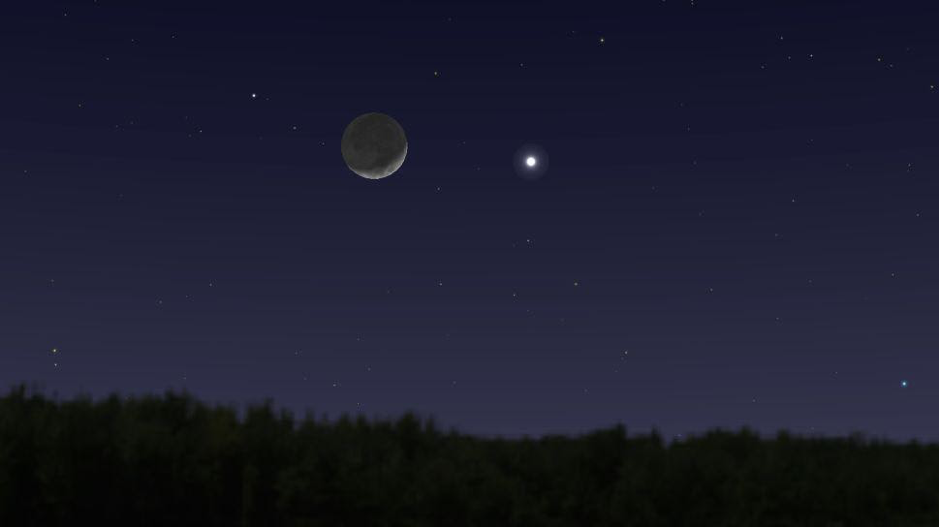
Gazing at the night sky is also a great time to open up your young stargazer’s mind. During school visits while talking about The Stuff Between the Stars and Vera Rubin, I show students this picture and ask what they see. If you’re not in a rush, take a moment and look.

celebrate-picture-books-picture-book-review-Sandra-Nickel-moon-picture

Credit: skysafariastronomy.com

What do we see?

The Moon

Stars

That bright spot is Venus

We see the stars because they burn. They are making their own light, like a summer campfire does. We see the moon because it reflects light from the biggest star around, the Sun. The same goes for the planets, like Venus. They reflect the Sun’s light.

So, we see the Moon, stars, and planets. And that’s pretty much all we see in the sky, right? But what’s there that we are not even thinking about? What are we looking right past?

Everything that doesn’t shine.

Before Vera Rubin, we thought, if it doesn’t shine, there’s nothing there. It’s empty space. And that’s the idea that Vera proved wrong. All that dark in the night sky makes up most of the universe. It’s filled with stuff. And that stuff is called dark matter. Not because it’s something scary, like turning to the Dark Side in Star Wars. It’s dark matter only because it doesn’t make its own light like stars or reflect light like planets.

Now, we still don’t know what dark matter is made of because we can’t see it or smell it or hear it. However, we know what it does. It has gravity. It has pull. And it holds the stars in galaxies together so that we can enjoy them on summer nights with family and friends.

With the end of July approaching, why not gather blankets, insect spray and your favorite late-night snacks to enjoy the meteor shower? It’s a wonderful way to fill a childhood memory box—and maybe even your adult one too.

What a wonderful, unforgettable way to spend a summer night! Thanks so much for sharing your memories as well as your love for the mysteries of our universe.

About the Perseid Meteor Showers


Active between July 17 and August 24 in the northern hemisphere, the Perseid meteor shower lights up the sky, thrilling astronomers and casual observers alike. The Perseids are particles released from comet 109P/Swift-Tuttle when it interacts with our atmosphere. They get their name from the fact that the radiant (its point of origin) is located near the constellation of Perseus. The best time to view the showers is after midnight around 2:00 a.m., but they may be seen as early as 10:00 p.m. The best place to observe them is in an area with low light pollution. This year the Perseids reach their peak on the night of August 11 – 12.

NASA describes the Perseids as “very fast and bright meteors [that] frequently leave long “wakes” of light and color behind them as they streak through Earth’s atmosphere. They’re also known for their fireballs, which are larger explosions of light and color that can persist longer than an average meteor streak. The Perseids are one of the most plentiful showers, with 50-100 meteors seen per hour.

celebrate-picture-books-picture-book-review-the-stuff-between-the-stars-cover

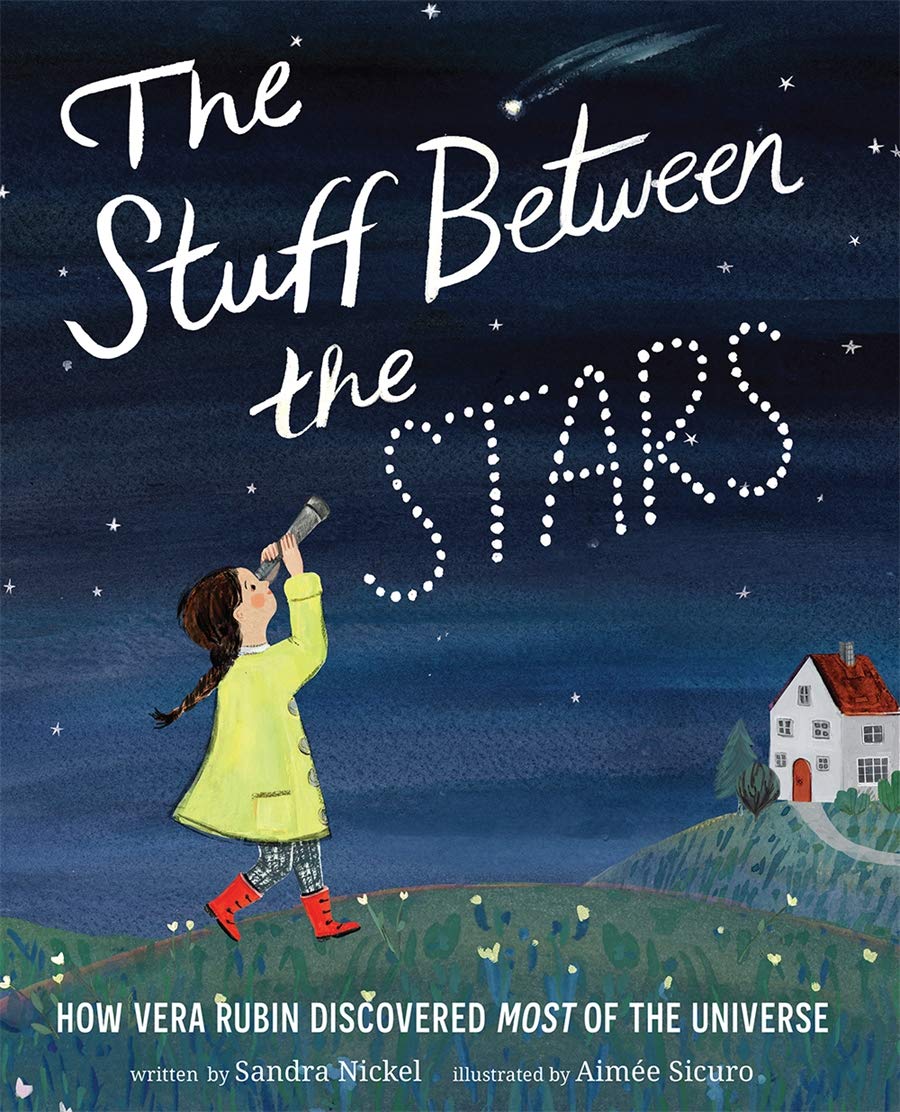
The Stuff Between the Stars: How Vera Rubin Discovered Most of the Universe

Written by Sandra Nickel | Illustrated by Aimée Sicuro


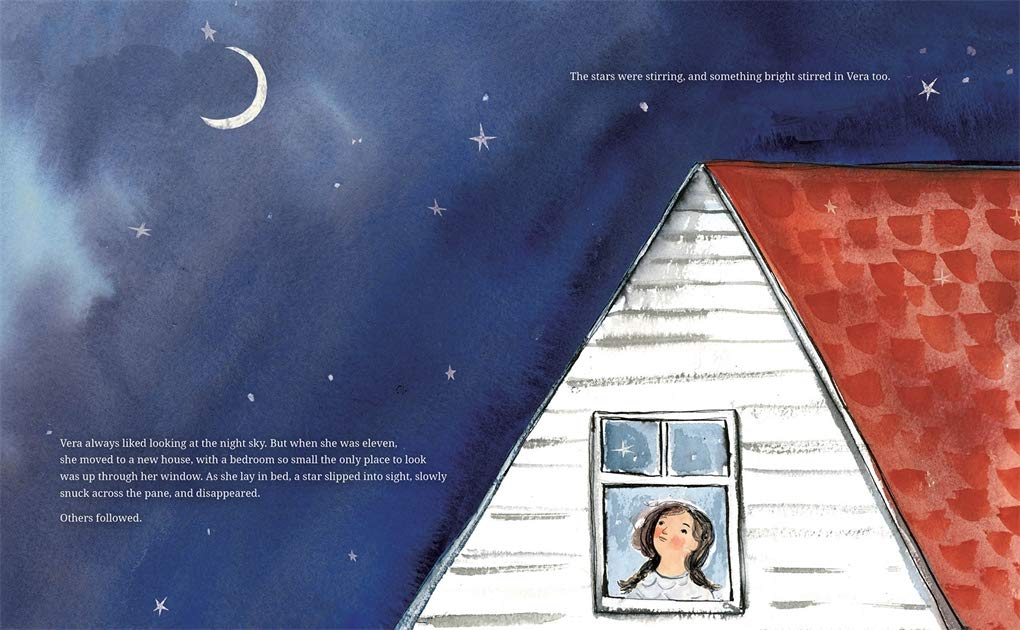
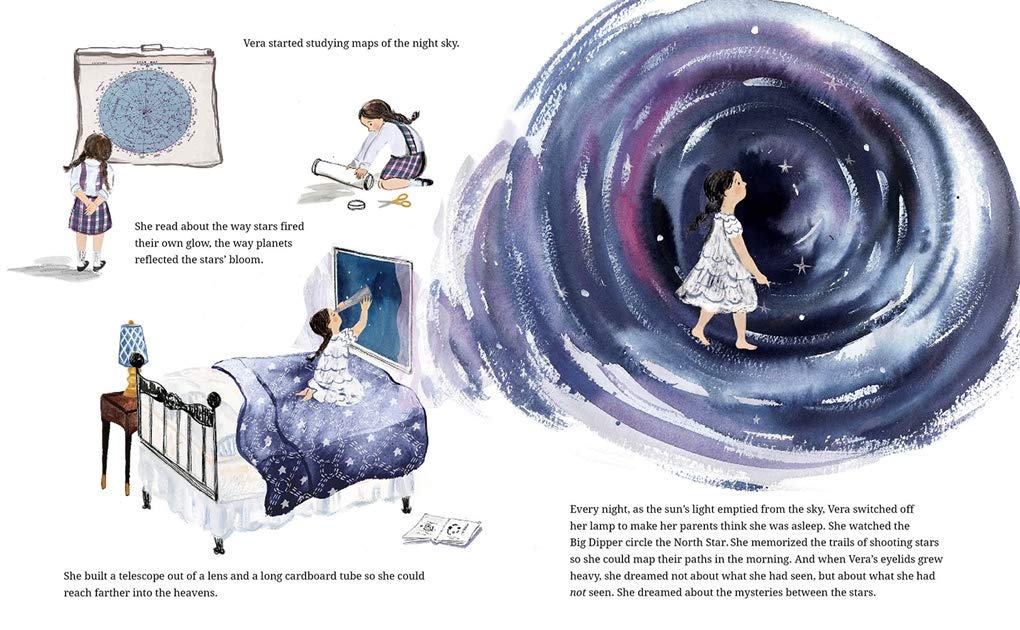
From the time she was a little girl, Vera Rubin had been fascinated with the night sky. As she gazed through her bedroom window, she saw when “the stars were stirring, and something bright stirred in Vera too.” She began studying everything she could about the stars, planets, and how they interacted in the night sky. She even made her own telescope from a cardboard tube and a lens.

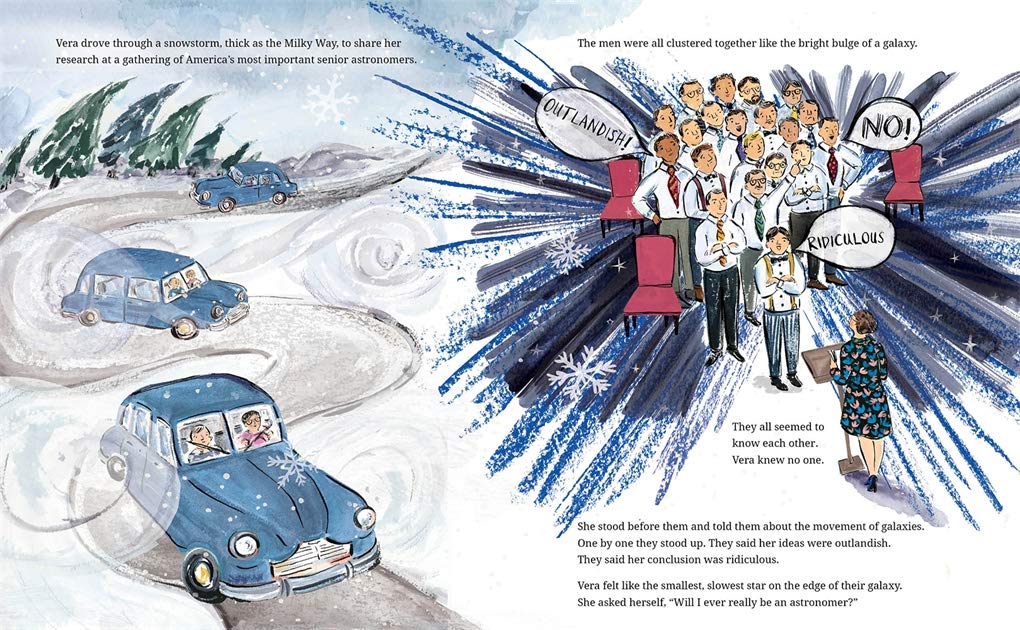
At seventeen Vera began attending Vassar College as the only astronomy major in her class. Here, she could use the school’s telescope whenever she wanted. As a young astronomer she presented her idea that “galaxies rotated around a center in the universe like the Big Dipper circled the North Star.” But when she presented her conclusions at a meeting of America’s top astronomers, they told her her ideas were “outlandish” and “ridiculous.” 

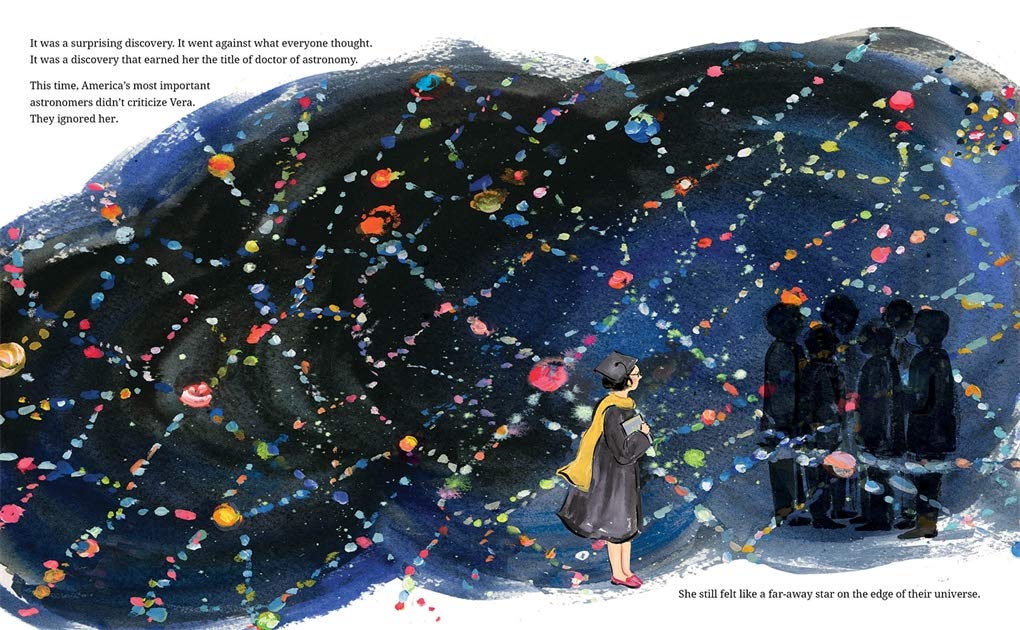
As a young mother, Vera worked on another question that interested her. She wondered if galaxies were scattered haphazardly or whether there was “a pattern to where they spun.” After many late nights doing calculations, Vera determined that galaxies were “clumped together like dew drops on a spider’s web.” This was a major discovery; one that earned her a doctorate in astronomy, but America’s top astronomers continued to ignore her.

celebrate-picture-books-picture-book-review-the-stuff-between-the-stars-window

Image copyright Aimée Sicuro, text copyright Sandra Nickel. Courtesy of Abrams Books for Young Readers.

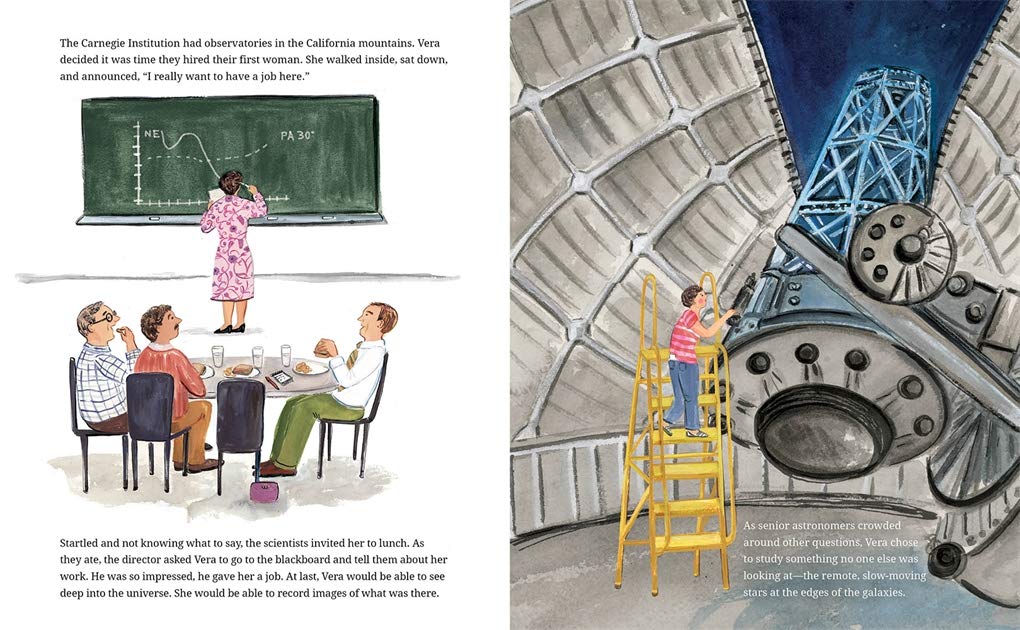
While her children were growing up, Vera began teaching astronomy at colleges in Washington D.C. Other astronomers began hearing about her and wanting to know more about her ideas that had been dismissed in the past. More than anything, Vera wanted to view the sky from the observatory at the Carnegie Institution in the California mountains. She wanted this so much that she went to the Carnegie Institution and asked for a job. After she explained her work and theories to the other scientists, they gave her a job. Here she studied the “slow-moving stars at the edges of the galaxies.”

Vera next studied the Andromeda Galaxy and was astounded to discover that the stars at the edge of the galaxy didn’t move slower for being far away from its center of gravity; they moved at the same speed. She determined from this as well as from studying 200 other galaxies that there was something unseen at work between the stars. Vera believed this was “dark matter” and presented her findings to other astronomers. This time they listened, making her a prominent light in her beloved field.

celebrate-picture-books-picture-book-review-the-stuff-between-the-stars-observatory

Image copyright Aimée Sicuro, text copyright Sandra Nickel. Courtesy of Abrams Books for Young Readers.

Sandra Nickel’s straightforward and comprehensive storytelling gives kids a well-rounded view of Vera Rubin’s life as she doggedly pursued a career in astronomy despite all the naysayers and snubs along the way and made an astounding discovery that still baffles scientists today. Nickel does an excellent job of explaining the complex ideas Rubin studied, theorized on, and wrote about, allowing readers to fully understand her impact on the field of astronomy and our understanding of the universe. 

Through Aimée Sicuro’s mixed-media illustrations, readers follow Vera Rubin as she matures from a curious child who loves watching the night sky to a college student to a mother to an astronomer making discoveries that changed the way scientists understood the universe. Her detailed images give kids visual representations of Rubin’s work and ideas. The final image of a group of children gazing up at the night sky as a shooting star flashes by offers an inspirational quote from Vera Rubin.

Ages 6 – 9

Abrams Books for Young Readers, 2021 | ISBN 978-1419736261

Discover more about Sandra Nickel and her books on her website.

To learn more about Aimée Sicuro, her books, and her art, visit her website.

You can find Curriculum Guides and Activity Sheets for kids on Sandra Nickel’s website.

celebrate-picture-books-picture-book-review-nacho's-nachos-cover

Kids will love Sandra’s other book, Nacho’s Nachos: The Story Behind the World’s Favorite Snack, illustrated by Oliver Dominguez!

Ages 6 – 11

Lee & Low Books, 2020 | ISBN 978-1620143698

celebrate-picture-books-picture-book-review-the-stuff-between-the-stars-cover

You can find The Stuff Between the Stars at these booksellers

Amazon | Barnes & Noble | Books-a-Million

To support your local independent bookstore, order from

Bookshop | IndieBound

Picture Book Review

April 16 – Global Astronomy Month COVER REVEAL of The Universe and You

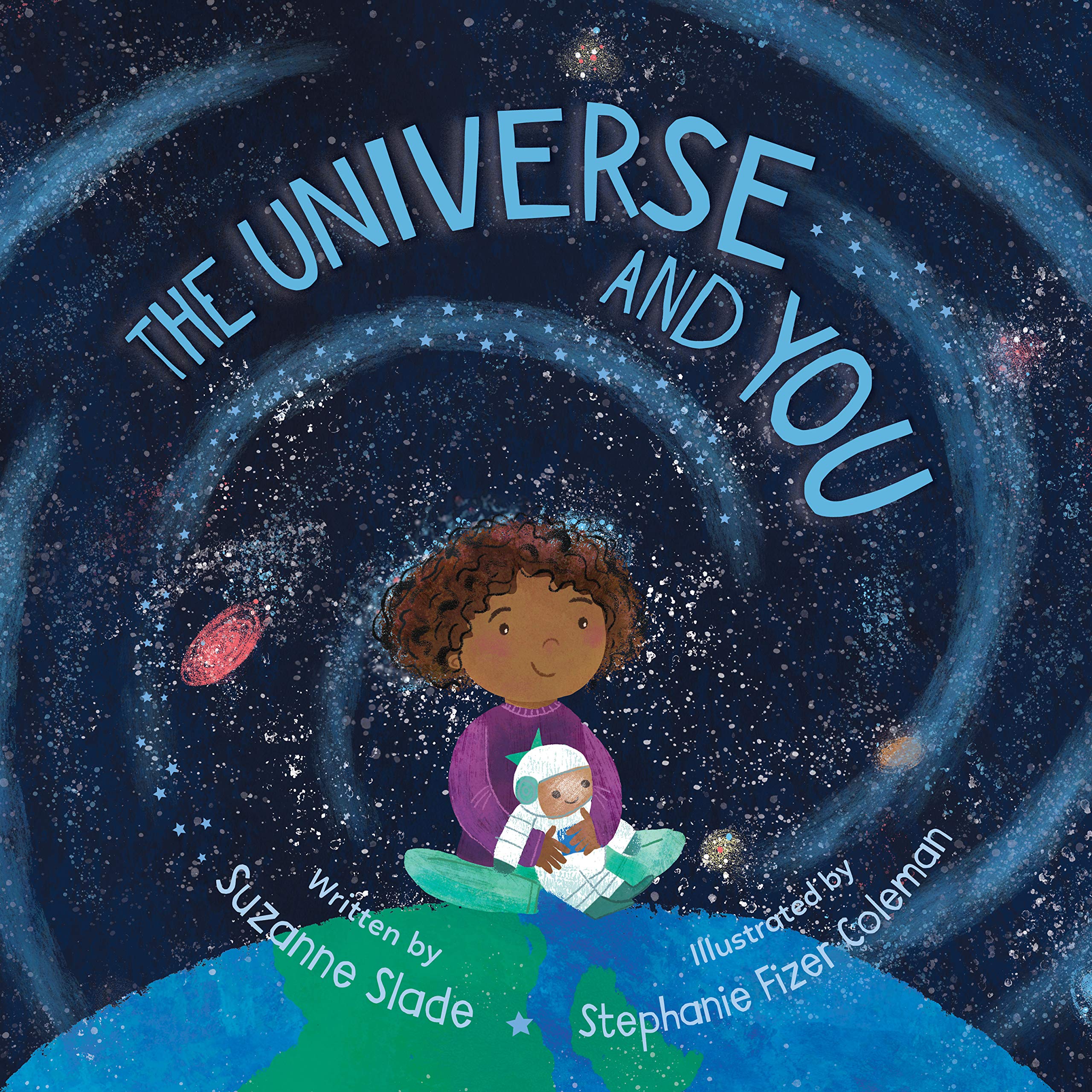
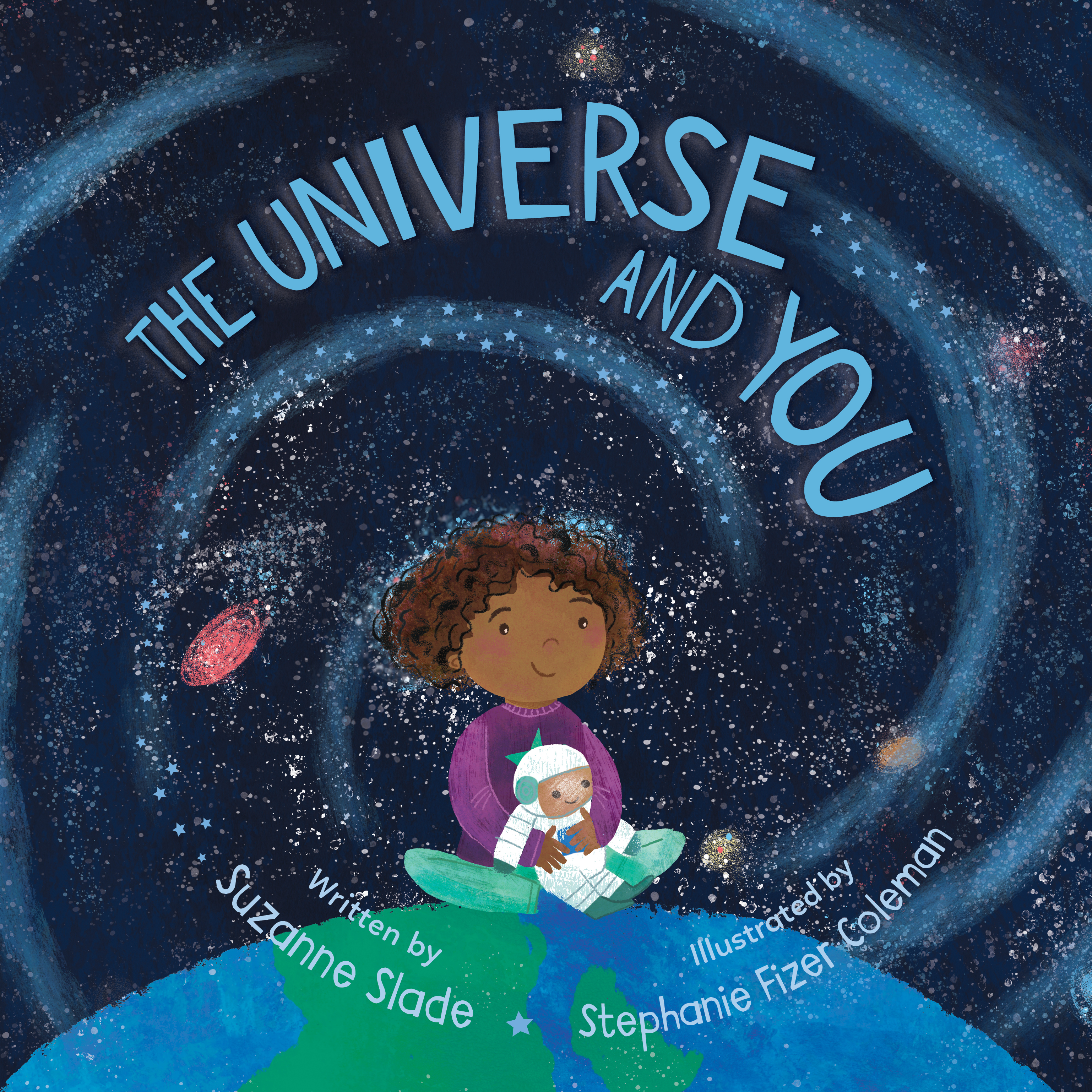
celebrate-picture-books-picture-book-review-the-universe-and-you-cover

The Universe and You

Written by Suzanne Slade | Illustrated by Stephanie Fizer Coleman


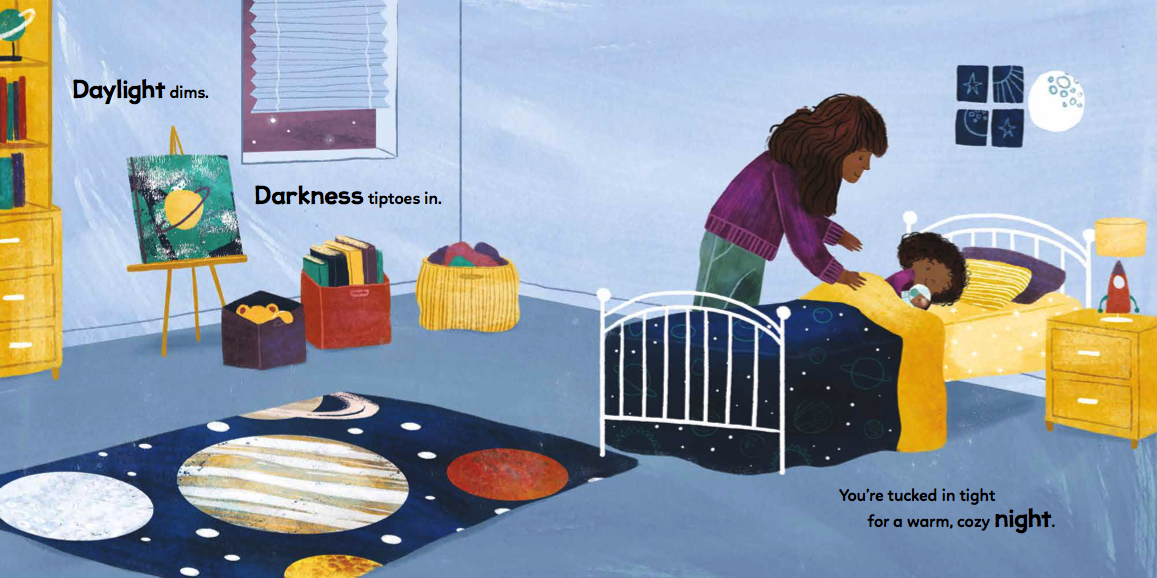
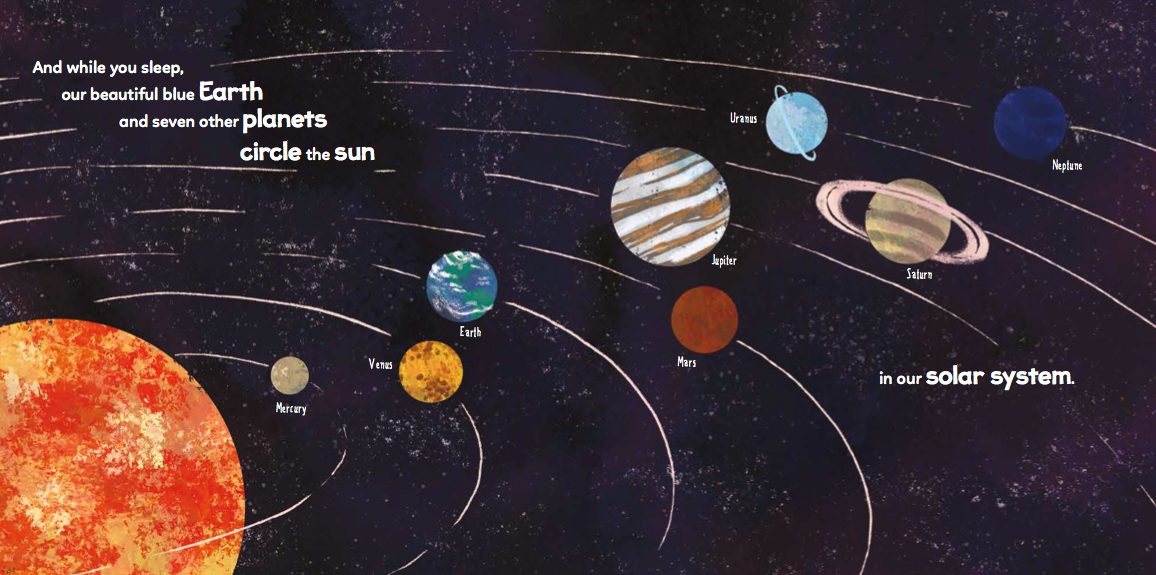
As the sun goes down and the stars come out, a little girl is tucked into bed in the midst of a beautiful celestial dance. Although Earth seems solid and still while she sleeps, it’s actually spinning on its axis and circling the sun. Joining Earth in this orbit around the sun are the other seven planets in our solar system, along with dozens of moons and millions of comets and asteroids. Containing our solar system is the wondrous Milky Way galaxy, with its billions of stars, just like our own sun, swirling and whirling around. And on from there are billions of galaxies with their own stars swirling, whirling into the ever-expanding space called our universe. When the sun rises, the little girl awakens on a brand-new day as the “moving, circling, and swirling” dance continues.

Through lyrical text, award-winning science writer Suzanne Slade takes young readers on an exploration of Earth, our solar system, the galaxies beyond, and finally the universe as a whole. Illustrated back matter includes scientific facts about our solar system.

Meet Suzanne Slade

celebrate-picture-books-picture-book-review-Suzanne-Slade-space-headshot

Suzanne Slade is the award-winning author of more than 100 books, including June Almeida, Virus Detective! The Woman Who Discovered the First Human Coronavirus. She lives in Libertyville, Illinois. Learn more about Suzanne at suzanneslade.com. You can connect with Suzanne on Twitter.

Welcome, Suzanne! I’m really excited to be talking with you about this inspirational book for little dreamers! What inspired you to write The Universe and You?

I’ve done a lot of research about space exploration in the last decade for various book projects, so space seems to be on my mind. (Plus, I’m a mechanical engineer who has worked on rockets.) In more recent years I’ve been working on a book about a woman astronomer, so was reading about stars/galaxies and visited an observatory. Then one morning I woke with the idea of a simple, lyrical bedtime book which starts with Earth, moves out to our solar system, our galaxy, and the universe.

The cover to The Universe and You is stunning! What was your first reaction when you saw it?

The illustrator, Stephanie Fizer Coleman, initially created 3 rough cover sketches to gather opinions. The sketch I liked best ended up as the cover design, so when I later saw it in full, glorious color I was blown away. Stephanie knocked this cover out of the park (and universe!).

In what ways did Stephanie Fizer Coleman’s illustrations surprise you or go beyond what you had imagined?

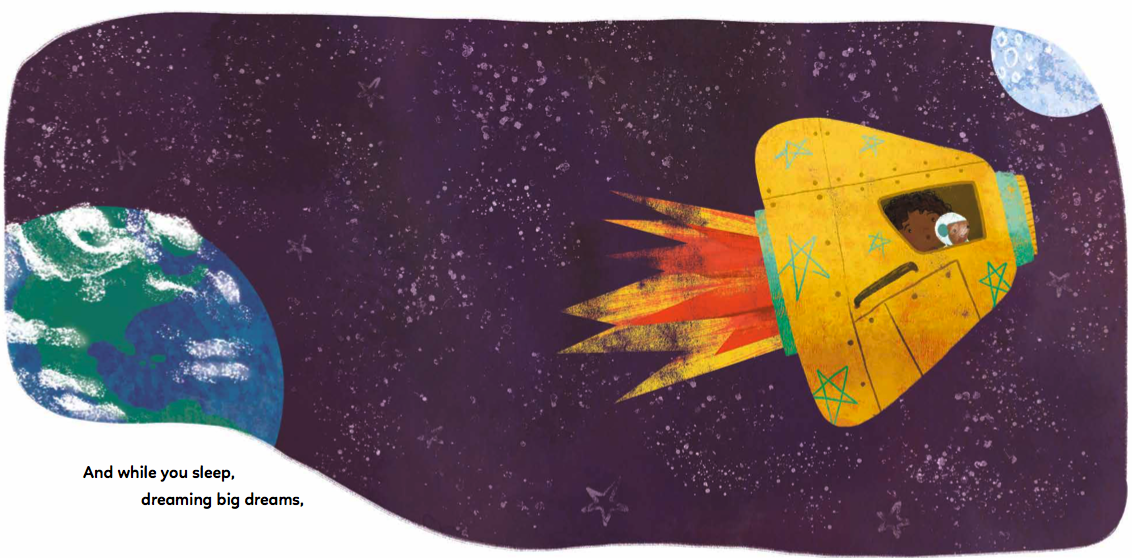
I hadn’t given a great deal of thought to what the child’s dreams might entail (though I knew they’d have to do with space). I love Stephanie’s creative and colorful depictions of the girl dreaming about soaring through space in a rocket and walking on the moon. I also adore the wonderful space items in the girl’s bedroom and the fantastic planets in the solar system! 

celebrate-picture-books-picture-book-review-the-universe-and-you-interior-1

Image copyright Stephanie Fizer Coleman, 2021. Text copyright Suzanne Slade, 2021. Courtesy of Sleeping Bear Books.

celebrate-picture-books-picture-book-review-the-universe-and-you-interior-3

Image copyright Stephanie Fizer Coleman, 2021. Text copyright Suzanne Slade, 2021. Courtesy of Sleeping Bear Books.

In college you studied engineering and actually worked on Delta and Titan Rockets. What is one of the coolest things you learned while working as an engineer on these rockets?

How a rocket works. It was fascinating to learn about the rocket “stages” needed to launch it from Earth, how a rocket soars through space, and much more.

celebrate-picture-books-picture-book-review-the-universe-and-you-interior-2

Image copyright Stephanie Fizer Coleman, 2021. Text copyright Suzanne Slade, 2021. Courtesy of Sleeping Bear Books.

You’ve written so many wonderful books about so many diverse people and subjects, including June Almeida, Virus Detective!, which was just released in March. What is your favorite part about writing STEAM books for kids?

My favorite part is introducing young readers to a fascinating STEM topic or person who has made a big impact in a STEM field. The challenging aspect of creating a picture book is to find an engaging way to present the story so it draws readers in and makes them want to find out more.

What would you like for kids to take away from this story?

I hope it inspires children to dream BIG dreams and boldly pursue those dreams!

celebrate-picture-books-picture-book-review-the-universe-and-you-interior-4

Image copyright Stephanie Fizer Coleman, 2021. Text copyright Suzanne Slade, 2021. Courtesy of Sleeping Bear Books.

Meet Stephanie Fizer Coleman

celebrate-picture-books-picture-book-review-stephanie-fizer-coleman-headshot

Stephanie Fizer Coleman has illustrated numerous children’s books, including You Are Mine, Porcupine. She lives in Scott Depot, West Virginia. Learn more about Stephanie atstephfc.com. You can connect with Stephanie on Instagram.

Hi, Stephanie! I’m thrilled for readers to get their first look at the breathtaking cover you designed for The Universe and You! What inspired this image? Can you describe your process of designing and finalizing this cover illustration?

Well, I can’t take all the credit, because Felicia, the art director on this book, had a clear idea of what would go on the cover. I knew the cover would feature some beautiful universe bits and of course, our smart and sweet main character too.

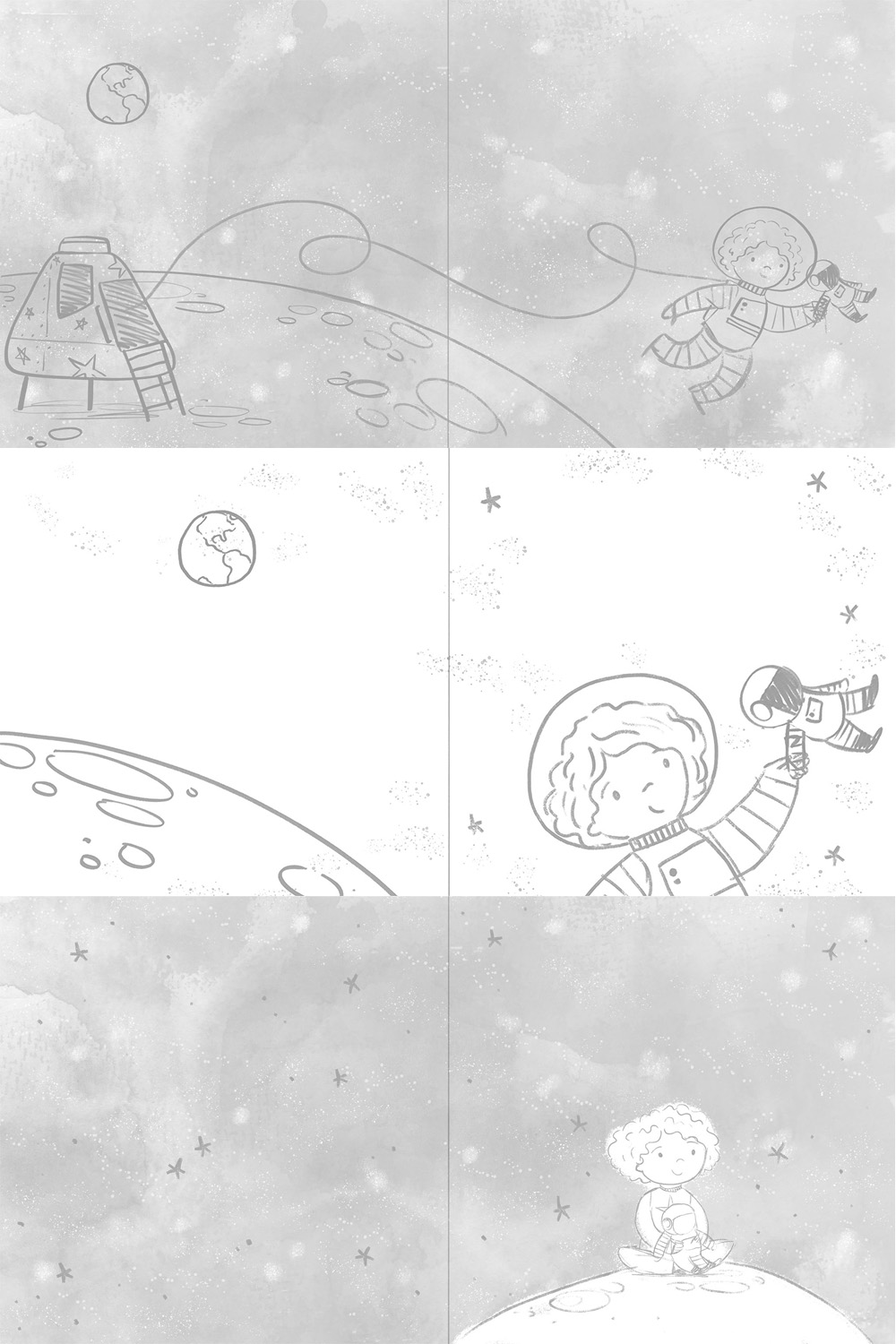
I worked up three cover options to start with, including one with the rocket ship, which is my favorite bit from the book. In the end, the image of the girl sitting on the moon with the Milky Way swirling behind her was chosen. We did a few more versions of the sketch, changing some little things like having her sitting on the Earth instead of the moon, and then it was off to final cover art!

celebrate-picture-books-picture-book-review-the-universe-and-you-initial-cover-sketches

Image copyright Stephanie Fizer Coleman, 2021. Courtesy of Sleeping Bear Press.

Did you have a passion for outer space prior to reading this story?

You know, I’ve always been more of a history buff, but my husband is a space nerd, so over the years a fascination with space has grown in me as well.  I could look at Hubble photos for hours!

Do you have a favorite spread in the book? If so, which one and why?

Both dream spreads, with the rocket ship, are my favorites! It was fun to think up what this girl would be dreaming about and to tie that in with the outer space theme.

One of my initial sketches for this was the girl as a little artist who loved painting planetary bodies and I was a little sad when it got cut, so instead I hinted at her creative energy by imagining the kind of rocket ships her dream self would create.

In the end, I’m so happy that both dream spreads involve the adorable rocket ship and our adventuring astronaut pair.

If you were going to visit outer space, where would you like to go?

This is tough because I’m obsessed with the Crab Nebula! How magical is the Crab Nebula? I mean, seriously. But also Jupiter is my favorite planet and I think I could orbit Jupiter for many years, totally engrossed in watching the rolling storms on its surface.

You have an affinity for flight of another kind too—birds! Several years ago you embarked on a project to paint a bird a day for one hundred days. Readers can see the original charming and beautiful 100 + 1 birds on your website as well as follow along with your current bird drawings on Instagram. What inspired you to do this project? Do you have a favorite bird?

I started the 100 Day project as a way to explore my style using a subject matter I already loved: birds! The simple shapes and vibrant colors lend themselves to creative exploration while feeling easy and approachable as a subject matter. My favorite bird is the chickadee and I try to sneak them into as many children’s books as I possibly can.

What do you like best about illustrating children’s books?

I love getting to illustrate the books that I would have loved as a child! There’s something special about making something that will show children how beautiful the world is and how magical nature is.

Thanks so much, Suzanne and Stephanie, for sharing the story behind The Universe and You! I’m sure readers can’t wait to see your book when it blasts into bookstores on August 15th!

celebrate-picture-books-picture-book-review-the-universe-and-you-cover

You can preorder The Universe and You from these booksellers

Anderson’s Bookshops | Amazon | Barnes & Noble | Books-a-Million

To support your local independent bookstore, preorder from

Bookshop | IndieBound

Picture Book Review

April 14 – It’s Global Astronomy Month

celebrate-picture-books-picture-book-review-the-stuff-between-the-stars-cover

About the Holiday

Instituted by Astronomers Without Borders, a group who sees in our shared sky an opportunity to create “a global community that appreciates, studies, and shares the wonders of the universe, to broaden perspective, transcend borders, and improve lives,” Global Astronomy Month brings people together with arts events, parties, and special events. To find resources, such as April sky maps in English and Spanish, and more information on how you can participate, visit the Astronomers Without Borders website.

Thanks to Abrams Books and Blue Slip Media for sending me a copy of The Stuff Between the Stars for review consideration. All opinions on the book are my own. I’m excited to be hosting a giveaway of the book. See details below.
The Stuff Between the Stars: How Vera Rubin Discovered Most of the Universe

Written by Sandra Nickel | Illustrated by Aimée Sicuro


Vera had always been fascinated with the night sky. As she gazed up through her bedroom window, she saw when “the stars were stirring, and something bright stirred in Vera too.” She began studying everything she could about the stars, planets, and how they interacted in the night sky. She even made her own telescope from a cardboard tube and a lens. At seventeen Vera began attending Vassar College as the only astronomy major in her class. Here, she could use the school’s telescope whenever she wanted.

celebrate-picture-books-picture-book-review-the-stuff-between-the-stars-window

Image copyright Aimée Sicuro, text copyright Sandra Nickel. Courtesy of Abrams Books for Young Readers.

While at Vassar, she fell in love with Robert Rubin, a mathematician. They married and soon Vera was going to have a baby. During her pregnancy, she explored an idea she had: “was it possible that galaxies rotated around a center in the universe like the Big Dipper circled the North Star?” By the time her son was born, Vera decided she was right. Vera presented her conclusions at a meeting of America’s top astronomers. They thought her ideas were “outlandish” and “ridiculous” and told her so. “Vera felt like the smallest, slowest star on the edge of their galaxy” and wondered if she’d “ever really be an astronomer.”

celebrate-picture-books-picture-book-review-the-stuff-between-the-stars-young

Image copyright Aimée Sicuro, text copyright Sandra Nickel. Courtesy of Abrams Books for Young Readers.

After Vera had a baby girl, she decided to concentrate on a new question that she thought would be fun. She wondered if galaxies were scattered haphazardly or whether there was “a pattern to where they spun.” After many months of staying up late into the night doing calculations, Vera determined that galaxies were “clumped together like dew drops on a spider’s web.” This was a major discovery; one that earned her a doctorate in astronomy. Instead of criticizing her, America’s top astronomers ignored her.

celebrate-picture-books-picture-book-review-the-stuff-between-the-stars-outlandish

Image copyright Aimée Sicuro, text copyright Sandra Nickel. Courtesy of Abrams Books for Young Readers.

Vera had two more children, and as her family grew she dreamed of observing galaxies from a mountaintop like the senior astronomers and watch gravity work within galaxies. She began teaching astronomy at colleges in Washington D.C., and other astronomers began hearing about her and wanting to know more about her ideas that had been dismissed in the past. More than ever Vera wanted to view the sky from an observatory in the mountains—one like the Carnegie Institution had in the California mountains.
One day she went to the Carnegie Institution and announced that she would like a job there. When the director and other scientists learned about her work and theories, they were so impressed that she landed a job. While the other senior astronomers worked on other questions, Vera studied the “slow-moving stars at the edges of the galaxies.”

celebrate-picture-books-picture-book-review-the-stuff-between-the-stars-galaxies

Image copyright Aimée Sicuro, text copyright Sandra Nickel. Courtesy of Abrams Books for Young Readers.

In Arizona Vera studied the Andromeda Galaxy and the stars on its outside spiral. What Vera found was astounding. Instead of moving slower at the edges of the galaxy because of waning gravity from the center, these stars moved at the same speed. She remembered that earlier astronomers had theorized about a mysterious, unseen “dark matter” with its own gravity that “might be at work in the universe.”

Vera believed dark matter “could fill the space between the stars.” In fact, she was sure it was there by the way the stars moved. Once again, when Vera revealed her findings, most astronomers didn’t want to believe it. They didn’t want to believe that all this time they’d only been studying a small fraction of the universe. After Vera studied two hundred more galaxies, the astronomers had to agree that she was correct. At last “Vera was no longer at the edge of astronomy, she was at it’s very center.”

Backmatter includes an Author’s Note detailing more about Vera Rubin’s work, a timeline of Rubin’s life, resources on quotes found in the text, and a selected bibliography.

celebrate-picture-books-picture-book-review-the-stuff-between-the-stars-observatory

Image copyright Aimée Sicuro, text copyright Sandra Nickel. Courtesy of Abrams Books for Young Readers.

Sandra Nickel’s straightforward and comprehensive storytelling gives kids a well-rounded view of Vera Rubin’s life as she doggedly pursued a career in astronomy despite all the naysayers and snubs along the way and made an astounding discovery that still baffles scientists today. Rubin’s inspirational example will resonate with young readers and give them a pathway to accomplishing their own goals. Nickel does an excellent job of explaining the complex ideas Rubin studied, theorized on, and wrote about, allowing readers to fully understand her impact on the field of astronomy and our understanding of the universe. Nickel’s lyrical prose is also sprinkled with metaphors that link Rubin’s feeling and life changes to the night sky she loved to observe.

Through Aimée Sicuro’s mixed-media illustrations, readers follow Vera Rubin as she matures from a curious child who loves watching the night sky to a college student to a mother to an astronomer making discoveries that changed the way scientists understood the universe. Her detailed images give kids visual representations of Rubin’s work and ideas, including a complex mathematical calculation she works on while her family sleeps and her idea that galaxies were clumped together. Depictions of the Palomar Observatory will thrill space buffs and show readers why Rubin so wanted to study the sky from a mountain top. The final image of a group of children gazing up at the night sky as a shooting star flashes by offers an inspirational quote from Vera Rubin.
A superb biography that will inspire and nurture young minds, The Stuff Between the Stars is highly recommended for home, school, and public library collections.

Ages 6 – 9

Abrams Books for Young Readers, 2021 | ISBN 978-1419736261

Discover more about Sandra Nickel and her books on her website. You can also find curriculum guides and activity sheets to download on her site.

You can connect with Aimée Sicuro on Instagram.

Watch the book trailer for The Stuff Between the Stars!

Global Astronomy Month Activity

celebrate-picture-books-picture-book-review-astronomy-coloring-page-telescope    celebrate-picture-books-picture-book-review-astronomy-coloring-page-kids

Explore the Galaxies Coloring Pages


Indulge your love of star stuff with these printable coloring pages!

Looking through the Telescope | Studying the Stars | Milky Way Dot-to-Dot

celebrate-picture-books-picture-book-review-the-stuff-between-the-stars-cover

You can find The Stuff Between the Stars at these booksellers

Amazon | Barnes & Noble | Books-a-Million

To support your local independent bookstore, order from

Bookshop | IndieBound

Picture Book Review