July 8 – Math 2.0 Day

celebrate-picture-books-picture-book-review-hidden-figures-the-true-story-of-four-black-women-and-the-space-race-cover

About the Holiday

Today’s holiday celebrates the merging of math and technology together as the foundation of most of the things we use every day, such as computers, phones, tablets and other electronics. Math and technology are also employed by architects, scientists, researchers, and manufacturers. Math 2.0 Day was established to bring together mathematicians, programmers, engineers, educators, and managers to raise awareness of the importance of math literacy at all levels of education.


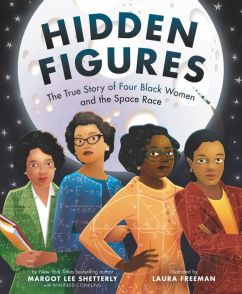
Hidden Figures: The True Story of Four Black Women and the Space Race

Written by Margot Lee Shetterly | Illustrated by Laura Freeman


“Dorothy Vaughan, Mary Jackson, Katherine Johnson, and Christine Darden were good at math…really good.” The United States was involved in World War II, and Dorothy wanted to help the war effort by working for the National Advisory Committee for Aeronautics to make planes faster, stronger, and safer. Developing new airplanes required lots of tests at the Langley Laboratory in Virginia. Today, we use computers to do the kinds of math needed, “but in the 1940s computers were actual people like Dorothy, Mary, Katherine, and Christine.”

celebrate-picture-books-picture-book-review-hidden-figures-the-true-story-of-four-black-women-and-the-space-race-dorothy

Copyright Laura Freeman, 2018, courtesy of lfreemanart.com.

Even though Dorothy was a woman and an African-American in the segregated South, Dorothy did not think her dream of getting a job was impossible. After all, she was really good at math. She applied and was hired as a computer. At Langley, whites and blacks worked in different buildings and had separate facilities. After the United States won the war, Dorothy stayed on to create better aircraft.

Now America and Russia were in competition to build the best airplanes. This required more math, more tests, and more computers. Mary Jackson was hired at Langley to test model airplanes in wind tunnels. Mary had her sights set on becoming an engineer, but most of the engineers were men. To prepare, Mary needed to take advanced math classes, “but she was not allowed into the white high school where the classes were taught.” Mary didn’t take no for an answer. She got special permission to take classes, got good grades, and “became the first African-American female engineer at the laboratory.”
celebrate-picture-books-picture-book-review-hidden-figures-the-true-story-of-four-black-women-and-the-space-race-katherine

Copyright Laura Freeman, 2018, courtesy of HarperCollins.

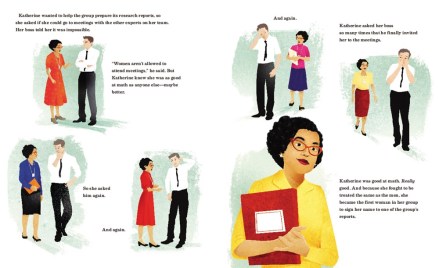
In 1953 Katherine Jackson was hired for a team who tested airplanes while they were in the air. Her work was to analyze turbulence to make planes safer in dangerous gusts of wind. She wanted to go to her team’s meetings, but she was told by her boss again and again that it was impossible; women were not allowed to attend meetings. At last her persistence paid off, and she became the first woman to sign one of the group’s reports.

When machine computers were installed at Langley in the 1950s, they were faster than the human computers but made many mistakes. “Dorothy learned how to program the computers so they got the right answers and taught the other women in her group how to program too.”

In 1957 Russia launched a satellite into space, ramping up the competition with the United States. Now “the United States started building satellites to explore space too,” and the name of the agency was changed to the National Aeronautics and Space Agency or NASA. Then President John F, Kennedy set a goal of sending a man to the moon. First, however, there would need to be many experiments, new space craft, and tests to send astronauts into orbit. This meant more people who were good at math would be needed.

celebrate-picture-books-picture-book-review-hidden-figures-the-true-story-of-four-black-women-and-the-space-race-separate-offices

Copyright Laura Freeman, 2018, courtesy of lfreemanart.com.

When the first manned space flight was planned, Katherine calculated the trajectory that would take John Glenn into space and bring him home again. In 1967 Dorothy Darden came to work at Langley. She loved electronic computers and wanted to become an engineer. “Her first job was to help with NASA’s mission to the moon.”

When Neal Armstrong stepped onto the moon’s surface for the first time on July 20, 1969, he said it was a giant leap for mankind. “It was also a giant leap for Dorothy, Mary, Katherine, Christine, and all of the other computers and engineers who had worked at the lab over the years.” The moon landing was just the beginning. NASA engineers were already dreaming of trips to other planets and super-fast spacecraft. And although it would be hard and require a lot of numbers, “Dorothy, Mary, Katherine, Christine knew one thing: with hard work, perseverance, and a love of math, anything was possible.”
celebrate-picture-books-picture-book-review-hidden-figures-the-true-story-of-four-black-women-and-the-space-race-four-women

Copyright Laura Freeman, 2018, courtesy of HarperCollins.

Margot Lee Shetterly brings her compelling story Hidden Figures to children in this exceptional picture book that skillfully reveals the talents and dreams of Dorothy, Mary, Katherine, Christine as well as the work atmosphere and social injustices of the time period. While acknowledging the struggles and obstacles the four women faced, Shetterly keeps her focus on the incredible achievements of these brilliant women and the positive changes and opportunities for others they created. Brief-yet-detailed descriptions and explanations of math, science, and computer terms flow smoothly in the text, allowing all readers to understand and appreciate the women’s work.

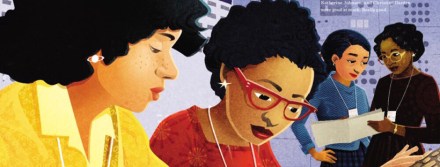
As Dorothy, Mary, Katherine, Christine each begin their work at Langley as young women, Laura Freeman establishes their dreams and their particular field of expertise through richly colorful illustrations that highlight the schematics, tools, equipment, and models they used. In one particularly affecting spread, Dorothy, Mary, Katherine, and Christine go off to their offices on the left-hand side, and their white counterparts head out to theirs on the right-hand side while the blueprint of their building lies under their feet. Dorothy, Mary, Katherine, and Christine’s clothing is also mirrored in color by the women on the other side of the fold. Period dress and electronics show progression through the years, and kids may marvel at the size of early computers. The final image of Dorothy, Mary, Katherine, and Christine as older women is moving and inspirational.

Hidden Figures: The True Story of Four Black Women and the Space Race is an outstanding biography of four women who contributed their gifts for math as well as their self-confidence not only to science but to dreamers in their own and future generations. The book would be a stirring choice for classroom and home libraries.

Ages 4 – 8

HarperCollins, 2018 | ISBN 978-0062742469

Discover more about Margot Lee Shetterly and her books on her website.

To learn more about Laura Freeman, her books, and her art, visit her website.

International Women’s Day Activity
celebrate-picture-books-picture-book-review-women-in-stem-coloring=book

Women in STEM Coloring Book


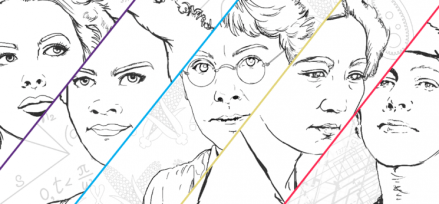
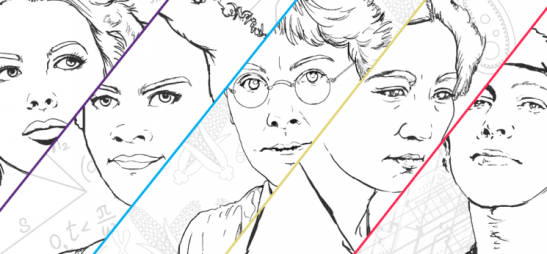
Discover five women who broke barriers  and made important contributions to the science, technology, engineering, and math fields in this printable  Women in STEM Coloring Book created by the United States Department of Energy.
celebrate-picture-books-picture-book-review-hidden-figures-the-true-story-of-four-black-women-and-the-space-race-cover

You can find Hidden Figures: The True Story of Four Black Women and the Space Race at these booksellers

Amazon | Barnes & Noble | Books-a-Million | IndieBound


Picture Book Review

March 8 – International Women’s Day

celebrate-picture-books-picture-book-review-hidden-figures-the-true-story-of-four-black-women-and-the-space-race-cover

About the Holiday

Today’s holiday is celebrated around the world and focuses on the social, economic, cultural, and political accomplishments of women. Spurred on by recent events and increased activism, this year’s theme is “Press for Progress: a Push for Gender Parity worldwide.” Rallies, performances, and discussions as well as special events and lessons in schools are just some of the ways that International Women’s Day is commemorated.

Hidden Figures: The True Story of Four Black Women and the Space Race

Written by Margot Lee Shetterly | Illustrated by Laura Freeman


“Dorothy Vaughan, Mary Jackson, Katherine Johnson, and Christine Darden were good at math…really good.” The United States was involved in World War II, and Dorothy wanted to help the war effort by working for the National Advisory Committee for Aeronautics to make planes faster, stronger, and safer. Developing new airplanes required lots of tests at the Langley Laboratory in Virginia. Today, we use computers to do the kinds of math needed, “but in the 1940s computers were actual people like Dorothy, Mary, Katherine, and Christine.”

celebrate-picture-books-picture-book-review-hidden-figures-the-true-story-of-four-black-women-and-the-space-race-dorothy

Copyright Laura Freeman, 2018, courtesy of lfreemanart.com.

Even though Dorothy was a woman and an African-American in the segregated South, Dorothy did not think her dream of getting a job was impossible. After all, she was really good at math. She applied and was hired as a computer. At Langley, whites and blacks worked in different buildings and had separate facilities. After the United States won the war, Dorothy stayed on to create better aircraft.

Now America and Russia were in competition to build the best airplanes. This required more math, more tests, and more computers. Mary Jackson was hired at Langley to test model airplanes in wind tunnels. Mary had her sights set on becoming an engineer, but most of the engineers were men. To prepare, Mary needed to take advanced math classes, “but she was not allowed into the white high school where the classes were taught.” Mary didn’t take no for an answer. She got special permission to take classes, got good grades, and “became the first African-American female engineer at the laboratory.”

celebrate-picture-books-picture-book-review-hidden-figures-the-true-story-of-four-black-women-and-the-space-race-katherine

Copyright Laura Freeman, 2018, courtesy of HarperCollins.

In 1953 Katherine Jackson was hired for a team who tested airplanes while they were in the air. Her work was to analyze turbulence to make planes safer in dangerous gusts of wind. She wanted to go to her team’s meetings, but she was told by her boss again and again that it was impossible; women were not allowed to attend meetings. At last her persistence paid off, and she became the first woman to sign one of the group’s reports.

When machine computers were installed at Langley in the 1950s, they were faster than the human computers but made many mistakes. “Dorothy learned how to program the computers so they got the right answers and taught the other women in her group how to program too.”

In 1957 Russia launched a satellite into space, ramping up the competition with the United States. Now “the United States started building satellites to explore space too,” and the name of the agency was changed to the National Aeronautics and Space Agency or NASA. Then President John F, Kennedy set a goal of sending a man to the moon. First, however, there would need to be many experiments, new space craft, and tests to send astronauts into orbit. This meant more people who were good at math would be needed.

celebrate-picture-books-picture-book-review-hidden-figures-the-true-story-of-four-black-women-and-the-space-race-separate-offices

Copyright Laura Freeman, 2018, courtesy of lfreemanart.com.

When the first manned space flight was planned, Katherine calculated the trajectory that would take John Glenn into space and bring him home again. In 1967 Dorothy Darden came to work at Langley. She loved electronic computers and wanted to become an engineer. “Her first job was to help with NASA’s mission to the moon.”

When Neal Armstrong stepped onto the moon’s surface for the first time on July 20, 1969, he said it was a giant leap for mankind. “It was also a giant leap for Dorothy, Mary, Katherine, Christine, and all of the other computers and engineers who had worked at the lab over the years.” The moon landing was just the beginning. NASA engineers were already dreaming of trips to other planets and super-fast spacecraft. And although it would be hard and require a lot of numbers, “Dorothy, Mary, Katherine, Christine knew one thing: with hard work, perseverance, and a love of math, anything was possible.”

celebrate-picture-books-picture-book-review-hidden-figures-the-true-story-of-four-black-women-and-the-space-race-four-women

Copyright Laura Freeman, 2018, courtesy of HarperCollins.

Margot Lee Shetterly brings her compelling story Hidden Figures to children in this exceptional picture book that skillfully reveals the talents and dreams of Dorothy, Mary, Katherine, Christine as well as the work atmosphere and social injustices of the time period. While acknowledging the struggles and obstacles the four women faced, Shetterly keeps her focus on the incredible achievements of these brilliant women and the positive changes and opportunities for others they created. Brief-yet-detailed descriptions and explanations of math, science, and computer terms flow smoothly in the text, allowing all readers to understand and appreciate the women’s work.

As Dorothy, Mary, Katherine, Christine each begin their work at Langley as young women, Laura Freeman establishes their dreams and their particular field of expertise through richly colorful illustrations that highlight the schematics, tools, equipment, and models they used. In one particularly affecting spread, Dorothy, Mary, Katherine, and Christine go off to their offices on the left-hand side, and their white counterparts head out to theirs on the right-hand side while the blueprint of their building lies under their feet. Dorothy, Mary, Katherine, and Christine’s clothing is also mirrored in color by the women on the other side of the fold. Period dress and electronics show progression through the years, and kids may marvel at the size of early computers. The final image of Dorothy, Mary, Katherine, and Christine as older women is moving and inspirational.

Hidden Figures: The True Story of Four Black Women and the Space Race is an outstanding biography of four women who contributed their gifts for math as well as their self-confidence not only to science but to dreamers in their own and future generations. The book would be a stirring choice for classroom and home libraries.

Ages 4 – 8

HarperCollins, 2018 | ISBN 978-0062742469

Discover more about Margot Lee Shetterly and her books on her website.

To learn more about Laura Freeman, her books, and her art, visit her website.

International Women’s Day Activity

celebrate-picture-books-picture-book-review-women-in-stem-coloring-book

Women in STEM Coloring Book


Discover five women who broke barriers  and made important contributions to the science, technology, engineering, and math fields in this printable  Women in STEM Coloring Book created by the United States Department of Energy.


Picture Book Review

August 4 – It’s Family Heritage Month

celebrate-picture-books-picture-book-review-one-family-cover

About the Holiday

When families form, each person comes with their own history, which is then blended to create an entirely new story. Some families know all about great, great, great grandma or grandpa, while for some the distant past is a bit hazy. No matter how much you know about your family, though, you know that each step along the way for each person has brought you to the place you are now—together! This month encourages people to research their genealogy and discover more about their ancestors. It can be fun to draw a family tree or put together a scrapbook of photos, old and new. But whatever you do, don’t forget to celebrate your family!

One Family

Written by George Shannon | Illustrated by Blanca Gomez


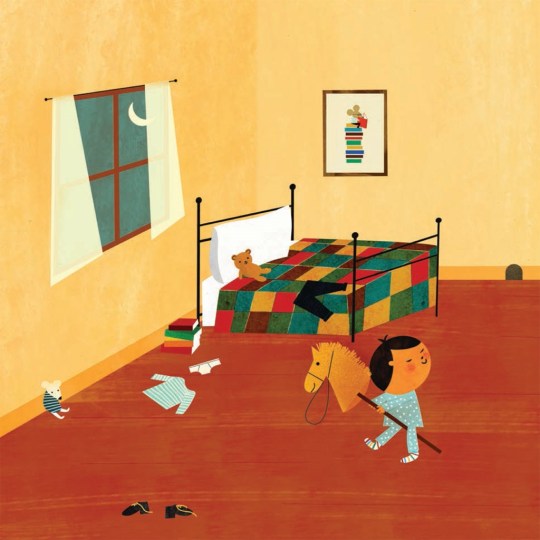
It’s 6:00 and “one is one”: a little lady with a cotton-candy swirl of white hair is reading one book in the light of her one lamp. In the bedroom “one is two”: a boy and a girl have changed into pajamas, leaving one pair of shoes—two shoes with yellow laces—and a shirt on the floor. They’ve grabbed their team of horses—two stick ponies—and are galloping around the room. They make one family.

celebrate-picture-books-picture-book-review-one-family-bedroom

Image copyright Blanca Gomez, 2015, courtesy of us.macmillan.com.

Outside, “one is three”: a little girl is out with her mom and dad. As they pass a window, she points to one bowl of fruit holding three pears. In the toyshop window, the girl sees one house of three bears. The one family walks by happily. On another street “one is four”: two kids sit in their grandpa and grandma’s car. Grandpa has one ring of four keys. Grandma is carrying a basket with one pile of four puppies. Where is this one family going?

celebrate-picture-books-picture-book-review-one-family-five

Image copyright Blanca Gomez, 2016, text copyright George Shannon, 2015. Courtesy of us.macmillan.com.

At the zoo “one is five”: a family of three kids and two adults watch one monkey hold one bunch of five bananas while another plays with one hand of five cards. In a busy house “one is six”: While a woman hangs out one line of six wet shirts, a girl paints one butterfly with six legs. The six people are one family working together.

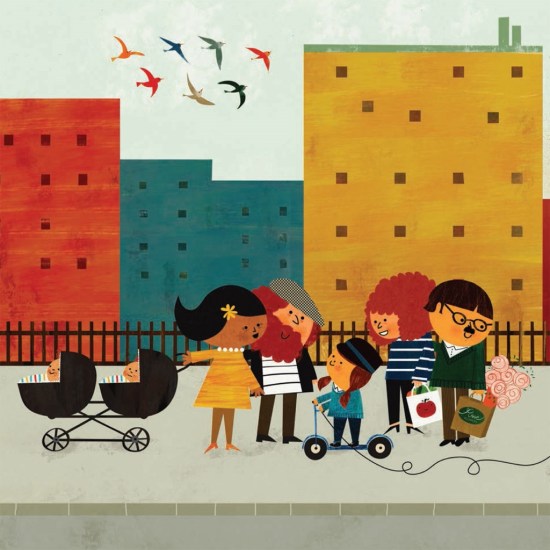
In another neighborhood “one is seven”: one flock of seven birds flies over the tall apartment houses as one family of four adults, a child, and twin babies talk. Who is the “one bouquet of seven blooms” for? A door opens to a home where “one is eight”: one picture of eight ducks hangs on the wall above a child coloring with one box of eight crayons. The room is getting full as eight people from one family find places to gather.

celebrate-picture-books-picture-book-review-one-family-seven

Image copyright Blanca Gomez, 2015, courtesy of us.macmillan.com.

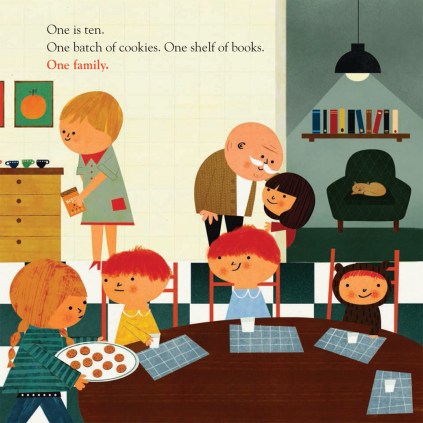
At the seaside “one is nine”: a group of nine men, women, and children sit on one bench near one staircase of nine steps. One of the children has built one cairn of nine rocks. In a bustling kitchen “one is ten”: sitting at the table and standing near the stove are ten members of one family. A girl has baked one batch of ten cookies. On the wall is one shelf of ten books.

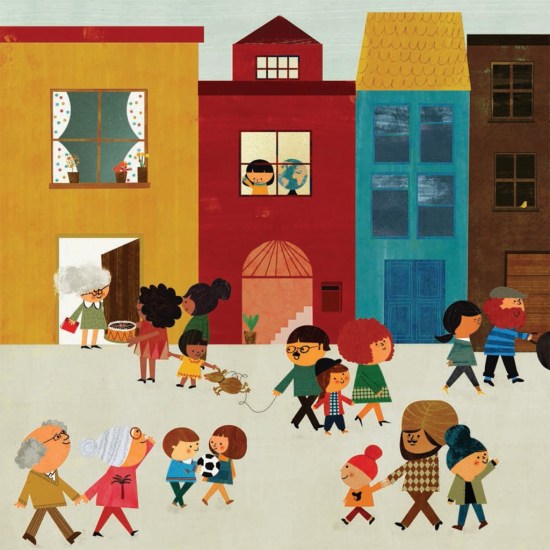
In this one town, all these people come together walking dogs, playing with balls, visiting neighbors, waving from windows, strolling babies, and having fun. Here “One is one and everyone. One earth. One world. One family.”

celebrate-picture-books-picture-book-review-one-family-one-world

Image copyright Blanca Gomez, 2015, courtesy of us.macmillan.com.

In his unique take on a counting book, George Shannon challenges readers to consider the way we think about the number and the idea of “one,” both mathematically and linguistically. Along the way the story also invites readers to think about the nature of family. As each family unit grows larger from page to page, children see that no matter how many people are included, the group is one family. The sequential building on the idea of family organically leads to the insight that our one world is made up of many people—and even many families—but that we are all connected as one family on earth.

celebrate-picture-books-picture-book-review-one-family-ten

Image copyright Blanca Gomez, 2015, text copyright George Shannon, 2016. Courtesy of us.macmillan.com.

In her vibrant and inclusive illustrations, Blanca Gomez celebrates what it means to be a family and even invites readers to perhaps make up their own stories about how each family came together. Every page offers welcome views of multigenerational, interracial, and multiethnic families. Three examples of the featured number on each two-page spread are just the right amount for kids to count and discuss how we use collective nouns to denote ideas such as “one pair” for two or “one batch” and “one bunch” for any number of cookies or flowers. A final spread gives readers another chance to count the items they found in the book, and the endpapers tell a story of their own.

With so much to see, talk about, and count, on every page, One Family is a fantastic book to add to school, classroom, and home libraries.

Ages 4 – 8

Farrar, Straus & Giroux, 2015 | ISBN 978-0374300036

Find a gallery of illustration and other artwork by Blanca Gomez on her website!

Family Heritage Month Activity

celebrate-picture-books-picture-book-review-family-tree-coloring-page

I Love My Family Tree! Coloring Page


Filling in a family tree is a fun way to learn more about grandparents, aunts, uncles, cousins, and where your family came from. Print this I Love My Family Tree! Coloring Page then write the names or draw pictures of your family members in the hearts, and color the picture.

Picture Book Review

July 8 – Savor the Comic, Unplug the Drama Day

celebrate-picture-books-picture-book-review-7-ate-9-the-untold-story-cover

About the Holiday

With so much going on in our lives—at work and at home—it’s good to take a break for a laugh and a bit of relaxation. Savor the Comic, Unplug the Drama Day encourages people to get off the treadmill and treat themselves to their favorite fun activity!

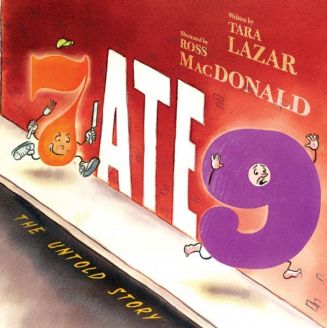
7 Ate 9: The Untold Story

Written by Tara Lazar | Illustrated by Ross MacDonald


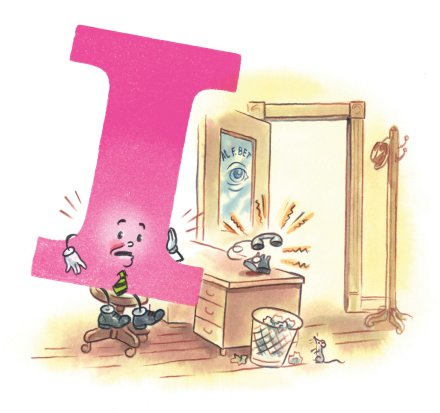
Private I was snoozing at his desk when 6 burst in saying he was being threatened by 7. Private I knew all about numbers—they were “always stuck in a problem.” He also knew that 7 was odd, so he asked 6 what was up. 6 said he’d heard 7 ate 9 and was now after him. The PI tried to explain about the usual order, but 6 wouldn’t hear it. Private I promised to “get to the root” of the story.

celebrate-picture-books-picture-book-review-7-ate-9-the-untold-story-private-i

Image copyright Ross MacDonald, courtesy of rossmacdonald.com

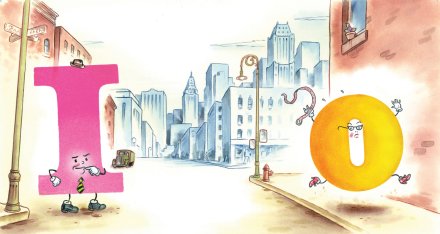
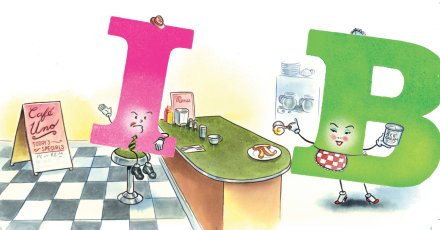
First on his list of witnesses was 8. She knew nothing, but fearing she was next in line, she took off her belt and fled the scene disguised as 0. PI wanted to think things through, so he went to Café Uno for a piece of Pi. The waitress, B, had heard the rumors that 7 ate 9 and confirmed that 9 hadn’t been seen in a while.

celebrate-picture-books-picture-book-review-7-ate-9-the-untold-story-8-takes-off-belt

Image copyright Ross MacDonald, courtesy of rossmacdonald.com

Next, the detective tracked down 11, 7’s best bud. 11 said 7 had to be innocent since he was on vacation. The whole case was not adding up. “If 7 was gone, where was 9?” On his way back to the office, Private I saw 6 crossing the street. Suddenly, he knew the score. He rushed back to the office where his client was “taking forty winks.” He grabbed 6 and turned him…upside down.” It was true—“6 was really 9!”

celebrate-picture-books-picture-book-review-7-ate-9-the-untold-story-cafe-uno

Image copyright Ross MacDonald, courtesy of rossmacdonald.com

What was with all the deception? Why did 9 make up a story about 7? “‘Because 7 gets all the attention!” 9 wailed. “‘Lucky 7! Seven Wonders of the World! Snow White and the Seven Dwarfs!’” 9 also had plenty to say about 10, who thought he was so perfect. But Private I reminded his client that he had one of the best advantages around—nine lives! 9 saw the detective’s point.

Just then 7 showed up and, with no hard feelings, accepted 9’s apology. Still Private I wondered how he could be so happy after being framed. 7 said he was in seventh heaven from sailing the seven seas, and he shared his vacation photos with everyone. At last the case was solved, and Private I could return to the letter cases he preferred. Except for that call from 2…

celebrate-picture-books-picture-book-review-7-ate-9-the-untold-story-dock

Image copyright Ross MacDonald, courtesy of rossmacdonald.com

Tara Lazar’s hilarious mathematical mystery adds up to a perfect reading experience for kids who love clever word play, puns, and, of course, numbers! Lazar takes a classic joke and develops it into an ingenious story with twists and turns, red herrings, mistaken identities, and surprising revelations that will keep kids laughing from beginning to end.

Ross MacDonald’s personified numbers and visual jokes will entertain both young and adult readers. From the name on the detective agency’s door—Al F. Bet—to the “x”-shaped street sign at the corner of 2nd and 4th where 8 is found to the piece of Pi at Café Uno, MacDonald has filled the pages with riffs on language and mathematics that will delight kids. The bright colors and vintage-style illustrations recall the age of the classic hard-boiled detective, giving the book a distinctive personality.

7 Ate 9: The Untold Story is witty and wild and would make a wonderful addition to any child’s home library.

Ages 4 – 9

Disney-Hyperion, 2017 | ISBN 978-1484717790

Discover more about Tara Lazar and her books on her website!

Check out Ross MacDonald, his books, movie props, letterpress, and comics on his website!

You can count on loving this 7 Ate 9: The Untold Story book trailer!

Savor the Comic, Unplug the Drama Day Activity

celebrate-picture-books-picture-book-review-whale-of-a-laugh-coloring-page

Whale of a Laugh Coloring Page


Today is a perfect day to have some fun! Grab your pencils or markers and enjoy this printable Whale of a Laugh Coloring Page.

Picture Book Review

March 24 – National Button Day

Pete the Cat and His Four Groovy Buttons by Eric Litwin and James Dean Picture Book ReviewAbout the Holiday

You have to admit it—those little round things that hold our clothes and bags shut are indispensable. Sometimes tiny works of art in their own right, buttons are fascinating. Antique buttons made of glass, metal, or even bone and decorated with intricate paintings, engraved designs, or gemstones offer a glimpse into history, both American and International. Today’s buttons, fashioned into engaging shapes or brightly colored, have stories of their own and enhance whatever garment or item they adorn.

Button collecting was recognized as an organized hobby by the National Button Society in 1938, and National Button Week – which I’m celebrating today – was founded in 1989. The goal is to promote awareness of the fun of button collecting and to recognize the study and display of antique and collectible buttons. Button collecting is a fun hobby that is exciting for all ages.

Pete the Cat and His Four Groovy Buttons

Written by Eric Litwin | Created and Illustrated by James Dean


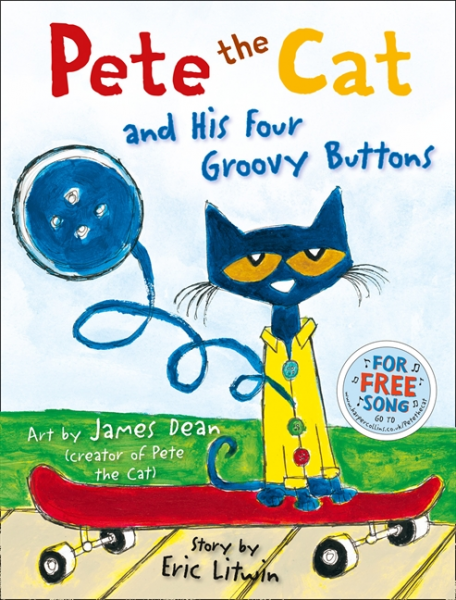
It’s 8:00 in the morning and Pete the Cat is ready to start the day wearing his favorite shirt – the one with 4 groovy buttons. Those buttons are big, they are round, they are colorful, and they inspire him to sing a song: “My buttons, my buttons, my four groovy buttons. My buttons, my buttons, my four groovy buttons.”

Soon, however, one of the buttons pops off! That leaves Pete with how many buttons? 3! Right! Does Pete cry? “Goodness No! Buttons come and buttons go.” Fortunately for readers buttons continue to GO…inviting kids to do the math and sing the infectious song with each “Pop!”

As Pete sits atop his surfboard atop his VW Beetle looking very beachy, his last button goes sprooiiing and rolls away. What does Pete see then? Why, the only button that won’t desert him—his belly button!

Eric Litwin’s short, fast-paced text contains plenty of exciting opportunities for read-along, shout-along fun on every page. The subtraction problems offered as Pete loses buttons provide early learners with confidence-building moments, and Pete’s easy-going attitude is just right for these hyper-busy times.

James Dean’s illustrations are as big, bold, colorful, and groovy as Pete’s buttons. Vibrant primary colors rivet readers to the page, and—Watch out! That popping button is swirling right at you! But through it all Pete the Cat remains his nonchalant self.

Ages 4 – 8

HarperCollins, 2012 | ISBN 978-0062110589

National Button Week Activity

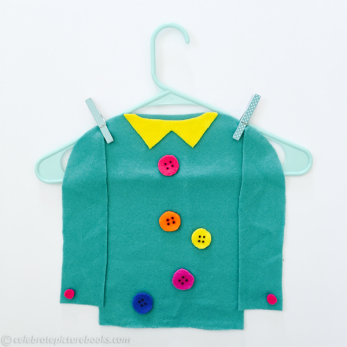
CPB - Button Coat

Pin the Button on the Coat Game


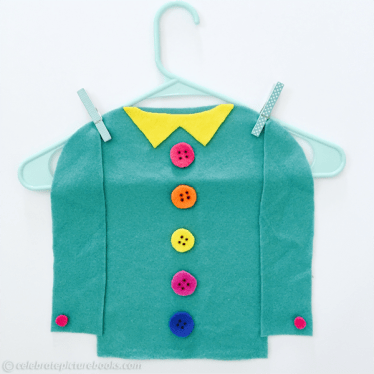
Pin the Button on the Coat is a fun game you can make yourself and play anytime! It’s great for a button-themed party or on any day that you’re holed up and just poppin’ to do something! The game is played like “Pin the Tail on the Donkey,” and the object is to get the buttons as close to the center of the coat as possible. Have fun!

Supplies

CPB - Button Coat II

Directions

  1. Cut out the coat, sleeves, and collar following the printable patterns
  2. With the fabric glue, attach the sleeves to the edge of the coat, and the collar to the top of the coat.
  3. Let dry
  4. Cut circles to represent buttons from the other colors of fleece or felt, as many as you need
  5. With the marker make dots to represent holes in the “buttons”
  6. When the glue on the coat is dry, attach it to the clothes hanger with the clothespins

If you like buttons and button crafts, pop on over to February 29—Haiku Writing Day for Guyku—a fun book of poetry—and directions to make a bookmark with colorful buttons!