August 29 – Happiness Happens Month

About the Holiday

Happiness Happens Month reminds us that happiness doesn’t have to be something we plan for or spend money on. In fact paying attention to those little moments during each day, going on spontaneous outings with friends or family, or taking time to do a favorite activity may be all you need to feel happier every day! With summer coming to a close and school starting again, it’s a great time to reflect on the fun you’ve had over the past months and all the memories that are about to be made as another year of activities, education, new friendships, and excitement unfolds. Happiness really does come to you if you look for it and let it happen!

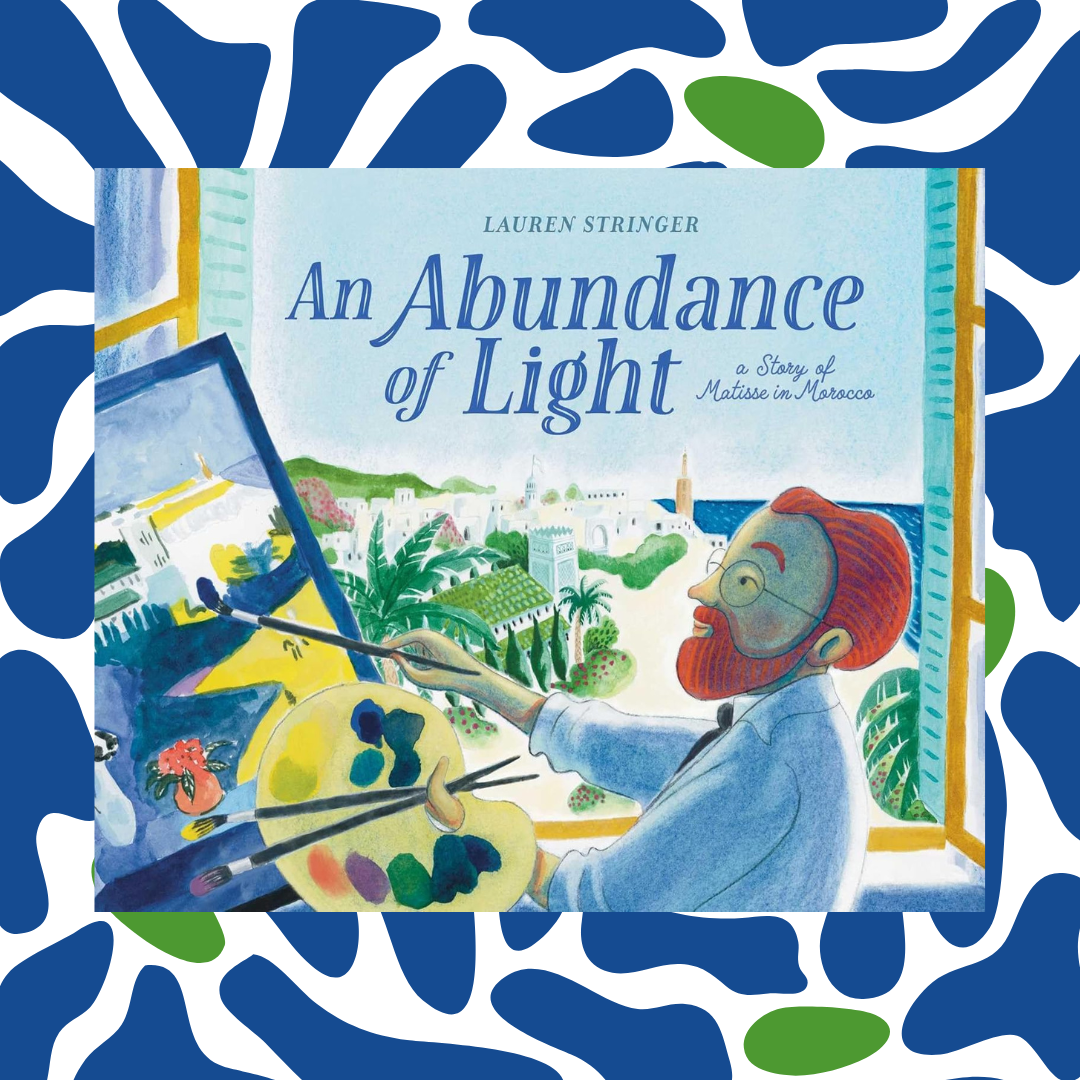
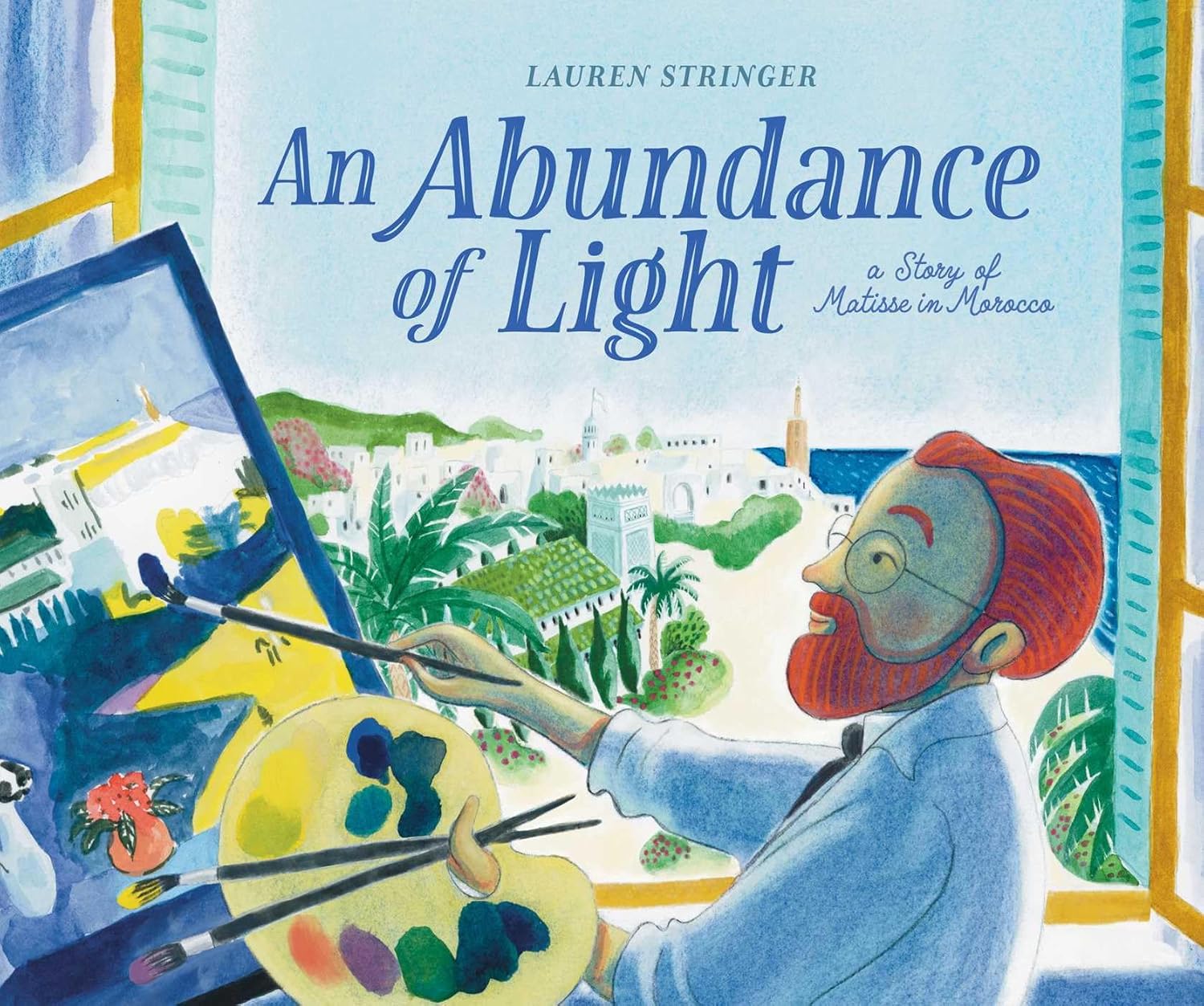
An Abundance of Light: a Story of Matisse in Morocco

By Lauren Stringer


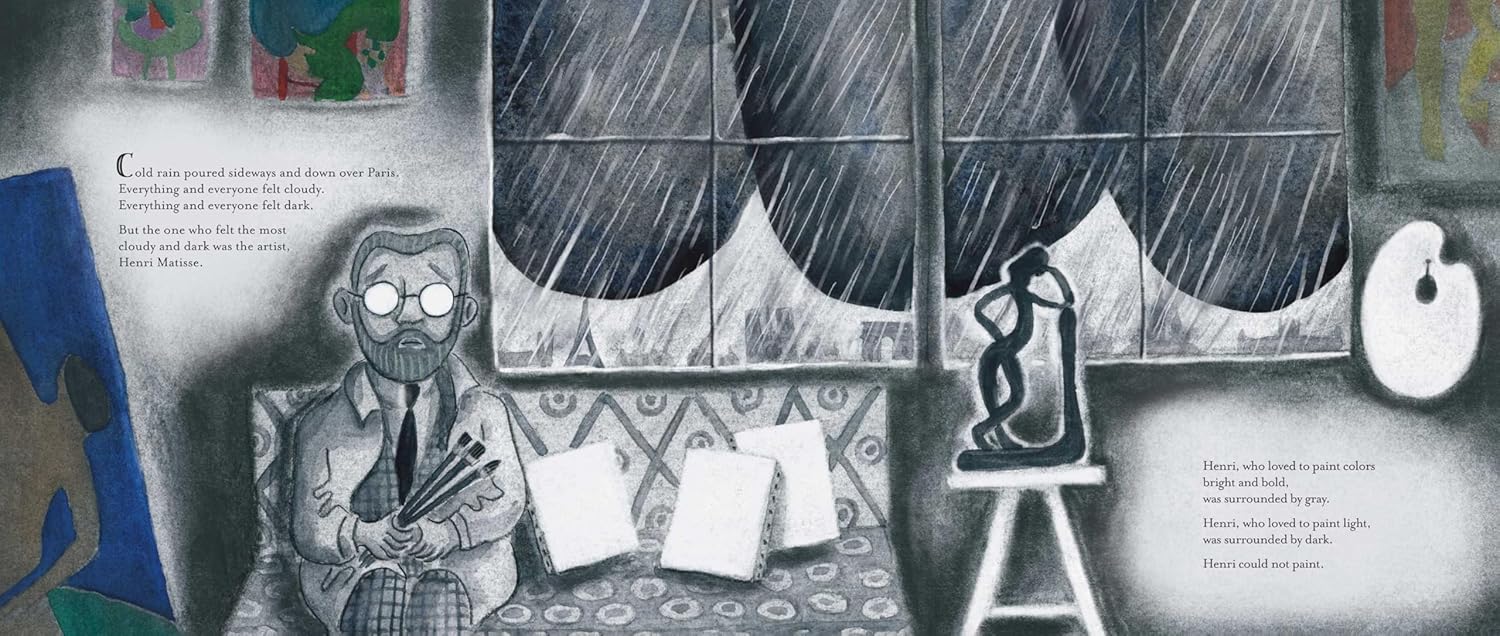
As Paris endured a cold and rainy season, Henri Matisse suffered. How could he paint light and colors when he was surrounded by gray? His friend Albert Marquet suggested he visit Tangier, Morocco, “where the Atlantic Ocean meets the Mediterranean Sea.” There, he said, “the sunlight was abundant!” Henri packed up all of his supplies and made the trip. But it seemed Henri had brought the rainy weather with him. He tried to paint colorful irises and a basket of oranges and lemons, but he still felt gloomy and trapped.

Text and illustration © 2025 by Lauren Stringer. Courtesy of Beach Lane Books.

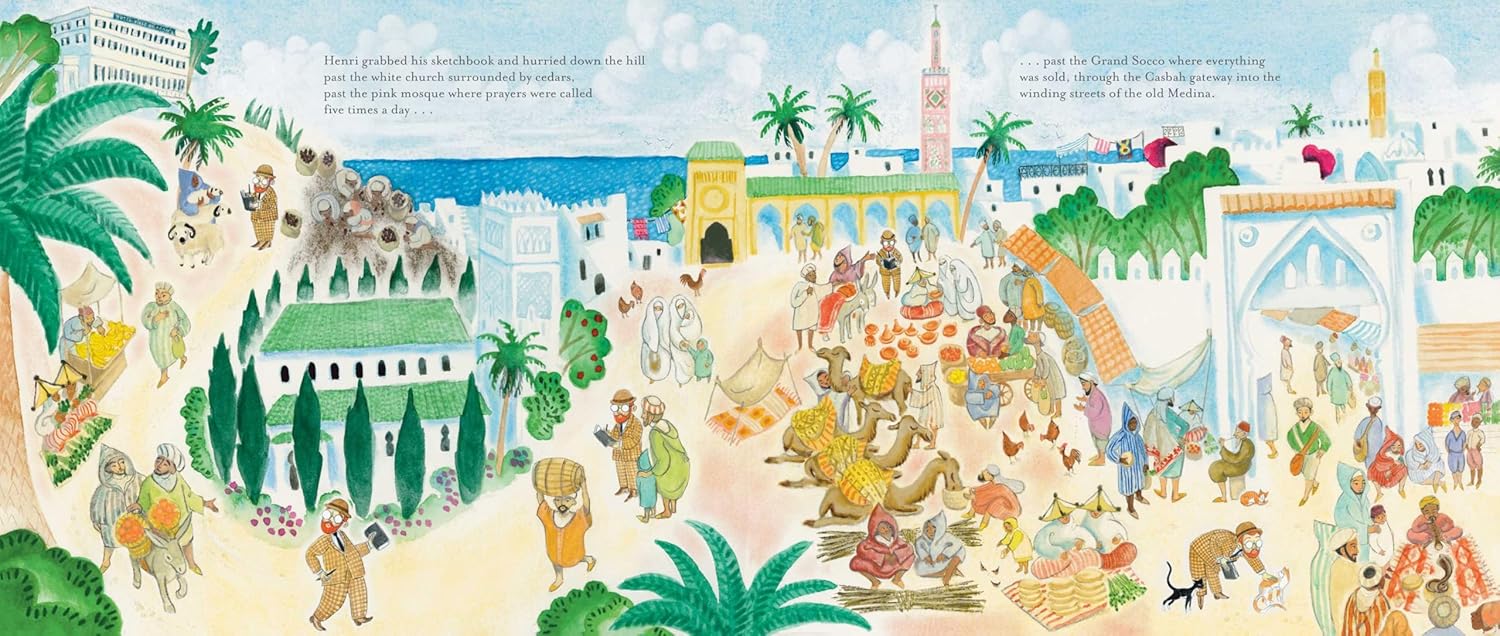
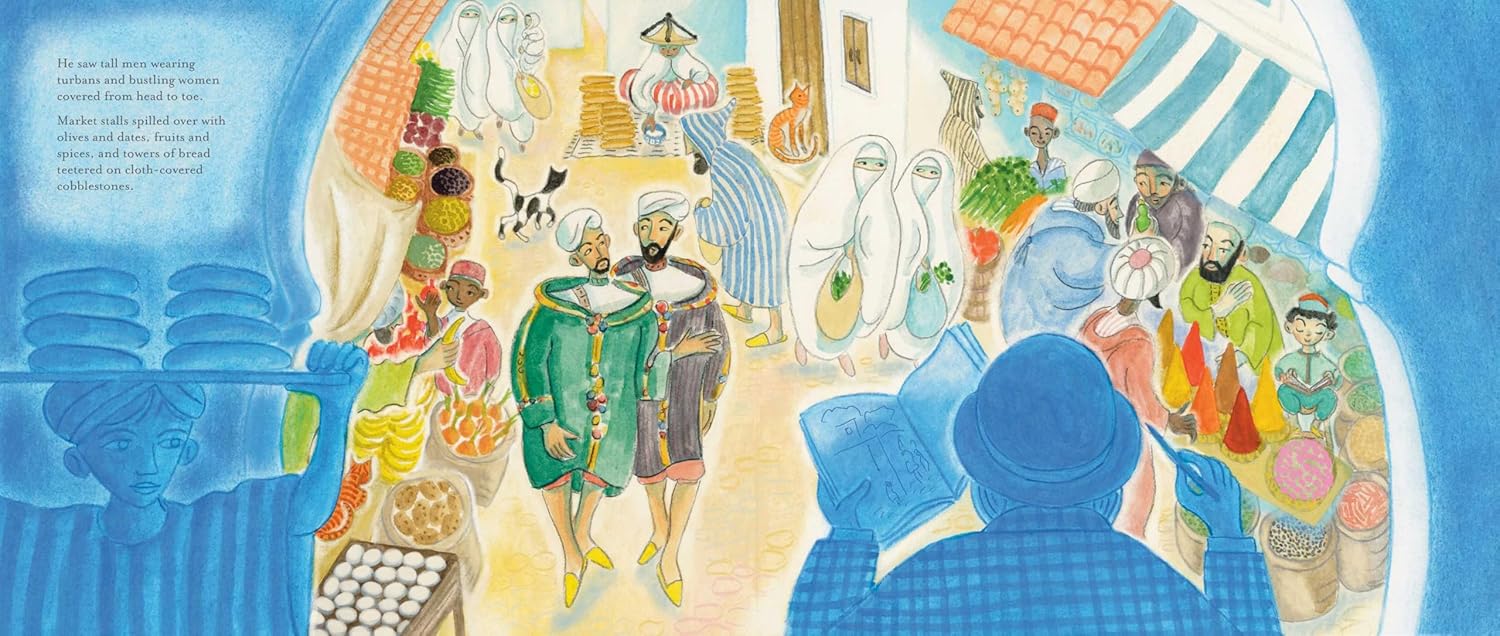
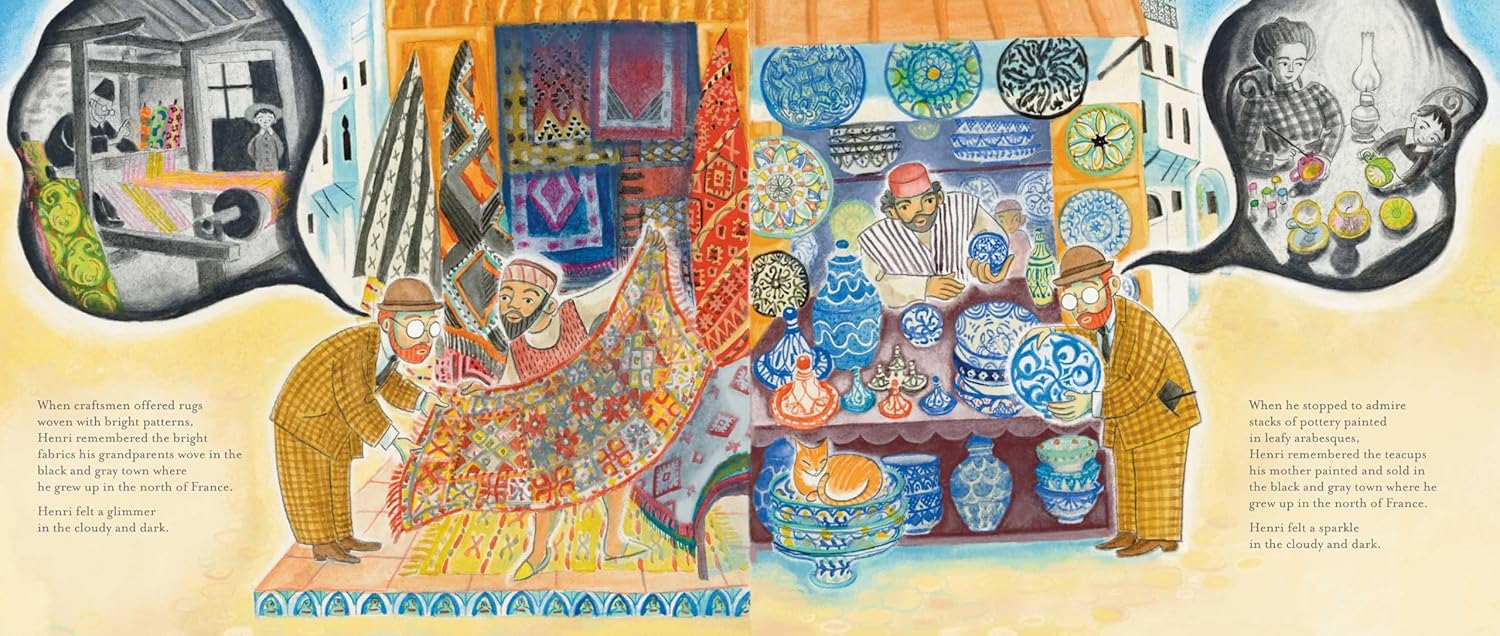
Then one night while Henri slept, the rain stopped. In the morning he woke to ” . . . an abundance of light. A luminous light. A dazzling light.” Henri took his sketchbook and hurried into town, where color shimmered from the pink mosque to the vibrant Grand Socco market to the Casbah gateway to old Medina. Everywhere he looked he saw the vividness of life. Brightly patterned rugs and painted pottery reminded him of the art his grandparents and mother created in their drab town. “Henri felt a glimmer in the cloudy and dark.”

Text and illustration © 2025 by Lauren Stringer. Courtesy of Beach Lane Books.

Henri found a large garden to paint in and began painting the lavender branches, green acanthus, blue periwinkles and “pink-tomato sky” he saw. Despite his “bright and bold” colors, he still felt something cloudy and dark. Then one day, following the music of fiddles, flutes, and drums that filled the air. Henri found a cafe, “where men in long robes gazed at goldfish in round bowls.” Henri was mesmerized by the reds and golds of the fish as well.

Text and illustration © 2025 by Lauren Stringer. Courtesy of Beach Lane Books.

When Henri left the cafe, “he saw an abundance of shadows.” In fact, the dark shadows accentuated the light. Finally, he understood that light and color and dark could work together. In his new paintings he surrounded his colorful subjects with colorful shadows. He interpreted light itself into brilliant color. And in a painting completed from his hotel window, Henri painted shadows of such a dark blue that he realized “he could paint light and color, even in the dark.” At home when Henri displayed his paintings in a gallery in Paris, they were a sensation. Now, whenever the skies turned gloomy and rainy, Henri remembered the abundance of light in Morocco and painted.

Back matter includes a short biography about Henri Matisse’s childhood, a discussion of Matisse and his time in Tangier, and a note from the Lauren Stringer about her trip to Tangier that inspired her story. She also includes an illustrated glossary of terms found in the book.

Text and illustration © 2025 by Lauren Stringer. Courtesy of Beach Lane Books.

Celebrated author, picture book illustrator, and painter Lauren Stringer immerses young children in a particular time in Henri Matisse’s life and reveals how he overcame obstacles to create some of this best-known paintings. His struggles and search for enlightenment are simply and honestly portrayed, lending to his eureka moment deep joy and surprise. The enthusiastic reception for these paintings, Matisse’s newly discovered ability to find light and color even during dark days, and the lessons his artistic parents demonstrated are all reminders that light shines from within.

Stringer’s striking pastel, charcoal, gouache, and digital media illustrations entice readers to join Henri Matisse on his journeys both internal and artistic. Her realistic depictions of Matisse’s circle of famous friends, and the sights of Tangier will entice readers to learn more. As Henri breaks out of his artist’s block, Stringer portrays him with a sprightliness of step, a perceptive eye, and a deft touch with the brush. Readers will be especially fascinated by the side-by-side models and paintings that reveal how Matisse transposed reality to canvas.

An Abundance of Light is a must addition to school and public libraries collections and is highly recommended for art-loving and artistic children. The book would also make an impactful resource for art classrooms and creative projects.

Ages 4 – 8 

Beach Lane Books, 2025 | ISBN 978-1534493629 

About the Author/Illustrator

Lauren Stringer has illustrated many celebrated picture books, including Deer Dancer by Mary Lyn Ray; The Princess and Her Panther by Wendy Orr; Scarecrow and Snow, both written by Cynthia Rylant; as well as her own Winter Is the Warmest Season, When Stravinsky Met NijinskyThe Dark Was Done, and An Abundance of Light. She lives with her family in Minneapolis, Minnesota. Visit her at LaurenStringer.com.

Happiness Happens Month Activity

CPB - Happiness typography

Happiness Is… Game


Happiness is all around you! Grab one or more friends to play a game that reveals what things make you happy. 

  1. Like the “Geography” game: the first player names something that makes them happy, the next player must think of something that starts with the last letter of the word the previous player said. The game continues with each player continuing the pattern. Players drop out as they cannot think of a word. The last player left is the winner.

You can purchase An Abundance of Light from these booksellers

Amazon | Barnes & Noble | Bookshop (discounted books and support for your local independent bookstore)

Picture Book Review

July 1 – National Watercolor Month

About the Holiday

Today, I’m celebrating World Watercolor Month with a biography of a woman artist born in 1861 who not only worked in watercolors but brought the delicately blended beauty of the art form to the solid medium of glass as the creator of iconic Tiffany designs. World Watercolor Month was begun in 2016 by Charlie O’Shields, the creator of Doodlewash®, host of the Sketching Stuff podcast, and founder of a social artist movement dedicated to promoting and connecting watercolor artists from all over the world. The holiday also raises awareness of the global importance of art and creativity. Everyone from amateurs to professionals are welcome to participate—and if you’ve never painted with watercolors before, now’s a great time to try! If you’d like prompts to inspire your work and other ways to enjoy the month and take your love of watercolor painting into next month and beyond, visit Doodlewash.

Thank you to Peachtree and Barbara Fisch of Blue Slip Media for sending me a copy of this book for review!

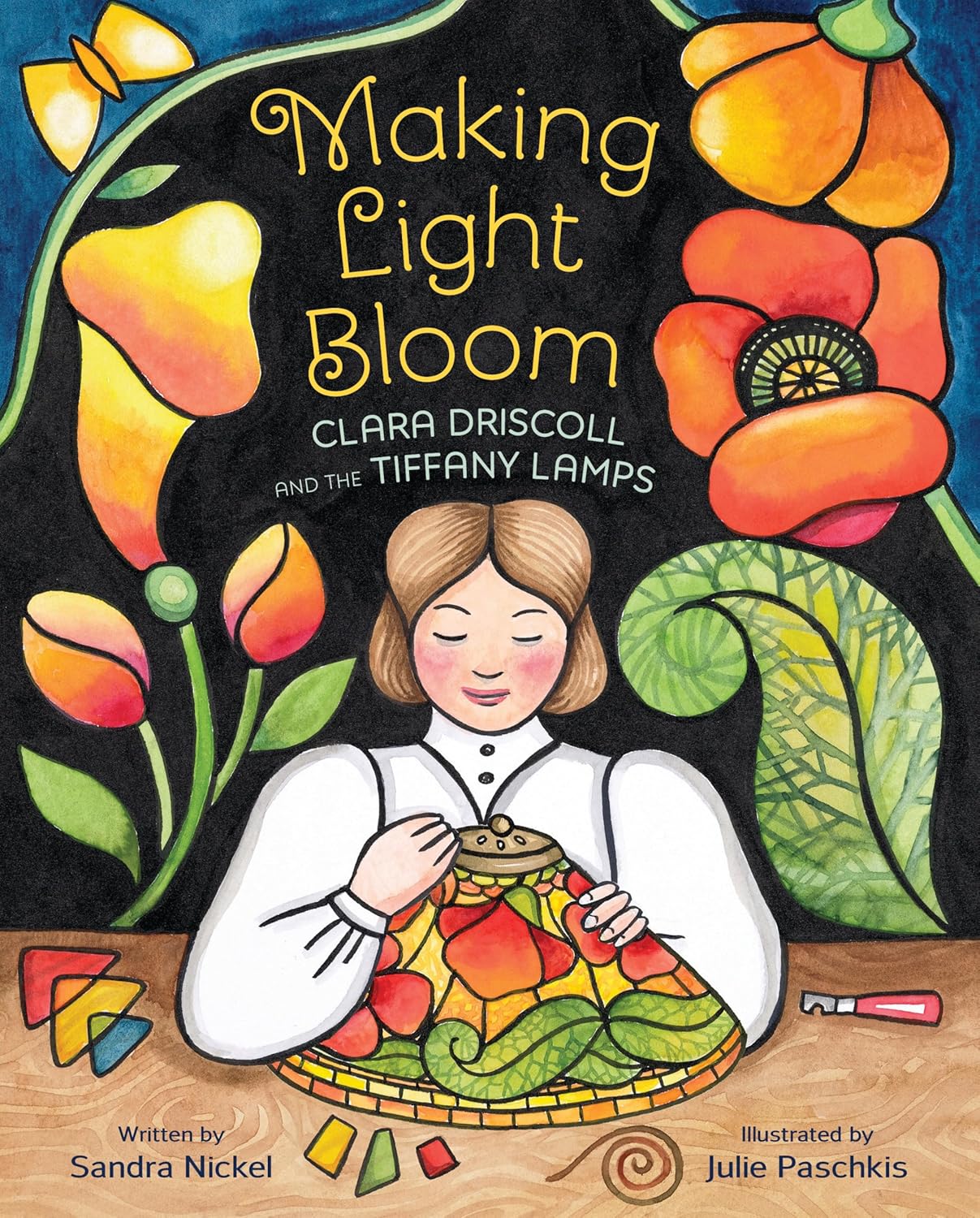
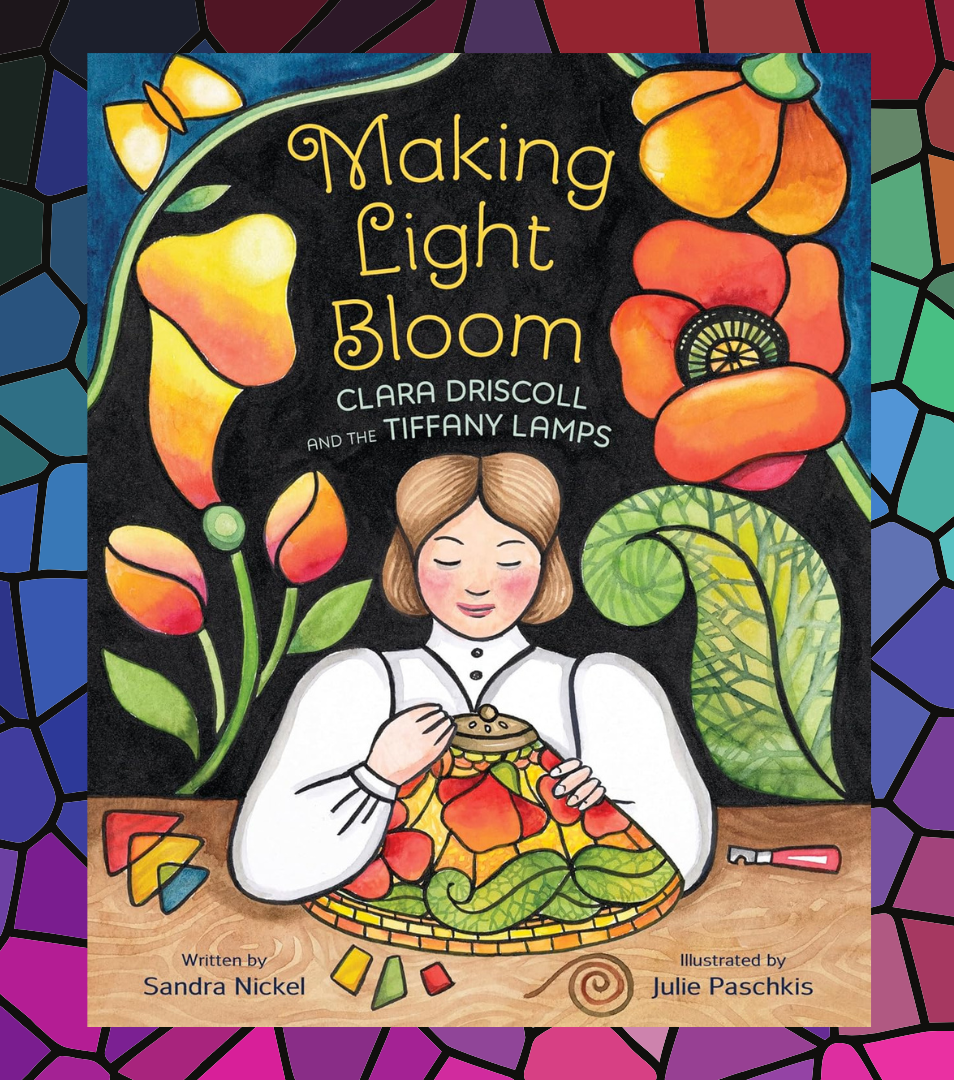
Making Light Bloom: Clara Driscoll and the Tiffany Lamps

Written by Sandra Nickel | Illustrated by Julie Paschkis


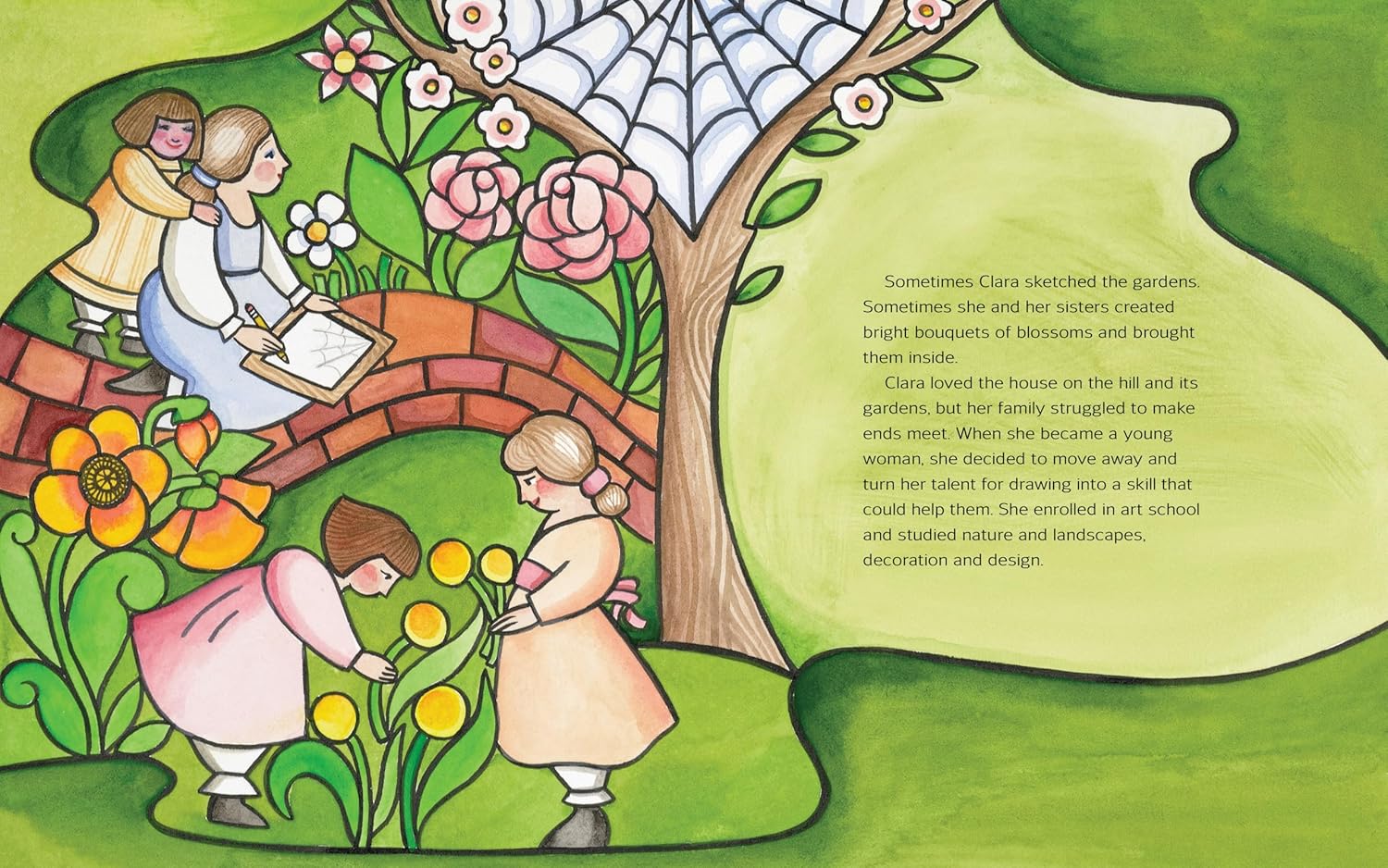
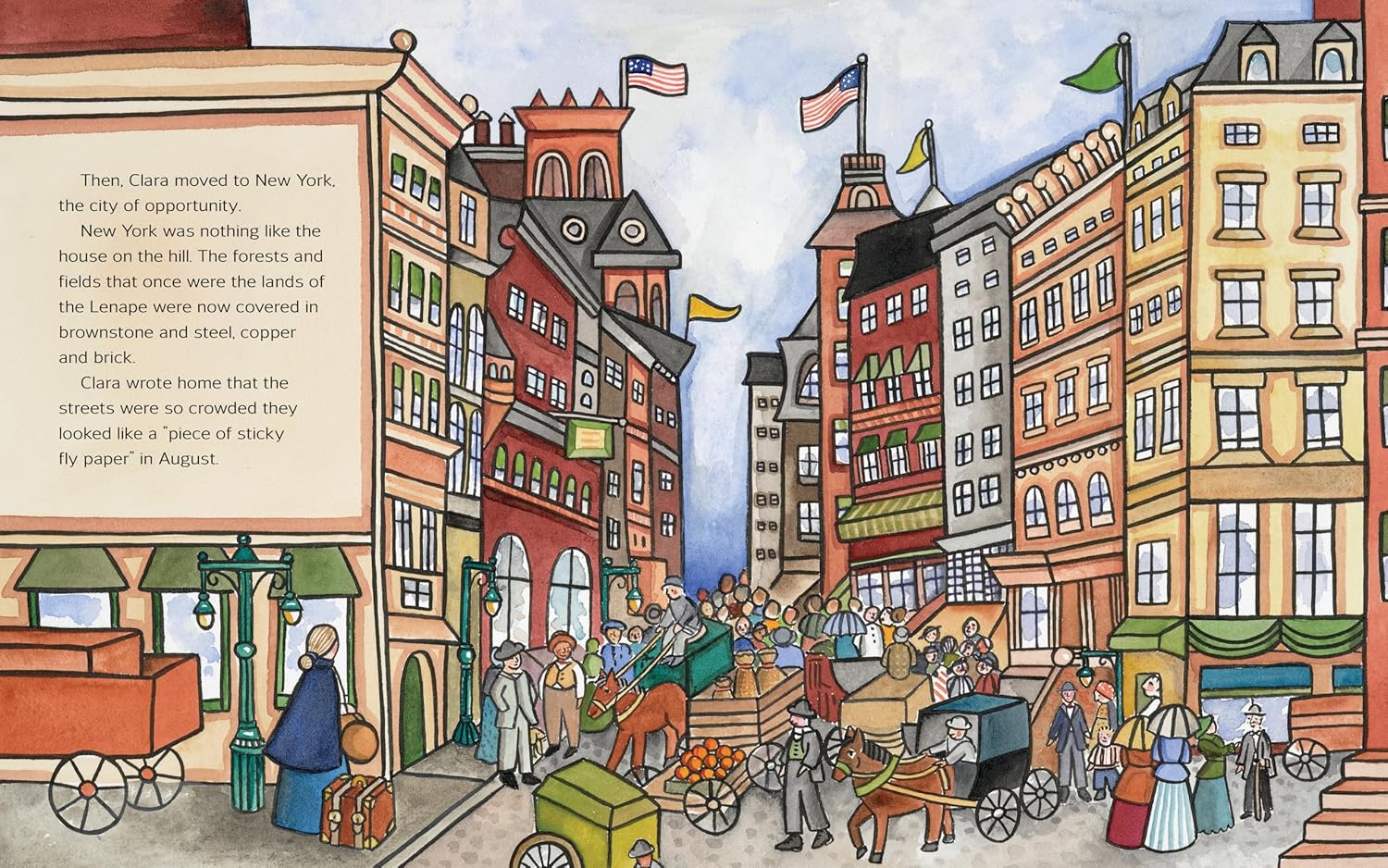
As a young girl, Clara Driscoll grew up surrounded by glorious gardens blooming with morning glories, apple blossoms, and wildflowers and shimmering with the dragon flies they attracted. Clara often sketched the gardens, and when she grew older, she enrolled in art school, hoping to turn her talent for drawing into a job that could help her financially struggling family. After graduation, Clara moved to New York City and took a job working for glassmaker Louis C. Tiffany.

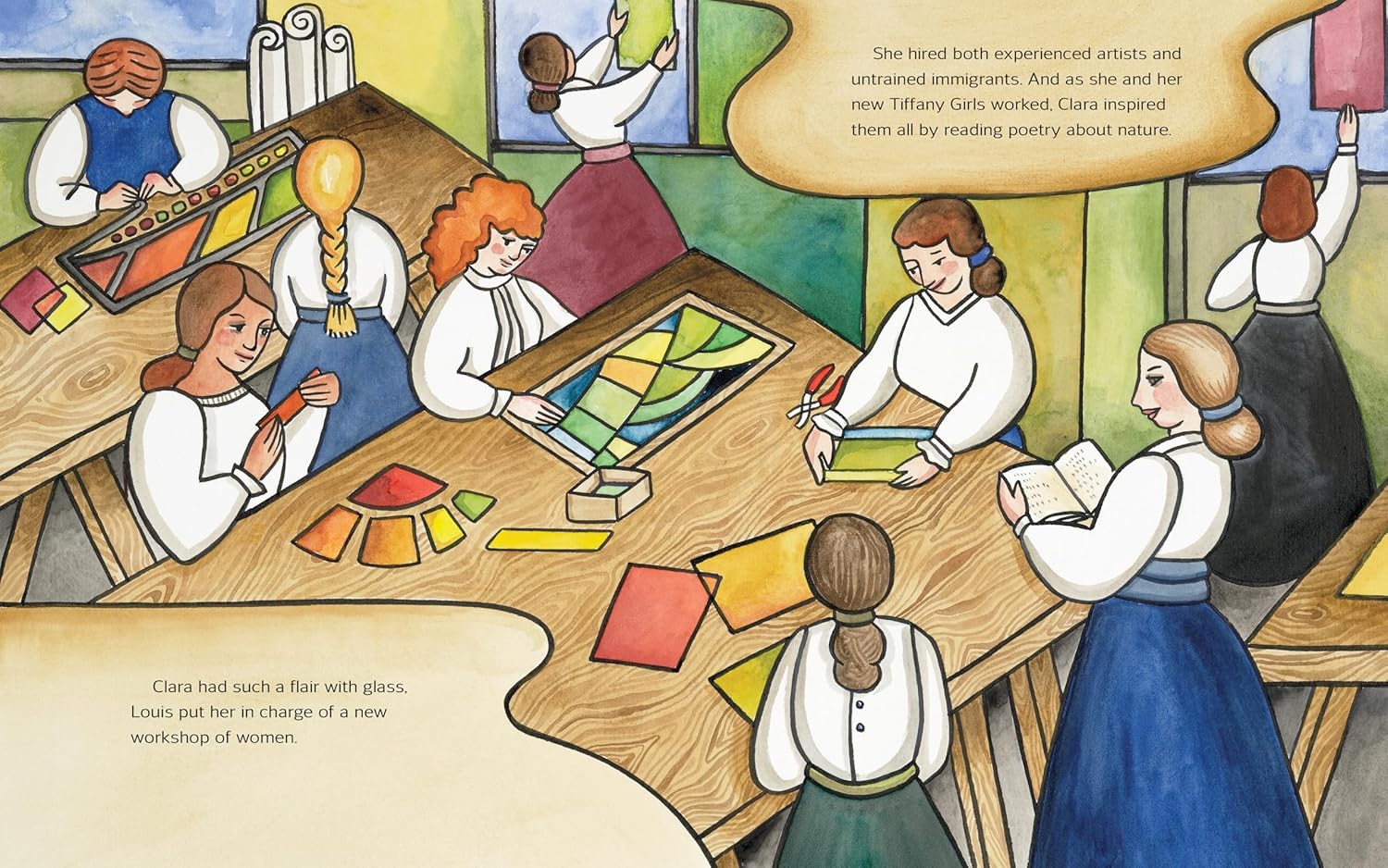
Clara’s task was to choose and cut pieces of glass for the craftsmen to join together with metal ridges to make beautiful stained glass windows. She used her creative eye to “‘paint’ robes, halos, and great wings of angels” with “dappled and streaked, shaded and shimmering” glass. It didn’t take long for Louis to recognize Clara’s talent, and soon she was overseeing her own group of women known as Tiffany Girls. Missing her gardens back home, Clara had the idea to make a lamp from the delicate glass that would bring the beauty of a garden inside.

Illustration © 2025 by Julie Paschkis, text © 2025 by Sandra Nickel. Courtesy of Peachtree.

She and the Tiffany Girls cut small pieces of glass to make butterfly wings, and then “together with the craftsmen, she formed the butterfly wings into a lampshade.” Once the kerosene wick was lit, “light bloomed as never before.” Next, Clara wanted to bring the brilliance of dragonflies to her new creation. But cutting and forming the glass into the intricate wings of a dragonfly was time consuming, and one of the managers said that “she could never make another.”

That, however, was before Louis Tiffany saw the lamp and asked Clara “to make another to display at the World’s Fair in Paris.” At the fair, Clara’s lamp won the bronze medal. The lamp’s success “astounded” Louis. He put Clara and the Tiffany Girls in charge of making lamps and windows representing the beauty of natural landscapes.

Feeling shut out, the craftsmen announced a strike unless Louis fired the women. But Louis knew the value of Clara’s imagination and work, so he compromised with the men: Clara’s workshop would not get bigger, but “Clara would be in charge of lamp-making from that day forward.”

Illustration © 2025 by Julie Paschkis, text © 2025 by Sandra Nickel. Courtesy of Peachtree.

Elated, Clara began creating new designs inspired by the gardens she’d sketched at home as well as  nature she found within the city, all informed by her meticulous research. In the basement storage room, she searched for pieces of glass that were just the right hues to bring to life each petal, flower, leaf, and stem. In one astonishing design, she recreated wisteria with 2,000 tiny petals.

While Clara’s work was recognized inside the studio, because her lamps were only known as “Tiffany lamps,” no one else knew they were Clara’s creation. It was only after both Louis and Clara passed away and Clara’s letters to her sisters were discovered that people learned the truth about how Clara made light bloom “throughout the world.”

Back matter includes an Author’s Note that goes into more detail about Clara’s letters home, Louis C. Tiffany’s reaction to her initial idea, and Clara’s long, intricate process for designing each lamp; a list of museums where you can see Tiffany Lamps; and the names of two archives where Clara’s letters can be read; a bibliography; and dates and quotes for references found in the book.

Illustration © 2025 by Julie Paschkis, text © 2025 by Sandra Nickel. Courtesy of Peachtree.

Sandra Nickel’s fascinating and eye-opening story about Clara Driscoll, one of the world’s most innovative artists, is both inspirational and uplifting. Nickel’s heartfelt, straightforward storytelling about Clara’s early years allows readers to see how youthful experiences and interests can influence their later endeavors—creative and otherwise. Nickel also emphasizes Clara’s remarkable vision for ways to expand the use of stained glass in the 1890s as well as her advocacy for herself and her ideas, making her an excellent role model for all children. And while Clara was not recognized for her work during her lifetime, art lovers can be grateful that Louis C. Tiffany knew brilliance when he saw it and valued her contributions—another aspect of Clara’s story to celebrate. 

Julie Paschkis’s dazzling, folk-style illustrations bring the intricate and delicate beauty of stained glass to the page, telling Clara’s story visually in a way similar to the windows she often worked on. Taking kids into the Tiffany studio, Paschkis demonstrates how Clara, the Tiffany Girls, and the craftsmen chose, cut, and pieced together to create complex scenes that glow with life still today. Paschkis faithfully recreates Clara’s iconic dragonfly lamp, an image that will wow kids. 

A vibrant biography of a visionary artist, Making Light Bloom: Clara Driscoll and the Tiffany Lamps is an inspiring book to share with creatives of all types at home, in the classroom, and for art and crafts programs. The book is a must addition to any library collection.

Ages 7 – 10

Peachtree, 2025 | ISBN 978-1682636091

About the Author

Sandra Nickel is an award-winning author of picture books and has two new books out this Spring: Seven, A Most Remarkable Pigeon, an uplifting tale that celebrates differences, and Making Light Bloom, Clara Driscoll and the Tiffany Lamps, in which Sandra continues her mission to celebrate extraordinary individuals who have been nearly forgotten by history. She is honored to be the winner of a Christopher Award, the winner of the Society of Children’s Book Writers & Illustrators Crystal Kite Award, a finalist for the Golden Kite Award for Nonfiction for Younger Readers, a Junior Library Guild Gold Selection honoree, and a Charlotte Huck Award Recommended author. She holds a Master of Fine Arts in Writing for Children and Young Adults and has presented workshops on writing for children and young adults throughout the United States and Europe. Visit her at sandranickel.com. You’ll also find her on Bluesky, Facebook, Instagram, and Twitter/X

About the Illustrator

Julie Paschkis is an award-winning illustrator of more than 25 books for children. A graduate of Cornell University and the School for American Craftsmen at Rochester Institute of Technology, she taught art to grade school children for a number of years before turning her full attention to painting, textile design, and creating illustrations for her books. Visit her at juliepaschkis.com to see more of her work and download whimsical and nature-inspired coloring pages for kids and adults. You’ll also find her on Facebook.

World Watercolor Month Activity

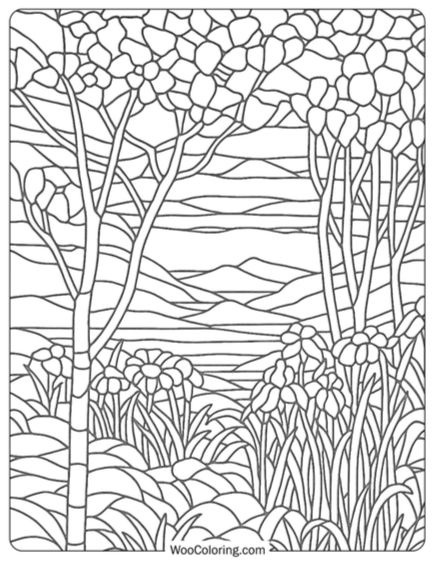
Tiffany Window Coloring Page


Create your own brilliant vision with this Tiffany Window Coloring Page!

You can purchase Making Light Bloom: Clara Driscoll and the Tiffany Lamps from these booksellers.

Amazon | Barnes & Noble | Bookshop

Picture Book Review

May 18 – International Museum Day

celebrate-picture-books-picture-book-review-the-ultimate-art-museum-cover

About the Holiday

International Museum day was created in 1977 by the International Council of Museums to raise awareness that “museums are an important means of cultural exchange, enrichment of cultures and development of mutual understanding, cooperation and peace among peoples.” The theme for this year is “The Power of Museums.” Museums are not just repositories of the past. They are vital and active members of the communities they serve and as such can be leaders in tackling some of society’s biggest issues. This year the International Council of Museums aimsto “explore the potential of museums to bring about positive change in their communities through three lenses: the power of achieving sustainability, the power of innovating digitalization and accessibility, and the power of community building through education. To learn more about these initiatives, visit the ICOM website. Celebrate International Museum Day by visiting a museum near you – or visit many world-famous museums through today’s book.

The Ultimate Art Museum

By Ferren Gipson

A blurb on the cover of this astounding book sums up the lofty goals it achieves: “40,000 years of the world’s most amazing art in one dream museum!” Indeed, once readers open the cover and accept the “ticket” offered, they can peruse the museum map that lays out the three wings, 18 galleries, and 128 rooms, plus a cafe and garden, that await them. An note from author Ferren Gipson introduces readers to the range of ways art can influence and reflect their times and the people who lived during different eras.

Gipson’s conversational style follows visitors to this unique museum from page to page, prompting them to look, consider, understand, and make connections. On some pages, a question or comment marked by an eye sends readers to another gallery or room to compare artworks, subjects, or themes across time and cultures. Some of these give a page number to consult, while others allow readers to study a room or gallery to find the artwork referred to.

celebrate-picture-books-picture-book-review-the-ultimate-art-museum-galleries

Copyright Ferren Gipson, 2021, courtesy of Phaidon.

Wing 1, appropriately, presents “treasures from the world’s earliest civilizations and the earliest art ever made.” Here, children and adults will find cave art; figurines carved from ivory, bone, and stone; treasures from ancient empires, carved reliefs, the painted, sculpted, and gilded wonders of ancient Egypt, Greece, and Rome. The intricate art of the Byzantine, early Islamic, and Medieval worlds demonstrate important aspects of these cultures as do works from ancient East Asia well as South and Southeast Asia. Readers then cross the Atlantic Ocean to discover the pottery, sculptures, and fabrics created by Native societies of North and South America. Each artwork is accompanied by a paragraph that will draw children in with clear, concise, and fascinating descriptions of the artwork, what it means, and, sometimes, even secrets that it holds.

Time for a break? Turn the page and enter the Café, where the “menu,” consisting of “Snacks, Mains, and Dessert” offers delectable choices depicted in paintings and sculpture. Refreshed, readers can step into Wing 2, where the galleries hold treasures from the 1200s to the 1800s created in Asia, including book illustrations, a palepai cloth, a puppet, scholar paintings, porceline, folding screens, carpets, and even the Taj Mahal.

The Renaissance comes to Europe with an impressive display of curiosity and learning that resulted in many changes to society and art. “Artists came up with better ways to mix oil paints and began to paint on canvas for the first time. And what scientists learned about the human body helped them paint and sculpt people who looked very real.” The subjects of artworks expanded too to include “portraits, mythology, and everyday life.” Dragon lovers can take up the challenge to compare two dragons – one created by an Italian master and the other found on a Chinese vase from the Yuan Dynasty.
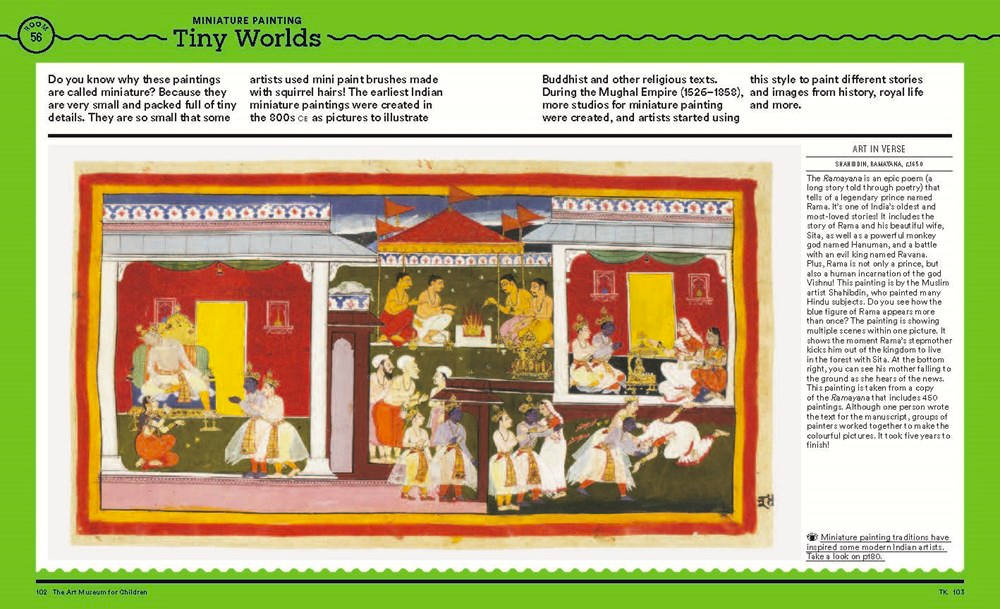
celebrate-picture-books-picture-book-review-the-ultimate-art-museum-miniatures

Copyright Ferren Gipson, 2021, courtesy of Phaidon.

From 1600 – 1850, dramatic and lifelike paintings became popular. Dark shadows and highlighted areas gave paintings an atmospheric feel that invited viewers to look closely. In one of Diego Velázquez’s famous Las Meninas painting, all of the people portrayed seem to be looking out from the canvas at you. But who are they really looking at? The answer can be found reflected in a mirror on the back wall. In addition to realistic family and town life, landscapes also became popular during this time.

Moving to another room, readers will find that the art of the Pacific Islands is distinctively different in its depictions of “images of gods, spirits, and ancestors of the people who lived there.” Those works created from stone and wood have survived through the ages while “others, such as objects made from delicate spider webs or flowers, have disappeared.” Art from the continent of Africa is up next. With its many unique kingdoms and communities, Africa has produced unique artworks that “celebrate leaders and tell the stories of Africa’s great empires and civilizations.” Clay, wood, metal, ivory, and cloth have been used to “create art with spiritual and practical purposes.”

Ah! Time for a walk through the garden. Which path will you take? The one past Georgia O’Keefe’s “Red Poppy” or one where you can see a moth and a caterpillar on the branch of a citrus tree? Perhaps you’d like to stroll through a hurricane with a tiger on your trail with Henri Rousseau’s “Tiger in a Tropical Storm (Surprised)” or maybe you’d like a fragrant walk through Gustav Klimt’s “Flower Garden.”
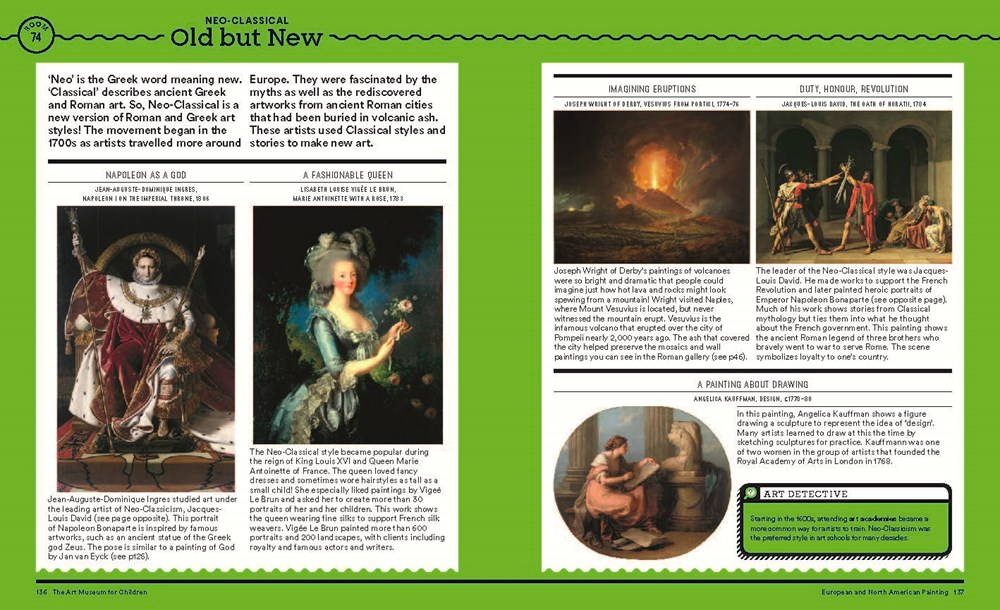
 
celebrate-picture-books-picture-book-review-the-ultimate-art-museum-neo-classical

Copyright Ferren Gipson, 2021, courtesy of Phaidon.

Wing 3 takes readers to modern times, when “almost anything is possible in art!” In this wing, visitors will see “art that does not have a set purpose.” Instead, the artists represented here “created works that were experimental and personal. They used unusual materials and tried exciting techniques.” In these rooms, readers will encounter the Impressionists, who were interested in capturing a moment in time,  and Post-Impressionists, who experimented with color, techniques, and subject matter. Readers will no doubt recognize paintings by Mary Cassatt, Vincent Van Gogh, and Georges Seurat.

American realist painters took city scenes, sports events, tender moments between family members, and many other topics. The Cubist period began when some artists experimented in showing their subject from a variety of angles at one time. Paul Cézanne, Pablo Picasso, and Georges Braque are just a few of the famous artists who “chopped up and rearranged images” to make a new style of art.
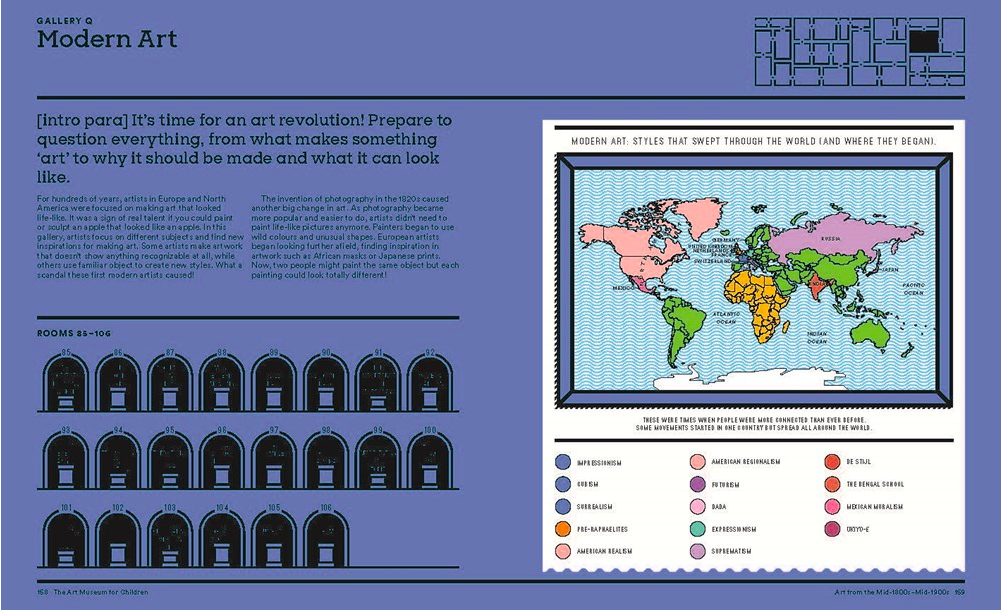
celebrate-picture-books-picture-book-review-the-ultimate-art-museum-map

Copyright Ferren Gipson, 2021, courtesy of Phaidon.

Visitors will also learn about the Dada movement, Expressionism, and American Regionalism. Photography took center stage as cameras became lighter and easier to use. The art of the Harlem Renaissance by Black Americans is reflected in a painting of Harriet Tubman by William H. Johnson, a bronze bust of a boy by Augusta Savage, and a quilt by Harriet Powers – one of only two that still exist.

After visiting a room of modern works from India and Mexico, readers enter the dizzying world of the Surrealists. Surrealism “shows real objects but in a completely fantastical way. It explores how dreams, imaginations, and the inner workings of the mind can be shown in art.” A train emerging from the “tunnel” of a fireplace, a fur teacup, saucer, and spoon, and Salvador Dali’s “drooping” clocks are a few of the works you’ll find here.
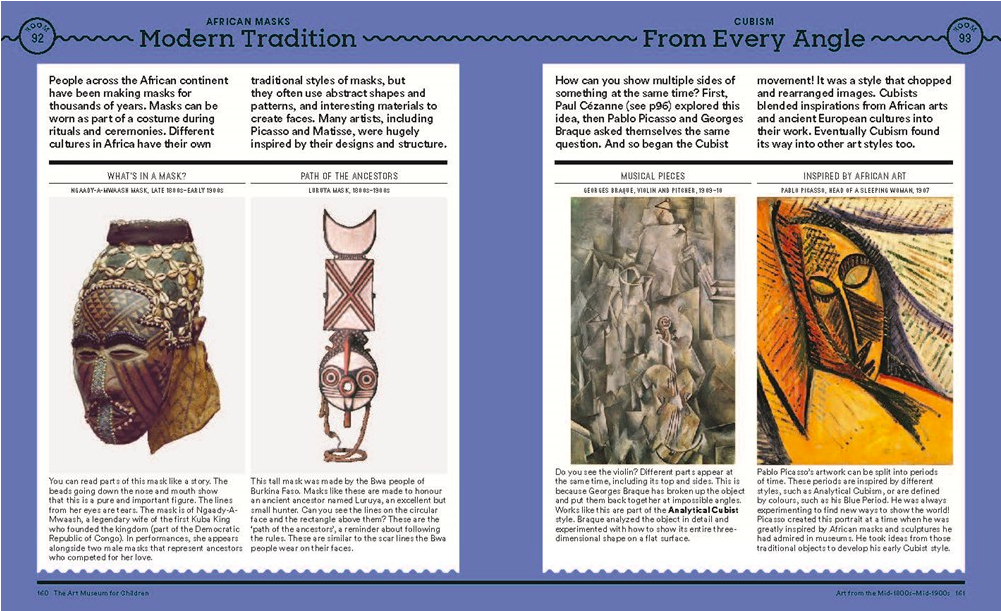
celebrate-picture-books-picture-book-review-the-ultimate-art-museum-cubism

Copyright Ferren Gipson, 2021, courtesy of Phaidon.

In Wing 3, readers will also learn about Collages, Abstract Expressionism, Minimalism, Conceptual art, and Op art that boggle the eyes and mind with their optical illusions. Pop art, Installations, contemporary sculptures large and small as well as Alexander Calder’s mobiles and artwork created from light stand side-by-side with Christo and Jeanne-Claude’s outdoor wrapping installations, Aboriginal Australian art, Feminist art, Chicanx art, performance art, video art, contemporary art, and so much more. If you’re a fan of selfies, you’ll want to stop at the Hall of Selfies and see how four artists anticipated and/or reflect this very modern art form.

Helpful maps accompany each wing and gallery change to show readers where the art in that gallery comes from or its influence. A smaller map inset often orients readers to where the region represented is situated in the world at large.

Back matter includes an Author’s Note, a map of 54 major museums around the world, a glossary of terms found in the text, and an index.
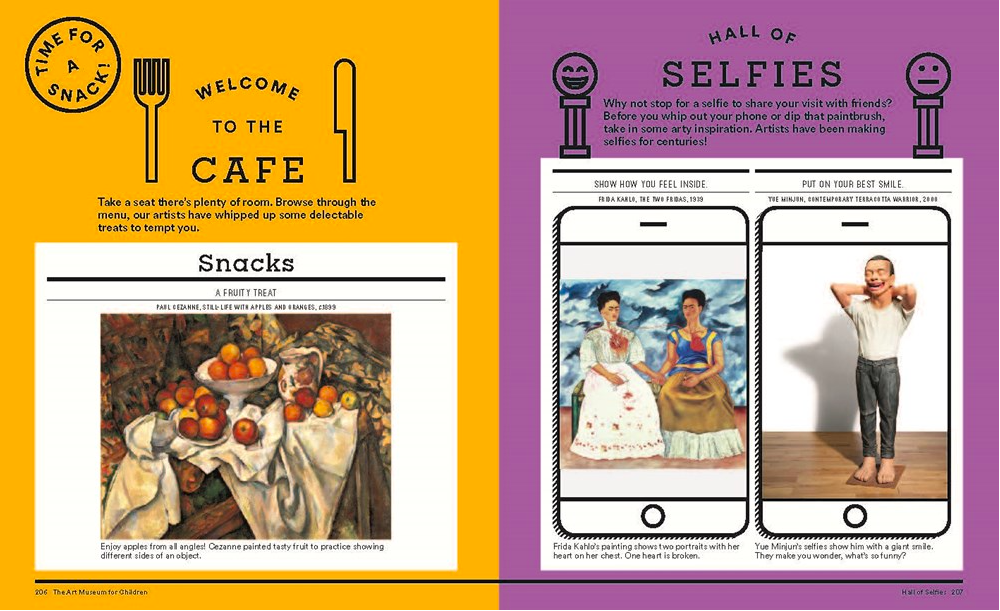
celebrate-picture-books-picture-book-review-the-ultimate-art-museum-selfies

Copyright Ferren Gipson, 2021, courtesy of Phaidon.

Ferren Gipson is the “cool” docent every visitor wants as their tour leader on a trip to a museum. Full of enthusiasm for art and its impact, gifted with a wealth of knowledge, and quick with a fun fact, a humorous aside, or an intriguing nugget of perspective, Gipson will wow kids and adults alike with her love of all kinds of art. Open The Ultimate Art Museum to any page and readers will immediately be absorbed by whatever style of art or time in history they’ve hit upon and will eagerly wander from gallery to gallery, room to room, page to page to learn more.

The Ultimate Art Museum has applications for strong cross-curricular study for teachers and homeschoolers, expertly connecting history, art, changing societies, and more visually and textually. Gipson’s entertaining and thorough treatment of her topic will get kids excited about visiting museums of all kinds, and arm-chair travelers will wile away many happy hours wandering its pages. 

The Ultimate Art Museum is a must for classrooms and school and public libraries and would be a much-loved addition to home bookshelves or coffee tables.  

Ages 8 and up

Phaidon, 2021 | ISBN 978-1838663780

Discover more about Ferren Gipson, her books, work, and podcast “Art Matters” on her website.

International Museum Day Activity
CPB - Cookie Jar Museum (2)

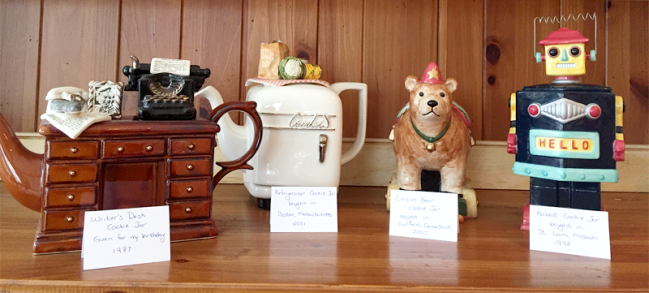
Create a Museum Exhibit

Every item has a story. Maybe there’s a funny anecdote behind that knick-knack on your shelf. Perhaps your favorite serving dish holds sentimental value. How about your child’s best-loved toy or a drawing or craft they’ve made? A fun and educational way for kids to learn family stories and interact with their own history is to create a museum exhibit of objects in your home.

For teachers this can be a fun classroom activity that incorporates writing, art, and speaking as well as categorizing skills. Students can use objects in the classroom or bring items from home to set up museum exhibits. This activity can be done as a whole-class project or by smaller groups, who then present their exhibit to the rest of the class.

Supplies

  • A number of household or classroom items
  • Paper or index cards
  • Markers
  • A table, shelf, or other area for display

Directions

  1. To get started help children gather a number of items from around the house to be the subjects of their exhibit. An exhibit can have a theme, such as Grandma’s China or Travel Souvenirs, or it can contain random items of your child’s choice, such as toys, plants, tools, even the furniture they see and use every day.
  2. Using the paper or cards and markers, children can create labels for their exhibit items. Older children will be able to write the labels themselves; younger children may need adult help.
  3. Spend a little time relating the story behind each object: where it came from, how long you’ve had it, when and how it was used in the past, and include any funny or touching memories attached to the item. Or let your child’s imagination run free, and let them create histories for the objects.
  4. When the labels are finished, arrange the items on a table, shelf, or in a room, and let your child lead family members or classmates on a tour. You can even share the exhibit with family and friends on social media.
  5. If extended family members live in your area, this is a wonderful way for your child to interact with them and learn about their heritage.

celebrate-picture-books-picture-book-review-the-ultimate-art-museum-cover

You can find The Ultimate Art Museum at these booksellers

Amazon | Barnes & Noble | Books-a-Million

To support your local independent bookstore, order from

Bookshop | IndieBound

Picture Book Review

August 14 – It’s National Crayon Collection Month

celebrate-picture-books-picture-book-review-the-crayon-man-cover

About the Holiday

Kids love going to restaurants that provide a fun placemat and crayons to color with while they wait. But what happens to those crayons when the meal is over? Most times they’re thrown in the trash with the napkins and straws and other items left behind. Wouldn’t it be great if those gently used crayons could go on to be used by other kids at schools that can’t afford such supplies? They can! Begun by Crayon Collection, National Crayon Collection Month encourages restaurants, hotels, and other organizations that provide free crayons to collect the ones left behind and donate them to under-serviced schools. As school arts programs are threatened with budget cuts, these important supplies can make a big difference in the lives of students. The ability of children to express their creativity is a crucial part of their education and growth.  You can get involved too! To learn how you can make an impact, visit CrayonCollection.org. Or look into donating crayons (and other supplies) to a school in your area.

The Crayon Man: The True Story of the Invention of Crayola Crayons

Written by Natascha Biebow | Illustrated by Steven Salerno

Edwin Binney was an inventor who truly appreciated all the colors around him. In fact, “color made him really, really HAPPY!” Perhaps he loved color so much because all day long in the mill where he worked he was surrounded by nothing but black: “black dust, black tar, black smoke, black ink, black dye, black shoe polish. His company sold carbon black, a new kind of pigment, or colored substance, make from the soot of burning oil and natural gas.” Edwin worked with his cousin C. Harold Smith, and their company was called Binney and Smith.

celebrate-picture-books-picture-book-review-the-crayon-man-cardinal
Image copyright Steven Salerno, 2019, text copyright Natascha Biebow, 2019. Courtesy of HMH Books for Young Readers.

While Harold was the salesman, Edwin was the tinkerer who had made better pencils for writing on slate and a wax crayon that wrote on both paper and wood. His wife, Alice, thought he was just the person to create better crayons for kids. The existing crayons were too big and clunky, and artists’ crayons were too expensive.

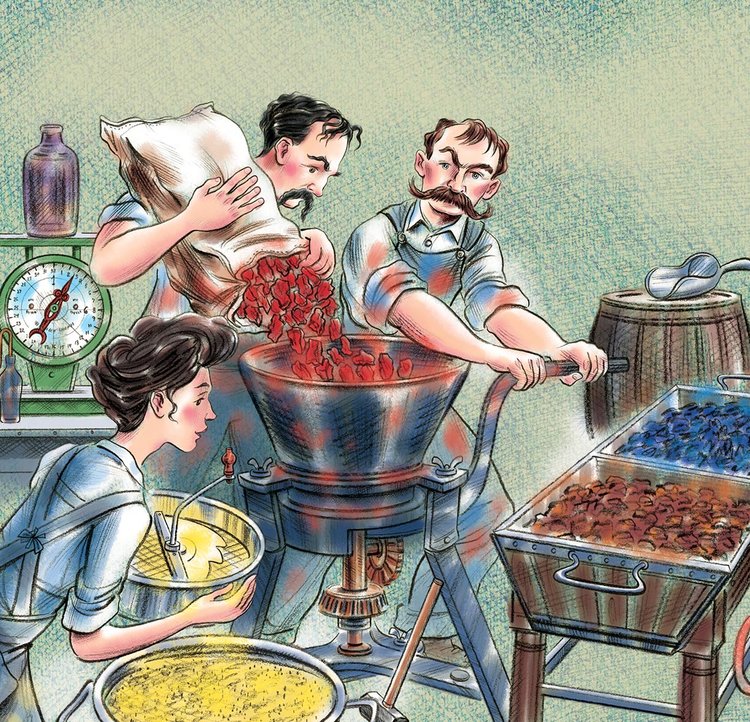
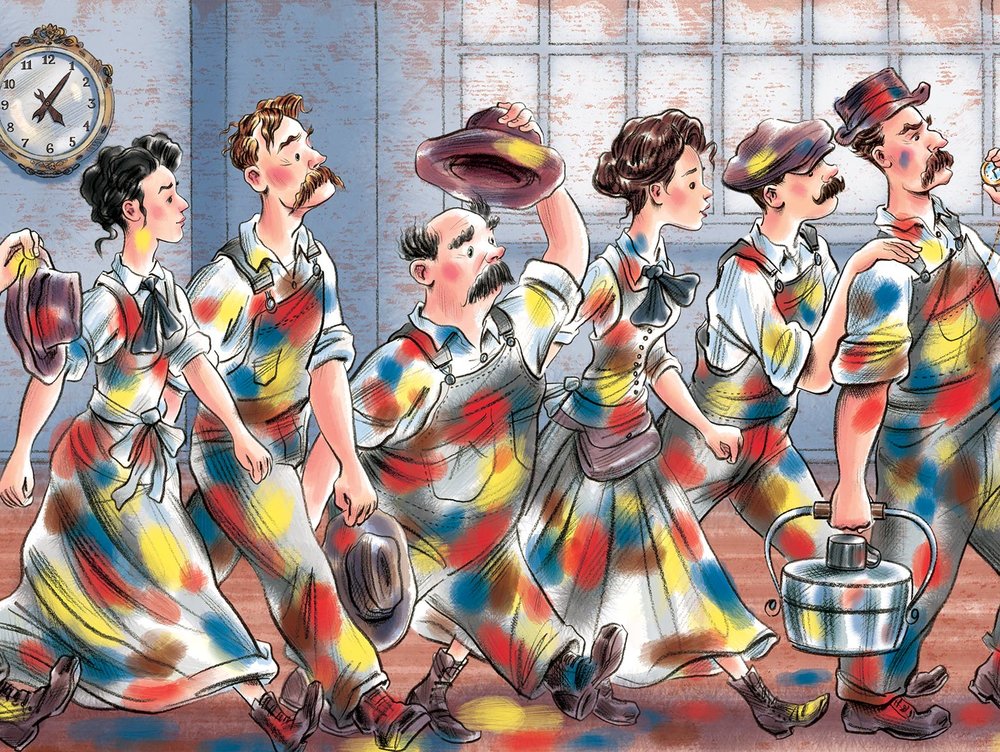
Edwin gave it some thought and started experimenting with wax for substance and rocks and minerals for color. Then he and his workers fine-tuned their batches, adding only “a pinch of this pigment, a sploosh of that one, a little hotter, a little cooler…and voilà, LOTS of different shades!” Now, instead of being covered in black dust at the end of the day, “Edwin came home covered in color.”

celebrate-picture-books-picture-book-review-the-crayon-man-tea
Image copyright Steven Salerno, 2019, text copyright Natascha Biebow, 2019. Courtesy of HMH Books for Young Readers.

At the factory, Edwin’s team worked on their top-secret formula and finally poured the mixtures into “thin, crayon-shaped molds” to make crayons that were just the right size for children. Finally, in 1903, Edwin had the product he wanted. “He’d invented a new kind of colored crayon” and wanted a new name to go with it. Alice had just the right suggestion, and Crayola crayons were born.

The first boxes contained eight colors and sold for a nickel. As they shipped out to stores, Edwin wondered if the kids would like them. Children loved their fine points, clear lines, and long-lasting color. By this time, inexpensive paper was also available, so kids didn’t have to draw or write on slate tablets anymore.

celebrate-picture-books-picture-book-review-the-crayon-man-hopper
Image copyright Steven Salerno, 2019, text copyright Natascha Biebow, 2019. Courtesy of HMH Books for Young Readers.

At the St. Louis World’s Fair in 1904, Edwin’s Crayola crayons won a gold medal. As time went on, Edwin and his team made even more colors, many inspired by nature and even the flowers in Edwin’s own garden. Some of the colors you’ll find in a box today were given their names by children, including “macaroni and cheese” and “robin’s egg blue.” Now, kids all around the world can create just the picture they want, with lots and lots of color.

Back matter includes an illustrated description of the process of making Crayola crayons, an extended biography of Edwin Binney, and a bibliography of resources.

celebrate-picture-books-picture-book-review-the-crayon-man-workers
Image copyright Steven Salerno, 2019, text copyright Natascha Biebow, 2019. Courtesy of HMH Books for Young Readers.

Natascha Biebow’s quickly paced biography of Edwin Binney and the invention of Crayola crayons is a deft portrait of the man and his times that were on the cusp of and central to so many innovations that created the modern world. Biebow’s emphasis on Binney’s willingness to listen and match his inventions to people’s needs is a lesson on collaboration and the true spirit of invention for today’s future pioneers. In her fascinating and accessible text, Biebow relates the problems with late 1800s writing and drawing mediums while also building suspense on how Binney and his team created the new crayons. Children will be awed to discover the thought, experiments, and materials that went into those first thin sticks of color. Short paragraphs that explain more factual information about topics in the story, including carbon black, the availability of paper, European crayons, and pigments are sprinkled throughout the pages.

celebrate-picture-books-picture-book-review-the-crayon-man-field
Image copyright Steven Salerno, 2019, text copyright Natascha Biebow, 2019. Courtesy of HMH Books for Young Readers.

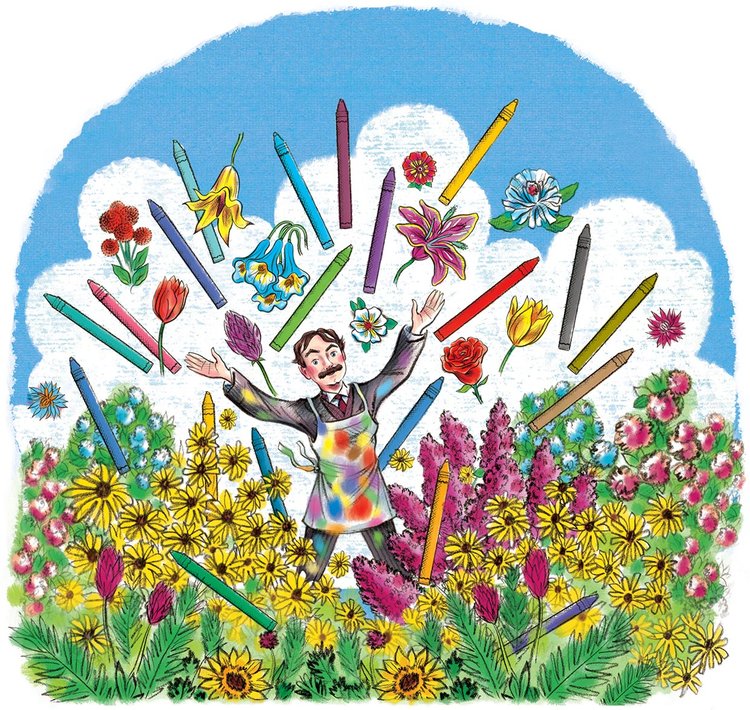
Steven Salerno’s color-drenched pages are beautiful tributes to the man who brought a new age of color into children’s lives. In a clever page turn, Edwin Binney stands in his garden with his arms outstretched appreciating the rainbow of flowers, the deep-blue sea, the light-blue sky, and a fiery red cardinal flying by. The next page takes kids into Binney’s mill, where he stands in the same position, but now seeming to bemoan the sooty environment. Salerno brings the time period alive for kids through hair and clothing styles and school and home furnishings. Several pages give readers a field trip into Binney’s secret lab to see the mechanics of making crayons at work. The front and end papers invite kids to give the wrapper-less crayons pictured a name based on their colors and then to make a drawing of their own.

A high-interest biography of the man who changed the way kids could interpret their world, The Crayon Man is a must for young inventors, artists, and thinkers as well as for classroom story times, social studies lessons, and art classes. The book would be a welcome addition to home, school, and public libraries.

Ages 6 – 9

HMH Books for Young Readers, 2019 | ISBN 978-1328866844

Discover more about Natascha Biebow and her books on her website.

To learn more about Steven Salerno, his books, and his art, visit his website.

National Coloring Book Day Activity

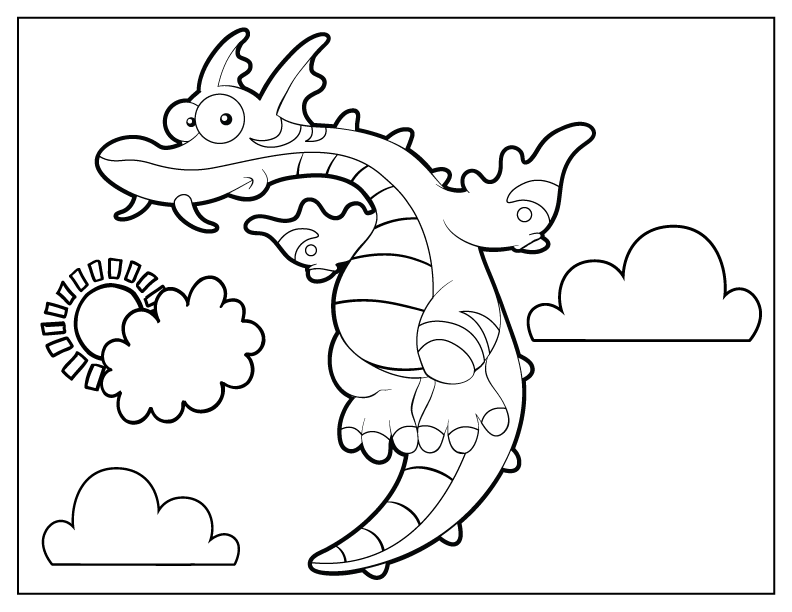
celebrate-picture-books-picture-book-review-Dragon-coloring-page

Cool Coloring Pages

You know what to do during Crayon Collection Month! Collect some crayons and enjoy these printable coloring pages for you to print and enjoy!

Cave kid Coloring Page | Dragon Coloring Page | Mermaid Coloring Page

celebrate-picture-books-picture-book-review-the-crayon-man-cover

You can find The Crayon Man: The True Story of the Invention of Crayola Crayons at these booksellers

Amazon | Barnes & Noble | Books-a-Million

To support your local independent bookstore, order from

Bookshop | IndieBound

Picture Book Review
January 31 – Inspire Your Heart with Art Day

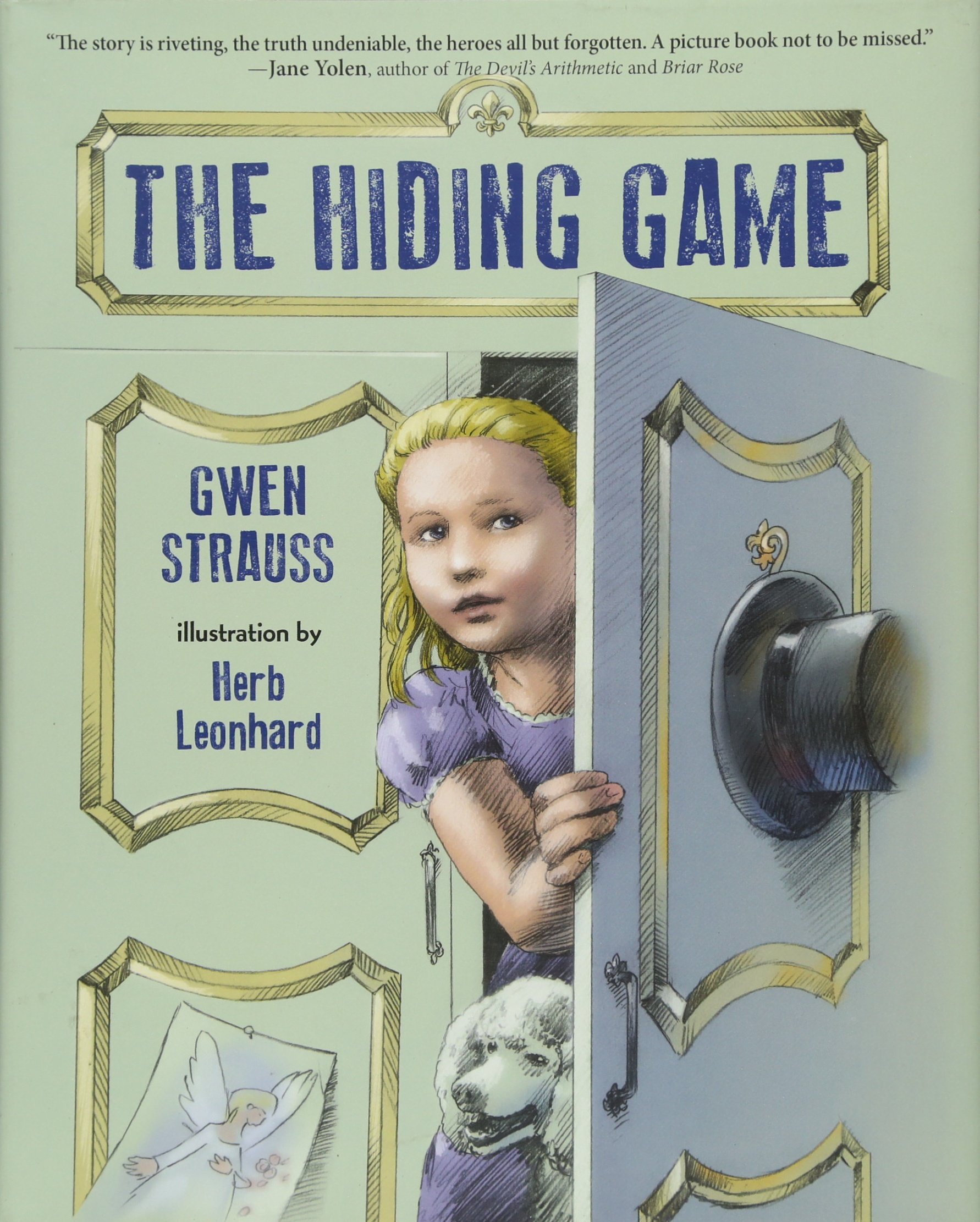
celebrate-picture-books-picture-book-review-the-hiding-game-cover

About the Holiday

Celebrating art is always a great thing! Today we champion that feeling you get inside when you create or experience art—no matter what kind is your favorite. Paintings, books, music, sculpture, quilts, photography, and other arts show you a bit of the world in a new way—a way, perhaps, you’ve never thought of before. Art can inspire, gladden, sadden, anger, teach, and compel action. It can also provide joy and inspiration when you need it most—as you’ll see in today’s book. Celebrate today’s holiday by visiting a museum, bookstore, library, concert, or gallery.

The Hiding Game

Written by Gwen Strauss | Illustrated by Herb Leonhard

It was October of 1940, and after moving from place to place to stay “one step ahead of the German soldiers,” Aube and her family had found a home where they could “live together until it was their turn to flee to safety. The Villa Air-Bel was rented by Varian Fry—a magician—and his assistant Danny Bénédite and served as a place to hide those looking to escape the war-torn country. On Sundays, the house was full of “thinkers, artists and writers who had to hide from the German soldiers because of their ideas of freedom and liberty” like Aube’s parents.

On those days, everyone played games, danced and made collages. One of Aube’s favorite games was Cadavre Exquis, in which a piece of paper was folded and each participant drew a design on one fold. When the whole paper was unfolded, amazing, artistic pictures emerged. These games and entertainment, Aube’s father told her, were their ways of fighting against fear. Because of the danger, many things had to be hidden at the Villa, including the radio and the cow that provided milk. Many ingredients for cooking were scarce. But even then Aube’s father used art to lighten the mood, leaving a drawing of a roast beef in the pantry where a real roast should have been.

Because the authorities were reading Varian and Danny’s mail and were listening to their phone calls, they had devised a way of hiding messages in toothpaste tubes that escaped the guard’s searches. The messages went to other people helping along the escape route to tell them who to expect next. Everyone in the house also had to have a special hiding place in case the police came. Aube chose the an old cabinet in the kitchen.

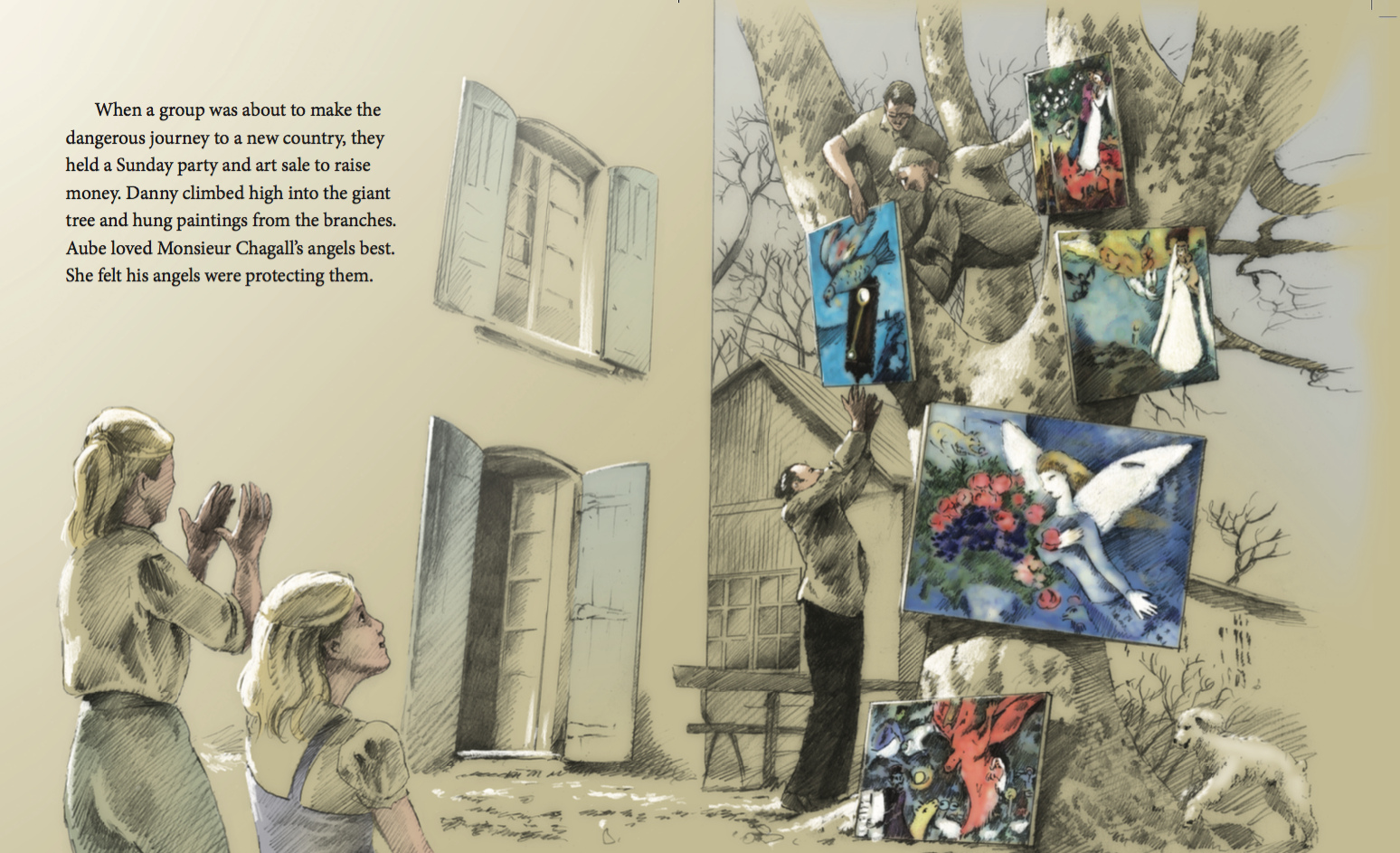
celebrate-picture-books-picture-book-review-the-hiding-game-tree

Image copyright Herb Leonhard, 2017, text copyright Gwen Strauss, 2017. Courtesy of Pelican Publishing Company.

Whenever a new group of people were scheduled to “make the dangerous journey to a new country, they held a Sunday party and art sale to raise money.” Canvases painted by famous artists were hung among the branches of a large tree on the Villa grounds. When winter came, the Villa was so cold everyone had to wear all of their clothes to stay warm. They kept their spirits warm, too, by singing their favorite songs.

During the winter Danny visited camps where people were being held under terrible conditions. “Aube understood now that the danger was that they would be sent to the camps,” where people were dying of starvation and disease. They had little clothes and no blankets even though it was snowing. The people, Danny said, were going to freeze. Aube thought of the game freeze tag and worried about all of those “people freezing, waiting for someone to set them free.”

One day in December, the police raided the Villa. They took away all the men, including Danny, Varian, and Aube’s papa. Aube cowered in the kitchen cabinet with their dog in fear. The next week, the men were released, but they knew that the police would be back. Danny and Varian began to plan their escape. Before they all left, Aube’s father devised one more game. Each artist would paint their own version of a playing card to create a collective work of art. “The cards would remind them that they had laughed together and stayed free in their hearts even during the darkest times.”

Aube’s family were placed on a ship sailing to South America, and on February 18, 1941 they left the Villa and Danny and Varian behind and made the one-month-long journey to freedom. Several months later, Varian was “forced to leave France and return to America.” Danny went underground and “helped another 300 people escape France.” In 1943, however, Danny was “arrested by the Nazis and sentenced to death.” Just as he was facing the firing squad, soldiers fighting the Nazis burst through the gates of the camp and freed him and the other inmates.

celebrate-picture-books-picture-book-review-the-hiding-game-villa-air-bel

Image copyright Herb Leonhard, 2017, courtesy of Pelican Publishing Company.

Gwen Strauss includes extensive backmatter on this true-life story about her great-uncle Danny Bénédite. A detailed account of the work by Varian Fry, Danny Bénédite, and the American Rescue Committee, complete with photographs, as well as short biographies of some of the artists who visited the Villa (and a compelling list of others) plus resources for further study round out this compelling book.

Clearly written and with details from a child’s point of view that will resonate with readers, The Hiding Game is an absorbing tribute not only to two men involved in the Nazi resistance movement but to the resilience that uplifts people during the darkest times. This fascinating true story also offers a glimpse into the important role that artists and writers play in shining a light on history, interpreting it, and fighting against forces that destroy. Rich with the atmosphere of intrigue, suspense, and simple pleasures enjoyed, Strauss’s dynamic storytelling will thrill children. The Hiding Game will prompt them to learn more about this time period and will inspire in them their own acts of heroism.

Herb Leonhard’s realistic drawings of the Villa Air-Bel, the families who stopped there on their way to freedom, the moments of joy that sustained them, and the secret measures necessary for people’s safety take readers into the heart of the story and allow them to witness the danger and the creativity that swirled side-by-side within the Villa and the people living there. Largely depicted in somber tones of gray and green, the pages brighten with glowing yellows during times of laughter, games, and creativity. An illustration of the mammoth tree hung with canvases by famous artists will impress children, and the final image will leave an indelible and thought-provoking impression on young readers and adults.

An excellent book for facilitating discussions about World War II and the Holocaust with children at home and in the classroom as well as offering opportunities for cross-curricular learning in history, art, reading, and more, The Hiding Game is a superb choice to add to home, school, and public libraries.

Ages 7 – 12

Pelican Publishing Company, 2017 | ISBN 978-1455622658

Discover more about Gwen Strauss and her books on her website.

To learn more about Herb Leonhard, his books, and his art, visit his website.

Inspire Your Heart with Art Day Activity

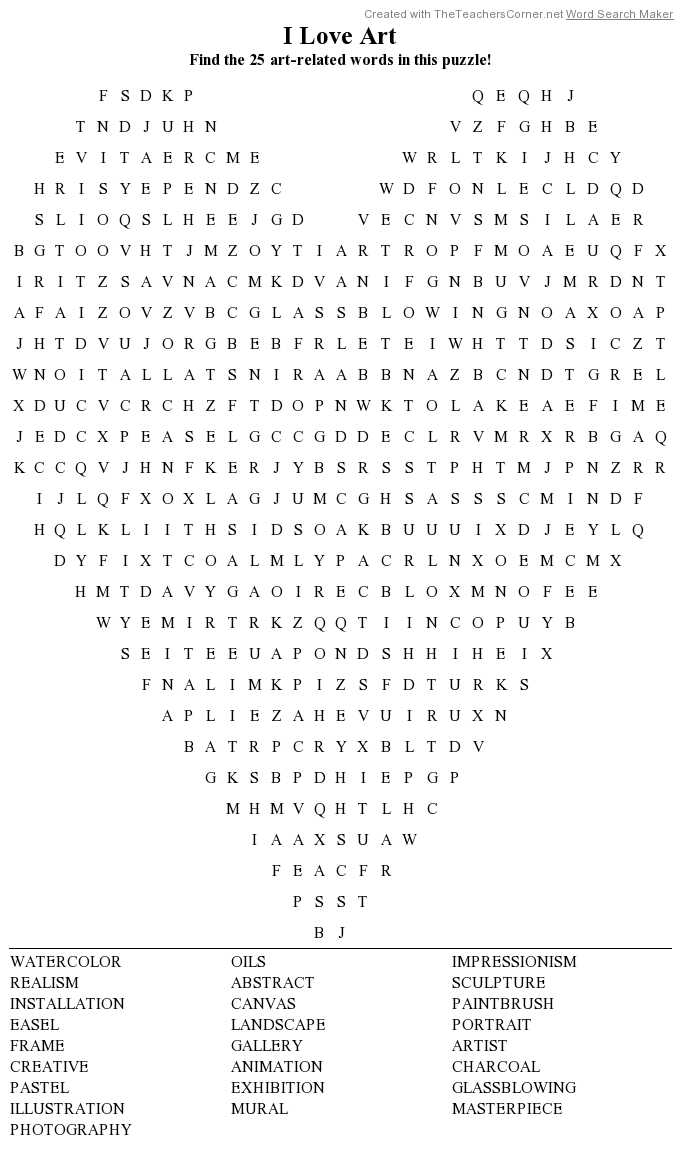
I Love Art! Word Search Puzzle

Art has a language all its own! Have fun finding the twenty-five art-related words in this printable puzzle.

I Love Art! Word Search Puzzle and I Love Art! Word Search Solution

celebrate-picture-books-picture-book-review-the-hiding-game-cover

You can find The Hiding Game at these booksellers

Amazon | Barnes & Noble | Books-a-Million | IndieBound

Picture Book Review