
About the Holiday
National All is Ours Day is a joy-filled holiday that encourages us to pause, look around, and really think about the beauty and abundance in our lives and the world around us. Our family and friends, neighbors, teachers, and colleagues—and who can forget our pets?—add so much richness to every day. Exploring your immediate surroundings or taking a trip to new locales and taking pleasure in the beauty you see can open up new perspectives and gratitude for the gifts we all share in common. Today, celebrate our interconnectedness with others, extend kindness, and embrace the idea that the best experiences in life are shared.
Thank you to Ten Speed Young Readers for sending me a copy of this book to me for review!
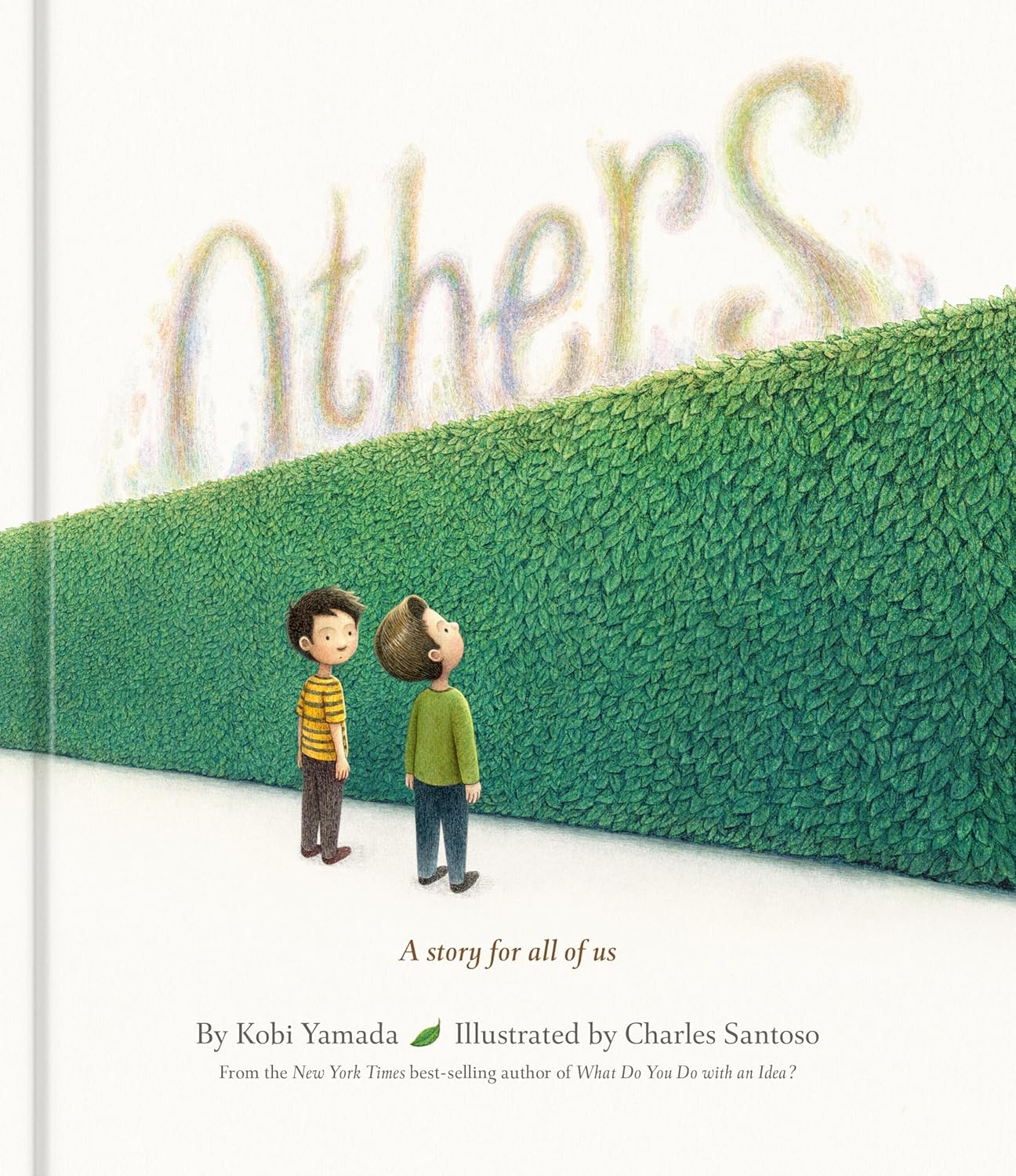
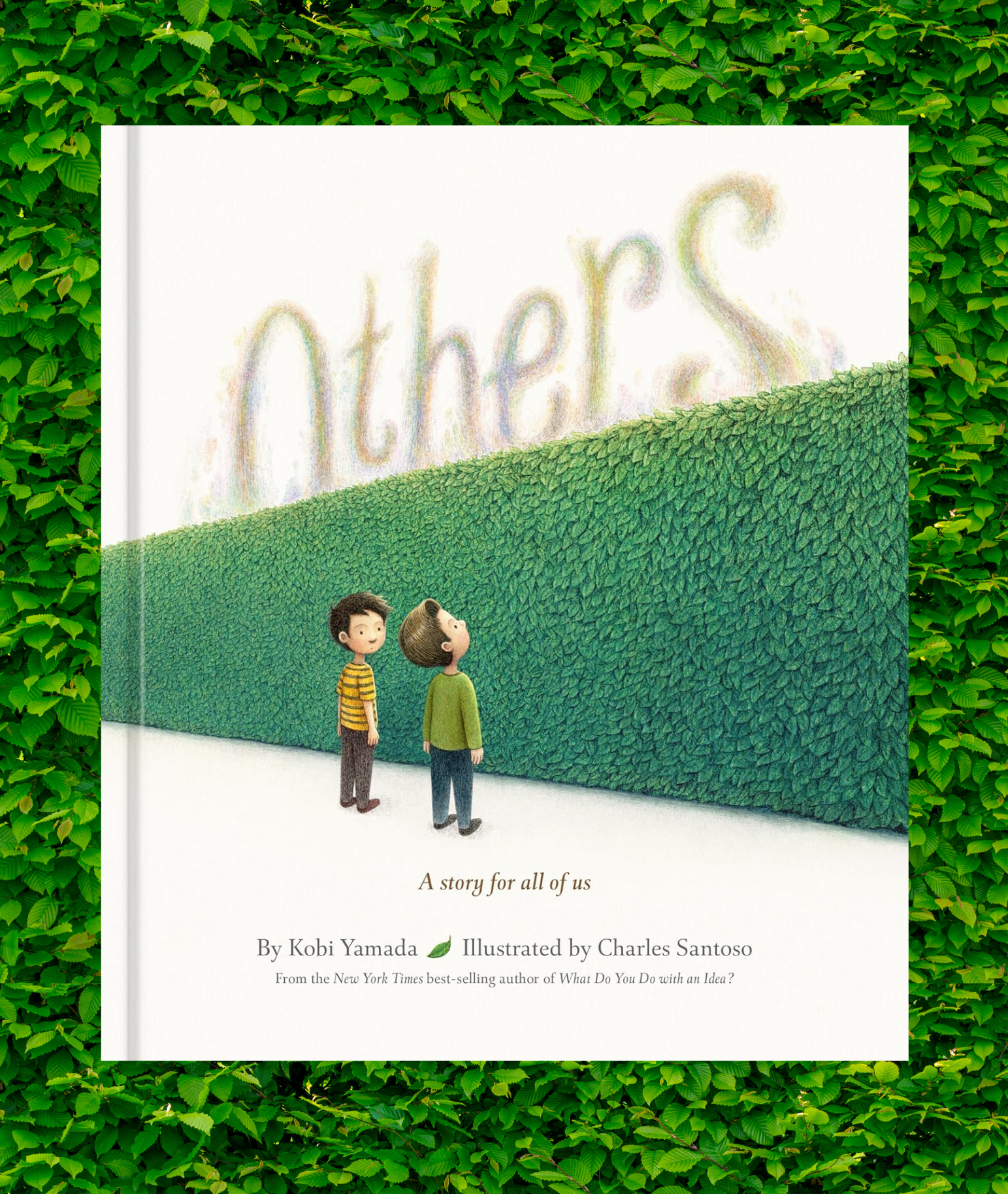
Others: A Story for All of Us
Written by Kobi Yamada | Illustrated by Charles Santoso
Kobi Yamada’s story starts simply enough. Two boys on one side of a hedge are having a discussion about the people on the other side of the hedge. One boy wonders what “the other people” are thinking about. The second boy is confused and asks, “Are there different kinds of people? How are they different?” His friend thinks it’s obvious: the way they look, talk, everything. The second boy then begins asking some pointed questions about exactly how they are different. “Do they have heads and bodies?” Of course. Do they have wings or tails or maybe “sticky tentacles” or even wheels? The boy thinks these attributes would be helpful, but “No” the first boy answers, the people “are humans.”
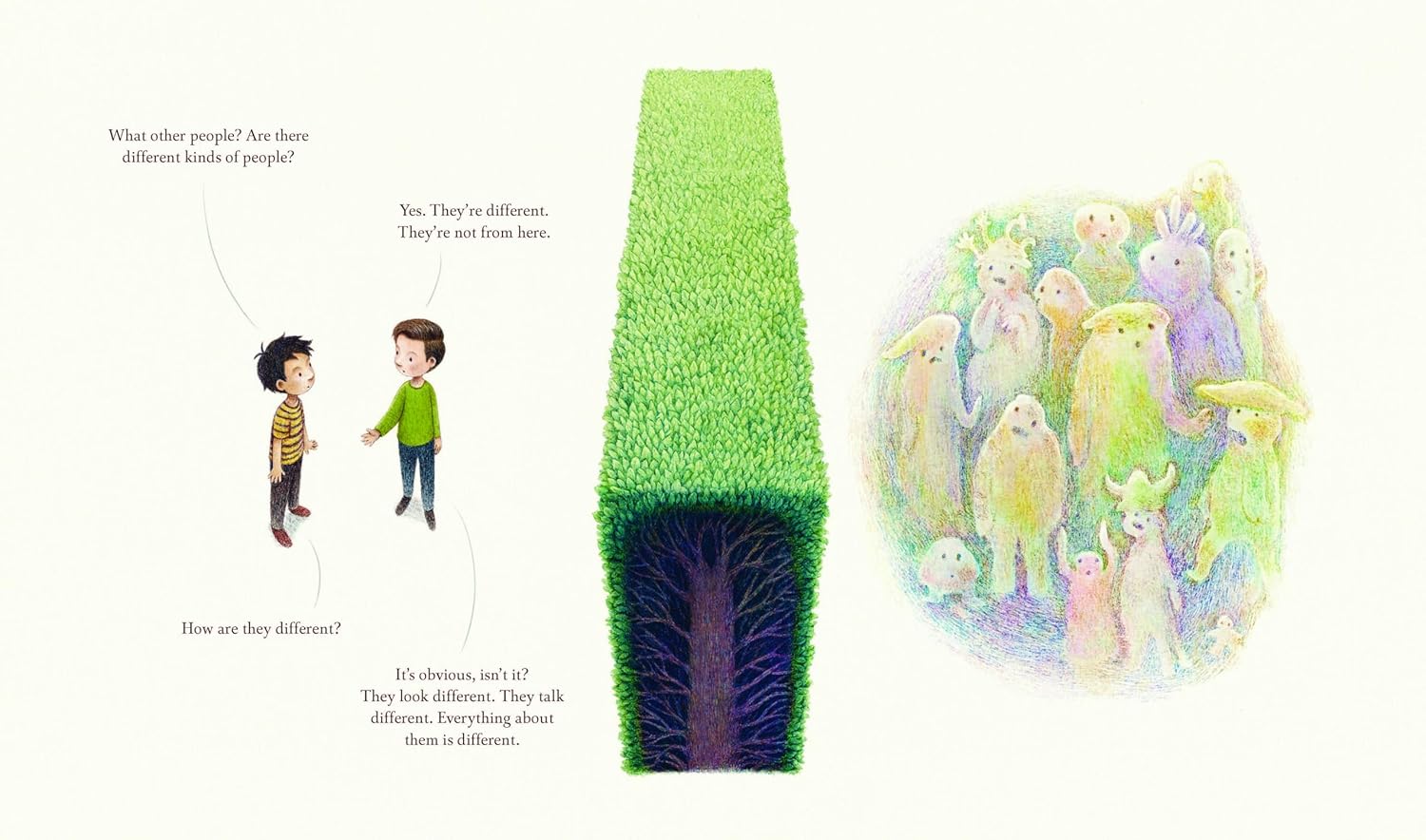
Illustration copyright © 2026 by Charles Santoso. Text copyright © 2026 by Kobi Yamada. Courtesy of Ten Speed Young Readers.
Once that’s established, Yamada’s story takes a deeper dive into the internal lives of these “other people.” The second boy is trying to wrap his head around the issue and inquires if the other people “have hearts and brains.” “Yes, of course,” comes the quick answer. Now the manner of the boy’s questions take a subtle change. He wonders if his friend thinks that these people “think and feel,” get lonely, scared, or hurt feelings. He confesses that he, himself, experiences these emotions. Does his friend think they love their family and do things together? His friend takes time to answer. He says he’s never really considered such things before, but imagines they do. Still, they are from “over there” and “not from here.”
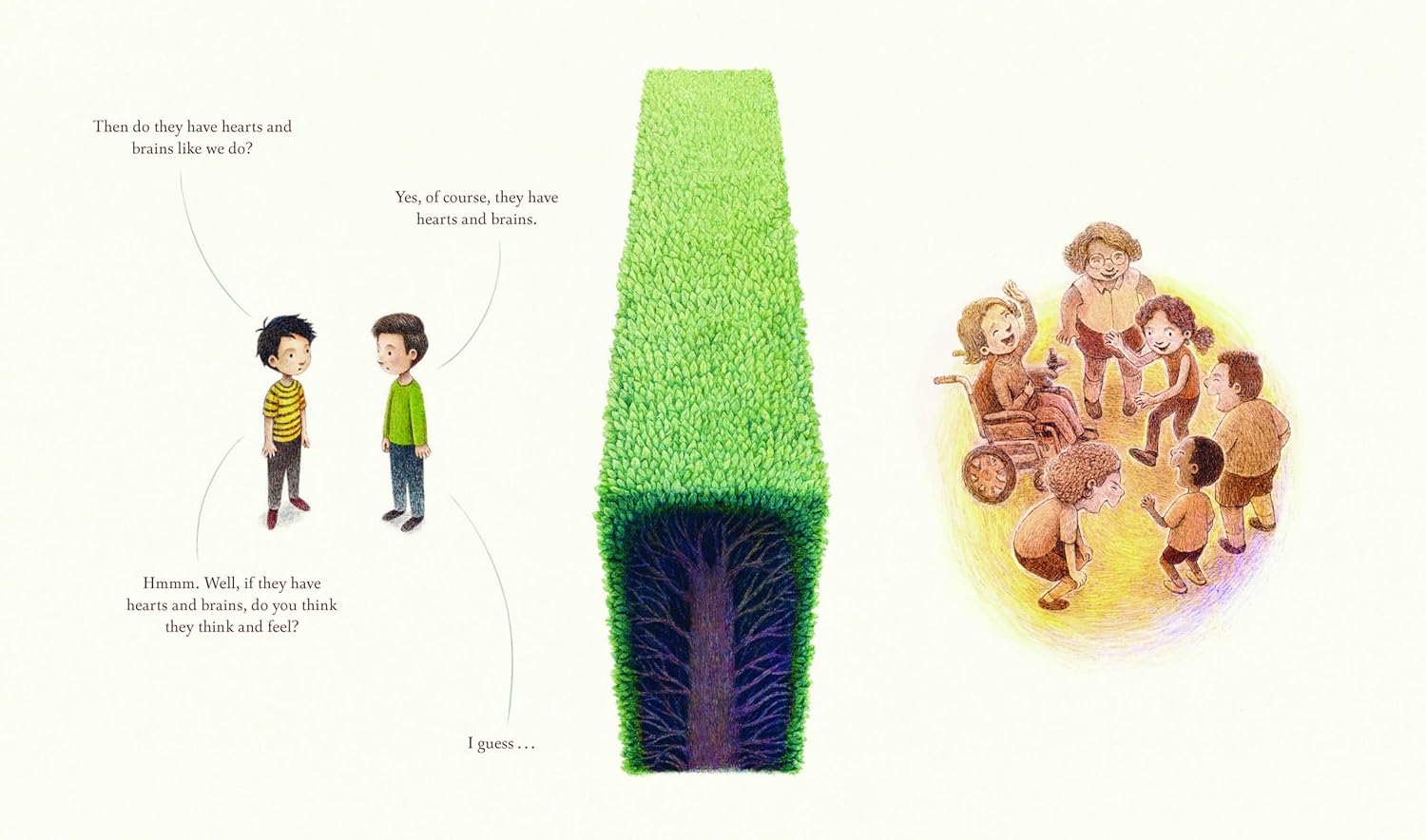
Illustration copyright © 2026 by Charles Santoso. Text copyright © 2026 by Kobi Yamada. Courtesy of Ten Speed Young Readers.
The boys begin to debate the meaning of “here” and “there” as the one with all the questions climbs the hedge and drops into the yard on the other side, where’s he’s offered a glass of lemonade. The two get closer and closer to their respective sides of the hedge—one here, one there; or is it one there, one here? They climb, and when they meet at the top, they agree that wherever they are, they feel like they are “here.”
Turning the page, the boys are unseen, but somewhere within a panoramic view of a city, the ocean, and mountains in the distance. Turn the page again and the image pans out even further, their conversation about there and here, them and us loosed from their mooring to become universal.
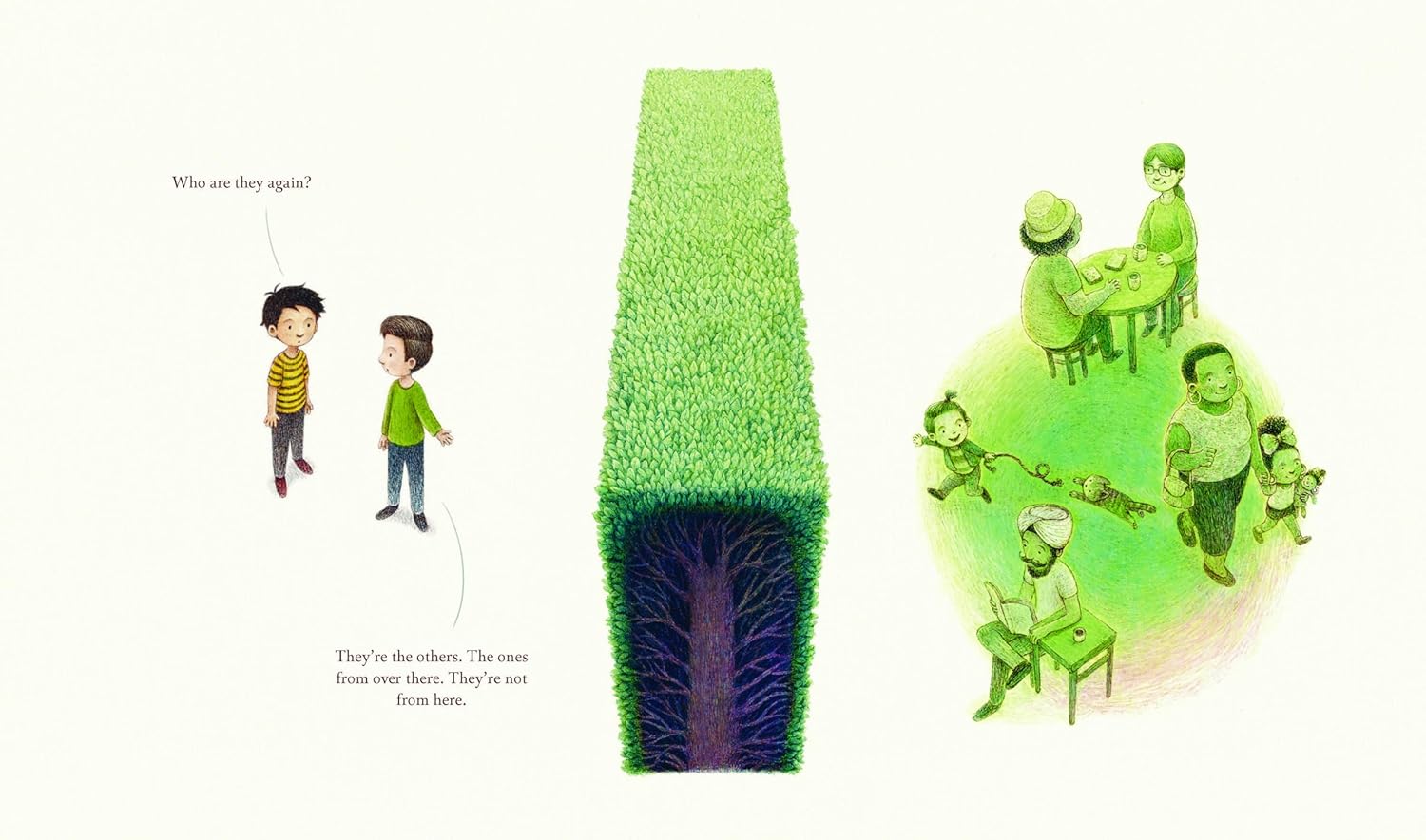
Illustration copyright © 2026 by Charles Santoso. Text copyright © 2026 by Kobi Yamada. Courtesy of Ten Speed Young Readers.
Others: A Story for All of Us is a perfect pairing of Kobi Yamada’s powerful text and Charles Santoso’s perceptive and layered illustrations. As the story opens, Santoso sets the scene with nuanced imagery: The hedge spans both pages, but is leafless on the facing end, showing the trunk and branches that give it structure—a reminder of family trees and the tree of mankind. On one side are the two boys—one in a striped shirt, the less open-minded child wearing a green shirt and dark pants that mirror the hedge. Rising from the other side is a blue and green cloud dotted with amorphous bodies that loosely create Earth’s continents.
Yamada then channels the literal-mindedness of children to challenge the idea of otherness. Santoso’s accompanying illustrations will bring giggles but also deep thinking. As the rest of the story plays out, Yamada engages readers’ hearts through the boy’s thought-provoking prompts that poignantly reveal the commonalities that connect us all while Santoso reinforces this message with vignettes of families, friends, children, neighbors and pets all playing, talking, celebrating, and relaxing together.
Others: A Story for All of Us is a book with a light touch but a lasting impact to show us the way forward to a meeting of minds and hearts through understanding, kindness, and acceptance. Others is a must for all library and home collections.
Ages 4 – 8
Ten Speed Young Readers, 2026 | ISBN 978-0593839676
About the Author
Kobi Yamada is the #1 New York Times bestselling author of What Do You Do with an Idea?, Finding Muchness, Because I Had a Teacher, and many other bestselling, award-winning books. In addition to being the creator of inspiring books and products, he is also the president of Compendium. He lives with his family in the Pacific Northwest. Follow him on Instagram.
About the Illustrator
You can purchase Others: A Story for All of Us from these booksellers
Amazon | Barnes & Noble | Bookshop
Picture Book Review










 celebratepicturebooks.com